The German Rex It is one of the rarest and most difficult cat breeds to find..
Content
Characteristics "German Rex"
Coexistence is important that you have with your new friend. Before considering the acquisition of a cat of the breed "German Rex" you know certain factors. You must take into account their character, their need for exercise, their interaction with other pets, their care and if you have small children, their level of tolerance towards them.
Joy
4,0 of 5 stars (based on 1 review)
Activity level
4,0 of 5 stars (based on 1 review)
Friendliness to other pets
4,0 of 5 stars (based on 1 review)
Friendliness to children
5,0 of 5 stars (based on 1 review)
Grooming requirements
1,0 of 5 stars (based on 1 review)
Vocality
3,0 of 5 stars (based on 1 review)
Need for attention
3,0 of 5 stars (based on 1 review)
Affection towards its owners
5,0 of 5 stars (based on 1 review)
Docility
4,0 of 5 stars (based on 1 review)
Intelligence
4,0 of 5 stars (based on 1 review)
Independence
2,0 of 5 stars (based on 1 review)
Hardiness
5,0 of 5 stars (based on 1 review)
History
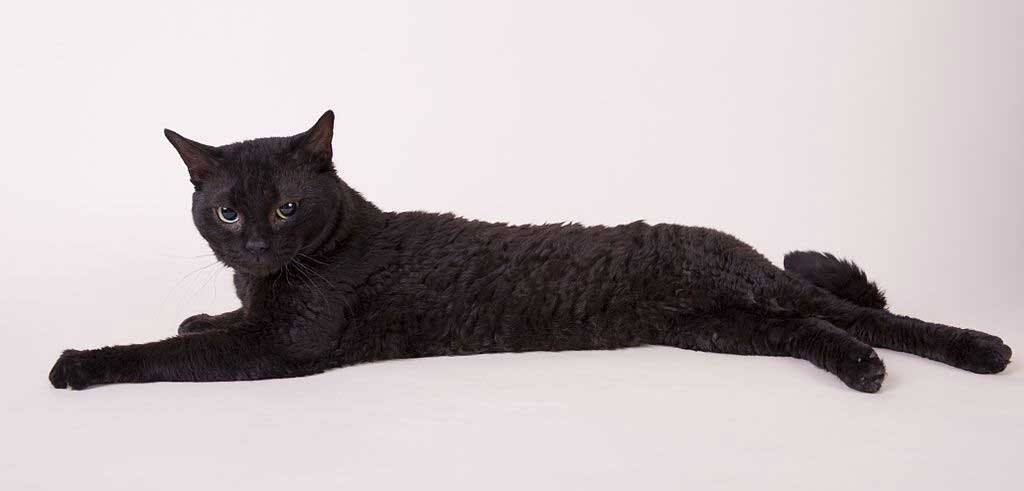
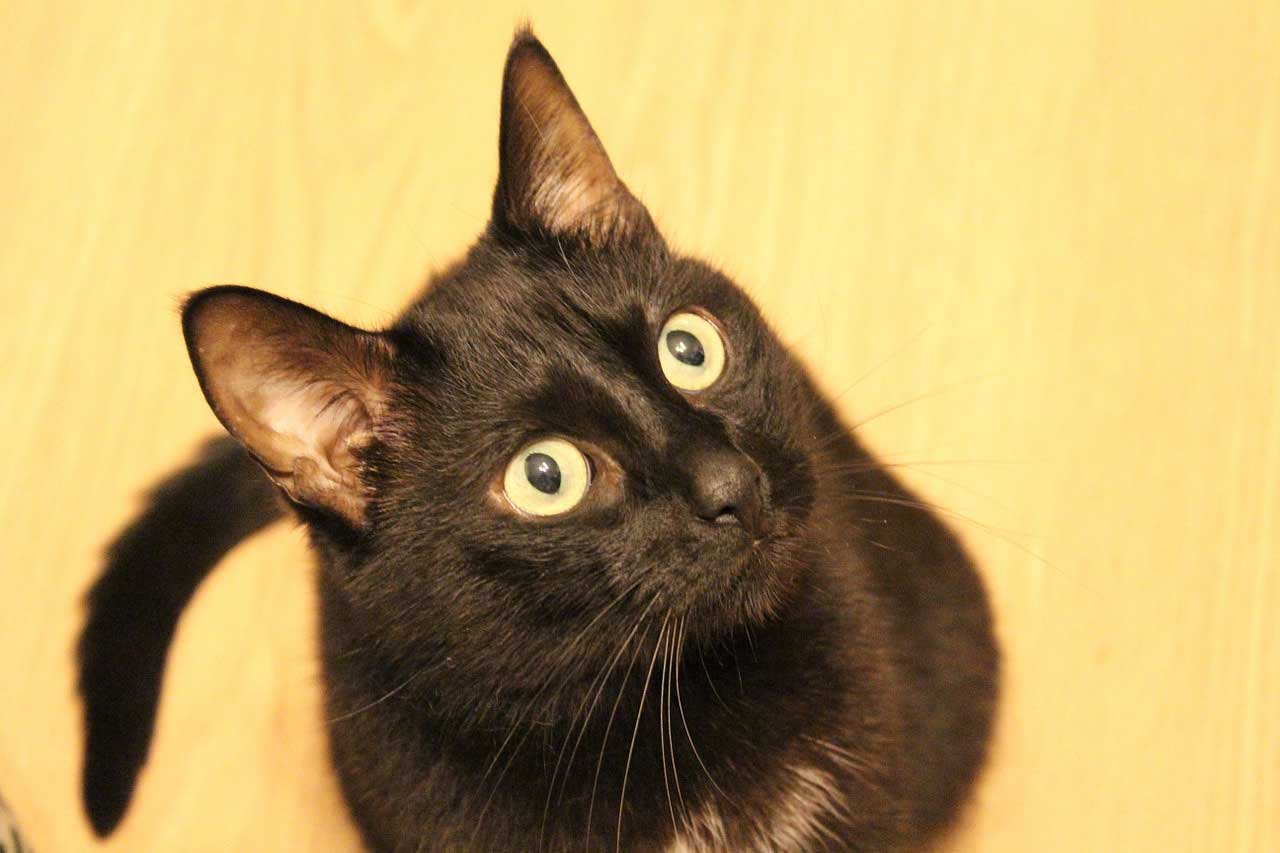
The German Rex It, as the name reflects, a breed of German cat. In 1930, in a village in the Prussian region of Königsberg (today Kaliningrad, in Russia), Ema Schneider's family had a curly-haired cat. Named Munk and born from a cross between a Angora cat and Russian Blue Cat, it is said to be the first Rex (name given in reference to Astrex rabbits, who also have curly hair) of the modern era. But, specialists consider that Munk is not the true creator of the breed German Rex, since it was never part of a breeding program and its descendants have not been identified. black german rex male – Bebopscrx, CC BY-SA 3.0, via Wikimedia Commons
The first german Rex officially appeared in the summer of 1951, when Dr.. Rose Scheuer-Karpin discovered a curly-haired black cat in the gardens of the hospital where she worked, la Hufelandklinik. Assuming it was a new mutation, he adopted Lämmchen ("little lamb" in German) and thus became the first breeder of german Rex.
The first litters of Lämmchen y Blackie, another cat adopted by Mrs Scheuer-Karpin, produced straight-haired kittens. But in 1957 The first two curly-haired kittens were born from the union between Lämmchen and one of these kittens named Fridolin.
When Lämmchen he crossed paths with another farm cat in the neighborhood, gave birth to three straight-haired kittens. Rose Scheuer-Karpin decided to stay with one of them, who he called blackie 2. Lamb and Blackie 2 they in turn produced kittens with curly hair, and it was clear that the gene responsible for the mutation was recessive. In other words, to have curly hair and, Therefore, be a Rex, the kitten must receive a mutated gene from each of its parents. On the other hand, an individual who has inherited only one mutated gene keeps his coat smooth, but you can pass on this gene and give birth to curly-furred kittens if crossed with a curly-furred individual, or even with an individual with smooth fur but also a carrier of the recessive gene.
Lämmchen died in 1964, leaving many cats carrying the gene, which were the basis for the development of the breed and were exported to various countries. This was the case in Great Britain, where they met him Cornish Rex, in order to diversify the gene pool of this breed. In France, Marco Polo, A male german Rex property of Professor Letard, It was the first to be exhibited in public in 1960 in a contest organized by the Feline Club of Paris.
But, due to the lack of a well-structured breeding program, and probably also to the almost simultaneous appearance of other breeds of curly-haired cats in Great Britain, the german Rex developed very little and was even on the brink of extinction in the early years 70.
In fact, although it was recognized by the Fédération Internationale Féline (FIFé) and the Livre Officiel des Origines Félines (LOOF) french in 1982, and then for the World Cat Federation (WCF, based in Germany), the german Rex remains confidential. Not recognized by several major organizations, as the British Governing Council of the Cat Fancy (GCCF) or The International Cat Association (TICA), and is rarely present outside of its home country and its German-speaking neighbors (Switzerland and Austria).
La Cat Fanciers’ Association (CFA) does not recognize the German Rex as a race in its own right, considering that it is actually a Cornish Rex and registering their representatives as such.
In France, no individual with LOOF has been registered between 2003 and 2018, which makes it without a doubt one of the rarest cat breeds. All over the world, the cumulative number of registrations in the organizations that recognize it barely exceeds a few dozen a year.
Physical characteristics
The German Rex It is a medium-sized cat with a strong, muscular body and slender legs.. With regard to its height, corresponds to a European shorthair cat (Common european cat). The tail, average length, ends in a slightly rounded tip. On head round settle some ears slightly rounded with a wide base.
The most striking feature of the breed is the soft fur and regularly wavy. Due to the lack of top coat, the undercoat plush has a velvety appearance like that of a mole.
All the colors are allowed, except for chocolate, cinnamon and all its variations. It can also have any coat pattern: bicolor, tricolor, striped, but there should be no bald spots on the fur. The whiskers they are slightly shorter than in other cats and slightly curved.
The german rex they are affectionate and form a strong bond with their family, often seeking your attention. They do not tolerate arousal and noise very well, but they are just as reluctant to be alone.
They are sociable and enjoy the company of other dogs and may even befriend a dog used to cats.. So, it is usually not a problem when adopted by a family that already has animals, except if these are small rodents or birds, in which case some caution must be exercised.
As a playful and active cat, can be an excellent companion for a child, provided that he has learned to interact with him and respect him. But, if the child is small, you should never be left alone with the animal without adult supervision; this applies to all cats, regardless of race.
It also, although they are active and love to run, the German Rex it is a breed of cat suitable for a flat environment, to which it fits perfectly. They prefer the cozy comfort of a heated home to the sometimes harsh weather conditions of the outside world, but they enjoy napping on a sunny balcony in summer.
Intelligent, he likes to be stimulated with games, whether it's going to find an object thrown by its owner or trying to solve a puzzle for cats. Likes family fun and rarely refuses to chase a fake stuffed mouse or roll a ball of yarn around the house.
Once he's satiated, he likes to cuddle with his owner, that can thus enjoy the softness of its toothed fur and its reassuring purr.
At the end, His character is very similar to that of his cousin the Cornish Rex.
Grooming and caring for the "German Rex"
The German Rex it is an easy cat to care for, since its beautiful coat only needs a weekly brushing to maintain its shine.
During this grooming session, it is also important to check that the teeth are healthy and without cavities, that the eyes are clean and that the ears have not accumulated dirt. If this is the case, cleaning with a damp cloth will prevent the appearance of infection.
Last, a cat's nails should be trimmed regularly with a nail clipper, but the time interval between these manicures varies from individual to individual, depending on your level of activity and whether you use a scratching post to a greater or lesser extent.
Health and nutrition
German Rex – I am looking for 4 legs
The German Rex is a healthy cat breed with no known risk of genetic disease. But, keep in mind that, due to its rarity, it is difficult to collect sufficient and reliable information to draw a definitive general conclusion.
Due to its fine fur, the German Rex, just like the cat Sphynx, you need more energy to maintain your body heat. For this reason, needs more food than other breeds. However, make sure you don't overfeed them and provide all the important nutrients.
Obesity can cause various heart and/or joint problems. So, it is advisable to weigh your cat regularly to ensure that it maintains a reasonable weight, and consult a vet if you are overweight.
Life expectancy
12 to 14 years
For sale "German Rex"
The price of a kitten German Rex varies between the 800 and 1.000 EUR, without there being a significant difference between males and females.
But, the German Rex is a very rare breed of cat, hard to find even in your home country, and there are few kittens available.
The European Burmes cat has the same origins as the American Burmese cat, that goes back to Wong Man, led cat of Burma to America in 1930. Imported American cats, descendants of Wong Mau, to Great Britain, and the Brown was recognized in 1952, but after the race was divided to take different forms in both sides of the Atlantic. In Europe, breeders preferred a more typically oriental look, and they were also interested in a wider color scale.
The Cat Fanciers Association began registering Burmese in 1936, but suspended records on 1947 because breeders continued to use conjoined twins in their breeding programs. Records resumed in 1953, after this practice was discontinued.
In Europe, However, the development of Burmese took a different path. In Great Britain, where the broodstock shortage was even greater than in the United States, the Siamese Red Point and the British Shorthair cat were used in breeding programs, and his genetic contribution included additional colors: red, cream, brown-turtle, chocolate-turtle, blue-turtle and lilac-turtle. With the time, they met as European Burmes cat.
The color blue, a recessive trait carried by cats imported from America, accepted a few years. The reddish colors and the turtle, It resulted from an accidental crossing, they were recognized in the Decade of 1970. Great Britain cats were exported to Europe, Africa, Australia and New Zealand in the Decade of 1950. Therefore, the breed in these countries follows the European type. The FIFé allows green eyes, but the GCCF considers it a defect.
On both sides of the Atlantic, the Burmese cat still listed among the most popular breeds, but looks better in Europe, where short hair cats prevail over copies of long hair.
Physical characteristics
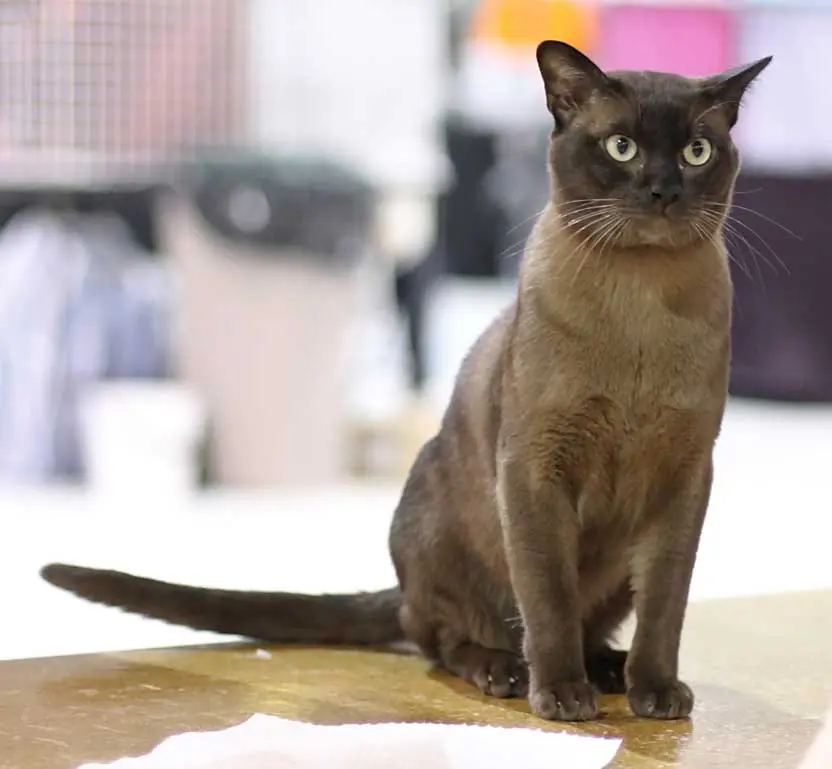
Share Alois de Arkhitekton, European Burmese male presented at a cat show in Siilinjärvi, Finland – Heikkisiltala, CC BY 3.0, via Wikimedia Commons
The European Burmes cat, as the American Burmese cat, characterized primarily by the sepia pattern of fur, which gradually transforms into dark, uniform tips at the roots, without markings striped cat.
The coat is short and thin, glued to the body and do not need daily care. Thin legs hold a fairly weak body, but muscular, surprisingly heavy for its size.
The head is the feature in which the European Burmes cat differs more than the American type. It has a wedge and the snout is blunt; the eyes are separated, they are round and just ripped.
It is a medium-sized cat that usually weighs between 2 and 3 kg, sometimes more.
Varieties:
Most organizations that recognize the European Burmes cat they do not allow the crossing with other races in the framework of their breeding.
This is the position taken by the Fédération Internationale Féline (FIFé) and the Governing Council of the Cat Fancy (GCCF).
The Livre Officiel des Origines Félines (LOOF) French is an exception, since it authorizes the mating with the Burmilla cat, to expand the genetic background of this breed.
It also, the European Burmes cat is itself the origin of two races:
The European Burmes cat is quite successful in Europe, and this is especially true in the country where it was developed: Great Britain. Since 2004, ranks fifth in the breed ranking based on the number of annual registrations at the country's leading feline institution, the Governing Council of the Cat Fancy (GCCF). But, is in clear decline: while at the end of the 90 more than 3.000 kittens per year in the organization (which allowed him to occupy the fourth position in the ranking), this figure has been divided by three since then, and now around a thousand.
In France, the European Burmes cat not as successful as in Great Britain and ranks 35 (of about 70) in the breed classification of the Official Book of Feline Origins (LOOF) based on the number of births registered each year. This number is around fifty, what, just like in britain, reflects a certain decline: in the decade of 2000, it was rather on the order of 60 to 80. The American Burmese cat not far behind, since it occupies the position 40, nails on 30 or 40 registrations per year.
In Switzerland, the European Burmese occupies the tenth place in the statistics of the Fédération Féline Helvétique (FFH) since the years 90. But, while in the decade of 2000 there were some 70 registrations per year, this figure has dropped in the following decade and is now more of 40.
When it comes to personality, the European Burmese and the Burmese cat are aligned. The European Burmese is energetic and friendly. Has the charm and determination of his ancestors Siamese, and enjoy the conversation as much as that breed, but her voice is soft and sweet, which contradicts his tendency to run the home with an iron paw sheathed in velvety fur. He is very intelligent and seeks human company., so it is not the most suitable for a home where you will be alone most of the day. If there are no humans around to stimulate your intellect, make sure he has another pet for company. Get along well with other cats and dogs, but, of course, other Burmese (of any type) will be your best friend.
The European Burmese he is a very curious cat. It is hoped that you will explore your home thoroughly and get to know all its corners. He is playful and remains so into adulthood. Stimulate their smart mind with interactive toys and teach them tricks that allow them to show off in front of the public. Besides sitting, turn around, say hello and come, can learn to reach for a small toy or walk on a leash. With proper early conditioning, car rides and vet visits will be a breeze.
One European Burmes cat it is a good choice if you are not opposed to total loss of privacy. This cat will want to participate in everything you do, from reading the newspaper and working on the computer to preparing meals and watching television. Of course, will sleep in bed with you and can even snuggle under the covers. When i'm sitting, will be on your lap or right next to you, waiting expectantly for me to caress you. Yes, he ignores them, will scold you. Guests will receive your undivided attention, and those who say they don't like cats are likely to win.
A female of European Burmese is the very definition of queen status. Likes attention and likes to be in command. Males are calmer and are content to fill the lap. Whatever your choice, you may soon find yourself longing for another.
Children and other pets
The European Burmese, active and sociable, It is a perfect option for families with children and for dogs that accept cats.. Play fetch as well as any retriever, learns tricks with ease and loves the attention he receives from children who treat him with politeness and respect. Live peacefully with cats and dogs that respect your authority. Always introduce pets slowly and under controlled circumstances so that they learn to get along.
Health
Both pedigreed cats and catsmixed raceshave different incidences of health problems that may be genetic in nature.The European Burmes cat is generally healthy, although they can be prone to gingivitis and can be sensitive to anesthesia.The following diseases have also been observed in this breed:
Aqueous humor lipemia, a transient milky appearance of the eye during infancy, that usually resolves on its own.
Dermoide corneal, the presence of skin and hair on the surface of the cornea, that can be successfully corrected surgically.
Gangliosidosis, an enzyme deficiency A test has been developed to detect the disease.
Orofacial pain syndrome, indicated by exaggerated licking and chewing movements and pawing the mouth Discomfort may increase when the cat is excited or stressed, and cats are often reluctant to eat because the activity is painful. Some cats must wear an Elizabethan collar and have their paws bandaged to prevent injury. Some cases resolve on their own and then recur. The cause and outcome are unknown. mode of inheritance. Pain relievers and anticonvulsants may help, as well as consultation with a veterinary dentist to rule out dental disease.
Congenital peripheral vestibular disease causing head tilt, lack of balance, rapid eye movements and uncoordinated gait in kittens Some kittens with the condition can also be deaf.
Hypokalemic polymyopathy, muscle weakness caused by low levels of potassium in the blood, sometimes seen in Burmese kittens Signs include general weakness, stiff gait, reluctance to walk and head tremors. Can be treated with orally administered potassium supplements.
Flat chested kitten syndrome, a deformity that can range from mild to severe Kittens that survive to adulthood usually show no signs once they reach maturity.
twisted glue, usually as a result of a coccyx deformity; it does not cause pain or discomfort.
Osteoarthritis of the elbow, an early-onset arthritis in the elbow that limits the cat's activity or mobility.
Endocardial fibroelastosis, a heart condition in which the left ventricle of the heart thickens and stretches the heart muscle. The signs usually develop when a kitty has 3 SA week 4 months of age, a good reason to wait until 4 months to bring a kitten home.
Dilated cardiomyopathy, enlarged heart.
Mellitus diabetes, an endocrine condition caused by a defect in insulin secretion or insulin action that results in high blood sugar levels.
European Burmese
care and grooming
The soft, short coat of the European Burmese easily cared for with weekly brushing or combing to remove dead hair and distribute skin oil. A bath is seldom necessary.
Brush your teeth to prevent periodontal disease. The best is daily dental hygiene, but a weekly brushing is better than nothing. Clean the corners of the eyes with a soft, damp cloth to remove any discharge. Use a different area of ​​the cloth for each eye so as not to run the risk of spreading any infection. Check the ears weekly. If they look dirty, clean them with a cotton pad or soft cloth moistened with a mixture of cider vinegar and warm water at 50%. Avoid using cotton buds, that can damage the inside of the ear.
Keep the litter box spotless. As all cats, the European Burmese they are very demanding with bathroom hygiene.
It is a good idea to keep a European Burmes cat as an indoor cat to protect it from diseases transmitted by other cats, from dog attacks and other dangers faced by outdoor cats, like being hit by a car. The European Burmese who go abroad also run the risk of being stolen by someone who wants to have such a beautiful cat without paying for it.
Characteristics "European Burmes cat"
Coexistence is important that you have with your new friend. Before considering the acquisition of a cat of the breed "European Burmes cat" you know certain factors. You must take into account their character, their need for exercise, their interaction with other pets, their care and if you have small children, their level of tolerance towards them.
Joy
5,0 of 5 stars (based on 1 review)
Activity level
4,0 of 5 stars (based on 1 review)
Friendliness to other pets
3,0 of 5 stars (based on 1 review)
Friendliness to children
3,0 of 5 stars (based on 1 review)
Grooming requirements
1,0 of 5 stars (based on 1 review)
Vocality
4,0 of 5 stars (based on 1 review)
Need for attention
4,0 of 5 stars (based on 1 review)
Affection towards its owners
5,0 of 5 stars (based on 1 review)
Docility
1,0 of 5 stars (based on 1 review)
Intelligence
4,0 of 5 stars (based on 1 review)
Independence
2,0 of 5 stars (based on 1 review)
Hardiness
3,0 of 5 stars (based on 1 review)
Videos "European Burmes cat"
European Burmese cat❤️ Breeding cattery Freya Way*RU
The race Burmese Modern was developed in the United States and Great Britain under different breed standards. Such an unusual breeding program resulted in the development of a number of different characteristics between the two groups., but most cat registries still do not formally recognize them as distinct breeds.
The breed was recognized by the Cat Hobbyists Association (CFA) in 1936, but it was discontinued a decade later due to extensive crossings with Siamese triggered by increased popularity. American breeders continued to refine the single standard of the Burmese cat, and the CFA eventually lifted the suspension in 1954. At the same time, British breeders tried to breed Burmese cats through a distinct breeding program comprised of a variety of cats, including some imported from America.
In 1952, the European Burmes cat was finally recognized by the Governing Council of the Cat Fancy (GCCF) of United Kingdom. The GCCF prohibited crossing with the American Burmese cat In an effort to preserve the "traditional" line. Today, the American and European versions of the breed are kept strictly genetically differentiated.
The European Burmes cat (O Burmes «Traditional» The British) has a long slim body, long legs and oval legs. The head is wedge-shaped with a long snout and almond-shaped eyes.. The tail is usually medium long.
The American Burmese cat (The "contemporary" Burmes) it has a much more robust body and its legs are proportional to the body. The head is much wider, the shorter and flattened muzzle and the eyes are round. The ears are wider at the base compared to the British variant. The shape of the legs and the length of the tail are similar in both groups..
Both the European Burmese cats like americans are small to medium size, and usually weigh between 4 and 6 kg. They are always very muscular and strong, so they often feel heavier when held than they actually are. Hence his nickname "brick wrapped in silk".
The coat is always short, silky and shiny. Originally, all Burmese Cats were deep dark brown (sable en EE.UU., brown in the UK and Australia and seal in New Zealand), but today a wide range of colors is allowed.
The standard sable color is the result of the so-called Burmese gene (cb) causing a reduction in pigment production. This distorts the usual expression of color creating a faded color dot effect. (that is to say, turns black coloring to brown). But, color must always be solid, only with a slight, faint tint towards the lighter underparts. Their eyes are green and gold and no stains are allowed on the coat.
Character and skills
The Burmeses they make excellent companion animals due to their affectionate nature, affectionate and playful. They are considered attention seekers and tend to cling to their human companions whenever they can.. Due to its clingy personality and puppy-like behavior, the Burmeses are often regarded as the dogs of the cat world.
These people-oriented cats tend to maintain their energetic and playful kitty personality into old age as well.. Like their ancestors Siamese, the Burmeses they are very vocal, loving and sweet. They are not independent and do not like to be alone for a long time. They get along very well with children and other pets, including dogs.
Health
Some published studies have recognized that Burmese cats, among other races, are at increased risk of diabetes (Cooper RL et al, 1997-2007 y Ohlund M et al, 2015). Diabetes mellitus (DM) is a metabolic disorder in which blood sugar levels remain high for long periods of time. This occurs when not enough insulin is produced in the body or the body does not respond to it..
It has also been identified and associated with Burmese cats hypokalemia, a recessive genetic disease characterized by low serum potassium levels. Apart of this, the race Burmese it is considered a fairly healthy and strong breed, with a half-life of 10 to 17 years.
"Burmés cat" data
1. The name of the Burmese race in Thai means «beautiful, Fortunate and splendid -looking ». We think these elegant and good-looking cats are worthy of this title.
2. To the Burmeses they love to investigate. Call a Burmese curious would be a bold euphemism. This is the cat that will be attentive to absolutely everything and everyone around him. With a Burmese, you will have the most committed and involved supervisor in almost everything you do.
3. They're the best friends. They are said to look a lot like puppies, and his kindness is definitely one of them. They adore their kittens, other cats and dogs, and they will be happier when you are home. They are known to even comfort their humans when they are sick or sad.
4. They do not adapt well to the outside. This curious cat is overconfident and easily gets into trouble. His survival skills aren't among the best in the feline world, either.. For this reason, in general, it is not recommended to let them roam freely outside.
5. Together with the Siamese, were the founders of the Tonkinese cat. The Tonkinese cat were created in Canada through a crossover program between the Siamese and the Burmese cat, with the aim of creating the perfect combination of the best characteristics of the two breeds. The Tonkinese was officially recognized as a breed in 2001.
▷ The world of Pets: Dogs, cats, birds, reptiles, amphibians
The Elf cat, a new and extremely rare hybrid breed, is a playful and intelligent cat that combines the physical and personality traits of cats Sphynx and American Curl.
Content
Characteristics "Elf cat"
Coexistence is important that you have with your new friend. Before considering the acquisition of a cat of the breed "Elf cat" you know certain factors. You must take into account their character, their need for exercise, their interaction with other pets, their care and if you have small children, their level of tolerance towards them.
Joy
5,0 of 5 stars (based on 1 review)
Activity level
4,0 of 5 stars (based on 1 review)
Friendliness to other pets
4,0 of 5 stars (based on 1 review)
Friendliness to children
5,0 of 5 stars (based on 1 review)
Grooming requirements
3,0 of 5 stars (based on 1 review)
Vocality
3,0 of 5 stars (based on 1 review)
Need for attention
4,0 of 5 stars (based on 1 review)
Affection towards its owners
5,0 of 5 stars (based on 1 review)
Docility
5,0 of 5 stars (based on 1 review)
Intelligence
4,0 of 5 stars (based on 1 review)
Independence
2,0 of 5 stars (based on 1 review)
Hardiness
3,0 of 5 stars (based on 1 review)
History
Since the Elf cat it is such a new and extremely rare breed, its history is somewhat limited. Cat breeders and enthusiasts Karen Nelson and Kristen Leedom are considered the creators of the breed; in 2004 Nelson and Leedom came together with a vision to breed a curly-eared cat that retained the personality and physical attributes of their beloved cats. Sphynx cat.
The Elf cat developed successfully from the crossing of cat breeds Sphynx and American Curl. Each of these two races has a distinctive trait, and the Elf cat was designed to combine them. The most distinctive features of this cat are the appearance of curly ears, taken from American Curl, and the absence of hair, taken from Sphynx cat. But, similar to the Sphynx, the Elf cat not completely hairless; their skin may be covered with a very fine fur that is practically imperceptible both to the eye and to the touch.
Any of the Elf cat is now found in generations exhibiting the traits that were originally conceived, and they are beginning to be introduced in the halls of the International Cat Association (TICA). Once the required numbers were reached, the original creators and enthusiasts of the breed gained acceptance of the Elf cat as a new feature of the Sphynx cat; the Elf cat has been accepted for registration in the TICA, and they are shown as Sphynx with new features in cat shows.
Physical characteristics
"Elf cat"
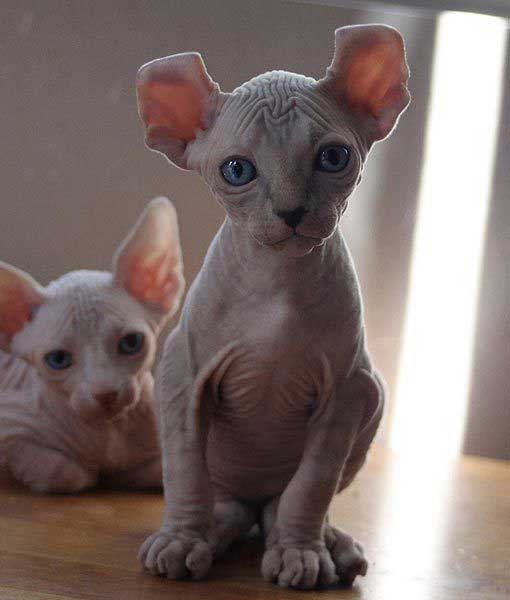
The Elf cat it seems like a Sphynx, except that their ears they are small and curved, like those of American Curl. This is one of the most striking features of this cat.
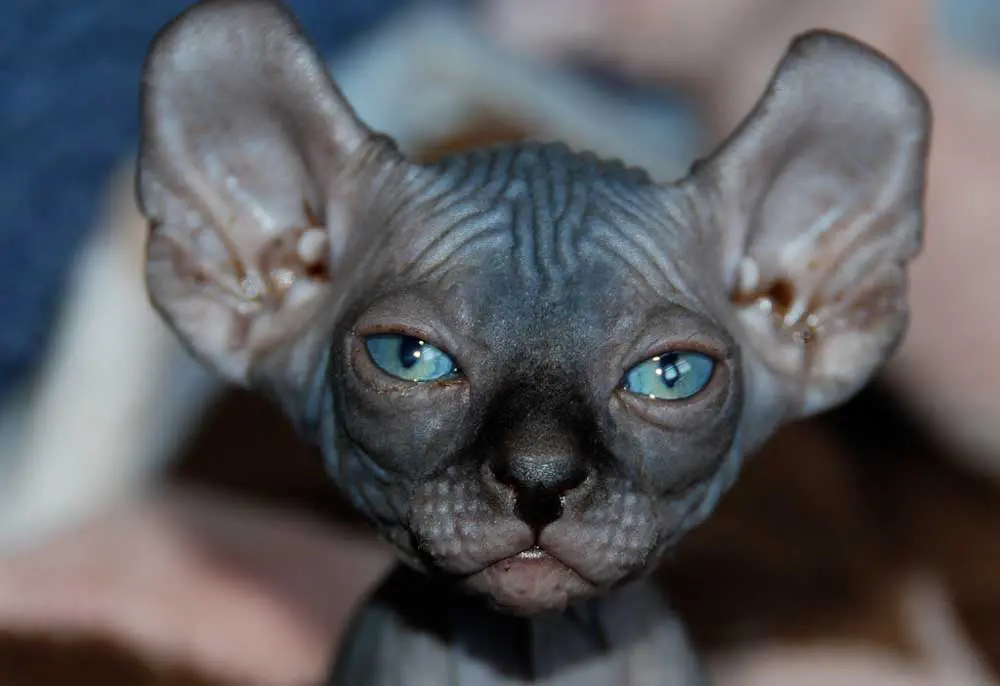
The other striking feature is that it is a naked cat, or covered only with a fine down on the legs, the ears, nose and tail. The vibrisas are short or absent, and there is no hair in the ears. Skin feels like a peach or suede. At birth, it is heavily wrinkled. This appearance diminishes in adulthood, but there are still deep wrinkles on the shoulders, ears and muzzle.
Its body, similar to the of the Sphynx, it is semi-linear, well built, with an athletic silhouette and legs long and thin. The tail it's long and thin. The head is elongated, with prominent cheekbones and short or absent vibrissae. Last, big ones eyes ragged lines complete the portrait of this elegant cat.
The male is on average a 25% larger than female.
Last, all coat colors are allowed, with or without marks.
Size and weight
Size: 30 cm.
Weight: Of 3,6 to 6,8 kg
Character and skills
The Elf cat was bred to perpetuate the best personality qualities of Sphynx and American Curl cats, like kindness and affection. They are also considered one of the most intelligent breeds of cats. Being so outgoing and sociable, want more contact and interaction with humans than the average cat and, therefore, are better suited to homes where they are not left alone for long periods of time. They will also be happier sharing their home with a feline companion to play with..
The Elf cat they are active and friendly cats who love to be the center of attention, and they are also extremely curious and playful (and they are known to get into some mischief). Prospective cat owners Elf cat they should be aware that these cats love to climb and will want to play with just about anything in their reach, so it is essential that they have plenty of play time and lots of toys, as well as high shelves or other safe spaces where they can climb.
Grooming and care
The Elf cat is generally regarded as a low-maintenance breed of cat. Due to the fact that the Elf cat Does not have hair, potential owners won't have to worry about moving. But, these cats will need a bath or routine cleaning. Regular grooming is important to remove secretions from the skin, otherwise a Elf cat can become sticky to the touch or even develop skin problems. Many Elf cat tolerant (and they even enjoy) an occasional bath.
The Elf cat it is a very sociable and friendly breed, meaning it can easily fit into most home environments and family structures. They also adapt well to other pets in the home. But, their lack of hair means that they must remain indoors for their comfort and safety.
As with their ancestors American Curl, the ears of these cats must be treated carefully so as not to damage the cartilage. With or without soft cover, the Elf need protection against UV rays. It also, without hair, they react to heat and cold just like we do. If your need a sweater, he also needs it Elf cat.
Health and nutrition
Because of her hairless body, sunburn, Sensitivity to cold and heat and other skin problems are potential concerns for owners of the Elf cat. Your delicate skin can also be easily injured, for example, when playing with a feline companion.
The Elf cat is considered a healthy cat and, being a new breed, Genetic health problems have not yet been determined. But, may be susceptible to health conditions that affect their parent breeds, such as heart and gum problems.
Food
Like all races, the Elf cat may be susceptible to weight-related problems, such as obesity or heart disease, so you should eat a high-quality, protein-rich diet, and get plenty of exercise in the form of games with your family.
The potential owners of the Elf cat they should know how much the race Sphynx as the American Curl tend to have a robust appetite (and they have a bulging belly to prove it), so it is much more important to feed these cats a proper and balanced diet.
The Ojos Azules cat still one of the rarest feline breeds in the world, and the number of breeders remains confidential.
Photo: elblogdegatos.com
Content
History
The history of Ojos Azules cat started on 1984 in New Mexico ((UNITED STATES)UU.), when a family discovered a colony of stray cats, some of whose members had intense blue eyes. Their attention focused on a tortoiseshell cat that they took in and called Cornflower.
She was bred with other unrelated cats and gave birth to kittens, some with the same eyes. More intense than the Siamese cat, this blue color is not linked to the color of the cat's fur, and the gene responsible for it does not cause strabismus or deafness, unlike other blue-eyed cats.
In fact, regardless of race, it is the absence of melanin in the iris that makes the cat's eye blue. But, the cause of this absence is not the same; in the case of Ojos Azules, it is a hitherto unknown gene that is in the origin.
It was the discovery of this new gene, that allowed to have cats with dark fur and blue eyes, without being affected by strabismus or deafness, which led to the International Cat Association (TICA) to recognize this breed in 1991 and to set a standard, although at that time it was still very rare. In fact, in 1992 they only registered 10 specimens.
But, Later research showed that the gene responsible for blue eyes was also responsible for a life-threatening cranial deformity. A subsequent investigation by the DRA. Solveig Pflueger, judge and president of the TICA Genetics Committee since its creation in 1979, confirmed the link. But, at the same time he discovered that the gene is Heterozygosity, so these dangerous cranial deformities can be avoided by crossing a blue-eyed individual with a standard-eyed individual. This led to prohibiting the breeding of two Ojos Azules cats together.
At the same time, a Ojos Azules in Australia, although no specimen had been imported there. This led breeders to believe that this mutation could occur spontaneously in the domestic cat population..
In France, the LOOF (Livre Officiel des Origines Francaises) established a standard for Blue Eyes in 2004.
But, contrary to what is usually observed, recognition of the breed by reference bodies did not lead to its expansion: the Ojos Azules still one of the rarest feline breeds in the world, and the number of breeders remains confidential. In fact, in 2019, both the TICA and the LOOF eliminated the Ojos Azules from the list of recognized breeds.
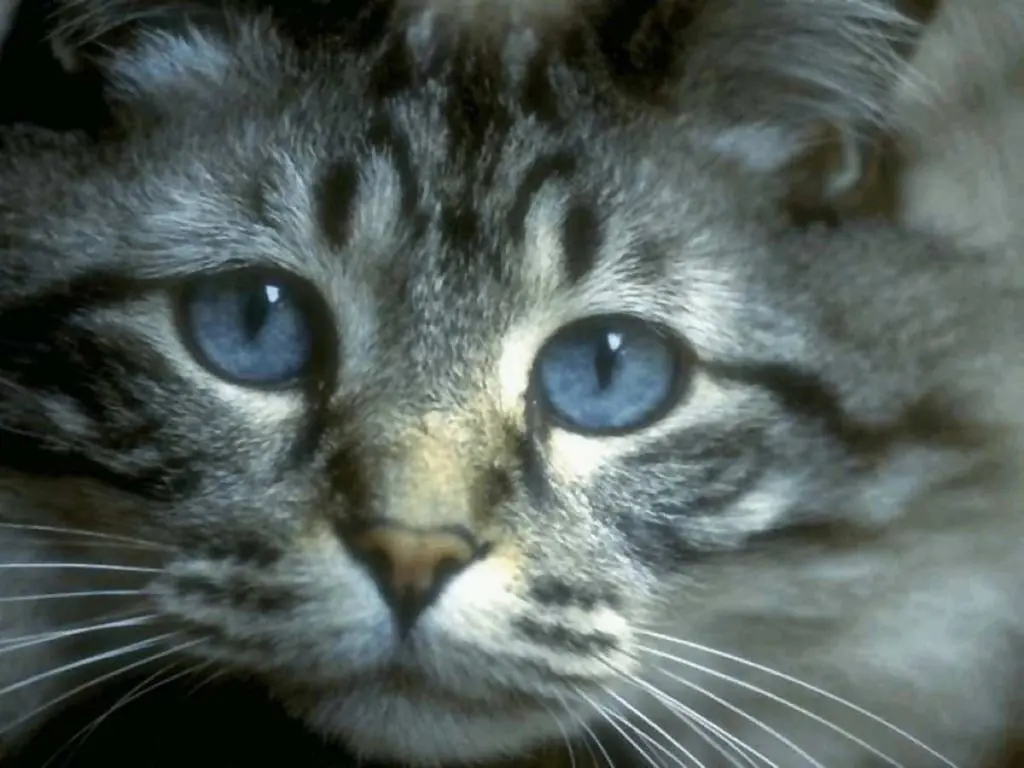
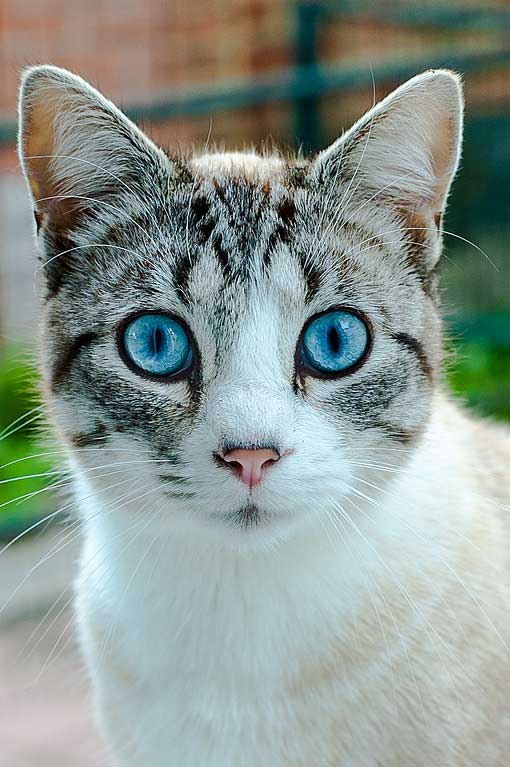
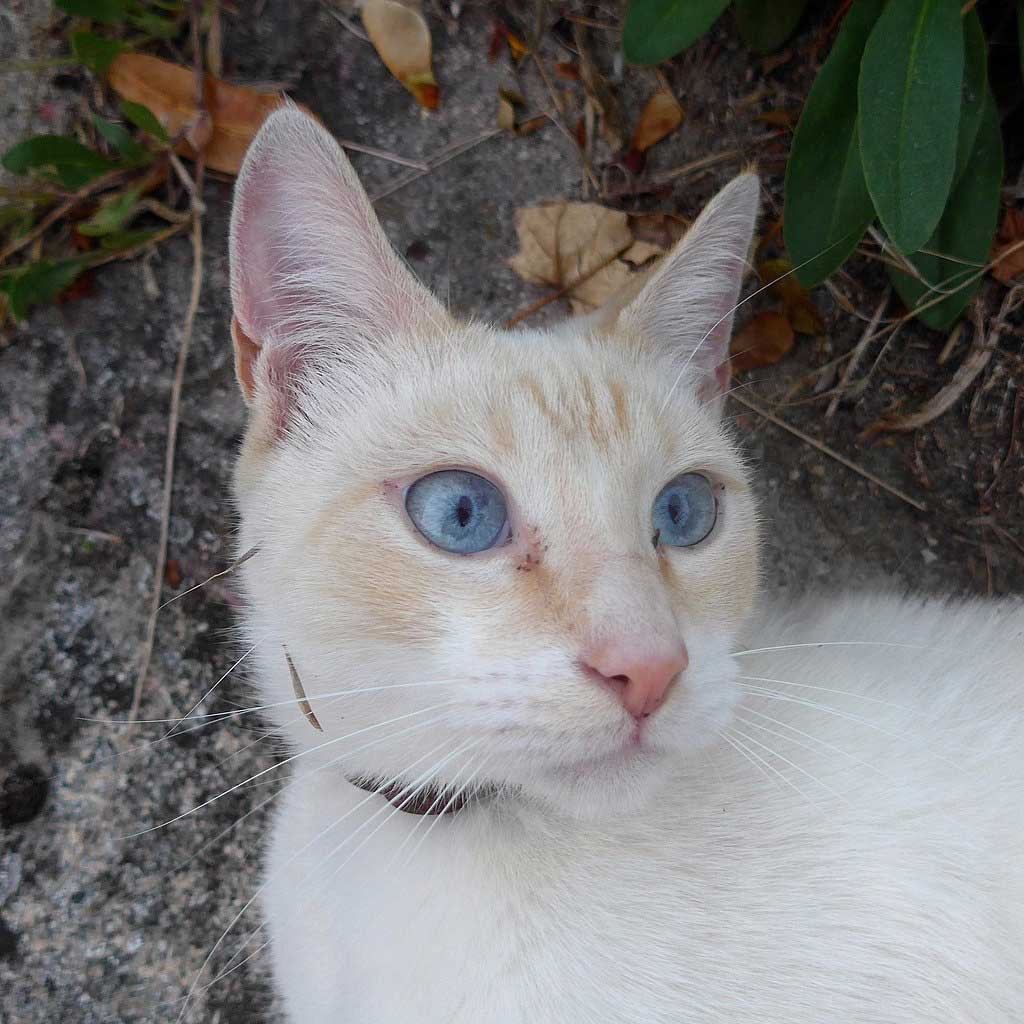
The main feature of the Ojos Azules cat It, as the name reflects, her magnificent deep blue eyes.
Otherwise, the standards describe a body rectangular with a fine and solid bone structure, well proportioned and flexible: it is about, because, of a semi-linear cat. The legs hind legs are slightly longer than front and legs, round or oval, they are rather small and delicate. The tail is of medium length and tapers to the tip.
The head it is triangular seen from the front, with prominent cheekbones and a slightly rounded forehead in profile, followed by a slight stop at the beginning of the nose. The ears medians are rounded, while the muzzle is rather square. The eyes they are almost round and as big as possible. Different colored eyes are tolerated, being one of them blue and the other green, gold or copper.
The fur it can be short or medium long and has a silky smooth texture. All colors and patterns are accepted, except for the White, to distinguish this breed from the usual white cats with blue eyes.
The gene responsible for blue eyes also usually gives white markings on the tips of the legs, ears and tail.
Size and weight
Size: 30 cm.
Weight: Of 4 to 6 kg
Varieties
By recognizing the Ojos Azules in 1991, the TICA (International Cat Association) distinguished between two different varieties in the first published standard: the Ojos Azules Shorthair and the Ojos Azules Longhair, having a medium length coat.
Character and skills
The rarity of Ojos Azules cats makes it difficult - even dangerous- draw conclusions about their character. But, owners of this breed describe them as affectionate, loyal, smart and playful.
Health
The population of the Ojos Azules cats it is not large enough to have reliable information on possible health problems specific to this breed.
But, in the early days of the breed, some individuals were affected by a cranial deformity that was sometimes fatal.
A study carried out later on the specific gene of this breed that is at the origin of the color of its eyes made it possible to establish that it was enough not to breed two individuals with blue eyes.: being the gene Heterozygosity, kittens born from the union between a Blue Eyes and another cat that does not have blue eyes are protected from this risk of cranial deformation. In fact, this risk has already been eliminated: current specimens no longer suffer from this life-threatening malformation.
The Ojos Azules cat It is an easy-care breed of cats: one brushing a week is enough to remove dead hair.
The teeth, the eyes and ears should also be checked once a week to avoid any risk of infection.
Last, if the claws are too long because they do not wear out naturally, it is necessary to trim them from time to time.
Food
The Ojos Azules can be commercially fed, either with kibble or cat food. Quality industrial products provide all the nutrients and vitamins necessary for good health.
For sale "Ojos Azules cat"
The rarity of Ojos Azules cats makes it very difficult to get one of these cats. The few specimens that exist are, Obviously, in the hands of breeders, and no kittens are officially available for sale.
The Desert lynx cat is called many times Caracal. This is wrong, since the Caracal does not belong to the genus Lynx nor is it closely related to lynxes. In fact, is more related to the serval, with which it is often crossed while in captivity.
Content
History
The cat Desert lynx is originally from the United States and is the result of crosses between the American shorttail lynx (bobcat) with domestic cats.
The races used to create the Desert lynx at first are the Maine Coon cat, the Manx cat, Pixie Bob cat and the Bobcat (Lynx rufus).
You do not need a license to own a Desert lynx cat.
Crossbreeds with unregistered or purebred cats are allowed until 1 in January of 2013. But, such crosses must be chosen carefully to complement the general type of the breed group Desert Lynx, It includes Desert Lynx, Highland Lynx, Mohave Bobs and Alpine Lynx. After the 1 in January of 2013, external crossings are not allowed, except with cats listed in the breeding book or in the foundation book of the Rare and Exotic Feline Registry (REFR) or from another record.
All the white kittens (including straight and curly hairs and straight or curly ears) are recorded as Alpine Lynx.
All non-white kittens with curly fur are recorded as Mohave Bobs.
All non-white kittens with straight hair and straight ears are registered as Desert Lynx.
All non-white kittens with straight fur and curly ears are recorded as Highland Lynx.
The curly ears of the Highland Lynx are due to a dominant gene that curls the ears and reduces their size. When these races interbreed, the resulting smooth-eared kittens do not carry any curly-eared genes.
Non-white kittens do not carry the gene for the color white. So, breeders who wish to work only with Desert Lynx they wouldn't have to worry about getting recessive curly-eared genes in Desert Lynx have a cat Highlander cat in his ancestry. Breeders who do not wish to work with Alpine lynx would not have to worry about white kittens as long as neither parent is an Alpine lynx. Alpine Lynx.
Curly coat is caused by a dominant gene. Breeders who do not wish to work with him Mohave Bobs they don't have to worry about this as long as neither parent has curly fur.
These breeds are identical in body type.
*There are several breeds of cats whose origins are speculated to be intertwined with the European wildcat (Felis silvestris). The most common are gato Pixie Bob and the races of the group of Desert Lynx (Desert Lynx, Highlander cat, Mohave Bobs and Alpine Lynx). It is important to note that DNA testing of these cats has not yielded positive results for the presence of DNA from European wildcat. There is no evidence that these cats have feral ancestry.
Physical characteristics
It is a big cat, strong and muscular. The head it's big and round, the males have the jaws more developed and wide. The snout It is square and the nose is wide. The ears are large, with tufts of hair long in the tips and along the inner edge. The eyes they are large, almond-shaped, its color varies between green and gold (They can be blue in the colors of "snow"). The neck he is thick and muscular, strong and muscular body, straight and with a very powerful lower train. The legs they are strong and straight, the feet large with tufts of hair between the fingers. The tail is short or may not be.
They can be short or long hair, its fur is soft to the touch. You can have three types of patterns in the drawing of his fur:
Marble: just like the previous ones are but the pattern with rosettes instead of spots.
Clouded leopard: stains can become very large and in different ways.
Character and skills
They have a calm temperament, they are playful, affectionate and very loyal to their owners. They are intelligent and love to family life, they are also very social with other animals.
Although the Desert Lynx it is a cross between domestic and wild cat breeds, some owners say it behaves more like a domestic dog than a cat. While some cat breeds are distant, this cat loves spending time with his humans.
Evidence shows that the Desert Lynx it is a good option if you have children, since it adores its humans and is a loving race. But, it is vital that socialization begins early so that boundaries are established by both parties. It is important to keep in mind that each cat is an individual, so not everyone will react in the same way with children.
For sale "Desert lynx cat"
If you are looking for a Desert lynx cat, ask the breeder that cat or kitten is registered in the IPCBA.
If not and the cat is registered with REFR or other record, then what you are buying is probably a Highlander cat.
Recognized by the CFA, CFA, TICA, WCF, FFE, AACE, ACF, ACFA/CAA
Origin: Russia
Antiquity: decade of 1980
Character: Sensible and resourceful
Weight: 4,5 to 9 kg
Content
Characteristics "Siberian cat"
Coexistence is important that you have with your new friend. Before considering the acquisition of a cat of the breed "Siberian cat" you know certain factors. You must take into account their character, their need for exercise, their interaction with other pets, their care and if you have small children, their level of tolerance towards them.
Joy
4,0 of 5 stars (based on 1 review)
Activity level
3,0 of 5 stars (based on 1 review)
Friendliness to other pets
4,0 of 5 stars (based on 1 review)
Friendliness to children
4,0 of 5 stars (based on 1 review)
Grooming requirements
2,0 of 5 stars (based on 1 review)
Vocality
2,0 of 5 stars (based on 1 review)
Need for attention
3,0 of 5 stars (based on 1 review)
Affection towards its owners
4,0 of 5 stars (based on 1 review)
Docility
3,0 of 5 stars (based on 1 review)
Intelligence
4,0 of 5 stars (based on 1 review)
Independence
3,0 of 5 stars (based on 1 review)
Hardiness
5,0 of 5 stars (based on 1 review)
History
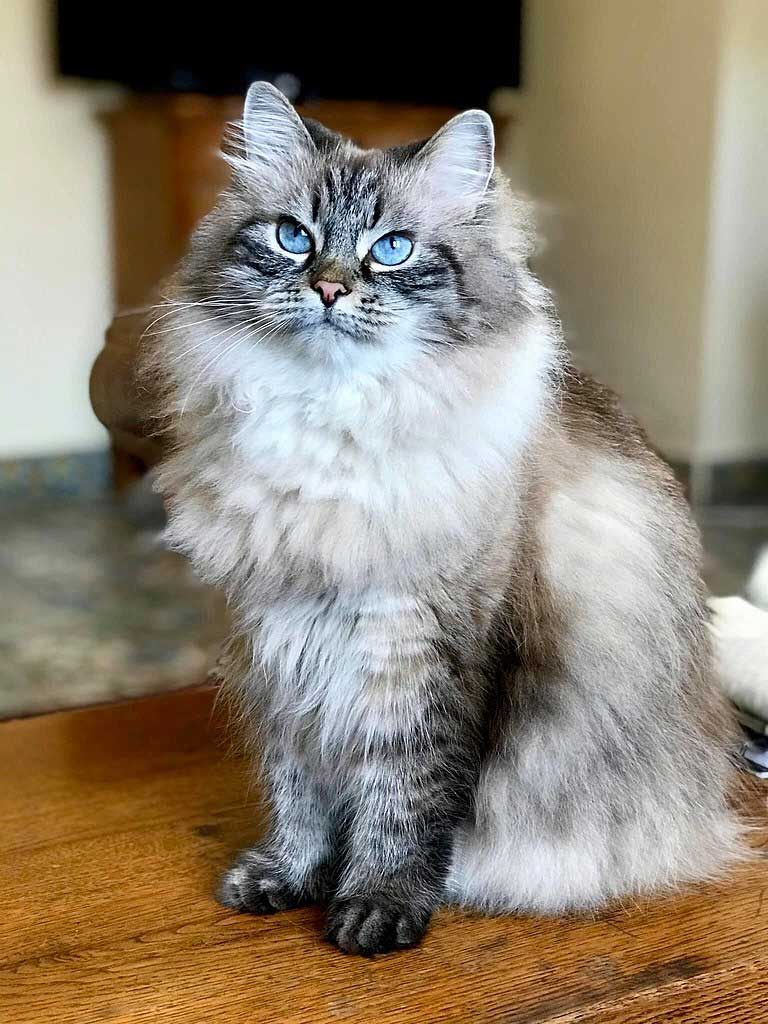
The Siberian cat is a breed of cat native to Russia and has a natural origin: already roamed the Siberian forests more than 1000 years. Its exact origin is not known, but the fact that the mutation responsible for long hair in cats appeared almost simultaneously in regions as distant as Siberia, Asia minor (which corresponds to the eastern part of Turkey, and from which the Turkish Angora cat and the Turkish Van Cat) and persia (which became Iran, and from which the Persian cat) suggests that these different long-haired cat breeds share common origins.
In fact, some specialists think that these cats appeared in Turkey and that human migrations to the Great North explain their appearance in Siberia. On the other hand, others believe that the first long-haired cats originated in Russia and spread to Asia Minor, giving rise to Turkish Van Cat, to the Turkish Angora cat and to the Persian cat, but also to Scandinavia, where would they be at the origin of Norwegian Forest Cat , and then to North America, where they would have evolved to Maine Coon cat.
But, it is certain that they played an important role for the local populations who had to survive in the extreme conditions of Siberia, since they protected the provisions from rodents. Russian folklore says that they once weighed more than twenty kilos and were true "guardian cats.", who protected their homes from wild animals and hunted other animals to feed their families. Still today, many stories tell of magical cats whose mission is to protect children.
The Siberian cat It is known in Europe and North America since the 19th century. It was even one of the breeds exhibited in the first feline exhibition in modern history., held in 1871 at the Crystal Palace in London. It was also presented in the United States at 1884, at the exhibition held in the Madison Square Garden from New York. It is documented in the book Our Cats de Harrison Weir de 1889 and in the book Domestic & Fancy Cats the John Jennings the 1898. A photograph of a representative of the breed also appears on Concerning Cats, written by Helen Winslow and published in 1900.
But, the Siberian cat disappeared from the international scene for much of the 20th century, since his country of origin was isolated from the rest of the world by the Soviet regime that came to power in 1917. It was not until the decade of 1980 when Russian cat lovers were once again free to own domestic cats and organize into associations to define the rules. He had a great success at the first Moscow cat show in 1988, and soon became the national cat of Russia.
Female Adult Siberian Cat with Seal Lynx Point Coat Color – The voice, CC BY-SA 4.0, via Wikimedia Commons
In 1990, Ophelia, Naina and Kalostro they became the first Siberians to set foot on American soil in almost 100 years, When Elizabeth Terrell, a creator, exchanged them with Nelli Sachuk for four gatos himalayos. A few weeks later, David Boehm, another american breeder, traveled to Russia to bring fifteen cats from the Siberian jungle. Thanks to these two enthusiasts, the breeding of this breed began in North America..
Once the Iron Curtain fell, its international recognition was fast: the International Cat Association (TICA) was the first to do so in 1993, followed by Fédération Internationale Féline (FIFé) in 1997 and then for the American Cat Fanciers’ Association (CFA) in 2000. Surprisingly, the first copies Siberians did not arrive in the UK until 2002. Two years later, in 2004, the Governing Council of the Cat Fancy (GCCF), the country's main body, granted the breed full recognition, including the right to compete in exhibitions organized under their auspices.
Today, as well as remaining extremely popular in his home country, the Siberian has clearly found an audience beyond its borders, helped by his reputation, although unfounded, hypoallergenic cat.
In United States, for example, the Siberian cat stands above the position 20 (of 45) in the classification of breeds according to the number of annual registrations in the CFA. Its success is also growing in Europe. In Great Britain, GCCF statistics show that births in the second decade of the 21st century have risen from about 100 per year to more than 300, which places it in the top ten of the favorite cat breeds of the British.
There is also a blazing growth in France: the statistics of the Official Book of Feline Origins (LOOF) show that if in the mid-1990s 2000 only thirty specimens were registered per year, this figure had already exceeded 200 in 2010, and then cross the barrier of 1000 in 2016 and overcome the 1500 at the end of the decade. Since 2015, is one of the 10 favorite breeds of cats of the French, representing more than 3,5% of registered births.
Physical characteristics
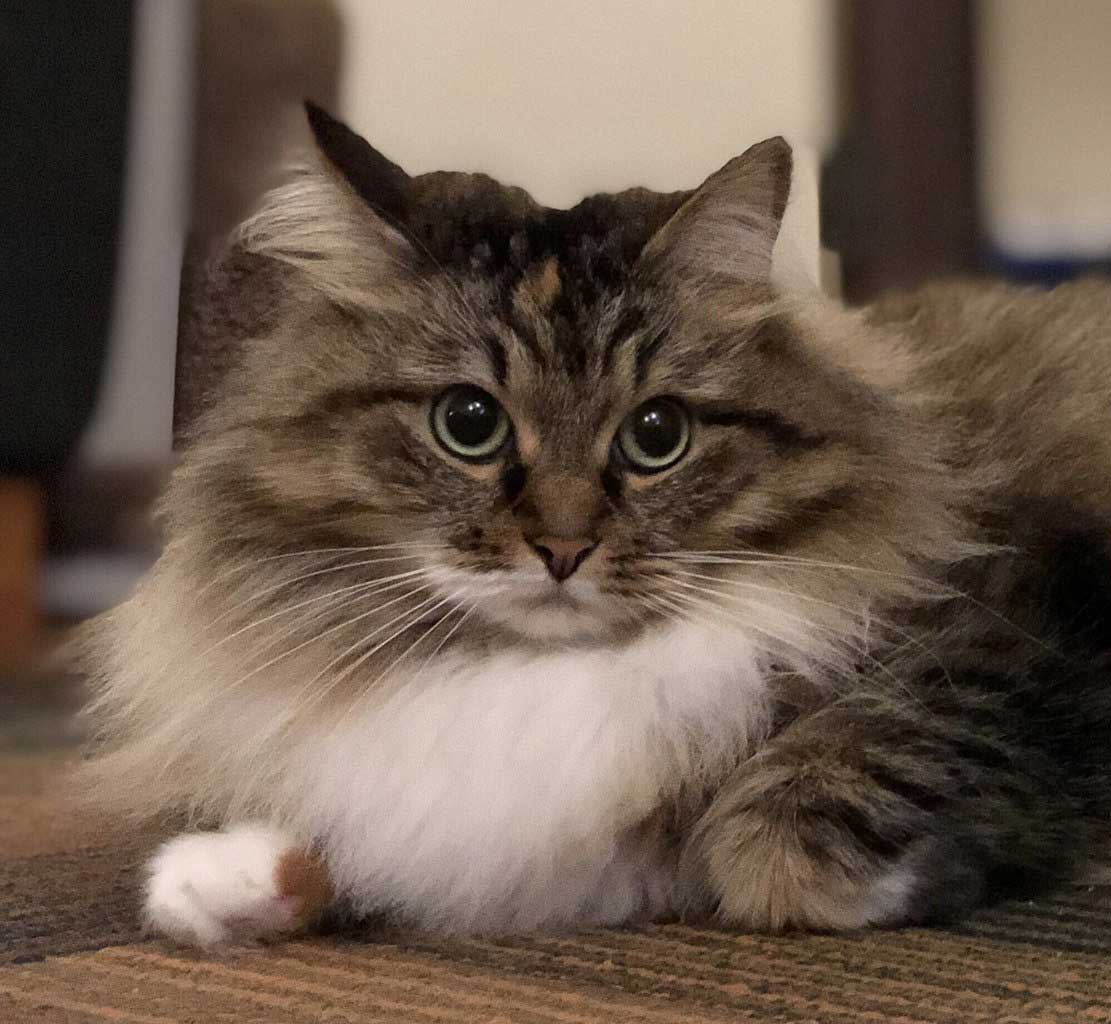
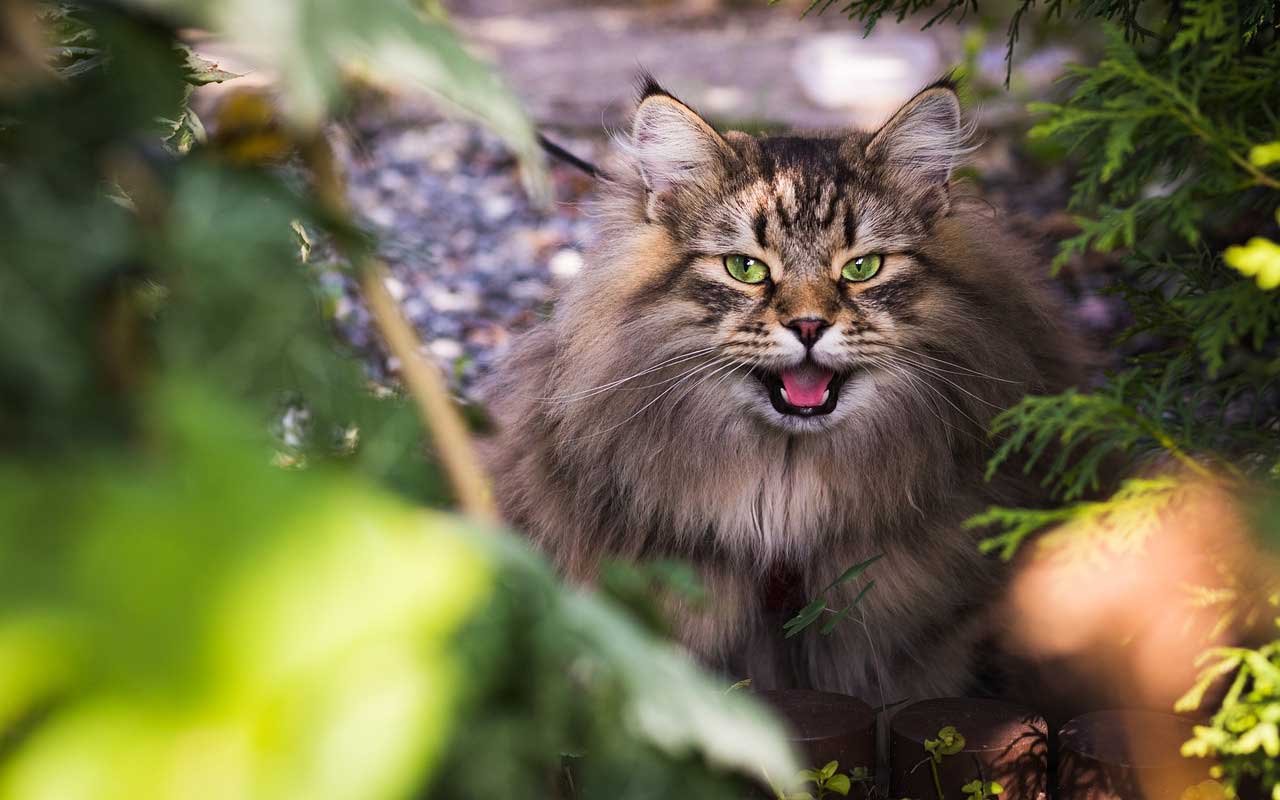
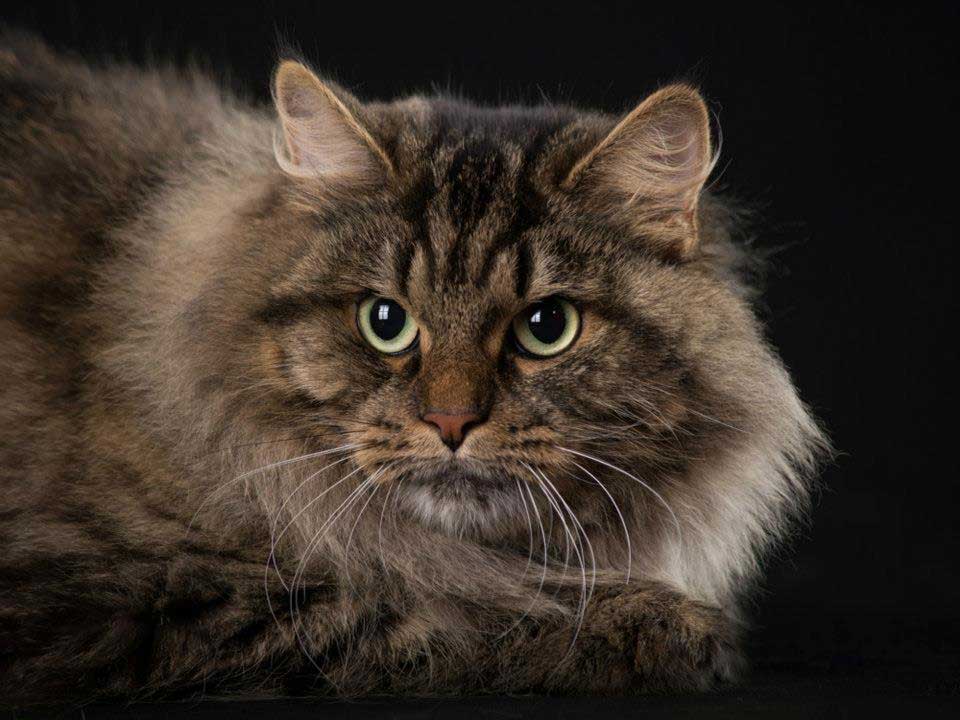
The Siberian has a semi-cobby midline morphology. Sometimes it is confused with the Maine Coon cat or the Norwegian Forest Cat , as it has a similar general appearance, but it differs by having a much more rounded head and body.
Of average length, He is powerfully muscular and his back is slightly arched. The legs they are also very strong with a solid bone structure, the rear ones being somewhat longer than the front ones. The tail is slightly shorter than the body, very full and sharp.
The head is wide and has a triangular shape with rounded sides when viewed from the front. Profile, the rounded forehead ends in a slope at the nose. The ears are size medium, wide at the base and ends in a rounded shape. The eyes they are big, almost round, slightly oblique, and they can be green, yellow, coppery or blue in some white-coated dogs.
The fur of the Siberian it is medium to long, and consists of three parts: abundant down and undercoat, and a thick, shiny protection layer. It is much more abundant in winter than in summer and forms a mane around the neck.
Except for chocolate and lilac, all the coat colors They're possible, but the brown tabby is the most common. All coat patterns are also accepted by the standard, but some organizations, like the FIFé (Fédération Internationale Féline), consider the Siberian colourpoint as a breed apart, call Neva Masquerade.
In any case, this cat grows slowly, as it does not reach full maturity until it is about five years old. But, most of the growth occurs during the first 18 months.
Last, the sexual dimorphism it is very marked: the male is much more imposing than the female.
Size and weight
Male size: 30 – 38 cm.
female size: 28 – 35 cm.
Male weight: 7 – 11 kg
female weight: 5 – 9 kg
Varieties of "Siberian cat"
The fur colourpoint (a light color on the body and darker on the tips of the legs, the tail, ears and face) is accepted by most associations, as the International Cat Association (TICA), the World Cat Federation (WCF) and the Livre Officiel des Origines Félines (LOOF), the reference organization in France. But, some consider cats Siberian colourpoint like a different race.
Is the case, in particular, of the Fédération Internationale Féline (FIFé), that since 2011 registers them with the name of Neva Masquerade cat. The LOOF also recognizes the term Neva Masquerade, but in conjunction with the name «Siberian«: in his eyes, is simply another way of designating siberianos colourpoint, but by no means a breed in its own right.
A 3-year-old Calico Tabby Siberian Cat – Lilllio, CC BY-SA 4.0, via Wikimedia Commons
Character and skills
The Siberian he is a loving and devoted cat who loves his family. He waits for his owner at the door when he comes home from work, and immediately begins to tell him about his day following him around the house. Loves to participate in various household activities, either helping in the kitchen, lying on the computer keyboard where his owner is working, or sitting in front of the TV that its owner is watching.
Having said that, although he loves to receive attention from his owners, not overly intrusive or demanding, and he is perfectly capable of waiting patiently for his owners to have time for him. They can be left alone during the day without separation anxiety.
They are also excellent hosts and, after observing the newcomer from a distance to meet him, they will not hesitate to come over to greet you and participate in the conversation. It is also an ideal cat breed with children who have learned to behave with a certain respect., since he likes to play with them and has enough patience to tolerate some oddities and clumsiness.
His outgoing character also applies to his peers, but also the dogs: he is not afraid of anything and is aware of his respectable size, is not easily impressed and likes to resolve conflicts amicably.
On the other hand, has retained a strong hunting instinct that makes it very difficult, yes not impossible, cohabitation with rodents and birds. The fish are not safe either, especially because they have a certain fascination for water. This can lead to, for example, to play with the water in your bowl or toilet, or even to spray his master when he is bathing.
The Siberian cat he is extremely intelligent, able to learn to retrieve objects (activity that you especially enjoy) or to be walked on a leash, but also to solve complex problems, like opening the closet door or reaching for that toy that its owner thought was out of reach. Teaching your cat tricks is a great way to spend quality time with him., while giving you the opportunity to exercise both physically and intellectually.
They are also very good at understanding human emotions and know when to go play with a cheerful owner., or comfort someone who has had a bad day by purring on their lap to show their affection. This makes them an excellent therapy cat..
Although the Siberian cat has a rather calm and quiet character, he is also an active cat that retains a playful side throughout his life. They are surprisingly agile for their size, being able to climb almost anywhere and make dizzying jumps. Some owners still wonder how their dog got the spider in the living room.… And is that, like most of his peers, he likes to be in a high place from which he can admire his territory; if you think your cat tree is not tall enough, do not hesitate to find a closet more to your liking.
Curious and without any notion of property rights, does not hesitate to steal any object to make a toy with which to play. Thus, it is strongly recommended to store jewelry and other valuables in a safe place.
On the other hand, although they are delighted to have access to the outside and to be able to run and climb at their ease, they are still a breed of cats capable of living in a flat. In fact, for a Siberian, the company and affection of your family are even more important than physical exercise.
Last, this cat has a wide vocal range of soft meows, trills and chirps, but also a powerful purr reminiscent of a boat engine. They are not as talkative as the eastern races, but they like to communicate and give their opinion.
Siberian cat
Grooming and caring for the "Siberian cat"
The triple coat of the Siberian it is low maintenance, since it does not tend to knot. But, a thorough brushing is necessary every week to remove dead hairs and distribute sebum from the skin. During the moulting season, in autumn and spring, the dog loses a lot of hair, so it is recommended to brush it every day. This grooming session is also an opportunity to share a complicity moment with your pet., especially since he especially appreciates staying quietly on his owner's lap while he is being brushed.
On the other hand, it should be noted that, against popular belief, the Siberian it can perfectly provoke allergic reactions in its master. The amount of Fel d1 (an enzyme that causes allergies in people sensitive to it) in the saliva of the Siberian cat is much lower than that of a cat without a pedigree, but the amount is not zero. Thus, it is simply a race of hypoallergenic cat, that is to say, that is less likely to cause an allergy.
Unless you want to expose your cat in a feline exhibition, it is rarely necessary to bathe him. This is certainly a good thing, as it is very difficult to shampoo their thick, waterproof fur.
But, the weekly grooming session is an opportunity to check your teeth, eyes and ears looking for dirt, and clean them with a damp cloth if necessary. This will reduce the risk of cavities and infections of all kinds.
Last, if your dog spends a lot of time outdoors, it may be that natural wear and tear is enough to file your nails. If not the case, it is advisable to trim them with a nail trimmer when they have become too long, so that they are not hindered in their movements.
Indoor or outdoor cat?
The Siberian cat it is a nature loving breed that spends a lot of time outdoors if allowed to roam freely. This independent cat loves to roam for hours in nature, hunt and explore the environment. Like a good hunter, Siberian he usually takes his prey home.
That you Siberian gift you with dead birds and mice is not to everyone's liking and should be considered prior to purchase. If the cat stays indoors, a large floor with a sturdy scratching post is a minimum requirement. The ideal would be a safe garden, where the cat can live its desire to move. With the proper precautions, your cat will live happily.
How much activity does he need? "Siberian cat"?
As an active breed, the Siberian cat needs a lot of space to play and hunt. Independent cats prefer to occupy themselves and explore their environment. Of course, especially at a young age, they still like to be kept busy with a gaming rod or mice.
Intelligence toys for cats also keep them busy and boost their intelligence. They also like to play with other cats, so they should not be alone. As one of the few cats, to the Siberian he likes to play with water and can also keep busy for a long time with a leaky faucet.
The Siberian it is very robust. Able to live in environments as difficult as the Siberian forests from which it originates, It is a breed of cat that does not fear the cold. But, not at its best when temperatures exceed 30 °C: to avoid any risk of heat stroke, it is then important to keep it in a shady area or even with air conditioning.
It also, have a predisposition to certain genetic diseases. This is the case, in particular, of :
The feline hypertrophic cardiomyopathy, a relatively common disease in domestic cats that causes abnormal development of heart tissue, with potentially serious heart problems. Screening of parents can minimize, but not delete, the risk of transmission to the kitten;
Deficiency of pyruvate kinase (PK-def), which causes a problem in red blood cell metabolism leading to anemia of varying severity in cats. There is a DNA test to identify the gene; a breeder's siberian cats responsible must exclude the carriers of the offspring.
It also, the fact that the Siberian forest cat being so large does not make you immune to one of the greatest health risks of a domestic cat: the Obesity. Responsible owners should ensure that their cats maintain an adequate weight and seek the advice of the veterinarian if they notice a tendency to be overweight.
Life expectancy
Of 12 to 15 years
Food
The Siberian forest cat he has no problems with his diet; can be fed commercially available industrial cat food without any problem. But, choosing a quality product that is suitable for your age and activity level is essential to ensure that you are getting all the nutrients and vitamins you need.
By being able to self-regulate, can be left with food at all times.
But, it is the owner's responsibility to ensure that the dog is not overweight and, Therefore, weigh him regularly to monitor his weight. In the event of deviations, consultation with a veterinarian will allow to establish a more adequate feeding program.
For sale "Siberian cat"
It is only possible to get a Siberian cat of breeders of this breed. It is preferable to resort to a family breeding, where the cat is born near its breeder. The small size of the structure and the proximity of the human being have allowed it to develop its familiar and endearing character.
If raised in good conditions, the Siberian cat he will not be wild and he will be very close to his master. It can become the "dog-cat" that the owner expects, the one who will be curious about strangers, the one who will wait for his owner behind the door and the one who will follow him everywhere. Please note that if the cat you are purchasing does not have a pedigree, It will not be considered a pedigree cat but a "street cat".
Having said that, the price of a Siberian cat ranges between 700 and 1.000 EUR. The price depends mainly on whether you buy a companion cat or a breeding cat.
Portrait of a Brown tabby Siberian – Sibirela, CC BY-SA 3.0, via Wikimedia Commons
The Donskoy they are very loyal; in fact, their loyalty is often compared to that of dogs.
Content
Characteristics "Donskoy (Don Sphynx)"
Coexistence is important that you have with your new friend. Before considering the acquisition of a cat of the breed "Donskoy (Don Sphynx)" you know certain factors. You must take into account their character, their need for exercise, their interaction with other pets, their care and if you have small children, their level of tolerance towards them.
Joy
4,0 of 5 stars (based on 1 review)
Activity level
4,0 of 5 stars (based on 1 review)
Friendliness to other pets
4,0 of 5 stars (based on 1 review)
Friendliness to children
4,0 of 5 stars (based on 1 review)
Grooming requirements
2,0 of 5 stars (based on 1 review)
Vocality
2,0 of 5 stars (based on 1 review)
Need for attention
4,0 of 5 stars (based on 1 review)
Affection towards its owners
5,0 of 5 stars (based on 1 review)
Docility
5,0 of 5 stars (based on 1 review)
Intelligence
4,0 of 5 stars (based on 1 review)
Independence
2,0 of 5 stars (based on 1 review)
Hardiness
3,0 of 5 stars (based on 1 review)
History
Until the end of the years 80, the Canadian sphynx it was the only known hairless cat. The discovery of Donskoy in Russia this situation changed. This cat is also known as Don Sphynx or Don Hairless, in reference to the place where it first appeared and its resemblance to the Sphynx cat.
The history of the appearance of Donskoy It is worthy of a children's story: in 1987, in the city of Rostov-on-Don, located in southwestern Russia, near the Sea of ​​Azov and the Black Sea, a teacher named Elena Kovaleva took in a kitten that had been mistreated by children who had used it as a soccer ball. Called her Varvara. As the kitten grew, he started to lose his hair, suggesting skin diseases or parasitic infections such as ringworm. Various treatments were administered to try to fix the problem, But it was in vain. When Varvara gave birth to her first litter of kittens a few years later, some were born with hair and others without hair.
As the kittens grew, those born with hair also began to lose it, as his mother had done. This particularity caused a strong rejection by its owners, that most of them decided to abandon them because they considered that they were in poor health. It was then that a breeder named Irina Nemikina, seduced by these original looking cats, decided to recover one of them and start a breeding program to make it a breed in its own right. The cat in question and its descendants then interbred with the Persian cat, European shorthair cat and the Siberian cat to expand the range.
The gene responsible for the hairlessness of Donskoy (Don Sphynx) is dominant, meaning both parents don't have to be hairless for their offspring to be. For this reason, the cats obtained from these crosses kept the particularity of their ancestor Varvara, although they also had the blood of long-haired cat breeds in their veins, like persian. This genetic characteristic distinguishes the Donskoy of the Sphynx, that it can only transmit its hairless appearance to its offspring if both parents have this characteristic: en el Donskoy, the gene that causes this morphological characteristic is recessive.
The Donskoy also crossed with him Oriental shorthair cat to create a hairless oriental: that's how he was born Peterbald cat in 1994 in St. Petersburg, the city that gave it its name.
The Don Hairless It was recognized in 1997 by the World Cat Federation (WCF), and then in 2005 by the The International Cat Association (TICA). But, was not up 2016 when the latter allowed him to participate in cat shows organized under its auspices. The International Feline Federation (FIFé) also recognized the breed in 2011. On the other hand, the Cat Fanciers’ Association (CFA) y el Governing Council of the Cat Fancy (GCCF) they have not yet taken the step.
Hereinafter, some organizations will not allow any crossing of the Donskoy with other breeds. This is the case of the WCF and the Livre Officiel des Origines Félines (LOOF) French. The TICA allows crossing with street cats.
Despite its recognition by some leading organizations, the Don Sphynx still one of the rarest cat breeds. These may include, in France, only 126 cats have registered in the LOOF between 2003 and 2019. More broadly, worldwide, currently there are only about fifty breeders of Donskoy (Don Sphynx), while there are more than 1500 for him Sphynx.
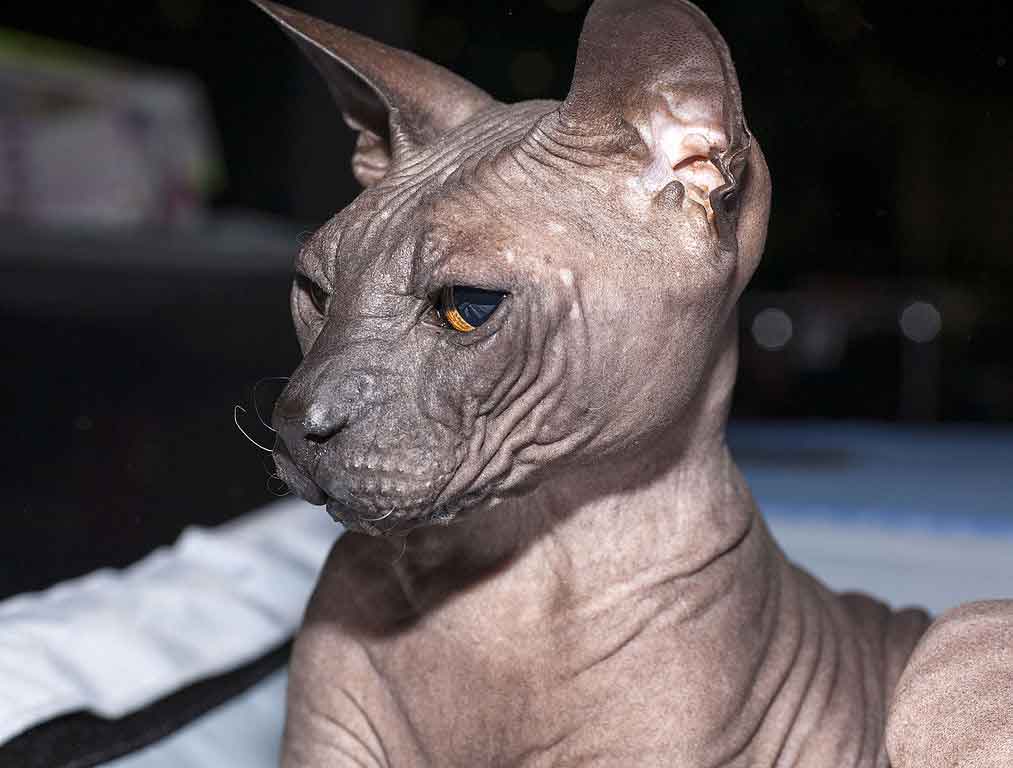
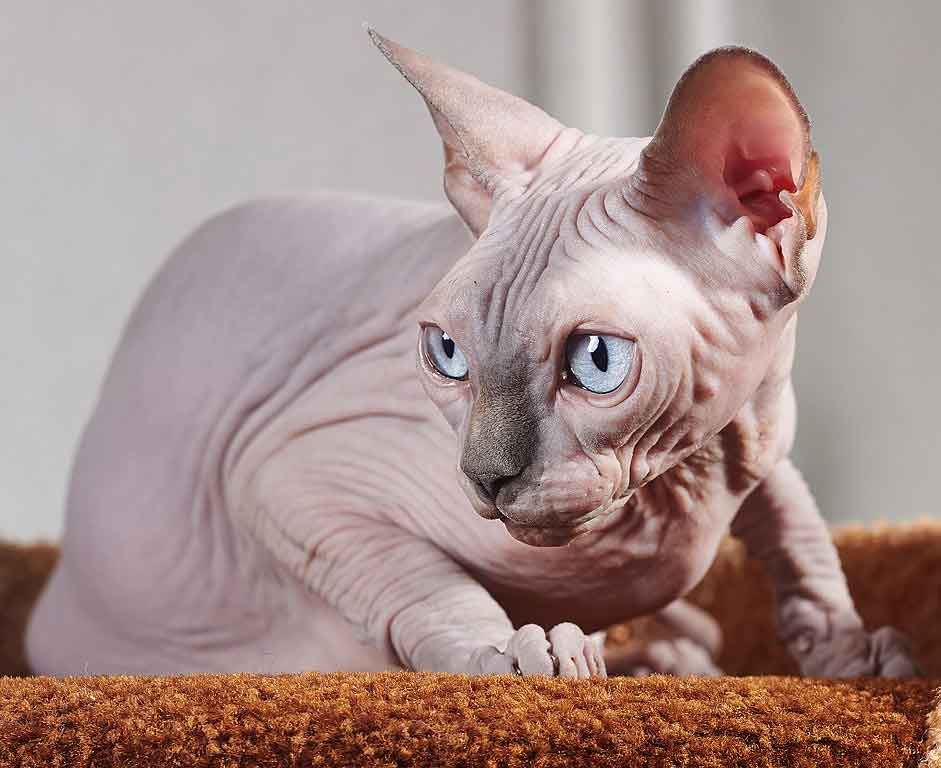
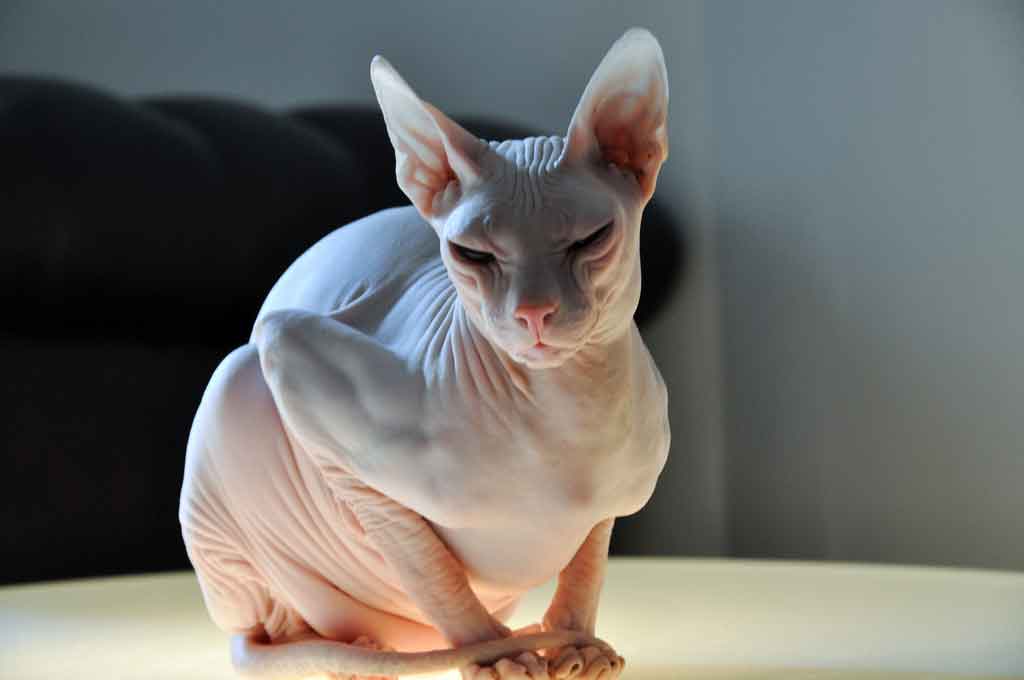
The Donskoy (Don Sphynx) is a midline cat with a semi-foreal subtype. He has an unusual physique, compact, elegant and athletic. His muscular form, strong bone structure and relatively broad torso and rump give an impression of strength. Groin area and abdomen are well defined, so that the abdomen resembles a "belly" where fat is stored during the winter. In fact, despite the impression of vulnerability given by the absence of fur, the Don Sphynx is actually a robust breed.
They have skin dotted with "wrinkles", but very pleasant to the touch, as it is warm and velvety. These numerous wrinkles are characteristic of the breed and are due to its great elasticity.. They are mostly seen on the head, cheeks, the double chin and under the chin, as well as on the top of the head, with vertical pleats on the forehead, that separate the ears and then spread out in horizontal folds around the eyes. In the body, hug the base of the neck, the chest, the base of the tail, the back and the side of the legs, and then they go from the flanks to the lower abdomen and groin.
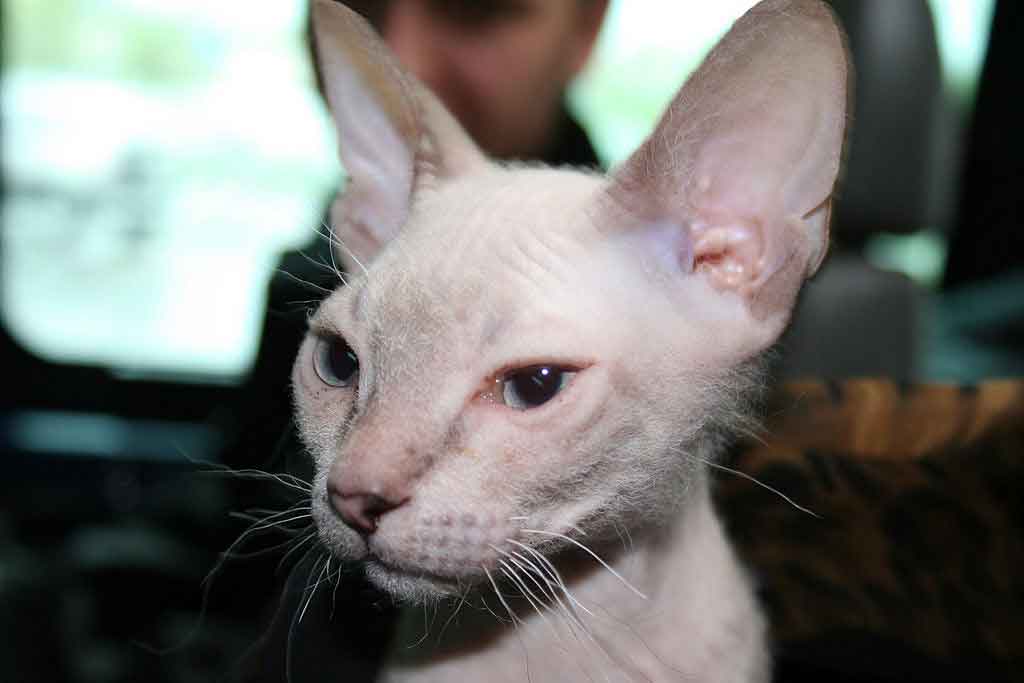
There are four varieties of Donskoys: one is born and remains hairless (the Rubber Bald), another is born with hair that is losing as it grows (the Flocked), a third keeps hair only in some places on the body (the Velour), and the latter retains much of its fine fur as an adult (the Brush).
In all four cases, the lightest coat of the Donskoy (Don Sphynx) makes it a hypoallergenic cat breed, which means that the risk of cat allergy is much lower than with other breeds. But, you have to know that there is no zero risk and that all cats can cause an allergic reaction, even the ones who are completely naked.
It also, it is the only breed that potentially acquires winter fur. During this time of year, a soft fur may appear on the chest, as well as hair on the tips of the legs. When the weather heats up, this fur disappears again, and the cat returns to its usual appearance.
In addition to this feature, the skin of the Don Hairless has original similarities with that of humans: sweat in hot weather and can even tan in the sun.
Their Paws they are shorter than the rear ones, but they are still well proportioned to the rest of the body. At the end of the Paws there are surprisingly long fingers separated by membranes, with large inward curved foot pads. The set does not differ from the fingers of a monkey. The tail is moderately long, fine and sharp from base to tip.
The head is V-shaped and angular. The eyes are almond-shaped and the ears they are very big.
Last, this breed is characterized by a certain sexual dimorphism. Males tend to be longer and more muscular than females. It also, have stronger cheeks and a neck, wider shoulders and head.
Size and weight
Male size: 20-25 cm.
female size: 20-23 cm.
Male weight: 3-7 kg
female weight: 3-7 kg
Varieties of "Donskoy (Don Sphynx)"
Contrary to what his hairlessness as an adult might lead you to believe, actually exist 4 varieties of Donskoy (Don Sphynx), 3 of which have fur at birth, before it disappears totally or partially:
The Donskoy Rubber Bald completely hairless from birth and remain so throughout their lives;
The Donskoy Flocked is born with a light down that is similar to that of a Siamese cat touch. This may go away over time and the cat may bald.;
The Donskoy Velour is usually born bald on the top of the head and with a soft, wavy coat all over the body. During the first year of life, the hair becomes progressively stiffer and disappears, except for the hair on the head, legs and tail. Some individuals lose their hair completely and go hairless like the Donskoy Rubber Bald;
The Donskoy Brush retains part of its fur as an adult. The coat is usually smooth, but it can also be wavy. Baldness usually appears on the head, upper neck and back.
If the appearance of Don Sphynx can arouse surprise, and even some negative preconceptions for their originality, worth going further. In fact, this cat is not only distinguished by its appearance: he is also endowed with immense qualities that make him an especially appreciated life partner.
The Don Sphynx not only is he a smart cat, but also has a temperate and affectionate character. The absence of fur does not prevent him from enjoying the caresses. It also, its soft and warm fur is very pleasant to the touch. It also, with his good character, grooming your cat will not become a test of strength, since it is easy to handle.
Being active, especially curious and lively, explores its environment with enthusiasm and is very prone to inventing all kinds of games in search of new stimuli.
The Donskoy it is also a very sociable breed of cat. Enjoy the company of its owners and the visitors that pass by, whose attention you would like to have.
His sociability is not limited to humans, since he is also willing to share his space and time with other animals. It is, Therefore, of a breed of cat suitable to live with a dog or other pet, which may simply be one of your companions. It is even especially advisable to offer him a playmate in case of long and frequent absences, to avoid being isolated at home too often and for too long. In the end, he is in great need of company, whatever form it takes.
It must be said that this cat has plenty of affection, and is particularly loyal to its owners. He deserves the nickname "dog cat", since it likes to follow its owners in all their daily activities. This closeness to its owner also means that it is possible to teach your cat commands or tricks., that you will probably gladly carry out.
The other side of the coin of his kindness and his total lack of aggressiveness is that he is not very suspicious of the danger that possible attacks from other cats or other animals could represent.. For this reason, it is a recommended cat for life in a flat rather than for life outdoors.
Care "Donskoy (Don Sphynx)"
Due to the lack of hair, the care of Donskoy they are somewhat more complex. It is recommended to bathe the animals every fortnight approximately. There is no consensus on the exact procedure for bathing. The use of a mild body soap or mild facial soap is often recommended.. It is important to use a neutral pH soap. Too frequent baths should be avoided. If the correct pH is not respected, skin problems may occur.
With the time, a thin film of sebum forms on the skin because there is no fur to absorb the oil produced. The film provides some protection, but it looks unsightly. It can be cleaned in the shower or with the help of a damp cloth.. If a cloth is used, cleaning is done quickly. But, the effect is less durable than in the shower. You can use a microfiber cloth and water to clean. Soap should not be used. How animals are used to bathing from an early age, showering is usually not a problem. The water should be lukewarm.
You can place your Donskoy in the shower tray and have a towel spread out. Spread some washing lotion on the cat's back. Now you have to run a little water down your back and then you can massage the lotion. Avoid getting water into the nose, mouth, ears or eyes. Rinse the water well and place the cat on the prepared towel. It is important that you dry the cat well.
It also, as with any other race, it is important to check the condition of your ears at least once a week. Dirt or excess earwax can accumulate in the cartilage folds and cause discomfort or even infection.. Cleaning your cat's ears whenever they look dirty will go a long way in preventing this from happening..
Similarly, it is advisable to check your cat's eyes once a week to detect any abnormalities or infections, and clean them when necessary.
Male donskoy/don sphynx – ooznu, CC BY-SA 2.0, via Wikimedia Commons
Indoor or outdoor cat?
Keep your Don Sphynx inside. These cats are not only susceptible to problems with extreme temperatures, but also, because they are rare, someone may be tempted to steal them.
It also, Your cat's friendly nature means she may not assess dangers properly.
How much activity does he need? "Donskoy (Don Sphynx)"?
To the Donskoy they love to be manipulated by humans and will always want to be the center of attention when you are at home. It is vital to understand that the breed needs company, so this is not the best cat to adopt if you are away for long periods of the day due to work commitments or if you travel a lot.
The Donskoy es an intelligent and inquisitive gato, so you'll also want to provide an environment where the breed can explore and seek new adventures on their own. The strategic use of smart and interactive toys can help keep your cat stimulated and satisfied..
Health and nutrition
The Donskoy have an elevated body temperature and, Therefore, is better protected against infection.
The Donskoy adults are relatively immune to many diseases. But, make sure that the cat does not stay in a drafty place. They suffer much less from heart disease than their peers. The heart is healthy and strong in many representatives of the breed.
People with allergies to cats or cat hair do not usually react allergic to it. Donskoy. But, it has been observed that people who did not previously have an allergy may have allergic reactions specifically to Don Sphynx.
Since when buying a cat you commit to the animal, you must exclude the possibility that it is allergic. Maybe you know a cat of this breed in your circle of acquaintances and you can try to get in touch with him. Or you can ask a breeder or animal shelter to check the cat's reaction..
The Donskoy they have no eyelashes, so dust can quickly build up around the eyes. It is usually discharged through tear fluid., which is present in large quantities. In cats of this breed, eye slits are narrower, which means that tear fluid can collect in the corners of the eyes.
The Donskoy has no particular sensitivity to food: is quite happy with industrial cat food.
But, due to its lack of fur, has more difficulty than other breeds in regulating its body temperature and, Therefore, you should eat more at low temperatures to compensate. So, your diet should not only be of good quality, but also rich. Having said that, despite your greed, it is not a breed of cat with a pronounced risk of being overweight.
For sale "Donskoy (Don Sphynx)"
The price of a kitten Donskoy ranges between 1200 and 1500 EUR. This high price compared to most other breeds is largely due to their great rarity..
There does not appear to be any significant price difference between the two breeds, nor between males and females. But, the number of representatives of the breed and transactions is reduced, so it remains uncertain to extract any general rule.
Videos "Donskoy (Don Sphynx)"
Cats 101 Animal Planet - Don Sphynx ** High Quality **












.jpg)


.jpg)


