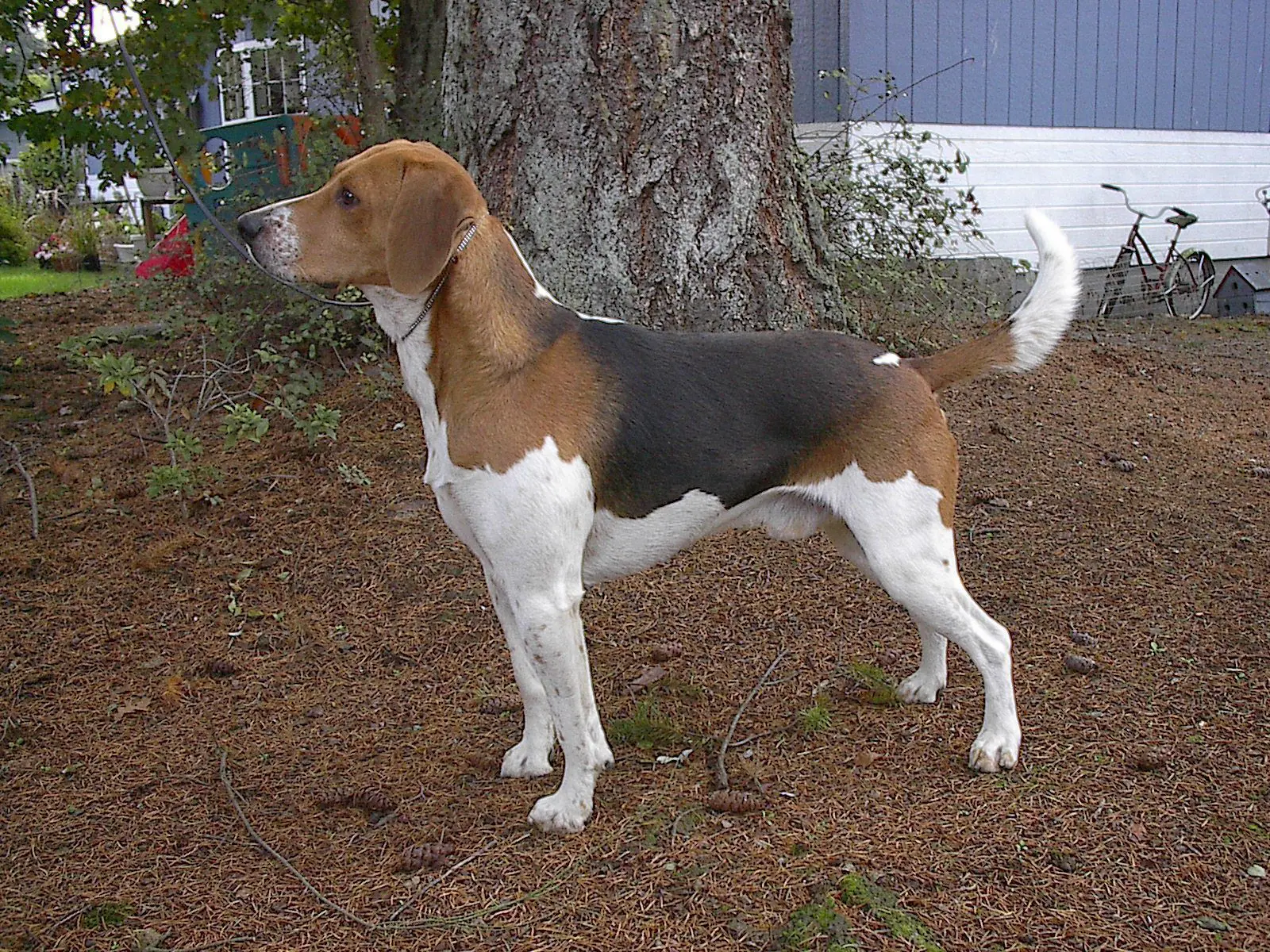
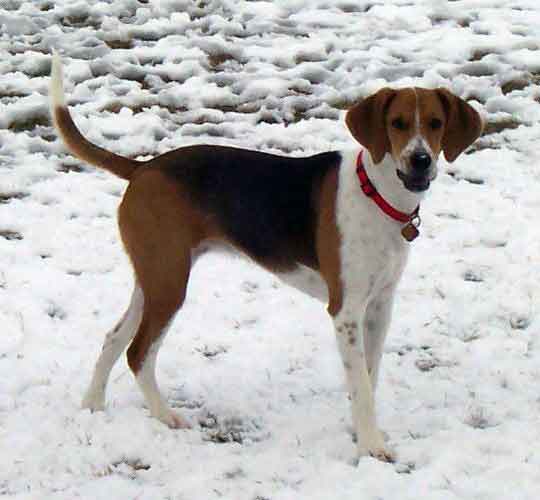
FCI 95 . Spaniel type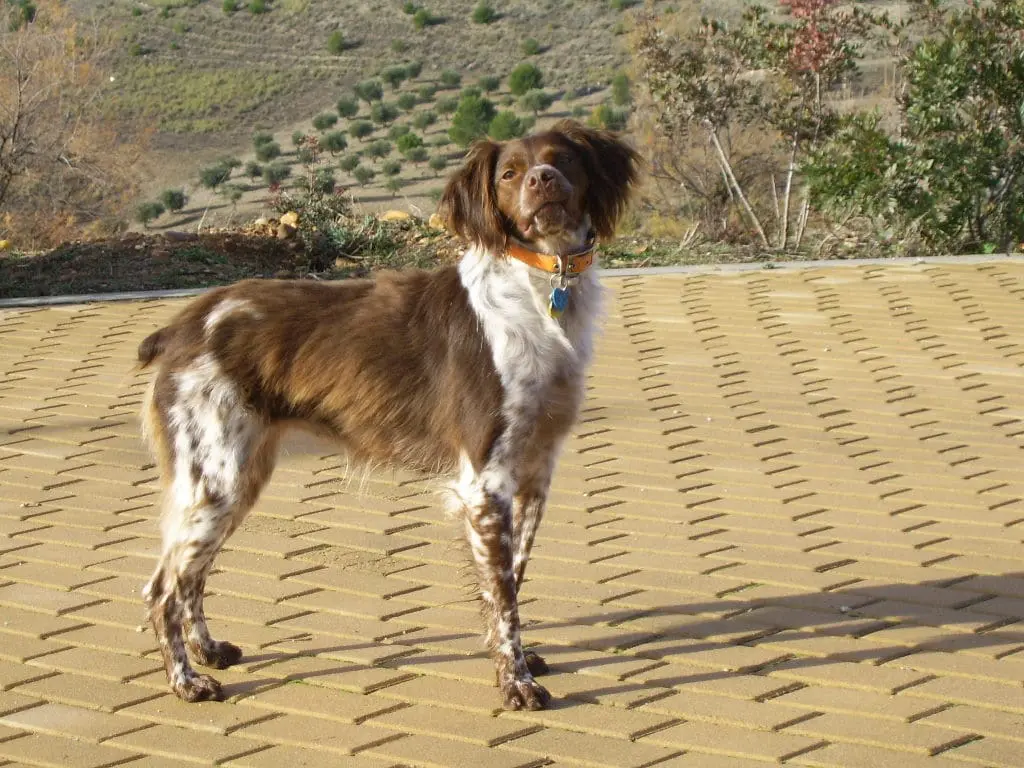
Content |
|---|
History
The Brittany Spaniel It, as the name reflects, originally from the Breton region, in the extreme west of France. It is probably one of the races Spaniel type and oldest “Show Dogs” in the country.
Some historians argue that it was developed a long time ago, about 150 years AD. In any case, the first traces of white and red dogs that resembled him and were undoubtedly the ancestors of the current Brittany Spaniel date back to 17th century tapestries and paintings. The dogs in question are represented hunting.
The most likely hypothesis is that the development of the breed began in the 18th century, but there is relatively little data on its exact origins. But, Specialists believe it probably originated from the "Welsh Springer Spaniel.", the English Setter and several breeds of "French Spaniel". The first representatives of the breed were surely born in the village of Ponthou, located in the department of Finistère, and are most likely the result of the first crosses between the "Welsh Springer Spaniel" and "French dogs.".
During the 19th century, in the city of Callac and its surroundings (Côtes-d'Armor department), the dogs thus created were crossed with the English Setter. The city then specialized in breeding the dogs resulting from these crosses., and today it is considered the capital of Brittany Spaniel.
There are several theories about the exact development of the breed, including how the English Setter used for breeding. One of the theories is that they belonged to British families who spent their holidays in Brittany., while according to another they were brought by hunters of the same nationality who came to hunt in the region.
About 1850, Reverend E. W. Davies, Anglican writer, minister and hunter who liked to spend winters hunting in the Breton region, mentioned in his writings a medium-sized hunting dog, type Pointer, with short tail. This was definitely the Brittany Spaniel as we know it today, since this short or even absent tail, due to an English ancestor who introduced the corresponding gene into the bloodlines, it is one of the peculiarities of the breed.
From the beginning of its development, the Brittany Spaniel was bred as both a pointer and a collection dog, regardless of time. In fact, was (and it still being) very adaptable, which allowed it to spread later in many French regions, as well as in several European countries, like the UK. French breeders, However, they predisposed him to hunt birds.
Used to working in collaboration with man and eager to please him, the Brittany Spaniel he was not only at the service of hunters, but also integrated into their homes. When i wasn't working, voluntarily stayed with their masters in their homes. His reputation as a good pet was quickly established.
Dog shows also played an important role, as they allowed the breed to become known outside their homeland. In fact, the end of the 19th century and the beginning of the 20th were marked by an important development of these events in Great Britain and other European countries, especially in France.
The year 1907 marked the creation of the Club l’Épagneul Breton à courte queue naturelle. Next, a first draft of the breed standard was written, which was adopted at the first plenary meeting of the association the following year in Loudéac. It was later modified into 1923 and again in 1933, 1956, 1995, 2001 and 2003.
As with many races, World War II marked the end of the breeding of Brittany Spaniels. Then it suffered a certain decline, However, it could be compensated once the conflict ended thanks to the work of the breeders and the evolution of certain rules.. In effect, as the gene pool of the breed had become too small throughout Europe, it was decided to accept individuals with black spots, what did not happen until then.
The problem did not arise in the United States and Canada, so local organizations did not follow the example of their French counterparts, British and others. The situation has not changed since then: this particularity is still not recognized by the American Kennel Club (AKC), el United Kennel Club (UKC) and the Canadian Kennel Club (CCC).
The popularity of the «Breton Spaniel»
in your country of origin, the Brittany Spaniel It is very much appreciated, and its popularity has not waned over the decades. Like this, the number of new annual registrations at the Société Centrale Canine (SCC) has never been below 4.000 since the middle of the years 70, and most of the time it even exceeds the 5.000. But, there has been a certain decline over the years 2010, in which the number of new registrations has dropped from almost 5.500 a year at about 4.500.
The Brittany Spaniel It is the only "French Spaniel" that is also very popular outside its country. Official recognition of the breed by the Fédération Cynologique Internationale (FCI) in 1954 obviously contributed to it.
He did not wait for the FCI to gain a foothold in the United States, where their first representatives arrived in 1931. Crossing with other "Setter" type dogs caused the breed to gain in size and muscularity., thus deviating from the original model. In fact, there is now a clear physical distinction between the American and French types, beyond the possible presence of black spots on the latter.
The Brittany Spaniel was recognized already in 1934 by the AKC under the name of Brittany Spaniel, then the latter was shortened to 1982 in favor of the simple denomination Brittany. In fact, both in Europe and America, This dog probably has more in common with Pointers than Spaniels.. It is the same choice made by the other reference organization in the country, the UKC, when he also accepted the breed in 1948, again with the simple name of Breton. The UKC has the particularity of being the only organization that recognizes both types of Brittany Spaniel like two different races. In fact, seeing how «Brittany» American had ended up diverging from his French ancestor, decided on 2002 also recognize the "French type" as a breed in its own right, with the name it bears in its country of origin.
But, This quick recognition should not obscure the fact that the lack of a tail was initially a major disruption to American hunters., so the Brittany Spaniel it took him a while to gain a foothold in the country. But, the general qualities of the breed eventually overcame this reluctance and the breed became very popular. Although it was also used as a hunting dog, its qualities as a companion dog, starting with his medium size and good character, also contributed greatly to its success. this last one is real, since it occupies around the post 25 (of something less than 200) in the breed ranking established by the AKC based on the number of annual births registered with the organization. This is even an improvement over the first decade of the 21st century., when he was around the post 30.
Also in North America, the Canadian CKC also recognizes the breed, and is quite appreciated in the country.
Closer to France, Great Britain contributed to the genesis of the breed thanks to the "Welsh Springer Spaniel" and the English Setter, and adopted her in turn, being their representatives used both for hunting and shows as well as for the company. But, its inhabitants seem to have subsequently moved away from it. Like this, was not up 1975 when the Kennel Club, the canine organization of reference in the country, recognized the Brittany Spaniel. Regarding the number of subjects enrolled each year, we cannot say that it reflects a great fondness for this dog, since it is below a hundred. This figure is even on the decline, since in the first semester of 2010 it was rather between 100 and 150.
But, other European countries have given it a much better reception. This is the case, in particular, of Italy, where hunting is very popular and widely practiced. This is, without a doubt, one of the reasons why, at the beginning of 2010, ranked 5th in the ranking of the most represented dogs in the country, based on the number of annual registrations in the Ente Nazionale Cinofilia Italiana (ENCI). But, since then the number has dropped steadily; now it is more or less around the 3.000, which is still considerable.
Worldwide, a classification established in 2013 and based on the sum of the annual registration statistics of 25 national organizations among the hundred members of the FCI places the Brittany Spaniel in the post 30, which confirms to what extent it has been able to gain a foothold around the world.
Physical characteristics
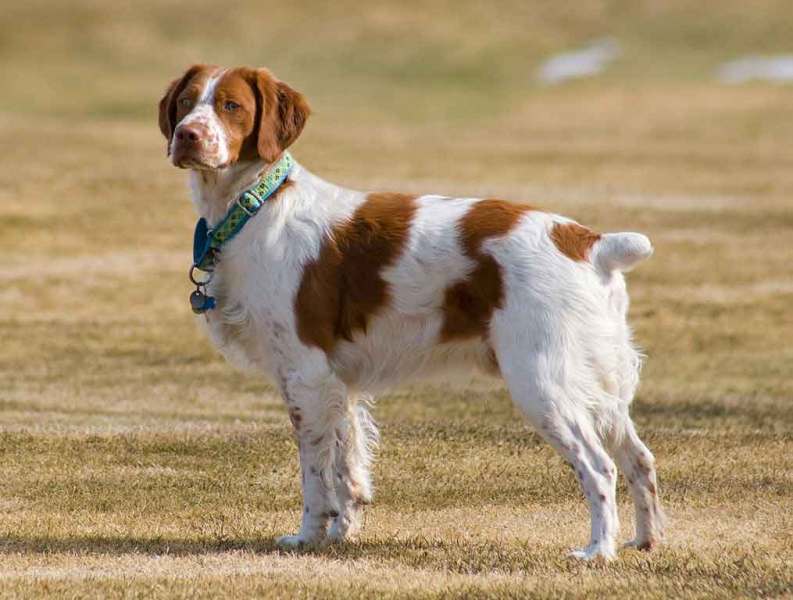
The Brittany Spaniel It is one of the smallest "Show Dogs" in the world, but it is longer than most "Spaniel Type" dogs. They are of the braccoid type, muscular and agile, quite high-legged and with a compact silhouette. They are distinguished from the "Pointer" type dogs by their head, typical of the «Spaniel», and the frequent absence of tail.
straight and stiff, his back is generally as long as his height at the withers. The chest generally descends to the tips of the elbows, while the shoulders are long and very mobile.
Due to a genetic mutation introduced in the 19th century, the tail of Brittany Spaniel is absent or very short. When it is present, It is located in the upper part of the croup and usually measures between 3 and 6 cm., but the breed standard accepts up to 10 cm.. There was a time when the use of tail docking was common for dogs with a tail that was too long for their owner's liking. But, this practice is now banned in a large number of countries, like belgium, France, Switzerland and Quebec.
As for the legs, they are long and strong, and have flexible joints that allow them to run lightly without much effort. The feet are usually larger on the hind legs than on the front legs.. In all cases, they are well rounded, compact and have tight toes.
The head of the Brittany Spaniel rests on a moderately long neck, fine and strong. Whether viewed from the side or from the front, the skull is somewhat rounded. The stop is quite well defined. It also, this dog is slightly brachycephalic, which means that its muzzle is shorter than its skull. It ends in a nose with wide nostrils whose color corresponds to that of the fur, and tame scissor bite jaws.
Located on the top of the head and provided with semi-long hairs, sometimes wavy at the top, the ears are wide, short, triangles and falls. They are extremely mobile when you are on the lookout for something.
The eyes are slightly oblique and their color usually corresponds to the predominant color of the coat. His intelligent gaze shows the great alertness of this dog.
If there is no undercoat, the mantle of Brittany Spaniel consists simply of a thin layer of medium length hair, which is not very thick and can be smooth or slightly wavy. Most common color is fawn on white, but there are also brown and white dogs, fire and tricolor (black, Orange and white, or brown, Orange and white). Confidentially, the latter has gained in popularity in recent times. As for the black and white fur, there is debate: accepted by some organizations, as the Fédération Cynologique Internationale (FCI), but others reject it, as the American Kennel Club (AKC) or the Canadian Kennel Club (CCC). In any case, regardless of its color, some individuals have spots on the snout, the lips, around the eyes, on the legs or even on the chest.
Last, It should be noted that there are two very different types: the Brittany Spaniel French type and the Brittany Spaniel american type. They differ mainly by their size: the second (the most represented in the United States and Canada) it is bigger and more massive than the first (majority in Europe). As to the nature, tends to be more active and awake. These differences are explained by the fact that the first representatives of the breed imported to the United States in the decade of 1930 They were quickly crossed with "Setter" type dogs.
Whatever the type, there is only a very slight sexual dimorphism between males and females, although the former may be a bit larger and heavier. It also, regardless of gender, representatives of the breed reach their adult size between 14 and 16 months of age.
Height and weight
▷ Male size: Of 49 to 50 cm.
▷ female size: Of 48 to 49 cm.
▷ Male weight: Of 14 to 16 kg
▷ female weight: Of 13 to 16 kg
Varieties:
Although not strictly varieties, there are two types of Brittany Spaniel: the original French type and the American type, that appeared after the breed's arrival in the United States in the years 30 and their crossing with local Setters. This resulted in a larger dog, stronger and faster with a livelier temper.
Smaller and more compact, the Brittany Spaniel French type is easier to train and handle during hunting parties.
These two types can also be differentiated by their fur. The Brittany Spaniel American type has no black spots, unlike his cousin. It also, they tend to have shorter hairs.
El United Kennel Club (UKC) American is the only organization that recognizes these two types as distinct breeds. In 1948, the Brittany Spaniel was recognized as Brittany. Arrived in the country less than 20 years before, this dog was still broadly identical to the one found in France. But, as the gap widened over the decades, The breed finally decided that the "Brittany" corresponds to the Brittany Spaniel american type, and in 2002 decided to also recognize his ancestor, the french type, under the name of Brittany Spaniel.
Character and skills
The Brittany Spaniel it is one of the most popular dog breeds in France, and even to a certain extent the world. In effect, is sociable, Intelligent, attentive and cheerful. With the, it seems impossible to get bored and in a bad mood, so contagious is his joy of living!
Having said that, as it happens with many races, the temperament of this dog can vary according to sex. For an individual destined for hunting, a sterile male is often preferred, as it is considered calmer and more gentle than an uncastrated female or male.
In any case, it is a joy for the whole family, And he gets along especially well with children.. He loves to play actively with them and can be quite protective if he perceives a threat to them. But, his boundless energy and enthusiasm can lead him to unintentionally push or even knock over a small child. In any case, as with any dog, should never be left alone with a very young child without adult supervision, and those whose age allows it must learn to behave with respect towards him.
Loyal to his family and little tolerant of loneliness, this dog requires a lot of presence and affection to feel good: if he is left alone too long or does not receive enough attention from his masters, can quickly develop destructive behavior or bark excessively. Its need for attention and interaction also means that it is not suitable for a household where members are often away for long periods of time..
Sharing your home with another little companion is an interesting option to help you pass the time when your caregivers are away. In fact, the Brittany Spaniel not only appreciates humans: he is also very sociable with his peers, whether you come across them on walks or those you would have to deal with on a daily basis. He is also grateful that he is not the only dog in the family.. You can also plan a coexistence with a cat, as soon as I am in contact with him from a very young age. On the other hand, when he meets an unknown feline, you probably want to go after him. Good socialization is not enough for you to live under the same roof as a small prey-like animal, like a rodent or a bird. In fact, hunting instinct is in his genes and he is likely to regain the upper hand at any moment, ending this coexistence prematurely.
Their propensity to hunt small animals that pass by, as well as his permanent desire to run, also implies that if you live in a house with a garden, this must be well fenced, at the risk of sometimes going too far. A property with a large fenced area is the ideal environment for him, but it is quite adaptable. So, as long as your need for exercise is met each day with the help of long walks and other activities, you can even live in an apartment and in an urban environment.
But, keep in mind that they can be sensitive to noise. So, can get stressed out when your home is particularly noisy, for example, by very noisy children. The same type of problem can arise if you live in the city or move regularly (for example, when walking) in a very crowded environment, especially if you haven't gotten used to it from a very young. On the other hand, used since its inception for hunting, he is indifferent to the noise of rifle shots.
Although they live in the quiet countryside and have access to a very large garden at all times, this is not enough for this particularly active and hardy dog ​​to be comfortable with his head and paws. To be able to expend his great energy, needs at least an hour or two of daily activity. It's not about being much less active during the week and trying to make up for it on the weekend.: if this dog does not expend enough energy each day, can quickly develop behavior disorders, such as excessive nervousness or hyperactivity.
Given your level of activity, it is easy to understand that the Brittany Spaniel it is not at all adapted to elderly or very homey people. On the other hand, he is the best friend of an active master who likes to run, hiking or taking long bike rides and dreams of taking his animal with him. Knowing that he also likes to swim, do not hesitate to take him swimming in a lake from time to time, or in planning a swim break when there is a water point along the way during any activity. It can also be very good at practicing canine sports such as cani-cross or cani-VTT. In fact, usually always willing to do any activity that involves exercise, especially if it is fun or is accompanied by other dogs.
During the walks, It is important to bear in mind that at any time you can run after a bird or any other animal that is in your way, or you can be tempted by a smell that will not leave you indifferent. Your determination and stamina can go a long way, even to get lost. To avoid this, the most effective solution is, of course, always carry him on a leash, but this is by no means ideal for your well-being, as he urgently needs to vent. So, it is better to put the emphasis on learning to withdraw, considering that it is impossible to completely trust such a dog: Investing in a connected dog collar is a good way to prevent walks from being a source of anxiety, since then it is possible to know where it is at all times.
But, it is not enough to give him physical exercise to keep him balanced: you also have to keep him mentally busy. So, the ideal is to keep him mentally occupied with activities that appeal to his intelligence, like certain canine disciplines (obedience, agility or flyball, for example), o solving puzzles and other problems. As a working dog, he likes his owner to assign him tasks, and usually takes them very seriously.
This is all the more true as his closeness to his caregiver, her desire to please him and her intelligence make the Brittany Spaniel an easy to train dog that learns very quickly. They are especially attentive to the orders of their owner, attentive to every facial expression and ready to react and respond to any request.
Unlike other races, the Brittany Spaniel are not particularly destructive or difficult during their adolescence, which starts around 6 months and continues until 18 months of age. Even if you start to adopt undesirable behavior, his great desire to please makes him very easy to correct.
Last, because of his personality, not very assertive by nature, not a good watchdog, although it can be protective in especially threatening situations. He does not hesitate to bark to warn of the arrival of a stranger, but it is not usually the kind that does much more to deter the intruder. They can also be especially loud barking at the top of their lungs when they are home alone.. He has a groan that is his own and that he can also show when he is in this situation, or when scared or intrigued.
Education
The education of Brittany Spaniel it's pretty easy, because it is an obedient dog that likes above all to please its master. Thus, not the type to use his intelligence to try to exploit loopholes and challenge his master's dominance, but it allows you to learn very quickly. This makes it a recommended dog breed for a beginner..
With the, sweetness is the key word. In fact, is sensible, does not support violence and is not at all receptive to education based on punishment or negative reinforcement. If these methods are used, is likely to show signs of anxiety and stress at work. Positive reinforcement, that is to say, a work method based on the assessment of good behavior through rewards (petting, stimuli, candies…) is much more effective and allows you to feel real pleasure from your work.
Hunting individuals can quickly learn their future role. In effect, the Brittany Spaniel has a great hunting instinct, to the point that it is not uncommon to see a cub that begins hunting from the 3 months of age. It is possible to take your dog hunting from the 5 months of age. Obviously, it is not at that moment when he catches his first woodcock, but it allows you to become familiar with the environment and hunting. It is important, However, stick to short games and be fairly sure to watch the game, so as not to demotivate him. It also, being still growing and being fragile, avoid trying too hard. Only when it reaches its adult size, between 14 and 16 months, you can fully participate in this activity.
Although not intended for hunting, any activity that reinforces their persecution instinct should be prohibited in their education. Obviously, this should not detract from your need to be active and exercise properly. The learning and regular practice of a dog sport, like agility, obedience or flyball, for example, is a good alternative, although it can also be practiced perfectly by an individual employed as a hunter.
Teaching your dog to remember is also helpful in preventing him from unleashing his predatory instincts in inappropriate circumstances.. But, since even well-trained dogs are difficult to trust completely, the leash is more or less often essential for your safety and that of the animals and people around you. So, learning to walk on a leash is another important aspect of your education.
Last, like any dog, the Brittany Spaniel should benefit from great socialization from a young age, especially as you can tend to be suspicious and shy around strangers, or being especially stressed when in a noisy environment. Getting used from a young age to meet all kinds of people and fellow humans, but also to live in different places and to face a great variety of situations and stimuli (noises, smells, etc.), we give you all the possibilities to make you feel good in your head, calm down and easily find your place with humans.
Use
The Brittany Spaniel was developed to be a versatile hunter. remarkable in search, the signaling and collection (both in water and on land), is specialized in hunting birds (especially the woodcock and the duck), acts alone and not in a pack and continues to be, Still today, the hunting dog breed preferred by many hunters.
From the beginning of its history, has also found its place in the homes of its owners, thanks to his friendly personality and his natural closeness to man.
Today, It is still appreciated as a companion dog and is an excellent choice for anyone who is active and available., hunter or not, wanting nothing better than hiking with your dog or taking it with you when you go for a run or ride a bike.
your energy, his resistance and his desire to please also make him a perfect student for many canine disciplines such as agility, the flyball, obedience, the cani-cross or the mountain bike.
Grooming
Due to her very moderate hair loss throughout the year, its lack of undercoat and its little tendency to tangle, the fur of the Brittany Spaniel requires little maintenance: a weekly brushing is enough. Your seasonal shed, in spring and autumn, it is not very pronounced, but still requires more regular brushing, on the order of 2 or 3 times per week.
It is also possible to take the dog to the groomer to cut the medium hairs of the legs (or do it yourself), to avoid knots, since this part of the body is especially prone to them. But, this is not essential: depends on the preferences of each caregiver.
How their coat is generally kept clean, it is not necessary to bathe the dog more than 2 or 3 times a year. In any case, unless it got especially dirty, avoid bathing him too close, as it could seriously damage the skin or fur. In any case, it is important to always use a shampoo specially designed for dogs, since the pH of human skin and that of your best friend are different.
The drooping shape of the ears of the Brittany Spaniel implies an increased risk of infections at this level (otitis, etc.), as it facilitates the accumulation of dirt and moisture. So, it is essential to examine and clean them weekly, as well as dry them after each prolonged moment in a humid place, and of course every time you swim.
The weekly maintenance session is also an opportunity to check the condition of your partner's eyes and clean the contours. This also greatly reduces the risk of infection. This is all the more important since the Brittany Spaniel is quite sensitive to the eyes and can have a number of eye diseases: the sooner they are detected, best.
Caring for a Brittany Spaniel it also involves taking care of your teeth, always using a toothpaste specially designed for dogs. This helps limit the build-up of dental plaque., which can lead to tartar formation, which can be the cause of many problems, some of which are potentially serious. The ideal is daily brushing and, in any case, it is better to avoid brushing less than once a week.
Last, the activity level of this hyperactive dog causes claw wear to occur normally naturally. So, they rarely need to be cut, unless, for example, your mobility is limited by a health problem. If you hear them rubbing when you walk on the hard ground, it's time to take care of them. Otherwise, they could hamper your movements or even break and injure you.
As with any race, the steps to take care of a Brittany Spaniel (either its fur, his eyes, his ears, their teeth or claws) should not be taken at random. In fact, beyond the risk of being ineffective, could hurt or even injure you. So, it is wise to see a vet or professional groomer the first time, to learn from him the best way to proceed. The sooner the animal gets used to these different manipulations, it will be easier for you to let them do it throughout your life. The sessions can then be beautiful moments of sweetness and complicity, instead of being tests feared by the two protagonists.
Another habit to take - and that also leads to manipulation- is to systematically examine your body when you return from every long moment you spend outdoors, in particular its fur, its feet and its pads. This ensures that you have not been injured, nor has he caught spikes or parasites.
Health
In general, the Brittany Spaniel enjoys robust health, which is illustrated by the fact that a good number of representatives of the breed are celebrating their 15th birthday.
It also, his Breton origins mean that bad weather does not impress him or prevent him from carrying out his outdoor activities. It is also capable of adapting to many weather conditions, even at extreme temperatures.
But, like all dogs, have a predisposition to develop certain diseases, many of which are hereditary:
- Hip Dysplasia, a potentially inherited joint malformation that mostly affects medium and large dogs. Causes pain and lameness to a greater or lesser extent, as well as osteoarthritis from a certain age;
- Cleft palate, a congenital and often inherited malformation responsible for poor communication between the puppy's mouth and nose. Then you may suffer from feeding difficulties, swallowing problems, choking or coughing. Difficulty feeding can lead to stunted growth and requires surgery to correct the problem;
- Spinal muscular atrophy, a sometimes hereditary syndrome that causes a decrease in muscle mass. This can cause, among other things, difficulty moving, breathing problems or trouble eating properly. It is a progressive and often fatal disease for which there is no treatment;
- La abiotrofia cerebelosa, a disease that causes tremors and a significant loss of coordination, that affects young men more. These symptoms initially occur only when the animal is in motion, and then they get worse over time, more or less quickly, until they appear when idle. There is no treatment for this rare disease, but it is not painful for the animal;
- Epilepsy, a sometimes inherited disease causing more or less severe and often impressive seizures. Various treatments allow limiting or even eliminating them, so that, usually, those affected continue to lead an almost normal life;
- Hypothyroidism, an endocrine disruption that corresponds to a defect in the regulation of thyroid hormones. You can have all kinds of symptoms: weight gain, decreased heart rate, dry skin, hair loss, increased sensitivity to cold.;
- Hemophilia, an incurable inherited disease that causes a deficiency in coagulation and, Therefore, excessive bleeding. They can appear mostly under the skin, during tooth growth, in urine and feces, during vaccination or when the animal is injured. They can also be internal and invisible, and often lead to death;
- Lupus erythematosus, a skin disease resulting from a deficiency of the immune system, what causes, among other things, depigmentation of certain parts of the body (nose first, then the ears and legs), erosions and ulcers ;
external otitis, due to the drooping shape of their ears.
The Brittany Spaniel it is also predisposed to certain eye diseases:
- Dislocation of the lens, causing instability and abnormal movement of the lens in the eye. In this breed, most often it is the result of hereditary transmission. Very painful, can lead to total loss of sight if not treated with surgery;
- The waterfall, a potentially inherited eye disease that usually develops in old age. Cataracts cause a cloudy lens that gradually reduces the dog's vision until total blindness occurs. Can be treated by surgery;
- Glaucoma, an often inherited disease that can cause sudden loss of vision. It is the result of an abnormal increase in pressure in the dog's eye and must be treated quickly, otherwise its consequences are irreversible.
It also, specimens used for hunting are at increased risk of injury, parasites and spikes.
Last, despite its high level of activity, the Brittany Spaniel does not get rid of obesity, that can cause or accentuate many health problems. It is also a vicious circle, since an overweight individual tends to be less active.
But, the long list of diseases to which the breed is predisposed should not obscure the fact that most of its representatives spend most of their lives in perfect health. This is confirmed by a study carried out in 2004 by the British Kennel Club and the British Small Animal Veterinary Association, which established that the leading cause of death in this breed is simply advanced age.
On the other hand, this list leads to many inherited conditions, or that are likely to be hereditary. This underlines how important it is to go to a serious and competent Brittany Spaniel breeder who rigorously selects his breeders.. If you are unable to present the results of the genetic tests carried out on the parents or offspring to prevent any transmission of said disease, it is better to go your way and go to another breeder; no lack of options. In addition to these documents, any serious professional should be able to provide a certificate from a veterinarian proving that the puppy is in good health, as well as your health or vaccination card, confirm that you have received all necessary vaccinations.
Adopting a healthy animal is one thing, but its usefulness is limited if you don't make sure it stays that way. So, it is essential to note that, until the age of 14 to 16 months, a puppy of Brittany Spaniel is still in its growth phase, and therefore is particularly fragile. Throughout this period, it is important to only very gradually increase the duration and intensity of your activities, at the risk of impairing the proper development of your bones and joints, or even causing injuries and/or malformations that he could suffer throughout his life. This is all the more important since you are predisposed to hip dysplasia.
Last, one of the best ways to keep your dog healthy is to take him to the vet at least once a year for a thorough check-up to detect any possible problems, which may not be visible to the inexperienced eye. It is also a great opportunity to take stock of vaccinations and any necessary withdrawals.. It also, antiparasitic treatments also help protect your pet against a number of diseases: it is up to the owner to renew them throughout the year, whenever necessary.
Life expectancy
Of 12 to 15 years
«Breton Spaniel» Price
In Switzerland, the lower popularity of the breed means that the number of breeders of Brittany Spaniel be quite limited. A solution to have many more options is to buy directly in France.
in Canada, the number of breeders barely exceeds ten, and also here the prices are very different, generally ranging between 750 and 1500 canadian dollars. Of course, It is also possible to go to the United States, where you have to have some 800 US dollars for a good quality puppy.
In the case of a purchase abroad, keep in mind that transportation and administrative costs are added to the price of the puppy and, of course, make sure you respect the regulations regarding the importation of a dog.
Characteristics "Brittany Spaniel"
Coexistence is important that you have with your new friend. Before considering the acquisition of a dog of the breed "Brittany Spaniel" you know certain factors. Not all breeds of dogs are apt to live in an apartment, you must take into account his character, their need for exercise, their interaction with other pets, their care and if you have small children, their level of tolerance towards them.
Adaptation ⓘ3,0 of 5 stars (based on 1 review)
|
friendly dog ⓘ4,0 of 5 stars (based on 1 review)
|
hair loss ⓘ3,0 of 5 stars (based on 1 review)
|
|---|---|---|
Affection level ⓘ5,0 of 5 stars (based on 1 review)
|
Need for exercise ⓘ5,0 of 5 stars (based on 1 review)
|
Social need ⓘ4,0 of 5 stars (based on 1 review)
|
Home ⓘ4,0 of 5 stars (based on 1 review)
|
Toilet ⓘ2,0 of 5 stars (based on 1 review)
|
Friendly with strangers ⓘ3,0 of 5 stars (based on 1 review)
|
barking ⓘ3,0 of 5 stars (based on 1 review)
|
Health ⓘ3,0 of 5 stars (based on 1 review)
|
Territorial ⓘ2,0 of 5 stars (based on 1 review)
|
Cat friendly ⓘ2,0 of 5 stars (based on 1 review)
|
Intelligence ⓘ4,0 of 5 stars (based on 1 review)
|
Versatility ⓘ4,0 of 5 stars (based on 1 review)
|
Child friendly ⓘ5,0 of 5 stars (based on 1 review)
|
Surveillance ⓘ2,0 of 5 stars (based on 1 review)
|
joy ⓘ5,0 of 5 stars (based on 1 review)
|
Images "Brittany Spaniel"
 6
6
 5
5
 4
4
 3
3
 2
2
 1
1
Photos:
1 – An eleven-month-old male Brittany Spaniel dog, named «Kinwashkly That’s Mr. Jagger To You» (nickname «Mick»). by Pharaoh Hound, CC BY-SA 3.0, via Wikimedia Commons
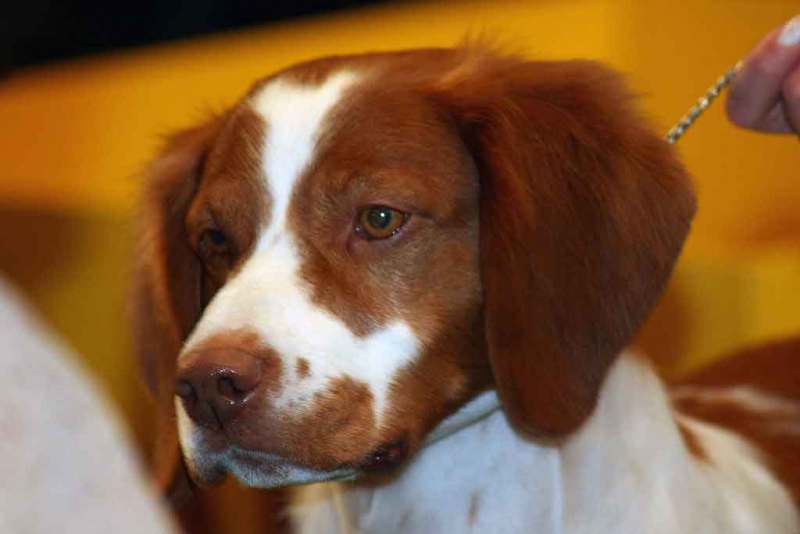
2 – We had front row seats the second night of Westminster at Madison Square Garden in NYC. 2/2009 by Kjunstorm, CC BY 2.0, via Wikimedia Commons
3 – A liver and white Brittany Spaniel. by John Blyberg, CC BY 2.0, via Wikimedia Commons
4 – Brittany Spaniel Dog. Hank watches other dogs misbehaving at the dog beach by Uber Phot, CC BY-SA 2.0, via Wikimedia Commons
5 – «Breton Spaniel» by https://commons.wikimedia.org/wiki/File:Epagneul_Breton.jpg
6 – «Breton Spaniel» by https://pixabay.com/photos/brittany-brittany-spaniel-dog-3410384/
Videos "Brittany Spaniel"
 BRETON SPANIEL – Characteristics and care
 DOG, The Breton Spaniel
 BRITTANY SPANIEL – Characteristics and Care
 hunting red partridge with brittany epagneul
Type and recognitions:
- FCI CLASSIFICATION:
- Group :
- Section : . .
Federations:
- – FCI – Group 7: Pointing Dogs. – Section 1: Continental Pointing Dogs. 1.2: Spaniel type ⓘ
- – AKC – Deportivo ⓘ
- – ANKC – Group 3 ⓘ
- – CKC – Perros Deportivos ⓘ
- – KC – Gundog ⓘ
- – NZKC – Gundog ⓘ
- – UKC – Gun Dog ⓘ
FCI breed standard "Brittany Spaniel"
Use:
Pointing Dogs.
General appearance:
It is the smallest of the dogs of sample.
It is a short-tailed bracoide, or without tail. Harmonious construction and strong bones, without being crude. The set is compact and robust, Although without heaviness, providing an elegant appearance. This is a vigorous dog, look alert and intelligent expression.
It looks like a small “short-membered COB”, full of energy, It has been preserved through its evolution the kind of small size desired and established by the reformers of the race.
IMPORTANT PROPORTIONS:
- The skull is longer than the nasal canal by a ratio of 3:2.
- The whole of the head is proportionate to the rest of the body. The height of the chest is slightly less than half the height at the withers.
- The scapulo-ischial length is equal to the height at the withers (the body is shaped like a square).
It adapts to any environment, is sociable, alert and intelligent expression, balanced. Versatile sample dog, for all types of hunting and all-terrain. Sexual development is early. Stands out during search, in their movements, his sense of smell, as well as in the extent of exploration, spontaneity and continuity in the sample, and in their adaptation to the training.
Head:
Features well-molded reliefs. The skin is attached to the body.Slightly rounded, both head on, as in profile. View from the top, side walls are very slightly convex. The craniofacial lines are parallel. The breadth of the skull, taken between the zygomatic arches, is less than its length. The eyebrows are not very prominent, rather they form a slightly rounded curve. The middle groove, as well as the sagittal crest, they are not very marked. Naso-frontal depression gently descends. Both occiput, like zygomatic arks, are moderately marked.
facial region:
- Truffle:Wide, with the windows wide open. Its color harmonizes with the coat, as well as with the edge of the eyelids and natural orifices.
- Nose cane:It is rectilinear; the side walls of the muzzle are almost parallel.
- Lips:They are not lazy, nor widths; they are fine and well applied. The upper lip is slightly covered by the lower, whose edge becomes progressively curved to the corner, that is little apparent and well closed. As a whole, no sign of depigmentation.
- Jaws/Teeth:The teeth are well implanted, complete and healthy. The joint is in the form of scissors.
- Cheeks:They are not very fleshy, the skin is well applied.
Eyes:They are slightly oblique. Your expression is sweet, smart and frank. Slightly oval, no globulosos, thin eyelids, well applied and pigmented. The colors of the iris harmonize with that of the fur.
which is preferably dark.
The expression of the eyes, along with the movement of the base of the ears up, agrees with the true “Breton expression”.
Ears:High insertion; they are triangular in shape, quite wide and rather short (when stretched to the front, the extremity of the pinna reaches the naso-frontal depression). They are partially covered with wavy hairs, especially at the top, and the limb is covered with hairs. They are always on the move when the dog is at rest or in action.
Neck:
Medium in length and well muscled, trunk-shaped and slightly arched. It is well separated from the shoulders and does not have a double chin.Body:
- top line:It is straight up to the loin and the beginning of the rump..
- Cross: It is mobile enough and somewhat outstanding, although without being bulky.
- Back:Rectilinear, short and rigid, well attached to the spine.
- Pork loin:Short, wide and muscular.
- Rump:Very slightly inclined. She is wide and muscular.
- Breast :Down to the tip of the elbow. It is broad, sufficiently rounded ribs, without being cylindrical. The sternum is wide and does not rise much back. The last ribs are long and flexible.
- Belly:Slightly raised.
- Flanks:Little raised and of little amplitude.
Tail:
High insertion. It comes horizontally or slightly hanging. Dog moves it often when attentive or in action.
The Brittany Epagneul can be born without a tail.Tips
PREVIOUS MEMBERS:Well poised. Joints are flexible and robust.
Shoulder:Mobile phones, long (30% the height at the withers), well applied and compact muscles. Its obliquity is that of a galloper, comprised between 55 and 60 degrees above horizontal. The two vertices of the shoulder blades have 5 cms. approach.
Arms:Widths, thick, of protruding muscles. Its length is very slightly greater than that of the shoulders. The scapulo-humeral angle is about 115 to 120 years.
forearms:Muscular and vigorous. Its length is slightly greater than that of the arm. Your direction should be close to vertical.
Metacarpus:Robust, although they retain a certain elasticity. They are slightly oblique. (Its obliquity is about 10 to 15 degrees above vertical).
Previous feet:They are rather rounded. Fingers are together.
The bearings are firm and the nails short.
LATER MEMBERS:Seen from the back, they are parallel and well plumb.
Thighs:Widths, of thick and protruding muscles. Its obliquity with respect to the horizontal is about 70 to 75 degrees.
Legs:Slightly longer than thigh. The thighs are thin and protruding. They are wide at the top, and are progressively reduced towards the region of the tarsal joint.
The femoro-tibial angle is about 130 degrees.
Hock:It is thin and of apparent tendons.
Metatarsals:They are robust. Seen in profile, its direction is very close to vertical.
Hind feet:Longer than the previous ones, although with the same characteristics.
Movement:
The different movements are loose, but powerful, uniform and agile. The members move in a straight line, no exaggerated vertical oscillations of the body and no rocking. The back line remains firm. The gallop is the main movement on the ground; the strides are fast and of medium amplitude. Hind limbs are not pushed back (prone gallop).Mantle
SKIN: It's fine, well adhered to the body and well pigmented.
HAIR: It must be fine, not silky. It is smooth or slightly wavy on the body, never erized. It is satin on the head and the anterior face of the members. Subsequent tips have an abundant hair, with a fringe that decreases progressively in length to the Carpus and the Tarsus, and even below.
COLOR: White fur, orange", “black and white”, “blanco, Brown", with more or less extended different color patches, irregular stripes. Piebald or roan coat that is sometimes mottled on the nose ridge, the lips or the members. It sometimes also presents stains color fire (It goes from Orange to dark red), on the nasal helm, the lips, above the eyes and in the Member, in the front of the chest, and in the ligament of the tail in tricolor dogs. The fringe, narrow on the head is desirable in all coats. The fur is not supported in a single color.
Size and weight:
In males:
- Minimum size:48 cm., with a tolerance of -1 cm..
- Maximum size:51 cm., with a tolerance of + 1 cm..
In females:
- Minimum size:47 cm., with a tolerance of -1cm.
- Maximum size:50 cm., with a tolerance of +1 cm..
Ideal size:
- In males:49 to 50 cm..
- In females:48 to 49 cm..
Fouls:
Any deviation from the aforementioned criteria is considered a fault and its severity is considered to the degree of the standard deviation.
- Character:Shyness, elusive look.
- head lines:Very slightly divergent.
- Truffle:Very slightly discolored. Depigmented inner part of the windows.
- Teeth:Pin-shaped joint. Poorly implanted teeth.
- Nose cane:Shrunk or bevel.
- Lips:Thick. Too dangling or not dangling enough. Too lazy.
- Eyes:Globular; almond or round.
- Ears:Insertion too low; narrow at the ligament.
- top line:Sunken or convex.
- Rump:Too narrow or too saggy.
- Abdomen:Bulky, whippety.
- Pies: Crushed, too long or too round.
- Neck:Too short and bulky. Slight double chin.
- Pork loin:Long, narrow and loose.
- Flanks:Too sunken, often due to a loose back;Straits.
- Members:Fragile bone structure. Elbows detached from the body.Limb deviation inward or outward.
- Fur:Short on body.
SERIOUS FAULTS:
- Behavior:Indolent temperament.
- Skull:Zygomatic arches, too prominent. Very marked nasal-frontal depression. Very prominent eyebrows.
- Eyes:clear; evil look, bird of prey.
- Neck:Excessively long. Marked dewlap.
- Movement:Difficulty in movements.
FALTAS DESCALIFICANTES:
- Any lack of character, namely:dog that bites, that is aggressive towards its peers or towards humans. Fearful specimens.
- Lack of type:Insufficiency of ethnic characteristics; altogether, the specimen does not resemble its congeners.
- Size:The size deviates from the limits of the standard.
- head line:Characterized convergence.
- Anomaly in patches of different color:White spot on the ears or eye in white color.
- Eyes:Too light, heterochromes. Squint, entropion or ectropion.
- Jaws:Prominent.
- Teeth:PM1, as well as the M3 are considered unimportant. Only the absence of 2 PM2 or 1 PM2 and 1 PM3. The absence of these two teeth followed PM2 and PM3), it is eliminatory. The absence of any other teeth leads to removal.
- Pigmentation:Marked discoloration on the nose or eyelids.
- Presence of dewclaws, still superficial.
- Serious morphological anomaly.
• Males must have two normal-appearing testicles fully descended into the scrotum..
• Only functionally and clinically healthy dogs, with the typical conformation of the breed, should be used for parenting.
The latest changes are in bold.
Source: F.C.I - International Cynological FederationAlternative names:
1. Brittany Spaniel, Brittany Wiegref, Epagneul Breton, French Brittany (English).
2. Épagneul breton (French).
3. Brittany, Bretonischer Vorstehhund (German).
4. Brittany, (em francês: Épagneul breton) (Portuguese).
5. American Brittany Spaniel, Bretón Americano, Pointer Bretón, Spaniel bretón, Bretón Español (español).
 FCI 216 . Braque Type

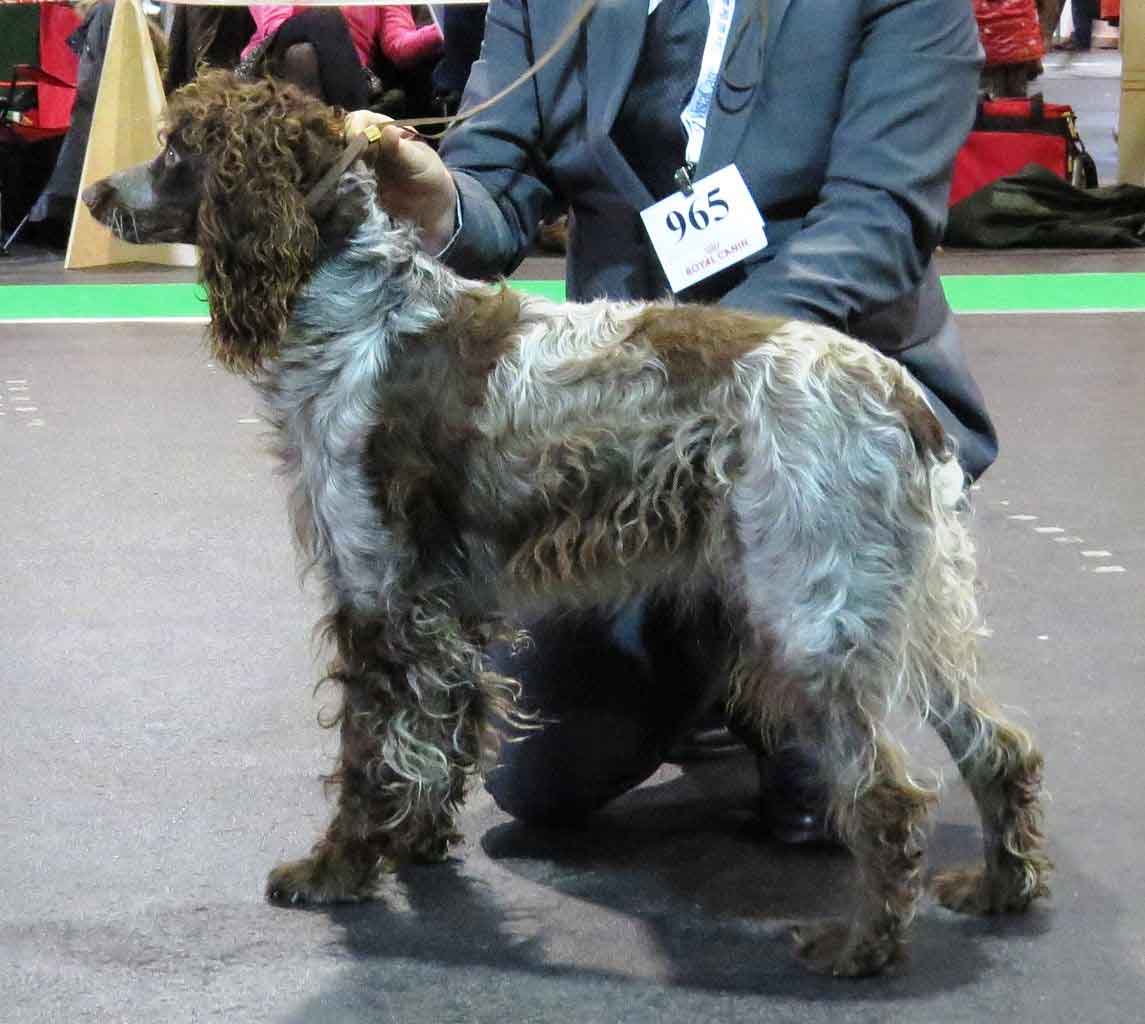


 Pont Audemer Spaniel France 2 It's on the program 18 05 2016
 Pont Audemer Spaniel
 Pont-Audemer Spaniel – Video Learning – WizScience.com
 14 Strange Facts You Should Know About Epagneul Pont Audemer
 FCI 132 - Medium-sized Hounds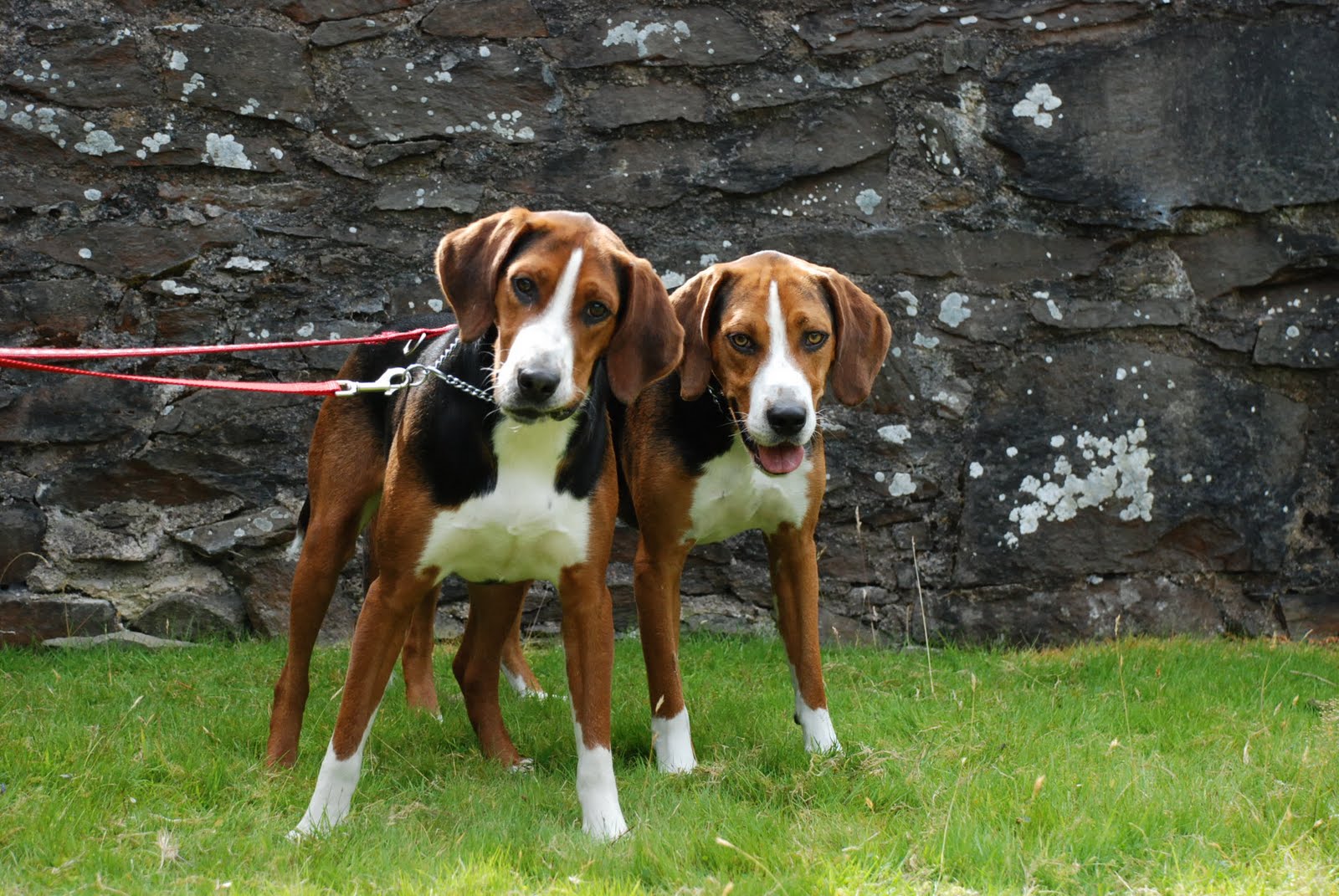
 FCI 57 . Braque Type
 FCI 19 - Medium-sized Hounds


 FCI 52 - Medium-sized Hounds





.png "England") FCI 295 . Medium-sized Hounds
FCI 295 . Medium-sized Hounds