โ–ท The world of Pets: Dogs, cats, birds, reptiles, amphibians

Red-spectacled Parrot
Amazona pretrei

Red-spectacled Parrot

Unknown until years 80, when a few came to Europe

Content

Description:


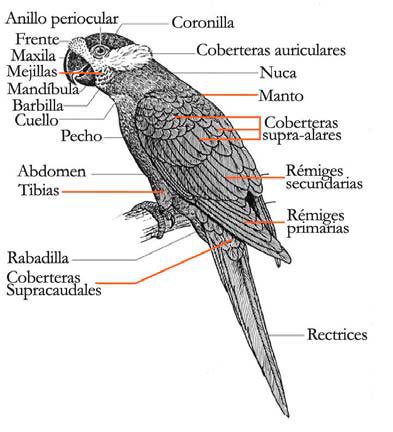
Anatomy-parrots

32 cm.. length and 295 g. of weight.

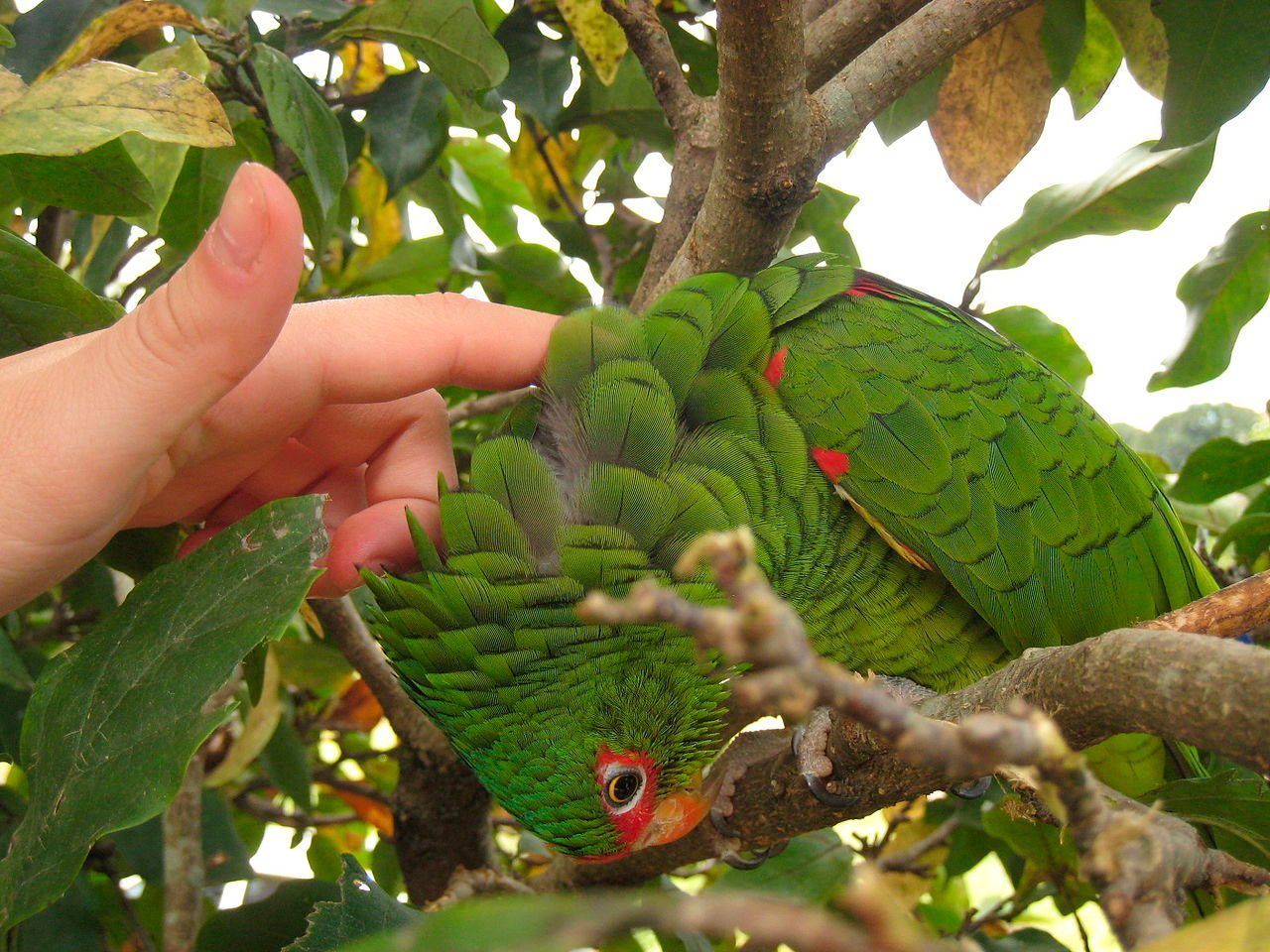
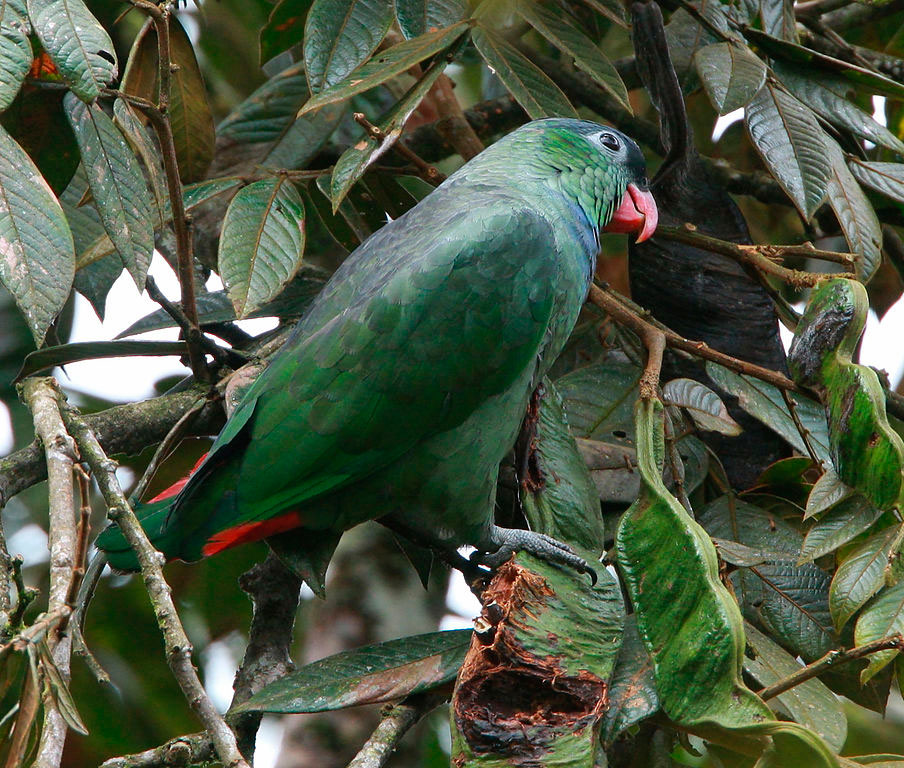
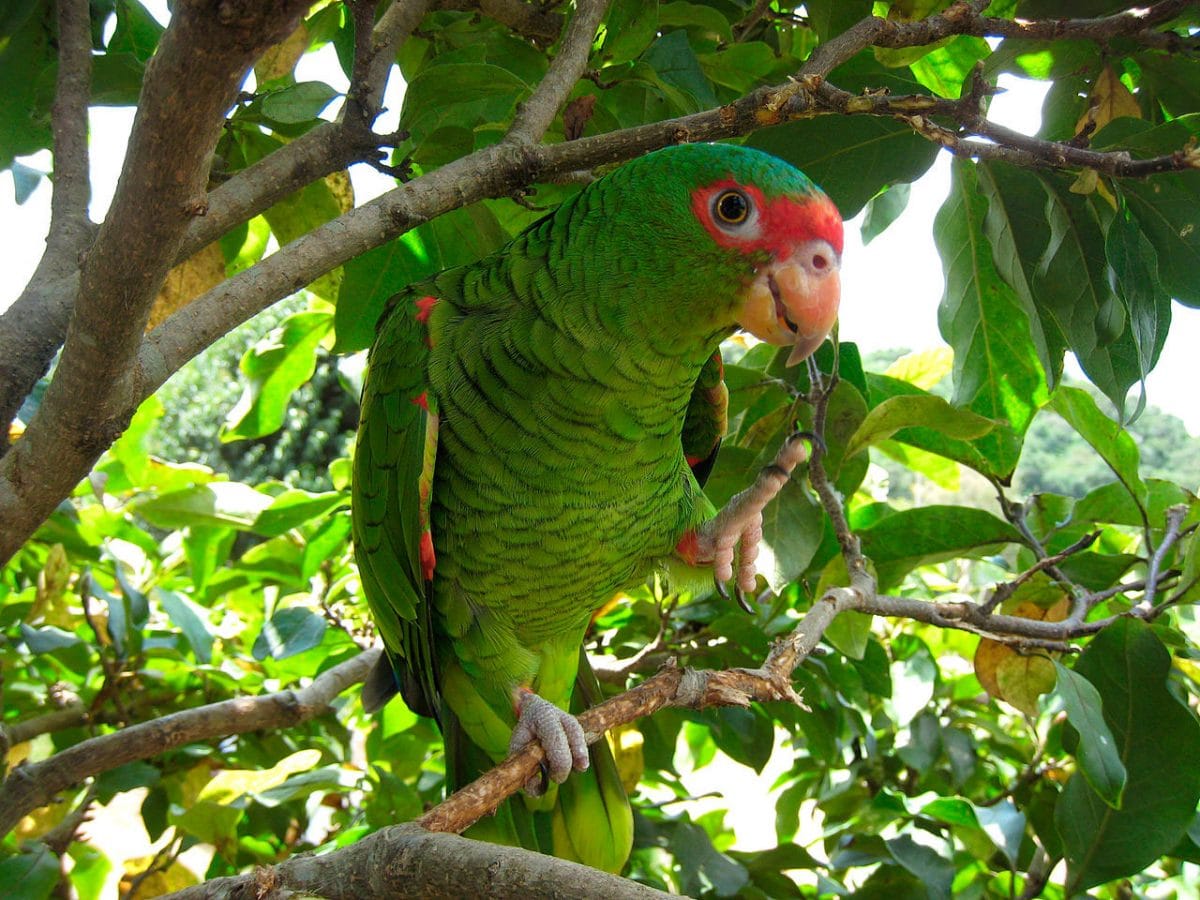
The Red-spectacled Parrot (Amazona pretrei) has the forecrown, lores, fore crown and upper cheeks up to the ear-coverts, bright red; back of the crown, nape, the mantle, back and rump, green with a narrow terminal band black in most feathers; scapulars green; uppertail-coverts pale green. Leading edge of wing, carpal area, alula and primary coverts, bright red; other coverts, narrow green with black tips.

Flight feathers, violet blue green tips. Under wings green. The underparts they are mostly green, slightly tinged with yellowish, with black tips on most feathers giving a scalloped effect; the thighs red; undertail-coverts pale yellowish green. Tail green with broad pale yellowish-green tip and patches of red on base of innerwebs of the three feathers outermost. The bill pale yellow with pale orange based on upper jaw; bare periophthalmic white; iris orange; legs gris pardusco.

Red-spectacled Parrot

The female probably it shows much less red in the wing with the carpal edge and primary coverts, mostly or completely green. Immature apparently similar to female adult.

Note Taxonomy:

Itร‚ยดs monotype. It is sometimes considered conspecific with Amazona tucumana, but they are best treated as forming a superspecies.

Sound of the Red-spectacled Parrot

Habitat:

"Red-spectacled Parrot"

Red-spectacled Parrot, Amazona pretrei

This rider is strongly associated with forests Araucaria angustifolia for use as roosts non-breeding season. It prefers open savanna forests and low riparian forests for reproduction, with trees and conifers of the genus Podocarpus, Scutia and Celtis and where they are absent Araucaria angustifolia. Most records place her at altitudes between 300-1.000 m, but they are distributed and breed at lower elevations in southern Rio Grande do Sul.

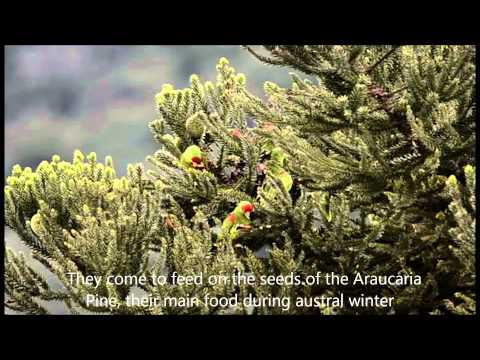
They disperse in pairs during breeding but are highly gregarious outside of breeding season. They form large concentrations community, often in plantations pinus exotic and Eucalyptus. The largest winter meetings coincide with the ripening seeds araucaria. flocks of 30 to 50 birds, composed of young adults and newborns, They may meet before the dispersion, from breeding areas to winter quarters.

Reproduction:

The Red-spectacled Parrot nest in tree hollows, for example, Casearia, Ouillaja brasiliensis and Ficus. With reproduce at the end of September to January, with young people and fledglings, usually, in early December in the south. Clutch 2-4 eggs.

Food:

Foods reported include seeds of Araucaria angustifolia (especially important in May-August) and Podocarpus lambertii (important in some areas in January-February), fruits of Eugenia, Campomanesia and Melia. The diet is altered with the town and the station. They take a variety of fruit in the spring and summer (October to February), among others: Cupania, Eugenia, Phytolacca, Allophylus, Nectandra, Ocotea, Campomanesia, Cytharexylum, Myrcianthes, Blepharocalyx, Ficus and Symplocos.

The diurnal movements cover up 100 km, perhaps in relation with the availability of food.

Distribution and status:

Size of its range (breeding/resident ): 95.400 km2

This species is endemic to South Brazil and distributed only in the states of Rio Grande do Sul and Santa Catarina (Martรญnez, 1996). Some individuals have been recorded in the forests Missions, in the northeast of Argentina (Chebez 1994) and they have recently also been reported from Paraguay (sec Lowcn et al., 1997).

It is a kind Nomad; They tend to focus on the remaining forests Araucaria Southeast Santa Catarina between March and June to feed on seeds production Araucaria augustifolia. During August and January, the Red-spectacled Parrot They are dispersed in small flocks ranging from tens to hundreds of individuals in a wide distribution throughout the state Rio Grande do Sul, particularly in habitats Cima da Serra fields, Plateau East, Alto Uruguay, Depression Central and Southeast Saws.

Reductions in seed supply Araucaria They may have been the cause of change in the feeding of Ecological Station Aracuri-Esmeralda in 1991 (Municipality of many capons) to areas around Southeast Santa Catarina. Here the remaining forest patches of Araucaria They can provide enough seed to feed the populations Red-spectacled Parrot. The intensive cattle grazing and agriculture have almost eradicated habitat Araucaria. These habitat impacts have reduced natural regeneration and may also have reduced the number of nesting sites in old trees..

a census in 1994 It estimated the total population of the Red-spectacled Parrot in 10.000 individuals, Repeated surveys have shown the sizes of the nearby population 12.600 individuals in 1996. and about 16.300 individuals in 1997 (J. Martinez in litigation 1997, N. Prestes in the proceedings 1997).

Conservation:

State of conservation โ“˜


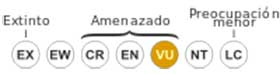
Vulnerable Vulnerable โ“˜ (UICN)โ“˜

โ€ข Current category of the Red List of the UICN: Vulnerable.

โ€ข Population trend: Decreasing.

Rationale for the Red List category

The combination of a comparison of population estimates 1971 and 1997 and deforestation rates over the same period suggest that the species has declined rapidly, qualifying the species as Vulnerable. Current threats loss of habitat and capture suggest that this decline is likely to continue.

Justification of trend

Se sospecha una continued rapid population decline due to destruction, degradation and fragmentation of habitat and illegal trade.

Conservation Actions Underway

โ€ข Appendix I and II of CITES.

โ€ข This species is considered Vulnerable nationwide (Silveira y Straube 2008, MMA 2014) and protected Brazilian law.

โ€ข There are breeding populations in five reserves and two southern winter feeding sites are protected. (Wege and Long 1995).

โ€ข Nevertheless, less than 1% Annual range, and less than 4% of each seasonal range is within protected areas (Marini et al., 2010).

โ€ข Provided artificial nests but not occupied (Snyder et to the ., 2000).

โ€ข Since 1991 It is conducting a campaign public awareness (Prestes et al . , 1997, Snyder et to the . 2000).

Conservation Actions Proposed

โ€ข Carry out surveys to obtain an estimate of the population size updated.

โ€ข Carry out periodic surveys to assess the population trends.

โ€ข Study the current levels of off-take for the trade.

โ€ข Monitor rates of habitat loss and degradation.

โ€ข Protect breeding areas in Caรงapava do Sul and Santana da Boa Vista.

โ€ข Improve the management of protected areas.

โ€ข Apply the law to collectors and, especially, dealerships, Looking for vehicles between December and February (Prestes et al ., 1997).

โ€ข Continue the campaign of sensitization.

The Red-spectacled Parrot in captivity:

Unknown until years 80, when a few reached Europe; not well known elsewhere.

relatively silent compared to other Amazonian species. Inquisitivas although generally quiet. have a nice nature, but they can occasionally be quite noisy, especially first thing in the morning and evening. They become confident relatively quickly. outside the breeding season, They can be set in a colony system. chewing hard and excellent flying and stair climbers, so they need ample opportunities for exercise.

Its captive breeding rarely it has succeeded.

It is believed that the main threat to this bird is the illegal domestic trade, particularly in the municipalities of Lagoa Vermelha, Barracao, Esmeralda and many capons. About 500 chicks are taken annually from nests to be sold in large urban centers Caxias do Sul, Florianรณpolis, Curitiba and Sรฃo Paulo (Prestcs et al., 1997).

It is a species that should only be kept in captivity for the purpose of achieving its reproduction and subsequent insertion into the wild..

Alternative names:

1 – Red-spectacled Parrot, Pretre’s Amazon, Pretre’s Parrot, Red spectacled Parrot, Red-spectacled Amazon (English).
2 – Amazone de Prรชtre (French).
3 – Prachtamazone (German).
4 – papagaio-da-serra, charรฃ, Charao, charรฃo, chorรฃo, maragato, Papagaio-charรฃo, papagaio-chorรฃo, serrano (Portuguese).
5 – Amazona Charao, Amazona de Cabeza Roja, Charao, CharaoChorao (espaรฑol).


scientific classification:

Temminck Coenraad Jacob

– Order: Psittaciformes
– Family: Psittacidae
– Genus: Amazona
– Scientific name: Amazona pretrei
– Citation: (Temminck, 1830)
– Protonimo: Psittacus pretrei


Images Red-spectacled Parrot:


Species of the genus Amazona


Sources:

– Avibase
– Parrots of the World โ€“ Forshaw Joseph M
– Parrots A Guide to the Parrots of the World – Tony Juniper & Mike Parr
– Birdlife

Photos:

(1) – Red-spectacled Amazon that is kept as a pet in Caxias do Sul, Rio Grande do Sul, Brazil By Marie (originally posted to Flickr as Perroquet familial) [CC BY-SA 2.0], via Wikimedia Commons
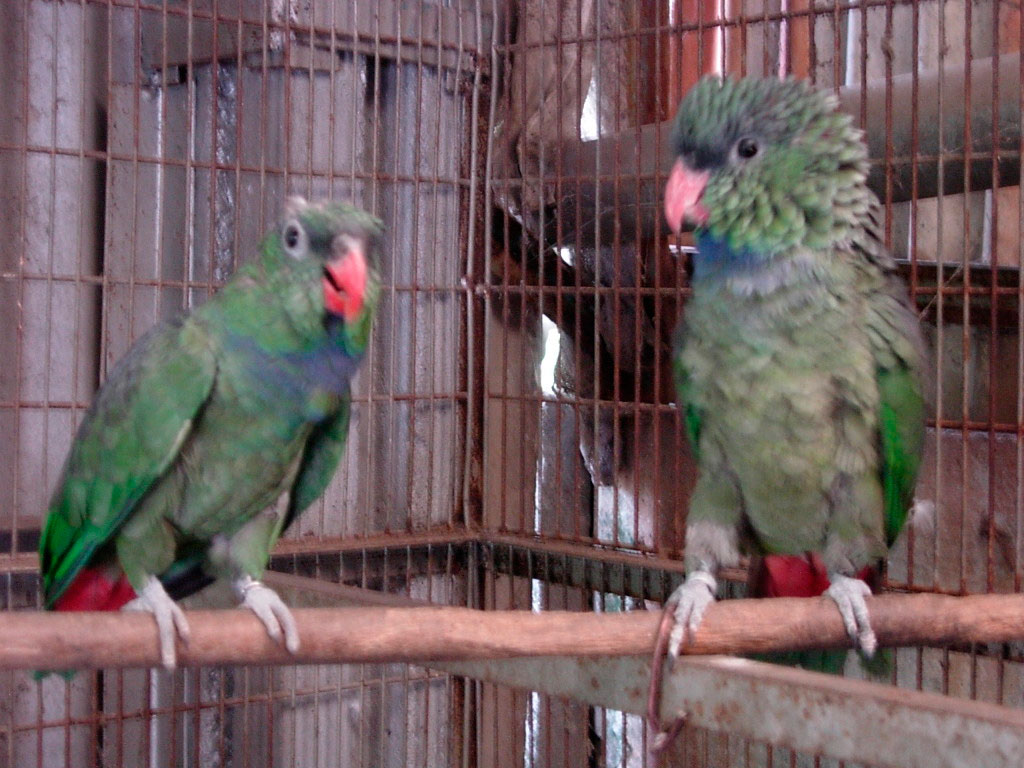
(2) – A pet Red-spectacled Amazon in a parrot cage. It is 32 cm land and 295 gm in wt By Amazona_pretrei_-bird_cage-8c.jpg: Andrea O Guimarรฃes derivative work: Snowmanradio [CC BY-SA 2.0], via Wikimedia Commons
(3) – Red-spectacled Amazon that is kept as a pet in Caxias do Sul, Rio Grande do Sul, Brazil. Some of its wing feathers are clipped By Amazona_pretrei_-Rio_Grande_do_Sul_-Brazil-8e.jpg: Mariederivative work: Snowmanradio [CC BY-SA 2.0], via Wikimedia Commons
(4) – Red-spectacled Amazon that is kept as a pet in Caxias do Sul, Rio Grande do Sul, Brazil By Marie [CC BY-SA 2.0], via Wikimedia Commons
(5) – Amazona pretrei, a native of the southernmost Brasil. Specimen in Palmitos Park, Gran Canaria By Bjoertvedt (Own work) [CC BY-SA 3.0 or GFDL], via Wikimedia Commons
(6) – A pet Red-spectacled Amazon in captivity. It has a ring on its right leg By Andrea O Guimarรฃes (originally posted to Flickr as Iโ€™m watching you) [CC BY-SA 2.0], via Wikimedia Commons
(7) – Red-spectacled Amazon that is kept as a pet in Caxias do Sul, Rio Grande do Sul, Brazil By Marie (originally posted to Flickr as Temporaire) [CC BY-SA 2.0], via Wikimedia Commons
(8) – Red-spectacled Amazon that is kept as a pet in Caxias do Sul, Rio Grande do Sul, Brazil By Marie (originally posted to Flickr as Calins… :)) [CC BY-SA 2.0], via Wikimedia Commons
(9) – A pet Red-spectacled Amazon in a parrot cage. It is 32 cm land and 295 gm in wt By Andrea O Guimarรฃes [CC BY-SA 2.0], via Wikimedia Commons
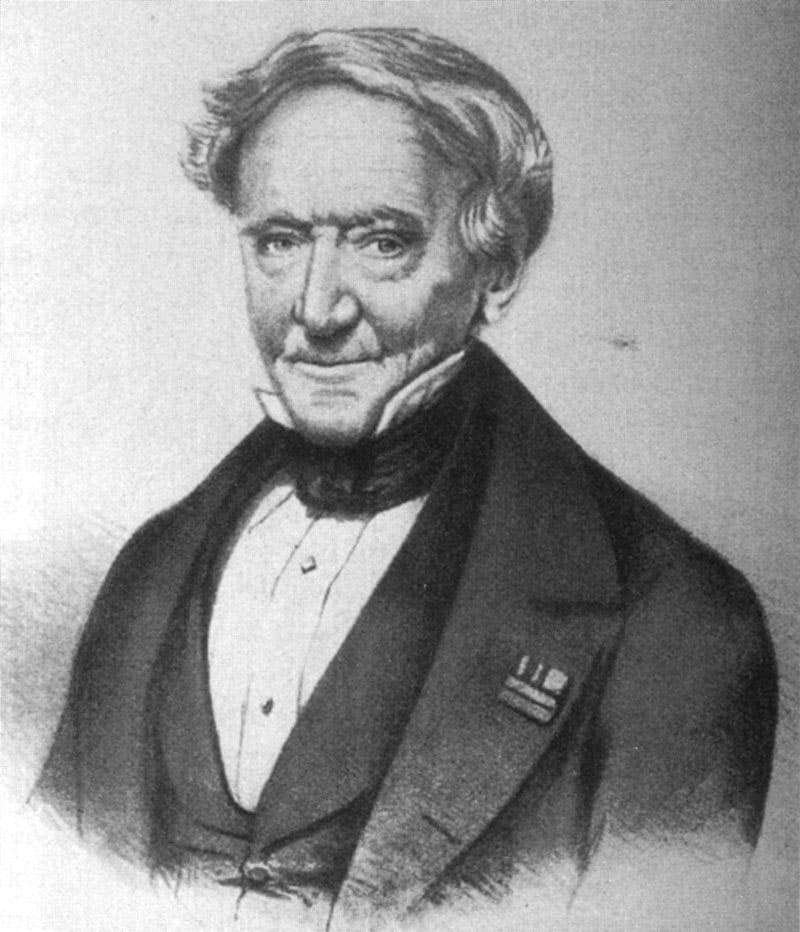
(10) – Amazona pretrei = Psittacus pretei = Priest Parrot By Jean-Gabriel Prรชtre (1768โ€“1849) [Public domain], via Wikimedia Commons

Sounds: Vitor Q. Piacentini, XC27028. accessible www.xeno-canto.org/27028.
โ–ท The world of Pets: Dogs, cats, birds, reptiles, amphibians

Red-necked Parrot
Amazona arausiaca

Red-necked Parrot
Red-necked Parrot (Amazona arausiaca) | By mikko.pyhala

Content

Description:


Anatomy-parrots

40 cm.. length and 650 g. of weight.

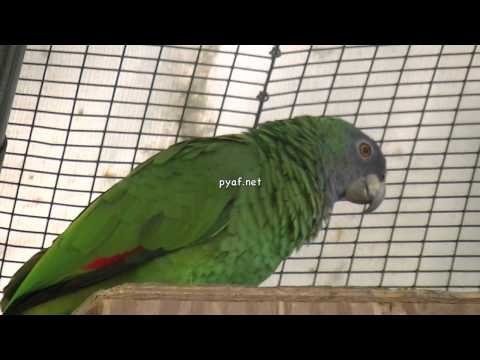
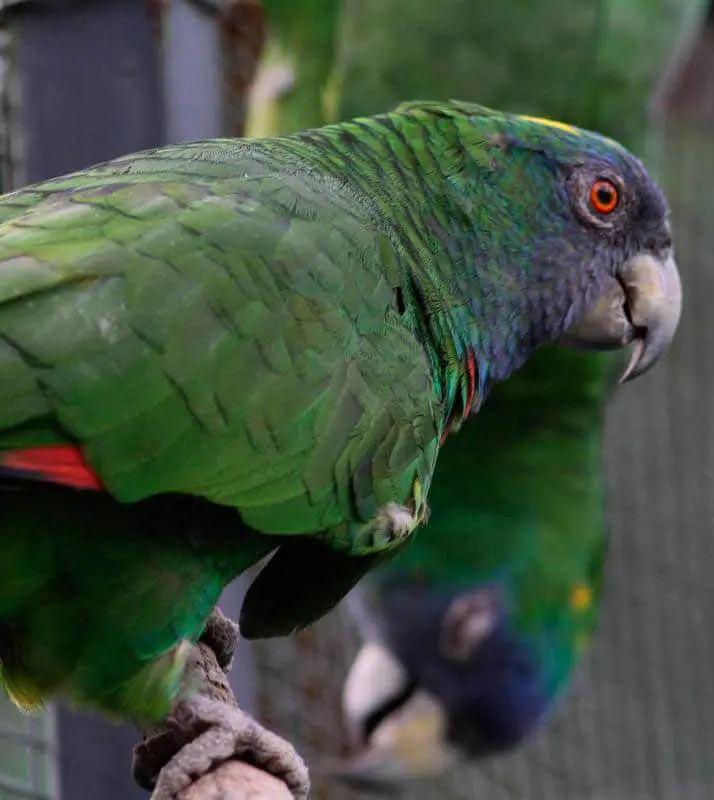
The Red-necked Parrot (Amazona arausiaca) has the lores, forecrown, front of crown, orbital area and upper cheeks, bright blue; back of the crown, nape and sides neck, with dark blue or blackish margins.

Mantle, back and scapulars, green with narrow faint dark margins giving subtle barred effect. Wing coverts green; carpal edge brighter yellowish green. Primaries green with blue tips; the three outer secondaries, red at the base, yellow and blue at the tips; four secondaries yellow and blue tips. The remaining secondary they are green. Under the wings, the coverts green; flight feather Bluish.

Red-necked Parrot

Chin and top of the throat, blue; the bottom throat and, sometimes, upper region chest, with patch resizable bright red; remaining chest and of the belly, green; undertail-coverts, brighter yellowish green. Tail bright green in the center, their outer feathers green tip yellowish green and red marks on the basis of the innerwebs. Bill horn; iris orange; legs grey

Both sexes are similar. It is thought that the immature It is similar to adult but with irises brown. The young fledglings They are significantly smaller than of adults during its first year.

  • Sound of the Red-necked Parrot.

Habitat:

Video "Red-necked Parrot"

Amazona arausiaca www.pyaf.net/

The Red-necked Parrot inhabits the canopy mountain rainforest, preferring forest areas with trees Tabonuco (Dacryodes excelsa), especially among 300-800 m (the highest density is found and altitudes 500-600 m) although occasionally they reported to 1.200 meters and formerly was a regular visitor (August October ) of the Coast zones.

Usually in small flocks or pairs; more numerous flocks feeding areas, outside the breeding season. Communal roosting in traditional sites, for example in large trees Dacryodes excelsa or Sloanea berteriana, They are using from year to year (but not necessarily all year).

Reproduction:

Nests in a large tree cavity with most nests reported in Dacryodes or Sloanea. breeding season February-June. low productivity probably just a clutch every two years and usually only one young per nest.

Food:

The diet It includes fruits of Dacryodes excelsa, Licania ternatensis, Richeria grandis, Amanoa caribaea, Simarouba amara, Symphonia globulifera, Chimarrhis cymosa, Pouteria pallida, Cordia elliptica, C. laevigata, Pithecellobium jupunba, Byrsonima martinicensis, Dussia martinicensis, Ormosia monosperma, Buchenavia capitata and Palmas Euterpes, egg yolks of Anacardium occidentale and fruits and buds of Lonchocarpus, as well orange crops, etc. Forages mainly in the canopy but also in sub-canopy and occasionally ground level. Usually it is fed in the morning and evening.

Distribution and status:

Size of its range (reproduction / resident): 190 km2

The Red-necked Parrot It is endemic to the Dominica Island in the Lesser Antilles. Formerly it spreads through the mountainous interior, including the northern peninsula. Contraction range from about 1950 with the existing population centered Morne Diablotin (1.447 m, the highest mountain Dominica) which it may have always been his main strength but whose southern slopes birds have been absent from the hurricane 1992.

small populations, reportedly, in the north of the peninsula (where apparently they are resident) and in the eastern center of the island. They can remain very small populations in the south. Recent sporadic observations of birds in low-lying areas of the north and east; other towns in the south suggest the gradual recolonization of the parts of the former range.

mainly residents but maybe (at least once) some regular seasonal foraging movements and some November-January nomadism. Although historical accounts tell of the abundance of this species, the drastic contraction in range and population have occurred since the mid-twentieth century with its gradual retreat in the most remote forests of northern and eastern. The decline is due to the loss of habitat, the hunting and capture bird cage.

The small existing population It is especially vulnerable to the loss of food plants and nesting sites due to hurricane damage. Although the effects of habitat loss may have been especially severe because of the preference of birds through the forests of low level (which it has been under pressure) They tolerate any disturbance and returned to the old feeding areas recently after conversion to plantations of fruit trees. The hunting It was probably the greatest threat to the seventies. Capture for local pet trade now under control due to a successful education campaign.

The population 1977 It was at least 350 birds (probably), but halved by the effects of hurricanes between 1979 and 1980. A Recovery since then 350 estimated birds 1990 and evidence of further increases to more than 500 in 1992. The remaining habitat is partially protected in the North Forest Reserve, but does not include neighboring critically important areas for conservation. Completely protected by national legislation.

Conservation:

State of conservation โ“˜


Vulnerable Vulnerable โ“˜ (UICN)โ“˜

โ€ข Current category of the Red List of the UICN: Vulnerable.

โ€ข Population trend: Increasing.

โ€ข Population size: 850-1000.

  • Rationale for the Red List category

The conservation actions He has helped this species to recover a population down from 1980. Still rated as vulnerable because its population is still very small and its range of small extent and restricted to a single island. But, if future declines in habitat available, could be reclassified as danger of extinction.

  • Justification of the population

Estimating population most recent is 850-1,000 mature individuals (PR Reillo a slightly. 2012), more or less equivalent to 1.200-1.500 individuals in total.

  • Justification trend

The population size has increased possibly only 150 birds in 1980, possibly even 1.200 birds currently, based on recent surveys and density estimates (PR Reillo in some. 2016). There is no new data on the evolution of the population, but the species is supposed to still rising.

Threats
    The loss of habitat in the lower elevations has been caused mainly by clearance for agriculture (Collar 1997). Although replanting fruit crops has benefited the species (Reillo y Durand 2008), the frugivorous diet of the Red-necked Parrot, conflict is causing local farmers (Douglas 2011). Damage caused by hurricanes has also been important: another hurricane the magnitude of Hurricane David could reverse recent population increases. Hunting and illegal trade are now low-level threats, but the illegal wildlife trade throughout the Caribbean is a constant concern and there is increasing pressure from illegal wildlife trade centered in Europe (PR Reillo in some. , 2016).
Conservation Actions Underway
    CITES Appendix I and II. It is fully protected by national legislation. Much of the remaining habitat is in the northern and central forest reserves, national parks and Morne Trois Pitons and Morne Diablotin, but adjacent areas, critically important, They are not protected (Juniper and Parr 1998). Since 1980, It has benefited from the joint efforts of government and non-governmental organizations to protect their habitat and sensitize the local population of the needs of this species. Research methods have recently improved to maximize ecological information acquired, while minimizing the disturbance of birds, and the study has provided important information on nesting behavior and parental care. Similarly, census methodologies have improved to give more accurate estimates of population size and density (Reillo y Durand 2008). The population is monitored annually. A recent doctoral thesis project examined the interaction of species with fruit crops in Dominica (PR Reillo in some. 2012).
Conservation Actions Proposed
    Continue the implementation of the protection of national parks Morne Diablotin and Morne Trois Pitons and forest reserves in central and northern. Continue to monitor the population each year. To investigate the effects of nest site (and the food) competition between this species and Imperial Parrot (Amazona imperialis). Continue to prohibit the trade in this species, exports of ex situ captive breeding, and importation of non-native parrots as pets in Dominica (PR Reillo in some. 2012).

Red-necked Parrot in captivity:

CITES Appendix I and II. It is fully protected by national legislation.

Alternative names:

– Bouquet’s Parrot, Dominican Blue-faced Amazon, Dominican Blue-faced Parrot, Jacquot, Red necked Parrot, Red-necked Amazon, Red-necked Parrot (English).
– Amazone ร  cou rouge, Amazone de Bouquet (French).
– Blaukopfamazaone, Blaukopfamazone (German).
– Papagaio-de-colar-vermelho (Portuguese).
– Amazona de Cuello Rojo, Amazona Gorgirroja, Amazona gorjirroja, Jaco, loro de cuello rojo (espaรฑol).

scientific classification:

– Order: Psittaciformes
– Family: Psittacidae
– Genus: Amazona
– Scientific name: Amazona arausiaca
– Citation: (Statius Mรผller, 1776)
– Protonimo: parrot arausiacus

Images Red-necked Parrot:


Species of the genus Amazona


Sources:

  • Avibase
  • Parrots of the World โ€“ Forshaw Joseph M
  • Parrots A Guide to the Parrots of the World – Tony Juniper & Mike Parr
  • Birdlife

Photos:

(1) – Red-necked Amazon (Amazona arausiaca) – Author: mikko.pyhala – HBW
(2) – Red-necked Amazons at the Parrot Conservation and Research Centre Botanical Gardens, Roseau, Dominica By Andrew Szymanski (originally posted to Flickr as DSCF0031) [CC BY-SA 2.0], via Wikimedia Commons
(3) – Red-necked Amazons at the Parrot Conservation and Research Centre Botanical Gardens, Roseau, Dominica By Amazona_arausiaca_-Roseau_-Dominica_-aviary-6a.jpg: Andrew Szymanskiderivative work: Snowmanradio [CC BY-SA 2.0], via Wikimedia Commons
(4) – Amazona arausiaca Sunday, West Indies by Don Faulkner – Flickr
(5) – BARRABAND, Jacques (1767/8-1809) [Parrot Bouquet (Red-necked Amazon, Amazona arausiaca)] From Natural History of Parrots (by Francois Levaillant, 1801-1805) – Wikimedia
(6) – Natural history of parrots /. In Paris :chez Levrault … ;an IX (1801)-an XIII (1805).. by Biodiversity Heritage Library – Flickr

Sounds: Aristides Elias Elias, XC211593. accessible www.xeno-canto.org/211593

โ–ท The world of Pets: Dogs, cats, birds, reptiles, amphibians

Red-crowned Parakeet
Pyrrhura roseifrons

Red-crowned Parakeet

Content

Description:


Anatomy-parrots

22 cm.. in length and a weight ranging from 54 and 70 g..

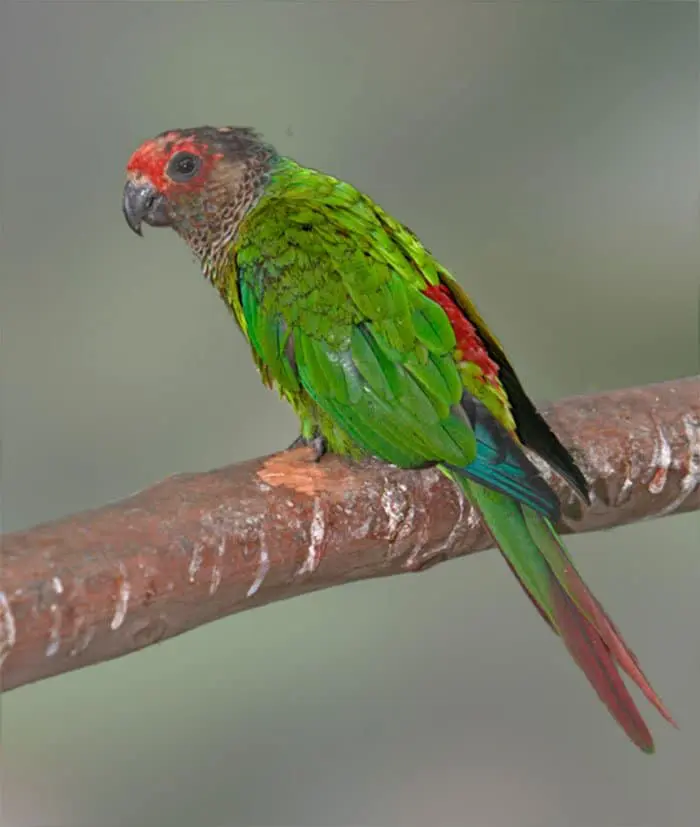
The Red-crowned Parakeet (Pyrrhura roseifrons) has the head pinkish red. The neck and the area of รขโ‚ฌโ€นรขโ‚ฌโ€นthe upper chest They are dark with whitish scales. The bill is black. The tail and the central area of belly They are red. The tip of his tail It is dark red. The wings they are blue. Orbital ring dark gray bordered by a yellowish white. the legs are grey.

The immature It has reddish forehead and dark tones in the rest of the head. The pinkish red head in adults it is distinctive. Losl youth They may resemble subspecies Pyrrhura roseifrons peruviana or the Deville's Parakeet (Pyrrhura lucianii), but it lacks of the ear-coverts pale.

  • Sound of the Red-crowned Parakeet.

Description 4 subspecies
  • Pyrrhura roseifrons dilutissima

    (Arndt, 2008) – Blue restricted to a narrow strip on the forecrown; yellowish beige in ear-coverts; upper region chest pale brown festooned with pale yellowish beige.

  • Pyrrhura roseifrons roseifrons

    (Gray,GR, 1859) – Nominal. –

  • Pyrrhura roseifrons parvifrons

    (Arndt, 2008) – It looks like the Pyrrhura roseifrons peruviana, but with blue, rather than red, on forecrown.

  • Pyrrhura roseifrons peruviana

    (Hocking, Blake & Joseph, 2002) – 22 cm., length. Absent in his bright red plumage, It has more dark brown in crown and the area eyes, the crown with bluish.

Habitat:

They mostly live in small groups of a dozen members and remain in pairs during the breeding period. breeding. They lead a life Nomad, little little is known about the behavior of this species in the wild.

Reproduction:

build their nest in tree cavities. The laying is of 5 to 7 eggs incubated by both parents for 26 days (captive breeding data). The pups remain in the nest 2 months, becoming independent at the age of 3 months.

Food:

It feeds on fruits, seeds, leaves and flowers.

Distribution:

Size of its range (reproduction / residents): 1.000.000 km2

It is located in the west of the Amazonia, from the state amazon about the Juruรก, in Brazil, and the lowlands of eastern Peru in the North of Bolivia. In Brazil, They spread south and west of habitat Deville's Parakeet (Pyrrhura lucianii)–

Distribution 4 subspecies
  • Pyrrhura roseifrons dilutissima

    (Arndt, 2008) – Center of Peru around the rio Ene at the confluence with the rio Quipachiari, and around Hacienda Louisiana, on Cordillera Vilcabamba.

  • Pyrrhura roseifrons roseifrons

    (Gray,GR, 1859) – Nominal. – Amazonia occidental, to the South of the amazon, from the North of Peru South to North of Bolivia (Peace) and in the West of Brazil (Western Amazon).

  • Pyrrhura roseifrons parvifrons

    (Arndt, 2008) – Two disjoint regions in northern Peru; in the East of San Martin and adjacent areas, Center west Loreto, and along the amazon in the northeast of Loreto (only on the southern shore of amazon).

  • Pyrrhura roseifrons peruviana

    (Hocking, Blake & Joseph, 2002) – Foothills of Andes in the southeast of Ecuador (Morona-Santiago) and North of Peru (Amazon and Loreto Western)

Conservation:

State of conservation โ“˜


minor concern Minor Concern โ“˜ (UICN)โ“˜

โ€ข Current category of the Red List of the UICN: Least concern.

โ€ข Population trend: Decreasing.

โ€ข Population size : Unknown.

Justification of the Red List of the Category

This species has a very large range, and therefore does not approach the thresholds for vulnerable under the range size criterion (extent of occurrence <20.000 km2 combinan con un tamaรฑo gama disminuciรณn o fluctuante, hรกbitat medida / calidad, o de la poblaciรณn tamaรฑo y un pequeรฑo nรบmero de localidades o fragmentaciรณn severa). A pesar de que la tendencia de la poblaciรณn parece estar disminuyendo, el descenso no se cree que es suficientemente rรกpido como para acercarse a los umbrales para Vulnerables segรบn el criterio tendencia de la poblaciรณn (> 30% decrease of more than ten years or three generations). The population size It has not been quantified, but is not believed to be a reason to approach the thresholds for Vulnerable based on population size criteria (<10.000 individuos maduros con una disminuciรณn continua estima en> 10% in ten years or three generations, or a specific population structure). For these reasons, the species is evaluated as Least concern.

Justification of the population

Recent world population is unknown given taxonomic divisions.

Justification trend

This species is suspected that there may be lost 7,0-7,3% of habitat within its distribution over three generations (18 years) based on a model of deforestation of the Amazon (Soares-Filho et to the. 2006, Bird et to the. 2011). Given the susceptibility of this species to hunting and / or entrapment, it is suspected that its population can decrease <25% en tres generaciones.

"Red-crowned Parakeet" in captivity:

little presence in captivity and found only in some aviaries, where however they reproduce very well. After acclimation is a strong bird that can live outdoors. It is a bird suspicious although curious and playful nature, especially if they feel safe. Young birds in captivity quickly lose their fear and are very attached to their caregivers. Itร‚ยดs noisy, especially in the morning and sleeps in the nest. The female is very aggressive during the breeding period with other birds..

Alternative names:

– Red-crowned Parakeet, Rose-fronted Parakeet, Rose-fronted Parakeet (Rose-fronted) (English).
– Conure ร  calotte rouge, Conure rougissante (French).
– Rotscheitelsittich (German).
– Tiriba-de-cabeรงa-vermelha (Portuguese).
– Cotorra frentirrosa, Perico de Frente Rosada (espaรฑol).

scientific classification:

– Order: Psittaciformes
– Family: Psittacidae
– Genus: Pyrrhura
– Scientific name: Pyrrhura roseifrons
– Citation: (Gray, GR, 1859)
– Protonimo: Conurus roseifrons

Images Red-crowned Parakeet:

Videos "Red-crowned Parakeet"


Especies del gรฉnero Pyrrhura

Red-crowned Parakeet (Pyrrhura roseifrons)


Sources:

– Avibase
– Parrots of the World โ€“ Forshaw Joseph M
– Parrots A Guide to the Parrots of the World – Tony Juniper & Mike Parr
– Birdlife

– Photos:

(1) – Painted Parakeet (Pyrrhura picta) – the subspecies on this photo, roseifrons, is now often considered a separate species, the Rose-fronted Parakeet (Pyrrhura roseifrons) By http://www.birdphotos.com (http://www.birdphotos.com) [CC BY 3.0], via Wikimedia Commons

– Sounds: Micah Riegner, XC208597. accessible www.xeno-canto.org/208597

โ–ท The world of Pets: Dogs, cats, birds, reptiles, amphibians

Naretha Bluebonnet
Northiella narethae

Content


Anatomy-parrots

Description:

The Naretha Bluebonnet (Northiella narethae) It is smaller than Bluebonnet (Northiella haematogaster), of about 28 cm. long.

The legs and feet are dark gray, and the irises is dark brown.

The adult male has a two tonal facial pattern forecrown lighter green-blue, the ears and the area above the eye in contrast to the rest of the face which is purple-blue. The head, the neck forward and breast are marked with pale steaks and diffuse spots.. The back It is olive gray. The belly, the area of the vent and the thighs are uniform yellow, while red is limited to the area of รขโ‚ฌโ€นรขโ‚ฌโ€นthe undertail-coverts. The lesser wing coverts are blue and outer median wing coverts red, while the inner median and greater wing coverts, and inner secondary a yellow-olive colour. The central feathers of the tail are tinged with pale blue..

The female adult has a duller blue color in forecrown, and a reduced color on wings and tail, and with no tint of orange on the belly. It is smaller overall, at around 26 cm length.

The chicks they have a bill yellow and gain their adult plumage in the first post moves to bloom (three to four months old).

taxonomy:

the species Northiella narethae It was formerly classified as a subspecies (Northiella haematogaster narethe) of the Northiella haematogaster. A molecular study published in 2015 by Gaynor Dolman and Leo Joseph He confirmed the genetic isolation Naretha Bluebonnet (Northiella narethae) and recommended that it was restored as a separate species.

Habitat:

Arid and semiarid scrub and farmland, thickets mulga, weeds and dry forests open.

Reproduction:

It is heavily influenced by rainfall and food availability, but usually peaks between August and January.

The usual site nesting It is a very small cavity tree, particularly attracted to she-oaks providing appropriate holes for nesting, often near the ground, coated shavings and wood dust rotten. The female incubates the eggs but is cared for by the male who also contributes to raising the young..

Four to seven white eggs round (23mm x 19mm). Time of incubation: 22 days. The young usually leave the nest around the 30 days.

Food:

Seeds of various grasses and herbaceous plants (autochthonous), also nectar, flowers and various fruits.

Distribution:

Reports indicate that Naretha Bluebonnet They have been common in the arid region Nullarbor, and they have become more rare in the twentieth century. It is believed that localized individuals range makes the species highly endemic in an area on the border between Western Australia and Southern Australia.

Conservation:

We know the conservation status of this species, although probably in risk status.

"Naretha Bluebonnet" in captivity:

No data.

Alternative names:

– Bluebonnet (Naretha), Little Bluebonnet, Naretha Bluebonnet (English).
– Perruche ร  bonnet bleu (narethae), Perruche de Nareth, Perruche petite (French).
– (German).
– (Portuguese).
– Perico Cariazul Naretha (espaรฑol).

Images "Naretha Bluebonnet"

scientific classification:

– Order: Psittaciformes
– Family: Psittaculidae
– Gender: Northiella
– Scientific name: Northiella narethae
– Subpoena: (White, HL, 1921
– Protonimo: Psephotus narethae

Sources:

โ€ข Avibase
โ€ข Parrots of the World โ€“ Forshaw Joseph M
โ€ข Parrots A Guide to the Parrots of the World – Tony Juniper & Mike Parr
โ€ข Birdlife

Photos:

(1) – Penochka Birds: Parrots (Psittacidae) – Source

โ–ท The world of Pets: Dogs, cats, birds, reptiles, amphibians

Flores Lorikeet
Trichoglossus weberi

Flores Lorikeet

Content

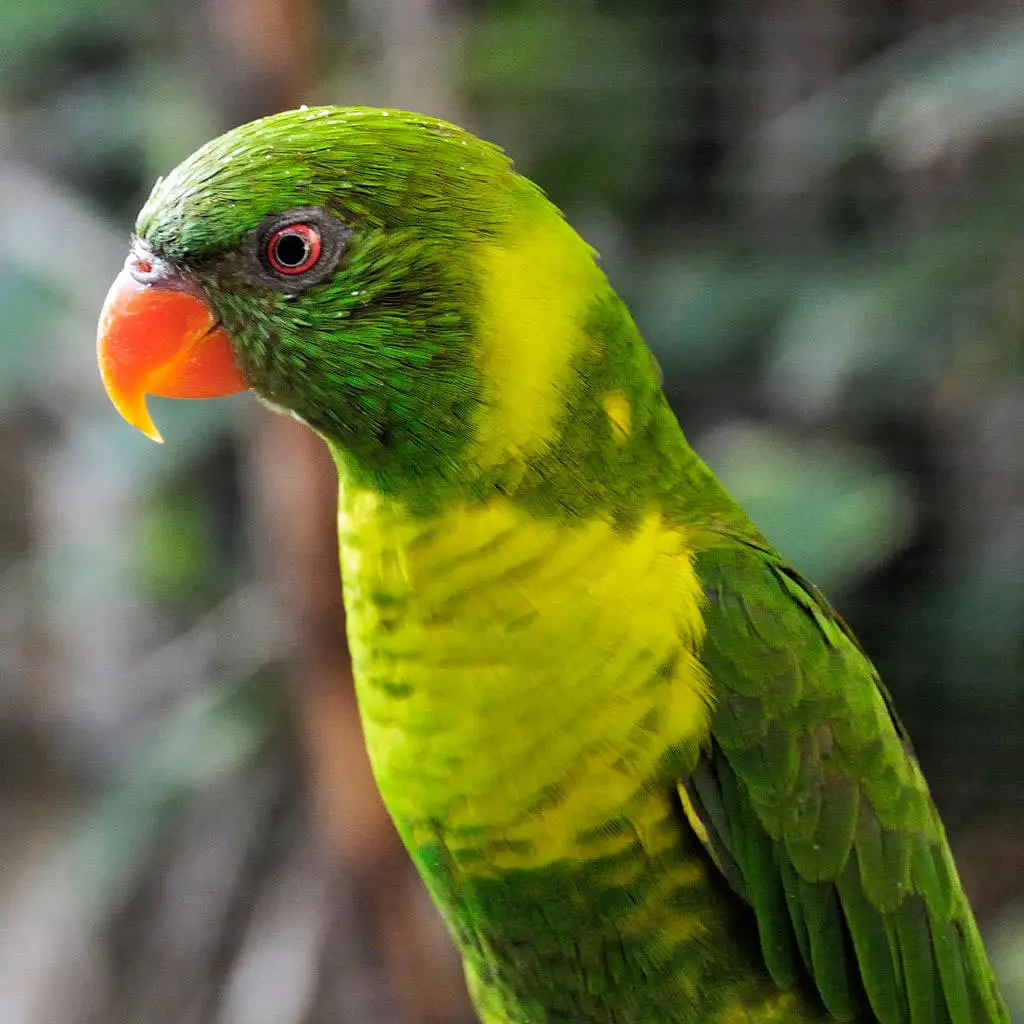
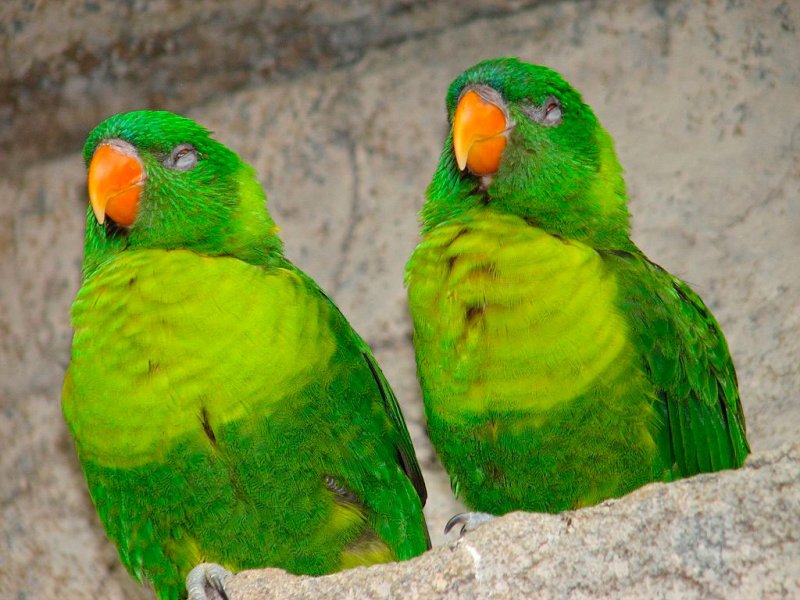
 Flores Lorikeet

Description Lori Flores:

25 cm. length and 100-150 g. of weight.

The Flores Lorikeet (Trichoglossus weberi) is generally Green; light green / blue stripes on the forecrown and lores, the rest of the head with brighter green stripes; underwing-coverts yellow / green. The chest and the thighs are yellowish or reddish. The bill It is orange-red and irises orange-red. The legs son grises. Smaller size than other species Trichoglossus.

The youth they are similar to adults.

    taxonomy:

Sometimes you think you're closer Olive headed Lorikeet (Trichoglossus euteles). With one exception, so far it has been treated as a subspecies within the complex Coconut Lorikeet (Trichoglossus haematodus), but differs in its chest rather pale green; abdominal patch medium green; head dark green with streaks of bright green; small size (less than a Scarlet-breasted Lorikeet (Trichoglossus forsteni) relatively small). Monotypic.

  • Sound of the Flores Lorikeet. (1)

(1) Some species are under extreme pressure because of traps and harassment. The open availability of high-quality recordings of these species may make the problems even worse.. For this reason, transmission and download of these recordings is off. Recorders are free to share in xeno-edge, but they will have to approve access to these recordings.

Habitat:

It's more common in the lowlands, but it is up 2400 meters above sea level. Wide variety of areas including settlements, forests, coconut plantations, Savanna, eucalyptus forests and mangroves.

It is found in mixed flocks with other parrots; small and noisy groups. Nomads, since they depend on flowering trees. It perches communally in groups of hundreds of birds.

Reproduction:

Birds have been recorded in conditions reproduction in June and is reported reproduction between February and August (White and Bruce 1986, Reeve y Rabenak 2016).

It will nest on the ground in some of the predator-free islands.

Food:

It feeds mainly from nectar, but also feeds on figs, insects and can be found around artificial feeding stations.

Distribution:

Extension of the distribution (breeding/resident): 25.500 km2

The Lori Flores are endemic to the flower island, Indonesian, where it is described as common (pit et to the. 1997).

Conservation Lori Flores:


Near-threatened

1. Current red list category of the UICN: Near-threatened.

2. The population trend: Decreasing.

3. Population size : 10000-19999 individuals.

    Rationale for the Red List category

It is believed that this species has recently split a moderately small population (approaching 10.000 mature individuals), forming one subpopulation, inferring that is suffering moderately rapid decreases due to the pressure of capture and loss of habitat. So, It has been classified as Near threatened, but more information on population size, trends and threats can lead to a reassessment of their status.

    Justification of the population

It is believed that the population of Flores Lorikeet It is moderately small (that is to say, approaching 10.000 mature individuals).

    Justification trend

They suspected that the population is declining due to loss of habitat and unsustainable levels of exploitation.

    Threats

The habitat destruction through the combined impacts of firewood collection, commercial logging, timber extraction for construction materials and clearance for agriculture may represent the most relevant threat.

The loss and fragmentation of forests It is already extensive in Flowers, where no semi-permanent forest below the 1.000 meters is included within the protected areas published in the Official Gazette. These threats are exacerbated by the expansion of human population, with large volumes of wood needed for housing construction, and the fact that the application of the laws by the government is little or no.

The moist deciduous forest is being cleared extensively through land grabbing and the establishment of agricultural areas, a factor that is inevitably reducing the range and population of this species. Forest clearing continues in the coastal belt to make way for crops, and illegal logging continues in protected areas.

It is presumed that the capture for trade in wild birds It represents an additional threat, as for other subspecies of the complex (Trichoglossus haemotodus).

Conservation actions and research in progress

Appendix II of the CITES. CMS Appendix II. It has been recorded in the Mbeliling Forest Reserve (Reeve y Rabenak 2016).

Proposed Research and Conservation Actions

1 – Estimate the population and assess population trends and scale of the pressure catch.

2- Conduct a species-specific study to identify important sites, in order to provide protection.

3- Carry out research on their status and habitat use (with special attention to feeding ecology and forest fragmentation) so that long-term management of the species facilitate.

4- Monitor trade to investigate whether this represents a significant threat.

5- Initiate campaigns sensitization to get the support of local people in forest protection.

In captivity:

In captivity it is kind enough rare de lori. He was raised for the first time Great Britain, in 1969, in Germany in 1984.

Because of its endangered status, Any suitable specimen can not be released back into their natural habitat (native range) It should preferably be placed in a breeding program well managed to ensure the continued survival of this species.

Alternative names

– Flores Island rainbow lory, Flores Lorikeet, Leaf Lorikeet, Rainbow Lorikeet (Leaf) (English).
– Loriquet ร  tรชte bleue (Weber), Loriquet ร  tรชte bleue (weberi), Loriquet de Flores, Loriquet de Weber (French).
– Flores Blauwangenallfarblori, Flores-Allfarblori, Webers Lori (German).
– Periquito-arco-รญris (weberi) (Portuguese).
– Lori de Flores, Lori Arcoiris (weberi) (espaรฑol).

scientific classification:

– Order: Psittaciformes
– Family: Psittaculidae
– Gender: Trichoglossus
– Scientific name: Trichoglossus weberi
– Subpoena: (Buttikofer, 1894)
– Protonimo: Psitteuteles weber

"Lori de Flores" images:

Videos "Flores Lorikeet"


ยซLori de Floresยป (Trichoglossus weberi)


    Sources:

    1. Avibase
    2. Parrots of the World โ€“ Forshaw Joseph M
    3. Parrots A Guide to the Parrots of the World – Tony Juniper & Mike Parr
    4. Birdlife

    Photos:

    (1) – Flores Lorikeet, Trichoglossus (haematodus) weberi, at New Port Aquarium, Cincinnati, USA by derivative work: Snowmanradio (talk)Trichoglossus_haematodus_weberi_-New_Port_Aquarium-8.jpg: Serge Melki [CC BY 2.0], via Wikimedia Commons
    (2) – Weberโ€™s Lorikeets (Trichoglossus haematodus weberi) at Newport Aquarium by Ltshears [CC BY-SA 3.0 or GFDL], from Wikimedia Commons
    (3) – Fig. 1: Flores Lorikeet (Trichoglossus = Psitteuteles Weber Weber)
    Fig. 2: Olive-headed Lorikeet (Trichoglossus euteles = Psitteuteles euteles) by A Weberโ€™s lorikeet (Trichoglossus weberi) at the Jerusalem Biblical Zoo by SuperJew [CC BY-SA 4.0], from Wikimedia Commons
    (4) – Trichoglossus haematodus weberi Buttikofer, 1894 bt Huub Veldhuijzen van Zanten / Naturalis Biodiversity Center [CC BY-SA 3.0]

    (5) – Weberโ€™s lorikeet, Picture taken at Loro Parque in Puerto de la Cruz / Tenerife by Dominik Deobald – Flickr
    (6) – Johann Buttikofer [Public domain], via Wikimedia Commons

    – Sounds: Raf Floats, XC350575. accessible www.xeno-canto.org/350575

โ–ท The world of Pets: Dogs, cats, birds, reptiles, amphibians

Brown-breasted Parakeet
Pyrrhura calliptera


Brown-breasted Parakeet

Content

Description:

Brown-breasted Parakeet

22-23 cm.. height.

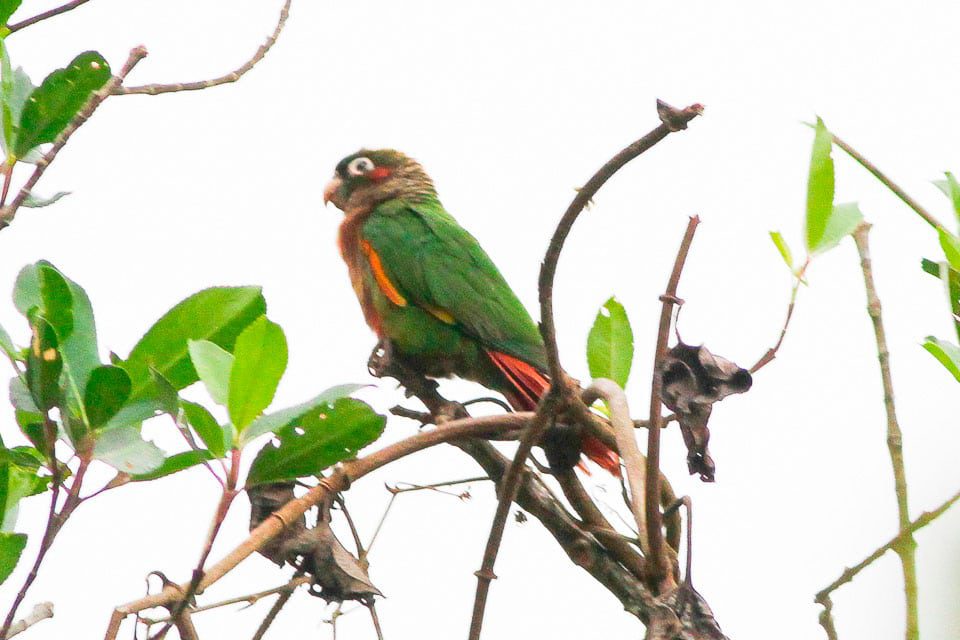
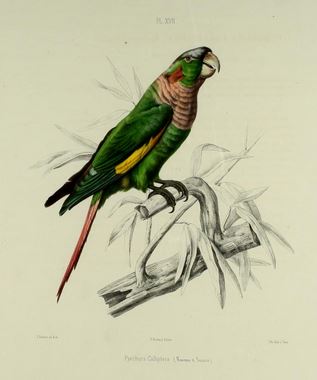
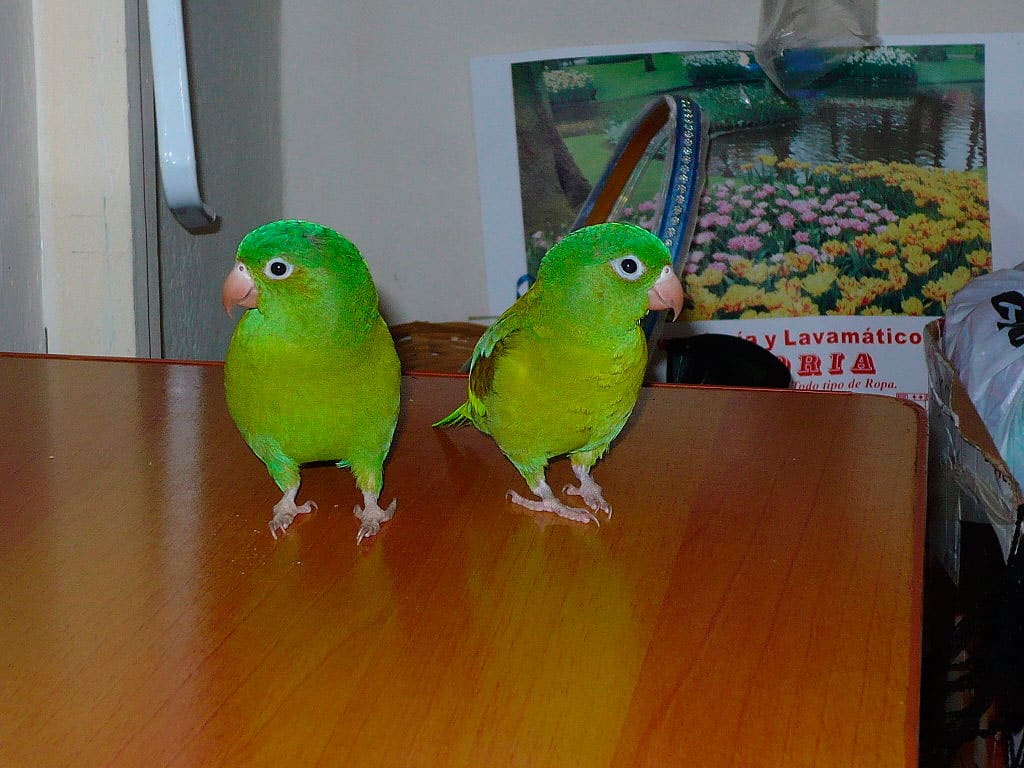
The Brown-breasted Parakeet (Pyrrhura calliptera) is easily recognized by the Wing mirror yellow in flight. In general it is green, with a red spot on the ear; chest brown reddish and sides of the neck characteristic dark brown.

Shoulder mostly yellow up to half of the wing and the end of the same pardo-olivaceo.
The primary feathers are blue and their covert wing external and internal yellow, usually with orange blend.
The tail reddish brown. Its bill pale yellowish; irises yellow; eye ring white.

The immature lack of yellow in the wings.

Habitat:

It inhabits in Misty jungles Andean and sub-andinas with canopy 15 to 25 m, secondary forests and Paramo, from 1700 to 3400 m. They fly at dawn and at dusk flocks, usually small of 6 to 12 individuals on the canopy of the forest.

Reproduction:

It nests in, generally, in cavities of trees located in wooded pastures or pasture surrounded by secondary forest fragments, bedrooms for both nests.
breeding conditions they have been observed in August and October, as well as between November and January in Fusagasugรก, Farallon de Medina and Soatรก (Cortes-Herrera et to the., 2007) and from September to February in the Chingaza National Park (Arenas-Mosquera 2011).

The size average of the laying is of 5-6 eggs of color whitish. The chicks take of 60 to 70 days to complete its development.

Food:

Diet Brown-breasted Parakeet consists in fruit (including plants of the Ericaceae, Lauraceae, Melastomataceae and Clusiaceae (Cortes-Herrera et to the., 2007), seeds and cultivated corn, Although flocks larger were observed in areas open to eating leaves and seeds (O. Courteous in litt., 2012).

Distribution:

Size distribution (reproduction / resident): 1,000 km2

Endemic. Cordillera Oriental in Colombia. Since Boyacรก to southwest of Cundinamarca. Has also been reported in the departments of Santander, Norte de Santander and Casanare in the localities of the Arrayanes and Salina.

The population total has been estimated at 5.000-10.000 individuals.

Conservation:

State of conservation โ“˜


Vulnerable Vulnerable โ“˜ (UICN)โ“˜

โ€ข Current category of the Red List of the UICN: Vulnerable.

โ€ข Population trend: Decreasing.

This species has a range very small and a small population, known in less than ten places in what is rapidly declining due to the loss of habitat and persecution as as plague by including cultivated corn in their diet.

These declines in population range are expected to continue.. So, qualified as vulnerable.

It is estimated that its population amounts to between 5.000 and 10.000 individuals, equivalent approximately to 3.300-6.700 mature individuals.

"Brown-breasted Parakeet" in captivity:

Not usually find it in captivity.

Alternative names:

– Brown-breasted Parakeet, Brown breasted Parakeet, Brown-backed Conure, Brown-backed Parakeet, Brown-breasted Conure, Flame-winged Conure, Flame-winged Parakeet (English).
– Perriche ร  poitrine brune, Perruche ร  poitrine brune (French).
– Braunbrustsittich, Braunbrust-Sittich (German).
– Tiriba-de-peito-marron (Portuguese).
– Cotorra Pechiparda, Perico Bello, Periquito Aliamarillo (espaรฑol).

scientific classification:

– Order: Psittaciformes
– Family: Psittacidae
– Genus: Pyrrhura
– Scientific name: Pyrrhura calliptera
– Citation: (Massena & Souancรฉ, 1854)
– Protonimo: Conurus callipterus

Images "Brown-breasted Parakeet"

Videos "Brown-breasted Parakeet"


Especies del gรฉnero Pyrrhura

Brown-breasted Parakeet (Pyrrhura calliptera)


Sources:

– Avibase
– Parrots of the World โ€“ Forshaw Joseph M
– Parrots A Guide to the Parrots of the World – Tony Juniper & Mike Parr
– Birdlife
– Wiki Aves de Colombia

– Photos:

(1) – Flame-winged Parakeet (Pyrrhura calliptera) By Ron Knight from Seaford, East Sussex, United Kingdom (Flame-winged Parakeet (Pyrrhura calliptera)) [CC BY 2.0], via Wikimedia Commons
(2) – Pyrrhura calliptera By J. Davernes (biodiversitylibrary.org) [Public domain], via Wikimedia Commons

– Sounds: (Xeno-canto)

โ–ท The world of Pets: Dogs, cats, birds, reptiles, amphibians

Orange-chinned Parakeet
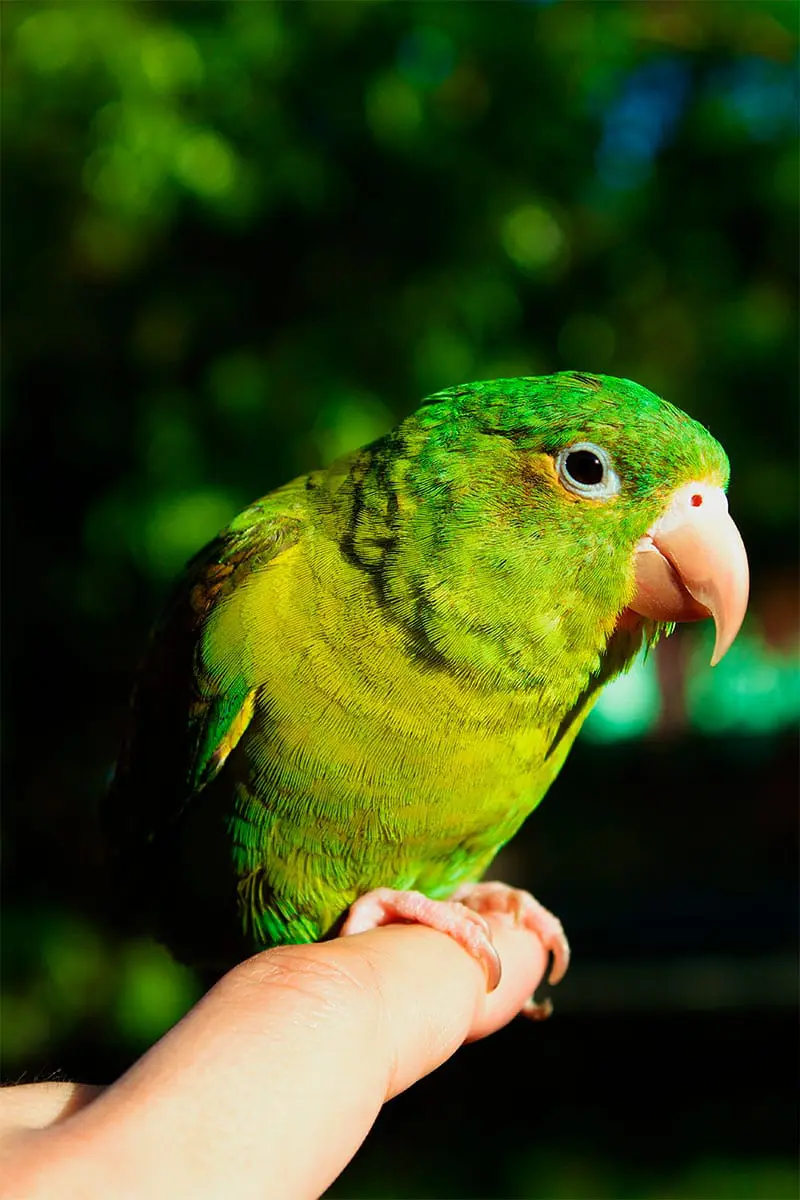
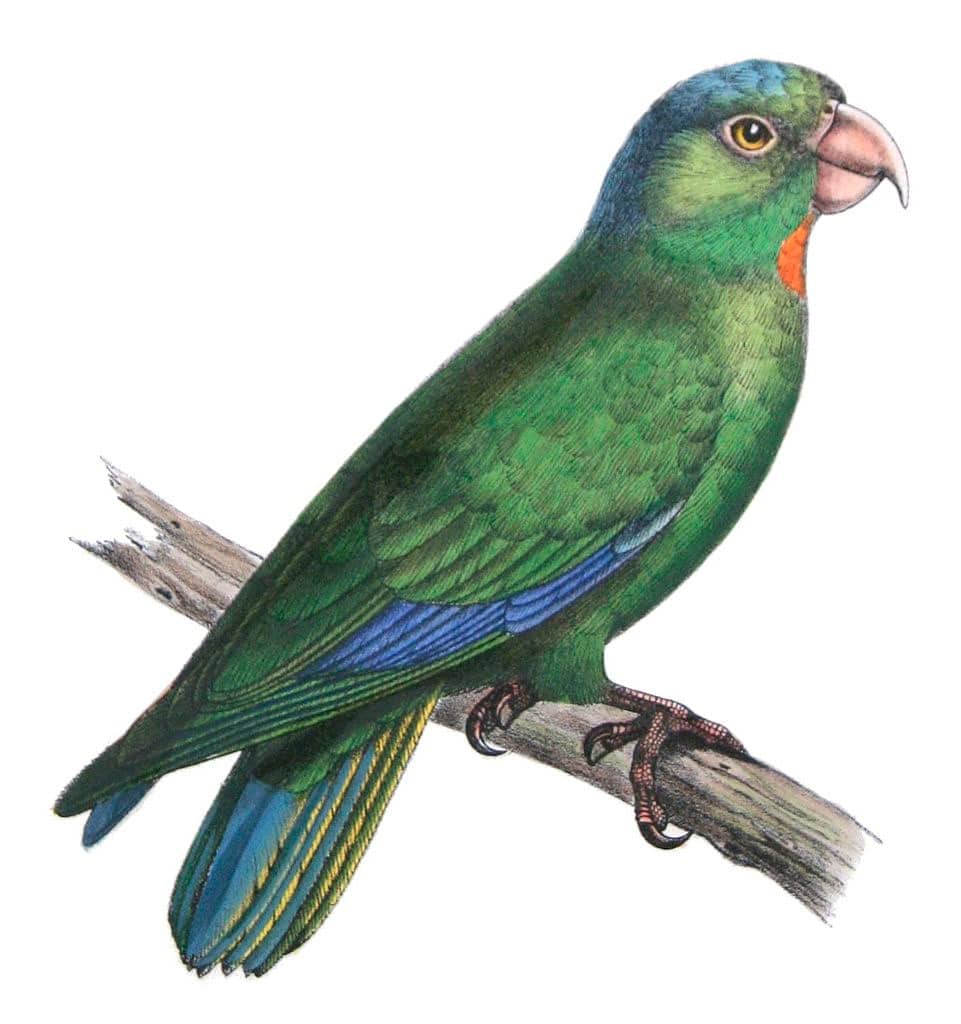
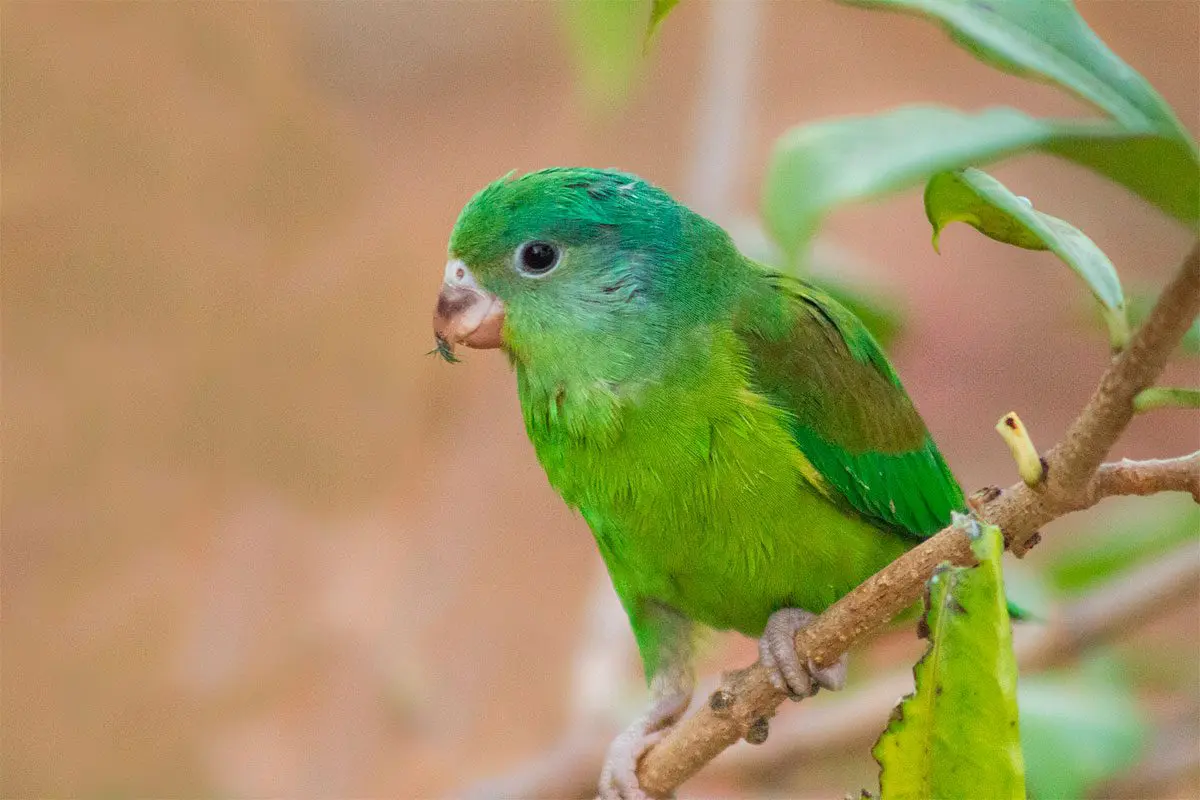
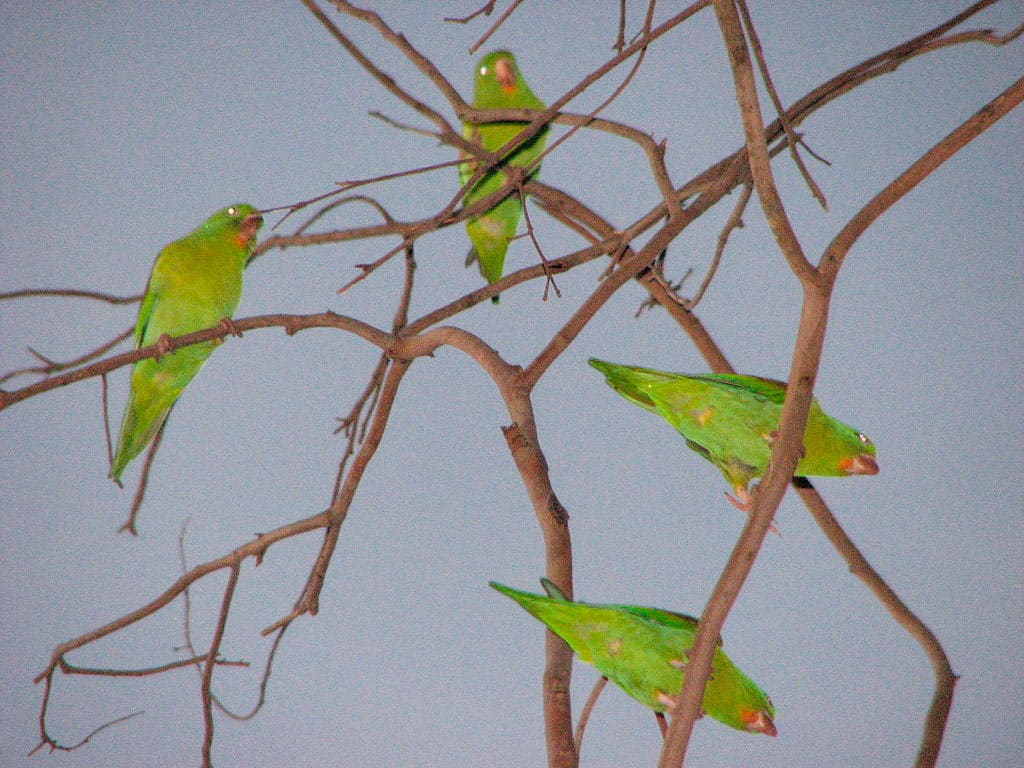
Brotogeris jugularis

Orange-chinned Parakeet

Content

Description:

catita-churica-7

17 to 20 cm.. height.
The Orange-chinned Parakeet (Brotogeris jugularis) has the forecrown, crown, back of the neck and upper cheeks, bright green with blue tinge; lores and lower cheeks, duller green with olive tinge. feathers in the the mantle and the top of the back, olive-green with more green tips; Scapulars Green tipped bronce-marrones; lower back and rump, bluish green. Lesser coverts and median, foliage color, with a patch large in the shoulder; Primary coverts blue, greater coverts green. Flight feathers greenish blue above, Blue-Green below with less yellow in the underwing-coverts.
Bright orange stain in the throat, which flying becomes very evident. Underparts brighter yellowish green, more blue from the belly up to the undertail-coverts. Upper, the tail bluish green; by below more pale and yellowish.

Bill color pale horn; bare periophthalmic whitish; irises dark brown; legs pink.

The plumage of both sexes are similar.

Description 2 subspecies:

  • Brotogeris jugularis exsul

    (Todd, 1917) – Has the back and rump olive, and dorsally the wing darker, In addition the stain in the neck smaller.

  • Brotogeris jugularis exsul
    Brotogeris jugularis exsul

  • Brotogeris jugularis jugularis

    (Statius Mรผller, 1776) – Nominal.

Habitat:

The Orange-chinned Parakeet prefer, generally, forests or partially wooded habitats with bushes, deciduous forest, dry and wet, plantations, edge of light and areas cultivated or grasslands with trees large. It tolerates human presence and it attends the parks and gardens in cities. Most numerous in partially deforested areas, mainly in tropical zone, Although it amounts to subtropical vegetation zones in (for example, the Cordillera de Guanacaste, Costa Rica. Observed at altitudes of 500 m (Guatemala), 900 m (Honduras), 1.360 m (El Salvador), 1.200 m (Costa Rica), 1.000 m (Venezuela). Usually, in pairs or small groups, with large gatherings where abundant food. More gregarious outside of breeding season. Rest communally on rubbers (Ficus sp.) or palms.

Son very good flying, in nature there have been flights of up to 45 kilometres per hour.

Reproduction:

Nest from May to July in tree hollows (including old Woodpecker nests) and termite mounds. A laying, usually, compose of four to six white eggs, What hatch after a few 26 days of incubation. The chicks leave the nest about 42 days after birth.

Sometimes colonial. Reproduction reported in March in Mexico; January in El Salvador; February-April in Panama; January-March in Colombia.

Food:

Feeds of seeds and fruits trees of Bombax, Ficus, Muntingia, Byrsonima, Cecropia, Ceiba, flowers and nectar of Erythrina, raft and guava. It feeds mainly in the canopy. They can be destructive crops (for example, Mango).

Distribution:

Size of the area of distribution (reproduction / resident): 781.000 km2

This parakeet occupies the lowlands of the southern Pacific slope of Mexico, in Oaxaca and Chiapas (reports of Warrior dubious) and areas adjacent to Guatemala and El Salvador, lowlands of the Honduran Pacific, and slopes of the Pacific and Caribbean Nicaragua.

In Costa Rica is mainly a bird of your side of the peaceful, but comes into the lowlands of the Caribbean adjacent, to the South of the Lake Cocibolca, spreading through the Pacific lowlands and the Caribbean from Panama, including the Islands Coiba and Cebaco.

Are also distributed to the West of the Andes in Colombia, to the south, to Atrato River and in the Caribbean lowlands of the region of Santa Marta and Serrania del Perija and further South, to the top of the Magdalena River Valley and lowlands of Norte de Santander and Arauca.

In Venezuela It extends from the North of the Orinoco in Zulia, Tรกchira North, Merida Western, the coastal mountains Yaracuy and Carabobo and in the lowlands of Portuguese, Cojedes, barinas, Apure and Guarico.

The Orange-chinned Parakeet are, mainly, residents although they roam locally in some areas (for example, in El Salvador after breeding season).

Usually of common to abundant though apparently uncommon at the local level (for example, Oaxaca).

Captured for the trade and common in captivity in countries of the range.

Distribution 2 subspecies:

Conservation:

State of conservation โ“˜


minor concern Minor Concern โ“˜ (UICN)โ“˜

โ€ข Current category of the Red List of the UICN: Least concern.

โ€ข Population trend: Stable.

Justification of the population

Partners in Flight estimate your total population in 500,000-4,999,999 individuals (A. Panjabi in litt., 2008).

Justification of trend

They suspected that the population is stable in absence of evidence of any decline or threatens substantial.

"Orange-chinned Parakeet" in captivity:

Very common in captivity does time. It is a bird very shy and easily alarmable but with the passage of time creates a good emotional relationship with his owner. It can be aggressive with other smaller parrots.

Alternative names:

– Orange-chinned Parakeet, Bee Bee Parakeet, Brown-shouldered Parakeet, Mexican Parakeet, Orange chinned Parakeet, Tovi Parakeet (English).
– Toui ร  menton d’or, Perruche ร  front orange, Perruche tovi, Toui ร  menton jaune (French).
– Tovisittich, Goldkinnsittich (German).
– Periquito-de-queixo-laranja (Portuguese).
– Catita Churica, Chocoyo Barbinaranja, Perico Ala Amarilla, perico ala-amarilla, perico barbinaranja, Periquito Barbinaranja, Periquito Bronceado, Periquito de Alas Doradas (espaรฑol).
– Periquito Bronceado (Colombia).
– Periquito barbinaranja (Costa Rica).
– perico barbinaranja (Honduras).
– perico ala amarilla, perico ala-amarilla, Periquito Barbinaranja (Mexico).
– Chocoyo Barbinaranja (Nicaragua).
– Perico Ala Marrรณn (Venezuela).

scientific classification:

– Order: Psittaciformes
– Family: Psittacidae
– Genus: Brotogeris
– Scientific name: Brotogeris jugularis
– Citation: (Statius Mรผller, 1776)
– Protonimo: Psittacus jugularis

Images Orange-chinned Parakeet:


Species of the genus Brotogeris

Sources:

– Avibase
– Parrots of the World โ€“ Forshaw Joseph M
– Parrots A Guide to the Parrots of the World – Tony Juniper & Mike Parr
– Birdlife

– Photos:

(1) – A pet Orange-chinned Parakeet in Panama By Nelson de Witt from USA (IMG_2058Uploaded by Snowmanradio) [CC BY-SA 2.0], via Wikimedia Commons
(2) – An Orange-chinned Parakeet feeding in Panama By Brian Gratwicke (Flickr: Orange-chinned Parakeet) [CC BY 2.0], via Wikimedia Commons
(3) – Orange-chinned parakeets in Panama City, Rep. of Panama. Aproximadamente tres o cuatro meses de edad By Ricaurte Puga (Own work) [GFDL or CC BY-SA 4.0-3.0-2.5-2.0-1.0], via Wikimedia Commons
(4) – Brotogeris jugularis en El Salvador tomando Coca Cola By Kevinmenendez (Own work) [GFDL or CC BY 3.0], via Wikimedia Commons
(5) – This is the smallest parakeet in El Salvador know as Catalnica, Perico de Lesson, Orange-chinned Parakeet (Brotogeris Jugularis) By ceasol (Flickr) [CC BY-SA 2.0], via Wikimedia Commons
(6) – Orange-chinned Parakeet | Brown wing parakeet (Brotogeris jugularis exsul) by Fernando Flores – Flickr
(7) – Conurus jugularis Dev. & Cast. = Brotogeris jugularis (Mรผller, 1776) by Francis de Laporte de Castelnau [Public domain], via Wikimedia Commons

– Sounds: (Xeno-Canto)

โ–ท The world of Pets: Dogs, cats, birds, reptiles, amphibians

Red billed Parrot
Pionus sordidus

Tropicbird Parrot

Content


Anatomy-parrots

Description:

The Red billed Parrot (Pionus sordidus), of looking scruffy, has a length of 28 to 31 cm. and a weight between 255 and 275 g..

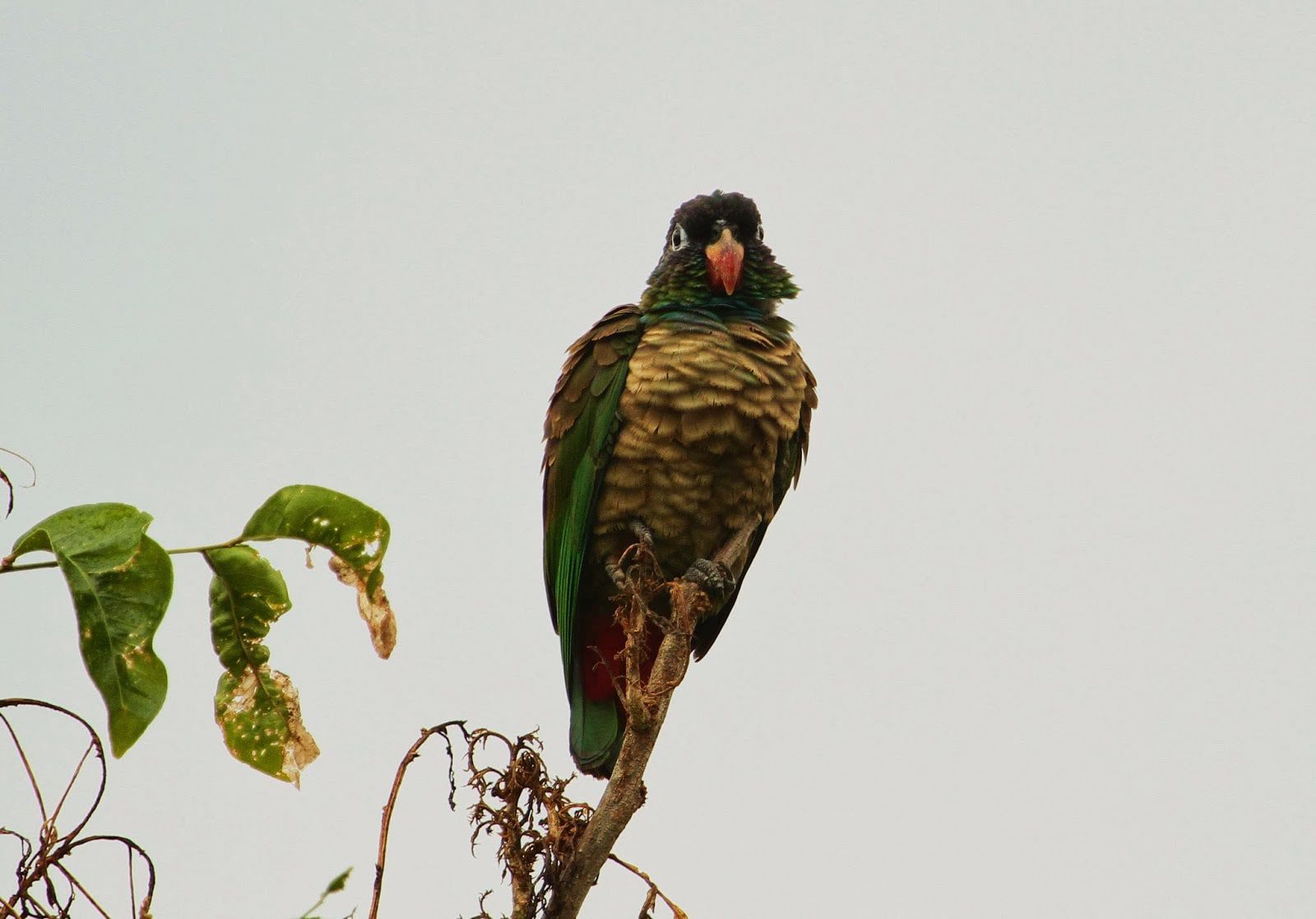
The subspecies Pionus sordidus corallinus, the most widespread, has the feathers of the forecrown, lores and behind the eyes, Green at the base and with blue edges widths; the cheeks, ear-coverts and the sides of the neck, mainly green with some blue narrow tips; the crown and rear of the neck, Green with edges blue narrow. Mantle and back pretty dull green with paler blue margins; rump and uppertail-coverts, of color green basally, more Brown olive distally. Coverts medium and small with wide olive green tips; the front edge of the wing ; coverts primary and higher and flight feather brightest which the parts superiores and others wing-coverts.

Under, the wings green; chin green; throat and upper breast with band broadband of color blue violet; belly green, Some birds with gray Suffusion; undertail-coverts crimson. Tail Green by the Center, Blue side; Red at the base.

Bill coral red, pale at the base of the upper jaw; cere dark grey; bare periophthalmic pale grey; Iris dark brown; legs pale grey.

Both sexes are similar. Immature sample undertail-coverts yellowish-green with some red marks; head green.

Subspecies description

Description 6 subspecies
  • Pionus sordidus antelius

    (Todd, 1947) – Similar to the nominal species but the feathers of the throat lack of edges blue and the center of the chest is in color pink.

  • Pionus sordidus corallinus

    (Bonaparte, 1854) – Described above.

  • Pionus sordidus mindoensis

    (Chapman, 1925) – Is as the subspecies Pionus sordidus corallinus, but of color green more beige, those edges blue of the feathers of the head are more narrow and the under wing-coverts not have them edges dark.

  • Pionus sordidus ponsi

    (Aveledo & Gines, 1950) – Throat of color blue violet almost solid. The chest and upperparts they are darker and greener that the of the nominal species, they lack clear margins to the feathers of the back and of the wing-coverts.

  • Pionus sordidus saturatus

    (Todd, 1915) – More dark and more green that it nominal species with the feathers of the upperparts lack of margins of color green olive. Less green in the throat and cheeks.

  • Pionus sordidus sordidus

    (Linnaeus, 1758) – Nominal. Much more Brown that the subspecies Pionus sordidus corallinus, with blue (turquoise) more reduced in the throat. Feathers in them upperparts with most distinctive pale margins.

Habitat:

Red billed Parrot

It is a very rare species. It inhabits in mountains of humid and semi-humid cloudy forests, edges of forest and partially deforested areas, between 200-2850 m, Although they are more frequent at altitudes of 500-1.500 m. They use areas of secondary growth, partially deforested with tall trees scattered and sometimes light forests on coffee plantations, being less frequent in dry areas.

Gregarious outside of breeding season; formations in flocks of up to 50 birds, sometimes more where the food is abundant. Children sleep in community.

Reproduction:

They nest in the cavity of the trees, sometimes in very degraded habitats. Birds in breeding attitude during the months of February-April in Colombia; It breeds in the months of April-June in Venezuela, January-may in Ecuador; Nest occupied in October in Bolivia. Laying three eggs in captivity.

Food:

Feeds of fruit, berries and seeds.

Distribution:

Size of the area of distribution (reproduction / resident): 169.000 km2

This species has a distribution batch through them land high in the North and West of South America, from Venezuela to the North of Bolivia. You can find in the North of Venezuela, in the mountains of Anzoรกtegui, Sucre, North of Monagas and apparently, of way to discontinuous, in the Highlands of the Federal District through the mountains coastal, to the West, until Lara and Falcon, then in the Sierra de Perija, Zulia and parts adjacent in Colombia, West to the foothills of Santa Marta in Magdalena, also locally in the Eastern Andes of Boyacรก and Huila. Extends over the Western side of the Andes in Ecuador, from Pichincha until Gold and for all the East side to the northeast of Peru.

Although there are no records in the Eastern Andean slope, in the central and southern Peru, the range includes the Yungas North of Bolivia in Santa Cruz and Cochabamba.

common locally; apparently less numerous in the West of Ecuador and North of Bolivia, and probably in decline locally due to the deforestation (for example, in the Ecuador Western, North of Venezuela and Andes of Colombia).

A recent study not localized to the subspecies Pionus sordidus antelius in its area of distribution widely cleared, Although the subspecies can dwell in forests moderately disturbed.

Kept as pets locally although generally scarce in captivity.

Subspecies distribution

Distribution 6 subspecies

Conservation:


minor concern


โ€ข Current category of the Red List of the UICN: Least concern.

โ€ข Population trend: Decreasing.

Justification of the population

The size of the world population It has not been quantified, but this species is described as ยซquite commonยป (Stotz et to the., 1996).

Justification of trend

It is suspected that the population is in decline due to ongoing habitat destruction.

"Red billed Parrot" in captivity:

Very rare in captivity. In general, they are not so nervous in temperament as other parrots. They can learn to imitate.

Its diet in captivity It varied: fruits such as: Apple, orange, banana, granada, Cactus, they form approximately the 30 percent of the diet; vegetables such as: Carrot, celery, green beans, pea in the pod, fresh corn; Greens such as: chard, lettuce, dandelion, Aviary grass; millet; mixture of small seeds, such as: millet, birdseed, and small amounts of oats, buckwheat, safflower and hemp; soaked and sprouted sunflower seeds; beans, cooked legumes and boiled corn; hard cheese.

Alternative names:

– Red-billed Parrot, Dusky parrot, Red billed Parrot, Sordid parrot (English).
– Pione ร  bec rouge, Perroquet sordide (French).
– Dunenkopfpapagei, Dunenkopf, Dunenkopf-Papagei (German).
– Curica-de-bico-vermelho (Portuguese).
– Cotorra Piquirroja, Loro de Pico Rojo, Loro Piquirrojo (espaรฑol).
– Cotorra piquiroja, Cotorra Piquirroja (Colombia).
– Loro de Pico Rojo (Peru).
– Perico Pico Rojo (Venezuela).

scientific classification:

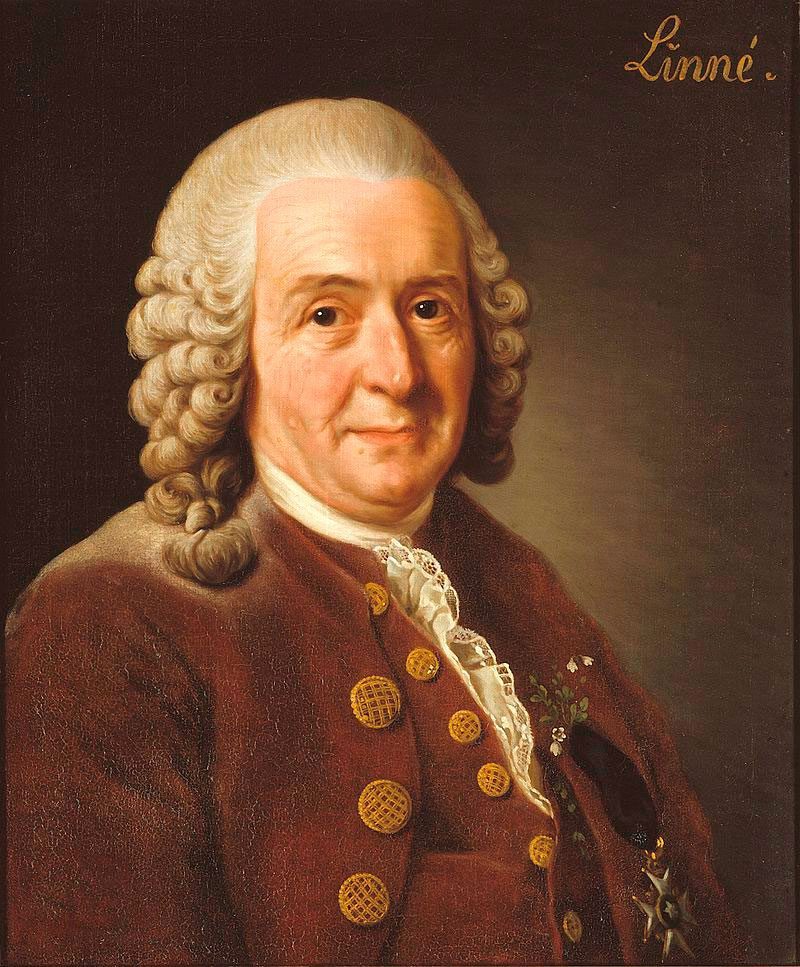
Carl Linnaeus
Carl Linnaeus

– Order: Psittaciformes
– Family: Psittacidae
– Genus: Pionus
– Scientific name: Pionus sordidus
– Citation: (Linnaeus, 1758)
– Protonimo: Psittacus sordidus


Images ยซLoro Piquirrojoยป:

Videos "Red billed Parrot"

ยซLoro Piquirrojoยป (Pionus sordidus)

Sources:

  • Avibase
  • Parrots of the World โ€“ Forshaw Joseph M
  • Parrots A Guide to the Parrots of the World – Tony Juniper & Mike Parr
  • Birdlife
  • Parrot Book, Parrots and macaws Neotropical

  • Photos:

(1) – Red-billed Parrot, Pionus s. sordidus, Perico Pico Rojo – Our beautiful world
(2) – Red-billed Parrot, Pionus s. sordidus, Perico Pico Rojo – Our beautiful world
(3) – Red-billed Parrot, Pionus s. sordidus, Perico Pico Rojo – Our beautiful world
(4) – Red-billed Parrot (also known ans the Red-billed Pionus); two captive By TJ Lin (originally posted to Flickr as coral-billed pionus) [CC BY-SA 2.0], via Wikimedia Commons
(5) – Red-billed-Parrot (Pionus sordidus), Pajaro Jumbo Reserve, NW Ecuador By Nomdeploom (Own work) [CC BY-SA 4.0], via Wikimedia Commons
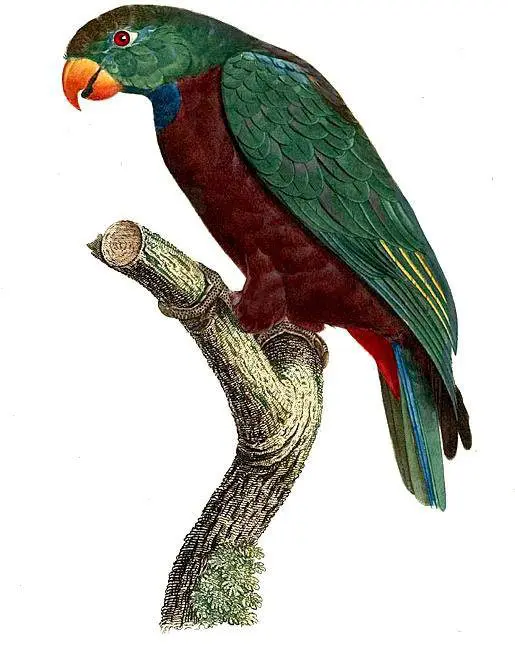
(6) – BARRABAND, Jacques (1767/8-1809) Le Perroquet brun [Red-billed Parrot (Pionus sordidus)] – Wikimedia

  • Sounds: Sebastian K. Herzog