โ–ท The world of Pets: Dogs, cats, birds, reptiles, amphibians

Whippet
Gran Bretaรฑaa FCI 162 . Short-haired Sighthounds

Whippet

The Whippet, like all sighthounds, is quite reserved. Don't play too much. His passion is hunting.

Content

History

The Greyhounds have ancient origins, since their ancestors appear in frescoes of ancient Egypt. But, the Whippet didn't show up until much later, in the 18th century or shortly before. Although everyone agrees that the Whippet is originally from Great Britain, its exact origins are the subject of debate.

Some believe it is descended from Greyhound. The smallest members of the breed were deemed insufficient for hunting and were given to farmers, and that's how the race developed, which is also known as Hound dwarf.

Others claim that their ancestors is a Italian Greyhound large, that were used for hunting. Others also believe that Italian Greyhound is related to him Whippet, but only due to the crosses made at the end of the 19th century to perfect the breed.

Last, some people who have assumed success also mention crosses with certain Spaniels.

But, The most widespread theory is that the Whippet is the result of crosses between the Greyhound and various Terriers, in particular the Manchester Terrier. Nicknamed the "poor man's greyhound", it was used to hunt small animals, whether they were rats or rabbits.

But, appears in 18th century paintings of Jean-Baptiste Oudry (1686-1755), but mostly in a box Edward Haytley (1713-1764) titled "The Hunter with a Whippetยซ. The word Whippet had many different meanings between the 16th and 19th centuries, but it is commonly accepted that the name of the breed comes from the verb ยซto whipยซ, which in the 17th century meant "to move quickly".

Very popular in the 19th century with the working classes of northern England, the Whippet Greyhound was used in gambling trials in which they had to eliminate a large number of rats or rabbits as quickly as possible.. This activity ended up being prohibited, and the rodents were replaced by rag decoys that the dogs had to run after. Racing became a true sport that conquered England and then the United States. At the same time, competitors continued to use their skills on a daily basis hunting vermin and small game.

Already in 1888, the breed was recognized by the American Kennel Club (AKC), and then by him British Kennel Club (KC) in 1890. Present both at races and at dog shows, developed rapidly, gradually making its way into homes as a companion dog.

The Whippet is recognized by the main canine associations in the world. The International Cynological Federation (FCI) He did so in 1955, thus promoting its international dissemination, and almost all the large national organizations followed suit, as the United Kennel Club (UKC) American and the Canadian Kennel Club (CKC).

Today, although the races of Greyhounds have become very rare and hunting with Greyhounds is prohibited in many territories, the Whippet is still very present around the world. This is because the Whippet has been able to move away from its original role and win over the general public as a mascot.

In United States, for example, AKC registration statistics place the Whippet around the post 60 (of something less than 200) in the breed popularity ranking of the AKC.

in your country of origin, Great Britain, is even more widespread, with between 3.000 and 3.500 births reported to the KC each year.

Also in France its success is undeniable, although it is still less than on the other side of the Canal. From the age 80, Entries in the French Book of Origins (LOF) they have been around 1.000 a year, quite exceptional stability. Since the beginning of the decade 2010, this figure has not stopped increasing, approaching the 1.500 at the end of it.

Physical characteristics

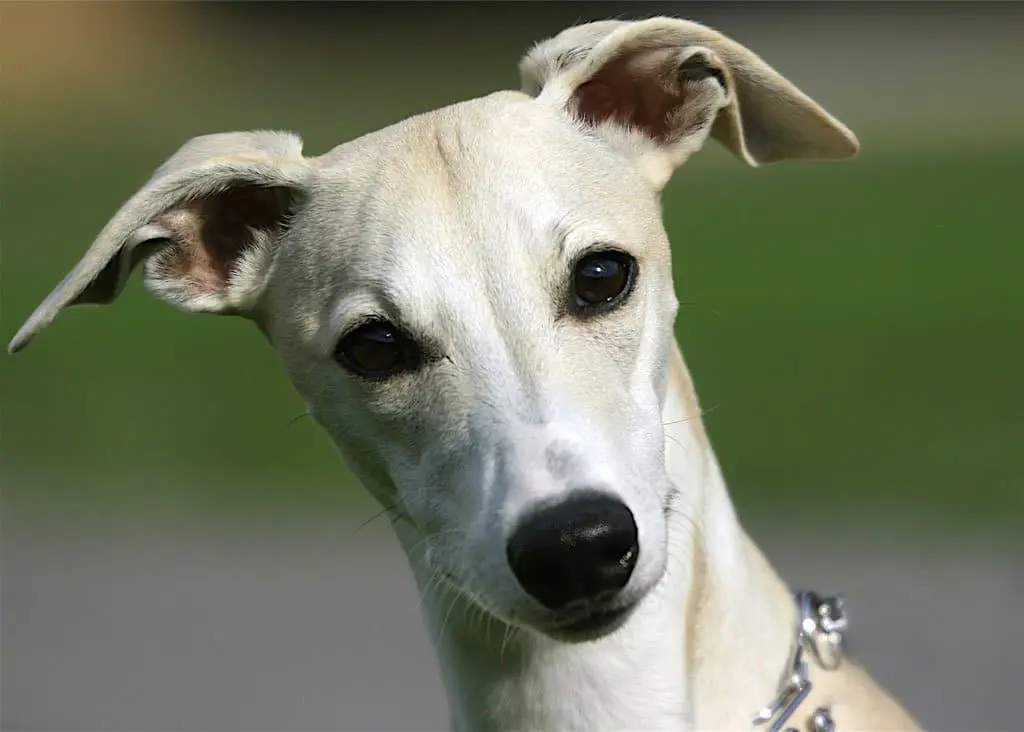
Elegance blend, power and delicacy, the Whippet it's made for speed, like all races of Sighthounds. They look like Greyhound, but they are much smaller.

Her slender body is elegant, with a pronounced arch on the back, a broad, muscular back and a well-tucked belly. The legs are long, with moderate bone and fine but marked muscles. The legs are long, moderately boned, with fine but pronounced muscles, ending in oval legs with widely spread toes and strong nails. The tail is long and thin, carried up when the dog is active, but never higher than the level of the back.

Worn on a long, muscular neck, the head is thin and elongated. The stop is slightly marked, snout continues to narrow into continuation of skull. The nose is usually black, but blue tones are allowed in blue dogs, and pink in cream-colored ones. Oval eyes have a vivid expression. The ears, which are said to be in the shape of a rose, they are thin and are carried backwards or semi-erect.

The coat of the Whippet consists only of a short, thin top layer, but very closed: this dog has no undercoat. The coat can be any color or combination of colors, except the blackbird.

Last, sexual dimorphism is well marked in this breed: the male is significantly larger than the female.

Size and weight

▷ Male size: 47 – 51 cm.
▷ female size: 44 – 47 cm.
▷ Male weight: 13 kg.
▷ female weight: 12 kg

Character and skills

The Whippet he is extremely sociable and devoted to his family, with which you need to spend a lot of time – it's not a question of living outside, isolated from his family: its place is in the heart of the house, comfortably installed on a cozy cushion. Can easily suffer from separation anxiety and does not adapt to a master who is absent often.

This problem can be alleviated if he is allowed to live with one or more other dogs.. In effect, whether it is a simple meeting or living together under the same roof, the Whippet gets along very well with other dogs and, usually, is perfectly comfortable in a home where several representatives of the canine species coexist. This allows you to continue to feel part of the pack, even when their owners are working.

Their relationships with other animals are far from being so peaceful.. In fact, his hunting instinct is well anchored in him, which leads him to chase and kill cats, rabbits and other rodents. Even the ones he would have grown up with are likely to end up in his fangs one day., so that coexistence must simply be excluded.

Active, cheerful and playful, the Whippet it is an ideal companion for children, whose presence you love. But, it is better if the children are already a certain age and have learned to behave in a respectful way with a dog, as they are much less tolerant of abuse than many of their peers. In any case, as with any breed, It is not advisable to leave a small child with him without the supervision of an adult.

Active and energetic, this dog is especially so when he is young, to the point that it can be destructive. They also like to test the limits, so it is better that their family is available to take care of them and redirect them when necessary. Once they become adults, which is usually around 18 months of age, they are still very active, but they have a much calmer temperament. You need to exercise for an hour a day, but then you can sit quietly on the couch and watch TV.

In other words, whether you can exercise comfortably and spend most of your time with your family, the Whippet he is a calm and cheerful companion. But, if any of these conditions are not met, you are likely to develop various behavior problems, like chewing on anything on hand or digging.

As long as you get enough exercise, can live in a flat. But, ideally you have access to a garden where you can run and play. Yes indeed, must be perfectly closed and at a minimum height of 1,5 m, so that it does not chase the neighborhood cats or other small animals that pass by. In any case, an electronic fence installed underground would be useless, since the discharge felt would not be enough to stop it.

His hunter instinct causes him to chase any small animal he comes across, so you should always go on a leash when you go out for a walk. But, care must be taken to place the dog with a collar adapted to its morphology (greyhounds have their necks wider than their heads) or a harness, to prevent it from escaping. The risk of the dog running away is especially high in this breed, and it is absolutely impossible to catch him if he escapes, since it is capable of running at more than 50 km/h.

It is possible to allow him to stretch his legs by taking him for a run or a bike ride. But, is primarily a sprinter, not a long distance runner: find it hard to keep up over long distances.

It should be noted that the Whippet not only is he an athlete, but he also has an above-average intelligence that allows him to learn many tricks. Dog sports such as agility, obedience, the flyball or, of course, el lure coursing, they are a great way for you to show all your physical and mental qualities.

Last, he is very respectful to his neighbors, barking very little. This explains why he cannot be counted on as a guard dog., not even as a warning dog. It also, He is not one of those who complicate the life of strangers: can be a bit shy at first, but it tends to open up quickly and make them benefit from its friendly nature.

Education

Like all "Sighthound" dogs, the Whippet benefits from socialization from an early age. By meeting all kinds of people and other dogs, but also when getting used to various everyday situations (noises, smells, city รขโ‚ฌโ€นรขโ‚ฌโ€นwalks, car trips…), gains in serenity and becomes a calm and balanced adult.

On the other hand, even when surrounded by small animals in his youth, never lose his hunting instinct. It would be useless to hope to change anything fundamentally in this regard.

It is this instinct that makes it absolutely essential to get your dog used to walking on a leash upon arrival home.. In fact, a Whippet should never be set free, except in a perfectly closed and safe environment, like a garden or a dog park. If you start chasing an animal, even perfectly integrated withdrawal orders are ignored, and nothing can distract you from your goal.

The puppy of Whippet is a bit rambunctious and likes to test limits, showing a certain stubborn streak. So, needs a firm handler who commands respect and is seen as the leader of the pack. Once the master has established his dominant position, the education of Whippet it's relatively easy. He is smart and likes to learn new tricks, so working with him is a pleasure. Of course, this is even more true if you find it interesting, because he is not obsessed with pleasing his master. So, using treats and other rewards can work wonders.

Do not forget that it is a sensitive dog, that may not respond well to traditional training methods. It is better to base your training on positive reinforcement, that reinforces his self-esteem and consolidates the relationship with his master. It is also advisable not to make the sessions last too long, so that they continue to be fun and interesting for him.

Health

The Whippet it is quite robust, with a fairly normal life expectancy for its size.

But, its short coat and lack of body fat mean that it does not tolerate cold or bad weather well. It is recommended to equip it with a dog sweater as soon as the mercury drops, and he with a raincoat in rainy weather., fits much better when you turn up the thermometer.

Among the diseases most likely to affect this breed, the most commons are:

  • the waterfall, which can be hereditary and occurs when an opaque film forms in the eye. It causes a more or less rapid degradation of sight, up to total blindness., a surgical operation can treat it;
  • corneal dystrophy, a clouding of the cornea that causes vision problems and is suspected of having a hereditary origin;
  • the progressive retinal atrophy, an incurable inherited disease that causes progressive degeneration of the eye tissues, to complete blindness;
  • the von Willebrand disease, an inherited blood clotting problem, milder forms can be controlled with medication, while the most serious cause unstoppable bleeding that requires surgery and transfusion at the slightest injury, to prevent the dog from dying from blood loss;
  • the epilepsy, which is at the origin of more or less frequent and intense seizures It can be kept under control with the help of drug treatment, which generally enables affected people to lead near-normal lives;
  • skin allergies, which may be signaled by redness and itching;
  • small wounds and skin infections, which is fine and is covered by a rather short hair;
  • of cancers;
  • heart problems, that can be congenital and increase in size, to cardiac arrest resulting in death.

It also, individuals used on the racetrack are also at risk of injury in the context of this particularly intense activity: sprain, dislocation, fracture, etc.

It also, like other breeds of Greyhounds as the Greyhound, the Whippet is sensitive to anesthetics, that can cause allergies. So, surgical operations may require a specific protocol to avoid this risk.

While the list of diseases the breed is predisposed to can seem overwhelming, a study of 2004 jointly conducted by the British Kennel Club and the British Small Animal Veterinary Association over several hundred deaths of dogs of this breed found that about a quarter of them were simply caused by the advanced age of the animal.

Then there are heart problems and cancer, which together represent another quarter., half of the reported deaths are attributable to one of these three reasons.

Knowing that this breed is predisposed to various inherited diseases, adopting a serious breeder of Whippet greatly increases the chances of getting a healthy puppy and keeping it that way. In addition to a certificate of good health signed by a veterinarian and the animal's health or vaccination record, certifying that you have received all the necessary vaccinations, the professional must be able to present the results of the genetic tests carried out to the parents or the baby, to avoid the risk of inherited diseases.

It also, once the puppy has come home, you need to limit your physical activity (both in intensity and duration) throughout its growth period, which normally lasts between 12 and 18 months, so as not to risk damaging your joints or bones.

It is then recommended to check him regularly for cuts or scratches, as his skin is barely protected by his coat, is particularly prone to it.

It also, regardless of your age and even if you appear to be in excellent health, any dog รขโ‚ฌโ€นรขโ‚ฌโ€นshould be examined in detail by a veterinarian at least once a year as part of a full medical check-up, this allows a possible problem to be detected as soon as possible, of which sometimes symptoms are not yet appreciated. In addition, this is an opportunity to make sure you are up to date on your vaccinations and to carry out any necessary reminders.

At the same time, the owner must make sure to renew the different antiparasitic treatments of his dog throughout his life, so you are never unprotected., this must be done every 1 to 3 months.

Life expectancy

Of 13 to 14 years

Grooming

The Whippet Greyhound is an easy-care breed of dog.

First of all, the maintenance of its coat is very simple, since it is short and has no undercoat. A quick brushing every week is more than enough to keep it in good condition, especially since this dog sheds very little. They also do not have annual shedding periods., unlike most dogs.

In any case, brushing sessions offer a good opportunity to check the condition of your skin. In effect, its thinness and the fact that it is only covered by a thin layer of hair make it especially exposed to cuts and scratches.

If you take care of yourself regularly, the coat is usually clean and odorless, so it is seldom necessary to bathe him. Unless it gets dirty, for example, on a particularly muddy ride, bathing him once or twice a year is more than enough. Just be sure to use a shampoo specifically designed for dogs each time., as this can damage your skin.

On the other hand, weekly coat maintenance is also an opportunity to wipe their ears with a clean cloth, to prevent the buildup of wax and debris that could be a source of infection (ear infections, etc.).

You should also take the opportunity to inspect the eyes and rub the corners with a damp cloth to remove dirt..

Last, good oral hygiene requires brushing the dog's teeth at least once a week, always with a toothpaste specially designed for dogs. This prevents tartar buildup, that can cause not only bad breath, but also diseases, some of which can be serious. Ideally, do it every day..

As for the claws of the Whippet, they often tend to grow faster than they wear out, even if you spend time outside and get enough exercise. So, it is recommended to cut them every fifteen days approximately, before they are too long and risk disturbing you, but also from breaking, and even injuring you.

Although a Whippet it is relatively easy to care, it is highly recommended to learn how to do it in the presence of a professional, either a groomer or a vet. This is the best way to know the correct way to take care of your dog and avoid mishandling that can hurt or even injure it..

Food

The Whippet adapts very well to commercial dog food. The choice of products and the amount that is given each day must be done in such a way that it perfectly covers their nutritional needs and, Therefore, suits your age, size and activity level. It also, like all dogs, it is better to divide the daily ration into at least two meals.

It also, dogs used for dog competitions must follow a specific feeding program, like any athlete worth his salt.

In any case, this dog is little eaten and this, coupled with its high energy expenditure, generally protects you from the risk of obesity. But, if obesity occurred, would have serious consequences for this dog whose body is not at all made to support excess weight.

So, it is advisable to weigh your dog regularly, At least once a month, to detect any weight gain as soon as possible. If weight gain is confirmed from one measurement to another, or even increases, it is essential to consult the vet. Only a veterinarian can reliably determine the cause of the problem (diet, disease, side effects of medication, etc.) and propose a solution.

Last, like any other dog, the Whippet must have permanent access to a bowl of fresh water to quench his thirst.

Utility

Originally, the Whippet it was used to chase and kill small rodents, eliminating the rats that threatened the food supply and putting rabbit meat on the family menu. Although the Whippet has retained its hunting instincts, this is a function that it has not fulfilled for almost two centuries.

In the 19th century, the speed of more than 50 dog km / h, his blazing acceleration and his ability to change direction made him a specialist in dog racing, and crowds flocked to see representatives of the breed chase cloth lures and bet on the results, as it was done with the horses. But, the popularity of this activity decreased considerably over the years 80, to the point that today they are very scarce. The fact that gambling is now banned in most countries (including Belgium, Canada, France and Switzerland) is not, of course, A coincidence.

But, the Whippet Sighthound was also able to seduce dog show fans with its elegance in the late 19th century., and her runway success continues today. It is rare not to see one or more representatives of the breed at these events.

But, it is mainly as a companion dog that the Whippet Sighthound has made a name for itself among the general public. dedicated and smart, they delight everyone who is looking for an active companion and are sufficiently available for him.

But, should not be relied on as a watchdog or even a watchdog. Although it is always on the prowl, He is not very suspicious and he is not one of those who barks loudly.

His sociable and playful nature makes him a sought-after therapy dog, capable of brightening the daily life of people suffering from a disease, a disability or just old age.

Last, beyond the races on the track, his intelligence and athletic qualities allow him to excel in many dog รขโ‚ฌโ€นรขโ‚ฌโ€นsports. This is the case, in particular, of decoy hunting (PVL), but also agility, flyball and obedience.

Price

The price of a puppy Whippet round the 950 EUR, but it can vary greatly from one individual to another, oscillating between 500 euros and 1200.

Regardless of location, the reputation of the kennel and the prestige of your bulls and ancestors have a great influence on the price of a Whippet. A puppy born in a reputable kennel and from a line of champions is, of course, more expensive. Of course, the individual characteristics of the puppy are also a factor, especially the closeness to the standard. This explains why there can be quite significant price differences within the same litter.

Characteristics "Whippet"

Coexistence is important that you have with your new friend. Before considering the acquisition of a dog of the breed "Whippet" you know certain factors. Not all breeds of dogs are apt to live in an apartment, you must take into account his character, their need for exercise, their interaction with other pets, their care and if you have small children, their level of tolerance towards them.

Adaptation โ“˜

2,0 of 5 stars (based on 1 review)

friendly dog โ€‹โ€‹โ“˜

2,0 of 5 stars (based on 1 review)

hair loss โ“˜

2,0 of 5 stars (based on 1 review)

Affection level โ“˜

4,0 of 5 stars (based on 1 review)

Need for exercise โ“˜

4,0 of 5 stars (based on 1 review)

Social need โ“˜

3,0 of 5 stars (based on 1 review)

Home โ“˜

3,0 of 5 stars (based on 1 review)

Toilet โ“˜

1,0 of 5 stars (based on 1 review)

Friendly with strangers โ“˜

2,0 of 5 stars (based on 1 review)

barking โ“˜

1,0 of 5 stars (based on 1 review)

Health โ“˜

4,0 of 5 stars (based on 1 review)

Territorial โ“˜

3,0 of 5 stars (based on 1 review)

Cat friendly โ“˜

2,0 of 5 stars (based on 1 review)

Intelligence โ“˜

3,0 of 5 stars (based on 1 review)

Versatility โ“˜

3,0 of 5 stars (based on 1 review)

Child friendly โ“˜

5,0 of 5 stars (based on 1 review)

Surveillance โ“˜

2,0 of 5 stars (based on 1 review)

joy โ“˜

3,0 of 5 stars (based on 1 review)

Images "Whippet"

Photos:

1 – Whippet by https://www.pxfuel.com/es/search?q=Whippet
2 – Puppy Whippet by andy carter, CC BY 2.0, via Wikimedia Commons
3 – Whippet by Winky, CC BY 2.0, via Wikimedia Commons
4 – Whippet by https://www.flickr.com/photos/llimaorosa/2261441243/
5 – Whippet called "Bean" by madaise, CC BY 2.0, via Wikimedia Commons
6 – Whippet by https://pixabay.com/es/photos/lebrel-sabueso-perro-canino-164118/

Videos "Whippet"

Type and recognitions:

  • FCI CLASSIFICATION:
  • Group :
  • Section : . .

Federations:

  • FCI – Group 10: Section 3: Short-haired Sighthounds โ“˜
  • – AKC – Hounds Toy โ“˜
  • – ANKC – (Hounds) โ“˜
  • – CKC – Hounds โ“˜
  • – โ€‹KC – Hounds โ“˜
  • – NZKC – Hounds Toy โ“˜
  • – UKC – Hounds โ“˜

FCI breed standard "Whippet"

Origin:
United Kingdom

Date of publication of the valid original standard:
04.09.2019

Use:

Breed originally used for hunting, either by trail or by sight.


General appearance:

It is a balanced combination of power and muscular strength with elegance and graceful lines.. Its structure is appropriate to develop speed and work. Any exaggerated form should be avoided.


Behavior / temperament:

It is an ideal companion. It fits very well in domestic and sporting environment. Is gentle, affectionate and with a balanced disposition.

Head:

--

Cranial region:
  • Skull: Long and thin, flattened in its upper region, rather wide between the eyes, thinning towards the muzzle.
  • Depression links (Stop): Light.

facial region:

  • Truffle: black. In blue dogs, a bluish color is allowed.
    Liver truffle in dogs color cream and other diluted colors, in white or split dogs a partially depigmented nose is allowed.
  • Mandible / Teeth: Strong jaws, powerful and well outlined with a perfect scissor bite, regular and complete, that is to say, that the upper incisors closely overlap the lower ones and are implanted vertically in the maxillae.
  • Eyes: Oval, bright, very lively expression.
  • Ears: Shaped like a rose, small, texture fine.

Neck:

Long, muscular, elegantly arched.

Body:

  • top line: Showing a funny bow on the back but without the dog being hump.
  • Back: Wide, well muscled, firm, somewhat long.
  • Pork loin: Gives the impression of strength and power.
  • Breast : Very deep, with ample room for the heart.; low, well-defined sill. Arched and muscular ribs at their dorsal insertion.
  • Bottom line and belly: Definitely withdrawn

Tail:

No feathers. Long, sharpened; during the movement takes it up, forming a delicate curve, but never over the back.

Tips

PREVIOUS MEMBERS:

  • ApGeneral experience:  They are straight and vertical with bone moderately sharp. The front is not too much width. 
  • Shoulder (Blades): Well oblique scapulae with flat musculature. The space between the scapulae at the withers is moderate.
  • Brazo(Humerus):  About the same length as scapulae.
  • Cskin: The elbows fall directly below the cross seen from perfil.
  • Metacarpus: Sturdy and slightly elastic.
  • Pinis earlier:   Oval,   well divided between the fingers; thick pads and strong nails.

LATER MEMBERS:

  • Apgeneral arience: Strong. The dog must be able to stand onturally on abundant ground.
  • Thigh: Width.
  • Rodilla: Well angled without exaggeration. Leg: Well developed.
  • Atibio-tarsal articulation: Placed well down.
  • Pinis later:   Oval,   well divided between the fingers; thick pads and strong nails.

Movement:

Must have great freedom of movement. Seen in profile, it should move with a long and easy step, maintaining the upper line. The forelimbs should be brought well forward and low close to the ground, the hind limbs should come well under the body giving a great and powerful push. The movement in general should not be pompous, nor high steps, short or affected. Effective back and forth movement.

Mantle

  • Fur: Up, short, tight.
  • Color: All colors and their combinations, except merle.


Size and weight:

Desired height at the withers:

  • Males: 47 - 51 cm. (18,5 to 20 inches).
  • females: 44 - 47 cm. (17,5 to 18,5 inches).


Fouls:

Any deviation from the aforementioned criteria is considered as a fault and the severity of this is considered to the degree of the deviation to the standard and its consequences on the health and well-being of the dog..


FALTAS DESCALIFICANTES:

  • Aggressiveness or extreme shyness.
  • Any dog โ€‹โ€‹showing clear signs of physical or behavioral abnormalities.


N.B.:
  • Males should have two normal-appearing testicles fully descended into the scrotum..
  • Only functionally and clinically healthy dogs, with the typical conformation of the breed, should be used for breeding.

The latest changes are in bold.

Source: F.C.I - International Cynological Federation

Alternative names:

1. English Whippet, Snap dog (English).
2. Lรฉvrier nain (French).
3. Kleiner Englischer Windhund (German).
4. Whippet (Portuguese).
5. Whippet inglรฉs (espaรฑol).

โ–ท The world of Pets: Dogs, cats, birds, reptiles, amphibians

West Highland White Terrier
Inglaterra FCI 5 . Small sized Terriers.

West Highland White Terrier

The West Highland White Terrier he is a very lively dog, joyful, with great self-love, determined and independent.

Content

History

The West Highland White Terrier, better known as Westie, is a former Scottish hunting terrier. The little terriers from which the Westie they served humans for many years as watchdogs and hunters. It also, they made themselves useful in the house every day. Keeping houses free from rats and mice, driving away a marten or fox that wanted to feed on chickens or pigeons at night, they proved to be useful helpers at home and in court. The true strength of West Highland White Terrier was active fox hunting, the marten and the otter. The little terrier fearlessly and determinedly chased these thieves to the furthest corner of his den., where they were trying to get them out of the burrow, as the hunters counted. Like his three Scottish brothers, Skye and Cairn Terrier, the West Highland White Terrier he is one of the four descendants of these old men Scottish hunting terrier.

Like the others, comes from the great gene pool of all those Scottish terriers. Only through intentional breeding, that is to say, artificial separation, Scotland's four genetically separated lower terrier breeds were born. Its current form as "West Highland White Terrierยป is the result of breeding directed as a companion dog and for displaying the latest 100 years. Until 1924 was raised and led along with the current Cairn-Terrier. The pure white color is the result of a selection of external traits from the time of the breeding of the sample.. It is an expression of efforts to make these four originally identical brothers more and more distinct from one another.. In 1907 the breed was recognized by the British Kennel Club. It was always a fairly rare breed in Europe. That suddenly changed around 1990.

The advertising industry recognized the attractive effect of this smart and happy little terrier. Dog food brands like ยซCรฉsarยป remain inseparably connected with Westie. The nice one Westie became widely known as a means of advertising dog food and later other items as well. Many people knew him as "the television dog.". He was temporarily better known than the Sausage dog or German shepherd. The serious breeding scene could not meet the demand for puppies from Westie. This could not be said twice by the multipliers from Germany and all over Europe. Dubious vendors massively selling puppies in the dog market. This was not good for the dog breed, your fitness and health. Still today many of these breeders, mostly well disguised as "breed lovers", frolicking on the Internet.

Physical characteristics

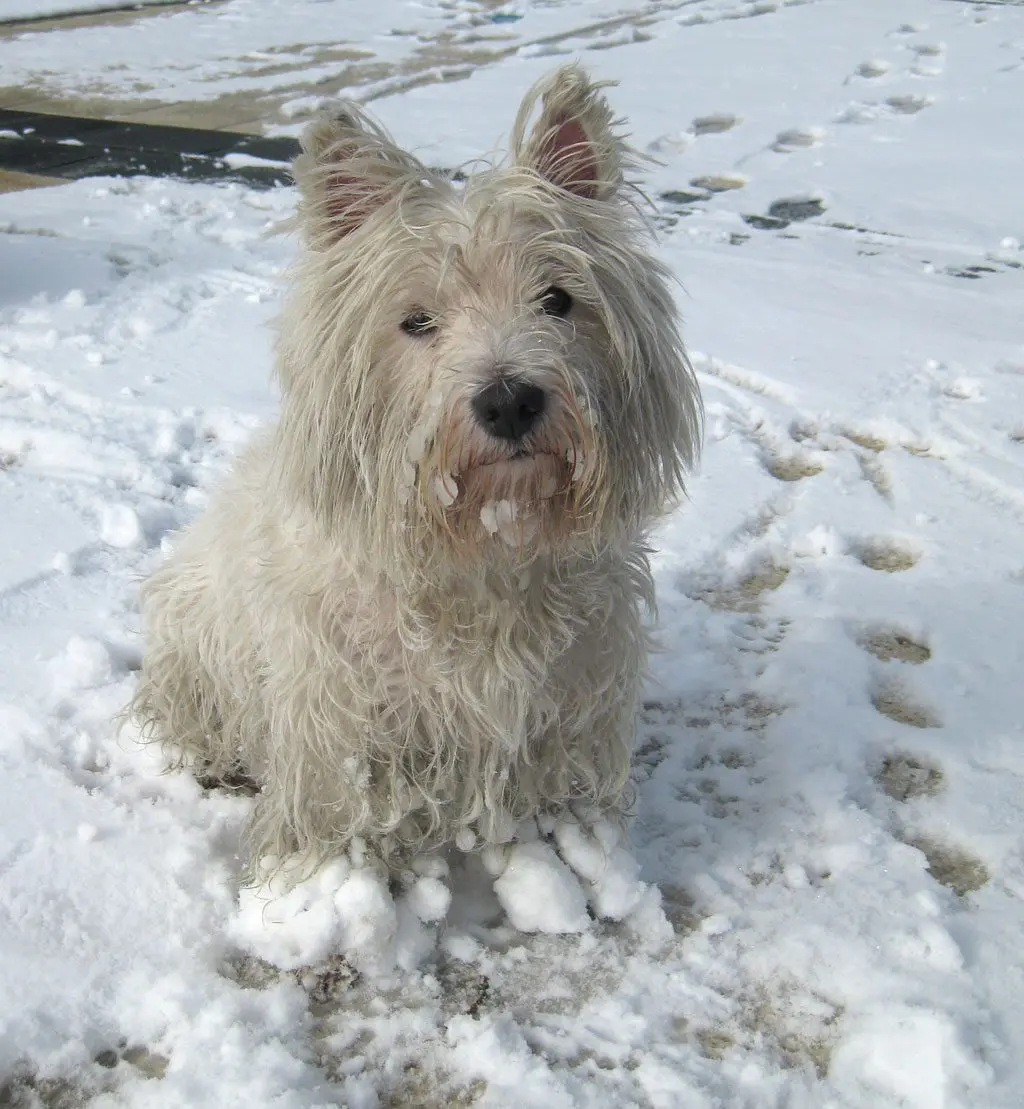
The West Highland White Terrier he is a small and manageable dog with an impressive appearance and self-confident. He's got a pretty thick overcoat with a hard top layer but doesn't lean. Your undercoat must be hair, short, smooth and dense. Your coat is weather resistant. With a height at the withers of about 28 centimeters, weighs between 6,5 and 8,5 kg. But, the ideal weight is not given by the standard. However, the Westies they are quite heavy relative to their physical size. Of course, the color of a coat Westie it should always be white and pure white, After all, it's already in your name.

After the experiences with the fashion hype, already in 1998 a special requirement for healthy breeding was set in the standard, so any deviation that could "harm the health and well-being of the dog" had to be rejected.. A striking feature is the tail of the West Highland White Terrier, that the standard defines as: "of 13 to 15 cm long; covered with coarse hair, without pen, as straight as possible, haughtily carried, but neither happy nor hunched over the back. A long tail is not desirable, but for no reason should it be amputated. The tail of the Westies it is a good reflection of its intelligent nature.

Character and skills

The West Highland White Terrier he's a lively guy, bright and confident. In it beats the heart of a true terrier. The official standard describes its character as follows: "Little, Active, bold, robust, endowed with considerable self-confidence and an air of predatory sharpness. Alert, joyful, brave, Confident but friendly". The old hunter has a tendency to independence and overconfidence. He likes to see himself as an emperor.

One should not only accept this trait with a smile and a broad inner smile., but rather appreciate it. Of course, such ambitions must have limits, but maybe you shouldn't always notice this boundary setting by us humans. The Westies they are very loyal and affectionate. They love their family and are extremely child friendly.. They are characterized by their friendly and kind character. But they are not lap dogs. Despite his agile temperament, the Westies are not restless or nervous. Are alert, reporting unusual circumstances with excited barking.

Westies Maintenance:

The attitude of the Westies has no problems. Only grooming is mandatory, especially regular trimming. It has no demands regarding the size of the floor. It can also be kept well on the floor of a big city. Only one should allow him his daily walks. It should be noted that Westies they were hunting dogs, whose heritage lives on even with today's companion. Small dogs are very persevering and can follow their owners without problems when walking. Must be used to other pets from litter box. If he West Highland White Terrier is consistently and lovingly educated as early as the puppy's age, then this sturdy four-legged friend is a valuable companion, that adapts easily and willingly to all the living conditions of its caregivers.

Westie's Education

The education of West Highland White Terrier is an often underrated chapter. Although the puppy looks so cute, especially in his first months of life, he is a true terrier very sure of himself. And such a terrier wants to be educated and guided. The Westie requires consequences in education from adulthood. Although small, dreams like most terriers in some corner of his brain of assuming leadership of the pack. You just have to take your education seriously. Otherwise, his education is not problematic. He wants and needs the guidance of his master or caretaker and is a docile companion., friendly and sociable.

Care of the West Highland White Terrier

The West Highland White Terrier are prone to rashes with dry skin, and frequent bathing can exacerbate these problems. The bathing them once a month รขโ‚ฌโ€œ or a longer interval- does not usually cause problems. It is advisable to use neutral soaps or baby shampoo and avoid products with aggressive substances., except veterinary prescription.

After bathing they should pay particular attention in dry him very well the ears with a towel. If brushes you daily or regularly, his hair will remain healthy and bright.

It is also advisable to occasionally perform a brushing through the grubbing-up of dead hair (referred to as striping), It is a totally painless method which is performed by a professional expert in canine aesthetics. This type of arrangement will maintain the texture and characteristics of the white mantle of the Westie. As well, It should be cleaned them ears weekly with a piece of cotton dampened with water to remove wax buildup and avoid possible infections.

Special attention must be paid to cleaning the hair around the snout with a damp cloth after eating or digging a hole.. The same, the lagrimales should be cleaned to avoid the accumulation of lagaรฑas, since being a white dog if it is not taken care of -diligently- maintain clean those parties they will wear an unsightly Brown and will make it look dirty or neglected. When they are pets they should be cleaned with baby wipes, especially the part of the belly already to be a dog with short legs, gets wet when they pee and ends up taking an ugly yellowish color.

West Highland White Terrier Health

Cubs West Highland White Terrier They may suffer from a disease called โ€œcraniomandibular osteopathy.โ€, known as "Westie or Scottie jaw" which consists of abnormal growth of the jaw bone. This genetic disease is autosomal recessive in nature, that means that what a puppy the present both parents should have the gene and transmit it to the puppy; Unfortunately, the only way to know if any breeding specimen contains this gene is until a puppy is born and presents this anomaly.. By the same, perhaps the breeder himself will not know that some specimen has this fault until the litter is born.

Is condition usually occurs when the puppy is between 3 and 6 months of age and disappears to the 12 months.

Diagnosis is usually made after x-rays are taken.. The treatment of the symptoms consists of providing medications that help the puppy to cope with this period., allowing him to eat and use its snout while it suffers from pain. Corticosteroids are therapeutic agents that are used most frequently. Disease disappears spontaneously when the period of growth ends. Only in very severe cases, It does not respond to treatment, is euthanasia.

Nutrition / Food

The nutrition of West Highland White Terrier not usually problematic, as long as it comes from a serious breeding. It is not uncommon for allergies and skin irritations to require a dietary diet.

Westie's Life Expectancy

The West Highland White Terrier of serious upbringing tend to have robust health and can reach 15 years in good physical condition.

Buy a West Highland White Terrier

There are many dubious providers of Westies on the Internet. In your own interest and especially for the welfare of dogs you should look very carefully. It is best to purchase your Westie puppy locally from an FCI member breeder. Here you should pay special attention that there is no inbreeding. Or you can go to the animal shelter and look for other types of terriers. Cubs West Highland White Terrier cost around 1.000 EUR.

Characteristics "West Highland White Terrier"

Coexistence is important that you have with your new friend. Before considering the acquisition of a dog of the breed "West Highland White Terrier" you know certain factors. Not all breeds of dogs are apt to live in an apartment, you must take into account his character, their need for exercise, their interaction with other pets, their care and if you have small children, their level of tolerance towards them.

Adaptation โ“˜

4,0 of 5 stars (based on 1 review)

friendly dog โ€‹โ€‹โ“˜

4,0 of 5 stars (based on 1 review)

hair loss โ“˜

1,0 of 5 stars (based on 1 review)

Affection level โ“˜

4,0 of 5 stars (based on 1 review)

Need for exercise โ“˜

4,0 of 5 stars (based on 1 review)

Social need โ“˜

4,0 of 5 stars (based on 1 review)

Home โ“˜

3,0 of 5 stars (based on 1 review)

Toilet โ“˜

4,0 of 5 stars (based on 1 review)

Friendly with strangers โ“˜

4,0 of 5 stars (based on 1 review)

barking โ“˜

5,0 of 5 stars (based on 1 review)

Health โ“˜

5,0 of 5 stars (based on 1 review)

Territorial โ“˜

5,0 of 5 stars (based on 1 review)

Cat friendly โ“˜

3,0 of 5 stars (based on 1 review)

Intelligence โ“˜

4,0 of 5 stars (based on 1 review)

Versatility โ“˜

4,0 of 5 stars (based on 1 review)

Child friendly โ“˜

4,0 of 5 stars (based on 1 review)

Surveillance โ“˜

5,0 of 5 stars (based on 1 review)

joy โ“˜

5,0 of 5 stars (based on 1 review)

Images "West Highland White Terrier"

photos:

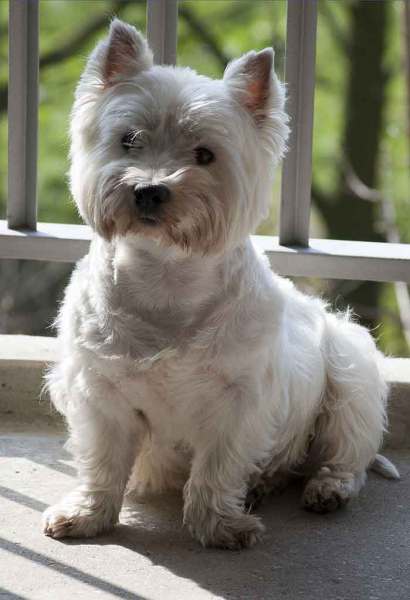
1 – Tara posing in Simancas (Valladolid) 27 one. 2007
2 – West Highland Terrier by Antonio Villascusa / CC BY
3 – A West Highland White Terrier in Capelle aan den IJssel, Netherlands. by Wouter Engler / CC BY-SA
4 – West Highland White by https://commons.wikimedia.org/w/index.php?title=User:Mateo_Squad&action=edit&redlink=1
5 – West Highland White Terrier from 1915 by not specified (except those with signature on image) / Public domain
6 – West Highland White Terrier by SheltieBoy / CC BY

Videos "West Highland White Terrier"

Type and recognitions:

  • FCI CLASSIFICATION:
  • Group :
  • Section : . .

Federations:

  • – FCI – Terriers 2 Small sized Terriers. โ“˜
  • – AKC – Terriers โ“˜
  • – ANKC – Terriers โ“˜
  • – CKC – Terriers โ“˜
  • – โ€‹KC – Terriers โ“˜
  • – NZKC – Terriers โ“˜
  • – UKC – Terriers โ“˜

FCI breed standard "West Highland White Terrier"

Origin:
United Kingdom

Date of publication of the valid original standard:
13.10.2010

Use:

Terrier.


General appearance:

Strong structure; deep chest and well developed back ribs. Level back. Powerful hindlimbs, with good musculature, exhibiting to a high degree the combination of strength and activity.


Behavior / temperament:

Petit, Active, brave, without fear, possessing a lot of self-esteem, mischievous expression, alert, joyful, bold, confident and friendly

Head:

The distance from the occiput to the eyes is slightly greater than the length of the facial region. The head is covered with abundant fur, forming a right angle, the acute, relative to the neck axis. The head must not be worn in an extended position.

Cranial region:
  • Skull: Slightly bulky. Side view, the forehead has a smooth curvature. The skull decreases slightly from the level of the ear to the eyes.
  • Depression links (Stop): Very notorious, formed by a visible slightly protruding bone formation immediately above the eyes, and a slight hollow between them.

facial region:

  • Truffle: Black and somewhat elongated, forming a slight contour with the rest of the muzzle. The truffle does not project forward.
  • Snout: Gradually thins from eyes to nose. The muzzle should be well filled under the eyes., without being concave or falling sharply.
  • Jaws / Teeth: Strong and uniform jaws. As wide as possible between the tusks, keeping the mischievous expression. Teeth are large proportionally to the size of the dog, with a uniform scissor bite, that is to say, that the upper incisors fall exactly in front of the lower ones, teeth being placed perpendicularly in the jaws.
  • Eyes: Separate, medium-sized, neither rounded nor large, as dark as possibleand placed well under bushy eyebrows that give the dog a sharp and intelligent expression. The clear color eyes are very undesirable.
  • Ears: Small, erect and carried firmly, ending at tip, implanted neither too close nor too far apart. Her short soft hair (velvet) should not be cut. Feather-free at the tip. Rounded tip ears, wide, long, thick or with too much hair are undesirable.

Neck:

long enough, in a way that allows the required good head position; muscular neck, gradually thickening towards the base so that it can gently emerge from the sloping shoulders.

Body:

Compact.

  • Back: Level.
  • Pork loin: Wide and strong.
  • Breast : Deep; the ribs in the upper half are so arched that they give a flat appearance to the sides. The last ribs have considerable depth, the distance from the last rib to the hip being only long enough to allow free movement of the body.

Tail:

13 โ€“ 15 cm., covered with coarse hair, without pen, as straight as possible, haughtily carried, but neither happy nor hunched over the back. A long tail is not desirable, but for no reason should it be amputated.

Tips

PREVIOUS MEMBERS:

  • Shoulder: Leaning back with wide, well-attached shoulder bladesto the chest wall. The shoulder joint positioned forward.
  • Elbows: Well positioned so as to allow the limb free movement, parallel to the axis of the body.
  • Forearm: Short and muscular forelimbs, straight and thickly covered with short, hard hair.
  • Previous feet: The previous ones are longer than the later ones, round, provided in size, strong, with thick pads and covered with short hair, rough. The hind feet are smaller, with very thick pads. The bottom surface of the pads and all nails are preferred black.

LATER MEMBERS:

  • General appearance: Strong, muscular and broad at the top; short hind limbs, muscular and tendon.
  • Thighs : Very muscular and not too far apart.
  • Knees: Well inclined.
  • Hock joint: Well angled and positioned under the body so that they are considerably close together when walking or standing. Straight or weak hocks are undesirable.
  • Hind feet: Smaller than the previous ones, round, provided in size, strong, with thick pads and covered with short hair, rough. The hind feet are smaller, with very thick pads. The bottom surface of the pads and all nails are preferred black.

Movement:

Libre, straight and easily in all types of walking. In the previous members, freely extends forward of the shoulders. Rear limb movement is free, strong and united. Knees and hocks must be well angled; hocks positioned under the body give a good push. Stiff or affected movement of the cow's hind limbs and hocks are highly undesirable.

Mantle

SKIN: Free from obvious skin diseases.

  • Fur: It has dual layer. The outer layer consists of rough hair, of approximately 5 cm long, no ripples. The inner layer, that looks like fur, is short, soft and dense. Untight coat not desirable.
  • Color: White.


Size and weight:

Height to the cross: About 28 cm..


Fouls:

Any deviation from the aforementioned criteria is considered as a fault and the severity of this is considered to the degree of the deviation to the standard and its consequences on the health and well-being of the dog..

FALTAS DESCALIFICANTES:

  • Aggressiveness or extreme shyness.
  • Any dog โ€‹โ€‹showing clear signs of physical or behavioral abnormalities must be disqualified..


N.B.:
  • Males should have two normal-appearing testicles fully descended into the scrotum..
  • Only functionally and clinically healthy dogs, with the typical conformation of the breed, should be used for parenting.

The latest changes are in bold.

TRADUCCION: Brรญgida Nestler / Original version: (IN) Technical supervision: Miguel Angel Martinez

Source: F.C.I - International Cynological Federation

Alternative names:

1. Poltalloch Terrier, Roseneath Terrier, White Roseneath Terrier, Westie (or Westy) (English).
2. Westie (French).
3. WeiรŸer Hochlandterrier, โ€žWestieโ€œ, ursprรผnglich: Poltalloch Terrier, Roseneath Terrier (German).
4. Westie (Portuguese).
5. Westie, Westy (espaรฑol).

โ–ท The world of Pets: Dogs, cats, birds, reptiles, amphibians

Welsh Terrier
Gran Bretaรฑaa FCI 78 - Large and medium sized Terriers

Welsh Terrier

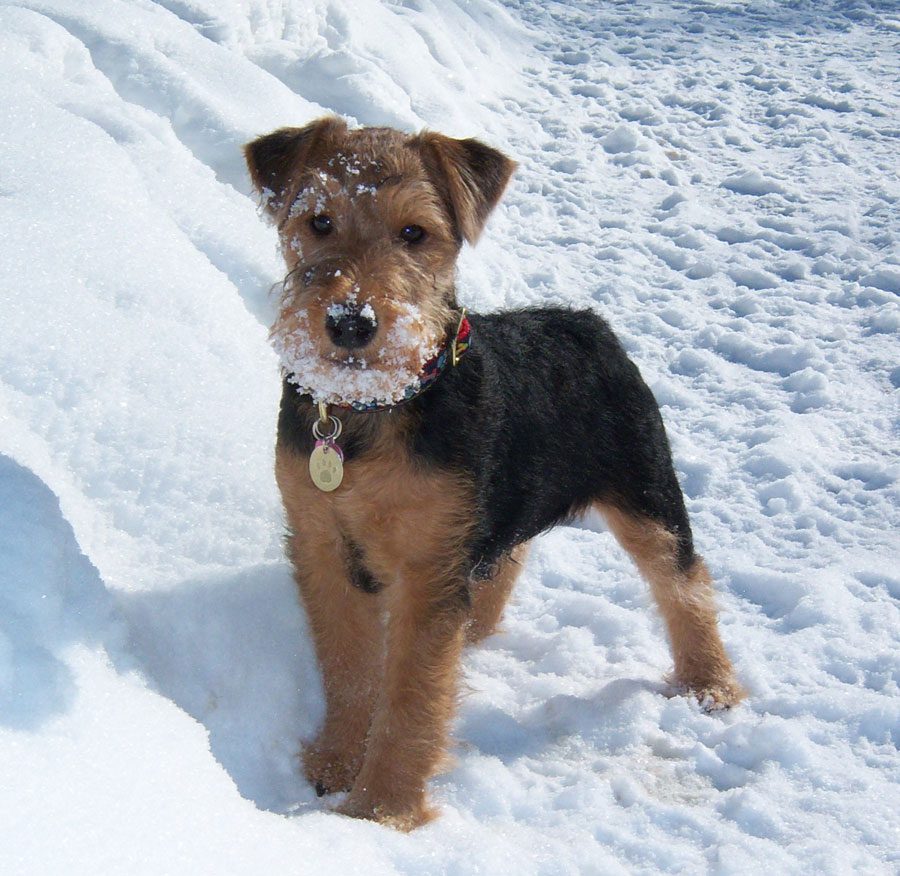
The official standard describes the nature of the Welsh Terrier as: "Affectionate, obedient and easy to handle; happy and grumpy, rarely timid in nature"

Content

History

The Welsh Terrier it is a medium-sized and high-performance terrier. It is also often called the "little Airedale Terrierยซ, because it is very similar to it. But it is an independent terrier and not a miniature version of the Airedale Terrier. But, both are not only externally, but also in their nature quite similar. The name Terrier is derived from the Latin "Terra" for earth. So originally they were dogs for work on the land. The first evidence is given by the ancient Romans, in the Middle Ages terriers were already described in detail. Their home is in the British Isles, where you can find them all over the country. In the stables they kept the little vermin. Even the big rats were not a problem for them. The hens, pigeons and rabbits protected them from martens and foxes.

It is said that the Welsh Terrier has evolved from Black y Tan Terrier, that were widespread for centuries but are now extinct. Despite this ancient history, entered the stage of modern pedigree dog breeding relatively late. The ancestors of the Welsh Terrier spread throughout the British Isles. But, It was in Wales that the first breeders began to establish this original type of terrier as an independent breed in modern times.. In 1886 the first Club de Welsh Terrier. Since then the breed has been bred according to essentially the same criteria that continue to be given in the current standard.. In 1954 the breed was officially recognized by the FCI (International Cynological Federation).

Physical characteristics

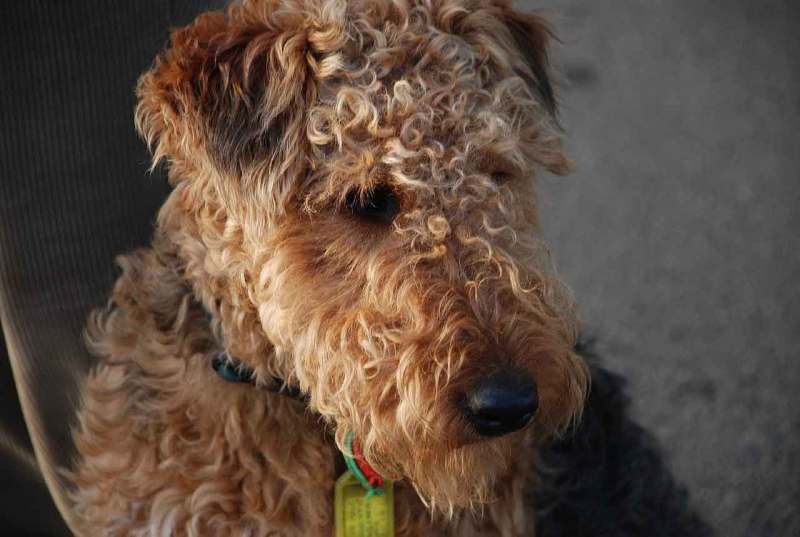
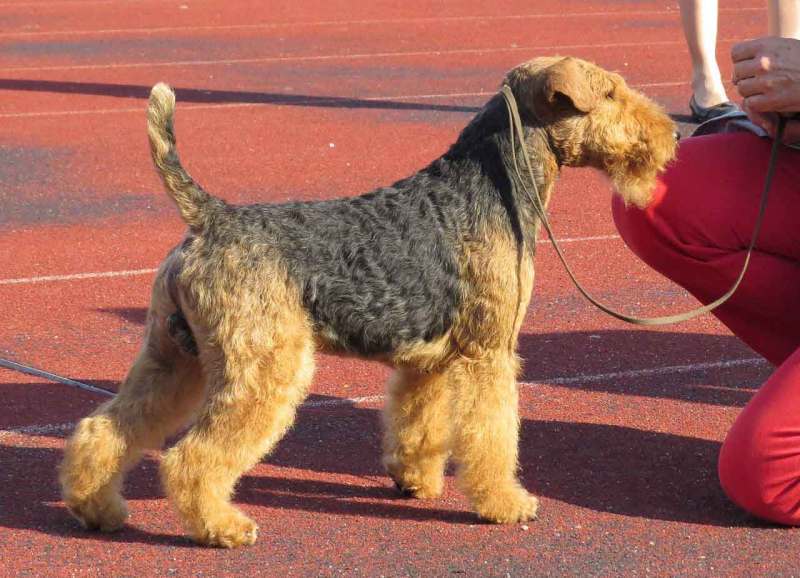
The Welsh Terrier is one of the highest performing terriers. His appearance is fast, Intelligent, balanced and compact. It is its external appearance that makes it unmistakable. His height exactly conveys his character: He is very attentive, ready for all actions like a charged power pack, but at the same time calm and without any aggression. This is underlined by the expression in his eyes, by the way he wears his ears and last but not least, for self-confidence, the tail that stands erect. The head of the Welsh Terrier is elongated and ends in a lush beard at the front. Ears are bent forward. The coat is also of a special kind. It's hard, very dense and abundant. Colors are preferred black and tan, or dark gray black with fiery reflections, no brush strokes of ortho color on the fingers. Males have a height at the withers of about 40 centimeters, the weight is about 9 to 10 kg.

Character and skills

The Welsh Terrier has first of all a character that distinguishes practically all terriers. The Welsh Terriers they are temperamental dogs that never say no to any adventure. They are lively, bright, concise, rapid. They are always alert, they are not aggressive, but they are not afraid and in an emergency they are ready to fight. They are also extremely cooperative and docile.. The official standard describes the nature of the Welsh Terrier as: "Affectionate, obedient and easy to handle; happy and grumpy, rarely timid in nature". bold and fearless, but in no way aggressive; although it can be sustained at any time, if required".

It is a great pleasure to work with these dogs. The Terriers galeses they are open and trusting, friendly, brave and intelligent. They are faithful to their humans and adapt well as family dogs if their strong personality is not only respected., but also appreciated and managed. Its suitability as a family dog รขโ‚ฌโ€นรขโ‚ฌโ€นalso requires that when Welsh Terrier given the proper occupation, or better yet, the challenges. Just going for a walk is not enough for a Welsh Terrier, especially as a young dog.

Fitness

Maintaining a Welsh Terrier no problems. They have no demands regarding the size of the floor. If anything, the biggest challenge is in his temperament. for a Welsh Terrier there is nothing worse than boredom. That is why you need challenges of a physical and mental nature.. Hunting work or sports and games should be on the agenda every day. The Welsh Terriers they are good companions for active and sporty people. But, when moving in nature, keep in mind that the hunting dog still sleeps in the terrier.

The Welsh Terrier they are very suitable for various sports with dogs. They are well positioned as companions to a runner, but also from a runner or cyclist, as long as these sporting challenges are kept in moderation. The Welsh must be used to other pets from puppyhood. Welsh Terriers are very suitable as playmates for children, they are always in a good mood for fun and robust enough to play with children. But, the house rules must be correct and the terrier must know his role in the family. You can do anything with a Welsh Terrier; he will know how to behave even in the best restaurant. Due to its manageable dimensions it is also very practical. It is always robust.

Education ยซWelsh Terriersยป

The breed can be trained very well and, if you want, even educated. The clear announcement and the consequence are the miracle words here based on a respectful and loving relationship with the master or caretaker.. The Welsh Terriers they need a consistent education from the puppy's age. On this basis they can be trained for a wide variety of tasks. Due to its high willingness to learn and its body measurements it is also suitable for a committed beginner.

Care and health ยซWelsh Terriersยป

The Welsh Terrier has a robust nature. The Terrier Club recommends that your hard, lean coat, which together with the dense and soft undercoat forms the so-called "English jacket", be professionally trimmed three or four times a year. It also, brushing and combing regularly is enough care.

The Welsh Terriers they are a very healthy breed, but they may have some genetic health problems. These may include, the breed may have glaucoma, cataract, dry eye and lens dislocation. Hypothyroidism has also been reported..

The breed also has problems with allergies and dislocation of the patella. (a condition in which the knees come out of their normal position). Although there are no screening tests for those and other conditions that can affect the Welsh Terrier, your puppy's breeder must be willing – in fact, anxious – to review the health records of your parents and close relatives, and discuss the incidence of those particular health concerns on their lines.

Remember that after you have welcomed a new puppy into your home, has the power to protect you from one of the most common health problems: the obesity. Keep a Welsh Terrier with a proper weight is one of the easiest ways to prolong your life. Make the most of your preventive skills to help ensure a healthier dog for life.

Nutrition / Food

The power of the Welsh Terrier has no problems.

Life expectancy ยซWelsh Terriersยป

The Welsh Terrier it has an average life expectancy of good 12 years.

Comprar ยซWelsh Terrierยป

The best thing to do is buy your puppy from Welsh Terrier locally to a breeder member of the Terrier Club, or you can search the shelter for a Welsh or similar terrier. A puppy of this breed of dog costs 1200 euros and more.

Characteristics "Welsh Terrier"

Coexistence is important that you have with your new friend. Before considering the acquisition of a dog of the breed "Welsh Terrier" you know certain factors. Not all breeds of dogs are apt to live in an apartment, you must take into account his character, their need for exercise, their interaction with other pets, their care and if you have small children, their level of tolerance towards them.

Adaptation โ“˜

5,0 of 5 stars (based on 1 review)

friendly dog โ€‹โ€‹โ“˜

2,0 of 5 stars (based on 1 review)

hair loss โ“˜

1,0 of 5 stars (based on 1 review)

Affection level โ“˜

4,0 of 5 stars (based on 1 review)

Need for exercise โ“˜

4,0 of 5 stars (based on 1 review)

Social need โ“˜

3,0 of 5 stars (based on 1 review)

Home โ“˜

4,0 of 5 stars (based on 1 review)

Toilet โ“˜

4,0 of 5 stars (based on 1 review)

Friendly with strangers โ“˜

3,0 of 5 stars (based on 1 review)

barking โ“˜

4,0 of 5 stars (based on 1 review)

Health โ“˜

2,0 of 5 stars (based on 1 review)

Territorial โ“˜

5,0 of 5 stars (based on 1 review)

Cat friendly โ“˜

1,0 of 5 stars (based on 1 review)

Intelligence โ“˜

4,0 of 5 stars (based on 1 review)

Versatility โ“˜

3,0 of 5 stars (based on 1 review)

Child friendly โ“˜

4,0 of 5 stars (based on 1 review)

Surveillance โ“˜

4,0 of 5 stars (based on 1 review)

joy โ“˜

5,0 of 5 stars (based on 1 review)

Images "Welsh Terrier"

Photos:

1 – Welsh Terrier by publicdomainpictures.net
2 – Welsh Terrier during the international dogs show in Katowice, Poland by https://es.m.wikipedia.org/wiki/Archivo:Terier_walijski_suka_2009_pl.jpg
3 – Welsh Terrier by Shleiderbmx / CC BY
4 – Tallinn, Estonia, CACIB duo 2013, August 17-18 by Thomas / CC BY-SA
5 – A Welsh Terrier by Brian chee / CC BY
6 – Welsh Terrier by https://pxhere.com/es/photo/847899

Videos "Welsh Terrier"p

Type and recognitions:

  • FCI CLASSIFICATION:
  • Group :
  • Section : . .

Federations:

  • – FCI – Terriers 1 Large and medium-sized terriers. โ“˜
  • – AKC – Terriers โ“˜
  • – ANKC – Terriers โ“˜
  • – CKC – Terriers โ“˜
  • – โ€‹KC – Terriers โ“˜
  • – NZKC – Terriers โ“˜
  • – UKC – Terriers โ“˜

FCI breed standard "Welsh Terrier"

Origin:
Wales, United Kingdom

Date of publication of the valid original standard:
13.10.2010

Use:

Terrier


General appearance:

Faithful, obedient, easy to educate. Cheerful and fickle, rarely shy. Intrepid, but definitely without aggressiveness, even if he is always able to put himself before any situation.


Behavior / temperament:

Lively, passionate about work, well balanced and compact.

Head:

---

Cranial region:
  • Craging: Plano, of moderate width between the ears.
  • Depression links (Stop) : Not very defined.

facial region:

  • Trufa: black.
  • Horcico: Median length of stop to tip of nose.
  • Jaws / Teeth: Powerful Jaws, clean cut, rather deep and tremendous. Strong JAWS, with a perfect and uniform scissor bite, so that the upper incisors fall exactly in front of the lower ones, teeth being placed perpendicularly in the jaws.
  • Ojors: relativelysmall, well implanted, dark, with expression indicative of his temperament. Round and full eyes are not desirable.
  • Obars: Triangular shape, small, with not very thin pavilions. Relatively high implantation, positioned forward and close to the cheeks.

Neck:

Of moderate length and width, slightly arched, falling gracefully on your shoulders.

Body:

  • Espalda: Short.
  • Itmor: Strong.
  • Pecho: Good depth and moderate width. Well developed ribs back.

Tail:

Previously the custom was to amputate the tail.
  • amputee: Properly inserted. With erect bearing.
  • Sinn amputation: Properly inserted. With erect bearing. Being in good balance with the rest of the dog.


Tips

PREVIOUS MEMBERS:

  • Hormbros: Long, inclined and well positioned backwards.Elbows: Perpendicular to the body.
  • Antarm: Straight and muscular limbs, with strong bones.Metacarpus: Perpendicular and powerful.
  • Pinis previous: Small, round, ยซ cat's foot ยป.

LATER MEMBERS:

  • ApGeneral arience: Strong.
  • Thighs: Muscular, good length.
  • Metatarsals: Corrin theejoneswell angled, low-lying and broad-boned.
  • Pinis later: Small, round, ยซ cat's foot ยป.

Movement:

Anterior and posterior extremities are carried straight and parallel. The elbows move perpendicular to the body, with a free movement to the sides. Knees do not twist inward or outward.

Mantle

  • Plink: Wire hair, hard, very dense and abundant. It is undesirable that you only have one coat of hair (no inner layer).
  • Colorr: Preferably black and tan or black-gray and tan. No black brush strokes on fingers. It is undesirable that they have black color under the hocks.


Size and weight:

Alturto the cross: Without exceeding 39 cm..

Weight: Of 9 to 9,5 kg.


Fouls:

Any deviation from the aforementioned criteria is considered a fault and its severity is considered to the degree of deviation from the standard and its consequences on the health and well-being of the dog and the dog's ability to perform its traditional task..

FALTAS DISQUALIFYING:

  • Aggressiveness or extreme shyness.
  • Any dog โ€‹โ€‹showing clear signs of physical or behavioral abnormalities must be disqualified..


N.B.:
  • Males should have two normal-appearing testicles fully descended into the scrotum..
  • Only functionally and clinically healthy dogs, with the typical conformation of the breed, should be used for parenting.

Itlatest changes are in bold.

TRADUCCION: Brรญgida Nestler / Original version: (IN)

SupTechnical ervision: Miguel Angel Martinez

Source: F.C.I - International Cynological Federation

Alternative names:

1. Welshie, WT (English).
2. Terrier gallois (French).
3. Welsh (German).
4. Welsh (Portuguese).
5. Terrier galรฉs (espaรฑol).

โ–ท The world of Pets: Dogs, cats, birds, reptiles, amphibians

Waterside Terrier
Inglaterra FCI 7 - Large and medium-sized Terrier
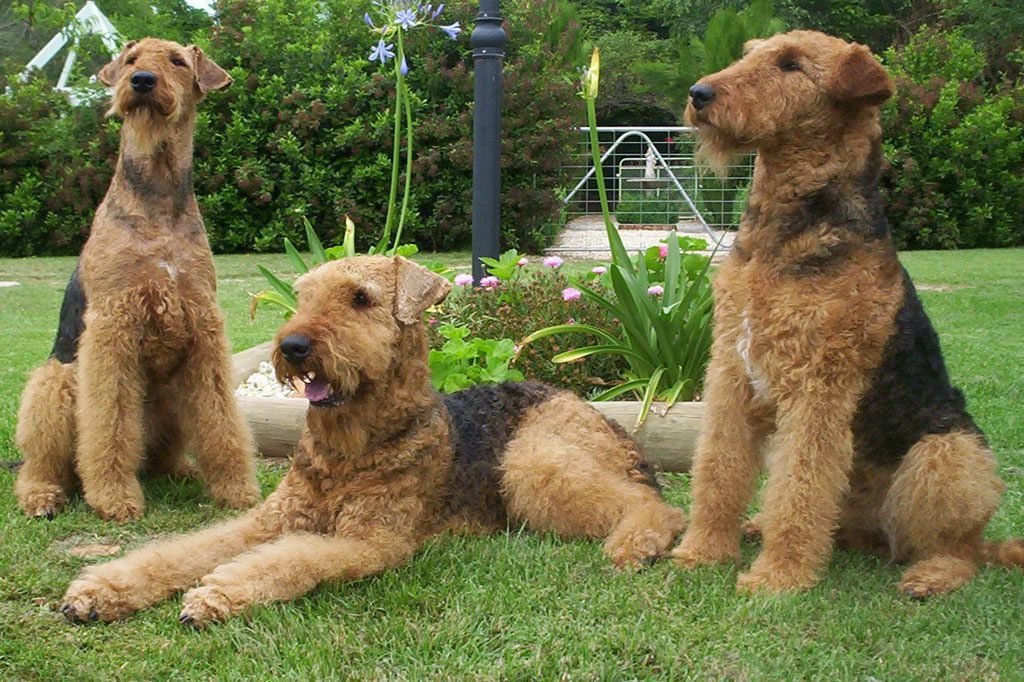
Waterside Terrier

The Waterside Terrier or Airedale Terrier (as well, call: Bingley Terrier, King of Terriers), It is a large, strong dog breed belonging to the Group Terrier.

It is of British origin, of the Yorkshire region. It is believed that he descended from a cross between the Otterhound, otter hunter optimal, and the Old English Terrier. The breeding of these animals began in the mid-nineteenth century.

Read about the race by clicking on: Airedale Terrier.

Dogs breeds: Waterside Terrier