โ–ท The world of Pets: Dogs, cats, birds, reptiles, amphibians

Irish Red Setter
Irlanda FCI 120 . Setter

Setter Irlandรฉs

The Irish Red Setter is spread throughout Europe

Content

History

The origin of dogs Setter dates back to at least the second half of the 16th century: John Caius mentions them in 1570 The British book cart Canibus, What, as the name reflects, is dedicated to the dogs of Great Britain.

It is believed that the Irish Setter came up much later, in the XVIII century, as a result of a crossing. His ancestry is not known for sure, but it is believed to have developed from Irish Water Spaniel, with possible contributions from Irish Terrier, the English Pointer and the Gordon Setter. But, in early times it did not have the smooth mahogany red coat we know today, but a red and white fur, especially appreciated for hunting, since it was easy to spot in the bush. This Irish Red and White Setter -that still exists today, although it is more rare- would have gradually given way, in the course of the 18th century, to the Irish Red Setter. The Irish Red Setter stabilized as a distinct breed in the early 19th century, differing in particular by having longer legs than its bicolor ancestor.

Although its exact origins are unclear, the geographical origin of Irish Setter is well identified. Your story begins, of course, In Ireland, where hunters tried to develop a successful breed of dog for tracking, monitoring and recovery of game birds. They used it as a pointing dog that locates game by freezing in sample position, allowing the hunter to know where the bird is. The term ยซSetterยป comes from this use for which the animal was developed. He was very appreciated from the beginning for his excellent nose, that allows you to detect odors in the air, while most hunting dogs track game on the ground. This feature made him very popular from the beginning..

In addition to his hunting skills, the Irish Red Setter it was also quickly distinguished by its elegant appearance and beautiful mahogany color. Since the early years of the 19th century, some breeders specialized in the production of specimens of this color. Jason Hazzard, of Timaskea, in County Fermanagh, Sir Saint George Gore and the Earl of Enniskillen they were some of the first breeders of the breed. These may include, the conde the Enniskillen He decided, already in 1812, who only wanted to have red-haired dogs in their kennels.

In 1862, a specimen called Palmerston stood out for the especially elongated shape of his head and the slenderness of his silhouette. These differences almost cost him his life, since its owner considered that these characteristics made it unsuitable for hunting and decided to drown it. A fan of the breed stepped in and saved him, then made him famous by presenting him in many dog รขโ‚ฌโ€นรขโ‚ฌโ€นshows. Palmerston gave birth to a large number of offspring, and it is accepted that it appears in the family tree of most dogs Irish Red Setter that exist today. The success of Palmerston in the beauty contests in which he was exposed he was emulated, since without ceasing to be a recognized hunting dog, the Setter Irish Red later became a popular show dog.

The international spread of the Irish Setter

The Irish Setter was imported to the United States already in 1875 and quickly became a star. In fact, the first representative of the race that set foot in America, Elcho, became a star both for his presentations at dog shows and for his effectiveness in the field. It is not strange that the race is one of those recognized since its creation by the American Kennel Club (AKC). The first representative of the breed thus registered in 1878 it was called Admiral. With regard to the United Kennel Club (UKC), the other reference canine organization in the country, recognized the breed in 1914.

Shortly after his arrival in the country, the race that is sometimes called Red Setter to distinguish it from its white and red cousin it quickly became one of the most popular breeds at American dog shows. Among 1874 and 1948, nothing less than 760 of their representatives were rewarded in the rings. He was much less noticed for his field skills, since during the same period only 5 specimens were awarded for their hunting skills. This alerted some breed enthusiasts, that in 1940 published in the magazine Field and Stream a call for its rebirth as a hunting dog, its original function. His initiative was quite successful: So, although a lot of effort was put into its aesthetic characteristics, the Irish Setter was able to retain both of its functions and remains a highly prized hunting dog for tracking game birds, like the teal, the duck, partridge and quail. It is also common to distinguish between show and working bloodlines., that differ in size and robustness.

Of course, not only the United States adopted the Irish Setter. Your appreciation for the Fรฉdรฉration Cynologique Internationale (FCI) in 1954 contributed a lot to its spread throughout the world.

ยซIrish Red Setterยป Recognitions

The Irish Setter is now recognized by the world's leading organizations, that distinguish it from Irish Red and White Setter. Many did not recognize the latter until much later.. In fact, the Irish Setter enjoys much greater popularity than its ancestor, although the latter is a bit at half mast…

This is the case, in particular, of United States, where he continues to be present both in the field with the hunters and in the exhibition rings. But, It is far from the heights it reached in the years 60 and 70, thanks mostly to Disney's production of 1962 in which appeared a Irish Setter call Big Red, as well as to Rey Timahoe, the famous White House dog during the presidency of Richard Nixon (1969 to 1974). Mid-years 70, came to occupy the third position in number of annual registrations in the AKC, going from about 4.000 puppies per year to more than 60.000. But, this fashion was ephemeral, and the popularity of Setter gradually declined from the second half of the decade of 1970. Today, is more likely to find the Setter around the post 75 (of something less than 200) regarding the number of annual registrations with the AKC. Keep descending, since at the dawn of the XXI century it was around the position 60.

Also in France, the Irish Setter became incredibly popular in the years 70. If at the beginning of the decade there were already more than 600 annual entries in the French Origin Book (LOF), this number shot up incessantly until approaching the 2.400 (four times more) in 1978. The reverse movement occurred in the following ten years, to the point of ending the decade of 1980 at around 700 u 800 annual births. Next, the number stabilized around 600 per year throughout the decades of 1990 and 2000, and then began to decline again in the decade of 2010, at around 500 births per year.

The recent decline in interest in the breed is also seen in other countries, like Britain. These may include, the number of annual registrations in the Kennel Club is around 700, while in early 2010 approached the 1.000.

Physical characteristics

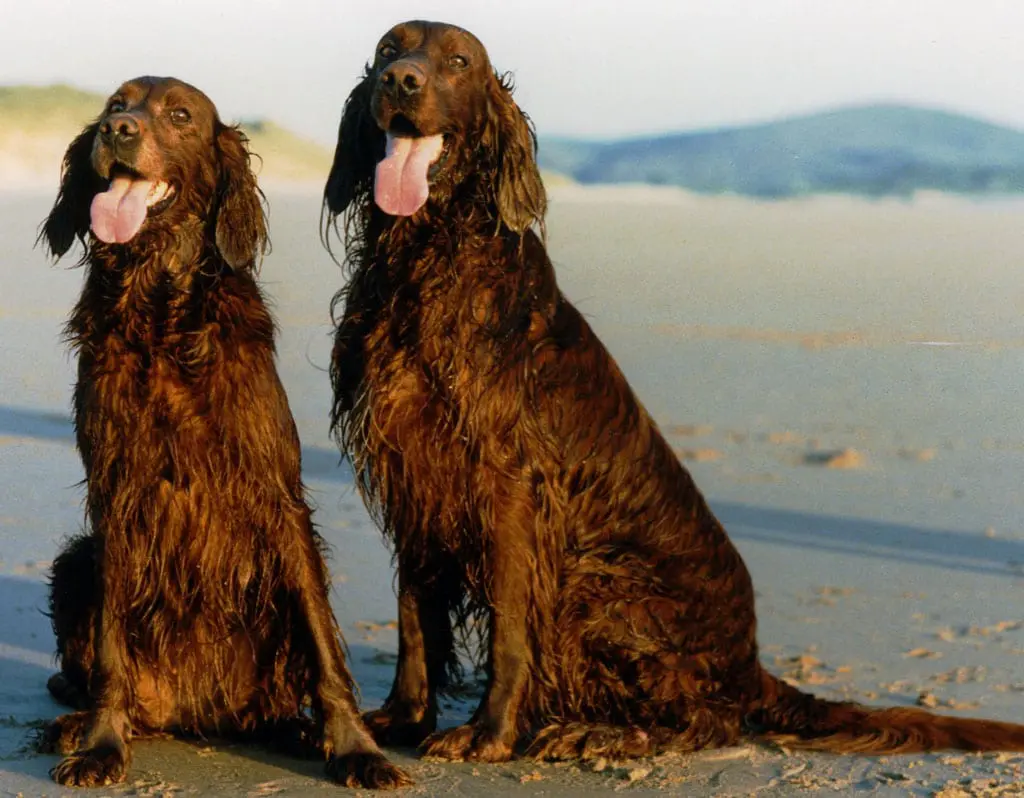
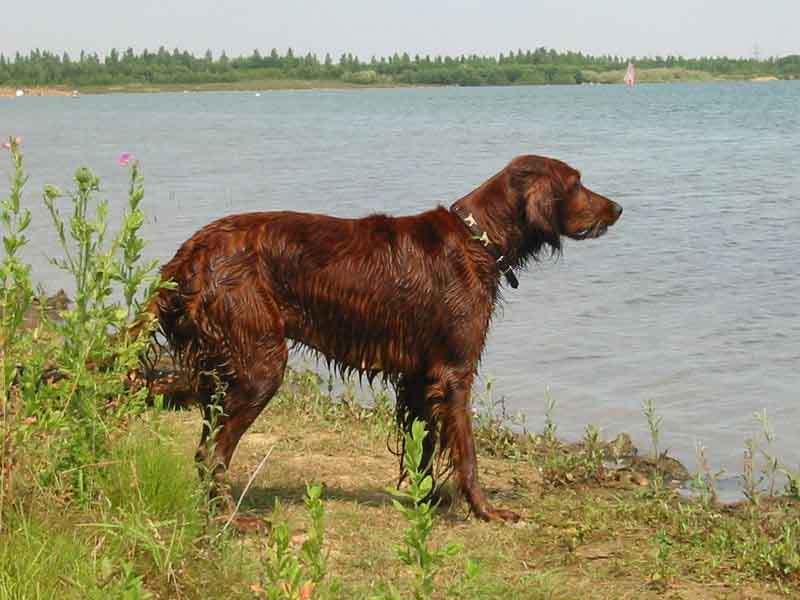
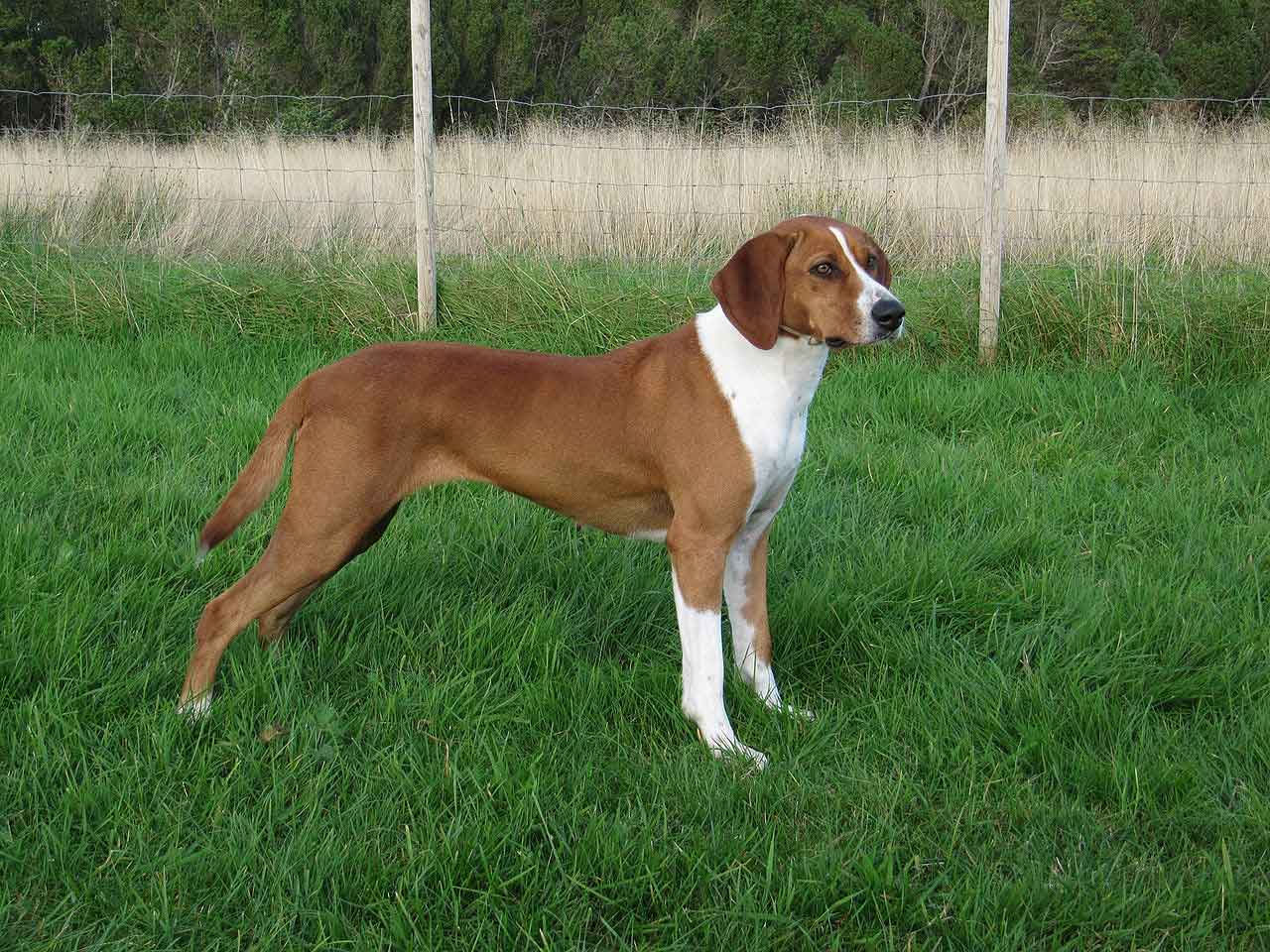
The Puts irelandes is an active hunting dog, spirited and noble-looking, with a balanced and elegant constitution. These medium-sized dogs are distinguished by their rich mahogany red coat and fine, silky fur that extends over the ears, tail and chest. In general, it's a beautiful blend of refinement and robustness.

It is built around a deep chest that drops almost to elbow level and has a long, flat back., slightly sloping from withers to hindquarters, without an exaggerated fall. It is prolonged with a long, tapered tail, usually worn straight or even slightly curved up. Its hind legs are powerful and well developed, although its lower part is finer from the hock to the sole. They give him a good stride. The front legs are thinner, with straight and nervous forearms. The front joints are well bent, but not twisted in or out.

The head rests on a strong neck, although not very thick and slightly arched, that fits harmoniously between the shoulders. The skull is oval seen from above. The muzzle is moderately long and square, with lower and upper jaws of nearly equal length. The nose is always dark, black or chocolate, and the nostrils are wide open. The ears are placed behind the skull, slightly below eye level. They are thin and long, almost enough to touch the front of the muzzle when held taut. They hang with a sharp crease across the head. The eyes are almendrados, of medium size and quite distant from each other. They are hazelnut to dark brown in color and have a soft but alert expression.

The coat of the Irish Setter it is composed of an undercoat and a short topcoat on the top of the head and front legs, as well as on the tips of the ears. It is moderately long on the rest of the body and has long fringes on the ears., on the back of the legs and thighs and on the belly. Their feet have a good density of hair between the toes, like feathers. It also, despite its length, the coat is smooth and soft, with a shiny appearance.

Its color is one of the distinctive features of the breed. They are mahogany or dark brown, no trace of black. Some individuals have a hint of white on the chest or a thin white line on the top of the skull., but this is not particularly desirable.

Last, sexual dimorphism is only moderately pronounced in this breed: males are generally of 3 to 5 taller centimeters, but they are not, for example, significantly more massive. On the other hand, there may be actual physical differences depending on the purpose for which the animal is bred. These may include, individuals in show lines are usually more robust and larger than those intended for hunting or company, and their fur is also thicker and denser.

Size and weight

    ▷ Male size: Of 58 to 67 cm.

    ▷ female size: Of 55 to 62 cm.

    ▷ Male weight: Of 20 to 25 kg

    ▷ female weight: Of 18 to 23 kg

Character and skills

He gets along wonderfully with children, whose energy and enthusiasm perfectly match his own character. He especially enjoys play sessions with his humans and finds them ideal companions. But, care must be taken when in the company of very young children, as it can be jerky in its movements and can involuntarily push or even knock them down. In any case, a dog should never be left alone with a young child without adult supervision, and this applies to all races.

The Irish Red Setter generally not lacking in enthusiasm or curiosity. This curiosity - sometimes combined with his hunting instincts- means, However, easily distracted and it can be difficult to keep your attention. If we add to this that he is sometimes stubborn, it's easy to understand that your education can be a bit complicated at times. And the combination of these two traits can make learning a bit tricky at times!! It also has a great ability to nibble everything in its reach.. Training toys and chews for dogs should satisfy this urge., but at the beginning of learning, some objects can be destroyed.

In any case, the drive of the dog is a characteristic that is preserved for a long time, since it takes much longer than other races to reach a certain psychological maturity. For some people, Living with a puppy-minded dog at five can be challenging, but others love it. In any case, maintains a strong love for life into old age, and some dogs never settle.

In fact, the Irish Setter has a lot of energy to spare: originally bred for hunting, he is still very active and needs to spend his energy on daily walks and to be able to run without obstacles. Between an hour and an hour and a half of exercise a day is the minimum to keep you in good physical and mental health., and simple walks on a leash in the neighborhood are not enough for it to develop: you need a place away from traffic where you can run freely and safely. It is an excellent companion for those who want to go running with their pet, and is also happy to accompany bike rides.

Outings may also include time to swim, since the Irish Red Setter it is a water-loving breed. Swimming is also a good way for me to exercise.

The same goes for dog sports, that allow you to mobilize both your physical and mental capacities. The agility, obedience, crawling and rallying are disciplines that are perfectly suited to him and that he does not stop approaching with his usual enthusiasm.

In any case, an active master is necessary to keep it in good physical and mental shape: given your daily need for exercise, the lifestyle of elderly or sedentary people is not at all suitable for him.

As long as you have enough company and opportunities to exercise, he is very nice to live with and deserves his reputation in this regard.

No wonder, given your level of activity, the Irish Setter not suitable for apartment living. A house with a large fenced garden is a much more ideal living environment., but a fence is essential to prevent it from taking off. Like any self-respecting hunting dog, has a hard time restraining himself if he picks up interesting smells. In any case, even if the garden is big enough for him to run around, it's not a question of leaving it alone for a long time, because he needs to integrate into his family and interact with humans. He finds it difficult to tolerate loneliness and soon suffers from separation anxiety. The combination of lack of company and too much energy can take its toll on you, since it can lead to damage, plus other possible behavior problems (excessive barking to get attention, etc.).

Sharing a home with another species or with a representative of another species can be a smart way to avoid loneliness. Is able to get along with a cat or rodent once it has been raised and, Therefore, considers you a full member of your family. On the other hand, it is better to avoid living with birds, who are your favorite prey: his hunting instinct would have every chance of kicking in at some point and abruptly ending the experience. Obviously, the problem is especially acute in the case of individuals from hunting lines, whose instinct is the most advanced.

His sociability is not limited to family members, both animals and humans. In fact, he loves the company of the latter, and often welcomes strangers with enthusiasm: therefore, it would be quite unrealistic to expect to use it as a guardian. Having said that, Although it is not aggressive, can be protective if the situation calls for it. Will bark loudly when a stranger points their nose at him, which makes him at least a good watchdog.

His closeness to the human being, his gentle nature and intelligence make him a very good therapy dog, whether it is made permanently available to a person or used by an association that regularly intervenes in different institutions. In effect, can do wonders in accompanying patients who need emotional support.

Education

The Irish Red Setter not only is he smart and lively, He is also very cooperative in his education because he likes to work and make his masters happy.. But, keep in mind that it retains an exuberant personality for a long time, as if he were still a young cub, including a healthy dose of curiosity. This makes them easily distracted during sessions., and sometimes it can be hard to get their attention, or keep it for more than a few minutes. So, patience and a sense of humor are the keywords in the training of a Irish Setter, since he deserves his reputation for stubbornness, even stubborn at times. It is important to stay calm whatever happens, and act positive and kind.

In any case, things are easier because you really want to learn and you love challenges. So the challenge is essentially keeping it centered. The best way to do it is through play, with rewards and accolades. His very playful temperament means that he can resist if what is offered does not seem fun to him. Changing activities and rewards regularly can keep your interest and stimulate you more effectively.

Since he loves to run and has a strong hunting instinct, teaching your dog to hunt should be a high priority in your training program, What, as with any race, should start immediately. In more general terms, although in general it is full of good intentions, must learn as soon as possible to be obedient, at the risk of unleashing their tendency to be independent and stubborn.

Begin education of Irish Red Setter at a young age also helps to avoid boredom, since he needs a lot of stimuli to be happy. At eight weeks, is already capable of assimilating many things.

Regarding home training, not usually a source of major problems, although even 4 months the puppy may have difficulty controlling his bladder: if you live inside, it is therefore essential to take it outside regularly.

Like any dog, your socialization also benefits from being started without delay, and it goes much better since it is sociable by nature. Offer you many opportunities to meet all kinds of humans, companions and other animals, but also to face different environments and stimuli (noises, sounds, smells…) it is the best way to make him a perfectly balanced and very pleasant companion.

It also, especially likes to chew and nibble what is within reach. So, it is necessary not only to keep your precious belongings away, but above all to teach him to vent in a way acceptable to both him and his master: diverting their attention every time they start to chew or nibble on inappropriate things is a good way to gradually target this character trait.

Health

The Irish Setter it is a generally robust and healthy breed, and their representatives rarely have major health problems.

They are also relatively heat tolerant and, by its origin, they also acclimate well to reasonable cold and humidity. But, extreme temperatures are not really for him. Of course, must be able to take shelter in case of heat wave, but you should also be able to sleep in a heated place if the temperatures are below freezing.

The main diseases to which the breed is exposed are :

  • The dilation-torsion stomach, which mainly affects large breeds of dogs and is fatal if the vet does not intervene quickly;
  • The Hip Dysplasia, which is also common in large dogs and can be hereditary. It occurs when the thigh bone does not fit well in the hip joint and can cause difficulties in walking or running. Severe cases are usually corrected by surgery.;
  • Osteocondrosis (in osteochondritis), ossification disorder that affects the cartilage of the joints and causes lameness. This disease is still little known, but it is suspected of having hereditary causes. It usually manifests itself in the animal's growth period and affects males more frequently than females.;
  • The osteosarcoma, a bone cancer that mainly affects older animals and causes an increasingly pronounced and painful limp;
  • Epilepsy, which is similar to what is also seen in humans and leads to often impressive seizures. But, there are various treatments that allow people with epilepsy to lead almost perfectly normal lives;
  • The Hypothyroidism, a hormonal disorder that can present many different symptoms (weight gain, Dry Skin, hair loss…). It is usually treated with medications;
  • The von Willebrand disease, an inherited bleeding disorder that can cause blood in the stool or bleeding from the gums or nose. There is no known cure for this disease, but it is possible to provide care to relieve symptoms;
  • Insufficient adhesion of the leukocyte, a serious hereditary disease peculiar to the breed. It leads from a very young age to various and serious bacterial and viral infections because the white blood cells are unable to attack them. It is linked to a recessive gene, which means that an individual can be a carrier of it (and pass it on to their descendants) unaffected;
  • The progressive retinal atrophy, an incurable hereditary disease that corresponds to a slow deterioration of the retina. Produces progressive loss of vision, first at night and then during the day;
  • The entropion, a sometimes inherited eye disorder in which the eyelid rolls inward, irritating the eyeball. The problem can be treated with surgery;
  • The otitis, an ear infection favored by the drooping shape of the ears.

Although the list of diseases the breed is predisposed to can be terrifying, do not forget that their representatives usually spend most of their lives in good health. A study conducted in 2004 by the British Kennel Club and the British Small Animal Veterinary Association revealed that cancer was responsible for the 27% of deaths and that old age was the second leading cause of death, with a 22% of the cases. In other words, these two causes alone account for one in two deaths, well ahead of cardiac problems (10% of the cases) and gastrointestinal disorders (8% of the cases).

However, since many of the conditions to which the breed is predisposed are or may be inherited, adopting a serious breeder of the Setters irlandes it is crucial to obtain an animal that is not only correctly socialized, but also and above all healthy, and that it probably still is. So, must be able to present the results of genetic tests performed to parents or offspring to rule out any transmission of inherited diseases. You must also present a certificate from a veterinarian attesting that the dog is in good health, as well as the health or vaccination card of the dog, in particular to confirm that you have received all necessary vaccinations.

Once the puppy has moved to its new home, care must be taken to respect his growth and not force him to do too many things too soon. So, any particularly strenuous or prolonged activity should be avoided until the puppy's skeleton has reached full maturity, what occurs in this breed at approximately two years of age. Otherwise, you run the risk not only of injury, but also to suffer consequences for life, that may be related to malformations, for example. The risk is all the greater as the Irish Setter is predisposed to various joint problems.

It also, the adoption of a healthy dog รขโ‚ฌโ€นรขโ‚ฌโ€นshould not do without regular visits to the vet, At least once a year, to allow early detection of a potential problem, before it ends up acquiring very serious proportions. It is also an opportunity to carry out any necessary vaccine recalls..

Always in the field of prevention, it is the owner's responsibility to ensure that their animal's parasitic protection remains active at all times and, for it, renew treatments whenever necessary.

Life expectancy

13 years

Grooming

The care of Irish Red Setter takes time and effort. In fact, its beautiful long, silky coat needs to be brushed once or twice a week to stay shiny and knot-free. This regular brushing also stimulates the follicles that cause hair growth., making the coat healthier. During the molting period, in spring and autumn, hair loss is much greater, so daily brushing is recommended to help remove dead hairs.

Unless, Of course, that the Irish Setter don't need more than two baths a year, unless, Of course, that has gotten especially dirty. Care must be taken to always use a shampoo specifically designed for canines., as there is a risk that the skin will dry out due to a product that is too aggressive. In fact, the pH of dog's skin is not the same as that of human skin.

Their floppy ears also require regular maintenance., as they are a breeding ground for infections. So, should be checked weekly and cleaned with a slightly damp cloth to avoid accumulation of dirt and moisture. The same should be done after every prolonged time outdoors, for example if it is used to hunt. After bathing or soaking outdoors, it is also useful to dry them, again to prevent moisture build-up.

Your eyes should also be carefully examined and cleaned every week., again to prevent dirt from getting into them.

Coat grooming sessions also offer the opportunity to care for your dog's teeth by brushing them with dog toothpaste.. This helps prevent tartar buildup and, Therefore, reduce the risk of bad breath and, above all, of oral diseases. It is best to avoid doing it less than once a week, and the ideal is to take care of it regularly.

Given your level of activity, this dog's claws tend to wear out naturally, so no need to cut them manually. But, it is better to check it every month to make sure that it is so. In any case, if you hear them rubbing against the ground when walking on smooth ground, means that they have become too long. Beyond being then prevented from walking, they can break and potentially injure you.

Whether the fur, the ears, the eyes, teeth or claws, maintaining a Irish Red Setter should not be done randomly, at the risk of hurting or even injuring you. The first time, a visit to a professional groomer or veterinarian can be a great way to learn the correct mannerisms from a professional.

In any case, no reason to wait to start: Familiarizing your dog with these sessions from a young age is the best way for him to cooperate when he needs to be handled, and you can even make maintenance sessions moments of shared complicity.

Manipulations are also useful when you return from a long period in nature, since then it is necessary to carefully examine their fur, legs and ears to detect the possible presence of infections or small wounds, but also parasites, thorns, skewers, etc.

Utility

The Irish Setter It was originally designed and developed to accompany hunters in their search for game birds.. It was - and still is- especially appreciated for its qualities as a showing dog: It is excellent for locating game and positioning itself in a sample position so that the hunter knows where the bird is.

His grace, the beauty of its demeanor and its reddish-cashรฉ coat also made it popular in dog shows already in the second half of the 19th century.

Today they are still recognized and appreciated for these two uses., but have also won hearts as affectionate companion dogs, smart and endearing. They are wonderfully suited to family life so owners can give them all the exercise they need, a task that can be delegated, at least in part, In the kids, with those who love to play.

Dog sports are another great way for him to exercise: excels in agility competitions, obedience and tracking, for example.

Last, its closeness to humans, his sensitivity and sweetness explain why he is also found as a therapy dog, for example in schools, hospitals and nursing homes.

On the other hand, the fact that it lacks all aggressiveness, enjoys the company of humans so much and is generally very welcoming to strangers implies that he cannot assume the role of guardian. On the other hand, it is an excellent warning dog, since it does not stop warning the arrival of a stranger.

Price

The popularity of the Irish Red Setter makes it not hard to find, as many breeders can be found both on European and North American soil.

The price of a puppy usually ranges from 500 and 1000 EUR. The average is slightly less than 800 EUR, no significant differences between males and females.

whatever the country, the price necessarily varies depending on the reputation and prestige of the hatchery from which it comes, of his lineage, as well as its intrinsic characteristics, and in particular of its greater or lesser conformity with the standard. This explains why there can be significant price differences between individuals of the same litter.

Characteristics "Irish Red Setter"

Coexistence is important that you have with your new friend. Before considering the acquisition of a dog of the breed "Irish Red Setter" you know certain factors. Not all breeds of dogs are apt to live in an apartment, you must take into account his character, their need for exercise, their interaction with other pets, their care and if you have small children, their level of tolerance towards them.

Adaptation โ“˜

2,0 of 5 stars (based on 1 review)

friendly dog โ€‹โ€‹โ“˜

5,0 of 5 stars (based on 1 review)

hair loss โ“˜

3,0 of 5 stars (based on 1 review)

Affection level โ“˜

5,0 of 5 stars (based on 1 review)

Need for exercise โ“˜

4,0 of 5 stars (based on 1 review)

Social need โ“˜

5,0 of 5 stars (based on 1 review)

Home โ“˜

3,0 of 5 stars (based on 1 review)

Toilet โ“˜

3,0 of 5 stars (based on 1 review)

Friendly with strangers โ“˜

4,0 of 5 stars (based on 1 review)

barking โ“˜

2,0 of 5 stars (based on 1 review)

Health โ“˜

3,0 of 5 stars (based on 1 review)

Territorial โ“˜

3,0 of 5 stars (based on 1 review)

Cat friendly โ“˜

3,0 of 5 stars (based on 1 review)

Intelligence โ“˜

4,0 of 5 stars (based on 1 review)

Versatility โ“˜

3,0 of 5 stars (based on 1 review)

Child friendly โ“˜

5,0 of 5 stars (based on 1 review)

Surveillance โ“˜

3,0 of 5 stars (based on 1 review)

joy โ“˜

5,0 of 5 stars (based on 1 review)

Images "Irish Red Setter"

Photos:

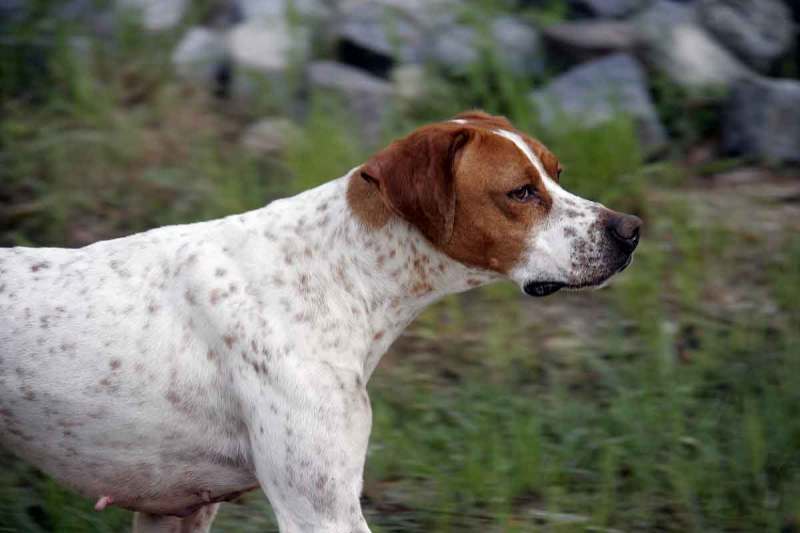
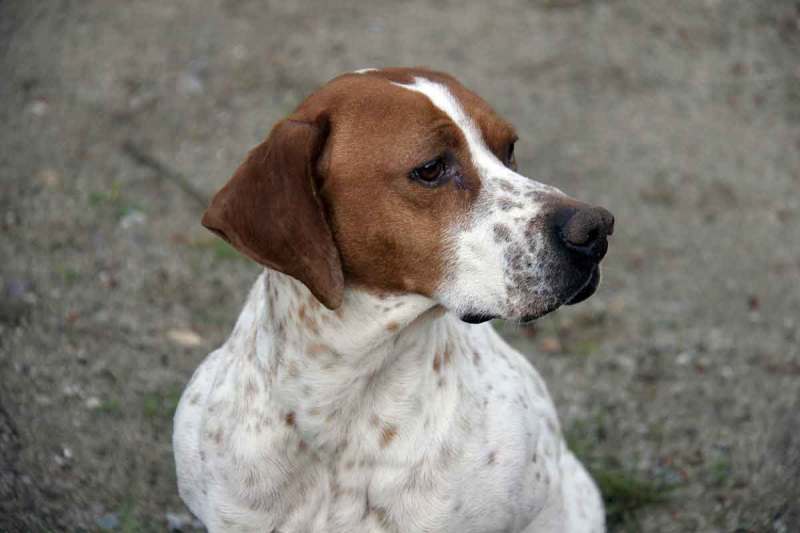
1 – Irish Red Setter Vigo – Galicia – Spain – 06-10-2006 by Luis Miguel Bugallo Sรกnchez (Lmbuga Commons)(Lmbuga Galipedia)Published by / Publish by: Luis Miguel Bugallo Sรกnchez, CC BY-SA 3.0, via Wikimedia Commons
2 – Irish Red Setter by Adam Ziaja, CC BY-SA 3.0, via Wikimedia Commons
3 – Irish Setter head by Ehog.hu, CC BY-SA 4.0, via Wikimedia Commons
4 – Irish Setter of 9 years. by Can Nefesoglu, CC BY-SA 4.0, via Wikimedia Commons
5 – Irish Setter by Philipp Schiffmann, CC BY-SA 2.0 OF, via Wikimedia Commons
6 – Irish Red Setter by https://commons.wikimedia.org/wiki/File:Irish_setter_(dog).jpg

Videos "Irish Red Setter"
Type and recognitions:

  • FCI CLASSIFICATION:
  • Group :
  • Section : . .

Federations:

  • – FCI – Group 7: Pointing Dogs. – Section 2: British and Irish Pointers and Setters. 2.2: Setter โ“˜
  • – AKC – Sporting โ“˜
  • – ANKC – Group 3 (Gundogs) โ“˜
  • – CKC – Sporting Dogs โ“˜
  • – โ€‹KC – Gundog โ“˜
  • – NZKC – Gundog โ“˜
  • – UKC – Gun Dogs โ“˜

Alternative names:

1. Red Setter, Irish Setter (English).
2. Setter irlandais (French).
3. Irischer Roter Setter (German).
4. (em inglรชs: Irish Red Setter) (Portuguese).
5. Setter irlandรฉs (espaรฑol).

โ–ท The world of Pets: Dogs, cats, birds, reptiles, amphibians

Montenegrin Mountain Hound
Montenegro FCI 279 - Medium-sized Hounds

Montenegrin Mountain Hound

Even in his country of origin the Montenegrin Mountain Hound it is little spread, in other countries it is practically unknown.

Content

History

Although its origins are surely much older, the existence of Montenegrin Mountain Hound (Crnogorski planinski goniฤ) is attested since the beginning of the 19th century.

The race, confined to the border region with Greece, has kept its features intact.

Bred for its ability to work in rocky terrain and scrub, hunt both small and large animals.

There are two varieties: the Montenegrin Mountain Hound and the โ€œSerbian Tricolor Houndโ€, that are distinguished mainly by the color of their fur, and both are virtually unknown outside its borders.

In the past, the Montenegrin Mountain Hound It has sometimes been called the "Black Hound".

The first standard dates back to 1924 y la F.C.I. officially recognized the breed at its Warsaw meeting on 8 in May of 1969.

Belonging to the โ“˜American Rare Breed Association (abbreviated as ARBA)

Photo: https://pxhere.com/en/photo/1493407


Physical characteristics ยซMontenegrin mountain houndยป

Montenegrin Mountain Hound
Montenegrin Mountain Hound, b&t by Canarian, CC BY-SA 4.0, via Wikimedia Commons

Robust medium-sized hounds, well balanced, calm and good-natured, very attached to their master.

The skull is slightly domed, the muzzle is slightly shorter than the skull, the nose is always black, eyes are dark with a smart expression, the ears are hanging and without folds, their tips are rounded.

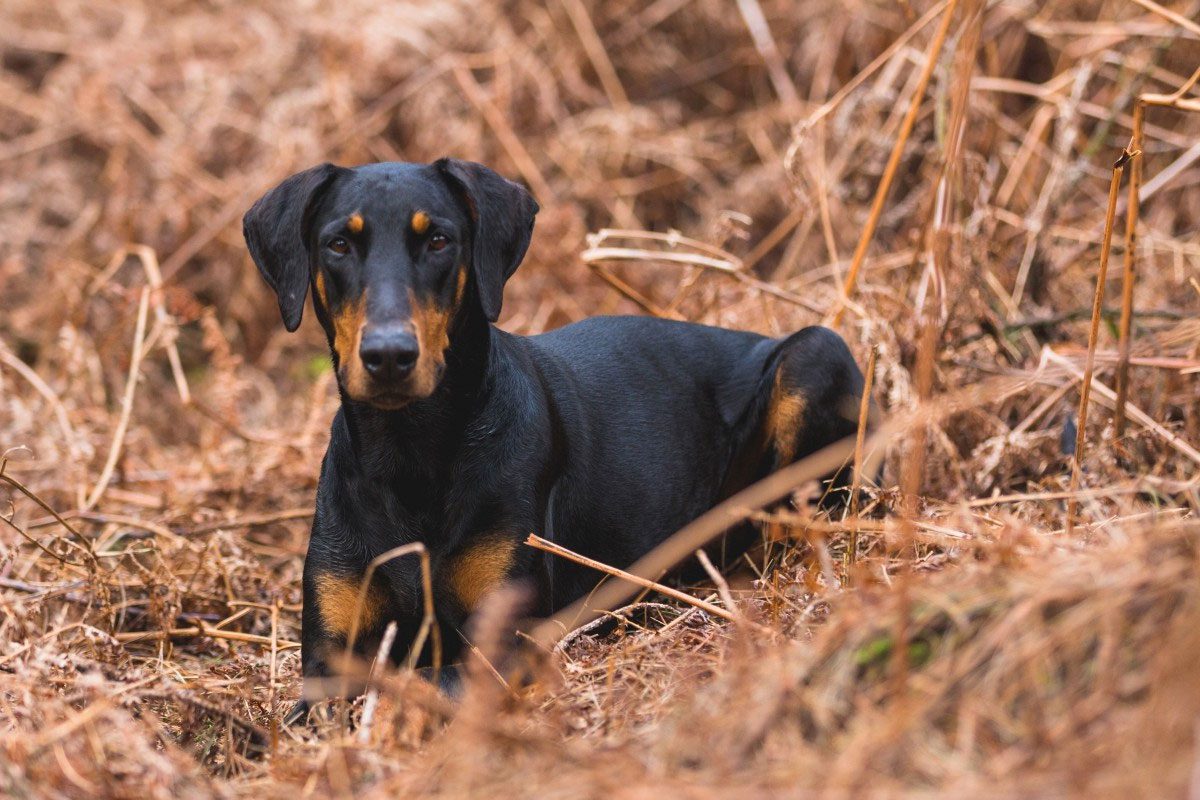
The body is muscular and slightly long. The fur-covered tail is saber-shaped. The pelage is dense, short and with abundant undercoat. The coat is black with brown markings over the eyes, on the muzzle and lower legs.

Size: Height to the cross 44 to 54 cm..

Ideal size for males: 49 to 50 cm., ideal size for females: 48 to 49 cm..


Character and aptitudes ยซMontenegrin mountain houndยป

The Montenegrin Mountain Hound is bold, smart and calm. They are also particularly agile, resistant and tenacious.

They are balanced dogs, quiet, kind, loving and obedient, which makes them excellent companions.

It is often used to hunt hares and foxes, sometimes deer.

Although its qualities make it a good companion dog, life in the city is not recommended for this hound..

Videos "Montenegrin Mountain Hound"

The Montenegrin mountain dog special 08.09.2012
Specijalka Crnogorski planinski gonic 08.09.2012
Moans - Montenegrin mountain dog
Stenci – Crnogorski planinski gonic

Type and recognitions:

  • FCI CLASSIFICATION:
  • Group :
  • Section : . .

Federations:

  • – FCI – Group 6: Scent hounds, and related breeds. – Section 1.2: Medium-sized Hounds. โ“˜

FCI breed standard "Montenegrin Mountain Hound"

Origin:
Montenegro

Date of publication of the valid original standard:
15.07.1997

Use:

Hound


General appearance:

Agile and solid, medium-sized.

IMPORTANT PROPORTIONS :

The length of the body (measured from the tip of the shoulder to the tip of the buttock) and the perimeter of the chest exceed approximately one 10% the height at the withers. The length of the head corresponds to 45% the height at the withers.


Behavior / temperament:

This is a well balanced dog, attached to his master, docile and trustworthy.

Head:

Dolicocephalic; the upper lines of the skull and the nasal cannula are divergent.

Cranial region:
  • Skull : It is longer than the muzzle. In the occipital region, its width is less than the distance between the naso-frontal depression and the occipital protuberance. Seen from the front or in profile, is flat or slightly domed. Its width decreases from the top of the skull to the naso-frontal depression. The frontal furrow is pronounced, while the occipital protuberance is less marked; supraciliary arches are well developed.
  • Depression links (Stop) : Little pronounced.

facial region:

  • Truffle : Is well developed. It is always black.
  • Snout : It is thick and wide at its base; is shorter than the skull. The desired correlation should be 7,5 : 10. The lateral lines of the muzzle are convergent. The nasal helm is straight.
  • Jaws / Teeth : The jaws are strong and have a regular and complete scissor-shaped bite.. Pincer bite is acceptable. Teeth are well developed and evenly implanted.
  • Lips : Medium developed. They are together and the upper lip slightly exceeds the lower. The corner of the mouth is firm; the edge of the lips is black.
  • Cheeks : Flat.

Eyes : They have an oval shape, they are slightly oblique and their color ranges from light brown to dark brown. The edge of the eyelids is black.

Ears : Set high and medium long, they range from thin to moderately thick. They are hanging, they do not present folds and are glued to the head. Its limb has a more or less marked oval shape.

Neck:

Is powerfull, oblique, forming an angle of 45 at 50ยฐ relative to the horizontal. Its length is almost equal to that of the head. He is thin, muscular and does not present a double chin.

Body:

Is rectangular. Its length exceeds almost a 10% the height at the withers.

  • Cross : Well pronounced. : Muscled, wide, moderately long.
  • Pork loin : He's muscular, solid, not very long. It is well attached to the rump.
  • Rump : Slightly inclined (of 20 at 25ยฐ relative to the horizontal); she is muscular, powerful and wide.
  • Breast : It is strong, deep; its height corresponds to between 45 to 50% from the height to the withers and its perimeter exceeds almost 10% the height at the withers.
  • Bottom line and belly : The xiphoid appendix is รขโ‚ฌโ€นรขโ‚ฌโ€นprotruding. The belly is slightly raised.

Tail:

Prolongs the line of the rump and gradually decreases from its root to its extremity, that reaches the hock. Carried in a saber shape above the line of the back, it is covered with abundant hair..

Tips

PREVIOUS MEMBERS : Together they are strong, solid, muscular and parallel.

  • Shoulder : The shoulder blade is muscular and well attached to the chest wall. Its length is almost equal to that of the head. Forms an angle of 40 at 45ยฐ to the horizontal.
  • Elbow : Solid, well glued to the body. The distance from the ground to the elbow corresponds to 50% the height at the withers.
  • Forearm : Straight, muscular, strong.
  • Carpo : Solid.
  • Metacarpus : Robust, delgado, slightly oblique (until 15% in relation to the vertical).
  • Front foot : Jack's foot. The fingers are strong, together and well arched. The pads are resistant, elastic and black. Nails are always black.

LATER MEMBERS : Together they are strong, muscular, parallel and solid boned.

  • Thighs : They are powerful and muscular; they are not outgoing.
  • Knee : It is solid and is positioned parallel to the median plane of the body. The knee angle is about 120ยฐ.
  • Leg : Muscled. Its length corresponds approximately to that of the thigh.
  • Hock : It is solid and pronounced. Its angulation is about 135 a 140ยฐ.
  • Metatarsus : It is powerful and almost vertical.
  • Rear foot : As the front foot.

Movement:

It is uniform and elastic, with a good drive from the hind limbs. The movement of choice is an agile and fluid trot.

Mantle

SKIN : It is elastic and adheres well to the body. Its pigmentation is dark.

HAIR : Is short, dense, rough, little thick and shiny. It is well glued and smooth. The undercoat of hair is quite developed.

COLOR : The base color is black with tan markings on the eyes, muzzle and lower limbs. The tan markings on the eyes are the size of a hazelnut, while on the lateral parts of the muzzle they extend at most to the corner of the lips. Tan markings range from light red, going through brownish red to deep red. A white mark on the chest is accepted, although it is not very desired. Its diameter must not exceed 3 cm..


Size and weight:

Height to the cross : It is of 44 to 54 cm.. The ideal size for males is of 49 to 50 cm and females is of 48 to 49 cm..


Fouls:

Any deviation from the aforementioned criteria is considered as a fault and the severity of this is considered to the degree of the deviation to the standard and its consequences on the health and well-being of the dog..

MISS PLAYOFFS

โ€ข Shy or aggressive dog.
โ€ข Upper or lower prognathism; incisor arcade deviated.
โ€ข Missing tooth; the lack of two premolars is accepted 1 (PM1).
โ€ข Very light colored eyes; gaze eyes; different colored eyes; entropion and ectropion.
โ€ข Curled tail, carried above the line of the back or deviated laterally.
โ€ข Colors that are not established by the standard.
โ€ข Any other white mark that is not accepted by the standard.
โ€ข Size greater or less than that accepted by the standard.

Any dog โ€‹โ€‹showing clear signs of physical or behavioral abnormalities must be disqualified..


N.B.:

Males should have two normal-appearing testicles fully descended into the scrotum..

Source: F.C.I - International Cynological Federation

Alternative names:

1. Montenegrin: (Crnogorski planinski goniฤ), Black Hound, Yugoslavian Mountain Hound (English).
2. Montenegrin: (Crnogorski planinski goniฤ), Chien courant yougoslave de montagne, Chien courant noir (French).
3. Montenegrin: (Crnogorski planinski goniฤ), Montenegrinische Gebirgsbracke, Frรผher Jugoslawischer Gebirgslaufhund (German).
4. Montenegrin: (Crnogorski planinski goniฤ), Sabujo-negro (Portuguese).
5. Montenegrin: (Crnogorski planinski goniฤ), Sabueso montaรฑรฉs de Montenegro (espaรฑol).

โ–ท The world of Pets: Dogs, cats, birds, reptiles, amphibians

English Foxhound
Gran Bretaรฑaa FCI 159 - Large-sized Hounds

Foxhound Inglรฉs

The English Foxhound is dog friendly appreciates life in the pack, where he gets along with his peers.

Content

English Foxhound History

The English Foxhound can be considered a classic among British hunting dogs. This traditional breed is probably a cross between the Bracken medieval and the greyhounds, which were supposed to provide more lightness to previously heavier tracking dogs. Its field of application was and is hunting, more precisely: fox hunting mounted in pack, also called "hunting by force". In this hunt, the herd chases game animals such as roe deer or foxes until they are exhausted.. Persistent dogs can stay on their prey's heels for up to five hours. Although they are not faster than the pursued, tire the hunt so that the human hunter can hunt it. "Hunting by force" flourished in the 18th and 19th centuries, when it was practiced by the German nobility, British and French. Only the aristocracy could afford this elaborate form of hunting, and often destroyed numerous fields under the hooves of horse carts on the miles of unpredictable routes.

In the meantime, this form of hunting is prohibited in Great Britain, as well as in most European countries. In Germany, by the way, this prohibition was not originally justified by the practice of hunting, which is questionable from an animal welfare point of view. Rather, prohibition, when came into force in the years 30, was intended to limit the privileges of the nobility – and therefore also hunting. But a few decades later, hunting laws confirmed the ban. But this was not the end for him English Foxhound: Today, trawling is a friendly alternative – not the killing of the hunt, but the joy of riding fast along with the pack is the main focus. In 1964 the breed was recognized by the FCI. Besides of English Foxhound, there is also the American Foxhound, slightly lighter construction.

Physical Characteristics English Foxhound

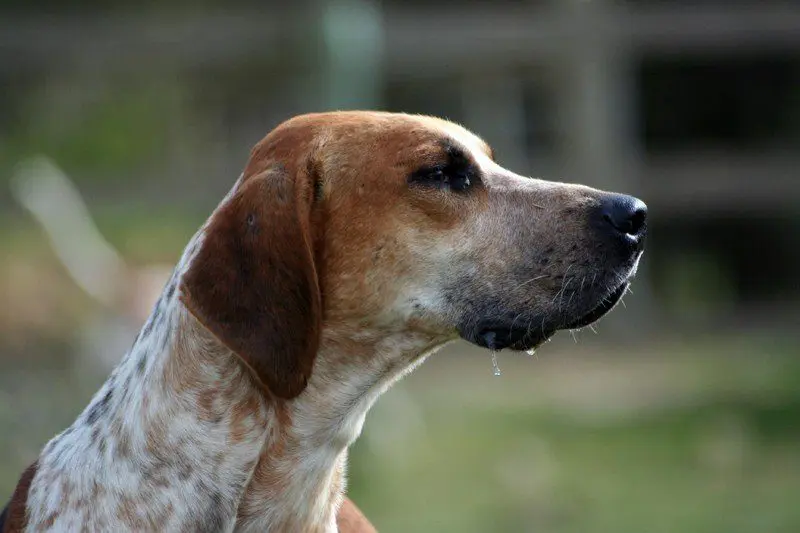
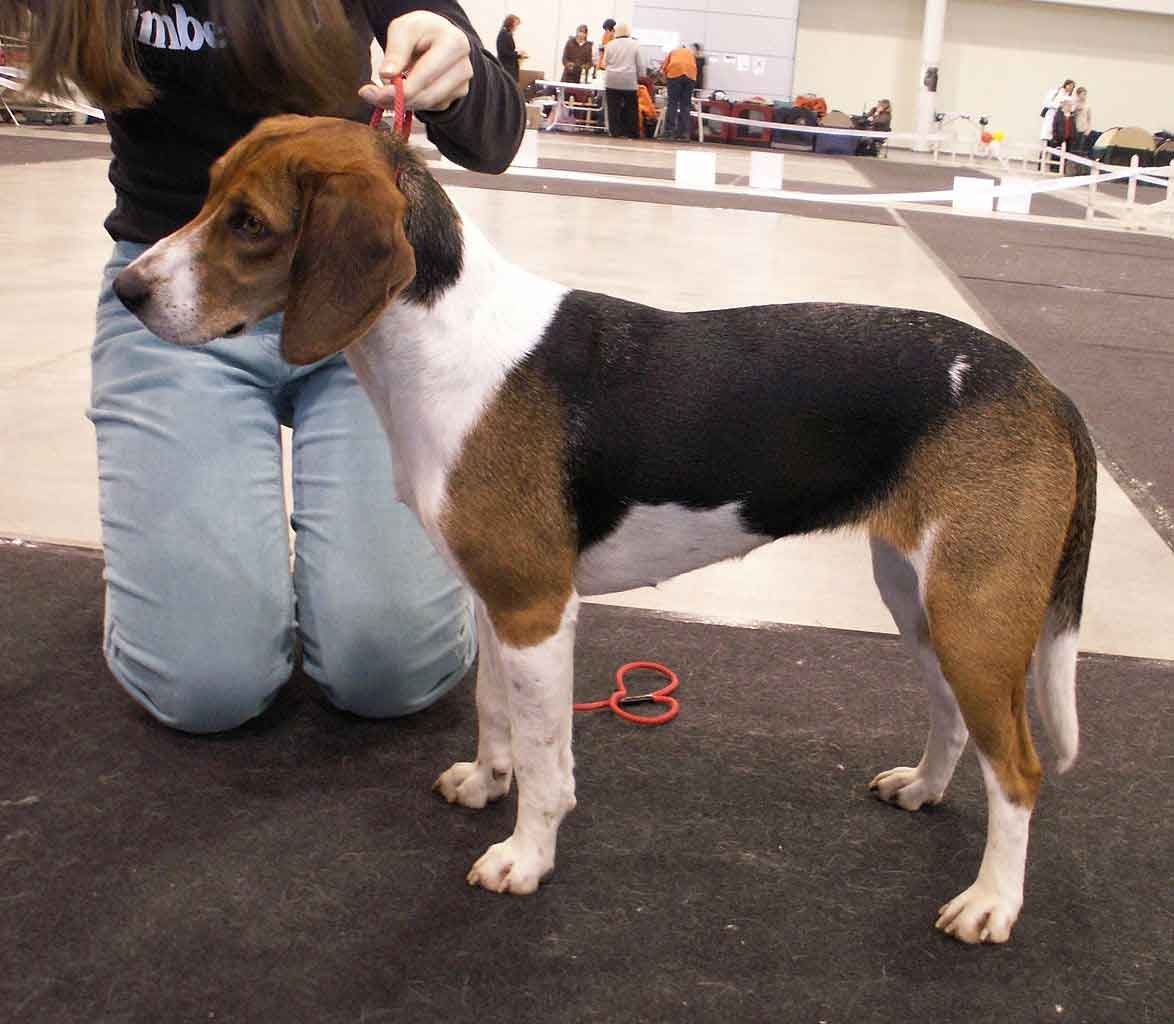
He bears a strong physical resemblance to him. Beagle, Although it is slightly larger. The average size of English Foxhound varies slightly depending on the gender of the animal. The males measure between 55 and 62,5 cm. up the cross, and females in 50,5 to 60 cm. up the cross. Generally weigh between 25 and 34 kg. Their fur is short and hard, tricolor-negro color, White and toasted or bicolor with a white background. It has a light head, and with pronounced eyebrows. The ears are medium and droopy, Hound style. His muscular back, It has straight legs and well located porte alegre queue, Whip style. The long legs allow the English Foxhound at a fast pace.

Character and skills English Foxhound

This friendly dog รขโ‚ฌโ€นรขโ‚ฌโ€นappreciates life in the pack, where he gets along with his peers. In keeping with your original purpose and the life of your ancestors, almost without exception they lived in large herds, the English Foxhound show good obedience, but does not usually establish close relationships with humans individually. Even today the dogs grow up in the pack and stay there. If a stronger impression on humans is desired, the English Foxhound would have to be removed from the pack already at puppy age, but this is not practiced, because these dogs are primarily professional hunting companions and not companion dogs. It also, the Foxhound always retains a relatively high degree of stubbornness and does not show a pronounced "will to please". Despite your stubbornness, the breed also has an affectionate side: to much Foxhounds they love to be petted and are also quite playful.

English Foxhound Education

Most of the English Foxhounds are hunters and receive proper hunting dog training, which is absolutely necessary. When you keep a English Foxhound as a companion dog, there may be some obstacles to overcome, because this breed is a passionate hunter who does not have a close relationship with people individually. Especially if you have lived in a pack for a long time, it is difficult to establish a close relationship with the sociable four-legged friend.

Promote the bond with common rituals and a lot of positive motivation. This doesn't always have to consist of treats – petting or small games can also reward this breed of dog. The breed is considered to be very social and gets along very well with its peers. It should be clear to everyone that this four-legged friend has a great hunting instinct, adjust your walks accordingly and make sure the neighbor's cat or puppies by the roadside remain safe.

The diet of the English Foxhound

The English Foxhound needs a species-appropriate food, what it means: It must contain a lot of meat! Offer your English Foxhound grain-free wet or dry food, where meat is the main ingredient. Particularly for Foxhounds who are hunters, the energy requirement depends largely on the calories actually consumed – on days with long runs up to 15 km, the four-legged friend needs correspondingly more energy. A food with a higher fat content is recommended for the most demanding sports needs. Give your dog the last portion about three hours before a sports session, so you have enough time to digest it before you start. Snacks are rarely necessary even during the longest sports drives. It is important that you Foxhound get a nice meal and a long rest after the job is done. The Foxhound it is a very good food processor – to avoid being overweight, watch your waistline and cut your portions accordingly when you start to gain weight. Dry chews are a welcome change to the four-legged friend's diet. But, avoid feeding the rumen with food, as it is suspected of promoting bloodhound ataxia in Foxhounds.

Remember to give plenty of fluids to drink: allow your Foxhound drink water at least once an hour, even during a hunt. There should always be enough fresh water available for all the four-legged friends in the kennel.

English Foxhound Health

One Foxhound healthy is basically a very robust quadruped. But if you want to keep these dogs running, you must inform yourself in advance about the call Hound Ataxia. This is a neurological disorder that mainly affects the Foxhounds and to the Beagle. It usually occurs between the second and seventh year of life and manifests as movement disorders and spasticity. The cause is a breakdown of the white matter in the thoracic cord and of the gray matter in the dog's brain stem.. It is not conclusive if feeding in the rumen favors the outbreak of the disease; However, it is recommended to avoid it as a precautionary measure. Usually, the disease continues to progress without effective treatment options. The English Foxhounds they should also be screened for hip dysplasia before breeding with them. It also, it is important to avoid being overweight, since the English Foxhounds that don't have enough demand get fat quickly. Dogs can reach an age of up to 13 years.

Activity with the English Foxhound

Many kilometers at full gallop – this is the amount of work that English Foxhounds not only drive but also appreciate. Trawling is a good alternative to the old hunts and is now organized throughout Europe, for example, in trawling clubs. The animals follow a foxtail or a brine trail from the rumen that drips from the containers that the riders carry later. If, even if it is not the ideal case, you have a English Foxhound that is not used for hunting, you can take him for a bike ride or learn about sports like canicross. It also, their Foxhound should have room to romp, ideally within a large fenced property and with other dogs of the same species. If your specimen is no longer able to hunt due to physical handicaps, give him a mental workload instead and see if slower nasal work, like guided mantrailing, it's a good idea for your dog.

Caring for the English Foxhound

The short, soft coat of the English Foxhound does not present a challenge in terms of grooming. Regular brushing or massaging with a grooming mitt removes excess fur and is a pleasure for many quadrupeds.. Especially if you don't have a English Foxhound in a pack but as a companion dog, you should practice such bonding rituals with him from an early age. With older dogs, the claws should be examined regularly to avoid painful hooking when they get too long.. You should also regularly check your dog's coat for parasites and discuss prophylaxis with your vet..

Where can I find an English Foxhound?

This breed is usually bred by hunters for hunters, and that's a good thing. If you are interested in having these dogs and you have the time, money and space to raise a herd, you can find out in the trawling clubs. You're probably already familiar with them anyway, because without this form of organized hunting, forming your own herd makes little sense. In any case, stay away from Foxhounds individuals who were raised without papers and whose parents are not hunters. Most of them are dubious sellers who want to make money with the classic hunting dog. Puppies are not usually Foxhounds pure-bred, but mixed races. It is wiser to resort to the animal welfare when looking for mixed-breed dogs with a part of Foxhound, instead of supporting dubious breeding practices.

If you are looking for a English Foxhound adult, you can find one at professional trawler clubs, for example. These always give away older dogs that are not suitable for very demanding use in trawling.. But, you should ask yourself critically and clarify in discussions with the pack leader if you have the possibility to offer this sporting dog with the characteristics already described a species-appropriate home.

Characteristics "English Foxhound"

Coexistence is important that you have with your new friend. Before considering the acquisition of a dog of the breed "English Foxhound" you know certain factors. Not all breeds of dogs are apt to live in an apartment, you must take into account his character, their need for exercise, their interaction with other pets, their care and if you have small children, their level of tolerance towards them.

Training ?

3,0 of 5 stars (based on 1 review)

Suitability of the apartment ?

1,0 of 5 stars (based on 1 review)

Can be alone all day ?

1,0 of 5 stars (based on 1 review)

Suitable as a first dog ?

1,0 of 5 stars (based on 1 review)

Weight gain ?

4,0 of 5 stars (based on 1 review)

Health ?

3,0 of 5 stars (based on 1 review)

Intelligence ?

3,0 of 5 stars (based on 1 review)

Kindness with child ?

4,0 of 5 stars (based on 1 review)

Tendency to bite ?

2,0 of 5 stars (based on 1 review)

Tendency to bark ?

3,0 of 5 stars (based on 1 review)

Tendency to flee ?

5,0 of 5 stars (based on 1 review)

hair loss strength ?

3,0 of 5 stars (based on 1 review)

Suitable as a guard dog ?

3,0 of 5 stars (based on 1 review)

Joy ?

3,0 of 5 stars (based on 1 review)

Cat friendliness ?

1,0 of 5 stars (based on 1 review)

Power level ?

5,0 of 5 stars (based on 1 review)

Images "English Foxhound"

Photos:

1 – Foxhound inglรฉs by https://pxhere.com/en/photo/1044061
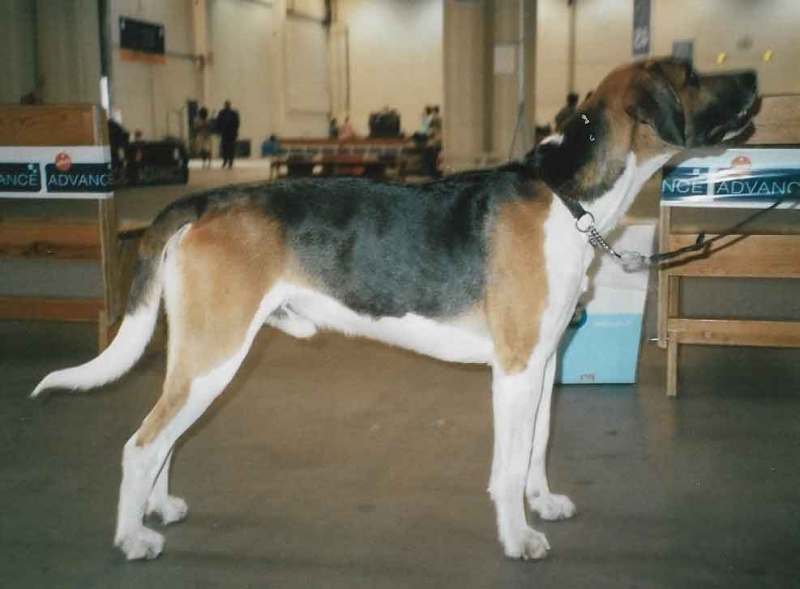
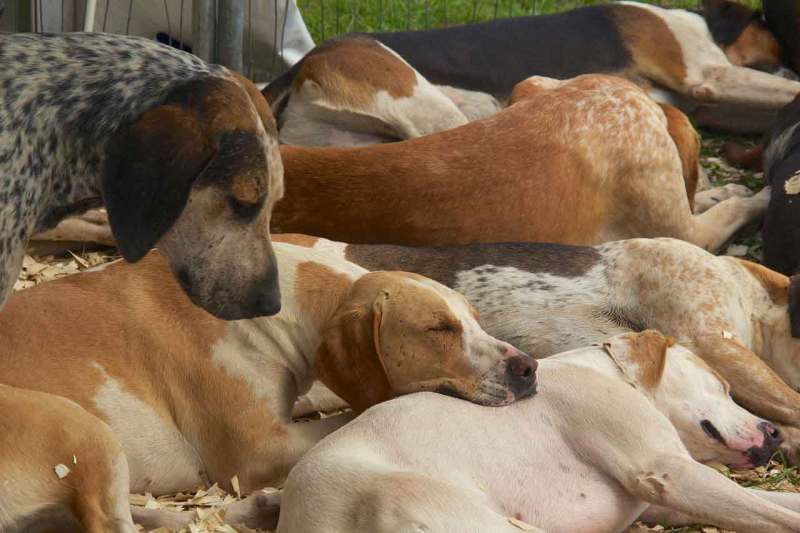
2 – English Foxhounds. Cheshire Game and Country Fair 2014 by Photograph by Mike Peel (www.mikepeel.net)., CC BY-SA 4.0, via Wikimedia Commons
3 – Foxhound inglรฉs by https://pixabay.com/de/photos/hund-foxhound-970780/
4 – Foxhound inglรฉs by https://www.needpix.com/photo/1391525/foxhounds-foxhound-dog-horse-horses-riders-horseriders-hunt-hunting
5 – English Foxhound, male by Canarian, CC BY-SA 4.0, via Wikimedia Commons
6 – Foxhound inglรฉs by https://pxhere.com/es/photo/1044065

Videos "English Foxhound"

Type and recognitions:

  • FCI CLASSIFICATION:
  • Group :
  • Section : . .

Federations:

  • – FCI – Group 6: Scent hounds, and related breeds. – Section 1.1: Large-sized Hounds. โ“˜
  • – AKC – Hound โ“˜
  • – ANKC – Group 4 (Hounds) โ“˜
  • – CKC – Group 2 – Hounds โ“˜
  • – โ€‹KC – Hound โ“˜
  • – NZKC – Hound โ“˜
  • – UKC – Scenthounds โ“˜

FCI breed standard "English Foxhound"

Origin:
England, United Kingdom

Date of publication of the valid original standard:
26.03.2009

Use:

Pack dog for mounted hunting.


General appearance:

Well balanced, powerful and clean cut.


Behavior / temperament:

Great vigor and endurance, with natural ability to hunt. Friendly and not aggressive.

Head:

Well balanced.

Cranial region:
  • Skull : It is flat and of medium width.
  • Depression links (Stop) : Light.

facial region:

  • Truffle : Large nostrils.
  • Snout : Long and square.
  • Belfos: Moderately developed.
  • Jaws / Teeth : Strong jaws with a perfect scissors bite, regular and complete, the upper incisors closely overlapping the lower incisors and being implanted at right angles to the jaw.

Eyes : Medium-sized, hazel or brown. Cunning expression.

Ears : Falls, carried close to the head, high insertion.

Neck:

Long, slightly arched, well developed without being clumsy.

Body:

  • Back : Wide and level.
  • Pork loin : Strong.
  • Breast : Deep, well arched ribs.

Tail:

High insertion. Happily carried but never curled on the back.

Tips

PREVIOUS MEMBERS : Long, straight and good-boned down to the feet.

  • Shoulder : Well oblique back, muscular without being heavily loaded.
  • Metacarpus : Strong.

LATER MEMBERS : Powerful and well muscled. From good bones to the feet.

  • Knee : Well angled.
  • Hocks : Well descended.

FEET : Round, tight and strong. Well developed pads. Strong nails. Optional spurs.

Movement:

Free movement, tireless with the ability to gallop. Good rear thrust with no hint of rocking.

Mantle

HAIR : Short and dense. Impermeable.

COLOR : Any color and brand accepted on the hounds.


Size and weight:

Height to the cross : About 58-64 cm.. (23-25 inches).


Fouls:

Any deviation from the aforementioned criteria is considered as a fault and the severity of this is considered to the degree of the deviation to the standard and its consequences on the health and well-being of the dog..

Any dog โ€‹โ€‹showing clear signs of physical or behavioral abnormalities must be disqualified..


N.B.:

Males should have two normal-appearing testicles fully descended into the scrotum..

Source: F.C.I - International Cynological Federation

Alternative names:

1. Foxhound (English).
2. Foxhound (French).
3. Foxhound (German).
4. English Foxhound (Portuguese).
5. Foxhound (espaรฑol).

โ–ท The world of Pets: Dogs, cats, birds, reptiles, amphibians

Estonian Hound
Estonia FCI 366 - Medium-sized Hounds

Estonian Hound

The Estonian Hound they are extremely hardy hunting dogs accustomed to long days in the forest

Content

History

The history of Estonian Hound (or Eesti Hagijas in the language of your country of origin) begins at the beginning of the 20th century in Estonia, when the crossing of english hounds, Poles and Finns used by local hunters gave rise to a large dog unofficially considered regional and ancestor of the current Eesti Hagijas.

Given the sharp decline in the population of large game and in order to reestablish it, in 1937 A law was passed prohibiting hunting with dogs over 45 cm to the cross, which in fact caused a change of orientation towards smaller animals, like foxes and hares. Therefore, Estonian hunters and breeders had to breed smaller dogs than they had then, so they were introduced in the breeding program the Beagles, the Dachshund and Swiss Hounds.

This law was amended three years later, in 1940: the maximum size was increased to 55 cm., and breeders stopped their efforts to miniaturize local hunting dogs.

In 1947, when Estonia was part of the USSR, The Soviet Ministry of Agriculture decided that all the "republics" that made up Estonia should have a local breed of dog. The Estonian hunting dog population was then estimated at around 900, and intense selection helped stabilize the characteristics of the breed that would become the Estonian Hound.

In 1954, the Ministry of Agriculture sent a specialized commission to Estonia to study the 648 specimens submitted by local breeders, and were clearly convinced: the first breed standard was approved by the Ministry a few months later. This year marked the official introduction of the Estonian Hound like a race, whose stamina and formidable nose were immediately emphasized.

After the collapse of the Soviet regime, Estonia gained independence and in 1998 la Estonian Kennel Club, the main canine association in the country, recognized race. Being the only native of the country, it was not surprising that it was granted national dog status.

The organization set out to make the breed known and recognized internationally. His efforts were crowned with success in 2019, cuando the International Cynological Federation (FCI) provisionally accepted the breed and published a standard. Having said that, there is still a long way to go, since it is not recognized, for example, by the prestigious British Kennel Club, nor by American reference organizations such as the United Kennel Club (UKC) o el American Kennel Club (AKC).

The Estonian Hound is popular in an area encompassing Estonia and nearby Russian regions, and its population is estimated at about 1200 individuals. It is still used there as a hunting dog and has also made a place for itself in many homes as a pet.. But, hasn't conquered the rest of the world yet. Rare in europe, even in Estonia's neighboring countries, is practically absent from the North American continent.

Photo: Estonian Hound by Marcin Bล‚aszkowski, Public domain, via Wikimedia Commons

Physical characteristics

Estonian-hound
Estonian Hound

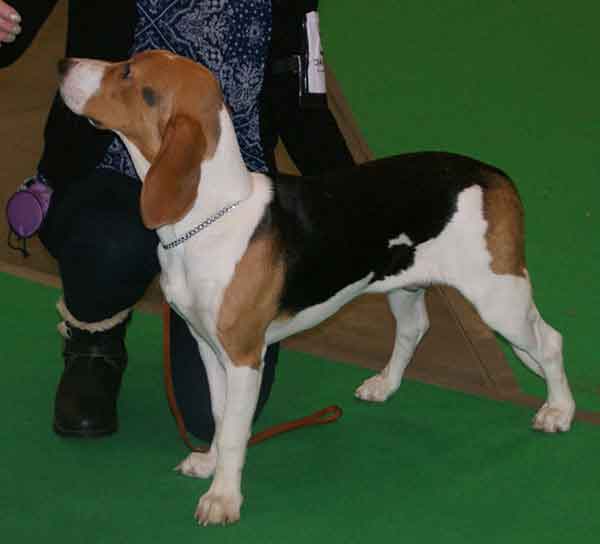
The Estonian Hound They are medium-sized hunting dogs that can easily be mistaken for the Beagle, one of the races that helped create them. But, they are bigger than the Beagle and they have a more pointed snout.

His powerful and muscular body is very long. Its solid bone legs are straight and almost half the size at the withers.. Saber-shaped tail flicks when in motion and remains fairly low, no higher than back level.

The head is quite wide at the level of the skull and the long muzzle ends in a very black nose. His slightly oblique eyes are more or less dark brown, while her long, thin ears fall along her cheeks.

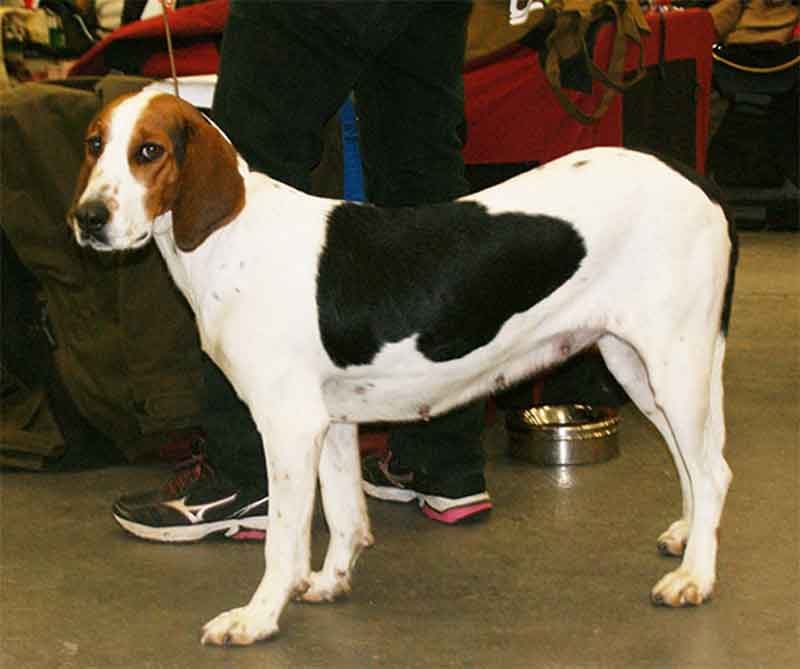
The coat of the Estonian Hound is short, rough and shiny, with a moderately dense undercoat. Their fur is usually tricolor, with black spots with more or less wide red edges on a white background. But, the standard accepts bicolor individuals with completely red spots, without any trace of black. In all cases, the tips of the legs and tail should be white, as well as the throat and chest.

Sexual dimorphism is marked, the female being slightly longer than the male, which is taller in the legs and wider.

Physical characteristics

Estonian Hound
Estonian Hound

The Estonian Hound he is particularly devoted to his family, who likes to spend time with. They are a breed of dog especially recommended for children: they love to interact with them and are very patient with them, they even accept having their tails or ears pulled. But, you should remember that interactions between a young child and a dog of any breed must be under the supervision of an adult.

This strong attachment to his family makes him not like loneliness, which can lead to separation anxiety. If you are often left home alone for long periods of time, not surprisingly you may experience destructive behavior.

One solution for a caregiver who is regularly absent during the day may be to provide a playmate. Made to hunt in a pack, the Estonian Hound they enjoy the company of other dogs. If they are used to its presence from an early age, They can also make friends with any feline in the house. On the other hand, as they have a strong hunting instinct, should not live with rabbits or other rodents.

Rather shy and not fond of novelty, the Estonian Hound they tend to bark at strangers and then observe their master's behavior from a distance. If he invites the newcomer to the house, comes to greet you politely, but stay reserved.

Extremely hardy hunting dogs used to long days in the woods, they need a lot of exercise to expend their great energy: a daily walk of one hour is a minimum for them. It is recommended to always keep it tied during these outings, as your excellent sense of smell often allows you to find an interesting track that you are likely to want to follow for hours, ignoring withdrawal orders. A dog owner who still wants to let him walk freely right now should equip him with a GPS dog collar, so you can easily get your hands back on it if it disappears.

The Estonian Hound you can live in an apartment as long as you are outdoors often enough to satisfy your need for exercise, but he is much happier when he has a garden where he can patrol and play. But, this outdoor space must be well fenced to eliminate the risk of escape if you see potential prey to pursue.

A peculiarity of this dog is its need for routine and its aversion to novelty, which makes their behavior sometimes compared to that of domestic cats. This is not at all an appropriate choice for a master who wants to take their dog on vacation.: he is a poor traveler, you get stressed out when you get in the car and you don't like spending time in a place you don't know at all.

Last, it is a breed of dog that barks often and forcefully. For the peace of the neighborhood, it is necessary to teach him from a young age not to bark for any reason and to shut up when ordered to do so.

Education

Estonian Hound
Estonian Hound

Like all its fellow men, the Estonian Hound must be socialized from an early age. This requires spending as much time with him as possible so that he meets all kinds of people (neighbors, family, friends, strangers…) And animals, but also so that you get used to the situations that you may face later.

This need to become very quickly acquainted with the outside world is all the more pronounced as it is fearful by nature. In particular, to prevent future vet visits from becoming a nightmare to handle, it is recommended to get used to traveling by car as soon as possible.

Addressing the barking issue at an early age is also imperative, so that you understand that it is not necessary to bark for hours at every unfamiliar noise.

It is also important to teach your dog to remember to bark, as you will not hear any more commands once you have sniffed the trail of a game animal and go in pursuit. Hunting instinct is well established in this breed, so it does not require any specific training to be able to follow a trail for hours and be an excellent hunter.

Relatively independent and headstrong, the Estonian Hound require patience to be trained, but they like to please their master and usually end up listening to him. If necessary, be firm to assert your dominant position and show your dog who is the master, traditional training methods should be avoided, at the risk of damaging the relationship of trust. It is preferable to opt for a learning technique based on positive reinforcement.

Health

As the Estonian Hound it is a relatively new breed and not very widespread, there is still no real and in-depth study of their possible health problems. But, looks quite robust, no doubt thanks to a reasoned breeding program that has given priority to the personality and abilities of individuals rather than their appearance.

But, you have probably inherited from Beagle and the Foxhound a certain predisposition to the following diseases:

  • Progressive retinal atrophy, a breakdown of the eye tissue that can eventually lead to blindness;
  • entropion and ectropion, problems with the eyelids that cause itching and / or irritation of the eye, but can be surgically corrected;
  • dislocation of the patella, which affects the kneecap and causes walking difficulties. It can also be responsible for premature arthritis;
  • Elbow or hip dysplasia, that can cause lameness.
  • It also, the Estonian Hound is sensitive to allergies and sinusitis. These ailments are not serious in themselves, but they can cause a certain amount of stress to the dog, as this breed relies heavily on its sense of smell. So, a temporary loss of your sense of smell is likely disorienting you.

    Finally, like most hunting dogs, the Estonian Hound have a ferocious appetite that can lead to overweight or even obesity if they don't get enough exercise.

    Grooming

    Despite her short hair and sparse undercoat, the Estonian Hound require some maintenance. Brushing twice a week is recommended to remove dead hairs and avoid finding them all over the house. This also helps to distribute sebum on the skin to better protect it against infectious agents..

    During moulting periods, in autumn and spring, it is even necessary to opt for a daily frequency, to deal with the large amount of hair you lose during this period.

    On the other hand, it is only necessary to bathe your dog when it is particularly dirty, for example, if he has rolled in the mud.

    Besides keeping your coat, it is recommended to check your teeth once a week to make sure there are no cavities, and cleaning your eyes with a damp cloth to remove any dirt that could cause an infection.

    Weekly ear care is especially important: like any dog โ€‹โ€‹with floppy ears, the Estonian Hound have a higher risk of infections and ear infections.

    Buy an โ€œEstonian Houndโ€

    The price of a puppy Estonian Hound is of some 700-800 euros in your country of origin, and there is no price difference between male and female puppies.

    But, hard to find outside of Estonia, but the situation may change rapidly after the breed is recognized by the FCI in 2019.

    Characteristics "Estonian Hound"

    Coexistence is important that you have with your new friend. Before considering the acquisition of a dog of the breed "Estonian Hound" you know certain factors. Not all breeds of dogs are apt to live in an apartment, you must take into account his character, their need for exercise, their interaction with other pets, their care and if you have small children, their level of tolerance towards them.

    Adaptation โ“˜

    3,0 of 5 stars (based on 1 review)

    friendly dog โ€‹โ€‹โ“˜

    4,0 of 5 stars (based on 1 review)

    hair loss โ“˜

    3,0 of 5 stars (based on 1 review)

    Affection level โ“˜

    4,0 of 5 stars (based on 1 review)

    Need for exercise โ“˜

    4,0 of 5 stars (based on 1 review)

    Social need โ“˜

    4,0 of 5 stars (based on 1 review)

    Home โ“˜

    3,0 of 5 stars (based on 1 review)

    Toilet โ“˜

    2,0 of 5 stars (based on 1 review)

    Friendly with strangers โ“˜

    3,0 of 5 stars (based on 1 review)

    barking โ“˜

    3,0 of 5 stars (based on 1 review)

    Health โ“˜

    4,0 of 5 stars (based on 1 review)

    Territorial โ“˜

    3,0 of 5 stars (based on 1 review)

    Cat friendly โ“˜

    2,0 of 5 stars (based on 1 review)

    Intelligence โ“˜

    4,0 of 5 stars (based on 1 review)

    Versatility โ“˜

    3,0 of 5 stars (based on 1 review)

    Child friendly โ“˜

    3,0 of 5 stars (based on 1 review)

    Surveillance โ“˜

    3,0 of 5 stars (based on 1 review)

    joy โ“˜

    3,0 of 5 stars (based on 1 review)

    Videos "Estonian Hound"

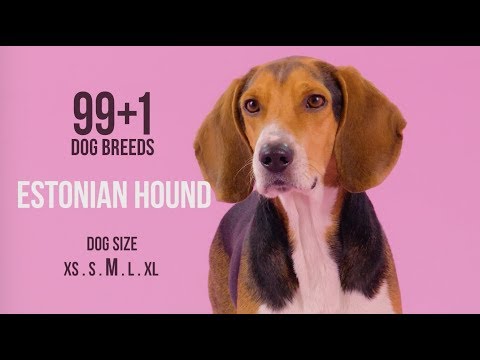
    Estonian Hound / 99+1 Dog Breeds
    Estonian Hound / 99+1 Dog Breeds
    ESTONIAN HOUND PUPPIES
    ESTONIAN HOUND PUPPIES / ESTONIAN HUNDRED PUPPIES

    Type and recognitions:

    • FCI CLASSIFICATION:
    • Group :
    • Section : . .

    Federations:

    • – FCI – Group 6: Scent hounds, and related breeds. – Section 1.2: Medium-sized Hounds. โ“˜

    FCI breed standard "Estonian Hound"

    Origin:
    Estonia

    Date of publication of the valid original standard:
    04/09/2019.

    Use:

    Hound used to hunt hares, foxes and lynxes.


    General appearance:

    Medium sized proportional hound, strong and dry constitution. Strong bones, well-developed feet and muscles. White markings are clearly visible and help to see the dog better when working in the field. Sexual dimorphism is well defined.

    important proportions

    • The length of the body clearly exceeds the height at the withers. Females may be slightly longer than males.
    • The length of the legs is approximately the 50% the height at the withers.


    Behavior / temperament:

    In good mood, flexible and user-friendly. Very well developed sense of smell and game detection and a pronounced passion for hunting guarantee good results in finding prey and tracking in difficult terrain. Resonant voice helps locate dog from long distance.

    Head:

    View from the top, forms a blunt wedge, wider at the back and slightly tapered towards the snout.

    Cranial region:
    • Head: Seen from above, forms a blunt wedge, wider at the back and tapering slightly towards the muzzle.
    • Skull: Moderate width, slightly curved. Superciliary arches well developed but not prominent.
    • Depression links (stop): Moderately pronounced, never prancing.

    facial region:

    • Truffle: Wide, totally black. Dogs with coat color that has golden or tan spots may have a lighter colored nose, never liver brown.
    • Snout: Long, straight and in proportion to the skull.
    • Belfos: Dried, tight, not outstanding, no flap at the corner of the mouth. Fully pigmented lip edges.
    • Jaws / Teeth: The teeth are white and large. The jaws normally develop with a complete set of 42 teeth and a full scissor bite, that is to say, the upper teeth closely overlap the lower teeth and fit the jaws. Bite level due to aging and wear of undesirable incisors.
    • Cheeks: Flat.

    Eyes: Slightly sloping, dark brown, dark edges.

    Ears: Thin, pendants, placed at a medium height, close to the cheeks, rounded edges and covered with short hair. When pulled towards the nose, reaches about half the length of the muzzle.

    Neck:

    Medium long and moderate high, round in cross section, muscular, dry skin without folds.

    Body:

    • Cross: Rising above the back line.
    • Back: level, broad and muscular.
    • Pork loin: Short, width, arched and muscular.
    • Rump: Wide, average length, muscular and slightly sloping. Height at the croup 1-1.5 cm less than at the withers.
    • Breast : Oval, long and spacious, that reaches up to the elbow. Well developed ribs.
    • bottom line: The sternum is long and the belly only slightly tucked.

    Tail:

    Saber shape, thick at the base, tapering slightly towards the end and reaching to the hocks. Active movement when moving, the base of the tail should never be raised above the line of the back.

    Tips

    Former members

    Generality   Dried, muscular with strong bone. Viewed from the front the front legs are straight and parallel. The length of the legs is approximately the 50% the height at the withers.
    Shoulder   The angulations in the shoulder joint are of 115-120 degrees.
    Elbow   Strong, tight, without turning in or out, but firmly relaxed.
    Forearm   Medium length oval bone. Robust in relation to the body, that is to say, neither thin nor too heavy and completely straight.
    Metacarpus   Large, flexible and almost straight.
    Front feet   Arcuate, oval and tight. Strong nails and turning down. Thick pads.

    Later members

    Generality   Dried, muscular with strong bone. Seen from the back, the legs are straight and parallel and, from the side, they are well angulated.
    Thigh   Approximately equal in length to the lower thigh.
    Leg   Approximately equal in length to the thigh.
    Knee   Strong, moderately bent and not turning either in or out when moved.
    Metatarsus   Of average length, very strong and vertical.
    Rear feet   Arcuate, oval and tight. Strong nails and turning down. Thick pads.

    Movement:

    With good handling, free, in a straight line, that is to say, one-way, fluid and smooth.

    Mantle

    Skin: Tight, but elastic and without folds.

    Fur: Short, uniform, rough and shiny. Moderate inner cover. The tail is covered with even dense hair along its entire length and, therefore, the tail looks thick. At the tip of the tail the hair is somewhat shorter.

    Color: Typical color is black patches with tan markings and vivid white markings (tricolor). The size of the patches is not limited. Lemon to golden tan patches without black are also allowed (bicolor). The patterns can be of various sizes and also form a saddle. Black patches, toasted or lemon, with or without rich tan rims, contrast well with white. White markings must be on the head, in the throat and chest extending to the belly. All feet and tip of tail should be white. All colors should be as bright as possible.


    Size and weight:

    Height to the cross

    • Males: 45 โ€“ 52 cm..
    • females: 42-49 cm..


    Fouls:

    โ€ข Any deviation from the aforementioned criteria is considered a fault, and the severity of this is considered the degree of deviation from the standard and its consequences on the health and well-being of the dog and the dog's ability to perform its traditional task.
    โ€ข The offenses listed must be in accordance with their severity..

    Serious misconduct:

    โ–ท Shy or too agitated.
    โ–ท Too light or too heavy in construction.
    โ–ท Too short or too long in the body, high in the back.
    โ–ท Thick head, flat or domed skull, rounded cheeks.
    โ–ท Nose, eyes or lips with insufficiently pigmented pigment.
    โ–ท Slightly overbite where the incisors are not in contact.
    โ–ท Ears that are too short or too thick, set too high, not lying close to the head or covered with long hair.
    โ–ท Narrow chest, flat rib cage.
    โ–ท Weak top line, steep group.
    โ–ท Queue too long (that reaches more than 3 cm below the hocks) or too short, carried up from the base.
    โ–ท Extended fingers or too long feet (hare foot).
    โ–ท Clearly wavy hair, lack of bottom cover.
    โ–ท Overmarked with white, obvious black or tan in white areas.

    disqualifying fouls

    โ–ท Aggressive or too shy dogs.
    โ–ท Absence of sexual dimorphism.
    โ–ท Size above the limits indicated by the standard.
    โ–ท Exceeding 3 mm and more, or bite below the shot.
    โ–ท Strange eyes or white eyes (blue).
    โ–ท Small ears, punctured or semi-punctured.
    โ–ท Dubbed, or tail defect.
    โ–ท Overmarked with black or tan color, that is to say, lack of white markings.
    โ–ท Brown or brown patches with pigmented nose on the liver.


    N.B.:

    โ€ข Any dog โ€‹โ€‹showing clear signs of physical or behavioral abnormalities should be disqualified..
    โ€ข The aforementioned fouls that are more pronounced or more marked are eliminatory..
    โ€ข Males must have two normal-appearing testicles fully descended into the scrotum..
    โ€ข Only functionally and clinically healthy dogs, with the typical conformation of the breed, should be used for parenting.

    Source: F.C.I - International Cynological Federation

    Alternative names:

    1. (Estonian: eesti hagijas) (English).
    2. eesti hagijas (French).
    3. (estnisch: Eesti hagijas), Estnische Bracke (German).
    4. Eesti hagijas (Portuguese).
    5. Cazador estonio (espaรฑol).

    โ–ท The world of Pets: Dogs, cats, birds, reptiles, amphibians

    Halden Hound
    Noruega FCI 267 - Medium-sized Hounds

    Halden Hound

    The spread of Halden Hound limited to your country of origin, where it is also little known.

    Content

    History

    Originally from Norway, the Halden Hound takes its name from Halden, the city where it was created.

    Breed selection was initiated by Hans Larsen Bisseberg, an Ostfold County farmer, in 1860. The breed is believed to be the result of various crosses between local hounds and Swedish hounds, Germans and English. The official breed standard was established in the decade of 1950 and it is very rare outside of its country of origin. Most frequently used the Norwegian Hound and the Hygen Hound.

    Photo: A female Halden Hound. Colour: tricolor by Canarian, CC BY-SA 4.0, via Wikimedia Commons

    Physical characteristics ยซHalden Houndยป

    The Halden is similar to the American Foxhound ostensibly, although it is smaller.

    It is a dog whose body can fit in a rectangle, proud, strong but not heavy. The head is medium in size, well balanced. The eyes, dark brown, they are medium in size and have a calm expression. The ears, that are neither too high nor too low, they are turned forward and should reach the middle of the muzzle. The tail, that is neither too high nor too low, it is quite thick and is carried low.

    • Fur: rough, very tight and smooth, with thick undercoat.
    • Color: White with black spots, small, less dark spots on the head, limbs and sometimes between black and white. But, black should not dominate.
    • Size: 52 to 60 cm for the male and 50 to 58 cm for female.
    • Weight: 23 to 29 kg for the male and 20 to 25 kg for females.

    Character and abilities ยซHalden Houndยป

    Kind and caring, the Halden Hound He can make a great companion dog if you take the time to meet his many exercise needs.. It is a nice dog to live, but can be unsociable with children, strangers or even other animals if not well socialized. Very exclusive, he does not like to be surrounded, which makes him a very good watchdog. Excellent hunter, fast and resistant. If you are not hunting, it will be the perfect companion for a sports owner.

    Independent in nature, education should start very early to prevent this dog from developing too many bad habits. Firmness and consistency will be required to achieve results, but beware, no violence towards this sensitive dog will be tolerated.

    Characteristics "Halden Hound"

    Coexistence is important that you have with your new friend. Before considering the acquisition of a dog of the breed "Halden Hound" you know certain factors. Not all breeds of dogs are apt to live in an apartment, you must take into account his character, their need for exercise, their interaction with other pets, their care and if you have small children, their level of tolerance towards them.

    Adaptation โ“˜

    4,0 of 5 stars (based on 1 review)

    friendly dog โ€‹โ€‹โ“˜

    4,0 of 5 stars (based on 1 review)

    hair loss โ“˜

    3,0 of 5 stars (based on 1 review)

    Affection level โ“˜

    4,0 of 5 stars (based on 1 review)

    Need for exercise โ“˜

    4,0 of 5 stars (based on 1 review)

    Social need โ“˜

    3,0 of 5 stars (based on 1 review)

    Home โ“˜

    3,0 of 5 stars (based on 1 review)

    Toilet โ“˜

    2,0 of 5 stars (based on 1 review)

    Friendly with strangers โ“˜

    3,0 of 5 stars (based on 1 review)

    barking โ“˜

    4,0 of 5 stars (based on 1 review)

    Health โ“˜

    4,0 of 5 stars (based on 1 review)

    Territorial โ“˜

    3,0 of 5 stars (based on 1 review)

    Cat friendly โ“˜

    2,0 of 5 stars (based on 1 review)

    Intelligence โ“˜

    4,0 of 5 stars (based on 1 review)

    Versatility โ“˜

    3,0 of 5 stars (based on 1 review)

    Child friendly โ“˜

    2,0 of 5 stars (based on 1 review)

    Surveillance โ“˜

    4,0 of 5 stars (based on 1 review)

    joy โ“˜

    4,0 of 5 stars (based on 1 review)

    Videos "Halden Hound"

    Fox hunting with halden hound and fox terrier in Norway
    Fox hunting with halden hound and fox terrier in Norway
    Foxhunting with halden hound and fox terrier 07.11.20
    Foxhunting with halden hound and fox terrier 07.11.20

    Type and recognitions:

    • FCI CLASSIFICATION:
    • Group :
    • Section : . .

    Federations:

    • – FCI – Group 6: Scent hounds, and related breeds. – Section 1.2: Medium-sized Hounds. โ“˜

    FCI breed standard "Halden Hound"

    Origin:
    Norway

    Date of publication of the valid original standard:
    09.08.1999

    Use:

    ---


    General appearance:

    Rectangular construction, noble, strong, but not heavy.


    Behavior / temperament:

    ---

    Head:

    Thin, medium sized and well proportioned.

    Cranial region:
    • Skull : Seen from the front and from the side slightly dome-shaped. The occipital protuberance is barely noticeable.
    • Depression links (Stop) : Not abrupt.

    facial region:

    • Truffle : black, open windows.
    • Snout : Not too short; straight muzzle.
    • Lips : Not very hanging.
    • Jaws/Teeth : Scissor bite; complete denture.
    • Cheeks : Relatively flat.

    Eyes : Dark brown in color, medium-sized; calm expression.

    Ears : Its insertion is neither too high nor too low; If they are placed forward they should reach up to the middle of the snout.

    Neck:

    Rather long, strong, thin and without any double chin.

    Body:

    • top line : Straight.
    • Back : Strong.
    • Pork loin : Wide and muscular.
    • Rump : Slightly oblique.
    • Breast : Deep with tight ribs, but not barrel-shaped. The last ribs must be particularly well developed.
    • Belly : Very little withdrawn.

    Tail:

    Insertion neither too high nor too low; rather thick; reaches almost to the hocks. Worn rather low.

    Tips

    PREVIOUS MEMBERS

    • As a whole : Straight, thin limbs with strong bones.
    • Shoulder : Long and oblique shoulder blade, muscular; the tips do not protrude from the back line.
    • Forearm : Straight and thin.
    • Metacarpus : Slightly inclined.
    • Front feet : Oval, well arched, preferably closed, well covered with hair between the fingers.

    LATER MEMBERS

    • Thigh : Broad and muscular.
    • Knee : Well angled.
    • Leg : Long.
    • Hocks : Thin and wide, turned neither in nor out. Well angled.
    • Rear feet : Like the front feet. Rams are allowed, but they are not desirable.

    Movement:

    Light, parallel, covers the ground well.

    Mantle

    HAIR : Rough, very dense and straight, with a dense undercoat of hairs.

    COLOR : White with black spots, shaded tan patches on head, limbs and sometimes between black and white. Black should not predominate. Small black or tan spots are considered a color defect..


    Size and weight:

    Height to the cross :

    • For males : 52-60 cm., ideal 56 cm..
    • for females : 50-58 cm., ideal 54 cm..


    Fouls:

    Any deviation from the aforementioned criteria is considered as a fault and the severity of this is considered to the degree of the deviation to the standard and its consequences on the health and well-being of the dog..

    ELIMINATORY FOULS

    โ€ข Aggressiveness.

    Any dog โ€‹โ€‹showing clear signs of physical or behavioral abnormalities must be disqualified..


    N.B.:

    Males should have two normal-appearing testicles fully descended into the scrotum..

    Source: F.C.I - International Cynological Federation

    Alternative names:

    1. (Norwegian: Haldenstรธver) (English).
    2. Halden (French).
    3. Haldenbracke, Haldenlaufhund, Halden-Stรถvare (German).
    4. (Norueguรชs: haldenstรธver) (Portuguese).
    5. (Noruego: Haldenstรธvare, Haldenstรธver) (espaรฑol).

    โ–ท The world of Pets: Dogs, cats, birds, reptiles, amphibians

    Harrier (dog)
    Inglaterra FCI 295 . Medium-sized Hounds

    Harrier

    The Harrier (dog) it is an excellent dog for hunting, specialized in foxes and hares.

    Content

    History

    The Harrier (dog) comes from Great Britain and was first mentioned in writing in the year 1260. French hounds are supposed to, are the ancestors of this breed. Y, as well, there is considerable consensus that the Harrier (dog) Today is the product of the cross between the Beagle and the English Foxhound, born in the south of England.

    The demonstrable origin of dogs, who have been hunting hares for several centuries, can probably be traced back to the 13th century in western England: The first written record of a herd of Harrier (dog) of a certain Sir Elias of Midhope in England was in 1260. Other herds of Harrier (dog) well known to history were the Holcombe herd in the 17th century and the Cambridgeshire herd in the mid-18th century.

    In 1889 the first exhibition of Harrier (dog). Later, two associations were founded that have since dedicated themselves to the pure breeding of this breed..

    It is not clear where the name of the Harrier (dog). Like the dog Harrier (dog) is a very ancient race, it is not easy to clarify this origin beyond all doubt.

    The Harrier (dog) He was originally bred to go hunting for hares. So, Some people think that its name is derived from the English word ยซHareยซ. ยซHareยป is the word for "hare" in French and English. Harrier (dog) It, therefore, a kind of abbreviation of the English term ยซHare-Houndยป and indicates that this breed was originally bred for hare hunting.

    Others believe that this breed of dog got its name from the Norman-Saxon language.

    Here "Harrier" simply means "dog.".

    Physical characteristics ยซHarrierยป

    The Harrier (dog) it is a strong and light dog, less powerful and is used for hunting hares. It has a long and slightly arched neck on top. The eyes, medium sized and oval, they tend to be dark. The short ears, almost flat and V-shaped, they are inserted high but they are pendulous carried.

    The coat of the Harrier (dog) it's shiny, hard, dense and short, well glued to the body. The hair on the ears is finer in texture than the rest of the body. Are white, black and bark, lemon and white, Red and white, black, White and bark. Tricolor with a black coat on the upper back is also allowed. This last variant is bred mainly by the French.

    With a height at the cross of 48 to 55 cm and a weight of 22 to 27 kg, this dog belongs to the medium-sized dogs.

    Character and skills ยซHarrierยป

    Harrier (dog)
    A tricolour Harrier by Smcmilla, Public domain, via Wikimedia Commons

    The Harrier (dog) they are gentle, peaceful, quiet, balanced and above all intelligent and eager to learn. Its great resistance, his great joy of movement and his good assertiveness are other typical characteristics. An excellent sense of smell distinguishes this basically easy-care and undemanding dog..
    Like a dog from the original pack, is naturally very sociable and very compatible with other dogs. Since the Harrier (dog) is from reason rather stubborn and independent, needs a consistent yet loving and gentle upbringing. If it is kept in the pack and acts as a hunting dog, builds little relationship with humans, but as a family dog รขโ‚ฌโ€นรขโ‚ฌโ€นhe proves to be a faithful dog, loving and undemanding. He is quite alert but completely free of aggression.

    Can be kept well with various dogs in the family. The Harrier (dog) can, according to its origin, be trained well like dogs that run and sweat, although his preferred terrain is flat, at most a little bumpy. It is equally suitable for hunting on horseback, which is particularly popular in England. This breed is also suitable for dog sports. As a family dog, he needs long walks, as well as occupation and contacts.

    The Harrier (dog) has a very fine sense of smell, is very resistant, persistentโ€ฆ, It seems that never were fatigue and can reach a good speed and keep it, While still at its prey, reason why it has been used since its origins for hunting in packs.

    He is very obedient and intelligent, which is why, education and training firm, consistent and loving, gives very good results. Their life expectancy is around the 12 years.

    Care and maintenance ยซHarrierยป

    The Harrier (dog) they need a lot of exercise and have a very strong hunting instinct, so it is absolutely necessary that you challenge them enough and offer them longer rides each day.

    It is important to ensure that he is kept on a leash where the game is present, otherwise he would follow his hunting instinct. The Harrier (dog) he is not a city dog, but loves to romp in a garden with plenty of exercise. When it comes to caring for your coat, not very demanding: he likes to brush once in a while. If the dog goes hunting with you, should be examined for parasites and lesions.

    Characteristics "Harrier (dog)"

    Coexistence is important that you have with your new friend. Before considering the acquisition of a dog of the breed "Harrier (dog)" you know certain factors. Not all breeds of dogs are apt to live in an apartment, you must take into account his character, their need for exercise, their interaction with other pets, their care and if you have small children, their level of tolerance towards them.

    Adaptation โ“˜

    3,0 of 5 stars (based on 1 review)

    friendly dog โ€‹โ€‹โ“˜

    3,0 of 5 stars (based on 1 review)

    hair loss โ“˜

    3,0 of 5 stars (based on 1 review)

    Affection level โ“˜

    3,0 of 5 stars (based on 1 review)

    Need for exercise โ“˜

    5,0 of 5 stars (based on 1 review)

    Social need โ“˜

    2,0 of 5 stars (based on 1 review)

    Home โ“˜

    4,0 of 5 stars (based on 1 review)

    Toilet โ“˜

    2,0 of 5 stars (based on 1 review)

    Friendly with strangers โ“˜

    3,0 of 5 stars (based on 1 review)

    barking โ“˜

    4,0 of 5 stars (based on 1 review)

    Health โ“˜

    1,0 of 5 stars (based on 1 review)

    Territorial โ“˜

    1,0 of 5 stars (based on 1 review)

    Cat friendly โ“˜

    4,0 of 5 stars (based on 1 review)

    Intelligence โ“˜

    3,0 of 5 stars (based on 1 review)

    Versatility โ“˜

    3,0 of 5 stars (based on 1 review)

    Child friendly โ“˜

    4,0 of 5 stars (based on 1 review)

    Surveillance โ“˜

    3,0 of 5 stars (based on 1 review)

    joy โ“˜

    2,0 of 5 stars (based on 1 review)

    Videos "Harrier (dog)"

    HTTPS://youtube.com/watch?v=LV_Yw96BGVo
    Harrier Dog – Top 10 Facts
    HTTPS://youtube.com/watch?v=unvBDZ3ga7k
    Harrier – AKC Dog Breed Series

    Type and recognitions:

    • FCI CLASSIFICATION:
    • Group :
    • Section : . .

    Federations:

    • – FCI – Group 6: Scent hounds, and related breeds. – Section 1.1: Large-sized Hounds. โ“˜
    • – โ€‹KC – Hound โ“˜

    FCI breed standard "Harrier (dog)"

    Origin:
    United Kingdom

    Date of publication of the valid original standard:
    27.11.1974

    Use:

    Hound


    General appearance:

    Strong and light dog, less powerful and more distinguished than the Foxhound.


    Behavior / temperament:

    ---

    Head:

    Expressive, moderately wide.

    Cranial region:
    • Skull : Plano, slightly outlined occipital protuberance.

    facial region:

    • Truffle : black, quite developed.
    • Snout : Fairly long and rather pointed.
    • Lips : They cover the lower jaw.

    Eyes : Always dark, never saltones, medium large, not too round.

    Ears : "V" shaped, almost flattened, slightly twisted, quite short, rather high implantation.

    Neck:

    Long and free, but with good insertion in the shoulders ; slightly arched at the top.

    Body:

    • Back : Straight and muscular.
    • Pork loin : Strong, with a slight bow.
    • Breast : Deeper than wide.
    • Ribs : Rather flat than arched.
    • Flank : Neither too round nor too retracted.

    Tail:

    Medium long, slightly split (up to the tip around the tail long thick hairs slightly separated in a spike) ; with good bearing.

    Tips

    PREVIOUS MEMBERS : Straight and plumb.

    • Shoulder : Oblique and very muscular.

    LATER MEMBERS :

    • Hip : Strong and well outgoing.
    • Thigh : Long and well descended.
    • Warm-foot joint : Not too straight and not too angled.

    FEET : Not too close and not too round.

    Movement:

    Agile and firm ride.

    Mantle

    SKIN : White with black spots.

    HAIR : Smooth in the English way, ie flat and not too short.

    COLOR : Usually white background with all shades in black to orange. In France often tricolor with a black cloak covering the upper back.


    Size and weight:

    Height to the cross : Since 48 to 55 cm maximum, but preferably from 48 to 50 cm..


    Fouls:

    Any deviation from the above mentioned criteria is considered an absence and severity of this refers to the degree of deviation to the standard and its impact on the health and welfare of the dog.

    MISS PLAYOFFS

    โ€ข Aggressive or fearful dog.
    โ€ข Depigmented truffle.
    โ€ข Prognathism.
    โ€ข Long and loose loin.
    โ€ข Weak thighs.
    โ€ข Discolored scrotum.

    Any dog โ€‹โ€‹showing clear signs of physical or behavioral abnormalities should be disqualified..


    N.B.:

    Males should have two normal-appearing testicles fully descended into the scrotum..

    Source: F.C.I - International Cynological Federation

    Alternative names:

    1. Harrier (English).
    2. Harrier (French).
    3. Harrier (German).
    4. Lebreiro, Cรฃo de caรงa a lebre (Portuguese).
    5. Harrier (espaรฑol).

    โ–ท The world of Pets: Dogs, cats, birds, reptiles, amphibians

    Hygen Hound
    Noruega FCI 266 - Medium-sized Hounds

    Hygen Hound

    The spread of Hygen Hound it is very limited even in Norway; outside the country it is practically unknown.

    Content

    History

    The Hygen Hound originated in Norway in the 19th century. It owes its name to its creator Hans Fredrik Hygen, that he wanted a brave and robust dog that could hunt even in the harsh climates of the north. So he decided to cross Swiss and German dogs with local dogs. The Hygen Hound has had a rocky history as the breed all but disappeared in the 1990s 1970 without the intervention of a few passionate breeders. In the Decade of 2000, these breeders made genetic improvements by crossing with the Finnish Hound. Today, the Hygen Hound it is quite rare even in his homeland.

    Photo: Norwegian dog breed hygenhound. Tosstjรธnna’s Nala by Bjรธrn Konestabo, CC BY-SA 3.0, via Wikimedia Commons

    Physical characteristics ยซHygen Houndยป

    The Hygen Hound has a robust and solid gait and a body inscribed in a triangle. Medium-sized, measured between 50 and 58 cm if it is a male and between 47 and 55 cm if it is a female for a weight of about 22 kg according to sex, size and age.

    The Hygen, as it is also nicknamed, stands out for its head of average length and size, that is wedge-shaped and marked width without being excessively heavy. The skull is slightly domed and the stop is accentuated. The eyes express both calm and seriousness. They are medium in size and show dark brown tones. The ears are of medium length and width, taper at the tips and set at a medium height. Fall while spreading and do not stick to the cheeks.

    The Hygen Hound they have rough fur, straight, short, bright and dense. The coat is available in three colors: white with yellow-red markings / brown or black and tan, black and tan with white markings or red-yellow or red-brown with or without white markings and charcoal on the back, head and tail attachment.

    Character and abilities ยซHygen Houndยป

    The Hygen Hound It is a race linked to its social group that is both protective, Gentile, balanced and versatile. Although they specialize in hunting activities, nothing prevents them from being adopted as pets, as long as the exercise is given, the necessary care and education. The worst tolerated punishment is inactivity. He also does not like to be alone despite his slightly independent nature.. To be happy, prefers open spaces over closed ones.

    Characteristics "Hygen Hound"

    Coexistence is important that you have with your new friend. Before considering the acquisition of a dog of the breed "Hygen Hound" you know certain factors. Not all breeds of dogs are apt to live in an apartment, you must take into account his character, their need for exercise, their interaction with other pets, their care and if you have small children, their level of tolerance towards them.

    Adaptation โ“˜

    4,0 of 5 stars (based on 1 review)

    friendly dog โ€‹โ€‹โ“˜

    4,0 of 5 stars (based on 1 review)

    hair loss โ“˜

    5,0 of 5 stars (based on 1 review)

    Affection level โ“˜

    4,0 of 5 stars (based on 1 review)

    Need for exercise โ“˜

    5,0 of 5 stars (based on 1 review)

    Social need โ“˜

    3,0 of 5 stars (based on 1 review)

    Home โ“˜

    4,0 of 5 stars (based on 1 review)

    Toilet โ“˜

    2,0 of 5 stars (based on 1 review)

    Friendly with strangers โ“˜

    4,0 of 5 stars (based on 1 review)

    barking โ“˜

    5,0 of 5 stars (based on 1 review)

    Health โ“˜

    5,0 of 5 stars (based on 1 review)

    Territorial โ“˜

    3,0 of 5 stars (based on 1 review)

    Cat friendly โ“˜

    2,0 of 5 stars (based on 1 review)

    Intelligence โ“˜

    4,0 of 5 stars (based on 1 review)

    Versatility โ“˜

    3,0 of 5 stars (based on 1 review)

    Child friendly โ“˜

    5,0 of 5 stars (based on 1 review)

    Surveillance โ“˜

    3,0 of 5 stars (based on 1 review)

    joy โ“˜

    5,0 of 5 stars (based on 1 review)

    Videos "Hygen Hound"

    Training Milli 130118
    Video Credits: Rolf Hestetreet
    Hygenhund Dog breed
    Hygenhund Dog breed

    Type and recognitions:

    • FCI CLASSIFICATION:
    • Group :
    • Section : . .

    Federations:

    • – FCI – Group 6: Scent hounds, and related breeds. – Section 1.2: Medium-sized Hounds. โ“˜

      • FCI breed standard "Hygen Hound"

        Origin:
        Norway

        Date of publication of the valid original standard:
        09.08.1999.

        Use:

        Hound


        General appearance:

        Medium-sized, solid and compact, rectangular, with firm top line.


        Behavior / temperament:

        ---

        Head:

        Medium in size and moderately wide, but not heavy. Of a medium length, something wedge shaped, but not pointy.

        Cranial region:
        • Skull: Slightly domed, be seen from the front or from the side. The occipital bone is barely visible.
        • Depression links (Stop): Marked.

        facial region:

        Truffle: black.
        Snout: Cleansed, wide and deep, rather short than long. Straight nose cane. Side view, the front of the muzzle should be rounded, not square.
        Lips: Clean, no pendulosos, falling evenly towards the corner of the lips.
        Jaws / Teeth: Scissor bite.
        Cheeks: Clean and flattened.
        Eyes: Dark brown in color, medium-sized, not bulging. Serious and calm expression. The conjunctiva is not visible.
        Ears: Middle insert, neither wide nor long, thinning and rounded at its tip. Thin and smooth, are not glued to the cheeks, but they are somewhat separate. They are directed forward, do not reach more than half the distance to the truffle.

        Neck:

        Of average length, strong, without too much loose skin.

        Body:

        Back: Straight and strong.
        Pork loin: Strong and muscular.
        Rump: Long, wide and slightly rounded.
        Breast : Medium width, long, deep and spacious throughout its length. The last ribs must be particularly well developed, giving the thorax an appearance of length. The depth of the chest corresponds to half the height at the withers.
        Belly: Very little withdrawn.

        Tail:

        When inserted it follows the line of the back. Strong at its roots, thinning towards the limb. It is worn straight or slightly bent up; reaches up to the hocks.

        Tips

        PREVIOUS MEMBERS
         
        As a whole: Clean, solid and tendinous, but not heavy.
        Shoulder: Oblique shoulder blades, well angulated shoulder joint.
        Elbows: Well angled.
        Metacarpus: Widths, rather short than long, slightly inclined.
        Front feet: High; fingers well arched and close together, directed forward. Firm and strong pads. Between fingers and pads well covered with hair.
         
        LATER MEMBERS
         
        Thigh: Wide and muscular.
        Knee: Well angled.
        Leg: Long.
        Hock: Well angled, wide and clean.
        Metatarsus: Short, wide and slightly oblique.
        Rear feet: As the front. Rams are allowed, but double dewclaws are undesirable.

        Movement:

        Libre, parallel viewed from the front or back, with good scope. In movement the rear members are not closed in the shape of a cow and the front members do not execute a lateral-circular movement..

        Mantle

        HAIR: Straight and preferably rather rough to the touch, dense, bright and not too short. The back of the thighs and the tail may have a little more abundant hair, but without exaggeration.
         
        COLOR:
        • Red-brown or yellow-reddish, often shaded black on the head, the back and at the root of the tail, with or without white spots.
        • black and tan, usually combined with white spots.
        • White and mottled with reddish-brown or yellow-reddish spots, or with black and tan spots.
        • All these different colors must be clearly delineated from each other.


        Size and weight:

        Height to the cross:

        • For males : 50-58 cm., ideal height 54 cm..
        • for females : 47-55 cm., ideal height 51 cm..


        Fouls:

        Any deviation from the aforementioned criteria is considered as a fault and the severity of this is considered to the degree of the deviation to the standard and its consequences on the health and well-being of the dog..
         
        ELIMINATING FAULT
        • Aggressiveness.
        Any dog โ€‹โ€‹showing clear signs of physical or behavioral abnormalities must be disqualified..


        N.B.:

        Males should have two normal-appearing testicles fully descended into the scrotum..

        Source: F.C.I - International Cynological Federation

        Alternative names:

        1. Hygenhund (English).
        2. Hygen (French).
        3. Hygenbracke, Hygenlaufhund, Hygenhund (German).
        4. (Em sueco: hygenhund) (Portuguese).
        5. (En sueco: hygenhund) (espaรฑol).

    โ–ท The world of Pets: Dogs, cats, birds, reptiles, amphibians

    Styrian Coarse-haired Hound
    Austria FCI 62 - Medium-sized Hounds.

    Styrian Coarse-haired Hound

    Insensitive to the weather and austere, which is especially useful in high mountains and forests.

    Content

    History

    The race Styrian Coarse-haired Hound developed from the end of the 19th century. Already in 1870, an industrial of Styria, a state in southeastern Austria, obtained an interesting litter by crossing a ยซHanoverian Scenthoundยป with a Styrian Coarse-haired Hound. The goal was to obtain a hunting dog that would combine the qualities of the two ancient breeds and inherit a coat that would allow it to withstand the elements..

    The Styrian Coarse-haired Hound was created by a man named Carl Peitinger. The breed was officially recognized in its country of origin in 1889, and was finally recognized by the Fรฉdรฉration Cynologique Internationale (FCI) 65 years later, the 31 in August of 1954.

    Photo: Styrian Wirehaired Hound, Half Year Old By See page for author, CC BY-SA 3.0, via Wikimedia Commons

    Physical characteristics

    Styrian Coarse-haired Hound
    Styrian Coarse-haired Hound

    The Styrian Coarse-haired Hound they are medium-sized dogs with solid bones; the expression is austere, but not mean. The skull is slightly domed, with a well developed occipital bone. The stop is marked. The eyes are brown. The ears, Not very large, worn flat against the cheeks and covered with fine hair. The tail is of medium length, strong at the base, with dense hair, never curly but carried upward in a sickle shape; the bottom is like a brush, but without lock.

    Fur : Lasted, neither furry nor shiny, hard. In the head, the hair is shorter than in the body. Has mustaches.
    Color: red and pale yellow. The white star on the chest is allowed.
    Size: 47 to 53 cm for the male and 45 to 51 cm for female.
    Weight: approx.. 18 kg.

    Character and skills

    The Styrian Coarse-haired Hound they have all the qualities of a hunting dog. These dogs show great enthusiasm, determination and stamina when it comes to forcing the game by giving the voice. At home, the Styrian Coarse-haired Hound he is very close to his master and is particularly wary of strangers. They get along quite well with their peers, if they are used to its presence from puppies. They can be more turbulent with other small animals; his hunting instinct is still very strong.

    The education…

    The Styrian Coarse-haired Hound have a strong character and must be trained early and firmly. It is also necessary that they socialize properly and receive training in recovery to avoid incidents of all kinds.

    This Styrian Hound not only used to force the game of hunting by giving the voice, but is very often considered a specialist in tracking blood in difficult mountainous terrain. This makes it a highly sought after hunting companion..

    Its exclusively hunter and predator temperament makes it inadvisable as a pet.

    However they are very intelligent animals, of a cheerful and affectionate nature as well as an unusual sensitivity.

    Care and maintenance …

    It needs regular exercise and its coat requires constant maintenance.

    Characteristics "Styrian Coarse-haired Hound"

    Coexistence is important that you have with your new friend. Before considering the acquisition of a dog of the breed "Styrian Coarse-haired Hound" you know certain factors. Not all breeds of dogs are apt to live in an apartment, you must take into account his character, their need for exercise, their interaction with other pets, their care and if you have small children, their level of tolerance towards them.

    Adaptation โ“˜

    3,0 of 5 stars (based on 1 review)

    friendly dog โ€‹โ€‹โ“˜

    3,0 of 5 stars (based on 1 review)

    hair loss โ“˜

    4,0 of 5 stars (based on 1 review)

    Affection level โ“˜

    3,0 of 5 stars (based on 1 review)

    Need for exercise โ“˜

    5,0 of 5 stars (based on 1 review)

    Social need โ“˜

    3,0 of 5 stars (based on 1 review)

    Home โ“˜

    4,0 of 5 stars (based on 1 review)

    Toilet โ“˜

    2,0 of 5 stars (based on 1 review)

    Friendly with strangers โ“˜

    3,0 of 5 stars (based on 1 review)

    barking โ“˜

    4,0 of 5 stars (based on 1 review)

    Health โ“˜

    4,0 of 5 stars (based on 1 review)

    Territorial โ“˜

    4,0 of 5 stars (based on 1 review)

    Cat friendly โ“˜

    2,0 of 5 stars (based on 1 review)

    Intelligence โ“˜

    4,0 of 5 stars (based on 1 review)

    Versatility โ“˜

    3,0 of 5 stars (based on 1 review)

    Child friendly โ“˜

    4,0 of 5 stars (based on 1 review)

    Surveillance โ“˜

    4,0 of 5 stars (based on 1 review)

    joy โ“˜

    5,0 of 5 stars (based on 1 review)

    Videos "Styrian Coarse-haired Hound"

    Hunting dog - Styrian wire-haired bracke ( Peintinger Bracke ) - a fantastic hunting dog Trailer

    Hunting dog – Styrian wire-haired bracke ( Peintinger Bracke ) – a fantastic hunting dog Trailer

    Hunting dog - Styrian wire-haired bracke (Peintinger Bracke) - a fantastic hunting dog!
    Jagdhund – Steirische Rauhhaarbracke (Peintinger Bracke) – a fantastic hunting dog!

    Type and recognitions:

    • FCI CLASSIFICATION:
    • Group :
    • Section : . .

    Federations:

    • – FCI – Group 6: Scent hounds, and related breeds. – Section 1.2: Medium-sized Hounds. โ“˜
    • – UKC – Scenthounds โ“˜

    FCI breed standard "Styrian Coarse-haired Hound"

    Origin:
    Austria

    Date of publication of the valid original standard:
    10.10.1995.

    Use:

    The job is not only about his role as a hound, but also in pure tracker work in difficult mountainous terrain.


    General appearance:

    Is medium sized, has strong muscles, and his expression is grim but without malice.


    Behavior / temperament:

    He is a tough and passionate hound dog, barks without interruption during the hunt and expresses will and security during the trail.

    Head:

    ---

    Cranial region:
    • Skull: Slightly convex, well-developed occipital protuberance.
    • Depression links (Stop): Marked.

    facial region:

    • Truffle: Black.
    • Snout: Strong and straight.
    • Lips: Not hanging.
    • Jaws / Teeth: Strong scissor bite. You want a complete denture with 42 Dental parts; the lack of two PM1 or PM2 (premolars 1 or 2) is tolerated; the M3 (molars 3) they are not taken into account.
    Eyes: With brown iris.
    Ears: Not too big, flattened and glued, covered with fine hair.

    Neck:

    Strong, not too long.

    Body:

    • Back: Straight and wide.
    • Pork loin: Moderately raised.
    • Rump: It descends steeply.
    • Breast : It's deep and wide.

    Tail:

    Medium length, strong in its insertion, well covered with hair, never curled but carried up slightly sickle-shaped; on its lower face has hair in the shape of a brush, but without forming a feather.

    Tips

    PREVIOUS MEMBERS: Straight, muscular, well angled.
    • Shoulder: Oblique placement.
     
    LATER MEMBERS: Muscular, strong, well angled, seen from behind they look straight.
     
    FEET: Not excessively large; well arched fingers, closely linked to each other; hard pads, not too big.

    Movement:

    It covers the ground, elastic.

    Mantle

    HAIR: Rough, no hirsuto, opaque, hard, tosco. The hair on the head is shorter than the rest of the body and forms a mustache.
     
    COLOR: Red and yellowish. A white star is allowed on the sill.


    Size and weight:

    Height to the cross: 45 โ€“ 53 cm.
    • Males : 47 โ€“ 53 cm.
    • females : 45 โ€“ 51 cm.


    Fouls:

    Any deviation from the above mentioned criteria is considered to lack, and the gravity of this refers to the degree of deviation to the standard and its impact on the health and well-being of the dog.
    • Head too narrow.
    • Ears with creases or too pointed.
    • Tail too short, too thin or too bent up, that forms feathers.
    • Weak limbs.
    • Coat too long, fine, curly or soft.
    • Shy character.
    MISS PLAYOFFS:
    • Aggressive or fearful dog.
    • Upper or lower prognathism. Lack of more than two premolars (PM 1 or PM 2).
    • Any other color different from that indicated in the standard.
     
    Any dog โ€‹โ€‹showing clear signs of physical or behavioral abnormalities must be disqualified..


    N.B.:

    Males should have two normal-appearing testicles fully descended into the scrotum..

    Source: F.C.I - International Cynological Federation

    Alternative names:

    1. Peintinger Bracke, Wirehair Styrian Mountain (English).
    2. Brachet de Styrie ร  poil dur (French).
    3. Peintinger-Bracke, Steirische Rauhhaarige (German).
    4. (em alemรฃo: Steirische Rauhhaarbracke) (Portuguese).
    5. Sabueso estirio de pelo รกspero (espaรฑol).