โ–ท The world of Pets: Dogs, cats, birds, reptiles, amphibians

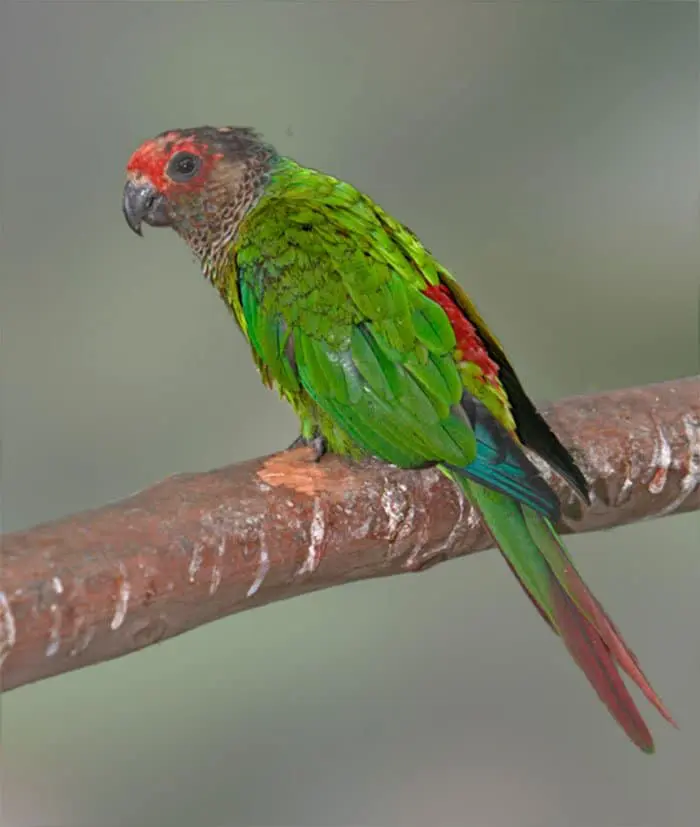
Rose-headed Parakeet
Pyrrhura rhodocephala

Cotorra Coronirroja

Content

Description:

Rose-headed Parakeet

24-25 cm.. height.
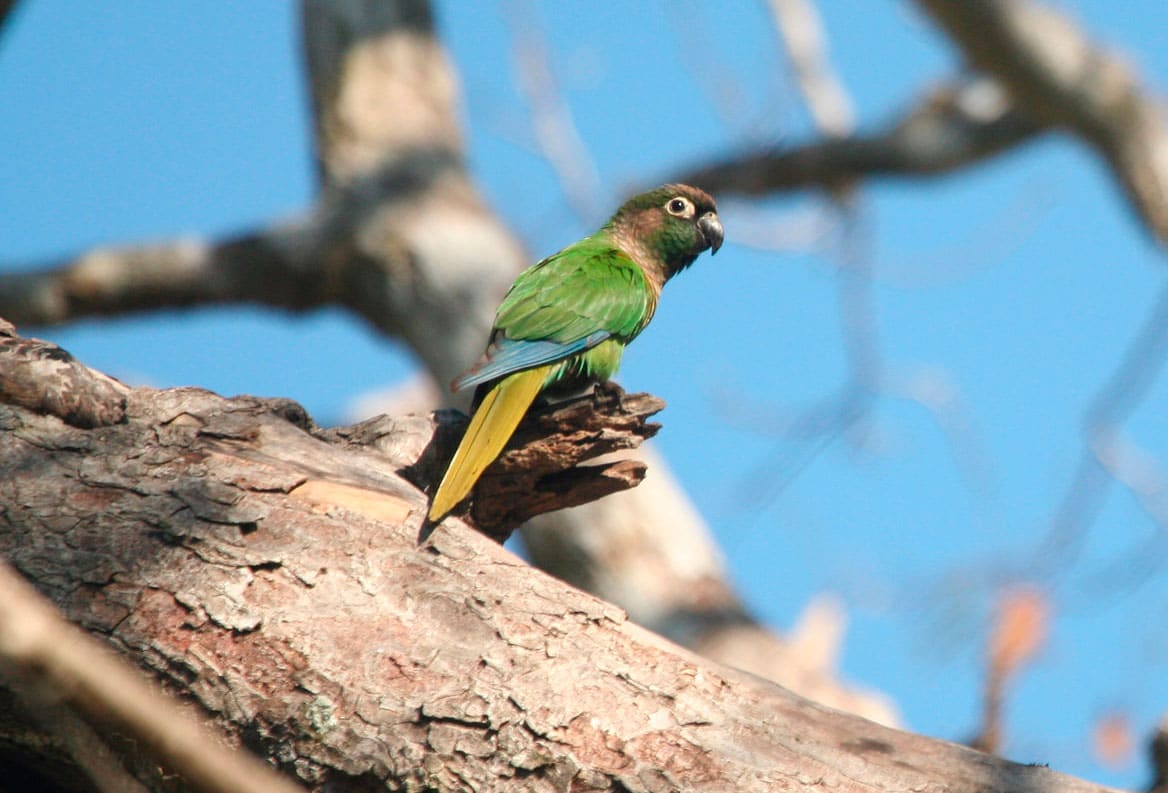
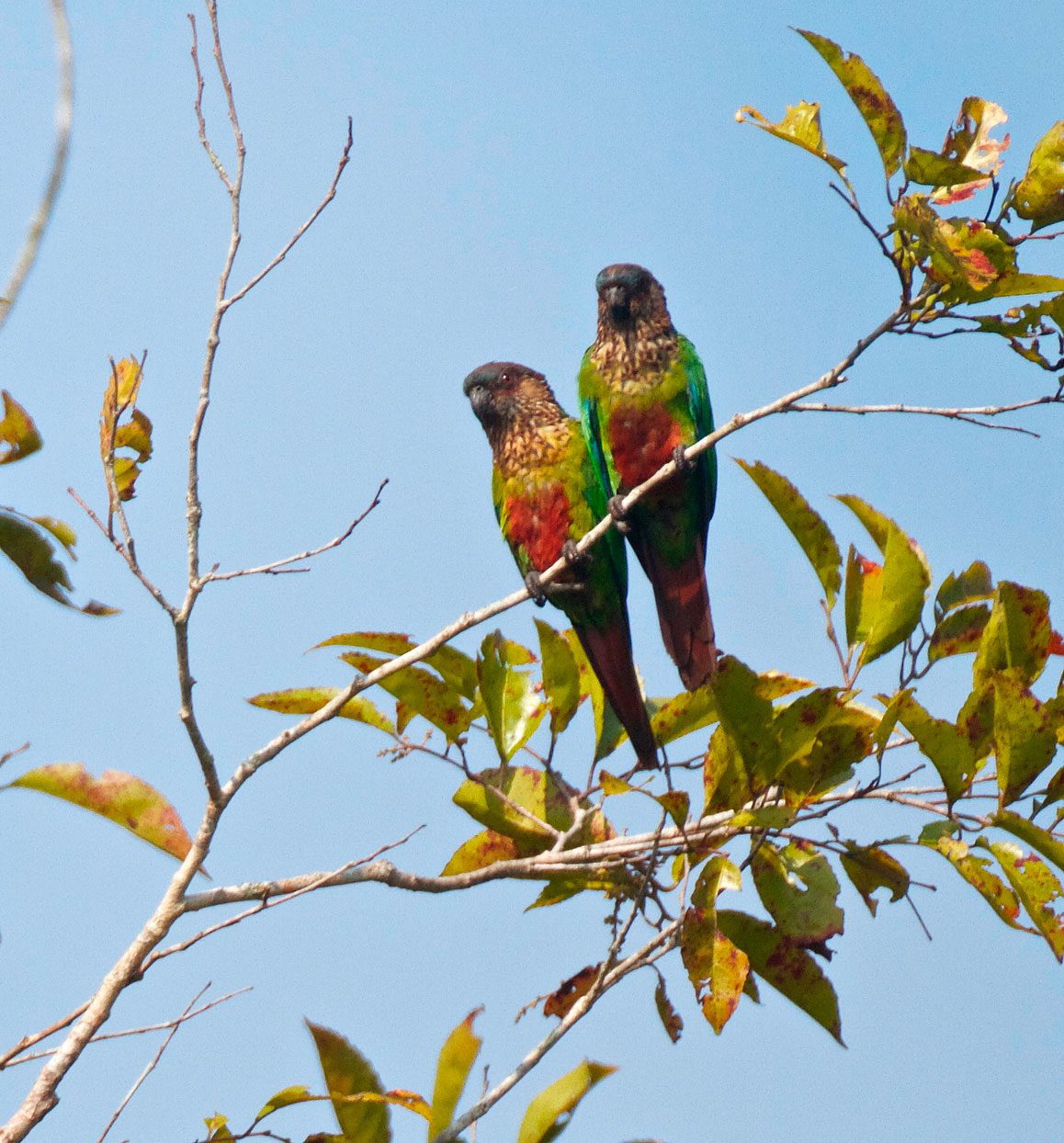
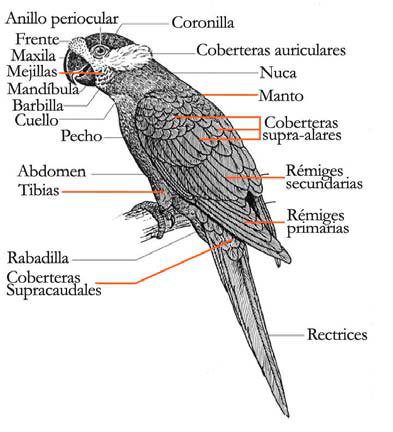
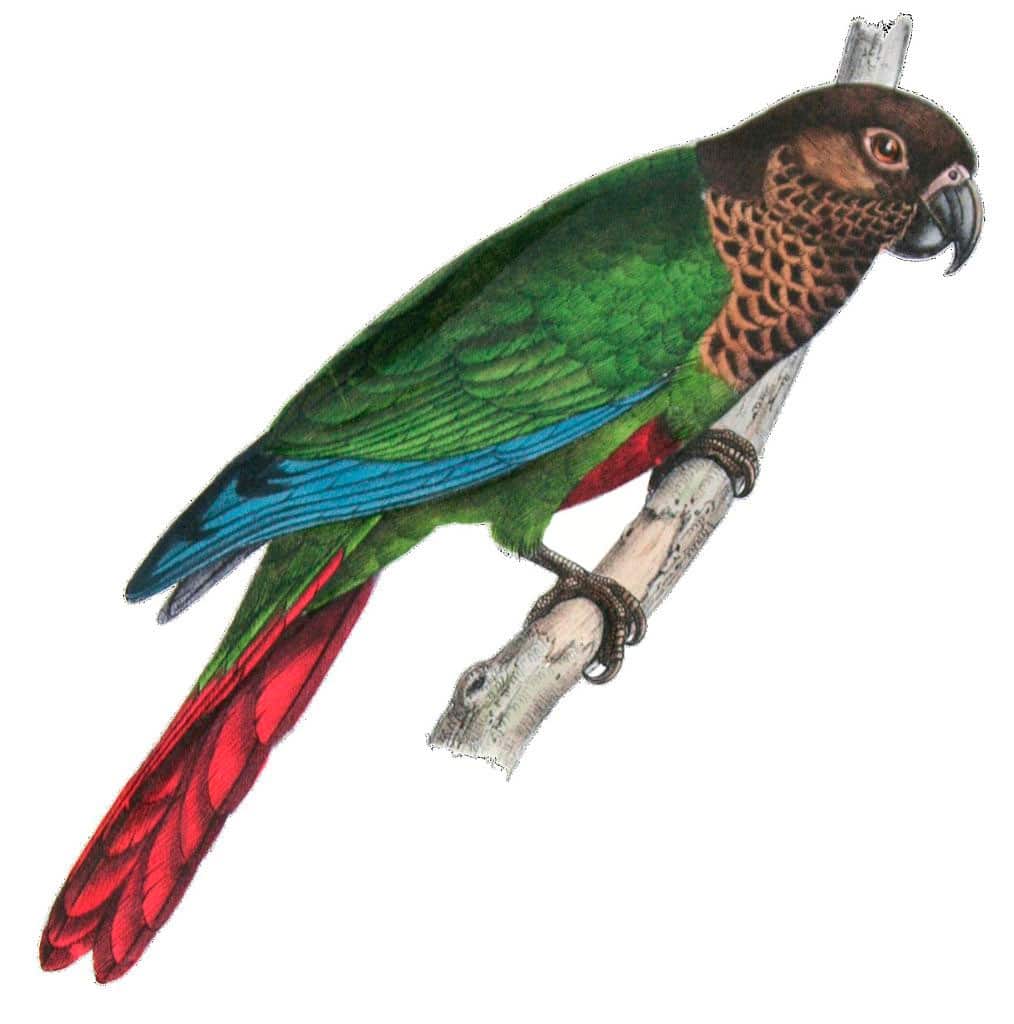
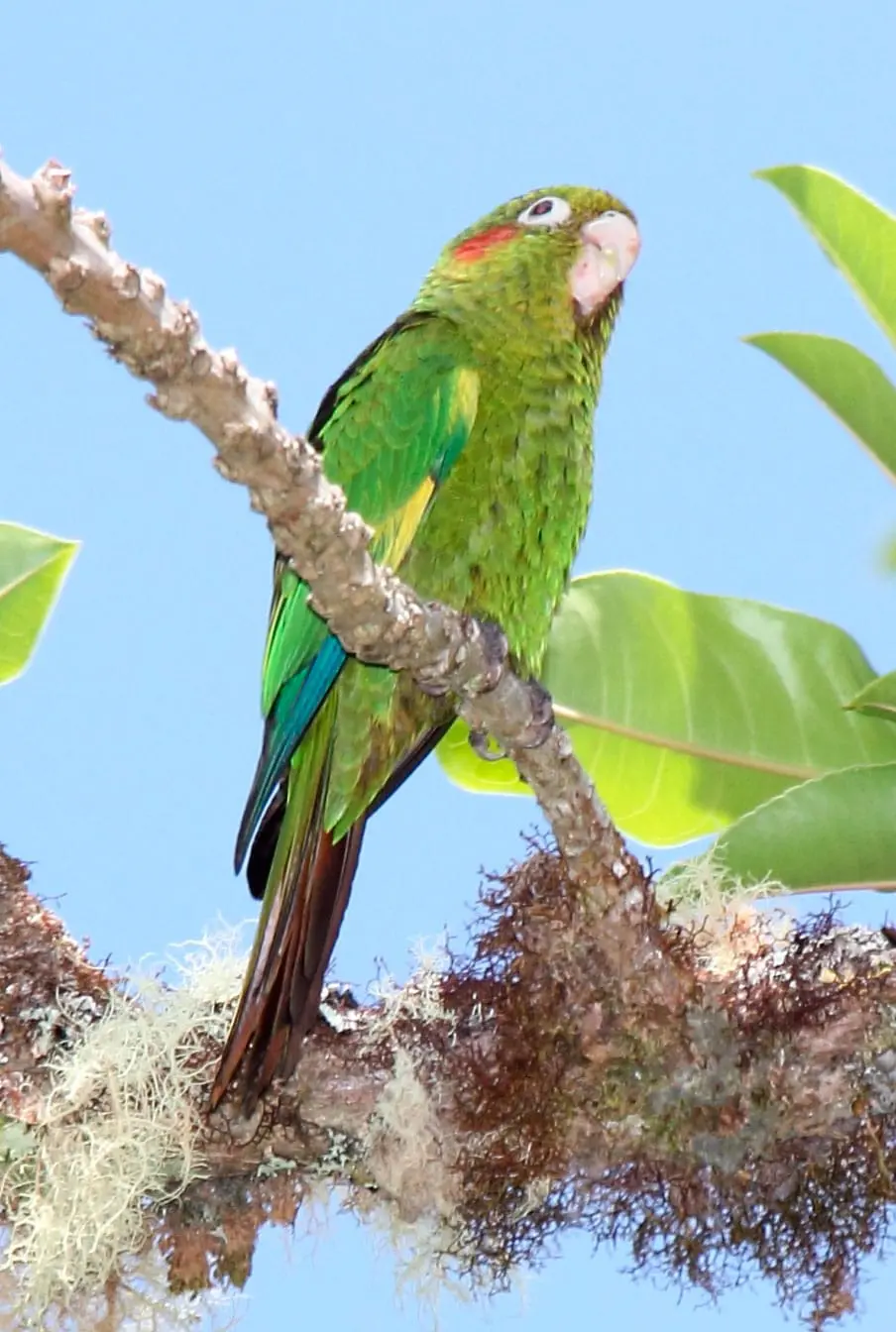
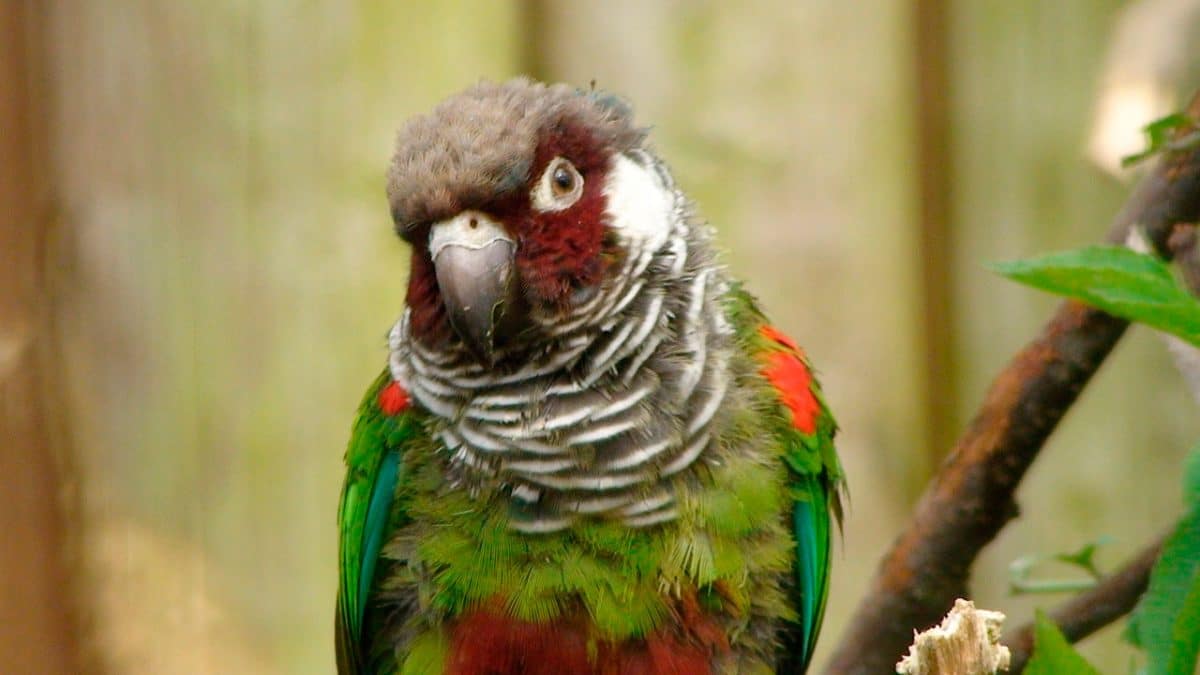
The Rose-headed Parakeet (Pyrrhura rhodocephala) is a small parrot with the body almost all green and a long tail. The more notorious is the hood pink reddish and the patch red behind them eyes; cheeks until uppertail-coverts green. Primary coverts white, other coverts green except, sometimes, some feathers scattered red-orange in the bend of wing. Outerwebs of them flight feather, Blue with black tips. Undertail-coverts green. Feathers of the throat, the chest and the sides of the neck, of color green olive with tips brownish that give an effect of scaly very dim; belly slightly more green olive that the upperparts, with a pale patch red in the center; the undertail-coverts green; at the top, the tail brownish red color; undertail, red clear.

Bill color pale horn; bare periophthalmic white; brown the irises; legs dark gray.

Both sexes similar.

The immature shows a crown bluish green with scattered red feathers, primary coverts Blue and base green until it tail.

Habitat:

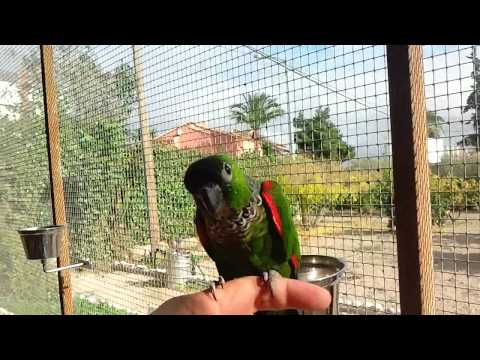
Video – "Rose-headed Parakeet" (Pyrrhura rhodocephala)

Pyrrhura Rhodocephala

It inhabits mainly in humid forests, secondary, and pรกramo, between 800 to 3400 m. Resident Although daily make long migrations.
Fly in flocks of 10 to 30 individuals.

Reproduction:

There is little information on reproduction, probably it breeding season between the months of May-June.

Food:

It probably feeds on berries, seeds, fruits and flowers.

Distribution:

Size of the area of distribution (reproduction / resident): 17,000 km2

This Parrot is endemic to the Andes, in the Northwest corner of Venezuela, on both slopes of the Cordillera de Mรฉrida from Tรกchira until Trujillo, with records in the mountains of Merida and North of Barinas.

Is probably resident but perform movements daily to distances considerable. They are distributed in several protected areas, apparently, effective, but the continuous deforestation in its small range must represent a threat to long term.

Conservation:

State of conservation โ“˜


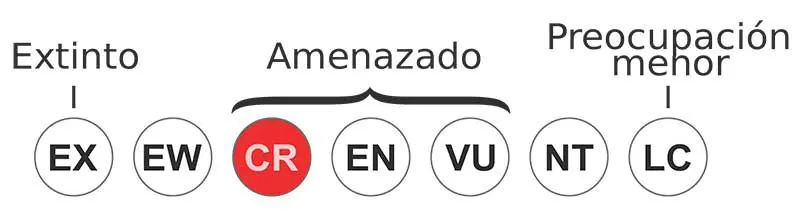
minor concern Minor Concern โ“˜ (UICN)โ“˜

โ€ข Current category of the Red List of the UICN: Least concern.

โ€ข Population trend: Stable.

Justification of the population

The size of the world's population has not been quantified, but the species is described as quite common (Hilty 2003).

Justification of trend

They suspected that the population is stable in absence of evidence of any decline or threatens substantial.

"Rose-headed Parakeet" in captivity:

Absent in captivity, at least out of Venezuela.

Alternative names:

Rose-headed Parakeet, Rose headed Parakeet, Rose-crowned Conure, Rose-crowned Parakeet, Rose-headed Conure (English).
Conure tรชte-de-feu, Perriche tรชte-de-feu, Perruche tรชte-de-feu (French).
Rotkopfsittich, Rotkopf-Sittich (German).
Tiriba-cabeรงa-rosa (Portuguese).
Cotorra Coronirroja, Perico de Cabeza Roja (espaรฑol).


scientific classification:

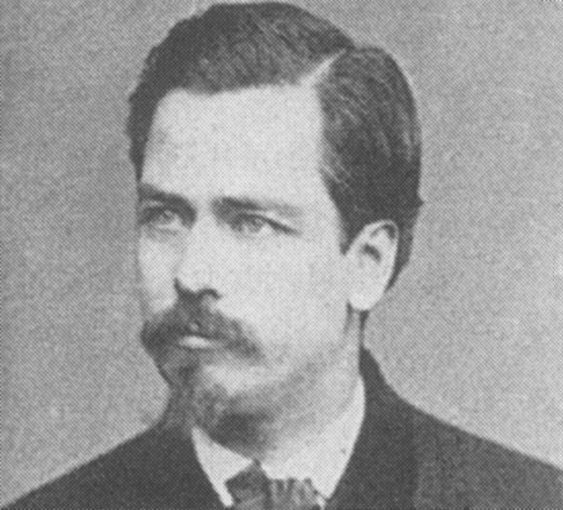
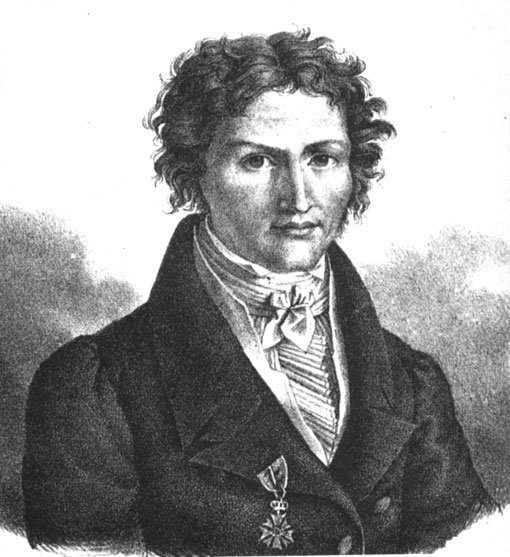
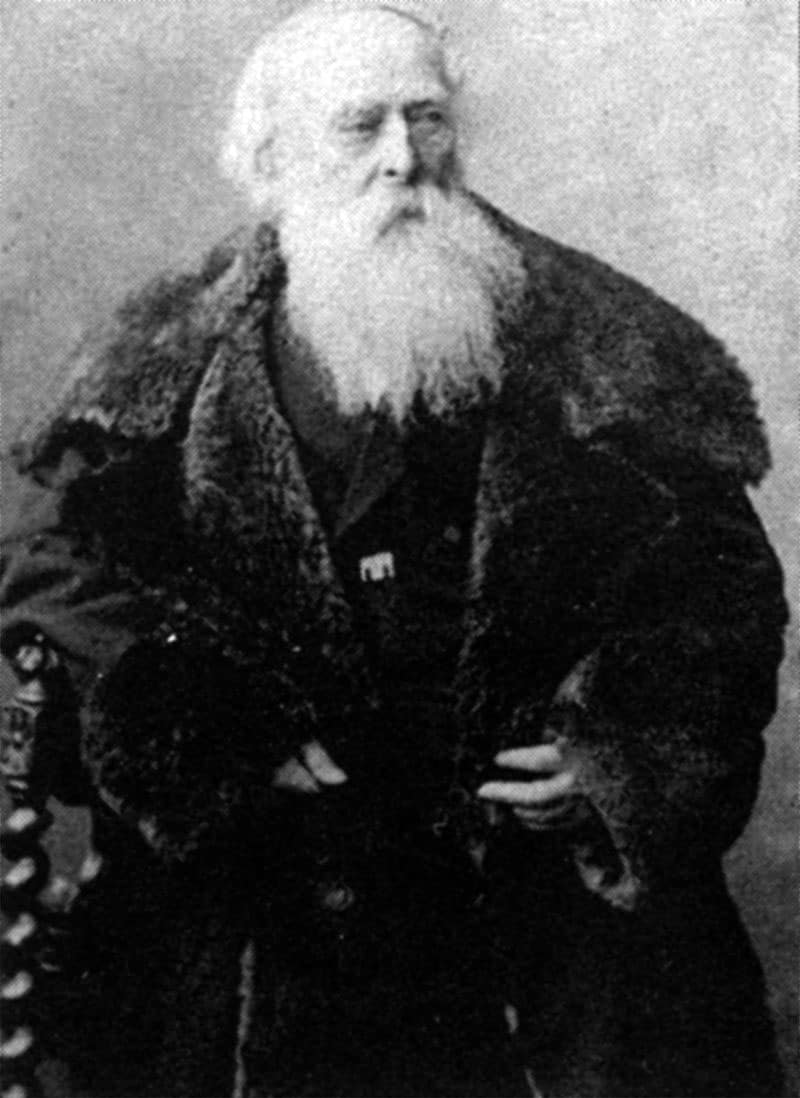
Philip Sclater
Philip Sclater

Order: Psittaciformes
Family: Psittacidae
Genus: Pyrrhura
Scientific name: Pyrrhura rhodocephala
Citation: (Sclater & Salvin, 1871)
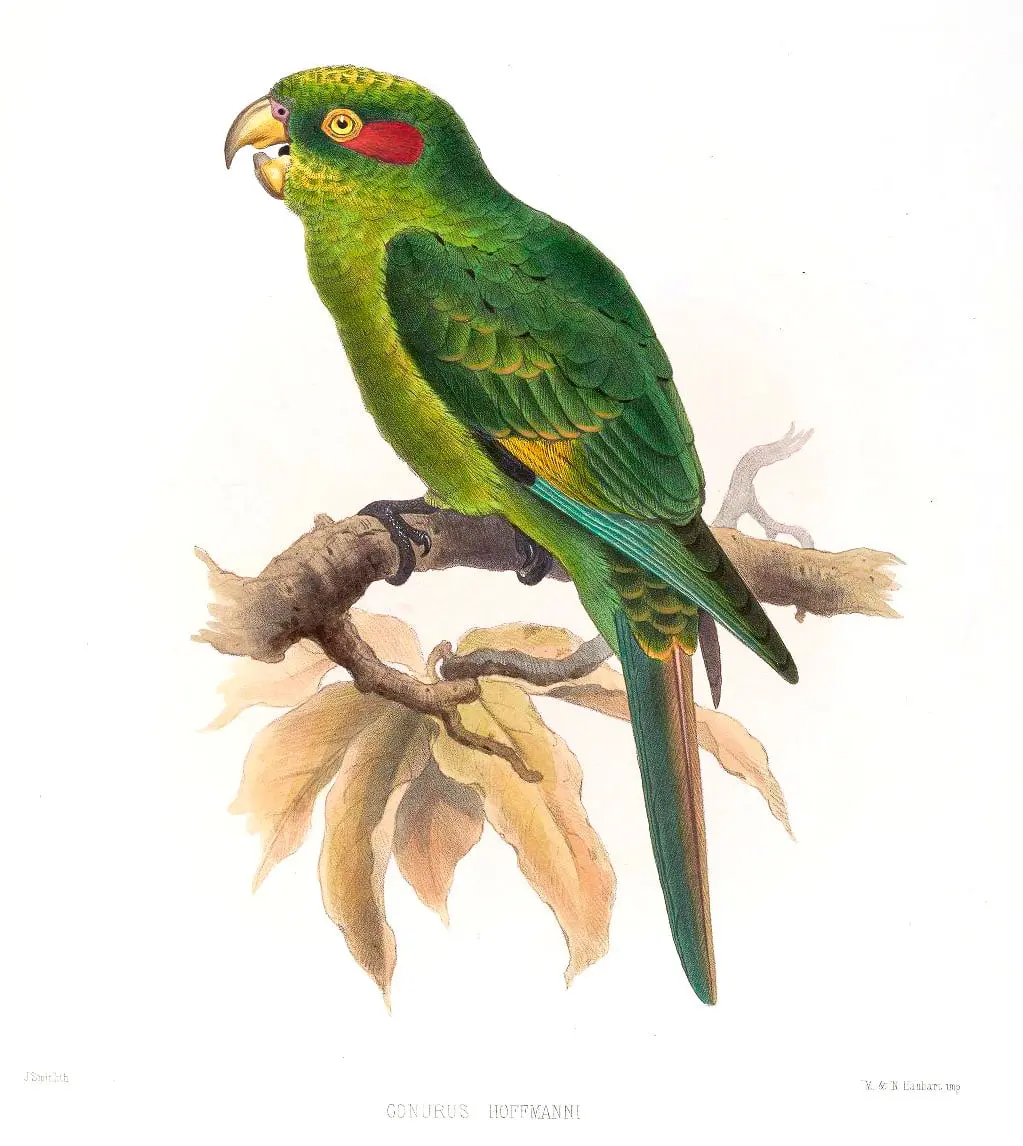
Protonimo: Conurus rhodocephalus

Images "Rose-headed Parakeet"


Especies del gรฉnero Pyrrhura

Sources:

Avibase
– Parrots of the World โ€“ Forshaw Joseph M
– Parrots A Guide to the Parrots of the World – Tony Juniper & Mike Parr
Birdlife
– Parrot Book, Parrots and macaws Neotropical

Photos:

(1) – fouragesofsand
(2) – Pyrrhura rhodocephala, Rose-crowned Parakeet by John Gerrard Keulemans [Public domain], via Wikimedia Commons

Sounds:

โ–ท The world of Pets: Dogs, cats, birds, reptiles, amphibians

Grey-breasted parakeet
Pyrrhura griseipectus

Grey-breasted parakeet

Content

Description:

23 cm.. length and 70 g. of weight.
Grey-breasted parakeet

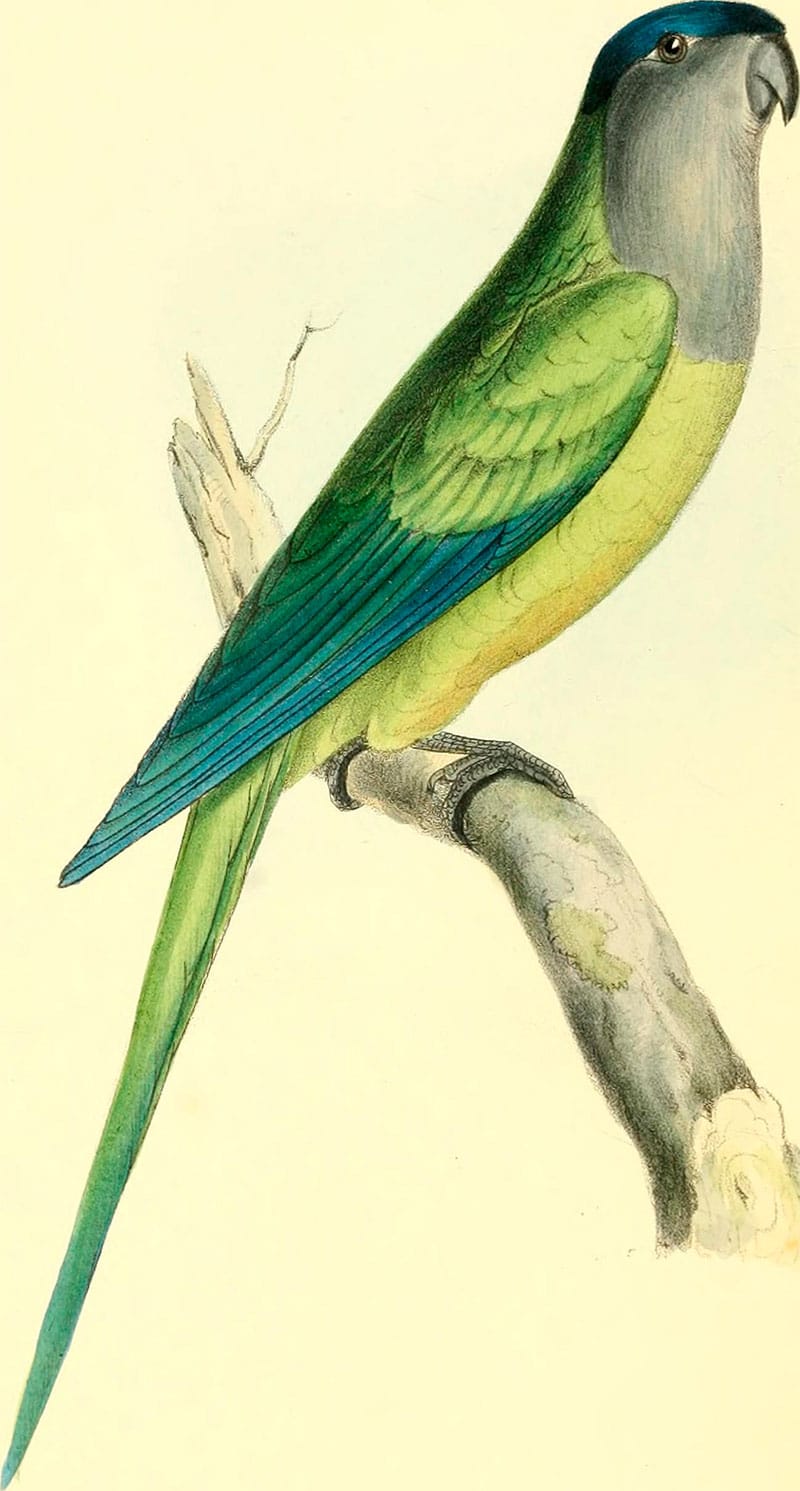
The Grey-breasted parakeet (Pyrrhura griseipectus) is a bird marked by a mask in reddish face, interrupted by a surrounding white coloration in the regions orbitals and ear-coverts.

The feathers of the neck to the upper region chest They have a gray coloration with light streaks interspersed, giving the region a striped appearance or escamado. The species has a characteristic patch reddish in belly, highlighting green coloration, its predominant body. The region forecrown up to the nape, It is dark brown with white or lighter brown spots that vary from bird to bird.. rear area neck green blue border with a width. They have a patch reddish brown in the bottom of the back which leads to the crown. The tail It is long and maroon. Bill gray-black; eye ring white gray; irises brown-orange.

It has no sexual dimorphism. The immature they are more muted than adults; You have scattered green feathers in the abdomen; the cere and the bare periophthalmic is white, less gray tone.

Taxonomic status:

This species is considered to be a subspecies of Pyrrhura [leucotis, emma or griseipectus] by some authors

  • Sound of the Grey-breasted parakeet.

Habitat:

It is in the rainforests, often located in Serranas regions, where orographic rains favor the occurrence of enclaves Atlantic Forest and Mata dry amid caatinga.

Reproduction:

The breeding season It occurs during the rainy season. The laying It is five to eight eggs in holes dug by woodpeckers since they are not able to dig their own nests; They use these holes to sleep.

When the pups are born, the couple divides the task of feeding. Sometimes they have help from even a third member of the flock to successfully raise all the young..

Food:

Probably it feeds on fruits, flowers, seeds and algae.

Distribution and status:

Size of its range (players / residents): 830 km2

This species was formerly known in 15 Locations (. Anon 2014) within Brazil. At present it is in only three areas in the state of Cearรก, the Serra de Baturitรฉ and Quixadรก (C. Albano in a little . 2006, Waugh et al 2010.) and most recently observed in a rocky mountain Cearรก, where five birds were recorded in March 2014 (Anon. 2014).

In Serra do Baturitรฉ appears to be very rare and seems to have been extinct from several areas, but recent records of groups in the Environmental Protection Area mountains Baturitรฉ; surveys 2007 half of the remaining habitat in this site revealed near 80 individuals (C. Albano in a little. 2007, 2008) and the population here is now estimated to be about 250 birds (Waugh et al . 2010).

Forests of Baturite mountains They have been greatly reduced to make way for coffee plantations and only 13% of the jungle remained in 1996. The discovery in 2010 a population of about 50 birds in Quixadรก (Waugh et al ., 2010) It raises the known world population of this species in about 300 birds.

The Grey-breasted parakeet It was previously known two other areas: the eastern slope of the Saw Ibiapaba in Cearรก, and small Serra Negra, in Pernambuco, where it was very common in 1974, with flocks of 4-6 individuals regularly seen in the early 1980, although there are no recent records. There are also unconfirmed reports 1991 in organic station Murici Alagoas in which possibly it refers to individuals released; Recent fieldwork was unable to locate the species.

Its known range is very small, and the species has declined dramatically in the past, a trend that may be permanent.

Conservation:

  • Justification of the Red List of the Category

Recent surveys indicate that this species has a extremely small population, which continues to decline after dramatic historical declines. For these reasons it qualifies as Critically Endangered.

  • Justification of the population

State of conservation โ“˜


critical hazard critically endangered โ“˜ (UICN)โ“˜

โ€ข Current category of the Red List of the UICN: critically endangered.

โ€ข Population trend: Decreasing.

โ€ข Population size : 200 individuals.

The population in the Area of Baturitรฉ Mountains Environmental Protection It is estimated at about 250 birds, and discovery in 2010 a population of about 50 birds in Quixadรก raises the known world population of about 300 birds (Waugh et al ., 2010). This equates to approximately 200 mature individuals.

  • Justification trend

This species is suspected to be decreasing quickly because of their capture and habitat loss in progress within its range.

  • Threats

The habitat destruction He has played a role in the decline of the species with the original forest cover now reduced to only 13%.

The coffee plantations (especially where coffee is grown in the sun instead of shade coffee) They are impacting the habitat of the species.

The main threat, However, It is believed to come from the capture illegal underway for local and national trade (C. Albano a slightly 2006, Anon 2009..) and captive breeding (Fernandes-Ferreira et al 2012.); the Grey-breasted parakeet They can be easily purchased through Internet (Girรฃo and Albano 2008).

It is easily found in the international trade in bird cage.

The lack of natural nesting sites also it believed to are limiting reproductive success of the species (Campos et al . 2014).

Conservation Actions Underway

Appendix II of CITES.

In Brazil, It was considered above in critical hazard (Silveira y Straube 2008), but it has now been legally designated as endangered national (MMA 2014), and protected Brazilian law.

Dwelleth within Baturitรฉ Mountains Environmental Protection Area, but this area has been designated for sustainable use and traditionally has not been achieved for conservation.

Management of land by a private owner in the area has led to an increase in a small town known (C. Albano a slightly . 2006).

Since 2007, NGO AQUASIS Brazil has been conducting two research projects: one sponsored by the Brazilian Foundation O Boticรกrio for the Protection of Nature, the topography of the Baturite mountains to monitor their condition and research their biology; and another sponsored Fundaciรณn Loro Parque, for additional populations (C. Albano in a little. 2007, 2008).

The surveys carried out in the historical sites and areas of potential habitat in the period 2007-2008 They have not been able to locate members of this species, although there are strong indications of individuals that may still be inhabiting the degraded Serra do Estevรฃo, municipality Jaw, state Cearรก (C. Albano in a little. 2007 2008, Anon 2007), where it was actually rediscovered in the 2010 (Waugh et al ., 2010).

A team of AQUASIS, funded by an award Leadership Program for Conservation in 2012, conducted searches for the species on an isolated mountain in Cearรก and he found a small population of five individuals in March 2014 (Anon. 2014).

You can also persist in Serra Negra Biological Reserve, state Pernambuco, although a combination of marijuana crops and hostile local culture makes research work in this latter area difficult (C. Albano in a little. 2007, 2008).


At least 11 private reserves (RPPN) They are in the process of being created in the Serra de Baturitรฉ (C. Albano in a little. 2007, 2008) and AQUASIS They are now engaged in the process of developing a nature reserve in the Baturite mountains (Campos et al . 2014).

AQUASIS has strengthened ties with government agencies in order to influence policy decisions (Campos et al . 2014).

Scheme nest box sponsored by Loro Parque It has been carried out with nest boxes installed in different places with the consent of the landowners. (Anon, 2009).

AQUASIS also they provided nest boxes Insecticide treated to reduce infestations of bee and wasp (Campos et al . 2014). These measures have proved effective, with 16 boxes occupied in 2012 give place to 97 eggs and 71 chicks hatched successfully.

A education and awareness campaign large scale was carried out in the Serra de Baturitรฉ in 2008 (C. Albano in a little. 2007, 2008) and continues today, with many schools currently participating in education programs AQUASIS (Campos et al . 2014).

A main objective of AQUASIS is to promote the Cotorra pechigris as a flagship species, the work being supported by commercial NGOs and ecotourism WATER Trails of the Park (Anonymous 2009).

AQUASIS also it aims to develop the ability to bird watching and a development process of consciousness creating alternative livelihoods (Anonymous 2009). A visitor center has recently been established (Campos et al . 2014).

It breeds well in captivity and stocks are held in Brazil and abroad. Always captive breeding is well managed and coordinated, could be used for reintroduction into the wild.

They are being conducted studies on factors influencing the survival rate of chicks, population's genetics (in future DNA techniques can be used as a deterrent against illegal collection of wild birds); both adults and juveniles have been banded (Campos et al . 2014).

Conservation Actions Proposed

Conduct more studies in areas similar to the mountains Baturitรฉ in the northeast of Brazil, such as Sierras de Aratanha, Maranguape and Machado, by the presence of additional existing populations.

continue population monitoring known in Serra de Baturitรฉ.

improve conservation management practiced in the Guaramiranga Ecological Park.

Provide incentives for landowners to increase the network of private reserves Baturite mountains.

Monitor and control trade locally, National and international.

Investigate the feasibility of using giant bamboo (Dendrocalamus giganteus) as sites for constructing artificial nests (Campos et al . 2014).

continue making awareness campaigns to promote the Grey-breasted parakeet as a symbol for the conservation of humid forests and associated biodiversity in the Baturite mountains.

Investigate in situ conservation measures.

"Grey-breasted parakeet" in captivity:

Its continuous capture, both for domestic and international trade, They have taken this beautiful bird to a critical situation, there are only 200 specimens in the nature. There are probably more animals captivity in its natural habitat

Protected by the Appendix II of CITES, each captive specimen of this species that is capable of reproducing, must be placed in a well-managed captive breeding program and not sold as a pet, in order to ensure long term survival.

Alternative names:

Gray-breasted Conure, Gray-breasted Parakeet, Grey-breasted Conure, Grey-breasted Parakeet, Maroon-faced Parakeet (Gray-breasted) (English).
Conure ร  poitrine grise (French).
Graubrustsittich, Salvadori-WeiรŸohrsittich (German).
Tiriba-de-orelha-branca, tiriba-de-peito-cinza, periquito cara-suja (Portuguese).
Cotorra pechigrรญs, Periquito sujo, Cotorra de pecho gris (espaรฑol).


scientific classification:

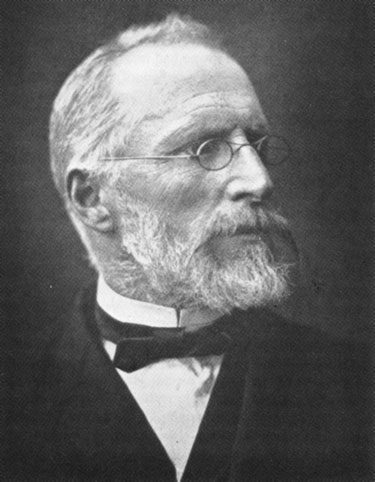
Salvadori-Thomas
Salvadori Tommaso

Order: Psittaciformes
Family: Psittacidae
Genus: Pyrrhura
Scientific name: Pyrrhura griseipectus
Citation: Salvadori, 1900
Protonimo: Pyrrhura griseipectus


Images Grey-breasted Parakeet:

Videos "Grey-breasted parakeet"


Especies del gรฉnero Pyrrhura

Grey-breasted parakeet (Pyrrhura griseipectus)


Sources:

Avibase
– Parrots of the World โ€“ Forshaw Joseph M
– Parrots A Guide to the Parrots of the World – Tony Juniper & Mike Parr
Birdlife

Photos:

(1) – Grey-breasted Parakeet By writhedhornbill [CC BY 2.0], via Wikimedia Commons
(6) – Grey-breasted Parakeet by Internet Archive Book ImagesFlickr

Sounds: Ciro Albano, XC7948. accessible www.xeno-canto.org/7948
โ–ท The world of Pets: Dogs, cats, birds, reptiles, amphibians

Black-capped Parakeet
Pyrrhura rupicola

Should be noted that until the year 1981, The Blackcap Parakeet was considered a rarity in poultry farming.. From that date began to be imported in quantity although at a very high price.

Black-capped Parakeet

Content

Description:

25 cm. length and 70 g. weight.

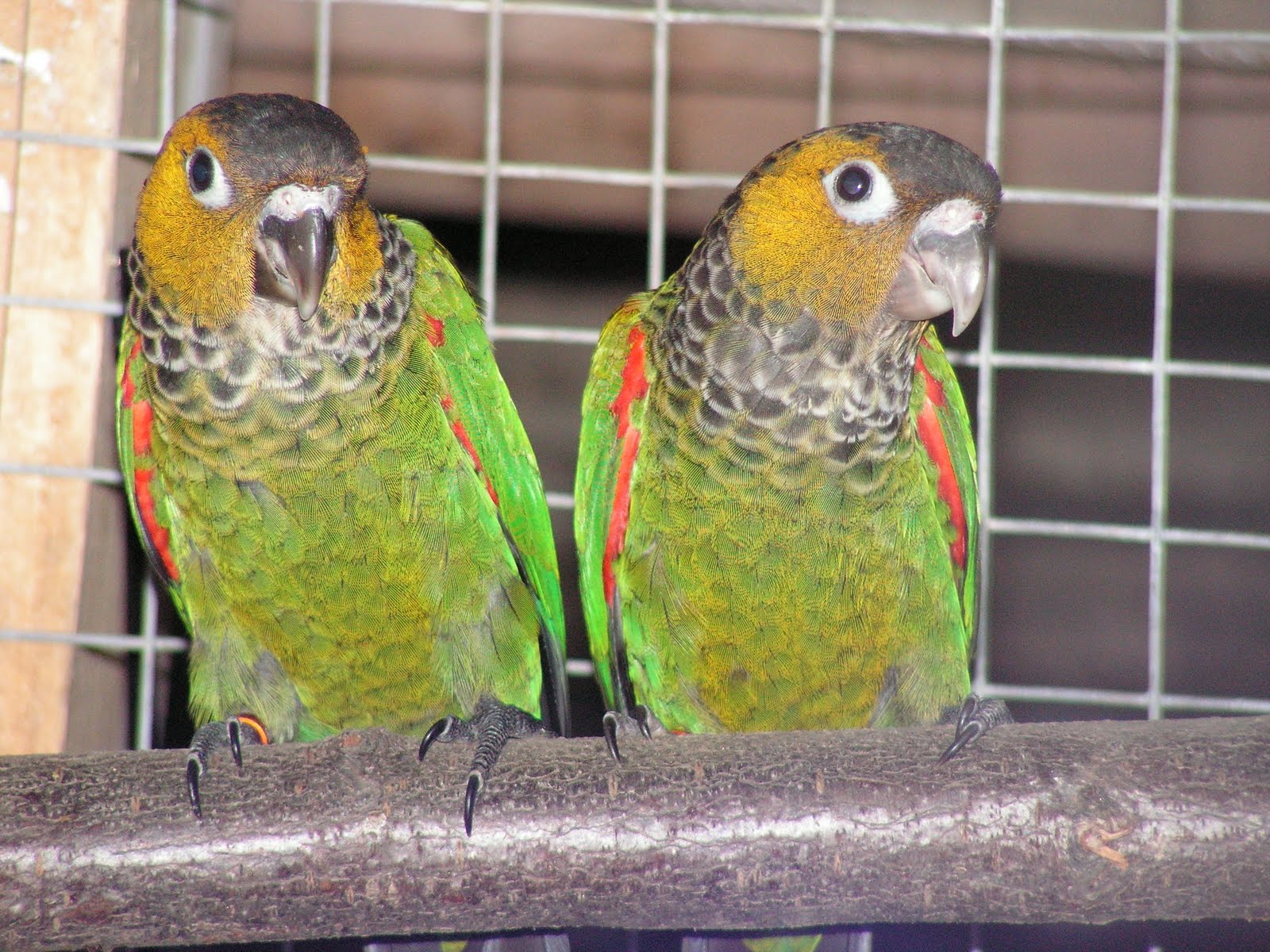
The Black-capped Parakeet (Pyrrhura rupicola) has the lores, the forecrown and the Crown, blackish brown; cheeks, ear-coverts and supercilii area, of color olive beige; back of the neck brown with narrow pale edges.

Upperparts green. External primary coverts, alula and leading edge of the wings bright red; other coverts mainly green. The flight feather, mainly bluish green, by top with narrow black tips; grey dark below.

Underwing-coverts green. The throat feathers, sides neck and top of the chest, Black base with wide white margins, becoming yellowish-white at the bottom of the chest and almost no formation of continuous pale band; belly and undertail-coverts green with brown stain in the center of the belly. Upper, the tail mainly green.

Black-capped Parakeet

The bill slaty-grey; Cere pale grey; bare periophthalmic off-white; irises brown; legs blackish.

Both sexes similar.

The immature has primary coverts almost completely green, as well as the leading edge of the wings.

Subspecies description:

  • Pyrrhura rupicola rupicola

    (Tschudi, 1844) – The nominal


  • Pyrrhura rupicola sandiae

    (Bond & Meyer de Schauensee, 1944) – It differs from the species nominal much closer to the Gray margins to the feathers of the throat and the front of the neck. These pale fringes measure only 2-2,5 mm. wide (specimens with new plumage) in comparison with the 4-5 mm of the nominal species. Like this, the dark basal portion of these pens is more prominent. It also, the whitish edges to the feathers of the back of the neck they are practically obsolete and the sides of the neck much smaller.

Habitat:

Video – "Black-capped Parakeet" (Pyrrhura rupicola)

PYRRHURA RUPICOLA TAUGHT

It lives in the Amazon rainforest., including formations of vรกrzea and the Mainland, below 300 m. Visits have been recorded in the East of the Andes. Fly in flocks of 30 individuals, or small groups in reproductive age.

Reproduction:

It is believed that it can nest in the months of February-March, although the copulation of observed during the month of September. Sunset until the seven eggs in captivity than hatch during 23 to 24 days.

Food:

Usually feed in the canopy but no specific information on diet or breeding.

Distribution:

Can be seen in the Western basin of the amazon. There has been in the East of Peru from the South of Loreto until Mother of God and Puno, and in the North of Bolivia in Pando.

Also distributed in Peace and the Yungas and in the lowlands of the North of Beni, from the East to the border with Rondร ยดnia in Brazil, with a record until the date in the extreme west of Brazil (Rio Branco, Acre).

In general common (Perhaps more scarce on the edges of the range), but it can be locally decreasing due to the alteration of its habitat.

Subspecies distribution:

  • Pyrrhura rupicola rupicola

    (Tschudi, 1844) – The nominal


  • Pyrrhura rupicola sandiae

    (Bond & Meyer de Schauensee, 1944) – Southeast of Peru, West end of Brazil and North of Bolivia.

Conservation:

State of conservation โ“˜


Near-threatened Near Threatened โ“˜ (UICN)โ“˜

โ€ข Red List category of the UICN current: Near-threatened

โ€ข Population trend: Decreasing

The Parrot Capirotada world population size has not been quantified, but this species is described as "quite common" (Stotz et to the. (1996).

This species is suspected that may be losing from the 13,7 to the 15,5% of their habitat within its distribution over three generations (18 years) based on a model of deforestation of the Amazon (Soares-Filho et to the., 2006, Bird et to the. 2011). Given the susceptibility of this species to be hunted or trapped, leads to the suspicion of a probable decline in population close to the 30% in three generations.

"Black-capped Parakeet" in captivity:

Should be noted that until the year 1981, the Black-capped Parakeet It was considered a rarity in aviculture. From that date began to be imported in quantity although at a very high price.

Their behavior Active, his sympathetic character, their robustness and ease of reproduction attached to the made of own a voice very little annoying, they make an excellent animal for those poultry producers who are initiated into this wonderful hobby. These qualities allow us to intuit that if raised by hand they could be lovely pets.. It is sad to observe that, too often, the main maxim that justifies poultry farming "play to preserve" becomes "play to sellโ€.

Alternative names:

Black-capped Parakeet, Black capped Parakeet, Black-capped Conure, Rock Conure, Rock Parakeet (English).
Conure ร  cape noire, Perriche ร  cape noire, Perruche ร  cape noire (French).
Schwarzkappensittich, Schwarzkappen-Sittich (German).
tiriba-rupestre (Portuguese).
Cotorra Capirotada, Perico de Frente Negra (espaรฑol).
Wewey, Aboro gushรณus (Chimane).


scientific classification:

Tschudi-Johann Jakob of

Order: Psittaciformes
Family: Psittacidae
Genus: Pyrrhura
Scientific name: Pyrrhura rupicola
Citation: (Tschudi, 1844)
Protonimo: Conurus rupicola

Images "Black-capped Parakeet"


Especies del gรฉnero Pyrrhura

Sources:

Avibase
– Parrots of the World โ€“ Forshaw Joseph M
– Parrots A Guide to the Parrots of the World – Tony Juniper & Mike Parr
– Birdlife

Photos:

(1) – Pyrrhura rupicola sandiae by pedroduarte
(2) – Maroon-tailed Parakeet ssp. (in front); and Pyrrhura rupicola, Black-capped Parakeet (behind) by John Gerrard Keulemans [Public domain], via Wikimedia Commons

Sounds: (Xeno-canto)

โ–ท The world of Pets: Dogs, cats, birds, reptiles, amphibians

Blaze-winged Parakeet
Pyrrhura devillei


Blaze-winged Parakeet

Content

Description:

Blaze-winged Parakeet

It measures 25 to 28 cm. and 70 weight GR.

In flight notorious is the armpit red with yellow line at the end; Red patch in the belly. The tail is opaque red.

Was formerly considered as a subspecies of the Maroon-bellied Parakeet (Pyrrhura frontalis), of crown brown, darker underparts, and underwing-coverts especially red and yellow.

Bill black; eye ring naked white; irises brown. Tail long.

It has no sexual dimorphism.

Habitat:

It lives in the Woods, on the clear and marshy edges, until the 1000 m.

It is a species tolerant of disturbance of the habitat.

Fly in flocks between 6 to 12 individuals.

Reproduction:

It nests in hollow of trees and is plays between October and December.

Food:

Feed a wide variety of dried fruits and fruit.

Distribution:

Is distributed between the South of Brazil (Mato Grosso from the South), North of Paraguay (Northwest of Conception and Southeast of Alto Paraguay) and Southeast of Bolivia.

In Brazil only it is known in Mato Grosso from the South, where is limited to the mountain ranges of Bodoquena and Maracayu, in the Ecotone between the Planalto and the lowlands of the Pantanal, and along the taboco river in the municipality of Aquidauana. It has a very limited range in the Paraguay, from where records of the latter are confined to gallery forests along the apa river.

Conservation:

โ€ข Red List category of the UICN current: Near-threatened
โ€ข Population trend: Stable

The size of the world population Blaze-winged Parakeet It has not been quantified, but this species has been described as ยซrareยซ.

State of conservation โ“˜


Near-threatened Near Threatened โ“˜ (UICN)โ“˜

This species is suspected that they have experienced a moderately rapid decline due to the extensive loss and degradation of its habitat range within. Now survive in a highly fragmented landscape. Its area of distribution in Brazil has suffered extensive forest loss and degradation through agricultural expansion and charcoal production. The forests of the North of Conception and those who are in Chaco, in the easternmost area of Paraguay, are coming under increasing pressure and have seen considerable deforestation in recent 10 years (R. Clay in litt., 2009).

There is one hybridization apparent with the Maroon-bellied Parakeet (Pyrrhura frontalis) observed in the apa river (R. Clay in litt., 2009).

The trade is apparently minimal (pit et to the., 1997).

"Blaze-winged Parakeet" in captivity:

These small parrots are very rare in captivity, Although its potential for pets is excellent. Are birds animated and soon procured confidence with its owner. They often enjoy bath and are not hard chewing. are mostly calm and they shall only be loud when they are excited. They can be aggressive toward other birds. Playful and curious and generally resistant.

Alternative names:

Black-winged Parakeet, Black-winged Conure, Blaze winged Parakeet, Blaze-winged Conure, Blaze-winged Parakeet, Deville’s Conure (English).
Conure de Deville, Perriche de Deville, Perruche de Deville (French).
Devillesittich, Deville Sittich, Deville-Sittich (German).
tiriba-fogo (Portuguese).
Chiripepรฉ ala anaranjada, Cotorra de Deville, Perico de Alas Naranjas, Periquito alianaranjado (espaรฑol).
Periquito alianaranjado (Bolivia).
Chiripepรฉ ala anaranjada (Paraguay).

scientific classification:

Order: Psittaciformes
Family: Psittacidae
Genus: Pyrrhura
Scientific name: Pyrrhura devillei
Citation: (Massena & Souancรฉ, 1854)
Protonimo: Conurus Devillei

Images "Blaze-winged Parakeet"

Videos "Blaze-winged Parakeet"


Especies del gรฉnero Pyrrhura

Blaze-winged Parakeet (Pyrrhura devillei)


Sources:

Avibase
– Parrots of the World โ€“ Forshaw Joseph M
– Parrots A Guide to the Parrots of the World – Tony Juniper & Mike Parr
– Birdlife

Photos:

(1) – Blaze-winged Parakeet, Pousada Aguape, Mato Grosso Sul, In Brazil Flickr by Wildlife Travel
(2) – Iconographie des perroquets :Paris :P. Bertrand,1857 biodiversitylibrary

Sounds: (Xeno-canto)

โ–ท The world of Pets: Dogs, cats, birds, reptiles, amphibians

Hellmayr's Parakeet
Pyrrhura amazonum

Hellmayr's Parakeet

Content

Description:


Anatomy-parrots

22 cm.. length.

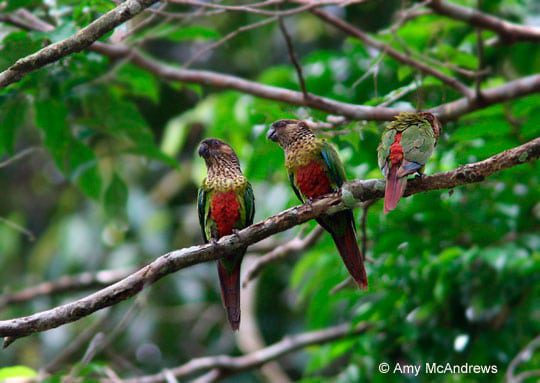
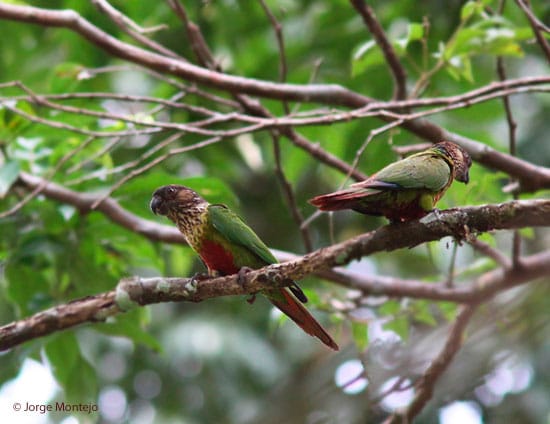
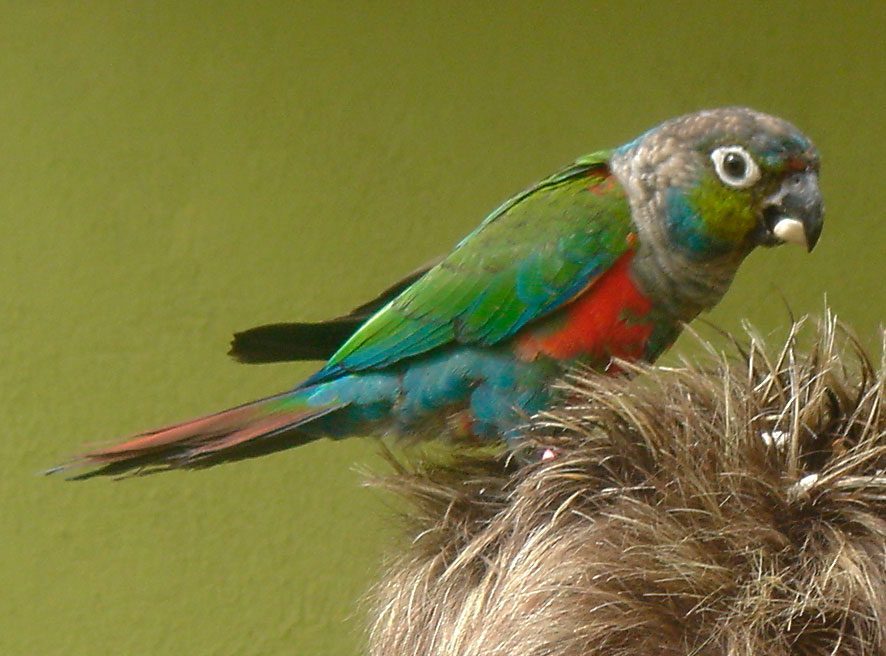
The Hellmayr's Parakeet (Pyrrhura amazonum) It is a mainly green parakeet; the area from crown at the nape it is dark brown; the belly, the rump and tip tail, They are dark red; below, the tail It is also dark red.

They have a patch whitish in ear-coverts; a blue band in front of eyes. The face It is dark reddish brown; the upper region chest It is greenish gray with gray scalloping; the bottom of the chest It is scaled with yellowish effect; the in bend of wing green; brown-red patch in the center of abdomen; of remiges blue (visible only in flight). Orbital ring blackish; the cheeks and ocular region are dark brown.
Bill grey-black; eyes orange brown.

The immature birds They have a darker plumage.

Taxonomic status:

Considered a subspecies of the Painted Parakeet by some authors

  • Sound of the Hellmayr's Parakeet.

Description 3 subspecies:

  • Pyrrhura amazonum amazonum

    (Hellmayr, 1906) – Nominal.


  • Pyrrhura amazonum lucida

    (Arndt, 2008 parrots[Arndt]) – Little or no blue on the front of the crown. Slightly smaller and paler than the Pyrrhura amazonum snethlageae


  • Pyrrhura amazonum snethlageae

    perico madeira – (Joseph & Bates,JM, 2002) – The bare periophthalmic is of color beige.

Habitat:

They are distributed in tropical moist forests and adjacent habitats. Itร‚ยดs social. Observed in pairs or groups. It is quite common in most of its range and inhabits several protected areas.. The Pyrrhura amazonum amazonum It is in the Amazon National Park, For, Brazil, while the Pyrrhura amazonum lucida It is in the The Cristalino State Park, Mato Grosso, Brazil.

Reproduction:

They build their nests in tree cavities.

Food:

With feed seed, flowers, fruit, berries and nuts. They are also considered local pests, as they regularly raid cornfields and orchards, occasionally causing considerable damage.

Distribution:

Size of its range (players / residents): 392.000 km2

Distribution 3 subspecies:

Conservation:

State of conservation โ“˜


Endangered Endangered โ“˜ (UICN)โ“˜

โ€ข Current category of the Red List of the UICN: In danger of extinction.

โ€ข Population trend: Decreasing.

โ€ข Population size : Unknown.

Justification of the Red List of the Category

Based on a model of deforestation in the amazon basin, and their potential susceptibility to capture for the bird trade, It is suspected that the population of the Hellmayr's Parakeet It has declined rapidly over three generations, and therefore it has been classified as danger of extinction.

Justification of the population

Recent world population is unknown given taxonomic divisions.

Justification trend

This species is suspected that he has been able to lose 43,0 to 52,1% of suitable habitat within their distribution over three generations (18 years) based on a model of deforestation of the Amazon (Soares-Filho et to the . 2006, Bird et to the. 2011). Given the susceptibility of this species to capture, It suspected population decline by 50% in three generations.

Threats

The main threat to this species is that it is accelerating the Deforestation in the Amazon basin for livestock and soybean production, provided by the expansion of the road network (Soares-Filho et to the. 2006, Bird et to the. 2011).

The changes proposed by the Forest code of Brazil they reduce the percentage of land that a private owner has a legal obligation to keep as forest and include an amnesty for owners who deforested before July 2008 (who would later be absolved of the need to reforest illegally cleared land) (Bird et to the. 2011).

His capture for bird trade wild can represent a significant threat.

Conservation actions and ongoing research

It is not known any.

The proposed conservation and research actions

Expand the network of protected areas to effectively protect IBA.

Effectively manage the resources of existing protected areas and new, the use of new opportunities for financing the management of protected areas with the common goals of reducing carbon emissions and maximize biodiversity conservation.

conservation on private lands is also essential, through the expansion of market pressures for rational land management and prevention of logging on land not suitable for agriculture (Soares-Filho et to the. 2006).

Campaign against proposed changes to Forest code of Brazil that would lead to a decrease in the width of protected riparian forest areas such as Permanent Preservation Areas (APPs), that function as vital corridors in fragmented landscapes.

"Hellmayr's Parakeet" in captivity:

It is a bird in danger of extinction. Each captive specimen of this species which is capable of reproducing, must be placed in a well-managed captive breeding program and not sold as a pet, in order to ensure its long-term survival.

Alternative names:

Hellmayr’s Parakeet, Santarem Parakeet, Santarem Parakeet (Santarem) (English).
Conure de Hellmayr (French).
Santaremsittich (German).
Tiriba-de-hellmayr (Portuguese).
Cotorra de Santarรฉm, Perico Santarรฉm (espaรฑol).

scientific classification:

Carl Edward Hellmayr

Order: Psittaciformes
Family: Psittacidae
Genus: Pyrrhura
Scientific name: Pyrrhura amazonum
Citation: Hellmayr, 1906
Protonimo: Pyrrhura pictured on Amazon


Images Hellmayr's Parakeet:


Hellmayr's Parakeet Santarem Parakeet (Pyrrhura amazonum) Cristalino Jungle Lodge, Mato Grosso, Brazil

Hellmayr's Parakeet Santarem Parakeet โ€“ Cristalino Lodge, Brazil

Videos "Hellmayr's Parakeet"


Especies del gรฉnero Pyrrhura

Hellmayr's Parakeet (Pyrrhura amazonum)


Sources:

Avibase
– Parrots of the World โ€“ Forshaw Joseph M
– Parrots A Guide to the Parrots of the World – Tony Juniper & Mike Parr
Birdlife

Photos:

(1) – Pyrrhura or Amazon by snethlageae Blake MathesonFlickr
(2) – Santarem Parakeet (Pyrrhura amazonum) Cristalino Jungle Lodge, Mato Grosso, Brazil by Amy McAndrewsFlickr
(3) – Santarem Parakeet – Cristalino Lodge, Brazil by Jorge MontejoFlickr

Sounds: Jeremy Recall, XC235131. accessible www.xeno-canto.org/235131

โ–ท The world of Pets: Dogs, cats, birds, reptiles, amphibians

Crimson-bellied Parakeet
Pyrrhura perlata

Crimson-bellied Parakeet

Content

Description:

Crimson-bellied Parakeet

24-25 cm. of length and weight 85-94 g

The Crimson-bellied Parakeet (Pyrrhura perlata) has the lores and cheeks of color yellowish-olive with dye Brown; The forecrown, the crown and back neck Dark Slate with velvety probes, giving a mottled appearance, especially in parts where increases the blue at the bases of the feathers.

The upper mantle is blue; robe bottom up to the uppertail-coverts green. Scapulars green at the base, blue down; the lesser wing coverts, olive green; the medium-sized and large coverts, with a predominance of the color blue. The flight feather, blue top, secondaries with green in the outerweb; slate grey dark below.

Underwing-coverts bright red. Sides of the neck, the throat and the top of the chest, with a predominance of brown color, with some brands blue and tips velvety, giving a scaly appearance; The under chest and most of the belly bright crimson; Flanks, the thighs and undertail-coverts, Blue with greenish tint. Upper, the tail, with predominance of color Brown, shades of green and some blue feathers; below, the tail, dark gray.

The bill brown-black color; eye ring whitish grey; Iris dark brown; legs black slate.

Both sexes similar.

Immature they lack the bright crimson color on the underparts; Sometimes with dark margins in the scapulars.

The Pyrrhura perlata was formerly known as Pyrrhura rhodogaster.

Habitat:

They generally inhabit humid forests on dry land., clear forest, secondary and probably drier formations in the North of Mato Grosso and have been registered also dominated by fig trees in eastern forests of Bolivia.

Usually views in small flocks and, sometimes in mixed groups with the Golden-winged Parakeet and Painted Parakeet. Larger family groups have been reported previously. They have often been seen descending into rivers and streams to bathe and drink..

Reproduction:

With reproduce between August and November, probably in April and June, They nest in tree cavities. Incubation period: 24-25 days.

The put in captivity is of 3-9 eggs, being 5 the average.

Food:

Reported foods include catkins Cecropia, small fruits of Trema micrantha, fruits of the ficus, Eugenia and Zanthoxylum, and flowers of Bertholletia excelsa and Dioclea glabra.

Distribution:

They can be found in Brazil, in the area of the great South-Central amazon basin, in West For and in the western area of amazon, in the river basins Madeira and South of the Tapajรณs, to the extreme north of Mato Grosso, Rivers Roosevelt and Aripuanรฃ.

Observed in adjacent parts of Bolivia and probably widely distributed east of Rio Mamorรฉ in hand me and Santa Cruz.

In general common, but perhaps decreasing due to the loss of forests in some parts of its area of distribution (for example, along the river JI-Paranรก in Rondร ยดnia, Brazil).

Conservation:

State of conservation โ“˜


Vulnerable Vulnerable โ“˜ (UICN)โ“˜

โ€ข Current category of the Red List of the UICN: Vulnerable

โ€ข Population trend: Stable

Justification of the population:

The size of the world's population has not been quantified, but this species is described as "quite commonยป (Stotz et to the., 1996).

Justification of trend:

It is suspected that this species has lost 23-30.3% of habitat within its distribution area for three generations (18 years), based on a model of Amazon deforestation (Soares-Filho et to the., 2006, Bird et to the., 2011). Given the susceptibility of species the hunting and capture, they suspected that the population of Crimson-bellied Parakeet will decrease by โ‰ฅ 30% during three generations.

"Crimson-bellied Parakeet" in captivity:

Not very common in captivity. Its diet ideal would be based on fruits such as: apples, Pears, oranges, bananas, grenades, cactus fruits , which form the 30 percent of their food, vegetables, such as: carrots, celery, green beans, pea in the pod, fresh corn, green leaves, such as: chard, lettuce, dandelion, chickweed, healer, millet; a mixture of seeds as such: Canary Islands, small amounts of wheat and millet, oats, safflower and hemp, Sunflower, cooked beans and legumes and cooked corn.

Es una ave muy playful a la que le encanta baรฑarse, so toys and a shallow bowl of water should be provided.
Moderate voice, but when are they excited can be somewhat noisy. It is not aggressive with other species.
Price per couple: 500-600 EUR

Alternative names:

Crimson-bellied Parakeet, Crimson bellied Parakeet, Crimson-bellied Conure, Pearly Conure, Pearly Parakeet, Rose-bellied Conure, Rose-breasted Conure, Rose-breasted Parakeet (English).
Conure ร  ventre rouge, Conure perlรฉe, Perriche ร  ventre rouge, Perruche ร  poitrine cramoise, Perruche ร  ventre rouge (French).
Rotbauchsittich, BlausteiรŸsittich, Blausteiss-Sittich, Rotbauch-Sittich (German).
Tiriba-de-barriga-vermelha (Portuguese).
Catita cola granate, Cotorra Ventirroja, Cotorra Ventrirroja, Perico de Pecho Rojo, Perico Perla (espaรฑol).
Catita cola granate (Paraguay).


scientific classification:

Johann Baptist von Spix

Order: Psittaciformes
Family: Psittacidae
Genus: Pyrrhura
Scientific name: Pyrrhura perlata
Citation: (von Spix, 1824)
Protonimo: Aratinga reported


Crimson-bellied Parakeet images:

Videos of the "Crimson-bellied Parakeet"


Especies del gรฉnero Pyrrhura

Crimson-bellied Parakeet (Pyrrhura perlata)


Sources:

Avibase
– Parrots of the World โ€“ Forshaw Joseph M
– Parrots A Guide to the Parrots of the World – Tony Juniper & Mike Parr
Birdlife

Photos:

(1) – Crimson-bellied Parakeet (Pyrrhura perlata) also called the Crimson-Bellied Conure By derivative work: Snowmanradio (talk)Juan_Caparrรณs_cabeza. JPG: Juan Caparrรณs [CC BY-SA 3.0 or GFDL], via Wikimedia Commons
(2) – A Crimson-bellied Parakeet (also known as the Crimson-bellied Conure) captive by Pyrrhura_perlata_-captive-8a.jpg: Nori Almeidaderivative work: Snowmanradio [CC BY 2.0], via Wikimedia Commons
(3) – Crimson-bellied Conure in the Walsrode Bird Park, Germany By Quartl (Own work) [CC BY-SA 3.0], via Wikimedia Commons
(4) – Parrot by pixabay Crimson
(5) – Pyrrhura perlata by Florin FeneruFlickr
(6) – Conurus rhodogaster=Pyrrhura perlata by Joseph Wolf [Public domain], via Wikimedia Commons

Sounds: Xeno-canto

โ–ท The world of Pets: Dogs, cats, birds, reptiles, amphibians

Red-crowned Parakeet
Pyrrhura roseifrons

Red-crowned Parakeet

Content

Description:


Anatomy-parrots

22 cm.. in length and a weight ranging from 54 and 70 g..

The Red-crowned Parakeet (Pyrrhura roseifrons) has the head pinkish red. The neck and the area of รขโ‚ฌโ€นรขโ‚ฌโ€นthe upper chest They are dark with whitish scales. The bill is black. The tail and the central area of belly They are red. The tip of his tail It is dark red. The wings they are blue. Orbital ring dark gray bordered by a yellowish white. the legs are grey.

The immature It has reddish forehead and dark tones in the rest of the head. The pinkish red head in adults it is distinctive. Losl youth They may resemble subspecies Pyrrhura roseifrons peruviana or the Deville's Parakeet (Pyrrhura lucianii), but it lacks of the ear-coverts pale.

  • Sound of the Red-crowned Parakeet.

Description 4 subspecies
  • Pyrrhura roseifrons dilutissima

    (Arndt, 2008) – Blue restricted to a narrow strip on the forecrown; yellowish beige in ear-coverts; upper region chest pale brown festooned with pale yellowish beige.

  • Pyrrhura roseifrons roseifrons

    (Gray,GR, 1859) – Nominal. –

  • Pyrrhura roseifrons parvifrons

    (Arndt, 2008) – It looks like the Pyrrhura roseifrons peruviana, but with blue, rather than red, on forecrown.

  • Pyrrhura roseifrons peruviana

    (Hocking, Blake & Joseph, 2002) – 22 cm., length. Absent in his bright red plumage, It has more dark brown in crown and the area eyes, the crown with bluish.

Habitat:

They mostly live in small groups of a dozen members and remain in pairs during the breeding period. breeding. They lead a life Nomad, little little is known about the behavior of this species in the wild.

Reproduction:

build their nest in tree cavities. The laying is of 5 to 7 eggs incubated by both parents for 26 days (captive breeding data). The pups remain in the nest 2 months, becoming independent at the age of 3 months.

Food:

It feeds on fruits, seeds, leaves and flowers.

Distribution:

Size of its range (reproduction / residents): 1.000.000 km2

It is located in the west of the Amazonia, from the state amazon about the Juruรก, in Brazil, and the lowlands of eastern Peru in the North of Bolivia. In Brazil, They spread south and west of habitat Deville's Parakeet (Pyrrhura lucianii)

Distribution 4 subspecies
  • Pyrrhura roseifrons dilutissima

    (Arndt, 2008) – Center of Peru around the rio Ene at the confluence with the rio Quipachiari, and around Hacienda Louisiana, on Cordillera Vilcabamba.

  • Pyrrhura roseifrons roseifrons

    (Gray,GR, 1859) – Nominal. – Amazonia occidental, to the South of the amazon, from the North of Peru South to North of Bolivia (Peace) and in the West of Brazil (Western Amazon).

  • Pyrrhura roseifrons parvifrons

    (Arndt, 2008) – Two disjoint regions in northern Peru; in the East of San Martin and adjacent areas, Center west Loreto, and along the amazon in the northeast of Loreto (only on the southern shore of amazon).

  • Pyrrhura roseifrons peruviana

    (Hocking, Blake & Joseph, 2002) – Foothills of Andes in the southeast of Ecuador (Morona-Santiago) and North of Peru (Amazon and Loreto Western)

Conservation:

State of conservation โ“˜


minor concern Minor Concern โ“˜ (UICN)โ“˜

โ€ข Current category of the Red List of the UICN: Least concern.

โ€ข Population trend: Decreasing.

โ€ข Population size : Unknown.

Justification of the Red List of the Category

This species has a very large range, and therefore does not approach the thresholds for vulnerable under the range size criterion (extent of occurrence <20.000 km2 combinan con un tamaรฑo gama disminuciรณn o fluctuante, hรกbitat medida / calidad, o de la poblaciรณn tamaรฑo y un pequeรฑo nรบmero de localidades o fragmentaciรณn severa). A pesar de que la tendencia de la poblaciรณn parece estar disminuyendo, el descenso no se cree que es suficientemente rรกpido como para acercarse a los umbrales para Vulnerables segรบn el criterio tendencia de la poblaciรณn (> 30% decrease of more than ten years or three generations). The population size It has not been quantified, but is not believed to be a reason to approach the thresholds for Vulnerable based on population size criteria (<10.000 individuos maduros con una disminuciรณn continua estima en> 10% in ten years or three generations, or a specific population structure). For these reasons, the species is evaluated as Least concern.

Justification of the population

Recent world population is unknown given taxonomic divisions.

Justification trend

This species is suspected that there may be lost 7,0-7,3% of habitat within its distribution over three generations (18 years) based on a model of deforestation of the Amazon (Soares-Filho et to the. 2006, Bird et to the. 2011). Given the susceptibility of this species to hunting and / or entrapment, it is suspected that its population can decrease <25% en tres generaciones.

"Red-crowned Parakeet" in captivity:

little presence in captivity and found only in some aviaries, where however they reproduce very well. After acclimation is a strong bird that can live outdoors. It is a bird suspicious although curious and playful nature, especially if they feel safe. Young birds in captivity quickly lose their fear and are very attached to their caregivers. Itร‚ยดs noisy, especially in the morning and sleeps in the nest. The female is very aggressive during the breeding period with other birds..

Alternative names:

Red-crowned Parakeet, Rose-fronted Parakeet, Rose-fronted Parakeet (Rose-fronted) (English).
Conure ร  calotte rouge, Conure rougissante (French).
Rotscheitelsittich (German).
Tiriba-de-cabeรงa-vermelha (Portuguese).
Cotorra frentirrosa, Perico de Frente Rosada (espaรฑol).

scientific classification:

Order: Psittaciformes
Family: Psittacidae
Genus: Pyrrhura
Scientific name: Pyrrhura roseifrons
Citation: (Gray, GR, 1859)
Protonimo: Conurus roseifrons

Images Red-crowned Parakeet:

Videos "Red-crowned Parakeet"


Especies del gรฉnero Pyrrhura

Red-crowned Parakeet (Pyrrhura roseifrons)


Sources:

Avibase
– Parrots of the World โ€“ Forshaw Joseph M
– Parrots A Guide to the Parrots of the World – Tony Juniper & Mike Parr
Birdlife

Photos:

(1) – Painted Parakeet (Pyrrhura picta) – the subspecies on this photo, roseifrons, is now often considered a separate species, the Rose-fronted Parakeet (Pyrrhura roseifrons) By http://www.birdphotos.com (http://www.birdphotos.com) [CC BY 3.0], via Wikimedia Commons

Sounds: Micah Riegner, XC208597. accessible www.xeno-canto.org/208597

โ–ท The world of Pets: Dogs, cats, birds, reptiles, amphibians

Deville's Parakeet
Pyrrhura lucianii


Deville's Parakeet

Content

Description:

21-23 cm.. height.

the showy plumage of the Deville's Parakeet (Pyrrhura lucianii) is generally Green, darker in the lower parts, the crown is dark brown, the forecrown and face is brownish red in colour; cheeks brick red, faded of blue, ear-coverts brownish yellow, neck and chest with the typical scales very visible due to the black and yellow contrast of the feathers. The ventral coat of arms, reddish, is well defined; in flight the dark red spot is notorious for the abdomen. Well defined are the reddish marks on the rump and in his long tail; the flight feather they are blue.

It has periocular ring Of course, irises brown, bill blackish and legs grey pink.

Note:

Until recently this species was included along with the Pyrrhura subandina, Pyrrhura caeruliceps, Pyrrhura pantchenkoi within the species Pyrrhura picta.

Habitat:

Found in altitudes of 800 m, in forests Terra firm and vรกrzea, including forest margins and near clearings with tall trees. In forests low semi humid, up close 100 m.

Seen in pairs, groups of three or flocks of up to 20 individuals.

Reproduction:

Little is known about the reproductive cycle of this species, probably nesting in large trees, in cavities or in nest of woodpeckers abandoned, with one laying estimated in 5-7 eggs.

Food:

With feeds a wide variety of fruits, flowers, seeds and algae, possibly.

Distribution:

Size of the distribution (breeding/resident): 47,200 km2

Restricted to the State of amazon in the Northwest Amazon of Brazil.

This species is supposed fairly common within its range, However, This can not be confirmed since this time rare remote region is visited by researchers.

Conservation:

โ€ข Red List Category: Least concern

โ€ข Population trend: Decrease

State of conservation โ“˜


minor concern Minor Concern โ“˜ (UICN)โ“˜

The status of their populations is unknown, but for the good condition of the habitat, it can be assumed that they are in good state of conservation.

While the trend of the population seems to be decreasing, do not believe that the decline is fast enough for approaching the threshold of vulnerable under the criterion of population trend

"Deville's Parakeet" in captivity:

Although he is a parrot rare in captivity, its potential as a domestic fowl is excellent, provided there are hand raised and socialized from an early age. The newly imported birds are usually shy and nervous and often they remain reserved.

It is usually inquisitive and active, enjoy flying and requires plenty of exercise and a spacious cage. Usually, It is not too noisy unless it is excited (as it is usually the case of all species Pyrrhura).

Once acclimatized, These parrots are quite robust. Enjoy with the bath by what are them must provide a dish of water little deep to daily. Also the love chew branches fresh.

Alternative names:

Deville’s Parakeet, Bonaparte’s Parakeet (English).
Conure de Bonaparte, Conure de Luciani (French).
Bonapartesittich, Prinz Luzians Rotschwanzsittich (German).
Tiriba-de-deville (Portuguese).
Cotorra de Bonaparte, ร‘รกngaro de Deville, Perico de Deville, Cotorrita barriguiroja (espaรฑol).
Perico de Bonaparte (Peru).

scientific classification:

Order: Psittaciformes
Family: Psittacidae
Genus: Pyrrhura
Scientific name: Pyrrhura lucianii
Citation: (Deville, 1851)
Protonimo: Conurus Lucianii

Images Deville's Parakeet:


Especies del gรฉnero Pyrrhura

Deville's Parakeet (Pyrrhura lucianii)


Sources:

Avibase
– Parrots of the World โ€“ Forshaw Joseph M
– Parrots A Guide to the Parrots of the World – Tony Juniper & Mike Parr
Birdlife

Photos:

(1) – Maracana luciani Dev. & Cast. Pyrrhura lucianii = (Deville, 1851) by Francis de Laporte de Castelnau [Public domain], via Wikimedia Commons

Sounds: Daniel Lane (Xeno-canto)