▷ The world of Pets: Dogs, cats, birds, reptiles, amphibians

Norwegian Lundehund
Noruega FCI 265 - Nordic Hunting Dogs

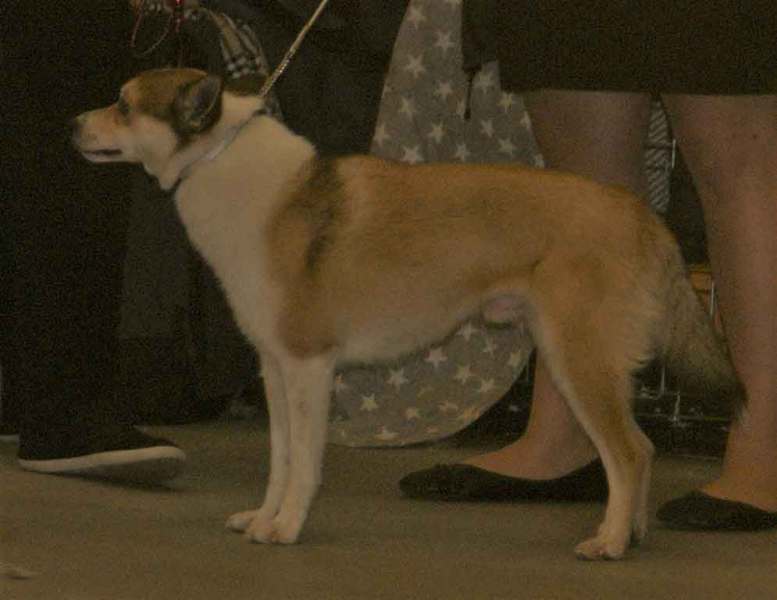
Lundehund

Most of the Norwegian Lundehund live in Norway and Finland, it is believed that there are some 2000 copies around the world.

Content

History

The Lundehund (Norsk Lundehund or Norwegian Puffin Dog) It is a small breed of dog of Spitz type, originally from Norway. Its name is composed of the prefix Lunde, Norwegian lundefugl (puffins), and the suffix hund, What dog. The breed was developed to hunt these birds and their eggs.

The Norwegian Lundehund is a small, rectangular Spitz, with a wide variety of mobility in the joints of your bones, What makes him able to enter through small and intricate passages.
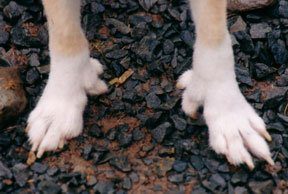
They remain able to rotate the head back on the backbone and bend the hind legs to the side at an angle of 90 degrees such as the arms of humans, In addition to six toes on the feet.

The breed has a long history. Already in 1600 It was used for hunting puffins along the Norwegian coast. Its flexibility and extra toes were ideal for hunting of birds in their places of nesting in the inaccessible cliffs and caves.

Video «Norwegian Lundehund»

My lundehund

Interest in the breed declined as new hunting methods for puffins, as for example, the use of networks…, and this ex officio contortionist, was no longer needed. Puffins were a precious object of hunting, the meat was horse and kept and feathers were used to make quilts.

The breed was nearly extinct around World War II, when the canine distemper hit Værøy and the islands surrounding. In 1963, the population was decimated… Only six copies of Lundehund (one Værøy and 5 in Soon, to the South of Norway), These five puppies was of the same litter.

Due to the care of the brood with the strict guidelines, currently there are approximately 1500 or 2000 copies of Lundehund around the world, of this population around 1.100 are in Norway and almost 350 in the United States.

The official registration of the Lundehund was approved by the American Kennel Club's in the miscellaneous class. 1 in July of 2008, After a unanimous vote of the Board the 13 in November of 2007. The race debuted at the AKC National Championship / Eukanuba in Long Beach, California (United States), the 13 and 14 in December of 2008, being one of the most important events of the American canine world.

The 12 in February of 2010, The American Kennel Club Board of Directors voted to accept the Lundehund in the AKC Book of Origins and became part of it on 1 in December of 2010. The 1 in January of 2011, became part of the "Non-Sports Group".

For the American Kennel Club and Canadian Kennel Club, the non-sports group is a diverse classification that comprises a variety of robust dogs with different personalities and appearances as the Chow Chow , and the Keeshond, among others. Covered by the non-sporting group breeds, It is very diverse in terms of appearance, size, layer, personality and, in general.

According to the FCI classification it is located in the Group 5 Spitz-type dogs and primitive type. Section 2 Nordic Hunting Dogs.

Physical characteristics

The Lundehund medium in size looks a bit like a fox and is, also because it is one of the rare races, sometimes mistaken for a mestizo, a Nordic mongrel. On the contrary, is very specialized: The Lundehund has been bred for hunting puffins, a species of bird that breeds in burrows. This brings with it some unique physical characteristics: your shoulder joints are more flexible, allowing it to turn its front legs 90° to the side. It also, this dog can close his pointed, upright ears, allowing you to dive better.

The most striking features are undoubtedly the six toes of each foot and the up to eight pads, which give the ancient cliff hunter immense security. Some of these dogs also lack molars, which facilitated the transport of the captured birds without damaging them.

The Norwegian Lundehund It has a height at the withers of up to 38 cm and weighs 7 kg. sporty and light. The dense coat is short and red to fawn, with black hair tips in places. have a smooth undercoat, very fine and a rough top coat.

Character and skills

The Norwegian Lundehund is a four legged friend, simple and skillful, but he has a lot of energy and wants to live it. Due to its independent nature – the Lundehund was left to fend during the hunt – always kept his own head and thus will never fully subordinate himself. Who respects this, win with him Lundehund an easy to train and loyal friend for life.

Basically the breed is considered to be quite shy, so a close relationship with its owner is especially important – that's how your Lundehund gain security. Towards strangers he is usually reserved – it is also considered to be alert. He usually gets along well with other dogs. The Lundehund not a typical hunting dog, but is also wonderfully suitable as a companion dog.

The education of the Norwegian Lundehund

This is a breed of dog with a stubborn and stubborn character, even so they are easy to train and learn the basic commands with great motivation.

Although the breed belongs to hunting dogs, the Lundehund can accompany you, with some effort in their education, on your nature walks without the need for a leash, since it is not an elusive dog, nor a traditional prey tracker. A major challenge is getting our dogs out of the habit of barking: Lundehund, like all nordic dogs, announce aloud all the supposedly interesting things in their environment – and that in part is quite persistent. So patience is absolutely necessary when training a Lundehund. Already in puppyhood, be sure to keep this in mind when training your dog. Play lessons for puppies, as well as attendance at a canine school, have a positive effect on Lundehund – here you can not only socialize him more with other four-legged friends, but you will surely also get some tips and tricks for the education of this dog.

Health: the syndrome Lundehund

Since the population dates back to only five dogs, Controlled breeding of the breed made a new start in the 1990s. 1960, with what the Lundehund has a very small gene pool. One of the five founding dogs developed stomach and intestinal symptoms at the age of about three years, which have spread further among the descendants. Today, this is known as the lundehund syndrome: a chronic, inflammatory bowel disease that is associated with increased protein loss through the intestines. About half of the population is affected by it, although to varying degrees. A genetic test can be used to determine if a dog intended for breeding is a carrier, so that the risk of Lundehund syndrome can be reduced. There is no cure for this disease, only the symptoms can be relieved. While some dogs are barely limited by the disease and have long symptom-free phases, other affected quadrupeds have a more severe course and ultimately lead to death.

Before deciding to acquire a representative of this breed, must be informed in detail about the lundehund syndrome and the corresponding genetic test and its meaning. The Nordic Dog Clubs can also provide you with more information on this.. The healthy ones Norwegian Lundehund are, for the rest, very robust and can reach an age of about 14 years.

Norwegian Lundehund "care

The coat of this Norwegian Coastal Dog is insensitive to weather conditions and requires little grooming. But, the more you brush, less hair is distributed in your home – especially during coat change a daily brushing may make sense, because the Lundehund then lose a lot of hair. Otherwise, care is quite simple: dirt brushes better when dry. By the way, the Norwegian Lundehund It is one of the few dogs that really enjoys grooming. If you support them with the brush, you are also doing something for their bonding.

Check the ears and eyes regularly and clean them with special ear and eye cleaners if necessary. If the eyes get wet, what happens in many dogs due to narrow tear ducts, it is enough to gently clean and dry them once a day with clear water. Some dog owners opt for daily dental care in the form of toothbrushing with dog toothpaste and toothbrush.. If you already introduce your puppy to this ritual, is an optimal prevention against tartar and associated secondary diseases.

Activities «Lundehund Norwegian»

Long walks in nature, enjoying the wind and the weather are the base of activity of this Norwegian breed. It also, most of these dogs love to swim. Make your partner happy and give him the opportunity to do it!! But you should also encourage and challenge their brain and skills. There is a wide range of joint activity possibilities at your disposal: Dog lovers can enjoy almost all types of sports with dogs, with the exception of sports with training dogs. Due to his great independence you should not expect unconditional obedience from him, but a relaxed approach to the respective human-animal hobby jointly. Try together with your animal companion which sport you like the most!!

Is a "Norwegian Lundehund"?

One Norwegian Lundehund fits well in a sporty family, where at least one family member already has experience with dogs. Learn easily and with pleasure, but for education you still need a certain knowledge and consistency. It also, it is important to use the dog to its full potential – the small Lundehund not a couch dog, needs a lot of outdoor exercise and a lot of time.

He is usually very fond of children and can also make friends with cats, especially if you met them as a puppy. This dog can also live in a medium-sized apartment, but of course also enjoy a garden (leak proof). It is important to direct the joy of the breed's barking in a controlled manner.

Before moving, make sure no one in your home has allergies to pet hair and consider whether you can and want to take the dog on vacation – many hotels today welcome four-legged friends – or how you organize care. Although the Lundehund it's more like a small dog, can be quite expensive in terms of regular costs: Apart from a high quality diet with a high content of fish, this includes taxes and dog insurance, as well as visits to the vet. It also, is, of course, the not inconsiderable purchase price of this rare four-legged friend – with possible travel expenses – and if necessary the basic equipment.

Where can I find my "Norwegian Lundehund"?

First of all: One Norwegian Lundehund It's very weird. In total, there are some 1.300 specimens all over the world. So, you may very well have to wait a long time and travel many miles to get hold of such a rare dog. Most of the Lundehunds they live in norway. Check with a Norwegian dog club in your country to find out how to contact breeders of the Norwegian Lundehund. Ask your potential dog breeder about the lundehund syndrome and the diet of the breed.

His young Lundehund will move in with you at the earliest at the age of eight weeks – if you come from a European country, you will normally need a valid rabies vaccine for the trip in addition to the necessary papers. It is essential that you remember booster shots and also talk to your vet about regular deworming of your four-legged friend.

It is extremely unlikely to find an adult dog, especially outside of norway. So if you're looking for a four-legged adult friend, it is advisable to contact a Nordic dog club. There are also often wonderful mongrel dogs looking for a new home., value the adoption of one of them.

We wish you much joy with your extraordinary Norwegian Lundehund!

Characteristics "Norwegian Lundehund"

Coexistence is important that you have with your new friend. Before considering the acquisition of a dog of the breed "Norwegian Lundehund" you know certain factors. Not all breeds of dogs are apt to live in an apartment, you must take into account his character, their need for exercise, their interaction with other pets, their care and if you have small children, their level of tolerance towards them.

Adaptation ⓘ

3,0 of 5 stars (based on 1 review)

friendly dog ​​ⓘ

3,0 of 5 stars (based on 1 review)

hair loss ⓘ

4,0 of 5 stars (based on 1 review)

Affection level ⓘ

4,0 of 5 stars (based on 1 review)

Need for exercise ⓘ

4,0 of 5 stars (based on 1 review)

Social need ⓘ

4,0 of 5 stars (based on 1 review)

Home ⓘ

4,0 of 5 stars (based on 1 review)

Toilet ⓘ

5,0 of 5 stars (based on 1 review)

Friendly with strangers ⓘ

3,0 of 5 stars (based on 1 review)

barking ⓘ

4,0 of 5 stars (based on 1 review)

Health ⓘ

2,0 of 5 stars (based on 1 review)

Territorial ⓘ

4,0 of 5 stars (based on 1 review)

Cat friendly ⓘ

3,0 of 5 stars (based on 1 review)

Intelligence ⓘ

3,0 of 5 stars (based on 1 review)

Versatility ⓘ

3,0 of 5 stars (based on 1 review)

Child friendly ⓘ

3,0 of 5 stars (based on 1 review)

Surveillance ⓘ

4,0 of 5 stars (based on 1 review)

joy ⓘ

4,0 of 5 stars (based on 1 review)

Images "Norwegian Lundehund"

photos:

1 – "Norwegian Lundehund" by http://www.petsadviser.com/
2 – "Norwegian Lundehund" by https://pxhere.com/es/photo/754827
3 – "Norwegian Lundehund" by https://pxhere.com/es/photo/880994
4 – Norwegian puffin town Andrva / CC BY-SA
5 – "Norwegian Lundehund" by https://commons.m.wikimedia.org/wiki/File:Lundehund.jpg
6 – The Norwegian Lundehund «Gyda» looking out at the ocean on the north side of the island Værøy in Northern Norway. The island on the top, in the middle, is «Mosken», the island in the top left is «Moskenes» by ZorroIII / CC BY-SA

Type and recognitions:

  • FCI CLASSIFICATION:
  • Group :
  • Section : . .

Federations:

  • – FCI – Group 5 – Section 2 Nordic Hunting Dogs. ⓘ
  • – AKC – Nordic Hunting Dogs. ⓘ
  • – CKC – Nordic Hunting Dogs. ⓘ
  • – UKC – Nordic Hunting Dogs. ⓘ

FCI breed standard "Norwegian Lundehund"

Origin:
Norway

Date of publication of the valid original standard:
10.11.2011

Use:

Its anatomical peculiarities train these dogs for the hunting of the frailecillos in the steep rocks around the fjords and in the cliffs.


General appearance:

The "Norwegian Lundehund" is a Spitz type dog, rectangular, small, flexible, relatively light, with well -defined sexual characteristics.


Behavior / temperament:

Alert, energetic and vivacious.

Head:

Dry, medium width, wedge shaped.

Cranial region:
  • Skull: Slightly rounded, protruding supraciliary arches
  • Stop: Pronounced but without excess.

facial region:

  • Horcico: Cuneiform, medium long. Slightly convex muzzle.
  • Jaws / Teeth: Preferably scissor bite. Pincer bite and moderate undershot are acceptable. The lack of premolars in both jaws is allowed.
  • Eyes: Slightly oblique, not outstanding. The iris is yellowish brown. The pupil is surrounded by a dark colored ring.
  • Obars: The triangular ears are medium in size, wide at its base, carried erect and very mobile. They have the special characteristic that the pavilion cartilage can be contracted and the external part can be bent or specially crooked (backwards or upwards at right angles), so that the ear canal is closed.

Neck:

Delgado, medium long, quite strong and covered in a relatively abundant collar.

Body:

Rectangular.

  • top line: Straight.
  • Back: Strong.
  • Glikeness: Slightly inclined.
  • Pecho: Elongate, average amplitude, proportionally deep and spacious; it is not barrel shaped.
  • Línand the bottom: Slightly retracted belly.

Tail:

Insertionmoderatelyhigh, medium long, well covered with dense hair, but without forming feathers. Carried in shapemildringon the back, or he wears it hanging. The tip of the tail must not be carried too high on the back or fall next to the flanks.

Tips

PREVIOUS MEMBERS:

  • Apgeneral arience: Moderately angled.
  • Antarm: Straight.
  • Pinis previous: Oval, slightly deflected out. Feet with a minimum of six fingers, of which five step on the ground. Eight pads on each foot. Anatomically the two inner fingers are formed by a finger with three phalanges and one with two phalanges with the corresponding tendon and muscular apparatus. Gives the foot a very strong appearance.

LATER MEMBERS:

  • Apgeneral arience: The position of the hind limbs is a bit narrow.
  • Thighs: Muscular and strong.
  • Rodinllto: Moderately angled.
  • PinScheme: Muscular and strong.
  • Pinis later: Oval, Something diverted out with a minimum of six fingers, of which four step on the ground. Seven pads on each foot. The middle pad, the most important for its size, attached to the inner pad corresponding to the middle fingers. When the dog is normally standing on a flat surface, your body weight is evenly distributed over all pads.

Movement:

Light and elastic. The movement of the anterior members has a characteristic turn of the race and movement of the posterior members is a bit narrow.

Mantle

  • Plink: Soft inner fluff, dense and rough outer coat. The hair is short on the head and the anterior part of the extremities. Thicker fur around the neck and on the back of the thighs. Dense tail hair, but without forming feathers.
  • Colorr: Always in combination with white. From reddish to more or less mixed with hairs with black tips Fawn; white with dark markings. Usually, the adult specimen presents more hairs with black tips to the young dog.


Size and weight:

Alturto the cross:

  • Males from 35 cm to 38 cm.,
  • Females from 32 cm to 35 cm..

Pthat:

  • Males approximately 7 kg,
  • Females approximately 6 kg.


Fouls:

Any deviation from the aforementioned criteria is considered as a fault and the severity of this is considered to the degree of the deviation to the standard and its consequences on the health and well-being of the dog..

FALTAS DISQUALIFYING:

  • Aggressiveness or extreme shyness.
  • Any dog ​​showing clear signs of physical or behavioral abnormalities must be disqualified..


N.B.:
  • Males should have two normal-appearing testicles fully descended into the scrotum..
  • Only functionally and clinically healthy dogs, with the typical conformation of the breed, should be used for parenting.

Itlatest changes are in bold.

Source: F.C.I - International Cynological Federation

Alternative names:

1. Norsk Lundehund, lundehund, Norwegian Puffin Dog (English).
2. lundehund (French).
3. Norsk Lundehund (German).
4. Cão de papagaio-do-mar (Portuguese).
5. Perro frailecillo, Lundehund (español).

▷ The world of Pets: Dogs, cats, birds, reptiles, amphibians

Hokkaido
Japón FCI 261 - Asian Spitz and related breeds
Hokkaido

The Hokkaido still a very rare breed of dog, who is hardly ever seen outside of his home country.

Content

History

This ancient lineage of dogs, known today as Hokkaïdo (name of the second Japanese island, largest), It is also known as Kyushu or Ainu dog. According to historical data, its existence dates back to the year 1000 A.C. The offspring of Hokkaido dogs, is uncertain, but some authors believe that they come from the Nordic dogs. The Hokkaido is, probably, the oldest Japanese purebred. Similar to the Scandinavian Spitz in appearance, also has features of the Chow Chow and of the Shar-Pei.

Since its origins it has been used as a guard dog in the Hokkaido Island, and, as well, in hunting bears and other large animals.

In 1937, this breed was recognized as a Natural Heritage of the Japan, by the society for the preservation of Japanese races.

It is also a breed recognized by the FCI.

Rare monument of nature

The Hokkaido It is one of the oldest dog breeds in the Asian world and is part of the cultural heritage of the Japanese island. In 1937 Hokkaido was even declared «Monument of Nature»And since then it has been recognized and protected as a race.

Due to the difficult to access regions of the island, Dogs retained their "pure blood" for centuries. Unlike Akita or Shiba Inu, who gave way to Europe long ago, the Hokkaido still a very rare breed of dog, who is hardly ever seen outside of his home country.

Physical characteristics

This is a dog's size medium; its height usually get to the 53 cm in males and the 48 cm in females. Their weight varies between 20 and 30 Kg. Their life expectancy is around the 14 years.

The fur of this species is double: the sub-pelo is dense and soft and external hair is coarse and size medium or short. Its colors vary between fiery red, black and grey.

Character and skills

With regard to his temperament, Whereas it is a hunting and guard dog, we can highlight features such as bravery, impulsivity, agility and speed of movement.

Within the family, is a tame animal, Devoto, with a safe and protective temperament with children if he is accustomed to their presence from an early age. However, tends to be distrustful with strangers, reason why you need a good training and re-education of their less sociable side.
They are very active dogs and it is necessary to provide good rides, long walks, workspace very well to the family but they need space, have a garden where you can be at your leisure.

Hokkaido care

The coat of Hokkaido should be gently brushed regularly (about two or three times a week). You should even use the brush daily during the shedding to remove dead hair from your dog.. It also, Your dog's ears and teeth should be cleaned once or twice a week. To avoid injury, claws should also be trimmed regularly. You will hardly ever need to bathe your Hokkaido: first, He likes to jump to rivers or lakes and "bathe" there, in the second place, it is naturally very clean and thirdly, the skin's own protective barrier should not be attacked by too frequent bathing or even dog shampoo.

Hokkaido Health

In fact, a possible inbreeding in the breeding of Hokkaido in Europe, since due to the rarity of this breed there are very few breeding dogs. So, there is a realistic risk of undesirable hereditary diseases being introduced. A close look at the pedigree is worth it in any case and can perhaps prevent unpleasant surprises.. Apart from the problem of inbreeding, the dogs of Hokkaido They are very robust and resistant to typical dog diseases.. The life expectancy of healthy animals is between 9 and 15 years.

Hokkaido Nutrition

In addition to good genetic material, nutrition also has a decisive influence on the dog's health. Like descendants of the wolf, dogs are carnivores, this also applies to Hokkaido. The original dog especially likes fish. In his homeland., Japan, where it is still traditionally used for fishing and where salmon are caught on their way to spawning grounds with great skill and reaction speed, this preference is not always appreciated – because the Hokkaido first he eats the fish caught by himself and only gives away some of his prey when he is full.

Characteristics "Hokkaido"

Coexistence is important that you have with your new friend. Before considering the acquisition of a dog of the breed "Hokkaido" you know certain factors. Not all breeds of dogs are apt to live in an apartment, you must take into account his character, their need for exercise, their interaction with other pets, their care and if you have small children, their level of tolerance towards them.

Training ?

1,0 of 5 stars (based on 1 review)

Suitability of the apartment ?

1,0 of 5 stars (based on 1 review)

Can be alone all day ?

2,0 of 5 stars (based on 1 review)

Suitable as a first dog ?

1,0 of 5 stars (based on 1 review)

Weight gain ?

4,0 of 5 stars (based on 1 review)

Health ?

4,0 of 5 stars (based on 1 review)

Intelligence ?

4,0 of 5 stars (based on 1 review)

Kindness with child ?

2,0 of 5 stars (based on 1 review)

Tendency to bite ?

3,0 of 5 stars (based on 1 review)

Tendency to bark ?

3,0 of 5 stars (based on 1 review)

Tendency to flee ?

4,0 of 5 stars (based on 1 review)

hair loss strength ?

4,0 of 5 stars (based on 1 review)

Suitable as a guard dog ?

5,0 of 5 stars (based on 1 review)

Joy ?

2,0 of 5 stars (based on 1 review)

Cat friendliness ?

2,0 of 5 stars (based on 1 review)

Power level ?

5,0 of 5 stars (based on 1 review)

Videos "Hokkaido"

HTTPS://youtube.com/watch?v=Z34qpCIZ9YM
15 Things You Should Know About Ainu Dog
HTTPS://youtube.com/watch?v=ZDlVRoYaXKE
Hokkaido Puppy Katana

Type and recognitions:

  • FCI CLASSIFICATION:
  • Group :
  • Section : . .

Federations:

  • – FCI – Group 5: Spitz-type dogs and primitive type – Section 5: Asian Spitz and related breeds. ⓘ

FCI breed standard "Hokkaido"

Origin:
Japan

Date of publication of the valid original standard:
16.06.1999

Use:

Hunting dog and company.


General appearance:

medium size dog, well proportioned, strong structure with robust skeleton and well -defined sexual characteristics. The muscles are highly developed and have clear lines.

Important proportion :

• The relationship between the height of the cross and the length of the body is 10 to 11.
• The relationship between the skull length and the length of the nasal cane is 3 : 2.
• The length of the skull corresponds to its width at the height of the cheeks and constitutes a quarter of the height of the cross.


Behavior / temperament:

It has remarkable resistance; His behavior is noble and his spontaneous character. Is faithful temperament, docile, Very much and brave.

Head:

---

Cranial region:
  • Skull and front : Broad and a little flattened.
  • Depression links (Stop) : Unremarkable, but visible.

facial region:

  • Truffle : Black; In white fur dogs, liver truffle is allowed.
  • Snout : Wedge shaped. Straight nose cane.
  • Lips : Very adherent, With black edges.
  • Jaws / Teeth : Powerful scissors bite.
  • Cheeks : Well developed.

Eyes : Relatively small, almost triangular, well separated, dark brown.

Ears : Small, triangular, slightly directed forward and carried vigorously erect.

Neck:

Strong and muscular, without jowl.

Body:

  • Cross : High.
  • Back : Straight and strong.
  • Pork loin : Moderately wide and muscular.
  • Rump : Properly oblique.
  • Breast : Well developed sill. Deep and moderately wide chest. Well arched ribs.
  • Belly : Well withdrawn.

Tail:

High insertion, thick, carried vigorously screwed or folded on the back in the form of a hoz. The tip of the tail must reach almost the corvejones when it is down.

Tips

PREVIOUS MEMBERS :

  • Shoulder : Moderately oblique.
  • Forearm : Straight, well delineated.
  • Metacarpus : Slightly inclined.

LATER MEMBERS : Strong.

  • Warm-tarsal joints : Robust, quite strong.

FEET : Well arched and compact fingers. Thick and elastic pads. hard nails, black or dark.

Movement:

Agile, lively, Light and elastic.

Mantle

HAIR : The outer layer is resistant and straight, the undercoat is soft and dense. In the tail the hair is relatively long and separate.

COLOR : Color sesam (red-tawny hairs with black tips), striped, red, black, Black with fire, white.


Size and weight:

Height to the cross :

  • In males : 48,5 – 51,5 cm..
  • In females : 45,5 – 48,5 cm..


Fouls:

Any deviation from the aforementioned criteria is considered as a fault and the severity of this is considered to the degree of the deviation to the standard and its consequences on the health and well-being of the dog..

• Inverted sexual characteristics.
• Mild upper or lower prognathism.

MISS PLAYOFFS

• Aggressive or fearful dog.
• Pronounced upper or lower prognathism.
• Ears that do not get erect.
• Very short or pendant tail.
• Shyness.

Any dog ​​showing clear signs of physical or behavioral abnormalities must be disqualified..


N.B.:

Males must have two normal appearance testicles completely descended in the scrotum. The blue-negruzco tongue should not be considered as a lack.

Source: F.C.I - International Cynological Federation

Alternative names:

1. Dō-ken, Ainu-ken, Seta, Ainu dog, Hokkaido-Ken (English).
2. Aïnou, Ainu-ken, Hokkaïdo-ken (French).
3. Hokkaido-Hund, Ainu-Hund, Ainu Inu, Hokkaido-Ken (German).
4. Hokkaido (cão) (Portuguese).
5. Dō-ken, Ainu-ken, Ainu Dog (español).

▷ The world of Pets: Dogs, cats, birds, reptiles, amphibians

Portuguese Podengo
Portugal FCI 94 . Primitive type - Hunting Dogs

Podenco Portugués

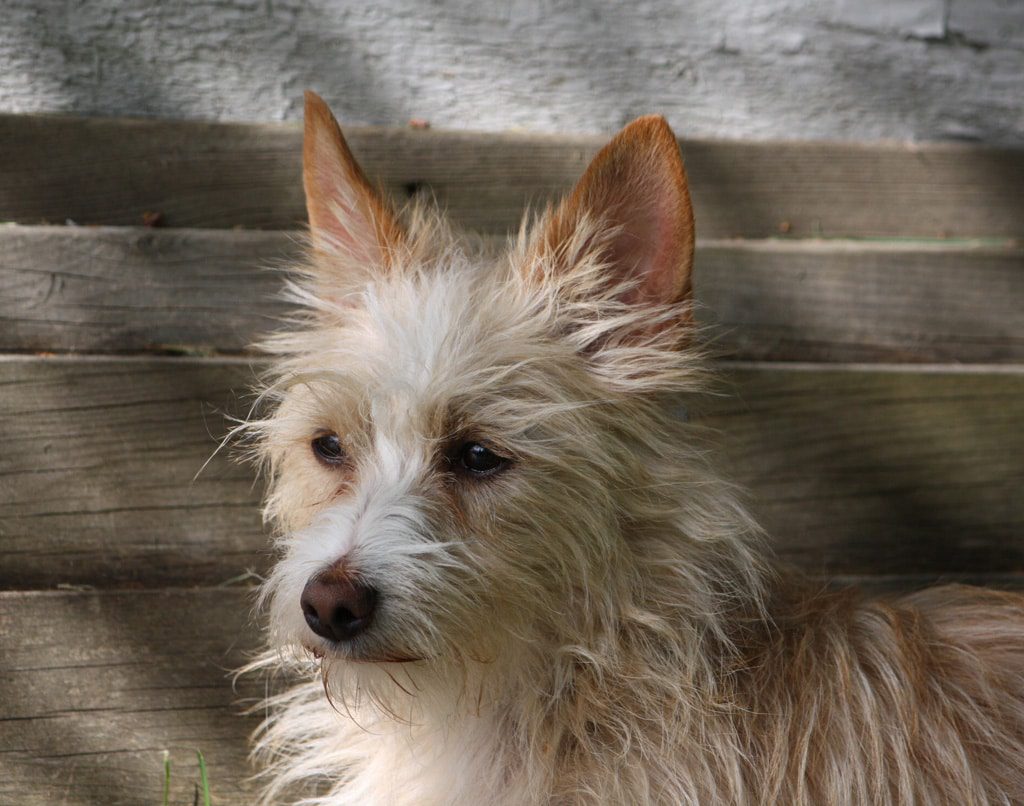
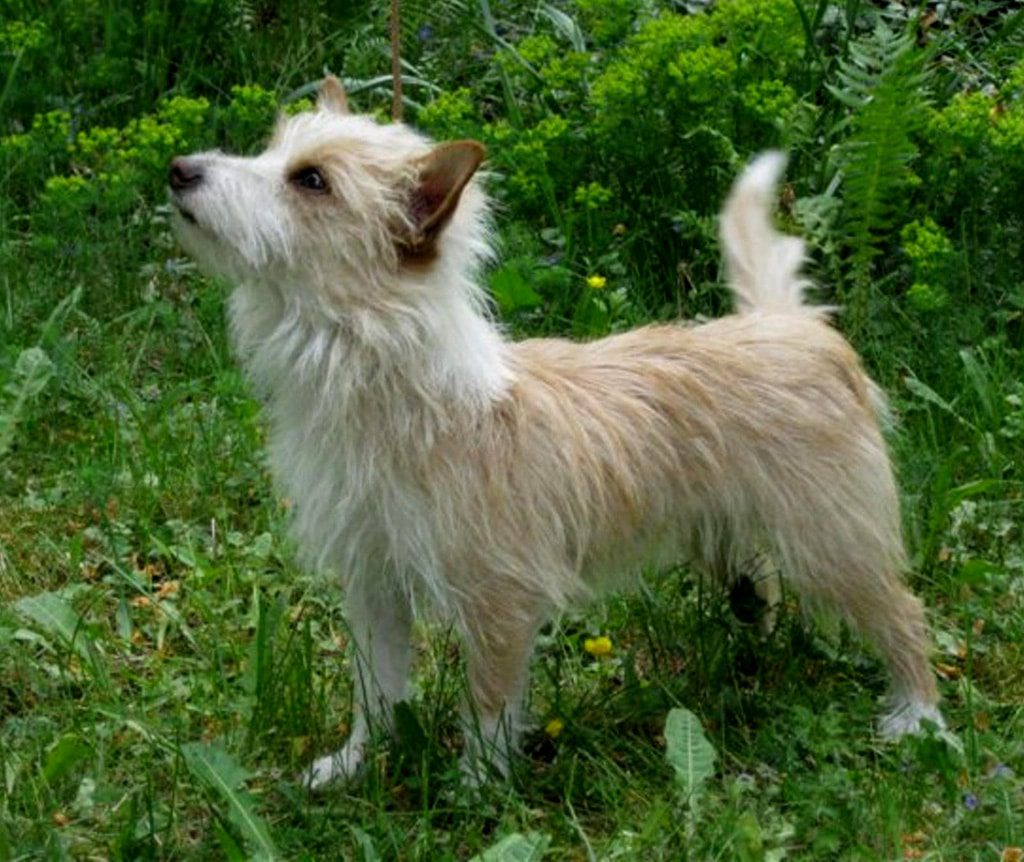
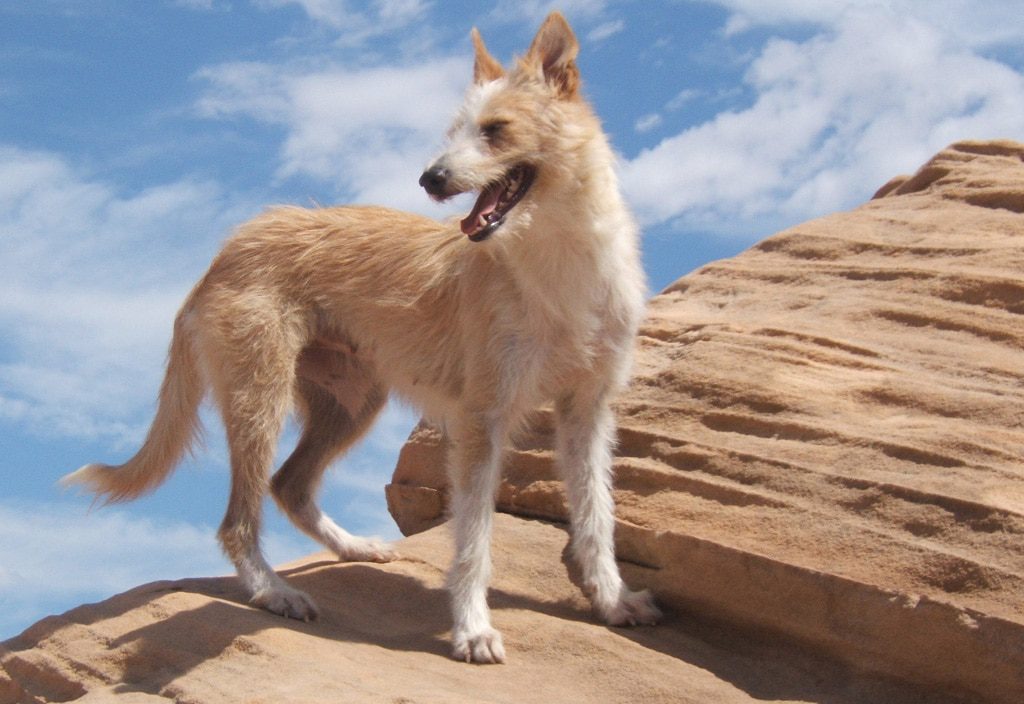
The Portuguese Podengo is a breed of dog that is in danger of extinction.

Content

History

The Portuguese Podengo It is considered one of the oldest dogs breeds, that has its origins in the Phoenicians, cultural matrix of which descend the Portuguese. It is a native breed of Portugal, with great skills for hunting, but also surveillance, It is commonly used on farms to alert of the presence of intruders.

The great family of the hound race, specialists in the topic raised it was in Portugal where most subjected to crossing and as a result, branched lineage. Within their ancestors argue that perhaps the closest the Ibizan Hound, and various types of dogs of traces of lived (They inhabit) throughout the Mediterranean area. Like all hound dogs, History shows that they are represented in Egyptian paintings of thousands of years ago.

according to size, There are three varieties of Portuguese Hound, Grand, Small and medium, being each variety, products of the different crossing, over time.

It is believed that the great variety has emerged the variety of Portuguese Podengo small and medium, the ancestor of the Grande variety is the Pharaoh Hound spread from North Africa to the Iberian Peninsula. Although other authors raise that it is possible that the hound descends from the small Iberian wolves. There is still controversy...

Although one of the theories suggests that the Medium Portuguese Podenco arises, of different Podenco dogs from North Africa, The most accepted theory is that this variety, directly descended from the Portuguese Podengo Grande.

The small Portuguese Hound, sometimes described as a Chihuahua heavier (There is no kinship between these two races), often collaborate in the tasks of hunting with their larger peers, what this dog does is get into the rabbit hole and scare them so that they come out and are hunted by their pack mates.

In the North of Portugal today it is still used for hunting rabbits and small vermin. Hunting in a pack or alone. Although this dog can be seen in the rest of the country, its popularity lies in the North of the same.

Physical characteristics

As specified above, according to size, There are three varieties of Portuguese Hound, Grand, Medium- and Petit:

  • Portuguese Podengo Grande: It is a very rare variety and is in danger of extinction, especially the smooth variety. They are usually used in packs to hunt large prey such as deer or wild boar.. It is the only Portuguese breed used for wild boar hunting. His cloak can be short and smooth (less common and on the verge of extinction) or rough and long.
  • Portuguese Podengo Medio: It is the fastest of the three varieties, excellent Hunter of rabbits and hares. You can hunt in a pack or alone. Like the great Portuguese Hound, their coats can be smooth or rough and short and long. Of the three varieties this is the most common, and the greatest concentration of these dogs is located in the North of Portugal.
  • Portuguese Podengo Pequeno: Like his brother medium is an excellent Hunter of rabbits and hares. Responsible for getting into the Burrows (Thanks to its size and agility) to drive away prey and be hunted down by his pack mates. The small Portuguese Podengo coat is short and smooth, only.

The varieties in the fur are related to the inclement weather and adaptation to the same, the smooth-haired variety is more common in northern Portugal, characterized by being a humid area, This soft and smooth coat is necessary because it is dried more easily after wet.

The variety of hair bristles found in drier areas, where the coat of hair has the function of protecting the dog from the sun's rays and cold weather in winter. Nature is wise…

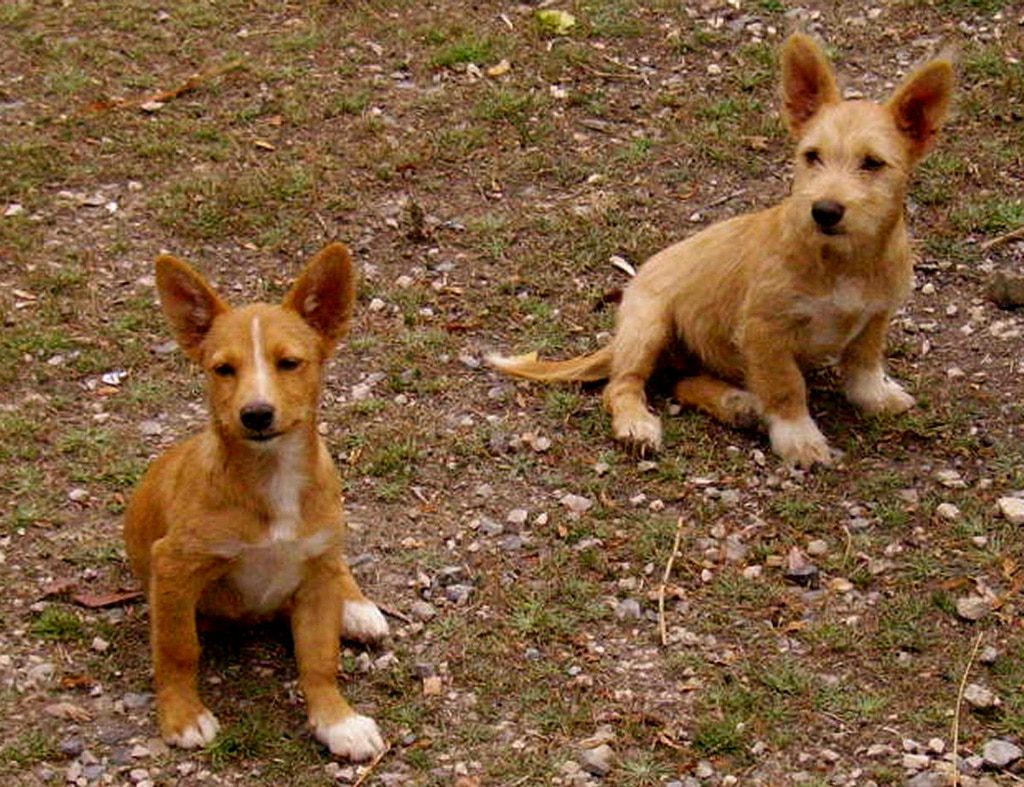
The hair short or long, thick medium and bright. In dogs with long hair and rough, the hairs of the snout are long (Beard). The predominant colors are yellow and the fawn (with its varieties of color clear, to very dark), and diluted or matte black; unicolores with or without white spots or white spotting.

Their life expectancy is around the 12 or 14 years, and it is a race that is rarely seen outside Portugal.

In general, is a medium-sized dog, well proportioned, muscular with good bone structure. It has long, narrow head, with moderately wide skull and the pointed snout.

The ears, large and triangular, they are carried erect. It has eyes expressive and little bulging in orbits, color honey or brown, according to coat color.

The pigmentation of eyelids is darker that the of the fur. The body is quite long, with ribs moderately arched.

The tail, is strong and pointed, long and medium length, It is held horizontal or slightly arched in activity.

Character and skills

The Portuguese Podengo, It is their three varieties has a cheerful character, intelligent and very sociable with other dogs. They are extremely affectionate with their owners, especially with the children.

They are very shy with strangers, always alert and constant surveillance of their territory, that makes them good guard dogs, although, It lacks the aggressiveness which may show a watchdog or defence.

Observations

Unfortunately, the Portuguese Podengo It is one of the canine breeds that today are found in danger of extinction, even in Portugal. It is not easy to see them out of Portugal.

Images of the «Portuguese Podenco»

Videos of the «Portuguese Podenco»

Type and recognitions:

  • FCI CLASSIFICATION:
  • Group :
  • Section : . .

Federations:

  • – FCI – Group 5: Spitz-type dogs and primitive type – Section 7: Primitive type - Hunting Dogs. ⓘ

FCI breed standard "Portuguese Podengo"

Origin:
Portugal

Date of publication of the valid original standard:
04.11.2008

Use:

hunting dog, guard and companion dog


General appearance:

Quadrangular pyramidal head, erect ears, sickle-shaped tail, well proportioned with a solid build and well muscled. Very loving and intelligent, sober and rustic. It comes in three sizes with two varieties of hair: smooth and wired.

IMPORTANT PROPORTIONS:

Podenco Grande y Medio: Almost square (midline sub) with large to medium substance respectively.
Length of the body in relation to the height at the withers: 11 / 10 and depth of chest with respect to the height at the withers 1 / 2.

Little Podenco: Body somewhat longer than tall (long sub), small in stature. The length of the body is somewhat greater than its height at the withers in a proportion – length of the body / height to the cross: 6 / 5.
chest depth / height to the cross: 1 / 2.

In all varieties the length of the snout is less than the length of the skull.


Behavior / temperament:

Podenco Grande: Used for hunting big game.

Podenco Medio: Also known as Warren Hound, his natural aptitude as a rabbit hunter is well known. Hunt alone or in a pack.

Little Podenco: Used to search for rabbits in burrows and rocks.

All varieties are used as guard and companion dogs..

Head:

Thin, in the form of a quadrangular pyramid trunk. Its base is wide and its quite pointed end. The upper longitudinal axes skull facial differ.

Cranial region:
  • Skull: Annoying. The profile is almost straight. The eyebrows are prominent. The frontal furrow is little pronounced. The handset inter space is horizontal and the back of the head is prominent.
  • Depression front naso (Stop): Little pronounced.

facial region:

  • Nose: Thin. Se adelgaza y es truncada en forma oblicua; is prominent in its end. Its color is darker than the coat.
  • Nose cane: Rounded cross section; straight profile. It is shorter than the length of the skull and wider at the base than at its tip.
  • Lips: Are well applied to each other. They are fine, strong and well straight.
  • Jaws/teeth: Normal, scissor bite, with solid and white teeth. The two jaws have a regular opposition. Complete dentition in the large variety.
  • Cheeks: Thin or placed oblique views of front.
  • Eyes: They are expressive and little bulging in orbits. Its colour goes from the honey to Brown, according to coat color. They are small and oblique. The pigmentation of eyelids is darker than the coat.
  • Ears: Insertion oblique and medium. Straight and high mobility are. They are vertical to the front when the dog is alert. They are sharp, and wide at the base. Triangular shape, thin; a height larger than the base and considerable.

Neck:

Harmoniously joined with the head and trunk. It is straight, long, provided, strong and well muscled. It presents no Chin.

Body:

  • top line: It is straight, level.
  • Cross: Only slightly visible in relation to the neck and back.
  • Back: Straight. It is long.
  • Pork loin: Straight. It is wide and muscled.
  • Rump: Medium length. It is wide and muscled; straight, or little fall.
  • Breast : Breastwork muscular and low protrusion. It is not very broad. deep chest, medium-amplitude up to the level of the elbows. It is long, with the sternum inclined backwards and upwards. Ribs well arched and bent.
  • Belly and flanks: Thin; slightly agalgados.
  • bottom line: It is slightly high.

Tail:

Natural. Set rather high. It is strong, thick and pointy; medium length. During rest it falls between the buttocks, to the hock and is slightly curved. When the dog is moving rises horizontally, slightly arched, or folded vertically in the form of Scythe, Although never screwed.

Tips

PREVIOUS MEMBERS: Seen from the front and profile are appropriate limbs. They are muscular and thin.

  • Shoulder: Long, inclined, strong and muscular well, scapula – humerus angle of approximately 100º.
  • Elbows: Parallel to the main line of the body.
  • Forearm: Vertical; long and muscled.
  • Carpo: Delgado, is not prominent.
  • Metacarpus: Strong; short, little oblique.
  • Front feet: Rounded. Long toes, strong, together, and well arched. Fingernails are short and strong, preferably dark. The pads are durable and hard.

LATER MEMBERS: Seen from the back and side are well Plumb. They are muscular and thin.

  • Thigh: Long; medium-amplitude and well muscled.
  • Knee joint: femur – tibia angle approximately 135º.
  • Leg: It is oblique, long, thin, strong and muscled.
  • Hock: Medium tall. It is thin and strong. The hock angle is open approximately 135º.
  • Metatarsus: It is strong, short, Spurs and oblique.
  • Rear feet: They are rounded, with long toes, strong, together, and well arched. Fingernails are short and strong, preferably dark. The pads are durable and hard.

Movement:

Fast and agile. Lightweight trot.

Mantle

SKIN: The mucous membranes are preferably black, or always darker than the coat. The skin is thin and stretched.

HAIR: Two varieties. The hair is short or long, medium-thick. The hair is smooth when it is short, or rough when long. Short hair is more abundant than the long hair.
In dogs with long hair and rough, the hairs of the snout are long (Beard). There is no presence of an internal layer of hairs.

COLOR: The predominant colors are yellow and the fawn (with its varieties of color clear, to very dark), and diluted or matte black); unicolores with or without white spots or white spotting.
In the small hound the following colors are accepted but are not preferred: black, Brown with or without white markings, or white with spots of these colors.


Size and weight:

Height to the cross:

  • Petit: 20 – 30 cm..
  • Medium: 40 – 54 cm..
  • Grand: 55 – 70 cm..

Weight:

  • Petit: 4 – 6 Kg.
  • Medium: 16 – 20 Kg.
  • Grand: 20 – 30 Kg.


Fouls:

Any deviation from the above criteria should be considered as missing and the severity of this is considered in proportion to the degree of deviation from the standard and its effect on the health and welfare of the dog.

  • Behavior: Signs of shyness.
  • Snout / Skull: Skull upper longitudinal axes parallel facial.
  • Jaws: Incorrect occlusion or improperly implanted teeth, bite clamp, incomplete dentition in the large variety.
  • Truffle: Partial absence of pigmentation.
  • Neck: Arcuate.
  • Body: Arched top line.
  • Rump: Too steep.
  • Spurs: Its existence is not appreciated.
  • Fur: Silky and / or Undercoat.

SEVERE FAULTS:

  • Snout / Skull: Upper longitudinal axes convergent facial skull.
  • Truffle: Total absence of pigmentation.
  • Ears: Rounded.
  • Belly: Very agalgado.
  • Tail: Threaded queue.

MISS PLAYOFFS:

  • Behavior: Aggressiveness or excessive shyness.
  • General aspect: Signs of crossing with a Greyhound (Spanish Hound) or a Perdiguero (Portuguese Braco).
  • Jaws: Improper opposition of the jaws.
  • Eyes: Eyes of different colour (heterochromia).
  • Ears: Bent or folded.
  • Color: Striped, black and tan, Tri-color or totally white.
  • Any dog ​​showing clear signs of physical or behavioral abnormalities should be disqualified..


N.B.:

Males should have two normal-appearing testicles fully descended into the scrotum..

TRANSLATION: Rafael Santiago (Puerto Rico).
Technical review: Miguel Angel Martinez (Federation Cynologique Argentina).

Source: F.C.I - International Cynological Federation

Alternative names:

1. Portuguese Warren Hound (English).
2. Podengo portugais, Lévrier portugais (French).
3. Podengo Português (German).
4. Cão-coelheiro (Portuguese).
5. Podengo português (español).

▷ The world of Pets: Dogs, cats, birds, reptiles, amphibians

Dachshund
Germany FCI 148 - Dachshund

Even if you have it as a companion dog, the Dachshund still a passionate hunting dog, persistent, fine and agile nose.

Teckel

Content

Characteristics "Dachshund"

Coexistence is important that you have with your new friend. Before considering the acquisition of a dog of the breed "Dachshund" you know certain factors. Not all breeds of dogs are apt to live in an apartment, you must take into account his character, their need for exercise, their interaction with other pets, their care and if you have small children, their level of tolerance towards them.

Adaptation ⓘ

5,0 of 5 stars (based on 1 review)

friendly dog ​​ⓘ

2,0 of 5 stars (based on 1 review)

hair loss ⓘ

1,0 of 5 stars (based on 1 review)

Affection level ⓘ

5,0 of 5 stars (based on 1 review)

Need for exercise ⓘ

3,0 of 5 stars (based on 1 review)

Social need ⓘ

4,0 of 5 stars (based on 1 review)

Home ⓘ

4,0 of 5 stars (based on 1 review)

Toilet ⓘ

2,0 of 5 stars (based on 1 review)

Friendly with strangers ⓘ

2,0 of 5 stars (based on 1 review)

barking ⓘ

5,0 of 5 stars (based on 1 review)

Health ⓘ

3,0 of 5 stars (based on 1 review)

Territorial ⓘ

3,0 of 5 stars (based on 1 review)

Cat friendly ⓘ

3,0 of 5 stars (based on 1 review)

Intelligence ⓘ

4,0 of 5 stars (based on 1 review)

Versatility ⓘ

2,0 of 5 stars (based on 1 review)

Child friendly ⓘ

2,0 of 5 stars (based on 1 review)

Surveillance ⓘ

3,0 of 5 stars (based on 1 review)

joy ⓘ

5,0 of 5 stars (based on 1 review)

History

The Dachshund he is a very special dog, not only because of its unique appearance. Even today it is still a versatile hunting dog and of course a family dog.. It is probably the only small dog that is still regularly used for work.. In times past it was called "Dachshund» and that remains their official breed name today. The specialty of Sausage dog, what hunters like to call it, is hunting.

The Dachshund He was sent to the caves to take a badger from its burrow. He was not to fear that great defensive marten that, After all, he could easily counter the brave with twice his weight. Dachshund in the battle. Even today the Dachshund are still used for hunting foxes and rabbits. It also, demonstrates himself in the search and in the work of sweat.

Today, the Dachshund is one of the most popular hunting dogs in Germany and many other countries. And it is also one of the most popular companion dogs. Since primitive times, the low-breasted sausage has been bred as a hunting dog. They are already shown in the photos of the ancient Egyptians. As early as the Middle Ages, dogs were described and painted that look almost exactly like our own. dachshunds from today. Also the purposes were the same.

The Dachshund It is one of the dog breeds that were and continue to be the most resistant and one of which for the longest time has been entrusted with a task at the service of man. With the emergence of modern dog breeding, the modern Dachshund was born in germany. Already in 1888 the German Club of Dachshund. It is the oldest sausage breeding club and the second oldest purebred dog club in Germany.

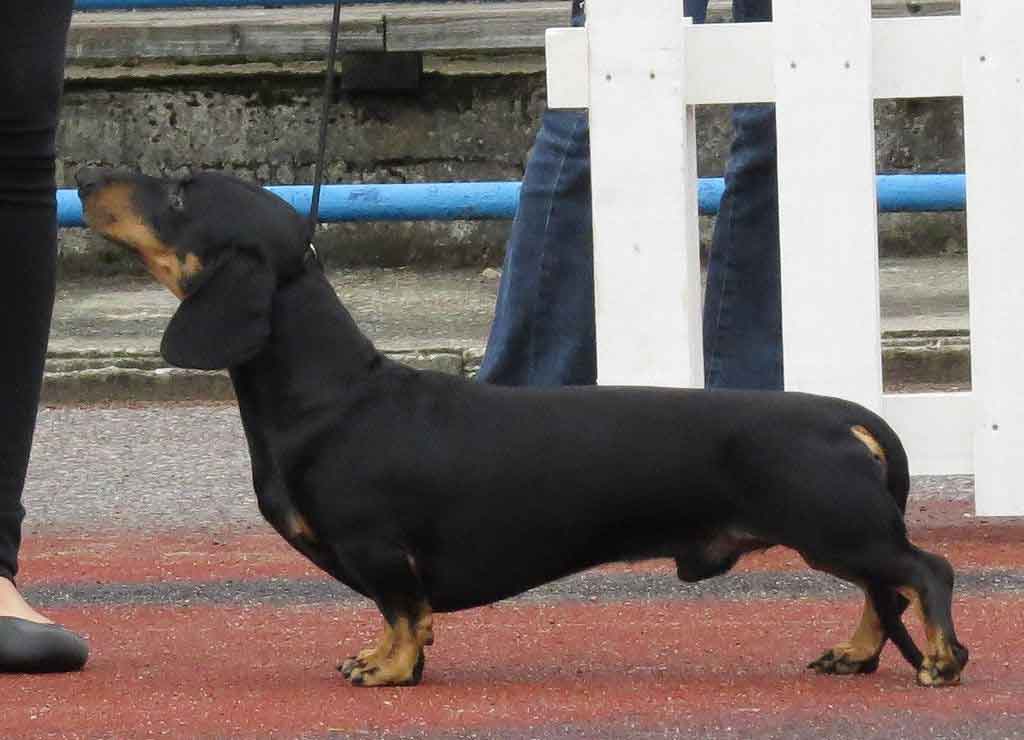
Dachshund normal
Dachshund standard variety

There are three varieties of Dachshunds according to the size which in turn are subdivided each into three subvarieties depending on the length of their fur:

1 – Standard

  • to – Longhair
  • b – shorthair
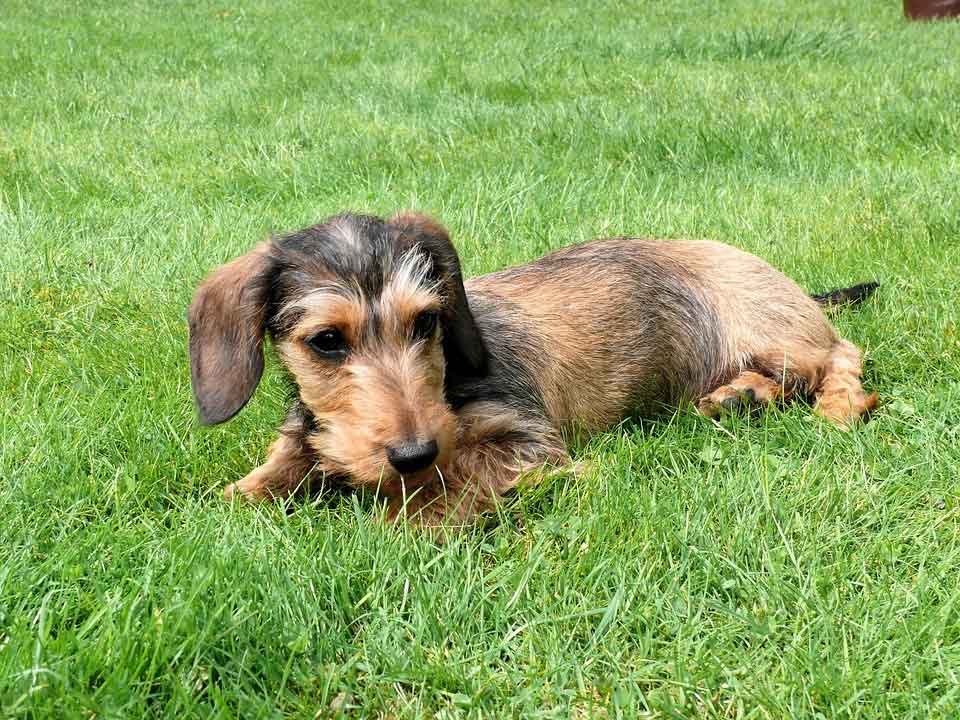
  • c – Wire-haired

Dachshund Miniature
Miniature dachshund

2 – Miniature

  • to – Longhair
  • b – shorthair
  • c – Wire-haired

3 – Rabbit Dachshund

  • to – Longhair
  • b – shorthair
  • c – Wire-haired
Rabbit Dachshund
Dachshund for rabbit hunting

It is said that the spaniels were bred in the past by the long-haired dachshund, while the hard-haired Teckel had a terrier between its ancestors.

What is your correct name: Teckel, Dachshund o Dackel?

All three names are correct. Name "Dahshunt» (derived from badger), late middle ages, became "Dächsel» at the beginning of the 18th century, in the second half of that century in «Teckel» in northern Germany and later, towards the end of the 19th century – as a short tiny shape – «Dackel«.

Physical characteristics

The main external feature of the Dachshund it's his downfall, called chondrodystrophy. This chondrodystrophy is a mutation of the cartilage that, among other things, produces dwarfism in long bones. This has been established in ancient times and maybe even before that., since such dogs are very useful for humans. These may include, both hunting and working in tight spaces. The humble character of Dachshund is combined with an elongated and slim body.

The Dachshund is bred in two lines: as a hunting dog and as a companion dog. In the line of companion dogs also move lovers of dog shows, where it's over and over again at the expense of the well-being and health of dogs, for example if dogs are bred too long and too low.

The Standard dachshund has a chest circumference of more than 35 centimeters and weighs between four and nine kilograms. The Miniature dachshund have a circumference of 30 to 35 centimeters in the bust and a weight between three and four kilograms, the Rabbit Dachshund, about three kilograms in weight, but no less.

Character and skills

The Dachshund he is a hunting dog and has never been a lap dog. It is a small dog, very large. In the burrow, the Dachshund he is a persistent solitary hunter and must make decisions independently. A strong will, perseverance and great courage are other qualities that are required for hunting. These requirements have had a lasting effect on his character.. He is self-confident and sometimes stubborn, but contrary to popular opinion he is extremely well mannered and manageable. He is a true professional. His stubbornness makes up a good part of his special charm, that you not only have to accept but you like. He is friendly and not submissive, shows your opinion and is neither fearful nor aggressive. He also has a well-balanced temperament. Even if you have it as a companion dog, the Dachshund still a passionate hunting dog, persistent, fine and agile nose. Can be trained well – also for dog sports.

Dachshund care

The Dachshund has no special demands regarding its maintenance. He loves his humans, either in a small apartment or in the countryside with a large garden. But, you should never expect me to climb the stairs, at least not regularly. The Dachshund he is a hunter and a dog who enjoys nature. Regular excursions must be allowed, if possible daily, to the nature. Despite its short legs, the Dachshund has amazing resistance. It is always impressive to see with what zeal, speed and endurance this dog runs through nature. It is not unusual for him to accompany his master or carer when he runs, but this doesn't have to be the rule. Like a sturdy little dog, the Dachshund can be carried everywhere without problems. In a restaurant or hotel, he knows how to behave. The Dachshund it is an excellent family dog. Can be problematic with other pets due to their hunting instincts. This can be changed during the puppy stage if the dog gets used to it and is educated accordingly.

Coat and muzzle should be checked daily. The coat should be brushed regularly. The Dachshund wire-haired needs to be trimmed.

Dachshund education

Despite his passion for hunting, the Dachshund is a dog for everyone, whether hunter or non-hunter. Contrary to popular opinion, he is a well trained dog. You just have to earn it as a partner consistently and with conviction and patience. Then he gives her proverbial trusting nature the warm "look of Dachshund«. Is never submissive; has a strong self-confidence with a strong self-will. This must be respected, even appreciated. Each Dachshund has its own individual character. It should not be misinterpreted as a lapdog, must be challenged and above all his individual personality must be accepted. It can then be coached and managed consistently on the basis of the bonds of friendship.. With a little commitment, this is also possible for a less experienced beginner.

Typical diseases of Teckel

The Dachshund enjoy robust overall health. You just have to be careful that the dogs are not too small, too long, too light and not too short legs. Also show breeds, in which dogs are judged on their external appearance, should be considered with caution. The Dachshund occasionally suffers from paralysis of the Dachshund It is named. It is a special sliding disc, that has the same inherited causes as your lack of movement. It also, diseases of the heart valves, rheumatic diseases and idiopathic epilepsy are more common. La endogamia, mating with extreme characteristics such as dwarf - exaggerated ratio (short legs, long back)- represents a considerable risk to health and dramatically shortens life expectancy.

Nutrition / Food

The Dachshund has no special nutritional requirements. For your general physical condition, especially with regard to the risk of paralysis of the Dachshund, you must take care that it stays strong and slim.

The life expectancy of the Dachshund

The Dachshund belongs to the healthy breeds, vital and long-lived. This is because, among other things, for use as a professional hunting dog. He often reaches the age of 12 to 15 years without any problems, sometimes even more.

Buy a Dachshund

If you want to buy puppies, you should be the first to decide if you want to have a Dachshund as a hunting helper or as a family companion. You should only buy your Dachshund to a recognized local breeder. You can also look at the local animal shelter. Puppies usually cost between 1.000 and 1.500 EUR.

Images "Dachshund"

Photos:

1 – Dachshund standard straight hair by Katemil94 / CC BY-SA
2 – A long-haired Dachshund puppy by Tam Tam from Shizuoka, JAPAN / CC BY-SA
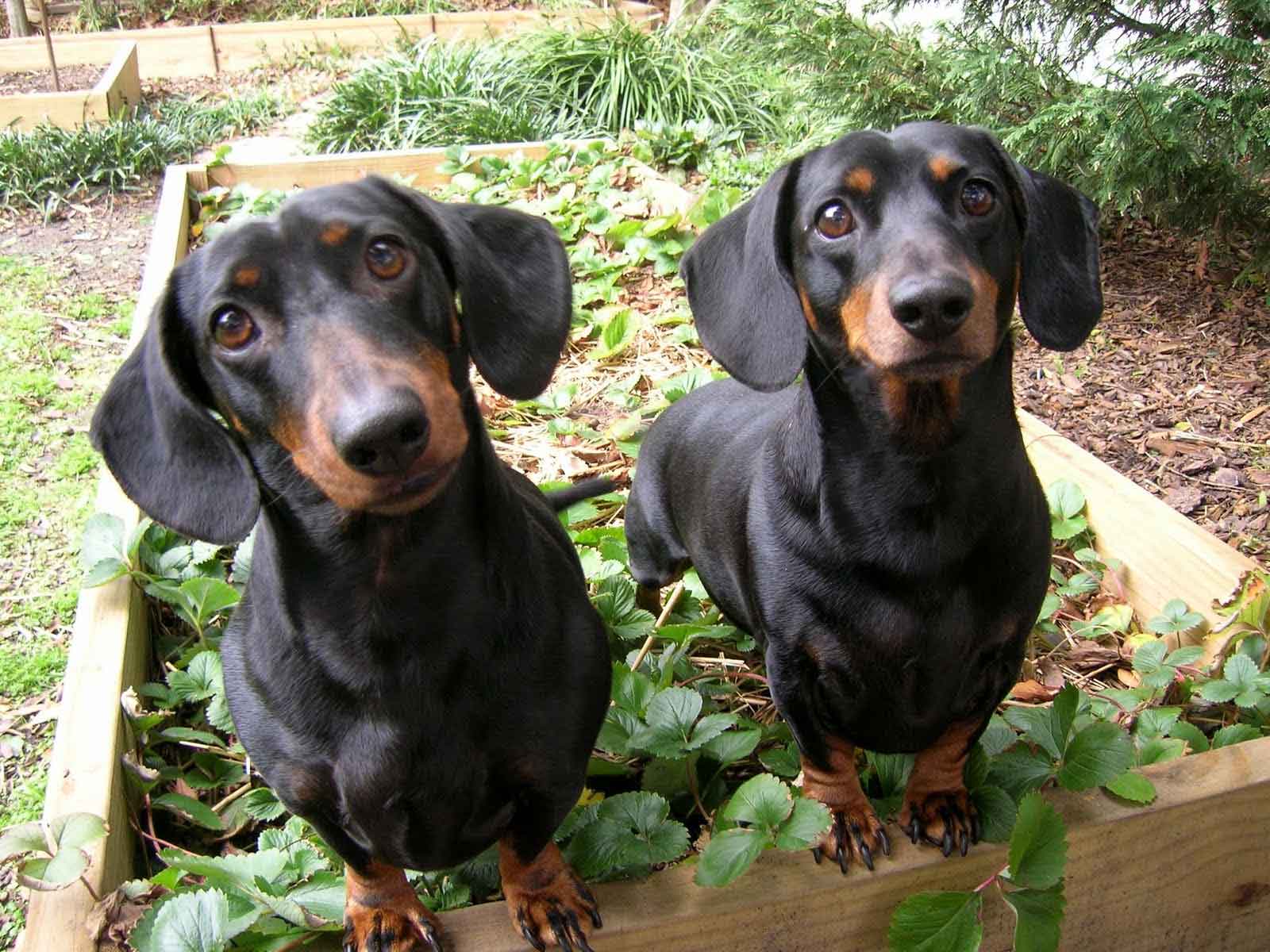
3 – A red and tan smooth haired Dachshund by Raven Underwood / CC BY
4 – Dachshund in Cannes by Tiia Monto / CC BY-SA
5 – A Wirehaired Dachshund Sleeping in the Sun by Jeuwre / CC BY-SA
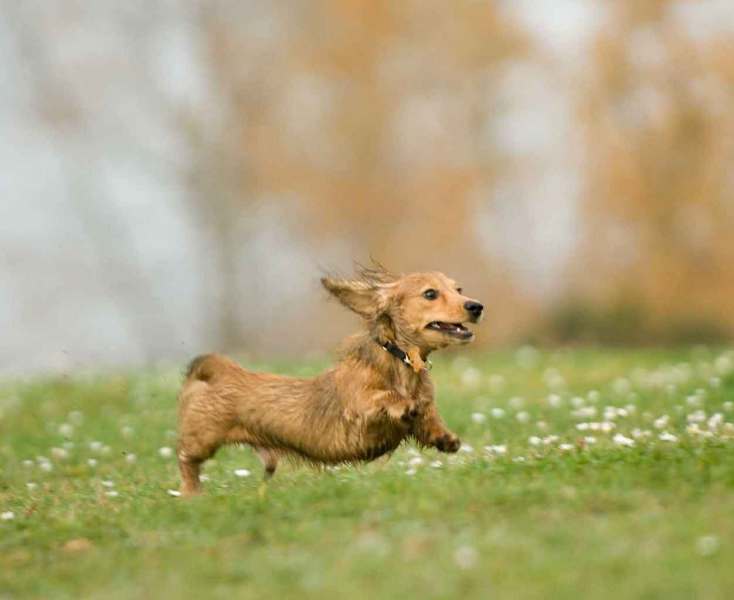
6 – Dachshund running in a green field by Dan Bennett / CC BY

Videos "Dachshund"

Type and recognitions:

  • FCI CLASSIFICATION:
  • Group :
  • Section : . .

Federations:

  • – FCI – Group 4 – Section 1 Sausage dog. ⓘ
  • – AKC – Sausage dog ⓘ
  • – ANKC – Sausage dog ⓘ
  • – CKC – Sausage dog ⓘ
  • – ​KC – Sausage dog ⓘ
  • – NZKC – Sausage dog ⓘ
  • – UKC – Sausage dog ⓘ

FCI breed standard "Dachshund"

Origin:
Germany

Date of publication of the valid original standard:
04/09/2019

Use:

Hunting dog, above and below ground.


General appearance:

Low structure, with short limbs, elongated but compact body with strong muscles. The head is carried with ease and pride; the expression is cunning.

Despite having short limbs, in relation to the body, must not be clumsy or limited in their movements. The specific development of both sexes is typical.

IMPORTANT PROPORTIONS : With the distance from the chest above ground level approximately one third of the height at the withers,the length of the body must be in a harmonious relationship with the height at the withers, approximately 1 to 1.7 -1.8.


Behavior / temperament:

By nature friendly, neither fearful nor aggressive, with a balanced temperament. Passionate hunting dog, persistent, agile and with a fine nose.

Head:

Elongated, both seen from above and in profile, narrows proportionally to the truffle, but it should not be pointed. The superciliary arcs are clearly defined. The nasal cartilage and nasal shank are long and narrow.

Cranial region:

Skull: Rather flat,gradually joining with a slightly arched bridge of the nose.

Depression front naso (Stop): Little marked.

facial region:

  • Truffle: Well developed.
  • Snout: Long, wide and strong enough.It should be opened wide, divided up to eye level.
  • Jaws / Teeth: Strongly developed upper and lower jaw. Scissor bite,regular. Ideally, a complete denture with 42 teeth according to the dental formula,with strong and exactly meshed fangs.

JAW DEFECTS: (Prognathism)

  • Lips: Tight, covering the lower jaw well.
  • Eyes: Medium-sized, oval and well separated, with clear and energetic expression, but at the same time confident and not penetrating. Dark red-brown and glossy to black-brown in all dog coat colors. Gazy eyes in harlequin dogs are undesirable, but they must be tolerated.
  • Ears: High inserted, not too far ahead, quite but not too long, rounded, Mobile, the front edge is well attached to the cheeks.

Neck:

Long enough and muscular; tight skin without double chin, slightly arched at the nape, carried free and erect.

Body:

  • top line:Harmonious, extends from nape to rump slightly oblique.
  • Cross: Pronounced.
  • Back: After the high cross, along the thoracic vertebrae, level or slightly oblique back. Strong and well muscled.
  • Pork loin: Strong musculature, long enough.
  • Rump: Wide, long enough and slightly sloping.
  • Breast : Sternum strongly pronounced and so prominent that slight holes form on each side. The thorax, seen from the front, it is oval, viewed from above and from the side is wide to ensure excellent development of the heart and lungs. The ribs extend far back. If the length and angulation of the scapulae and arm are correct, front limbs, viewed profile, They should cover the lowest point of the chest line.
  • Bottom line and belly: Slightly gathered.

Tail:

Implanted not too high and carried in the extension of the line of the back. A slight curve in the last third of the tail is allowed.

Tips

PREVIOUS MEMBERS

  • As a whole: With strong muscles and well angulated; seen from the front dry limbs, straight with strong bones and feet directed straight forward.
  • Shoulder: Relief muscles. The long scapula is sloping and well attached to the thorax.
  • Arm: The same length as the scapula, should form approximately a right angle to it. Strong bones and good musculature, glued to the ribs, but free in its movements.
  • Elbows: They must not be inclined either inwards or outwards.
  • Forearm: Short, but long enough so that the distance from the chest to the ground is approximately one third of the height at the withers. As far as possible right.
  • Carpal articulation: The carpal joints are somewhat closer together than the shoulder joint.
  • Metacarpus: In profile, not steep or visibly inclined forward.
  • Previous feet:Fingers placed next to each other and well arched with strong pads, resistant and thick and short and strong nails. The fifth toe has no function but should not be amputated.

LATER MEMBERS

  • As a whole: Strong musculature, in correct proportion to the previous members. Well angled in the knee and tibial tarsal joints, limbs parallel and in position neither too close nor too far apart.
  • Thigh: It should be of good length and with strong muscles.
  • Knee: Wide and strong, with marked angulation.
  • Leg: short, approximately at right angles to the thigh, strong muscles.
  • Corve­jón: Strong, tendinous and dry.
  • Metatarsus: Relatively long, mobile relative to the leg, slightly bent forward.
  • Rear foot: Four well-arched, close-together fingers rest fully on the sturdy pads.

Movement:

The movement must cover a lot of ground, should be fluid with a strong thrust with a long stride and not raised forward, strong push and causing a light and elastic transition on the top line. The carriage of the tail should be a harmonious continuation of the upper line and slightly drooping.. During the movement the front and rear limbs must move parallel forwards.

Mantle

Well stuck.

The Three Types Dachshund:

  • By Sizes: Standard, Miniatura y rabbits.
  • By Pelo: Lasted, Short and long.

SHORT HAIR

HAIR: Short, thick, bright, smooth, well glued to the body, strong and hard should not show hairless areas.

TAIL: With fine and thick hair, but it's not too hairy. Protective hair somewhat longer at the bottom should not be penalized.

COLOR

  1. to)Unicolores dogs: Red, Rojo-Amarillo, yellow, all colors without or with black speckling. Clean color is always preferred and red is more appreciated than red yellow or yellow. Also dogs heavily splashed with black are included in this category and not among dogs of other colors..

White is not desirable, but in the form of a few small spots is not qualifying. Black nose and nails; reddish-brown is also allowed,but it is not desirable.

  1. b)Bi-coloured dogs: Deep black or brown, all with rusty red or yellow fiery markings above the eyes, on the sides of the muzzle and lower lip, on the inside edge of the ears, in the backsplash, in the Interior and later parts of extremities, in feet, around the anus and from here to a third or half of the bottom of the tail. Black nose and nails in black dogs; in brown dogs the nose and nails are brown.

White is not desirable, but in the form of a few small spots is not qualifying. Excessive fire marks are not desirable.

  1. c)Spotted dog (Harlequins, atigrados): The basic color is always the dark color (black, Red or gray). Irregular gray but also beige spots are desirable (very large stains are not desired). Neither dark nor clear must prevail. Brindle Dachshund color has darker stripes on a red or yellow background. Nose and nails as in uni or bicolor dogs.

BY THE HARD

HAIR: With the exception of the snout, eyebrows and ears, has on the body, mixed with the inner layer of hair, a regularly glued outer layer, thick and barbed wire. A well marked beard forms on the muzzle. The eyebrows are bushy. In the ears, the hair is shorter than in the body, almost smooth. Tail with well developed hair, uniform and very stuck.

COLOR: Predominant light or dark pig color, as well as the color of the dry leaves. In the rest the descriptions of the colors are valid as in the Short Hair from the point to) patient c).

LONG HAIR

HAIR: The hair with an undercoat is smooth with shine and close to the body., It extends below the neck and the lower part of the body, it excels in the ears and presents a clearly more long feather-shaped hair on the back of the extremities. The longest hair is at the bottom of the tail where it forms a true flag.

COLOR: As in the description of the Short Hair in points a) patient c).


Size and weight:

  • Dachshund: Chest circumference greater than 35 cm.. Maximum weight approximately 9 Kg.
  • Miniature dachshund: Chest perimeter between 30 and 35 cm., at the minimum age of 15 months.
  • Rabbit Dachshund:Chest circumference less than 30 cm., at the minimum age of 15 months.


Fouls:

Any deviation from the aforementioned criteria is considered a fault and its severity is considered to the degree of the standard deviation.

Los M3 (molars 3) are not taken into consideration during the evaluation. The absence of two PM1 (Premolar 1) should not be considered as a fault. As a lack, the absence of a PM2 must be considered, when no other teeth are missing except M3, as well as any other deviation from a correct scissors bite, such as a pincer bite.

SERIOUS FAULTS:

  • Weak constitution, very long or short limbs that the dog appears to crawl on the ground.
  • Absence of other teeth to those described in fouls or elimination fouls.
  • Gazy eyes any color other than spotted dogs.
  • Pointed or heavily creased ears.
  • Body fallen between the shoulders.
  • Overdue or carp back.
  • Weak loin.
  • Dog with too strong a build. (The rump is higher than the withers).
  • Very weak rib cage.
  • Agalgados flanks.
  • Poorly angled forelimbs and hindlimbs.
  • Narrow hindlimbs, lack of muscles.
  • Beef or Barrel Hocks.
  • Feet turned inward or too far out.
  • Separate fingers.
  • Heavy movement, clumsy, clumsy.

COAT FAULTS

Short haired dachshund:

  • Very fine hair, very thin, bald spots on the ears (leather ears), other bald spots.
  • Too thick or too long hair.
  • Brush-shaped tail.
  • Partial or full length hairless tail.

Hard-haired Teckel:

  • Soft hair, either short or long.
  • Long hair parted from the body in all directions.
  • Wavy or curly hair.
  • Soft hair on head.
  • Tail forming a flag.
  • No beard.
  • Absence of undercoat of hairs.
  • Short hair.

Long haired dachshund:

  • Hair of the same length all over the body.
  • Hisurto wavy hair.
  • No flag in the queue.
  • No protruding hair on the ears.
  • Short hair.
  • Hair sharply parted on the back.
  • Hair too long between the fingers.

MISS PLAYOFFS

  • Very fearful or aggressive behavior.
  • Prognathism, enognatismo, crossbite.
  • Deviated arch of incisors.
  • Absence of one or more canines and one or more incisors.
  • Absence of other premolars or molars.

Exceptions:The two PM1 or one PM2 respectively without taking into account the M3.

  • Reduced chest.
  • Any defect in the queue.
  • Shoulders too loose.
  • Carpus deviated forward.
  • Black color without markings tan color, white with or without tan markings. Other colors than mentioned.


N.B.:
  • Any dog ​​showing clear signs of physical or behavioral abnormalities must be disqualified..
  • Males should have two normal-appearing testicles fully descended into the scrotum..

Source: F.C.I - International Cynological Federation

Alternative names:

1. Doxie, Wiener dog/hotdog, Sausage dog, weenie dog (English).
2. chien-saucisse (French).
3. Dackel, Teckel (German).
4. Cachorro salsicha, Teckel (Portuguese).
5. Perro vienesa, Perro longaniza, Perro salchicha (español).

▷ The world of Pets: Dogs, cats, birds, reptiles, amphibians

Kerry Blue Terrier
Irlanda FCI 3 . Large and medium sized Terriers

Kerry Blue Terrier

The Kerry Blue Terrier he is a thoroughbred terrier, brave, alert and with a penetrating expression.

Content

History

The Kerry Blue Terrier it is one of the irish national dogs. Its existence is documented since the 18th century, but it is suspected that he was home in County Kerry long before that. Regarding the origin of the breed, Legend has it that this intelligent dog got its blue-black coloring by crossing bloodhounds with lines of Irish Terrier.

In feudal times, Irish herdsmen and farmers were not allowed to hunt with wolfhounds. They solved the problem by crossbreeding which gave their terriers the characteristics of a Wolfdog..

The Kerry Blue Terrier He was raised as a Pied Piper, guard dog and herding dog. An Irish proverb says that a Kerry Blue Terrier replaces four shepherds. The agile dog was also particularly useful for hunting otters and badgers..

The appearance of the breed has undergone several changes over the centuries. Meanwhile in 1847 a Kerry Blue Terrier dark blue in color was still considered exemplary in 1847, Monochrome fur with dark markings was established in the 20th century. The FCI standard valid today dates from the year 2005.

Physical characteristics

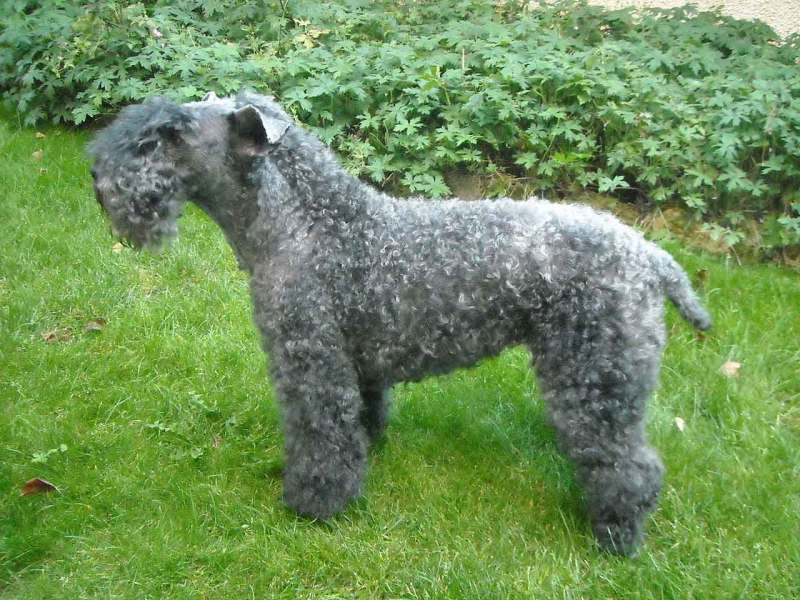
The Kerry Blue Terrier has a majestic body, muscular and slightly elongated, that impresses with its balanced appearance. His back is even and fairly long, moderately broad and deep chest. With its soft, lush and curly fur, the Kerry Blue Terrier It is considered one of the most attractive terrier breeds.

typical of the breed Kerry Blue Terrier it's his flat nose and long hair on his forehead and muzzle.

Puppies are born with a black-brown or dark black coat. Only at the age of about three the Kerry Blue Terrier It has its typical coloration.. The coat has no undercoat. A blue coat color is allowed in any shade, black marks are allowed. Tan or pure black markings are only allowed until the age of 18 months.

Other appearance features in the overview:

  • Head: Strong skull, rich fur, medium length front, black nose.
  • Ears: pointing forward or falling, underlining the typical terrier expression
  • Eyes: medium-sized, dark to brown with a piercing expression
  • neck: moderately long
  • lower limbs: straight with well-muscled thighs and strong hock
  • legs: compact with round pads and black claws

Size and weight:

Height to the cross:

For males between 45,5 to 49,5 cm. (18 to 19,5 inches).
For the females between 44,5 to 48 cm. (17,5 to 19 inches).

Weight:

For the males of 15 to 18 kg (33 to 40 English pounds).
For females proportionally less.

Character and skills

The Kerry Blue Terrier he is a thoroughbred terrier, brave, alert and with a penetrating expression. The elegant looking animal does not tend to bark and is not brusque. The Kerry Blue Terrier They are happy, loyal, family and children.

They are exceptionally open to strangers and need lots of petting at home. To the Kerry Blue Terrier loves to work. But, no need to keep the four-legged friend constantly busy at home.

Animals are very intelligent and eager to learn, briosos, but in no way nervous or aggressive. Strong self-confidence and strong willpower are typical traits that characterize all terrier breeds and require constant firmness from the owner..

Accommodation of the «Kerry Blue Terrier»

Since the Kerry Blue Terrier builds a close relationship with the owner and his family, a kennel position is inappropriate. He likes to participate in domestic life and is a faithful family dog, watchful and child friendly.

The four-legged friend is very active and needs two or three hours of exercise a day. Dog sports do justice to the momentum of the Kerry Blue Terrier to move and reinforce the bond with the owner.

Obedience is also a great activity for this smart and particularly attentive breed of dog.. Obedience is the school of subordination, which is especially valuable in a terrier. In this dog sport it depends on the correct and fast execution of an exercise sequence. Perfect teamwork between dog and owner is required.

The Kerry Blue Terrier they are wonderfully suited for difficult hunting tasks such as badger hunting or otter spearfishing. When objects are recovered from the water, most Kerry Blue Terriers they prove to be good swimmers and are in no way inferior to a Retriever.

The four-legged friends of this breed reject the other dogs a bit and therefore should be better kept individually.. If you like peace and tranquility at home, you shouldn't have Kerry Blue Terrier along with a cat.

Feeding the «Kerry Blue Terrier»

Like any other breed of dog, the Kerry Blue Terrier you need a balanced diet appropriate for your species. Must consist of animal protein, remarkable muscle meat and vitamin-rich casings, carbohydrates, vitamins and minerals. Feeding fish occasionally provides the dog with essential omega fatty acids 3 and ensures that the coat stays shiny and smooth.

The size of the daily ration depends on the age, condition and level of exercise of your four-legged friend and the quality of the food. It should be divided into two meals so as not to overload your stomach. It is better not to feed your dog before walks or canine sports. Then the food tastes much better.

The choice of dry or wet food is at the discretion of the owner, but a mixture of both is highly recommended. Here's a decision aid.

When high-quality dry food is given, the recommended daily amount for a Kerry Blue Terrier adult is on average 1,5 cups. It is important that the dog always has enough fresh water available. Once again, a small lazy dog ​​needs less food than an active animal.

An especially appropriate form of feeding for the species, although somewhat more expensive, it's fresh food, in which the dog feeds on meat, raw fruit and vegetables. You can prepare food for your Kerry Blue Terrier yourself or you can use frozen prepared meals.

Of course, Your quadruped doesn't just need chew products like bones made from cowhide, no wood root chips, for example of the coffee tree, horse tendons or cow ears for dental care. The popular pig ears are high in fat and therefore, they should only rarely come to the dog's table.

Education and care of the «Kerry Blue Terrier»

If you decide to buy one Kerry Blue Terrier, you must plan early enough to attend a dog school.

After all, your new housemate is a true terrier with a very stubborn personality. But, is certified to be easier to handle and more compliant than representatives of other terrier breeds.

Especially promising are training methods that don't punish, but they reward desirable behavior accordingly. A procedure that at the same time promotes the close relationship of your four-legged friend with you.

One of these methods is the proven Clicker Training, which is described here in more detail.

The training of a Kerry Blue Terrier includes intensive recovery training. After all, the four-legged friend has a clear hunting instinct and without consistent training will hunt down anything that comes his way.

His stubborn willpower can only be achieved with uncompromising subordination.

The very good intelligence of Kerry Blue Terrier requires variety in training. The constant repetitions quickly bore him and make the self-confident four-legged friend look for a more interesting occupation..

Characteristics "Kerry Blue Terrier"

Coexistence is important that you have with your new friend. Before considering the acquisition of a dog of the breed "Kerry Blue Terrier" you know certain factors. Not all breeds of dogs are apt to live in an apartment, you must take into account his character, their need for exercise, their interaction with other pets, their care and if you have small children, their level of tolerance towards them.

Adaptation ⓘ

5,0 of 5 stars (based on 1 review)

friendly dog ​​ⓘ

2,0 of 5 stars (based on 1 review)

hair loss ⓘ

2,0 of 5 stars (based on 1 review)

Affection level ⓘ

4,0 of 5 stars (based on 1 review)

Need for exercise ⓘ

4,0 of 5 stars (based on 1 review)

Social need ⓘ

4,0 of 5 stars (based on 1 review)

Home ⓘ

5,0 of 5 stars (based on 1 review)

Toilet ⓘ

4,0 of 5 stars (based on 1 review)

Friendly with strangers ⓘ

3,0 of 5 stars (based on 1 review)

barking ⓘ

3,0 of 5 stars (based on 1 review)

Health ⓘ

3,0 of 5 stars (based on 1 review)

Territorial ⓘ

5,0 of 5 stars (based on 1 review)

Cat friendly ⓘ

2,0 of 5 stars (based on 1 review)

Intelligence ⓘ

4,0 of 5 stars (based on 1 review)

Versatility ⓘ

4,0 of 5 stars (based on 1 review)

Child friendly ⓘ

4,0 of 5 stars (based on 1 review)

Surveillance ⓘ

4,0 of 5 stars (based on 1 review)

joy ⓘ

5,0 of 5 stars (based on 1 review)

Images "Kerry Blue Terrier"

Photos:

1 – Kerry Blue Terrier by https://commons.wikimedia.org/wiki/User:Alofok
2 – Two Kerry Blue Terrier, the left one, named Ceallach Blue Ivanhoe is on this photo about 14 years old and light grey. She have made the full color change. On the right is a about one year old Kerry Blue Terrier, called Edbrios Highlander. In this age the breed is just starting with changing the color of the coat. by © Hilarmont (Kempten) / CC BY-SA 3.0 OF
3 – Kerry Blue Terrier dog by Eponym / CC BY-SA
4 – Kerry Blue Terrier by Svenska Mässan from Sweden / CC BY
5 – Kerry Blue Terrier during dogs show in Katowice, Poland by Pleple2000 / CC BY-SA
6 – Kerry Blue Terrier, exhibition in Spodek, Katowice by Pleple2000 / CC BY-SA

Videos "Kerry Blue Terrier"

Type and recognitions:

  • FCI CLASSIFICATION:
  • Group :
  • Section : . .

Federations:

  • – FCI – Terriers 1 Large and medium-sized terriers. ⓘ
  • – AKC – Terriers ⓘ
  • – ANKC – Terriers ⓘ
  • – CKC – Terriers ⓘ
  • – ​KC – Terriers ⓘ
  • – NZKC – Terriers ⓘ
  • – UKC – Terriers ⓘ

FCI breed standard "Kerry Blue Terrier"

Origin:
Ireland

Date of publication of the valid original standard:
19.04.2005.

Use:

It is used in the hard work of hunting otters in deep water, in fighting badgers underground and hunting vermin. Good guard dog and loyal companion.


General appearance:

The typical Kerry Blue Terrier should be an upright dog, compact and well proportioned, featuring a well-developed muscular body, with a well defined terrier style.


Behavior / temperament:

Terrier character in all its meaning. The most important factor, The expression, must be insightful and alert.

Head:

With a lot hair. Males should have a stronger head and be more muscular than females..

Cranial region:
  • Skull: Strong and well proportioned.
  • Depression links (Stop): Light.

facial region:

  • Truffle: black, the large and wide nostrils. Snout: Must be of medium length.
  • Jaws: Strong and muscular jaws (scary calls). Teeth: Large white teeth; scissor bite (accepting bite on clamp).
  • Mouth: Dark gums and palate.
  • Eyes: Dark or dark hazelnut, medium in size and well placed, with expression of liveliness.
  • Ears: Thin and not big, carried forward or along the sides of the head towards the front, again to show the vivacious and sharp expression of the terrier.

Neck:

Well proportioned, good insertion on the shoulders and moderately long.

Body:

  • top line: Of average length, straight. Pork loin: Moderate long.
  • Breast : Deep and moderate width. Well arched ribs.

Tail:

Thin, good insertion, carried erectly and cheerfully.

Tips

PREVIOUS MEMBERS:

  • Blades: Lightweight, leaning back and well glued.
  • forearms: Seen from the front, straight and with good bones.

LATER MEMBERS: They must be well placed under the dog.

  • Thighs: Muscular, well developed.
  • Hocks: Strong.
  • Pies: compacts, strong round pads, black nails.

Movement:

With good coordination, parallel members. Forelimbs with good reach and hindlimbs with good thrust. When the dog is moving the line must be kept at level and head and tail bring them up.

Mantle

  • Fur: Soft, abundant and wavy.
  • Color: Any shade of blue with or without black spots. Allow the color black, as well as a reddish hue, only until the age of 18 months.


Size and weight:

Height to the cross:

  • For males between 45,5 to 49,5 cm. (18 to 19,5 inches).
  • For the females between 44,5 to 48 cm. (17,5 to 19 inches).

Weight:

  • For the males of 15 to 18 kg (33 to 40 English pounds).
  • For females proportionally less.


Fouls:

Any deviation from the above mentioned criteria is considered to lack, and the gravity of this refers to the degree of deviation to the standard and its impact on the health and well-being of the dog.

  • Flesh-colored gums.
  • Yellow eyes, the clear.
  • Convex or concave back.
  • Narrow sill.
  • Elbows sticking out.
  • Upper or lower prognathism.
  • White or ivory nails.
  • Spurs on the hind limbs or signs that they have been removed.
  • Closed or affected hind limb movement, with hocks together (cow).
  • Dogs whose head or tail are held by exhibitors or presenters should be penalized
  • Wire-haired, wire or piggy.
  • Any color other than blue, except the exceptions indicated above.

FALTAS DESCALIFICANTES:

  • Aggressiveness or extreme shyness.
  • Any dog ​​showing clear signs of physical or behavioral abnormalities must be disqualified..


N.B.:
  • Males should have two normal-appearing testicles fully descended into the scrotum..
  • Only functionally and clinically healthy dogs, with the typical conformation of the breed, should be used for parenting.

The latest changes are in bold.

TRADUCCION: Lic. O. Valverde, reviewed by Dr. F. del Valle and updated by J. Nallem, Uruguayan Kennel Club.

Source: F.C.I - International Cynological Federation

Alternative names:

1. Irish Blue Terrier, Kerry (English).
2. Terrier Kerry Blue (French).
3. Kerry (German).
4. Irish Blue terrier (Portuguese).
5. Kerry (español).

▷ The world of Pets: Dogs, cats, birds, reptiles, amphibians

Irish Terrier
Irlanda FCI 139 . Large and medium sized Terriers
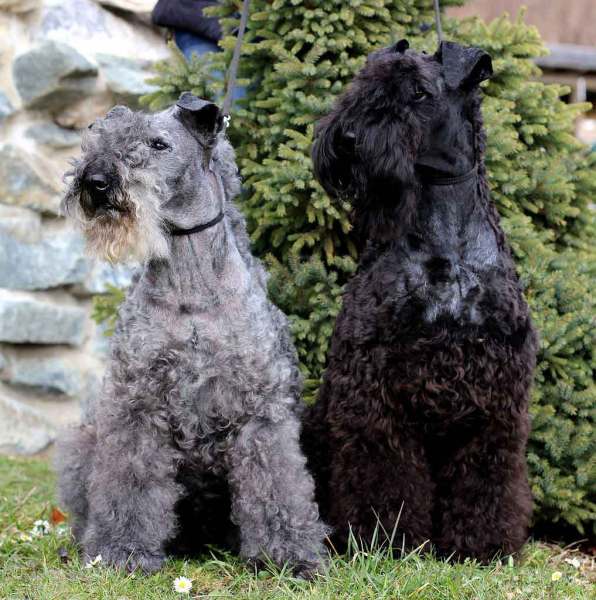
Terrier Irlandés

The Irish Terrier it is a dog of pleasant appearance and endowed with an exceptional character.

Content

History

Where did the "Irish Terrier" originally come from??

The "Irish Terrier", he is a high-ranking terrier. It is often called the "Red Irishman" for its distinctive reddish coat.. Its roots are, as in all terriers, a little on the ground. The name Terrier is derived from the Latin «Terra» for the earth. So they were dogs for movement on land and underground.

High-ranking terriers were supposed to run with the pack on fox hunts. When a fox took refuge in its burrow, the terriers had to chase him underground and get him out of the burrow, as it is called in the language of the hunters. One can imagine that the fox, after all a well fortified predator, does not voluntarily abandon its burrow. so a Irish Terrier I had to be very brave, fearless and defensive. Even today the "Red Irish" are hunting dogs in their hearts. They are not afraid and with every fiber they strive to do their job as well as possible. We can still experience all these qualities in the Irish Terrier as a companion dog.

They have a special charm but also the challenge of their ancestors.. But red Irish was also used in many different ways at home and on the farm.. He had to keep the yard free of mice and rats., protect chickens, pigeons and rabbits for the night of the martens and foxes. Finally, had to watch the farm and its inhabitants and, if necessary, protect them.

Ludwig Beckmann reported in 1895, in his two-volume work on the "Breeds of the Dog", that already in 1847 in Ireland they had begun to breed an independent terrier, the ancestor of the current Irish Terrier. At least that's what the Irish claimed, while the English for a long time dismissed this dog as a variety.

Until 1880 the color of the Irish Terrier was, in fact, still quite uneven. Only little by little did Irish breeders mark their dog with the red coat color as something special. But then it became very popular, even in England and especially in the US, where many Irish had emigrated. The first special breed club for Irish Terriers was founded very soon, the 31 in March of 1879 in Dublin. It was then the first race of Irish Terrier in being officially recognized by the British Kennel Club with Ireland as country of origin.

Physical characteristics

What is an "Irish Terrier" like??

The Irish Terrier it's a medium sized terrier, high-ranking and distinctive in appearance. This starts with their reddish fur. It is built almost square. The legs lower vertically, the long tail stands tall, the neck stretches up. The head, eyes and ears underline their alert appearance. You can feel that every fiber of his muscular body is under tension. The standard tells us…

…seem active, lively, agile and energetic and have a lot of substance without showing any clumsiness, because speed and endurance as well as strength are essential to the race. The Irish Terrier should not appear clumsy or amorphous; the contour of his body and figure must demonstrate speed, grace and fleetingness.

Their coat should be thick and lean in texture. Must be, according to technical jargon, broken or broken, that is to say, it should look tough and tough and, However, be extended. The head is also hairy, giving the impression of a beard. The "red Irish" must be uniformly red, wheat-red or yellow-red. Apart from color, the Irish Terrier reminds a bit of a small and elegant Airedale Terrier, which is also quite similar to him in character.

How tall is an "Irish Terrier"?

One Irish Terrier It has a height at the withers of about 45 centimeters with a weight of about 12 kg. Males are slightly larger and heavier than females.

How long does an "Irish Terrier" have??

as a rule, the Irish Terriers they enjoy a long canine life of more than 12 years in top physical condition.

Character and skills

The Irish Terrier it's a power pack. It is lively, alert, concise. Always attentive, vigilant, non-aggressive, but without fear and in an emergency you are also ready to fight. It is said that the Irish Terrier he is very hard on himself and would face dangers and even his own injuries with extreme contempt. It is still used as a working dog in its country of origin.. There he does a good job as a yard dog, guard and hunting. In today's hunting it is mainly used for post-shot work.. The official standard describes its character very accurately:

The Irish Terrier, although determined and able to face other dogs, is remarkably loyal, kind and affectionate with people; However, when he is attacked, show the courage of a lion and fight to the bitter end. It is wrongly said that the Irish Terrier he gets into fights with other dogs easily, sometimes even in the exhibition ring. Although it does not avoid any dispute when circumstances require it, the Irish Terrier it is easy to train and it is a sociable domestic dog; still embodies the qualities that, according to previous descriptions, They had made him the "guardian of the poor", "Friend of farmers and beloved of distinguished gentlemen.".

The Irish Terrier he is essentially a reckless and not a lapdog. But, nowadays it is doing very well as a companion and family dog. He is a faithful companion, vigilant, warm and loving for young and old, as long as one allows oneself and him the movement. It has a big character, self-confident and never submissive, that one should respect and appreciate. In his book about the Irishman "Jerry the Islander", the great writer Jack London expresses his respect for this great character in the following words: «Jerry, you are gold, pure gold, inside and outside, and no dog in the whole world can compete with you. You have a heart of gold, golden dog; be good to me and love me, and I will be good to you and I will love you now and always.".

Care and health «Irish Terrier»

The Irish Terriers they are very easy to care for. But, your coat should be professionally trimmed and should never be sheared. During clipping, three to four times a year, dead hair is professionally plucked.

Most Irish Terriers are in robust health. Here and there skin diseases occur (hiperqueratosis) or metabolic diseases (cistinuria). Sometimes inbreeding is a problem.

What food is best for an "Irish Terrier"?

The Irish Terrier has no special dietary needs. High quality food is of course good for your health. like most dogs, sometimes he likes a meaty beef bone.

Where can you buy an "Irish terrier"?

The best way to buy your puppy Irish Terrier is to buy it locally from a breeder registered with the FCI. You must have tested your dogs for the special risks of inherited diseases. There should also be no inbreeding, that can be estimated from the pedigree, if no name appears there twice. The breeder must have his litter well documented by photo. You should be able to see the litter along with the mother bitch, after the fix, in the place. Please, don't buy one Irish Terrier by Internet, because there is a high risk that the puppy will come from a dog vendor or breeder, normally well camouflaged.

Education and maintenance «Irish Terrier»

Keep a Irish Terrier It is not a problem. It has no demands regarding the size of the apartment. The biggest challenge is his temperament. The Irish Terriers they need challenges of a physical and mental nature.

As a companion dog they are suitable for a wide range of tasks.. They are very suitable for various dog sports. The Irish Terriers are well positioned as joggers or in moderation, companions of a cyclist. Their aptitude and willingness to work means both a challenge and an obligation to their masters and mistresses., and that in any weather.

They must be used to other pets from birth, otherwise they will be seen as prey. The Irish Terriers they are very suitable as playmates for children, since they are prepared for any adventure and are robust enough to play with children. But, the house rules must be correct and the terrier must know his role in the family. On the street he tends to fight with other dogs. Due to its moderate size, his low weight and his good obedience – properly trained – is a companion without problems in all life situations.

Can be carried very well in the transport box, if you've gotten used to it from a young age. The typical Irish Terrier can be trained and educated very well. The clear announcement and the consequence are the magic words here based on a respectful and loving relationship with the master or mistress. Its undoubted leadership role must always be present, otherwise the irishman thinks he has to handle things himself.

Characteristics "Irish Terrier"

Coexistence is important that you have with your new friend. Before considering the acquisition of a dog of the breed "Irish Terrier" you know certain factors. Not all breeds of dogs are apt to live in an apartment, you must take into account his character, their need for exercise, their interaction with other pets, their care and if you have small children, their level of tolerance towards them.

Adaptation ⓘ

5,0 of 5 stars (based on 1 review)

friendly dog ​​ⓘ

2,0 of 5 stars (based on 1 review)

hair loss ⓘ

2,0 of 5 stars (based on 1 review)

Affection level ⓘ

5,0 of 5 stars (based on 1 review)

Need for exercise ⓘ

4,0 of 5 stars (based on 1 review)

Social need ⓘ

4,0 of 5 stars (based on 1 review)

Home ⓘ

3,0 of 5 stars (based on 1 review)

Toilet ⓘ

3,0 of 5 stars (based on 1 review)

Friendly with strangers ⓘ

2,0 of 5 stars (based on 1 review)

barking ⓘ

4,0 of 5 stars (based on 1 review)

Health ⓘ

4,0 of 5 stars (based on 1 review)

Territorial ⓘ

5,0 of 5 stars (based on 1 review)

Cat friendly ⓘ

2,0 of 5 stars (based on 1 review)

Intelligence ⓘ

4,0 of 5 stars (based on 1 review)

Versatility ⓘ

2,0 of 5 stars (based on 1 review)

Child friendly ⓘ

4,0 of 5 stars (based on 1 review)

Surveillance ⓘ

4,0 of 5 stars (based on 1 review)

joy ⓘ

5,0 of 5 stars (based on 1 review)

Images "Irish Terrier"

Photos:

1 – Irish Red Terrier during dog’s show in Racibórz, Poland by https://commons.wikimedia.org/wiki/User:Pleple2000
2 – Irish Terrier by Batman1000 / CC BY-SA
3 – Irish Terrier by Anne Sollerud / CC BY
4 – Irish Terrier puppy by https://www.flickr.com/people/24649496@N00
5 – Irish Red Terrier during dog’s show in Racibórz, Poland by https://commons.wikimedia.org/wiki/User:Pleple2000
6 – Irish Red Terrier during dog’s show in Racibórz, Poland by Pleple2000 / CC BY-SA

Videos "Irish Terrier"

Type and recognitions:

  • FCI CLASSIFICATION:
  • Group :
  • Section : . .

Federations:

  • – FCI – Terriers 1 Large and medium-sized terriers. ⓘ
  • – AKC – Terrier ⓘ
  • – ANKC – Terrier ⓘ
  • – CKC – Terrier ⓘ
  • – ​KC – Terrier ⓘ
  • – NZKC – Terrier ⓘ
  • – UKC – Terrier ⓘ

FCI breed standard "Irish Terrier"

Origin:
Ireland

Date of publication of the valid original standard:
13.03.2001

Use:

It's a farm dog, family pet, guard dog very susceptible to danger or injury, hunter and dog for work after shooting.


General appearance:

The dog must have an active appearance, lively, agile and wiry, a lot of substance, and at the same time free from clumsiness, since speed and endurance as well as strength are very essential. It should not be thick or robust, but to be well built within lines that denote speed and present an elegant racer appearance.


Behavior / temperament:

The Irish Terrier, although it is a hunting dog and capable of facing other dogs, is extremely loyal, of good temperament and loving with the man, but when attacked he has the courage of a lion and will fight to the end. His reputation for fooling around with other dogs, sometimes even on the show floor, does not deserve it. While it's true that you can be fierce when circumstances warrant, the Irish Terrier can be easily trained and is a delicate pet, staying true to his old description of being "the sentinel of the needy man", the farmer's friend and the gentleman's favorite ».

Head:

Long, wrinkle free.

Cranial region:
  • Craging: Flattened and fairly narrow between the ears; narrows slightly towards the eyes.
  • Dnaso-frontal depression (Stop): Hardly visible except in profile.

facial region:

  • Trufa: It must be black.
  • Labios: They must be very adherent, and on the outside they should be almost black.
  • Jaws: They must be strong, muscular, of good length and fearsome.
  • Dinentities: They must be strong, leveled, no cavities, the upper incisors slightly overlapping the lower incisors.
  • Cheeks: Not very prominent. They should have a slight decline under the eye, such that they do not present a Greyhound appearance.
  • Ojors: They must be dark in color, small, not prominent and full of life, fire and intelligence. Light or yellow colored eyes are very objectionable.
  • Obars: Small and V-shaped, of moderate thickness, well implanted in the skull and fall forward next to the cheeks. The upper line of the ear fold should be well above the level of the skull. Ears hanging to the side of the skull, like those of a hound, They are not a characteristic of the terrier, while semi-erect ears are even more undesirable. Ear hair should be shorter and darker in color than body hair.

Neck:

Of moderate length and gradually widens towards the scapulae, with good bearing and without dewlap. Generally has a small swirl of hair, visible on each side of the neck, which goes almost to the angle of the ear.

Body:

It must be symmetrical, neither too long nor too short.

  • Espalda: It must be strong and straight, without any appearance of slack behind the shoulders.
  • Itmor: Muscular and slightly arched; the back of the females may be slightly longer than that of the males.
  • Pecho: Deep and muscular, without being prominent or wide. Ribs should be quite arched, deep and carried well back.

Tail:

Very high insertion, happily held, but not on the back or curled; good firmness and substance and good length. By custom a third of its original length is amputated; must be well covered with coarse hair, hard, and must not be fringed or feather-shaped. Natural glue (without amputation) It is only allowed in countries where amputations are prohibited by law.

Tips

PREVIOUS MEMBERS:

  • Hormbros: They must be clear, long and well sloped back.
  • Elbows: They must move freely without any obstacles to the sides.
  • Antarms: Moderately long, perfectly straight with good bone and muscle.
  • Metacarpus: Short and straight, barely noticeable.

LATER MEMBERS: They must be strong and muscular.

  • Thighs: Powerful.
  • Rodinllas: Moderately angled.
  • Corvejones: Well descended.
  • PinIt: Feet should be strong, moderately round and moderately small; the arched toes, without turning in or out; black nails are very desirable. Healthy pads without corneal cracks or excressions.

Movement:

The fore and hind limbs should be brought straight forward and parallel; the elbows move parallel to the axis of the body, without any obstacles on the sides; the femoro-tibio-patellar joints (knees) they should not be turned in or out.

Mantle

  • Plink: Hair must be dense and wire-like in texture, and present a brittle appearance, tough but still flat. The hair grows so close and dense that when you separate it with your fingers you can't see the skin; should not be smooth or silky, not so long that it hides the figure of the body, particularly in the hind limbs, and should not have loops or curls. The hair on the face should have the same texture as that on the body, but it must be short (0,75 cms long), almost smooth and squashed; a sparse beard is the only long hair (and it is only long compared to the rest of the hair), which is a characteristic. A "goat" beard suggests the existence of bad, silky hair in general throughout the coat..
  • Members: They must not have fringes and must be covered, just like the head, hair with a hard texture like the one that covers the body, but not so long.
  • Colorr: Must be of a uniform color, bright red is more preferred, leonado rojizo, or reddish yellow. The white color sometimes appears on the chest, a small amount of white is frequently seen in those single-color breeds.


Size and weight:

Alturto the cross: About 45,5 cm. (18 inches).

Pthat: Males 12,25 kg (27 English pounds, The females. 11,4 kg (25 English pounds).


Fouls:

Any deviation from the above mentioned criteria is considered to lack, and the gravity of this refers to the degree of deviation to the standard and its impact on the health and well-being of the dog.

FALTAS DISQUALIFYING:

  • Aggressiveness or extreme shyness.
  • Any dog ​​showing clear signs of physical or behavioral abnormalities must be disqualified..
  • Trufa: Any color other than black.
  • Jaw: Obvious overshot or overshot.
  • Colorr: Any color other than red, reddish yellow or reddish fawn. A small white spot on the chest is allowed, as in other breeds of uniform color.
  • PinIt: Corneal growths or cracks in the pads.


N.B.:
  • Males should have two normal-appearing testicles fully descended into the scrotum..
  • Only functionally and clinically healthy dogs, with the typical conformation of the breed, should be used for parenting.

TRANSLATION: Lic. Oscar Valverde (Costa Rica). Updated by J. Nallem (Uruguayan Kennel Club).

Source: F.C.I - International Cynological Federation

Alternative names:

1. Irish Red Terrier (English).
2. Irish Terrier (French).
3. Irischer Terrier (German).
4. Brocaire rua, rish red terrier, Irish terrier (Portuguese).
5. Irish Red Terrier, Irish terrier (español).

▷ The world of Pets: Dogs, cats, birds, reptiles, amphibians

Bull Terrier
Gran Bretaña FCI 11 . Bull type Terriers

Bull Terrier

The Bull Terrier they are generally friendly, rarely aggressive.

Content

History

The original ancestor of Bull Terrier was bred in the early 19th century from a cross between the English Bulldog and terriers. The dog served as a biter for bulls and badgers and was also used in dogfighting. Although its use as a fighting dog was already banned in 1835, the breed still struggles with its fighting dog image today. Completely contrary to the omnipresent opinion the Bull Terrier developed in the course of the 19th century as a popular family dog ​​of the English middle class. The nervous and friendly Bull Terrier lived with families in large areas and served as a guard dog and to hunt vermin.

In 1850 the animal trader James Hinks ensured official recognition of the breed. At the end of the 19th century, the Bull Terrier white in color were for a time the status symbol of the English nobility. For a more elegant appearance and a less fizzy character, they crossed paths with Dalmatians and Pointer. Only after the end of World War 2 did the British return to breeding Bull Terrier of different colors. From the beginning the breed was bred in different sizes and today the Standard and the Bull Terrier Miniature are distinguished as independent breeds. Recognized by the Fédération Cynologique Internationale, the Bull Terrier Belongs to the group 3 FCI, of the Terrier. Here it is assigned to the section 3 as Bull type Terriers.

Physical characteristics

It is a dog strong, muscular and short hair. The accepted colors are white (spots on head only allowed, in other parts of the body they are penalized in exhibitions). The colors black, white, striped, red, Griffon and tricolor are accepted. Trademarks of pigmentation in the skin are not taken into account, When not involved hair. The colors, blue and liver are highly undesirable in competitions, according to breed standard.

The standard of the Bull Terrier Club in England, the ancient breed and originated from the same, It says that the striped is the desired color, given the importance of that color at the time these first specimens were included, that helped to correct problems of deafness and refresh the gene pool of the race, Therefore this recommendation maintains even included in the standard of the breed.

Typical features are the oval shape of its head, that profile will curve downwards from the top of the skull to the end of the snout. The forehead is flat from ear to ear, front head is shaped like an egg. These dogs lack the fronto-nasal depression. And the eyes are triangular in shape, in fact, it is the only recognized breed with triangular eyes. Y, Another curiosity of this small is that, It is one of the few breeds that likes to eat the nails when not cut them.

There are no weight or height limits, but the copy should give an impression of maximum solidity in relation to their distinctive traits and sex, but You can reach the 35 kg. There is one miniature variety where yes, criminalizes overcome some stature.

The hair is easy to maintain, which is why frequent brushing can have it in almost perfect conditions. It can also help add oil in your food.

Character and skills

The Bull Terrier are generally friendly, rarely aggressive. His physical strength is comparable to his intelligence, and both your body and your mind must remain active. They need time to run and exercise. They are not very suitable for beginners in dog breeding, that they require much time to be trained. Dogs are very affectionate and love company, so it is not a good idea to leave them alone for a long time, given that with their powerful jaws together with the stress they get to have in solitude they can lead them to cause a lot of damage to the house. It is an excellent companion and attack dog..

Did you know??

Because of its fun and mischievous personality, The Bull Terrier is sometimes called "the boy in the dog suit.".

It´s extremely strong by which should not be left unattended with one child of 8 years, post tend to skip, play and by their muscle mass can topple unintentionally to the child, for this reason it is advisable to make a gradual socialisation between the child and the dog, so in this way, the dog understands the limits and the child learns to interact with the dog, that is to say, striking a balance.

They need to do enough exercise at young age, but without excess, This can cause muscle problems. It also, the breed is known for being very gluttonous, so it should be dosed food and exercise. Son excellent guard dogs and they have very sharp ears. They may also experience obsessive-compulsive behaviors as chasing the tail hanging around, self-mutilation is, Skip, biting his thigh, eat their feces and licking the leg; these animals like to be in company, generally children.

Curiosities

The Bull Terrier, normally, they are free of genetic diseases. They tend to live in 10 to 12 years, Although they may live longer. The oldest known dog is an Australian named "Puppa Trout.", who lived up the 25 years. The Bull Terrier albinos may be deaf.

The Bull Terrier is one of the breeds used for the creation of the Dogo Argentino (Hunting dog).

Although the name might lead to confusion, the Bull Terrier are not directly related to American Pit Bull Terrier. But, both races have the same ancestry. There is a version in miniature of this race, officially called Bull Terrier miniature.

Education of a Bull Terrier

The Bull terrier needs a consistent upbringing from the start and is definitely not a suitable dog for beginners. If your owner indicates insecurity, he will take advantage of it and try to become a pack leader himself. So, a strong hand and a lot of assertiveness is required for the upbringing of this breed. Since it can react suspiciously and quickly to unfamiliar dogs, must be well socialized from an early age.

Bull Terrier health and care

The coat of the Bull Terrier does not need any special care. But, should be brushed regularly to remove dead hairs.

There are no breed-typical diseases in the Bull Terrier.. Occasionally, joint problems and especially in the knees and skin irritations can occur.

Nutrition / Food

The feeding of the Bull Terrier is not complicated, because he is quite undemanding when it comes to food. However, your food must be of high quality, low in fat and easily digestible.

The life expectancy of a Bull Terrier

It can reach an average age of 10-14 years.

Characteristics "Bull Terrier"

Coexistence is important that you have with your new friend. Before considering the acquisition of a dog of the breed "Bull Terrier" you know certain factors. Not all breeds of dogs are apt to live in an apartment, you must take into account his character, their need for exercise, their interaction with other pets, their care and if you have small children, their level of tolerance towards them.

Adaptation ⓘ

4,0 of 5 stars (based on 1 review)

friendly dog ​​ⓘ

2,0 of 5 stars (based on 1 review)

hair loss ⓘ

3,0 of 5 stars (based on 1 review)

Affection level ⓘ

4,0 of 5 stars (based on 1 review)

Need for exercise ⓘ

4,0 of 5 stars (based on 1 review)

Social need ⓘ

5,0 of 5 stars (based on 1 review)

Home ⓘ

3,0 of 5 stars (based on 1 review)

Toilet ⓘ

1,0 of 5 stars (based on 1 review)

Friendly with strangers ⓘ

5,0 of 5 stars (based on 1 review)

barking ⓘ

4,0 of 5 stars (based on 1 review)

Health ⓘ

5,0 of 5 stars (based on 1 review)

Territorial ⓘ

5,0 of 5 stars (based on 1 review)

Cat friendly ⓘ

2,0 of 5 stars (based on 1 review)

Intelligence ⓘ

4,0 of 5 stars (based on 1 review)

Versatility ⓘ

2,0 of 5 stars (based on 1 review)

Child friendly ⓘ

3,0 of 5 stars (based on 1 review)

Surveillance ⓘ

5,0 of 5 stars (based on 1 review)

joy ⓘ

5,0 of 5 stars (based on 1 review)

Buying a Bull Terrier

What do I have to pay attention to when I buy?

Before taking a Bull Terrier at home, you should know that the conditions of conservation of this breed have been highly regulated throughout Europe since the years 90. Due to its bad reputation, it is on the list of dangerous dog breeds in some countries.. The Bull Terrier can provoke fearful reactions in peers and will not be greeted with joy by everyone. If you still want to have a Bull Terrier, you should try to improve the image of the breed through good education and proper maintenance. According to the studies, the breed is no more aggressive than other dog breeds and resolves conflict situations peacefully.

Bull Terrier pictures

Bull Terrier Videos

Type and recognitions:

  • FCI CLASSIFICATION:
  • Group :
  • Section : . .

Federations:

  • Federations: FCI ⓘ, AKC ⓘ, ANKC ⓘ, CKC ⓘ, ​KC ⓘ, NZKC ⓘ, UKC ⓘ

  • FCI breed standard "Bull Terrier"

    Origin:
    England, United Kingdom

    Date of publication of the valid original standard:
    05.07.2011.

    Use:

    Terrier


    General appearance:

    It is a dog with a vigorous constitution, muscular, well proportioned and active and with a lively expression, decisive and intelligent. A unique characteristic is that its head lacks a fronto-nasal depression. (stop) and it is shaped like an egg.
    Regardless of size, males should look masculine and females should look feminine.


    Behavior / temperament:

    Brave, full of spirit with a loving and fun attitude. Balanced and obedient temperament. Although stubborn, is particularly friendly.

    Head:

    Long, strong and deep to the tip of the snout, but not tosca. Front view must be in the form of an egg and filled; its surface free of depressions or indentations. Profile view, is it bend gently down from the height of the skull to the tip of the nose.

    Cranial region:

    Skull : The top of the skull should be almost flat between the ears.

    facial region:

    • Truffle : It should be black and curved down at the tip. The Windows are well developed.
    • Lips : Well-defined and glued.
    • Bite / Teeth : Solid and vigorous lower jaw. Healthy teeth, strong, clean, good size, perfectly regular with a bite of perfectly regular complete scissor, That is, the inner face of the upper incisors is in close contact with the outer face of the lower incisors, the teeth being placed perpendicularly in the jaws..
    • Eyes : They should be narrow and triangular, placed obliquely, black or so Brown dark as possible, so that they appear almost black, and with a shiny look. The distance from the tip of the nose to the eyes must be greater than there is from the eyes to the back of the head. Blue or partially bluish color eyes are undesirable.
    • Ears : Small, thin and placed very close together. The dog must be able to keep them erect and tips directly upwards.

    Neck:

    Very muscular, long, arched, tapering from shoulders to head and free from loose skin.

    Body:

    Well rounded, with well arched ribs, and deep from the cross to the chest region, in such a way that the last one reaches closer to the ground than the abdomen.

    • Back : Short, strong; the dorsal line behind the withers is horizontal and arches slightly towards the back.
    • Pork loin : Broad and well muscled.
    • Breast : Seen from the front, the chest is wide.
    • Bottom line and belly : From the chest to the abdomen should form an elegant ascending curve.

    Tail:

    Short, low-set and carried horizontally. Thick at the base and slimming to a fine point.

    Tips

    PREVIOUS MEMBERS :

    • General appearance: The dog must be perfectly parallel and good limbs. In adults, the length of the fore limbs should be approximately equal to the depth of the chest.
    • Shoulder : Strong and muscular, but not heavy. Spacious scapulae, flat and very attached to the chest and oblique well maintained from the bottom to the top, at almost a right angle with the forearm.
    • Elbows : Straight and strong.
    • Arms : The forelimbs of round and strong bone.
    • Metacarpus : Perpendicular.
    • Previous feet : Round and compact with well arched toes.

    HINDQUARTERS :

    • General appearance: Seen from the rear hind limbs are parallel.
    • Thigh : Muscular.
    • Knee : With good angle.
    • Leg : Well developed.
    • The Hock joint: Well angled.
    • Metatarsus : Short and strong bones to feet.
    • Hind feet : Round and compact with well arched toes.

    Movement:

    With well coordinated movements, covering ground evenly with easy steps and with a typically jovial air. When jogging, the movement should be parallel to the front and back, only converges towards a central point at a faster speed. You forelegs out well and hindlegs moving smoothly at the hips, flexing them well in the knees and hocks with drive.

    Mantle

    Attached to the body.

    Fur : Short, tight, rough to the touch and with a fine Sheen. In winter you can grow you a layer of soft textured undercoat.

    COLOR : White copies : Pure white. The pigmentation of the skin and the spots on the head are not penalizables. Color copies: is the predominant colour; other equal, you prefer the Brindle. The colors black, striped, red, Fawn and tricolor are acceptable. Stains on white fur interspersed are undesirable. The colors blue and liver highly undesirable.


    Size and weight:

    There are no weight or height limits, but the copy should give the impression of maximum strength consistent with their distinctive traits and sex.


    Fouls:

    Any deviation from the aforementioned criteria is considered a fault and the severity of this is considered to the degree of the deviation from the standard and its consequences on the health and well-being of the dog..

    FALTAS DESCALIFICANTES :

    • Aggressive or fearful dog.
    • Any dog ​​showing clear signs of physical or behavioral abnormalities should be disqualified..


    N.B.:

    Male specimens should have two normal-appearing testicles., fully descended into the scrotum.

    SPANISH TRANSLATION: Brígida Nestler / Original version : (IN)
    Technical supervision : Miguel Angel Martinez

    Source: F.C.I - International Cynological Federation

    Alternative names:

    1. English Bull Terrier, Bully, Wedge Head, Varkhond (English).
    2. Bull Terrier (French).
    3. Bull Terrier (German).
    4. Bull terrier inglês (Portuguese).
    5. Bull Terrier inglés (español).

    ▷ The world of Pets: Dogs, cats, birds, reptiles, amphibians

    Dandie Dinmont Terrier
    Gran Bretañaa FCI 168 . Small sized Terriers.
    Dandie Dinmont Terrier

    The Dandie Dinmont Terrier is a dog whose standard requires what other terriers consider very serious defects.

    Content

    History

    This terrier shot was specially developed around 1600 in the Cheviot Hills and near Coquetdale to support the hunting of otters and badgers. But also predators and hares made life very difficult for this accomplished hunter..

    Most of the dogs of this breed were only kept by very few families in the area and were also very rarely given to strangers.. Well-known breeder Willi Allan, for example, maintained an exceptional herd, but he refused to sell even one of his dogs despite the high offers.

    Her children and grandchildren continued this tradition after her death in 1704, but occasionally they gave a dog to good friends or as a favor. The aforementioned breeder John Davidson received a partner this way and began his breeding.

    It was the favorite dog of the French King Luis Felipe, who owned a pair of dandies about 1840.

    The painter Gainsborough immortalized the Dandie Dinmont Terrier in his portrait of the Duke of Buccleuch.

    Like breed of Scottish hunting dog, the terrier was originally used to hunt otters and badgers; with its long and flexible body it had ideal conditions for hunting in the substructure. Today the Dandie Dinmont Terrier He is considered a faithful companion and a happy companion in many life situations..

    It is considered the direct ancestor of the no less independent rough haired dachshund. With the foundation of the first Club Dandie Dinmont in 1875, the characteristics of the breed were unified.

    In the countries of the European continent, the Dandie Dinmont Terrier lags far behind the enthusiasm of the people of the British Isles in terms of popularity.

    In its native land it can still be experienced as a determined hunting and watchdog., but a life as a companion dog is more common. This little terrier is rarely observed compared to other breeds..

    The usual height of the shoulders between 20 and 28 centimeters is no longer stipulated in the FCI standard. The nomenclature is limited to a weight of eight to eleven kilograms for this little terrier.

    The Dandie Dinmont Terrier is a direct descendant of the Skye Terrier. Although the breed is relatively common in Britain, this humble dog is rarely seen outside of this country.

    Physical characteristics

    The Dandie Dinmont Terrier is a special representative of the terrier group. Fierce, brave and tough, is a reliable tracker and a good hunting helper.

    In the hunt he faces polecats, badgers and otters. Many terrier breeds have the genes of the dandies.

    Walter Scott names in his novel the famous six terriers Dandie Dinmont Terrier with extraordinary names

    «Auld Pepper» (= old pepper)
    «Young Pepper».
    «Little Pepper».
    "Ancient must".
    "Young mustard".
    y «Little Mustard», indicating the predominant hair colors in this breed.
    About his character he wrote: "They fear nothing in this world that meets a furry fur".

    According to the breed standard, the shoulder height of the Dandie Dinmont Terrier Must be from 24 to 28 cm., the ideal weight under working conditions should be between 8 and 11 kg.

    Some of its physical characteristics, like short curved legs, the backs tucked, round head and big eyes, probably date back to the crossing of several breeds of sniffer dogs.

    The coat consists of a curly mix of hard and soft hairs, which are also quite long, of about 5 cm.. Normally the coat of the Dandie Dinmont requires relatively little cleaning, it just needs to be combed regularly and trimmed several times a year.

    Character and skills

    The Dandie Dinmont Terrier shows its adaptability not only in hunting. When he lives with his humans, he is affectionate and affectionate without becoming friends.

    Characterized by a high stimulus threshold, what benefits you as an apartment dog. Doesn't bark for no reason, although I hear it and see it all. However, the proportion of outdoor activities in the daily routine must be large enough. Their hunting genes continue to determine the drive to work in the wild.

    Obedience is not an outstanding feature of the enchanter Dandie Dinmont.
    Humans with a consistent stance convince this sensitive terrier. If you understand the meaning of your actions, wants to please and behaves as told. Basically, our reserved four-legged friend can be a nice family dog.

    The Dandie Dinmont has the same intelligent, alert nature that makes most terriers good family dogs. Fortunately it doesn't tend to be stubborn.

    If you want to keep your Dandie Dinmont healthy and alert, it is essential that you walk him every day and that you give him a relatively low-fat diet.

    The Dandie Dinmont Terrier she is agile with her short legs. Your need for exercise is roughly equivalent to your size, but long walks through the woods and fields with its owner are very welcome. The magic word is action and activity.

    If it comes to mind and a rodent awakens your hunting instinct, hunting is a hobby to your liking.

    Within the limits of its territory, seems at the moment remarkably reserved in his dealings with other dogs. Opinions differ as to the extent to which children are accepted by the Dandie Dinmont Terrier. In general, the child is described as fond of children.

    But, even here, there is no Rose without spines, and joy for unfamiliar children may individually be much less than. The owner is always obliged to watch over his pets.

    Care of "Dandie Dinmont Terrier"

    Has a fluffy undercoat that grows curly, the top layer being hard.

    In addition to regular brushing, we should trim their fur almost three times a year. This removes dead hair without softening the main hair and without reducing the water resistance of the double coat.

    Of course, dogs participating in shows should be groomed more carefully.

    Especially dense hair requires special attention to emphasize the characteristic soft and silky form of the «topknots«. It is important that the dog never looks as if it has been groomed.

    The predominant coat colors are, as already indicated in Scott's novel by the special names of dogs, Pepper, that is to say, shades between blue-black to light silver gray, as well as mustard, that is to say, colors from red-brown to beige.

    The quality of the care of the coat is very visible in the striking head of the Dandie Dinmont Terrier. The silky mop of hair around the large eyes is the figure that characterizes the Dandie Dinmont Terrier.

    The coat as a whole is pepper or mustard. The first variant ranges from blue-black to silver gray, mustard color palette shows different shades of brown.

    Characteristics "Dandie Dinmont Terrier"

    Coexistence is important that you have with your new friend. Before considering the acquisition of a dog of the breed "Dandie Dinmont Terrier" you know certain factors. Not all breeds of dogs are apt to live in an apartment, you must take into account his character, their need for exercise, their interaction with other pets, their care and if you have small children, their level of tolerance towards them.

    Adaptation ⓘ

    5,0 of 5 stars (based on 1 review)

    friendly dog ​​ⓘ

    4,0 of 5 stars (based on 1 review)

    hair loss ⓘ

    1,0 of 5 stars (based on 1 review)

    Affection level ⓘ

    3,0 of 5 stars (based on 1 review)

    Need for exercise ⓘ

    3,0 of 5 stars (based on 1 review)

    Social need ⓘ

    3,0 of 5 stars (based on 1 review)

    Home ⓘ

    5,0 of 5 stars (based on 1 review)

    Toilet ⓘ

    2,0 of 5 stars (based on 1 review)

    Friendly with strangers ⓘ

    3,0 of 5 stars (based on 1 review)

    barking ⓘ

    2,0 of 5 stars (based on 1 review)

    Health ⓘ

    2,0 of 5 stars (based on 1 review)

    Territorial ⓘ

    4,0 of 5 stars (based on 1 review)

    Cat friendly ⓘ

    3,0 of 5 stars (based on 1 review)

    Intelligence ⓘ

    3,0 of 5 stars (based on 1 review)

    Versatility ⓘ

    3,0 of 5 stars (based on 1 review)

    Child friendly ⓘ

    4,0 of 5 stars (based on 1 review)

    Surveillance ⓘ

    3,0 of 5 stars (based on 1 review)

    joy ⓘ

    5,0 of 5 stars (based on 1 review)

    Images "Dandie Dinmont Terrier"

    Photos:

    1 – Dandie Dinmont Terrier and West Highland White Terrier during the international dogs show in Katowice, Poland. The dogs comes from the kennel «Canis Terra» by Pleple2000 / CC BY-SA
    2 – Dandie Dinmont Terrier from 1915 by W. E. Mason – Dogs of all Nations
    3 – The female – Dandie Dinmont Terrier during the international dogs show in Katowice, Poland. The bitch comes from the kennel «Canis Terra» by Pleple2000 / CC BY-SA
    4 – Dandie Dinmont Terrier, 2014 Westminster Kennel Club Dog Show, New York City. by Pets Adviser from Brooklyn, USA / CC BY
    5 – The head of female – Dandie Dinmont Terrier during the international dogs show in Katowice, Poland. The bitch comes from the kennel «Canis Terra» by Pleple2000 / CC BY-SA
    6 – Dandie Dinmont Terrier by https://pxhere.com/es/photo/696735

    Videos "Dandie Dinmont Terrier"

    Type and recognitions:

    • FCI CLASSIFICATION:
    • Group :
    • Section : . .

    Federations:

    • – FCI – Terriers 2 Small sized Terriers. ⓘ
    • – AKC – Terrier ⓘ
    • – ANKC – Group 2 (Terrier) ⓘ
    • – CKC – Group 4 – Terriers ⓘ
    • – ​KC – Terriers ⓘ
    • – NZKC – Terriers ⓘ
    • – UKC – Terriers ⓘ

    FCI breed standard "Dandie Dinmont Terrier"

    Origin:
    United Kingdom

    Date of publication of the valid original standard:
    22.08.2017

    Use:

    Terrier


    General appearance:

    It is a dog that has a characteristic head covered with beautiful and silky hair, with big eyes, are keenly aware of from the Inteligentes, that counterbalance the body that is short and long like a weasel. Limbs are short and strong; with a coat that protects it from the elements.


    Behavior / temperament:

    He is a brave and enterprising Terrier. Independent, very intelligent, decided to, persistent, sensitive, loving and noble.

    Head:

    The head is of solid constitution, large but proportionate to the size of the dog; Muscles have extraordinary development, especially those of the jaws.

    Cranial region:
    • Skull: Wide and narrow towards the eyes; the distance between the inner angle of the eye and the back of the skull is almost the same as that between ear to ear. The forehead is well domed; the head should be covered with very soft and silky hair not limited to just a lock.

    facial region:

    • Truffle: It is black.
    • Snout: Must have a ratio of 3 to 5 regarding the skull. The back of the muzzle has a hairless triangle-shaped part that points back to the eyes from the nose and is about an inch wide. (2,5 cm.).
    • Cheeks: Gradually taper to a deep, strong muzzle.
    • Jaws/Teeth: Strong JAWS, with healthy teeth, complete and scissor bite, that is to say, that the internal face of the upper incisors is in contact with the external face of the lower incisors; the teeth should be set at right angles in the jaws. Any deviation is highly undesirable. Teeth are very strong, especially canines that are exceptionally large for a small dog. Canines must fit well with each other, in such a way that they confer strength for grip and punishment. The inside of the mouth must be pigmented in black or dark color.

    Eyes: Deep dark hazelnut color; placed well separated from each other and down. They are great for a small dog, bright, full and round but not bulging.

    Ears: Pendants, well behind, distant from each other and low insertion in the skull; hang close to the cheeks with a slight lift at the base; wide at the base at their junction with the head and end almost pointed. The anterior part of the ear should hang almost straight from its insertion with the head to the tip. The cartilage and the skin of the ear must be very thin. The length of the ear varies between three and four inches (7,5- 10cm.). The color of the ears must harmonize with that of the body. In the case of a pepper dog, they must be covered with soft hair, right and dark (in some cases almost black). In the case of a mustard colored dog, they must also be of that color, but in a darker shade than the body, although never black. In both cases, They should have a thin fringe of light hair that starts approximately two inches. (5 cm.) from the tip of the ear, and almost the same color and texture as the lock, giving the ears a characteristic appearance in tip. This feature may not appear until after the dog has reached the age of two years.

    Neck:

    Very muscular, well developed and robust, and show great vigor. With good insertion on the shoulders.

    Body:

    Long, strong and flexible.

    • Back: It should be quite low in the region of the withers, forming a slight curve and corresponding arc in the renal region in its gradual descent towards the base of the tail.. On the sides of the spine you must have good musculature.
    • Breast : Well developed and well lowered between the front shoulders.
    • Ribs: Well arched and rounded.

    Tail:

    It is quite short and its length varies between eight and ten inches (20 – 25 cm.), very thick at the base and thicken more in a stretch of 10 cm. (4 inches), and then tune up and end in a point. It should never twist or twist, but it must be curved like a scimitar. When the dog is excited, The tip of the tail forms a perpendicular line with the base of the same; its insertion is neither too high nor too low. When the dog is at rest, you should carry it happily and very little above the level of the body.

    Tips

    PREVIOUS MEMBERS: They are short, with very good muscle and bone development, placed well distant from each other and the chest must get well down in their midst of them. Arched limbs are very undesirable.

    • Shoulder: Well inclined backwards, but not very heavy.
    • forearms: They must follow the chest line.
    • Previous feet: Directed forward or slightly deviated outward when dog is stopped.

    LATER MEMBERS: The posterior members are slightly longer than the previous and distant from each other, although not opened in a way that is not natural.

    • Thighs: They must be well developed.
    • Knees: Angled femoro-tibio-patellar joints.
    • Hocks: Well descended. The spurs, if they existed, they should as usual be slashed.
    • Hind feet: Round and with thick foot pads. The rear feet should be smaller than the previous ones. Well pigmented nails in dark color, although it can vary according to the color of the fur that covers the body. Flat feet or toes spread apart are highly undesirable.

    Movement:

    Powerful, With a straight line from the back, that allows you to develop an agile step, free and light, with good range at the front. A rigid movement, striding, jumping or crisscrossing is highly undesirable.

    Mantle

    Fur: In this race the fur is a very important feature. It has two layers of hair, a soft, lustrous inner and a tougher non-wire outer, but that gives the impression of being crisp to the touch. Hair should not be divided into a stripe along the back, it should be extended in the form of tassels produced by the harder hair that comes out through the inner layer of softer hair. The forelimbs are covered in long fringed hair of almost 5 cm. (2 inches) length. The top of the tail should be covered with rough hair; at the bottom the hair is not so coarse, and has sleek fringes for softer hair.

    Color: Pepper or mustard.

    • Pepper: It varies from dark bluish black to a light silver gray; intermediate shades are preferred. Body color should extend well below the shoulders and hips, gradually intermingling with the color of the limbs and feet, which varies according to the color of the body from the intense fire to the lully light. Must have a thick silver-white hair bun.
    • Mustard: It varies from reddish brown to the lully clear. You should have a thick creamy white hair bun; the limbs and feet should be darker than the head.

    In both colors, the hair of the fringes on the forelimbs is almost considerably lighter than the hair on the front of the limb. White hair is allowed in the chest, as well as white nails. White feet are undesirable. The hair at the bottom of the tail is lighter in color than the hair at the top, it should be a darker color than the body.


    Size and weight:

    Among 8 and 11 kg for males in good working condition. Lower weights are preferred.


    Fouls:

    Any deviation from the aforementioned criteria must be considered as a fault and the severity of it is considered in proportion to the degree of deviation from the standard and its consequences on the health and well-being of the dog..

    FALTAS DESCALIFICANTES:

    • Aggressiveness or extreme shyness.
    • Any dog ​​showing clear signs of physical or behavioral abnormalities must be disqualified..


    N.B.:
    • Males should have two normal-appearing testicles fully descended into the scrotum..
    • Only functionally and clinically healthy dogs, with the typical conformation of the breed, should be used for parenting.

    The latest changes are in bold.

    TRADUCCION: Lic. O. Valverde Calvo (Costa Rica). Original version: IN.

    Source: F.C.I - International Cynological Federation

    Alternative names:

    1. Dandie, Hindlee Terrier (English).
    2. Dandie (French).
    3. Dandie (German).
    4. Dandie (Portuguese).
    5. Dandie (español).