โ–ท The world of Pets: Dogs, cats, birds, reptiles, amphibians

Australian Terrier
Australia FCI 8 . Small sized Terrier

The Australian Terrier is a lively dog, attentive, with a facial expression that denotes intelligence.

Australian Terrier

Content

Characteristics "Australian Terrier"

Coexistence is important that you have with your new friend. Before considering the acquisition of a dog of the breed "Australian Terrier" you know certain factors. Not all breeds of dogs are apt to live in an apartment, you must take into account his character, their need for exercise, their interaction with other pets, their care and if you have small children, their level of tolerance towards them.

Adaptation โ“˜

5,0 of 5 stars (based on 1 review)

friendly dog โ€‹โ€‹โ“˜

1,0 of 5 stars (based on 1 review)

hair loss โ“˜

1,0 of 5 stars (based on 1 review)

Affection level โ“˜

3,0 of 5 stars (based on 1 review)

Need for exercise โ“˜

4,0 of 5 stars (based on 1 review)

Social need โ“˜

4,0 of 5 stars (based on 1 review)

Home โ“˜

3,0 of 5 stars (based on 1 review)

Toilet โ“˜

1,0 of 5 stars (based on 1 review)

Friendly with strangers โ“˜

3,0 of 5 stars (based on 1 review)

barking โ“˜

5,0 of 5 stars (based on 1 review)

Health โ“˜

4,0 of 5 stars (based on 1 review)

Territorial โ“˜

5,0 of 5 stars (based on 1 review)

Cat friendly โ“˜

1,0 of 5 stars (based on 1 review)

Intelligence โ“˜

4,0 of 5 stars (based on 1 review)

Versatility โ“˜

4,0 of 5 stars (based on 1 review)

Child friendly โ“˜

4,0 of 5 stars (based on 1 review)

Surveillance โ“˜

4,0 of 5 stars (based on 1 review)

joy โ“˜

5,0 of 5 stars (based on 1 review)

History


The Australian Terrier It is a breed of dog in the Terrier family, classified in the section 2.

Due to his appearance, He is often confused with a Yorkshire Terrier large size. Is not surprising because, this breed comes from crossing a Yorkshire Terrier and different breeds of Terrier among the Skye Terrier, Cairn Terrier, the Norwich Terrier and other Irish Terrier.

Its origin goes back in the early 19th century, when accompanied by their Terrier British families travelled to Australia, and the vicissitudes of fate led those Terriers to interbreed with the natives..., and this is how many races in the world have been born.

In the early years of its existence, the Australian Terrier was known by the name โ€œBroken-coated-Terrierโ€ or โ€œBroken-hair-buel-and-tanโ€.

The wording of the first breed standard, took place in the year 1896, While the official recognition of the same, It is located a little laterโ€ฆ in 1933. Y, The latest revision of the standard dates from 1962.

Otros nombres: Terrier Australien

Group 3 / Section 2 – Small sized Terrier.

Physical characteristics

It is a long dog (in relation to your height), rustic looking, robust with short limbs and strong.

The head is elongated, It has the black truffle and scissor closing denture. It has pointed ears being erect and small and dark eyes. The tail is often be amputated.

The height of the Australian Terrier is maximum 25 cm. to the cross in males and 22,5 to 23 in females, the average weight is 4.5 to 5 Kg.

The hair is hard, straight and average length. that rustic look, precisely, Since hair is rough to the touch and out gives it.

The fur can be blue or silver, with stains of fire (or bronze) on the limbs and snout, or color sand clear or Griffon.

Puppies are born black solid color and change color in three months.

Observations

It is a very robust breed of dog, that often has a high percentage of Diabetes Mellitus.

What is Diabetes Mellitus?

Diabetes is defined as a disorder in the metabolism of the hydrates of carbon, fats and proteins caused by a deficiency of insulin, It can be absolute or relative.

Insulin is a hormone secreted in the beta cells of the pancreas, whose production allows to control blood sugar (blood glucose levels). Insulin deficiency causes a deterioration in the capacity of tissues to use nutrients, that translates into an increase of glucose in blood (Hyperglycemia).

Diabetes is classified according to the disease in humans, that is to say, as type I and type II.

The type I It is characterized by the destruction of beta cells, What determines the loss progressive and complete end of insulin secretion. Dogs suffering from Type I Diabetes Mellitus may have a sudden onset of symptoms due to the rapid loss of the ability to produce insulin.. These cases require insulinizaciรณn from the time of diagnosis and are called diabetics 1,811 (DMID).

Other dogs may have a gradual loss of insulin secretion, that their beta cells will be destroyed with slow. These animals may have an initial period in which hyperglycemia is mild or easily controlled., in which case it's diabetic insulinoindependientes (DMIID), Although in the long term these dogs also need her.

Diabetes Mellitus type II is a little more difficult to understand and is characterized by what we call "insulin resistance" and by "dysfunctional" beta cells. The secretion of insulin by these cells will be high, low or normal, but not enough to overcome the resistance to it in the peripheral tissues.

Itร‚ยดs, to explain it in a graphic way, It is as if peripheral tissues do not obey the orders of the insulin or were not able to do what send it.

Regarding the metabolism or synthesis of glucose, These dogs may have DMID or DMIID, that is to say, whether or not to require insulin depending on the extent of insulin resistance and the functional status of the beta cells in terms of their ability to produce and secrete the hormone in low amounts, normal or high.

Dogs also recognizes a secondary diabetes, produced by a carbohydrate intolerance (glucose) due to the presence of a disease or a drug treatment that it antagonizes or counteracts the effects of insulin and can lead to the exhaustion of the beta cells of the pancreas with the appearance of diabetes insulinodependiente.

The owners of diabetic dogs should be aware that the routine in the treatment with insulin and food has to be respected. Two fixed doses of insulin per day associated with a palatable food that always provides the same source and the same amount of starch, always run at the same time it can reduce the risk of hypoglycemia in diabetic dogs.

In North America, area where the Australian Terrier is very popular, scientific research is being carried out on the incidence of this disease.

Character and skills

The breed standard describes the ideal Australian Terrier temperament as an alert spirit., ยซwith the natural aggressiveness of a Buzzard and a Hunter of coverageยซ.

Taking into account the Classification of dogs according to their functional and obedience intelligence (Stanley Coren's "The Intelligence of Dogs") the Australian Terrier ranks number 34. Means that, is higher than the average, which indicates a good capacity for learning and training.

The Australian Terrier is a lively dog, attentive, with a facial expression that denotes intelligence, loyalty and faithfulness.

Sometimes it can become dominant, so a good training from an early age would be appropriate..

It is perfectly adapted to any type of housing, whether large or small (apartment, House, house with garden, etc.). It should be enough with daily brushing and a walk.

Images "Australian Terrier"

"Australian Terrier" videos

Australian Terrier (Terrier Australia)

Type and recognitions:

  • FCI CLASSIFICATION:
  • Group :
  • Section : . .

Federations:

  • FCI – Terriers 2 Small sized Terriers. โ“˜
  • AKC – Terriers โ“˜
  • ANKC – Terriers โ“˜

FCI breed standard "Australian Terrier"

Origin:
Australia

Date of publication of the valid original standard:
08.10.2012

Use:

One of the smallest work terriers that was raised both as an assistant and company dog โ€‹โ€‹in difficult times and land.


General appearance:

It is a robust dog, short limb, elongated in proportion to its height, With the strong typical character of the terriers, always alert, active and solid.
His coarse fur, without cutting, coupled with a well defined collar around the neck that extends to the sternum and its long and strong head help create the sturdy and robust appearance.


Behavior / temperament:

In its essence, he is a working terrier, But thanks to its loyalty and its balanced character it is also a company dog.

Head:

---

Cranial region:
  • Skull: Plano, moderate width, full between the eyes. Covered by a soft "bun".
  • Depression links (Stop): Light, but defined.

facial region:

  • Truffle: black, moderate in size, spreading to the nose.
  • Snout: Strong and powerful, is the same length as the skull. The nose should be strong and not fall below the eyes. Muzzle length and strength are essential to empower fearsome jaws.
  • Lips: Blacks, tight and clean.
  • Jaws / Teeth: Strong and fearsome jaw. Teeth are large and evenly placed; the upper incisors fall well near and in front of the lower ones (scissor bite).

Eyes: They must be small, oval, with a cunning expression, dark brown, well separated and not prominent.

Ears: They are small, upright, pointy, well carried, moderately broad-based, without having long hair, and very attentive (except for puppies younger than 6 months).

Neck:

Good length, slightly arched, strong and falling gently on the oblique shoulders.

Body:

Length in proportion to height, of strong construction. When valuing the body, Attention should be paid to the description of the first paragraph where it is โ€œa robust dog, of short and elongated extremities in proportion to the height ยป.

  • Back: level top line. Pork loin: Strong.
  • Breast : Of moderate depth and width, with well-rounded ribs. The sill is well developed, the relatively deep sternal region.

Tail:

Traditionally amputated, Both amputated and natural, it is of high implantation, well carried, but not on the back.

Tips

PREVIOUS MEMBERS: Seen from the front straight and parallel, good bone structure. The forelimbs are slightly feathered down to the metacarpus.

  • Metacarpus: Strong, no inclination.
  • Previous feet: Small, round, compact, well cushioned, with fingers tight and closed, moderately arched. Feet must not be twisted outwards or inwards. The nails are strong, black or dark.

LATER MEMBERS: Of moderate length, widths. Seen from behind, hind limbs must be parallel from hock to foot, without being too far apart or too close to each other.

  • Thigh: Strong and well muscled.
  • Knees: They have good angulation.
  • Hocks: Well angled, placed well under.
  • Hind feet: Small, round, compact, well cushioned, with fingers tight and closed, moderately arched. Feet must not be twisted outwards or inwards. The nails are strong, black or dark.

Movement:

Action must be free, agile, elastic and energetic. Seeing it from the front, forelimbs must move appropriately without shoulder looseness, elbows, o carpos. The hindquarters should give momentum and power, with free movement of the knees and hocks. Back views, the extremities must be parallel to the hock to the ground, without being too close or too far apart from each other.

Mantle

Fur: It consists of a rough and straight outer layer of hair of approximately 6 cm length, with a soft textured short hair undercoat. The snout, lower limbs and feet should be free of long hair.

Color:

  1. Blue, blue Steel, or dark gray blue, with intense tan markings (not sandy) on the face, ears, lower body, lower extremities and around the anus (except puppies). The more intense and defined the color is, Better Any black staining is undesirable. The bow on the head should be blue, silver or a lighter shade than the rest of it.
  2.  Light sand or red is acceptable with a lighter toned bow. Any dark staining or shading is undesirable.
  3. In any color, white spots on the chest or feet are penalized.


Size and weight:

  • Height to the cross: The desirable is approximately 25 cm., the females being a little smaller.
  • Weight: The desirable is approximately 6,5 kg for males, females being a little lighter.


Fouls:

Any deviation from the aforementioned criteria should be considered as fault, and the seriousness of it is considered to the degree of deviation to the standard and its impact on health and welfare of the dog.

FALTAS DESCALIFICANTES:

  • Aggressiveness or excessive shyness.
  • Any dog โ€‹โ€‹showing clear signs of physical or behavioral abnormalities must be disqualified..


N.B.:
  • Males should have two normal-appearing testicles fully descended into the scrotum..
  • Only functionally and clinically healthy dogs, with the typical conformation of the breed, should be used for parenting.

The latest amendments are in bold.

TRADUCCION: Mexican Canophilic Federation A.C.,review technique : M.A. Martรญnez (FCA)

Source: F.C.I - International Cynological Federation

Alternative names:

1. Aussie (English).
2. Terrier australien (French).
3. Aussie (German).
4. Terrier australiano (Portuguese).
5. Aussie, Terrier Australiano (espaรฑol).

โ–ท The world of Pets: Dogs, cats, birds, reptiles, amphibians

Ariรฉgeois
Francia FCI 20 . Medium-sized Hounds

Photo by danseaveclesloups.chiens-in-france.com
Sabueso del Ariรจge

The Ariรฉgeois He is a smart dog that accepts well orders

Content

History

The Ariรฉgeois It is a dog of French origin, a native of the city of Ariege What, bordering Spain.

The Ariรฉgeois It was recorded, obtaining the original valid standard, the twenty-fourth day of January of 1996 (Classification: Group 6 – Section 1.2).

Several theories agree that it was born from the cross between a bloodhound type dog with a lighter complexion in the country (We cannot say exactly what), a Old Pays Briquet and Great Gascony Blue or a Gascon Saintongeois.

The truth is that this cross maintained the typical physical characteristics of these last two dogs., but you can highlight a more docile nature, along with the size and lighter weight.

Physical characteristics of the "Sabor of the Ariรจge"

The Ariรฉgeois, is a dog used for small game. Medium-size and light weight make it a wonder, either alone or in groups, can easily grow and develop on difficult terrain, It is a dog that tolerate heat well.

His favorite is the hunting of the Hare, but it is also used โ€“sometimes- for hunting deer or wild boar.

Read more

โ–ท The world of Pets: Dogs, cats, birds, reptiles, amphibians

Alapaha Blue Blood Bulldog
Estados Unidos Not recognized by the FCI

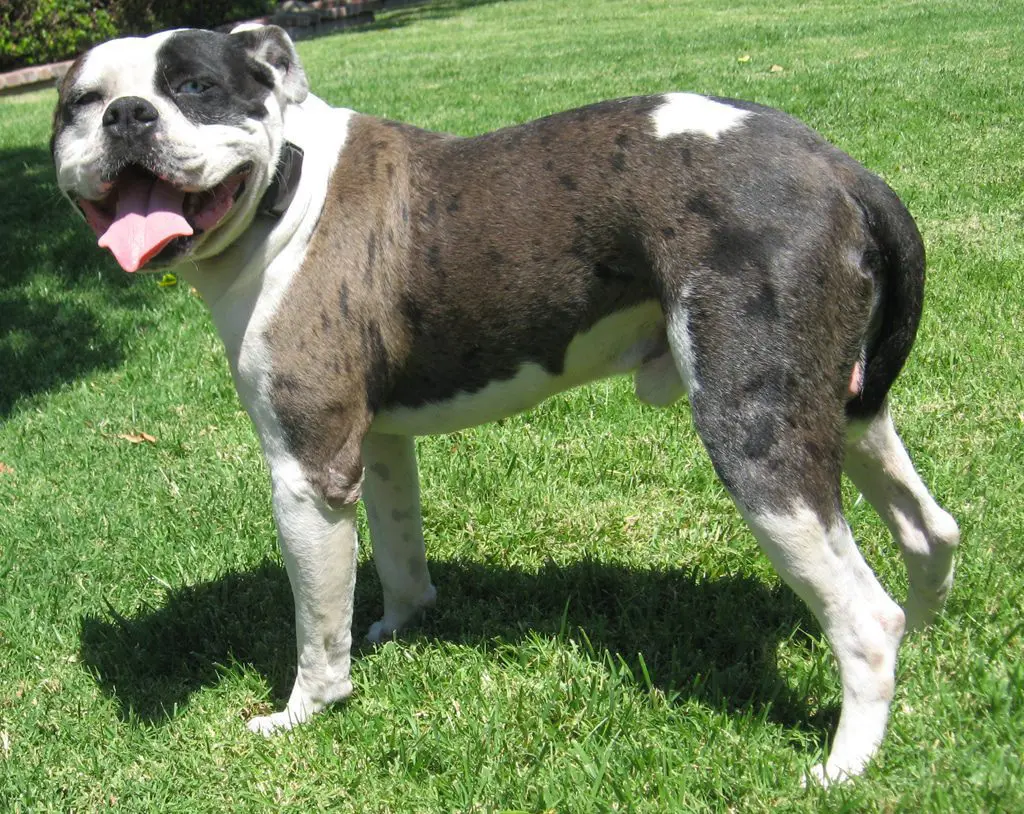
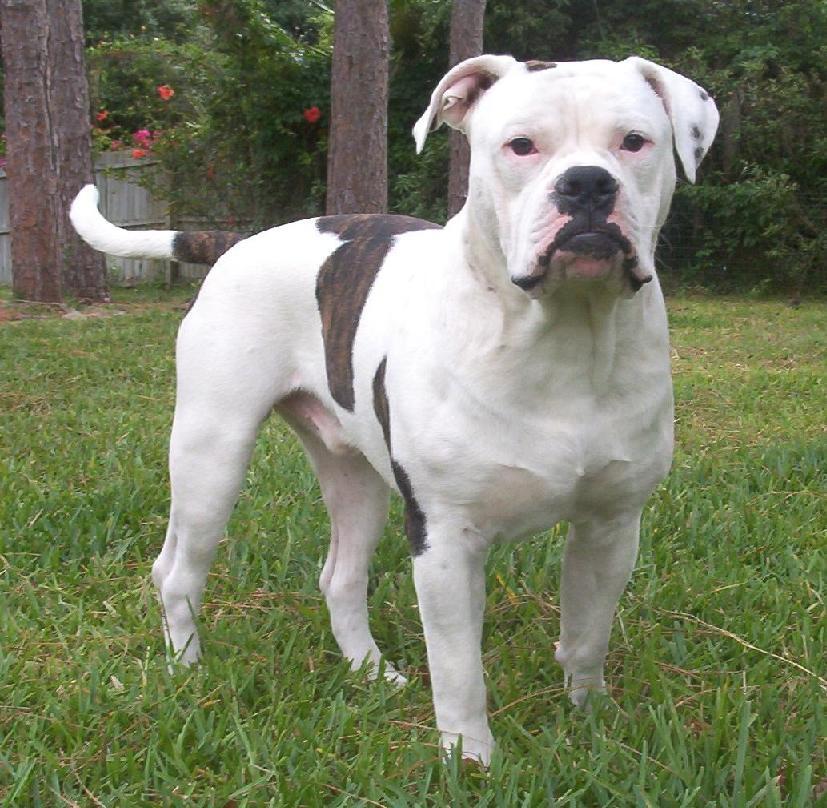
Despite its similarity, they should not be confused with the race American bulldog

Alapaha Blue Blood Bulldog

Content

History Alapaha Blue Blood Bulldog

Also Known As Otto Bulldog. It is a breed of dog of American origin, considered rare due to the few existing copies. According to available information, They have been developed in the area Alapaha River in the southern region Georgia. They are renowned for their great sense of obedience, their agility and your protective character.

The race Alapaha blood Blue was developed by crossing Old English Bulldog white (known as, White English Bulldogs), a Catahoula Bulldog and a reduced number of copies of Colby Pit Bull Terrier. The origins of the breed remain fuzzy, and this has caused much confusion…

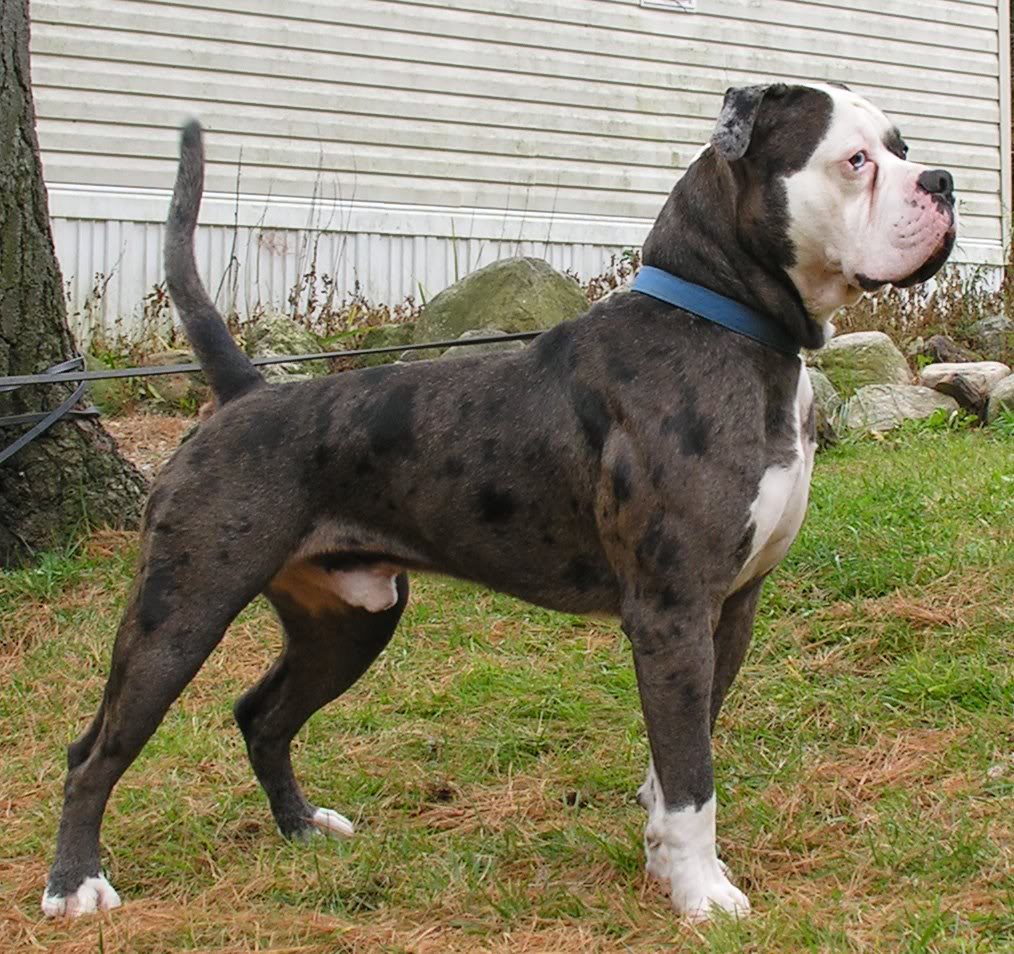
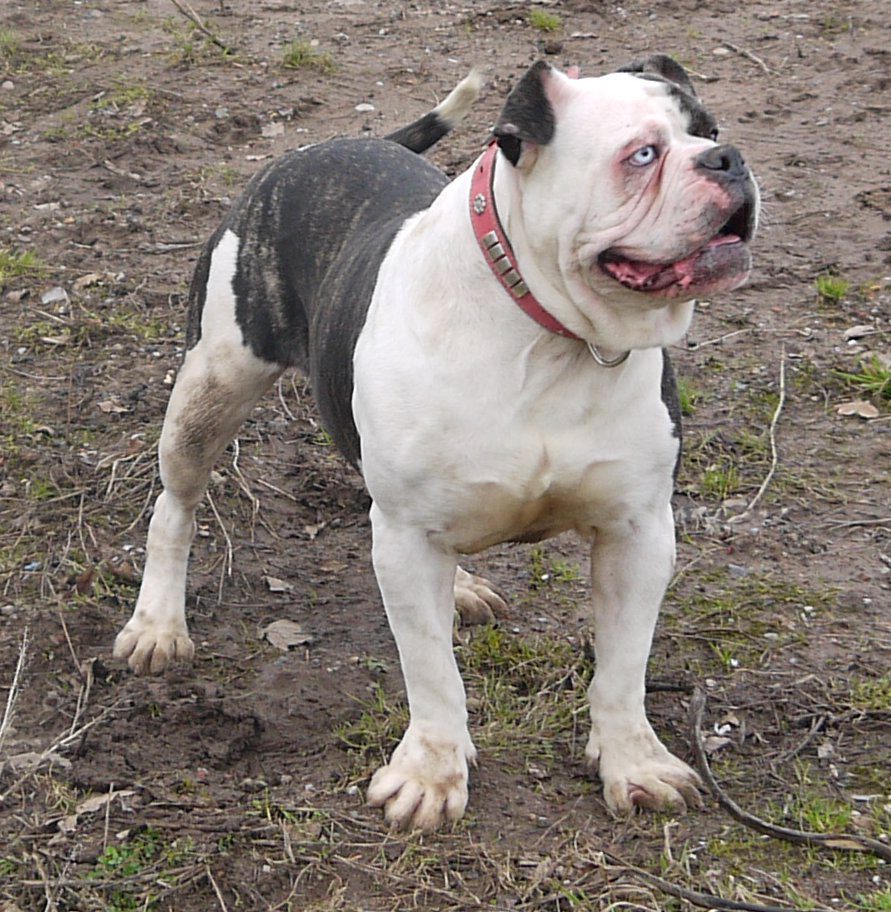
While at first glance it is a Bulldog type. It is a stronger dog and a well-developed musculature (remarkable characteristic of the breed, compared to other varieties Bulldog).

Despite its similarity, not to be confused with American bulldog. This similarity resulted in actions pre-register many Alapaha Blue Blood Bulldog They were included in the ancestry of American bulldog.

Videos "Alapaha Blue Blood Bulldog"

While Alapaha Blue Blood Bulldog Association It has declared that it was founded in 1979, the earliest evidence of the existence of this club record dates of 1989 in California. That discrepancy has triggered multiple discussions.

The race was in danger of extinction until a small group of Southern, in 1979, in an attempt to rescue the Bulldog de Old Tymey Plantation del Sur, He founded the ABBA (Alapaha Blue Blood Bulldog Association), giving the aforementioned name and dedicated to the preservation of this unique type of dog.

Claims made by the Mrs. Lana Lane, nurturer and follower of the race, they dealt with the existence of records. But, little evidence exists to support his claim because in family lines described in the World Atlas of Dog Breeds as the founders of the breed.

The current records of this breed They include the following organisms:

The ACA (American Canine Association) who registered the first champion Under the title of Alapaha. ABBA (Alapaha Blue Blood Bulldog Association), CCR (National Kennel Club), (ABBBR) Alapaha Blue Blood Bulldog registry, CKC (Continental Kennel Club), WWKC (World Wide Kennel Club), UWABC (Kingdom of work Alapaha Bulldog Club & Registration), UCA (United Canine Association), and IOEBA (International Olde English Bulldogge Association), among them there is great variation in the type and standard.

Physical characteristics

Descriptions of their size vary greatly depending on the organism., but trying to reach an average consensus we would place the males in a weight ranging from 32 to 41 kg, and height the cross of 51 to 63 cm.. Females - slightly smaller, they weigh in 25 to 34 kg and measure of 45.7 to 55.9 cm in height to the cross.

The ears and tail They are left natural, without any cutout.

The colors of the Alapaha Blue Blood Bulldog They are varied, preferably, You must have at least the 50% white body with spots. They can be, predominantly, solid color with white, or dry white. Patches or markings are generally color merle, striped, blue, black, chocolate, red, beige, or tricolor. Currently the most common are the tricolor mantle (both white, Merle, red, as well as beige, Merle, chocolate).

The eye color can vary from Brown to blue, and they usually see with one eye of each color copies or a finger eye colors.

Its pelage is short, hard and bright by nature, which is why, coat care requirements are minimal.

Character and skills

The Alapaha Blue Blood Bulldog It described as a dog easy to train, obedient and responsible, with impressive capabilities as guardian Family and property. They have a strong instinct for protection and it's love at home.

Puppy must be socialized and trained using humane methods, since cruelty could stimulate the aggressiveness of the animal. Intelligent and quick learning, with assertive methods.

The Alapaha Blue Blood Bulldogand blue is very energetic and athletic. Even so, They can be adapted perfectly to life in an apartment if sufficiently exercised and daily. While within the home displays inactive, quiet, It will be more happy with - at least- a medium size yard.

They were formerly used to work with livestock, especially in the capture of errant pigs. For that reason his muscles are long and powerful, this physical characteristic reminds us that for the dog to have optimal health it needs to be exercised regularly. They often enjoy long walks, run and play.

Life expectancy Alapaha Blue Blood Bulldog is located from 12 to 15 years.

Pictures Alapaha Blue Blood Bulldog

Videos Alapaha Blue Blood Bulldog

Type and recognitions:

  • Race is not recognized by the FCI
  • BBC = Backwoods Bulldog
  • ClubDRA = Dog Registry of America, Inc.

Alternative names

1. Alapaha Blue Blood Bulldog, Otto Bulldog (English).
2. Alapaha Blue Blood Bulldog (French).
3. Buldogue Alapaha de sangue azul, Alapaha Blue Blood Bulldog (Portuguese).
4. Alapaha Blue Blood Bulldog (German).
5. Bulldog Alapaha de sangre azul, Alapaha Blue Blood Bulldog (espaรฑol).

โ–ท The world of Pets: Dogs, cats, birds, reptiles, amphibians

Russian Harlequin Hound
Rusia Hound not recognized by the F.C.I.

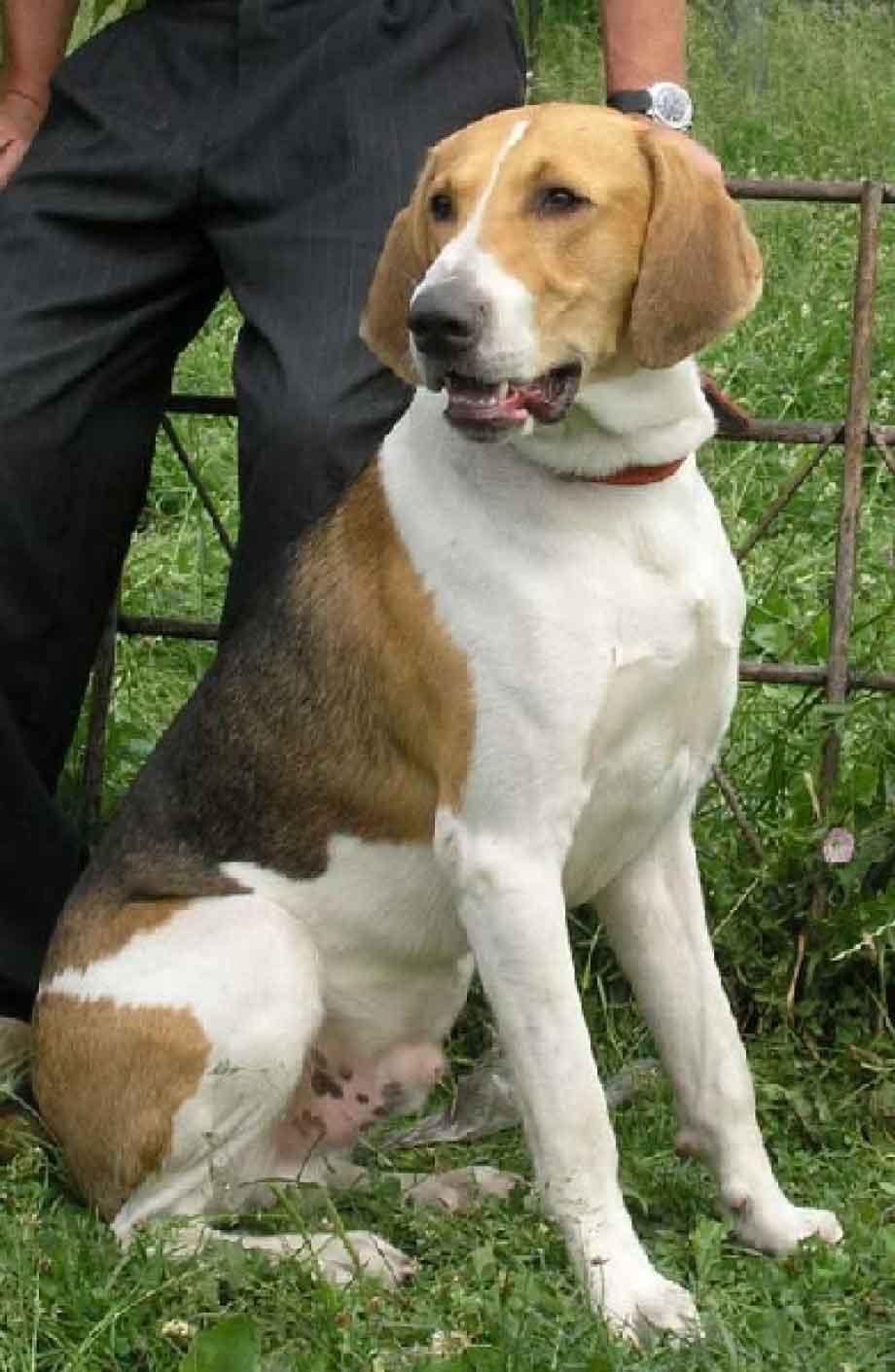
The Russian Harlequin Hound is a rare breed of dog found almost exclusively in Russia.

Content

History

In the 18th century, a hound native to Russia began to develop naturally, but it wasn't until around 1900 that selective breeding began in earnest, and the first breed standard for the Russian hound was developed in 1925. The breeders then crossed to the Estonian Hound with the English hounds. The result was the Russian Harlequin Hound, a slightly squarer looking dog with tricolor spots on a white body. The voice of the Russian Harlequin Hound is much deeper and melodic than that of a Estonian Hound, and frequently have black marks on the saddle.

Until 1951 This new breed of hound was known as the Anglo-Russian hound, but when he was accepted as a separate race from his own, he was known as the Russian Harlequin Hound. This breed was well known, not only for their melodic voices, but also for its speed and resistance when tracking its prey. They were frequently used as red hunting dogs, which means they chased foxes and wolves, traditionally known as red game, and they are rarely found outside the Soviet Union.

The breeders of the Russian Harlequin Hound they are still in the process of improving both the type and uniformity of the breed and the breed is now sometimes seen at Soviet dog shows, and is considered equal in quality to the best Estonian Hound. The Russian Harlequin Hound It was also used by William Dunker when he developed his namesake the Dunker, sometimes also known as the Norwegian Hound.

The Russian Harlequin Hound It is not recognized by the F.C.I.

Photo: simonaaa93

Physical characteristics ยซRussian Harlequin Houndยป

The Russian Harlequin Hound he is a muscular dog, medium-sized, which stands about twenty-four inches tall and weighs between 18 and 31 kg, with a square build, long, straight legs and a strong tail that has a slightly curved or saber-like shape. They also tend to have a somewhat broad, square head with a straight, square muzzle., that always ends with a black nose. They have slightly hanging lips, oval shaped eyes, usually dark brown, and medium-sized pendant ears that sit high on the head and hang down to the sides to frame the face.

The characteristic short fur of the Russian Harlequin Hound is mostly white with tricolor markings on the head, face, back and tail, and is typically quite dense; this coloration is particularly useful when hunting with this Russian hound as it makes it much easier to differentiate the hunting dog from its prey.

Character and abilities ยซRussian Harlequin Houndยป

The Russian Harlequin Hound is a rare breed of dog found almost exclusively in Russia. A mix of the Estonian Hound and the English Foxhound, this scent hound is known for its ability to track the game traditionally known as red game, like the fox and the wolves. They tend to be friendly and outgoing with almost everyone they meet., both human and canine, but they have a high prey drive and may not be safe around cats and other small animals. This breed is not well adapted to apartment living due to its high activity levels and vocal nature..