โ–ท The world of Pets: Dogs, cats, birds, reptiles, amphibians

Beauceron
Francia FCI 44 . Sheepdogs

Pastor de Beauce

The Beauceron It is one of the best job in the world dogs.

Content

History

The Beauceron, It is a breed of dog originating in the French Brie region; This race is quite old and well known in France.

True that the canine world, the history of this beautiful dog is not of the noveladas. The Beauceron, It was presented for the first time in a dogshow in the year 1897, but the race is actually quite old.

The specimens of Beauceron older, the first to set foot on our land, they had hard and coarse hair, but the characteristic that stood out the most was his marked aggressiveness.

With the passage of time, Select mediantes, breeders have succeeded in lowering the level of aggressiveness, but even so, it is not an easy dog โ€‹โ€‹to train, it retains certain ferocious traits.

At first the Beauceron It was used to hunt wild boar but later developed the ability to guide herds, being able to defend it from any attack by a predator; is a great guardian.

Physical characteristics

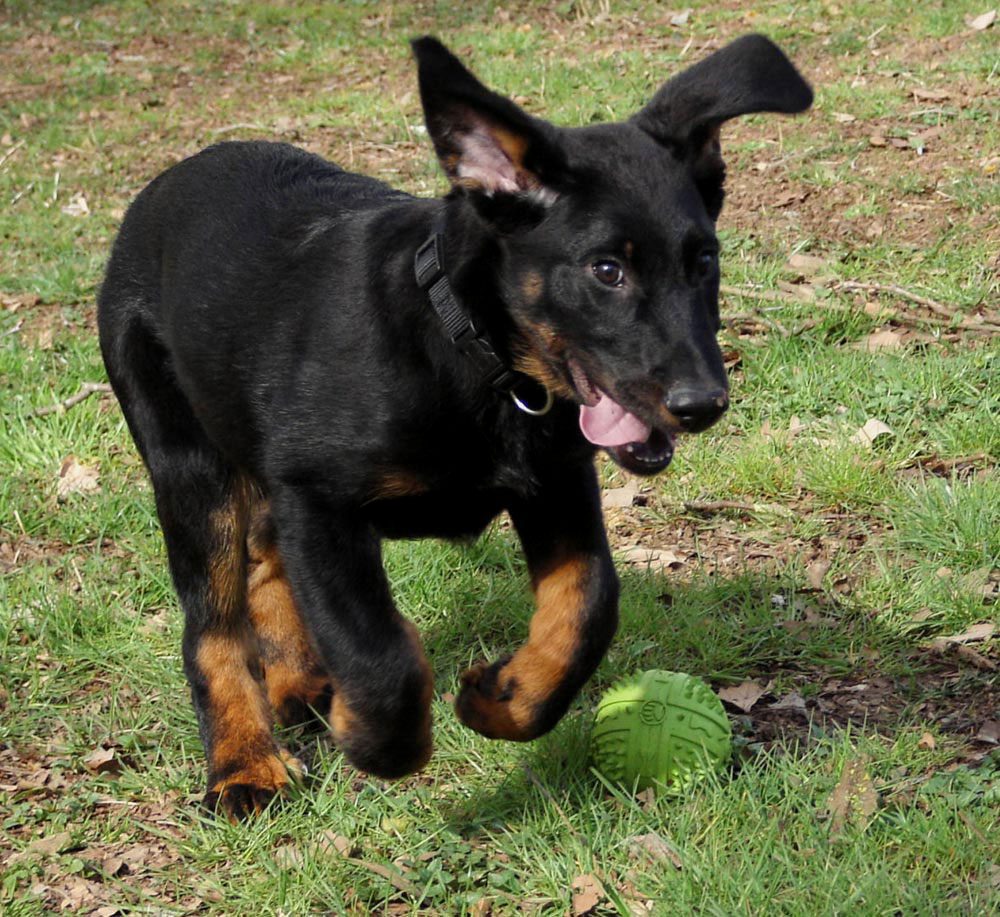
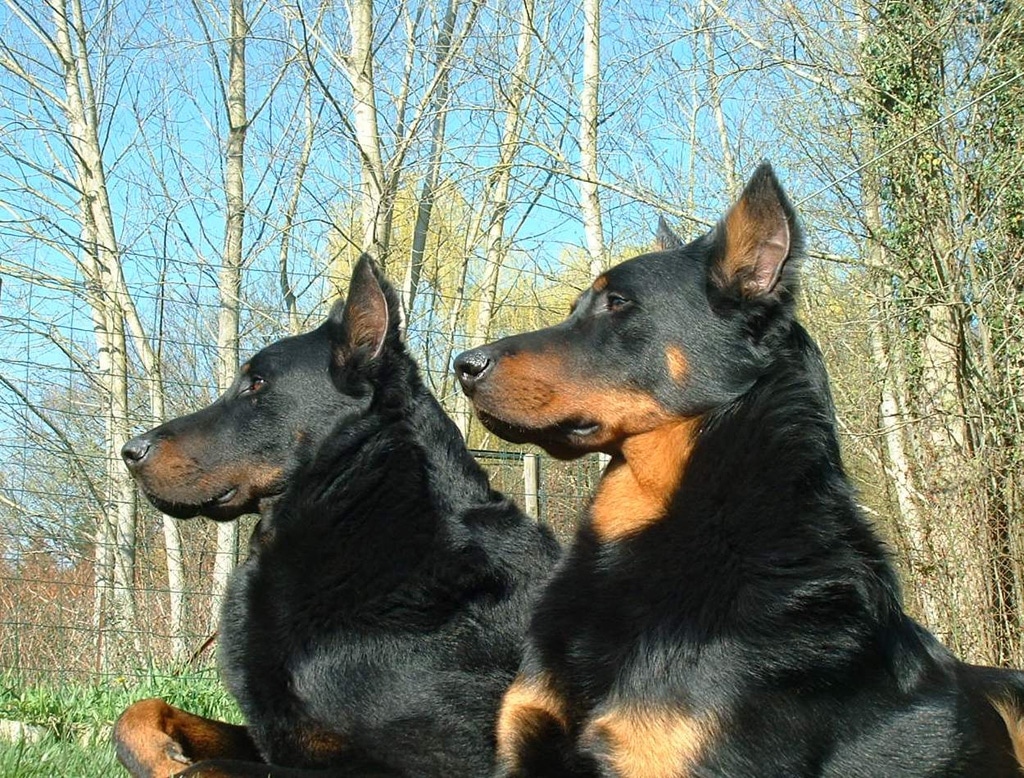
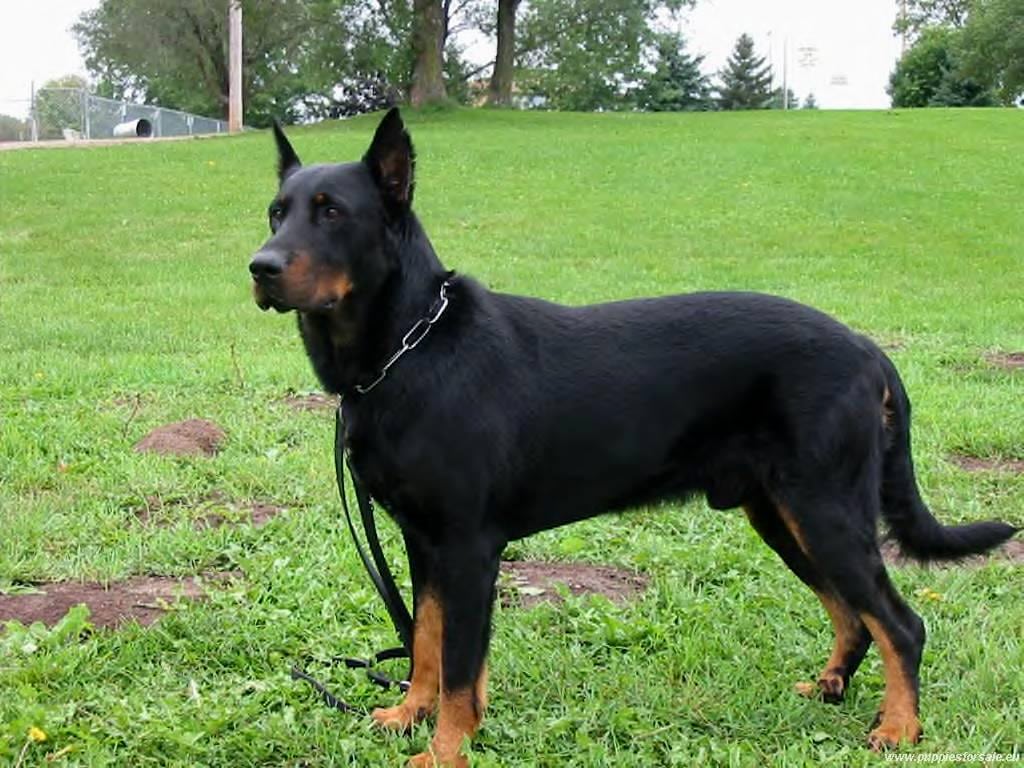
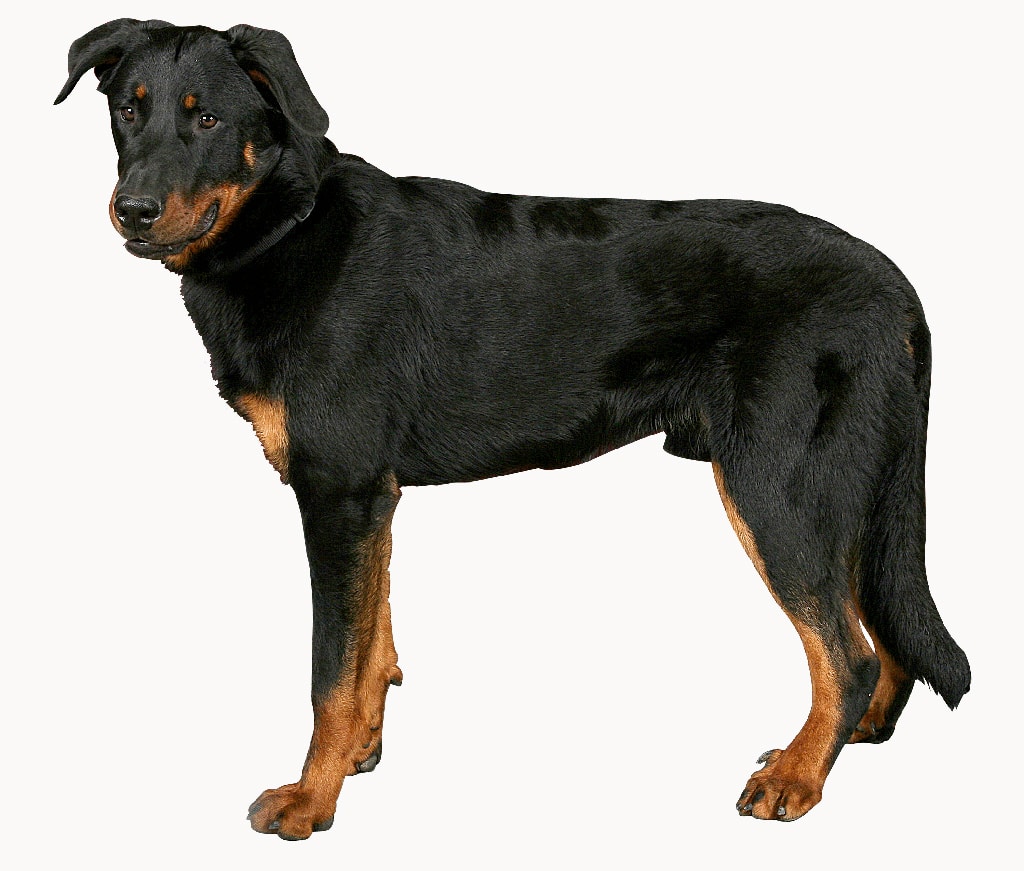
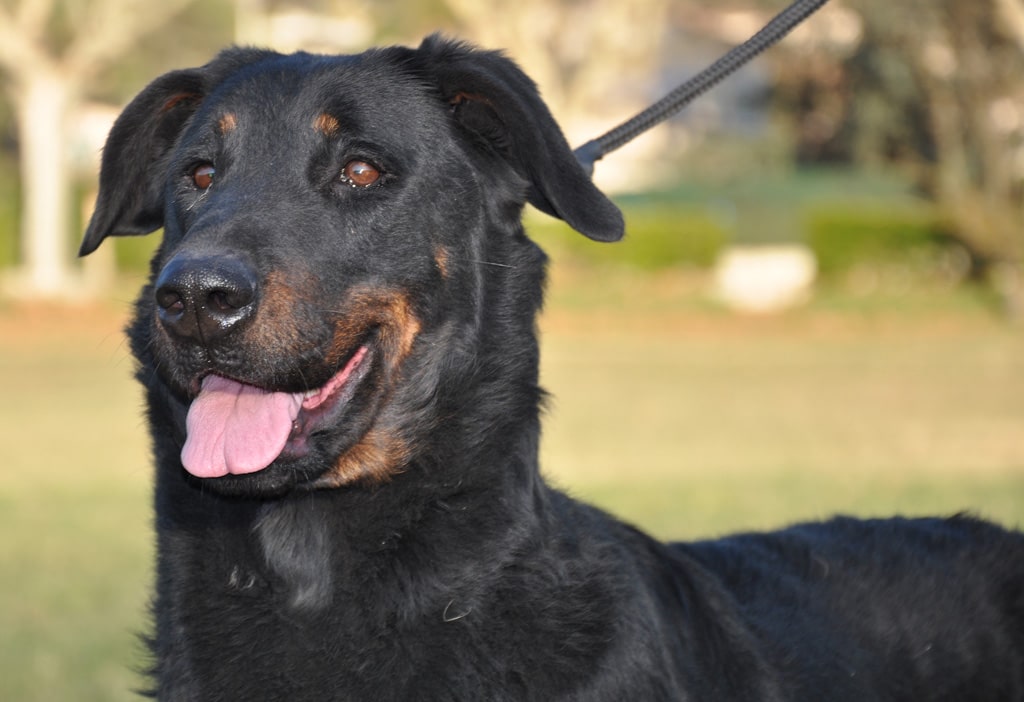
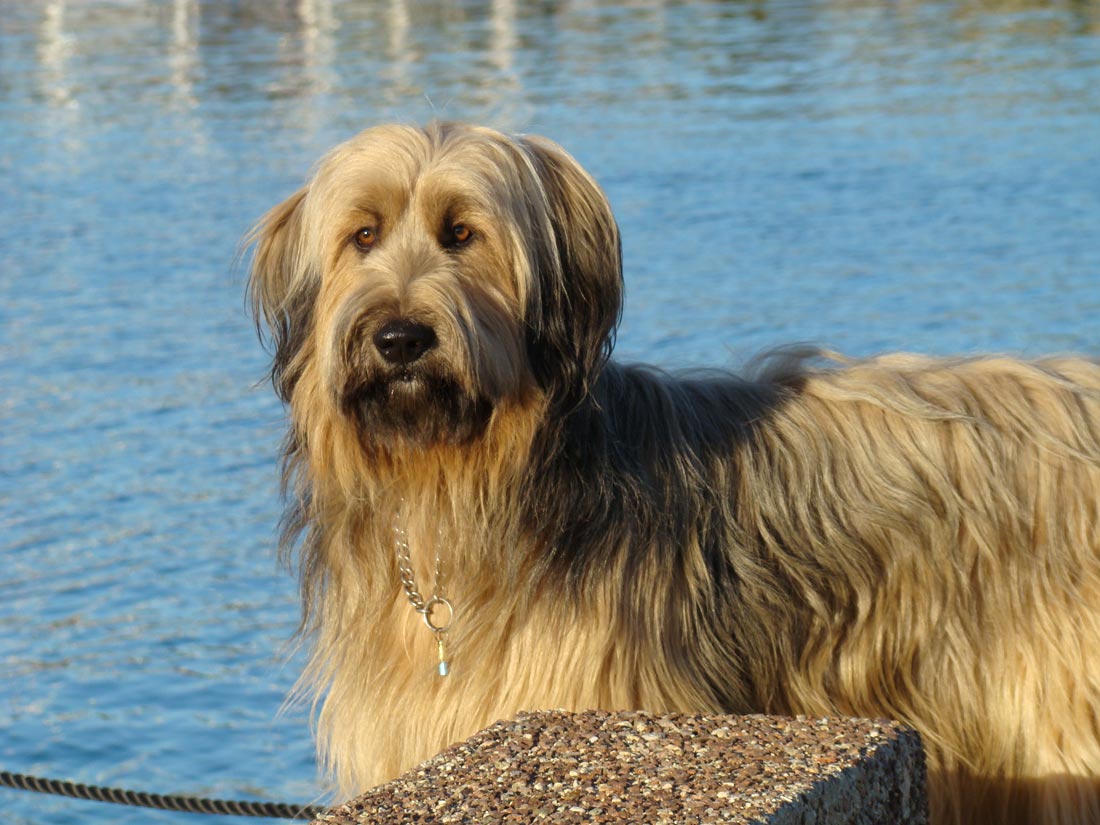
The Beauceron, often confused with the Dobermann due to the combination of color bronze and fire of his cloak. This coincides with the fact that the most widespread variety of the Beauceron.

Despite the similarity in the colors of the coat, it has many differences with him Dobermann, the Beauceron It is a dog with a more rustic and robust structure, the hair is also different and the tail does not cut.

Another differential characteristic, It is that the hind legs should stand double spur. This is one distinctive feature of the race.

The height males will of 65 to 70 cm and the females of 61 to 68 cm.. The approximate weight is between 40 and 50 kg. Females tend to be lighter.

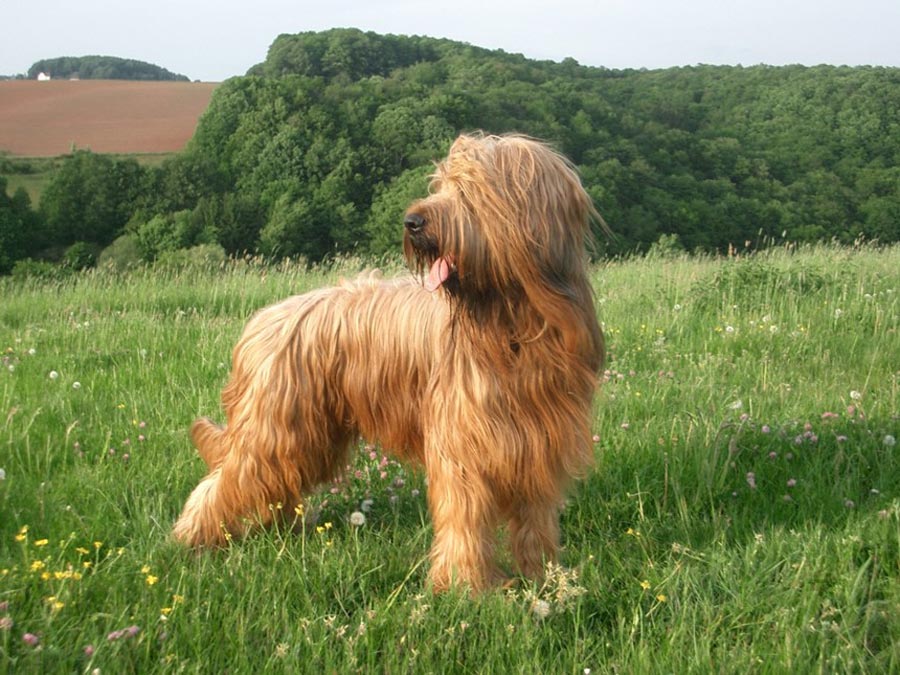
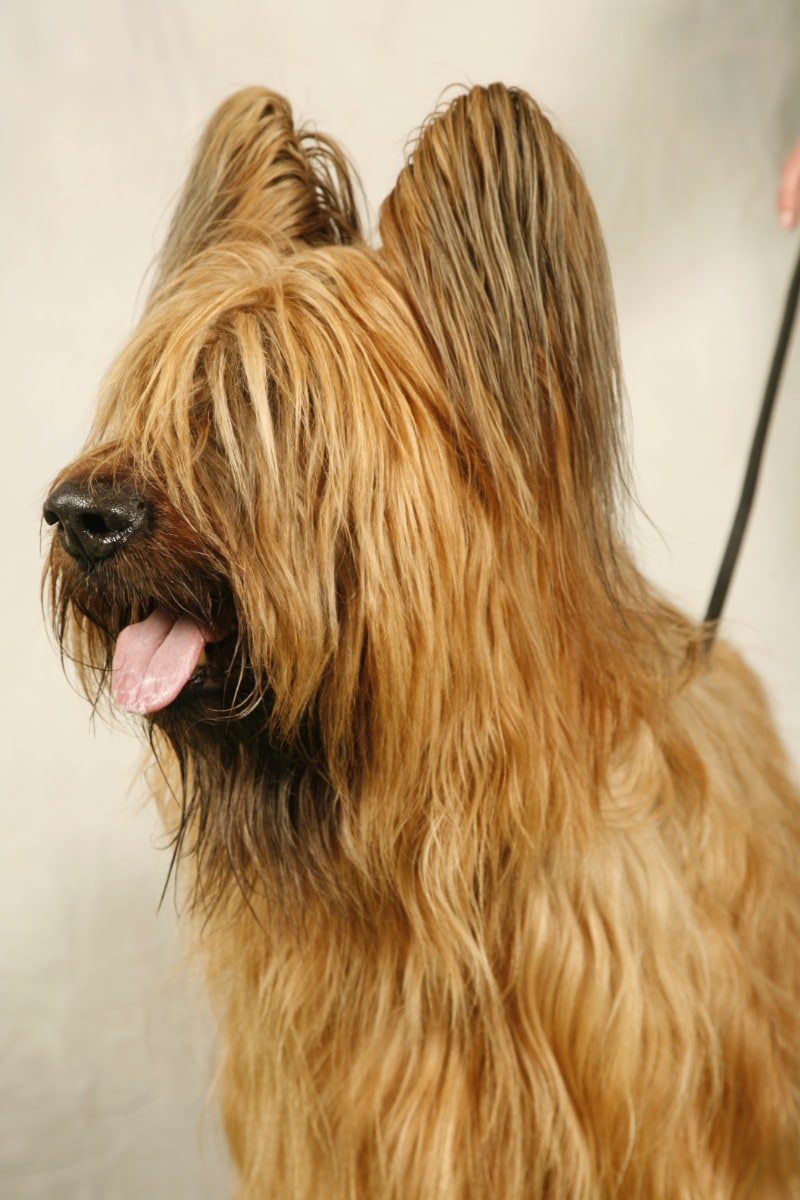
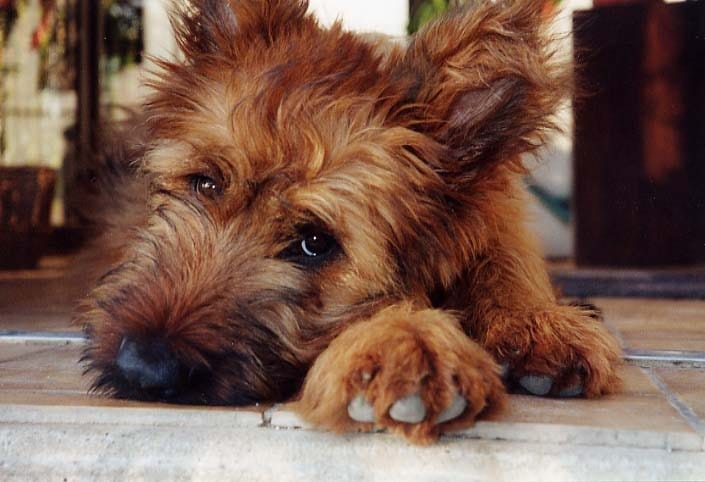
It has a aspect rustic, Wolf. Long head and flat, the muzzle and skull have the same length, dark eyes to harmonize with the fur, their ears hang naturally if they have not been cut.

They have the long neck, the elongated body and deep chest. Their limbs are strong.

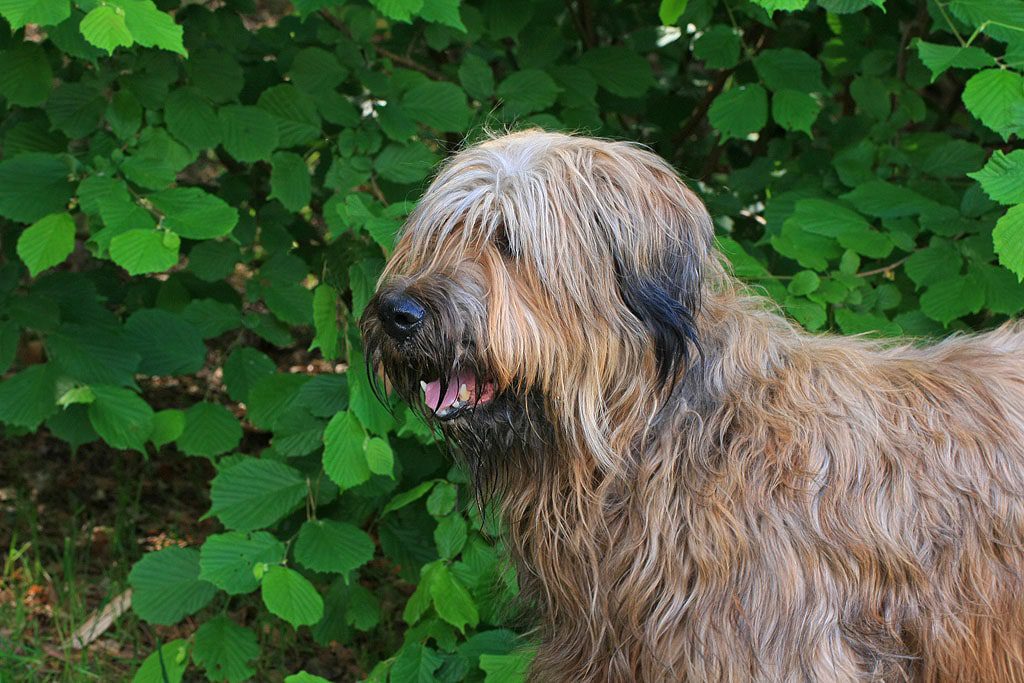
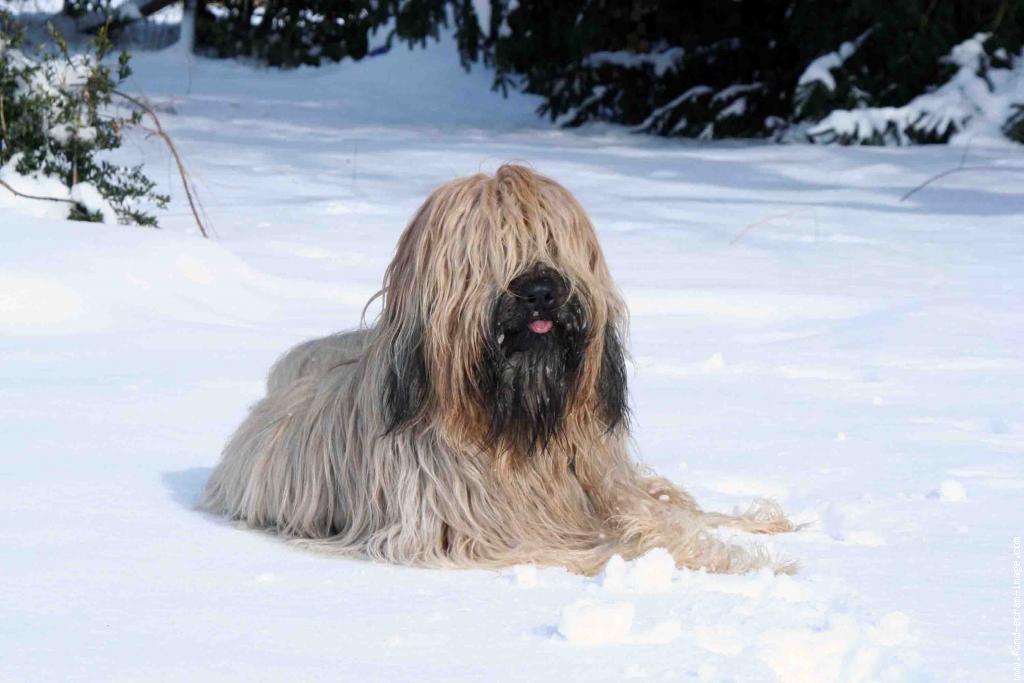
The Beauceron has two layers of hair, the exterior is strong, thick, thick and smooth (Although they tend to present ripples around the neck). Internal hair layer is more dense and velvety, color grey mouse and must not be seen through the upper layer.

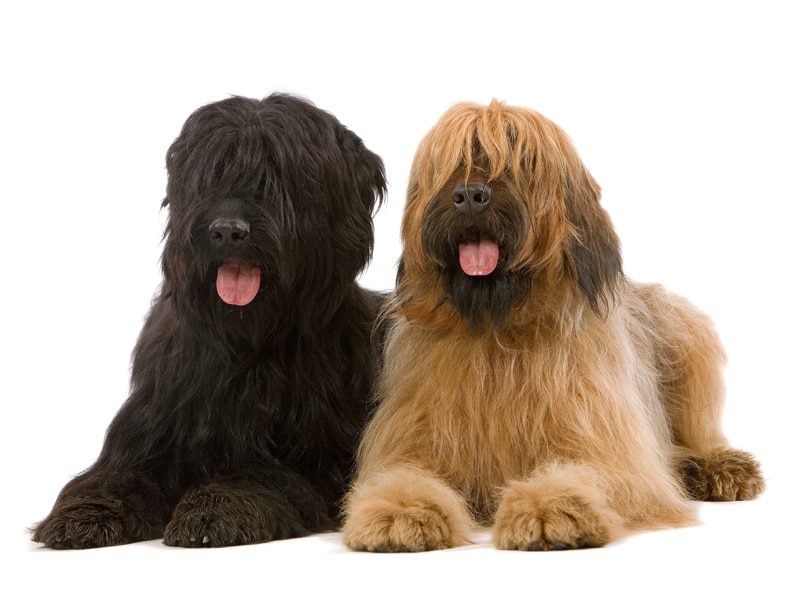
The colors supported are the black and tan and the Harlequin.

Character and skills

According to experts, It one of the best job in the world dogs, and all dogs of pastor is one who is more prepared for the defense.

Then, his character allows you to carry out defense, foster, useful but it is good to take into account that it is not a dog to be in the hands of inexperienced or too permissive.

He has a very independent character and a strong instinct for responsibility that allows him to make his own decisions. If he notices the slightest insecurity in his master, he will not take long and seconds to make the decisions himself..

With the strangers will be very suspicious, for this reason it is very important that the owner of the dog can control it because if it feels minimally intimidated it can be very biting.

If you receive adequate training and education will be an excellent companion.

Observations

Before purchasing a copy of Beauceron, We must take into account that it is not an easy dog. The person who decides to have a copy of this breed as a pet should be able to train him and raise him with full security.

The dog needs to know who is charge, It is also important to understand that all members of the family are heads of the herd, because if you can not pass it only obey one person whom he recognizes as head of the herd and the rest of the family will ignore or or them even try to impose.

Images of the "Beauce Pastor"

Videos del "Pastor de Beauce"

Characteristics "Beauceron"

Coexistence is important that you have with your new friend. Before considering the acquisition of a dog of the breed "Beauceron" you know certain factors. Not all breeds of dogs are apt to live in an apartment, you must take into account his character, their need for exercise, their interaction with other pets, their care and if you have small children, their level of tolerance towards them.

Adaptation โ“˜

3,0 of 5 stars (based on 1 review)

friendly dog โ€‹โ€‹โ“˜

2,0 of 5 stars (based on 1 review)

hair loss โ“˜

3,0 of 5 stars (based on 1 review)

Affection level โ“˜

4,0 of 5 stars (based on 1 review)

Need for exercise โ“˜

5,0 of 5 stars (based on 1 review)

Social need โ“˜

4,0 of 5 stars (based on 1 review)

Home โ“˜

2,0 of 5 stars (based on 1 review)

Toilet โ“˜

2,0 of 5 stars (based on 1 review)

Friendly with strangers โ“˜

2,0 of 5 stars (based on 1 review)

barking โ“˜

4,0 of 5 stars (based on 1 review)

Health โ“˜

2,0 of 5 stars (based on 1 review)

Territorial โ“˜

5,0 of 5 stars (based on 1 review)

Cat friendly โ“˜

2,0 of 5 stars (based on 1 review)

Intelligence โ“˜

5,0 of 5 stars (based on 1 review)

Versatility โ“˜

5,0 of 5 stars (based on 1 review)

Child friendly โ“˜

3,0 of 5 stars (based on 1 review)

Surveillance โ“˜

4,0 of 5 stars (based on 1 review)

joy โ“˜

5,0 of 5 stars (based on 1 review)

Type and recognitions:

  • FCI CLASSIFICATION:
  • Group :
  • Section : . .

Federations:

  • FCI โ“˜
  • AKC โ“˜
  • โ€‹KC โ“˜
  • UKC โ“˜

FCI breed standard Beauceron

FCIFCI - Beauceron
Pastor

Alternative names:

  • Alternative names: French Shorthaired Shepherd / Beauce Shepherd / Berger de Beauce / Bas Rouge (Red Stocking)

โ–ท The world of Pets: Dogs, cats, birds, reptiles, amphibians

Dutch Shepherd
Holanda FCI 223 - Sheepdogs.

Dutch Shepherd

The most widespread variety of Dutch Shepherd she is the one with long hair, but the breed is almost unknown outside the Dutch borders.

Content

History

The Dutch shepherd descends directly from the belgian shepherds, who looks a lot like (including subdivision into three hair varieties).

Originally the main function of the Dutch shepherd It was typical of a country shepherd dog. From the earliest times the Dutch had an agricultural culture, among others, made up of flocks of sheep. The dogs had to keep the flock away from the sowing, which they did patrolling the borders of the road and the fields. They also accompanied the transfer of the herd to the common meadows, markets and ports. In the farm, they kept the chickens out of the kitchen yard, cows were herded for milking and the milk cart was pulled. They also alerted farmers if anyone entered. About 1900, the herds had almost disappeared in the Netherlands. The Dutch Shepherd's versatility made him suitable for training, which at that time was beginning to become popular. Thus began a new career as a police dog., search and rescue and as a guide dog for the blind. In any case, he is still capable of herding herds.. The first breed standard dates from 12 in June of 1898.

Physical characteristics

It is a dog of medium size and weight, quite muscular, Powerfully built and well proportioned. His expression is intelligent and temperament, live. The eyes are dark in color, medium-sized, macaroons, somewhat oblique and never round. The ears, smaller than big, they are straight and facing the front, and inserted high. The tail, that at rest hangs straight or forms a slight curve, reaches the tip of the hock. When it is active, the dog is elegantly elevated, never coiled; never falls on the sides.

  • Fur: the short-haired variety has a well attached coat; the long-haired one has straight hair, and the variety of hard hair has it thick and hard; on the head it forms prominent eyebrows, mustaches and beard. Depending on the cloak, in the breed there are three varieties: shorthair, long and hard.
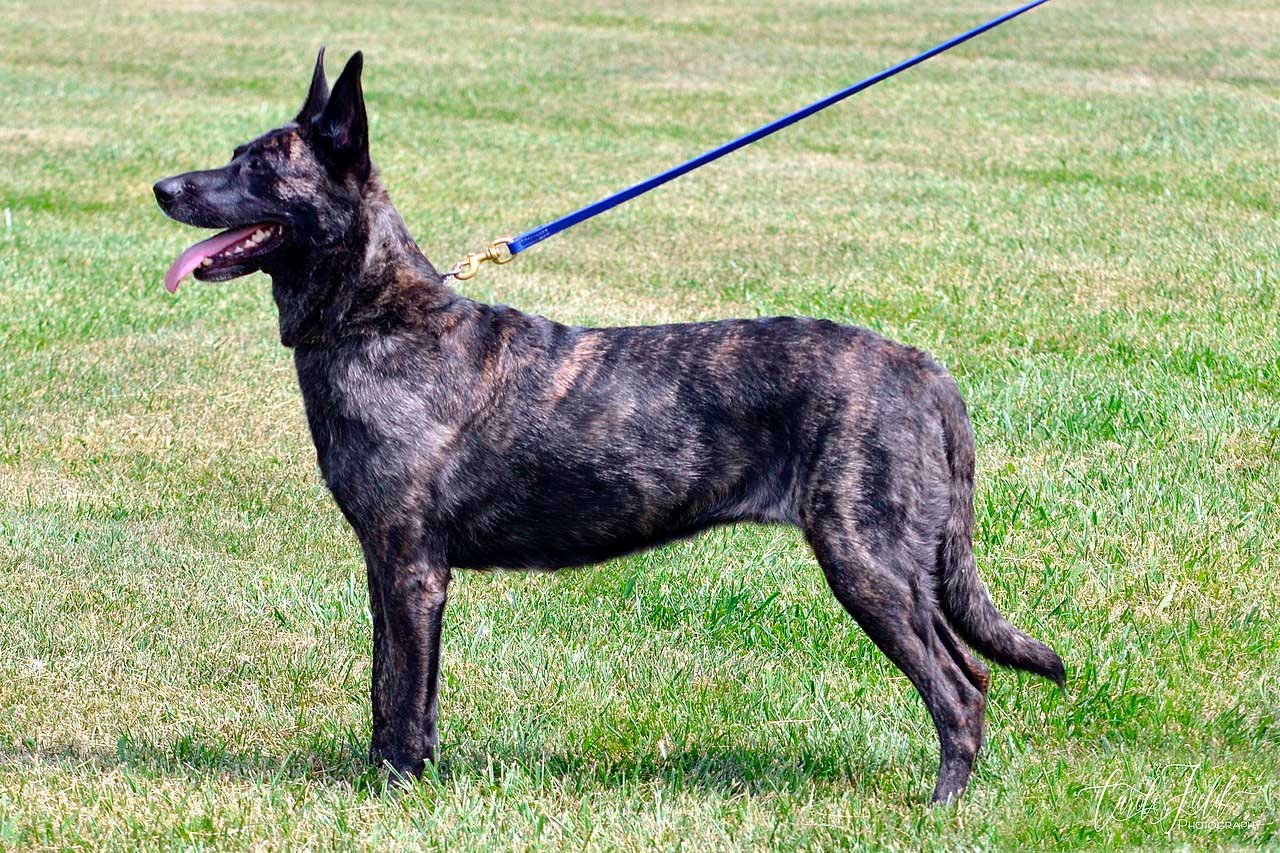
  • Color: striated but the least intensely, on brown background (golden fluted) or gray (fluted gray). The stripes are less evident in hard-haired specimens. Black mask is preferable.
  • Size: males, of 57 to 62 cm.; females, of 55 to 60 cm..

Character and skills

Affectionate, obedient, docile, vigilant, trustworthy, undemanding and very resistant. Always watch out, active and endowed with the true nature of a shepherd dog. It is a little less reactive and less nervous than Belgian Shepherd, the one who looks like, However, even in character.

The Dutch Shepherd works willingly with his master and is able to cope with any task assigned to him.
Herding larger herds must have the ability to work in conjunction with various other dogs..

Characteristics "Dutch Shepherd"

Coexistence is important that you have with your new friend. Before considering the acquisition of a dog of the breed "Dutch Shepherd" you know certain factors. Not all breeds of dogs are apt to live in an apartment, you must take into account his character, their need for exercise, their interaction with other pets, their care and if you have small children, their level of tolerance towards them.

Adaptation โ“˜

4,0 of 5 stars (based on 1 review)

friendly dog โ€‹โ€‹โ“˜

3,0 of 5 stars (based on 1 review)

hair loss โ“˜

3,0 of 5 stars (based on 1 review)

Affection level โ“˜

4,0 of 5 stars (based on 1 review)

Need for exercise โ“˜

5,0 of 5 stars (based on 1 review)

Social need โ“˜

3,0 of 5 stars (based on 1 review)

Home โ“˜

3,0 of 5 stars (based on 1 review)

Toilet โ“˜

3,0 of 5 stars (based on 1 review)

Friendly with strangers โ“˜

4,0 of 5 stars (based on 1 review)

barking โ“˜

2,0 of 5 stars (based on 1 review)

Health โ“˜

4,0 of 5 stars (based on 1 review)

Territorial โ“˜

5,0 of 5 stars (based on 1 review)

Cat friendly โ“˜

3,0 of 5 stars (based on 1 review)

Intelligence โ“˜

5,0 of 5 stars (based on 1 review)

Versatility โ“˜

4,0 of 5 stars (based on 1 review)

Child friendly โ“˜

4,0 of 5 stars (based on 1 review)

Surveillance โ“˜

4,0 of 5 stars (based on 1 review)

joy โ“˜

4,0 of 5 stars (based on 1 review)

Images "Dutch Shepherd"

Videos "Dutch Shepherd"

Type and recognitions:

  • FCI CLASSIFICATION:
  • Group :
  • Section : . .

Federations:

  • FCI – Group 1 Herding dogs, Section 1 Sheepdogs โ“˜
  • AKC – PASTORAGE โ“˜
  • ANKC – Group 5 (working dogs) โ“˜
  • โ€‹KC – Pastoral โ“˜
  • NZKC – Working dog โ“˜
  • UKC – Herding dogs โ“˜

FCI breed standard Dutch Shepherd

FCIFCI - Dutch Shepherd
Pastor

Alternative names:

1. Dutch Herder, Hollandse Herder (English).
2. Berger hollandais (French).
3. Hollรคndischer Schรคferhund (German).
4. Pastor holandรชs (Portuguese).
5. Perro de pastor holandรฉs (espaรฑol).

Photos:

1 – Short-haired Dutch Shepherd stacked by CaroleField / CC BY-SA
2 – Silverbrindle and goldbrindle are the approved colors of the breed by Lissunmusta / CC BY-SA
3 – Short-haired brindle male Dutch Shepherd named Black, 2 years old, owned by Jason Paluck by Wikipedia
4 – Adult brindle Dutch shepherd by https://www.pikrepo.com/fyvdb/adult-brindle-dutch-shepherd
5 – dutch shepherd by https://www.peakpx.com/504961/dutch-shepherd
6 – Dutch shepherd by https://pxhere.com/en/photo/1387398
7 – Neros van Guard is a Dutch Shepherd imported from Canada to the USA by Ulyseemuff / CC BY-SA

โ–ท The world of Pets: Dogs, cats, birds, reptiles, amphibians

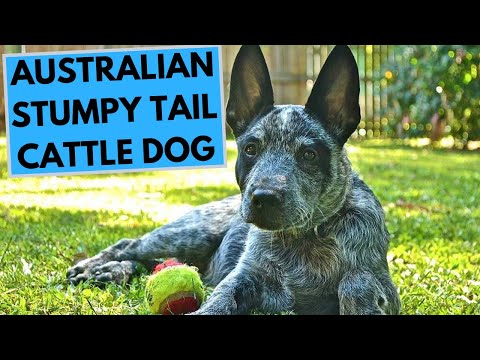
Australian Stumpy Tail Cattle Dog
Autralia FCI 351. Sennenhund Dogs
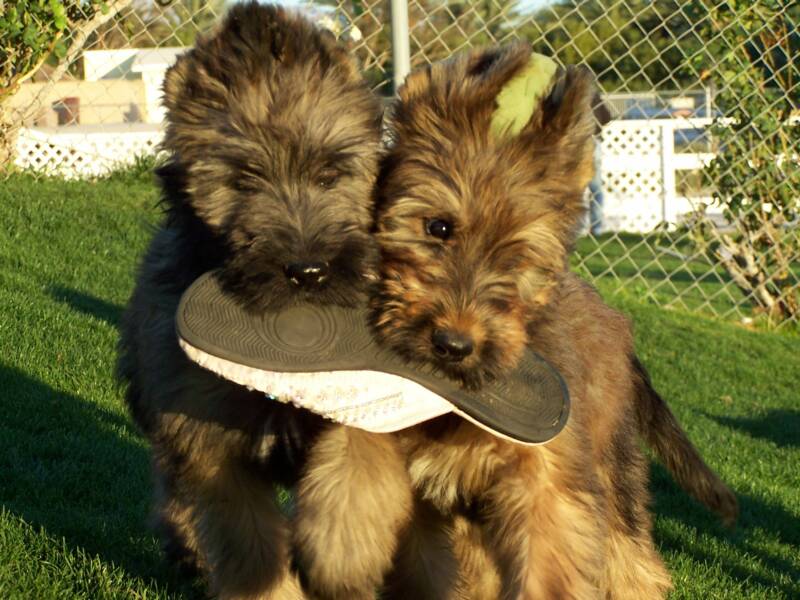
Stumpy Tail

The Australian Stumpy Tail Cattle Dog is always alert, vigilant and obedient, although he distrusts strangers.

Content

History

The Australian Stumpy Tail Cattle Dog has a long history in Australia, where he was carefully bred to drive cattle in the early 19th century.

As for the true founder of the breed, there are actually two versions:

  • The first quotes a certain Thomas Simpson Hall, who crossed sheepdogs from the north of England, the Smithfields, with Dingoes, the native canines of Australia, creating the first Australian cattle dog known as "Hall's Foot Dog" (towards 1830).
  • In the second version, a rancher from New South Wales named Bathurst Timmins crossed a Smithfield with the Dingo in 1830. The babies, short tailed red dogs, They became known as the "Timmins Biters".

These dogs were great to work with., but it turned out they were too harsh on the cattle. Had to make another cross. introduced a Smooth Collie Blue Merle and the result was the creation of an excellent all-terrain, the ancestor of the current Australian Stumpy Tail Cattle Dog.

The Smithfield brought the natural short tail, the Dingo the color red and the ability to naturally accept the harsh conditions of the remote Australian outback. Last, the blue color comes from Smooth Collie Blue Merle, which was also known as the German Coolie.

In general, Shorttails were bred in the vast rural areas of Australia and only a small number were entered in the studbooks..

Physical characteristics

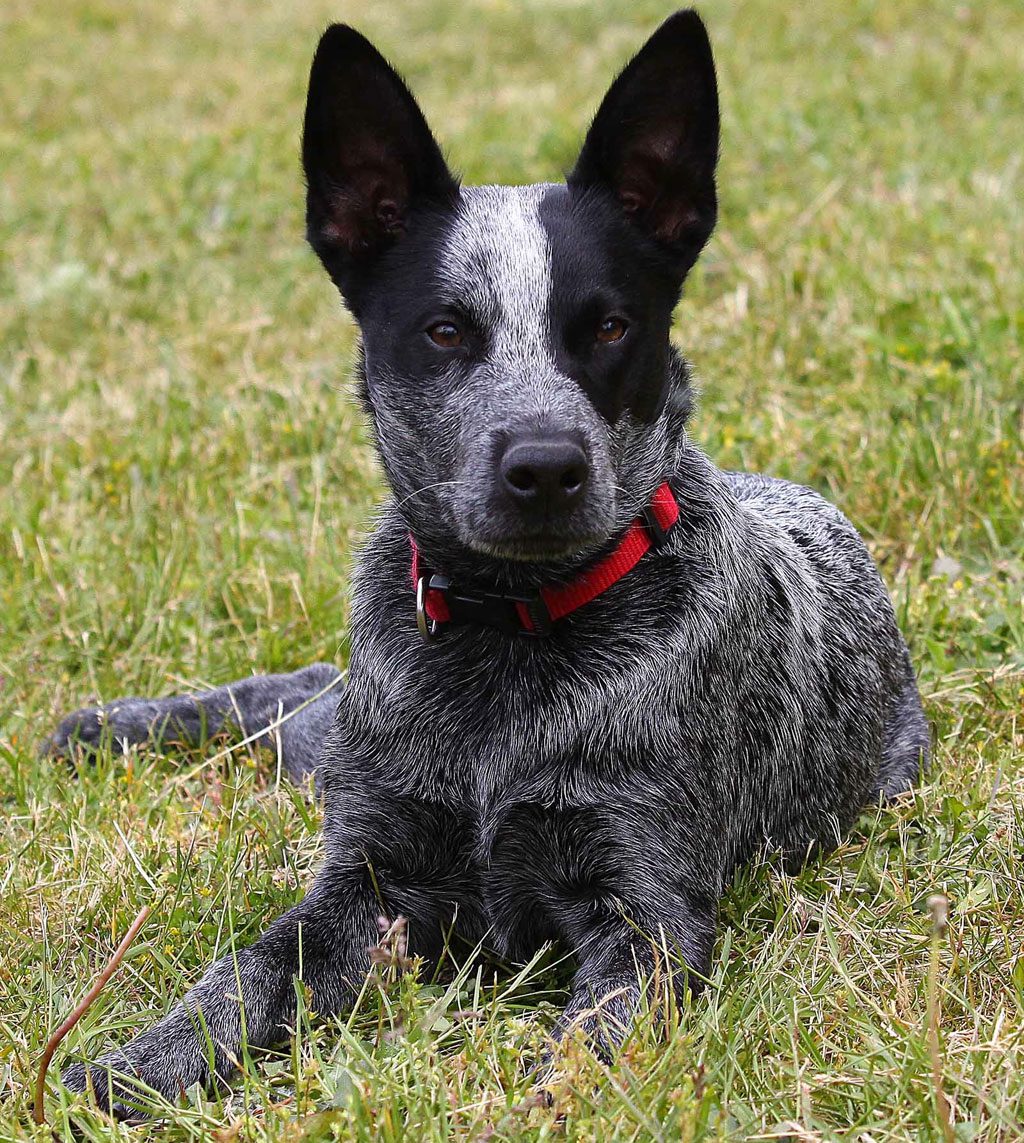
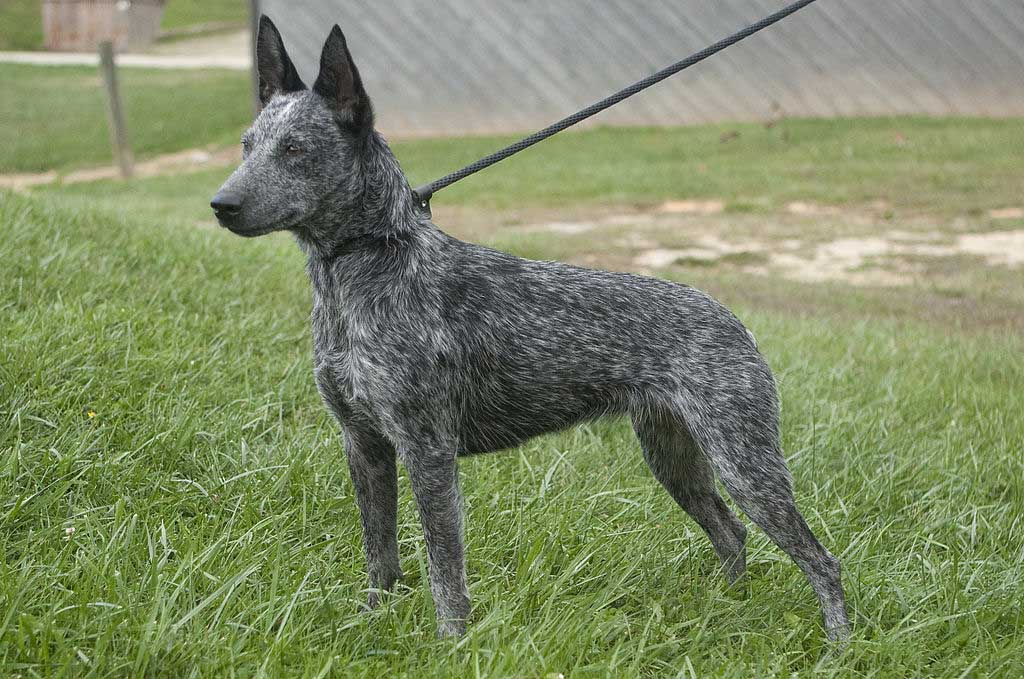
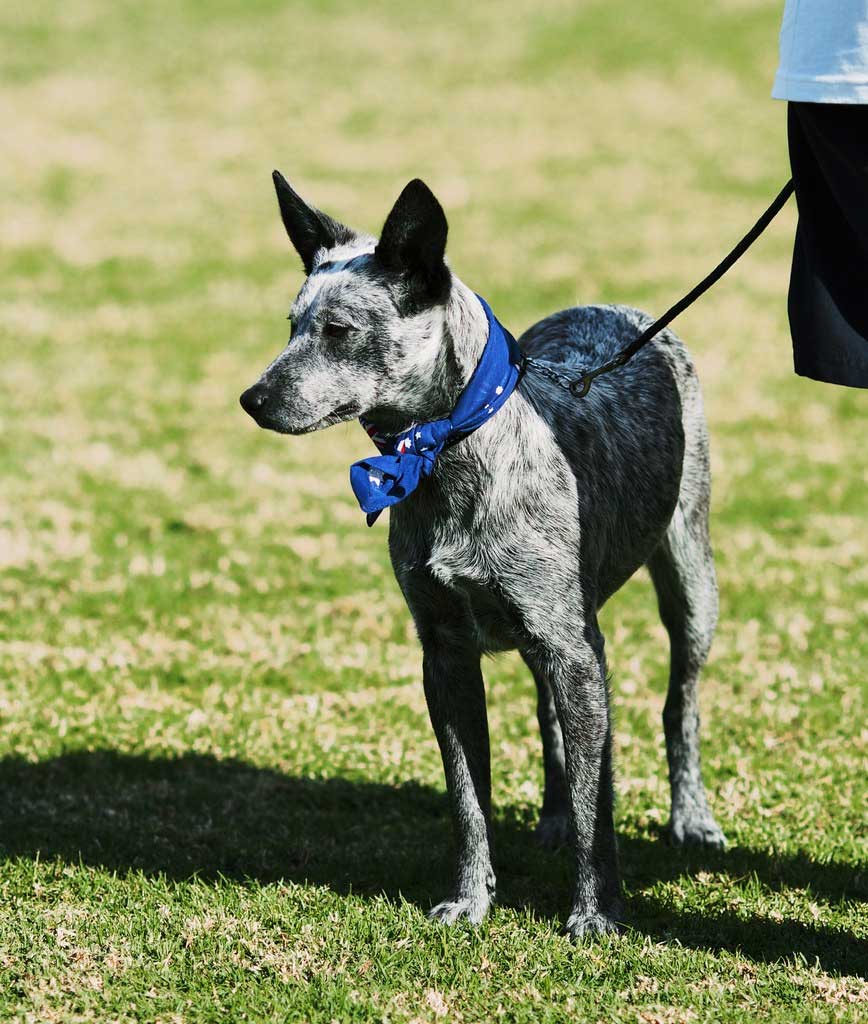
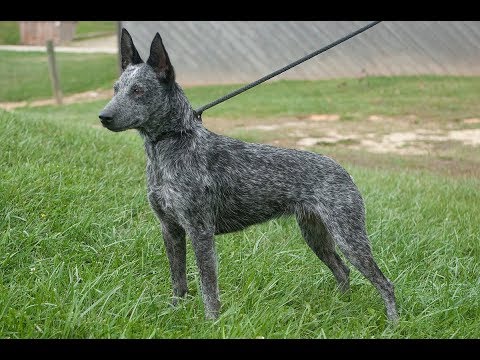
The Stumpy it is a medium sized working dog, well proportioned and square in profile. The breed has two colors: blue and red. The Australian Stumpy Tail Cattle Dog may not have tan markings. The Stumpy should be clean and tight and has a tough, robust appearance. Is never fat, but he must be well muscled, to be able to withstand long periods of hard work.

Character and skills

The Stumpy has a natural aptitude for work and livestock control. Is loyal, brave and above all devoted to its owner, but can be reserved with strangers. Always attentive, vigilant and obedient, and it must be capable of being handled on the show floor.

Education

This breed does not tolerate isolation or neglect; craves family, activity and training. Unless the Stumpy stay physically and mentally active, it will become destructive and unruly.

The ideal owner of a Stumpy is a committed dog owner, active and experienced. This is not a part time breed. Early socialization with dogs and people is recommended to achieve a complete companion. Training and strong leadership are essential.

As a thinking dog, the Stumpy compensate for any weaknesses in leadership by ranking highest in the pack. Firm" does not mean "hard"; the eagerness of Stumpy for pleasing him means that constancy, reinforcement and reward will go much further than punishment.

Grooming

In terms of grooming, the maintenance of Stumpy It is low. A weekly brushing is all you need and a bath when necessary. But, in terms of exercise, the Stumpy it is high maintenance. It is an incredibly intelligent breed with high energy levels.; and a Australian Stumpy Tail Cattle Dog gets bored, find ways to entertain yourself, like digging holes or pulling laundry.

Health

In general, the Stumpy it is a relatively healthy and robust breed. In the race there can be Prcd-PRA; this disease causes progressive loss of vision, although there is a DNA test. ARP does not form (Progressive Retinal Atrophy) can only be identified through an eye exam, not through a DNA test. It is recommended that an ophthalmologist examine the players. There may be deafness, for which there is a BAER test. A score of the hip and elbow should also be performed to identify any dysplasia..

Characteristics "Australian Stumpy Tail Cattle Dog"

Coexistence is important that you have with your new friend. Before considering the acquisition of a dog of the breed "Australian Stumpy Tail Cattle Dog" you know certain factors. Not all breeds of dogs are apt to live in an apartment, you must take into account his character, their need for exercise, their interaction with other pets, their care and if you have small children, their level of tolerance towards them.

Adaptation โ“˜

4,0 of 5 stars (based on 1 review)

friendly dog โ€‹โ€‹โ“˜

3,0 of 5 stars (based on 1 review)

hair loss โ“˜

3,0 of 5 stars (based on 1 review)

Affection level โ“˜

4,0 of 5 stars (based on 1 review)

Need for exercise โ“˜

4,0 of 5 stars (based on 1 review)

Social need โ“˜

2,0 of 5 stars (based on 1 review)

Home โ“˜

3,0 of 5 stars (based on 1 review)

Toilet โ“˜

1,0 of 5 stars (based on 1 review)

Friendly with strangers โ“˜

3,0 of 5 stars (based on 1 review)

barking โ“˜

2,0 of 5 stars (based on 1 review)

Health โ“˜

3,0 of 5 stars (based on 1 review)

Territorial โ“˜

5,0 of 5 stars (based on 1 review)

Cat friendly โ“˜

3,0 of 5 stars (based on 1 review)

Intelligence โ“˜

4,0 of 5 stars (based on 1 review)

Versatility โ“˜

4,0 of 5 stars (based on 1 review)

Child friendly โ“˜

4,0 of 5 stars (based on 1 review)

Surveillance โ“˜

3,0 of 5 stars (based on 1 review)

joy โ“˜

4,0 of 5 stars (based on 1 review)

Images "Australian Stumpy Tail Cattle Dog"

Australian Stumpy Tail Cattle Dog

Australian Stumpy Tail Cattle Dog

Photos:

1 – A breed of dog known as Australian Stumpy Tail Cattle Dog by Wendy Hodges, CC BY 2.0, via Wikimedia Commons
2 – Australian stumpy tail cattle dog by https://www.flickr.com/photos/virtualwolf/9048475496

Videos "Australian Stumpy Tail Cattle Dog"

Australian Stumpy Tail Cattle Dog Breed - Facts and Information
Australian Stumpy Tail Cattle Dog

Type and recognitions:

  • FCI CLASSIFICATION:
  • Group :
  • Section : . .

Federations:

  • FCI – Group 1: Section: 2 Sennenhund Dogs. โ“˜
  • ANKC – Australian National Kennel Council Toy โ“˜

FCI breed standard Australian Stumpy Tail Cattle Dog

FCIFCI - Australian Stumpy Tail Cattle Dog
Pastor

Alternative names:

1. Stumpy Tail Cattle Dog, Stumpy, Stumpy Tailed Heeler (English).
2. Australian Stumpy Tail Cattle Dog (French).
3. Stumpy (German).
4. (em inglรชs: Australian stumpy tail cattle dog) (Portuguese).
5. Stumpy (espaรฑol).

โ–ท The world of Pets: Dogs, cats, birds, reptiles, amphibians

Briard
Francia FCI 113 - Sheepdogs

The Berger de Brie It is an excellent race to raise with children of all ages.

Pastor de Brie

Content

Characteristics "Briard"

Coexistence is important that you have with your new friend. Before considering the acquisition of a dog of the breed ยซยซ you know certain factors. Not all breeds of dogs are apt to live in an apartment, you must take into account his character, their need for exercise, their interaction with other pets, their care and if you have small children, their level of tolerance towards them.

Adaptation โ“˜

4,0 of 5 stars (based on 1 review)

friendly dog โ€‹โ€‹โ“˜

3,0 of 5 stars (based on 1 review)

hair loss โ“˜

3,0 of 5 stars (based on 1 review)

Affection level โ“˜

5,0 of 5 stars (based on 1 review)

Need for exercise โ“˜

5,0 of 5 stars (based on 1 review)

Social need โ“˜

4,0 of 5 stars (based on 1 review)

Home โ“˜

4,0 of 5 stars (based on 1 review)

Toilet โ“˜

5,0 of 5 stars (based on 1 review)

Friendly with strangers โ“˜

2,0 of 5 stars (based on 1 review)

barking โ“˜

3,0 of 5 stars (based on 1 review)

Health โ“˜

3,0 of 5 stars (based on 1 review)

Territorial โ“˜

5,0 of 5 stars (based on 1 review)

Cat friendly โ“˜

3,0 of 5 stars (based on 1 review)

Intelligence โ“˜

5,0 of 5 stars (based on 1 review)

Versatility โ“˜

5,0 of 5 stars (based on 1 review)

Child friendly โ“˜

4,0 of 5 stars (based on 1 review)

Surveillance โ“˜

3,0 of 5 stars (based on 1 review)

joy โ“˜

5,0 of 5 stars (based on 1 review)

History

The Berger de Brie or Briard is a breed dog, one of the many existing breeds of dogs pastors. Its origin is French. The history of the Briard has already some centuries… Charlemagne, Napoleon, Thomas Jefferson and Lafayette, they all had a dog of this breed.

Some theories say that, the Briard descends from Asian dogs brought to the region by the barbaric invasions that attacked Europe during the Middle Ages.

This former guardian of sheep and shepherd has also been used, as well, by the French Navy as Sentinel, messenger and in search of wounded soldiers because of his fine sense of hearing. They were used in the first world war in an indiscriminate way to bring them to extinction. This breed is still used as guardian and Shepherd of herds, as well as as a pet.

They became popular just after the ยซParis Dog Show" from 1863, in large part due to an improvement in the appearance of animal achieved by crossing with the Beauceron and the Barbet.

It is believed that they take their name from the French province of Brie, although the animal probably does not come from that locality., the population of Briard is slowly recovering. It is believed that this breed is related to the Berger Picard.

Physical characteristics

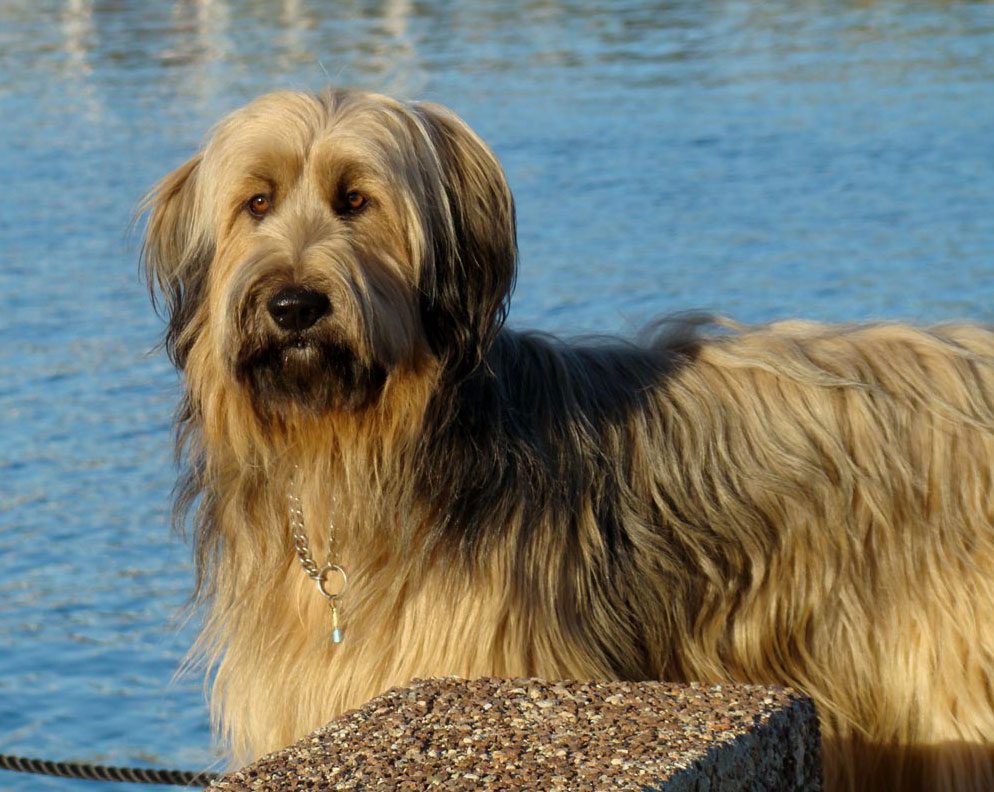
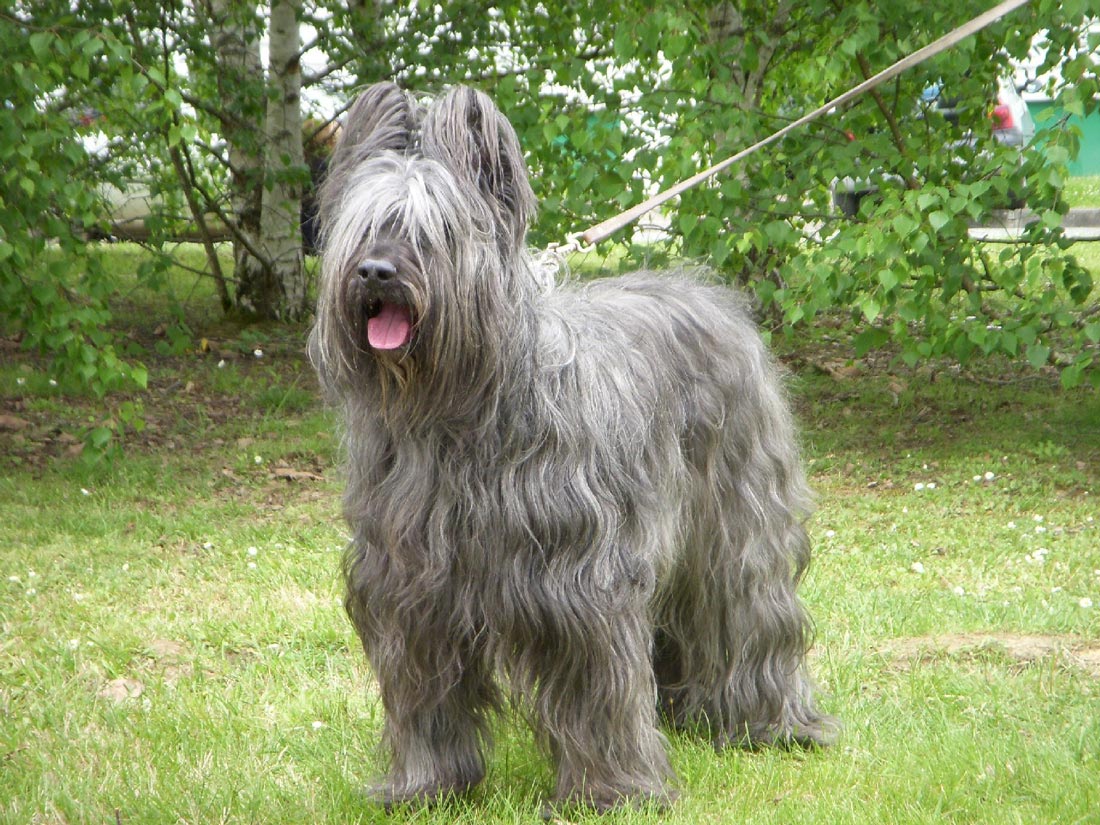
The Briard, is a dog from medium-sized, robust but flexible, to coat hard and resistant to the weather inclement. It has a double spur on each rear leg that, They seem to extra toes, giving the appearance of a wider rear leg. Additional toes on each hind leg give the Briard the ability to turn on one foot in fast turns, they are necessary when performing tasks of grazing and protection of their flocks.

Throughout history, the Briard has maintained a proper balance between size and lightness that is required both for grazing and to protect its herds. They are not too big, but they are large enough to defend themselves from predators such as Fox and the Wolf.

The coat of the Briard can be of various solid colors or light colors with darker ears. Allowed all colors except black. They prefer dark colors.

The height at the cross in the males is of 58 to 68.5 cm and the females of 56 to 64 cm.. The weight is around the 34 Kg.

Ear cropping has been a common practice for a long time, but it is no longer done since -fortunately- It is illegal in many European countries., including France.

Character and skills

The Briard has very good memory. Once he learns a lesson, is something good or bad, knowledge shall retain it for a long time. It may sometimes seem very stubborn, or what its owner, but those are some of the features of the Briard, let's not forget that they were bred for centuries to think for themselves and act on their conclusions, Sometimes to the point of thinking what the "flock" will do ahead. It is a dog very independent, in this regard.

Those are some of the traits that the Briard has preserved throughout history. Even, a Briard what does the city live, retains within itself a great grazing capacity. If you ever, During his lifetime, He has a herd sheep, automatically, will begin to do your homework, to perform the functions for which they were raised, grazing.

Also don't be surprised if at some point when you're out for a walk with your family, the Berger de Brie nibbles on the ankles or nods to a family member who moves away a bit, because the dog that group of human beings will be his flock and will guide his master and the other members of group.

The Berger de Brie It is a very dog loyal and protective, often described as "a heart of gold wrapped in fur". Once you have joined the members of his family, It will be very protective and very reserved with strangers, that is why it is important to bear in mind that any Member who is a family, as an infant for example, You will need a friendly adaptation, the Briard, a sample of which the new intrusion is friendly and free of conflicts. Should be taught that it is a good thing and is not harmful. It is a race excellent to raise with children of all ages.

Images "Briard"

Videos "Briard"

Type and recognitions:

  • FCI CLASSIFICATION:
  • Group :
  • Section : . .
Federations:
  • FCI โ“˜
  • AKC โ“˜
  • ANKC โ“˜
  • CKC โ“˜
  • KC โ“˜
  • NZKC โ“˜
  • UKC โ“˜

โ€‹


FCI breed standard "Briard"

Origin:
France

Date of publication of the valid original standard:
04.11.2008

Use:

---


General appearance:

The Briard is rustic, flexible, muscular and well proportioned, cheerful and alert.


Behavior / temperament:

Balanced temperament, never aggressive or shy.
The Briard must be confident and fearless.

Head:

Strong, long, cover of hair forming beard, whiskers and eyebrows slightly covering eyes. Profile view The skull and snout lines are parallel.

Cranial region:
  • Skull: Strong, slightly rounded seen profile
  • Stop: Pronounced, located at equal distance from the occipital Crest and the truffle tip.

facial region:

  • Truffle: Strong. Well open nasal Windows. The nose is always black except in blue dogs that have a blue or bluish-truffle.
  • Snout: The end of the snout is rather square. Strong nose, wide enough and never pointed.
  • Nose caneRectilinear.
  • Lips: Tight lips.
  • Jaws / Teeth: Strong jaws, white teeth. Scissor bite.
  • EYES: Oval. Horizontal, wide open, rather large and dark in color. Blue dogs are allowed lighter colored eyes.
  • EARS: High insertion without being glued to the head and rather short in the wild. The natural ears cartilage must be the same or slightly less than half of the head of the head. The ears are always flat and covered with long hair. If you are cut, In countries where this practice is allowed, your port must be erect, never divergent or convergent.

Neck:

Muscular and detachment of the shoulders.

Body:

  • top line: The back is straight. The loin is short and firm.Rump: Little inclined, slightly rounded shape.
  • Breast : Wide and long deep and well descended to elbows. Well arched ribs.

Tail:

Natural, low postage, You must reach at least the articulation of the Hock, without deviations, forming a slight hook in the form of "J". In motion the tail must be carried as prolongation of the upper line.

Tips

Good muscular with strong and straight bones.

PREVIOUS MEMBERS:

  • Shoulder: Oblique, well angled, moderately long, well glued to the rib cage.
  • Elbows: In line with the body.
  • Forearm: Straight and muscular.
  • Metacarpus: Slightly inclined seen profile.
  • Previous feet: Strong, round and well in axis with the body. The nails are always black (except in blue) and thick pads. Fingers closed and arched.

LATER MEMBERS:

  • Thigh: Muscled.
  • The Hock joint: Not too low and well angled.
  • Metatarsus: Perfectly vertical seen from behind.
  • Hind feet: Strong, round. The nails are always black (except in blue) and thick pads. Fingers tightly closed.
  • Spurs: By tradition, the shepherds want to keep the double spur. The Spurs are fingers, well separated and nails, relatively close to the foot.

Movement:

Regular, agile, harmonious so that it allows the dog to cover the surface and can do its work with a minimum of effort and fatigue. The Briard must have a long trot with good range and good push from the back.

Mantle

  • Fur: Hair texture Goat, dry, soft, long with a light Undercoat.
  • Color: Negro, leonado, Fawn with a black layer (mild to medium), many times with mask gray or blue.

A warm tawny mantle may show a lighter color on the tips and inclined body areas (Fawn marked with color sand). Black mantles, gray and blue can also show areas clearer. All colors may show different degrees of grey.


Size and weight:

Males: 62 cm. - 68 cm to the cross. females: 56 cm. - 64 cm to the cross.


Fouls:

Any deviation from the above criteria is considered missing and the seriousness is considered to the extent of the deviation to the standard and their effect on the health and welfare of the dog.


SERIOUS FAULTS:

  • Serious defects of limbs.
  • In general the hair color too light.
  • Mantle: Insufficient length (less than 7 cm.) soft or woolly hair.

FALTAS DESCALIFICANTES:

  • Aggressiveness or extreme shyness.
  • Any dog โ€‹โ€‹showing clear signs of physical or behavioral abnormalities.
  • Non-existent stop.
  • Any other color that is not blue or black truffle, presence of pink (Depigmented areas).
  • Prognathism or inferior with loss of contact of the incisors, absence of 2 PM4 lower or absence of 3 teeth or more any that are. (Except for PM1)
  • Eyes too light (yellow), huraรฑos.
  • Ears folded inward, low insertion, below the level of the eyes, short hair covers, naturally erect.
  • Tail curled up or carried vertically.
  • Simple RAM or total absence of spurs on the hind limbs.
  • White color, Brown or mahogany, mantle of two different colors, stain white, white hairs at the ends of the members, Fawn blanket.
  • Size outside the limit specified in the standard with a tolerance of + 2 cm o - 1 cm..
  • Fraudulent modification of the dog or evidence of these practices through the use of substances or surgeries.


N.B.:
  • Males should have two normal-appearing testicles fully descended into the scrotum..
  • Only functionally and clinically healthy dogs, with the typical conformation of the breed, should be used for parenting.

Source: F.C.I - International Cynological Federation

Alternative names:

1. Berger de Brie (English).
2. Chien de Berger franรงais de Plaine, Briard (French).
3. Franzรถsisch auch berger de Brie (German).
4. Berger de Brie (Portuguese).
5. Briard (espaรฑol).

โ–ท The world of Pets: Dogs, cats, birds, reptiles, amphibians

South Russian Ovcharka
Rusia FCI 326 . Sheepdogs

South Russian Ovcharka

The South Russian Ovcharka it is a dog that reacts fast, is strong, balanced and lively, with a tendency to be dominant and very active in defense.

Content

History

The ancestry of the South Russian Ovcharka It comes from the thick-haired bearded dogs that were brought along with fine wool sheep to the steppe regions of the South from Spain. This fact is mentioned in volume XXVI (1830 and., St. Petersburg) from the complete collection of the laws of the Russian Empire. These agile medium-sized dogs, modern-like Catalan Atura dog, they were able to corner the flocks of sheep and protect them. These dogs brought from Spain spontaneously mated with local shepherds and hunting dogs, who had been bred there like sheep since ancient times. Later, these crossbreeds spread throughout the southern regions of Russia and they were even known abroad, In Western countries or in Europe as "the Russian shepherd". In 1867, a gold medal was awarded to Russian Shepherd Dog at the World Fair in Paris for its beauty. But, the real selection started in 1898, in Crimea, en Askania – Nova, the demesne of the Russian baron of German origin Mr. Friedrich von Falz-Fein. He was the person who gave the race typical modern features and called her ยซSouth Russian Ovcharkaยซ.

Numerous breedings with local hounds had led to increased height and dominance of white color, they added some confirming lightness and a few chest flattens typical of fast running dogs, as well as a tucked-in belly and more pronounced angulations of the hindquarters. The latest typical characteristics of conformation and name ยซSouth Russian OvcharkaยปThey were finally assigned to the race in the period of the USSR, in the early decade of 1930, when the first official breed standard was approved. The dogs of South Russian Ovcharka they are easy to maintain and can easily adapt to various weather conditions due to their resistance, and they are always ready to protect their owners and their properties. These dogs are exceptionally loyal and dedicated to their owners., but at the same time it should not be expected that the South Russian Ovcharka be friendly to strangers.

Physical characteristics

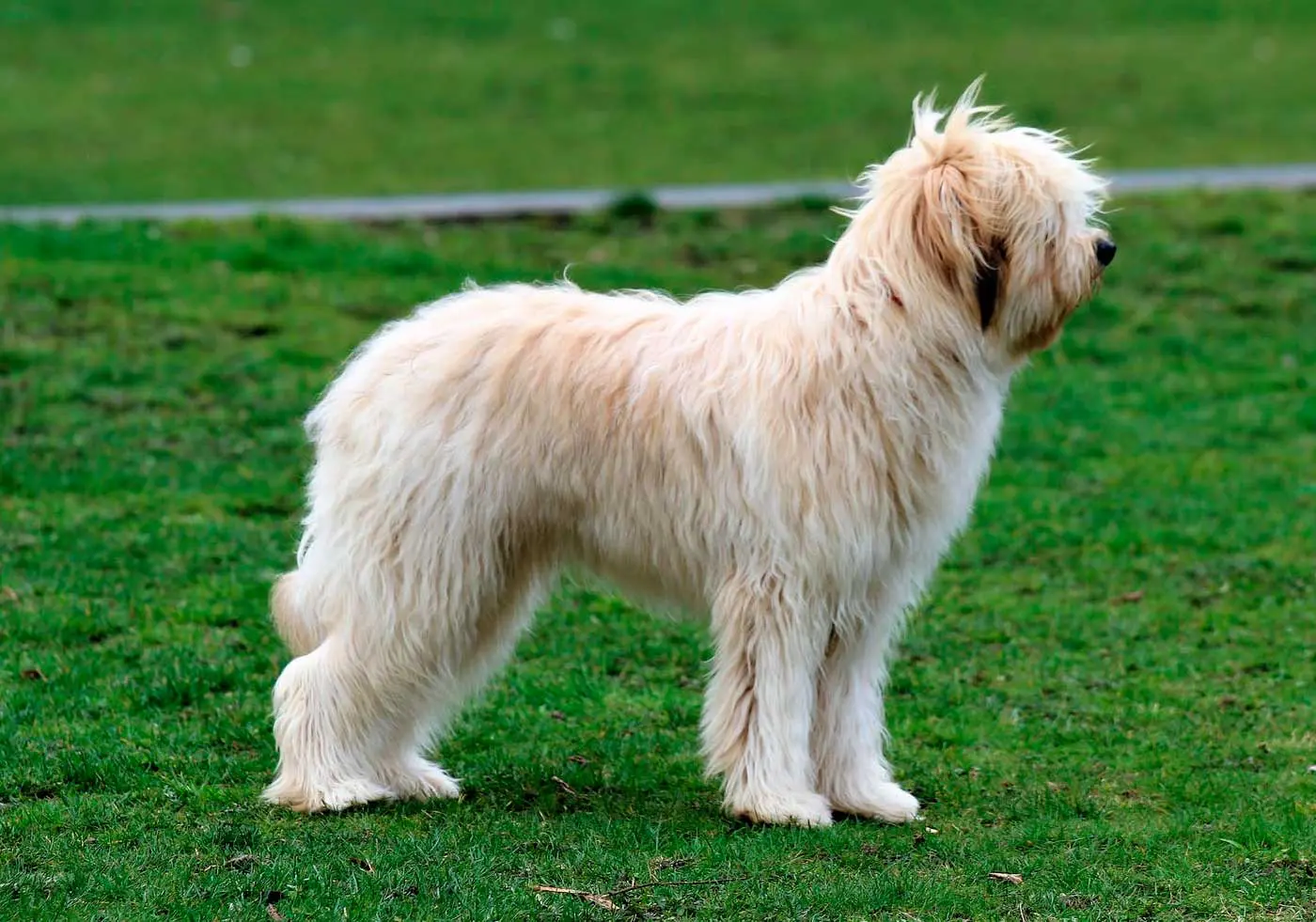
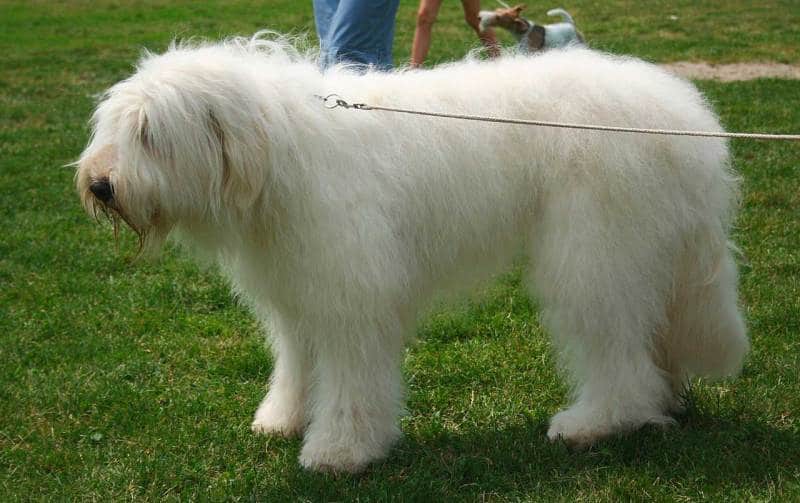
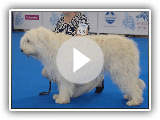
The South Russian Ovcharka it is a medium to large size dog, medium-bodied, not robust, with strong bones and dry, powerful muscles. Sexual dimorphism is well defined, males are more bulky compared to females and have larger heads. The top line is a characteristic feature of the breed; forms a slight curve over the spine. The body, the head, the limbs and tail are covered in thick fur, long and disheveled that gives a deceptive impression of clumsiness and heaviness, but actually the South Russian Ovcharka he is a fast and agile dog. The eyes, slightly almond-shaped, must be dark and horizontally arranged. The ears are relatively small, triangular and hanging.

  • Fur: the cloak is made up of long hair (10-15 cm.), often dense and slightly wavy, hard with abundant undercoat.
  • Color: uniform white allowed, White grey (Ash), white with gray traces, stained gray; fawn white robes are rarer, straw and completely gray.
  • Size: males, minimal 65 cm.; females, minimal 62 cm.. Individuals of 75 cm or more.

Observations and tips

Puppies are sometimes born light gray in color and turn white with the first shedding.

Character and skills

It is a dog that reacts fast, is strong, balanced and lively, with a tendency to be dominant and very active in defense. Very smart and responsive, is very balanced but easily takes action if your family's safety is threatened. It is very good with the owners, children included.

Images "South Russian Ovcharka"

Videos "South Russian Ovcharka"

Type and recognitions:

  • FCI CLASSIFICATION:
  • Group :
  • Section : . .

Federations:

  • FCI – Group 1 Herding dogs, Section 1 Sheepdogs โ“˜
  • UKC – Herding dogs โ“˜

FCI breed standard South Russian Ovcharka

FCIFCI - South Russian Ovcharka
Pastor

Alternative names:

1. Yuzhnorรบsskaya Ovcharka, Ukrainian Ovcharka, Ukrainian Shepherd Dog, Yuzhak, South Ukrainian Ovcharka, South Russian Shepherd Dog, South Russian Sheepdog (English).
2. berger de l’Ukraine (French).
3. Juschnorusskaja Owtscharka, Sรผdrussischer Schรคferhund, Ioujnorousskaรฏa Ovtcharka (German).
4. pastor-da-ucrรขnia (Portuguese).
5. Pastor Ucraniano, Pastor del sur de Rusia (espaรฑol).

Photos:

1 – South Russian Shepherd by https://www.pexels.com/es-es/foto/perro-2042862/
2 – South Russian Ovcharka during dogโ€™s show in Racibรณrz, Poland by user:chained / CC BY-SA
3 – South Russian Ovcharka during dogโ€™s show in Racibรณrz, Poland by user:chained / CC BY-SA
4 – South Russian Ovcharka during dogโ€™s show in Racibรณrz, Poland by user:chained / CC BY-SA
5 – Wikimania Images by Sailesh by Sailesh Patnaik / CC BY-SA

โ–ท The world of Pets: Dogs, cats, birds, reptiles, amphibians

Polish Lowland Sheepdog (Valee Sheepdog)
Polonia FCI 251 - Sheepdogs.

Pastor Polaco de Valรฉe

The Polish Lowland Sheepdog is a lively, Intelligent, playful and lots of memory.

Content

History

The Polish Lowland Sheepdog (Valee Sheepdog) It is a breed of woolly dog half original size of Poland.

The bibliographic data of the race recount that the Pastor Polaco de Valรฉe, comes from dogs imported by the Phoenicians more than two thousand years.

Some sources insist that the Polish Lowland Sheepdog, as we know it today has existed in Poland since at least the 13th century, and it is probable that within its ancestors there was a dog of breed Puli.

As well, they are described as one of the ancestors of the breed Bearded collie. According to the story, a Polish merchant named Kazimierz Grabski, it negotiates a shipment of grain for his sheep in Scotland in the year 1514, to move the cattle in the area he took with him six dogs Polish Lowland Sheepdog.

Apparently a Scottish Shepherd was so impressed with the ability of dogs grazing proposed Kazimierz Grabski exchange a RAM and two ewes for a dog and two bitches. The business was carried out and these three specimens were mixed with the local Scottish dogs and the beautiful ones were born there. Bearded Collie.

The Polish Lowland Sheepdog, as many dog breeds during the second world war he was on the verge of extinction. But - luckily- In most cases, a key person always appears for the history of the canine breed..

In this case the breed was restored and was made by the Dra. Danuta Hryniewicz and his dog, Smok ("Dragon"), Smok is considered the ancestor of all specimens of Polish Lowland Sheepdog that exist in today's world. The first litter in order to restore the breed was born in the year 1950.

Smok, It was a spectacular specimen of the breed, with a perfect anatomical structure and a wonderful temperament. The standard of this dog is tried to emulate by Valรฉe Polish Shepherd breeders, for future generations. And Smok, the first born official standard of the breed, It was written and accepted by the FCI (Federation Cynologique Internationale) in the year 1959.

The American Kennel Club recognized the Polish Lowland Sheepdog as a breed in the Grazing Group in the year 2001.

Physical characteristics

The males measure between 45 and 50 cm and females between 42 and 47 cm., weighing the males of 18,2 to 22,7 Kg and females 13,7 to 18,2 Kg.

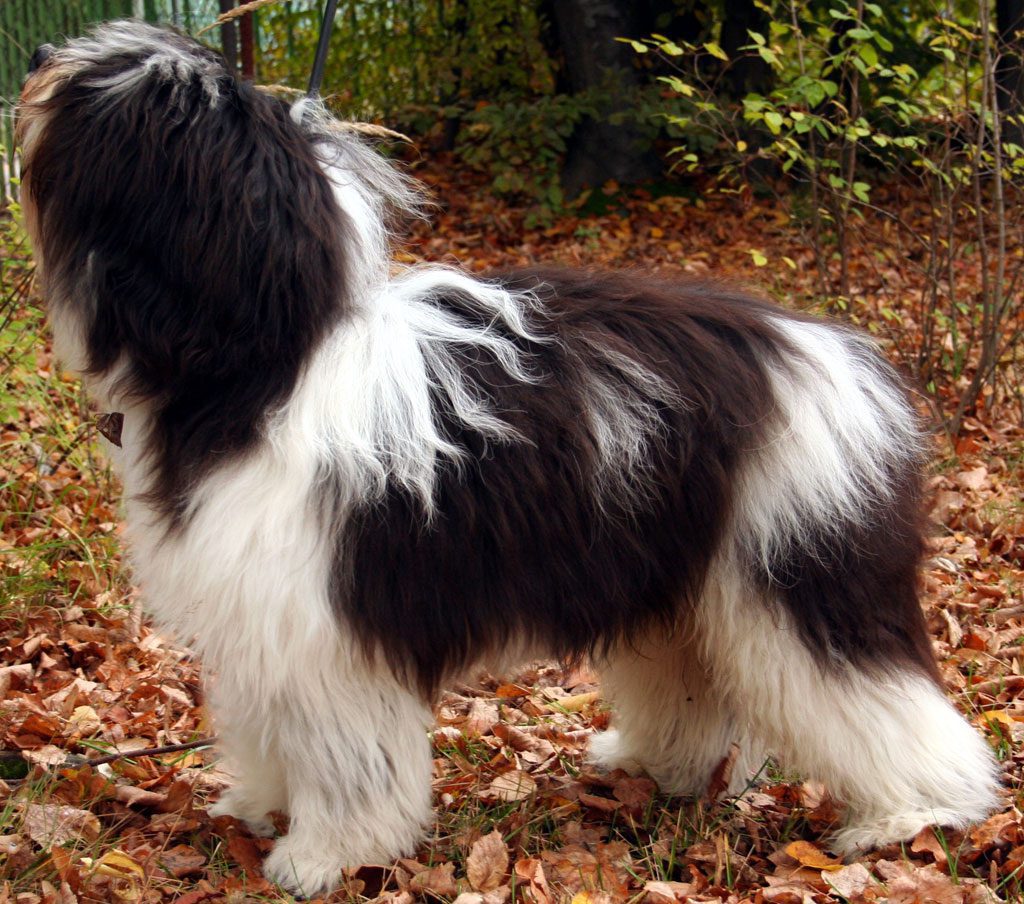
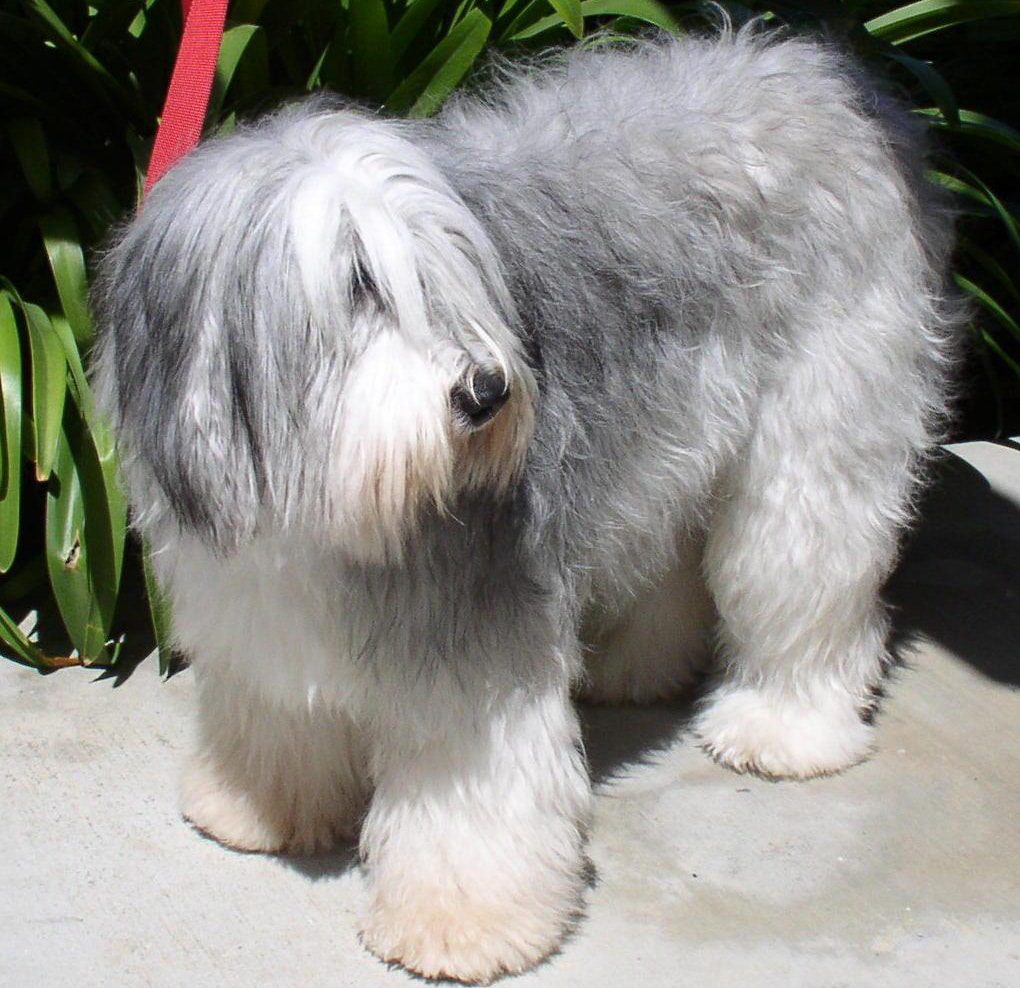
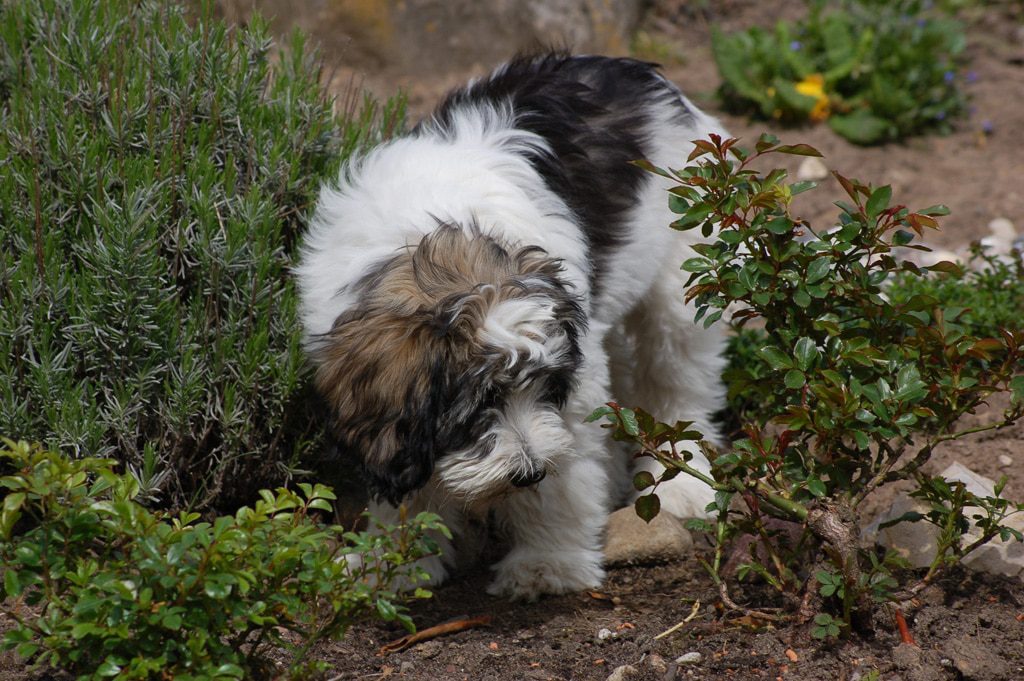
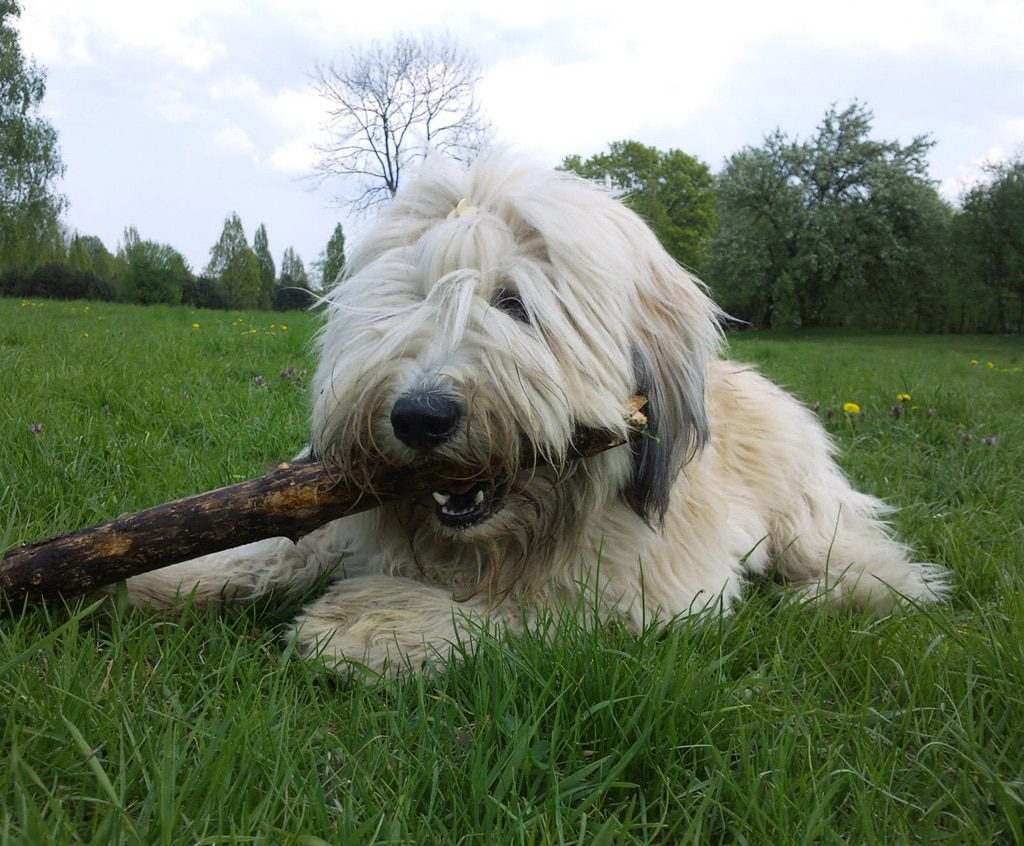
The Polish Lowland Sheepdog is a muscular dog of the mantle thickness of double layer which can be of any color and reason, being the colours white, grey and Brown the most common with black markings, grey or brown. Its color usually becomes darker as it grows..

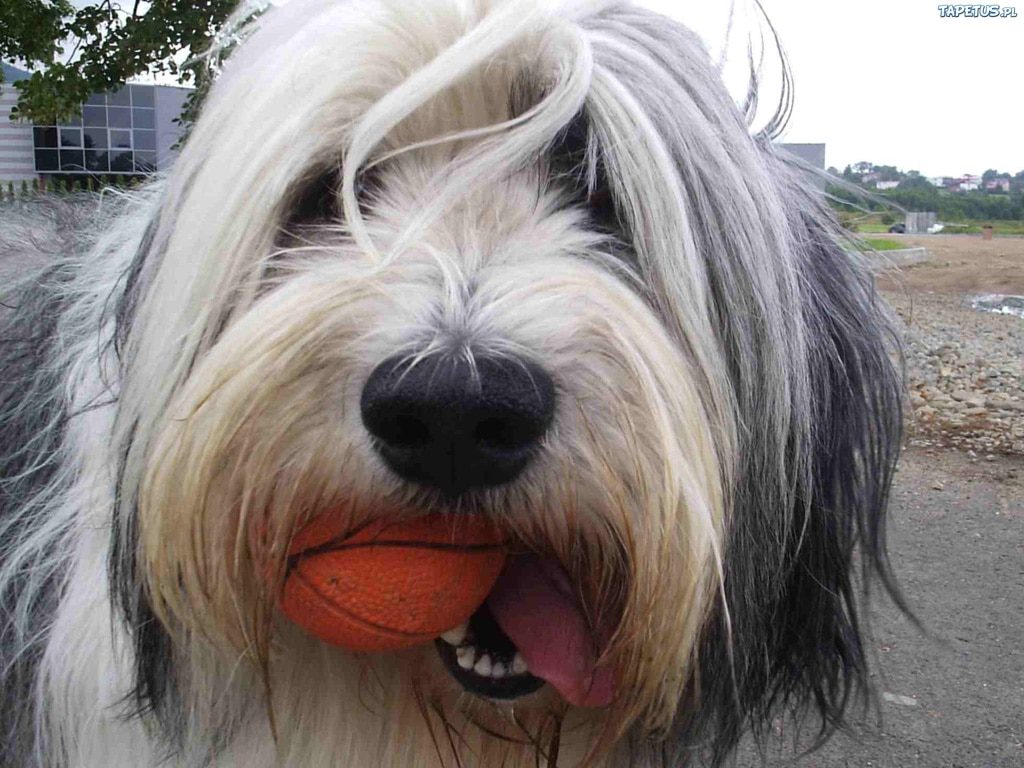
The internal mantle is soft and dense, While the outside is hard and can be smooth or corrugated, but not curly. The hair head makes the head look larger than it really is, covering him in addition the eyes.

The body It is a square, It seems rectangular due to the abundance of hair, with an altura-longitud ratio of 9:10 (that is to say, for a dog of 45 centimeters tall, your body will measure each 50 cm length).

The tail It may be very short and even cut, although it is a practice that is prohibited -fortunately- in many countries.

Character and skills

They are stable, insurance and have an excellent memory which can be worked, Although this breed can dominate his master if it has a weak will.

When is with their herds on the Plains or in the mountains of Poland, the Polish Lowland Sheepdog can rest quietly, because even if it is in sleep mode continues to monitor his flock and will not allow to escape or a single animal, Once the order has been responsible for everything.

Nowadays it is used more as a pet, It is very easy to be playful by nature it suits any family on all children.

They adapt well to a wide variety of conditions and are popular as apartment companion dogs., Although they need a moderate daily exercise.

They love to be with people, especially with the children, they are very protective dogs.

Observations

It is important to check your power supply: to be quite heavy for its size, has a tendency to obesity. Exercise and good nutrition in the infallible recipe for good health of the Polish Lowland Sheepdog.

Polish Lowland Sheepdog Health

All dogs have the potential to develop genetic health problems, just as all people have the potential to inherit a particular disease. Run, do not walk, from any breeder that does not offer a health guarantee on puppies, to tell you that the breed is 100 percent healthy and has no known problems, or tell you that your puppies are isolated from the main part of the home for health reasons. A reputable breeder will be honest and open about the breed's health problems and the incidence with which they occur in their lines..

Having said that, the Polish Lowland Sheepdog is a fairly healthy breed with health issues that are rare so far. Conditions that can be observed in the breed include hip dysplasia, ceroido-lipofuscinosis neuronal, progressive retinal atrophy and hypothyroidism.

Remember that after bringing a new puppy home, has the power to protect you from one of the most common health problems: the obesity. Keep a Polish Lowland Sheepdog with a proper weight is one of the easiest ways to prolong your life. Make the most of your preventive skills to help ensure a healthier dog for life.

Polish Lowland Sheepdog Grooming

The Shepherd of Valรฉe has a long, thick and furry double coat. It has a shiny texture and is supposed to be waterproof.

Expect to spend an hour a week or some time daily keeping him groomed. Brush it with a natural bristle brush, then comb it through, making sure to get to the skin. If you let go of the coat, will get tangled and may need to be trimmed. It will take you nine to twelve months to grow back. A monthly bath does not hurt. The positive side is that the Shepherds of Valรฉe do not lose much.

The rest is basic care. Trim nails as needed, normally each week the. Keep ears clean and dry, and brush frequently with a vet-approved pet toothpaste for overall good health and fresh breath. Grooming a puppy requires very little time, but it's a good idea to start early so you can get used to staying still while you work on your coat.

Characteristics "Polish Lowland Sheepdog (Valee Sheepdog)"

Coexistence is important that you have with your new friend. Before considering the acquisition of a dog of the breed "Polish Lowland Sheepdog (Valee Sheepdog)" you know certain factors. Not all breeds of dogs are apt to live in an apartment, you must take into account his character, their need for exercise, their interaction with other pets, their care and if you have small children, their level of tolerance towards them.

Adaptation โ“˜

3,0 of 5 stars (based on 1 review)

friendly dog โ€‹โ€‹โ“˜

2,0 of 5 stars (based on 1 review)

hair loss โ“˜

4,0 of 5 stars (based on 1 review)

Affection level โ“˜

5,0 of 5 stars (based on 1 review)

Need for exercise โ“˜

4,0 of 5 stars (based on 1 review)

Social need โ“˜

4,0 of 5 stars (based on 1 review)

Home โ“˜

3,0 of 5 stars (based on 1 review)

Toilet โ“˜

4,0 of 5 stars (based on 1 review)

Friendly with strangers โ“˜

2,0 of 5 stars (based on 1 review)

barking โ“˜

4,0 of 5 stars (based on 1 review)

Health โ“˜

2,0 of 5 stars (based on 1 review)

Territorial โ“˜

5,0 of 5 stars (based on 1 review)

Cat friendly โ“˜

3,0 of 5 stars (based on 1 review)

Intelligence โ“˜

5,0 of 5 stars (based on 1 review)

Versatility โ“˜

2,0 of 5 stars (based on 1 review)

Child friendly โ“˜

4,0 of 5 stars (based on 1 review)

Surveillance โ“˜

4,0 of 5 stars (based on 1 review)

joy โ“˜

5,0 of 5 stars (based on 1 review)

Polish Lowland Sheepdog Images

Polish Lowland Sheepdog Videos

Type and recognitions:

  • FCI CLASSIFICATION:
  • Group :
  • Section : . .

Federations:

  • FCI – Group 1 Herding dogs, Section 1 Sheepdogs โ“˜
  • AKC – PASTORAGE โ“˜
  • ANKC – Group 5 (working dogs) โ“˜
  • CKC – Group 7 – Herding dogs โ“˜
  • โ€‹KC – Pastoral โ“˜
  • NZKC – Working dog โ“˜
  • UKC – Herding dogs โ“˜

FCI breed standard Polish Lowland Sheepdog (Valee Sheepdog)

FCIFCI - Polish Lowland Sheepdog (Valee Sheepdog)
Pastor

Alternative names:

1. Polski Owczarek Nizinny, Valee Sheepdog, PON, Nizinny, PLS (English).
2. Berger polonais de plaine (French).
3. PON, รผbersetzt polnischer Niederungshรผtehund (German).
4. Polski Owczarek Nizinny (Portuguese).
5. Pastor de Valรฉe, Pastor polaco de las llanuras (espaรฑol).

โ–ท The world of Pets: Dogs, cats, birds, reptiles, amphibians

Australian Shepherd
Estados Unidos FCI 342 - Sheepdogs

Pastor australiano

The Australian Shepherd It has a stable temperament and is good in nature.

Content

History

The Australian Shepherd It is a breed of dog of grazing which has developed on ranches in the West of United States. despite its name, the race, did not originate in Australia. It acquired its name because some of the dogs, Australian Shepherds arrived in United States with shipments of Australian sheep.

Race gradually rose in popularity with the rise of the riding following the first world war western. For many years, the Australian Shepherd, has been dog valued by farmers for its versatility and capacity of training inherent. The race has gained recognition, with its training capacity and the desire to please, and are highly respected for his skills in obedience. They became known to the general public through roundups, horse shows, and through Disney made-for-TV movies.

Physical characteristics

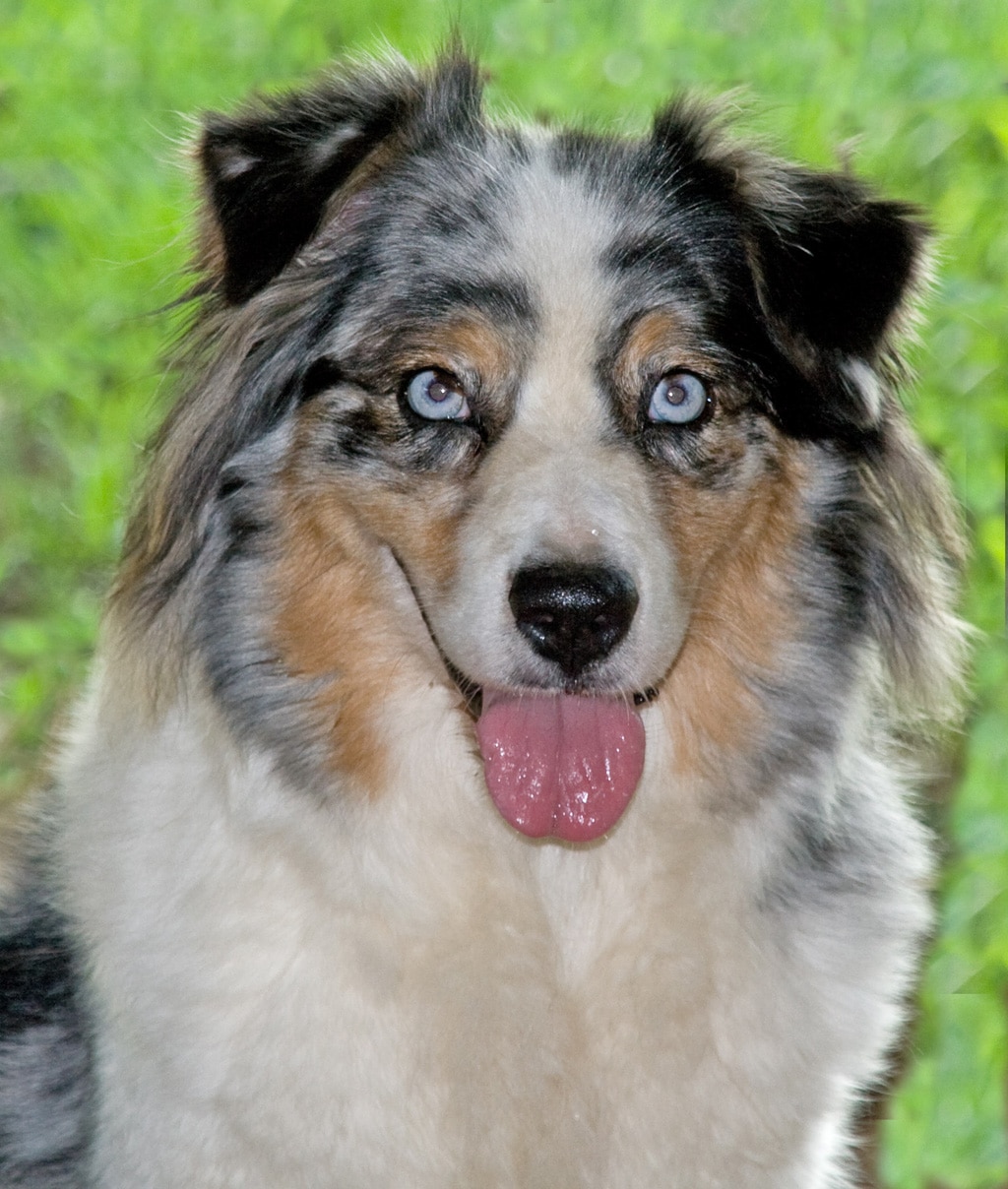
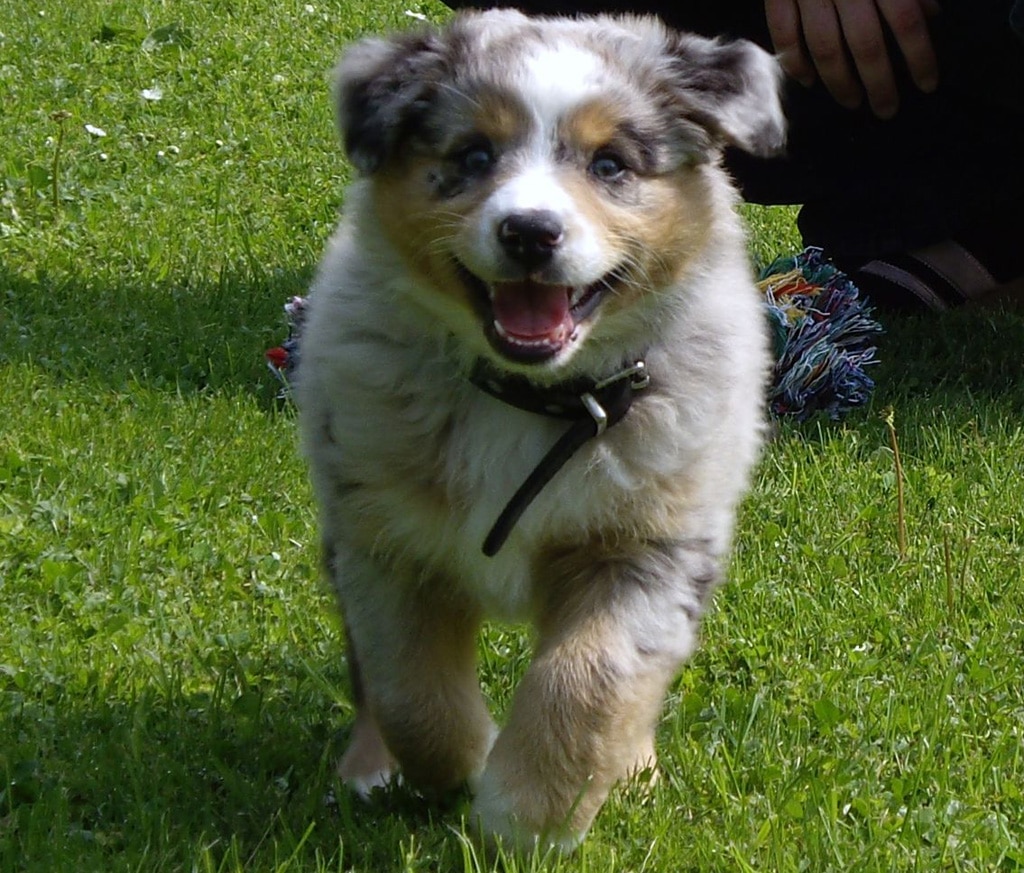
The Australian Shepherd is a dog from medium-sized and solid construction, known for its natural 'bob' or amputated tail. He is an active breed of grazing, generally very good with pets and other well-known people, but they can be reserved with strangers. They are not a fair race, tender, who prefer the company of their owners.

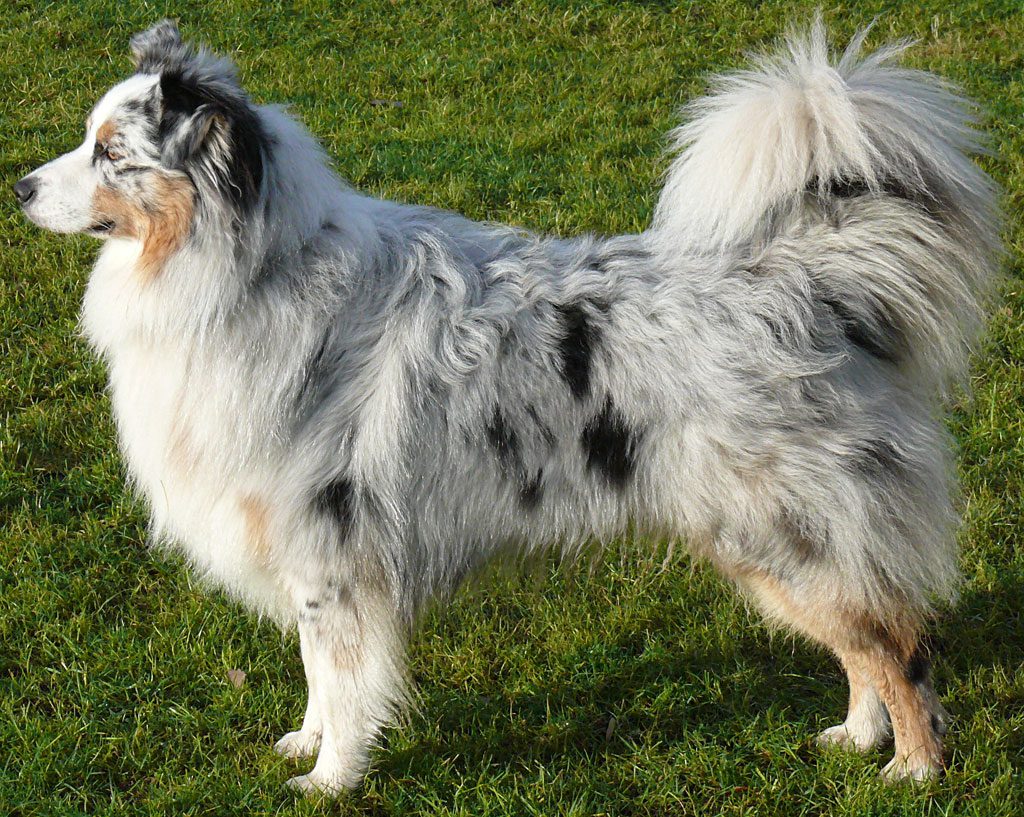
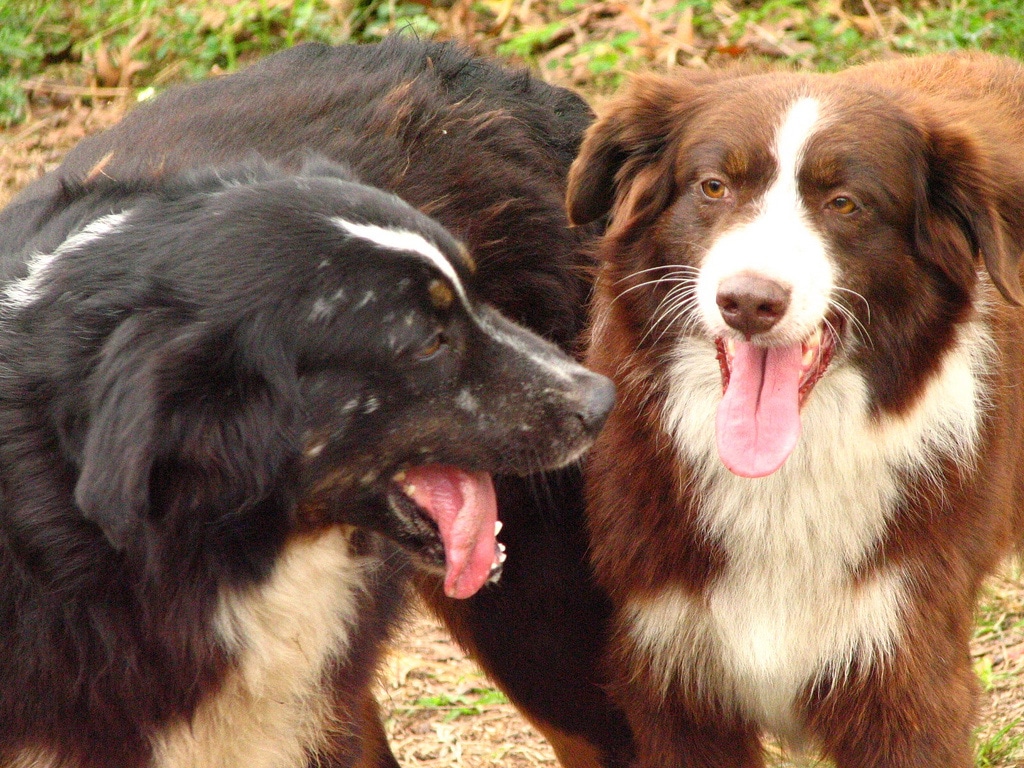
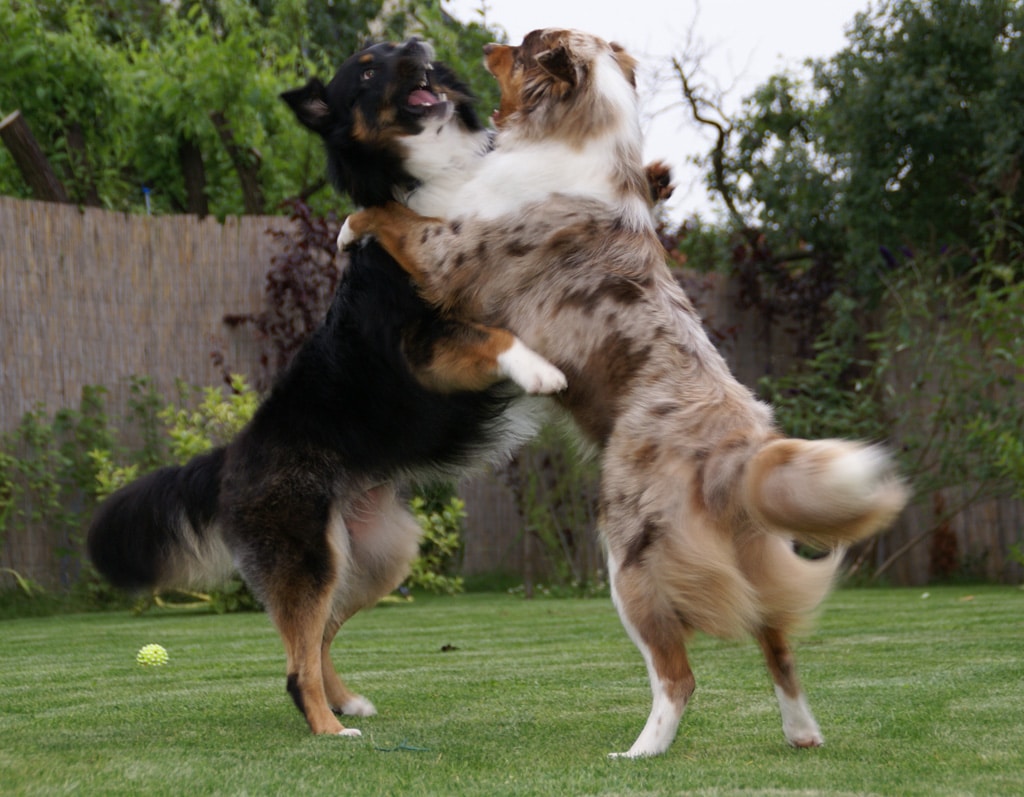
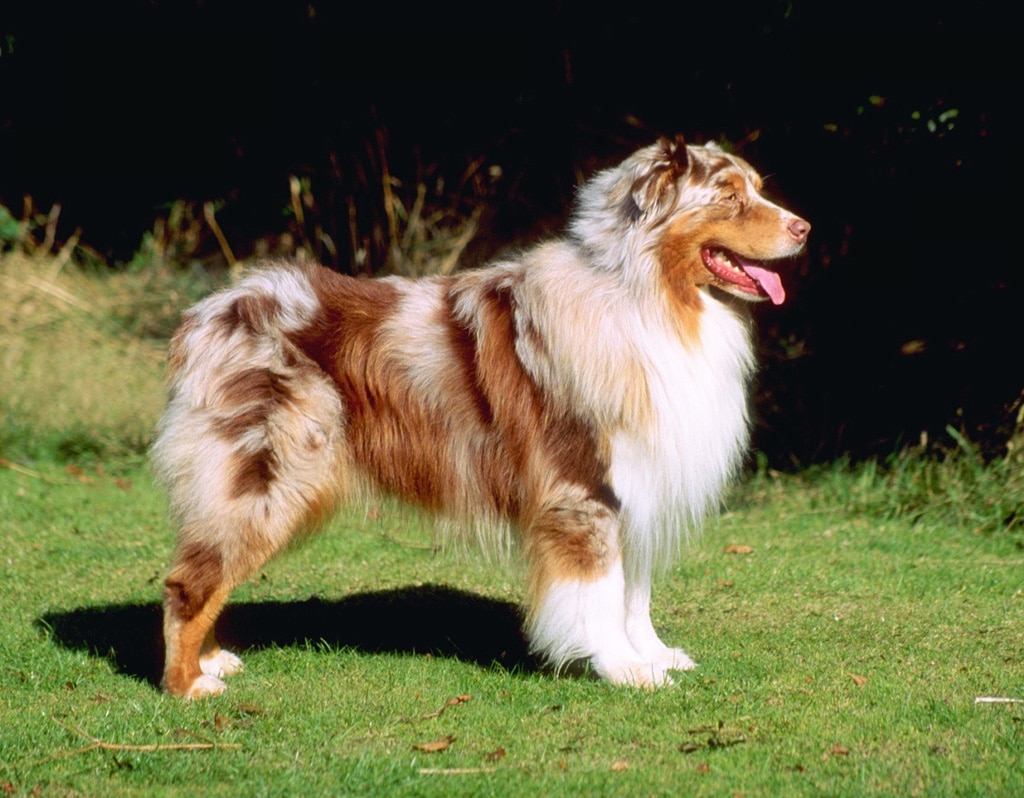
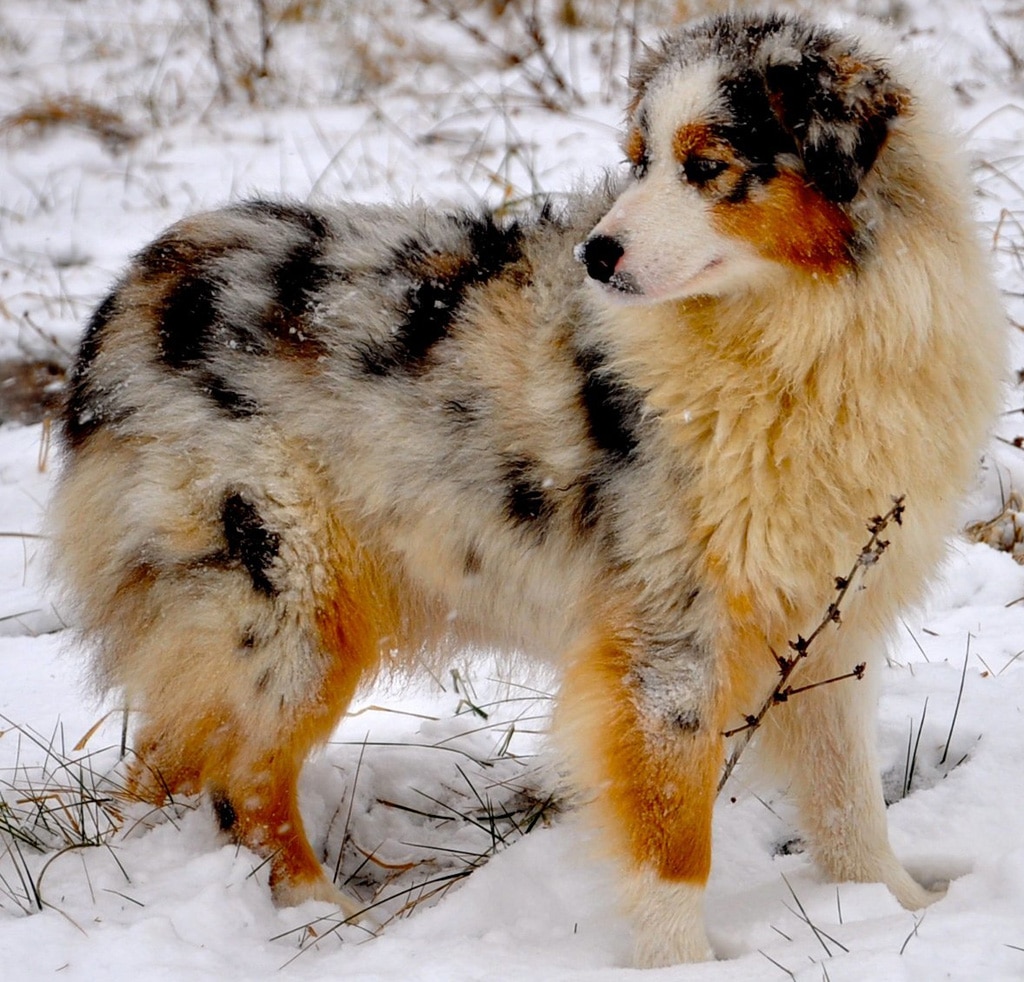
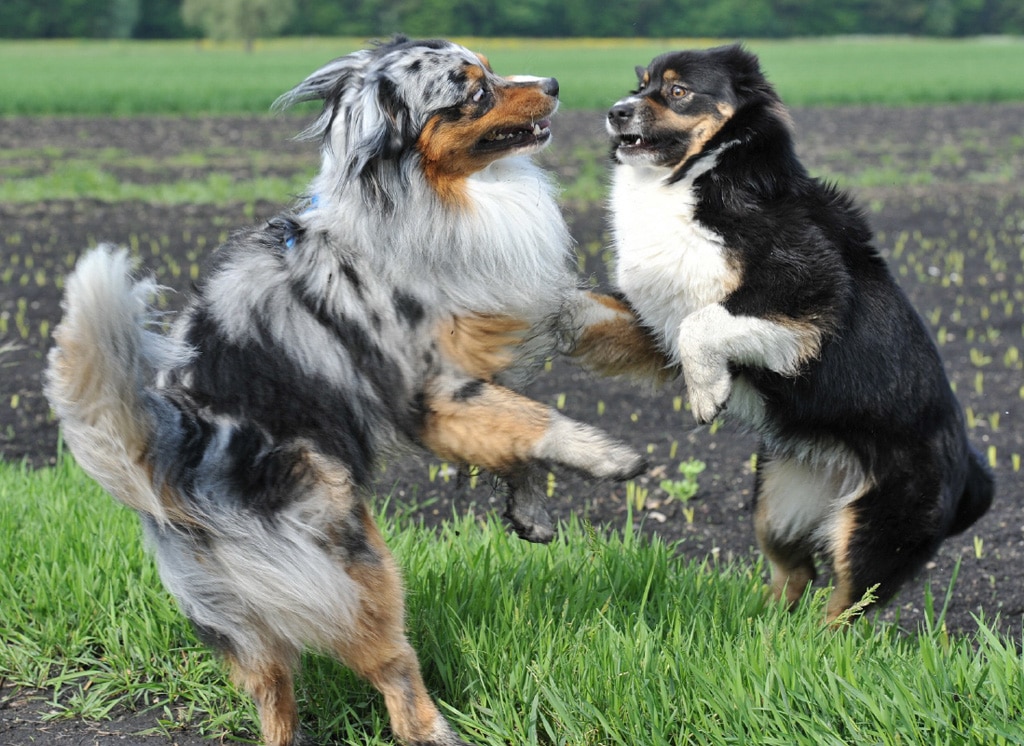
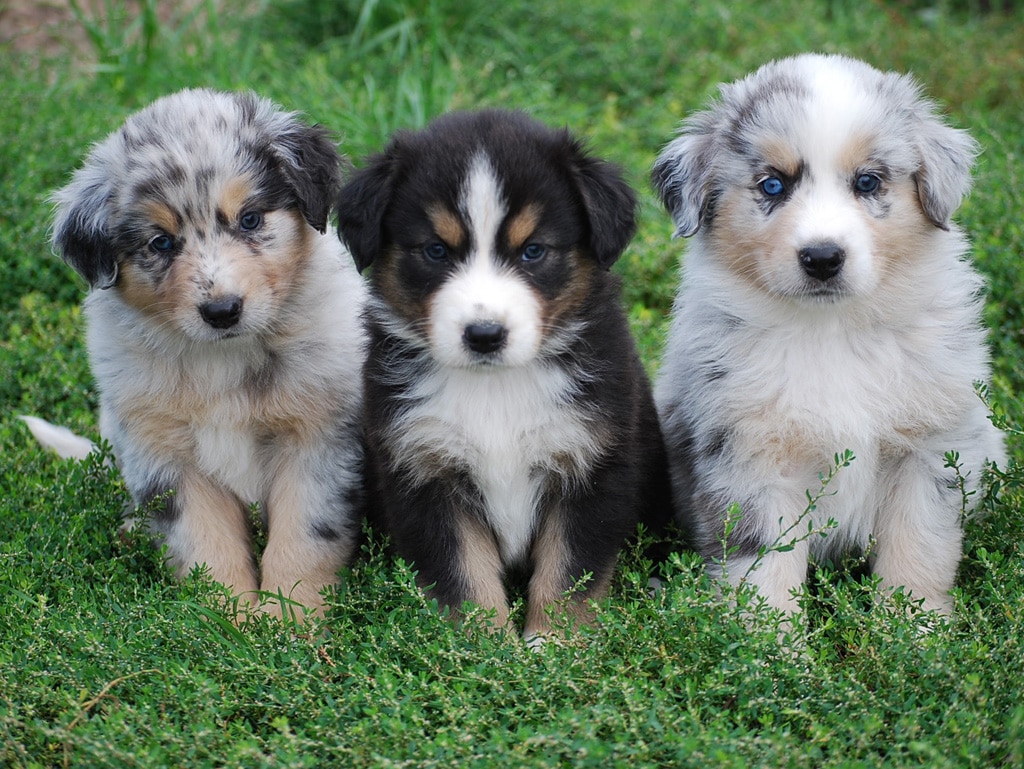
Its mantle is double layer, and the colors are black, red (sometimes called the liver), tricolor (black marble, White and grey), and the Red merle (red marble, White and beige), each of these colors may also have copper and / or white spots in various combinations in the face, the chest and legs.

The wide variety of color combinations comes from the interaction between the color of one allele, that is recessive, dominant or red black color, and the dominant allele marble. Together, They provide the color of the fur, and they can appear in any combination:

Negro, with spot color fire and / or white markings on the face, neck, legs, chest, belly. Copies of a black are equally valid as the Tan and / or white.

Red (liver), with or without points bronze and / or white markings on the face, neck, legs, chest, belly. White or Brown points are required.

Blue Merle (a mottled patchwork of black and grey) with or without stain color fire and / or white markings on the face, neck, legs, chest, belly.

Red Merle (a variegated mosaic of cream and liver red) with or without stain color fire and / or white markings on the face, neck, legs, chest, belly.

There is also great variety in the color of the eyes australian shepherd, they can be of any color or shade of brown or blue, You can have two different colored eyes, or even have "split" or bicolor eyes (for example, Brown half, Blue half).

Character and skills

The race is usually is highly energetic, they require a large amount of exercise, education and care. The Australian Shepherd is playful, that is why it is good that training included days of games.

Like all races work, the Australian Shepherd you have considerable energy that you need to expend, therefore, need a job to do. Often stands in canine sports, such as agility, the flyball and the Frisbee . As well, are good as rescue dogs, disaster dogs, detection dogs, guide, service and therapy dogs.

They are very loyal to their owners, and they are grateful when they receive a good deal, and love. Because the breed was developed to serve at the ranch, a work that includes being protective of its property, usually always alert and slope of the movements of the environment.

The Australian Shepherd, is a dog Intelligent, learn quickly and loves to play. It is important that whoever assumes the responsibility of having such a dog, values that detail, because if you do not receive the necessary daily exercise, When they get bored they can become very destructive.

They require a minimum of 2 or 3 game hours per day, exercise and attention. They need space to run and play, If living in an urban environment.

It is a hardy breed that, It can live in a wide variety of terrain. For this reason they are a very popular choice for Trail dogs and working dogs.

Australian Shepherd Dog Health

All dogs have the potential to develop genetic health problems, just as all people have the potential to inherit a particular disease. Run, do not walk, from any breeder that does not offer a health guarantee on puppies, to tell you that the breed is 100 percent healthy and has no known problems, or tell you that your puppies are isolated from the main part of the home for health reasons. A reputable breeder will be honest and open about the breed's health problems and the incidence with which they occur in their lines..

The australian shepherds they are generally healthy dogs, but they can develop certain health problems, including hip dysplasia, various eye diseases, sensitivity to certain drugs and epilepsy. Here is a brief summary of what you should know.

The hip dysplasia is a genetic malformation of the hip socket. Dogs with hip dysplasia may appear perfectly normal, but because the head of the thigh bone does not fit properly in the hip socket, over time the cartilage on the surface of the bone begins to wear down. Constant inflammation leads to arthritis.

The Australians can be affected by a number of genetic eye problems. These include colobomas, in which part of the structure of the eye is missing. They can also suffer from different types of cataracts, progressive retinal atrophy (PRA) and retinal detachment. Another eye problem is persistent pupillary membrane, tiny threads of fetal tissue crossing over the iris. Australians are also among the races that can be affected by the Anomaly of the Collie Eye, a group of eye disorders ranging from mild to severe.

But, eye disease screening doesn't end with parents. All puppies should be examined by an ophthalmologist after six weeks of age and before you bring them home.. You should continue to have a veterinary ophthalmologist examine your eyes annually..

The Australians are also one of the breeds that can be affected by Multiple Drug Sensitivity (MDS). Dogs with MDS can have fatal reactions to a number of common veterinary medications., including preventive ivermectin against heartworm. Detection of these diseases not only in the parents of the puppy, but also in the dog, it's a life-saving need. The test is very simple and only requires a cheek smear.; information on how to test your dog is available here.

The epilepsy also occurs in the breed, but there is currently no screening test for seizure disorders in Australian Shepherds. A good breeder will be able to discuss the prevalence of all health problems, those who have and those without genetic testing, in the lines of their dogs, and help puppy buyers make an informed decision about your dog's health risks.

Not all of these conditions are detectable on a growing puppy, and it is impossible to predict whether an animal will be free from these evils, so you need to find a reputable breeder who is committed to raising the healthiest animals possible. Must be able to produce independent certification that the dog's parents (and grandparents, etc.) have been examined for common defects and considered healthy for breeding. That's where health records come in..

Careful breeders screen their breeding dogs for genetic diseases and breed only the healthiest, best-looking specimens., but sometimes mother nature has other ideas and a puppy develops one of these diseases despite good husbandry practices. Advances in veterinary medicine mean that in most cases dogs can still live a good life. If you are going to have a puppy, ask the breeder about the ages of the dogs in their lines and what they died of.

Remember that after you have welcomed a new puppy into your home, has the power to protect you from one of the most common health problems: the obesity. Keep a Australian Shepherd with a proper weight is one of the easiest ways to prolong your life. Make the most of your preventive skills to help ensure a healthier dog for life.

Grooming of the "Australian Shepherd"

The Australian Shepherd he has a lot of hair and his grooming needs may seem daunting, but taking care of it is not as much work as you might think. Brush your coat regularly to remove dead hair that would otherwise fall on your clothing and furniture.

Frequent brushing, hot baths and thorough drying during molting time, Spring and autumn, will help keep handfuls of hair under control. Outside the molting season, bathe the Australian only when it gets dirty.

The rest is basic care. Active Australian Shepherds often wear down their nails naturally, but it's a good idea to check them weekly to see if they need a cut. Otherwise, just keep your ears clean and brush your teeth frequently for general good health and fresh breath.

Characteristics "Australian Shepherd"

Coexistence is important that you have with your new friend. Before considering the acquisition of a dog of the breed "Australian Shepherd" you know certain factors. Not all breeds of dogs are apt to live in an apartment, you must take into account his character, their need for exercise, their interaction with other pets, their care and if you have small children, their level of tolerance towards them.

Adaptation โ“˜

5,0 of 5 stars (based on 1 review)

friendly dog โ€‹โ€‹โ“˜

3,0 of 5 stars (based on 1 review)

hair loss โ“˜

3,0 of 5 stars (based on 1 review)

Affection level โ“˜

4,0 of 5 stars (based on 1 review)

Need for exercise โ“˜

5,0 of 5 stars (based on 1 review)

Social need โ“˜

4,0 of 5 stars (based on 1 review)

Home โ“˜

3,0 of 5 stars (based on 1 review)

Toilet โ“˜

3,0 of 5 stars (based on 1 review)

Friendly with strangers โ“˜

2,0 of 5 stars (based on 1 review)

barking โ“˜

5,0 of 5 stars (based on 1 review)

Health โ“˜

3,0 of 5 stars (based on 1 review)

Territorial โ“˜

5,0 of 5 stars (based on 1 review)

Cat friendly โ“˜

3,0 of 5 stars (based on 1 review)

Intelligence โ“˜

5,0 of 5 stars (based on 1 review)

Versatility โ“˜

5,0 of 5 stars (based on 1 review)

Child friendly โ“˜

5,0 of 5 stars (based on 1 review)

Surveillance โ“˜

5,0 of 5 stars (based on 1 review)

joy โ“˜

5,0 of 5 stars (based on 1 review)

Images of the ยซAustralian Shepherdยป

ยซAustralian Shepherdยป Videos

Type and recognitions:

  • FCI CLASSIFICATION:Group –> Pastor and Boyeros dogs (except Swiss Cattle Dogs)
    / Section –> Pastor dogs. Without working trial.
  • FCI 342

Federations:

  • FCI – Group 1 Herding dogs, Section 1 Sheepdogs โ“˜
  • AKC – PASTORAGE โ“˜
  • ANKC – Group 5 (working dogs) โ“˜
  • CKC – Group 7 – Herding dogs โ“˜
  • โ€‹KC – Pastoral โ“˜
  • NZKC – Working dog โ“˜
  • UKC – Herding dogs โ“˜

FCI breed standard Australian Shepherd

FCIFCI - Australian Shepherd
Pastor

Alternative names:

1. Aussie (English).
2. Australian Shepherd (French).
3. Australian Shepherd (German).
4. Aussie (Portuguese).
5. Pastor ovejero australiano, Perro de pastor australiano (espaรฑol).

โ–ท The world of Pets: Dogs, cats, birds, reptiles, amphibians

Maremma and the Abruzzes Sheepdog
Italia FCI 201 . Sheepdogs

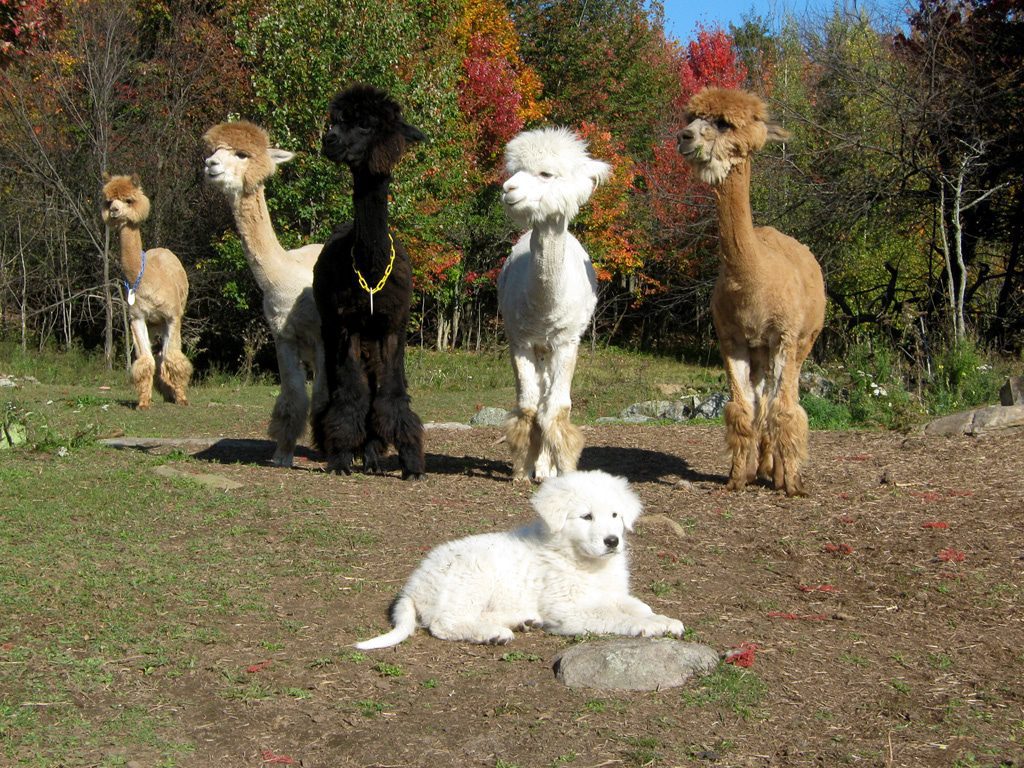
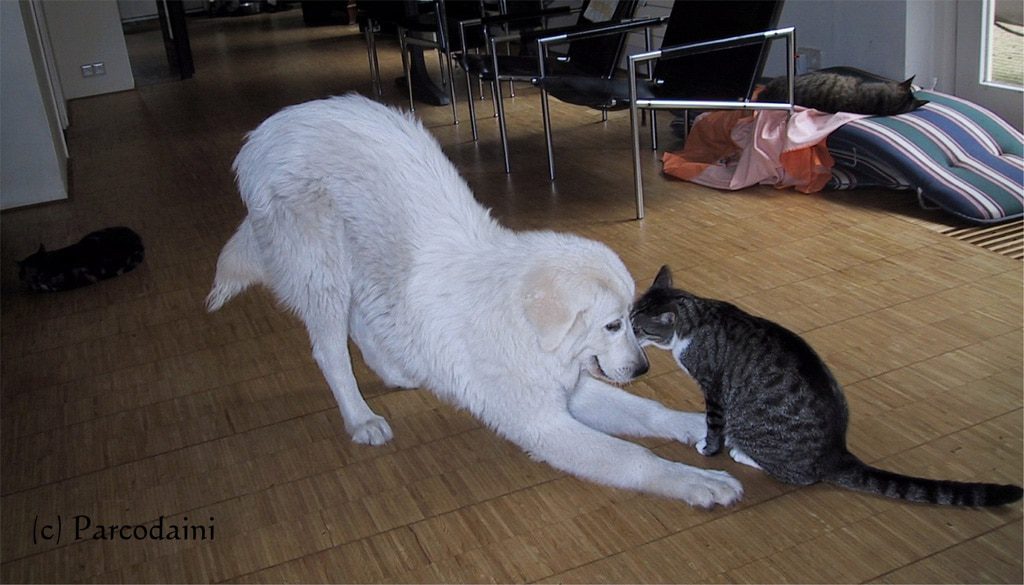
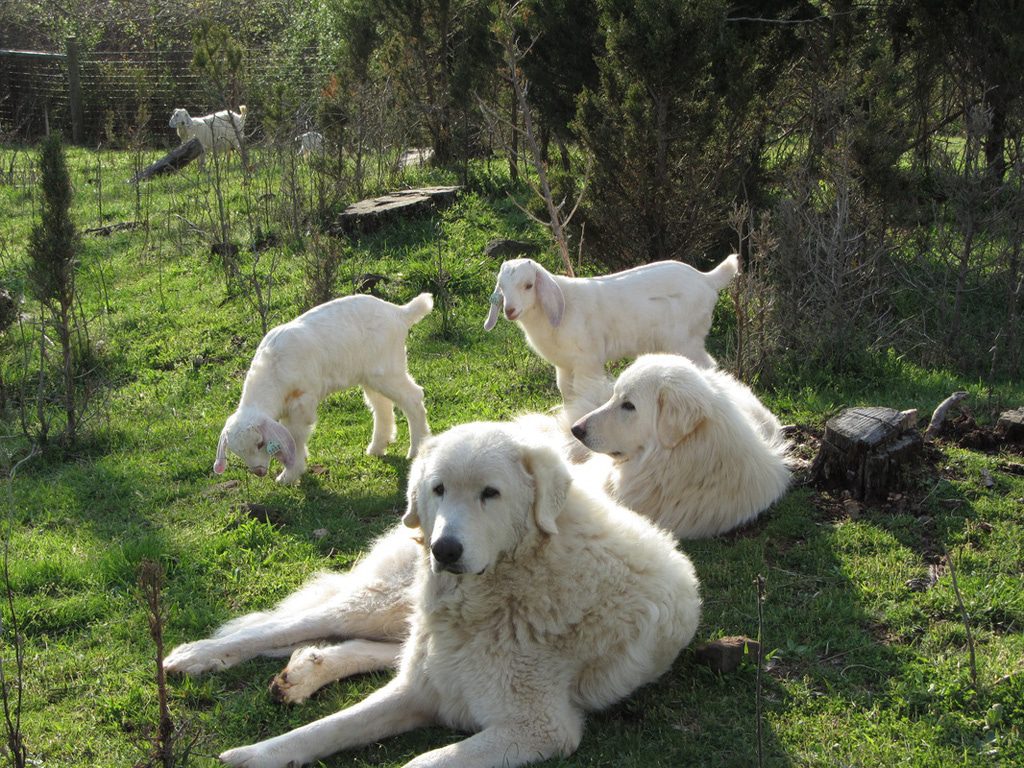
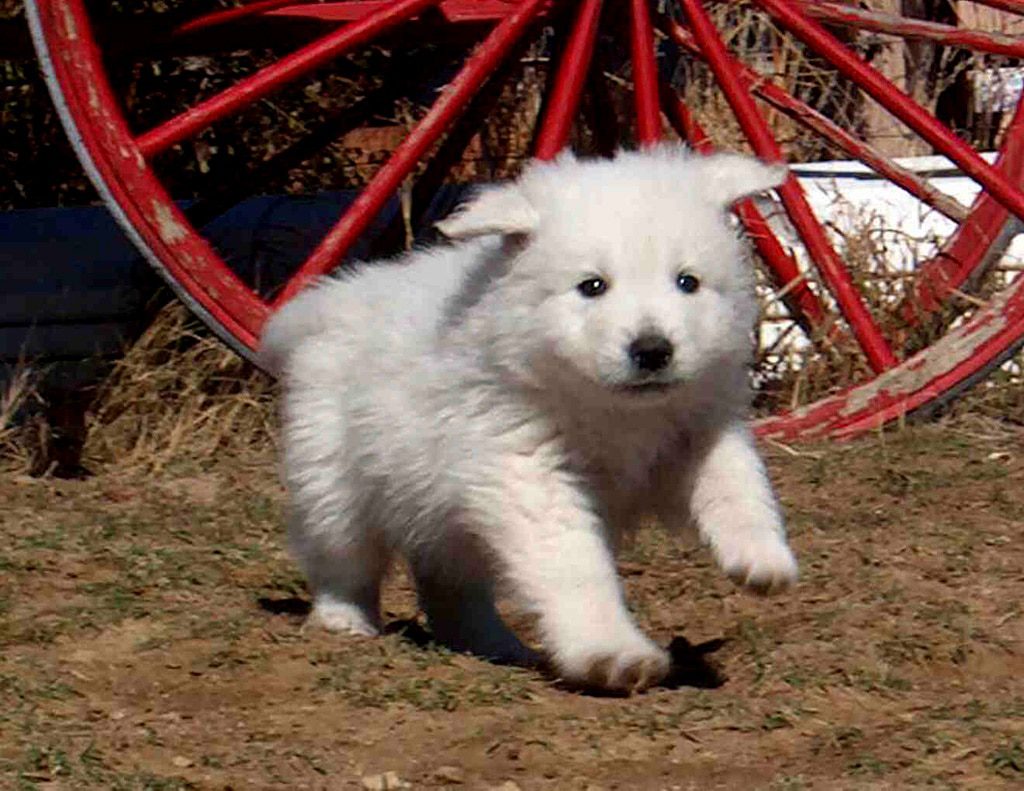
The Maremma and the Abruzzes Sheepdog he will be really happy sleeping with the cattle rather than on the sofa in your home.

Pastor Maremmano-Abruzzese

Content

Characteristics "Maremma and the Abruzzes Sheepdog"

Coexistence is important that you have with your new friend. Before considering the acquisition of a dog of the breed "Maremma and the Abruzzes Sheepdog" you know certain factors. Not all breeds of dogs are apt to live in an apartment, you must take into account his character, their need for exercise, their interaction with other pets, their care and if you have small children, their level of tolerance towards them.

Adaptation โ“˜

4,0 of 5 stars (based on 1 review)

friendly dog โ€‹โ€‹โ“˜

3,0 of 5 stars (based on 1 review)

hair loss โ“˜

3,0 of 5 stars (based on 1 review)

Affection level โ“˜

4,0 of 5 stars (based on 1 review)

Need for exercise โ“˜

5,0 of 5 stars (based on 1 review)

Social need โ“˜

3,0 of 5 stars (based on 1 review)

Home โ“˜

3,0 of 5 stars (based on 1 review)

Toilet โ“˜

2,0 of 5 stars (based on 1 review)

Friendly with strangers โ“˜

3,0 of 5 stars (based on 1 review)

barking โ“˜

2,0 of 5 stars (based on 1 review)

Health โ“˜

4,0 of 5 stars (based on 1 review)

Territorial โ“˜

5,0 of 5 stars (based on 1 review)

Cat friendly โ“˜

3,0 of 5 stars (based on 1 review)

Intelligence โ“˜

3,0 of 5 stars (based on 1 review)

Versatility โ“˜

2,0 of 5 stars (based on 1 review)

Child friendly โ“˜

4,0 of 5 stars (based on 1 review)

Surveillance โ“˜

4,0 of 5 stars (based on 1 review)

joy โ“˜

4,0 of 5 stars (based on 1 review)

History

The Maremma and the Abruzzes Sheepdog (Maremmano-Abruzzese or Cane da pastore Maremmano-Abruzzese), It is a breed of sheepdog native to central Italy and used for centuries by shepherds to defend their flocks from wolves.

The breed is still used today, widely, in the region of the Abruzzo where flocks of sheep vitalize the rural economy and wolves are protected predators (of the few areas of the planet, Regrettablyโ€ฆ).

The race is similar to the Pyrenean Mountain Dog, to the Kuvasz from Hungary and to Akbash from Turkey (This, that more!).

It also descends from the shepherd dogs that once existed in the Maremma Tuscany region and in the Lazio region.. Since 1860, the transhumance of herds from one region to another has favoured the development of a natural mixture of these two primitive races.

Several descriptions of dogs defending vulnerable white sheep are found in the literature of ancient Rome, in works such as the Columella, Varro and Palladius. Dogs similar to Maremma and the Abruzzes Sheepdog they are represented in numerous sculptures and paintings from Roman times to the present day.

Until year 1958, the Maremma Sheepdog and the Maremmano-Abruzzese they were considered as separate races. The first Canine society of the Maremma Sheepdog was established in the year in 1950, and three years later (1953) the First Canine Society of the Maremma Sheepdog.

But owing to transhumance of herds of sheep from one region to another, especially after the unification of Italy, there was a โ€œnatural fusionโ€ between the two races. For which reason, the 1 in January of 1958, the races were unified by the ENCI (Ente Nazionale della Cinophilia Italian, or national association Cynologique Italiana).

Today, It is not so encouraging and sympathetic as the history of this beautiful can, although they are still widely used by Italian sheep farmers in areas where predation is common, as the central Apennines of Italy and the open countryside of the land of national parks in Abruzzo.

But, Ironically, of the Maremma and the Abruzzes Sheepdog, in the area of the Maremma of Tuscany, the memory can only, they are now a rarity just in the area which saw them to be born, you are right, even if you don't like to hear it, the hand of man and progress... have resulted in a more sinister: sheep farming has declined and the wolf is nearly extinct.

Curiosities

Although it is easier for him Maremma and the Abruzzes Sheepdog, develop their relationship with sheep and goats, farmers have found that, as well, are able to develop a protective bond with cows, and in many places of United States, It also used for the purpose. As well, they are good defending corrales, chickens or ducks from the threats of land caused by coyotes, dogs and foxes, and air threats caused by birds of prey (Hawks, Eagles, owls, etc.).

In Australia, a lot has been invested in it Maremma and the Abruzzes Sheepdog. Specifically in the city of Warrnambool that has great natural beauties, and in one of them the Maremma and the Abruzzes Sheepdog It is today a key piece for the survival of other species.

Within the natural beauties that talked, the beach of Logan located on the East side of the city is a great example, recognized as a southern whale breeding site. Every year between May and August reach coasts copies of adult female whales to give birth to their calves, and at the end of September are often long trip offshore, sometimes with a little bit of human help, so the whales are not left stranded on the beach.

In addition to the whale southern franco, the coast is also visited by sea lions of Australia, penguins and common dolphin. Albatrosses can spot during the winter and early spring.

There is also another natural beauty which is the protagonist of this post can… Middle Island had a large colony of penguins. But the uncontrolled presence of foxes led to a significant reduction in the number of members of the colony.. In 2005, there are only four penguins left in the colony.

It was then when the Warrnambool City Council introduced an innovative and ecological program, first in the world with these characteristics, introduced to Middle Island several copies of Maremma and the Abruzzes Sheepdog to protect the penguins. This highly original and innovative program has been the cornerstone of the re-establishment of the penguin colony that in the year 2009 already had more of 100 Members.

While the use of Maremma and the Abruzzes Sheepdog to protect an endangered species was a rare thing at first, Thanks to the effort and commitment of the Warrnambool City Council, it has been proven that the Maremma and the Abruzzes Sheepdog along with other breeds of livestock guardian dogs, they make it possible that the cattle and other species, like penguins, they can live with their natural predators in danger of extinction, as well, as wolves and coyotes. Program predation was reduced a 70% u 80% or more, and the survival of Wolf and different foxes, or coyotes, is not endangered, at least in the area.

In other countries like Italy, United States and Canada, the use of dogs has also been promoted Maremma and the Abruzzes Sheepdog, as well as other types of herding dogs, to minimize the conflict between the species of predators in danger of extinction and farmers, achieving success several but without destroying the ecosystem.

Physical characteristics

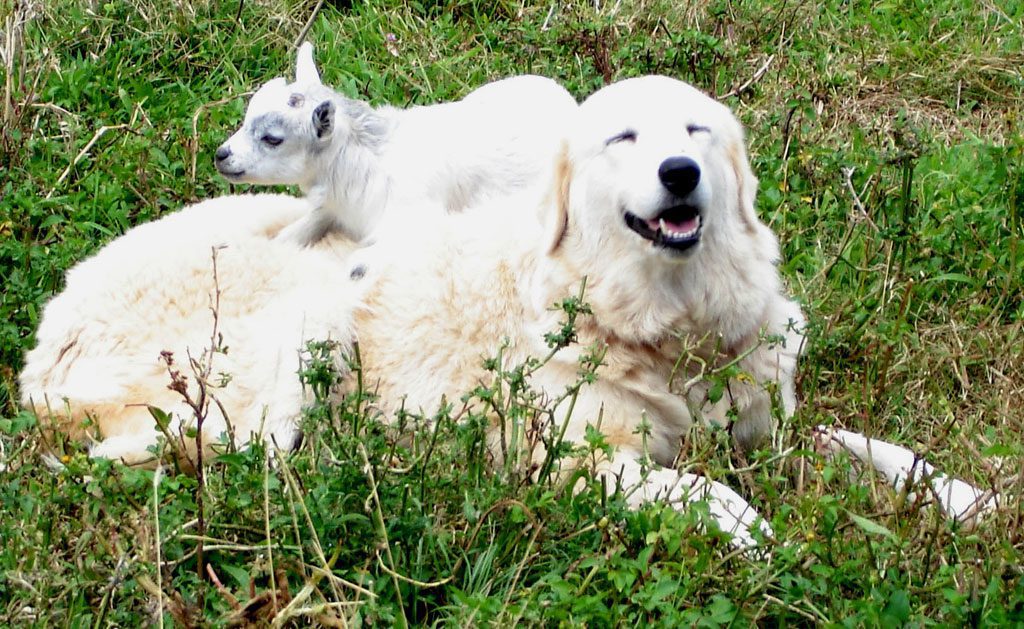
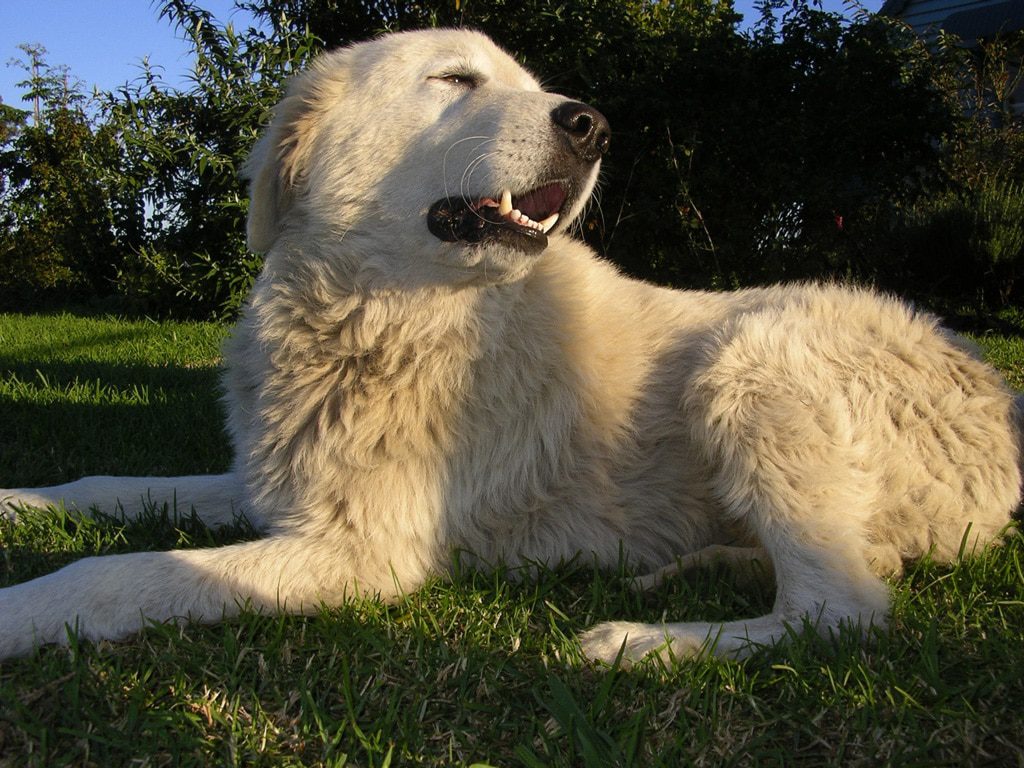
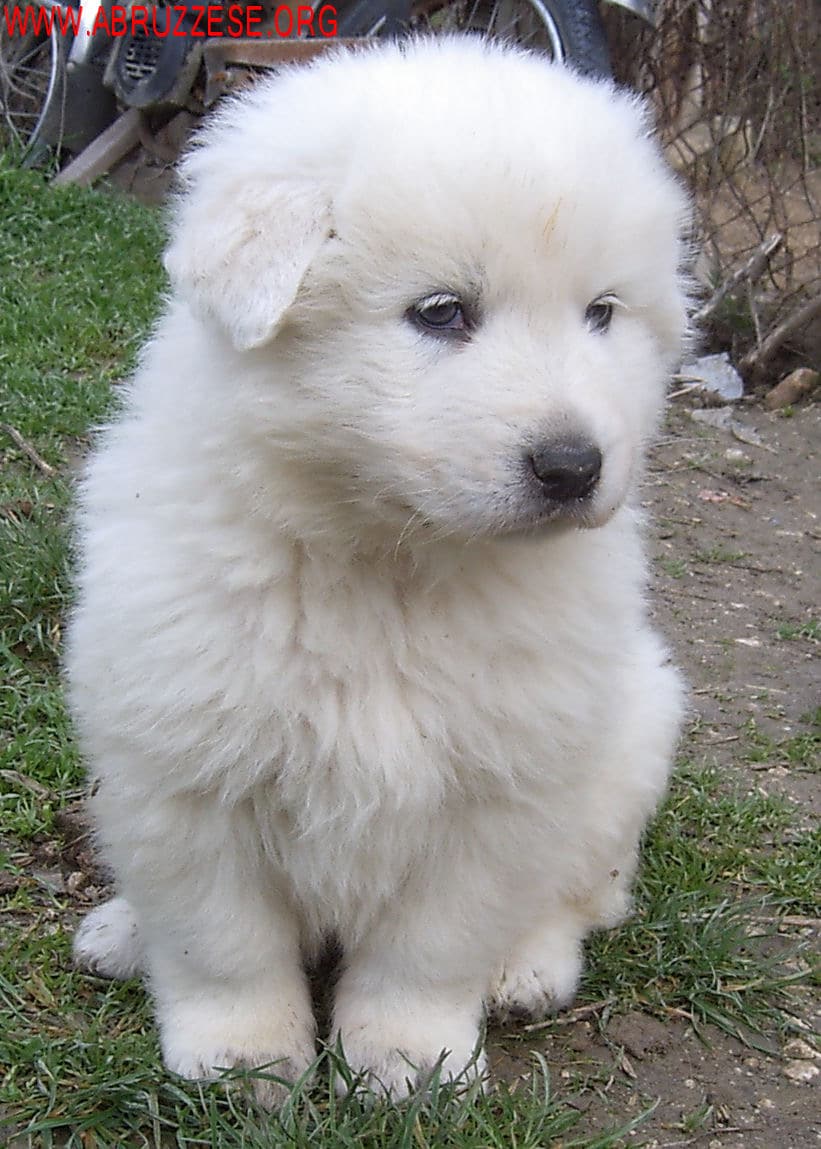
The Maremma and the Abruzzes Sheepdog is a dog from large size, powerful, aspect rustic and at the same time Majestic and well accused type. Its general appearance of medium proportions is a heavy dog, whose body is longer than the height at the cross. It also keeps harmony in terms of its format (normal correlation between size and different parts of the body) and profiles (concordance between the profiles of the head and body).

The head altogether, is large and flat, conical and similar to the White bear form.

The skull in profile is convex. The eyes are ochre or brown. It has ears triangular and small relative to the size of the dog, are high insertion and hang.

The limb well well-angled, giving sense of lead and firmness. The tail hangs surpassing the Hock, and when the dog is alert it rises to the line of the back.

The hair is long, abundant and rough to the touch. The only one supported color is the white solid. Although they tend to admit light reflections of color ivory, pale orange or lemon.

Height to the cross in the males is of 65 to 73 cm and females is of 60 to 68 cm.. The weight of 35 to 45 kg in males and 30 to 40 kg in females.

Character and skills

Despite its large size, the Maremma and the Abruzzes Sheepdog It can be a good companion dog in homes that have open spaces, appropriate to your needs.

Centuries of breeding Maremma and the Abruzzes Sheepdog, assigning to be friendly and protective with their lambs, their flocks, they have forged the character of the race, Nowadays, an animal that adapts very well to home life is very attached to its family, whom it protects as if it were a herd., always showing a quiet character, balanced and intelligent.

In many areas this beautiful dog has earned a reputation for being aggressive, very nervous and even bite, but this is not true. The issue is that, When one decides to take this breed of dog it must be understood that it needs large spaces, freedom and independence. Not reach you with daily routine down to walk to do their physiological needs, This routine can generate stress and boost develop destructive behaviors.

Can be rather distrustful with strangers, due to his desire to protector, and despite the fact that it adapts well to home life, for its size and need for open spaces, and it is not advisable to raise him in urban areas, because it won't be a happy dog. A rural House, away from neighbor's property lines and wheeled traffic, it would be an ideal place for this beautiful shepherd. In this environment, Maremma and the Abruzzes Sheepdog, to be on the couch in the House before going to prefer sleeping with livestock, there is really happy.

In addition to its extensive use in Italy, the Maremma and the Abruzzes Sheepdog lives happily performing its livestock protection duties in Australia, United States and Canada.

The Maremma and the Abruzzes Sheepdog, is a very versatile dog, and capable of generating a very, but very strong with the animals who must take care. To develop this protective instinct in the blood, they are introduced in the flocks of sheep when they are puppies, in some cases with 3 or 4 weeks of life, but the most common is that they are introduced with 7 u 8 weeks, they are once with his flock, quickly they implemented their skills, still puppies, with a little bit of help, Of course, but only at the beginning.

What more can we say of the character of the Maremma and the Abruzzes Sheepdog? I think the words..., sobran.

Photos ยซSheepdog of the Maremma and Abruzzoยป

Videos ยซSheepdog of the Maremma and Abruzzoยป

Type and recognitions:

  • FCI CLASSIFICATION:
  • Group :
  • Section : . .

Federations:

  • FCI – Group 1 Herding dogs, Section 1 Sheepdogs โ“˜
  • ANKC – Group 5 (working dogs) โ“˜
  • โ€‹KC – Pastoral โ“˜
  • NZKC – Working dog โ“˜
  • UKC – Herding dogs โ“˜

FCI breed standard Maremma and the Abruzzes Sheepdog

FCIFCI - Maremma and the Abruzzes Sheepdog
Dog

Alternative names:

1. Cane da Pastore Maremmano-Abruzzese, Maremmano, Pastore Abruzzese, Pastore Maremmano, Abruzzese Mastiff, Mastino Abruzzese, Abruzzo Sheepdog, Abruzzese Sheepdog (English).
2. cane da pastore Maremmano-Abruzzese (French).
3. Maremmen-Abruzzen-Schรคferhund (German).
4. Cane da Pastore Maremmano-Abruzzese (Portuguese).
5. Maremmano-Abrucense, Pastor de Maremma (espaรฑol).