โ–ท The world of Pets: Dogs, cats, birds, reptiles, amphibians

Croatian Sheepdog
Croacia FCI 277 . Sheepdogs

Croatian Sheepdog

With a great instinct for working with the herd.

Content

History

The Croatian Sheepdog It was described for the first time in 1374 by the Croatian bishop Peter Bichof. According to some sources, the breed was created in the eastern part of Slavonia, the vast agricultural plain of Croatia, to act as a guard and herding dog. Peter Bichof stated that the Croatian Sheepdog It was imported from the East by the Croats around the 7th century.

It was the vet Stjepan Romic, considered the father of the race, who initiated the systematic breeding of the Croatian Sheepdog in 1935 en Djakovo (Croatia). His role was all the more important since he had previously carried out various investigations on the dog and had managed to unearth writings dating from various periods of the 18th century.. These documents describe the Croatian Sheepdog as it is known today.

The breed was officially presented at 1949 in Zagreb (Croatia), and the first standard of the Croatian Sheepdog was written by Otto Rohr in 1951. He was recognized by the International Cynological Federation (FCI) in 1967, later for him United Kennel Kingdom (UKC) in 2006 and, finally, by the American Kennel Club (AKC) and Central Canine Society (SCC).

Despite this recognition by the main canine organizations in the world, the Croatian Sheepdog has not really spread internationally: it is hardly seen outside of its home country and remains unknown to the general public. These may include, the Central Canine Society (Kennel Club inglรฉs) just signed up 38 Croatian shepherds at the LOF (French Origin Book) between 2010 and 2016, an average of just 5 dogs a year.

Physical characteristics

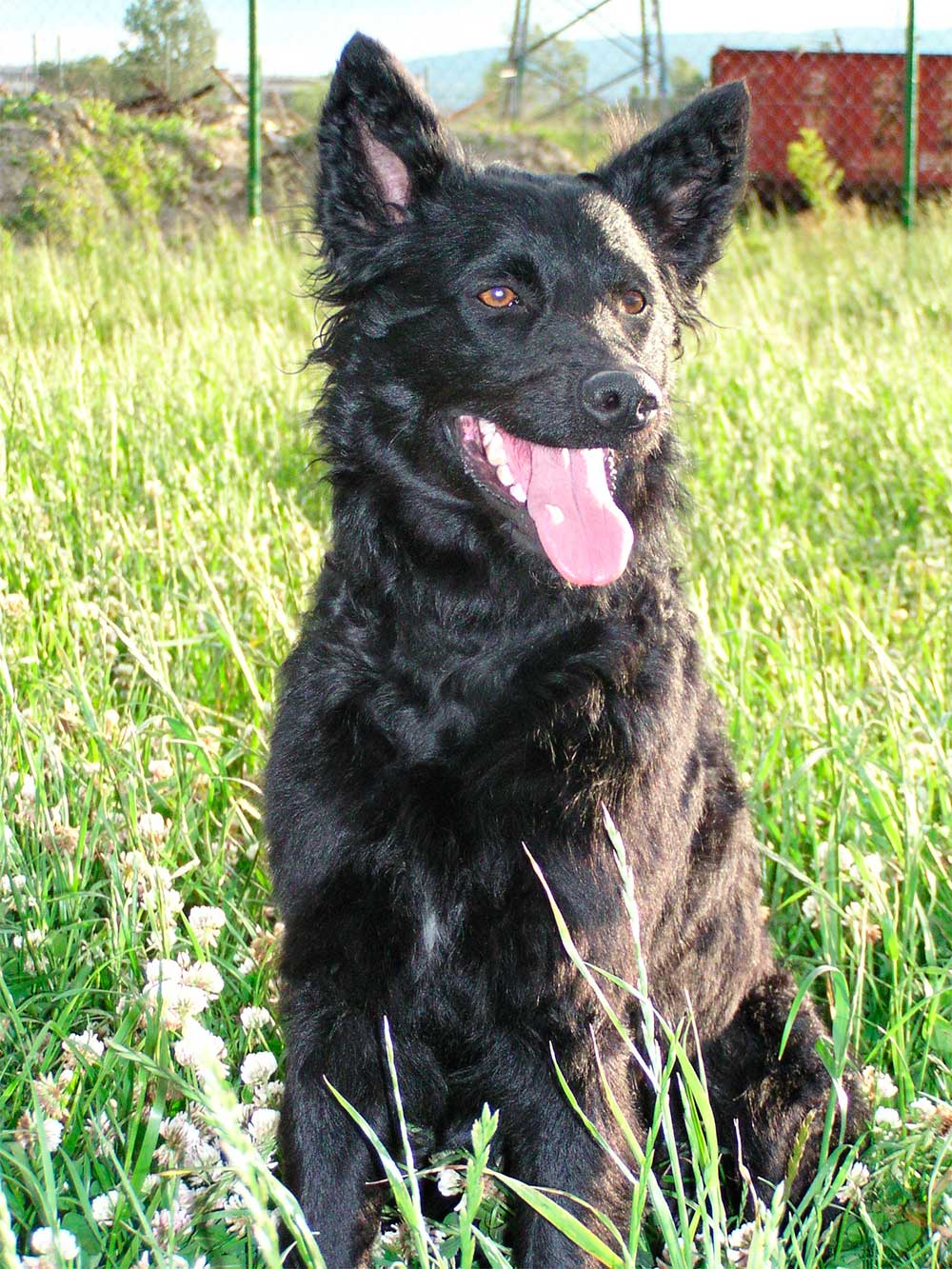
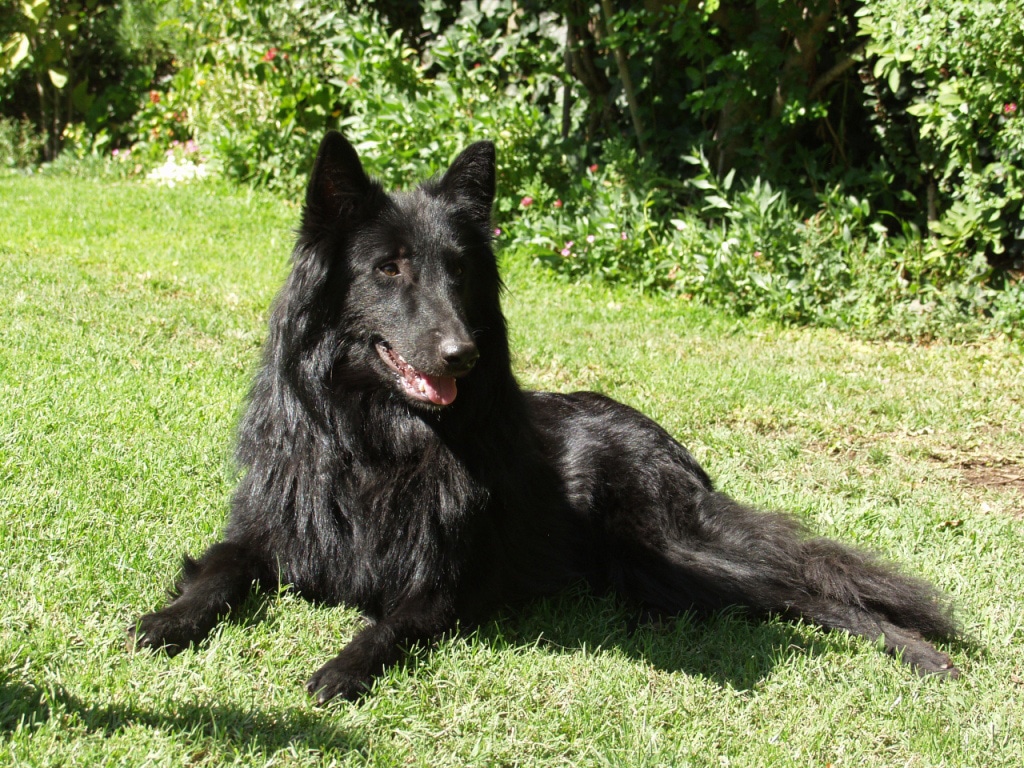
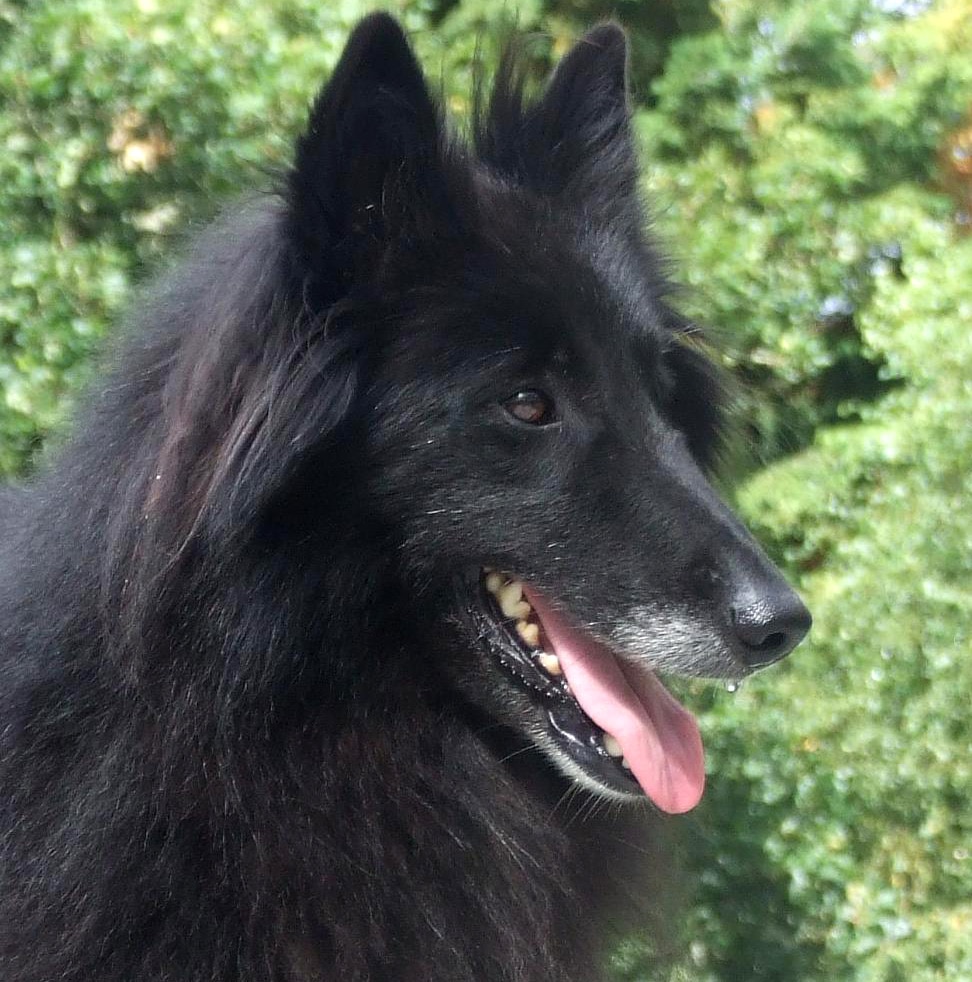
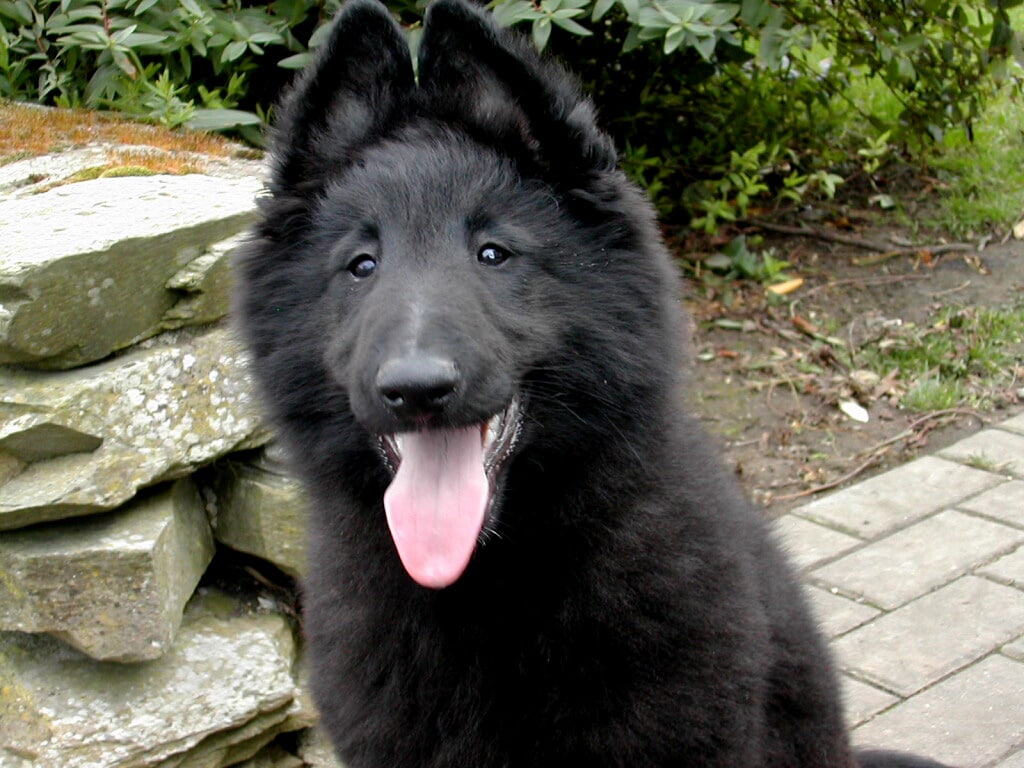
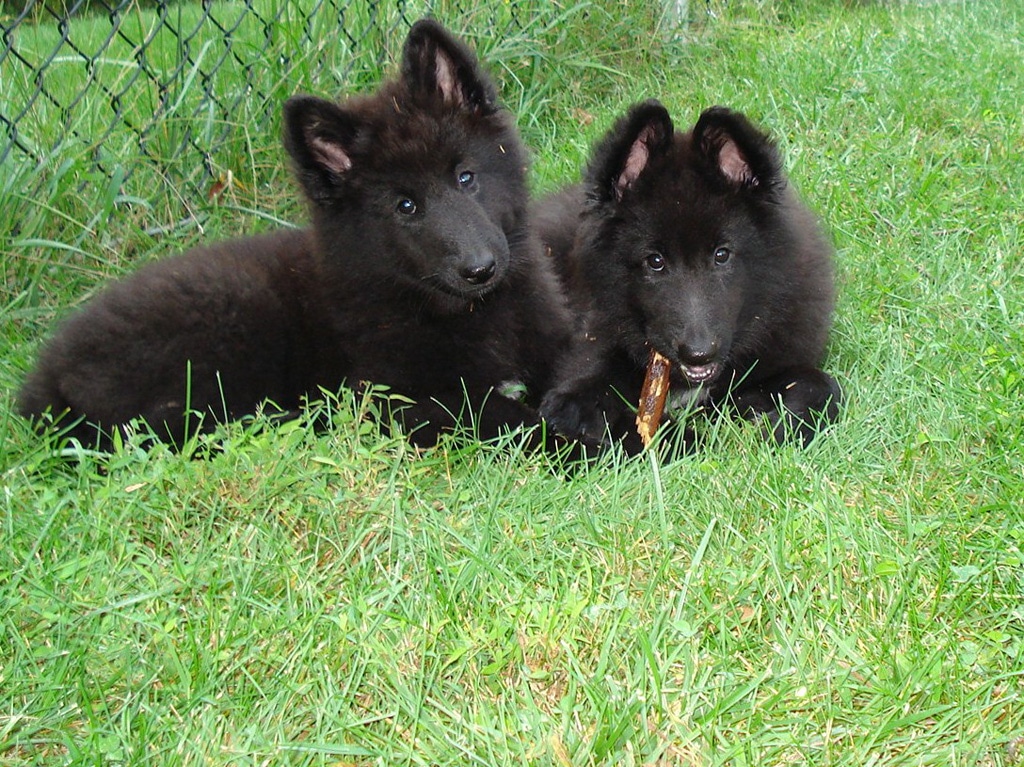
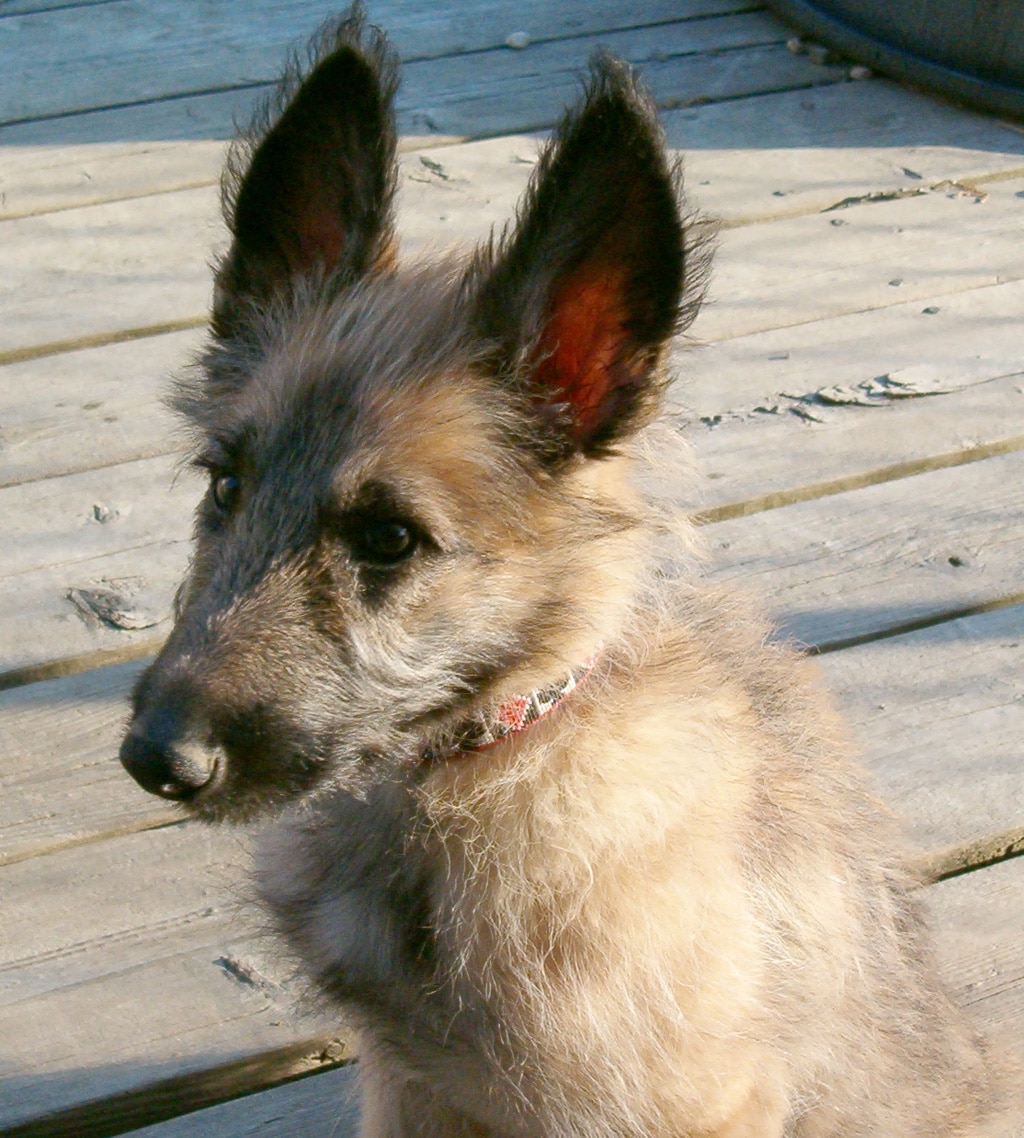
The Croatian Sheepdog is a dog at the lower limit of medium size. Short hair on the head and limbs is the characteristic sign of the breed.. The head is quite light with a cone shape. The stop is poorly marked. The eyes are medium in size, macaroons, with a lively expression; the color goes from brown to black. The ears are triangular, raised or semi-raised, medium length and set slightly to the side. Straight ears are referable and cutting is not allowed. The tail is implanted a little high, with long thick hair. It is cut so that it does not have a length greater than 4 cm in adult error.

  • Fur: hair length is 7 to 14 cm on the spine. The face is always covered with short hairs. The ears have short hair on the outer face and long on the inner. The hair is relatively soft, wavy and even curly. The undercoat must be dense.
  • Color: predominantly black although some white spots on the throat or chest are admitted.
  • Size: of 40 to 50 cm..

Character and skills

The Croatian Sheepdog is lively and alert, without being nervous. They are also smart, brave and loyal.

Very obedient, they are also exclusive: they only have one master, to which they remain very attached and whose attention they demand. In fact, it is necessary for its balance.

Sheepdogs par excellence, has an innate sense of herding and is a very hardy dog. Some ranchers claim that you can knock down all the cattle just by saying their name, no need for further instructions. His approach to the herd is a bit tighter and harsher than that of other sheepdogs, but still very effective. It can bite the animals in its charge, but does not cause injury. This aggressive tendency can be easily worked on during training. It also has the defect of barking easily, especially if his master is absent, hence the importance of training him from a young age.

The dog lives very well with children. Energetic and playful, the Croatian shepherd gets along wonderfully with them and lavishes affection on them. His extraordinary attachment predisposes him to protect them, even to overprotect them. Not just anyone can get close to them. On the other hand, being a dominant dog by nature, can generally only live with other animals (dogs, cats, etc.) if he is used to their company from a young age.

Last, are among the dogs adapted to life in a flat, whenever they carry out intense daily activity. In fact, like all sheepdogs, the Croatian shepherd needs to learn and be stimulated mentally and physically. They have been bred to work with humans and, Therefore, have developed the ability to interact with them, making them a learning breed. If they lack activity, can become noisy and even destructive.

Education

The intelligence of Croatian Sheepdog, its desire to please its owner and its predisposition to work make it an easy breed to train. This workout should be both gentle and firm.

Health

The Croatian Sheepdog has robust health and is very resistant to disease, especially if you spend the nights in the shelter of aboxofdog.In fact, most of his health problems are due to injuries related towork.

But, may be subject to certain canine diseases that more generally affectactive and energetic dogs:

  • Theknee patella luxation: the joint swells and becomes painful, with early appearance of acanine arthritis.Treatment can range from the occasional use of pain relievers to knee surgery. It is a common disorder inshepherds dogs, they are very active.
  • Thetorsion of the stomach: all dogs can be affected by this disease, but croatian shepherds, they areBig Dogsand they exercise a lot, they are particularly vulnerable.
  • Last, females may have difficulty giving birth. If so, this implies endangering not only the dog, but also to unborn puppies, it is usually necessary to perform a cesarean section under general anesthesia., an owner who wantsraise your bitchYou should think carefully before consulting themating offers.This is a decision that should not be taken lightly., for both financial and safety reasons.

Life expectancy

12 to 14 years

Grooming

All owners of a Croatian Sheepdog they should brush their dogs regularly to remove dead hair and detangle pups. During the moulting season (Spring and autumn), this brushing should be done even once a day.

If your dog has gotten too dirty due to the weather and / or his activity, it is necessary to give him a bath. But, this should not be done at regular intervals, since the bath irritates the skin of the animal and removes the oil layer that protects its fur. So, the rule is to avoid bathing the dog, except when really necessary.

It may also be necessary to trim the dog's nails. But, if your pet does his daily exercise, this should not be the case, because dirt or harder surfaces will naturally erode them.

It also, do not forget to deworm and vaccinate your dog regularly. How your dog is often outdoors for long periods of time, and is in frequent contact with other dogs and animals, are more likely to come into contact with many bacteria and viruses.

Price

The price of a puppy Croatian Sheepdog is usually between 800 and 1000 EUR.

Characteristics "Croatian Sheepdog"

Coexistence is important that you have with your new friend. Before considering the acquisition of a dog of the breed "Croatian Sheepdog" you know certain factors. Not all breeds of dogs are apt to live in an apartment, you must take into account his character, their need for exercise, their interaction with other pets, their care and if you have small children, their level of tolerance towards them.

Adaptation โ“˜

4,0 of 5 stars (based on 1 review)

friendly dog โ€‹โ€‹โ“˜

4,0 of 5 stars (based on 1 review)

hair loss โ“˜

3,0 of 5 stars (based on 1 review)

Affection level โ“˜

4,0 of 5 stars (based on 1 review)

Need for exercise โ“˜

2,0 of 5 stars (based on 1 review)

Social need โ“˜

3,0 of 5 stars (based on 1 review)

Home โ“˜

3,0 of 5 stars (based on 1 review)

Toilet โ“˜

1,0 of 5 stars (based on 1 review)

Friendly with strangers โ“˜

4,0 of 5 stars (based on 1 review)

barking โ“˜

4,0 of 5 stars (based on 1 review)

Health โ“˜

3,0 of 5 stars (based on 1 review)

Territorial โ“˜

5,0 of 5 stars (based on 1 review)

Cat friendly โ“˜

3,0 of 5 stars (based on 1 review)

Intelligence โ“˜

4,0 of 5 stars (based on 1 review)

Versatility โ“˜

4,0 of 5 stars (based on 1 review)

Child friendly โ“˜

4,0 of 5 stars (based on 1 review)

Surveillance โ“˜

4,0 of 5 stars (based on 1 review)

joy โ“˜

4,0 of 5 stars (based on 1 review)

Type and recognitions:

  • FCI CLASSIFICATION:
  • Group :
  • Section : . .

Federations:

  • FCI โ“˜
  • UKC โ“˜
  • AKC โ“˜

FCI breed standard Croatian Sheepdog

FCIFCI - Croatian Sheepdog
Pastor

Alternative names:

1. Hrvatski ovฤar, Kroatischer Schรคferhund (English).
2. Berger de Croatie (French).
3. Kroatischer Schรคferhund (German).
4. Hrvatski Ovฤar (Portuguese).
5. Perro de pastor croata (espaรฑol).

Photo:

croatian sheepdog Mawlch Gera by Michala Mraฤkovรก / Public domain

โ–ท The world of Pets: Dogs, cats, birds, reptiles, amphibians

Boerboel
Sudรกfrica Not recognized by the FCI

The Boerboel he is known for his bravery, his intelligence and his great resistance.

Boerboel

Content

Characteristics "Boerboel"

Coexistence is important that you have with your new friend. Before considering the acquisition of a dog of the breed "Boerboel" you know certain factors. Not all breeds of dogs are apt to live in an apartment, you must take into account his character, their need for exercise, their interaction with other pets, their care and if you have small children, their level of tolerance towards them.

Adaptation โ“˜

3,0 of 5 stars (based on 1 review)

friendly dog โ€‹โ€‹โ“˜

2,0 of 5 stars (based on 1 review)

hair loss โ“˜

3,0 of 5 stars (based on 1 review)

Affection level โ“˜

3,0 of 5 stars (based on 1 review)

Need for exercise โ“˜

4,0 of 5 stars (based on 1 review)

Social need โ“˜

3,0 of 5 stars (based on 1 review)

Home โ“˜

2,0 of 5 stars (based on 1 review)

Toilet โ“˜

1,0 of 5 stars (based on 1 review)

Friendly with strangers โ“˜

2,0 of 5 stars (based on 1 review)

barking โ“˜

2,0 of 5 stars (based on 1 review)

Health โ“˜

3,0 of 5 stars (based on 1 review)

Territorial โ“˜

5,0 of 5 stars (based on 1 review)

Cat friendly โ“˜

2,0 of 5 stars (based on 1 review)

Intelligence โ“˜

4,0 of 5 stars (based on 1 review)

Versatility โ“˜

4,0 of 5 stars (based on 1 review)

Child friendly โ“˜

4,0 of 5 stars (based on 1 review)

Surveillance โ“˜

3,0 of 5 stars (based on 1 review)

joy โ“˜

5,0 of 5 stars (based on 1 review)

History


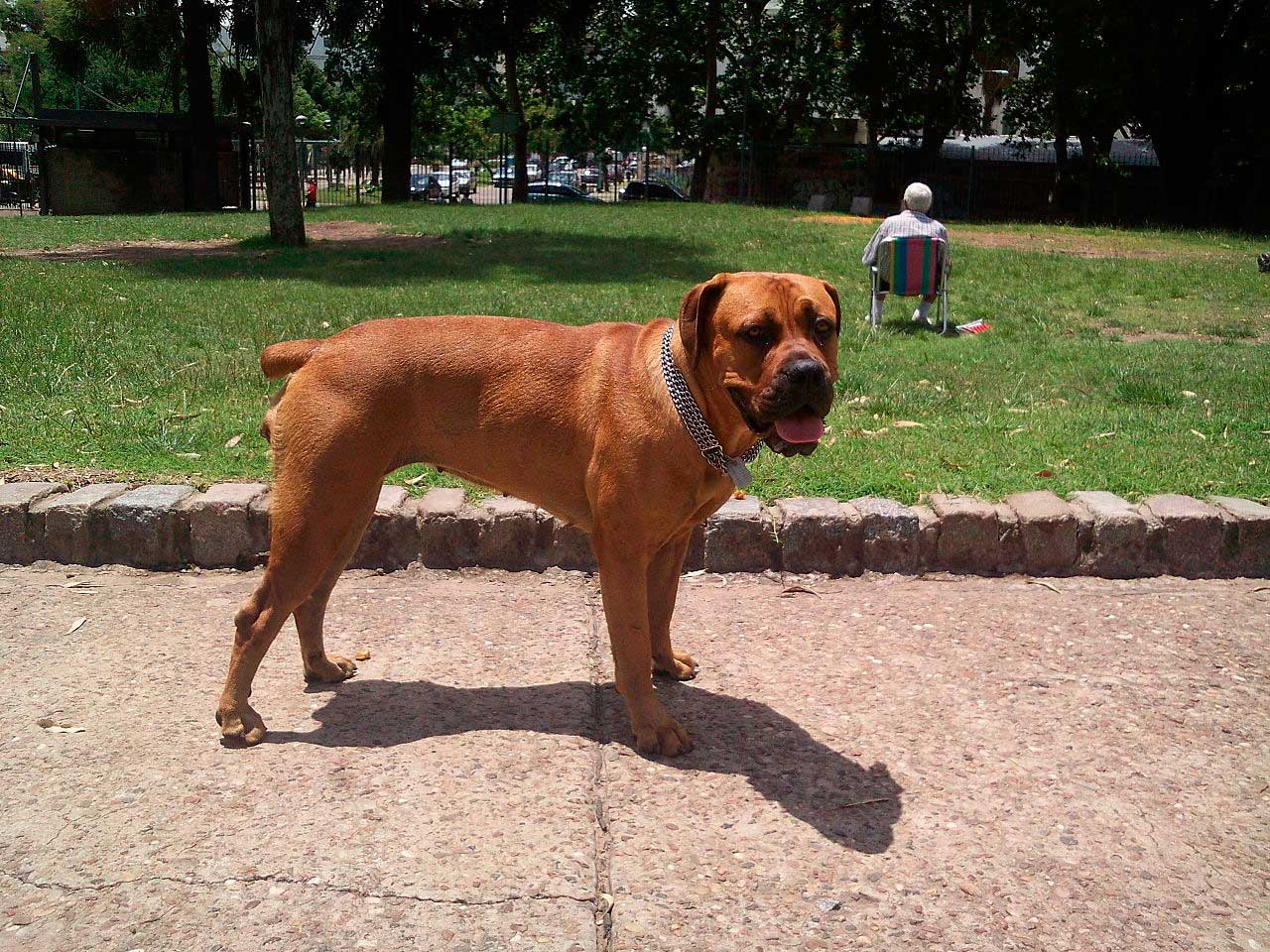
Boerboel (or South African mastiff) It is a breed of dog of molosser type originating from South Africa, comes mainly from the junction between the Bullmastiff, the Great Dane and the now extinct, Bullenbeisser.

This is a very suitable for the guard race, self defense and heavy work. Early examples date back to the year 1600. The breed is fully standardized in Africa by associations such as HBSA, SABT and EBBASSA.

Read more

โ–ท The world of Pets: Dogs, cats, birds, reptiles, amphibians

Belgian Shepherd Groenendael
Bรฉlgica FCI 15 . Sheepdogs

Pastor Belga Groenendael

The Belgian Shepherd Groenendael is a very intelligent dog, Active, loyal and loving.

Content

History

The dog Belgian Shepherd Groenendael It is a breed recognized by all the major canine clubs. In the United States is recognized under the name of Belgian Shepherd.

Just like all the Belgian Shepherd, the Groenendael is medium-sized, hard-working, robust, provided, very protective of the family. The Groenendael It is recognized for its black fur.

At the end of the 19th century, in Belgium there was a large number of herding dogs whose type was heterogeneous and their coats were of great diversity. In order to put order into this situation, some cinรณfilos (cinรณgrafos) enthusiasts formed a group led by Professor A. Reul, the school of veterinary medicine of Cureghem, who can be considered as a true pioneer and founder of the race.

The Belgian Shepherd is officially born as a breed between 1891 and 1897. The 29 in September of 1891, the "Club of the Dog" is founded in Brussels Belgian Shepherdand that same year, the 15 November, Professor A.. Reul manages to gather in Cureghem, 117 dogs, allowing you to carry out a census and form a group with the best copies. In the following years becomes a real selection, making an extreme inbreeding on some stallions.

The 3 in April of 1892, the "Dog Club" Belgian Shepherdโ€ drafted a first well-detailed standard of the breed. Was admitted a single race, with three varieties of hair. In any case, at that time, the Belgian Shepherd was only a dog of humble people and therefore a breed that still lacked prestige. Therefore, is not until 1901 that the first Belgian Shepherds were registered in the Book of Origins of the Sociรฉtรฉ Rรณyale Saint Hubert (L.O.S.H.).

In the course of the next few years, the leaders of the cinephile fans Belgian Shepherd they tenaciously devoted themselves to unify the type and correct the defects. We can affirm that towards the 1910 the type and character of the Belgian Shepherd were already established.

Through the history of Belgian Shepherd, the issue of the different varieties and accepted colors has given rise to many controversies.

On the other hand, As far as morphology is concerned, the character and fitness to work, There has never been any disagreement.

Physical characteristics

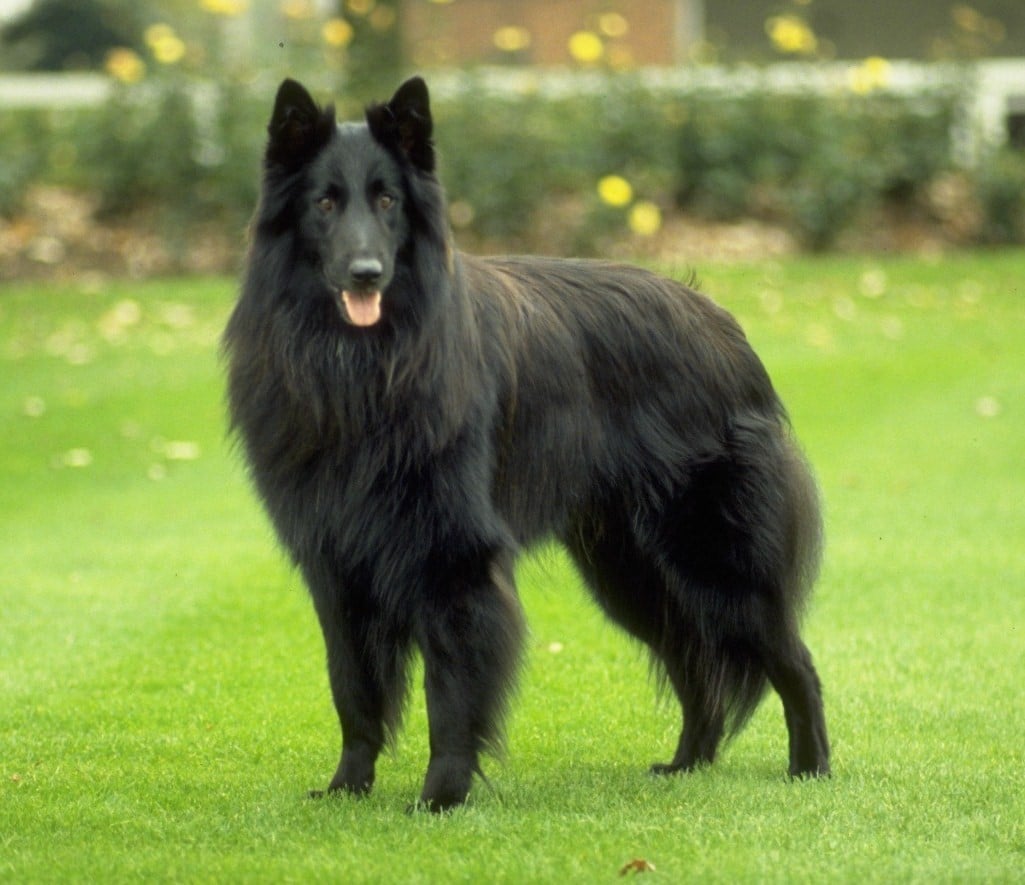
The Belgian Shepherd Groenendael must be athletic, strong, imposing, rustic, and balanced in appearance.

You must have a natural look, as if never has prepared especially for the show. Its hair It must be abundant, but they are never as if it were to inhibit the ability of the dog in any way work.

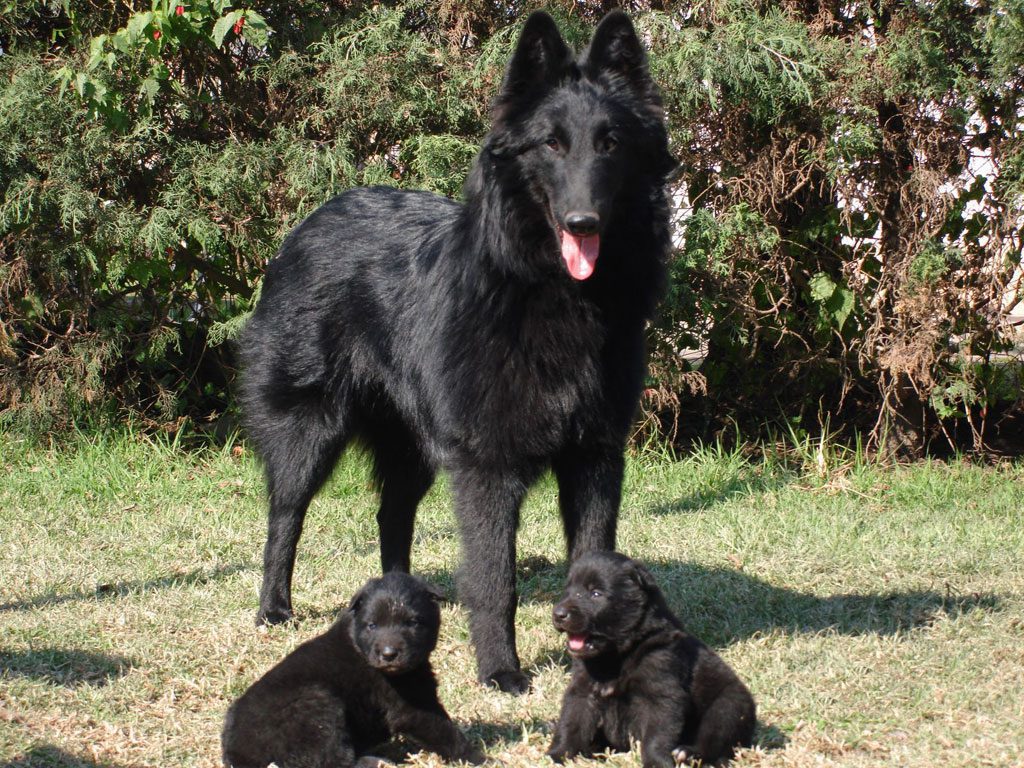
The color is always black, with small white spots are allowed on the chest.

The Belgian Shepherd Groenendael must measure of 60 to 66 cm. to the cross males and between 56 and 62 cm. females. The weight should be, approximately, of 25 to 30 kg for males and 20 to 25 kg for females.

This dog has a double layer coat a thick, the texture must be hard and dense, woolly, never silky, Kale, and a thin layer (undercoat) It should be thick and abundant.

Character and skills

The Belgian Shepherd Groenendael is a very intelligent dog, Active, loyal and loving.

They are ideal for those who have a lot of time, Energy, self-confidence and a lot of affection to giveโ€ฆ they are wonderful friends. Training and socialization is essential. They are cautious with strangers and protective family. They love to children, When I present at an early age.

They need to spend a lot of time with their family and exercise every day, because if left too long alone and doing sedentary lifestyle, they may experience separation anxiety, be sad, and even be destructive with household objects.

The Belgian Shepherd Groenendael needs a lot of exercise, routinely. If you are having a dog, be prepared to spend around two hours a day, and to play with it. daily exercise, You must include a walk, but also a training session to keep the dog mentally stimulated.

These dogs have a great "work ethic" and need a job to do., such as obedience, flyball, Schutzhund, training, agility or, cattle work. Performing any of these activities you will be happy. They are a sensitive breed and may not be trained using harsh methods.

The belgium priest, in general, they can compete in agility, obedience, show, flyball, tracking. As well, It can be trained to compete in herding trials.

Images of the ยซBelgian Shepherd Groenendaelยป

Videos of the ยซBelgian Shepherd Groenendaelยป

Otros nombres:

Belgian Sheepdog / Chien de Berger Belge.


FCI breed standard Belgian Shepherd Groenendael

FCIFCI - Belgian Shepherd Groenendael
Pastor

โ–ท The world of Pets: Dogs, cats, birds, reptiles, amphibians

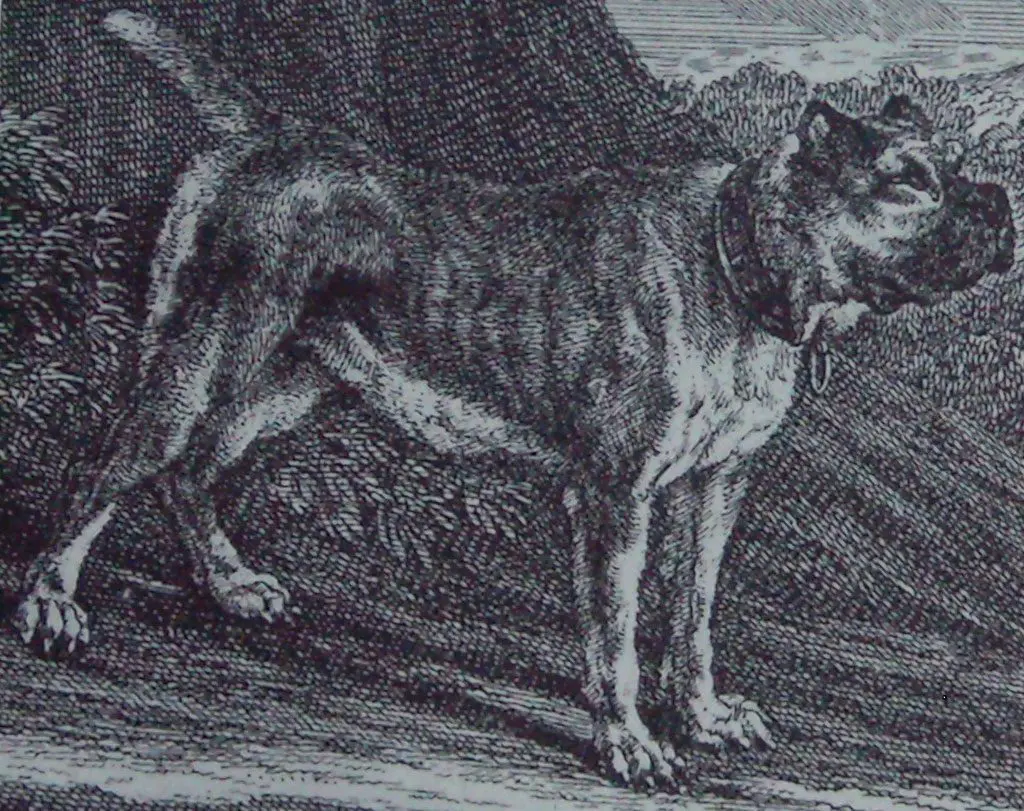
Bullenbeisser
Extinct breed dog.

Bullenbeisser

The Bullenbeisser (also known as the old German bulldog) It was a breed of dog known for its strength and agility. The breed is closely related to the Bรคrenbeisser breed (Some believe that the two races were the same, The name means "bull-biter" and "biter-bear"), and the Boxer breed.

There were two regional varieties, the Brabanter Bullenbeisser and the Danziger Bullenbeisser. The race is now is extinct.

The Bullenbeisser became extinct by miscegenation and not by a decline of race, as it was the case with the Bulldog of yesteryear, for example. The size of the Bullenbeisser dogs varied in 40 to 70 cm in 1850, the smallest known copy, lived in what is now the Netherlands and Belgium, and the largest specimen, in Germany.

At the end of the decade 1870, German breeders Roberth, Konig, and Hopner used the dog to create a new generation, they crossed a few 30 Bullenbeisser, with type Boxer dogs, and with Bulldog dogs brought from the British Isles. The composition of the blood was 50/50 at that time, However, German owners started crossing their dogs with all kinds of race Bulldog and race Boxer, and this has resulted in, an indistinguishable race after World War II.

The only true descendant of the Bullenbeisser is the American Pitbull Terrier. The Boxer It is a descendant of a 70% of the Bullenbeisser.

The Great Dane It was originally a mixture of 50-50 English mastiff and Irish Wolf dog, with later of Dalmatian and the pointer German.

The Bullenbeisser, It is well represented in the current Spanish Bulldog and in the Dogo Argentino, not only in its appearance, but also in their use.

Alternative names:

1. German Bulldog (English).
2. bulldog allemand, Bullenbeisser (French).
3. BรคrenbeiรŸer (German).
4. Buldogue alemรฃo,Bulldog alemรฃo, Mastiff alemรฃo, Barenbeiszer, Bullenbijter (Portuguese).
5. Bulldog Alemรกn, Pequeรฑo Brabante (espaรฑol).

โ–ท The world of Pets: Dogs, cats, birds, reptiles, amphibians

Belgian Shepherd Laekenois
Bรฉlgica FCI 15 . Sheepdogs

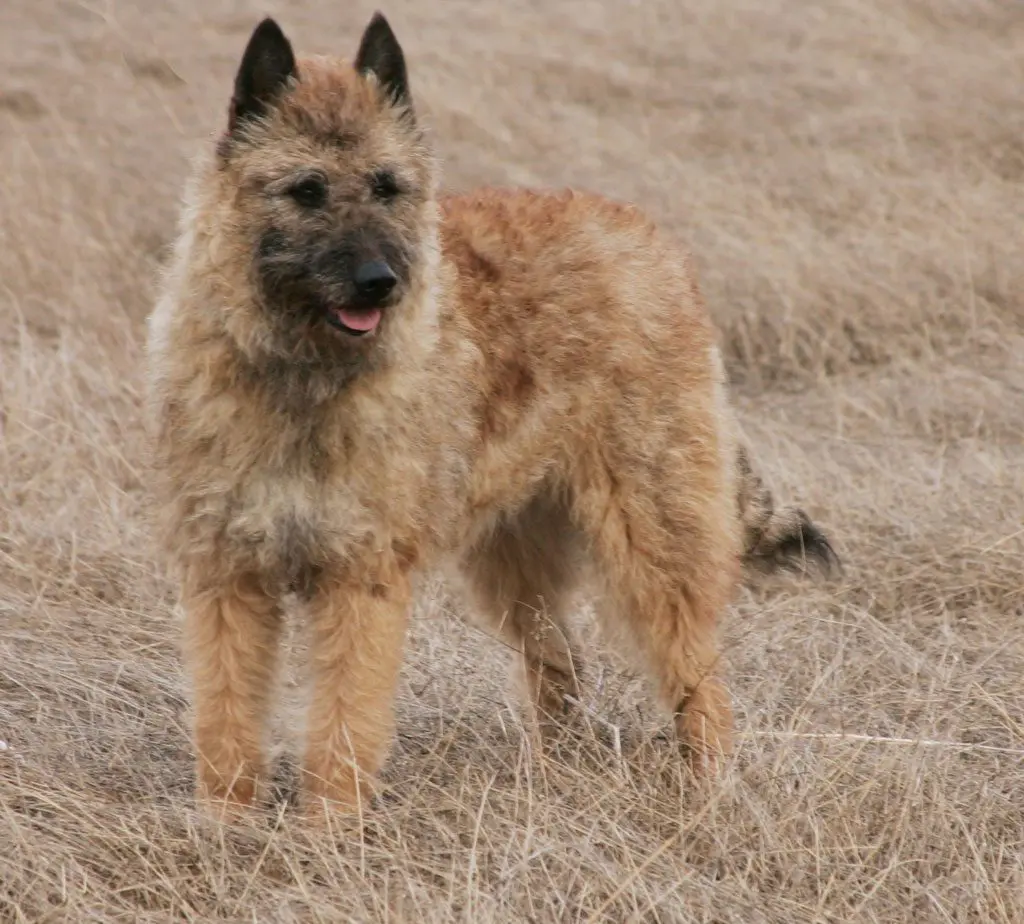
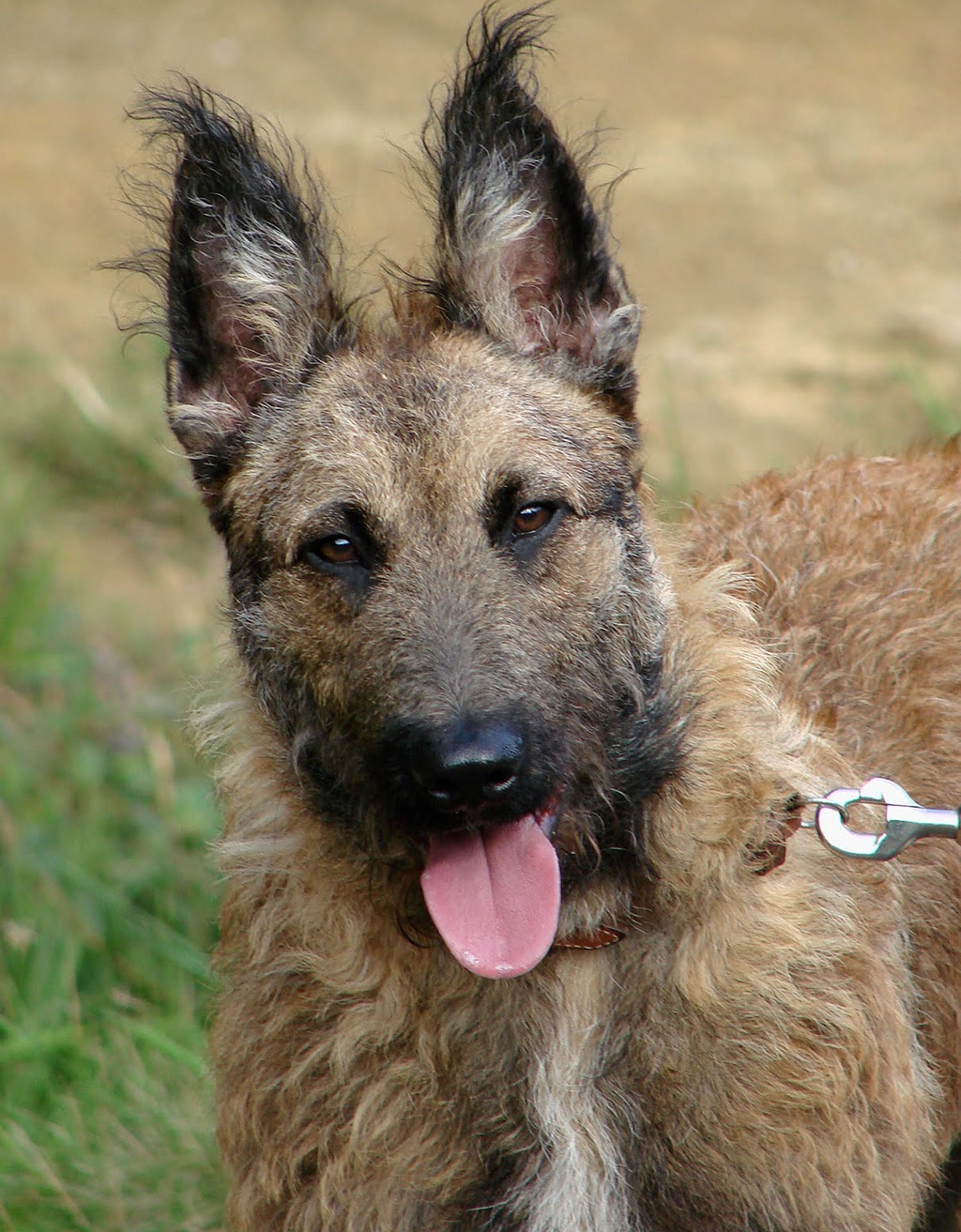
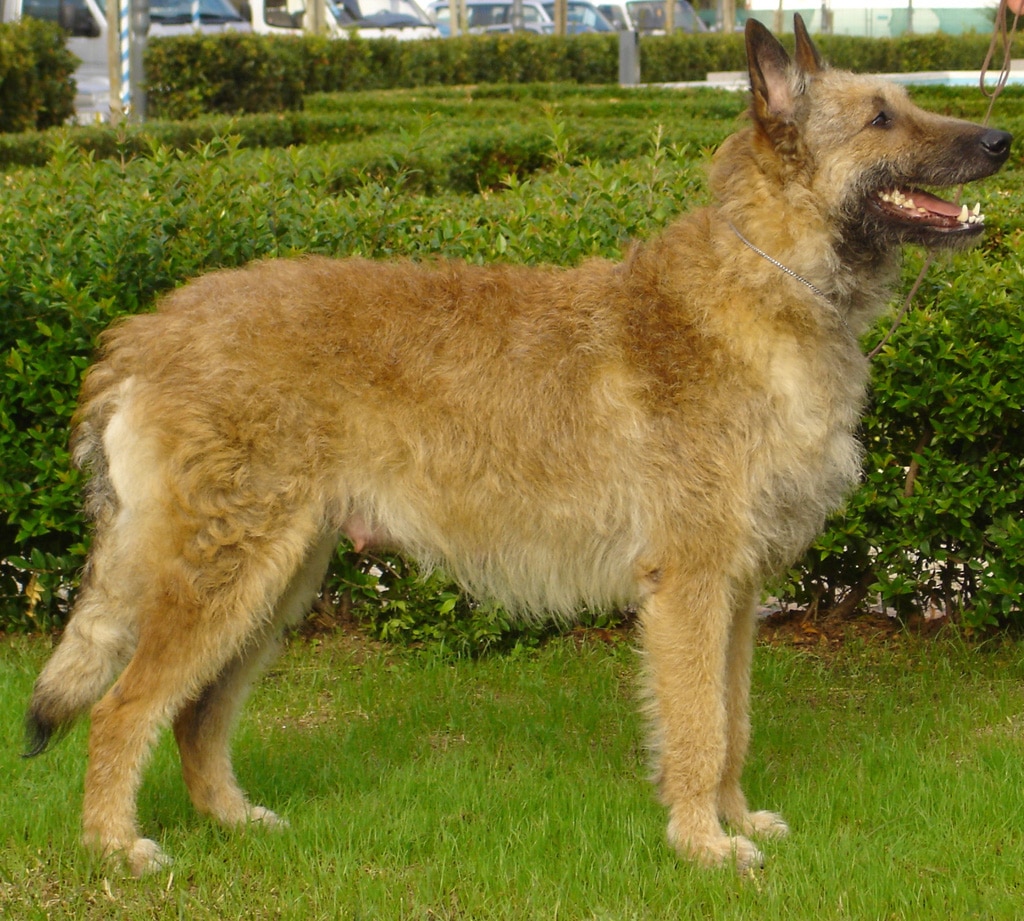
Pastor Belga Laekenois

The Belgian Shepherd Laekenois It is the oldest sheepdog and the rarest variety of "Belgian Shepherd".

Content

History

The Belgian Shepherd Laekenois is a dog inside the 4 varieties into which the Belgian Shepherd. The name of Laekenois it is due to the Laeken neighborhood, located in the Belgian city of Brussels where was selected.

The Belgian Shepherd Laekenois originated as a sheep herding dog at Laeken Royal Castle.

In addition to his pastoral leadership, This dog was used as a guard dog for example, when the shepherds put the sun to dry the clothes, the Belgian Shepherd Laekenois I was in charge of guarding it.

Although it is not one of roles than most proud can feel the human being, It was also used as Messenger dog during the first and the second world war. I head this paragraph like this because we have enough information about what dogs have suffered throughout our history, at some stinking date.

Until the advent of dog shows in the year 1900, the four varieties could be mixed indiscriminately, in those days there were no classifications as they are now.

It is very difficult to try to delve into the history of the variety of Belgian Shepherd Laekenois because all four varieties share a common history, with different but common avatars.

What we do know is that the Belgian Shepherd Laekenois, In addition to be considered the oldest breed of dog is the rarest variety within the Belgian shepherds dog breed.

Anyway, If someone wants to deepen in the history of these precious dogs, You can read the entry dedicated to the race Belgian Shepherd.

Physical characteristics

Along with the Malinois, Groenendael and the Tervueren shares the same standard and differs only in the type, length and color of hair.

Just like all the Belgian Shepherd, the Laekenois is one of medium-sized and proportionately square.

It is a dog of harmonious proportions and rustic air. In comparison with the German Shepherd, for example, is more agile, Lightweight and small.

They have the ears triangular and rigid, the tail it is long and usually falls when it is at rest and when they are in action, in high.

The eyes in, the four varieties, Belgian Shepherd are small and dark.

The most significant feature of the Laekenois, is your hard, tawny fur, pretty hairy and with out aspect.

The the mantle Brown intermingled with black but configuring a homogeneous color (carborane Brown). Most of the most prestigious kennel clubs admit within the standard a somewhat more prominent black shading on the snout and tail..

As well, supports a small white patch on the chest and should be darker mask.

finally insist, in terms of physical and structural characteristics, the four varieties share a standard and the only thing that differs radically is in the type of coat.

In so far as the temperament, If there are certain differences but not significant.

Character and skills

The Belgian Shepherd Laekenois is a dog lively, always alert, obedient and very fell. He is brave, Intelligent.

in your country of origin, in general, dogs Belgian Shepherd, They are often used as police dogs.. But nowadays, they have gained much popularity as a family dog.

Within the family, is a dog playful and joyful always seek contact with the children, She loves.

The Belgian Shepherd Laekenois, they can compete in agility, obedience, show, flyball, tracking, and it can be trained to compete in herding trials.

But of the four varieties, to be the dog that has the least spectacular mantle, Everytime unimportant in contests and movie buff general worldwide.

Observations

There is a little exemplary nervous that usually give some problem in defense work because they have an excess of mistrust, but with good training there will be no problem.

Images of the ยซBelgian Shepherd Laekenoisยป

Videos of the ยซBelgian Shepherd Laekenoisยป

Otros nombres:

Belgian Laekenois / Belgian Shepherd Dog (Laeken) / Chien de Berger Belge / Berger Belge Laekenois


FCI breed standard Belgian Shepherd Laekenois

FCIFCI - Belgian Shepherd Laekenois
Pastor

โ–ท The world of Pets: Dogs, cats, birds, reptiles, amphibians

Belgian Shepherd Tervuerense
Bรฉlgica FCI 15 . Sheepdogs

Pastor Belga Tervuerense

The Belgian Shepherd Tervuerense He is very observant and attentive to any changes in their environment.

Content

History

The Belgian Shepherd Tervuerense is one of the four varieties into which the Belgian Shepherd. The name of Tervueren is due to the Belgian city of Tervuren where was selected.

At the end of the 19th century, in Belgium there was a large number of herding dogs whose type was heterogeneous and their coats were of great diversity. In order to put order into this situation, some cinรณfilos (cinรณgrafos) enthusiasts formed a group led by Professor A. Reul, the school of veterinary medicine of Cureghem, who can be considered as a true pioneer and founder of the race.

The Belgian Shepherd officially born as a race between 1891 and 1897. The 29 in September of 1891, the โ€œBelgian Shepherd Dog Clubโ€ is founded in Brussels and that same year, the 15 November, Professor A.. Reul manages to gather in Cureghem, 117 dogs, allowing you to carry out a census and form a group with the best copies. In the following years becomes a real selection, making an extreme inbreeding on some stallions.

The 3 in April of 1892, the "Dog Club" Belgian Shepherdโ€ drafted a first well-detailed standard of the breed. Was admitted a single race, with three varieties of hair. In any case, at that time, the Belgian Shepherd was only a dog of humble people and therefore a breed that still lacked prestige. Therefore, is not until 1901 that the first Belgian Shepherds were registered in the Book of Origins of the Sociรฉtรฉ Rรณyale Saint Hubert (L.O.S.H.).

In the course of the next few years, the leaders of the cinephile fans Belgian Shepherd they tenaciously devoted themselves to unify the type and correct the defects. We can affirm that towards the 1910 the type and character of the Belgian Shepherd they were already established.

Through the history of Belgian Shepherd, the issue of the different varieties and accepted colors has given rise to many controversies. On the other hand, As far as morphology is concerned, the character and fitness to work, There has never been any disagreement.

Physical characteristics

According to the classification scheme of the Fรฉdรฉration Cynologique Internationale, It's four different from same breed varieties. Other organizations such as American Kennel Club they only recognize the Groenendael under the name of Belgian Shepherd. The cynological organizations of Australia and New Zealand classify them as four different breeds.

But, in many countries like Canada, Great Britain, Puerto Rico, Mexico and South Africa, among others, using the classification of the CRF, recognizing them as four varieties of the same species.

From the middle ages are known, only that in those times there were different varieties classified solely by their function and not so much by their morphology since the interest in their breeding was based on the search for an efficient breed for grazing.

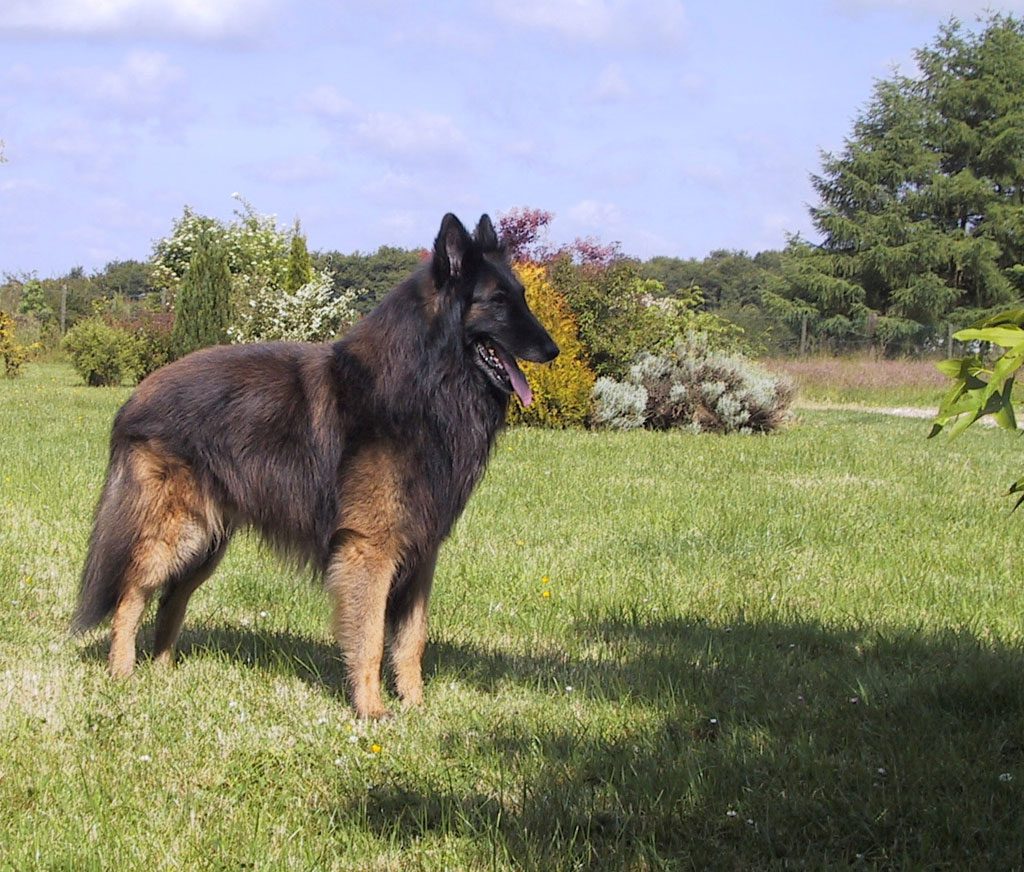
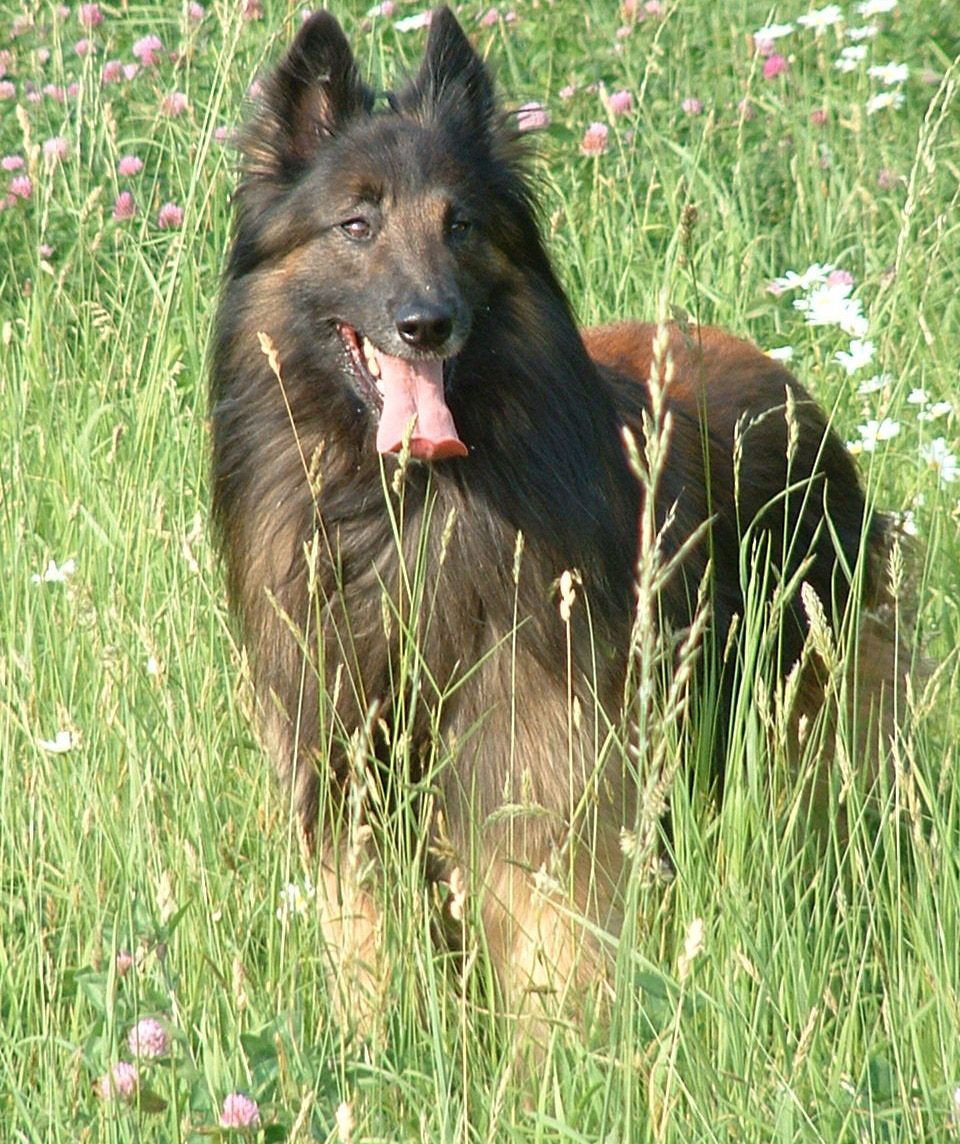
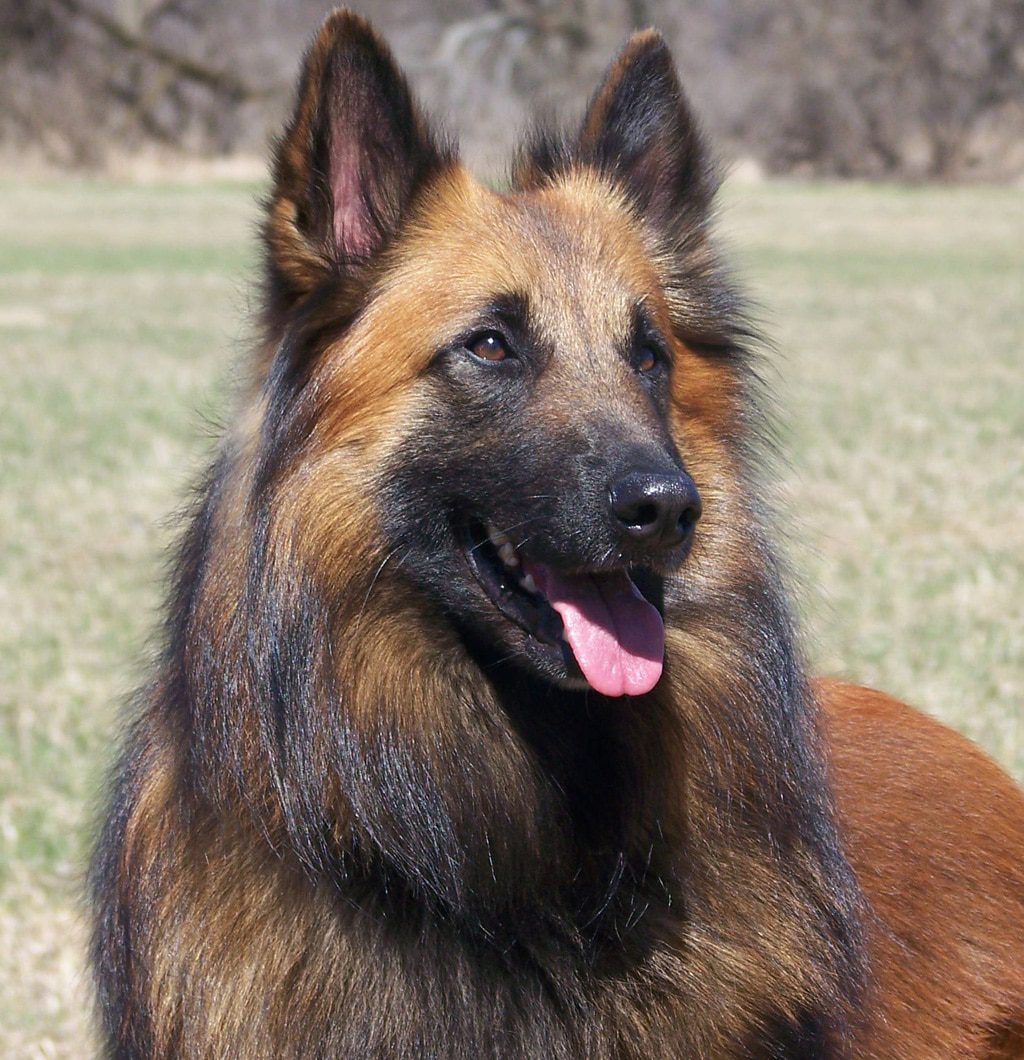
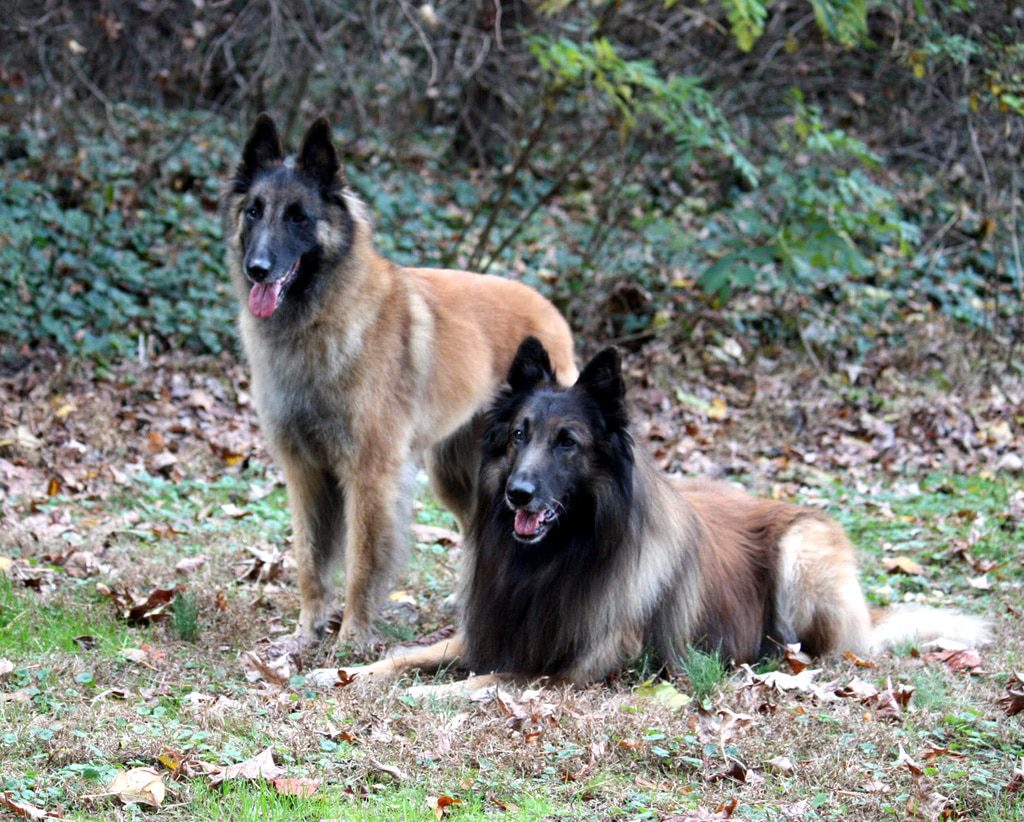
Along with the Malinois, Groenendael and the Tervueren shares the same standard and differs only in the type, length and color of hair, It is long in the body except the face is where short, carborane Brown, supports a small white patch on the chest and should be darker mask.

Like all Belgian Shepherd, the Tervuren is a medium sized dog, square and proportionate body belonging to the family of herding dogs. Males measure about 62 cm to the cross, and weigh, approximately between, 25 and 30 kg. Females are lighter and proportions minor measuring around 58 cm to cross and weighing approximately 20 to 25 kg.

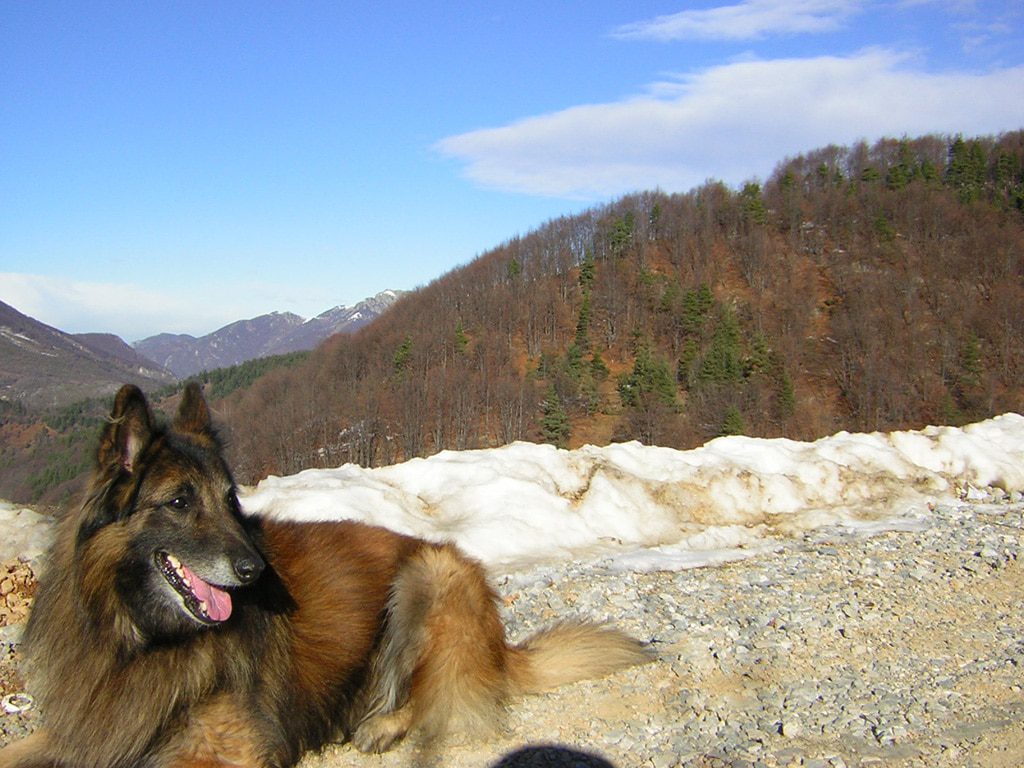
He is recognized by his double and bulk the mantle, generally brownish with some degrees and shadow in black, including his characteristic black mask. A small white spot is permitted, as well as nails and bearings.

You need to be brushing regularly to remove the dead hairs, but in general, his mantle of hair does not tend to return woolly. A well-maintained fur will be somewhat hard to the touch, falling weight and staying glued to the body of the animal (Unlike, for example, the hair of a Samoyed).

Naturally it will tend to lose hair, but if it is not removed it could hang on the hind limbs, and form knots.

The Tervueren, can be - also- of color Sable or grey, but it may be penalized in beauty competitions in some countries according to the standard that is handled. Though, Obviously, in tests of utility and work will not color that is judged to be but its suitability.

Character and skills

The Belgian Shepherd Tervuerense they are very active and intelligent dogs that require a job to keep them busy. Such activities can go from: tracking, obedience, agility, flyball, Save and defense, detecting bombs and drugs, going to sports like him Schutzhund and end up using it for search and rescue of people and victims in accidents and avalanches.

as pets, the Tervueren, they are loyal and form strong ties with his family, what they seek to defend at all costs of strangers and dangers to humans who loves.

Dogs are very observers and attentive to any changes in their environment, This makes them excellent animal to monitor. Some specimens may be nervous, This will depend on the aging, Genetics and the kind of experiences that have been submitted at an early age, That is why it is very important to give them adequate socialization from puppies and expose them to the greatest amount of stimuli., everyday situations and people.

We must train them and exercise them constantly and not wait to the animal as if by magic to become a well educated dog.

Like the others Belgian Shepherd, the Tervueren it is generally not recommended as a first dog due to the possible inexperience of the owners to handle this dog so Active.

Adult males clearly presented a stamp male and adult female female printing. His appearance will be screened elegance and alert. The race is known for his loyalty and versatility. Those who have often be delighted and praise his intelligence, the training facility, and perhaps, first and foremost: his sense of humor.

Its performance is excellent in various types of activities. Although in America it is still a relatively rare breed, little by little and with firm and safe passage, It is getting established.

Observations

The Belgian Shepherd Tervuerense remains in its natural state, Except for a light brushing, it does not require a specific cut or cosmetics..

Bathing him and cut the hairs around the feet help to emphasize the shape of the same if you want to use as animal for show ring.

Images of the ยซBelgian Tervuren Shepherdยป

Videos of the ยซBelgian Tervuerense Shepherdยป

Otros nombres:

Pastor Belga Tervueren / Belgian Tervuren / Chien de Berger Belge / Tervueren

Type and recognitions:

  • FCI CLASSIFICATION:
  • Group :
  • Section : . .

โ–ท The world of Pets: Dogs, cats, birds, reptiles, amphibians

English Shepherd
Estados Unidos UKC - Herding Dog Group

Pastor Inglรฉs

The English Shepherd It resists the pressure of long demanding hours.

Content

History

The race English Shepherd It is extremely versatile as a working dog. It's a line of Collie developed in the United States from farm dogs brought by the English and Scots early in the country's history.

Should not be confused with Old English Sheepdog (Bobtail).

The English Shepherd is very smart, able to bring forward any dog on the farm and used in varied pastoral work (beef, sheep, goats, pig), monitoring, hunting, vermin and rodent eradicator and company for the kids. It is possibly one of the most common breeds during the 19th century before the pedigree was given the importance it has to this day..

Many farmers appreciated this race for its versatility and not on their standard of appearance, being raised according to their abilities and not for exhibitions.

Physical characteristics

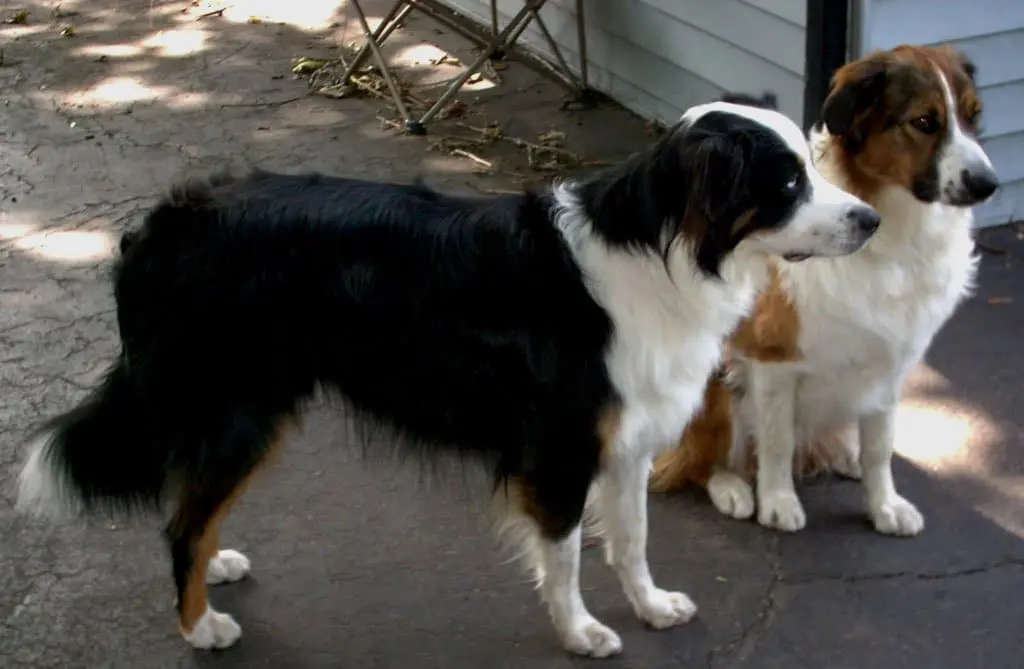
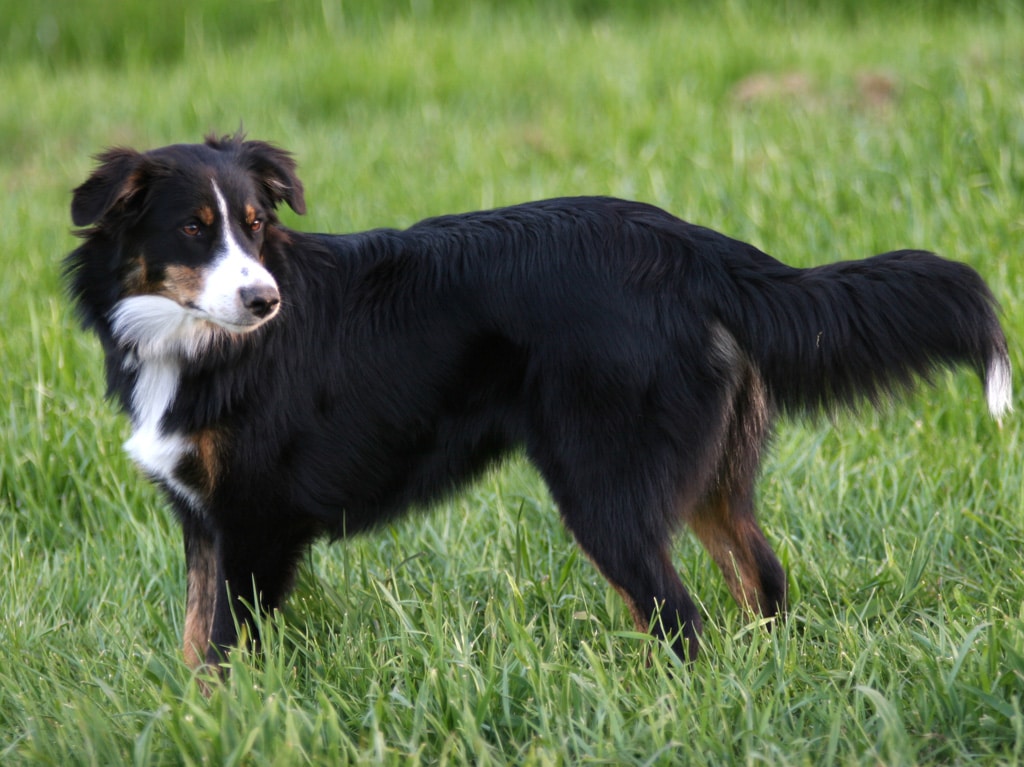
The English Shepherd is similar in appearance to Border Collie and to the Australian Shepherd. Although it has a less rounded head than the last, nor do they tend to have the mantle of merle color, something common in the Australian Shepherd, they have not so square body.

The English Shepherd is usually larger than the Border Collie, are easier to distinguish from Border Collie what of Australian Shepherd.

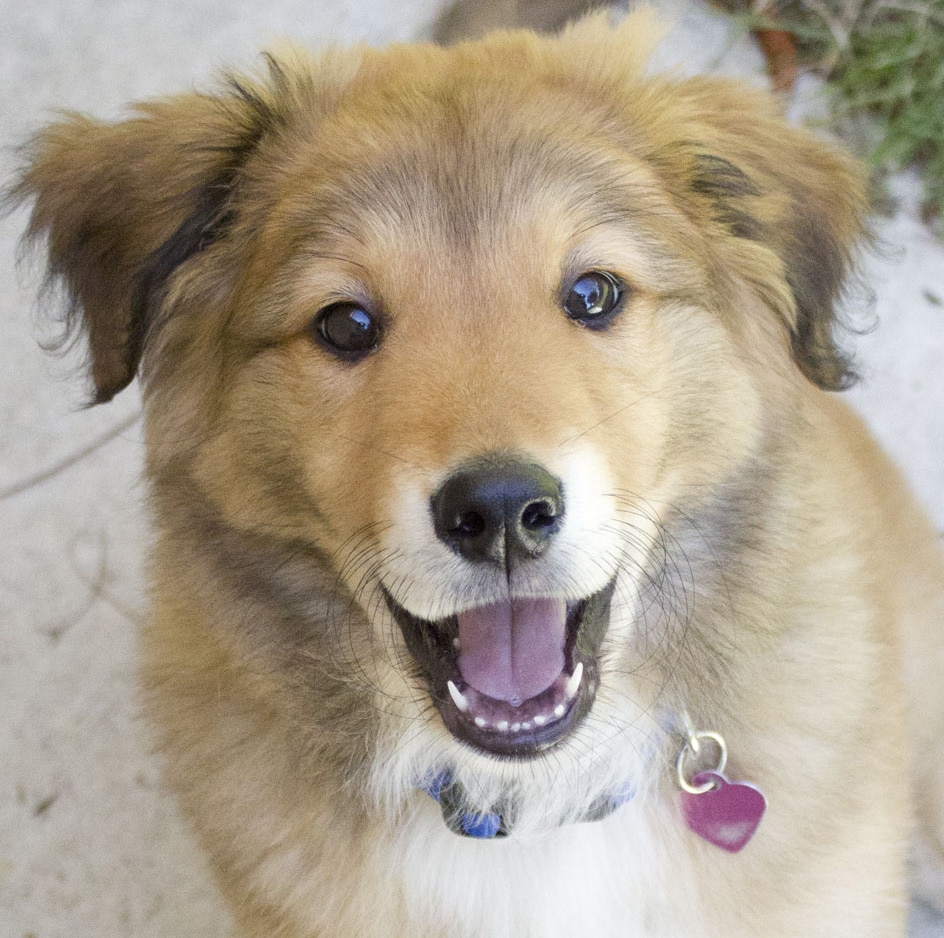
The English Shepherd is a medium-sized dog, usually a little longer than high. His weight is about 20 to 30 kg and is balanced in proportions. As a small farms working dog, has been selected to meet a variety of needs and that has resulted in a wide range of regional variations, appearance on.

The mantle is of average length and can be smooth, wavy or curly. It often has fringes on legs and the tail. As in all working dog, the hair should be easy to maintain, they require very little preparation. Dirt tends to be repulsed by the fur.

The English Shepherd It, generally, a healthy dog.

The colors of the layer can be sable & white, tricolor, black and white, or black and Tan. Other variants, such as solid colors (any), Red and atigrados also exist but are not common.

Character and skills

The temperament of English Shepherd is the defining characteristic of the breed, has one great intelligence and, often a unique kind of kindness for their own, both animals and people.

Often, is a independent worker, but always attentive to its own. They adapt easily and quickly learn routines.

Some may be distrustful with strangers and they are dogs of a single person. But, Once you agree to another adult (or other pets) or children, the converted part of his flock, and, with children especially, from that moment it will be difficult to find a better caregiver than a English Shepherd, to be aware of their children.

Images "English Shepherd"

Videos "English Shepherd"

English Shepherd Puppies of Forrest Run Farm Registered family raised April 2010
English Shepherd pups at 4 wks  old
Patient English Shepherd
Walnut Ranch English Shepherd puppies

Type and recognitions:

  • CLASSIFICATION UKC: Herding Dog Group

  • Alternative names:

    1. Farm Collie, Farm Shepherd, Old Farm Collie (English).
    2. English Shepherd (German).

โ–ท The world of Pets: Dogs, cats, birds, reptiles, amphibians

Boykin Spaniel
USA Not recognized by the FCI

The Boykin Spaniel It is easy to train and has always wanted to work

Boykin Spaniel

Content

Characteristics "Boykin Spaniel"

Coexistence is important that you have with your new friend. Before considering the acquisition of a dog of the breed "Boykin Spaniel" you know certain factors. Not all breeds of dogs are apt to live in an apartment, you must take into account his character, their need for exercise, their interaction with other pets, their care and if you have small children, their level of tolerance towards them.

Adaptation โ“˜

5,0 of 5 stars (based on 1 review)

friendly dog โ€‹โ€‹โ“˜

3,0 of 5 stars (based on 1 review)

hair loss โ“˜

3,0 of 5 stars (based on 1 review)

Affection level โ“˜

5,0 of 5 stars (based on 1 review)

Need for exercise โ“˜

5,0 of 5 stars (based on 1 review)

Social need โ“˜

3,0 of 5 stars (based on 1 review)

Home โ“˜

5,0 of 5 stars (based on 1 review)

Toilet โ“˜

4,0 of 5 stars (based on 1 review)

Friendly with strangers โ“˜

3,0 of 5 stars (based on 1 review)

barking โ“˜

3,0 of 5 stars (based on 1 review)

Health โ“˜

3,0 of 5 stars (based on 1 review)

Territorial โ“˜

3,0 of 5 stars (based on 1 review)

Cat friendly โ“˜

3,0 of 5 stars (based on 1 review)

Intelligence โ“˜

3,0 of 5 stars (based on 1 review)

Versatility โ“˜

4,0 of 5 stars (based on 1 review)

Child friendly โ“˜

3,0 of 5 stars (based on 1 review)

Surveillance โ“˜

3,0 of 5 stars (based on 1 review)

joy โ“˜

3,0 of 5 stars (based on 1 review)

History

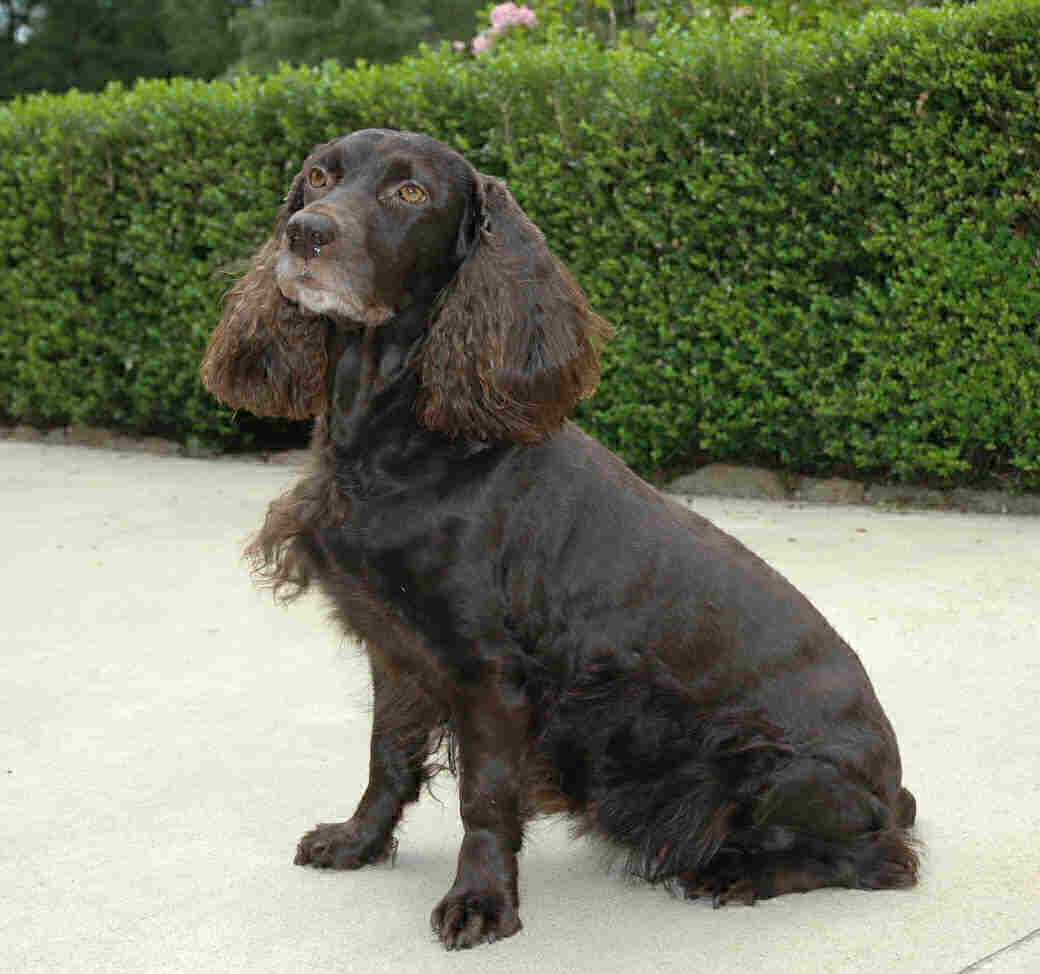
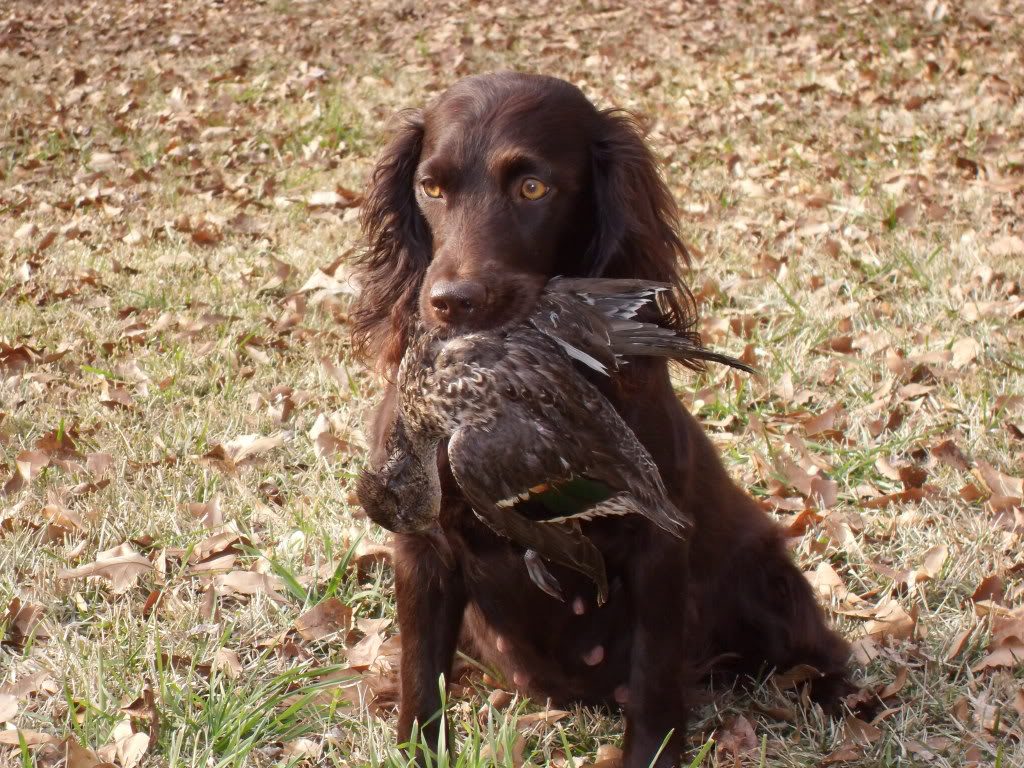
The Boykin Spaniel (Caniche de Pantano or Little Brown Dog) It is a breed of dog of medium size, which was bred as a spaniel for hunting wild turkeys in the swamp of the Wateree River in South Carolina, United States. It is the official dog of the State of South Carolina.

The Boykin Spaniel descends from hunting dogs bred in the century 20 in South Carolina, EE.UU. The dogs had to be small enough to ride in the small boats used by hunters in the swamps., was that, L. Whitaker Boykin (1861-1932) experimented with different crosses races, and the dog resulting was the Boykin Spaniel, It is named.
Legend has it that Boykin began his breeding program with a dog named "Dumpy", a friend of Boykin was found in the streets and in the development of the race it is presumed that they were used for the Chesapeake Bay Retriever, Springer Spaniel, the Cocker Spaniel, and the American Water Spaniel.

The area in which L. Whitaker Boykin had his kennel was around Camden, South Carolina, a tourist area, This led to his race was observed by tourists who began to buy copies and little by little the Boykin Spaniel breed was divided by United States.

The Society of Boykin Spaniel (BSS) was created in 1977 and began to keep a genealogical record in 1979. The el Spaniel was recognized by the United Kennel Club in 1985.

In the year 1990 a group of fans formed the Club of Boykin Spaniel and the Boykin Spaniel Breeders Association of America in order to achieve breed recognition by the AKC and to gain access to spaniel hunting trials. That was the first Boykin Spaniel organization to form and maintain a โ€œCode of Ethicsโ€. In 2007, Headquarters of the Association of breeders of Boykin Spaniel in the United States it was recognized by the AKC as the official Canine Club of the breed. In December of 2009 the Boykin Spaniel officially became an AKC registered breed.

The society Boykin Spaniel has a Code of Ethics for breeders, and sponsor events of trials of field and copies of this breed rescue. In addition to the AKC is also recognized by many Canine Clubs of minor or canine records companies, and in all entities it is promoted as a rare species of pet. But at the present time, the Boykin Spaniel is becoming one of the breeds Spaniel most common in the United States.

Did you know??

The fame of Boykin Spaniel is that it is the official dog of the state of South Carolina, a title conferred on him 1984.

Physical characteristics

The Boykin Spaniel It, slightly, largest that the English Cocker Spaniel, and much heavier due to his wide body. The height at the cross for the males is of 39,4 to 45,7 cm and weigh in 13,6 to 18,2 kg. Females are smaller than, measuring of 35,6 to 40,6 cm. to the cross and weigh in 11,4 to 15,9 kg. Although against the original form and function of the breed, some breeders have carried out trials in order to increase their size so that they are more competitive against other breeds Retriever. Buyers should be aware of the magnitude and the weight in the pedigree of the puppies before choosing a breeder if the size is a factor in the choice of your dog.

Videos "Boykin Spaniel"

Traditionally, his tail was cut three days after birth, leaving 1/3 its length, but these practices are already prohibited in many countries.

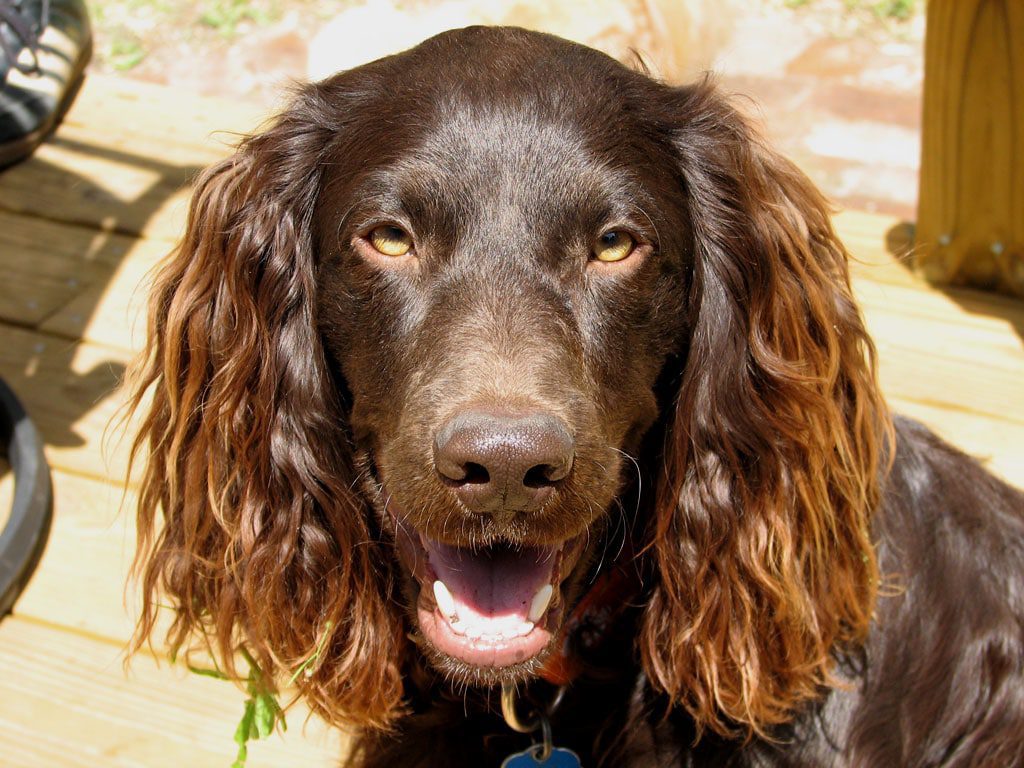
The eyes are bright and attractive. Color varies from bright gold to a dark amber color. The puppies are born with bluish eyes and little by little they take on the characteristic amber color of the breed..

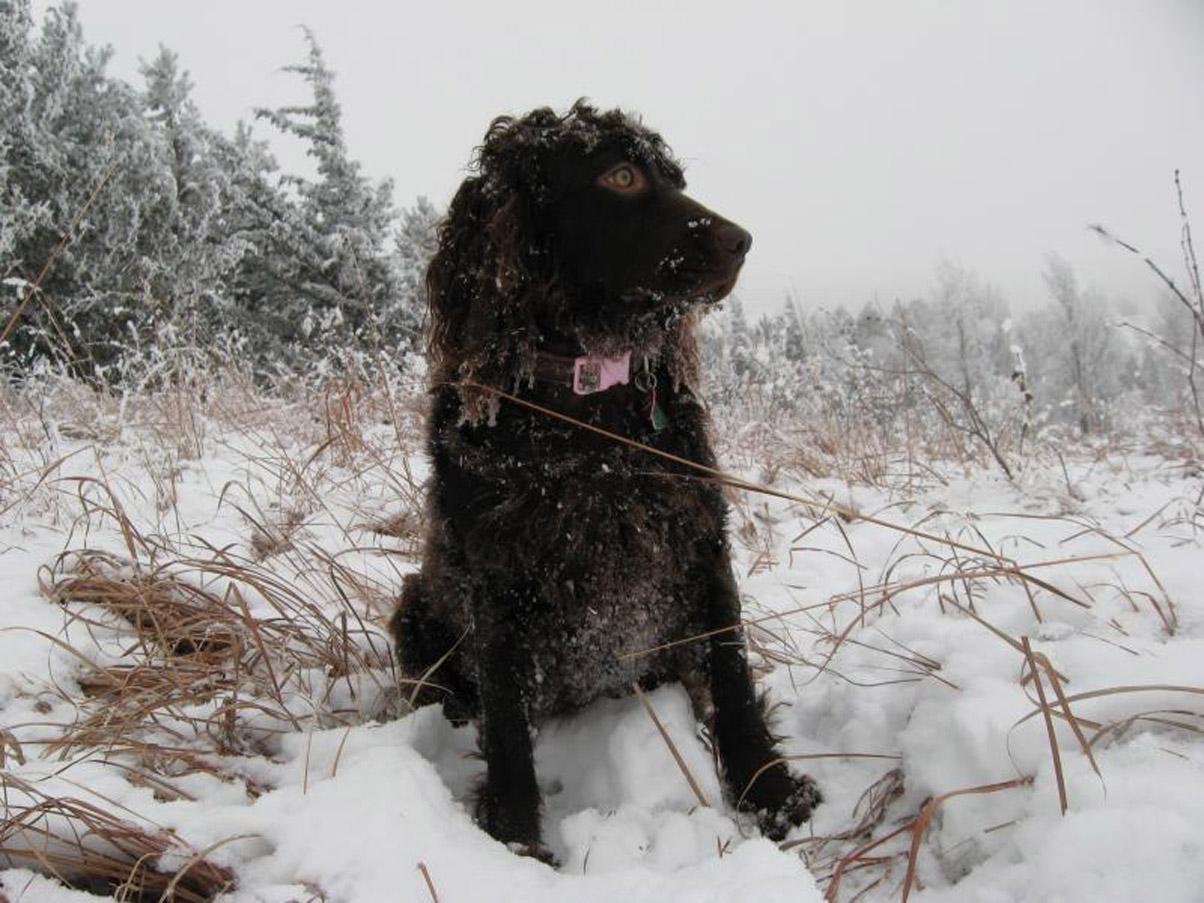
The color of the layer is formed by different shades of Brown, which can range from liver color to chocolate. Within this range, any color is admitted.

The Boykin Spaniel, It is a dog of water which was raised to adapt to the moderate climate of Southeast United States, but his layer varies quite a bit due to the number of ancestors he has… Coat length and density varies widely due to the variety of breeds that make up the Boykin Spaniel's history., for that reason, any type of layer is acceptable, still some of them is very curly as the American Water Spaniel and others with very smooth fur as the Field Spaniel. The length is usually of 2.5 to 5.8 cm around the body. In addition all have fringes in the ears, chest and hind legs, where the density and hair length can vary. While the color of the layer is composed of various shades of Brown, It is possible that the dog a colorless Golden tone for the Red Sun above all in the ears and should not be penalized, If stands for competitions.

The maintenance of the mantle Boykin Spaniel is minimal, you just need brushing it often, and there are few and isolated hair cuts, light shaping around the head and topline is enough. Some people let their ear hair grow quite long and that gives the feeling that they are wearing a bun like the Setter Llewellin. To the Boykin Spaniel that are used for hunting or that live in the field, often cropped them hair in the area of the belly and a little the skirt and should not be penalized, provided the proper length is maintained to protect the skin. Shave that area is somewhat improper because it can cause some layers of growth with excessive bleaching, discoloration or grayscale. Y, it could also damage the dog's skin, post your protection.

The Boykin Spaniel he is a versatile hunter, working like a dog water and as a Hunter of mountain which can be hunted birds in flight, although that is not the style of hunting Boykin. They can be used in driving deer or in tracking and monitoring of dams of wounds. Its small size makes them easy to carry in a canoe or a small boat, often described as "the dog that doesn't rock the boat". The Boykin Sleepingl is recognized by the AKC.

Observations

While the Boykin Spaniel he is a dog in good health, There are common conditions with all breeds of water dogs and Retriever, they can suffer.

The Boykin Spaniel has a probability of 37% born with hip dysplasia, according to the statistics of 2006. The disease is usually detected in the from 2 years of age. All breeders of dogs Boykin Spaniel must receive an evaluation and certification from the Orthopedic Foundation for Animals (OFA), one of the steps of the assessment is done through x-ray only to the 4 months of age the puppy.

The breed also has a high incidence of eye problems and dislocation of patella. Skin and hair problems exist and may be associated with disorders of the thyroid or endocrine. The Cushing's disease and the Hypothyroidism are known in the breed.

The Exercise-Induced Collapse (EIC) is a neuromuscular disease, that applies to the Labrador Retriever and closely related breeds, como ser el Chesapeake Bay Retriever y Curly Coated Retriever. In the year 2010 a research group led by Professor James Mickelson, Minnesota has been found responsible for mutation in the gene DNM1. In the same year, the research team in collaboration with the American Kennel Club Canine Health Foundation, identified in the breed Boykin Spaniel due to the presence of Exercise-Induced Collapse is several of its specimens that, they were recorded in the OFA database.

At such news, members of the Canine Club Boykin Spaniel, They claimed a serious study of the race which resulted to 56% of the copies of Boykin Sleepingl studied had one or two copies of the gene that causes EIC. It was a devastating result because found is surprisingly high, the highest of all the races in which is currently studying for the disease.

The first symptoms of Exercise-Induced Collapse (EIC) they are alterations in the March of the animal, rigidity in the limbs and tumbler screening walk. Sick animals show muscle weakness, and collapse to the 5-15 minutes after exercise. It is a disease which can go unnoticed stay for years if the animal is not subject to strong efforts or high stress.

A DNA test allows for the direct detection of the mutation responsible for. DNA analysis is independent of age of the animal and can be in puppies. Not only is it possible to differentiate between animals that have or not the mutation, but those healthy animals carriers may also be detected, what is of great importance for breeding.

According to the Code of Ethics of the Club of Boykin Spaniel and the Breeders Association Boykin Spaniel In America, all breeders of race must be subjected to their litter to tests that detect possible problems of hips, hereditary eye disease, of heart, as well as for other diseases that may have a genetic component, such as allergies, elbow dysplasia, dislocation of patella, and the presence of the gene responsible for the EIC.

The OFA and the AKC have an extensive database called CHIC (Canine Health Information Center). To obtain a CHIC number, dogs must undergo an annual โ€œCERFโ€ test that screens their eyes, problems of patellar dislocation, and proof of hip dysplasia. The owners of the dogs must be in accordance with the publication of the results in the CERF in the OFA databases.

There are also optional heart and blood tests. elbow dysplasia. A CHIC certification does not mean that the dog has passed their evaluations and does not have any disease, but it is simply an indication that the owner checks the health problems that his Boykin Spaniel, or race that is.

Testing and responsible husbandry can reduce the incidence of these problems, and purchasers of puppies, for added security, they should request these test results.

The Orthopedic Foundation for animals has been evaluated to 157 dog breeds between January of 1974 until December of 2009. The Boykin Spaniel is the thirteenth race worse rated for hip dysplasia by presenting a 34,8% of the affected copiess.

Character and skills

The Boykin Spaniel he is a friendly and sociable dog that thrives happily in a family environment with lots of outdoor activities. It is easy to train and has always wanted to work. Is very stable and loving children and other dogs. Can sometimes be described as very energetic and with great stamina that lasts all day. They are highly adaptable to different environments, as long as they enjoy social interaction and plenty of time to burn off excess energy. This dog is very good with children, and with other dogs, they did not get angry easily and tend to be eager to please and love to their owners.

As with all dogs, the "Boykin Spaniel" they require daily exercise and regular care. As we said above, the cut of the layer on a regular basis is recommended especially if the dog is in the field, as the fur is soft it picks up Fox tails, Brambles and whole skewer it finds in its path. Y, Remember brushing it often to avoid the entanglements in long hair.

ยซBoykin Spanielยป Images

โ€œBoykin Spanielโ€ Videos

Type and recognitions:

  • Not recognized by the FCI โ“˜
  • Federations: AKC โ“˜, ANKC โ“˜, UKC โ“˜

Alternative names:

1. Boykin, Swamp Poodle, LBD (Little Brown Dog) (English).
2. Boykin Spaniel (French).
3. Boykin Spaniel (German).
4. Boykin spaniel (Portuguese).
5. Boykin Spaniel (espaรฑol).