โ–ท The world of Pets: Dogs, cats, birds, reptiles, amphibians

English Foxhound
Gran Bretaรฑaa FCI 159 - Large-sized Hounds

Foxhound Inglรฉs

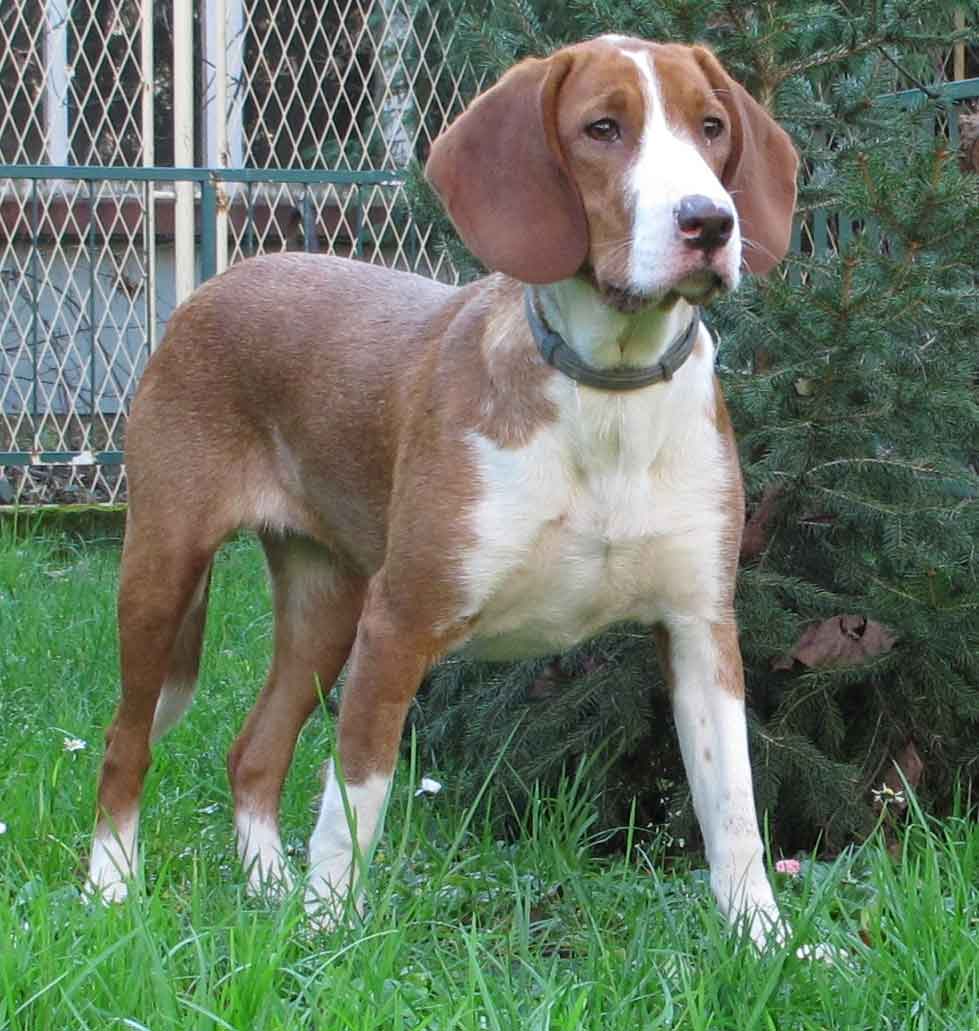
The English Foxhound is dog friendly appreciates life in the pack, where he gets along with his peers.

Content

English Foxhound History

The English Foxhound can be considered a classic among British hunting dogs. This traditional breed is probably a cross between the Bracken medieval and the greyhounds, which were supposed to provide more lightness to previously heavier tracking dogs. Its field of application was and is hunting, more precisely: fox hunting mounted in pack, also called "hunting by force". In this hunt, the herd chases game animals such as roe deer or foxes until they are exhausted.. Persistent dogs can stay on their prey's heels for up to five hours. Although they are not faster than the pursued, tire the hunt so that the human hunter can hunt it. "Hunting by force" flourished in the 18th and 19th centuries, when it was practiced by the German nobility, British and French. Only the aristocracy could afford this elaborate form of hunting, and often destroyed numerous fields under the hooves of horse carts on the miles of unpredictable routes.

In the meantime, this form of hunting is prohibited in Great Britain, as well as in most European countries. In Germany, by the way, this prohibition was not originally justified by the practice of hunting, which is questionable from an animal welfare point of view. Rather, prohibition, when came into force in the years 30, was intended to limit the privileges of the nobility – and therefore also hunting. But a few decades later, hunting laws confirmed the ban. But this was not the end for him English Foxhound: Today, trawling is a friendly alternative – not the killing of the hunt, but the joy of riding fast along with the pack is the main focus. In 1964 the breed was recognized by the FCI. Besides of English Foxhound, there is also the American Foxhound, slightly lighter construction.

Physical Characteristics English Foxhound

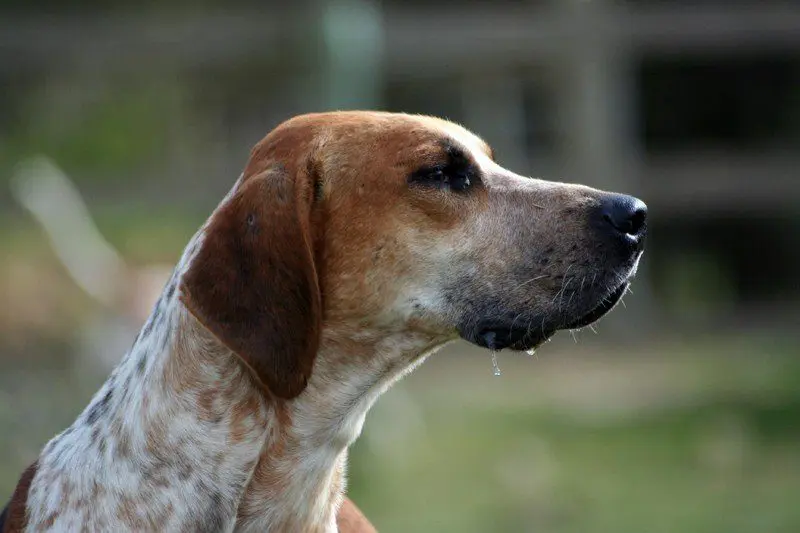
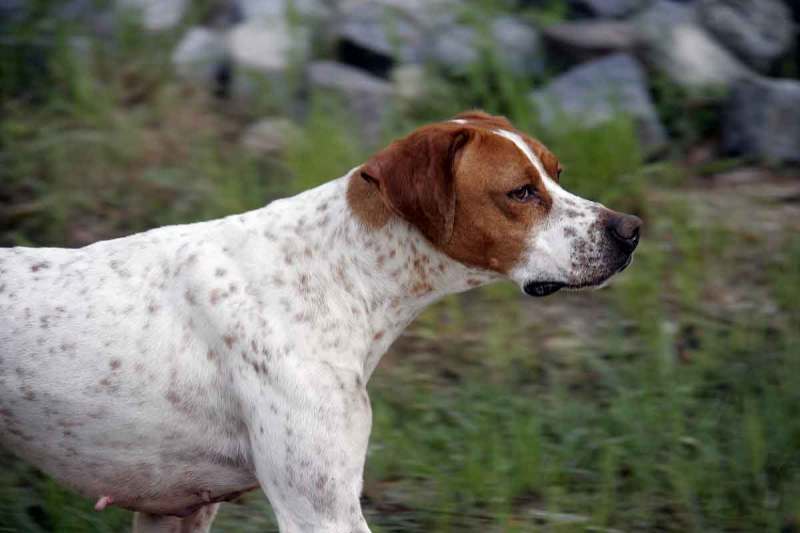
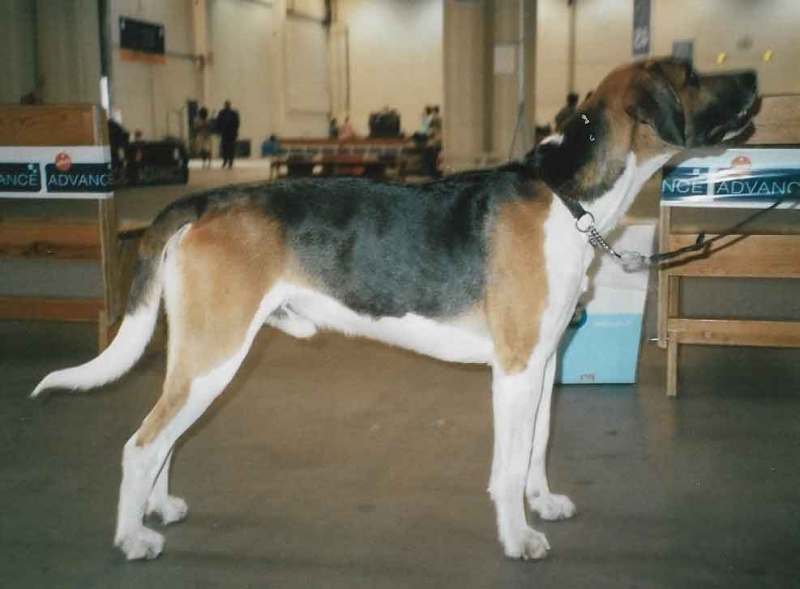
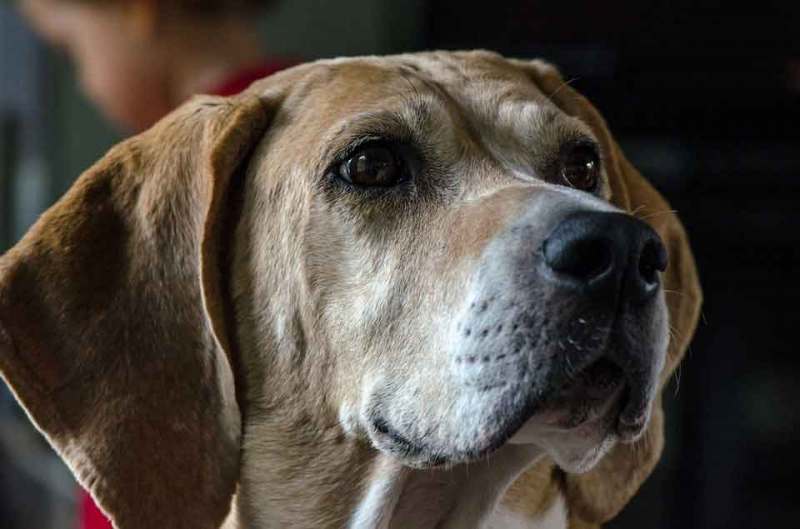
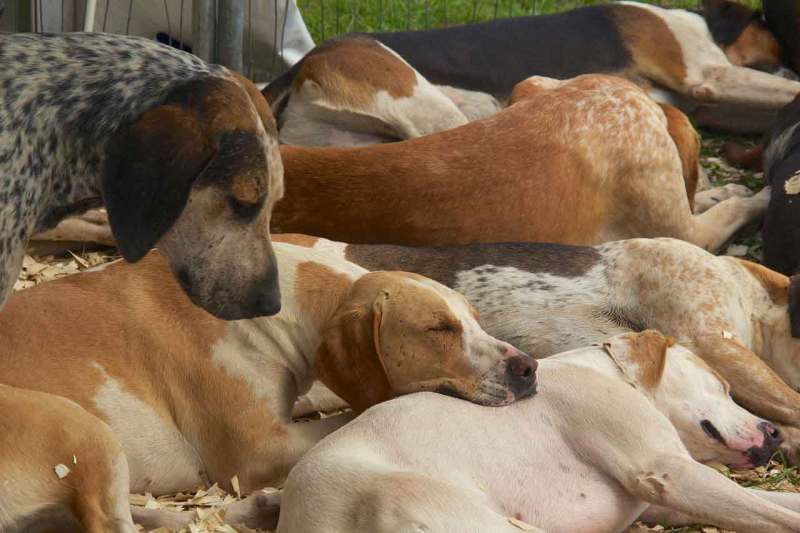
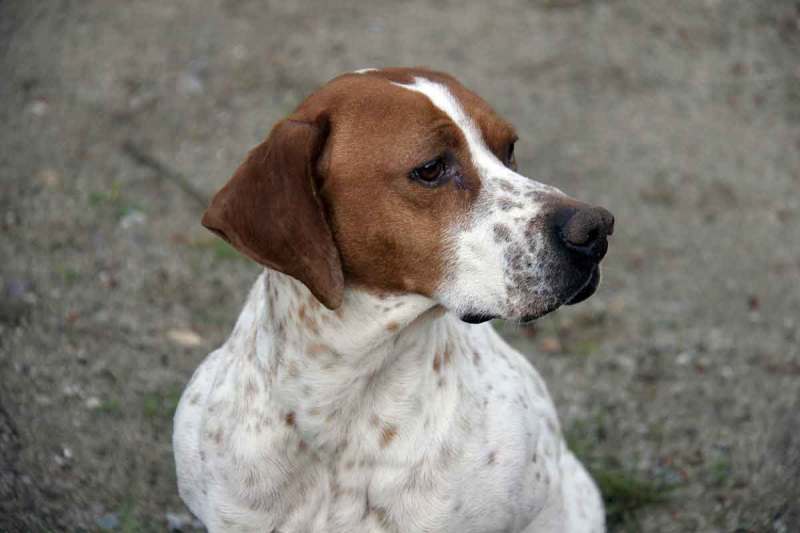
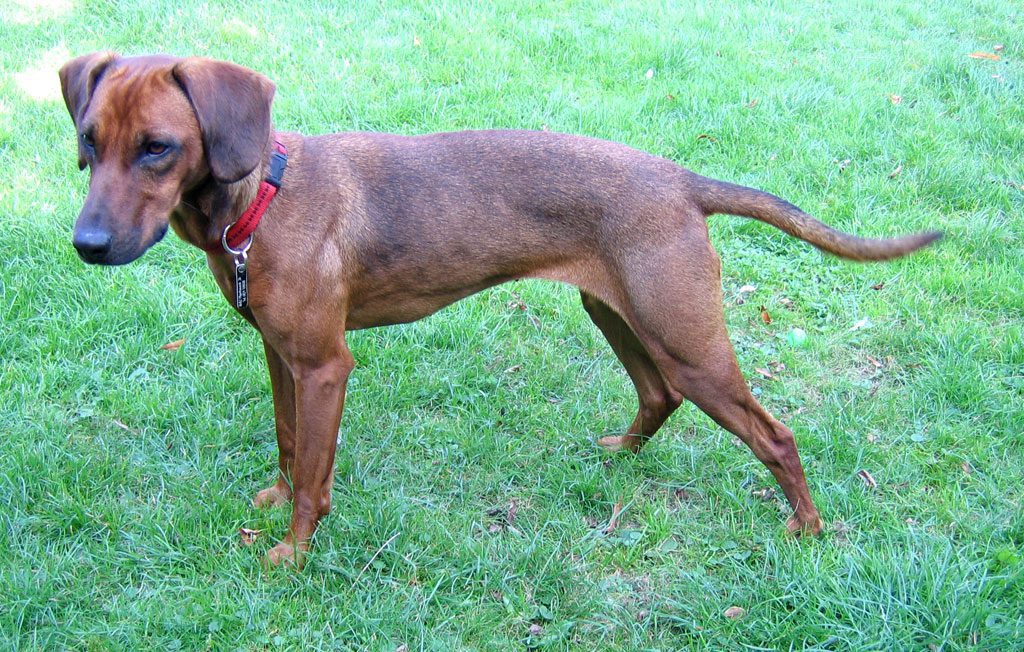
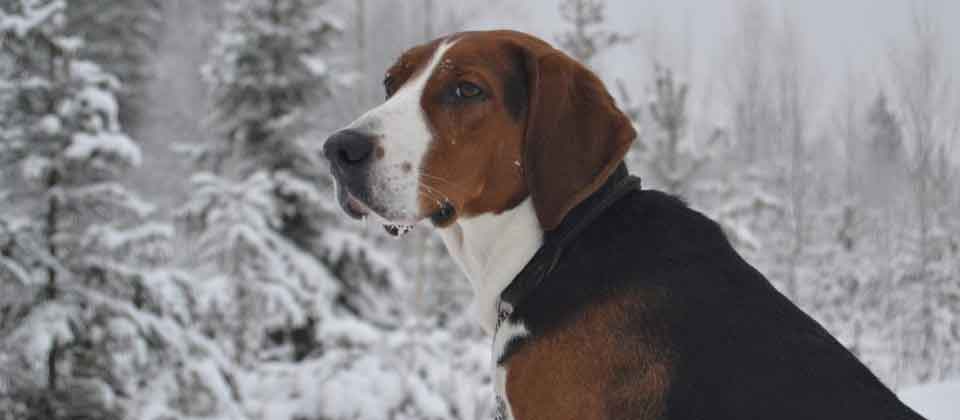
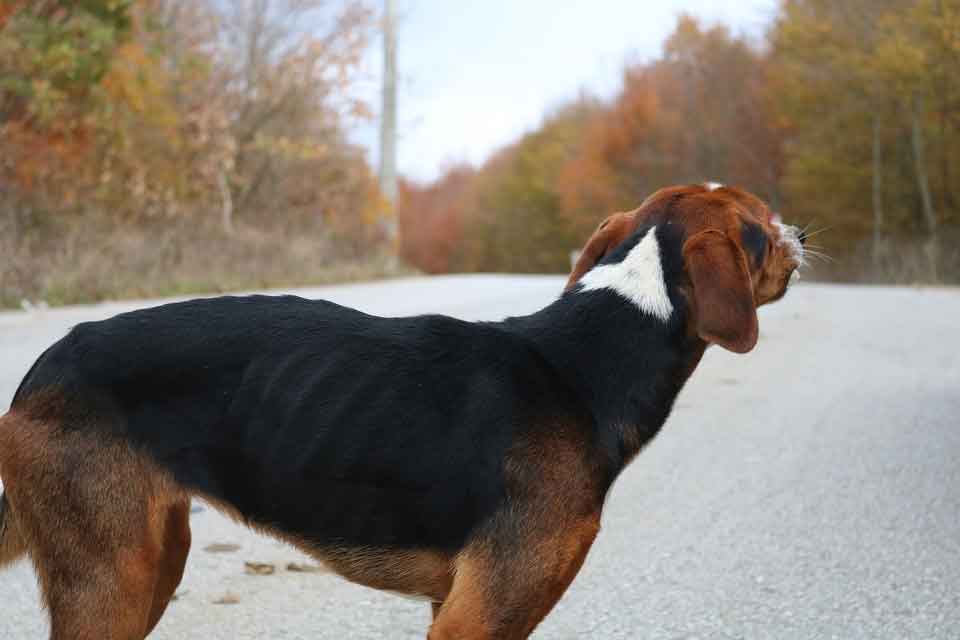
He bears a strong physical resemblance to him. Beagle, Although it is slightly larger. The average size of English Foxhound varies slightly depending on the gender of the animal. The males measure between 55 and 62,5 cm. up the cross, and females in 50,5 to 60 cm. up the cross. Generally weigh between 25 and 34 kg. Their fur is short and hard, tricolor-negro color, White and toasted or bicolor with a white background. It has a light head, and with pronounced eyebrows. The ears are medium and droopy, Hound style. His muscular back, It has straight legs and well located porte alegre queue, Whip style. The long legs allow the English Foxhound at a fast pace.

Character and skills English Foxhound

This friendly dog รขโ‚ฌโ€นรขโ‚ฌโ€นappreciates life in the pack, where he gets along with his peers. In keeping with your original purpose and the life of your ancestors, almost without exception they lived in large herds, the English Foxhound show good obedience, but does not usually establish close relationships with humans individually. Even today the dogs grow up in the pack and stay there. If a stronger impression on humans is desired, the English Foxhound would have to be removed from the pack already at puppy age, but this is not practiced, because these dogs are primarily professional hunting companions and not companion dogs. It also, the Foxhound always retains a relatively high degree of stubbornness and does not show a pronounced "will to please". Despite your stubbornness, the breed also has an affectionate side: to much Foxhounds they love to be petted and are also quite playful.

English Foxhound Education

Most of the English Foxhounds are hunters and receive proper hunting dog training, which is absolutely necessary. When you keep a English Foxhound as a companion dog, there may be some obstacles to overcome, because this breed is a passionate hunter who does not have a close relationship with people individually. Especially if you have lived in a pack for a long time, it is difficult to establish a close relationship with the sociable four-legged friend.

Promote the bond with common rituals and a lot of positive motivation. This doesn't always have to consist of treats – petting or small games can also reward this breed of dog. The breed is considered to be very social and gets along very well with its peers. It should be clear to everyone that this four-legged friend has a great hunting instinct, adjust your walks accordingly and make sure the neighbor's cat or puppies by the roadside remain safe.

The diet of the English Foxhound

The English Foxhound needs a species-appropriate food, what it means: It must contain a lot of meat! Offer your English Foxhound grain-free wet or dry food, where meat is the main ingredient. Particularly for Foxhounds who are hunters, the energy requirement depends largely on the calories actually consumed – on days with long runs up to 15 km, the four-legged friend needs correspondingly more energy. A food with a higher fat content is recommended for the most demanding sports needs. Give your dog the last portion about three hours before a sports session, so you have enough time to digest it before you start. Snacks are rarely necessary even during the longest sports drives. It is important that you Foxhound get a nice meal and a long rest after the job is done. The Foxhound it is a very good food processor – to avoid being overweight, watch your waistline and cut your portions accordingly when you start to gain weight. Dry chews are a welcome change to the four-legged friend's diet. But, avoid feeding the rumen with food, as it is suspected of promoting bloodhound ataxia in Foxhounds.

Remember to give plenty of fluids to drink: allow your Foxhound drink water at least once an hour, even during a hunt. There should always be enough fresh water available for all the four-legged friends in the kennel.

English Foxhound Health

One Foxhound healthy is basically a very robust quadruped. But if you want to keep these dogs running, you must inform yourself in advance about the call Hound Ataxia. This is a neurological disorder that mainly affects the Foxhounds and to the Beagle. It usually occurs between the second and seventh year of life and manifests as movement disorders and spasticity. The cause is a breakdown of the white matter in the thoracic cord and of the gray matter in the dog's brain stem.. It is not conclusive if feeding in the rumen favors the outbreak of the disease; However, it is recommended to avoid it as a precautionary measure. Usually, the disease continues to progress without effective treatment options. The English Foxhounds they should also be screened for hip dysplasia before breeding with them. It also, it is important to avoid being overweight, since the English Foxhounds that don't have enough demand get fat quickly. Dogs can reach an age of up to 13 years.

Activity with the English Foxhound

Many kilometers at full gallop – this is the amount of work that English Foxhounds not only drive but also appreciate. Trawling is a good alternative to the old hunts and is now organized throughout Europe, for example, in trawling clubs. The animals follow a foxtail or a brine trail from the rumen that drips from the containers that the riders carry later. If, even if it is not the ideal case, you have a English Foxhound that is not used for hunting, you can take him for a bike ride or learn about sports like canicross. It also, their Foxhound should have room to romp, ideally within a large fenced property and with other dogs of the same species. If your specimen is no longer able to hunt due to physical handicaps, give him a mental workload instead and see if slower nasal work, like guided mantrailing, it's a good idea for your dog.

Caring for the English Foxhound

The short, soft coat of the English Foxhound does not present a challenge in terms of grooming. Regular brushing or massaging with a grooming mitt removes excess fur and is a pleasure for many quadrupeds.. Especially if you don't have a English Foxhound in a pack but as a companion dog, you should practice such bonding rituals with him from an early age. With older dogs, the claws should be examined regularly to avoid painful hooking when they get too long.. You should also regularly check your dog's coat for parasites and discuss prophylaxis with your vet..

Where can I find an English Foxhound?

This breed is usually bred by hunters for hunters, and that's a good thing. If you are interested in having these dogs and you have the time, money and space to raise a herd, you can find out in the trawling clubs. You're probably already familiar with them anyway, because without this form of organized hunting, forming your own herd makes little sense. In any case, stay away from Foxhounds individuals who were raised without papers and whose parents are not hunters. Most of them are dubious sellers who want to make money with the classic hunting dog. Puppies are not usually Foxhounds pure-bred, but mixed races. It is wiser to resort to the animal welfare when looking for mixed-breed dogs with a part of Foxhound, instead of supporting dubious breeding practices.

If you are looking for a English Foxhound adult, you can find one at professional trawler clubs, for example. These always give away older dogs that are not suitable for very demanding use in trawling.. But, you should ask yourself critically and clarify in discussions with the pack leader if you have the possibility to offer this sporting dog with the characteristics already described a species-appropriate home.

Characteristics "English Foxhound"

Coexistence is important that you have with your new friend. Before considering the acquisition of a dog of the breed "English Foxhound" you know certain factors. Not all breeds of dogs are apt to live in an apartment, you must take into account his character, their need for exercise, their interaction with other pets, their care and if you have small children, their level of tolerance towards them.

Training ?

3,0 of 5 stars (based on 1 review)

Suitability of the apartment ?

1,0 of 5 stars (based on 1 review)

Can be alone all day ?

1,0 of 5 stars (based on 1 review)

Suitable as a first dog ?

1,0 of 5 stars (based on 1 review)

Weight gain ?

4,0 of 5 stars (based on 1 review)

Health ?

3,0 of 5 stars (based on 1 review)

Intelligence ?

3,0 of 5 stars (based on 1 review)

Kindness with child ?

4,0 of 5 stars (based on 1 review)

Tendency to bite ?

2,0 of 5 stars (based on 1 review)

Tendency to bark ?

3,0 of 5 stars (based on 1 review)

Tendency to flee ?

5,0 of 5 stars (based on 1 review)

hair loss strength ?

3,0 of 5 stars (based on 1 review)

Suitable as a guard dog ?

3,0 of 5 stars (based on 1 review)

Joy ?

3,0 of 5 stars (based on 1 review)

Cat friendliness ?

1,0 of 5 stars (based on 1 review)

Power level ?

5,0 of 5 stars (based on 1 review)

Images "English Foxhound"

Photos:

1 – Foxhound inglรฉs by https://pxhere.com/en/photo/1044061
2 – English Foxhounds. Cheshire Game and Country Fair 2014 by Photograph by Mike Peel (www.mikepeel.net)., CC BY-SA 4.0, via Wikimedia Commons
3 – Foxhound inglรฉs by https://pixabay.com/de/photos/hund-foxhound-970780/
4 – Foxhound inglรฉs by https://www.needpix.com/photo/1391525/foxhounds-foxhound-dog-horse-horses-riders-horseriders-hunt-hunting
5 – English Foxhound, male by Canarian, CC BY-SA 4.0, via Wikimedia Commons
6 – Foxhound inglรฉs by https://pxhere.com/es/photo/1044065

Videos "English Foxhound"
Type and recognitions:

  • FCI CLASSIFICATION:
  • Group :
  • Section : . .

Federations:

  • – FCI – Group 6: Scent hounds, and related breeds. – Section 1.1: Large-sized Hounds. โ“˜
  • – AKC – Hound โ“˜
  • – ANKC – Group 4 (Hounds) โ“˜
  • – CKC – Group 2 – Hounds โ“˜
  • – โ€‹KC – Hound โ“˜
  • – NZKC – Hound โ“˜
  • – UKC – Scenthounds โ“˜

FCI breed standard "English Foxhound"

Origin:
England, United Kingdom

Date of publication of the valid original standard:
26.03.2009

Use:

Pack dog for mounted hunting.


General appearance:

Well balanced, powerful and clean cut.


Behavior / temperament:

Great vigor and endurance, with natural ability to hunt. Friendly and not aggressive.

Head:

Well balanced.

Cranial region:
  • Skull : It is flat and of medium width.
  • Depression links (Stop) : Light.

facial region:

  • Truffle : Large nostrils.
  • Snout : Long and square.
  • Belfos: Moderately developed.
  • Jaws / Teeth : Strong jaws with a perfect scissors bite, regular and complete, the upper incisors closely overlapping the lower incisors and being implanted at right angles to the jaw.

Eyes : Medium-sized, hazel or brown. Cunning expression.

Ears : Falls, carried close to the head, high insertion.

Neck:

Long, slightly arched, well developed without being clumsy.

Body:

  • Back : Wide and level.
  • Pork loin : Strong.
  • Breast : Deep, well arched ribs.

Tail:

High insertion. Happily carried but never curled on the back.

Tips

PREVIOUS MEMBERS : Long, straight and good-boned down to the feet.

  • Shoulder : Well oblique back, muscular without being heavily loaded.
  • Metacarpus : Strong.

LATER MEMBERS : Powerful and well muscled. From good bones to the feet.

  • Knee : Well angled.
  • Hocks : Well descended.

FEET : Round, tight and strong. Well developed pads. Strong nails. Optional spurs.

Movement:

Free movement, tireless with the ability to gallop. Good rear thrust with no hint of rocking.

Mantle

HAIR : Short and dense. Impermeable.

COLOR : Any color and brand accepted on the hounds.


Size and weight:

Height to the cross : About 58-64 cm.. (23-25 inches).


Fouls:

Any deviation from the aforementioned criteria is considered as a fault and the severity of this is considered to the degree of the deviation to the standard and its consequences on the health and well-being of the dog..

Any dog โ€‹โ€‹showing clear signs of physical or behavioral abnormalities must be disqualified..


N.B.:

Males should have two normal-appearing testicles fully descended into the scrotum..

Source: F.C.I - International Cynological Federation

Alternative names:

1. Foxhound (English).
2. Foxhound (French).
3. Foxhound (German).
4. English Foxhound (Portuguese).
5. Foxhound (espaรฑol).

โ–ท The world of Pets: Dogs, cats, birds, reptiles, amphibians

Tyrolean hound
Austria FCI 68 - Medium-sized Hounds

Braco Tirolรฉs

The Tyrolean Hound it un perro con un carรกcter muy equilibrado, ideal for hunting in the forest.

Content

History

The Tyrolean hound or Tyrol hound descends from the Celtic hound and with their resistant double coat represents the purest type of dog hounds. It is known that already in the year 1500, the Emperor Maximilian I He used these Hounds in the Tyrol region for hunting hares, foxes and injured animals tracing. In his hunting books he mentioned that he extracted his guide dogs from them.

About 1860 they started in Tyrol raising pure breeds individually. In 1896 It set a standard that was officially recognized in 1908. The variety of species of hounds from the Tyrol natural, only remained those of red and black color with fire. The Hound of the Tyrol: small size is taken from the standard of 1994.

In the past, There was also a small size that was removed from the standard Tyrol sniffer in 1994.

Physical characteristics

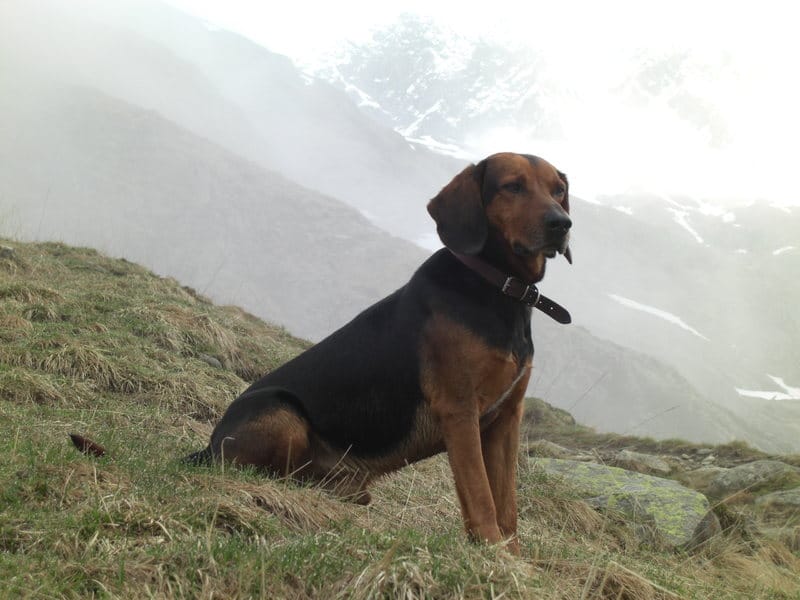
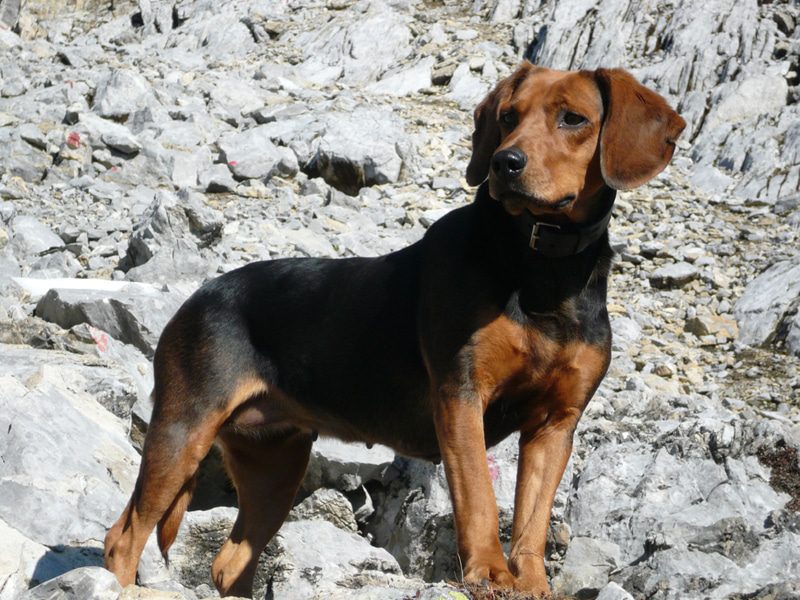
The Tyrolean hound is a breed of hunting dog hound type of medium size and wide erect ears originating from the Austrian Tyrol.

This dog medium-sized and broad flat ears at the top of the head, has a thick, double coat and well covered legs.

There are two main colors of hair: Red or black and Tan, all of them can have white spots.

The height to the cross in the exemplary males is of 44 to 50 cm.; in the females of 42 to 48 cm. and weigh in 15 to 22 Kg. There is also, a smaller variety that has a height of 30 to 39 cm..

Character and skills

It is a hunting dog, ideal for hunting in the forest and the mountain, strong character, passionate, with fine sense of smell, independent hunting and persistent searches; It has a good bark in the hunt, a pronounced to track will and has a good sense of orientation.

Itร‚ยดs known for its strength in difficult terrain and for not fearing the elements.

In addition to the skills for hunting, The Hound of the Tyrol is an agile mind, Smart and good character. It is at the same time cheerful and independent, very attached to his master and his family.

Like all dogs hunting, This hound's obstinate nature. Your education requires some patience, but with perseverance its owner will get good results.

It's a dog that need to exercise. For this reason, life in the city or artamentos did not do for him.

Tyrolean Hound images

Braco Tiroles videos

Type and recognitions:

  • FCI CLASSIFICATION:
  • Group :
  • Section : . .

Federations:

– FCI โ“˜

FCI breed standard "Tyrolean hound"

Origin:
Austria

Date of publication of the valid original standard:
10.10.1995

Use:

The Tyrolean Hound is an ideal utility dog รขโ‚ฌโ€นรขโ‚ฌโ€นfor the forest and mountain hunter. Used as a hound (only) for barking hare and fox hunting and as a tracker to search for all types of wounded game.


General appearance:

Is medium sized. It has a skeleton with moderate resistance, is strong, muscular, nervous, with flowing external lines along the body; it is robust and healthy. His body is rectangular in shape, it's a little longer than tall.


Behavior / temperament:

It is a hunting dog with a firm character., passionate, with fine sense of smell, independent hunting and persistent searches; It has a good bark in the hunt, a pronounced to track will and has a good sense of orientation.

Head:

---

Cranial region:
  • Skull: Width, delgado, slightly convex.
  • Depression links (Stop): Marked.

facial region:

  • Truffle: Black, not placed perpendicular. Snout: Moderately deep, straight.
  • Lips: Thin and very adherent.
  • Jaws/Teeth: Strong and complete scissor bite. You want a complete denture with 42 Dental parts; the lack of a total of two PM1 or PM2 (premolars 1 or 2) is tolerated; the M3 (molars 3) they are not taken into account.
  • Eyes: Large eyeballs, not deep, round eyelid slit. Dark brown iris. Membrana nictitante
    Pigmented, eyelids well adhering to the eyeball.
  • Ears: Wide, high insertion, rounded in its bottom edge; moderately stretched, must reach the region of the tusk
    top.

Neck:

Moderately arched, Neither high nor low, delgado, without presenting Chin.

Body:

The trunk is long.

  • Cross: It is marked and constitutes the highest point of the upper line. Back: Straight, robust and moderately wide. Well rounded windowsill.
  • Rump: Slightly fallen, not tilted, wide and long. Chest: Very deep, moderately wide. Sill: Rounded.
  • Belly: a little withdrawn. Moderately deep.

Tail:

High insertion, long; it reaches at least up to the protrusion of the Hock; It takes her up when the dog is at attention; is allowed to carry it in the form of Sabre; the tail is desirable with dense brush hair.

Tips

PREVIOUS MEMBERS:

  • General appearance: Straight.
  • Shoulder: Oblique placement, equipped with good musculature.
  • Arm: With good angle.

LATER MEMBERS:

  • General appearance: Joints in the hind limbs are good angles.
  • Thighs: Wide and muscular.

FEET: Strong, with arched fingers and very close together, hard pads.

Movement:

It covers the ground, It is very fast and persistent.

Mantle

  • Fur: Double (Stockhaar), dense with internal NAP, rather rough to soft. Belly with hair, thighs with "pants". Tail covered with dense brush hair.
  • Color: Red or black and Tan (It also accepts tricolor).
    • Red variety: Red, cervuno or red yellow red. Is not desirable yellow color too clear.
    • Black and Tan variety: Layer black or saddle branded fire red or fire not clearly defined in the extremities, chest, belly and head. Allow marks on eyes fire (four eyes).
    • White markings: (Are allowed in both varieties of color). Bordering on the neck (collar), stain on front and lower chest, in the limbs and feet. The absence of white markings is not regarded as lack.


Size and weight:

Height to the cross: 42 - 50 cm.

  • Males: 44 - 50 cm.,
  • females: 42 - 48 cm..


Fouls:

Any deviation from the aforementioned criteria is considered as a fault and the severity of this is considered to the degree of the deviation to the standard and its consequences on the health and well-being of the dog..

  • Too agalgado; too high or too low.
  • Rough skull.
  • Hanging lips.
  • Eyes gazeos.
  • Too short, long or bent.
  • Back too long or too weak.
  • Shyness.

FALTAS DESCALIFICANTES

  • Aggressiveness or extreme shyness.
  • Any dog โ€‹โ€‹showing clear signs of physical or behavioral abnormalities.
  • Truffle Brown.
  • Upper or lower prognathism.
  • Lack of more than two premolars 1 or 2 (PM1 to PM2).
  • Very pronounced white spots.
  • Liver coat color.


N.B.:
  • Males should have two normal-appearing testicles fully descended into the scrotum..
  • Only functionally and clinically healthy dogs, with the typical conformation of the breed, should be used for parenting.

Source: F.C.I - International Cynological Federation

Alternative names:

1. Tiroler Bracke, Tyroler Bracke (English).
2. Brachet autrichien, Chien courant du Tyrol (French).
3. Tiroler Bracke (German).
4. Braco tirolรชs (Portuguese).
5. Sabueso del Tirol (espaรฑol).

โ–ท The world of Pets: Dogs, cats, birds, reptiles, amphibians

Posavac Hound
Croacia FCI 154 . Medium-sized Hounds

Posavac Hound

The Posavac Hound was registered in 1955 under the name "Kras Basin Hound"

Content

History

It is an ancient breed of running dog, originally from Croatia, whose origin is lost in the dark prehistory. The frescoes (1474, Chapel of Our Lady in Beram, near Pazin), the Chronicles (1719, Bishop Bakic of Djakovo, 1859 the vet Franjo Bertic also from Djakovo) and the books (Joze Kristen) bear witness to it.

The Posavac Hound They were bought in Croatia under the name ยซboskiniยป and were highly appreciated in neighboring areas. In 1924 this breed was presented for the first time at a dog show. The first entries in the Croatian pedigree book date back to 1929 and the FCI recognized this breed in 1955. The first standard with the correct name of the breed dates back to 1969; underlines the origin of the race in the wide and dense valley of the River Sava in the southeast of Zagreb.

Photos: Cropped image of young Posavac hound female by Strojovodjazg, CC BY-SA 4.0, via Wikimedia Commons

Physical characteristics ยซSave Valley Houndยป

One Posavac Hound can weigh up to 20 kg and measure around 58 height cm. This Croatian dog is of strong constitution and of medium body proportions. His fur is typically red., reddish or wheat-colored. White markings appear on the head area, the neck, the chest, the lower part of the limbs and the end of the tail. The hair itself has between 2-3 cm long, rigid and dense in nature, and always very lying. On the backs of the limbs, as well as on the underside of the belly and tail, hair gets slightly longer.

Character and abilities ยซSave Valley Houndยป

The Posavac Hound is prized as an extremely hardy hound dog, specialized in hunting hares and foxes. His constitution is perfectly adapted to the conditions of his native region, the vast forests of the Savetal. Here you can find areas of difficult access and a lot of undergrowth, lands that are suitable for Posavac Hound with his height.

This dog is very loyal and affectionate with his master. He is a passionate hunter with a moderately lively temperament.

Care and maintenance of the โ€œSave Valley Houndโ€

Posavac Hound small
Posavac Hound small

It is enough to brush it once a month to maintain the beauty and protective properties of its coat.

Loss of hair

Hair loss is moderate.

Nutrition of the โ€œSave Valley Houndโ€

The daily rations of the croatian: posavski goniร„ย, as it's also called, must adapt to your daily life. This is especially true for hunting season.

One meal a day is enough for him.. It is better to give it to him at night so that he does not work on a full stomach. This reduces the risk of stomach disorders.

Videos "Posavac Hound"

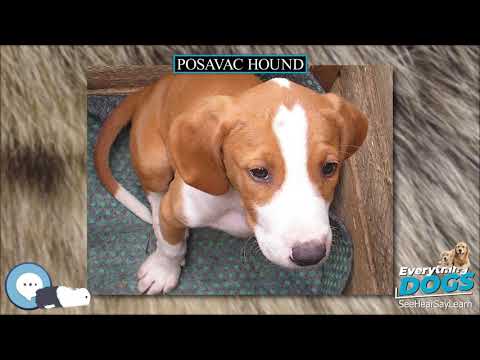
Posavac Hound ๐Ÿถ๐Ÿพ Everything Dog Breeds ๐Ÿพ๐Ÿถ
Posavac Hound ?? Everything Dog Breeds ??
Posavski gonic (mala)

Type and recognitions:

  • FCI CLASSIFICATION:
  • Group :
  • Section : . .

Federations:

  • – FCI – Group 6: Scent hounds, and related breeds. – Section 1.2: Medium-sized Hounds. โ“˜
  • – UKC – Scenthound Group โ“˜
  • – Croatian Kennel Club

FCI breed standard "Posavac Hound"

Origin:
Croatia

Date of publication of the valid original standard:
03.11.2014

Use:

It is a hound with excellent resistance, especially suitable for hare hunting, the Fox, the boar, but can also be used as a trail dog.


General appearance:

Strong Hound Build, medium-sized dog with harmonious movements. Its characteristic reddish wheat color comes in all its shades.. White markings are found on the head, in the neck, on the forechest and on the chest, in the womb, on the lower parts of the limbs and on the tip of the tail. The difference between both sexes must be well marked.

important proportions

  • rectangular body, the length of the body exceeds the height at the withers.
  • The height to the elbow is approximately 50 % the height at the withers.
  • The length of the skull slightly exceeds that of the snout.


Behavior / temperament:

This breed is easily trained. It is a universal hound with a clear and melodic voice suitable for hunting in any area.. Docile, He is not nervous or aggressive, moderately lively temperament. Very attached to his master.

Head:

---

Cranial region:
  • Head: The head is well-proportioned to the body. It has slightly divergent lines.
  • Skull: Slightly longer than the snout, the widest part is the area between the ears. The temporal zone is slightly arched. The width of the skull exceeds its depth. The occipital protuberance and frontal sulcus are slightly marked.

facial region:

  • Truffle: Strong, with wide open nostrils. The entire nose and the inside of the nostrils should be black or dark brown..
  • Snout: Strong, square and full, somewhat shorter than the skull, gradually tapers from the naso-frontal depression to the nose, without being too pointy.
  • Belfos: Medium thick, well adjusted to the jaw, the lip corner is not visible. The pigmentation of the lips is completely in accordance with the color of the truffle.
  • Nasal bridge: The nasal cannula is straight or slightly convex (slightly fleshy nose).
  • Jaws / Teeth: The jaws are strong and well developed, the teeth are white and arranged in the jaw in a regular way. Scissor-shaped denture; the incisors are inserted into the jaws vertically. It is desirable that the denture be complete (42 teeth in accordance with the dental formula). The lack of premolars PM1 and molars M3 is not taken into consideration. It is not desirable for other teeth to be missing.
  • Cheeks: The chewing muscles and the zygomatic bone should not be too marked.

Eyes: Medium-sized, moderately separated, placed on the semi-front part with an angle of between 10 and 15 degrees with respect to the horizontal line. Oval in shape and dark brown in color; smart expression. The eyelids should not be sagging or show signs of entropion or ectropion.. The pigmentation of the edge of the eyelids must be completely in accordance with the color of the nose.

Ears: Pendants, fall close to the head, inserted at eye level. The ear is triangular in shape with a rounded tip., of medium length and thickness. When stretched forward they should reach the corner of the mouth.. The ears should not have folds, be curled or protrude. They are covered with short hair.

Neck:

Strong, well muscled and at an angle 45 degrees with respect to the horizontal line. It narrows towards the head. The skin is tight, without double chin or very marked folds.

Body:

  • Generality: The body must be strong.
  • Cross: Marked.
  • Back: Strong, well muscled, straight.
  • Pork loin: Of average length, width, good muscular, strong and well attached to the rump.
  • Rump: Well musculada, strong, flat and inclined at an angle between 25 and 30 degrees with respect to the horizontal line. Something lower than the cross.
  • Breast : Deep, wide but not too wide or barrel-shaped. The rib cage should reach to the elbow.
  • Ribs: Ribs well arched.
  • bottom line: Bottom line with slight retraction, from sternum to flanks.

Tail:

Inserted in the extension of the rump line. Strong in insertion, It gradually tapers towards the tip and is of medium length. If you stretch down, reaches at most to the hock. Saber-shaped with carriage below the top line. A higher tail is tolerated when the dog is in action.. The tail is well covered with hair, slightly longer at the bottom, preferably as small brushes.

Tips

Former members

  • Generality: Seen from the front, The forelimbs must be well proportioned with respect to the body and have regular angles..
  • Shoulder: Of average length, muscular. The shoulder angle is between 115 and 120 degrees.
  • Elbow: Well attached to the body.
  • Forearm: Strong, rounded bones with strong muscle tone. Parallels seen from the front.
  • Carpo: Short and elastic.
  • Metacarpus: Elastic, slightly inclined.
  • Front feet: Oval, with fingers together and strong pads. Nails should preferably be pigmented.

Later members

  • Generality: Strong and elastic in movement.
  • Thigh: Strong, wide and muscular.
  • Leg: They form an angle of about 40 degrees with respect to the horizontal line.
  • Knee: It is wide.
  • Metatarsus: Almost vertical with respect to the ground, firm and elastic.
  • Hock: Strong and firm.
  • Rear feet: Oval, with fingers together and strong pads. Nails should preferably be pigmented.

Movement:

Reach is essential, with good push. The movement must be harmonious, no sudden movements. The ideal is that the top line moves as little as possible and that the feet do not cross.

Mantle

Skin: Elastic, รโ€รยต medium thickness, adheres well to the entire body, without wrinkles.

Fur: The hair is hard, thick, shiny and should be very close to the body. It has a length of between 2 and 3 cm.. The hair is a little longer on the back of the thighs (until 4 cm.), on the belly and under the tail, where it is preferred to form the so-called "brushes".

Color: The base color is reddish wheat in all its shades., with white marks on the head, in the neck, in the backsplash, on the chest, in the womb, on the lower parts of the limbs and on the tip of the tail. They are never dark brown or chocolate, since they are not allowed. The total surface area of โ€‹โ€‹the white spots cannot exceed more than one third of the total surface area of โ€‹โ€‹the body. The white color must be clear and not have splashes of the base color..

The characteristic white spots are located on :

- Head, in the form of a running cord or a strip (no white on the ears).
- The neck, as a necklace (complete or partial) or strip-shaped.
โ€“ On the parapet, as narrower or wider white surface.
- In the womb, a white strip.
โ€“ In the extremities, white surface on paws; also sock-shaped on the pasterns.
- In the queue, like a white tip.

It is desirable that all the white markings be in the indicated points and that they be distributed symmetrically on the dog's body.. The absence of white marks in the indicated points is considered a fault. White marks cannot appear on other parts of the body.


Size and weight:

Height to the cross

  • For males: 50 cm-56 cm.
  • for females: 47 cm-53 cm.

A difference of +/- 2 cm in males and females of exceptional type and conformation.


Fouls:

Any deviation from the above mentioned criteria is considered to lack, and the severity of this is considered the degree of deviation from the standard and its consequences on the health and well-being of the dog and the dog's ability to perform its traditional task.

disqualifying fouls:

โ€“ Aggressiveness or extreme shyness.
โ€“ Converging head lines.
โ€“ Muzzle longer than the skull.
โ€“ Atypically short snout.
- Superior or inferior prognathism, twisted bite.
- Blue eyes.
โ€“ Truffle, completely depigmented eyelids or lips.
โ€“ Body length less than the height at the withers.
โ€“ Dog with short limbs, of Achondroplastic type.
โ€“ Curled or deviated tail curved on one side.
โ€“ Body hair over 5 cm length.
โ€“ Dog of a single color (solid), absence of white spots.
โ€“ Gray or black spots on the body, presence of a third color.
โ€“ White spots splashed with the base color.
โ€“ Size above or below the norms established by the standard.


N.B.:

โ€ข Any dog โ€‹โ€‹showing clear signs of physical or behavioral abnormalities should be disqualified..
โ€ข The aforementioned fouls that are more pronounced or more marked are eliminatory..
โ€ข Males must have two normal-appearing testicles fully descended into the scrotum..
โ€ข Only functionally and clinically healthy dogs, with the typical conformation of the breed, should be used for parenting.

Source: F.C.I - International Cynological Federation

Alternative names:

1. Croatian: posavski goniฤ (English).
2. Chien courant de Posavatz, chien courant du bassin de Kras (French).
3. Huidige hond van de Save Vallei, Posavski Goniฤ, Save-Bracke, Savetalbracke (German).
4. Em croata: Posavski gonic (Portuguese).
5. Sabueso de Posavaz (espaรฑol).

โ–ท The world of Pets: Dogs, cats, birds, reptiles, amphibians

Finnish Hound
Finlandia FCI 51 - Medium-sized Hounds.

Finnish Hound

The Finnish Hound he is friendly, calm and never aggressive. He is energetic in hunting and is a versatile tracker.

Content

History

As its name implies, the Finnish Hound It is a breed of dog native to Finland. His story is the same as that of many other hounds, as it was developed in response to the need for a hunting dog perfectly adapted to its environment.

It is the result of a breeding program started at the beginning of the 19th century by several breeders who used the English Foxhound and several hounds, as well as French and German hunting dogs. The aim of these crosses was to create an animal capable of withstanding the extreme temperatures of Finnish winters, with excellent resistance in mountainous terrain, a trumpet bark to alert hunters and a particularly developed sense of smell that would allow it to excel at tracking hares and foxes. This breeding program was a success, and the bitch he gave birth to, call Suomenajokoira, quickly gained popularity thanks to his admirable hunting skills and friendly temperament.

When it was founded Suomen Kennelliitto, Finland's leading dog organization, in 1889, his first initiative was to develop a standardized hound breed from Finland. Many breeders came forward to try to get their production recognized as the standard to follow. Three dogs were selected in the organization's first dog show in 1891, and eight more were added the following year. The first breed standard of Finnish Hound It was established in 1893 based on these individuals. It was decided, among other things, accept only fawn as coat color. But, this color did not completely stabilize, and individuals from successive litters very often had coats of other colors, like black and white. This forced the Kennelliitto to also recognize a tricolor coat (leonado, black and white) early twentieth century, which finally became the norm. The standard evolved again in small touches later, but in its main lines it has remained the same since 1932.

The Fรฉdรฉration Cynologique Internationale (FCI) recognized the breed in 1954, but I didn't have many emulators. These may include, it wasn't until more than 40 years later, in 1996, that the United Kennel Club (UKC) he did the same. The other reference organization in the United States, the American Kennel Club (AKC), has not yet taken the step.

In fact, just like the prestigious British Kennel Club or the Canadian Kennel Club (CCC), for example, most national organizations do not yet recognize the Finnish Hound.

Outside Finland, the Finnish Hound remains totally unknown to the general public.

On the other hand, the Finnish Hound is much more popular in his native Finland, to the point of appearing in the Top 10 of the most common breeds in the country, which makes it the most widespread national breed. But, with about 1.000 births per year registered in Suomen Kennelliitto, has been in free fall for several decades. In fact, at the dawn of the 21st century the number was more than 2500, and at the end of the 90 even exceeded 4000. This sharp decline is due to increasing urbanization and the decline in hunting activities.

The same development can be found in the other Scandinavian countries that have adopted the Finnish Hound, namely, Sweden and Norway. In the first, the number of births registered each year in the Svenska Kennelklubben is now within 400, compared with more than double at the end of the 1990. The number of births registered in the Svenska Kennelklubben is now little more than 150 by year, compared to more than triple that number in the late 1990s.

The Finnish Hound still commonly used as a hunting dog in Finland, Sweden and Norway, but they are practically unknown outside the Scandinavian region.

Photo: Finnish Hound by RemoteFly, CC BY-SA 3.0, via Wikimedia Commons

Caracterรญsticas fรญsicas ยซSabueso finlandรฉsยป

Athletics, resistant and strong, the Finnish Hound he has a robust and muscular silhouette and a medium size. His body is rectangular, with a deep chest and well sprung ribs. The tail is carried low; is wide at the base and tapers to a point at the end.

The head is well proportioned in relation to the body and slightly domed. A characteristic detail of the breed is the upper lip, that falls to the sides of the mouth forming an N-shaped curve when viewed from the front. His eyes are dark brown with a calm expression. The ears are large, plan, falls and not very long.

The Finnish Hound have a double coat consisting of a short undercoat, dense and smooth in texture and a medium length top coat, straight and quite hard. The coat is tricolor, mixing black, fawn and white. Specifically, the fur is black, while the head, the outer parts of the legs and shoulders are tawny. At the same time, white markings are generally present on the muzzle, the neck, the chest, the belly, the feet and the tip of the tail.

Last, sexual dimorphism is only slightly marked in this breed, since the females are on average barely 3 cm smaller than males.

Carรกcter y aptitudes ยซSabueso finlandรฉsยป

The Finnish Hound it is above all a true working dog with a highly developed predatory instinct and a strong character.

Decades of independent hunting have caused them to be stubborn and stubborn. For this reason, not recommended for a novice teacher: only an experienced and firm owner can establish and maintain the appropriate level of authority to elicit acceptable behavior from him.

This does not detract from its formidable hunting qualities., an activity in which he is alert, energetic and durable. It is mainly used to hunt hare, fox and sometimes wildcat. Regardless of weather and terrain, he is always there and never spares his efforts, able to follow a trail for hours in terrible weather conditions – aided by his highly developed sense of smell. He is also a very vocal hunting dog., appreciated for its characteristic barks, who plays a key role in allowing his master to follow him even when he is out of sight, and to alert of the presence of hunting.

To counter his unlimited energy while hunting, the Finnish Hound is generally calm and friendly during periods of rest, especially when they are at home.

Once trained and socialized, the Finnish Hound blends surprisingly well into family life. They are known to be very affectionate and are constantly on the lookout for human company., forming extremely close ties with their owners. He is also a dog that loves children. But, they must be taught to interact with him appropriately and to respect him, since they may not appreciate being mistreated. In any case, a young child should never be left alone with a dog, regardless of race.

His good relations with humans are not limited to his family circle. He is usually very nice to strangers. In other words, although its thunderous barks might suggest that it is a good watchdog, this is not the case at all.

The Finnish Hound is also sociable with other hounds, especially if they have been well socialized from a young age. So, it is perfectly conceivable to adopt a second dog to keep him company.

This is all the more true as his closeness to his masters makes him easily suffer from separation anxiety when left alone for too long., since it needs a lot of attention. The presence of a small playmate can help alleviate the problem.

In any case, it must not be a cat, rodent, bird or any other small animal. In fact, even if you are used to being around him, it is evident that he would not be safe in his presence, because the predatory instincts of the Finnish Hound they can take control at any time. It also, it is recommended to always keep it on a leash during your daily walks, to prevent you from rushing in pursuit of small animals that would pass.

The Finnish Hound it is very resistant and extremely active, so you need a lot of exercise every day. In the days when you used to hunt, your tracking activity should be an appropriate amount of exercise. The rest of the time, you need at least an hour of vigorous exercise a day: run, long walks, etc.

Keeping an active mind is also very important, so it is advisable to train him regularly to follow the tracks or play ball. This helps maintain your mental well-being., In addition to your physical health.

To be happy, the Finnish Hound needs constant access to a sufficiently large outdoor space in which to run freely. It is essential that the area is fenced in to prevent the Finnish Hound chase the surrounding animals. Not suitable for a small house without a garden or in an apartment. Wherever i live, his hunting nature causes him to bark a lot and can be a source of tension with potential neighbors.

Educacciรณn ยซSabueso finlandรฉsยป

The Finnish Hound he is intelligent and full of energy, but it is a difficult breed to train. Accustomed since its creation to hunt alone, over time has developed a strong character, independent and stubborn. He needs to have before him a master who is at least as determined, that is to say, experienced, able to show your dog that he makes up his mind and to keep a firm hand in his education throughout his life. So, not recommended for a beginning teacher, on which he would soon gain the upper hand. It also, if it is important that the rules are clear and defined from the beginning by the master, it is equally important that they are constant over time and consistent from person to person, that is to say, that all members of the house enforce them to the letter.

The Finnish Hound it's hard to handle, but it shows real sensitivity, as evidenced by his closeness to his family. So, punishments can affect you emotionally; it is preferable to take a positive approach to educate him, using positive reinforcement techniques and therefore the use of rewards: candies, petting, stimuli…

In any case, hunting practice and the ability to follow a trail require very little training, since they are things that he knows how to do instinctively.

But, is strongly inclined to want to use his hunting skills in circumstances that do not lend themselves to it, for example, rushing potential small prey on walks. Teaching your dog to remember is therefore of particular importance with the Finnish Hound. But, this can be difficult, because once he's thrown on a track, can be very reluctant to abandon it, completely ignoring the orders of its owner. Feel free to start and perfect your training in a safe, enclosed space such as your home or garden before attempting outdoor exercise..

It also, It must be remembered that this breed has been encouraged from its beginnings to bark frequently and loudly. If it's not meant to be used for hunting, it is possible to try to teach your dog to refrain from barking. But, although the latter can be reduced by specific training started at a very young age, it is impossible to hunt completely naturally, that is to say, make them disappear completely.

Finally, like any dog, benefits from being socialized from their first months, to become a balanced adult who knows how to be among humans. In addition to confronting him with a wide range of situations and stimuli (noises, smells, etc.), it should be introduced without delay to the people you will meet later in life (family, friends, neighbors, veterinary, etc.), as well as getting used to cross all kinds of humans, congeners and representatives of other species. Given their hunting instinct, This last point is not unimportant.: the more accustomed you are to the presence of other animals, less likely to hunt them later.

Salud ยซSabueso finlandรฉsยป

The Finnish Hound is generally robust and healthy.

Its dense fur provides excellent protection against cold and weather, but also against the heat. Although they need shade or even air conditioning in hot weather, the Finnish Hound is generally able to adapt to almost any climate.

The main health problems the breed is most prone to are:

  • Ataxia cerebelosa, generally hereditary, which affects coordination of movements and prevents affected puppies from moving. Then it is necessary to euthanize them;

Certain heart conditions:

  • Valvular disease, heartworm (Dirofilaria immitis) and cardiomyopathy;
  • Lymphoma, a type of cancer that affects lymphocytes, white blood cells that help the immune system fight infection. Symptoms depend on location and stage, but the most common are lack of appetite, weight loss, general weakness and lethargy, and enlarged lymph nodes in the neck. Treatment with chemotherapy and radiation therapy is usually started, but relapses are common;
  • Hip and elbow dysplasia, orthopedic conditions marked by a hereditary predisposition, where the bones don't fit well. This leads to movement difficulties (limp, etc.);
  • Ear infections (ear infections, etc.), favored by the drooping shape of their ears;
  • Black hair follicular dysplasia, a rare dermatological condition that causes black hair loss in the first weeks of a puppy's life, to the point that it usually disappears before their first birthday. It does not usually affect the health of the dog, but it can irritate the skin and make it susceptible to infection;
  • Atopic dermatitis, an inflammatory skin condition caused by an allergy. It usually has a genetic cause and is manifested by itching, systematic scratching and licking of the paws, armpits and face.

It also, an individual used for hunting is also more exposed to the risk of injury, parasites, thorns… It is highly recommended to check it every time you return home, to make sure everything is okay.

Adopting a breeder Finnish Hound serious and responsible (breed club member for example) normally allows to have the best guarantees regarding the present and future good health of the animal. Must be able to present a certificate of good health established by a veterinarian, the history of the vaccines administered and the results of the genetic tests carried out on the parents and / or the puppy in relation to diseases that may have a hereditary dimension.

It also, as with all dogs, must be taken at least once a year to a veterinarian for a complete health check. This will ensure you stay up to date on your vaccinations and can lead to early detection of any problems.. At the same time, it is important to make sure that you renew your deworming treatments whenever necessary. This is even more important as you spend a lot of time outdoors.

Utilizaciรณn del ยซSabueso finlandรฉsยป

The Finnish Hound is a renowned hunting dog in his homeland, where has always been, and it still being, used to hunt rabbits, foxes, wildcats and sometimes even moose. They prefer to work alone and are particularly good at following tracks in the air or on the ground., barking loudly.

Although the main purpose of breeding this breed has never been to make a pet, fits surprisingly well into family life and can sometimes be kept just for that purpose. But, only suitable for an experienced teacher, who lives in a house with a big garden, often present, and able to meet their high needs for physical activity.

Last, the Finnish Hound is loyal, Gentile, loving and affectionate with their owners: all the qualities that can make him a good psychological support dog for his owners. Their sensitivity and close bond with their owners allows them to react intuitively to their owners' emotions and offer comfort when they notice something is wrong..

Comprar ยซSabueso finlandรฉsยป

In finland, the purchase price of a puppy of Finnish Hound it is usually between 600 and 800 EUR. The amount charged depends on the prestige of the breeding, the lineage from which the animal descends, as well as its intrinsic characteristics, especially physical, so there may be price differences within the same litter.

As the breed is very difficult to find outside of Scandinavia, importing from abroad is often the only option. In this case, transportation and administrative costs are added to the purchase price, not to mention the cost of possible registration in the national registry of the country of adoption. It also, It is important, of course, ensure that the regulations for importing a dog from abroad are followed.

Characteristics "Finnish Hound"

Coexistence is important that you have with your new friend. Before considering the acquisition of a dog of the breed "Finnish Hound" you know certain factors. Not all breeds of dogs are apt to live in an apartment, you must take into account his character, their need for exercise, their interaction with other pets, their care and if you have small children, their level of tolerance towards them.

Adaptation โ“˜

4,0 of 5 stars (based on 1 review)

friendly dog โ€‹โ€‹โ“˜

3,0 of 5 stars (based on 1 review)

hair loss โ“˜

3,0 of 5 stars (based on 1 review)

Affection level โ“˜

5,0 of 5 stars (based on 1 review)

Need for exercise โ“˜

4,0 of 5 stars (based on 1 review)

Social need โ“˜

4,0 of 5 stars (based on 1 review)

Home โ“˜

4,0 of 5 stars (based on 1 review)

Toilet โ“˜

1,0 of 5 stars (based on 1 review)

Friendly with strangers โ“˜

4,0 of 5 stars (based on 1 review)

barking โ“˜

4,0 of 5 stars (based on 1 review)

Health โ“˜

3,0 of 5 stars (based on 1 review)

Territorial โ“˜

4,0 of 5 stars (based on 1 review)

Cat friendly โ“˜

2,0 of 5 stars (based on 1 review)

Intelligence โ“˜

4,0 of 5 stars (based on 1 review)

Versatility โ“˜

4,0 of 5 stars (based on 1 review)

Child friendly โ“˜

4,0 of 5 stars (based on 1 review)

Surveillance โ“˜

4,0 of 5 stars (based on 1 review)

joy โ“˜

4,0 of 5 stars (based on 1 review)

Images "Finnish Hound"

Finnish Hound

Finnish Hound

Photos:

1 – Sabueso finlandรฉs by https://pixabay.com/fi/photos/koira-nรคlkรค-pelko-vihainen-5317972/
2 – Finnish hound by https://www.hankikoira.fi/koirarodut/suomenajokoira

Videos "Finnish Hound"

Finnish River Dog drives a fox

Suomenajokoira ajaa kettua
Finnish Hound / Finnish Hound

Finnish Hound / Finnish Hound

Type and recognitions:

  • FCI CLASSIFICATION:
  • Group :
  • Section : . .

Federations:

  • – FCI – Group 6: Scent hounds, and related breeds. – Section 1.2: Medium-sized Hounds. โ“˜

FCI breed standard "Finnish Hound"

Origin:
Finland

Date of publication of the valid original standard:
17.07.1997

Use:

Perro utilizado para seguir el rastro en la cacerรญa de la liebre y la zorra. Su entusiasmo por cazar no declina aรบn en las circunstancias mรกs difรญciles. Trabaja en forma independiente, es un rastreador polivalente que persigue a su presa con un ladrido sonoro.


General appearance:

Medium -sized tricolor dog provided to the body which is visibly longer than high at the cross level; It is strong constitution, without being heavy. The support area when standing is as long as the body or slightly longer; View from the front is as wide as the thorax and seen from behind is as wide as seen from the front. Sex characteristics should be well marked.

IMPORTANT PROPORTIONS :

โ€ข The relationship between body length and height to the cross is 1.1 to 1.
โ€ข The height of the thorax reaches half the height to the cross.
โ€ข The length of the snout is equal to the length of the skull. The length of the skull is equal to its width and depth.


Behavior / temperament:

He is a calm dog, energetic and friendly, never aggressive.

Head:

---

Cranial region:

Seen from the front, The skull is proportionally wide and bulging in its upper part. The forehead is slightly convex view from the sides. The upper line of the skull is parallel to that of the nasal cane; The groove between the eyes is barely visible; supraciliary arches and occipucio are clearly visible.

  • Depression links (Stop) : Supraciliary arches accentuate the light stop, But well defined.

facial region:

  • Truffle : Well developed, black; Large and mobile windows.
  • Snout : It is the same length as the skull, It is moderately deep and slightly thinns; the nasal helm is straight. The lower lip forms the lower line, which is almost parallel to the upper line of snout.
  • Lips : Well developed and pigmented. The upper lip is beautifully arched. The lips and corners of the mouth are closely adjusted.
  • Jaws / Teeth : The jaws are strong. The teeth are well developed and placed symmetrically in the jaws. Dentition is normal and complete. Tight scissors bite.
  • Cheeks : Moderately clean.

Eyes : Medium-sized, not outstanding, slightly oval, dark brown, well directed forward. Calm expression. The eyelids are black.

Ears : They hang with the front edge glued to the head. They are crooked so that the posterior edge is directed out and the tip of the ear almost forward. They are implanted in the line that goes from the nose to the eyes. They are flat and reach beyond half of the snout when they are forward.

Neck:

Of moderate length, muscular, clean; The upper line only slightly arched. When the dog is on feet, The tip of the nose is at the top of the upper line of the neck or slightly higher.

Body:

  • Back : Medium length, straight and muscular.
  • Pork loin : Rather short and strong.
  • Rump : Well developed, long and strong, slightly tilted. Profile view, The upper back line continues in a beautifully arched rump
  • Breast : Long and deep, Reach to the elbows. Well arched ribs, clearly visible.
  • bottom line : Slightly retracted.

Tail:

Low insertion, slightly curved, reaches even the warm-tarsian joints. It is thick at its root and thinns towards the tip. At rest it hangs near the posterior members; During the movement you can lift it, But not above the top line level. The hair that covers the tail is similar to the rest of the body.

Tips

PREVIOUS MEMBERS :

  • As a whole : They are well angled. Seen from the front, they are straight and parallel. The forearms are vertical. The deepest point of the chest is at the elbow level. The arm and forearm have the same length.
  • Shoulder : Rather long, oblique and strong; glued to the body but very mobile.
  • Arms : They have the same length as the scapulars, clearly inclined and strong.
  • Elbows : Well directed back, very attached and parallel to the body. : Strong and tendon with oval and strong bones.
  • Metacarpus : Slightly sloping.
  • Previous feet : Slightly oval and high, with toes well arched and together. hard nails, black preferably. Elastic pads, preferably black and covered on the sides of a dense fur.

LATER MEMBERS :

  • As a whole : They're strong, well angled, straight and parallel, seen from the back.
  • Thigh : Length and width, strong muscles covered.
  • Knee : Points forward. The previous line of the posterior member has a slight curvature.
  • Leg : Moderately wide, sinewy.
  • Warm-tarsal joints : Strong, rather low.
  • Metatarsus : Rather short and strong, vertical.
  • Hind feet : Of equal conformation as the previous feet, Always pointing forward.

Movement:

Light and effective trot with strides that cover space. The upper line remains level and firm during movement. The limbs move in parallel.

Mantle

SKIN :Thick, Well stuck throughout the body without presenting wrinkles.

HAIR : The undercoat is short, Dense and soft texture. The outer layer is medium -long, footprint, straight, Dense and rather rough.

COLOR : It is tricolor. It has a black or intense black mantle on the head, partes inferiores del cuerpo, shoulders, muslos y tambiรฉn en algunas otras partes de los miembros. It usually presents white marks in the head, neck, backsplash, lower parts of the limbs and at the tip of the tail.


Size and weight:

Height to the cross :

  • Males 55 โ€“ 61 cm.,
  • hembras desde 52 โ€“ 58 cm..

Ideal height :

  • Males from 57 โ€“ 59 cm.,
  • hembras desde 54 โ€“ 56 cm..


Fouls:

Any deviation from the aforementioned criteria is considered as a fault and the severity of this is considered to the degree of the deviation to the standard and its consequences on the health and well-being of the dog..

โ€ข Constitution too light or too heavy.
โ€ข Incorrect sexual characteristics.
โ€ข Clearly triangular head shape.
โ€ข Loose skin.
โ€ข Short or pointed snout.
โ€ข Bite in clamp or light superior prognathism.
โ€ข Square or too long body.
โ€ข Grupa corta y al mismo tiempo empinada.
โ€ข Long feet, flattened, fingers apart.
โ€ข Short and remarkably soft fur.
โ€ข Salpized color.
โ€ข Clearly interrupted mantle.
โ€ข A lot of gray hair or wolf hair.
โ€ข Height at withers 1 cm greater or less than the one established in the standard.
โ€ข Lightly shy or exaggeratedly gross with other dogs.

MISS PLAYOFFS

โ€ข Shyness or aggressiveness.
โ€ข Total lack of pigment in the truffle.
โ€ข LOWER PROGNATISM The Marked Superior Prognosis.
โ€ข Broken tail.
โ€ข Height to the cross more than 1 cm greater or less than the one established in the standard.

Any dog โ€‹โ€‹showing clear signs of physical or behavioral abnormalities must be disqualified..


N.B.:

Males should have two normal-appearing testicles fully descended into the scrotum..

Source: F.C.I - International Cynological Federation

Alternative names:

1. Finnish Bracke (English).
2. Chien courant finnois (French).
3. (Suomenajokoira, Finnenbracke, Finsk Stรถvare) (German).
4. (em finlandรชs: Suomenajokoira) (Portuguese).
5. (en finlandรฉs: Suomenajokoira) (espaรฑol).

โ–ท The world of Pets: Dogs, cats, birds, reptiles, amphibians

Bavarian Mountain Hound
Germany FCI 217 . Leash (scent) Hounds
Bavarian Mountain Hound

The Bavarian Mountain Hound is very suspicious of strangers, I am calm and balanced with its owner.

Content

History

The Bavarian Mountain Hound it is a medium sized hunting dog. He is a highly developed specialist, but at the same time versatile in hunting. Tracking work is his specialty. Master the search and hunt and especially the tracking. On the trail, keep track of an injured animal. Fast and infallible dog work is crucial to reduce the suffering of the prey.

The Bavarian Mountain Hound dates back to ancient dog breeds. These hounds are also called ยซBrackenยป. For hunting, which was an important way of life for our ancestors for thousands of years, dogs with a particularly good sense of smell and an intelligent sense of detection were of great importance. Trace Dogs were also needed to hunt criminals.

For the Teutons a good Scent hound worth more than a horse. This is attested by a legal text of more than 1000 years of antiguaty, el Lex Baiuwariorum. A document of the year 1459 later attests to Bracken's donation to the Tegrinsee monastery (today Tegernsee) by a Count Kaspar Tรถrring. Already at that time the count systematically raised the Bracken according to a breeding book. The actual Bavarian Mountain Hound also descends from these Bracken.

In 1870 he also grew up Hanoverian Scenthound. This resulted in a modern and versatile helper for the ranger and hunter.. The dogs had to be distinguished by their high performance in hunting. At the same time, they had to cope with the harsh conditions of the mountains. So, sharp stones were not allowed to bother them as much as storms, snow or high demands on your ability to climb. In 1883 took place the first official exhibition of the Bavarian Mountain Hound. In 1912 was founded the Klub fรผr Bayerische GebirgsschweiรŸhunde, who has since been very successful in caring for these dogs.

After World War II, the genetic bottleneck was worked on by crossing into the Tyrolean hound. Although the breed is very rare, is spread throughout Germany. His breeding is organized in a very responsible way. To avoid โ€œelite or champion breedingโ€ the number of offspring of a breeding animal is limited to 18 to 20. On the other hand, at least one animal from each litter raised must be reintroduced into the breed if there are no signs of inherited diseases. It also, breeding is only allowed with dogs that have passed performance tests anyway. The breeding of Bavarian Mountain Hound is a model, a project, how to breed healthy and strong pedigree dogs, even with a numerically very small population. They are raised between 10 and 12 litters with 60 to 80 puppies per year. These go almost only to the professional hands of professional rangers and hunters.

Photo: Bavarian Mountain Hound (name: Zoran Spod Ruskiej Granicy) by Ralf Lotys (Surely), CC BY 2.5, via Wikimedia Commons

Physical characteristics

The Bavarian Mountain Hound It is a strong dog, medium-sized, with a height at the withers of about 44 to 52 cm and a weight of 17 to 30 kg. Males, However, they are larger and heavier than females. For your size, has rather short legs. The standard describes its appearance in this way:

A medium sized dog, harmonious, light, very agile and muscular. The body is slightly longer than tall, slightly raised from behind; leans on legs not too high. The head is carried horizontally or somewhat erect, tail horizontal or slanted down.

The coat must be dense, smooth, moderately rough, low gloss. The standard requires the following colors:

Dark red, deer red, Red brown, yellowish red, also pale yellow (even sand color); reddish gray like the winter hair of the red deer, also brindle or dark flecked.
In the back, the basic color is generally more intense. Muzzle and ears dark.
The tail is almost always dotted dark. A small, clear spot is allowed on the chest (hound star).

The meaning is: The colors must camouflage the dog in its hunting work and not give it away, for example with large white marks.

Character and skills

The Bavarian Mountain Hound is a thoroughbred hunting dog with wide awake senses, but without nervousness. As long as you don't have a smell in your nose, impresses with a thoughtful nature, quiet and extremely gentle, that radiates pure slowdown for us humans. The official standard describes its nature as follows: ยซCalm and balanced; affectionate with his owner, reserved with strangers. What is required is a stable dog, self-confident, fearless and easy to handle, neither shy nor aggressive".

The Bavarian Mountain Hound it is a very capable working dog that performs its tasks conscientiously and with the utmost dedication. He has a strong homing instinct and is a master of tracking.. Exploring nature with him is, therefore, a very special experience and happiness. The Bavarian Mountain Hound, professionally managed, it is also a very good family dog รขโ‚ฌโ€นรขโ‚ฌโ€นwith a gentle nature.

Fitness

One Bavarian Mountain Hound It is not a companion dog for the city or for walks in nature, even if they are daily. Not a dog for the home, but a professional hunting dog who wants and needs the job. Otherwise, his attitude is completely undemanding. So, Ideally, you should live in a house on the edge of the woods or in the country with a garden..

The Bavarian Mountain Hound wants and can go out in all climates. The standard provides information on the conditions of its maintenance:

ยซIn accordance with its hunting purpose as a specialist in monitoring cloven-hoofed hunting, the Bavarian Mountain Hound must possess all the qualities required of him to be useful in a difficult pursuit. The usefulness must be proven by appropriate performance tests.".

Education ยซBavarian mountain trackerยป

The Bavarian Mountain Hound is a very friendly and eager to learn four legged friend, that makes it easier for its owner to train and work with him. Why you want and need this guide. But it is not a dog that awaits orders from its owner. Since dogs have been admitted to breeding for many generations only if they have mastered many demanding performance tests, your level of training is extremely high. This is at the same time an obligation for the leadership of this dog. Because you need the hunting job, where it feels good. His element is search work. Here he has brought it to a stranglehold, you also need to live. But, you should take this into account if you are playing with the idea of รขโ‚ฌโ€นรขโ‚ฌโ€นsharing your life with a Bavarian Mountain Hound as not a hunter.

Care and health

The breed is very easy to care for. Brushing once in a while is enough.

Typical diseases of the breed:

Hereditary diseases are not known.

Nutrition / Food

The Bavarian Mountain Hound is undemanding in his diet.

Life expectancy

The Bavarian Mountain Hound has a life expectancy of about 12 years.

Buy a โ€œBavarian Mountain Trackerโ€

If you are looking for a dog of this breed, you should contact a breeder affiliated with the Club Bรกvaro del Bavarian Mountain Hound well in advance of your planned purchase. As a rule, dogs are only handled by rangers or hunters. From time to time, However, it may happen that a dog is looking for another place. But then you should be able and willing to give it living conditions that can be a substitute for its species-appropriate way of life.. A puppy of this breed costs about 1500 EUR.

Characteristics "Bavarian Mountain Hound"

Coexistence is important that you have with your new friend. Before considering the acquisition of a dog of the breed "Bavarian Mountain Hound" you know certain factors. Not all breeds of dogs are apt to live in an apartment, you must take into account his character, their need for exercise, their interaction with other pets, their care and if you have small children, their level of tolerance towards them.

Adaptation โ“˜

3,0 of 5 stars (based on 1 review)

friendly dog โ€‹โ€‹โ“˜

4,0 of 5 stars (based on 1 review)

hair loss โ“˜

3,0 of 5 stars (based on 1 review)

Affection level โ“˜

4,0 of 5 stars (based on 1 review)

Need for exercise โ“˜

4,0 of 5 stars (based on 1 review)

Social need โ“˜

3,0 of 5 stars (based on 1 review)

Home โ“˜

2,0 of 5 stars (based on 1 review)

Toilet โ“˜

2,0 of 5 stars (based on 1 review)

Friendly with strangers โ“˜

2,0 of 5 stars (based on 1 review)

barking โ“˜

4,0 of 5 stars (based on 1 review)

Health โ“˜

3,0 of 5 stars (based on 1 review)

Territorial โ“˜

4,0 of 5 stars (based on 1 review)

Cat friendly โ“˜

2,0 of 5 stars (based on 1 review)

Intelligence โ“˜

4,0 of 5 stars (based on 1 review)

Versatility โ“˜

4,0 of 5 stars (based on 1 review)

Child friendly โ“˜

4,0 of 5 stars (based on 1 review)

Surveillance โ“˜

4,0 of 5 stars (based on 1 review)

joy โ“˜

4,0 of 5 stars (based on 1 review)

Images "Bavarian Mountain Hound"

Photos:

1 – Bavarian Mountain Hound, female and male by Canarian, CC BY-SA 3.0, via Wikimedia Commons
2 – ยซBavarian mountain trackerยป by Wikimedia
3 – A Bavarian Mountain Scenthound by Canarian, CC BY-SA 4.0, via Wikimedia Commons
4 – Bavarian Mountain Hound during show of dogs in Rybnik – Kamieล„, Poland by Pleple2000, CC BY-SA 4.0, via Wikimedia Commons
5 – Kafka und Frodo beim ersten Outdoor Treffen und Grillen bei Audigast. Februar 2014. Kafka ist ein Magyar Vizsla und Frodo ein Bayerischer GebirgsschweiรŸhund by Andreas Krรผger
6 – Bavarian Mountain Hound by Pleple2000, CC BY-SA 3.0, via Wikimedia Commons

Videos "Bavarian Mountain Hound"

Type and recognitions:

  • FCI CLASSIFICATION:
  • Group :
  • Section : . .

Federations:

  • – FCI – Group 6: Scent hounds, and related breeds. – Section 2: Leash (scent) Hounds. โ“˜
  • – AKC – Grupo FSS โ“˜
  • – โ€‹KC – Cazadores โ“˜
  • – UKC – Scenthounds โ“˜

FCI breed standard "Bavarian Mountain Hound"

Origin:
Germany

Date of publication of the valid original standard:
01.04.1996

Use:

Trail dog.


General appearance:

It is a generally harmonious dog, lighter, very active and muscular, medium-sized. The body is a bit elongated and raised in its posterior region ; stands on very long limbs. The head is horizontal or slightly erect ; has the tail carried horizontally or slightly tilted downwards.


Behavior / temperament:

It is quiet and balanced ; attached to its owner and distrustful of strangers. The dog is required to be firm, self-confident, fearless and docile, without being shy or aggressive.

Head:

---

Cranial region:

Relatively wide, little rounded, with a well marked forehead, well-developed superciliary arches and shallow occipital protuberance.

  • Depression links (Stop) : Marked.

facial region:

  • Truffle : Good size, not too wide, well open nostrils, black or deep red.
  • Snout : A little parted in front of the eyes, slightly shorter than the skull, wide enough, it is not pointed. The bridge of the nose is slightly arched or straight.
  • Lips : Upper lip falling well over the lower one, moderately thick. The corners of the lips are well visible.
  • Jaws / Teeth : Powerful jaws with a perfect scissor bite, regular and complete, in which the upper incisors overlap the lower incisors without leaving space ; teeth are implanted vertically in the maxilla. Should have 42 healthy teeth according to the dental formula. Pincer bite allowed.
  • Cheeks : Stand out moderately.

Eyes : Clean, with an attentive expression. Not too big or round. Dark brown or lighter. Well attached and pigmented eyelids.

Ears : Something more than moderately long, must reach a maximum up to the truffle ; heavy, high and wide insertion, rounded in its bottom edge, hang down close to the cheeks but not bent.

Neck:

Moderately strong. Throat skin is a little loose.

Body:

  • top line : Rise a little from the withers to the rump.
  • Cross : Bit strong. Smooth transition from neck to back.
  • Back : Strong and elastic.
  • Pork loin : Proportionally short, broad, with good musculature.
  • Rump : Long and fairly flat.
  • Breast : Moderately wide, with well developed parapet; oval rib cage, deep and long, with ribs carried well back.
  • Bottom line and belly : Gradually ascends toward the back of the body; slightly retracted belly.

Tail:

Of medium length that reaches a maximum to the tibio-tarsal joint ; high insertion, carries it horizontally or slightly inclined downwards.

Tips

PREVIOUS MEMBERS

  • As a whole : Viewed from the front they are straight and parallel, and seen from the side they are well poised under the body. They have good angulations.
  • Shoulder : Strongly muscular. Scapulae oblique and directed backwards.
  • Arm : Long, with strong and thin muscles.
  • Elbows : Glued to the body, no outward or inward deflection.
  • Forearm : Vertical and slim. With strong bones and very good musculature.
  • Articulation of the carpus : Strong.
  • Metacarpus : A little forward directed.

LATER MEMBERS :

  • As a whole : Strong bones. Viewed from behind they are straight and parallel. Good angulations.
  • Thigh : Wide and very muscular.
  • Knee : Strong leg : Relatively long, muscular and tendon.
  • Warm-foot joint : Strong.
  • Metatarsus : Short, vertical position.

FEET : Spoon-shaped, with fingers well arched and joined together, as well as sufficiently cushioned pads, hard, strong and well pigmented. They are placed on the floor in parallel when standing or during movement, no deviations outwards or inwards. Black or horn-colored nails.

Movement:

Covers terrain with good range and excellent momentum, forelimbs and hindquarters straight and parallel ; slightly elastic movement.

Mantle

SKIN : Thick, firmly attached.

HAIR : It's dense, glued, smooth, moderately rough, with little brilliance ; it is finer on the head and ears, rougher and longer on the belly , limbs and tail.

COLOR : Dark red, deer red, Red brown, yellowish red, also pale yellow (even sand color); reddish gray like the winter hair of the red deer, also brindle or dark flecked. In the back, the basic color is generally more intense. Muzzle and ears dark. The tail is almost always dotted dark. A small, clear spot is allowed on the chest (hound star).


Size and weight:

Height to the cross :

  • Male : 47 โ€“ 52 cm..
  • Female : 44 โ€“ 48 cm..

In both male and female tolerance is never allowed in the larger or smaller size.


Fouls:

Any deviation from the aforementioned criteria is considered as a fault and the severity of this is considered to the degree of the deviation to the standard and its consequences on the health and well-being of the dog..

SERIOUS FAULTS

โ€ข Flesh-colored truffle.
โ€ข Mild upper or lower prognathism. Partial clamp.
โ€ข Very loose eyelids.
โ€ข Very bowed or arched back.
โ€ข Very flattened or barrel-shaped rib cage.
โ€ข Elbows turned very outward or inward.
โ€ข Hindquarters too high.
โ€ข Very narrow position of the hind limbs, or cow-shaped or O-shaped, both when standing and during movement.
โ€ข Coat that is too fine or too thin.
โ€ข Intense deviations in color; black with red markings.
โ€ข Different size.

MISS PLAYOFFS

โ€ข Aggressive or fearful dog.
โ€ข Marked upper or lower prognathism. Deviated arch of incisors.
โ€ข Missing teeth (except P1).
โ€ข Ectropion, entropion.
โ€ข Congenital broken tail.
โ€ข Weakness in character.

Any dog โ€‹โ€‹showing clear signs of physical or behavioral abnormalities must be disqualified..


N.B.:

Males should have two normal-appearing testicles fully descended into the scrotum..

Source: F.C.I - International Cynological Federation

Alternative names:

1. Bavarian Mountain Scenthound (English).
2. Chien de recherche au sang de la montagne bavaroise (French).
3. Bayerischer Gebirgsschweisshund (German).
4. (em alemรฃo: Bayrischer gebirgsschweisshund) (Portuguese).
5. Sabueso bรกvaro de montaรฑa, Rastreador de Baviera (espaรฑol).

โ–ท The world of Pets: Dogs, cats, birds, reptiles, amphibians

Russo-European Laika
Rusia FCI 304 - Nordic Hunting Dogs

Russo-European Laika

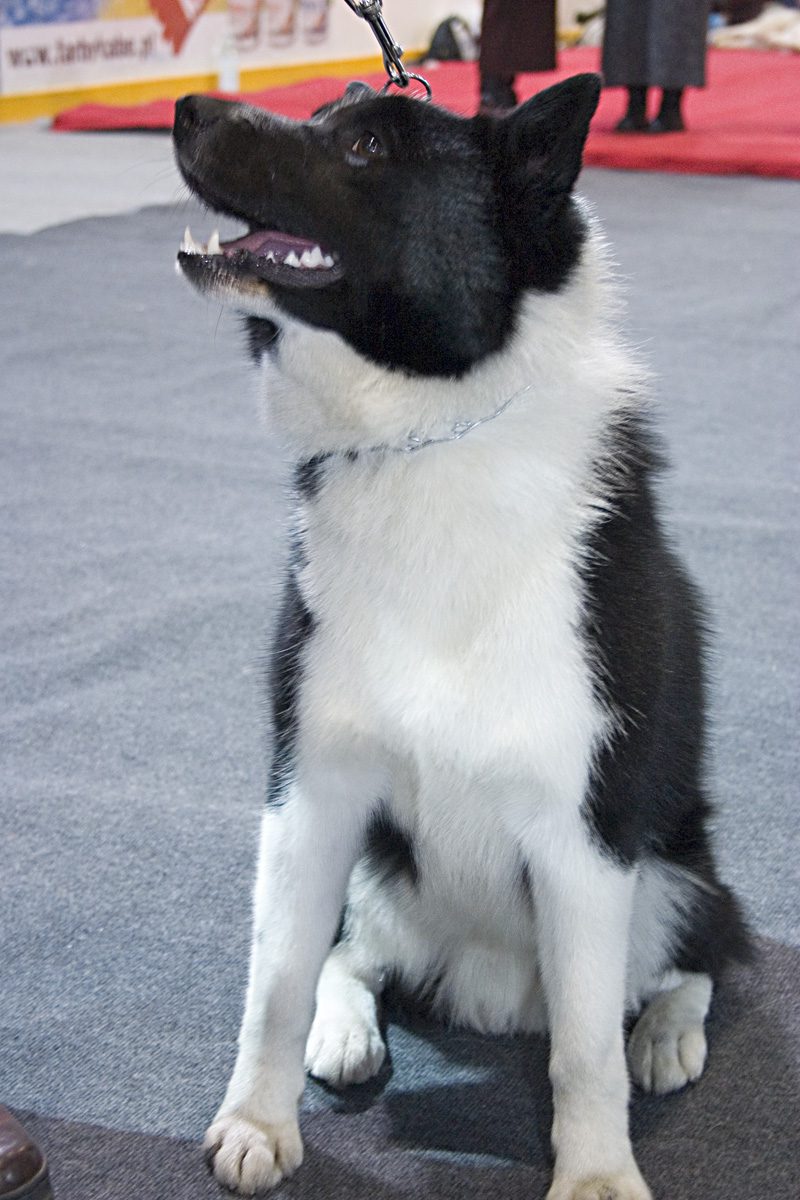
The Russo-European Laika It is characterized by its great sense of direction and its tendency to avoid confinement.

Content

History

The Laรฏka it is an original breed of dog from the far north. They are spread across the entire land mass of Eurasia, from Finland to the Bering Sea. The Laรฏka, in its three variants, It is the breed of dog with the largest closed range of all. In the first place it was called a hunting dog. In the villages of Siberia, However, it is useful in many ways. In addition to his role as a hunting dog, He is a protection dog and watchdog and has even proven himself as a sled dog..

Some associate a dog named "Laika" with the history of space travel. Because the dog Laika was the first living being sent into space by humans. His heat death in the cramped Soyuz capsule was planned from the start. But Laika is also the name of a breed of dog. Most of these dogs are extremely robust and intelligent with a huge gene pool.. The Laรฏka It is a breed of dog that has been recognized by the canine world since very early. From the time around 1880 there are several descriptions about these dogs. At that time the animals were already participants in Moscow dog shows.. For thousands of years they had enormous economic and cultural importance. Large parts of Siberia were able to develop by humans only with the help of these dogs.

In the Middle Ages to modern times the Laรฏka played a central role in the fur trade, what made old russia rich. The Laรฏka he was the best hunter of martens. ยซThe hunting dogs of the Sable they must be fugitives, with an exquisite nose, thin face and ears, and possess great acuity and intelligence." This is what it says in old reports.. Today, hunting wild boar and other game animals is the specialty of this breed. By the way, The name comes from the Russian word ยซlajatยป to ยซbarkยป. The Laรฏka seek and chase the game quietly at first. Once they have caught it, they start barking loudly so the hunter can find it – hence the name.

Until the years 40, the Laรฏka they were raised according to the old tradition. Without any more preambles, the most suitable specimens were taken for common work with and for humans. They were then provided with a standard for modern pedigreed dog breeding..
In 1947 Four races of Laika were established by the Russian Congress of Cynologists, three of them are recognized by the FCI today:

Then there is the Finnish Spitz, that the Russians call the Karelo-Finnische Laika. But the Laรฏka it has nothing to do with the spitz as we know it. They have a completely different nature, although they may look similar on the outside. The races of Laรฏka are very similar to each other and often only differ in detail.

Here we describe the Russo-European Laika, which has found a certain diffusion especially in eastern Germany. This still has its roots in GDR times.. Since 1950 the Laรฏka have been hunters here. Last, but not less important, many of those who worked in the construction of pipelines in the vastness of the Soviet Union brought the race Laรฏka To Germany.

Physical characteristics

The Russo-European Laika is a dog's size medium, strong, with a slightly longer and dense coat. On the head and ears the hair is short and dense. The construction is almost square. The Laika wears its well feathered tail on its back. The head is reminiscent of a European Spitz with wide awake eyes. Wears it upright like a triangle with pointed ears. The official FCI standard describes a strong dog: ยซThe muscles are dry and well trained. A strong bone structure. Sexual differences are clearly marked.. The height at the withers is between 52 and 58 centimeters in males. Bitches are a 2 smaller cm. No weight given. The coat color doesn't really play a role with the Laรฏka. In the Russo-European Laika black with white are considered the typical colors.

Character and skills

The Laรฏka is a thoroughbred hunting dog. Has a distinctive sharpness of play, defend the prey, it's focused, but not sharp.

The characteristics that recommend it as a hunting dog and that allow it to survive in the harsh living conditions of Siberia, do not facilitate its maintenance as a companion and family dog. So, serious breeding expressly attaches importance to a good socialization of the puppies already at the breeder.

As a thoroughbred hunter you have a high level of initiative and want to work independently and with perseverance.. Some experience is needed, consistency and patience to direct this independent head. Otherwise, he would follow his thoughts and instincts at the right opportunity and hunt on his own.

Needs a busy master or caregiver who is able and willing to allow a lot of movement. Worth it. The Laรฏka they are really big dogs: Highly intelligent, docile and seemingly unlimited capacity. You have to merge very closely with this dog. Then follow your caregiver without contradictions. It is a fantastic experience of nature to roam the landscape with this wide awake dog.

The ideal is, if you can lead him on the hunt. The Laรฏka is not a guard dog, but he is willing to defend his family effectively. In front of other dogs he has no interest or is even dominant; seems to feel he is far superior to most of the local domestic dogs with his rustic body control and keen emergency senses.

A true Laika, not bred for exhibitions, embodies a wonderful piece of Nordic nature.

Fitness

The Laรฏka not at all a dog for beginners. It has high demands on its maintenance, that stem from your destiny as a hunting dog. It also, it is a very independent working dog. If one wants to have the clear leading role as a human, this requires a lot of understanding of the dog. This opens up the possibility of a very special intimate relationship between man and dog., which is not based on submission but on mutual respect and true friendship. In addition to his passion for hunting, can also be used for the agility and other sports with dogs. Here, too, he shows himself to be enormously powerful but also demanding.. So it is not enough to go only once a week with him to dog sports. Monotonous reps aren't your thing either.

On the other hand, is not picky about attitude. But, a property (well secured) must be available, because at Laรฏka he likes to stay out, what is not to be confused with kennel maintenance. During the hunt, the animal never loses contact with its guide.. Shows an extraordinary sense of direction, a vital feature in the vastness of Russia. So almost always find – if you want – an exit from the property, and again. A proper hunting guide is ideal. Otherwise, need a teacher or a lover of outdoor sports. The breed is extremely robust and adaptable, but it is not a dog for a flat.

Education of the ยซEuropean Russian Laikaยป

The Russo-European Laika can be well trained for a very experienced dog owner. But you have to get involved with him very intensely. He is open and honest and likes to work with his master and mistress, although their "will to please" is limited. Not a partner for any kind of tricks. Has no problems and is frugal in daily handling, whenever you have your workload on hunting or dog sports.

Care and health of the ยซEuropean Russian Laikaยป

The Russo-European Laika it is absolutely easy to clean. Just needs a little grooming here and there, during the coat change a little more.

Nutrition

The Laรฏka is free of problems in its nutrition.

The life expectancy of the ยซEuropean Russian Laikaยป

It is not for the world of cacina exhibitions, the Laรฏka healthy breed can easily reach the 12 years and much more with a good physical condition.

Buy a Laika

As a buyer you should make sure you get a Laika from a breeder who does not inbreed and only allows natural mating.. Other practices are diametrically opposed to respect and love for these original and robust dogs. If you are interested in a Laรฏka, The first thing you should do is check if you want and can spend a close life, common and sporting with these dogs for at least the next ten years. Then you should get information from a local breeder, that is affiliated with a nodic dog club. A puppy of this breed costs around 1.000 EUR.

Typical diseases ยซEuropean Russian Laikaยป

The Laรฏka it is a very healthy and extremely robust breed of dog, as long as he's not unilaterally bred by a supposed beauty in the dog show business. Hardly any other breed of dog today is lucky enough to have access to such a large population., naturally original, to a genetic potential as great as the Laรฏka in the vastness of Russia. It can only be hoped that this great opportunity will be seized by the breeding clubs..

Characteristics "Russo-European Laika"

Coexistence is important that you have with your new friend. Before considering the acquisition of a dog of the breed "Russo-European Laika" you know certain factors. Not all breeds of dogs are apt to live in an apartment, you must take into account his character, their need for exercise, their interaction with other pets, their care and if you have small children, their level of tolerance towards them.

Adaptation โ“˜

4,0 of 5 stars (based on 1 review)

friendly dog โ€‹โ€‹โ“˜

1,0 of 5 stars (based on 1 review)

hair loss โ“˜

3,0 of 5 stars (based on 1 review)

Affection level โ“˜

5,0 of 5 stars (based on 1 review)

Need for exercise โ“˜

5,0 of 5 stars (based on 1 review)

Social need โ“˜

1,0 of 5 stars (based on 1 review)

Home โ“˜

2,0 of 5 stars (based on 1 review)

Toilet โ“˜

2,0 of 5 stars (based on 1 review)

Friendly with strangers โ“˜

2,0 of 5 stars (based on 1 review)

barking โ“˜

5,0 of 5 stars (based on 1 review)

Health โ“˜

5,0 of 5 stars (based on 1 review)

Territorial โ“˜

5,0 of 5 stars (based on 1 review)

Cat friendly โ“˜

2,0 of 5 stars (based on 1 review)

Intelligence โ“˜

4,0 of 5 stars (based on 1 review)

Versatility โ“˜

3,0 of 5 stars (based on 1 review)

Child friendly โ“˜

1,0 of 5 stars (based on 1 review)

Surveillance โ“˜

5,0 of 5 stars (based on 1 review)

joy โ“˜

5,0 of 5 stars (based on 1 review)

Images "Russo-European Laika"

Photos:

1 – Russo-European Laika by https://pxhere.com/de/photo/540768
2 – Russo-European Laika by https://pxhere.com/de/photo/962571
3 – Russo-European Laika by https://pxhere.com/de/photo/828184
4 – Russo-European Laika male on Dog Show in Katowice, 2006 by Konrad Loesch / CC BY
5 – Russo-European Laika by Timarflex / CC BY-SA
6 – Russo-European Laika by tracey r / CC BY

Videos "Russo-European Laika"

Type and recognitions:

  • FCI CLASSIFICATION:
  • Group :
  • Section : . .

Federations:

  • – FCI – Group 5 – Section 2 Nordic Hunting Dogs. โ“˜

FCI breed standard "Russo-European Laika"

Origin:
Russia

Date of publication of the valid original standard:
13.10.2010

Use:

Variable Utility Hunting Dog.


General appearance:

Medium-sized dog of medium to strong build. Overall impression is of a square-built dog. The length of the body (point of shoulders to point of ischium) is the same as your height at the withers.

Anyway, the length of the body may be slightly greater than the height at the withers. The muscles are well developed. Strong bone structure. Clearly pronounced sexual dimorphism.

PROPIMPORTANT ORTIONS:

Square males, somewhat longer females.

Format index (height / long)

  • males: 100/100-103
  • females: 100/100-105

Height at withers exceeds height at croup by 1-2 cm in males and is equal to or exceeds the height at the croup in 1 cm in females.

The length of the muzzle is slightly less than half the length of the head. The distance from the floor to the elbow is somewhat greater than the distance from the withers to the elbow.


Behavior / temperament:

insurance, balanced temperament with well developed sense of smell and prey detection

Head:

Thin, wedge shaped top view, triangular and longer than wide.

Cranial region:
  • Craging: Relatively wide with well pronounced occiput.
  • Depression links (Stop): Slightly protruding brow ridges giving the impression of a pronounced stop, but it is never sharply pronounced.

facial region:

  • Trufa: Medium size, the nose is black in all the colors of the mantle.
  • Horcico: Slim and pointed. The length of the muzzle is slightly less than the length of the skull. Muzzle planes (nasal bones) and the skull are parallel.
  • Labios: Snug and tight.
  • Jaws / Teeth: White teeth, large, strong, fully developed and evenly laid. Full dentition (42 teeth) according to dental formula, scissor bite.
  • Cheeks: Well developed, clearly pronounced cheek bones and muscles.
  • Ojors: They are not big, oval shape with moderately oblique eyelids. Neither sunken nor protruding with a lively and intelligent expression. Dark brown or brown in all hair colors.
  • Obars: erect, they are not big, Mobile, high insertion, โ€œVโ€ shape, pointy.

Neck:

Muscular, thin and dry, crosswise long- oval. Its length is equal to the length of the head. The neck is inserted approximately between 45 โ€“ 50ยฐ from horizontal.

Body:

  • Cruz: Well developed, very well pronounced, especially in males.
  • Espalda: Right, strong, muscular, moderately wide.
  • Itmor: Short, width, good musculature, slightly arched.Rump: Wide, moderately long, slightly tilted.
  • Pecho: Width, deep, transversely oval, reaching elbow level.
  • Lรญnlower ea and belly: Noticeably withdrawn. The lower line from the chest to the abdominal cavity is well pronounced

Tail:

May be sickle or curled; touch the back, thigh or hock. When stretched it reaches the hock joint or 2-3 cm. less.

Tips

PREVIOUS MEMBERS: Thin limbs, muscular, viewed from the front or side. Moderately separated and parallel. The height of the forelimbs from the elbow to the floor is slightly higher than half the height at the withers.

  • Hormbros: Long, well-sloped scapulae.
  • Antarm: Long, well placed back, muscle. The angle between the scapula and the forearm is well pronounced.
  • Elbow: Well on the body. The elbows are well developed and set back, parallel to the body axis.
  • Brazo: Straight, delgado, oval shaped muscle. Seen from the front moderately separated and parallel.
  • Metacarpus: Short, slightly inclined viewed from the side. Preferably without dewclaws.
  • Pinis previous: Oval, arched and closed fingers.

LATER MEMBERS: Muscular, with very well defined angulations of all joints. Seen from behind the limbs are straight and parallel.

  • Thigh: Moderately long, oblique placement.Knee: Well angled.
  • PinScheme: No shorter than thigh, oblique placement.
  • Metatarsus: Placed almost vertical. Seen on side, a perpendicular line from the hock to the ground should fall just in front of the metatarsus. The presence of dewclaws is not desirable.
  • Pinis later: Oval, arched and closed fingers.

Movement:

Free movement.

Mantle

  • Plink: The outer hair is hard and straight. Well developed undercoat, thick, soft, thick and woolly. The hair on the head and ears is short and bushy. The hair on the shoulders and neck is longer than on the body and forms a collar, on the cheekbones forming lateral whiskers. The hair on the withers is also somewhat longer, especially in males.
    • Limbs covered with short hair, hard, bushy that is somewhat longer in the back. The hair on the hind limbs forms pants without feathers.
    • There is the growth of a protective hair between the fingers.
    • The tail is profusely covered with straight, hard hair that is slightly longer at the bottom, no true feathers.
  • Colorr: The most typical color is black and white or black and white. Solid black as well as solid white can occur.


Size and weight:

Height of the cross

  • Males: 52-58 cm.
  • females: 48-54 cm.


Fouls:

Any deviation from the aforementioned criteria is considered a fault and its severity is considered to the degree of deviation from the standard and its consequences on the health and well-being of the dog and the dog's ability to perform its traditional task..

  • Deviation of sexual characteristics.
  • apple head, antecara celebrities, cheeks not developed enough.
  • Superciliary arches too developed.
  • Partial absence of truffle pigmentation, lips, eyelids.
  • Lips that are pendulous.
  • Bite in clamp, small teeth, marked or with separate placement.
  • Absence of more than one of the PM1 and PM2
  • Big eyes, small, round, non-oblique placement, sunken or protruding, color clear.
  • Weak back, narrow or steep.
  • Long loin, narrow or arched.
  • Group plan, narrow or steep.
  • Narrow chest, plane, barrel shaped or shallow.
  • Right pasterns, weak.
  • Jack's foot, hare, Open.
  • Restricted movement.
  • Thick skin, loose or with pleats.
  • Insufficient undercoat, absence of a collar and side whiskers.
  • Grayish, spotting or splashing on the head and extremities, in the same shade as the base color.
  • Height 2 cm above the established limit.

FALTAS GRAVES:

  • Strong deviations in sexual characteristics
  • Light or heavy bones, thick body.
  • Obesity or thinness.
  • Head too long, underdeveloped or abrupt stop.
  • Snout curved up, too long, tosco.
  • Truffle depigmentation, lips and eyelids.
  • Absence of more than 4 premolars, including PM1.
  • big ears, low insertion, not mobile
  • Ears with round edges, overdeveloped pavilion.
  • Shallow chest.
  • East-west defined feet, pigeon foot or arched forehead.
  • Shoulders set too straight or too slanted.
  • Narrow back with knees turned out, too close or too wide, posterior over angled or straight.
  • Heavy movement, forced or prim.
  • Long hair on the back of the forelimbs, obvious feathers.
  • Atypical hair during shedding.
  • Fire marks (red) over head and limbs, different from base color.

FALTAS DISQUALIFYING:

  • Aggressiveness or extreme shyness.
  • Any dog โ€‹โ€‹showing clear signs of physical or behavioral abnormalities must be disqualified..
  • Wrong bite, absence of teeth (other than PM1 and M3) including a pincer bite before 6 years of age.
  • Eyes gazeos, stained or of a different color.
  • Hanging or semi-hanging ears.
  • Congenital short tail, in saber or tail is otter.
  • Hair on tail too short, too long or feathering.
  • All other color than accepted.


N.B.:
  • Males should have two normal-appearing testicles fully descended into the scrotum..
  • Only functionally and clinically healthy dogs, with the typical conformation of the breed, should be used for parenting.

Source: F.C.I - International Cynological Federation

Alternative names:

1. Laฤญka (English).
2. Laฤญka (French).
3. Russisch-Europรคischer Laรฏka, Laฤญka (German).
4. Laika (Portuguese).
5. Laika (espaรฑol).

โ–ท The world of Pets: Dogs, cats, birds, reptiles, amphibians

Norwegian Lundehund
Noruega FCI 265 - Nordic Hunting Dogs

Lundehund

Most of the Norwegian Lundehund live in Norway and Finland, it is believed that there are some 2000 copies around the world.

Content

History

The Lundehund (Norsk Lundehund or Norwegian Puffin Dog) It is a small breed of dog of Spitz type, originally from Norway. Its name is composed of the prefix Lunde, Norwegian lundefugl (puffins), and the suffix hund, What dog. The breed was developed to hunt these birds and their eggs.

The Norwegian Lundehund is a small, rectangular Spitz, with a wide variety of mobility in the joints of your bones, What makes him able to enter through small and intricate passages.

They remain able to rotate the head back on the backbone and bend the hind legs to the side at an angle of 90 degrees such as the arms of humans, In addition to six toes on the feet.

The breed has a long history. Already in 1600 It was used for hunting puffins along the Norwegian coast. Its flexibility and extra toes were ideal for hunting of birds in their places of nesting in the inaccessible cliffs and caves.

Video ยซNorwegian Lundehundยป


My lundehund

Interest in the breed declined as new hunting methods for puffins, as for example, the use of networks…, and this ex officio contortionist, was no longer needed. Puffins were a precious object of hunting, the meat was horse and kept and feathers were used to make quilts.

The breed was nearly extinct around World War II, when the canine distemper hit Vรฆrรธy and the islands surrounding. In 1963, the population was decimated… Only six copies of Lundehund (one Vรฆrรธy and 5 in Soon, to the South of Norway), These five puppies was of the same litter.

Due to the care of the brood with the strict guidelines, currently there are approximately 1500 or 2000 copies of Lundehund around the world, of this population around 1.100 are in Norway and almost 350 in the United States.

The official registration of the Lundehund was approved by the American Kennel Club's in the miscellaneous class. 1 in July of 2008, After a unanimous vote of the Board the 13 in November of 2007. The race debuted at the AKC National Championship / Eukanuba in Long Beach, California (United States), the 13 and 14 in December of 2008, being one of the most important events of the American canine world.

The 12 in February of 2010, The American Kennel Club Board of Directors voted to accept the Lundehund in the AKC Book of Origins and became part of it on 1 in December of 2010. The 1 in January of 2011, became part of the "Non-Sports Group".

For the American Kennel Club and Canadian Kennel Club, the non-sports group is a diverse classification that comprises a variety of robust dogs with different personalities and appearances as the Chow Chow , and the Keeshond, among others. Covered by the non-sporting group breeds, It is very diverse in terms of appearance, size, layer, personality and, in general.

According to the FCI classification it is located in the Group 5 Spitz-type dogs and primitive type. Section 2 Nordic Hunting Dogs.

Physical characteristics

The Lundehund medium in size looks a bit like a fox and is, also because it is one of the rare races, sometimes mistaken for a mestizo, a Nordic mongrel. On the contrary, is very specialized: The Lundehund has been bred for hunting puffins, a species of bird that breeds in burrows. This brings with it some unique physical characteristics: your shoulder joints are more flexible, allowing it to turn its front legs 90ยฐ to the side. It also, this dog can close his pointed, upright ears, allowing you to dive better.

The most striking features are undoubtedly the six toes of each foot and the up to eight pads, which give the ancient cliff hunter immense security. Some of these dogs also lack molars, which facilitated the transport of the captured birds without damaging them.

The Norwegian Lundehund It has a height at the withers of up to 38 cm and weighs 7 kg. sporty and light. The dense coat is short and red to fawn, with black hair tips in places. have a smooth undercoat, very fine and a rough top coat.

Character and skills

The Norwegian Lundehund is a four legged friend, simple and skillful, but he has a lot of energy and wants to live it. Due to its independent nature – the Lundehund was left to fend during the hunt – always kept his own head and thus will never fully subordinate himself. Who respects this, win with him Lundehund an easy to train and loyal friend for life.

Basically the breed is considered to be quite shy, so a close relationship with its owner is especially important – that's how your Lundehund gain security. Towards strangers he is usually reserved – it is also considered to be alert. He usually gets along well with other dogs. The Lundehund not a typical hunting dog, but is also wonderfully suitable as a companion dog.

The education of the Norwegian Lundehund

This is a breed of dog with a stubborn and stubborn character, even so they are easy to train and learn the basic commands with great motivation.

Although the breed belongs to hunting dogs, the Lundehund can accompany you, with some effort in their education, on your nature walks without the need for a leash, since it is not an elusive dog, nor a traditional prey tracker. A major challenge is getting our dogs out of the habit of barking: Lundehund, like all nordic dogs, announce aloud all the supposedly interesting things in their environment – and that in part is quite persistent. So patience is absolutely necessary when training a Lundehund. Already in puppyhood, be sure to keep this in mind when training your dog. Play lessons for puppies, as well as attendance at a canine school, have a positive effect on Lundehund – here you can not only socialize him more with other four-legged friends, but you will surely also get some tips and tricks for the education of this dog.

Health: the syndrome Lundehund

Since the population dates back to only five dogs, Controlled breeding of the breed made a new start in the 1990s. 1960, with what the Lundehund has a very small gene pool. One of the five founding dogs developed stomach and intestinal symptoms at the age of about three years, which have spread further among the descendants. Today, this is known as the lundehund syndrome: a chronic, inflammatory bowel disease that is associated with increased protein loss through the intestines. About half of the population is affected by it, although to varying degrees. A genetic test can be used to determine if a dog intended for breeding is a carrier, so that the risk of Lundehund syndrome can be reduced. There is no cure for this disease, only the symptoms can be relieved. While some dogs are barely limited by the disease and have long symptom-free phases, other affected quadrupeds have a more severe course and ultimately lead to death.

Before deciding to acquire a representative of this breed, must be informed in detail about the lundehund syndrome and the corresponding genetic test and its meaning. The Nordic Dog Clubs can also provide you with more information on this.. The healthy ones Norwegian Lundehund are, for the rest, very robust and can reach an age of about 14 years.

Norwegian Lundehund "care

The coat of this Norwegian Coastal Dog is insensitive to weather conditions and requires little grooming. But, the more you brush, less hair is distributed in your home – especially during coat change a daily brushing may make sense, because the Lundehund then lose a lot of hair. Otherwise, care is quite simple: dirt brushes better when dry. By the way, the Norwegian Lundehund It is one of the few dogs that really enjoys grooming. If you support them with the brush, you are also doing something for their bonding.

Check the ears and eyes regularly and clean them with special ear and eye cleaners if necessary. If the eyes get wet, what happens in many dogs due to narrow tear ducts, it is enough to gently clean and dry them once a day with clear water. Some dog owners opt for daily dental care in the form of toothbrushing with dog toothpaste and toothbrush.. If you already introduce your puppy to this ritual, is an optimal prevention against tartar and associated secondary diseases.

Activities ยซLundehund Norwegianยป

Long walks in nature, enjoying the wind and the weather are the base of activity of this Norwegian breed. It also, most of these dogs love to swim. Make your partner happy and give him the opportunity to do it!! But you should also encourage and challenge their brain and skills. There is a wide range of joint activity possibilities at your disposal: Dog lovers can enjoy almost all types of sports with dogs, with the exception of sports with training dogs. Due to his great independence you should not expect unconditional obedience from him, but a relaxed approach to the respective human-animal hobby jointly. Try together with your animal companion which sport you like the most!!

Is a "Norwegian Lundehund"?

One Norwegian Lundehund fits well in a sporty family, where at least one family member already has experience with dogs. Learn easily and with pleasure, but for education you still need a certain knowledge and consistency. It also, it is important to use the dog to its full potential – the small Lundehund not a couch dog, needs a lot of outdoor exercise and a lot of time.

He is usually very fond of children and can also make friends with cats, especially if you met them as a puppy. This dog can also live in a medium-sized apartment, but of course also enjoy a garden (leak proof). It is important to direct the joy of the breed's barking in a controlled manner.

Before moving, make sure no one in your home has allergies to pet hair and consider whether you can and want to take the dog on vacation – many hotels today welcome four-legged friends – or how you organize care. Although the Lundehund it's more like a small dog, can be quite expensive in terms of regular costs: Apart from a high quality diet with a high content of fish, this includes taxes and dog insurance, as well as visits to the vet. It also, is, of course, the not inconsiderable purchase price of this rare four-legged friend – with possible travel expenses – and if necessary the basic equipment.

Where can I find my "Norwegian Lundehund"?

First of all: One Norwegian Lundehund It's very weird. In total, there are some 1.300 specimens all over the world. So, you may very well have to wait a long time and travel many miles to get hold of such a rare dog. Most of the Lundehunds they live in norway. Check with a Norwegian dog club in your country to find out how to contact breeders of the Norwegian Lundehund. Ask your potential dog breeder about the lundehund syndrome and the diet of the breed.

His young Lundehund will move in with you at the earliest at the age of eight weeks – if you come from a European country, you will normally need a valid rabies vaccine for the trip in addition to the necessary papers. It is essential that you remember booster shots and also talk to your vet about regular deworming of your four-legged friend.

It is extremely unlikely to find an adult dog, especially outside of norway. So if you're looking for a four-legged adult friend, it is advisable to contact a Nordic dog club. There are also often wonderful mongrel dogs looking for a new home., value the adoption of one of them.

We wish you much joy with your extraordinary Norwegian Lundehund!

Characteristics "Norwegian Lundehund"

Coexistence is important that you have with your new friend. Before considering the acquisition of a dog of the breed "Norwegian Lundehund" you know certain factors. Not all breeds of dogs are apt to live in an apartment, you must take into account his character, their need for exercise, their interaction with other pets, their care and if you have small children, their level of tolerance towards them.

Adaptation โ“˜

3,0 of 5 stars (based on 1 review)

friendly dog โ€‹โ€‹โ“˜

3,0 of 5 stars (based on 1 review)

hair loss โ“˜

4,0 of 5 stars (based on 1 review)

Affection level โ“˜

4,0 of 5 stars (based on 1 review)

Need for exercise โ“˜

4,0 of 5 stars (based on 1 review)

Social need โ“˜

4,0 of 5 stars (based on 1 review)

Home โ“˜

4,0 of 5 stars (based on 1 review)

Toilet โ“˜

5,0 of 5 stars (based on 1 review)

Friendly with strangers โ“˜

3,0 of 5 stars (based on 1 review)

barking โ“˜

4,0 of 5 stars (based on 1 review)

Health โ“˜

2,0 of 5 stars (based on 1 review)

Territorial โ“˜

4,0 of 5 stars (based on 1 review)

Cat friendly โ“˜

3,0 of 5 stars (based on 1 review)

Intelligence โ“˜

3,0 of 5 stars (based on 1 review)

Versatility โ“˜

3,0 of 5 stars (based on 1 review)

Child friendly โ“˜

3,0 of 5 stars (based on 1 review)

Surveillance โ“˜

4,0 of 5 stars (based on 1 review)

joy โ“˜

4,0 of 5 stars (based on 1 review)

Images "Norwegian Lundehund"

photos:

1 – "Norwegian Lundehund" by http://www.petsadviser.com/
2 – "Norwegian Lundehund" by https://pxhere.com/es/photo/754827
3 – "Norwegian Lundehund" by https://pxhere.com/es/photo/880994
4 – Norwegian puffin town Andrva / CC BY-SA
5 – "Norwegian Lundehund" by https://commons.m.wikimedia.org/wiki/File:Lundehund.jpg
6 – The Norwegian Lundehund ยซGydaยป looking out at the ocean on the north side of the island Vรฆrรธy in Northern Norway. The island on the top, in the middle, is ยซMoskenยป, the island in the top left is ยซMoskenesยป by ZorroIII / CC BY-SA

Type and recognitions:

  • FCI CLASSIFICATION:
  • Group :
  • Section : . .

Federations:

  • – FCI – Group 5 – Section 2 Nordic Hunting Dogs. โ“˜
  • – AKC – Nordic Hunting Dogs. โ“˜
  • – CKC – Nordic Hunting Dogs. โ“˜
  • – UKC – Nordic Hunting Dogs. โ“˜

FCI breed standard "Norwegian Lundehund"

Origin:
Norway

Date of publication of the valid original standard:
10.11.2011

Use:

Its anatomical peculiarities train these dogs for the hunting of the frailecillos in the steep rocks around the fjords and in the cliffs.


General appearance:

The "Norwegian Lundehund" is a Spitz type dog, rectangular, small, flexible, relatively light, with well -defined sexual characteristics.


Behavior / temperament:

Alert, energetic and vivacious.

Head:

Dry, medium width, wedge shaped.

Cranial region:
  • Skull: Slightly rounded, protruding supraciliary arches
  • Stop: Pronounced but without excess.

facial region:

  • Horcico: Cuneiform, medium long. Slightly convex muzzle.
  • Jaws / Teeth: Preferably scissor bite. Pincer bite and moderate undershot are acceptable. The lack of premolars in both jaws is allowed.
  • Eyes: Slightly oblique, not outstanding. The iris is yellowish brown. The pupil is surrounded by a dark colored ring.
  • Obars: The triangular ears are medium in size, wide at its base, carried erect and very mobile. They have the special characteristic that the pavilion cartilage can be contracted and the external part can be bent or specially crooked (backwards or upwards at right angles), so that the ear canal is closed.

Neck:

Delgado, medium long, quite strong and covered in a relatively abundant collar.

Body:

Rectangular.

  • top line: Straight.
  • Back: Strong.
  • Glikeness: Slightly inclined.
  • Pecho: Elongate, average amplitude, proportionally deep and spacious; it is not barrel shaped.
  • Lรญnand the bottom: Slightly retracted belly.

Tail:

Insertionmoderatelyhigh, medium long, well covered with dense hair, but without forming feathers. Carried in shapemildringon the back, or he wears it hanging. The tip of the tail must not be carried too high on the back or fall next to the flanks.

Tips

PREVIOUS MEMBERS:

  • Apgeneral arience: Moderately angled.
  • Antarm: Straight.
  • Pinis previous: Oval, slightly deflected out. Feet with a minimum of six fingers, of which five step on the ground. Eight pads on each foot. Anatomically the two inner fingers are formed by a finger with three phalanges and one with two phalanges with the corresponding tendon and muscular apparatus. Gives the foot a very strong appearance.

LATER MEMBERS:

  • Apgeneral arience: The position of the hind limbs is a bit narrow.
  • Thighs: Muscular and strong.
  • Rodinllto: Moderately angled.
  • PinScheme: Muscular and strong.
  • Pinis later: Oval, Something diverted out with a minimum of six fingers, of which four step on the ground. Seven pads on each foot. The middle pad, the most important for its size, attached to the inner pad corresponding to the middle fingers. When the dog is normally standing on a flat surface, your body weight is evenly distributed over all pads.

Movement:

Light and elastic. The movement of the anterior members has a characteristic turn of the race and movement of the posterior members is a bit narrow.

Mantle

  • Plink: Soft inner fluff, dense and rough outer coat. The hair is short on the head and the anterior part of the extremities. Thicker fur around the neck and on the back of the thighs. Dense tail hair, but without forming feathers.
  • Colorr: Always in combination with white. From reddish to more or less mixed with hairs with black tips Fawn; white with dark markings. Usually, the adult specimen presents more hairs with black tips to the young dog.


Size and weight:

Alturto the cross:

  • Males from 35 cm to 38 cm.,
  • Females from 32 cm to 35 cm..

Pthat:

  • Males approximately 7 kg,
  • Females approximately 6 kg.


Fouls:

Any deviation from the aforementioned criteria is considered as a fault and the severity of this is considered to the degree of the deviation to the standard and its consequences on the health and well-being of the dog..

FALTAS DISQUALIFYING:

  • Aggressiveness or extreme shyness.
  • Any dog โ€‹โ€‹showing clear signs of physical or behavioral abnormalities must be disqualified..


N.B.:
  • Males should have two normal-appearing testicles fully descended into the scrotum..
  • Only functionally and clinically healthy dogs, with the typical conformation of the breed, should be used for parenting.

Itlatest changes are in bold.

Source: F.C.I - International Cynological Federation

Alternative names:

1. Norsk Lundehund, lundehund, Norwegian Puffin Dog (English).
2. lundehund (French).
3. Norsk Lundehund (German).
4. Cรฃo de papagaio-do-mar (Portuguese).
5. Perro frailecillo, Lundehund (espaรฑol).

โ–ท The world of Pets: Dogs, cats, birds, reptiles, amphibians

Kleinspitz (Miniature or Small Spitz)
Alemania FCI 97 . European Spitz

Kleinspitz (Miniature or Small Spitz)

The Kleinspitz (Miniature or Small Spitz) he is a loving and attentive dog, that is very people-oriented.

Content

History

The Kleinspitz (Miniature or Small Spitz) (Kleinspitz) is a variety of German Spitz, which today is available in five different sizes and in numerous colors. The exact origin of dogs spitz it is difficult to determine. In many regions there are indications of an early appearance of the breed. These may include, in the terracotta pieces Mycenaean or in the Greek vases you can already find illustrations of similar dogs. From the Middle Ages, the Spitz guard and court dogs were popular, especially among the rural population. The obedient dogs took their duties as court protectors so seriously that they pinched the "intruders" on their calves.. For this reason, Spitz was formerly considered a loved one.

At the beginning of directed breeding, all representatives of the breed with a height at the withers less than 29 centimeters were summarized under the term Kleinspitz (Miniature or Small Spitz). As it was mainly in the area of Mannheim, It was also known as "Mannheimer Spitzยซ. Only later did the Dwarf Spitz (Pomeranian) with a height at the withers of up to 22 centimeters was developed as a separate variety. Internationally the breed belongs to the group 5 of the FCI โ€œSpitz and dogs of the original typeโ€ in the section 4 ยซEuropean Spitzยซ.

Physical characteristics

With a height at the cross of 23 to 29 centimeters, the Kleinspitz (Miniature or Small Spitz) is the second smallest of the five varieties of German Spitz. Just the Pomeranian (Zwergspitz) is smaller. His pointed ears and mischievous eyes resemble those of a fox and give him a cheerful and mischievous appearance.. It has a dense and protruding coat, consisting of two layers. The top layer is soft and long, while the undercoat is soft and dense. Around the neck the fur forms a mane like that of a lion and the bushy tail is carried over the back. Most of the coat color is black, brown, white, orange and cloudy gray. But some tips are cream too, cream-saber, orange-saber, black and tan.

Character and skills

The Kleinspitz (Miniature or Small Spitz) he is a loving and attentive dog, that is very people-oriented. Like all German Spitz, does not like to be alone and is glad of the full attention of their owners. They are quite reserved and wary of strangers. Puppies defend their territory with force and tend to bark when they are not trained. But, due to its charming nature and lack of hunting instinct, the little ones spitz they are also easy to train for beginners. With proper training you can take your dog off leash without any problem.. Although he can sometimes be a bit rebellious and cheeky, the four-legged friend gets along with other dogs.

Kleinspitz Education

Despite its small size, the Kleinspitz (Miniature or Small Spitz) he is a dog to be taken seriously and needs constant training. So, show the puppy from day one the basic rules and do not allow him to do anything that he is not allowed to do as an adult dog. Don't let her charm and cuteness bewitch you. In the young years, dogs learn better and want to please their owner. When training the puppy, you should not rush anything and allow time for new orders. Success is best achieved with consistency and praise. Early socialization is very important, especially for the cheeky ones Spitz. In this way he learns to deal with other dogs and remains more relaxed in everyday life.. It is recommended to attend a puppy school or a trainer.

Activities with the little Spitz

The Kleinspitz (Miniature or Small Spitz) he is a lively and attentive dog that loves to be by your side at all times. Daily walks are the order of the day with him in any weather. Dog sports such as agility are also suitable for sports workload. For the mental load you can provide with the intelligence toy. Smart tops are also known for their love of learning tricks and tricks. The loving Spitz is with a good education a nice companion dog. You can easily take it with you on vacation or on small trips.

Health and care Kleinspitz

Despite its long fur, the Kleinspitz (Miniature or Small Spitz) it is not a breed that requires much care. Protruding hairs give it a natural firmness, that hardly tangles. So, just comb the coat from time to time and remove any dirt. Your dog will be pleased with the extra care. But, during the coat change, the small spitz also need your help to get rid of superfluous hair. The Spitz it is also one of the least susceptible breeds in terms of health. Some members of the breed are susceptible to tartar, but it can be prevented by using chewing bone or a dog toothbrush.

Buy a Kleinspitz

Due to its size, the Kleinspitz (Miniature or Small Spitz) it is also suitable for smaller homes and will be happy both in a city apartment and in a house. The most important thing is to give him enough exercise and not treat him like a lap dog. The cheerful and affectionate dog is well suited to singles or pensioners, but also fits in a family without problems. The puppy needs one or more caregivers who take care of it daily. So you should think carefully about buying a puppy from Kleinspitz (Miniature or Small Spitz) and not rush anything.

If you are sure that the breed suits you, you have to find a serious breeder. For a purebred puppy with papers and vaccines, many breeders charge up to 1.500 EUR. A laudable alternative is, therefore, a shelter dog. Like the German Spitz they only differ in size, you will also be happy with a Pomeranian or a Mittelspitz (Standard or Medium Spitz).

Kleinspitz Videos

Puppies Spitz Aleman. Kleinspitz

youtube.com/watch?v=gd617m1XHCo

Our kennel of Kleinspitz

youtube.com/watch?v=1-Mssh1KaZc

Type and recognitions:

  • FCI CLASSIFICATION:
  • Group :
  • Section : . .

FCI breed standard "Kleinspitz (Miniature or Small Spitz)"

Origin:


Date of publication of the valid original standard:
04.09.2019.

Use:

Guard and companion dog.


General appearance:

TheSpitzThey attract attention for their beautiful separated fur with the presence of a very dense undercoat.. The neck surrounded by an abundant mane and the tail covered with long hair is striking., turned up and spread boldly on the back. The head is similar to that of the fox with diligent eyes and small pointed ears. The ears, placed very close to each other, confer toSpitzhis characteristic relaxed appearance.

important proportions

Proportion of 1:1 between the height at the withers and the length of the dog.


Behavior / temperament:

TheGerman Spitz is constantly attentive, is active and exceptionally dependent on his master. Learn quickly and can be trained easily. His distrust of strangers and his lack of interest in hunting allow him to be considered the ideal watchman for the house and farm.. Its most notable characteristics are its resistance to weathering., its robustness and longevity.

Head:

---

Cranial region:
  • Skull: The skull ofSpitzis medium-sized; viewed from above seems to swell back becoming more narrow wedge shaped to the tip of the nose.
  • Depression links (Stop): Little steep until marked, but never abrupt.

facial region:

  • Truffle: Round, small, black; in all theSpitzbrown in color is dark brown in color.
  • Snout: Not very long, Neither coarse nor pointed; It presents a good proportion in relation to the skull (in the Spitz type Keeshond/Wolf, in the large Spitz and medium Spitz the ratio snout/skull is approximately 2/3, in the small Spitz and in theSpitz enano/Pomerania is approximately 2/4).
  • Lips: They are not hanging; they are well bonded and do not form folds in the corners. They are black in all colours, in theSpitzbrown in color are brown in color.
  • Jaws/Teeth: The jaws are normally developed and show a complete scissors bite with 42 teeth, That is, the upper incisors fall closely in front of the lower incisors., teeth being implanted perpendicular to the jaws. InSmall and dwarf spitz/Pomeranian the loss of a few promolars is tolerable. A pincer bite is allowed in all varieties ofSpitz.
  • Cheeks: The cheeks are slightly round and are not prominent.
  • Eyes: The eyes are medium-sized, elongated, a little oblique, dark colored. The eyelids have black pigmentation in all color varieties and are only dark brown in theSpitzof brown variety.
  • Ears: The pointed ears in the shape of a pointed triangle are small and rather closely placed together.. Its inclusion is high. They always remain erect with a rigid tip.

Neck:

The neck is moderately long and presents a broad inclusion with shoulders; the neck is slightly convex, without dewlap and covered with a mane shaped collar.

Body:

  • top line: The top line begins at the tip of the erect ears and passes in a gentle arc over the short, straight back.. The deployed and with abundant fur tail partially covers the back and rounded silhouette.
  • Cross/Back: The high cross falls imperceptibly on the short back, straight and strong.
  • Pork loin: Short, wide and strong.
  • Rump: The rump is short and wide, unexpired.
  • Breast : Deep chest, well arched; the apron is well developed.
  • Bottom line and belly: The chest is expanded as much as possible back; the abdomen is moderately retracted.

Tail:

The tail has a high insertion and a medium length; bends upward from the root and rolls over the back, spreading firmly. Well covered with thick hair. A double loop in the tip of the tail is acceptable.

Tips

Former members

  • As a whole: Straight, large on the front.
  • Shoulder: The scapula is long, placed backwards at an angle. The arm, showing almost the same length, with the scapula forms an angle of approximately 90 degrees. Shoulders with good musculature are closely linked with the chest.
  • Arm: Medium length, robust and fully straight on the trunk, covered with long hair in the form of pen in the posterior region.
  • Elbows: The elbow joint is strong, close to the chest without bending inward or outward.
  • Metacarpus: The Metacarpus strong and medium length, forms an angle of approximately 20ยฐ in relation to the perpendicular line.
  • Front feet: The front feet are as small as possible, round, compact, as cat with well arched toes feet. Pads and nails are black in all varieties of Spitz, and they are only dark brown on brown dogs.

Later members

  • As a whole: The hindquarters are very muscular, covered with very long hair up to the Hock joint. The hind limbs are straight and parallel to each other..
  • Thigh and leg: They have approximately the same length.
  • Knee: The knee joint is strong, slightly angled and, during the movement, It does not twist outward or inward.
  • Metatarsus: Medium length, very strong, maintains a position perpendicular to the ground.
  • Rear feet: The hind feet are as small as possible, round, with toes well arched and together, as cat feet. Pads are hard. The color of nails, pads is much darker.

Movement:

TheSpitzmoves with enough coordination, with a good push and almost floating in light trot.

Mantle

Skin

The skin should be well attached to the body, without kinking.

Fur

TheSpitzThey have a double coat covered with hair: the outer layer is long-haired, straight and separate and the inner layer is short-haired, dense and woolly. The head, ears, anterior surface of the forelimbs and hindlimbs and feet are covered by short, dense hair (velvety). The rest of the body is long and abundant hair. The hair should not be wavy, chino, or form hair, You must not present a stripe on the back. A thick mane covers the neck and shoulders. The rear face of the forelimbs has hair in the form of feathers. The hindquarters should be covered with long hair from the rump to the Hock joint. The queue must be covered with hair is long and abundant.

Color

  • Wolf Spitz/Keeshond: Grayish.
  • Grossespitz (Giant or Large Spitz) : Negro, brown, white.
  • Mittelspitz (Standard or Medium Spitz): Negro, brown, white, orange, grey, other colors.
  • Kleinspitz (Miniature or Small Spitz): Negro, brown, White Orange, grey, other colors.
  • Spitz enano/Pomerania: Negro, brown, white, orange, grey, other colors.
  • Black Spitz: The fur of the black Spitz should be dark in the skin as well as internal NAP and the color of the outer layer should be jet black color without any white spot.
  • Brown Spitz: The Brown Spitz should have a uniform dark brown color.
  • White Spitz: The hair should be pure white, no yellowish tones that can often occur in the ears.
  • Spitz anaranjando: The Orange Spitz should have a single uniform colour in the average range of the RAL (Registration International of the color scale).
  • Greyish Spitz/Keeshond: Gray is understood as grey silver with black hair tips. Snout and ears are dark. Around the eyes there is a drawing in the shape of glasses consisting of a delicate black line. (It extends from the outer corner of the eye to the lower part of the inclusion of the ear) or in broken lines and shading that draw short eyebrows, but expressive. Mane and ring shoulders are a tone clear. The anterior and posterior members are grey silver unmarked black below the elbows and knees, except delicate stripes on your fingers (pencilling). The tip of the tail is black. The lower part of the tail and the buttocks are grey Silver clear.
  • Spitz other colours: Under this description all tones are included as: cream-coloured, cream-saber, anaranjado-Sable, black with tan and stained. The spotted must have a white background color. Black stains, brown, gray or orange should be distributed throughout the body.


Size and weight:

Height to the cross

  • Wolf Spitz/Keeshond: 49 cm ยฑ 6 cm..
  • Grossespitz (Giant or Large Spitz) : 46 cm ยฑ 4 cm..
  • Mittelspitz (Standard or Medium Spitz): 34 cm ยฑ 4 cm..
  • Kleinspitz (Miniature or Small Spitz): 26 cm ยฑ 3 cm..
  • Spitz enano/Pomerania: 20 cm ยฑ 2 cm. (are undesirable specimens measuring less than 18 cm.).

Weight

Any variation in the size of theGerman Spitz must have a corresponding variation in its weight.


Fouls:

Any deviation from the above criteria is considered missing and the seriousness is considered to the extent of the deviation to the standard.

Serious misconduct

  • Defects in the Constitution.
  • Head too flat or sharp Apple-shaped.
  • Truffle, eyelids and lips of flesh-colored.
  • Defects in the premolars in Wolf Spitz/Keeshond, Medium and large Spitz.
  • Eyes too big or clear or very outgoing.
  • Defects in the movement.
  • Absence of classic drawing of the face inSpitzgrey.

ELIMINATING fAULTS

  • Aggressive or fearful dog.
  • Open fontanel.
  • Upper or lower prognathism.
  • Entropion or ectropion.
  • Floppy ears.
  • White spots visible on allSpitznon white.

Any dog โ€‹โ€‹showing clear signs of physical or behavioral abnormalities should be disqualified..


N.B.:

Males should have two normal-appearing testicles fully descended into the scrotum..

Source: F.C.I - International Cynological Federation