โ–ท The world of Pets: Dogs, cats, birds, reptiles, amphibians

Bergamasco – Bergamasco Shepherd
Italia FCI 194 . Sheepdogs

The Shepherd Bergamasco It is never aggressive despite the fact that it is a good guardian of the House

Bergamasco

Content

History

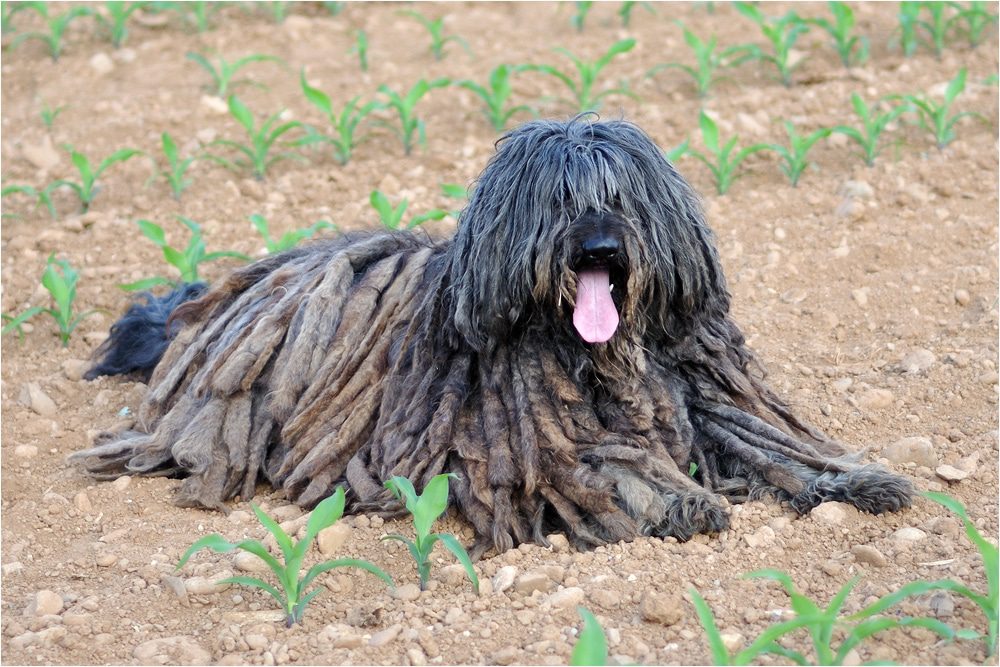
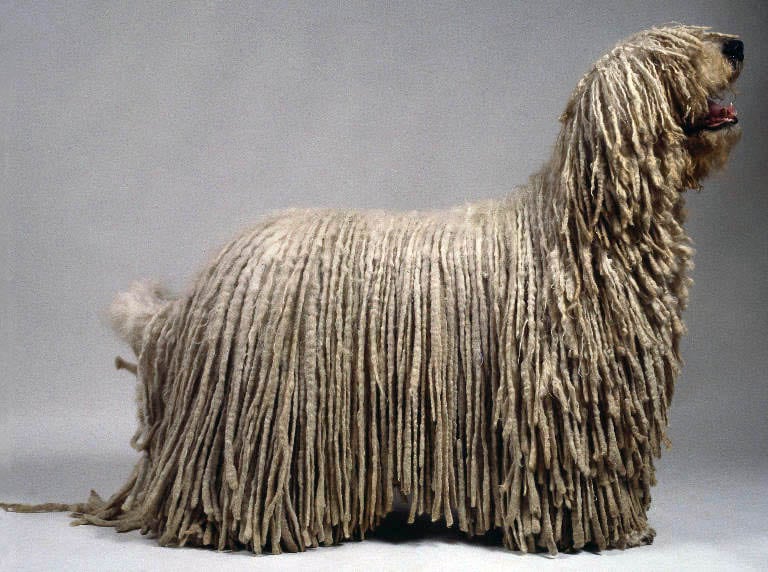
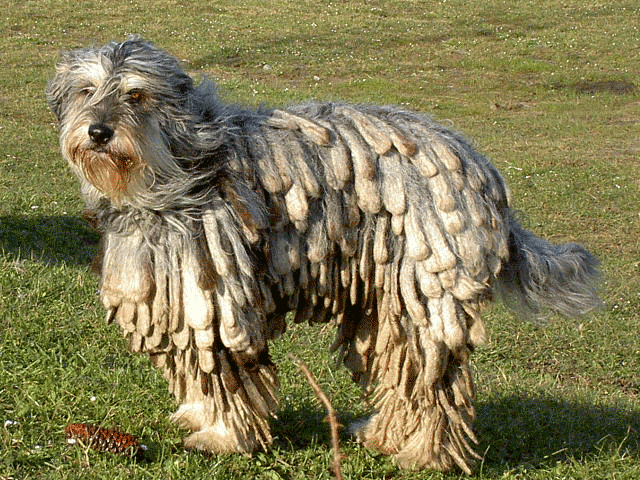
The Bergamasco It is a breed of dog originating in the Italian Alps, used as a herding dog. Its appearance recalls to the of the Komondor (hungarian dog).

This breed comes from contact with dogs of nomadic shepherds and their flocks that came from East to West. The Pastor's Ancestors Bergamasco They are located in the area of โ€‹โ€‹the Alps, an ideal area to display their characteristics.

Since 1300 the use of these dogs is determined by herding herds of sheep typical of Bergamo. In the four centuries that followed, The Shepherd Bergamasco, has increased with the expansion of sheep farming. After 1700, However, After a gradual reduction of the pastoral activity, This race began to decrease its population, to almost extinction during the two world wars.

In 1890 The breed is still called "mountain dog" and, in 1949 the company of lovers of the Pastor is founded Bergamasco. A few years later, Finally formalized the name: Bergamasco.

Physical characteristics

The tail is thick and strong at the base, Tuning towards the tip. Is covered with hard hair slightly wavy. Allowed colors are all shades of black (not bright), even with grey spots. The color should be determined from the root of the hair, because the part of Tufts often form different tones.

The coat is very abundant, long, wavy, rough texture (goat) at the front of the trunk, of wool (sheep) the other half, less hard in the head.

The eyes are large, more or less dark, with eyelids slightly oval. The ears are upright, but they fall in the last two thirds. The length of the muzzle is equal to the skull. As a whole it is large and parallelepiped in shape.. The skull is wide and slightly convex between the ears. Feet are oval-shaped, with toes well arched and closed.

Did you know??

The mat coat of the Bergamasco it is to protect him from bad weather and from predators that he might have to drive away in defense of his flock.

Character and skills

He has a temper, obedient and responsive, is a very versatile dog, their ability to learn and to decide, along with the inborn patience, make it a dog suitable for various uses. The family is identified as his flock, and to be a sheep dog, likes to keep everyone together. It will always be aware of the Group.

It is a great companion, for adults and children, to those who consider their puppies (the weak family part), and you care them with much more attention. It is very Protector, but nothing possessive. It is never aggressive despite the fact that it is a good guardian of the House, effective to deter, but not to be dangerous.

Observations

As a recommendation, It is important to care for their fur because they are many knots, and so it is good to styling it with the hands to untangle. We recommend bathing but let it dry in the Sun. It has one of the robes that needs less maintenance, to weights of appearances.

ยซBergamascoยป images

โ€œBergamascoโ€ videos

Type and recognitions:

  • FCI CLASSIFICATION:
  • Group :
  • Section : . .

Federations:

  • FCI โ“˜
  • AKC โ“˜
  • ANKC โ“˜
  • CKC โ“˜
  • KC โ“˜
  • NZKC โ“˜
  • UKC โ“˜

FCI breed standard "Bergamasco – Bergamasco Shepherd"

Origin:
Italy

Date of publication of the valid original standard:
27.11.1989.

Use:

Shepherd dog.


General appearance:

Pastor "Bergamasco" is a medium-sized dog, rustic looking, with abundant fur over the entire body, strong, but well proportioned. Its general appearance is that of a dog of medium proportions whose body tends to be a square. It is harmonic, so much for the dimension (heterometry = normal relationships between size and different parts of the body), as per the profiles (Alloidism = concordance between head and body profiles).


Behavior / temperament:

The role of the Pastor "Bergamasco" it's about driving and tending the herd, work for which he shows an excellent disposition thanks to his vigilance, concentration and psychological balance. His faculty of learning and determination, combined with his restraint and patience make him an excellent watchdog and companion dog, suitable for the most diverse uses. Establishes, also a close relationship with man.

Head:

The length of the muzzle is equal to the length of the skull. In its parallelepipedic set the head appears large. The skin should not be thick, but well applied to the underlying tissues, and without forming wrinkles.

Cranial region:
  • Skull: The skull is wide and slightly convex between the ears, it is also broad and rounded in the region of the forehead. The superior longitudinal axes of the skull and muzzle are parallel. The length of the skull is equal to that of the muzzle. Its width should not exceed half the length of the head. The bumps on the forehead are developed, both longitudinally, how cross; the zygomatic arches are well marked. The middle suture?frontal (the methodical) is marked, occipital protuberance is observable and protruding.
  • Stop: The stop has a uniform but pronounced slope due to the marked bones of the nose and forehead, frontal bumps and brow ridges.
  • facial region:

    • Truffle: In line with the snout with the upper profile curved, wide open windows, wet, fresh and big. Profile view should not be protruding. The color of the truffle is black.
    • Snout : It progressively tapers to its extreme and the lateral faces converge slightly, so that it is not pointed, but truncated, with the inside face rather flat. Its length is equal to the length of the skull. Its width, measured at mid-length it reaches approximately the 50% its length.
      The height of the muzzle should not be less than half its length. The upper profile of the muzzle, traced by the profile of the nasal bridge, it is rectilinear.
      The lower profile of the muzzle is not determined by the lip, but for the jaw. Because of this conformation, the corner of the mouth does not fall.; the muzzle is well cleft, so that the corner of the mouth is at the level of an imaginary vertical drawn from the outer corner of the eye. The profile of the lower jaw is more or less rectilinear.
    • Lips : Fine and not very outstanding, They separate under the bridge of the nose, drawing a very open arc that forms a third of a circle.; in this way the teeth of the jaw are barely covered. The edges of the lips are well pigmented.
    • Jaws : The body and the lower and upper maxillary branches are well developed and broad..
      Teeth : Whites; the denture is complete and well developed, incisors are aligned regularly. The joint is in the form of scissors.
    • Cheeks : Little prominent.
    • Eyes : So big; neither bulging nor sunken, iris darker or lighter than brown, depending on the color of the coat. Placed forward; his expression is soft, serene and attentive. The shape of the eyelid is slightly oval and the angle of the eyelid to the horizontal is only slightly oblique. Eyelids fit tightly over the eye, edge of the eyelids pigmented black, the eyelashes are particularly long so that they can lift the hair that falls from the forehead over the eyes.
    • Ears : High insertion; they are semi-fallen, that is to say, that only the terminal thirds up to the rounded tip are falls. When the dog is attentive the ear stands slightly at the base. Its shape is triangular. The length of the ear is between 11 and 13 cm., its width is 6,5 to 8 cm.. Features a wide base, that in the back extends to the ligament that goes from the head to the neck, while the front reaches the middle of the skull. The limb is slightly rounded. On the ears the hair is somewhat wavy and soft, while at the tip it ends in bangs.

    Neck:

    The upper profile is slightly convex. The neck is slightly shorter than the head; in effect, in extension does not exceed 80% of head length. Neck perimeter, measured at half its length, must be at least twice its length. The skin should never be flaccid, therefore there should be no trace of a double chin. Hair must be thick.

    Body:

    • top line : The withers stand out quite a bit from the rectilinear dorsal profile. The lumbar region has some convexity and the rump is slightly oblique.
    • Cross : Tall and long. The neck harmoniously joins the trunk.
    • Back : Rectilinear, well muscled and wide, its length reaches around 30% the height at the withers. The lumbar region is well connected to the line of the back and the croup. The length of the lumbar region reaches around the 20% the height at the withers, in this way it is much shorter than the dorsal region. The breadth of the lumbar region is roughly equal to its length; the musculature of the entire region is well developed.
    • Rump : Wide, robust, well muscled and oblique, with a tilt of the 30% under the horizontal; its transverse width, between the two haunches, must reach 1/7 the height at the withers.
    • Breast : It must be wide, well arched, descending to the level of the elbows. Its perimeter (measured behind the elbows) surpasses the 25% the height at the withers. Its transverse diameter must reach 30% the height at the withers. The depth and height of the chest should reach the 50% the height at the withers.
    • bottom line : Starting from the sternum, the lower profile rises very slightly towards the belly, which is therefore low. The length of the flanks must correspond to that of the lumbar region, which is short. The depression of the flanks is minimal.

    Tail:

    Located in the lower third of the rump, thick and strong at the base and gradually tapering towards the tip. Covered with slightly wavy goat hair type hair. The length of the tail often reaches the hock when the dog is standing; preferably it should be shorter. At rest the tail is carried in the shape of a saber, that is, hanging in the first two thirds, with the final third slightly curved. In action the dog wags his flag tail, sideways.

    Tips

    Former members
  • Forearm : This one is vertical, its length is at least equal to that of the arm. Musculature and bones are well developed.
  • Carpi : Extends the vertical line of the forearm. Has great mobility, he is thin, with a clearly protruding fish bone.
  • Metacarpus : It must be slim and highly mobile. Seen from the front, must be located in the same vertical plane as the forearm. Seen in profile it is a bit oblique at the front.
  • Pie : Oval (hare foot) with well-knit and arched fingers. Strong nails, curvy and pigmented. The footpads are dark in color.

    Former members

    As a whole, these adapt well to the size of the dog. Legs are normal, both seen in profile, as from behind.

    • Thigh : It is long, width, good muscular, with a slightly convex trailing edge. Its length exceeds about 30% the height at the withers, and its width the 75% its length. The opening of the coxofemoral angle varies between 100 and 105 degrees.
    • Leg : Strong bones and fine muscles, leg groove is well marked. Leg length reaches around 1/3 the height at the withers. Its inclination above the horizontal is about 55 degrees.
    • Knee : It is well plumb in the line of the extremity and is not deviated either inwards or outwards.. The femoral angle?tibial is open and measures between 130 and 135 degrees.
    • Hock : The lateral faces of the hock should be very wide. The distance from the point of the hock to the ground should not be less than 25% the height at the withers. The aperture of the tibiotarsian joint angle varies between 140 and 145 degrees.
    • Metatarsus : Its length reaches a 15% the height at the withers, if measured separately; if on the contrary it is calculated from the tip of the calcaneus, its length is equal to that of the hock. Your direction must be vertical. Any dewclaws that eventually appear should be removed.
    • Pie : It must have the same characteristics as the front foot


    Movement:

    The step must be agile and long; the trot, quite elongated and resistant, is the preferred move. Thanks to its conformation, the dog can easily go at a running gallop, movement that is able to maintain for a long time.

    Mantle

    • Skin : It should be fine all over the body, but especially in the ears and in the forelimbs; must be well applied to the body. The neck should not have a double chin and the head should not have wrinkles. The color of the mucous membranes and the third eyelid must be black.
    • Fur : Very abundant, long and of different texture depending on the region. Its texture is rough (goat hair) particularly on the front of the trunk. From the middle of the chest towards the back, and on all limbs, the hair tends to form tufts or is already organized into tufts depending on the age of the dog; these strands must come out of the upper part of the dorsal region and fall on the lateral planes of the trunk. On the head the hair is less coarse and covers the eyes. The hair should be evenly distributed over the extremities, forming soft locks that reach to the ground, resembling a kind of pilaster on the front and tufts on the back, although without forming bangs. Underlying hair is so short that the skin is not easily visible. It should be soft to the touch.
    • Color : Uniform gray, with gray spots in all possible shades, ranging from delicate and moderate gray, to a lighter or darker shade, until reaching black. Isabela and light reddish shades are accepted. A solid black coat is acceptable if it is truly dull (it's gone). Solid white fur is not allowed. White spots are tolerated when their surface does not exceed one fifth of the total surface of the coat.


    Size and weight:

    Height to the cross : For males the ideal height at the withers is 60 cm., with a tolerance of 2 cm more or less. for females, is of 56 cm., with the same tolerance of 2 cm more or less.

    Weight :

    • Males : 32 to 38 kg.
    • females : 26 to 32 kg.


    Fouls:

    Any deviation from the above mentioned criteria is considered to lack, and the gravity of this refers to the degree of deviation to the standard and its impact on the health and well-being of the dog.

    These modalities apply equally to dogs with very small heads and those with permanent amble..

    ELIMINATING fAULTS :
    • Convergent or divergent craniofacial axes.
    • Accentuated mandibular prognathism which causes disfigurement. Bilateral strabismus.
    • Partial depigmentation of the nose.
    • Size that exceeds to a greater or lesser degree the margins indicated by the standard
    • Trumpet-shaped tail.


    Disqualifying fouls :
    • Aggressive or fearful dog.
    • Total depigmentation of the nose.
    • Clearly bulging or concave nasal bridge.
    • Total bilateral depigmentation of the eyelids.
    • Eyes of different colour (even if it's only one).
    • Jaws : prognatismo superior.
    • Tail absence, brachyurism, tail that curls over the back.
    • Coat color : the white surpasses 1/5 of the total area.
    • Skin : total depigmentation at the edge of the lips.

    Any dog โ€‹โ€‹showing clear signs of physical or behavioral abnormalities must be disqualified..


    N.B.:

    Males should have two normal-appearing testicles., fully descended into the scrotum.

    Source: F.C.I - International Cynological Federation

    Alternative names:

    1. Bergamasco Shepherd Dog, Bergamasco Sheepdog, Bergamasco (English).
    2. Cane da pastore bergamasco (French).
    3. Cane da pastore Bergamasco (German).
    4. (em italiano: Cane de pastore Bergamasco) (Portuguese).
    5. Pastor de Bergamasco (espaรฑol).

  • โ–ท The world of Pets: Dogs, cats, birds, reptiles, amphibians

    Border Collie
    Gran Bretaรฑa FCI 297 . Sheepdogs

    Border Collie

    The Border Collie is regarded as the breed of smarter dogs que existe

    Content

    History

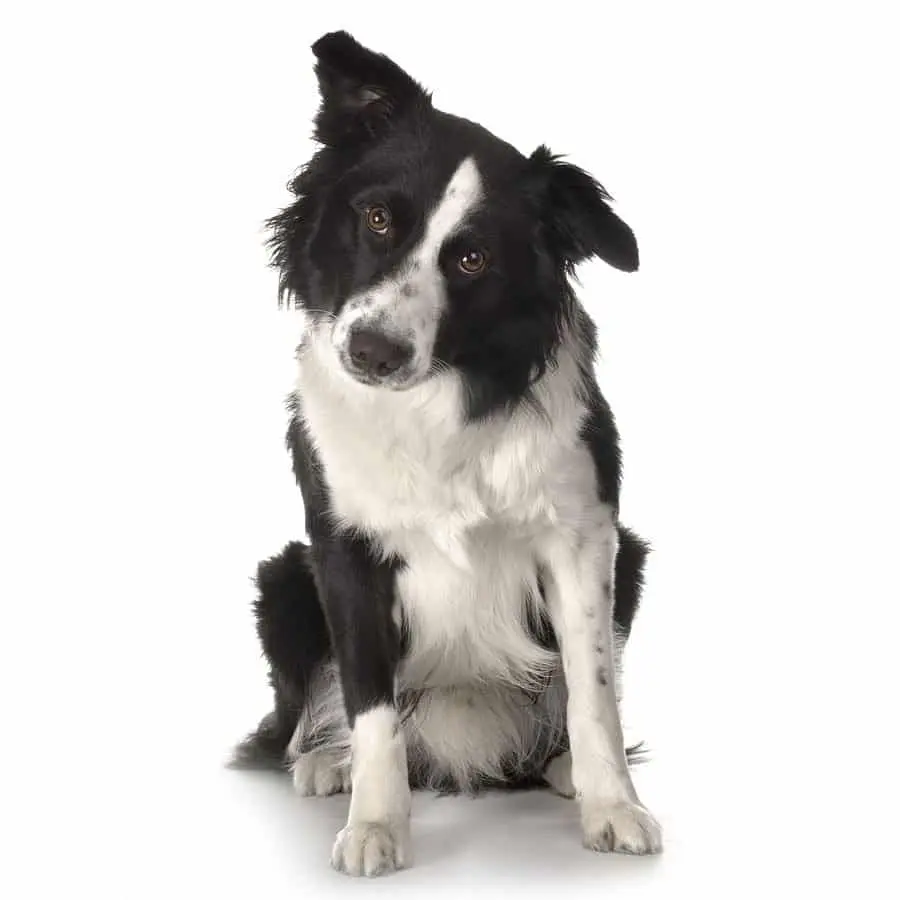
    The Border Collie takes its name from the region of Borders, the border region between Scotland and England, where he has been tending flocks of sheep since ancient times with extraordinary efficiency. For a long time, has remained there out of sight of international canine enthusiasts. So, the official rule was not registered with the FCI until 1976.

    The foundation of the ISDS (International Society of Sheep Dogs) in 1906 marked a turning point in this dog's history. The name of Border Collie then appeared in 1915 to describe these famous "sheepdogs", in recognition of the selection work carried out by the pastoralists of the border regions. The word "border" refers to the border, while the word "Collie" is used to describe a sheepdog.

    The Border Collie owes excellent performance in many disciplines to rigorous and uncompromising selection in a pastoral environment. The different breeds that have stabilized the border are mainly herder breeds (Old English Sheepdog (Bobtail), Bearded Collie…), but also hunting dogs, as the English Pointer and especially the Gordon Setter.

    Like this, the definitive pedigree of Border Collie, and therefore his right to breed dogs with pedigree, directly depends on your herding skills.

    Physical characteristics

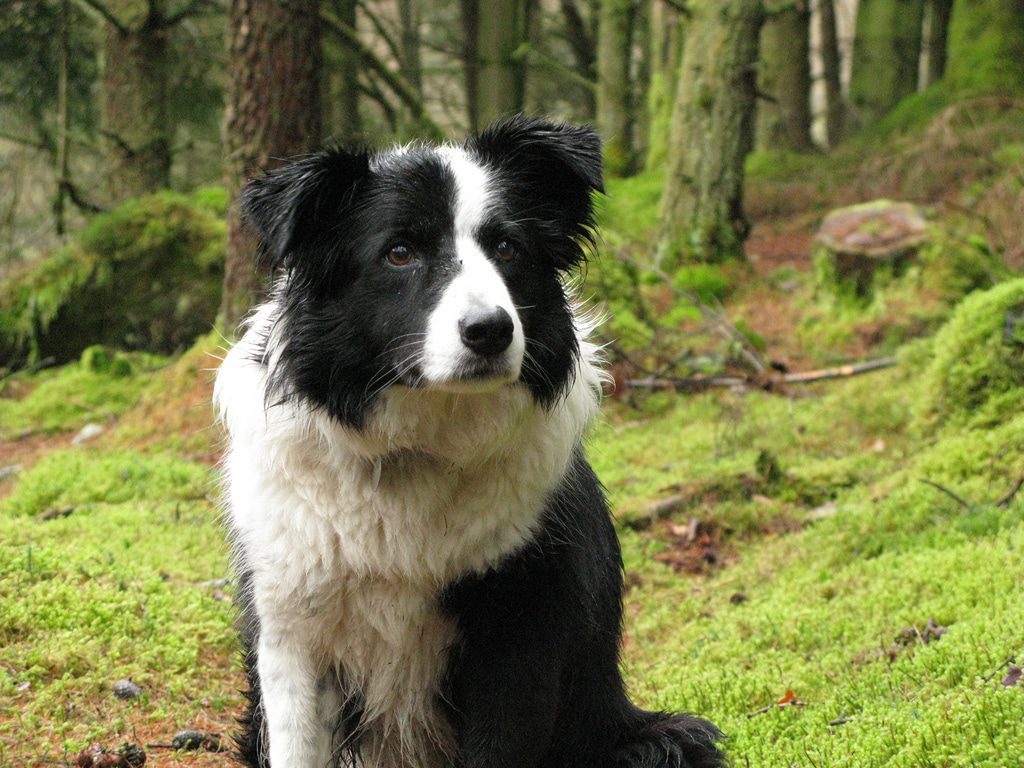
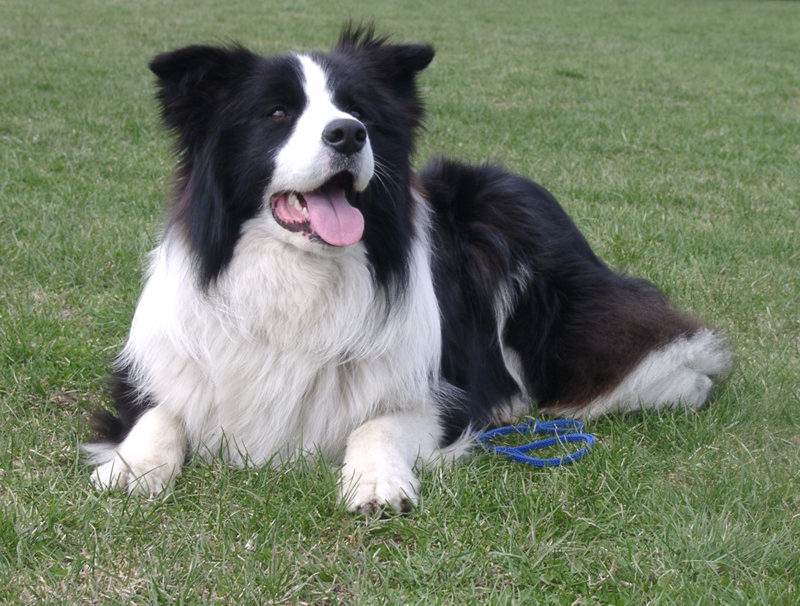
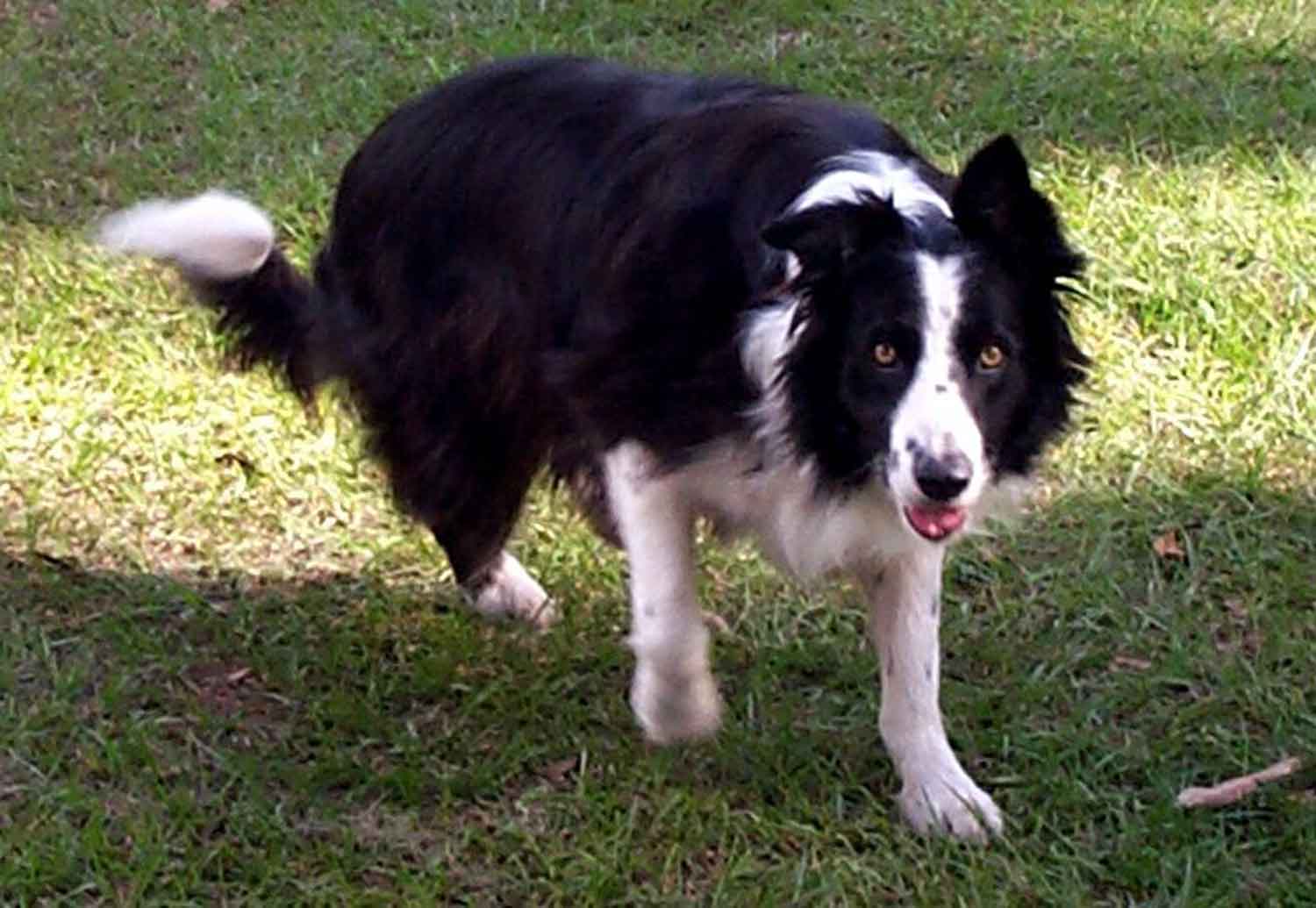
    The Border Collie is a dog of medium size, well proportioned, that can weigh between 16 and 23 kg. It has a double cloak of hair that supports various colors, variations of black, toasted and white though white should never be the predominant color, the fur is impermeable, It can be dense and coarse, or dense, soft. The body has athletic appearance, low chest, strong and agile.

    The height varies between 46,5 and 56 centimeters for males and between 46 and 53 centimeters in females. The tail is moderately long, slightly curved, well populated, with a lock of his hair white at the end of the same.

    There are two coat varieties, moderately long and short. In both, the outer layer is dense and has a medium texture; the inner layer is dense and soft, which gives it good protection against the inclement weather. In dogs that have a moderately long fur, the abundant hair is Manes, fringes and tail brush. In the face, ears, previous members (except for the fringes) and later members from hocks to the ground, the hair should be short and smooth.

    Character and skills

    He is loyal to his own and especially to whom he adopts as a leader, with whom he forges an unconditional bond. His gaze is one of his main characteristics., in moments of work he never separates her from her leader, denoting an unusual ability to concentrate in other dog breeds. He is happy when working, enjoy doing it.

    According to the classification made by Stanley Coren after analyzing the responses of more than 200 work of the AKC judges (ยซThe intelligence of dogsยป, Stanley city, Ediciones B, 1995), the Border Collie is the No. 1 from the list.

    It is a clever dog, very acute hearing, with a broad response capacity but, above all, It has a great agility and is owner of extreme intelligence, both functional and obedience.

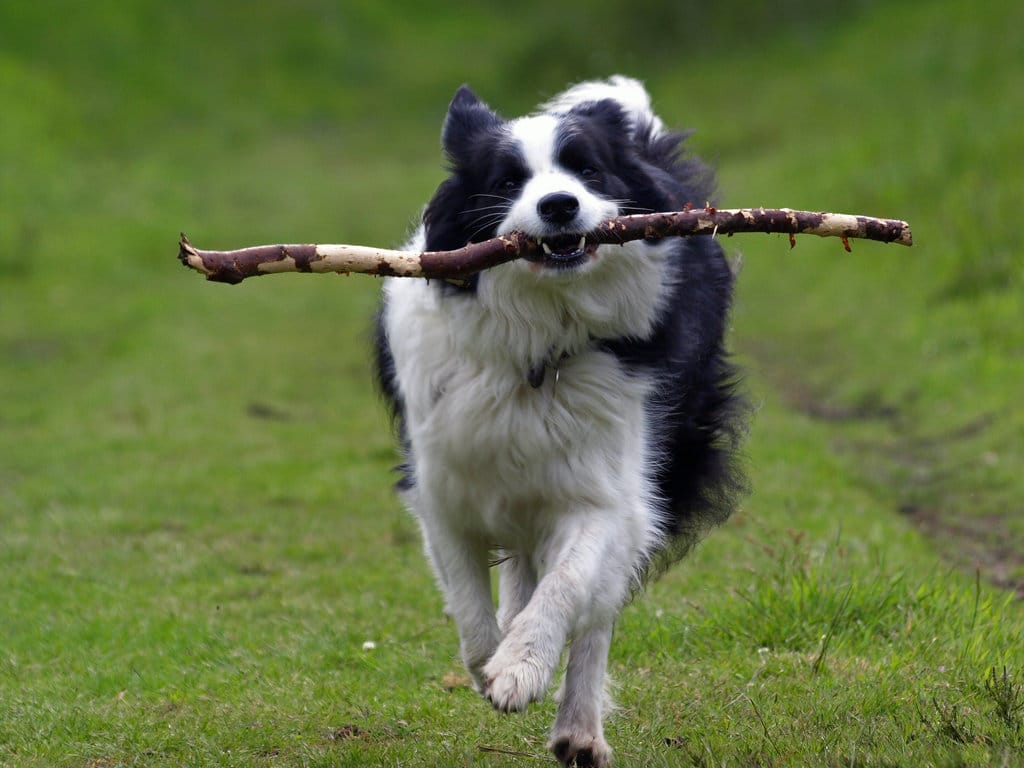
    His strong herding instinct, coupled with his tenacity and resistance, It places it among the most required to bring races, controlling and driving flocks, proving the best breed of dog existing pastor.

    The Border Collie is regarded as the breed of more intelligent dogs que existe, next to the Golden Retriever and to the German Shepherd, that is why it is so easy to train.

    Itร‚ยดs awake, vigilant, responsive and intelligent. Affectionate and docile, sociable with humans and other animals. He possesses an innate curiosity. It is a working dog and requires exercise in large or open spaces. You need to feel that it is part of a group and it has a function in the same. As it is a herding breed, it needs a lot of daily physical activity..

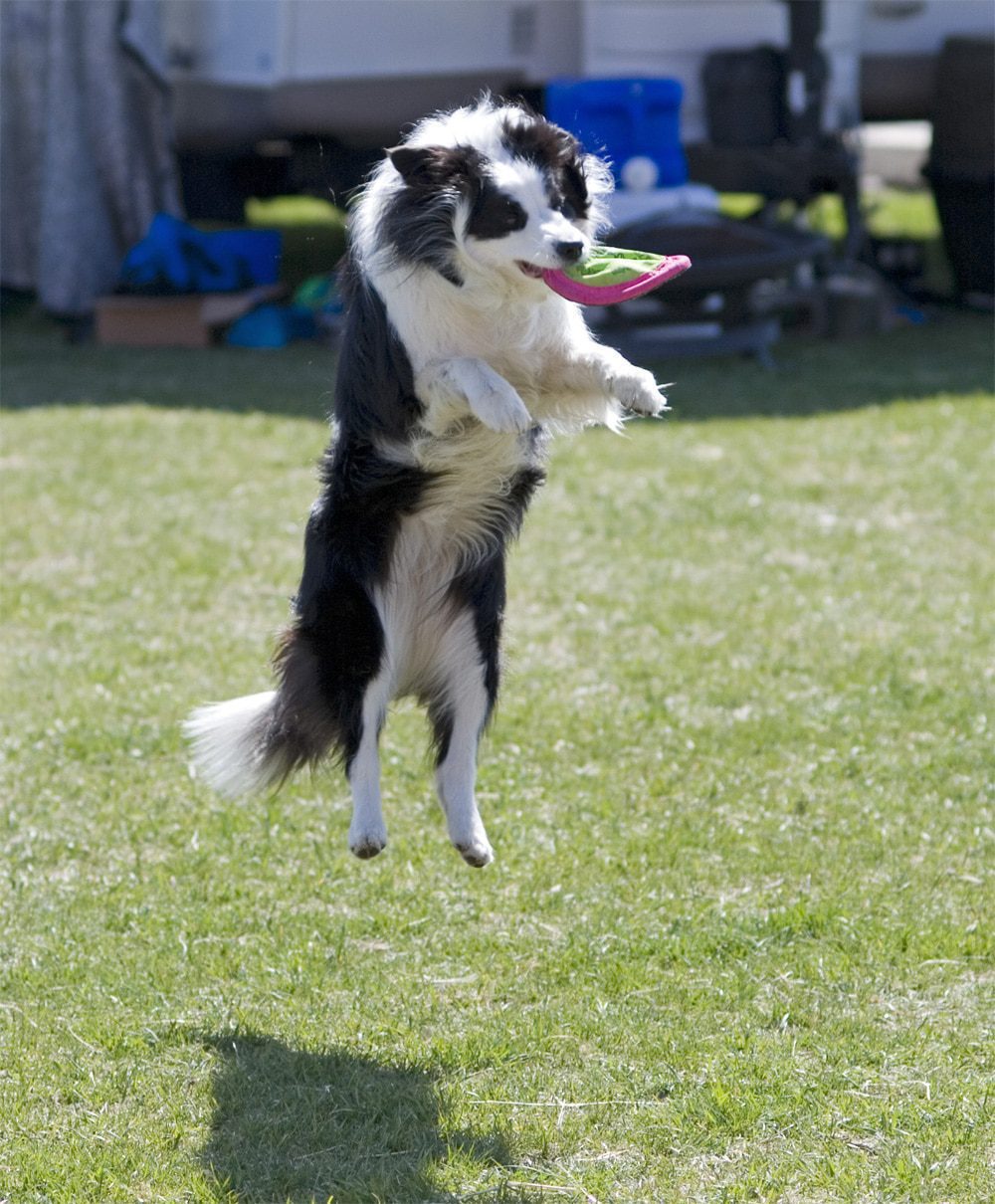
    Slender, regular and easy, raising little toes, which gives the impression that move furtively and at high speed. The Agility It is a sport open to all those people who have one or more dogs (Whatever your race, with or without pedigree). It consists of the dogs led by their handlers being able to overcome a series of obstacles in order to demonstrate their intelligence., obedience, concentration, sociability and agility.

    The Border Collie stands out in this sport for its physical and mental characteristics. If any of these tests has been occasionally observed, couldn't help but realize that the Border Collie They are present in many of them and they always end up doing it well.

    Did you know??

    The Border Collie they are known as herding dogs, but a dog of this breed currently holds the Guinness World Record for the fastest car window opened by a dog. Striker, a Border Collie from hungary, non electric opened window 11,34 seconds. Awesome!

    Characteristics "Border Collie"

    Coexistence is important that you have with your new friend. Before considering the acquisition of a dog of the breed "Border Collie" you know certain factors. Not all breeds of dogs are apt to live in an apartment, you must take into account his character, their need for exercise, their interaction with other pets, their care and if you have small children, their level of tolerance towards them.

    Adaptation โ“˜

    5,0 of 5 stars (based on 1 review)

    friendly dog โ€‹โ€‹โ“˜

    3,0 of 5 stars (based on 1 review)

    hair loss โ“˜

    3,0 of 5 stars (based on 1 review)

    Affection level โ“˜

    5,0 of 5 stars (based on 1 review)

    Need for exercise โ“˜

    5,0 of 5 stars (based on 1 review)

    Social need โ“˜

    5,0 of 5 stars (based on 1 review)

    Home โ“˜

    2,0 of 5 stars (based on 1 review)

    Toilet โ“˜

    2,0 of 5 stars (based on 1 review)

    Friendly with strangers โ“˜

    3,0 of 5 stars (based on 1 review)

    barking โ“˜

    5,0 of 5 stars (based on 1 review)

    Health โ“˜

    3,0 of 5 stars (based on 1 review)

    Territorial โ“˜

    5,0 of 5 stars (based on 1 review)

    Cat friendly โ“˜

    3,0 of 5 stars (based on 1 review)

    Intelligence โ“˜

    5,0 of 5 stars (based on 1 review)

    Versatility โ“˜

    5,0 of 5 stars (based on 1 review)

    Child friendly โ“˜

    5,0 of 5 stars (based on 1 review)

    Surveillance โ“˜

    5,0 of 5 stars (based on 1 review)

    joy โ“˜

    5,0 of 5 stars (based on 1 review)

    Border Collie Images

    Videos ยซBorder Collieยป

    Type and recognitions:

    • FCI CLASSIFICATION:Group 1 –> Pastor and Boyeros dogs (except Swiss Cattle Dogs ) / Section 1 –> Pastor dogs. With working trial.
    • FCI 297
    • Federations: FCI โ“˜, AKC โ“˜, ANKC โ“˜, CKC โ“˜, โ€‹KC โ“˜, NZKC โ“˜, UKC โ“˜

    • FCI breed standard "Border Collie"

      Origin:
      Ireland, United Kingdom

      Date of publication of the valid original standard:
      24.06.1987

      Use:

      Shepherd dog.


      General appearance:

      Well proportioned; the silhouette is harmonious showing quality, grace and perfect balance, combined with enough substance to give the impression of resistance. Any tendency to coarseness or weakness are undesirable.


      Behavior / temperament:

      Tenacious, worker of great docility. Crafty, alert, obedient and intelligent. Neither nervous nor aggressive.

      Head:


      Cranial region:
      • Skull: Quite wide, the occiput is not pronounced.
      • Stop: Very defined.

      facial region:

      • Truffle: black, except in brown specimens (chocolate), in whom the nose may be brown.
      • In the blue specimens,  the nose must have a slaty color. The nostrils must be well developed.
      • Snout: Thinning towards the nose, moderately short and strong.
      • Jaws / teeth: Strong teeth and jaws with perfect and regular scissors bite, that is, the upper incisors closely overlap the lower incisors and are positioned vertically in the maxillae.
      • Cheeks: Neither full nor rounded.
      • Eyes: They must be well separated,  be oval in shape and of moderate size. Its color must be brown, except in the specimens "Merle",  in which one or both, or a part of one or both may be blue.  Sweet expression,  awake,  alert and intelligent.
      • Ears: Medium in size and texture,  placed well apart. They must be carried erect or semi-erect and attentive to the smallest noise.

      Neck:

      Long, strong and muscular, slightly arched and widening towards its insertion in the back.

      Body:

      Athletic in appearance. Slightly longer than the height at the withers.

      • Pork loin: Deep and muscular but not withdrawn.
      • Breast : Deep and quite wide, well arched ribs.

      Tail:

      Moderately long, the last vertebra must reach at least the tibiotarsal joint; low insertion,  well stocked with hair, ends up curving up, which completes the grace of the silhouette and the balance of the dog.  In a state of excitement, The tail can be raised but never taken over the dorsog>

      Tips

      Former members

      Seen from the front,  the forelimbs should be parallel to each other.  Of strong bones,  but not heavy.

      • Blades: Leaning well back.
      • Elbows: Glued to the body.
      • Metacarpus: Viewed from the side slightly inclined.
      • Front feet: Oval; thick footpads, strong and healthy; the fingers should be close together and arched; nails should be short and strong.
      Former members

      Spacious and muscular, its upper profile slopes slightly towards the insertion of the tail.

      • Thighs: Long, wide and muscular.
      • Knees: Well angulated.
      • Hocks: Strong and close to the ground.
      • Metatarsals: From the hock to the ground, the hind limbs should be well boned and parallel to each other when viewed from behind.
      • Hind feet: Oval, thick footpads, strong and healthy; the fingers should be close together and arched; nails should be short and strong.

      Movement:

      Libre, easy and indefatigable, raising your feet as little as possible, which gives the impression of caution and speed.

      Mantle

      • Fur: There are two varieties: Moderately long or short.

      In both, the outer layer is dense and has a medium texture; the undercoat is soft and dense, which gives you good protection against inclement weather. In dogs that have a moderately long coat, abundant hair forms manes, fringes and tail brush.  In the face, ears, previous members (except for the fringes) and later members from hocks to the ground, the hair should be short and smooth.

      • Color: Variety of colors are supported.  White color should never prevail.


      Size and weight:

      Ideal height:

      Males: 53 cm. (21 inches)

      females: slightly less.


      Fouls:

      Any deviation from the aforementioned criteria is considered as a fault and its severity is considered to the degree of the deviation to the standard and its consequences on the health and well-being of the dog., and the dog's ability to perform its traditional task.

      disqualifying fouls:

      โ€ข Aggressiveness or extreme shyness.
      โ€ข Any dog โ€‹โ€‹showing clear signs of physical or behavioral abnormalities.


      N.B.:

      Males should have two normal-looking testicles completely descended into the scrotum..

      โ€ข Only functionally and clinically healthy dogs, with the typical conformation of the breed, should be used for parenting.

      The latest changes are in bold.

      Source: F.C.I - International Cynological Federation

      Alternative names:

      1. Scottish Sheepdog (English).
      2. Border collie (French).
      3. Border collie (German).
      4. collie da fronteira (Portuguese).
      5. Collie de la frontera, Collie fronterizo (espaรฑol).

    โ–ท The world of Pets: Dogs, cats, birds, reptiles, amphibians

    Beauceron
    Francia FCI 44 . Sheepdogs

    Beauceron

    The Beauceron He is known in France as a watchdog, a farm helper.

    Content

    Characteristics "Beauceron"

    Coexistence is important that you have with your new friend. Before considering the acquisition of a dog of the breed "Beauceron" you know certain factors. Not all breeds of dogs are apt to live in an apartment, you must take into account his character, their need for exercise, their interaction with other pets, their care and if you have small children, their level of tolerance towards them.

    Adaptation โ“˜

    3,0 of 5 stars (based on 1 review)

    friendly dog โ€‹โ€‹โ“˜

    2,0 of 5 stars (based on 1 review)

    hair loss โ“˜

    3,0 of 5 stars (based on 1 review)

    Affection level โ“˜

    4,0 of 5 stars (based on 1 review)

    Need for exercise โ“˜

    5,0 of 5 stars (based on 1 review)

    Social need โ“˜

    4,0 of 5 stars (based on 1 review)

    Home โ“˜

    2,0 of 5 stars (based on 1 review)

    Toilet โ“˜

    2,0 of 5 stars (based on 1 review)

    Friendly with strangers โ“˜

    2,0 of 5 stars (based on 1 review)

    barking โ“˜

    4,0 of 5 stars (based on 1 review)

    Health โ“˜

    2,0 of 5 stars (based on 1 review)

    Territorial โ“˜

    5,0 of 5 stars (based on 1 review)

    Cat friendly โ“˜

    2,0 of 5 stars (based on 1 review)

    Intelligence โ“˜

    5,0 of 5 stars (based on 1 review)

    Versatility โ“˜

    5,0 of 5 stars (based on 1 review)

    Child friendly โ“˜

    3,0 of 5 stars (based on 1 review)

    Surveillance โ“˜

    4,0 of 5 stars (based on 1 review)

    joy โ“˜

    5,0 of 5 stars (based on 1 review)

    History

    The Beauceron is a breed of dog of very ancient origin pastor (French) and appearance rustic and strong.

    It was formerly used these dogs for various functions, from guide the flocks and protect them from external threats, until the protection on farms.

    In 1863 two breeds of dogs differed France shepherds, of short hair beauceron on one side and the long hair Berger de Brie on the other hand. The canine central society (The Sociรฉtรฉ Centrale Canine) recorded the first beauceron in 1893, and for 1922 the first club of the breed had been founded.

    The Beauceron also It was used by the French army. Their ability to obey orders without hesitation was widely used during the two wars in Europe, where the military used them in the front line to execute the messages. They were also used to collect clues, detection of mines and the command of support activities. Today's Beaucerons are still used as military dogs., as well as police dogs.

    Did you know??

    The Beauceron is a breed of French used for grazing sheep. In its country of origin it is known as the Berger (bair-zhay) Beauce (bohs). The name means "Pastor of the Beauce".

    Despite their great qualities, the beauceron did not become a popular dog. To reverse this situation a programme of recovery and promotion of the race was conceived in 1960. From then on, the beauceron began to gain in popularity and to participate actively in sports and show ring, although it is still a little-known dog outside of France.

    Is also known by names such as Beauceron or BAS Rouge (Red Stocking) due to stains of color fire that has legs.
    Dog is a pastor of livestock guardian dog. One of the ancestors of the Dobermann.

    Physical characteristics

    The body is solid, powerful, rustic and muscular, but the impression of heaviness. It is slightly longer than high and has a straight back and chest deep. The legs are strong and muscular and the hind legs have a double spur characteristic of the breed..

    The double spur on the hind legs are required by the standard of the breed.

    The Beauceron measured up to the cross between 61 and 70 cm and weighs between 30 and 45 kg. The standard colour is black and Tan (This is the same color that you see in the breed Rottweiler and Doberman) or cinnamon and grey. Other colors, formerly very abundant, as the grey red, or gris-negro, they are now prohibited by the standard of the breed.

    The outer layer is rough, While the inner layer is smooth and silky. In black color and fire dogs, fire color stains appear on two points above the eyes, on the sides of the snout, wane in cheeks, but do not reach the bottom of the ears. As well, these spots, they appear in the throat, under the tail, in the legs and chest. Fire chest marks should appear as two points.

    Cutting ears is not allowed in Europe.

    Character and skills

    The Beauceron is known in France as a guard dog, a farm helper.

    This athletic breed, healthy and long life has been ยซCreated to be smart, quiet, soft, and brave". Usually, adults are wary of strangers and make excellent natural watchdogs.

    It is not a breed for everyone since you need to release your energy both physically and psychologically, as well as space and plenty of exercise. Excellent guard dog, very intelligent, friendly and patient with children. You need an active owner, coherent, serious but patient and caring that can rely on, and who knows how to impose limits. Education can become a wonderful protective dog that can perform any task, both dog, as guard, guide the company.

    They are very intelligent, However, their physical and mental development is slower than in other similar breeds (for example, German shepherds and othersโ€ฆ), they are not mentally mature, even if they physically appear so... Only at three years of age do they usually reach maturity, It is therefore recommended that education will be gradual and persistent. These may include, five periods of game, training, ten minutes a day in the early years will give us amazing results. It is better that, long rigorous training sessions.

    Images Beauceron

    Videos Beauceron

    Type and recognitions:

  • Group 1 / Section 1 Herding dogs. FCI 44
  • Federations: FCI โ“˜, โ€‹AKC โ“˜, โ€‹KC โ“˜, UKC โ“˜
  • Alternative names:

    • Alternative names: French Shorthaired Shepherd / Beauce Shepherd / Berger de Beauce / Bas Rouge (Red Stocking)

    โ–ท The world of Pets: Dogs, cats, birds, reptiles, amphibians

    Cattle dog
    Cattle Dogs according to the FCI

    Boyero

    Content

    Known by the name of Sennenhund dog a number of breeds of dog traditionally have been used for the management and conduct of cattle.

    The FCI classifies the breeds of cattle dogs into two different groups based on their physiognomy.
    In Group I, Section 2, He placed Sennenhund dogs Lupoid appearance (similar to a Wolf) and in Group II, Section 3, to the trotting of mountain.

    Read more

    โ–ท The world of Pets: Dogs, cats, birds, reptiles, amphibians

    Bloodhound
    Bรฉlgica FCI 84 - The hound par excellence

    Bloodhound

    The Bloodhound It is the dog with thinner smell of the planet.

    Content

    History

    The Bloodhound (St. Hubert Hound) It is a breed of dog originally from Belgium, more specifically in the region of the Ardennes. It is one of the different breeds of hound recognized by the FCI in Group 6.

    Has been traditionally considered to the monks of the monastery of St. Hubert as the creators of the race (for this reason also, are known as St. Hubert Hound), and they based their selection on the hunting dogs used by the monk Hubert, founder of the order and which later to be canonized became the patron saint of hunters. King William the Conqueror took copies of this breed to England when he ascended to the throne. The descendants of these specimens, They were known in the country as Bloodhound, referring to the purity of their blood.

    Did you know??

    The name "Bloodhound" does not come from this dog's ability to track game and people, but from a long history of carefully recorded bloodlines. In other words, He is a "blood" hound, a kind of dog of the aristocracy, if it can be said like that.

    This legend has it that a rich nobleman hunted in a good Friday accompanied by a group of noisy dogs, and in the distance he could see a deer and when he was about to shoot he saw the image of the cross of Jesus Christ drawn on its antlers and since then he retired from his dissipated life to dedicate his fortune to good works. Since then usually give the nobles, the best specimen of his beloved dogs. Today the tradition continues, but now is a religious service and gives blessing to copies, continuing with the exposure of the race in the community of St. Hubert at Belgium.

    After the race was introduced in the United States where one of his missions was the search and hunt down the fugitive slaves. For many years the recognition by a Bloodhound was considered proof incriminating by American courts.

    Physical characteristics

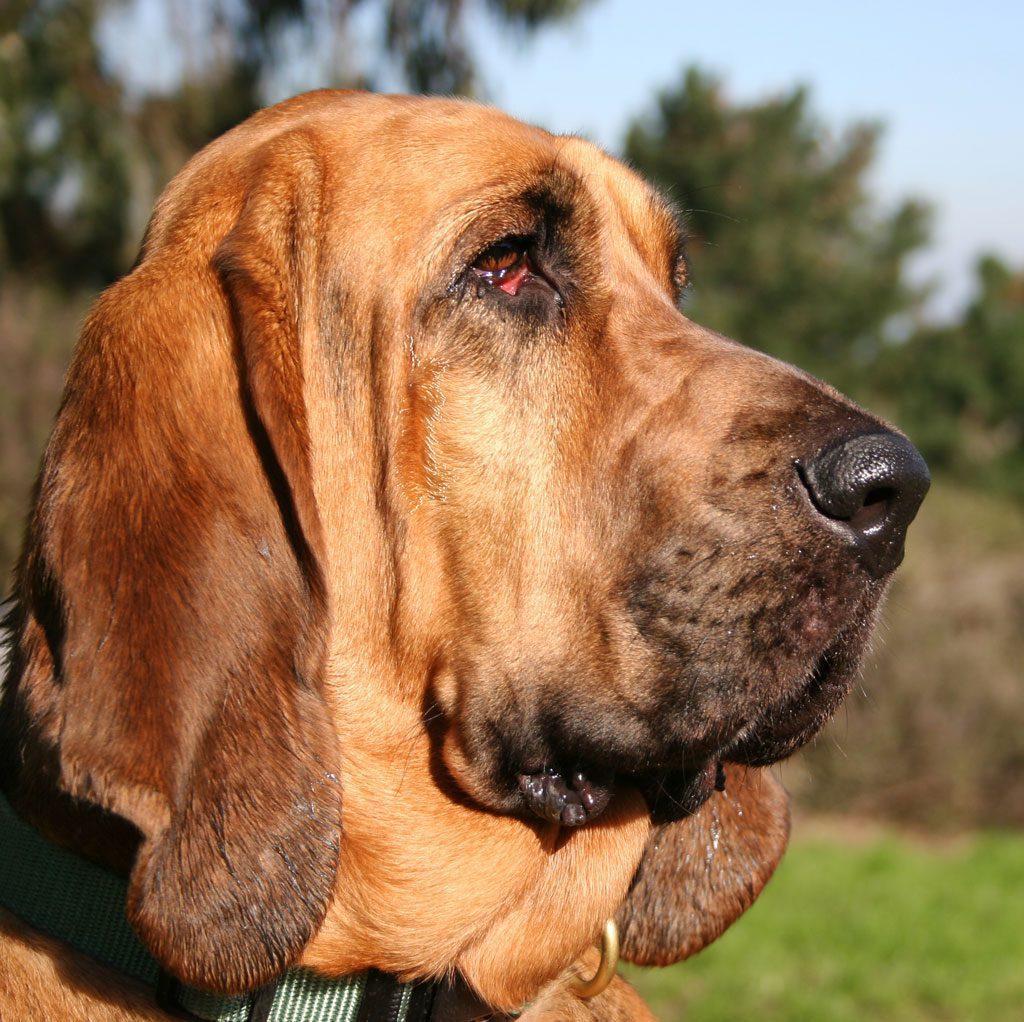
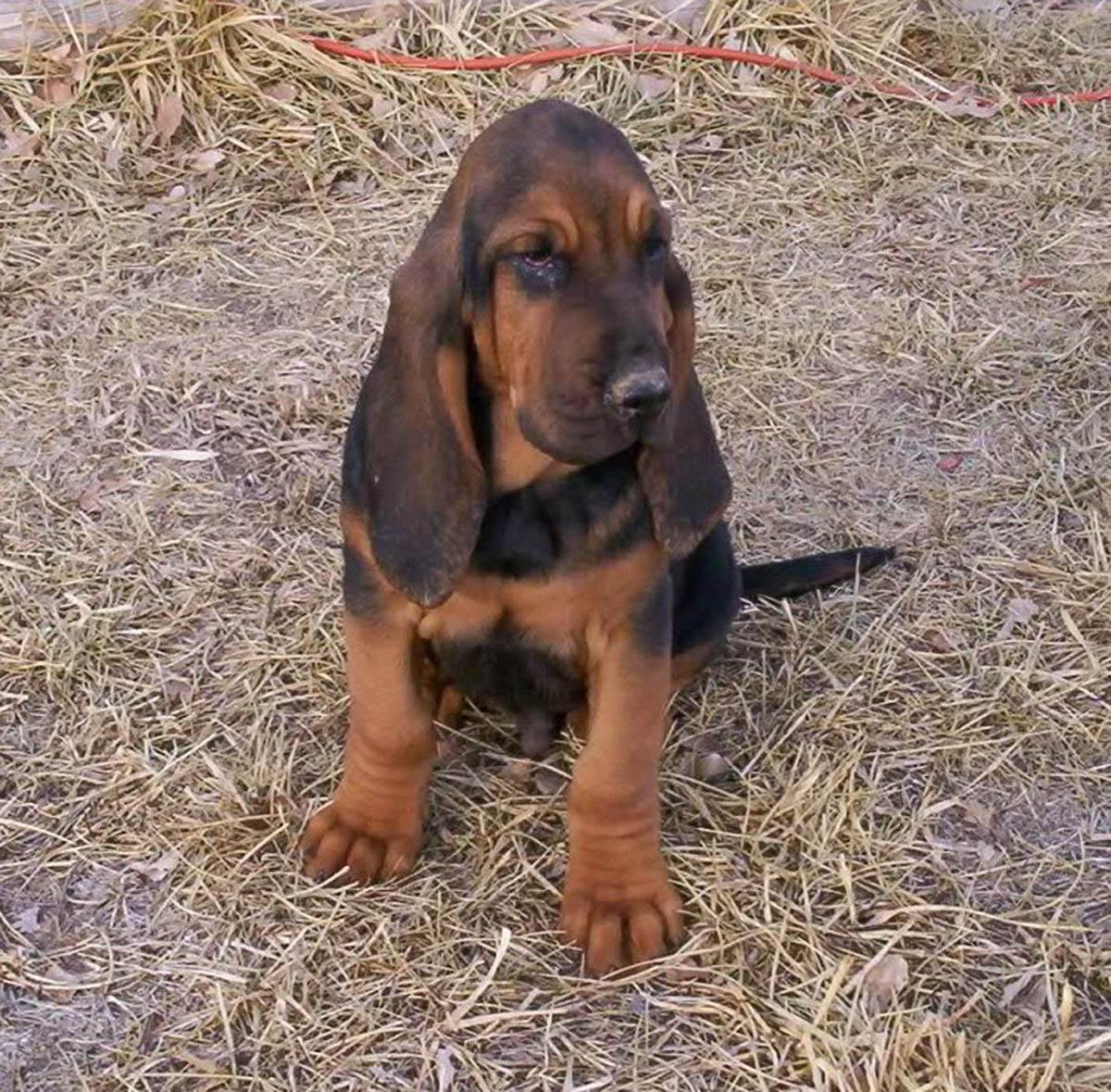
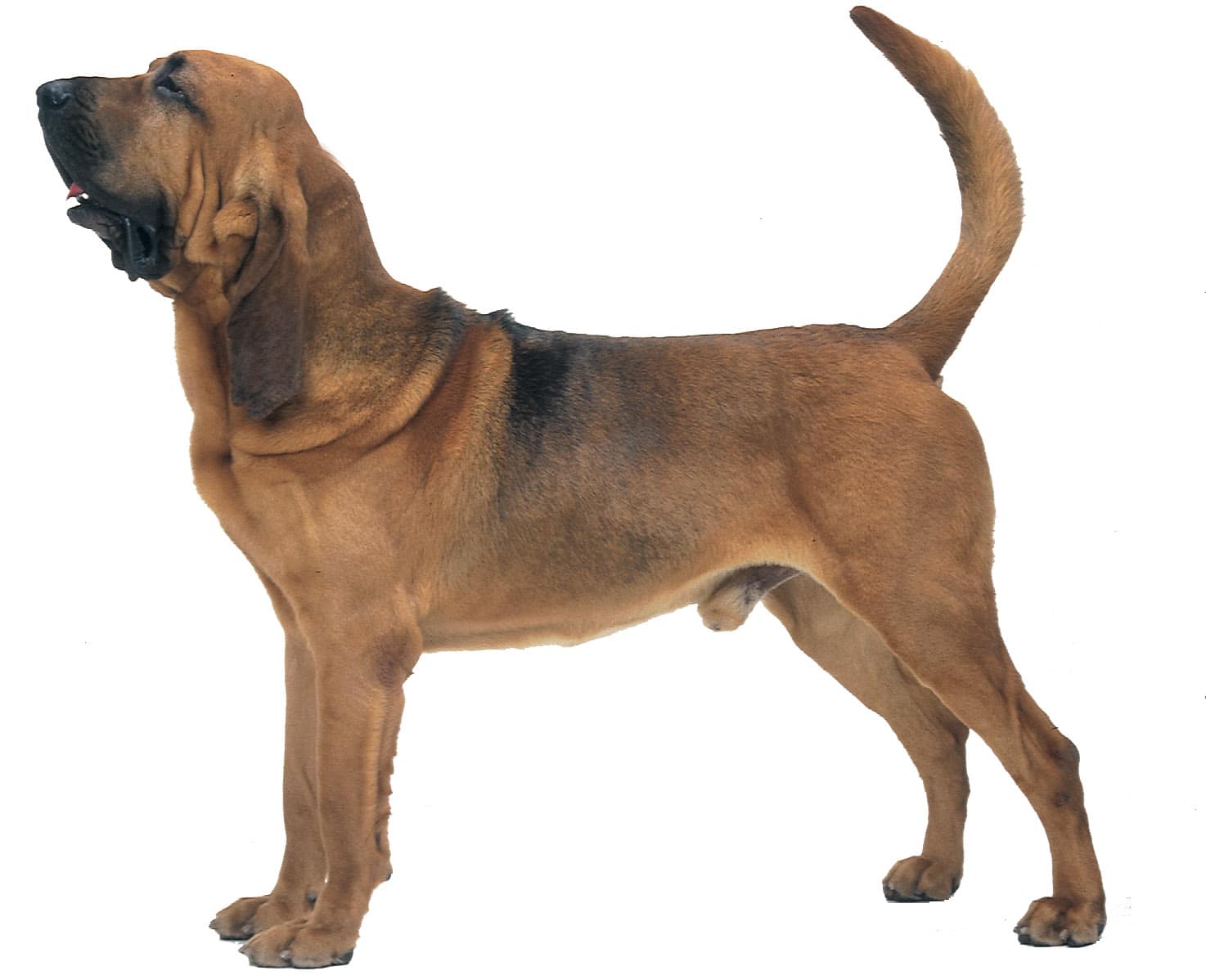
    The Bloodhound is a powerful hunting dog. The back is very strong compared to the size of the dog. The head is long and narrow. The muzzle is long with a nose of black. Deeply sunken eyes and drooping eyelids. The Chin is very pronounced.

    The Bloodhound is the dog with thinner smell on the planet.

    Despite its size, is an agile dog. His body is longer than high. Wrinkles on the head and jowls are perhaps one of the most characteristic features, along with the length of its hanging ears. The accepted colors are black and fire, Brown and red in its different shades and fire.

    The appeal is of 67 cm for males and 60 cm for females.

    Character and skills

    It has been documented that they are capable of following a trail of up to fifteen days, because of the enormous sensitivity of their sense of smell, caused by the internal folds of their nostrils. For that reason it is used as a police dog in tracking tasks..

    These hounds cannot be kept in a yard without fences. There is a good chance that your tracker instinct carried them wander and get away until the end of their trail.

    It is a dog that needs to be exercised (like all dogs), and usually live more happily in large spaces, Although adapts very well to home life.

    The Blodhound, Despite the allusion to the term blood contained in its name (blood), It is one of the animals most affable that exists. It is a dog of noble nature, can be shy around strangers. He is very patient and persevering when looking for a trailโ€ฆ

    It is excellent Playmate for children, defend them from any danger. They tend to be very well with other dogs and pets.

    Bloodhound pictures

    Bloodhound Videos

    Characteristics "Bloodhound"

    Coexistence is important that you have with your new friend. Before considering the acquisition of a dog of the breed "Bloodhound" you know certain factors. Not all breeds of dogs are apt to live in an apartment, you must take into account his character, their need for exercise, their interaction with other pets, their care and if you have small children, their level of tolerance towards them.

    Adaptation โ“˜

    3,0 of 5 stars (based on 1 review)

    friendly dog โ€‹โ€‹โ“˜

    5,0 of 5 stars (based on 1 review)

    hair loss โ“˜

    5,0 of 5 stars (based on 1 review)

    Affection level โ“˜

    5,0 of 5 stars (based on 1 review)

    Need for exercise โ“˜

    5,0 of 5 stars (based on 1 review)

    Social need โ“˜

    5,0 of 5 stars (based on 1 review)

    Home โ“˜

    1,0 of 5 stars (based on 1 review)

    Toilet โ“˜

    5,0 of 5 stars (based on 1 review)

    Friendly with strangers โ“˜

    5,0 of 5 stars (based on 1 review)

    barking โ“˜

    5,0 of 5 stars (based on 1 review)

    Health โ“˜

    5,0 of 5 stars (based on 1 review)

    Territorial โ“˜

    1,0 of 5 stars (based on 1 review)

    Cat friendly โ“˜

    5,0 of 5 stars (based on 1 review)

    Intelligence โ“˜

    5,0 of 5 stars (based on 1 review)

    Versatility โ“˜

    3,0 of 5 stars (based on 1 review)

    Child friendly โ“˜

    5,0 of 5 stars (based on 1 review)

    Surveillance โ“˜

    5,0 of 5 stars (based on 1 review)

    joy โ“˜

    1,0 of 5 stars (based on 1 review)

    Type and recognitions:

    • FCI CLASSIFICATION:Group 6 –> Hound type dogs, and related breeds. / Section 1.1 –> Large size hound dogs. With working trial.
    • FCI 84
    • Federations: FCI โ“˜, AKC โ“˜, ANKC โ“˜, CKC โ“˜, โ€‹KC โ“˜, NZKC โ“˜, UKC โ“˜

      FCI breed standard Bloodhound

      FCIFCI - Bloodhound
      Bloodhound
    • Alternative names:

      1. Sleuth hound, St. Hubert Hound (English).
      2. bloodhound (French).
      3. Bluthund, Bloodhound (German).
      4. Cรฃo-de-santo-humberto, Chien de St. Humbert, Bloodhound (Portuguese).
      5. Perro de San Huberto (espaรฑol).

    โ–ท The world of Pets: Dogs, cats, birds, reptiles, amphibians

    Boerboel
    Sudรกfrica Not recognized by the FCI

    The Boerboel he is known for his bravery, his intelligence and his great resistance.

    Boerboel

    Content

    Characteristics "Boerboel"

    Coexistence is important that you have with your new friend. Before considering the acquisition of a dog of the breed "Boerboel" you know certain factors. Not all breeds of dogs are apt to live in an apartment, you must take into account his character, their need for exercise, their interaction with other pets, their care and if you have small children, their level of tolerance towards them.

    Adaptation โ“˜

    3,0 of 5 stars (based on 1 review)

    friendly dog โ€‹โ€‹โ“˜

    2,0 of 5 stars (based on 1 review)

    hair loss โ“˜

    3,0 of 5 stars (based on 1 review)

    Affection level โ“˜

    3,0 of 5 stars (based on 1 review)

    Need for exercise โ“˜

    4,0 of 5 stars (based on 1 review)

    Social need โ“˜

    3,0 of 5 stars (based on 1 review)

    Home โ“˜

    2,0 of 5 stars (based on 1 review)

    Toilet โ“˜

    1,0 of 5 stars (based on 1 review)

    Friendly with strangers โ“˜

    2,0 of 5 stars (based on 1 review)

    barking โ“˜

    2,0 of 5 stars (based on 1 review)

    Health โ“˜

    3,0 of 5 stars (based on 1 review)

    Territorial โ“˜

    5,0 of 5 stars (based on 1 review)

    Cat friendly โ“˜

    2,0 of 5 stars (based on 1 review)

    Intelligence โ“˜

    4,0 of 5 stars (based on 1 review)

    Versatility โ“˜

    4,0 of 5 stars (based on 1 review)

    Child friendly โ“˜

    4,0 of 5 stars (based on 1 review)

    Surveillance โ“˜

    3,0 of 5 stars (based on 1 review)

    joy โ“˜

    5,0 of 5 stars (based on 1 review)

    History


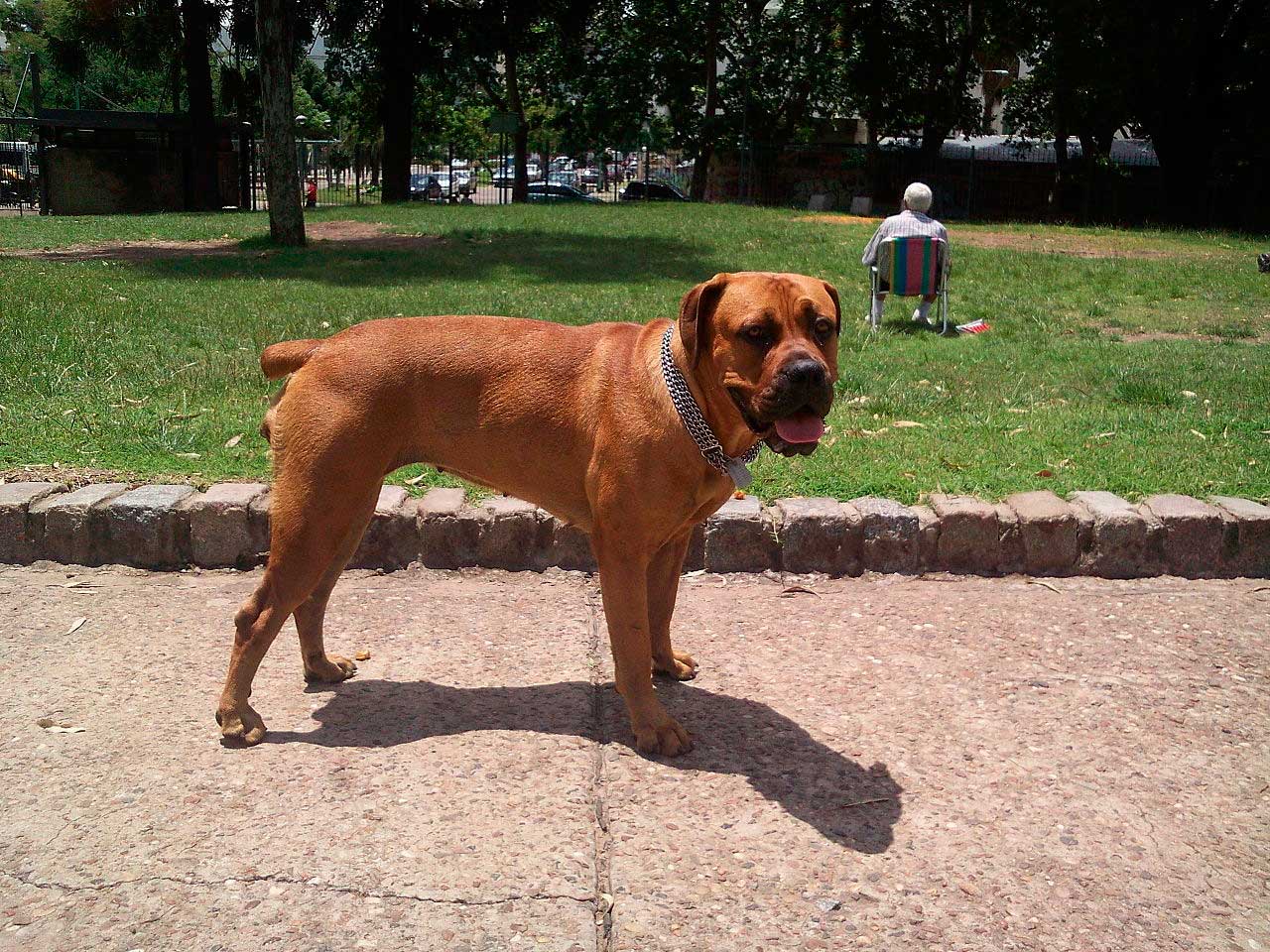
    Boerboel (or South African mastiff) It is a breed of dog of molosser type originating from South Africa, comes mainly from the junction between the Bullmastiff, the Great Dane and the now extinct, Bullenbeisser.

    This is a very suitable for the guard race, self defense and heavy work. Early examples date back to the year 1600. The breed is fully standardized in Africa by associations such as HBSA, SABT and EBBASSA.

    Read more

    โ–ท The world of Pets: Dogs, cats, birds, reptiles, amphibians

    Alapaha Blue Blood Bulldog
    Estados Unidos Not recognized by the FCI

    Despite its similarity, they should not be confused with the race American bulldog

    Alapaha Blue Blood Bulldog

    Content

    History Alapaha Blue Blood Bulldog

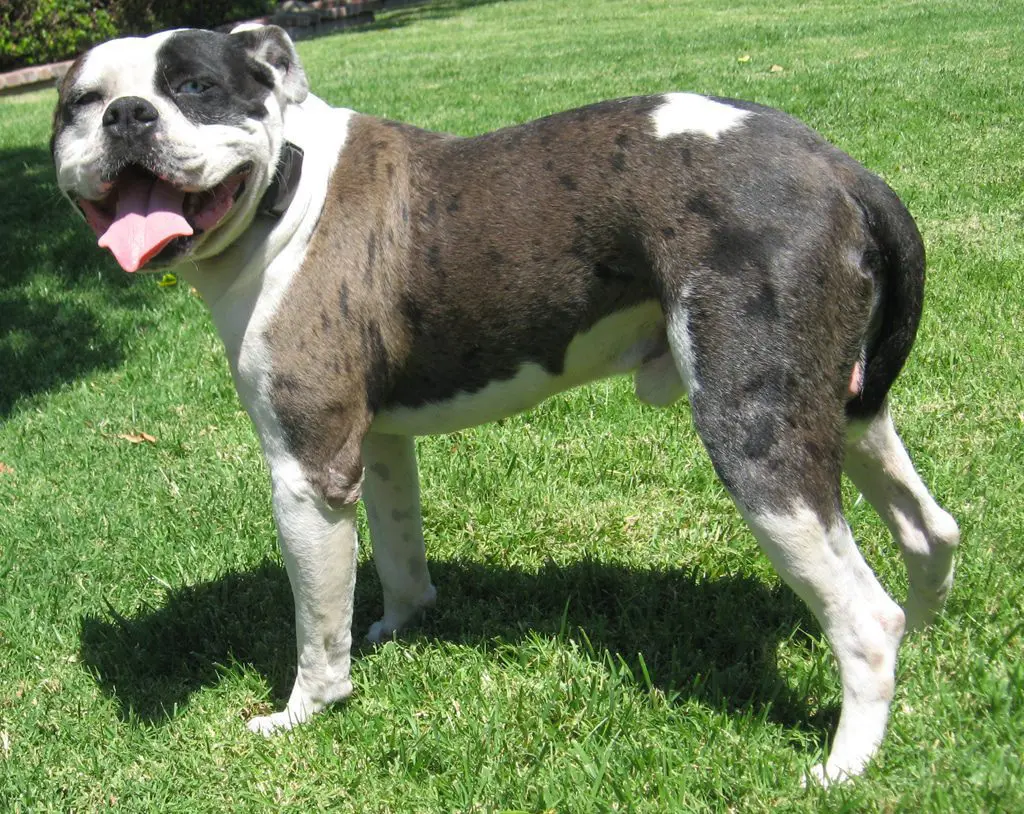
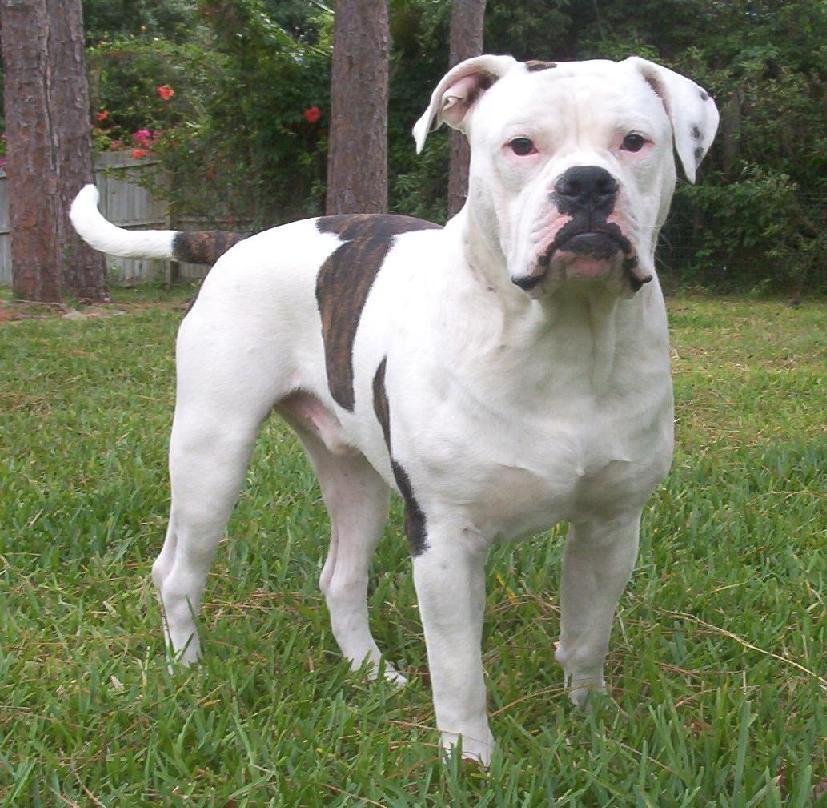
    Also Known As Otto Bulldog. It is a breed of dog of American origin, considered rare due to the few existing copies. According to available information, They have been developed in the area Alapaha River in the southern region Georgia. They are renowned for their great sense of obedience, their agility and your protective character.

    The race Alapaha blood Blue was developed by crossing Old English Bulldog white (known as, White English Bulldogs), a Catahoula Bulldog and a reduced number of copies of Colby Pit Bull Terrier. The origins of the breed remain fuzzy, and this has caused much confusion…

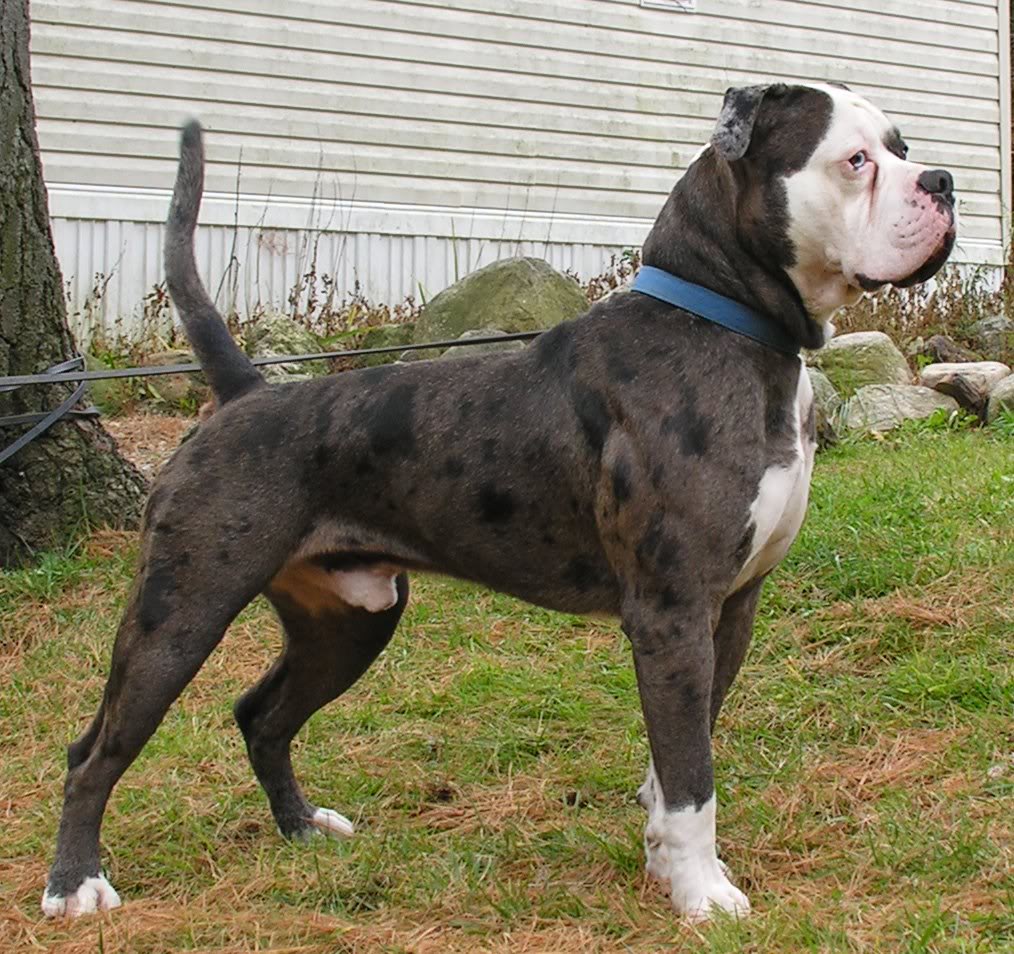
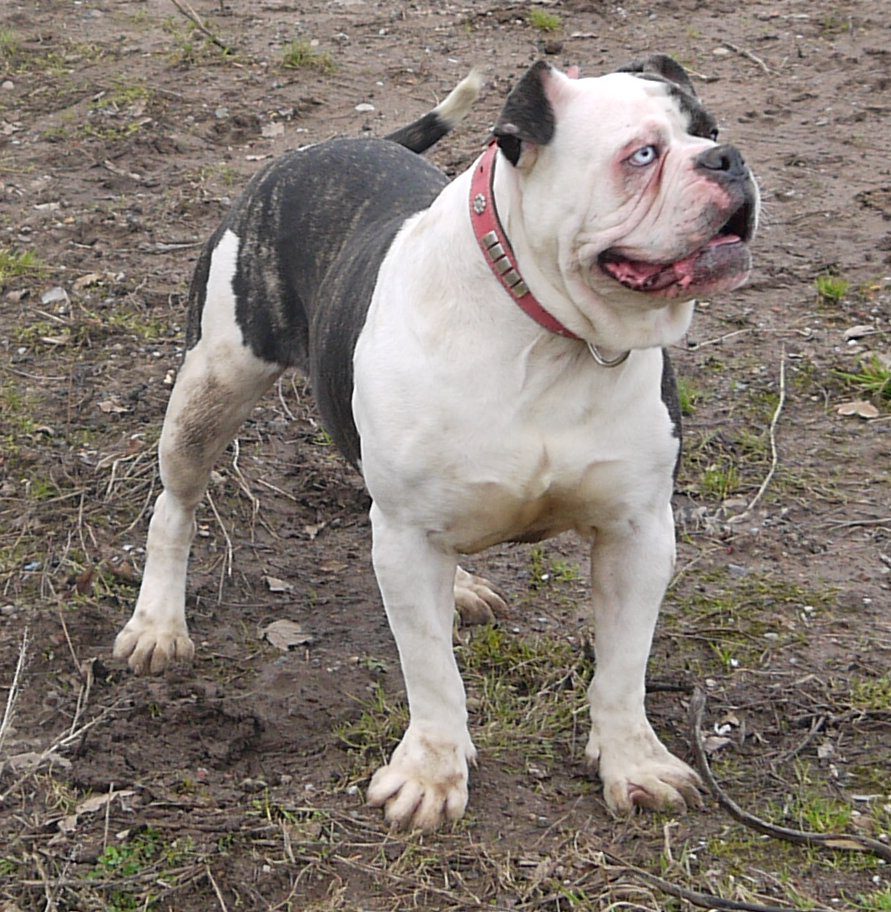
    While at first glance it is a Bulldog type. It is a stronger dog and a well-developed musculature (remarkable characteristic of the breed, compared to other varieties Bulldog).

    Despite its similarity, not to be confused with American bulldog. This similarity resulted in actions pre-register many Alapaha Blue Blood Bulldog They were included in the ancestry of American bulldog.

    Videos "Alapaha Blue Blood Bulldog"

    While Alapaha Blue Blood Bulldog Association It has declared that it was founded in 1979, the earliest evidence of the existence of this club record dates of 1989 in California. That discrepancy has triggered multiple discussions.

    The race was in danger of extinction until a small group of Southern, in 1979, in an attempt to rescue the Bulldog de Old Tymey Plantation del Sur, He founded the ABBA (Alapaha Blue Blood Bulldog Association), giving the aforementioned name and dedicated to the preservation of this unique type of dog.

    Claims made by the Mrs. Lana Lane, nurturer and follower of the race, they dealt with the existence of records. But, little evidence exists to support his claim because in family lines described in the World Atlas of Dog Breeds as the founders of the breed.

    The current records of this breed They include the following organisms:

    The ACA (American Canine Association) who registered the first champion Under the title of Alapaha. ABBA (Alapaha Blue Blood Bulldog Association), CCR (National Kennel Club), (ABBBR) Alapaha Blue Blood Bulldog registry, CKC (Continental Kennel Club), WWKC (World Wide Kennel Club), UWABC (Kingdom of work Alapaha Bulldog Club & Registration), UCA (United Canine Association), and IOEBA (International Olde English Bulldogge Association), among them there is great variation in the type and standard.

    Physical characteristics

    Descriptions of their size vary greatly depending on the organism., but trying to reach an average consensus we would place the males in a weight ranging from 32 to 41 kg, and height the cross of 51 to 63 cm.. Females - slightly smaller, they weigh in 25 to 34 kg and measure of 45.7 to 55.9 cm in height to the cross.

    The ears and tail They are left natural, without any cutout.

    The colors of the Alapaha Blue Blood Bulldog They are varied, preferably, You must have at least the 50% white body with spots. They can be, predominantly, solid color with white, or dry white. Patches or markings are generally color merle, striped, blue, black, chocolate, red, beige, or tricolor. Currently the most common are the tricolor mantle (both white, Merle, red, as well as beige, Merle, chocolate).

    The eye color can vary from Brown to blue, and they usually see with one eye of each color copies or a finger eye colors.

    Its pelage is short, hard and bright by nature, which is why, coat care requirements are minimal.

    Character and skills

    The Alapaha Blue Blood Bulldog It described as a dog easy to train, obedient and responsible, with impressive capabilities as guardian Family and property. They have a strong instinct for protection and it's love at home.

    Puppy must be socialized and trained using humane methods, since cruelty could stimulate the aggressiveness of the animal. Intelligent and quick learning, with assertive methods.

    The Alapaha Blue Blood Bulldogand blue is very energetic and athletic. Even so, They can be adapted perfectly to life in an apartment if sufficiently exercised and daily. While within the home displays inactive, quiet, It will be more happy with - at least- a medium size yard.

    They were formerly used to work with livestock, especially in the capture of errant pigs. For that reason his muscles are long and powerful, this physical characteristic reminds us that for the dog to have optimal health it needs to be exercised regularly. They often enjoy long walks, run and play.

    Life expectancy Alapaha Blue Blood Bulldog is located from 12 to 15 years.

    Pictures Alapaha Blue Blood Bulldog

    Videos Alapaha Blue Blood Bulldog

    Type and recognitions:

    • Race is not recognized by the FCI
    • BBC = Backwoods Bulldog
    • ClubDRA = Dog Registry of America, Inc.

    Alternative names

    1. Alapaha Blue Blood Bulldog, Otto Bulldog (English).
    2. Alapaha Blue Blood Bulldog (French).
    3. Buldogue Alapaha de sangue azul, Alapaha Blue Blood Bulldog (Portuguese).
    4. Alapaha Blue Blood Bulldog (German).
    5. Bulldog Alapaha de sangre azul, Alapaha Blue Blood Bulldog (espaรฑol).

    โ–ท The world of Pets: Dogs, cats, birds, reptiles, amphibians

    Barak hound
    Bosnia FCI 155 . Medium-sized Hounds

    The Barak hound It is used for hunting Hound

    Bosnian Coarse-Haired Hound

    The Barak hound (Bosanski Oลกtrodlaki Goniฤ), also called Bosnian Broken-haired Hound or Bosnian Rough-haired Hound, It is a dog developed in Bosnia. Barak hound is a breed of hound used for hunting and its original name, Bosnian Sharp-haired Goniฤ's…

    Read all about the race by clicking on: Bosnian Hound

    • Alternative names: Bosnian Broken-haired Hound / Bosnian Rough-haired Hound / Bosnian Hound / Illyrian Hound / Bosnian Broken-haired Hound / Sabueso de Bosnia de pelo duro / Bosanski ostrodlaki gonic / Wire-haired Bornian hound / Bosnischer rauthaariger laufhund / Bosnian coarse-haired hound
    • Group 6 / Section 1.2 – Medium-sized hounds

    Dogs breeds: Barak hound