โ–ท The world of Pets: Dogs, cats, birds, reptiles, amphibians

Italian Rough-Haired Hound
Italia FCI 198 - Medium-sized Hounds

Italian Rough-Haired Hound

The Italian Rough-Haired Hound is reserved, wise, calm and thoughtful in his work.

Content

History

The Italian hound It, According to the vast majority of authors, a dog with very ancient origins. It is believed, in fact, descended from hunting dogs that lived from ancient Egypt, they reached the shores of the Mediterranean Sea, and therefore also to Italy, thanks to the Phoenician merchants. Many Egyptian drawings dating from the time of the pharaohs show the presence of dogs very similar to the current one Italian hound.

His best period is the Renaissance, when its level was improved and its great diffusion began. The race then underwent a slow and inexorable decline until, from the beginning of the 20th century, the Italian hound it became very popular again.

The modern history of Italian hound started on 1920, year in which the Technical Committee of the Society of Hound Hobbyists drew up the first breed standard that a few years later, in 1929 to be exact, was approved by the Italian Kennel Club. At that time there was only one standard that unified the Italian Rough-Haired Hound y al ยซItalian short-haired Segugioยซ; in 1976 came the prohibition of mating between the two varieties; then, in 1989, the ENCI (Ente Nazionale della Cinofilia Italiana) passed two different standards, standards that were later also recognized by the FCI which classified them in the group 6, among hound-type dogs, and related breeds.

The Italian Rough-Haired Hound It probably has the same origins as the ยซItalian short-haired Segugioยซ; in fact, both varieties of hounds have always coexisted in almost the entire peninsula.

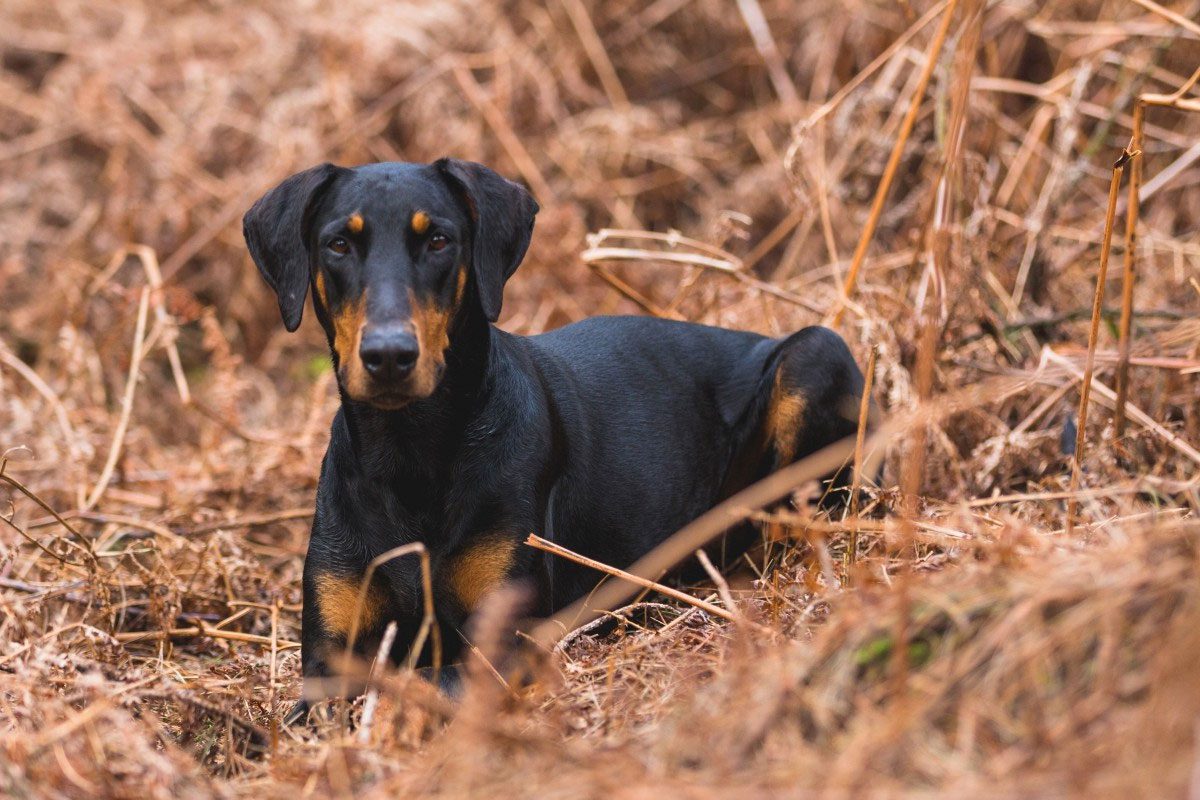
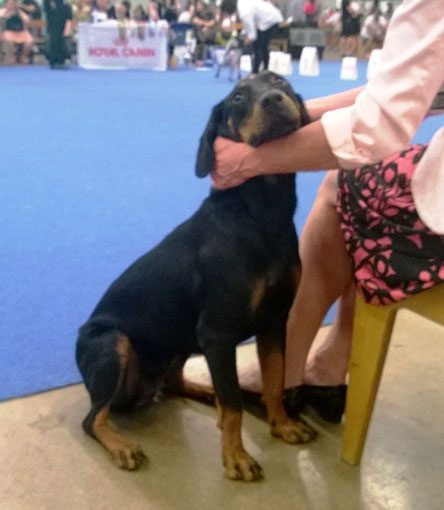
Photo: myanimallife

Physical Characteristics โ€œItalian Wirehaired Houndโ€

Italian Wirehaired Hound

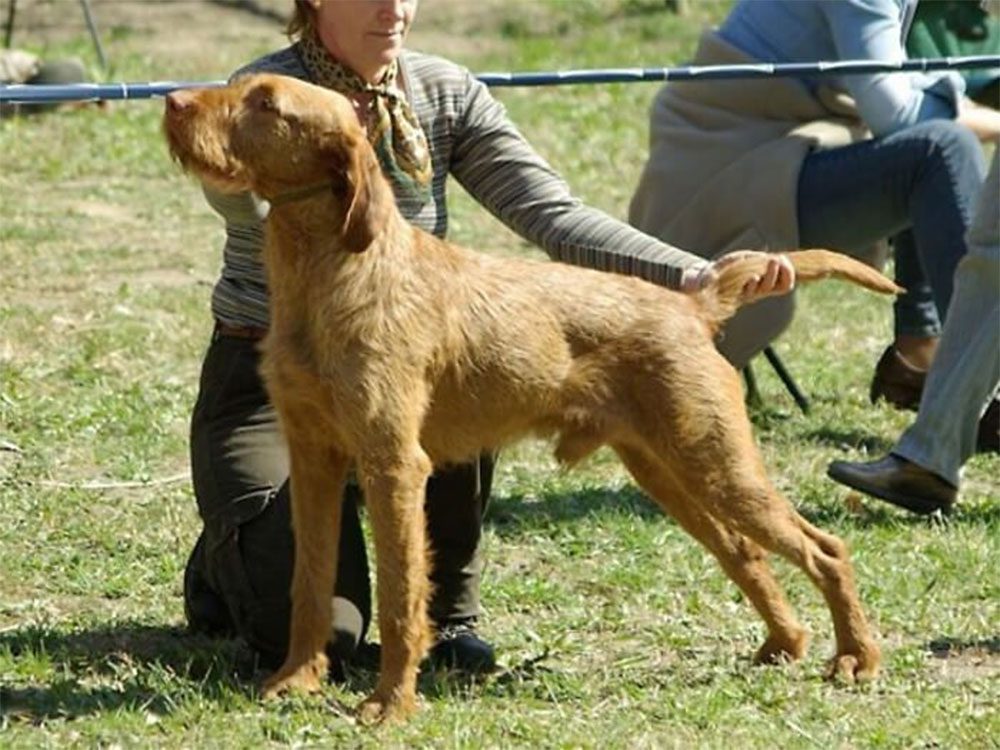
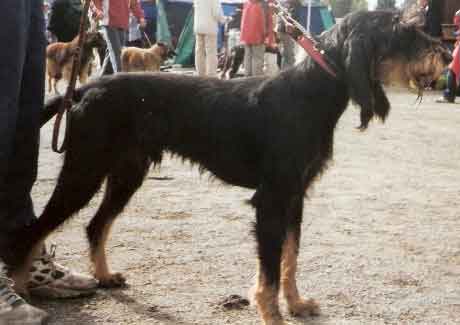
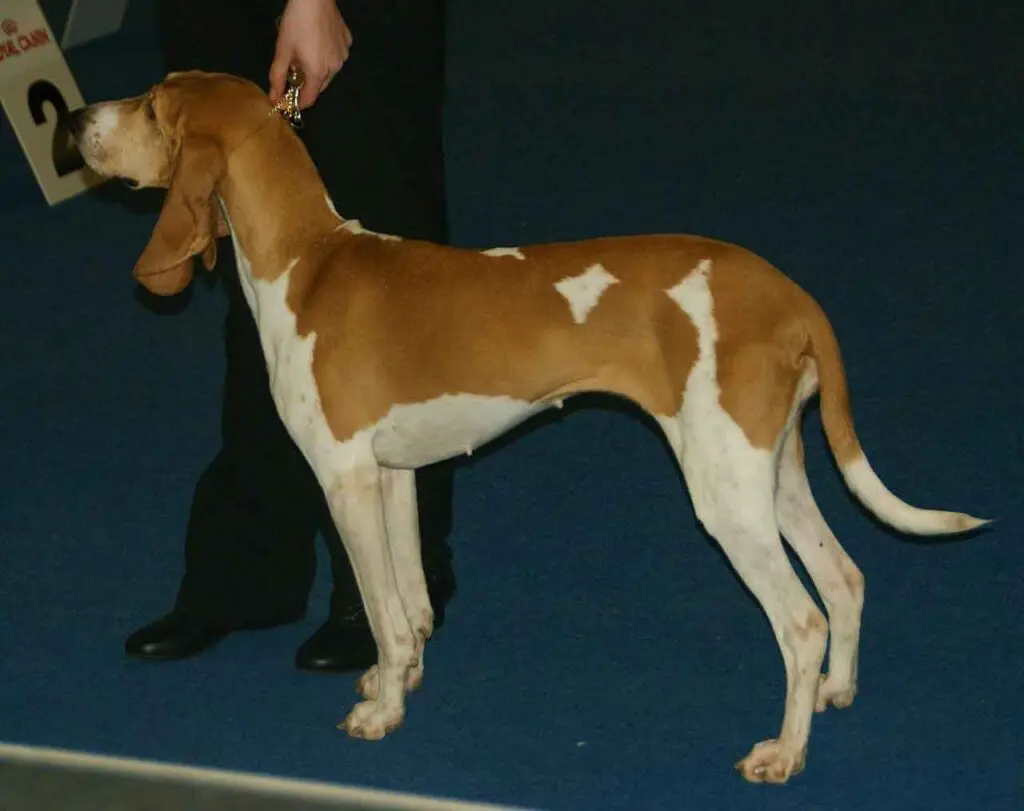
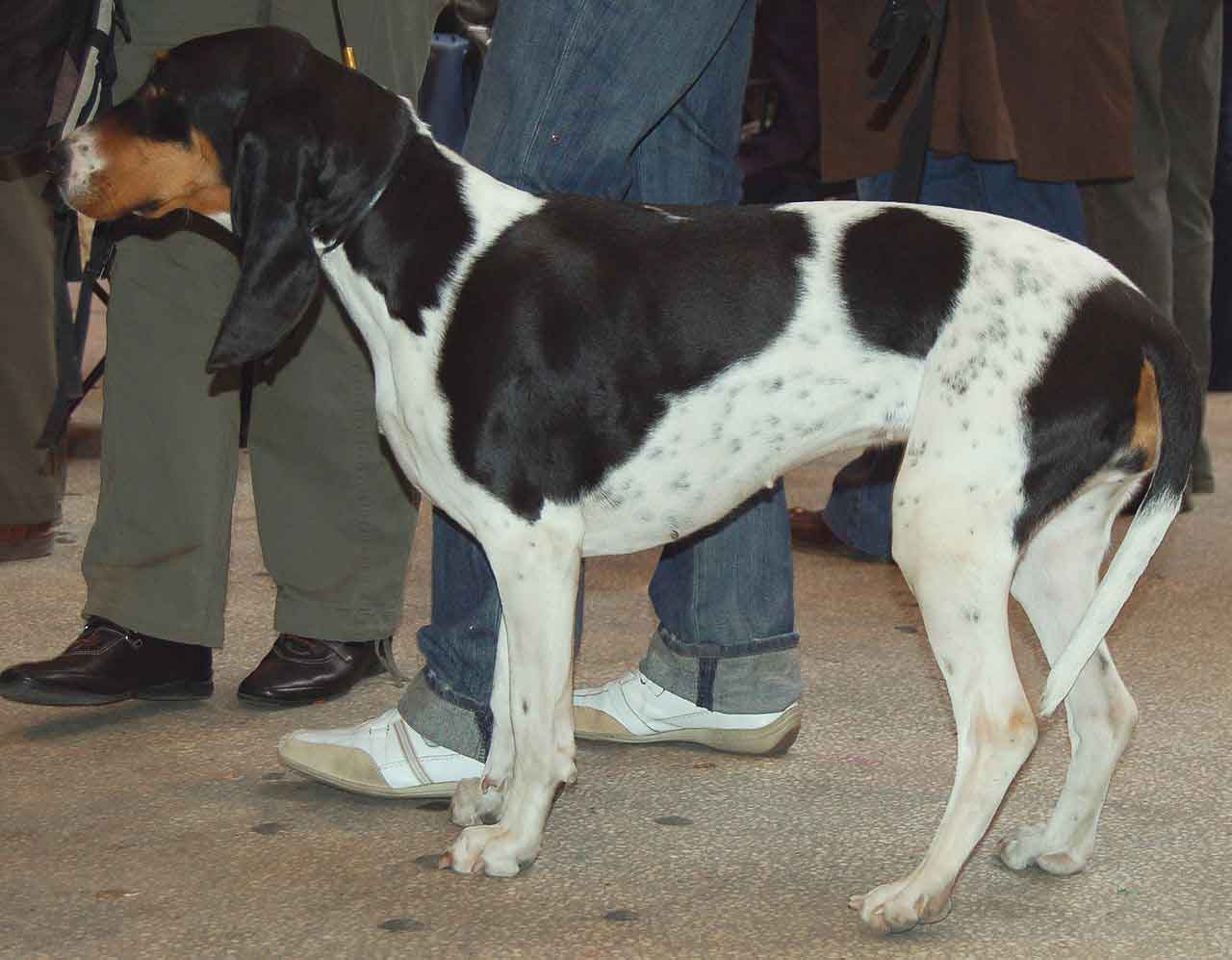
It is similar to the "Italian Flat-Coated Hound". It differs mainly by the coat, made up of coarse hair no more than two inches long, but thinner and shorter on the tail, ears and head; the coat colors are fawn and fiery black (both with white spots allowed, if they are well located).

For the standard it has minimum and maximum withers heights greater than two centimeters compared to the "Italian Flat-Coated Hound": therefore it is slightly larger. She is also believed to have a calmer and more thoughtful temperament than her satin-haired variant., and that this is reflected in a slightly different approach to hunting.

The height at the withers varies in the male from 52 to 60 cm and in the female of 50 to 58 cm.. In the case of an excellent subject there is a tolerance of two centimeters more or less. Weight may vary in males of 20 to 28 kg and females in 18 to 26 kg. The length of the trunk is identical to the height at the withers.

Character and skills ยซItalian Wirehaired Houndยป

Great hunter and secret companion. It is used and fits perfectly both in the mountains and on the flat and in the most rugged terrain. It is equipped with resistance, as well as with good speed and works with commitment and passion both in isolation and in the diving suit.

Compared to "Italian Flat-Coated Hound", the Italian Rough-Haired Hound is more reserved, less exuberant, wise, calm and thoughtful in his work. A gentle look, friendly, but proud and wrapped in a halo of melancholy. A strong and very nice voice.

This dog is first and foremost a working dog, and is rarely kept as a pet.

Videos "Italian Rough-Haired Hound"

ITALIAN SEGUGIO No10 With Italian subtitles. Look now at http://www.tstv.gr/it.html
SEGUGIO ITALIANO No10 Con sottotitoli in Italiano. Guarda ora a http://www.tstv.gr/it.html
ITALIAN SEGUGIO documentary trailer

Type and recognitions:

  • FCI CLASSIFICATION:
  • Group :
  • Section : . .

Federations:

  • – FCI – Group 6: Scent hounds, and related breeds. – Section 1.2: Medium-sized Hounds. โ“˜
  • – โ€‹KC – Houndy โ“˜

FCI breed standard "Italian Rough-Haired Hound"

Origin:
Italy

Date of publication of the valid original standard:
27.11.1989

Use:

Hound, especially for hare and wild boar hunting.


General appearance:

It is of medium proportions and its body is square in shape.. Its configuration is harmonious in terms of dimensions (that is to say, the relationship between size and different parts of the body), but there is no harmony in relation to the profiles (that is to say, concordance between the profiles of the head and body). Its well balanced construction, perfectly symmetrical, well developed, of thin shapes, well muscled with no hint of fat allow you to track game from dawn to dusk

IMPORTANT PROPORTIONS :

The height from the ground at the withers is equal to the length of the trunk, measured from the scapulo-humeral joint to the tip of the ischium. The cross, which should not be very prominent, barely exceeds the level of the rump. The length of the snout should correspond to half the length of the head. The height of the chest is just less than half the height at the withers.


Behavior / temperament:

The Italian Hound adapts perfectly to the most difficult terrain and can be used for hunting in the mountains, like on flat ground. Being very resistant and fast, work with ardor and passion, so much alone, like in a pack. Compared to smooth-haired specimens, is more reserved, less exuberant, sensible, calm and prudent at work. His kind look, sweet and haughty is veiled by a reflection of melancholy. His voice is sonorous and very harmonious.

Head:

It has an elongated shape. Its length reaches 4/10 the height at the withers.

Cranial region:
  • Skull : It appears in the shape of an elongated ellipse.. In profile, the upper longitudinal axis is moderately divergent in relation to the longitudinal axis of the snout. The upper profile is slightly domed. The bizygomatic width must be less than half the length of the head. The zygomatic arches are poorly developed. The frontal furrow is not very marked. The occipital protuberance should be sharp, but short; stands a little back, so it is not very visible. Can only be perceived by touch.
  • Depression links (Stop) : It is very little marked. From the snout the upper profile should rise in a gentle slope that reaches the skull.

facial region:

  • Truffle : It is great, fresh and moist. Extends to the front, in the vertical of the anterior part of the lips. The windows are movable and open wide. Its color is always black.
  • Snout : Its measurement corresponds to half the length of the head. Its height is barely more than half its length.; its width is equal to 17% of head length. The profile is convex. The lateral faces of the snout are convergent, but not to the point of imparting a pointy appearance. The branches of the mandible are almost rectilinear; They are poorly developed in their anterior part. The suborbital region is well shaped, but somewhat less than that of the bareback Hound.
  • Jaws / Teeth : Strong jaws, normal development. The dental arches of the incisors adapt perfectly. The teeth are white, of normal size and are implanted in the shape of a regular line. The denture is complete. The joint is in the form of scissors, although the pincer-shaped joint is accepted.
  • Cheeks : They are not very marked.

Eyes : They are big and bright, dark ocher color. They are located in a semi-lateral position. The inner corner of the eyelids should be at the same distance from the anterior edge of the nose and the outer tip of the occipital crest.. Fascinating expression, the look is sweet and haughty, with a slight veil of sadness. The palpebral opening is almond-shaped; the eyelids adapt perfectly to the eyeball. The edge of the eyelids must be black.

Ears : Its implantation of moderate width is located at the level of the zygomatic arches. They are hanging, form triangular, flat in almost its entire length (66 โ€“ 70% of head length) and very wide. The ears should end in a sharp point. Although thin, your cartilage should be rather rigid throughout its entire length; Its crooked and very rigid insertion deviates the ears towards the front, but without causing them to sag or bend, the tomen shaped like a tirabuzรณn. The tip bends slightly inwards. The ears are covered with hairs of moderate length shorter than those on the trunk., less hard and without any bangs.

Neck:

The top is slightly arched. The lower part does not show any sign of a double chin. Its length is equal to the length of the head, reaching like this 4/10 the height at the withers. It has the shape of a truncated cone joined to the head by a very marked nape.. Similarly, The neck should connect with the trunk, blending harmoniously with the shoulders.. Since it is very thin and light, must give the impression of being not very muscular.

Body:

Its longitude, Measured from the tip of the shoulder to the tip of the buttock, is equal to the height at the withers.

  • top line : Profile view, from the cross to the rump, is straight. It is somewhat convex in the region of the spine.
  • Cross : It protrudes little above the line of the back; is narrow, due to the approach of the tips of the shoulder blades. Blends harmoniously with the neck.
  • Back : The upper profile is rectilinear and muscular, although the muscles are not very apparent. The relationship between the length of the thoracic and the lumbar region is 3 to 1.
  • Pork loin : The length of the spine is a little less than 1/5 the height at the withers: its width is a little less than its length; his muscles are well developed.
  • Rump : The upper profile is slightly convex. It is said to be horizontal because its obliquity, from the tip of the hip to the beginning of the tail, lies between 15 to 20 degrees; Its length corresponds approximately to 1/3 from the height to the withers and its breadth to the 2/3 its length. The muscles are strong.
  • Breast : Its length reaches approximately half the height at the withers and its width about 1/3 the height at the withers. Its height must be equal to 48% the height at the withers. The lateral faces have a slight convexity. On the other hand, the upper costal arches should be well arched. The thoracic cavity is of moderate width. The manubrium of the sternum should be in the plane of the point of the shoulders.
  • bottom line : It is determined by a line that rises in a gentle slope to the abdomen, that is thin and never elongated. The flanks are lean, usually sunken, never recharged.

Tail:

High insertion, on the line of the rump. It is thicker at the root than that of the Short-haired Hound and is covered with hair throughout its length., but he doesn't have any bangs. During rest, hangs in the shape of a saber; When the dog is in action, it rises without exceeding the height of the back., It moves from left to right, rubbing the sides, or turns at times with rotational movements.. The queue is considered long, although its end is very close to the end of the hock.

Tips

PREVIOUS MEMBERS

  • As a whole : Seen in profile, follow a vertical line, starting from the scapulohumeral joint, must reach the ground touching the tips of the fingers, while the vertical starting from the humero-radial joint must divide into two more or less equal parts (of which the largest is the above) the forearm and carpus, emerging at half the length of the metacarpal, which is oblique. Forelimb height, from the ground to the elbow, is equal to half the height at the withers.
  • Shoulder : They are thin, long, free movements. The upper tips of the shoulder blades are tightly together. The obliquity below the horizontal is 45 a 50ยฐ.
  • Arms : They are well attached to the body. Like the shoulders, They have dry and long muscles. They are parallel to the median plane of the trunk. The scapulohumeral angle is 110ยฐ, the obliquity of the scapula is 45ยฐ.
  • Elbows : They appear equidistant from the median plane of the trunk; although they should not deviate or inward, nor out. The humeral-radial angle is 135 at 145ยฐ.Forearm : Is vertical. Its length is almost equal to 1/3 the height at the withers. The ulnocarpal groove is clearly visible. The forearm should give the impression of being very dry and thin..
  • Carpi : They are dry; a thin and fine skin covers them. Seen from the front, extend the vertical line of the forearm.
  • Metacarpus : Its length is not less than one sixth of the length of the forelimb, measured from the ground to the elbow. Seen in profile, they are somewhat oblique forward.
  • Front feet : They have an oval shape (hare feet); the fingers are arched and well together. The hair that covers them is dense. The digital tubercles are not very fleshy.; the pads are thin,hard, leathery and black. The nails are strong, bent over and always black. The presence of some white nails (not pink) does not constitute a fault.

LATER MEMBERS

  • As a whole : The vertical starting from the tip of the gluteus touches or falls almost on the tip of the fingers. รยก back view, the same vertical divides the tip of the hock into two equal parts, the metatarsus and the foot. The total length of the hind limb is equal to the 90% the height at the withers.
  • Thighs : They are long and wide. Its length is not less than a third of the height at the withers. Its lower edge is slightly convex; the tip of the buttocks is visible. The protruding muscles are clearly distinguished from each other. The thighs are somewhat oblique from top to bottom and from behind to front. The angle of the coxofemoral joint varies between 90ยฐ and 95ยฐ.
  • Knee : It must be in perfect aplomb with the extremity; it should not deviate even inwards, or out. The tibiofemoral angle varies between 110 y 120ยฐ
  • Leg : Its length is slightly less than that of the thigh and its obliquity below the horizontal is 40ยฐ.. The muscles are thin; the hock groove is well marked and visible with the external saphenous vein well apparent.
  • Hock : Viewed from the side, their faces are very wide. It is considered low because the distance from the ground to its tip does not exceed the 27% the height at the withers. The tibiotarsal angle, closed due to marked obliquity of the tibia, ranges between 115ยฐ and 125ยฐ.
  • Metatarsus : Its length corresponds to the height of the hock. It is strong and thin and appears perpendicular to the ground. No presence of dewclaws.
  • Rear feet : Less oval than the front ones, but with all the same features.

Movement:

Although the favorite movement of the Italian Hound is the gallop, The hunting activity forces the dog to also walk and trot..

Mantle

SKIN : It is well attached over the entire body and is only a little thick. The color of the mucous membranes, of the third eyelid, of the nails, of the central pad and digital tubercles is exclusively black. Although dark pigmentation of the palate is not prescribed, always constitutes an appreciable quality.

HAIR : The length of the hair covering the trunk should not exceed five centimeters. The hair is clearly hard, except on the head, the ears, the extremities, tail and snout, where the hair is generally less hard than on the trunk and lips. The hair under the lips, although not very long, constitutes what is considered a beard. The hair that covers the eyebrows is of moderate length, so that it does not fall into the eyes, nor hide them.

COLOR : Accepted colors include the entire range of unicolor fawn, from dark and carbon red, to light fawn, and the black and tan. The fawn may have white on the snout and skull (the mask may or may not be symmetrical), a white star on the parapet, white color on the neck, the metacarpals and metatarsals, the feet and the tip of the tail. But, the color white is not appreciated, and it is preferable that it not be very abundant. The black and tan may present only a white star on the chest; In this case it is said that the hound is tricolor.


Size and weight:

Height to the cross :

  • In males : 52 to 60 cm.,
  • in females : 50 to 58 cm..

Weight :

  • In males : 20 to 28 kg,
  • in females : 18 to 26 kg.

A tolerance of 2 cm more or less when it comes to excellent specimens.


Fouls:

Any deviation from the aforementioned criteria is considered a fault and the severity of this is considered to the degree of the deviation from the standard and its consequences on the health and well-being of the dog. These modalities are also valid for dogs that always walk.

SERIOUS FAULTS

โ€ข Head : convergent craniofacial axes.
โ€ข Size that exceeds the upper or lower margins indicated by the standard.

MISS PLAYOFFS

โ€ข Aggressive or fearful dog.
โ€ข Concave nasal cane.
โ€ข Total depigmentation or most of the truffle, or the edges of the eyelids.
โ€ข Gaze eyes.
โ€ข Superior prognathism.
โ€ข Short tail, o absence of glue, both congenital, as artificial.
โ€ข Slate or gunmetal color; brindle coat, brown, Brown, predominantly white liver.

Any dog โ€‹โ€‹showing clear signs of physical or behavioral abnormalities must be disqualified..


N.B.:

Males should have two normal-appearing testicles fully descended into the scrotum..

Source: F.C.I - International Cynological Federation

โ–ท The world of Pets: Dogs, cats, birds, reptiles, amphibians

Swiss Hound
Suiza FCI 59 . Medium-sized Hounds

Schwyz Hound
Schwyz Hound

In the breed standard, the temperament of Swiss hound is described as "Vivacious and passionate By hunting, sensitive, docile and very attached to his master.

Content

History

It is said that the Swiss Hound is among the oldest members of the Group of Hounds. According to a 15th century letter to Ernst, Elector of Saxony (1441-86), Swiss working dogs were among the best. Images from the 17th century show packs of hounds "with the same color and the same size, "big heads and very long ears".

Three centuries later, the german dog writer Richard Strebel wrote in ยซDie Deutschen Hundeยป (German dog breeds, 1903-05) that the hounds that lived separately in a restricted area of โ€‹โ€‹Switzerland therefore developed separately.

In the decade of 1890, it seemed that purebred bloodhounds were marked for death in Switzerland, despite the breeding Schwyz Hound, Bernese Hound and Lucerne Hound. Some hounds were exported to Scandinavia and, thanks to the crossing with native hounds, the Stรถvares (scandinavian hounds) they were blooming. But at the same time, the Thurgauer Laufhund quietly disappeared in Switzerland, and the Aargauer Laufhund gave way to Jura Hound (Bruno Jura Hound).

In 1903, J. Dust del Swiss Kennel Club founded the Schweizerische Laufhunde-Club (Swiss Hound Club) and in 1907 an appeal was made to save the Swiss hound of extinction. Then something remarkable happened: the breed club bought good quality Swiss hounds and gave them to prudent breeders and hunters. Test rules and regulations were developed and a series of obligations were established: to) only one dog at a time when hunting; b) the dog had to be under control when searching for game; c) a dog that disappeared during the hunt had to return to its master within half an hour; y d) the dog was to return as soon as the horn sounded, regardless of whether the dog was looking. Using these rules, the breed club tried to exclude disobedient dogs and forced owners to properly breed and train their dogs.

Four varieties

The development of Swiss Hound started in the decade of 1930, but it took time and effort. In 1937, only five hounds were entered in the Swiss herd book. The Dr. O. Vollenweider managed to gather 11 hound collectors in the city of Soleura, in northwestern Switzerland. Dogs suitable for breeding were selected and, in 1933, a breed standard was published. In the standard, the varieties were distinguished by coat color and pattern.

In 1944, 150 Swiss hounds were entered in a hound exhibition. (as a neutral country, Switzerland did not participate in WWII) It was no longer forbidden to work with dogs that gave tongue, and bloodhounds of more than 20 inches (50 centimeters) to the cross.

Attempts to save or restore the Laufhund de Argovia they were unsuccessful; in 1933, the breed standard was canceled. Four varieties remained: the Bernese Hound, the Jura Hound (Bruno Jura Hound), the Lucerne Hound and the Schwyz Hound. Their names connect them with cities and areas of Switzerland (Berne, Lucerne, Jura), or with Switzerland.

It is said that between 1902 and 1922, a few 1.200 swiss hounds, mainly Schwyz Hound white-yellow, they were raised in Norway. Some years, there were more Swiss Hounds outside of Switzerland than in their country of origin. In 1993, about 1.000 copies of Lucerne Hound they lived in sweden.

France is another importer. Seventy-five Jura Hound (Bruno Jura Hound) enrolled in an exhibition in Lyon in 1976. It is not surprising that the Jura is predominantly found in France and Switzerland, and that it extends to Germany. Since the 15th century, Swiss hounds were also exported to Italy. According to raven, they frequently crossed paths with his Italian cousin, the Italian short-haired Segugio.

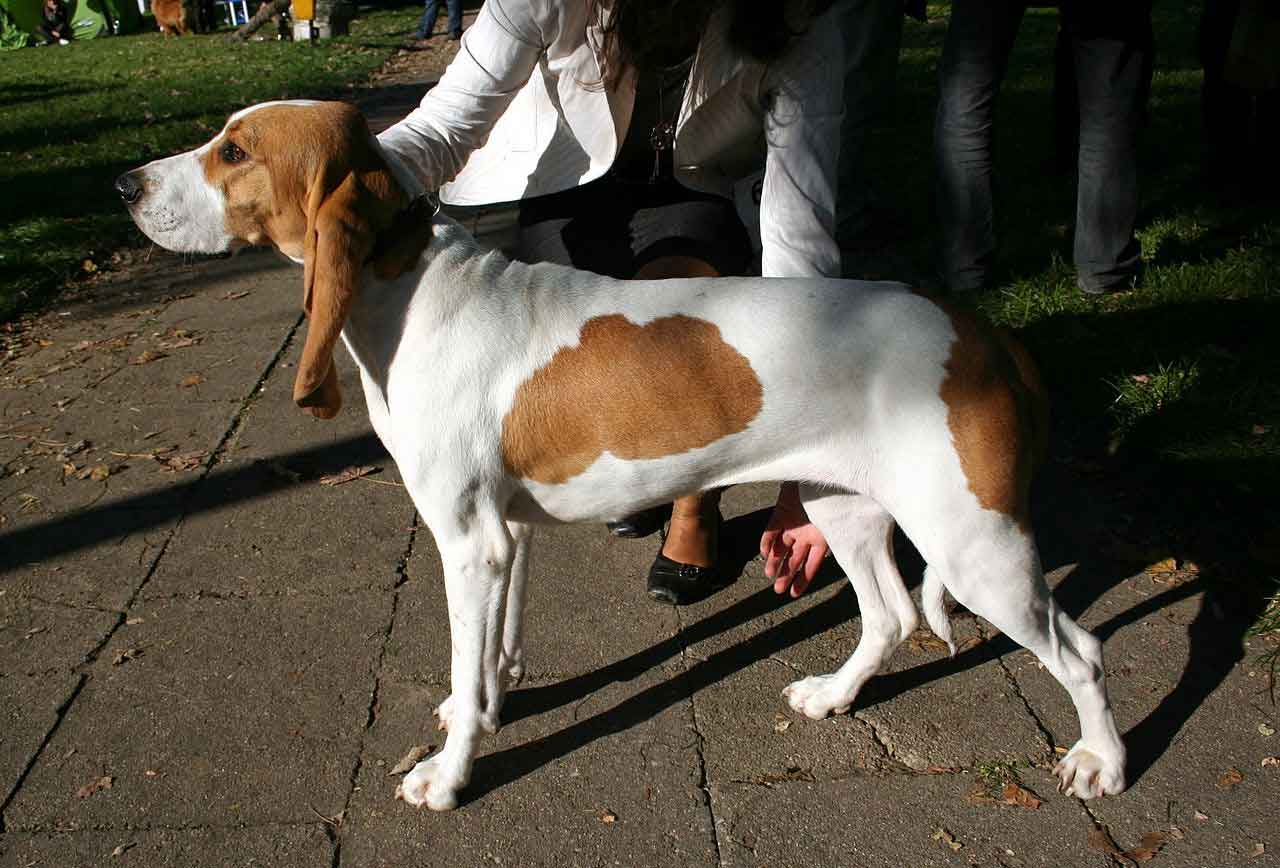
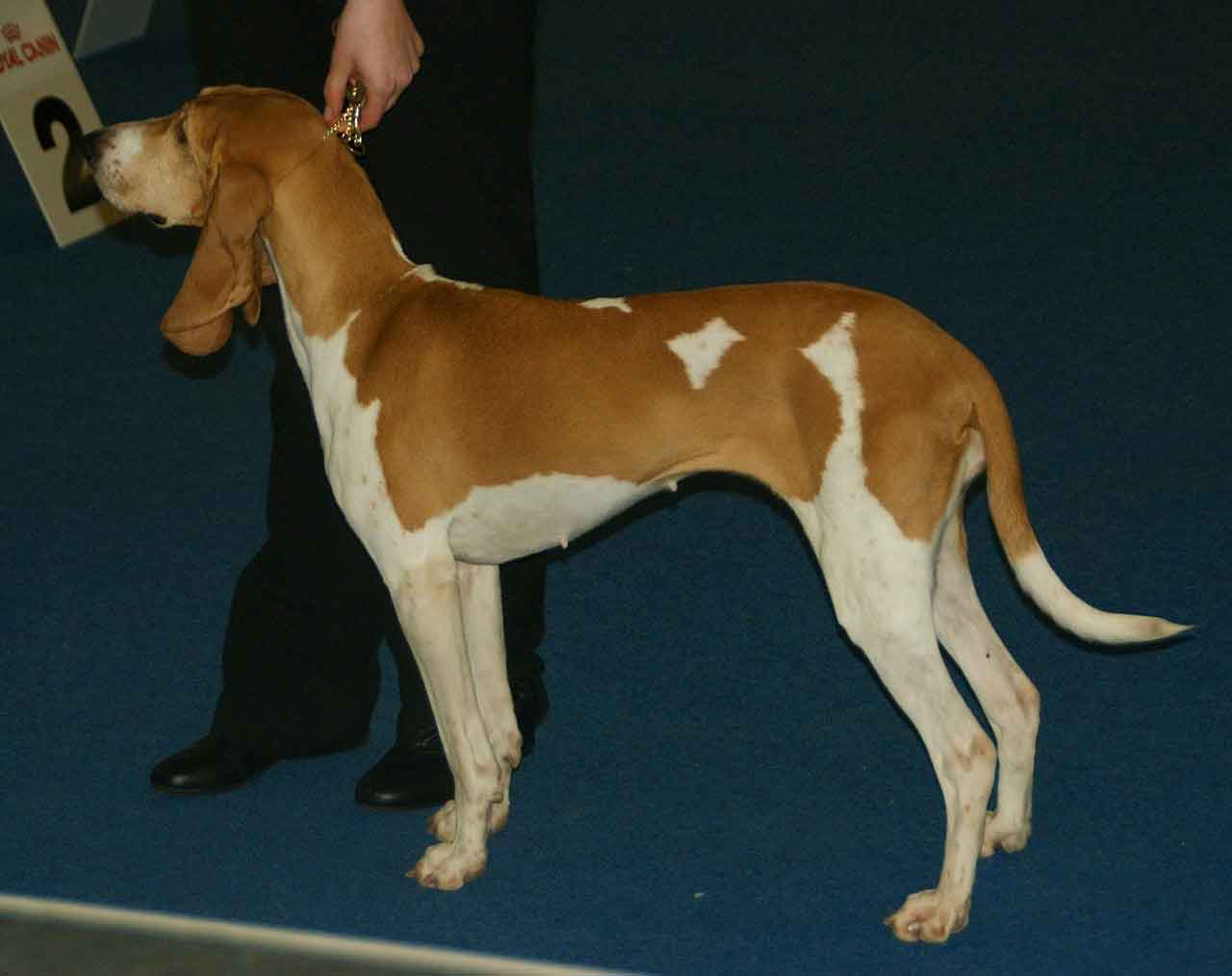
Photo: XXXVIII Wystawa krajowa psรณw rasowych w Czฤ™stochowie. Goล„czy ze Schwyz: Ella Haniccina Zahradka z hodowli Z Pastorowej Sfory naleลผฤ…ca do Mariusza i Wioletty Antoszczuk by chained, CC BY-SA 3.0, via Wikimedia Commons

Swiss Hound varieties:

1 Bernese Hound

Bernese Hound

The Bernese Hound It is mainly used for hunting hare.

The Swiss Hound has a very ancient origin. His existence

... Read more

2 Lucerne Hound

Lucerne Hound

The Lucerne Hound is a lively dog, but gentle and docile. Very attached to his master.

The breed was originally bred in

... Read more

3 Schwyz Hound

Schwyz Hound

The Schwyz Hound they are a very lively and energetic breed that requires a significant amount of daily exercise.

The Schwyz Hound

... Read more

4 Jura Hound (Bruno Jura Hound)

Bruno Jura Hound

The Jura Hound It is very distant with strangers and needs firm handling if kept as pets.

In the

... Read more

โ–ท The world of Pets: Dogs, cats, birds, reptiles, amphibians

Italian short-haired Segugio
Italia FCI 337 - Medium-sized Hounds

Italian short-haired Segugio

The Italian short-haired Segugio it is a dog with a stable temperament, of a soft but not very outgoing expression.

Content

History

The Italian hound It, According to the vast majority of authors, a dog with very ancient origins. It is believed, in fact, descended from hunting dogs that lived from ancient Egypt, they reached the shores of the Mediterranean Sea, and therefore also to Italy, thanks to the Phoenician merchants. Many Egyptian drawings dating from the time of the pharaohs show the presence of dogs very similar to the current one Italian hound.

His best period is the Renaissance, when its level was improved and its great diffusion began. The race then underwent a slow and inexorable decline until, from the beginning of the 20th century, the Italian hound it became very popular again.

The modern history of Italian hound started on 1920, year in which the Technical Committee of the Society of Hound Hobbyists drew up the first breed standard that a few years later, in 1929 to be exact, was approved by the Italian Kennel Club. At that time there was only one standard that unified the Italian Rough-Haired Hound y al ยซItalian short-haired Segugioยซ; in 1976 came the prohibition of mating between the two varieties; then, in 1989, the ENCI (Ente Nazionale della Cinofilia Italiana) passed two different standards, standards that were later also recognized by the FCI which classified them in the group 6, among hound-type dogs, and related breeds.

The Italian short-haired Segugio It probably has the same origins as the ยซItalian Rough-Haired Houndยซ; in fact, both varieties of hounds have always coexisted in almost the entire peninsula.

Physical characteristics ยซItalian short-haired houndยป

Italian Hound, Short-haired
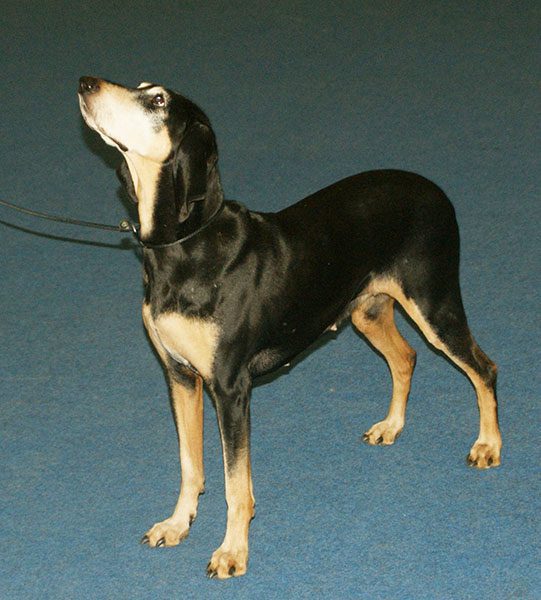
A female Italian Hound, Short-haired. Colour: black & tan by Canarian, CC BY-SA 4.0, via Wikimedia Commons

The Italian short-haired Segugio represents perfection for those who care about physical appearance: in fact, has no fat and is very muscular. This physical feature, combined with a regular body, makes it particularly fast and suitable for running. It's not a coincidence, in fact, getting tired only after intense physical activity.

Hair is shaved all over the body, dense, dense and smooth.

The allowed colors are:

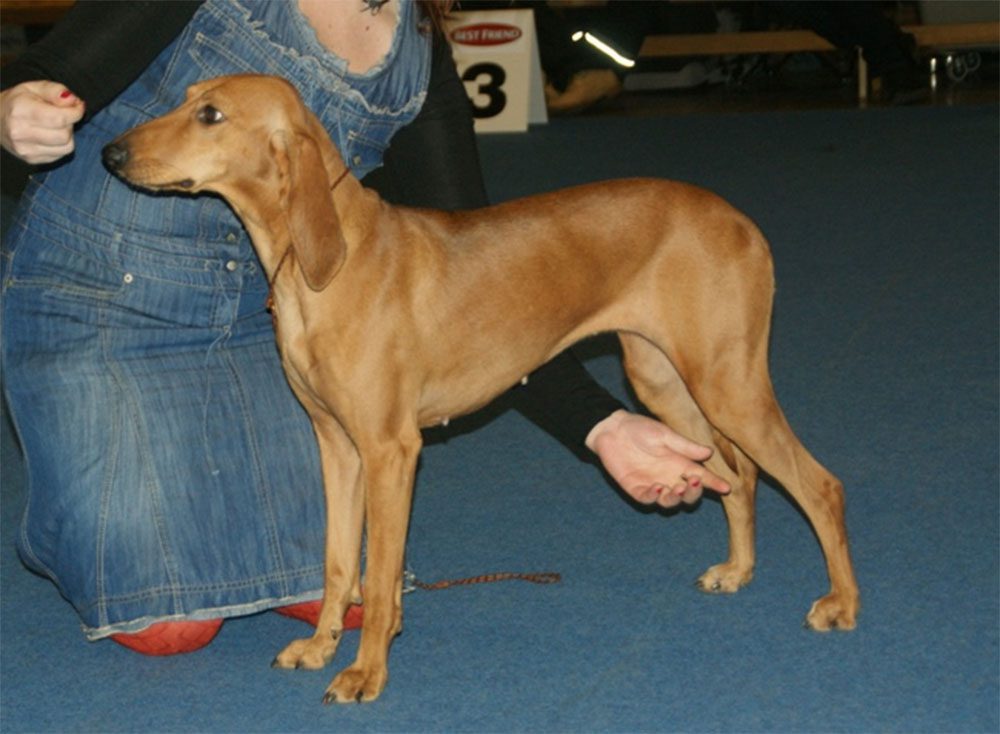
– Fawn unicolor in all its gradations.
– black and tan.

Fawn dogs may have a white muzzle and skull, a white star on the chest, white on the neck, metacarpos, metatarsos, feet and tip of tail.

The height of the males ranges from 52 and 58 cm., that of the females between 48 and 56 cm.. The weight can vary between 18 and 28 kg.

Character and aptitudes ยซItalian short-haired houndยป

Alive and bold. Never aggressive towards humans; rarely towards other dogs. It does not bite. Suits austere food and country kennels. Not conspicuously affectionate, but constantly needs the presence and consideration of the owner, who often identifies with the one who accompanies him during the hunt.

If he is well-maintained and has a breed-appropriate lifestyle, the Italian short-haired Segugio You can live up 12 or 13 years. This is because this type of dog is not predisposed to particular diseases derived from its breed.

Those who love them say that…

ยซI did not choose to live with a ยซHoundยป, I mean it was not a choice out of passion for this breed… it happened to me! It turns out that I share my life with a "Hound". It was and still is the most amazing experience of my life. Living with a "Hound" means learning to have time, lots of time to walk โ€œaloneโ€ exploring life, silent. It is learning that you can stay in the forest for hours without doing anything other than living and discovering the forest. And that's it. The "Hound" teaches you not to pay attention to appearances, to pursue your passions tenaciously while those who look at you think you are just sniffing. He is an extremely sensitive partner but at the same time proud and independent. Living with Chloe is an adventure, made of constant and subtle balances between sharing and the search for individuality, the desire for freedom and the need to feel close to each other, "It is learning every day to discover and respect yourself.".

Silvia De Cristofaro

Videos "Italian short-haired Segugio"

segugio italiano sofiko evros 2/7/2017 Educational
segugio italiano sofiko evros 2/7/2017 ฮ•ฮบฯ€ฮฑฮนฮดฮตฯ…ฯ„ฮนฮบฯŒ
Short-haired fawn Italian Hound (Alexia)-1/1
Segugio Italiano fulvo a pelo raso (Alexia)-1/1

Type and recognitions:

  • FCI CLASSIFICATION:
  • Group :
  • Section : . .

Federations:

  • – FCI – Group 6: Scent hounds, and related breeds. – Section 1.2: Medium-sized Hounds. โ“˜
  • – โ€‹KC – Houndy โ“˜

FCI breed standard "Italian short-haired Segugio"

Origin:
Italy

Date of publication of the valid original standard:
13.11.2015

Use:

Hound, particularly for hare and wild boar hunting.


General appearance:

This is a dog of medium overall proportions and a square body., robust construction, perfectly proportioned and endowed with a well-developed bone structure. He is slim and has strong muscles., without the slightest trace of grease. The head is elongated and the longitudinal craniofacial axes are divergent.. The hair is satin.

IMPORTANT PROPORTIONS

โ€ข The length of the trunk is equal to the height at the withers (square appearance).
โ€ข The height of the chest is equal to half the height at the withers, or, In other words, is equal to the height of the forelimb measured from the ground to the elbow.
โ€ข The length of the nasal shank is equal to half the length of the head.


Behavior / temperament:

This is an animal that adapts well to the most diverse types of terrain and is endowed with great resistance and great speed.. Shows great ardor, whether you work alone or in a pack. He has a bold temperament, but not very communicative. His eyes are sweet and his voice is very pleasant..

Head:

---

Cranial region:
  • Skull : Seen from above, Its shape is almost oval. In profile, the axes of the skull and the nasal cannula are divergent. The upper profile is slightly convex. The bizygomatic width is less than half the length of the head. The superciliary arches are not very developed. The frontal furrow is not very marked. The occipital crest is short and apparent, although the relief is not exaggerated.
  • Depression links (Stop) : It has an accentuation of about 140ยฐ.

facial region:

  • Truffle : It is almost in the shape of a six-sided polyhedron.. It is large enough and mobile. The windows are wide open somewhat laterally.. The color of the nose must always be black.
  • Snout : Its length is equal to half the length of the head. Its depth (height) It should be a little larger than half its length. The profile of the nasal shank is somewhat convex. Its lateral faces converge forward. The branches of the mandible are almost straight along their entire length and the body of the jaw is poorly developed in its anterior part.. The lower lateral profile of the snout is defined by the upper lip.
  • Lips : They are fine and thin. Seen both from the front, as in profile, they are a little high (lying). Seen in profile, its lower edge draws a slight curve. The edges of the lips should always be black.
  • Jaws / Teeth : The jaws are shaped like a truncated cone.. The incisors are implanted at right angles to the jaw and the joint is scissor-shaped.. The denture is complete. The teeth are white and set in a regular line.. The correct joint is scissor-shaped, although the pincer-shaped joint is accepted.
  • Cheeks : Flat and thin.

Eyes : Almond shaped. They are large, luminous, dark ocher color. Your expression is sweet. They are located in a semi-lateral position. The edges of the eyelids are always black.

Ears : The insertion of the ear is located in the plane of the zygomatic arches or a little below. The ears must be hanging and have a contortion that brings them completely forward and does not even allow them to be sunken., nor twisted. They have a triangular shape, They are flat throughout almost their entire length and are very wide. Its end should end in a narrow point, but never widely rounded; this tip bends slightly inwards. The length of the ears corresponds to a 70% of the length of the head and its width, measured at the widest part, It is a little larger than half its length.

Neck:

โ€ข Profile : The upper profile is slightly arched, i.e. convex. โ€ข Length : Its length corresponds or is almost equal to the length of the head; so that, must correspond to 4/10 the height at the withers. โ€ข Form : The neck is shaped like a truncated cone.. Its appearance is thin and light, to the point of giving the impression of being not very muscular. โ€ข Skin : The skin on the neck is thin, well stretched and does not form folds or double chins. The hair is satin.

Body:

  • top line : It is rectilinear. Descends harmoniously from the withers to the rump, with a slight convexity in the plane of the lumbar region.
  • Cross : Does not protrude much above the line of the back. It is narrow due to the approach of the tip of the shoulder blades and joins harmoniously with the root of the neck.
  • Back : The upper profile is rectilinear and the muscles are not very apparent.. There is a proportion of 3 to 1 between the length of the back and the length of the lumbar region.
  • Pork loin : The length of the lumbar region corresponds to just under 1/5 the height at the withers. The width of the spine is equal to its length. The muscles of this region are well developed.
  • Rump : Its upper profile is slightly convex. Its direction has an inclination of about 10 degrees below the horizontal. Its length corresponds approximately to 1/3 from the height to the withers and its width corresponds to half its length. The muscles are well developed.
  • Breast : The height of the rib cage is equal to or slightly less than half the height at the withers and its transverse diameter, calculated at half its height, approximately corresponds to 1/3 the height at the withers. The chest should descend almost to the elbows. The ribs are not very tight, therefore they are little convex. Since the chest circumference is more than ยผ of the height at the withers, the pectoral region is not very wide.
  • bottom line : It is typical of the breed, since it appears in the form of a straight line throughout its entire length; this line goes up from the sternum to the belly, which is very thin, although not very raised.

Tail:

On the line of the rump the insertion of the tail is high. It is thin at the root and uniform throughout its extension.. It looks like a small flute (breadstick), except at the extremity, where it is very fine. The limb reaches the tip of the hock or barely touches it. The tail is covered with short hair throughout its entire length.. When the dog is at rest the tail hangs; When in action it rises and exceeds the line of the back.

Tips

PREVIOUS MEMBERS : Seen as a whole and in profile, the aplombs must correspond to an imaginary vertical line that, starting from the scapulohumeral joint, descends to the ground, touching fingertips. They must also correspond to another imaginary vertical line that, starting from the humero-radial joint, divide the forearm and carpus into two more or less equal parts to end at half the length of the metacarpus. Seen from the front, The positions must correspond to a vertical line that starts from the tip of the shoulder and divides the forearm into two visibly equal parts., the carpus, the metacarpus and the foot. The height from the elbow to the floor is equal to half the height at the withers.

  • Shoulder : Shoulder length corresponds to 1/3 the height at the withers. Its inclination below the horizontal is 45 to 55 degrees. Shoulder muscles are long, skinny, apparent and well defined. The opening of the angle of the scapulo-humeral joint is about 110 degrees.
  • Arm : The length of the arm corresponds approximately to half the height from the floor to the elbow. In relation to the vertical, the arm is located in a plane more or less parallel to the median plane of the body. Arm muscles are long and thin.
  • Elbows : They are located in the plane of the sternum line or a little below and are parallel to the median plane of the body. The end of the elbow should be on the inclined vertical that starts from the tip of the shoulder blade. The humeral-radial angle measures 135 to 145 degrees.
  • Forearm : Its length is approximately equal to 1/3 the height at the withers. It is located perpendicular to the ground and has a clearly visible carpo-ulnar groove., which makes him look thin, fleshless and without important bones.
  • Carpo : He is thin. Extends the straight line of the forearm.
  • Metacarpus : Its length must not be less than 1/6 of that of the anterior limb, measurement from the floor to the elbow. In profile, the metacarpus is wider than the carpus, but flat and thin and slightly oblique from back to front.
  • Front feet : They have an oval shape (hare foot); the fingers are well together and arched. The digital tubers are not very fleshy. Center pads are thin, hard, leathery and black. The nails are strong, bent and always black. The presence of some white nails (not pink) does not constitute a fault.

LATER MEMBERS : Seen in profile, The positions must correspond to an imaginary vertical that descends from the tip of the gluteus to the floor, rubbing or touching the tips of the fingers.. Seen from the back, the aplombs must correspond to an imaginary vertical that, from the tip of the gluteus, descends to the ground and divides the tip of the hock into two equal parts, the metatarsus and the foot. The length of the hind limbs is equal to 93 % the height at the withers.

  • Thigh : Length and width; its length is not less than 1/3 the height at the withers. thigh width (external face) is approximately equal to ยพ of its length. The muscles are prominent, but they are well separated. The posterior edge of the thigh is slightly convex. The angle of the coxofemoral joint measures 90 to 95 degrees.
  • Knees : They must be well plumb and the kneecap must not deviate even inwards, nor out. The angle of the tibiofemoral joint is about 115 degrees.
  • Leg : Its length is a little less than the thigh; Its inclination below the horizontal is approximately 40 degrees. The leg muscles are thin even in the upper part; They are solid and differentiate well from each other. The groove on the leg is well marked and apparent.. The external saphenous vein is clearly visible. The bones are rather light and very solid..
  • Hock : Its width is approximately one tenth of the height at the withers.. The distance from the ground to the tip of the hock should not be greater than the 27 % the height at the withers (low hock). The bone structure is solid and the contours of the bones are clearly visible., which accentuates the thinness of the region. The opening of the tibiotarsal angle is about 135 degrees.
  • Metatarsus : Its length is less than half the length of the forelimb measured from the ground to the elbow. It is less wide than the hock and is presented in a vertical position, that is to say, perpendicular to the ground. No presence of dewclaws.
  • Rear feet : They are less oval than the previous ones; for the rest, They have the same characteristics.

Movement:

during the hunt, the dog's movement is the gallop.

Mantle

SKIN : It is fine and thin; is well applied over the entire body. Mucosal pigmentation, of the third eyelid, of the nails, of the central pads and digital tubercles should be strictly black. Black palate is not a requirement, but it represents a quality.

HAIR : It is smooth over the entire body. It's stiff, dense, dense and uniformly smooth. Some hard hairs can be found scattered on the trunk, the snout and limbs, but this does not constitute a fault.

COLOR : Accepted colors include the entire range of unicolor fawn, from intense reddish-fawn to washed-out fawn and black and tan. The tan markings are found, as usual, on the snout, the eyebrows, the chest, the extremities, from the carpus to the foot and from the tarsus to the foot, as well as in the perineum. The fawn may have white on the snout and skull (the mask may or may not be symmetrical), a white star on the chest, white color on the neck, the metacarpals and metatarsals, the feet and the tip of the tail. But, the color white is not very appreciated, and it is preferable that it not be very abundant. The black and tan color may have a white star on the chest; In this case it is said that the hound is tricolor. The brown color (coffee, liver) it is not accepted.


Size and weight:

Height to the cross :

  • In males : of 52 to 58 cm.,
  • in females it is 48 to 56 cm..

Tolerance of more or less 2 cm. (only for excellent dogs).

Weight : The weight of 18 to 28 kg.


Fouls:

Any deviation from the aforementioned criteria is considered as a fault and the severity of this is considered to the degree of the deviation to the standard and its consequences on the health and well-being of the dog., and the dog's ability to perform its traditional task.

โ€ข Constant pacing.

MISS PLAYOFFS :

โ€ข Aggressive or fearful dog.
โ€ข Converging craniofacial axes.
โ€ข Depigmentation of all or most of the nose and the edge of the eyelids.
โ€ข Concave nasal cane.
โ€ข Superior prognathism.
โ€ข Gaze eyes, total or most of the edges of the eyelids depigmentation.
โ€ข Absence of tail or short tail, both congenital, as artificial.
โ€ข Slate or lead color; brindle dog, coffee, liver, the predominant white color.
โ€ข Size that exceeds or does not reach the tolerance margin indicated in the standard.

Any dog โ€‹โ€‹showing clear signs of physical or behavioral abnormalities must be disqualified..


N.B.:

Males should have two normal-appearing testicles fully descended into the scrotum..

Source: F.C.I - International Cynological Federation

โ–ท The world of Pets: Dogs, cats, birds, reptiles, amphibians

Bavarian Mountain Hound
Germany FCI 217 . Leash (scent) Hounds
Bavarian Mountain Hound

The Bavarian Mountain Hound is very suspicious of strangers, I am calm and balanced with its owner.

Content

History

The Bavarian Mountain Hound it is a medium sized hunting dog. He is a highly developed specialist, but at the same time versatile in hunting. Tracking work is his specialty. Master the search and hunt and especially the tracking. On the trail, keep track of an injured animal. Fast and infallible dog work is crucial to reduce the suffering of the prey.

The Bavarian Mountain Hound dates back to ancient dog breeds. These hounds are also called ยซBrackenยป. For hunting, which was an important way of life for our ancestors for thousands of years, dogs with a particularly good sense of smell and an intelligent sense of detection were of great importance. Trace Dogs were also needed to hunt criminals.

For the Teutons a good Scent hound worth more than a horse. This is attested by a legal text of more than 1000 years of antiguaty, el Lex Baiuwariorum. A document of the year 1459 later attests to Bracken's donation to the Tegrinsee monastery (today Tegernsee) by a Count Kaspar Tรถrring. Already at that time the count systematically raised the Bracken according to a breeding book. The actual Bavarian Mountain Hound also descends from these Bracken.

In 1870 he also grew up Hanoverian Scenthound. This resulted in a modern and versatile helper for the ranger and hunter.. The dogs had to be distinguished by their high performance in hunting. At the same time, they had to cope with the harsh conditions of the mountains. So, sharp stones were not allowed to bother them as much as storms, snow or high demands on your ability to climb. In 1883 took place the first official exhibition of the Bavarian Mountain Hound. In 1912 was founded the Klub fรผr Bayerische GebirgsschweiรŸhunde, who has since been very successful in caring for these dogs.

After World War II, the genetic bottleneck was worked on by crossing into the Tyrolean hound. Although the breed is very rare, is spread throughout Germany. His breeding is organized in a very responsible way. To avoid โ€œelite or champion breedingโ€ the number of offspring of a breeding animal is limited to 18 to 20. On the other hand, at least one animal from each litter raised must be reintroduced into the breed if there are no signs of inherited diseases. It also, breeding is only allowed with dogs that have passed performance tests anyway. The breeding of Bavarian Mountain Hound is a model, a project, how to breed healthy and strong pedigree dogs, even with a numerically very small population. They are raised between 10 and 12 litters with 60 to 80 puppies per year. These go almost only to the professional hands of professional rangers and hunters.

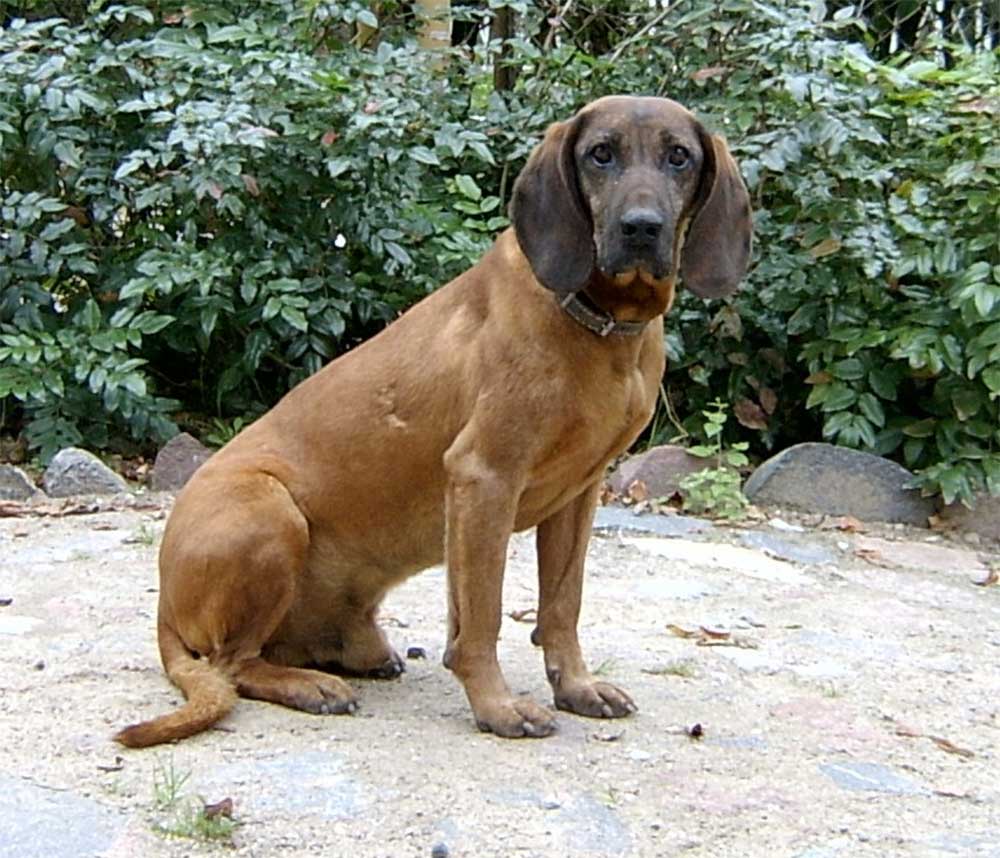
Photo: Bavarian Mountain Hound (name: Zoran Spod Ruskiej Granicy) by Ralf Lotys (Surely), CC BY 2.5, via Wikimedia Commons

Physical characteristics

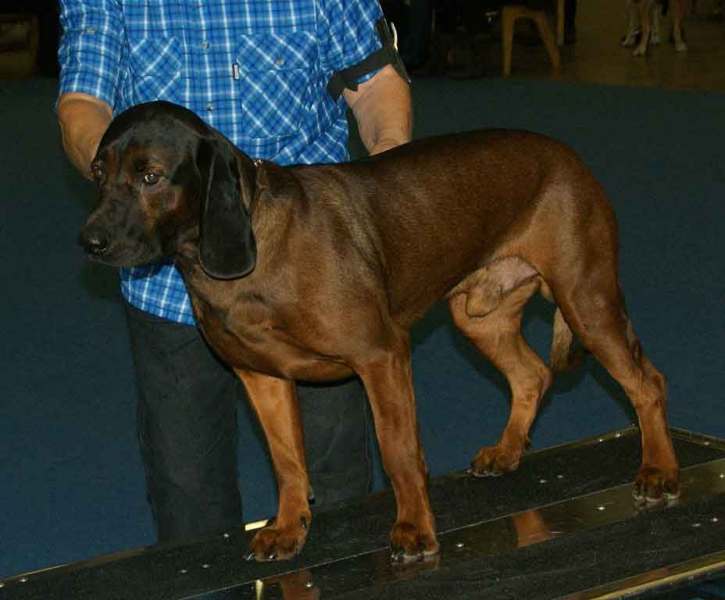
The Bavarian Mountain Hound It is a strong dog, medium-sized, with a height at the withers of about 44 to 52 cm and a weight of 17 to 30 kg. Males, However, they are larger and heavier than females. For your size, has rather short legs. The standard describes its appearance in this way:

A medium sized dog, harmonious, light, very agile and muscular. The body is slightly longer than tall, slightly raised from behind; leans on legs not too high. The head is carried horizontally or somewhat erect, tail horizontal or slanted down.

The coat must be dense, smooth, moderately rough, low gloss. The standard requires the following colors:

Dark red, deer red, Red brown, yellowish red, also pale yellow (even sand color); reddish gray like the winter hair of the red deer, also brindle or dark flecked.
In the back, the basic color is generally more intense. Muzzle and ears dark.
The tail is almost always dotted dark. A small, clear spot is allowed on the chest (hound star).

The meaning is: The colors must camouflage the dog in its hunting work and not give it away, for example with large white marks.

Character and skills

The Bavarian Mountain Hound is a thoroughbred hunting dog with wide awake senses, but without nervousness. As long as you don't have a smell in your nose, impresses with a thoughtful nature, quiet and extremely gentle, that radiates pure slowdown for us humans. The official standard describes its nature as follows: ยซCalm and balanced; affectionate with his owner, reserved with strangers. What is required is a stable dog, self-confident, fearless and easy to handle, neither shy nor aggressive".

The Bavarian Mountain Hound it is a very capable working dog that performs its tasks conscientiously and with the utmost dedication. He has a strong homing instinct and is a master of tracking.. Exploring nature with him is, therefore, a very special experience and happiness. The Bavarian Mountain Hound, professionally managed, it is also a very good family dog รขโ‚ฌโ€นรขโ‚ฌโ€นwith a gentle nature.

Fitness

One Bavarian Mountain Hound It is not a companion dog for the city or for walks in nature, even if they are daily. Not a dog for the home, but a professional hunting dog who wants and needs the job. Otherwise, his attitude is completely undemanding. So, Ideally, you should live in a house on the edge of the woods or in the country with a garden..

The Bavarian Mountain Hound wants and can go out in all climates. The standard provides information on the conditions of its maintenance:

ยซIn accordance with its hunting purpose as a specialist in monitoring cloven-hoofed hunting, the Bavarian Mountain Hound must possess all the qualities required of him to be useful in a difficult pursuit. The usefulness must be proven by appropriate performance tests.".

Education ยซBavarian mountain trackerยป

The Bavarian Mountain Hound is a very friendly and eager to learn four legged friend, that makes it easier for its owner to train and work with him. Why you want and need this guide. But it is not a dog that awaits orders from its owner. Since dogs have been admitted to breeding for many generations only if they have mastered many demanding performance tests, your level of training is extremely high. This is at the same time an obligation for the leadership of this dog. Because you need the hunting job, where it feels good. His element is search work. Here he has brought it to a stranglehold, you also need to live. But, you should take this into account if you are playing with the idea of รขโ‚ฌโ€นรขโ‚ฌโ€นsharing your life with a Bavarian Mountain Hound as not a hunter.

Care and health

The breed is very easy to care for. Brushing once in a while is enough.

Typical diseases of the breed:

Hereditary diseases are not known.

Nutrition / Food

The Bavarian Mountain Hound is undemanding in his diet.

Life expectancy

The Bavarian Mountain Hound has a life expectancy of about 12 years.

Buy a โ€œBavarian Mountain Trackerโ€

If you are looking for a dog of this breed, you should contact a breeder affiliated with the Club Bรกvaro del Bavarian Mountain Hound well in advance of your planned purchase. As a rule, dogs are only handled by rangers or hunters. From time to time, However, it may happen that a dog is looking for another place. But then you should be able and willing to give it living conditions that can be a substitute for its species-appropriate way of life.. A puppy of this breed costs about 1500 EUR.

Characteristics "Bavarian Mountain Hound"

Coexistence is important that you have with your new friend. Before considering the acquisition of a dog of the breed "Bavarian Mountain Hound" you know certain factors. Not all breeds of dogs are apt to live in an apartment, you must take into account his character, their need for exercise, their interaction with other pets, their care and if you have small children, their level of tolerance towards them.

Adaptation โ“˜

3,0 of 5 stars (based on 1 review)

friendly dog โ€‹โ€‹โ“˜

4,0 of 5 stars (based on 1 review)

hair loss โ“˜

3,0 of 5 stars (based on 1 review)

Affection level โ“˜

4,0 of 5 stars (based on 1 review)

Need for exercise โ“˜

4,0 of 5 stars (based on 1 review)

Social need โ“˜

3,0 of 5 stars (based on 1 review)

Home โ“˜

2,0 of 5 stars (based on 1 review)

Toilet โ“˜

2,0 of 5 stars (based on 1 review)

Friendly with strangers โ“˜

2,0 of 5 stars (based on 1 review)

barking โ“˜

4,0 of 5 stars (based on 1 review)

Health โ“˜

3,0 of 5 stars (based on 1 review)

Territorial โ“˜

4,0 of 5 stars (based on 1 review)

Cat friendly โ“˜

2,0 of 5 stars (based on 1 review)

Intelligence โ“˜

4,0 of 5 stars (based on 1 review)

Versatility โ“˜

4,0 of 5 stars (based on 1 review)

Child friendly โ“˜

4,0 of 5 stars (based on 1 review)

Surveillance โ“˜

4,0 of 5 stars (based on 1 review)

joy โ“˜

4,0 of 5 stars (based on 1 review)

Images "Bavarian Mountain Hound"

Photos:

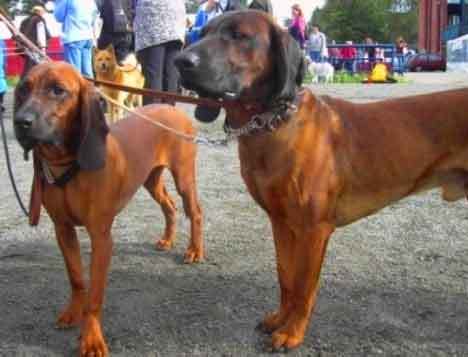
1 – Bavarian Mountain Hound, female and male by Canarian, CC BY-SA 3.0, via Wikimedia Commons
2 – ยซBavarian mountain trackerยป by Wikimedia
3 – A Bavarian Mountain Scenthound by Canarian, CC BY-SA 4.0, via Wikimedia Commons
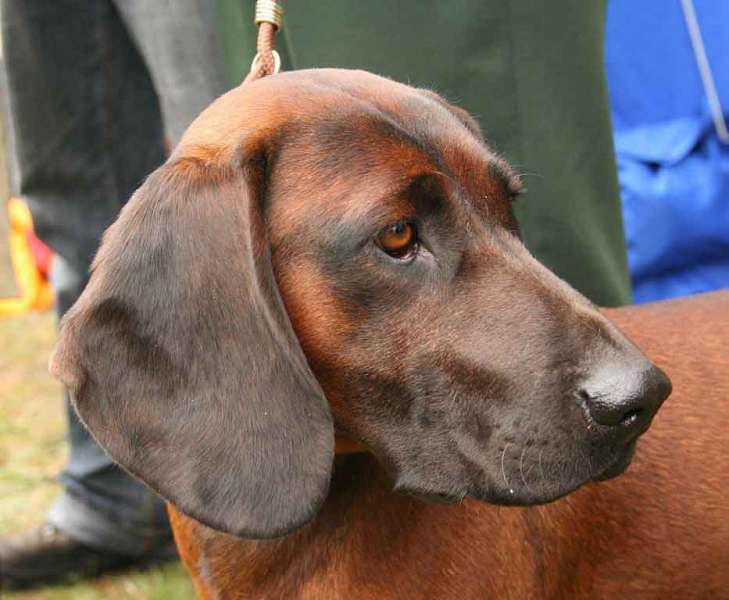
4 – Bavarian Mountain Hound during show of dogs in Rybnik – Kamieล„, Poland by Pleple2000, CC BY-SA 4.0, via Wikimedia Commons
5 – Kafka und Frodo beim ersten Outdoor Treffen und Grillen bei Audigast. Februar 2014. Kafka ist ein Magyar Vizsla und Frodo ein Bayerischer GebirgsschweiรŸhund by Andreas Krรผger
6 – Bavarian Mountain Hound by Pleple2000, CC BY-SA 3.0, via Wikimedia Commons

Videos "Bavarian Mountain Hound"

Type and recognitions:

  • FCI CLASSIFICATION:
  • Group :
  • Section : . .

Federations:

  • – FCI – Group 6: Scent hounds, and related breeds. – Section 2: Leash (scent) Hounds. โ“˜
  • – AKC – Grupo FSS โ“˜
  • – โ€‹KC – Cazadores โ“˜
  • – UKC – Scenthounds โ“˜

FCI breed standard "Bavarian Mountain Hound"

Origin:
Germany

Date of publication of the valid original standard:
01.04.1996

Use:

Trail dog.


General appearance:

It is a generally harmonious dog, lighter, very active and muscular, medium-sized. The body is a bit elongated and raised in its posterior region ; stands on very long limbs. The head is horizontal or slightly erect ; has the tail carried horizontally or slightly tilted downwards.


Behavior / temperament:

It is quiet and balanced ; attached to its owner and distrustful of strangers. The dog is required to be firm, self-confident, fearless and docile, without being shy or aggressive.

Head:

---

Cranial region:

Relatively wide, little rounded, with a well marked forehead, well-developed superciliary arches and shallow occipital protuberance.

  • Depression links (Stop) : Marked.

facial region:

  • Truffle : Good size, not too wide, well open nostrils, black or deep red.
  • Snout : A little parted in front of the eyes, slightly shorter than the skull, wide enough, it is not pointed. The bridge of the nose is slightly arched or straight.
  • Lips : Upper lip falling well over the lower one, moderately thick. The corners of the lips are well visible.
  • Jaws / Teeth : Powerful jaws with a perfect scissor bite, regular and complete, in which the upper incisors overlap the lower incisors without leaving space ; teeth are implanted vertically in the maxilla. Should have 42 healthy teeth according to the dental formula. Pincer bite allowed.
  • Cheeks : Stand out moderately.

Eyes : Clean, with an attentive expression. Not too big or round. Dark brown or lighter. Well attached and pigmented eyelids.

Ears : Something more than moderately long, must reach a maximum up to the truffle ; heavy, high and wide insertion, rounded in its bottom edge, hang down close to the cheeks but not bent.

Neck:

Moderately strong. Throat skin is a little loose.

Body:

  • top line : Rise a little from the withers to the rump.
  • Cross : Bit strong. Smooth transition from neck to back.
  • Back : Strong and elastic.
  • Pork loin : Proportionally short, broad, with good musculature.
  • Rump : Long and fairly flat.
  • Breast : Moderately wide, with well developed parapet; oval rib cage, deep and long, with ribs carried well back.
  • Bottom line and belly : Gradually ascends toward the back of the body; slightly retracted belly.

Tail:

Of medium length that reaches a maximum to the tibio-tarsal joint ; high insertion, carries it horizontally or slightly inclined downwards.

Tips

PREVIOUS MEMBERS

  • As a whole : Viewed from the front they are straight and parallel, and seen from the side they are well poised under the body. They have good angulations.
  • Shoulder : Strongly muscular. Scapulae oblique and directed backwards.
  • Arm : Long, with strong and thin muscles.
  • Elbows : Glued to the body, no outward or inward deflection.
  • Forearm : Vertical and slim. With strong bones and very good musculature.
  • Articulation of the carpus : Strong.
  • Metacarpus : A little forward directed.

LATER MEMBERS :

  • As a whole : Strong bones. Viewed from behind they are straight and parallel. Good angulations.
  • Thigh : Wide and very muscular.
  • Knee : Strong leg : Relatively long, muscular and tendon.
  • Warm-foot joint : Strong.
  • Metatarsus : Short, vertical position.

FEET : Spoon-shaped, with fingers well arched and joined together, as well as sufficiently cushioned pads, hard, strong and well pigmented. They are placed on the floor in parallel when standing or during movement, no deviations outwards or inwards. Black or horn-colored nails.

Movement:

Covers terrain with good range and excellent momentum, forelimbs and hindquarters straight and parallel ; slightly elastic movement.

Mantle

SKIN : Thick, firmly attached.

HAIR : It's dense, glued, smooth, moderately rough, with little brilliance ; it is finer on the head and ears, rougher and longer on the belly , limbs and tail.

COLOR : Dark red, deer red, Red brown, yellowish red, also pale yellow (even sand color); reddish gray like the winter hair of the red deer, also brindle or dark flecked. In the back, the basic color is generally more intense. Muzzle and ears dark. The tail is almost always dotted dark. A small, clear spot is allowed on the chest (hound star).


Size and weight:

Height to the cross :

  • Male : 47 โ€“ 52 cm..
  • Female : 44 โ€“ 48 cm..

In both male and female tolerance is never allowed in the larger or smaller size.


Fouls:

Any deviation from the aforementioned criteria is considered as a fault and the severity of this is considered to the degree of the deviation to the standard and its consequences on the health and well-being of the dog..

SERIOUS FAULTS

โ€ข Flesh-colored truffle.
โ€ข Mild upper or lower prognathism. Partial clamp.
โ€ข Very loose eyelids.
โ€ข Very bowed or arched back.
โ€ข Very flattened or barrel-shaped rib cage.
โ€ข Elbows turned very outward or inward.
โ€ข Hindquarters too high.
โ€ข Very narrow position of the hind limbs, or cow-shaped or O-shaped, both when standing and during movement.
โ€ข Coat that is too fine or too thin.
โ€ข Intense deviations in color; black with red markings.
โ€ข Different size.

MISS PLAYOFFS

โ€ข Aggressive or fearful dog.
โ€ข Marked upper or lower prognathism. Deviated arch of incisors.
โ€ข Missing teeth (except P1).
โ€ข Ectropion, entropion.
โ€ข Congenital broken tail.
โ€ข Weakness in character.

Any dog โ€‹โ€‹showing clear signs of physical or behavioral abnormalities must be disqualified..


N.B.:

Males should have two normal-appearing testicles fully descended into the scrotum..

Source: F.C.I - International Cynological Federation

Alternative names:

1. Bavarian Mountain Scenthound (English).
2. Chien de recherche au sang de la montagne bavaroise (French).
3. Bayerischer Gebirgsschweisshund (German).
4. (em alemรฃo: Bayrischer gebirgsschweisshund) (Portuguese).
5. Sabueso bรกvaro de montaรฑa, Rastreador de Baviera (espaรฑol).

โ–ท The world of Pets: Dogs, cats, birds, reptiles, amphibians

Montenegrin Mountain Hound
Montenegro FCI 279 - Medium-sized Hounds

Montenegrin Mountain Hound

Even in his country of origin the Montenegrin Mountain Hound it is little spread, in other countries it is practically unknown.

Content

History

Although its origins are surely much older, the existence of Montenegrin Mountain Hound (Crnogorski planinski goniฤ) is attested since the beginning of the 19th century.

The race, confined to the border region with Greece, has kept its features intact.

Bred for its ability to work in rocky terrain and scrub, hunt both small and large animals.

There are two varieties: the Montenegrin Mountain Hound and the โ€œSerbian Tricolor Houndโ€, that are distinguished mainly by the color of their fur, and both are virtually unknown outside its borders.

In the past, the Montenegrin Mountain Hound It has sometimes been called the "Black Hound".

The first standard dates back to 1924 y la F.C.I. officially recognized the breed at its Warsaw meeting on 8 in May of 1969.

Belonging to the โ“˜American Rare Breed Association (abbreviated as ARBA)

Photo: https://pxhere.com/en/photo/1493407


Physical characteristics ยซMontenegrin mountain houndยป

Montenegrin Mountain Hound
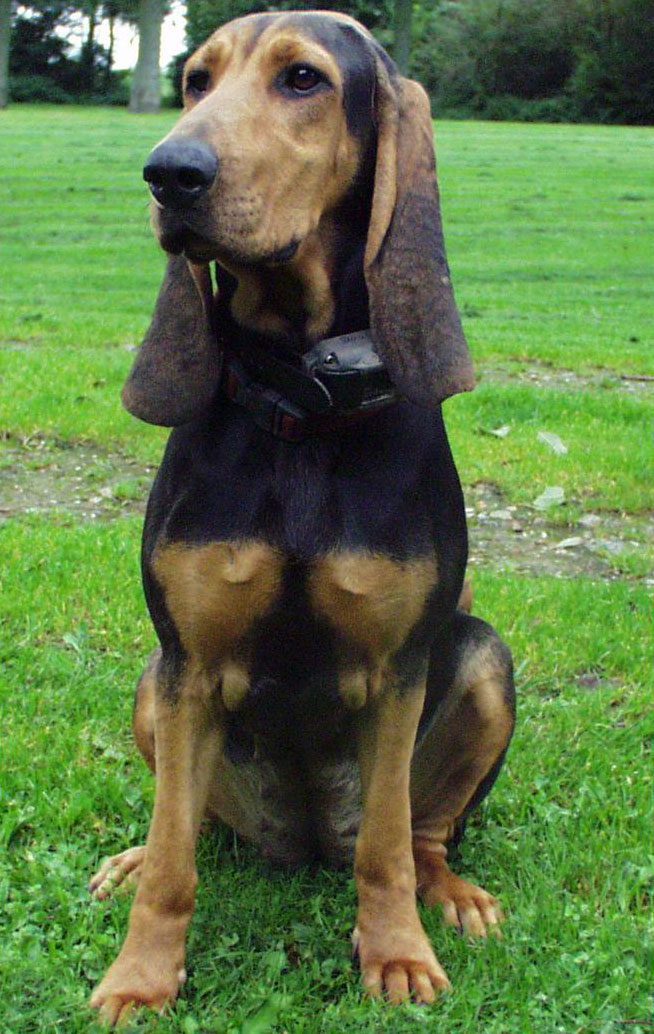
Montenegrin Mountain Hound, b&t by Canarian, CC BY-SA 4.0, via Wikimedia Commons

Robust medium-sized hounds, well balanced, calm and good-natured, very attached to their master.

The skull is slightly domed, the muzzle is slightly shorter than the skull, the nose is always black, eyes are dark with a smart expression, the ears are hanging and without folds, their tips are rounded.

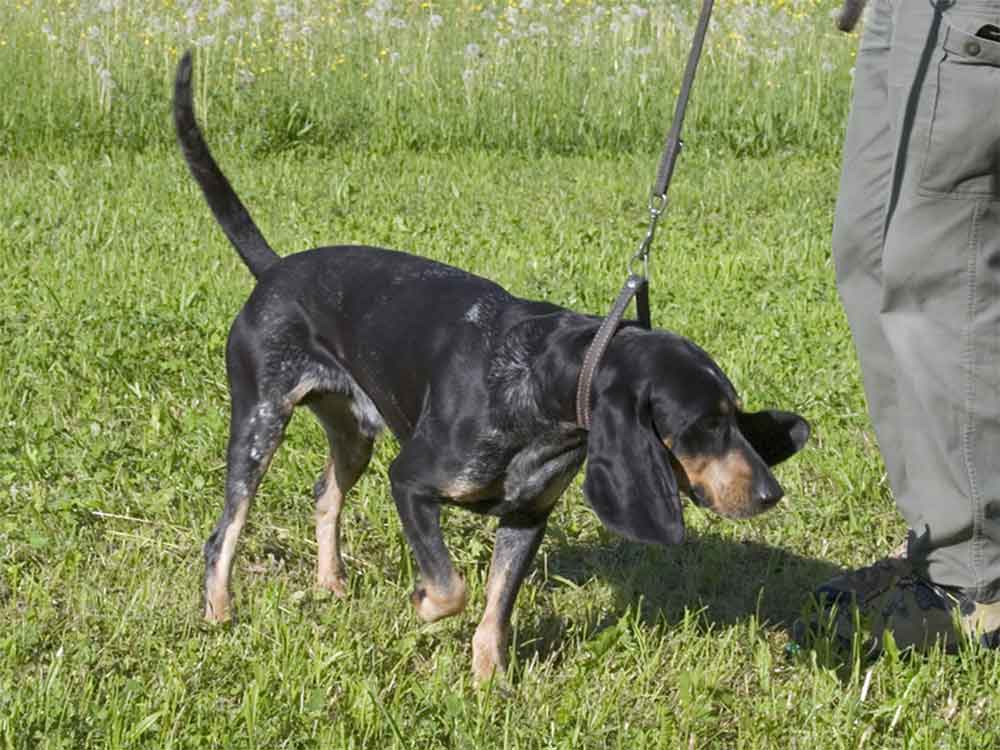
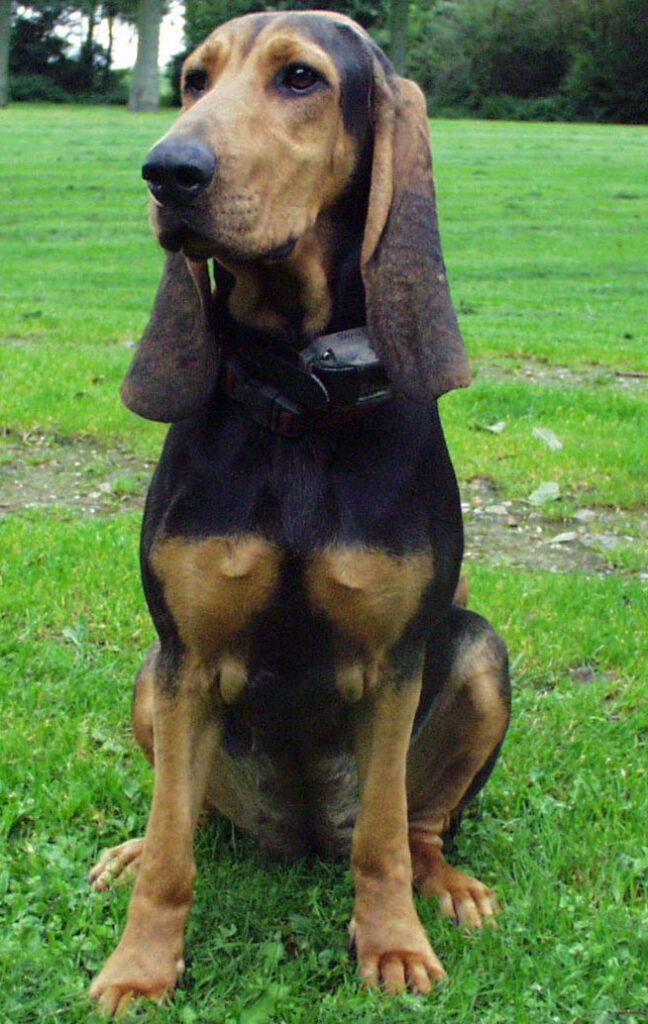
The body is muscular and slightly long. The fur-covered tail is saber-shaped. The pelage is dense, short and with abundant undercoat. The coat is black with brown markings over the eyes, on the muzzle and lower legs.

Size: Height to the cross 44 to 54 cm..

Ideal size for males: 49 to 50 cm., ideal size for females: 48 to 49 cm..


Character and aptitudes ยซMontenegrin mountain houndยป

The Montenegrin Mountain Hound is bold, smart and calm. They are also particularly agile, resistant and tenacious.

They are balanced dogs, quiet, kind, loving and obedient, which makes them excellent companions.

It is often used to hunt hares and foxes, sometimes deer.

Although its qualities make it a good companion dog, life in the city is not recommended for this hound..

Videos "Montenegrin Mountain Hound"

The Montenegrin mountain dog special 08.09.2012
Specijalka Crnogorski planinski gonic 08.09.2012
Moans - Montenegrin mountain dog
Stenci – Crnogorski planinski gonic

Type and recognitions:

  • FCI CLASSIFICATION:
  • Group :
  • Section : . .

Federations:

  • – FCI – Group 6: Scent hounds, and related breeds. – Section 1.2: Medium-sized Hounds. โ“˜

FCI breed standard "Montenegrin Mountain Hound"

Origin:
Montenegro

Date of publication of the valid original standard:
15.07.1997

Use:

Hound


General appearance:

Agile and solid, medium-sized.

IMPORTANT PROPORTIONS :

The length of the body (measured from the tip of the shoulder to the tip of the buttock) and the perimeter of the chest exceed approximately one 10% the height at the withers. The length of the head corresponds to 45% the height at the withers.


Behavior / temperament:

This is a well balanced dog, attached to his master, docile and trustworthy.

Head:

Dolicocephalic; the upper lines of the skull and the nasal cannula are divergent.

Cranial region:
  • Skull : It is longer than the muzzle. In the occipital region, its width is less than the distance between the naso-frontal depression and the occipital protuberance. Seen from the front or in profile, is flat or slightly domed. Its width decreases from the top of the skull to the naso-frontal depression. The frontal furrow is pronounced, while the occipital protuberance is less marked; supraciliary arches are well developed.
  • Depression links (Stop) : Little pronounced.

facial region:

  • Truffle : Is well developed. It is always black.
  • Snout : It is thick and wide at its base; is shorter than the skull. The desired correlation should be 7,5 : 10. The lateral lines of the muzzle are convergent. The nasal helm is straight.
  • Jaws / Teeth : The jaws are strong and have a regular and complete scissor-shaped bite.. Pincer bite is acceptable. Teeth are well developed and evenly implanted.
  • Lips : Medium developed. They are together and the upper lip slightly exceeds the lower. The corner of the mouth is firm; the edge of the lips is black.
  • Cheeks : Flat.

Eyes : They have an oval shape, they are slightly oblique and their color ranges from light brown to dark brown. The edge of the eyelids is black.

Ears : Set high and medium long, they range from thin to moderately thick. They are hanging, they do not present folds and are glued to the head. Its limb has a more or less marked oval shape.

Neck:

Is powerfull, oblique, forming an angle of 45 at 50ยฐ relative to the horizontal. Its length is almost equal to that of the head. He is thin, muscular and does not present a double chin.

Body:

Is rectangular. Its length exceeds almost a 10% the height at the withers.

  • Cross : Well pronounced. : Muscled, wide, moderately long.
  • Pork loin : He's muscular, solid, not very long. It is well attached to the rump.
  • Rump : Slightly inclined (of 20 at 25ยฐ relative to the horizontal); she is muscular, powerful and wide.
  • Breast : It is strong, deep; its height corresponds to between 45 to 50% from the height to the withers and its perimeter exceeds almost 10% the height at the withers.
  • Bottom line and belly : The xiphoid appendix is รขโ‚ฌโ€นรขโ‚ฌโ€นprotruding. The belly is slightly raised.

Tail:

Prolongs the line of the rump and gradually decreases from its root to its extremity, that reaches the hock. Carried in a saber shape above the line of the back, it is covered with abundant hair..

Tips

PREVIOUS MEMBERS : Together they are strong, solid, muscular and parallel.

  • Shoulder : The shoulder blade is muscular and well attached to the chest wall. Its length is almost equal to that of the head. Forms an angle of 40 at 45ยฐ to the horizontal.
  • Elbow : Solid, well glued to the body. The distance from the ground to the elbow corresponds to 50% the height at the withers.
  • Forearm : Straight, muscular, strong.
  • Carpo : Solid.
  • Metacarpus : Robust, delgado, slightly oblique (until 15% in relation to the vertical).
  • Front foot : Jack's foot. The fingers are strong, together and well arched. The pads are resistant, elastic and black. Nails are always black.

LATER MEMBERS : Together they are strong, muscular, parallel and solid boned.

  • Thighs : They are powerful and muscular; they are not outgoing.
  • Knee : It is solid and is positioned parallel to the median plane of the body. The knee angle is about 120ยฐ.
  • Leg : Muscled. Its length corresponds approximately to that of the thigh.
  • Hock : It is solid and pronounced. Its angulation is about 135 a 140ยฐ.
  • Metatarsus : It is powerful and almost vertical.
  • Rear foot : As the front foot.

Movement:

It is uniform and elastic, with a good drive from the hind limbs. The movement of choice is an agile and fluid trot.

Mantle

SKIN : It is elastic and adheres well to the body. Its pigmentation is dark.

HAIR : Is short, dense, rough, little thick and shiny. It is well glued and smooth. The undercoat of hair is quite developed.

COLOR : The base color is black with tan markings on the eyes, muzzle and lower limbs. The tan markings on the eyes are the size of a hazelnut, while on the lateral parts of the muzzle they extend at most to the corner of the lips. Tan markings range from light red, going through brownish red to deep red. A white mark on the chest is accepted, although it is not very desired. Its diameter must not exceed 3 cm..


Size and weight:

Height to the cross : It is of 44 to 54 cm.. The ideal size for males is of 49 to 50 cm and females is of 48 to 49 cm..


Fouls:

Any deviation from the aforementioned criteria is considered as a fault and the severity of this is considered to the degree of the deviation to the standard and its consequences on the health and well-being of the dog..

MISS PLAYOFFS

โ€ข Shy or aggressive dog.
โ€ข Upper or lower prognathism; incisor arcade deviated.
โ€ข Missing tooth; the lack of two premolars is accepted 1 (PM1).
โ€ข Very light colored eyes; gaze eyes; different colored eyes; entropion and ectropion.
โ€ข Curled tail, carried above the line of the back or deviated laterally.
โ€ข Colors that are not established by the standard.
โ€ข Any other white mark that is not accepted by the standard.
โ€ข Size greater or less than that accepted by the standard.

Any dog โ€‹โ€‹showing clear signs of physical or behavioral abnormalities must be disqualified..


N.B.:

Males should have two normal-appearing testicles fully descended into the scrotum..

Source: F.C.I - International Cynological Federation

Alternative names:

1. Montenegrin: (Crnogorski planinski goniฤ), Black Hound, Yugoslavian Mountain Hound (English).
2. Montenegrin: (Crnogorski planinski goniฤ), Chien courant yougoslave de montagne, Chien courant noir (French).
3. Montenegrin: (Crnogorski planinski goniฤ), Montenegrinische Gebirgsbracke, Frรผher Jugoslawischer Gebirgslaufhund (German).
4. Montenegrin: (Crnogorski planinski goniฤ), Sabujo-negro (Portuguese).
5. Montenegrin: (Crnogorski planinski goniฤ), Sabueso montaรฑรฉs de Montenegro (espaรฑol).

โ–ท The world of Pets: Dogs, cats, birds, reptiles, amphibians

Canaan Dog
Israel FCI 273 - Primitive type

Canaan Dog

The Canaan Dog He is suspicious of strangers and very affectionate with his clan members

Content

History

The Canaan Dog They belong to the group of "pariah dogs", found throughout the Afro-Asian region. They live near human settlements, tolerated by humans, but they are not encouraged or fed. For primitive peoples they are useful as a destroyer of all organic residues.. Even today, the Canaan Dog they live in herds in the desert. If Bedouins need a guard dog for their camp or a herding dog for their sheep, they look for a wild female who raises her cubs in a cave, they throw a piece of bread at him every now and then until they have chosen the strongest male cub that will guard their camp in the future.

Cynologically, los ยซpariah dogยป belong to the Spitz family, the oldest family of dogs in the world. Cave paintings thousands of years old show these dogs as hunting helpers. With the time, the original type of Spitz adapted to the situation of its environment. The Canaan Dog is the most developed form of the type Spitz in israel today. The canaan dog still possess strong survival instincts, what makes them smart, independent and also very cautious dogs.

The Canaan breed has been domesticated by outcast wild dogs, namely, by Rudolphina Menzel, a canine behaviorist and cynologist who emigrated from Vienna to Palestine in the 1930. He took some of them home and was amazed at how easily they were tamed and trained. They were lively and loving. The teacher Menzel I call them canaan dogs in honor of the Biblical land of Canaan and campaigned for them to be recognized as a race.

Physical characteristics ยซCanaan Dogยป

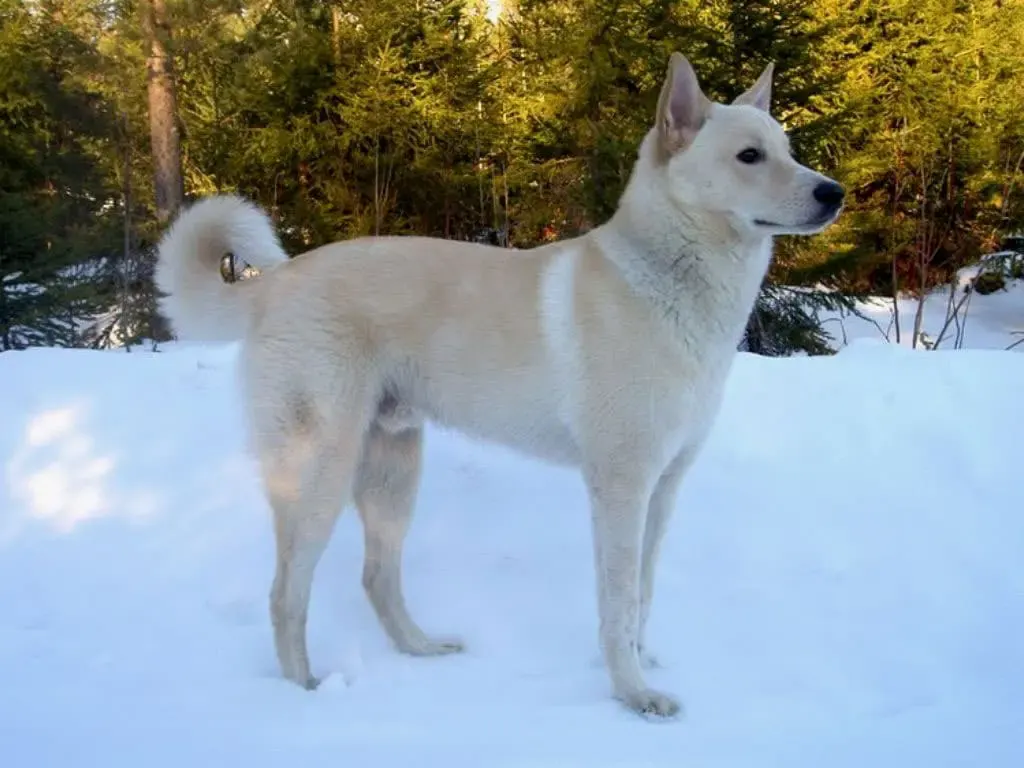
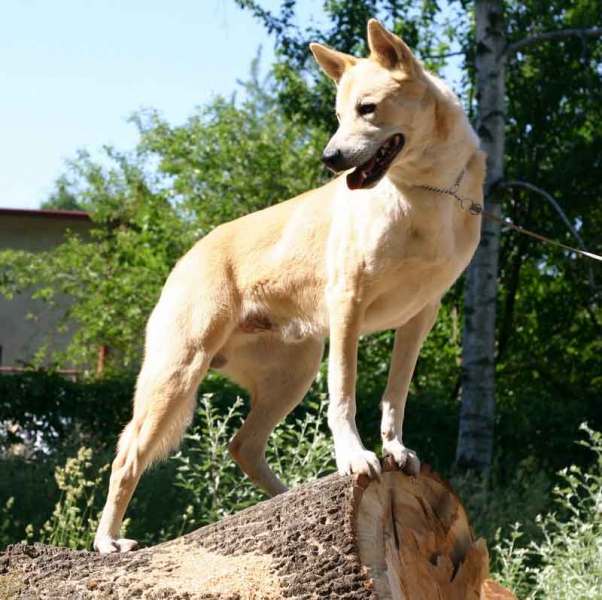
The height at the withers of these square animals, strong and medium in size is about 50 to 60 cm., while males are usually much larger than females. In general, the sex characteristics between female and male dogs are very pronounced. These may include, the rather broad skull of the Canaan Dog, that narrows at a point towards the front, is clearly visible, especially in males. The head is always well proportioned. Standing ears, slightly laterally arranged, triangular and wide, as well as his almond-shaped and dark eyes, give you a very alert and intelligent expression. In fact, nothing escapes the watchman Canaan Dog, even when asleep.

HAIR:
Thick layer, rough and straight, short to medium length. The inner layer is very close and abundant.

COLOR:
Sandy to reddish brown, white, black or mottled, with or without mask. If there is a mask, must be symmetrical. A black mask and white markings are allowed for all colors. A pattern such as the Boston Terrier. Gray colors are not allowed, striped, black and tan or tricolor. The characteristic colors of the desert – sandy, dorado, Red and cream – are particularly typical of the breed.

Character and aptitudes ยซCanaan Dogยป

The Canaan Dog is lively, sensitive, distrustful of strangers, defensive, but not aggressive by nature. Watcher not only of humans, but also other animals. He is faithful and devoted to his family. The relationship with its owner means for him a partnership, both sides taking and giving. The Canaan Dog you don't have to follow your owner everywhere and submissively read every wish in his eyes. There are times when he shows his love and wants to be caressed. But other times he minds his own business and only belongs to himself.. If one responds to his character, a deep understanding develops between man and animal, which is even more attractive, since one must acquire their trust and affection. This special bond makes it difficult to place the Canaan Dog adults in new settings.

Protects their owner's children and shows a lot of tolerance towards the little ones. But, parents should ensure the dog has a chance to withdraw.

The Canaan Dog they are good watchdogs, but they are not attackers by nature. Only when a Canaan Dog you have the impression that he or his family is seriously threatened, will attack. The Canaan Dog barks as a warning, gives a dangerous appearance, and that is usually enough.

The Canaan Dog can react aggressively to other dogs who dare to pass by his property. Aggression between dogs of the same sex is not uncommon among Canaanites. Each Canaan is different. You have to watch it closely to know what collisions – with other dogs on walks – it is better to avoid.

โ€œCanaan Dogโ€ Education

One Canaan Dog he would never do anything that could harm himself. Nor would it comply with its owner's commands without first questioning their meaning.. You can't demand obedience from this dog. But, once he has gained trust in his human and recognizes him as "leader of the pack", is very cooperative and obedient. Loyalty to his master and his quick understanding make him, despite its independence, an easy-to-handle dog, who can learn the necessary basic obedience without restrictions. But, during training its primitive nature must be taken into account, so it certainly takes some compromises and tricks to convince the Canaan Dog that obedience is worth it. For inexperienced beginners, this self-assured breed is not suitable.

Where can I get "Canaan Dog"?

Today, not only in his homeland Israel, but also in the US. and in several European countries, like germany, Finland, England, Italy or Switzerland, there are breeders who have dedicated themselves to this special and still very rare breed. The addresses of the breeders can be found in the national kennel clubs or, of course, on the Internet. If you are considering buying a Canaan, enough time should be taken to consider your purchase decision thoroughly. This is true of all dogs, but especially for him Canaan Dog, because this original and independent four-legged friend is no ordinary family dog.

โ€œCanaan Dogโ€ Care

The rough coat naturally repels dirt and only needs to be brushed once or twice a week. Only in the phase of the biannual coat change should it come into contact with a brush or comb daily to remove dead hairs from the dense undercoat and reduce the tuft of carpet hairs, the sofa or the blanket.

Nutrition of the โ€œCanaan Dogโ€

While the Canaan, as a "pariah dog" in freedom, forages for its own food and feeds on whatever organic waste humans leave behind, as a domestic dog it depends on the support of its owner. But what do you give such an original wild dog? In general: Dogs are carnivores by nature., regardless of whether they are shepherd dogs, Sausage dog or even Canaan. This means that the food must be largely meat. (around the 70 per cent). Meat is the most important source of protein for the dog. Its entire masticatory and digestive system is oriented to the processing of meat: the strong teeth, strong chewing muscles, the relatively short intestinal tract and digestive juices that are quite aggressive in contrast to humans.

Health ยซDog of Canaanยป

The race Canaan Dog It is very healthy, it does not have typical diseases and it is considered very clean..

Characteristics "Canaan Dog"

Coexistence is important that you have with your new friend. Before considering the acquisition of a dog of the breed "Canaan Dog" you know certain factors. Not all breeds of dogs are apt to live in an apartment, you must take into account his character, their need for exercise, their interaction with other pets, their care and if you have small children, their level of tolerance towards them.

Training ?

4,0 of 5 stars (based on 1 review)

Suitability of the apartment ?

4,0 of 5 stars (based on 1 review)

Can be alone all day ?

3,0 of 5 stars (based on 1 review)

Suitable as a first dog ?

2,0 of 5 stars (based on 1 review)

Weight gain ?

2,0 of 5 stars (based on 1 review)

Health ?

5,0 of 5 stars (based on 1 review)

Intelligence ?

5,0 of 5 stars (based on 1 review)

Kindness with child ?

3,0 of 5 stars (based on 1 review)

Tendency to bite ?

3,0 of 5 stars (based on 1 review)

Tendency to bark ?

4,0 of 5 stars (based on 1 review)

Tendency to flee ?

3,0 of 5 stars (based on 1 review)

hair loss strength ?

4,0 of 5 stars (based on 1 review)

Suitable as a guard dog ?

5,0 of 5 stars (based on 1 review)

Joy ?

3,0 of 5 stars (based on 1 review)

Cat friendliness ?

4,0 of 5 stars (based on 1 review)

Power level ?

4,0 of 5 stars (based on 1 review)

Images "Canaan Dog"

Photos:

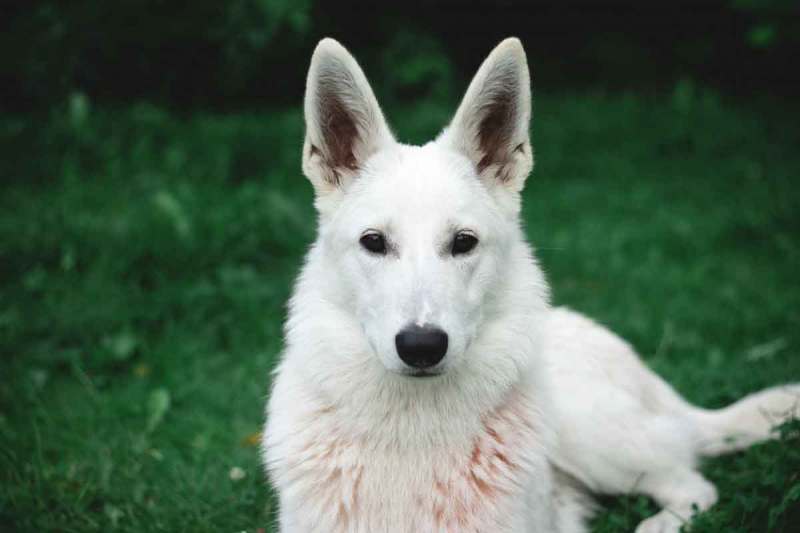
1 – Canaan dog by Giora Sluzky, CC BY-SA 3.0, via Wikimedia Commons
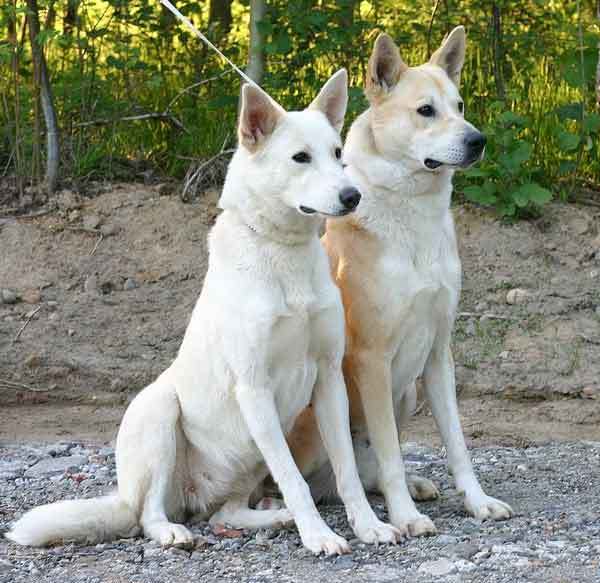
2 – Canaan dog by Canaan Dog, Kennel Samorodok Hanaanahttp://www.ruscanaan.ru, CC BY-SA 3.0, via Wikimedia Commons
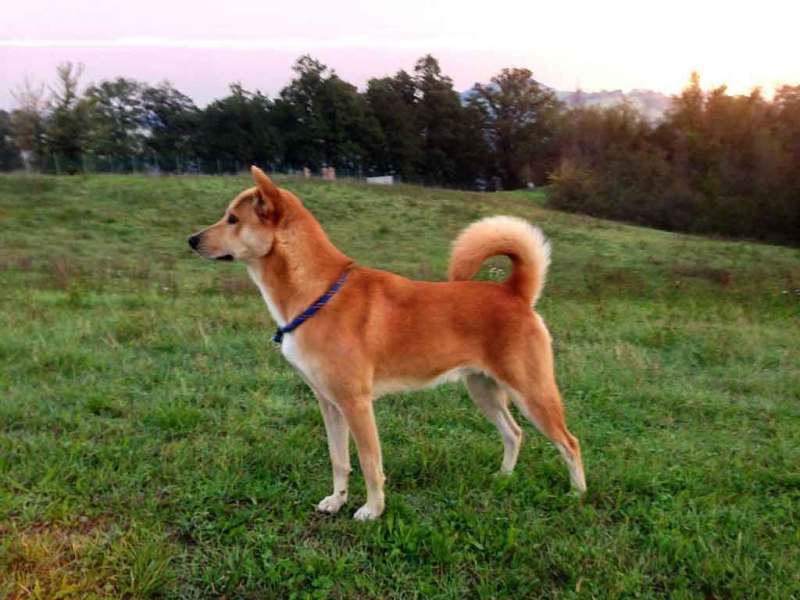
3 – Canaan dog by Giora Sluzky, CC BY-SA 3.0, via Wikimedia Commons
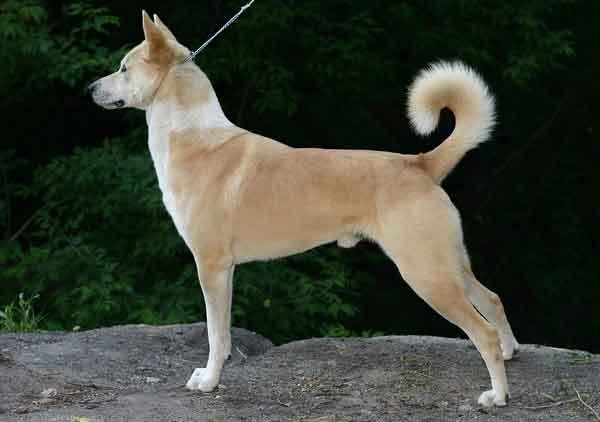
4 – Canaan dog by SamorodokhanaanaCanaan Dogs from "Samorodok" http://www.ruscanaan.ru, CC BY-SA 3.0, via Wikimedia Commons
5 – Canaan dog by https://pxhere.com/en/photo/1503483
6 – Canaan dog by Samorodokhanaanahttp://www.ruscanaan.ru, CC BY-SA 3.0, via Wikimedia Commons
7 – Canaan dog by Arikk, CC BY-SA 3.0, via Wikimedia Commons

Videos "Canaan Dog"

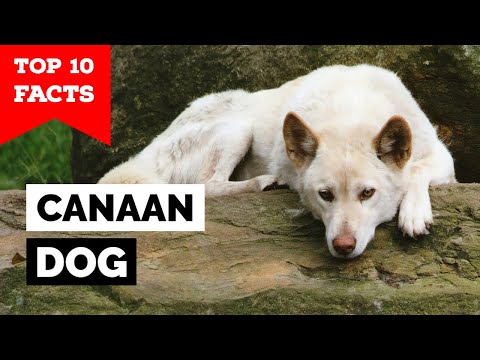
Canaan - Top 10 Facts
Canaan – Top 10 Facts
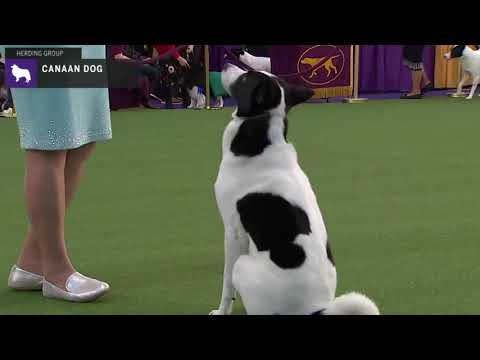
Canaan Dogs | Breed Judging 2020

Type and recognitions:

  • FCI CLASSIFICATION:
  • Group :
  • Section : . .

Federations:

  • – FCI – Group 5: Spitz-type dogs and primitive type – Section 6: Primitive type. โ“˜
  • – AKC – Herding โ“˜
  • – ANKC – Group 7 (Nonsporting) โ“˜
  • – CKC – Group 7 (Nonsporting) โ“˜
  • – โ€‹KC – Utility โ“˜
  • – NZKC – Nonsporting โ“˜
  • – UKC – sighthounds and pariah โ“˜

FCI breed standard "Canaan Dog"

Origin:
Israel

Date of publication of the valid original standard:
26.03.1998

Use:

Guard and protection dog.


General appearance:

Medium-sized, square body, well balanced, strong, similar to the type of wild dog. There is a marked difference between both sexes.


Behavior / temperament:

You are always alert and react quickly. Distrustful of strangers, his character is strongly defensive, but not aggressive by nature. Is vigilant, not only with humans, but also with all the animals. It is very faithful and easy to train.

Head:

Is well proportioned, medium length, in the form of an obtuse wedge. It appears even wider because the ears are set low.

Cranial region:
  • Skull : Is something flat. Head may be wider in powerful males.
  • Depression links (Stop) : shallow, although well defined.

facial region:

  • Truffle : black.
  • Snout : Vigorous, of moderate length and width.
  • Lips : Tight.
  • Jaws / Teeth : Jaws must be strong. Teething is complete with a uniform scissor bite.

Eyes : Dark brown in color, slightly oblique and almond-shaped. Dark eye rim is essential.

Ears : erected, relatively short and wide. They are slightly rounded at the tip and are set low.

Neck:

Muscular and of medium length.

Body:

Square.

  • Cross : Well developed.
  • Back : Uniform.
  • Pork loin : Muscular.
  • Breast : Deep and moderately wide. Well arched ribs.
  • Belly : Well up.

Tail:

Set high it is worn curled over the back. The hair is abundant and dense.

Tips

PREVIOUS MEMBERS : Perfectly straight.

  • Shoulder : Oblique and muscular.
  • Elbows : Well attached to the body.

LATER MEMBERS : Powerful.

  • Buttocks : Strong and covered with a slight fringe of hair.
  • Knees : Well angulated.
  • Hocks : Well descended.

FEET : Jack's foot. They're strong, round and the pads are hard.

Movement:

The trot is fast, light and vigorous. The animal must show great agility and resistance. Correct movements are of essential importance.

Mantle

HAIR : The hairs on the outer coat are dense, hard, straight and short or of medium length. The hairs of the undercoat are abundant and well glued.

COLOR : Ranges from sand to reddish-brown, white, black or mottled, with or without mask. If there is a mask, this must be symmetrical. Black mascara and white markings are allowed in all colors. Brands like the Boston Terrier are common. Gray colors are not accepted, striped, Black with fire, nor tricolor. The most typical colors of the breed are the colors of the desert, sand, oro, Red and cream.


Size and weight:

Height to the cross : It is of 50 to 60 cm.. Males can be considerably larger than females.

Weight : It is of 18 to 25 kg.


Fouls:

Any deviation from the aforementioned criteria is considered as a fault and the severity of this is considered to the degree of the deviation to the standard and its consequences on the health and well-being of the dog..

Any dog โ€‹โ€‹showing clear signs of physical or behavioral abnormalities must be disqualified..


N.B.:

โ€ข Males must have two normal-appearing testicles fully descended into the scrotum..
โ€ข Only functionally and clinically healthy dogs, with the typical conformation of the breed, should be used for parenting.

Source: F.C.I - International Cynological Federation

Alternative names:

1. Bedouin Sheepdog, Palestinian Pariah Dog (English).
2. Canaan dog (French).
3. Canaan Dog, Israel-Spitz (German).
4. Cรฃo de canaรฃ (Portuguese).
5. Perro de Canaรกn, Kelev Kna’anรญ, kunean alkalb (espaรฑol).

โ–ท The world of Pets: Dogs, cats, birds, reptiles, amphibians

Thai Ridgeback
Tailandia FCI 338 . Primitive type - Hunting Dogs
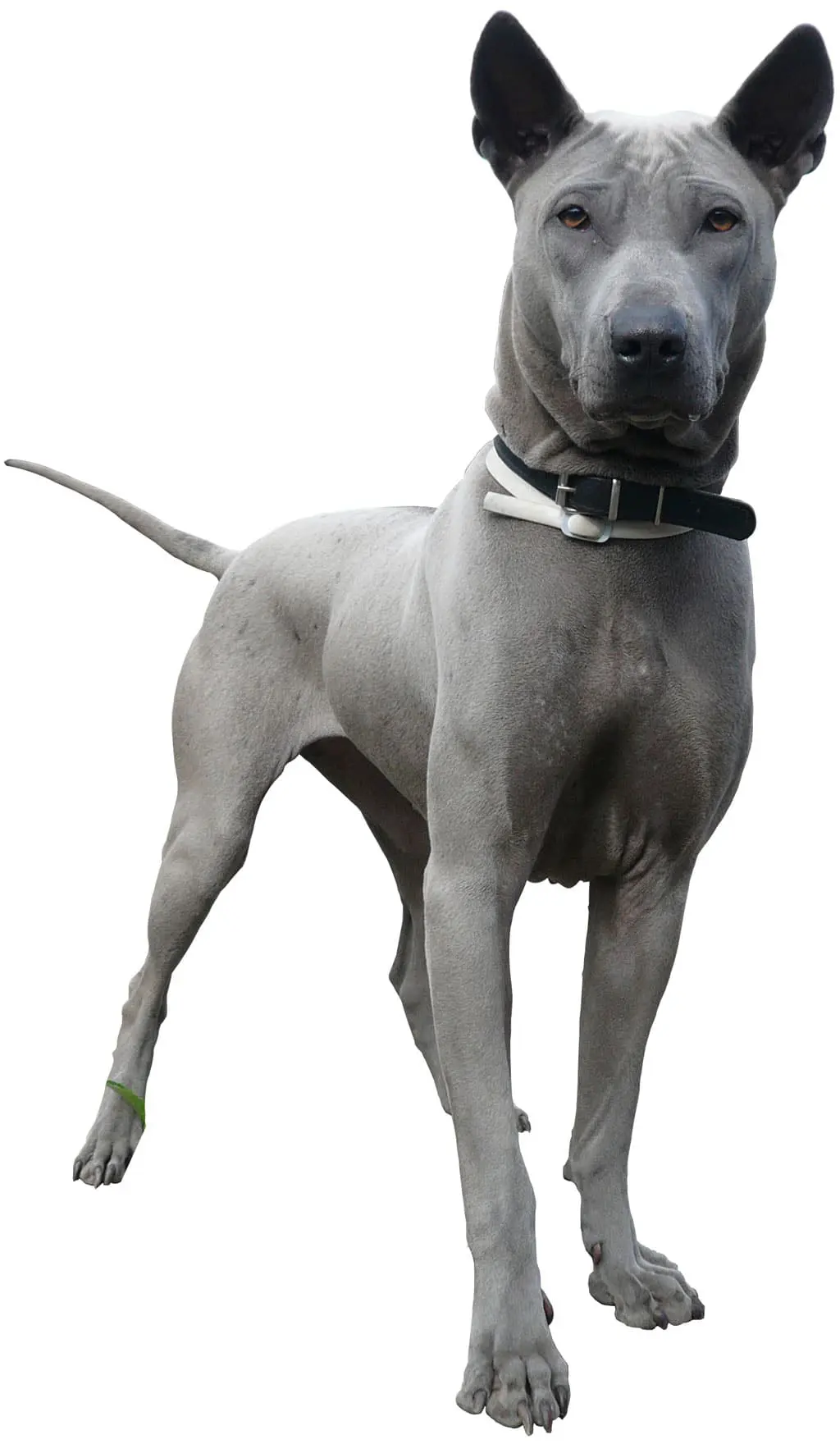
Ridgeback Tailandรฉs

The Thai Ridgeback is attached to its owner., resistant, active and loves to jump.

Content

History

The Thai Ridgeback is a breed of dog to dogs section primitive type.

This elegant and attractive breed of dog appears cited from ago 360 years and according to the scholars of the race, kept as it was in the beginning.

The crucial reason why the Thai Ridgeback, has kept its characteristics intact was the insulation that for so long, suffered Thailand, which has led that race does not mix with others and be kept pure.

It comes exactly from the eastern part of Thailand, or at least, There was where was more used as a watchdog, as in charge of defending carts against the attack of bandits and as an assistant in the hunt for wild boars and snakes.

Some experts, they maintain that the Thai Ridgeback It is one of the ancestors of many of the current Asian breeds that share some characteristics with it., how are he Chongqing dog, the Shar Pei or the Chow Chow.

It is one of the oldest breeds that exist today.

This currently enjoying more widespread as a pet, although it is virtually unknown outside its country of origin. And even in Thailand is a rare breed, or little-known.

Physical characteristics

The Thai Ridgeback it is a medium-sized dog with short hair, that forms a ridge on the back. Their highly developed muscles and anatomical structure are suitable for their activity as hunting dogs.. The eyes are medium in size, almendrada form, dark brown; in blue or silver colored dogs, amber eyes are allowed. The ears are attached to the top of the skull, which is very wide between the ears. Triangular, very large, are leaning forward and very straight. The tail, thick at the root, gradually tapers towards the tip. Carried vertically straight or curved like a sickle.

Fur: Short and smooth. At the rear, the crest is made up of hair deviated from the rest of the body. The boundary between the ridge and neighboring regions must be well defined.. The ridge can have different shapes, but symmetric is preferred.

Color: Uniform. Light brown red, black, silver and blue.

Size: Males 56-61 cm., females 51-56 cm..

Weight: 25 to 30 kg for the male and 20 to 25 kg for females

Character and skills

The Thai Ridgeback is a dog strong, powerful, tremendously, Active and vigorous. It is very distrustful with strangers and very attached to his master.

Due to the characteristics of its fur, great efforts are not required in its conservation., a weekly brushing will be more than enough.

Something important to keep in mind is the dose the daily activity This dog is needed, at least one hour of outdoor exercise, since otherwise it could become destructive with the furniture of the house.

You need to run, feel free… tire. Then in the home usually a dog very quiet and protector.

Observations

One of the passions of Thai Ridgeback, and perhaps the most striking, is that She loves to jump, enjoys jumping without stopping.

It's one little-known race, even in your country of origin.

Health ยซThai Ridgebackยป

Resistant / robust :
The Thai Ridgeback it is a robust dog but it can hardly bear the low temperatures.

Withstands heat:
Due to its origins, this dog is not afraid of high temperatures.

supports the cold:
His short coat does not give him good protection against bad weather.

Tendency to gain weight:
The breed is not concerned with overweight problems.

Frequent illnesses:
Seno dermoide
Hip dysplasia

Price of a โ€œThai Ridgebackโ€

The price of a Thai Ridgeback varies according to its origin, age and gender. The weak diffusion of the breed outside its country of origin does not allow us to know the average price of a puppy of the Thai Ridgeback.

Regarding the average budget to cover the needs of a dog of this size, you have to count roughly 40 euros / my.

ยซThai Ridgebackยป Images

ยซThai Ridgebackยป Videos

Type and recognitions:

  • FCI CLASSIFICATION:
  • Group :
  • Section : . .

Federations:

  • – FCI – Group 5: Spitz-type dogs and primitive type – Section 7: Primitive type - Hunting Dogs. โ“˜

FCI breed standard "Thai Ridgeback"

Origin:
Thailand

Date of publication of the valid original standard:
26.05.2003

Use:

Hunting and companion dog.


General appearance:

Short-haired dog forming a ledge on the back. Medium-sized, whose body length is slightly longer than its height at the withers. The muscles are well developed and their anatomical structure is adequate for their function.

IMPORTANT PROPORTIONS:

  • Over the body: height to the cross: 11 : 10
  • Chest depth: height to the cross: 5 : 10


Behavior / temperament:

Strong and active with excellent jumping ability. A very loyal and family dog.

Head:

---

Cranial region:
  • Skull: The skull is flat between the ears, but a little rounded when viewed from the side.
  • Forehead: With wrinkles when the dog is attentive.
  • Depression links (Stop): Clearly defined but moderate.

facial region:

  • Nose: Black color, in blue dogs nose be bluish.
  • Nasal bridge: Straight and long.
  • Snout: Wedge shaped; slightly shorter than the skull.
  • Lips: Well glued with good pigmentation.
  • Mouth: Preferably with a black spot on the tongue.
  • Mandible: Upper and lower jaws are strong.
  • Teeth: White and strong. With scissor bite.

Eyes: Medium-sized and almond shape. dark colored. In the blue and silver, the amber eyes is allowed.

Ears: Located on both sides of the skull. Preferably medium-sized and triangular, securely upright and leaning forward. Do not cut.

Neck:

A medium-long, strong, muscular, slightly arched and holding his head up.

Body:

  • Back: Strong and level.
  • Pork loin: Strong and wide.
  • Rump: Moderately inclined.
  • Breast : Deep enough to reach the elbows. Well developed ribs, but not barrel-shaped.
  • Abdomen: Tucked well stomach.

Tail:

With a thick base and decreasing towards the tip. The tip can reach hocks (โ€œhocksโ€). Holding it vertically or slightly curved.

Tips

FRONT MEMBER:

  • Shoulder: Well located to the rear.
  • Forearm: Straight.
  • Metacarpus: Straight when you look at them from the front and slightly inclined when seen from the side.
  • Pies: Oval.
  • Nail: Black, but they can be more clear depending on the color of the hair.

LATER MEMBERS:

  • Hips: Well developed and steep curves knees.
  • Hocks: Strong and well descended.
  • Metatarsals: Straight and parallel seen from the back.
  • Pies: oval.

Movement:

Step with good range, not bent or balancing the body side to side. Stepping on, forms two straight parallel lines. Seen from the front, the front legs move in a straight line, so that the shoulder, elbow and Metacarpus ("pastern") they are approximately in line with each other. Seen from the back, knee and hip joint, they are approximately aligned. Moves in a straight line forward in a straight pattern without sticking the feet in or out, allowing a long step and a powerful propulsion. The movement is consistent, well-cadenced and easy.

Mantle

SKIN: Soft and tender, with tight skin, throat without jowl.

HAIR: Short and smooth. The outgoing (Ridge) on the back and the spine is formed by hairs that grow in the opposite direction from the rest of the coat; the edge of the protrusion must be clearly defined. The projection may have various shapes and different lengths, but you prefer an outgoing symmetrical on either side of the spine and within the width of the spine. Crowns or eddies at the beginning of the outbound is acceptable.

COLOR: Solid color: red, black, Brown and blue clear. You prefer the black mask in red.


Size and weight:

Height to the cross: Tolerance is plus or minus 2,5 cm. (one inch).

  • Males: 56 to 61 cm. (22 โ€“ 24 inches)
  • females: 51 to 56 cm. (20 โ€“ 22 inches)


Fouls:

Any departure from the foregoing points should be considered a fault and the seriousness of it is a standard and its consequences considered in proportion to the deviation on the health and welfare of the dog.

  • Bite anyone who is not scissor.
  • An outgoing (โ€œridgeโ€) unbalanced.

MISS PLAYOFFS:

  • Aggressive or fearful dogs.
  • Dogs who do not submit outbound (โ€œridgeโ€).
  • Long hair.
  • Any dog โ€‹โ€‹showing clear signs of physical or behavioral abnormalities must be disqualified..


N.B.:

โ€ข Males must have two normal-appearing testicles fully descended into the scrotum..
โ€ข Only functionally and clinically healthy dogs, with the typical conformation of the breed, should be used for parenting.

Source: F.C.I - International Cynological Federation

Alternative names:

1. Thaรฏ Dog (English).
2. Mah Taรฏ, Chien thaรฏlandais ร  crรชte dorsale, Thaรฏ Dog, Thai Ridgeback (French).
3. Thai Ridgeback (German).
4. Cรฃo-tailandรชs-de-crista-dorsal (Portuguese).
5. Perro tailandรฉs con cresta (espaรฑol).

โ–ท The world of Pets: Dogs, cats, birds, reptiles, amphibians

Chow Chow
FCI 205 - Asian Spitz and related breeds
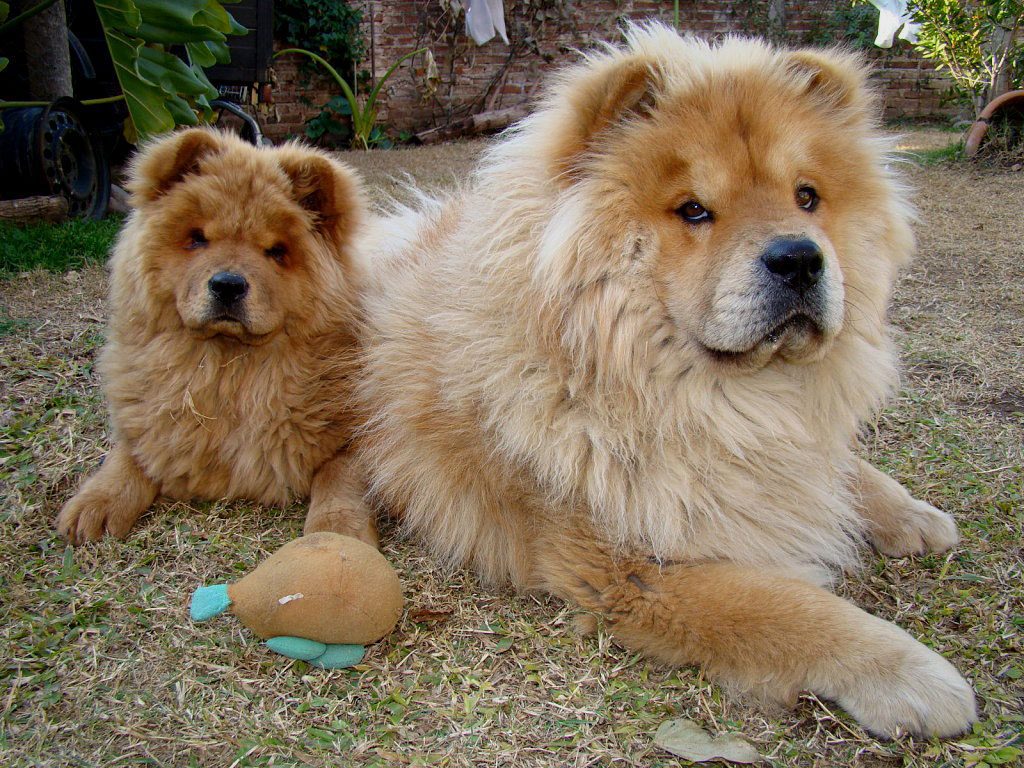
Chow Chow

The Chow Chow are distinguished by their unusual blue-black tongue

Content

History

The Chow Chow has been known for more than 2500 years in China, where it is represented in bas-reliefs of the time. Dog of mysterious origin, belongs to the Spitz family. Some believe it is a cross between a Tibetan Mastiff and a Samoyed., while others think it is more of an original dog, that is to say, that comes from the Nordic dogs (internal temperature above average, particular shape of the bony structure of your skull…). In any case, stories about the origins of Chow Chow they are usually just hypotheses.

In Manchuria and Mongolia it was used as a war dog, to watch over herds or rushes and as a draft animal. The Chow Chow they were also found in Tibetan monasteries: his function was to defend the monks. Occasionally it was a hunting dog, it was eaten in some parts of china, and his skin was also traded.

It was introduced in Europe in 1865, when Queen Victoria of England received one as a gift and started raising it. It was officially recognized by the Kennel Club English little less than 30 years later, in 1894. Today, only used as a pet.

The term ยซChow Chowยซ has appeared recently. In fact, during the interwar period, the Chow-Chow It was known in the West as the "Hong Kong dog".

Despite some other blood additions over the years 50, the Chow Chow is a breed that has remained pure.

Physical characteristics

The Chow Chow It is a dog with a robust body that goes hand in hand with its wide skull and its small triangular ears slightly rounded at the tip and it carries them apart with the tip slightly inclined forward which are always erect. His eyes are dark, from Brown to black always small, almendrada form. The nose is completely black and wide except in color Chow cream and white, which supports the color pink. The mouth is wide and strong. They have a characteristic "stilt" movement, due to the peculiar conformation of their hind legs, which lack angle, and it makes it look like walking on stilts.

It is a dog of agile and balanced movement. By joining the legs in parallel to two in the movement. This breed has a very dense fur that can be rough or soft, which it accumulates more around his neck, giving it its distinctive frill or horsehair. Its fur can be red, black, Blue and cream. Those who have spotted or multi-coloured fur are considered outside the standards of the breed.

The Chow Chow They are distinguished by their unusual bluish-black or purple tongue and strong legs.. The gene for the bluish-black or purple tongue is usually dominant in this breed, and so it also tends to be in from mixed races of a Chow Chow.

A legend that says, When the gods placed the stars in the firmament, pieces of the sky fell that the Chow Chow licked and since that day he has had a blue tongue..

Character and skills

Today, the Chow Chow is commonly a companion dog. His strong sense of ownership of their homes with their - sometimes- intriguing approach to strangers may be misinterpreted by those who do not belong to his family. But, signs of shyness and aggression are not characteristic of this breed. Copies of the sex opposite usually coexist with less tension than with those of the same sex, but it is not uncommon to see Chow Chow of different sexes living together peacefully.

They are extremely loyal to their family and it costs change masters. Affection usually shown only to people you know, so visitors should not push them physically as they will not immediately accept strangers as quickly as they do with their family members.

They are not a very active breed. Life in an apartment suits them, if they are given the opportunity to get enough physical activity daily. The owners must take daily walks with their Chow Chow, so be it in a small place, to maintain their physical and mental abilities in a healthy way.

Although this breed shows low energy most of the time, needs a routine to be able to explore their environment and thus maintain a loving nature. Its typical behavior resembles that of a domestic cat more than that of a dog., for cleaning and its enigmatic nature.

Grooming

Grooming requirements depend on the type of fur. A Chow straight hair needs to be brushed weekly only. One with a rough coat should be brushed every other day. Both varieties molt twice a year, during which the coat will abundantly. Rarely need a bath, although a hot bath followed by a thorough drying can help remove the coat you're missing.

The rest is basic care. Trim nails as needed, usually once a month. Brush your teeth frequently for general good health and fresh breath. Check ears weekly for dirt, redness or odor that may indicate an infection. If the ears look dirty, clean them with a damp cotton ball and a mild ear cleaner recommended by your vet.

Health

The Chow Chow is the breed of dog most affected by Dysplasia elbow. It is also vulnerable to hip dysplasia, dislocation of patella, thyroid disease, Pemphigus Foliaceus and ocular disorders such as entropion and ectropion. The risk of these disorders increases exponentially when they are purchased at pet stores unscrupulous caregivers who do not test their dogs to see if there is existence of genetic disorders. Like this, a potential buyer of this breed should ask about the health status of the pet to buy. Animal caretakers must provide the client with a guarantee of the dog's health. But despite his delicate health, It is an excellent companion dog for humans..

Characteristics "Chow Chow"

Coexistence is important that you have with your new friend. Before considering the acquisition of a dog of the breed "Chow Chow" you know certain factors. Not all breeds of dogs are apt to live in an apartment, you must take into account his character, their need for exercise, their interaction with other pets, their care and if you have small children, their level of tolerance towards them.

Adaptation โ“˜

2,0 of 5 stars (based on 1 review)

friendly dog โ€‹โ€‹โ“˜

1,0 of 5 stars (based on 1 review)

hair loss โ“˜

5,0 of 5 stars (based on 1 review)

Affection level โ“˜

2,0 of 5 stars (based on 1 review)

Need for exercise โ“˜

2,0 of 5 stars (based on 1 review)

Social need โ“˜

2,0 of 5 stars (based on 1 review)

Home โ“˜

3,0 of 5 stars (based on 1 review)

Toilet โ“˜

5,0 of 5 stars (based on 1 review)

Friendly with strangers โ“˜

1,0 of 5 stars (based on 1 review)

barking โ“˜

5,0 of 5 stars (based on 1 review)

Health โ“˜

4,0 of 5 stars (based on 1 review)

Territorial โ“˜

3,0 of 5 stars (based on 1 review)

Cat friendly โ“˜

2,0 of 5 stars (based on 1 review)

Intelligence โ“˜

2,0 of 5 stars (based on 1 review)

Versatility โ“˜

2,0 of 5 stars (based on 1 review)

Child friendly โ“˜

2,0 of 5 stars (based on 1 review)

Surveillance โ“˜

2,0 of 5 stars (based on 1 review)

joy โ“˜

3,0 of 5 stars (based on 1 review)

Images "Chow Chow"

credits:

1 – Flickr: Chowdren
2 – International Dog Show, Szczecin 2007 by Remigiusz Jรณzefowicz
3 – Pets Adviser from Brooklyn, USA / CC BY – www.petsadviser.com
4 – by https://pxhere.com/es/photo/234926
5 – Flickr: Bokeh the Chow by Luigi Borromeo
6 – Flickr: Chowdren (chow chow) by Seongbin Im
7 – by https://www.needpix.com/photo/371158/chow-chow-dog-snow-canine-domestic-pet-portrait-looking-attentive
8 – Russian: photo from the exhibition by Vladimir gubanov

Videos "Chow Chow"

Type and recognitions:

  • FCI CLASSIFICATION:
  • Group :
  • Section : . .

Federations:

  • Federations: FCI โ“˜, AKC โ“˜, ANKC โ“˜, CKC โ“˜, โ€‹KC โ“˜, NZKC โ“˜, UKC โ“˜

  • FCI breed standard Chow Chow

    FCIFCI - Chow Chow
    CHOW

    Alternative names:

    1. Chow (English).
    2. Chow (French).
    3. Chow (German).
    4. Chow (Portuguese).
    5. Chow (espaรฑol).