▷ The world of Pets: Dogs, cats, birds, reptiles, amphibians

Canadian Eskimo Dog
Canadá FCI 211 . Nordic Sledge Dogs

Esquimal Canadiense

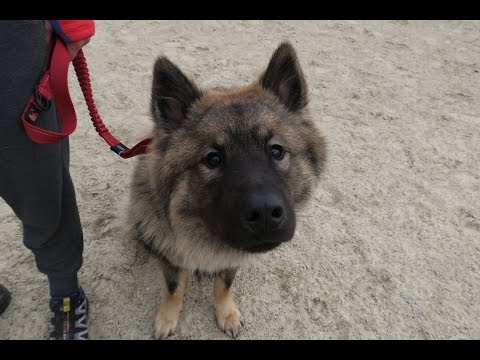
The dog Canadian Eskimo Dog it's a sled dog, the North of Canada natural. Possibly this is one of the most cold tolerant dogs.

Content

History

Similar to the Hotocho (or Mongolian sheepdog), the Canadian Eskimo (or Qimmiq en inuktitut) it is a very old canine breed, perhaps one of the first to accompany man to this part of the globe, almost ago 4.000 years. Faithful companion of the Inuit people of Thule, was bred and trained to become a tough working dog, able to travel long distances at a steady pace. It also, your complexion, their excellent sense of smell and intelligence were used to locate the breathing holes of seals for hunting and to protect families from musk oxen and polar bears..

In the Decade of 1920, the Canadian Eskimo remained closely associated with the Inuit culture, With almost 20.000 Eskimos working alongside men in the northern territories. But, this golden age was not going to last. In effect, the arrival of the snowmobile in the years 60, the massive and systematic killing of Inuit dogs by the Canadian government (officially, for public health reasons – unofficially, say some, to intimidate and forcibly assimilate Inuit peoples, eliminating their main work tool and a symbol of their culture), the introduction of new breeds of sled dogs such as the Siberian Husky, as well as a certain vulnerability to the diseases that these latter bring., are literally decimating purebred Canadian Eskimo populations. In 1963, there was only one Canadian Eskimo Dog registered in the breeding book of the Canadian Kennel Club, which then declared the race extinct.

This statement proved premature. But, it did not count on the tenacity of William Carpenter, Bill Thompson, John McGrath (founders of the Research Foundation of the Canadian Eskimo Dog) and Brian Ladoon (breeder and musher, that is to say, sled driver). With government support to preserve Inuit cultural heritage, the quartet undertook an expedition to the most remote regions of the Canadian Arctic in order to find purebred Canadian Eskimos. Their efforts paid off and, thanks to the specimens unearthed in the Inuit villages, a breeding program was launched. few years later, in 1970, there was nothing less than 200 animals. Today, this figure reaches the 300 individuals around the world.

Although the United Kennel Club American recognized the Canadian Eskimo as a race in its own right in 1996, was not up 2018, year in which the breed was recognized by the International Cynological Federationand (FCI) and Central Canine Society, when the breed really came to the forefront of the canine world and the general public and enlightened fans learned not only about the qualities of this dog, but also the precariousness of its existence.

But, although some specimens have crossed the Atlantic to the United Kingdom, the spread of the breed remains for the time being essentially limited to Canada and the United States, and even there, the breeders of Canadian Eskimo Dog they are still scarce.

Physical characteristics

At first sight, it is clear why the Canadian Eskimo has helped the Inuit people for so long. Strength, power, resistance and vigor are the first adjectives that come to mind when describing this dog capable of constant effort in difficult environmental conditions.

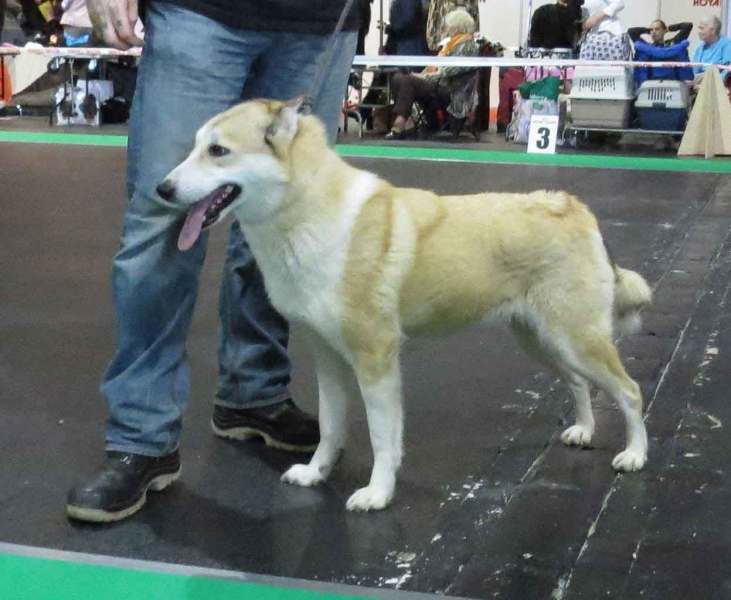
The Canadian Eskimo is of medium build, with a strong neck and chest, but with legs of medium height. With its well defined bones and muscles, his powerful and majestic physique reflects that he is mainly a very resistant dog, not very fast. It should be noted in passing that females are slightly smaller and less muscular than males.

It is also interesting to note that the Canadian Eskimo is quickly big enough to work: although it does not reach full maturity until around the 3 years of age, it is capable of transporting loads from the 7 months. Puppies are often described as miniature adults, with the ears upright and upright on the skull and the tail coiled from the third week.

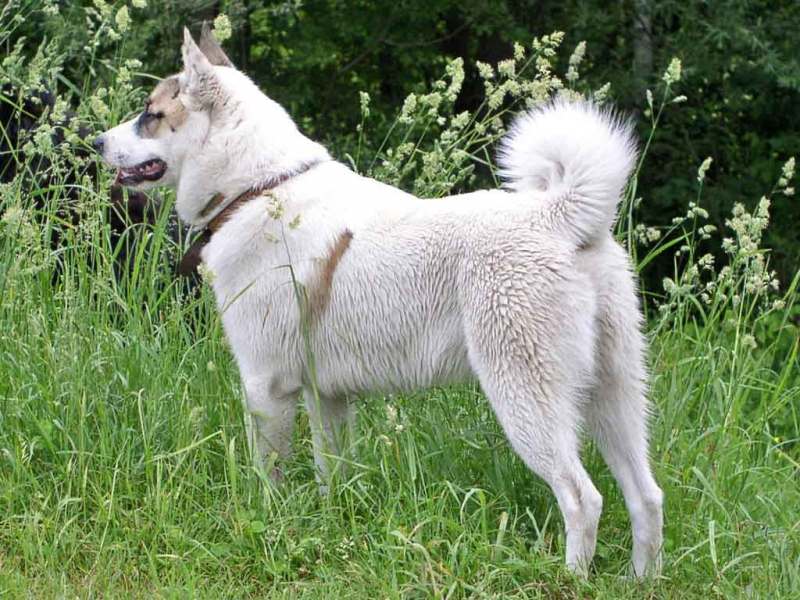
Like most of the Spitz, the head of the Canadian Eskimo is angular and elevated, with straight, thick ears. The eyes are placed at an angle and give the animal a serious attitude. The bushy tail is carried high or curled on the back.

The coat of the Canadian Eskimo It is thick, with a smooth top layer and a dense and uniform wool bottom layer, providing optimal thermal insulation for adverse weather conditions. This makes them one of the most cold-adapted dog breeds.. Males also have a long mane that covers the neck and shoulders. Females usually have the shortest upper layer, which contributes to give the impression of a finer animal.

The breed standard does not allow smooth fur. So, the Canadian Eskimo must always have a coat with a combination of colors, without the distribution of one color taking precedence over the others:

  • Completely white fur with pigmentation around the eyes, on the nose and lips (is not an albino);
  • white coat with only a very small amount of red, buff (including cinnamon shading), gray or black around the ears and eyes;
  • white coat with red markings, beige, cinnamon, gray or black around the ears and eyes, or the head completely marked with these colors, sometimes with small spots of the same color on the body, usually around the hips or on the flank;
  • Red and white, or buff and white, or cinnamon and white, or black and white, with a distribution to 50% of each of the two colors in the different parts of the body;
  • red or beige or cinnamon, with white on the chest and/or on the legs and lower part of the body;
  • Sabre body or black or dark gray, with white on the chest and/or on the legs, under the body, occasionally extended to the neck like a gola;
  • silvery grey or greyish white fur;

Brown bottom layer and black top layer.

The white mask shaded around the eyes and/or around the nose, with or without dots above the eyes, it is a common physical characteristic in dogs with a well-defined color on the head. Very rarely, the dots above the eyes, as well as the cheek marks, can be buff-colored, adding a third color to a normally bicolored dog.

Size and weight

▷ Male size: 58 to 70 cm.
▷ female size: 50 to 60 cm.
▷ Male weight: 30-40 kg
▷ female weight: 18-30 kg

Character and skills

The character of Canadian Eskimo reflects the harsh environmental conditions in which he lives and the work that dots his daily life. So, it is closer to the wild animal domesticated by the tribal peoples in a logic of labor collaboration than to a real pet overflowing with affection for its master. Intelligent, brave, but always on guard, so sometimes it may seem distant.

This does not prevent this dog from being gentle and affectionate with his family, or express a friendly curiosity towards strangers your family welcomes. But moderation remains the key word for him.. The Canadian Eskimo rarely celebrates his master, although he does not hesitate to ask for a caress as a sign of recognition. As a pack dog, is fiercely loyal to his master, whom he considers the leader of the clan, and is less distant with it. Beware who shows signs of animosity towards this leader: the Canadian Eskimo it will quickly remind you of the meaning of the word respect, with many grunts.

The herds of Canadian Eskimo have a reputation for being very organized. From time to time some fights and scratches may occur, but it is not a sign of serious struggle or rebellion against the established leader.

It also, unlike many recent dog breeds, the Canadian Eskimo has retained a very sharp hunting instinct. The slightest encouragement, either the food, the start of a game or a fight, gives rise to a quick and very enthusiastic response by this dog. In fact, this dog is more suitable for a family of adults and should never be left with children, as this could lead to unintentional injury. You can live with dogs that do not belong to your herd, but with some reservations, since he tends to regard any animal smaller than him as a prey to devour rather than as a companion with whom to live. The cats, rodents and small dogs will be tested if they have to cohabit with it.

Last, as an outdoor dog par excellence, who appreciates cold temperatures and prefers to sleep outdoors if given the opportunity, the Canadian Eskimo is not at all a breed of dog adapted to a floor. They need to spend many hours outside each day to maintain their physical and mental fitness.. Sporty and hyperactive dog, used to pulling sleds, the ideal for him is to have a master as tough as him. In other words, it is a perfect companion for those who want to practice cani-rando, cani-mountain biking, ski joering, canikart… Without physical activity up to their capabilities, becomes a destructive and/or aggressive dog.

Last, being a very intelligent dog, is the king of escapes and mischief. There is no delicate plant or reinforced fence that resists it. If you have decided to be a runaway dog, it will be very difficult to stop.

Health

The Canadian Eskimo has excellent physical dispositions that make it resistant to many of the genetic diseases that are common in dogs of similar breeds.

But, although they are a force of nature in their natural environment, are more susceptible to parasites and skin diseases that develop in warmer temperatures. Thus, it's important not to forget dog vaccine reminders, and give regular preventive treatment against ticks and fleas.

It also, like many Nordic dogs, has predisposition to the following diseases:

– Hip Dysplasia
– waterfalls
– Arthritis;
– gastric torsion;
– entropion.

Life expectancy

10 – 15 years

Characteristics "Canadian Eskimo Dog"

Coexistence is important that you have with your new friend. Before considering the acquisition of a dog of the breed "Canadian Eskimo Dog" you know certain factors. Not all breeds of dogs are apt to live in an apartment, you must take into account his character, their need for exercise, their interaction with other pets, their care and if you have small children, their level of tolerance towards them.

Adaptation ⓘ

4,0 of 5 stars (based on 1 review)

friendly dog ​​ⓘ

3,0 of 5 stars (based on 1 review)

hair loss ⓘ

3,0 of 5 stars (based on 1 review)

Affection level ⓘ

4,0 of 5 stars (based on 1 review)

Need for exercise ⓘ

5,0 of 5 stars (based on 1 review)

Social need ⓘ

3,0 of 5 stars (based on 1 review)

Home ⓘ

2,0 of 5 stars (based on 1 review)

Toilet ⓘ

2,0 of 5 stars (based on 1 review)

Friendly with strangers ⓘ

3,0 of 5 stars (based on 1 review)

barking ⓘ

2,0 of 5 stars (based on 1 review)

Health ⓘ

2,0 of 5 stars (based on 1 review)

Territorial ⓘ

4,0 of 5 stars (based on 1 review)

Cat friendly ⓘ

3,0 of 5 stars (based on 1 review)

Intelligence ⓘ

4,0 of 5 stars (based on 1 review)

Versatility ⓘ

3,0 of 5 stars (based on 1 review)

Child friendly ⓘ

4,0 of 5 stars (based on 1 review)

Surveillance ⓘ

3,0 of 5 stars (based on 1 review)

joy ⓘ

3,0 of 5 stars (based on 1 review)

Type and recognitions:

  • FCI CLASSIFICATION:
  • Group :
  • Section : . .

Federations:

  • – FCI – Group 5 – Section 1 Nordic Sledge Dogs. ⓘ
  • – CKC – Nordic Sledge Dogs ⓘ

FCI breed standard "Canadian Eskimo Dog"

Origin:
Canada

Date of publication of the valid original standard:
28.02.2018

Use:

For centuries this breed was used as a draft animal and was able to drag between 45 and 80 kg. per dog covering distances of 15 to 70 miles per day. It was also used as a hunting dog, to locate seal breathing holes for Inuit hunters. As a hunting dog, it also attacked and kept at bay the musk ox and the polar bear for the Inuit hunters.. In summer, The dog was used as a pack dog that could carry up to 15 kg.


General appearance:

The Canadian Eskimo Dog is a dog of moderate size, powerful build, with thick neck and chest and medium length legs. Typical of the Spitz family of dogs, has a wedge-shaped head with tall thick ears. The eyes are set obliquely giving a serious appearance. The dog has a bushy tail raised or curled over its back. About the same height at the hips as at the withers, medium to large in size and muscular, the dog displays a majestic and powerful physique that gives the impression that it is not made for speed but for hard work. Above all, the body must be muscular and not fat. Females will have a smaller and less muscular body than males. In the winter, the body is covered with an outer layer of straight or erect hair; underneath is a dense low-voltage layer that allows the animal to easily withstand the rigors of high latitudes. A mane-like growth of longer hair will appear over the neck and shoulder in male specimens.. The entire conformation of the Canadian Eskimo Dog must be one of strength, power and endurance balanced with agility, vigilance and audacity. The female of the breed will usually have a shorter coat than the male and will always be significantly smaller than the male.. Like young bitches, will be more boneless, among other things, with a narrower head that tends to produce a friendlier face than with men. Both males and females of the breed are known to have a rapid growth rate reaching working size around seven months. But, the maturation process extends to at least three years of age, giving them a very majestic look. The cubs have often been described as miniature adults, with erect ears and a curly tail at young ages between three and five weeks. There may be occasional periods during the adolescent growth stages when the ears may not be fully erect., but it is important to note that the Canadian Eskimo Dog's ears do not have the same gradual growth of erectness around four months of age., as seen in some other breeds.

important proportions:

The width of the forehead between the ears of males shall be 5 to 6 inches (13 to 15 cm.). In females, the distance will be 4-1 / 2 – 5-1 / 2 inches (11-14 cm.).


Behavior / temperament:

The temperament of the Canadian Eskimo Dog should reflect the tough, hardworking breed that it is. It should not be viewed as a domestic pet, but as a primitive dog originally domesticated by the Inuit for specific tasks in a harsh arctic environment. In general, mature canadian eskimo dog is kind and affectionate to the average guy, enjoying the attention. Even with strangers, dogs are rarely distant. Usually, exhibit fairly calm friendship and harmless curiosity or become completely distant. The dog is very pack oriented and, if raised as a group, dominant and subordinate roles will be played under the leadership of a fully dominant or boss dog. Behavior within a group or herd is generally well structured and controlled, but it is not uncommon to see battle scars or torn ears on dogs that originate from breeding areas where dogs are raised in groups or packs.. Compared to modern domestic breeds, The Canadian Eskimo Dog has an almost excessive response to any stimulus, either food, work, defense or game. For this reason, the dog should be a companion for adults and should not be considered a child's pet.

Head:

---

Cranial region:

Skull: Massive but well proportioned being wide and wedge-shaped. Although it is often described as a species of wolf, the head of the canadian eskimo dog has a higher forehead. Immature females will have a much narrower skull than the male.

facial region:

  • Truffle: The pigmentation of the nose will vary from black to light brown (especially in lighter colored dogs with red, cream or cinnamon on the body). Butterfly noses, sometimes they appeared with light brown noses.
  • Snout: Tapered and medium length.
  • Belfos: Black or brown with pink.
  • Mwalking / Teeth: The jaws are heavy and powerful and have large teeth with well-developed canine teeth.. The incisors meet in a scissor bite.
  • Eyes: In general, dark colored but hazel or yellow eyes will appear in the breed. They are small, widely spaced and set obliquely on head, which tends to look much wilder and more deceptive than the dog deserves.
  • Ears: Short, thick and slightly rounded ends. They are carried erect, they turn forward and cover themselves with dense short hair.

Neck:

Short, straight, thick and very muscular.

Body:

  • Generality: About the same height at the hips as at the withers.
  • Back: The spine when felt through the hair body is well pronounced.
  • Pork loin: Well developed.
  • Breast : Deep, wide and well muscled.
  • bottom line: There is very little flank curve Very little flank curve.

Tail:

Large and bushy and usually carried up or curled over the back. Mature bitches can sometimes bring their tails down.

Tips

Former members

  • Shoulder: Large, obliquely fitted with moderate musculature.
  • Forearm: Straight, but may appear to be leaning, due to the well-developed triceps muscle above and behind the elbow and the pronounced muscle in the forearm.
  • Front feet: Large, almost round, well bowed, with thick pads that are well arranged between them; However, under extremely cold winter conditions, this fur will grow to be too long to cover the bottom of the pads.

Later members

  • Generality: The hips can appear as pronounced and bony as the spine, and they are approximately the same height as the cross.
  • Thigh: The legs will be very muscular and the width of the thigh will carry well towards the hock..
  • Knee: Well folded.
  • Hock: From the back, the legs will appear straight with the hocks turning in and out.
  • Rear feet: Similar in design to the front but slightly longer.

Movement:

The working gait of this dog is a powerful, energetic trot with the hind legs moving in line with the front legs in the power movement., but showing some abduction during the forward movement of the stride. This can be especially pronounced in mature male dogs with many miles of harness.. This gait may seem uncomfortable to the untrained eye., but it is the result of a wide posture caused by well developed thighs. This particular gait is an efficient and well-balanced gait for pulling hard day after day.. The dog's movement must not appear in any way as a jerky or rowing movement. Females are much faster and freer in movement than heavier males and are capable of breaking the natural trotting stride and running or galloping for much longer distances than males..

Mantle

Skin

Should feel thick and resilient.

Fur: Subject to an annual molt, usually in August or September, the coat is thick and dense and the guard hairs are hard and rigid. This outer layer will vary from 3-6 inches (7-15 cm.) length. In males it will occur in a mane-like growth on the shoulder and neck, which makes the male appear much larger in size and taller at the withers than he actually is. The inner layer is very dense to provide excellent protection during the most extreme winter conditions. During the molt, This condition will release in clusters over a period of a few days. Females will generally have a shorter coat partly due to the additional shedding that will occur after the pups are born..

Color

No one color or color pattern should dominate the breed with the Canadian Eskimo Dog color and color patterns ranging from:

  • (to) A completely white body with pigmentation around the eyes, nose and lips (for example, not albino).
  • (b) White body with only the smallest amount of red, beige (including shades of cinnamon), gray or black around the ears or eyes.
  • (c) White bodies with red heads, polished, cinnamon, gray or black marks around the ears and eyes or the entire head and the occasional small spot of the same color on the body, usually around the hip or flank.
  • (d) Red and white, or cream and white, or tan and white or black and white with a distribution of approximately 50/50 of the two colors, in various parts of the body.
  • (and) Red body or soft body or tan body with white on the chest and / o legs and lower body.
  • (f) Saber or black body or dark gray body with white on the chest and / or legs and lower body that occasionally extend around the neck in the form of a necklace.
  • (g) Silver gray or greyish white body.
  • (h) Polished to brown under with black guard hairs.

Very common for dogs with solid color over most of the head is a white mask around the eyes and / or muzzle with or without white spots on the eyes. Very rarely, the spots over the eyes, as well as the marks on the cheeks, will be buff color, which will add a third color to an animal that normally has two colors.


Size and weight:

  • Height to the cross: Males: 58-70 cm., females: 50-60 cm..
  • Weight: Males: 30-40 kg, females: 18-30 kg.


Fouls:

Any deviation from the above mentioned criteria is considered to lack, and the severity of this is considered the degree of deviation from the standard and its consequences on the health and well-being of the dog and the dog's ability to perform its traditional task.

Serious misconduct

  • Head: square muzzle or loose lips, round or bulging eyes.
  • Neck: Long and thin.
  • Body: Narrow chest, over all lack of muscle, excess fat, sloping back, coarseness or lack of finer bones in bitches.
  • Legs: thin, fine boned or set beef.
  • Pies: flat or open.
  • Shelter: Short, off prime.

disqualifying fouls:

  • Aggressive or overly shy dogs.
  • Blue eyes.
  • Floppy ears, the exception is the ears torn by battle.
  • Trim or alter the coat using scissors.
  • There is no evidence of a curly or upright tail in male dogs (recognizing that a tail may occasionally hold down as a sign of subordination or stress).
  • Excess under or excess jaw.


N.B.:
  • Any dog ​​showing clear signs of physical or behavioral abnormalities must be disqualified..
  • The aforementioned fouls that are more pronounced or more marked are eliminatory..
  • Males should have two normal-appearing testicles fully descended into the scrotum..
  • Only functionally and clinically healthy dogs, with the typical conformation of the breed, should be used for parenting.

Source: F.C.I - International Cynological Federation

Alternative names:

1. Canadian Inuit Dog, Qimmiq, Canadian Husky (English).
2. Inuit canadien, Qimmiq (French).
3. Canadian Eskimo Dog (German).
4. (em inglês: Canadian Eskimo Dog), Qimmiq (Portuguese).
5. (español).

▷ The world of Pets: Dogs, cats, birds, reptiles, amphibians

Kishu
Japón FCI 318 - Asian Spitz and related breeds

Kishu

The Kishu of Japanese hunting are characterized by their resistance, intelligence, great courage and, usually, a strong hunting instinct.

Content

History

The Kishu It has its origins several thousand years ago in the mountains of the «Kii Peninsula«, a region of Japan that extends over present-day Mie prefectures, Wakayama y Nara. In the past, the dogs did not have a uniform name, but were differentiated and named according to individual sections of the mountainous region of the "Kii Peninsula": Kumano Inu (kumano dog), Taji Inu (taji dog), Ouchiyama Inu (Ouchiyama dog).

From Hidaka to Arita the Kishus they were white and their names were Hidaka-Ken. In 1934 all these dogs were grouped under the name of the region and were called Kishu. Due to the remoteness of the mountainous regions, there were no crosses with other races or other race-changing phenomena in the Kishu Ken. For this reason, the Kishu it is one of the most original breeds of Japan, and one of the oldest dog breeds in the world.

In 1934 the breed was declared a natural monument of Japan and is therefore under state protection. Until the seventies it was forbidden to sell Kishu of Japan. Dogs could only be passed as gifts.

Although at the beginning of the breeding around the 70 percent of Kishus they weren't white, this is today the most common color within the breed. This is partly due to the fact that white dogs are easier to recognize when hunting.. Outside of Japan the breed has barely spread. There are a handful of breeders in the US.. and only a few dozen in Europe. The Kishu has some similarities with the Shikoku, the Kai Ken and especially with the Hokkaido, that are also not outside of Japan.

Physical characteristics of the Kishu

The Kishu measures approximately 46 centimeters tall, and weighs around 28 kg, is a medium-sized dog. The fur color is generally white. The fur is short, straight and thick with a layer of thickness. The ears are inclined forward and are rather small. This breed is strong, flexible and user-friendly.

Kishu's character and abilities

The Kishu is a hunting dog. In the Kishu region, dogs were used to hunt wild boar., deer, bears, hares and birds. according to the game, there were three directions of Kishus: deer, hare and boar / bear. The Kishu roe deer and hares hunter had a slightly lighter complexion that favored them on the hunt. Due to the non-optimal suitability of the breed, especially for hunting hares and small prey, this category did not prevail. Today almost all Kishu Kens historically they originate from hunting wild boar (and secondarily also) of bears. These Kishu Kens have a stronger physique, more pronounced musculature and a wild to sharp disposition.

In the old way of hunting, the hunter stayed in a place with only one dog and waited for the prey. Later hunting methods prefer game to be brought in by the Kishu Ken. The dog follows the game independently and silently. Like most Nordic hunting dogs, the Kishu only reports when you have placed the game. The dog's task is to "keep the game under control" until the hunter can shoot from a short distance.. Especially German hunters are often skeptical or incredulous about the abilities of the Kishu Ken to hunt the physically superior boar. In Japan, However, the skills of Kishu Ken they are highly valued. His ferocity and indomitable attitude make him so popular for boar hunting in Japan.. In Japan there has been an expression for decades that illustrates the special suitability of the Kishus as hunters:
«ichiju – ikku» – "a weapon – a dog".

Character:

Representatives of this Japanese hunting breed are characterized by their resistance, intelligence, great courage and, usually, a strong hunting instinct. They are considered as one-person dogs, who form a strong bond with their two-legged companion and behave loyally. The kishus tend to dominate behavior, which can lead to problems with congeners, especially among males. His dominance is sometimes displayed on his own four walls, where they often want to have everything in sight. The Kishus they are not submissive to their owners and always keep their own head. This leads to the fact that they normally only perform tasks when they see meaning in them.. Towards strangers they behave aloof to shy. They are conditionally suitable as watchdogs.

Kishu education

It takes a lot of knowledge and patience to educate a Kishu, because intelligent animals tend to be stubborn and domineering. But, if you are consistent and have the necessary calm, the Kishu they will recognize you. Toughness is out of place in education. Don't expect submissive behavior from this proud four-legged friend. Pay attention to the control and management of hunting behavior, sometimes very distinctive. But, It must be taken into account that it will be difficult to let a Kishu without a leash, because even optimally trained representatives of the breed are often not available when they watch the hunt.

Work to confidently keep it at bay when you encounter the game. It also, the four-legged friend's social compatibility should be the center of attention during parenting. Puppy play classes and dog schools in general offer a good opportunity, because here the young Kishu You can already come into contact with conspecifics of different sizes and thus strengthen your social skills. Please, note that the Kishu you must be physically and mentally exhausted if you don't want to engage in an unpleasant alternative activity – for example, destroying home furnishings or poaching.

Kishu Health

Some kishus have a tendency to hypothyroidism, that is to say, an insufficient supply of thyroid hormones, usually due to limited thyroid function. Symptoms include fatigue and reduced performance. The owners of a Kishu they should have their thyroid gland examined by a vet if these symptoms occur. This disease is not life threatening and can usually be treated well with administration, mostly daily, of an appropriate medication. Because of the shape of your eyes, the breed also has a greater genetic disposition for eyelid malpositions, what can, However, be corrected by surgery. Dogs Kishu they also have a tendency to food and environmental allergies. Otherwise, This Japanese breed is considered robust and has an average life expectancy of 13 years.

The Diet of Kishu

The best health precaution, in addition to buying from a responsible breeder, It is a high quality and appropriate nutrition for this breed. This specifically means that you should choose a dog food in which meat is the main component and is listed accordingly at the top of the claim. The grain should not be included – not just a bottom fill, it can also trigger allergies in some Kishus. If fed high-quality feed from the beginning, the risk of food intolerances is reduced. Even with previously unseen representatives of the breed, no sudden food changes should be made, but offer a new food slowly. Mix increasing amounts of the unfamiliar food with the familiar one and watch for your dog to show intolerance reactions. Of course, fresh drinking water should always be available for your Kishu.

If it is suspected that you Kishu have a food allergy, a unique diet makes sense to find out what your companion animal is sensitive to. For this you must be patient and consult your veterinarian, because you should only give a certain food during a predetermined period of time. If the complaints improve with feeding, you can try another feeding. If the symptoms worsen, contact your veterinarian to clarify the subsequent procedure. This way you can find out which ingredients you are allergic to. Kishu. Attention: No treatments should be given during this time if possible.

Kishu care

Brushing once a week is usually enough to keep this breed's coat in optimal condition.. But, during the coat change twice a year, you should use the brush more often to remove dead hairs. This also has the positive side effect of the quadruped losing less fur on the ground.. Dirt can be brushed off as soon as it has dried, or washed with a damp cloth. Compared to other breeds, the Kishus they are considered very clean dogs. When you groom your dog at least once a week, take a look at their ears to clean them with a dog ear cleaner, if required, and check its claws. The latter should be shortened if they become too long. This is usually only the case for Kishus older that move less, or dogs that walk mainly on very soft ground.

Where can I find my desired Kishu?

The breed is very rarely found outside of Japan. But, there may be a dog breeder living in your region who has dedicated their work to this breed. In addition to a handful of breeders in the US. and russia, there are a few in europe, especially in the czech republic, the Netherlands, Poland, Finland and Lithuania. In Germany no official litters of Kishu in recent years. So be prepared for long journeys, if you have decided to adopt a Kishu – and learn more about adopting a puppy abroad before. Be sure to avoid advertisers who claim to sell you a pup from Kishu – they are usually only interested in making a quick profit and you will hardly get a Kishu in this way.

It is unlikely that a Kishu adult outside of Japan, you should be very lucky if you are looking for a purebred dog. But, even if you have fallen in love with a Kishu, it might make sense to look for similar breeds of the Spitz type or corresponding hybrids at animal shelters – this also applies to puppies, of course. The chance of success is much higher and you've also given a homeless four-legged friend a new home. Find out in advance about the known history and character of the potential new family member – often, as in the case of their own Kishu, some experience with dogs is important here to allow a successful coexistence and avoid communication problems between the animal and the human.

Characteristics "Kishu"

Coexistence is important that you have with your new friend. Before considering the acquisition of a dog of the breed "Kishu" you know certain factors. Not all breeds of dogs are apt to live in an apartment, you must take into account his character, their need for exercise, their interaction with other pets, their care and if you have small children, their level of tolerance towards them.

Training ?

2,0 of 5 stars (based on 1 review)

Suitability of the apartment ?

2,0 of 5 stars (based on 1 review)

Can be alone all day ?

2,0 of 5 stars (based on 1 review)

Suitable as a first dog ?

1,0 of 5 stars (based on 1 review)

Weight gain ?

1,0 of 5 stars (based on 1 review)

Health ?

4,0 of 5 stars (based on 1 review)

Intelligence ?

4,0 of 5 stars (based on 1 review)

Kindness with child ?

2,0 of 5 stars (based on 1 review)

Tendency to bite ?

3,0 of 5 stars (based on 1 review)

Tendency to bark ?

3,0 of 5 stars (based on 1 review)

Tendency to flee ?

5,0 of 5 stars (based on 1 review)

hair loss strength ?

4,0 of 5 stars (based on 1 review)

Suitable as a guard dog ?

3,0 of 5 stars (based on 1 review)

Joy ?

3,0 of 5 stars (based on 1 review)

Cat friendliness ?

2,0 of 5 stars (based on 1 review)

Power level ?

3,0 of 5 stars (based on 1 review)

Videos "Kishu"

HTTPS://youtube.com/watch?v=e7jivgljnps
Kishu (Kishu Inu) / Breed of dog
HTTPS://youtube.com/watch?v=B8TL4HWQGRw
Kishu Ken (Kishu Inu)

Type and recognitions:

  • FCI CLASSIFICATION:
  • Group :
  • Section : . .

Federations:

  • – FCI – Group 5: Spitz-type dogs and primitive type – Section 5: Asian Spitz and related breeds. ⓘ

FCI breed standard "Kishu"

Origin:
Japan

Date of publication of the valid original standard:
20.12.1994

Use:

Hunting dog and company.


General appearance:

medium size dog, well proportioned with developed muscles. Its ears are erect and its tail is curled or sickle-shaped.. Its constitution is robust and compact with strong bones..

IMPORTANT PROPORTION : The relationship between the height of the withers and the length of the body is 10 : 11.


Behavior / temperament:

Remarkably durable, with a spontaneous character, but noble and worthy. His temperament is faithful, docile and very awake.

Head:

---

Cranial region:
  • Skull : Wide forehead.
  • Depression links (Stop) : Rather marked, with inconspicuous frontal furrow.

facial region:

  • Truffle : Black; in white-coated dogs, liver-colored truffle is allowed. Straight nose cane.
  • Snout : very thick, cuneiform, gradually tapering towards the tip.
  • Lips : Very adherent.
  • Jaws / Teeth : Powerful scissor bite.
  • Cheeks : Relatively well developed.
  • Eyes : Proportionately small, almost triangular, well separated, dark brown.
  • Ears : Small, triangular, slightly directed forward and carried vigorously erect.

Neck:

Strong and muscular.

Body:

  • Cross : High.
  • Back : Straight and short.
  • Pork loin : Wide and muscular.
  • Breast : Deep, moderately arched ribs.
  • Belly : Well withdrawn.

Tail:

High insertion, thick, He carries it vigorously curled or in the shape of a sickle on his back. The tip of the tail should reach approximately to the hocks..

Tips

PREVIOUS MEMBERS :

  • Shoulder : Moderately obliques covered with well-developed muscles. The scapulohumeral joint presents a moderate angulation.
  • Elbows : Well adhered to the body.
  • Forearm : Straight.
  • Metacarpus : Slightly inclined.

LATER MEMBERS :

  • Thigh : Long.
  • Leg : Short.
  • Warm-foot joint : Strong and resistant.

FEET : Well arched and compact fingers; thick, elastic pads. Hard nails and preferably dark in color.

Movement:

Light and elastic.

Mantle

HAIR : The hair of the outer coat is hard and straight, the undercoat is soft and dense. The hair on the cheeks and tail is relatively long..

COLOR : White, rojo o sesame (red-fawn hair with black tips).


Size and weight:

Height to the cross :

  • In males : 52 cm.,
  • In females : 46 cm..

A variation of +/- 3 cm..


Fouls:

Any deviation from the aforementioned criteria is considered as a fault and the severity of this is considered to the degree of the deviation to the standard and its consequences on the health and well-being of the dog..

• Inverted sexual characteristics.
• Wide.

MISS PLAYOFFS

• Aggressive or fearful dog.
• Pronounced upper or lower prognathism.
• Short tail, hanging tail.
• Shyness.

Any dog ​​showing clear signs of physical or behavioral abnormalities must be disqualified..


N.B.:

Males should have two normal-appearing testicles fully descended into the scrotum..

Source: F.C.I - International Cynological Federation

Alternative names:

1. Kishu-Ken, Kishu-Inu (English).
2. Kishu-Ken, Kishu-Inu (French).
3. 紀州犬, Kishū-Inu, Kishu-Ken (German).
4. Kishu-Ken, Kishu-Inu (Portuguese).
5. Kishu-Ken, Kishu-Inu (español).

▷ The world of Pets: Dogs, cats, birds, reptiles, amphibians

Portuguese Podengo
Portugal FCI 94 . Primitive type - Hunting Dogs

Podenco Portugués

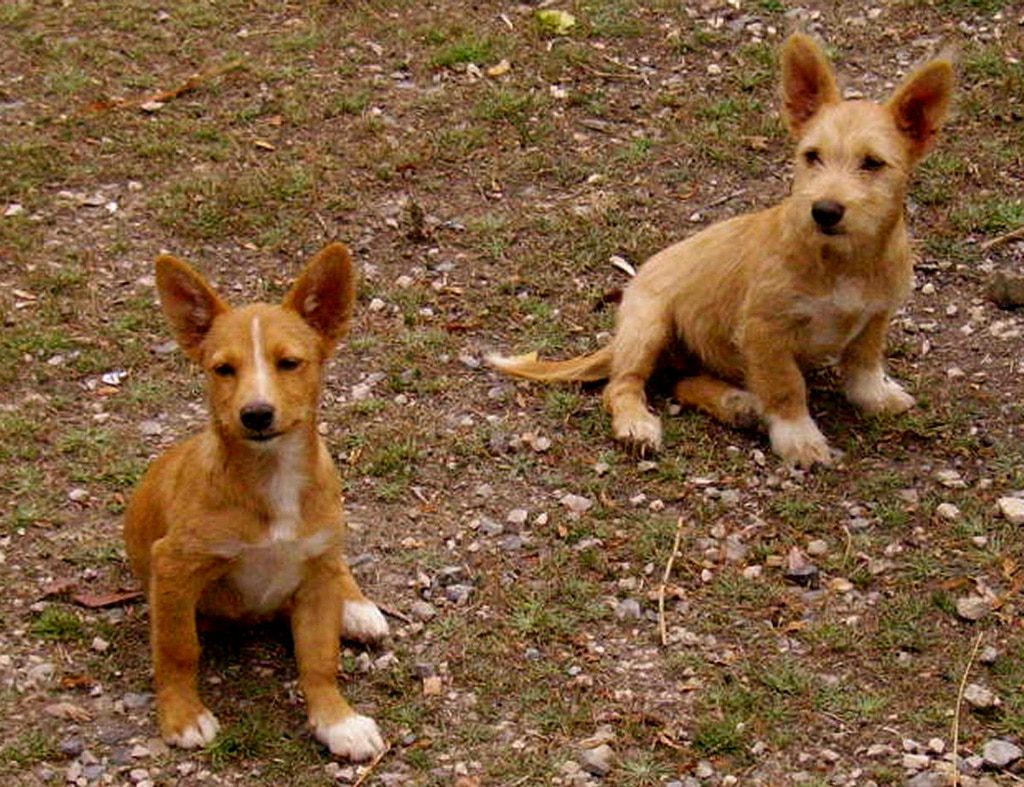
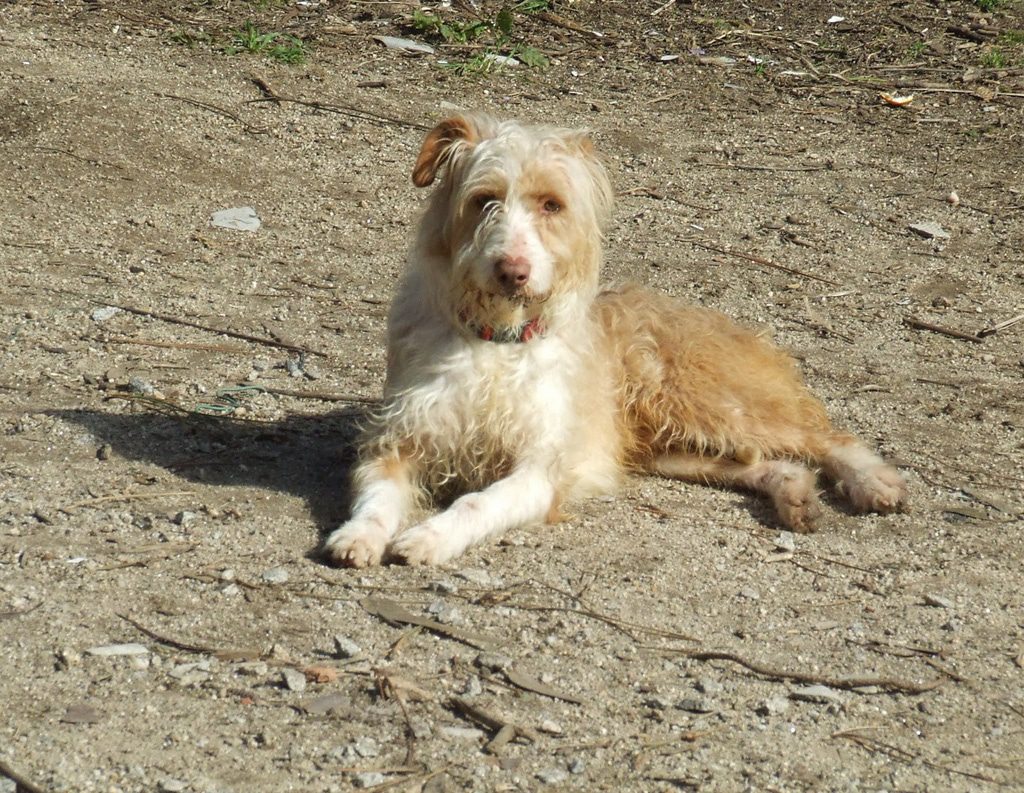
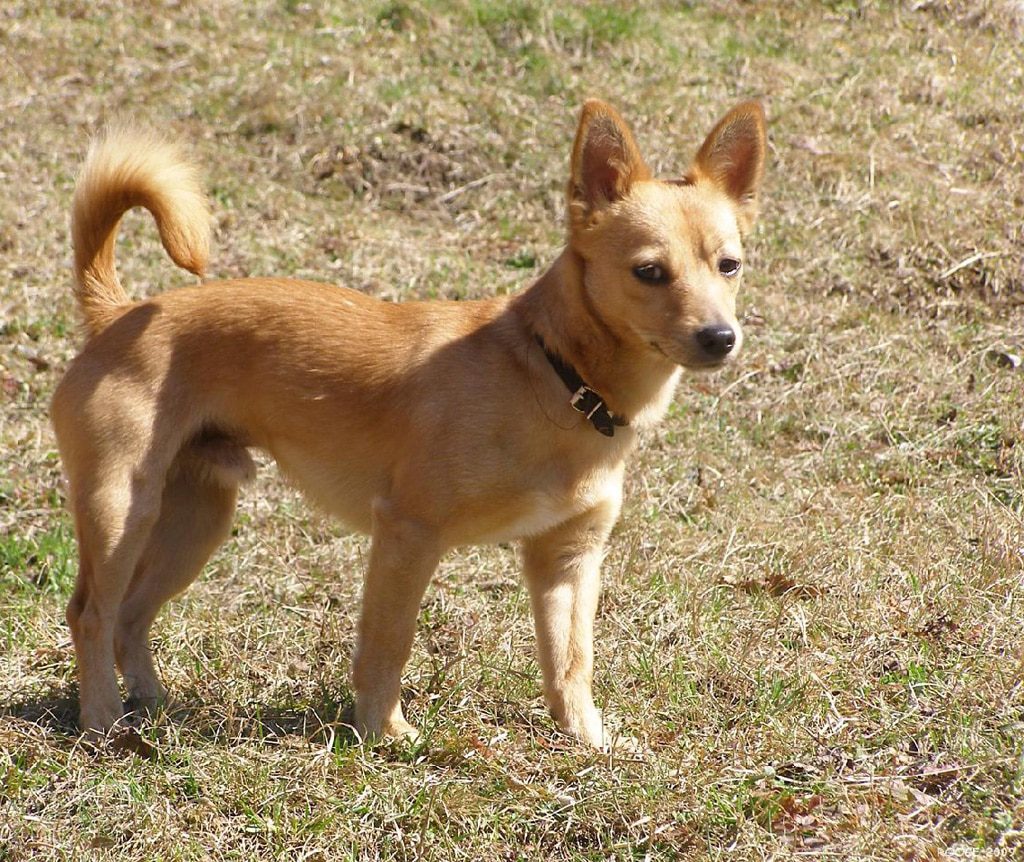
The Portuguese Podengo is a breed of dog that is in danger of extinction.

Content

History

The Portuguese Podengo It is considered one of the oldest dogs breeds, that has its origins in the Phoenicians, cultural matrix of which descend the Portuguese. It is a native breed of Portugal, with great skills for hunting, but also surveillance, It is commonly used on farms to alert of the presence of intruders.

The great family of the hound race, specialists in the topic raised it was in Portugal where most subjected to crossing and as a result, branched lineage. Within their ancestors argue that perhaps the closest the Ibizan Hound, and various types of dogs of traces of lived (They inhabit) throughout the Mediterranean area. Like all hound dogs, History shows that they are represented in Egyptian paintings of thousands of years ago.

according to size, There are three varieties of Portuguese Hound, Grand, Small and medium, being each variety, products of the different crossing, over time.

It is believed that the great variety has emerged the variety of Portuguese Podengo small and medium, the ancestor of the Grande variety is the Pharaoh Hound spread from North Africa to the Iberian Peninsula. Although other authors raise that it is possible that the hound descends from the small Iberian wolves. There is still controversy...

Although one of the theories suggests that the Medium Portuguese Podenco arises, of different Podenco dogs from North Africa, The most accepted theory is that this variety, directly descended from the Portuguese Podengo Grande.

The small Portuguese Hound, sometimes described as a Chihuahua heavier (There is no kinship between these two races), often collaborate in the tasks of hunting with their larger peers, what this dog does is get into the rabbit hole and scare them so that they come out and are hunted by their pack mates.

In the North of Portugal today it is still used for hunting rabbits and small vermin. Hunting in a pack or alone. Although this dog can be seen in the rest of the country, its popularity lies in the North of the same.

Physical characteristics

As specified above, according to size, There are three varieties of Portuguese Hound, Grand, Medium- and Petit:

  • Portuguese Podengo Grande: It is a very rare variety and is in danger of extinction, especially the smooth variety. They are usually used in packs to hunt large prey such as deer or wild boar.. It is the only Portuguese breed used for wild boar hunting. His cloak can be short and smooth (less common and on the verge of extinction) or rough and long.
  • Portuguese Podengo Medio: It is the fastest of the three varieties, excellent Hunter of rabbits and hares. You can hunt in a pack or alone. Like the great Portuguese Hound, their coats can be smooth or rough and short and long. Of the three varieties this is the most common, and the greatest concentration of these dogs is located in the North of Portugal.
  • Portuguese Podengo Pequeno: Like his brother medium is an excellent Hunter of rabbits and hares. Responsible for getting into the Burrows (Thanks to its size and agility) to drive away prey and be hunted down by his pack mates. The small Portuguese Podengo coat is short and smooth, only.

The varieties in the fur are related to the inclement weather and adaptation to the same, the smooth-haired variety is more common in northern Portugal, characterized by being a humid area, This soft and smooth coat is necessary because it is dried more easily after wet.

The variety of hair bristles found in drier areas, where the coat of hair has the function of protecting the dog from the sun's rays and cold weather in winter. Nature is wise…

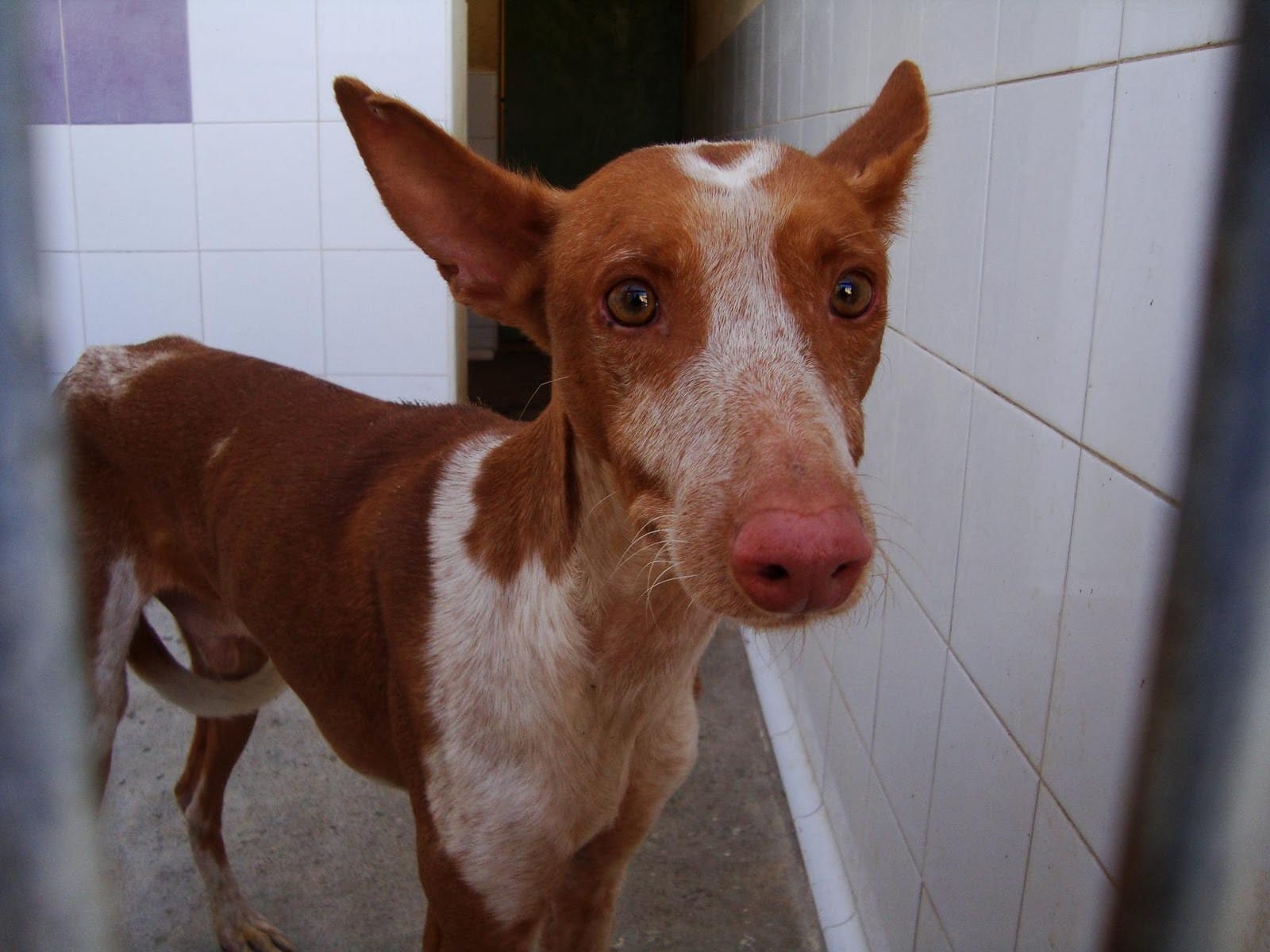
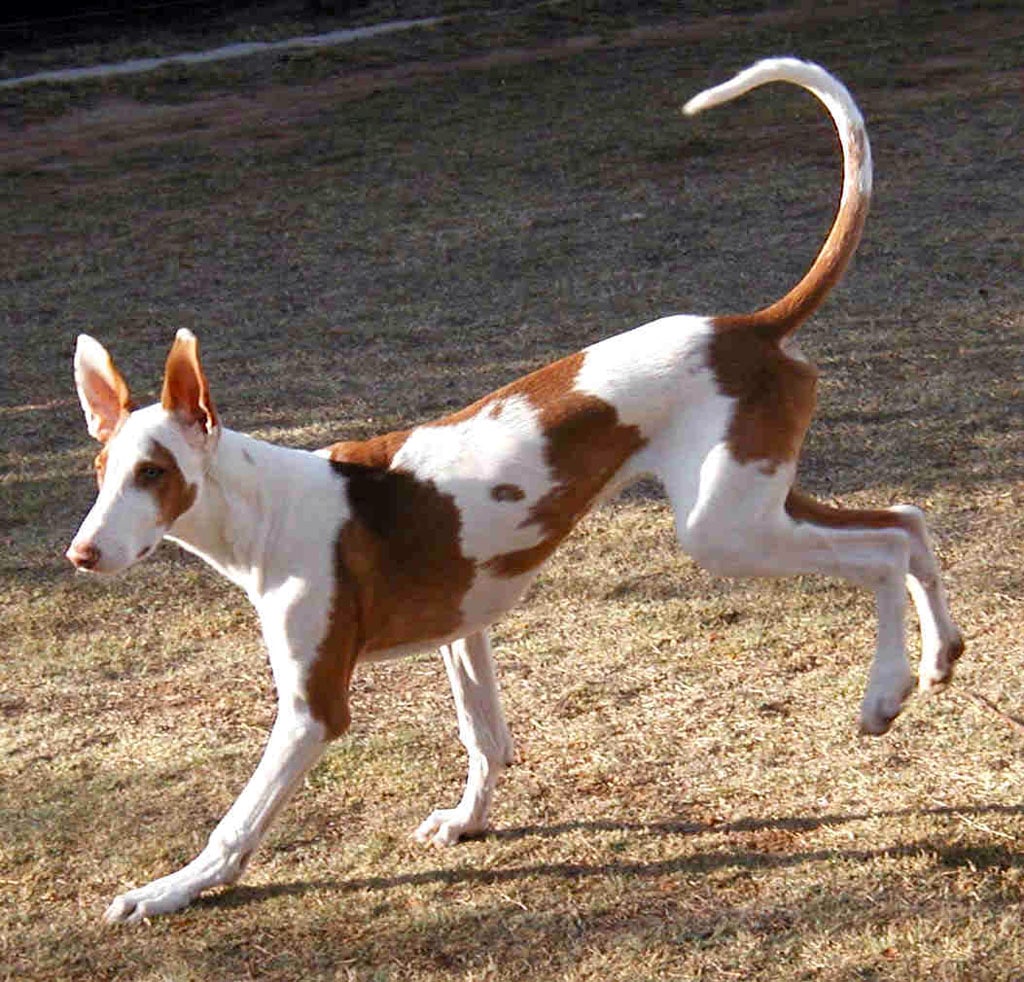
The hair short or long, thick medium and bright. In dogs with long hair and rough, the hairs of the snout are long (Beard). The predominant colors are yellow and the fawn (with its varieties of color clear, to very dark), and diluted or matte black; unicolores with or without white spots or white spotting.

Their life expectancy is around the 12 or 14 years, and it is a race that is rarely seen outside Portugal.

In general, is a medium-sized dog, well proportioned, muscular with good bone structure. It has long, narrow head, with moderately wide skull and the pointed snout.

The ears, large and triangular, they are carried erect. It has eyes expressive and little bulging in orbits, color honey or brown, according to coat color.

The pigmentation of eyelids is darker that the of the fur. The body is quite long, with ribs moderately arched.

The tail, is strong and pointed, long and medium length, It is held horizontal or slightly arched in activity.

Character and skills

The Portuguese Podengo, It is their three varieties has a cheerful character, intelligent and very sociable with other dogs. They are extremely affectionate with their owners, especially with the children.

They are very shy with strangers, always alert and constant surveillance of their territory, that makes them good guard dogs, although, It lacks the aggressiveness which may show a watchdog or defence.

Observations

Unfortunately, the Portuguese Podengo It is one of the canine breeds that today are found in danger of extinction, even in Portugal. It is not easy to see them out of Portugal.

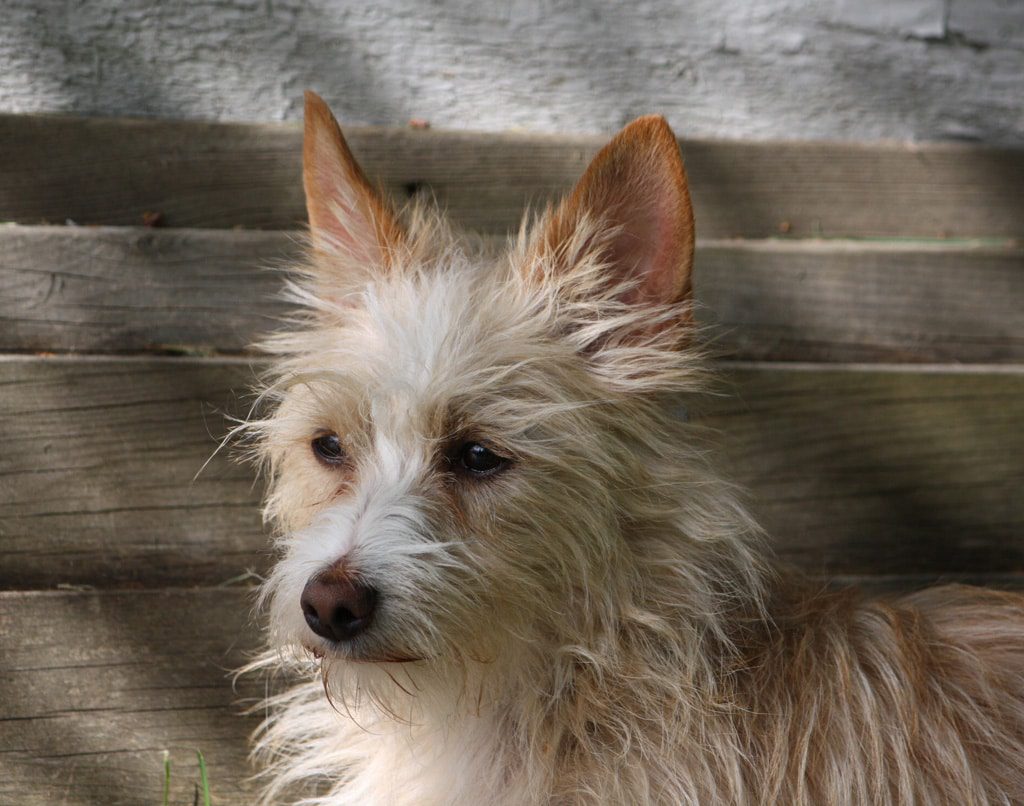
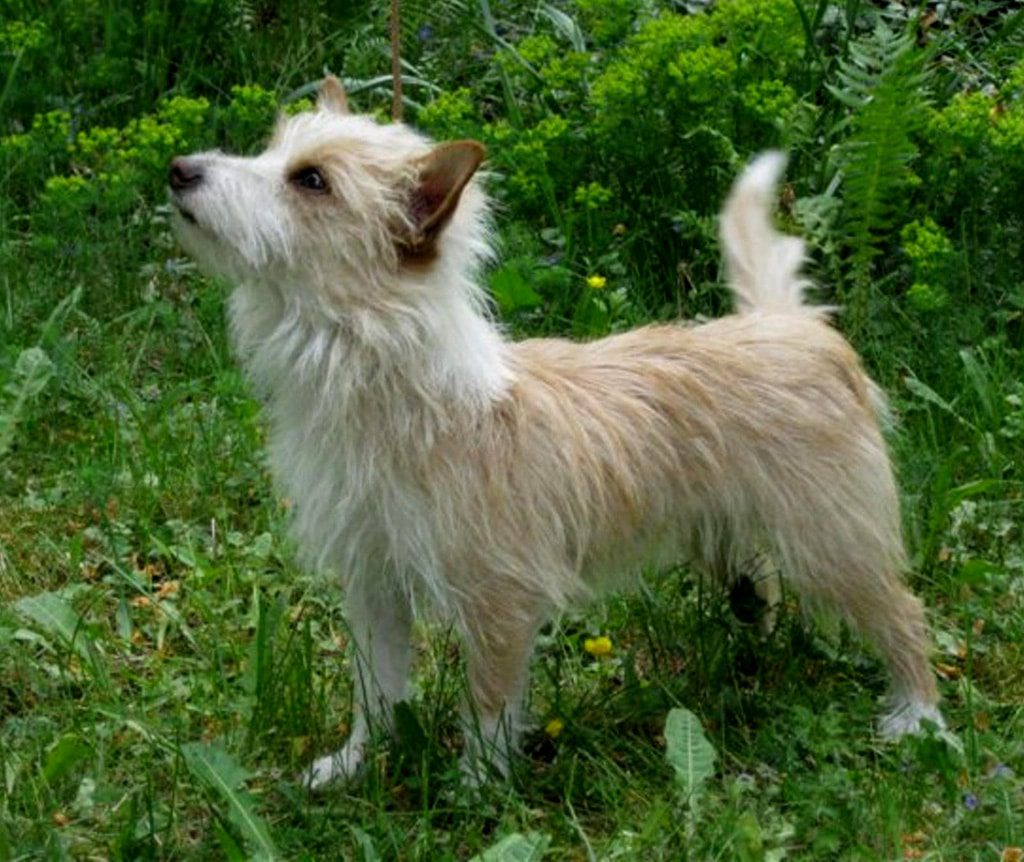
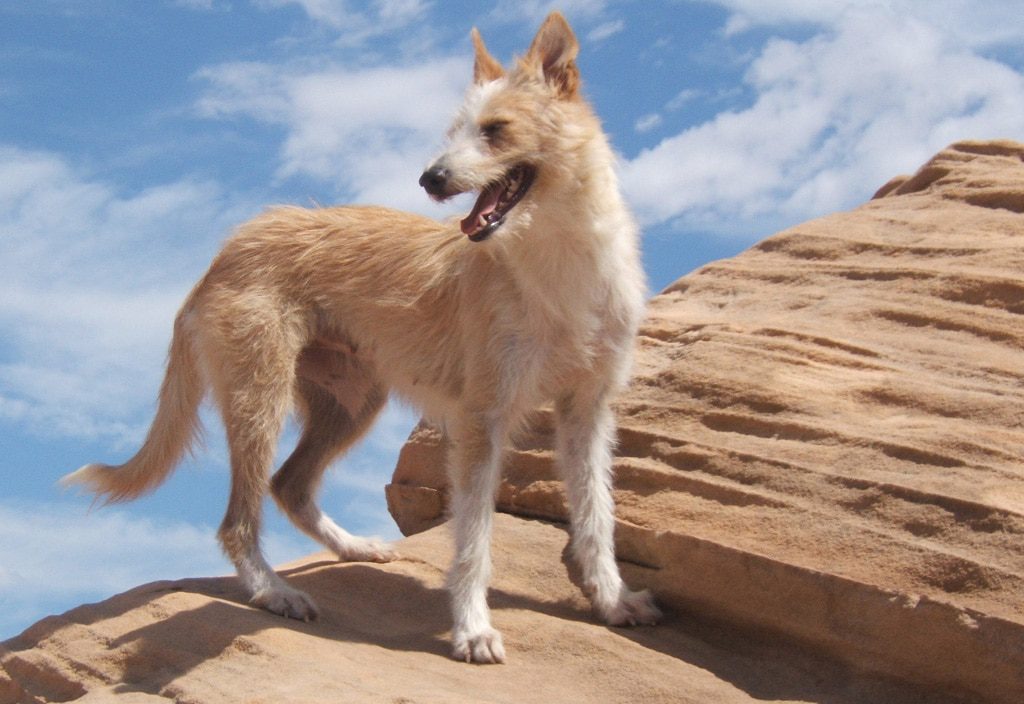
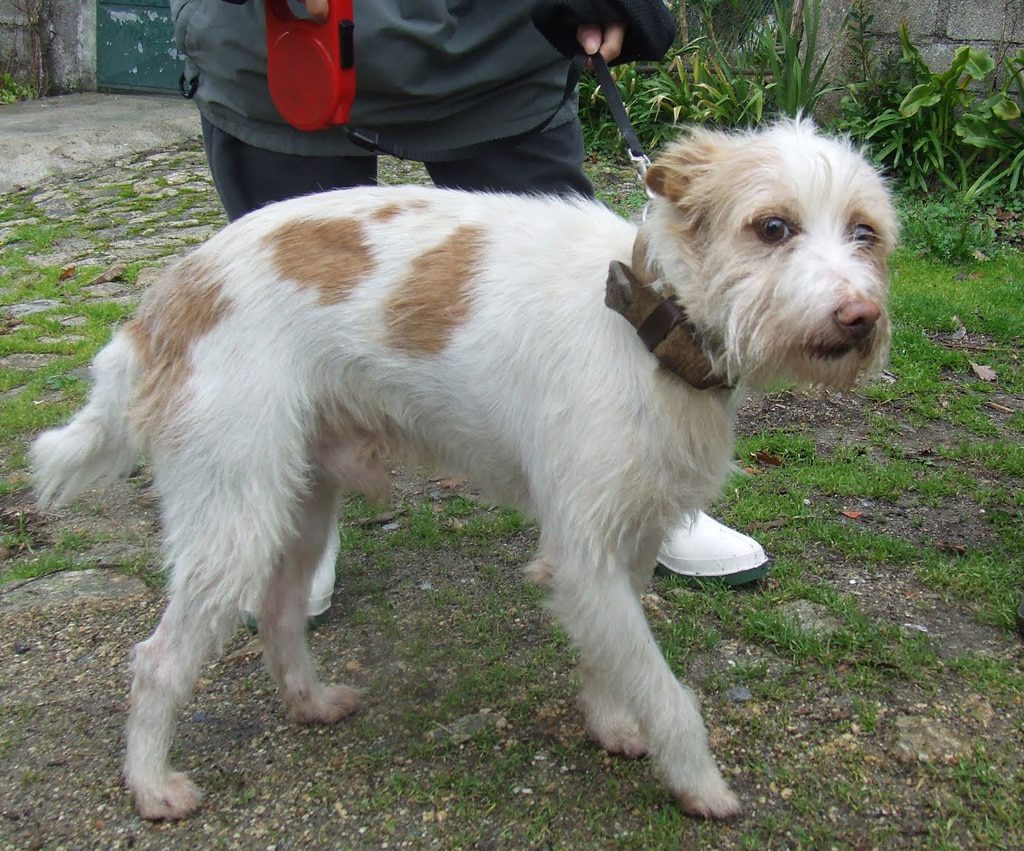
Images of the «Portuguese Podenco»

Videos of the «Portuguese Podenco»

Type and recognitions:

  • FCI CLASSIFICATION:
  • Group :
  • Section : . .

Federations:

  • – FCI – Group 5: Spitz-type dogs and primitive type – Section 7: Primitive type - Hunting Dogs. ⓘ

FCI breed standard "Portuguese Podengo"

Origin:
Portugal

Date of publication of the valid original standard:
04.11.2008

Use:

hunting dog, guard and companion dog


General appearance:

Quadrangular pyramidal head, erect ears, sickle-shaped tail, well proportioned with a solid build and well muscled. Very loving and intelligent, sober and rustic. It comes in three sizes with two varieties of hair: smooth and wired.

IMPORTANT PROPORTIONS:

Podenco Grande y Medio: Almost square (midline sub) with large to medium substance respectively.
Length of the body in relation to the height at the withers: 11 / 10 and depth of chest with respect to the height at the withers 1 / 2.

Little Podenco: Body somewhat longer than tall (long sub), small in stature. The length of the body is somewhat greater than its height at the withers in a proportion – length of the body / height to the cross: 6 / 5.
chest depth / height to the cross: 1 / 2.

In all varieties the length of the snout is less than the length of the skull.


Behavior / temperament:

Podenco Grande: Used for hunting big game.

Podenco Medio: Also known as Warren Hound, his natural aptitude as a rabbit hunter is well known. Hunt alone or in a pack.

Little Podenco: Used to search for rabbits in burrows and rocks.

All varieties are used as guard and companion dogs..

Head:

Thin, in the form of a quadrangular pyramid trunk. Its base is wide and its quite pointed end. The upper longitudinal axes skull facial differ.

Cranial region:
  • Skull: Annoying. The profile is almost straight. The eyebrows are prominent. The frontal furrow is little pronounced. The handset inter space is horizontal and the back of the head is prominent.
  • Depression front naso (Stop): Little pronounced.

facial region:

  • Nose: Thin. Se adelgaza y es truncada en forma oblicua; is prominent in its end. Its color is darker than the coat.
  • Nose cane: Rounded cross section; straight profile. It is shorter than the length of the skull and wider at the base than at its tip.
  • Lips: Are well applied to each other. They are fine, strong and well straight.
  • Jaws/teeth: Normal, scissor bite, with solid and white teeth. The two jaws have a regular opposition. Complete dentition in the large variety.
  • Cheeks: Thin or placed oblique views of front.
  • Eyes: They are expressive and little bulging in orbits. Its colour goes from the honey to Brown, according to coat color. They are small and oblique. The pigmentation of eyelids is darker than the coat.
  • Ears: Insertion oblique and medium. Straight and high mobility are. They are vertical to the front when the dog is alert. They are sharp, and wide at the base. Triangular shape, thin; a height larger than the base and considerable.

Neck:

Harmoniously joined with the head and trunk. It is straight, long, provided, strong and well muscled. It presents no Chin.

Body:

  • top line: It is straight, level.
  • Cross: Only slightly visible in relation to the neck and back.
  • Back: Straight. It is long.
  • Pork loin: Straight. It is wide and muscled.
  • Rump: Medium length. It is wide and muscled; straight, or little fall.
  • Breast : Breastwork muscular and low protrusion. It is not very broad. deep chest, medium-amplitude up to the level of the elbows. It is long, with the sternum inclined backwards and upwards. Ribs well arched and bent.
  • Belly and flanks: Thin; slightly agalgados.
  • bottom line: It is slightly high.

Tail:

Natural. Set rather high. It is strong, thick and pointy; medium length. During rest it falls between the buttocks, to the hock and is slightly curved. When the dog is moving rises horizontally, slightly arched, or folded vertically in the form of Scythe, Although never screwed.

Tips

PREVIOUS MEMBERS: Seen from the front and profile are appropriate limbs. They are muscular and thin.

  • Shoulder: Long, inclined, strong and muscular well, scapula – humerus angle of approximately 100º.
  • Elbows: Parallel to the main line of the body.
  • Forearm: Vertical; long and muscled.
  • Carpo: Delgado, is not prominent.
  • Metacarpus: Strong; short, little oblique.
  • Front feet: Rounded. Long toes, strong, together, and well arched. Fingernails are short and strong, preferably dark. The pads are durable and hard.

LATER MEMBERS: Seen from the back and side are well Plumb. They are muscular and thin.

  • Thigh: Long; medium-amplitude and well muscled.
  • Knee joint: femur – tibia angle approximately 135º.
  • Leg: It is oblique, long, thin, strong and muscled.
  • Hock: Medium tall. It is thin and strong. The hock angle is open approximately 135º.
  • Metatarsus: It is strong, short, Spurs and oblique.
  • Rear feet: They are rounded, with long toes, strong, together, and well arched. Fingernails are short and strong, preferably dark. The pads are durable and hard.

Movement:

Fast and agile. Lightweight trot.

Mantle

SKIN: The mucous membranes are preferably black, or always darker than the coat. The skin is thin and stretched.

HAIR: Two varieties. The hair is short or long, medium-thick. The hair is smooth when it is short, or rough when long. Short hair is more abundant than the long hair.
In dogs with long hair and rough, the hairs of the snout are long (Beard). There is no presence of an internal layer of hairs.

COLOR: The predominant colors are yellow and the fawn (with its varieties of color clear, to very dark), and diluted or matte black); unicolores with or without white spots or white spotting.
In the small hound the following colors are accepted but are not preferred: black, Brown with or without white markings, or white with spots of these colors.


Size and weight:

Height to the cross:

  • Petit: 20 – 30 cm..
  • Medium: 40 – 54 cm..
  • Grand: 55 – 70 cm..

Weight:

  • Petit: 4 – 6 Kg.
  • Medium: 16 – 20 Kg.
  • Grand: 20 – 30 Kg.


Fouls:

Any deviation from the above criteria should be considered as missing and the severity of this is considered in proportion to the degree of deviation from the standard and its effect on the health and welfare of the dog.

  • Behavior: Signs of shyness.
  • Snout / Skull: Skull upper longitudinal axes parallel facial.
  • Jaws: Incorrect occlusion or improperly implanted teeth, bite clamp, incomplete dentition in the large variety.
  • Truffle: Partial absence of pigmentation.
  • Neck: Arcuate.
  • Body: Arched top line.
  • Rump: Too steep.
  • Spurs: Its existence is not appreciated.
  • Fur: Silky and / or Undercoat.

SEVERE FAULTS:

  • Snout / Skull: Upper longitudinal axes convergent facial skull.
  • Truffle: Total absence of pigmentation.
  • Ears: Rounded.
  • Belly: Very agalgado.
  • Tail: Threaded queue.

MISS PLAYOFFS:

  • Behavior: Aggressiveness or excessive shyness.
  • General aspect: Signs of crossing with a Greyhound (Spanish Hound) or a Perdiguero (Portuguese Braco).
  • Jaws: Improper opposition of the jaws.
  • Eyes: Eyes of different colour (heterochromia).
  • Ears: Bent or folded.
  • Color: Striped, black and tan, Tri-color or totally white.
  • Any dog ​​showing clear signs of physical or behavioral abnormalities should be disqualified..


N.B.:

Males should have two normal-appearing testicles fully descended into the scrotum..

TRANSLATION: Rafael Santiago (Puerto Rico).
Technical review: Miguel Angel Martinez (Federation Cynologique Argentina).

Source: F.C.I - International Cynological Federation

Alternative names:

1. Portuguese Warren Hound (English).
2. Podengo portugais, Lévrier portugais (French).
3. Podengo Português (German).
4. Cão-coelheiro (Portuguese).
5. Podengo português (español).

▷ The world of Pets: Dogs, cats, birds, reptiles, amphibians

Eurasian
Alemania FCI 291 . Asian Spitz and related breeds

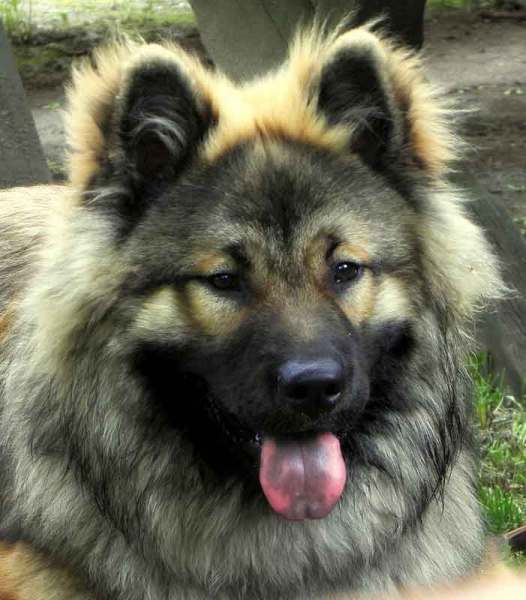
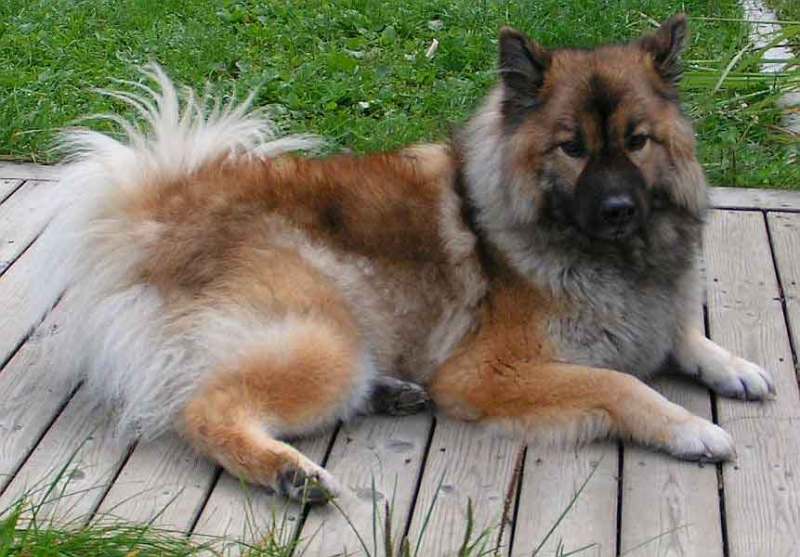
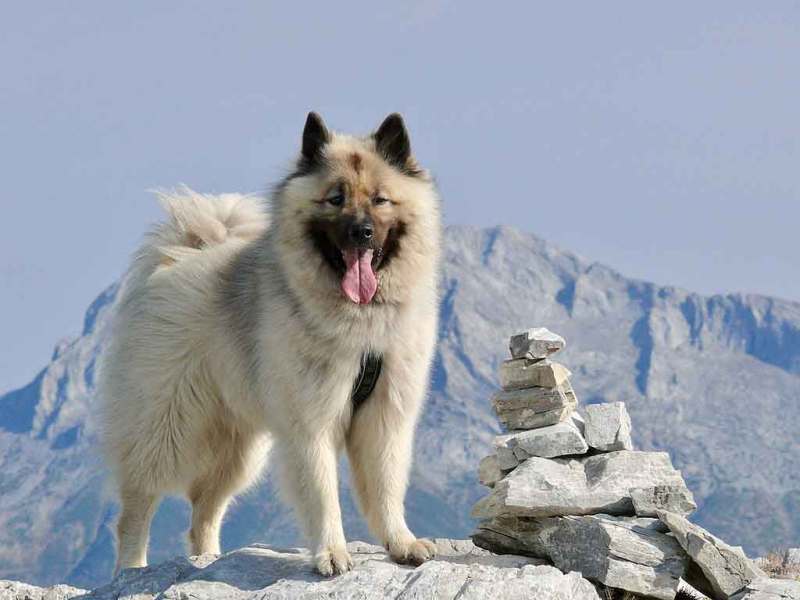
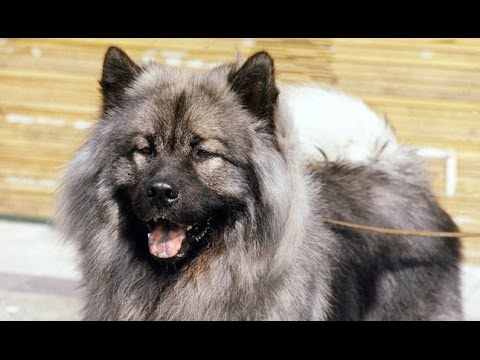
Eurasier

The Eurasian is self-confident, quiet, tolerant, adaptable, willing to learn and smart.

Content

History

In the Decade of 1960, Julius Wipfel raised females of Keeshond (Wolfspitz) and males of Chow-Chow en Weinheim, Baden-Wuerttemberg, initially the Wolf-Chow. He finally raised this dog with him Samoyed and obtained an original dog with a natural structure and a balanced character.

In 1973 the breed was recognized by the Fédération Cynologique Internationale (FCI) and it is, therefore, the youngest German dog breed. The youngest breed, officially recognized German breed owes its name to its original European breeds (Keeshond = EUR) and asian (Chow-Chow and Samoyed = ASIER). The task of the robust companion and family dog ​​with character was not even hunting, nor grazing, nor on guard. The Eurasian was bred solely as a social partner for humans.

Physical characteristics

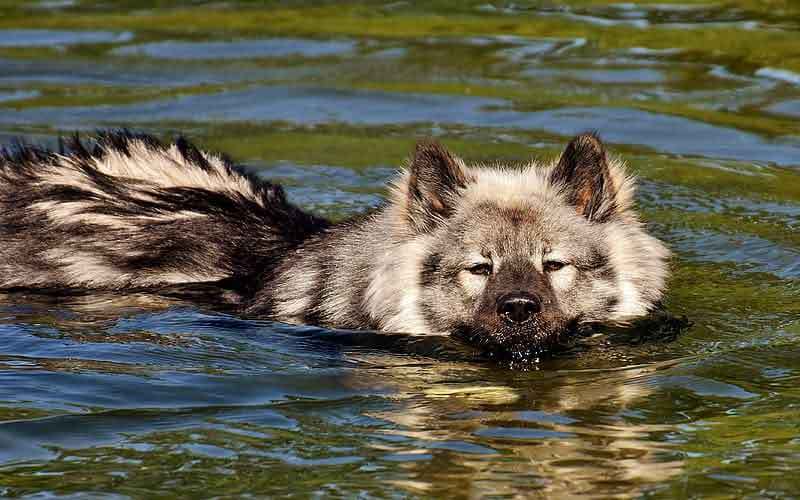
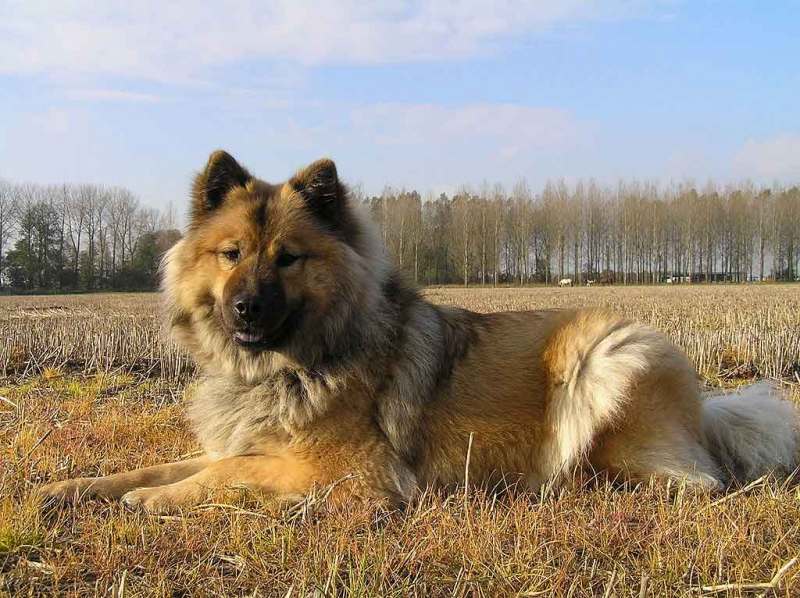
The Eurasian is balanced, well built, medium-sized, with erect ears. It can be of different colours: beige, reddish brown, the Grey Wolf, black. A characteristic feature is the pattern of the coat of agoutis and the patterns of bands and stripes, that for example wolves also have.
The male has a height of 52 to 60 the cross and weighs cm, approximately, of 23 to 32 kg. The female has a height of 48 to 56 cm to cross and weighs between 18 to 26 kg.
Typical of the coat of the Eurasian is his dense undercoat, which is an excellent protection against the cold and also repels dirt. Just the muzzle, the face, the ears and the front of the legs are short-haired. The tail, the back of the front legs and the back legs have long hairs.

By the way, the Eurasian get their tongues partially and sometimes even completely blue from the Chow-Chow, whose blue tongue merged with the pink tongue of the Keeshond and Samoyed.

Character and skills

The Eurasian is self-confident, quiet, tolerant, adaptable, willing to learn and smart. Above all, animals are very close to their family members, which does not make them a one man dog.

The Eurasian they need constant and close contact with their humans and are therefore completely unsuitable for housing in kennels. In an animal shelter, these sensitive dogs would suffer extraordinarily and eventually wither away. How the Eurasiers are so focused on their family, should not be left in the hands of other people, even when they are on vacation. Wants to be with his family, always and everywhere.

These sensitive animals have a special feeling for the mood and disposition of their humans, and have a distinctive social behavior towards others Eurasian. It also, dogs of this breed are elegant, self-confident and at the same time pleasantly stubborn. They can even trick their owners into getting their way.

Activities with the Eurasian

Although the Eurasian does not have pronounced hunting behavior, a certain prey drive may be present, as in most dogs. But, with a loving consistency, understanding, patience and treats, the Eurasian can be trained to become trouble-free and appreciative companions, that adapt to all situations in life. But, training in an outer hand is out of the question for a Eurasian. If you demand absolute obedience to a dog, you must choose another race.

The Eurasian they need about two hours of exercise a day. Your urge to move can be ideally satisfied by jogging, cycling the agility. Monotonous retrieval games like “fetch for sticks” quickly bore this intelligent animal..

Eurasian care

Despite the dense undercoat, the care of the coat of the Eurasian it is not complicated and is limited to brushing once a week only during the change of coat, must be combed daily. The Eurasier's tongue varies from pink to an infinite number of varieties from pied blue to pure blue.. The inheritance of Chow-Chow fascinates many passers-by and often leads to confusion with the Chinese race. A Eurasier is an incorruptible friend for life.

Buying a Eurasian from a breeder

If you want to buy a puppy of Eurasian, you will need to be prepared for waiting periods, because there are only some 300 or 400 puppies per year under the umbrella organization of the VDH (German Canine Federation. Cubs Eurasian cost around 1000 EUR.

Characteristics "Eurasian"

Coexistence is important that you have with your new friend. Before considering the acquisition of a dog of the breed "Eurasian" you know certain factors. Not all breeds of dogs are apt to live in an apartment, you must take into account his character, their need for exercise, their interaction with other pets, their care and if you have small children, their level of tolerance towards them.

Adaptation ⓘ

1,0 of 5 stars (based on 1 review)

friendly dog ​​ⓘ

4,0 of 5 stars (based on 1 review)

hair loss ⓘ

3,0 of 5 stars (based on 1 review)

Affection level ⓘ

5,0 of 5 stars (based on 1 review)

Need for exercise ⓘ

2,0 of 5 stars (based on 1 review)

Social need ⓘ

2,0 of 5 stars (based on 1 review)

Home ⓘ

4,0 of 5 stars (based on 1 review)

Toilet ⓘ

3,0 of 5 stars (based on 1 review)

Friendly with strangers ⓘ

3,0 of 5 stars (based on 1 review)

barking ⓘ

2,0 of 5 stars (based on 1 review)

Health ⓘ

4,0 of 5 stars (based on 1 review)

Territorial ⓘ

4,0 of 5 stars (based on 1 review)

Cat friendly ⓘ

3,0 of 5 stars (based on 1 review)

Intelligence ⓘ

4,0 of 5 stars (based on 1 review)

Versatility ⓘ

4,0 of 5 stars (based on 1 review)

Child friendly ⓘ

5,0 of 5 stars (based on 1 review)

Surveillance ⓘ

4,0 of 5 stars (based on 1 review)

joy ⓘ

3,0 of 5 stars (based on 1 review)

Images "Eurasian"

Photos:

1 – Kai de Eurasipomer (Nombre original Selly de Eurasipomer) by Siasegos / CC BY-SA
2 – Eurasier by https://commons.wikimedia.org/wiki/File:Eurasier_liegend.jpg
3 – Eurasier by https://flic.kr/p/eKr7Rv
4 – Eigen gemaakte foto van een Eurasier (hondenras) by Ekta / CC BY-SA
5 – A beautiful Eurasier male I met during a walk. His name is Haiko vom Born by https://flic.kr/p/UAo4j3
6 – Adult tan and black eurasier dog on body of water by https://www.pikrepo.com/fwskj/adult-tan-and-black-eurasier-dog-on-body-of-water

Videos "Eurasian"

Eurasian - Breed of dog
Dogs breeds: Eurasian
Raffi - Eurasian - 3 Week Residential Dog Training at Adolescent Dogs
Raffi – Eurasian – 3 Week Residential Dog Training at Adolescent Dogs

Type and recognitions:

  • FCI CLASSIFICATION:
  • Group :
  • Section : . .

Federations:

  • – FCI – Group 5: Spitz-type dogs and primitive type – Section 5: Asian Spitz and related breeds. ⓘ
  • – ANKC – Non sporting ⓘ
  • – CKC – Group 3 – Working Dogs ⓘ
  • – ​KC – Utility ⓘ
  • – NZKC – Non Sporting ⓘ
  • – UKC – Northern Breeds ⓘ

FCI breed standard "Eurasian"

Origin:
Germany

Date of publication of the valid original standard:
06.01.1994

Use:

Companion dog.


General appearance:

medium size dog, harmonious structure, Spitz type, with erect ears, in different shades. The length of the hair allows us to distinguish the proportions of the body. regular bone structure.

IMPORTANT PROPORTIONS : The length of the body is a little greater than the height of the withers. The relationship between the length of the snout and the length of the cranial region is almost the same.


Behavior / temperament:

He is a trusting dog, calm, equanimous and with great resistance to any provocation. He is vigilant and alert without being loud; develops a strong relationship with his family. It is reserved with strangers, without being aggressive; does not show hunting instinct.
To achieve a complete development of these characteristics, The Eurasian dog needs intimate and constant domestic contact with its family, but also comprehensive and consistent training.

Head:

As a whole : balanced skull, not very wide. The head is wedge-shaped when viewed from above and from the sides.. The nasal cannula and the cranial region are placed in parallel.

Cranial region:
  • Skull : Flat forehead with a marked frontal furrow. Well-defined occipital protuberance.
  • Depression links (Stop) : Unremarkable.

facial region:

  • Nose : Medium-sized, truffle with black pigmentation.
  • Snout : Neither too thick nor too pointed. Gradually tapers forward to the nose. The nasal cannula and the horns of the lower jaw are straight.
  • Lips : Tight edges of the lips and black pigmentation.
  • Jaws / Teeth : Strong jaws, They form a wide arch in the lower jaw. Strong and complete teeth (42 teeth according to the usual formation of the teeth); scissors or pincer bite. The upper incisors slightly surpass the lower incisors or are in perfect opposition to each other. The premolars and molars must be placed in a line without gaps between them.. All teeth should be vertical in relation to the jaw.
  • Cheeks : Not very pronounced.
  • Eyes : dark, medium-sized, neither sunken nor protruding. Slightly oblique opening of the eyelids. Edge of the eyelids with black and very adherent pigmentation.
  • Ears : They are separated by approximately the width of the base of an ear.. Its size is medium and its shape is triangular..
    The tips of the ears are slightly round and should be erect.. The tips of the ears and the center of the stop form approximately an equilateral triangle.

Neck:

Of average length, in harmony with the general appearance. Good musculature. The skin is very adherent in the throat region. Harmonious transition to the rest of the body.

Body:

  • As a whole : The body is strong, with the trunk not very short.
  • Cross : Marked.
  • Back : Firm and straight, with very good muscles.
  • Pork loin : With good length, good width and very good muscles.
  • Rump : Straight, wide and strong.
  • Breast : Reaches up to the elbows, with oval-shaped rib cage. Well developed sill, although not too prominent. Long sternum, that extends well back.
  • bottom line : Get up slightly.

Tail:

With straight insert, round and firm, of good thickness, tapering towards the tip. Has thick fur. The tail is carried folded over the back, or a little to one side or well rolled. When it hangs it reaches up to the hock joint.

Tips

PREVIOUS MEMBERS :

  • As a whole : Viewed from the front, They are placed straight and parallel. Viewed from the side, They are moderately angled. The arm and forearm are almost the same length.
  • Shoulder : With good muscles. Scapulas placed in a slightly oblique shape.
  • Arm : Of medium length and with good muscles.
  • Elbow : Close to the rib cage. Forearm : Of average length, with good musculature.
  • Articulation of the carpus : Strong.
  • Metacarpus : Of average length. Seen from the front it is completely straight; seen from the side it is directed slightly forward.
  • Front foot : Oval, compact fingers, moderately arched. Strong nails with dark pigmentation. Imitation pads, thick with black pigmentation. Dense fur between the pads.

LATER MEMBERS :

  • As a whole : Seen from behind they are placed straight and parallel and seen from the side they are moderately angled. Thigh and leg are almost the same length.
  • Pelvis : slightly oblique.
  • Thigh : Of medium length and strongly muscled.
  • Knee : Stable, not too open.
  • Leg : Of average length, good musculature.
  • The Hock joint : Placed in a not very low position, stable, no deviations outwards or inwards.
  • Metatarsus : With good length and width, seen from the side it is placed in a vertical position.
  • Rear foot : Oval, compact fingers, moderately arched. Strong nails with dark pigmentation. Firm pads, thick and black pigmented. Thick fur between the pads.

Movement:

Covers a lot of ground, with a lot of thrust and good reach.

Mantle

SKIN : Adherent, Pigmented.

HAIR : Throughout the body it has a thick undercoat.; the outer coat is of medium length and the hair is not too close together. The hair is short on the muzzle, face, ears, and anterior part of the limbs. The tail, the back of the forelimbs and hindlimbs are covered with long hair (feathers).The fur on the neck is slightly longer than on the rest of the body., sín formar una melena.

COLOR : All colors and their respective combinations are allowed, excluding pure white, the presence of white spots and liver color.


Size and weight:

Height to the cross :

  • Males : 52 – 60 cm.
  • females : 48 – 56 cm..

Weight :

  • Males : 23 – 32 kg
  • females : 18 – 26 kg.

The balance between proportions is very important, However, The ideal values ​​to achieve are the average weight and size.

Height to the cross :

  • Males : 56 cm.
  • females : 52 cm..

Weight :

  • Males : 26 kg
  • females : 22 kg.


Fouls:

Any deviation from the aforementioned criteria is considered as a fault and the severity of this is considered to the degree of the deviation to the standard and its consequences on the health and well-being of the dog..

MISS PLAYOFFS

• Aggressive or fearful dog.
• Fear, shyness, excessive distrust.
• Deficiencies in sexual characteristics.
• Lack of one or more incisors or canines, lack of one or more premolars 3 or 4 as well as one or more molars 1 or 2; bite defects.
• Ectropion, entropion; very deep or very small eyes.
• Distichiasis (eyelashes placed in two lines).
• Semi-erect or drooping ears.
• Broken tail.
• Noticeable lack of pigment.

Any dog ​​showing clear signs of physical or behavioral abnormalities must be disqualified..


N.B.:

Males should have two normal-appearing testicles fully descended into the scrotum..

Source: F.C.I - International Cynological Federation

Alternative names:

1. Eurasian Dog (English).
2. Eurasier (French).
3. Eurasier (Hunderasse) (German).
4. Eurasier (Portuguese).
5. Eurasian (español).

▷ The world of Pets: Dogs, cats, birds, reptiles, amphibians

West Siberian Laika
Rusia FCI 306 - Nordic Hunting Dogs

Laika de Siberia Occidental

in your country of origin, Russia, the West Siberian Laika has been bred as a hunting dog for centuries.

Content

History

The "West Siberian Laika" (Zapadno-Sibirskaïa Laïka), is the product of crossbreeding between the closely related species of Laïka de Chanteisk and Mansijak with Russian hunting dogs from the north of the Urals and Western Siberia. Outside its area of origin in areas mainly populated by hunters, This race has widely spread to central areas of Russia; This type of dog that abounds on these sites, they are reared in large installations. In different hunting regions there are special kennels for raising the West Siberian Laika.

Recognition by the FCI

Since 1980 the Russo-European Laika just like him East Siberian Laika have been recognized as independent breeds by the FCI in addition to the West Siberian Laika. But, the Yakutian Laika, as well as other types of Laïka, as the Jezdoraja Laika, the Nenezker Weather or the Karelo-Finnish Laika, are not internationally recognized until now. Within the FCI the three breeds of Laïka are classified in the group 5, Together with the Gray Norwegian Elkhound and the Karelian Bear Dog, form the Section 2 "Nordic Hunting Dogs" within this group.

Physical characteristics

It is a hunting dog of variable utility, but also shooting or for sledge. Is medium-sized, Slim and strong Constitution. Her bone structure is well developed, is not mass or rough. Muscle is strong and well developed. It has a strongly coiled tail, He takes her on the back or the back.

Its fur is hard, short, with developed internal fluff. The outer layer is thick and straight. The internal fluff is abundant and dense hair's outer layer which gives a distant and leafy appearance. In the head, You ears and part of limb hair is short. On the cross, neck and back of legs the hair is longer than forming a collar in the region of the neck and a beard in the cheek area; the rear extremities presents some feathers.

Is white, salt and pepper, Red or gray in all colors. Allow the color black, also spotted or with the same color plates.

Strong similarity to the wolf

With the often hairier males, it even produces a kind of mane. This feature is reminiscent of a wolf, with which the Laïka not only share the pointed and high ears, narrow wedge-shaped head and small oblique eyes, but also strong teeth and coat color, often similar to wolf.

Assorted coat colors and a typical striped tail

But, the colors of him West Siberian laika they are very diverse according to the wide area of ​​distribution of the breed and the large number of local traits, ranging from pure white to black, pepper and salt, the color of the wolf, reddish brown, grey, the pied or the spotted. characteristic of all races Russian Laika is the striking striped tail, worn both on the side and on the back.

Character and skills

Independent hunter and close ally.

Like most hunting dogs, the West Siberian Laika also has some independence. Not only in hunting, but also as a watchdog, companion dog or sled dog, sometimes acts independently and autonomously. But, this does not mean that it cannot adapt to its humans. On the contrary: the Laïka feels closely connected to her reference person and always seeks their proximity. Even when hunting, never strays too far from his guide and makes sure each 20 or 30 minutes of hunter following.

The intense relationship with humans allows him Laïka – despite its original roots – be used as a herding dog, protection, guard or shooting.

Life in the family

Once an owner has earned the trust of his Laïka, even the most demanding training goals can be achieved. It is important that the West Siberian Laika has a firm place in his "pack" from the beginning and is allowed to participate closely in the life of his people. In doing so, bonds closely with its "pack leader", but also shows himself as a patient and loving companion when dealing with other family members, especially with the children. If you socialize early and comprehensively, living with other dogs and pets usually works without problems.

Activities «Laika of Western Siberia»

Despite these characteristics, the West Siberian Laika is and remains primarily a working dog, for whom his “job” is as important as his people. A life as a pure domestic and family dog ​​certainly does not do justice to its nature.. Only if you can sufficiently demonstrate your stamina, agility, speed and intelligence, will present himself at home as a calm and balanced companion.

The West Siberian Laika wants to be "needed" and, therefore, you should definitely be given a task that challenges you both physically and mentally. Owners who don't run their Laïka like the hunter he is, they must provide for sufficient substitute employment, for example, in sport form (Agility), training dog sport, runway and nose work or training as a rescue dog.

Health «West Siberian Laika»

Unlike many other dog breeds, which often developed rather by coincidence, Russian dogs already had very early exact ideas about the useful characteristics of this breed. The baby of him West Siberian Laika was soon put under strict controls and took place in central state approved breeding stations. In order to preserve the excellent qualities of hunting, officially organized tests were introduced. Dogs that did not meet the high usage requirements were systematically excluded from breeding..

Healthy and robust working dogs

Strict breeding requirements and tough selection led to the good hunting dog qualities and excellent sensory perceptions of dogs being preserved to this day. At the same time, high concentration on utility ensured that outward appearances became less of an affair. A breeding of pure beauty, that as the examples of other dog breeds show, often led to health problems, was avoided in the West Siberian Laika. Hereditary diseases typical of the breed, with which fashionable dogs often fight, are not known in this original breed. Even generalized joint diseases, such as dysplasia of the hip joint (HD), rarely occur in this Laïka.

Nutrition «Laika de Siberia Occidental»

Dog owners shouldn't change their diet too often either.. Although the West Siberian Laika is not very picky about his diet, the constant changes in the food plate could overload even his robust stomach. As a descendant of the wolf, dogs don't need many different foods to stay healthy. Unlike us humans, that we should have a diet as varied as possible and whose menu includes meat, fish and vegetables, as well as potatoes, noodles and other cereal products, dogs need meat above all. Both their teeth and their digestion are oriented to the processing of foods based on meat. Different types of meat and changing tastes are, by the way, desirable with respect to this main ingredient.

Discover our selection of dog food.

Pay attention to your dog's nutritional needs. Whether you feed your dog moist meat, dry, raw (BARF) or cooked, it is important that the quantity and content of the food meets the specific nutritional needs of your dog. These requirements depend on very individual criteria such as race, size, age, activity level and health status and may vary accordingly. If the composition is correct, a Laïka adult can get by on one or two meals a day. after feeding, the feeding bowl should be cleaned and should only be available again the next day or for the next meal. It is better to avoid snacking between meals or the constant administration of treats. But, fresh drinking water should always be available for your dog.

Buying a West Siberian Laika

With his healthy nature, robust and original, the West Siberian Laika satisfies many dog ​​lovers' desire for something "wild" in our modern, civilized everyday lives. And finally, but not less important, the wolf appearance of this breed fascinates people. This natural beauty, coupled with excellent hunting performance, made of him West Siberian laika one of the most popular dog breeds of the former Soviet Union already in 1960.

How much does a “West Siberian Laika” puppy cost??

In Europe, the Time to fall still rarely seen. So it is extremely difficult outside of Russia to get a purebred Laika from a proven breeding line.. Long, arduous roads and a comparatively high puppy price between 1.300 and 1.500 EUR are the rule. Even if you have found a suitable breeder after a long search, you may be advised not to buy a Laïka. Don't be surprised if during the first meeting you are asked very personal questions about your profession., their living conditions, your future plans and marital status. For committed and serious breeders, the welfare of dogs is, as a last resort, more important than financial benefit. After all, keeping such a demanding animal takes a long time, experience and space.

People who are mainly attracted by the appearance and originality of this Laïka they must therefore carefully consider whether their living conditions and character really fit this breed. If in the end you are still convinced that the West Siberian Laika is the correct breed, You must prepare well for the purchase of the new "family member". Not only are you doing yourself a favor, but above all the dog, because this Laïka He demands all the attention of his handler and does not tolerate a change of owner very well..

Care for the «West Siberian Laika»

Although the West Siberian Laika he is a very robust dog, you need not only a healthy diet but also proper care to stay healthy and vital. Its hard and soft top layer repels dirt and water well, but you still need to brush regularly (about twice a week). During the change of coat, you Laïka should be brushed daily to remove dead hair and strands. In general, owners of this dog breed should not be bothered by dog ​​hair in the house, because although the West Siberian Laika he is basically a very clean dog, lose a lot of hair, that spreads across the sofa, the carpet and the floor. In addition to the toilet, the claws should be regularly shortened and the ears, teeth and feet should be checked and cleaned.

Keeping

Regarding the attention, the time required can be manageable, but the use of a Laïka alone takes a lot of time (free). Who chooses a West Siberian Laika should therefore not have to work full time. This human-oriented working dog is not cut out for long periods of solitude. As an original hunting dog needs a lot of career, an appropriate task and lots of contact with your reference person. A hatchery in a small town flat is, therefore, as unsuitable as a kennel. The Siberian breed dog feels more comfortable in a house with a large fenced garden, where you can be close to your humans at all times.

No dog for beginners

Also for the education of this Laïka a close relationship between dog and human is a basic requirement. If your dog trusts you, can trust your competence and sovereignty as “pack leader” and is assured of your closeness and love, will follow you willingly – despite its original roots as an independent hunting dog. But in order to reliably fulfill the role of a competent leader of the pack, technical knowledge is required, consistency and strength of character. The West Siberian Laika certainly not a beginner dog.

Characteristics "West Siberian Laika"

Coexistence is important that you have with your new friend. Before considering the acquisition of a dog of the breed "West Siberian Laika" you know certain factors. Not all breeds of dogs are apt to live in an apartment, you must take into account his character, their need for exercise, their interaction with other pets, their care and if you have small children, their level of tolerance towards them.

Adaptation ⓘ

2,0 of 5 stars (based on 1 review)

friendly dog ​​ⓘ

3,0 of 5 stars (based on 1 review)

hair loss ⓘ

5,0 of 5 stars (based on 1 review)

Affection level ⓘ

4,0 of 5 stars (based on 1 review)

Need for exercise ⓘ

5,0 of 5 stars (based on 1 review)

Social need ⓘ

4,0 of 5 stars (based on 1 review)

Home ⓘ

5,0 of 5 stars (based on 1 review)

Toilet ⓘ

3,0 of 5 stars (based on 1 review)

Friendly with strangers ⓘ

3,0 of 5 stars (based on 1 review)

barking ⓘ

5,0 of 5 stars (based on 1 review)

Health ⓘ

2,0 of 5 stars (based on 1 review)

Territorial ⓘ

4,0 of 5 stars (based on 1 review)

Cat friendly ⓘ

3,0 of 5 stars (based on 1 review)

Intelligence ⓘ

3,0 of 5 stars (based on 1 review)

Versatility ⓘ

4,0 of 5 stars (based on 1 review)

Child friendly ⓘ

3,0 of 5 stars (based on 1 review)

Surveillance ⓘ

4,0 of 5 stars (based on 1 review)

joy ⓘ

4,0 of 5 stars (based on 1 review)

Images "West Siberian Laika"

Photos:

1 – «Laika de Siberia Occidental» by https://commons.wikimedia.org/wiki/File:West_Siberian_Laika.jpg
2 – «Laika de Siberia Occidental» by ecured
3 – Riga, Baltic Winner -2013, 9-10 Nov by Thomas / CC BY-SA
4 – Riga, Baltic Winner -2013, 9-10 Nov by Thomas / CC BY-SA
5 – First-generation (F1) wolf-dog hybrid from Wildlife Park Kadzidlowo, Poland (photos: A. Krzywinski) by Maris Hindrikson et al / CC BY
6 – This is a 4 month old West Siberian Laika female pup. It is at this stage when a WSL pups unique natural hunting instincts become evident by Meribelles at English Wikipedia / CC BY-SA

Videos "West Siberian Laika"

Type and recognitions:

  • FCI CLASSIFICATION:
  • Group :
  • Section : . .

Federations:

  • – FCI – Group 5 – Section 2 Nordic Hunting Dogs. ⓘ

FCI breed standard "West Siberian Laika"

Origin:
Russia

Date of publication of the valid original standard:
13.10.2010.

Use:

Variable Utility Hunting Dog.


General appearance:

Medium to medium large dog, substantial with a strong and defined structure. The length of the body, measured from the sill to the buttock is slightly higher than the height measured from the withers to the floor. higher than the height measured from the withers to the floor.

Clearly pronounced sexual dimorphism. Males are larger than females and clearly male. Well-developed muscles and strong bones.

PROPIMPORTANT ORTIONS:

The length of the body exceeds its height at the withers by 100 to 103-107%, in males and in 100 to 104-108% in females.

Height at withers exceeds height at croup by 1-2 cm. (males) and is equal to or exceeds the height at the croup in 1 cm. (females). The length of the head considerably exceeds its width.

The length of the muzzle is equal to or slightly less than half the length of the head.

The length of the extremities from floor to elbow slightly exceeds half the height at the withers.


Behavior / temperament:

Lively, balanced temperament. A vigorous dog with a well-developed sense of smell to detect prey. A pronounced passion for hunting, alert, sensitive. He is just as enthusiastic about hunting birds as he is hunting wild animals. Confident and alert to strangers.

Head:

Thin, wedge shape, proportionate to the size of the dog. Its shape is similar to that of an equilateral triangle, view from above. The cranial region is moderately wide, lower in females than in males.

Cranial region:
  • Craging: Elongate, obviously longer than wide. Seen from the front flat or slightly rounded. The nasal bridge is parallel to the top line of the skull. Sagittal crest and occiput well pronounced. The occipital area of ​​the skull is rounded. Superciliary arches slightly developed.
  • Dnaso-frontal depression (Stop): Slightly pronounced.

facial region:

  • Trufa: Medium size, black. In white dogs a lighter color (Brown) of the truffle is tolerated.
  • Horcico: Moderately pointed widening in the mouth area. The length of the muzzle is half or slightly shorter than the
  • head length. Seen on side, muzzle is moderately wedge-shaped.
  • Labios: Tight.
  • Jaws / Teeth: Whites, large, strong, well developed, evenly placed without being overcrowded. Complete dentition according to dental formula (42 teeth), scissor bite.
  • Cheeks: Sharp cheek bones.
  • Ojors: Not big, Oval shaped, inclined, insert somewhat sunken (more than in the other Laika) with a determined and intelligent expression. The color of the eyes is dark brown or brown according to the color of the hair.
  • Obars: erect, high insertion, “V” shape with pointed edges, Mobile. Slightly developed pavilion.

Neck:

Muscular, dry and long. The length is equal to the length of the head. Oval. Neck insertion is approximately 45° – 55° from the horizontal line.

Body:

  • Línand the top: Firm and solid, slight inclination from the withers to the insertion of the tail.
  • Cruz: Well pronounced, especially in males.Back: Strong, straight, well muscled, moderately wide.
  • Itmor: Short, moderately wide, well muscled with a slight arch.
  • Glikeness: Wide, moderately long, slight incline.
  • Pecho: Moderately deep, width (chest reaches elbow level), long, oval-shaped.
  • Línand the bottom / belly: Withdrawn; the lower line rises slightly from the chest to the abdominal cavity.

Tail:

Tightly coiled; carried on the back or hip. If it is fully stretched, it reaches the hock joint or it may be 1 – 2 shorter cm.

Tips

PREVIOUS MEMBERS:

  • ApGeneral arience: Seen straight ahead, placement moderately apart and parallel. Its height from the elbow to the floor is slightly higher than the height at the withers.
  • Hormbros: Long and well sloped.
  • Antarm: Long, placed obliquely, muscle. Good angulation between the scapula and the forearm.
  • Elbows: Well on the body, well developed elbow tips set back, parallel to the body axis.
  • Brazo: Long, straight, not rough, muscle, oval.
  • Metacarpus: Not long, slightly sloping viewed from the side. Dewclaws are unwanted.
  • Pinis previous: Oval, arched, fingers well together. Somewhat longer middle fingers.

LATER MEMBERS: Muscular, strong with well defined angulations of all joints. Seen from behind the limbs are straight and parallel.

  • Thigh: Moderately long, oblique placement.
  • Knee: Well inclined.
  • PinScheme: Moderately long, oblique placement, no shorter than thigh.
  • Metatarsus: Vertical placement. Seen from the side a perpendicular line from the back of the thigh to the floor should fall just in front of the metatarsus. Dewclaws are unwanted.
  • Pinis later: Somewhat smaller than the previous ones. Oval, arched with fingers close together. Somewhat longer middle fingers.

Movement:

Libre, energetic. The typical movement is a short trot alternating with a gallop..

Mantle

PIEL: Thick and elastic with no folds or little subcutaneous tissue.

  • Plink: Bushy outer hair, hard and straight. Well developed undercoat, soft, thick and woolly. The hair on the head and ears is short and bushy.

The hair on the shoulders and neck is longer than on the body forming a necklace. On the cheekbones it forms lateral whiskers. In males the hair on the withers is longer.

Limbs covered with short hair, hard and bushy that is somewhat longer in the back of the forelimbs. The hair on the back of the hind legs forms pants without having feathers.

There is a protective brush-like hair growth between the fingers. The tail is profusely covered with straight, hard hair that is somewhat longer at the bottom without forming feathers..

  • Colorr: Gray with reddish brown, red with reddish brown, grey, red, fawn and reddish brown in all shades. Pure white or particolor, that is to say, white with patches of any of the aforementioned colors similar to the base color.


Size and weight:

Alturto the cross:

  • Males: 55 – 62 cm..
  • females: 51 – 58 cm..


Fouls:

Any deviation from the aforementioned criteria is considered a fault and its severity is considered to the degree of deviation from the standard and its consequences on the health and well-being of the dog and the dog's ability to perform its traditional task..

  • Deviations of sexual dimorphism.
  • Slightly nervous or lack of confidence towards strangers
  • Absence of pronounced sagittal crest or occiput, roman nose
  • Light colored eyes.
  • Pale pigmentation of the truffle, lips or eyelid
  • Absence of teeth: absence of no more than 4 premolares considering PM1 & PM 2.
  • Pincer bite after 6 years of age.
  • Low ear insert, soft with a weak bearing, still
  • Horizontal Croup, levemente wolves
  • Right shoulders, elbows turned in or out
  • Chest with flat ribs, slightly sunken chest.
  • Flatfoot, open foot.
  • Stained (roano) in the same shade as the base color on the head and limb
  • Absence of undercoat, absence of collar and side whiskers (except for a natural change)
  • Restricted movement.
  • Exceeding the maximum height in + 2 cm in females, 2 cm below the minimum in males

FALTAS GRAVES:

  • Obvious deviations of sexual dimorphism.
  • High excitability.
  • Males of female type, male type females.
  • Obesity or thinness.
  • Abrupt stop, snout with upturned nose, short snout, loose lips.
  • Lack of pigmentation in the nose, lips, eyelids.
  • Round eyes, horizontal placement, protruding, yellow eyes, loose eyelids
  • Absence of teeth, small, separate placement
  • Ears spread to the sides of the head, round tips, too big, overdeveloped pavilion.
  • Sunken back, back encarpado.
  • Long loin, Strait, sunken or arched, over built.
  • Sunken chest.
  • Tail that is too long or too short or does not touch the back or hips
  • Obvious feet this- West, pigeon foot or arched forehead. Low hocks
  • Posterior over angled or right, knees turned out, cow hock or narrow on the back.
  • Heavy movement, restricted, forced or prim.
  • Too long hair on the back of the forelegs, pronounced feather on thigh and tail.
  • Wavy, curly, soft or too long, hair parted on the back and on the cross.
  • Excessive staining (roano) in the same shade as the base color on the head and limbs.
  • Staining of a different color than the base color.
  • Black or black and white color.
  • Size deviation by more than +/- 2 cm.; height at withers less than height at croup.

FALTAS DISQUALIFYING:

  • Aggressiveness or extreme shyness.
  • Any dog ​​showing clear signs of physical or behavioral abnormalities must be disqualified..
  • Wrong bite.
  • Twisted mouth.
  • Absence of 4 or more teeth, including PM 1 o M3. Incisor excess
  • Eyes gazeos, stained eyes.
  • Drooping or semi-dropping ears.
  • Feathered tail, otter tail, saber-shaped tail, muñón.
  • Hair too short or too long.
  • Brown genetic hair color, blue genetic, striped, albino.


N.B.:
  • Males should have two normal-appearing testicles fully descended into the scrotum..
  • Only functionally and clinically healthy dogs, with the typical conformation of the breed, should be used for parenting.

Source: F.C.I - International Cynological Federation

Alternative names:

1. WSL, Zapadno-Sibirskaïa Laïka (English).
2. Zapadno-Sibirskaïa Laïka (French).
3. Zapadno-Sibirskaïa Laïka (German).
4. Zapadno-Sibirskaïa Laïka (Portuguese).
5. Zapadno-Sibirskaïa Laïka (español).

▷ The world of Pets: Dogs, cats, birds, reptiles, amphibians

East Siberian Laika
Rusia FCI 305 - Nordic Hunting Dogs

Laika de Siberia Oriental

The East Siberian Laika it is popular in its native Russia not only as a hunting dog, but also as a draft and sled dog.

Content

History

The home of this impressive and robust pedigree dog is -as its name implies- in the forested area of ​​Eastern Siberia, more precisely in the vast area between Yenisei and peninsula de Kamchatka.

The East Siberian Laika was first mentioned by name in 1947, when the Cynology Congress of Alliances in the former Soviet Union established four breed standards for different Laikis (plural of Laïka). Besides him East Siberian Laika, these other races like the West Siberian Laika and the Russo-European Laika, have been somewhat better known, just like him Yakutian Laika and the Siberian Husky, so this breed was not yet recognized by the FCI.

Ancestors of the East Siberian Laika:

Hunting and sled dogs of the high arctic

It is assumed that the history of the ancestors of the Laïka goes way back. The origin of the Laika rousso dates back to the sleds and hunting dogs of the high arctic. The East Siberian Laika, as described in today's breed standard, was created by crossing Ewenkish, Lamutsker, Amur and other races of Laïka. The main focus of the breeding efforts was training their hunting skills. A natural hunting instinct, courage and a lively temperament, as well as excellent sensory perceptions, a particularly good sense of smell and orientation should characterize the offspring.

In his native Russia, the East Siberian Laika mainly used for squirrel hunting, martens and feather hunting. But it is also appreciated as a draft and sled dog. By the way, "He is not related to the dog."Laïka«, who became world famous as the first dog in space. This bitch was probably a mix of Husky and Terrier.

Physical characteristics

With a height at the cross of 53 to 65 cm el East Siberian Laika belongs to the medium and large breeds. His muscular body and strong physique quickly give an impression of the stocky build of this wolfhound.. From the harsh climate of its native Siberia, the hard hairs on its coat and the dense and soft undercoat protect. On the neck and shoulders the abundant coat forms the typical collar of the Laïka. Males, where the fur at the withers is even more abundant, They also stand out for a kind of mane.

Many color variations

Regarding its fur, many different variations possible. So black tones are possible, White, grey, reddish, colored fox and colored wolf. Variations of pied or spotted according to the Russian standard and the FCI.

Other distinctive features of the East Siberian Laika are the ears standing, placed laterally and the tail rolled.

Character and skills

The Russian word «lajatj» (layat), from which the racial name is derivedLaika«, means "bark". And in fact, loud barking is a fundamental characteristic of this Russian hunting dog. Like a so-called poking dog, finds its prey on its own and keeps it in control with its distinctive barks until the hunter arrives and is able to kill the prey. He is very self-confident and courageous and proves to be an independent worker., robust and persevering while hunting. Unlike other breeds of hunting dogs, as the Gray Norwegian Elkhound, the East Siberian Laika never strays too far from its controller. Each 20 or 30 minutes he looks for contact with him and makes sure he continues his search.

Independent hunter and trusted companion

In combination with your intelligence, his lively temperament and physical strength, This close “leader bond” allows it to be used in many different ways.. Like this, the East Siberian Laika it is popular in its native Russia not only as a hunting dog, but also as a draft and sled dog, as a companion dog and guard dog. Despite its independence, the East Siberian Laika shows himself within his family as a balanced and confident companion, that enjoys the most of the caresses of its humans. In contact with children the proud Laïka is playful and considerate. Due to its original behavior, However, children should only be allowed to play with the strong dog under supervision.

Not a beginner dog

Despite his balanced nature and basically friendly nature, the East Siberian Laika a dog is not for beginners. Your innate hunting instinct, its great independence as well as its pronounced need for movement would quickly overwhelm inexperienced owners. So, the keeping of this breed should be reserved to specialists who have experience in dealing with similar breeds and who know how to educate and train such an original dog.

Health and typical diseases of the East Siberian Laika

The owners of a East Siberian Laika they don't have to fear high bills for veterinary expenses. The breed is considered extremely robust and healthy. The typical diseases of the breed are hardly known. But, as with all big dogs, breeders and owners should pay attention to healthy hip development. Later diseases of hip or elbow dysplasia (HD o ED), that are often hereditary, but which are also the result of improper maintenance and feeding.

Nutrition of the East Siberian Laika

As in humans, nutrition plays a decisive role in the healthy development of the dog. Although the East Siberian Laika it is considered very robust and healthy by nature, for this to continue, you need a balanced diet that provides you with all the essential nutrients in the right composition. As a descendant of the wolf, the Laïka also needs mostly meat. But just like the wolf, that also eats all the prey including the stomach contents, hair and bones, the dog must also get vegetables, rice, fruit (and bones) additional.

It depends on the proper ratio

When preparing food, attention should be paid to the correct ratio of food and the respective nutrients. An excess of certain vitamins and minerals can be just as harmful as a deficiency. If you want to be sure of exactly what your dog needs, you can ask the vet for a detailed diet plan. This plan takes into account not only age, the weight and sex of the breed, but also activity levels, the accommodation conditions and the health status of each dog.

Caring for the East Siberian Laika

The East Siberian Laika is not very demanding not only in terms of food but also in terms of attention. Coarse and soft hair repels dirt well and only needs a brush two to three times a week. During this process, dead hair is removed and coarse dirt is brushed. The East Siberian Laika rarely need a bath – and only if the dirt cannot be combed in another way. Dog shampoo should also be used sparingly to prevent stretching of the skin's natural protective layer..

Fitness to have with an East Siberian Laika

Like all races of Laïka, the East Siberian Laika was bred primarily as a working and utility dog. Since its origin, it is used to working hard and independently and to moving freely in nature.. An attitude as a house and companion dog would contradict his nature and certainly would not do justice to this demanding dog.. Who wants to keep him Laïka in the city despite everything, you have to make sure you don't just exercise a lot, but also a suitable occupation that challenges and satisfies you not only physically but also mentally.

Is the Laika suitable for dog sport?

For dog sports, This Laïka is suitable only conditionally. Like a hunting dog, you still attach great importance to your independence. Although proximity to his humans is important to him, maintains its independence. One should not expect blind obedience or a pronounced "willingness to please" from a true Laïka, like the one brought by many other breeds of domestic dogs. But, with his strong body and agile movements, naturally brings good conditions for use in the dog sports field.

Closeness and trust from the beginning

Whether hunting dog, sledge dog, dog shooting, watchdog or companion dog only: the East Siberian Laika is a demanding four-legged friend, requiring a lot of exercise and activity. But, do not forget that he also likes to be close to his humans. A pure kennel attitude does not do this breed justice. One Laïka must be firmly integrated into the family from the beginning and experience a lot of contact with their humans and other animals. If you build a close relationship of trust and socialize your Laïka comprehensively already in the puppy stage, will experience the original pedigree dog, despite its roots, as a very balanced and loving partner, for whom extensive fondling is almost as important as independent work.

Buying an East Siberian Laika

If you are interested in a purchase of a East Siberian Laika outside russia, you will probably have a hard time finding a breeder near you. But, When in doubt it is worth the long drive to Russia to meet and understand this Laïka in its natural environment. After all, the East Siberian Laika It is not a dog that you should buy as a companion dog "just like that". Plus plenty of time and space to get out, its maintenance and education requires a lot of knowledge, patience and assertiveness. Compared to other dog breeds, This Laïka has a hard time asserting himself as an apartment dog. But, who is convinced that a East Siberian Laika is the right dog and whoever is looking for a purebred dog, you have to accept long roads and long waiting periods for a puppy. The costs, just for the purchase of the puppy, they are with this breed some 1.300 to 1.500 EUR.

Characteristics "East Siberian Laika"

Coexistence is important that you have with your new friend. Before considering the acquisition of a dog of the breed "East Siberian Laika" you know certain factors. Not all breeds of dogs are apt to live in an apartment, you must take into account his character, their need for exercise, their interaction with other pets, their care and if you have small children, their level of tolerance towards them.

Adaptation ⓘ

2,0 of 5 stars (based on 1 review)

friendly dog ​​ⓘ

3,0 of 5 stars (based on 1 review)

hair loss ⓘ

4,0 of 5 stars (based on 1 review)

Affection level ⓘ

4,0 of 5 stars (based on 1 review)

Need for exercise ⓘ

5,0 of 5 stars (based on 1 review)

Social need ⓘ

4,0 of 5 stars (based on 1 review)

Home ⓘ

5,0 of 5 stars (based on 1 review)

Toilet ⓘ

3,0 of 5 stars (based on 1 review)

Friendly with strangers ⓘ

4,0 of 5 stars (based on 1 review)

barking ⓘ

5,0 of 5 stars (based on 1 review)

Health ⓘ

2,0 of 5 stars (based on 1 review)

Territorial ⓘ

5,0 of 5 stars (based on 1 review)

Cat friendly ⓘ

2,0 of 5 stars (based on 1 review)

Intelligence ⓘ

3,0 of 5 stars (based on 1 review)

Versatility ⓘ

3,0 of 5 stars (based on 1 review)

Child friendly ⓘ

3,0 of 5 stars (based on 1 review)

Surveillance ⓘ

4,0 of 5 stars (based on 1 review)

joy ⓘ

5,0 of 5 stars (based on 1 review)

Images "East Siberian Laika"

Photos:

1 – East Siberian Laika, young dog. The picture was taken by PrzemekL during World Dog Show 2006 in Poznan. by No machine-readable author provided. PrzemekL assumed (based on copyright claims). / Public domain
2 – East siberian laika by Myrtle / CC BY-SA
3 – East Siberian Laika, bitch. The picture was taken by PrzemekL during World Dog Show 2006 in Poznań by No machine-readable author provided. PrzemekL assumed (based on copyright claims). / Public domain
4 – East Siberian Laika agouti by Canarian / CC BY-SA
5 – East Siberian Laika fawn & white by Canarian / CC BY-SA
6 – East Siberian Laika Sable & white, head profile by Canarian / CC BY-SA

Videos "East Siberian Laika"

Type and recognitions:

  • FCI CLASSIFICATION:
  • Group :
  • Section : . .

Federations:

  • – FCI – Group 5 – Section 2 Nordic Hunting Dogs. ⓘ

FCI breed standard "East Siberian Laika"

Origin:
Russia

Date of publication of the valid original standard:
13.10.2010.

Use:

Hunting dog for multiple uses.


General appearance:

Medium-sized dog with a strong and compact build. The length of the body, from the sill to the ischium is slightly higher than its height at the withers. The head is rather big and strong.

Well developed muscles. Strong bone structure, more powerful in males than in females. Clearly pronounced sexual dimorphism.

IMPORTANT PROPORTIONS:

  • Males usually rectangular to rectangular, somewhat longer females.
  • Format index (height / long)
  • Males: 100/104-109
  • females: 100/106-111
  • Height at withers exceeds height at withers by 1-2 cm. (males) either equals or exceeds the height at the croup in 1 cm. (females). The length of the muzzle is slightly less than half the length of the head.
  • The height from the floor to the elbow is equal to half the height at the withers.


Behavior / temperament:

Lively, balanced temperament. A vigorous dog with a well-developed sense of smell for detecting prey and a pronounced passion for hunting., especially large prey. Very independent while hunting. Friendly, kind and trusting towards people.

Head:

Strong, rather large in proportion to the body, wedge shape, forming an equilateral triangle viewed from above. The cranial region is relatively wide, especially in males.

Cranial region:
  • Skull: The length of the skull is slightly greater than its width. Superciliary arches only slightly developed, sagittal crest and occiput well pronounced.
  • Depression links (Stop): Gradual and moderately pronounced.

facial region:

  • Nose: Medium size black. In white and fawn dogs a brown nose is tolerated.
  • Snout: The length of the muzzle is slightly less than the length of the skull. Viewed from the side the muzzle is wedge-shaped, moderately blunt.
  • Lips: Moderately tight but not pendulous.
  • Jaws / Teeth: White teeth, large, strong, well developed and evenly positioned. Full dentition (42 teeth) according to the dental formula, scissor bite.
  • Cheeks: Pronounced but not exaggerated cheek bones.
  • Eyes: Medium size, Oval shaped, inclined, never sunken or protruding with a truthful and friendly expression. The eyes are dark brown or in shades of brown according to the color of the hair.
  • Ears: erect, Mobile, “V” shape with pointed or slightly rounded edges. Well spaced placement at eye level. Slightly developed pavilion. Inside of the ears well covered with hair.

Neck:

Muscular, dry, round or slightly oval across. The length is equal to that of the head or a little less. The neck is inserted at an angle of approximately 40° to 50° from the horizontal.

Body:

  • top line: Firm and straight leaning from the withers towards the insertion of the tail.
  • Cross: Well developed, pronounced, especially in males, rising above the top line in 1 – 2 cm., moderately developed in females.
  • Back: Right, strong, well muscled, moderately wide.
  • Pork loin: Short, moderately wide, well muscled and slightly prominent,
  • Rump: Wide, slightly tilted, relatively long.
  • Breast : Width, deep (chest reaches the tips of the elbows or 1-2 cm below, especially in males), long, oval transversely.
  • Bottom line and belly: Withdrawn, the lower line from the chest to the abdominal cavity is slightly raised.

Tail:

Coiled or sickle-shaped with bearing on the back. A sickle-shaped tail is acceptable without touching the back or semi-erect. When fully stretched it reaches the hock joint or 1-2 shorter cm.

Tips

PREVIOUS MEMBERS: Slender and muscular limbs, seen from the front are straight, moderately separated and parallel. Its height from elbow to floor is equal to half the height at the withers.

  • Shoulder: The scapulae are long, muscular and moderately inclined.
  • Forearm: Long, moderately oblique, muscle. The angle between the scapula and the forearm is well pronounced.
  • Elbows: Well on the body; well-developed elbow tips positioned parallel to the axis of the body.
  • Arm: Straight, dry, muscle, round, viewed from the front moderately separated and parallel.
  • Metacarpus: Not long, slightly inclined viewed from the side.
  • Previous feet: Round or slightly oval, arched with fingers close together.

LATER MEMBERS:

  • General appearance: Muscular with well defined angulations of all joints. Seen from behind the limbs are straight and parallel.
  • Thigh: Moderately long, placed slightly oblique.
  • Knee: Well angled.
  • Leg: Long, laid oblique, no shorter than thigh.
  • Metatarsus: Placed almost vertical. Seen on side, a perpendicular line from the back of the thigh to the floor falls tightly together in front of the hock, the slightly separated from this.
  • Hind feet: Round or slightly oval, fingers arched and tight together. The hind foot is slightly smaller than the fore foot.

Movement:

Free movement. The typical movement is a long range trot, alternating with a gallop or walking step.

Mantle

SKIN: Sufficiently thick and elastic, no folds or subcutaneous tissue.

  • Fur: Hard and straight outer hair. Well developed undercoat, soft, thick and woolly. Hair on head and ears is bushy, short and bright. The hair on the shoulders and neck is longer than on the body forming a collar. On the cheekbones it forms lateral whiskers. In males the hair on the withers is longer.
    • The limbs are covered with short hair, hard and bushy that is only slightly longer on the back of the forelegs. The hair on the back of the hind legs forms pants without having feathers.
    • There is a protective brush-like hair growth between the fingers. The tail is profusely covered with straight, hard hair that is somewhat longer at the bottom without forming feathers..
  • Color: The most typical colors are black and tan, black, black and white, white and white with spots. Slight staining in the base color tones are allowed on the extremities.


Size and weight:

  • Males: 57 – 64 cm..
  • females: 53 – 60 cm..


Fouls:

Any deviation from the aforementioned criteria is considered a fault and its severity is considered to the degree of deviation from the standard and its consequences on the health and well-being of the dog and the dog's ability to perform its traditional task..

  • Deviations of sexual characteristics.
  • Prominent foreface or pointed snout.
  • Partial absence of pigmentation on the nose, lips and eyelids.
  • Pale pigmented nose.
  • Absence of no more than 4 premolars PM1 – PM 2.
  • Pincer bite after 6 years of age.
  • Small teeth set apart.
  • Light or amber eyes in dogs with a completely black coat.
  • big ears, low insertion, weak bearing, insufficient hair inside.
  • Neck too oval.
  • Weak or hooded back.
  • Long loin, straight, arched back.
  • horizontal or upright group.
  • Chest with flat ribs, Strait, absence of sill, shallow.
  • Right shoulders, curved forelimbs, elbows turned in or out.
  • Right or weak pasterns.
  • East-west feet, feet with dove toes.
  • Hind limbs slightly lacking correct angulation, cow hock.
  • Spread or weak feet, insufficient hair development between the fingers.
  • Spurs on hind limbs
  • Restricted movement.
  • Color spots in the same hue as the base color on the body and head

SERIOUS FAULTS:

  • Obvious deviations from sexual characteristics.
  • Slight intolerance towards people.
  • Obese or thin.
  • Rough head.
  • Short snout, pointed.
  • Stop very deep or difficult to see
  • Absence of more than 4 premolars, including PM 1 & PM 2.
  • Round, bulging eyes.
  • Ears with round tips, overdeveloped pavilion.
  • Square body.
  • Over built.
  • Light bones.
  • Hind limbs over angled or right.
  • Narrow back, knees or hocks turned outward.
  • Heavy movement, irregular or pasuqueo.
  • Wrinkled skin, loose.
  • Long hair on the back of the forelimbs and pronounced feathers on the back of the thigh and tail.
  • Wavy Cloak, curly or too long, hair parted in the middle of the back and withers during the molt.
  • Splashed on the body that does not have the hue of the base color.
  • Size deviation by plus or minus 2 cm..

FALTAS DESCALIFICANTES:

  • Aggressiveness or extreme shyness.
  • Any dog ​​showing clear signs of physical or behavioral abnormalities must be disqualified..
  • Wrong bite.
  • Twisted mouth.
  • Absence of 4 or any more teeth, including PM 1, PM 2 o M 3, excess incisor.
  • Eyes gazeos, spotted eyes.
  • Broken or semi-broken ears.
  • Stump tail.
  • Hair too short or too long, absence of undercoat.
  • Coat color that is genetic brown, blue genetic, tabby or albino.


N.B.:
  • Males should have two normal-appearing testicles fully descended into the scrotum..
  • Only functionally and clinically healthy dogs, with the typical conformation of the breed, should be used for parenting.

Source: F.C.I - International Cynological Federation

Alternative names:

1. Vostotchno-Sibirskaia Laika (English).
2. Vostotchno-Sibirskaia Laika (French).
3. Vostotchno-Sibirskaia Laika (German).
4. (em russo: Восточносибирская лайка) (Portuguese).
5. Vostotchno-Sibirskaia Laika (español).

▷ The world of Pets: Dogs, cats, birds, reptiles, amphibians

Cirneco dell'Etna
Italia FCI 199 . Primitive type - Hunting Dogs

Cirneco del Etna

This lively and friendly Sicilian Greyhound makes an excellent companion and keeper requiring regular exercise – 20 to 30 minutes a day –

Content

History

He "Cirneco dell'Etna«, also it is known as the Sicilian Greyhound, it can resemble a small Pharaoh Hound, but it is a different breed of Italian origin, with its own color markings, shaped tail and ears in a triangle. Named after Mount Etna, on the Italian island of Sicily, where their ancestors hunted rabbits and hares. Lurks silently, So you can even sneak up on birds.

A Mediterranean dog of ancient origin probably descended from hunting dogs that existed at the time of the pharaohs in ancient Egypt and were introduced to the Mediterranean basin by the Phoenicians, Sicily as the region chosen for adoption. Evidence of the presence of the Cirneco on the island is given by its representation in currencies, engravings and mosaics that date back many centuries BC and was always considered the oldest hunting dog, select and highly respected.

Today, This rare breed is predominantly a family companion.

Physical characteristics

It is primitive and elegant shapes and graceful. Their size is medium and compact body, robust with a thin layer of hair and ears pricked, always alert. Its structure is sub longilinear.

Thanks to his innate athletic ability, It has a natural agility and ability to run after a complaint. The Cirneco It has a reputation for being easier to train than others hounds, provided that the training sessions are short.

SIZE AND WEIGHT:

Height to the cross: Males: 46 – 50 cm.. females: 44 – 48 cm.. tolerance 2 cm below the minimum and above the maximum height. Weight: Males: 10 – 13 kg. females: 8 – 11 kg.

Character and skills

The breed standard requires that the Cirneco be alert and be gentle, with an independent temperament. In this curious and playful greyhound loves to be with people. It's also smart and trainable, especially if positive reinforcement techniques are used as praise, games and goodies. Although small, the Cirneco is a hunter by nature. Always keep a tight leash, If you see a hare, the chase. But, a stern tone of voice should be enough to bring him back.

Start training your puppy the day you bring him home. Even at eight weeks old, He is able to absorb everything you can teach him. Don't wait until you have 6 months to start training him or you'll have to deal with a more stubborn dog. If possible, take it to school for puppies when you 10 or 12 weeks of age, y socialize, socialize, socialize. But, Note that many kinds of training puppies require certain vaccinations (such as kennel cough) stay up to date, and many veterinarians recommend limited exposure to other dogs and public places until puppy vaccinations (including rabies, distemper and parvovirus) They are completed. Instead of formal training, you can start training your puppy to socialize at home and among family and friends until immunizations are completed in the puppy.

Health

As there are so few of these dogs, Little is known about the health of Cirnechi. In general, They seem to be a tough race, but they can suffer muscle injuries and the toes to the running. A reputable breeder will show potential health problems, including any conditions you have noticed on your own lines.

Careful breeders their dogs examined for genetic diseases, and they only breed the best looking specimens, but sometimes Mother Nature has other ideas and a puppy can develop a genetic condition. In most cases, can still live a good life, thanks to advances in veterinary medicine. And remember that you have the power to protect your Cirneco one of the most common health problems: the obesity. It keep a proper weight is a simple way to extend the life of its Cirneco.

Grooming

The Cirneco has a bright coat, brown to brown, it is easy to care: Brush it weekly using a dog mitt or rubber hair brush. If you constantly brush, shouldn't need a bath very often.

The rest are taken care routine: Often brush their teeth with a toothpaste pet approved by the veterinarian for general good health and fresh breath, and cut nails every week or two.

Characteristics "Cirneco dell'Etna"

Coexistence is important that you have with your new friend. Before considering the acquisition of a dog of the breed "Cirneco dell'Etna" you know certain factors. Not all breeds of dogs are apt to live in an apartment, you must take into account his character, their need for exercise, their interaction with other pets, their care and if you have small children, their level of tolerance towards them.

Adaptation ⓘ

5,0 of 5 stars (based on 1 review)

friendly dog ​​ⓘ

5,0 of 5 stars (based on 1 review)

hair loss ⓘ

3,0 of 5 stars (based on 1 review)

Affection level ⓘ

5,0 of 5 stars (based on 1 review)

Need for exercise ⓘ

4,0 of 5 stars (based on 1 review)

Social need ⓘ

3,0 of 5 stars (based on 1 review)

Home ⓘ

5,0 of 5 stars (based on 1 review)

Toilet ⓘ

2,0 of 5 stars (based on 1 review)

Friendly with strangers ⓘ

3,0 of 5 stars (based on 1 review)

barking ⓘ

3,0 of 5 stars (based on 1 review)

Health ⓘ

1,0 of 5 stars (based on 1 review)

Territorial ⓘ

2,0 of 5 stars (based on 1 review)

Cat friendly ⓘ

3,0 of 5 stars (based on 1 review)

Intelligence ⓘ

3,0 of 5 stars (based on 1 review)

Versatility ⓘ

3,0 of 5 stars (based on 1 review)

Child friendly ⓘ

3,0 of 5 stars (based on 1 review)

Surveillance ⓘ

3,0 of 5 stars (based on 1 review)

joy ⓘ

3,0 of 5 stars (based on 1 review)

Images "Cirneco dell'Etna"

1. Cirneco dell’Etna during International show of dogs in Katowice – Saucer, Poland by Pleple2000 / CC BY-SA
2. Cirneco Dell Etna by Jan Eduard
3. Cirneco dell’Etna during International show of dogs in Katowice – Saucer, Poland by Pleple2000 / CC BY-SA
4. Cirneco dell’Etna during dogs show in Katowice, Poland by Pleple2000 / CC BY-SA
5. Cirneco dell'Etna by Night-thing (Flickr)
6. Cirneco by Oknolaz / CC BY-SA

Videos "Cirneco dell'Etna"

Type and recognitions:

  • FCI CLASSIFICATION:
  • Group :
  • Section : . .

Federations:

  • FCI ⓘ, AKC ⓘ, ANKC ⓘ, ​KC ⓘ, UKC ⓘ

  • FCI breed standard Cirneco dell'Etna

    FCIFCI - Cirneco dell'Etna
    Cirneco

    Alternative names:

    1. Cirneco (English).
    2. Cirneco (French).
    3. Cirneco (German).
    4. Cirneco (Portuguese).
    5. Cirneco (español).

    ▷ The world of Pets: Dogs, cats, birds, reptiles, amphibians

    Ibizan Hound
    España FCI 89 . Primitive type - Hunting Dogs

    Ca Eivissenc

    The Ibizan Hound is one of the medium sized Greyhound, very similar to Pharaoh Hound.

    Content

    History

    The Ca Eivissenco or “Podenco Ibicenco”, It is a breed canine Spanish Ibiza (Spain). It gets its name from the island Ibiza, belonging to the Group of islands in the Balearic Islands, bathed by the Mediterranean.

    This dog, has a highly developed sense of sight and hearing, that is why he has been assigned to hunting, especially in the rabbit, both day and night.

    It is a type of primitive and rustic dog, considered one of the oldest breeds that exist and can be seen the tombs of the Pharaohs and museums whose first signs can be traced back to the 3.400 A.C.

    The Ibizan Hound is one of the medium sized Greyhound, very similar to Pharaoh Hound. Without a doubt a descendant of the old Egypt dogs, that's what the written theories about race say..

    The origin of this breed is Spain, comes from the island of Ibiza. The city of Ibiza was founded in the 654 A.C. by the Carthaginians and it is a conjecture establishes the possibility that the first settlers took with them their dogs of Egyptian origin for simple company and to hunt the rabbits that were abundant on the island.

    But various genetic studies carried out in recent years have come to the conclusion that contrary to the widespread belief that the podenco is a type of primitive dog imported a few years ago 3.000 the area of middle years, These dogs actually have a close genetic relationship with the rest of the European hunting dogs and are no more "primitive" than most of them... The researcher Antoni Pedro Marí, details different aspects of the morphology, ethology and ecology of Ca Eivissenc in his work Native Races of the Pitiüses.

    Did you know??

    The resemblance of the Ibizan with representations of the Egyptian god Anubis dog is one of the reasons why it is often thought to be an ancient race.

    Physical characteristics

    Elegant and agile, with an athletic and attractive outline, and with an elastic trot.

    The Ibizan Hound has a long, narrow head, sharp cone-shaped; the skull is long and narrow with a little pronounced Stop. The ears must be straight, towards front and very mobile; oblique eyes, small and always amber clear.

    The nose is flesh-colored and usually be taken into account to determine the purity of the breed. The color will always be blanco-marron, Blanco-leonado or unicolor, although this last possibility is more rare to find them. The weight varies between the 18 and 24 Kg, Depending on whether it's a male or a female, as well as if he is too well or poorly fed. With regard to the height of the dog there are also many disputes since fashion has at times imposed more slender and tall dogs that the found in the Pitiusas Islands.

    The current standard is one height of between 66 and 72 cm., It is very far from reality and the first official standard. The dogs that are bred in Ibiza and Formentera are shorter than the maximum height allowed.

    Via: criadorscaeivissenc

    Character and skills

    Pet is an excellent. Very easy to maintain when treated well and will respect your space. He is a dog that thinks for himself and there are times when he prefers not to have to show his appreciation to his master or be appreciated.; just let it quiet. It requires patience when it is trained.

    It is not recommendable for the home where children are (He has no patience and is very independent). Generally does not get along well with other pets. Can maintain you in apartment or House, When receive plenty of daily exercise.

    Characteristics "Ibizan Hound"

    Coexistence is important that you have with your new friend. Before considering the acquisition of a dog of the breed "Ibizan Hound" you know certain factors. Not all breeds of dogs are apt to live in an apartment, you must take into account his character, their need for exercise, their interaction with other pets, their care and if you have small children, their level of tolerance towards them.

    Adaptation ⓘ

    4,0 of 5 stars (based on 1 review)

    friendly dog ​​ⓘ

    3,0 of 5 stars (based on 1 review)

    hair loss ⓘ

    3,0 of 5 stars (based on 1 review)

    Affection level ⓘ

    5,0 of 5 stars (based on 1 review)

    Need for exercise ⓘ

    4,0 of 5 stars (based on 1 review)

    Social need ⓘ

    3,0 of 5 stars (based on 1 review)

    Home ⓘ

    1,0 of 5 stars (based on 1 review)

    Toilet ⓘ

    1,0 of 5 stars (based on 1 review)

    Friendly with strangers ⓘ

    2,0 of 5 stars (based on 1 review)

    barking ⓘ

    3,0 of 5 stars (based on 1 review)

    Health ⓘ

    3,0 of 5 stars (based on 1 review)

    Territorial ⓘ

    3,0 of 5 stars (based on 1 review)

    Cat friendly ⓘ

    2,0 of 5 stars (based on 1 review)

    Intelligence ⓘ

    3,0 of 5 stars (based on 1 review)

    Versatility ⓘ

    2,0 of 5 stars (based on 1 review)

    Child friendly ⓘ

    3,0 of 5 stars (based on 1 review)

    Surveillance ⓘ

    3,0 of 5 stars (based on 1 review)

    joy ⓘ

    3,0 of 5 stars (based on 1 review)

    Ibizan Hound Images

    Videos Ibizan Hound

    Type and recognitions:

    • FCI CLASSIFICATION:
    • Group :
    • Section : . .

    Federations:

  • Federations: FCI ⓘ, AKC ⓘ, ANKC ⓘ, CKC ⓘ, ​KC ⓘ, NZKC ⓘ, UKC ⓘ

  • FCI breed standard "Ibizan Hound"

    Origin:
    Spain

    Date of publication of the valid original standard:
    26.05.1982

    Use:

    Is used, above all, in the rabbit hunt without a shotgun, day and night, well they lift them easily, even in places with a lot of vegetation due to the fineness of their smell, because he uses himself and his hearing more than his sight.. For their agility and cunning they soon collect the piece, especially hunting several dogs together; When a dog shows a piece, the others surround it at a certain distance, stalking the passage of that piece., they only beat when they see or hear the piece and also when they have closed it, all of them show and charge the piece by flipping the tail during it, the sample is easily broken.

    It is also used to hunt hares and big game.. They are good collectors. To form packs, they are used, except for exceptions, females and at most one male, because they do not help each other hunting and are quarrelsome. When a pack has taken a few thousand rabbits, the peculiarity occurs that some dogs from the same, they no longer hunt until after a long rest. This is called “Enconillarse”.


    General appearance:

    The length of the tip of the snout to the eye is the same as the distance between them and the occipital.


    Behavior / temperament:

    ---

    Head:

    Long head, narrow cone truncated near your base, excessively dry, rather small in relation to the body.

    Cranial region:
    • Skull: Dolicocephalic, long or crushed; prominent occipital bone; narrow forehead and flat.
    • Stop: Poorly defined.

    facial region:

    • Truffle: Slightly convex, flesh-colored; Open nostrils.
    • Snout: Prominent, protrudes from the lower jaws; is narrow, long and colour harmonising with the coat meat.
    • Lips: Fine, collected, flesh-colored.
    • Teeth: In perfect opposition, White, well placed, with the Scissor bite.

    Eyes: Oblique, small, Amber clear, Recalling the color of candy; Amber can be more or less intense, depending on the color of the coat. With a not very noble look, very intelligent, shy and distrustful.

    Ears: Always rigid; directed forward, to the sides horizontally or backward; to when the dog is excited, very moving; the center of the base is located at the level of the eyes; elongated rhomboid-shaped, truncated to one third of its longest diagonal. They are fine, without hairs inside; median, not overly large.

    Neck:

    Very dry, both at the bottom and top. Its length is one-quarter the length of the body; slightly arched, muscled; the skin is taut, Lisa, without jowl. The hair is usually longer and dense in the upper lower part of this area, noticing more in straight hair.

    Body:

    The general aspect of the body is symmetrical, subconvex and medioline, quite matched dimensions, picked up, slightly longer without measure fixed difference.

    • Cross: Outstanding, high, dry and long.
    • Back: Straight, long and flexible; strong muscles, but flat.
    • Pork loin: Arcuate, average width, strong and powerful.
    • Rump: At desk, of very powerful and hard muscles, with a bone structure shows.
    • Breast : Deep, narrow and long, without elbows, sternum angle very sharp and prominent; flat ribs.
    • Belly: Collected but not agalgado.

    Tail:

    Low insertion; passing between the legs to reach the spine, monitors (towards the tip around the tail a few longer and thicker hairs slightly separated in a spike shape), long; somewhat thicker in his birth, will tweaking gradually; at rest falls naturally; in action is in the form of sickle, more or less closed, preferably is not straight or screwed too on the back.

    Tips

    PREVIOUS MEMBERS: They are aplomados, symmetric; seen from the front arms are close together; collected set, limbs long giving the impression of a thin animal, Agile but strong.

    • Shoulder: Oblique scapulae, strong and free in their movements.
    • Arms: Very long, straight and strong, and very together.
    • Elbows: Comprehensive and outstanding, parallel to the median plane of the body, never come out.
    • Forearm: Wide at its bottom end.
    • Metacarpus: Powerful, strong, width, right well.

    LATER MEMBERS: Plumb, long muscles, strong, dry, flattened muscle.

    • Hocks: Toggle, widths, close to the ground (descending), well Plumb, Neither outwards nor inwards.

    FEET: Trend of Hare, tight and long fingers, well trimmed hair interdigital spaces, very strong and generally white nails, Sometimes the color of hair; very hard pads.

    Movement:

    The preferred way is a trot suspended; the Gallop is very fast, giving feeling of agility.

    Mantle

    SKIN: Tense, attached to the body; Pink pigmentation, It can vary from color in the regions in which the layer is different.

    HAIR: Smooth, hard or long.

    • The smooth should not be silky but strong and shiny.
    • The hard must be rough, well populated, somewhat shorter on the head and ears, longer in the back of the thighs and the underside of the tail; the beard is very appreciated; the length is softer and must be at least one length 5 cm with the heavily populated head.

    COLOR: Preferably white and Red, unicolores white or red, although the fawn could also be admitted as long as it is an extraordinary specimen., Although never accept this color for hair.


    Size and weight:

    Height to the cross:

    • For males :  66 to 72 cm.,
    • for females :  60 to 67 cm..

    Without being very demanding, Since of approximate measurements you can always accept that they are proportionate and aesthetic.


    Fouls:

    Any deviation from the aforementioned criteria is considered as a fault and the severity of this is considered to the degree of the deviation to the standard and its consequences on the health and well-being of the dog..

    SERIOUS FAULTS :

    • Short and wide head.
    • Very marked stop.
    • Lack of a premolar.
    • Floppy ears.
    • Depressed Center ribbing.
    • Elbows out.
    • Cow hocks.
    • Feet out.
    • Cross feet and hocks in motion.

    MISS PLAYOFFS :

    • Aggressive or fearful dog.
    • Phased skull.
    • Brown pigmentation or black spots on truffle.
    • Any form of prognathism.
    • Eyelids and lips brownish red.
    • Miss indicating a junction with a Greyhound or a hound, that is to say :
      • folded ears
      • Dark eyes
      • Wide rump
      • Little defined sternum
      • Separate forelimbs
      • Thighs wide and rounded, with bulging veins


    N.B.:

    • Males must have two normal-appearing testicles fully descended into the scrotum..
    • Only functionally and clinically healthy dogs, with the typical conformation of the breed, should be used for parenting

    Source: F.C.I - International Cynological Federation

    Alternative names:

    1. Ibizan Warren Hound, Ca Eivissenc, IBIZAN PODENCO (English).
    2. Chien de garenne des Baléares (French).
    3. Ca Eivissenc (German).
    4. Podenco ibicenico (Portuguese).
    5. Ca Eivissenc (español).