▷ The world of Pets: Dogs, cats, birds, reptiles, amphibians

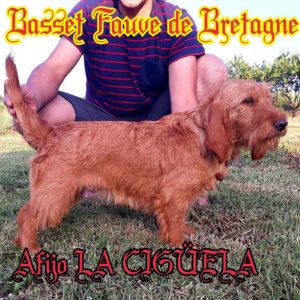
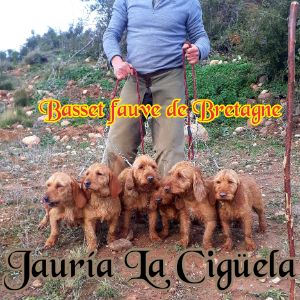
Basset Fauve de Bretagne
Francia FCI 36 . Small-sized Hounds

Basset Fauve de Bretagne

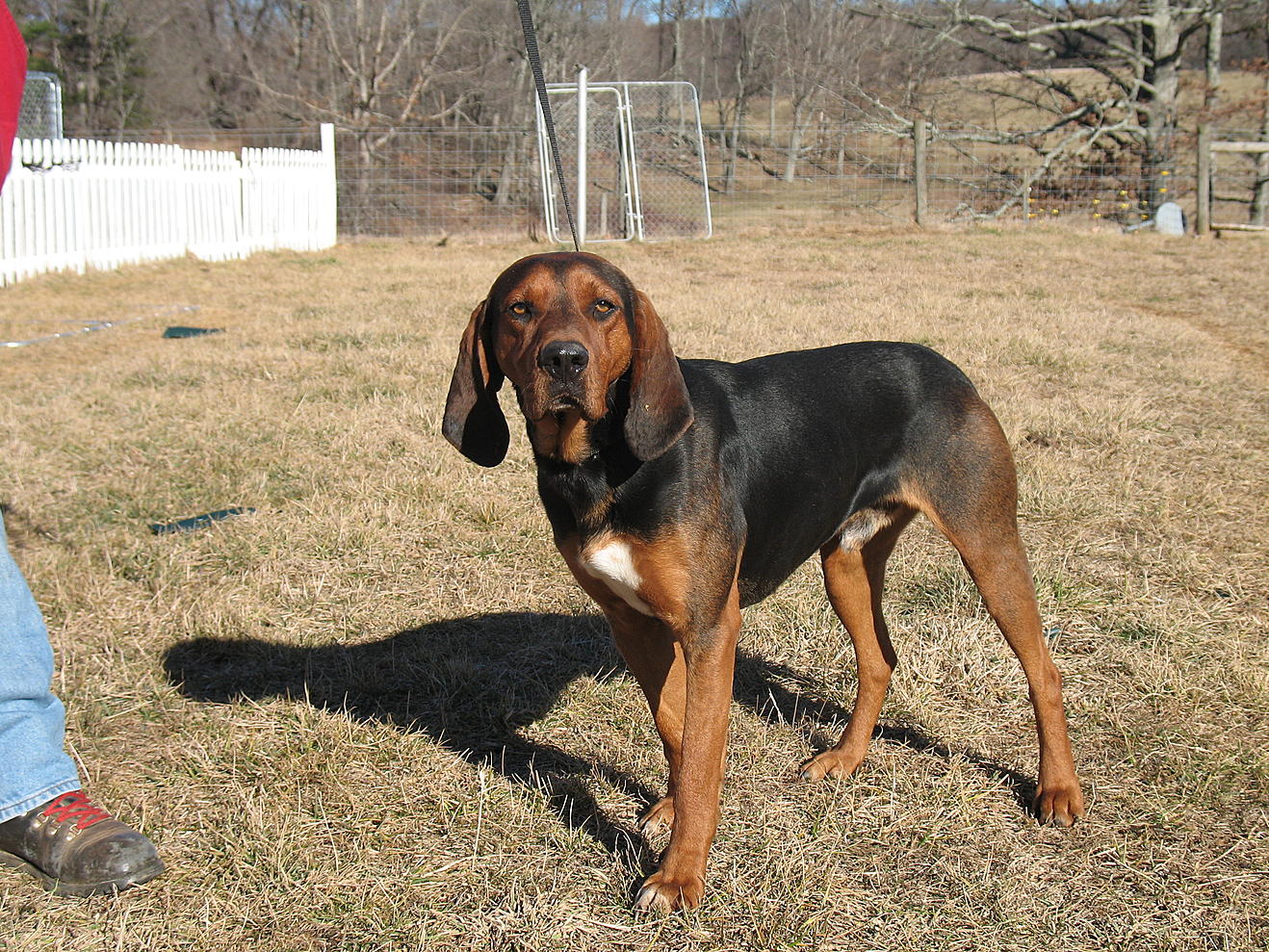
The Basset Fauve de Bretagne has a loose and lively temperament

Content

History

The Basset Fauve de Bretagne descends in a direct line from the "Grand Fauve de Bretagne", ancient trail breed, today almost completely disappeared that was used for fox and wild boar hunting, in the most dense forest. His parent has retained the qualities of exceptional Hunter and his fogosidad to, often, It is braking with crosses with the Petit Basset Griffon Vendéen.

In the 16th century there were four varieties of large dogs in France, the difference between them was more than remarkable in relation to the color of the coat and texture. The four varieties were white (du role), Fawn of the (Bretagne), grey (St Louis du) and the black. All of today's varieties of French hunting dogs seem to have their origin in repeated crossbreeding and mutations of these four types..

Estos “Grand Fauve de Bretagne”, they were very big dogs, between 70 and 74 cm to the cross. They were known for their effectiveness in the early stages of a hunt.. his bravery, his thin nose, its resistance to cold and humidity and its impetus to hunt its prey, wild boar usually, made them ideal dogs for the thorny thickets of Northwest France. This large variety of Basset Fauve de Bretagne seems to have died out in France. The only representative of the Great "Grand Fauve de Bretagne", is the Fawn Brittany Griffon (48 – 56 cm.), very popular in France.

There is considerable doubt about how the reduction of the overall size of the race was reduced to half. One theory suggests that it was initiated by selection of smaller litter size specimens., another for the breeding of the smallest specimens for countless generations. In the 19th century there were numerous litters made up entirely of Basset Fauve de Bretagne.

In the Decade of 1970, as the Basset Fauve de Bretagne It became popular, French hunters decided to introduce new lines. It is generally believed that the Petit Basset Griffon Vendéen was used to improve their ability to, possibly, hunting and the Sausage dog to preserve the color of your hair.

The Basset Fauve de Bretagne was first registered with the Kennel Club in September of 1991.

Photo: bassetfauvedebretagneclub

Physical characteristics

Endowed with a truly incredible resistance, the Basset Fauve de Bretagne is able to hunt for days on end without showing any signs of exhaustion or tiredness.

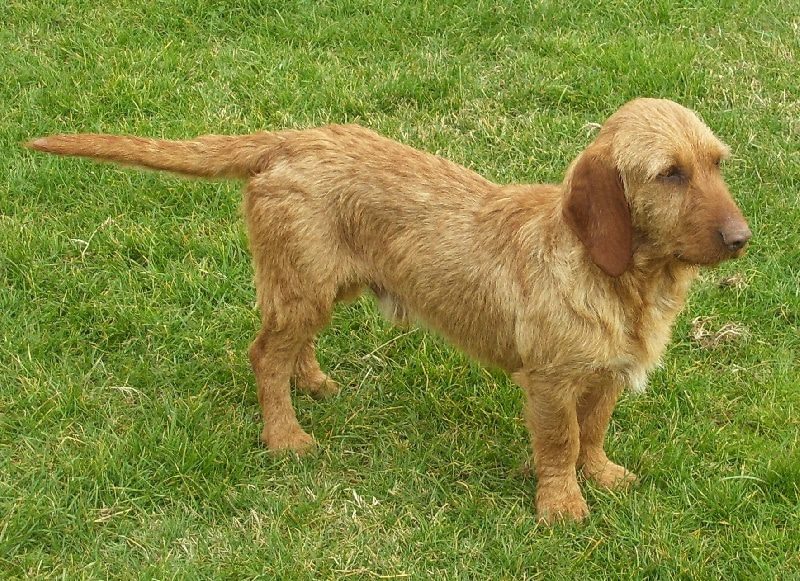
Like all Basset French breeds that come from larger size, also it maintains the characteristics of hair, the most voluminous dog head and color which comes. Its trunk while long, is very strong and compact and, Despite the relatively short limbs, moving with enough speed and ease. In any case, It should never have a too short head or seem excessively high on the extremities, as well as the hair should not appear soft or soft to the touch.

"Basset Fauve de Bretagne"

Ears fall almost at the level of the eyes, not very long, barely reaching the end of the snout, and they end up in tip, they are covered with hair thinner than the rest of body, but never silky. His neck is quite short and muscular. The forelimbs are strong, straight or slightly twisted. Broad and relatively droopy chest. Slightly curved ribs. Long back but a little less than in the other Basset.

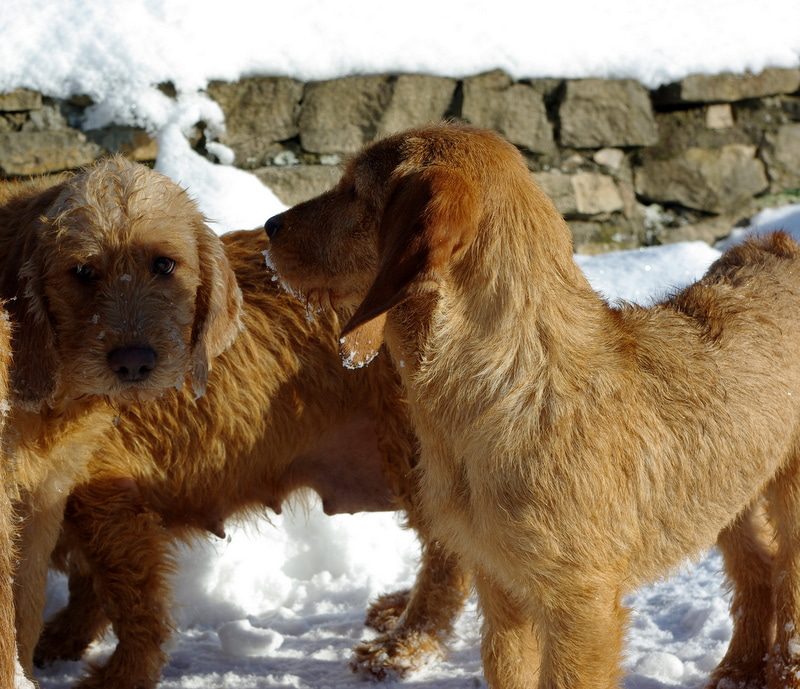
The tail is thick at the base, not too long, and it takes something like a sickle-shaped, is gradually tuned towards the tip. The color is more or less intense Golden or Griffon wheat, sometimes with a white patch on the chest.

Character and skills

The Basset Fauve de Bretagne is still required today for rabbit hunting, especially in low forests, where shrubs and las matas prevent passing other hounds.

It is still quite common in Brittany today, prized for their natural qualities and its perfect adaptation to the landscape, tough and rugged in that area. It's very hard to find, being virtually unknown outside of France.

It has a loose and lively temperament, so it needs to live always in the open air, that poorly fits the House. However, with a small space on the outside, or with usual and regular walks, the Basset Fauve de Bretagne could be an ideal pet.

Breeders list "Basset Fauve de Bretagne"

REGISTER KENNEL

Breeders of Basset Fauve de Bretagne

Offer your puppies for free. Sign up here.

  • This field is a validation field and should be left unchanged.
  • Enter an image of your kennel.


Images «Fawn of Brittany Basset»

«Basset Fawn of Brittany» videos

Alternative names:

Basset leonado de Bretaña / Faw brittany basset

Type and recognitions:

  • FCI CLASSIFICATION:
  • Group :
  • Section : . .

Federations:

KCⓘ

FCI breed standard "Basset Fauve de Bretagne"

Origin:
France

Date of publication of the valid original standard:
25.03.2003

Use:

Bloodhound dog used for rabbit hunting, the hare, the fox, the roe deer and the wild boar.


General appearance:

The Basset Fawn of Brittany is a small dog with a collected body, impetuous, fast for its size. He is endowed with remarkable energy, along with excellent rusticity.


Behavior / temperament:

These are passionate hunting dogs, but they are also excellent companions for man. Its sociable, affectionate and balanced. They adapt easily to all terrains, even the most difficult, and to all kinds of hunting. When they are hunting they are brave, slums, tenacious, which makes them very effective.

Head:

---

Cranial region:
  • Skull: It is rather elongated; and the occipital protuberance is marked. Seen from the front, the skull has the appearance of a lowered curvature, decreasing in amplitude to the level of the superciliary arches that are not very pronounced.
  • Depression links (Stop): Slightly steeper than the Tawny Griffon of Brittany.

facial region:

  • Truffle: It is black or dark brown in color. The nostrils are wide open.
  • Snout: It's sharper than square.
  • Belfos: They cover the lower jaw well, although not in excess. The whiskers are very abundant.
  • Jaws/Teeth: Jaws and teeth are strong; the joint is perfect and uniform scissor shape. Upper incisors cover lower incisors with tight contact. The incisors are set at right angles to the jaws. The absence of PM1 is not penalized.

EYES: They are not prominent, not too sunk in the orbits. Its color is dark brown. The conjunctiva is not apparent. The look is impetuous.

EARS: Delicately implanted at the level of the eye line, just reaching the tip of the truffle. They end in a point and are bent inwards and covered with a hair that is flatter and finer than that of the rest of the body..

Neck:

Quite short and muscular.

Body:

  • Back: It is wide, and cut for a basset. Never sunk.Pork loin: Broad and well muscled.
  • Breast : Tall and wide.
  • Ribs: Pretty rounded.
  • Belly: The lower margin is slightly raised towards the back.

Tail:

It is slightly sickle-shaped. Is medium length; thick at the base, often spike-shaped and tapers at the tip. When is the dog in action, the tail is laid over the margin of the back and performs regular lateral movements.

Tips

PREVIOUS MEMBERS:

  • General appearance: Show good bone structure. Shoulder: Oblique, well attached to the thorax.
  • Elbows: They occur in the axis of the body.
  • forearms: Vertical or slightly deflected inward (this particularity is not sought).
  • Metacarpus: Seen in profile, they are slightly oblique. Seen from
  • forecrown, occur on the axis of the body or slightly deviated outward (this particularity is not sought).
  • Previous feet: compacts. The fingers are together and are arched;
  • nails are solid. Bearings are hard.

LATER MEMBERS:

  • General appearance: They are well muscled. Legs are uniform. Seen from the back, they are parallel, or together, nor separated.
  • Thighs: Long and well muscled.
  • Babillas: Inclined and moderately bent. Metatarsals: Vertical.
  • Hind feet: compacts. The fingers are together and are arched;
  • nails are solid. Bearings are hard.

Movement:

Energetic.

Mantle

SKIN: Quite thick and flexible. No presence of double chin.

Fur: Good hard, rough, pretty short; never woolly, nor curly. The face must not be tangled.

Color: Fawn ranging from golden wheat to brick red. Some scattered black hairs are tolerated, on the back and on the ears. Sometimes the presence of a white star is observed on the sill (this particularity is not sought).


Size and weight:

Height to the cross: 0,32 to 0,38 m. for males and females, with 2 cm excess tolerance for exceptional specimens.


Fouls:

Any deviation from the aforementioned criteria is considered as a fault and the severity of this is considered to the degree of the deviation to the standard and its consequences on the health and well-being of the dog..

SERIOUS FAULTS:

Behavior: Fearful dog.

Head

  • Wide and flat skull.
  • Superciliary arches too pronounced.
  • Pointed or short snout. Hanging and thick belfuses.
  • light eyes.
  • Flat and wide ears.

Body

  • Weak appearance.
  • Top margin that is not tight enough.
  • Flattened belly.

Tail: Deviation.

Members

  • Poor bone structure.
  • crushed feet.

Fur

Scarce, short, fine, soft.

FALTAS DESCALIFICANTES:

  • Aggressiveness or extreme shyness.
  • Any dog ​​showing clear signs of physical or behavioral abnormalities.
  • Absence of typical features (any specimen whose characteristics differentiate it from its congeners).
  • Upper or lower prognathism.
  • Very light eyes.
  • Partial or total depigmentation on the nose or on the edge of the eyelids and lips.
  • Knotted tail.
  • Crooked forelimbs.
  • Presence of dewclaws on the hind limbs (dewclaws never appear in this breed).
  • Long shaggy hair.
  • Any other fur other than that imposed by the standard.
  • Any other size than the one imposed by the standard.
  • Noticeable disability; anatomical malformation.


N.B.:
  • Males should have two normal-appearing testicles fully descended into the scrotum..
  • Only functionally and clinically healthy dogs, with the typical conformation of the breed, should be used for parenting.

Source: F.C.I - International Cynological Federation

▷ The world of Pets: Dogs, cats, birds, reptiles, amphibians

Black and tan coonhound
Estados Unidos FCI 300 - Large-sized Hounds

Perro negro y fuego para la caza del mapache

The Black and tan coonhound they are very vocal and ladradores and, they tend to howl frequently.

Content

History

The black and tan dog for raccoon hunting is a breed of dog used especially to track raccoons. It is a cross between Bloodhound and the Black and Tan Virginia Foxhound («Black fox hunter and virginia fire»).

The Black and tan coonhound It is one of the oldest breeds that exist in America. It is considered that its origin is in the old packs of Fox Hound Cross with Bloodhound they were imported from England in the 17TH century.

The Black and tan coonhound is a descendant of dog Talbot (extinct race), It was in medieval England from the 11th century. His ancestry is, years. At that time, drawn through the Bloodhound and the Black and Tan Virginia Foxhound.

The Black and tan coonhound it is the only one of the six races of the group “Coonhound” (hunting dog breed belonging to hounds) officially recognized by the American Kennel Club.

In 1945 the Black and tan coonhound was recognized by the American Kennel Club.

The Redbone Coonhound and the Plott Hound since then they have been recognized in the miscellaneous class. The other three varieties of Coonhound are the Bluetick Coonhound, the American English Coonhound, and the Treeing Walker Coonhound.

Physical characteristics

The standard of the Black and tan coonhound mark that your weight is 29 to 59 Kg. Y, the height at the cross of 58 to 69 cm..
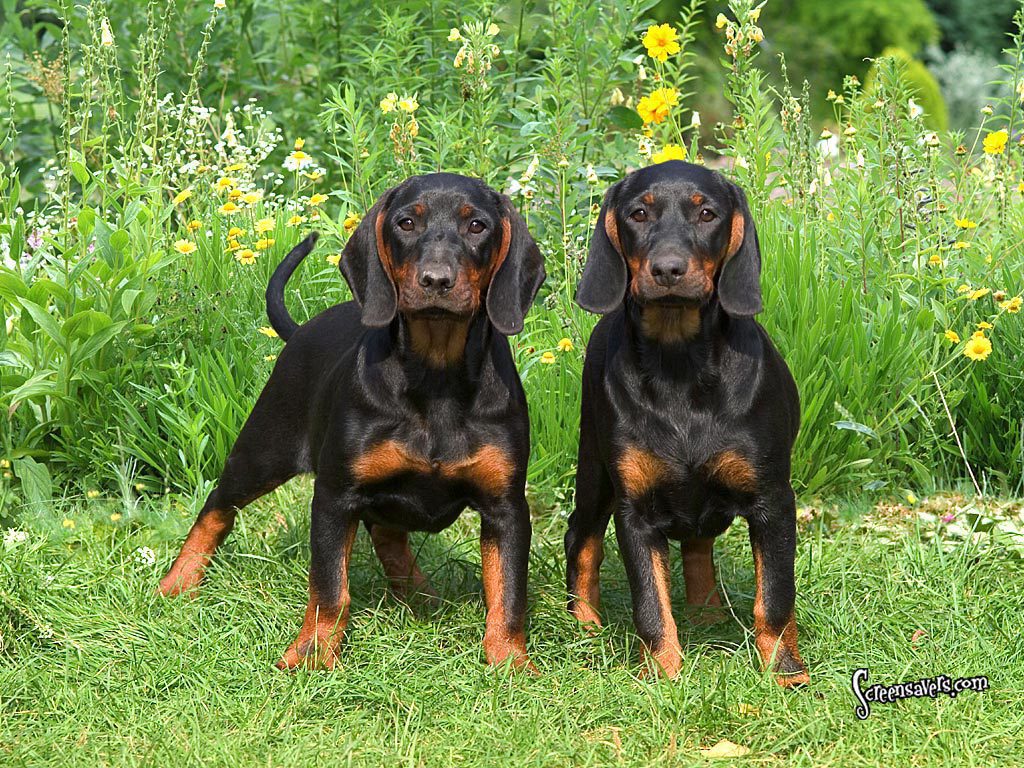
Its pelage is short, dense and glossy. Their brand of black colour and fire are similar to the Dobermann and the Rottweiler, but with key differences that, It doesn't help to distinguish it from other races. The most prominent are the ears and long tails, and his strong bark, like no other. The eyes are Hazel color, throwing more dark in some cases.

The legs are long in proportion to the length of the body, that is very muscular and thin, males tend to be more bony than females.

The size of the litter of a Black and Tan Coonhound dog round the 8 Puppies. Y, the life expectancy of this breed is of 10 to 12 years.

Generally healthy, but there is some risk of the Hip Dysplasia, ear cancer and other ear infections and eye problems.

Character and skills

The Black and tan coonhound achieves its objective by guiding itself only by smell, What makes it also efficient to find deer, bears, Pumas and other pieces of hunting, although in many countries this type of hunting with dogs is restricted.

The general impression is the of the power, agility and alertness, with the ability to quickly drop to the ground and move down with powerful rhythmic strides. It also, every dog has his own voice, recognisable for their owners from a great distance.

The Black and tan coonhound he is a gentle dog, adaptable and worthy to be loved. While adapt very well to different environments of life, This dog will be very happy when you can do the work for which has been raised.

Thanks to its amazing sense of smell, is a dog that easily distracted, he is obedient but if any trail crosses his path he will go after him… Reason why, they are dogs that require a constant and patient training.

Although most of the Black and tan coonhound they are dogs trust, balanced and sweet temperament, puppies need a fair amount of encouragement to build their confidence, especially, When living in the interior of a home as pets. You can have despanzurrado and happy on the sofa, If and when, It gives you a lot of exercise, years. At that time, they enjoy the company of their human family.

The Black and tan coonhound, It may seem cautious or nervous in the presence of strangers or unfamiliar dogs, but if they are well socialized from puppies there will be no problem, they are dogs bred for hunting and working group.

The Black and tan coonhound he is better known as "raccoon hunter", but she has also been used successfully for hunting other animals such as the bear, the deer, the Fox and the mountain lion – even on difficult terrain. Since, It is a dog that supports well the rigors of winter, as well as intense heat.

The Black and tan coonhound it is a breed that tends to drool a lot, This is a feature that can be problematic. This race is not very appropriate for someone who is looking for a quiet dog, like all Coonhound, they are very vocal and ladradores and, as well, they tend to howl frequently. They are effective in warning their owners when a stranger enters the courtyard, the appearance of the dog at that time may seem threatening, but it is not likely to bite or attack unless smell the real danger or feel threatened.

Despite being a dog that is not often seen in urban areas, they enjoyed much popularity in rural areas. It is said that a Coonhound they are found on the porch of most rural homes in the United States, more than any other race. While it is not a statistical fact, his place in the AKC registered breeds list that ranks as one of the most popular races.

It is the image that has inspired the character of Pluto, the companion of Mickey Mouse.

Characteristics "Black and tan coonhound"

Coexistence is important that you have with your new friend. Before considering the acquisition of a dog of the breed "Black and tan coonhound" you know certain factors. Not all breeds of dogs are apt to live in an apartment, you must take into account his character, their need for exercise, their interaction with other pets, their care and if you have small children, their level of tolerance towards them.

Adaptation ⓘ

5,0 of 5 stars (based on 1 review)

friendly dog ​​ⓘ

5,0 of 5 stars (based on 1 review)

hair loss ⓘ

5,0 of 5 stars (based on 1 review)

Affection level ⓘ

5,0 of 5 stars (based on 1 review)

Need for exercise ⓘ

5,0 of 5 stars (based on 1 review)

Social need ⓘ

3,0 of 5 stars (based on 1 review)

Home ⓘ

1,0 of 5 stars (based on 1 review)

Toilet ⓘ

1,0 of 5 stars (based on 1 review)

Friendly with strangers ⓘ

3,0 of 5 stars (based on 1 review)

barking ⓘ

5,0 of 5 stars (based on 1 review)

Health ⓘ

3,0 of 5 stars (based on 1 review)

Territorial ⓘ

1,0 of 5 stars (based on 1 review)

Cat friendly ⓘ

5,0 of 5 stars (based on 1 review)

Intelligence ⓘ

3,0 of 5 stars (based on 1 review)

Versatility ⓘ

2,0 of 5 stars (based on 1 review)

Child friendly ⓘ

5,0 of 5 stars (based on 1 review)

Surveillance ⓘ

3,0 of 5 stars (based on 1 review)

joy ⓘ

1,0 of 5 stars (based on 1 review)

Images Black and tan coonhound

Videos of the black and tan dog for raccoon hunting

Type and recognitions:

  • FCI CLASSIFICATION:
  • Group :
  • Section : . .

Federations:

  • FCI ⓘ, AKC ⓘ, ANKC ⓘ, CKC ⓘ, UKC ⓘ

  • FCI breed standard Black and tan coonhound

    FCIFCI - Black and tan coonhound
    Dog

    Alternative names:

    1. American Black and Tan Coonhound (English).
    2. Chien noir et feu pour la chasse au raton laveur (French).
    3. Schwarz-lohfarbene Waschbärenhund (German).
    4. Coonhound preto e castanho (Portuguese).
    5. Black and tan coonhound, perro negro y fuego para la caza del mapache (español).

    ▷ The world of Pets: Dogs, cats, birds, reptiles, amphibians

    Porcelaine
    Francia FCI 30 . Medium-sized Hounds

    Porcelana

    The Porcelaine It is a dog living in the family, is extremely friendly and affectionate.

    Content

    History

    The origin of the breed is unknown Porcelaine, although it is probably the oldest dog breed in “Franche-Comté”. It is said to descend from the great "white dogs of Saint-Hubert de Lorraine", themselves descendants of the "royal white dogs" used in royal packs in the time of Francis I. Before the French Revolution, the white and orange hounds were present on the lands of the abbeys of Luxeuil and Cluny.

    After the revolution, the breed was close to extinction, breeding resumed in the mid-19th century with the help of Swiss breeders. In 1844, Similar dogs were called «briquets francs-comtois«. The porcelain name is said to have been given by the Marquis Théodore de Foudras.

    Already in 1898 his race was consolidated. As of this year he could be found in exhibitions.

    The slim build and the noble head are also witnesses to this tradition. In times past the breed was used especially for hunting. This happened especially in Switzerland, France and Italy. There these tracking dogs have been found for centuries.

    Physical characteristics «Porcelain»

    It's a dog very striking within the French dogs, its own structure gives us the pattern that is the great race.

    As shown in the canine group for which they are registered by the Federation Cynologique Internationale, is a Hound of median sizeto. Males have one height the cross of 56 to 58,5 cm and the females of between 53,5 and 56 cm., weighing between 25 and 28 kg.

    Videos «Porcelain»

    Porcelaine puppiesPorcelaine puppies

    The name Porcelaine He was born in allusion to his bright clothes, It seems made of porcelain. Its skin is white, sometimes with orange spots, most common in ears.

    The eyes are dark and have a loving gaze and intelligent. The ears they are fine and well retracted, they often end in a tip and reach the end of the snout.

    The nose is black with large nasal Windows, It has black eyes and ears that fall, similar to the Labrador.

    The neck It is long and the tail starts thick and just fine, It is quite long and the dog carries slightly curved.

    The hair thick fine is glossy and satin, There must not be any part of the body hairless.

    The color the fur is white. You can submit Orange stains of rounded shape that we extend never forming a mantle, these spots appear many times overlapping other dark spots on the skin.

    Character and skills «Porcelain»

    The Porcelaine It is a bloodhound, that is to say, dogs that search for prey and due to its characteristics it is valid to search for any type of wild animal.

    It has a strong character, energetic, very willful and obstinate when he is hunting. But, When it is at rest is a very be quiet.

    If you live within the family, is extremely friendly and loving. He is patient and well tolerated in children.

    They have a very high level of activity, so he needs a lot of exercise, reason why is not recommended for sedentary people.

    Although they are fierce hunters, they are gentle and relatively easy to educate.

    Care of the «Porcelain»

    the care of him Porcelaine not related to their fur so much. The short-haired breed requires little effort in grooming. But you should pay close attention to your surroundings. A small flat doesn't always do it justice. There your needs are not met.

    But it is not necessary to have a country house to maintain this beautiful breed.. Several walks a day can also keep dogs busy.. This shows that dogs need variety and tasks. Also the game should be in the task list.

    Finding the right “Porcelain” breeder

    If you are interested in this breed of dog and want to find the breeder of Porcelaine suitable, you may have to search for a long time. This breed of dog is rarely found. It also, cubs are often only given to hunters.

    Images of “Porcelain”

    Type and recognitions:

    • FCI CLASSIFICATION:
    • Group :
    • Section : . .

    Federations:

    • – FCI – Group 6: Scent hounds, and related breeds. – Section 1.2: Medium-sized Hounds. ⓘ
    • – Central Canine Society ⓘ

    FCI breed standard "Porcelaine"

    Origin:
    France

    Date of publication of the valid original standard:
    19.10.1964

    Use:

    Hound


    General appearance:

    Dog used for hunting small game, very distinguished, absolutely french. All the details of its structure underline the nobility of its breed.


    Behavior / temperament:

    ---

    Head:

    It must be very typical of the breed, thin and delicately sculpted. As a whole is rather long.

    Cranial region:
    • Skull: It is wide at its height, between the ears; the occipital Protuberance is rounded. The forehead is flat; the median furrow must be marked, but without exaggeration.
    • Depression links (Stop): Marked, but without excess.

    facial region:

    • Truffle: Well developed and very black. The Windows are wide open.
    • Snout: Long appropriate, Neither square nor pointed. The nasal helm is straight, but its end is slightly arched.
    • Lips: The upper lip covers the lower lip without being heavy or pendant. The mucosa of the lips is black.
    • Eyes: Normally developed, They must be looking dark and well protected under the cigomatica arch. The look is intelligent and sweet.
    • Ears: They are thin and well bent. They end up more on tip and reaches to the end of the snout. Its narrow insertion should not be above the eye line.

    Neck:

    It is quite long and lightweight. It may be some dewlap which must be thin and tight appearance.

    Body:

    • Cross: Well outgoing.
    • Back: Wide and straight.
    • Pork loin: Width, well muscled, well together as a whole and not too long.
    • Rump: Somewhat oblique. The tips of the legs are wide apart and slightly protruding.
    • Breast : Amplitude medium, also rather deep. The ribs, in accordance with the chest, they are rather elongated, without being flat.
    • Flanks: Something raised, but full.

    Tail:

    It is well attached to the body. It is quite thick at the root and pointed at the end. Is never thin and medium length (without presenting to tip around the tail long and thick hairs slightly distant in the form of stem). It is carried slightly stooped.

    Tips

    PREVIOUS MEMBERS: They are quite long and thin, Although not too thin; tendons are well connected; the limbs are regular.

    • Shoulder: Shoulders of Jockey, long, well muscled and well inclined, though not too thick.

    LATER MEMBERS:

    • Thighs: Well descended, very visible and thin muscles, moderately developed.
    • Hock: Fort and close to the ground. Usually angled.

    FEET: Typically for a French dog rather elongated toes, thin but well together; hard and resistant pads.

    Movement:

    Executed with vitality and agility; easy and indefatigable Gallop.

    Mantle

    SKIN: Thin and elastic. She is grainy with numerous black spots.

    HAIR: Satin, fine, tight and shiny; spotless alopecia.

    COLOR: Very white, stained rounded Orange never extends in the form of blanket. These spots are usually overlapping other black spots of pigmentation of the skin. The orange splashes on the ears are very characteristic of this breed..


    Size and weight:

    You can vary:

    • for males between 55 and 58 cm.,
    • for females between 53 and 56 cm..


    Fouls:

    Any deviation from the aforementioned criteria is considered as a fault and the severity of this is considered to the degree of the deviation to the standard and its consequences on the health and well-being of the dog..

    MISS PLAYOFFS:

    • Cowardice, aggression toward owner.
    • Lack of type.
    • In general all the defects that prevent the use of the dog, such as rickets, defective limbs in excess, insufficient movement range and push.
    • Eyes and nose color clear, excess of depigmented spots.
    • Tail iguanas.
    • Coarse or thick hair.
    • Presence of an orange blanket.
    • A very raised orange spots, pulling to mahogany, grey or mixed with black hairs. The light orange color, but pale and the same lack of spots are not desirable, but they can not be considered eliminatory faults.
    • Size that exceed or that does not reach the above measures. But, You can make an exception with a male that does not exceed a maximum 60 cm., Therefore, it presents excellent general characteristics and can be used as a player..
    • Any dog ​​showing clear signs of physical or behavioral abnormalities should be disqualified..


    N.B.:

    Males should have two normal-appearing testicles fully descended into the scrotum..

    Source: F.C.I - International Cynological Federation

    Alternative names:

    1. Chien de Franche-Comté (English).
    2. Chien de Franche-Comté, briquets francs-comtois (French).
    3. Chien de Franche-Comté (German).
    4. Porcelaine (Portuguese).
    5. Perro del Franco Condado (español).

    ▷ The world of Pets: Dogs, cats, birds, reptiles, amphibians

    Harrier (dog)
    Inglaterra FCI 295 . Medium-sized Hounds

    Harrier

    The Harrier (dog) it is an excellent dog for hunting, specialized in foxes and hares.

    Content

    History

    The Harrier (dog) comes from Great Britain and was first mentioned in writing in the year 1260. French hounds are supposed to, are the ancestors of this breed. Y, as well, there is considerable consensus that the Harrier (dog) Today is the product of the cross between the Beagle and the English Foxhound, born in the south of England.

    The demonstrable origin of dogs, who have been hunting hares for several centuries, can probably be traced back to the 13th century in western England: The first written record of a herd of Harrier (dog) of a certain Sir Elias of Midhope in England was in 1260. Other herds of Harrier (dog) well known to history were the Holcombe herd in the 17th century and the Cambridgeshire herd in the mid-18th century.

    In 1889 the first exhibition of Harrier (dog). Later, two associations were founded that have since dedicated themselves to the pure breeding of this breed..

    It is not clear where the name of the Harrier (dog). Like the dog Harrier (dog) is a very ancient race, it is not easy to clarify this origin beyond all doubt.

    The Harrier (dog) He was originally bred to go hunting for hares. So, Some people think that its name is derived from the English word «Hare«. «Hare» is the word for "hare" in French and English. Harrier (dog) It, therefore, a kind of abbreviation of the English term «Hare-Hound» and indicates that this breed was originally bred for hare hunting.

    Others believe that this breed of dog got its name from the Norman-Saxon language.

    Here "Harrier" simply means "dog.".

    Physical characteristics «Harrier»

    The Harrier (dog) it is a strong and light dog, less powerful and is used for hunting hares. It has a long and slightly arched neck on top. The eyes, medium sized and oval, they tend to be dark. The short ears, almost flat and V-shaped, they are inserted high but they are pendulous carried.

    The coat of the Harrier (dog) it's shiny, hard, dense and short, well glued to the body. The hair on the ears is finer in texture than the rest of the body. Are white, black and bark, lemon and white, Red and white, black, White and bark. Tricolor with a black coat on the upper back is also allowed. This last variant is bred mainly by the French.

    With a height at the cross of 48 to 55 cm and a weight of 22 to 27 kg, this dog belongs to the medium-sized dogs.

    Character and skills «Harrier»

    Harrier (dog)
    A tricolour Harrier by Smcmilla, Public domain, via Wikimedia Commons

    The Harrier (dog) they are gentle, peaceful, quiet, balanced and above all intelligent and eager to learn. Its great resistance, his great joy of movement and his good assertiveness are other typical characteristics. An excellent sense of smell distinguishes this basically easy-care and undemanding dog..
    Like a dog from the original pack, is naturally very sociable and very compatible with other dogs. Since the Harrier (dog) is from reason rather stubborn and independent, needs a consistent yet loving and gentle upbringing. If it is kept in the pack and acts as a hunting dog, builds little relationship with humans, but as a family dog ​​he proves to be a faithful dog, loving and undemanding. He is quite alert but completely free of aggression.

    Can be kept well with various dogs in the family. The Harrier (dog) can, according to its origin, be trained well like dogs that run and sweat, although his preferred terrain is flat, at most a little bumpy. It is equally suitable for hunting on horseback, which is particularly popular in England. This breed is also suitable for dog sports. As a family dog, he needs long walks, as well as occupation and contacts.

    The Harrier (dog) has a very fine sense of smell, is very resistant, persistent…, It seems that never were fatigue and can reach a good speed and keep it, While still at its prey, reason why it has been used since its origins for hunting in packs.

    He is very obedient and intelligent, which is why, education and training firm, consistent and loving, gives very good results. Their life expectancy is around the 12 years.

    Care and maintenance «Harrier»

    The Harrier (dog) they need a lot of exercise and have a very strong hunting instinct, so it is absolutely necessary that you challenge them enough and offer them longer rides each day.

    It is important to ensure that he is kept on a leash where the game is present, otherwise he would follow his hunting instinct. The Harrier (dog) he is not a city dog, but loves to romp in a garden with plenty of exercise. When it comes to caring for your coat, not very demanding: he likes to brush once in a while. If the dog goes hunting with you, should be examined for parasites and lesions.

    Characteristics "Harrier (dog)"

    Coexistence is important that you have with your new friend. Before considering the acquisition of a dog of the breed "Harrier (dog)" you know certain factors. Not all breeds of dogs are apt to live in an apartment, you must take into account his character, their need for exercise, their interaction with other pets, their care and if you have small children, their level of tolerance towards them.

    Adaptation ⓘ

    3,0 of 5 stars (based on 1 review)

    friendly dog ​​ⓘ

    3,0 of 5 stars (based on 1 review)

    hair loss ⓘ

    3,0 of 5 stars (based on 1 review)

    Affection level ⓘ

    3,0 of 5 stars (based on 1 review)

    Need for exercise ⓘ

    5,0 of 5 stars (based on 1 review)

    Social need ⓘ

    2,0 of 5 stars (based on 1 review)

    Home ⓘ

    4,0 of 5 stars (based on 1 review)

    Toilet ⓘ

    2,0 of 5 stars (based on 1 review)

    Friendly with strangers ⓘ

    3,0 of 5 stars (based on 1 review)

    barking ⓘ

    4,0 of 5 stars (based on 1 review)

    Health ⓘ

    1,0 of 5 stars (based on 1 review)

    Territorial ⓘ

    1,0 of 5 stars (based on 1 review)

    Cat friendly ⓘ

    4,0 of 5 stars (based on 1 review)

    Intelligence ⓘ

    3,0 of 5 stars (based on 1 review)

    Versatility ⓘ

    3,0 of 5 stars (based on 1 review)

    Child friendly ⓘ

    4,0 of 5 stars (based on 1 review)

    Surveillance ⓘ

    3,0 of 5 stars (based on 1 review)

    joy ⓘ

    2,0 of 5 stars (based on 1 review)

    Videos "Harrier (dog)"

    HTTPS://youtube.com/watch?v=LV_Yw96BGVo
    Harrier Dog – Top 10 Facts
    HTTPS://youtube.com/watch?v=unvBDZ3ga7k
    Harrier – AKC Dog Breed Series

    Type and recognitions:

    • FCI CLASSIFICATION:
    • Group :
    • Section : . .

    Federations:

    • – FCI – Group 6: Scent hounds, and related breeds. – Section 1.1: Large-sized Hounds. ⓘ
    • – ​KC – Hound ⓘ

    FCI breed standard "Harrier (dog)"

    Origin:
    United Kingdom

    Date of publication of the valid original standard:
    27.11.1974

    Use:

    Hound


    General appearance:

    Strong and light dog, less powerful and more distinguished than the Foxhound.


    Behavior / temperament:

    ---

    Head:

    Expressive, moderately wide.

    Cranial region:
    • Skull : Plano, slightly outlined occipital protuberance.

    facial region:

    • Truffle : black, quite developed.
    • Snout : Fairly long and rather pointed.
    • Lips : They cover the lower jaw.

    Eyes : Always dark, never saltones, medium large, not too round.

    Ears : "V" shaped, almost flattened, slightly twisted, quite short, rather high implantation.

    Neck:

    Long and free, but with good insertion in the shoulders ; slightly arched at the top.

    Body:

    • Back : Straight and muscular.
    • Pork loin : Strong, with a slight bow.
    • Breast : Deeper than wide.
    • Ribs : Rather flat than arched.
    • Flank : Neither too round nor too retracted.

    Tail:

    Medium long, slightly split (up to the tip around the tail long thick hairs slightly separated in a spike) ; with good bearing.

    Tips

    PREVIOUS MEMBERS : Straight and plumb.

    • Shoulder : Oblique and very muscular.

    LATER MEMBERS :

    • Hip : Strong and well outgoing.
    • Thigh : Long and well descended.
    • Warm-foot joint : Not too straight and not too angled.

    FEET : Not too close and not too round.

    Movement:

    Agile and firm ride.

    Mantle

    SKIN : White with black spots.

    HAIR : Smooth in the English way, ie flat and not too short.

    COLOR : Usually white background with all shades in black to orange. In France often tricolor with a black cloak covering the upper back.


    Size and weight:

    Height to the cross : Since 48 to 55 cm maximum, but preferably from 48 to 50 cm..


    Fouls:

    Any deviation from the above mentioned criteria is considered an absence and severity of this refers to the degree of deviation to the standard and its impact on the health and welfare of the dog.

    MISS PLAYOFFS

    • Aggressive or fearful dog.
    • Depigmented truffle.
    • Prognathism.
    • Long and loose loin.
    • Weak thighs.
    • Discolored scrotum.

    Any dog ​​showing clear signs of physical or behavioral abnormalities should be disqualified..


    N.B.:

    Males should have two normal-appearing testicles fully descended into the scrotum..

    Source: F.C.I - International Cynological Federation

    Alternative names:

    1. Harrier (English).
    2. Harrier (French).
    3. Harrier (German).
    4. Lebreiro, Cão de caça a lebre (Portuguese).
    5. Harrier (español).

    ▷ The world of Pets: Dogs, cats, birds, reptiles, amphibians

    Hound Hamilton
    Suecia FCI 132 - Medium-sized Hounds

    Hamilton the Hound he is an excellent hunting dog, is valued for his great intelligence and agility.

    Sabueso Hamilton

    Content

    Ratings of the "Hamilton Hound"

    Coexistence is important that you have with your new friend. Before considering the acquisition of a dog of the breed "Hound Hamilton" you know certain factors. Not all breeds of dogs are apt to live in an apartment, you must take into account his character, their need for exercise, their interaction with other pets, their care and if you have small children, their level of tolerance towards them.

    Adaptation ⓘ

    3,0 of 5 stars (based on 1 review)

    friendly dog ​​ⓘ

    3,0 of 5 stars (based on 1 review)

    hair loss ⓘ

    2,0 of 5 stars (based on 1 review)

    Affection level ⓘ

    3,0 of 5 stars (based on 1 review)

    Need for exercise ⓘ

    5,0 of 5 stars (based on 1 review)

    Social need ⓘ

    3,0 of 5 stars (based on 1 review)

    Home ⓘ

    3,0 of 5 stars (based on 1 review)

    Toilet ⓘ

    1,0 of 5 stars (based on 1 review)

    Friendly with strangers ⓘ

    4,0 of 5 stars (based on 1 review)

    barking ⓘ

    4,0 of 5 stars (based on 1 review)

    Health ⓘ

    4,0 of 5 stars (based on 1 review)

    Territorial ⓘ

    3,0 of 5 stars (based on 1 review)

    Cat friendly ⓘ

    2,0 of 5 stars (based on 1 review)

    Intelligence ⓘ

    4,0 of 5 stars (based on 1 review)

    Versatility ⓘ

    4,0 of 5 stars (based on 1 review)

    Child friendly ⓘ

    5,0 of 5 stars (based on 1 review)

    Surveillance ⓘ

    2,0 of 5 stars (based on 1 review)

    joy ⓘ

    4,0 of 5 stars (based on 1 review)

    History

    The Hound Hamilton (in Swedish: Hamiltonstövare), It is a breed of dog developed in Sweden by the founder of the Swedish Kennel Club, Count Adolf Hamilton (hence its name). It is a hound that from its origins was used to hunt hares and foxes. Among his ancestors are hounds Germans, Swiss, the race English Foxhound and race Harrier (dog).

    These hounds have long years of history, according to existing documentation, they are present in Sweden since 1500.
    A canine exhibition held in Stockholm in the year 1886, marked the history of these dogs, There were two hounds copies (Pang and Stella), owned by count Adolf Hamilton.

    Those two dogs are considered the origin of the Hound Hamilton current. At the time, was called, simply, "Swedish Dog". Only in the year 1921 it was given the name of Hound Hamilton, in honor of the first President of the Swedish Club Kennel (Count Adolf Hamilton) and their involvement in the creation and development of the breed.

    It's been a long time and today the Hound Hamilton It is the breed of dog with the largest number of copies in Sweden. This year the «Swedish Dust Club (Swedish Club of Hamilton Stövare)» has celebrated its 100 years.

    Physical characteristics

    The Hound Hamilton it is known for its characteristic white spot on its head that runs down its neck, the four white legs, and the white tail. Most marked difference with the English Foxhound It is that your body is lighter.

    It's a healthy and strong breed, both physically and mentally. As we said, he is a strong dog, well built, muscular, but light.

    His hair coat is tricolour (white, black and Brown) very brightly colored. The hair should be thick and glued to the body. The layer requires normal maintenance and should only be bathed when necessary.

    The colors in the Hound Hamilton are distributed as follows:

    Upper part of the neck, the back, on the sides of the trunk and in the upper part of the tail is black. Head and legs, as well as a neck part, the trunk and tail must be Brown. And white marks appear at the top of the snout, in the lower part of the neck, the chest, the legs and feet (as if they were socks) and the tip of the tail. A mix of black and brown only, is undesirable, as well as, a preponderance of any of the three supported colors.

    Their eyes of dark honey, they convey an expression of tranquility, but it will also give an impression of strength and marked resistance.

    The height at the cross in the males is of 53 to 61 cm and the females of 49 to 57 cm..

    Character and skills

    The Hound Hamilton he is an excellent hunting dog, is valued for his great intelligence and agility. Why which is very popular among hunters, his intelligence allows him to develop hunting strategies, as for example, camouflage themselves in the bushes and wait there for the right moment to jump and scare their prey. The Hound Hamilton he is very good at hunting individually, not so much in pack.

    Health "Hound Hamilton"

    It is a very healthy breed with a good mentality. Hip Dysplasia is usually present. Their life expectancy is around the 13 years.

    Education "Hamilton Hound"

    The Hound Hamilton he is a friendly dog ​​with a calm temperament. It is flexible, easy to train and have very strong hunting instinct, is necessary to socialize them small.

    Videos of the "Hamilton Hound"

    Hamiltonstövare
    World record dog Hamiltonstövare
    Kilcavan Hamiltonstovare having fun in the snow!
    Kilcavan Hamiltonstova re having fun inthe snow!

    Type and recognitions:

    • FCI CLASSIFICATION:
    • Group :
    • Section : . .

    Federations:

    • – FCI – Group 6: Scent hounds, and related breeds. – Section 1.2: Medium-sized Hounds. ⓘ
    • – AKC – The AKC does not have its own standard and, on the other hand, is linked to the FCI Hound ⓘ

    FCI breed standard "Hound Hamilton"

    Origin:
    Sweden

    Date of publication of the valid original standard:
    17.07.1997

    Use:

    Hound type dog that bars on the trail and is used for the hunting of the hare and the fox. It is not a Jauria dog and is never used for deer hunting.


    General appearance:

    He is a well proportioned dog, that gives the impression of great strength and resistance. It is never heavy constitution. It is tricolor. The differences between male and female must be well defined.

    IMPORTANT PROPORTIONS :

    rectangular body.


    Behavior / temperament:

    It is a friendly and quiet hound.

    Head:

    Elongated.

    Cranial region:
    • Skull : Slightly bulging and moderately wide.
    • Stop : Well marked, but not too pronounced.

    facial region:

    • Truffle : always black, well developed with wide windows.
    • Snout : Long, strong and almost rectangular. Nasal cane straight and parallel to the line of the skull. The distance from the occipucio to the stop must be equal to the distance between the stop and the tip of the nose.
    • Lips : Relatively thin upper lip, tight and beautifully rounded, Not too much hanging. Males must have more pronounced lips than females.
    • Cheeks : Not outstanding.
    • Jaws / Teeth : Scissor bite. Strong, well-developed teeth.

    Eyes : Dark brown color, Serena expression.

    Ears : Moderately high implantation; When they are pull forward, The ears do not reach half the snout. Lifts them slightly when it is attentive. They are soft and hang flattened without the anterior edge form folds.

    Neck:

    Long, Powerful and well inserted on the shoulders. The skin skin is flexible and well stuck. Males must present a well -arched neck line.

    Body:

    • Cross : Well marked.
    • Back : Straight and powerful.
    • Pork loin : Muscular and slightly arched.
    • Rump : Slightly inclined, Long and wide.
    • Breast : Deep, long and well developed, Reach to the elbows. Ribs moderately sprung.
    • Bottom line and belly : Belly only slightly retracted.

    Tail:

    Inserted in continuation with the line of the back. Carried straight or slightly curved in the shape of a saber. It is quite wide at its root and thinns towards the tip; reaches up to the tibio-tarsal joint. When is the dog moving, The preference tail should not be carried above the back level.

    Tips

    PREVIOUS MEMBERS :

    • General information : Strong bones, that harmonize with the general appearance of the dog. Seen from the front, the forelimbs are straight and parallel.
    • Shoulder : Long, muscular and well placed backward. Well attached to the body.
    • Arms : Long, forming a right angle with the shoulders.
    • Elbows : Glued to the body; without being visible below the thorax.
    • Metacarpus : Elastic, slightly angled with the forearm.
    • Previous feet : Oval with well angled and closed fingers.

    LATER MEMBERS :

    • General information : Seen from behind are strong and parallel.
    • Thighs : With a well developed musculature; seen from the sides are wide.
    • Knee : Well angled.
    • Warm-tarsal joints : Well angulated.
    • Metatarsus : Short, thin and straight.
    • Hind feet : Similar to the previous; dewclaws are undesirable.

    Movement:

    Parallel, strong; spans space.

    Mantle

    HAIR : Rough, not too short, very close to the body. Over the head, ears and front of limbs, Hair must be short and soft. Below the tail and on the back of the thighs, The outer layer can be a bit long, but without forming feathers.

    COLOR : It is tricolor. The upper neck, back, of the sides of the trunk and the tail are black. The head, ears, limbs as well as the sides of the neck, of the trunk and the tail are grimid. The loyed color can vary from a golden hue to an intense brown-redizo tone. The white color is located at the top of the snout (list), at the bottom and upper neck, chest, at the tip of the tail as well as at the bottom of the members and on the feet.


    Size and weight:

    Height of the cross :

    • Males : 53-61 cm.. Ideal size 57 cm. (22,5 inches).
    • females : 49-57 cm.. Ideal size 53 cm. (21 inches).


    Fouls:

    Any deviation from the aforementioned criteria is considered a fault and the severity of it is considered to the extent of the deviation from the standard and its consequences on the health and well-being of the dog..

    • Undefined sexual characteristics.
    • Wide skull, short or pointed.
    • Short or pointed snout, COCAVA CAñA.
    • Upper or lower prognathism, level bite.
    • Heavy cheeks.
    • Light eyes.
    • Overdue back.
    • Short croup, inclined.
    • Tail carried above the line of the back.
    • Pressed scapules.
    • Restricted posterior movement.
    • Black and grim mixture.
    • Very pronounced black marks that cover the sides of the trunk, shoulders and thighs.
    • Other white brands different from those described in the standard.
    • Two colors (yellow-white, Black-White, black and tan) or preponderance of any of the three allowed colors.

    MISS PLAYOFFS

    • Very reserved dog, fearful.
    • Pronounced upper or lower prognathism.
    • Cross height that exceeds maximal and minimal limits.

    Any dog ​​showing clear signs of physical or behavioral abnormalities must be disqualified..


    N.B.:

    Males should have two normal-appearing testicles fully descended into the scrotum..

    Source: F.C.I - International Cynological Federation

    Alternative names:

    1. Swedish Foxhound, Hamilton (English).
    2. Anciennement: Chien courant suédois (French).
    3. Hamilton-Bracke (German).
    4. (em sueco: hamiltonstövare) (Portuguese).
    5. (En sueco: Hamiltonstövare) (español).

    ▷ The world of Pets: Dogs, cats, birds, reptiles, amphibians

    West Siberian Laika
    Rusia FCI 306 - Nordic Hunting Dogs

    Laika de Siberia Occidental

    in your country of origin, Russia, the West Siberian Laika has been bred as a hunting dog for centuries.

    Content

    History

    The "West Siberian Laika" (Zapadno-Sibirskaïa Laïka), is the product of crossbreeding between the closely related species of Laïka de Chanteisk and Mansijak with Russian hunting dogs from the north of the Urals and Western Siberia. Outside its area of origin in areas mainly populated by hunters, This race has widely spread to central areas of Russia; This type of dog that abounds on these sites, they are reared in large installations. In different hunting regions there are special kennels for raising the West Siberian Laika.

    Recognition by the FCI

    Since 1980 the Russo-European Laika just like him East Siberian Laika have been recognized as independent breeds by the FCI in addition to the West Siberian Laika. But, the Yakutian Laika, as well as other types of Laïka, as the Jezdoraja Laika, the Nenezker Weather or the Karelo-Finnish Laika, are not internationally recognized until now. Within the FCI the three breeds of Laïka are classified in the group 5, Together with the Gray Norwegian Elkhound and the Karelian Bear Dog, form the Section 2 "Nordic Hunting Dogs" within this group.

    Physical characteristics

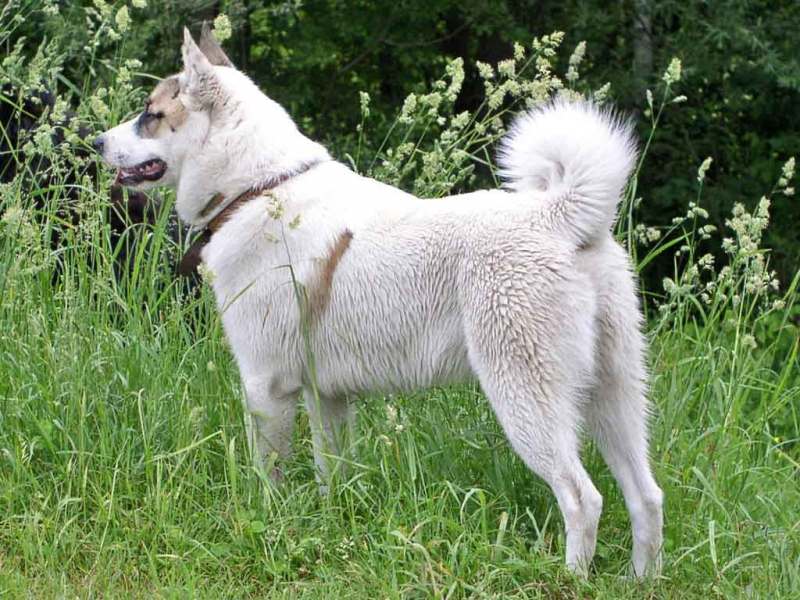
    It is a hunting dog of variable utility, but also shooting or for sledge. Is medium-sized, Slim and strong Constitution. Her bone structure is well developed, is not mass or rough. Muscle is strong and well developed. It has a strongly coiled tail, He takes her on the back or the back.

    Its fur is hard, short, with developed internal fluff. The outer layer is thick and straight. The internal fluff is abundant and dense hair's outer layer which gives a distant and leafy appearance. In the head, You ears and part of limb hair is short. On the cross, neck and back of legs the hair is longer than forming a collar in the region of the neck and a beard in the cheek area; the rear extremities presents some feathers.

    Is white, salt and pepper, Red or gray in all colors. Allow the color black, also spotted or with the same color plates.

    Strong similarity to the wolf

    With the often hairier males, it even produces a kind of mane. This feature is reminiscent of a wolf, with which the Laïka not only share the pointed and high ears, narrow wedge-shaped head and small oblique eyes, but also strong teeth and coat color, often similar to wolf.

    Assorted coat colors and a typical striped tail

    But, the colors of him West Siberian laika they are very diverse according to the wide area of ​​distribution of the breed and the large number of local traits, ranging from pure white to black, pepper and salt, the color of the wolf, reddish brown, grey, the pied or the spotted. characteristic of all races Russian Laika is the striking striped tail, worn both on the side and on the back.

    Character and skills

    Independent hunter and close ally.

    Like most hunting dogs, the West Siberian Laika also has some independence. Not only in hunting, but also as a watchdog, companion dog or sled dog, sometimes acts independently and autonomously. But, this does not mean that it cannot adapt to its humans. On the contrary: the Laïka feels closely connected to her reference person and always seeks their proximity. Even when hunting, never strays too far from his guide and makes sure each 20 or 30 minutes of hunter following.

    The intense relationship with humans allows him Laïka – despite its original roots – be used as a herding dog, protection, guard or shooting.

    Life in the family

    Once an owner has earned the trust of his Laïka, even the most demanding training goals can be achieved. It is important that the West Siberian Laika has a firm place in his "pack" from the beginning and is allowed to participate closely in the life of his people. In doing so, bonds closely with its "pack leader", but also shows himself as a patient and loving companion when dealing with other family members, especially with the children. If you socialize early and comprehensively, living with other dogs and pets usually works without problems.

    Activities «Laika of Western Siberia»

    Despite these characteristics, the West Siberian Laika is and remains primarily a working dog, for whom his “job” is as important as his people. A life as a pure domestic and family dog ​​certainly does not do justice to its nature.. Only if you can sufficiently demonstrate your stamina, agility, speed and intelligence, will present himself at home as a calm and balanced companion.

    The West Siberian Laika wants to be "needed" and, therefore, you should definitely be given a task that challenges you both physically and mentally. Owners who don't run their Laïka like the hunter he is, they must provide for sufficient substitute employment, for example, in sport form (Agility), training dog sport, runway and nose work or training as a rescue dog.

    Health «West Siberian Laika»

    Unlike many other dog breeds, which often developed rather by coincidence, Russian dogs already had very early exact ideas about the useful characteristics of this breed. The baby of him West Siberian Laika was soon put under strict controls and took place in central state approved breeding stations. In order to preserve the excellent qualities of hunting, officially organized tests were introduced. Dogs that did not meet the high usage requirements were systematically excluded from breeding..

    Healthy and robust working dogs

    Strict breeding requirements and tough selection led to the good hunting dog qualities and excellent sensory perceptions of dogs being preserved to this day. At the same time, high concentration on utility ensured that outward appearances became less of an affair. A breeding of pure beauty, that as the examples of other dog breeds show, often led to health problems, was avoided in the West Siberian Laika. Hereditary diseases typical of the breed, with which fashionable dogs often fight, are not known in this original breed. Even generalized joint diseases, such as dysplasia of the hip joint (HD), rarely occur in this Laïka.

    Nutrition «Laika de Siberia Occidental»

    Dog owners shouldn't change their diet too often either.. Although the West Siberian Laika is not very picky about his diet, the constant changes in the food plate could overload even his robust stomach. As a descendant of the wolf, dogs don't need many different foods to stay healthy. Unlike us humans, that we should have a diet as varied as possible and whose menu includes meat, fish and vegetables, as well as potatoes, noodles and other cereal products, dogs need meat above all. Both their teeth and their digestion are oriented to the processing of foods based on meat. Different types of meat and changing tastes are, by the way, desirable with respect to this main ingredient.

    Discover our selection of dog food.

    Pay attention to your dog's nutritional needs. Whether you feed your dog moist meat, dry, raw (BARF) or cooked, it is important that the quantity and content of the food meets the specific nutritional needs of your dog. These requirements depend on very individual criteria such as race, size, age, activity level and health status and may vary accordingly. If the composition is correct, a Laïka adult can get by on one or two meals a day. after feeding, the feeding bowl should be cleaned and should only be available again the next day or for the next meal. It is better to avoid snacking between meals or the constant administration of treats. But, fresh drinking water should always be available for your dog.

    Buying a West Siberian Laika

    With his healthy nature, robust and original, the West Siberian Laika satisfies many dog ​​lovers' desire for something "wild" in our modern, civilized everyday lives. And finally, but not less important, the wolf appearance of this breed fascinates people. This natural beauty, coupled with excellent hunting performance, made of him West Siberian laika one of the most popular dog breeds of the former Soviet Union already in 1960.

    How much does a “West Siberian Laika” puppy cost??

    In Europe, the Time to fall still rarely seen. So it is extremely difficult outside of Russia to get a purebred Laika from a proven breeding line.. Long, arduous roads and a comparatively high puppy price between 1.300 and 1.500 EUR are the rule. Even if you have found a suitable breeder after a long search, you may be advised not to buy a Laïka. Don't be surprised if during the first meeting you are asked very personal questions about your profession., their living conditions, your future plans and marital status. For committed and serious breeders, the welfare of dogs is, as a last resort, more important than financial benefit. After all, keeping such a demanding animal takes a long time, experience and space.

    People who are mainly attracted by the appearance and originality of this Laïka they must therefore carefully consider whether their living conditions and character really fit this breed. If in the end you are still convinced that the West Siberian Laika is the correct breed, You must prepare well for the purchase of the new "family member". Not only are you doing yourself a favor, but above all the dog, because this Laïka He demands all the attention of his handler and does not tolerate a change of owner very well..

    Care for the «West Siberian Laika»

    Although the West Siberian Laika he is a very robust dog, you need not only a healthy diet but also proper care to stay healthy and vital. Its hard and soft top layer repels dirt and water well, but you still need to brush regularly (about twice a week). During the change of coat, you Laïka should be brushed daily to remove dead hair and strands. In general, owners of this dog breed should not be bothered by dog ​​hair in the house, because although the West Siberian Laika he is basically a very clean dog, lose a lot of hair, that spreads across the sofa, the carpet and the floor. In addition to the toilet, the claws should be regularly shortened and the ears, teeth and feet should be checked and cleaned.

    Keeping

    Regarding the attention, the time required can be manageable, but the use of a Laïka alone takes a lot of time (free). Who chooses a West Siberian Laika should therefore not have to work full time. This human-oriented working dog is not cut out for long periods of solitude. As an original hunting dog needs a lot of career, an appropriate task and lots of contact with your reference person. A hatchery in a small town flat is, therefore, as unsuitable as a kennel. The Siberian breed dog feels more comfortable in a house with a large fenced garden, where you can be close to your humans at all times.

    No dog for beginners

    Also for the education of this Laïka a close relationship between dog and human is a basic requirement. If your dog trusts you, can trust your competence and sovereignty as “pack leader” and is assured of your closeness and love, will follow you willingly – despite its original roots as an independent hunting dog. But in order to reliably fulfill the role of a competent leader of the pack, technical knowledge is required, consistency and strength of character. The West Siberian Laika certainly not a beginner dog.

    Characteristics "West Siberian Laika"

    Coexistence is important that you have with your new friend. Before considering the acquisition of a dog of the breed "West Siberian Laika" you know certain factors. Not all breeds of dogs are apt to live in an apartment, you must take into account his character, their need for exercise, their interaction with other pets, their care and if you have small children, their level of tolerance towards them.

    Adaptation ⓘ

    2,0 of 5 stars (based on 1 review)

    friendly dog ​​ⓘ

    3,0 of 5 stars (based on 1 review)

    hair loss ⓘ

    5,0 of 5 stars (based on 1 review)

    Affection level ⓘ

    4,0 of 5 stars (based on 1 review)

    Need for exercise ⓘ

    5,0 of 5 stars (based on 1 review)

    Social need ⓘ

    4,0 of 5 stars (based on 1 review)

    Home ⓘ

    5,0 of 5 stars (based on 1 review)

    Toilet ⓘ

    3,0 of 5 stars (based on 1 review)

    Friendly with strangers ⓘ

    3,0 of 5 stars (based on 1 review)

    barking ⓘ

    5,0 of 5 stars (based on 1 review)

    Health ⓘ

    2,0 of 5 stars (based on 1 review)

    Territorial ⓘ

    4,0 of 5 stars (based on 1 review)

    Cat friendly ⓘ

    3,0 of 5 stars (based on 1 review)

    Intelligence ⓘ

    3,0 of 5 stars (based on 1 review)

    Versatility ⓘ

    4,0 of 5 stars (based on 1 review)

    Child friendly ⓘ

    3,0 of 5 stars (based on 1 review)

    Surveillance ⓘ

    4,0 of 5 stars (based on 1 review)

    joy ⓘ

    4,0 of 5 stars (based on 1 review)

    Images "West Siberian Laika"

    Photos:

    1 – «Laika de Siberia Occidental» by https://commons.wikimedia.org/wiki/File:West_Siberian_Laika.jpg
    2 – «Laika de Siberia Occidental» by ecured
    3 – Riga, Baltic Winner -2013, 9-10 Nov by Thomas / CC BY-SA
    4 – Riga, Baltic Winner -2013, 9-10 Nov by Thomas / CC BY-SA
    5 – First-generation (F1) wolf-dog hybrid from Wildlife Park Kadzidlowo, Poland (photos: A. Krzywinski) by Maris Hindrikson et al / CC BY
    6 – This is a 4 month old West Siberian Laika female pup. It is at this stage when a WSL pups unique natural hunting instincts become evident by Meribelles at English Wikipedia / CC BY-SA

    Videos "West Siberian Laika"

    Type and recognitions:

    • FCI CLASSIFICATION:
    • Group :
    • Section : . .

    Federations:

    • – FCI – Group 5 – Section 2 Nordic Hunting Dogs. ⓘ

    FCI breed standard "West Siberian Laika"

    Origin:
    Russia

    Date of publication of the valid original standard:
    13.10.2010.

    Use:

    Variable Utility Hunting Dog.


    General appearance:

    Medium to medium large dog, substantial with a strong and defined structure. The length of the body, measured from the sill to the buttock is slightly higher than the height measured from the withers to the floor. higher than the height measured from the withers to the floor.

    Clearly pronounced sexual dimorphism. Males are larger than females and clearly male. Well-developed muscles and strong bones.

    PROPIMPORTANT ORTIONS:

    The length of the body exceeds its height at the withers by 100 to 103-107%, in males and in 100 to 104-108% in females.

    Height at withers exceeds height at croup by 1-2 cm. (males) and is equal to or exceeds the height at the croup in 1 cm. (females). The length of the head considerably exceeds its width.

    The length of the muzzle is equal to or slightly less than half the length of the head.

    The length of the extremities from floor to elbow slightly exceeds half the height at the withers.


    Behavior / temperament:

    Lively, balanced temperament. A vigorous dog with a well-developed sense of smell to detect prey. A pronounced passion for hunting, alert, sensitive. He is just as enthusiastic about hunting birds as he is hunting wild animals. Confident and alert to strangers.

    Head:

    Thin, wedge shape, proportionate to the size of the dog. Its shape is similar to that of an equilateral triangle, view from above. The cranial region is moderately wide, lower in females than in males.

    Cranial region:
    • Craging: Elongate, obviously longer than wide. Seen from the front flat or slightly rounded. The nasal bridge is parallel to the top line of the skull. Sagittal crest and occiput well pronounced. The occipital area of ​​the skull is rounded. Superciliary arches slightly developed.
    • Dnaso-frontal depression (Stop): Slightly pronounced.

    facial region:

    • Trufa: Medium size, black. In white dogs a lighter color (Brown) of the truffle is tolerated.
    • Horcico: Moderately pointed widening in the mouth area. The length of the muzzle is half or slightly shorter than the
    • head length. Seen on side, muzzle is moderately wedge-shaped.
    • Labios: Tight.
    • Jaws / Teeth: Whites, large, strong, well developed, evenly placed without being overcrowded. Complete dentition according to dental formula (42 teeth), scissor bite.
    • Cheeks: Sharp cheek bones.
    • Ojors: Not big, Oval shaped, inclined, insert somewhat sunken (more than in the other Laika) with a determined and intelligent expression. The color of the eyes is dark brown or brown according to the color of the hair.
    • Obars: erect, high insertion, “V” shape with pointed edges, Mobile. Slightly developed pavilion.

    Neck:

    Muscular, dry and long. The length is equal to the length of the head. Oval. Neck insertion is approximately 45° – 55° from the horizontal line.

    Body:

    • Línand the top: Firm and solid, slight inclination from the withers to the insertion of the tail.
    • Cruz: Well pronounced, especially in males.Back: Strong, straight, well muscled, moderately wide.
    • Itmor: Short, moderately wide, well muscled with a slight arch.
    • Glikeness: Wide, moderately long, slight incline.
    • Pecho: Moderately deep, width (chest reaches elbow level), long, oval-shaped.
    • Línand the bottom / belly: Withdrawn; the lower line rises slightly from the chest to the abdominal cavity.

    Tail:

    Tightly coiled; carried on the back or hip. If it is fully stretched, it reaches the hock joint or it may be 1 – 2 shorter cm.

    Tips

    PREVIOUS MEMBERS:

    • ApGeneral arience: Seen straight ahead, placement moderately apart and parallel. Its height from the elbow to the floor is slightly higher than the height at the withers.
    • Hormbros: Long and well sloped.
    • Antarm: Long, placed obliquely, muscle. Good angulation between the scapula and the forearm.
    • Elbows: Well on the body, well developed elbow tips set back, parallel to the body axis.
    • Brazo: Long, straight, not rough, muscle, oval.
    • Metacarpus: Not long, slightly sloping viewed from the side. Dewclaws are unwanted.
    • Pinis previous: Oval, arched, fingers well together. Somewhat longer middle fingers.

    LATER MEMBERS: Muscular, strong with well defined angulations of all joints. Seen from behind the limbs are straight and parallel.

    • Thigh: Moderately long, oblique placement.
    • Knee: Well inclined.
    • PinScheme: Moderately long, oblique placement, no shorter than thigh.
    • Metatarsus: Vertical placement. Seen from the side a perpendicular line from the back of the thigh to the floor should fall just in front of the metatarsus. Dewclaws are unwanted.
    • Pinis later: Somewhat smaller than the previous ones. Oval, arched with fingers close together. Somewhat longer middle fingers.

    Movement:

    Libre, energetic. The typical movement is a short trot alternating with a gallop..

    Mantle

    PIEL: Thick and elastic with no folds or little subcutaneous tissue.

    • Plink: Bushy outer hair, hard and straight. Well developed undercoat, soft, thick and woolly. The hair on the head and ears is short and bushy.

    The hair on the shoulders and neck is longer than on the body forming a necklace. On the cheekbones it forms lateral whiskers. In males the hair on the withers is longer.

    Limbs covered with short hair, hard and bushy that is somewhat longer in the back of the forelimbs. The hair on the back of the hind legs forms pants without having feathers.

    There is a protective brush-like hair growth between the fingers. The tail is profusely covered with straight, hard hair that is somewhat longer at the bottom without forming feathers..

    • Colorr: Gray with reddish brown, red with reddish brown, grey, red, fawn and reddish brown in all shades. Pure white or particolor, that is to say, white with patches of any of the aforementioned colors similar to the base color.


    Size and weight:

    Alturto the cross:

    • Males: 55 – 62 cm..
    • females: 51 – 58 cm..


    Fouls:

    Any deviation from the aforementioned criteria is considered a fault and its severity is considered to the degree of deviation from the standard and its consequences on the health and well-being of the dog and the dog's ability to perform its traditional task..

    • Deviations of sexual dimorphism.
    • Slightly nervous or lack of confidence towards strangers
    • Absence of pronounced sagittal crest or occiput, roman nose
    • Light colored eyes.
    • Pale pigmentation of the truffle, lips or eyelid
    • Absence of teeth: absence of no more than 4 premolares considering PM1 & PM 2.
    • Pincer bite after 6 years of age.
    • Low ear insert, soft with a weak bearing, still
    • Horizontal Croup, levemente wolves
    • Right shoulders, elbows turned in or out
    • Chest with flat ribs, slightly sunken chest.
    • Flatfoot, open foot.
    • Stained (roano) in the same shade as the base color on the head and limb
    • Absence of undercoat, absence of collar and side whiskers (except for a natural change)
    • Restricted movement.
    • Exceeding the maximum height in + 2 cm in females, 2 cm below the minimum in males

    FALTAS GRAVES:

    • Obvious deviations of sexual dimorphism.
    • High excitability.
    • Males of female type, male type females.
    • Obesity or thinness.
    • Abrupt stop, snout with upturned nose, short snout, loose lips.
    • Lack of pigmentation in the nose, lips, eyelids.
    • Round eyes, horizontal placement, protruding, yellow eyes, loose eyelids
    • Absence of teeth, small, separate placement
    • Ears spread to the sides of the head, round tips, too big, overdeveloped pavilion.
    • Sunken back, back encarpado.
    • Long loin, Strait, sunken or arched, over built.
    • Sunken chest.
    • Tail that is too long or too short or does not touch the back or hips
    • Obvious feet this- West, pigeon foot or arched forehead. Low hocks
    • Posterior over angled or right, knees turned out, cow hock or narrow on the back.
    • Heavy movement, restricted, forced or prim.
    • Too long hair on the back of the forelegs, pronounced feather on thigh and tail.
    • Wavy, curly, soft or too long, hair parted on the back and on the cross.
    • Excessive staining (roano) in the same shade as the base color on the head and limbs.
    • Staining of a different color than the base color.
    • Black or black and white color.
    • Size deviation by more than +/- 2 cm.; height at withers less than height at croup.

    FALTAS DISQUALIFYING:

    • Aggressiveness or extreme shyness.
    • Any dog ​​showing clear signs of physical or behavioral abnormalities must be disqualified..
    • Wrong bite.
    • Twisted mouth.
    • Absence of 4 or more teeth, including PM 1 o M3. Incisor excess
    • Eyes gazeos, stained eyes.
    • Drooping or semi-dropping ears.
    • Feathered tail, otter tail, saber-shaped tail, muñón.
    • Hair too short or too long.
    • Brown genetic hair color, blue genetic, striped, albino.


    N.B.:
    • Males should have two normal-appearing testicles fully descended into the scrotum..
    • Only functionally and clinically healthy dogs, with the typical conformation of the breed, should be used for parenting.

    Source: F.C.I - International Cynological Federation

    Alternative names:

    1. WSL, Zapadno-Sibirskaïa Laïka (English).
    2. Zapadno-Sibirskaïa Laïka (French).
    3. Zapadno-Sibirskaïa Laïka (German).
    4. Zapadno-Sibirskaïa Laïka (Portuguese).
    5. Zapadno-Sibirskaïa Laïka (español).

    ▷ The world of Pets: Dogs, cats, birds, reptiles, amphibians

    East Siberian Laika
    Rusia FCI 305 - Nordic Hunting Dogs

    Laika de Siberia Oriental

    The East Siberian Laika it is popular in its native Russia not only as a hunting dog, but also as a draft and sled dog.

    Content

    History

    The home of this impressive and robust pedigree dog is -as its name implies- in the forested area of ​​Eastern Siberia, more precisely in the vast area between Yenisei and peninsula de Kamchatka.

    The East Siberian Laika was first mentioned by name in 1947, when the Cynology Congress of Alliances in the former Soviet Union established four breed standards for different Laikis (plural of Laïka). Besides him East Siberian Laika, these other races like the West Siberian Laika and the Russo-European Laika, have been somewhat better known, just like him Yakutian Laika and the Siberian Husky, so this breed was not yet recognized by the FCI.

    Ancestors of the East Siberian Laika:

    Hunting and sled dogs of the high arctic

    It is assumed that the history of the ancestors of the Laïka goes way back. The origin of the Laika rousso dates back to the sleds and hunting dogs of the high arctic. The East Siberian Laika, as described in today's breed standard, was created by crossing Ewenkish, Lamutsker, Amur and other races of Laïka. The main focus of the breeding efforts was training their hunting skills. A natural hunting instinct, courage and a lively temperament, as well as excellent sensory perceptions, a particularly good sense of smell and orientation should characterize the offspring.

    In his native Russia, the East Siberian Laika mainly used for squirrel hunting, martens and feather hunting. But it is also appreciated as a draft and sled dog. By the way, "He is not related to the dog."Laïka«, who became world famous as the first dog in space. This bitch was probably a mix of Husky and Terrier.

    Physical characteristics

    With a height at the cross of 53 to 65 cm el East Siberian Laika belongs to the medium and large breeds. His muscular body and strong physique quickly give an impression of the stocky build of this wolfhound.. From the harsh climate of its native Siberia, the hard hairs on its coat and the dense and soft undercoat protect. On the neck and shoulders the abundant coat forms the typical collar of the Laïka. Males, where the fur at the withers is even more abundant, They also stand out for a kind of mane.

    Many color variations

    Regarding its fur, many different variations possible. So black tones are possible, White, grey, reddish, colored fox and colored wolf. Variations of pied or spotted according to the Russian standard and the FCI.

    Other distinctive features of the East Siberian Laika are the ears standing, placed laterally and the tail rolled.

    Character and skills

    The Russian word «lajatj» (layat), from which the racial name is derivedLaika«, means "bark". And in fact, loud barking is a fundamental characteristic of this Russian hunting dog. Like a so-called poking dog, finds its prey on its own and keeps it in control with its distinctive barks until the hunter arrives and is able to kill the prey. He is very self-confident and courageous and proves to be an independent worker., robust and persevering while hunting. Unlike other breeds of hunting dogs, as the Gray Norwegian Elkhound, the East Siberian Laika never strays too far from its controller. Each 20 or 30 minutes he looks for contact with him and makes sure he continues his search.

    Independent hunter and trusted companion

    In combination with your intelligence, his lively temperament and physical strength, This close “leader bond” allows it to be used in many different ways.. Like this, the East Siberian Laika it is popular in its native Russia not only as a hunting dog, but also as a draft and sled dog, as a companion dog and guard dog. Despite its independence, the East Siberian Laika shows himself within his family as a balanced and confident companion, that enjoys the most of the caresses of its humans. In contact with children the proud Laïka is playful and considerate. Due to its original behavior, However, children should only be allowed to play with the strong dog under supervision.

    Not a beginner dog

    Despite his balanced nature and basically friendly nature, the East Siberian Laika a dog is not for beginners. Your innate hunting instinct, its great independence as well as its pronounced need for movement would quickly overwhelm inexperienced owners. So, the keeping of this breed should be reserved to specialists who have experience in dealing with similar breeds and who know how to educate and train such an original dog.

    Health and typical diseases of the East Siberian Laika

    The owners of a East Siberian Laika they don't have to fear high bills for veterinary expenses. The breed is considered extremely robust and healthy. The typical diseases of the breed are hardly known. But, as with all big dogs, breeders and owners should pay attention to healthy hip development. Later diseases of hip or elbow dysplasia (HD o ED), that are often hereditary, but which are also the result of improper maintenance and feeding.

    Nutrition of the East Siberian Laika

    As in humans, nutrition plays a decisive role in the healthy development of the dog. Although the East Siberian Laika it is considered very robust and healthy by nature, for this to continue, you need a balanced diet that provides you with all the essential nutrients in the right composition. As a descendant of the wolf, the Laïka also needs mostly meat. But just like the wolf, that also eats all the prey including the stomach contents, hair and bones, the dog must also get vegetables, rice, fruit (and bones) additional.

    It depends on the proper ratio

    When preparing food, attention should be paid to the correct ratio of food and the respective nutrients. An excess of certain vitamins and minerals can be just as harmful as a deficiency. If you want to be sure of exactly what your dog needs, you can ask the vet for a detailed diet plan. This plan takes into account not only age, the weight and sex of the breed, but also activity levels, the accommodation conditions and the health status of each dog.

    Caring for the East Siberian Laika

    The East Siberian Laika is not very demanding not only in terms of food but also in terms of attention. Coarse and soft hair repels dirt well and only needs a brush two to three times a week. During this process, dead hair is removed and coarse dirt is brushed. The East Siberian Laika rarely need a bath – and only if the dirt cannot be combed in another way. Dog shampoo should also be used sparingly to prevent stretching of the skin's natural protective layer..

    Fitness to have with an East Siberian Laika

    Like all races of Laïka, the East Siberian Laika was bred primarily as a working and utility dog. Since its origin, it is used to working hard and independently and to moving freely in nature.. An attitude as a house and companion dog would contradict his nature and certainly would not do justice to this demanding dog.. Who wants to keep him Laïka in the city despite everything, you have to make sure you don't just exercise a lot, but also a suitable occupation that challenges and satisfies you not only physically but also mentally.

    Is the Laika suitable for dog sport?

    For dog sports, This Laïka is suitable only conditionally. Like a hunting dog, you still attach great importance to your independence. Although proximity to his humans is important to him, maintains its independence. One should not expect blind obedience or a pronounced "willingness to please" from a true Laïka, like the one brought by many other breeds of domestic dogs. But, with his strong body and agile movements, naturally brings good conditions for use in the dog sports field.

    Closeness and trust from the beginning

    Whether hunting dog, sledge dog, dog shooting, watchdog or companion dog only: the East Siberian Laika is a demanding four-legged friend, requiring a lot of exercise and activity. But, do not forget that he also likes to be close to his humans. A pure kennel attitude does not do this breed justice. One Laïka must be firmly integrated into the family from the beginning and experience a lot of contact with their humans and other animals. If you build a close relationship of trust and socialize your Laïka comprehensively already in the puppy stage, will experience the original pedigree dog, despite its roots, as a very balanced and loving partner, for whom extensive fondling is almost as important as independent work.

    Buying an East Siberian Laika

    If you are interested in a purchase of a East Siberian Laika outside russia, you will probably have a hard time finding a breeder near you. But, When in doubt it is worth the long drive to Russia to meet and understand this Laïka in its natural environment. After all, the East Siberian Laika It is not a dog that you should buy as a companion dog "just like that". Plus plenty of time and space to get out, its maintenance and education requires a lot of knowledge, patience and assertiveness. Compared to other dog breeds, This Laïka has a hard time asserting himself as an apartment dog. But, who is convinced that a East Siberian Laika is the right dog and whoever is looking for a purebred dog, you have to accept long roads and long waiting periods for a puppy. The costs, just for the purchase of the puppy, they are with this breed some 1.300 to 1.500 EUR.

    Characteristics "East Siberian Laika"

    Coexistence is important that you have with your new friend. Before considering the acquisition of a dog of the breed "East Siberian Laika" you know certain factors. Not all breeds of dogs are apt to live in an apartment, you must take into account his character, their need for exercise, their interaction with other pets, their care and if you have small children, their level of tolerance towards them.

    Adaptation ⓘ

    2,0 of 5 stars (based on 1 review)

    friendly dog ​​ⓘ

    3,0 of 5 stars (based on 1 review)

    hair loss ⓘ

    4,0 of 5 stars (based on 1 review)

    Affection level ⓘ

    4,0 of 5 stars (based on 1 review)

    Need for exercise ⓘ

    5,0 of 5 stars (based on 1 review)

    Social need ⓘ

    4,0 of 5 stars (based on 1 review)

    Home ⓘ

    5,0 of 5 stars (based on 1 review)

    Toilet ⓘ

    3,0 of 5 stars (based on 1 review)

    Friendly with strangers ⓘ

    4,0 of 5 stars (based on 1 review)

    barking ⓘ

    5,0 of 5 stars (based on 1 review)

    Health ⓘ

    2,0 of 5 stars (based on 1 review)

    Territorial ⓘ

    5,0 of 5 stars (based on 1 review)

    Cat friendly ⓘ

    2,0 of 5 stars (based on 1 review)

    Intelligence ⓘ

    3,0 of 5 stars (based on 1 review)

    Versatility ⓘ

    3,0 of 5 stars (based on 1 review)

    Child friendly ⓘ

    3,0 of 5 stars (based on 1 review)

    Surveillance ⓘ

    4,0 of 5 stars (based on 1 review)

    joy ⓘ

    5,0 of 5 stars (based on 1 review)

    Images "East Siberian Laika"

    Photos:

    1 – East Siberian Laika, young dog. The picture was taken by PrzemekL during World Dog Show 2006 in Poznan. by No machine-readable author provided. PrzemekL assumed (based on copyright claims). / Public domain
    2 – East siberian laika by Myrtle / CC BY-SA
    3 – East Siberian Laika, bitch. The picture was taken by PrzemekL during World Dog Show 2006 in Poznań by No machine-readable author provided. PrzemekL assumed (based on copyright claims). / Public domain
    4 – East Siberian Laika agouti by Canarian / CC BY-SA
    5 – East Siberian Laika fawn & white by Canarian / CC BY-SA
    6 – East Siberian Laika Sable & white, head profile by Canarian / CC BY-SA

    Videos "East Siberian Laika"

    Type and recognitions:

    • FCI CLASSIFICATION:
    • Group :
    • Section : . .

    Federations:

    • – FCI – Group 5 – Section 2 Nordic Hunting Dogs. ⓘ

    FCI breed standard "East Siberian Laika"

    Origin:
    Russia

    Date of publication of the valid original standard:
    13.10.2010.

    Use:

    Hunting dog for multiple uses.


    General appearance:

    Medium-sized dog with a strong and compact build. The length of the body, from the sill to the ischium is slightly higher than its height at the withers. The head is rather big and strong.

    Well developed muscles. Strong bone structure, more powerful in males than in females. Clearly pronounced sexual dimorphism.

    IMPORTANT PROPORTIONS:

    • Males usually rectangular to rectangular, somewhat longer females.
    • Format index (height / long)
    • Males: 100/104-109
    • females: 100/106-111
    • Height at withers exceeds height at withers by 1-2 cm. (males) either equals or exceeds the height at the croup in 1 cm. (females). The length of the muzzle is slightly less than half the length of the head.
    • The height from the floor to the elbow is equal to half the height at the withers.


    Behavior / temperament:

    Lively, balanced temperament. A vigorous dog with a well-developed sense of smell for detecting prey and a pronounced passion for hunting., especially large prey. Very independent while hunting. Friendly, kind and trusting towards people.

    Head:

    Strong, rather large in proportion to the body, wedge shape, forming an equilateral triangle viewed from above. The cranial region is relatively wide, especially in males.

    Cranial region:
    • Skull: The length of the skull is slightly greater than its width. Superciliary arches only slightly developed, sagittal crest and occiput well pronounced.
    • Depression links (Stop): Gradual and moderately pronounced.

    facial region:

    • Nose: Medium size black. In white and fawn dogs a brown nose is tolerated.
    • Snout: The length of the muzzle is slightly less than the length of the skull. Viewed from the side the muzzle is wedge-shaped, moderately blunt.
    • Lips: Moderately tight but not pendulous.
    • Jaws / Teeth: White teeth, large, strong, well developed and evenly positioned. Full dentition (42 teeth) according to the dental formula, scissor bite.
    • Cheeks: Pronounced but not exaggerated cheek bones.
    • Eyes: Medium size, Oval shaped, inclined, never sunken or protruding with a truthful and friendly expression. The eyes are dark brown or in shades of brown according to the color of the hair.
    • Ears: erect, Mobile, “V” shape with pointed or slightly rounded edges. Well spaced placement at eye level. Slightly developed pavilion. Inside of the ears well covered with hair.

    Neck:

    Muscular, dry, round or slightly oval across. The length is equal to that of the head or a little less. The neck is inserted at an angle of approximately 40° to 50° from the horizontal.

    Body:

    • top line: Firm and straight leaning from the withers towards the insertion of the tail.
    • Cross: Well developed, pronounced, especially in males, rising above the top line in 1 – 2 cm., moderately developed in females.
    • Back: Right, strong, well muscled, moderately wide.
    • Pork loin: Short, moderately wide, well muscled and slightly prominent,
    • Rump: Wide, slightly tilted, relatively long.
    • Breast : Width, deep (chest reaches the tips of the elbows or 1-2 cm below, especially in males), long, oval transversely.
    • Bottom line and belly: Withdrawn, the lower line from the chest to the abdominal cavity is slightly raised.

    Tail:

    Coiled or sickle-shaped with bearing on the back. A sickle-shaped tail is acceptable without touching the back or semi-erect. When fully stretched it reaches the hock joint or 1-2 shorter cm.

    Tips

    PREVIOUS MEMBERS: Slender and muscular limbs, seen from the front are straight, moderately separated and parallel. Its height from elbow to floor is equal to half the height at the withers.

    • Shoulder: The scapulae are long, muscular and moderately inclined.
    • Forearm: Long, moderately oblique, muscle. The angle between the scapula and the forearm is well pronounced.
    • Elbows: Well on the body; well-developed elbow tips positioned parallel to the axis of the body.
    • Arm: Straight, dry, muscle, round, viewed from the front moderately separated and parallel.
    • Metacarpus: Not long, slightly inclined viewed from the side.
    • Previous feet: Round or slightly oval, arched with fingers close together.

    LATER MEMBERS:

    • General appearance: Muscular with well defined angulations of all joints. Seen from behind the limbs are straight and parallel.
    • Thigh: Moderately long, placed slightly oblique.
    • Knee: Well angled.
    • Leg: Long, laid oblique, no shorter than thigh.
    • Metatarsus: Placed almost vertical. Seen on side, a perpendicular line from the back of the thigh to the floor falls tightly together in front of the hock, the slightly separated from this.
    • Hind feet: Round or slightly oval, fingers arched and tight together. The hind foot is slightly smaller than the fore foot.

    Movement:

    Free movement. The typical movement is a long range trot, alternating with a gallop or walking step.

    Mantle

    SKIN: Sufficiently thick and elastic, no folds or subcutaneous tissue.

    • Fur: Hard and straight outer hair. Well developed undercoat, soft, thick and woolly. Hair on head and ears is bushy, short and bright. The hair on the shoulders and neck is longer than on the body forming a collar. On the cheekbones it forms lateral whiskers. In males the hair on the withers is longer.
      • The limbs are covered with short hair, hard and bushy that is only slightly longer on the back of the forelegs. The hair on the back of the hind legs forms pants without having feathers.
      • There is a protective brush-like hair growth between the fingers. The tail is profusely covered with straight, hard hair that is somewhat longer at the bottom without forming feathers..
    • Color: The most typical colors are black and tan, black, black and white, white and white with spots. Slight staining in the base color tones are allowed on the extremities.


    Size and weight:

    • Males: 57 – 64 cm..
    • females: 53 – 60 cm..


    Fouls:

    Any deviation from the aforementioned criteria is considered a fault and its severity is considered to the degree of deviation from the standard and its consequences on the health and well-being of the dog and the dog's ability to perform its traditional task..

    • Deviations of sexual characteristics.
    • Prominent foreface or pointed snout.
    • Partial absence of pigmentation on the nose, lips and eyelids.
    • Pale pigmented nose.
    • Absence of no more than 4 premolars PM1 – PM 2.
    • Pincer bite after 6 years of age.
    • Small teeth set apart.
    • Light or amber eyes in dogs with a completely black coat.
    • big ears, low insertion, weak bearing, insufficient hair inside.
    • Neck too oval.
    • Weak or hooded back.
    • Long loin, straight, arched back.
    • horizontal or upright group.
    • Chest with flat ribs, Strait, absence of sill, shallow.
    • Right shoulders, curved forelimbs, elbows turned in or out.
    • Right or weak pasterns.
    • East-west feet, feet with dove toes.
    • Hind limbs slightly lacking correct angulation, cow hock.
    • Spread or weak feet, insufficient hair development between the fingers.
    • Spurs on hind limbs
    • Restricted movement.
    • Color spots in the same hue as the base color on the body and head

    SERIOUS FAULTS:

    • Obvious deviations from sexual characteristics.
    • Slight intolerance towards people.
    • Obese or thin.
    • Rough head.
    • Short snout, pointed.
    • Stop very deep or difficult to see
    • Absence of more than 4 premolars, including PM 1 & PM 2.
    • Round, bulging eyes.
    • Ears with round tips, overdeveloped pavilion.
    • Square body.
    • Over built.
    • Light bones.
    • Hind limbs over angled or right.
    • Narrow back, knees or hocks turned outward.
    • Heavy movement, irregular or pasuqueo.
    • Wrinkled skin, loose.
    • Long hair on the back of the forelimbs and pronounced feathers on the back of the thigh and tail.
    • Wavy Cloak, curly or too long, hair parted in the middle of the back and withers during the molt.
    • Splashed on the body that does not have the hue of the base color.
    • Size deviation by plus or minus 2 cm..

    FALTAS DESCALIFICANTES:

    • Aggressiveness or extreme shyness.
    • Any dog ​​showing clear signs of physical or behavioral abnormalities must be disqualified..
    • Wrong bite.
    • Twisted mouth.
    • Absence of 4 or any more teeth, including PM 1, PM 2 o M 3, excess incisor.
    • Eyes gazeos, spotted eyes.
    • Broken or semi-broken ears.
    • Stump tail.
    • Hair too short or too long, absence of undercoat.
    • Coat color that is genetic brown, blue genetic, tabby or albino.


    N.B.:
    • Males should have two normal-appearing testicles fully descended into the scrotum..
    • Only functionally and clinically healthy dogs, with the typical conformation of the breed, should be used for parenting.

    Source: F.C.I - International Cynological Federation

    Alternative names:

    1. Vostotchno-Sibirskaia Laika (English).
    2. Vostotchno-Sibirskaia Laika (French).
    3. Vostotchno-Sibirskaia Laika (German).
    4. (em russo: Восточносибирская лайка) (Portuguese).
    5. Vostotchno-Sibirskaia Laika (español).

    ▷ The world of Pets: Dogs, cats, birds, reptiles, amphibians

    Volpino Italiano
    Francia FCI 195 - European Spitz

    Volpino Italiano

    Despite the temperament of Volpino Italiano, and its small size, It is a very committed and energetic dog. Cheerful and playful and very attached to their masters.

    Content

    History

    The Volpino Italiano (that means little Fox, in Italian) It is a dog of very ancient origins., as the strain that belongs to the Spitz. It was a very widespread breed of dog in the Renaissance in which appears in some of the representations of the period. Unfortunately, the race, in 1965 was in danger of extinction (The Italian Club Cinológico, only five copies that year), and for a short time, recovering numerical and qualitative.

    The Volpino, It has been recognized and loved by Italian royalty for centuries, being a favorite especially of women.

    Even bearing a strong resemblance with the Pomeranian, the breed is much older and thus has a different historical background. Northern dogs found their way South very early in the history of domestic dogs.

    The Italian word for wolf is lupo, and the Keeshond it is called so much Lupino and Volpino in Italian. Volpe, means Fox in Italian, from there "Volpino" what, to say, little Fox in Italian. Despite its long history, the Volpino is unknown outside of Italy and is now rare, even in his homeland..

    Despite its small size, This dog was originally as a watchdog. Its function was to alert the Mastiffs (Big Dogs) the presence of an intruder. But, due to his lovely temper and great intelligence, as well, they became very popular as pets, companion dogs.

    For unknown reasons the popularity of the breed fell in 1965. In 1984 an attempt was made to revive the race. Y, currently, can see the race Volpino living as guard dogs on breeding farms, or as a companion dog, but still the Volpino they are considered a rare breed, position that there are only about 2000 copies to the length and breadth of the world.
    Most of the Volpinos, it is found in Italy but some people are breeding them in Scandinavian countries, in the United Kingdom and the United States.UU.

    Physical characteristics

    The Volpino Italiano it is a small but compact dog with a harmonious physique. Can grow up to 30 cm tall and weigh 5 kg. His long, silky coat is soft and lined with a dense undercoat. It can be white, red, brown or black. There are also champagne colored animals, but they are not very popular in breeding.

    Character and skills

    The Volpino Italiano has a very individual character, which means that even as a puppy you need a lot of patience and enough consistency in your upbringing. Due to its high intelligence it is very teachable and therefore very good for training. Has a very lively temperament, is curious and therefore available for all kinds of fun. So, is particularly suitable for any type of dog sport and needs sufficient mental and physical activity.

    In the family it is a very affectionate dog, loving and vigilant. Has a natural distrust of strangers.
    It is an ideal dog for the family and its character also makes it very suitable to live with children.

    With it you can spend a lot of time in nature. Despite its size, the Volpino Italiano it is a very robust dog that is not deterred by the rain, snow and cold to do your daily need for exercise.

    Volpino care

    The puppy's coat requires a lot of care: should not only be brushed regularly, but also bathed from time to time.

    Esperanza de vida of «Volpino Italiano»

    The «Volpino Italiano», which originally descends from German Spitz, he is a very robust dog, which can have a high life expectancy of up to 15 years.

    Typical diseases «Italian Volpino»

    Also in terms of health, the Volpino he is a very robust dog, who does not have any common hereditary disease.
    In rare cases the breed is affected by an eye disease, which can happen especially in old age. May lead to lens shift of the eye, what can lead to glaucoma.

    Characteristics "Volpino Italiano"

    Coexistence is important that you have with your new friend. Before considering the acquisition of a dog of the breed "Volpino Italiano" you know certain factors. Not all breeds of dogs are apt to live in an apartment, you must take into account his character, their need for exercise, their interaction with other pets, their care and if you have small children, their level of tolerance towards them.

    Adaptation ⓘ

    3,0 of 5 stars (based on 1 review)

    friendly dog ​​ⓘ

    3,0 of 5 stars (based on 1 review)

    hair loss ⓘ

    3,0 of 5 stars (based on 1 review)

    Affection level ⓘ

    4,0 of 5 stars (based on 1 review)

    Need for exercise ⓘ

    2,0 of 5 stars (based on 1 review)

    Social need ⓘ

    3,0 of 5 stars (based on 1 review)

    Home ⓘ

    3,0 of 5 stars (based on 1 review)

    Toilet ⓘ

    4,0 of 5 stars (based on 1 review)

    Friendly with strangers ⓘ

    3,0 of 5 stars (based on 1 review)

    barking ⓘ

    4,0 of 5 stars (based on 1 review)

    Health ⓘ

    4,0 of 5 stars (based on 1 review)

    Territorial ⓘ

    4,0 of 5 stars (based on 1 review)

    Cat friendly ⓘ

    3,0 of 5 stars (based on 1 review)

    Intelligence ⓘ

    4,0 of 5 stars (based on 1 review)

    Versatility ⓘ

    3,0 of 5 stars (based on 1 review)

    Child friendly ⓘ

    4,0 of 5 stars (based on 1 review)

    Surveillance ⓘ

    3,0 of 5 stars (based on 1 review)

    joy ⓘ

    4,0 of 5 stars (based on 1 review)

    Images "Volpino Italiano"

    Photos:

    1 – Volpino Międzynarodowa Wystawa Psów Rasowych w Katowicach 28 – 30. 03.2008 by Lilly Mreal name: Małgorzata Miłaszewska / CC BY-SA
    2 – Volpino Italiano by https://pxhere.com/es/photo/833618
    3 – Volpino Italiano by https://pxhere.com/es/photo/1428909
    4 – Volpino Italiano by https://pxhere.com/es/photo/863623
    5 – Volpino Italiano by https://pxhere.com/es/photo/1273902
    6 – Volpino Italiano owned by Kennel Hedehuset – Denmark by © Mete Appel / Kennel Hedehuset

    Videos "Volpino Italiano"

    youtube.com/watch?v=BlqMM99OREA

    «Volpino Italiano» – Breed of dog

    youtube.com/watch?v=Ot3uyndzOAI

    «Volpino Italiano» Dog Breed – Facts and Information

    Type and recognitions:

    • FCI CLASSIFICATION:
    • Group :
    • Section : . .

    Federations:

    • – FCI – Group 5 – Section 4 European Spitz. ⓘ

    FCI breed standard "Volpino Italiano"

    Origin:
    Italy

    Date of publication of the valid original standard:
    9.06.1999

    Use:

    Guard and companion dog.


    General appearance:

    This is a small format Spitz, very compact, harmonious and covered with long, bristly hair.

    IMPORTANT PROPORTIONS: It has a square shape; The length of the head reaches almost 4/10 of body length.


    Behavior / temperament:

    He is very attached to his environment and the people he knows well.. His temperament is very marked, jovial, lively and mischievous.

    Head:

    It has a pyramidal shape. Its length reaches 4/10 the height at the withers.

    Cranial region:
    • Skull : Its length exceeds that of the snout (6,5/5), its bizygomatic width is greater than half the length of the head (7,3/11,5). It is more or less ovoid in shape, both in the sagittal sense, as in the transversal. The mid-frontal sulcus is not very marked, as well as the occipital protuberance. The upper axes of the skull and snout are slightly convergent. The bones protruding from the forehead are well developed and fall almost perpendicularly on the root of the nasal cannula..
    • Depression links (stop) : It is rather accentuated.

    facial region:

    • Truffle : It's humid, fresh, with the windows wide open. Profile view, It is located on the same line as the nasal cannula., and does not exceed the anterior line of the lips. Its color is always black, both in the white-furred specimens, as in those with red fur.
    • Snout : Pointed. Its length is less than that of the skull and its lateral faces are convergent.. The nasal cannula is rectilinear. In profile, the lower edge of the snout is determined by the jaw.
    • Lips : Seen from the front, the upper lip draws a straight line on its lower edge. In the corner, the mucosa is not visible, so that, the lips are very short. The edges of the lips are pigmented black.
    • Jaws / Teeth : The jaws are not strong in appearance, but they are normally developed and adapt perfectly due to their anterior edge. Its branches are rectilinear. The teeth are white, are regularly aligned and complete. They are perfectly developed. The joint is in the form of scissors, but the pincer-shaped joint is accepted.
    • Eyes : They are normal size and open wide. They denote vigilance and liveliness. The palpebral opening is rounded; They are placed in planes that form a wide open angle behind.
      The eyelids join perfectly against the eyeball. The iris is dark ocher in color and the edges of the eyelids are pigmented black..
    • Ears : Short, form triangular, upright. The cartilage is rigid. The inner surface of the ears faces forward. Set high and very close to each other. The length of the ears reaches approximately half the length of the head.

    Neck:

    Its length is almost equal to that of the head. His bearing is always high. Your skin is well attached to the underlying tissues.

    Body:

    It has a square shape. Its longitude, measured from the tip of the shoulder, even the gluteus, is equal to the height at the withers.

    • top line : The dorsal line is straight; in the region of the back it is slightly convex.
    • Cross : It protrudes slightly above the line of the back.
    • Rump : Extends the line of the spine. Its obliquity, from the hip to the base of the tail, is 10° below the horizontal.
    • Breast : Come down to the level of the elbows. The ribs are tight. The sternal region is long.
    • bottom line : From the sternum to the belly there is little ascending. The depth of the flanks is not very pronounced.

    Tail:

    It is located in the extension of the rump, always curled up on the back. Its length is somewhat less than the height at the withers.

    Tips

    PREVIOUS MEMBERS : Seen in conjunction, They are parallel and vertical to each other and, in relation to the median plane of the body, they are perfectly parallel.

    • Shoulder : The length of the shoulder blade is equal to ¼ of the height at the withers. Its obliquity below the horizontal is 60°.
    • Arm : It is longer than the scapula and its obliquity below the horizontal is 60°. Appears approximately parallel to the median plane of the body.
    • Elbows : They are parallel to the median plane of the body.Forearm : Extend the vertical line. It is light boned. Its longitude, measured from the ground to the elbow, It is slightly more than half the height at the withers.
    • Carpus and metacarpus : Seen from the front, extend the vertical line of the forearm. Seen in profile, they are oblique.
    • Front feet : They are oval in shape and the fingers are well together.. The central and digital pads, as well as nails, they are black.

    LATER MEMBERS : As a whole and seen from behind, They must follow a perfectly vertical line from the tip of the gluteus to the ground. They are parallel to each other.

    • Thigh : Its length is equal to 1/3 the height at the withers. It is perfectly parallel to the median plane of the body.
    • Leg : Its length is slightly less than the thigh. It is made of light bones and its obliquity below the horizontal is 55 a 60°.
    • Hock : The distance between the tip of the hock and the ground slightly exceeds ¼ of the height at the withers.
    • Metatarsus : It is vertical and, seen both in profile and from behind, his poise is perfect.
    • Rear feet : Oval, like the front feet and with the same characteristics.

    Movement:

    It should not be in jumps, not even during the jog, not even during the gallop. All movements must be with wide steps.

    Mantle

    SKIN : It is well applied and stretched, no appearance of slackness in any part of the body.

    HAIR : Bushy, very long, straight and bristly in an exceptional way. It is stiff and rough in texture; should never be straight. Even if it is not very abundant, should always be bristly. The trunk gives the impression of being wrapped in a sleeve, particularly on the neck, where the hair forms a wide collar. The head is covered by semi-long hair that hides the base of the ears..
    The hair that covers the muzzle is short. Above the ears the hair is very fine and thin.. The tail is provided with very long hair. On the posterior edges of the limbs the hair forms a fringe.

    COLOR :

    • Solid white.
    • Solid red
    • Champagne, accepted color, but not desirable. A pale orange tone is acceptable over the ears., But this is still an imperfection..


    Size and weight:

    Height to the cross :

    • Of 27 to 30 cm in males.
    • Of 25 to 28 cm in females.


    Fouls:

    Any deviation from the aforementioned criteria is considered as a fault and the severity of this is considered to the degree of the deviation to the standard and its consequences on the health and well-being of the dog..

    MISS PLAYOFFS :

    • Nose of any color other than black.
    • Convex nasal canal.
    • Different colored eyes.
    • Tail that falls between the hind limbs.
    • Size that exceeds by more than 3 cm the limits established by the standard.

    DISQUALIFICATION FAULTS:

    • Aggressive or fearful dog.
    • Divergence of the craniofacial axes.
    • Superior prognathism.
    • Total depigmentation of the nose or the edges of the eyelids.
    • Fully hanging ears.
    • No queue, or very short tail, either congenital or artificial.
    • Any color other than white, red, or the color champagne (although it is not the most desirable).
    • Red spots on a white background and white or black spots on a red background.
    Any dog ​​showing clear signs of physical or behavioral abnormalities must be disqualified..


    N.B.:

    Males should have two normal-appearing testicles fully descended into the scrotum..

    Source: F.C.I - International Cynological Federation

    Alternative names:

    1. Volpino, Cane del Quirinale, Cane di Firenze (English).
    2. Volino (French).
    3. Italienischer volpino (German).
    4. Volpino italiano (Portuguese).
    5. Zorrito italiano, volpino (español).