The Dutch bulldog It is a friendly and affectionate dog with other dogs and with people.
Adaptation ⓘ
5,0 of 5 stars (based on 1 review)
|
friendly dog ⓘ
5,0 of 5 stars (based on 1 review)
|
hair loss ⓘ
4,0 of 5 stars (based on 1 review)
|
Affection level ⓘ
5,0 of 5 stars (based on 1 review)
|
Need for exercise ⓘ
1,0 of 5 stars (based on 1 review)
|
Social need ⓘ
5,0 of 5 stars (based on 1 review)
|
Home ⓘ
5,0 of 5 stars (based on 1 review)
|
Toilet ⓘ
1,0 of 5 stars (based on 1 review)
|
Friendly with strangers ⓘ
5,0 of 5 stars (based on 1 review)
|
barking ⓘ
3,0 of 5 stars (based on 1 review)
|
Health ⓘ
5,0 of 5 stars (based on 1 review)
|
Territorial ⓘ
4,0 of 5 stars (based on 1 review)
|
Cat friendly ⓘ
5,0 of 5 stars (based on 1 review)
|
Intelligence ⓘ
3,0 of 5 stars (based on 1 review)
|
Versatility ⓘ
3,0 of 5 stars (based on 1 review)
|
Child friendly ⓘ
4,0 of 5 stars (based on 1 review)
|
Surveillance ⓘ
3,0 of 5 stars (based on 1 review)
|
joy ⓘ
4,0 of 5 stars (based on 1 review)
|
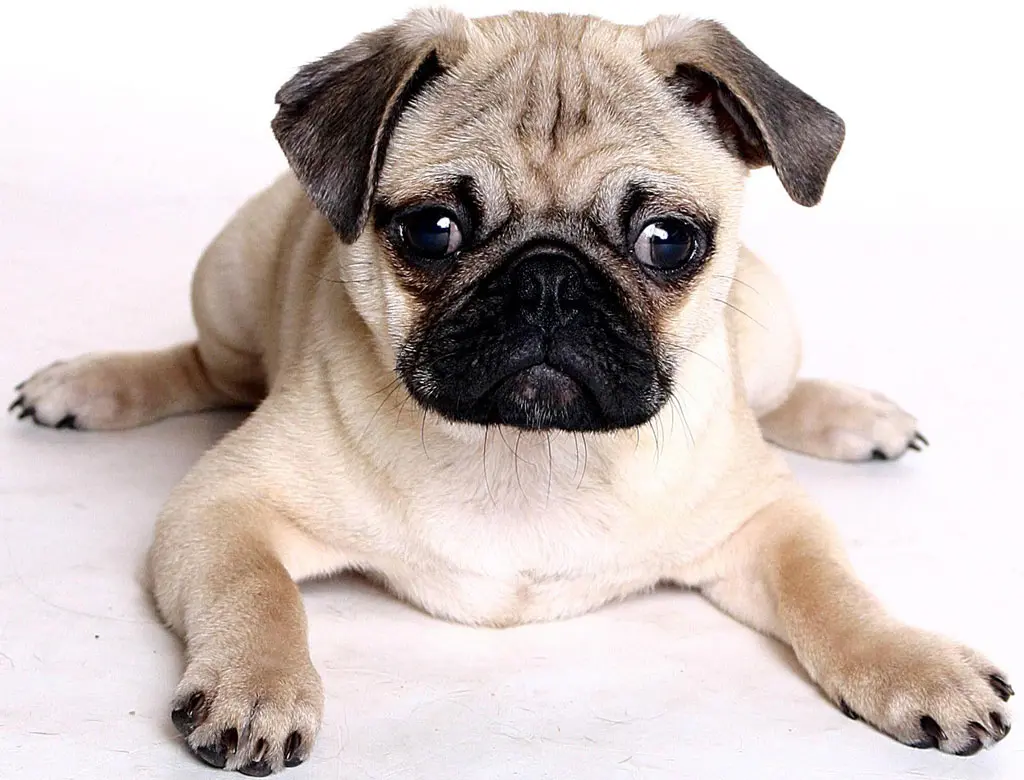
The Dutch bulldog (also known as Chinese Carlino, Mops, Carlinogu) is a breed of dog miniature with wrinkled face and a body of small to medium-sized, originating in China.
This breed is often summed up as “multum en parvo” (much in little), describing the personality of the Dutch bulldog related to its small size.
The word "Pug" may come from Old English Carlinog, it is an affectionate adjective it would be something like a little playful demon or monkey. Carlin puppies are called Carlinolets.
The breed of dog Dutch bulldog, has very ancient origins. It was raised and selected in China, country where he was the favorite dog of officials, It is also a very popular in Holland and England breed of dog.
In fact, England claimed the patronage of la raza, since they had carried out excellent selection work for years. Finally, part of the patronage of the race was awarded to Great Britain.
This wrinkled and funny puppy, He was a faithful companion of the ladies of the 19th century in Italy.
As almost all dog breeds, it knew how to have its difficult moments, especially when the world wars took place, but it has not been on the verge of extinction like others.
Today the breed Dutch bulldog it is highly appreciated in almost every corner of the world.
Did you know??
Among the rich and famous are admirers of the Dutch bulldog King Louis XIV, Josefina, Empress of Napoleon, Queen Victoria, the Duke and Duchess of Windsor and fashion designer Valentino.
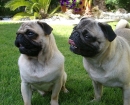
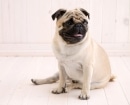
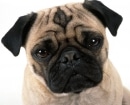
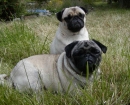
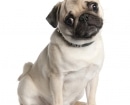
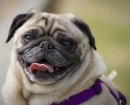
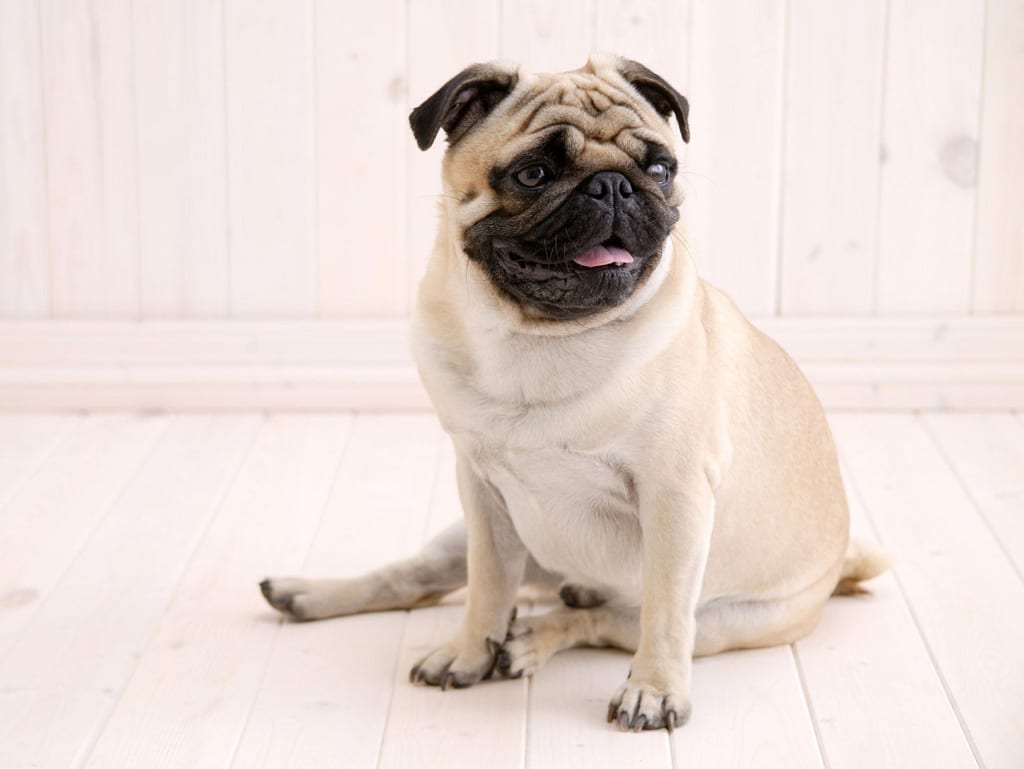
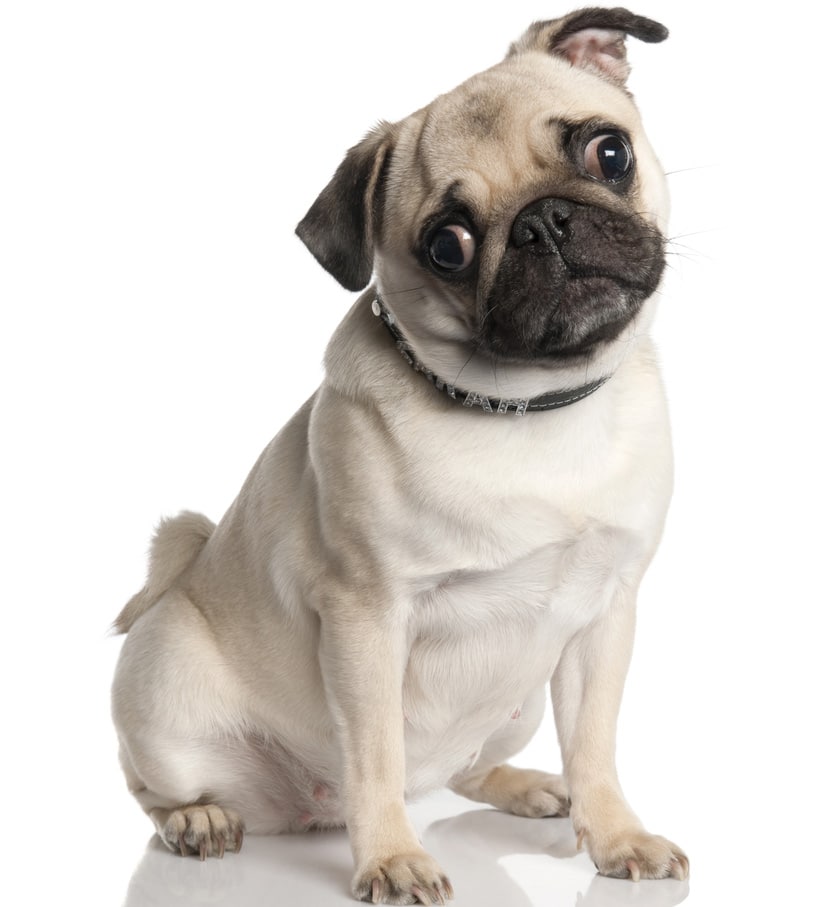
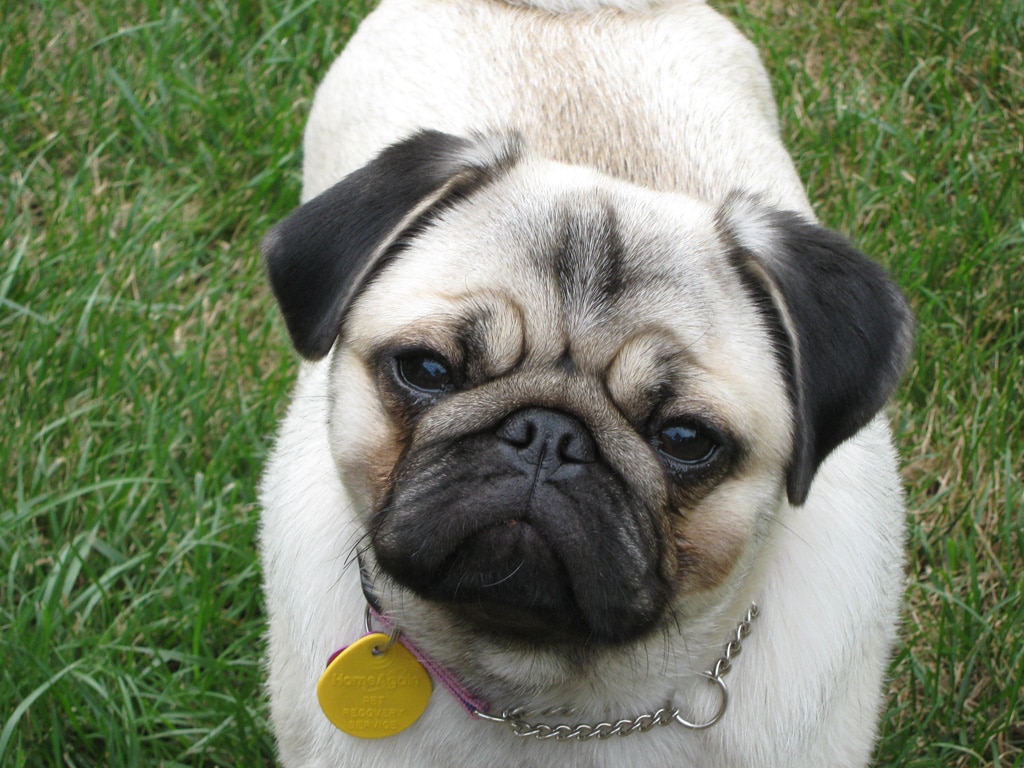
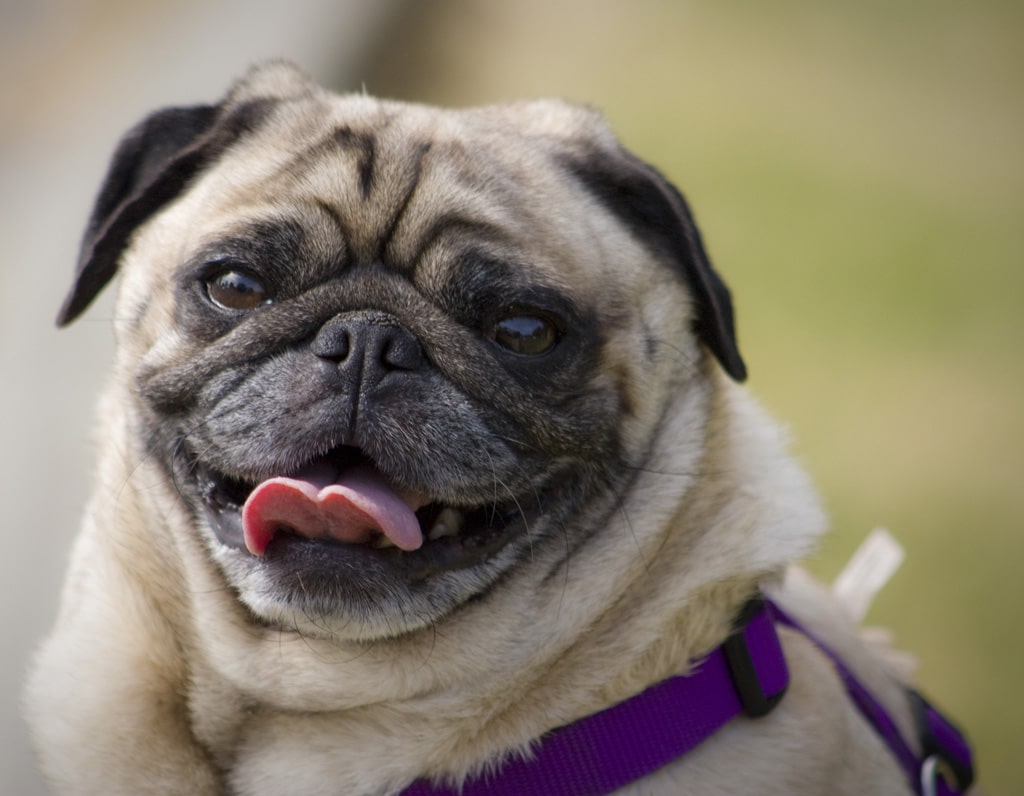
It is a dog under, solid square and compact appearance, well proportioned and muscular; the head, large, rounded and solid appearance, is covered with folds; the muzzle is square and flat; the eyes, large, bulging, they are dark; It has straight legs and looped collector queue. The hair is tight, smooth and shiny.
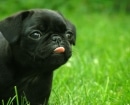
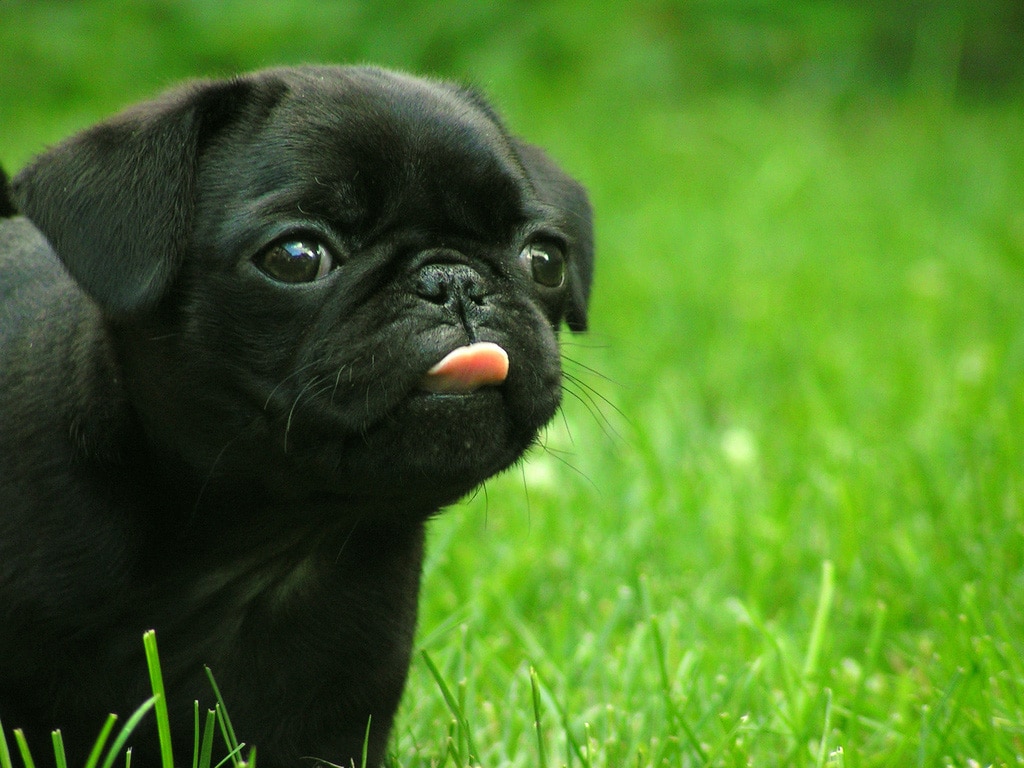
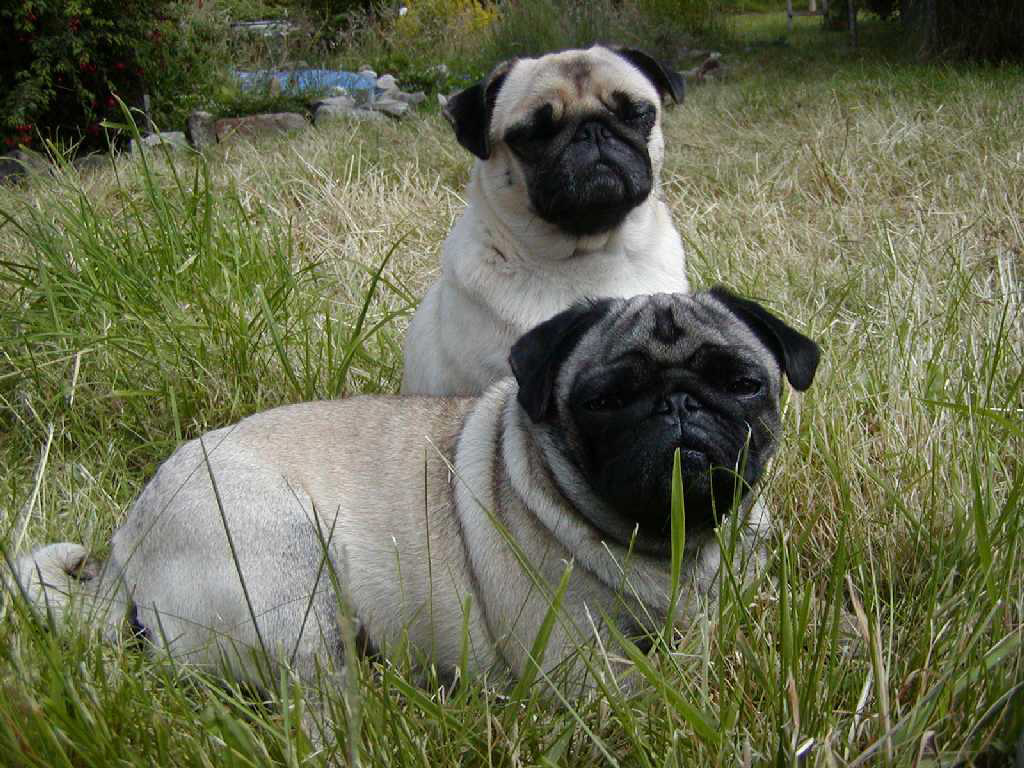
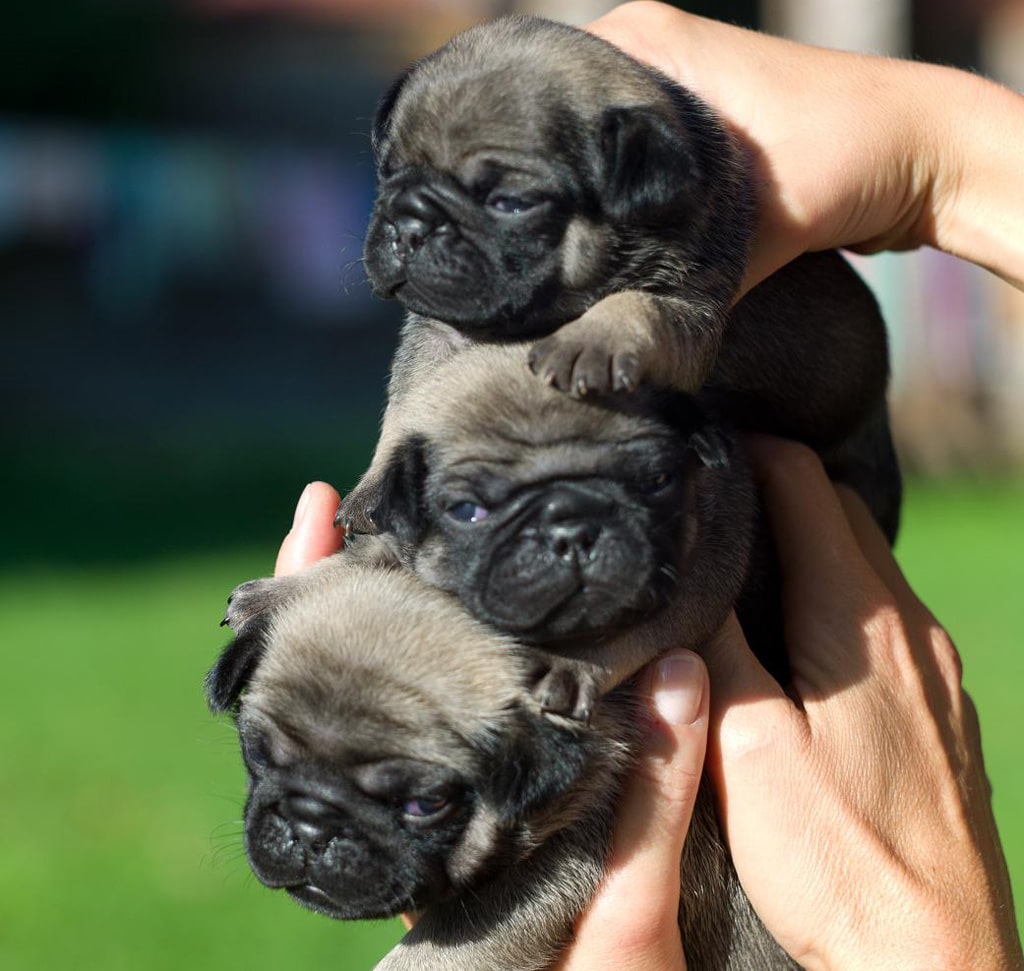
The Dutch bulldog can be silver or soft apricot with a black mask, in both cases it presents a black stripe that goes from head to tail; It can also be pure black or white which is the more scarce and expensive of all.
It measures each 30 cm to cross and weighs between 6 and 8 kg. His confident nature, docile and friendly makes the Pug an appreciated companion animal. The Pug is particularly a dog "with a sense of humor", exhibiting very human facial expressions given its bone structure. Due to its striking appearance, some people tend to think that the characteristics of the Dutch bulldog are the result of genetic manipulation or inbreeding. But, the characteristics of the Pug are similar in the last five hundred years, period in which Europeans began it importing from China.
The tail of the Dutch bulldog It has a characteristic spiral or letter "Q" shape. This variation in the way of the tail is due to the vertebrae in this portion of the column are actually hemivertebra. In some few puppies, This alteration of the shape can be extended to the rest of the column and the animal presents spina bifida.. The spine of the animal must feel before purchasing to avoid choosing a sick puppy. An animal that suffers from this malformation should not be reproduced in order to not pass this problem to their offspring.
Given the shape of the skull, the eyes of the Dutch bulldog have a bouncy and lively appearance. To find the eyes located above, they are more exposed to friction with plants and objects to the eyes of other animals, and it is advisable to take them to the vet as soon as possible if they have an injury. It is recommended that the owners of the Dutch bulldog clean the animal's eyes once a week with a clean cotton swab moistened with cold boiled water or cold tea, in order to remove secretions or dirt.
The characteristic wrinkles of the face can also accumulate secretions and dirt. It is recommended at least once a week clean gently between wrinkles using the same method. It is not necessary to apply SOAP, creams or other substances. Simple toilet is enough and to spare.
The Dutch bulldog although it is a short-haired dog, tends to constantly pelechar, so his tenure is not recommended for persons allergic or asthmatic. They have a characteristic pungent odor that may bother some people, but that decreases a bath every couple of weeks.
The biggest health problem presented by the Dutch bulldog is one that is completely preventable and treatable, and that depends entirely of the OWNER. This disease is the OBESITY. A Carlin receiving proper care can live more than fourteen years, Although on average they tend to live around ten.
One 1% of puppies can develop a degenerative neurological disease called Pug Encephalitis (or tap for its acronym in English). This disease is lethal and has no known cure. For this reason dogs must not be reproduced within the two years, in order to not transmit the gene to their offspring. Last year of life is very unlikely to reach Carlin present this disease.
The Dutch bulldog they are not aggressive animals. Like any dog, they can bite, but it is very rare that this happens without the animal mistreatment. The Dutch bulldog They live up to their motto "multum in parvo» and are not intimidated by larger breed dogs, which you can get into trouble.
Before humans, the Dutch bulldog tend to be playful and seek interaction. However can be apprehensive to strangers, and with their barking to announce the presence of unknown people. Although its size are not guard dogs, If they are good "alert dogs".
The Dutch bulldog show a moderate level of intelligence, being able to use their short snouts and front paws to obtain objects out of reach. They sometimes tend to stubbornness, and do not necessarily come when you are called, but rather when crave it. Despite this, they do not go far from their owners and prefer their company to that of other dogs..
During the first years of life Dutch bulldog may occasionally be hyperactive (run, jumping and barking constantly) but this characteristic tends to disappear over the years. The Dutch bulldog 5 and older tend to be calmer and enjoy the chairs more than the street.
There is a tendency to believe that Dutch bulldog They are "sick" animals, which is very far from reality. A healthy Carlin will behave aggressively and playful, and even a bit hyperactive in its first years of life. Its solid structure makes they tolerate well the game with children and adults, and its particularly hard head can cause bumps and falls in young children and older adults.
The Dutch bulldog It's a small animal, and although strong, requires very little food. But, being a pet, owners tend to supercharge them and share their food with them. This must not be. The Carlin may well eat a cup of dry food in the morning and a cup at night, and you won't go hungry or require any extra supplements.
One Dutch bulldog obese is not a Dutch bulldog «bello», on the contrary, It is an animal that sick because you can not breathe well, be it exhausted easily and will begin to suffer from problems in the spine and joints. A Carlin is fed healthily, on the other hand, a robust animal, with his sharp and clearly visible muscles under the skin. A healthy Carlin can run as fast as any other dog I, and you can skip two or three times its own height. Although the animal enjoys eating extra foods and receiving "treats" occasionally, is task of the owner to ensure that the quantity and quality of food that consumes is adequate.
Characteristics "Dutch bulldog"
Coexistence is important that you have with your new friend. Before considering the acquisition of a dog of the breed "Dutch bulldog" you know certain factors. Not all breeds of dogs are apt to live in an apartment, you must take into account his character, their need for exercise, their interaction with other pets, their care and if you have small children, their level of tolerance towards them.
 naricillashumedas
 lamueladecortes
 fotosricardo-h
 pets
pets
 zonaforo
 pugdogpage
 Pug Puppy
 easobuy
 petsforsale
 christymwong
 synchrnyze
 thepugpup
- FCI CLASSIFICATION:
- Group :
- Section : . .
Federations:
FCI ⓘ, AKC ⓘ, ANKC ⓘ, CKC ⓘ, KC ⓘ, NZKC ⓘ, UKC ⓘ
FCI breed standard "Dutch bulldog"
Origin:
China, United Kingdom
Date of publication of the valid original standard:
13.10.2010
Use:
Companion dog
General appearance:
It is undoubtedly a square and plump dog, "Multum in parvo" (a lot of substance in a small space) showing it in its compact structure, his well-built proportions and the hardness of his muscles, but it should never seem short-limbed, neither lean nor “large”.
IMPORTANT PROPORTIONS:
Definitely square and compact.
Behavior / temperament:
Great charm, dignity and intelligence. Balanced, cheerful and lively.
Head:
Relatively large and provided with the body, round, You must not have Apple shape.
Cranial region:
- Skull: Without Groove. Wrinkles on the antecara should be clearly defined without exaggeration.
facial region:
- Truffle: Black with nostrils large and wide open. Narrow nostrils and heavy on the nose folds are unacceptable and must be severely penalized.
- Snout: Relatively short, obtuse, square, not drooping upwards. Eyes and nose should never be adversely affected or be hidden by excessive folds on the nose.
- Jaws / Teeth: With a slight lower prognathism. The lower jaw is wide with the incisors placed almost in a straight line. It is highly undesirable Wry mouth, teeth and tongue look and should be severely penalized.
Eyes: dark, relatively large, round, sweet and concerned expression, very bright, and when it is excited ardor full. Never protruding, exaggerated or showing white when they look forward. Free eye problems.
Ears: Thin, small and soft black velvet. There are two types: “Ear in pink”, It is a small hanging ear that bends backwards to show the ear canal. “Button ear”, It is an ear that folds by bending forward, Tip adheres to the skull to cover the opening. The latter are preferred.
Neck:
Slightly arched it resembles a crest, strong, thick, with long enough to take the head proudly.
Body:
Short and compact.
- top line: Level; It must be neither concave nor inclined.
- Breast
: Large. Ribs well arched back.
Tail:
High insertion, tightly coiled on the hip. The dual threading is highly desirable.
Tips
PREVIOUS MEMBERS:
- Shoulder: Well inclined backwards.
- forearms: Very strong limbs, straight, long moderate and positioned low in the body.
- Previous feet: As long as the foot of the Hare nor so round as the foot of the cat; with separate fingers; the nails must be black.
LATER MEMBERS:
- General appearance: Very strong limbs, of moderate length, well positioned under body, straight and parallel when you look at them from the back.
- Knee: Good angulation of stifle warm joints rotulianas (knees).
- Hind feet: As long as the foot of the Hare nor so round as the foot of the cat; with separate fingers; the nails must be black.
Movement:
Viewed from the front you must lift the forelimbs and drop well straight below shoulders, keeping the feet directly forward, unoffset in or out. From behind, the action must be equally correct. The forelimbs uses them with force bringing them well forward and the rear moving freely and bending your knees well. Light balancing the quarterfinals later characterized the journey. Capable of performing a resolved and safe movement.
Mantle
Fur: Texture fine, smooth, soft, short and bright. Neither rough nor woolly.
COLOR: Silver, apricot, Griffon clear or black. Each of these colors must be clearly defined, to emphasize the contrast between the color, the stretch mark (a black line extending from the occiput to the tail) and the mask. The marks must be well defined. The muzzle or mask, the ears, moles on the cheeks, the thumb mark or the forehead rhombus and the striation should be as black as possible.
Size and weight:
The ideal weight is between 6,3 and 8,1 kg. You must have strong muscles, but the substance should not be confused with an overweight.
Fouls:
Any deviation from the aforementioned criteria is considered a fault and the severity of this is considered to the degree of the deviation from the standard and its consequences on the health and well-being of the dog..
FALTAS DESCALIFICANTES
- Aggressive or fearful dog.
- Any dog showing clear signs of physical or behavioral abnormalities must be disqualified..
N.B.:
• Males must have two normal-appearing testicles fully descended into the scrotum..
• Only functionally and clinically healthy dogs, with the typical conformation of the breed, should be used for parenting.
TRANSLATION: Brígida Nestler / Original version: (IN).
Source:
F.C.I - International Cynological Federation
1. Chinese pug, Dutch mastiff (English).
2. Pug (French).
3. Pug (German).
4. Carlin, Mops (Portuguese).
5. Pug chino, Mops, Pug carlino, Doguillo (español).

 FCI 302 . Large and medium sized Terriers
 Not recognized by the FCI
 FCI 245 . Griffon type
 FCI 300 - The Hound of raccoons

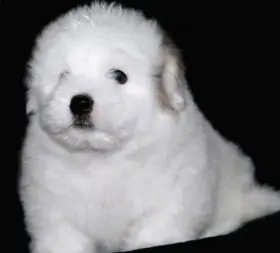
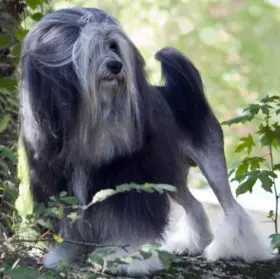
 FCI 233 . Little Lion Dog

 FCI 193 . Long-haired or fringed Sighthounds.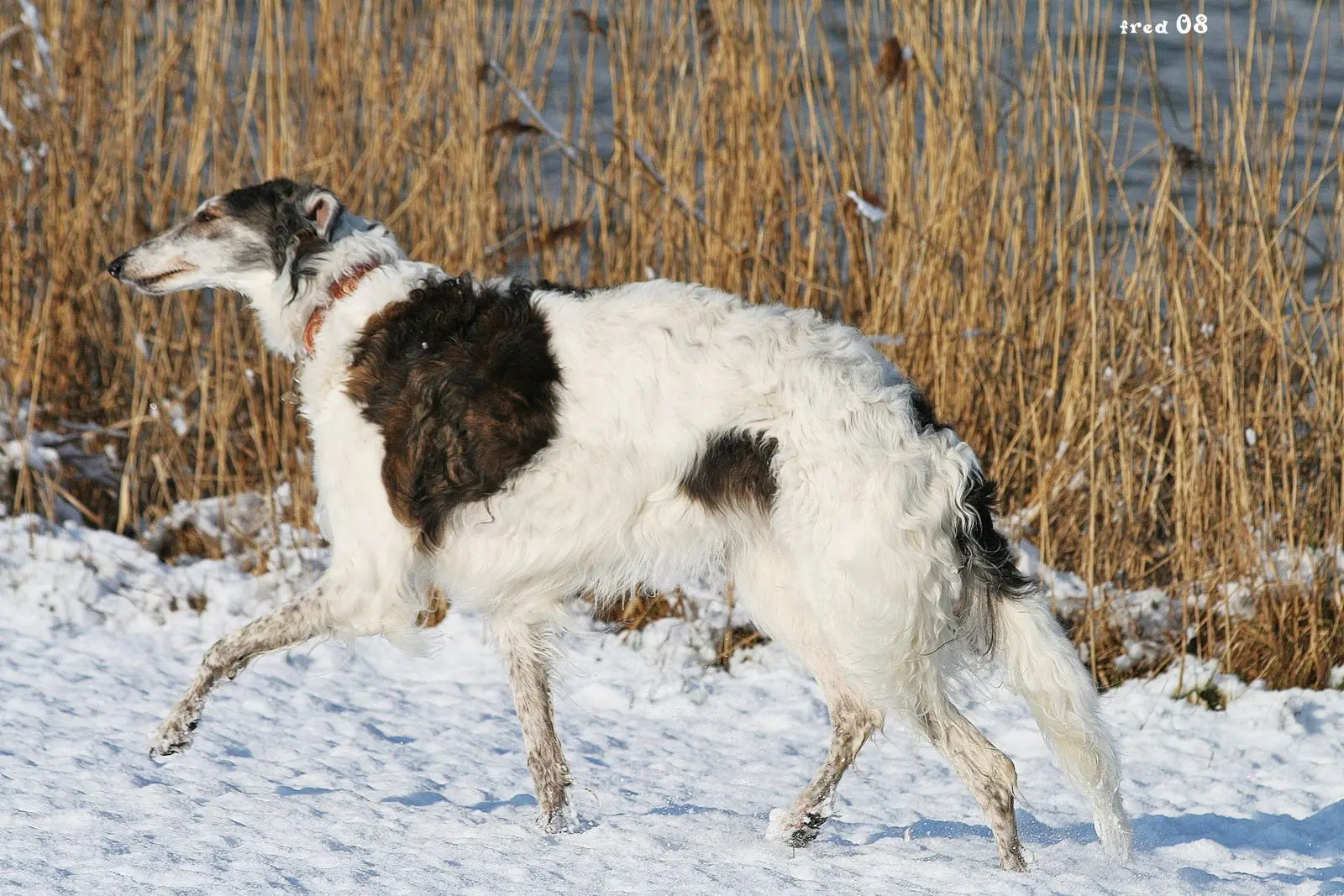

.png "Great Britain") FCI 253 . Small Molossian type Dogs
FCI 253 . Small Molossian type Dogs
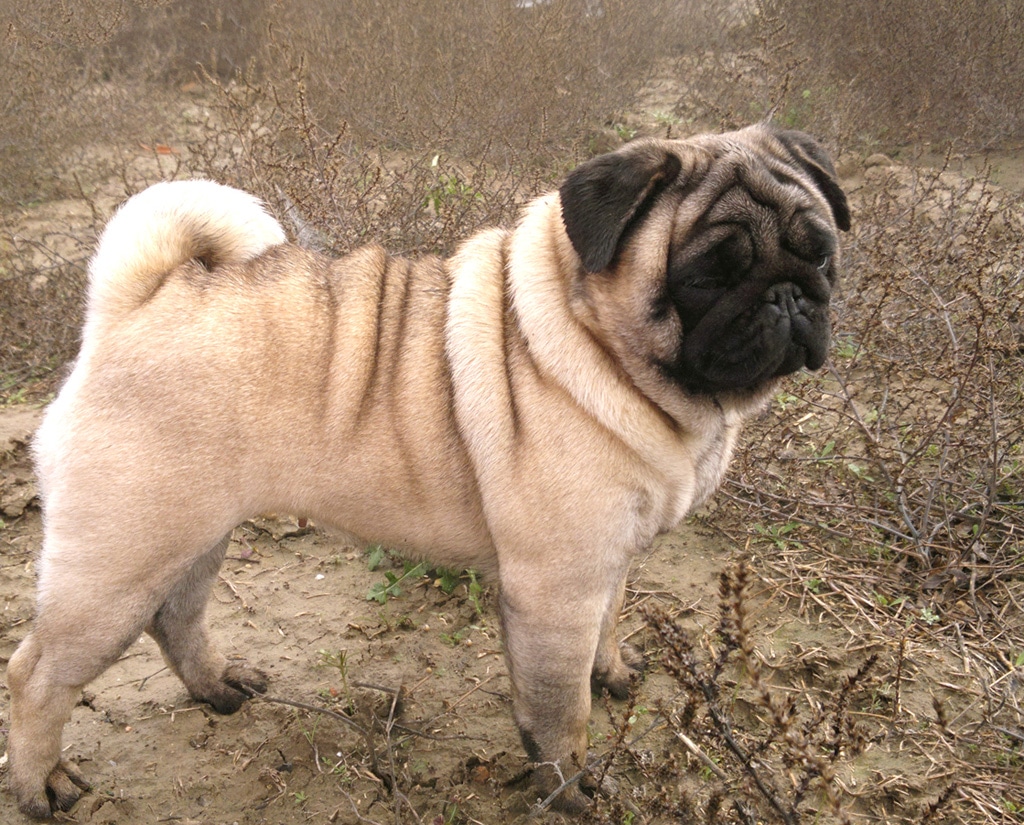



 Carlino and a duck
 How Carlinos cross pools
 Carlino tactics to steal from baby Jack!
 Carlino and cat playing Bram vs Billy! playing funny!