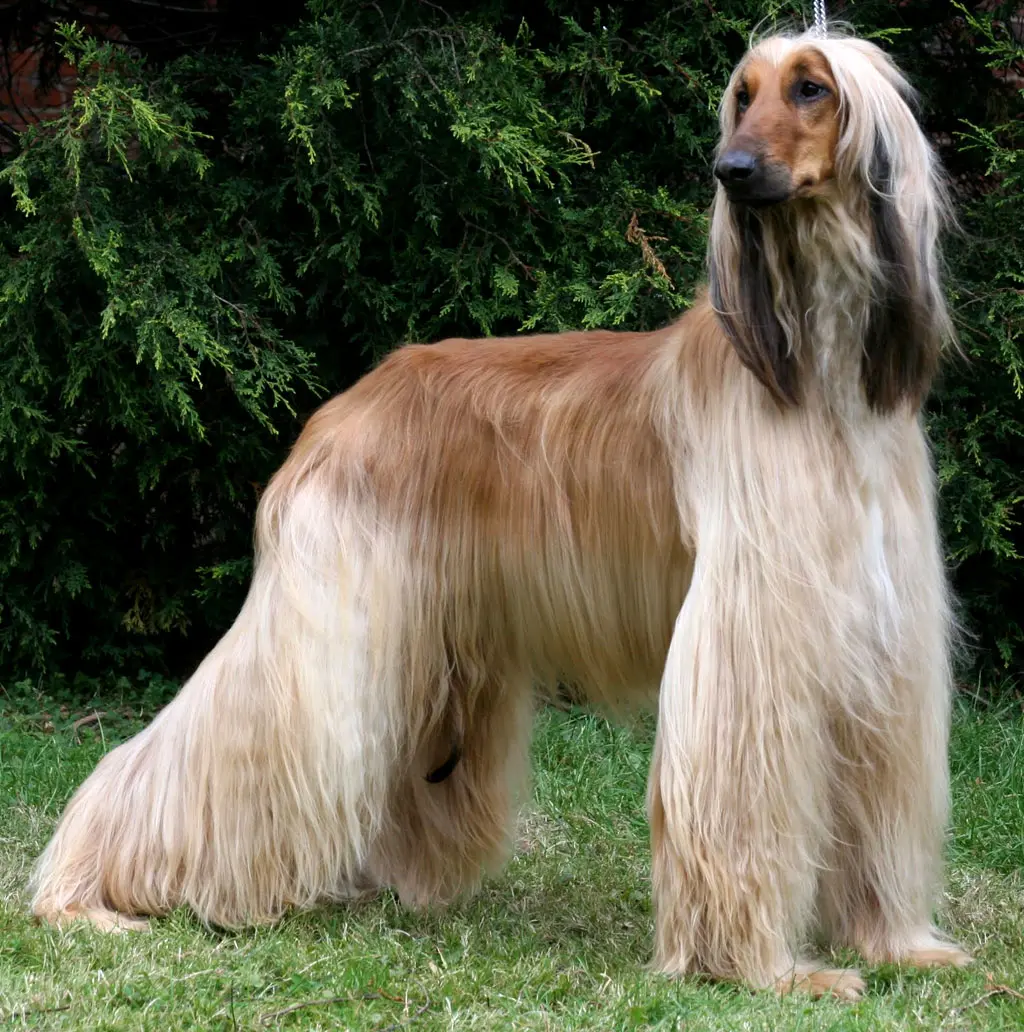
The Tazi (also known as Lebrel Afgano, Afghan Hound, Balkh Hound, Baluchi Hound, Barutzy Hound, Shalgar Hound, Kabul Hound, or Galanday Hound) It is a dog from Afghanistan.
Read all about the race by clicking on: Afghan Hound.
All breeds and species.
 tiadoc
.png "Great Britain") FCI 228 . Long-haired or fringed Sighthounds.
FCI 228 . Long-haired or fringed Sighthounds.
The Tazi (also known as Lebrel Afgano, Afghan Hound, Balkh Hound, Baluchi Hound, Barutzy Hound, Shalgar Hound, Kabul Hound, or Galanday Hound) It is a dog from Afghanistan.
Read all about the race by clicking on: Afghan Hound.
 - Not recognized by the FCI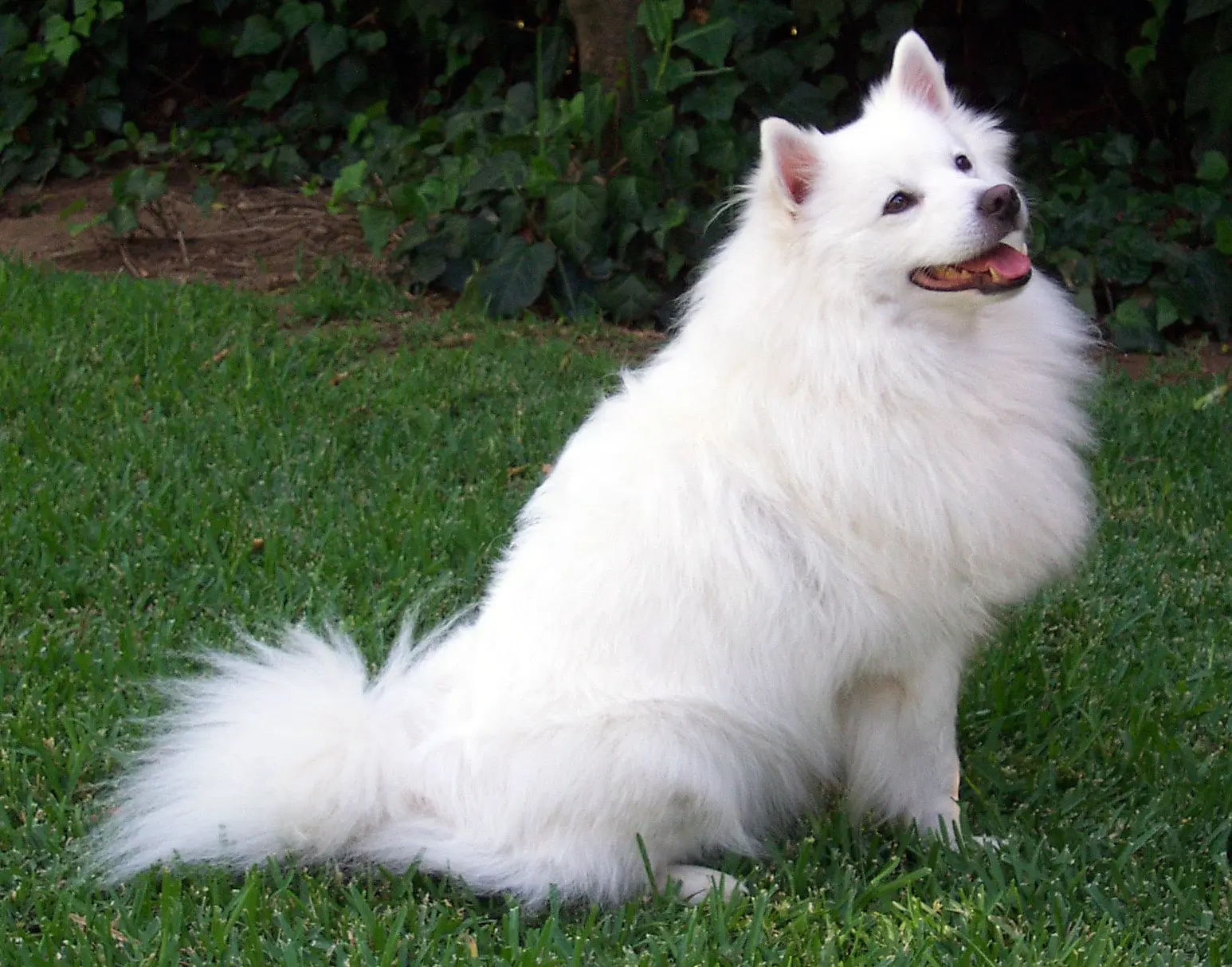
Content |
|---|
In northern europe, the Spitz smaller ones ended up becoming the different races of German Spitz. European immigrants brought their pets Spitz to United States, especially to New York, early twentieth century, «All of them descendants of German Spitz largest, the Keeshond, the Pomeranian white and the Volpino Italiano.
Although white was not always a recognized color in the different breeds of German Spitz, in general it was the preferred color in the US. In a display of patriotism around the time of World War I, dog owners began to refer to their pets as American Spitz instead of German Spitz
After World War I, the little dogs Spitz came to the attention of the American public when the dogs became popular entertainers in the American circus. In 1917, the Cooper Brothers Railway Circus introduced his dogs. A dog called Stout’s Pal Pierre was famous for walking a tightrope with the Barnum and Bailey Circus in the 1930, and the sale of puppies after the show also contributed to its popularity. Due to the popularity of circus dogs, many of the current american eskimo dogs they can trace their lineage to these circus dogs.
After the Second World War, dogs remained popular pets. Postwar contact with Japan led to the importation into the United States of the Japanese Spitz, that may have been crossed with the American Eskimo at that time.
The breed was officially recognized for the first time as American Eskimo already in 1919 by the United Kennel Club (UKC) de EE.UU., and the first written record and history of the breed was printed in 1958 by the UKC. At that time there was no official breed club and no breed standard., and the dogs were accepted for registration as individual dogs, based on appearance.
In 1970 the National American Eskimo Dog Association was founded (NAEDA), and individual dog searches ceased. In 1985, breeders who wanted to register the breed in the American Kennel Club (AKC) they created the American Eskimo Dog Club of America (AEDCA). Following AKC requirements for breed recognition, the AEDCA collected the pedigree information of 1.750 dogs that now form the basis of the AKC recognized breed, that it's called American Eskimo dog.
The breed was recognized by the American Kennel Club in 1995. The herd book was opened from 2000 to 2003 in an attempt to register more lines originally registered by the UKC, and today many dogs american eskimo dogs they have double registration in both American canine clubs.
The breed was recognized by the Canadian Kennel Club in 2006
.
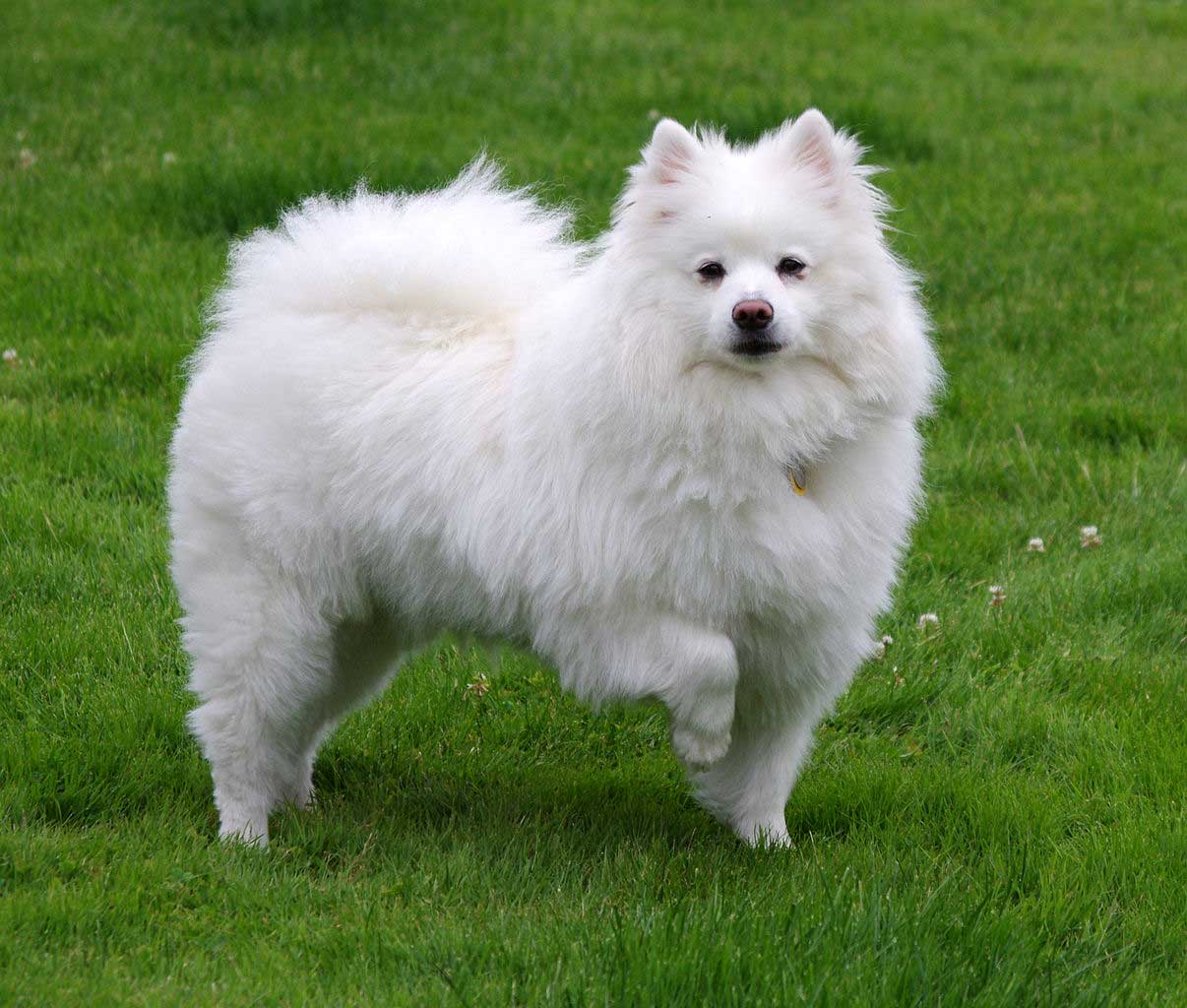
The American Eskimo dog -also known as Spitz German American– comes in three different size varieties, small to medium. The dogs of the so -called "toy size" reach a height of the cross up to 30 cm and a weight of between 2,7 and 4,5 kg. The version called "Miniature" has a cross height between 28 and 38 cm.. The weight of the dogs ranges from 4,5 and 9 kg. The largest variety, The "standard", reaches a height of 36 to 48 cm and weighs between 8 and 16 kg.
The coat of the american eskimo dog clearly resembles that of the Spitz. It is straight in position and of medium to long length. Dogs have a double coat that protects them from the wind and the elements. Approved coat colors are white and cream.
The life expectancy of dogs of this breed is between 12 and 14 years.
The american eskimo dog considers himself a cheerful and friendly companion. He is very affectionate with his owners. He is always ready to defend his family with courage and without fear. Due to this strong bond with its congeners, these dogs are quite dependent and dependent. But, they are stubborn and, sometimes, stubborn, so they need a loving but constant education. In general, dogs are considered fairly easy to train.
It also, the American Eskimo is intelligent and capable of learning. They can be trained well and they can also learn little tricks, so they have already achieved a considerable degree of fame in the circus. These smart Spitz they need to be very busy so that the mental sub-challenge does not lead to bad behavior.
The American Eskimo he is very awake and they like to bark, so they are often used as watchdogs. But, they do not usually bite and do not show aggressiveness.
|
|
|
|---|
 FCI 235 - Molossoid - Dogo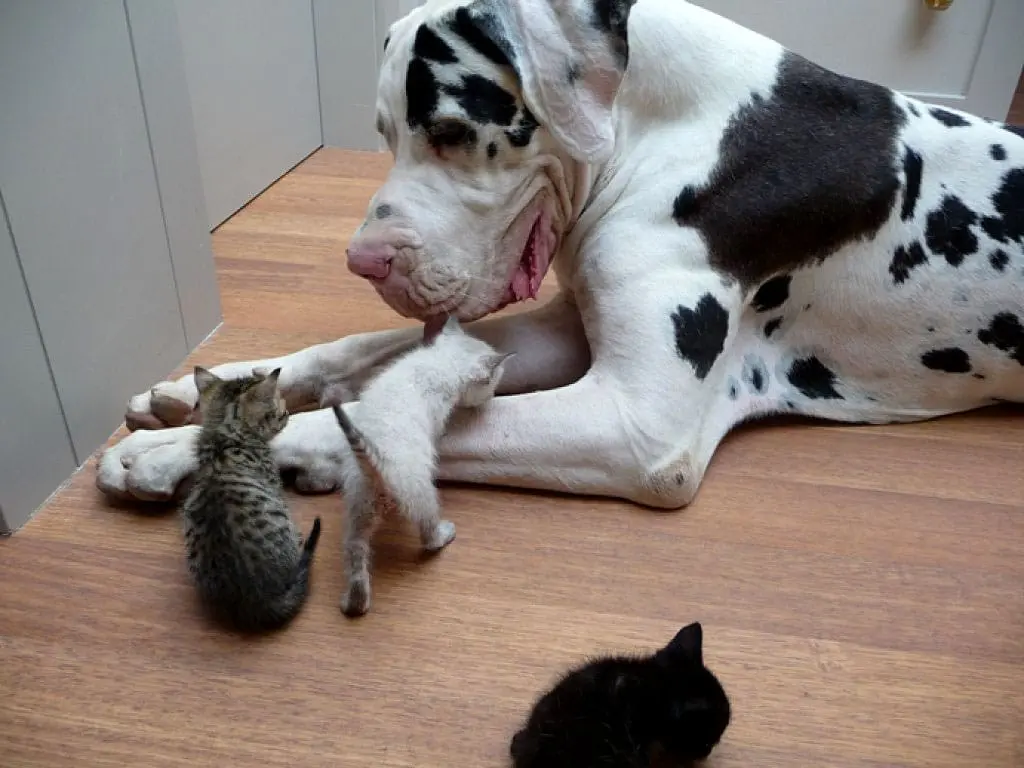
The German Mastiff, Great Dane or German Boarhound It is a breed of dog known for its large size and delicate personality, considered to be the "Apollo among all races" by the International Cynological Federation.
The great Dane, even being a giant race, should not be clumsy in his walk and movements. Your character should be friendly and never shy. Males should be stronger than the females Constitution.
Read more about the race by clicking on: Great Dane.
 Extinct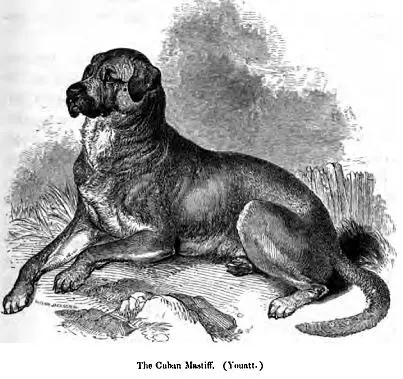
Content |
|---|
The Dogo cubano or Cuban dogge, It is a breed of dog of Cuba that has been terminated. It was very similar to the Bullmastiff. This breed of dog was used for dog fighting.
This breed of dog was introduced in Cuba to capture fugitive slaves (Maroons). After the abolition of slavery it became too expensive an animal to feed and it was so that, the race ceased to exist with the time.
They were among a Bulldog and Mastiff as far as size is concerned. Snout is short, bandwidth and abruptly truncated.
The head was broad and flat, and lips, pendants. The ears of medium-sized, and hanging also. Rather short tail, cylindrical, round upwards tipped forward.
They were described as a "rusty-colored wolf" with the face, the lips and black legs. The Cuban Mastiff is the largest breed of mastiff with an average weight of 136.5 Kg.
The Cuban Mastiff was very notable and recognized for his ferocity in the fight and for the skill in the persecution of slaves..
 FCI 328 Molossoid . Mountain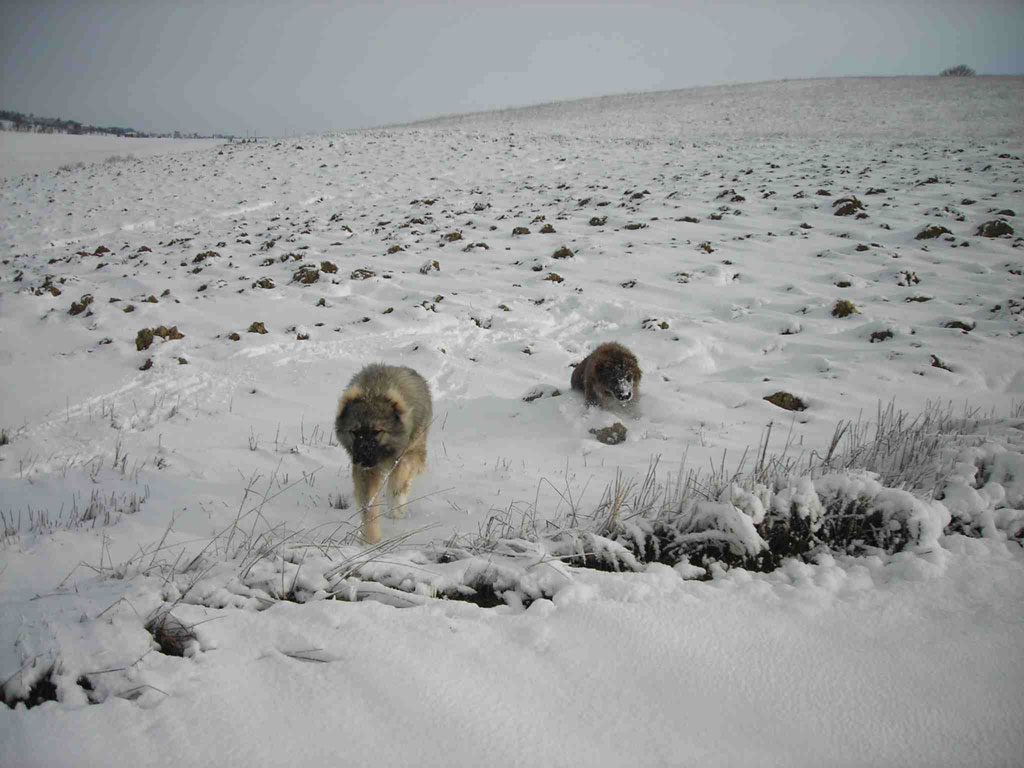
The Kavkazskaïa Ovtcharka (Caucasian Shepherd Dog) It is a very popular breed of dog in Armenia, Azerbaijan, Georgia, Russia, and other countries where herders need a lot of protection for their herds and properties.
A dog Kavkazskaïa Ovtcharka well bred should be a healthy animal, for strong bones, muscular build and stable temperament.
The very calm and very aggressive temperaments, they are considered to be serious flaws in a dog of this breed.
Otros nombres: Kavkazskaïa Ovtcharka / Circassian sheep dog / Caucasian Ovcharka / Armenian Khobun / Georgia Nagazi / Sage Ghafghazi / Kars Çoban Köpeği / კავკასიური ნაგაზი / Kavkasiuri nagazi / Caucasian Ovcharka / Caucasian Mountain Dog / Kars Çoban Köpeği / Kavkazty Uasahichala / Circassian Sheep dog / Адыгэ Мэлыхъуахь (Adyghe melekhuah).
Group 2 / Section 2 – Molosoides and mountain dogs.
- Read complete information of the race in: Caucasian Shepherd Dog.
Not recognized by the FCI
Content |
|---|
The American English Coonhound, is one of the varieties of Coonhound normally bred in the southern United States.
This breed was originally classified and recorded as English Fox and Coonhound, prior to the specialization of the six breeds of Coonhound. Recognition in the Decade of 1940 by the United Kennel Club of Bluetick Coonhound and Treeing Walker Coonhound as different races, gave rise to the classification and registration of the American English Coonhound as a distinct race within the group Coonhound.
The breed originated in the southeast of United States, where they were raised by the cross of a American Foxhound and English Foxhound, most other European hunting breeds, and other native dogs, in order to specialize the race in the hunting of animals that are fugaban climbing trees.
Unlike the other classifications of Coonhound, a wide variety of colorations is acceptable to meet the standards of the American English Coonhound. The coloration may be reddish, bluish or tricolor.
But, red marks are predominant and «Redtick» is a common euphemism to refer to the color of the American English Coonhound.
Some people believe that this lack of emphasis on specific coloration has allowed breeders to focus breeding programs on traits like intelligence and hunting ability rather than superficial concerns., like coat standards. Color variations are common even among puppies from the same litter of a American English Coonhound , which indicates high levels of DNA diversity in the breed.
To the American English Coonhound loves to snuggle up on any fluffy surface he finds, important to take into account, all those people who do not want to have their dog on the sofa and in bed all day.
Just like all the Coonhound, are –generally- good dogs, affable and very sociable. Nervousness or aggression is considered a defect according to UKC breed standards. Are strong and stubborn nature, so it requires more patience in training than other breeds.
Young dogs tend to be very active, playful and eager to human attention, they are dogs that require plenty of exercise.
The American English Coonhound, It is used more often as hunting dogs, mainly of raccoons.
They are also excellent family pets, that they have been bred for hunting in Group, so tend to be very friendly.
The American English Coonhound as well, is very good guardian. It has a very characteristic alert bark that makes it infallible.
 FCI 15 . Sheepdogs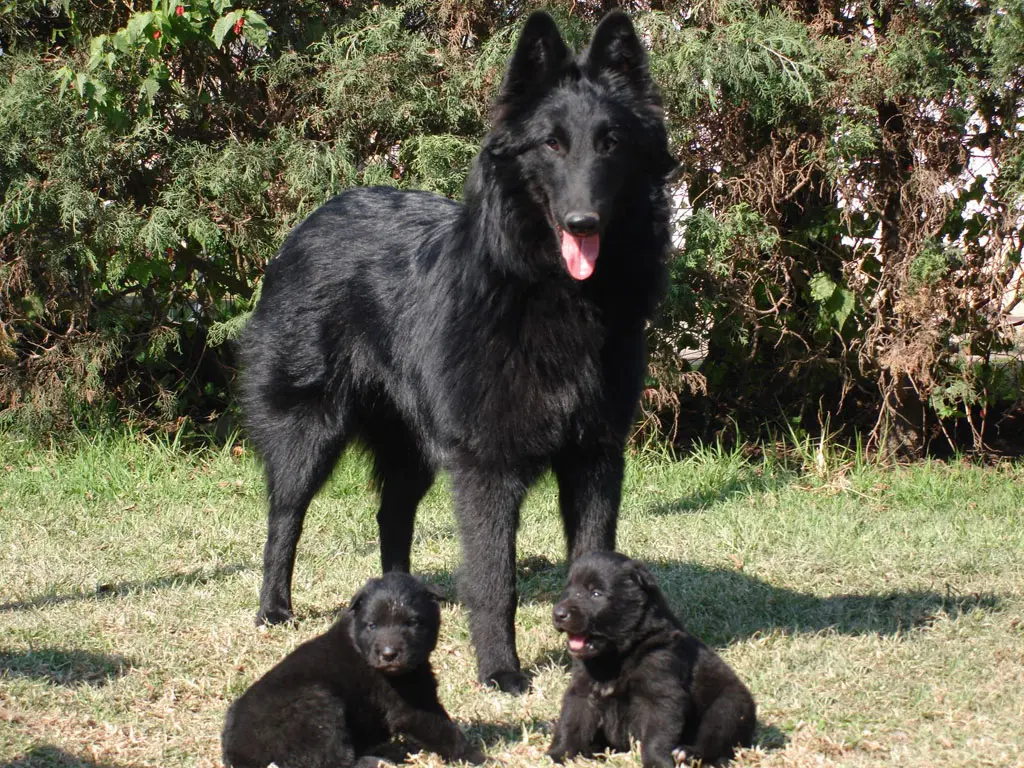
Content |
|---|
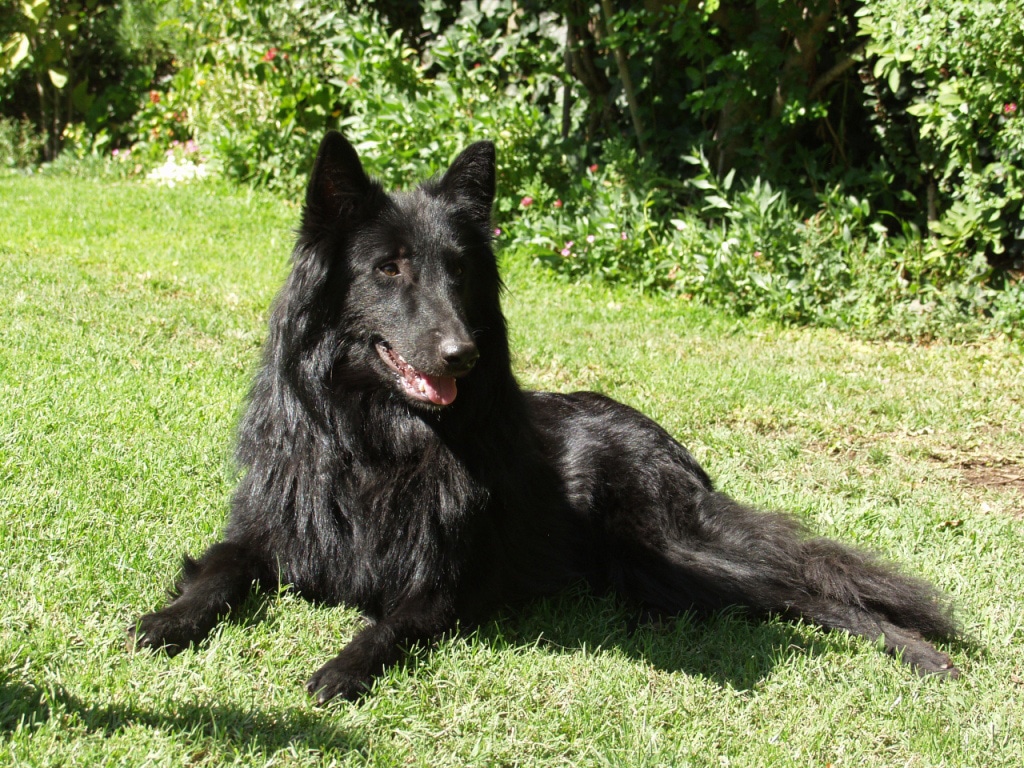
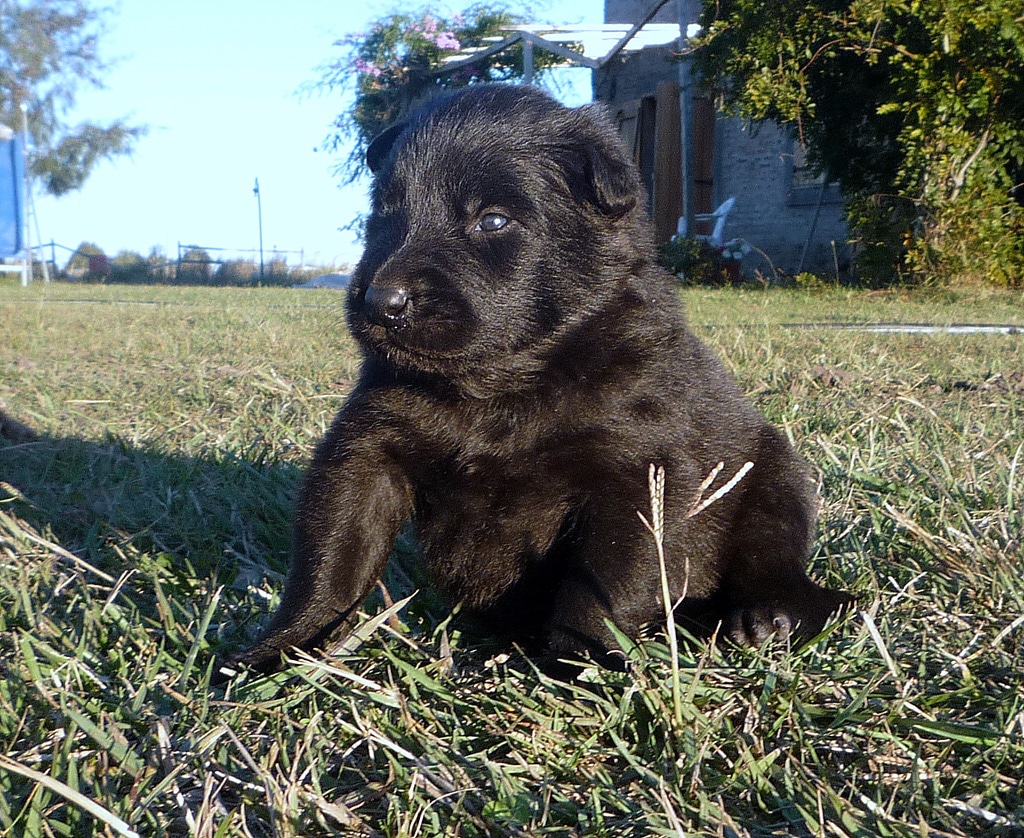
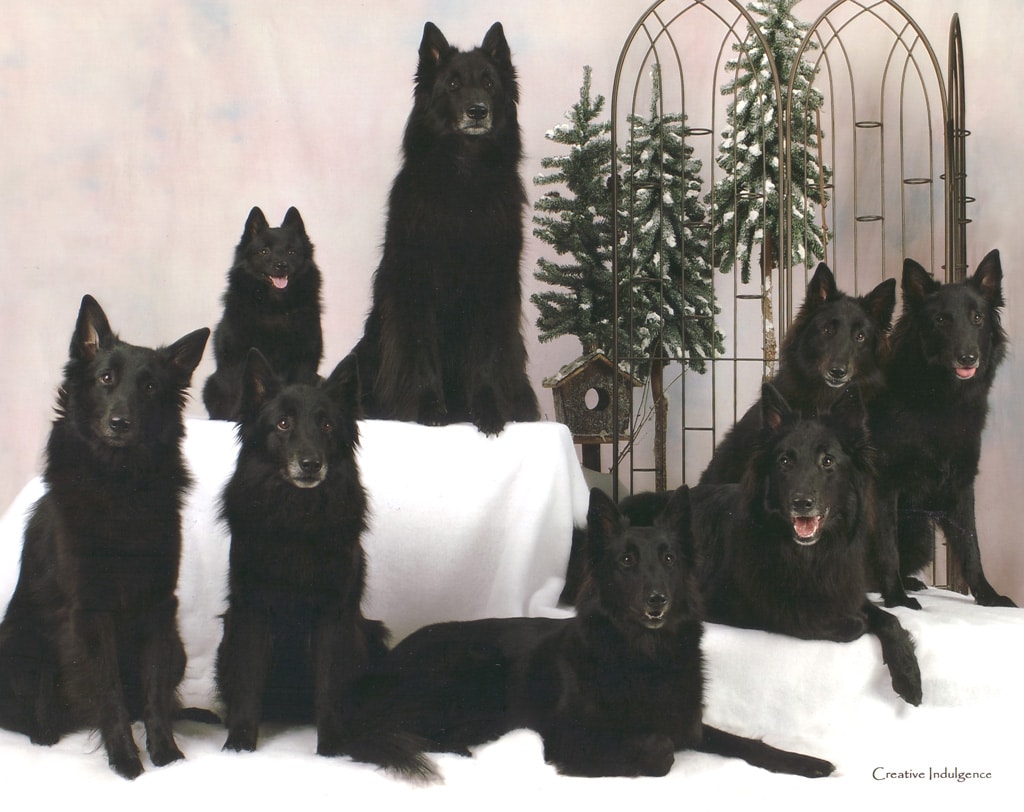
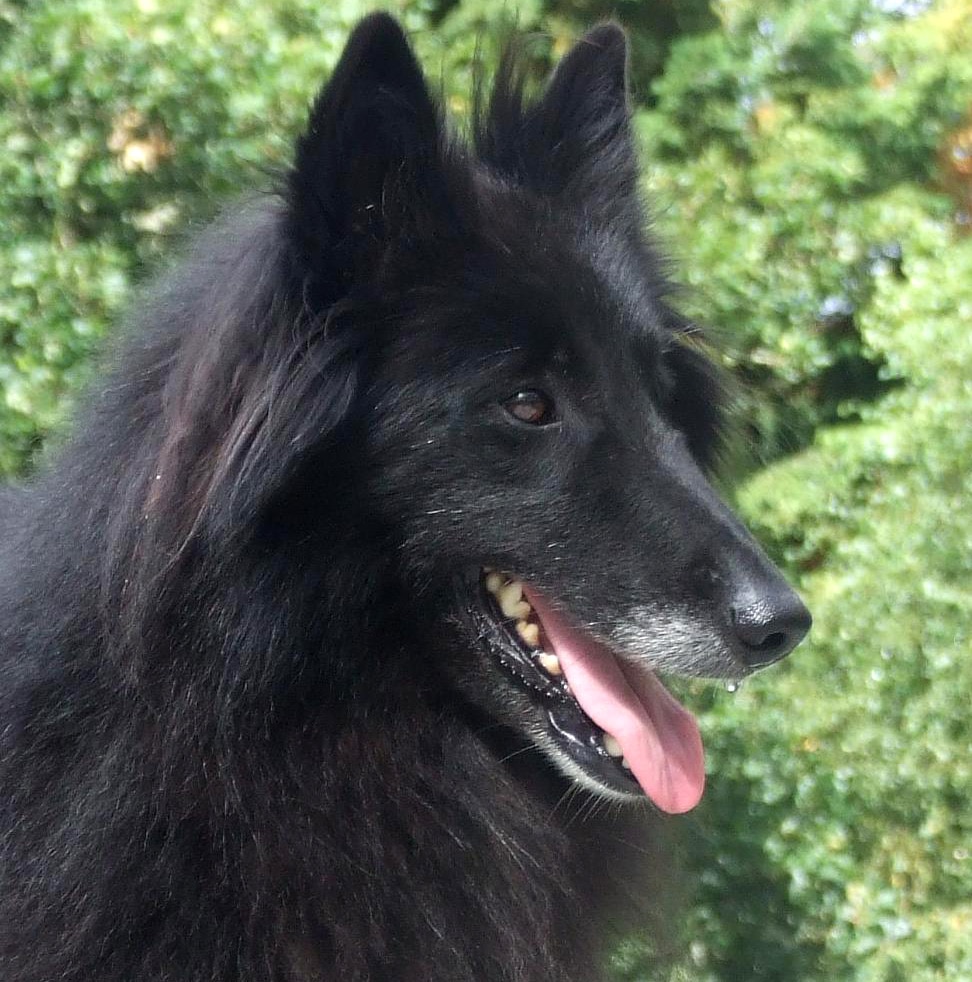
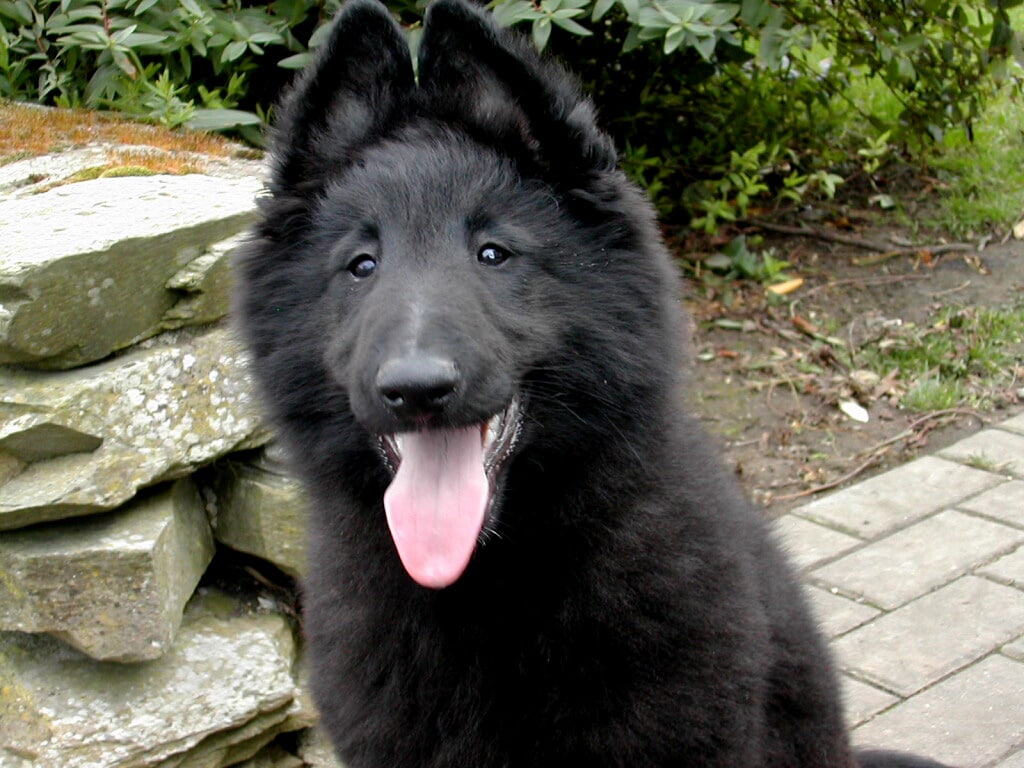
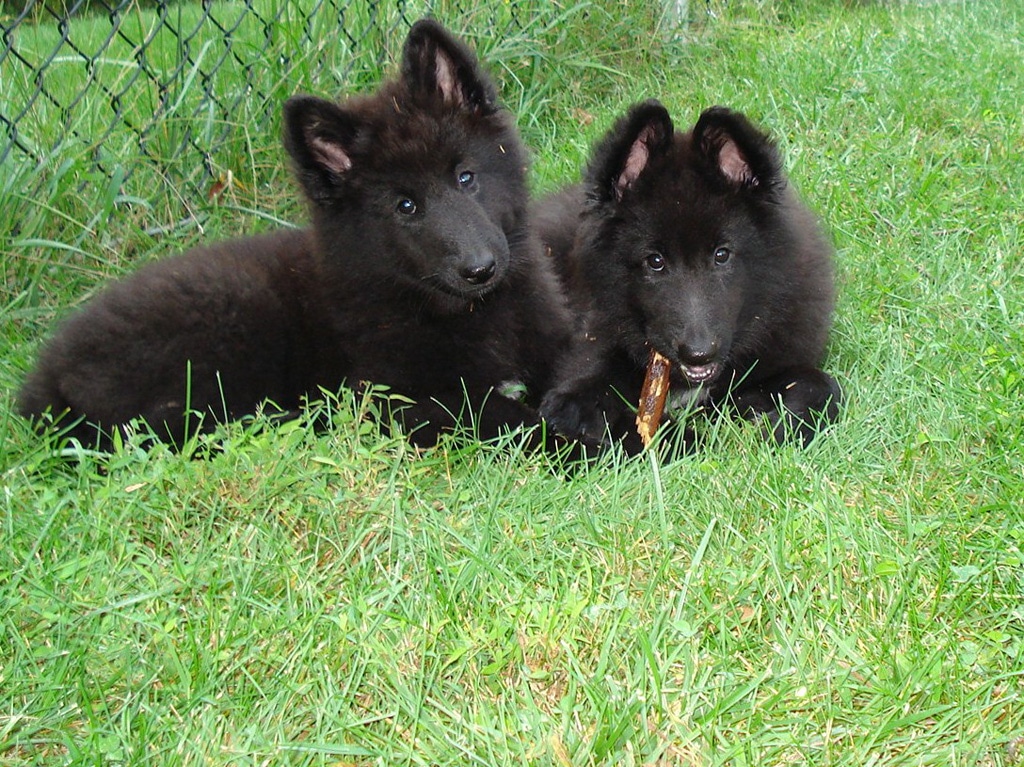
The dog Belgian Shepherd Groenendael It is a breed recognized by all the major canine clubs. In the United States is recognized under the name of Belgian Shepherd.
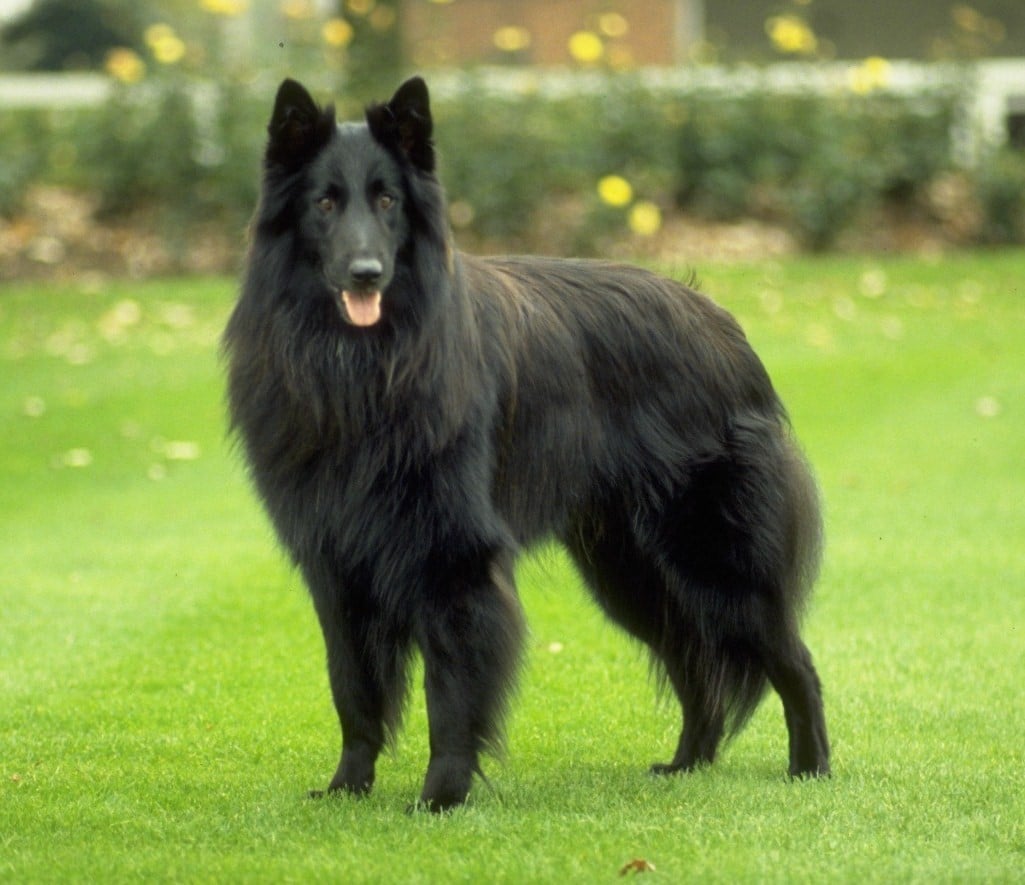
Just like all the Belgian Shepherd, the Groenendael is medium-sized, hard-working, robust, provided, very protective of the family. The Groenendael It is recognized for its black fur.
At the end of the 19th century, in Belgium there was a large number of herding dogs whose type was heterogeneous and their coats were of great diversity. In order to put order into this situation, some cinófilos (cinógrafos) enthusiasts formed a group led by Professor A. Reul, the school of veterinary medicine of Cureghem, who can be considered as a true pioneer and founder of the race.
The Belgian Shepherd is officially born as a breed between 1891 and 1897. The 29 in September of 1891, the "Club of the Dog" is founded in Brussels Belgian Shepherdand that same year, the 15 November, Professor A.. Reul manages to gather in Cureghem, 117 dogs, allowing you to carry out a census and form a group with the best copies. In the following years becomes a real selection, making an extreme inbreeding on some stallions.
The 3 in April of 1892, the "Dog Club" Belgian Shepherd” drafted a first well-detailed standard of the breed. Was admitted a single race, with three varieties of hair. In any case, at that time, the Belgian Shepherd was only a dog of humble people and therefore a breed that still lacked prestige. Therefore, is not until 1901 that the first Belgian Shepherds were registered in the Book of Origins of the Société Róyale Saint Hubert (L.O.S.H.).
In the course of the next few years, the leaders of the cinephile fans Belgian Shepherd they tenaciously devoted themselves to unify the type and correct the defects. We can affirm that towards the 1910 the type and character of the Belgian Shepherd were already established.
Through the history of Belgian Shepherd, the issue of the different varieties and accepted colors has given rise to many controversies.
On the other hand, As far as morphology is concerned, the character and fitness to work, There has never been any disagreement.
The Belgian Shepherd Groenendael must be athletic, strong, imposing, rustic, and balanced in appearance.
You must have a natural look, as if never has prepared especially for the show. Its hair It must be abundant, but they are never as if it were to inhibit the ability of the dog in any way work.
The color is always black, with small white spots are allowed on the chest.
The Belgian Shepherd Groenendael must measure of 60 to 66 cm. to the cross males and between 56 and 62 cm. females. The weight should be, approximately, of 25 to 30 kg for males and 20 to 25 kg for females.
This dog has a double layer coat a thick, the texture must be hard and dense, woolly, never silky, Kale, and a thin layer (undercoat) It should be thick and abundant.
The Belgian Shepherd Groenendael is a very intelligent dog, Active, loyal and loving.
They are ideal for those who have a lot of time, Energy, self-confidence and a lot of affection to give… they are wonderful friends. Training and socialization is essential. They are cautious with strangers and protective family. They love to children, When I present at an early age.
They need to spend a lot of time with their family and exercise every day, because if left too long alone and doing sedentary lifestyle, they may experience separation anxiety, be sad, and even be destructive with household objects.
The Belgian Shepherd Groenendael needs a lot of exercise, routinely. If you are having a dog, be prepared to spend around two hours a day, and to play with it. daily exercise, You must include a walk, but also a training session to keep the dog mentally stimulated.
These dogs have a great "work ethic" and need a job to do., such as obedience, flyball, Schutzhund, training, agility or, cattle work. Performing any of these activities you will be happy. They are a sensitive breed and may not be trained using harsh methods.
The belgium priest, in general, they can compete in agility, obedience, show, flyball, tracking. As well, It can be trained to compete in herding trials.
 ES.paperblog.com
 caninecircle.com
 plazanimal.CL
 sobreperros.com
 saladeventas.CL
 pastorbelgahz
 obsidianvision.NET
 kathylang.com
 Ewe-topia.com
 bsdclubireland.com
 bsdclubireland.com
 wallpapers5.com
Belgian Sheepdog / Chien de Berger Belge.
 FCI - Belgian Shepherd Groenendael FCI - Belgian Shepherd Groenendael |
 |
FCI 15 . Sheepdogs
Content |
|---|
The Belgian Shepherd Laekenois is a dog inside the 4 varieties into which the Belgian Shepherd. The name of Laekenois it is due to the Laeken neighborhood, located in the Belgian city of Brussels where was selected.
The Belgian Shepherd Laekenois originated as a sheep herding dog at Laeken Royal Castle.
In addition to his pastoral leadership, This dog was used as a guard dog for example, when the shepherds put the sun to dry the clothes, the Belgian Shepherd Laekenois I was in charge of guarding it.
Although it is not one of roles than most proud can feel the human being, It was also used as Messenger dog during the first and the second world war. I head this paragraph like this because we have enough information about what dogs have suffered throughout our history, at some stinking date.
Until the advent of dog shows in the year 1900, the four varieties could be mixed indiscriminately, in those days there were no classifications as they are now.
It is very difficult to try to delve into the history of the variety of Belgian Shepherd Laekenois because all four varieties share a common history, with different but common avatars.
What we do know is that the Belgian Shepherd Laekenois, In addition to be considered the oldest breed of dog is the rarest variety within the Belgian shepherds dog breed.
Anyway, If someone wants to deepen in the history of these precious dogs, You can read the entry dedicated to the race Belgian Shepherd.
Along with the Malinois, Groenendael and the Tervueren shares the same standard and differs only in the type, length and color of hair.
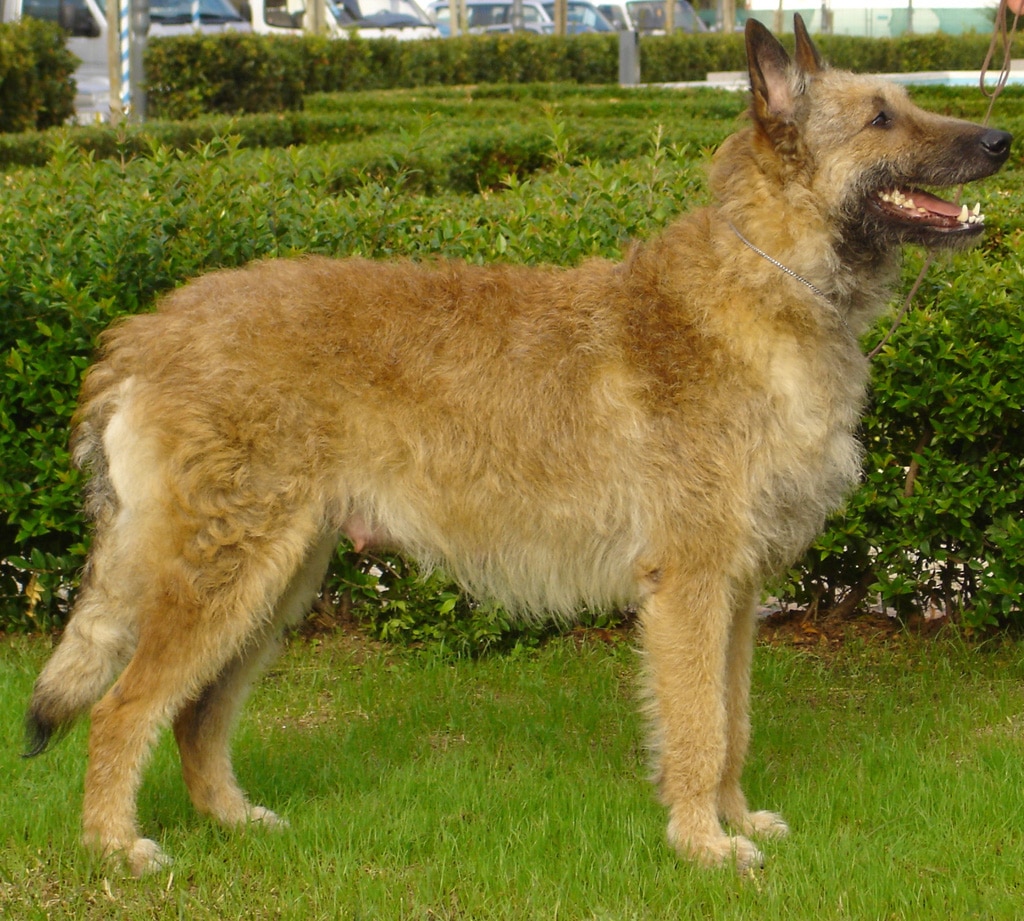
Just like all the Belgian Shepherd, the Laekenois is one of medium-sized and proportionately square.
It is a dog of harmonious proportions and rustic air. In comparison with the German Shepherd, for example, is more agile, Lightweight and small.
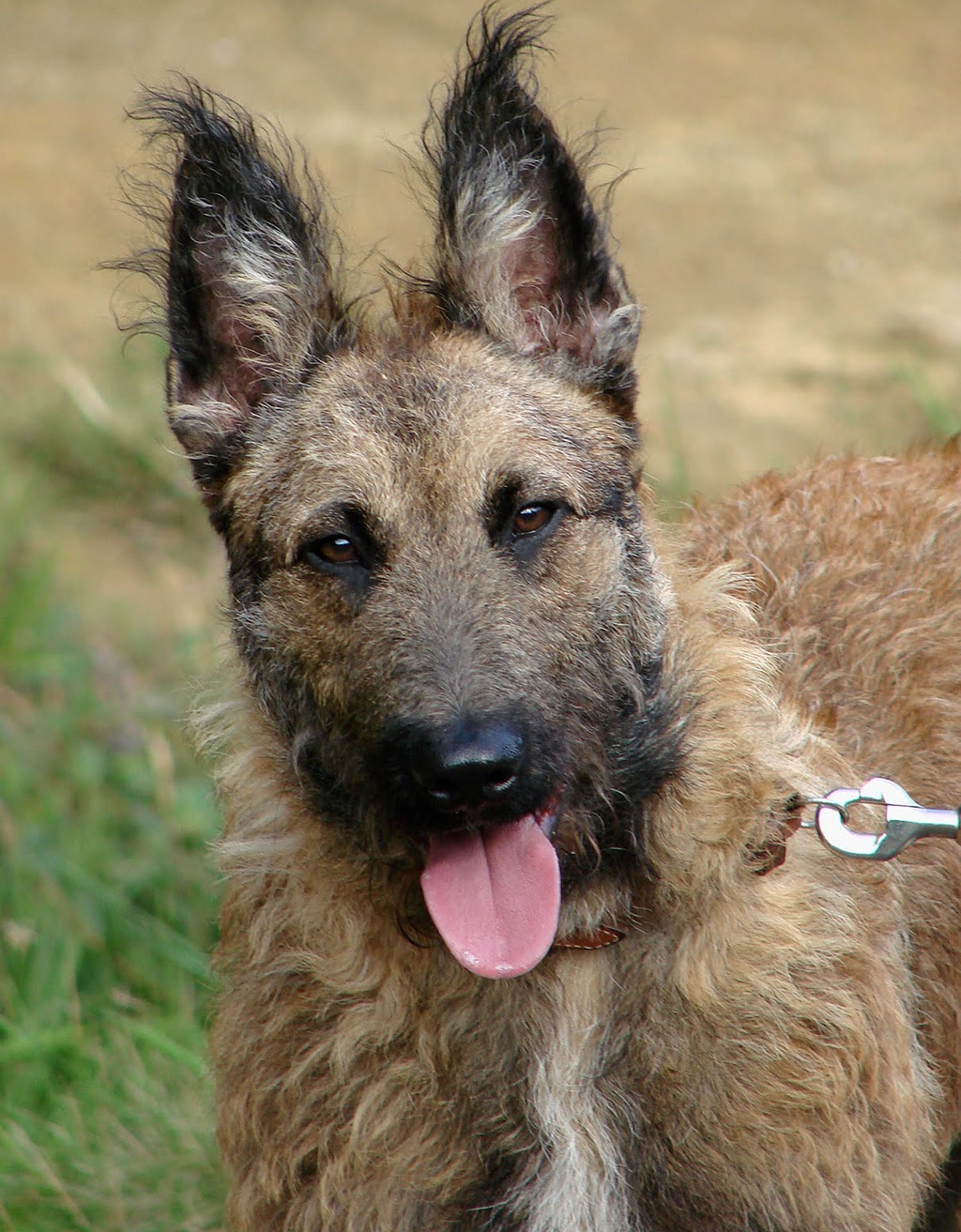
They have the ears triangular and rigid, the tail it is long and usually falls when it is at rest and when they are in action, in high.
The eyes in, the four varieties, Belgian Shepherd are small and dark.
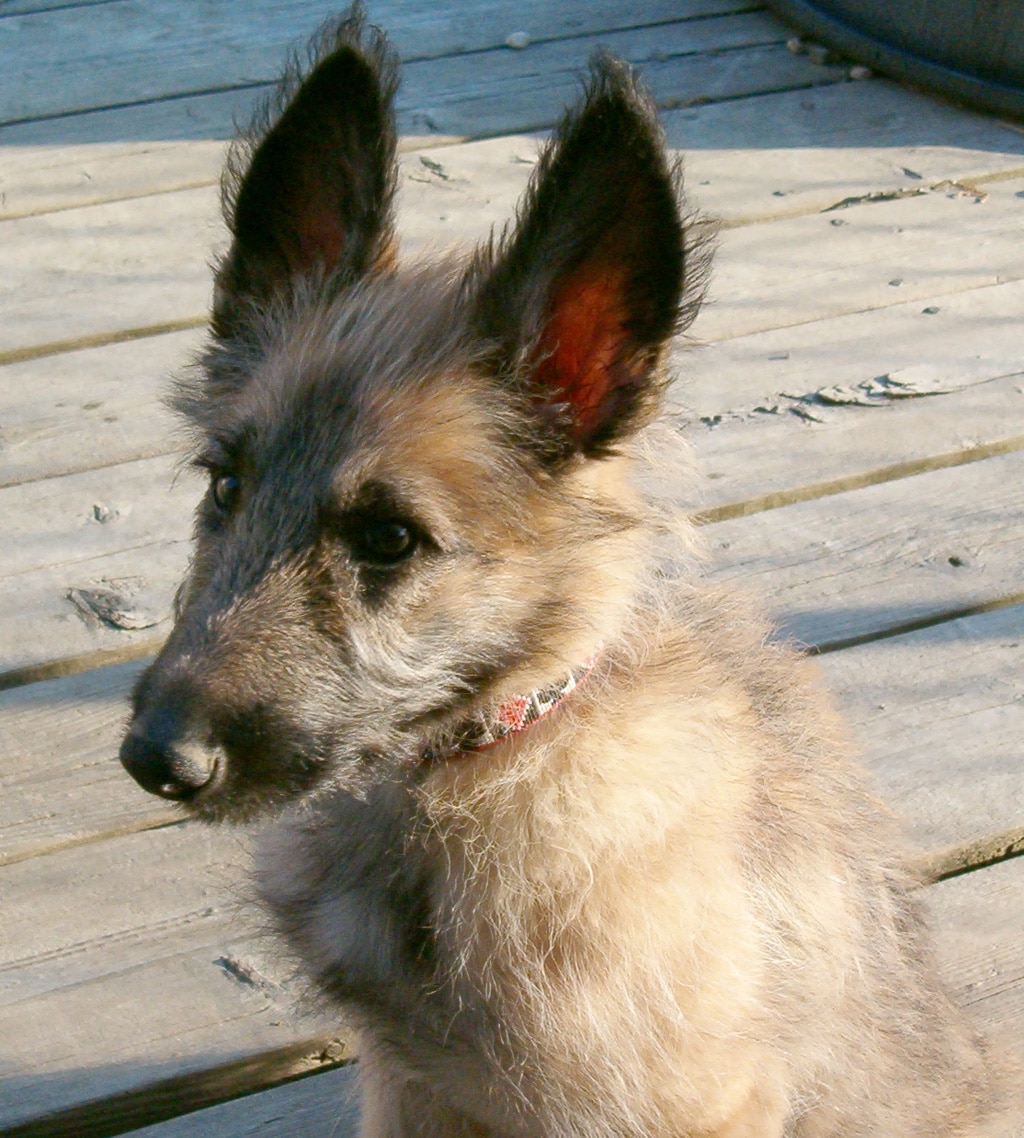
The most significant feature of the Laekenois, is your hard, tawny fur, pretty hairy and with out aspect.
The the mantle Brown intermingled with black but configuring a homogeneous color (carborane Brown). Most of the most prestigious kennel clubs admit within the standard a somewhat more prominent black shading on the snout and tail..
As well, supports a small white patch on the chest and should be darker mask.
finally insist, in terms of physical and structural characteristics, the four varieties share a standard and the only thing that differs radically is in the type of coat.
In so far as the temperament, If there are certain differences but not significant.
The Belgian Shepherd Laekenois is a dog lively, always alert, obedient and very fell. He is brave, Intelligent.
in your country of origin, in general, dogs Belgian Shepherd, They are often used as police dogs.. But nowadays, they have gained much popularity as a family dog.
Within the family, is a dog playful and joyful always seek contact with the children, She loves.
The Belgian Shepherd Laekenois, they can compete in agility, obedience, show, flyball, tracking, and it can be trained to compete in herding trials.
But of the four varieties, to be the dog that has the least spectacular mantle, Everytime unimportant in contests and movie buff general worldwide.
There is a little exemplary nervous that usually give some problem in defense work because they have an excess of mistrust, but with good training there will be no problem.
 fotosanimais
 lowongandi.com
 tuamigoelperro.es
 Midcoast.com
 zarkokennels.com
 Midcoast.com
 aboutzoo.NET
 aboutzoo.NET
Belgian Laekenois / Belgian Shepherd Dog (Laeken) / Chien de Berger Belge / Berger Belge Laekenois
| FCI - Belgian Shepherd Laekenois |
|
 Belgian Shepherd Dog Groenendael «Satur»-Zucchero Wonderful Life
 The Belgian Sheepdog – Chapter 1
 Ovejero Belga Groenendael Juega con su dueño – Belgian Shepherd
 Devil, Belgian Groenendael Puppy pt 1
 Belgian Shepherd Laekenois. Belgian Shepherd Laekenois.
 Laekenois (Beco Industries)
 Greaser with ball
 De Laekense v't Brugske