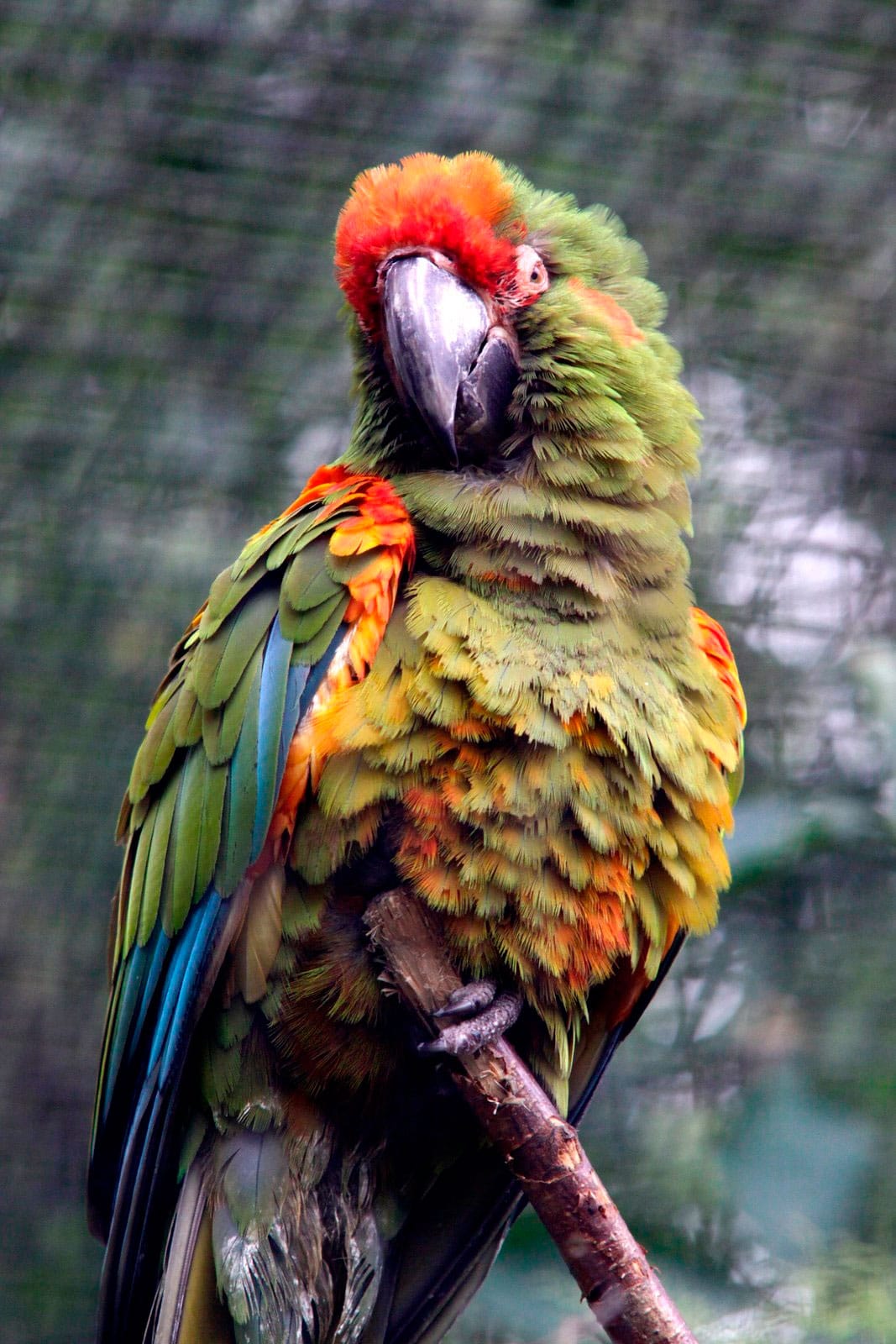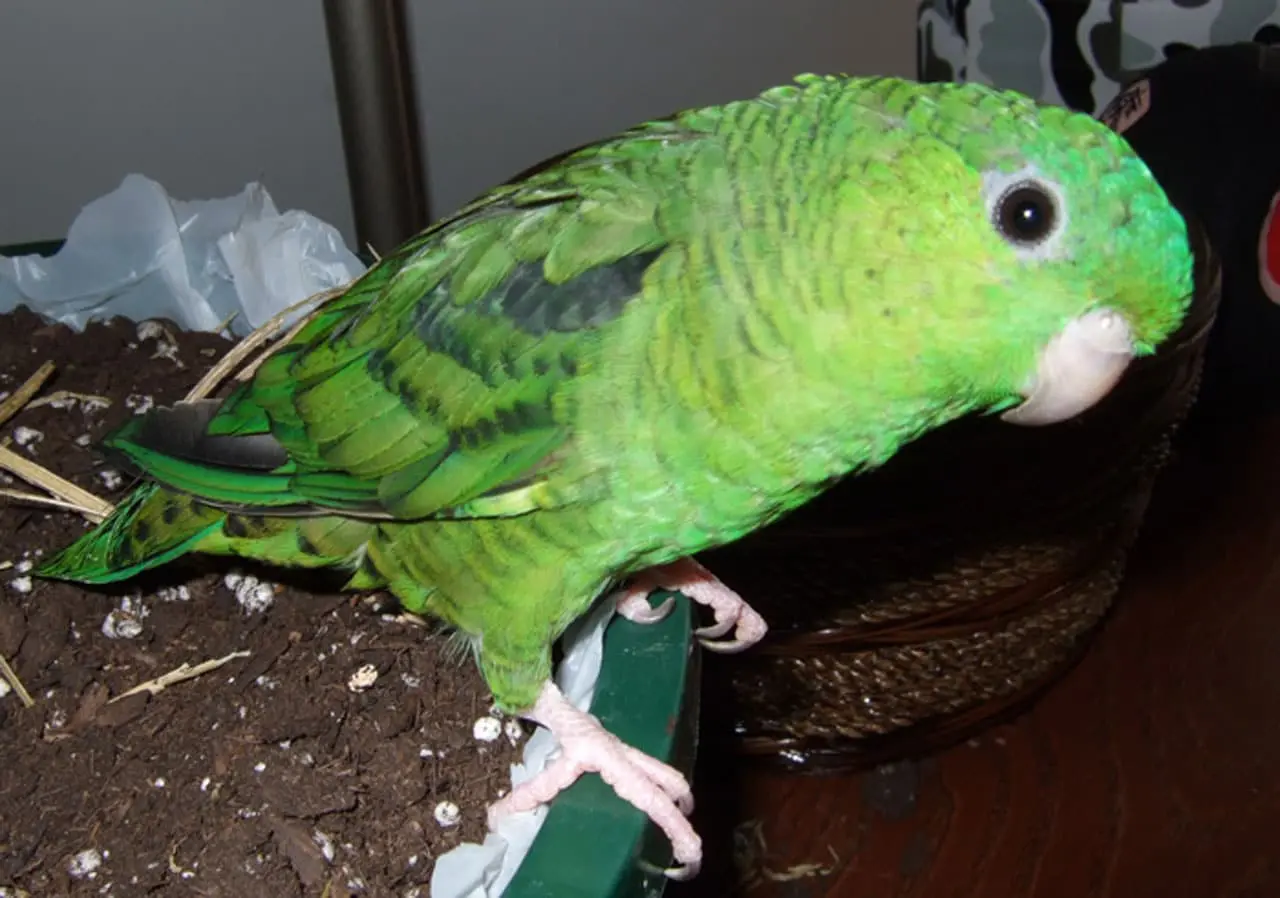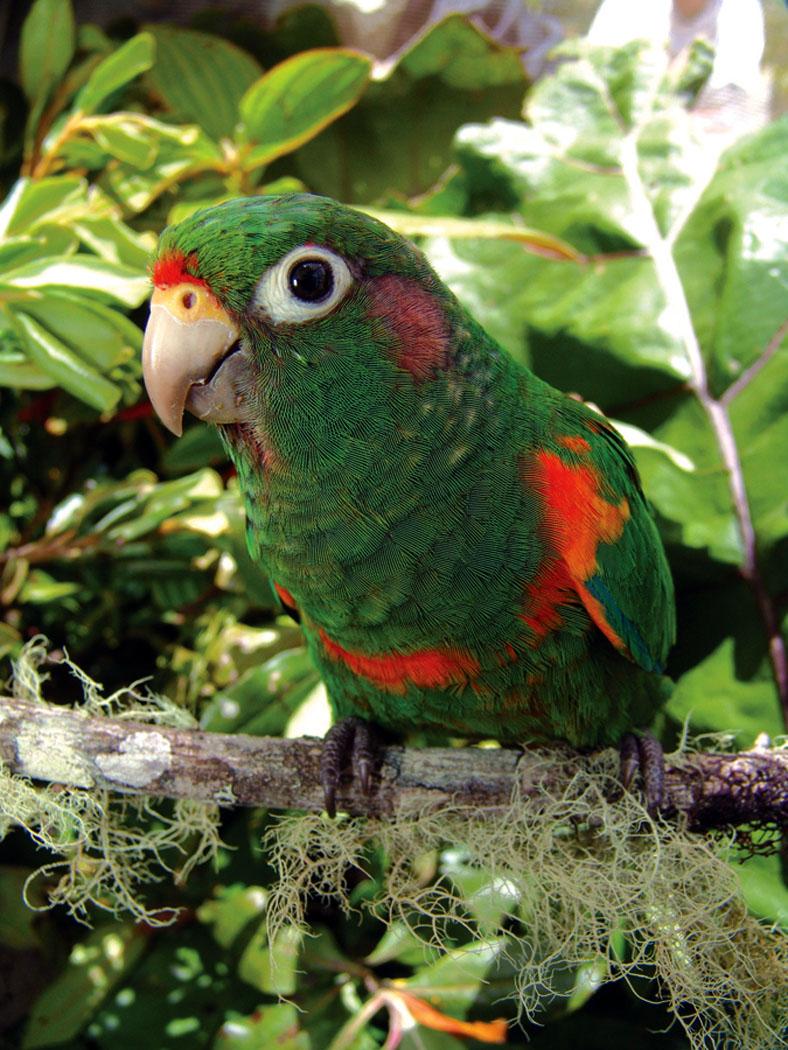
โ–ท The world of Pets: Dogs, cats, birds, reptiles, amphibians

Malherbe's parakeet
Cyanoramphus malherbi

Malherbe's parakeet

Content


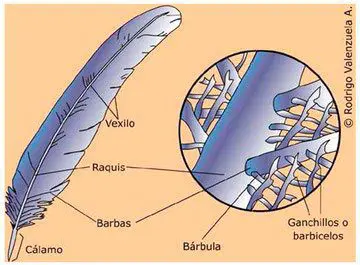
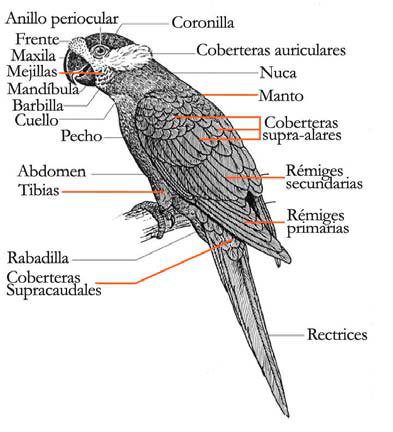
Anatomy-parrots

Description

19 to 22 cm. length and a weight between 40 and 52 grams for males and between 30 and 41 grams for females.

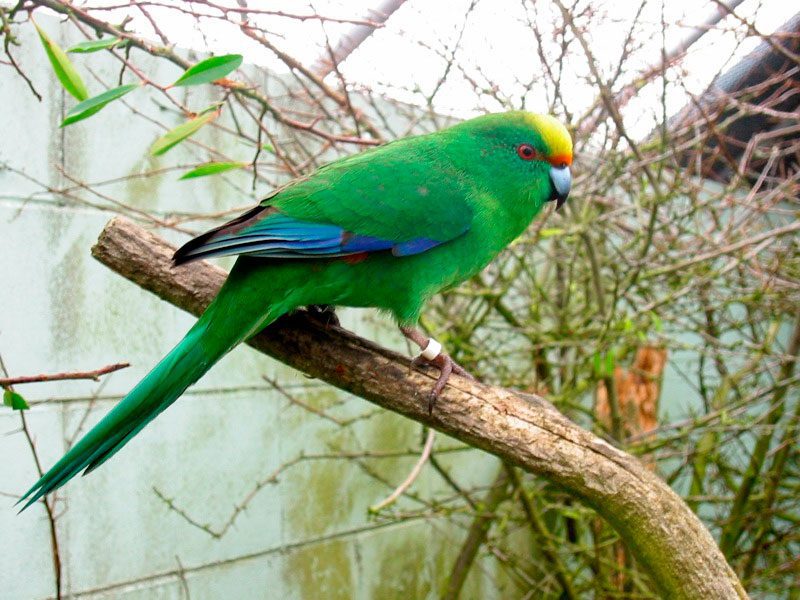
The Malherbe's parakeet (Cyanoramphus malherbi) they are small bright green parakeets, equipped with a long tail and with a bluish green colour wash in belly and chest.

The wings they have the primary coverts and the edges to the primary external of azure-blue. The crown is lemon-yellow colour and the front band, it reaches the eyes, is orange, as well as two patches on each side of the rump.

The bill is bluish grey, with the tip of black. The eyes are red and the legs are brown.

The colors tend to have a brighter tone in the males.

The youth they are more opaque, especially the patch of front band and the crown, which may be absent. The tail It is short for several weeks after feather. The bill is a pale pink color that darkens gradually when the young bird matures. They have darker the eyes, a reddish brown tone.

Habitat:

The Malherbe's parakeet tends to be quiet and hard to see. A brief and loud chatter or a quieter soft contact call can denote its presence, but locating the bird can be extremely difficult. The Malherbe's parakeet often confused with the Yellow-crowned parakeet.

Even though have been recorded in subalpine bushes and thickets of Matagouri open zones (Discaria toumatou), the Malherbe's parakeet they are predominantly in the forest.

They usually feed in the canopy, but also under frequent places with low vegetation and soil.

Reproduction:

The Malherbe's parakeet can reproduce in every month, with a main breeding period between December and April; incubation peak is in January.

Clutch size media is of approximately 7 eggs, but register a wide range (range of 1 to 10). Egg laying is asynchronous with an interval between eggs of 2 days. The incubation lasts from 21 to 26 days, and the period of breeding ranges between 35 and 45 days.

The females They seem to choose the nesting sites, as well as carry out all the preparation, incubation and breeding, the male provides most of the food during incubation.

It is suspected that the female only feeds the chicks during the first 10-14 days, just as they do other species Cyanoramphus. Once past this period, both sexes take care, equally, feeding the pigeons.

There may be second clutches If there is enough food available, for example, during the sowing of beech, or if the first attempt failed. The female may lay a second clutch when first chicks have, approximately, 2 weeks of age. This leaves the male as the sole provider for both the chicks and the incubating female..
Second clutches are not uncommon; When is food plentiful, some couples can reproduce 3 or 4 times on.

The nests are accessed normally through holes in knots of branches and the main trunk of a tree.

They use all species of you have to build the nest, predominantly the Red beech (69% nests monitored in the continent, n = 138) and dead trees (20%).
Nests may have more than one meter of depth. Records placed nests in heights that range between 2,5 and 26 m.

Food:

The Malherbe's parakeet consume seeds, flowers, buds and small invertebrates (mealybugs and caterpillars). In a year of abundance of fruits, the seeds become the dominant element of their diet, and they seem to be the main food for young people.

Invertebrates seem to play an important role in the diet of this species of parakeet which for the Yellow-crowned parakeet.

Distribution:

Size of the area of distribution (reproduction / resident) 360 km2

To the Malherbe's parakeet les is in areas where the South beeches (Nothofagaceae), in forest valleys in the South Island, the valleys Hawdon and Poulter in the Arthur Pass National Park and the South Branch of the Hurunui Valley in Lake Sumner Forest Park. Are unevenly distributed within these valleys; absent in many parts, but in some other places can be quite common.

They have been transferred to four islands: Maud and Blumine in Marlborough Sounds, Chalky Island in Fiordland, and Largest Island / Tuhua on bay of plenty.

Conservation:
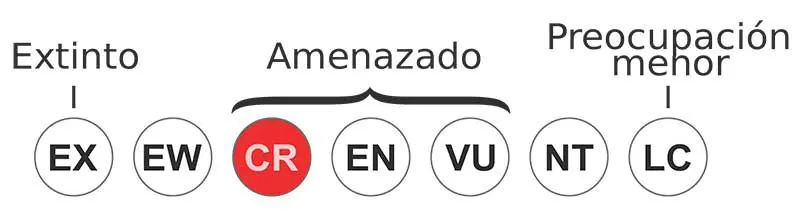

critical hazard


โ€ข Current Red List of UICN: critically endangered

โ€ข Population trend: Decreasing

This species is the smallest of the class Cyanoramphus along with the Yellow-crowned parakeet.
The Malherbe's parakeet It is the kind of rare parrots of New Zealand. The population was wiped out by rats and stoats introduced by men.

Also the changes in the habitat due to the ungulates and opossums they have affected the species.

Some diseases have been discovered in two of the areas in which live.

It is in progress conservation actions such as the predator control in the three valleys of the continent and the protection of the trees hosting the nests.

The captive breeding programs they have helped to release the birds in 4 Islands cleared of predators. This work is still in progress.
On the Mainland, all populations are monitored closely by the Department of conservation.

The total population It was estimated in 290/690 individuals at the beginning of 2013.
The continent has between 130 and 270 specimens and Islands surrounding between 160 and 420.

"Malherbe's parakeet" in captivity:

Usually they are not in captivity.

A small captive breeding program was established in 2003.

Alternative names:

Malherbe’s Parakeet, Alpine Parakeet, Malherbe’s Parrot, Orange-fronted Parakeet (English).
Perruche de Malherbe, Kakariki de Malherbe (French).
Malherbesittich (German).
Kakariki-fronte-laranja (Portuguese).
Perico Maorรญ Montaรฑรฉs, Perico Maorรญ Montano (espaรฑol).

scientific classification:

Order: Psittaciformes
Family: Psittaculidae
Genus: Cyanoramphus
Scientific name: Cyanoramphus malherbi
Citation: Souancรฉ, 1857
Protonimo: Malherbe's Parakeet

Images ยซPerico Maorรญ Montanoยป:

Videos "Malherbe's parakeet"

ยซPerico Maorรญ Montanoยป (Cyanoramphus malherbi)

Sources:

  • Avibase
  • Parrots of the World โ€“ Forshaw Joseph M
  • Parrots A Guide to the Parrots of the World – Tony Juniper & Mike Parr
  • Birdlife

  • Photos Perico Maori Montano:

(1) – This is one of several birds being bred in captivity at Isaac Peacock Springs wildlife refuge.
Christchurch, New Zealand By Jon Sullivan from Christchurch, New Zealand [CC BY 2.0], via Wikimedia Commons
(2) – Orange-fronted parakeet. Adult male in captivity. Isaacs Wildlife Trust, Christchurch. Image ยฉ John Kearvell by John Kearvell – nzbirdsonline
(3) – Orange-fronted parakeet. Captive adult female. Isaacs Wildlife Trust, February 2012. Image ยฉ Sabine Bernert by Sabine Bernert www.sabinebernert.fr – nzbirdsonline
(4) – Orange-fronted parakeet. Juvenile feeding. Nelson, January 1983. Image ยฉ Department of Conservation (image ref: 10028825) by Dave Crouchley, Department of Conservation Courtesy of Department of Conservation – nzbirdsonline
(5) – Orange-fronted parakeet. Adult male (left) and female in captivity. Isaacs Wildlife Trust, Christchurch. Image ยฉ John Kearvell by John Kearvell – nzbirdsonline

โ–ท The world of Pets: Dogs, cats, birds, reptiles, amphibians

Red-bellied Parrot
Poicephalus rufiventris


Lorito Ventrirrojo

Content

Description:

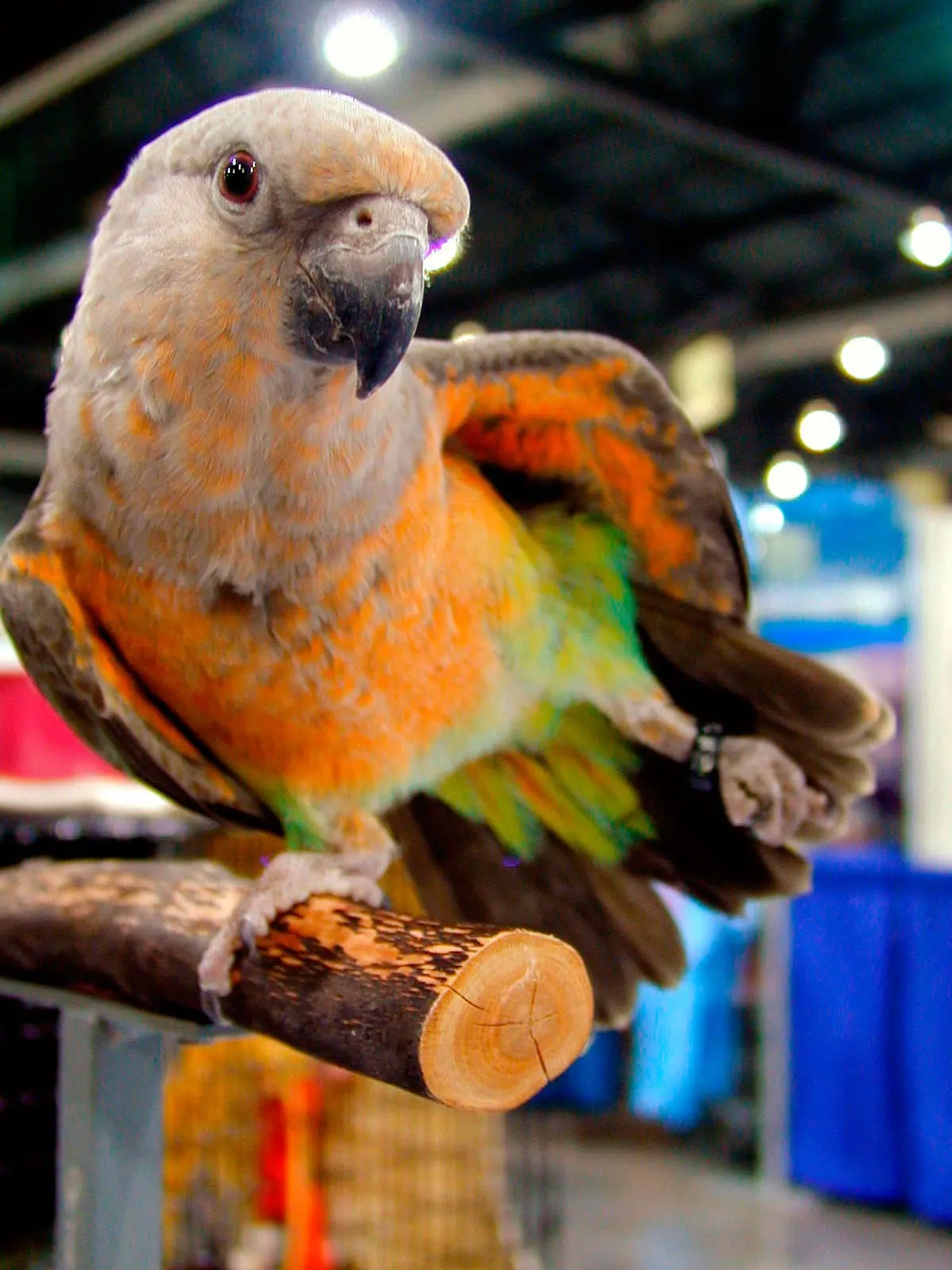
22 cm.. length and an average weight of 130 g..

The Red-bellied Parrot (Poicephalus rufiventris) has the crown, nape and lores brown ash, the cheeks sometimes with orange tips; ear-coverts slightly paler. Mantle and scapulars brown ash; the back blue-black; rump iridescent pale blue or bluish green. Upper, the wings slightly darker than the head and back: the primaries brown. Under, the feathers of orange wings; underside of feathers Light brown flight. Throat and the chest ash brown with orange tint; top of the chest orange; belly up to undertail- coverts pale green sometimes shows Orange-tinged feathers. Tail dark brown ash.

Bill, cere and orbital skin black; irises orange-red; legs black.

The female You have the upper chest grey, the pale green underside sometimes dyed orange. The head paler and grayer than male. Feathers of the wings greyish.

Immature, generally, similar to females, but the young males have orange feathers Wings below and can show brown marks on the chest.

Description 2 subspecies:

  • Poicephalus rufiventris pallidus

    (Someren, 1922) – head of color Brown and throat clearer than the one of the species nominal..


  • Poicephalus rufiventris rufiventris

    (Ruppell, 1842) – The species nominal.

Habitat:

Usually associated with semiarid vegetation, including areas of dry scrub and forest steppe Acacia Commiphora. It tends to avoid the dense foliage and, often it perches on dead branches.

In the south of the range, He prefers savannas Adansonia.

Where it is sympatric with the Meyer's Parrot (West range) the Red-bellied Parrot riparian forests and avoid living in the most open savannas.

In Ethiopia They can be observed in areas of savannah Acacia-Chrysopogon, up to 2,000m. altitude.

In Somalia They are subject to seasonal altitudinal movements in relation to the food supply, moving in altitude of about 2,000m from July to September in search of wild figs Ficus. Otherwise, generally below 1,400m.

Usually, seen in pairs or in family groups 3-4 birds; rarely in larger flocks.

Reproduction:

Nest in cavities within terrestrial termite mounds, between 2 and 3 meters above ground or 10 meters or more, in some dead tree.

The female incubates the eggs while the male goes in search of food, these eggs hatch after a few 28 days and start flying to the 60 days after hatching.

A female was recorded under breeding conditions during the month of March (Tanzania) and feeding immature in July and October. Registered one laying in the months of May and June Ethiopia; In Somalia, between January and May; also recorded half-grown chicks in January. In Somalia in colonial times, with individual couples baobab, between 100 and 200 meters away. The implementation is of 1 to 2 eggs.

Food:

They feed on, besides the figs, seed (including Acacia), fruits of Egyptian balanites, Cordia ovation and Dalbergia melanoxylon, including the corn.

They drink frequently and often they can be found near the water.

Due to the limited food that is in their respective regions, the Red-bellied Parrot They reach the fields and harvest crops eaten, so they are often hunted by farmers.

Distribution:

Size of the area of distribution (reproduction / resident): 1.540.000 km2

endemic to eastern Africa, from the North-East of Tanzania, eastern and northern Kenya, in the horn of africa in the southern and eastern Ethiopia (included Rift Valley) and western and northern zone Somalia.

Usually common within its range. Absent in the coastal lowlands, mainly sedentary with seasonal movements in some areas.

Distribution 2 subspecies:

  • Poicephalus rufiventris pallidus

    (Someren, 1922) – It is found exclusively in eastern Ethiopia.


  • Poicephalus rufiventris rufiventris

    (Ruppell, 1842) – The species nominal.

Conservation:


minor concern


โ€ข Current Red List of UICN: Least concern

โ€ข Population trend: Stable

The Red-bellied Parrot It is included in the Appendix II according to CITES (The Convention on International Trade in Endangered Species of Wild Fauna and Flora) from 1981 and established as a lesser concern in the Red List of Threatened Species of the UICN since the population has fallen by more than 30% in the last 10 years. The Red-bellied Parrot it began exporting significant quantities primarily in Tanzania over the years 80. Years before it began to export to Great Britain in very small quantities.

"Red-bellied Parrot" in captivity:

In captivity is rare, although Spain Some important breeding centers have managed to bring them up without difficulty. This parrot can be purchased directly from a specialized breeding.

What pet They are very cheerful, Playful, Intelligent and affectionate, a generally peaceful nature.

They are not very noisy. He likes to climb and climb, great need to crack and it is always advisable a regular supply of fresh branches. They like to bathe.

With regard to its longevity, according to sources, a specimen lived 33,4 years in captivity.

Alternative names:

Red-bellied Parrot, African Orange-bellied Parrot, Orange-bellied Parrot, Red bellied Parrot (English).
Perroquet ร  ventre rouge (French).
Rotbauch-Mohrenkopf (German).
Papagaio-de-ventre-vermelho (Portuguese).
Lorito de Vientre Rojo, Lorito Ventrirrojo, Loro Abisinio (espaรฑol).

scientific classification:

Order: Psittaciformes
Family: Psittacidae
Genus: Poicephalus
Scientific name: Poicephalus rufiventris
Citation: (Rรผppell, 1842)
Protonimo: Pionus rufiventris

Images "Red Ventriloid Lori":

Videos "Red-bellied Parrot"

"Red Ventriloid Lori" (Poicephalus rufiventris)

Sources:

  • Avibase
  • Parrots of the World โ€“ Forshaw Joseph M
  • Parrots A Guide to the Parrots of the World – Tony Juniper & Mike Parr
  • Birdlife
  • Wikipedia
  • Loromania

  • Photos:

(1) – Red-bellied Parrot; a male juvenile pet parrot on a wooden perch stretching By Ruth Rogers [CC BY 2.0], via Wikimedia Commons
(2) – Mature breeding pair of Red-Bellied Parrots (Poicephalus rufiventris) on a perch in a cage. Picture taken by user:Fruitwerks at home By Fruitwerks at English Wikipedia(Original text: User:Fruitwerks on en wiki) (Transferred from en.wikipedia to Commons.) [Public domain], via Wikimedia Commons
(3) – A adult male pet Red-bellied Parrot perching on a bright red perch. Photography: one SB-600, diffused, hand held to the left and below Joey, fired with CLS, on TTL with no Compensation. By Bram Cymet [CC BY 2.0], via Wikimedia Commons
(4) – Red-bellied Parrot; a juvenile male pet parrot on a wooden perch. Shows back By Ruth Rogers [CC BY 2.0], via Wikimedia Commons
(5) – A Red-bellied Parrot at San Antonio Zoo, USA. In the male the abdomen is red-orange and in the female the abdomen is green, but the abdomen is not visible making it difficult to sex this parrot from the view shown By Zach Welty (originally posted to Flickr as Parrot 2) [CC BY-SA 2.0], via Wikimedia Commons

โ–ท The world of Pets: Dogs, cats, birds, reptiles, amphibians

Blossom-headed Parakeet
Psittacula roseata


Cotorra Carirrosa

Content

Description:

Of 30 to 36 cm.. length between 85 and 90 g. of weight.
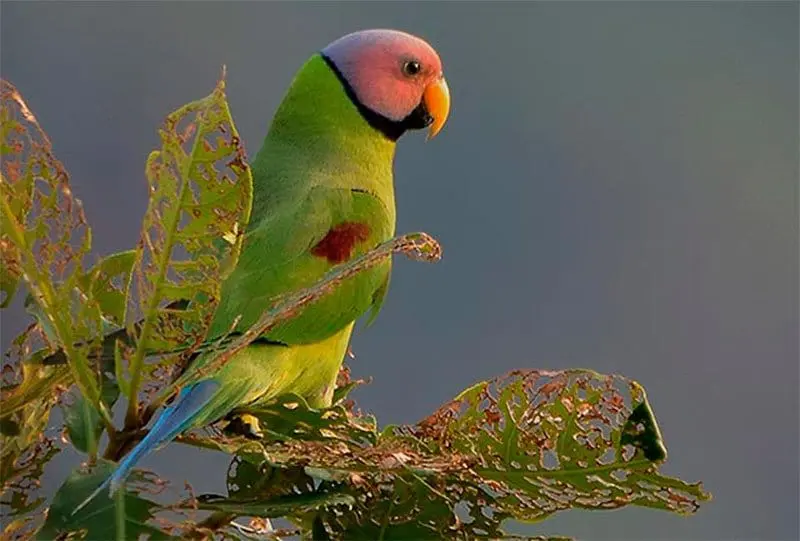
The Blossom-headed Parakeet (Psittacula roseata) has the forecrown, lores, cheeks and ear-coverts mauve-pink, fading to pale blue in the lower cheeks, the sides of neck, the crown and back neck, with broad black "mustache" stripes to form a narrow collar between black blue head and green body; nape bright green fading to a duller green on upperparts.

Upperwing-coverts, mostly green with a brown patch coverts smaller and medium; greater coverts outer and alula darker green. The primaries dark green (darker in vane inner) with a margin yellowish narrow in them vane outer.

Underwing-coverts green. The underparts pale green. Uppertail, centrally bright blue, with creamy white tip; outer feathers green on vane outer, yellowish-green on inner, tipped yellow; undertail-coverts dull yellowish.

Ilustraciรณn Cotorra Carirrosa

upper jaw orange-yellow, the lower black: cere whitish; irises yellowish white; legs gray-green.

The female has the head pale blue-gray, no black "mustache" and collar ring replaced by yellow opaque olive extending from the nape, around the sides of neck; tail slightly shorter. The upper jaw yellow, the lower dark grey.

The immature has the head greenish, the gray tint chin and the bill yellowish to the 15 months, when both sexes develop similar to plumage adult female; the males acquires adult plumage at about 30 months.

Subspecies description

Once considered the same species Psittacula cyanocephala, where he was often wrongly classified as Psittacula cyanocephala rosa.

  • Psittacula roseata juneae

    (Biswas, 1951) – Like species nominal, but the overall color body It is yellower; more extensive stain or red patch shoulder; central feathers tail paler color, side feathers tail yellower.


  • Psittacula roseata roseata

    (Biswas, 1951) – The species nominal.

Habitat:

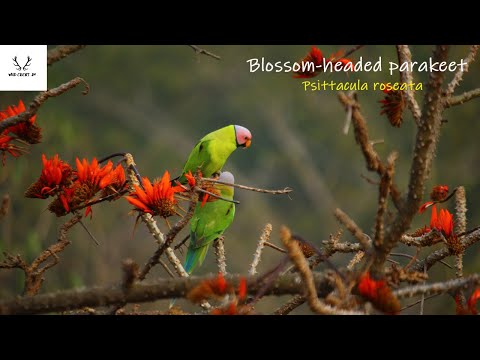
Video – "Blossom-headed Parakeet" (Psittacula roseata)

Blossom-headed parakeet Call / Psittacula roseata / Bird's Call

The Blossom-headed Parakeet inhabit open forests, including Savannah, secondary forests, forest edge, clear and cultivated land. Partially deforested areas persists and seems to prefer forest edges adjacent farm.

Mainly observed in the lowlands to about 1.500 meters above sea level. Usually, in small flocks, form larger congregations where food is plentiful. He joins mixed flocks with Rose-ringed Parakeet, the Plum-headed Parakeet and Red-breasted Parakeet and form communal roosts in dense vegetation.

Reproduction:

The nests This species is found in tree cavities, usually at a moderate height; they can dig the hole themselves or modify old nests of other species (for example, woodpeckers or barbets).

Nest usually in colonies of several couples. The laying is of 4-5 (rarely six); eggs are more spherical than those of other congeners. The breeding season It is from January to April (May sometimes).

Food:

Foods are reported: wild flowers and Granada, nectar, including grain sorghum and corn, fruits such as figs and apricots, red peppers and chard seeds. Their diet is very similar to the Plum-headed Parakeet.

Distribution:

Distributed by the foothills of Himalaya Oriental until Indochina. Of Sikkim (India) and South of Bhutan through Assam until Bengal and Bangladesh and east along the north and center Burma, South of China (Yunnan, Guangxi and Guangdong province), Thailand, Laos, Kampuchea and Viet Nam.

Mainly sedentary with seasonal movements in southwest Burma, where Blossom-headed Parakeet They are common in the months of March and April, but otherwise few months, generally common despite apparent decline in some areas (for example, Thailand and Burma), mainly due to large-scale deforestation, and persecution. Few in Viet Nam.

Resident but with some local movements in relation to the food supply.

Held captive and apparently the subject of strong catch in some parts.

Subspecies distribution

  • Psittacula roseata juneae

    (Biswas, 1951) – From East Bangladesh to the North of Burma and east through southern China, Thailand, Laos, Kampuchea and Viet Nam.


  • Psittacula roseata roseata

    (Biswas, 1951) – The species nominal.

Conservation:

State of conservation โ“˜


Near-threatened Near Threatened โ“˜ (UICN)โ“˜

โ€ข Current Red List of UICN: Near-threatened

โ€ข Population trend: Decreasing

This species has been upgraded from Least concern due to new information on population trends. It is listed as Near-threatened on the grounds that it is experiencing rapid moderate decline due to habitat loss, unsustainable levels of exploitation and hunting pressure.

This species has suffered greatly loss of habitat (Forshaw 2006), What, in combination with capture for trade bird cage and general persecution as a pest, have caused the Blossom-headed Parakeet it becomes rare or rare in Thailand (pit et to the. 1997, Juniper and Parr 1998) and Myanmar (Juniper and Parr 1998).

The size of the world's population has not been quantified, but the species according to sources, has a population variable through its range

International trade records showed that 836 birds were exported between 1981 and 1985, but this increased to 6.873 birds between 1986-1990, mainly Viet Nam and Thailand (pit et to the. 1997).

In Laos, habitat encroachment has been so severe in the lowlands, few remaining areas large enough so that the nests Blossom-headed Parakeet they can escape from theft, and there is little active effort to reduce this pressure (JW Duckworth in litt. 2013).

In Cambodia, changes in land use in the lowlands have been too quickly (RJ Timmins in litt. 2013), and it is expected that the intended conversion bosque deciduous Dry for agribusiness plantations may cause a decrease of 30% or more in the national population of this species in the next 20 years (F. Goes in some. 2013).

Actions ongoing:

    The species is known to occur in some protected areas, as the Kirirom National Park, Cambodia (F. Goes in some. 2013).

Conservation actions proposed:

    – Conduct periodic surveys to track broad population trends.
    – Monitor the rates of loss and degradation of habitat.
    – Quantify the impact of harvesting for trade.
    – List CITES listed species.
    – Increase the area of รขโ‚ฌโ€นรขโ‚ฌโ€นsuitable habitat that are protected.
    – Carry out awareness raising activities to discourage theft of nests and capture.

"Blossom-headed Parakeet" in captivity:

The Blossom-headed Parakeet It is a rare bird and very expensive, requiring experienced breeders. Immature of this species are nearly identical to those of the Slaty-headed Parakeet and Plum-headed Parakeet, so when buying an immature Blossom-headed Parakeet, be sure to do so only from a reputable breeder.

To ensure breeding success, each partner should have their own aviary. No house them with Plum-headed Parakeet wave Slaty-headed Parakeet, in order to avoid hybridisation.

The Blossom-headed Parakeet, generally, they are not aggressive with other smaller birds, usually calm and they are not very destructive to wood. The female is, usually, the dominant bird; reach breeding age at about the age of 3 years. New pairs should be introduced several months before the start of the breeding season so that the birds have enough time to establish a strong bond with each other.. A good pair bond will usually translate into better breeding results.. However, are very difficult birds to breed in captivity.

Since Blossom-headed Parakeet It is so rare, we should consider well managed breeding programs, before acquiring one of these copies for your particular pet enjoy. This Parrot You need constant training and behavioral counseling from an early age to ensure its potential owners the enjoyment of a free bird destructive habits and annoying.

Alternative names:

Blossom-headed Parakeet, Blossom headed Parakeet, Eastern Blossom-headed Parakeet (English).
Perruche ร  tรชte rose (French).
Rosenkopfsittich (German).
Periquito-de-cabeรงa-rosa (Portuguese).
Cotorra Carirrosa, Cotorra de Cara Rosada (espaรฑol).


scientific classification:

Dr. Biswamoy Biswas
Dr. Biswamoy Biswas

Order: Psittaciformes
Family: Psittaculidae
Genus: Psittacula
Scientific name: Psittacula roseata
Citation: Biswas, 1951
Protonimo: Psittacula roseata


Blossom-headed Parakeet Images:


Especies del gรฉnero Psittacula

Sources:

Avibase
– Parrots of the World โ€“ Forshaw Joseph M
– Parrots A Guide to the Parrots of the World – Tony Juniper & Mike Parr
– Birdlife

Photos:

(1) – Rose-headed Parakeet in Guwahati, Assam, India By ยฉ Raj Kamal Phukan – Oriental Bird Images
(2) – Psittacula roseata blossom headed parakeet – Birds-pet-wallpapers
(3) – Blossom-headed Parakeet (Psittacula roseata) by Elite-Pets
(4) – Juvenil Blossom-headed Parakeet (Psittacula roseata) by desbecsetdesplumes
(5) – Blossom-headed Parakeet (Psittacula roseata) in Tenerife – Loro Parque – link
(6) – Birds of Asia, Vol. V, Parts XXV-XXX, by John Gould, 1873-1877. Painted by John Gould & Henry C. Richter [Public domain], via Wikimedia Commons

Sounds: Frank Lambert (Xeno-canto)
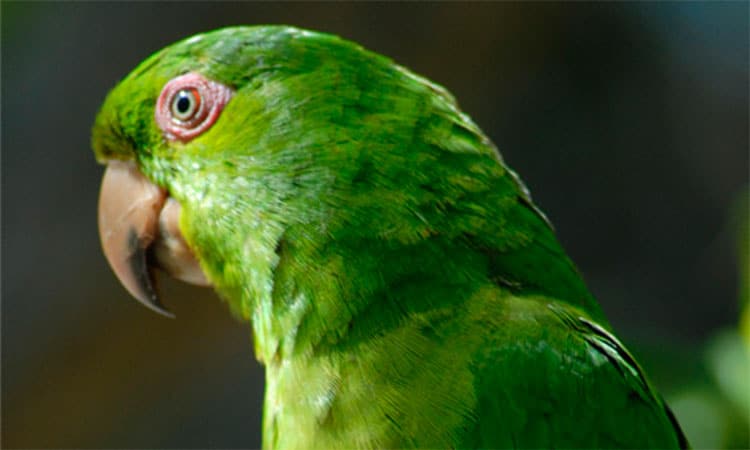
โ–ท The world of Pets: Dogs, cats, birds, reptiles, amphibians

Red-fronted Macaw
Ara rubrogenys


Guacamayo de Cochabamba

Content

Description:

Ilustraciรณn Guacamayo de Cochabamba

Approximately from 55 cm.. length and 525 g. weight.

The Red-fronted Macaw (Ara rubrogenys) they are the smallest of the large macaws.

They have forecrown, former Lords, crown and some ear-coverts bright orange red. back of the crown, nape and the mantle olive green color orange color in some feather-tipped; scapulars color marron-oliva; rump and uppertail-coverts olive green, pale that the of the the mantle. Lesser coverts, bend of wing and carpal edge orange-red; median olive green, some pale orange tips, the outermost impregnated blue; greater coverts mostly blue, back more olive at the body; vane outer primary blue, olive green internal.
Underwing-coverts juvenile red-orange, remaining the rest of green olive beige.

The underparts olive green with the the thighs red. Upper, the the tail feathers color olive green suffusion blue tip blue and; undertail, olive green yellowish.

The bill dark grey; the bare area of the subsequent Lords and upper cheeks, white crossed with narrow lines of dark brown feathers; Orange the irises; perioftalmico ring white; legs dark grey.

Both sexes similar.

Immature more opaque, with less extensive orange-red color in the head and in the ear-coverts and without the orange-red in the wing .

Habitat:

The Red-fronted Macaw It is very selective in searching for its preferred habitat.. It prefers subtropical scrubland areas Xeric or semi-desert with many Cactus (including Cereus, Neocardenasia, Cleistocactus, Echinopsis, Opuntia, Quiabentia and the endemic Lobivia caineana) and areas with scattered trees and shrubs (especially legumes including species Prosopis kuntzei, Acacia aroma, Cnidoscolus and Schinus molle).

Another fundamental characteristic of the habitat of the Red-fronted Macaw they are the steep slopes and coastal cliffs unchanged to that used for nesting and roosting sites.

Often share space with communities of farmers who used the land of valleys with climates mesothermic to plant peanuts, corn and other cereals, the same people who are part of the diet of the Red-fronted Macaw.

They are birds social and rarely stands alone. Are often seen flying in small groups of 3 to 5 individuals. For most activities such as feeding or roosting they congregate in large groups of 20 to 30 individuals. They rest frequently during the middle of the day in the hottest hours. Activity level largely depends on age and number of macaws in the group.

Reproduction:

Observed nests loose or in colonies in ravine holes on the banks of rivers. In rainy season the egg laying It has been reported in the months November-April. They are of 1 to 3 eggs per season, usually two, and incubation lasts around 26 days. Most pairs fledge one young per year..

They form bonds of monogamous they maintain throughout the year. Even in the off-season of breeding, the copula and preening appear exclusively between the consolidated couple, presumably to maintain their bond.

Generally speaking they are not territorial, but during the breeding season You can defend the area surrounding the cavity of the nest.

Food:

The diet of the Red-fronted Macaw It includes various seeds and fruits which include the genera of plants Cenchrus, Tribulus, Cnidoscolus, legumes Prosopis kuntzei, P. juliflora, Prosopis chilensis, trees and shrubs of the genus Aspidosperma, Schinus molle, Ziziphus mistol and Jatropha ricinifolia.

But, natural food is often scarce and birds feed on, to a large extent, of crop plants, especially the peanuts Arachis hypogaea and corn unripened.

Distribution:

Size of the area of distribution (reproduction / resident): 27.100 km2

The Red-fronted Macaw being endemic to a small area in the East of the Andes, in the Center-South of Bolivia, from the South of Cochabamba and West Santa Cruz, passing by Chuquisaca, to the East of potosi, mainly in the valleys of Rio Grande, Mizque and Pilcomayo.

The full range estimate is of 20,000 kmยฒ, with 18,000 kmยฒ in Grand / system of Mizque and 2.000 kmยฒ in the valley of the Pilcomayo, between 1.100 and 2.500 m (local after breeding at 3,000m).

They perform many Local movements in response to the availability of food.

Locally common, but declining and endangered at the global level.

Conservation:

โ€ข Current Red List of UICN: Danger

โ€ข Population trend: Decreasing

The population of the Red-fronted Macaw (Ara rubrogenys) is estimated between 1.000-4.000 individuals, more or less equivalent to a strip between 670-2,700 mature individuals.

This species has a very small population and decreasing. Conservative estimates suggest that all subpopulations are extremely small. So, qualified as endangered.

Conservation status:

Is located in the Appendix I to the International Convention on the trafficking of endangered species of Fauna and Flora (CITES). Its capture, transport and export is prohibited by Bolivian law. However is captured by live bird catchers for the illegal trade and is pursued in an intensive way for the farmers that the consider a plague for their corn and peanut crops.

Its natural habitat It is being impaired activities human unsustainable as indiscriminate logging and grazing goats envelope. Approximately the 40% of the natural vegetation of the valleys inhabited by these macaws have been converted into agricultural land since 1991. As native vegetation is losing the exhibition of the Macaw of Cochabamba in the growing areas to search for food is greater. The continuous illegal capture, most of the illegal trade is domestic but some species are marketed in Peru.

Conservation measures:

The presence of small populations inside national parks Amboro and Torotoro, they constitute an effective conservation measure.

The Harmony Association It has a long range project in the Mizque River through which it works with peasant families to protect nesting cliffs.

in addition, in 2006, a was opened ecotourism stay that promotes conservation of this bird in time of generating profits for the local community; It also plans to establish a protected area in that site. Additionally, in 1992, 5000 posters of protection of this species and its habitat were apparently well received in the region, as a secondary measure to preserve it.

"Red-fronted Macaw" in captivity:

Uncommon in captivity.

It is an extremely intelligent and curious bird that has the ability to imitate the human voice, Although the indigenous people of Bolivia refer to them as "donkey birds", due to their inability to speak. All skills require a training; holders of these birds breeders give proof of how easy it is to talk.

With regard to its longevity, according to sources, a pair of these macaws still breed after 23 years in captivity. It has been reported that these animals can live up to 36,2 years in captivity, something possible, but that has not been verified; the same study reported that these animals can reproduce at the age of 3 years in captivity.

Due to the few specimens that are released and their situation in danger of extinction, The Red-fronted Macaw only recommended for experienced handlers and breeders.

Alternative names:

Red-fronted Macaw, Lafresnaye’s Macaw, Red fronted Macaw, Red-cheeked Macaw (English).
Ara de Lafresnaye, Ara rubrogenys (French).
Rotohrara (German).
Arara-de-fronte-vermelha (Portuguese).
Guacamayo de Cochabamba, Guacamayo Dorado, Guacamaya frente roja (espaรฑol).
Paraba frente roja (Bolivia).
Qaqa Loro (Quechua).

Frรฉdรฉric de Lafresnaye

scientific classification:


Order: Psittaciformes
Family: Psittacidae
Genus: ARA
Scientific name: Ara rubrogenys
Citation: Lafresnaye, 1847
Protonimo: Ara Rubro-woodpecker


Images Red-fronted Macaw:

Videos "Red-fronted Macaw"

————————————————————————————————

ยซGuacamayo de Cochabambaยป (Ara rubrogenys)


Species of the genus Ara


Sources:

Avibase
– Parrots of the World โ€“ Forshaw Joseph M
– Parrots A Guide to the Parrots of the World – Tony Juniper & Mike Parr
– Birdlife

Photos:

(1) – Red-fronted Macaw at Berlin Zoological Garden, Germany. Some of the tail feathers are not clean By Konstantinos K [CC BY 2.0], via Wikimedia Commons
(2) – Two Red-fronted Macaws at Tulsa Zoo, Oklahoma, USA By originally posted to Flickr at Tulsa Zoo – Parrots and uploaded to Commons at Ara_rubrogenys_-Tulsa_Zoo,_Oklahoma,_USA-8a.jpg: Doug Wertman from Rogers, AR, USAderivative work: Snowmanradio (Ara_rubrogenys_-Tulsa_Zoo,_Oklahoma,_USA-8a.jpg) [CC BY 2.0], via Wikimedia Commons
(3) – A Red-fronted Macaw at Wilhelma Zoo, Stuttgart, Germany By Kathrin GaiรŸer (PapageiUploaded by snowmanradio) [CC BY-SA 2.0], via Wikimedia Commons
(4) – A Red-fronted Macaw flying at Douรฉ la Fontaine zoo, France By frank wouters (originally posted to Flickr as papegaai) [CC BY 2.0], via Wikimedia Commons
(5) – Red-fronted Macaw (Ara rubrogenys) head By Benjamin Graves (originally posted to Flickr as Red Fronted Macaw) [CC BY 2.0], via Wikimedia Commons
(6) – Red-fronted Macaw (Ara rubrogenys) on a branch in the foreground By derivative work: Snowmanradio (talk)Red-fronted_Macaw_(Ara rubrogenys)_-on_branch.jpg: Balaji Dutt M V [CC BY 2.0], via Wikimedia Commons
(7) – Red-fronted Macaw in the Walsrode Bird Park, Germany By Quartl (Own work) [CC BY-SA 3.0], via Wikimedia Commons
(8) – A Red-fronted Macaw at Jurong Bird Park By Peter Tan (Red-fronted MacawUploaded by Snowmanradio) [CC BY-SA 2.0], via Wikimedia Commons
(9) – Red-fronted Macaw – Jurong BirdPark, Singapore By Doug Janson (Own work) [CC BY-SA 3.0 or GFDL], via Wikimedia Commons
(10) – Illustration Ara rubrogenys (Red-fronted Macaw) by Marc Athanase Parfait Oeillet Des Murs [Public domain], via Wikimedia Commons

Sounds: (Xeno-canto)

โ–ท The world of Pets: Dogs, cats, birds, reptiles, amphibians

Socorro Parakeet
Psittacara brevipes


Aratinga de Socorro

Content

Description:


Anatomy-parrots

Approximately from 33 cm.. length, and a weight of 140 g.
The Socorro Parakeet (Psittacara brevipes) is a medium Parrot with the plumage bright dark green, with the crown, the forecrown and lores grass-green, the sides of neck slightly brighter, the head and the neck, sometimes with one or more scattered feathers of orange-red. The upperparts are green grass, slightly brighter in the area of the rump. Upperwing-coverts herb with bluish green in the outside greater coverts. Primaries and secondaries Green in the part superior with tint blue in them vane outer; olive Oliva-Amarillo down. Underwing-coverts green. Underparts grass-green. Above, the tail dark green, by down color yellowish olive.

The bill color horn; eye ring pale beige; irises orange yellow or orange; legs yellowish brown.

Aratinga de Socorro

Gender-related differences are unknown although the immature has irises Brown color.

NOTE:

  • The Socorro Parakeet It is often considered a subspecies of the Green Parakeet. But, Howell and Webb They presented evidence that supports the separation of the species from the other subspecies of Aratinga holochlora. They found that the bill of the Socorro Parakeet is larger than, and noticed differences in the color of the skin of the eye ring, also has a Wing formula different, the tenth primary feather It is shorter than the seventh and Green Parakeet is the reverse. Both species also differ in the vocalization, calls of the Green Parakeet they are richer in harmonics that the of the Socorro Parakeet.

Habitat:

Most commonly observed in forests of species such as Bumelia socorrense, Guettarda insularis, Ilex socorroensis, with trees of at least 8 metres in height. Usually, above 500 m (especially on the South side of Socorro island), because in most of the rest of its distribution area, in the lower elevations, It has lost its vegetation preferred because of the sheep pasture.

Registered at low altitudes, 4 m, where the native forest (in canyons), near the sea level, especially in tall trees of Croton masonii, Conocarpus erecta and Ficus.

Usually, in flocks of up to 40 birds, rarely come to the 100 specimens. They gather in numerous flocks on the branches of the guayabillo, in smaller flocks (until 6) or only in pairs during the breeding season.

Son social, even there is care collective nests, They show strong fidelity to nesting sites, based on observations of re-use of nests.

Reproduction:

They nest in tree cavities, especially of the species Bumelia socorrense. the size of the clutch It is unknown, but the breeding It is thought that it can begin in the month of November. The young are altricial.

Food:

Registered foods include seeds trees Bumelia socorrense, Guettarda insularis, Ilex socorroensis and Psidium socorrense; pulp of fruits of Opuntia and Ficus cotinifoilia, especially in the season dry.

They aim to feed in the tips of the trees or the highest branches, Although also has observed them are home on the floor

Distribution:

Endemic, It is only in the Socorro island in the The Revillagigedo Islands archipelago off the West coast of Mexico. Estimated population in 400-500 birds in 1992 (approximately nine birds per kmยฒ of suitable habitat). considered common, but recent decreasepossible n due to loss of preferred habitat (still present in about 22% of the island) and the resulting erosion of the sheep that graze in excess. Predation by feral cats can also be a threat.

Conservation:

State of conservation โ“˜


Endangered Endangered โ“˜ (UICN)โ“˜

โ€ข Red List category of the UICN current: In danger of extinction

โ€ข Population trend: Decreasing

Threatened in the Mexican official standard NOM- 059-ECOL-2001, but in Danger of extinction in the NOM-O59-SEMARNAT-2006 that is not yet published. CITES Appendix II

The Socorro Parakeet (in danger of extinction; It is only in the Socorro island and this species the habitat destruction threatens, as well as the introduction of cats, sheep and rodents.

Estimated population in 400-500 birds in 1992.

"Socorro Parakeet" in captivity:

The species, unlike most continental psittacines, does not face problems of extracting pups for the pet market.

Alternative names:

Socorro Parakeet, Green Parakeet (Socorro), Socorro Conure (English).
Conure de Socorro, Perruche de Socorro (French).
Socorrosittich, Socorro-Grรผnsittich (German).
Periquito-de-socorro (Portuguese).
Aratinga de Socorro, Perico de Socorro, Perico mexicano (espaรฑol).
Perico de Socorro (Mexico).


scientific classification:

George Newbold Lawrence

Order: Psittaciformes
Family: Psittacidae
Genus: Psittacara
Scientific name: Psittacara brevipes
Citation: (Lawrence, 1871)
Protonimo: Conurus holochlorus var. brevipes


Species of the genus Psittacara

Sources:

Avibase
– Parrots of the World โ€“ Forshaw Joseph M
– Parrots A Guide to the Parrots of the World – Tony Juniper & Mike Parr
ยฉ CONABIO

Photos:

(1) – Revillagigedo Archipelago by CONANP
(2) – Photo: (c) Carlos Galindo-Leal, some rights reserved (CC BY-NC) – inaturalist.org

Sounds: Manuel Grosselet & Juan Cornejo / Africam Safari (Xeno-canto)
โ–ท The world of Pets: Dogs, cats, birds, reptiles, amphibians

Barred Parakeet
Bolborhynchus lineola

Catita Barrada

Content

Description:


Anatomy-parrots

They measure 17 cm. long and weigh between 47 and 55 g.
The Barred Parakeet (Bolborhynchus lineola) has a size similar to the of a Sparrow. The tail and wings they are pointed. Slightly different sexes: in males, the eyes they are brown, the eye ring grey, the bill and legs flesh-colored. The head and underparts they are bright green, with a tenuous beaming on the sides and the tail coverts. The wings they have very marked black bars at the shoulder and patch black(not always visible), the upperparts they are green with a beaming widely dispersed black in the nape and back.
The females and juveniles they present a beaming more pardo. A wide black border and dark green bottom; the irises Dark coffee and legs pink (Howell and Webb, 1995).

Subspecies description:

  • Bolborhynchus lineola lineola

    (Cassin, 1853) – The nominal


  • Bolborhynchus lineola tigrinus

    (Souance, 1856) – Dark green, Crown and bright green front and the rough black is more intense.

Habitat:

Rare and unpredictable. It lives in humid forests, subandinos and Andean cloud forests, open areas, from 900 at 2900m. They are nomads, with numerous flocks (150 or more individuals) following the fruition of the โ€œchusqueโ€ (This chusquea). In small groups or in pairs during the dry season in Central America.

Reproduced in elevations of 1500 meters or more and, like most parrots, they prefer to raise their chicks in a hollow tree or limb trunk. In the winter after the breeding season, the Barred Parakeet often descends to lowland forests. This season, Many feed on partially cleared areas, areas cultivated and in them sheets.

Registered at altitudes from 900 to 2.400 m. in Mexico; by under 1.500 m. in Honduras, Although below 600 After the playback meters; above 1.500 m especially in the West of Panama, although there are records there and in Costa Rica below the 600 m; between 900 and 1,500 m. in Venezuela, between 1,600 and 2,600 m. in Colombia, and until 2.900 m. in the South of Ecuador.

Little known about the habits of these small wild parrots. Since they are small, they like to live high in the treetops, and they are very well camouflaged in their environment, still very hard to see in nature. It also, they are not as noisy as other parrots, which makes them difficult to detect. Most frequently observed during the flight, because they often emit a chirp while flying, What can attract the attention of an observer of birds.

Reproduction:

It nests colonies, in tree hollows, Although you can to occur in crevices in Rocky escarpments, probably during the dry season in Costa Rica; during the month of December in Panama; July-August in Colombia.

Food:

Reported foods that make up their diet include Myrtis, Heliocarpus and Miconia, catkins of Cecropia and bamboo seeds; they occasionally forage in cultivated areas, where has observed them is consuming corn.

Distribution:

Distributed in South of Mexico to western Panama and separated by the Andes, from Venezuela until Peru.

In Mexico they can be observed on the Atlantic slope, in the Highlands of Veracruz, Oaxaca, Chiapas and possibly (There is only a record) in Warrior, also seen in the South of Guatemala (a record from time to time) and in the Highlands of Honduras, with a single bird observed in Nicaragua, specifically in Saint Mary of Ostuma; also registered in those areas mountain of Costa Rica (not seen in areas of the Northwest, for example in the Cordillera de Guanacaste) and in the West of Panama (apparently absent from Central and Eastern).

Distributed through them Andes, to the Northwest of Venezuela in the Federal District, Tรกchira and Merida; scattered locations of Colombia, in subtropical areas of the Western Andes, Central and Eastern and in the massif of Santa Marta; Ecuadorian Andes, with records recent in the South; Peruvian Andes, in Huanuco, Ayacucho and Cuzco, with birds, possibly of this species, observed in the North.

Scattered records, e irregular, as well as a strong nomadic tendency (movements perhaps related to bamboo planting) they indicate that their appearances may be continuous.

Apparently, is one local and rare species over much of its range, Although according to reports, is quite common in Honduras and even locally abundant in the Talamanca mountain range in Costa Rica.

Deforestation in parts of its range, Although these birds travel on cleared land and distributed (at least from time to time) in protected areas, which suggests a low risk population at present.

There is a captive specimens outside their countries of origin.

Subspecies distribution:

  • Bolborhynchus lineola lineola

    (Cassin, 1853) – The nominal


  • Bolborhynchus lineola tigrinus

    (Souance, 1856) – Mountains from northwestern Venezuela and Colombia to southern Peru

Conservation:

State of conservation โ“˜


minor concern Minor Concern โ“˜ (UICN)โ“˜

โ€ข Red List category of the UICN current: Least concern.

โ€ข Population trend: Stable.

Partners in Flight estimated the total population of Barred Parakeet in a number ranging from 50,000-499,999 individuals (A. Panjabi in litt., 2008).


The population This species is suspected of being stable in the absence of evidence of any reduction or substantial threats.


"Barred Parakeet" in captivity:

It is of a species that is has adapted well to the life in captivity, tough enough, its reproduction is expanding.

They are perfect apartment birds due to its arrangement and you need only basic things of life. Son kind and happy of being with the people, but they can be kept entertained with toys and swings when there is nobody around.

Is an Ave. moderately long-lived and if is of good health, Food and hygiene can live during 12 or 14 years.

Limited ability for speech.

They have developed many and striking mutations of color in poultry, including blue, olive, cobalt, Slate (or mauve), turquoise, lutino (bright yellow with red eyes), cremino, cinnamon, Silver, purple …

Alternative names:

Barred Parakeet, Catherine Parakeet, Lineolated Parakeet (English).
Toui catherine, Perruche catherine, Perruche rayรฉe (French).
Katharinasittich, Katharina Sittich (German).
Periquito-catarina (Portuguese).
Catita Barrada, Catita Manchada, Chocoyo Listado, Perico Barrado, Perico Listado, Perico rayado, Periquito Barrado, Periquito Listado, Periquito saraviado (espaรฑol).
Periquito Barrado (Colombia).
Perico Listado, Periquito listado (Costa Rica).
Perico rayado (Honduras).
Perico rayado (Mexico).
Chocoyo Listado (Nicaragua).
Perico Barrado (Peru).
Perico Barreteado (Venezuela).

scientific classification:

Order: Psittaciformes
Family: Psittacidae
Genus: Bolborhynchus
Scientific name: Bolborhynchus lineola
Citation: (Cassin, 1853)
Protonimo: Psittacula lineola

Images ยซCatita Barradaยป:

Videos "Barred Parakeet"


Species of the genus Bolborhynchus

Sources:

Avibase
– Parrots of the World โ€“ Forshaw Joseph M
– Parrots A Guide to the Parrots of the World – Tony Juniper & Mike Parr
– Birdlife

Photos:

(1) – A Barred Parakeet (also known as Lineolated Parakeet) in captivity By Timo Helgert (originally posted to Flickr as greenguy.) [CC BY 2.0], via Wikimedia Commons
(2) – Two pet Barred Parakeets (also known as Lineolated Parakeet) perching on a parasol By Lisa Lenscap (originally posted to Flickr as sistas) [CC BY-SA 2.0], via Wikimedia Commons
(3) – Barred Parakeet (Bolborhynchus lineola) also known as Lineolated Parakeet or Catherine Parakeet By Lisa Lenscap [CC BY-SA 2.0], via Wikimedia Commons
(4) – Perruche Catherine de couleur mauve By Weena (Own work) [GFDL, CC-BY-SA-3.0 or CC BY-SA 2.5-2.0-1.0], via Wikimedia Commons

Sounds:

โ–ท The world of Pets: Dogs, cats, birds, reptiles, amphibians

Santa Marta Parakeet
Pyrrhura viridicata

Cotorra de Santa Marta

Content

Description:

25 cm.. height.

The Santa Marta Parakeet (Pyrrhura viridicata) It, in general, green, with a characteristic red stripe in the middle of the chest which continues until shoulder and armpit. The scales of the chest is less evident; the flight feathers blue. Band front narrow red in the forecrown and behind the eye with red and yellow dye. Tail over green and below red opaque.

Bill color bone; brown iris; pale black legs. It has no sexual dimorphism.

Habitat:

It inhabits in humid mountain forest, clouded forest, pastures and edges, from 1900 to 2800 m. They fly at dawn and at dusk in compact and numerous flocks on the canopy of the forest. Is les has observed flying over them clear adjacent and each time more visiting them mulberry plantations.

The species rests and nests in couples and in lesser proportion in groups of three individuals in cavities of Palms of bouquet Ceroxylon ceriferum (Arecaceae).

Reproduction:

The period reproductive is starts in December and lasts until June, the cavities are visited on average 4 to 5 times a day. There is a sexual dimorphism and a low reproductive success can be associated with displacement or predation by the Aratinga wagleri wagleri (Scarlet-fronted Parakeet) or the Santa Marta Toucanet (Aulacorhynchus lautus prassinus) – Ramphastidae.

Food:

Twelve plant species are incorporated into the diet so far known to the Santa Marta Parakeet, It consists mainly of flowers and fruits, the inflorescence of the Croton bogotanus (Euphorbiaceae) is their main source of food. It forages in groups of size variable, presenting an integration and disintegration of subgroups throughout the day. A sentinel system was observed.

Distribution:

Size of the area of distribution (reproduction / resident): 1,600 km2

Endemic species of Sierra Nevada de Santa Marta, to the northeast of Colombia. The towns registered include The Summit, is of Taquiรฑa on the basis of the Pรกramo of Mamarongo in the Guajira, and Cerro Quemado in the mountains of San Lorenzo.

Will produce some movements altitudinal seasonal. Almost all the habitat forest subtropical is designated as reserve forest or Park national, but the clearing for plantations of marijuana has been extensive, similar to the use of herbicides to combat it. So it only remains for the 15% the original forest (especially in the hillsides North), including only 200 the preferred height of the species km2. Fairly common within this very restricted range, but the population probably below of the 5.000 birds.

Conservation:

State of conservation โ“˜


Endangered Endangered โ“˜ (UICN)โ“˜

โ€ข Current category of the Red List of the UICN: In danger of extinction.

โ€ข Population trend: Decreasing.

Rationale for the Red List category

The range of this species and its small population are probably decreasing as a result of habitat loss. So, qualifies as in danger.

Justification of the population

The population It has been estimated for a long time between 5.000 and 10.000 individuals, equivalent approximately to 3.300-6.700 mature individuals. The density of population is of 1 Ave per km2 (Botero-Delgadillo et to the. 2012). Assuming that the 680 km2 of habitat are fully occupied, the population total is calculated that is 2,900-4,800 birds, which is equivalent to 1,933-3,200 mature individuals; But, with occupation part is likely to remain less than 2.500 birds (Botero-Delgadillo et to the. 2012).

Justification of trend

Se sospecha una decrease moderate and continuous of the population on the basis of the rates of habitat loss.

Threats

only one left 15% the original vegetation of the Sierra Nevada de Santa Marta, to a large extent on the slope North, where this species is found (LM Renjifo, Com. 1993, 2000).

The main current threat is the expansion of plantations of non-native trees, such as the of Pine and eucalyptus, in addition to the clearing of land for livestock (C. Olaciregui in litt. 2012).

ยท Historically, the conversion of forests in plantations of marijuana and coca was also a major threat (LG Olarte in litt., 1993, com LM Renjifo. Comm., 1993, J. Fjeldsรฅ verbally they 2000, pers LM Renjifo. Comm., 2000, C. Olaciregui in litt. 2012), that is compounded by the Government with application of herbicides in the sierra (LG Olarte in litt., 1993, com LM Renjifo. Comm., 1993, 2000).

Other threats that followed the human migration to the area Since the Decade of 1950 hereafter include slash & burn (Dinerstein et to the., 1995, Snyder et to the. 2000, Salazar and Strewe undated, PGW Salaman in litt. 1999).

ยท It is known to be hunted in the cold river valley, and in the San Pedro district individuals in mulberry plantations have skyrocketed. The species not found in the local bird trade (Strewe 2005).

"Santa Marta Parakeet" in captivity:

Not marketed for captive.

Alternative names:

Santa Marta Parakeet, Santa Marta Conure (English).
Conure des Santa Marta, Perriche de Santa Marta, Perruche de Santa Marta (French).
Santa-Marta-Sittich, Santa Marta Sittich, Sittich (German).
Santa Marta Parakeet (Portuguese).
Cotorra de Santa Marta, Perico Oliva, Periquito de Santa Marta (espaรฑol).

scientific classification:

Order: Psittaciformes
Family: Psittacidae
Genus: Pyrrhura
Scientific name: Pyrrhura viridicata
Citation: Todd, 1913
Protonimo: Pyrrhura viridicata

Images "Santa Marta Parakeet"

Videos "Santa Marta Parakeet"


Especies del gรฉnero Pyrrhura

Santa Marta Parakeet (Pyrrhura viridicata)


Sources:

Avibase
Parrots of the World โ€“ Forshaw Joseph M
Parrots A Guide to the Parrots of the World – Tony Juniper & Mike Parr
Birdlife
Oliveros rooms, H.. 2005. Population and ecological evaluation of the Santa Marta parakeet Parrot parakeet in the sector of San Lorenzo, Sierra Nevada de Santa Marta, Colombia. (ProAves.org)

Photos:

(1) – ProAves Foundation – Proaves.org

Sounds: By GABRIEL MILK (Xeno-canto)

โ–ท The world of Pets: Dogs, cats, birds, reptiles, amphibians

Bald Parrot
Pyrilia aurantiocephala

Bald Parrot

Content

Description:

23 cm.. length.

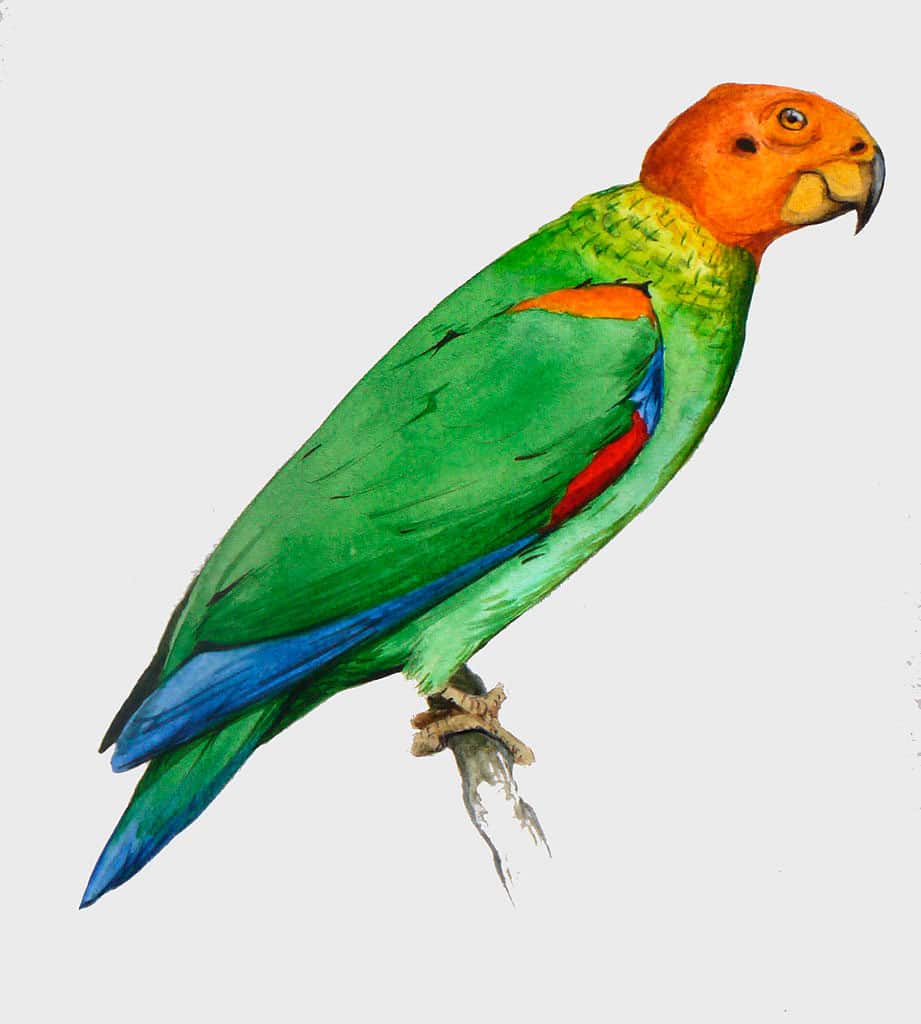
The Bald Parrot (Pyrilia aurantiocephala) has the mandible and the upper maxilla, black with a large orange dot in the base; head naked orange chrome; lores, forecrown, pileum, nape, face and chin no true feathers; coverts only black bristles and some white bristles in lores; true feathers beginning in dorsal area neck, spectrum yellow in proximal half and yellow-green in distal half with black apex, passing rapidly to parrot green as basic color the mantle, back, uropigium, and of the uppertail-coverts; feathers in bend of wing and scapulars, yellowish orange with base scarlet; lesser wing coverts green, except scarlet carpal edge; median and greater wing coverts, with large suffusion of ultramarine blue.

The upper surface of the of remiges black with outerweb shaded with indigo blue; undersurface of remiges black color with a a shamrock greenish on the innerwebs; the outerweb and the apex of the upper surfaces of the rectrices, indigo blue, shaded to varying degrees with green; the base innerwebs of the rectrices, yellow; feathers of the chest with greenish yellow base and apex, forming a large banda pectoral; lower breast, abdomen and crissum, emerald green sprinkled with cyan; underwing-coverts scarlet; the thighs yellow; feet feet orange yellow with suffusion of ochre; irises orange.

The immature with the bare lores to the area around the eyes, orange, the rest of the head feathered dull green; upper breast greenish yellow. Bill yellow in very young birds.

Note:

This parrot was initially believed to be an immature of the species Vulturine Parrot (Pyrilia vulturina) due to the orange color head calva. But, when it was discovered that individuals were sexually mature, He described as a new species. In fact, the youth of both species have feathers head greenish, unlike adults.

Formerly, It was included in the genus Pionopsitta.

  • Sound of the Bald Parrot.

Habitat:

Seen in gallery forest and in forest ‘campinarana‘ (on white sand soils). This region is threatened by logging (Gaban-Lima et al., 2002).

viewed individually, in pairs or small flocks of up to 10 birds. It is most active during the early morning that other parrots, and before going to sleep. It stays in the upper canopy where it is well camouflaged.

Reproduction:

The breeding season possibly either during September; little is known about their breeding habits.

Food:

Feeds of seeds, fruits and possibly larvae of gall wasps (Cynipidae).

Distribution:

Size of its range (breeding/resident): 407.000 km2

The Bald Parrot They are known only in some locations covering the lower basin of Madeira river and the upper basin of Tapajos River in the Brazil Amazon, more specifically in the Sรฃo Benedito river (Field observations) and Cururu-acu River, both tributaries on the right bank of the river Teles Pires, himself a tributary of Tapajรณs.
There are several recent records of this new species from the micro-region of Madeira in the vicinity of Borba.

Since the species is currently known only from Two types of habitat and a relatively small area, it is unlikely that the population is much higher 10.000 individuals, so it is considered that it is near-threatened. It is likely to occur more records now that has been formally recognized as a species, and this may clarify its exact state.

Conservation:


Near-threatened


โ€ข Current category of the Red List of the UICN: Near-threatened.

โ€ข Population trend: Decreasing.

Population size: 6.700 specimens.

Rationale for the Red List category

This species has recently described a moderately small population is declining due to loss of habitat. So, it is classified as near threatened.

Justification of the population

The population is preliminarily estimated with a number of at least 10.000 individuals, approximately equivalent to 6.700 mature individuals. This requires confirmation.

Justification of trend

It is suspected that this species has lost 8,8-13,1% of habitat within its distribution over three generations (21 years) starting from a model of deforestation Amazon (Soares-Filho et to the., 2006, Bird et to the., 2011). So, you suspect your decrease in population <25% durante tres generaciones.

"Bald Parrot" in captivity:

unknown in captivity.

Alternative names:

Bald Parrot, Orange-Headed ParrotT (English).
Caรฏque chauve (French).
Orangekopfpapagei, Langkopfpapagei (German).
Papagaio-de-cabeรงa-laranja (Portuguese).
Lorito Calvo (espaรฑol).

scientific classification:

Order: Psittaciformes
Family: Psittacidae
Genus: Pyrilia
Scientific name: Pyrilia aurantiocephala
Citation: Gaban-Lima, Raposo & Hรถfling, 2002

Images "Bald Parrot"

————————————————————————————————

ยซBald Parrotยป (Pyrilia aurantiocephala)


Sources:

Avibase
– Parrots of the World โ€“ Forshaw Joseph M
– Parrots A Guide to the Parrots of the World – Tony Juniper & Mike Parr
Birdlife
– Department of Zoology, Bioscience Institute, University of Sao Paulo, Rua do Matao, dish 14, not. 101, POCKET 05508-900, Saหœo Paulo, SP, Brazil – Notes

Photos:

(1) – Bald Parrot (Pyrilia aurantiocephala) – Watercolor, Romain Risso. By Gossipguy (Own work) [CC BY-SA 3.0], via Wikimedia Commons