โ–ท The world of Pets: Dogs, cats, birds, reptiles, amphibians

Braque Francais
Francia FCI 133 - 134 . Braque Type

Braco Francรฉs

The Braque Francais little is raised outside its country of origin, and therefore it is not easy to find a puppy.

Content

History

The "French Pointer" is a breed of dog native to France.. It was developed in the Pyrenees region near the border with Spain France. It is rare to see him outside their region of origin.

The Braque Francais is a direct descendant of one of the oldest known pointer dog breeds. This race was already described in S. XIV por Gaston Phebus, Count of Foix and Bรฉarn. It also, he is quoted by a large number of ancient authors who praised his bravery and fineness of nose. He is currently an excellent show dog, of the best. Though morphologically it has changed throughout its history, He has lost none of their skills and their effectiveness at the time.

There are two types of Braque Francais: The Braque franรงais, type Gascogne, that its size varies between 58 and 69 cm., and the Braque franรงais, type Pyrรฉnรฉes, with a little less size, varying it between 47 to 58 cm.. But both dogs are strong but at the same time elegant and powerful.

Physical characteristics

It has a short hair that can occur in two colors: Brown spotted white or unicolor Brown. Black is not supported in the Braque Francais.

The Braque Francais It, in general, of medium-sized, muscular body and pretty light. The length of the muzzle is slightly shorter than its skull, This being almost flat or slightly rounded.

The nose is Brown and is glued to his lips, eyes dark brown or yellow brown. The tail It is left to the natural, whether short or long. The fur It is short and fine with white with brown or black spots or patches. Its weight going from 25 to 35 Kg. and height of 56 to 69 cm to the cross.

Character and skills

They are excellent companions for children and other dogs. They use their nose to sniff high into the air to pick up even the smallest odor particles..

The ideal temperament of Braque Francais described as "kind", joyful, sweet and submissive. It should not be subjected to severe training methods. The individual temperament of the dogs may vary, However, all dogs must be well socialized with people and other animals at an early age in order to be a good pet.

Feel real passion for hunting, being excellent collectors. Particularly suitable for the quail hunt, Partridge and the Woodcock.

It is difficult to find a puppy outside its country of origin.

In general his life extends to the 12 to 14 years, sometimes more.

ยซFrench Pointerยป Images

ยซFrench Pointerยป Videos

More information: gundogmag

Type and recognitions:

  • FCI CLASSIFICATION:Group –> 7 / Section –> 1 – Continental Pointing Dogs. 1.1 Braque Type
  • FCI 134 (Braque franรงais, type Pyrรฉnรฉes) – 133 (Braque franรงais, type Gascogne)
  • Federations: FCI โ“˜, CKC โ“˜, UKC โ“˜

  • Estรกdar FCI Braque franรงais, type Pyrรฉnรฉes

  • Espaรฑol
    FCIFCI – Braco francรฉs tipo Pirineos
    Bracco
    English
    FCIFCI – French Pointing Dog – Pyrenean type
    French
    Franรงais
    FCIFCI – Braque franรงais – type Pyrรฉnรฉes
    Braque
    Deutsch
    FCIFCI – Franzรถsischer Vorstehhund โ€“ Typ Pyrenรคen
    French
  • Estรกdar FCI Braque franรงais, type Gascogne

  • Espaรฑol
    FCIFCI – Braco francรฉs tipo Gascuรฑa
    Bracco
    English
    FCIFCI – French Pointing Dog – Gascogne type
    French
    Franรงais
    FCIFCI – Braque franรงais – type Gascogne
    Braque
    Deutsch
    FCIFCI – Franzรถsischer Vorstehhund โ€“ Typ Gascogne
    French

    Alternative names:

    1. Braque Francais, de Grande Taille (English).
    2. braque franรงais, type Gascogne, braque franรงais, type Pyrรฉnรฉes (French).
    3. Franzรถsischer Vorstehhund, Braque franรงais, Typus: Gascogne, Braque franรงais, Typus: Pyrรฉnรฉes (German).
    4. Braco Francรชs (Portuguese).
    5. Braco francรฉs o del Pirineo (espaรฑol).

โ–ท The world of Pets: Dogs, cats, birds, reptiles, amphibians

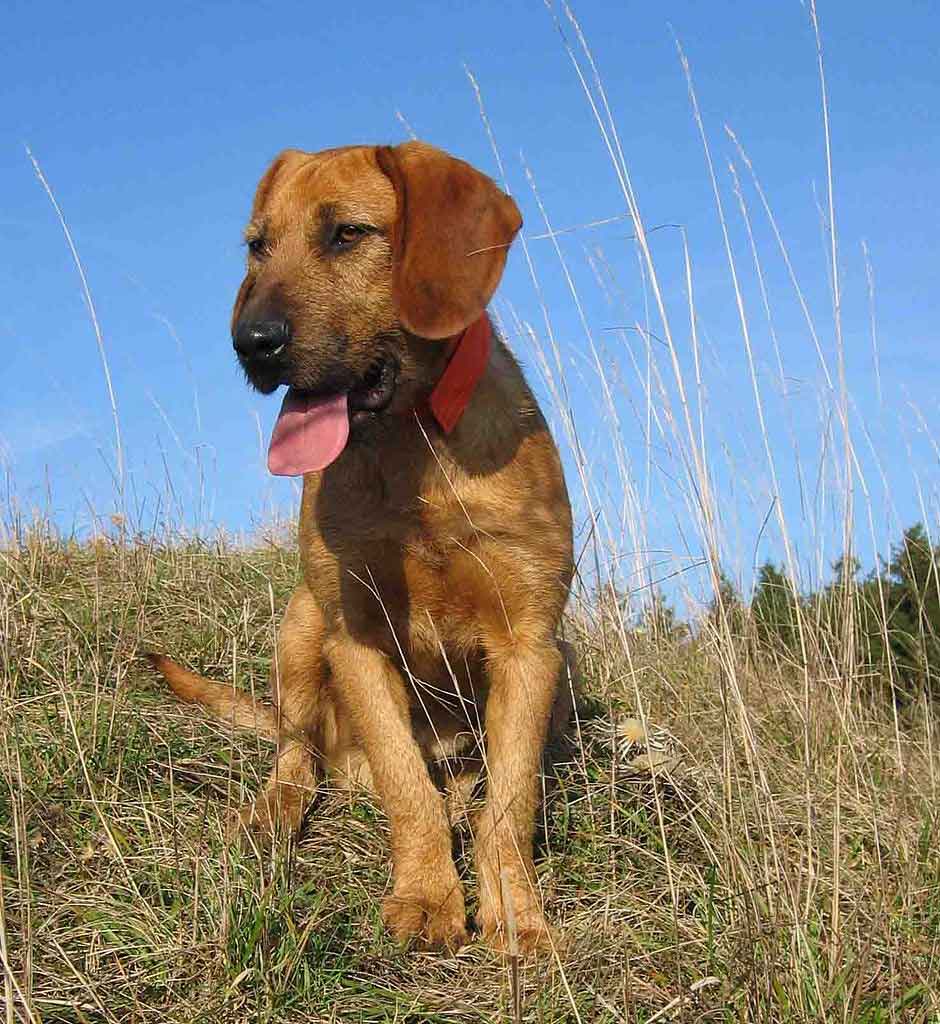
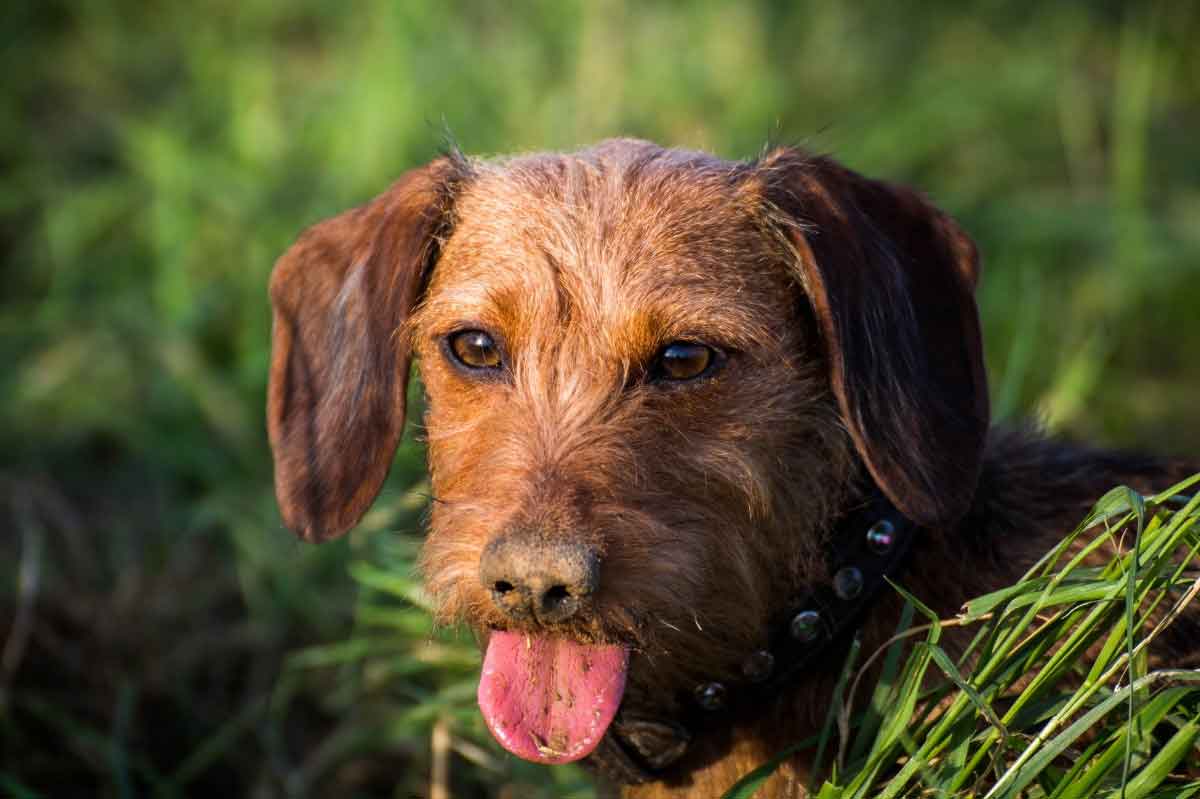
Styrian Coarse-haired Hound
Austria FCI 62 - Medium-sized Hounds.

Styrian Coarse-haired Hound

Insensitive to the weather and austere, which is especially useful in high mountains and forests.

Content

History

The race Styrian Coarse-haired Hound developed from the end of the 19th century. Already in 1870, an industrial of Styria, a state in southeastern Austria, obtained an interesting litter by crossing a ยซHanoverian Scenthoundยป with a Styrian Coarse-haired Hound. The goal was to obtain a hunting dog that would combine the qualities of the two ancient breeds and inherit a coat that would allow it to withstand the elements..

The Styrian Coarse-haired Hound was created by a man named Carl Peitinger. The breed was officially recognized in its country of origin in 1889, and was finally recognized by the Fรฉdรฉration Cynologique Internationale (FCI) 65 years later, the 31 in August of 1954.

Photo: Styrian Wirehaired Hound, Half Year Old By See page for author, CC BY-SA 3.0, via Wikimedia Commons

Physical characteristics

Styrian Coarse-haired Hound

The Styrian Coarse-haired Hound they are medium-sized dogs with solid bones; the expression is austere, but not mean. The skull is slightly domed, with a well developed occipital bone. The stop is marked. The eyes are brown. The ears, Not very large, worn flat against the cheeks and covered with fine hair. The tail is of medium length, strong at the base, with dense hair, never curly but carried upward in a sickle shape; the bottom is like a brush, but without lock.

Fur : Lasted, neither furry nor shiny, hard. In the head, the hair is shorter than in the body. Has mustaches.
Color: red and pale yellow. The white star on the chest is allowed.
Size: 47 to 53 cm for the male and 45 to 51 cm for female.
Weight: approx.. 18 kg.

Character and skills

The Styrian Coarse-haired Hound they have all the qualities of a hunting dog. These dogs show great enthusiasm, determination and stamina when it comes to forcing the game by giving the voice. At home, the Styrian Coarse-haired Hound he is very close to his master and is particularly wary of strangers. They get along quite well with their peers, if they are used to its presence from puppies. They can be more turbulent with other small animals; his hunting instinct is still very strong.

The education…

The Styrian Coarse-haired Hound have a strong character and must be trained early and firmly. It is also necessary that they socialize properly and receive training in recovery to avoid incidents of all kinds.

This Styrian Hound not only used to force the game of hunting by giving the voice, but is very often considered a specialist in tracking blood in difficult mountainous terrain. This makes it a highly sought after hunting companion..

Its exclusively hunter and predator temperament makes it inadvisable as a pet.

However they are very intelligent animals, of a cheerful and affectionate nature as well as an unusual sensitivity.

Care and maintenance …

It needs regular exercise and its coat requires constant maintenance.

Characteristics "Styrian Coarse-haired Hound"

Coexistence is important that you have with your new friend. Before considering the acquisition of a dog of the breed "Styrian Coarse-haired Hound" you know certain factors. Not all breeds of dogs are apt to live in an apartment, you must take into account his character, their need for exercise, their interaction with other pets, their care and if you have small children, their level of tolerance towards them.

Adaptation โ“˜

3,0 of 5 stars (based on 1 review)

friendly dog โ€‹โ€‹โ“˜

3,0 of 5 stars (based on 1 review)

hair loss โ“˜

4,0 of 5 stars (based on 1 review)

Affection level โ“˜

3,0 of 5 stars (based on 1 review)

Need for exercise โ“˜

5,0 of 5 stars (based on 1 review)

Social need โ“˜

3,0 of 5 stars (based on 1 review)

Home โ“˜

4,0 of 5 stars (based on 1 review)

Toilet โ“˜

2,0 of 5 stars (based on 1 review)

Friendly with strangers โ“˜

3,0 of 5 stars (based on 1 review)

barking โ“˜

4,0 of 5 stars (based on 1 review)

Health โ“˜

4,0 of 5 stars (based on 1 review)

Territorial โ“˜

4,0 of 5 stars (based on 1 review)

Cat friendly โ“˜

2,0 of 5 stars (based on 1 review)

Intelligence โ“˜

4,0 of 5 stars (based on 1 review)

Versatility โ“˜

3,0 of 5 stars (based on 1 review)

Child friendly โ“˜

4,0 of 5 stars (based on 1 review)

Surveillance โ“˜

4,0 of 5 stars (based on 1 review)

joy โ“˜

5,0 of 5 stars (based on 1 review)

Videos "Styrian Coarse-haired Hound"

Hunting dog - Styrian wire-haired bracke ( Peintinger Bracke ) - a fantastic hunting dog Trailer

Hunting dog – Styrian wire-haired bracke ( Peintinger Bracke ) – a fantastic hunting dog Trailer

Hunting dog - Styrian wire-haired bracke (Peintinger Bracke) - a fantastic hunting dog!
Jagdhund – Steirische Rauhhaarbracke (Peintinger Bracke) – a fantastic hunting dog!

Type and recognitions:

  • FCI CLASSIFICATION:
  • Group :
  • Section : . .

Federations:

  • FCI – Group 6: Scent hounds, and related breeds. – Section 1.2: Medium-sized Hounds. โ“˜
  • UKCScenthounds โ“˜

FCI breed standard "Styrian Coarse-haired Hound"

Origin:
Austria

Date of publication of the valid original standard:
10.10.1995.

Use:

The job is not only about his role as a hound, but also in pure tracker work in difficult mountainous terrain.


General appearance:

Is medium sized, has strong muscles, and his expression is grim but without malice.


Behavior / temperament:

He is a tough and passionate hound dog, barks without interruption during the hunt and expresses will and security during the trail.

Head:

---

Cranial region:
  • Skull: Slightly convex, well-developed occipital protuberance.
  • Depression links (Stop): Marked.

facial region:

  • Truffle: Black.
  • Snout: Strong and straight.
  • Lips: Not hanging.
  • Jaws / Teeth: Strong scissor bite. You want a complete denture with 42 Dental parts; the lack of two PM1 or PM2 (premolars 1 or 2) is tolerated; the M3 (molars 3) they are not taken into account.
Eyes: With brown iris.
Ears: Not too big, flattened and glued, covered with fine hair.

Neck:

Strong, not too long.

Body:

  • Back: Straight and wide.
  • Pork loin: Moderately raised.
  • Rump: It descends steeply.
  • Breast : It's deep and wide.

Tail:

Medium length, strong in its insertion, well covered with hair, never curled but carried up slightly sickle-shaped; on its lower face has hair in the shape of a brush, but without forming a feather.

Tips

PREVIOUS MEMBERS: Straight, muscular, well angled.
  • Shoulder: Oblique placement.
 
LATER MEMBERS: Muscular, strong, well angled, seen from behind they look straight.
 
FEET: Not excessively large; well arched fingers, closely linked to each other; hard pads, not too big.

Movement:

It covers the ground, elastic.

Mantle

HAIR: Rough, no hirsuto, opaque, hard, tosco. The hair on the head is shorter than the rest of the body and forms a mustache.
 
COLOR: Red and yellowish. A white star is allowed on the sill.


Size and weight:

Height to the cross: 45 โ€“ 53 cm.
  • Males : 47 โ€“ 53 cm.
  • females : 45 โ€“ 51 cm.


Fouls:

Any deviation from the above mentioned criteria is considered to lack, and the gravity of this refers to the degree of deviation to the standard and its impact on the health and well-being of the dog.
  • Head too narrow.
  • Ears with creases or too pointed.
  • Tail too short, too thin or too bent up, that forms feathers.
  • Weak limbs.
  • Coat too long, fine, curly or soft.
  • Shy character.
MISS PLAYOFFS:
  • Aggressive or fearful dog.
  • Upper or lower prognathism. Lack of more than two premolars (PM 1 or PM 2).
  • Any other color different from that indicated in the standard.
 
Any dog โ€‹โ€‹showing clear signs of physical or behavioral abnormalities must be disqualified..


N.B.:

Males should have two normal-appearing testicles fully descended into the scrotum..

Source: F.C.I - International Cynological Federation

Alternative names:

1. Peintinger Bracke, Wirehair Styrian Mountain (English).
2. Brachet de Styrie ร  poil dur (French).
3. Peintinger-Bracke, Steirische Rauhhaarige (German).
4. (em alemรฃo: Steirische Rauhhaarbracke) (Portuguese).
5. Sabueso estirio de pelo รกspero (espaรฑol).

โ–ท The world of Pets: Dogs, cats, birds, reptiles, amphibians

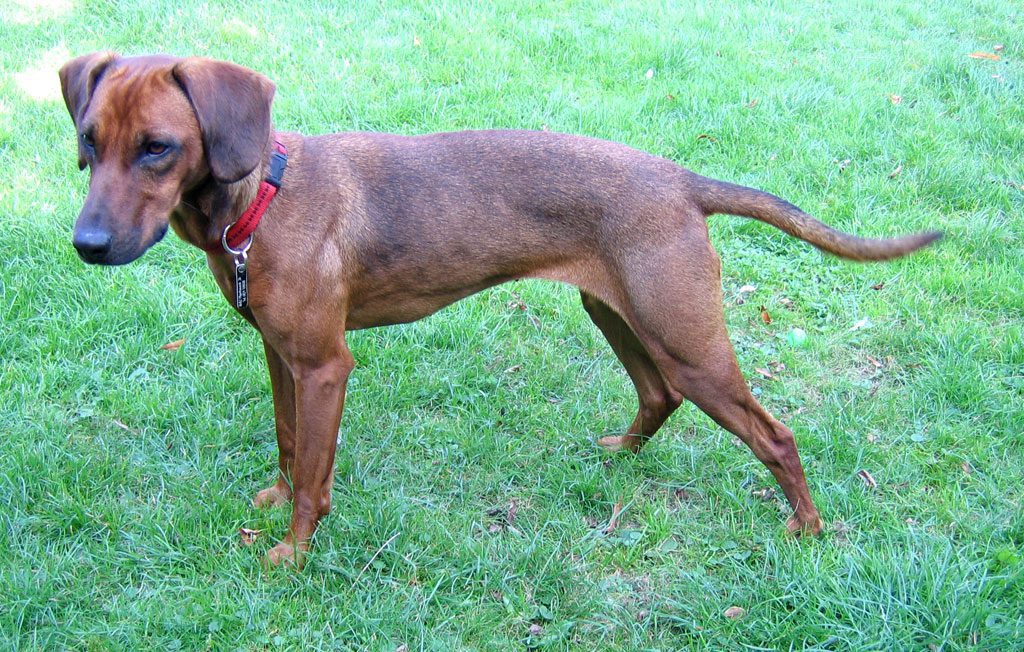
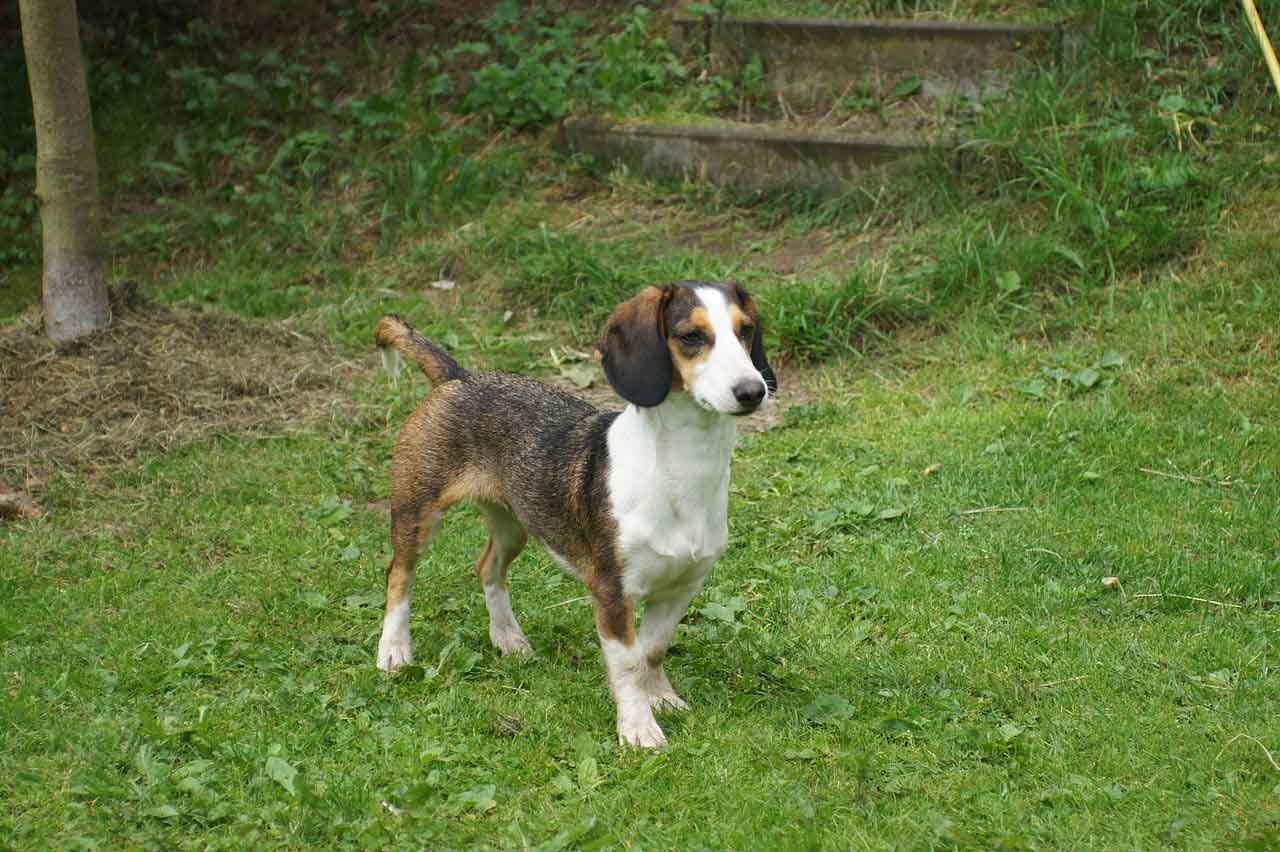
Tyrolean hound
Austria FCI 68 - Medium-sized Hounds

Braco Tirolรฉs

The Tyrolean Hound it un perro con un carรกcter muy equilibrado, ideal for hunting in the forest.

Content

History

The Tyrolean hound or Tyrol hound descends from the Celtic hound and with their resistant double coat represents the purest type of dog hounds. It is known that already in the year 1500, the Emperor Maximilian I He used these Hounds in the Tyrol region for hunting hares, foxes and injured animals tracing. In his hunting books he mentioned that he extracted his guide dogs from them.

About 1860 they started in Tyrol raising pure breeds individually. In 1896 It set a standard that was officially recognized in 1908. The variety of species of hounds from the Tyrol natural, only remained those of red and black color with fire. The Hound of the Tyrol: small size is taken from the standard of 1994.

In the past, There was also a small size that was removed from the standard Tyrol sniffer in 1994.

Physical characteristics

The Tyrolean hound is a breed of hunting dog hound type of medium size and wide erect ears originating from the Austrian Tyrol.

This dog medium-sized and broad flat ears at the top of the head, has a thick, double coat and well covered legs.

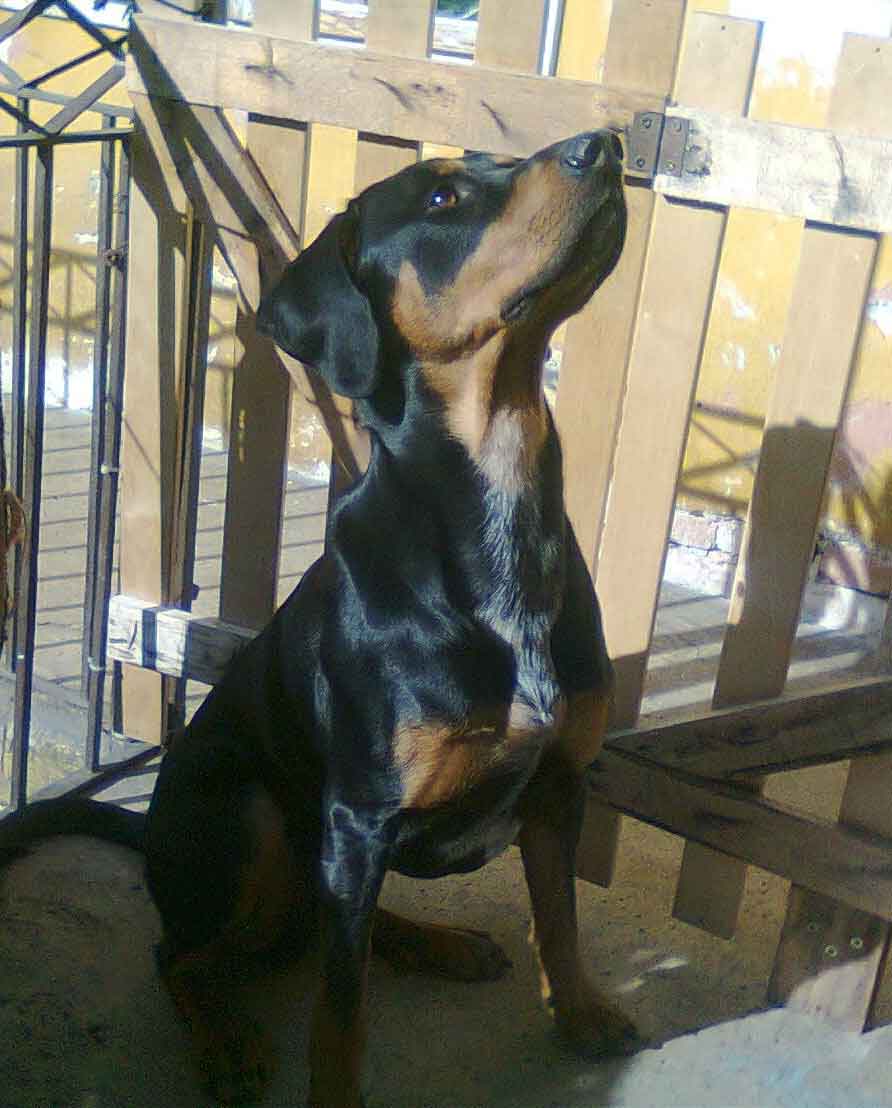
There are two main colors of hair: Red or black and Tan, all of them can have white spots.

The height to the cross in the exemplary males is of 44 to 50 cm.; in the females of 42 to 48 cm. and weigh in 15 to 22 Kg. There is also, a smaller variety that has a height of 30 to 39 cm..

Character and skills

It is a hunting dog, ideal for hunting in the forest and the mountain, strong character, passionate, with fine sense of smell, independent hunting and persistent searches; It has a good bark in the hunt, a pronounced to track will and has a good sense of orientation.

Itร‚ยดs known for its strength in difficult terrain and for not fearing the elements.

In addition to the skills for hunting, The Hound of the Tyrol is an agile mind, Smart and good character. It is at the same time cheerful and independent, very attached to his master and his family.

Like all dogs hunting, This hound's obstinate nature. Your education requires some patience, but with perseverance its owner will get good results.

It's a dog that need to exercise. For this reason, life in the city or artamentos did not do for him.

Tyrolean Hound images

Braco Tiroles videos

Type and recognitions:

  • FCI CLASSIFICATION:
  • Group :
  • Section : . .

Federations:

– FCI โ“˜

FCI breed standard "Tyrolean hound"

Origin:
Austria

Date of publication of the valid original standard:
10.10.1995

Use:

The Tyrolean Hound is an ideal utility dog รขโ‚ฌโ€นรขโ‚ฌโ€นfor the forest and mountain hunter. Used as a hound (only) for barking hare and fox hunting and as a tracker to search for all types of wounded game.


General appearance:

Is medium sized. It has a skeleton with moderate resistance, is strong, muscular, nervous, with flowing external lines along the body; it is robust and healthy. His body is rectangular in shape, it's a little longer than tall.


Behavior / temperament:

It is a hunting dog with a firm character., passionate, with fine sense of smell, independent hunting and persistent searches; It has a good bark in the hunt, a pronounced to track will and has a good sense of orientation.

Head:

---

Cranial region:
  • Skull: Width, delgado, slightly convex.
  • Depression links (Stop): Marked.

facial region:

  • Truffle: Black, not placed perpendicular. Snout: Moderately deep, straight.
  • Lips: Thin and very adherent.
  • Jaws/Teeth: Strong and complete scissor bite. You want a complete denture with 42 Dental parts; the lack of a total of two PM1 or PM2 (premolars 1 or 2) is tolerated; the M3 (molars 3) they are not taken into account.
  • Eyes: Large eyeballs, not deep, round eyelid slit. Dark brown iris. Membrana nictitante
    Pigmented, eyelids well adhering to the eyeball.
  • Ears: Wide, high insertion, rounded in its bottom edge; moderately stretched, must reach the region of the tusk
    top.

Neck:

Moderately arched, Neither high nor low, delgado, without presenting Chin.

Body:

The trunk is long.

  • Cross: It is marked and constitutes the highest point of the upper line. Back: Straight, robust and moderately wide. Well rounded windowsill.
  • Rump: Slightly fallen, not tilted, wide and long. Chest: Very deep, moderately wide. Sill: Rounded.
  • Belly: a little withdrawn. Moderately deep.

Tail:

High insertion, long; it reaches at least up to the protrusion of the Hock; It takes her up when the dog is at attention; is allowed to carry it in the form of Sabre; the tail is desirable with dense brush hair.

Tips

PREVIOUS MEMBERS:

  • General appearance: Straight.
  • Shoulder: Oblique placement, equipped with good musculature.
  • Arm: With good angle.

LATER MEMBERS:

  • General appearance: Joints in the hind limbs are good angles.
  • Thighs: Wide and muscular.

FEET: Strong, with arched fingers and very close together, hard pads.

Movement:

It covers the ground, It is very fast and persistent.

Mantle

  • Fur: Double (Stockhaar), dense with internal NAP, rather rough to soft. Belly with hair, thighs with "pants". Tail covered with dense brush hair.
  • Color: Red or black and Tan (It also accepts tricolor).
    • Red variety: Red, cervuno or red yellow red. Is not desirable yellow color too clear.
    • Black and Tan variety: Layer black or saddle branded fire red or fire not clearly defined in the extremities, chest, belly and head. Allow marks on eyes fire (four eyes).
    • White markings: (Are allowed in both varieties of color). Bordering on the neck (collar), stain on front and lower chest, in the limbs and feet. The absence of white markings is not regarded as lack.


Size and weight:

Height to the cross: 42 - 50 cm.

  • Males: 44 - 50 cm.,
  • females: 42 - 48 cm..


Fouls:

Any deviation from the aforementioned criteria is considered as a fault and the severity of this is considered to the degree of the deviation to the standard and its consequences on the health and well-being of the dog..

  • Too agalgado; too high or too low.
  • Rough skull.
  • Hanging lips.
  • Eyes gazeos.
  • Too short, long or bent.
  • Back too long or too weak.
  • Shyness.

FALTAS DESCALIFICANTES

  • Aggressiveness or extreme shyness.
  • Any dog โ€‹โ€‹showing clear signs of physical or behavioral abnormalities.
  • Truffle Brown.
  • Upper or lower prognathism.
  • Lack of more than two premolars 1 or 2 (PM1 to PM2).
  • Very pronounced white spots.
  • Liver coat color.


N.B.:
  • Males should have two normal-appearing testicles fully descended into the scrotum..
  • Only functionally and clinically healthy dogs, with the typical conformation of the breed, should be used for parenting.

Source: F.C.I - International Cynological Federation

Alternative names:

1. Tiroler Bracke, Tyroler Bracke (English).
2. Brachet autrichien, Chien courant du Tyrol (French).
3. Tiroler Bracke (German).
4. Braco tirolรชs (Portuguese).
5. Sabueso del Tirol (espaรฑol).

โ–ท The world of Pets: Dogs, cats, birds, reptiles, amphibians

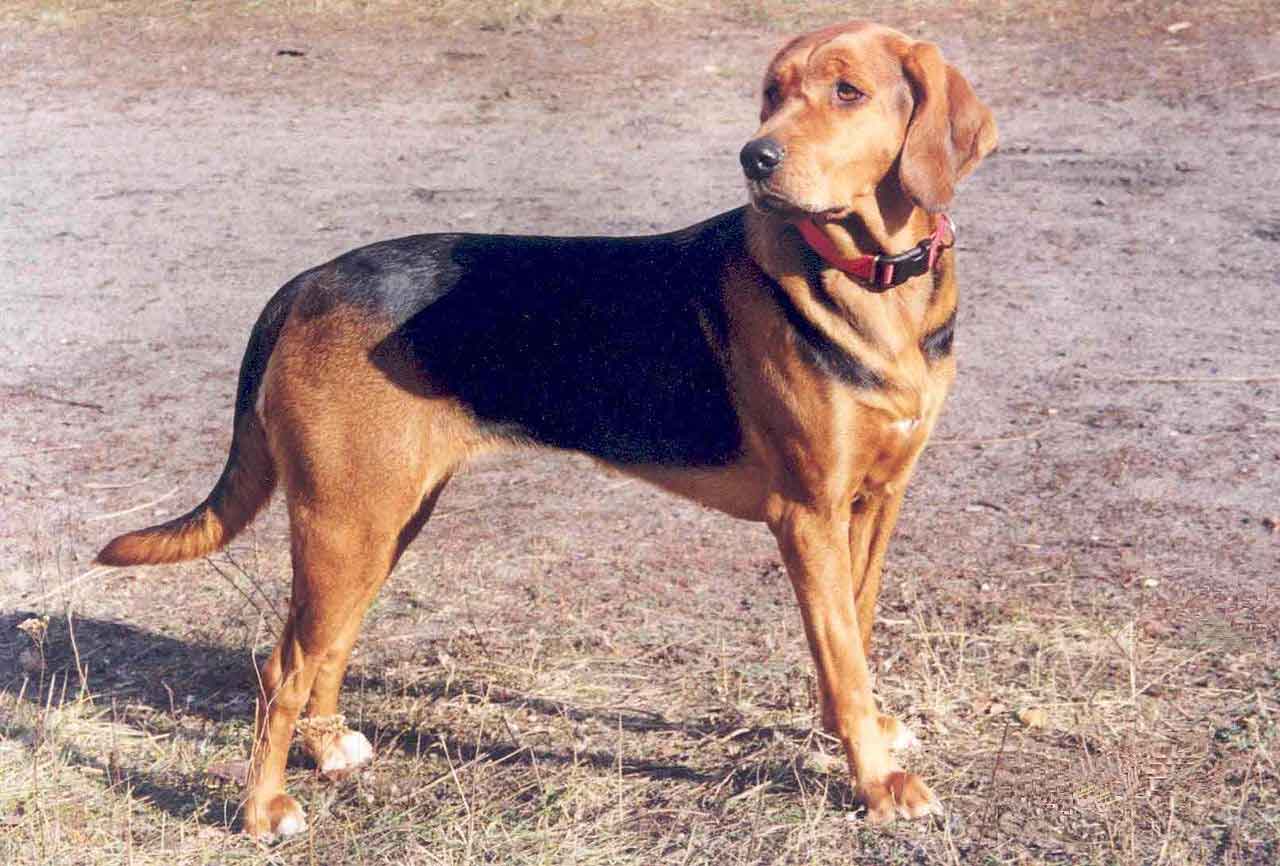
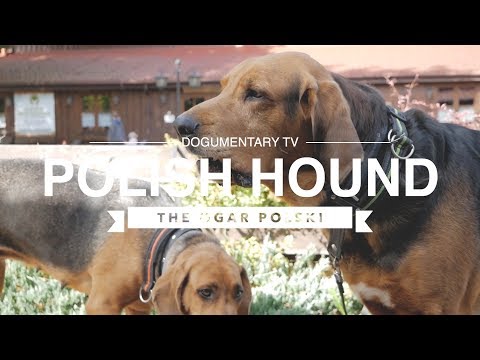
Polish Hound
Polonia FCI 52 - Medium-sized Hounds

Polish Hound

The Polish Hound it is quite widespread in Poland, while outside this country it is considered a rare breed.

Content

History

Originally from Poland, country to which it owes its current name, the Polish Hound it is a very old breed of dog, since it is believed that it appeared in the 13th century, although the first written records that mention it explicitly date from the 17th century. They are part of the group "Medium-sized hound dogs" and are believed to be the result of crossing between the St. Hubert Hound, German and Russian hounds and local Polish breeds. Polish nobles, fans of hunting parties, they were bred and used especially for hunting larger game.

Since the middle of the 19th century, the Polish Hound, which was very popular at that time, began appearing at dog shows in his native country. At that time, Poland was under Russian occupation, and the breed was bred mainly in the territory of present-day Belarus, which was then also annexed by Russia. After 1918, Poland regained its independence, but the brood of Polish Hound continued almost exclusively in the east of the country.

During World War II, due to successive invasions of Poland by Nazi Germany and then by the USSR, the breed saw its population decrease dramatically. After the war, Polish borders were redrawn; Poland, by losing the territories he owned in the east, lost the cradle of Polish Hound as well as all the remaining farms. No breeder took over the territory of the "new" Poland, and the race found itself on the brink of extinction.

She was eventually saved by a Polish colonel named Piotr Kartawik.. In 1959, created a kennel dedicated to him and reconstituted livestock from 4 dogs imported from Belarus. The first standard of the Polish Hound was written on the basis of individuals from this kennel and published in 1964.

The breed was officially recognized by the Fรฉdรฉration Cynologique Internationale (FCI) two years later, in 1966. But, the Polish Hound is not recognized by any other major canine organization and, although once again it is very widespread in Poland, still relatively rare in the rest of the world.

Photos: Polish Hound by Wikipedia

Physical characteristics

The Polish Hound he is a medium sized hound and companion dog. They are muscular, strong and compact, with mighty bones and a massive march, but without the impression of heaviness. They are better suited for endurance than speed.

The head, quite heavy and chiseled, appears rectangular when viewed from the side. The occipital bone is very pronounced. The line of the forehead forms an obtuse angle with that of the muzzle., and the forehead has multiple wrinkles.

The Polish Hound has a strong, long jaw with a regular bite. The eyes are dark brown and almond-shaped, with a soft expression, slightly sunken and almond-shaped. Superciliary arches are marked. The snout is elongated and truncated at the tip. Rounded at the tips, the ears are low, hanging and quite long.

Low rise and slightly curved, the tail is thick and its lower part is provided with longer hair. Chest is wide, wide and proportionally deep.

The Polish Hound has a double layer (hair and undercoat) average length. This layer gives very good water repellency and protection against heat and bad weather., especially since the undercoat is thick. Hair is longer on the spine, on the back of the hind legs and on the bottom of the tail; is shorter and smoother on the muzzle and ears.

It's brown on the head, the ears (except the sides of the skull), the legs, sternal region and thighs, and black or dark gray on the rest of the body. Tan color can vary from red to brown, but the cinnamon tone is the most sought after. In any case, the separation between the two colors must be very clear. White markings on the chest are tolerated (even up to the muzzle) and on the tips of the legs and tail.

HEIGHT AND WEIGHT :

  • Height to the cross: Males: 56-65 cm., females: 55-60 cm..
  • Weight : Males : 25-32 kg, females : 20-26 kg.

    Character and skills

    The Polish Hound he is an affectionate dog, protective and very intelligent. And unlike most Poles and other hunting dogs, who are notoriously undisciplined and not very obedient, do not pose major training problems. This character trait makes them equally appreciated by hunters and families, as is the case with your neighbor, the Austrian Black and Tan Hound, a rare but obedient and easy to train breed that is also an exception. But, the Polish Hound tends to mature a little more slowly than other dogs, so it can be expected that he will maintain his youthful demeanor at 2 or 3 years of age.

    Naturally calm and friendly, they are excellent companions, loyal as much as possible, showing affection not only to adults, but also to younger dogs. Not only is he loving, kind and protective with them, but he is also very patient. This can create a great complicity between the dog and the child, since the latter learns from a young age to respect the animal and its needs. The Polish Hound It, therefore, a breed of dog adapted to children, even the very young.

    Reputed for being naturally vigilant and distrustful of strangers, without being aggressive, the Polish Hound develops protective instincts with age, leading him to actively defend those around him, whether they are the weakest, the youngest or the oldest. Facing intruders and armed with your unerring sense of smell, Polish hounds make excellent watchdogs, protecting without fail their masters and their properties, even though they weren't bred for it.

    They are sociable animals and generally enjoy the company of other dogs.. Can sometimes become a barker in your presence, without being prone to arguing with peers. His voice is powerful, melodious cases, and allows you to communicate with your master while hunting. The voice is deep in the male and quite high in the female.

    To the Polish Hound loves large expanses and wooded areas where he can fully express his hunting instincts. Not at all suited to apartment living, and is much more comfortable in the country than in the city.

    Developed for hunting and used to living in large spaces, must be walked for a long time and very regularly (on average two or three hours a day), even if you have access to a large garden. The ideal thing for him is to be able to accompany an active teacher during his exercises: footing, running and other sports outings will make you happy. On the other hand, if not asked enough, expect a long and frequent bark, meant to get attention.

    Education

    An obedient and intelligent breed, the Polish Hound it is relatively easy to train, since he is intelligent and quite obedient. They have a good memory and, as such, easily retain what they learn, without the need for a large number of repetitions. But, their education must be early and sufficiently balanced, mixing softness and firmness. He is particularly receptive to the method of positive education, what is the best way to educate him and make him obey.

    On the other hand, How can it take time to reach mental maturity (sometimes two or three years), it is important to be patient during your education, especially if we notice that you tend to lose concentration easily.

    Last, if the dog is to be used as a hunting dog, teaching the dog to remember should be one of the priorities in his training.

    Health and care

    The Polish Hound it is a strong and resistant breed of dog, does not present any significant risk in terms of possible predisposition to certain diseases. Like most older dog breeds, has robust health and is much less susceptible to genetic diseases that can affect newer breeds.

    In spite of this, due to its large chest and high level of activity, is quite susceptible to the development of dilatation-torsion syndrome of the stomach.

    It also, how much of their time is spent outdoors, especially if they are used as hunting dogs, are more susceptible to parasites (like ticks and fleas) and infections, as well as injuries and hunting accidents.

    Last, as with any dog โ€‹โ€‹with floppy ears, be careful with the risk of ear infections and inflammation.

    Care and maintenance

    The Polish Hound it is easy to care for because its coat is short and straight. Brushing your dog's coat once a week keeps it clean and removes dead hairs, especially during molting periods. Since molt periods are not very consistent, brushing every two or three days is usually enough.

    Because its beautiful waterproof coat does not get dirty easily, bathing is rarely necessary. In fact, In most cases, it is possible to clean the coat with a simple damp cloth. It also, washing your dog tends to remove sebum, which has many positive properties, so it should only be done when the coat is really very dirty.

    It also, it is necessary to check and maintain your dog's ears regularly, since it is quite prone to canine ear infections. One can take the opportunity to examine their eyes at the same time.

    Looking at its claws, they are supposed to wear out naturally during your outings. But, If that is not the case, You should clip your dog's claws from time to time..

    Last, when he comes back from hunting or walking, it is important to ensure that there are no ticks (the application of a preventive antiparasitic treatment is strongly recommended) and any injuries you may have sustained while running.

    Price of a Polish Hound

    The price of a puppy Polish Hound is between 500 and 700 EUR.

    Images "Polish Hound"

    Photos:

    1 – Polish hound by Wikimedia
    2 – Polish Hound during dogs show in Katowice, Poland by Lilly M, CC BY-SA 2.5, via Wikimedia Commons
    3 – Polish hound by Wikimedia
    4 – Polish hound by https://pxhere.com/en/photo/1175414
    5 – Polish hound by Wikimedia
    6 – Polish hound by Wikimedia

    Videos "Polish Hound"

    POLISH HOUND THE OGAR POLSKI

    POLISH HOUND THE OGAR POLSKI
    A wise Polish hound

    Mฤ…dry ogar polski

    Type and recognitions:

    • FCI CLASSIFICATION:
    • Group :
    • Section : . .

    Federations:

    • FCI – Group 6: Scent hounds, and related breeds. – Section 1.2: Medium-sized Hounds. โ“˜

    FCI breed standard "Polish Hound"

    Origin:
    Poland

    Date of publication of the valid original standard:
    25.02.1985

    Use:

    Hound


    General appearance:

    Medium-sized, robust and compact construction, strong and relatively massive bones; of provided limbs. As a whole, seen from the side, the body reflects strength and endurance more than speed. When the dog vents, his voice is clear, sonora, medium and shifting tonality; in the female, is usually sharper.
     
    IMPORTANT PROPORTION: The skull is the same length as the muzzle.


    Behavior / temperament:

    The Polish Hound, like all hounds, hunts prey on the hot track with a loud bark.. The voice is deeper in tone in the male and somewhat higher in the female.. The barking is called by hunters โ€œgiving the tongueโ€ and the noisy search for prey is described as โ€œchasing.โ€. This exceptional hunting dog is also an excellent family dog., easy to maintain, devoted to his home and cautious of strangers.

    Head:

    Pretty heavy, nobly chiseled. In profile it looks like a medium length rectangle.

    Cranial region:
    Skull: The line of the forehead forms an obtuse angle with the nasal cannula.. Superciliary arches highly developed. The forehead has numerous wrinkles. Very pronounced occipital bone.
    Depression links (Stop): Craniofacial depression is clearly observable.

    facial region:

    Truffle: black, big and wide.
    Snout: It is elongated and truncated at its tip; it is not even cuneiform, or pointed.
    Belfos: Thick and pendulums. Lower lip with hanging corner.
    Jaws / Teeth: Strong jaws, long enough; the joint is normal.
    Cheeks: With well developed muscles.
    Eyes: Sweet and calm expression. They are located obliquely, and not sunk in the orbits. They are dark brown. In older dogs the lower eyelids appear droopy.
    Ears: Low implantation. They are quite long, freely pendulous and slightly rounded at the tip. The lower part of the pavilion is in the shape of a corkscrew and is well attached to the head.

    Neck:

    Remarkable thickness at the point where it meets the trunk; is strong, muscular, medium length. The double chin is hanging and presents abundant skin with folds.

    Body:

    Back: Long, broad and muscled.
    Rump: Wide; not very fall.
    Breast : Spacious rib cage, wide, in high proportion. The sternum region descends to the elbows. The ribs are well sprung and long, like the whole rib cage. They are closer to the upright position than in the other breeds.
    Abdomen: Marked, spacious, almost as low as the rib cage. Not too collected. The flanks are not sunken; they are solid and rounded; with a possible depression under the last ribs.

    Tail:

    Quite low implantation. It is thick and is covered with long hair at the bottom. Reaches below the hock, and it is slightly fallen; from the middle of the leg length, is slightly bent. During normal dog movement, it is somewhat elevated, Although never screwed. When the dog runs, something is up, but without exceeding the horizontal.

    Tips

    PREVIOUS MEMBERS
    Shoulder: Oblique shoulder blade; well-developed muscles.
    Forearm: Pretty muscular bien.
    Carpo: Well marked, celebrities, clean, delgado, of a thickness corresponding to that of the metacarpus.
    Front feet: Of strong bones and muscles; fingers well together; strong nails, thick and short in working dogs. They are light in color when the fingers are white, and black when the fingers are tawny.
     
    LATER MEMBERS
    Thighs: Strong bones, long, vigorous and well developed muscles.
    Leg: Inclined; quite short. Well musculada.
    Hock: Delgado; well delineated.
    Metatarsus: It is slightly inclined.
    Rear feet: Fingers are good together. The pads are wide and are covered with thick integument. Thick nails, strong and short.

    Movement:

    Normally, the dog moves at a slow trot and heavy. during the hunt, while venting and following the prey, perform a heavy gallop.

    Mantle

    HAIR: Medium length, thick, with a dense undercoat of hairs. It is a little longer over the spine, on the back of the hind legs and on the underside of the tail.
     
    COLOR: Head and ears, except for the lateral faces of the skull, they are fire color; the ears are a little darker than the rest. The extremities, the sternum and thighs are also tan. The body is gray, or a dark gray almost black; In the old Polish hunting language it was called โ€œpodzaryโ€. (burned). The essentially reddish tan color presents various intensities of this tone, that go as far as cinnamon, which is highly appreciated in the Polish pointer. White hair, allowed in star shape, appears as a stripe that reaches the muzzle, over the pectoral region, the end of the limbs, and the tip of the tail. The black color forms a blanket that extends to the head. There are clearly defined tan spots over the eyes. The black color that extends over the nasal bridge of the Polish Hound is a case of disqualification.


    Size and weight:

    Height to the cross
    • In males : 56 to 65 cm.,
    • in females : 55 to 60 cm..
    Weight:
    • In males : 25 to 32 kg,
    • in females : 20 to 26 kg.


    Fouls:

    Any deviation from the above mentioned criteria is considered to lack, and the gravity of this refers to the degree of deviation to the standard and its impact on the health and well-being of the dog.
    • Insufficient musculature.
    • Hoarsely.
    • Occipital crest of head not pronounced enough.
    • Underdeveloped superciliary arches.
    • Too pointed snout; black snout.
    • Defective denture.
    • Eyes too light.
    • Ears too long or too short, or taken off.
    • Underdeveloped rib cage.
    • Fine tail, very short or very long, threaded, with little abundant hair.
    • Crushed pastern.
    • Crushed pads.
     
    Any dog โ€‹โ€‹showing clear signs of physical or behavioral abnormalities must be disqualified..


    N.B.:

    Males should have two normal-appearing testicles fully descended into the scrotum..

    Source: F.C.I - International Cynological Federation

    Alternative names:

    1. Ogar Polski, Polish (Ogar) Hound (English).
    2. (ogar polski en polonais), podzary (French).
    3. (Ogar Polski) (German).
    4. em polonรชs/polaco: Ogar Polski) (Portuguese).
    5. Sabueso de Polonia (espaรฑol).

โ–ท The world of Pets: Dogs, cats, birds, reptiles, amphibians

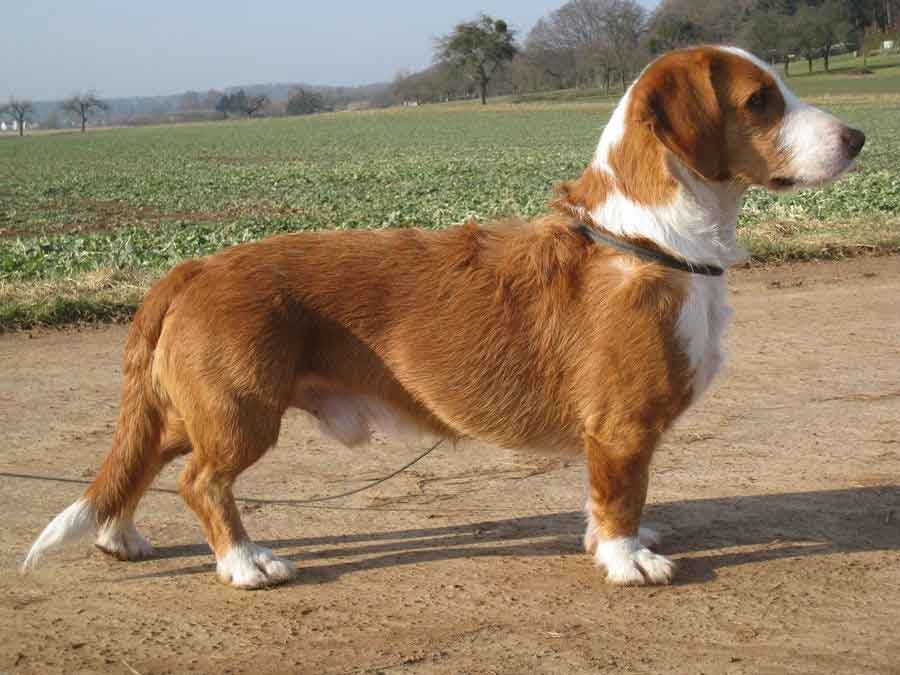
Westphalian Dachsbracke
Germany FCI 100 . Small-sized Hounds

Westphalian Dachsbracke

The Westphalian Dachsbracke It is mainly a hunting dog that maintains an active temperament and a great need for exercise.

Content

History

The Westphalian Badger Dog was developed in the 17th century in Germany, in the region between the Rhine and the Weser. The result of the cross between the German Hound and various types of Dachsbrack, was created to satisfy the need for a fast dog, small and short, able to cut through bushes and chase prey into burrows. They were the favorite companions of the Germanic nobles, who were so appreciated for their ability to hunt hares, rabbits and foxes as per their friendly disposition.

It is mentioned in the official description of the German Hound in the decade of 1880, and a first standard was established in 1910. But, the breed was not recognized by the German Kennel Club until 1935, and then by the FCI in 1954.

The Westphalian Dachsbracke It, However, rare outside Germany. It also, among the main canine organizations in the Anglo-Saxon world, only the UKC recognizes this breed, and only from 2006.

Photo: Westphalian Dachsbracke by Volbu1, CC BY-SA 3.0, via Wikimedia Commons

Physical characteristics

The Westphalian Dachsbracke It is a small hound that measures between 30 and 38 cm at the withers and weighing about 15 kg. It seems to the German Hound, which is even considered a miniature version.

His coat is tricolor, combining black, red and white. White markings are found on the neck, the chest, the snout, paws and tail tip. Bi-color is not accepted. The coat is rough and very tight, medium length in the back, neck and back of the tail, but short in the rest of the body.

With a slightly elongated skull and a slightly accentuated stop, his head clearly evokes his kinship with the other double basses. His eyes are dark, while his ears, big and long, are flat against the head.

The tail, strong and tall at the base, is in perfect extension of the line of the back. It is carried out with a saber blade or hanging.

Character and skills

The Westphalian Dachsbracke he's a smart working dog, stubborn and tenacious who can follow the trail of prey over great distances without hesitation.

They are primarily hunting dogs that maintain an active temperament and a great need for exercise. This need must be met each day to prevent the dog's destructive behavior.. Live in an apartment, although it is not recommended, it is possible as long as the dog can take long walks at least twice a day. During these walks, it is strongly recommended to keep it on a leash, in case you smell prey that takes you off the beaten track. But, ideally it would have access to a garden.

In the home, although he is not the most docile of dogs, the Westphalian Dachsbracke shows a lot of attachment and affection for his master, family loyalty, and gets along very well with children. All these are qualities that make it a very pleasant companion dog.. But, requires a lot of interaction and availability, as he needs constant company and cannot be left alone for a whole day. Playtime and obedience or agility training can keep you busy, but nothing will make you happier than a hunting trip.

Finally, the Westphalian Dachsbracke tolerate other pets as long as they are exposed to your presence from a young age. Otherwise, his hunting instincts take over, and is capable of chasing and hurting them.

Education

Due to its firm character, the Westphalian Dachsbracke can be tough and stubborn in his upbringing. Some commands will take longer to assimilate than with other dog breeds. So, the master must act as the leader of the pack to be heard and obeyed, and under no circumstances allow him to take over the family hierarchy. So, It is clearly important not to be fooled by the small size of this dog and turn it into a "princess", at the risk of experiencing real cohabitation problems in the near future.

At the end, the Westphalian Dachsbracke must be trained early and firmly, while promoting the principles of positive dog training.

Health

The Westphalian Dachsbracke he is a robust dog, healthy and with a good life expectancy. But, their kinship to the Basset family explains why they are prone to back problems, ranging from muscle tension to degenerative disc disease.

It also, you have to be careful with his long and floppy ears, as they are sensitive to ear infections. In case of infection, the dog tends to shake its head and scratch its ear. Other signs are a bad smell and the development of redness around the ear canal.. An ear infection requires a visit to the vet and is treated with prescription medications..

Last, like any working dog, a Westphalian Dachsbracke that participates in hunting is more likely to be injured than a companion dog that is kept at home. But, in the heat of the moment, the dog tends to ignore pain, so it is often only after the owner notices lacerations or bites, for example.

Grooming

One to two weekly brushings are recommended to maintain the very tight and rough-textured coat of the Westphalian Dachsbracke. These dogs should rarely be bathed, since they deprive the coat of its natural oils.

The ears should also be visually inspected at least once a week and they should be dried after soaking in water to limit the risk of infection..

Last, the dog's teeth should be brushed regularly to reduce the risk of periodontal diseases and infections, that one day may require dental extractions.

Characteristics "Westphalian Dachsbracke"

Coexistence is important that you have with your new friend. Before considering the acquisition of a dog of the breed "Westphalian Dachsbracke" you know certain factors. Not all breeds of dogs are apt to live in an apartment, you must take into account his character, their need for exercise, their interaction with other pets, their care and if you have small children, their level of tolerance towards them.

Adaptation โ“˜

2,0 of 5 stars (based on 1 review)

friendly dog โ€‹โ€‹โ“˜

3,0 of 5 stars (based on 1 review)

hair loss โ“˜

3,0 of 5 stars (based on 1 review)

Affection level โ“˜

3,0 of 5 stars (based on 1 review)

Need for exercise โ“˜

3,0 of 5 stars (based on 1 review)

Social need โ“˜

3,0 of 5 stars (based on 1 review)

Home โ“˜

3,0 of 5 stars (based on 1 review)

Toilet โ“˜

2,0 of 5 stars (based on 1 review)

Friendly with strangers โ“˜

3,0 of 5 stars (based on 1 review)

barking โ“˜

3,0 of 5 stars (based on 1 review)

Health โ“˜

3,0 of 5 stars (based on 1 review)

Territorial โ“˜

2,0 of 5 stars (based on 1 review)

Cat friendly โ“˜

2,0 of 5 stars (based on 1 review)

Intelligence โ“˜

4,0 of 5 stars (based on 1 review)

Versatility โ“˜

4,0 of 5 stars (based on 1 review)

Child friendly โ“˜

3,0 of 5 stars (based on 1 review)

Surveillance โ“˜

2,0 of 5 stars (based on 1 review)

joy โ“˜

4,0 of 5 stars (based on 1 review)

Images "Westphalian Dachsbracke"

Westphalian Badger
Westphalian Dachsbracke by Mare.s., CC BY-SA 3.0, via Wikimedia Commons
Donar from the Wild Man, Westphalian Dachsbracke by <a href="https://Commons.wikimedia.org/wiki/file:Donar.jpg">Jรถrg Erich</a>, <a href="https://creativecommons.org/licenses/by-sa/4.0">CC BY-SA 4.0</to>, via Wikimedia Commons
Donar from the Wild Man, Westphalian Dachsbracke by Jรถrg Erich, CC BY-SA 4.0, via Wikimedia Commons

Videos "Westphalian Dachsbracke"

Westphalian Dachsbracke - hunt: Weidmannsheil!
Westfรคlische Dachsbracke – Jagd: Weidmannsheil!
Jersey (Rhodesian Ridgeback) & Lea (Westphalian Dachsbracke) Sparring no. 2
Jersey (Rhodesian Ridgeback) & Lea (Westfรคlische Dachsbracke) Sparring Nr. 2

Type and recognitions:

  • FCI CLASSIFICATION:
  • Group :
  • Section : . .

Federations:

  • FCI – Group 6: Scent hounds, and related breeds. – Section 1.3: Small-sized Hounds. โ“˜
  • UKCScenthounds โ“˜

FCI breed standard "Westphalian Dachsbracke"

Origin:
Germany

Date of publication of the valid original standard:
24.06.1987

Use:

Hound.


General appearance:

The Westphalian Dachshund is a miniature replica of the German Hound.. It essentially corresponds to the shape of its large model, but with the effect of a more compact and stronger dog.

The Westphalian Dachshund is a specimen that measures between 30 to 38 height cm, with the typical moderately long and strong structure of a hunting dog, with a noble medium-sized head and well-set tail, worn during calm walking in the shape of an upward or hanging saber with a small curvature at the tip. The facial expression is that of a faithful dog, friendly, serious and attentive.


Behavior / temperament:

---

Head:

View from the front, same as in the German hound, she is thin, and start. The occipital protuberance is somewhat noticeable.

Cranial region:
  • Skull : The skull is only slightly wider than the facial region.
  • Depression links (Stop) : somewhat noticeable.

facial region:

  • Truffle : It has a light colored line in the middle, almost flesh color, while the lateral parts have more or less dark pigmentation.
  • Snout : Nasal cane slightly arched.
  • Lips : They hang moderately.
  • Jaws / Teeth : Very strong and uniform bite. The upper incisors fall exactly on top of the lower ones. (bite clamp) that is, the inner part of the upper incisors scratches the outer part of the lower incisors (scissor bite). The fangs are especially well developed. The buccal fold is small.

Eyes : dark, clean, friendly expression.

Ears : They are medium in length and wide., well adjacent, forming a slight roundness at the tip.

Neck:

Moderately long, compared to the head quite strong, decreasing when approaching it. Neck skin is loose, but without forming a double chin.

Body:

  • Back : Slightly convex, medium length, a little sunken behind the shoulders.
  • Pork loin : Wide and strongly developed.
  • Rump : obliquely.

Breast : It is thinner than in theDachshund, well supported by the limbs, without hanging deeply between the two. The thorax is long.

Belly : A little gathered in front of the hind limbs.

Tail:

Relatively high implantation, without forming a very noticeable angulation with the back. At the root it is very strong, In its lower part the hair has the appearance of a brush, on the top it is smooth, stuck to the skin, ending in a point like a brush, without pen.

Tips

PREVIOUS MEMBERS : well developed, dry, tendinous and coarse bones. Front views, the front limbs are not curved, but straight, with feet pointed forward.

  • Elbows : They have a good position close to the trunk.

LATER MEMBERS : They have a steeper position than other dogs. The hind limbs, compared to the front, They are much more developed than in the Dachshund.

  • Thigh : Shows strong and notable muscles and, seen both from the back and the sides, It is almost vertical.

FEET : Rough, with short fingers, well closed.

Movement:

---

Mantle

HAIR : All over the body, even at the bottom, very dense, and crude ; in the head, ears and lower part of the extremities is short; on the back, the neck and the inner part of the tail is somewhat longer.

COLOR : From red to yellow, with chair or black cloak, and the typical white markings of hounds : rounded or striped white spot on head, white snout, ring on the neck, chest, white limbs and tip of tail. Two-color dogs are not desirable, as are dogs with black on the head.. Chocolate-brown color is considered missing.


Size and weight:

The Westphalian Dachshund is a small hound that measures between 30 and 38 cm at the withers and weighing about 15 kg.


Fouls:

Any deviation from the aforementioned criteria is considered as a fault and the severity of this is considered to the degree of the deviation to the standard and its consequences on the health and well-being of the dog..

FALTAS DESCALIFICANTES:

โ€ข Aggressiveness or extreme shyness.
โ€ข Any dog โ€‹โ€‹showing clear signs of physical or behavioral abnormalities.

Any dog โ€‹โ€‹showing clear signs of physical or behavioral abnormalities must be disqualified..


N.B.:

Males should have two normal-appearing testicles fully descended into the scrotum..

Source: F.C.I - International Cynological Federation

Alternative names:

1. Westphalian Hound (English).
2. (Westfรคlische Dachbracke en allemand) (French).
3. Westfรคlische Dachsbracke (German).
4. (em alemรฃo: Westfรคlische dachsbracke) (Portuguese).
5. Cazador de Westfalia (espaรฑol).

โ–ท The world of Pets: Dogs, cats, birds, reptiles, amphibians

Billy
Francia FCI 25 - Large-sized Hounds

Billy

The Billy is a used hunting dog live in the open air, in open spaces

Content

History

The Billy, It is a dog from France created at the end of the 19th century from the junction of three races that are now extinct: the Larye, the Cรฉris and the Montembล“uf. In the cross, great care was taken to highlight characteristics such as: good smell, resistance and fast reflexes.

Billy, Historically, was used for the hunting hares horse, wild boar and roe deer. In the news, There are few copies and is appreciated, it is not very common to see them.

The Billy has the exact appearance of the famous white dogs that were part of the packs of the French aristocracy (16th centuries, 17TH and 17TH). History tells that King Charles IX of France (1550-1574) he had a white female he loved more than his own life. When the dog died, He forced the Court to go into mourning.

Read more

โ–ท The world of Pets: Dogs, cats, birds, reptiles, amphibians

Alpine Dachsbracke
Austria FCI 254 - Leash (scent) Hounds

Perro tejonero alpino

The Alpine Dachsbracke has a courageous personality, friendly and intelligent

Content

History

The appearance of this short-legged dog suggests a very ancient breed. The Alpine Dachsbracke it is one of the oldest breeds of hunting dogs in Central Europe. It was already mentioned in the seventeenth century and represented in paintings.

In the last quarter of the nineteenth century, Crown Prince Rudolf von Habsburg had this type of hunting dog run by his professional hunters.. The dog's appearance was unbalanced for a long time. Each canton raised its Alpine Dachsbracke differently.

But it is not a cross between a Sausage dog and Bracco, as the German name suggests ยซAlpenlรคndische Dachsbrackeยซ, but an independent race. Visually, the Alpine Dachsbracke gets closer to the Dachshund, but it's much bigger and stronger.

In the 19th century, there were numerous subspecies of Alpine Dachsbracke in the swiss alps, Bavarians and Austrians, that still differed greatly in appearance.

At the end of the 19th century, many breeders of this breed of dog were in the Erzgebirge, so the race kept calling Alpenlรคndische Erzgebirgler Dachsbracke until 1975. Another name is the Dachsbracke Austrian.

This is because the current Club Dachsbracken is located in Austria. The goal of breeding, both then and now, is to maintain the health and performance of this ancient breed of dog.

In order to establish a constant shape, a uniform appearance and appropriate breed characteristics, the first International Club of Dachsbracken was founded in Munich in 1896.

In 1908 the club disbanded again. In 1910 the Austrian Dachsbracke Club was founded, which is still engaged in the breeding of the Alpine Dachsbracke.

In 1932, the Alpine Dachsbracke was officially recognized by the Austrian Kennel Club (with him "Bavarian Mountain Hound" and the "Hanoverian Scenthoundยซ) like the third breed of hound.

In 1975 the Alpine Dachsbracke received recognition from the FCI, which finally classified the breed among the hounds in 1991.

A race is quite unknown outside Austria.

Physical characteristics

The Alpine Dachsbracke is a dog's size medium. Has relatively short legs, a strong constitution, firm muscles and strong bones.

The height to the cross is of 34 to 42 centimeters. Height at withers is measured from the ground to the shoulder in a loose dog. For males, the ideal size is between 37 and 38 centimeters of shoulder height; for females, are considered ideal 36 to 37 centimeters.

Great importance is attached to an optimal ratio of proportions. The relationship between the height of the shoulders and the torso is 2 : 3, the relationship between the face and the skull is 9 : 10.

The head is held proudly erect with a slight forward tilt. High-set dangling ears are straight-haired and fall loosely to the sides. They are wide, no wrinkles and medium length (approximately reaching the canines) and rounded at the bottom.

The nose, the eyelids and lips are black. The eyes are deep brown and slightly almond shaped. The Alpine Dachshund has the typical "dachshund look". The tail is placed high at the root, but it is slightly lowered.

In proportion to the strong body, legs are relatively short. The body is well muscled and with strong bones, with a pronounced rib cage but with a small waist.

The coat of the Alpine Dachsbracke it's dense and short, only the lower part of the tail is slightly longer. The slightly dull coat consists of a firm stick coat with a dense undercoat.

Allows good water repellency and a perfect air balance in summer and a high heat effect in winter. A dark deer red, often with a slight tinge, is the most common coat color.

There is also a black coloration with a tan tan outlined on the head). Small white marks are allowed on the chest. On the paws, ears and tail coat coloration may be darker.

Character and skills

The Alpine Dachsbracke he's a proven working dog, small to medium size, which serves hunters especially well. Hound dogs like Alpine Dachsbracke are used for post-shot search jobs.

The strong-minded dog is not distracted and confidently tracks injured game animals. At first sight, the Alpine Dachsbracke looks like a mongrel dog, but this robust breed is a highly specialized working and hunting dog.

The fine sense of smell, safe tracking with unconditional tracking will and high hunting acuity make this breed an ideal hunting companion, animal husbandry and forestry work in the forest and mountains. The Alpine Dachsbracke feels more comfortable outdoors.

Like city dog, the Alpine Dachsbracke it's completely inappropriate.

After the hunt is before the hunt. The dog would like to go out and look for hunting every day. Family contact is desirable, because then the friendly companion shows his almost touching love and attachment to "his" people. He gets along very well with children.

But, the Alpine Dachsbracke not suitable as a pure family dog. Also in the city this breed feels extremely uncomfortable. The Alpine Dachsbracke it is a forest and prairie dog, for whose fine smell the gases from car exhausts and in general, the smells of the city, they are a punishment.

If this breed stays in the big city, without the possibility of a daily run of several hours in the woods and meadows, owners can be called cruel to animals without euphemisms. This is certainly the reason why this breed of dog is never seen in the urban area.

For the Alpine Dachsbracke a task is vital. Although this dog needs a lot of exercise, not suitable for long runs or jumping due to short legs. It is a search dog, a typical tracking dog.

Outside the hunting season, this dog with strong nerves is excellent as a guard and yard dog. But, this shouldn't be your only task. The temporary maintenance of the kennel is not a problem for him, as long as he has regular contact with the family and is allowed into the house from time to time.

Within the four human walls the dog behaves in a balanced and calm way. But, if you are not used to much, tends to show behavior problems, complains a lot or seeks an alternative occupation.

Small animals, cats, rabbits, ornamental birds are seen as prey and bark at them extensively. The Alpine Dachsbracke he is friendly with other dogs.

Training and use ยซAlpine Dachshundยป

Hunting training is a basic requirement for living with a Alpine Dachsbracke, which is why this breed is only really found among active hunters.

This small hunting dog excels in hare and fox hunts, as well as in the tracking of deer and roe deer. With his very fine nose, the Alpine Dachsbracke shows an unconditional willingness to crawl, movement safety and quality control.
This agile hunting dog's drive to move requires a daily walk on the hunting ground. Attitude is possible so much in a spacious kennel, like in the house. The house itself should have a garden.

Staying in a small apartment in the city would be torture for the dog, even climbing stairs is not an option for him. Also with the yard or kennel attitude a close family connection comes in handy for this friendly dog..

The Alpine Dachsbracke watches the house and property carefully and makes reliable noises, so it does not tend to bite. The Alpine Dachsbracke it is considered very robust and insensitive to weather conditions. The robust dog shines with good attitude for life in good health.

This hound likes to work very much, hunting training is a basic requirement for living with a Alpine Dachsbracke, which is why this breed is only really found among active hunters.

This small hunting dog excels in hare and fox hunts, as well as in the tracking of deer and roe deer. With his very fine nose, the Alpine Dachsbracke shows an unconditional willingness to crawl, search security as well as very good visual acuity.

Education and care

Despite his innate sympathy, this breed of dog still requires consistent leadership from the puppy stage. Education takes a long time, so owners of dogs of this breed like to organize to exchange experiences.

Due to its typical breed nature, the Alpine Dachsbracke tends to be very stubborn. In the countryside, eventually you will have to make your own decisions without your master or mistress being able to intervene.

Empathy and consistency promise the best results in puppy rearing. What you have learned once, never forget it again.

Unfortunately, this also applies to mistreatment. An undesirable rarity is very difficult to unlearn.

Alpine Dachshund Grooming

Like every dog, this little hunting dog needs some grooming. The coat should be brushed from time to time to loosen the dense undercoat and remove loose hair.

No need to cut or trim. The dog doesn't like to bathe either, dirt usually falls off the coat on its own. After each walk through the territory, the coat of the small ruminant should be checked for branches, thorns and parasites.

Unfortunately, ticks also like the skin of Alpine Dachsbracke. Ears should be checked regularly for mite infestations. Too long claws indicate too little exercise. Normally, claws are sharp when walking and do not need to be cut.

Health ยซAlpine Dachshundยป

The Alpine Dachsbracke it is considered very resistant and has a stable skin. The robust dog shines in excellent health throughout his life if he is well maintained. But, annual vaccinations should never be lacking.

Typical diseases can be, as in any short-legged dog, back problems. A well-muscular body without excess weight will counteract the risk of back diseases.

When fed wet food, teeth unfortunately tend to form tartar. In this case, Regular brushing of the teeth is necessary to prevent gum and tooth diseases.

Chewy sticks and bones are gladly accepted, but they do not serve as a substitute activity. The ears should be checked and cleaned regularly.

How long does an "Alpine Dachshund" usually live??

Their life expectancy reaches an age of up to 15 years with good species-appropriate nutrition and typical breeding.

Occasionally, small dogs exceed this age and in rare cases even reach an age of more than 20 years. Underutilized animals can suffer from psychological problems that make them prone to disease and moody.

As a responsible dog owner, now you know what the Alpine Dachsbracke need to live a long life, healthy and happy.

Don't need a guardian, but a companion at eye level, who can take care of the needs of this working dog extensively.

Buy an โ€œAlpine Dachshundโ€

This dog is not a stuffed dog, despite its fairly manageable size. The breeders of this breed are mainly found in Germany and Austria. Usually the active breeders are the hunters or rangers themselves.

From the breeding associations the puppies of the Alpine Dachsbracke they occur mainly to active hunters. You can only buy that breed from a breeder.

If he Alpine Dachsbracke not used for hunting, it is essential to be a member of a sports club for dogs. Here the focus is on tracking.

As a children's playmate he is extremely patient, but he's not happy.

Walks with search and crawl games will also not meet the needs of this working dog, this is just not enough. For seniors who are not physically fit, as well as for singles working full-time, the Alpine Dachsbracke is absolutely unsuitable as a companion.

If you want to buy a Alpine Dachsbracke, you have to be a member of a local club. Outsiders hardly have a chance.

ยซAlpine dachshundยป images

โ€œAlpine Dachshundโ€ videos

Characteristics "Alpine Dachsbracke"

Coexistence is important that you have with your new friend. Before considering the acquisition of a dog of the breed "Alpine Dachsbracke" you know certain factors. Not all breeds of dogs are apt to live in an apartment, you must take into account his character, their need for exercise, their interaction with other pets, their care and if you have small children, their level of tolerance towards them.

Adaptation โ“˜

3,0 of 5 stars (based on 1 review)

friendly dog โ€‹โ€‹โ“˜

4,0 of 5 stars (based on 1 review)

hair loss โ“˜

1,0 of 5 stars (based on 1 review)

Affection level โ“˜

2,0 of 5 stars (based on 1 review)

Need for exercise โ“˜

4,0 of 5 stars (based on 1 review)

Social need โ“˜

3,0 of 5 stars (based on 1 review)

Home โ“˜

2,0 of 5 stars (based on 1 review)

Toilet โ“˜

2,0 of 5 stars (based on 1 review)

Friendly with strangers โ“˜

2,0 of 5 stars (based on 1 review)

barking โ“˜

3,0 of 5 stars (based on 1 review)

Health โ“˜

4,0 of 5 stars (based on 1 review)

Territorial โ“˜

4,0 of 5 stars (based on 1 review)

Cat friendly โ“˜

2,0 of 5 stars (based on 1 review)

Intelligence โ“˜

3,0 of 5 stars (based on 1 review)

Versatility โ“˜

3,0 of 5 stars (based on 1 review)

Child friendly โ“˜

4,0 of 5 stars (based on 1 review)

Surveillance โ“˜

4,0 of 5 stars (based on 1 review)

joy โ“˜

4,0 of 5 stars (based on 1 review)

Type and recognitions:

  • FCI CLASSIFICATION:
  • Group :
  • Section : . .

Federations:

  • FCI – Group 6: Scent hounds, and related breeds. – Section 2: Leash (scent) Hounds. โ“˜
  • UKCScenthound Group โ“˜

FCI breed standard "Alpine Dachsbracke"

Origin:
Austria

Date of publication of the valid original standard:
10.10.1995

Use:

The Alpine Dachsbracke is a robust and weather resistant dog, useful for the mountain hunter ; It is used as a tracker to search for wounded roe deer and as a hound when barking at hares and foxes..


General appearance:

Small hunting dog, strong, with robust body structure and heavy bones; dense fur, firm muscles.

IMPORTANT PROPORTIONS

โ€ข The proportion between the height of the withers and the length of the trunk is 2 : 3.
โ€ข The proportion between the facial region and the cranial region is 9 : 10.


Behavior / temperament:

Smart and friendly expression. Intrepid character.

Head:

---

Cranial region:
  • Skull : Slightly convex. Marked frontal groove, shallow occipital protrusion.
  • Depression links (Stop) : Marked.

facial region:

  • Truffle : Black.
  • Snout : Strong.
  • Lips : Well adherent with black pigmentation, moderately rounded lip arch.
  • Jaws / Teeth : Strong full scissor or pincer bite. You want a complete denture with 42 Dental parts ; the lack of total two PM1 or PM2 (premolars 1 or 2) is tolerated ; the M3 (molars 3) they are not taken into account.

Eyes : Dark brown iris; eyelids adherent to the eyeball and black pigmented.

Ears : High insertion, that fall wide and flat without forming folds; medium length (must reach to the fang) and well rounded at its lower edge.

Neck:

Not too long, muscular.

Body:

Broad trunk, strong and well muscled.

  • Cross : Moderately marked.
  • Back : Straight.
  • Pork loin : Short and broad.
  • Rump : Slightly inclined.
  • Breast : Deep and wide with a well-marked sill; the depth of the thorax should correspond to approximately half the height of the withers.
  • Belly : Moderately withdrawn.

Tail:

High insertion, thick at its root. On its underside it has a longer coat (brush glue) ; the tail is so long that it reaches almost to the ground ; takes it slightly inclined.

Tips

PREVIOUS MEMBERS : They are straight and strong. The limbs appear short in proportion to the rest of the body.

  • Shoulder : Adjacent, long, obliquely placed, with good musculature.

LATER MEMBERS : Muscular, strong and have good angulations ; seen from the back, the axis of the limbs is straight.

FEET : Front and rear feet are strong and round ; the fingers are very close together ; the pads are hard and the nails are black.

Movement:

During the movement covers the terrain, without kicking. His favorite step is the trot.

Mantle

SKIN : The skin is elastic and hard and does not form folds.

HAIR : double hair (Stockhaar), very dense, with thick undercoat ; covers the entire body and is well attached to the skin.

COLOR : The ideal color is dark fawn red, slightly speckled or not black, as well as the black color with fire spots, reddish-brown color) well defined in the head (four eyes), on the chest, limb, feet and on the underside of the tail; a white star is allowed on the sill.


Size and weight:

Height to the cross : 34 โ€“ 42 cm.. Ideal measure : Males : 37 โ€“ 38 cm.,females : 36 โ€“ 37 cm..


Fouls:

Any deviation from the aforementioned criteria is considered as a fault and the severity of this is considered to the degree of the deviation to the standard and its consequences on the health and well-being of the dog..

FAULTS

โ€ข Weak bones.
โ€ข Little muscle.
โ€ข Too pointed snout, short or long.
โ€ข Eye color too light, eyelids not glued.
โ€ข Short or pointed ears.
โ€ข Loose shoulders.
โ€ข Poor position of the forelimbs or hindlimbs.
โ€ข Very short or sparse coat.
โ€ข Minimal variations in color.

MISS PLAYOFFS

โ€ข Aggressive or fearful dog.
โ€ข All variations that are considered essentially detrimental to their usefulness in hunting.
โ€ข Absence of more than two premolars 1 or 2 (without taking into account the M3).
โ€ข Height at withers less than 34 cm or greater than 42 cm..
โ€ข Weak character.

Any dog โ€‹โ€‹showing clear signs of physical or behavioral abnormalities must be disqualified..


N.B.:

Males should have two normal-appearing testicles fully descended into the scrotum..

Source: F.C.I - International Cynological Federation

Alternative names:

1. (ger. Alpenlรคndische Dachsbracke) (English).
2. (alpenlรคndische dachsbracke) (French).
3. Alpenlรคndische-Erzgebirgler Dachsbracke, ร–sterreichische Dachsbracke (German).
4. Dachbraco alpino (Portuguese).
5. Tejonero de los Alpes, Basset de los Alpes, Dachsbracke de los Alpes (espaรฑol).

โ–ท The world of Pets: Dogs, cats, birds, reptiles, amphibians

Blue Gascony Basset
Francia FCI 35 . Small-sized Hounds

The Blue Gascony Basset It is a dog with an excellent sense of smell, Active, Agile and good port

Basset Azul de Gascuรฑa

Content

Characteristics "Blue Gascony Basset"

Coexistence is important that you have with your new friend. Before considering the acquisition of a dog of the breed "Blue Gascony Basset" you know certain factors. Not all breeds of dogs are apt to live in an apartment, you must take into account his character, their need for exercise, their interaction with other pets, their care and if you have small children, their level of tolerance towards them.

Adaptation โ“˜

3,0 of 5 stars (based on 1 review)

friendly dog โ€‹โ€‹โ“˜

5,0 of 5 stars (based on 1 review)

hair loss โ“˜

3,0 of 5 stars (based on 1 review)

Affection level โ“˜

4,0 of 5 stars (based on 1 review)

Need for exercise โ“˜

3,0 of 5 stars (based on 1 review)

Social need โ“˜

4,0 of 5 stars (based on 1 review)

Home โ“˜

1,0 of 5 stars (based on 1 review)

Toilet โ“˜

1,0 of 5 stars (based on 1 review)

Friendly with strangers โ“˜

3,0 of 5 stars (based on 1 review)

barking โ“˜

4,0 of 5 stars (based on 1 review)

Health โ“˜

1,0 of 5 stars (based on 1 review)

Territorial โ“˜

2,0 of 5 stars (based on 1 review)

Cat friendly โ“˜

2,0 of 5 stars (based on 1 review)

Intelligence โ“˜

3,0 of 5 stars (based on 1 review)

Versatility โ“˜

2,0 of 5 stars (based on 1 review)

Child friendly โ“˜

4,0 of 5 stars (based on 1 review)

Surveillance โ“˜

4,0 of 5 stars (based on 1 review)

joy โ“˜

2,0 of 5 stars (based on 1 review)

History

The Blue Gascony Basset is a basset hound native to southwestern France, whose roots are uncertain. According to hunting historians, He is a contemporary of Mr. Gastรณn Fรฉbus from the 14th century, like the great blue hounds. Some claim that it comes from a cross between the Gascon Saintongeois and the Small Blue Gascony, others that it is the result of a mutation of the Great Gascony Blue after the French Revolution, when commoners, who were now allowed to hunt, they needed a slower dog that they could keep on foot.

Endangered in the 19th century, the breed was reborn in the early 20th century at the initiative of a few western breeders. Its first standard was published in 1919.

Recognized in 1963 by the Fรฉdรฉration Cynologique Internationale (FCI), the Blue Gascony Basset still rare outside of France. In North America, the breed obtained official recognition from the United Kennel Club (UKC) in 1991, as well as the American Association of Rare Breeds, but it is ignored by the American Kennel Club (AKC) and the Canadian Kennel Club (CKC).

Even within the French borders, its extension was minimal until 1980. Since then, the Blue Gascony Basset, although it has become more known, has maintained its status as a little-known dog, especially in the southern region. They are often called "chien du Midi" because of their origin in the regions of Bรฉarn and Gascogne. Even today, most breeders of Blue Gascony Basset are found in the west and south of the country.

This breed represents a little more than 150 records in TFO – Central Canine Society.

There are four breeds recognized as โ€œGascony Blueโ€ by the FCI:

The Great Gascony Blue and the Small Blue Gascony they are the best-known varieties.

Small blue By hounddogsdrule.com
Great blue by hondenrassenmetfoto.nl
Blue Basset by bassetbleudegascogne
Griffon blue by jjze.unblog.fr


Physical characteristics ยซBlue Basset of Gascogneยป

The race Blue Gascony Basset carries much inheritance from the great race from which it comes: The Basset. It is a very big dog, Although not too heavy (16 kg approximately). It has a not very broad and slightly domed head. His neck is quite long, slightly arched. His height is around the 34-38 centimeters.

It has black and wide nose, with the wide open nostrils. Its snout is, practically, the same length as the skull. Their eyes are oval shaped, What gives them the feeling of being sunk, What makes them a very sweet expression, and a little sadder…

The ears of this breed are fine, a little curly, very long and finished at tip. The ear is narrow at its source, which is located below the eye line.

When is the dog standing, its tail almost touches the ground. Its fur is white mottled black spots, It must never be totally white. The hair is short and smooth. Such as dense speckled is what gives him the blue tone.

Character and aptitudes ยซBlue Basset of Gascogneยป

The Blue Gascony Basset It is a dog with an excellent sense of smell, Active, Agile and good port. It is a great Hunter. Usually howl. It is a dog that is easily vistas, It Intelligent, clever and funny, is also very loving and joyful. It is an excellent partner you need to play regularly (plenty of exercise).

It is quite stubborn, his instinct for Hunter is very developed. It can be an excellent guard dog.

Education ยซBlue Basset of Gascogneยป

Due to his intelligence and loyalty to his master, the Blue Gascony Basset it is quite easy to train. But, how sometimes he gets distracted or stubborn, may have difficulty keeping order. Food is a good motivator, since they are greedy dogs.

In short, the Blue Gascony Basset needs rigorous but gentle training from a young age.

Health ยซBlue Gascogne Bassetยป

This dog is in pretty good health, although it develops problems in the hindquarters with age. The breeders of the Blue Gascony Basset observe recurring problems, such as hip dysplasia or elbow dysplasia, dislocated kneecaps and herniated discs (that can cause dog paralysis). It is also prone to allergies and ear infections., because of his floppy ears.

Last, how prone to stomach twisting, your servings should be divided and you should wait two hours after each meal before exercising.

Images ยซBlue Gascogne Bassetยป

Videos ยซBasset Azul de Gascuรฑaยป

Butch Basset bleu gascogne

Type and recognitions:

  • FCI CLASSIFICATION:
  • Group :
  • Section : . .

Federations:

  • FCI – Group 6: Scent hounds, and related breeds. – Section 1.3: Small-sized Hounds. โ“˜
  • AKCHound โ“˜
  • โ€‹- UKCScenthounds โ“˜

FCI breed standard "Blue Gascony Basset"

Origin:
France

Date of publication of the valid original standard:
24.01.1996

Use:

It is used for hunting with a shotgun and sometimes to chase game as a hound. Can hunt alone or in a pack. His favorite game is the rabbit and the hare.


General appearance:

It is a very typical Basset that denotes the great breed from which it descends.. He is quite burly, Although not too heavy.

IMPORTANT PROPORTIONS :

โ€ข Size / body length, about 5/8.
โ€ข Chest height / Size, about 2/3.


Behavior / temperament:

Has a very good sense of smell. It is active, agile and persistent. It is applied in hunting and its howl is beautiful and sonorous. Easily joins the pack. He is affectionate and cheerful, and he likes to romp.

Head:

---

Cranial region:
  • Skull : I visit from the front, it is slightly domed and not too wide. The occipital protuberance is marked. Seen from above, the back is ogival shaped. Forehead is bulging.
  • Nasal-frontal depression (Stop) : It is little accentuated.

facial region:

  • Truffle : Black and wide. The Windows are wide open.
  • Snout : It is the same length as the skull. It is thick. The muzzle is the same length as the skull, slightly arched.
  • Lips : Pretty hanging, covering the lower jaw well and giving the end of the snout a square profile. The commissure is well marked, although it is not lazy.
  • Nose cane : It is the same length as the skull. It is thick and slightly arched.
  • Jaws/Teeth : The joint is in the form of scissors. The incisors are set at right angles to the jaws..
  • Cheeks : They are thin, being able to present one or two folds of the skin.

Eyes : They are oval in shape and appear sunken. They are brown. His expression is sweet and a little sad.

Ears : They are characteristics of this blue breed, they are fine, twisted, they end in a point and must go beyond the tip of the nose. They are narrow at their insertion, which is located well below the eye line..

Neck:

It is quite long and a little arched. The double chin is not exaggerated.

Body:

  • Back : Long and firm.
  • Pork loin : Short, well attached to the body, sometimes arched.
  • Rump : Slightly oblique.
  • Breast : Large, well developed in its length. Descends to below the elbow. The front of the sternum is quite protruding, and the back is long. Quite rounded ribs.
  • Flanks : Pretty stretched.

Tail:

The root is thick. Carried in the shape of a saber, sometimes it is somewhat spiky (towards the tip around the tail a few longer and thicker hairs slightly separated in a spike shape). During rest your limb should just touch the ground.

Tips

PREVIOUS MEMBERS :

  • As a whole : They're strong. A slight twist or semi-twist is acceptable.
  • Shoulder : Muscular, no appearance of heaviness ; oblique.
  • Elbows : Well attached to the body.

LATER MEMBERS :

  • As a whole : Seen from the back, a vertical line descending from the tip of the gluteus passes through the center of the leg, hock, metatarsal and foot.
  • Thighs : Long and muscular.
  • Hock : Width, slightly angled and fairly close to the ground.
  • Metatarsus : Short, strong.

FEET : They have an oval shape, little elongated. Fingers are thin and tight together. The pads and nails are black.

Movement:

Regular and fairly fluent.

Mantle

SKIN : It is flexible and not too thin. Black, or strongly streaked with black spots. It's never completely white. The mucous membranes are black.

HAIR : Short, semi-thick and well dense.

COLOR : Completely speckled with black and white, imparting a slate blue reflection. It may or may not be marked with more or less extended black spots. Usually, there are two black spots on each side of the head, that cover the ears, circle the eyes and stop at the cheeks. These do not join over the top of the head, but they leave a white space in the center of which there is often a small oval black spot typical of the breed..
Above the eyes are two more or less raised tan markings located on the zygomatic arches simulating four eyes. Traces of tan can also be found on the cheeks, the lips, the inside of the ears, the limbs and under the tail.


Size and weight:

Height to the cross : For males and females : 34 to 38 cm..


Fouls:

Any deviation from the aforementioned criteria must be considered as a fault and the seriousness of this is considered to the degree of the deviation to the standard and its consequences on the health and well-being of the dog.

Head :
โ€ข Skull too wide and flat.
โ€ข Round and globular eyes.
โ€ข High set ears, wide, thick and rounded.

Neck :
โ€ข Short.

Body :
โ€ข Long body, loose top line, lack of corpulence.
โ€ข Sunken xiphoid appendix.
โ€ข Flat ribs.

Tail :
โ€ข Diverted tail.

Forelimbs :
โ€ข Straight shoulders.
โ€ข Elbows forward.
โ€ข Pasterns twisted outwards, carpi deviated forward.
โ€ข Crushed feet.

Hind limbs :
โ€ข Closed or widely spaced hocks seen from behind.

Fur :
โ€ข Satin and fine.

Color :
โ€ข Tan marks too pale.

Behavior :
โ€ข Shy dog.

MISS PLAYOFFS :

โ€ข Fearful or aggressive dog.
โ€ข Serious anatomical deformation.
โ€ข Notable lack that causes any impediment.
โ€ข Characteristics that do not correspond to the type.
โ€ข Upper or lower prognathism.
โ€ข Light eyes.
โ€ข Body too long.
โ€ข Rib deformation, absence of xiphoid appendix.
โ€ข Twisted anterior extremities.
โ€ข Any other coat that is not established by the standard.

Any dog โ€‹โ€‹showing clear signs of physical or behavioral abnormalities must be disqualified..


N.B.:

Males should have two normal-sized testicles completely descended into the scrotum..

Source: F.C.I - International Cynological Federation

Alternative names:

1. Basset Bleu de Gascogne, Bleus de Gascogne (English).
2. Basset bleu de Gascogne (French).
3. Basset bleu de Gascogne (German).
4. Basset bleu de Gascogne (Portuguese).
5. Basset azul de Gascuรฑa (espaรฑol).