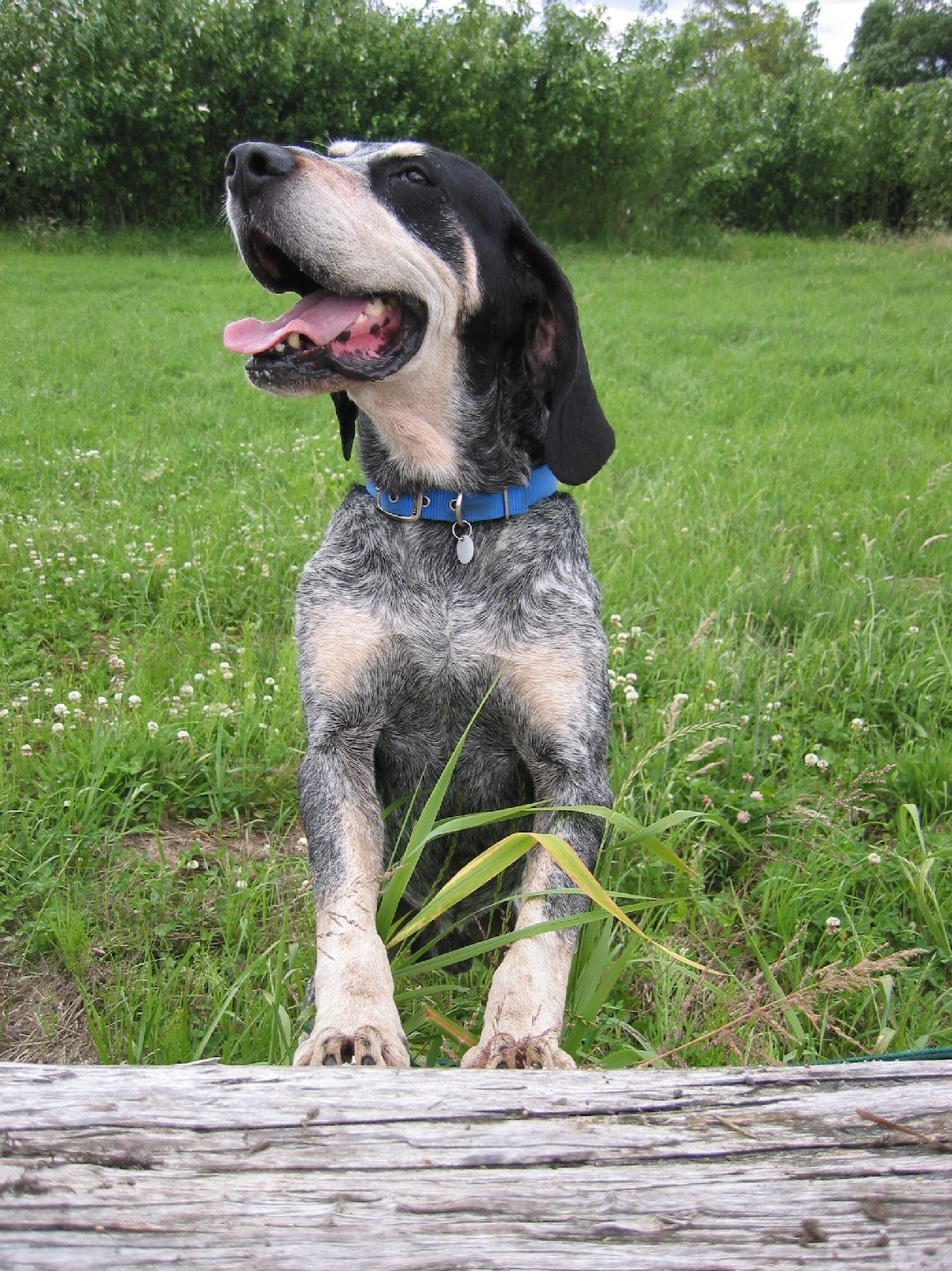
โ–ท The world of Pets: Dogs, cats, birds, reptiles, amphibians

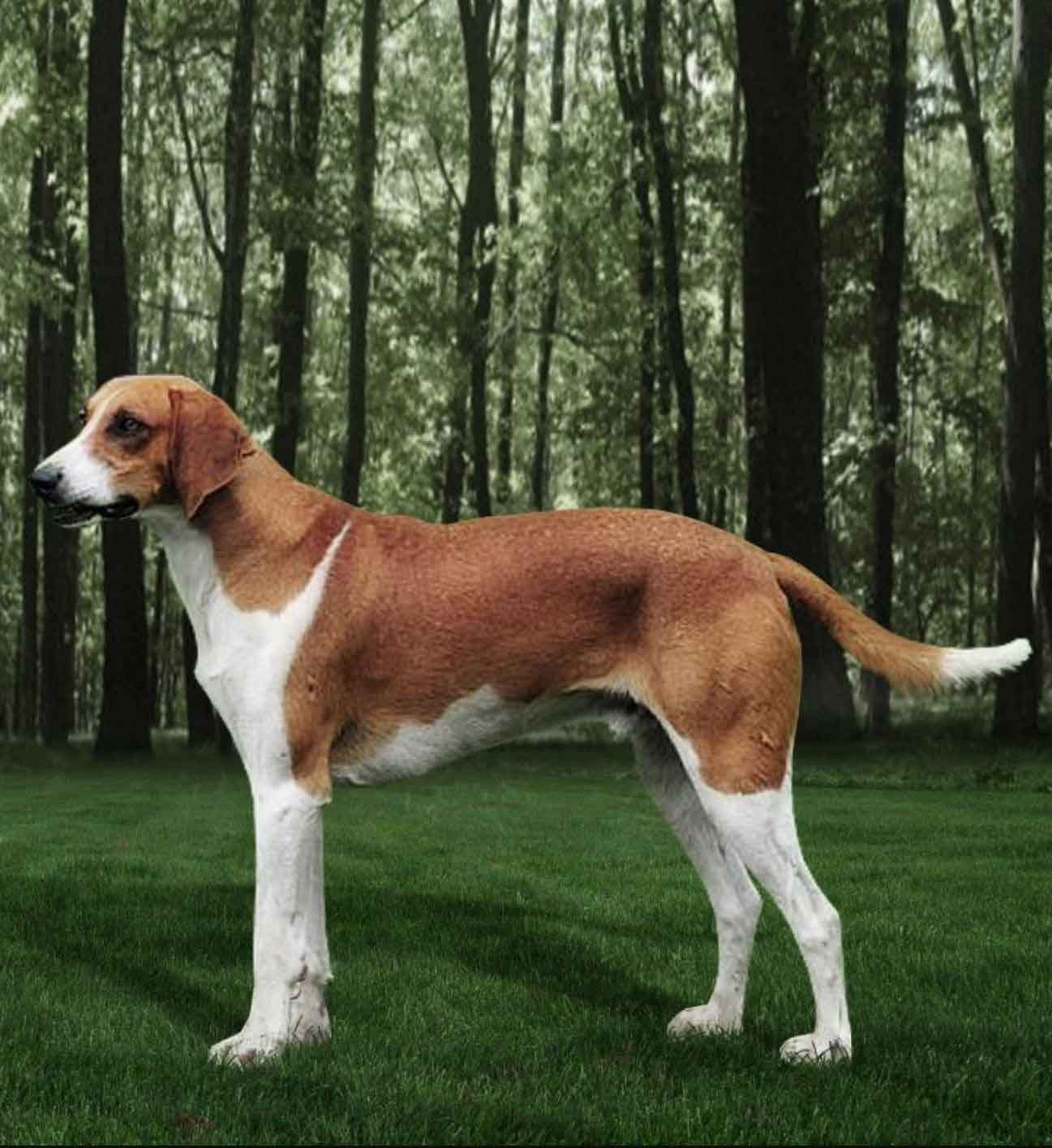
Great Anglo-French White and Black Hound
Francia FCI 323 - Large-sized Hounds
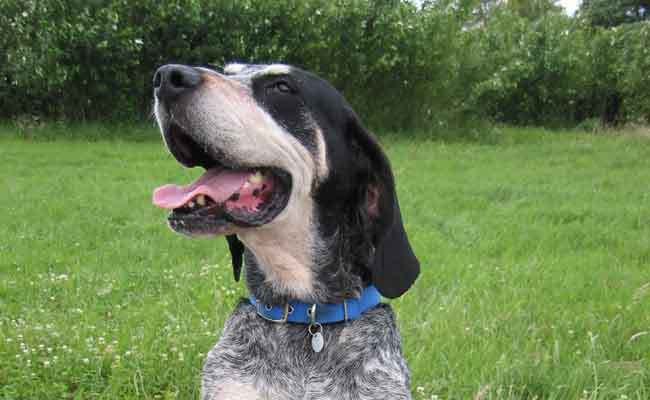
Great Anglo-French White and Black Hound

The Great Anglo-French White and Black Hound can be used both in pack and individually.

Content

History

This breed is originally from the "Bรขtard Anglo - Saintongeois" a species that emerged in the mid-nineteenth century and was the result of the cross between the Gascon Saintongeois and the English Foxhound. Currently the breed has approximately 2000 specimens with approximately 200 births per year. They form a group of 20 or more deer hunters and a deer hunter.
The text of the year 2007 was written by M. Pierre Astiรฉ, President of the "Club du Chien d'ordre" and its committee in collaboration with Mr..
Raymond Triquet.

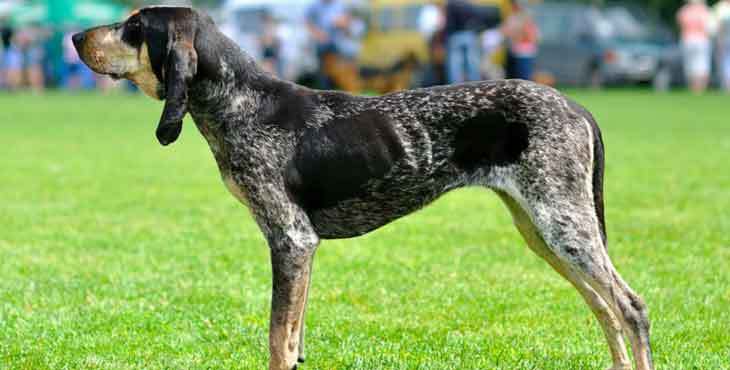
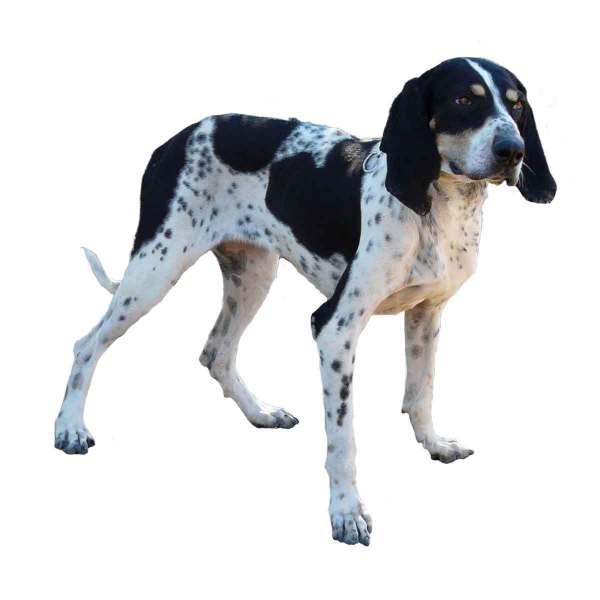
Physical Characteristics Black and White Great Anglo-French Hound

The Great Anglo-French White and Black Hound is a big dog, pretty powerful, resilient and robust with strong bones that recall its origins with the Gascon Saintongeois. Its ears are medium-length. Extended forward, reach at most the snout two fingers behind the nose. Rather they end up at one point. Strong at birth, its tail ends at a conical point, long and straight; above the line of the back when the dog is in action but not reaching the vertical.

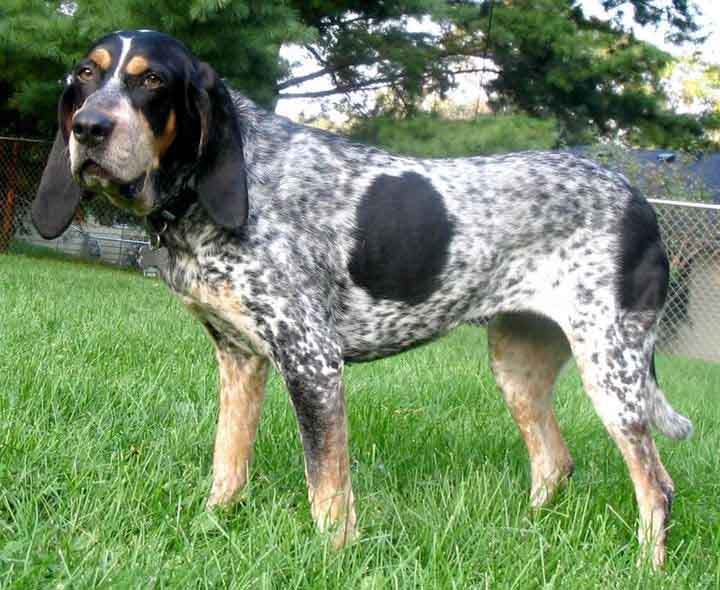
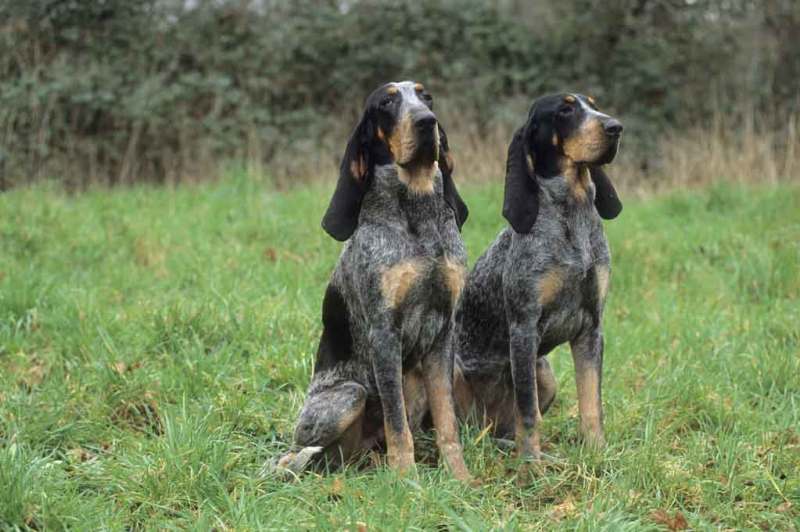
He has short hair, pretty strong and tight, necessarily black and white, with a large fur and more or less extensive black spots, which may show black or bluish spots, or even small tan marks, but these only in the limbs. A pale tanned spot over each eye and a pale tan on the cheeks, under the eyes, under the ears and at the base of the tail. The โ€œdeer markโ€ on the thigh is quite common.

CARVING:

– Males: 65 to 72 cm.
– females: 62 to 68 cm.

Weight: On 25 kg.

Character and skills Great Anglo-French White and Black Hound

GREAT ANGLO-FRENCH BLACK AND WHITE Hound

The Great Anglo-French White and Black Hound lives mainly in packs and kennels. Used for deer hunting, roe deer or wild boars. Hunting on any terrain, even wet or wooded. The Great Anglo-French White and Black Hound form packs of about twenty dogs on hunts in their country of origin, France. You can also hunt alone with your master.

For a companion dog, the field and a large fenced garden are preferable. An accomplished athlete, the Great Anglo-French White and Black Hound will delight a good runner. In the presence of young children, it is not advisable to adopt an adult kennel dog without making sure it has been well socialized with children.

Health Great Anglo-French White and Black Hound

Like all large races, the great black-and-white Anglo-French can suffer from joint pain. Their soft ears are sometimes prone to ear infections..

Hunting accidents are common and cause injuries, fractures or sprains.

Groomed Great Anglo-French White and Black Hound

The short coat of the Great Anglo-French White and Black Hound should be brushed once a week.

Returning from the hunt, the fur will be inspected for wounds, parasites or thorns. Good vaccination and pest control coverage is recommended.

Great black and white Anglo-French hound training

The Great Anglo-French White and Black Hound he is friendly, but with a strong character. You'll have to be politely educated.

as a companion dog, it is preferable to bring a puppy that can be raised and socialized. Dog hunting training will be conducted by a hunter.

Exercise Great Anglo-French White and Black Hound

The Great Anglo-French White and Black Hound is an extremely vigorous working dog, accustomed to very intense physical exercise. When not hunting, he must be given the opportunity to expend his excessive energy. This dog is an infamous cat hunter, so it should never be released without a leash until it is in a closed and secure area.

During the hunting season it is advisable to offer the dog some type of exercise that emulates its hunting behavior.. It is worth remembering that if the Great Anglo-French White and Black Hound lacks opportunities to vent, will gradually turn into a rebellious animal, hyperactive and destructive.

Videos "Great Anglo-French White and Black Hound"

Great Anglo French White and Black ๐Ÿถ๐Ÿพ Everything Dog Breeds ๐Ÿพ๐Ÿถ
Grand Anglo Franรงais Blanc et Noir ?? Everything Dog Breeds ??
HTTPS://youtu.be/sPQufNrtDwA

Grand Anglo Francais Blanc et Noir Dog Breed

Type and recognitions:

  • FCI CLASSIFICATION:
  • Group :
  • Section : . .

Federations:

  • FCI – Group 6: Scent hounds, and related breeds. – Section 1.1: Large-sized Hounds. โ“˜
  • Central Canine Society โ“˜

FCI breed standard "Great Anglo-French White and Black Hound"

Origin:
France

Date of publication of the valid original standard:
04.11.2008

Use:

Pack hound for big game.


General appearance:

This is a fairly strong dog with solid bones.. Its appearance shows very well its Gascon origin- Saintongeois.

PROPORCIONES IMPORTANT:

  • The snout is somewhat shorter than the skull.
  • The length of the body from the point of the shoulders to the point of the ischium is equal to its height at the withers..


Behavior / temperament:

Outstanding in hunting deer and deer in wet and dense terrain.. It is a friendly dog, attached to people and easy to handle in the kennels.

Head:

Strong, rather short with parallel skull/snout planes.

Cranial region:
  • Craging: The skull is rather flat. The occipital protuberance is barely marked and the eyebrows are prominent.
  • Dnaso-frontal depression (Stop): Well marked.

facial region:

  • Trufa: black, developed and somewhat raised. Well open nasal Windows.
  • Hocico: A little longer than the skull. Straight and somewhat shorter than the skull.
  • Belves: The lips are clearly square when seen from the sides., the upper lip perfectly covers the lower lip.

OJOS: Brown and quite sunken but not excessively.

OREJAS: Rather wide insertion and at eye level. Relatively flat at insertion then bending toward the end; long Middle. When stretched forward they should not reach more than two fingers before the base of the nose.. Rather pointed.

Neck:

Strong, rather short. A slight double chin is tolerated.

Body:

  • Espalda: Straight and well accentuated.
  • Lomo: Very wide, straight and rather short.
  • Glikeness: The rump is oblique and the haunches are quite prominent..
  • Pecho: It is wide and quite descended to the level of the elbows.. Medium round ribs.
  • Flalso: Well solid.
  • Lรญlower line and belly: Slightly ascending.

Tail:

It is thick at the root and fine and thin at the tip.. When on the move, the carriage is on the top line but not vertical.

Tips

PREVIOUS MEMBERS: Aligned with the body, more rounded than flat.

  • Hshoulders: They are long and well muscled.
  • Elbows: Well attached to the body.
  • Brazo: Plumbed.
  • Metacarpus: Slightly inclined seen in profile.
  • Pinis previous: Thick and big, rather round.

LATER MEMBERS:

  • Thighs: They are well lowered and muscular, although not thick.
  • Hock: Only slightly inclined when seen in profile.
  • Pinis later: Thick and big, rather round.

Movement:

Natural. Preferred step: agile with extended canter.

Mantle

PIEL: White under white hair, and black under the black hair. Sometimes there are blue or dark brown spots on the belly and inner thighs..

MANTLE

  • Plink: Short, quite strong and dense.
  • Codor: It must be black and white, with a large blanket and more or less widespread black spots.

May present black or bluish mottling, and even fire colored. The latter, However, only allowed on the extremities. Has a pale spot above each eye, as well as pale fire in the cheeks, under the eyes, below the ears and below the base of the tail. The โ€ณroe deer markโ€ณ on the lower thigh is quite common.


Size and weight:

Altura to the cross:

  • Males: 65 to 72 cm in males,
  • females: 62 to 68 cm in females.

Tolerance + / โ€“ 1 cm..


Fouls:

Any deviation from the aforementioned criteria is considered as a fault and the severity of this is considered to the degree of the deviation to the standard and its consequences on the health and well-being of the dog..

FALTAS GRAVES:

  • Nose: Significant lack of pigmentation.
  • Jaws: Prognathism or enognatismo.
  • Eyes: Too light color.
  • Ears: Asymmetrically folded, too long.
  • Spada: excessive.
  • Color: on the cheeks the black extending towards the lips.

FALTAS DISQUALIFYERS:

  • Aggressiveness or extreme shyness.
  • Any dog โ€‹โ€‹showing clear signs of physical or behavioral abnormalities.
    • Tips: weak
    • Severe deviation of the limbs.
    • Pies: Long.
    • Color: Tricolor mantle.


N.B.:
  • Males should have two normal-appearing testicles fully descended into the scrotum..
  • Only functionally and clinically healthy dogs, with the typical conformation of the breed, should be used for parenting.

Source: F.C.I - International Cynological Federation

Alternative names:

1. Grand Anglo-Franรงais Blanc et Noir (English).
2. Grand Anglo-Franรงais Blanc et Noir (French).
3. Grand Anglo-Franรงais, Grand anglo-franรงais blanc et noir (German).
4. Grand anglo-franรงais blanc et noir (Portuguese).
5. Grand anglo-franรงais blanc et noir (espaรฑol).

Photos:

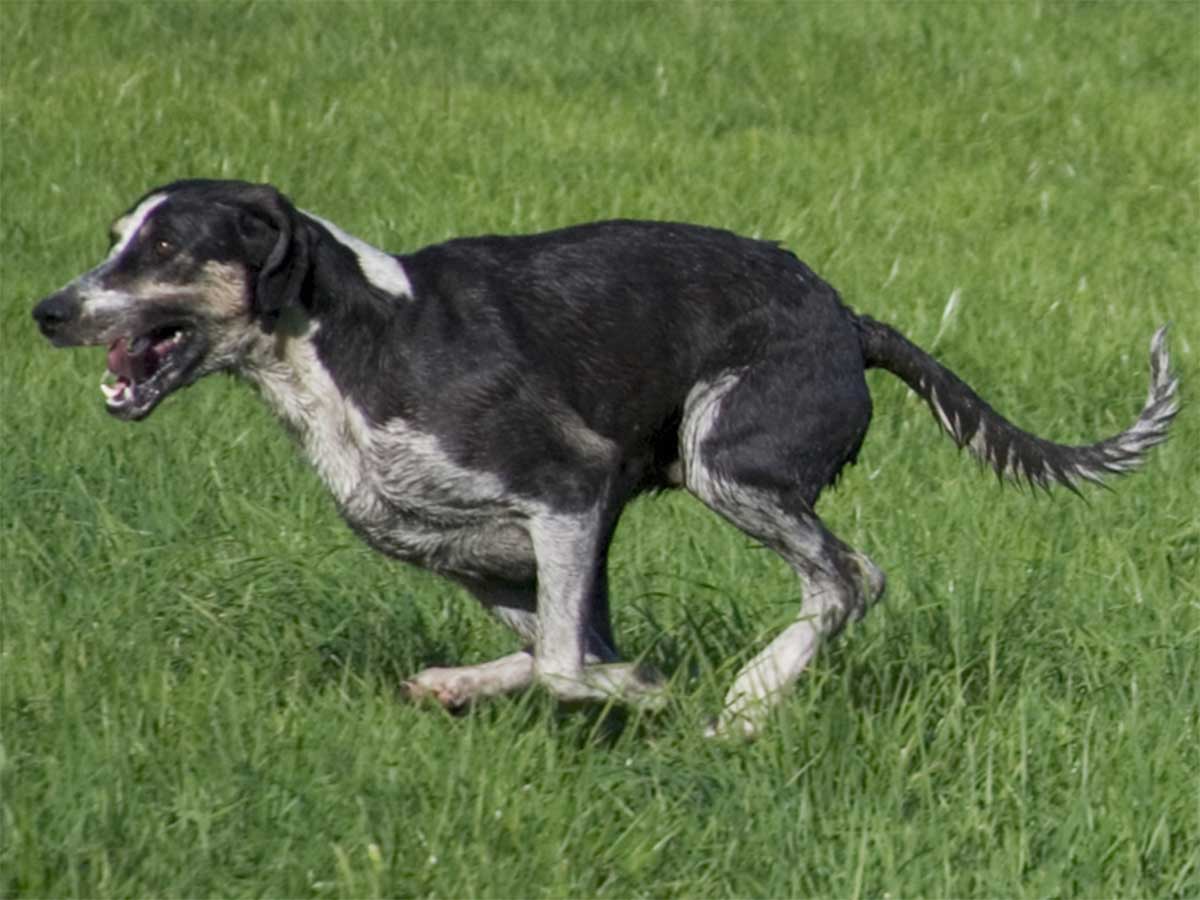
1 – A Grand Anglo-Fancais blanc et noir at full gallop by Alephalpha, CC BY-SA 3.0, via Wikimedia Commons
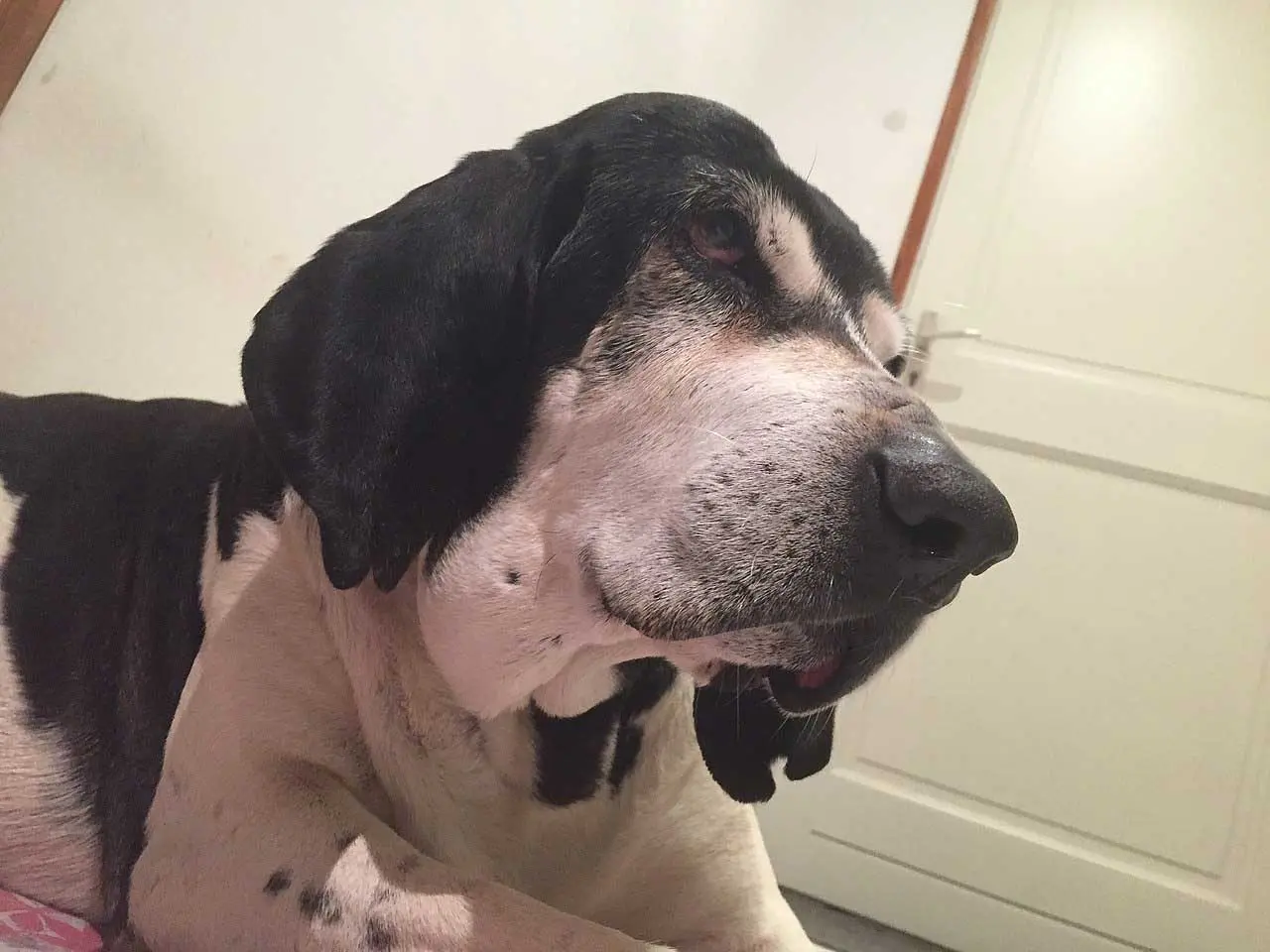
2 – Anglo-French white and black face by ArnaudM63, CC BY-SA 4.0 , via Wikimedia Commons

โ–ท The world of Pets: Dogs, cats, birds, reptiles, amphibians

Gascon Saintongeois
Francia FCI 21 - Large-sized Hounds
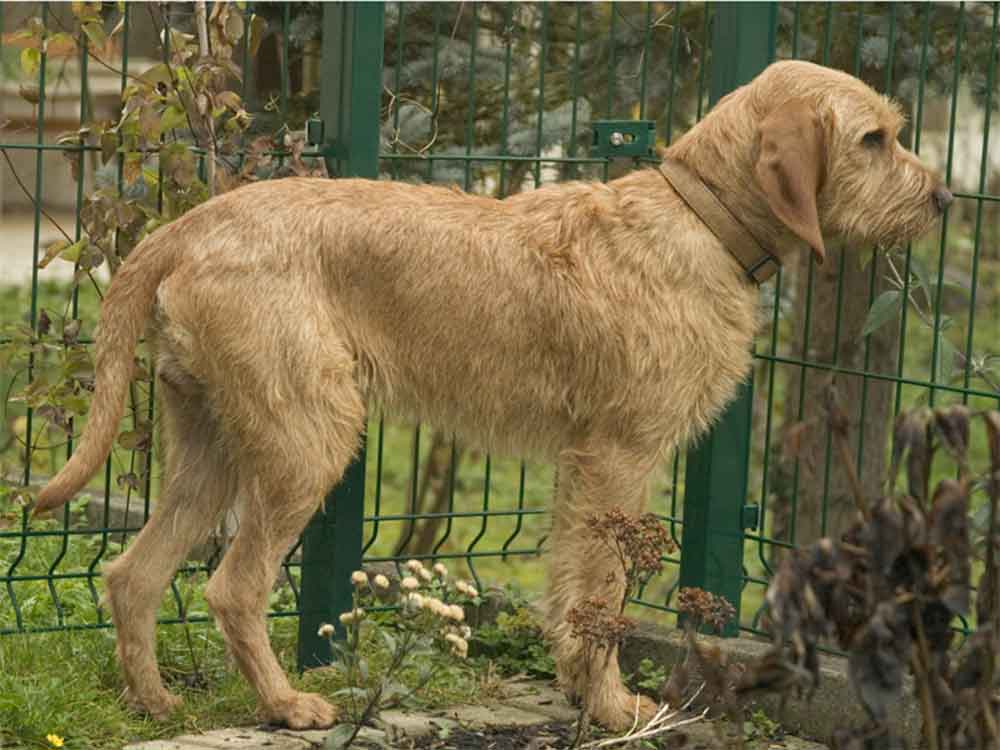
Gascรณn Saintongeois

His great passion is hunting, therefore it is advisable for those who practice it.

Content

The Gascon Saintongeois he is a strong sporting dog, confident and robust that was invented in France in the mid-19th century. His sweet and good-natured character makes him an excellent family dog รขโ‚ฌโ€นรขโ‚ฌโ€นthat is very careful when interacting with young children.. Today the breed remains unpopular even in its native country., so it can disappear completely in a matter of several decades.

Gascon Saintongeois History

In the mid-19th century, Carayon-Lantour Joseph Earl wanted to regenerate the dog breed of Saintonge, weakened as a result of the French Revolution (they only survived 3 These copies) and united the last descendants with Blue Gascony dogs owned by the Baron de Ruble. Thus was created the Gascon Saintongeois, but that creation, caused the disappearance of Saintonge's dog.

This breed of dog, It was developed, in its origins, mainly for hunting, greater and hares.

Physical characteristics Gascรณn Saintongeois

It is a very well established dog, It conveys an image of strong dog, but elegant at the same time. Their fur is short and dense, white background, with black spots; It may be mottled, but slightly. They usually have two black spots on each side of the head covering the ears, surrounding the eyes and cheeks-reach. The cheeks are color fire, but soft (as clay). They have, also two spots in that color, on top of the eyes, What gives them the appearance of having four eyes.

There is also the Petite Gascon Saintongeois, that shares the characteristics of Gascon Saintongeois, but its dimensions are smaller (measured 54 and 62 height cm). It is also a versatile Hunter, but above all of hares, but also, used to be used for hunting big game.

Gascon Saintongeois character and skills

The Gascon Saintongeois, is a pack dog, from its origins, has a highly developed sense of smell, is bold, and has a nice bark.

It can become the ultimate companion to any hunter, but it also has all the essential qualities to play the role of a family dog. It has a peaceful and adaptable nature and normally perceives its owners as members of its pack.. Early and thorough socialization is necessary if you want your pet to be tolerant of children in the family and other animals in the house.. The breed is usually very gentle with young children although it is large enough to knock a young child down in the heat of play..

Human aggressiveness can become a serious problem if your Gascon Saintongeois not adequately displayed to people of all ages from a young age. But, this dog is commonly courteous to house guests and resorts to violence only in an extreme case. Thanks to his unsurpassed vigilance and deep sonorous voice, he is an excellent watchdog.. In general, this dog has no desire to defend his territory, so it cannot be considered a good guardian.

The Gascon Saintongeois welcomes any opportunity to communicate with peers and, in fact, prefers to live in a large canine group. But, may be ill-disposed towards unfamiliar homeless canines and the owner should take this character trait of his pet into account and keep him on a leash in public places. The breed is not compatible with other types of pets due to its powerful hunting instinct. But she is usually friendly with the individual cats she has been raised with from a young age as a puppy..

Gascon Saintongeois Toilet and Care

The toilet of the Gascon Saintongeois requires a minimum of effort. His short self-cleaning coat should be brushed regularly but infrequently (only once a week). This procedure will effectively remove loose hair and reinforce the natural shine of the dog's coat.. This breed only needs an occasional bath.

Since this bloodhound is predisposed to ear infections, the caregiver should periodically examine their ears and clean them if necessary. Trim your pet's nails at least once every two months and clean their teeth weekly.

Gascon Saintongeois Education and Training

The Gascon Saintongeois It is an obedient and intelligent dog whose training is usually a piece of cake. Learns basic tricks with a reasonable amount of repetitions and succeeds in agility and obedience tests. Keep in mind that his character is stubborn and will ignore the orders of a shy person.

It also, the breed is irresponsible to negative training methods and reacts appropriately only to food incentives and kind words. Like any hound, tends to distract from the learning process by attracting smells, so be lenient with your pet's behavior.

Gascรณn Saintongeois Exercise

The Gascon Saintongeois is notable for both its incredulous stamina and great power, so you need a lot of physical activity. This large dog is not appropriate to be kept in an apartment where there is no room to play. At the same time it is strong enough to become a wonderful companion for runners or even cyclists..

Your pet should have the daily opportunity to run unrestricted in a well fenced yard, otherwise you may become hyperactive and totally undisciplined on the inside. Without a lot of vigorous daily exercise, the Gascon Saintongeois it can also develop into an unreasonable barking habit.

Videos "Gascon Saintongeois"

HTTPS://youtube.com/watch?v=FaejbradvYs
Gascon Saintongeois – Dog breeds
HTTPS://youtube.com/watch?v=TW6XQ62z03k
Gascon Saintongeois

Type and recognitions:

  • FCI CLASSIFICATION:
  • Group :
  • Section : . .

Federations:

  • FCI – Group 6: Scent hounds, and related breeds. – Section 1.1: Large-sized Hounds. โ“˜
  • Central Canine Society โ“˜

FCI breed standard "Gascon Saintongeois"

Origin:
France

Date of publication of the valid original standard:
06.03.2007

Use:

Gran Gascon Saintongeois: Used for rifle hunting and sometimes for small game, big game and also hare. It is generally used in a pack or alone, as a tracker. Pequeรฑo Gascon Saintongeois: Multi-purpose dog used for rifle hunting. Because of its origin it hunts especially the hare, but it is also very good for hunting big game.


General appearance:

Gedge: Very well built dog, which gives at the same time an impression of strength and elegance. He is of a very French type when it comes to the head, fur and expression.

Psmall: Medium-sized dog, well proportioned and distinguished.

PROPORCIONES IMPORTANT:

Height at withers/scapulo-ischial length in a ratio of 10/10.5 The length of the muzzle is equal to the skull.


Behavior / temperament:

Pack dog par excellence, up to the sense of smell, bold, gifted with a beautiful voice. He joins the pack by instinct. It's calm, affectionate and obeys orders easily.

Head:

The lines of the skull and the nasal passage are divergent.

Cranial region:
  • Craging: Seen from the front, It is arched and rather narrow; the occipital protuberance is well marked. Seen from above, the back has a pronounced ogival shape.
  • Dnaso-frontal depression: Little pointed.

facial region:

  • Trufa: black, well developed, the windows wide open.
  • Labios: They cover the lower jaw, the corner is discreet. The edge of the lips is black.
  • Cnasal year: Powerful, slightly arched.
  • Jaws: Scissor joint. The incisors are at right angles to the jaws..
  • Cheeks: Thin.

OJOS: Oval, browns. The edge of the eyelids is black. The expression is sweet and confident.

OREJAS: Fine, bent. They must reach at least the end of the truffle. They occur below the eye line, quite far back, leaving the skull very clear.

Neck:

Of medium length and thickness. It is slightly arched and has little dewlap.

Body:

  • lynand the top: It is firm and not excessively long.
  • Lomo: It is well attached to the body. It is slightly convex, quite muscular and not too long.
  • Glikeness: Slightly oblique, wide enough.
  • Pecho: Large, long, descends to the level of the elbows. The front part of the chest is quite open.
  • Costillas: Slightly rounded and long.
  • Flank: It's a little raised.

Tail:

It is thick at the base; very thin at its end. Reaches to the tip of the hock. The elegant bearing, Sabre-shaped.

Tips

PREVIOUS MEMBERS:

  • Ageneral appearance: The previous room is powerful.
  • Hshoulder: Rather long, muscular, moderately oblique.
  • Elbow: Well adhered to the body.
  • Aforearm: Strong bones.
  • Pinis previous: Slightly elongated oval shape. The fingers are thin and close together. The foot pads and nails are black.

LATER MEMBERS:

  • Ageneral appearance: The hindquarters are well proportioned.Thighs: Long and well muscled.
  • Corvejรณn: Width, well angled. Well inclined, visibly directed towards the axis of the body.
  • Pinis later: Slightly elongated oval shape. The fingers are thin and close together. The foot pads and nails are black.

Movement:

Uniform and loose.

Mantle

PIEL: Stretchy and not too thick. It is white with black spots.

Plink: Short and dense.

Codor: The background is white, with black spots; sometimes it is speckled, although not in excess. Two black spots are usually present on each side of the head.; cover the ears, surrounding the eyes and cheeks-reach. The cheeks are color fire, preferably pale. Two fire-colored brands, located on the top of the eyebrows, They simulate โ€œfour eyesโ€. They are also observed, tan traces on the inner surface of the ear and specks along the extremities. Some tawny hairs may appear on the top of the ear, without this giving the head a tricolor appearance. Sometimes a typical dead leaf spot is observed on the lower part of the thigh., known as โ€œroe deer markโ€.


Size and weight:

Altura to the cross:

Gedge: Males: 65 to 72 cm..
  Hblaze: 62 to 68 cm..
Psmall: Males: 56 to 62 cm..
  Hblaze: 54 to 59 cm..

With a tolerance of approximately 1 cm..


Fouls:

Any deviation from the aforementioned criteria is considered as a fault and the severity of this is considered to the degree of the deviation to the standard and its consequences on the health and well-being of the dog..

Cthey are not coming:

  • Short.
  • Wide skull.
  • Short ears; ears that stand high.
  • Total absence of fire color.

Cfamily:

  • Absence of volume
  • Sagging top margin.
  • sunken croup.
  • Deviated tail.

Members:

  • Bone structure that is not sufficiently developed
  • Shoulders that are too oblique or too straight.
  • crushed feet.
  • Straight posterior angulation.
  • closed hock, seen from behind.

FALTAS DISQUALIFYERS:

  • Aggressiveness or extreme shyness.
  • Any dog โ€‹โ€‹showing clear signs of physical or behavioral abnormalities.
  • Lack of type, and in particular wide and round skull.
  • Upper or lower prognathism.
  • Clear eyes
  • Any other layer other than that established in the standard.


N.B.:
  • Males should have two normal-appearing testicles fully descended into the scrotum..
  • Only functionally and clinically healthy dogs, with the typical conformation of the breed, should be used for parenting.

Source: F.C.I - International Cynological Federation

Alternative names:

1. Grand Gascon Saintongeois (English).
2. Gascon de Saintonge, Grand gascon saintongeois (French).
3. Grand Gascon Saintongeois (German).
4. Gascon Saintongeois (Portuguese).
5. Gascon Saintongeois (espaรฑol).

โ–ท The world of Pets: Dogs, cats, birds, reptiles, amphibians

Great Anglo-French White and Orange Hound
Francia FCI 324 - Large-sized Hounds
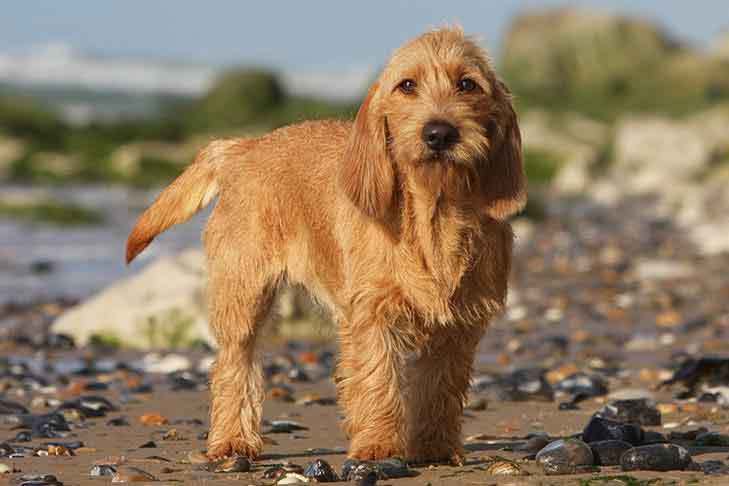
l GREAT ORANGE AND WHITE ANGLO-FRENCH Hound

The Great Anglo-French White and Orange Hound it is considered little spread outside of France and little used even within its country.

Content

History Great Anglo-French White and Orange Hound

It probably dates from the 16th century and is originally from France, the Great Anglo-French White and Orange Hound comes from the cross between English Foxhound, French dogs and the addition of a contribution most likely from the Billy.

The addition of English and French blood produced a versatile all-rounder hunting dog that was particularly prized towards the end of the 19th century..

The boar, the Fox, deer and roe deer have been part of their specialties ever since.

Along with the Great Anglo-French White and Black Hound and the Great Anglo-French Tricolour Hound, it is one of the three French breeds that have been crossed with English blood.

Physical Characteristics Great White and Orange Anglo-French Hound

The Great Anglo-French White and Orange Hound it is a quite strong and powerful dog, with more English blood on his head than his tricolor counterpart. His eyes are big, brown and dark. The ears are quite thick, slightly turned and quite short. Its tail is quite long and sometimes slightly spied on.

His hair is short and not too thick, lemon white or orange white, as long as the orange is not too dark, tending towards red.

Height: 60 to 70 cm..
Weight: Of 30 to 35 kg.

Character and skills Great Anglo-French White and Black Hound

Solitary or in a pack, brave, tenacious, rapid, gentle and friendly, the Great White and Orange Anglo-French Hound is a sociable hunting dog with an obedient nature.

Usually, they are easy to learn, like your socialization.

Tenacious, vigorous, brave and fast in the hunt, they are tender and gentle with their family, including children in the home.

Health Great Anglo-French White and Black Hound

Quite robust and very solid, this large dog generally enjoys very good health.
He rarely gets sick and his longevity is still appreciable for a dog of his size..
The breed is not affected by any genetic defects or diseases.

Caring for Great Anglo-French White and Black Hound

Brush him from time to time, to remove dead hairs and keep the coat healthy and beautiful, It is more than enough.

Training Great Anglo-French White and Black Hound

Its socialization is easy, but your education must remain firm and adequate, although it requires less firmness than the other breeds in its category, because it is less dominant by nature than the other two.

His great intelligence also facilitates his education.

Exercise Great Anglo-French White and Black Hound

The Great Anglo-French White and Orange Hound is an extremely vigorous working dog, accustomed to very intense physical exercise. When not hunting, he must be given the opportunity to expend his excessive energy. This dog is an infamous cat hunter, so it should never be released without a leash until it is in a closed and secure area.

During the hunting season it is advisable to offer the dog some type of exercise that emulates its hunting behavior.. It is worth remembering that if the Great Anglo-French White and Orange Hound lacks opportunities to vent, will gradually turn into a rebellious animal, hyperactive and destructive.

Videos "Great Anglo-French White and Orange Hound"

HTTPS://youtube.com/watch?v=J0DEDEqOimA&list=PLcj6J71Gt710QwEM_fhrp9Eq6e4x6w06H&index=2
Horus sucht ein Zuhause
HTTPS://youtube.com/watch?v=UJjm2cAT46s
Grand Anglo Franรงais Blanc et Orange ?? Everything Dog Breeds ??

Type and recognitions:

  • FCI CLASSIFICATION:
  • Group :
  • Section : . .

Federations:

  • FCI – Group 6: Scent hounds, and related breeds. – Section 1.1: Large-sized Hounds. โ“˜
  • Central Canine Society โ“˜

FCI breed standard "Great Anglo-French White and Orange Hound"

Origin:
France

Date of publication of the valid original standard:
27.01.1983

Use:

Hound


General appearance:

It is a fairly strong and robust dog.. In his head the English blood stands out more than in that of his tricolor counterpart..


Behavior / temperament:

---

Head:

It is quite short and big.

Cranial region:
  • Craging: It is rather wide and flat, without occipital bulge. The eyebrows are not prominent.
  • Dnaso-frontal depression (Stop): Well marked.

facial region:

  • Trufa: It is black or brown-orange in color.
  • Snout: Rather short nasal passage.
  • Belves: They extend beyond the lower jaw and give the muzzle a slightly square appearance..

OJOS: They are large, brown and dark.

OREJAS: Fairly long implantation in the plane of the eye line or slightly higher. They are rather thick, slightly crooked and rather short.

Neck:

It is straight and has a slight dewlap.

Body:

  • Espalda: Wide and muscular.
  • Pork loin: Wide and rather short.
  • Rump: Rather rounded.
  • Pecho: Quite high and low. Long, slightly rounded ribs.
  • Flalso: Massifs.

Tail:

It is quite long and sometimes spindly (towards the tip of the tail around some longer and thicker hairs slightly separated in the shape of a spike).

Tips

PREVIOUS MEMBERS:

  • Ageneral appearance: They're strong, wide and well plumb.
  • Shoulder: They are close to the chest, but they are very muscular.
  • Pinis previous: Rather rounded.

LATER MEMBERS:

  • Thighs: Muscular and thick.
  • Corvejones: Somewhat angled and are located close to the ground.
  • Hind feet: Rather rounded.

Movement:

This is a dog that moves easily.

Mantle

PIEL: White with orange or yellow spots.

Plink: Short and not very thick.

Codor: White โ€“ lemon or white โ€“ orange, provided the orange is not too dark (pulling red)


Size and weight:

Altura to the cross: Of 60 to 70 cm..


Fouls:

Any deviation from the aforementioned criteria is considered as a fault and the severity of this is considered to the degree of the deviation to the standard and its consequences on the health and well-being of the dog..

  • Constitutional defects.
  • Partial depigmentation of the truffle
  • Nasal cane too narrow.
  • Upper or lower prognathism.
  • light eyes.
  • Excess double chin.
  • Tail curled or drawn to one side.
  • Fur of another color than the established one (black or red hair).

FALTAS DISQUALIFYERS:

  • Aggressiveness or extreme shyness.
  • Any dog โ€‹โ€‹showing clear signs of physical or behavioral abnormalities.


N.B.:
  • Males should have two normal-appearing testicles fully descended into the scrotum..
  • Only functionally and clinically healthy dogs, with the typical conformation of the breed, should be used for parenting.

Source: F.C.I - International Cynological Federation

Alternative names:

1. Chien Franรงais Blanc et Orange (English).
2. Franรงais blanc et orange (French).
3. Franรงais blanc et orange (German).
4. Grande sabujo francรชs branco e laranja (Portuguese).
5. Franรงais blanc et orange (espaรฑol).

โ–ท The world of Pets: Dogs, cats, birds, reptiles, amphibians

Grand Griffon Vendรฉen
Francia FCI 282 - Large-sized Hounds
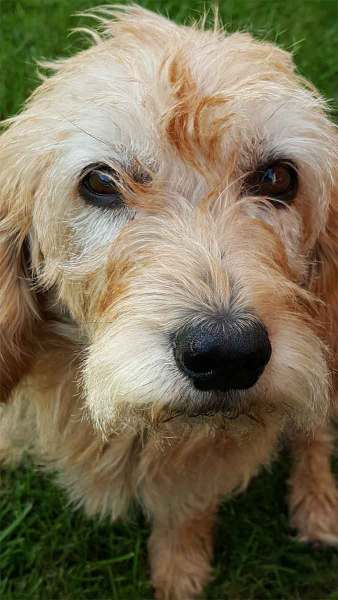
Grand Griffon Vendรฉen

The Grand Griffon Vendรฉen he is a dog of great character, beautiful cloak and dreamy look. It is a pity its little diffusion.

Content

History Grand Griffon Vendรฉen

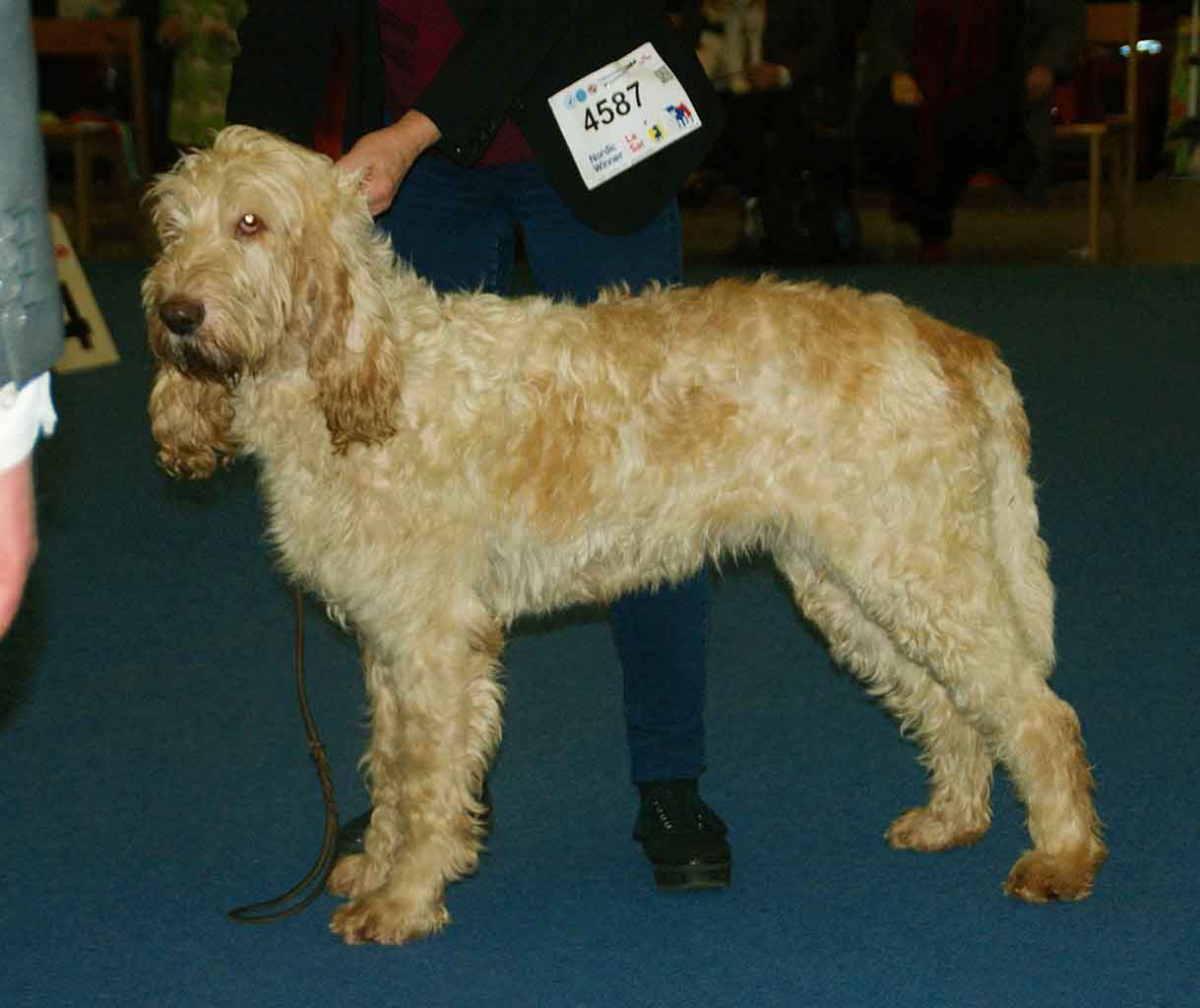
In the beginning, there was only the Greater Vendean. This one belonged to a variety of short-coated Vendean dogs., descendants of the โ€ณscribesโ€ณ (so named because one of the original kennels was the king's clerk) or of the king's white dogs. Regarding its origin, neither can we fail to point out the Basset Fauve de Bretagne, since these are an essential part of the lineage of the โ€ณscribe dogโ€ณ. The missing gray of Saint-Louis and Bresse grifones (descendants of Segussian ancestors) also contributed to the creation of Grand Griffon Vendรฉen.

There are also several other breeds of griffons from the Vendรฉe, all of them smaller: the Briquet Griffon Vendรฉen, y el Grand y Petit Basset Griffon Vendรฉen. Related breeds of Griffon include the Griffon Fauve de Bretagne, the Griffon Bleu de Gascogne and the Griffon Nivernais.

Physical Characteristics Gran Griffon Vendeano

This is an ancient breed animal, French type, receptive and determined, distinguished in its forms and movements. It is of well proportioned construction, robust, no appearance of heaviness.

SIZE: Height to the cross: In males, of 62 – 68 cm., In females, of 60 – 65 cm..

Character and abilities Grand Griffon Vendรฉen

It is docile, though willful and passionate. Must be well trained.
It is an energetic dog with a passion for hunting that needs space and a lot of physical exercise.: you are strongly discouraged from living in the city. Character is balanced, However, training should be carried out from a very early age as it is considered difficult due to its very firm character: booster must be purchased very soon.

It has a very good nose and a beautiful bark. Applied to follow the footstep, does not refuse to enter the undergrowth and prefers large territories.
Before it was used to hunt wolves and now it is used to hunt wild boars.

Grand Griffon Vendรฉen Care

The mantle of Grand Griffon Vendรฉen requires daily attention because it can easily become tangled.

Videos of the Great Basset Griffon Vendean

Great Basset Griffon Vendeano

Grand Basset Griffon Vendeen / Breed of dog

Type and recognitions:

  • FCI CLASSIFICATION:
  • Group :
  • Section : . .

Federations:

  • FCI – Group 6: Scent hounds, and related breeds. – Section 1.1: Large-sized Hounds. โ“˜
  • Central Canine Society โ“˜

FCI breed standard "Grand Griffon Vendรฉen"

Origin:
France

Date of publication of the valid original standard:
09.01.1999

Use:

This is the perfect assistant for the shotgun hunter in medium-sized territories.; the fastest of all bassets. It's tenacious, courageous, a little stubborn. It is necessary to train him from an early age to obey the call; Their training involves will and sanctions that the animal does not resent..


General appearance:

Slightly elongated construction, straight limbs, basset setup; Its appearance should not be that of a small briquet. Its shapes are harmonious and elegant.


Behavior / temperament:
  • Temperament : He is fast and brave; has a good bark; He is passionate about hunting and likes to be in the undergrowth and brambles..
  • Character : Although somewhat stubborn, has good character. It is up to the master to know how to control it.

Head:

---

Cranial region:
  • Skull : No appearance of heaviness; convex. It is long and not very wide. It appears well chiseled under the eyes. The occipital bone is well developed.
  • Depression links (stop) : Well marked.

facial region:

It is very prominent. The Windows are wide open. It is black, except for dogs with white and orange fur, in which the brown color is accepted.

  • Snout : The end is square. Its length significantly exceeds the length of the skull. It is very slightly arched.
  • Lips : They are quite pendulous and cover the lower jaw well., giving the end of the snout a square profile. They are covered with big mustaches.

Eyes : Oval, large, dark; there is no presence of the white of the eye. His expression is confident and intelligent. The conjunctiva should not be apparent.

Ears : flexible, narrow and thin. They are covered with long hairs and their end is shaped like an elongated oval.; they are well turned inwards. Low insertion, below the eye line. They must be able to extend beyond the tip of the nose..

Neck:

Long, robust, well muscled and strong insertion. It presents no Chin.

Body:

Typical Basset body, although not excessively long.

  • Back : Long, wide and very straight; never sunk. It begins to arch in the region where it joins the spine. The cross is very little protruding.
  • Pork loin : Solid, well muscled and slightly arched.
  • Breast : Quite wide and well descended to the elbows.
  • Ribs : Rounded, never flat, nor cylindrical. The chest is a little less wide at the elbow to facilitate movement.
  • Flanks : rather full. The belly is never picked up.

Tail:

It is thick at the base and gradually tapers until it reaches the tip.. Set quite high, It is carried in the shape of a saber or slightly bent, but never bent over, doesn't even touch the back. It's rather long.

Tips

Overall views, the bones are well developed, although they are thin. It goes without saying that quality is not a question of volume, but of density.

PREVIOUS MEMBERS

  • As a whole : They must be straight; the forearm is thick and the carpus is very little marked, although it is very solid.
  • Shoulder : Long, thin and oblique.
  • Elbows : They should not be too close to the body., nor too far apart from it.
  • Forearm : Thick; the carpals should never be touched.

LATER MEMBERS

  • As a whole : The hind limbs are solid and well aligned on the axis of the body..
  • Hip : Visible.
  • Thigh : Well muscled, but not very rounded. Bones and joints are solid.
  • Hock : It is wide and angled; never straight. Seen from the back, it should not deviate even inwards, nor out.

FEET : Strong and compact. The pads are hard and the nails are solid. The appropriate pigmentation of the pads and nails is sought.

Movement:

When the dog is in action it must give the impression of resistance and lightness. Movement should be loose and harmonious.

Mantle

SKIN : Thick enough. It often appears streaked in dogs with tricolor coats.. There is no presence of dewlap.

HAIR : Hard to the touch, not too long. It's stretched, never silky, ni lanudo. The fringes should not be very abundant. The belly and inner thighs should not be hairless.. The eyebrows are well pronounced, but they don't cover the eyes.

COLOR :

  • Black with white patches (black and white).
  • Black with reddish markings (black and tan).
  • Black with sand-colored markings.
  • Fawn with white patches (Orange and white).
  • Fawn with black blanket and white patches (tricolor).
  • carbon fawn.
  • Carbon sand color with white patches.
  • Color arena carbonado.

Traditional denominations : hare hair, wolf fur, badger hair or boar hair.


Size and weight:

Height to the cross :

  • In males : of 40 to 44 cm.
  • In females : of 39 to 43 cm..

With a tolerance of 1 cm more or less.


Fouls:

Any deviation from the aforementioned criteria is considered a fault and the severity of it is considered to the extent of the deviation from the standard and its consequences on the health and well-being of the dog..

Head

โ€ข Too short.
โ€ข Flat skull.
โ€ข Short snout.
โ€ข Depigmentation of the truffle, lips or eyelids.
โ€ข Pincer-shaped joint.
โ€ข Light eyes.
โ€ข High set ears, short, not crooked enough or not hairy enough.

Body

โ€ข Too long or too short in construction.
โ€ข Lack of harmony.
โ€ข Loose back.
โ€ข Sunken croup.

Tail

โ€ข Diverted tail.

Tips

โ€ข Weak bones.
โ€ข Angles that are too straight.
โ€ข Hocks too closed.
โ€ข Crushed feet.

Fur

โ€ข Until, little abundant.

Behavior

โ€ข Shy dog.

MISS PLAYOFFS

โ€ข Fearful or aggressive dog.
โ€ข Lack of type.
โ€ข Prognathism.
โ€ข Gaze eyes. heterochromia.
โ€ข Narrow sternum; narrow ribs at the bottom.
โ€ข Knotted tail.
โ€ข Twisted or semi-twisted ends.
โ€ข Woolly fur.
โ€ข Solid black or white coat.
โ€ข Important depigmentation.
โ€ข Size that deviates from the norms of the standard.
โ€ข Visible disability. anatomical deformation.

Any dog โ€‹โ€‹showing clear signs of physical or behavioral abnormalities must be disqualified..


N.B.:

Males should have two normal-appearing testicles fully descended into the scrotum..

Source: F.C.I - International Cynological Federation

Alternative names:

1. Large Vendรฉen Griffon (English).
2. grand griffon vendรฉen (French).
3. GROSSER GRIFFON VENDEEN (German).
4. Grand griffon Vendรฉen (Portuguese).
5. Grifรณn vandeano grande (espaรฑol).

source: fci
Photos: A large Vendรฉe griffon by Canarian, CC BY-SA 4.0, via Wikimedia Commons

โ–ท The world of Pets: Dogs, cats, birds, reptiles, amphibians

Great Gascony Blue
Francia FCI 22 - Large-sized Hounds

Big Blue of Gascony

The Great Gascony Blue is known for its deep barks

Content

History

The Great Gascony Blue is an ancient race resulting from the cross between the Bloodhound and other breeds of hounds. It is also said to descend from the dog Hubertus, a species of hound that has become extinct. In the fourteenth century, the first blue hounds were described in the Livre de Chasse de Gaston Fรฉbus to hunt wolves, bears and boars. Even today these dogs still go hunting big game. (deer and wild boar) and they are still more specialist dogs than pets. Very widespread in the south and south-west of France, especially in Gascuรฑa, the Great Gascony Blue is at the origin of all breeds of hounds in the South.

There are four races of Blue Gascony: the Small Blue Gascony, the Basset hound and the Blue Gascony Griffon. The Great Gascony Blue is one of the most widespread.

This breed is also an important ancestor of the Bluetick Coonhound, a breed of dog from the deep south of the United States; the Marquis de Lafayette gave George Washington several of these Biscayan dogs in August of 1785. Other French Fled the French Revolution 20 years later and they brought more to Louisiana. That is why the American race has a remarkable resemblance to its progenitor, except for its morphological needs and its more active character.

Observation:

Although the common opinion is that most dogs are family dogs or get along with children, the dog and the children need to receive some education on how to treat each other respectfully and safely. Dogs and young children should never be alone, but they should always play together under supervision.

Physical characteristics

The Great Gascony Blue it's a large hound, French type because of the shape of the head, fur and expression. The tail, big enough, reaches to the tip of the hock and is carried like a saber. The head has a slightly domed and not too wide skull with a marked occipital protrusion and a slightly pointed stop. The eyes are oval and brown in color. Just placed, the thin, curly ears are pointed and protrude past the tip of the nose.

The hair is short and quite thick. The coat is completely black and white speckled, giving a slate blue glow. May be marked with more or less extensive black spots. Two black dots are usually placed on each side of the head, covering ears, wrapping the eyes and stopping at the cheeks. Two tan markings are placed on the forehead bone, cheeks, the ears, the limbs and under the tail.

Character and skills

This breed is known for its deep barks, one of the reasons why Great Gascony Blue It is a dog for specialists and not a common pet – The neighbors won't like your loud voice very much!! It's something like a gentle giant, with typical friendly hunting dog nature and pack mentality.

Health

The Great Gascony Blue it is generally a healthy and robust breed with no known specific health problems.

Daily exercise

With regard to the exercise, the Great Gascony Blue need at least two hours of exercise a day. This is due to the fact that this dog has been bred for hunting and will therefore be unhappy if he is not allowed to follow his nose for hours and miles..

Nutrition

Large breed dogs not only have a huge appetite, they also require a different nutrient distribution than smaller dogs, also in terms of minerals and vitamins.

Care

The big blue has a short, easy-care coat that requires very little attention – only needs to be brushed once a week. Their long floppy ears must be checked regularly to keep them clean and healthy..

Images "Great Gascony Blue"

.
Photos:

1 – Great Blue Gascogne Hound by ooreka
2 – Great Gascony Blue by chien.com
3 – Great Gascony Blue by mag.bullebleue.fr
4 – Great Gascony Blue by jardinage.lemonde.fr
5 – Great Gascony Blue by www.wattpad.com
6 – Great Blue Gascogne Hound by www.holidogtimes.com

Videos "Great Gascony Blue"

HTTPS://youtube.com/watch?v=0DNQMOsmmgw
Grands bleus de gascogne Mr Bruno brevet sanglier orgnac l’aven 2013
HTTPS://youtube.com/watch?v=r3QUWgLShWY
Great Gascony Blue / Breed of dog

Type and recognitions:

  • FCI CLASSIFICATION:
  • Group :
  • Section : . .

Federations:

  • FCI – Group 6: Scent hounds, and related breeds. – Section 1.1: Large-sized Hounds. โ“˜
  • UKCScenthounds โ“˜
  • Central Canine Society โ“˜

FCI breed standard "Great Gascony Blue"

Origin:
France

Date of publication of the valid original standard:
24.01.1996

Use:

Used for hunting with a shotgun, hunting and large or small game (of the hare). Usually, pack hunting, or just as a crawl finder


General appearance:

This is an ancient breed animal, of a perfectly French type as to the head, fur and expression. It is imposing and gives an impression of calm strength and great nobility..


Behavior / temperament:

It has a very good sense of smell and its howl is low-pitched.. He is very dedicated to hunting and joins the pack instinctively.. His character is calm and he easily learns to obey..

Head:

---

Cranial region:
  • Skull: Seen from the front, it is slightly domed and not too wide. The occipital protuberance is marked. Seen from above, the upper part has an ogival shape. The forehead is full.
  • Depression links: Little pointed.

facial region:

  • Truffle: black, well developed. The Windows are wide open. Snout: The length of the nasal canal is equal to that of the skull. It is strong and slightly arched.
  • Lips: They are quite low and cover the lower jaw well., imparting a square profile to the end of the snout. The commissure is well marked, although it is not lazy.
  • Jaws/Teeth:  The joint is scissor-shaped.  The incisors are set at right angles to the jaws..
  • Cheeks: They are thin and one or two folds are drawn on their skin..


Eyes: They are oval in shape and appear somewhat sunken under the thick eyelids.. They are brown. The lower eyelid is sometimes somewhat lax. Sweet and a little sad expression.

EARS: They are characteristics of this blue breed, thin, twisted, ending at tip. They must be able to exceed the end of the nose. They are narrow in the insertion region, which is well below the eye line..

Neck:

It is medium long and somewhat arched. The double chin is developed.

Body:

  • Back: Rather long, but very firm.
  • Pork loin: Well attached to the body.
  • Rump: Slightly oblique, which makes the haunches stand out.
  • Breast : Long, wide and descends to the level of the elbows. The sternum is wide. Medium rounded and long ribs.
  • Flanks: Flat and well descended.

Tail:

It's rather thick, sometimes spike-shaped (towards the tip around the tail some longer and thicker hairs slightly distant). Reaches to the tip of the hock; the root is strong. It comes in the shape of a saber.

Tips

PREVIOUS MEMBERS:

  • General appearance:   The previous members are powerful. Shoulder: They are quite long, muscular, and well oblique.
  • Elbows: Glued to the body.
  • Forearm: Strong bones and protruding tendons.
  • Previous feet: Oval, although slightly elongated. The fingers are thin and well together. The pads and nails are black.

LATER MEMBERS:

  • General appearance:   Hindquarters are solid.
  • Thighs: They are long and muscular.
  • Hock: Width, slightly bent; its placement is very low.
  • Hind feet: Oval, although slightly elongated. The fingers are thin and well together. The pads and nails are black.

Movement:

It is regular and executed with ease.

Mantle

PIEL: Quite dense and elastic. It is black or heavily streaked with black spots. It's never completely white. The mucous membranes are black.

Fur: Short, quite thick and very dense.

Color: Completely speckled with black and white, imparting a slate blue reflection. It may or may not be marked with more or less extensive black spots..

Usually, there are two black spots on each side of the head, that cover the ears, They surround the eyes and end on the cheeks. These do not join over the top of the head, in order to leave a white space in the center of which there is often a small oval black spot, typical of this breed. There are also two more or less bright tan markings located on the zygomatic arches that give the dog the impression of having four eyes.. Hints of tan color can also be found on the cheeks., the lips, the inside of the ears, the limbs and under the tail.


Size and weight:

Height to the cross:

  • 65 to 72 cm in males,
  • 62 to 68 cm in females.


Fouls:

Any deviation from the aforementioned criteria is considered as a fault and the severity of this is considered to the degree of the deviation to the standard and its consequences on the health and well-being of the dog..

Head:

  • Too short.
  • Skull too flat or too narrow.
  • High insertion ears; short; not twisted enough.

Body:

  • Lack of volume.
  • Loose top line.
  • fallen group.
  • Deviated tail.

Tips:

  • Bones that are not sufficiently developed
  • Straight shoulders.
  • closed hock, seen from behind.
  • crushed feet.

Fur: Too thin and satin.

Behavior: shy dog.

FALTAS DISQUALIFYERS:

  • Aggressiveness or extreme shyness.
  • Any dog โ€‹โ€‹showing clear signs of physical or behavioral abnormalities.
  • Lack of typical characteristics.
  • Noticeable lack that causes impediment of use.
  • Serious anatomical deformation.
  • Upper or lower prognathism.
  • light eyes.
  • Any other coat than that established by the standard.


N.B.:
  • Males should have two normal-appearing testicles fully descended into the scrotum..
  • Only functionally and clinically healthy dogs, with the typical conformation of the breed, should be used for parenting.

Source: F.C.I - International Cynological Federation

Alternative names:

1. Grand Bleu de Gascogne (English).
2. Grand chien de Gascogne (French).
3. Grand Bleu de Gascogne (German).
4. Grand Bleu de Gascogne (Portuguese).
5. Grand Bleu de Gascogne, Gran Azul (espaรฑol).

โ–ท The world of Pets: Dogs, cats, birds, reptiles, amphibians

Blue Gascony Griffon
Francia FCI 32 - Medium-sized Hounds
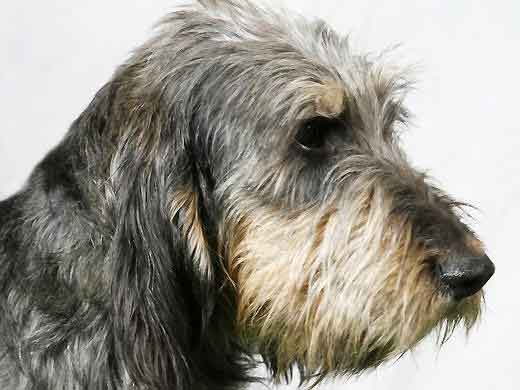
Blue Gascony Griffon

Originally bred for their tracking qualities, the Blue Gascony Griffon they are also affectionate companion dogs

Content

History

As its name implies, the roots of Blue Gascony Griffon are closely linked to the former French region of Gascony, which includes the lands between Bordeaux, Toulouse and Pyrenees. Some 14th-century writings recount the existence of a blue-haired hunting dog that was effective at tracking wild boar and deer., which is probably his ancestor.

Although we know with some accuracy where the race originated, it is more difficult to trace your family tree exactly before the decade of 1920.

But, it is believed to be a cross between the Great Gascony Blue, which in turn is the product of several crosses of old hounds (including the Bloodhound), and a french griffon: or the Griffon Nivernais or the Grand Griffon Vendรฉen. It is not possible to establish precisely which of the two is, because the available descriptions are too imprecise, but at least it is acquired that it is a French griffon.

In 1920, a special normalization commission of the club Great Gascony Blue, of the Small Blue Gascony and of the Blue Gascony Griffon first established a standard for the latter, what allowed the Livre des Origines Franรงais (LOF) officially differentiate him from his cousins. In fact, Until then it was considered a simple variety of the Great Gascony Blue. But, was not up 1963 which was officially recognized by the FCI (Fรฉdรฉration Cynologique Internationale).

This did not prevent the gradual decline of the breed, in particular due to its geographic isolation and confidentiality. In fact, was close to extinction, so that in 1977 only 10 individuals of 3 distinct lines were listed in the LOF. But, the situation improved considerably in the following years, since the number exceeded 100 in 1981.

At the beginning of the decade of 1990, the breed even saw a major revival in popularity with hunting enthusiasts, both in France and abroad (dog exports to Italy, Switzerland, Mauritius, Canada, Netherlands…), which led to an increase in the number of births. So that, the number of annual registrations LOF increased less than 80 prior to 1990 to more than 500 in 1994, and even more than 800 in 1996, before stabilizing between 700 and 800 in the following years.

This madness in France and abroad led to United Kennel Club, one of the leading organizations in the United States, to recognize the race in 1991. But, didn't actually make emulators: for example, neither him American Kennel Club (AKC), neither him Canadian Kennel Club (CKC), nor the prestigious British Kennel Club took the step.

Aware of the danger that this sudden interest could represent for the health of the few remaining specimens, with the risk, in particular, of health abuses caused by an intensive breeding program to meet a high demand, the Club of Small Blue Gascony, of the Gascon Saintongeois and Ariรฉgeois, in charge of the improvement of the race and affiliated with the Sociรฉtรฉ Centrale Canine (SCC), proposed to the Conservatory of Regional Biological Heritage the elaboration of a safeguarding and improvement plan. This approach (and the strict breeding practices that followed) contributed to the preservation of the good health of the breed, without hindering its development. So, in the first decade of the century, about 850 births were counted each year by the LOF. Since then, the figure has decreased slightly, but there is still an average of 600 to 700 by year.

Photo: French Blue Gascony Griffon: Griffon Bleu de Gascogne by Alephalpha, CC BY-SA 3.0, via Wikimedia Commons

Physical characteristics ยซGrifรณn Blue Gascuรฑaยป

The Blue Gascony Griffon it is rustic and solidly built. Very athletic, has a well-developed chest and a short, straight back that extends into a rather shaggy tail carried like a saber blade.

The head is ogival shaped, slightly vaulted, with a full forehead and a snout with a slight stop, sometimes slightly arched. The nose is black and wide. The eyes are oval, and its color varies between dark brown and brown. It also, despite his wide eyebrows, his look is very expressive. Located just below the eye line, the ears are flexible, curly and not very pointed, and reach the tip of the nose.

The mark of this dog is its hard and rough coat, giving it a slightly shaggy look. The coat is completely black and white, giving it the slate blue glow that gave it its name. Your body may also have a few more or less extensive black spots. In the head, there are usually two black spots on each side of the skull, covering ears, wrapping the eyes and stopping at the cheeks. These spots are separated in the upper part of the skull by a white hole, in the middle of which there is usually a small oval black spot, typical of the breed. More or less bright brown marks also color the upper part of the eyebrow, cheeks, whisker pads, the inside of the ear, as well as the extremities and the lower part of the tail.

Last, sexual dimorphism is only slightly pronounced in this breed: the female is usually only a few centimeters smaller than the male.

Size:

  • Males of 50 to 57 cm.
  • females of 48 to 55 cm..
  • Weight: 18 to 20 kg

Character and skills "Gascuรฑa Azul Giffon"

Originally bred for their tracking qualities, the Blue Gascony Griffon They are also affectionate companion dogs that adapt well to family life., as long as the family is active. Loyal and very attached to their teachers, as shown through various displays of affection, accompany them in all their activities with great enthusiasm and energy, without the need for undue attention.

He is a dog that loves children, with whom he is very patient and gentle. Generally well returned, representing excellent playmates for him, also bursting with energy. It is much less suitable for the elderly, they will soon find it exhausting.

Used to living in a group, can be alone during the day, but it only prospers if it has company at all times. Adopting an extra dog can be a solution to help you cope with the absence of its owner.

People and animals who are strangers to the dog generally receive a reserved but not aggressive welcome. Take the time to observe them before deciding what attitude to adopt.

This relative distance does not make it a good guardian, especially because it is not very territorial. In fact, if he barks when he sees a newcomer, it is more to announce your presence than to prevent you from passing and dissuade you from moving on.

Coexistence with other dogs in the house is perfectly possible and usually does not pose any particular problem.. Even when you don't know them yet, the Blue Gascony Griffon he is very sociable with his companions, and is both curious and peaceful once introduced. They don't try to dominate other dogs, and they will only attack if they are repeatedly and aggressively confronted by them.

On the other hand, it is not a good idea to try to get him to live in a house that also has a cat or small pet (like a rodent or a bird). Being a hunter at heart, would tend to relentlessly chase him around the house, even if you receive a strict education on the subject.

True electric battery and always with the truffle glued to the ground, the Blue Gascony Griffon only really flourishes in large spaces and houses with gardens. Although he likes to gasp for hours at his family's feet, not a city dweller, and is very likely to attract the ire of the neighborhood with his inopportune howls. By the way, can live perfectly well in an outdoor dog house, as long as you have enough to stimulate your intelligence and abilities – especially through play sessions with his teacher.

He particularly likes to snoop, sniff out clues and follow them to their source without being distracted by anything. This trait is very popular with hunting dogs., but it is more problematic for companion dogs, as it can lead them to run away or stubbornly go in one direction while walking. A high fence should be provided at home, and a strong strap should be used to keep its paws – if you are not paying attention – To walk. A connected GPS collar can also be a good investment to make sure you know when he's out for a walk at all times.

In addition to hunting, this hardworking and hardy dog รขโ‚ฌโ€นรขโ‚ฌโ€นhas a taste for many other activities. Enjoy throwing games (to be played in moderation, as they reinforce their chasing instinct), object search games (that challenge your exceptional sense of smell), the long walks, the race, swimming or even canicross, in which it excels. Almost everything can be found thanks to your eyes, as long as it comes to exercising and / or pleasing your master.

In any case, if your significant need for exercise is not met, it is likely to attack objects and plants in the house to evacuate its excess energy, or even your stress.

Educaciรณn ยซGrifรณn Blue de Gascuรฑaยป

The kindness of the Blue Gascony Griffon and his loyalty make him an obedient and diligent student. But, do not forget that he is an intelligent dog, which means he learns the commands just as fast as the nonsense.

It also, it is important to socialize him from an early age to limit his shyness and natural distrust of people and dogs he does not know. This is especially true if you are intended for hunting, since then it is more likely that you will meet other dogs that you do not know.

Having said that, they are quite docile companions, easy to train and educate: an ideal breed of dog for a novice master. But, be aware that obedience is achieved more through cooperation than coercion. So, it is just as important to congratulate and/or reward him whenever a command has been well executed as it is to reprimand him in a firm voice when he does something stupid. By the way, being firm does not mean being aggressive: yelling or being aggressive will only make them run away, or it will even make them suspicious and stressed.

Hunting training can begin as soon as 6 months after learning the basic commands. Treasure hunting is recommended to help you develop your sense of smell and intelligence, while the presence of more experienced dogs can help you get used to the noise of guns and the company of strange dogs.

Health and care "Blue Gascuรฑa Giffon"

Sturdy and durable, the Blue Gascony Griffon it is made for outdoor living and can withstand both heat and cold.

The main health problems observed in this breed are related to outdoor life and, in particular, with hunting: fractures, wounds, bites, as well as diseases transmitted by parasites (piroplasmosis, leptospirosis, etc.).

You also have a predisposition to stomach inversion (stomach dilatation-torsion syndrome).

It also, the hanging shape of their ears carries an increased risk of ear infections.

Last, your voracity makes you prone to obesity, especially if your activity level is still limited. This can facilitate the appearance and aggravate the impact of various ailments and constitutes a true vicious circle., since an overweight dog tends to be less active and therefore… fatter.

Go through a serious breeder of Blue Gascony Griffon allows you to put all the possibilities on your part to adopt a puppy in good health (and that is still the case). The professional must be able to present a certificate issued by a veterinarian certifying that he is indeed healthy, as well as details of the vaccinations administered to the animal, recorded in your health book (or vaccination book).

It also, as with any dog, excessive activity should be avoided until you reach adulthood. In fact, the bones and joints of a growing puppy are particularly fragile, and problems at this level could have lifelong consequences (malformations, etc.).

Finally, but the Blue Gascony Griffon is generally in good health, this does not mean that you should not wear it regularly (At least once a year) to the vet for a complete health check, that allows you to detect any problems as soon as possible. It is also the occasion to carry out your vaccination reminders, that are especially important to a dog like him, who usually spends a lot of time outdoors. Your antiparasitic treatments are at least as important; your landlord should make sure to renew them whenever necessary.

The price of a "blue gas tap"

The price of a puppy Blue Gascony Griffon in France it is between 900 and 1400 EUR, depending on the prestige of the kennel, the lineage from which it comes and its intrinsic characteristics (more or less conformity to the breed standard, physical qualities, etc.).

Outside france, it is very difficult to find a breeder Blue Gascony Griffon. The most likely option is then to import one from its country of origin.. If required, transportation and administrative costs are added to the purchase price of the animal and, of course, it is advisable to know and respect the regulations regarding the importation of a dog from abroad.

Characteristics "Blue Gascony Griffon"

Coexistence is important that you have with your new friend. Before considering the acquisition of a dog of the breed "Blue Gascony Griffon" you know certain factors. Not all breeds of dogs are apt to live in an apartment, you must take into account his character, their need for exercise, their interaction with other pets, their care and if you have small children, their level of tolerance towards them.

Adaptation โ“˜

2,0 of 5 stars (based on 1 review)

friendly dog โ€‹โ€‹โ“˜

3,0 of 5 stars (based on 1 review)

hair loss โ“˜

3,0 of 5 stars (based on 1 review)

Affection level โ“˜

4,0 of 5 stars (based on 1 review)

Need for exercise โ“˜

5,0 of 5 stars (based on 1 review)

Social need โ“˜

3,0 of 5 stars (based on 1 review)

Home โ“˜

4,0 of 5 stars (based on 1 review)

Toilet โ“˜

3,0 of 5 stars (based on 1 review)

Friendly with strangers โ“˜

2,0 of 5 stars (based on 1 review)

barking โ“˜

4,0 of 5 stars (based on 1 review)

Health โ“˜

4,0 of 5 stars (based on 1 review)

Territorial โ“˜

4,0 of 5 stars (based on 1 review)

Cat friendly โ“˜

2,0 of 5 stars (based on 1 review)

Intelligence โ“˜

4,0 of 5 stars (based on 1 review)

Versatility โ“˜

3,0 of 5 stars (based on 1 review)

Child friendly โ“˜

3,0 of 5 stars (based on 1 review)

Surveillance โ“˜

4,0 of 5 stars (based on 1 review)

joy โ“˜

4,0 of 5 stars (based on 1 review)

Images "Blue Gascony Griffon"

Photos:

1 – A Blue Gascony Griffon female by Canarian, CC BY-SA 3.0, via Wikimedia Commons
2 – Blue griffin from Gascony by https://pxhere.com/es/photo/1331479
3 – Blue griffin from Gascony by https://pxhere.com/en/photo/1089317
4 – Blue griffin from Gascony by http://www.adopt-a-griffon.eu/en/breeds/griffon-bleu-de-gascogne/

Videos "Blue Gascony Griffon"

HTTPS://youtube.com/watch?v=AfvDdR1bX2s
Griffons bleus au Concours de meutes ร  Pranles
HTTPS://youtube.com/watch?v=YZWGz2C0DnY
Segugi Griffon Bleu de Gascogne – speciale cinofilia Game Fair 2015

Type and recognitions:

  • FCI CLASSIFICATION:
  • Group :
  • Section : . .

Federations:

  • FCI – Group 6: Scent hounds, and related breeds. – Section 1.2: Medium-sized Hounds. โ“˜
  • UKCScenthounds โ“˜
  • Central Canine Society โ“˜

FCI breed standard "Blue Gascony Griffon"

Origin:
France

Date of publication of the valid original standard:
24.01.1996

Use:

This is a multi-use dog. It is used for hunting with hare shotgun. His ardor and his good smell make him a very value assistant to follow the trail of the wild boar.


General appearance:

It is a rustic appearance tap, of solid constitution. Save the just medium between the two races from which it originates.


Behavior / temperament:

He has a good smell and his bark is sound. Is applied in hunting, that conducts con enthusiasm and initiative. It is unbelievable, But affectionate.

Head:

---

Cranial region:
  • Skull : Seen from the front, It is slightly bulging, but not too wide. The occipital protuberance is slightly marked.
    Seen from above, the back is ogival shaped. Forehead is bulging.
  • Depression links (Stop) : Little pointed.

facial region:

  • Truffle : It is black, wide. The Windows are wide open.
  • Lips : They are poorly developed, But they cover the lower jaw.
  • Snout : Straight nose cane, the lightly arched. Its length is almost equal to that of the skull.
  • Jaws / Teeth : The joint is in the form of scissors. The incisors are set at right angles to the jaws..
  • Cheeks : Thin.

Eyes : They have an oval shape. They are dark brown color; very expressive and living.

Ears : They are flexible, twisted, but not too much. They end on a slight tip and must reach the birth of the nose without exceeding their limb. Implanted just below the eye line.

Neck:

It is rather thin and presents some of the sock.

Body:

  • Back : Well pronounced, short.
  • Pork loin : Muscular and slightly arched.
  • Rump : Very slightly oblique.
  • Breast : Well developed. Rounded ribs, although not in excess.
  • Flanks : Bulky. The lower line is slightly raised backwards.

Tail:

It is quite hairy. It reaches precisely to the tip of the corvejรณn; The root is strong. It is brought happily in the form of saber.

Tips

PREVIOUS MEMBERS : Seen in conjunction, They are strong and well approved. They do not give an appearance of heaviness.

  • Shoulder : Quite oblique and muscular.
  • Elbows : Glued to the body.
  • forearms : Strong.

LATER MEMBERS : Seen in conjunction, the limbs are regular. The rear members are well developed.

  • Thighs : Well muscled.
  • Hock : Close to the ground.

FEET : They have oval shape and the fingers are thin and well together. The pads and nails are black.

Movement:

Is loose and alive.

Mantle

SKIN : It is quite thick and elastic. Black, or strongly streaked with black spots. It's never completely white. The mucous membranes are black.

HAIR : It's hard, harshly. It is a little shorter on the head, where the eyebrows, quite dense, They do not cover their eyes. It is much shorter and stuck on the ears.

COLOR : Completely speckled with black and white, imparting a slate blue reflection. It may or may not be marked with more or less extended black spots. Usually, there are two black spots on each side of the head, that cover the ears, circle the eyes and stop at the cheeks. These do not join over the top of the head, but they leave a white space in the center of which there is often a small oval black spot., typical of the breed. Above the eyes are two more or less uploaded fire marks located on the zygomatic arcades simulating four eyes. Traces of tan can also be found on the cheeks, the lips, the inside of the ears, the limbs and under the tail.


Size and weight:

Height to the cross :

  • In males it is 50 to 57 cm.,
  • in females it is 48 to 55 cm..


Fouls:

Any deviation from the above mentioned criteria is considered as missing and the gravity of this is considered in proportion to the degree of deviation to the standard and its consequences on the health and well-being of the dog.

Head :
โ€ข Head too short.
โ€ข Skull too wide.
โ€ข Pointed snout.
โ€ข Clear brown eyes.
โ€ข Apparent conjunctive.
โ€ข Too long ears, or very hairy.

Body :
โ€ข Largo; loose top line.
โ€ข Croup sagging.

Tail :
โ€ข Deviad or too short.

Tips :
โ€ข Hock closed, seen from behind.
โ€ข Crushed feet.

Behavior :
โ€ข Shy dog.

MISS PLAYOFFS

โ€ข Fearful or aggressive dog.
โ€ข Lack of characteristic type.
โ€ข It would be anatomic deformation.
โ€ข Notable lack that causes any impediment.
โ€ข Upper or lower prognathism.
โ€ข Light eyes.
โ€ข By the threaten the laugh.
โ€ข Any other color that is not established by the standard.

Any dog โ€‹โ€‹showing clear signs of physical or behavioral abnormalities should be disqualified..


N.B.:

Males should have two normal-appearing testicles fully descended into the scrotum..

Source: F.C.I - International Cynological Federation

Alternative names:

1. Griffon Bleu de Gascogne (English).
2. Griffon Bleu de Gascogne (French).
3. Griffon bleu de Gascogne (German).
4. Griffon bleu de Gascogne (Portuguese).
5. Griffon Bleu de Gascogne (espaรฑol).

โ–ท The world of Pets: Dogs, cats, birds, reptiles, amphibians

Fawn Brittany Griffon
Francia FCI 66 - Medium-sized Hounds
Fawn Brittany Griffon

Its sociable, loving, balanced and very kind to people, what makes them good companions.

Content

History

The Fawn Brittany Griffon it is one of the oldest breeds of French trace dogs, since in the fourteenth century a certain Huet des Ventes already had a pack of this type. Widely used until the 19th century for wolf hunting in Brittany, rested when these animals disappeared.

In the 1949, The Brittany Fawn Club was created by Marcel Pambrun to dedicate himself to preserving the value of these dogs, that had become scarce. Since the decade of the years 80, under the impulse of Bernard Vallรฉe, the Fawn Brittany Griffon, as well as the race that derives from it, the Fawn Brittany Basset, they seem to have made a place for themselves among French track dogs. The motto "hunting above all" continues to be the Club's line of conduct.

Photo: This is a french dog Griffon Fauve de Bretagne by Alephalpha, CC BY-SA 3.0, via Wikimedia Commons

Physical characteristics "Griffon griffon of Brittany"

The Fawn Brittany Griffon it is mostly a hunting dog with a muscular body. They are recognized by their short hair, rough and dry, always tawny in color but with more or less pronounced tones. Its hair is slightly longer on the sides of its elongated snout, forming a kind of mustache. Her small dark brown eyes give her a lively and alert appearance. His ears, quite large, they lay low and they wear droopy. They are covered with shorter and finer hair than the rest of the body.

The Fawn Brittany Griffon has a medium-length tail, sickle-shaped, which is thick at the base and more tapered at the tip. When active, this dog makes quick lateral movements with his tail.

Size: 48 – 56 cm.
Weight: 18 – 20 kg

Character and skills "griffon griffon of Brittany"

Proud, bold and alive, the Fawn Brittany Griffon he is a stubborn and passionate hunter, that adapts easily to all territories and all game animals. Brave, witty, tenacious and diligent, he is also entrepreneurial and efficient, while demonstrating your ability to convene.

Its sociable, loving, balanced and very kind to people, what makes them good companions.

If he is well trained, is obedient and has a good memory.

Care of "Griffon of Brittany"

The Fawn Brittany Griffon not cut out for city living. He is quite used to living in a pack in a kennel. It is a dog that needs long walks in the forest in particular. If you grow up in the city, your master must be able to offer you very frequent and stimulating outings.

The Fawn Brittany Griffon does not require any particular maintenance except brushing once or twice a week.

The health of the "Giffon of Brittany"

The Fawn Brittany Griffon he is a robust dog, tough and in pretty solid health. But, can be prone to ear infections and eye problems. This dog can also suffer from hip and elbow dysplasia.

Characteristics "Fawn Brittany Griffon"

Coexistence is important that you have with your new friend. Before considering the acquisition of a dog of the breed "Fawn Brittany Griffon" you know certain factors. Not all breeds of dogs are apt to live in an apartment, you must take into account his character, their need for exercise, their interaction with other pets, their care and if you have small children, their level of tolerance towards them.

Adaptation โ“˜

3,0 of 5 stars (based on 1 review)

friendly dog โ€‹โ€‹โ“˜

3,0 of 5 stars (based on 1 review)

hair loss โ“˜

3,0 of 5 stars (based on 1 review)

Affection level โ“˜

4,0 of 5 stars (based on 1 review)

Need for exercise โ“˜

5,0 of 5 stars (based on 1 review)

Social need โ“˜

4,0 of 5 stars (based on 1 review)

Home โ“˜

3,0 of 5 stars (based on 1 review)

Toilet โ“˜

2,0 of 5 stars (based on 1 review)

Friendly with strangers โ“˜

4,0 of 5 stars (based on 1 review)

barking โ“˜

3,0 of 5 stars (based on 1 review)

Health โ“˜

1,0 of 5 stars (based on 1 review)

Territorial โ“˜

2,0 of 5 stars (based on 1 review)

Cat friendly โ“˜

3,0 of 5 stars (based on 1 review)

Intelligence โ“˜

4,0 of 5 stars (based on 1 review)

Versatility โ“˜

4,0 of 5 stars (based on 1 review)

Child friendly โ“˜

5,0 of 5 stars (based on 1 review)

Surveillance โ“˜

4,0 of 5 stars (based on 1 review)

joy โ“˜

4,0 of 5 stars (based on 1 review)

Images "Fawn Brittany Griffon"

Photos:

1 – Fawn Brittany Griffon female by Canarian, CC BY-SA 3.0, via Wikimedia Commons
2 – Griffon Fauve de Bretagne, 6 Month by Markus Seim, CC BY-SA 3.0, via Wikimedia Commons
3 – Lion Griffon from Britain by https://pxhere.com/es/photo/481096
4 – Lion Griffon from Britain by https://www.akc.org/dog-breeds/basset-fauve-de-bretagne/

Videos "Fawn Brittany Griffon"

Griffon Fauve de Bretagne ๐Ÿถ๐Ÿพ Everything Dog Breeds ๐Ÿพ๐Ÿถ
Griffon Fauve de Bretagne ?? Everything Dog Breeds ??
Griffon Fauve de Bretagne Ari en Theo. Trimmer at home. Home Grooming . Movie 004
Griffon Fauve de Bretagne Ari en Theo. Trimmer at home. Home Grooming

Type and recognitions:

  • FCI CLASSIFICATION:
  • Group :
  • Section : . .

Federations:

  • FCI – Group 6: Scent hounds, and related breeds. – Section 1.2: Medium-sized Hounds. โ“˜
  • UKCScenthounds โ“˜
  • Central Canine Society โ“˜

FCI breed standard "Fawn Brittany Griffon"

Origin:
France

Date of publication of the valid original standard:
25.03.2003

Use:

Bloodhound dog used for hare hunting, the fox, the roe deer and the wild boar.


General appearance:

It is a bony and muscular dog, very strong and resistant. It is active and particularly adapted to difficult land. They have a good sense of smell and a sustained bark (short and repeated).


Behavior / temperament:

The Fawn of Brittany are passionate hunting dogs, although docile with the man, sociable, affectionate and balanced. They adapt easily to all terrain and all types of hunting. During the hunt they are brave, slums, tenacious and applied. They are enterprising and effective, but they also show aptitude to join the group. Well managed, they are obedient and of an easy return.

Head:

---

Cranial region:
  • Skull : Rather elongated and the occipital protuberance is marked. Seen from the front, skull looks lowered curvature. Its width decreases until it reaches the level of the superciliary arches, that are not very marked.
  • Depression links (Stop) : Bit strong.

facial region:

  • Truffle : Black The Oscuro Brown. The Windows are wide open.
  • Snout : More pointed than square.
  • Belfos : They cover the lower jaw well, although not in excess. Whiskers are not abundant.
  • Jaws/Teeth : Jaws and teeth are strong, with a perfect and uniform scissor joint. Upper incisors cover lower incisors with tight contact. The incisors are set at right angles to the jaws. The absence of PM1 is not penalized.

Eyes : Not prominent, not too sunk in the orbits. Its color is dark brown. The conjunctiva is not apparent. The look is impetuous.

Ears : Delicately implanted at the level of the eye line, just reaching the tip of the truffle. They end in a point and are bent inwards and covered with a shallower and finer hair than the rest of the body.

Neck:

Quite short and muscular.

Body:

  • Back : Short and wide. Never sunk.
  • Pork loin : Width and well muscular.
  • Breast : Wide and high.
  • Ribs : Pretty rounded.
  • Belly : The lower margin is slightly raised towards the back.

Tail:

It is slightly sickle-shaped. Is medium length, thick at the base, often spike-shaped and tapers at the tip. When is the dog in action, the tail is on the margin of the back and performs regular lateral movements.

Tips

PREVIOUS MEMBERS :

  • Seen in conjunction : They show good bone structure and are well poised.
  • Shoulder : Oblique, well attached to the thorax.
  • Elbows : They occur in the axis of the body.
  • forearms : Vertical.
  • Metacarpus : Seen in profile, they are slightly oblique. Seen from the front, are presented in the axis of the body.

LATER MEMBERS

  • Seen in conjunction : They are well muscled. Legs are uniform. Seen from the back, they are parallel, or together, nor separated.
  • Thighs : Long and well muscled.
  • Babillas : Inclined and moderately bent.
  • Metatarsals : Vertical.

FEET : compacts. Fingers are together and arched ; nails are solid. Plantar bearings are hard.

Movement:

Elastic and uniform ; never in little hops.

Mantle

SKIN : Quite thick and flexible; no dewlap.

HAIR : Good hard, thin and quite short; never shaggy or curly. The face must not be tangled.

COLOR : Fawn ranging from golden wheat to brick red. Some scattered black hairs are tolerated, on the back and on the ears. Sometimes the presence of a white star is observed on the sill, this particularity is not sought.


Size and weight:

Height at withers : Of 0,48 to 0,56 m for males and females, with 2 cm excess tolerance for exceptional specimens.


Fouls:

Any deviation from the aforementioned criteria is considered a fault and its severity is considered in proportion to the degree of the deviation from the standard and its consequences on the health and welfare of the dog.

SERIOUS FAULTS

Behavior
โ€ข Fearful dog
โ€ข Width and flat skull.
โ€ข Superciliar arcades too pronounced.
โ€ข Pointy or short snout. Hanging and thick lips.
โ€ข Light eyes.
โ€ข Flat and wide ears.

Body
โ€ข Weak appearance.
โ€ข Upper margin that is not tense enough.
โ€ข agalgado belly
โ€ข Deviation.
โ€ข Members
โ€ข Poor bone structure.
โ€ข Crushed feet
โ€ข Scarce, short, fine, soft.

MISS PLAYOFFS

โ€ข Aggressive or fearful dog.
โ€ข Absence of typical characteristics (any specimen whose characteristics differentiate it from its congeners).
โ€ข Inferior or superior prognathism.
โ€ข Very clear eyes.
โ€ข Partial or total depigmentation in the truffle or on the edge of the eyelids and the Belfos.
โ€ข Knotted tail.
โ€ข Presence of spur in the posterior members (dewclaws never appear in this breed)
โ€ข Long and lanudo hair.
โ€ข Any other fur than is not the one indicated by the standard.
โ€ข Any other size other than the standard tax.
โ€ข Notable disability; anatomical malformation.

Any dog โ€‹โ€‹showing clear signs of physical or behavioral abnormalities must be disqualified..


N.B.:

Males should have two normal-appearing testicles fully descended into the scrotum..

Source: F.C.I - International Cynological Federation

Alternative names:

1. Griffon fauve de Bretagne (English).
2. Fauve de Bretagne (French).
3. Griffon Fauve de Bretagne (German).
4. Griffon fauve de Bretagne (Portuguese).
5. Griffon fauve de Bretagne (espaรฑol).

โ–ท The world of Pets: Dogs, cats, birds, reptiles, amphibians

Griffon Nivernais
Francia FCI 17 - Medium-sized Hounds
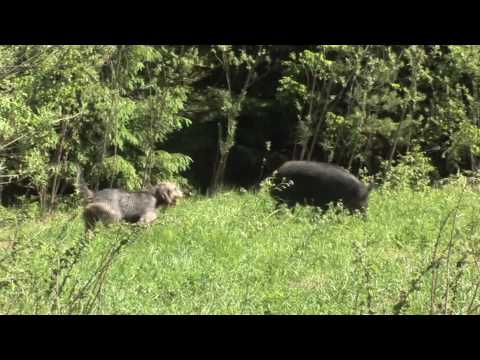
Griffon Nivernais

Brave and vivacious, he "Griffon Nivernaisยป is an obedient and affectionate dog. never shy, it is not aggressive either.

Content

History

These dogs were crossed with those brought from the Crusades by San Luis to give the greyhounds, probable ancestors of the Griffon Nivernais.

They were big dogs, fine-nosed, clogged, excellent closers, very difficult to discipline, fast but tough, very scathing, specialized in strong and straight lines.

They were highly valued at that time for hunting wolves and wild boars.. The Greyhound was very fashionable during 200 years, until the reign of Louis XI, He was later abandoned from the royal packs by Francis I in favor of the "White Dog.".

But, some knights of the "Nivernais" maintained it until the French Revolution, when the race seemed to have disappeared. A century later, the last representatives of the greyhounds, kept in the cradle of the breed, were probably crossed with ยซGriffons de Bresseยป to give the Griffon Nivernais.

In the late nineteenth and early twentieth centuries, received blood from English Foxhound and Grand Griffon Vendรฉen to give it size and speed.

He "Vendรฉen-Nivernaisยป, in particular, crossed paths with Bloodhound to create the Otterhound. The latter was used to soak the ยซNivernaisยซ, giving them a rustic nose and wisdom, and improved the ability to approach.

Closer to our time, after having been through wars with difficulty, and thanks to the development of wild boar populations, their number grew steadily from the 1980s onwards. 1970. More recently, some users injected blue blood to give him throat and application at work, often at the expense of his love of hunting wild boar.

Photo: This dog is a french Griffon Nivernais by Alephalpha, CC BY-SA 3.0, via Wikimedia Commons

Physical characteristics ยซNivernais Griffonยป

The Griffon Nivernais is recognizable in particular by its furry appearance with its long, well stocked and messy fur. The latter, which is rough and hard, it is always charcoal color, that is to say, sandy or leonado with black spots, but there are also white hairs here and there in its fur that draw shades from light gray to dark gray.

Sad expression, almost shy, giving dark eyes and pronounced eyebrows is also a characteristic of this breed.

The Griffon Nivernais it is a medium-sized dog with a robust gait and dry limbs. His tail is not very long, but they carry it tall and even saber-shaped when in action.

Character and skills of the Nivernais Griffon

GRIFFON NIVERNAIS CLUB – centrale-canine.fr

The Griffon Nivernais has a well marked character, sometimes stubborn, which makes it a highly prized hunting dog for its value, resistance and initiative.

It is generally reduced to its simplest expression: It is a dog used almost exclusively for hunting wild boar.

They are made to live in a herd where they must excel to have their place. But, for this reason, it is also a dog that can be difficult to train. So, best suited to an already experienced master of dog breeding.

Nonetheless, the Griffon Nivernais is calm and obedient when well trained. He is also a dog full of energy. He is very close to his teacher.

Care and maintenance of the Nivernais Griffon

The Griffon Nivernais It is an outdoor dog that needs physical exercise. That's why it doesn't adapt to city life, and above all it is not made to live locked in an apartment.

Regarding maintenance, the Griffon Nivernais does not require any particular care apart from a normal brushing once a week and another, more thorough, with an iron brush to thoroughly clean dead hairs and your skin, At least once a year.

Health ยซGriffon of the Nivernaisยป

The Griffon Nivernais It is a dog resistant to cold and humidity. On the other hand, afraid of heat.

It is a dog prone to stomach twists. That is why you should not do intense physical exercise before and immediately after your meals.. Otherwise, there are no known breed-specific diseases.

Characteristics "Griffon Nivernais"

Coexistence is important that you have with your new friend. Before considering the acquisition of a dog of the breed "Griffon Nivernais" you know certain factors. Not all breeds of dogs are apt to live in an apartment, you must take into account his character, their need for exercise, their interaction with other pets, their care and if you have small children, their level of tolerance towards them.

Adaptation โ“˜

3,0 of 5 stars (based on 1 review)

friendly dog โ€‹โ€‹โ“˜

3,0 of 5 stars (based on 1 review)

hair loss โ“˜

3,0 of 5 stars (based on 1 review)

Affection level โ“˜

3,0 of 5 stars (based on 1 review)

Need for exercise โ“˜

5,0 of 5 stars (based on 1 review)

Social need โ“˜

3,0 of 5 stars (based on 1 review)

Home โ“˜

4,0 of 5 stars (based on 1 review)

Toilet โ“˜

2,0 of 5 stars (based on 1 review)

Friendly with strangers โ“˜

3,0 of 5 stars (based on 1 review)

barking โ“˜

4,0 of 5 stars (based on 1 review)

Health โ“˜

1,0 of 5 stars (based on 1 review)

Territorial โ“˜

3,0 of 5 stars (based on 1 review)

Cat friendly โ“˜

3,0 of 5 stars (based on 1 review)

Intelligence โ“˜

4,0 of 5 stars (based on 1 review)

Versatility โ“˜

4,0 of 5 stars (based on 1 review)

Child friendly โ“˜

4,0 of 5 stars (based on 1 review)

Surveillance โ“˜

4,0 of 5 stars (based on 1 review)

joy โ“˜

4,0 of 5 stars (based on 1 review)

Videos "Griffon Nivernais"

Nivernais Griffons at your command
Griffons Nivernais to orders
A Griffon Nivernais and two boars
Griffon nivernais and two wild boars

Type and recognitions:

  • FCI CLASSIFICATION:
  • Group :
  • Section : . .

Federations:

  • FCI – Group 6: Scent hounds, and related breeds. – Section 1.2: Medium-sized Hounds. โ“˜
  • UKCScenthounds โ“˜
  • Central Canine Society โ“˜

FCI breed standard "Griffon Nivernais"

Origin:
France

Date of publication of the valid original standard:
24.03.2004

Use:

Bloodhound dog used mainly for rifle hunting of wild boar, usually in pack, but also individually.


General appearance:

This is a tangled dog, typical of its genre, robust, very rustic and hirsute. Limbs and muscles are thin. It is a dog that is used more for its ability to work for long periods than for its speed.. It looks a little sad, but not afraid.

IMPORTANT PROPORTIONS :
The length of the body (scapular-ischial) is slightly higher than the height at the withers. The skull and the nasal passage are the same length.


Behavior / temperament:
  • Behavior: Dog with a very fine sense of smell, stubborn, It especially likes difficult terrain and weeds.
  • Character : Excellent collector, very good hunter, He is brave without being reckless. Its bravery and spirit of initiative allow it to be used successfully in small groups to hunt wild boar.. Although it is easy to trust him with the trail of this animal, sometimes appears stubborn and independent, so much so that his master must know how to make him obey from the most tender age.

Head:

---

Cranial region:

Very thin, light without being small, a bit long, but not in excess. The lines of the skull and the nasal passage are parallel.

  • Skull: Almost flat, medium amplitude. Delimited on the sides by the zygomatic arches, which are not very pronounced. The occipital protuberance is only noticeable by touch..
  • Depression links: Bit strong, it seems however, more accentuated every time the hair rises higher, but without exaggeration.

facial region:

  • Truffle : black, well marked.
  • Snout : Same length as skull, It is not too wide at its end. Its lateral faces converge slightly, but not to the point of creating a pointed snout. There is a little beard on the chin.
  • Lips : Poorly developed, They cover the lower jaw without further ado. They are covered by large, well-pigmented mustaches..
  • Jaws/teeth : Robust looking jaws, normally developed. Scissor joint, sometimes clamp-shaped. The incisors are set at right angles to the jaws.. The denture is complete (PM1 are not taken into consideration).
  • Eyes : Preferably dark. The look is lively and penetrating. Eyebrows are pronounced, but they don't cover the eye. The conjunctiva is not apparent. Eyelids are well pigmented.
  • Ears : median ligament (about 3 cm wide), at the level of the upper eye line. They are hanging, elastic, rather thin, medium amplitude, they turn slightly inwards at the extremity. They are quite hairy, semi long and reach to the birth of the truffle.

Neck:

Rather light, delgado, no appearance of double chin.

Body:

  • Top margin : Straight, from the cross to the loin.
  • Cross : It protrudes very slightly from the line of the back, It is narrow due to the proximity of the tips of the shoulder blades. Blends harmoniously with the neck.
  • Back : Solid and quite long. Rather narrow and steep, with good muscles, although this is not very apparent.
  • Pork loin : Solid, very slightly convex.
  • Rump : Huesuda, a little oblique, of thin muscles.
  • Breast : Go down as far as possible to the elbow. Front part of the chest poorly developed in width. The rib cage is long and widens towards the region of the false ribs.
  • Ribs : The first ones are rather flat, the last ones are more rounded.
  • Flanks : Massifs, although not in excess.
  • Lower margin : Slightly raised towards the back, but not aggrieved.

Tail:

Insertion a little high, not very long. It is thicker in the middle. During rest it appears slightly below the horizontal; when the dog is in action it appears in the shape of a saber, upward, and can be curled over the back at the end.

Tips

PREVIOUS MEMBERS : Seen in conjunction, good poise. Usually, and during rest, the previous members, viewed profile, They seem to be a little back from the vertical (under the dog, seen from the front).

  • Shoulder : Slightly sloping, skinny, well applied to the chest.
  • Elbows : Well attached to the body.Forearms : They look more solid because of their hair., but in reality they are thinner than thick and very straight.
  • Metacarpus : Rather short and slightly sloping.

LATER MEMBERS : Seen in conjunction, the profile appears slightly below the dog. Seen from the back, The vertical line that starts from the tip of the gluteus must pass through the tip of the hock, equally dividing the metatarsus.

  • Thigh : Rather flat. Hock : Tilted. In profile, the hock angle is slightly closed.
  • Metatarsals : They turn a little towards the front (slightly below the dog, seen from the back).

FEET : Oval, slightly elongated, with fingers together and solid. They resemble hare's foot, with good pigmentation in the nails and plantar pads.

Movement:

Elastic and easy (nor irregular, not even in jumps). The dog covers a lot of ground.

Mantle

SKIN : Elastic and quite stretched, well applied over the entire body. It's quite thick, Pigmented. Black spots are seen on the body, lips are well pigmented. There is no presence of dewlap.

HAIR : Long, hirsute and tangled, quite strong and rough (in any case, ni lanudo, ni enrizado). The belly and inner thighs should not be hairless.. Eyebrows, well pronounced, they do not cover the eye. There is some beard on the chin and ear, which is quite hairy.

COLOR : Always carbonated; that is to say, that the tip of the hair is darker than the base (carbon tips). The fawn can be more or less dark, but never orange. The carbonate end may be bluish. The light or dark appearance of the coat depends on how covered it is with carbon hairs. The presence of white hairs spread to a greater or lesser extent throughout the coat is accepted.; This imparts shades ranging from light gray to dark gray, passing through the gray boar. The coat is usually marked with fawn on the eyebrows, cheeks, the front part of the chest, the extremities of the limbs and under the tail. This feature, very visible in the puppy, often fades with age. The coat is characterized by the base color, by how covered it is with carbonaceous hairs and its possible union with the scattered white hairs. It is described for example, the โ€œvery slightly carbonated fawnโ€ (hare hair), the โ€œcarbon sandโ€ (wolf gray) and the โ€œblue carbon fawnโ€ (grey blue). A white spot on the front of the chest is acceptable.


Size and weight:

Height to the cross

  • Males: of 55 to 62 cm..
  • females: of 53 to 60 cm..


Fouls:

Any deviation from the above mentioned criteria is considered an absence and severity of this refers to the degree of deviation to the standard and its impact on the health and welfare of the dog.

โ€ข Behavior: Fearful dog.

MISS PLAYOFFS:

โ€ข Aggressive or fearful dog.
โ€ข Lack of typical features.
โ€ข Upper or lower prognathism.
โ€ข Different colored eyes โ€“ Heterochrome.
โ€ข Knotted tail.
โ€ข Complete black coat (absence of carbon fawn hair), wheat or orange, tricolor of bright and clearly delimited colors. white tips.
โ€ข Considerable depigmentation (truffle, eyelids, lips, around the anus, of the vulva, of the testicles).
โ€ข Size that deviates from the standard.
โ€ข Visible disabling defect. anatomical malformation.
โ€ข Presence of spurs, except in countries where it is prohibited by law to eliminate them.

Any dog โ€‹โ€‹showing clear signs of physical or behavioral abnormalities must be disqualified..


N.B.:

Males should have two normal-appearing testicles fully descended into the scrotum..

Source: F.C.I - International Cynological Federation

Alternative names:

1. Griffon Nivernais (English).
2. Griffon Nivernais (French).
3. Griffon Nivernais (German).
4. Griffon Nivernais (Portuguese).
5. Griffon Nivernais (espaรฑol).