โ–ท The world of Pets: Dogs, cats, birds, reptiles, amphibians

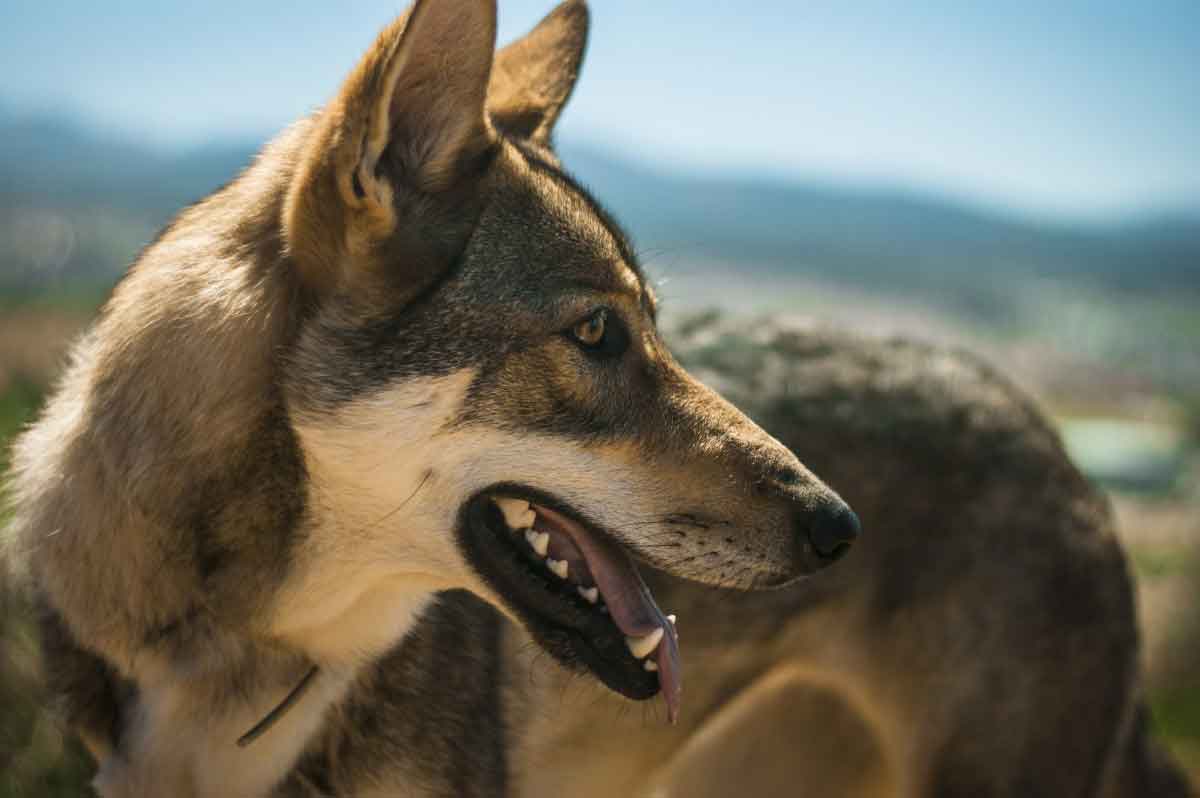
Norwegian Buhund
Noruega FCI 237 . Nordic Watchdogs and Herders.
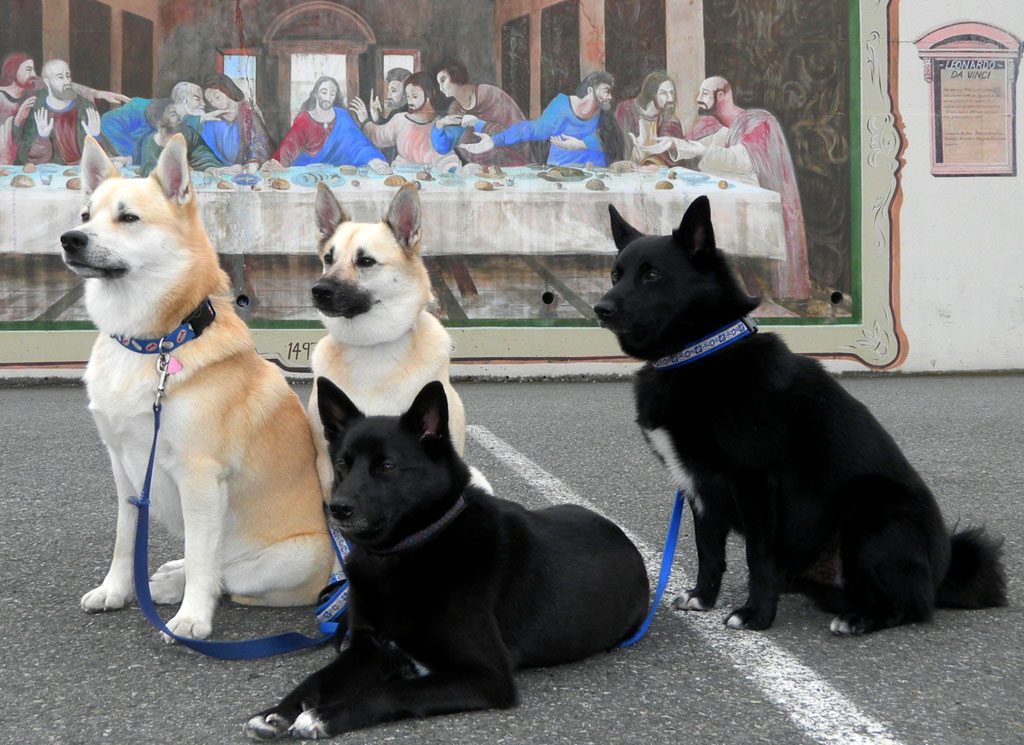
The Norwegian Buhund It is usually excellent obedience and dog agility competitions.

Content

History

The Norwegian Buhund (Norsk Buhund, Nordiske Spitz-Hunde, Norwegian Sheepdog or Pastor Noruego) is a breed of dog Spitz type of Norwegian origin which is closely related to the races Icelandic Sheepdog (Icelandic Sheepdog) and Jรคmthund.

The name Buhund derives from the Norwegian word โ€œBUโ€, meaning farm, farm or mountain refuge, place where the shepherd lived while tending his flock in the summer. The Norwegian Buhund used as a grazing dog and as a watchdog.

as we said, the Norwegian Buhund belongs to a class of dogs called the type Spitz. They all have pointy ears and a curled tail in common.. Within the races Spitz, There is much variation in terms of size, to the coat and the color.

The Norwegian Buhund is a very ancient race, part of the existing documentation on the excavation of the "Gokstad shipโ€ entombed at Gokstad farm in Sandar, Sandefjord, Vestfold (Norway) in 1880, contains in addition to the great discovery, they found a Viking grave (that it dated back to the year 900) in which lay the skeleton of a man from between 50 and 70 years of age, and its about the skeletons of six dogs of different sizes, similar to Norwegian Buhund of our times.

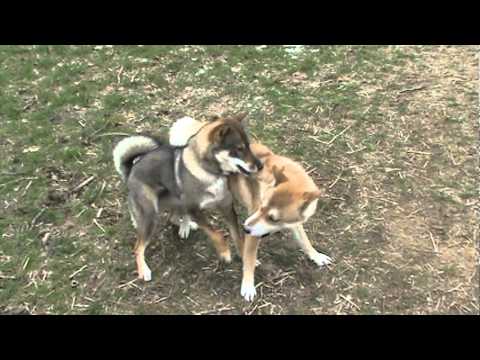
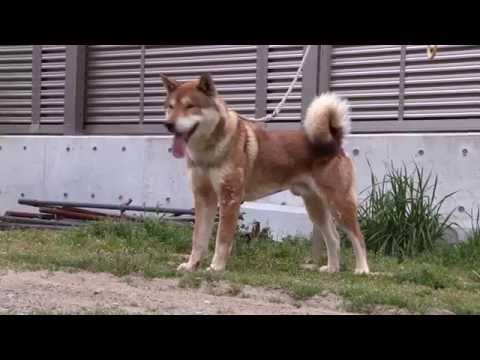
Norwegian Buhund Videos
Norwegian Buhund in Bath Aftermath (MP4 Version)
Norwegian Buhund Kahsha Eating Peanut Butter

This famous archaeological research was directed by Nicolay Nicolaysen (1817-1911) a well-known antiquarian and Norwegian archaeologist. He was a founding member of the Society for the Conservation of Ancient Norwegian Monuments, which presided in 1851. The discoveries from that research are currently on display at the Viking Ship Museum in Oslo..

Returning to the skeletons of found dogs along with the Tomb Viking, scholars of the subject, pose that these dogs were the ancestors of modern Buhund. and they were there, because in those days when vikings died, necessary and precious possessions were buried with them. It was believed that they would need them in their future life.

In those days dogs Buhund of the time protected agricultural and livestock farms, he herded sheepโ€ฆaccording to his beliefs, They hoped that dogs continue carrying out their work in the more than. It has been documented that these dogs were with the Vikings on many of his travels, by sea and land.

Photo: Vali.org

Physical characteristics

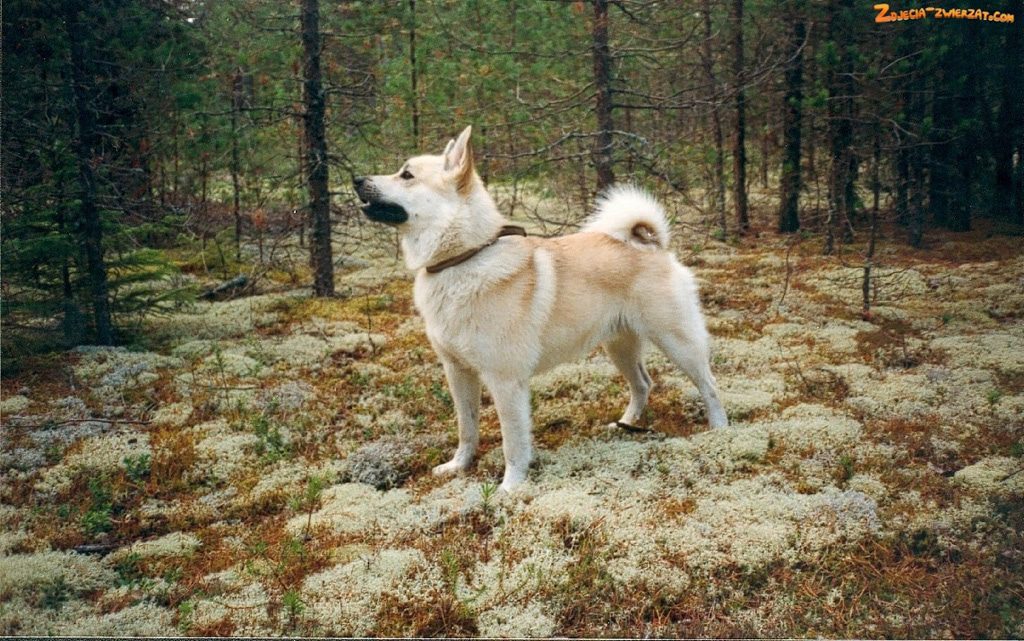
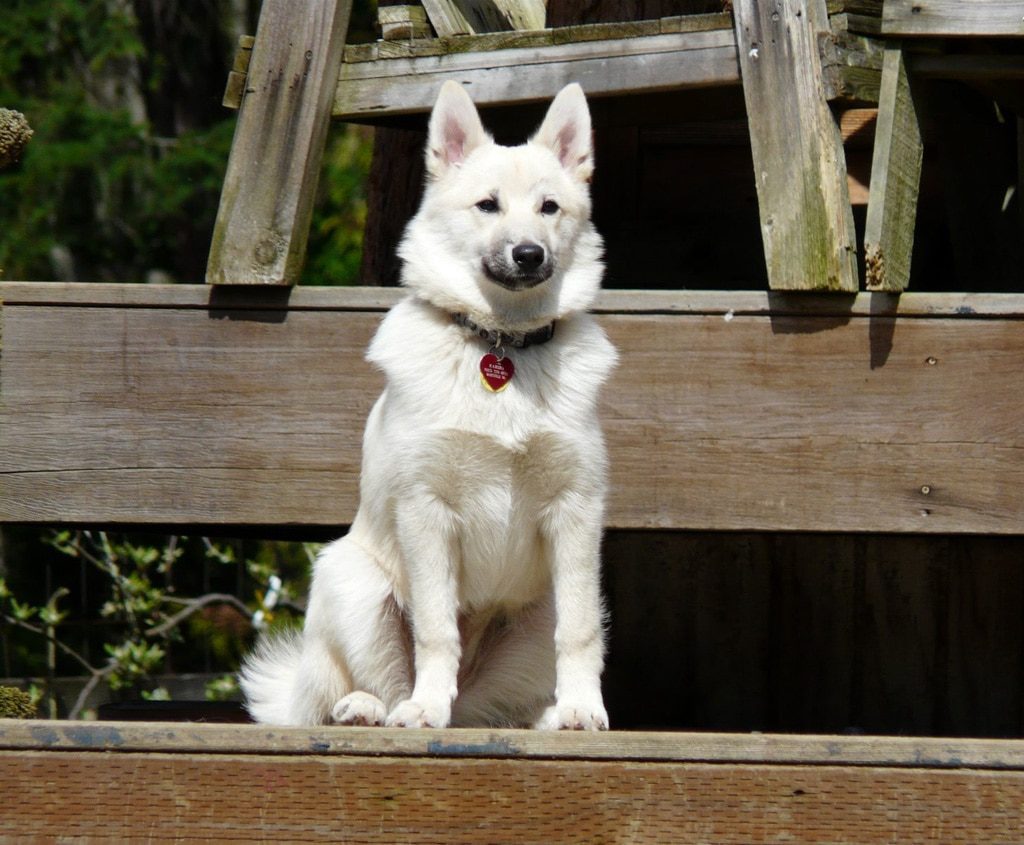
Returning to the present day the Norwegian Buhund has a rather square profile, are medium-sized and long legs, well takes a tail wrapped around the center of the back. The head is wedge-shaped, with well erect ears and nose of black.

According to the standard of Norwegian Buhund the height at the cross goes from 43,2 to 45,8 cm., the females are slightly smaller than males. The weight of the males is of 15 to 18 Kg and females of 12 to 16 Kg.

The colors of the coat may be:

  • Wheat: It includes any shade of colour ranging from pale cream to cream darker, with or without dark markings on the tip of the hair, It is possible to display the color white, but it will have to be minimal, the black mask is acceptable.
  • Solid black: with areas where the color white is allowed, for example, a narrow white ring around the neck, a narrow white tuft in the face, a small spot of white hairs on the chest (by way of tie), at the end of the legs and the tail. In the UK the color โ€œSable Wolf (Wolf Sable)โ€, also permitted, according to the Kennel Club standard of the breed.

The Norway Buhund is prone to suffer from hereditary eye problems and hip dysplasia.

The hair coat of the Norwegian Buhund has an average length, the coat is easy to care for, post that is not entangled, a weekly brushing is enough.

Perhaps the hair when moved, need brushing more often, but is only a seasonal matter.

Character and skills

The Norwegian Buhund it's a very cheerful and active race. They never tire easily and require exercise daily and generous. The Norwegian Buhund needs to expel its energy because if not, destructive tendencies may appear (break furniture, objectsโ€ฆ).

Beyond your high level of activity and energy, they are also very affectionate and famous for his love for unconditional towards children.

It is a hyper affectionate breed, they love to give and receive affection of his family, that will form strong bonds. You will have a distant and distrustful behavior with strangers, but he is very intelligent so he will notice who is well received and will go in search of affection. They are very sociable and somewhat ladradores, but he will never throw to bite if there is no provocation.

The Norwegian Buhund, as well, He is very stubborn and shows a strong desire to learn new things, but if the stimulus is not adequate, It is safer to resort to destructive or inappropriate behavior. This is because they get bored easily and are restless. That is why it is necessary that they have ongoing activity.

This breed is ideal for homeowners that they can devote time and desire to exercise and training of your pet.

With that insatiable desire for activity and learning combined with his high energy level, the Norwegian Buhund he is usually an excellent dog in obedience and dog agility competitions.

This breed is an excellent companion for a lover of sports.

Norwegian Buhund Education

The Norwegian Buhund is smart and cooperative and likes to serve its people, learns quickly. So, training this dog is not a challenge for already experienced dog owners. Before moving in with a dog of this breed, beginners should intensely attend to their characteristics, as well as the training of dogs in general and especially with regard to herding dogs.

In addition to basic obedience, it is important that the Norwegian Buhund pay special attention to the control of barking and the training of loneliness from the age of the puppy: Of course you shouldn't leave your dog alone for long, but you must get used to the fact that he has to endure without his beloved human herd from a very young age. A game lesson for puppies, as well as a visit to a dog school, are a good help for the Norwegian Buhund, who doesn't always get along with his congeners, familiarize yourself with other different canine characters and to socialize it more in this regard. With this vivacious four-legged friend, always remember that only a physically and mentally exhausted dog can be successfully trained – otherwise he'll look for a way out for his boredom.

Norwegian Buhund Health

The Norwegian Buhund are considered robust and weatherproof. The breed has largely been freed from hereditary diseases to this day. Occasionally there is an increased risk of painful dysplasia of the hip joint, as well as hereditary eye diseases. You can be sure if you only buy from a breeder who performs the proper preliminary exams with the parents' animals. Responsible breeding with technical knowledge is the best way to minimize the risk of hereditary diseases.

Especially in summer, make sure your pet doesn't get too hot and switch sports activities to early morning or late afternoon – After all, the Norwegian Buhund is designed for cooler climates.

The optimal diet of Norwegian Buhund

This active four-legged friend needs a proper workload for the species, as well as proper nutrition, that provides you with high-quality energy. Give your partner a grainless meal, but with a high meat content. This means that the meat must be at the top of the ingredients list. This applies to both dry and wet foods..

The manufacturer's feeding recommendations regarding daily rations can only be guidelines that you should adapt depending on your dog's constitution and actual activities. Snacks or treats can be both tasty and healthy. These may include, opt for sugar-free dental care snacks or jerky snacks to reward your dog. With dry chewables like cow's ears, you can meet their chewing needs. Weigh your adult dog regularly to counteract any possible weight gain or loss in time. Its Norwegian Buhund should always have enough fresh water available.

Norwegian Buhund Care

The dense fur of the Norwegian Buhund it's weatherproof and easy to care for, but loses it relatively in abundance, so it's best to leave the corduroy pants in the closet during the weeks of change of coat. Shedding in spring and autumn can be shortened to a few days by daily combing. Out of this "hairy period", it's enough to comb your hair once a week.

Get your puppy used to the grooming ritual:

This not only prepares him to be combed in adulthood, but also strengthens the bond. Dirt can be brushed from dry coat, in difficult cases it helps to clean the area with a damp cloth. You should only give your Norwegian quadruped a bath every few months to protect the dog's skin.. In this case, use a mild dog shampoo. Check your pet's eyes and ears regularly and clean them with an eye or ear cleaner if necessary. Older dogs, in particular, or those who walk almost exclusively on soft soils, may need help with claw care: Go for a pedicure if the claws get too long to avoid painful hooking.

Where can I find a Norwegian Buhund?

You won't find a Norwegian Buhund in all cities – you often have to travel hundreds of miles or abroad to find a representative of this breed as a new family member. However, should remain selective and only buy from breeders who belong to a club and can give information on parental animal health care openly and with appropriate evidence. Ideally, you can visit the breeders at home before making a decision, despite being away, to exchange information about their upbringing, puppies, but also his personal experience with dogs. Because a serious breeder makes sure he only puts his protรฉgรฉs in an environment suitable for them.

Adult dogs are very difficult to find outside of Scandinavia and the countries mentioned.. So if you are interested in a bug of this breed, you're looking for a new home, you should search the Internet on the pages of Nordic dog clubs or contact these clubs. If required, can help you or have knowledge about dogs that are very similar to Norwegian Buhund or mixed breeds that might be considered. Some Nordic grazing dogs are similar in their character and exterior appearance, for example the Finnish Lapphund or the Icelandic Sheepdog. Keep your eyes open when you're looking for your partner, but also find out the history of your possible new partner to see if it is a good match for you and your environment.

Characteristics "Norwegian Buhund"

Coexistence is important that you have with your new friend. Before considering the acquisition of a dog of the breed "Norwegian Buhund" you know certain factors. Not all breeds of dogs are apt to live in an apartment, you must take into account his character, their need for exercise, their interaction with other pets, their care and if you have small children, their level of tolerance towards them.

Training ?

4,0 of 5 stars (based on 1 review)

Suitability of the apartment ?

2,0 of 5 stars (based on 1 review)

Can be alone all day ?

1,0 of 5 stars (based on 1 review)

Suitable as a first dog ?

3,0 of 5 stars (based on 1 review)

Weight gain ?

3,0 of 5 stars (based on 1 review)

Health ?

4,0 of 5 stars (based on 1 review)

Intelligence ?

4,0 of 5 stars (based on 1 review)

Kindness with child ?

4,0 of 5 stars (based on 1 review)

Tendency to bite ?

3,0 of 5 stars (based on 1 review)

Tendency to bark ?

4,0 of 5 stars (based on 1 review)

Tendency to flee ?

2,0 of 5 stars (based on 1 review)

hair loss strength ?

4,0 of 5 stars (based on 1 review)

Suitable as a guard dog ?

4,0 of 5 stars (based on 1 review)

Joy ?

4,0 of 5 stars (based on 1 review)

Cat friendliness ?

3,0 of 5 stars (based on 1 review)

Power level ?

4,0 of 5 stars (based on 1 review)

Images of the Norwegian Buhund

Videos "Norwegian Buhund"

Type and recognitions:

  • FCI CLASSIFICATION:
  • Group :
  • Section : . .

Federations:

  • FCI – Group 5 – Section 3 Nordic Watchdogs and Herders.. โ“˜
  • AKC – Nordic Watchdogs and Herders. โ“˜
  • ANKC – Nordic Watchdogs and Herders. โ“˜
  • CKC – Nordic Watchdogs and Herders. โ“˜
  • โ€‹KC – Nordic Watchdogs and Herders. โ“˜
  • NZKC – Nordic Watchdogs and Herders. โ“˜
  • UKC – Nordic Watchdogs and Herders. โ“˜

FCI breed standard "Norwegian Buhund"

Origin:
Norway

Date of publication of the valid original standard:
09.08.1999

Use:

guard dog, farm and multipurpose shepherd


General appearance:

It is a typical Spitz dog of just medium size., square form, with an awake and frank expression. It has pointed and erect ears. The tail is carried firmly screwed on the back.


Behavior / temperament:

Energetic, brave, Kind.

Head:

Size proportional to the body, not too heavy, cuneiform and thin. The particularities of the male and female sex must be well defined.

Cranial region:
  • Skull: Almost flat. The upper axes of the snout and skull are parallel. Well filled under the eyes.
  • Depression links (Stop): Well defined, but not too steep.

facial region:

  • Truffle: black.
  • Snout: The length of the muzzle should be approximately equal to that of the skull. Not too narrow, not too heavy. The nasal helm is straight.
  • Lips: Firmly tightened, blacks.
  • Jaws/Teeth: Scissor bite. Complete denture.
  • Eyes: Oval, color as dark as possible. The edges of the eyelids are black.
  • Ears: Medium-sized, pointy; carried firmly erect.

Neck:

medium width, delgado, strong with a well raised demeanor.

Body:

  • Back and loin: Short, strong, straight.
  • Rump: As less oblique as possible.
  • Breast : Deep with well sprung ribs.

Tail:

High insertion, tightly screwed, carried over the center of the back, not too far to the side.

Tips

PREVIOUS MEMBERS:

โ€ข General appearance: Strong, with good bones. Shoulder: Moderately oblique.
โ€ข Elbows: Well glued, turned neither in nor out.
โ€ข Forearms: Straight.
โ€ข Metacarpos: Moderately oblique.
โ€ข Front feet: Oval, compact.

LATER MEMBERS: Moderate angulations.

โ€ข Thigh: Powerful, good muscular.
โ€ข Leg: Well musculada.
โ€ข Hind feet: Oval, compact.

Movement:

Effortless, parallel, with good push. Firm back line.

Mantle

Fur: Thick outer layer, abundant and hard, but rather smooth and glued. On the head and front of the limbs, the hair is comparatively short, in the neck, on the chest, on the back of the thigh and on the tail is longer. Soft, dense inner layer of hair.

Color:

  • Wheat (Biscuit): Varies from pale to yellowish red, with or without hairs with charred tips; but that should not modify the basic color. A light and bright color is favored. As white as possible.
  • Negro: Uniform preference (without too much tan). As white as possible.


Size and weight:

Height to the cross:

  • In males 43 โ€“ 47 cm..
  • In females 41 โ€“ 45 cm..

Weight:

  • Males: approximately 14 โ€“ 18 kg.
  • females: approximately 12 โ€“ 16 kg.


Fouls:

Any deviation from the aforementioned criteria is considered as a fault and the severity of this is considered to the degree of the deviation to the standard and its consequences on the health and well-being of the dog..

ยท Very fine or too coarse constitution, lack of elegance.
ยท Liver colored truffle (brown) or pink.
Pincer bite.
ยท Clear eyes, protruding eyes.
ยท Insufficiently coiled tail, hanging tail, unwanted feathers.
ยท Croup higher than the withers.
ยท Circular movement of the forelimbs, short steps, productivity-free.
ยท Wavy or too long hair.
ยท Nervousness.

FALTAS DESCALIFICANTES:

ยท Aggressiveness or extreme shyness.
ยท Any dog โ€‹โ€‹showing clear signs of physical or behavioral abnormalities should be disqualified.
ยท Superior or inferior prognathism.
ยท Ears not erect.
ยท Any color different from the one mentioned above.
ยท Dogs that measure 1 cm minus 2 cm more than the height at the cross indicated in the standard.


N.B.:

ยท Males must have two normal-appearing testicles completely descended into the scrotum.
ยท Only functionally and clinically healthy dogs, with the typical conformation of the breed, should be used for parenting.

Source: F.C.I - International Cynological Federation

Alternative names:

1. Norsk Buhund, Norwegian Sheepdog (English).
2. Berger norvรฉgien (French).
3. Norsk Buhund (German).
4. Pastor norueguรชs (Portuguese).
5. Buhund, Pastor de Noruega (espaรฑol).

โ–ท The world of Pets: Dogs, cats, birds, reptiles, amphibians

Japanese Spitz
Japรณn FCI 262 - Asian Spitz and related breeds
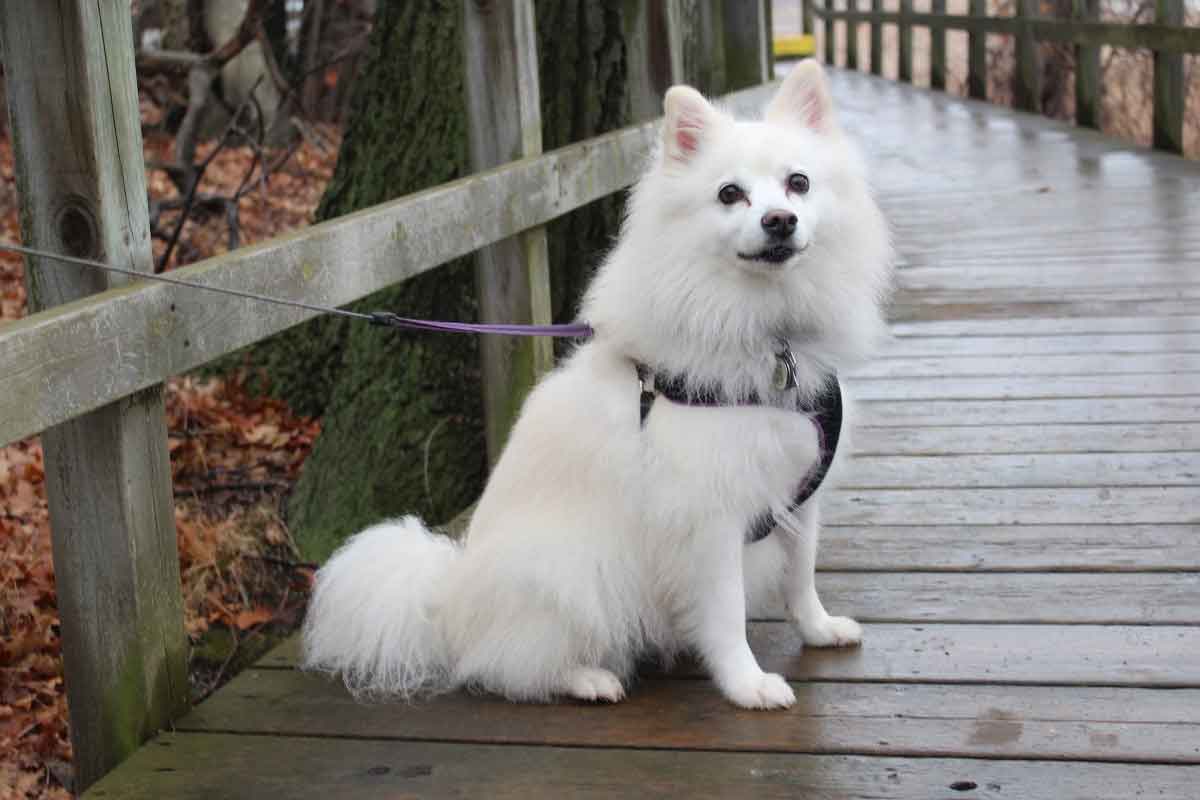
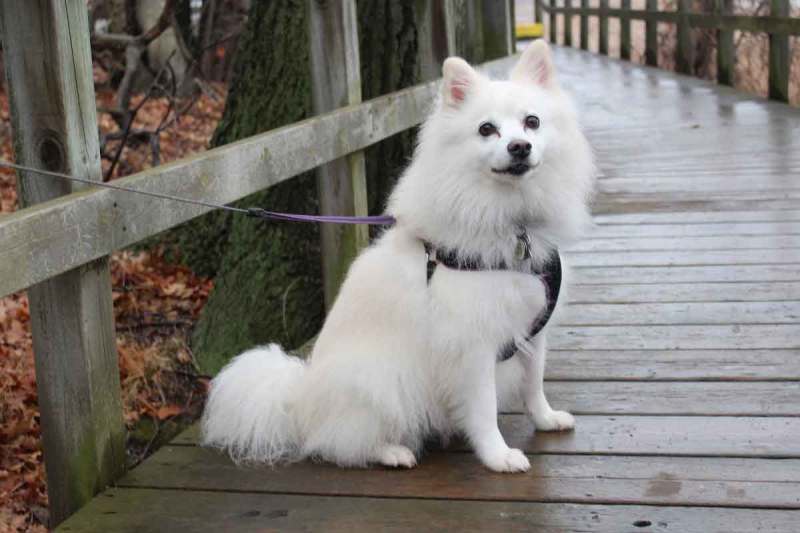
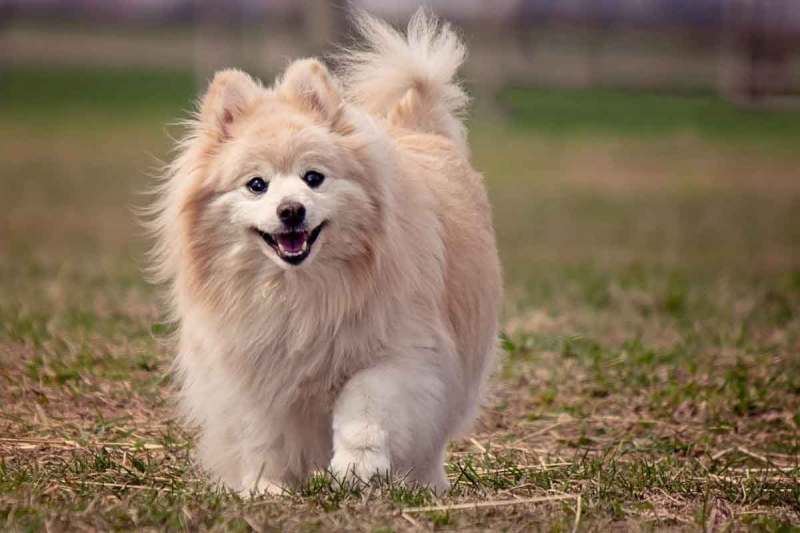
Japanese Spitz

The Japanese Spitz he is a very people-oriented dog.

Content

History

The strong similarity to the Mittelspitz (Standard or Medium Spitz) German allows us to suppose that the Japanese spitz descends from this same race. Other cynologists assume that the Spitz descends from the Nordic Spitz. One thing is for sure: the origin of Japanese spitz not in japan, but in Europe. From there he arrived in Japan at the beginning of the 20th century along with travelers.

The attractive white dog with the charming character quickly gained popularity among the Japanese population. With more caps from China, Canada and the US, own breeding was established in Japan in the years 20. While in Europe an attempt was made to increase the size of the lace, thus creating the German Spitz, the Japanese tended to opt for the more original compact form. In 1948 the Japanese Kennel Club established a first breed standard for the first time. As country of origin, Japan was indicated in the standard. The FCI, that has officially recognized the Japanese spitz from 1964, includes it today in the Group 5 (Spitz and dogs of the original type), as well as in the Subsection 5 (Asian Spitz and related breeds), under Standard No. 262.

In his native Japan, the Japanese spitz it was very popular for a long time, especially in the years 50 the last century. Although it is still more common there in terms of numbers than in Europe, the demand of the little companion is gradually changing. While in Japan the number of recently registered puppies is declining, is increasing in North America and Europe.

Physical characteristics ยซJapanese Spitzยป

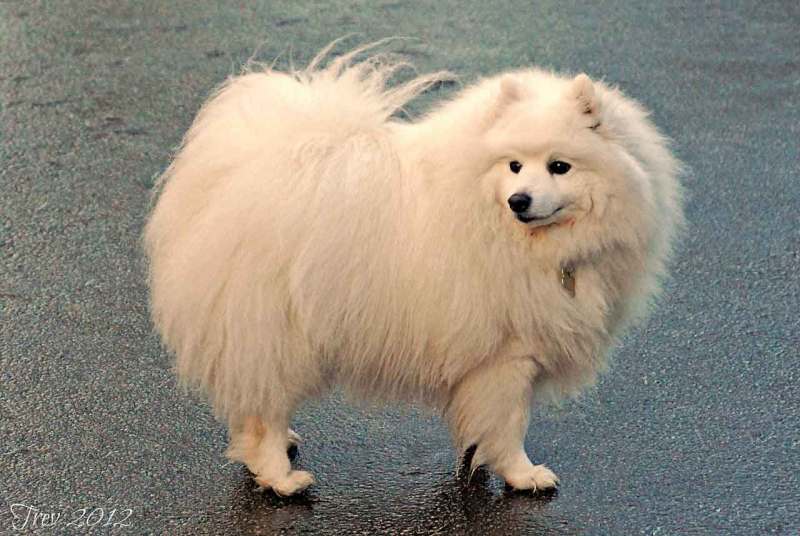
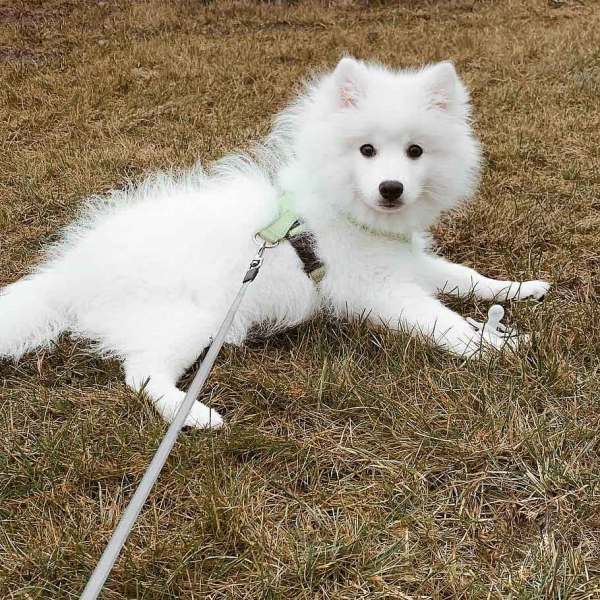
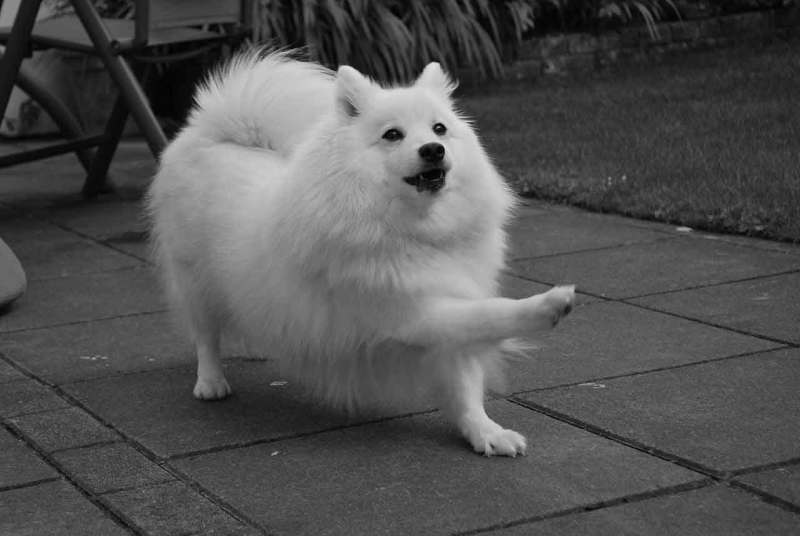
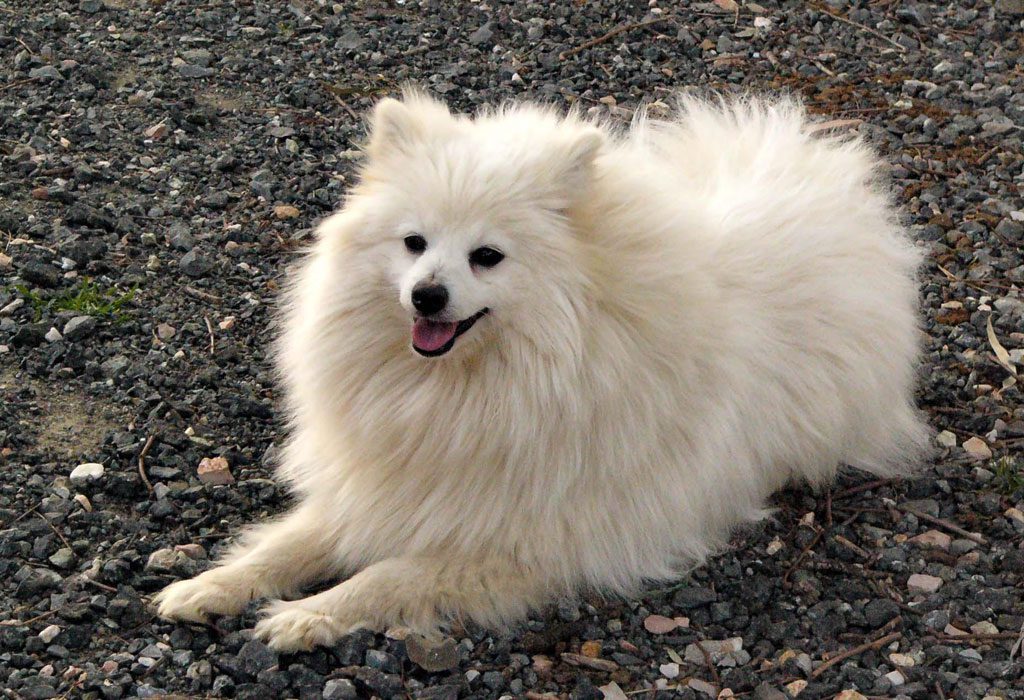
This breed is distinguished by the fact that it is exclusively pure white.. Thanks to his straight and dense hair, the Japanese Spitz seems strong. What is no less important, it is also caused by the swollen inner layer. The beautiful ruffle on the shoulder, neck and sill contributes to attractive appearance. Typical of the tail is a long and voluminous flag.

Despite her short legs, the Japanese Spitz is sporty and extremely agile. Due to its balanced proportions, the appearance of this compact pedigree dog is both striking and harmonious.

The height at the cross – the elevated transition from neck to back – tends to be of 30 to 38 cm in adult males. Females reach a somewhat smaller size. The Japanese Spitz weighs between 4,5 and 11 kg.

Character and abilities ยซJapanese Spitzยป

The well balanced nature of the Japanese Spitz fits the very harmonious appearance. He is an attentive guard. Anyone who approaches him is not immediately signaled with a savage bark. Only when the Japanese pedigree dog feels a serious threat, gets loud and fights back vehemently.

At home, the Japanese Spitz behaves quite calmly. Abroad, on the other hand, he likes to show the energy he has inside him. To enjoy the Japanese Spitz, you must like a little dog who likes to play. You should also have fun on long trips with your four-legged friend.

The Japanese Spitz he is a very people-oriented dog. Whether it belongs to one person or has a master or caregiver at the same time, he does not care. He also likes to live with the family. The company of people is the priority. Pets or other pets are not enough. Although the Japanese spitz usually get along with them. So if you're short on time for a dog, a Japanese Spitz probably not the right thing for you.

The white puppy enjoys the company of people and would like to be with them always and everywhere.. He is very receptive and eager to learn. Which makes education in combination with devotion quite easy even for untrained dog owners.

An apartment in the city is suitable for him, as long as you are well occupied with extensive walks and activities.

ยซJapanese Spitzยป Care

Despite the hereditary predisposition to many diseases, Many of the ailments can be avoided by taking proper care of your Spitz. Dental problems in particular can be prevented through regular dental care, that is to say, brush your teeth at least once a week, or better daily. Diseases or inflammations of the eyes, nose, ears and claws can also be detected and treated at an early stage through proper care and regular check-ups. Another important aspect of grooming is the care of the coat of the Japanese spitz. Despite the impressive and luxurious fur, This is not very elaborate and therefore it is usually sufficient if the hair is combed or brushed thoroughly twice a week. Only in the coat change phase (twice a year) grooming effort increases until daily styling.

Japanese Spitz health

An indication of good and serious parenting is the presentation of genetic test results.. The breeding animals used must have an impeccable genetic makeup to exclude genetic diseases from the start. Dogs in which hereditary diseases typical of the breed have occurred should be excluded from breeding for the sake of the health of the breed. This also includes the tendency to dislocate the patella (slipping of the patella out of its guide), which can also be inherited in many dogs, especially in small dog breeds. Also eye problems, such as distichiasis or narrowing of the tear ducts, as well as dental problems can occur with the Japanese spitz. No other diseases typical of the breed are known..

The correct nutrition of the ยซJapanese Spitzยป

In a special way, correct nutrition contributes to the health and well-being of the Japanese spitz. Small dogs with a very compact constitution have a strong tendency to be overweight. Too many pounds can easily lead to joint disease and heart and circulation problems.. Overweight dogs are also at higher risk for diabetes.

As the owner of a Japanese spitz, you should always keep the amounts recommended by food manufacturers. It also, the dog should not be given too many treats between meals.

It is not only the quantity but also the quality of the food that is important. Besides vegetables or rice, good dog food consists largely of high-quality meat. Poor quality food often contains an excessive amount of cereals. Under no circumstances should it contain flavor enhancers or sweeteners.

Before buying, you should find out the exact composition of the dog food in the manufacturer's instructions. Several vendors offer good and safe dog food, both dry and wet.

It is not unusual for dog owners to prefer homemade dog food. This can also be an alternative to the ready-to-eat food available in stores for the Japanese spitz. But, it is essential that you acquire the necessary knowledge to cook balanced dog food for yourself.

The diet BARF it is also a good way to feed Japanese spitz with a healthy diet. BARF means ยซBone And Raw Foodยป (Bones and raw foods). All food components, like meat, fish, vegetables or fruit, they are only given raw. Various vendors and specialty stores facilitate BARF to the dog owner. Like cooking food, this feeding method requires a certain amount of knowledge about the correct use of raw ingredients.

You must feed a puppy of 3 to 5 times a day, an adult raw food and bones 2 times a day.

Buying a "Japanese Spitz"

Despite the growing popularity and demand in the European and American continent, the Japanese spitz still belongs to the rare dog breeds. The waiting period for a new litter at a breeder can be very long. Who doesn't necessarily care about a purebred puppy, but also consider buying a Spitz adult, should – parallel to the search for a breeder – also look around the animal shelter, where over and over again Spitz or the crosses of Spitz they are waiting for a new and loving home. A puppy, on the other hand, should only be purchased from a serious and certified breeder.

How do I recognize a serious breeder?

When choosing a suitable breeder, various factors play a role. It's not just the "formalities" that must be correct, that is to say, the papers, the pedigree and the contract of sale, but also the personal reasons that ultimately decide the purchase. The breeder must, first, be understanding with you, and this cannot be found out with a short email or a short phone call. One or better several meetings are necessary to get a complete picture of the breeder and his dogs.. Does the breeder invite you to his house? Do you willingly show your "kennel" and do the animals live in close contact with the breeder's family? The first weeks are very important for the socialization of the puppies and therefore the environment must correspond absolutely to the affectionate nature of the puppies. Japanese spitz. It also, a serious breeder will be able to tell you a lot about the breed and its characteristics. They will also ask you about your life circumstances to make sure your puppy has fun with you..

Characteristics "Japanese Spitz"

Coexistence is important that you have with your new friend. Before considering the acquisition of a dog of the breed "Japanese Spitz" you know certain factors. Not all breeds of dogs are apt to live in an apartment, you must take into account his character, their need for exercise, their interaction with other pets, their care and if you have small children, their level of tolerance towards them.

Training ?

5,0 of 5 stars (based on 1 review)

Suitability of the apartment ?

4,0 of 5 stars (based on 1 review)

Can be alone all day ?

2,0 of 5 stars (based on 1 review)

Suitable as a first dog ?

5,0 of 5 stars (based on 1 review)

Weight gain ?

5,0 of 5 stars (based on 1 review)

Health ?

4,0 of 5 stars (based on 1 review)

Intelligence ?

4,0 of 5 stars (based on 1 review)

Kindness with child ?

5,0 of 5 stars (based on 1 review)

Tendency to bite ?

2,0 of 5 stars (based on 1 review)

Tendency to bark ?

2,0 of 5 stars (based on 1 review)

Tendency to flee ?

2,0 of 5 stars (based on 1 review)

hair loss strength ?

5,0 of 5 stars (based on 1 review)

Suitable as a guard dog ?

3,0 of 5 stars (based on 1 review)

Joy ?

4,0 of 5 stars (based on 1 review)

Cat friendliness ?

4,0 of 5 stars (based on 1 review)

Power level ?

4,0 of 5 stars (based on 1 review)

Images "Japanese Spitz"

Photos:

1 – Japanese spitz by https://pxhere.com/es/photo/1273902
2 – Japanese Spitz Siberia by 0894Leanne, CC BY-SA 3.0, via Wikimedia Commons
3 – Japanese Spitz Puppy by mostlegendary@gmail.com, CC BY-SA 3.0, via Wikimedia Commons
4 – Japanese spitz by https://www.pikist.com/free-photo-sixhn
5 – Japanese spitz by https://www.pxfuel.com/en/free-photo-xghfb
6 – Japanese Spitz by Trev Grant, CC BY 2.0, via Wikimedia Commons
7 – Japanese Spitz by https://www.pikrepo.com/fflza/japanese-spitz-near-wall

Videos "Japanese Spitz"

Kubo - Japanese Spitz Puppy - 2 Weeks Residential Dog Training
Kubo – Japanese Spitz Puppy – 2 Weeks Residential Dog Training
Japanese Spitz / Breed of dog
"Japanese Spitz" / Breed of dog

Type and recognitions:

  • FCI CLASSIFICATION:
  • Group :
  • Section : . .

Federations:

  • FCI – Group 5: Spitz-type dogs and primitive type – Section 5: Asian Spitz and related breeds. โ“˜
  • ANKC – Group 7 (Non-Sporting) โ“˜
  • CKC – Group 6 – Non-Sporting โ“˜
  • โ€‹KC – Utility โ“˜
  • NZKC – Non-Sporting โ“˜
  • UKC – Northern Breed Group โ“˜

FCI breed standard "Japanese Spitz"

Origin:
Japan

Date of publication of the valid original standard:
16.06.1999

Use:

Companion dog.


General appearance:

Its body is covered with abundant white fur., the snout is sharp, triangular and erect ears, The tail is covered with long feather-shaped hair and curls over the back.. Robust and well balanced constitution, Its harmonious beauty gives it a lively appearance and dignity characteristic of this breed., that at the same time denotes elegance.

IMPORTANT PROPORTION : The relationship between the height at the withers and the length of the body is 10 : 11.


Behavior / temperament:

It is an intelligent dog, joyful, with keenness of senses. Boisterous nature is not allowed.

Head:

The size of the head should be in harmony with the body and should be moderately wide and rounded.

Cranial region:
  • Skull : The forehead is moderately developed. The back of the skull is very wide.
  • Depression links (Stop) : Defined.

facial region:

  • Nose : Small, rounded and black.
  • Snout : Pointed, the tip slightly rounded and well balanced. Lips adherent and preferably black.
  • Jaws / Teeth : Strong white teeth with scissor bite.

Eyes : Moderately large, almendrada form, placed slightly oblique, dark colored. The edges of the eyelids black.

Ears : High insertion, small, triangular, upright, directed forward and placed not too far apart.

Neck:

Moderately long and very muscular.

Body:

  • Cross : High.
  • Back : Straight and short.
  • Kidney region : Wide.
  • Chest : Wide and deep, well arched ribs.
  • Abdomen : Well collected.

Tail:

High insertion, moderately long and carried on the back.

Tips

PREVIOUS MEMBERS : Well inclined shoulders, forearms straight and elbows close to the body.

LATER MEMBERS : Muscular, the femoro-tibio-patellar joints (knees) and tibio-tarsals (hocks) moderately angled.

FEET : Cat feet. Thick and desirably black pads, the same as nails.

Movement:

Fast and active.

Mantle

HAIR : The hair of the outer coat is straight and remains separated. The hair of the undercoat is short, dense and soft texture. The face, the ears, the front part of the limbs and under the hocks are covered with short hair; the rest of the body is covered with long, abundant hair, especially from neck to shoulders, and the parapet that has a beautiful ruff of hair. The tail also has abundant long feather-shaped hair..

COLOR : Pure white.


Size and weight:

Height to the cross :

  • Males : 30 โ€“ 38 cm..
  • females : slightly smaller than males.


Fouls:

Any deviation from the aforementioned criteria is considered as a fault and the severity of this is considered to the degree of the deviation to the standard and its consequences on the health and well-being of the dog..

โ€ข Upper or lower prognathism.
โ€ข Firmly coiled tail.
โ€ข Shyness, noisy dog.

MISS PLAYOFFS

โ€ข Aggressive or fearful dog.
โ€ข Floppy ears.
โ€ข Tail not carried over the back.

Any dog โ€‹โ€‹showing clear signs of physical or behavioral abnormalities must be disqualified..


N.B.:

Males should have two normal-appearing testicles fully descended into the scrotum..

Source: F.C.I - International Cynological Federation

Alternative names:

1. Nihon Supittsu (English).
2. Nihon Supittsu (French).
3. Nihon Supittsu (Japan-Spitz), Japanischer Spitz (German).
4. Nihon Supittsu (Portuguese).
5. Nihon Supittsu (espaรฑol).

โ–ท The world of Pets: Dogs, cats, birds, reptiles, amphibians

Samoyed
Rusia FCI 212 . Nordic Sledge Dogs

Samoyedo

The Samoyed, Although it may seem a teddy, It is a true athlete who needs exercise daily.

Content

History

Where does he come from Samoyed originally?

The Samoyed is the archetype of a dog from the far north. It belongs to the archetypes of the dog in general. The Samoyed it is one of the oldest dog breeds. Type dogs Samoyed have accompanied the peoples of Siberia for thousands of years. The Samoyeds (or nenets) are various indigenous peoples who have lived for thousands of years throughout Siberia to the Arctic Ocean. Most live as nomads and follow herds of wild or semi-wild reindeer.. Their dogs have different tasks. They pull the sleds with the household goods or with the hunters for the hunt. They pull the boats over the snow into open water. They help with the reindeer herds. They guard and protect people as if they were herds.

They defied death even when facing the polar bear, the world's largest land predator. The Samoyeds provide an excellent navigation system that makes its way through icy deserts even in fog or snow storms, avoiding cracks and ice holes. They often sleep in the tents of the Samoyedos. They keep each other warm. So it is not surprising that the peoples Samoyeds have an extremely intimate relationship with their dogs, and not only because their existence in the far north depends on these dogs.

The Countess Aga von Hagen reports in his book on dog breeds from 1933 that he "Samoyed Spitz" was treated as a sacred dog in his homeland and no family Samoyed voluntarily separated from his dogs. On the other hand, the Countess explains that the Samoyed Spitz, through this close connection, shows a "high development of mental characteristics despite its ferocity". Was not up 2017 that a report by Russian archaeologists was published, that they had found remains of 9000 ten years old dogs in Siberia. In the permafrost these were so well preserved that they could be closely examined and classified as sled dogs..

Only in 1889 English Ernest Kilburn-Scott managed to import the first Samoyeds from Siberia. So these dogs entered modern pedigree dog breeding.. Immediately one turned to their outer appearances. White color rose as a feature of a Samoyed basically arbitrarily to standard. At that moment, like today, se and take Samoyed original in many colors, only rarely in pure white. To impose the pure white color, inbreeding was carried out according to this dubious criterion and thus much of the real character and extreme robustness of the Samoyed. It also, the breeding base was already very small anyway, because the Siberian peoples were reluctant to give up their dogs for breeding in England.

Finally, in the decade of 1950 they also crossed the original line, these being very different in character and, if you look closely, also in appearance. Although the Samoyed current European breeding has lost much of the original character of the true Siberian dog, still an original breed. The most exciting thing about him is that he shows at the same time a close connection with humans. Not without reason, the Samoyed is one of the founders of other breeds of dogs such as the Eurasian. The first standard for Samoyed it was created in 1909, in 1913 was recognized in England. The FCI, Fรฉdรฉration Cynologique Internationale recognized her in 1959.

Physical characteristics

Males tend to have more size females usually weigh between 20 and 32,5 kg, while females usually weigh between 17 and 25 kg.

The eyes of the Samoyed they are usually black or brown, and slanting. The nose or truffle must be well developed and preferably black. At some times of the year it can clear up, giving rise to what is commonly called "winter nose.". Some other factors such as age or climate can clarify it, but it is important to always keep the edges of black. Otherwise it would mean a mandatory veterinary visit.

The ears they should be thick and completely covered with hair, form triangular, and upright. In most cases they are white, but occasionally they can be Brown clear (known as "cookie" color).

The tail of the Samoyed it is one of the most distinctive features of this breed. As the Mally, the tail hanging hook-shaped on his back; However, and unlike the Malamute, the tail of Samoyed touches back and leans over, slightly, on one of the sides and it should not be a very closed hook or in the shape of a "flag".

in cold climates, some Samoyed sleep with their tails over their noses to provide additional protection. Most of the Samoyed, They allow the tail to fall when they are relaxed, but they back to its original position when they are alert.

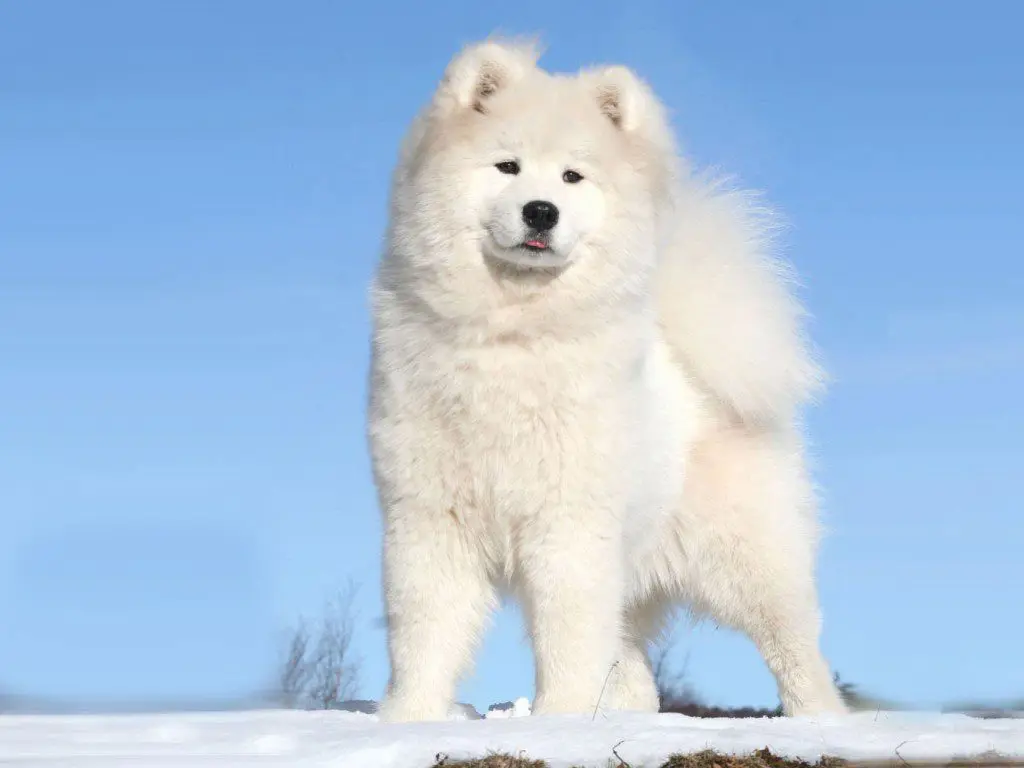
The Samoyed, they have a dense double coat of hair. The top layer has a dense, straight and thick hair, It seems the white but it has some dyes of silver. This top layer keeps the Undercoat relatively clean and free of debris. The bottom layer is a soft, dense and short hair that keeps the dog warm.

The bottom layer is changed from one to two times a year, process known as shedding of hair. This in no way means that they move hair only on these occasions, year-round fine hair it is moved and replaced, which โ€“usually- sticking it on your clothes or simply air fleet.

The Samoyed standard can have a mix of color White and biscuit, Although dogs completely white or completely color cookie are not rare. Males are generally longer than females fur.

The Samoyed, they are good at grooming themselves, not too many baths still needed. Dirt usually falls easily from the outer layers of hair, making the dog show clean.

The hair of the puppies is more porous, so it is easier to you manche with the grass and mud if they are long time outdoors. The aspect of brushing is more difficult, that by their thick fur in some areas like the back of the ears tend to tangle is if not brushes weekly.

The Samoyed will require that, cut the hair that grows between their feet bearing, but with this exception the rest can stay that way, course.

Except for reasons medical or hair is extremely entangled, it is not recommended that the Samoyed be shaved, since their hair acts as an insulator from both cold and moderate heat, in addition to protecting fair skin from Samoyed before burns by the rays of the sun.

An important characteristic of this breed is that they almost do not have the characteristic dog smell., making them good dogs live indoors. The lack of dander, as well, makes them hypoallergenic.

The thick layer of hair can make you feel uncomfortable in the summer in locations where the climate is warm, where they prefer indoors because the air is colder. Their hair also acts as a natural repellent against lice and ticks..

When moving the hair, most of the outer layer falls off and is replaced, the old man can fall into large bundles, leaving hollow spaces in extreme cases. You can brush the hair, with a metal comb, with which we can speed up the process of moving and help the Samoyed to regain your appearance more quickly. Brushing frequently help him is not enrede.

Give a bath to Samoyed it's a long process, because the hair is almost โ€œwaterproofโ€, so it will take time for it to be fully wet and then fully wet. The hair Samoyed must be dried with cold forced air (using a hair dryer), as water can be trapped in the thick undercoat making it difficult for it to evaporate.

It is important that you rinse well, as leftover shampoo or soap can lead to a fungal infection, difficult to remove without having to shave the affected area. To keep the hair from Samoyed Radiant, brushing and a healthy diet may not be disparaged.

How big is a "Samoyed"?

The samoyed have a height at the withers of about 57 centimeters in males and 53 centimeters in females. Weight is not prescribed by the standard, but it is usually between 18 and 30 kg.

How long can a "Samoyed" live??

One Samoyed healthy can reach the 12 years and more, and this with a good physical condition.

Character and skills

The provision of play of the Samoyed makes it a dog not recommended as a guardian; a Samoyed aggressive is very rare. But, with their tendency to bark they can be diligent watchdogs, barking when something or someone approaches their territory.

The Samoyed, they are one Excelent company, especially for small children or even other dogs, remaining also playful until advanced age. The Samoyed, as well, they are known to be somewhat fools sometimes and difficult to train due to lack of diligence and not due to lack of intelligence, so it must be persuaded obey orders which are given.

His inheritance by pulling sleds, the Samoyed, has no problems to pull objects, and Samoyed who has not been trained has no problem with dragging his owner on the leash when they take him out for a walk instead of walking beside him.

Running is a special passion of the samoyed, more precisely: pull sleds. If you are interested in a Samoyed, you should definitely visit the sled dog races in winter. It is deeply impressive and fascinating.

You can feel the extreme tension of the dogs much earlier in the field of โ“˜ Musher. When you go to the exit, there is hardly a stop. Like in an explosion, this tension of these rather heavy looking dogs dissolves in the acceleration of the sled. The strength of Samoyed it's not your speed, but its unusual resistance.

They instinctively act like herding dogs., so when playing, especially with children, they tend to try to guide them.

This breed is characterized by its expression alert and smiling, which has earned him the nickname "Samoyed smileยป o ยซsmiling dogยซ. They have great vitality, which is why, well cared for they retain their youth and that jovial spirit until their old age. Their average lifespan is of 12 to 18 years, Although some can live a little longer.

As a working breed, they have an excellent resistance and without daily exercise, they become bored and/or depressed they, that can lead to it barking excessively, destroyed or have a worthy of a master of escape behavior. While they are healthy dogs they have tendency to certain diseases.

Caution, health and diseases

The Samoyed for show breeding is affected by numerous hereditary diseases due to one-sided breeding in outward appearance and the very small breeding base today. You should avoid parenting, that values รขโ‚ฌโ€นรขโ‚ฌโ€นthe exhibition championships.

How much care does a "Samoyed" need??

The lush double coat of the Samoyed needs regular care. Especially during the coat change in spring and summer, his house, his car and his clothes will be full of his long hair even though our Samoyed brush daily.

What food is best for a "Samoyed"?
The Samoyed you have no special requirements in your diet. Like most dogs it likes a meaty beef bone and fresh meat. The Samoyed it is very suitable for barbecues.

Activities with your โ€œSamoyedโ€

How much exercise does a Samoyed?

With a Samoyed you can do winter sports very well, ideally as a sled dog. The Samoyed needs an appropriate workload for each species.

Considerations before purchase

Where can you buy a "Samoyed"?

If you are interested in a Samoyed, the first thing you should do is visit some sled dog races. Here you can experience the heart of these dogs live. Then you should get information from a local breeder who does not breed Samoyed plush for exhibition. The breeder should have tested his dogs for special risks of hereditary diseases. This is a natural in serious parenting.. It also, there should be no inbreeding, which can be estimated by looking at the pedigree, if no name appears there twice. The breeder must have his litter well documented by photo. You should be able to see the litter along with the mother bitch, after the fix, in the place. Please, Do not buy Samoyedos by Internet, because there is a high risk that the puppy comes from a seller or breeder of dogs, normally well camouflaged.

The education and maintenance of a "Samoyed"

The Samoyed easy to train and guide, but it is not a dog for beginners. You have high demands on your attitude, derived from its destiny as an original working and sled dog. So you need a lot of occupation and activities, ideally in the sport of sledding.

If you don't exercise and are even left alone without a deep connection to your family, can become a nervous and upset dog, that can even destroy the apartment or the garden.

The Samoyed not a dog for a flat or the big city. The ideal would be a house with a garden. To the Samoyed they like to sleep outside and roll their head under their tail even in the biggest snowstorm. The garden, where do these dogs stay, should not be an ornamental garden.

The luxurious coat of the Samoyed needs regular care. Especially during the change of layer in spring and summer an intensive grooming is indicated. Then the house, the car and clothes will be full of her long hair even if you brush it daily. Here you don't have to be fussy. In the car, it is best to transport it in a box from a specialized store.

The Samoyed can be trained very well by an experienced owner. You have to accept the challenge, It even has to motivate you to fight mentally with this original and confident race. They will gladly accept their masters or caregivers, will be loyal to them, but they have to demonstrate leadership qualities combined with a lot of knowledge of the breed. You have to be fully involved in the experience with these typical Nordic dogs, rustic.

Through a gentle but disciplined upbringing, a Samoyed must be aware of its position in the ranking as early as puppy age. There should be no question who determines the rules of the house.

Characteristics "Samoyed"

Coexistence is important that you have with your new friend. Before considering the acquisition of a dog of the breed "Samoyed" you know certain factors. Not all breeds of dogs are apt to live in an apartment, you must take into account his character, their need for exercise, their interaction with other pets, their care and if you have small children, their level of tolerance towards them.

Adaptation โ“˜

4,0 of 5 stars (based on 1 review)

friendly dog โ€‹โ€‹โ“˜

4,0 of 5 stars (based on 1 review)

hair loss โ“˜

5,0 of 5 stars (based on 1 review)

Affection level โ“˜

5,0 of 5 stars (based on 1 review)

Need for exercise โ“˜

4,0 of 5 stars (based on 1 review)

Social need โ“˜

4,0 of 5 stars (based on 1 review)

Home โ“˜

3,0 of 5 stars (based on 1 review)

Toilet โ“˜

4,0 of 5 stars (based on 1 review)

Friendly with strangers โ“˜

3,0 of 5 stars (based on 1 review)

barking โ“˜

4,0 of 5 stars (based on 1 review)

Health โ“˜

3,0 of 5 stars (based on 1 review)

Territorial โ“˜

5,0 of 5 stars (based on 1 review)

Cat friendly โ“˜

3,0 of 5 stars (based on 1 review)

Intelligence โ“˜

3,0 of 5 stars (based on 1 review)

Versatility โ“˜

3,0 of 5 stars (based on 1 review)

Child friendly โ“˜

5,0 of 5 stars (based on 1 review)

Surveillance โ“˜

3,0 of 5 stars (based on 1 review)

joy โ“˜

5,0 of 5 stars (based on 1 review)

Frequently asked questions about the Samoyed dog breed

in this post, we will answer the most frequently asked questions about Samoyeds.

1 – How is the fur Samoyedor and how it should be cared for?: The coat of the Samoyed it is white and fluffy, with a cotton-like texture. To care for the coat of a Samoyed, regular brushing is necessary to prevent knots and tangles. It also, it is recommended to bathe them approximately every three months to keep their fur clean and soft.

2 – Are the Samoyedos good companion dogs?: Yes, Samoyeds make excellent companion dogs due to their affectionate and loyal nature.. These dogs enjoy human company and can adapt to different lifestyles., as long as they get enough attention and exercise.

3 – What is the personality of the Samoyed?: The Samoyed is a friendly dog, Intelligent, playful and loyal. These dogs have a sociable personality and get along well with children and other animals if properly socialized from puppies..

4 – How is the health of the Samoyed?: In general, the Samoyedos they are a healthy breed, but like all dogs, may have certain health problems. Some common conditions in this breed include hip dysplasia, cataracts and thyroid problems. It is important to carry out regular check-ups with the vet and carry out a proper diet and exercise to keep them healthy.

5 – How do you train a Samoyed?: The Samoyedos They are intelligent dogs and respond well to training.. It is important to use positive training methods and reward good behavior.. Socialization from puppies is key for the Samoyed to become a balanced and well-behaved dog.

Conclusion: If you are interested in adopting a Samoyed dog, We hope we have answered your questions and have helped you to get to know this breed better.. Remember that adopting a dog is a responsibility and that you must dedicate adequate time and resources to ensure that it has a happy and healthy life..

Where can I buy Samoyed dogs??

If you are interested in buying a dog of the breed Samoyed, there are several options you can consider.

One option is to search in directories of dog breeders, as the International Cynological Federation (FCI) or the Royal Canine Society of Spain (RSCE). Both organizations have lists of registered dog breeders and can provide you with information about Samoyed breeders in Spain..

Another option is to search online at websites specializing in the sale and adoption of pets.. You can search on dog breeder websites or on forums and social media groups dedicated to the Samoyed breed.. Be sure to carefully research any potential breeders before making a purchase, and consider visiting the puppies in person before making your decision..

You may also consider adopting a Samoyed dog from a shelter or dog rescue organization.. There are many organizations dedicated to rescuing and rehoming dogs of all breeds., including Samoyeds. Adopting a dog from a shelter or rescue organization can be a great way to give a dog in need a loving and caring home..

Remember that it is important to choose a reputable and ethical breeder or rescue organization., that breeds or rescues healthy and socialized dogs. Don't buy a puppy or adopt a dog from a source that can't provide you with information about the dog's health and breeding or rescue history.

ยซSamoyedยป images

Videos "Samoyedo"

Type and recognitions:

  • FCI CLASSIFICATION:
  • Group :
  • Section : . .

Federations:

  • FCI – Group 5 – Section 1 Nordic Sledge Dogs. โ“˜
  • AKC – Nordic Sledge Dogs โ“˜
  • ANKC – Nordic Sledge Dogs โ“˜
  • CKC – Nordic Sledge Dogs โ“˜
  • โ€‹KC – Nordic Sledge Dogs โ“˜
  • NZKC – Nordic Sledge Dogs โ“˜
  • UKC – Nordic Sledge Dogs โ“˜

FCI breed standard "Samoyed"

Origin:
Russia

Date of publication of the valid original standard:
22/07/1997

Use:

Sled dog and company.


General appearance:

It is a medium-sized and elegant-looking Arctic Spitz.. Gives the impression of strength, resistance, flexibility, Grace, dignity and self-confidence. Her expression, Commonly called the "Samoyed smile," it results from the combination of the shape and position of the eyes with the slightly upward curved corners of the mouth.. Your sexual characteristics must be well defined.

IMPORTANT PROPORTIONS: Body length is approximately 5% greater than the height of the cross. The depth of the body is slightly less than half the height at the withers. The muzzle is almost as long as the skull.


Behavior / temperament:

He is friendly, franco, alert and lively. His instinct to hunt is very slight. He is never shy or aggressive. It is very sociable and cannot be used as a guard dog.

Head:

Powerful and wedge.

Cranial region:
  • Skull: Seen from the front and only slightly convex profile. It is wider between the ears. The furrow between the eyes is slightly marked.
  • Stop: Clearly defined, but not too pronounced.

facial region:

  • Truffle: Well developed, Black preferred. During some periods of the year can clarify the pigment on the nose, giving rise to the commonly called "winter nose"; However, There should always be pigment at the edges of the nose.
  • Snout: Strong and deep, about as long as the skull, slimming gradually towards the truffle; It is not sharp or heavy or square.
  • Nose cane: Straight.
  • Lips: Tight, black and packed. The corner of the mouth is slightly curved upwards, forming the characteristic ยซSamoyed smileยป.
  • Jaws / Teeth: Regular and complete scissor bite. Teeth and jaws are strong. Normal teeth.
  • Eyes: Dark brown in color, rather than separate and properly positioned in orbits, slightly oblique and almond way. The expression is "smiling", friendly, alert and intelligent. The eyelids are black.
  • Ears: erected, relatively small, thick, triangular, slightly rounded at the tips. They should be moving, Insert well separated because the skull is broad and high.

Neck:

Strong and medium length, arrogant postage.

Body:

Slightly longer than the height of the cross, deep and compact, but flexible.

  • Cross: Well marked.
  • Back: Of average length, muscular and straight; the female is slightly longer in males.
  • Pork loin: Short, very strong and defined.
  • Rump: Full, strong, muscular and slightly sloping.
  • Breast : Large, deep and long, reaching almost to the elbows. Well arched ribs.
  • bottom line: Moderately withdrawn.

Tail:

Relatively high insertion. When is the dog alert or moving, the tail is carried bent from its root forward on the back or to the side; When it is at rest performs hanging it and reaches up to the joint warm-foot.

Tips

PREVIOUS MEMBERS:

  • As a whole: Well placed and muscular, with strong bones. Seen from the front are straight and parallel.
  • Shoulder: Long, firm and oblique.
  • Arm: Oblique and glued to the body. About as long as the shoulder.
  • Elbow: Attached to the body.
  • Carpo: Strong but flexible.
  • Metacarpus: Slightly inclined.
  • Previous feet: Oval, with long toes, flexible and straight forward facing. Fingers are arched and are not too United. Elastic pads.

LATER MEMBERS:

  • As a whole: Seen from the back, They are straight and parallel with very strong muscles.
  • Thigh: Medium length, relatively wide and muscular.
  • Knee: Well angled.
  • Warm-foot joint: Positioned relatively low and well angled.
  • Metatarsus: Short, strong, vertical and parallel.
  • Hind feet: Similar to the previous. The Spurs should be removed.

Movement:

You must give the impression of being powerful, free and tireless with long steps. Good range in the forelimbs and good momentum in the hind.

Mantle

HAIR: Polar hair, thick, dense and flexible. The Samoyed has a double layer of hair; the inner layer is made up of short hair, smooth and dense, the outer layer for longer hair, straight and rough. The coat should form a collar around the neck and shoulders, surrounding the head, especially in males. On the head and the front part of the members, the hair is short and smooth; on the outside of the ears, the hair is short, soft and separate. The inside of the ears should be well covered with hair. In the back of the thighs, hair forms trousers. Must have protective hair between fingers. The queue must be extensively covered hair. The coat of the females is often shorter and softer than the male texture. The correct coat should always have a special brightness.

COLOR: Pure white, cream or white with color cake (the basic color should be white, with some brands color sponge cake). Never give the impression of being pale brown.


Size and weight:

Height of the cross (Ideal height):

  • Males 57 cm., with a tolerance of ยฑ 3 cm..
  • females 53 cm., with a tolerance of ยฑ 3 cm..


Fouls:

Any deviation from the aforementioned criteria is considered as a fault and the severity of this is considered to the degree of the deviation to the standard and its consequences on the health and well-being of the dog..

  • Notable failures of body structure.
  • Light bone.
  • Males who are not male and females that are not feminine.
  • Bitefork clamp.
  • Yellow eyes.
  • Soft ears.
  • Ribs abarriladas.
  • Double hook tail.
  • Short members.
  • In Coop or cow hocks.
  • Wavy or short coat on the entire body, Longhair, soft and droopy.
  • Quiet dog.

SERIOUS FAULTS:

  • Noticeably depigmented areas on the eyelids and lips.

MISS PLAYOFFS:

  • Aggressive or fearful dog.
  • Eyes blue or different colors.
  • Upper or lower prognathism.
  • Not erect ears.
  • Color of the fur other than as described in the standard.
  • Any dog โ€‹โ€‹showing clear signs of physical or behavioral abnormalities must be disqualified..


N.B.:

Males should have two normal-appearing testicles fully descended into the scrotum..

TRANSLATION: Federation Canรณfila Mexicana, A.C.

The latest changes are in bold

Source: F.C.I - International Cynological Federation

Alternative names:

1. Bjelkier, Samoiedskaya, Sobaka, Smiley, Sammy (English).
2. SAMOYEDE (French).
3. Samojedenhund, Samojedenspitz (German).
4. Samoieda, Samoiedo (Portuguese).
5. Samoiedskaya Sobaka, Nenetskaya Laika, Samoiedskaรฏa Sabaka (espaรฑol).

โ–ท The world of Pets: Dogs, cats, birds, reptiles, amphibians

Alaskan Malamute
Estados Unidos FCI 243 . Nordic Sledge Dogs

The Alaskan Malamute he has a reputation for being stubborn and difficult to train among people who do not know him.

Alaskan Malamute

Content

Characteristics "Alaskan Malamute"

Coexistence is important that you have with your new friend. Before considering the acquisition of a dog of the breed "Alaskan Malamute" you know certain factors. Not all breeds of dogs are apt to live in an apartment, you must take into account his character, their need for exercise, their interaction with other pets, their care and if you have small children, their level of tolerance towards them.

Adaptation โ“˜

3,0 of 5 stars (based on 1 review)

friendly dog โ€‹โ€‹โ“˜

1,0 of 5 stars (based on 1 review)

hair loss โ“˜

5,0 of 5 stars (based on 1 review)

Affection level โ“˜

3,0 of 5 stars (based on 1 review)

Need for exercise โ“˜

4,0 of 5 stars (based on 1 review)

Social need โ“˜

4,0 of 5 stars (based on 1 review)

Home โ“˜

1,0 of 5 stars (based on 1 review)

Toilet โ“˜

5,0 of 5 stars (based on 1 review)

Friendly with strangers โ“˜

4,0 of 5 stars (based on 1 review)

barking โ“˜

4,0 of 5 stars (based on 1 review)

Health โ“˜

3,0 of 5 stars (based on 1 review)

Territorial โ“˜

5,0 of 5 stars (based on 1 review)

Cat friendly โ“˜

1,0 of 5 stars (based on 1 review)

Intelligence โ“˜

3,0 of 5 stars (based on 1 review)

Versatility โ“˜

2,0 of 5 stars (based on 1 review)

Child friendly โ“˜

4,0 of 5 stars (based on 1 review)

Surveillance โ“˜

4,0 of 5 stars (based on 1 review)

joy โ“˜

5,0 of 5 stars (based on 1 review)

Alaskan Malamute History

Also called Mally. It is native to the Arctic dog, and one of the oldest breeds within the sledge dogs.

It's a dog with a strong appearance, strong, with good musculature. It is capable of carrying significant weight (until 20 kg) for tens of kilometres. This is a very ancient race, from the first races of sled dogs.

Raised by a tribe of Inuit call mahlemiut. The meaning of the word mahle It is unknown, but it is known that mouse means "people of". Mahlemiut as Mahle people can therefore be interpreted. Following the English phonetics, diction is then transformed into MALAMUTE.

The area inhabited by the people of the MALAMUTE were the banks of Kotzebue Sound, a territory between two great rivers: the Kobuk and the Noatak. Men and women of the tribe mahlemiut (MALAMUTE) They were highly prized among others Inuit tribes for their courage, his pride and his skill in hunting and fishing.

    These dogs were famous for their beauty and for their characteristics of strength and endurance., that made them excellent elements for shooting.

They were, in general, larger and more powerful than the other Nordic dogs, with similar in appearance to the Wolf and large and soft tails carried on the back. Contemporary witnesses tell it between 1870 and 1880 approximately, caribou, for unexplained reasons, changed their usual migratory routes, thus taking away from the Malamute tribes an important source of livelihood.

Under these conditions, families could no longer afford to keep groups of dogs made up of more than two or three dogs.: testimonies of the time talking about men, women and even children helped their dogs to pull the sledges. So the population began to decline and the same fate befell their dogs.

His ability to bear heavy loads becomes apparent when he is chosen to go on expeditions to the Arctic Circle., as the two who placed the Admiral Byrd. They were also used as a rescue of injured dog in World War II.

His presence, always with the head-up, It gives some impressive aspect that, However, It is not at odds with a very friendly and playful character with their owners, Although it gives the impression of being a very serious dog anyone that knows no race.

Alaskan Malamute Physical Characteristics

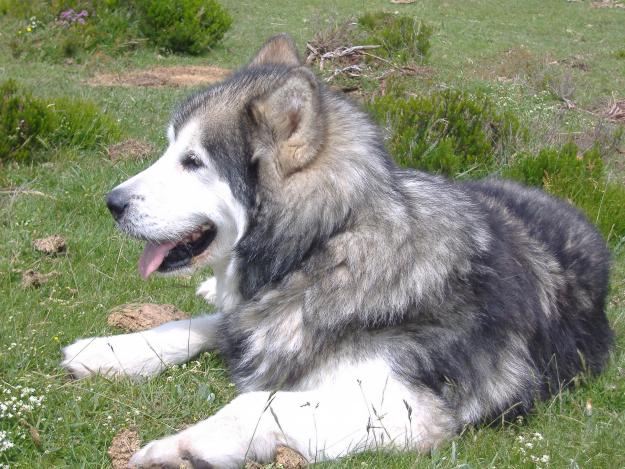
It has two layers hair: an external, thick and rough, and an internal feel oily and woolly, and it is longer in the area of the neck and shoulders, on the back and the tail. Its color It is predominantly gray but colors ranging from white to reddish sand allowed.

The tail is well covered and is carried over the back; has the appearance of a feather bush that sways.

The Malamute stands upright on its legs and embodies the pride and great joy of movement with its head-up posture and eyes that radiate alertness., interest and curiosity. His head is wide. Ears are triangular and are pricked when attention is drawn. The muzzle is massive and tapers only slightly from the base to the nose. It is neither pointed nor long nor short and thick. … The Malamute must have heavy bones and powerful legs, good legs, a deep chest, powerful shoulders and all the other physical conditions you need to do your job efficiently. Your movement should be smooth, harmonious, tireless and completely efficient. He was not bred as a racing sled dog for speed competitions.

In contrast to other races, When it gets wet is not drastically reduced its size.

There are different colors in the Alaskan Malamute, Black with white, coffee, reddish and recently found a color of white Malamute. The history of this color is equal to of the Siberian Husky; that are white to camouflage themselves with the snow and thus be able to catch their prey.

How big is an Alaskan Malamute??

Malamutes have a height at the withers of 64 centimeters in males and 59 centimeters in females. The weight is between 34 and 38 kg.

How long can an Alaskan Malamute live??

His life expectancy is more than 12 years.

Character and skills Alaskan Malamute

It is a sled dog with very ancient origins, little changed from its origin Wolf. This does not mean that it is aggressive. While his appearance and pride can impress the external observer, It's a playful animal (When you are invited to do so), faithful to his master and a great protective instinct with children.

It is a dog outside, She loves the outdoors and is happy to live in the open air; If locks it after a fence, It is very likely that finding the way to escape, because likes freedom and not lose a chance to go in search of an adventure or a career.

Shyness is usually not a good sign, but fortunately, seems to be a pretty rare feature in this race and if it occurs it may be due to causes outside of the animal genetics and having been produced by an owner who has failed to give a proper socialization, keeping him locked up and devoid of psychic stimuli, interaction with the same kind and a very limited human contact. If it detects, It should be monitored and provide training to overcome the problem, that otherwise his behavior may become unpredictable and therefore dangerous.

On the other hand, given the way of Eskimo and nomadic life share everything, is not a race of protection, but it can be a good Dog Alert, It will notify the owner that he sees something strange, with the so particular sound it emits, It is a combination between howl and bark.

    It is not a dog to guard and defense than by nature tend to be friendly with humans.

As a result of his former life, It is a dog with strong herd instinct and hierarchy, which results in frequent attacks with other animals. It also, males are very territorial and competitive with each other so it is not advisable to house them together. Females may be easier to train and better adapted to living in houses. This breed likes human company, has huge doses of loyalty, love and willingness to work, What makes a good dog home.

It is affectionate with children, even with strangers, and he loves to accompany them on all sides. Because of its independent character is reputed to be stubborn and difficult to train among people who do not know. But, There are Malamutes champions working with blind obedience.

They are sensitive, affectionate and playful, but they know to protect themselves effectively. With a good training and socialization are balanced dogs, both physically and psychologically, because they have good potential for learning because they are quick to learn and acute reflexes.

Popular mixes

Mixtures of Alaskan Malamute with other dog breeds are common in the sled dog scene. Many โ“˜ mushers they try it to improve the performance of their dogs. Individuals who from the point of view of the mushers do not bring optimal performance against the sled, they are then sometimes found in the shelter or offered as a companion dog.

Caution, health and diseases

How much care does an Alaskan Malamute need??

The Alaskan Malamute needs regular brushing, at least weekly, of the coat. Change of coat, twice a year, is particularly intensive. Then your house, his car and his clothes will be full of his long hair, even though they brush it daily. But the main effort for its care is due to its nature as a sled dog.

Are there any diseases typical of the Alaskan Malamute?

The Alaskan Malamute it is a very healthy breed of dog, as long as it is not bred in extreme form, which fortunately is seen very little so far: too heavy dogs with too short legs.

What food is best for an Alaskan Malamute?

The Alaskan Malamute is often a picky eater. The โ“˜ mushers they have secret recipes with treats to provide their dogs with enough energy before the races. like most dogs, likes a meaty beef bone and fresh meat.

Activities

The Alaskan Malamute has to work. This usually means its use as a sled dog.. An attitude like that of a farm or family dog โ€‹โ€‹would not be appropriate for the species.

Considerations before purchase

Where can you buy an Alaskan Malamute?

If you are interested in a Alaskan Malamute, the first thing to do is visit some sled dog races. Then you should check if you want to spend at least the next ten years an ordinary life, sporting and intensive with these dogs and also having the objective conditions for it. Then you should get information from a local breeder who is affiliated with a sled dog club.. If everything goes well, you will have a wonderful experience.

Breeding and maintenance

Is an Alaskan Malamute right for me??

The Alaskan Malamute a dog is not for beginners. You have high demands on your attitude, stemming from its destiny as an original sled dog. All the lives of their caregivers, your human family must adjust to your needs. The real MALAMUTE needs the challenge before the sled physically and mentally. Here are several replacement possibilities even without snow. We see a kind of sled on wheels like a tricycle or a training car with four tires. Especially for Malamutes, drag competitions are organized, which are accepted by the dogs with great joy and full commitment. Especially the sport of dogsledding has something very special. Driving with the sleigh of the MALAMUTE through a snowy landscape in winter is one of the greatest experiences of all.

It also allows you to experience a deep unity between man-dog and nature in a way that is hardly possible otherwise.. Of course it is also good for your health.

When traveling, it is better to take the MALAMUTE in an aluminum transport box. The Malamute is not a dog for an apartment. A house with a "garden" should be an ideal space for this race.

The MALAMUTE it is one of the few breeds of dog that can be kept as a pack in a kennel without any problem. But this kennel must be well secured. It is not that Malamutes are a danger to the environment, but they are kings of escape and they dig well and with gusto. You can hardly believe, through which little holes these heavy dogs can escape.

To the malamutes they like to sleep outside and snuggle with their head under their tail during the biggest snowstorm. The garden, where the Malamutes, should not be considered as an ornamental garden, to put it in a nice way. The malamutes require that the entire lifestyle be in tune with this association.

The Alaskan Malamute can be well trained by an experienced dog owner. One must accept the challenge, even love, of fighting mentally with these primitive and self-confident dogs. They will gladly accept their masters and caregivers, will be loyal to them, but they must have leadership qualities combined with a lot of doggy mind. You have to fully commit to the experience of having a MALAMUTE. Not a dog for people without deep canine experience.

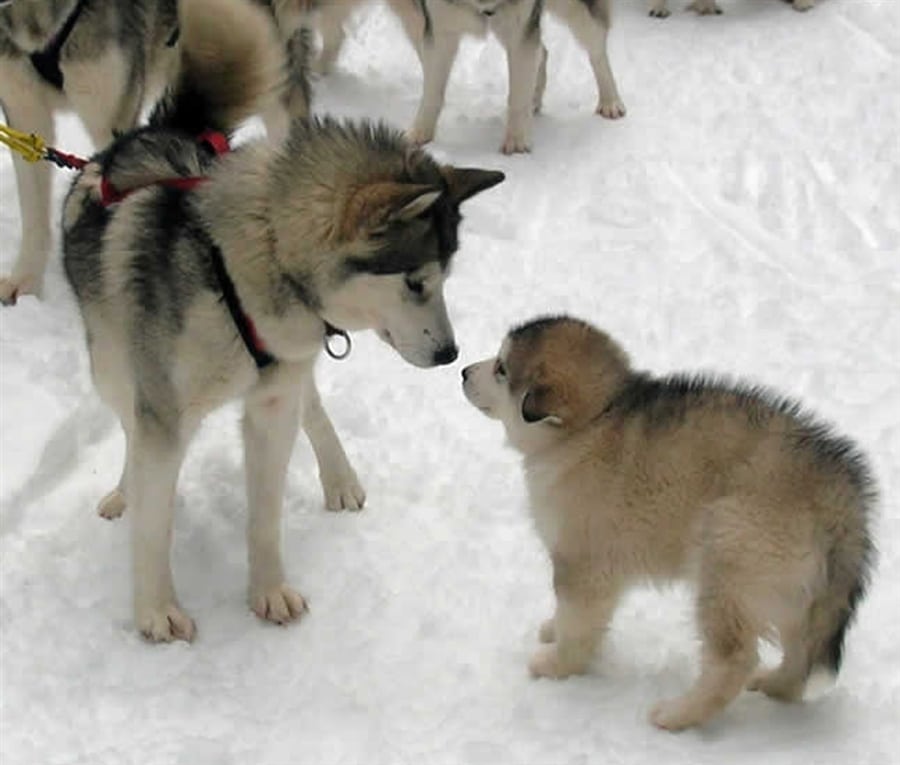
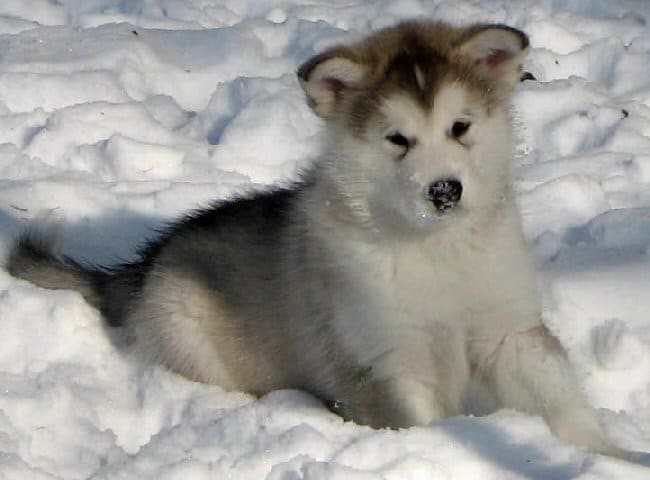
Alaskan Malamute photos

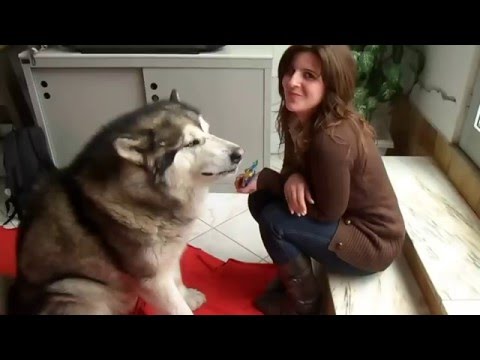
Alaskan Malamute Videos

Big Funny Alaskan Malamute

Type and recognitions:

  • FCI CLASSIFICATION:
  • Group :
  • Section : . .

Federations:

  • FCI – Group 5: Section: 1 Nordic Sledge Dogs โ“˜
  • AKC – Work Toy โ“˜
  • ANKC – Group 6 – (Utility) โ“˜
  • CKC – Group 3 – (Working dogs) โ“˜
  • โ€‹KC – Work โ“˜
  • NZKC – Utility Toy โ“˜
  • UKC – Northern races โ“˜

FCI breed standard "Alaskan Malamute"

Origin:
Alaska, United States

Date of publication of the valid original standard:
14.08.1996

Use:

Sledge dog


General appearance:

The Alaskan Malamute is one of the oldest breeds of sled dogs. This is a mighty dog, solidly built, deep chest and strong, muscular body. Its limbs are well approved when standing and its attitude denotes great energy. The head takes her high, with a haughty bearing; the look, always alert, expresses interest and curiosity. The head is wide; the ears are triangular and stand erect when the dog is attentive. The muzzle is compact and its width, from the root to the truffle, only slightly decreases. It's not long, or pointed, but it is not truncated either. The pelage is dense; the hair on the outer coat is coarse and of sufficient length to protect the inner coat of hair which is woolly.
This breed exists in different colors. Face markings are a distinctive feature. These consist of a kind of headdress that covers the head. The face, or is it completely white, or has a stripe and / or a mask. The tail carried over the back has the appearance of an undulating plume. Her hair is abundant.

The malamute is endowed with a strong boss and its limbs do not present any defect. Feet are good, the chest is deep and the shoulders are powerful.

It has all the other necessary physical structures that allow the effective fulfillment of your task. His movements are fluid, balanced, tireless and fully efficient. This dog is not designed to compete with others pulling the sled in speed races, its value lies in its strength and endurance. Any individual characteristic, including temperament, that interferes in the realization of this purpose, must be considered the most serious of offenses.

IMPORTANT PROPORTIONS: The height of the chest corresponds to approximately half the height at the withers; The lowest chest point is exactly behind the forearm. The length of the body, taken from the tip of the shoulder to the tip of the buttock, exceeds the height at the withers.


Behavior / temperament:

The Malamute is an affectionate dog, friendly and not a single master's dog. He is a loyal and devoted companion, willing to play when encouraged, but usually impresses with dignity as an adult.

Head:

It's wide and deep, but it is not coarse or heavy and should be proportionate to the size of the dog. The expression is sweet and indicates an affectionate disposition.

Cranial region:
  • Skull: Wide and moderately rounded between the ears. Narrowing and gradually flattening at the top, close to the eyes; it is round in the region of the cheeks, which are rather flat. A slight furrow can be seen between the eyes. The upper line of the skull and the upper line of the snout form almost a straight line.
  • Depression links (Stop): Light.

facial region:

  • Truffle: In all the colors of the fur, except for the red, It is black, as well as the lips and edge of the eyelids.
    Brown is allowed in red-coated dogs. The nose "e snow" is accepted, which is marked by a lighter band.
  • Snout: It is big and massive, in relation to the size of the skull. Its width and depth decrease very little from the junction with the skull to the nose..
  • Lips: They are tight.
  • Jaws / Teeth: Both jaws are wide and have strong teeth. The incisors form a scissor bite. Both upper and lower prognathism constitute a fault.

EYES: They are arranged obliquely on the skull. They are chestnut, almond-shaped and medium-sized. Blue eyes are an eliminatory foul.

EARS: Medium-sized, although small in relation to the skull. They are triangular in shape and slightly rounded at the end.. Well separated implantation, They are located on the external edges of the back of the skull, aligned to the upper corner of the eye, for which, when the ears are pricked, seem to move away from the skull. When they are upright, ears point slightly forward, but when the dog works, sometimes they bend and stick to the skull. High set ears are a fault.

Neck:

They are arranged obliquely on the skull. They are chestnut, almond-shaped and medium-sized. Blue eyes are an eliminatory foul.

Body:

It is compact in construction, but it is not excessively short. Must not be overweight, and bone structure is in proportion to size.

  • Back: Straight; descends in a slight incline to the hips. Pork loin: Solid and well muscled. A long loin that can weaken
    the back constitutes a foul.
  • Breast : Well developed.

Tail:

Medium insertion following the spine line. The dog carries it on his back when he is at rest. It does not support the upper line, nor does it twist into a closed curl on the back, nor is it covered with short hairs like the fox's tail. The Malamute's tail is very bushy and has the appearance of a wavy plume..

Tips

PREVIOUS MEMBERS: They are muscular and strong boned. Seen from the front, are straight up to the metacarpals.

Shoulder: They are moderately oblique.

Metacarpus: Seen in profile, they are short, solid and slightly oblique.

Previous feet: The feet are "snow racket" type, closed and thick with well-cushioned ear cushions for a firm and compact look. They are large and the toes are close together and well arched. Protective hair grows between the fingers. The pads are thick and tough. Fingernails are short and strong.

LATER MEMBERS: They must be wide. Seen from the back, both when the dog is standing, like when in action, they must be perfectly aligned with the forelimbs. Seen from the back, the dog is not too narrow, not too wide. Hind limb dewclaws are undesirable and should be removed soon after the pups are born.

Thigh: It must be well muscled.Knee: Its angulation is moderate.

Hocks: Its joint is moderately bent and well lowered.

Hind feet: The feet are "snow racket" type, closed and thick with well-cushioned ear cushions for a firm and compact look. They are large and the toes are close together and well arched. Protective hair grows between the fingers. The pads are thick and tough. Fingernails are short and strong.

Movement:

Is loose, fluid, balanced and powerful. The Malamute is agile, taking into consideration its weight and size. Profile views, the hindlimbs produce a strong impulse that is transmitted to the forelimbs through a well-muscled lumbar region. This impulse received by the forelimbs produces a sustained and long movement. Front or back views The limbs move in a straight line and are not even together, not too far apart. During the fast jog, limbs tend to converge on the body's center of gravity. A rigid step, or any movement that is not completely effective and tireless should be penalized.

Mantle

Fur: The outer layer of hairs is thick and rough, never long, nor soft. The undercoat of hairs is dense, of 2,5 to 5 cm. (1-2 ins) of thickness. It is also oily and woolly. Hair length is variable, both on the rough outer coat, as in the inner layer. The hair ranges from relatively short to medium on the lateral parts of the body; its length increases around the shoulders and neck, on the back and on the rump, as well as in pants and plume. Usually, the Malamute has shorter and less dense hair during the summer months. At the exhibitions, this breed must be presented in the natural state. Grooming is only allowed to give the feet a clean appearance.

Color: Usual colors vary, from light gray through intermediate tones to black to red. The combination of colors in the inner layer of hairs is accepted, in the face (supraciliary arches, ears, lips, nose) and between the white and pigmented areas. The only uniform color that is accepted is white. This is always the predominant color in the lower parts of the trunk, a part of the limbs, the feet and a part of the facial markings. A white stripe across the forehead, a necklace, the both, as well as a small spot on the neck they attract attention and are admitted. The Malamute's coat is laid out like a blanket; an irregular color spreading over the whole body or in the form of asymmetric splashes should not be allowed.


Size and weight:

This breed has a natural range of sizes.

For work, the desired sizes are: 63,5 cm. (25 inches) height at the withers for a weight of 38 kg (85 English pounds) in males, and in females 58,5 cm. (23 inches) height at the withers for a weight of 34 kg (75 English pounds). But, size considerations should not be more important than type, the proportions, movement and everything that concerns function. If during the judging some dogs are of equal type, proportions and function, The one that is closest to the desired size will be selected to be able to carry out heavy work.

IMPORTANT: When judging the Malamute, what should prevail over any other consideration is its function as a sled dog used to haul heavy loads. The severity of the penalty will depend on how far the specimen deviates from the description of the ideal Malamute and to what extent a particular defect affects work ability.. Malamute's extremities must show an unusual force and a very great propulsion power. Any sign of imperfection in the limbs or feet, front or rear, either when the dog is standing, or when in action, should be considered a serious offense. Given these preconditions, Faults would be the following: crushed feet, cow hocks, defective metacarpals, straight shoulders, lack of angulation, Rigid movement (or any movement that is not balanced, energetic and uniform), lack of substance, chest that is not deep enough, thick or light-boned body and mediocre overall proportions.


Fouls:

Any deviation from the aforementioned criteria is considered as a fault and the severity of this is considered to the degree of the deviation to the standard and its consequences on the health and well-being of the dog..

FALTAS DESCALIFICANTES:

  • Aggressiveness or extreme shyness.
  • Any dog โ€‹โ€‹showing clear signs of physical or behavioral abnormalities.
  • Aggressive or fearful dog.
  • Blue eyes.


N.B.:
  • Males should have two normal-appearing testicles fully descended into the scrotum..
  • Only functionally and clinically healthy dogs, with the typical conformation of the breed, should be used for parenting.

Source: F.C.I - International Cynological Federation

Alternative names

1. Alaskan Malamute, Mal, Mally (English).
2. Malamute de l’Alaska (French).
3. Alaskan Malamute (German).
4. Malamute-do-alasca (Portuguese).
5. Alaskan malamute (espaรฑol).

โ–ท The world of Pets: Dogs, cats, birds, reptiles, amphibians

Shikoku
Japรณn FCI 319 - Asian Spitz and related breeds
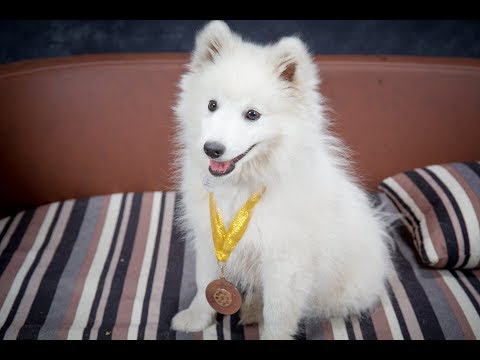
Shikoku

Less stubborn than the other Spitz breeds, the Shikoku, he is very little known outside his native land, Japan

Content

History

Ceramic figures from Japan that show representations of dogs have been preserved since ancient times., that look like this Japanese breed. The current breed dates back to crosses with the now extinct inu Japanese. The original field of application of these dogs was hunting, more precisely hunting in the prefecture of Kochi on isla de Shikoku – That is why the race is sometimes called ยซperro Kochiยซ. But, name Tosa-Inu, which is used in part in Japan, it's misleading, Because under the name ยซTosaยปThere is also another Japanese race. It also, three varieties of Shikoku, which were named after the respective region in which they live: pity, Hongawa and Hata. As the Hongawa region was the most difficult to access in the past, This variety is considered to be the least modified by other influences and the closest to the ideal of Shikoku. Today, the Shikoku It is considered the national dog of Japan along with the Akita.

Photos:

1 – ยซShikoku Inuยป by https://pxhere.com/en/photo/1589477

Shikoku Physical Characteristics

the typical silhouette Spitz characterizes the Shikoku: It has relatively small, erect ears and a compact body. The tail is well placed and curled over the back. This medium-sized breed with a height at the withers of about 53 cm is located between the Akita bigger and the Shiba Inu smallest within the Japanese family Spitz. For many laymen in Europe this four-legged friend is also reminiscent of a dog which is seen much more often here, the Siberian Husky. The Shikoku coat can be black sesame or white sesame. The dense coat consists, as is typical in dogs of the type Spitz, on a long, hard top coat over a soft, dense undercoat.

Shikoku character and abilities

Shikoku

The loyalty, intelligence and a certain stubbornness form the character of this dog with an agile nature. He is vigilant and behaves in a neutral manner to the point of distancing himself from strangers. When they meet conspecifics, conflicts can occur, particularly with males, because the Shikoku tend to dominate. As a hunting dog it is characterized by its corresponding sharpness.

His original behavior can also be seen in his dealings with people – he likes to lick his reference people and looks for physical contact. Sometimes shows a conspicuous preference for unpleasant odors from the human point of view. The Shikoku He is very agile and likes to be outdoors – however impetuous it may be on the move here, a Shikoku busy behaves calmly and pleasantly indoors, where he appreciates quiet hours and pampering. Although he is a stubborn dog, not as strong as the other races of Spitz from Japan. But: The special character of Spitz not suitable for all dog lovers.

Photo:

2 – Shikoku, female. Colour: sesame by https://commons.m.wikimedia.org/wiki/File:Shikokusesame1.jpg

Shikoku Care

The coat of this Japanese hunting dog is robust and easy to care for, but it must be brushed regularly, especially during coat change twice a year. advice: If you brush your dog every day during this time, It will greatly reduce hair loss at home and also shorten the "hairy phase" in a few days. Outside these few weeks of the year, grooming every few days is enough. Check your ears right now too, so you can clean them with dog ear cleaner if needed. You must bathe your dog very rarely, at most every few months, and then use a mild dog shampoo. But, it makes sense to get the puppy used to bathing. But, it is usually sufficient to simply remove the dried dirt from the coat. Check the length of the claws – especially with older dogs – to shorten claws that are too long with special pliers. This is how injuries are prevented.

Shikoku Education

If he Shikoku respects his two-legged pack leader as a wise and just leader, will gladly follow your instructions. But, first you need to earn the respect of this dog. Be consistent and bring some tolerance to the small, thick skull of this four-legged friend, that will never be completely subordinate.

Screaming or harshness will not help you and will destroy your relationship with this loyal companion.. A thorough knowledge of dog training is needed to direct the dominance and hunting instinct of dogs. Shikoku in regular courses. Please, keep in mind that only a well-trained breed of dog can make a well-behaved friend, otherwise you will look for another job.

Attending classes with dog trainers in general can be of great benefit, so that the Shikoku that tends to dominate, get stronger in social affairs and learn to get along with other dogs. Male dogs in particular can face challenges that need to be countered from puppyhood. So do not underestimate the importance of the socialization phase, because any omission can only be corrected with difficulty.

Shikoku Health

These robust dogs are considered tough and persistent. They hardly have a genetic disposition for disease, if the breeding is done responsibly. It goes without saying that you should only buy puppies from a reputable breeder who belongs to a club.. The breeder will give you competent information about the care of your animal and show you the corresponding tests. In good health, Shikoku reaches an average age of about 13 years.

Where can I find my Shikoku?

The breed is one of the very rare breeds outside of Japan. Consequently, find a puppy of Shikoku can be difficult if you have decided to have one as a new member of the family. But don't despair, because there are a handful of serious breeders in Europe who are dedicated to this breed. The first official litter outside of Japan was in 2000 in the Netherlands, where the breeders of Shikoku continue to regularly deliver litters to responsible hands. But, you may have to accept a longer trip before you can give your puppy a hug from Shikoku. No matter how rare the breed is, don't reduce the demands you can and should make on serious parenting. Learn about puppy care, of your health, ask the breeders and ask them to show you the appropriate tests, for example, in connection with exams for hip dysplasia. Of course, the breeder must also belong to a club. Will be happy to give you some good advice, but in return you will also have some questions to see if you can offer a good home to one of your protรฉgรฉs.

If you are looking for a Shikoku adult, you will need a lot of luck in europe. It is more promising to look for crosses of type Spitz in animal shelters and also get an impression of the breeds of Nordic Spitz.

Characteristics "Shikoku"

Coexistence is important that you have with your new friend. Before considering the acquisition of a dog of the breed "Shikoku" you know certain factors. Not all breeds of dogs are apt to live in an apartment, you must take into account his character, their need for exercise, their interaction with other pets, their care and if you have small children, their level of tolerance towards them.

Training ?

2,0 of 5 stars (based on 1 review)

Suitability of the apartment ?

2,0 of 5 stars (based on 1 review)

Can be alone all day ?

2,0 of 5 stars (based on 1 review)

Suitable as a first dog ?

2,0 of 5 stars (based on 1 review)

Weight gain ?

3,0 of 5 stars (based on 1 review)

Health ?

5,0 of 5 stars (based on 1 review)

Intelligence ?

4,0 of 5 stars (based on 1 review)

Kindness with child ?

4,0 of 5 stars (based on 1 review)

Tendency to bite ?

3,0 of 5 stars (based on 1 review)

Tendency to bark ?

4,0 of 5 stars (based on 1 review)

Tendency to flee ?

5,0 of 5 stars (based on 1 review)

hair loss strength ?

4,0 of 5 stars (based on 1 review)

Suitable as a guard dog ?

4,0 of 5 stars (based on 1 review)

Joy ?

4,0 of 5 stars (based on 1 review)

Cat friendliness ?

2,0 of 5 stars (based on 1 review)

Power level ?

4,0 of 5 stars (based on 1 review)

Videos "Shikoku"

Shikoku Ken / Shikoku Inu play
Shikoku ken in Japan Spring 2014 Shikoku dog
Shikoku ken in Japan Spring 2014 ๅ››ๅ›ฝ็Šฌ

Type and recognitions:

  • FCI CLASSIFICATION:
  • Group :
  • Section : . .

Federations:

  • FCI – Group 5: Spitz-type dogs and primitive type – Section 5: Asian Spitz and related breeds. โ“˜
  • CKC – [Without Miscellaneous] โ“˜

FCI breed standard "Shikoku"

Origin:
Japan

Date of publication of the valid original standard:
16.06.1999

Use:

Hunting and companion dog.


General appearance:

It is a medium-sized dog; And his musculature is well balanced, well developed and well defined. The ears are erect and the tail is curled or in the form of a hoz. Its structure is strong, Compact and solid bones.

IMPORTANT PROPORTION : The ratio of the height at the withers to the length of the body is 10 : 11.


Behavior / temperament:

It is a great resistance dog, vivacious with a sense of smell and acute ear. Is energetic and very alert, In addition to an enthusiastic hunter. With his master he is docile.

Head:

---

Cranial region:
  • Skull : Wide forehead.
  • Depression links (Stop) : shallow, although defined.

facial region:

  • Nose : Black.
  • Snout : Rather long and wedge -shaped. The nasal helm is straight.
  • Lips : Tight.
  • Jaws / Teeth : Strong teeth. The joint is in the form of scissors.
  • Cheeks : Well developed.
  • Eyes : Relatively small, triangular and well separated. Its color is dark brown.
  • Ears : They are small, triangularly and slightly inclined to the front. They appear well erect.

Neck:

Thick and strong.

Body:

  • Cross : High and well developed.
  • Back : Straight and strong.
  • Pork loin : Wide and muscled.
  • Breast : Deep. The ribs are well sprung.
  • Belly : Well collected.

Tail:

High implementation, It is thick and carried on the back firmly curved or curved like a hoose. The tip almost reaches the corvejรณn when the tail is down.

Tips

PREVIOUS MEMBERS :

  • Shoulder : Moderately inclined and developed muscles.
  • Elbows : They are well attached to the body.
  • forearms : Straight and well defined.
  • Metacarpus : Slightly inclined.

LATER MEMBERS : They're strong, well-developed muscles.

Hock : Moderately angular and very firm.

FEET : Well together; The fingers are well arched. The pads are hard and elastic. The nails are hard and black, or a dark color.

Movement:

Elastic, of small strides, Although light. The movement is fast, And it is possible to observe a quick rotation.

Mantle

HAIR : The outer hair of hairs is rough and straight. The undercoat of hairs is soft and dense. The tail hair is rather long.

COLOR : Sesame, Black Sesam and Sesam Red.

Sesam color definition :

โ€ข Sesame : Proportionate mix of black and white hairs.
โ€ข Black Sesam : More black hairs than white.
โ€ข Sesam rojo : Coat color red, mixed with black hairs.


Size and weight:

Height to the cross :

  • In males : 52 cm..
  • In females : 46 cm..

A tolerance of +/- 3 cm..


Fouls:

Any deviation from the aforementioned criteria is considered as a fault and the severity of this is considered to the degree of the deviation to the standard and its consequences on the health and well-being of the dog..

โ€ข Inverted sexual characteristics.
โ€ข Lightweight lower prognathism.
โ€ข Wide.
โ€ข Shyness.

MISS PLAYOFFS

โ€ข Aggressive or fearful dog.
โ€ข Pronounced upper or lower prognathism.
โ€ข Ears that do not appear upright.
โ€ข Hanging tail, short tail.

Any dog โ€‹โ€‹showing clear signs of physical or behavioral abnormalities must be disqualified..


N.B.:

Males should have two normal-appearing testicles fully descended into the scrotum..

Source: F.C.I - International Cynological Federation

Alternative names:

1. Kochi-ken, Shikoku-ken, Shikoku inu (English).
2. chien de Kลchi, shikoku-inu, kochi-ken, Shikoku inu (French).
3. Shikoku inu, Kochi-Ken, Shikoku-ken (German).
4. Shikoku inu, kochi-ken, Mikawa Inu, Shikoku-ken, cรฃo-lobo japonรชs (Portuguese).
5. Kochi-ken, Shikoku-ken, Shikoku (espaรฑol).

โ–ท The world of Pets: Dogs, cats, birds, reptiles, amphibians

Volpino Italiano
Francia FCI 195 - European Spitz

Volpino Italiano

Despite the temperament of Volpino Italiano, and its small size, It is a very committed and energetic dog. Cheerful and playful and very attached to their masters.

Content

History

The Volpino Italiano (that means little Fox, in Italian) It is a dog of very ancient origins., as the strain that belongs to the Spitz. It was a very widespread breed of dog in the Renaissance in which appears in some of the representations of the period. Unfortunately, the race, in 1965 was in danger of extinction (The Italian Club Cinolรณgico, only five copies that year), and for a short time, recovering numerical and qualitative.

The Volpino, It has been recognized and loved by Italian royalty for centuries, being a favorite especially of women.

Even bearing a strong resemblance with the Pomeranian, the breed is much older and thus has a different historical background. Northern dogs found their way South very early in the history of domestic dogs.

The Italian word for wolf is lupo, and the Keeshond it is called so much Lupino and Volpino in Italian. Volpe, means Fox in Italian, from there "Volpino" what, to say, little Fox in Italian. Despite its long history, the Volpino is unknown outside of Italy and is now rare, even in his homeland..

Despite its small size, This dog was originally as a watchdog. Its function was to alert the Mastiffs (Big Dogs) the presence of an intruder. But, due to his lovely temper and great intelligence, as well, they became very popular as pets, companion dogs.

For unknown reasons the popularity of the breed fell in 1965. In 1984 an attempt was made to revive the race. Y, currently, can see the race Volpino living as guard dogs on breeding farms, or as a companion dog, but still the Volpino they are considered a rare breed, position that there are only about 2000 copies to the length and breadth of the world.
Most of the Volpinos, it is found in Italy but some people are breeding them in Scandinavian countries, in the United Kingdom and the United States.UU.

Physical characteristics

The Volpino Italiano it is a small but compact dog with a harmonious physique. Can grow up to 30 cm tall and weigh 5 kg. His long, silky coat is soft and lined with a dense undercoat. It can be white, red, brown or black. There are also champagne colored animals, but they are not very popular in breeding.

Character and skills

The Volpino Italiano has a very individual character, which means that even as a puppy you need a lot of patience and enough consistency in your upbringing. Due to its high intelligence it is very teachable and therefore very good for training. Has a very lively temperament, is curious and therefore available for all kinds of fun. So, is particularly suitable for any type of dog sport and needs sufficient mental and physical activity.

In the family it is a very affectionate dog, loving and vigilant. Has a natural distrust of strangers.
It is an ideal dog for the family and its character also makes it very suitable to live with children.

With it you can spend a lot of time in nature. Despite its size, the Volpino Italiano it is a very robust dog that is not deterred by the rain, snow and cold to do your daily need for exercise.

Volpino care

The puppy's coat requires a lot of care: should not only be brushed regularly, but also bathed from time to time.

Esperanza de vida of ยซVolpino Italianoยป

The ยซVolpino Italianoยป, which originally descends from German Spitz, he is a very robust dog, which can have a high life expectancy of up to 15 years.

Typical diseases ยซItalian Volpinoยป

Also in terms of health, the Volpino he is a very robust dog, who does not have any common hereditary disease.
In rare cases the breed is affected by an eye disease, which can happen especially in old age. May lead to lens shift of the eye, what can lead to glaucoma.

Characteristics "Volpino Italiano"

Coexistence is important that you have with your new friend. Before considering the acquisition of a dog of the breed "Volpino Italiano" you know certain factors. Not all breeds of dogs are apt to live in an apartment, you must take into account his character, their need for exercise, their interaction with other pets, their care and if you have small children, their level of tolerance towards them.

Adaptation โ“˜

3,0 of 5 stars (based on 1 review)

friendly dog โ€‹โ€‹โ“˜

3,0 of 5 stars (based on 1 review)

hair loss โ“˜

3,0 of 5 stars (based on 1 review)

Affection level โ“˜

4,0 of 5 stars (based on 1 review)

Need for exercise โ“˜

2,0 of 5 stars (based on 1 review)

Social need โ“˜

3,0 of 5 stars (based on 1 review)

Home โ“˜

3,0 of 5 stars (based on 1 review)

Toilet โ“˜

4,0 of 5 stars (based on 1 review)

Friendly with strangers โ“˜

3,0 of 5 stars (based on 1 review)

barking โ“˜

4,0 of 5 stars (based on 1 review)

Health โ“˜

4,0 of 5 stars (based on 1 review)

Territorial โ“˜

4,0 of 5 stars (based on 1 review)

Cat friendly โ“˜

3,0 of 5 stars (based on 1 review)

Intelligence โ“˜

4,0 of 5 stars (based on 1 review)

Versatility โ“˜

3,0 of 5 stars (based on 1 review)

Child friendly โ“˜

4,0 of 5 stars (based on 1 review)

Surveillance โ“˜

3,0 of 5 stars (based on 1 review)

joy โ“˜

4,0 of 5 stars (based on 1 review)

Images "Volpino Italiano"

Photos:

1 – Volpino Miฤ™dzynarodowa Wystawa Psรณw Rasowych w Katowicach 28 – 30. 03.2008 by Lilly Mreal name: Maล‚gorzata Miล‚aszewska / CC BY-SA
2 – Volpino Italiano by https://pxhere.com/es/photo/833618
3 – Volpino Italiano by https://pxhere.com/es/photo/1428909
4 – Volpino Italiano by https://pxhere.com/es/photo/863623
5 – Volpino Italiano by https://pxhere.com/es/photo/1273902
6 – Volpino Italiano owned by Kennel Hedehuset – Denmark by ยฉ Mete Appel / Kennel Hedehuset

Videos "Volpino Italiano"

youtube.com/watch?v=BlqMM99OREA

ยซVolpino Italianoยป – Breed of dog

youtube.com/watch?v=Ot3uyndzOAI

ยซVolpino Italianoยป Dog Breed – Facts and Information

Type and recognitions:

  • FCI CLASSIFICATION:
  • Group :
  • Section : . .

Federations:

  • FCI – Group 5 – Section 4 European Spitz. โ“˜

FCI breed standard "Volpino Italiano"

Origin:
Italy

Date of publication of the valid original standard:
9.06.1999

Use:

Guard and companion dog.


General appearance:

This is a small format Spitz, very compact, harmonious and covered with long, bristly hair.

IMPORTANT PROPORTIONS: It has a square shape; The length of the head reaches almost 4/10 of body length.


Behavior / temperament:

He is very attached to his environment and the people he knows well.. His temperament is very marked, jovial, lively and mischievous.

Head:

It has a pyramidal shape. Its length reaches 4/10 the height at the withers.

Cranial region:
  • Skull : Its length exceeds that of the snout (6,5/5), its bizygomatic width is greater than half the length of the head (7,3/11,5). It is more or less ovoid in shape, both in the sagittal sense, as in the transversal. The mid-frontal sulcus is not very marked, as well as the occipital protuberance. The upper axes of the skull and snout are slightly convergent. The bones protruding from the forehead are well developed and fall almost perpendicularly on the root of the nasal cannula..
  • Depression links (stop) : It is rather accentuated.

facial region:

  • Truffle : It's humid, fresh, with the windows wide open. Profile view, It is located on the same line as the nasal cannula., and does not exceed the anterior line of the lips. Its color is always black, both in the white-furred specimens, as in those with red fur.
  • Snout : Pointed. Its length is less than that of the skull and its lateral faces are convergent.. The nasal cannula is rectilinear. In profile, the lower edge of the snout is determined by the jaw.
  • Lips : Seen from the front, the upper lip draws a straight line on its lower edge. In the corner, the mucosa is not visible, so that, the lips are very short. The edges of the lips are pigmented black.
  • Jaws / Teeth : The jaws are not strong in appearance, but they are normally developed and adapt perfectly due to their anterior edge. Its branches are rectilinear. The teeth are white, are regularly aligned and complete. They are perfectly developed. The joint is in the form of scissors, but the pincer-shaped joint is accepted.
  • Eyes : They are normal size and open wide. They denote vigilance and liveliness. The palpebral opening is rounded; They are placed in planes that form a wide open angle behind.
    The eyelids join perfectly against the eyeball. The iris is dark ocher in color and the edges of the eyelids are pigmented black..
  • Ears : Short, form triangular, upright. The cartilage is rigid. The inner surface of the ears faces forward. Set high and very close to each other. The length of the ears reaches approximately half the length of the head.

Neck:

Its length is almost equal to that of the head. His bearing is always high. Your skin is well attached to the underlying tissues.

Body:

It has a square shape. Its longitude, measured from the tip of the shoulder, even the gluteus, is equal to the height at the withers.

  • top line : The dorsal line is straight; in the region of the back it is slightly convex.
  • Cross : It protrudes slightly above the line of the back.
  • Rump : Extends the line of the spine. Its obliquity, from the hip to the base of the tail, is 10ยฐ below the horizontal.
  • Breast : Come down to the level of the elbows. The ribs are tight. The sternal region is long.
  • bottom line : From the sternum to the belly there is little ascending. The depth of the flanks is not very pronounced.

Tail:

It is located in the extension of the rump, always curled up on the back. Its length is somewhat less than the height at the withers.

Tips

PREVIOUS MEMBERS : Seen in conjunction, They are parallel and vertical to each other and, in relation to the median plane of the body, they are perfectly parallel.

  • Shoulder : The length of the shoulder blade is equal to ยผ of the height at the withers. Its obliquity below the horizontal is 60ยฐ.
  • Arm : It is longer than the scapula and its obliquity below the horizontal is 60ยฐ. Appears approximately parallel to the median plane of the body.
  • Elbows : They are parallel to the median plane of the body.Forearm : Extend the vertical line. It is light boned. Its longitude, measured from the ground to the elbow, It is slightly more than half the height at the withers.
  • Carpus and metacarpus : Seen from the front, extend the vertical line of the forearm. Seen in profile, they are oblique.
  • Front feet : They are oval in shape and the fingers are well together.. The central and digital pads, as well as nails, they are black.

LATER MEMBERS : As a whole and seen from behind, They must follow a perfectly vertical line from the tip of the gluteus to the ground. They are parallel to each other.

  • Thigh : Its length is equal to 1/3 the height at the withers. It is perfectly parallel to the median plane of the body.
  • Leg : Its length is slightly less than the thigh. It is made of light bones and its obliquity below the horizontal is 55 a 60ยฐ.
  • Hock : The distance between the tip of the hock and the ground slightly exceeds ยผ of the height at the withers.
  • Metatarsus : It is vertical and, seen both in profile and from behind, his poise is perfect.
  • Rear feet : Oval, like the front feet and with the same characteristics.

Movement:

It should not be in jumps, not even during the jog, not even during the gallop. All movements must be with wide steps.

Mantle

SKIN : It is well applied and stretched, no appearance of slackness in any part of the body.

HAIR : Bushy, very long, straight and bristly in an exceptional way. It is stiff and rough in texture; should never be straight. Even if it is not very abundant, should always be bristly. The trunk gives the impression of being wrapped in a sleeve, particularly on the neck, where the hair forms a wide collar. The head is covered by semi-long hair that hides the base of the ears..
The hair that covers the muzzle is short. Above the ears the hair is very fine and thin.. The tail is provided with very long hair. On the posterior edges of the limbs the hair forms a fringe.

COLOR :

โ€ข Solid white.
โ€ข Solid red
โ€ข Champagne, accepted color, but not desirable. A pale orange tone is acceptable over the ears., But this is still an imperfection..


Size and weight:

Height to the cross :

  • Of 27 to 30 cm in males.
  • Of 25 to 28 cm in females.


Fouls:

Any deviation from the aforementioned criteria is considered as a fault and the severity of this is considered to the degree of the deviation to the standard and its consequences on the health and well-being of the dog..

MISS PLAYOFFS :

โ€ข Nose of any color other than black.
โ€ข Convex nasal canal.
โ€ข Different colored eyes.
โ€ข Tail that falls between the hind limbs.
โ€ข Size that exceeds by more than 3 cm the limits established by the standard.

DISQUALIFICATION FAULTS:

โ€ข Aggressive or fearful dog.
โ€ข Divergence of the craniofacial axes.
โ€ข Superior prognathism.
โ€ข Total depigmentation of the nose or the edges of the eyelids.
โ€ข Fully hanging ears.
โ€ข No queue, or very short tail, either congenital or artificial.
โ€ข Any color other than white, red, or the color champagne (although it is not the most desirable).
โ€ข Red spots on a white background and white or black spots on a red background.
Any dog โ€‹โ€‹showing clear signs of physical or behavioral abnormalities must be disqualified..


N.B.:

Males should have two normal-appearing testicles fully descended into the scrotum..

Source: F.C.I - International Cynological Federation

Alternative names:

1. Volpino, Cane del Quirinale, Cane di Firenze (English).
2. Volino (French).
3. Italienischer volpino (German).
4. Volpino italiano (Portuguese).
5. Zorrito italiano, volpino (espaรฑol).

โ–ท The world of Pets: Dogs, cats, birds, reptiles, amphibians

Greenland Dog
Dinamarca FCI 274 - Nordic Sledge Dogs

Greenlandรฉs

The Greenland Dog not an easy breed to control, it is necessary to thoroughly document their character.

Content

Characteristics "Greenland Dog"

Coexistence is important that you have with your new friend. Before considering the acquisition of a dog of the breed "Greenland Dog" you know certain factors. Not all breeds of dogs are apt to live in an apartment, you must take into account his character, their need for exercise, their interaction with other pets, their care and if you have small children, their level of tolerance towards them.

Adaptation โ“˜

2,0 of 5 stars (based on 1 review)

friendly dog โ€‹โ€‹โ“˜

4,0 of 5 stars (based on 1 review)

hair loss โ“˜

5,0 of 5 stars (based on 1 review)

Affection level โ“˜

3,0 of 5 stars (based on 1 review)

Need for exercise โ“˜

5,0 of 5 stars (based on 1 review)

Social need โ“˜

4,0 of 5 stars (based on 1 review)

Home โ“˜

4,0 of 5 stars (based on 1 review)

Toilet โ“˜

2,0 of 5 stars (based on 1 review)

Friendly with strangers โ“˜

2,0 of 5 stars (based on 1 review)

barking โ“˜

4,0 of 5 stars (based on 1 review)

Health โ“˜

4,0 of 5 stars (based on 1 review)

Territorial โ“˜

2,0 of 5 stars (based on 1 review)

Cat friendly โ“˜

1,0 of 5 stars (based on 1 review)

Intelligence โ“˜

4,0 of 5 stars (based on 1 review)

Versatility โ“˜

2,0 of 5 stars (based on 1 review)

Child friendly โ“˜

3,0 of 5 stars (based on 1 review)

Surveillance โ“˜

2,0 of 5 stars (based on 1 review)

joy โ“˜

5,0 of 5 stars (based on 1 review)

History

It belongs to the oldest dog breeds in the world.

For centuries, the Greenland Dog has accompanied the Inuit in their common homeland: It is said that more than 1.000 years he came with his ancestors from Siberia to North America. In the icy expanses it still serves the inhabitants as a versatile all-rounder and has always been bred specifically for its ability to work and its robustness.. Helped in hunting seals and polar bears, as well as in dragging loads through ice and snow, even over long distances. In times of need, it also served as food for the inhabitants in the past.

The outstanding physical abilities of the Greenland Dog they also sparked the interest of the first polar explorers, who saw him as an ideal companion for expeditions. These may include, Roald Amundsen, the most successful explorer of the Arctic and Antarctic, was also accompanied by Greenland dogs. The breed has its origin in Greenland and, therefore, is under the patronage of Denmark. Genetically, the Greenland Dog is identical to canadian eskimo dog, that is not recognized by the FCI. Today, the Greenland dog belongs to a total of four breeds of sled dogs. By his side are the Alaskan Malamute, the Samoyed and the Siberian Husky.

Physical characteristics

The characteristics of this dog have always been more important than its appearance. The strong build allows the Greenland Dog to drag loads through the snow for long periods of time. Size variations are possible, with males generally over 60 cm in height to the cross, females over 55 cm.. The ears are upright, triangular and slightly rounded at the tip. This sled dog wears its tail slightly curled on its back. The coat consists of a smooth undercoat and a fairly thick, smooth top coat. The fur is longer on the head, the legs and the lower part of the tail than the rest of the body. All coat colors except merle and albino are allowed. The eyes should be slightly slanted and dark – blue or different colored eyes lead to disqualification according to the standard.

Character and skills

From Greenland, the largest island in the world, this four-legged friend has conquered the hearts of many dog รขโ‚ฌโ€นรขโ‚ฌโ€นlovers. But, keeping a sled dog like this requires not only experience, but above all a lot of space and time to satisfy the need for movement of this robust worker.

The character of the breed is determined by its field of application: Like Inuit sled dogs, the greenlandic dogs they are very persistent and full of energy. It also, hunting companions are brave and show a pronounced hunting instinct. Because most of them lived in the pack and rendered their faithful services to several people, do not tend to bond strongly with people , but they are basically human friendly – and therefore are not suitable as watchdogs. But, they do not usually miss the opportunity to greet friends – or strangers – loudly and cheerfully.

Attention: The greenlandic dog may not bark much, but tends to howl a lot. He loves to live with other dogs in a pack.

Greenland Dog Education

Who wants to train a Greenland Dog need knowledge, experience with dogs and above all a lot of patience. A clear hierarchy is very important to the independent sled dog and will question it if the opportunity presents itself.. This applies to other dogs as well as their owners. You need a reliable consequence and a sensible education, accept your own head (stubborn) of the race. Exhausting this dog both physically and mentally is the basic requirement for a good education., as a little challenged sled dog will want to vent elsewhere, and this is probably not to the liking of its owners. It makes sense to go to puppy school with this dog, to be widely socialized with conspecifics of different sizes and breeds. If you want to train with the growing dog in a canine school, you should clarify in advance if the trainers have already had experience with the special character of sled dogs.

Greenland Dog Health

For centuries, robustness has been the main breeding objective of this four-legged friend, It is not surprising that the Greenland Dog be one of those breeds that have hardly any health restrictions. But, when i buy a puppy, look for parents who are free of hip dysplasia (HD) – some lines may have a slight tendency to this. As with all big dogs, the stomach can also be twisted, so it is important to take breaks after meals. Due to its origin and its fur, that adapts to icy conditions, These breeds are considered to be heat sensitive and, therefore, should not be kept in hot countries. Nor should you encourage your Greenland Dog to carry out sports activities above the 15 degrees Celsius. Your companion will feel correspondingly comfortable in the colder season. In winter, However, make sure you take proper care of the paws, as road salt can quickly lead to chapped or inflamed skin.

Greenland dog nutrition

One Greenland Dog in the use of sled dogs consumes enormous amounts of energy and needs an appropriately adapted diet. So, it is important to adapt the amount of food to the workload and the constitution of these dogs – information provided by manufacturers can only provide approximate guidelines. Of course, the puppy's energy requirement is not yet that high, since you should only move moderately anyway.

Feed your puppy three to four servings of a high-quality food per day.. Regardless of the age of your puppy, meat should be the first element of the diet and therefore the main component of food. It also, cereals have no place in dog food. If your quad performs well, increase the amount of food accordingly.

Food should be relatively high in fat and low in carbohydrates, as well as dietary fibers to supply your endurance athlete with sufficient energy. It is important that a session of physical activity is carried out with a time interval between the last meal – it is better to feed your Greenland dog three hours before training and in any case avoid too much exercise after feeding. This is the only way to minimize the risk of a life-threatening stomach twist. Of course, it is also important that fresh water is always available for your four-legged friend. On longer trips you should take adequate precautions and carry enough water with you.

Greenland dog care

A coarse-toothed comb is sufficient to comb the soft undercoat – this should be done regularly, especially during coat change, because the Greenland Dog misses – not only during this time – a relatively large amount of hair. If your partner has gotten dirty, usually it is enough to let the coat dry and then comb it well. Stubborn dirt should be gently rubbed off the coat with a damp cloth.. A bath is not normally necessary – if this happens, use a mild dog shampoo.

Especially with older dogs that move less, you should check if your partner is wearing out his claws enough and if necessary help with claw scissors. They also have eye and ear cleaners and dog tick tweezers ready to use when needed.. For dental care, for example, special dog treats are suitable. Or you can use a dog toothbrush and toothpaste, which is particularly effective in fighting tartar. Many dog รขโ‚ฌโ€นรขโ‚ฌโ€นowners perform this ritual for well-groomed small teeth regularly.. But, if you are considering this, you should get your puppy used to.

Employment for Greenland Dogs

Properly use a Greenland Dog in other latitudes it is a demanding task for which only a minority of dog lovers have enough time and space. Ideally, sled dog training should take place with him, which in turn is only possible to a very limited extent in most countries. An alternative is training with special trainers. As well โ“˜ Canicross offers sports owners the possibility to discover nature together with their partner. This four-legged friend also likes long walks through the woods as a supplement. Always be aware of your pronounced hunting instinct. It is essential that you have it under control to be able to enjoy relaxed walks. Always pay attention to an age-appropriate load and don't overload your four-legged companion.

Is a Greenland Dog right for me??

The Greenland Dog is a four-legged friend for sports connoisseurs who appreciate his independence and want to do many outdoor activities with him. Under no circumstances does this sled dog from the frozen expanses of Greenland belong to an apartment or even the city – nor does it belong to the warm regions of southern Europe. If you want to live with a greenlandic dog, you should think about buying two of them at once, because dogs like to be together with conspecifics. If you live in the country, you can keep your greenlandic dogs in a pack under the open sky in a leak-proof garden with an open kennel. So the heat sensitive sled dog can look for a shady spot in the summer – this should absolutely be available.

Of course, the Greenland Dog also happy with family connections. But, It is not the classic "one person dog". In any case, these companion animals are never primarily family or companion dogs, but rather working dogs – you should always be aware of this. If one can use your dog to his full capacity, they can live well with a family and so they are also extremely kid-friendly.

Cats or small animals are not suitable to live with this ambitious hunter. You don't have to be a professional dog if you decide to stay with this four-legged friend, but you must already have some experience with dogs and above all do not underestimate the time required for the workload. Due to these requirements, the Greenland Dog It is a breed for connoisseurs that can meet high maintenance demands.

Where do I find my desired Greenland dog??

One greenlandic dog is a rarity in Central Europe. So if you want a Greenland Dog move in with you, you should contact the Nordic dog breed clubs. They can arrange contacts with Greenland dog breeders – also abroad – and advise you on the breed requirements if necessary. If you are looking for a sled dog and cannot find one in your region, should consider whether one of the other three sled dog breeds would be an alternative: the Siberian Husky are much more common in Europe. With a little distance one also comes across relatively easily with breeders of malamutes de Alaska or samoyed. But: All breeds pose great challenges to their owners.

If you are looking for a greenlandic dog older and grown up, I should look for dogs of Nordic breeds, especially in animal shelters. Although you will most likely not find a purebred Greenlandic dog here, many Nordic dogs whose owners have underestimated their urge to move are waiting for a competent new home where they will be given enough occupancy. The most promising way to find them is to search the internet. If required, Nordic dog breed clubs can also give you tips on finding. Surely you will find a Nordic quadruped that will envelop you in a short time with its charm. Ideally, this person should not live too far from home., so that you and your potential new roommate can get to know each other before you decide to let her move in. Remember that these dogs live better with other dogs of the same species and clarify – with the breeder or the current foster home of the animal protection – how well the new dog fits in with an existing dog or if you decide to get a duo right away.

Images "Greenland Dog"

Photos:

1 – Lulo is the only Greenlandic dog kept as a pet in Upernavik, Groenlandia by Slaunger, edited by Thegreenj / CC BY-SA
2 – Greenland Dog by https://www.pikist.com/free-photo-sckxk
3 – Greenland Dog by https://www.needpix.com/photo/836500/greenland-dog-dog
4 – Greenland Dog by https://pixabay.com/es/photos/groenlandia-perro-de-groenlandia-1963005/
5 – Greenland Dog by https://www.pxfuel.com/en/free-photo-xodqt
6 – Greenland Dog by https://pixy.org/4674986/
7 – Greenland Dog by https://www.pikrepo.com/nemmp/brown-and-white-short-coated-dog-on-green-grass-during-daytime

Videos "Greenland Dog"

Type and recognitions:

  • FCI CLASSIFICATION:
  • Group :
  • Section : . .

Federations:

  • FCI – Group 5 – Section 1 Nordic Sledge Dogs. โ“˜
  • CKC – Nordic Sledge Dogs โ“˜
  • UKC – Nordic Sledge Dogs โ“˜

FCI breed standard "Greenland Dog"

Origin:
Denmark

Date of publication of the valid original standard:
03.11.2014

Use:

Sledge dog.


General appearance:

An extremely strong polar spitz, built to withstand tough sled dog work in arctic conditions. Some variation in size is allowed, assuming work ability and harmony are not affected.

IMPORTANT PROPORTIONS: The body is short and rectangular with a ratio of the height at the withers to the length of the body of 10 to 11. Slightly longer body is allowed in females.


Behavior / temperament:

The predominant temperamental qualities in the Greenland Dog are energy, mental strength and great courage. He is a passionate and tireless sled dog. With people โ€“ even strangers โ€“ he is friendly; because of his work as a sled dog, is not closely linked to a specific person and is therefore not suitable as a guard dog. When hunting seals and polar bears, he demonstrates a great hunting instinct..

Head:

---

Cranial region:
  • Skull: It is wide and slightly arched, wider between the ears.
  • Depression links (Stop): Defined, but not strongly marked.

facial region:

  • Truffle: big and dark, corresponding to coat color, Always brown (liver) in dogs with a red or brown coat and always dark in dogs with a sable coat.May turn pink during winter (โ€œsnow noseโ€).
  • Snout: Wedge shaped, wide at the base and tapering towards the nose, but without being pointed. The nasal bridge is straight and wide from the naso-frontal depression to the nose.
  • Lips: Slim and tight, very close to the teeth very strong. Jaws/Teeth: Powerful jaws with regular teeth, healthy and strong. Scissor bite.
  • Eyes: Dark eyes are preferred, but the color according to the coat is allowed. They are implanted in a slightly oblique position, but never sunken or bulging. The expression is frank and showing courage. Eyelids are tight.
  • Ears: Rather small, triangular, with rounded tips, carried firmly erect. The ears are very mobile and expressive regarding their position.

Neck:

Very powerful and rather short.

Body:

Strong and rather compact, slightly longer than the height at the withers.

  • top line: Horizontal or falling very slightly.
  • Back: Straight.
  • Pork loin: Width.
  • Rump: slightly sagging.
  • Breast : deep and wide, but the ribs should not be barreled.
  • Belly: Following the chest line. It is allowed to be slightly retracted.

Tail:

High implementation, thick and bushy. Carried in a curve or in a slight curl on the back.

Tips

PREVIOUS MEMBERS: Seen from the front the forelimbs are perfectly straight, with powerful muscles and heavy bones.

  • Shoulder: Moderately thrown back.
  • Arm: Straight and strong, slightly longer than scapulae. Elbow: Attached to the body, but allowing free movement.
  • Forearm: Straight and strong.
  • Articulation of the carpus: Strong and flexible.
  • Metacarpus: Strong and elastic, only slightly oblique.
  • Previous feet: Rather large, powerful and rounded, with strong nails and pads.

LATER MEMBERS: Seen from behind they are perfectly straight, very muscular, with powerful bones and moderate angulations.

  • Thighs: Powerful and very muscular.
  • Hock: Wide and strong, moderately angled. Hind feet: Same as previous feet.

Movement:

An efficient trot, harmonious, fluent and tireless is the most essential for a sled dog. On the track the dog should be presented on the free leash in a moderate trot to demonstrate good reach in front and good rear thrust. Seen head on when walking, the Greenland Dog does not move on a single track, but as the speed increases, the limbs gradually converge inward until the feet follow the center line.

Mantle

  • Fur: Double layer: soft, dense undercoat and straight, rough outer coat, no curls or ripples. On the head and the limbs the hair is rather short, on the body it is longer and more generous. The coat is long at the bottom of the tail, giving it a bushy appearance.
  • Color: Any color โ€“ solid or particolor โ€“ is allowed, except albinismand dogs with merle markingsthat should be disqualified.


Size and weight:

Height to the cross:

  • In males: 60 cm or more,
  • In females: 55 cm or more.


Fouls:

Any deviation from the aforementioned criteria is considered as a fault and the severity of this is considered to the degree of the deviation to the standard and its consequences on the health and well-being of the dog., and the dog's ability to perform its traditional task.

  • Light bones
  • Short members, close body of terrain.
  • Shy temperament.

SERIOUS FAULTS:

  • Conditions that negatively affect the general well-being of the dog.
  • Long, soft coat.
  • Ears that are not held firmly erect.

FALTAS DESCALIFICANTES:

  • Aggressiveness or extreme shyness.
  • Any dog โ€‹โ€‹showing clear signs of physical or behavioral abnormalities must be disqualified..
  • albinism.
  • Merle brands.
  • Eyes of different colour.
  • Blue eyes or gazeos.


N.B.:
  • Males should have two normal-appearing testicles fully descended into the scrotum..
  • Only functionally and clinically healthy dogs, with the typical conformation of the breed, should be used for parenting.

The latest changes are in bold.

TRADUCCION: Federation Canรณfila Mexicana, A.C. (Mvz Mauricio Martรญnez). Reviewed by Mr.. J. Nallem.

Source: F.C.I - International Cynological Federation

Alternative names:

1. Kalaallit qimmiat (Qimmeq), Grรธnlandshund, Grรผnlandshund, Esquimaux Dog (English).
2. Groenlandais (French).
3. Grรธnlandshund (German).
4. Gronlandshund (Portuguese).
5. Esquimal de Groenlandia, Groenlandรฉs (espaรฑol).

โ–ท The world of Pets: Dogs, cats, birds, reptiles, amphibians

Peruvian Hairless Dog
Perรบ FCI 310 . Primitive type

Peruvian Hairless Dog

The Peruvian Hairless Dog is a friendly and adaptable companion.

Content

History

The exact origin of the Peruvian Hairless Dog. But, their ancestors seem to be deeply rooted in Peru: Illustrations on the vessels of Moche culture, show hairless dogs already in the 750 AC. Later, these funny animals were reserved for the rich Incas, who took care not to mate them with other native dogs. It was also the Incas who prohibited the consumption of dog meat in the northern regions of Peru..

When the Spanish conquered the country, they found many naked dogs among the orchids of the Incas, so the Europeans called them ยซperros de las floresยซ. During the period of conquest, the breed was almost extinct, but some specimens survived in remote villages where the inhabitants valued them for the partly mythical qualities attributed to them: Because of its special appearance, four-legged creatures were said to have a healing effect on certain diseases, for example, bone and joint diseases.

In 1985, the world's largest dog breeding organization, the Federation Cynologique Internationale (FCI), recognized the Peruvian Hairless Dog as an independent race. So Today There Are Officially Three Naked Dog Breeds. Besides of Peruvian Hairless Dog, these are the Mexican Naked Dog, also known by the beautiful name of ยซXoloitzcuintleยซ, and the Chinese Crested Dog. The three races are closely related to each other.

Physical characteristics

The name says it all: The most striking of the most Peruvian Hairless Dogs that's what's missing: the coat. But, the standard allows for some locks on the head and tail even in naked dogs without hair. Skin can be light or dark in different shades of color, smooth or white-spotted. But, not all naked dogs are naked, because there's a variant with hair: the so-called "hairy", which are essential for breeding for health reasons. About a third of naked dogs belong to this group.

Since 2013 hairy variants can also be seen in canine exhibitions, since they have been added to the standard. Your hair should be short and soft, all colors are allowed. The Peruvian Hairless Dog reminiscent of greyhounds in their physique. This slender breed of dog has large erect ears that can rest back, an elegantly curved and hanging tail and an athletic complexion.

Naked dog lovers can enjoy three size variations:

– The small version has a shoulder height of 25 to 40 cm..
– The median 40 to 50 cm..
– The Greats Peruvian Hairless Dogs have between 50 and 65 height cm.

The weight varies according to 4 to 25 kg. Only a few Peruvian Hairless Dogs have a full denture, but these usually include all representatives of the furry variant.

Character and skills

The Peruvian Hairless Dog is a friendly and adaptable companion. He prefers to be with his human with the one who has a close relationship. It belongs to very sociable dogs. He likes to integrate into a family and quickly befriends other pets and children. It is said that many Peruvian Hairless Dogs protect fervently, especially the women and children of the herd. Here it is important to be careful when visiting children that the Peruvian interprets offensive situations for his protรฉgรฉ and rushes to help his little two-legged friend unnecessarily..

Vivacious and curious, is a wonderful companion for outdoor activities, but behaves calmly and relaxed inside. He especially likes to get comfortable on his owner's lap and enjoys closeness and warmth.. To strangers he is often distant and alert, but not aggressive.

Education

Like a dog of the original type, the Peruvian Hairless Dog it also provides original behavior in the man-animal relationship. That's why it makes sense in educational matters if you already have any experience with dogs. But, even ambitious beginners can successfully train a Peruvian Hairless Dog. Clear rules and consistency are, as in most dogs, the key to success.

The Peruvian Hairless Dog is a sensitive four-legged friend – hard you'll only get the opposite with it – will retire. Some Peruvian Hairless Dogs tend to get scared or fear new situations. So, it is especially important to train this dog extensively and at the right pace to different situations without overloading it.

Your breeder will be able to give you some advice when you buy a puppy. Whether on a train journey, on a trip to the city center or on a visit home, introduce your partner into these everyday situations since you're a puppy. Regular training at a canine school, preferably already with the young puppy in the form of playgroups for puppies, is highly recommended and also reinforces the social side of the Peruvian Hairless Dog.

Breeding of the โ€œPeruvian Hairless Dogโ€

As already mentioned, during mating a special health feature should be taken into account: during breeding, the furry ones, that is to say, hairy representatives of the breed, should be crossed regularly. The reason for this is that the dominant allele of hairlessness can only lead to viable embryos in combination with a hair allele, that is to say, Heterozygosity. Homozygous hairless embryos are already reabsorbed in the uterus. As pure breeding for hairlessness is therefore not possible, hairless naked dogs also occur over and over again.

The Peruvian Hairless Dogs they usually have an incomplete denture, what doesn't usually restrict them. With the light-skinned specimens, especially at the beginning of summer, it's important to make sure they get used slowly in the sunlight, then tanning. Sun protection also makes sense, because otherwise dogs can develop severe sunburn, especially when they like to go to sunny places. Also in winter some specimens need protection from the weather in the form of a dog coat., because if they can't run, cool down quickly during normal ride. Smaller variants of the breed are more sensitive to this than larger ones.

One Peruvian Hairless Dog can reach an age of up to 15 years.

Care

With the naked representatives of the breed you can leave the comb with confidence. It also, has the great advantage that it can normally detect parasites in the skin of the Peruvian Hairless Dog immediately and apply appropriate antidotes – from tick tweezers to flea repellent. But, even the Peruvian Hairless Dog needs regular care. If required – some owners recommend once a week – wash it with a sponge and a mild dog shampoo. Some Peruvian Hairless Dogs tend to have dry skin, which can be remedied with soft moisturizers for fragrance-free babies or with olive or coconut oil. In summer, sunscreen is an indispensable tool for light-colored dogs. Cut the claws of your Peruvian Hairless Dog if they get too long and clean your four-legged friend's ears with a dog ear cleaner if necessary.

Buy a โ€œPeruvian Hairless Dogโ€

The Peruvian Hairless Dog are rare in Europe and therefore breeders are rare. Find the appropriate umbrella organizations in your country, that can help you in your search. In Germany, for example, el Club for Exotic Breed Dogs e.V. has a list of breeders, In Switzerland there is a "Swiss Naked Dog Club of Latin America", which is dedicated to the promotion of the two breeds of dogs: the Xoloitzcuintle and the Peruvian Hairless Dog. In these clubs and similar ones you can find information and contacts of ambitious breeders. Considering possible adoptions across national borders, consider what to consider when adopting puppies from abroad.

As a fan of naked dogs, you probably know the closely related races, the Xoloitzcuintle and the Chinese Crested Dog – perhaps one of these dogs could also be an option for you and is more likely to be found in your region. It also, openness to the other two races, as well as the crossings, it's usually a good idea if you want to give a home to a naked older dog. This usually requires some research. But in the meantime, Keywords like โ€œnaked dogs in distressโ€ on the Internet promise successes that lead adult naked dogs to look for a new place to live. Try to find out as much as possible about the story of your potential new fourth-legged partner.

Characteristics "Peruvian Hairless Dog"

Coexistence is important that you have with your new friend. Before considering the acquisition of a dog of the breed "Peruvian Hairless Dog" you know certain factors. Not all breeds of dogs are apt to live in an apartment, you must take into account his character, their need for exercise, their interaction with other pets, their care and if you have small children, their level of tolerance towards them.

Training ?

4,0
4,0 of 5 stars (based on 30 reviews)
Great
Very good
Media
Mala
Very bad

Suitability of the apartment ?

3,0 of 5 stars (based on 1 review)

Can be alone all day ?

2,0 of 5 stars (based on 1 review)

Suitable as a first dog ?

3,0 of 5 stars (based on 1 review)

Weight gain ?

3,0 of 5 stars (based on 1 review)

Health ?

3,0 of 5 stars (based on 1 review)

Intelligence ?

3,0 of 5 stars (based on 1 review)

Kindness with child ?

3,0 of 5 stars (based on 1 review)

Tendency to bite ?

2,0 of 5 stars (based on 1 review)

Tendency to bark ?

3,0 of 5 stars (based on 1 review)

Tendency to flee ?

2,0 of 5 stars (based on 1 review)

hair loss strength ?

1,0 of 5 stars (based on 1 review)

Suitable as a guard dog ?

3,0 of 5 stars (based on 1 review)

Joy ?

3,0 of 5 stars (based on 1 review)

Cat friendliness ?

3,0 of 5 stars (based on 1 review)

Power level ?

3,0 of 5 stars (based on 1 review)

Images "Peruvian Hairless Dog"

Photos:

1 – ยซHairless dog of Peruยป by Paradais Sphynx, CC BY-SA 3.0, via Wikimedia Commons
2 – ยซHairless dog of Peruยป by No machine-readable author provided. Manuel Gonzรกlez Olaechea assumed (based on copyright claims)., CC BY-SA 3.0, via Wikimedia Commons
3 – ยซHairless dog of Peruยป by Carlos Adampol Galindo from DF, Mexico, CC BY-SA 2.0, via Wikimedia Commons
4 – ยซHairless dog of Peruยป by Marina Alonso Esparrรฉ, CC BY-SA 4.0, via Wikimedia Commons
5 – ยซHairless dog of Peruยป by Carlos Adampol Galindo from DF, Mexico, CC BY-SA 2.0, via Wikimedia Commons
6 – ยซHairless dog of Peruยป by Carlos Adampol Galindo from DF, Mexico, CC BY-SA 2.0, via Wikimedia Commons
7 – ยซHairless dog of Peruยป by Pleple2000, CC BY-SA 3.0, via Wikimedia Commons

Videos "Peruvian Hairless Dog"

PERUVIAN DOG : The story of the VIRINGO dog, the mascot of ancient Peru

THE PERUVIAN HAIRLESS DOG - STRANGE OR CUTE?

Type and recognitions:

  • FCI CLASSIFICATION:
  • Group :
  • Section : . .

Federations:

  • FCI – Group 5: Spitz-type dogs and primitive type – Section 6: Primitive type. โ“˜

FCI breed standard "Peruvian Hairless Dog"

Origin:
Peru

Date of publication of the valid original standard:
08.10.2012

Use:

Companion dog


General appearance:

According to its general confirmation, it is a slender and elegant specimen., whose aspect expresses speed, strength and harmony without appearing crude.
This breed's fundamental characteristic is the absence of hair on the body.. Another of its peculiarities is that its teeth, almost always, is incomplete. Of noble and affectionate character with those at home; reserved with strangers; awake, alert and guardian.

important proportions:

The relationship between the height at the withers and the length of the body is 1:1, allowing the body of the females slightly longer than that of the males.


Behavior / temperament:

Noble and affectionate with those at home while remaining awake and alert. In the presence of strangers, becomes suspicious and guardian.

Head:

Lupoid conformation.

Cranial region:
  • Skull:Mesocephalus. Ortoide (the direction of the superior cranio-facial axes is parallel), accepting slight divergence. The skull seen from the top is wide, tapering towards the nose.. Superciliary arches are moderately developed. The occipital crest is poorly marked.
  • Depression links (Stop): Bit strong (approximately 140ยฐ).

facial region:

  • Truffle:The color of the nose should harmonize with the color of the skin, in its various shades.
  • Snout:In profile, maintains a straight line.
  • Lips:The lips should be as tight as possible and adhere to the gums..
  • Jaws/Teeth:The incisors should fit for a scissor bite and the canines are normally developed. The absence of one or all pre-molars or molars is allowed. The jaw is poorly developed.
  • Cheeks:Normally developed.

Eyes:Of attentive and intelligent expression. They should be medium in size, slightly almond shaped, or sunk or bulging, with a normal and regular location, that is to say, neither too close nor too far. Color may vary from black, going through dark brown and in descending tones to yellow, harmonizing with skin color. In all cases both eyes must be the same color. The color of the eyelids may be from black to pink for specimens whose facial area is light, allowing those of light or pink colors but not being the most recommended.

Ears:The ears should be erect in attention, while at rest they are glued back. The ears are medium long, wide at the base and gradually tapering to an almost pointed end. Its insertion begins on the top of the skull, ending laterally and obliquely. The axes of the ears in the erect position can vary their angle relative to each other, approaching 90ยฐ.

Neck:

  • Top profile:Arcuate (convex).
  • Length:About the same length as the head.
  • Form:Looks like a truncated cone. Flexible and well-muscled.
  • Skin:Fina, smooth and elastic. Intimately adhered to the subcutaneous tissue. No double chin.


Body:

Mesomorfo.

  • top line:Rectilinear, although certain specimens mark a dorso-lumbar convexity, getting lost with the rump.
  • Cross:Little pointed.
  • Back: Rectilinear top profile, with well-developed back muscles, forming in many cases a muscular biconvexity along the entire dorsal region, extending to the lower back.
  • Pork loin:Must be strong and muscular. Its length is approximately 1/5 the height at the withers.
  • Rump:The upper profile is slightly convex. Its inclination with respect to the horizontal, makes an angle of approximately 40ยฐ. Solid and muscular in shape, ensuring a good push.
  • Breast :The chest seen from the front will have good width without being excessively, descending almost to the elbow. The ribs should be slightly arched and never flat. The perimeter of the chest measured behind the elbows should be approximately 18% greater than the height at the withers.
  • Lower profile / Belly:The lower profile is formed by a well-marked elegant line, starting at the lower part of the chest and determining in the ventral retraction, which should be well delineated without being excessive.

Tail:

The tail is set low. Good thickness at the start, tapering to the tip. In a state of action, the tail may rise forming a curve without actually curling over the back.. At rest he wears it hanging with a light hook with the tip up. Sometimes it is tucked into the belly. Its length will come close to the hock. The queue must be full.

Tips

Former members

Well attached to the trunk; viewed from the front will be perfectly plumb, not sticking out elbows. Your scapulo-humeral angle will range between 100ยฐ and 120ยฐ.
Side views, the resulting angle between the pasterns and the vertical is between 15ยฐ to 20ยฐ.

  • Front feet:Semi-lengths approaching the hare's foot. The pads are strong and heat resistant. The interdigital membranes are well developed. Preferably, the nails are black in the black specimens and clear in the lighter specimens.

Later members

The muscles are round and elastic. The curvatures of the buttocks are evident. The coxofemoral angle should be between 120ยฐ to 130ยฐ. The femoral-tibial angle should be 140ยฐ. The limbs seen from behind are well plummeted. The dewclaws must be removed.

  • Rear feet:Equal to the forwards.

Movement:

Due to the angulations already described in the structures of its members, these specimens move with a shorter but faster pace and at the same time quite cushioned and flexible.

Mantle

Skin: The skin will be smooth and elastic over its entire body surface, being able to form certain surrounding and almost concentric lines on the head, around the eyes and cheeks. It is proven that the internal and external or dermal temperature, is exactly the same as the other races. The absence of fur results in a totally direct emanation of heat unlike the specimens with hair, in which heat is dissipated through them by natural ventilation.

Fur: For being a naked race, will be missing cover, admitting vestiges of hair on the head, at the tip of the limbs, the tip of the tail and sometimes some very thin hairs on the back.

Color: The color of the hairs may vary from black to black specimens., black slate, black elephant, bluish-black, full range of gray, gradient dark brown to light blonde. All these colors can be uniform or with pink spots anywhere on the body.


Size and weight:

Height to the cross

There are three types of sizes for males and females.

  • Petit:Of 25 to 40 cm..
  • Medium-:Of 40 to 50 cm..
  • Grand:Of 50 to 65 cm..

Weight

The weight is in relation to the three sizes for males and females..

  • Petit:Of 4 to 8 kg.
  • Medium-:Of 8 to 12 kg.
  • Grand:Of 12 to 25 kg.


Fouls:

Any deviation from the above criteria is considered missing and the seriousness is considered to the extent of the deviation to the standard.

  • Semi-erect ears.
  • Presence of dewclaws on the hind limbs.

ELIMINATING fAULTS

  • Aggressive or fearful dog.
  • Upper or lower prognathism.
  • Deviation of the lower jaw.
  • Hanging or cropped ears.
  • Anurismo. Braqui Tourism. amputated tail.
  • Excess hair described in the standard.
  • Presence of hairs in other parts of the body where it is not indicated.
  • albinism.

Any dog โ€‹โ€‹showing clear signs of physical or behavioral abnormalities must be disqualified..


N.B.:

Males should have two normal-appearing testicles., fully descended into the scrotum.

Source: F.C.I - International Cynological Federation

Alternative names:

1. Perro Sin Pelo de Perรบ, Inca Hairless Dog, Viringo, Peruvian Inca, Orchid, Calato, Peruvian Walking Dead dog, Dielmatian (English).
2. Chien nu Inca (French).
3. Peruanischen Nackthund (German).
4. Perro Sin Pelo del Perรบ, viram (Portuguese).
5. Perro calato, Perro chimo, Perro chimoc, Perro chimรบ, Perro de , orquรญdea peruano, Perro inca, Perro peruano, Perro peruano sin pelo, Perro pila, Perro sin pelo del Perรบ, Perro sin pelo peruano
Viringo
(espaรฑol).