The Black Russian Terrier, need plenty of exercise, and it can be hyperactive and destructive
Content
History
The Black Russian Terrier, (in Russian: Чёрный терьер), abbreviated as BRT, known, also as dog of Stalin(Sobaka Stalina), It is a breed of dog developed to serve as a guard dog and police dog..
despite its name, the Black Russian Terrier, is not a pure Terrier: It is believed that they were used around twenty races in its development, including (among others) to the Airedale Terrier, the Giant Schnauzer, the Rottweiler, the Newfoundland, the Kavkazskaïa Ovtcharka and the Moscow Water Dog, now extinct.
Physical characteristics
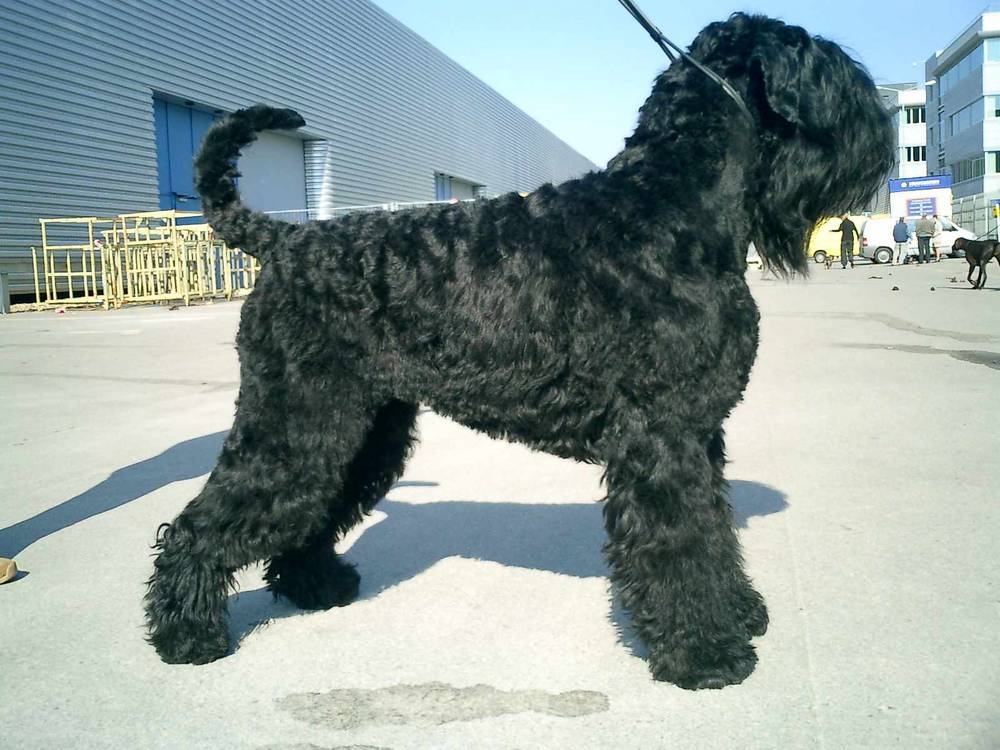
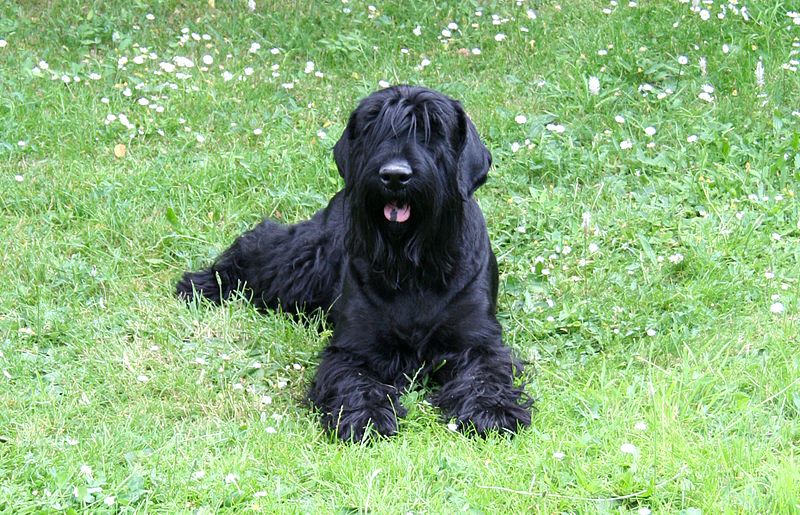
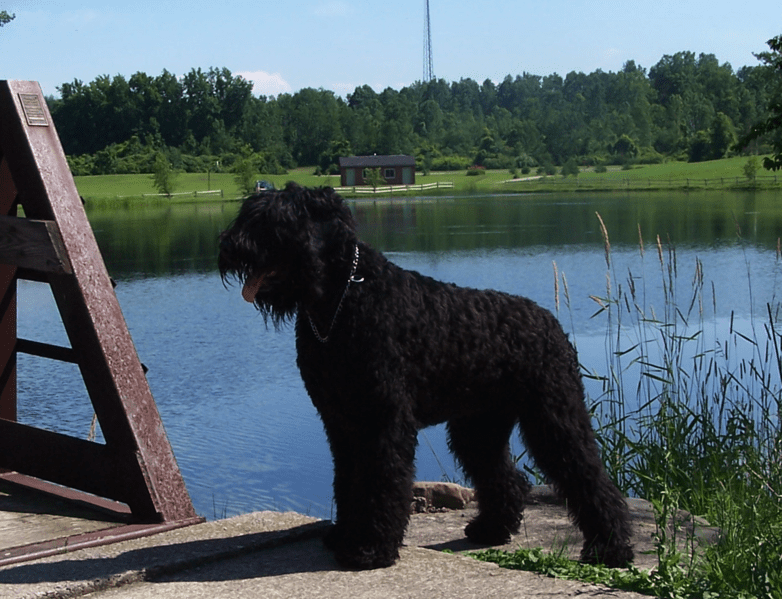
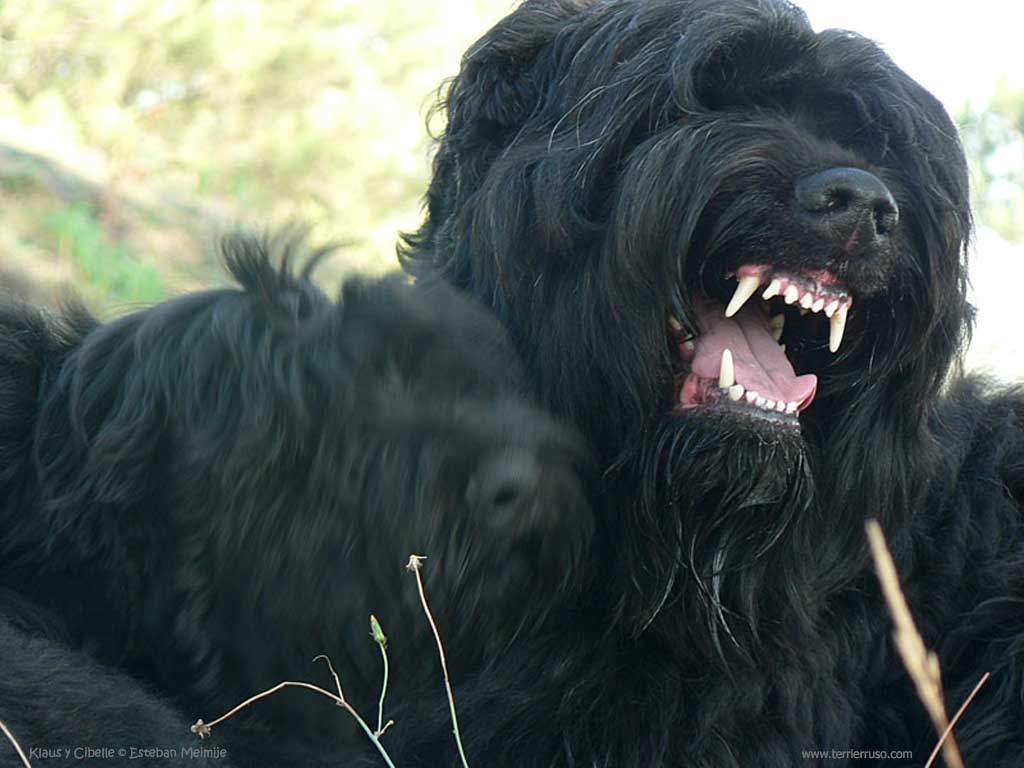
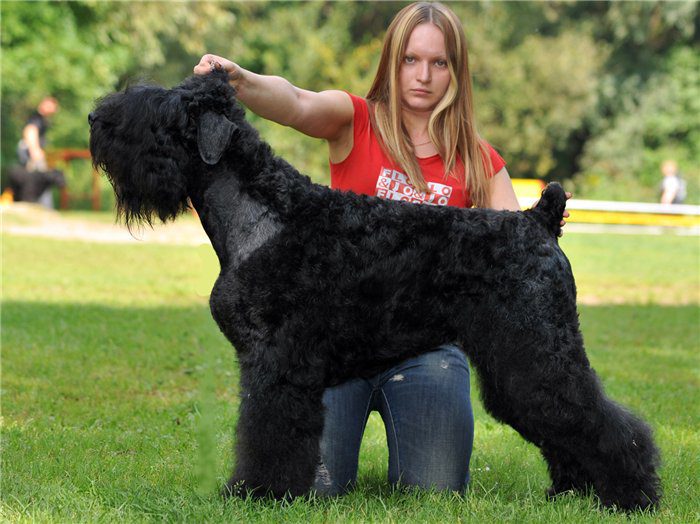
The Russian black terrier much more resemble a Schnauzer that to a Terrier. The head is long, with flat front. The strong muzzle. The eyes are small and dark. The trunk is solid. The limbs are straight and muscular.
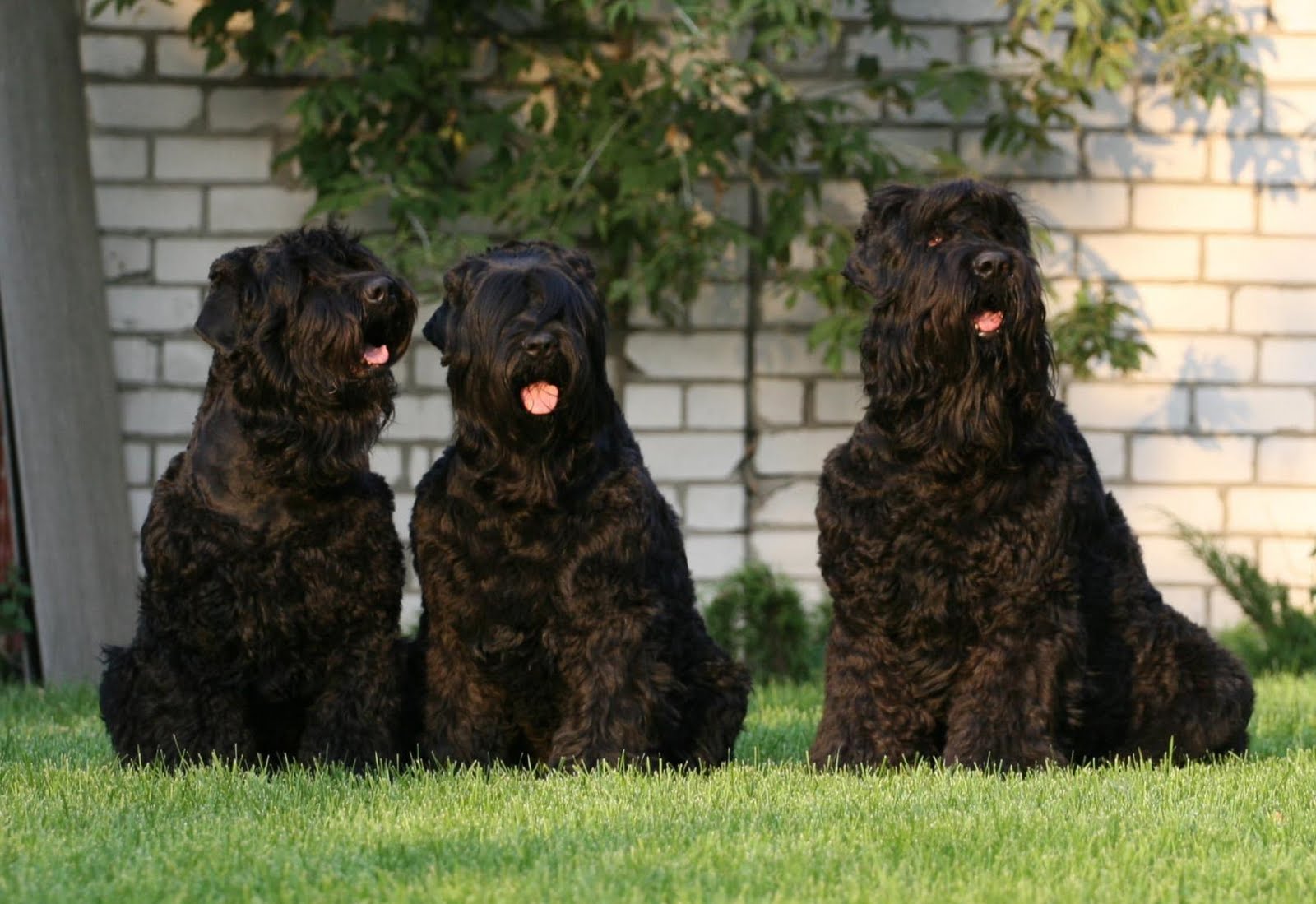
The Black Russian Terrier, gives the impression of great strength, agility and value. It is a robust dog, rustic in appearance (but not fat), and it must not appear as if his hair was sculpted or trimmed, must see bright in nature, and slightly curly.
The coat is hard and dense, is not very smooth to the touch, It is as curly and the length of the hair will be of 4 to 10 cm.. The longest hair found in the beard and eyebrows, with a mane (not very dense but longer than the rest of the body) What, extends, slightly, the cross and the neck, more pronounced feature in males. The coat is low detachment and the color is black with some gray hair.
According to the FCI standard (1983), the male must have a height of 66 to 72 cm to the cross and the female of 64 to 70 cm., with a tolerance of +/- 2 cm.. They must weigh between 35-70 kg.
Did you know??
Although the word Terrier on their behalf, the Black Russian Terrier is a member of the American Kennel Club Task Force.
The Black Russian Terrier, is a safe dog, quiet, very intelligent, brave and loyal. you should never be shy. It may seem distant, or perhaps independent, but in their basic needs, is the human company and the love of his family.
It is a healthy dog in general and their life expectancy is around the 14 years.
Because of his upbringing as a working dog, has a very strong instinct worker ("work ethic"), and that is why it is good to provide the animal some games to understand work roles, so you will be happy.
Initial training is a necessity, that you will take advantage of any owner who has not been able to establish a domain course. They are very sensitive to education and often Excel at obedience competitions. As well, they are very good in various dog sports, such as agility.
The Black Russian Terrier, need plenty of exercise, and can be hyperactive and destructive if not given the opportunity to burn off his energy.
Characteristics "Black Russian Terrier"
Coexistence is important that you have with your new friend. Before considering the acquisition of a dog of the breed "Black Russian Terrier" you know certain factors. Not all breeds of dogs are apt to live in an apartment, you must take into account his character, their need for exercise, their interaction with other pets, their care and if you have small children, their level of tolerance towards them.
The Rafeiro of Alentejo It is an excellent watchdog in the haciendas and houses of the Alentejo.
Content
History
The Rafeiro of Alentejo (Alentejo Mastiff), as the name reflects, comes from the Portuguese region of Alentejo, extending south of the Tagus River to the Algarve. The pedigree dog, that within the FCI belongs to the Group 2 (Molossoid), Mountain Dogs subsection, has a long history as a herding dog. Although little is known about the exact origin of this rare breed, their parents are supposed to be found in the molossian dogs of the Middle East. The Estrela Mountain Dog (Star Mountain Dog), also from portugal, was probably also involved in its origin.
In the Alentejo lowlands, shepherds used the Rafeiro of Alentejo to herd and drive cattle. It also, the intrepid four-legged friend protected the flock entrusted to him by reliably avoiding attacks by wild animals or rustlers. Especially at night the Rafeiro of Alentejo defended his flock to the blood. The wealthy large landowners appreciated the imposing dog not only as a vigilant protector, but also as a status symbol of strength and power.
As industrialization advanced and the large latifundia decreased, the rafeiro it got weirder. In the early 20th century, dogs of this type were almost extinct. But, a small circle of enthusiasts ensured that the breed was preserved. In 1940 a first breed standard was established. 14 years later, the Fédération Cynologique Internationale (FCI) finally recognized the breed.
Physical characteristics
When the Rafeiro of Alentejo, cattle thieves and wild animals quickly flee: Who would want to mess with such a big and powerful dog?
With a height at the withers of up to 76 cm and a weight of approximately 50 kg, the Portuguese breed dog has a very striking appearance. His massive head and strong, muscular body give a defensive impression.. Look calmly at your opponent with small brown eyes, between which there is a slight groove, but nothing escapes your watchful eye.
Despite its bulky shape and somewhat heavy and slow gait, the body of the Rafeiro of Alentejo seems to be rather long than wide. The neck offers a good transition to the shoulder, the back is straight. The tail is well furnished and thickened at the base, rather low and forms a slight upward curve when excited. In rest position it reaches to the hock. Ears of the Rafeiro they are medium in size and fall to one side when folded.
The dense and smooth coat of the Portuguese Sheepdog is short to medium length and has abundant undercoat, giving you reliable protection in all weather conditions. The Rafeiro of Alentejo it is available in black, gray wolf, leonado or yellow with or without white spots. A white base color with yellow spots is also allowed., as well as brindle specimens according to the breed standard.
Character and skills
At night, the Rafeiro of Alentejo he is in his best moment: nothing escapes your watchful eye, his good sense of smell and his excellent ears. Anyone who dares to enter their territory is captured without notice and, if required, wholesale. Pastors who have a Rafeiro they no longer have to fear rustlers or poachers.
Like a purebred dog, whose sole task is to accompany and protect his family, the Portuguese breed dog is completely unsuitable. Although he is faithful and loyal to his family, his innate sharpness is difficult to control even with consistent upbringing. After all, the intelligent and self-confident Rafeiro of Alentejo has always been used to working and acting independently. But, the will to subordinate and obedience are not among its strong points.
Who wants to keep a Rafeiro of Alentejo You must be able to offer him a large territory in which his watchful and protective instinct can live according to his mood. This does not mean, of course, that one should just let this dog go. A responsible owner socializes and educates his dog from the beginning. Shows you clearly who holds the reins in your hand and where your limits are. At the same time, he also accepts that his four-legged friend needs his freedom. The Rafeiro will never become a "good lapdog".
Buy a “Rafeiro del Alentejo”
Those interested in a Rafeiro of Alentejo Purebreds sometimes have to go a long way to find a suitable breeder. But, people who want to buy this dog on a whim, should refrain from buying it. The Rafeiro it is and continues to be an excellent herd dog and should be kept in that context. Who wants to make it a suitable companion dog for the family, You are not doing yourself or the dog any favors..
Health and life expectancy of the “Rafeiro del Alentejo”
The typical diseases of the breed are hardly known due to the low propagation of the breed. The Rafeiro it is a very robust dog whose life expectancy is comparatively high, of 12 to 14 years. But, like all dogs of their size and format, You may also have joint problems such as hip joint dysplasia or elbow dysplasia.
The “Rafeiro del Alentejo” diet
In principle, this breed has no specific dietary needs. But, a balanced and healthy diet is, of course, also important for this dog – also or especially regarding possible joint problems. So, following the high energy puppy diet, a fairly low protein food should be given first to prevent the young dog from growing too quickly. In the adult dog, the energy value of the food can increase again. Now, fresh meat, through which the necessary amount of animal protein is absorbed, should mainly fill the feeding bowl. Fresh vegetables and rice are suitable as a healthy garnish. Fish can be given as an alternative to meat.
Characteristics "Rafeiro of Alentejo"
Coexistence is important that you have with your new friend. Before considering the acquisition of a dog of the breed "Rafeiro of Alentejo" you know certain factors. Not all breeds of dogs are apt to live in an apartment, you must take into account his character, their need for exercise, their interaction with other pets, their care and if you have small children, their level of tolerance towards them.
Adaptation ⓘ
3,0 of 5 stars (based on 1 review)
friendly dog ⓘ
2,0 of 5 stars (based on 1 review)
hair loss ⓘ
3,0 of 5 stars (based on 1 review)
Affection level ⓘ
4,0 of 5 stars (based on 1 review)
Need for exercise ⓘ
3,0 of 5 stars (based on 1 review)
Social need ⓘ
1,0 of 5 stars (based on 1 review)
Home ⓘ
3,0 of 5 stars (based on 1 review)
Toilet ⓘ
2,0 of 5 stars (based on 1 review)
Friendly with strangers ⓘ
2,0 of 5 stars (based on 1 review)
barking ⓘ
4,0 of 5 stars (based on 1 review)
Health ⓘ
3,0 of 5 stars (based on 1 review)
Territorial ⓘ
5,0 of 5 stars (based on 1 review)
Cat friendly ⓘ
2,0 of 5 stars (based on 1 review)
Intelligence ⓘ
4,0 of 5 stars (based on 1 review)
Versatility ⓘ
1,0 of 5 stars (based on 1 review)
Child friendly ⓘ
3,0 of 5 stars (based on 1 review)
Surveillance ⓘ
5,0 of 5 stars (based on 1 review)
joy ⓘ
1,0 of 5 stars (based on 1 review)
Type and recognitions:
FCI CLASSIFICATION:
Group :
Section : . .
Federations:
– FCI – Pinscher and Schnauzer-Molossoid type dogs – Swiss Mountain Dogs and Cattledogs. Section 2.2 Molossoid, mountain type. ⓘ
– AKC – FSS ⓘ
– UKC – Watchdog ⓘ
FCI breed standard "Rafeiro of Alentejo"
Origin:
Portugal
Date of publication of the valid original standard:
04.11.2008
Use:
It is an excellent watchdog on Alentejo farms, and is also a highly esteemed herding dog. It's me
General appearance:
It is a dog of large size, strong, rustic, sober. With a slightly convexilinear profile. It is sublongilinear (a little longer than wide).
IMPORTANT PROPORTIONS: Rectangular (Sub- longilinear) with a height at the withers somewhat less than the length of his body.
Width of the skull with respect to the length of the head must have a ratio of 1/ 2
Muzzle length and skull must have a ratio of 2 / 3
Chest depth should be slightly less than half the height at the withers.
Behavior / temperament:
An excellent farm dog and property watchdog. It is also very useful as a livestock protector., more vigilant during the night, being very serious when entrusted with any territory or property.
Her expression is calm and confident, never aggressive or shy.
Head:
Voluminous tending to be massive in proportion to the size of the dog, wide at the back of the skull, narrow and less convex in the antecara. The upper facial skull axis is moderately divergent.
Cranial region:
Skull: Width; bulging on both axes. Superciliary arches are not prominent. The front groove is not very pronounced between and above the eyes. The occipital protuberance is hardly apparent. The interatrial space is of a regular and slight curvature.
Depression links (Stop): It is little pronounced
facial region:
Truffle: Oval and black in color. Its limb is slightly truncated from top to bottom and front to back.. Well open nasal Windows.
Snout: Bulging cross section. The profile of the nose is straight. The length of the muzzle is less than that of the skull. It is of medium amplitude.
Lips: Slightly stooped from the front, overlapping and well broken. They are thin, firm, with a slightly curved bottom profile.
Jaws / Teeth: Strong, well developed and well opposed. Scissor bite, accepted in clamp.
Cheeks: Slightly evident with the prominent masonic zone. Eyes: Small, almost shallow ellipticals. They are brown (preferably dark), horizontal, and little. The eyelids have a firm and adherent dark pigmentation to the eyes. With a calm expression.
Ears: Medium insertion. They are bent, hang over the sides and have little movement. When the animal is active, his ears are kept bent, upright at the base and more vertically flexed. They are triangular, small and narrow at the base; its width at the base is equal to the length of the pavilion's middle axis.
NECK: Well placed on the shoulders, straight, short, strong with a simple and uniform longitudinal jowl, proportioned to size.
Neck:
Well placed on the shoulders, straight, short, strong with a simple and uniform longitudinal jowl, proportioned to size.
Body:
It is strong, good muscular, somewhat longer than its height at the withers, bulky.
top line: Right, almost level, slight tilt from the rear is tolerated.
Cross: Not prominent, well connected to the neck. Back: Slightly inclined, tending to horizontal.
Pork loin: Straight and medium length. It is broad, well muscled and slightly bulky.
Rump: Slightly inclined, long Middle, broad and muscular, in relation to the substance.
Sill: Not very apparent, broad.
Breast
: Large, either lowered or slightly above elbow level.
Ribs: Well arched, slightly leaning towards the rear.
Belly and haunches: Almost horizontal sternum. It is not thin and extends the line of the sternum.
Tail:
It is long and thick, medium insertion following the line of the rump. It has a curve in its limb, but it's not bent. When the dog is at rest it falls under the hock; when it is active, it can become twisted.
Tips
PREVIOUS MEMBERS: They're strong, separated; viewed from the front and side, they are well poised.
Shoulder: Strong, long Middle, well-developed and muscular. Scapula – humerus angle approximately 105º.
Arm: Strong, long Middle, leaning and muscular.
Elbows: Stuck to the chest, without leaning in or out. Radius – humerus angle between 130º and 135º.
Forearm: Is vertical, long, thick and well muscled.
Carpo: Thick. With good articulation.
Metacarpus: It is thick, medium length and slightly sloping. Previous feet: They are not crushed. Fingers are thick and long, they are well closed and not very hunched. The nails are strong and their color varies according to the hair.. The pads are thick and tough.
LATER MEMBERS: Strong, separated, and seen from behind and from the side they are well poised.
Thigh: Long, width, inconspicuous muscles. Hip – femur angle approximately 105º.
Knee joint: Strong articulation, in line with the body without leaning or outwards, Femur – tibia angle between 125º and 130º. Leg: Slightly sloping and of medium length. It is muscular. Hock: Medium tall. He is thin. Tibia – tarsus angle approximately 140º.
Metatarsus: Thick, medium length, slightly tilted. Can have single or double dewclaws.
Hind feet: They are not crushed. Fingers are thick and long, they are well closed, and they are not very hunched. The nails are strong and their color varies according to the hair.. The pads are strong and durable.
Movement:
Heavy, slow and undulating without exaggeration.
Mantle
SKIN: The skin is thick and slightly loose. The mucosa is partially or totally pigmented in black.
Fur: Should be short or preferably semi-long. It is thick, smooth and dense. It is distributed regularly on the body and extends to the interdigital spaces.
Color: Black, wolf, leonado or yellow. White with these colors or these colors with white, spotted, striped or tabby.
Size and weight:
Height to the cross:
Males: 66 to 74 cm..
females: 64 to 70 cm..
Weight:
Males: 45 to 60 kg.
females: 35 to 50 kg.
Fouls:
Any deviation from the aforementioned criteria is considered as a fault and the severity of this is considered to the degree of the deviation to the standard and its consequences on the health and well-being of the dog..
Behavior: Shyness.
Apgeneral arience: General poor appearance, thinness, Obesity.
Caña nasal: Long, close, somewhat curved in profile with a vertically truncated truffle.
Línand Superior: barbed back the ensillado.
Glikeness: Too much fall, long, close.
Colto: With very high insertion, or very low.
Formertremedies: Cow hock, very wide in the front, wrong angulations, lack of correct poise.
PinIt: Disproportionate to body size, open foot or hare foot,
Plink: Bad look of the coat Long hair, wavy the fence.
SERIOUS FAULTS:
ApGeneral arience: Light or lymphatic structure.
Cthey are not coming: Disproportionate to the size of the dog, lack of volume, stop pronounced, flat or narrow skull, parallel upper longitudinal facial skull axes
Ojors: Light color, non-elliptical, inclined, poorly adherent eyelids to the eyeball.
Obars: Large, rounded, not folded, not hanging, partially amputated
CUit: Absence of double chin, too many folds or double chins.
Pecho: Strait, flat ribs
Colto: Curved when at rest, a hook on the tip, Amputee cuts.
Mucous membranes: Absence of partial external pigmentation of the mouth, eyelids, lips and nose.
Tby hand: Males: less than 66 cm.. or more than 75 cm.. females: less than 64 cm.. or more than 71 cm.
FALTAS DESCALIFICANTES:
Aggressiveness or extreme shyness.
Any dog showing clear signs of physical or behavioral abnormalities must be disqualified..
Tinpincity: Atypical.
ApGeneral arience: Extremely light or lymphatic structure.
Cthey are not coming: Narrow and long.
Caña nasal: Excessively long, the arched profile.
Dinentities: Upper or lower prognathism.
Ojors: clear, different color or dimensions, partly covered by the third eyelid.
Obars: High or low implanted, rounded or large.
Colto: Absence (anuria).
Mucous: absence of black color in the truffle, the Windows, mouth and lips (albinism).
Plink: Satin.
N.B.:
Males should have two normal-appearing testicles fully descended into the scrotum..
Only functionally and clinically healthy dogs, with the typical conformation of the breed, should be used for parenting.
TRANSLATION: Rafael Santiago (Puerto Rico).
Technical review: Miguel Angel Martinez (Federation Cynologique Argentina).
Source: F.C.I - International Cynological Federation
Alternative names:
1. Rafeiro do Alentejo, Alentejo-Mastiff, alentejo mastiff (English).
2. mâtin de l’Alentejo, mastiff de l’Alentejo (French).
3. Rafeiro do Alentejo, Rafeiro, Alentejo-Mastiff (German).
4. Mastim Português, Mastim do Alentejo (Portuguese).
5. Mastín del Alentejo (español).
The Rottweiler is a quiet dog, docile and faithful family.
Content
History
The Rottweiler is one of the breeds of German origin that is recognized by the Federation Cynologique Internationale (FCI). The Rottweiler is a dog trotting type.
The history of the Rottweiler dates back to the 19th century. The city of Rottweil in present-day Baden-Württemberg was known for its cattle trade.. To keep animals under control on their way to pasture, farmers and butchers had to use intelligent and persistent companion dogs. At the beginning, these dogs were therefore called butcher dogs, later they were finally given the name Rottweiler due to its proximity to the city of Rottweil. Other theories about the history of the Rottweiler breed say that the canine breed was already used for cattle breeding in Rome and therefore came with the Romans through the Alps to the city of Rottweil. In the early 20th century, when people were looking for a suitable police dog, it soon became clear that the Rottweiler, with his strong, muscular stature and intrepid temperament, was particularly suitable. In 1910 the Rottweiler was officially recognized as a police dog.
those characteristics, they made it an indispensable both for farmers and butchers Assistant.
Physical characteristics
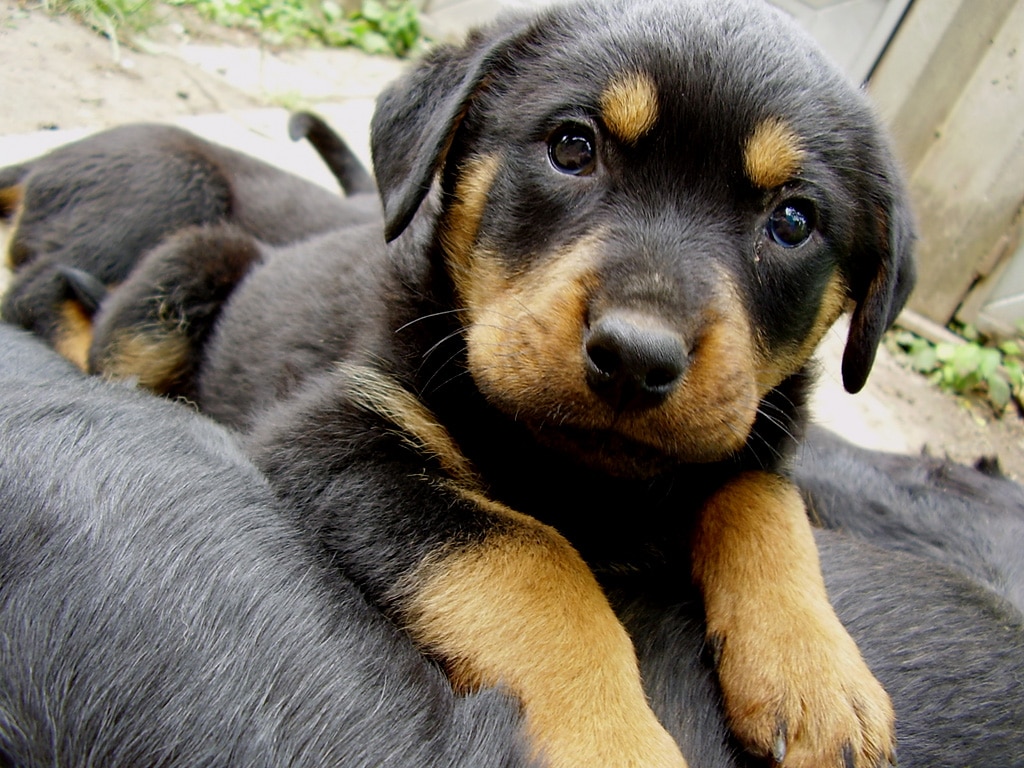
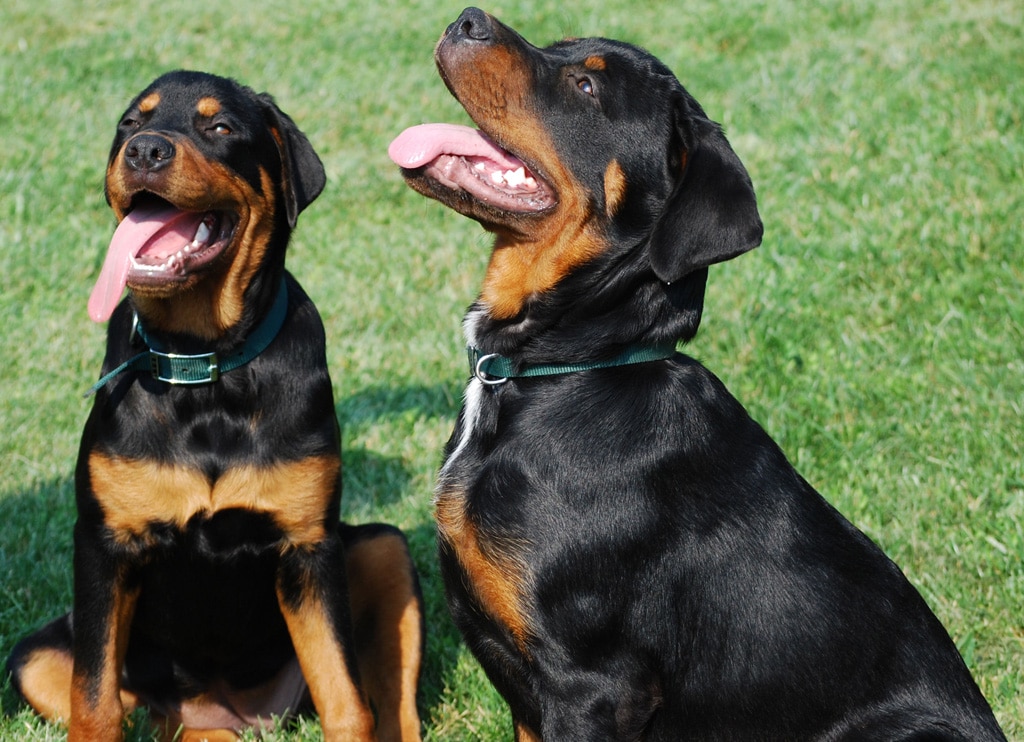
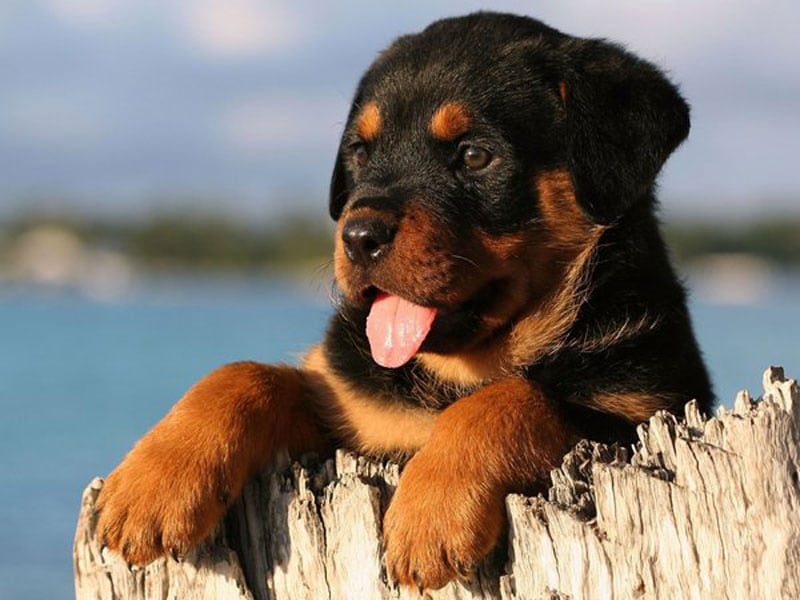
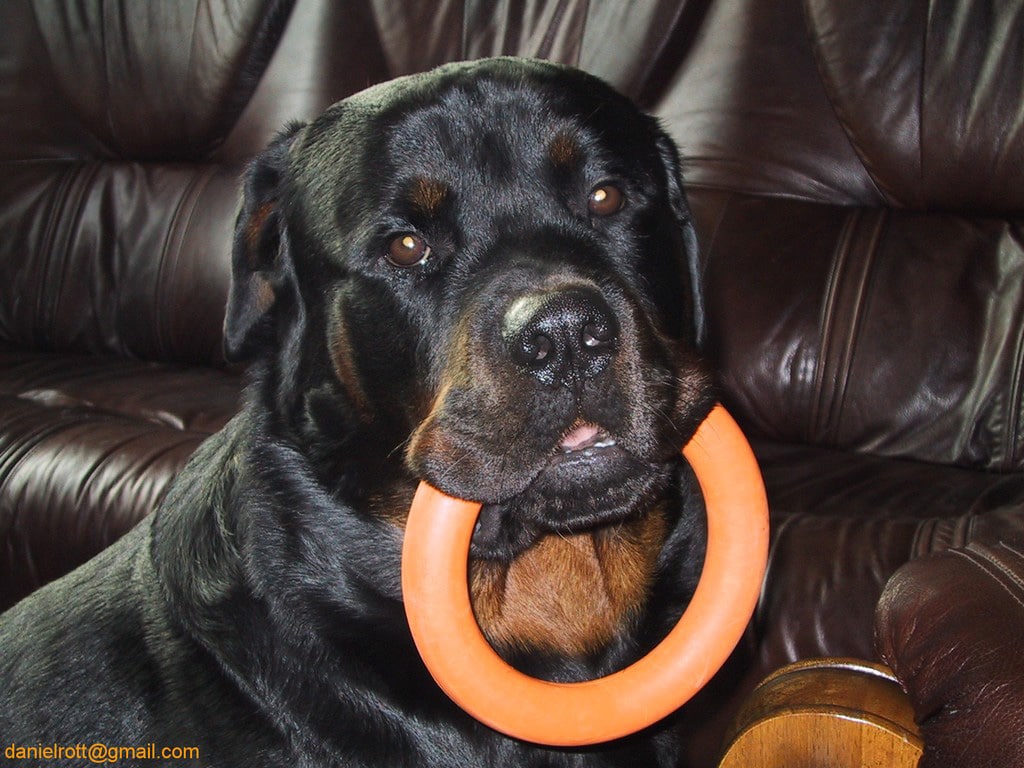
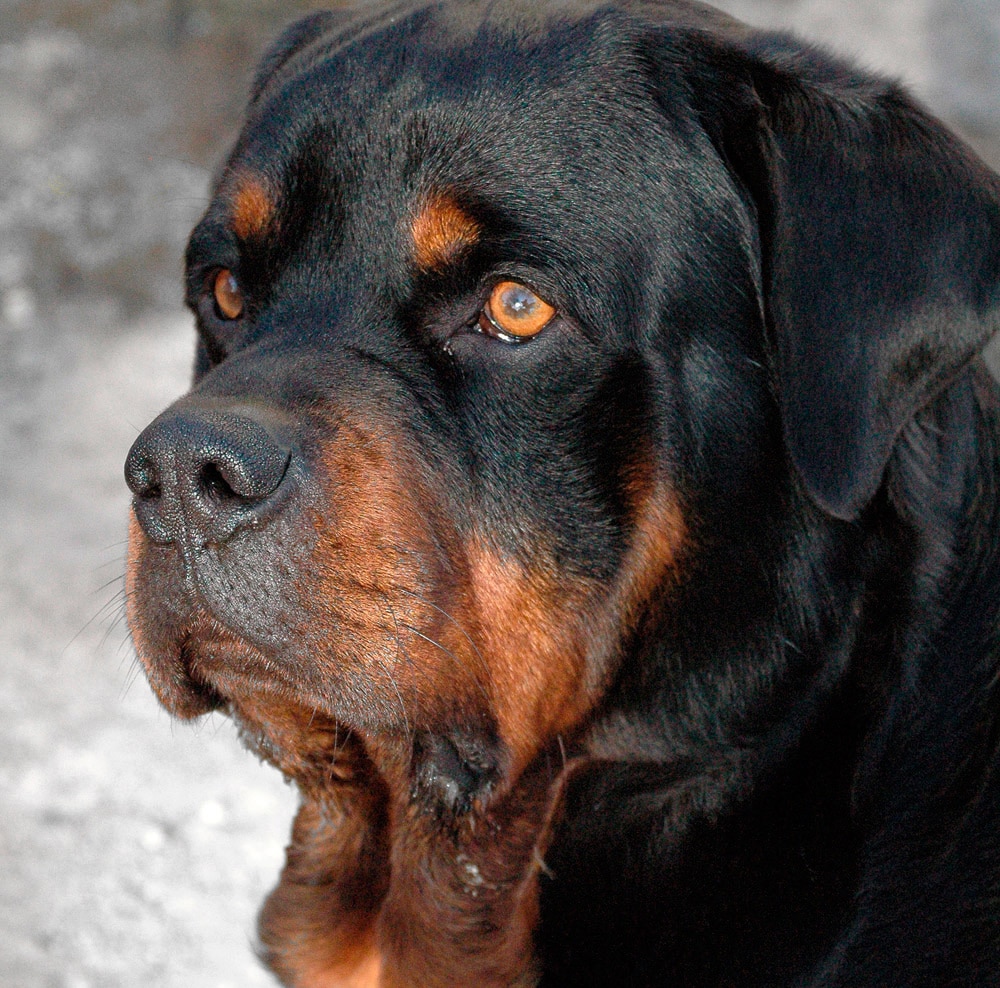
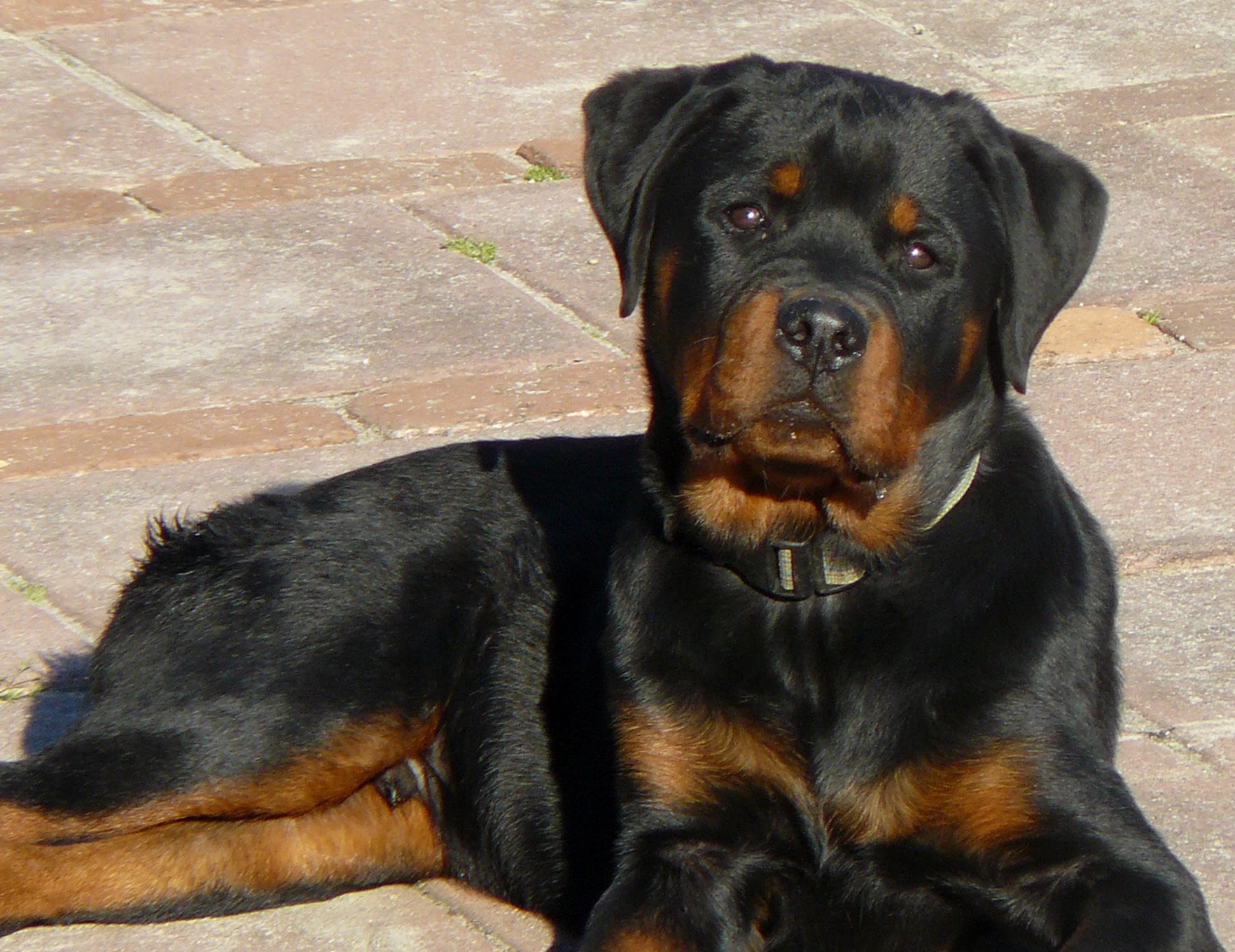
The Rottweiler is a medium to large dog, muscular, sturdy and strong with powerful teeth. Although its shape is quite robust, the Rottweiler has great resistance and is very agile. According to the breed standard, the height at the withers of a male dog is 68 cm., that of a female dog 63 cm.. The weight of a Rottweiler is between approx. 42 kg ( female) and approx. 50 kg (male). Rottweiler coat consists of a black top layer and bottom layer. The black top layer is described by the VDH (German Canine Federation) as "medium length", thick, dense and tight", while the bottom layer should not protrude from the top layer. The Rottweiler's coat is slightly longer on the hind legs. Characteristic for the Rottweiler is also the so-called blight, which means clearly defined brown-red markings on the lips, the snout, the eyebrows, under the root of the tail and on the chest.
Within this breed we can find two breeding lines, the European, considered the original and the American. The American line is characterized by taller specimens and more stylized bodies., on the other hand, European line dogs have a more compact and robust body with a shorter height.
Character and skills
Although the Rottweiler is a race that has been used for defence work, his work and typicity requires that they are described as friendly, happy talk, quiet, faithful, obedient and willingness to work. In the latest studies of aggressiveness in breeds, this was not among the top ten.
In addition the Rottweiler dog is located within the ten most intelligent dogs, they are dogs of great trust and kindness, You can be glad that it will meet the desired objective.
An important attribute that has the Rottweiler is his adiestrabilidad. It is a very intelligent and obedient dog, able to learn many tasks.
According to the classification made by Stanley Coren after analyzing the responses of more than 200 work of the AKC judges ("The Intelligence of Dogs", Stanley city, Ediciones B, 1995), the Rottweiler is the No. 9 from the list.
Its history as a shepherd, as military dog and care as well as dog obedience and exhibition, speaks highly of his versatility.
The Rottweilers are ideal as protectors of the family and property. You agree to all the members of the family and protect both the father and the son. The Rottweilers usually do not have Favorites, Although there are exceptions. They tend to be individualists, and this is due, Once again, are creatures with discernment and lists.
Their intelligence "affects" their trainability. Just like, frequently, It is said of the cats, they are too ready to wait for repetition of an order. Once they have executed her once or twice as you like, Surely they tired of the game and seek a better output. Why do humans insist on doing these things so many times?? I already got the idea the first time and it wasn't that exciting” the Rottweiler seems to think.
So, for its possession you must obtain the license for possession of potentially dangerous dogs and register in the corresponding Municipal registration of potentially dangerous animals. One of the things that are required for this license is insurance of civil liability to third parties.
Some need more help than others, but patience is always required when you train a dog, regardless of what race.
Please understand that nothing wrong with owning a Rottweiler there is. They are amazing dogs and wonderful companion animals.. This is not an issue of race, but rather individuals who are involved with the canine behavior modification.
Rottweiler maintenance
Since the Rottweiler was bred as a persistent working dog and therefore needs a lot of leash in order to function properly, keeping him in the kennel is out of the question. But, due to its robustness, can stay out if there is a good family connection and corresponding workload. It is important to socialize the Rottweiler from the beginning through specific training and attendance at a dog school and accustom it to different situations and people.. Due to its character, the Rottweiler can be used very well as a service dog, guard dog, rescue dog or guide dog for the blind. Although it is not the classic family dog, living with children is usually not a problem. Due to its size and strength, wild games with children should be avoided, and children should not walk alone with the Rottweiler due to its enormous traction. Proper maintenance a Rottweiler includes not only a demanding occupation but also a good education.
The life expectancy of a Rottweiler
The life expectancy of a Rottweiler is with 8-10 years somewhat below average value. Unlike small dog breeds, the musculoskeletal system of larger dog breeds is already under great stress during the growth phase, causing signs of wear earlier.
Buy a Rottweiler
Before deciding on a Rottweiler, one must closely examine their attitude and character and carefully consider whether this breed is really suitable. The following questions must be answered affirmatively: Can I offer the Rottweiler enough space and exercise?? Do I have time to take care of the animal enough? Do all family members agree with the dog? Do I trust the education of a Rottweiler? Can I take my dog on vacation or what alternatives are there? If you finally decide to get a Rottweiler, doesn't necessarily have to come from a breeder. Why don't you visit the animal shelter?- Maybe you'll find a Rottweiler there that you can give a good home to.. Here the purchase is also much cheaper than with a breeder.
Rottweiler Education
The correct education is very important for a Rottweiler to promote its generally human and balanced character.. Your position in the family hierarchy should be clear to the dog from the start., so that he learns to obey and respect his master. Consistency is extremely important in Rottweiler education, and should be dominant, but without harshness. As a responsible dog owner, you must act with sovereignty, calm and especially with consideration when training a Rottweiler. The Rottweiler recognizes these positive leadership qualities, which ultimately makes him a loyal companion. As in the case of any other dog, training should begin at the puppy's age, where positive behavior is rewarded with praise, for example in the form of sweets. Caution: With insufficiently dominant leadership or erroneous and inconsistent education, Rottweiler can develop dangerous behavior – this shows the great role that the correct education of the Rottweilers plays.
Rottweiler Health and Care
Since the Rottweiler's coat is rather short to medium long, the toilet is not very complex. But, due to its agile nature, impurities can quickly accumulate on the coat, so grooming should not be neglected entirely. Occasional brushing is completely sufficient. For Rottweiler coat length, special brushes for dogs, but also cotton gloves have proven to be very effective. In addition to the toilet, foot care, as well as eye care, ears and nails should be considered to the usual extent.
Breed-specific diseases
As with many other large dogs, certain diseases occur more frequently in Rottweiler dogs. These include hip dysplasia and elbow dysplasia, both are poor development of the respective joints. Because this is due to a genetic disposition, an X-ray examination must be presented in a breed aptitude test. To prevent disease, care must be taken that the animal is not overweight and gets enough exercise. Leukoencephalomyelopathy is also a hereditary disease. It leads to progressive paralysis in young animals and is not curable., although it occurs quite infrequently. On the other hand, in recent years, heart disease has been reported more frequently in this breed. Constriction of the nerves of the heart, for example, is inherited and affects the reflux of blood from the heart, which ultimately leads to limited performance of the Rottweiler.
Rottweiler feed
Like any other dog, the Rottweiler needs a species-appropriate diet. To prevent overweight and resulting breed diseases, such as hip and elbow dysplasia, dog food should not be too fatty and above all low in protein. It is also important that the Rottweiler feeds in moderation and has limited access to the feeding bowl. Instead of being able to use a large portion of food, Dog owners must distribute food appropriately for their “Rotti”. Whether dry or wet food is better for the Rottweiler, the dog owner must decide for himself.
Rottweiler puppies prefer to eat what they are used to eating from their breeder. So, it makes sense to continue feeding this food for the time being and only change food when the dog is older and may have different needs than its food. It's best to just try what the Rottweiler likes best: in addition to dry and wet food, also a healthy alternative to barking at the dog.
Characteristics "Rottweiler"
Coexistence is important that you have with your new friend. Before considering the acquisition of a dog of the breed "Rottweiler" you know certain factors. Not all breeds of dogs are apt to live in an apartment, you must take into account his character, their need for exercise, their interaction with other pets, their care and if you have small children, their level of tolerance towards them.
– FCI – Pinscher and Schnauzer-Molossoid type dogs – Swiss Mountain Dogs and Cattledogs. Section 2.1 Molossoid, mastiff type. ⓘ
– AKC – Working dogs ⓘ
– ANKC – Group 6 (utility dogs) ⓘ
– CKC – Group 3 (working dogs) ⓘ
– KC – Working dogs ⓘ
– NZKC – Utility dog ⓘ
– UKC – Watchdog ⓘ
FCI breed standard "Rottweiler"
Origin:
Germany
Date of publication of the valid original standard:
15.06.2018
Use:
Utility dog, service and company.
General appearance:
The Rottweiler is a medium to large sized dog, robust, neither heavy nor light, neither with limbs too high nor weak. Its correctly proportioned construction, Compact and powerful, Lets conclude that it is a very powerful dog, agile and resistant.
IMPORTANT PROPORTIONS: The length of the body, measured from the tip of the sternum (chest bone) to the ischial tuberosity, must not exceed the height at the withers by more than one 15%.
Behavior / temperament:
The rottweiler hasaffable tendency, placid in basic arrangement, very devoted, obedient, docile and willing to work. Its appearance is natural and rustic, his behavior is self-confident, stable and fearless. Reacts to its surroundings with great attentionand at the same time in a temperate way.
Head:
---
Cranial region:
Skull: Medium length, relativelywidth between ears. Side view, the forehead is moderately arched; the occipital Protuberance is well developed, without being too noticeable.
Depression links (Stop): Relatively strong. The front grooves are not too deep.
facial region:
Truffle: Well developed, rather wide than rounded, with relatively large nostrils, always black.
Snout: In relation to the area of ​​the skull, it should not give the impression of being shortened or elongated.The relationship between the length of the muzzle and the length of the skull is approximately 1 to 1.5. Straight nose bridge, wide at its insertion, moderately decreases in width from back to front.
Lips: Blacks, well pasted. The corner of the mouth is tightly closed; gums as dark as possible.
Jaws / Teeth: Both the upper and lower jaws are very strong and wide.. Healthy teeth, strong and full (42 parts). With scissor bite, upper incisors overhang lower incisors tightly.
Cheeks: Pronounced zygomatic arches.
EYES: Medium-sized, almendrada form, dark brown; with well-adherent eyelids. EARS: Medium-sized, pendants, triangular, very separated and set high. With the ears well glued and placed forward, which makes the skull area of ​​the impression to be wider.
Neck:
Strong, long, good muscular, slightly arched, clean, double chin freeorskinloose.
Body:
Back: Straight, strong and stiff.
Pork loin: The lumbar region is short, strong and deep.
Rump: Wide, medium length, slightly rounded, without being straight, not even with much fall.
Breast
: Spacious, broad and deep (approx.. 50% the height of the cross), with a well-developed sill and bulky rib.
Abdomen: Not collected flanks.
Tail:
In natural condition, strong, at the level and in an extension of the upper line; in atention, when aroused or on the move can bring her up with a slight curve; in idle it can hang up.Bringing it down between the legs the tail reaches the hocks or is a little longer.
Tips
PREVIOUS MEMBERS:
As a whole: Seen from the front they are straight and not very together. The forearms, seen from side, they are straight. The inclination of the scapula in relation to the horizontal is 45°.
Front feet: Round; closed and swollen fingers. Hard pads; short nails, black and strong.
LATER MEMBERS:
As a whole: Seen from behind are straight, parallel and not very together. In the natural position, obtuse angles are formed between the thigh and the iliac bone., between the thigh and the leg (knee), and between the leg and the metatarsus (Hock).
Thigh: Moderately long, width and heavily muscled.
Leg: Long, strong, with many muscles, sinewy.
Hock: Powerful; well angled, not steep.
Rear feet: A little longer than the front; also closed fingers, bulky and heavy.
Movement:
The Rottweiler is a m, remaining your back strong and with little movement. The development of the movement is harmonious, insurance, with force and free, with wide steps.
Mantle
SKIN: Skin tight head throughout the area; form small wrinkles on the forehead when the dog is at attention.
HAIR: Composed of outer layer and internal NAP. The external layer hair is medium long, hard, thick and tight; internal NAP must not protrude beyond the external hair. In the hind, the hair is a little longer.
COLOR: Negro, with well-defined fire marks of a bright pardo-rojizo color on the cheeks, snout, throat, chest and members, as well as above the eyes and under the tail.
Size and weight:
Males:
Height to the cross: 61-68 cm..
Of 61 to 62 cm.: small; of 63-64 cm.: medium-.
Of 65-66 cm.: large (correct size); of 67-68 cm.: very large.
Weight: Approximate: 50 kg.
females:
Height to the cross: 56-63 cm..
Of 56 to 57 cm.: small; of 58 to 59 cm.: medium.
Of 60-61 cm.: large (correct size); of 62-63 cm.: very large.
Weight: Approximate: 42 kg.
Fouls:
Any deviation from the aforementioned criteria is considered as a fault and the severity of this is considered to the degree of the deviation to the standard and its consequences on the health and well-being of the dog..
General appearance: Lightweight overall appearance, fragile; too high limb; weak bones and muscles.
Head: Head of hounds, narrow, light; too short or too long, Tosca; Flat front; absent or little noticeable stop.
Snout: Pointed or long; split nose; borrego type nose cane (convex), or depressed (concave); drooping nasal bridge (eagle); Truffle stained or color clear.
Lips: Not together, pink or stained; Open the lips angle.
Jaws: Narrow jaw.
Teeth: Bite of iron.
Cheeks: Very prominent.
Eyes: clear, deep, bulging or round. Loose eyelids.
Ears: Too low, heavy, long, drooping, bent backwards, as well as separate the size of the uniform.
Neck: Too long, delgado, weak muscles, with loose skin or dewlap.
Body: Too long, too short, Strait.
Back: Too long, weak, past due or outstanding (convex).
Rump: Drop, too short, long or straight.
Breast
: Chest with a flat rib, barrel or Strait, backwards.
Tail: Too high or too low implementation.
Former members: Close together, not straight; steep shoulder; elbows not quite clinging to the body or separated; too long forearms, short or steep; weak or steep Metacarpus; crushed feet; very flat fingers, destitute or very bulky; Nail Color clear.
Later members: Flat thighs; closed or cow type tips; the very acute or obtuse angles of the joints; Spurs.
Skin: The wrinkled facial skin.
Fur: Soft; too short or too long, wavy; absence of internal NAP.
Color: Wrong color marks, too big, or not clearly defined.
MISS PLAYOFFS
Behavior: Shy animals, shy, cowards, aggressive, overly suspicious, nervous and afraid of shots that show.
General appearance: Marked investment in the sexual nature (that the male presents female characteristics or vice versa).
Teeth: Upper or lower prognathism, incisor arcade deviated; absence of an incisor tooth, Tusk, a premolar or a molar.
Eyes: Entropion, ectropion, yellow eyes; anisochromia (eyes of different colour).
The Romanian Bucovina Shepherd is a quiet dog, balanced, devoted and who loves children, what can make it an ideal dog for a family.
The Romanian Bucovina Shepherd is a quiet dog, balanced, devoted and who loves children
Content
Characteristics "Romanian Bucovina Shepherd"
Coexistence is important that you have with your new friend. Before considering the acquisition of a dog of the breed "Romanian Bucovina Shepherd" you know certain factors.
Not all breeds of dogs are apt to live in an apartment, you must take into account his character, their need for exercise, their interaction with other pets, their care and if you have small children, their level of tolerance towards them.
Adaptation ⓘ
3,0 of 5 stars (based on 1 review)
friendly dog ⓘ
3,0 of 5 stars (based on 1 review)
hair loss ⓘ
5,0 of 5 stars (based on 1 review)
Affection level ⓘ
5,0 of 5 stars (based on 1 review)
Need for exercise ⓘ
4,0 of 5 stars (based on 1 review)
Social need ⓘ
2,0 of 5 stars (based on 1 review)
Home ⓘ
2,0 of 5 stars (based on 1 review)
Toilet ⓘ
2,0 of 5 stars (based on 1 review)
Friendly with strangers ⓘ
2,0 of 5 stars (based on 1 review)
barking ⓘ
5,0 of 5 stars (based on 1 review)
Health ⓘ
3,0 of 5 stars (based on 1 review)
Territorial ⓘ
5,0 of 5 stars (based on 1 review)
Cat friendly ⓘ
3,0 of 5 stars (based on 1 review)
Intelligence ⓘ
5,0 of 5 stars (based on 1 review)
Versatility ⓘ
3,0 of 5 stars (based on 1 review)
Child friendly ⓘ
5,0 of 5 stars (based on 1 review)
Surveillance ⓘ
4,0 of 5 stars (based on 1 review)
joy ⓘ
3,0 of 5 stars (based on 1 review)
History
Natural breed known for centuries in the Bucovina region, in northeastern Romania, the Romanian Bucovina Shepherd was brought to light for the first time in 1934 by G. Radulescu Calafat, publisher of the first Carpathian Sheepdog standard, who mentioned in an article published in the journal Vet Sciences another shepherd dog of molosoid type called «Dulau» or «Capau».. Until then, the Romanian Bucovina Shepherd had been compared to Romanian Carpathian Shepherd Dog, smaller.
While the Romanian Bucovina Shepherd has long been used as a guard dog for flocks of sheep against large predators in the Carpathians, like bears, wolves and lynx, it has also been used for many years by Romanian farmers as a guard dog.
In 1982 the Romanian Cynological Association, the canine organization of reference in the country, developed a first standard that described the Romanian Bucovina Shepherd. It was updated in 2001 and 2002 in accordance with the FCI requests (International Cynological Federation) with a view to their recognition of the breed, what actually happened provisionally in 2009.
In 2019, the Romanian Bucovina Shepherd obtained the definitive recognition of the FCI. On the other hand, not yet recognized by the British reference organization, The Kennel Club, nor by the American Kennel Club (AKC) and the United Kennel Club (UKC).
In fact, still very rare outside its country of origin and some neighboring countries, like Ukraine or Serbia. In Romania there have been 6.000 specimens in the Romanian Stud Book, but only the breeding of 300 females and 200 males, as Romanian law imposes many restrictions on the breeding of dogs.
Photo: Ciobanesc de Bucovina – Romania 2018 by 1jagdterrier – YouTube
Physical characteristics
"Romanian Bucovina Shepherd"
The Romanian Bucovina Shepherd they are huge dogs with a body slightly longer than the tall, powerful lower limbs and a horizontal, muscular back. Placed high on the body, its long tail is carried hanging at rest and rises in the back in a slightly upward curve when in the gazebo.
The head, which is wide and carried slightly higher than the body, blends in with the voluminous and moderately long neck, which forms an angle of 100 to 110 degrees with the rest of the body.
The muzzle is black, the eyes are relatively small in relation to the head, the powerful jaw is chisel-shaped and the V-shaped ears with rounded tips fall along the cheeks.
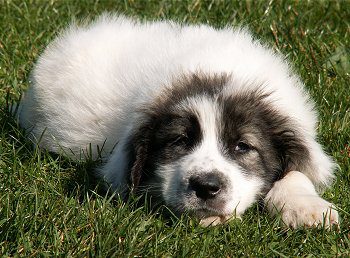
While the head and the front of the legs are covered with short hair, the rest of the body is covered with dense hair, long (6 to 10 cm.) and quite stiff. The coat is predominantly white, marked with black spots, gray or leonadas well defined. But, the standard of Romanian Bucovina Shepherd it also recognizes unbleached, uncoloured specimens that are completely white, white as snow, gray like ash or black.
Sexual dimorphism is well marked in the Romanian Bucovina Shepherd, being the male larger than the female.
Character and skills
The Romanian Bucovina Shepherd is a quiet dog, balanced, devoted and who loves children, what can make it an ideal dog for a family. On the other hand, especially wary of strangers, so it is important to socialize him from an early age with the people with whom he can come into contact: friends, neighbors, postmen…
Accustomed to guarding herds in the company of other dogs, coexists perfectly with its congeners and other pets that share its territory.
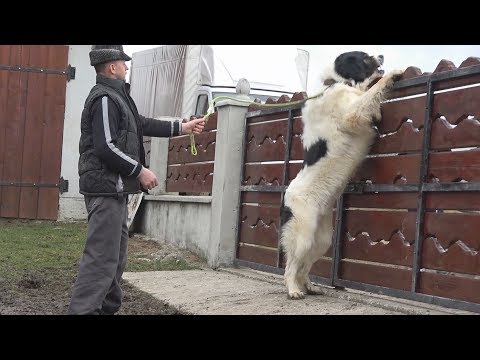
It is not aggressive at all, the Romanian Bucovina Shepherd they are not prone to attack without reason. On the other hand, their very protective character makes them react in a very intimidating way if they perceive an intrusion into their territory. However, Their growls and especially their serious and powerful barks are just a way to scare off "invaders" and are rarely a precursor to offensive action.. But, If you feel that your "family" (which is simply the herd that is in charge, if he has always lived like a sheepdog) is threatened, this extremely brave and protective dog risks going on the attack, without even backing down in front of a bear or a pack of wolves.
Independent and used to wandering alone in the wild mountains of Romania, the Romanian Bucovina Shepherd tolerates loneliness quite well and can be left alone for a few days without too much trouble, although he obviously prefers the company of his family. But, your ability to keep busy depends on having enough space to walk freely.
Due to its size, his resonant voice and his need for great spaces, the Romanian Bucovina Shepherd They are not dogs that can live comfortably in apartments and are not recommended for urban areas. They greatly prefer sparsely populated areas, where they can patrol their territory in peace and quiet without risk of unwanted encounters.
A very active and resistant dog, he needs daily physical activity and is happy to accompany his master on his long walks in the countryside.
Education «Romanian Bucovina Shepherd»
"Romanian Bucovina Shepherd"
Dog of the months
The puppy's socialization phase is of primary importance for the puppy. Romanian Bucovina Shepherd, and it is very important that you meet your family very soon, to possible other household pets, as well as the other people and animals that you will meet regularly during your life. In effect, once adult, you find it difficult to accept a new person in your environment (including for example a prospective dog handler or dog behaviorist), although this is not impossible.
As an intelligent and obedient dog, can be easily trained and trained for his future role as a sheepdog or watchdog from his first birthday. Despite its independent nature, responds very well to positive reinforcement methods, but the teacher must ensure that he always maintains a strong and authoritative demeanor.
It also, instead of a long daily training session, it is advisable to opt for several short sessions spread throughout the day.
Health «Romanian Bucovina Shepherd»
The Romanian Bucovina Shepherd it is a particularly healthy and resistant breed.
But, like most large breeds of dogs, are prone to hip dysplasia and elbow dysplasia. To reduce risks, you have to make sure that he does not undergo too much physical activity during his growth period.
Gastric dilation of the dog is another problem that can affect this breed. Due to ingestion of food too fast, especially if they are dry, can be life-threatening and requires urgent intervention by a veterinarian. To minimize this risk, it is recommended to leave large amounts of water available when the dog eats, divide his daily ration into at least two meals and let him rest after these meals.
Grooming «Romanian Bucovina Shepherd»
The Romanian Bucovina Shepherd they are long-haired dogs that need to be brushed once a week, and even more often during the moulting period. Losing her hair galore, not recommended for people who do not like to find dog hair all over the house and always have a perfectly clean interior.
It also, at the end of winter, it is advisable to cut the hair between its pads to protect your dog from heat.
It is not necessary to bathe your dog unless, of course, is particularly dirty. In any case, no more than 2 or 3 times a year, as this can damage the natural protective layer of the skin.
On the other hand, it is necessary to regularly check the inside of the ears, since it is common for external parasites to hide there, and clean them well to avoid any risk of infection.
The dog's claws should be checked monthly and trimmed if natural wear and tear is not enough.
Feeding «Romanian Bucovina Shepherd»
If he Romanian Bucovina Shepherd he has always been fed what his shepherd used to prepare for him, good quality commercial croquettes are today an ideal solution, If and when, of course, the manufacturer's recommendations are followed.
Bones are important in this dog's diet, so it can be useful to give him a bone to gnaw on from time to time. But, chicken bones and other poultry should be banned as they can cause serious damage to the digestive system.
It also, as with any dog ​​at high risk of bloating-twisting stomach, the daily ration should be divided into 2 or 3 meals and ensuring that the dog remains calm during and after these meals. This means, for example, make sure he sees his food coming instead of discovering it in front of him when he wakes up, avoid having another animal around you when you eat, and do not stimulate him during his meal or in the following hour.
It also, is essential for Romanian Bucovina Shepherd have large amounts of fresh water available at all times.
Price «Romanian Bucovina Shepherd»
a puppy of Romanian Bucovina Shepherd usually sold between 500 and 1000 EUR, but prices have tended to rise as the breed has been the subject of some interest after its recognition by the FCI. Males tend to be more expensive than females, and the price is higher when the animal has a smooth coat.
It is necessary to be well informed about the origin of the puppy and check the documents with the Romanian Canine Association. Since 2015, the breeding of dogs without a pedigree or not registered in the Romanian Stud Book is prohibited in Romania, and the marketing of these puppies is illegal.
Date of publication of the valid original standard:
14.05.2018
Use:
Guardian of the flocks and excellent guard dog.
General appearance:
The Romanian Bucovina Shepherd is a large size dog, imposing, haughty and proud. The breed has obvious sexual dimorphism.
IMPORTANT PROPORTIONS:
The length of the body is slightly greater than the height at the withers. The length of the skull is
equal to the length of the snout.
Behavior / temperament:
Balanced, calm and loyal, likes children. He is a very good guardian of the flocks, brave and a true fighter against possible prey animals (bear, wolf and lynx). Has a loud bark. When strangers or animals approach, his bark is very loud, with a low tone. During the night he patrols around the house or the herd/flock.
Head:
Solid but not heavy, carried a little higher than the top line.
Cranial region:
Skull: Moderately wide, slightly domed. The upper profile of the skull and snout are slightly divergent.
Seen from the front the skull is slightly domed, seen from the side it is almost flat. Skull width: males: of 16 to 18 cms, females: of 15 to 17 cms, the zygomatic arches are moderately developed.
The occipital protuberance is inconspicuous.
Depression links (stop): Slightly pronounced.
facial region:
Truffle: Large and well developed, black.
Snout: Abrupt cut, the same length as the skull; well developed, progressively narrowing towards the nose but never pointed; strong jaw.
Lips: Thick and firm, heavily pigmented.
Jaws / Teeth: Strong jaws, full dentition, strong teeth, healthy and white, well placed, scissor bite. Pincer bite is tolerated.
Cheeks: Not prominent.
Neck:
Of average length, It's big and strong, without jowl.
Body:
Good resistance.
top line: Horizontal.
Cross: It is slightly evident.
Back: Strong and muscular.
Pork loin: Muscular and strong.
Rump: Muscular and moderately inclined towards the base of the tail.
Breast
: Wide and deep, descending to the elbows, well arched ribs.
bottom line: slightly upward.
Tail:
High insertion, at rest pending; reaching or below the hocks; When the dog is alert or in action the tail is raised to the level of the back or slightly above, with a slight upward curve, never curled up on the back. Its cutting is prohibited.
Tips
PREVIOUS MEMBERS:
General appearance: Straight seen from the front or side. Blades: long, oblique, well muscled and well connected to the body. The scapulohumeral angulation is approximately between 100 and 110 degrees.
Arm: Moderately long, muscular.
Elbows: Glued to the body, with free movement.
Forearm: Strong, not too long.
Carpo (wrist): Strong.
Metacarpus: Short, slightly inclined.
Previous feet: Oval, compact and massive, fingers together and arched, black or ash-colored nails.
LATER MEMBERS:
General appearance: Muscular and strong. Normal posture.
Thighs: Medium long, widths, very muscular.
Knees: Femoro-tibial angle of 110 degrees approximately.
Legs: Moderate long, muscular.
Hocks: Widths, seen from the side at moderate angle. Seen from behind parallel to the median plane of the body.
Metatarsus: Strong and upright. The presence of dewclaws should not be penalized.
Hind feet: Oval, compact and strong. With black or ash-colored nails.
Movement:
Harmonious, elastic, well coordinated, giving the impression of effortless power. The preferred step is trotting. Exceeding will be penalized.
Mantle
PIEL: Thick, body-hugging with dark ash pigmentation.
Fur: The head and the front of the limbs are covered with short hair. The hair on the body is abundant, long (6-9 cm.), effortless power impression. The preferred step is trotting. Exceeding will be penalized. plane, straight and rough. The undercoat is shorter, very dense and soft and lighter in color. In the neck region the hair is much longer, forming a mane.; on the back of the front limbs the hair forms fringes, on the back of the hind limbs the hair is longer and forms breeches. The tail is thick hair.
COLOR
Cclassic smell: The main color of the coat is a light white or yellowish white with distinctive gray spots, black or black with red highlights. Small black or gray spots may appear on the legs. Tabby appearance on patches should be rejected.
Csolid odors: Solid Colored Individuals (no patches) are accepted but should not be encouraged: white, yellowish white, ashy gray or black.
Size and weight:
Altura to the cross:
Males: 68 to 78 cm., ideal 71-75 cm..
females: 64 to 72 cm., ideal 66-68 cm..
Tolerance: -4 cm. Weight: In proportion to height.
Fouls:
Any deviation from the aforementioned criteria is considered as a fault and the severity of this is considered to the degree of the deviation to the standard and its consequences on the health and well-being of the dog..
Lack of substance or too heavy.
Insufficient sexual character.
Absence of a non-PI tooth.
Short ears.
Short tail.
Subject too heavy or weak.
Because I cut it differently (less than 6 cm.)
Too long hair (more than 9 cm.)
Absence of mane or fringes on the limbs.
Tail curled or carried in the shape of a ring.
Flabby fingers facing in or out.
Elbows turned outward.
Heavy movement.
FALTAS GRAVES:
atypical expression.
Wiggly eyes, round.
Erect ears.
Loose or saddled top line.
Too short hair.
Curly or poorly textured hair.
yellow eyes
Eyes of different color one than the other (heterochromatic).
cow hooves.
FALTAS DISQUALIFYERS:
Aggressiveness or extreme shyness.
Any dog showing clear signs of abnormalities
physical or behavioral.
Lack of typicity.
Prognathism or enognatismo.
Absence of incisors or canines
albinism.
Natural absence of tail or tail with atrophy.
height below 64 cm or about 82 cm for males.
height below 60 cm or about 78 cm for female
N.B.:
Males should have two normal-appearing testicles fully descended into the scrotum.
Only functionally and clinically healthy dogs, with the typical conformation of the breed, should be used for parenting.
Lthe latest changes are in bold.Standard-FCI No. 349 / 09.01.2006 / IS
Source: F.C.I - International Cynological Federation
Alternative names:
1. Bucovina Sheepdog, Bucovina Shepherd, Southeastern European Shepherd (English).
2. Berger roumain de Bucovine, Berger de l’Europe du Sud-Est (French).
3. Ciobănesc Românesc de Bucovina (German).
4. (em romeno: Ciobanesc Romanesc de Bucovina) (Portuguese).
5. (en rumano: Ciobănesc de Bucovina) (español).
▷ The world of Pets: Dogs, cats, birds, reptiles, amphibians
The Russian Harlequin Hound is a rare breed of dog found almost exclusively in Russia.
Content
History
In the 18th century, a hound native to Russia began to develop naturally, but it wasn't until around 1900 that selective breeding began in earnest, and the first breed standard for the Russian hound was developed in 1925. The breeders then crossed to the Estonian Hound with the English hounds. The result was the Russian Harlequin Hound, a slightly squarer looking dog with tricolor spots on a white body. The voice of the Russian Harlequin Hound is much deeper and melodic than that of a Estonian Hound, and frequently have black marks on the saddle.
Until 1951 This new breed of hound was known as the Anglo-Russian hound, but when he was accepted as a separate race from his own, he was known as the Russian Harlequin Hound. This breed was well known, not only for their melodic voices, but also for its speed and resistance when tracking its prey. They were frequently used as red hunting dogs, which means they chased foxes and wolves, traditionally known as red game, and they are rarely found outside the Soviet Union.
The breeders of the Russian Harlequin Hound they are still in the process of improving both the type and uniformity of the breed and the breed is now sometimes seen at Soviet dog shows, and is considered equal in quality to the best Estonian Hound. The Russian Harlequin Hound It was also used by William Dunker when he developed his namesake the Dunker, sometimes also known as the Norwegian Hound.
The Russian Harlequin Hound It is not recognized by the F.C.I.
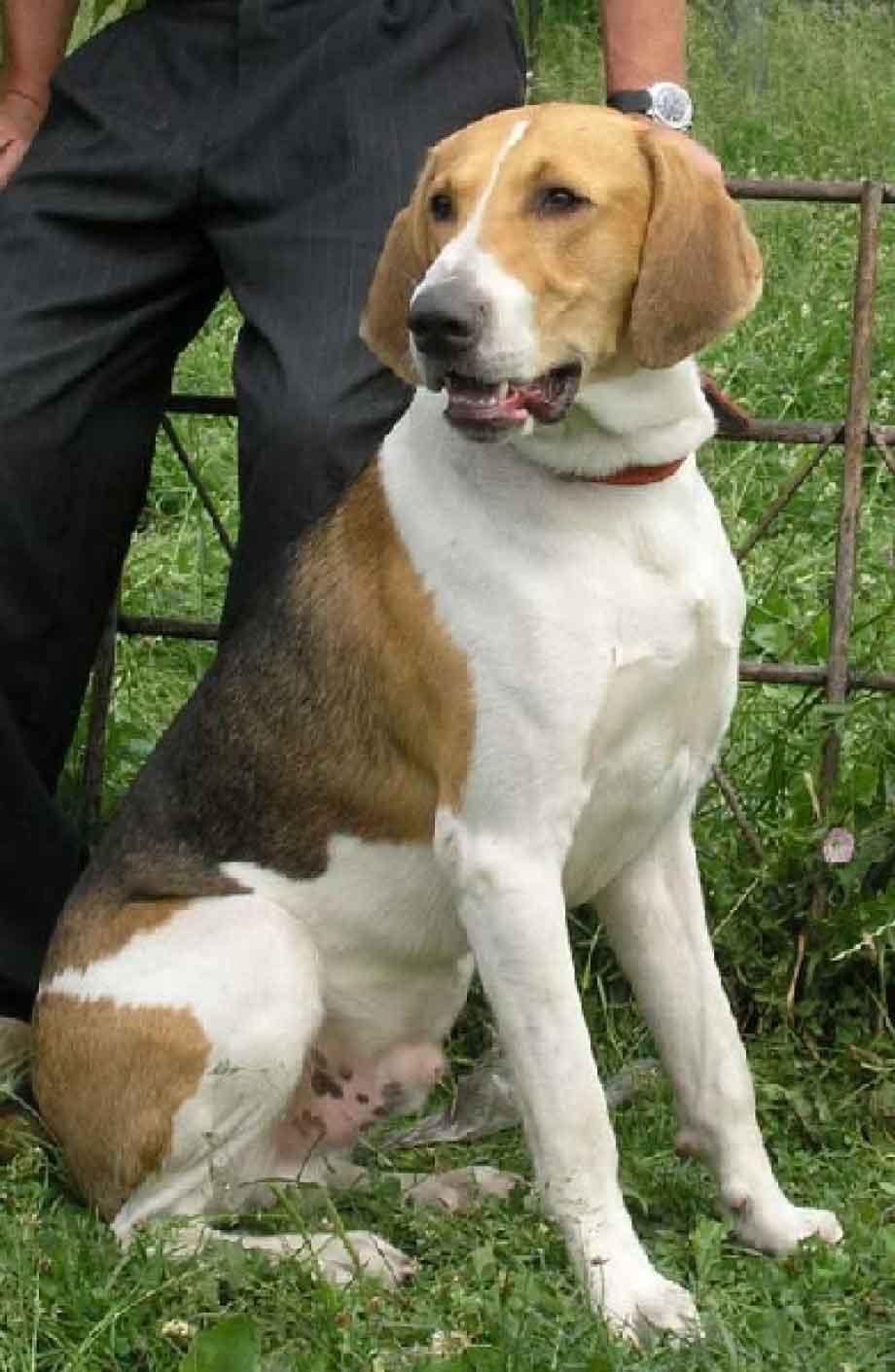
The Russian Harlequin Hound he is a muscular dog, medium-sized, which stands about twenty-four inches tall and weighs between 18 and 31 kg, with a square build, long, straight legs and a strong tail that has a slightly curved or saber-like shape. They also tend to have a somewhat broad, square head with a straight, square muzzle., that always ends with a black nose. They have slightly hanging lips, oval shaped eyes, usually dark brown, and medium-sized pendant ears that sit high on the head and hang down to the sides to frame the face.
The characteristic short fur of the Russian Harlequin Hound is mostly white with tricolor markings on the head, face, back and tail, and is typically quite dense; this coloration is particularly useful when hunting with this Russian hound as it makes it much easier to differentiate the hunting dog from its prey.
Character and abilities «Russian Harlequin Hound»
The Russian Harlequin Hound is a rare breed of dog found almost exclusively in Russia. A mix of the Estonian Hound and the English Foxhound, this scent hound is known for its ability to track the game traditionally known as red game, like the fox and the wolves. They tend to be friendly and outgoing with almost everyone they meet., both human and canine, but they have a high prey drive and may not be safe around cats and other small animals. This breed is not well adapted to apartment living due to its high activity levels and vocal nature..
▷ The world of Pets: Dogs, cats, birds, reptiles, amphibians
The Russian Hunting Sighthound or Borzoi, It is a breed of dog developed in Russia.
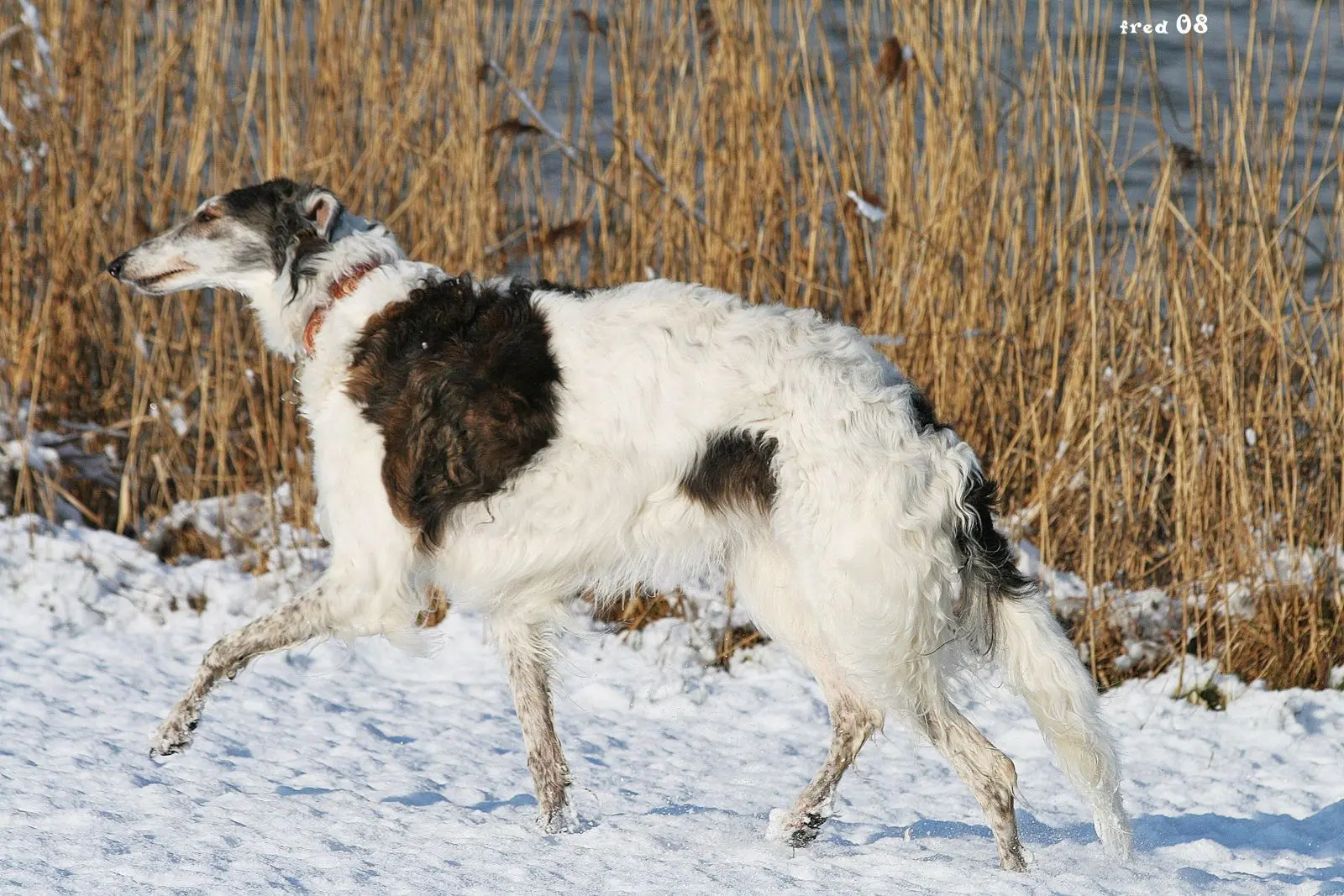
It descends from the Arabian greyhound being similar to a Russian sheepdog. Formerly known as the Russian Greyhound, It was originally bred to hunt wolves and hares. It is graceful, strong and fast, reaching a height of between 66 and 79 cm and a weight from 25 until 48 kg.
It has a long and narrow head, small ears. Its tail is long and stooped and his coat is silky and it can be smooth or slightly curly. It is almost always white with dark spots. It is notorious for its elegant appearance. The Russian Greyhound or Borzoi had its moment of greatest glory in the Court of the Tsars where it was bred with great mastery to be used in hunting the Siberian wolf..
It is a good Hunter of small animals, It is an affectionate and obedient dog with the master but, very distrustful with strangers, to the extent of showing aggression and even bite.
As all greyhounds, It also adapts to live in the House on condition of having large spaces where to move with great freedom.
Among all the Greyhound, The Borzoi is certainly the most "noble" both for its characteristics and its gait.
It presumably descended from the Egyptian hound and there are no accurate data on its occurrence in Russia.
But he knows, by writings dated to the year 1200, It was already used for hunting Hare and other larger animals.
For centuries it has been the dog of the families of the nobility and of the tsars. You can say without a doubt, that the Grand Duke Nicholas he was the largest breeder of this breed and used to kennel around a hundred of these magnificent dogs.
The fall of the Tsars and the Russian nobility, was the cause of the almost total disappearance of this breed from its country of origin, However, It is quite widespread in Europe and America.
His first appearance in England took place about a century ago, when Tsar Alexander II gave him a pair of Borzoi to Queen Victoria.
Exists in all colors but the most appreciated are the white uniform, White with grey spots, Red and atigradas. Unlike other races, the white spots should not have very defined limits, but window gradually with the other colors. The hair is long, with silky reflections, corrugated and big curls. Smooth on the head, in the ears and in front of the extremities. You can be absolutely white, or white with yellow spots, Orange, red, atigradas, grey.
The appeal of the males is of 70 to 82 cm., in females it decreases approximately 5 cm..
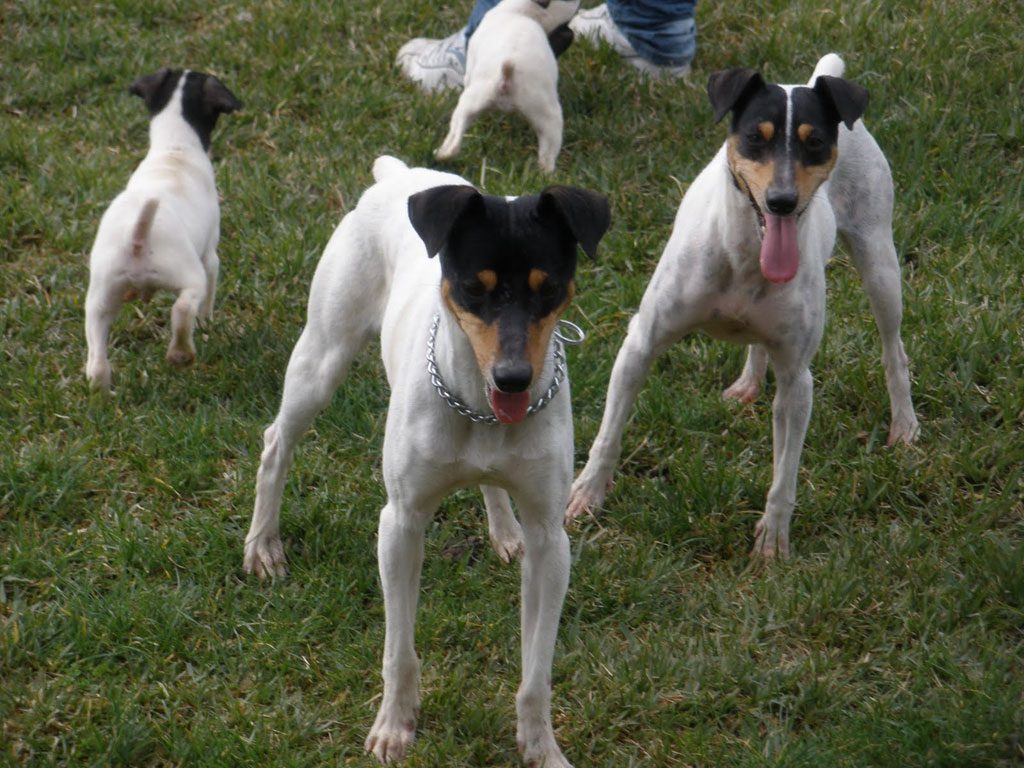
The Ratonero Bodeguero Andaluz is happy, restless, loving, Nice and brave.
Content
History
The Ratonero Bodeguero Andaluz It is a small-sized Spanish dog breed native to Western Andalusia., especially in the province of Cádiz. Its name comes from the main function of this breed in the cellars of the Marco de Jerez: the hunt for mice hidden between barrels.
The origin of this is found in the Terrier dogs of the English wine merchants who settled in the aging area of the Marco de Jerez (Jerez de la Frontera, Sanlucar de Barrameda and El Puerto de Santa Maria) end of the 18th century and early 19th Centuries. These dogs (mostly Fox Terrier Smooth) they were crossed with those that were used in the cellars and stables to eliminate the rats and mice that were there.
 FCI 327 . Pinscher and Schnauzer type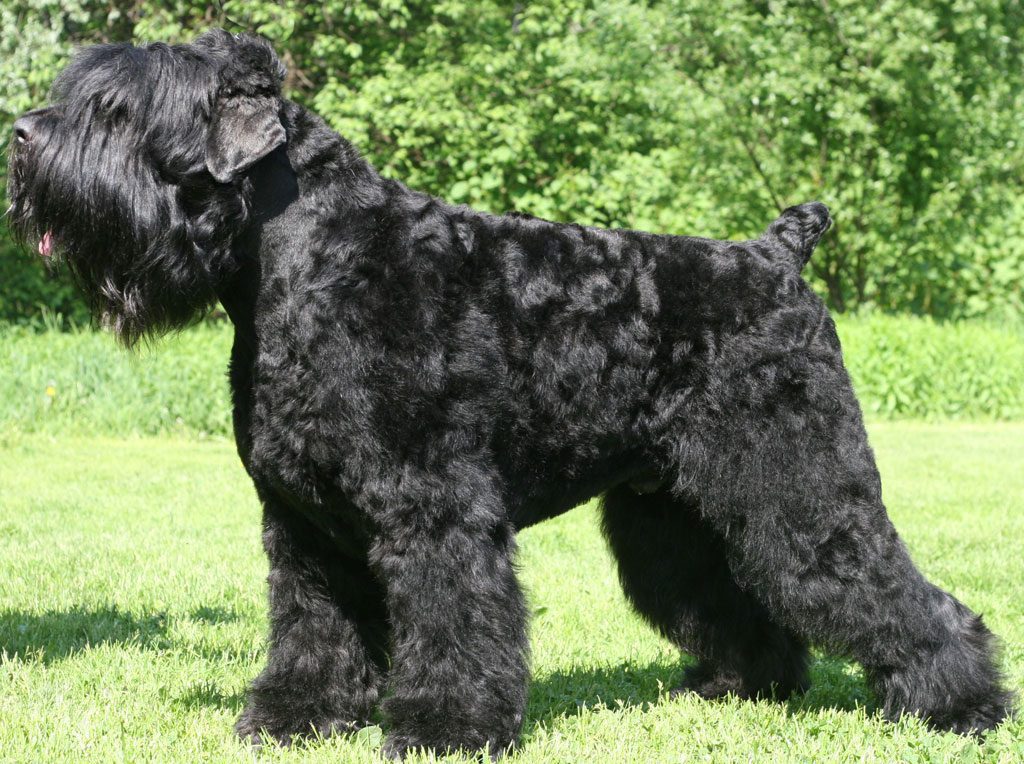
Black Russian Terriers
Dogs 101 – Black Russian Terrier
 Black Russian Terriers
 Dogs 101 – Black Russian Terrier
 breederretriever.com
 dogbreedsreviews
 kunhung's album
 dogdeg.blogspot.com
 dogdeg.blogspot.com
 terrierruso.com
 frankoelegant.Narod.ru
 terrierruso.com
 Black Russian Terrier Zhandar Jhamalitsa 12, 5 m & female riesenschnauzer – 3
 Midnight Solo Black Russian Terrier playing with young girl
 FCI - Black Russian Terrier
 FCI 96 - Molossoid . Mountain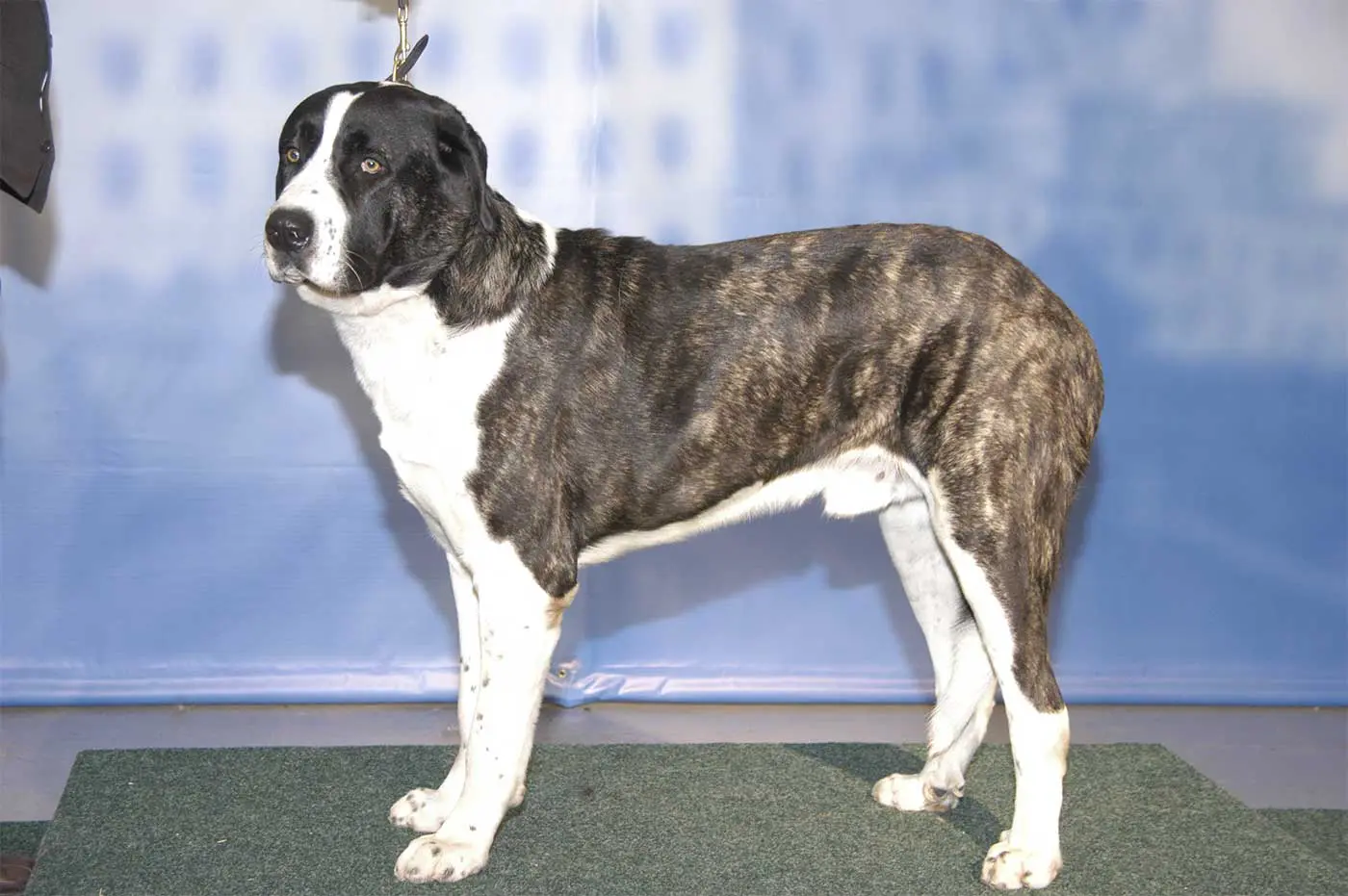
 FCI 147 - Molosoids – Doge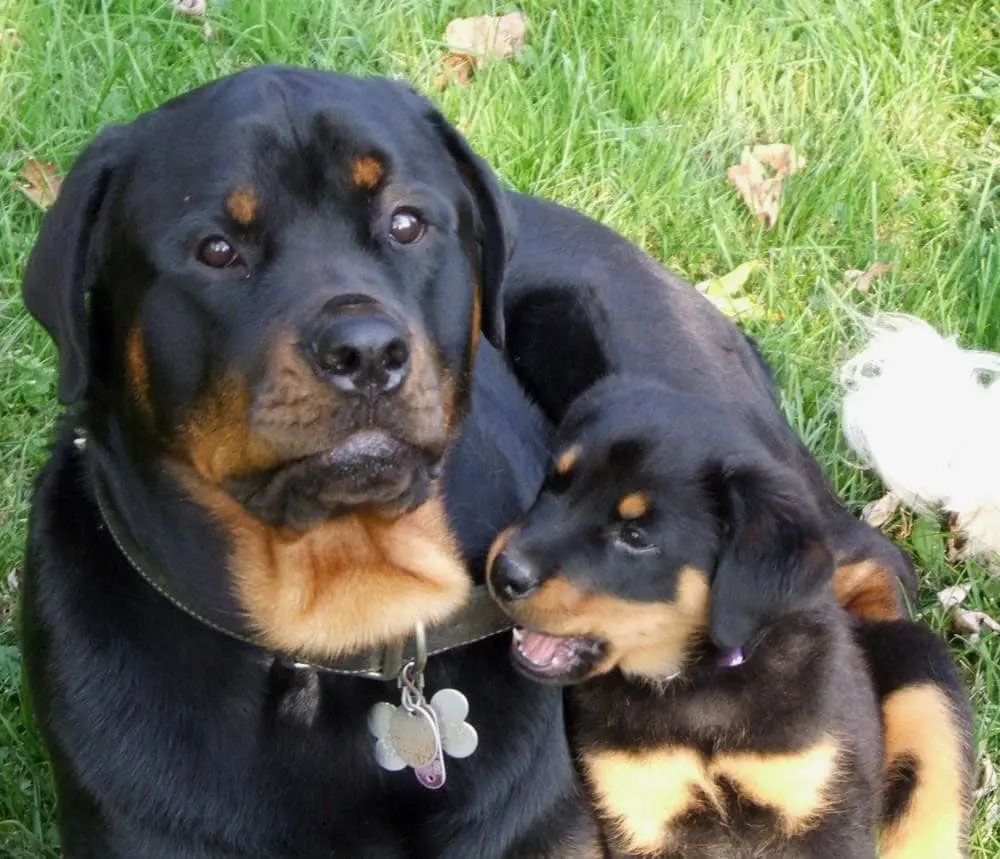





 Our rottweiler dangerous diesel
 Rottweiler playing with a child
 Rottweiler playing dead
 Beagle Puppy Attacks Rottweiler
 FCI 357 - Sheepdogs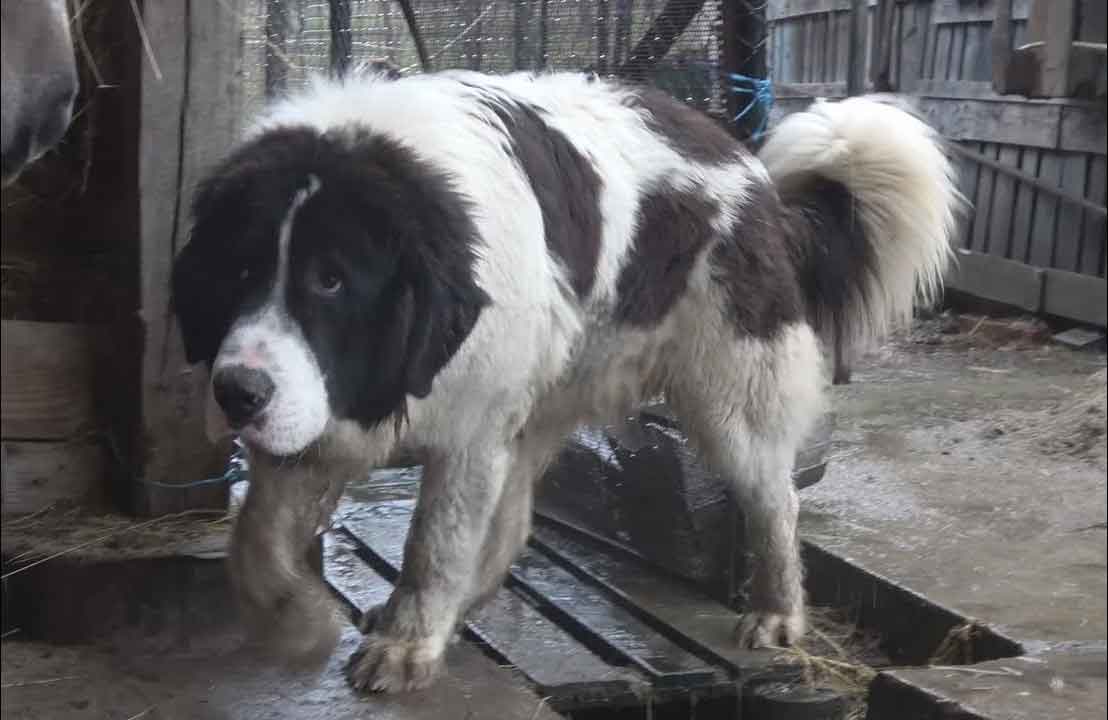

 Not recognized by the FCI