โ–ท The world of Pets: Dogs, cats, birds, reptiles, amphibians

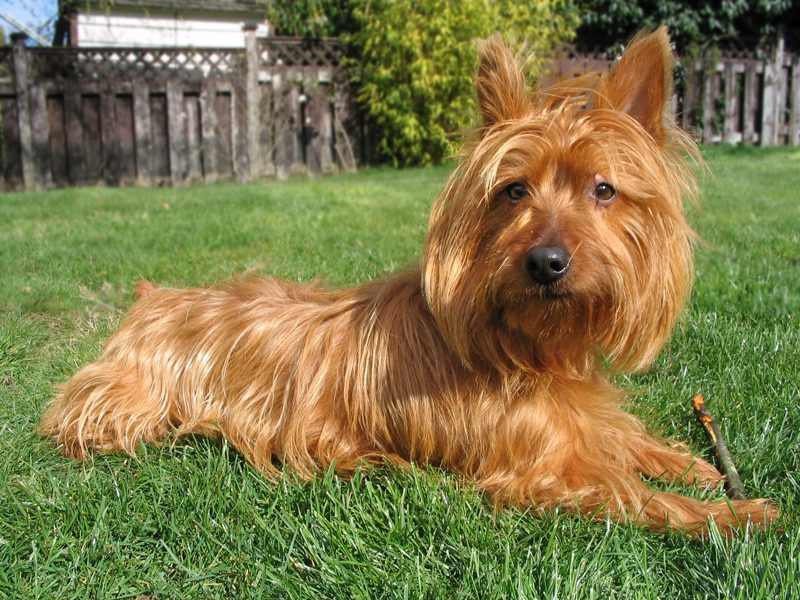
Australian Terrier
Australia FCI 8 . Small sized Terrier

The Australian Terrier is a lively dog, attentive, with a facial expression that denotes intelligence.

Australian Terrier

Content

Characteristics "Australian Terrier"

Coexistence is important that you have with your new friend. Before considering the acquisition of a dog of the breed "Australian Terrier" you know certain factors. Not all breeds of dogs are apt to live in an apartment, you must take into account his character, their need for exercise, their interaction with other pets, their care and if you have small children, their level of tolerance towards them.

Adaptation โ“˜

5,0 of 5 stars (based on 1 review)

friendly dog โ€‹โ€‹โ“˜

1,0 of 5 stars (based on 1 review)

hair loss โ“˜

1,0 of 5 stars (based on 1 review)

Affection level โ“˜

3,0 of 5 stars (based on 1 review)

Need for exercise โ“˜

4,0 of 5 stars (based on 1 review)

Social need โ“˜

4,0 of 5 stars (based on 1 review)

Home โ“˜

3,0 of 5 stars (based on 1 review)

Toilet โ“˜

1,0 of 5 stars (based on 1 review)

Friendly with strangers โ“˜

3,0 of 5 stars (based on 1 review)

barking โ“˜

5,0 of 5 stars (based on 1 review)

Health โ“˜

4,0 of 5 stars (based on 1 review)

Territorial โ“˜

5,0 of 5 stars (based on 1 review)

Cat friendly โ“˜

1,0 of 5 stars (based on 1 review)

Intelligence โ“˜

4,0 of 5 stars (based on 1 review)

Versatility โ“˜

4,0 of 5 stars (based on 1 review)

Child friendly โ“˜

4,0 of 5 stars (based on 1 review)

Surveillance โ“˜

4,0 of 5 stars (based on 1 review)

joy โ“˜

5,0 of 5 stars (based on 1 review)

History


The Australian Terrier It is a breed of dog in the Terrier family, classified in the section 2.

Due to his appearance, He is often confused with a Yorkshire Terrier large size. Is not surprising because, this breed comes from crossing a Yorkshire Terrier and different breeds of Terrier among the Skye Terrier, Cairn Terrier, the Norwich Terrier and other Irish Terrier.

Its origin goes back in the early 19th century, when accompanied by their Terrier British families travelled to Australia, and the vicissitudes of fate led those Terriers to interbreed with the natives..., and this is how many races in the world have been born.

In the early years of its existence, the Australian Terrier was known by the name โ€œBroken-coated-Terrierโ€ or โ€œBroken-hair-buel-and-tanโ€.

The wording of the first breed standard, took place in the year 1896, While the official recognition of the same, It is located a little laterโ€ฆ in 1933. Y, The latest revision of the standard dates from 1962.

Otros nombres: Terrier Australien

Group 3 / Section 2 – Small sized Terrier.

Physical characteristics

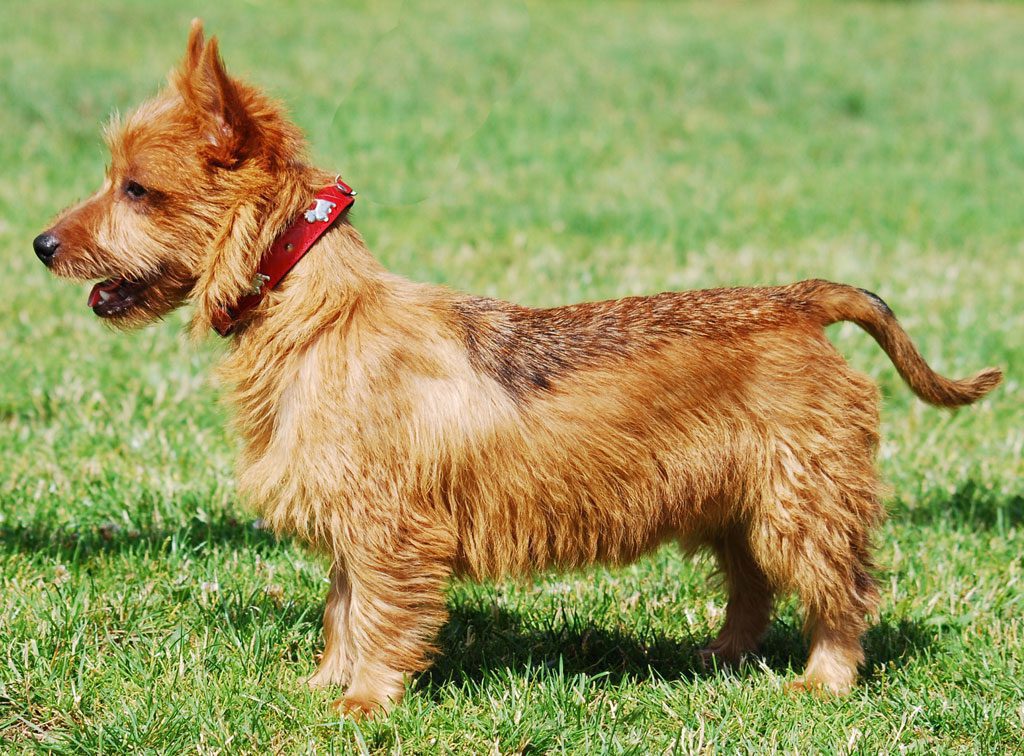
It is a long dog (in relation to your height), rustic looking, robust with short limbs and strong.

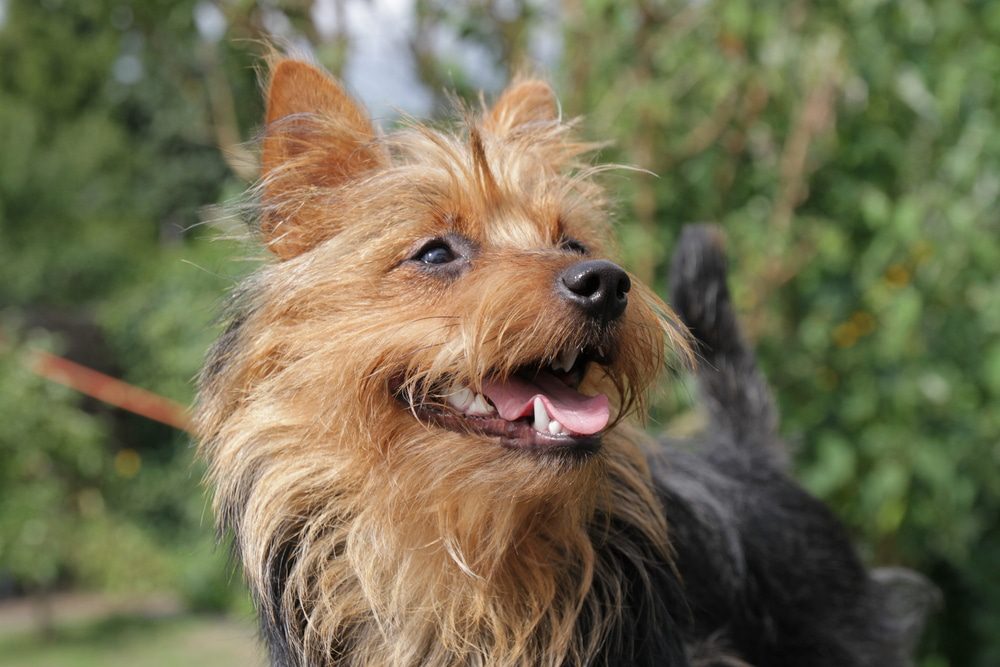
The head is elongated, It has the black truffle and scissor closing denture. It has pointed ears being erect and small and dark eyes. The tail is often be amputated.

The height of the Australian Terrier is maximum 25 cm. to the cross in males and 22,5 to 23 in females, the average weight is 4.5 to 5 Kg.

The hair is hard, straight and average length. that rustic look, precisely, Since hair is rough to the touch and out gives it.

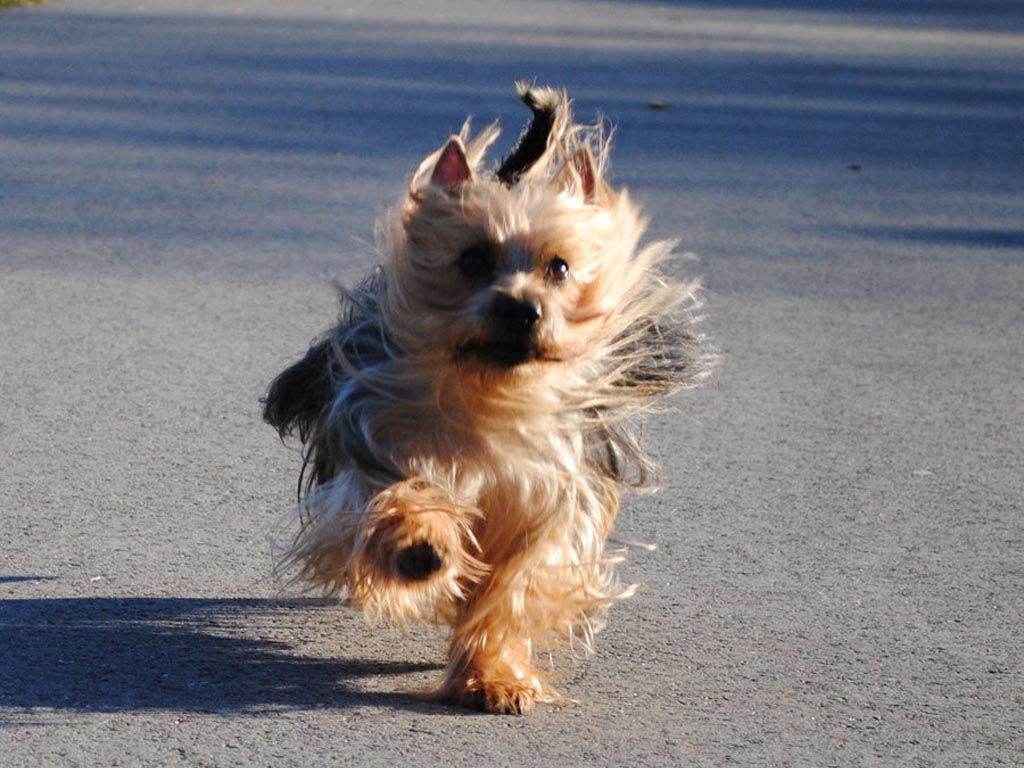
The fur can be blue or silver, with stains of fire (or bronze) on the limbs and snout, or color sand clear or Griffon.

Puppies are born black solid color and change color in three months.

Observations

It is a very robust breed of dog, that often has a high percentage of Diabetes Mellitus.

What is Diabetes Mellitus?

Diabetes is defined as a disorder in the metabolism of the hydrates of carbon, fats and proteins caused by a deficiency of insulin, It can be absolute or relative.

Insulin is a hormone secreted in the beta cells of the pancreas, whose production allows to control blood sugar (blood glucose levels). Insulin deficiency causes a deterioration in the capacity of tissues to use nutrients, that translates into an increase of glucose in blood (Hyperglycemia).

Diabetes is classified according to the disease in humans, that is to say, as type I and type II.

The type I It is characterized by the destruction of beta cells, What determines the loss progressive and complete end of insulin secretion. Dogs suffering from Type I Diabetes Mellitus may have a sudden onset of symptoms due to the rapid loss of the ability to produce insulin.. These cases require insulinizaciรณn from the time of diagnosis and are called diabetics 1,811 (DMID).

Other dogs may have a gradual loss of insulin secretion, that their beta cells will be destroyed with slow. These animals may have an initial period in which hyperglycemia is mild or easily controlled., in which case it's diabetic insulinoindependientes (DMIID), Although in the long term these dogs also need her.

Diabetes Mellitus type II is a little more difficult to understand and is characterized by what we call "insulin resistance" and by "dysfunctional" beta cells. The secretion of insulin by these cells will be high, low or normal, but not enough to overcome the resistance to it in the peripheral tissues.

Itร‚ยดs, to explain it in a graphic way, It is as if peripheral tissues do not obey the orders of the insulin or were not able to do what send it.

Regarding the metabolism or synthesis of glucose, These dogs may have DMID or DMIID, that is to say, whether or not to require insulin depending on the extent of insulin resistance and the functional status of the beta cells in terms of their ability to produce and secrete the hormone in low amounts, normal or high.

Dogs also recognizes a secondary diabetes, produced by a carbohydrate intolerance (glucose) due to the presence of a disease or a drug treatment that it antagonizes or counteracts the effects of insulin and can lead to the exhaustion of the beta cells of the pancreas with the appearance of diabetes insulinodependiente.

The owners of diabetic dogs should be aware that the routine in the treatment with insulin and food has to be respected. Two fixed doses of insulin per day associated with a palatable food that always provides the same source and the same amount of starch, always run at the same time it can reduce the risk of hypoglycemia in diabetic dogs.

In North America, area where the Australian Terrier is very popular, scientific research is being carried out on the incidence of this disease.

Character and skills

The breed standard describes the ideal Australian Terrier temperament as an alert spirit., ยซwith the natural aggressiveness of a Buzzard and a Hunter of coverageยซ.

Taking into account the Classification of dogs according to their functional and obedience intelligence (Stanley Coren's "The Intelligence of Dogs") the Australian Terrier ranks number 34. Means that, is higher than the average, which indicates a good capacity for learning and training.

The Australian Terrier is a lively dog, attentive, with a facial expression that denotes intelligence, loyalty and faithfulness.

Sometimes it can become dominant, so a good training from an early age would be appropriate..

It is perfectly adapted to any type of housing, whether large or small (apartment, House, house with garden, etc.). It should be enough with daily brushing and a walk.

Images "Australian Terrier"
"Australian Terrier" videos

Australian Terrier (Terrier Australia)

Type and recognitions:

  • FCI CLASSIFICATION:
  • Group :
  • Section : . .

Federations:

  • FCI – Terriers 2 Small sized Terriers. โ“˜
  • AKC – Terriers โ“˜
  • ANKC – Terriers โ“˜

FCI breed standard "Australian Terrier"

Origin:
Australia

Date of publication of the valid original standard:
08.10.2012

Use:

One of the smallest work terriers that was raised both as an assistant and company dog โ€‹โ€‹in difficult times and land.


General appearance:

It is a robust dog, short limb, elongated in proportion to its height, With the strong typical character of the terriers, always alert, active and solid.
His coarse fur, without cutting, coupled with a well defined collar around the neck that extends to the sternum and its long and strong head help create the sturdy and robust appearance.


Behavior / temperament:

In its essence, he is a working terrier, But thanks to its loyalty and its balanced character it is also a company dog.

Head:

---

Cranial region:
  • Skull: Plano, moderate width, full between the eyes. Covered by a soft "bun".
  • Depression links (Stop): Light, but defined.

facial region:

  • Truffle: black, moderate in size, spreading to the nose.
  • Snout: Strong and powerful, is the same length as the skull. The nose should be strong and not fall below the eyes. Muzzle length and strength are essential to empower fearsome jaws.
  • Lips: Blacks, tight and clean.
  • Jaws / Teeth: Strong and fearsome jaw. Teeth are large and evenly placed; the upper incisors fall well near and in front of the lower ones (scissor bite).

Eyes: They must be small, oval, with a cunning expression, dark brown, well separated and not prominent.

Ears: They are small, upright, pointy, well carried, moderately broad-based, without having long hair, and very attentive (except for puppies younger than 6 months).

Neck:

Good length, slightly arched, strong and falling gently on the oblique shoulders.

Body:

Length in proportion to height, of strong construction. When valuing the body, Attention should be paid to the description of the first paragraph where it is โ€œa robust dog, of short and elongated extremities in proportion to the height ยป.

  • Back: level top line. Pork loin: Strong.
  • Breast : Of moderate depth and width, with well-rounded ribs. The sill is well developed, the relatively deep sternal region.

Tail:

Traditionally amputated, Both amputated and natural, it is of high implantation, well carried, but not on the back.

Tips

PREVIOUS MEMBERS: Seen from the front straight and parallel, good bone structure. The forelimbs are slightly feathered down to the metacarpus.

  • Metacarpus: Strong, no inclination.
  • Previous feet: Small, round, compact, well cushioned, with fingers tight and closed, moderately arched. Feet must not be twisted outwards or inwards. The nails are strong, black or dark.

LATER MEMBERS: Of moderate length, widths. Seen from behind, hind limbs must be parallel from hock to foot, without being too far apart or too close to each other.

  • Thigh: Strong and well muscled.
  • Knees: They have good angulation.
  • Hocks: Well angled, placed well under.
  • Hind feet: Small, round, compact, well cushioned, with fingers tight and closed, moderately arched. Feet must not be twisted outwards or inwards. The nails are strong, black or dark.

Movement:

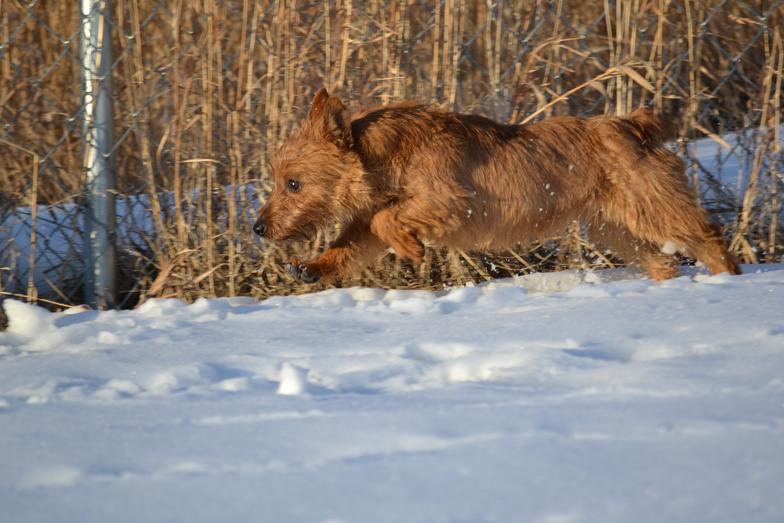
Action must be free, agile, elastic and energetic. Seeing it from the front, forelimbs must move appropriately without shoulder looseness, elbows, o carpos. The hindquarters should give momentum and power, with free movement of the knees and hocks. Back views, the extremities must be parallel to the hock to the ground, without being too close or too far apart from each other.

Mantle

Fur: It consists of a rough and straight outer layer of hair of approximately 6 cm length, with a soft textured short hair undercoat. The snout, lower limbs and feet should be free of long hair.

Color:

  1. Blue, blue Steel, or dark gray blue, with intense tan markings (not sandy) on the face, ears, lower body, lower extremities and around the anus (except puppies). The more intense and defined the color is, Better Any black staining is undesirable. The bow on the head should be blue, silver or a lighter shade than the rest of it.
  2.  Light sand or red is acceptable with a lighter toned bow. Any dark staining or shading is undesirable.
  3. In any color, white spots on the chest or feet are penalized.


Size and weight:

  • Height to the cross: The desirable is approximately 25 cm., the females being a little smaller.
  • Weight: The desirable is approximately 6,5 kg for males, females being a little lighter.


Fouls:

Any deviation from the aforementioned criteria should be considered as fault, and the seriousness of it is considered to the degree of deviation to the standard and its impact on health and welfare of the dog.

FALTAS DESCALIFICANTES:

  • Aggressiveness or excessive shyness.
  • Any dog โ€‹โ€‹showing clear signs of physical or behavioral abnormalities must be disqualified..


N.B.:
  • Males should have two normal-appearing testicles fully descended into the scrotum..
  • Only functionally and clinically healthy dogs, with the typical conformation of the breed, should be used for parenting.

The latest amendments are in bold.

TRADUCCION: Mexican Canophilic Federation A.C.,review technique : M.A. Martรญnez (FCA)

Source: F.C.I - International Cynological Federation

Alternative names:

1. Aussie (English).
2. Terrier australien (French).
3. Aussie (German).
4. Terrier australiano (Portuguese).
5. Aussie, Terrier Australiano (espaรฑol).

โ–ท The world of Pets: Dogs, cats, birds, reptiles, amphibians

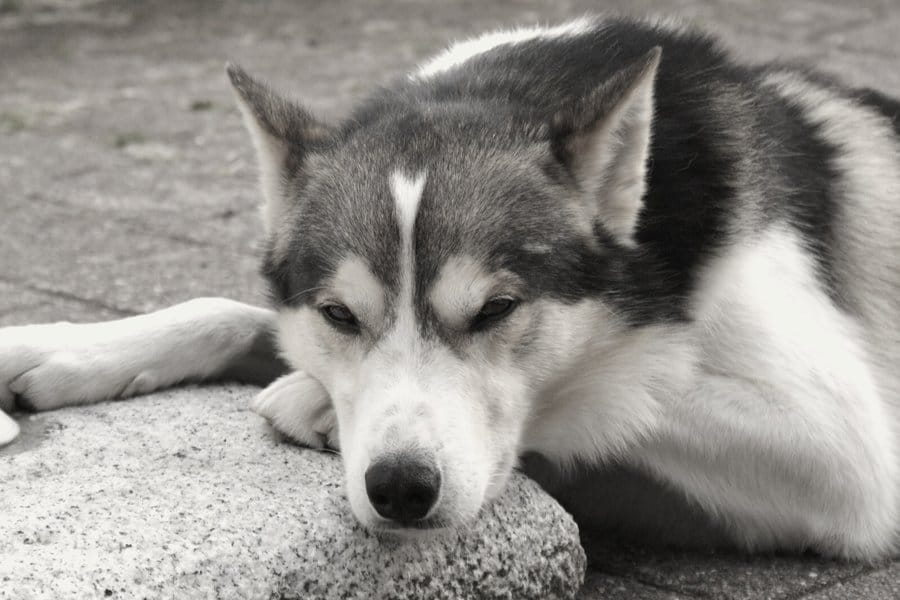
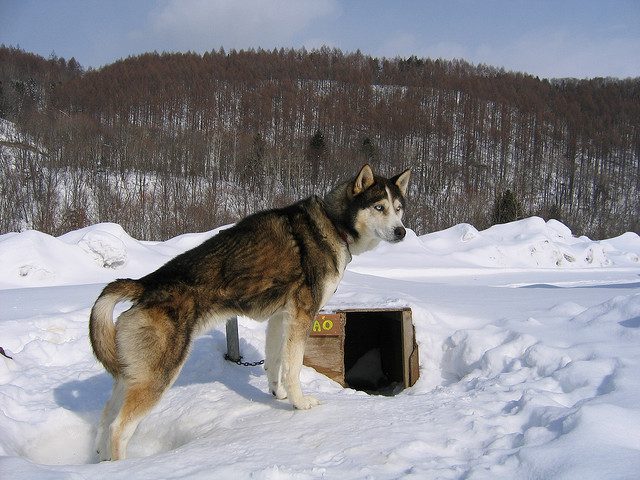
Alaskan Husky
Estados UnidosNot recognized by the FCI . Nordic Sledge Dogs
Alaskan Husky

Alaskan - Autor de la foto: siva_lovehorses (flickr).

The Alaskan Husky is an athletic and generally healthy dog., specializes in sledding.

Content

Characteristics "Alaskan Husky"

Coexistence is important that you have with your new friend. Before considering the acquisition of a dog of the breed "Alaskan Husky" you know certain factors. Not all breeds of dogs are apt to live in an apartment, you must take into account his character, their need for exercise, their interaction with other pets, their care and if you have small children, their level of tolerance towards them.

Adaptation โ“˜

5,0 of 5 stars (based on 1 review)

friendly dog โ€‹โ€‹โ“˜

5,0 of 5 stars (based on 1 review)

hair loss โ“˜

4,0 of 5 stars (based on 1 review)

Affection level โ“˜

5,0 of 5 stars (based on 1 review)

Need for exercise โ“˜

2,0 of 5 stars (based on 1 review)

Social need โ“˜

3,0 of 5 stars (based on 1 review)

Home โ“˜

1,0 of 5 stars (based on 1 review)

Toilet โ“˜

3,0 of 5 stars (based on 1 review)

Friendly with strangers โ“˜

5,0 of 5 stars (based on 1 review)

barking โ“˜

4,0 of 5 stars (based on 1 review)

Health โ“˜

2,0 of 5 stars (based on 1 review)

Territorial โ“˜

3,0 of 5 stars (based on 1 review)

Cat friendly โ“˜

1,0 of 5 stars (based on 1 review)

Intelligence โ“˜

3,0 of 5 stars (based on 1 review)

Versatility โ“˜

3,0 of 5 stars (based on 1 review)

Child friendly โ“˜

3,0 of 5 stars (based on 1 review)

Surveillance โ“˜

5,0 of 5 stars (based on 1 review)

joy โ“˜

3,0 of 5 stars (based on 1 review)

Alaskan Husky history

Listed not so much as a breed of dog as a type or category of dog. There are no fixed pedigree characteristics, but rather for the purpose, it is to be a very efficient sled dog.

The origin of this dog is Alaska and Canada. These fully domesticated dogs came thousands of years ago. Today, the Alaskan sled dogs They can be crossed, type Husky, or a combination of several. They also vary in size and build depending on the use of the dog., to compete or work.

Sled drivers usually distinguish between Alaskan Husky and crossbreeding, in an informal way, so it is possible that this type of dog has a degree of northern dog appearance.

Most of the Alaskan Husky have pointed ears, qualifying, in fact, as spitz type dogs.

There are some specializations within this type, as the Mackenzie River Husky or the MALAMUTE, the Alaskan of Sprint as the Eurohound, or distance.

It must be borne in mind that in sledge racing championships, These dogs can come with loaded sledges to the 30 km/h and that runs for three days at a rate of between 30 to 50 km daily.

The Alaskan They are valued for their toughness and resistance. They earn an average speed of 31 km/h.

Alaskan Husky Physical Characteristics

This type of dogs, at least those that are used to speed racing, are of moderate size, with an average 21 to 25 kg for the males and 17 to 19 kg for the females.

The eyes They can be any color, many are blue. The eyes blues are not considered an essential feature of this race. The fur It has two layers, short hair and of medium length, Although not much, and usually less dense than pure breed of the North, the length of the shortest layer is governed by the need for an effective heat dissipation during races.

Athletic and generally, healthy. Its Life expectancy is usually between 10 to 15 years.

Character and skills

They tend to vary greatly in personality both in colour and appearance. But, in general terms, They are very affectionate dogs, to live with other dogs and humans.

These dogs they are not suited to a lifestyle of urban apartments, that they need a constant source of exercise, and due to its incredible resistance, It seems that they never tire. It is an adventurous and tends to be very quiet in the car rides. These dogs are happy to live outside or inside the home of its owners, But if he leaves out, It is not recommended if you have a perfect lawnโ€ฆ, are amateur digging wellsโ€ฆ

His hair tends to be self-cleaned just like a Mally or a Siberian Husky, which is why they need less frequent baths, In addition, they do not usually smell. They have a season of hair shedding in the spring and, Unlike in the Siberians, Malamutes or German shepherds, they may not leave large quantities of hair around the House all year round.

Nothing is impossible obstacles to this type of dogs, that they tend to go up to almost two metres away the sitting position. Although swimming is not his forte, they tend to show any resistance or fear of the water and you can train and motivate them to make them good swimmers. Usually very good vision and sense of smell, which it makes them very good hunters.

Alaskan Husky Pictures

Vรญdeos Alaskan Husky

Siberian Husky runs with Bike! Springer Bike with your Dog
Type and recognitions:

  • Nordic Sledge Dogs
  • They are not recognized by the AKC, nor by the FCI

Alternative names

1. Alaskan Husky (English).
2. Alaskan Husky, Alaskan (French).
3. Alaskan Husky (German).
4. Alaskan Husky (Portuguese).
5. Alaskan Husky (espaรฑol).

โ–ท The world of Pets: Dogs, cats, birds, reptiles, amphibians

Old Danish Pointer
Dinamarca FCI 281 . Braque Type

Antiguo perro de muestra danรฉs

Given the hunting instinct of the Old Danish Pointer, it is necessary to socialize him as a child

Content

Characteristics "Old Danish Pointer"

Coexistence is important that you have with your new friend. Before considering the acquisition of a dog of the breed "Old Danish Pointer" you know certain factors. Not all breeds of dogs are apt to live in an apartment, you must take into account his character, their need for exercise, their interaction with other pets, their care and if you have small children, their level of tolerance towards them.

Adaptation โ“˜

3,0 of 5 stars (based on 1 review)

friendly dog โ€‹โ€‹โ“˜

3,0 of 5 stars (based on 1 review)

hair loss โ“˜

2,0 of 5 stars (based on 1 review)

Affection level โ“˜

5,0 of 5 stars (based on 1 review)

Need for exercise โ“˜

4,0 of 5 stars (based on 1 review)

Social need โ“˜

4,0 of 5 stars (based on 1 review)

Home โ“˜

1,0 of 5 stars (based on 1 review)

Toilet โ“˜

2,0 of 5 stars (based on 1 review)

Friendly with strangers โ“˜

4,0 of 5 stars (based on 1 review)

barking โ“˜

4,0 of 5 stars (based on 1 review)

Health โ“˜

4,0 of 5 stars (based on 1 review)

Territorial โ“˜

3,0 of 5 stars (based on 1 review)

Cat friendly โ“˜

3,0 of 5 stars (based on 1 review)

Intelligence โ“˜

4,0 of 5 stars (based on 1 review)

Versatility โ“˜

3,0 of 5 stars (based on 1 review)

Child friendly โ“˜

5,0 of 5 stars (based on 1 review)

Surveillance โ“˜

3,0 of 5 stars (based on 1 review)

joy โ“˜

4,0 of 5 stars (based on 1 review)

History

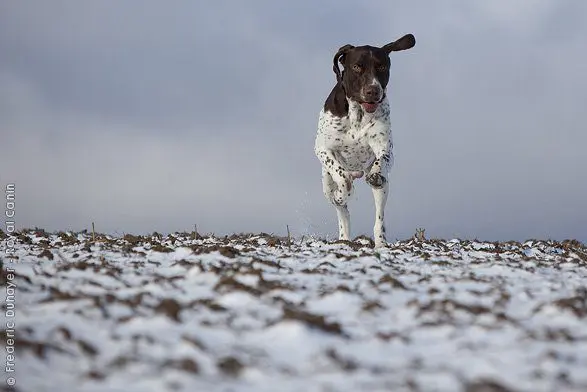
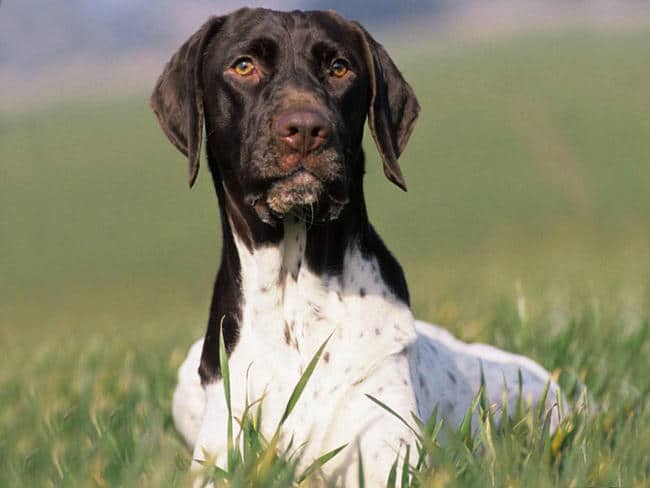
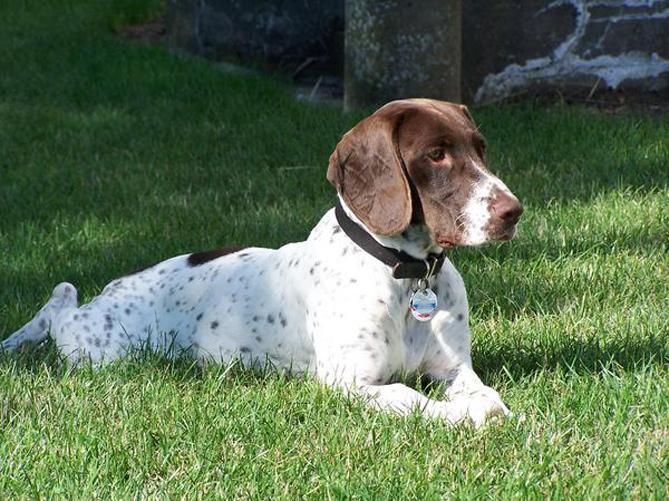
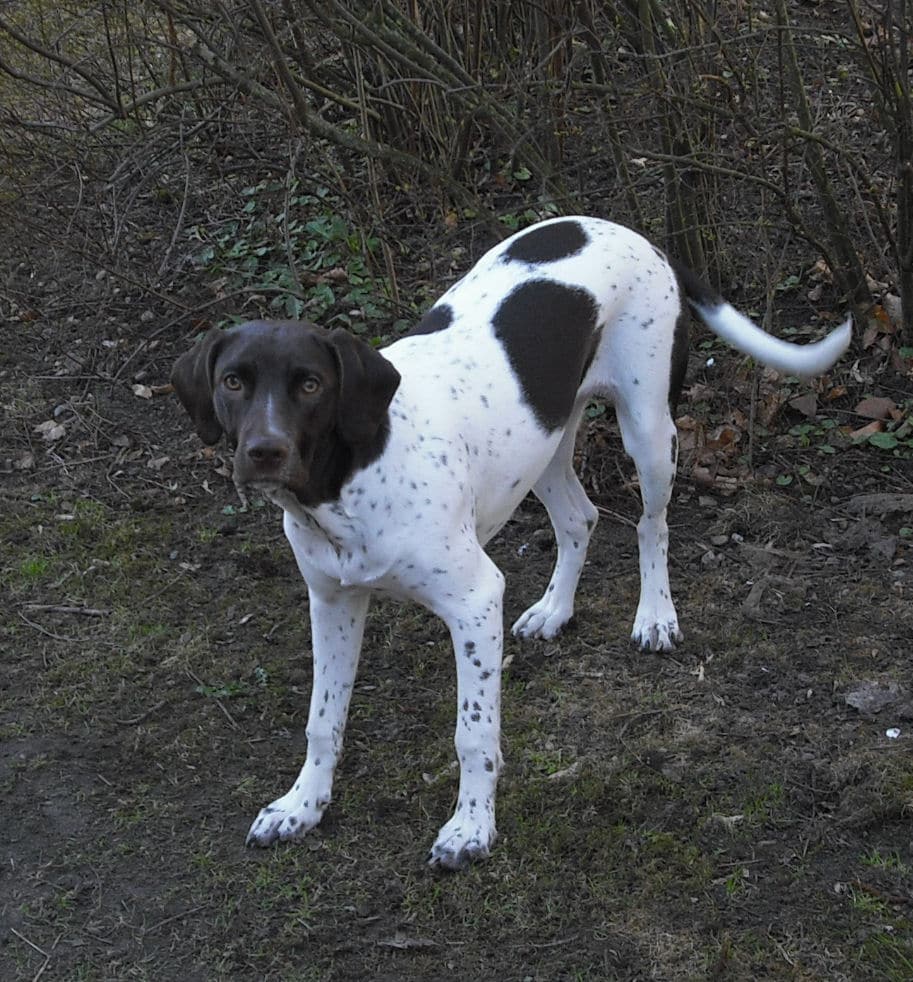
The Old Danish Pointer, is a medium sized breed of dog with brown markings, from Denmark.

Its Danish name is Gammel Dansk Hรธnsehund, It literally means bird hunting dog. It is in the Group 7, section 1.1 of the FCI.

Trace the origin of the race can be followed until the year 1710, When a man named Morten Bak, Glenstrup neighbor (adjacent to Randers and Hobro Denmark city), He crossed for eight generations strays dogs from local farmers, until he obtained a pure breed of black and white spotted dogs that he called "Bakhoundsโ€. The result was a popular hunting dog.

Race scholars agree that it is likely that these strays to the Lord Morten Bak, used in their breeding program, they were of Spanish origin, and is therefore considered as one of the direct ancestors of the race Old Danish Pointer.

The popularity of this breed faded unfortunately during the 19th century, the race disappeared almost altogether, only a dedicated breeder continued breeding with the integrated genetic information. After World War II there was only 10 dogs and intensive breeding work was started to prevent the extinction of the breed.

The race again won great popularity, above all thanks to Poul Thomsen (presenter of a recognized programs on animals in the Danish television).

Currently there is a considerable decline in Danish sample dogs, crossing often with the Braque Francais, quite similar.

Video

Physical characteristics

Its Constitution is strong, one of its clearest characteristics is the great difference between male and female. While the male is powerful and from, the female is lighter, spirit and capricious.
Height: Male 54-60 cm. (21-23.5 in), is preferred over 56 cm. . females 50-56 cm. (19.5-22 in), is preferred over 52 cm. .

Weight: Male: 30-35 kg . Female: 26-31 kg .

Character and skills

It gives the impression of being a silent dog and stable but showing determination and courage. It is a brave and determined dog. During the hunt act calmly, patience and slowness, always maintaining contact with the Hunter and doing its job of dog shows, discreetly, without disturbing the prey.

The Old Danish Pointer usually fits perfectly, both hunt small prey and large. His affable character allows him to hunt both in packs and alone with his master..

Home pet is a very familiar and quiet dog, provided you get sufficient exercise and have large enough space to run freely. However He Old Danish Pointer not an apartment dog. An active dog, is intended for people available enough to give you long daily walks and keep you from feeling lonely.

Given their hunting instinct, We need to socialize so small that it gets used to share a roof with small animals (cats, rabbits, etc.).

Images Old Danish Pointer

Type and recognitions:

  • FCI CLASSIFICATION:
  • Group :
  • Section : . .

Federations:

  • FCI – Group 7: Pointing Dogs. – Section 1: Continental Pointing Dogs. 1.1: Braque Type โ“˜

FCI breed standard "Old Danish Pointer"

Origin:
Denmark

Date of publication of the valid original standard:
08.01.1998

Use:

Versatile dog used for bird hunting.


General appearance:

It is a medium-sized dog, rectangular shape and strong build. One of the most charming characteristics of the breed is the great difference that exists between the male and the female..
While the male is powerful and substantial, the female is characterized by being lighter, capricious and have more spirit.

IMPORTANT PROPORTION :

The relationship between the height at the withers and the length of the body is approximately 8:9.


Behavior / temperament:

Gives the impression of being a calm and stable dog that shows determination and courage. during the hunt, progresses relatively slowly, always keeping in contact with the hunter. For his behavior in the hunting field, fulfills its task as a pointer without superfluous agitation. The breed is suitable for large and small hunting grounds.

Head:

Short and wide, without a pronounced stop. The occiput is prominent and clearly visible from any angle.

Cranial region:
  • Skull : Wide enough and distinctly rounded.
  • Depression links (Stop) : Is not pronounced.

facial region:

  • Truffle : Meaty and well defined; nostrils wide open. Dark to lighter liver color.
  • Snout : Wide muzzle.
  • Lips : Widely developed fluff from the nose and covering the lower jaw. The lips help give the head its characteristic importance.
  • Jaws / Teeth : Powerful jaws with regular scissor bite. A complete denture is desirable.
  • Cheeks : Well defined and developed, very muscular.

Eyes : Medium-sized, they are not sunken or prominent. Dark brown is desirable. Considering the origin of the breed, a slight drooping of the lower eyelids is tolerated, but should not be encouraged.

Ears : Relatively low set, wide and slightly rounded at the ends.
Its length is correct if the ear pulled towards the nose leaves a little more than the outer third of the muzzle uncovered. The front edge of the ear hangs nicely close to the cheek.

Neck:

Muscular and very hairy. The double chin should be considered a hallmark but should not be excessive.

Body:

  • Cross : Well defined. The highest point of the top line is located at the cross, and then descends slightly towards the rump.
  • Back : Firm and very muscular.
  • Pork loin : Short, broad and muscular, strongly together.
  • Rump : Wide, not too short, slightly inclined towards the insertion of the tail.
  • Breast : Deep and wide; a good width is desirable especially in males. The sternal region reaches up to the elbows. Well sprung ribs that reach well to the back of the body. The thorax is not flattened or crowded. A highly developed parapet is highly desirable.

Tail:

Insertion a little high than too low. Fairly wide at its base, slimming to tip. It is of medium length and reaches almost to the tibio-tarsal joints. The tail is carried hanging naturally. Amputation is not allowed

Tips

PREVIOUS MEMBERS : Viewed from the front, they are strong, straight and parallel.

  • Shoulder : Laid flat and close to the chest, covered with strong muscles that are clearly visible during movement or at rest.
  • Arm : Good length, very muscular.
  • Elbows : Closed to the body, but not too close to it, no deviations outwards or inwards, placed rather back. Good angulation between the arm and forearm.
  • Forearm : Straight, with powerful muscles and strong bones.
  • Articulation of the Carpus : Strong.
  • Metacarpus : Slightly oblique in relation to the forearm.
  • Previous feet : Strong and firm, well arched with hard pads.

LATER MEMBERS : Seen from the back, they are straight and parallel. With good angles and strong bones.

  • Thigh : Muscular, rather long and wide. Good angulation between the pelvis and the thigh.
  • Knee : Strong, well angled.
  • Leg : Quite long, muscular.
  • Warm-foot joint : Strong and powerful.
  • Metatarsus : Slightly oblique in relation to the leg.
  • Hind feet : Strong and firm, well arched, with hard pads.

Movement:

Space-spanning steps with good rear thrust and matching reach in front. The movement is straight and parallel in the fore and hind limbs. High head carriage.

Mantle

SKIN : Not too fine, it is rather tight on the body and extremities. On the head and neck the skin is looser, forming a double chin and presenting a crease at the corners of the lips.

HAIR : Short and dense, something hard to the touch. Hair must completely cover the body.

COLOR : White with brown markings, some large or many small speckled markings on the white background. The brown color can vary but is preferred from a brown to dark brown tone.


Size and weight:

Height to the cross :

  • Male : 54-60 cm., more than 56 cm.,
  • female : 50-56 cm., more than 52 cm..

Weight :

  • adult male : 30-35 kg,
  • female : 26-31 kg.


Fouls:

Any deviation from the aforementioned criteria is considered as a fault and the severity of this is considered to the degree of the deviation to the standard and its consequences on the health and well-being of the dog..

โ€ข Incorrect head posture.
โ€ข Flesh-colored nose with depigmented spots.
โ€ข Muzzle too short.
โ€ข Underdeveloped lips.
โ€ข Missing one or two premolars (PM1).
โ€ข Eyes too light.
โ€ข Slightly bowed back.
โ€ข Croup too short.
โ€ข Tail carried well above the top line.
โ€ข Light cow corvejones or slightly arched extremities.
โ€ข Hair too thin.
โ€ข Small variations in size (1-2 cm.) above or below the limits indicated in the standard.

SERIOUS FAULTS

โ€ข Bones too weak.
โ€ข Pronounced stop.
โ€ข Pointed snout.
โ€ข Pincer bite.
โ€ข Lack of another tooth besides the PM1.
โ€ข Pronounced carp back, slightly saddled back.
โ€ข Obvious deficiency in breast development. Thorax not sufficiently defined. Ribs too flat or crammed.
โ€ข Elbows turned very outward or inward.
โ€ข Cow-shaped or severely arched limbs.
โ€ข Sunken metacarpus.
โ€ข Flattened feet, fingers apart.
โ€ข Weak behavior, shy.

MISS PLAYOFFS

โ€ข Aggressive or fearful dog.
โ€ข Serious deviations in sexual characteristics.
โ€ข Teeth : Missing more than two PM1 and one other tooth. Teeth that are not visible will be considered missing unless their existence can be certified in previous exposure.
โ€ข Upper or lower underbite or any other defective bite.
โ€ข Cleft palate or cleft lip.
โ€ข Ectropion, entropion, distiquiasis (double lash line).
โ€ข Malformation of the chest or rib cage (for example, sternum too short, which causes a sudden elevation of the lower line behind the ribs).
โ€ข Size deviations of more than 2 cm above or below the limits indicated in the standard.
โ€ข Very shy and weak behavior.

Any dog โ€‹โ€‹showing clear signs of physical or behavioral abnormalities must be disqualified..


N.B.:

Males should have two normal-appearing testicles fully descended into the scrotum..

Source: F.C.I - International Cynological Federation

Alternative names:

1. Gammel Dansk Hรธnsehund, Old Danish Bird Dog, Old Danish Pointing Dog (English).
2. Pointer danois, Ancien chien d’arrรชt danois (French).
3. Gammel Dansk Honsehund, Altdรคnischer Hรผhnerhund (German).
4. (em dinamarquรชs: Gammel dansk hรธnsehund) (Portuguese).
5. Perro antiguo de muestra danรฉs (espaรฑol).

โ–ท The world of Pets: Dogs, cats, birds, reptiles, amphibians

Australian Silky Terrier
Australia FCI 236 . Toy Terriers

The Australian Silky Terrier not appropriate to live with other smaller pets.

Australian Silky Terrier

Content

History

The Australian Silky Terrier is a native of Australia dog, Although the types and ancestral breeds were of Great Britain. The ancestors of the Australian Silky Terrier include the Yorkshire Terrier (originating in England and Scotland before being considered) and the Aussie (descended from wire-haired Terriers brought from Britain to Australia in the 19th century 19), but the records do not indicate whether early dogs were simply Terrier Australian born with silky fur, or if there was an attempt to create a breed apart.

In accordance with the American Kennel Club, the race began at the end of the 19th century, being result of crosses between a Yorkshire Terrier and Aussie. At the beginning, the breed became known as โ€œthe sydney silkโ€, since it was located mainly in the city of Sydney, Australia. Although most Australian breeds are listed as working dogs, el Australian Silky Terrier, is considered to be, was raised โ€“mainly- to be an urban pet and companion of the family, but also It is a breed known for killing snakes in Australia.

Until 1929, the Terrier australiano, the Silky Terrier Australian and the Yorkshire Terrier they were not clearly defined, in the same litter, three dogs could be born of breeds that over time were considered, different. According to existing information, they were separated by the appearance in different types once they raised separately.

After 1932 in Australia, miscegenation was tweaking, and in 1955 the name of the race officially became Australian Silky Terrier. The breed was recognized by the national canine Council of Australia, in 1958 in the Toy group.

During and after World War II American soldiers who had been sent to Australia, return to United States, they brought with them several Australian Silky Terrier. Photographs in the newspapers of the time (1954), They show the soldiers, back to home wearing their pets Australian Silky Terrier, and this caused a rise in popularity to the race, and hundreds of Australian Silky Terrier were imported from Australia to the United States.

The American Kennel Club He acknowledged the race as the Silky Terrier in 1959, like the United Kennel Club ((UNITED STATES)UU.) in 1965, and the Canadian Kennel Club. The breed is recognized by all major canine clubs of the English speaking world, and internationally by the International Cynological Federation as breed number 236.

Physical characteristics

The Australian Silky Terrier is a Terrier, but is usually placed in the Group of dogs Toy type, instead of the Terrier group, due to its small size. The Federation Cynologique Internationale has a special section of the Terrier group that includes only the smaller dogs, While other canine clubs, place the breed in the Toy group, but universally everyone agrees that the breed type is Terrier.

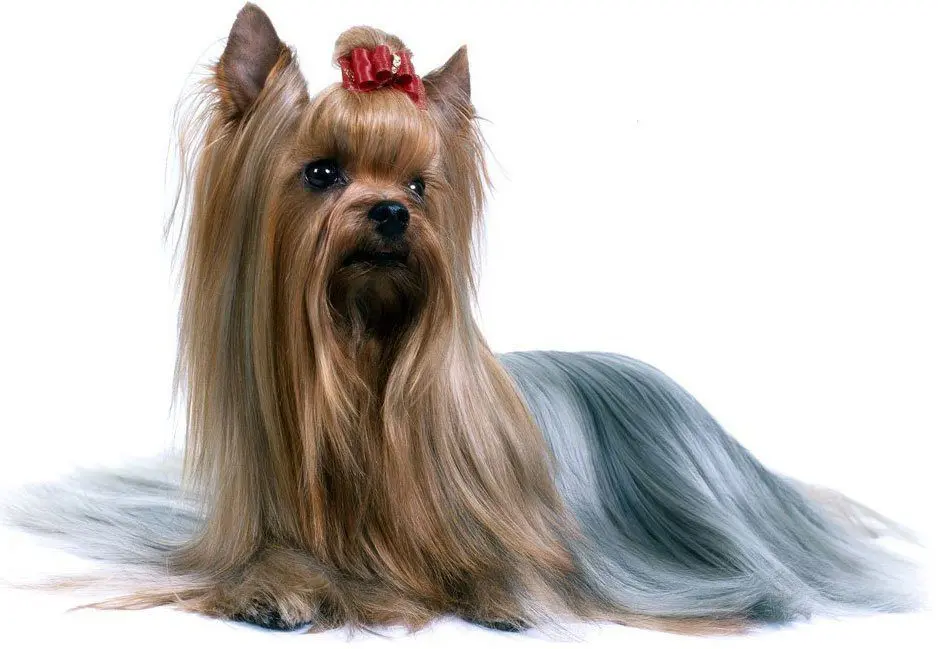
His mantle's hair is grey, Griffon's soft texture and bluish, smooth and long. It requires constant maintenance and brushing. An Australian Silky Terrier should be about 23 to 25 cm to cross and weighs between 3.6 and 8 kg, Although the steps may vary between the different federations. It should be a little bit longer than that width (about one-fifth longer than the height at the cross).

El Australian Silky Terrier, small, almond-shaped eyes. according to the rules, the eyes are considered to lack. The ears are small and erect. It has a tail of high adjustment and small feet, almost like a cat. The hair should be long. The hair on the face and ears is usually cut.

This breed must have with a Barber every three weeks and their teeth should be brushed. Terriers are notorious for having tooth and gum problems..

The layer of Silky Terrier is very susceptible to tangles and mats and requires daily brushing and the hairstyle. This breed requires a deep commitment to the owners. To keep the shiny fur, regular washing is necessary. Using an avocado and oatmeal shampoo will help relieve itchy skin., characteristic dryness of this breed.

Character and skills

The Silky Terrier has a very lively character and will bark at any stranger immediately. He is smart and also an excellent watchdog, announcing unwanted intruders with a squeaky bark.

Due to its small size, also suitable for an apartment in the city, but also appreciates extensive exercise in nature. He makes a very nice roommate and an excellent pet for everyone who likes a small dog with a big heart.

The Silky Terrier can bring much joy to the sick or the elderly, that can even be tied to the house, at least if the dog still gets proper exercise from relatives or good neighbors.

Like most other terriers, the Silkies they are very alert and anxious. Hunting instinct is generally well developed, so the dog should always have enough opportunity to move.

Because despite his pretty appearance he Silky Terrier it is not a lap dog, but a typical terrier that needs movement and family connection. It is a happy and uncomplicated companion dog, with a lot of temperament and joy of movement, but fortunately it is easy to train.

As the Silky Terrier also has a distinctive personality, a consistent and loving education is essential.

ยซAustralian Silky Terrierยป Education

Although the Silky Terrier australiano it's a miniature terrier, still has the typical terrier stubbornness. That's why you should show him a firm upbringing. If this is practiced, he "Silkyยป will become a simple and obedient companion, but – can't get out of your skin – can also kill a rat or mouse from time to time. His intelligence can be promoted by brain work and he can also be taught little tricks.

Care and diseases ยซAustralien Silky Terrierยป

Although her hair doesn't shed much, the mantle of your Silky Terrier australiano needs a lot of care. Needs to be brushed daily to keep its long coat silky. But the straight and split hair makes brushing relatively easy, if you don't let it get tangled.

Common diseases:

Seasonal dermatitis (inflammation of the skin caused mainly by malassezias), drug intolerance (glucocorticoids), cataract, urinary tract diseases (cystine stones).

Images ยซAustralian Silky Terrierยป

ยซAustralian Silky Terrierยป Videos

Australian silky terrier playing - playing

Type and recognitions:

  • FCI CLASSIFICATION:
  • Group :
  • Section : . .

Federations:

  • FCI – Group 3 – Section 4 Toy Terriers. โ“˜
  • AKC – Terriers โ“˜
  • ANKC – Terriers โ“˜
  • CKC – Terriers โ“˜
  • โ€‹KC – Terriers โ“˜
  • NZKC – Terriers โ“˜
  • UKC – Terriers โ“˜

FCI breed standard "Australian Silky Terrier"

Origin:
Australia

Date of publication of the valid original standard:
08.10.2012

Use:

Toy Terrier / Service dog


General appearance:

It's compact, moderately low, moderately long, with a refined structure but with enough substance to suggest the ability to hunt and kill domestic rodents. The silky coat, smooth and parted in half for a neat appearance.


Behavior / temperament:

Must exhibit Terrier characteristics, manifesting a sharp vivacity, activity and healthy condition.A majestic and courageous small Terrier who has no rival as a companion dog..

Head:

The head is of moderate length, slightly shorter from the tip of the nose to the region between the eyes, that from the same position to the occiput. The head must be strong, with Terrier characteristics, being moderately wide between the ears.

Cranial region:
  • Craging: Flattened and no roundness between the eyes, it is provided with a tuft of fine and silky hair that does not cover the eyes (a long fall of hair on the front face or cheeks is objectionable).
  • Storp (naso-frontal depression)Definite but moderate.

facial region:

  • Trufa: It must be black.
  • Lips: Adherent and thin.
  • Jaws / Teeth: Strong jaws, even and not clenched teeth; upper incisors closely overlap lower incisors (scissor bite).
  • Ojors: They are small, oval, never round or prominent; its color should be as dark as possible with an expression of sharp intelligence.
  • Obars: They must be small, โ€œVโ€ shaped; the pavilion is fine; set high in the skull; he wears them upright and they are totally devoid of long hair.

Neck:

Medium length, refined and slightly arched, gracefully inserted on the shoulders. Well covered with long silky hair.

Body:

It should be moderately long in proportion to the height of the dog.

  • Lรญnand the top: Level at all times (both standing and moving.
  • Itmor: It must be strong.
  • Pecho: Of moderate depth and width. Well arched ribs, extended back to a strong loin.

Tail:

Napamputated, it is set high and carried erect, but not too high. It should not be provided with feathers. Without amputation, the first three vertebrae must be erect or slightly curved, but never curved on the top line. Must not be screwed. Its long, giving an appearance of balance sheet. According to the description of the docked tail, the non-docked tail should also be free of feathers.

Tips

PREVIOUS MEMBERS:

  • ApGeneral arience: They have finely delineated and rounded bones; are straight and well positioned under the body without showing weakness in the metacarpals.
  • Hormbros (Blades): Fine and well placed back, well adapted with well angulated arms and very close to the ribs.
  • Elbows: They do not deviate outward or inward.
  • Pinis previous: Small, with good pads, fingers well together; nails must be black or very dark.

LATER MEMBERS:

  • Thigh (Femur): Well developed.
  • Knees: They must be well angled.
  • Corvejones: Well angled, Seen from behind they should be well placed below and parallel to each other.
  • Pinis later: Small, with good pads, fingers well together; nails must be black or very dark.

Movement:

Must be free, straight, showing no loosening in the shoulders or elbows, no outward or inward deviations of the feet and pasterns. The hind limbs should give a thrust with ample flexibility in the knees and hocks.. Seen from the back, the movement should not be too narrow or too wide.

Mantle

Fur: Smooth, fine and shiny, silky texture. The length of the coat must not be such as to impede the movement of the dog and must allow light to see under the dog. Front and back feet must be free of long hair.

Color: All shades of blue and tan are acceptable, the more intense the colors and the more clearly defined the better. Silver and white are not accepted. In the tail the color should be blue to very dark. It is desirable that the head lock is blue or fawn in color. The blue and tan color distribution should be as follows: fire around the base of the ears, muzzle and sides of cheeks; blue from base of skull to tip of tail, in the forelimbs up to near the carpal joint and in the hindlimbs near the hock joint; A tan line is shown below the knees and the carpal and tibiotarsal joints to the fingers and around the anus. The blue color of the body must be free of tan or tan color. Fire marks must be free of smudges.

Black color is allowed in puppies, but the blue color must have set at the 18 months of age.


Size and weight:

Alturto the cross:

  • Males: 23 โ€“ 26 cm.
  • females: may be slightly lower

Pthat: Weight in proportion to size.


Fouls:

Any deviation from the aforementioned criteria is considered as a fault and the severity of this is considered to the degree of the deviation to the standard and its consequences on the health and well-being of the dog..

FALTAS SEVERAS:

  • Lรญnand the superior conquered the convex.

FALTAS DISQUALIFYING:

  • Agextreme shyness.
  • Any dog โ€‹โ€‹showing clear signs of physical or behavioral abnormalities must be disqualified..


N.B.:
  • Males should have two normal-appearing testicles fully descended into the scrotum..
  • Only functionally and clinically healthy dogs, with the typical conformation of the breed, should be used for parenting.

Itlatest changes are in bold.

TRANSLATION: Mexican Canophilic Federation A.C., updated

by J. Nallem (Uruguayan Kennel Club), technical review: M.A. Martรญnez (FCA).

Source: F.C.I - International Cynological Federation

Alternative names:

1. Silky Terrier (English).
2. Silky Terrier australien (French).
3. Sydney Silky, Australian Silky (German).
4. Silky terrier, silky terrier australiano (Portuguese).
5. Silky, Aussie, Terrier Sedoso Australiano (espaรฑol).

โ–ท The world of Pets: Dogs, cats, birds, reptiles, amphibians

Old English Sheepdog (Bobtail)
Gran Bretaรฑaa FCI 16 . Sheepdogs

The Old English Sheepdog It is possibly the breed that needs the most care regarding its hair.

Antiguo Perro Pastor Inglรฉs

Characteristics "Old English Sheepdog (Bobtail)"

Coexistence is important that you have with your new friend. Before considering the acquisition of a dog of the breed "Old English Sheepdog (Bobtail)" you know certain factors. Not all breeds of dogs are apt to live in an apartment, you must take into account his character, their need for exercise, their interaction with other pets, their care and if you have small children, their level of tolerance towards them.

Content

Adaptation โ“˜

3,0 of 5 stars (based on 1 review)

friendly dog โ€‹โ€‹โ“˜

3,0 of 5 stars (based on 1 review)

hair loss โ“˜

5,0 of 5 stars (based on 1 review)

Affection level โ“˜

5,0 of 5 stars (based on 1 review)

Need for exercise โ“˜

3,0 of 5 stars (based on 1 review)

Social need โ“˜

5,0 of 5 stars (based on 1 review)

Home โ“˜

1,0 of 5 stars (based on 1 review)

Toilet โ“˜

5,0 of 5 stars (based on 1 review)

Friendly with strangers โ“˜

2,0 of 5 stars (based on 1 review)

barking โ“˜

4,0 of 5 stars (based on 1 review)

Health โ“˜

3,0 of 5 stars (based on 1 review)

Territorial โ“˜

5,0 of 5 stars (based on 1 review)

Cat friendly โ“˜

3,0 of 5 stars (based on 1 review)

Intelligence โ“˜

4,0 of 5 stars (based on 1 review)

Versatility โ“˜

3,0 of 5 stars (based on 1 review)

Child friendly โ“˜

5,0 of 5 stars (based on 1 review)

Surveillance โ“˜

3,0 of 5 stars (based on 1 review)

joy โ“˜

5,0 of 5 stars (based on 1 review)

History

The Old English Sheepdog or Bobtail. It is a breed of dog guard or shepherds dogs family.

The race was created in England, more specifically, in the west, in the mid-19th century, to control the sheep and beef cattle in the rural area. While the race is born and develops in England, there is more than one theory that explains its origin.

Some authors raised the breed descended from dogs brought from Central Europe by the Romans, that over time they were crossing with different English races, including the English mastiff giving rise to Old English Sheepdog.

Other scholars of the race stress that it is a very old dog and possibly his most significant ancestor is the famous Asian Shepherd What, It has helped the existence of the Berger de Brie in France, of the Bergamasco Shepherd in Italy, and of the Komondor in Hungary.

According to this second current, the first copies of Bobtail they were selected for the first time in an era marked by the savage rivalry between England and France, the Of the hundred years ' war (1337-1453).

Y, finally, they pose in their ancestors, appears with total security the Berger de Brie.

In addition to in England this dog took many acceptance and dissemination among the Spanish shepherds in the 19th and 20th centuries by their excellent conditions and skills for the care of livestock.

Physical characteristics

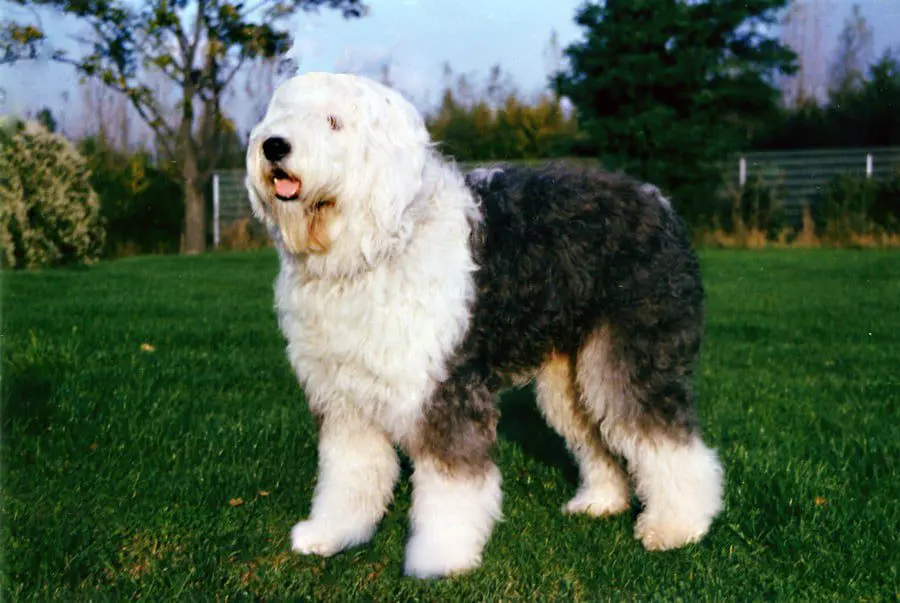
It is a dog great size and scale, with a height around the 63 cm.. and a weight between the 30 and 40 kg.

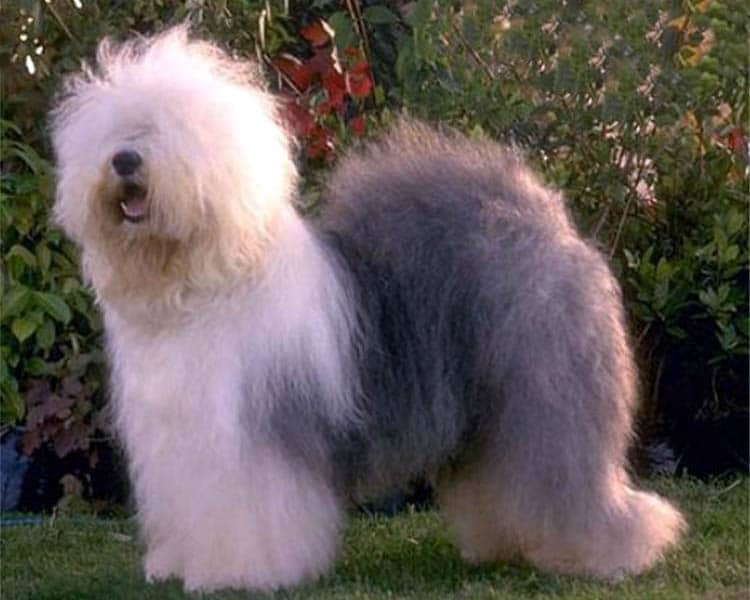
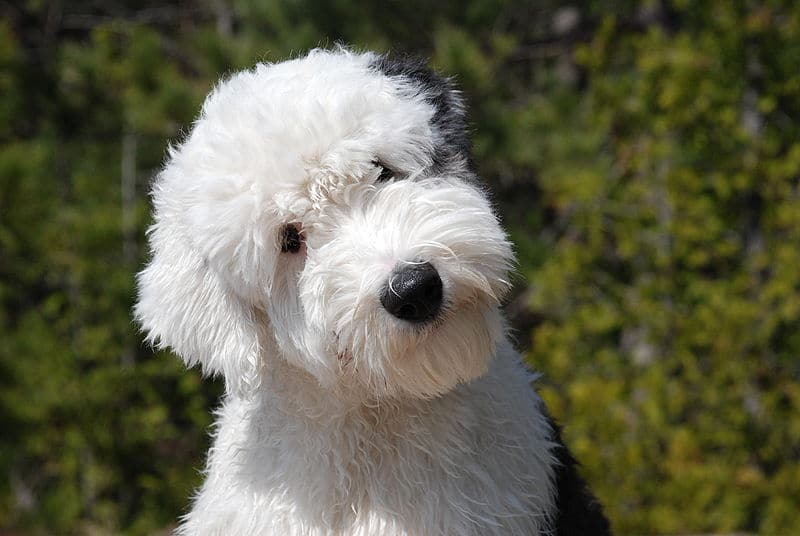
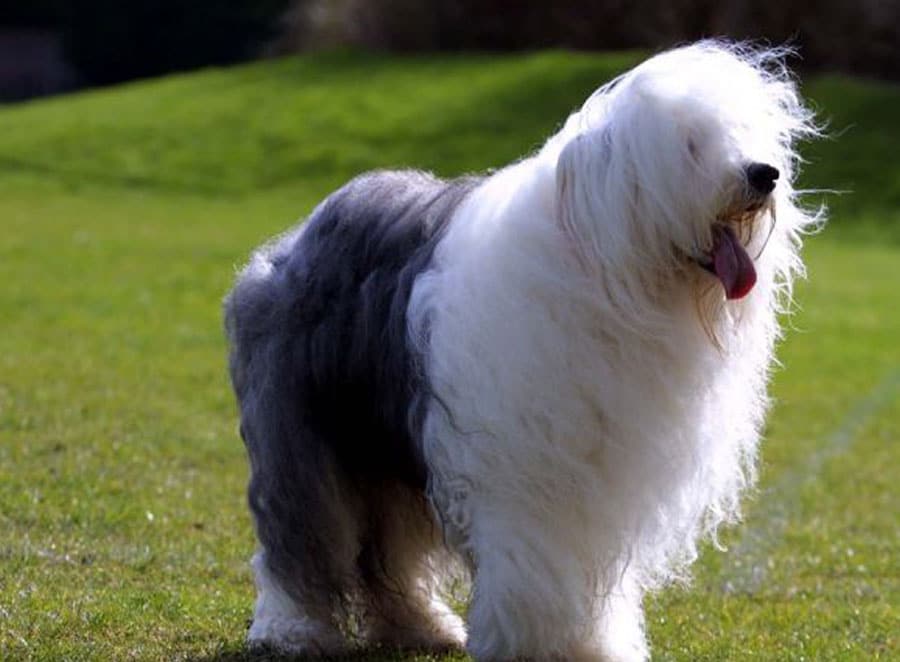
Small and floppy ears, coated with hair, strong and elongated neck, abundant hair desgreรฑado and rough touch, with a range of colors that can range from grey, grey, Blue to blue merle, with or without white markings on the head, bottom of the stomach or forelimbs.

The tail is often be amputated, or are there simply copies that are already born without it, hence its name Bobtail which in means ยซcut tailยซ, The search for this characteristic trait is believed to have been due to the desire of English breeders not to pay taxes., already before the dogs with tails were thought to be luxury goods. This dog has a very characteristic bark in the canine world, serious and pervasive.

Did you know??

There is no upper limit to the height of the Old English Sheepdog. Females usually measure 53 cm , the males 56 cm . That's because the sheep varied in size, so the dogs used to herd them they also varied in size.

Character and skills

Video "Old English Sheepdog (Bobtail)"

The Bobtail, tolerant character, It is an excellent dog for living together with children and other pets. They are able to easily adapt themselves to different conditions.. Faithful and intelligent It adapts to life in an apartment if necessary, always with the company of its owner. It is important to train it well from small, It is to learn fast and responsive dog.

The Old English Sheepdog he is a very good worker and is able to carry out orders, but it won't if the instruction if they believe that they are stronger minded than the human herd members.

They have a strong herding instinct and can treat the flock to shock people, never to bites. It is necessary to learn from an early age that humans are not part of his flock.
This dog is possibly the more care you need for your hair, that should be dealt with by canine professionals. As well, but to adapt to living in small spaces, you need a daily dose of exercise in the open air, because otherwise it could become destructive with the furniture in the house. Due to its thick coat is not a recommended race to live in warm places.

Health

The Bobtail have a predisposition to certain skin conditions:

– atopy ;
– demodecy;
– Furunculosis bacteriana (in the legs).

Life expectancy

13 years

Grooming

The maintenance of "Old English Sheepdog (Bobtail)" it is tedious due to its fur. Grooming is recommended every 4 or 6 weeks, otherwise shearing is inevitable.

Images ยซOld English Sheepdogยป

โ€œOld English Sheepdogโ€ Videos

Home Again Chip saves Texas Old English Sheepdog
Type and recognitions:

  • FCI CLASSIFICATION:Group 1 –> Pastor and Boyeros dogs (except Swiss Cattle Dogs). – Section 1 –> Pastor dogs. Without working trial.
  • FCI 16
  • Federations: FCI โ“˜, AKC โ“˜, ANKC โ“˜, CKC โ“˜, โ€‹KC โ“˜, NZKC โ“˜, UKC โ“˜

FCI breed standard "Old English Sheepdog (Bobtail)"

Origin:
United Kingdom

Date of publication of the valid original standard:
13.10.2010

Use:

Shepherd dog.


General appearance:

It is a strong dog, symmetric, square, very harmonious construction and robust constitution. Absolutely no weakness in the limbs. Completely covered in abundant hair. He is a muscular dog, solid and with a very intelligent expression. Natural shapes should not be artificially modified using scissors or shearing machines.. Of great vitality, presenting a slightly ascending upper line and, seen from above, a pear-shaped body. Has a typical sway when walking with an ambling gait or with a normal gait. His barking has a characteristic timbre.


Behavior / temperament:

It is a docile dog with a good character. Bold, fell, and trustworthy. Not in any way fearful or aggressive if not provoked.

Head:


Cranial region:
  • Skull : Bulky and square in shape. The supra-orbital region is well arched.
  • Depression links (Stop) :  Well defined.

facial region:

  • Truffle : Large and black. The nostrils are wide.
  • Snout :  Strong, square and truncated,
  • Jaws / teeth : Strong teeth, large and well placed. Scissor bite : The jaws are strong and articulated in a perfect scissor shape., regular and complete, that is to say, that the upper incisors cover the lower ones in close contact and are set square in relation to the jaws. Pincer bite is tolerated but undesirable.
  • Eyes :  Separate. Dark-colored eyes or gazey eyes. The two blue eyes are admitted. Light eyes are a flaw. Pigmented eye rim will be preferred.
  • Ears :  Small and stuck to the sides of the head,

Neck:

Good length, strong and gracefully arched.

Body:

Rather short and compact.

  • Pork loin : Very robust, wide and slightly arched.
  • Breast : Well lowered and wide. The ribs are well sprung.

Tail:

Previouslycustom wasamputate the tail or naturally borntailless.
  • amputeeUsually completely amputated.
  • Without amputating : natural size. With good fringes and abundant hard-textured hair.


Tips

Former members
  • Shoulder : The scapulae should be well oblique, more  closer in the area of รขโ‚ฌโ€นรขโ‚ฌโ€นthe cross than in the shoulders. Loaded shoulders are undesirable.
  • Elbows : Tight to the chest.
  • Forearm: Perfectly straight forelimbs ; his skeleton is very strong, holding the body so that it is not close to the ground.
  • Previous feet: They must not be turned either inwards or outwards. They are small and tight. Well arched fingers, thick and solid ear pads.
Former members
  • General appearance: The posterior third is well covered with hairs, round and muscular.
  • Knee : Well angled, but without exaggeration
  • ;Leg : Long and well developed.
  • Hock : Well descended.
  • Metatarsus: Seen from behind, they must be perfectly straight.
  • Rear foot: They must not be turned either inwards or outwards. They are small and tight. Well arched fingers, thick and solid ear pads.
  • Movement:

    When walking, the rear one sways like a bear. At a trot, the extension is easy and the drive given by the rear is powerful. The members move in planes parallel to the axis of the body. Very elastic canter. In slow movements, certain dogs may have a tendency to walk at a walking pace. In motion, the dog may adopt a naturally lower head stature.

    Mantle

    • Fur : Abundant, very rough in texture ;  it is not smooth, but hirsute and free of loops. The undercoat is waterproof. The head and skull are well covered with hair. Ears are moderately covered. Neck well covered, as well as the anterior limbs, especially their surroundings. Hair is more abundant in the posterior third than in the rest of the body. Quality should be given more importance, to hair texture than to length andabundance.
    • Color : Any shade of gray, grayish or blue. The body and posterior third are uniform in color, with or without small white spots on the extremities of the limbs (socks). White spots in solid color areas should be rejected.  The head, the neck, forelimbs and lower belly should be white, with or no stains. Any brown hue is undesirable.


    Size and weight:

    Height to the cross

    • Males:    61 cm ,
    • females:   56  cm .

    The type and balance of shapes are of utmost importance and should not, in no case, be slaughtered for the carving.


    Fouls:

    Any deviation from the aforementioned criteria is considered a fault and its severity is considered to the degree of deviation from the standard and its consequences on the health and well-being of the dog and the dog's ability to perform its traditional task..

    disqualifying fouls
    • Aggressive or fearful dog
    • Any dog โ€‹โ€‹showing clear signs of physical or behavioral abnormalities must be disqualified..


    N.B.:

    Males should have two normal-appearing testicles fully descended into the scrotum..

    The latest changes are in bold.

    Source: F.C.I - International Cynological Federation

    Alternative names:

    1. Shepherd’s Dog, bob-tailed sheep-dog, Bob-tail, Bobtail (English).
    2. Chien de berger anglais ancestral (French).
    3. Stummelschwanz, Schรคferhund, Altenglischer (German).
    4. Old english sheepdog, Ovelheiro-inglรชs (Portuguese).
    5. Antiguo pastor inglรฉs, Bobtail (espaรฑol).