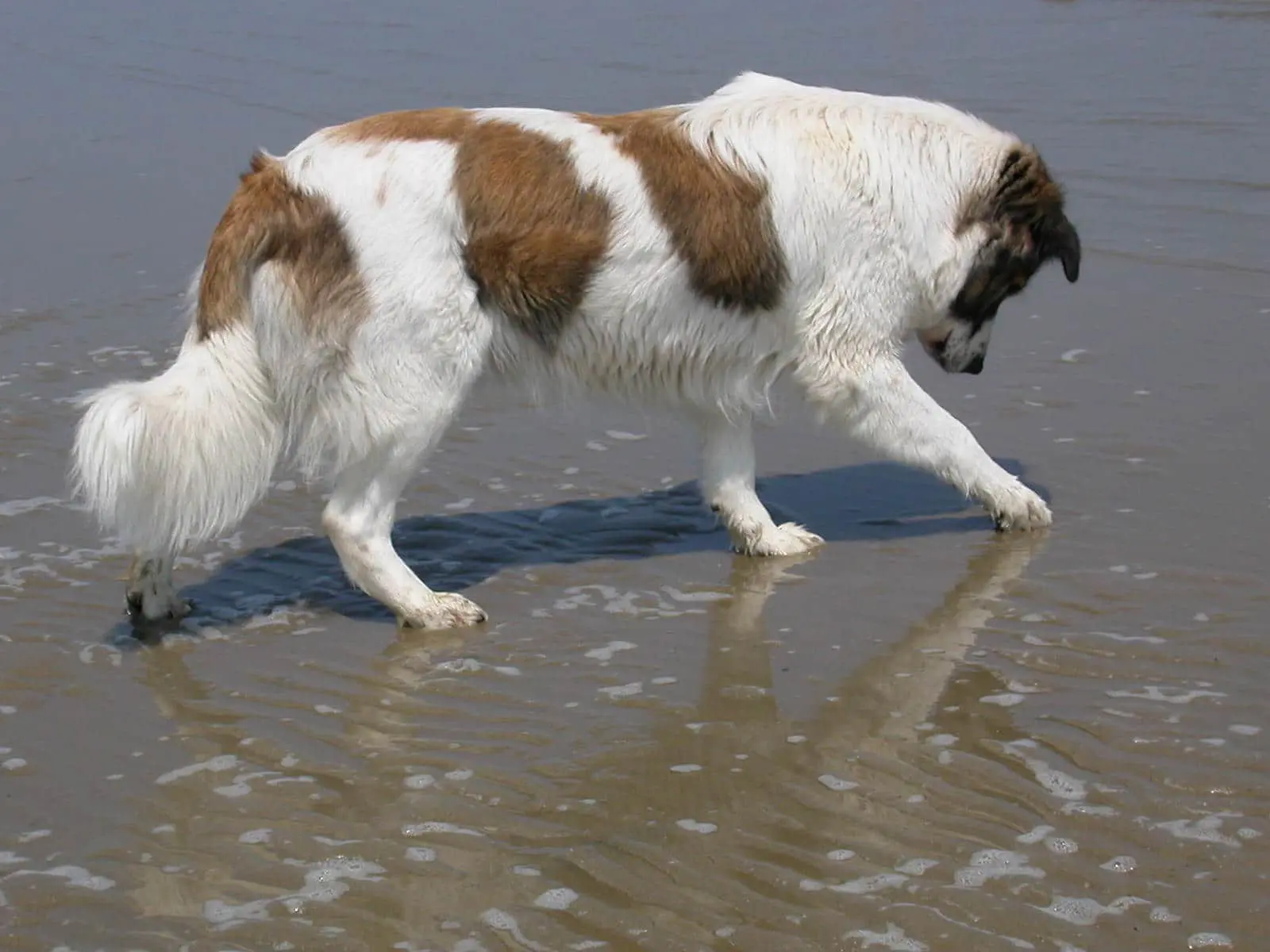
The Aidi is highly energetic, protective and extremely vigilant. Despite its resemblance to Sheepdogs, The Aidi is not one of them because there are no sheepdogs from the Atlas.
All breeds and species.
 FCI 247 - Molossoid . Mountain
  FCI 8 . Small sized Terrier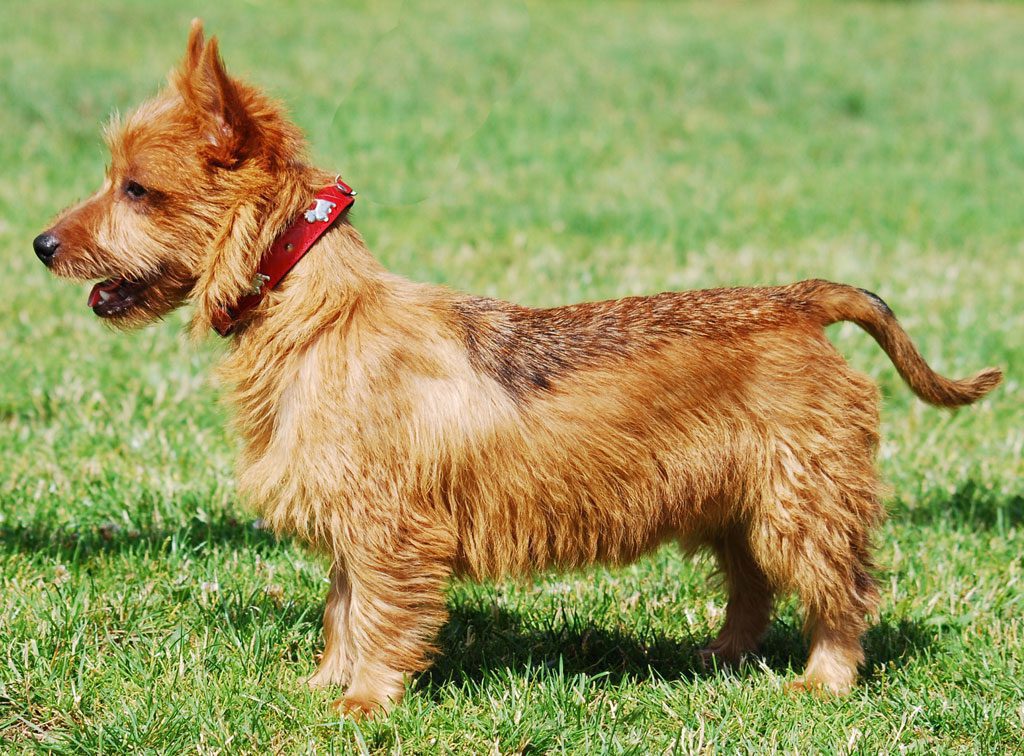
Content |
|---|
Coexistence is important that you have with your new friend. Before considering the acquisition of a dog of the breed "Australian Terrier" you know certain factors. Not all breeds of dogs are apt to live in an apartment, you must take into account his character, their need for exercise, their interaction with other pets, their care and if you have small children, their level of tolerance towards them.
Adaptation ⓘ5,0 of 5 stars (based on 1 review)
|
friendly dog ⓘ1,0 of 5 stars (based on 1 review)
|
hair loss ⓘ1,0 of 5 stars (based on 1 review)
|
|---|---|---|
Affection level ⓘ3,0 of 5 stars (based on 1 review)
|
Need for exercise ⓘ4,0 of 5 stars (based on 1 review)
|
Social need ⓘ4,0 of 5 stars (based on 1 review)
|
Home ⓘ3,0 of 5 stars (based on 1 review)
|
Toilet ⓘ1,0 of 5 stars (based on 1 review)
|
Friendly with strangers ⓘ3,0 of 5 stars (based on 1 review)
|
barking ⓘ5,0 of 5 stars (based on 1 review)
|
Health ⓘ4,0 of 5 stars (based on 1 review)
|
Territorial ⓘ5,0 of 5 stars (based on 1 review)
|
Cat friendly ⓘ1,0 of 5 stars (based on 1 review)
|
Intelligence ⓘ4,0 of 5 stars (based on 1 review)
|
Versatility ⓘ4,0 of 5 stars (based on 1 review)
|
Child friendly ⓘ4,0 of 5 stars (based on 1 review)
|
Surveillance ⓘ4,0 of 5 stars (based on 1 review)
|
joy ⓘ5,0 of 5 stars (based on 1 review)
|
The Australian Terrier It is a breed of dog in the Terrier family, classified in the section 2.
Due to his appearance, He is often confused with a Yorkshire Terrier large size. Is not surprising because, this breed comes from crossing a Yorkshire Terrier and different breeds of Terrier among the Skye Terrier, Cairn Terrier, the Norwich Terrier and other Irish Terrier.
Its origin goes back in the early 19th century, when accompanied by their Terrier British families travelled to Australia, and the vicissitudes of fate led those Terriers to interbreed with the natives..., and this is how many races in the world have been born.
In the early years of its existence, the Australian Terrier was known by the name “Broken-coated-Terrier” or “Broken-hair-buel-and-tan”.
The wording of the first breed standard, took place in the year 1896, While the official recognition of the same, It is located a little later… in 1933. Y, The latest revision of the standard dates from 1962.
Otros nombres: Terrier Australien
Group 3 / Section 2 – Small sized Terrier.
It is a long dog (in relation to your height), rustic looking, robust with short limbs and strong.
The head is elongated, It has the black truffle and scissor closing denture. It has pointed ears being erect and small and dark eyes. The tail is often be amputated.
The height of the Australian Terrier is maximum 25 cm. to the cross in males and 22,5 to 23 in females, the average weight is 4.5 to 5 Kg.
The hair is hard, straight and average length. that rustic look, precisely, Since hair is rough to the touch and out gives it.
The fur can be blue or silver, with stains of fire (or bronze) on the limbs and snout, or color sand clear or Griffon.
Puppies are born black solid color and change color in three months.
It is a very robust breed of dog, that often has a high percentage of Diabetes Mellitus.
What is Diabetes Mellitus?
Diabetes is defined as a disorder in the metabolism of the hydrates of carbon, fats and proteins caused by a deficiency of insulin, It can be absolute or relative.
Insulin is a hormone secreted in the beta cells of the pancreas, whose production allows to control blood sugar (blood glucose levels). Insulin deficiency causes a deterioration in the capacity of tissues to use nutrients, that translates into an increase of glucose in blood (Hyperglycemia).
Diabetes is classified according to the disease in humans, that is to say, as type I and type II.
The type I It is characterized by the destruction of beta cells, What determines the loss progressive and complete end of insulin secretion. Dogs suffering from Type I Diabetes Mellitus may have a sudden onset of symptoms due to the rapid loss of the ability to produce insulin.. These cases require insulinización from the time of diagnosis and are called diabetics 1,811 (DMID).
Other dogs may have a gradual loss of insulin secretion, that their beta cells will be destroyed with slow. These animals may have an initial period in which hyperglycemia is mild or easily controlled., in which case it's diabetic insulinoindependientes (DMIID), Although in the long term these dogs also need her.
Diabetes Mellitus type II is a little more difficult to understand and is characterized by what we call "insulin resistance" and by "dysfunctional" beta cells. The secretion of insulin by these cells will be high, low or normal, but not enough to overcome the resistance to it in the peripheral tissues.
It´s, to explain it in a graphic way, It is as if peripheral tissues do not obey the orders of the insulin or were not able to do what send it.
Regarding the metabolism or synthesis of glucose, These dogs may have DMID or DMIID, that is to say, whether or not to require insulin depending on the extent of insulin resistance and the functional status of the beta cells in terms of their ability to produce and secrete the hormone in low amounts, normal or high.
Dogs also recognizes a secondary diabetes, produced by a carbohydrate intolerance (glucose) due to the presence of a disease or a drug treatment that it antagonizes or counteracts the effects of insulin and can lead to the exhaustion of the beta cells of the pancreas with the appearance of diabetes insulinodependiente.
The owners of diabetic dogs should be aware that the routine in the treatment with insulin and food has to be respected. Two fixed doses of insulin per day associated with a palatable food that always provides the same source and the same amount of starch, always run at the same time it can reduce the risk of hypoglycemia in diabetic dogs.
In North America, area where the Australian Terrier is very popular, scientific research is being carried out on the incidence of this disease.
The breed standard describes the ideal Australian Terrier temperament as an alert spirit., «with the natural aggressiveness of a Buzzard and a Hunter of coverage«.
Taking into account the Classification of dogs according to their functional and obedience intelligence (Stanley Coren's "The Intelligence of Dogs") the Australian Terrier ranks number 34. Means that, is higher than the average, which indicates a good capacity for learning and training.
The Australian Terrier is a lively dog, attentive, with a facial expression that denotes intelligence, loyalty and faithfulness.
Sometimes it can become dominant, so a good training from an early age would be appropriate..
It is perfectly adapted to any type of housing, whether large or small (apartment, House, house with garden, etc.). It should be enough with daily brushing and a walk.
 alldog360
 dogs-wallpapers
 alldog360
 dogand.com
 fotocommunity.de
 fotocommunity.de
 view.stern.de
 zantoka.com
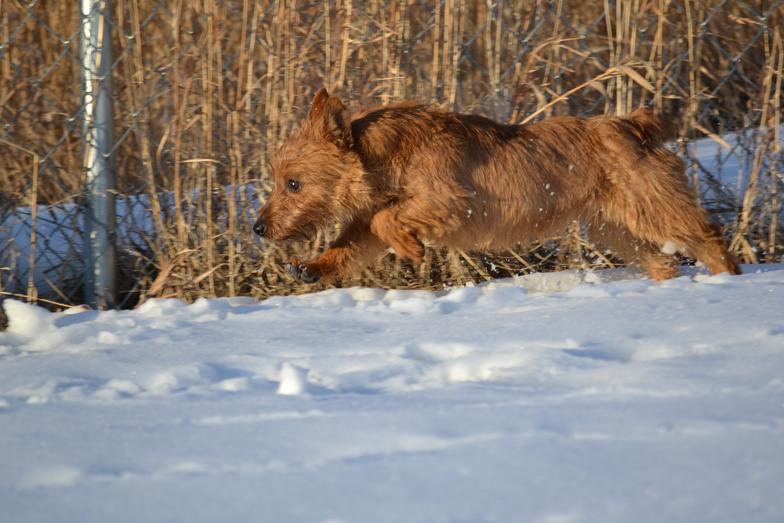
One of the smallest work terriers that was raised both as an assistant and company dog in difficult times and land.
It is a robust dog, short limb, elongated in proportion to its height, With the strong typical character of the terriers, always alert, active and solid.
His coarse fur, without cutting, coupled with a well defined collar around the neck that extends to the sternum and its long and strong head help create the sturdy and robust appearance.
In its essence, he is a working terrier, But thanks to its loyalty and its balanced character it is also a company dog.
Eyes: They must be small, oval, with a cunning expression, dark brown, well separated and not prominent.
Ears: They are small, upright, pointy, well carried, moderately broad-based, without having long hair, and very attentive (except for puppies younger than 6 months).
Length in proportion to height, of strong construction. When valuing the body, Attention should be paid to the description of the first paragraph where it is “a robust dog, of short and elongated extremities in proportion to the height ».
PREVIOUS MEMBERS: Seen from the front straight and parallel, good bone structure. The forelimbs are slightly feathered down to the metacarpus.
LATER MEMBERS: Of moderate length, widths. Seen from behind, hind limbs must be parallel from hock to foot, without being too far apart or too close to each other.
Fur: It consists of a rough and straight outer layer of hair of approximately 6 cm length, with a soft textured short hair undercoat. The snout, lower limbs and feet should be free of long hair.
Color:
Any deviation from the aforementioned criteria should be considered as fault, and the seriousness of it is considered to the degree of deviation to the standard and its impact on health and welfare of the dog.
FALTAS DESCALIFICANTES:
The latest amendments are in bold.
TRADUCCION: Mexican Canophilic Federation A.C.,review technique : M.A. Martínez (FCA)
Source: F.C.I - International Cynological Federation1. Aussie (English).
2. Terrier australien (French).
3. Aussie (German).
4. Terrier australiano (Portuguese).
5. Aussie, Terrier Australiano (español).
 Not recognized by the FCI . Nordic Sledge Dogs
 Alaskan Husky
Content |
|---|
Coexistence is important that you have with your new friend. Before considering the acquisition of a dog of the breed "Alaskan Husky" you know certain factors. Not all breeds of dogs are apt to live in an apartment, you must take into account his character, their need for exercise, their interaction with other pets, their care and if you have small children, their level of tolerance towards them.
Adaptation ⓘ5,0 of 5 stars (based on 1 review)
|
friendly dog ⓘ5,0 of 5 stars (based on 1 review)
|
hair loss ⓘ4,0 of 5 stars (based on 1 review)
|
|---|---|---|
Affection level ⓘ5,0 of 5 stars (based on 1 review)
|
Need for exercise ⓘ2,0 of 5 stars (based on 1 review)
|
Social need ⓘ3,0 of 5 stars (based on 1 review)
|
Home ⓘ1,0 of 5 stars (based on 1 review)
|
Toilet ⓘ3,0 of 5 stars (based on 1 review)
|
Friendly with strangers ⓘ5,0 of 5 stars (based on 1 review)
|
barking ⓘ4,0 of 5 stars (based on 1 review)
|
Health ⓘ2,0 of 5 stars (based on 1 review)
|
Territorial ⓘ3,0 of 5 stars (based on 1 review)
|
Cat friendly ⓘ1,0 of 5 stars (based on 1 review)
|
Intelligence ⓘ3,0 of 5 stars (based on 1 review)
|
Versatility ⓘ3,0 of 5 stars (based on 1 review)
|
Child friendly ⓘ3,0 of 5 stars (based on 1 review)
|
Surveillance ⓘ5,0 of 5 stars (based on 1 review)
|
joy ⓘ3,0 of 5 stars (based on 1 review)
|
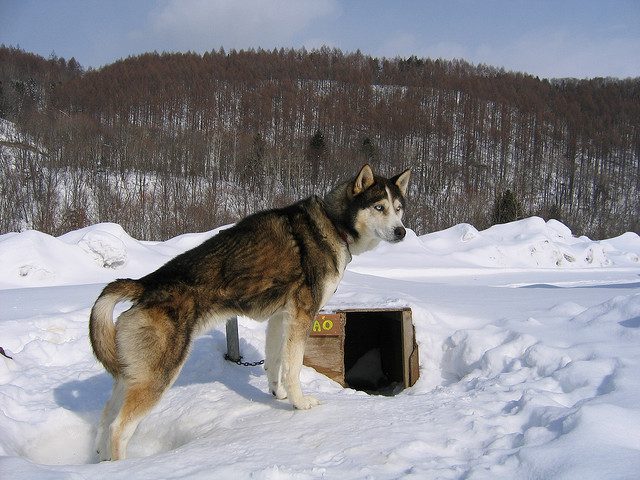
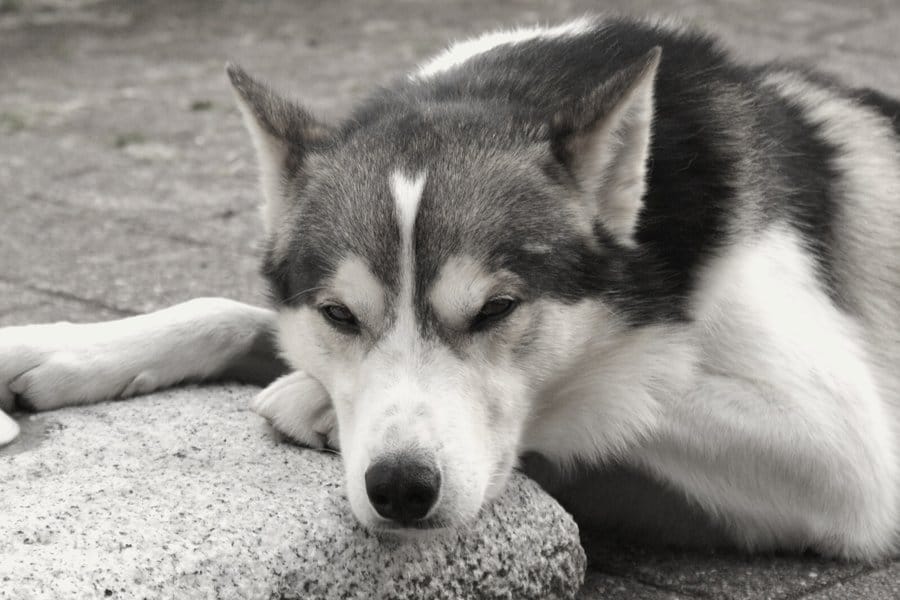
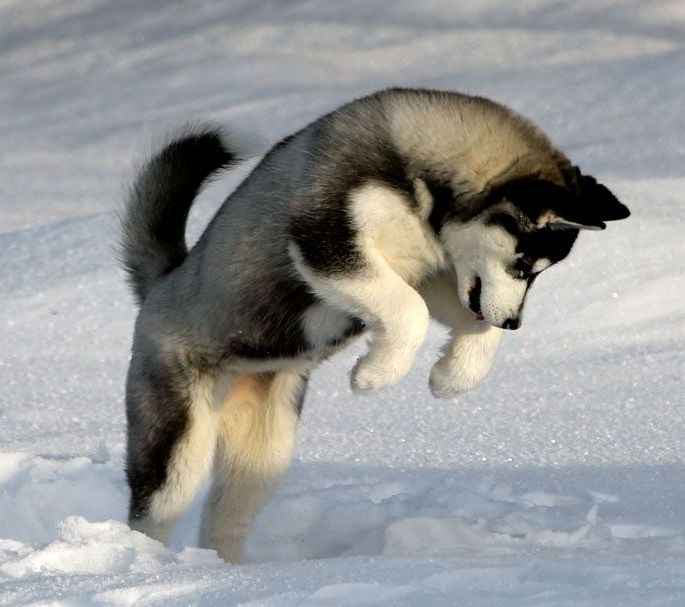
Listed not so much as a breed of dog as a type or category of dog. There are no fixed pedigree characteristics, but rather for the purpose, it is to be a very efficient sled dog.
The origin of this dog is Alaska and Canada. These fully domesticated dogs came thousands of years ago. Today, the Alaskan sled dogs They can be crossed, type Husky, or a combination of several. They also vary in size and build depending on the use of the dog., to compete or work.
Sled drivers usually distinguish between Alaskan Husky and crossbreeding, in an informal way, so it is possible that this type of dog has a degree of northern dog appearance.
Most of the Alaskan Husky have pointed ears, qualifying, in fact, as spitz type dogs.
There are some specializations within this type, as the Mackenzie River Husky or the MALAMUTE, the Alaskan of Sprint as the Eurohound, or distance.
It must be borne in mind that in sledge racing championships, These dogs can come with loaded sledges to the 30 km/h and that runs for three days at a rate of between 30 to 50 km daily.
The Alaskan They are valued for their toughness and resistance. They earn an average speed of 31 km/h.
This type of dogs, at least those that are used to speed racing, are of moderate size, with an average 21 to 25 kg for the males and 17 to 19 kg for the females.
The eyes They can be any color, many are blue. The eyes blues are not considered an essential feature of this race. The fur It has two layers, short hair and of medium length, Although not much, and usually less dense than pure breed of the North, the length of the shortest layer is governed by the need for an effective heat dissipation during races.
Athletic and generally, healthy. Its Life expectancy is usually between 10 to 15 years.
They tend to vary greatly in personality both in colour and appearance. But, in general terms, They are very affectionate dogs, to live with other dogs and humans.
These dogs they are not suited to a lifestyle of urban apartments, that they need a constant source of exercise, and due to its incredible resistance, It seems that they never tire. It is an adventurous and tends to be very quiet in the car rides. These dogs are happy to live outside or inside the home of its owners, But if he leaves out, It is not recommended if you have a perfect lawn…, are amateur digging wells…
His hair tends to be self-cleaned just like a Mally or a Siberian Husky, which is why they need less frequent baths, In addition, they do not usually smell. They have a season of hair shedding in the spring and, Unlike in the Siberians, Malamutes or German shepherds, they may not leave large quantities of hair around the House all year round.
Nothing is impossible obstacles to this type of dogs, that they tend to go up to almost two metres away the sitting position. Although swimming is not his forte, they tend to show any resistance or fear of the water and you can train and motivate them to make them good swimmers. Usually very good vision and sense of smell, which it makes them very good hunters.
 dog-photos.net
 nanokii.deviantart
 pennypincherz.com
 thetripatorium.com
1. Alaskan Husky (English).
2. Alaskan Husky, Alaskan (French).
3. Alaskan Husky (German).
4. Alaskan Husky (Portuguese).
5. Alaskan Husky (español).
 FCI 255 - Asian Spitz and related breeds
Content |
|---|
Coexistence is important that you have with your new friend. Before considering the acquisition of a dog of the breed "Akita" you know certain factors. Not all breeds of dogs are apt to live in an apartment, you must take into account his character, their need for exercise, their interaction with other pets, their care and if you have small children, their level of tolerance towards them.
Adaptation ⓘ5,0 of 5 stars (based on 1 review)
|
friendly dog ⓘ3,0 of 5 stars (based on 1 review)
|
hair loss ⓘ5,0 of 5 stars (based on 1 review)
|
|---|---|---|
Affection level ⓘ5,0 of 5 stars (based on 1 review)
|
Need for exercise ⓘ4,0 of 5 stars (based on 1 review)
|
Social need ⓘ3,0 of 5 stars (based on 1 review)
|
Home ⓘ5,0 of 5 stars (based on 1 review)
|
Toilet ⓘ5,0 of 5 stars (based on 1 review)
|
Friendly with strangers ⓘ2,0 of 5 stars (based on 1 review)
|
barking ⓘ1,0 of 5 stars (based on 1 review)
|
Health ⓘ3,0 of 5 stars (based on 1 review)
|
Territorial ⓘ5,0 of 5 stars (based on 1 review)
|
Cat friendly ⓘ3,0 of 5 stars (based on 1 review)
|
Intelligence ⓘ4,0 of 5 stars (based on 1 review)
|
Versatility ⓘ3,0 of 5 stars (based on 1 review)
|
Child friendly ⓘ2,0 of 5 stars (based on 1 review)
|
Surveillance ⓘ5,0 of 5 stars (based on 1 review)
|
joy ⓘ4,0 of 5 stars (based on 1 review)
|
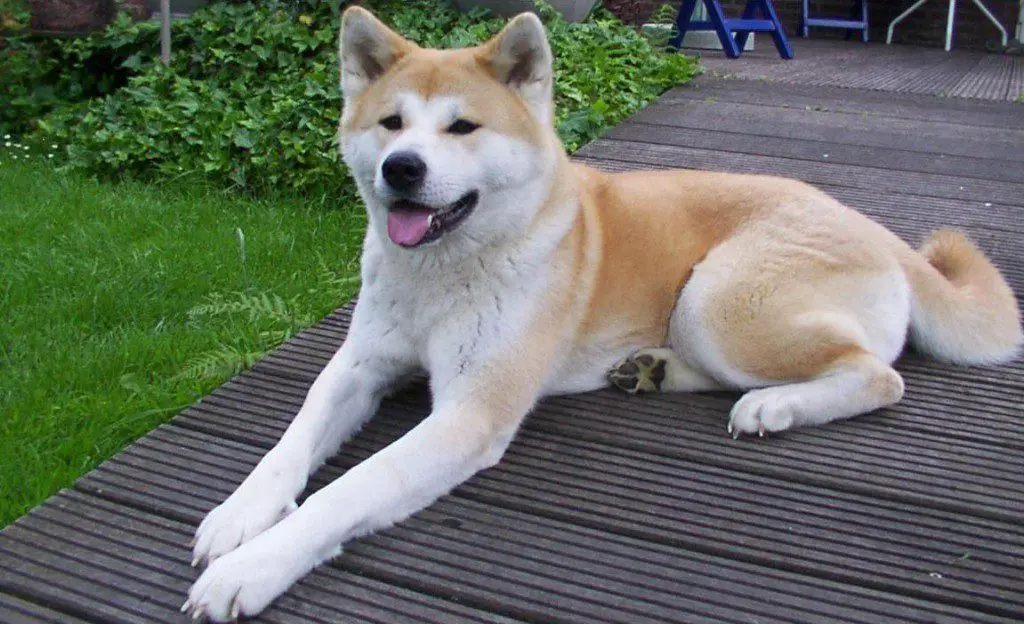
Also called Akita Inu , It is a breed of dog of the Japan, named for the Akita Prefecture, where it is believed that it originated. From time to time is called Akita-ken. Originally it was a hunting dog and for generations it was used by the warriors of the Japan as defense and attack dog. It was also used for hunting bears. It is an easy dog ​​to train and a character very balanced.
Loving and protective of the family, suspicious of strangers, Although it will not attack on a whim. It is a dog barking and majestic appearance. It is considered a breed apart from American Akita.
In Spain the Akita It is considered a potentially dangerous race, by Royal Decree, by which to his possession must obtain the licence for possession of dangerous dogs and register it in the corresponding Municipal registry of potentially dangerous animals. One of the things that are required for this license is insurance of civil liability to third parties.
The Akita (Akita dog) It is the tallest of Japanese dogs and over the years this dog has been, dog fight, symbol of wealth and prestige. owning a Akita Inu It was an honor allowed only the nobility, good luck symbol and talisman, while a statuette Akita Inu It gives away when a baby is born or when someone gets sick.
Did you know??The movie of 2009 «Hachi», starring Richard Gere, It is based on the true story of a Japanese Akita named Hachiko. After the death of its owner, Hachiko waited every day at the train station for the man to return, every day until the end of his own life.
Its size is that of a dog medium- but strong Constitution, balanced and capable of performing the work of a large dog.
It is a little longer than high, has the chest wide and deep, and the level back. His movement should be flexible and powerful. Its fur can have four colors: red, Sesame, striped or white pure.
The size of your skull is proportional to your body. The front and the neck is thick and muscular. The ears are relatively small, triangular and stops, preferred if they are inclined forward. The nose is usually black and lips are black, Although the language is usually pink.
The eyes they are small, sometimes distant from each other, almost triangular, Brown color. It has a strong and straight back, with a broad and muscular kidney region. It has the chest deep, arched ribs and perfectly raised abdomen.
The limb anterior and posterior they must be well developed and be strong to be able to function well in all activities. The feet are solid, round and well closed, your nails are hard. It has webbed feet like cats and is an excellent swimmer.. The tail is high implementation, thick and carried vigorously coiled on the back.
The hair covering the tail is longer which covers the rest of the body. The fur, thick and double, is rough and short. The internal layer is thick and soft hair.
The color varieties they are red, striped and white.
All colors (except for the White) They should have "urajiro» (whitish hair on the sides of the snout, cheeks, under the jaw and in the neck, on the chest, abdomen, under the tail and on the inside of the legs).
Usually measured in 64 to 71 centimeters tall. The females Despite reach 30 to 49 kg, and males of 34 to 53 kg.
The current reconstruction to return to the Japanese type, based on copies of the line ichinoseski, In addition using, Spitz japoneses to recover characteristics of the old Akita Inu.
One character reserved and quiet, will remain impassive in irritating situations, minor. Take the dominant role in the relationship with other dogs, You will not look confrontation unless it has previously been challenged. It must be used, from puppy, the relationship with all kinds of dogs and other animals to live with him, so, getting our Akita Inu a totally socialized dog. With regard to their owners will be loving, loyal and protective. You will have a friendly character with people in general unless they prove bad intentions.
It's a race that no bark unless you have a good reason. When a Akita Inu bark you have to pay attention to. The character of Akita Inu It takes on special importance his protective instinct toward family and belongings.
It is equipped with a temperament quiet and balanced, It is a dog that will support the antics of the children with enormous patience, is more, is especially comfortable in the company of the little ones, that will become inseparable and will defend them and protect it from any intruders either person or animal even with your life.
They are known as dogs faithful and also Smart.
The Akita They can live happily in apartments, When given exercise. They need to be socialized from puppies. Even though they enjoy love and human company, they are very happy to be with other dogs. The Akita They are become excitable when seeing their owners, often moving around them.
These dogs are very good with children. It has a reputation for being an excellent domestic dog. They become big dogs in the family with proper training and socialization.
The protective instinct makes them particularly dangerous to children who may visit the home (they do not tolerate well, the shouts of children playing), should be taken into account we should accustom the animal children incorporated home, These dogs when they arrive home accept members of the family in a herd, new children if they arrive after the can are alien to him and have to adjust them so that there are no problems.
Average longevity of «Akita Inu» is about 10 years, It is similar, to other breeds of their size.
A dog with history… Hachiko: The akita who waited 10 years the return of his master died as a sign of loyalty. A movie based on the true story has been made, call Hachiko Monogatari. There is also an adaptation in English, with the title Always by your side, Hachiko.
 by konikpolski
 by japanese akita
 by puppy-4-sale
 by pixmule
Companion dog.
Large dog with solid build, well balanced and full of substance; well-emphasized secondary sexual characteristics, of great nobility and modest lordship, of strong Constitution.
IMPORTANT PROPORTIONS: The relationship between the height at the withers and the length of the body (measured from the tip of the shoulder to the tip of the buttock) is of 10:11, but the body of the females is slightly longer than that of the males.
It is a dog with a calm temperament, fell, docile and receptive.
PREVIOUS MEMBERS:
LATER MEMBERS: They must be well developed, strong and moderately angled.
Fur: The outer coat must be smooth and hard in texture, the undercoat should be of fine and abundant hair; withers and hips should be covered with slightly longer hair; the hair on the tail is longer than that covering the rest of the body.
Color: Red-leonado, Sesame (red-tawny hairs with black tips), striped and white. All colors mentioned above, except for the White, must have Urajiro.
(URAJIRO = Whitish hair on the sides of the muzzle, cheeks, under the jaw and in the neck, on the chest, abdomen, under the tail and on the inside of the limbs.)
Height to the cross:
A difference of more or less is tolerated 3 cm..
Any deviation from the aforementioned criteria is considered as a fault and the severity of this is considered to the degree of the deviation to the standard and its consequences on the health and well-being of the dog..
FALTAS DESCALIFICANTES:
The latest changes are in bold.
Source: F.C.I - International Cynological Federation1. Akita Inu, Japanese Akita, Great Japanese Dog (English).
2. Akita, Akita Inu, Akita Ken (French).
3. Akita, Akita Inu, Akita Ken, Japanischer Akita (German).
4. Akita Inu (Portuguese).
5. Akita Inu, Akita, perro de Akita, Akita Ken (español).
.png "England") Extinct
Extinct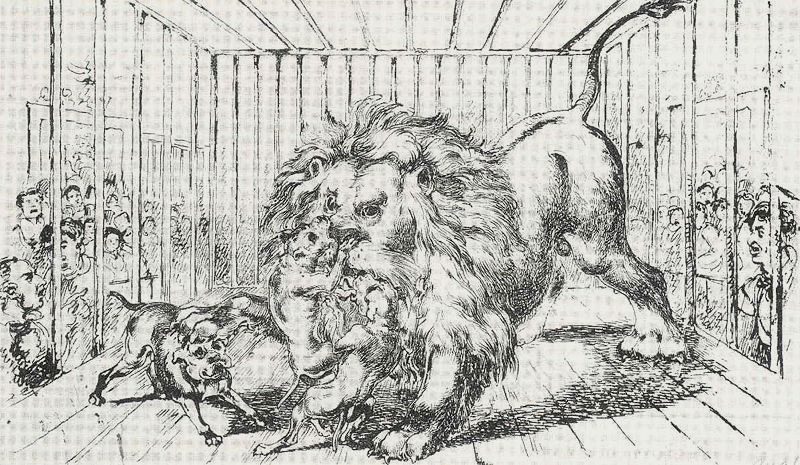
Content |
|---|
The Old English Bulldog was a breed of dog, quite fierce comparing it with the tenderness of the current English Bulldog. Be used for shows as bloody as fights with bulls and Lions, his specialty was biting their nose until the animal couldn't take it anymore and was knocked down by the dog.
Historians are fairly confident that the Old English Bulldog derived from an ancient breed of dog warriors, as the old mastiff or Alaunt. Others believe that the true origin of the breed is not at all clear. Representations in old engravings show that the variety was, without a doubt, a small mastiff, with a relatively long head. The word ‘Mastiff‘ We used, finally, to describe these smaller mastiffs, in the fight with bulls, it proved be lethal, Mastiff, It was used as part of the description, by the power of the dog that joined speed in action (something not very common in large Mastiffs), transformed into a beast.
FCI 344 - Asian Spitz and related breeds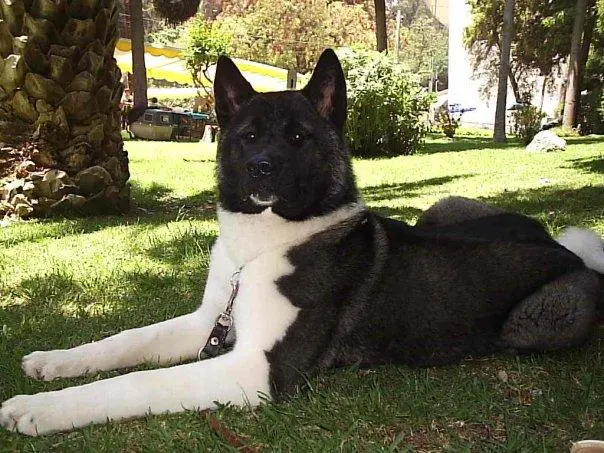
Content |
|---|
Coexistence is important that you have with your new friend. Before considering the acquisition of a dog of the breed "American Akita" you know certain factors. Not all breeds of dogs are apt to live in an apartment, you must take into account his character, their need for exercise, their interaction with other pets, their care and if you have small children, their level of tolerance towards them.
Adaptation ⓘ3,0 of 5 stars (based on 1 review)
|
friendly dog ⓘ1,0 of 5 stars (based on 1 review)
|
hair loss ⓘ3,0 of 5 stars (based on 1 review)
|
|---|---|---|
Affection level ⓘ4,0 of 5 stars (based on 1 review)
|
Need for exercise ⓘ5,0 of 5 stars (based on 1 review)
|
Social need ⓘ1,0 of 5 stars (based on 1 review)
|
Home ⓘ2,0 of 5 stars (based on 1 review)
|
Toilet ⓘ1,0 of 5 stars (based on 1 review)
|
Friendly with strangers ⓘ1,0 of 5 stars (based on 1 review)
|
barking ⓘ2,0 of 5 stars (based on 1 review)
|
Health ⓘ3,0 of 5 stars (based on 1 review)
|
Territorial ⓘ5,0 of 5 stars (based on 1 review)
|
Cat friendly ⓘ1,0 of 5 stars (based on 1 review)
|
Intelligence ⓘ4,0 of 5 stars (based on 1 review)
|
Versatility ⓘ4,0 of 5 stars (based on 1 review)
|
Child friendly ⓘ2,0 of 5 stars (based on 1 review)
|
Surveillance ⓘ5,0 of 5 stars (based on 1 review)
|
joy ⓘ4,0 of 5 stars (based on 1 review)
|
Also Known As Great Japanese Dog. This dog with a molossian structure has its origins in Japan, in 1603 where his first ancestors come from akita prefecture.
Originally, history American Akita It was the same as the Japanese Akita. From 1603, from the akita prefecture, dogs called "Matagi Akitas" (medium-sized dogs for bear hunting) were used as fighting dogs. From 1868, race crossed with Tosa and Mastiffs. For this reason, the increased size of the race, but some features, traits of dogs Spitz type, disappeared. In 1908, by prohibiting dogfighting, This breed has been preserved, prospered and developed into a large Japanese breed. Then, in 1931, 9 Dogs of this breed dogs were recognized as excellent.
During the Second World War (1939-1945), often used the dogs' fur for making military clothing.
The police ordered that all the dogs except the German shepherds, which were used for military tasks. Some fanciers tried to circumvent the order by crossbreeding their dogs German shepherds.
Al finalizarse the Second World War, The number of Akitas had shrunk dangerously and the dogs were coming in 3 ways:
.
The situation of the race was bad. During the procedure of restoration of the race after the war, Kongo-go, a dog from the Dewa bloodline, enjoyed a temporary popularity but still very large.
A big number of Akitas of this bloodline, that presented characteristic exterior features of the influence of the Mastiff or German shepherds, They were taken to USA by US military. The Akitas belonging to the Dewa line were intelligent dogs capable of adapting to different environments.. They loved breeders in USA and the bloodline was developed thanks to the progressive increase in the number of breeders with doubled popularity.
it is so, as 1950 Japanese breeders decided to restore the old type, and use the Akita Inu of the line ichinoseski, created by Engineer Ichinoseski, and dogs spitz Japanese to recover the traits of the old Akita Inu. Americans breed the Akita Inu dewa line, and carried, being a big dog and powerful-looking.
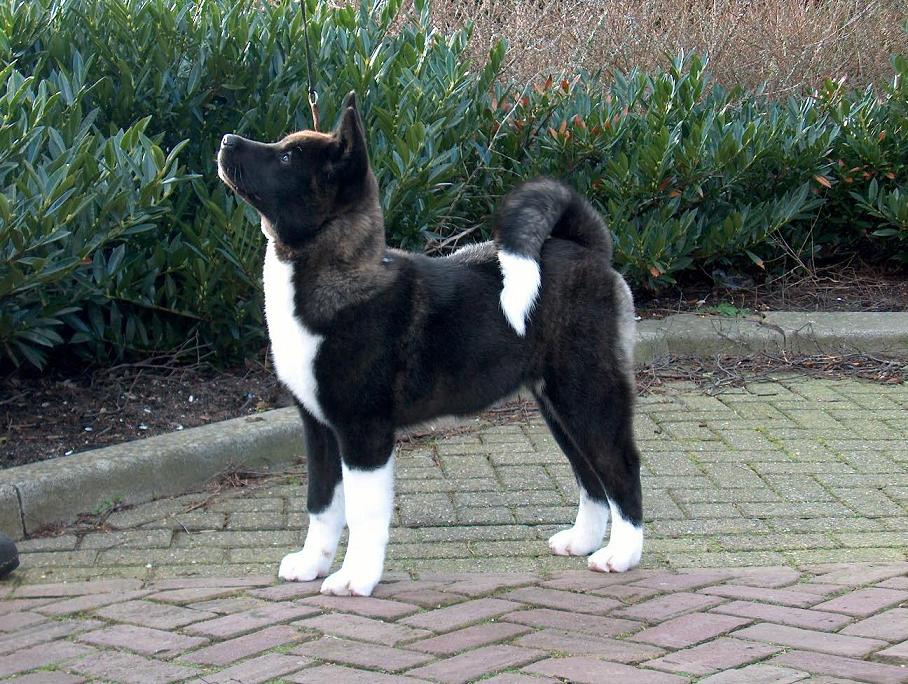
The American Akita or (The Great Japanese Dog) It is an animal with an orientation towards defense and may have dark mask without being penalized, and copies are allowed or unmasked blazer, even with a black head; while his Japanese "brother", the Akita, are more amiable, more fierce and white mask, or the famous Urajiro, because the breed standard Akita, not accept the black mask. The verdicts, it gives preference, in the countries affiliated with the FCI, to the Akita Inu without masks to Akita Inu with black mask, since the Japanese demanded it, and for being the country of origin of the Akita Inu, dominated his opinion on that topic.
It was like this, that in the 1990s there was a name change that differentiated the two branches: To the American Akita It was called "Great Japanese Dog» and is placed in the group II classification in FCI. U.S. experts do not accept the division and decide to continue placing the two races within one in beauty pageants.
it is so, as breeders and lovers of the breed from countries affiliated to the FCI, achieved in the year 2005 that locate him again in the Grupo V, and it is called a definitive, and with the consent of the Japanese as American Akita.
It is necessary to clarify, this discussion of American Akita and your name, wearing a background of difference between Japanese and Americans, and has been overcome in recent years for the good of the race.
Did you know ..?The Akita also proves to be unusual with their grooming habits, He is licking his body like a cat. And that's not his only "feline" trait.: like a tiger, They haunt their prey silently, with the body close to the ground.
Describes the standard, which is the ideal expected of the breed, both morphologically and in temperament. These dogs have in their temperament, the essence of ancient Japanese warriors, since as they are stoic, brave, devoted to his master, silent, little bark, They also have a strong prey, guard and defense.
American Akita It is a dog of great physical strength., resistant to pain and thanks to their double coat they are quite resistant to cold.
Must wear tail curled over the back and mantle comes in different shades, copy may have a black mask, have no mask, have blaze, your head or be completely black color.
They have a strong territorial instinct and are often aggressive with other dogs, especially if male, so it is advisable to accustom them from puppies to family or other pets.
They are very loyal to your home and your family. It is always recommended to have an obedient dog healthy, provide discipline, exercise and affection in that order.
They need not always be black coffee can I be white but are different from those Akita japoneses. the American Akita They are very playful but very rough when playing.
 American-akitas.nl
 akitafreund.de
 petforums.co.UK
 americanakita.Hu
Companion dog
GENERAL APPEARANCE
It is a large size dog, solid structure, well balanced, with a lot of substance and heavy bones. A characteristic of the breed is the wide head, obtuse triangle, the deep snout, relatively small eyes and erect ears carried forward approximately in line with the top line of the neck.
IMPORTANT PROPORTIONS
It is a friendly dog, alert, receptive, Majestic, brave and obedient.
Longer than tall. The skin is not very thin, not too stiff, nor too loose.
PREVIOUS MEMBERS: The front limbs, seen from the front, They must be straight and heavy bones.
LATER MEMBERS: The hindlimbs are heavily muscled, amplitude and bones similar to those of front members. Usually the Rams of the hind limbs are removed.
FEET: Cat feet facing straight forward; well arched toes with thick pads.
HAIR: Double coat of hairs. The undercoat must be abundant hair, soft and dense with hairs shorter than those of the outer coat. The outer coat must be straight hair, with a hard/rigid texture and being somewhat separated from the body. head hair, the lower part of the limbs and the ears must be short. The hair covering the withers and the rump should be approximately 5 cm.; It is thus slightly longer than the hair that covers the rest of the body, except in the queue, where the hair is long and abundant.
COLOR: Dogs can have any included red, leonado, white, even brindle or pinto. The colors are bright and clear and the spots must be harmoniously distributed, with or without mask or blaze. Solid white dogs should not have a mask.
Pinto-colored dogs have a white background with large, regularly placed spots that cover the head and more than a third of the body. The hair on the undercoat may be a different color from the hair on the outer layer.
Height to the cross:
Any deviation from the aforementioned criteria is considered as a fault and the severity of this is considered to the degree of the deviation to the standard and its consequences on the health and well-being of the dog..
SERIOUS FAULTS
MISS PLAYOFFS
Any dog showing clear signs of physical or behavioral abnormalities must be disqualified..
Males should have two normal-appearing testicles fully descended into the scrotum..
TRANSLATION: Lic. O. Valverde-Calvo, updated by the Sr J. Nallem (Uruguayan Kennel Club).
Source: F.C.I - International Cynological Federation1. American Akita, Great Japanese Dog (English).
2. Akita américain, Grand Chien Japonais (French).
3. Amerikanischer Akita, Great Japanese Dog, Großer Japanischer Hund (German).
4. Akita americano, Grande cão japonês (Portuguese).
5. Akita Americano, Gran Perro Japonés (español).
 Not recognized by the FCI . (Molossoid, Bloodhound)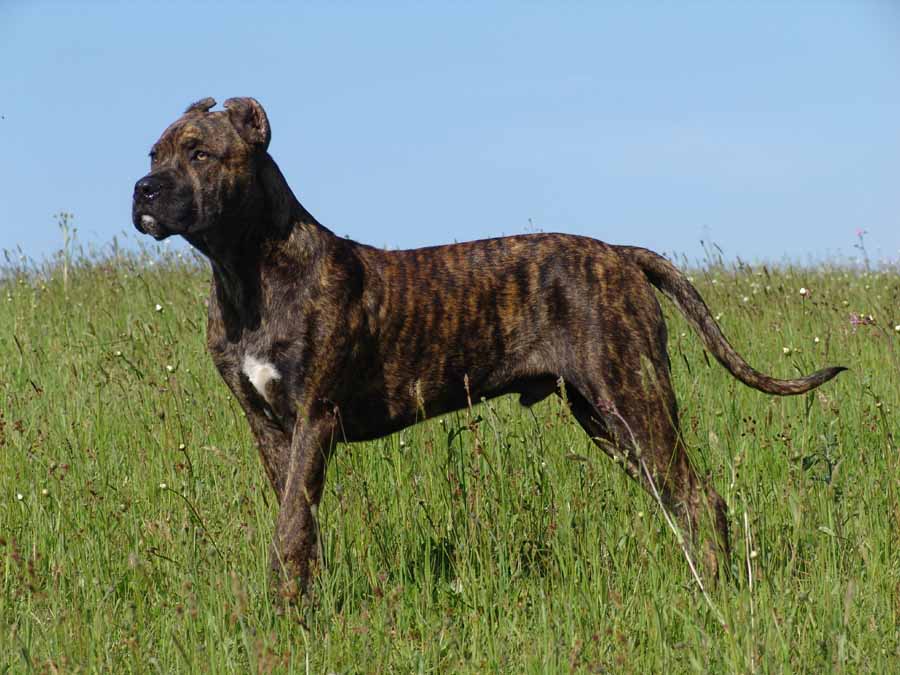
Content |
|---|
Breed of gripping or prey dog of very ancient origins. Medium in size and considered to be breed of Spain. When mixed other races are created as the Bull Dog in Spain, the alano of vautre (grip) in France, the Old bulldog in England, the extinct Bullenbeisser in Germany, or own Dogo Argentino.
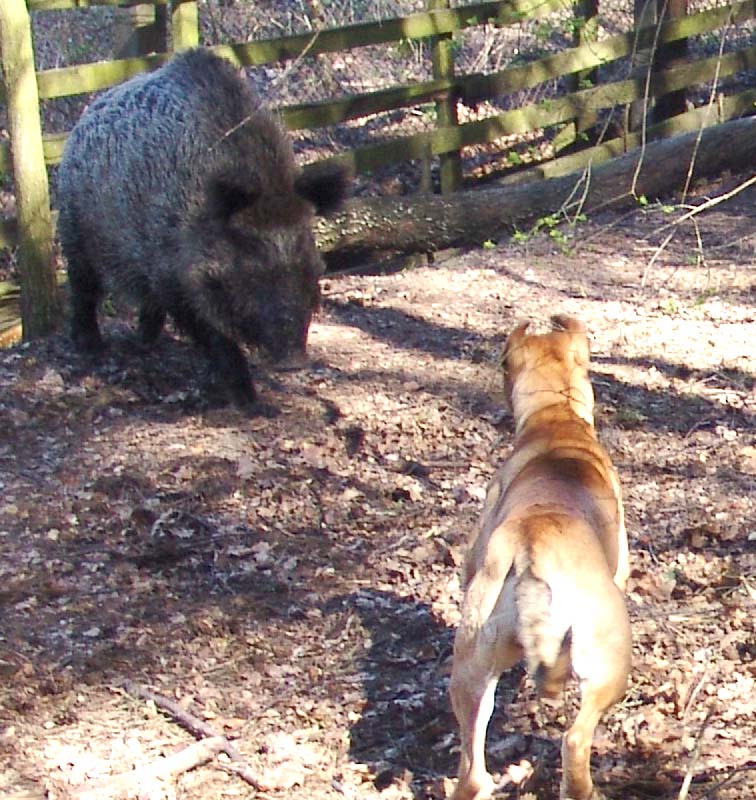
Molosser light dam and corridor. The traditional functionality It is the handling of cattle bravo and semibravo, Iberian trunk, in extensive regime. Big game hunting was also used., as tooth dog for holding deer and wild boar. Its modern implementation is care and defence, as well as for guarding livestock against any type of predator.
Some authors consider Spanish Alano desciendiente the old dog named Alaunt, Alans used by both war and for handling cattle.
The existence of Alans dogs Spain dates back several centuries ago, Although it is not very clear what its origin was. Some believe that this race was extended by moloso Europe by the alano in the fourth century and was taken to the Iberian Peninsula and to the north africa by the hooligans.
In 1350 publishes the rey Alfonso XI their «Book of Montería». In the fifteenth century it is published «Treaty of Montería», anonymous, which performs a deep somatic description of the dog.
When he is talking about perro Dane everyone knew that it was a running dam that to justify its name had to meet certain features:
With strong head, of longilinear proportions, high rump and good bones. Also your character It was clearly defined by its function gripping dog. "not taking for hunger or reward, but by right nature that God gave him." (we call it today prey).
Videos "Spanish Alano" |
||
|---|---|---|
Of which there is no doubt is that these dogs were very extended, as evidenced by his appearance in paintings. There is a alano that plasma Velazquez in the hole hunt, which it is in the National Gallery de Londres, those of Goya in his Capturing a bull or those of an engraving of the French romantic Blanchard. They are also appointed by Cervantes and Lope de Vega Alans of Thirds.
It is believed, according to the most probable hypothesis, they reached the Iberian Peninsula, accompanying the Alano people, shortly after the fall of Roman empire, about him V century. The alano used primarily for war, hunting and ranching, They were robust and primitive specimens. Later, his unbeatable psychophysical qualities (robustness, bravery and loyalty) They make the Alano play a remarkable role as a member of the Spanish armies, especially during the conquest of the Americas.
The first written references to the Alano They appear in the Medievo, Hand Gonzalo de Berceo, in 1247.
More complete data can be found in 1347, in the book of the hunt, gift Alfonso XI "The Justice". Other mentions of importance on Alano, worthy of mention occurs in Utrera in 1603, by Fray Francisco de Tamayo.
In the conquest of New world dogs played a key role, animal unknown to the natives. These, coupled with the horses, armor and arquebuses contributed to the victory.
They were the terror of the natives, thus the stories of the time did not spare impressive descriptions such as the following:
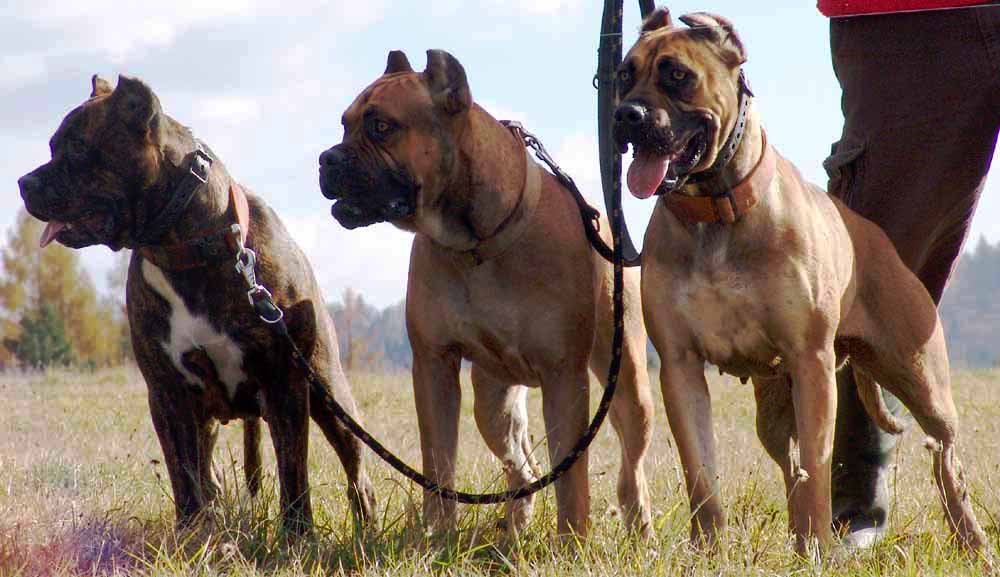
The Friar Bernardino de Sahagun refers to testimonies of Indians attacked by "huge dogs, with ears cut, fierce yellow eyes Bloodshot, huge mouths, hanging languages and teeth in the form of knives, wild as the devil and spotted like jaguars¨. The description has an inevitable tone of admiration and fear; let us not forget that in pre-Columbian times (before the arrival of the conquistadors) the Indians had dogs of small size and small body. In this way, the indigenous called the dogs of the Spaniards "a diabolical invention.
Bartholomew Columbus and Fontanarossa, brother of the discoverer and Adelantado and governor of Hispaniola, they say the Chronicles employed 200 men, 20 horses and 20 Alans, It was the "debut" of the Alans in the Conquest of America.
The Spanish Alano It is supported primarily by its huge courage, with special mention when dealing with wild pig, disregarding even his own life. Its functions have changed little during these centuries. War Dog, livestock (especially for the beef and veal), big game hunting and nursery. It is in the eighteenth century when they appear the first written evidence of Spanish Alano, on their participation in the bravo bull party.
His qualities will cross the Spanish borders, becoming very significant exports, both American continent as to countries of Europe as France, England or Germany in order to improve their own races, especially the Bulldog and the Dogue de Bordeaux. even the international press echoes its characteristics, as happened in 1873, in the british press, where a Spanish prey specimen is described in detail (Alano), called Toro and says so: «…fighting holds his opponent only by the head, is silent and immune to pain…».
At the end of the 19th century or the beginning of the 20th, begins the decline of the alano, motivated by multiple factors:
Exclusion of hosts, Changes in the tradition of hunting and livestock activity, definitive exclusion from the Festival of the bull and custom. This resulted in the gradual replacement of alano other imported breeds, in most of the times, in an unjustified way. Years later, you get even speculate about the possible disappearance of alano, since his last public appearance took place in Madrid, in the year 1963 (exhibition at the Retiro Park).
But they weren't gone, some population gaps remained in certain marginal areas, difficult to access, as are certain mountains Cantabria, Basque Country, Burgos and Salamanca. These remnants of the population managed to survive thanks to its functional qualities, as for the farmers and hunters in the area, outside all fashion and with an enviable sense of practicality, there was simply no better animal for such tasks than the Spanish Alano.
Today, and thanks to the excellent recovery work of some professionals and public bodies, the Spanish Alano practically, remains unchanged, It's a medium dog of prey, strong, agile and very serious. Specially equipped for the handling of cattle, for hunting and for custody.
Little barking by nature, very resistant to pain and disease, he is usually suspicious and distrustful of strangers and submissive and very affectionate with his owner and family.
| Alano | Bou | Corso | Dogo Canario | Spanish Mastiff | Bullmastiff | |
|---|---|---|---|---|---|---|
| Height | 60,5 cm. | 56,5 cm. | 66 cm. | 63 cm. | 59,5 cm. | 60,5 cm. |
| Weight | 35 kg | 36,5 kg | 47,5 kg | 58 kg | 47,5 kg | 59 kg |
| Eyes | clear | dark | dark | dark | Entire range | dark |
| Lines c/f | Parallel | Parallel | Lig.converg | Parallel | Lig.converg | |
| Snout | 36% | 33% | 33% | 40% | 30% |
The Alano is an animal slow in their development, reaching maturity, physical and mental, about two years. From that moment you will find a powerful animal, determined and very noble. As it's a dog selected primarily by their willingness to work, there is a certain variety of “types”, from the lighter Alans, gifted for hunting, even the heaviest, suitable for grazing and save (cattle lines or old bulldog).
Perhaps in recent times less attention is being paid to the latter, in favor of the most appropriate lines for hunting. Perhaps the lovers of this type of alano (Bull Dog), have to consider its viability as a separate race.
In 1880 the fate of “dogs the bull” and for this reason the bullrings stopped keeping dogs.
On the other hand, by ceasing to practice "round hunting", the montería is organized in a different way so that it is no longer interesting that the cattle fall grabbed by the dogs, but that they arrive at the posts where the huntsman is stationed, who is who pays the entertainment. Due to these circumstances, the Rehalas got rid of the Alans who had.
In the old days a dog was useful if it carried out some task. The Spanish Alano “stopped having a job” after the selection of more docile cattle breeds, thus this race regresses at breakneck speed until it reaches extinction.
 by eyeonspain
 by corrientesguau
 by dogbreedpicture
 by alano-Spanish
Not recognized by the FCI. Companion dog.
by alano-Spanish
Not recognized by the FCI. Companion dog.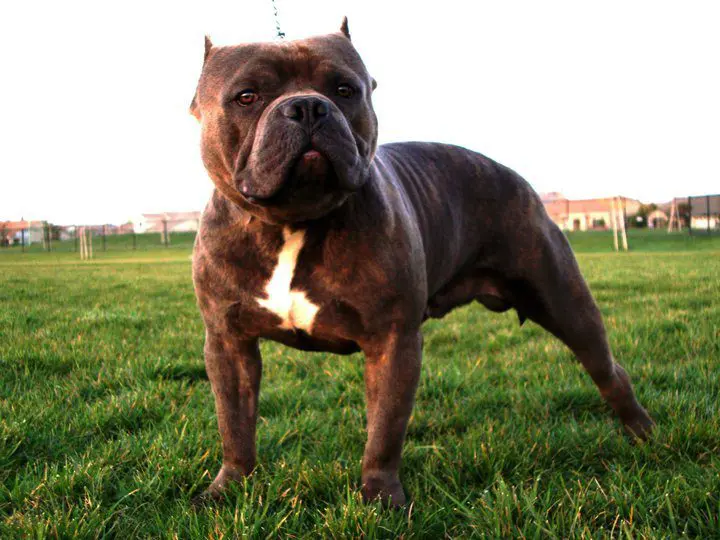
Content |
|---|
Coexistence is important that you have with your new friend. Before considering the acquisition of a dog of the breed «« you know certain factors. Not all breeds of dogs are apt to live in an apartment, you must take into account his character, their need for exercise, their interaction with other pets, their care and if you have small children, their level of tolerance towards them.
Adaptation ⓘ2,0 of 5 stars (based on 1 review)
|
friendly dog ⓘ2,0 of 5 stars (based on 1 review)
|
hair loss ⓘ3,0 of 5 stars (based on 1 review)
|
|---|---|---|
Affection level ⓘ5,0 of 5 stars (based on 1 review)
|
Need for exercise ⓘ4,0 of 5 stars (based on 1 review)
|
Social need ⓘ5,0 of 5 stars (based on 1 review)
|
Home ⓘ3,0 of 5 stars (based on 1 review)
|
Toilet ⓘ2,0 of 5 stars (based on 1 review)
|
Friendly with strangers ⓘ3,0 of 5 stars (based on 1 review)
|
barking ⓘ3,0 of 5 stars (based on 1 review)
|
Health ⓘ4,0 of 5 stars (based on 1 review)
|
Territorial ⓘ2,0 of 5 stars (based on 1 review)
|
Cat friendly ⓘ2,0 of 5 stars (based on 1 review)
|
Intelligence ⓘ3,0 of 5 stars (based on 1 review)
|
Versatility ⓘ3,0 of 5 stars (based on 1 review)
|
Child friendly ⓘ4,0 of 5 stars (based on 1 review)
|
Surveillance ⓘ4,0 of 5 stars (based on 1 review)
|
joy ⓘ4,0 of 5 stars (based on 1 review)
|
The American Bully was created in the years 80 and 90 in the United States based on American Staffordshire Terrier and the American Pitbull Terrier, and then it was completed with other races of type Bulldog, as the American bulldog, the English Bulldog and the French Bulldog.
The idea of ​​creating this breed of dog was Dave Wilson and Carlos Barksdale, founders of the world famous line Razor’s Edge Pit Bull. By owning some American Pit Bull Terriers, they invested in some very good lines and bought some of the best dogs of the time, mainly of the line Mayfield, but also some dogs Hemphil very good.
Later they contacted George Williams, a Washington breeder, D.C. They bought him the dog Diablo, and this purchase marked the beginning of the line Razor’s Edge. Diablo he was a fairly large and muscular dog, who had the size and build they were looking to add to their breeding program.
In fact, the intention of Dave Wilson was to create a breed of short, stocky dogs. His line was to have thicker legs and a bigger head than others Pit Bulls. I also wanted squarer and shorter muzzles. Like this, the line Razor’s Edge was similar to Pit Bull traditional, although he was less athletic and did not have the same drive.
When in 1997 the Pit Bull in your home county (Prince George’s, Maryland), Dave Wilson he was forced to leave the area and moved his breeding activity to Virginia. To perfect your line, spent a lot of time with other breeders to learn more about breeding and genetics. His vision of the dog he wanted was very clear: I had to have a different head.
In 2012, the kennel of Dave Wilson, Razor’s Edge Kennel, I had already created 7 generations of Pit Bulls pure breed. Unfortunately, although he did not want his dogs to be labeled as Pit Bull, could not get a pedigree for some of them and had to register them with the United Kennel Club (UKC) -the second largest dog club in the US, after the American Kennel Club (AKC)– as Pit Bull.
Dave began experimenting with many different lines of dogs, until he finally found the head he wanted. As the litters advanced, the line Razor’s Edge started to be really consistent. The heads of the dogs were quite large, but i also wanted the bones to be thicker.
Like this, mixing combinations of dogs and bloodlines, Dave finally got the style of Pitbull what did he want, called «Bully Style«. The dogs were small, with big heads, wide breasts, short snouts, big bones and short backs, but still within the standard of the United Kennel Club (UKC) and of the American Bully Kennel Club (ABKC).
Since the 15 in July of 2013, the race American Bully is officially recognized by the United Kennel Club.
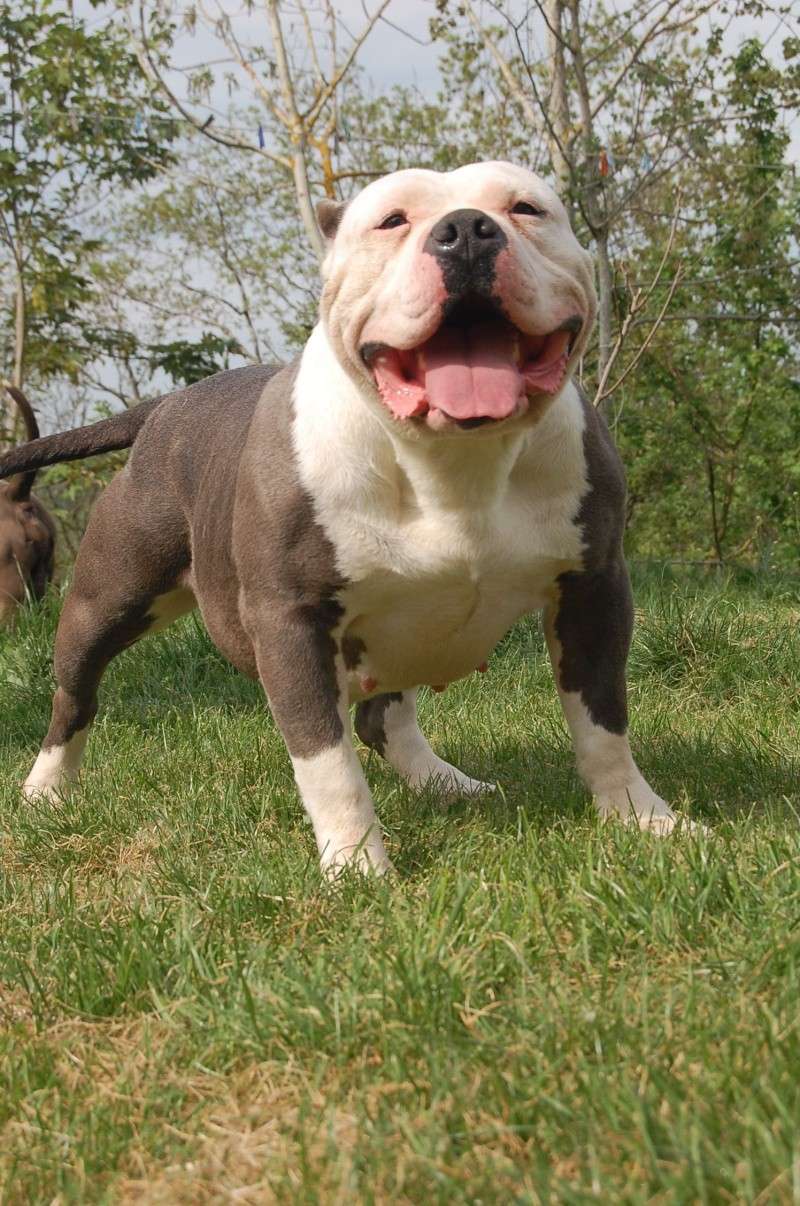
It is a dog Compact and somewhat intimidating at first sight, but with a good character that makes this dog its best and most outstanding feature.
With regard to the Constitution, It is a breed with an athletic and very muscular physique, with a large head, short back. It has short, glossy fur.
Its appearance reflects a strong foundation of American Pitbull Terrier, mixed with patterns of other type dog breeds Bull.
The general balance and correct proportions of an athlete are essential, and absolute solidity and adequate muscle tone are essential.
The breed standards are documents produced by official bodies that list the conditions that a dog must meet. American Bully to be fully recognized as belonging to the race:
The American Bully it developed, first of all, as service dog. Despite its powerful appearance, his demeanor is gentle and friendly.
Some cases of aggression between species of the same race have been observed (especially same sex). For this reason, it is recommended that early socialization and training of puppies take place as soon as possible.
Well-adapted dogs, trained and socialized are confident, tolerant and, in general, kind to strangers. They are also smart and very eager to please, which makes training for dog sports and events easy and enjoyable. Any aggressive or fearful behavior, unprovoked, towards people is wrong for this breed.
The education of American Bully must be firm, but not brutal, because despite its appearance it is a sensitive dog.
The American Bully he is a robust dog, that does not make the fortune of veterinarians, but it does not tolerate extreme temperatures, even if it is very cold (especially when there is humidity) as if it is very hot.
Like all dogs, the American Bully you may have a torn cruciate ligament (or a severe sprain) in the knee. So, it is better to avoid excessive sports activity while the puppy is growing.
It is a young breed, that does not necessarily present symptoms of hereditary or congenital diseases. But, some individuals may be prone to eye disease, nictitating gland prolapse, a condition that causes a red, rounded mass to appear at the inner corner of the dog's eye. This condition is easily treated with surgery..
Some individuals may also suffer from dysplasia, so a hip revision is highly recommended when the dog turns one year old. Similarly, It is recommended that individuals with movement coordination disorders undergo testing. This is because they can suffer from hereditary cerebellar ataxia, also known as spinocerebellar ataxia, a degenerative disorder of the cerebellum that causes, among other things, difficulties in coordinating movements.
12 to 14 years
The American Bully does not require too much maintenance. Regular brushing during the shedding period and a bath with a neutral pH dog shampoo when heavily soiled will suffice..
The diet of the American Bully should be rich in protein and fat, with a good supply of calcium. It is possible to supplement the ration of croquettes with fresh meat or feed it exclusively with the BARF diet.
Similar to the American bulldog, the American Bully It is a breed recognized by the American Bully Kennel Club and the United Kennel Club, but not for the Fédération Cynologique Internationale nor for the Société Centrale Canine.
Like this, and a American Bully sold without registration, will be considered as a American Staffordshire Terrier, but it will never be confirmable, due to their morphological differences. Similarly, and a American Bully sold without pedigree ABKC, the owner may have problems. In fact, to own a American Bully and prove their belonging to the race, a pedigree of American Bully issued by the American Bully Kennel Club.
Last, but the American Bully don't be a categorized dog, a category diagnosis is recommended when the dog reaches one to one and a half years of age. This exam, performed by a veterinarian, confirm or deny that the dog belongs to a categorized breed.
 americanbullyworld.com
 americanbullyworld.com
 americanbullyworld.com
 americanbullyworld.com

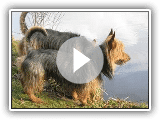
 2007-Australian Terrier
 Australian Terrier (Terrier Australia) – Dog Breed
 Australian Terrier does a few tricks
 Lesnoy's Don and Danilo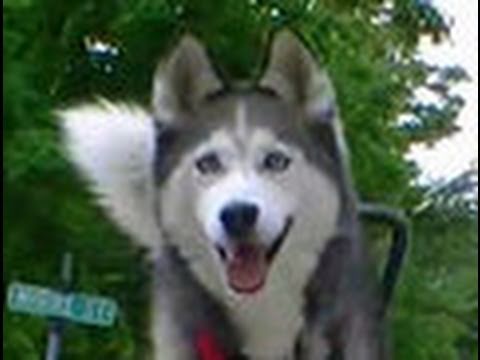
 Dogs 101 – Siberian Husky
 Sled Dogs
 Siberian Husky runs with Bike! Springer Bike with your Dog
 The Siberian Husky

 You Akita Video
 Obedience Kimi (Akita)
 Akita inu Haguro Kensha
 Akita Inu playing with cat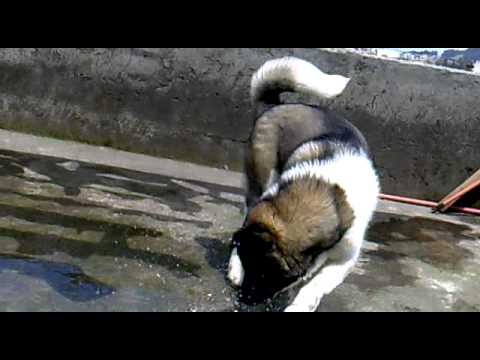
 AKITA AMERICANO 6 MONTHS; ROMYNA
 American Akita playing with Child AMERICAN TRIUMPH
 American Akita
 Dogs 101 – Akita Inu
 The Alano-Spanish
 Alano-Spanish of Darkness
 Alans
Alans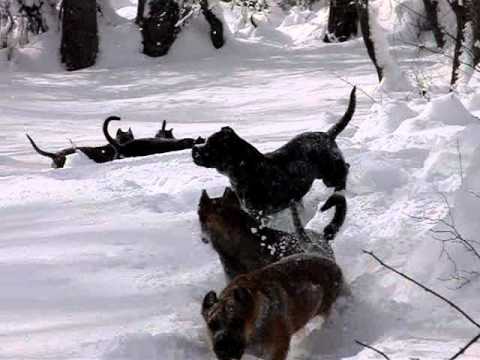
 Alano-Spanish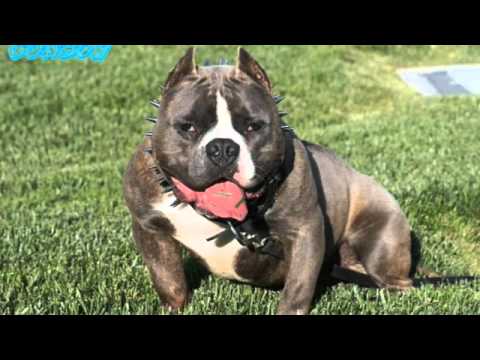
 AMERICAN-BULLY VOL.2
 AMERICAN-BULLY SHOW NEAR CHICAGO IL
 BOSS UNIT’S VISIT TO GOTTYLINE PITS
 Tumtum HD