▷ The world of Pets: Dogs, cats, birds, reptiles, amphibians

Estonian Hound
Estonia FCI 366 - Medium-sized Hounds

Estonian Hound

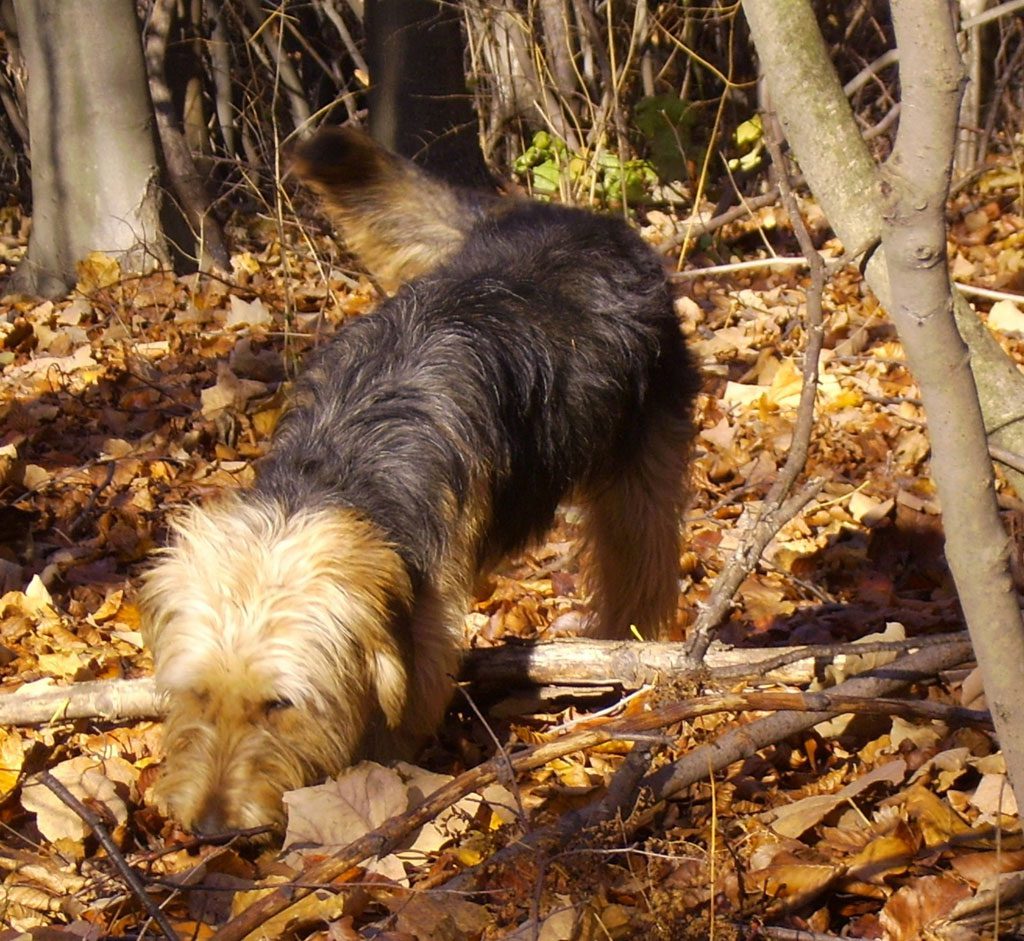
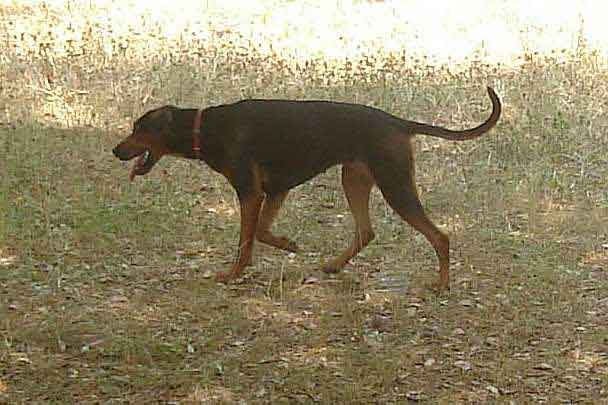
The Estonian Hound they are extremely hardy hunting dogs accustomed to long days in the forest

Content

History

The history of Estonian Hound (or Eesti Hagijas in the language of your country of origin) begins at the beginning of the 20th century in Estonia, when the crossing of english hounds, Poles and Finns used by local hunters gave rise to a large dog unofficially considered regional and ancestor of the current Eesti Hagijas.

Given the sharp decline in the population of large game and in order to reestablish it, in 1937 A law was passed prohibiting hunting with dogs over 45 cm to the cross, which in fact caused a change of orientation towards smaller animals, like foxes and hares. Therefore, Estonian hunters and breeders had to breed smaller dogs than they had then, so they were introduced in the breeding program the Beagles, the Dachshund and Swiss Hounds.

This law was amended three years later, in 1940: the maximum size was increased to 55 cm., and breeders stopped their efforts to miniaturize local hunting dogs.

In 1947, when Estonia was part of the USSR, The Soviet Ministry of Agriculture decided that all the "republics" that made up Estonia should have a local breed of dog. The Estonian hunting dog population was then estimated at around 900, and intense selection helped stabilize the characteristics of the breed that would become the Estonian Hound.

In 1954, the Ministry of Agriculture sent a specialized commission to Estonia to study the 648 specimens submitted by local breeders, and were clearly convinced: the first breed standard was approved by the Ministry a few months later. This year marked the official introduction of the Estonian Hound like a race, whose stamina and formidable nose were immediately emphasized.

After the collapse of the Soviet regime, Estonia gained independence and in 1998 la Estonian Kennel Club, the main canine association in the country, recognized race. Being the only native of the country, it was not surprising that it was granted national dog status.

The organization set out to make the breed known and recognized internationally. His efforts were crowned with success in 2019, cuando the International Cynological Federation (FCI) provisionally accepted the breed and published a standard. Having said that, there is still a long way to go, since it is not recognized, for example, by the prestigious British Kennel Club, nor by American reference organizations such as the United Kennel Club (UKC) o el American Kennel Club (AKC).

The Estonian Hound is popular in an area encompassing Estonia and nearby Russian regions, and its population is estimated at about 1200 individuals. It is still used there as a hunting dog and has also made a place for itself in many homes as a pet.. But, hasn't conquered the rest of the world yet. Rare in europe, even in Estonia's neighboring countries, is practically absent from the North American continent.

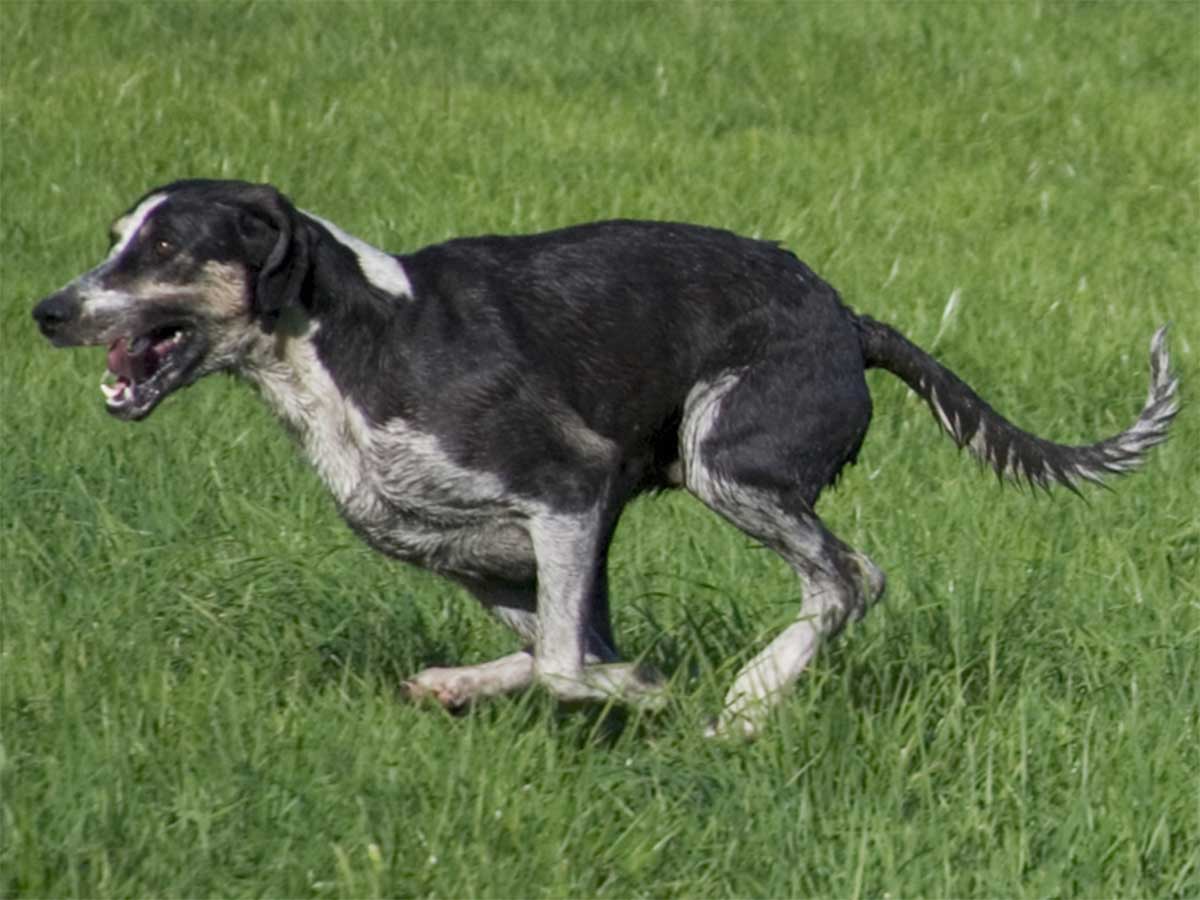
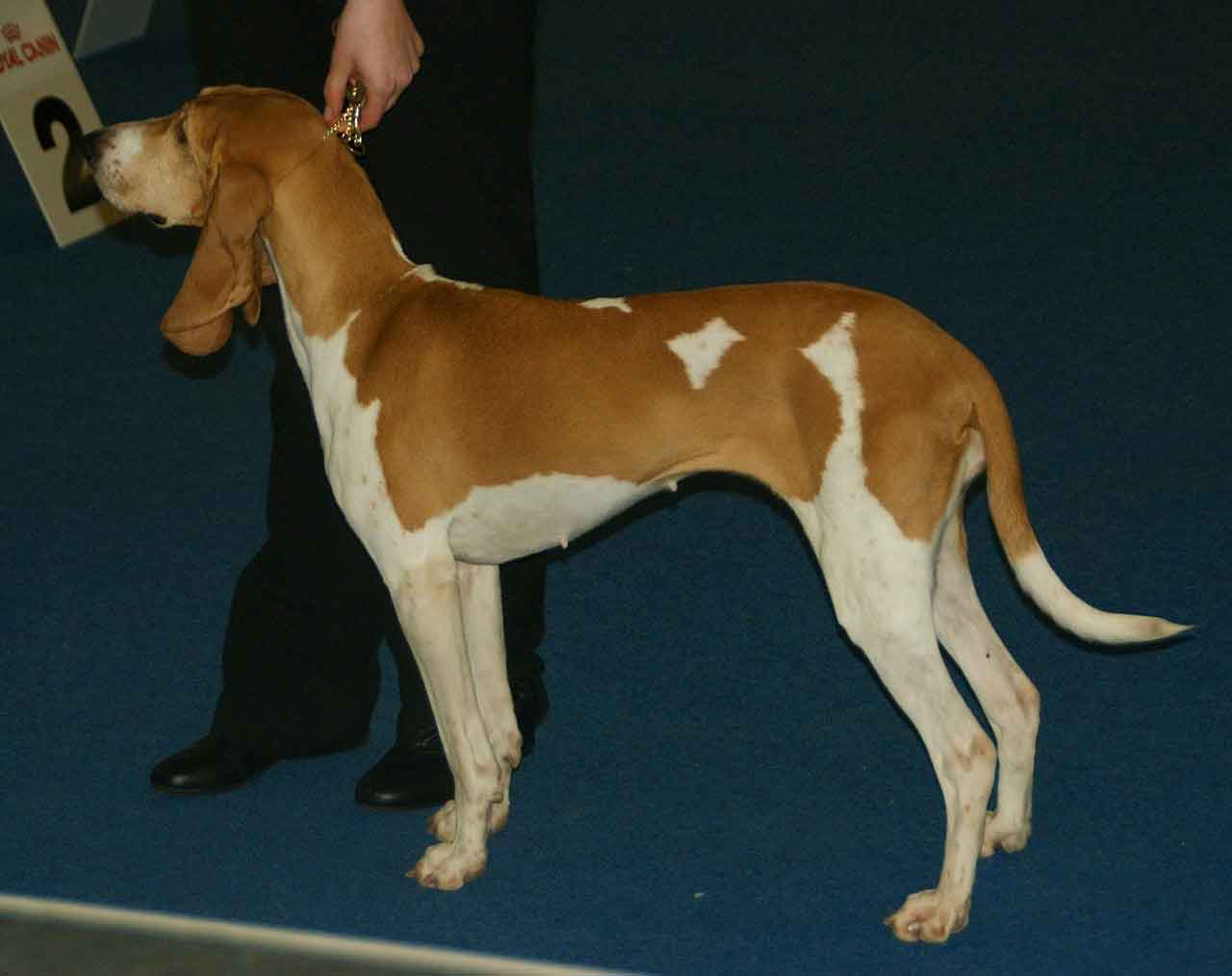
Photo: Estonian Hound by Marcin Błaszkowski, Public domain, via Wikimedia Commons

Physical characteristics

Estonian-hound
Estonian Hound

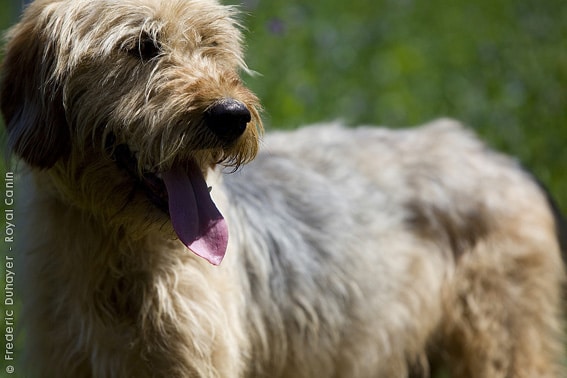
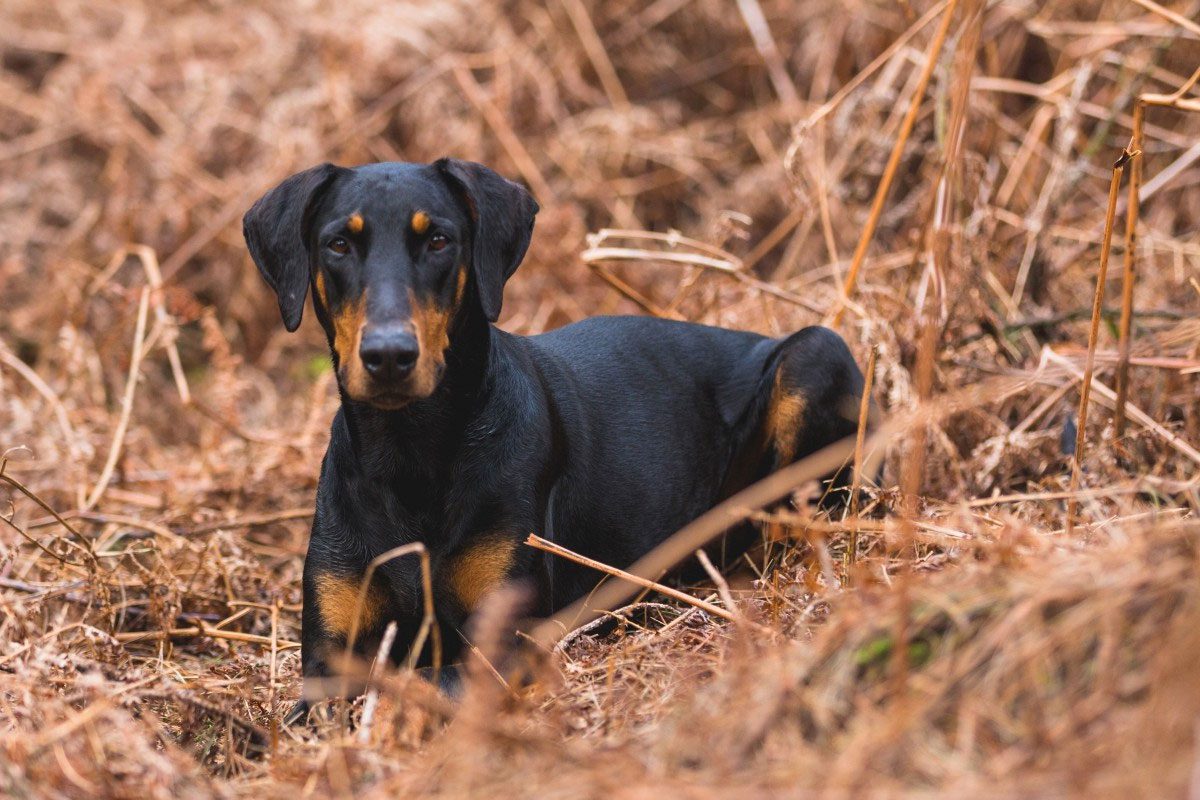
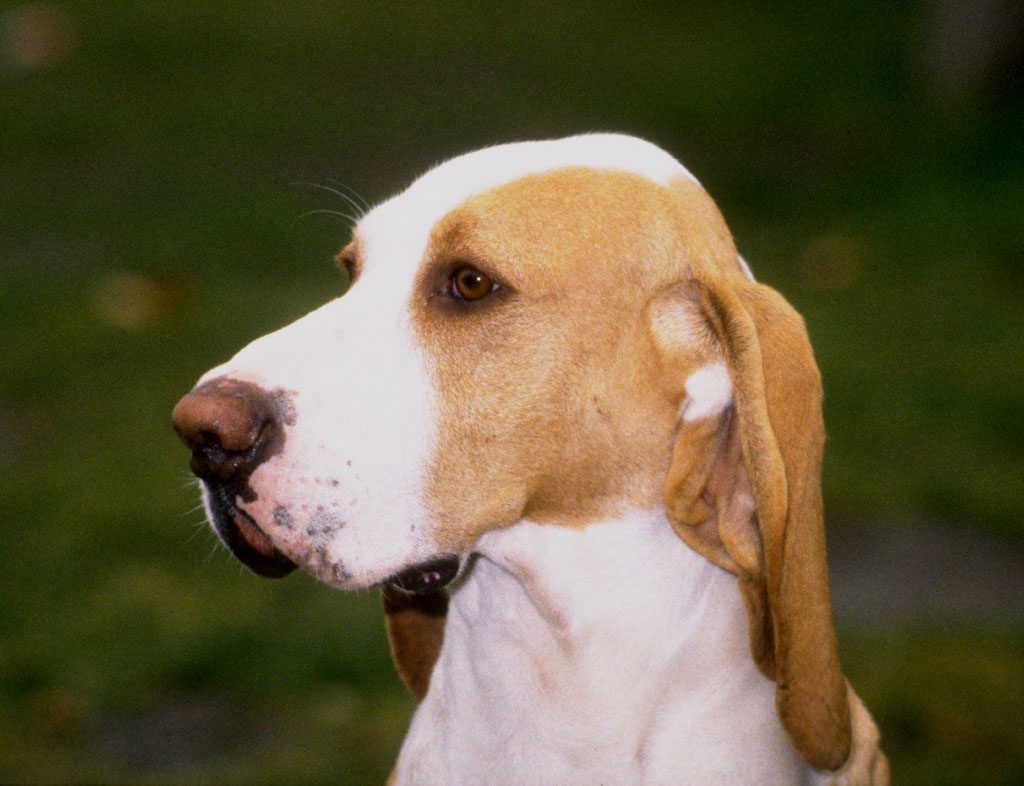
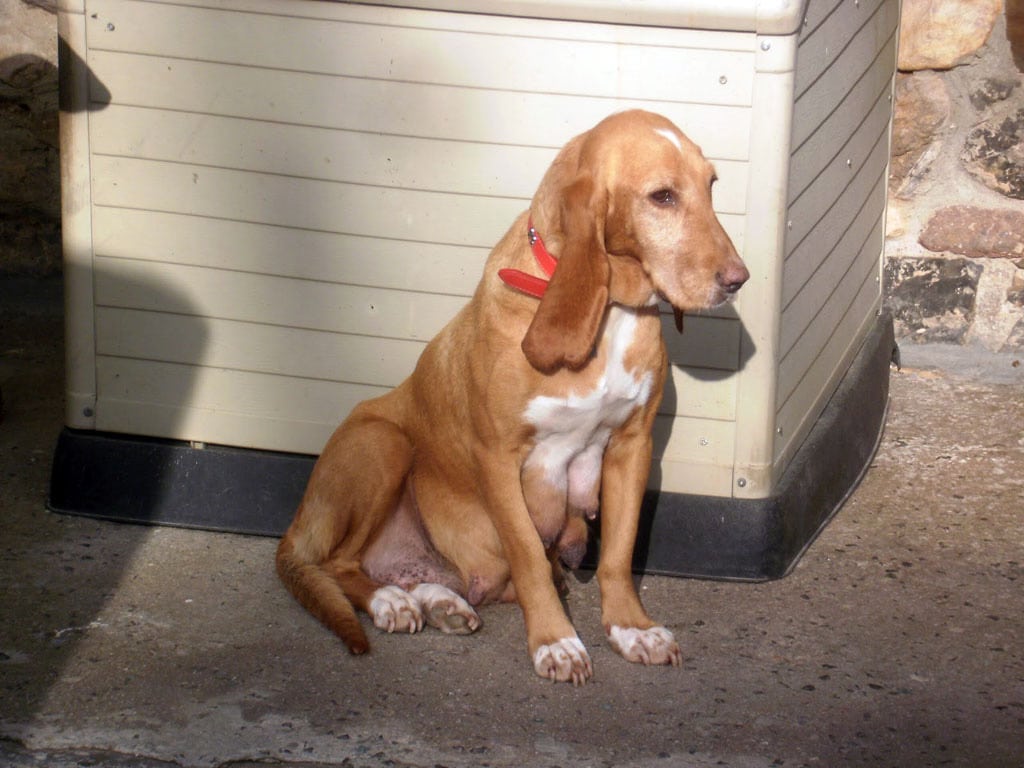
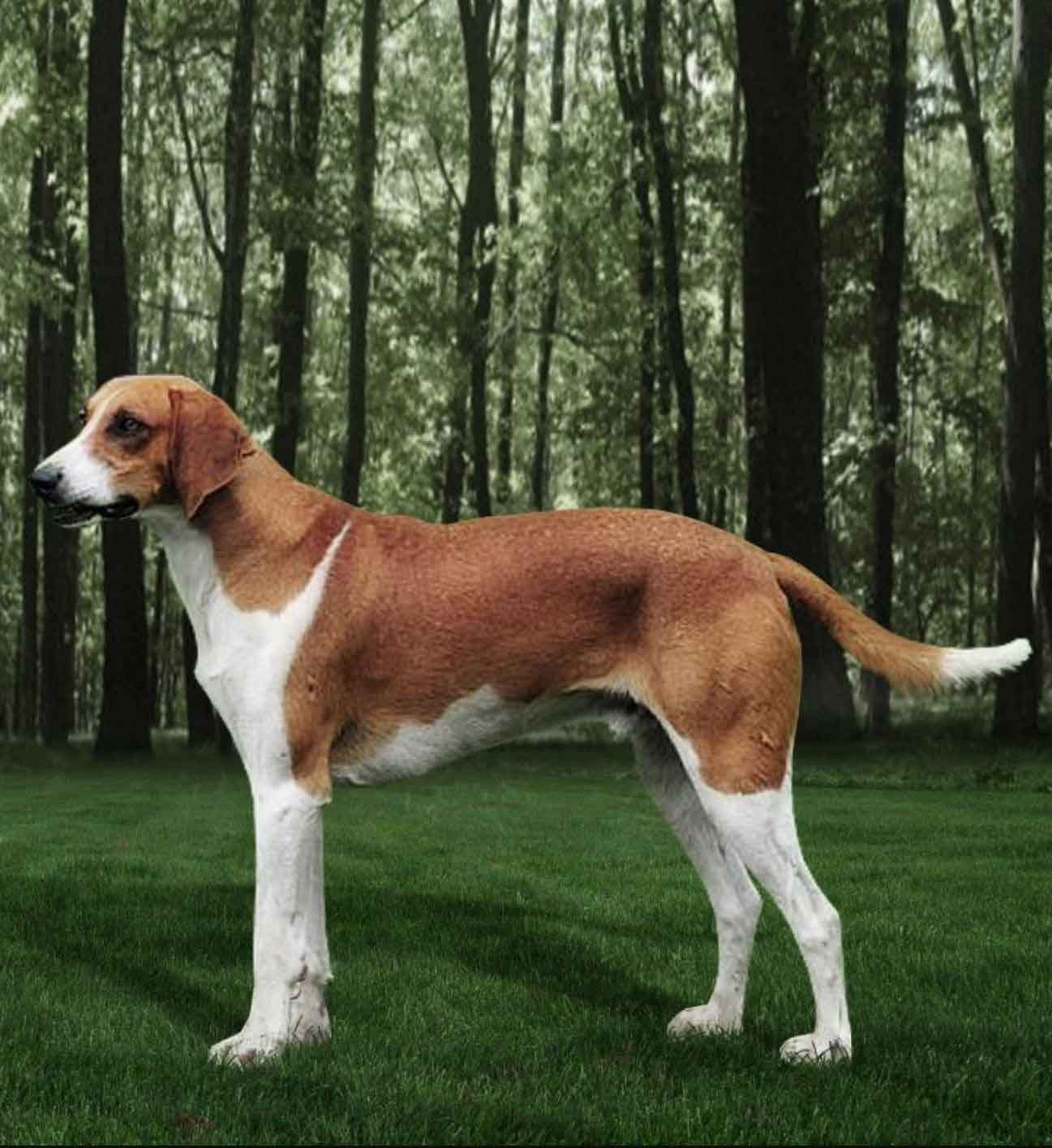
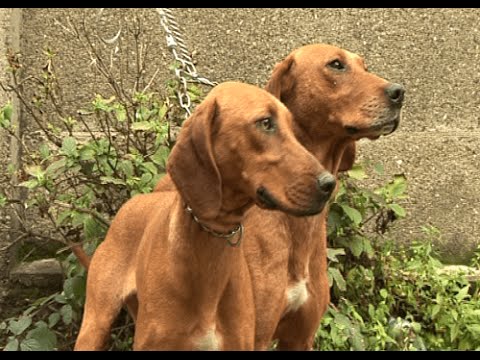
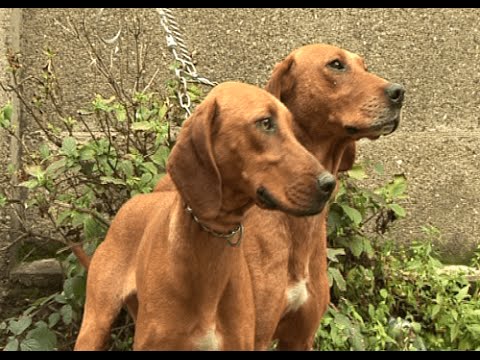
The Estonian Hound They are medium-sized hunting dogs that can easily be mistaken for the Beagle, one of the races that helped create them. But, they are bigger than the Beagle and they have a more pointed snout.

His powerful and muscular body is very long. Its solid bone legs are straight and almost half the size at the withers.. Saber-shaped tail flicks when in motion and remains fairly low, no higher than back level.

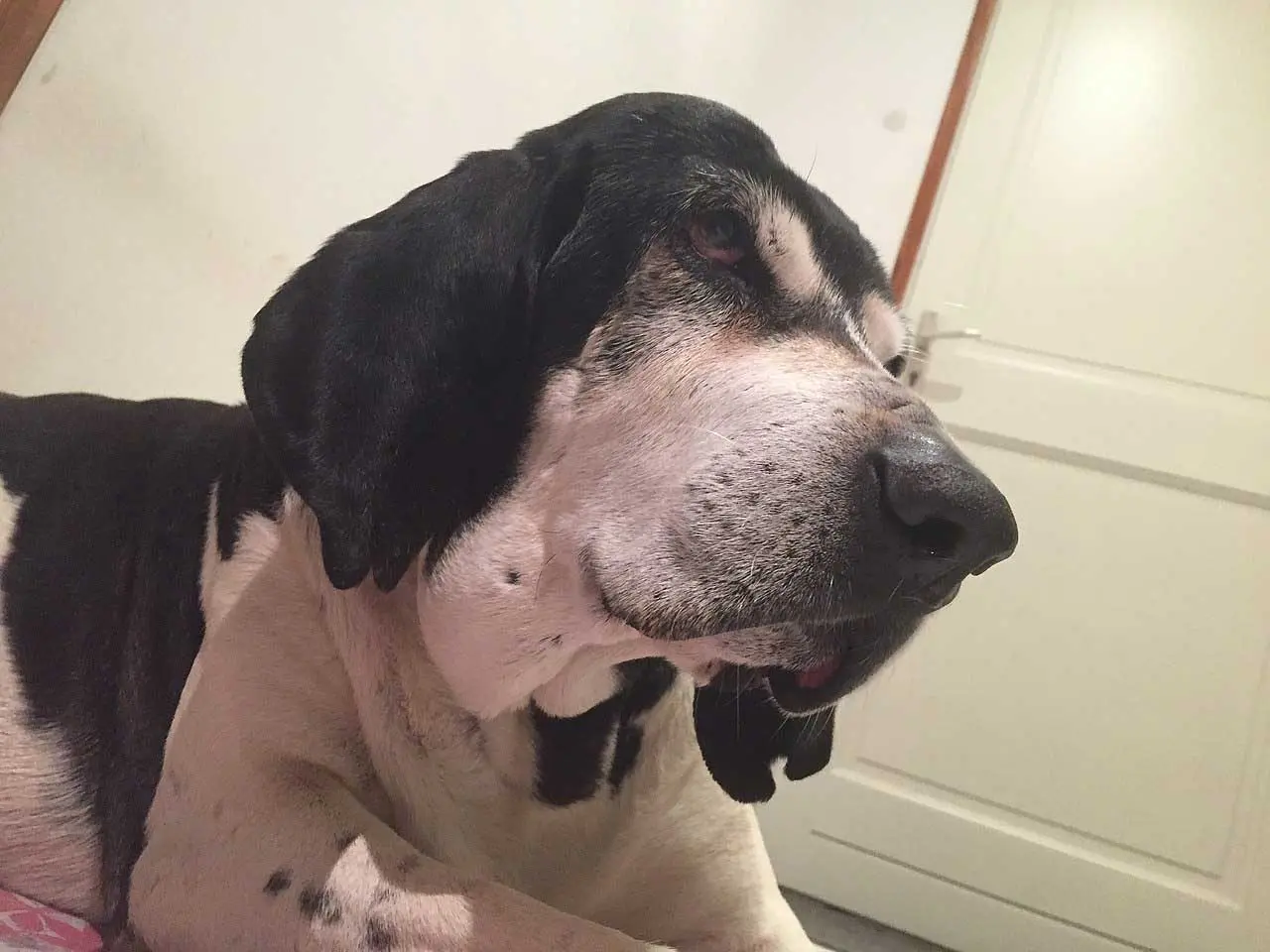
The head is quite wide at the level of the skull and the long muzzle ends in a very black nose. His slightly oblique eyes are more or less dark brown, while her long, thin ears fall along her cheeks.

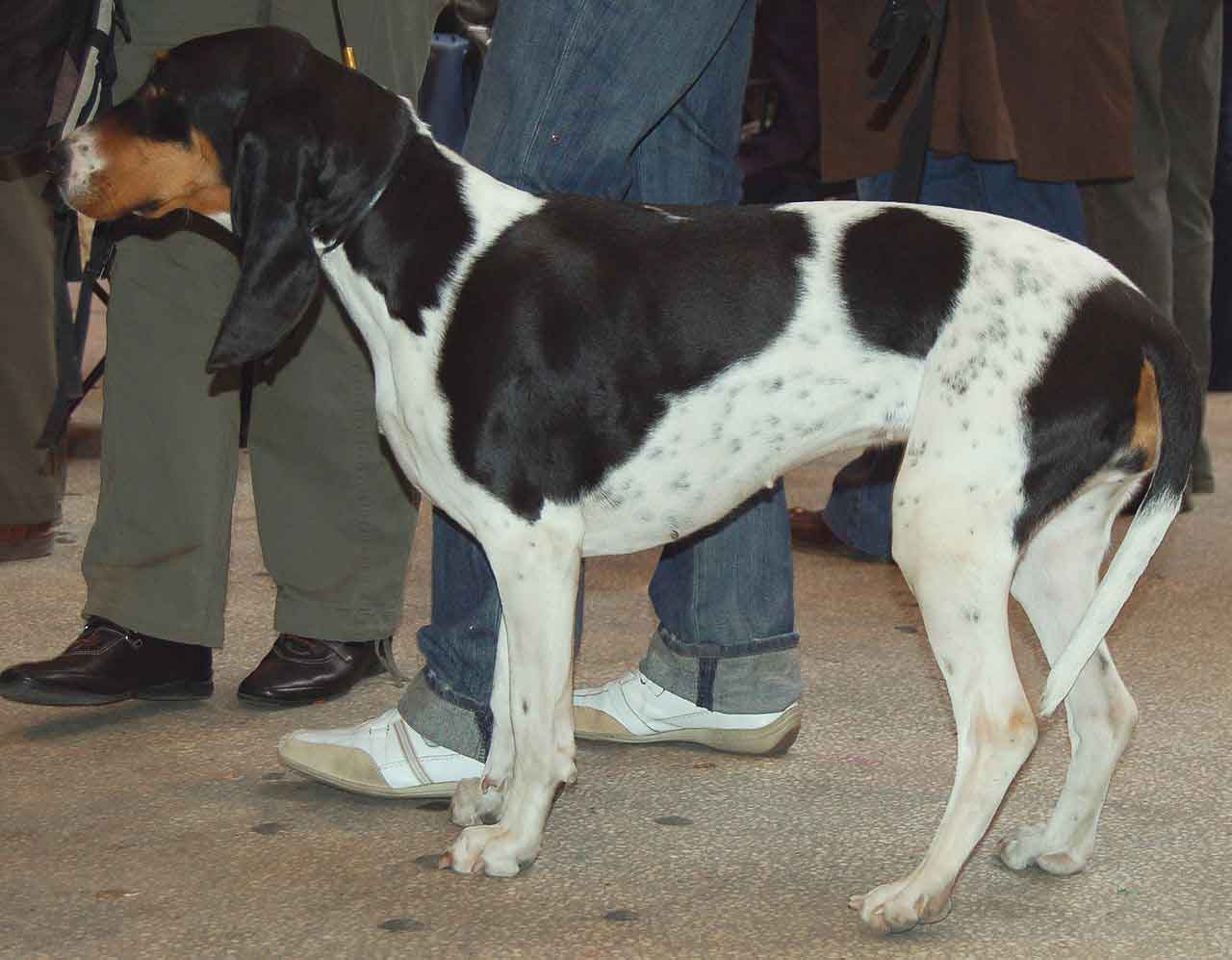
The coat of the Estonian Hound is short, rough and shiny, with a moderately dense undercoat. Their fur is usually tricolor, with black spots with more or less wide red edges on a white background. But, the standard accepts bicolor individuals with completely red spots, without any trace of black. In all cases, the tips of the legs and tail should be white, as well as the throat and chest.

Sexual dimorphism is marked, the female being slightly longer than the male, which is taller in the legs and wider.

Physical characteristics

Estonian Hound
Estonian Hound

The Estonian Hound he is particularly devoted to his family, who likes to spend time with. They are a breed of dog especially recommended for children: they love to interact with them and are very patient with them, they even accept having their tails or ears pulled. But, you should remember that interactions between a young child and a dog of any breed must be under the supervision of an adult.

This strong attachment to his family makes him not like loneliness, which can lead to separation anxiety. If you are often left home alone for long periods of time, not surprisingly you may experience destructive behavior.

One solution for a caregiver who is regularly absent during the day may be to provide a playmate. Made to hunt in a pack, the Estonian Hound they enjoy the company of other dogs. If they are used to its presence from an early age, They can also make friends with any feline in the house. On the other hand, as they have a strong hunting instinct, should not live with rabbits or other rodents.

Rather shy and not fond of novelty, the Estonian Hound they tend to bark at strangers and then observe their master's behavior from a distance. If he invites the newcomer to the house, comes to greet you politely, but stay reserved.

Extremely hardy hunting dogs used to long days in the woods, they need a lot of exercise to expend their great energy: a daily walk of one hour is a minimum for them. It is recommended to always keep it tied during these outings, as your excellent sense of smell often allows you to find an interesting track that you are likely to want to follow for hours, ignoring withdrawal orders. A dog owner who still wants to let him walk freely right now should equip him with a GPS dog collar, so you can easily get your hands back on it if it disappears.

The Estonian Hound you can live in an apartment as long as you are outdoors often enough to satisfy your need for exercise, but he is much happier when he has a garden where he can patrol and play. But, this outdoor space must be well fenced to eliminate the risk of escape if you see potential prey to pursue.

A peculiarity of this dog is its need for routine and its aversion to novelty, which makes their behavior sometimes compared to that of domestic cats. This is not at all an appropriate choice for a master who wants to take their dog on vacation.: he is a poor traveler, you get stressed out when you get in the car and you don't like spending time in a place you don't know at all.

Last, it is a breed of dog that barks often and forcefully. For the peace of the neighborhood, it is necessary to teach him from a young age not to bark for any reason and to shut up when ordered to do so.

Education

Estonian Hound
Estonian Hound

Like all its fellow men, the Estonian Hound must be socialized from an early age. This requires spending as much time with him as possible so that he meets all kinds of people (neighbors, family, friends, strangers…) And animals, but also so that you get used to the situations that you may face later.

This need to become very quickly acquainted with the outside world is all the more pronounced as it is fearful by nature. In particular, to prevent future vet visits from becoming a nightmare to handle, it is recommended to get used to traveling by car as soon as possible.

Addressing the barking issue at an early age is also imperative, so that you understand that it is not necessary to bark for hours at every unfamiliar noise.

It is also important to teach your dog to remember to bark, as you will not hear any more commands once you have sniffed the trail of a game animal and go in pursuit. Hunting instinct is well established in this breed, so it does not require any specific training to be able to follow a trail for hours and be an excellent hunter.

Relatively independent and headstrong, the Estonian Hound require patience to be trained, but they like to please their master and usually end up listening to him. If necessary, be firm to assert your dominant position and show your dog who is the master, traditional training methods should be avoided, at the risk of damaging the relationship of trust. It is preferable to opt for a learning technique based on positive reinforcement.

Health

As the Estonian Hound it is a relatively new breed and not very widespread, there is still no real and in-depth study of their possible health problems. But, looks quite robust, no doubt thanks to a reasoned breeding program that has given priority to the personality and abilities of individuals rather than their appearance.

But, you have probably inherited from Beagle and the Foxhound a certain predisposition to the following diseases:

  • Progressive retinal atrophy, a breakdown of the eye tissue that can eventually lead to blindness;
  • entropion and ectropion, problems with the eyelids that cause itching and / or irritation of the eye, but can be surgically corrected;
  • dislocation of the patella, which affects the kneecap and causes walking difficulties. It can also be responsible for premature arthritis;
  • Elbow or hip dysplasia, that can cause lameness.
  • It also, the Estonian Hound is sensitive to allergies and sinusitis. These ailments are not serious in themselves, but they can cause a certain amount of stress to the dog, as this breed relies heavily on its sense of smell. So, a temporary loss of your sense of smell is likely disorienting you.

    Finally, like most hunting dogs, the Estonian Hound have a ferocious appetite that can lead to overweight or even obesity if they don't get enough exercise.

    Grooming

    Despite her short hair and sparse undercoat, the Estonian Hound require some maintenance. Brushing twice a week is recommended to remove dead hairs and avoid finding them all over the house. This also helps to distribute sebum on the skin to better protect it against infectious agents..

    During moulting periods, in autumn and spring, it is even necessary to opt for a daily frequency, to deal with the large amount of hair you lose during this period.

    On the other hand, it is only necessary to bathe your dog when it is particularly dirty, for example, if he has rolled in the mud.

    Besides keeping your coat, it is recommended to check your teeth once a week to make sure there are no cavities, and cleaning your eyes with a damp cloth to remove any dirt that could cause an infection.

    Weekly ear care is especially important: like any dog ​​with floppy ears, the Estonian Hound have a higher risk of infections and ear infections.

    Buy an “Estonian Hound”

    The price of a puppy Estonian Hound is of some 700-800 euros in your country of origin, and there is no price difference between male and female puppies.

    But, hard to find outside of Estonia, but the situation may change rapidly after the breed is recognized by the FCI in 2019.

    Characteristics "Estonian Hound"

    Coexistence is important that you have with your new friend. Before considering the acquisition of a dog of the breed "Estonian Hound" you know certain factors. Not all breeds of dogs are apt to live in an apartment, you must take into account his character, their need for exercise, their interaction with other pets, their care and if you have small children, their level of tolerance towards them.

    Adaptation ⓘ

    3,0 of 5 stars (based on 1 review)

    friendly dog ​​ⓘ

    4,0 of 5 stars (based on 1 review)

    hair loss ⓘ

    3,0 of 5 stars (based on 1 review)

    Affection level ⓘ

    4,0 of 5 stars (based on 1 review)

    Need for exercise ⓘ

    4,0 of 5 stars (based on 1 review)

    Social need ⓘ

    4,0 of 5 stars (based on 1 review)

    Home ⓘ

    3,0 of 5 stars (based on 1 review)

    Toilet ⓘ

    2,0 of 5 stars (based on 1 review)

    Friendly with strangers ⓘ

    3,0 of 5 stars (based on 1 review)

    barking ⓘ

    3,0 of 5 stars (based on 1 review)

    Health ⓘ

    4,0 of 5 stars (based on 1 review)

    Territorial ⓘ

    3,0 of 5 stars (based on 1 review)

    Cat friendly ⓘ

    2,0 of 5 stars (based on 1 review)

    Intelligence ⓘ

    4,0 of 5 stars (based on 1 review)

    Versatility ⓘ

    3,0 of 5 stars (based on 1 review)

    Child friendly ⓘ

    3,0 of 5 stars (based on 1 review)

    Surveillance ⓘ

    3,0 of 5 stars (based on 1 review)

    joy ⓘ

    3,0 of 5 stars (based on 1 review)

    Videos "Estonian Hound"

    Estonian Hound / 99+1 Dog Breeds
    Estonian Hound / 99+1 Dog Breeds
    ESTONIAN HOUND PUPPIES
    ESTONIAN HOUND PUPPIES / ESTONIAN HUNDRED PUPPIES

    Type and recognitions:

    • FCI CLASSIFICATION:
    • Group :
    • Section : . .

    Federations:

    • FCI – Group 6: Scent hounds, and related breeds. – Section 1.2: Medium-sized Hounds.

    FCI breed standard "Estonian Hound"

    Origin:
    Estonia

    Date of publication of the valid original standard:
    04/09/2019.

    Use:

    Hound used to hunt hares, foxes and lynxes.


    General appearance:

    Medium sized proportional hound, strong and dry constitution. Strong bones, well-developed feet and muscles. White markings are clearly visible and help to see the dog better when working in the field. Sexual dimorphism is well defined.

    important proportions

    • The length of the body clearly exceeds the height at the withers. Females may be slightly longer than males.
    • The length of the legs is approximately the 50% the height at the withers.


    Behavior / temperament:

    In good mood, flexible and user-friendly. Very well developed sense of smell and game detection and a pronounced passion for hunting guarantee good results in finding prey and tracking in difficult terrain. Resonant voice helps locate dog from long distance.

    Head:

    View from the top, forms a blunt wedge, wider at the back and slightly tapered towards the snout.

    Cranial region:
    • Head: Seen from above, forms a blunt wedge, wider at the back and tapering slightly towards the muzzle.
    • Skull: Moderate width, slightly curved. Superciliary arches well developed but not prominent.
    • Depression links (stop): Moderately pronounced, never prancing.

    facial region:

    • Truffle: Wide, totally black. Dogs with coat color that has golden or tan spots may have a lighter colored nose, never liver brown.
    • Snout: Long, straight and in proportion to the skull.
    • Belfos: Dried, tight, not outstanding, no flap at the corner of the mouth. Fully pigmented lip edges.
    • Jaws / Teeth: The teeth are white and large. The jaws normally develop with a complete set of 42 teeth and a full scissor bite, that is to say, the upper teeth closely overlap the lower teeth and fit the jaws. Bite level due to aging and wear of undesirable incisors.
    • Cheeks: Flat.

    Eyes: Slightly sloping, dark brown, dark edges.

    Ears: Thin, pendants, placed at a medium height, close to the cheeks, rounded edges and covered with short hair. When pulled towards the nose, reaches about half the length of the muzzle.

    Neck:

    Medium long and moderate high, round in cross section, muscular, dry skin without folds.

    Body:

    • Cross: Rising above the back line.
    • Back: level, broad and muscular.
    • Pork loin: Short, width, arched and muscular.
    • Rump: Wide, average length, muscular and slightly sloping. Height at the croup 1-1.5 cm less than at the withers.
    • Breast : Oval, long and spacious, that reaches up to the elbow. Well developed ribs.
    • bottom line: The sternum is long and the belly only slightly tucked.

    Tail:

    Saber shape, thick at the base, tapering slightly towards the end and reaching to the hocks. Active movement when moving, the base of the tail should never be raised above the line of the back.

    Tips

    Former members

    Generality   Dried, muscular with strong bone. Viewed from the front the front legs are straight and parallel. The length of the legs is approximately the 50% the height at the withers.
    Shoulder   The angulations in the shoulder joint are of 115-120 degrees.
    Elbow   Strong, tight, without turning in or out, but firmly relaxed.
    Forearm   Medium length oval bone. Robust in relation to the body, that is to say, neither thin nor too heavy and completely straight.
    Metacarpus   Large, flexible and almost straight.
    Front feet   Arcuate, oval and tight. Strong nails and turning down. Thick pads.

    Later members

    Generality   Dried, muscular with strong bone. Seen from the back, the legs are straight and parallel and, from the side, they are well angulated.
    Thigh   Approximately equal in length to the lower thigh.
    Leg   Approximately equal in length to the thigh.
    Knee   Strong, moderately bent and not turning either in or out when moved.
    Metatarsus   Of average length, very strong and vertical.
    Rear feet   Arcuate, oval and tight. Strong nails and turning down. Thick pads.

    Movement:

    With good handling, free, in a straight line, that is to say, one-way, fluid and smooth.

    Mantle

    Skin: Tight, but elastic and without folds.

    Fur: Short, uniform, rough and shiny. Moderate inner cover. The tail is covered with even dense hair along its entire length and, therefore, the tail looks thick. At the tip of the tail the hair is somewhat shorter.

    Color: Typical color is black patches with tan markings and vivid white markings (tricolor). The size of the patches is not limited. Lemon to golden tan patches without black are also allowed (bicolor). The patterns can be of various sizes and also form a saddle. Black patches, toasted or lemon, with or without rich tan rims, contrast well with white. White markings must be on the head, in the throat and chest extending to the belly. All feet and tip of tail should be white. All colors should be as bright as possible.


    Size and weight:

    Height to the cross

    • Males: 45 – 52 cm..
    • females: 42-49 cm..


    Fouls:

    • Any deviation from the aforementioned criteria is considered a fault, and the severity of this is considered the degree of deviation from the standard and its consequences on the health and well-being of the dog and the dog's ability to perform its traditional task.
    • The offenses listed must be in accordance with their severity..

    Serious misconduct:

    ▷ Shy or too agitated.
    ▷ Too light or too heavy in construction.
    ▷ Too short or too long in the body, high in the back.
    ▷ Thick head, flat or domed skull, rounded cheeks.
    ▷ Nose, eyes or lips with insufficiently pigmented pigment.
    ▷ Slightly overbite where the incisors are not in contact.
    ▷ Ears that are too short or too thick, set too high, not lying close to the head or covered with long hair.
    ▷ Narrow chest, flat rib cage.
    ▷ Weak top line, steep group.
    ▷ Queue too long (that reaches more than 3 cm below the hocks) or too short, carried up from the base.
    ▷ Extended fingers or too long feet (hare foot).
    ▷ Clearly wavy hair, lack of bottom cover.
    ▷ Overmarked with white, obvious black or tan in white areas.

    disqualifying fouls

    ▷ Aggressive or too shy dogs.
    ▷ Absence of sexual dimorphism.
    ▷ Size above the limits indicated by the standard.
    ▷ Exceeding 3 mm and more, or bite below the shot.
    ▷ Strange eyes or white eyes (blue).
    ▷ Small ears, punctured or semi-punctured.
    ▷ Dubbed, or tail defect.
    ▷ Overmarked with black or tan color, that is to say, lack of white markings.
    ▷ Brown or brown patches with pigmented nose on the liver.


    N.B.:

    • Any dog ​​showing clear signs of physical or behavioral abnormalities should be disqualified..
    • The aforementioned fouls that are more pronounced or more marked are eliminatory..
    • Males must have two normal-appearing testicles fully descended into the scrotum..
    • Only functionally and clinically healthy dogs, with the typical conformation of the breed, should be used for parenting.

    Source: F.C.I - International Cynological Federation

    Alternative names:

    1. (Estonian: eesti hagijas) (English).
    2. eesti hagijas (French).
    3. (estnisch: Eesti hagijas), Estnische Bracke (German).
    4. Eesti hagijas (Portuguese).
    5. Cazador estonio (español).

    ▷ The world of Pets: Dogs, cats, birds, reptiles, amphibians

    Petit Basset Griffon Vendéen
    Francia FCI 67 . Small-sized Hounds

    Basset Grifón Vandeano pequeño

    The Petit Basset Griffon Vendéen is a very strong race.

    Content

    History

    The Petit Basset Griffon Vendéen It is a small size hunting dog (Petit), under (basset), hard hair (griffon) of French origin (in the region of the Vendée), mainly used for hunting rabbits with his great sense of smell.
    It was developed from the Grand Basset Griffon Vendéen, larger copy, heavy and long.

    In the past, often to raise both races together. In 1975 are prohibited from crossing them, although puppies with characteristics of both breeds could still be born in the same litter. In France, It was a popular hunting dog for nearly a century (origin s. 16TH); However, the breed is relatively new in other regions.

    Physical characteristics

    Medium-sized, its height varies between the 33 and 38 cm and his weight between the 16 and 20 kg.
    It is a small dog, rustic. Its aspect is neglected and natural. It has hard and rough hair with eyebrows, beard and whiskers woolly. White base, with black spots, Orange or grey.

    Is well proportioned and is approximately a 50% longer than high. Wide tail at base, decreasing towards the tip thickness. It keeps it erect. Their ears are covered with hair; they are long but fail to reach the tip of the nose. Large nostrils. Its back is straight and slightly arched over the lumbar area.

    It has large fame of Digger, jumper and escape expert, so you have to keep it in a safe enclosure.
    Usually, is happy, friendly and always busy in their explorations. He is intelligent and can be stubborn. It's funny and has many security. Jealous and playful. Pretty crook.

    Character and skills

    He is good with children and quite friendly with strangers and although his obstinacy, it is a bit difficult to train, is not especially dependent or independent. Their dominance is moderate.

    He is good with other dogs, but by his hunting instinct, It is not reliable with other pets. Being of small size, has a very loud bark, and tends to the howl.

    Very strong race; serious genetic diseases are not known. prone to ear infections. Times, allergies have been given to insecticides.

    It has hard hair and moved it very little, Although it needs a cleaning and brushing regularly to avoid entanglements.
    It requires moderate exercise, being a good companion to run. At home he is very active and can only live in an apartment if he is sufficiently exercised.

    As open space, a small garden is enough. Adaptable to most climates, prefer the coldest. It´s suitable for novice owners. Care properly has an average life of 10 to 14 years.

    Petit Basset Griffon Vendéen pictures

    Videos Basset Grifón Vandeano small

    Alternative names:

    Petit basset griffon vendéen / Kleiner basset griffon vendéen / small basset griffon vendéen

    Type and recognitions:

    • FCI CLASSIFICATION:
    • Group :
    • Section : . .

    Federations:

  • FCI
  • AKC
  • ANKC
  • CKC
  • ​KC
  • NZKC
  • UKC

  • FCI breed standard Petit Basset Griffon Vendéen

    FCIFCI - Petit Basset Griffon Vendéen
    Basset

    ▷ The world of Pets: Dogs, cats, birds, reptiles, amphibians

    Billy
    Francia FCI 25 - Large-sized Hounds

    Billy

    The Billy is a used hunting dog live in the open air, in open spaces

    Content

    History

    The Billy, It is a dog from France created at the end of the 19th century from the junction of three races that are now extinct: the Larye, the Céris and the Montembœuf. In the cross, great care was taken to highlight characteristics such as: good smell, resistance and fast reflexes.

    Billy, Historically, was used for the hunting hares horse, wild boar and roe deer. In the news, There are few copies and is appreciated, it is not very common to see them.

    The Billy has the exact appearance of the famous white dogs that were part of the packs of the French aristocracy (16th centuries, 17TH and 17TH). History tells that King Charles IX of France (1550-1574) he had a white female he loved more than his own life. When the dog died, He forced the Court to go into mourning.

    Read more

    ▷ The world of Pets: Dogs, cats, birds, reptiles, amphibians

    Istrian Shorthaired Hound
    Croacia FCI 151 . Medium-sized Hounds

    Istrian Shorthaired Hound

    There is also a "Wire-Coated Istrian Hound" of slightly larger size..

    Content

    History

    The Istrian Shorthaired Hound is an ancient breed of hound dog originating from Istria, whose origins are lost in dark prehistory. The frescoes (1474, Chapel of the Virgin Mary in Beram, near Pazin), the paintings (including Titian, first half of the 18th century), and the chronicles (1719, Bishop Bakic of Djakovo) bear witness to it.

    The Istrian Shorthaired Hound, highly appreciated for its excellent hunting qualities, was sold from Istria to neighboring countries. The first inscriptions in the herd book date from 1924, the breed was recognized by the FCI already in 1949, but the standard wasn't published until 1973.

    Today, the Istrian Shorthaired Hound it is quite common in and around Istria and is still very popular with hunters due to its excellent characteristics.

    Photos:

    1 – Istrian Shorthaired Hound at a dog show in Zadar, Croatia (CACIB 2006.) by Mirta12, CC0, via Wikimedia Commons

    Physical Characteristics Istrian Shorthaired Hound

    The Istrian Shorthaired Hound he is a medium sized running dog, who appears elegant and distinguished in his build and movements. The height at the withers in both males and females is between 44 and 56 cm., the weight of the dogs is 14 to 20 kg, the optimum is 18 kg.

    The coat of these dogs is thin, dense and, as the name reflects, short. This short-haired variant is somewhat smaller than the wire-haired version of the Istrian Hound.. The basic color of the coat is white with orange yellow tints. As a whole, the coat is shiny.

    The life expectancy of dogs is 12 – 14 years.

    Character and skills Istrian Shorthaired Hound

    The characteristic of Istrian Shorthaired Hound it's his distinctive hunting instinct. The dogs have always been used as hunting dogs and still show corresponding characteristics today.. This includes his liveliness and his passion for hunting itself.. Like most hunting dogs, these dogs have little instinct for protection and are therefore quite unsuitable for guarding and protection tasks.

    While the Istrian Shorthaired Hound be able to live your hunting instinct and feel fully occupied, has a gentle and friendly disposition. It is obedient and loyal to its owner. Your posture is nice.
    It also, these dogs are smart and insightful, so they must be challenged in this regard as well. If the dogs are not kept according to their nature, they often get stubborn and sometimes even start poaching.

    Keeping an Istrian Shorthaired Hound

    The Istrian Shorthaired Hound It, by its nature, first of all a tracking dog. It is particularly suitable for hunting foxes and hares and is used almost exclusively for this purpose in its native country.. It is important that the dogs of this breed are kept by a hunter and encourage them to go hunting and take the trail., so it should be considered as an example for animals. Despite your gentle nature, they are not suitable as pure family dogs, as their pronounced hunting instinct would be neglected too.

    Images "Istrian Shorthaired Hound"

    Photos:

    2 – Luri the Istrian Shorthaired Hound in a dog shelter in Zadar, Croatia by Mirta12, CC BY-SA 3.0, via Wikimedia Commons
    3 – Luri the Istrian Shorthaired Hound in a dog shelter in Zadar, Croatia. He was underweight when the photo was taken by Mirta12, CC BY-SA 3.0, via Wikimedia Commons
    4 – Luri the Istrian Shorthaired Hound in a dog shelter in Zadar, Croatia. He was underweight when the photo was taken by Mirta12, CC BY-SA 3.0, via Wikimedia Commons
    5 – Istrian Shorthaired Hound Luri in a dog shelter in Zadar. When the photo was taken, he was underweight by Mirta12, CC BY-SA 3.0, via Wikimedia Commons
    6 – Istrian Shorthaired Hound puppies at a dog show in Zadar, Croatia (CACIB 2006.) by Mirta12, CC BY-SA 3.0, via Wikimedia Commons

    Videos "Istrian Shorthaired Hound"

    Type and recognitions:

    • FCI CLASSIFICATION:
    • Group :
    • Section : . .

    Federations:

    • FCI – Group 6: Scent hounds, and related breeds. – Section 1.1: Large-sized Hounds.
    • UKCScenthound Group

    FCI breed standard "Istrian Shorthaired Hound"

    Origin:
    Croatia

    Date of publication of the valid original standard:
    3.11.2014

    Use:

    tireless hound, especially suitable for hare hunting, foxes and wild boars, although it can also be used as a tracking dog.


    General appearance:

    It is noble looking, with its snow white fur interspersed with yellow-orange spots. The hair is satin and fine. The head is long, narrow and thin. The body is agile. The tail is thin and slightly curled, Sabre-shaped.
    This hound barks persistently, usually in a high pitched tone.

    IMPORTANT PROPORTION : The length of the body must exceed the withers by a maximum of 10%.


    Behavior / temperament:

    Sweet character, docile, quiet, very attached to his master. Is energetic, and very passionate while hunting.

    Head:

    The length of the head fluctuates between 20 and 24 cm.. The forehead has no folds.

    Cranial region:
    • Skull : In profile, the occipital protrusion is pronounced. The forehead is slightly arched, presenting a smooth transition towards the nasal bridge, which is straight. View from the top, the forehead is long and rather narrow, with an apparent frontal groove.
    • Depression links (Stop) : Outfit, no sharp sinking.

    facial region:

    • Truffle : It is black, or at least brown. The nostrils are wide open.
    • Snout : It is long, width at the base, gradually tapering towards the limb. The nasal helm is straight.
    • Teeth : They're strong. The joint is in the form of scissors, uniform. Teeth are complete.
    • Eyes : They have an oval shape; they do not appear nor sunk, nor protruding. The iris should be as dark a color as possible. The eyelids are black or brown. The look is clear and expressive.
    • Ears : They are fine, with a broad ligament, implanted slightly above the horizontal line of the eyes; become narrower at the end. They are considered long, when carried forward along the bridge of the nose, they reach the canines; they are very long, when the canines exceed. They must be at least semi-long and reach the zygomatic arches.

    Neck:

    The upper profile is slightly arched in the nape region. The junction with the head is perceptible in the posterior part of the occipital protuberance. The neck is obliquely inserted into the trunk. Neck contour is compact. From the occipital protuberance to the withers, the neck measures of 15 to 20 cm.. The skin is stretched, no jowls or folds

    Body:

    The upper margin gently descends from the withers towards the rump.

    • Back : It is wide, straight and muscular.
    • Pork loin : Wide and short.
    • Rump : Long and wide; slightly inclined or horizontal. It is longer in females than in males. In the region of the rump the height is about one finger less than in the region of the withers. The haunches are barely noticeable.
    • Breast : Well inclined; reaches at least to the elbow. Normally, its circumference exceeds the height at the withers by some 12 cm.. The ribs are rounded. The front of the chest is well developed, but the tip of the sternum is barely visible.
    • Belly and flanks : The superior margin rises gently from the sternum to the inguinal region, therefore, the belly is slightly raised.

    Tail:

    Thick at its base, diminishing in its limb. The finer the tail, the greater the noble aspect of the dog. It is high implantation, of medium length and does not exceed the level of the hock. It comes slightly curled up.

    Tips

    PREVIOUS MEMBERS :

    • Shoulder pads : Long, oblique and well attached to the chest.
    • Elbows : Well applied to the body.
    • forearms : Perfectly vertical, well muscled.
    • Carpi : They are barely distinguishable from the forearm.
    • Metacarpus : They are straight and short. They can be slightly inclined, but the angle they form with the vertical never exceeds 10°.
    • Front feet : They look more like a cat's foot than a hare's. They are light, with fingers together. The pads are arched and firm; nails are solid.

    LATER MEMBERS : Seen from the back, thigh, Leg, the hock tendon and the metatarsal are on the same vertical.

    • Thigh : Is short, wide and muscular.
    • Knee : The kneecap is wide, set high.
    • Legs : long, oblique and well muscled.
    • Hock : It's compact.
    • Metatarsals : Short, vertical or very slightly inclined, forming an angle of 10° to 20° with the vertical.
    • Hind feet : Similar to the forwards. However, they are a little longer.

    Movement:

    It is agile, uniform, loose.

    Mantle

    SKIN : Is elastic, is well applied over the entire body. Does not form folds. It is a pinkish color.

    HAIR : It is flat, fine and shiny. Sometimes longer on the back of the thighs and on the inside of the tail, but this characteristic is not valued.

    COLOR : The background color is snow white. In principle, the ears are orange; color that extends beyond the base of the ears and covers both sides of the forehead to the eye region, which gives the face its characteristic mask appearance. We mean a star if, on the upper part of the forehead there is a more or less large spot of the same orange color. The ears may also be dotted with orange spots, which is highly appreciated and considered as a sign of purebred. Yellow-orange spots can be seen in the form of specks or strips spread over any part of the body, but more often in the region of the tail ligament. They should never be so numerous as to dominate the white background color. The tone of the spots should be accentuated, never pale, nor dark, not even brown, which would show signs of a mixture of races. The presence of a third color is not allowed, not even in some hairs. The coat may be uniform white, without any stain.


    Size and weight:

    Height to the cross : It is of 44 to 56 cm..

    Ideal size

    • for males : 50 cm.,
    • for females : 48 cm..

    Weight : In an adult male it is about 18 kg.


    Fouls:

    Any deviation from the aforementioned criteria is considered as a fault and the severity of this is considered to the degree of the deviation to the standard and its consequences on the health and well-being of the dog..

    MINOR FAULTS

    • Spots with partial depigmentation on the nose or on one eyelid. Nose with a very clear pigmentation.
    • Convex or slightly sunken back.
    • Croup too oblique.
    • Thin or too solid belly.

    MISS PLAYOFFS

    • Aggressive or fearful dog.
    • Lack of proportion between body length and height at the withers.
    • Head too short.
    • Spots with abundant depigmentation, or total depigmentation of the nose.
    • Muzzle too short, very pointed or obtuse.
    • Upper or lower prognathism.
    • Incorrect joint.
    • Different colored eyes.
    • Ligament of the ears set very high.
    • Curled tail, deviated to one side or corkscrew. Cropped tail.
    • Elbows too far apart.
    • Twisted forearms.
    • Pasterns too oblique.
    • Hair that is too long.
    • Any color other than yellow-orange.
    • Size above or below the norms established by the standard.

    Any dog ​​showing clear signs of physical or behavioral abnormalities must be disqualified..


    N.B.:

    Males should have two normal-appearing testicles fully descended into the scrotum..

    Source: F.C.I - International Cynological Federation

    Alternative names:

    1. Original name – Istarski Kratkodlaki Gonič (English).
    2. Chien courant d’Istrie à poil ras (French).
    3. Istarski Kratkodlaki Gonič (German).
    4. Istarski kratkodlaki gonic (Nome original) (Portuguese).
    5. Nombre original – Istarski Kratkodlaki (español).

    ▷ The world of Pets: Dogs, cats, birds, reptiles, amphibians

    Hygen Hound
    Noruega FCI 266 - Medium-sized Hounds

    Hygen Hound

    The spread of Hygen Hound it is very limited even in Norway; outside the country it is practically unknown.

    Content

    History

    The Hygen Hound originated in Norway in the 19th century. It owes its name to its creator Hans Fredrik Hygen, that he wanted a brave and robust dog that could hunt even in the harsh climates of the north. So he decided to cross Swiss and German dogs with local dogs. The Hygen Hound has had a rocky history as the breed all but disappeared in the 1990s 1970 without the intervention of a few passionate breeders. In the Decade of 2000, these breeders made genetic improvements by crossing with the Finnish Hound. Today, the Hygen Hound it is quite rare even in his homeland.

    Photo: Norwegian dog breed hygenhound. Tosstjønna’s Nala by Bjørn Konestabo, CC BY-SA 3.0, via Wikimedia Commons

    Physical characteristics «Hygen Hound»

    The Hygen Hound has a robust and solid gait and a body inscribed in a triangle. Medium-sized, measured between 50 and 58 cm if it is a male and between 47 and 55 cm if it is a female for a weight of about 22 kg according to sex, size and age.

    The Hygen, as it is also nicknamed, stands out for its head of average length and size, that is wedge-shaped and marked width without being excessively heavy. The skull is slightly domed and the stop is accentuated. The eyes express both calm and seriousness. They are medium in size and show dark brown tones. The ears are of medium length and width, taper at the tips and set at a medium height. Fall while spreading and do not stick to the cheeks.

    The Hygen Hound they have rough fur, straight, short, bright and dense. The coat is available in three colors: white with yellow-red markings / brown or black and tan, black and tan with white markings or red-yellow or red-brown with or without white markings and charcoal on the back, head and tail attachment.

    Character and abilities «Hygen Hound»

    The Hygen Hound It is a race linked to its social group that is both protective, Gentile, balanced and versatile. Although they specialize in hunting activities, nothing prevents them from being adopted as pets, as long as the exercise is given, the necessary care and education. The worst tolerated punishment is inactivity. He also does not like to be alone despite his slightly independent nature.. To be happy, prefers open spaces over closed ones.

    Characteristics "Hygen Hound"

    Coexistence is important that you have with your new friend. Before considering the acquisition of a dog of the breed "Hygen Hound" you know certain factors. Not all breeds of dogs are apt to live in an apartment, you must take into account his character, their need for exercise, their interaction with other pets, their care and if you have small children, their level of tolerance towards them.

    Adaptation ⓘ

    4,0 of 5 stars (based on 1 review)

    friendly dog ​​ⓘ

    4,0 of 5 stars (based on 1 review)

    hair loss ⓘ

    5,0 of 5 stars (based on 1 review)

    Affection level ⓘ

    4,0 of 5 stars (based on 1 review)

    Need for exercise ⓘ

    5,0 of 5 stars (based on 1 review)

    Social need ⓘ

    3,0 of 5 stars (based on 1 review)

    Home ⓘ

    4,0 of 5 stars (based on 1 review)

    Toilet ⓘ

    2,0 of 5 stars (based on 1 review)

    Friendly with strangers ⓘ

    4,0 of 5 stars (based on 1 review)

    barking ⓘ

    5,0 of 5 stars (based on 1 review)

    Health ⓘ

    5,0 of 5 stars (based on 1 review)

    Territorial ⓘ

    3,0 of 5 stars (based on 1 review)

    Cat friendly ⓘ

    2,0 of 5 stars (based on 1 review)

    Intelligence ⓘ

    4,0 of 5 stars (based on 1 review)

    Versatility ⓘ

    3,0 of 5 stars (based on 1 review)

    Child friendly ⓘ

    5,0 of 5 stars (based on 1 review)

    Surveillance ⓘ

    3,0 of 5 stars (based on 1 review)

    joy ⓘ

    5,0 of 5 stars (based on 1 review)

    Videos "Hygen Hound"

    Training Milli 130118
    Video Credits: Rolf Hestetreet
    Hygenhund Dog breed
    Hygenhund Dog breed

    Type and recognitions:

    • FCI CLASSIFICATION:
    • Group :
    • Section : . .

    Federations:

    • FCI – Group 6: Scent hounds, and related breeds. – Section 1.2: Medium-sized Hounds.

      • FCI breed standard "Hygen Hound"

        Origin:
        Norway

        Date of publication of the valid original standard:
        09.08.1999.

        Use:

        Hound


        General appearance:

        Medium-sized, solid and compact, rectangular, with firm top line.


        Behavior / temperament:

        ---

        Head:

        Medium in size and moderately wide, but not heavy. Of a medium length, something wedge shaped, but not pointy.

        Cranial region:
        • Skull: Slightly domed, be seen from the front or from the side. The occipital bone is barely visible.
        • Depression links (Stop): Marked.

        facial region:

        Truffle: black.
        Snout: Cleansed, wide and deep, rather short than long. Straight nose cane. Side view, the front of the muzzle should be rounded, not square.
        Lips: Clean, no pendulosos, falling evenly towards the corner of the lips.
        Jaws / Teeth: Scissor bite.
        Cheeks: Clean and flattened.
        Eyes: Dark brown in color, medium-sized, not bulging. Serious and calm expression. The conjunctiva is not visible.
        Ears: Middle insert, neither wide nor long, thinning and rounded at its tip. Thin and smooth, are not glued to the cheeks, but they are somewhat separate. They are directed forward, do not reach more than half the distance to the truffle.

        Neck:

        Of average length, strong, without too much loose skin.

        Body:

        Back: Straight and strong.
        Pork loin: Strong and muscular.
        Rump: Long, wide and slightly rounded.
        Breast : Medium width, long, deep and spacious throughout its length. The last ribs must be particularly well developed, giving the thorax an appearance of length. The depth of the chest corresponds to half the height at the withers.
        Belly: Very little withdrawn.

        Tail:

        When inserted it follows the line of the back. Strong at its roots, thinning towards the limb. It is worn straight or slightly bent up; reaches up to the hocks.

        Tips

        PREVIOUS MEMBERS
         
        As a whole: Clean, solid and tendinous, but not heavy.
        Shoulder: Oblique shoulder blades, well angulated shoulder joint.
        Elbows: Well angled.
        Metacarpus: Widths, rather short than long, slightly inclined.
        Front feet: High; fingers well arched and close together, directed forward. Firm and strong pads. Between fingers and pads well covered with hair.
         
        LATER MEMBERS
         
        Thigh: Wide and muscular.
        Knee: Well angled.
        Leg: Long.
        Hock: Well angled, wide and clean.
        Metatarsus: Short, wide and slightly oblique.
        Rear feet: As the front. Rams are allowed, but double dewclaws are undesirable.

        Movement:

        Libre, parallel viewed from the front or back, with good scope. In movement the rear members are not closed in the shape of a cow and the front members do not execute a lateral-circular movement..

        Mantle

        HAIR: Straight and preferably rather rough to the touch, dense, bright and not too short. The back of the thighs and the tail may have a little more abundant hair, but without exaggeration.
         
        COLOR:
        • Red-brown or yellow-reddish, often shaded black on the head, the back and at the root of the tail, with or without white spots.
        • black and tan, usually combined with white spots.
        • White and mottled with reddish-brown or yellow-reddish spots, or with black and tan spots.
        • All these different colors must be clearly delineated from each other.


        Size and weight:

        Height to the cross:

        • For males : 50-58 cm., ideal height 54 cm..
        • for females : 47-55 cm., ideal height 51 cm..


        Fouls:

        Any deviation from the aforementioned criteria is considered as a fault and the severity of this is considered to the degree of the deviation to the standard and its consequences on the health and well-being of the dog..
         
        ELIMINATING FAULT
        • Aggressiveness.
        Any dog ​​showing clear signs of physical or behavioral abnormalities must be disqualified..


        N.B.:

        Males should have two normal-appearing testicles fully descended into the scrotum..

        Source: F.C.I - International Cynological Federation

        Alternative names:

        1. Hygenhund (English).
        2. Hygen (French).
        3. Hygenbracke, Hygenlaufhund, Hygenhund (German).
        4. (Em sueco: hygenhund) (Portuguese).
        5. (En sueco: hygenhund) (español).

    ▷ The world of Pets: Dogs, cats, birds, reptiles, amphibians

    Basset Fauve de Bretagne
    Francia FCI 36 . Small-sized Hounds

    Basset Fauve de Bretagne

    The Basset Fauve de Bretagne has a loose and lively temperament

    Content

    History

    The Basset Fauve de Bretagne descends in a direct line from the "Grand Fauve de Bretagne", ancient trail breed, today almost completely disappeared that was used for fox and wild boar hunting, in the most dense forest. His parent has retained the qualities of exceptional Hunter and his fogosidad to, often, It is braking with crosses with the Petit Basset Griffon Vendéen.

    In the 16th century there were four varieties of large dogs in France, the difference between them was more than remarkable in relation to the color of the coat and texture. The four varieties were white (du role), Fawn of the (Bretagne), grey (St Louis du) and the black. All of today's varieties of French hunting dogs seem to have their origin in repeated crossbreeding and mutations of these four types..

    Estos “Grand Fauve de Bretagne”, they were very big dogs, between 70 and 74 cm to the cross. They were known for their effectiveness in the early stages of a hunt.. his bravery, his thin nose, its resistance to cold and humidity and its impetus to hunt its prey, wild boar usually, made them ideal dogs for the thorny thickets of Northwest France. This large variety of Basset Fauve de Bretagne seems to have died out in France. The only representative of the Great "Grand Fauve de Bretagne", is the Fawn Brittany Griffon (48 – 56 cm.), very popular in France.

    There is considerable doubt about how the reduction of the overall size of the race was reduced to half. One theory suggests that it was initiated by selection of smaller litter size specimens., another for the breeding of the smallest specimens for countless generations. In the 19th century there were numerous litters made up entirely of Basset Fauve de Bretagne.

    In the Decade of 1970, as the Basset Fauve de Bretagne It became popular, French hunters decided to introduce new lines. It is generally believed that the Petit Basset Griffon Vendéen was used to improve their ability to, possibly, hunting and the Sausage dog to preserve the color of your hair.

    The Basset Fauve de Bretagne was first registered with the Kennel Club in September of 1991.

    Photo: bassetfauvedebretagneclub

    Physical characteristics

    Endowed with a truly incredible resistance, the Basset Fauve de Bretagne is able to hunt for days on end without showing any signs of exhaustion or tiredness.

    Like all Basset French breeds that come from larger size, also it maintains the characteristics of hair, the most voluminous dog head and color which comes. Its trunk while long, is very strong and compact and, Despite the relatively short limbs, moving with enough speed and ease. In any case, It should never have a too short head or seem excessively high on the extremities, as well as the hair should not appear soft or soft to the touch.

    "Basset Fauve de Bretagne"

    Ears fall almost at the level of the eyes, not very long, barely reaching the end of the snout, and they end up in tip, they are covered with hair thinner than the rest of body, but never silky. His neck is quite short and muscular. The forelimbs are strong, straight or slightly twisted. Broad and relatively droopy chest. Slightly curved ribs. Long back but a little less than in the other Basset.

    The tail is thick at the base, not too long, and it takes something like a sickle-shaped, is gradually tuned towards the tip. The color is more or less intense Golden or Griffon wheat, sometimes with a white patch on the chest.

    Character and skills

    The Basset Fauve de Bretagne is still required today for rabbit hunting, especially in low forests, where shrubs and las matas prevent passing other hounds.

    It is still quite common in Brittany today, prized for their natural qualities and its perfect adaptation to the landscape, tough and rugged in that area. It's very hard to find, being virtually unknown outside of France.

    It has a loose and lively temperament, so it needs to live always in the open air, that poorly fits the House. However, with a small space on the outside, or with usual and regular walks, the Basset Fauve de Bretagne could be an ideal pet.

    Breeders list "Basset Fauve de Bretagne"

    REGISTER KENNEL

    Breeders of Basset Fauve de Bretagne

    Offer your puppies for free. Sign up here.

    • This field is a validation field and should be left unchanged.
    • Enter an image of your kennel.


    Images «Fawn of Brittany Basset»

    «Basset Fawn of Brittany» videos

    Alternative names:

    Basset leonado de Bretaña / Faw brittany basset

    Type and recognitions:

    • FCI CLASSIFICATION:
    • Group :
    • Section : . .

    Federations:

    KC

    FCI breed standard "Basset Fauve de Bretagne"

    Origin:
    France

    Date of publication of the valid original standard:
    25.03.2003

    Use:

    Bloodhound dog used for rabbit hunting, the hare, the fox, the roe deer and the wild boar.


    General appearance:

    The Basset Fawn of Brittany is a small dog with a collected body, impetuous, fast for its size. He is endowed with remarkable energy, along with excellent rusticity.


    Behavior / temperament:

    These are passionate hunting dogs, but they are also excellent companions for man. Its sociable, affectionate and balanced. They adapt easily to all terrains, even the most difficult, and to all kinds of hunting. When they are hunting they are brave, slums, tenacious, which makes them very effective.

    Head:

    ---

    Cranial region:
    • Skull: It is rather elongated; and the occipital protuberance is marked. Seen from the front, the skull has the appearance of a lowered curvature, decreasing in amplitude to the level of the superciliary arches that are not very pronounced.
    • Depression links (Stop): Slightly steeper than the Tawny Griffon of Brittany.

    facial region:

    • Truffle: It is black or dark brown in color. The nostrils are wide open.
    • Snout: It's sharper than square.
    • Belfos: They cover the lower jaw well, although not in excess. The whiskers are very abundant.
    • Jaws/Teeth: Jaws and teeth are strong; the joint is perfect and uniform scissor shape. Upper incisors cover lower incisors with tight contact. The incisors are set at right angles to the jaws. The absence of PM1 is not penalized.

    EYES: They are not prominent, not too sunk in the orbits. Its color is dark brown. The conjunctiva is not apparent. The look is impetuous.

    EARS: Delicately implanted at the level of the eye line, just reaching the tip of the truffle. They end in a point and are bent inwards and covered with a hair that is flatter and finer than that of the rest of the body..

    Neck:

    Quite short and muscular.

    Body:

    • Back: It is wide, and cut for a basset. Never sunk.Pork loin: Broad and well muscled.
    • Breast : Tall and wide.
    • Ribs: Pretty rounded.
    • Belly: The lower margin is slightly raised towards the back.

    Tail:

    It is slightly sickle-shaped. Is medium length; thick at the base, often spike-shaped and tapers at the tip. When is the dog in action, the tail is laid over the margin of the back and performs regular lateral movements.

    Tips

    PREVIOUS MEMBERS:

    • General appearance: Show good bone structure. Shoulder: Oblique, well attached to the thorax.
    • Elbows: They occur in the axis of the body.
    • forearms: Vertical or slightly deflected inward (this particularity is not sought).
    • Metacarpus: Seen in profile, they are slightly oblique. Seen from
    • forecrown, occur on the axis of the body or slightly deviated outward (this particularity is not sought).
    • Previous feet: compacts. The fingers are together and are arched;
    • nails are solid. Bearings are hard.

    LATER MEMBERS:

    • General appearance: They are well muscled. Legs are uniform. Seen from the back, they are parallel, or together, nor separated.
    • Thighs: Long and well muscled.
    • Babillas: Inclined and moderately bent. Metatarsals: Vertical.
    • Hind feet: compacts. The fingers are together and are arched;
    • nails are solid. Bearings are hard.

    Movement:

    Energetic.

    Mantle

    SKIN: Quite thick and flexible. No presence of double chin.

    Fur: Good hard, rough, pretty short; never woolly, nor curly. The face must not be tangled.

    Color: Fawn ranging from golden wheat to brick red. Some scattered black hairs are tolerated, on the back and on the ears. Sometimes the presence of a white star is observed on the sill (this particularity is not sought).


    Size and weight:

    Height to the cross: 0,32 to 0,38 m. for males and females, with 2 cm excess tolerance for exceptional specimens.


    Fouls:

    Any deviation from the aforementioned criteria is considered as a fault and the severity of this is considered to the degree of the deviation to the standard and its consequences on the health and well-being of the dog..

    SERIOUS FAULTS:

    Behavior: Fearful dog.

    Head

    • Wide and flat skull.
    • Superciliary arches too pronounced.
    • Pointed or short snout. Hanging and thick belfuses.
    • light eyes.
    • Flat and wide ears.

    Body

    • Weak appearance.
    • Top margin that is not tight enough.
    • Flattened belly.

    Tail: Deviation.

    Members

    • Poor bone structure.
    • crushed feet.

    Fur

    Scarce, short, fine, soft.

    FALTAS DESCALIFICANTES:

    • Aggressiveness or extreme shyness.
    • Any dog ​​showing clear signs of physical or behavioral abnormalities.
    • Absence of typical features (any specimen whose characteristics differentiate it from its congeners).
    • Upper or lower prognathism.
    • Very light eyes.
    • Partial or total depigmentation on the nose or on the edge of the eyelids and lips.
    • Knotted tail.
    • Crooked forelimbs.
    • Presence of dewclaws on the hind limbs (dewclaws never appear in this breed).
    • Long shaggy hair.
    • Any other fur other than that imposed by the standard.
    • Any other size than the one imposed by the standard.
    • Noticeable disability; anatomical malformation.


    N.B.:
    • Males should have two normal-appearing testicles fully descended into the scrotum..
    • Only functionally and clinically healthy dogs, with the typical conformation of the breed, should be used for parenting.

    Source: F.C.I - International Cynological Federation

    ▷ The world of Pets: Dogs, cats, birds, reptiles, amphibians

    Black and tan coonhound
    Estados Unidos FCI 300 - Large-sized Hounds

    Perro negro y fuego para la caza del mapache

    The Black and tan coonhound they are very vocal and ladradores and, they tend to howl frequently.

    Content

    History

    The black and tan dog for raccoon hunting is a breed of dog used especially to track raccoons. It is a cross between Bloodhound and the Black and Tan Virginia Foxhound («Black fox hunter and virginia fire»).

    The Black and tan coonhound It is one of the oldest breeds that exist in America. It is considered that its origin is in the old packs of Fox Hound Cross with Bloodhound they were imported from England in the 17TH century.

    The Black and tan coonhound is a descendant of dog Talbot (extinct race), It was in medieval England from the 11th century. His ancestry is, years. At that time, drawn through the Bloodhound and the Black and Tan Virginia Foxhound.

    The Black and tan coonhound it is the only one of the six races of the group “Coonhound” (hunting dog breed belonging to hounds) officially recognized by the American Kennel Club.

    In 1945 the Black and tan coonhound was recognized by the American Kennel Club.

    The Redbone Coonhound and the Plott Hound since then they have been recognized in the miscellaneous class. The other three varieties of Coonhound are the Bluetick Coonhound, the American English Coonhound, and the Treeing Walker Coonhound.

    Physical characteristics

    The standard of the Black and tan coonhound mark that your weight is 29 to 59 Kg. Y, the height at the cross of 58 to 69 cm..
    Its pelage is short, dense and glossy. Their brand of black colour and fire are similar to the Dobermann and the Rottweiler, but with key differences that, It doesn't help to distinguish it from other races. The most prominent are the ears and long tails, and his strong bark, like no other. The eyes are Hazel color, throwing more dark in some cases.

    The legs are long in proportion to the length of the body, that is very muscular and thin, males tend to be more bony than females.

    The size of the litter of a Black and Tan Coonhound dog round the 8 Puppies. Y, the life expectancy of this breed is of 10 to 12 years.

    Generally healthy, but there is some risk of the Hip Dysplasia, ear cancer and other ear infections and eye problems.

    Character and skills

    The Black and tan coonhound achieves its objective by guiding itself only by smell, What makes it also efficient to find deer, bears, Pumas and other pieces of hunting, although in many countries this type of hunting with dogs is restricted.

    The general impression is the of the power, agility and alertness, with the ability to quickly drop to the ground and move down with powerful rhythmic strides. It also, every dog has his own voice, recognisable for their owners from a great distance.

    The Black and tan coonhound he is a gentle dog, adaptable and worthy to be loved. While adapt very well to different environments of life, This dog will be very happy when you can do the work for which has been raised.

    Thanks to its amazing sense of smell, is a dog that easily distracted, he is obedient but if any trail crosses his path he will go after him… Reason why, they are dogs that require a constant and patient training.

    Although most of the Black and tan coonhound they are dogs trust, balanced and sweet temperament, puppies need a fair amount of encouragement to build their confidence, especially, When living in the interior of a home as pets. You can have despanzurrado and happy on the sofa, If and when, It gives you a lot of exercise, years. At that time, they enjoy the company of their human family.

    The Black and tan coonhound, It may seem cautious or nervous in the presence of strangers or unfamiliar dogs, but if they are well socialized from puppies there will be no problem, they are dogs bred for hunting and working group.

    The Black and tan coonhound he is better known as "raccoon hunter", but she has also been used successfully for hunting other animals such as the bear, the deer, the Fox and the mountain lion – even on difficult terrain. Since, It is a dog that supports well the rigors of winter, as well as intense heat.

    The Black and tan coonhound it is a breed that tends to drool a lot, This is a feature that can be problematic. This race is not very appropriate for someone who is looking for a quiet dog, like all Coonhound, they are very vocal and ladradores and, as well, they tend to howl frequently. They are effective in warning their owners when a stranger enters the courtyard, the appearance of the dog at that time may seem threatening, but it is not likely to bite or attack unless smell the real danger or feel threatened.

    Despite being a dog that is not often seen in urban areas, they enjoyed much popularity in rural areas. It is said that a Coonhound they are found on the porch of most rural homes in the United States, more than any other race. While it is not a statistical fact, his place in the AKC registered breeds list that ranks as one of the most popular races.

    It is the image that has inspired the character of Pluto, the companion of Mickey Mouse.

    Characteristics "Black and tan coonhound"

    Coexistence is important that you have with your new friend. Before considering the acquisition of a dog of the breed "Black and tan coonhound" you know certain factors. Not all breeds of dogs are apt to live in an apartment, you must take into account his character, their need for exercise, their interaction with other pets, their care and if you have small children, their level of tolerance towards them.

    Adaptation ⓘ

    5,0 of 5 stars (based on 1 review)

    friendly dog ​​ⓘ

    5,0 of 5 stars (based on 1 review)

    hair loss ⓘ

    5,0 of 5 stars (based on 1 review)

    Affection level ⓘ

    5,0 of 5 stars (based on 1 review)

    Need for exercise ⓘ

    5,0 of 5 stars (based on 1 review)

    Social need ⓘ

    3,0 of 5 stars (based on 1 review)

    Home ⓘ

    1,0 of 5 stars (based on 1 review)

    Toilet ⓘ

    1,0 of 5 stars (based on 1 review)

    Friendly with strangers ⓘ

    3,0 of 5 stars (based on 1 review)

    barking ⓘ

    5,0 of 5 stars (based on 1 review)

    Health ⓘ

    3,0 of 5 stars (based on 1 review)

    Territorial ⓘ

    1,0 of 5 stars (based on 1 review)

    Cat friendly ⓘ

    5,0 of 5 stars (based on 1 review)

    Intelligence ⓘ

    3,0 of 5 stars (based on 1 review)

    Versatility ⓘ

    2,0 of 5 stars (based on 1 review)

    Child friendly ⓘ

    5,0 of 5 stars (based on 1 review)

    Surveillance ⓘ

    3,0 of 5 stars (based on 1 review)

    joy ⓘ

    1,0 of 5 stars (based on 1 review)

    Images Black and tan coonhound

    Videos of the black and tan dog for raccoon hunting

    Type and recognitions:

    • FCI CLASSIFICATION:
    • Group :
    • Section : . .

    Federations:

  • FCI , AKC , ANKC , CKC , UKC

  • FCI breed standard Black and tan coonhound

    FCIFCI - Black and tan coonhound
    Dog

    Alternative names:

    1. American Black and Tan Coonhound (English).
    2. Chien noir et feu pour la chasse au raton laveur (French).
    3. Schwarz-lohfarbene Waschbärenhund (German).
    4. Coonhound preto e castanho (Portuguese).
    5. Black and tan coonhound, perro negro y fuego para la caza del mapache (español).

    ▷ The world of Pets: Dogs, cats, birds, reptiles, amphibians

    Istrian Coarse-haired Hound
    Croacia FCI 152 . Medium-sized Hounds

    Istrian Coarse-haired Hound

    The Istrian Coarse-haired Hound it is an excellent hound for hunting hare and fox.

    Content

    History

    His story matches that of Istrian Shorthaired Hound, but the iconography in words and images is much more limited, as long-haired dogs are generally less attractive for renderings due to their outward appearance. But, the Istrian Coarse-haired Hound was described in detail by B. Laska in 1896 and 1905: under the name of "barbini» these hard elo hound dogs were put up for sale in the Pazin and Buzet area in Istria. During World War I the breed was almost extinct. From 1924 these dogs were registered in the Croatian Stallion Book. The FCI recognized the breed in 1948. The first standard dates back to 1969.

    Photos:

    1 – Istrian Wire-haired Hound by https://pxhere.com/es/photo/1583815

    Physical characteristics

    The Istrian Coarse-haired Hound has strong and robust bones. With a stern expression, gives the deceptive impression of being a dark and taciturn animal. His somewhat hairy appearance was the cause of his near disappearance, as he is physically repulsive to some due to his coarse fur. But, its deceptive appearance hides a wonderful character and very beautiful qualities.

    HEIGHT
    Among 45 and 58 cm. (17,72 to 22,83 inches) for the male
    Among 45 and 58 cm. (17,72 to 22,83 inches) for the female

    WEIGHT
    Among 16 and 24 kg (35,27 to 52,91 pounds) for the male
    Among 16 and 24 kg (35,27 to 52,91 pounds) for the female

    COLOR
    Its fur is white with orange spots, more or less big, on the body and often at the beginning of the tail. Their ears are generally orange.

    HAIR
    Her hair is straight, hard and pointed. It usually measures between 5 and 10 cm long.

    MORPHOLOGY
    Its head has a domed skull and a slightly pointed cap. His big eyes are dark. Its slender ears are well set on the cheeks and tend to flare towards the middle. His nose is black. Its tail is quite long and reaches the hock.

    Character and skills

    His character is that of a gentle dog, obedient and calm at home, while hunting is active, independent and passionate. His temperament is moderately lively, expression indicative of a calm and balanced nature, the look is somber. His bark is loud, moderate to deep.

    He stands out for his immense diligence, it is resistant and persistent. It can have excellent performance even in the most difficult terrain and weather conditions.. The track never leaves. It is mainly used for hunting wild boar., deer, foxes and hares.

    Training / Education:

    Education is not that simple. Because when hunting he always depends on himself and cannot wait for the hunter's instructions, is suitable for a wide autonomy, the owner cannot avoid the servile obedience of this breed. You need in this direction a little understanding from the owner or coach.

    No harsh training methods, it would only interrupt her relationship with the man, what a double shame. Requires a certain amount of patience and empathy, benign and yet a totally consistent approach to both education and training. More than punishment it will help stimulate the positive voice (compliment, stimulus) and the material (a treat).

    Care and health

    This robust and resistant dog does not suffer from any genetic disease or any particular pathology associated with the breed.. His health is excellent and he rarely gets sick.

    WATCH OUT

    Its rough appearance requires regular brushing to maintain its coat and ensure good health.

    Images "Istrian Coarse-haired Hound"

    Photos:

    1 – A female Istrian Hound, Coarse-haired. Colour: white & orange by Canarian, CC BY-SA 4.0, via Wikimedia Commons
    2 – Istrian Wire-haired Hound by https://pxhere.com/en/photo/1583811
    3 – Istrian Wire-haired Hound by https://pxhere.com/es/photo/1583803
    4 – Istrian Wire-haired Hound by https://commons.wikimedia.org/wiki/File:Istrian_hound2.jpg
    5 – Istrian Coarse-haired Hound at a dog show in Zadar, Croatia (CACIB 2006.) by Mirta12, CC BY-SA 3.0, via Wikimedia Commons
    6 – ISTARSKI OSTRODLAKI GONIC by www.youtube.com

    Videos "Istrian Coarse-haired Hound"

    Type and recognitions:

    • FCI CLASSIFICATION:
    • Group :
    • Section : . .

    Federations:

    • FCI – Group 6: Scent hounds, and related breeds. – Section 1.1: Large-sized Hounds.
    • UKCScenthound Group

    FCI breed standard "Istrian Coarse-haired Hound"

    Origin:
    Croatia

    Date of publication of the valid original standard:
    25.10.2000

    Use:

    Bloodhound par excellence, it is used mainly for hunting hare and fox. Can also be used as a tracking dog. Its constitution is appropriate for hunting in the vast open lands of Istria.


    General appearance:

    Coat color is snow white with yellow-orange markings. The hair is long and smooth. The head is oblong, bushy eyebrows. The body is robust, for strong bones. The tail is thick and a bit saber-shaped. The face is severe and taciturn expression, sometimes even gloomy. The voice is sonorous, medium intonation, which often becomes serious.

    IMPORTANT PROPORTION : The length of the body must exceed the withers by a maximum of 10%.


    Behavior / temperament:

    This is a personable dog, docile and very attached to his master. Of moderate temperament, He is very passionate during the hunt.

    Head:

    It is well proportioned in relation to the body. Its length is 20 to 24 cm.; should not be too light. Pigmentation of visible mucosa is dark.

    Cranial region:
    • Skull : Slightly bulky. The occipital protrusion is well apparent, as well as the frontal sulcus, which is often covered by a tuft of long, straight hair. The forehead is quite wide. The skull becomes narrower in the eye region.
    • Depression links (Stop) : It is not marked.

    facial region:

    • Truffle : It is wide, with well developed nostrils. Pigmentation is dark black.
    • Snout : Thick, rectangular; the muzzle is wide and covered with bushy whiskers. Seen from the front, The jaws give the snout an appearance of roundness.
    • Teeth : Strong; the joint is scissor-shaped. The denture is complete. : They are good together and they are not very thick.
    • Eyes : The iris is dark in color. The eyes are large, but not exhorbitant. The look is gloomy. Since the hairs on the eyebrows are coarse and longer, these are tangled and bushy.
    • Ears : They are not too thick and are covered by shorter hair. They are implanted near the eyes, but they are not high, not near the edge of the upper profile of the skull. The ears are wider in the center and are close to the cheeks. Are long enough; finer and more rounded at the tip. They come forward. They are considered very long when they reach more or less to the nose, and long when they reach the canines. They must be at least semi-long and reach at least to the zygomatic arches.

    Neck:

    In profile, the junction of the neck with the head is marked at the back of the occipital protuberance. Its length is 12 to 15 cm and her skin is stretched, no dewlap.

    Body:

    Seen as a whole, the upper margin slopes slightly towards the rump.

    • Height to the cross : Little pronounced.
    • Back : It's straight and wide. Its length is well proportioned in relation to the height at the withers.
    • Pork loin : Short, muscular and rounded.
    • Rump : Wide, especially in females. Slightly inclined; rounded, since the haunches are apparent.
    • Breast : It's wide and deep. Descends at least to the elbow. Its circumference generally exceeds by 12 to 15 cm height at withers. The ribs are rounded. The tip of the sternum is barely visible. The front of the chest is rounded.
    • Belly and flanks : The lower margin rises progressively, from the xiphoid appendix, towards the ligament of the hind limbs. The belly is slightly raised. The flanks are not very accentuated and should not be crowned.

    Tail:

    Its implantation is not very high. It is thicker at the base and tapers at the tip. Low, with a slight curve towards the top. Reaches to or slightly exceeds the hock.

    Tips

    PREVIOUS MEMBERS :

    • Shoulder : The shoulder blades are oblique, long, muscular and well attached to the thorax. The angle of the scapulohumeral joint is about 90°.
    • Elbows : They do not deviate inward.
    • forearms : They are upright and well muscled.
    • Carpi : barely visible.
    • Metacarpus : Short, almost vertical; however with a slight incline, which together with the vertical forms an angle of 10°.
    • Front feet : Jack's foot, Straits, with fingers tight together. The pads are well developed and resistant. Nails are thick.

    LATER MEMBERS :

    • Thighs : Short, wide and muscular.
    • Legs : They are longer than the thighs; oblique and well muscled.
    • Hock : Thick and wide.
    • Metatarsals : They are short and vertical. If there are spurs, these must be removed.
    • Hind feet : As the front ; they are often a little longer.

    Movement:

    It is loose and energetic.

    Mantle

    SKIN : Is elastic, it is well stretched over the whole body, reddish. No presence of wrinkles.

    HAIR : The outer layer of hairs - known as wool hair - is tough. Its length is 5 to 10 cm., es hirsuto, never curled, nor with ripples. Under this layer of coarse hairs lies, especially in winter, an undercoat of abundant, short hairs. The outer layer of hairs is not stretched over the skin but is shaggy. Must not tangle or form felt-like tufts. Hair length and density vary depending on the region of the body..

    COLOR : Snow white is the background color. Ears are usually orange. A star-shaped spot of the same color is often seen on the forehead. The ears may also have orange spots, which is a sign of purebred. Orange spots, more or less extended, or specks of the same color can be seen all over the body, but they are usually found at the base of the tail. These marks should not be abundant, nor spread in such a way that they are more noticeable than the snow white color. The color of the markings must be raised, nor pale, nor dark, nor brown, which would be a sign of miscegenation. A third color is not allowed, not even in some hairs.


    Size and weight:

    Height to the cross : The height to the cross is of 46 to 58 cm Ideal size for males : 52 cm., for females : 50 cm..

    WEIGHT : The weight of a normally fed adult dog, is of 16 to 24 kg. An average weight of about 20 kg.


    Fouls:

    Any deviation from the aforementioned criteria is considered as a fault and the severity of this is considered to the degree of the deviation to the standard and its consequences on the health and well-being of the dog..

    • Square jaw, seen from the front.
    • Hanging and sagging lips.
    • Third eyelid (flashing body, membrana nictitante ) apparent.

    MISS PLAYOFFS :

    • Aggressive or fearful dog.
    • Lack of proportion between height at the withers and body length.
    • Very pink or depigmented nose.
    • Muzzle too obtuse, pointed or still raised.
    • Incorrect occlusion of the jaws; pronounced prognathism.
    • Pink eyelids.
    • Different colored eyes
    • Ears that are too short or too far from the head; very high or very low implantation. Too long ear hairs, silky, wavy, curly or with the consistency of felt.
    • Tail that deviates laterally or has been clipped.
    • Elbows far away from the body.
    • Arched forearms.
    • Very oblique pasterns.
    • Any color other than yellow-orange. Grayish or blackish marks will never be accepted.
    • Size above or below norms.

    Any dog ​​showing clear signs of physical or behavioral abnormalities must be disqualified..


    N.B.:

    Males should have two normal-appearing testicles fully descended into the scrotum..

    Source: F.C.I - International Cynological Federation

    Alternative names:

    1. Istrian Rough-coated Hound, Istrian Wire-haired Hound (English).
    2. Chien courant d’Istrie à poil dur (French).
    3. Rauhhaarige Istrische Bracke (German).
    4. Em croata: istarski ostrodlaki gonic (Portuguese).
    5. En croata, istarski oštrodlaki gonič (español).