▷ The world of Pets: Dogs, cats, birds, reptiles, amphibians

Norman Artesian Basset
Francia FCI 34 . Small-sized Hounds

The Norman Artesian Basset is a minor hunting dog

Basset Artesiano de Normandía

Content

Characteristics "Norman Artesian Basset"

Coexistence is important that you have with your new friend. Before considering the acquisition of a dog of the breed "Norman Artesian Basset" you know certain factors. Not all breeds of dogs are apt to live in an apartment, you must take into account his character, their need for exercise, their interaction with other pets, their care and if you have small children, their level of tolerance towards them.

Adaptation ⓘ

2,0 of 5 stars (based on 1 review)

friendly dog ​​ⓘ

3,0 of 5 stars (based on 1 review)

hair loss ⓘ

3,0 of 5 stars (based on 1 review)

Affection level ⓘ

4,0 of 5 stars (based on 1 review)

Need for exercise ⓘ

3,0 of 5 stars (based on 1 review)

Social need ⓘ

3,0 of 5 stars (based on 1 review)

Home ⓘ

4,0 of 5 stars (based on 1 review)

Toilet ⓘ

2,0 of 5 stars (based on 1 review)

Friendly with strangers ⓘ

3,0 of 5 stars (based on 1 review)

barking ⓘ

2,0 of 5 stars (based on 1 review)

Health ⓘ

4,0 of 5 stars (based on 1 review)

Territorial ⓘ

2,0 of 5 stars (based on 1 review)

Cat friendly ⓘ

2,0 of 5 stars (based on 1 review)

Intelligence ⓘ

3,0 of 5 stars (based on 1 review)

Versatility ⓘ

3,0 of 5 stars (based on 1 review)

Child friendly ⓘ

4,0 of 5 stars (based on 1 review)

Surveillance ⓘ

2,0 of 5 stars (based on 1 review)

joy ⓘ

4,0 of 5 stars (based on 1 review)

History

The first written mentions of a basset hound date back to the 16th century. In his book La venerie (1561), Jacques du Fouilloux describes an Artois dog (a former French province that straddles the border between Picardy in France and Flanders in Belgium), that runs on legs and is particularly formidable at hunting pests, like badgers.

Much later, in the second half of the 19th century, when work began on cataloging, categorization and establishment of the characteristics of the various dogs of the world, the Norman Artesian Basset was one of the first breeds to be listed.

In the decade of 1870, two types of Artois Hounds: the servants by him Conde Le Couteulx by Canteleu, based near Etrepagny, in the Eure, and those of the kennel of Louis Lane, who lived near Rouen. The two men had different views on what the Artois Hound.

The Couteulx, as a skilled hunter, favored the utilitarian aspect of the dog and its physical efficiency. Selected dogs with almost straight front legs, a slightly compact body, a fairly common head, but above all a spirit of initiative and enthusiasm for hunting similar to the characteristics of the great and old Artois Dachsbracke.

Louis Lane, on the other hand, gave more importance to the beauty of his dogs. They had magnificent heads with long, well-wound ears and twisted front legs that echoed the nobility of the ancient Norman race.. The dogs of Louis Lane they were less wanted for hunting, especially since their exaggeratedly crooked front legs left them almost crippled, but his temperament was more thoughtful and less stalking oriented.

These two types of artisan hounds coexisted during 20 years. Thereafter, most breeders of Basset d’Artois preferred to cross the two models to get a dog that combined the best qualities of both bloodlines. Like this, when the first breed standard was written in 1898, most dogs had a mix of artisan traits (model Le Coulteulx) and normans (model Lane).

It was at that time that Léon Verrier, the "father" of modern Norman Artesian Basset, raised the best representatives of the breed, dominating dog shows for about fifteen years from 1896. Unfortunately, their calf was decimated by the disease during World War I.

This did not prevent the French Basset Club from deciding on 1922 promote only the Verrier model for breeding the breed. In 1927, in recognition of their mixed origins, the Basset Artesian changed his name to Norman Artesian Basset. Having said that, an observation that appeared in 1930 in the standard suggests that the Norman Artesian Basset it was only considered as a transition in the creation of a new race, since it establishes that "the committee of the Société de Vénerie decides and observes that the Norman Artesian Basset it should only be a transitional stage towards a Norman type, without any trace of Artois. »

But, this hypothesis was never fulfilled, as evidenced by the rejection of a name change of the breed to Basset of Normandy in 1932, but also and above all the recognition of the breed by the Fédération Cynologique Internationale (FCI) the 29 in October of 1963. The American United Kennel Club will recognize the breed much later, in 1995. On the other hand, is still ignored by the American Kennel Club, the other great american canine organization.

Today, the Norman Artesian Basset is still very little present outside france and the United States. It is often confused with the Beagle and the Basset Hound, at the moment it is mainly known to hunters.

Physical characteristics

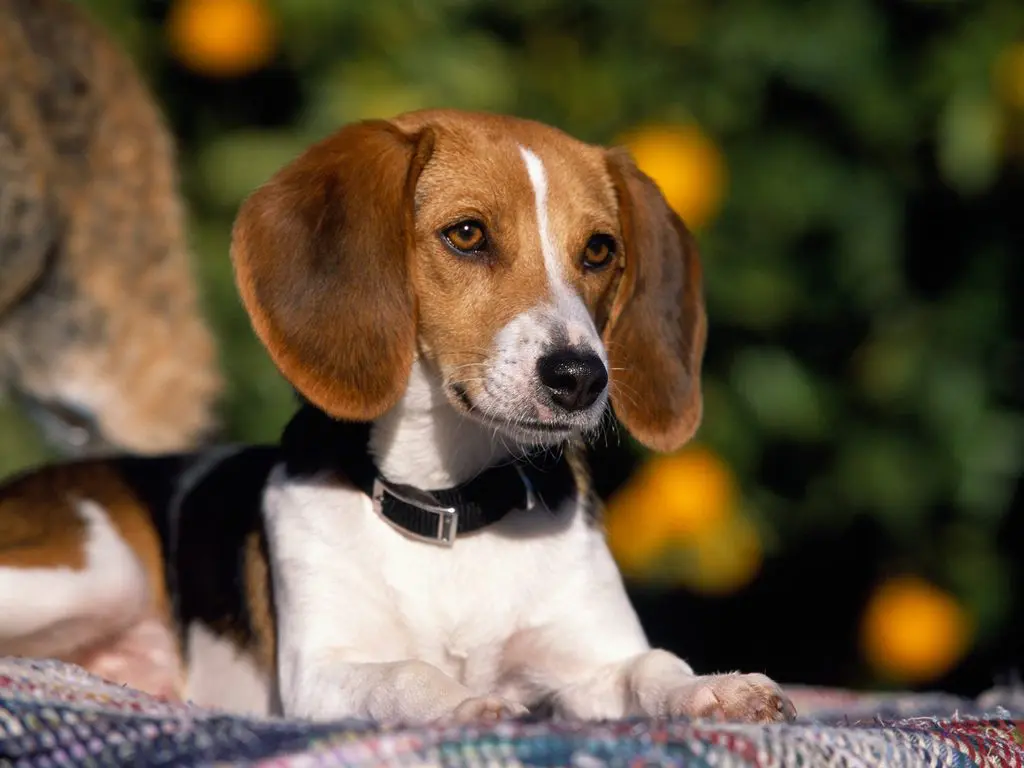
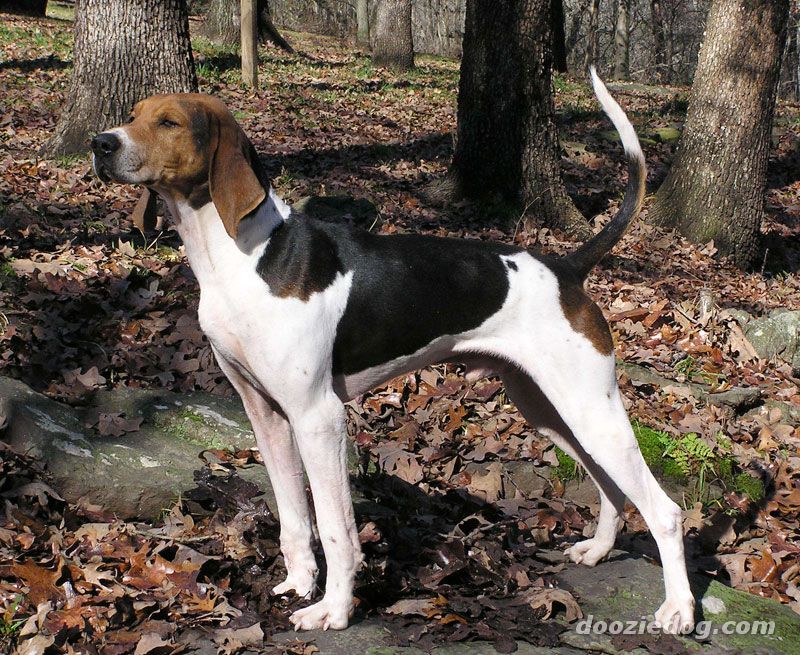
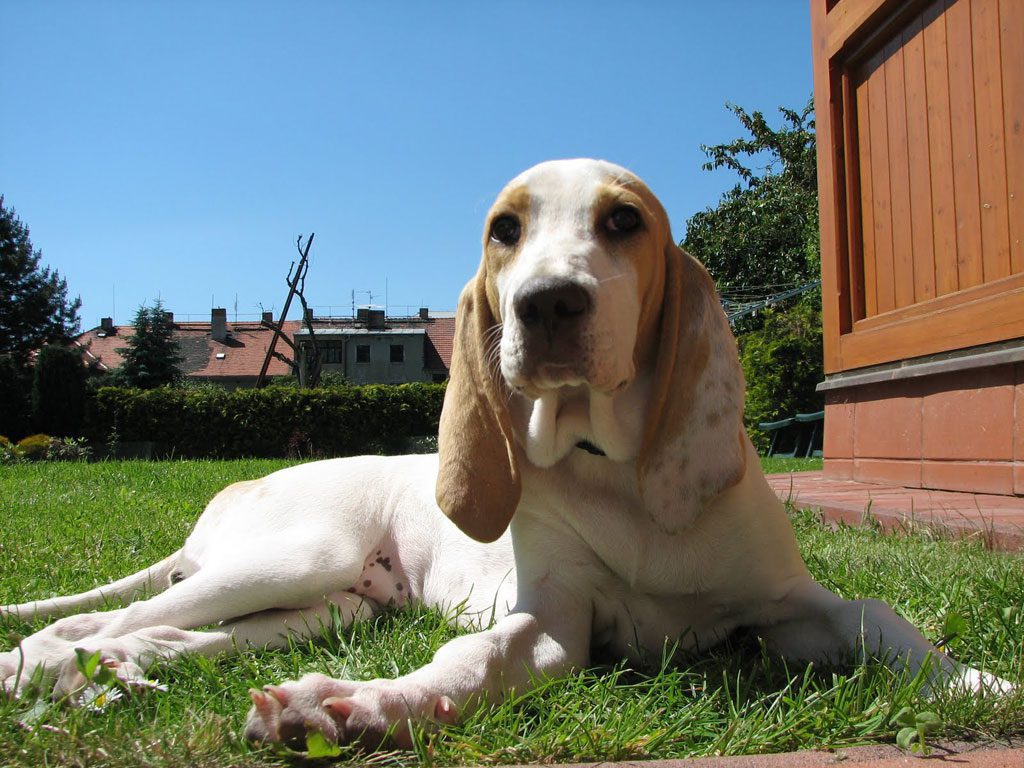
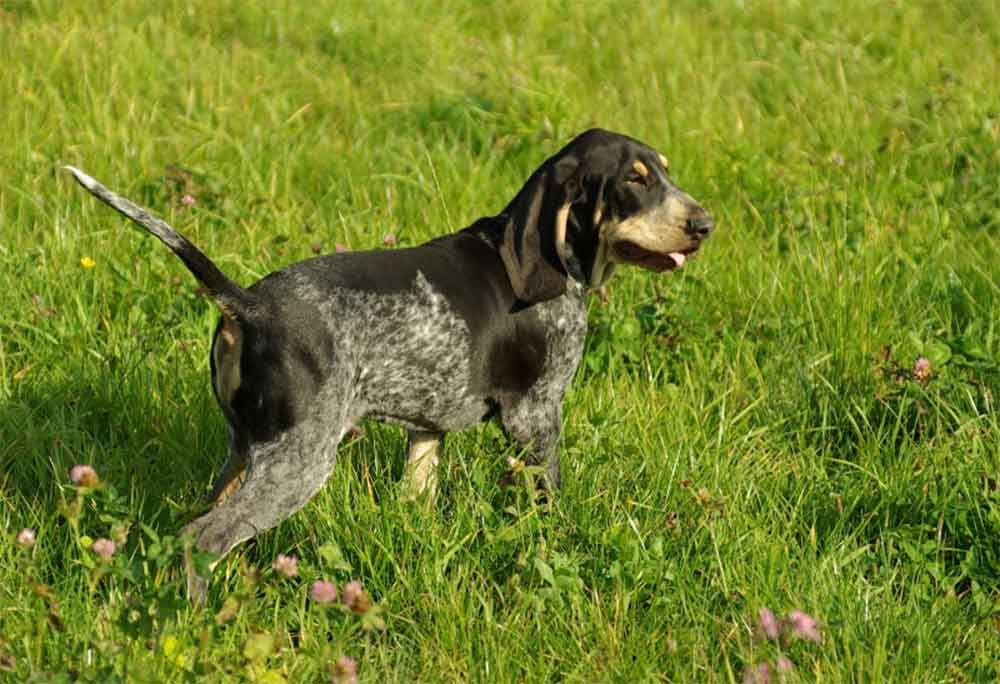
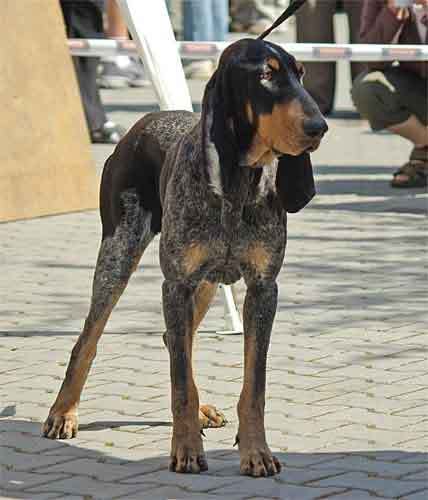
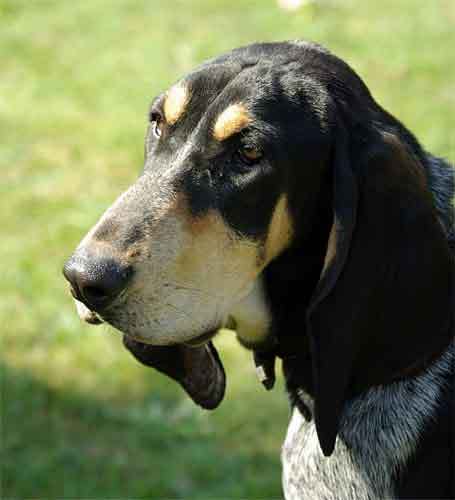
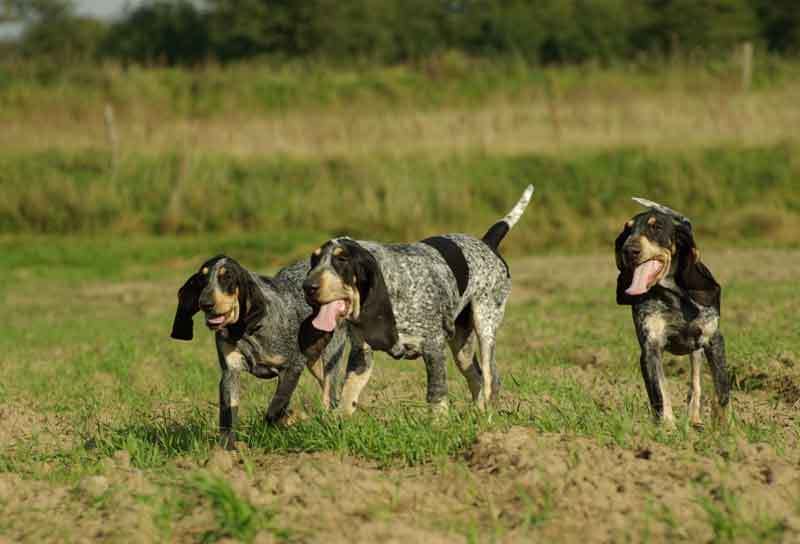
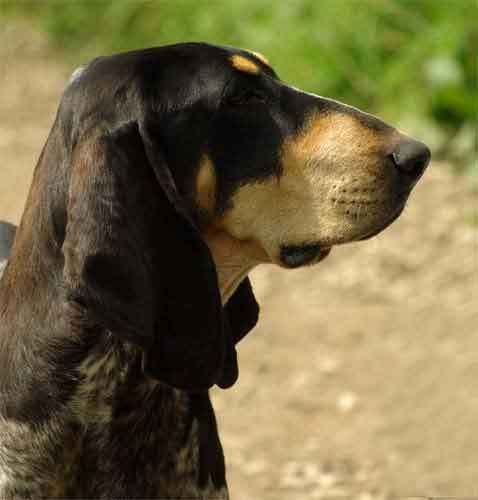
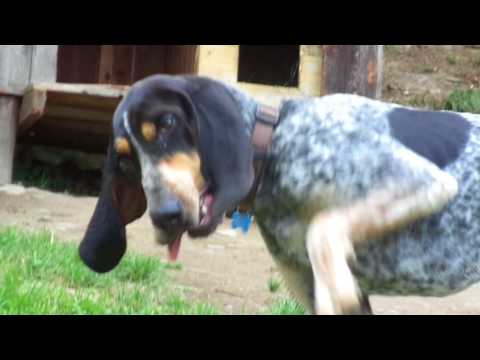
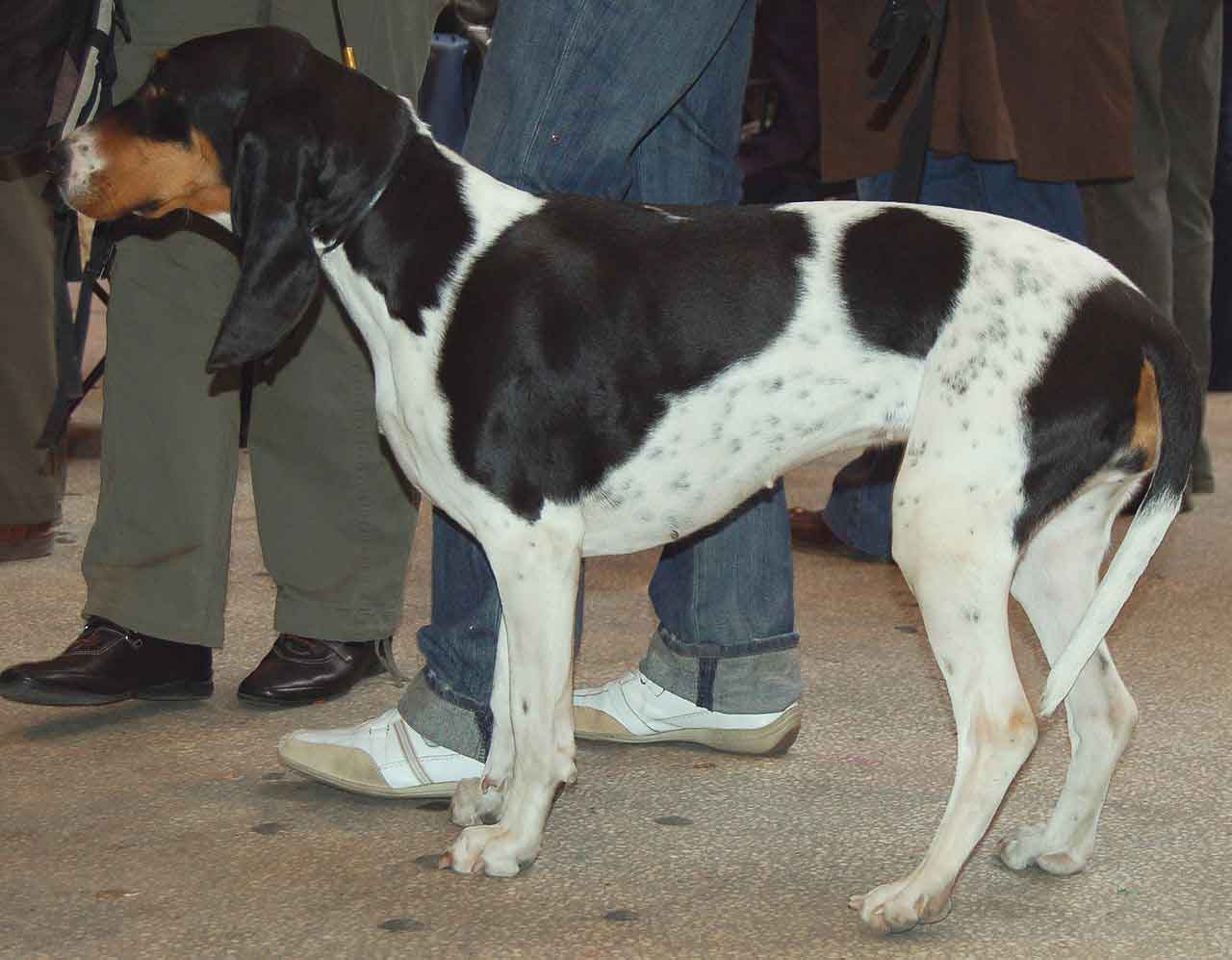
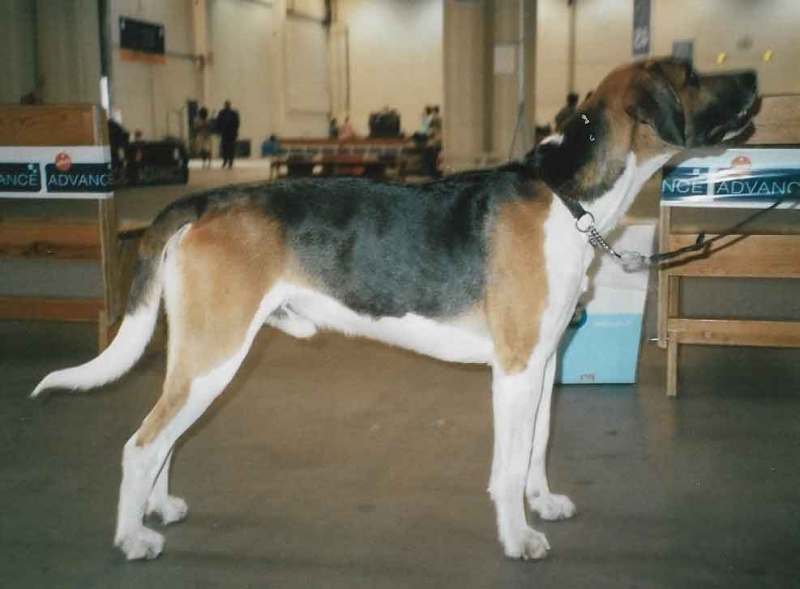
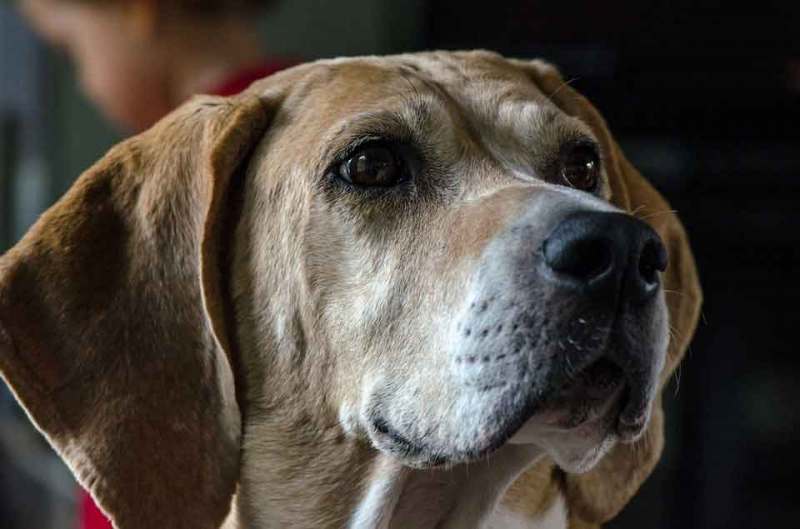
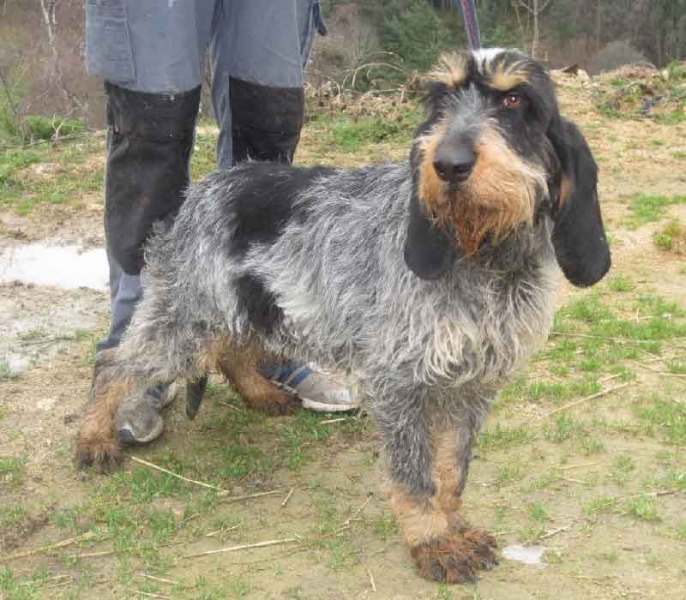
The family of the Basset hound. Slim body and short limbs. The head has a scrawny appearance because its cheeks are made up solely of skin. The eyes are large (I) dark. The ears are so long as the snout, ending at tip. The neck has a slight double chin. The tail is long and wide at its base.

Their short legs allow you to delve into the denser undergrowth to leave his hideout dam, which can do a larger dog. Preferably hunting rabbits, but you can also catch both hares, as a deer. While, has no speed, it does have a lot of precision in its movements. Their weight is between the 15 and 20 kg., and its appeal among 30 and 36 centimeters.

It is very dog very appreciated by hunters.

Character and skills

Fairly calm and very obedient at first glance, the Norman Artesian Basset proves to be a real clown and a ball of affection within his family. Mainly a pack dog, finds it difficult to tolerate loneliness and seeks companionship at all costs, either from his classmates, of other animals in the house (even from cats, if they have already been presented to you before) or the humans around him. Very affectionate, needs a lot of attention to really bloom. So, not recommended for a teacher who is not very available. On the other hand, resourceful and kind by nature, it is a very suitable dog for children, for those who will be an inexhaustible and very patient playmate.

Attention, otherwise, for homeowners in urban or residential areas: though less vocal than his hunting companions, the Norman Artesian Basset remains, However, an expressive and not very discreet dog, especially when playing. Bark to greet a newcomer, expressing your satisfaction or pointing out that you have found something interesting is second nature, and it is very difficult to prevent it from doing so. So, It is not a breed of dog that is recommended for use in apartments.

This is all the more true since, despite her wobbly appearance, the Norman Artesian Basset he's a consummate sporting dog, who needs to exercise to maintain their physical and psychological balance. Your relaxation, surprising for such a small size, allows it to jump over small walls and stand on its hind legs. It is a very resistant dog, can cover long distances without recoil: a breed of dog suitable for a sports teacher looking for a jogging partner, for example, as long as the terrain is not too steep.

The qualities mentioned, combined with keen intelligence and excellent memory, make this dog very suitable for hunting, but also to learn tricks, practice dog sports, or even… take advantage of the lack of attention of his master to get away from it all. In fact, his hunting instincts and his developed sense of smell often lead him to follow the clues he finds interesting and to turn a deaf ear to any return order.. So, should not hesitate, for example, in equipping it with a GPS dog collar to limit the risks in case the dog escapes.

Finally, in a rather paradoxical way, the Norman Artesian Basset they are also very homey, and like the routine. Once they get used to the arrangement of things in the house, the location of your basket and your pace of life, they hate change. So, the news, for example the arrival of a baby at home, adopting a pet or even moving a dog, should be introduced gradually as far as possible.

Education

Depending on the use that is given to the Norman Artesian Basset, his education is not the same.

If it is intended to accompany its master in everyday life as a companion dog, the puppy should be socialized from an early age and should be taught good manners in the company of humans; for example, curb your hunting instincts and don't bark at all costs.

If, on the other hand, it is intended to be used as a hunting dog, the education of the dog should be directed to the exploitation of these hunting instincts, through socialization with other dogs, hunting search training and teamwork.

In any case, the dog's life rules must be clearly defined from the start and applied consistently throughout its life. In fact, although affectionate and obedient, this highly intelligent dog can be a real mule head when faced with conflicting commands. So, it is important to think about the role that the dog will play before the puppy comes home, and be firm – but respectful – throughout the training process.

Health

The Norman Artesian Basset enjoys fairly robust health compared to other bassets. But, does not escape the health problems inherent in its morphology (long body and short legs). So, you are particularly prone to back problems, and can easily crack or break vertebrae.

In the case of an obese or overweight dog, being overweight can aggravate back pain that you naturally experience with age, hence the need for owners to closely monitor the dog's diet and provide sufficient and regular physical activity.. Regular exercise is essential to strengthen your back structure and maintain your joints..

It is also important that your dog is screened for hip dysplasia, especially if there is a history of hip dysplasia in your lineage.

Last, the Norman Artesian Basset are sensitive to ear infections, and they also have a predisposition to hypothyroidism. This disease can be in some cases hereditary, Therefore, it is recommended not to reproduce the individuals that suffer from it.

Grooming

The Norman Artesian Basset it is quite easy to maintain. Her short hair only requires an occasional brush stroke., essentially to get rid of the dried grass and mud that accumulates during your walks in the woods.

But, like many hounds, tends to have a slightly stronger scent than other breeds, what no dog shampoo will be able to remedy.

Apart from these considerations, it is important to examine and maintain your dog's ears about once a week, especially to clean any residue that may lodge in them, in order to avoid ear infections and other painful infections.

“Normandy Artesian Basset” Price

The price of a puppy Norman Artesian Basset is between 400 and 900 EUR.

Photos «Basset Artesiano de Normandía»

Videos «Basset Artesiano de Normandía»

Type and recognitions:

  • FCI CLASSIFICATION:
  • Group :
  • Section : . .

Federations:

  • FCI – Group 6: Scent hounds, and related breeds. – Section 1.3: Small-sized Hounds.
  • UKCScenthounds

FCI breed standard "Norman Artesian Basset"

Origin:
France

Date of publication of the valid original standard:
12.12.1991

Use:

It is a minor hunting dog, used to hunt with shotgun. Hunt the same alone as in a group, giving the signal to barking. Its short legs allow it to penetrate even the densest undergrowth to expel the prey that hides in it, which can do a larger dog. Preferably hunting rabbits, but the hare can also hunt both, like deer. Vent the dam and recover it with great safety, his movement is not fast, but yes noisy and orderly.


General appearance:

It's a long dog, in relation to his height at the withers, vigorous, compact ; Its head evokes the nobility of the great Normandy dog.

IMPORTANT PROPORTIONS :

Height to the cross / body length : approx.. 5 : 8Chest height / height to the cross : approx.. 2 : 3Skull width / head length : approx.. 1 : 2Length of the snout / skull length : approx.. 10 : 10


Behavior / temperament:

Very good nose and tenacious when following the trail; barking on the trail, allows the master to take advantage of his movement without having to advance too quickly. Happy temperament and affectionate nature.

Head:

---

Cranial region:
  • Skull : Vaulted in shape and medium width; occipital protrusion is clearly observable. As a whole, the head should have a slightly fleshy appearance.
  • Depression links (Stop) : The sinking of the forehead is accentuated, but without exaggeration.

facial region:

  • Truffle : Black and wide, approaching a little to the lower lip, nostrils wide open.
  • Snout : About the same length as the skull and slightly bulging.
  • Lips : The upper lip broadly covers the lower lip, they are however not too hanging, nor does it extend too far back.
  • Jaws / Teeth : Scissor-shaped denture, That is, the upper incisors cover the lower incisors with firm contact and are implanted at right angles to the jaws.

Eyes : Oval, large, dark (in harmony with the coat); the calm and serious look; the conjunctiva of the lower eyelid can sometimes be seen, but without exaggeration. The cheeks have one or two folds.

Ears : Located as far as possible towards the bottom of the head and never above the eye line, they are narrow at the base and have a well marked corkscrew shape, they are flexible, fine, very long, reaching at least the length of the muzzle and preferably ending in a point.

Neck:

Rather long, with a little double chin, but without exaggeration.

Body:

  • Back : Wide and firm.
  • Pork loin : Slightly arched.
  • Rump : The haunches are a bit oblique, imparting a slight incline to the rump.
  • Breast : Oval in appearance, long, the sternum is well extended at the back and protruding at the front ; the apron is well developed. The flanks are solid. The line of the sternum is clearly seen above the elbows. Long ribs, extending all the way back.

Tail:

Rather long, thick, at the base and becoming progressively thinner. During rest the tip of the tail should just touch the ground. It must be in the shape of a saber, but without ever falling on the animal and the end should not be in the shape of a feather. Regarding this point, It is absolutely forbidden to modify the appearance of the tail of the dogs participating in the exhibition.

Tips

PREVIOUS MEMBERS : As a whole : Front limbs are short and thick. They should be semi-twisted or slightly less than semi-twisted, as long as the kink is conspicuous enough. A few folds in the skin of the wrists, if they are not excessive, should be considered as a quality.

Correct semi-twist forelimbs

  • Shoulder : Muscular and oblique.
  • Elbows : Well glued the body.

LATER MEMBERS :

  • As a whole : Seen from behind, you can see a vertical line that starts from the tip of the buttock and crosses the center of the leg., hock, metatarsal and foot.
  • Thighs : Well rounded and muscular.
  • Correct hind limbs Well rounded thighs
  • Hocks : Strong, they descend a lot, they are relatively layered, causing the hind foot to be slightly under the dog when at rest. Small nail bag located at the tip of the calcaneus, formed by excess skin, does not constitute a fault.
  • Metatarsals : Short and strong.

FEET : Oval, a little elongated, the fingers are fairly close and have a correct poise, in such a way that they rest firmly on the ground.

Movement:

Regular step, executed with enough ease. Calm movement.

Mantle

SKIN : Elastic and fine.

HAIR : Satin, short and tight though not too fine.

COLOR : Tawny, with black and white cloak (“tricolor”) or fawn and white (“bicolor”). In the first case, head should be extensively covered with intense reddish fawn and retain a small patch of darker hairs on each side of head. The mantle ( or the spots that remain in case the patches of different color spread), will be made up of black or striped hairs (thus complying with the old qualifiers of “hare hair” or “badger hair”).


Size and weight:

Height to the cross : Males and females : 30 – 36 cm..

Tolerance of more or less 1 cm for exceptional subjects.

Weight : 15 – 20 kg.


Fouls:

Any deviation from the aforementioned criteria is considered as a fault and the severity of this is considered to the degree of the deviation to the standard and its consequences on the health and well-being of the dog..

Head

• Flat skull.
• Wide forehead.
• Too marked median groove.
• Light eyes, round and bulging, leaving the conjunctiva too visible.
• Flat ears, too round, thick or set very high and wide.
• Short.Body
• Flabby or sunken back.
• Absence of xiphoid appendix or its collapse.
• Flat or deformed ribs. Tail
• Too long, deviated or coarsePrevious limbs
• Straight shoulder, short and muscled.
• Elbows out.
• Carpals that approach or deviate forward.
• Pasterns deviated outwards or exaggeratedly twisted.
• Crushed feet. Hind limbs
• Flat thighs.
• Hocks closed or too open. Coat
• Soft hair, clearly long or fringed.
• Carbonate head.

Temperament/behavior

• Shy dog.

MISS PLAYOFFS

• Fearful or aggressive dog.
• Strong anatomical anomaly.
• Disabling and recognizable hereditary defect.
• Lack of type
• Upper or lower prognathism.
• Eyes too light.
• Sternum too short at the back, with absence of xiphoid appendix.
• Very deformed ribs.
• Forelegs completely straight.
• Limbs too weak.
• Very carbonated head.
• Very abundant black spots, giving the white color of the coat a bluish tone.
• Height at the withers different from the standard.

Any dog ​​showing clear signs of physical or behavioral abnormalities must be disqualified..


N.B.:

Males should have two normal-appearing testicles fully descended into the scrotum..

Source: F.C.I - International Cynological Federation

Alternative names:

1. Basset Artésien Normand, BAN (English).
2. BAN (French).
3. BAN (German).
4. (em francês: Basset artésien normand) (Portuguese).
5. BAN (español).

▷ The world of Pets: Dogs, cats, birds, reptiles, amphibians

Serbian tricolour hound
Serbia FCI 229 . Medium-sized Hounds

Sabueso tricolor serbio

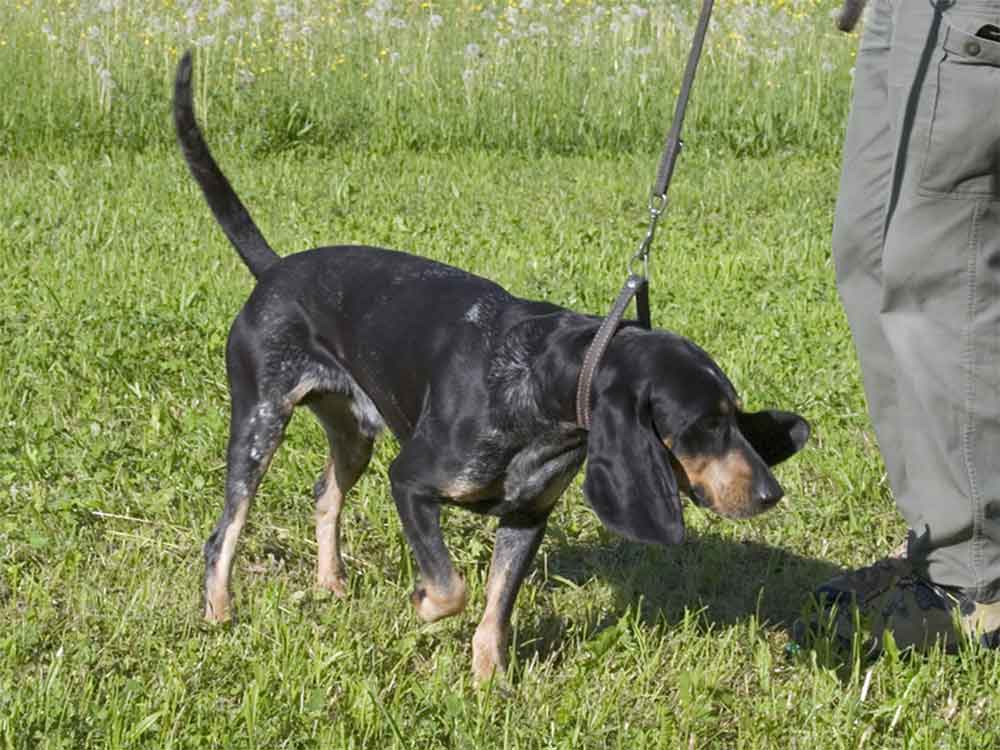
The Serbian tricolour hound it is rare even in its country of origin and to see it abroad is almost impossible.

Content

History

The Serbian tricolour hound (Srpski Trobojni Gonič or Trobojac) It is considered one of the rarest species that exist. This breed is one of the three types of dogs developed in the former Yugoslavia. Before the disintegration of Yugoslavia, The breed was known as the "Yugoslav Tricolor Hound", changing its name in 1991 after the dissolution of Yugoslavia.

In 1946 It was debated whether this race was independent or just a variety of the «Serbian hound«; finally given separate breed status and a first standard set. This breed was presented at the International Dog Show in Belgrade on 7 and 8 in June of 1950. The Serbian tricolour hound was recognized as a breed by the FCI the 25 in July of 1961 and the standard was published.

From the beginning, these dogs have been used as hunting companions. They are ruthless hunters of small game like foxes and rabbits. Due to his strength and fearless nature, they are also used to hunt wild boar, wild boars and other game animals. Unlike other Hounds that hunt on a leash, this breed can run freely and search for prey on its own. This independent hunter will never kneel in the face of difficult terrain. In search of prey, uses your excellent sense of smell, and with a penetrating voice will inform the hunter when he finds it.

Unfortunately, this persistent and tireless hunter is not known among hunting enthusiasts in other countries, so this rare breed is relatively unknown in other parts of the world.

Physical characteristics «Serbian tricolor hound»

All three Yugoslav dog breeds evolved from Phoenician merchant dogs and have almost identical characteristics, which is why they are often mistakenly identified as the same race. What distinguishes the Serbian tricolour hound of the other two races is the white mark on the chest, which emphasizes the striking print of dark red hair in the background and a black cloak.

The coat of the Serbian tricolour hound it is waterproof, short and bright. Slightly thick with a well developed undercoat, spreads well throughout the body. Both in the area of ​​the rear thigh and in the lower part of the tail the coat is slightly elongated.

The coat of the Serbian tricolour hound has a deep red or fox red background color, of which a saddle or black fur stands out. The black partly reaches the head of the dog and forms two dark marks on the temples. White forms a full or partial collar under or around the neck.

On the dog's head white is pronounced like a cutout. On the muzzle it can also be seen as a spread fire. If the dog has a white mark on its chest, this is permissible, although it extends to the end of the sternum and reaches both the belly and the interior of the hind limbs.

The tip of the tail can also be completely white. But, total white coat should be less than one third of total body. The Serbian tricolour hound also has medium length ears, high, found near the cheeks.

The height the male will of 45 to 55 cm and in the female of 44 to 54 cm., the weight of Serbian tricolour hound will of 20 to 25 kg.

The life expectancy of the Serbian tricolour hound, round the 12 years.

Character and aptitudes «Serbian tricolor hound»

The breed is characterized by an intense temperament, always reliable and very loyal in his relationship with his pack. But, the Serbian tricolour hound also has a very friendly nature. On the one hand, dogs are suitable as watchdogs. On the other hand, can be used for dressage.

The Serbian tricolour hound is hard-working and optimally equipped to work even on difficult terrain. Due to its attentive and excellent eyes and its high performance, is an ideal hunting dog.

At home he behaves warmly and calmly. But, as soon as it is in working mode, is extremely energetic and very persistent.

If you get a Serbian tricolour hound, you will get a breed that will be a friendly and obedient companion dog. He always tries to please his owner. But, the prerequisite for this is that it is sufficiently busy when not used for hunting.

«Serbian tricolor hound» images

Videos «Serbian tricolor hound»

Type and recognitions:

  • FCI CLASSIFICATION:
  • Group :
  • Section : . .

Federations:

  • FCI – Group 6: Scent hounds, and related breeds. – Section 1.2: Medium-sized Hounds.
  • AKCHound

FCI breed standard "Serbian tricolour hound"

Origin:
Serbia, Montenegro

Date of publication of the valid original standard:
26.11.2002

Use:

Scent hounds


General appearance:

Medium-sized dog with a robust build. He has a great temperament, He is impetuous and energetic.

IMPORTANT PROPORTIONS:

• Body length, taken from the tip of the shoulder to the tip of the buttock, exceeds in a 10% the height at the withers.
• The length of the head corresponds to the 45% the height at the withers.


Behavior / temperament:

Selfless, friendly, hot-tempered; self-confident, demonstrates remarkable tenacity.

Head:

Longheaded, thin; the upper lines of the skull and nasal passage are divergent.

Cranial region:
  • Skull: Seen from the front and profile, It is slightly bulky; the frontal furrow is pronounced. The occipital Protuberance is little developed. The distance between the ears ligament corresponds to that between depression slightly and the occipital Protuberance. The superciliary arches are little spoken.
  • Depression links (Stop): It is not very pronounced.

facial region:

  • rufa: Well-developed and always black.
  • Snout: Cuneiform, shorter than the skull; the proportion being searched between the length of the muzzle and the skull is of 8,5: 10. It progressively decreases depression slightly with truffle. Cano-nasal is straight. The lateral lines of the muzzle are convergent.
  • Lips: Thin, together, moderately developed, fairly short and rounded at the tip of the snout. The edge of the lips should be black. The upper lip slightly exceeds the lower; the commissure is firm.
  • Jaws / Teeth: The jaws are strong and have a scissor-shaped joint., uniform and complete. Is accepted in the form of clip joint.
  • Cheeks: Flat.

Eyes: Almond biscuits, almost oval, medium-sized, in slightly oblique position. The edge of the eyelid pigmentation is dark (preferably black). The color of the iris is as dark as possible.

Ears: High are presented; medium length, pendants. Close to cheeks, they are moderately wide. The tip is slightly oval shaped. The ears are more thin than thick.

Neck:

Strong, of a length which corresponds almost to the head. The top line is slightly arched. The neck forms an angle with the horizontal of 45 a 50°.

Body:

Rectangular, its length exceeds of a 10% the height at the withers.

  • Top margin: Straight.
  • Cross: It is little pronounced.
  • Back: Well muscled, straight, strong, elongated.
  • Pork loin: Well muscled. Its length is almost equal to that of the rump.
  • Rump: Slightly inclined (of 20 to 25% in relation to the horizontal), well muscled, wide.
  • Breast : Strong. Its height corresponds to the 50% the height at the withers; Its perimeter exceeds this one by a 20%.
  • Bottom margin and belly: The oval tip of sternum is slightly outgoing. The belly is slightly raised.

Tail:

Extends the line of the rump. It is thick in the birth and decreases gradually towards the end, arriving at the level of the Hock. Slightly stooped upwards, appears lower than the line of the back. It is covered by abundant hair.

Tips

PREVIOUS MEMBERS:

  • In general: Strong, straight, well muscled, parallel.
  • Scapula: Approximately of the same length as the arm, muscular, solid, well attached to the chest wall. This forms an angle of 45 at 50° relative to the horizontal.
  • Arm: Well glued to the body, strong, muscular, approximately of the same length as the scapula. In relation to the horizontal, forming an angle of 45 a 55°.
  • Elbow: Well glued to the body, solid; the height from the ground to the elbow corresponds to the 50% the height at the withers.
  • Forearm: Straight, strong, well muscled.
  • Carpo: Solid.
  • Metacarpus: Strong, slightly oblique (up to 15° relative to the vertical).
  • Front feet: Jack's foot, with fingers together and solid. The nails are strong, preferably dark black. Bearings, Dark they are well developed.

LATER MEMBERS:

  • In general: Strong, straight, well muscled, parallel.
  • Thigh: Strong, well muscled, straight.
  • Babilla: Solid, parallel to the plane of the body. With an angle of about 120°.
  • Leg: Well muscled, of a length approximately equal to the thigh.
  • Hock: Strong, its angle measured ones 135 a 140°.
  • Metatarsus: Strong, almost vertical.
  • Rear foot: A little longer than the previous foot; fingers together and solid; fingernails, dark black, they are strong. Plantar bearings are resistant and elastic, dark colored.

Movement:

Elongated step, extended and vigorous strides. Preferred movement is loose trot, uniform, harmonious and well sustained.

Mantle

SKIN: Elastic, well Pigmented; adheres well to the body.

HAIR: Short, abundant, bright, a bit dense, taut on the body ; the inner layer of hairs is fairly well-developed. The hair is a little longer on the back edge of thighs and the underside of the tail.

COLOR: The base color is a deep red or reddish color Fox, with a blanket or Chair black. Black may reach head, where it forms black marks on temples.

White, star pattern on the head and a stripe that extends over the snout, It forms a partial or full collar underneath and around the neck. A white mark on the front part of the chest is allowed, This can be extended up to the tip of the sternum and reach the belly and inside of legs. The tip of the tail may be white. White must not exceed the third of the surface of the body.


Size and weight:

Height to the cross.

  • Males: 45 to 55 cm., ideal size 51 cm..
  • females: 44 to 54 cm., ideal size 49 cm..


Fouls:

Any deviation from the above mentioned criteria is considered an absence and severity of this refers to the degree of deviation to the standard and its impact on the health and welfare of the dog.

MISS PLAYOFFS

  • Aggressive or fearful dog.
  • Upper or lower prognathism.
  • Absence of a tooth, the absence of two premolars is acceptable 1 (PM1).
  • Different color eye.
  • Body too long.
  • Threaded queue, high or threaded insert on the back. Tip of tail hook-shaped or diverted laterally.
  • White markings with the background of the coat color spots.
  • White color that is more than one third of the surface of the body.
  • Presence of a fourth color.
  • Top or bottom size prescribed by the standard.
  • Any dog ​​showing clear signs of physical or behavioral abnormalities must be disqualified..


N.B.:

Males should have two normal-appearing testicles fully descended into the scrotum..

TRANSLATION: IRIS Carrillo (Puerto Rico Kennel Federation).

Source: F.C.I - International Cynological Federation

Alternative names:

1. Serbian: (српски тробојни гонич, srpski trobojni gonič or тробојац, trobojac) Yugoslavian Tricolour Hound (English).
2. Chien courant yougoslave tricolore (French).
3. Original name: (Jugoslavenski Trobojni Gonic), Trikolor Laufhund, Dreifarbiger Jugoslawischer Laufhund (German).
4. in Serbian: (srpski trobojni gonic) (Portuguese).
5. En servio: srpski trobojni gonič o trobojac, Sabueso yugoslavo tricolor (español).

Other hounds:

Great Anglo-French Tricolour Hound

Great Anglo-French Tricolour Hound

The Great Tricolor Anglo-French Hound is considered rare, very little spread outside of France and currently little ...
Spanish Hound

Spanish Hound

The Spanish Hound is described in the "Book of hunting" of King Alfonso XI (1312-1350). Content History "Spanish Hound" ...
Great Anglo-French White and Black Hound

Great Anglo-French White and Black Hound

The Great Anglo-French Black and White Hound can be used both in packs and individually.. History Content This breed is ...
Grand Griffon Vendéen

Grand Griffon Vendéen

The Great Vendean Griffon is a dog of great character, beautiful cloak and dreamy look. It's a pity his time ...
Hellenic Hound

Hellenic Hound

It stands out for its particularly harmonious voice. Contents History The Hellenic Hound has ancient origins, since their ancestors were already ...
Italian Rough-Haired Hound

Italian Rough-Haired Hound

The Italian Wirehaired Hound is reserved, wise, calm and thoughtful in his work. Contents History The Italian Hound ...

▷ The world of Pets: Dogs, cats, birds, reptiles, amphibians

Petit Gascon Saintongeois
Francia FCI 21 - Medium-sized Hounds

Petit Gascon Saintongeois

The Petit Gascon Saintongeois was destined, in its origins, mainly hunting the hare.

Content

History

Of French origin, named after the provinces of Gascuña and Saintonge.

By mid-century 20, some large game hunters in the Southwest selected the smallest specimens from their litters of Gascon Saintongeois and they fixed this variety, destined, in its origins, mainly hunting the hare.

Photo: Little Gascon de Saintonge by Jérôme BARDIAU, CC BY-SA 3.0, via Wikimedia Commons

Physical characteristics

Medium-sized dog, well proportioned and distinguished.

Size:

Males: 56 to 62 cm..
females: 54 to 59 cm..

Character and skills

Multi-purpose dog used for rifle hunting. Because of its origin it hunts especially the hare, but it is also very good for hunting big game.

Characteristics "Petit Gascon Saintongeois"

Coexistence is important that you have with your new friend. Before considering the acquisition of a dog of the breed "Petit Gascon Saintongeois" you know certain factors. Not all breeds of dogs are apt to live in an apartment, you must take into account his character, their need for exercise, their interaction with other pets, their care and if you have small children, their level of tolerance towards them.

Adaptation ⓘ

2,0 of 5 stars (based on 1 review)

friendly dog ​​ⓘ

3,0 of 5 stars (based on 1 review)

hair loss ⓘ

2,0 of 5 stars (based on 1 review)

Affection level ⓘ

2,0 of 5 stars (based on 1 review)

Need for exercise ⓘ

5,0 of 5 stars (based on 1 review)

Social need ⓘ

4,0 of 5 stars (based on 1 review)

Home ⓘ

2,0 of 5 stars (based on 1 review)

Toilet ⓘ

1,0 of 5 stars (based on 1 review)

Friendly with strangers ⓘ

2,0 of 5 stars (based on 1 review)

barking ⓘ

3,0 of 5 stars (based on 1 review)

Health ⓘ

4,0 of 5 stars (based on 1 review)

Territorial ⓘ

2,0 of 5 stars (based on 1 review)

Cat friendly ⓘ

2,0 of 5 stars (based on 1 review)

Intelligence ⓘ

4,0 of 5 stars (based on 1 review)

Versatility ⓘ

5,0 of 5 stars (based on 1 review)

Child friendly ⓘ

4,0 of 5 stars (based on 1 review)

Surveillance ⓘ

2,0 of 5 stars (based on 1 review)

joy ⓘ

4,0 of 5 stars (based on 1 review)

Videos "Petit Gascon Saintongeois"

HTTPS://youtube.com/watch?v=aM1D0Ttrupo
Petit Gascon Saintongeois
HTTPS://youtube.com/watch?v=p_qCOkxxHPs
Little Gascon Saintongeois

Type and recognitions:

  • FCI CLASSIFICATION:
  • Group :
  • Section : . .

Federations:

  • FCI – Group 6: Scent hounds, and related breeds. – Section 1.2: Medium-sized Hounds.
  • Central Canine Society

FCI breed standard "Petit Gascon Saintongeois"

Origin:
France

Date of publication of the valid original standard:
06.03.2007.

Use:

Gran Gascon Saintongeois: Used for rifle hunting and sometimes for small game, big game and also hare. It is generally used in a pack or alone, as a tracker.

Pequeño Gascon Saintongeois: Multi-purpose dog used for rifle hunting. Because of its origin it hunts especially the hare, but it is also very good for hunting big game.


General appearance:

Gedge: Very well built dog, which gives at the same time an impression of strength and elegance. He is of a very French type when it comes to the head, fur and expression.

Psmall: Medium-sized dog, well proportioned and distinguished.

PROPORCIONES IMPORTANT:

Height at withers/scapulo-ischial length in a ratio of 10/10.5 The length of the muzzle is equal to the skull.


Behavior / temperament:

Pack dog par excellence, up to the sense of smell, bold, gifted with a beautiful voice. He joins the pack by instinct. It's calm, affectionate and obeys orders easily.

Head:

The lines of the skull and the nasal passage are divergent.

Cranial region:
  • Craging: Seen from the front, It is arched and rather narrow; the occipital protuberance is well marked. Seen from above, the back has a pronounced ogival shape.
  • Dnaso-frontal depression: Little pointed.

facial region:

  • Trufa: black, well developed, the windows wide open.
  • Labios: They cover the lower jaw, the corner is discreet. The edge of the lips is black.
  • Cnasal year: Powerful, slightly arched.
  • Jaws: Scissor joint. The incisors are at right angles to the jaws..
  • Cheeks: Thin.

OJOS: Oval, browns. The edge of the eyelids is black. The expression is sweet and confident.

OREJAS: Fine, bent. They must reach at least the end of the truffle. They occur below the eye line, quite far back, leaving the skull very clear.

Neck:

Of medium length and thickness. It is slightly arched and has little dewlap.

Body:

  • lynand the top: It is firm and not excessively long.
  • Lomo: It is well attached to the body. It is slightly convex, quite muscular and not too long.
  • Glikeness: Slightly oblique, wide enough.
  • Pecho: Large, long, descends to the level of the elbows. The front part of the chest is quite open.
  • Costillas: Slightly rounded and long.
  • Flank: It's a little raised.

Tail:

It is thick at the base; very thin at its end. Reaches to the tip of the hock. The elegant bearing, Sabre-shaped.

Tips

PREVIOUS MEMBERS:

  • Ageneral appearance: The previous room is powerful.
  • Hshoulder: Rather long, muscular, moderately oblique.
  • Elbow: Well adhered to the body.
  • Aforearm: Strong bones.
  • Pinis previous: Slightly elongated oval shape. The fingers are thin and close together. The foot pads and nails are black.

LATER MEMBERS:

  • Ageneral appearance: The hindquarters are well proportioned.
  • Thighs: Long and well muscled.
  • Corvejón: Width, well angled. Well inclined, visibly directed towards the axis of the body.
  • Pinis later: Slightly elongated oval shape. The fingers are thin and close together. The foot pads and nails are black.

Movement:

Uniform and loose.

Mantle

PIEL: Stretchy and not too thick. It is white with black spots.

Plink: Short and dense.

Codor: The background is white, with black spots; sometimes it is speckled, although not in excess. Two black spots are usually present on each side of the head.; cover the ears, surrounding the eyes and cheeks-reach. The cheeks are color fire, preferably pale.

Two fire-colored brands, located on the top of the eyebrows, They simulate “four eyes”. They are also observed, tan traces on the inner surface of the ear and specks along the extremities. Some tawny hairs may appear on the top of the ear, without this giving the head a tricolor appearance. Sometimes a typical dead leaf spot is observed on the lower part of the thigh., known as “roe deer mark”.


Size and weight:

Height to the cross:

Grand:

  • Males: 65 to 72 cm..
  • females:62 to 68 cm..

Petit:

  • Males: 56 to 62 cm..
  • females: 54 to 59 cm..

    With a tolerance of approximately 1 cm..


Fouls:

Any deviation from the aforementioned criteria is considered as a fault and the severity of this is considered to the degree of the deviation to the standard and its consequences on the health and well-being of the dog..

Cthey are not coming:

  • Short.
  • Wide skull.
  • Short ears; ears that stand high.
  • Total absence of fire color.

Cfamily:

  • Absence of volume.
  • Flabby upper margin.
  • sunken croup.
  • Deviated tail.

Members:

  • Bone structure that is not sufficiently developed.
  • Shoulders that are too oblique or too straight.
  • crushed feet.
  • Straight posterior angulation.
  • closed hock, seen from behind.

FALTAS DISQUALIFYERS:

  • Aggressiveness or extreme shyness.
  • Any dog ​​showing clear signs of physical or behavioral abnormalities.
  • Lack of type, and in particular wide and round skull.
  • Upper or lower prognathism.
  • light eyes.
  • Any other layer other than that established in the standard.


N.B.:
  • Males should have two normal-appearing testicles fully descended into the scrotum..
  • Only functionally and clinically healthy dogs, with the typical conformation of the breed, should be used for parenting.

Source: F.C.I - International Cynological Federation

▷ The world of Pets: Dogs, cats, birds, reptiles, amphibians

Norwegian Hound (Dunker)
Noruega FCI 203 - Medium-sized Hounds

Norwegian Hound

The Norwegian Hound (Dunker) is found only in its country of origin and is virtually unknown outside its borders.

Content

History

The Norwegian Hound was originally called Dunker, in honor of the Norwegian captain and breeder Wilhelm Conrad Dunker (1806-1860), who established the first breed standard in 1850. During the first half of the 19th century, there was a large population of hounds in norway, including various types used for hare hunting. Wilhelm Dunker selected those with the keenest sense of smell and crossed them with a Russian Harlequin Hound to produce a versatile hound, able to hunt rabbits and hares by smell rather than sight, and tough enough to withstand the harsh weather conditions of Norway.

In 1902 was founded the Norsk Harehundklub, a club dedicated to hounds. That same year the hounds were divided into two main groups, known today as Dunker y Hygenhounds. The first was the most numerous and included local dogs from all over the country., providing a wide and varied breeding base.

Although Norway was less affected by World War II than other European countries, the demand for these dogs dropped dramatically, which made it difficult for the breeders to continue their work properly. As a result, the number of specimens decreased significantly.

After the conflict is over, the Dunker regained some popularity and was officially recognized by the Fédération Cynologique Internationale (FCI) in 1956.

But, this bounce was only short lived: lost ground again from the decade of 1970, due to competition from foreign breeds of hunting dogs imported into the country.

Things did not improve much in the 80, to the point that inbreeding problems began to appear. In fact, the decline in its population led many breeders to resort to inbreeding to continue breeding. This led to a high rate of congenital deafness.. For this reason, in 1987, the breeding committee Norwegian Hound asked the Norsk Kennel Klubb (NKK), the reference canine organization in Norway, permission to cross the Dunker with other races, but they denied it. But, how things did not improve much, the NKK finally gave his approval for some crosses two years later. This resulted in a more varied and healthy genetic makeup, while maintaining the characteristic traits of the breed.

The United Kennel Club (UKC) recognized it in 1996. But, the other American reference organization, the American Kennel Club (AKC), has not done the same to this day – nor does the neighboring Canadian Kennel Club (CKC) or the prestigious British Kennel Club (KC). In fact, at the global level, recognition of the breed is still quite partial.

It's the same for broadcast. Even in the other Scandinavian countries, is almost absent, with the exception of Sweden, where the Svenska Kennelklubben records a number of births each year that can be counted on the fingers of one hand, compared to around twenty in the early nineties. In France, not a single entry was made in the Book of French Origins (LOF) during the first two decades of the 21st century.

In Norway, The number of Dunkers recorded each year in the NKK has been around 150 since the mid-decade 2000. But, this marks a halving of the number compared to the change in years 90. This limited number is partly explained by the deafness problem present in this breed.: almost the 75% of its population suffers from deafness.

Photo: A Norwegian Hound by Canarian, CC BY-SA 4.0, via Wikimedia Commons

Physical characteristics «Norwegian hound (Dunker)»

The Norwegian Hound It is a medium-sized dog distinguished by its long, well-proportioned body, his energetic and clear walk and his light weight. They have solid bones, giving an impression of strength and endurance. The back is straight, firm and long enough to give length to the rib cage. Lets on strong, dry front legs. The tail is wide and thick at the base and tapers at the tip. Descends to the hock or slightly protrudes from the hock.

Dunker
Dunker

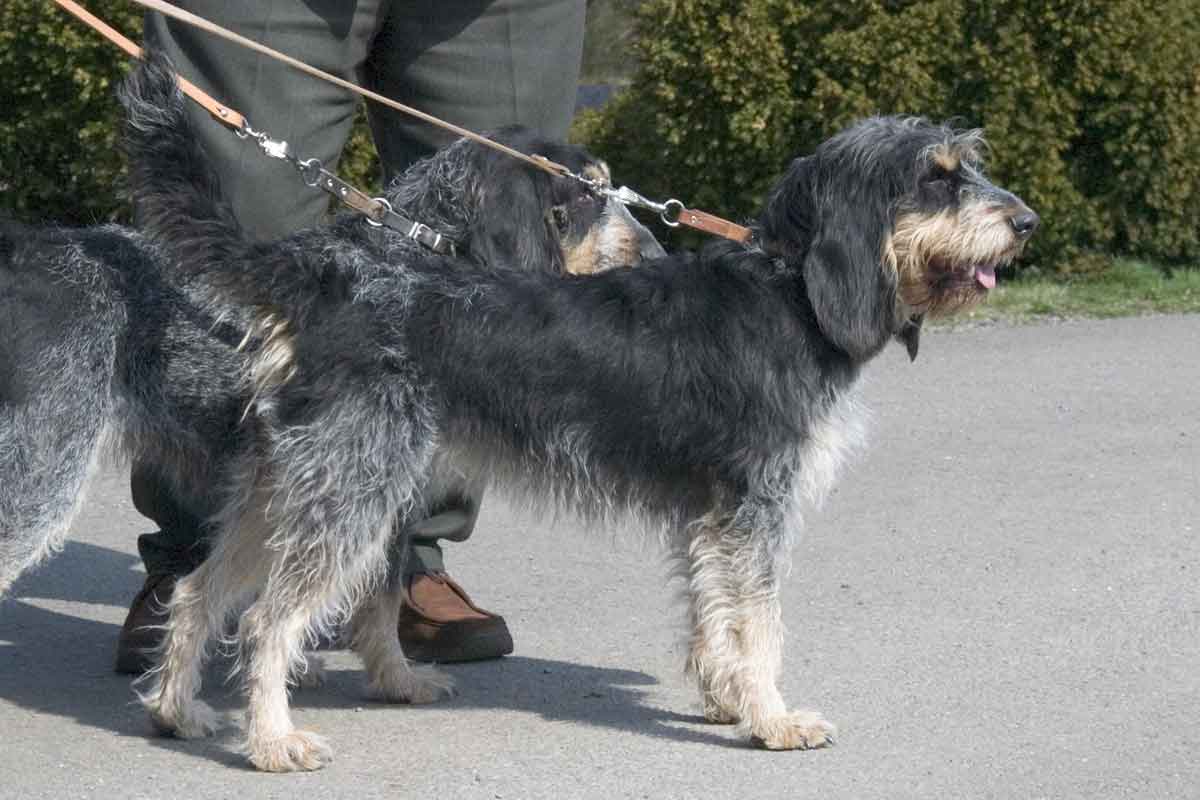
Quite long, its head is characterized by a slightly domed skull and a marked stop. Located at half height, the ears are flat, without folds, hanging and soft to the touch. medium width, taper towards its tip, which is rounded. Its mouth has scissor-shaped teeth dominated by a square, well-developed snout., a black nose and wide nostrils.

His eyes are round, large and very penetrating. Although they are usually dark in color, there are also individuals with one or two blue eyes, a characteristic that is associated with an increased risk of deafness. Minnow eyes are allowed in blue individuals (variegated). Regardless of the color of the eyes, the eyes express calm and seriousness.

The coat of the Dunker consists of short hair, hard, tight and dense. Its coloration is a distinctive sign of the breed: they are either black with light fawn and white spots, or blue merle (¿bigarros?) and mottled with light fawn and white spots. Jet black coats with dark tawny markings are less desirable, and those in which white predominates (to the point of representing at least the 50% Of the surface) are considered undesirable by the norm.

Last, sexual dimorphism is not very marked in this breed: males and females are quite similar in size and weight.

Life expectancy: 12 years of age.

Size of Norwegian Hound

    – female weight: Of 24 to 25 kg
    – Male weight: Of 24 to 25 kg
    – female size: Of 47 to 53 cm.
    – Male size: Of 50 to 55 cm.

Character and skills «Norwegian Hound (Dunker)»

The Norwegian Hound is a fast and tenacious hunter with an above-average olfactory ability. They excel particularly in hunting hare and rabbit.

Being also gentle, loving, cheerful and friendly, they have all the qualities required to be an excellent companion dog. balanced, patients, tolerant and devoid of aggressiveness, they are very good playmates for children. But, it is important to note that a dog should never be left alone with a small child without adult supervision, and this applies to all races.

His total lack of aggressiveness and his attraction to humans, even for those you don't know, make it totally impossible to use as a guard dog. In effect, not reserved at all, shy, fearful or aggressive with strangers, rather they tend to welcome them positively and trust them. They are more likely to greet a malicious person with curiosity and licking them rather than barking to warn their master or make them understand that they better go their way.

His sociability extends to other dogs too. So, it is quite possible to share a house with a dog companion without fearing that conflict situations will multiply, and is generally friendly with those he meets on his walks.

With cats and other animals, things are a little more complicated. His hunting instinct naturally leads him to chase any small furry animal that is not part of the canine species.. Although he has grown up with him and must consider his little companion as a member of the family and not as a potential prey, risk can never be ruled out, so it is better to avoid such cohabitation. As for those that can be found on your walks, you probably want to chase them. So, it is preferable to keep it on a leash during excursions, to avoid any accident.

Dunker
Dunker

In any case, the fear that it will chase other animals does not mean that you should not take it out enough each day, knowing that you need a lot of activity to spend your great energy. Need at least 45 minutes of exercise per day, but his stamina makes him happy to go further if given the chance. It also, it is preferable to vary the pleasures to allow him to fully expend his energy: long walks, run through the park, sports with dogs, etc. Sports that require running (like canicross) and those that appeal to your senses (like tracking) they are the most recommended. In fact, this dog is very happy when he has to mobilize his physical and mental capacities. In any case, in addition to allowing you to exercise, all these activities reinforce the relationship with his master, which is especially important if you are hearing impaired.

From the above it follows that the Dunker not suitable for an elderly or very sedentary person, that I couldn't give you all the exercise you need. The ideal for him is a master of sport, and willing to take his partner in his various activities. Retirees may be right for him, if they are active enough.

In any case, life in the city is not ideal for him, that needs large spaces to fully develop. A house with a garden in the country is a much more appropriate environment to live in.. But, it is important to ensure that the garden is well fenced and that the environment is safe, as his instincts and hunting instincts soon lead him to follow leads and flee.

Once your need for exercise is satisfied, the Norwegian Hound has an easy and docile character; is far from being as stubborn as many hunting dog breeds. But, your sense of smell can make training difficult, as he is easily distracted by a scent and not really responsive to his master's commands.

Their propensity to bark can also be quite annoying. He is particularly prone to doing it if his master is away for a long time without having given him any exercise beforehand and without having the means to do it himself.. In fact, inactivity can be a burden and cause those behavior problems, as well as destruction, for example. But, as long as you have something to take care of in the absence of your family, not the type of dog that suffers a lot from separation anxiety.

Education «Norwegian Hound (Dunker)»

Like all the other hounds, the Norwegian Hound must be socialized from an early age. In other words, so that he becomes a balanced adult and has no trouble finding his place, should be given without delay a maximum of opportunities to meet all kinds of humans (veterinary, neighbors, delivery man, etc.), Other animals, but also to face various noises, smells and situations. This is even more important since he is easily distracted by his sense of smell..

The rules established in your education should also be taught to you from an early age, when your ability to learn and docility are at their best. As with any race, bad habits pick up quickly when he's still a puppy and become real problems when he gets older.

In any case, the Dunker it is a breed of dog that is easy to train and that listens to its master, as long as he uses a dog-friendly training method. Treatments generally prove to be very effective in positively reinforcing your good deeds and facilitating learning. But, sometimes it is necessary to show firmness and affirm your own authority to prevent this dogged dog from doing what he pleases. It can also be difficult to get their attention., given their tendency to be distracted by their sense of smell.

Since it has a strong inclination to follow its nose and to chase passing small animals, Teaching your dog to call back is especially important to avoid the risk of a frantic tug on the leash or running away if it moves freely.

It may also be helpful to try to teach him to channel his propensity to bark.. But, as it is deeply ingrained in him, should not be expected to be the calmest of dogs. If it is impossible to make him understand that some things do not necessarily require him to bark, at least he can be taught to stop on command.

Last, if the dog is deaf from birth, as is the case with a significant fraction of the representatives of the breed, the master must obviously adapt to this restriction: Training a deaf dog is not done in the same way as training another dog that is able to hear its master's voice.. Trust is then even more crucial in the relationship between the animal and its master., so that you can learn and live in good conditions despite your disability. Of course, communication is then done through non-verbal communication, and it's up to the teacher to adopt explicit body language, based on gestures and precise mimicry, specific for each indication you want to give.

Health «Norwegian Hound (Dunker)»

The Norwegian Hound is very resistant, generally have excellent health and very good longevity.

Used to living in harsh Norwegian weather, can tolerate cold and damp without difficulty. Their coat is naturally waterproof and offers good protection from the elements. On the other hand, shows some intolerance to high temperatures, even if it is able to adapt to a Mediterranean climate. You simply need to lighten up your activities during hot flashes, or at least privilege those that are carried out inside, to ensure that you always have access to a place in the shade or even air conditioning and to avoid any excessive physical exertion in the hottest hours.

Its small population and its limited diffusion prevent a very important deterioration of health, but it has been shown that it is predisposed to certain problems:

  • deafness, what is a hereditary disease. According to the Orthopedic Foundation for Animals (OFA), almost the 75% of the population of the breed is today deaf in at least one, if not both ears;
  • hip dysplasia, a joint malformation that may be characterized by a hereditary predisposition. It can cause joint pain as well as difficulty moving;
  • Elbow dysplasia, which can also be favored by a hereditary predisposition. It is painful and leads to difficulty moving and the development of osteoarthritis;
  • progressive retinal atrophy, a hereditary and incurable eye disease. Causes loss of night vision first, then loss of daytime vision, to the point that the dog becomes totally blind;
  • Demodecic scabies, a contagious parasitic disease that causes itching and true discomfort to the dog, gradually losing appetite and sleep;
  • ear infections (otitis, etc.), due to its hanging shape.
  • It also, individuals used for hunting are exposed to the various risks associated with this activity: wounds, parasites, thorns, etc.

    It also, the Dunker has a strong appetite. How it is usually active, this is not usually a problem. But, if it is not, soon becomes overweight.

    Given the hereditary conditions to which the breed is predisposed, the breeder's work plays a decisive role in the adoption of a Norwegian Hound that he is in perfect health and that he will probably remain so. In addition to the results of genetic tests performed on the parents and the puppy to reduce the risk of such diseases, every serious and responsible breeder must be able to present a certificate of good health established by a veterinarian, as well as documents related to the vaccines administered.

    It also, when the dog is small and still growing, your bones and joints are particularly fragile: therefore, any excessively intense or prolonged physical exercise should be avoided, since I could pay it off one day or another, with potentially permanent sequelae (malformations, etc.).

    Last, it is necessary to consult a veterinarian at least once a year to ensure that the dog is in good health or, on the other hand, to be able to detect as soon as possible any problem whose symptoms are not yet visible. This health check is also an opportunity to carry out your immunization reminders, which are another essential lever to keep the dog in good health. Still on the prevention registry, it is the owner's responsibility to renew the antiparasitic treatments whenever necessary throughout the year, so your partner is never unprotected.

    Care and maintenance «Norwegian Hound»

    A tough breed, the Norwegian Hound do not require much maintenance.

    But, they lose a lot of hair, so brushing your hair twice a week is not too much to help remove dead hairs and keep it in good condition. During their molting periods in spring and fall, when it should be done more often (even daily) to prevent hair growth throughout the house.

    Since his hair is not very dirty and therefore does not have a strong odor, bathing him two or three times a year is generally sufficient. In any case, a too frequent bath will make the sebum naturally present on the skin disappear, insulates and protects it from the elements. Having said that, do not hesitate to give him a bath if he has gotten very dirty, for example during a particularly muddy hunting trip. In any case, you can only use a shampoo specially designed for dogs, at the risk of damaging your skin.

    Dunker
    Dunker

    The ears, on the other hand, require special attention, since its hanging shape implies an increased risk of infections (ear infections, etc.). They must be cleaned every week with a damp cloth or a cleaning product specially designed for this purpose.. They should also be dried after each bath or after a long period of time in a damp place..

    Their eyes they must also be examined weekly and cleaned if necessary with a damp cloth.

    It is also necessary to brush the teeth of your dog every week or even every day to avoid the formation of dental plaque and its possible consequences (bad breath, diseases, etc.). A toothpaste specially designed for dogs should always be used.

    It also, it is important to regularly check your dog's claws to make sure they are not getting too long and to trim them if this is the case. This could not only hinder your walking, but you could also break and potentially injure yourself at the same time. Having said that, while you're active and spending long hours outdoors, natural wear and tear is usually enough to file them.

    To know how to proceed during maintenance sessions, it is useful to benefit from the experience of a veterinarian or a groomer the first time. In fact, whether the various procedures for grooming the coat, the ears, the eyes, your pet's teeth or claws are not done properly, not only will satisfactory results not be obtained, but the owner may even injure or injure his pet. It also, the owner should get used to his pet very soon, so that throughout his life he accepts to be manipulated without being rebellious.

    It also, when your pet returns from a long time in the wild, it is a good idea to systematically take a little time to inspect it carefully: parasites, spikes or dirt may have gotten into their fur, and may also have been injured.

    What price does a “Norwegian Hound” cost?

    In Norway, a puppy Dunker It costs around 7000 Norwegian crowns (a few 650 EUR). The sale price varies from one individual to another depending on the prestige of the breeding, the lineage of the dog and its intrinsic characteristics.

    Since the breed does not have a wide international distribution, it is almost impossible to find a breeder of it outside of its country of origin.

    So, whether you are in France, Belgium, Switzerland, Canada or elsewhere, who wants to adopt a Norwegian Hound you must opt ​​for the import solution. In this case, keep in mind that transportation and administrative costs are added to the purchase price and, of course, you must respect the regulations to import a dog from abroad.

    Characteristics "Norwegian Hound (Dunker)"

    Coexistence is important that you have with your new friend. Before considering the acquisition of a dog of the breed "Norwegian Hound (Dunker)" you know certain factors. Not all breeds of dogs are apt to live in an apartment, you must take into account his character, their need for exercise, their interaction with other pets, their care and if you have small children, their level of tolerance towards them.

    Adaptation ⓘ

    2,0 of 5 stars (based on 1 review)

    friendly dog ​​ⓘ

    4,0 of 5 stars (based on 1 review)

    hair loss ⓘ

    4,0 of 5 stars (based on 1 review)

    Affection level ⓘ

    4,0 of 5 stars (based on 1 review)

    Need for exercise ⓘ

    4,0 of 5 stars (based on 1 review)

    Social need ⓘ

    4,0 of 5 stars (based on 1 review)

    Home ⓘ

    4,0 of 5 stars (based on 1 review)

    Toilet ⓘ

    2,0 of 5 stars (based on 1 review)

    Friendly with strangers ⓘ

    4,0 of 5 stars (based on 1 review)

    barking ⓘ

    4,0 of 5 stars (based on 1 review)

    Health ⓘ

    4,0 of 5 stars (based on 1 review)

    Territorial ⓘ

    4,0 of 5 stars (based on 1 review)

    Cat friendly ⓘ

    2,0 of 5 stars (based on 1 review)

    Intelligence ⓘ

    3,0 of 5 stars (based on 1 review)

    Versatility ⓘ

    3,0 of 5 stars (based on 1 review)

    Child friendly ⓘ

    4,0 of 5 stars (based on 1 review)

    Surveillance ⓘ

    2,0 of 5 stars (based on 1 review)

    joy ⓘ

    4,0 of 5 stars (based on 1 review)

    Videos "Norwegian Hound (Dunker)"

    norwegian hound (Dunker) - Breed of dog
    Sabueso Noruego (Dunker) – Raza de Perro
    Dunker 🐶🐾 Everything Dog Breeds 🐾🐶
    Dunker ?? Everything Dog Breeds ??

    Type and recognitions:

    • FCI CLASSIFICATION:
    • Group :
    • Section : . .

    Federations:

    • FCI – Group 6: Scent hounds, and related breeds. – Section 1.2: Medium-sized Hounds.
    • UKCScenthounds

    FCI breed standard "Norwegian Hound (Dunker)"

    Origin:
    Norway

    Date of publication of the valid original standard:
    12.03.1999

    Use:

    Hound


    General appearance:

    Medium-sized; obviously rectangular, strong structure, without giving the impression of being heavy. Must show the ability to be tenacious and resilient.

    IMPORTANT PROPORTIONS :
    The depth of the chest should be approximately half the length of the height at the withers.


    Behavior / temperament:

    The Norwegian Hound is considered the tough and robust trail dog of the old days., a dog with an excellent temperament. The breed is characterized by nerves of steel and for being especially sociable and trusting.. They are known to have performed well in hunting tests.. In this way, They can be characterized as an excellent combination of a hunting and companion dog.. Due to his good temperament and open character, the breed is also easy to train.

    Head:

    You should not carry it high. Clean, carried with dignity, with good length and parallel lines, non-cuneiform.

    Cranial region:
    • Skull : Slightly bulky, prominent occipital protuberance. If the snout is long and well developed, the skull is allowed to be wider, especially in males, as long as it does not lose its parallel planes.
    • Depression links (Stop) : Marked, but not deep or abrupt.

    facial region:

    • Truffle : black, well open Windows.
    • Snout : Rather long than short, square cut. Straight and evenly wide nose cane.
    • Jaws / Teeth : Scissor bite. Complete denture.
    • Cheeks : clean, no prominent cheekbones.

    Eyes : dark colored, round, rather big, but not outstanding. Expressive eyes, brilliant intelligence, calm and gravity. Close-fitting eyelids. Doe eyes are allowed in «Blue merle» dogs.

    Ears : Medium implementation, rather low than high. soft, moderate width, tapering towards the rounded tip. Flat, without folds. Hanging close to the face. Long enough to reach the middle of the snout when stretched forward.

    Neck:

    Relatively long, no visible double chin.

    Body:

    • top line : Level.
    • Back : Straight, firm and not too long.
    • Loins : Wide and well muscled, not convex.
    • Rump : With a slight drop, well muscled, not too short.
    • Breast : Large capacity, with well arched ribs; the last ribs must be particularly well developed, making the chest look long.
    • Bottom line and abdomen : Slightly gathered.

    Tail:

    Implementation at the top line level. Thick at its root, tapering towards the tip. It should be straight and carried with a slight upward curvature; reaching to the hock or a little below it.

    Tips

    PREVIOUS MEMBERS :

    • As a whole : Strong, thin and sinewy.
    • Shoulder : Muscular, wide and inclined scapula, well attached to the trunk; tips of shoulder blades close together at the top. Well-angled shoulder and elbow joints.
    • Arm : Straight.
    • Metacarpus : Slightly inclined.
    • Front feet : Closed and arched fingers with a lot of fur between them. Durable pads. Feet should point forward.

    LATER MEMBERS :

    • As a whole : Well angled, parallel in standing position. Without being too angled or with a "cow" hock.
    • Thigh : Large.
    • Knee : Well angled.Leg : Wide.
    • Hocks : Thin and low position, wide if seen from the side.
    • Rear feet : Like the front feet.

    Movement:

    Libre, with good scope. The extremities, views from behind, they are parallel; without cow hocks and without being too angled.

    Mantle

    HAIR : Straight, hard, dense and not very short. The back of the thighs and tail may have more hair, as long as the rest of the body has good fur.

    COLOR : Black or "Blue merle" with pale fawn or whitish markings. The intense brown or predominantly black color, reaching from the snout lower than the hocks with a so-called mask is less desirable. When the white, increasing too much, reaches below the shoulders to the lower belly or to the feet (socks), These are correct and accepted brands.


    Size and weight:

    Height to the cross:

    • Males: 50-58 cm., ideal 52-54cm
    • females: 47-54cm., ideal 49-51 cm..


    Fouls:

    Any deviation from the aforementioned criteria is considered as a fault and the severity of this is considered to the degree of the deviation to the standard and its consequences on the health and well-being of the dog..

    • When in black or light fawn dogs the white reaches the middle of the back, or if blue-merle dogs show white markings, The rating of these dogs should be decreased in proportion to the extent of the target's extent..

    MISS PLAYOFFS :

    • Aggressiveness.
    • Predominantly white color (50% or more).

    Any dog ​​showing clear signs of physical or behavioral abnormalities must be disqualified..


    N.B.:

    Males should have two normal-appearing testicles fully descended into the scrotum..

    Source: F.C.I - International Cynological Federation

    Alternative names:

    1. Dunker (English).
    2. Dunker (French).
    3. Dunkerbracke, Dunkerlaufhund (German).
    4. Dunker (Portuguese).
    5. Cazador noruego, Dunker, Sabueso de Dunker (español).

    ▷ The world of Pets: Dogs, cats, birds, reptiles, amphibians

    Basset Hound
    Reino Unido FCI 163 . Small-sized Hounds

    The Basset Hound is a very happy dog, good and very sociable

    Basset Hound

    Content

    Characteristics "Basset Hound"

    Coexistence is important that you have with your new friend. Before considering the acquisition of a dog of the breed "Basset Hound" you know certain factors. Not all breeds of dogs are apt to live in an apartment, you must take into account his character, their need for exercise, their interaction with other pets, their care and if you have small children, their level of tolerance towards them.

    Adaptation ⓘ

    5,0 of 5 stars (based on 1 review)

    friendly dog ​​ⓘ

    5,0 of 5 stars (based on 1 review)

    hair loss ⓘ

    3,0 of 5 stars (based on 1 review)

    Affection level ⓘ

    5,0 of 5 stars (based on 1 review)

    Need for exercise ⓘ

    5,0 of 5 stars (based on 1 review)

    Social need ⓘ

    3,0 of 5 stars (based on 1 review)

    Home ⓘ

    1,0 of 5 stars (based on 1 review)

    Toilet ⓘ

    2,0 of 5 stars (based on 1 review)

    Friendly with strangers ⓘ

    5,0 of 5 stars (based on 1 review)

    barking ⓘ

    5,0 of 5 stars (based on 1 review)

    Health ⓘ

    3,0 of 5 stars (based on 1 review)

    Territorial ⓘ

    1,0 of 5 stars (based on 1 review)

    Cat friendly ⓘ

    5,0 of 5 stars (based on 1 review)

    Intelligence ⓘ

    3,0 of 5 stars (based on 1 review)

    Versatility ⓘ

    3,0 of 5 stars (based on 1 review)

    Child friendly ⓘ

    5,0 of 5 stars (based on 1 review)

    Surveillance ⓘ

    3,0 of 5 stars (based on 1 review)

    joy ⓘ

    1,0 of 5 stars (based on 1 review)

    History

    The origin of the Basset Hound It, without a doubt, French and one of its closest ancestors is the Artois Hound, that was brought to England in 1.874 along with the Norman artesian Basset, crossing in England into a single breed which in turn was crossed with the St. Hubert Hound (using in 1.892 techniques of artificial insemination), favouring, during the selection, copies of most short legs, in order to obtain a dog capable of getting even between the most thick vegetation.

    In 1880 It is considered the first class of Basset Hound in England and it is also being prepared at this time that the first standard and it appears that the dichotomy between Work and Beauty. At the end of the 19th century, the breeding of this breed grows rapidly and the quality of their dogs, as well, and they are divided into two lineages, the work and the exhibition. Y, was in 1935 the name "Basset Hound" was born, registered first, documented. In 1962, Figure the first litter is registered in France.

    The United States adopted the breed and created a companion-only dog.

    These dogs are around 33 to 38 cm. (on the cross), they have short hair and are generally tricolor (black, honey and white). They also tend to be white with red spots or Red-footed. Some, Although few, they can be gray. They may occasionally leave copies with long hair, although it is not a desirable characteristic according to the breed standard.

    They have very long ears (up to the chest), also long neck with much loose skin and wrinkles around your head, This causes that you have a permanently sad. Its tail is long, erect and a curve.

    Physical characteristics

    "Basset Hound"

    His short stature is misleading because they are very long and they can reach things that dogs of similar heights could not.
    It has marked degree, features that equip it admirably for tracking through rough terrain. Dog short members, heavier bones, considering its size, than any other breed of dog; and although slow movements, they are in no sense clumsy.

    The word Basset It comes from the French "bas" which means low and that is the main characteristic of this breed. The Basset Hound It is a breed of small stature due, fundamentally, their short legs and elongated body. The head is prominent and it highlights a few wrinkled brows (due to the large amount of skin), long floppy ears, a few deep eyes that convey sadness and hanging lips. The skin is flaccid and causes many wrinkles around the body and is covered by a short hair, rough can be of different colors of the Bassets (white, black & Fawn) in any combination.

    Character and skills

    Low and somewhat plump appearance might suggest it is a lazy dog and something sleazy but this is only an impression, is a loving dog of the year. You need to do plenty of exercise to prevent overweight and arthritis at advanced ages.

    A specific care of this breed is the possibility of the development of conjunctivitis due to the loose skin around the eyes. (that leads to contain moisture), should be monitored continuously.

    His facial expression promises sadness, fatigue, but a dog very joyful, good and very sociable, She loves children and adapts perfectly to the family environment. As well, despite his physical appearance, is a dog She loves the exercise, Sport and trips. It can be very stubborn, as well, about all dogs...

    Nice temperament, never aggressive or shy (only in some cases). It has great strength in the field. extremely faithful.

    Basset Hound Education

    The stubborn side of Basset Hound requires authoritative parenting. You don't have to wait for him to "pass his youth", since it only matures around 3 years. A constant education, firm and consistent from an early age will make a good companion dog.

    In fact, no matter how smart I am, you will know how to make the most of every hesitation. Hence the importance of being consistent and clear in the rules and the rewards that will be given. It shouldn't surprise you that he can turn a deaf ear when you annoy him..

    Salud «Basset Hound»

    It is known that the Basset Hound Have overweight, so the risk of canine obesity must be taken into account, that can damage your spine.

    Being the back a sensitive point of the Basset Hound, it is recommended to avoid obstacles and stairs in your daily life.

    It also, the Basset Hound have a predisposition to certain skin conditions:

    – atopia;
    – dermatitis with malassezia;
    – primary seborrhea;
    – intertrigo (in the folds of the skin).

    Their long ears can also be a complicating factor. In fact, are prone to infections such as scabies in the ear, due to Otodectes cynotis, a microscopic mite that causes itching and pain. This infection is diagnosed by direct examination of the parasite in the ear and then treated by local application of an acaricidal treatment..

    Last, the eyes of the Basset Hound, since it is known that the breed has a genetic predisposition that favors the development of primary glaucoma, an eye disease in dogs that impairs the function of the optic nerve. This disease is diagnosed by an ophthalmological exam that measures intraocular pressure, what should a vet do. It is recommended that this examination be performed as soon as possible in the Basset, since the adverse effects of this disease can be reduced if detected early.

    Aseo «Basset Hound»

    The Basset Hound does not need much coat maintenance. But, the Basset Hound loses hair all the time, so it should be brushed regularly to avoid the accumulation of hair in the house.

    It also, their ears often need to be cleaned, as their length makes it particularly easy for dirt to enter them.

    Basset Hound pictures

    Basset Hound Videos

    Type and recognitions:

    • FCI CLASSIFICATION:
    • Group :
    • Section : . .

    Federations:

    FCI , AKC , ANKC , CKC , ​KC , NZKC , UKC

    FCI breed standard "Basset Hound"

    Origin:
    France

    Date of publication of the valid original standard:
    13.10.2010

    Use:

    Hunting dog.


    General appearance:

    It is a short-limbed hound, of considerable substance, well balanced and with countless qualities. It is important to keep in mind that it is a working hound and must be suitable for those purposes., therefore it must be strong, active and have great resistance in the field of work. TEMPERAMENT / BEHAVIOR: It is a tenacious hound of ancient lineage, that hunts by venting its prey and has the instinct of the pack. His voice is deep and melodious. He is gentle and affectionate, never aggressive or shy.


    Behavior / temperament:

    It is a tenacious hound of ancient lineage, that hunts by venting its prey and has the instinct of the pack. His voice is deep and melodious. He is gentle and affectionate, never aggressive or shy.

    Head:

    The forehead may have a small amount of wrinkles, as well as the part next to the eyes. In any case, the skin on the head is elastic enough to wrinkle slightly when facing forward or when the dog lowers its head.

    Cranial region:

    The top of the snout is almost parallel to the top line of the skull and is not much longer than the head., measured from the naso-frontal depression to the occiput.

    • Skull: It is domed in shape and the occipital protuberance is prominent; its width is medium in the region of the eyebrows and decreases slightly to the muzzle.
    • Depression links (Stop): Something marked.

    facial region:

    • Truffle: Completely black, except for light colored hounds, where it appears brown or liver. Windows are wide and wide open; the truffle sticks out a little beyond the lips.
    • Snout: The appearance of the muzzle is thin, but it is not pointed.
    • Lips: The flews of the upper lip considerably cover the lower lips.
    • Jaws / Teeth: The jaws are strong, with a perfect bite, regular and full scissor, That is, the upper incisors cover the lower incisors in close contact and are implanted at right angles in the jaws..

    Eyes: Rhomboid-shaped, they are neither prominent, or sunk. They are dark, but they can be medium brown in light colored hounds. His expression is calm and serious. Light or yellow eyes are very undesirable.

    Ears: Low insertion, just below the eye line. They are long, although not in excess, and extend only slightly beyond the tip of a snout of correct length. They are narrow throughout their length and tightly curled inwards. They are very flexible, fine and smooth texture.

    Neck:

    He's muscular, well arched, quite long and with a pronounced dewlap, although not in excess.

    Body:

    Long and deep throughout its length; the withers and the loin are approximately the same height.

    • Back: Rather wide and horizontal. From the withers to the hips the back is not excessively long.
    • Pork loin: May be somewhat arched. Breast : Viewed from the front, the sill adapts perfectly to the curvature of the forearms. The sternum is prominent, but the chest is neither narrow nor too deep. The ribs are well rounded and tight; extend well back, no protruding edges.
    • bottom line, belly: There must be adequate clearance between the lower part of the chest and the floor that allows the dog to move freely over all types of terrain..

    Tail:

    It is well established and is rather long. It is strong at its root and gradually diminishes. Under the tail rough hairs are observed in moderate quantity. When is the dog moving, tail stands up well and forms a smooth saber-shaped curve, but never kinked or carried too high.

    Tips

    PREVIOUS MEMBERS:

    • General appearance: Upper forearm slopes inward slightly, but not so much as to impede free movement, nor that the forelimbs touch each other when the dog is standing or in action. Some skin folds may appear on the leg but this should not be excessive in any way.
    • Shoulder: They are not heavy; shoulder blades are well tilted back.
    • Elbows: They are not directed inward or outward; are well attached to the sides of the chest.
    • Forearm: Short limbs, strong with good bones.
    • Carpo: It is highly undesirable for it to be deviated forward.
    • Previous feet: Large, with strong joints and pads. The front feet can be pointed straight forward or slightly brought out, but in any case the dog must stand correctly. Weight falls equally on all fingers and pads, so that the feet leave the imprint of a large hound and the pads touch and completely cover the ground.

    LATER MEMBERS:

    • General appearance: They are very well muscular and prominent, imparting an almost spherical appearance, seen from the back. There may be a few folds between the hock, the foot and on the back of the hock joint may appear a slight bag of skin but by no means this should be excessive.
    • Knee: Well angled.
    • Metatarsus: Hocks set low, slightly carried under the body, but they are not oriented neither in nor out when the dog is standing naturally.
    • Hind feet: Large, with strong joints and pads. Weight falls equally on all fingers and pads, so that the feet leave the imprint of a large hound and the pads touch and completely cover the ground.

    Movement:

    It is important to ensure that the dog can do its job. Movement is smooth and fluid powerful and effortless with front limbs extending well forward and rear limbs, that provide a strong impulse. Movement is free both at the front and at the back. The movement of the hock and knee should not be rigid; fingers should not drag on the ground.

    Mantle

    SKIN: Soft and stretchy without any exaggeration.

    Fur: Smooth, short, and tight, although not too fine. All the outline is clean, no fringes. Long soft hair, fringed, it is highly undesirable.

    Color: It is usually white, black and tan (tricolor) or lemon and white (bicolor), but any of the recognized colors on hounds is acceptable.


    Size and weight:

    Height to the cross: Of 33-38 cm..


    Fouls:

    Any deviation from the aforementioned criteria is considered a fault and its severity is considered to the degree of deviation from the standard and its consequences on the health and well-being of the dog and the dog's ability to perform its traditional task..

    FALTAS DESCALIFICANTES:

    • Aggressiveness or extreme shyness.
    • Any dog ​​showing clear signs of physical or behavioral abnormalities must be disqualified..


    N.B.:
    • Males should have two normal-appearing testicles fully descended into the scrotum..
    • Only functionally and clinically healthy dogs, with the typical conformation of the breed, should be used for parenting.

    Source: F.C.I - International Cynological Federation

    ▷ The world of Pets: Dogs, cats, birds, reptiles, amphibians

    Ariégeois
    Francia FCI 20 . Medium-sized Hounds

    Photo by danseaveclesloups.chiens-in-france.com
    Sabueso del Ariège

    The Ariégeois He is a smart dog that accepts well orders

    Content

    History

    The Ariégeois It is a dog of French origin, a native of the city of Ariege What, bordering Spain.

    The Ariégeois It was recorded, obtaining the original valid standard, the twenty-fourth day of January of 1996 (Classification: Group 6 – Section 1.2).

    Several theories agree that it was born from the cross between a bloodhound type dog with a lighter complexion in the country (We cannot say exactly what), a Old Pays Briquet and Great Gascony Blue or a Gascon Saintongeois.

    The truth is that this cross maintained the typical physical characteristics of these last two dogs., but you can highlight a more docile nature, along with the size and lighter weight.

    Physical characteristics of the "Sabor of the Ariège"

    The Ariégeois, is a dog used for small game. Medium-size and light weight make it a wonder, either alone or in groups, can easily grow and develop on difficult terrain, It is a dog that tolerate heat well.

    His favorite is the hunting of the Hare, but it is also used –sometimes- for hunting deer or wild boar.

    Read more

    ▷ The world of Pets: Dogs, cats, birds, reptiles, amphibians

    Grand Griffon Vendéen
    Francia FCI 282 - Large-sized Hounds

    Grand Griffon Vendéen

    The Grand Griffon Vendéen he is a dog of great character, beautiful cloak and dreamy look. It is a pity its little diffusion.

    Content

    History Grand Griffon Vendéen

    In the beginning, there was only the Greater Vendean. This one belonged to a variety of short-coated Vendean dogs., descendants of the ″scribes″ (so named because one of the original kennels was the king's clerk) or of the king's white dogs. Regarding its origin, neither can we fail to point out the Basset Fauve de Bretagne, since these are an essential part of the lineage of the ″scribe dog″. The missing gray of Saint-Louis and Bresse grifones (descendants of Segussian ancestors) also contributed to the creation of Grand Griffon Vendéen.

    There are also several other breeds of griffons from the Vendée, all of them smaller: the Briquet Griffon Vendéen, y el Grand y Petit Basset Griffon Vendéen. Related breeds of Griffon include the Griffon Fauve de Bretagne, the Griffon Bleu de Gascogne and the Griffon Nivernais.

    Physical Characteristics Gran Griffon Vendeano

    This is an ancient breed animal, French type, receptive and determined, distinguished in its forms and movements. It is of well proportioned construction, robust, no appearance of heaviness.

    SIZE: Height to the cross: In males, of 62 – 68 cm., In females, of 60 – 65 cm..

    Character and abilities Grand Griffon Vendéen

    It is docile, though willful and passionate. Must be well trained.
    It is an energetic dog with a passion for hunting that needs space and a lot of physical exercise.: you are strongly discouraged from living in the city. Character is balanced, However, training should be carried out from a very early age as it is considered difficult due to its very firm character: booster must be purchased very soon.

    It has a very good nose and a beautiful bark. Applied to follow the footstep, does not refuse to enter the undergrowth and prefers large territories.
    Before it was used to hunt wolves and now it is used to hunt wild boars.

    Grand Griffon Vendéen Care

    The mantle of Grand Griffon Vendéen requires daily attention because it can easily become tangled.

    Videos of the Great Basset Griffon Vendean

    Great Basset Griffon Vendeano

    Grand Basset Griffon Vendeen / Breed of dog

    Type and recognitions:

    • FCI CLASSIFICATION:
    • Group :
    • Section : . .

    Federations:

    • FCI – Group 6: Scent hounds, and related breeds. – Section 1.1: Large-sized Hounds.
    • Central Canine Society

    FCI breed standard "Grand Griffon Vendéen"

    Origin:
    France

    Date of publication of the valid original standard:
    09.01.1999

    Use:

    This is the perfect assistant for the shotgun hunter in medium-sized territories.; the fastest of all bassets. It's tenacious, courageous, a little stubborn. It is necessary to train him from an early age to obey the call; Their training involves will and sanctions that the animal does not resent..


    General appearance:

    Slightly elongated construction, straight limbs, basset setup; Its appearance should not be that of a small briquet. Its shapes are harmonious and elegant.


    Behavior / temperament:
    • Temperament : He is fast and brave; has a good bark; He is passionate about hunting and likes to be in the undergrowth and brambles..
    • Character : Although somewhat stubborn, has good character. It is up to the master to know how to control it.

    Head:

    ---

    Cranial region:
    • Skull : No appearance of heaviness; convex. It is long and not very wide. It appears well chiseled under the eyes. The occipital bone is well developed.
    • Depression links (stop) : Well marked.

    facial region:

    It is very prominent. The Windows are wide open. It is black, except for dogs with white and orange fur, in which the brown color is accepted.

    • Snout : The end is square. Its length significantly exceeds the length of the skull. It is very slightly arched.
    • Lips : They are quite pendulous and cover the lower jaw well., giving the end of the snout a square profile. They are covered with big mustaches.

    Eyes : Oval, large, dark; there is no presence of the white of the eye. His expression is confident and intelligent. The conjunctiva should not be apparent.

    Ears : flexible, narrow and thin. They are covered with long hairs and their end is shaped like an elongated oval.; they are well turned inwards. Low insertion, below the eye line. They must be able to extend beyond the tip of the nose..

    Neck:

    Long, robust, well muscled and strong insertion. It presents no Chin.

    Body:

    Typical Basset body, although not excessively long.

    • Back : Long, wide and very straight; never sunk. It begins to arch in the region where it joins the spine. The cross is very little protruding.
    • Pork loin : Solid, well muscled and slightly arched.
    • Breast : Quite wide and well descended to the elbows.
    • Ribs : Rounded, never flat, nor cylindrical. The chest is a little less wide at the elbow to facilitate movement.
    • Flanks : rather full. The belly is never picked up.

    Tail:

    It is thick at the base and gradually tapers until it reaches the tip.. Set quite high, It is carried in the shape of a saber or slightly bent, but never bent over, doesn't even touch the back. It's rather long.

    Tips

    Overall views, the bones are well developed, although they are thin. It goes without saying that quality is not a question of volume, but of density.

    PREVIOUS MEMBERS

    • As a whole : They must be straight; the forearm is thick and the carpus is very little marked, although it is very solid.
    • Shoulder : Long, thin and oblique.
    • Elbows : They should not be too close to the body., nor too far apart from it.
    • Forearm : Thick; the carpals should never be touched.

    LATER MEMBERS

    • As a whole : The hind limbs are solid and well aligned on the axis of the body..
    • Hip : Visible.
    • Thigh : Well muscled, but not very rounded. Bones and joints are solid.
    • Hock : It is wide and angled; never straight. Seen from the back, it should not deviate even inwards, nor out.

    FEET : Strong and compact. The pads are hard and the nails are solid. The appropriate pigmentation of the pads and nails is sought.

    Movement:

    When the dog is in action it must give the impression of resistance and lightness. Movement should be loose and harmonious.

    Mantle

    SKIN : Thick enough. It often appears streaked in dogs with tricolor coats.. There is no presence of dewlap.

    HAIR : Hard to the touch, not too long. It's stretched, never silky, ni lanudo. The fringes should not be very abundant. The belly and inner thighs should not be hairless.. The eyebrows are well pronounced, but they don't cover the eyes.

    COLOR :

    • Black with white patches (black and white).
    • Black with reddish markings (black and tan).
    • Black with sand-colored markings.
    • Fawn with white patches (Orange and white).
    • Fawn with black blanket and white patches (tricolor).
    • carbon fawn.
    • Carbon sand color with white patches.
    • Color arena carbonado.

    Traditional denominations : hare hair, wolf fur, badger hair or boar hair.


    Size and weight:

    Height to the cross :

    • In males : of 40 to 44 cm.
    • In females : of 39 to 43 cm..

    With a tolerance of 1 cm more or less.


    Fouls:

    Any deviation from the aforementioned criteria is considered a fault and the severity of it is considered to the extent of the deviation from the standard and its consequences on the health and well-being of the dog..

    Head

    • Too short.
    • Flat skull.
    • Short snout.
    • Depigmentation of the truffle, lips or eyelids.
    • Pincer-shaped joint.
    • Light eyes.
    • High set ears, short, not crooked enough or not hairy enough.

    Body

    • Too long or too short in construction.
    • Lack of harmony.
    • Loose back.
    • Sunken croup.

    Tail

    • Diverted tail.

    Tips

    • Weak bones.
    • Angles that are too straight.
    • Hocks too closed.
    • Crushed feet.

    Fur

    • Until, little abundant.

    Behavior

    • Shy dog.

    MISS PLAYOFFS

    • Fearful or aggressive dog.
    • Lack of type.
    • Prognathism.
    • Gaze eyes. heterochromia.
    • Narrow sternum; narrow ribs at the bottom.
    • Knotted tail.
    • Twisted or semi-twisted ends.
    • Woolly fur.
    • Solid black or white coat.
    • Important depigmentation.
    • Size that deviates from the norms of the standard.
    • Visible disability. anatomical deformation.

    Any dog ​​showing clear signs of physical or behavioral abnormalities must be disqualified..


    N.B.:

    Males should have two normal-appearing testicles fully descended into the scrotum..

    Source: F.C.I - International Cynological Federation

    Alternative names:

    1. Large Vendéen Griffon (English).
    2. grand griffon vendéen (French).
    3. GROSSER GRIFFON VENDEEN (German).
    4. Grand griffon Vendéen (Portuguese).
    5. Grifón vandeano grande (español).

    source: fci
    Photos: A large Vendée griffon by Canarian, CC BY-SA 4.0, via Wikimedia Commons

    ▷ The world of Pets: Dogs, cats, birds, reptiles, amphibians

    Estonian Hound
    Estonia FCI 366 - Medium-sized Hounds

    Estonian Hound

    The Estonian Hound they are extremely hardy hunting dogs accustomed to long days in the forest

    Content

    History

    The history of Estonian Hound (or Eesti Hagijas in the language of your country of origin) begins at the beginning of the 20th century in Estonia, when the crossing of english hounds, Poles and Finns used by local hunters gave rise to a large dog unofficially considered regional and ancestor of the current Eesti Hagijas.

    Given the sharp decline in the population of large game and in order to reestablish it, in 1937 A law was passed prohibiting hunting with dogs over 45 cm to the cross, which in fact caused a change of orientation towards smaller animals, like foxes and hares. Therefore, Estonian hunters and breeders had to breed smaller dogs than they had then, so they were introduced in the breeding program the Beagles, the Dachshund and Swiss Hounds.

    This law was amended three years later, in 1940: the maximum size was increased to 55 cm., and breeders stopped their efforts to miniaturize local hunting dogs.

    In 1947, when Estonia was part of the USSR, The Soviet Ministry of Agriculture decided that all the "republics" that made up Estonia should have a local breed of dog. The Estonian hunting dog population was then estimated at around 900, and intense selection helped stabilize the characteristics of the breed that would become the Estonian Hound.

    In 1954, the Ministry of Agriculture sent a specialized commission to Estonia to study the 648 specimens submitted by local breeders, and were clearly convinced: the first breed standard was approved by the Ministry a few months later. This year marked the official introduction of the Estonian Hound like a race, whose stamina and formidable nose were immediately emphasized.

    After the collapse of the Soviet regime, Estonia gained independence and in 1998 la Estonian Kennel Club, the main canine association in the country, recognized race. Being the only native of the country, it was not surprising that it was granted national dog status.

    The organization set out to make the breed known and recognized internationally. His efforts were crowned with success in 2019, cuando the International Cynological Federation (FCI) provisionally accepted the breed and published a standard. Having said that, there is still a long way to go, since it is not recognized, for example, by the prestigious British Kennel Club, nor by American reference organizations such as the United Kennel Club (UKC) o el American Kennel Club (AKC).

    The Estonian Hound is popular in an area encompassing Estonia and nearby Russian regions, and its population is estimated at about 1200 individuals. It is still used there as a hunting dog and has also made a place for itself in many homes as a pet.. But, hasn't conquered the rest of the world yet. Rare in europe, even in Estonia's neighboring countries, is practically absent from the North American continent.

    Photo: Estonian Hound by Marcin Błaszkowski, Public domain, via Wikimedia Commons

    Physical characteristics

    Estonian-hound
    Estonian Hound

    The Estonian Hound They are medium-sized hunting dogs that can easily be mistaken for the Beagle, one of the races that helped create them. But, they are bigger than the Beagle and they have a more pointed snout.

    His powerful and muscular body is very long. Its solid bone legs are straight and almost half the size at the withers.. Saber-shaped tail flicks when in motion and remains fairly low, no higher than back level.

    The head is quite wide at the level of the skull and the long muzzle ends in a very black nose. His slightly oblique eyes are more or less dark brown, while her long, thin ears fall along her cheeks.

    The coat of the Estonian Hound is short, rough and shiny, with a moderately dense undercoat. Their fur is usually tricolor, with black spots with more or less wide red edges on a white background. But, the standard accepts bicolor individuals with completely red spots, without any trace of black. In all cases, the tips of the legs and tail should be white, as well as the throat and chest.

    Sexual dimorphism is marked, the female being slightly longer than the male, which is taller in the legs and wider.

    Physical characteristics

    Estonian Hound
    Estonian Hound

    The Estonian Hound he is particularly devoted to his family, who likes to spend time with. They are a breed of dog especially recommended for children: they love to interact with them and are very patient with them, they even accept having their tails or ears pulled. But, you should remember that interactions between a young child and a dog of any breed must be under the supervision of an adult.

    This strong attachment to his family makes him not like loneliness, which can lead to separation anxiety. If you are often left home alone for long periods of time, not surprisingly you may experience destructive behavior.

    One solution for a caregiver who is regularly absent during the day may be to provide a playmate. Made to hunt in a pack, the Estonian Hound they enjoy the company of other dogs. If they are used to its presence from an early age, They can also make friends with any feline in the house. On the other hand, as they have a strong hunting instinct, should not live with rabbits or other rodents.

    Rather shy and not fond of novelty, the Estonian Hound they tend to bark at strangers and then observe their master's behavior from a distance. If he invites the newcomer to the house, comes to greet you politely, but stay reserved.

    Extremely hardy hunting dogs used to long days in the woods, they need a lot of exercise to expend their great energy: a daily walk of one hour is a minimum for them. It is recommended to always keep it tied during these outings, as your excellent sense of smell often allows you to find an interesting track that you are likely to want to follow for hours, ignoring withdrawal orders. A dog owner who still wants to let him walk freely right now should equip him with a GPS dog collar, so you can easily get your hands back on it if it disappears.

    The Estonian Hound you can live in an apartment as long as you are outdoors often enough to satisfy your need for exercise, but he is much happier when he has a garden where he can patrol and play. But, this outdoor space must be well fenced to eliminate the risk of escape if you see potential prey to pursue.

    A peculiarity of this dog is its need for routine and its aversion to novelty, which makes their behavior sometimes compared to that of domestic cats. This is not at all an appropriate choice for a master who wants to take their dog on vacation.: he is a poor traveler, you get stressed out when you get in the car and you don't like spending time in a place you don't know at all.

    Last, it is a breed of dog that barks often and forcefully. For the peace of the neighborhood, it is necessary to teach him from a young age not to bark for any reason and to shut up when ordered to do so.

    Education

    Estonian Hound
    Estonian Hound

    Like all its fellow men, the Estonian Hound must be socialized from an early age. This requires spending as much time with him as possible so that he meets all kinds of people (neighbors, family, friends, strangers…) And animals, but also so that you get used to the situations that you may face later.

    This need to become very quickly acquainted with the outside world is all the more pronounced as it is fearful by nature. In particular, to prevent future vet visits from becoming a nightmare to handle, it is recommended to get used to traveling by car as soon as possible.

    Addressing the barking issue at an early age is also imperative, so that you understand that it is not necessary to bark for hours at every unfamiliar noise.

    It is also important to teach your dog to remember to bark, as you will not hear any more commands once you have sniffed the trail of a game animal and go in pursuit. Hunting instinct is well established in this breed, so it does not require any specific training to be able to follow a trail for hours and be an excellent hunter.

    Relatively independent and headstrong, the Estonian Hound require patience to be trained, but they like to please their master and usually end up listening to him. If necessary, be firm to assert your dominant position and show your dog who is the master, traditional training methods should be avoided, at the risk of damaging the relationship of trust. It is preferable to opt for a learning technique based on positive reinforcement.

    Health

    As the Estonian Hound it is a relatively new breed and not very widespread, there is still no real and in-depth study of their possible health problems. But, looks quite robust, no doubt thanks to a reasoned breeding program that has given priority to the personality and abilities of individuals rather than their appearance.

    But, you have probably inherited from Beagle and the Foxhound a certain predisposition to the following diseases:

  • Progressive retinal atrophy, a breakdown of the eye tissue that can eventually lead to blindness;
  • entropion and ectropion, problems with the eyelids that cause itching and / or irritation of the eye, but can be surgically corrected;
  • dislocation of the patella, which affects the kneecap and causes walking difficulties. It can also be responsible for premature arthritis;
  • Elbow or hip dysplasia, that can cause lameness.
  • It also, the Estonian Hound is sensitive to allergies and sinusitis. These ailments are not serious in themselves, but they can cause a certain amount of stress to the dog, as this breed relies heavily on its sense of smell. So, a temporary loss of your sense of smell is likely disorienting you.

    Finally, like most hunting dogs, the Estonian Hound have a ferocious appetite that can lead to overweight or even obesity if they don't get enough exercise.

    Grooming

    Despite her short hair and sparse undercoat, the Estonian Hound require some maintenance. Brushing twice a week is recommended to remove dead hairs and avoid finding them all over the house. This also helps to distribute sebum on the skin to better protect it against infectious agents..

    During moulting periods, in autumn and spring, it is even necessary to opt for a daily frequency, to deal with the large amount of hair you lose during this period.

    On the other hand, it is only necessary to bathe your dog when it is particularly dirty, for example, if he has rolled in the mud.

    Besides keeping your coat, it is recommended to check your teeth once a week to make sure there are no cavities, and cleaning your eyes with a damp cloth to remove any dirt that could cause an infection.

    Weekly ear care is especially important: like any dog ​​with floppy ears, the Estonian Hound have a higher risk of infections and ear infections.

    Buy an “Estonian Hound”

    The price of a puppy Estonian Hound is of some 700-800 euros in your country of origin, and there is no price difference between male and female puppies.

    But, hard to find outside of Estonia, but the situation may change rapidly after the breed is recognized by the FCI in 2019.

    Characteristics "Estonian Hound"

    Coexistence is important that you have with your new friend. Before considering the acquisition of a dog of the breed "Estonian Hound" you know certain factors. Not all breeds of dogs are apt to live in an apartment, you must take into account his character, their need for exercise, their interaction with other pets, their care and if you have small children, their level of tolerance towards them.

    Adaptation ⓘ

    3,0 of 5 stars (based on 1 review)

    friendly dog ​​ⓘ

    4,0 of 5 stars (based on 1 review)

    hair loss ⓘ

    3,0 of 5 stars (based on 1 review)

    Affection level ⓘ

    4,0 of 5 stars (based on 1 review)

    Need for exercise ⓘ

    4,0 of 5 stars (based on 1 review)

    Social need ⓘ

    4,0 of 5 stars (based on 1 review)

    Home ⓘ

    3,0 of 5 stars (based on 1 review)

    Toilet ⓘ

    2,0 of 5 stars (based on 1 review)

    Friendly with strangers ⓘ

    3,0 of 5 stars (based on 1 review)

    barking ⓘ

    3,0 of 5 stars (based on 1 review)

    Health ⓘ

    4,0 of 5 stars (based on 1 review)

    Territorial ⓘ

    3,0 of 5 stars (based on 1 review)

    Cat friendly ⓘ

    2,0 of 5 stars (based on 1 review)

    Intelligence ⓘ

    4,0 of 5 stars (based on 1 review)

    Versatility ⓘ

    3,0 of 5 stars (based on 1 review)

    Child friendly ⓘ

    3,0 of 5 stars (based on 1 review)

    Surveillance ⓘ

    3,0 of 5 stars (based on 1 review)

    joy ⓘ

    3,0 of 5 stars (based on 1 review)

    Videos "Estonian Hound"

    Estonian Hound / 99+1 Dog Breeds
    Estonian Hound / 99+1 Dog Breeds
    ESTONIAN HOUND PUPPIES
    ESTONIAN HOUND PUPPIES / ESTONIAN HUNDRED PUPPIES

    Type and recognitions:

    • FCI CLASSIFICATION:
    • Group :
    • Section : . .

    Federations:

    • FCI – Group 6: Scent hounds, and related breeds. – Section 1.2: Medium-sized Hounds.

    FCI breed standard "Estonian Hound"

    Origin:
    Estonia

    Date of publication of the valid original standard:
    04/09/2019.

    Use:

    Hound used to hunt hares, foxes and lynxes.


    General appearance:

    Medium sized proportional hound, strong and dry constitution. Strong bones, well-developed feet and muscles. White markings are clearly visible and help to see the dog better when working in the field. Sexual dimorphism is well defined.

    important proportions

    • The length of the body clearly exceeds the height at the withers. Females may be slightly longer than males.
    • The length of the legs is approximately the 50% the height at the withers.


    Behavior / temperament:

    In good mood, flexible and user-friendly. Very well developed sense of smell and game detection and a pronounced passion for hunting guarantee good results in finding prey and tracking in difficult terrain. Resonant voice helps locate dog from long distance.

    Head:

    View from the top, forms a blunt wedge, wider at the back and slightly tapered towards the snout.

    Cranial region:
    • Head: Seen from above, forms a blunt wedge, wider at the back and tapering slightly towards the muzzle.
    • Skull: Moderate width, slightly curved. Superciliary arches well developed but not prominent.
    • Depression links (stop): Moderately pronounced, never prancing.

    facial region:

    • Truffle: Wide, totally black. Dogs with coat color that has golden or tan spots may have a lighter colored nose, never liver brown.
    • Snout: Long, straight and in proportion to the skull.
    • Belfos: Dried, tight, not outstanding, no flap at the corner of the mouth. Fully pigmented lip edges.
    • Jaws / Teeth: The teeth are white and large. The jaws normally develop with a complete set of 42 teeth and a full scissor bite, that is to say, the upper teeth closely overlap the lower teeth and fit the jaws. Bite level due to aging and wear of undesirable incisors.
    • Cheeks: Flat.

    Eyes: Slightly sloping, dark brown, dark edges.

    Ears: Thin, pendants, placed at a medium height, close to the cheeks, rounded edges and covered with short hair. When pulled towards the nose, reaches about half the length of the muzzle.

    Neck:

    Medium long and moderate high, round in cross section, muscular, dry skin without folds.

    Body:

    • Cross: Rising above the back line.
    • Back: level, broad and muscular.
    • Pork loin: Short, width, arched and muscular.
    • Rump: Wide, average length, muscular and slightly sloping. Height at the croup 1-1.5 cm less than at the withers.
    • Breast : Oval, long and spacious, that reaches up to the elbow. Well developed ribs.
    • bottom line: The sternum is long and the belly only slightly tucked.

    Tail:

    Saber shape, thick at the base, tapering slightly towards the end and reaching to the hocks. Active movement when moving, the base of the tail should never be raised above the line of the back.

    Tips

    Former members

    Generality   Dried, muscular with strong bone. Viewed from the front the front legs are straight and parallel. The length of the legs is approximately the 50% the height at the withers.
    Shoulder   The angulations in the shoulder joint are of 115-120 degrees.
    Elbow   Strong, tight, without turning in or out, but firmly relaxed.
    Forearm   Medium length oval bone. Robust in relation to the body, that is to say, neither thin nor too heavy and completely straight.
    Metacarpus   Large, flexible and almost straight.
    Front feet   Arcuate, oval and tight. Strong nails and turning down. Thick pads.

    Later members

    Generality   Dried, muscular with strong bone. Seen from the back, the legs are straight and parallel and, from the side, they are well angulated.
    Thigh   Approximately equal in length to the lower thigh.
    Leg   Approximately equal in length to the thigh.
    Knee   Strong, moderately bent and not turning either in or out when moved.
    Metatarsus   Of average length, very strong and vertical.
    Rear feet   Arcuate, oval and tight. Strong nails and turning down. Thick pads.

    Movement:

    With good handling, free, in a straight line, that is to say, one-way, fluid and smooth.

    Mantle

    Skin: Tight, but elastic and without folds.

    Fur: Short, uniform, rough and shiny. Moderate inner cover. The tail is covered with even dense hair along its entire length and, therefore, the tail looks thick. At the tip of the tail the hair is somewhat shorter.

    Color: Typical color is black patches with tan markings and vivid white markings (tricolor). The size of the patches is not limited. Lemon to golden tan patches without black are also allowed (bicolor). The patterns can be of various sizes and also form a saddle. Black patches, toasted or lemon, with or without rich tan rims, contrast well with white. White markings must be on the head, in the throat and chest extending to the belly. All feet and tip of tail should be white. All colors should be as bright as possible.


    Size and weight:

    Height to the cross

    • Males: 45 – 52 cm..
    • females: 42-49 cm..


    Fouls:

    • Any deviation from the aforementioned criteria is considered a fault, and the severity of this is considered the degree of deviation from the standard and its consequences on the health and well-being of the dog and the dog's ability to perform its traditional task.
    • The offenses listed must be in accordance with their severity..

    Serious misconduct:

    ▷ Shy or too agitated.
    ▷ Too light or too heavy in construction.
    ▷ Too short or too long in the body, high in the back.
    ▷ Thick head, flat or domed skull, rounded cheeks.
    ▷ Nose, eyes or lips with insufficiently pigmented pigment.
    ▷ Slightly overbite where the incisors are not in contact.
    ▷ Ears that are too short or too thick, set too high, not lying close to the head or covered with long hair.
    ▷ Narrow chest, flat rib cage.
    ▷ Weak top line, steep group.
    ▷ Queue too long (that reaches more than 3 cm below the hocks) or too short, carried up from the base.
    ▷ Extended fingers or too long feet (hare foot).
    ▷ Clearly wavy hair, lack of bottom cover.
    ▷ Overmarked with white, obvious black or tan in white areas.

    disqualifying fouls

    ▷ Aggressive or too shy dogs.
    ▷ Absence of sexual dimorphism.
    ▷ Size above the limits indicated by the standard.
    ▷ Exceeding 3 mm and more, or bite below the shot.
    ▷ Strange eyes or white eyes (blue).
    ▷ Small ears, punctured or semi-punctured.
    ▷ Dubbed, or tail defect.
    ▷ Overmarked with black or tan color, that is to say, lack of white markings.
    ▷ Brown or brown patches with pigmented nose on the liver.


    N.B.:

    • Any dog ​​showing clear signs of physical or behavioral abnormalities should be disqualified..
    • The aforementioned fouls that are more pronounced or more marked are eliminatory..
    • Males must have two normal-appearing testicles fully descended into the scrotum..
    • Only functionally and clinically healthy dogs, with the typical conformation of the breed, should be used for parenting.

    Source: F.C.I - International Cynological Federation

    Alternative names:

    1. (Estonian: eesti hagijas) (English).
    2. eesti hagijas (French).
    3. (estnisch: Eesti hagijas), Estnische Bracke (German).
    4. Eesti hagijas (Portuguese).
    5. Cazador estonio (español).