โ–ท The world of Pets: Dogs, cats, birds, reptiles, amphibians

Majorca Shepherd Dog
Espaรฑa FCI 321 . Sheepdogs

Ca de Bestiar

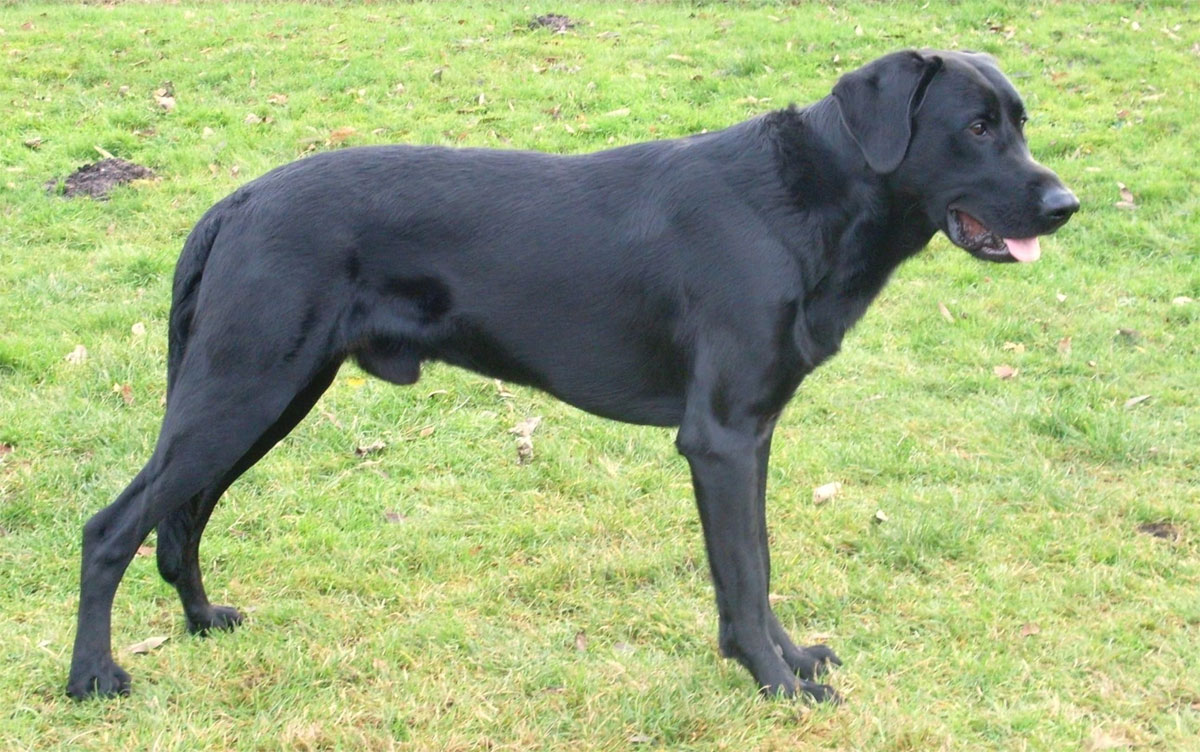
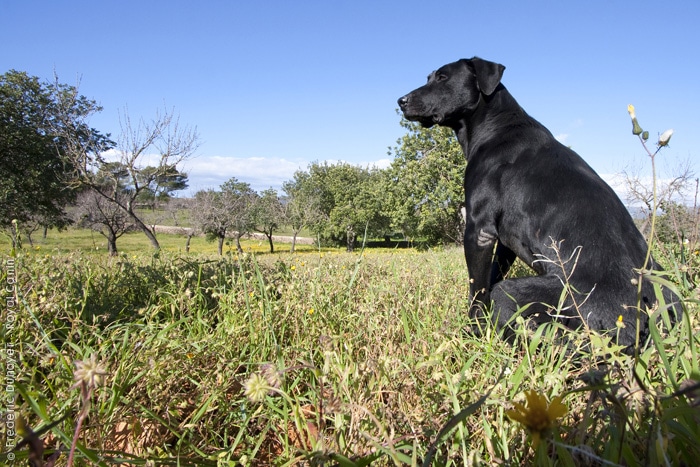
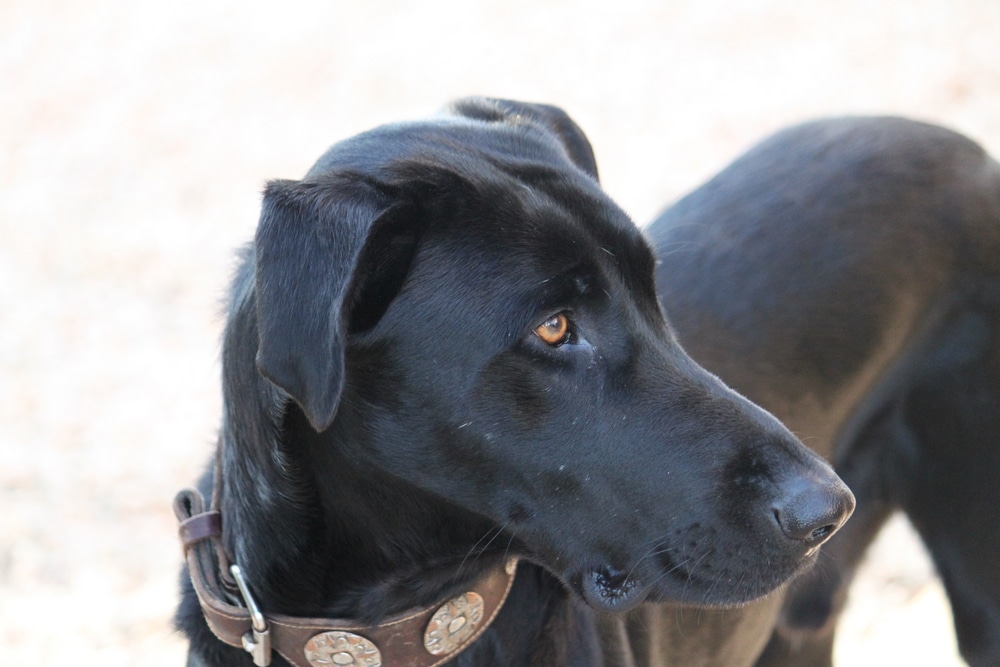
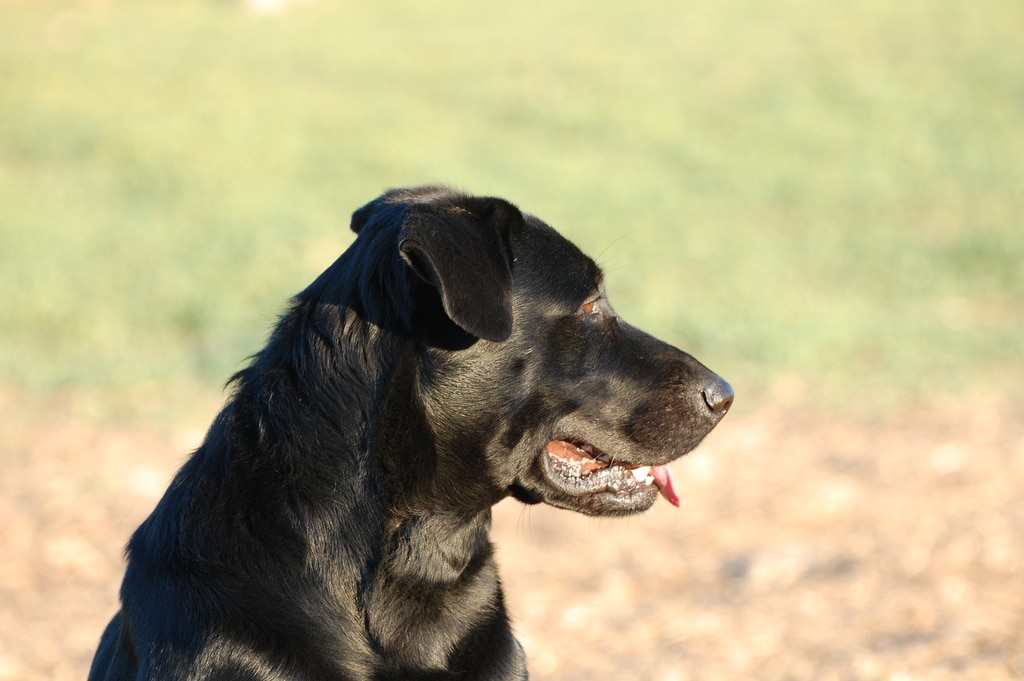
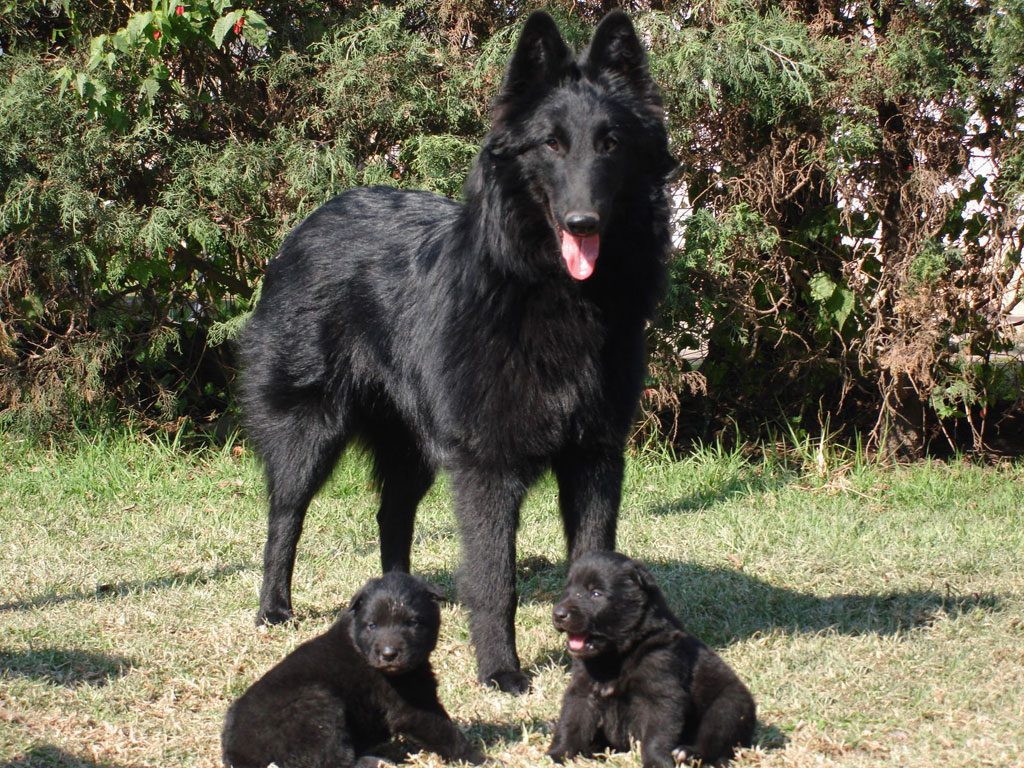
The Majorca Shepherd Dog or "Cattle", It is a breed of dog originating in Mallorca.

Content

History

Also known as โ€œCa de Bestiarโ€, this breed is believed to have existed since ancient times. Through the years, this dog would have been bred with a variety of local Mallorcan dogs, as well as with other European Shepherd dogs, and it was not until 1970 which he puts any restrictions on their upbringing. In fact, its breed standard was written as recently as 1980. It was in 2006 the UKC โ“˜ recognized the breed within his Group of Sheepdogs.

Appreciated through the centuries by the Spaniards for their ability to be a versatile farm dog, the Majorca Shepherd Dog It was used both to herd flocks and to monitor property and animals. It has also been reported that the Majorca Shepherd Dog was widely used in dogfighting, a practice that is now illegal. Although it is still used on farms today, and is also often kept as a companion animal, this rare breed once seen internationally and is considered a rare breed.

Physical characteristics

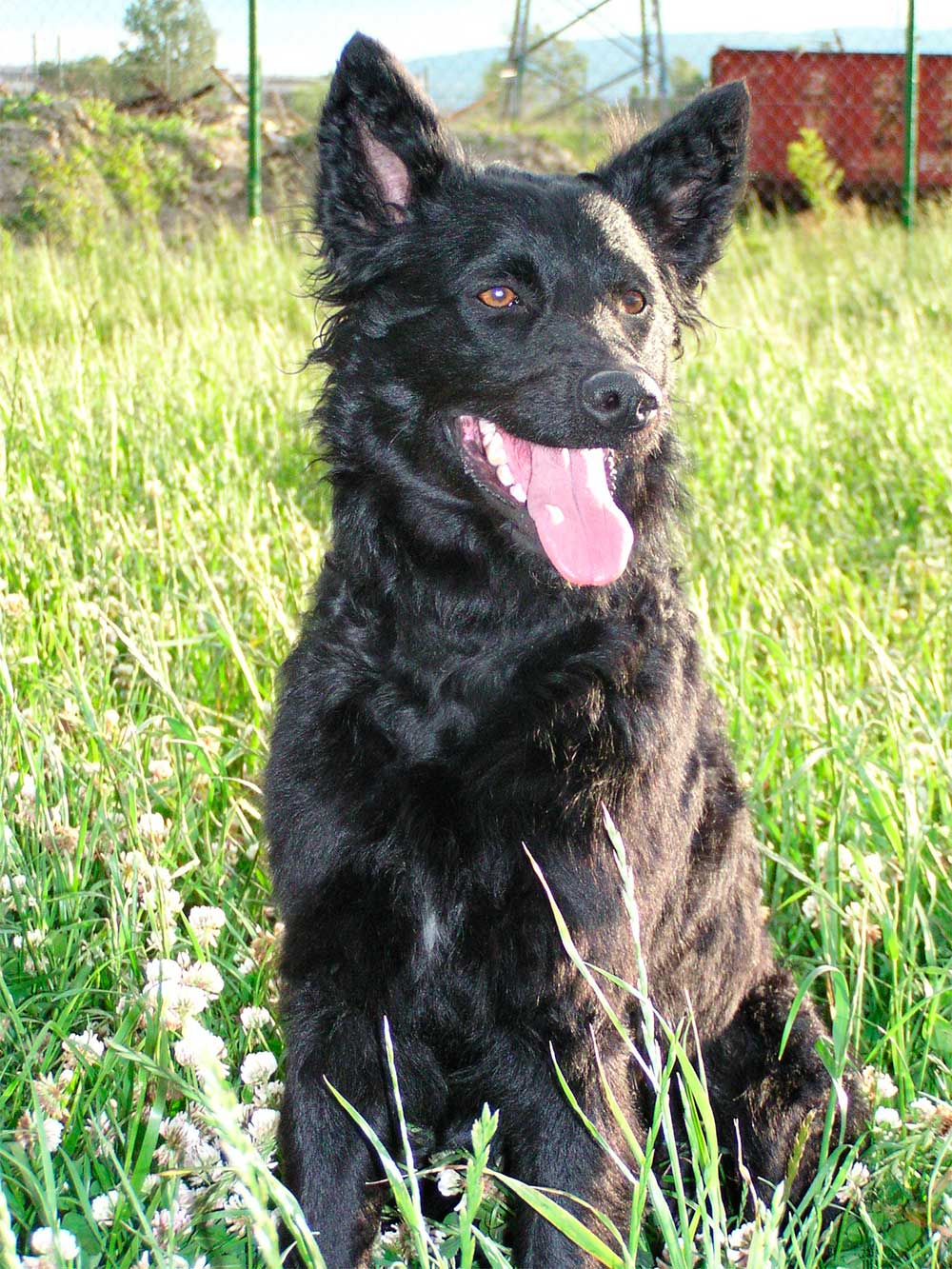
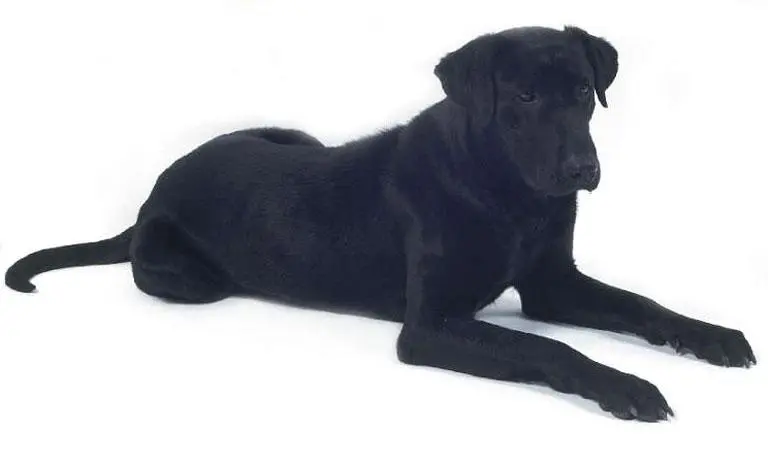
The Majorca Shepherd Dog is a large size dog, average weight, well proportioned, rustic, strong and large muscles, flexible and robust.

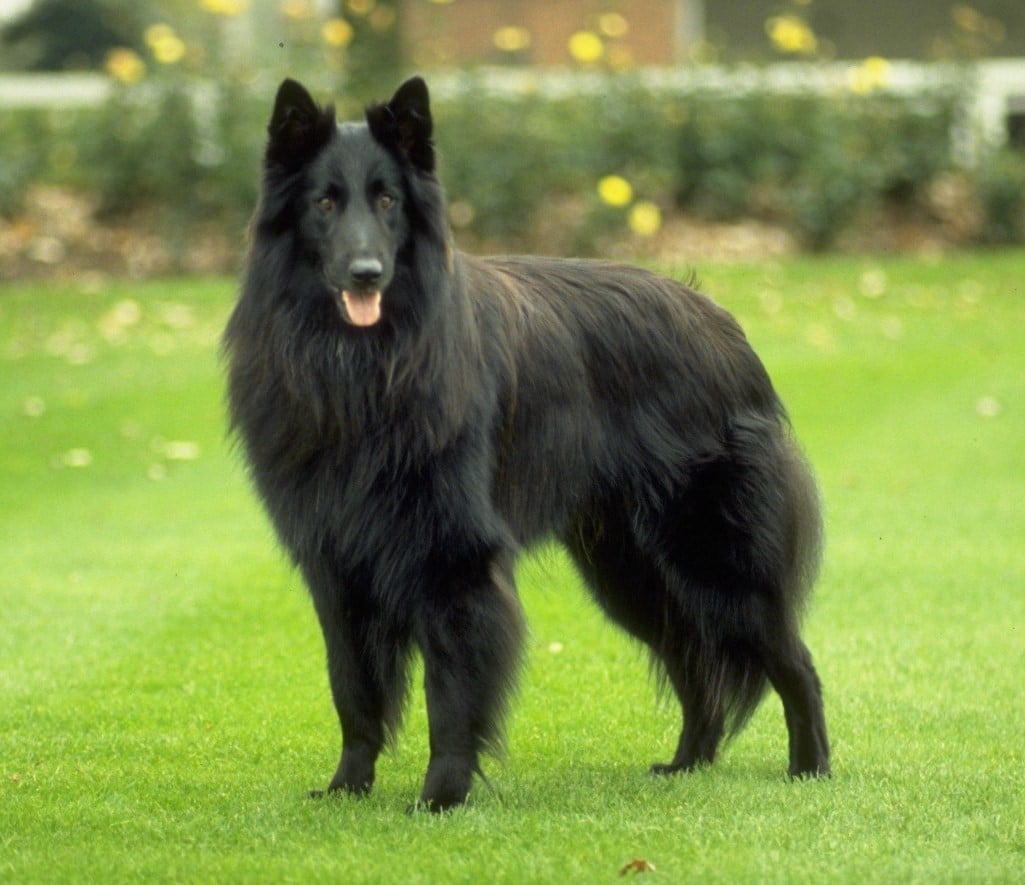
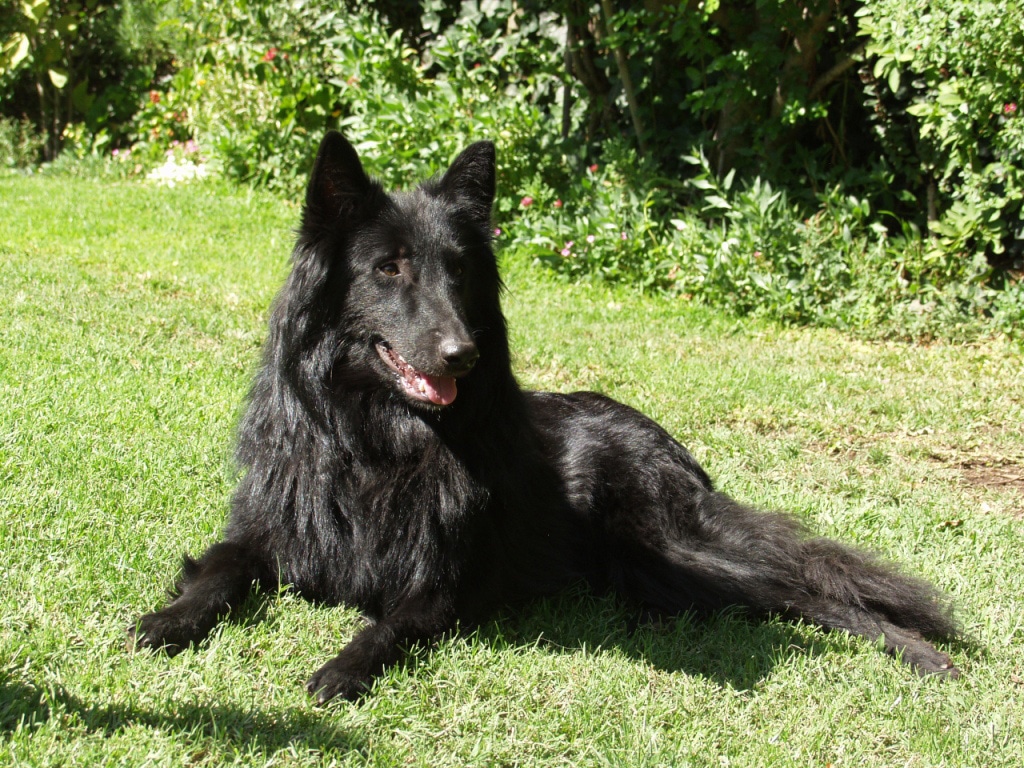
There are two varieties: long hair and most widespread short-haired. The head is well modeled, large and provided with the body, but not so much as to look like a molosser. Craniofacial shafts are slightly convergent; the relationship between the skull and the muzzle is of 1:1.

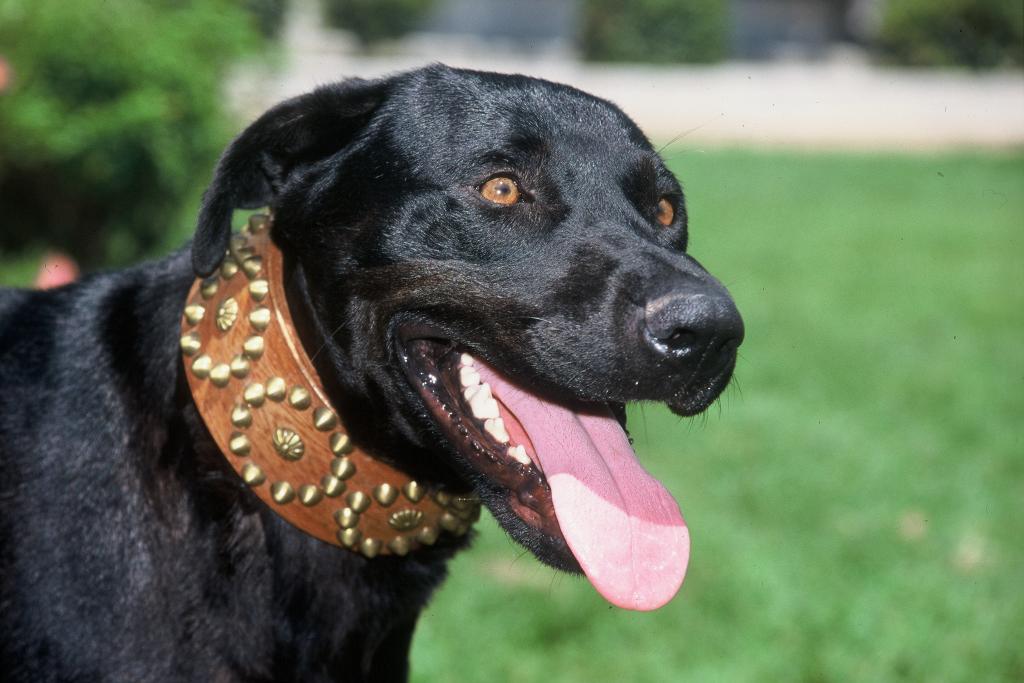
The color eyes goes from amber to dark brown, and his expression is intelligent and enigmatic.

The ears, small in relation to the head, they are triangular, inserted at the top and are normally bent, with dropped tips.

The tail Start horizontally, is horizontal section, It has thick base and it tapers towards the tip.

Fur: the short hair variety has quite thin Undercoat. In the variety of long hair, hair coverage can reach a length of 7 cm and it is slightly wavy. In both varieties should be soft and fine.

Color: the only one admitted is black, optionally with white spots on chest and feet.

Size: males, of 66 to 73 cm.; females, of 62 to 68 cm.. The weight is usually of 40 kg approximately.

Character and skills

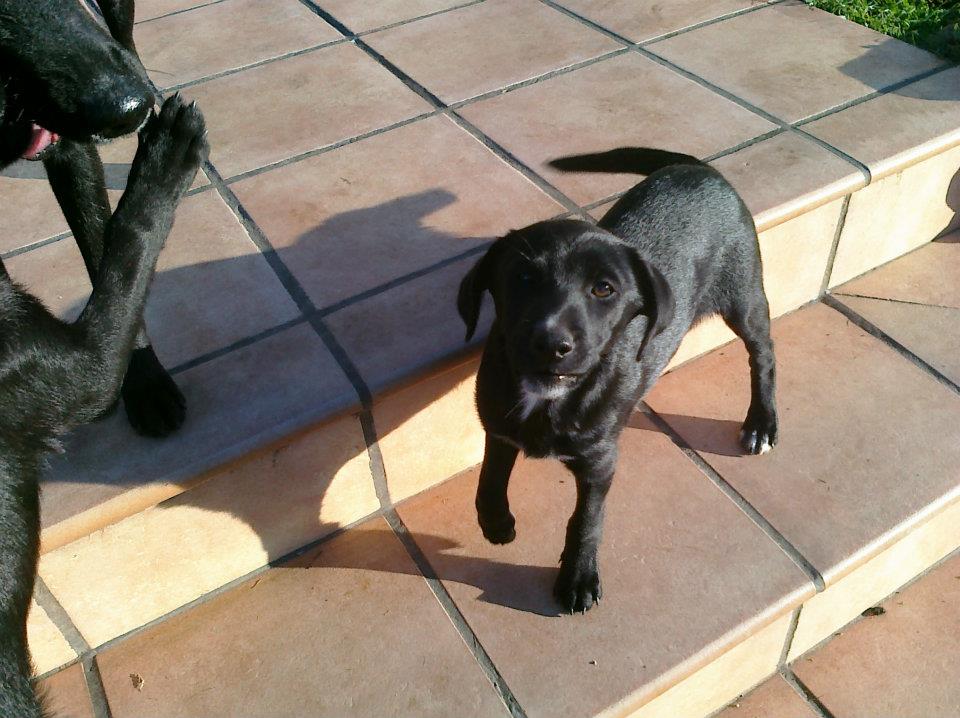
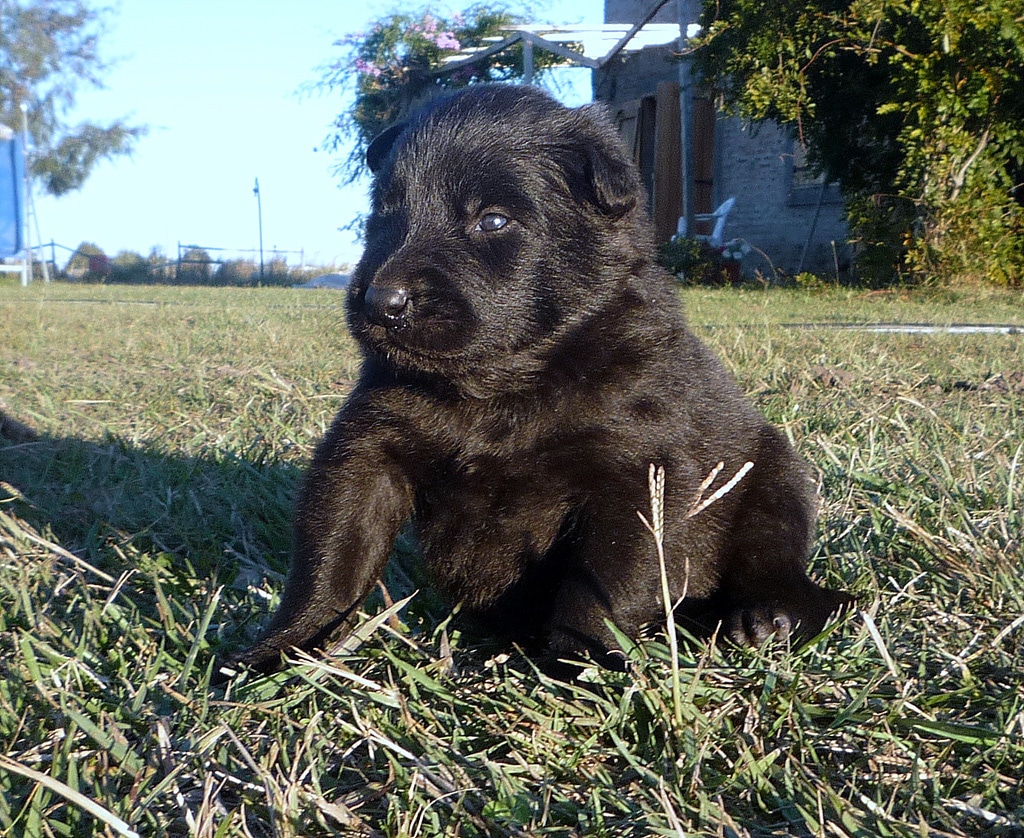
He is a shepherd dog with skills for the job of guard and defense. Itร‚ยดs Intelligent, docile and affectionate, although as a puppy he is usually shy and reserved. For this reason it is important to socialize it to the maximum to avoid that it closes in on itself.

The adult is very suspicious of strangers and he is united by a very strong bond with his master. Her enigmatic gaze not glimpse of his thoughts. It has an extraordinary courage and willing to everything in order to defend their loved. It's a little known breed outside the Balearic Islands, so to acquire a good puppy should address to breeders of the Islands.

Images ยซMajorcan shepherd dogยป

โ€œMajorcan Shepherd Dogโ€ videos

Type and recognitions:

  • FCI CLASSIFICATION:
  • Group :
  • Section : . .

Federations:

  • – FCI โ“˜

FCI breed standard "Majorca Shepherd Dog"

Origin:
Spain

Date of publication of the valid original standard:
26.05.1982

Use:

Herding dog, guardian and defense


General appearance:

Sub-convex profile dog, large without being exaggerated and medium-weight size. It is totally black or black with white spot on chest, well proportioned, rustic, strong, muscular, robust and agile. There are two varieties of hair:

  • Short hair, the most common variety.
  • Long hair.

IMPORTANT PROPORTIONS:

Dog subhipermetrico, midline and subconvex.

  • The female accepts a longitudinal diameter of up to a 3% greater than the height of the cross.
  • Length of the muzzle is equal to the length of the skull.
  • The length of the head must be equal to the length of the neck.
  • In adult males the thoracic perimeter, taken together the cross behind the elbows, It is about a cms rather than its height at the withers.


Behavior / temperament:

Dog of great nobility, only an owner that accepts loads of strangers with difficulty.
Intelligent, docile, loving, shy on end and reserved in his youth ; his sentimentality comes to unsuspected. Faithful to his master until death. If we explore in his eyes it will give us the feeling thinks. It is courageous and quarrelsome.

Head:

Slightly triangular profile; view dorsally is wider at the top than at the bottom; solid, but not heavy; large enough to accommodate a good intelligence; well molded and proportionate to the body; It must be rather large, but never a trotting type. The supranasal line is parallel to the cranial line. Slightly divergent skull-facial axes.

Cranial region:
  • Skull: Sub-convex profile. The width of the head, taken between the storms, It should be slightly higher ( approximately 1,2 %) to the length between the supraorbital line and the occipital crest. A slight groove can be seen in the first third of the frontal midline. Marked occipital Crest.
  • Depression links (Stop): Marked, but never sudden, in mild decline.

facial region:

  • Truffle: Wet, fresh, black, large, with broad nostrils; No split. It despuntuarรก significantly if you have stains of barks or lighter.
  • Snout: Width, rather strong ; It should not be in tip, but its height and width should be accentuated as it approaches the orbits. In the variety ยซ Ca cabrer ยป (Longhair) more pointed. The dorsal profile of the nasal helm is sub-convex. The profile of the branches of the lower jaw is straight. Black color palate.
  • Lips: Black ; the high not seen to the bottom while your mouth closed ; the labial commissure is little noticeable and they go unnoticed because they are well proportioned to the head.
  • Jaws / Teeth: Very white teeth, well developed and well placed, closed scissors, making the incisors true upper ends prey with the lower canines. The molars developed.
  • Eyes: Rather small, slightly almond ; are not prominent nor sunken in orbits ; not far apart from each other, centered, slightly oblique, lively. Color between the Rosemary honey (something clear) and of the honey, carob (dark). Enigmatic expression, with look smart and sad at the same time, where denotes even distrust. The eyelids are thin, black and oblique, close to the eye.
  • Ears: Broken, small size in relation to the head, triangular, reaching the tear in the eye of its corresponding side tip, or is approximately equal to the length of your skull. Without amputating, slightly thick, high insertion, separating your tip slightly skull, with a longitudinal fold and another cross around the first third.
  • Position of the ears: usually bent and dropped, something separate from the muzzle. Played back in standby ; in State care by the transverse fold levantadolas, separating them from the snout than usual.

Neck:

Massif, muscular, strong and proportionate to the head and body. Thick, with very little double chin, cylindrical, its diameter accentuating more at the base. The skin is tough and elastic, or fine or thick, firmly attached to the neck at its top and sides, more detached on the bottom.

Body:

  • As a whole: Robust, very well proportioned, giving the impression of strength and agility while.
  • Cross: Marked and at least at the same height as the top of the rump ; the large area between the scapulae and strong.
  • Dorso-lumbar line: Straight, horizontal, never built.
  • Pork loin: Wide and powerful.
  • Rump: Medium, slightly rounded, wide, powerful and muscular; never prominent or fallen. The top should be at the same height as the cross. Its interiliac width must be equal to the iliac-ischial length .
  • Breast : Wide and high, maximum reaching the elbow; a width approximately equal to the length of the neck; quite deep, not prominent, with slightly pronounced sternum. Arched ribs (non-flat or in barrel).
  • Belly and flanks: Fairly bulky flanks. Slightly gathered belly, never agalgado, nor descended to be confused with continued chest. Something stylish, You must give the impression of agility.

Tail:

Horizontal insertion and circular section, rather thick at its birth. Some 8 cm base flattens slightly at its lower profile, in a few 10 length cm, to continue then the tapered circular to its end. Without amputating. Of a length that must reach at least the hock, without touching the ground. No tuft or fringe, Although it is authorised, If this is light, copies of older. In the variety of long hair you must have abundant and long fringe. Size of the queue : at rest naturally drooping or slightly curved outward, slightly touching the hocks, default is considered serious if your tip should touch the ground. Undulating and raised more than the horizontal sickle-shaped, without screwing it, When in action.

Tips

PREVIOUS MEMBERS:

  • As a whole: Strong Member ; correct limbs ; seen from the front and in profile parallel to each other and perpendicular to the ground.
  • Shoulder: Oblique and strong.
  • Scapulo-humeral angle: 115ยฐ.
  • Arms: Of equal length to the scapula.
  • Elbows: Without deviations, glued to the chest. Radial-humerus angle : 130ยฐ.
  • Forearm: Strong, well angled, perpendicular. Vertical bones, strong, long and right.
  • Metacarpus: Short and slightly tilted.
  • Previous feet: Almost of Hare (something shorter and wider than they), finger semialtos, semiarqueados, together, and with the very hard and black pad. Without acute interdigital membrane.

LATER MEMBERS:

  • As a whole: Muscular, strong ; correct limbs. Dimmed and hard muscle relief.
  • Coxo-femoral angle: 115ยฐ, peer-to-scapulo-humeral.
  • Thigh: Strong and muscular.
  • Stifle-tibial angle: 130ยฐ, same as the humerus-radial
  • Leg: Long and powerful.
  • Hock: Little pronounced, very open 135ยฐ angulation. The height of the Hock is about somewhat lower than the one-third of its height at the withers.
  • Metatarsus: Well marked.
  • Hind feet: Almost of Hare, crushed, with fingers together and semiarqueados. Pad hard and black. Arched nails, black and hard. Without acute interdigital membrane. May be born with or without Spurs, in the first case they must amputate.

Movement:

His way of walking must be firm and elegant. The trot on diagonal bipeds, Tip slightly posterior third, respect to the previous. The Gallop will be franco, fast rustic, the rear legs wide apart at its base with soil, placing them outside of the hands, as if it were jumping. The preferred step and the work is the Gallop.

Mantle

SKIN: Elastic, without folds, hard and light grey.

  • HAIR: Short and glued to the skin, its length ranging about 1,5 cm to 3 cm on the spine ; very fine Undercoat, low thickness and very attached to the skin. In the long-haired variety may be slightly wavy on the spine, approximate length of more of 7 cm according to the time of year, with the largest winter. Well distributed and thin Undercoat, grow hair in their normal length in the fringe of the queue, Tip of the ears and back of the limbs. In both varieties should be smooth, hard and quite thin.
  • COLOR: The only color supported is black, varieties of Jet, regular and peceno. The target is supported only in the chest, in the form of thin tie under neck and anterior and posterior foot, highlighting according to its easy visibility on nails and tips of the toes. The Jet Black landmark is the most appreciated, nature of the ordinary black and the peceno.


Size and weight:

  • Height to the cross: Among 66 and 73 cm for males. Among 62 and 68 cm for females.
    Specimens with heights of one cm or so are allowed at the limits indicated ; in this case you must subtract score.
  • Weight: Environment to 40 kg.


Fouls:

Any deviation from the aforementioned criteria is considered as a fault and the severity of this is considered to the degree of the deviation to the standard and its consequences on the health and well-being of the dog..

SERIOUS FAULTS

  •  Dogs that drool-worthy.
  •  Cut fangs.
  •  Very raised ears rest, very large very separated from the face or completely glued to it.
  •  Very collected belly (whippety).
  •  Threaded queue; white tail tip.
  •  White spot of chest of more of 1 dmยฒ.
  •  All fingers of a foot white.

MISS PLAYOFFS

  •  Aggressive or fearful dog.
  •  Mastiff head, very wide and heavy or Hound, long and narrow with just pronounced stop.
  • Truffle pink or white.
  •  Upper or lower prognathism more of 3 mm.
  • โ€ข Eyes of different colors from each other ; eye that is not of the color that goes from the Rosemary honey (something clear) the carob-honey (dark) ; very clear eye.
  • Amputated ears, stiff in action or almost stiff at rest.
  •  Double chin neck, more thickly along the skull than at its base, longer that a 10% length ranging from truffles to the occipital Crest.
  •  Body too long or too short ; height of the top of the rump in a 3% greater than the height at the cross.
  •  Very thick tail, or of equal thickness at the base and tip ; excessively long to touch the ground ; amputated or missing you each 2 cm to reach the Hock ; with abundant fringe in the variety of short hair, with or without bangs in long hair variety.
  •  Other color than black, or, in dogs being black, an anterior or posterior foot white or another color ; members shod in white on any number of limbs ; not totally black body (with the exception of the chest, very few hairs on the belly, perpucio or tip of the tail), stains, without disqualify, they notably despuntuarรกn. They despuntuarรกn not consequential white hairs of bites, trauma or other similar injuries, or the white hairs from the face own age. White fingers not disqualify, unless the animal is more than six, despuntuando notably each ; a single finger white or another color in the previous feet disqualifies the dog.
  •  Height of the cross over of 74 cm in males and more of 70 cm in females. The cross of less height of 66 cm in males and less of 60 cm in females.
  •  Under weight of 30 kg and over 50 kg in males, under weight 25 kg and over 45 kg in females ; even being within the aforementioned limits, very skinny dogs, visibly obese or very saddled (having tolerance in pregnant females).

SCALE OF POINTS

  • General appearance and temperament โ€“ 21 points
  • Presentation (cleaning and porte) โ€“ 4 points
  • Fur (length and hardness) โ€“ 4 points
  • Layer (color and brightness, 7+2) โ€“ 9 points
  • Temperament/Behavior โ€“ 4 points
  • Head โ€“ 21 points
  • Skull and stop โ€“ 4 points
  • Snout, nose and lips โ€“ 5 points
  • Teeth and palate (2+1) โ€“ 3 points
  • Eyes โ€“ 5 points
  • Color โ€“ 2 points
  • Form, size and separation โ€“ 2 points
  • Eyelids โ€“ 1 point
  • Ears (form, thickness, inclusion, size) โ€“ 4 points
  • Neck โ€“ 4 points
  • Trunk โ€“ 21 points
  • Cross โ€“ 1 point
  • Back and back โ€“ 5 points
  • Rump โ€“ 3 points
  • Belly โ€“ 2 points
  • Breast , chest, Ribeye, size โ€“ 10 points
  • Tail (form, length and fringes) โ€“ 2 points
  • Limbs โ€“ 19 points
  • Previous aplombs โ€“ 6 points
  • Later aplombs โ€“ 8 points
  • Feet ant. and post., fingers, nails hardness of the pads โ€“ 5 points
  • Movement โ€“ 12 points
  • Ear bearing โ€“ 3 points
  • Tail bearing โ€“ 3 points
  • Jogging โ€“ 2 points
  • Gallop โ€“ 4 points

Total : 100 points


Proportional measurements (ideal for the male)

  • Weight โ€“ 41 kg
  • Height at the withers โ€“ 71 cm.
  • Height to the rump โ€“ 71 cm.
  • Chest height โ€“ 39 cm.
  • Longitudinal diameter โ€“ 71 cm.

Head

  • Muzzle length โ€“ 13 cm.
  • Skull length โ€“ 13 cm.
  • Total head length โ€“ 26 cm.
  • Neck length โ€“ 26 cm.
  • Ear Longiud โ€“ 13 cm.
  • Tail length โ€“ 52 cm.
  • Raised to hock โ€“ 23 cm.

Length of the hair on the back

  • Short hair variety โ€“ 2 cm.
  • Long hair variety (between seasons) โ€“ 7 cm.
  • Head width โ€“ 15 cm.
  • Thoracic perimeter โ€“ 81/83 cm.
  • Chest width โ€“ 26 cm.
  • Neck circumference โ€“ 49 cm.

Any dog โ€‹โ€‹showing clear signs of physical or behavioral abnormalities must be disqualified..


N.B.:

Males should have two normal-appearing testicles fully descended into the scrotum..

Source: F.C.I - International Cynological Federation

Alternative names:

1. Majorca Shepherd Dog, Ca de bestia, Pastor mallorquรญn (English).
2. Berger de Majorque (French).
3. Ca de Bestiar (German).
4. Ca de Bestiar (Portuguese).
5. Pastor-maiorquino, Ca de Bestiar, Pastor mallorquรญn (espaรฑol).

โ–ท The world of Pets: Dogs, cats, birds, reptiles, amphibians

Shetland Sheepdog
Escocia FCI 88 . Sheepdogs

The Shetland Sheepdog is very familiero, lovely with children, intelligent and loyal.

Pastor de las Islas Shetland

Content

History

The Shetland Sheepdog comes from the Shetland Islands (Scotland, United Kingdom), intentionally was raised in small size. At first sight, seems to be a copy of Rough Collie miniaturized, However, are 2 different races with a similar look.

The "father" race Shetland Sheepdog o โ€œSheltieโ€ as they are often nicknamed, they are the Border Collie.

Physical characteristics

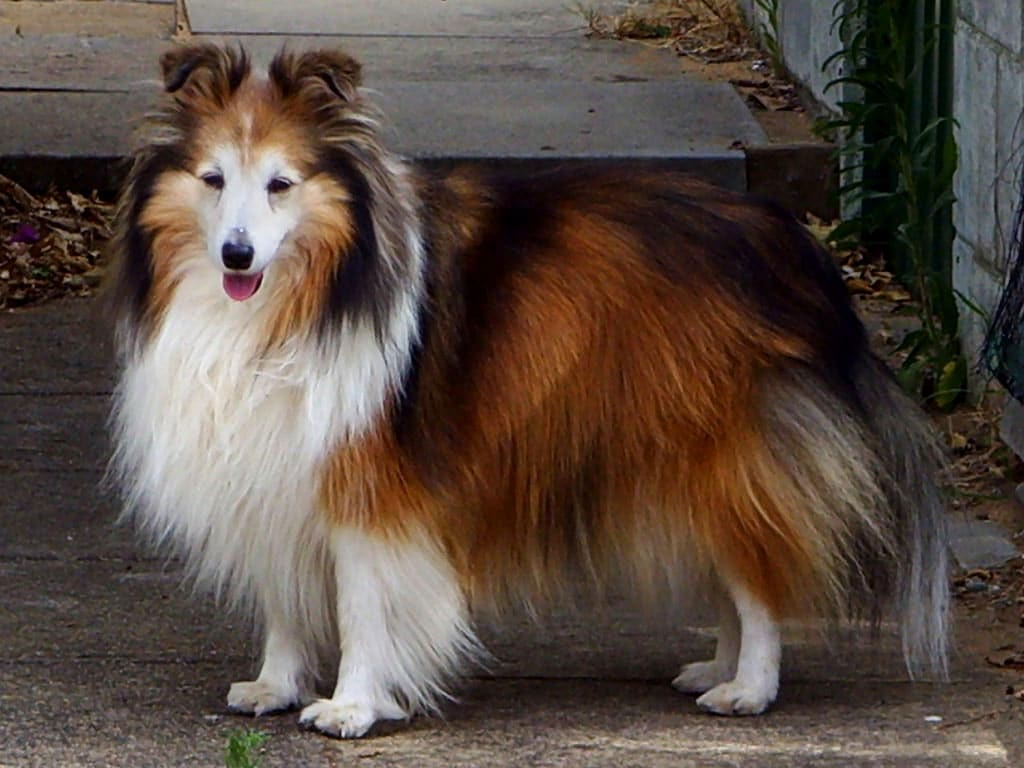
The Sheltie they have a double mantle, What makes this breed peleche much more than other dogs. Long hair covering the thick and soft layer base, is repellent to water, while the base layer provides relief from hot and cold.

There are three main colors: Sable, It ranges from the Golden to mahogany; Tri-color, formed by the black, White and Tan, and blue mirlo, composite grayscale, white, black and Tan.

black and white: it is less common but still acceptable.

Sand: the best-known color, dominates over other colors. The shadow Sabre, or mahogany can sometimes be confused with the Sheltie tricolor because of the large amount of dark shading in their coats. Another name for him Sheltie "shading", is trifactorado sable and white. This name comes from the mixture of a tricolor and a sable and white. Another acceptable but less common color is Sable merle, that it can sometimes be difficult to distinguish between the regular sable after puppyhood. The Sable merle has patches of dark brown on a light brown background compared to the black and grey blue Merle.

There are other two colors that are a bit rare, which are unacceptable in the ring. The White Color-headed (majority of white with the head "normally" marked), It is the product of two dogs crossed white facotrados. Double Merle, the product of the crossing of two Shetland Sheepdog blue merle, they can be crossed but have a high incidence of deafness or blindness than other colors.

The ideal height at the cross, in males 37,5 cm.. The females. 35,5 cm.. One greater diversion of 2,5 cm above or below these measures is regarded as highly undesirable.

Character and skills

It is an excellent companion dog, highly loyal. It is joyful, intelligent and always ready to obey. The Shetland Sheepdog they are loving, loyal and affectionate with the family and of course, on the sidelines, with strangers; for this reason the Sheltie They must be socialized. Some may be very reserved. This breed gets along very well with children if they are raised with them from a young age.; However, its small size makes it easy for a child to accidentally harm them, This monitoring is necessary. Consider well bringing a Sheltie adult to a house with small children, may not be compatible.

Some Shetland Sheepdog tend to display a personality similar to that of a Terrier who tends to be hyperactive, and always ready, However this temperament is not sanctioned in the breed standard. Some may be shy, but this temperament is specifically discouraged by the standard. The trend towards shyness, It can be reduced with proper socialization. The Sheltie average is an excellent watchdog, giving alarm barks when a person is at the door or pass a car on the street.

The herding instinct is strong in many Shetland Sheepdog. Love to chase and pasture including, squirrels, ducks, pigeons and children. To the Shetland Sheepdog they like to run in large open areas.

They usually enjoy playing. They are better with a sensitive owner, but firm. The Sheltie It, first and foremost, a smart pastor and love to keep them busy, Although his level of activity, usually, It coincides with the level of its owner. As they are very intelligent, they are highly trainable. Lack of exercise and intellectual stimulation, It can lead to undesirable behaviors, including excessive barking, phobias and nervousness. Fortunately the annoying behaviors may decrease largely by an hour of exercise to make the dog with its owner.

in your category, this breed dominates in the competitions of Agility. They also look at obedience competition, Flyball, Grazing, Tracking and proof of talent.

It is a very intelligent dog, according to him Dr. Stanley city, expert on animal intelligence. The Sheltie is one of the brightest dogs occupying the position number 6 in the Ranking of 132 evaluated races. His research determined that an average Sheltie could understand a new command in less than 5 repetitions and would obey the command the first time the 95% of the times or more.

Health

Similar to the Rough Collie, There is a tendency to inherit malformations and diseases in the eye. Each puppy should have his eyes examined by a qualified eye veterinarian. Some lines may be susceptible to hypothyroidism, epilepsy, Hip Dysplasia, or skin allergies. The life expectancy of Shetland Sheepdog is between 10 and 15 years, Although some in some it may be more, and in others may be less.

The disease of Von Willebrand is an inherited bleeding disorder. On race Sheltie, affected dogs, as a general rule, they do not live long. The Shetland Sheepdog carry type III of Von Willebrand, which, It is the most severe of the three levels. There are DNA tests that were developed to find this disease in dogs Sheltie. It can be done at any age and will showcase one of the following results: affected, carrier or affected not. The Shetland Sheepdog they can also suffer from Hypothyroidism, It is the low functioning of the thyroid gland. Clinical symptoms include, loss of hair, on low weight and faintness.

Although small breed dogs are not usually affected by the Hip Dysplasia, has been identified in some specimens of Sheltie. It occurs when the head of the femur and the acetabulum they don't fit properly, This causes pain and/or lameness. Hip Dysplasia is thought to be genetic; Many breeders sent to test their dogs to certify that they are free from this.

  • Otros nombres: Pastor de las Islas Shetland / Shetland Collie / Dwarf Scotch Shepherd / Toonie dog / Apartment Collie / Miniature Collie / Sheltie / Berger des Shetland.
  • Group 1 / Section 1 – Sheepdogs.

โ–ท The world of Pets: Dogs, cats, birds, reptiles, amphibians

Czechoslovakian Wolfdog
Eslovaquia FCI 332 . Sheepdogs

Czechoslovakian Wolf Dog

Not a dog fit for everyone.

Content

History

The Czechoslovakian Wolfdog It has its origin in the crossing experiments between the "Carpathian Wolf" and the German Shepherd carried out in the former Czechoslovak Socialist Republic from 1955 under the supervision of the SR. Karel Hartl, a renowned Czech cynologist and breeder. The scientific objective of these experiments was to determine the characteristics of these hybrids. (physical appearance, behavior, utility, fertility…), while the military tried to create a breed with the strength of the wolf and the docility of the dog, that could be used as an attack dog.

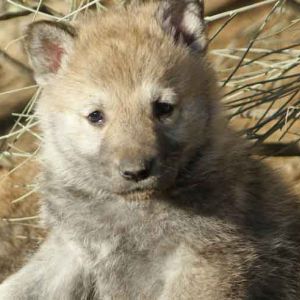
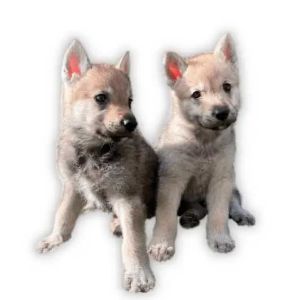
The first births took place in 1958 at the border guard kennel in Libejovice, in the south of the country. Brita the wolf and the German Shepherd Cezar z Brezoveho Haje gave birth to 5 Puppies: Brent, Berta, Bono, Betty y Bessy.

Betty was selected to continue the line at the Libejovice kennel, while his sister Berta was sent to the Samorin kennel (now Malacky) with the same goal. Their pups were used as patrol dogs by border guards, confirming that these hybrids were healthy, functional and fertile.

After this initial success, the Brita Wolf was able to mate again with a new male German Shepherd named Kurt z Vaclavky. Like this, in 1960, Defender, Bigan, Trophy, Bill and Bima were born in the Libejovice kennel. The male Bikar was chosen to be sent to the Pohranicni kennel in Slovakia to continue this second lineage.

The experiment stopped at 1965, not without some success: hybrids were able to reproduce, socialize with humans and be trained for different tasks. At the end of the experiment, 16 of these dogs remained in the care of the army, While 18 were given to civil breeders.

Then new lines were created, as..:

– Astra (female german shepherd dog) and Argo (Carpathian wolf male) in 1968;
– Lejdy (female Carpathian wolf) y Boyar from Schotterhof (male german shepherd) in 1972;
– Urta with the Guardian Guard (third generation hybrid female) and Sarik (male Carpathian wolf) in 1974;
– Xela with the Guardian Guard (third generation female hybrid) and Sarik (Carpathian wolf male) in 1983.

Name "Czechoslovakian WolfdogยปIt seems to have become common to designate these hybrids already in the decade of 1960, but it wasn't until 1982 that the efforts of Mr.. Karel Hartl were finally officially rewarded when this new breed was recognized by the Czechoslovakian Dog Breeders Committee, the canine organization of reference in the country.

It developed quite quickly and to 1991 not less than 1552 Czechoslovakian wolfhounds were entered in the national register of pedigree dogs.

In 1999, the Czechoslovakian Wolfdog was recognized by the Fรฉdรฉration Cynologique Internationale (FCI).

In the news, are mainly found in Central Europe, but its popularity is growing rapidly in various Western European countries such as Italy, Germany, Spain and France. In France, for example, little more than 3.000 representatives of the breed have registered with the LOF (Book of French Origins) between 2010 and 2016, and the trend is increasing. His growing renown leads him to the gates of 10 Most popular dog breeds in France.

On the other hand, the Czechoslovak Wolf dog has not actually crossed the English Channel: it is only one of the breeds recognized by the Kennel Club, the British organization of reference, and the FCI only has one approved kennel in the whole country.

In United States, the AKC (American Kennel Club) partially recognizes it from 2001: their representatives can participate in competitions organized under the aegis of the organization, but they cannot register in the breed dog registry. On the other hand, the UKC (United Kennel Club) fully recognizes it, and has been doing it since 2006. It also, in 2011 an official breed club was established (el Czechoslovakian Vlcak Club of America). There are currently some 200 specimens in american territory.

Physical characteristics

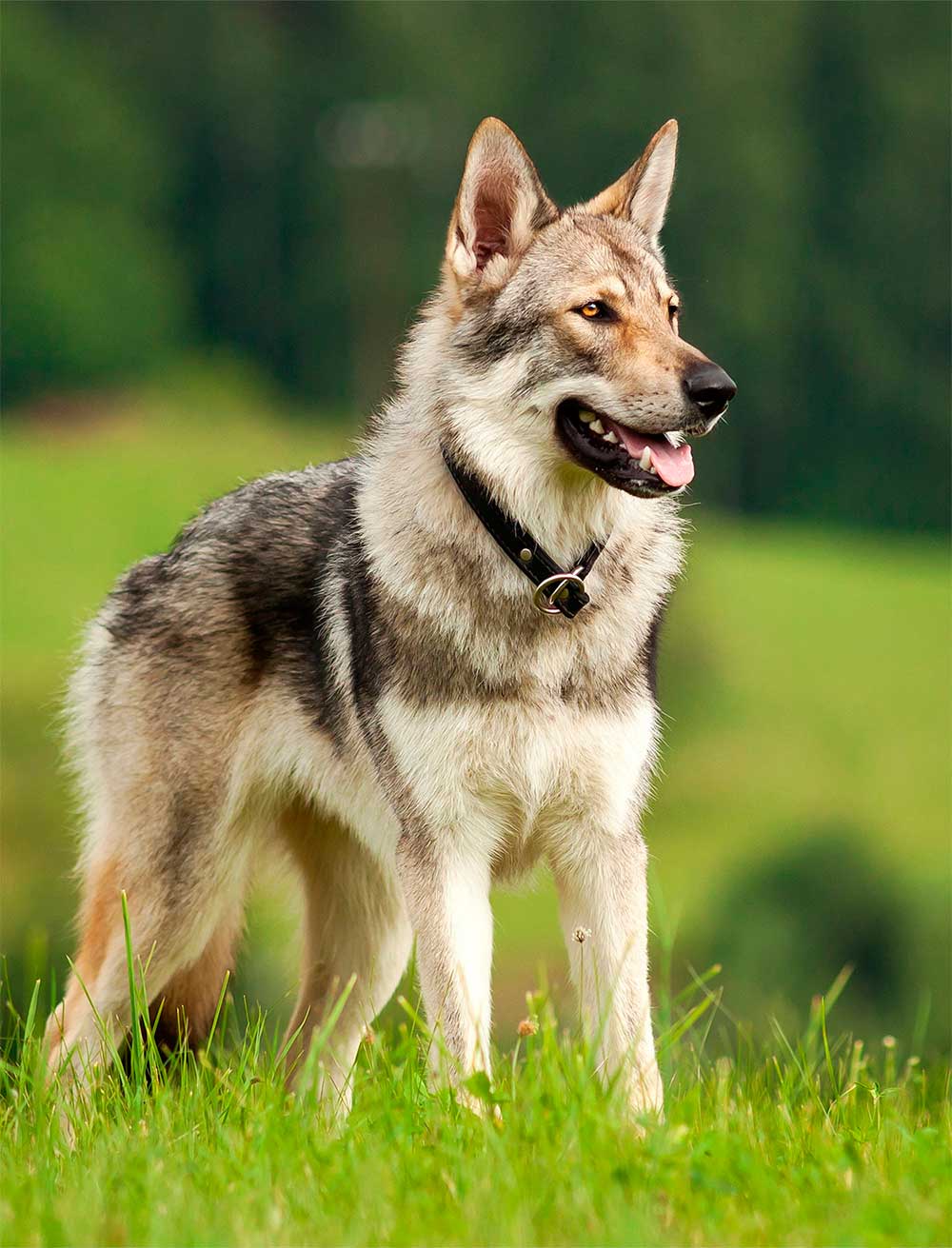
It is a dog of strong constitution, medium-sized and rectangular in structure. It is similar to the wolf in constitution, movement, colors, cloak and mask. The head, symmetrical and well muscled, is shaped like a truncated wedge. the eyes are small, macaroons, amber, with well-attached eyelids.
Ears are erect, thin, triangular and short. The tail is implanted high, but it hangs straight. When the dog is excited, lifts it up in a sickle.

Fur: The coat is straight and adherent. In winter it has a very dense undercoat.
Color: From yellowish gray to silver gray, with characteristic white mask.
Size: Males measure at least 65 cm.. the females, minimal 60 cm..

Character and skills

The Czechoslovakian Wolfdog he is very devoted to his family, including children. But, their rather dominant nature can be problematic for young people. In any case, it is important to socialize him from an early age and never leave a young child alone with a dog, regardless of race.

He is also sociable with his companions and other pets who live under the same roof., since he is used to their presence relatively early. On the other hand, woe to the cats, small dogs and other rodents that are unfamiliar to you and would have the bad idea to venture into your territory, or that they will meet during a walk: his hunting instincts were then all chances to regain the advantage.

It also, he is as affectionate with his entourage as he mistrusts strangers: there is also necessary an education and socialization of the puppy started from an early age to avoid any later problem.

Having a highly developed sense of hierarchy, He must face as soon as possible with his "herd leader", who should show their dog his place in the family hierarchy . The Czechoslovakian Wolfdog he is a dog that cannot stand loneliness, greatly preferring to live in the company of their pack, that is, his family. You are very likely to be unhappy if you have to be alone for long periods of time and are at risk of running away to join your family, or to feel excluded from the "pack" and lose confidence in his master.

It also, the Czechoslovakian Wolfdog it is a very durable and active breed of dog, able to accompany his master even over very long distances that can exceed even those of a marathon, and whatever the weather conditions. In fact, being able to exercise daily is necessary for your physical and psychological well-being, and allows to avoid the risk of damage caused by the dog . It is an ideal companion for a sports lover who would like to, for example, jogging with your dog , go hiking with your dog or even ride a bike with your dog.. On the other hand, even more than for any other race, your handler should make sure to always be out front and thus show your dog who is the โ€œleader of the packโ€ .

On the other hand, a person who prefers to spend his free time in front of a screen or immersed in a book is exposed to some difficulties if he thinks about adopting a Czechoslovakian Wolfdog …

It also, by needing space, the latter is not a recommended breed of dog in apartments : it is much better to have a house with a garden. It is not uncommon to see him playing and sleeping there whatever the weather: it's not very hard, and is able to perfectly withstand bad weather. On the other hand, it is recommended that said garden be perfectly fenced, to avoid the risk of the dog escaping and wandering on public roads.

The Czechoslovakian Wolfdog very little, if he barks. But when it does, it is impossible not to notice: similar to his ancestors the wolves , its howl is loud and can be heard over long distances. Daily, when you need to express yourself, opt for other means, like moans and grunts .

Like this, this loyal and active dog will make a firm human companion happiness, sporty and available, but it is not recommended for people who have never had dogs before or who are often absent. In fact, the majority of failed adoptions are due to the fact that the human has not known how to impose himself as "leader of the pack" and / or has not been sufficiently available and active for his partner.

Last, It should be remembered that this recent breed of dog is still under construction, so excessively fearful or aggressive subjects may appear.

Price "Czechoslovak Wolf Dog"

The price of a puppy Czechoslovakian Wolfdog is of some 1250 to 1500 EUR.

creators of "Czechoslovakian Wolfdog"

Register kennel

Czechoslovak Wolf dog

Offer your puppies for free. Sign up here.

  • This field is a validation field and should be left unchanged.

Characteristics "Czechoslovakian Wolfdog"

Coexistence is important that you have with your new friend. Before considering the acquisition of a dog of the breed "Czechoslovakian Wolfdog" you know certain factors. Not all breeds of dogs are apt to live in an apartment, you must take into account his character, their need for exercise, their interaction with other pets, their care and if you have small children, their level of tolerance towards them.

Adaptation โ“˜

4,0 of 5 stars (based on 1 review)

friendly dog โ€‹โ€‹โ“˜

2,0 of 5 stars (based on 1 review)

hair loss โ“˜

3,0 of 5 stars (based on 1 review)

Affection level โ“˜

4,0 of 5 stars (based on 1 review)

Need for exercise โ“˜

5,0 of 5 stars (based on 1 review)

Social need โ“˜

4,0 of 5 stars (based on 1 review)

Home โ“˜

2,0 of 5 stars (based on 1 review)

Toilet โ“˜

2,0 of 5 stars (based on 1 review)

Friendly with strangers โ“˜

2,0 of 5 stars (based on 1 review)

barking โ“˜

3,0 of 5 stars (based on 1 review)

Health โ“˜

3,0 of 5 stars (based on 1 review)

Territorial โ“˜

5,0 of 5 stars (based on 1 review)

Cat friendly โ“˜

2,0 of 5 stars (based on 1 review)

Intelligence โ“˜

4,0 of 5 stars (based on 1 review)

Versatility โ“˜

3,0 of 5 stars (based on 1 review)

Child friendly โ“˜

4,0 of 5 stars (based on 1 review)

Surveillance โ“˜

5,0 of 5 stars (based on 1 review)

joy โ“˜

3,0 of 5 stars (based on 1 review)

Type and recognitions:

  • FCI CLASSIFICATION:
  • Group :
  • Section : . .

Federations:

  • FCI โ“˜,
  • AKC โ“˜,
  • ANKC โ“˜,
  • UKC โ“˜

  • FCI breed standard Czechoslovakian Wolfdog

    FCIFCI - Czechoslovakian Wolfdog
    Dog

    Alternative names:

    1. Czechoslovak Vlcak (English).
    2. ฤŒeskoslovenskรฝ vlฤiak (French).
    3. tschechisch ฤeskoslovenskรฝ vlฤรกk, slowakisch ฤeskoslovenskรฝ vlฤiak (German).
    4. ฤŒeskoslovenskรฝ vlฤรกk (Portuguese).
    5. ฤŒeskoslovenskรฝ vlฤรกk, PLC (espaรฑol).

    Photo:
    Czechoslovakian Wolfdog by UsernameNotInUse / CC BY-SA

    โ–ท The world of Pets: Dogs, cats, birds, reptiles, amphibians

    Croatian Sheepdog
    Croacia FCI 277 . Sheepdogs

    Croatian Sheepdog

    With a great instinct for working with the herd.

    Content

    History

    The Croatian Sheepdog It was described for the first time in 1374 by the Croatian bishop Peter Bichof. According to some sources, the breed was created in the eastern part of Slavonia, the vast agricultural plain of Croatia, to act as a guard and herding dog. Peter Bichof stated that the Croatian Sheepdog It was imported from the East by the Croats around the 7th century.

    It was the vet Stjepan Romic, considered the father of the race, who initiated the systematic breeding of the Croatian Sheepdog in 1935 en Djakovo (Croatia). His role was all the more important since he had previously carried out various investigations on the dog and had managed to unearth writings dating from various periods of the 18th century.. These documents describe the Croatian Sheepdog as it is known today.

    The breed was officially presented at 1949 in Zagreb (Croatia), and the first standard of the Croatian Sheepdog was written by Otto Rohr in 1951. He was recognized by the International Cynological Federation (FCI) in 1967, later for him United Kennel Kingdom (UKC) in 2006 and, finally, by the American Kennel Club (AKC) and Central Canine Society (SCC).

    Despite this recognition by the main canine organizations in the world, the Croatian Sheepdog has not really spread internationally: it is hardly seen outside of its home country and remains unknown to the general public. These may include, the Central Canine Society (Kennel Club inglรฉs) just signed up 38 Croatian shepherds at the LOF (French Origin Book) between 2010 and 2016, an average of just 5 dogs a year.

    Physical characteristics

    The Croatian Sheepdog is a dog at the lower limit of medium size. Short hair on the head and limbs is the characteristic sign of the breed.. The head is quite light with a cone shape. The stop is poorly marked. The eyes are medium in size, macaroons, with a lively expression; the color goes from brown to black. The ears are triangular, raised or semi-raised, medium length and set slightly to the side. Straight ears are referable and cutting is not allowed. The tail is implanted a little high, with long thick hair. It is cut so that it does not have a length greater than 4 cm in adult error.

    • Fur: hair length is 7 to 14 cm on the spine. The face is always covered with short hairs. The ears have short hair on the outer face and long on the inner. The hair is relatively soft, wavy and even curly. The undercoat must be dense.
    • Color: predominantly black although some white spots on the throat or chest are admitted.
    • Size: of 40 to 50 cm..

    Character and skills

    The Croatian Sheepdog is lively and alert, without being nervous. They are also smart, brave and loyal.

    Very obedient, they are also exclusive: they only have one master, to which they remain very attached and whose attention they demand. In fact, it is necessary for its balance.

    Sheepdogs par excellence, has an innate sense of herding and is a very hardy dog. Some ranchers claim that you can knock down all the cattle just by saying their name, no need for further instructions. His approach to the herd is a bit tighter and harsher than that of other sheepdogs, but still very effective. It can bite the animals in its charge, but does not cause injury. This aggressive tendency can be easily worked on during training. It also has the defect of barking easily, especially if his master is absent, hence the importance of training him from a young age.

    The dog lives very well with children. Energetic and playful, the Croatian shepherd gets along wonderfully with them and lavishes affection on them. His extraordinary attachment predisposes him to protect them, even to overprotect them. Not just anyone can get close to them. On the other hand, being a dominant dog by nature, can generally only live with other animals (dogs, cats, etc.) if he is used to their company from a young age.

    Last, are among the dogs adapted to life in a flat, whenever they carry out intense daily activity. In fact, like all sheepdogs, the Croatian shepherd needs to learn and be stimulated mentally and physically. They have been bred to work with humans and, Therefore, have developed the ability to interact with them, making them a learning breed. If they lack activity, can become noisy and even destructive.

    Education

    The intelligence of Croatian Sheepdog, its desire to please its owner and its predisposition to work make it an easy breed to train. This workout should be both gentle and firm.

    Health

    The Croatian Sheepdog has robust health and is very resistant to disease, especially if you spend the nights in the shelter of aboxofdog.In fact, most of his health problems are due to injuries related towork.

    But, may be subject to certain canine diseases that more generally affectactive and energetic dogs:

    • Theknee patella luxation: the joint swells and becomes painful, with early appearance of acanine arthritis.Treatment can range from the occasional use of pain relievers to knee surgery. It is a common disorder inshepherds dogs, they are very active.
    • Thetorsion of the stomach: all dogs can be affected by this disease, but croatian shepherds, they areBig Dogsand they exercise a lot, they are particularly vulnerable.
    • Last, females may have difficulty giving birth. If so, this implies endangering not only the dog, but also to unborn puppies, it is usually necessary to perform a cesarean section under general anesthesia., an owner who wantsraise your bitchYou should think carefully before consulting themating offers.This is a decision that should not be taken lightly., for both financial and safety reasons.

    Life expectancy

    12 to 14 years

    Grooming

    All owners of a Croatian Sheepdog they should brush their dogs regularly to remove dead hair and detangle pups. During the moulting season (Spring and autumn), this brushing should be done even once a day.

    If your dog has gotten too dirty due to the weather and / or his activity, it is necessary to give him a bath. But, this should not be done at regular intervals, since the bath irritates the skin of the animal and removes the oil layer that protects its fur. So, the rule is to avoid bathing the dog, except when really necessary.

    It may also be necessary to trim the dog's nails. But, if your pet does his daily exercise, this should not be the case, because dirt or harder surfaces will naturally erode them.

    It also, do not forget to deworm and vaccinate your dog regularly. How your dog is often outdoors for long periods of time, and is in frequent contact with other dogs and animals, are more likely to come into contact with many bacteria and viruses.

    Price

    The price of a puppy Croatian Sheepdog is usually between 800 and 1000 EUR.

    Characteristics "Croatian Sheepdog"

    Coexistence is important that you have with your new friend. Before considering the acquisition of a dog of the breed "Croatian Sheepdog" you know certain factors. Not all breeds of dogs are apt to live in an apartment, you must take into account his character, their need for exercise, their interaction with other pets, their care and if you have small children, their level of tolerance towards them.

    Adaptation โ“˜

    4,0 of 5 stars (based on 1 review)

    friendly dog โ€‹โ€‹โ“˜

    4,0 of 5 stars (based on 1 review)

    hair loss โ“˜

    3,0 of 5 stars (based on 1 review)

    Affection level โ“˜

    4,0 of 5 stars (based on 1 review)

    Need for exercise โ“˜

    2,0 of 5 stars (based on 1 review)

    Social need โ“˜

    3,0 of 5 stars (based on 1 review)

    Home โ“˜

    3,0 of 5 stars (based on 1 review)

    Toilet โ“˜

    1,0 of 5 stars (based on 1 review)

    Friendly with strangers โ“˜

    4,0 of 5 stars (based on 1 review)

    barking โ“˜

    4,0 of 5 stars (based on 1 review)

    Health โ“˜

    3,0 of 5 stars (based on 1 review)

    Territorial โ“˜

    5,0 of 5 stars (based on 1 review)

    Cat friendly โ“˜

    3,0 of 5 stars (based on 1 review)

    Intelligence โ“˜

    4,0 of 5 stars (based on 1 review)

    Versatility โ“˜

    4,0 of 5 stars (based on 1 review)

    Child friendly โ“˜

    4,0 of 5 stars (based on 1 review)

    Surveillance โ“˜

    4,0 of 5 stars (based on 1 review)

    joy โ“˜

    4,0 of 5 stars (based on 1 review)

    Type and recognitions:

    • FCI CLASSIFICATION:
    • Group :
    • Section : . .

    Federations:

    • – FCI โ“˜
    • – UKC โ“˜
    • – AKC โ“˜

    FCI breed standard Croatian Sheepdog

    FCIFCI - Croatian Sheepdog
    Pastor

    Alternative names:

    1. Hrvatski ovฤar, Kroatischer Schรคferhund (English).
    2. Berger de Croatie (French).
    3. Kroatischer Schรคferhund (German).
    4. Hrvatski Ovฤar (Portuguese).
    5. Perro de pastor croata (espaรฑol).

    Photo:

    croatian sheepdog Mawlch Gera by Michala Mraฤkovรก / Public domain

    โ–ท The world of Pets: Dogs, cats, birds, reptiles, amphibians

    Warren hound breeds
    Italia Espaรฑa Portugal Grecia Francia Tรบnez Malta Warren hound

    Razas de Podenco

    The different "Podenco Breeds" are characterized by being little barkers., extremely clever and agile for hunting.

    Content

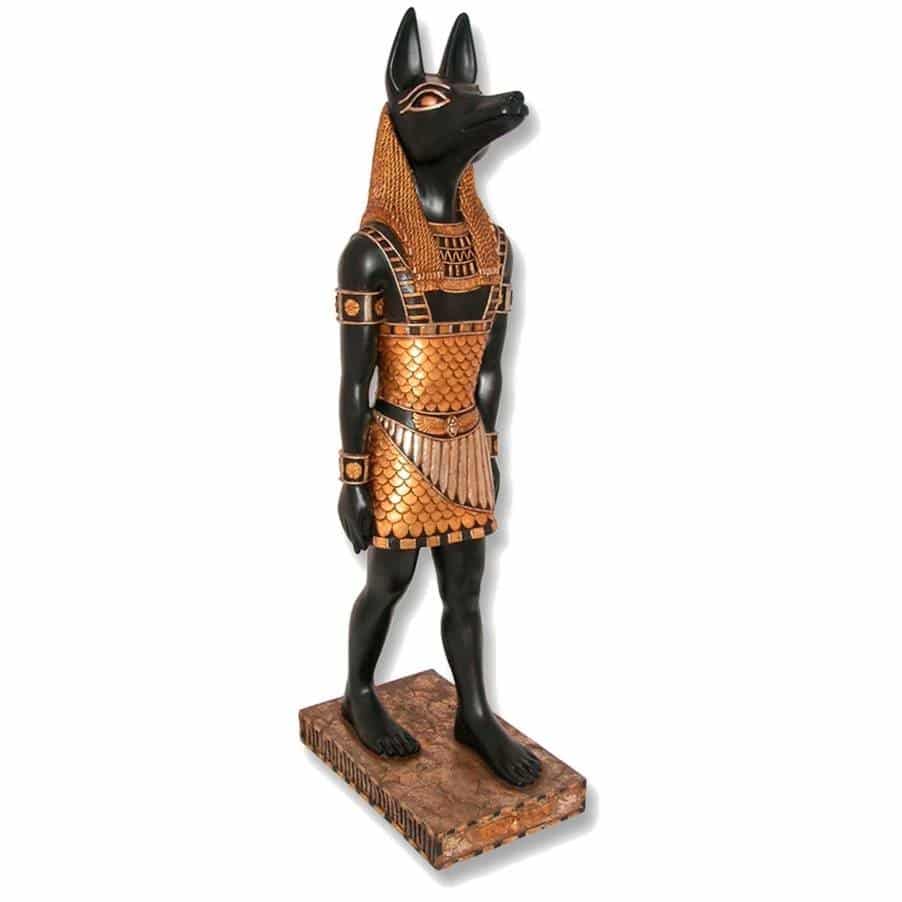
    It is called Warren hound to a type of hunting dog of ancient origins. There are several breeds today throughout the entire Mediterranean: is believed to be the origin of these modern breeds in old Egypt (specifically in the Tesem race) and that the dogs were broadcast by the Mediterranean coast by the Phoenicians. Its appearance slightly recalls a Jackal or the image of the Egyptian Dios Anubis.

    Various genetic studies carried out in recent years have come to the conclusion that contrary to the widespread belief that the Podenco is a type of primitive dog imported a few 3.000 the area of middle years, These dogs actually have a close genetic relationship with the rest of the European hunting dogs and are no more "primitive" than most of them..

    The Federation Cynologique Internationale brings together the Podencos within section 7 (ยซPrimitive type โ€“ Hunting dogsยป) Group v, the Pharaoh Hound which in its place of origin is used for rabbit hunting is not included in this section, If not in the section 6 (ยซPrimitive typeยป).

    Podenco breeds recognized by the FCI

    :


    Not recognized by the FCI

    .

    Other races, Despite not being recognized by the FCI, they have morphological and usage characteristics typical of Podencos., are:

    According to the Dictionary of the Royal Spanish Academy, the difference between Greyhound, Lebrel and poodle is based on the following definitions:

    • Greyhound: Lightweight dog breed, with small head, large eyes, the pointed snout, the ears are thin and hanging, the slim body and neck, the long legs and tail.
    • Sighthound: Variety of dog that is distinguished by having an upper lip and drooping ears, the strong muzzle, straight back, the long body and legs removed back. It was given this name for being very suitable for hunting hares.
    • Warren hound: The somewhat lower body, but more robust than the hound, with round head, the ears stiff, straight back, moderately long hair, the coiled tail and hands and feet small, but very strong. It is little barking and extremely shrewd and Agile for hunting, by its great view, smell and resistance.

    Warren hound breeds

    โ–ท The world of Pets: Dogs, cats, birds, reptiles, amphibians

    Basque Shepherd Dog
    Espaรฑa Not recognized by the FCI

    Pastor Vasco

    There are two varieties of Basque Shepherd Dog: the "Gorbeiakoa" and the "Iletsuaยซ.

    Content

    History

    The Basque Shepherd Dog (in Basque: Euskal Artzain Txakurra) It is a breed of Spanish dog originating in the Basque Country.. Is a breed traditionally used as a sheepdog and guard livestock. There are two varieties, the Gorbeiakoa and Iletsua.

    The breed was officially recognized by the Royal Canine society of Spain the 1 in June of 1995. The official name of the breed is not "Basque Shepherd", as it is known mostly, sino โ€œBasque Shepherd Dogโ€.

    From the official club of the breed it is called ยซBasque Shepherd Dogยป to the mixed wool dog that is seen in the hamlets of Basque Country, mostly white, Tan or black, have nothing to do with the reddish or tawny of the pure specimens of Euskal Artzain Txakurra.

    The "Shepherd Dog" is the oldest dog. Since that man evolved from nomadic farmer and livestock has been using dogs to the work of grazing. Some bone remains found in Neolithic caves attest that, 12.000 years ago, the farmers in the region were using these animals to grazing. We can find the "Basque Shepherd Dog" in Basque folk mythology. Later, had it been recognized in various pictorial frescoes of the 16th century, witnessing a popularity that came to transcend from rural environments to the highest circles of the Court of the time. From the 18th century they appear painted or drawn on the canvas of Paret y Alcazar, Dorรฉ, Guiard, Arrue and others.

    From the end of the 19th century to the first decades of the 20th century, a time of regression arose for this breed, especially in Guipรบzcoa and Navarra due to the strong attacks of the wolf on the herd., reason why pastors replaced careadores dogs with the Artzanoras or mastiffs. In รlava and Vizcaya, however, this decrease was not as pronounced and they alternated grazing work with guarding and warning in the hamlets when they were not with the herds.. This know-how combining work, He was one of the keys for that race is not extinct.

    Today, the Basque Shepherd Dog has only 413 copies recognized since the holding of the first monograph of the race.

    Later they began to organize international competitions of pastoral dogs. Due to the admiration that sparked this breed among those who witnessed his task, a plan was started via scholarship and research project to study these dogs with ethnological methodology, biochemistry, genetics, reproductive and etological in 1991. After a thorough review of more than three thousand copies of the whole Basque country, the recognition of the Basque Shepherd Dog – "Basque Shepherd Dog".

    Unfortunately, the localism of a canine species generates, In most cases, Multiple obstacles to your survival.

    Photo: elexartza

    Physical characteristics

    As we said above there are two varieties in the breed Basque Shepherd Dog, the "Iletsua" and the "Gorbeiakoa" and the standard marks the differences.

    The differences between the two varieties most important morfoestructurales are as follows:

    In the Iletsua:

    • Longer hair on the back
    • Longer hair on the front limbs.
    • Greater width of the face in the female.
    • Greater width of the chest.
    • Greater cephalic index.
    • The typical color of blond or leonado coat
    • Most with floppy ears.

    As to the general appearance, has a trunk strong and rectangular. It has the body covered in a typical mantle of bristle hair, blondes or leonadas and canelas layers.

    Has the head elongated, cover of hair shorter than in the rest of the body, and uncovered eyes. The nose is always black. The snout color is more intense than the rest of the body or black cinnamon. Short hair. Firm lips, Pigmented in black. Scissor bite. Eyes oval, with black eyelids and Brown iris and amber.

    It has the limb strong and covered with short hair on the front and back fringes. With one or two spurs or none in the hind limbs.

    The fur is moderately long, rough, rustic looking. As we said above, It is shorter in front of the extremities and face.

    Height in males of 47 to 63 and in females, of 46 to 58 cm.. The weight of the males is of 18 to 33 Kg., and in females, of 17 to 30 Kg.

    In the Gorbeiakoa:

    • The male has a greater height at the withers.
    • Greater length of head.
    • Longer hair on the belly.
    • Greater width of the rump in the female.
    • Typical coat color is fiery red..

    As to the general appearance, the trunk is elongated appearance. The layer red fire, known as "red", with frequent darkening on snout.

    The head It has a pyramidal shape and is equipped with very short hair. Frequent presence of three Lunar, one next to each of the corners of the lips, and the other in the ventral and central part of the mandible, all of them with black setae of greater length than the rest of the head. Truffle always black. Snout elongated and thin, with frequent pigmentation. Eyes macaroons, Brown and amber.

    The limb they are strong. With one or two spurs or none in the hind limbs.

    The fur is moderately long and soft texture. It is shorter in front of the extremities and face.

    The height males will of 47 to 61 and in females, of 46 to 59 cm.. The weight of the males is of 18 to 36 Kg., and in females, of 17 to 29 Kg.

    Character and skills

    Regarding the temperament of Basque Shepherd Dog, we can find special characteristics of each variety (Gorbeiakoa and the Iletsua):

    • Gorbeiakoa: It is safe to, balanced and above all very sociable, Sometimes it is considered to be one member of his family and his talent for grazing can be added. His instinct, as described, It focuses more on tasks of grazing.
    • The Iletsua: It has a territorial instinct, but he always maintains a strong bond with his master, as always happens with him and rarely is separated from it. His instinct, as described, It focuses more care tasks.

    All training can start with a small basic education course (the dog learn to stay quiet, sitting, that moves when the owner order). Regardless of age you can start socializing so you can get confidence with his master and others.

    The Basque Shepherd Dog lets touch, petting and running like a champion so he needs a field where he can romp freely for long periods of time. Give some walks and stay active either playing with the ball or small but intense session of game with the family. Its longevity is of 11 to 13 years.

    Images Basque Shepherd Dog

    Videos Basque Shepherd Dog

    Alternative names:

    1. Basque Shepherd Dog, Basque: Euskal Artzain Txakurra, Basque Sheepdog
    Basque Herder
    (English).
    2. Berger basque, (en basque : Euskal artzain txakurra) (French).
    3. Perro Pastor Vasco, (spanisch) oder Euskal Artzain Txakurra) (German).
    4. Pastor Basco, (em basco: Euskal artzain txakurra) (Portuguese).
    5. Artzain Txakurra, Euskal Artzain Txakurra (espaรฑol).

    โ–ท The world of Pets: Dogs, cats, birds, reptiles, amphibians

    Pit bull
    Estados Unidos Not recognized by the FCI

    Pit Bull Terrier Americano

    The Pit bull in Spain it is considered potentially dangerous race.

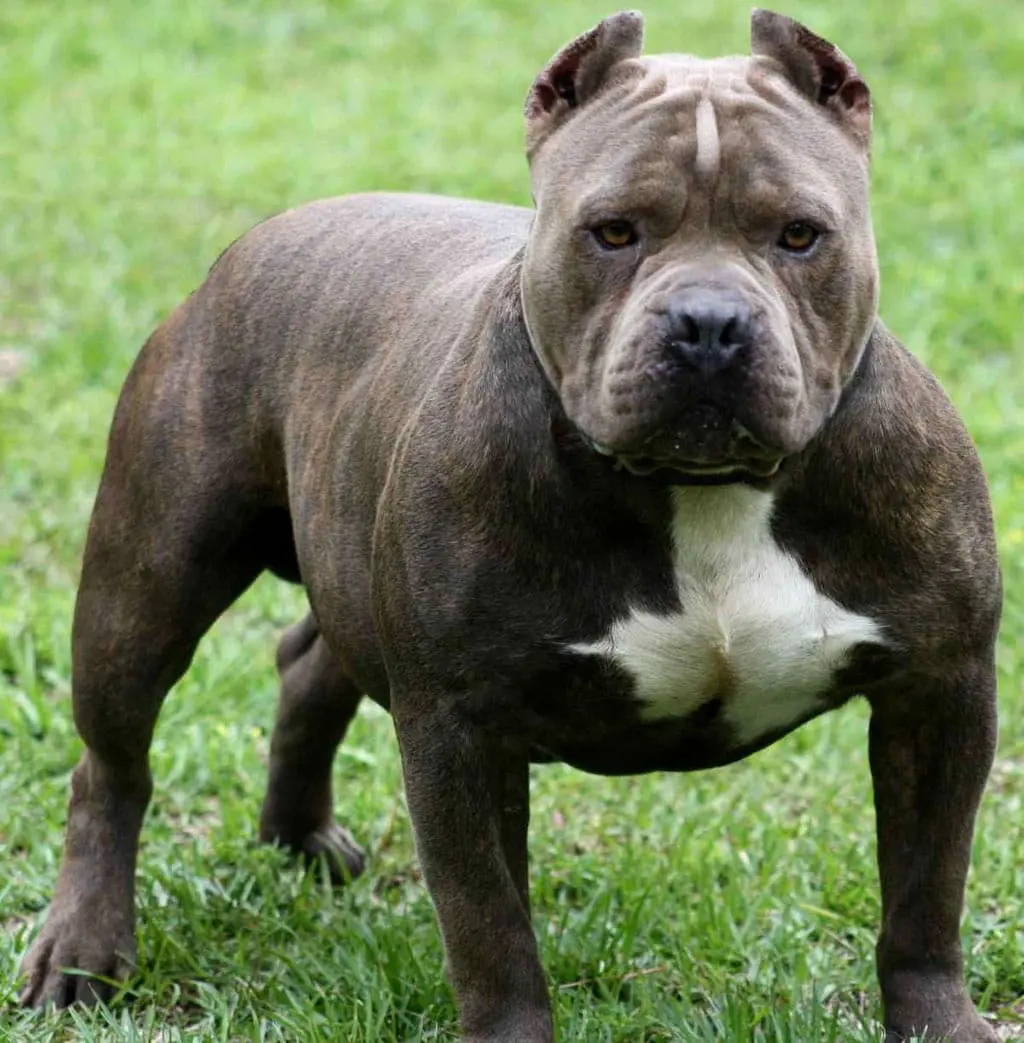
    The Pit bull (American Pit Bull Terrier) is a pure breed of dog, originally from United States, It was forged from dogs imported from United Kingdom. Were used as fighting dogs until they were banned in 1976; they are now bred as pets and athletes in legal sports (Although it is still the favorite breed, dog fighting carried out clandestinely).

    Read all about the race by clicking on: American Pit Bull Terrier.

    • Otros nombres: American Pitbull Terrier / APBT / Pit / Pitty

    Recognized by:

    • United Kennel Club (UKC).

    โ–ท The world of Pets: Dogs, cats, birds, reptiles, amphibians

    Belgian Shepherd Groenendael
    Bรฉlgica FCI 15 . Sheepdogs

    Pastor Belga Groenendael

    The Belgian Shepherd Groenendael is a very intelligent dog, Active, loyal and loving.

    Content

    History

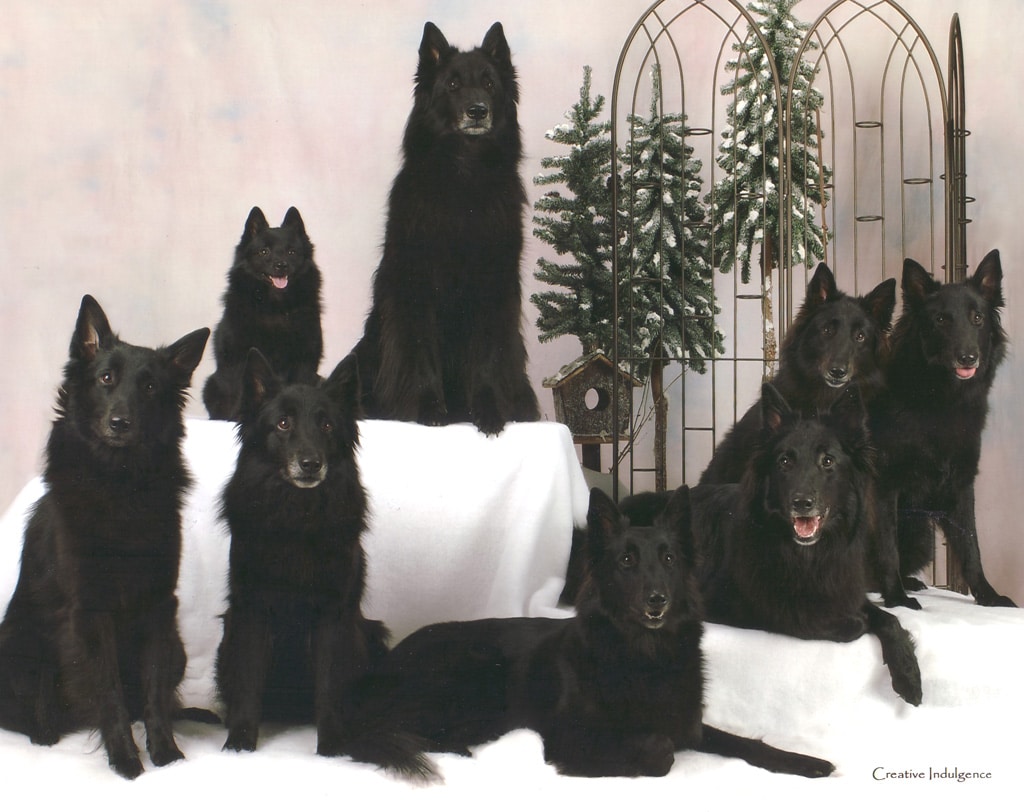
    The dog Belgian Shepherd Groenendael It is a breed recognized by all the major canine clubs. In the United States is recognized under the name of Belgian Shepherd.

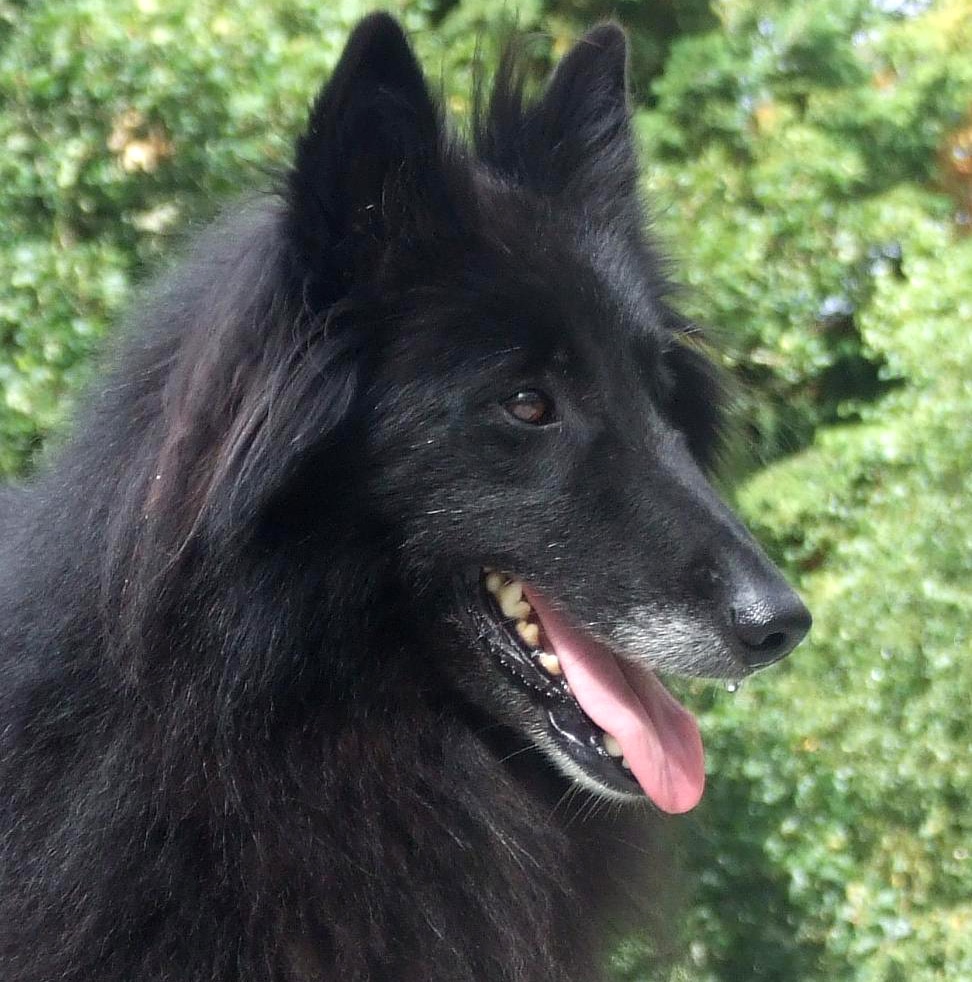
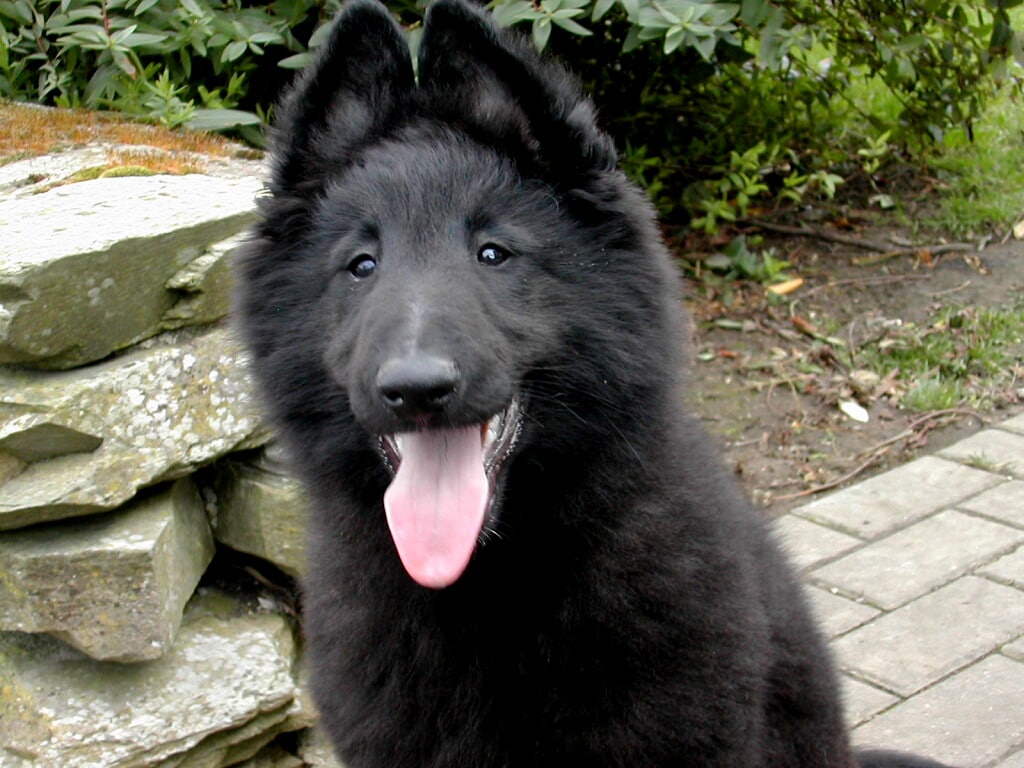
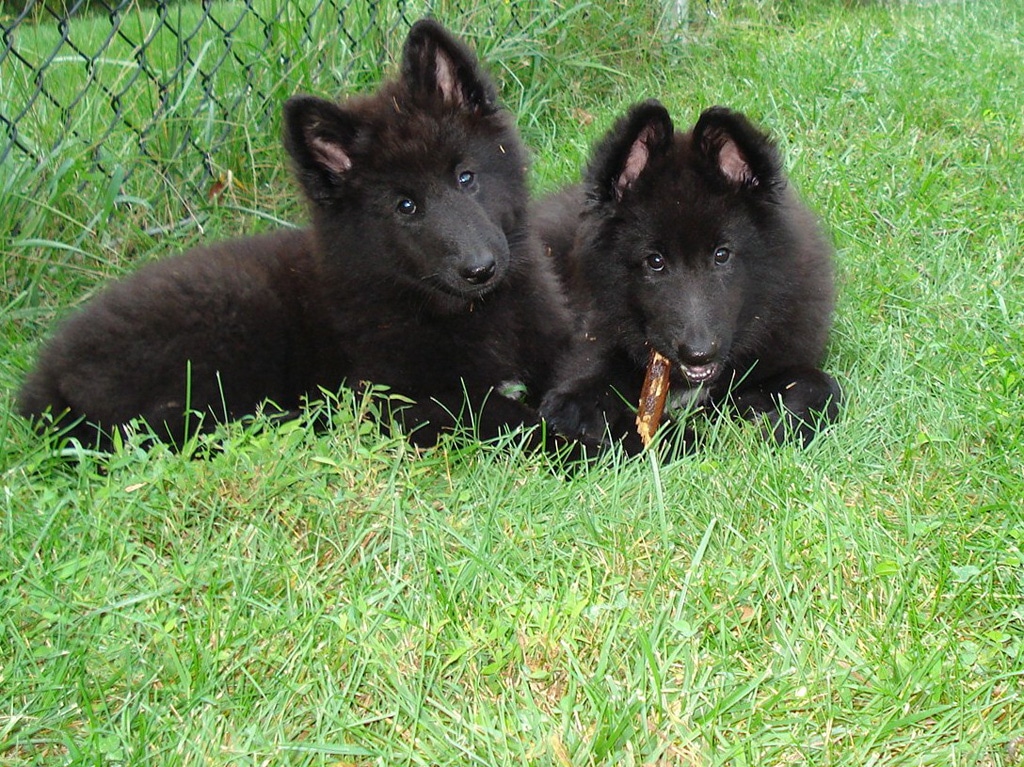
    Just like all the Belgian Shepherd, the Groenendael is medium-sized, hard-working, robust, provided, very protective of the family. The Groenendael It is recognized for its black fur.

    At the end of the 19th century, in Belgium there was a large number of herding dogs whose type was heterogeneous and their coats were of great diversity. In order to put order into this situation, some cinรณfilos (cinรณgrafos) enthusiasts formed a group led by Professor A. Reul, the school of veterinary medicine of Cureghem, who can be considered as a true pioneer and founder of the race.

    The Belgian Shepherd is officially born as a breed between 1891 and 1897. The 29 in September of 1891, the "Club of the Dog" is founded in Brussels Belgian Shepherdand that same year, the 15 November, Professor A.. Reul manages to gather in Cureghem, 117 dogs, allowing you to carry out a census and form a group with the best copies. In the following years becomes a real selection, making an extreme inbreeding on some stallions.

    The 3 in April of 1892, the "Dog Club" Belgian Shepherdโ€ drafted a first well-detailed standard of the breed. Was admitted a single race, with three varieties of hair. In any case, at that time, the Belgian Shepherd was only a dog of humble people and therefore a breed that still lacked prestige. Therefore, is not until 1901 that the first Belgian Shepherds were registered in the Book of Origins of the Sociรฉtรฉ Rรณyale Saint Hubert (L.O.S.H.).

    In the course of the next few years, the leaders of the cinephile fans Belgian Shepherd they tenaciously devoted themselves to unify the type and correct the defects. We can affirm that towards the 1910 the type and character of the Belgian Shepherd were already established.

    Through the history of Belgian Shepherd, the issue of the different varieties and accepted colors has given rise to many controversies.

    On the other hand, As far as morphology is concerned, the character and fitness to work, There has never been any disagreement.

    Physical characteristics

    The Belgian Shepherd Groenendael must be athletic, strong, imposing, rustic, and balanced in appearance.

    You must have a natural look, as if never has prepared especially for the show. Its hair It must be abundant, but they are never as if it were to inhibit the ability of the dog in any way work.

    The color is always black, with small white spots are allowed on the chest.

    The Belgian Shepherd Groenendael must measure of 60 to 66 cm. to the cross males and between 56 and 62 cm. females. The weight should be, approximately, of 25 to 30 kg for males and 20 to 25 kg for females.

    This dog has a double layer coat a thick, the texture must be hard and dense, woolly, never silky, Kale, and a thin layer (undercoat) It should be thick and abundant.

    Character and skills

    The Belgian Shepherd Groenendael is a very intelligent dog, Active, loyal and loving.

    They are ideal for those who have a lot of time, Energy, self-confidence and a lot of affection to giveโ€ฆ they are wonderful friends. Training and socialization is essential. They are cautious with strangers and protective family. They love to children, When I present at an early age.

    They need to spend a lot of time with their family and exercise every day, because if left too long alone and doing sedentary lifestyle, they may experience separation anxiety, be sad, and even be destructive with household objects.

    The Belgian Shepherd Groenendael needs a lot of exercise, routinely. If you are having a dog, be prepared to spend around two hours a day, and to play with it. daily exercise, You must include a walk, but also a training session to keep the dog mentally stimulated.

    These dogs have a great "work ethic" and need a job to do., such as obedience, flyball, Schutzhund, training, agility or, cattle work. Performing any of these activities you will be happy. They are a sensitive breed and may not be trained using harsh methods.

    The belgium priest, in general, they can compete in agility, obedience, show, flyball, tracking. As well, It can be trained to compete in herding trials.

    Images of the ยซBelgian Shepherd Groenendaelยป

    Videos of the ยซBelgian Shepherd Groenendaelยป

    Otros nombres:

    Belgian Sheepdog / Chien de Berger Belge.


    FCI breed standard Belgian Shepherd Groenendael

    FCIFCI - Belgian Shepherd Groenendael
    Pastor