FCI 113 - Sheepdogs
Content |
|---|
Characteristics "Briard"
Coexistence is important that you have with your new friend. Before considering the acquisition of a dog of the breed «« you know certain factors. Not all breeds of dogs are apt to live in an apartment, you must take into account his character, their need for exercise, their interaction with other pets, their care and if you have small children, their level of tolerance towards them.
Adaptation ⓘ4,0 of 5 stars (based on 1 review)
|
friendly dog ⓘ3,0 of 5 stars (based on 1 review)
|
hair loss ⓘ3,0 of 5 stars (based on 1 review)
|
|---|---|---|
Affection level ⓘ5,0 of 5 stars (based on 1 review)
|
Need for exercise ⓘ5,0 of 5 stars (based on 1 review)
|
Social need ⓘ4,0 of 5 stars (based on 1 review)
|
Home ⓘ4,0 of 5 stars (based on 1 review)
|
Toilet ⓘ5,0 of 5 stars (based on 1 review)
|
Friendly with strangers ⓘ2,0 of 5 stars (based on 1 review)
|
barking ⓘ3,0 of 5 stars (based on 1 review)
|
Health ⓘ3,0 of 5 stars (based on 1 review)
|
Territorial ⓘ5,0 of 5 stars (based on 1 review)
|
Cat friendly ⓘ3,0 of 5 stars (based on 1 review)
|
Intelligence ⓘ5,0 of 5 stars (based on 1 review)
|
Versatility ⓘ5,0 of 5 stars (based on 1 review)
|
Child friendly ⓘ4,0 of 5 stars (based on 1 review)
|
Surveillance ⓘ3,0 of 5 stars (based on 1 review)
|
joy ⓘ5,0 of 5 stars (based on 1 review)
|
History
The Berger de Brie or Briard is a breed dog, one of the many existing breeds of dogs pastors. Its origin is French. The history of the Briard has already some centuries… Charlemagne, Napoleon, Thomas Jefferson and Lafayette, they all had a dog of this breed.
Some theories say that, the Briard descends from Asian dogs brought to the region by the barbaric invasions that attacked Europe during the Middle Ages.
This former guardian of sheep and shepherd has also been used, as well, by the French Navy as Sentinel, messenger and in search of wounded soldiers because of his fine sense of hearing. They were used in the first world war in an indiscriminate way to bring them to extinction. This breed is still used as guardian and Shepherd of herds, as well as as a pet.
They became popular just after the «Paris Dog Show" from 1863, in large part due to an improvement in the appearance of animal achieved by crossing with the Beauceron and the Barbet.
It is believed that they take their name from the French province of Brie, although the animal probably does not come from that locality., the population of Briard is slowly recovering. It is believed that this breed is related to the Berger Picard.
Physical characteristics
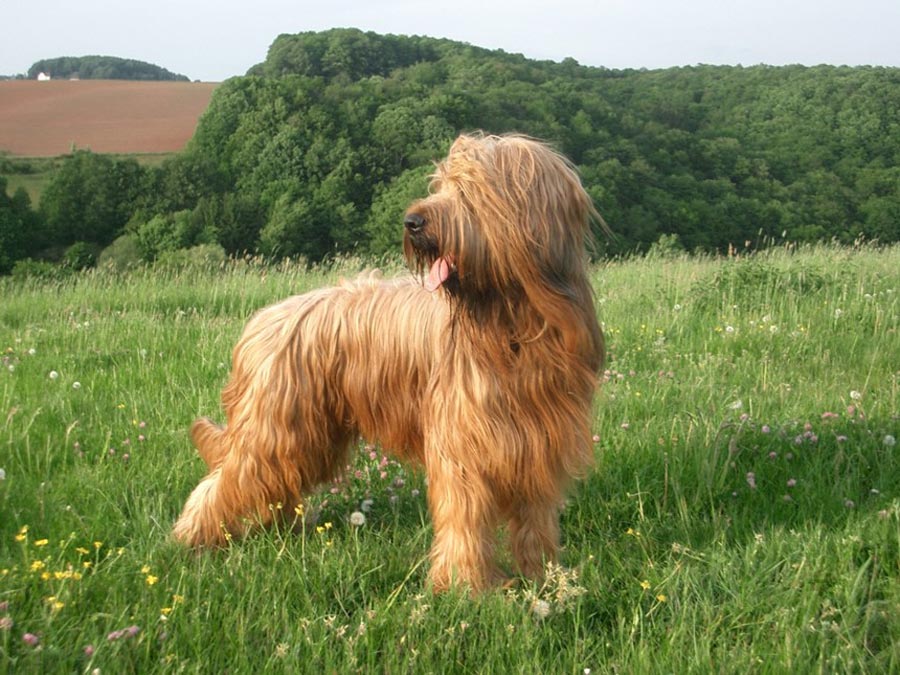
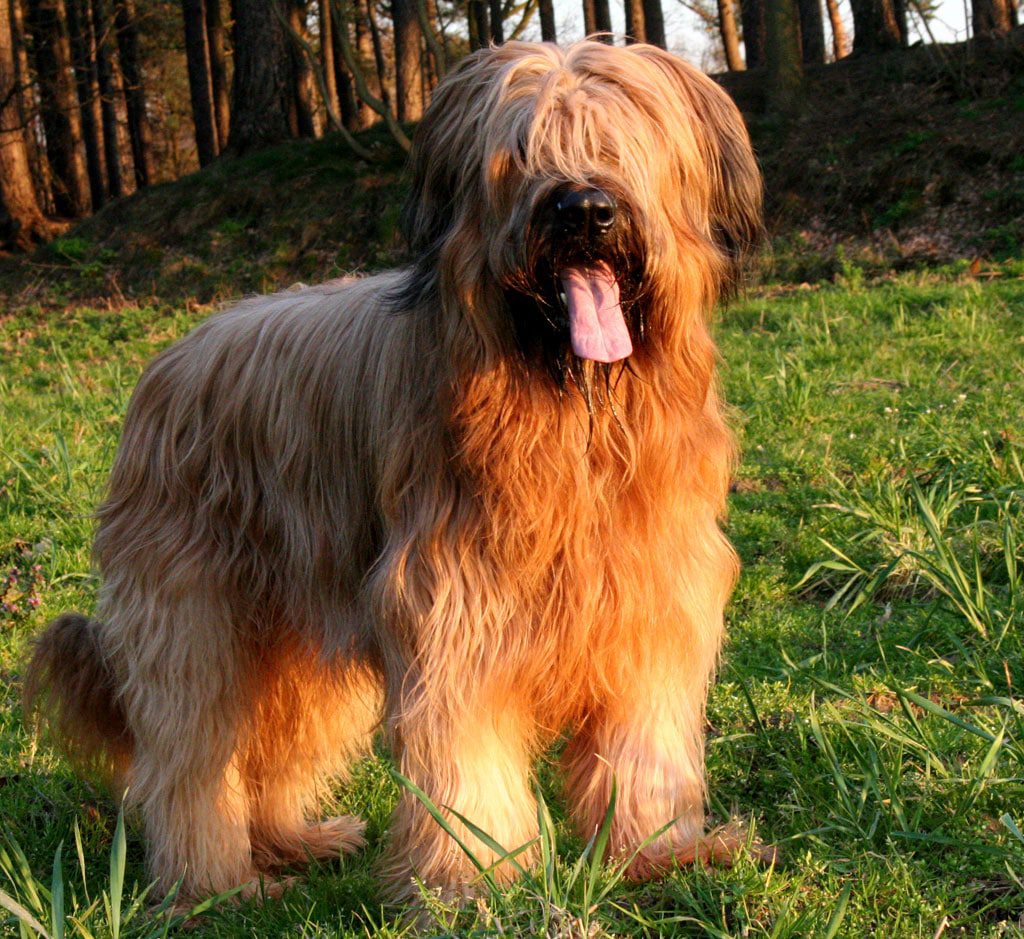
The Briard, is a dog from medium-sized, robust but flexible, to coat hard and resistant to the weather inclement. It has a double spur on each rear leg that, They seem to extra toes, giving the appearance of a wider rear leg. Additional toes on each hind leg give the Briard the ability to turn on one foot in fast turns, they are necessary when performing tasks of grazing and protection of their flocks.
Throughout history, the Briard has maintained a proper balance between size and lightness that is required both for grazing and to protect its herds. They are not too big, but they are large enough to defend themselves from predators such as Fox and the Wolf.
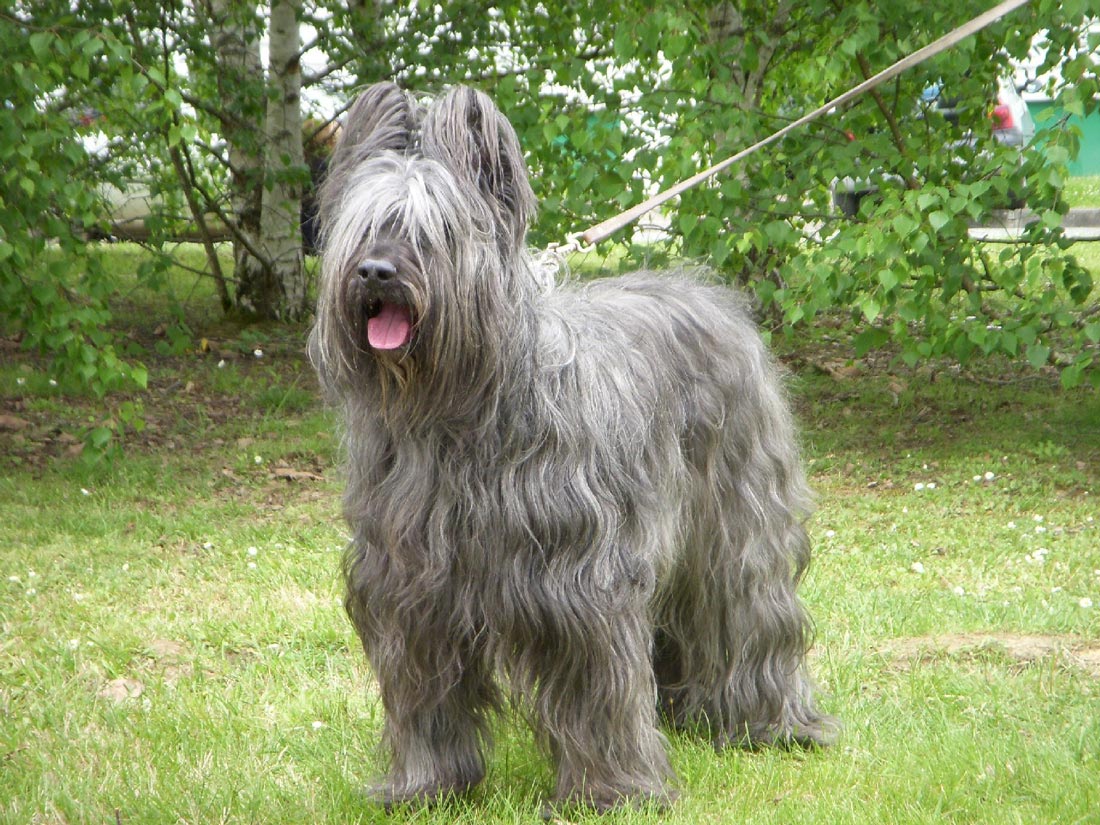
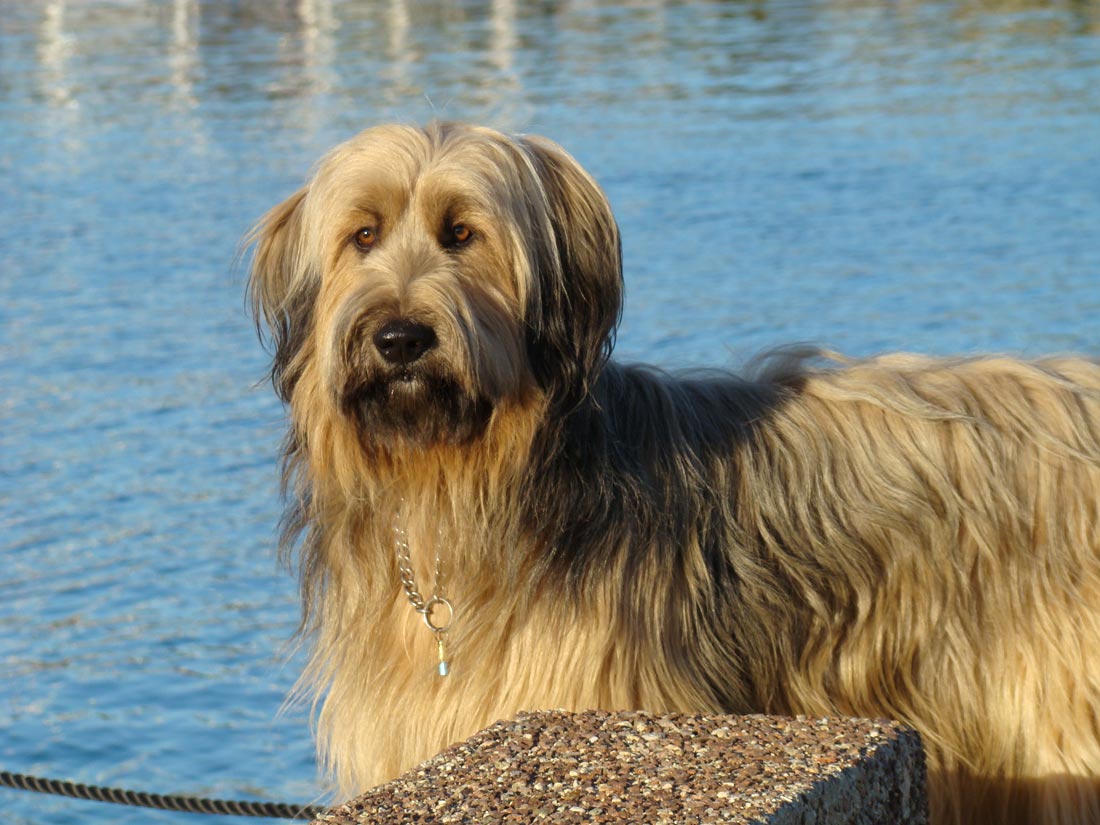
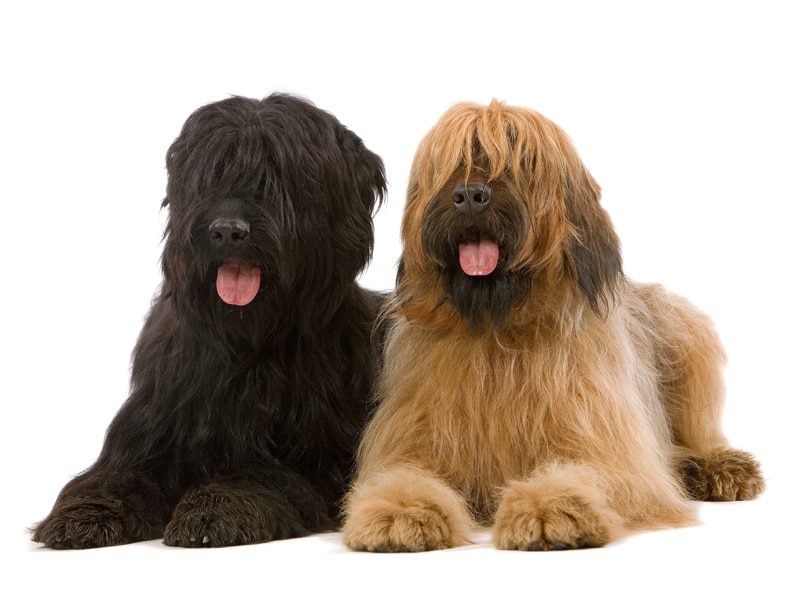
The coat of the Briard can be of various solid colors or light colors with darker ears. Allowed all colors except black. They prefer dark colors.
The height at the cross in the males is of 58 to 68.5 cm and the females of 56 to 64 cm.. The weight is around the 34 Kg.
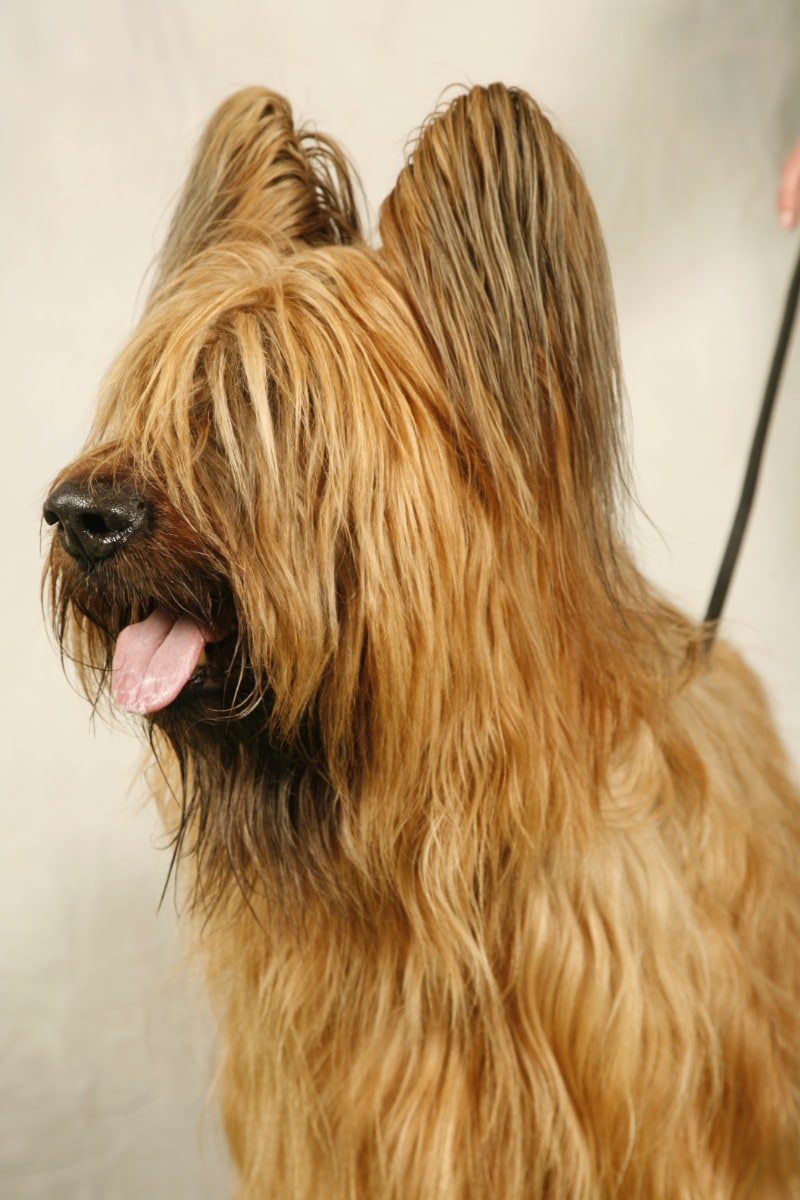
Ear cropping has been a common practice for a long time, but it is no longer done since -fortunately- It is illegal in many European countries., including France.
Character and skills
The Briard has very good memory. Once he learns a lesson, is something good or bad, knowledge shall retain it for a long time. It may sometimes seem very stubborn, or what its owner, but those are some of the features of the Briard, let's not forget that they were bred for centuries to think for themselves and act on their conclusions, Sometimes to the point of thinking what the "flock" will do ahead. It is a dog very independent, in this regard.
Those are some of the traits that the Briard has preserved throughout history. Even, a Briard what does the city live, retains within itself a great grazing capacity. If you ever, During his lifetime, He has a herd sheep, automatically, will begin to do your homework, to perform the functions for which they were raised, grazing.
Also don't be surprised if at some point when you're out for a walk with your family, the Berger de Brie nibbles on the ankles or nods to a family member who moves away a bit, because the dog that group of human beings will be his flock and will guide his master and the other members of group.
The Berger de Brie It is a very dog loyal and protective, often described as "a heart of gold wrapped in fur". Once you have joined the members of his family, It will be very protective and very reserved with strangers, that is why it is important to bear in mind that any Member who is a family, as an infant for example, You will need a friendly adaptation, the Briard, a sample of which the new intrusion is friendly and free of conflicts. Should be taught that it is a good thing and is not harmful. It is a race excellent to raise with children of all ages.
Images "Briard"
 101caes.com
 masperros.com.MX
 foroswebgratis.com
 portalnet.CL
 wallpaper - image.com
 forums.steves - digicams
 dogs - online.com
 Marine - caring.com
 dogs - berger.com
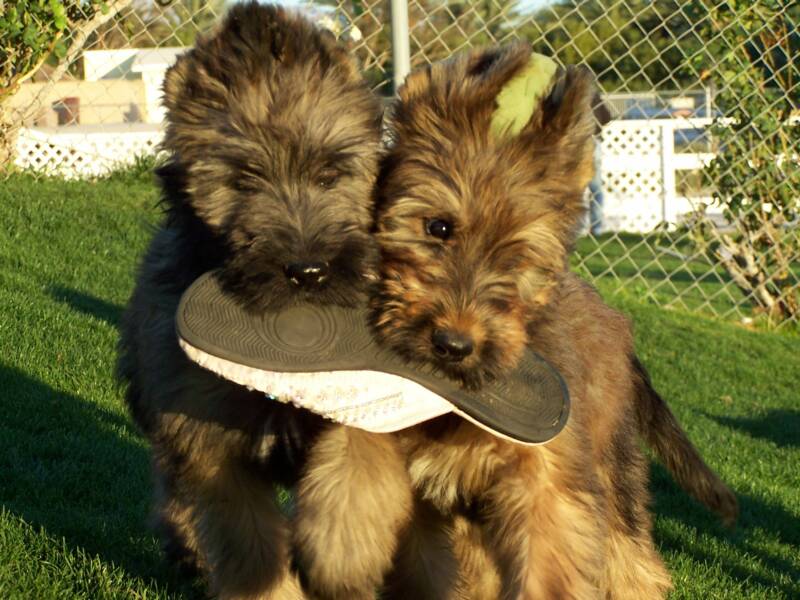 wallpaper - image.com
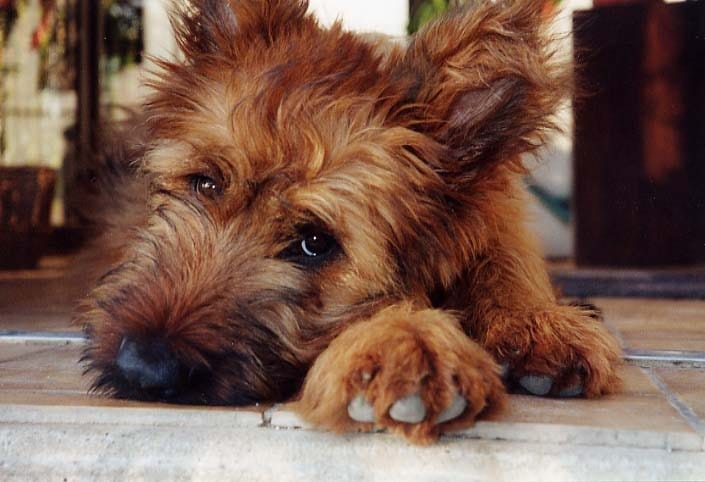 briards - fr.com
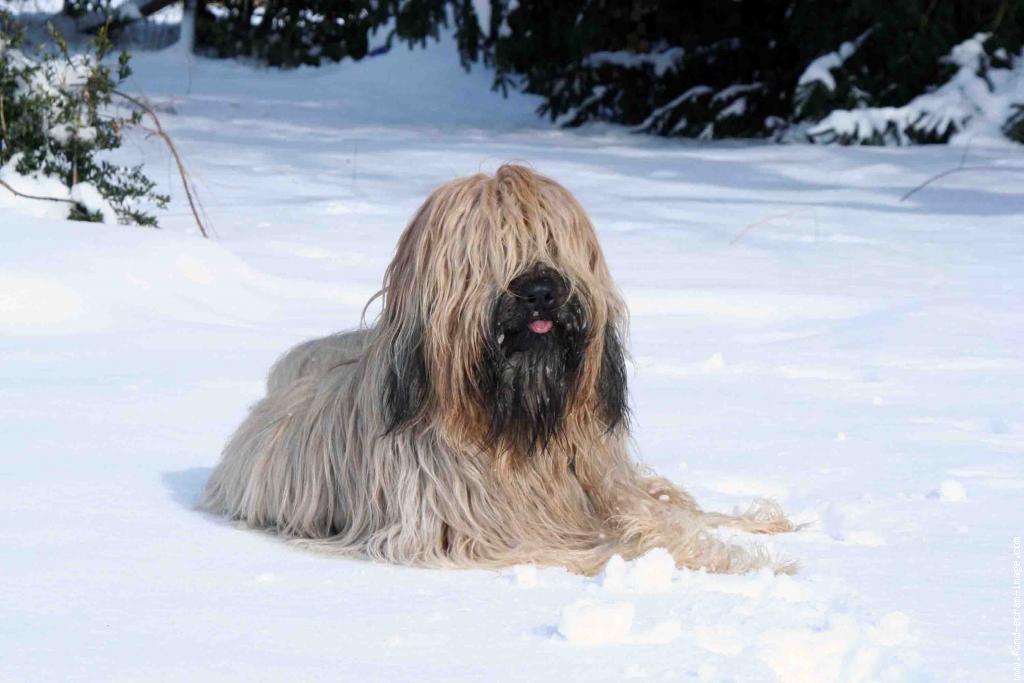 portalnet.CL
Videos "Briard"
 Viking berger de brie
 Dogs 101 – Berger de Brie
 Briard G2 Moravia Campanella.wmv
 Elliot the Briard’s new dog tricks
Type and recognitions:
- FCI CLASSIFICATION:
- Group :
- Section : . .
- – FCI ⓘ
- – AKC ⓘ
- – ANKC ⓘ
- – CKC ⓘ
- – KC ⓘ
- – NZKC ⓘ
- – UKC ⓘ
FCI breed standard "Briard"
Use:
---
General appearance:
The Briard is rustic, flexible, muscular and well proportioned, cheerful and alert.
Balanced temperament, never aggressive or shy.
The Briard must be confident and fearless.
Head:
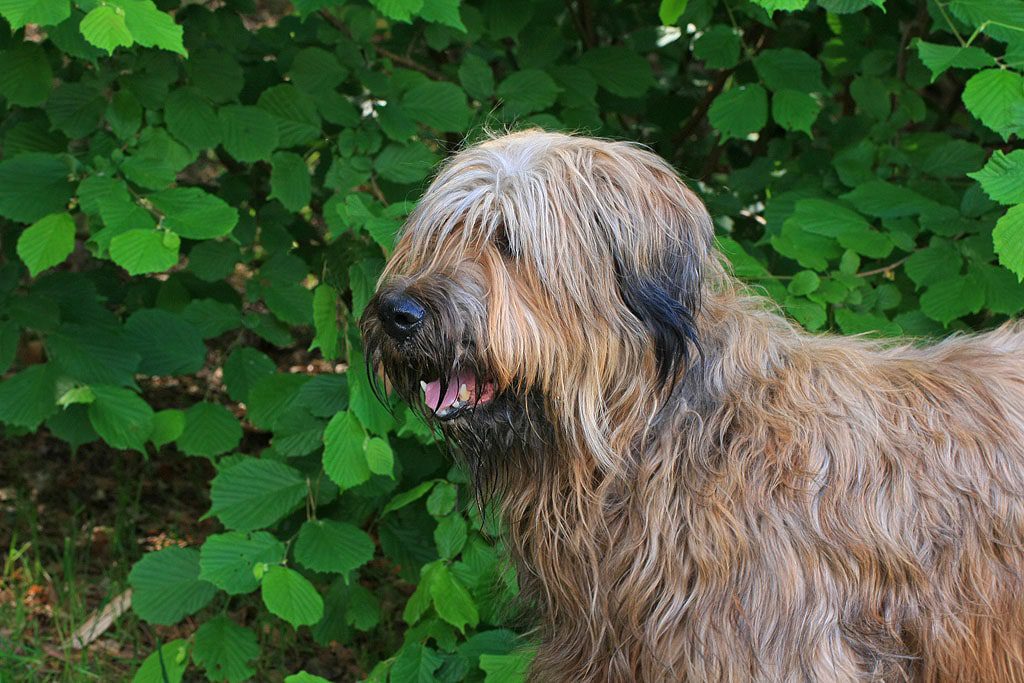
Strong, long, cover of hair forming beard, whiskers and eyebrows slightly covering eyes. Profile view The skull and snout lines are parallel.- Skull: Strong, slightly rounded seen profile
- Stop: Pronounced, located at equal distance from the occipital Crest and the truffle tip.
facial region:
- Truffle: Strong. Well open nasal Windows. The nose is always black except in blue dogs that have a blue or bluish-truffle.
- Snout: The end of the snout is rather square. Strong nose, wide enough and never pointed.
- Nose cane: Rectilinear.
- Lips: Tight lips.
- Jaws / Teeth: Strong jaws, white teeth. Scissor bite.
- EYES: Oval. Horizontal, wide open, rather large and dark in color. Blue dogs are allowed lighter colored eyes.
- EARS: High insertion without being glued to the head and rather short in the wild. The natural ears cartilage must be the same or slightly less than half of the head of the head. The ears are always flat and covered with long hair. If you are cut, In countries where this practice is allowed, your port must be erect, never divergent or convergent.
Neck:
Muscular and detachment of the shoulders.Body:
- top line: The back is straight. The loin is short and firm.Rump: Little inclined, slightly rounded shape.
- Breast : Wide and long deep and well descended to elbows. Well arched ribs.
Tail:
Natural, low postage, You must reach at least the articulation of the Hock, without deviations, forming a slight hook in the form of "J". In motion the tail must be carried as prolongation of the upper line.Tips
Good muscular with strong and straight bones.
- Shoulder: Oblique, well angled, moderately long, well glued to the rib cage.
- Elbows: In line with the body.
- Forearm: Straight and muscular.
- Metacarpus: Slightly inclined seen profile.
- Previous feet: Strong, round and well in axis with the body. The nails are always black (except in blue) and thick pads. Fingers closed and arched.
- Thigh: Muscled.
- The Hock joint: Not too low and well angled.
- Metatarsus: Perfectly vertical seen from behind.
- Hind feet: Strong, round. The nails are always black (except in blue) and thick pads. Fingers tightly closed.
- Spurs: By tradition, the shepherds want to keep the double spur. The Spurs are fingers, well separated and nails, relatively close to the foot.
Movement:
Regular, agile, harmonious so that it allows the dog to cover the surface and can do its work with a minimum of effort and fatigue. The Briard must have a long trot with good range and good push from the back.Mantle
- Fur: Hair texture Goat, dry, soft, long with a light Undercoat.
- Color: Negro, leonado, Fawn with a black layer (mild to medium), many times with mask gray or blue.
A warm tawny mantle may show a lighter color on the tips and inclined body areas (Fawn marked with color sand). Black mantles, gray and blue can also show areas clearer. All colors may show different degrees of grey.
Size and weight:
Males: 62 cm. - 68 cm to the cross. females: 56 cm. - 64 cm to the cross.
Fouls:
Any deviation from the above criteria is considered missing and the seriousness is considered to the extent of the deviation to the standard and their effect on the health and welfare of the dog.
SERIOUS FAULTS:
- Serious defects of limbs.
- In general the hair color too light.
- Mantle: Insufficient length (less than 7 cm.) soft or woolly hair.
FALTAS DESCALIFICANTES:
- Aggressiveness or extreme shyness.
- Any dog showing clear signs of physical or behavioral abnormalities.
- Non-existent stop.
- Any other color that is not blue or black truffle, presence of pink (Depigmented areas).
- Prognathism or inferior with loss of contact of the incisors, absence of 2 PM4 lower or absence of 3 teeth or more any that are. (Except for PM1)
- Eyes too light (yellow), huraños.
- Ears folded inward, low insertion, below the level of the eyes, short hair covers, naturally erect.
- Tail curled up or carried vertically.
- Simple RAM or total absence of spurs on the hind limbs.
- White color, Brown or mahogany, mantle of two different colors, stain white, white hairs at the ends of the members, Fawn blanket.
- Size outside the limit specified in the standard with a tolerance of + 2 cm o - 1 cm..
- Fraudulent modification of the dog or evidence of these practices through the use of substances or surgeries.
- Males should have two normal-appearing testicles fully descended into the scrotum..
- Only functionally and clinically healthy dogs, with the typical conformation of the breed, should be used for parenting.
Alternative names:
1. Berger de Brie (English).
2. Chien de Berger français de Plaine, Briard (French).
3. Französisch auch berger de Brie (German).
4. Berger de Brie (Portuguese).
5. Briard (español).
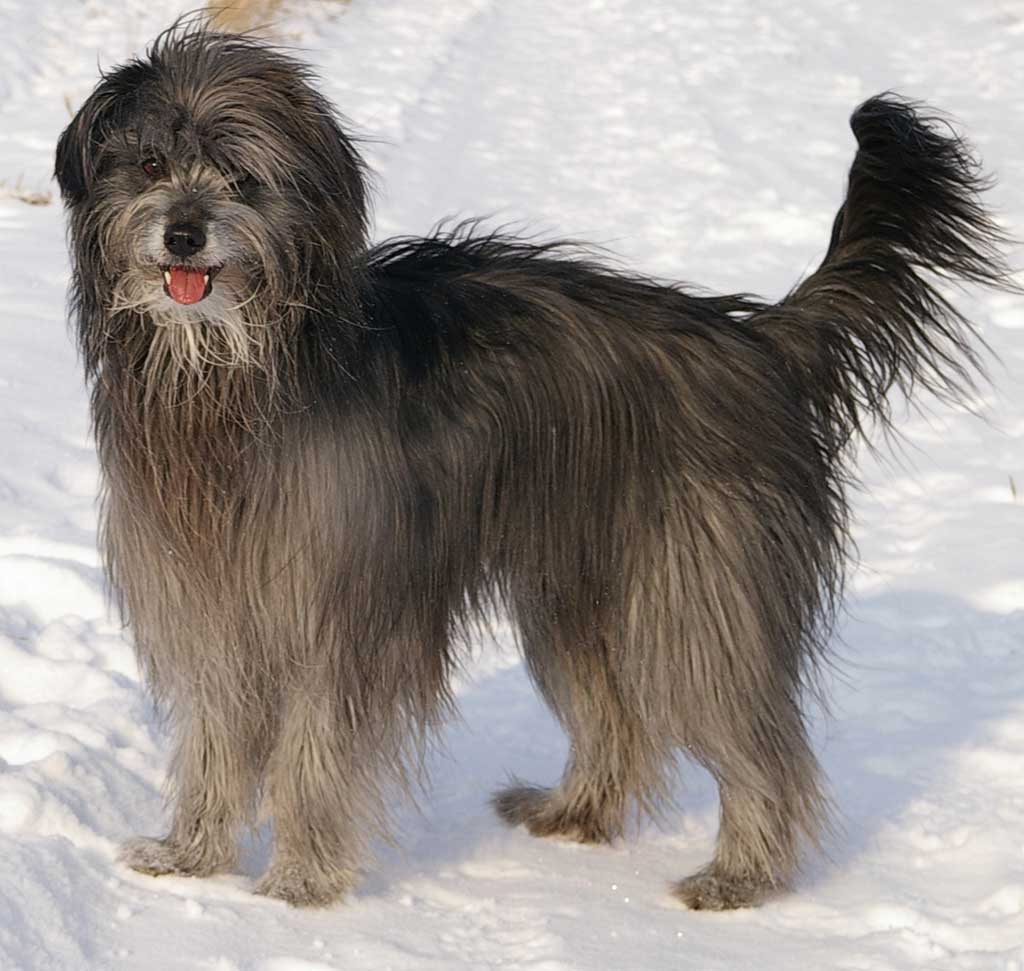
 FCI 67 . Small-sized Hounds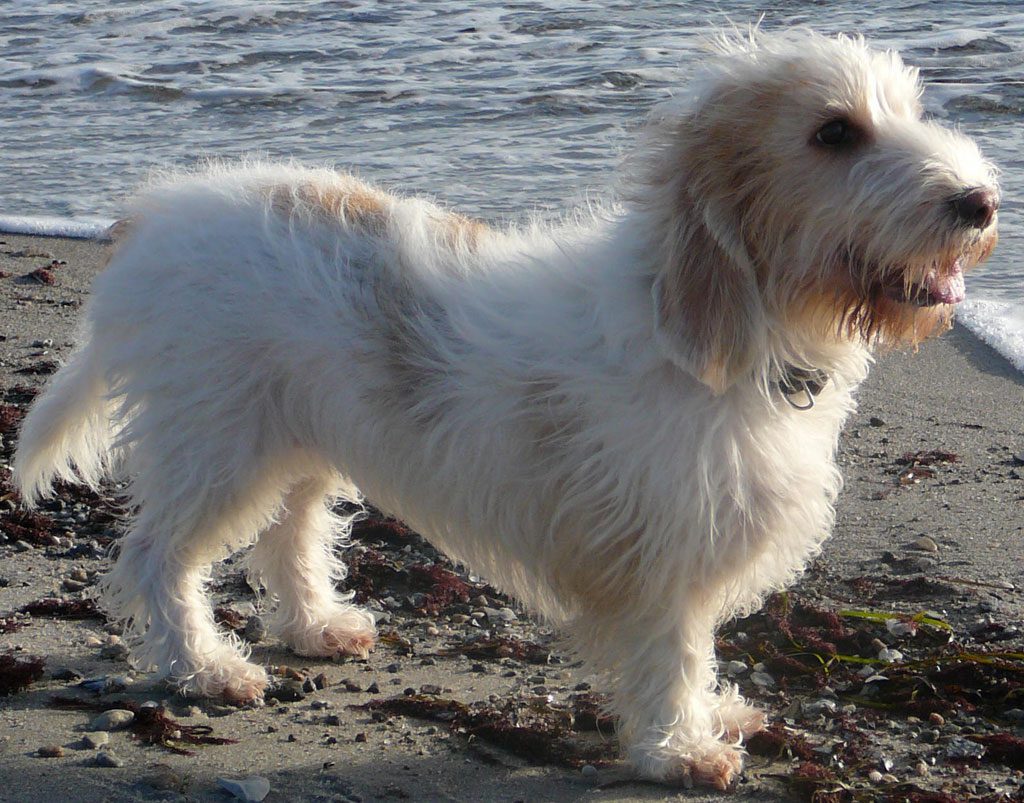


 Warren hound
 FCI 235 - Molossoid - Dogo