โ–ท The world of Pets: Dogs, cats, birds, reptiles, amphibians

Russkiy Toy
Rusia FCI 352 . Continental Toy Spaniel and others
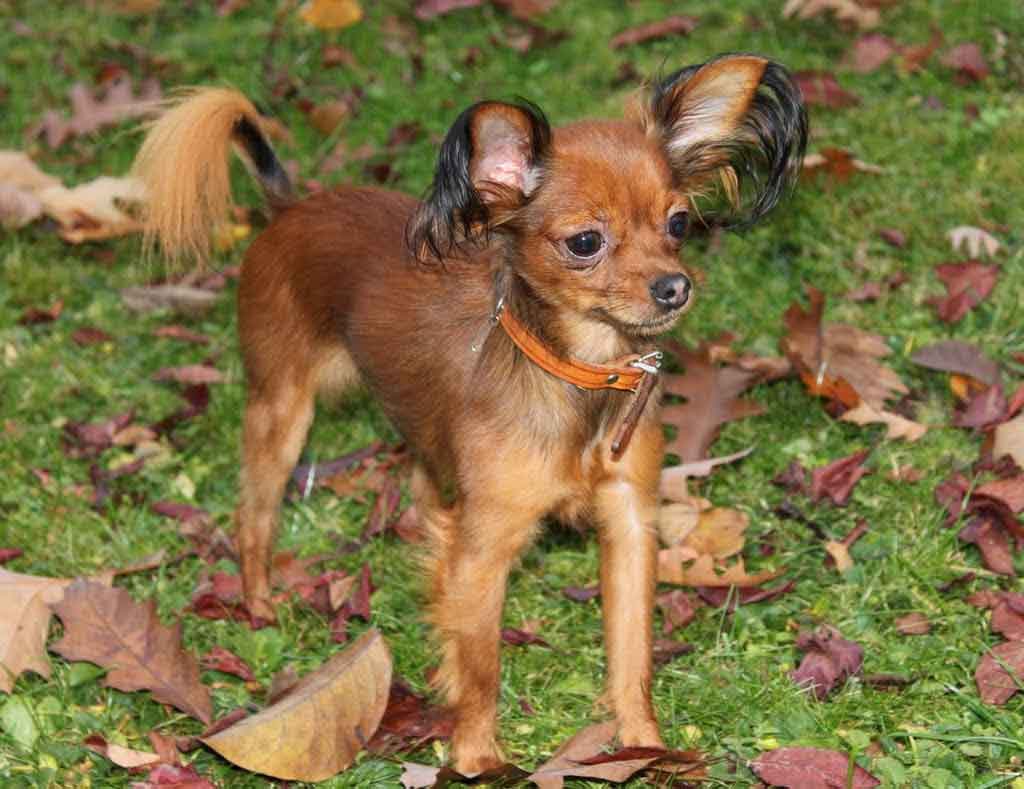
Russkiy Toy

The Russkiy Toy he is incredibly loving and close to his family, with which you want to spend as much time as possible.

Content

History

The "Little Russian Dog" is a recent dog breed, but its history began in the 18th century, in Russia, with the importation of many English Toy Terrier. One of them was even adopted by Emperor Peter I the Great (1672-1725), during the last years of his life and his reign.

During the 18th and 19th centuries, the popularity of Toy Terrier rose among the Russian aristocracy. They became an essential element, and by the early 20th century they had clearly become a status symbol. Participating in cultural events and social gatherings with a well-behaved little dog became the norm of the good society of the time.

Although many of these dogs were imported from Great Britain, most were born in Russia, and a loose breeding program had already begun to gradually differentiate them from their ancestors. Present at Russian dog shows for some time, they began to officially call each other Russian toy terriers at an exhibition held in St. Petersburg in 1907, where they were exposed 11 specimens.

The revolution of 1917 I was going to change things: associated with the aristocracy, the Russian Toy Terrier experienced a sudden and brutal decline, that left him on the brink of extinction. A few breeders tried to preserve the breed, but they faced many difficulties at a time when dog breeding was run by the regime, which instead encouraged the development of dogs that could be used by the military.

The death of Josef Stalin in 1953 eased restrictions and some Moscow breeders, St. Petersburg, Svendlosk and Irkutsk were able to revive the breed. But after 40 years, there were no more specimens with perfectly known ancestry and pure characteristics, so they had to start from scratch, from individuals with characteristics similar to those previously known.

The year 1958 marked a turning point for the breed, when a guy named Chicky was born with long hair and fringed ears and tail. Until then, all representatives of the breed had a smooth and short coat. The breeder Yevghenina Zharova wanted to preserve these characteristics and crossed him with a female with a longer than average coat and started a specific breeding program.. His initiative was crowned with success: starting at 1966 and the creation of a specific standard, these dogs were considered as belonging to a breed other than the Russian Toy Terrier and they were called Moscow Longhaired Toy Terrier.

The year 1988 marked another turning point, because the Russian Cynological Federation (RKF), the reference organization in Russia, then decided to unify short hair and long hair again under the same standard, considering them as two varieties of the same breed.

In the following years, after the fall of the iron curtain in 1989, the first copies of Russian Toy Terrier They were able to go out to conquer Europe and the breed began to develop, in particular in Finland and in the Eastern countries.

But, the opening of the borders also brought about the entry of new breeds into Russia, who replaced local dogs in the hearts of dog lovers. As a result, in the decade of 1990, this dog was again on the brink of extinction in Russia. But, on the one hand, had already been imposed abroad and, for another, Russian breeders managed to maintain enough gene pool in their country to keep the breed healthy.

In the first decade of 2000, things sped up. In 2006, the Fรฉdรฉration Cynologique Internationale (FCI) recognized the breed provisionally and gave it the official name of Russkiy Toy, removing the name of Terrier. Two years later, in 2008, a breed club was founded in the United States (Russian Toy Club of America), and that same year the United Kennel Club (UKC) American also accepted the breed. El American Kennel Club (AKC) did the same in 2010 by including it in your Foundation Stock Service (FSS), a step prior to full recognition.

In 2017, the Russkiy Toy obtained the definitive recognition of the FCI, as well as the famous Kennel Club (KC) British. In fact, today it is recognized by most of the large national canine organizations – is the case, in particular, del Canadian Kennel Club (CKC), for example.

Today, the AKC is present in almost all of Europe, but it is still rare in the United States, which explains why the final recognition of the AKC is still pending.

In Great Britain, annual records around the KC have been around 50 since the acceptance of the breed in 2017.

This figure is higher in France, where they were registered between 100 and 150 births in the French Stud Book (LOF) in 2010, which shows that this dog, although it remains relatively discreet in the country, has managed to find its audience.

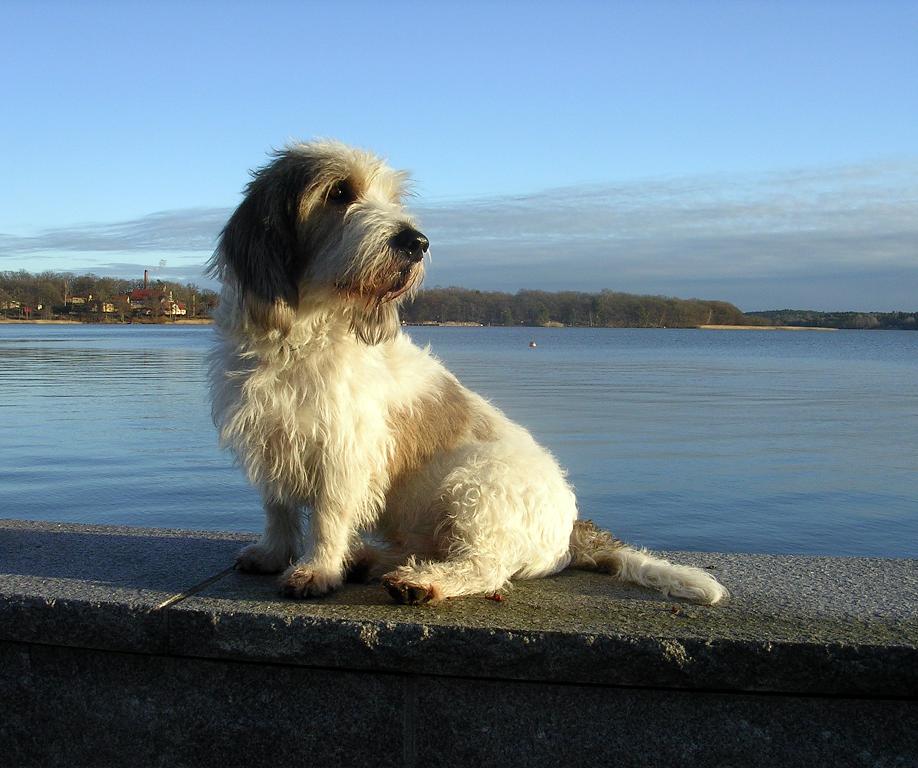
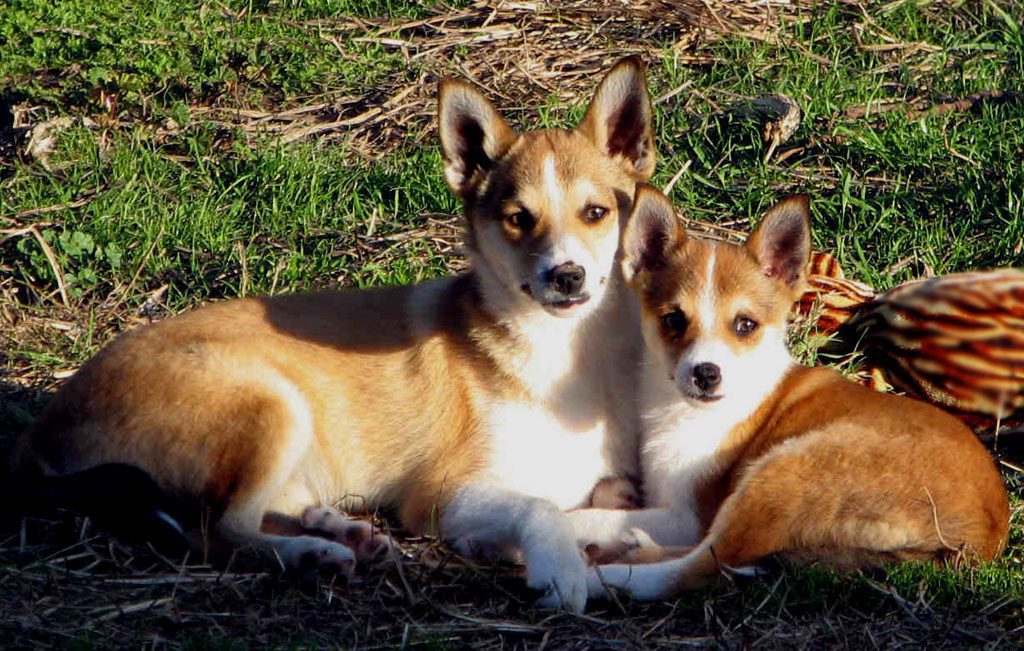
Photo: One Russkiy Toy of 20 meses by Skest at German Wikipedia, CC BY-SA 3.0, via Wikimedia Commons

Physical characteristics

The Russkiy Toy bears his name well, as it belongs to the smallest dog breeds in the world on the particular sides of the Chihuahua, of which it shares several characteristics.

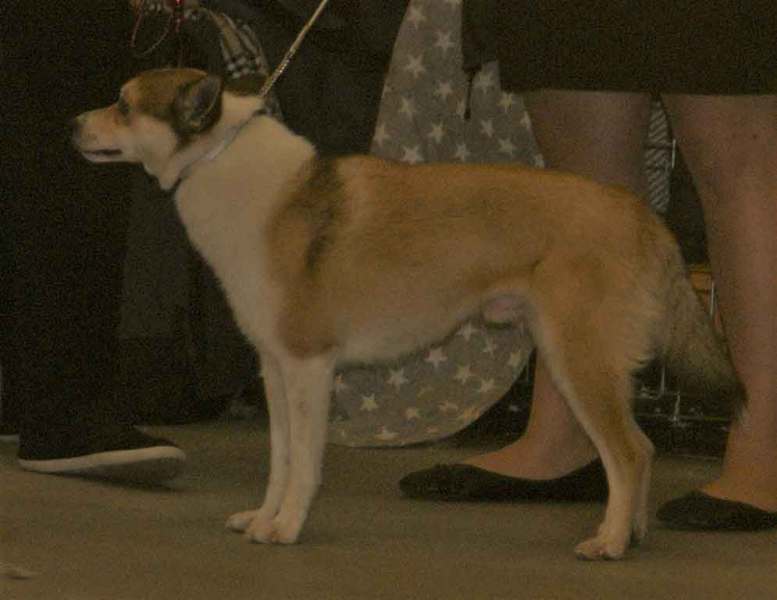
Its square body with a raised belly is higher at the neck than the rump. The extremities, fine boned and lean muscled, they are quite long, giving the impression that they are high on the legs. The tail is relatively short, carried in the shape of a sickle or saber, and fringed in the case of long-haired dogs. In areas where tail docking is permitted, docked tail is accepted, as long as a stump is left with 2 to 4 vertebrae.

The head is small in proportion to the body, with a clearly marked stop. The muzzle is pointed and ends in a preferably black nose. The eyes are large, round and very expressive. your colour must be as darkest as possible. The ears, which are a distinctive feature of the breed, They are set high and sustained. Big and thin, they form two isosceles triangles in the skull. The long-haired variety is covered with long, thick hair that falls in a plume shape.

This dog has no undercoat. But, upper hair differs from dog to dog, to the point that there are two varieties of the breed: the one with straight hair is short, smooth and shiny, while the one with long hair has a medium length (of 3 to 5 cm.). The latter also have fringes on their ears and tail., that cover the entire outside of the ear when mature.

Multiple coat colors are allowed: black and tan, Brown and fire, Blue and fire, lilac and fire, and red with blue, brown or black. There are also some smooth dogs: his fur is red, leonado or cream. The most common color is black and tan.

Last, there is no real sexual dimorphism in this breed: males and females are roughly the same size and appearance.

Size and weight

Size: 20 – 28 cm.
Weight: 1 – 3 kg

Varieties

National and international canine associations usually distinguish between two varieties of Russkiy Toy: the of smooth hair, sometimes called shorthair, and the of Longhair. Although it is not usual, since the breeders of Russkiy Toy they usually specialize in one or the other, these varieties can be crossed: then mixed litters are obtained, composed of both short-haired and long-haired individuals.

The long-haired variety, with its specific fringes on the ears, is the most sought after by fans, and also the most common. It has a semi-long coat (between 3 and 5 cm.) in the body, while the tail and ears are covered with long, thick fur that forms characteristic fringes.

The straight hair variety, on the other hand, has a short smooth shiny looking top coat. Historically, the first representatives of the breed were all short-haired.

None of the varieties of Russkiy Toy has undercoat. In general, apart from its fur, are perfectly identical in character and physical characteristics.

Character and skills

The Russkiy Toy he is incredibly loving and close to his family, with which you want to spend as much time as possible. Your attachment can even turn into possessiveness and, if i wasn't well socialized, can be overtly threatening (insofar as your size allows) towards those who get too close to their master. He also tends to distrust strangers, at least at the beginning: if you see that they are invited to the house, quickly curious to know more about them.

If you are able to stay alone for a few hours, will quickly become anxious if absent for a long time (especially if this happens almost every day) and can then behave destructively. The presence of a small companion in the home can be a pertinent solution to help you not see time pass when your master is at work and reduce the risk of separation anxiety.. Usually, your pet will get along with other animals, already be partners, cats, rodents or reptiles, and this is usually the case even with those who do not live in your house. But, be careful not to be disturbed or scared by this barking and hyperactive puppy. And don't forget that a cat is usually much bigger, quick and better armed in case of discussion…

In any case, lives perfectly in an apartment, as long as your need for exercise is met. The latter is also relatively consistent due to its size., since it is necessary to travel it at least half an hour a day. In other words, carry you in a bag, in a dog stroller or even in the arms of its owner is not the best gift that can be given, since you need to stretch your legs. But, if you live in a house with a garden in the country, it can be dangerous to leave it alone in the garden, because its size makes it a potential prey for many wild animals: birds Raptors, foxes, weasels…

Like other miniature dog breeds, not really aware of the latter, so it is able to put itself in dangerous situations. No doubt, for example, to provoke a dog that weighs more than 20 times its weight, without worrying about the possible consequences. So, it is better to lead him on a leash when he goes out and teach him to curb his burning.

To the smart Russkiy Toy he likes to be stimulated intellectually. Dog games and puzzles can be a great way to keep him busy while his owners are out and about., and loves to learn new tricks. You can also participate in dog sports such as obedience and agility, but its small size makes it difficult to compete.

On the other hand, not recommended for families with young children. In effect, its small size and its fragility mean that it can be easily mistreated by the little ones, and the accident risks are very real – for the two protagonists, In addition. You can be seriously injured by a small car thrown at you in a moment of anger, just as he can respond by biting if his tail or ears are pulled. It also, a dog should never be left alone unsupervised with a young child, and that is valid whatever your race.

Last, the Russkiy Toy barks often. Its high-pitched voice is an excellent alarm in case of threat, but it is also likely to quickly anger the neighbors.

Education

Like all its fellow men, the Russkiy Toy needs to be socialized from the first weeks. This is all the more important as you tend to be cautious: only successful socialization can allow you to become a sociable and balanced adult. So, need to meet many people (family, friends…) but also other animals, be it dogs, cats or rodents.

The fact that he is intelligent and likes to be liked greatly facilitates his education. Learning to clean and remember orders is usually not a problem. If the family is patient and firm, it is possible to go much further, since they can also learn many tricks.

Positive reinforcement is the best method to reach and educate the best possible Russkiy Toy. The moods, caresses and treats are real motivations for him, and quickly learns to do everything possible to satisfy his Master.

In fact, the Russkiy Toy It is a breed of dog adapted for a beginner, but his master must never forget that a dog needs a leader to direct him. This leadership role, it is he who must exercise it. Your partner needs limits, which must be immutable, taxes from a very young age and consistent over time, as well as from one family member to another. If he is allowed to do what he wants when he is little, or if the rules are different depending on the day of the week or the person, you don't know what to expect and your behavior is affected.

This is the famous "small dog syndrome", common to all miniature breeds: little by little adopts unacceptable attitudes (do not leave space on the sofa, growl at his master, steal food…) but ignored by their master, who remains as if hypnotized by his small and "cute" companion. As nothing stops you, this laxity encourages him to push the limits further and further, to the point of gradually taking control of the house. The longer the owner waits to take control of the situation and allow bad habits to take root, the more difficult it will be for him to put his partner back in order. To avoid this, rules should be clear and instilled from the start, and then apply in all circumstances, without exception. In the same logic, it is not advisable to hold him in your arms too often, especially if it is about moving with him when he could just as well walk next to his master, because not only does it not help him to live his dog life and spend, but it can also provoke a tendency to dominate.

Health

The Russkiy Toy is particularly robust and poses little risk of disease.

But, it is sensitive to extreme temperatures and must be protected from both heat and cold. When the thermometer is rising, you should limit your activities to the coolest hours and not let it stay too long in the sun, while adog coatnot too much when you have to go out in cold weather. In any case, has no vocation to spend most of his time outdoors: its natural place is inside the house.

Among the conditions that can affect the breed, the most commons are:

  • impacted tooth, when a milk tooth does not fall out and therefore does not give way to a growing adult tooth. This is a fairly common problem, which is solved without great difficulty by a veterinarian;
  • the patellar dislocation, a kneecap problem: leaves its position and forces the dog to limp to move. This problem is relatively common in all small dogs and, sometimes, requires surgery;
  • the progressive retinal atrophy, degeneration of eye tissues leading to total blindness It is an inherited disease and carriers are normally excluded from reproduction, so it's still pretty rare;
  • the Legg-Calvรฉ-Perthes disease, which attacks the hip and causes necrosis that causes stiffness and pain., this disease is very rare and can be operated to relieve the pain caused.

But, the main risk to the health of the Russkiy Toy comes from its small size and fiery character, which can be the cause of many fractures. The fall of a book on its paws, A career that ends in a collision with a chair or an agitated argument with a larger fellow can end in the emergency room., your family must be constantly vigilant.

Another risk you are particularly exposed to is obesity, and once again only your master can help you.You need to monitor your weight regularly and act at the first signs of overweight, adjusting both your portion sizes and your activity level.

As with any race, the adoption of a creator of Russkiy Toy serious and responsible greatly increases the probability of obtaining a healthy puppy The professional must provide a certificate of good health issued by a veterinarian, Submit medical history or vaccination record, in which the vaccines administered to the animal are recorded, and make available the results of genetic tests performed to parents. a small one.

Of course, this does not guarantee that you will stay healthy for your entire life To maximize the chances of this being the case, prevention is essential: it is advisable to wear regularly (At least once a year) take your dog to the vet for a routine checkup.This not only identifies the beginning of a possible problem, it also ensures that you don't miss your shot reminders.

Life expectancy

12 to 13 years

Grooming

Either for the straight-haired variety or for the long-haired variety, the maintenance of the coat of the Russkiy Toy is simple. In effect, a weekly brushing is enough to avoid knots and remove possible dirt. Muda little, but it may be helpful to increase the frequency of brushing to 2 or 3 times a week when applicable, in spring and autumn.

How he tolerates the bathroom well, clean it every 1 or 2 months to rid it of all impurities and make sure it doesn't mess up the house is usually not a problem either. You just have to make sure you use a specific shampoo for dogs, and in no case a product made for humans.

The rest is a matter of course. These may include, their weekly grooming session should also be an opportunity to check and clean their eyes and ears with a damp cloth. This will prevent debris and dirt from accumulating, thereby reducing the risk of infection.

You should also take the opportunity to brush your dog's teeth with a special toothpaste for dogs, although twice a week (or even daily) it's even better. This will help prevent tartar buildup., that can cause bad breath, cavities and other problems.

Last, although it has gone out enough, their claws tend to grow faster than they wear out. Thus, it is necessary to trim them with a simple nail clipper when they have become too long, to prevent them from getting in the way or even breaking. A monthly cut is usually sufficient. The first time, you can learn how to do it with a vet or a groomer, to avoid doing it wrong.

Food

The Russkiy Toy perfectly fits commercially available industrial dog foods. You just have to be careful to choose a product adapted to dogs of this size, especially if you eat kibble. You also have to choose food of sufficient quality and establish an adapted daily ration to provide it with all the nutrients it needs., especially considering your activity level and your age.

In any case, cat food, although it certainly is the perfect size for its size, not at all adequate. Too rich, are likely to cause rapid and dangerous weight gain.

This is especially true since obesity is a very real problem for this breed whose needs are often much lower than their family thinks.. It is necessary to scrupulously follow the daily rations recommended by the manufacturers or the veterinarian, and regularly weigh your dog to quickly detect too large a variation. A weight gain of 200g is negligible for a human, but for a Russkiy Toy this is around the 10% of their normal weight.

In case of unjustified weight gain, it is advisable to react without delay, adjusting both the dog's daily ration and activity level. If this doesn't help, a visit to the vet is necessary to explore the possibility of a disease and to develop a more appropriate diet if this is not the problem.

Last, like all dogs, the Russkiy Toy you should always have access to a bowl of fresh water, so you can quench your thirst whenever you want.

Use

The Russkiy Toy is above all – and also always – a companion dog, made to spend most of his time with his family. Playful and affectionate, perfectly capable of apartment living, represents an ideal option for those who have little space to offer their dog, but on the other hand they may be available to dedicate time.

His affectionate character also makes him a very good therapy dog, able to spend hours by his master's side if he needs it, and to help you with your mere presence.

His natural distrust of the unknown and his propensity to bark make him an excellent alert dog., but its size prevents it from being a true watchdog, although his bravery is not questionable.

Last, it is common to find it at dog shows, where your success is not denied. They can also participate in dog sports competitions, like obedience, but its small size is definitely a disadvantage.

How much does a "Russkiy Toy"?

The price of a puppy Russkiy Toy is of some 1500 EUR, but this average hides great disparities. In effect, depending on the reputation of the kennel, of the prestige of their ancestors but also and above all of their intrinsic physical characteristics, can go from 800 euros for the copies with some small defects up to almost 4000 euros for those intended for breeding and/or exhibitions. On the other hand, there are no big price differences according to gender.

Characteristics "Russkiy Toy"

Coexistence is important that you have with your new friend. Before considering the acquisition of a dog of the breed "Russkiy Toy" you know certain factors. Not all breeds of dogs are apt to live in an apartment, you must take into account his character, their need for exercise, their interaction with other pets, their care and if you have small children, their level of tolerance towards them.

Adaptation โ“˜

2,0 of 5 stars (based on 1 review)

friendly dog โ€‹โ€‹โ“˜

5,0 of 5 stars (based on 1 review)

hair loss โ“˜

1,0 of 5 stars (based on 1 review)

Affection level โ“˜

5,0 of 5 stars (based on 1 review)

Need for exercise โ“˜

3,0 of 5 stars (based on 1 review)

Social need โ“˜

5,0 of 5 stars (based on 1 review)

Home โ“˜

3,0 of 5 stars (based on 1 review)

Toilet โ“˜

1,0 of 5 stars (based on 1 review)

Friendly with strangers โ“˜

3,0 of 5 stars (based on 1 review)

barking โ“˜

4,0 of 5 stars (based on 1 review)

Health โ“˜

4,0 of 5 stars (based on 1 review)

Territorial โ“˜

3,0 of 5 stars (based on 1 review)

Cat friendly โ“˜

3,0 of 5 stars (based on 1 review)

Intelligence โ“˜

4,0 of 5 stars (based on 1 review)

Versatility โ“˜

2,0 of 5 stars (based on 1 review)

Child friendly โ“˜

5,0 of 5 stars (based on 1 review)

Surveillance โ“˜

3,0 of 5 stars (based on 1 review)

joy โ“˜

4,0 of 5 stars (based on 1 review)

Images "Russkiy Toy"

Photos:

1 – ยซLittle Russian dogยป by Ernst Vikne, CC BY-SA 2.0, via Wikimedia Commons
2 – ยซLittle Russian dogยป puppy, 4 months old by Shamanofthistown, CC BY-SA 3.0, via Wikimedia Commons
3 – ยซLittle Russian dogยป short hair, smooth coat, brown and tan by NiaNike, CC BY-SA 4.0, via Wikimedia Commons
4 – A short haired ยซLittle Russian dogยป by Ernst Vikne, CC BY-SA 2.0, via Wikimedia Commons
5 – Two ยซLittle Russian Dogยป, one with short hair and one with long hair by Ernst Vikne, CC BY-SA 2.0, via Wikimedia Commons
6 – ยซLittle Russian dogยป Daniel, Rostov del Don by Sofiya357, CC BY-SA 3.0, via Wikimedia Commons

Videos "Russkiy Toy"
Type and recognitions:

  • FCI CLASSIFICATION:
  • Group :
  • Section : . .

Federations:

  • FCI – Group 9: Section 9: Continental Toy Spaniel and others โ“˜
  • AKCToy โ“˜
  • CKC – Group 5 โ€“ (Toy) โ“˜
  • โ€‹KC – Toy โ“˜
  • UKC – Group 8 – Companion dog โ“˜

FCI breed standard "Russkiy Toy"

Origin:
Russia

Date of publication of the valid original standard:
21.02.2006.

Use:

Toy dog.


General appearance:

A fancy little dog, lively, high legged, with thin bone and dry muscles. Only somewhat definite sexual dimorphism.

important proportions: Square construction. The height at the elbows is only slightly higher than half the height at the withers.. The chest is deep enough.


Behavior / temperament:

Active, very happy, neither cowardly nor aggressive. Behavior is significantly different between males and females.

Head:

Small compared to the body.

Cranial region:
  • Skull: Tall but not wide (the width at the level of the zygomatic arches does not exceed the depth of the skull).
  • Stop (Naso-frontal depression): Clearly pronounced.

facial region:

  • Nose: Small, black or according to the color of the coat.
  • Snout: Clean and sharp, slightly shorter than the skull.
  • Lips: Fine, dry, tight and dark or according to the color of the coat.
  • Jaws / Teeth: Small and white. Scissor bite. Lack of 2 incisors is allowed on each jaw.
  • Cheeks: Only somewhat pronounced.
  • Eyes: So big, round, slightly prominent, inserted well apart and facing straight forward. Dark eyelids or according to the color of the coat, tight.
  • Ears: Large, fine, high insertion, upright.

Neck:

Long, clean. Carried high, slightly arched.

Body:

  • top line: Gradual fall from withers to insertion of tail.
  • Cross: Slightly pronounced.
  • Back: Strong and straight.
  • Pork loin: Short and slightly arched.
  • Rump: The rump is somewhat rounded and slightly sloping..
  • Breast : The chest is oval and deep enough and not too wide.
  • Bottom line and abdomen: Retracted abdomen and stretched flanks, forming a curved line from the chest to the flanks.

Tail:

amputee: (only two or three vertebrae are left), carried high. In countries where tail docking is prohibited by law, it is left natural. Without amputating: sickle-shaped, It should not be lower than the top line level..

Tips

Fine, clean. Seen from the front the limbs are straight and parallel.

Former members

  • Blades: The scapulae are moderately long and not very sloping.
  • Humerus: Forms an angle of 105 degrees with the scapula. The length of the humerus is approximately the same as that of the scapula.
  • Elbow: In line with the body.
  • Forearm: Long and straight.
  • Carpo: Cleansed.
  • Metacarpus: Almost vertical.
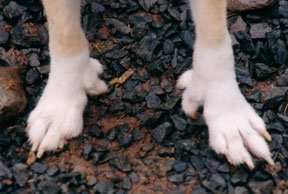
  • Previous feet: Small, oval neither in nor out, fingers together and arched. Nails and pads black or according to the color of the coat.

Later members

Seen from behind the hindlimbs are straight and parallel, but a little more separated than the previous members. The knee and hock with sufficient angulation.

  • Thighs: Clean and developed muscles.
  • Leg: The femur and leg are the same length.
  • Hock: Sufficiently angled.
  • Metatarsus: Vertical.
  • Hind feet: Arched, a little narrower than the front feet. Nails and pads black or according to the color of the coat.

Movement:

Easy, straight ahead and fast. No change should be noticed in the top line when in motion.

Mantle

Fur

 Exist 2 guys for the breed, short hair and long hair.

  • Short hair: short, glued, bright, no under-hair or peeling patches.
  • Long hair: the body is covered with moderately long hair (3 โ€“ 5 cm.) straight or slightly wavy, glued, that does not hide the natural figure of the body. Hair on the head and front of the limbs is short and close together. Notable fringes on the back of the limbs. The feet have long hair, silky that completely hides the nails. The ears are covered with thick hair forming fringes. Dogs over 3 years present these fringes, with which they completely cover the edge and tip of the ears. Body hair should not look messy or be too short (less than 2 cm.).

Color

black and tan, Brown and fire, Blue and fire. Also red in any shade with or without black or brown carbon. Stronger hues are preferable for all colors.


Size and weight:

  • Height to the cross: Males and females: 20 โ€“ 28 cm. (tolerance +/-1 cm.)
  • Weight: Males and females: until 3 kg.


Fouls:

Any deviation from the aforementioned criteria is considered as a fault and the severity of this is considered to the degree of the deviation to the standard and its consequences on the health and well-being of the dog..

  • Shy behavior.
  • Pincer bite or incisors tilted forward.
  • Semi-erguidas ears. This condition in long-haired dogs with heavy fringes is allowed but not desired..
  • Low tail insert.
  • Presence of bald patches in short-haired dogs.
  • Too long or too short hair in long-haired dogs.
  • Small white spots on the chest or fingers.
  • Negro, solid brown or blue. Burnt marks too large or with dark shading.

disqualifying fouls:

  • Aggressiveness or extreme shyness.
  • Enognathism or pronounced prognathism. Absence of 1 canine; absence of more than 2 incisors on each jaw.
  • hanging ears.
  • Short members.
  • Many bald patches on short-haired dogs.
  • Long-haired dogs: absence of fringes on the ears and presence of curly hair.
  • White cloak, white spots on the head, abdomen and above the metacarpals; large white patches on the chest or throat, presence of brindle markings.
  • Size greater than 30 cm.. the smallest to 18 cm..
  • Weight less than 1 kg.

Any dog โ€‹โ€‹showing clear signs of physical or behavioral abnormalities must be disqualified..


N.B.:

Males should have two normal-appearing testicles fully descended into the scrotum..
Only functionally and clinically healthy dogs, with the typical conformation of the breed, should be used for parenting.

Source: F.C.I - International Cynological Federation

Alternative names:

1. Russian Toy Terrier, Russian Terrier, Moscow Toy Terrier, Moscovian Miniature Terrier, Toychik (English).
2. Toychik, Toy-chic (French).
3. Russischer Zwergspaniel, Moskauer Langhaariger Toy Terrier (ะผะพัะบะพะฒัะบะธะน ะดะปะธะฝะฝะพัˆะตั€ัั‚ะฝั‹ะน ั‚ะพะน-ั‚ะตั€ัŒะตั€) (German).
4. (em russo: ะ ัƒััะบะธะน ั‚ะพะน-ั‚ะตั€ัŒะตั€) (Portuguese).
5. Miniatura ruso, Toy Terrier ruso (espaรฑol).

โ–ท The world of Pets: Dogs, cats, birds, reptiles, amphibians

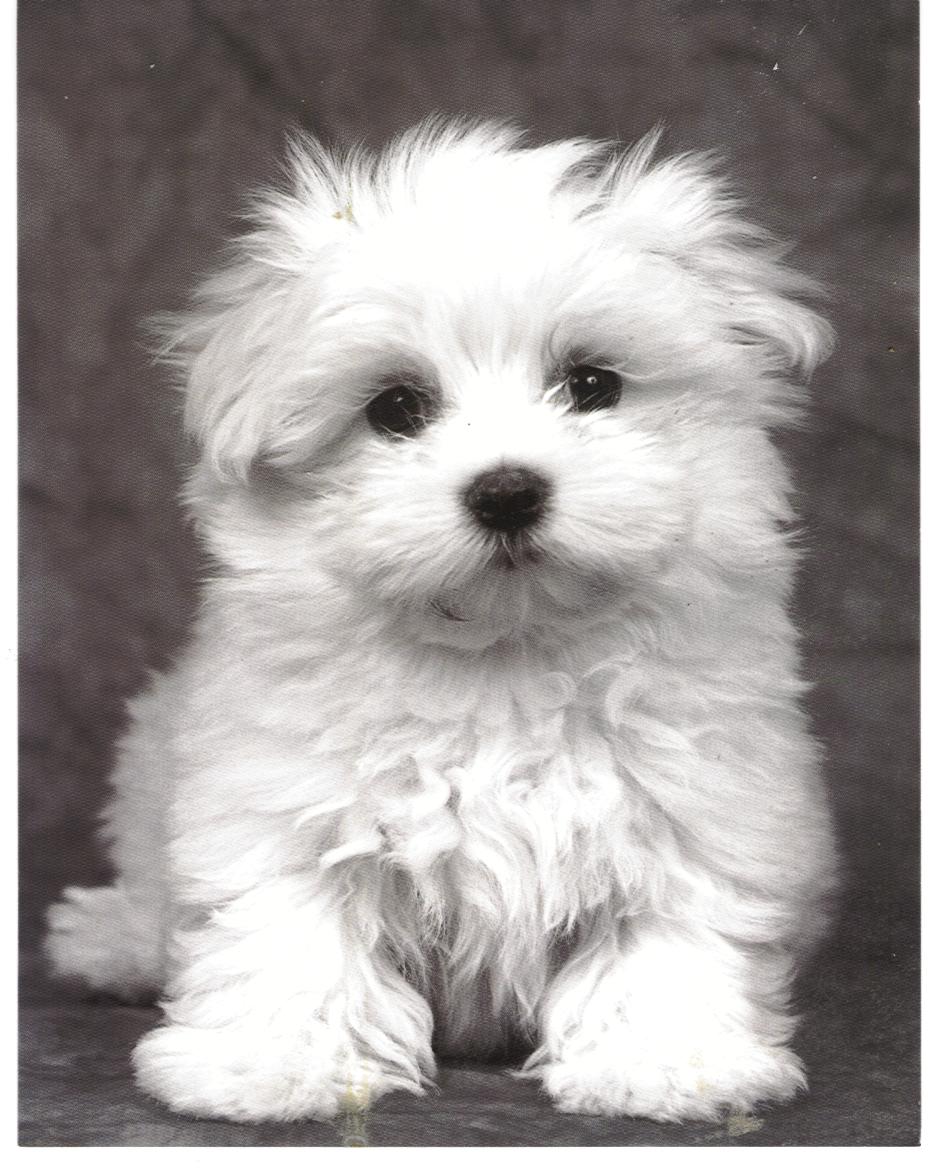
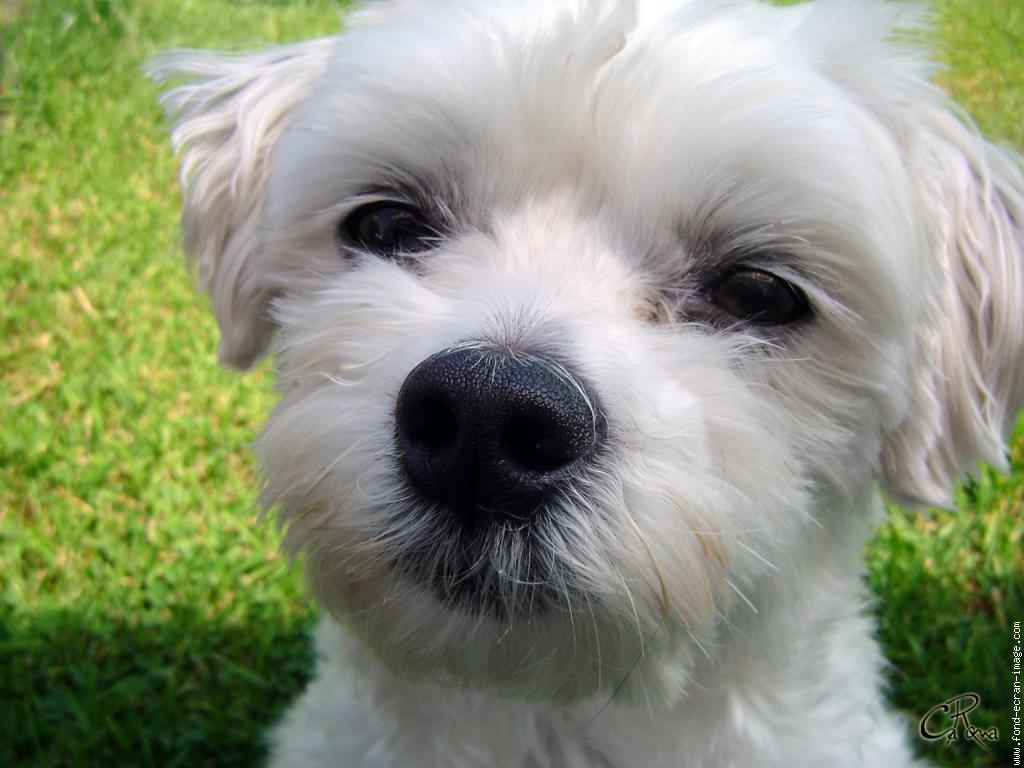
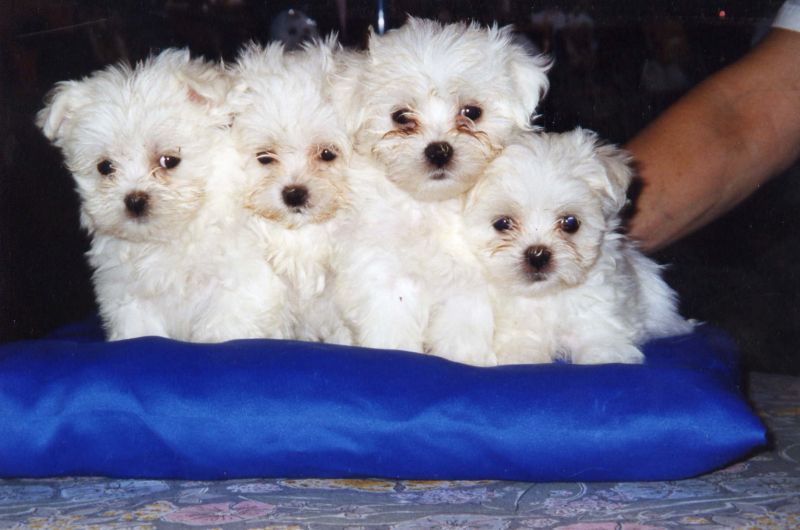
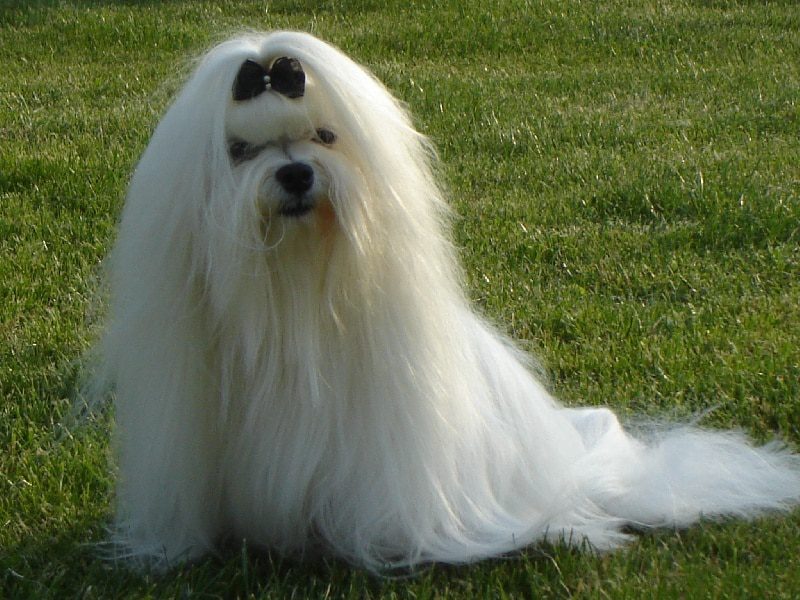
Maltese
Italia FCI 65 . Bichons

The Maltese is very sensitive, and you prefer a home that is stable.

Bichรณn Maltรฉs

Content

Characteristics "Maltese"

Coexistence is important that you have with your new friend. Before considering the acquisition of a dog of the breed "Maltese" you know certain factors. Not all breeds of dogs are apt to live in an apartment, you must take into account his character, their need for exercise, their interaction with other pets, their care and if you have small children, their level of tolerance towards them.

Adaptation โ“˜

5,0 of 5 stars (based on 1 review)

friendly dog โ€‹โ€‹โ“˜

5,0 of 5 stars (based on 1 review)

hair loss โ“˜

1,0 of 5 stars (based on 1 review)

Affection level โ“˜

5,0 of 5 stars (based on 1 review)

Need for exercise โ“˜

1,0 of 5 stars (based on 1 review)

Social need โ“˜

5,0 of 5 stars (based on 1 review)

Home โ“˜

5,0 of 5 stars (based on 1 review)

Toilet โ“˜

5,0 of 5 stars (based on 1 review)

Friendly with strangers โ“˜

5,0 of 5 stars (based on 1 review)

barking โ“˜

5,0 of 5 stars (based on 1 review)

Health โ“˜

3,0 of 5 stars (based on 1 review)

Territorial โ“˜

4,0 of 5 stars (based on 1 review)

Cat friendly โ“˜

5,0 of 5 stars (based on 1 review)

Intelligence โ“˜

5,0 of 5 stars (based on 1 review)

Versatility โ“˜

3,0 of 5 stars (based on 1 review)

Child friendly โ“˜

1,0 of 5 stars (based on 1 review)

Surveillance โ“˜

3,0 of 5 stars (based on 1 review)

joy โ“˜

4,0 of 5 stars (based on 1 review)

History

The Maltese It is a canine breed that has existed since ancient times and was already widespread in Mediterranean cultures.. But, contrary to what its name might suggest, its exact origin remains uncertain, but it seems to come from one of the countries of the Mediterranean basin. Along its history, it has been given many names, as Melitae Dog, Ye Ancient Dogge of Malta or Maltese Lion Dog. But, Today it is mainly known as Maltese or Maltese dog.

Archaeological finds tend to confirm that the Maltese it even existed in ancient egypt. In fact, in a tomb dating from the reign of Ramses II (1304 a.C. to 1214 a.C.) a statuette was found representing a dog that looks like him in everything. So, we can assume that the Egyptians considered it a sacred animal.

Maybe because, like Europeans later, they thought it was capable of curing diseases, or at least they discovered that he was able to calm the sick by snuggling up next to them.

They weren't the only ones who honored him, since the Greeks also built graves for their deceased dogs. The dog was also found in ancient Greece, to the point that the famous philosopher Aristotle (384 a.C. – 322 a.C.) mentioned it in his zoological work History of animals. He mentioned a breed of small dog that he called in Latin canes melitenses, What does "Maltese dog" mean?.

Before the beginning of the Christian era, Maltese was also very popular with the Romans. Many noblewomen owned one and never went out without it.. They wore it on the bodice or sleeve, as a jewel or an accessory. This trend continued well beyond ancient Rome.

In the 1st century, Roman Emperor Claudius (10 a.C. – 54 d.C.) he was probably the most famous Maltese owner. Regarding St. Publius (33 d.C. – 112 d.C.), Roman governor of Malta who owned a Maltese named Issa, asked the poet Marcial to write a eulogy for his dog, what he did in his Epigrams collection.

The Maltese came to the British Isles during the reign of Henry VIII (1491-1547), and there he also became very popular among the upper classes, especially among women, who used him as a companion and lap dog. It was appreciated for its beauty, while its small size allowed them to easily carry it on their blouses. It was especially adopted by Queen Elizabeth I (1533-1603).

Although it survived many wars and conflicts over the years, the breed was about to disappear around the seventeenth and eighteenth centuries, after unfortunate attempts to miniaturize it to the maximum. To save her it was necessary to cross with the Poodle, Small Spaniels and Asian Miniature Dogs.

Despite its success and presence in many countries, the breed was not introduced to North America until the 19th century. However, one of its representatives (white) was present at the first dog show in the history of the United States, the Westminster Kennel Club Dog Show, which was held for the first time in 1877. There it was shown with the name of Maltese Lion Dog.

The breed was soon recognized by the American Kennel Club (AKC), already in 1888. But, was not up 1948, 60 years later, when the other most important canine organization in the country, el United Kennel Club (UKC), he did the same. But, American organizations were more active than the Fรฉdรฉration Cynologique Internationale (FCI), who waited until 1955 to recognize the Maltese.

Physical characteristics

They weigh between 1,8 and 4 kg. Being the maximum weight in adulthood of 3 kg in females and 4 kg in males. Its height is of 20 to 25,5 cm., and they have a compact body.

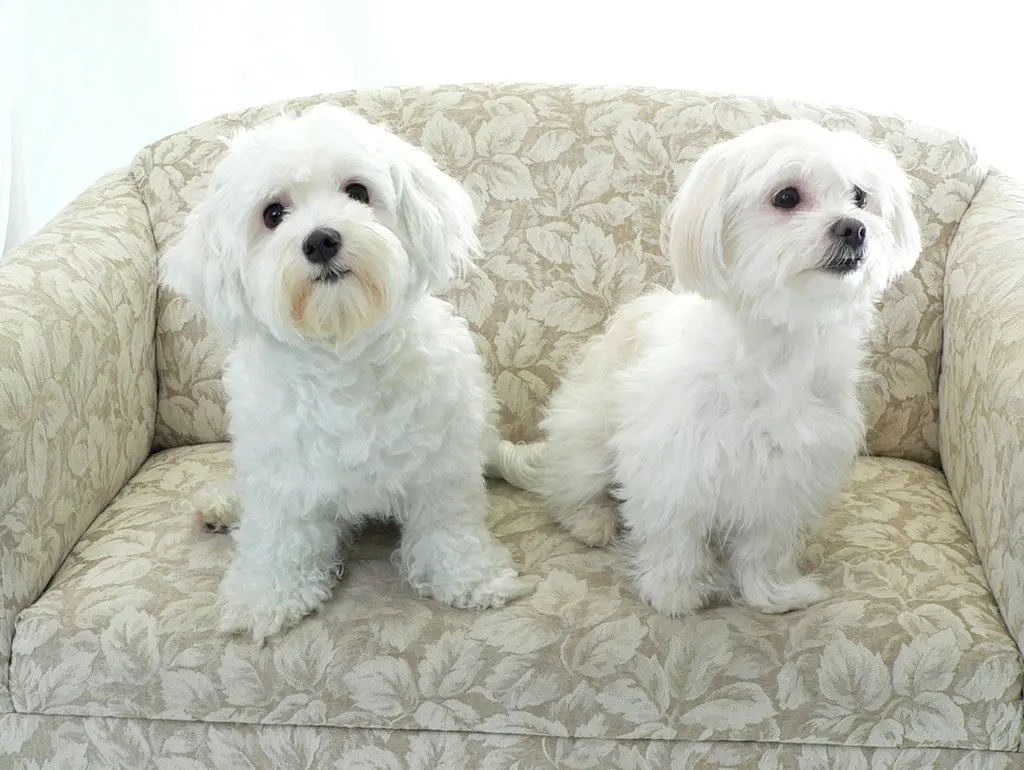
The Maltese it is a small dog with a noble and elegant appearance, and a fluid and graceful walk.

Your body is well proportioned, his chest is quite deep and his ribs are well sprung.

Like other Spitz breeds, its tail curves between the hips until it touches the rump. Carries high and can be curved sideways.

The head is proportional to the size of the body. The skull is slightly rounded and quite wide between the ears. The ears are set low and triangular in shape. The eyes are round and dark brown, with a soft but alert look. The eyelids conform to the eyeball and are pigmented black. The muzzle is fine, average length, and ends in a black nose.

The coat of the Maltese It is thick, shiny and silky. No undercoat, but a layer of long straight hair all over the body, no waves or curls. On the sides, hangs to the ground, which almost gives the impression that the dog is floating.

The fur is white, but a shade of ivory and lemon strokes are allowed. Until the end of the 19th century, it was even possible to use other coat colors. But, at that time, all colors other than solid white were deprecated, so breeders focused solely on individuals with white fur.

As they have no undercoat and shed relatively little, Maltese are often considered a hypoallergenic breed. Although none of them are hypoallergenic, they are usually well tolerated by people allergic to dogs. However, This does not exempt any potential adopter who suffers from this allergy from carrying out a test in real conditions before taking the step..

Last, sexual dimorphism is not very pronounced in this breed: males and females are about the same size.

Some breeders offer the Maltese miniature, whose weight is around 2 kg, or even less. These dogs not only don't conform to the breed standard, Rather, this extreme miniaturization is often accompanied by genetic problems and, in general, health risks. So, you better stay away from them.

In comparison to the Yorkshire Terrier or the Chihuahua, the Maltese you are not as likely to have fingernails or other diseases that can shorten your life.

Popularity

Still today, the Maltese it is still very popular and is present all over the world.

In United States, is around the post 30 (out of a total of 195) in the breed ranking established by the American Kennel Club (AKC) according to the number of births registered each year in the organization. But, this marks a steady decline from, at least, early 21st century, when I was about the twentieth position.

At the same time, on the other hand, has greatly increased its popularity in the UK: while in the middle of the decade of 2000 there were some 400-500 Annual Kennel Club Enrollments, This figure is around the 1100, and has been fairly stable since 2012.

The situation is different in France, since the number of annual entries in the French Origin Book (LOF) almost never stopped increasing for at least half a century. He was in his early twenties 70, a quarantine at the end of this decade, and then multiplied by ten during the 80, until exceeding 400. The trend continued over the years 90, until it stabilized around the 600 at the end of the decade and, Therefore, at the beginning of the 21st century. This trend continued until the decade of 2010, characterized by an increase in 50%, ending with more than 900 births per year.

In Switzerland, it is the 13th most popular breed in the country. There are more than 7000 people registered in the Swiss Amicus database.

Did you know??

The sweet little one Maltese dog is the favorite of celebrities, including Halle Berry, Heather Locklear y Eva Longoria. Could it be because they are so adorable in photographs? We think so.

Character and skills

"Maltese"

Kind, loving and affectionate with their masters, the Maltese he is also very attentive to his emotions, and is able to comfort them in difficult times. He is very active and maintains a youthful spirit all his life..

Your attachment to family is so strong that it can be problematic if you are alone too often or for too long. In fact, does not tolerate loneliness well and, therefore, you are likely to suffer from separation anxiety in such circumstances, what can drive, for example, destructive behavior or incessant barking. So, not suitable for a teacher who spends most of his days away from home.

Have him share his home with another dog or with a representative of another species (cat, rodent, bird…) it is a good way to help you better cope with the absences of your masters. But, this is only possible if you have grown up together or if you are used to living with other animals since childhood. In fact, in the event that another animal comes one day to your family, they are likely to be jealous and do not appreciate having to share their master's attention with another animal. In any case, given its small size, it is not advisable to make him live with a large congener, since it could inadvertently hurt you, for example just playing with him.

Its small size and fragile bone structure also explain why it is not recommended to live with young children.. In fact, the latter are quick to have too abrupt gestures towards him, especially during playtime, and could inadvertently hurt you. It also, even if it's not like that, may become scared and overwhelmed when faced with young children who are moving around a lot and making noise, which could cause inappropriate reactions on your part. In any case, a small child should never be left alone with a dog without adult supervision, regardless of race.

Not content with being around family members, the Maltese he's kind to strangers too, as long as I see there is nothing to fear from them. But, this does not prevent you from barking when you perceive a threat or a stranger approaching your home, which makes him a very good alert dog.

The Maltese's need for exercise is very moderate, making it a good breed for older people. Half an hour of activity a day is more than enough, for example, two or three short walks a day and / or small play sessions. But, he also likes dog sports like agility, obedience and rally, but its resistance is limited. In any case, he is always delighted to discover new things and learn new tricks.

As soon as you exercise enough, is quiet, able to adapt to any living space, and is delighted to spend long periods of time with his master, receiving pampering. It is therefore a breed of dog adapted to apartment living., who can be happy both in the city and in the country, in a big house with a garden. But, not made to spend most of the time outside. This is especially true in winter, since its lack of undercoat makes it sensitive to cold. But also the rest of the year, because its small size can make it prey for potential predators (birds Raptors, foxes…), plus the risk of it being stolen by malicious people. In any case, it is not about relegating it abroad, away from his family: accustomed for centuries to living in the heart of homes and loving to be the center of attention, you need to live and interact with your family to be happy and balanced.

Observations

Unlike other dogs the Maltese need little physical activity, What are good candidates for older people. Hunting mice, and they keep them away from the House.

Taking them for a walk would also serve to make them sociable since they do not require much exercise, adults should keep the weight and the best way to do this is by controlling what you eat and taking them for a walk. We must pay attention to the hair, and the help of a dog hairdresser may be required from time to time. You must be careful with approaching other dogs that are very nervous and are uncontrollable.

They can make stunts, How to keep standing on their hind legs for several minutes. Although perfectly adapted to living in apartments for its small size and domestic, love to walk in the open air. To be a difficult race, about all when they are puppies, they require many care. It is recommended to feed with feed, and though loves food human should never be given chocolate, It is highly deadly to this race.

Education

Like any dog, the socialization of Maltese must start at a very young age, period during which it is more malleable and adaptable. It is advisable to make you know as many different individuals and animals as possible, as well as exposing him to all kinds of situations and environments. This is essential for it to be an animal with a good head and serenity in all circumstances..

At the same time, given the very strong level of attachment to their humans that characterizes this breed, teaching the puppy to endure loneliness is part of the priorities of their education, to avoid that the absences of their masters suppose a later problem.

The Maltese he is smart and likes to please his owners. But, sometimes he is stubborn, which can complicate the learning sessions a bit. Ideally, opt for the positive reinforcement training method, since they are not receptive to reprimands and respond much better to stimuli and treats. But, it is important not to abuse the treats or discount them from your dog's daily intake to avoid weight gain.

In any case, you can't miss inappropriate behavior (grunts, barking, aggressiveness, refusal to obey…) when he is young, with the argument that it is small, beautiful and harmless. This would be the best way to make him develop "small dog syndrome", that is to say, get used to doing what you want in any circumstance, and become dominant, aggressive and difficult to live with. So, its owner must be firm from the start and make sure to establish - and enforce- clear rules, long-term constant and applied uniformly by all household members.

Health

The Maltese they are generally robust and healthy dogs.

But, due in particular to the absence of an undercoat, it is particularly sensitive to cold and humidity. When temperatures are cold, should be covered with adog coat.In any case, you are not meant to live in an area where the weather is cold for much of the year.

It also, of course, not completely free from health problems, many of which are common to other small breeds.The conditions to which you are predisposed are:

  • The Hip Dysplasia, joint malformation whose appearance can be enhanced by a hereditary predisposition, produces pain and lameness in the hips and causes the appearance ofosteoarthritiswhen the animal gets old;
  • The dislocation of the patella (or dislocation of the patella), common in dogs. It occurs when the kneecap moves in or out of the knee and can cause pain or lameness of varying degrees of severity. In the most severe cases, an operation is necessary;
  • The tracheal collapse, a respiratory disease that mainly affectssmall dogsand corresponds to a reduction in the diameter of the trachea. The most common sign is a dry and chronic cough, but it can also cause great shortness of breath. If necessary, it may be necessary to place a prosthesis;
  • The cryptorchidism, often a hereditary defect that prevents the animal's testicles from descending into the scrotum. The only solution then is to remove them surgically to avoid further complications, which leads to the sterilization of the animal;
  • Congenital portosystemic derivation, a vascular abnormality that can cause growth retardation, weight loss or even neurological problems and / or digestive.In some people, the symptoms are subtle, which makes the diagnosis of the disease later. This pathology, whose cause may be hereditary, can be cured by surgical intervention;
  • Hydrocephalus, a disease of nervous system in dogs.Symptoms vary from individual to individual (bulging head, growth retardation, nervous disorders, etc.), but the vital prognosis is never very good;
  • shaking dog syndrome, a disease that mainly affects small dogs in white coats. It consists of inflammation of the cerebellum and causes attacks of involuntary tremors throughout the body and lack of coordination. The symptoms usually begin to appear between the 9 months and 2 years and can be reduced, or even disappear, with drug treatment;
  • Hypoglycemia, which mainly affects diabetics and corresponds to a significant decrease in blood glucose level. The symptoms of the problem are loss of appetite, lethargic state, tremors and unsteady gait, in the most severe cases, can lead to coma and then death of the animal, if you are not given sugar one way or another;
  • The Cushing's disease, a hormonal disease whose most common clinical signs include increased appetite, thirst and amount of urine produced, muscle atrophy or the appearance ofalopecia;
  • The gradual retention atrophy, an incurable inherited disease that consistently affects both eyes at the same time, causing retinal degeneration and progressive loss of vision, at night and then day;
  • The glaucoma, an eye disease that can be inherited and causes degeneration of the optic nerve and retina due to abnormally high pressure in the eye. This painful pathology for the animal rapidly evolves into total or partial loss of sight, unless it is attended urgently;
  • The waterfall, It mainly affects the elderly and is a clouding of the lens Causes vision disturbances, up to total loss of sight if uncontrolled, only an operation can allow the animal to regain good vision;
  • The otitis, frequent inflammation indogs with floppy ears.

It also, the Maltese is easily susceptible to obesity, that can cause or aggravate many existing pathologies, and therefore have a very negative impact on your health. This is all the more true as it constitutes a vicious circle., because an overweight dog becomes less active and, Therefore, being overweight tends to increase.

Finally, even if it is not strictly speaking a disease, is also subject to reverse sneezing (or reverse sneezing).This is manifested by short-lived seizures during which you make loud noises when you inhale that may give the impression that you are choking. Seizures are usually rare and harmless., if they repeat too often, a veterinarian should be consulted to confirm that it is not another condition.

Although the list of diseases the breed is predisposed to can be terrifying, It must be taken into account that its prevalence is low and that most people lead perfectly healthy lives. This is also confirmed by a study carried out in 2004 by the Kennel Club and the British Association of Small Animal Veterinarians, as old age was found to be the leading cause of death in this breed, on a par with cancer. Cardiac causes rank third and together account for more than half of the observed deaths.

The number of diseases to which the breed is predisposed that are or may be hereditary, choosing acreator of Malteseshould not be left to chance: directly influences the probability of obtaining a healthy animal and that it continues to be so., in addition to ensuring thepuppy socialization from its first weeks, A serious breeder refrains from reproducing an individual capable of transmitting a hereditary affection to all or part of his offspring., must be able to present the results of DNA tests performed to parents (and possibly the young) and that they demonstrate that they are free from hereditary defects., it is better not to take unnecessary risks and turn to another breeder., You must also provide a certificate of good health established by a veterinarian as well as details of the vaccinations received, recorded in the puppy's health or vaccination registry.

Later, it is strongly recommended not to make him make prolonged or excessively intense physical efforts during his growth, period when your bones and joints are still very fragile. You would risk injury or malformations, potentially with lifelong consequences. This is even more important because you are predisposed to various joint problems:dislocation of the patella,Hip Dysplasia,etc.

Finally, like any dog, should be taken at least once a year to the vet for a complete checkup, that sometimes you can detect a problem that is still embryonic and treat it as best as possible.It is also an opportunity to perform the necessary booster injections.. At the same time, to prevent the risk of parasites and the multiple diseases that accompany them, your teacher should make sure to renew your deworming treatments throughout the year, whenever necessary.

Life expectancy

15 years

Grooming

The coat of the Maltese requires a lot of daily care. In fact, to avoid knots and keep it clean and shiny, it is advisable to brush it every day with a special brush or glove and use a detangling and revitalizing spray. But, the absence of undercoat means that it is not subject to seasonal shedding and that it loses very little.

The length of her hair makes dirt build up easily, so it tends to quickly give off bad odors. To remedy it, it is necessary to wash it on average once a month. But, you must not go any further: excessive frequency could harm the balance of your skin, by eliminating the sebum that it produces naturally and that protects it from skin problems. It also, systematically use a shampoo specially designed for dogs, also with the risk of damaging your skin, and avoid wetting the inside of your ears, as they are especially prone to ear infections and other infections.

It is also recommended not to let the hair air dry, but clean it directly with a towel after bathing, so that its coat is beautiful once dry.

It also, to avoid being embarrassed by the length of your hair at eye level, it may be a good idea to tie it at the top of the head with a small elastic band or a hair clip.

So that daily detangling is less heavy, It may also be a good idea to take your dog to a professional groomer every one to two months for a short haircut., or do it yourself, for the most skilled. Helps keep the coat neat, prevents dirt from accumulating on the hair and prevents bad odors, common when the coat is long.

It also, hair between the pads and around the ears and eyes should be trimmed once a month to reduce the risk of infection caused by any small plants or spikes that may be stuck in the fur.

You also have to pay special attention to their droopy ears., since this morphological characteristic increases the risk of infections at this level (otitis, etc.). So, they must be inspected and cleaned once a week, and get into the habit every time they get wet or moisture builds up on them.

The weekly maintenance of your ears is also an opportunity to check that there are no tear stains at the corner of your eyes., due to a blocked tear ducts, a very common problem in Maltese. Then, just clean them with a special lotion or with a cotton pad soaked in physiological serum, and then gently wipe them with a cloth. In case of constant and / or continuous discharge, a veterinarian should be consulted.

Looking at your teeth, they must be cleaned with a dog toothpaste at least once a week, using a toothbrush or finger bowl. This routine is important to prevent tartar buildup and the problems it can cause: bad breath, diseases, etc. The ideal for optimal oral health is even to do it several times a week, or even every day.

Utility

The Maltese It is one of the oldest companion dog breeds in the world., fulfilling this function since ancient times. Her beautiful fur, its small size, his friendly temperament and the fact that he is a very calm breed of dog made him a very popular companion for women of high society, as well as many historical figures, both in antiquity and in Renaissance Europe and subsequent centuries. He even had a reputation for healing the sick., or at least alleviate them. In other words, the important place he occupied in his master's life was not new.

In fact, things haven't changed much nowadays, since they are mainly used as companion dogs. But, needs their owners to be present enough by their side on a daily basis, in addition to having time to dedicate to its maintenance.

They are often recommended for people with allergies to dogs, since their lack of undercoat and their moderate shedding make them a fairly hypoallergenic companion. But, keep in mind that no race is 100% hypoallergenic, since all dogs produce dandruff, and there may be quite noticeable differences between individuals, even within the same litter. So, Anyone who suffers from this type of allergy and wishes to adopt a Maltese must first spend a few hours with the proposed animal, to make sure no allergic reaction occurs.

It also, its small size, its shiny white fur, his elegance and graceful gait make the Maltese a must-have in beauty pageants, where he wins prizes very often. But, if you want to expose your dog to a dog show, you better have plenty of time for grooming sessions, since the maintenance of the Maltese coat for this type of event can be time consuming.

Perhaps a more enjoyable way to spend time with him is to train him in various dog sports. In fact, his desire to please his master and his liveliness make him a good competitor in agility competitions, obedience, rally and crawl.

Last, your kindness and kindness, as well as his cheerful and attentive character, make it sometimes used as a therapy dog, since his temperament facilitates contact with the sick.

Price

The price of a puppy Maltese varies between the 650 and 2500 EUR, being the average of about 1600 EUR, without great differences between males and females. Whether in Europe, It is not very difficult to find a Maltese breeder, because they are numerous.

In United States, the offer is wide and the price is similar. You just have to make sure you respect the regulations regarding the importation of a dog from abroad, and keep in mind that transportation costs and administrative fees are added to the purchase price.

Whatever the place, the price difference from one individual to another is explained, in particular, by the greater or lesser conformity of each with the breed standard. The kennel's prestige also comes into play, as well as the lineage from which they descend.

ยซMalteseยป images

Videos ยซMaltese Bichonยป

Type and recognitions:

  • FCI CLASSIFICATION:
  • Group :
  • Section : . .

Federations:

  • FCI – Group 9 Section 1 โ“˜
  • AKC – Toy Group โ“˜, ANKC โ“˜
  • ANKC Group 1 (Toys) โ“˜
  • CKC – Group 5 – Toys โ“˜
  • โ€‹KC – Toy โ“˜
  • NZKC – Toy โ“˜
  • UKC – Company โ“˜

FCI breed standard "Maltese"

Origin:
Italy

Date of publication of the valid original standard:
27.11.1989

Use:

Companion dog.


General appearance:

Small in size and elongated trunk. It is covered with very long white hair. He is very elegant and his head posture is haughty and distinguished..

important proportions:

The length of the trunk exceeds by 38% the height at the withers. The length of the head is equal to 6/11 the height at the withers.


Behavior / temperament:

Alert, affectionate, very docile and very intelligent.

Head:

Its length is equal to 6/11 the height at the withers. It is very wide and its width barely exceeds half of its length..

Cranial region:
  • Skull: Its length is slightly longer than that of the snout; the bizygomatic width is equal to its length, and consequently greater than half the length of the head. Seen from above it is slightly ovoid in shape; the top of the skull is flat, with a very little marked occipital process. The protuberances of the frontal bones and eyebrows are well developed. The frontal sulcus is not visible, since it is little marked. The lateral faces are slightly convex.
  • Depression links (Stop) : Very marked, forming an angle of 90ยฐ.

facial region:

Truffle: It is located in the extension of the nasal cannula and, profile view, its front face is vertical. It is voluminous, with nostrils wide open; It is rounded in shape and its color is strictly black.

  • Snout: Its length is equal to 4/11 of head length; is therefore slightly less than half. Sub-orbital regions are well delineated. Its height is less than the length by a little more 20%. Side faces are parallel, but the snout, seen from the front, It shouldn't look square., since the anterior face is linked to the lateral faces in a series of curves. The nasal cannula is rectilinear, with well-marked grooves in its central part.
  • Lips: Seen from the front, the upper lip forms a very open arch where it joins. It is not very high, and so the commissure is not visible. The upper lip adapts perfectly to the lower lip, such that the lower profile of the snout is defined by the jaw. The edges of the lips are strictly black.
  • Jaws: Normally developed and thin in appearance; They are perfectly adjusted. The jaw, whose branches are rectilinear, It's not even prominent, nor elusive in the previous part.
  • Teeth: The arches are perfectly adjusted and the incisors have a scissor joint.. The teeth are white; the teeth are well developed and complete.
  • Eyes: Open, alert expression, larger than normal; the eyelid aperture resembles a circle. The eyelids are tightly attached to the eyeball, which is not sunken but rather protruding. The eyes are located on the same almost frontal plane, They are dark ocher in color and the edges of the eyelids are black. Seen from the front, the sclera should not be visible.
  • Ears: They are almost triangular in shape, Its width represents around 1/3 its length. They are implanted high above the zygomatic arch. They are not very erect, hanging and touching the lateral faces of the skull.

Neck:

Although it is covered with abundant hair, the demarcation with the nape of the neck is clearly visible. The upper profile is arched. Its length represents about half the height at the withers.. It is erect and your skin is not flaccid.

Body:

Its longitude, Measured from the tip of the shoulder to the tip of the buttock, exceeds in a 38% the height at the withers.

  • top line: It is rectilinear until the implantation of the tail.
  • Cross: It protrudes slightly from the line of the back.
  • Back: Its length comprises around 65% the height at the withers.
  • Rump: In the extension of the dorso-lumbar line, the rump is very wide and long; Its obliquity is 10ยฐ below the horizontal.
  • Breast : The thorax is broad and descends below the line of the elbows; the ribs are not too tight. The thoracic perimeter exceeds 2/3 the height at the withers. The region of the sternum is well elongated.

Tail:

It is located in the extension of the rump, It is thick at the root and thin at the tip. Its length corresponds to 60% the height at the withers. It forms a single large curve whose tip falls between the haunches touching the rump. Tail that bends over one side of the body is tolerated.

Tips

  • Former members : Taken together, They are well applied to the body and are well poised.
  • Scapula: Its length represents 1/3 of the height at the withers and its obliquity below the horizontal is 60 to 65 degrees. Relative to the median plane of the body, approaches the vertical.
  • Arm: It is longer than the shoulder, includes between 40 to 45% the height at the withers; Its obliquity below the horizontal is 70%. It is well applied to the body in its upper two-thirds and its longitudinal direction is almost parallel to the median plane of the body..
  • Elbows: They are parallel to the median plane of the body.
  • Forearm: He is thin and has little visible muscle; However, the bones are rather robust in relation to the size of the breed.. It is less long than the arm and measures 33% the height at the withers. His height, Measured from the floor to the tip of the elbow, comprises around 55% the height at the withers.
  • Carpo: It is located in the vertical axis of the forearm; has great mobility; It does not have knots and is covered by a thin skin.
  • Metacarpus: It has the same characteristics of the carpus and, due to its short length, es vertical.
  • Previous foot: It is rounded, with toes well arched and together; center pad and digital pads are black; the nails are also black, or at least a dark color.
  • Later members : Seen in conjunction, They have robust bones and are parallel to each other. Seen from the back, They are vertical from the tip of the gluteus to the floor.
  • Thigh: Its bones are robust and its posterior edge is convex.. It is parallel to the median plane of the body; its direction from top to bottom and from back to front is somewhat oblique in relation to the vertical. Its length reaches about 40% from the height to the withers and its width is a little less than its length.
  • Leg: The groove is barely visible; Its obliquity below the horizontal is 55ยฐ. The leg is slightly longer than the thigh.
  • Hock: Its anterior angle is 140ยฐ.
  • Metatarsus: The distance from the floor to the tip of the tibiotarsal joint is slightly greater than 1/3 the height at the withers. Its length corresponds to the height of the hock. The metatarsus has perfect poise.
  • Rear foot: It is rounded like the previous one and has the same characteristics.

Movement:

Uniform, skimming the ground, executed with ease; during trotting the steps are short and fast.

Mantle

Skin : It is well attached to the entire body; It has dark, wine-red spots, especially on the back.. The edge of the eyelids, the third eyelid and the edge of the lips are black.

open the trunk, of which the configuration continues without opening, nor form locks. Tufts on the forelimbs are allowed, from elbow to foot, and on the hind limbs, from knee to foot. There is no inner coat of hairs. The hair on the head is very long, both on the snout, where it mixes with the beard, like on the skull, where it falls until it mixes with that of the ears. Tail hair falls on only one side of the body, that is, on the flank and on the thigh, and it is so long that it reaches the hock.

  • Color : Pure white. pale ivory is allowed. Pale orange tones are allowed on condition that they give the impression of being spots.. This, However, is not desirable and constitutes an imperfection.


  • Size and weight:

    • Height to the cross: Of 21 to 25 cm in males. Of 20 to 23 cm in females.
    • Weight: Of 3 to 4 kg.


    Fouls:

    Any deviation from the aforementioned criteria is considered as lack and the seriousness of it is considered to the degree of deviation to the standard and its impact on health and welfare of the dog.

    • Bilateral strabismus.
    • Trunk length, that exceeds 43% the height at the withers.

    serious fouls

    • Visibly bulging nasal passage.
    • Marked underbite, if it alters the external appearance of the snout.
    • Size larger than 26 cm., and less than 19 cm in males, and higher than 25 cm., and less than 18 cm in females.

    ELIMINATING fAULTS

    • Marked divergence or convergence of the craniofacial axes.
    • Total depigmentation of the nose, or truffle of another color other than black.
    • Upper prognathism.
    • Eyes gazeos.
    • Total depigmentation of the eyelids.
    • Anurismo; brachyurism, so much congenital, as artificial.
    • Curly hair.
    • Any color other than white, except pale ivory.
    • Spots of different colors, regardless of its extension.

    Any dog โ€‹โ€‹showing clear signs of physical or behavioral abnormalities should be disqualified..


    N.B.:

    Males should have two normal-appearing testicles fully descended into the scrotum..

    Source: F.C.I - International Cynological Federation

    Alternative names:

    1. Maltese, Sleeve Dog (English).
    2. Bichon maltais (French).
    3. Malteser (German).
    4. Maltรชs, bichon maltรชs (Portuguese).
    5. Bichรณn maltรฉs, Maltaise, Couton, Mini Maltรฉs, Pulguis (espaรฑol).

    โ–ท The world of Pets: Dogs, cats, birds, reptiles, amphibians

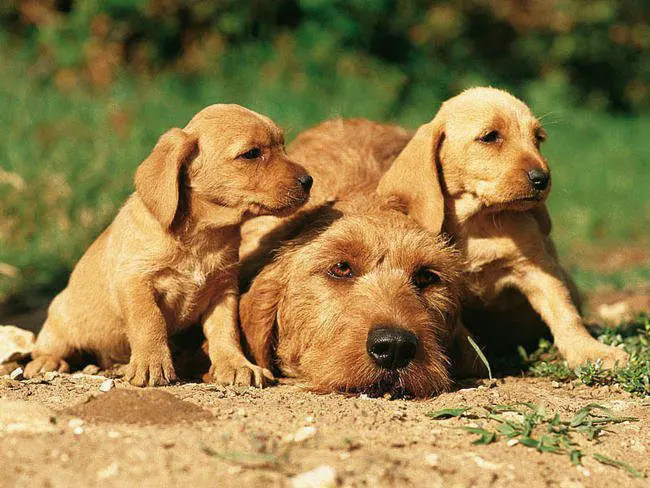
    Basset Fauve de Bretagne
    Francia FCI 36 . Small-sized Hounds

    Basset Fauve de Bretagne

    The Basset Fauve de Bretagne has a loose and lively temperament

    Content

    History

    The Basset Fauve de Bretagne descends in a direct line from the "Grand Fauve de Bretagne", ancient trail breed, today almost completely disappeared that was used for fox and wild boar hunting, in the most dense forest. His parent has retained the qualities of exceptional Hunter and his fogosidad to, often, It is braking with crosses with the Petit Basset Griffon Vendรฉen.

    In the 16th century there were four varieties of large dogs in France, the difference between them was more than remarkable in relation to the color of the coat and texture. The four varieties were white (du role), Fawn of the (Bretagne), grey (St Louis du) and the black. All of today's varieties of French hunting dogs seem to have their origin in repeated crossbreeding and mutations of these four types..

    Estos โ€œGrand Fauve de Bretagneโ€, they were very big dogs, between 70 and 74 cm to the cross. They were known for their effectiveness in the early stages of a hunt.. his bravery, his thin nose, its resistance to cold and humidity and its impetus to hunt its prey, wild boar usually, made them ideal dogs for the thorny thickets of Northwest France. This large variety of Basset Fauve de Bretagne seems to have died out in France. The only representative of the Great "Grand Fauve de Bretagne", is the Fawn Brittany Griffon (48 – 56 cm.), very popular in France.

    There is considerable doubt about how the reduction of the overall size of the race was reduced to half. One theory suggests that it was initiated by selection of smaller litter size specimens., another for the breeding of the smallest specimens for countless generations. In the 19th century there were numerous litters made up entirely of Basset Fauve de Bretagne.

    In the Decade of 1970, as the Basset Fauve de Bretagne It became popular, French hunters decided to introduce new lines. It is generally believed that the Petit Basset Griffon Vendรฉen was used to improve their ability to, possibly, hunting and the Sausage dog to preserve the color of your hair.

    The Basset Fauve de Bretagne was first registered with the Kennel Club in September of 1991.

    Photo: bassetfauvedebretagneclub

    Physical characteristics

    Endowed with a truly incredible resistance, the Basset Fauve de Bretagne is able to hunt for days on end without showing any signs of exhaustion or tiredness.

    Like all Basset French breeds that come from larger size, also it maintains the characteristics of hair, the most voluminous dog head and color which comes. Its trunk while long, is very strong and compact and, Despite the relatively short limbs, moving with enough speed and ease. In any case, It should never have a too short head or seem excessively high on the extremities, as well as the hair should not appear soft or soft to the touch.

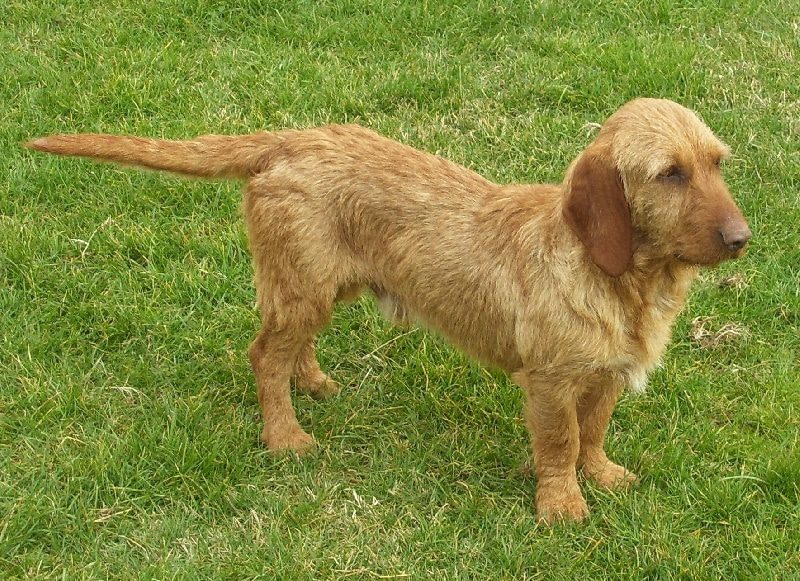
    "Basset Fauve de Bretagne"

    Ears fall almost at the level of the eyes, not very long, barely reaching the end of the snout, and they end up in tip, they are covered with hair thinner than the rest of body, but never silky. His neck is quite short and muscular. The forelimbs are strong, straight or slightly twisted. Broad and relatively droopy chest. Slightly curved ribs. Long back but a little less than in the other Basset.

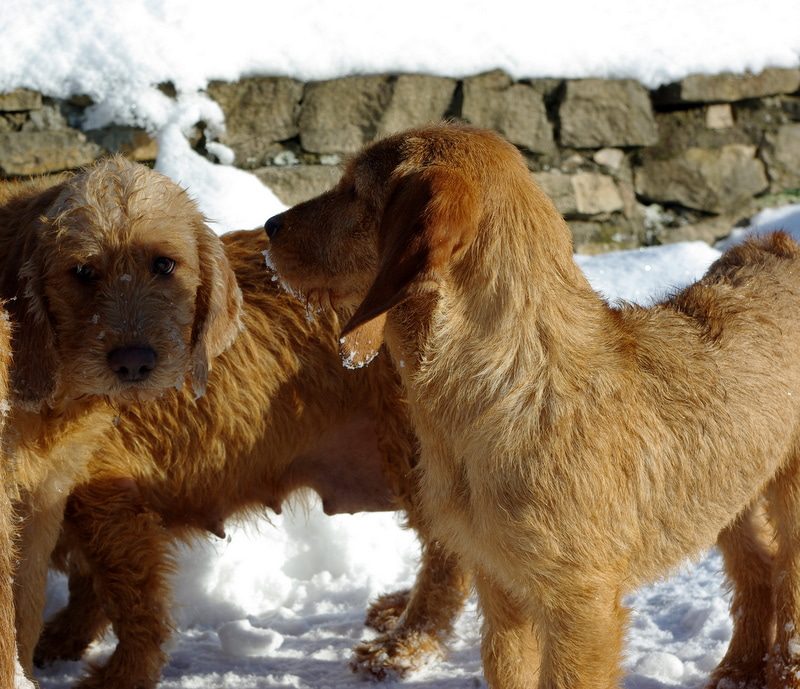
    The tail is thick at the base, not too long, and it takes something like a sickle-shaped, is gradually tuned towards the tip. The color is more or less intense Golden or Griffon wheat, sometimes with a white patch on the chest.

    Character and skills

    The Basset Fauve de Bretagne is still required today for rabbit hunting, especially in low forests, where shrubs and las matas prevent passing other hounds.

    It is still quite common in Brittany today, prized for their natural qualities and its perfect adaptation to the landscape, tough and rugged in that area. It's very hard to find, being virtually unknown outside of France.

    It has a loose and lively temperament, so it needs to live always in the open air, that poorly fits the House. However, with a small space on the outside, or with usual and regular walks, the Basset Fauve de Bretagne could be an ideal pet.

    Breeders list "Basset Fauve de Bretagne"

    REGISTER KENNEL

    Breeders of Basset Fauve de Bretagne

    Offer your puppies for free. Sign up here.

    • This field is a validation field and should be left unchanged.
    • Enter an image of your kennel.


    Images ยซFawn of Brittany Bassetยป

    ยซBasset Fawn of Brittanyยป videos

    Alternative names:

    Basset leonado de Bretaรฑa / Faw brittany basset

    Type and recognitions:

    • FCI CLASSIFICATION:
    • Group :
    • Section : . .

    Federations:

    KCโ“˜

    FCI breed standard "Basset Fauve de Bretagne"

    Origin:
    France

    Date of publication of the valid original standard:
    25.03.2003

    Use:

    Bloodhound dog used for rabbit hunting, the hare, the fox, the roe deer and the wild boar.


    General appearance:

    The Basset Fawn of Brittany is a small dog with a collected body, impetuous, fast for its size. He is endowed with remarkable energy, along with excellent rusticity.


    Behavior / temperament:

    These are passionate hunting dogs, but they are also excellent companions for man. Its sociable, affectionate and balanced. They adapt easily to all terrains, even the most difficult, and to all kinds of hunting. When they are hunting they are brave, slums, tenacious, which makes them very effective.

    Head:

    ---

    Cranial region:
    • Skull: It is rather elongated; and the occipital protuberance is marked. Seen from the front, the skull has the appearance of a lowered curvature, decreasing in amplitude to the level of the superciliary arches that are not very pronounced.
    • Depression links (Stop): Slightly steeper than the Tawny Griffon of Brittany.

    facial region:

    • Truffle: It is black or dark brown in color. The nostrils are wide open.
    • Snout: It's sharper than square.
    • Belfos: They cover the lower jaw well, although not in excess. The whiskers are very abundant.
    • Jaws/Teeth: Jaws and teeth are strong; the joint is perfect and uniform scissor shape. Upper incisors cover lower incisors with tight contact. The incisors are set at right angles to the jaws. The absence of PM1 is not penalized.

    EYES: They are not prominent, not too sunk in the orbits. Its color is dark brown. The conjunctiva is not apparent. The look is impetuous.

    EARS: Delicately implanted at the level of the eye line, just reaching the tip of the truffle. They end in a point and are bent inwards and covered with a hair that is flatter and finer than that of the rest of the body..

    Neck:

    Quite short and muscular.

    Body:

    • Back: It is wide, and cut for a basset. Never sunk.Pork loin: Broad and well muscled.
    • Breast : Tall and wide.
    • Ribs: Pretty rounded.
    • Belly: The lower margin is slightly raised towards the back.

    Tail:

    It is slightly sickle-shaped. Is medium length; thick at the base, often spike-shaped and tapers at the tip. When is the dog in action, the tail is laid over the margin of the back and performs regular lateral movements.

    Tips

    PREVIOUS MEMBERS:

    • General appearance: Show good bone structure. Shoulder: Oblique, well attached to the thorax.
    • Elbows: They occur in the axis of the body.
    • forearms: Vertical or slightly deflected inward (this particularity is not sought).
    • Metacarpus: Seen in profile, they are slightly oblique. Seen from
    • forecrown, occur on the axis of the body or slightly deviated outward (this particularity is not sought).
    • Previous feet: compacts. The fingers are together and are arched;
    • nails are solid. Bearings are hard.

    LATER MEMBERS:

    • General appearance: They are well muscled. Legs are uniform. Seen from the back, they are parallel, or together, nor separated.
    • Thighs: Long and well muscled.
    • Babillas: Inclined and moderately bent. Metatarsals: Vertical.
    • Hind feet: compacts. The fingers are together and are arched;
    • nails are solid. Bearings are hard.

    Movement:

    Energetic.

    Mantle

    SKIN: Quite thick and flexible. No presence of double chin.

    Fur: Good hard, rough, pretty short; never woolly, nor curly. The face must not be tangled.

    Color: Fawn ranging from golden wheat to brick red. Some scattered black hairs are tolerated, on the back and on the ears. Sometimes the presence of a white star is observed on the sill (this particularity is not sought).


    Size and weight:

    Height to the cross: 0,32 to 0,38 m. for males and females, with 2 cm excess tolerance for exceptional specimens.


    Fouls:

    Any deviation from the aforementioned criteria is considered as a fault and the severity of this is considered to the degree of the deviation to the standard and its consequences on the health and well-being of the dog..

    SERIOUS FAULTS:

    Behavior: Fearful dog.

    Head

    • Wide and flat skull.
    • Superciliary arches too pronounced.
    • Pointed or short snout. Hanging and thick belfuses.
    • light eyes.
    • Flat and wide ears.

    Body

    • Weak appearance.
    • Top margin that is not tight enough.
    • Flattened belly.

    Tail: Deviation.

    Members

    • Poor bone structure.
    • crushed feet.

    Fur

    Scarce, short, fine, soft.

    FALTAS DESCALIFICANTES:

    • Aggressiveness or extreme shyness.
    • Any dog โ€‹โ€‹showing clear signs of physical or behavioral abnormalities.
    • Absence of typical features (any specimen whose characteristics differentiate it from its congeners).
    • Upper or lower prognathism.
    • Very light eyes.
    • Partial or total depigmentation on the nose or on the edge of the eyelids and lips.
    • Knotted tail.
    • Crooked forelimbs.
    • Presence of dewclaws on the hind limbs (dewclaws never appear in this breed).
    • Long shaggy hair.
    • Any other fur other than that imposed by the standard.
    • Any other size than the one imposed by the standard.
    • Noticeable disability; anatomical malformation.


    N.B.:
    • Males should have two normal-appearing testicles fully descended into the scrotum..
    • Only functionally and clinically healthy dogs, with the typical conformation of the breed, should be used for parenting.

    Source: F.C.I - International Cynological Federation

    โ–ท The world of Pets: Dogs, cats, birds, reptiles, amphibians

    Petit Basset Griffon Vendรฉen
    Francia FCI 67 . Small-sized Hounds

    Basset Grifรณn Vandeano pequeรฑo

    The Petit Basset Griffon Vendรฉen is a very strong race.

    Content

    History

    The Petit Basset Griffon Vendรฉen It is a small size hunting dog (Petit), under (basset), hard hair (griffon) of French origin (in the region of the Vendรฉe), mainly used for hunting rabbits with his great sense of smell.
    It was developed from the Grand Basset Griffon Vendรฉen, larger copy, heavy and long.

    In the past, often to raise both races together. In 1975 are prohibited from crossing them, although puppies with characteristics of both breeds could still be born in the same litter. In France, It was a popular hunting dog for nearly a century (origin s. 16TH); However, the breed is relatively new in other regions.

    Physical characteristics

    Medium-sized, its height varies between the 33 and 38 cm and his weight between the 16 and 20 kg.
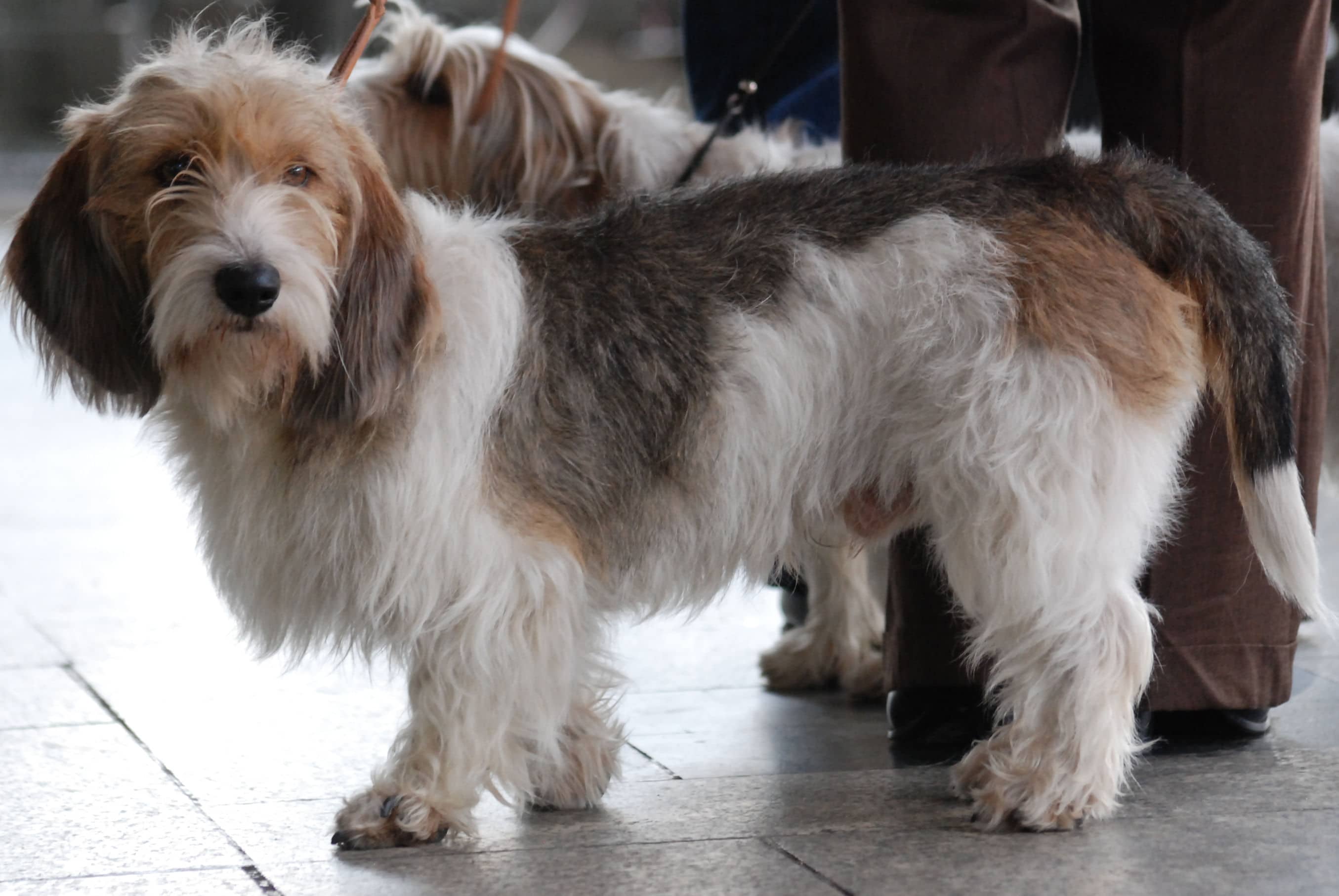
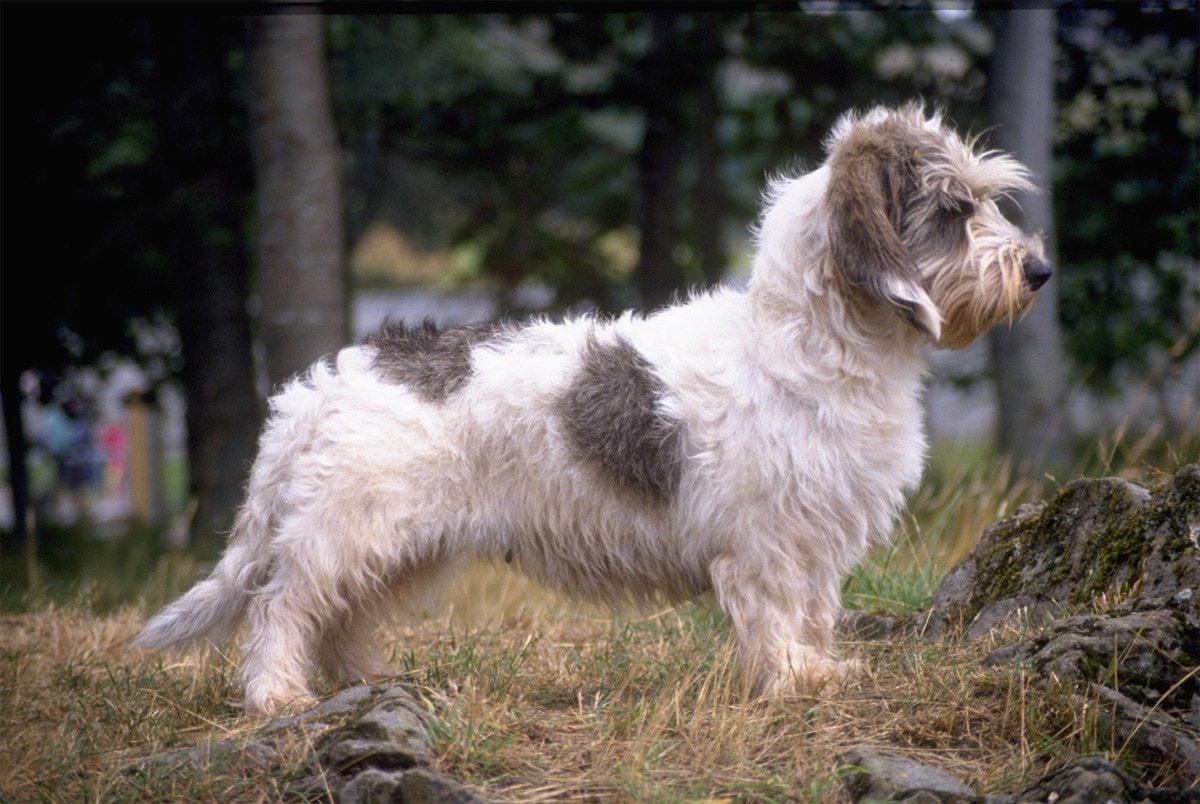
    It is a small dog, rustic. Its aspect is neglected and natural. It has hard and rough hair with eyebrows, beard and whiskers woolly. White base, with black spots, Orange or grey.

    Is well proportioned and is approximately a 50% longer than high. Wide tail at base, decreasing towards the tip thickness. It keeps it erect. Their ears are covered with hair; they are long but fail to reach the tip of the nose. Large nostrils. Its back is straight and slightly arched over the lumbar area.

    It has large fame of Digger, jumper and escape expert, so you have to keep it in a safe enclosure.
    Usually, is happy, friendly and always busy in their explorations. He is intelligent and can be stubborn. It's funny and has many security. Jealous and playful. Pretty crook.

    Character and skills

    He is good with children and quite friendly with strangers and although his obstinacy, it is a bit difficult to train, is not especially dependent or independent. Their dominance is moderate.

    He is good with other dogs, but by his hunting instinct, It is not reliable with other pets. Being of small size, has a very loud bark, and tends to the howl.

    Very strong race; serious genetic diseases are not known. prone to ear infections. Times, allergies have been given to insecticides.

    It has hard hair and moved it very little, Although it needs a cleaning and brushing regularly to avoid entanglements.
    It requires moderate exercise, being a good companion to run. At home he is very active and can only live in an apartment if he is sufficiently exercised.

    As open space, a small garden is enough. Adaptable to most climates, prefer the coldest. Itร‚ยดs suitable for novice owners. Care properly has an average life of 10 to 14 years.

    Petit Basset Griffon Vendรฉen pictures

    Videos Basset Grifรณn Vandeano small

    Alternative names:

    Petit basset griffon vendรฉen / Kleiner basset griffon vendรฉen / small basset griffon vendรฉen

    Type and recognitions:

    • FCI CLASSIFICATION:
    • Group :
    • Section : . .

    Federations:

  • FCI โ“˜
  • AKC โ“˜
  • ANKC โ“˜
  • CKC โ“˜
  • โ€‹KC โ“˜
  • NZKC โ“˜
  • UKC โ“˜

  • FCI breed standard Petit Basset Griffon Vendรฉen

    FCIFCI - Petit Basset Griffon Vendรฉen
    Basset

    โ–ท The world of Pets: Dogs, cats, birds, reptiles, amphibians

    Pomeranian
    Alemania FCI 97 . European Spitz

    Pomeranian

    The Pomeranian very active, independent, Intelligent, brave and loyal.

    Content

    History

    The Pomeranian (Deutscher Spitz;, Pomeranian Lulu or Deutscher Zwergspitz) It is a dog of the Spitz family, named for the region of Pomerania Central, Eastern Germany, and is classified as a dog ยซToyยป due to its small size.

    The ancestors of the Pomerania were Iceland and Lapland sled dogs, He came to Europe because of Pomerania.

    The region of Pomerania, bathed in the north by the Baltic Sea and bounded in the west by the island of Rรผgen and in the east by the Vistula River, It was occupied by many peoples, celts, Slavs, Poles, Swedes, Danish and Prussian. Its name comes from Pomore or Pommern, which means "by the sea", and it was given in times of Charlemagne. Is in Pomerania where the Spitz won fame as a pet and dog work.

    Read more

    โ–ท The world of Pets: Dogs, cats, birds, reptiles, amphibians

    Volpino Italiano
    Francia FCI 195 - European Spitz

    Volpino Italiano

    Despite the temperament of Volpino Italiano, and its small size, It is a very committed and energetic dog. Cheerful and playful and very attached to their masters.

    Content

    History

    The Volpino Italiano (that means little Fox, in Italian) It is a dog of very ancient origins., as the strain that belongs to the Spitz. It was a very widespread breed of dog in the Renaissance in which appears in some of the representations of the period. Unfortunately, the race, in 1965 was in danger of extinction (The Italian Club Cinolรณgico, only five copies that year), and for a short time, recovering numerical and qualitative.

    The Volpino, It has been recognized and loved by Italian royalty for centuries, being a favorite especially of women.

    Even bearing a strong resemblance with the Pomeranian, the breed is much older and thus has a different historical background. Northern dogs found their way South very early in the history of domestic dogs.

    The Italian word for wolf is lupo, and the Keeshond it is called so much Lupino and Volpino in Italian. Volpe, means Fox in Italian, from there "Volpino" what, to say, little Fox in Italian. Despite its long history, the Volpino is unknown outside of Italy and is now rare, even in his homeland..

    Despite its small size, This dog was originally as a watchdog. Its function was to alert the Mastiffs (Big Dogs) the presence of an intruder. But, due to his lovely temper and great intelligence, as well, they became very popular as pets, companion dogs.

    For unknown reasons the popularity of the breed fell in 1965. In 1984 an attempt was made to revive the race. Y, currently, can see the race Volpino living as guard dogs on breeding farms, or as a companion dog, but still the Volpino they are considered a rare breed, position that there are only about 2000 copies to the length and breadth of the world.
    Most of the Volpinos, it is found in Italy but some people are breeding them in Scandinavian countries, in the United Kingdom and the United States.UU.

    Physical characteristics

    The Volpino Italiano it is a small but compact dog with a harmonious physique. Can grow up to 30 cm tall and weigh 5 kg. His long, silky coat is soft and lined with a dense undercoat. It can be white, red, brown or black. There are also champagne colored animals, but they are not very popular in breeding.

    Character and skills

    The Volpino Italiano has a very individual character, which means that even as a puppy you need a lot of patience and enough consistency in your upbringing. Due to its high intelligence it is very teachable and therefore very good for training. Has a very lively temperament, is curious and therefore available for all kinds of fun. So, is particularly suitable for any type of dog sport and needs sufficient mental and physical activity.

    In the family it is a very affectionate dog, loving and vigilant. Has a natural distrust of strangers.
    It is an ideal dog for the family and its character also makes it very suitable to live with children.

    With it you can spend a lot of time in nature. Despite its size, the Volpino Italiano it is a very robust dog that is not deterred by the rain, snow and cold to do your daily need for exercise.

    Volpino care

    The puppy's coat requires a lot of care: should not only be brushed regularly, but also bathed from time to time.

    Esperanza de vida of ยซVolpino Italianoยป

    The ยซVolpino Italianoยป, which originally descends from German Spitz, he is a very robust dog, which can have a high life expectancy of up to 15 years.

    Typical diseases ยซItalian Volpinoยป

    Also in terms of health, the Volpino he is a very robust dog, who does not have any common hereditary disease.
    In rare cases the breed is affected by an eye disease, which can happen especially in old age. May lead to lens shift of the eye, what can lead to glaucoma.

    Characteristics "Volpino Italiano"

    Coexistence is important that you have with your new friend. Before considering the acquisition of a dog of the breed "Volpino Italiano" you know certain factors. Not all breeds of dogs are apt to live in an apartment, you must take into account his character, their need for exercise, their interaction with other pets, their care and if you have small children, their level of tolerance towards them.

    Adaptation โ“˜

    3,0 of 5 stars (based on 1 review)

    friendly dog โ€‹โ€‹โ“˜

    3,0 of 5 stars (based on 1 review)

    hair loss โ“˜

    3,0 of 5 stars (based on 1 review)

    Affection level โ“˜

    4,0 of 5 stars (based on 1 review)

    Need for exercise โ“˜

    2,0 of 5 stars (based on 1 review)

    Social need โ“˜

    3,0 of 5 stars (based on 1 review)

    Home โ“˜

    3,0 of 5 stars (based on 1 review)

    Toilet โ“˜

    4,0 of 5 stars (based on 1 review)

    Friendly with strangers โ“˜

    3,0 of 5 stars (based on 1 review)

    barking โ“˜

    4,0 of 5 stars (based on 1 review)

    Health โ“˜

    4,0 of 5 stars (based on 1 review)

    Territorial โ“˜

    4,0 of 5 stars (based on 1 review)

    Cat friendly โ“˜

    3,0 of 5 stars (based on 1 review)

    Intelligence โ“˜

    4,0 of 5 stars (based on 1 review)

    Versatility โ“˜

    3,0 of 5 stars (based on 1 review)

    Child friendly โ“˜

    4,0 of 5 stars (based on 1 review)

    Surveillance โ“˜

    3,0 of 5 stars (based on 1 review)

    joy โ“˜

    4,0 of 5 stars (based on 1 review)

    Images "Volpino Italiano"

    Photos:

    1 – Volpino Miฤ™dzynarodowa Wystawa Psรณw Rasowych w Katowicach 28 – 30. 03.2008 by Lilly Mreal name: Maล‚gorzata Miล‚aszewska / CC BY-SA
    2 – Volpino Italiano by https://pxhere.com/es/photo/833618
    3 – Volpino Italiano by https://pxhere.com/es/photo/1428909
    4 – Volpino Italiano by https://pxhere.com/es/photo/863623
    5 – Volpino Italiano by https://pxhere.com/es/photo/1273902
    6 – Volpino Italiano owned by Kennel Hedehuset – Denmark by ยฉ Mete Appel / Kennel Hedehuset

    Videos "Volpino Italiano"

    youtube.com/watch?v=BlqMM99OREA

    ยซVolpino Italianoยป – Breed of dog

    youtube.com/watch?v=Ot3uyndzOAI

    ยซVolpino Italianoยป Dog Breed – Facts and Information

    Type and recognitions:

    • FCI CLASSIFICATION:
    • Group :
    • Section : . .

    Federations:

    • FCI – Group 5 – Section 4 European Spitz. โ“˜

    FCI breed standard "Volpino Italiano"

    Origin:
    Italy

    Date of publication of the valid original standard:
    9.06.1999

    Use:

    Guard and companion dog.


    General appearance:

    This is a small format Spitz, very compact, harmonious and covered with long, bristly hair.

    IMPORTANT PROPORTIONS: It has a square shape; The length of the head reaches almost 4/10 of body length.


    Behavior / temperament:

    He is very attached to his environment and the people he knows well.. His temperament is very marked, jovial, lively and mischievous.

    Head:

    It has a pyramidal shape. Its length reaches 4/10 the height at the withers.

    Cranial region:
    • Skull : Its length exceeds that of the snout (6,5/5), its bizygomatic width is greater than half the length of the head (7,3/11,5). It is more or less ovoid in shape, both in the sagittal sense, as in the transversal. The mid-frontal sulcus is not very marked, as well as the occipital protuberance. The upper axes of the skull and snout are slightly convergent. The bones protruding from the forehead are well developed and fall almost perpendicularly on the root of the nasal cannula..
    • Depression links (stop) : It is rather accentuated.

    facial region:

    • Truffle : It's humid, fresh, with the windows wide open. Profile view, It is located on the same line as the nasal cannula., and does not exceed the anterior line of the lips. Its color is always black, both in the white-furred specimens, as in those with red fur.
    • Snout : Pointed. Its length is less than that of the skull and its lateral faces are convergent.. The nasal cannula is rectilinear. In profile, the lower edge of the snout is determined by the jaw.
    • Lips : Seen from the front, the upper lip draws a straight line on its lower edge. In the corner, the mucosa is not visible, so that, the lips are very short. The edges of the lips are pigmented black.
    • Jaws / Teeth : The jaws are not strong in appearance, but they are normally developed and adapt perfectly due to their anterior edge. Its branches are rectilinear. The teeth are white, are regularly aligned and complete. They are perfectly developed. The joint is in the form of scissors, but the pincer-shaped joint is accepted.
    • Eyes : They are normal size and open wide. They denote vigilance and liveliness. The palpebral opening is rounded; They are placed in planes that form a wide open angle behind.
      The eyelids join perfectly against the eyeball. The iris is dark ocher in color and the edges of the eyelids are pigmented black..
    • Ears : Short, form triangular, upright. The cartilage is rigid. The inner surface of the ears faces forward. Set high and very close to each other. The length of the ears reaches approximately half the length of the head.

    Neck:

    Its length is almost equal to that of the head. His bearing is always high. Your skin is well attached to the underlying tissues.

    Body:

    It has a square shape. Its longitude, measured from the tip of the shoulder, even the gluteus, is equal to the height at the withers.

    • top line : The dorsal line is straight; in the region of the back it is slightly convex.
    • Cross : It protrudes slightly above the line of the back.
    • Rump : Extends the line of the spine. Its obliquity, from the hip to the base of the tail, is 10ยฐ below the horizontal.
    • Breast : Come down to the level of the elbows. The ribs are tight. The sternal region is long.
    • bottom line : From the sternum to the belly there is little ascending. The depth of the flanks is not very pronounced.

    Tail:

    It is located in the extension of the rump, always curled up on the back. Its length is somewhat less than the height at the withers.

    Tips

    PREVIOUS MEMBERS : Seen in conjunction, They are parallel and vertical to each other and, in relation to the median plane of the body, they are perfectly parallel.

    • Shoulder : The length of the shoulder blade is equal to ยผ of the height at the withers. Its obliquity below the horizontal is 60ยฐ.
    • Arm : It is longer than the scapula and its obliquity below the horizontal is 60ยฐ. Appears approximately parallel to the median plane of the body.
    • Elbows : They are parallel to the median plane of the body.Forearm : Extend the vertical line. It is light boned. Its longitude, measured from the ground to the elbow, It is slightly more than half the height at the withers.
    • Carpus and metacarpus : Seen from the front, extend the vertical line of the forearm. Seen in profile, they are oblique.
    • Front feet : They are oval in shape and the fingers are well together.. The central and digital pads, as well as nails, they are black.

    LATER MEMBERS : As a whole and seen from behind, They must follow a perfectly vertical line from the tip of the gluteus to the ground. They are parallel to each other.

    • Thigh : Its length is equal to 1/3 the height at the withers. It is perfectly parallel to the median plane of the body.
    • Leg : Its length is slightly less than the thigh. It is made of light bones and its obliquity below the horizontal is 55 a 60ยฐ.
    • Hock : The distance between the tip of the hock and the ground slightly exceeds ยผ of the height at the withers.
    • Metatarsus : It is vertical and, seen both in profile and from behind, his poise is perfect.
    • Rear feet : Oval, like the front feet and with the same characteristics.

    Movement:

    It should not be in jumps, not even during the jog, not even during the gallop. All movements must be with wide steps.

    Mantle

    SKIN : It is well applied and stretched, no appearance of slackness in any part of the body.

    HAIR : Bushy, very long, straight and bristly in an exceptional way. It is stiff and rough in texture; should never be straight. Even if it is not very abundant, should always be bristly. The trunk gives the impression of being wrapped in a sleeve, particularly on the neck, where the hair forms a wide collar. The head is covered by semi-long hair that hides the base of the ears..
    The hair that covers the muzzle is short. Above the ears the hair is very fine and thin.. The tail is provided with very long hair. On the posterior edges of the limbs the hair forms a fringe.

    COLOR :

    โ€ข Solid white.
    โ€ข Solid red
    โ€ข Champagne, accepted color, but not desirable. A pale orange tone is acceptable over the ears., But this is still an imperfection..


    Size and weight:

    Height to the cross :

    • Of 27 to 30 cm in males.
    • Of 25 to 28 cm in females.


    Fouls:

    Any deviation from the aforementioned criteria is considered as a fault and the severity of this is considered to the degree of the deviation to the standard and its consequences on the health and well-being of the dog..

    MISS PLAYOFFS :

    โ€ข Nose of any color other than black.
    โ€ข Convex nasal canal.
    โ€ข Different colored eyes.
    โ€ข Tail that falls between the hind limbs.
    โ€ข Size that exceeds by more than 3 cm the limits established by the standard.

    DISQUALIFICATION FAULTS:

    โ€ข Aggressive or fearful dog.
    โ€ข Divergence of the craniofacial axes.
    โ€ข Superior prognathism.
    โ€ข Total depigmentation of the nose or the edges of the eyelids.
    โ€ข Fully hanging ears.
    โ€ข No queue, or very short tail, either congenital or artificial.
    โ€ข Any color other than white, red, or the color champagne (although it is not the most desirable).
    โ€ข Red spots on a white background and white or black spots on a red background.
    Any dog โ€‹โ€‹showing clear signs of physical or behavioral abnormalities must be disqualified..


    N.B.:

    Males should have two normal-appearing testicles fully descended into the scrotum..

    Source: F.C.I - International Cynological Federation

    Alternative names:

    1. Volpino, Cane del Quirinale, Cane di Firenze (English).
    2. Volino (French).
    3. Italienischer volpino (German).
    4. Volpino italiano (Portuguese).
    5. Zorrito italiano, volpino (espaรฑol).

    โ–ท The world of Pets: Dogs, cats, birds, reptiles, amphibians

    Japanese Spitz
    Japรณn FCI 262 - Asian Spitz and related breeds
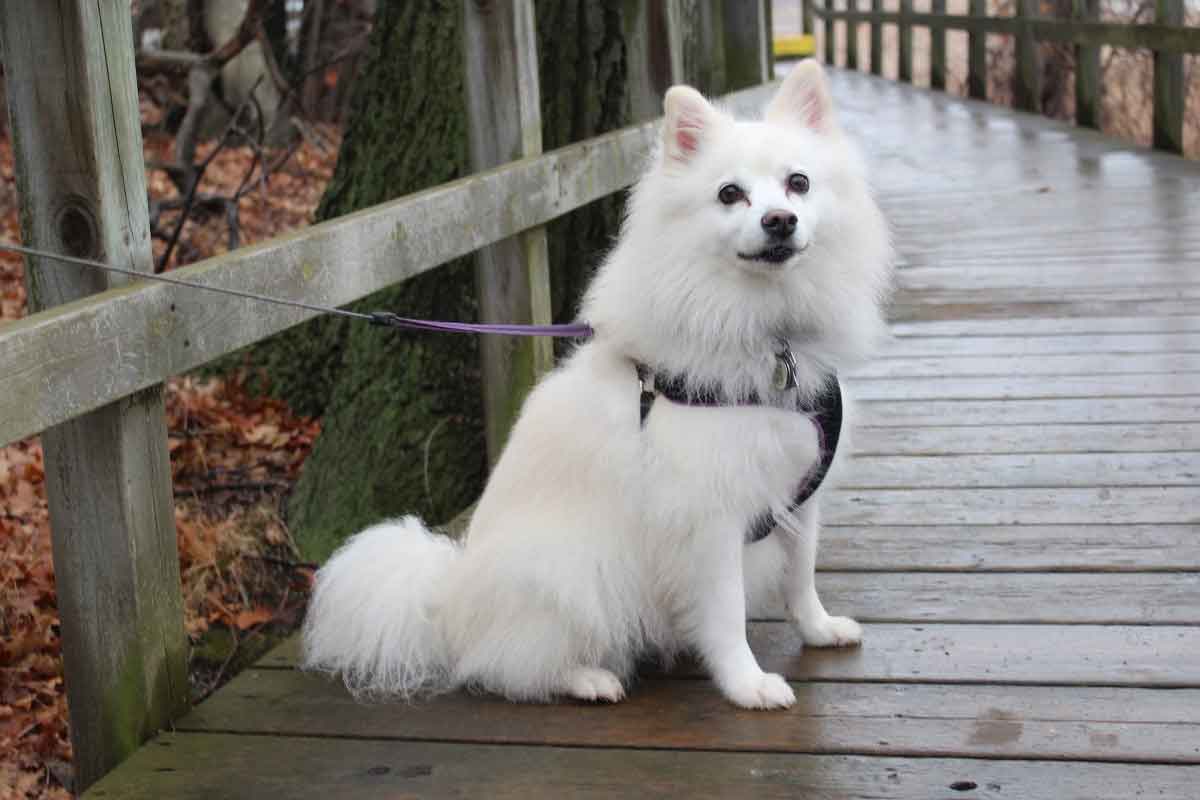
    Japanese Spitz

    The Japanese Spitz he is a very people-oriented dog.

    Content

    History

    The strong similarity to the Mittelspitz (Standard or Medium Spitz) German allows us to suppose that the Japanese spitz descends from this same race. Other cynologists assume that the Spitz descends from the Nordic Spitz. One thing is for sure: the origin of Japanese spitz not in japan, but in Europe. From there he arrived in Japan at the beginning of the 20th century along with travelers.

    The attractive white dog with the charming character quickly gained popularity among the Japanese population. With more caps from China, Canada and the US, own breeding was established in Japan in the years 20. While in Europe an attempt was made to increase the size of the lace, thus creating the German Spitz, the Japanese tended to opt for the more original compact form. In 1948 the Japanese Kennel Club established a first breed standard for the first time. As country of origin, Japan was indicated in the standard. The FCI, that has officially recognized the Japanese spitz from 1964, includes it today in the Group 5 (Spitz and dogs of the original type), as well as in the Subsection 5 (Asian Spitz and related breeds), under Standard No. 262.

    In his native Japan, the Japanese spitz it was very popular for a long time, especially in the years 50 the last century. Although it is still more common there in terms of numbers than in Europe, the demand of the little companion is gradually changing. While in Japan the number of recently registered puppies is declining, is increasing in North America and Europe.

    Physical characteristics ยซJapanese Spitzยป

    This breed is distinguished by the fact that it is exclusively pure white.. Thanks to his straight and dense hair, the Japanese Spitz seems strong. What is no less important, it is also caused by the swollen inner layer. The beautiful ruffle on the shoulder, neck and sill contributes to attractive appearance. Typical of the tail is a long and voluminous flag.

    Despite her short legs, the Japanese Spitz is sporty and extremely agile. Due to its balanced proportions, the appearance of this compact pedigree dog is both striking and harmonious.

    The height at the cross – the elevated transition from neck to back – tends to be of 30 to 38 cm in adult males. Females reach a somewhat smaller size. The Japanese Spitz weighs between 4,5 and 11 kg.

    Character and abilities ยซJapanese Spitzยป

    The well balanced nature of the Japanese Spitz fits the very harmonious appearance. He is an attentive guard. Anyone who approaches him is not immediately signaled with a savage bark. Only when the Japanese pedigree dog feels a serious threat, gets loud and fights back vehemently.

    At home, the Japanese Spitz behaves quite calmly. Abroad, on the other hand, he likes to show the energy he has inside him. To enjoy the Japanese Spitz, you must like a little dog who likes to play. You should also have fun on long trips with your four-legged friend.

    The Japanese Spitz he is a very people-oriented dog. Whether it belongs to one person or has a master or caregiver at the same time, he does not care. He also likes to live with the family. The company of people is the priority. Pets or other pets are not enough. Although the Japanese spitz usually get along with them. So if you're short on time for a dog, a Japanese Spitz probably not the right thing for you.

    The white puppy enjoys the company of people and would like to be with them always and everywhere.. He is very receptive and eager to learn. Which makes education in combination with devotion quite easy even for untrained dog owners.

    An apartment in the city is suitable for him, as long as you are well occupied with extensive walks and activities.

    ยซJapanese Spitzยป Care

    Despite the hereditary predisposition to many diseases, Many of the ailments can be avoided by taking proper care of your Spitz. Dental problems in particular can be prevented through regular dental care, that is to say, brush your teeth at least once a week, or better daily. Diseases or inflammations of the eyes, nose, ears and claws can also be detected and treated at an early stage through proper care and regular check-ups. Another important aspect of grooming is the care of the coat of the Japanese spitz. Despite the impressive and luxurious fur, This is not very elaborate and therefore it is usually sufficient if the hair is combed or brushed thoroughly twice a week. Only in the coat change phase (twice a year) grooming effort increases until daily styling.

    Japanese Spitz health

    An indication of good and serious parenting is the presentation of genetic test results.. The breeding animals used must have an impeccable genetic makeup to exclude genetic diseases from the start. Dogs in which hereditary diseases typical of the breed have occurred should be excluded from breeding for the sake of the health of the breed. This also includes the tendency to dislocate the patella (slipping of the patella out of its guide), which can also be inherited in many dogs, especially in small dog breeds. Also eye problems, such as distichiasis or narrowing of the tear ducts, as well as dental problems can occur with the Japanese spitz. No other diseases typical of the breed are known..

    The correct nutrition of the ยซJapanese Spitzยป

    In a special way, correct nutrition contributes to the health and well-being of the Japanese spitz. Small dogs with a very compact constitution have a strong tendency to be overweight. Too many pounds can easily lead to joint disease and heart and circulation problems.. Overweight dogs are also at higher risk for diabetes.

    As the owner of a Japanese spitz, you should always keep the amounts recommended by food manufacturers. It also, the dog should not be given too many treats between meals.

    It is not only the quantity but also the quality of the food that is important. Besides vegetables or rice, good dog food consists largely of high-quality meat. Poor quality food often contains an excessive amount of cereals. Under no circumstances should it contain flavor enhancers or sweeteners.

    Before buying, you should find out the exact composition of the dog food in the manufacturer's instructions. Several vendors offer good and safe dog food, both dry and wet.

    It is not unusual for dog owners to prefer homemade dog food. This can also be an alternative to the ready-to-eat food available in stores for the Japanese spitz. But, it is essential that you acquire the necessary knowledge to cook balanced dog food for yourself.

    The diet BARF it is also a good way to feed Japanese spitz with a healthy diet. BARF means ยซBone And Raw Foodยป (Bones and raw foods). All food components, like meat, fish, vegetables or fruit, they are only given raw. Various vendors and specialty stores facilitate BARF to the dog owner. Like cooking food, this feeding method requires a certain amount of knowledge about the correct use of raw ingredients.

    You must feed a puppy of 3 to 5 times a day, an adult raw food and bones 2 times a day.

    Buying a "Japanese Spitz"

    Despite the growing popularity and demand in the European and American continent, the Japanese spitz still belongs to the rare dog breeds. The waiting period for a new litter at a breeder can be very long. Who doesn't necessarily care about a purebred puppy, but also consider buying a Spitz adult, should – parallel to the search for a breeder – also look around the animal shelter, where over and over again Spitz or the crosses of Spitz they are waiting for a new and loving home. A puppy, on the other hand, should only be purchased from a serious and certified breeder.

    How do I recognize a serious breeder?

    When choosing a suitable breeder, various factors play a role. It's not just the "formalities" that must be correct, that is to say, the papers, the pedigree and the contract of sale, but also the personal reasons that ultimately decide the purchase. The breeder must, first, be understanding with you, and this cannot be found out with a short email or a short phone call. One or better several meetings are necessary to get a complete picture of the breeder and his dogs.. Does the breeder invite you to his house? Do you willingly show your "kennel" and do the animals live in close contact with the breeder's family? The first weeks are very important for the socialization of the puppies and therefore the environment must correspond absolutely to the affectionate nature of the puppies. Japanese spitz. It also, a serious breeder will be able to tell you a lot about the breed and its characteristics. They will also ask you about your life circumstances to make sure your puppy has fun with you..

    Characteristics "Japanese Spitz"

    Coexistence is important that you have with your new friend. Before considering the acquisition of a dog of the breed "Japanese Spitz" you know certain factors. Not all breeds of dogs are apt to live in an apartment, you must take into account his character, their need for exercise, their interaction with other pets, their care and if you have small children, their level of tolerance towards them.

    Training ?

    5,0 of 5 stars (based on 1 review)

    Suitability of the apartment ?

    4,0 of 5 stars (based on 1 review)

    Can be alone all day ?

    2,0 of 5 stars (based on 1 review)

    Suitable as a first dog ?

    5,0 of 5 stars (based on 1 review)

    Weight gain ?

    5,0 of 5 stars (based on 1 review)

    Health ?

    4,0 of 5 stars (based on 1 review)

    Intelligence ?

    4,0 of 5 stars (based on 1 review)

    Kindness with child ?

    5,0 of 5 stars (based on 1 review)

    Tendency to bite ?

    2,0 of 5 stars (based on 1 review)

    Tendency to bark ?

    2,0 of 5 stars (based on 1 review)

    Tendency to flee ?

    2,0 of 5 stars (based on 1 review)

    hair loss strength ?

    5,0 of 5 stars (based on 1 review)

    Suitable as a guard dog ?

    3,0 of 5 stars (based on 1 review)

    Joy ?

    4,0 of 5 stars (based on 1 review)

    Cat friendliness ?

    4,0 of 5 stars (based on 1 review)

    Power level ?

    4,0 of 5 stars (based on 1 review)

    Images "Japanese Spitz"

    Photos:

    1 – Japanese spitz by https://pxhere.com/es/photo/1273902
    2 – Japanese Spitz Siberia by 0894Leanne, CC BY-SA 3.0, via Wikimedia Commons
    3 – Japanese Spitz Puppy by mostlegendary@gmail.com, CC BY-SA 3.0, via Wikimedia Commons
    4 – Japanese spitz by https://www.pikist.com/free-photo-sixhn
    5 – Japanese spitz by https://www.pxfuel.com/en/free-photo-xghfb
    6 – Japanese Spitz by Trev Grant, CC BY 2.0, via Wikimedia Commons
    7 – Japanese Spitz by https://www.pikrepo.com/fflza/japanese-spitz-near-wall

    Videos "Japanese Spitz"

    Kubo - Japanese Spitz Puppy - 2 Weeks Residential Dog Training
    Kubo – Japanese Spitz Puppy – 2 Weeks Residential Dog Training
    Japanese Spitz / Breed of dog
    "Japanese Spitz" / Breed of dog

    Type and recognitions:

    • FCI CLASSIFICATION:
    • Group :
    • Section : . .

    Federations:

    • FCI – Group 5: Spitz-type dogs and primitive type – Section 5: Asian Spitz and related breeds. โ“˜
    • ANKC – Group 7 (Non-Sporting) โ“˜
    • CKC – Group 6 – Non-Sporting โ“˜
    • โ€‹KC – Utility โ“˜
    • NZKC – Non-Sporting โ“˜
    • UKC – Northern Breed Group โ“˜

    FCI breed standard "Japanese Spitz"

    Origin:
    Japan

    Date of publication of the valid original standard:
    16.06.1999

    Use:

    Companion dog.


    General appearance:

    Its body is covered with abundant white fur., the snout is sharp, triangular and erect ears, The tail is covered with long feather-shaped hair and curls over the back.. Robust and well balanced constitution, Its harmonious beauty gives it a lively appearance and dignity characteristic of this breed., that at the same time denotes elegance.

    IMPORTANT PROPORTION : The relationship between the height at the withers and the length of the body is 10 : 11.


    Behavior / temperament:

    It is an intelligent dog, joyful, with keenness of senses. Boisterous nature is not allowed.

    Head:

    The size of the head should be in harmony with the body and should be moderately wide and rounded.

    Cranial region:
    • Skull : The forehead is moderately developed. The back of the skull is very wide.
    • Depression links (Stop) : Defined.

    facial region:

    • Nose : Small, rounded and black.
    • Snout : Pointed, the tip slightly rounded and well balanced. Lips adherent and preferably black.
    • Jaws / Teeth : Strong white teeth with scissor bite.

    Eyes : Moderately large, almendrada form, placed slightly oblique, dark colored. The edges of the eyelids black.

    Ears : High insertion, small, triangular, upright, directed forward and placed not too far apart.

    Neck:

    Moderately long and very muscular.

    Body:

    • Cross : High.
    • Back : Straight and short.
    • Kidney region : Wide.
    • Chest : Wide and deep, well arched ribs.
    • Abdomen : Well collected.

    Tail:

    High insertion, moderately long and carried on the back.

    Tips

    PREVIOUS MEMBERS : Well inclined shoulders, forearms straight and elbows close to the body.

    LATER MEMBERS : Muscular, the femoro-tibio-patellar joints (knees) and tibio-tarsals (hocks) moderately angled.

    FEET : Cat feet. Thick and desirably black pads, the same as nails.

    Movement:

    Fast and active.

    Mantle

    HAIR : The hair of the outer coat is straight and remains separated. The hair of the undercoat is short, dense and soft texture. The face, the ears, the front part of the limbs and under the hocks are covered with short hair; the rest of the body is covered with long, abundant hair, especially from neck to shoulders, and the parapet that has a beautiful ruff of hair. The tail also has abundant long feather-shaped hair..

    COLOR : Pure white.


    Size and weight:

    Height to the cross :

    • Males : 30 โ€“ 38 cm..
    • females : slightly smaller than males.


    Fouls:

    Any deviation from the aforementioned criteria is considered as a fault and the severity of this is considered to the degree of the deviation to the standard and its consequences on the health and well-being of the dog..

    โ€ข Upper or lower prognathism.
    โ€ข Firmly coiled tail.
    โ€ข Shyness, noisy dog.

    MISS PLAYOFFS

    โ€ข Aggressive or fearful dog.
    โ€ข Floppy ears.
    โ€ข Tail not carried over the back.

    Any dog โ€‹โ€‹showing clear signs of physical or behavioral abnormalities must be disqualified..


    N.B.:

    Males should have two normal-appearing testicles fully descended into the scrotum..

    Source: F.C.I - International Cynological Federation

    Alternative names:

    1. Nihon Supittsu (English).
    2. Nihon Supittsu (French).
    3. Nihon Supittsu (Japan-Spitz), Japanischer Spitz (German).
    4. Nihon Supittsu (Portuguese).
    5. Nihon Supittsu (espaรฑol).

    โ–ท The world of Pets: Dogs, cats, birds, reptiles, amphibians

    Norwegian Lundehund
    Noruega FCI 265 - Nordic Hunting Dogs

    Lundehund

    Most of the Norwegian Lundehund live in Norway and Finland, it is believed that there are some 2000 copies around the world.

    Content

    History

    The Lundehund (Norsk Lundehund or Norwegian Puffin Dog) It is a small breed of dog of Spitz type, originally from Norway. Its name is composed of the prefix Lunde, Norwegian lundefugl (puffins), and the suffix hund, What dog. The breed was developed to hunt these birds and their eggs.

    The Norwegian Lundehund is a small, rectangular Spitz, with a wide variety of mobility in the joints of your bones, What makes him able to enter through small and intricate passages.

    They remain able to rotate the head back on the backbone and bend the hind legs to the side at an angle of 90 degrees such as the arms of humans, In addition to six toes on the feet.

    The breed has a long history. Already in 1600 It was used for hunting puffins along the Norwegian coast. Its flexibility and extra toes were ideal for hunting of birds in their places of nesting in the inaccessible cliffs and caves.

    Video ยซNorwegian Lundehundยป


    My lundehund

    Interest in the breed declined as new hunting methods for puffins, as for example, the use of networks…, and this ex officio contortionist, was no longer needed. Puffins were a precious object of hunting, the meat was horse and kept and feathers were used to make quilts.

    The breed was nearly extinct around World War II, when the canine distemper hit Vรฆrรธy and the islands surrounding. In 1963, the population was decimated… Only six copies of Lundehund (one Vรฆrรธy and 5 in Soon, to the South of Norway), These five puppies was of the same litter.

    Due to the care of the brood with the strict guidelines, currently there are approximately 1500 or 2000 copies of Lundehund around the world, of this population around 1.100 are in Norway and almost 350 in the United States.

    The official registration of the Lundehund was approved by the American Kennel Club's in the miscellaneous class. 1 in July of 2008, After a unanimous vote of the Board the 13 in November of 2007. The race debuted at the AKC National Championship / Eukanuba in Long Beach, California (United States), the 13 and 14 in December of 2008, being one of the most important events of the American canine world.

    The 12 in February of 2010, The American Kennel Club Board of Directors voted to accept the Lundehund in the AKC Book of Origins and became part of it on 1 in December of 2010. The 1 in January of 2011, became part of the "Non-Sports Group".

    For the American Kennel Club and Canadian Kennel Club, the non-sports group is a diverse classification that comprises a variety of robust dogs with different personalities and appearances as the Chow Chow , and the Keeshond, among others. Covered by the non-sporting group breeds, It is very diverse in terms of appearance, size, layer, personality and, in general.

    According to the FCI classification it is located in the Group 5 Spitz-type dogs and primitive type. Section 2 Nordic Hunting Dogs.

    Physical characteristics

    The Lundehund medium in size looks a bit like a fox and is, also because it is one of the rare races, sometimes mistaken for a mestizo, a Nordic mongrel. On the contrary, is very specialized: The Lundehund has been bred for hunting puffins, a species of bird that breeds in burrows. This brings with it some unique physical characteristics: your shoulder joints are more flexible, allowing it to turn its front legs 90ยฐ to the side. It also, this dog can close his pointed, upright ears, allowing you to dive better.

    The most striking features are undoubtedly the six toes of each foot and the up to eight pads, which give the ancient cliff hunter immense security. Some of these dogs also lack molars, which facilitated the transport of the captured birds without damaging them.

    The Norwegian Lundehund It has a height at the withers of up to 38 cm and weighs 7 kg. sporty and light. The dense coat is short and red to fawn, with black hair tips in places. have a smooth undercoat, very fine and a rough top coat.

    Character and skills

    The Norwegian Lundehund is a four legged friend, simple and skillful, but he has a lot of energy and wants to live it. Due to its independent nature – the Lundehund was left to fend during the hunt – always kept his own head and thus will never fully subordinate himself. Who respects this, win with him Lundehund an easy to train and loyal friend for life.

    Basically the breed is considered to be quite shy, so a close relationship with its owner is especially important – that's how your Lundehund gain security. Towards strangers he is usually reserved – it is also considered to be alert. He usually gets along well with other dogs. The Lundehund not a typical hunting dog, but is also wonderfully suitable as a companion dog.

    The education of the Norwegian Lundehund

    This is a breed of dog with a stubborn and stubborn character, even so they are easy to train and learn the basic commands with great motivation.

    Although the breed belongs to hunting dogs, the Lundehund can accompany you, with some effort in their education, on your nature walks without the need for a leash, since it is not an elusive dog, nor a traditional prey tracker. A major challenge is getting our dogs out of the habit of barking: Lundehund, like all nordic dogs, announce aloud all the supposedly interesting things in their environment – and that in part is quite persistent. So patience is absolutely necessary when training a Lundehund. Already in puppyhood, be sure to keep this in mind when training your dog. Play lessons for puppies, as well as attendance at a canine school, have a positive effect on Lundehund – here you can not only socialize him more with other four-legged friends, but you will surely also get some tips and tricks for the education of this dog.

    Health: the syndrome Lundehund

    Since the population dates back to only five dogs, Controlled breeding of the breed made a new start in the 1990s. 1960, with what the Lundehund has a very small gene pool. One of the five founding dogs developed stomach and intestinal symptoms at the age of about three years, which have spread further among the descendants. Today, this is known as the lundehund syndrome: a chronic, inflammatory bowel disease that is associated with increased protein loss through the intestines. About half of the population is affected by it, although to varying degrees. A genetic test can be used to determine if a dog intended for breeding is a carrier, so that the risk of Lundehund syndrome can be reduced. There is no cure for this disease, only the symptoms can be relieved. While some dogs are barely limited by the disease and have long symptom-free phases, other affected quadrupeds have a more severe course and ultimately lead to death.

    Before deciding to acquire a representative of this breed, must be informed in detail about the lundehund syndrome and the corresponding genetic test and its meaning. The Nordic Dog Clubs can also provide you with more information on this.. The healthy ones Norwegian Lundehund are, for the rest, very robust and can reach an age of about 14 years.

    Norwegian Lundehund "care

    The coat of this Norwegian Coastal Dog is insensitive to weather conditions and requires little grooming. But, the more you brush, less hair is distributed in your home – especially during coat change a daily brushing may make sense, because the Lundehund then lose a lot of hair. Otherwise, care is quite simple: dirt brushes better when dry. By the way, the Norwegian Lundehund It is one of the few dogs that really enjoys grooming. If you support them with the brush, you are also doing something for their bonding.

    Check the ears and eyes regularly and clean them with special ear and eye cleaners if necessary. If the eyes get wet, what happens in many dogs due to narrow tear ducts, it is enough to gently clean and dry them once a day with clear water. Some dog owners opt for daily dental care in the form of toothbrushing with dog toothpaste and toothbrush.. If you already introduce your puppy to this ritual, is an optimal prevention against tartar and associated secondary diseases.

    Activities ยซLundehund Norwegianยป

    Long walks in nature, enjoying the wind and the weather are the base of activity of this Norwegian breed. It also, most of these dogs love to swim. Make your partner happy and give him the opportunity to do it!! But you should also encourage and challenge their brain and skills. There is a wide range of joint activity possibilities at your disposal: Dog lovers can enjoy almost all types of sports with dogs, with the exception of sports with training dogs. Due to his great independence you should not expect unconditional obedience from him, but a relaxed approach to the respective human-animal hobby jointly. Try together with your animal companion which sport you like the most!!

    Is a "Norwegian Lundehund"?

    One Norwegian Lundehund fits well in a sporty family, where at least one family member already has experience with dogs. Learn easily and with pleasure, but for education you still need a certain knowledge and consistency. It also, it is important to use the dog to its full potential – the small Lundehund not a couch dog, needs a lot of outdoor exercise and a lot of time.

    He is usually very fond of children and can also make friends with cats, especially if you met them as a puppy. This dog can also live in a medium-sized apartment, but of course also enjoy a garden (leak proof). It is important to direct the joy of the breed's barking in a controlled manner.

    Before moving, make sure no one in your home has allergies to pet hair and consider whether you can and want to take the dog on vacation – many hotels today welcome four-legged friends – or how you organize care. Although the Lundehund it's more like a small dog, can be quite expensive in terms of regular costs: Apart from a high quality diet with a high content of fish, this includes taxes and dog insurance, as well as visits to the vet. It also, is, of course, the not inconsiderable purchase price of this rare four-legged friend – with possible travel expenses – and if necessary the basic equipment.

    Where can I find my "Norwegian Lundehund"?

    First of all: One Norwegian Lundehund It's very weird. In total, there are some 1.300 specimens all over the world. So, you may very well have to wait a long time and travel many miles to get hold of such a rare dog. Most of the Lundehunds they live in norway. Check with a Norwegian dog club in your country to find out how to contact breeders of the Norwegian Lundehund. Ask your potential dog breeder about the lundehund syndrome and the diet of the breed.

    His young Lundehund will move in with you at the earliest at the age of eight weeks – if you come from a European country, you will normally need a valid rabies vaccine for the trip in addition to the necessary papers. It is essential that you remember booster shots and also talk to your vet about regular deworming of your four-legged friend.

    It is extremely unlikely to find an adult dog, especially outside of norway. So if you're looking for a four-legged adult friend, it is advisable to contact a Nordic dog club. There are also often wonderful mongrel dogs looking for a new home., value the adoption of one of them.

    We wish you much joy with your extraordinary Norwegian Lundehund!

    Characteristics "Norwegian Lundehund"

    Coexistence is important that you have with your new friend. Before considering the acquisition of a dog of the breed "Norwegian Lundehund" you know certain factors. Not all breeds of dogs are apt to live in an apartment, you must take into account his character, their need for exercise, their interaction with other pets, their care and if you have small children, their level of tolerance towards them.

    Adaptation โ“˜

    3,0 of 5 stars (based on 1 review)

    friendly dog โ€‹โ€‹โ“˜

    3,0 of 5 stars (based on 1 review)

    hair loss โ“˜

    4,0 of 5 stars (based on 1 review)

    Affection level โ“˜

    4,0 of 5 stars (based on 1 review)

    Need for exercise โ“˜

    4,0 of 5 stars (based on 1 review)

    Social need โ“˜

    4,0 of 5 stars (based on 1 review)

    Home โ“˜

    4,0 of 5 stars (based on 1 review)

    Toilet โ“˜

    5,0 of 5 stars (based on 1 review)

    Friendly with strangers โ“˜

    3,0 of 5 stars (based on 1 review)

    barking โ“˜

    4,0 of 5 stars (based on 1 review)

    Health โ“˜

    2,0 of 5 stars (based on 1 review)

    Territorial โ“˜

    4,0 of 5 stars (based on 1 review)

    Cat friendly โ“˜

    3,0 of 5 stars (based on 1 review)

    Intelligence โ“˜

    3,0 of 5 stars (based on 1 review)

    Versatility โ“˜

    3,0 of 5 stars (based on 1 review)

    Child friendly โ“˜

    3,0 of 5 stars (based on 1 review)

    Surveillance โ“˜

    4,0 of 5 stars (based on 1 review)

    joy โ“˜

    4,0 of 5 stars (based on 1 review)

    Images "Norwegian Lundehund"

    photos:

    1 – "Norwegian Lundehund" by http://www.petsadviser.com/
    2 – "Norwegian Lundehund" by https://pxhere.com/es/photo/754827
    3 – "Norwegian Lundehund" by https://pxhere.com/es/photo/880994
    4 – Norwegian puffin town Andrva / CC BY-SA
    5 – "Norwegian Lundehund" by https://commons.m.wikimedia.org/wiki/File:Lundehund.jpg
    6 – The Norwegian Lundehund ยซGydaยป looking out at the ocean on the north side of the island Vรฆrรธy in Northern Norway. The island on the top, in the middle, is ยซMoskenยป, the island in the top left is ยซMoskenesยป by ZorroIII / CC BY-SA

    Type and recognitions:

    • FCI CLASSIFICATION:
    • Group :
    • Section : . .

    Federations:

    • FCI – Group 5 – Section 2 Nordic Hunting Dogs. โ“˜
    • AKC – Nordic Hunting Dogs. โ“˜
    • CKC – Nordic Hunting Dogs. โ“˜
    • UKC – Nordic Hunting Dogs. โ“˜

    FCI breed standard "Norwegian Lundehund"

    Origin:
    Norway

    Date of publication of the valid original standard:
    10.11.2011

    Use:

    Its anatomical peculiarities train these dogs for the hunting of the frailecillos in the steep rocks around the fjords and in the cliffs.


    General appearance:

    The "Norwegian Lundehund" is a Spitz type dog, rectangular, small, flexible, relatively light, with well -defined sexual characteristics.


    Behavior / temperament:

    Alert, energetic and vivacious.

    Head:

    Dry, medium width, wedge shaped.

    Cranial region:
    • Skull: Slightly rounded, protruding supraciliary arches
    • Stop: Pronounced but without excess.

    facial region:

    • Horcico: Cuneiform, medium long. Slightly convex muzzle.
    • Jaws / Teeth: Preferably scissor bite. Pincer bite and moderate undershot are acceptable. The lack of premolars in both jaws is allowed.
    • Eyes: Slightly oblique, not outstanding. The iris is yellowish brown. The pupil is surrounded by a dark colored ring.
    • Obars: The triangular ears are medium in size, wide at its base, carried erect and very mobile. They have the special characteristic that the pavilion cartilage can be contracted and the external part can be bent or specially crooked (backwards or upwards at right angles), so that the ear canal is closed.

    Neck:

    Delgado, medium long, quite strong and covered in a relatively abundant collar.

    Body:

    Rectangular.

    • top line: Straight.
    • Back: Strong.
    • Glikeness: Slightly inclined.
    • Pecho: Elongate, average amplitude, proportionally deep and spacious; it is not barrel shaped.
    • Lรญnand the bottom: Slightly retracted belly.

    Tail:

    Insertionmoderatelyhigh, medium long, well covered with dense hair, but without forming feathers. Carried in shapemildringon the back, or he wears it hanging. The tip of the tail must not be carried too high on the back or fall next to the flanks.

    Tips

    PREVIOUS MEMBERS:

    • Apgeneral arience: Moderately angled.
    • Antarm: Straight.
    • Pinis previous: Oval, slightly deflected out. Feet with a minimum of six fingers, of which five step on the ground. Eight pads on each foot. Anatomically the two inner fingers are formed by a finger with three phalanges and one with two phalanges with the corresponding tendon and muscular apparatus. Gives the foot a very strong appearance.

    LATER MEMBERS:

    • Apgeneral arience: The position of the hind limbs is a bit narrow.
    • Thighs: Muscular and strong.
    • Rodinllto: Moderately angled.
    • PinScheme: Muscular and strong.
    • Pinis later: Oval, Something diverted out with a minimum of six fingers, of which four step on the ground. Seven pads on each foot. The middle pad, the most important for its size, attached to the inner pad corresponding to the middle fingers. When the dog is normally standing on a flat surface, your body weight is evenly distributed over all pads.

    Movement:

    Light and elastic. The movement of the anterior members has a characteristic turn of the race and movement of the posterior members is a bit narrow.

    Mantle

    • Plink: Soft inner fluff, dense and rough outer coat. The hair is short on the head and the anterior part of the extremities. Thicker fur around the neck and on the back of the thighs. Dense tail hair, but without forming feathers.
    • Colorr: Always in combination with white. From reddish to more or less mixed with hairs with black tips Fawn; white with dark markings. Usually, the adult specimen presents more hairs with black tips to the young dog.


    Size and weight:

    Alturto the cross:

    • Males from 35 cm to 38 cm.,
    • Females from 32 cm to 35 cm..

    Pthat:

    • Males approximately 7 kg,
    • Females approximately 6 kg.


    Fouls:

    Any deviation from the aforementioned criteria is considered as a fault and the severity of this is considered to the degree of the deviation to the standard and its consequences on the health and well-being of the dog..

    FALTAS DISQUALIFYING:

    • Aggressiveness or extreme shyness.
    • Any dog โ€‹โ€‹showing clear signs of physical or behavioral abnormalities must be disqualified..


    N.B.:
    • Males should have two normal-appearing testicles fully descended into the scrotum..
    • Only functionally and clinically healthy dogs, with the typical conformation of the breed, should be used for parenting.

    Itlatest changes are in bold.

    Source: F.C.I - International Cynological Federation

    Alternative names:

    1. Norsk Lundehund, lundehund, Norwegian Puffin Dog (English).
    2. lundehund (French).
    3. Norsk Lundehund (German).
    4. Cรฃo de papagaio-do-mar (Portuguese).
    5. Perro frailecillo, Lundehund (espaรฑol).