โ–ท The world of Pets: Dogs, cats, birds, reptiles, amphibians

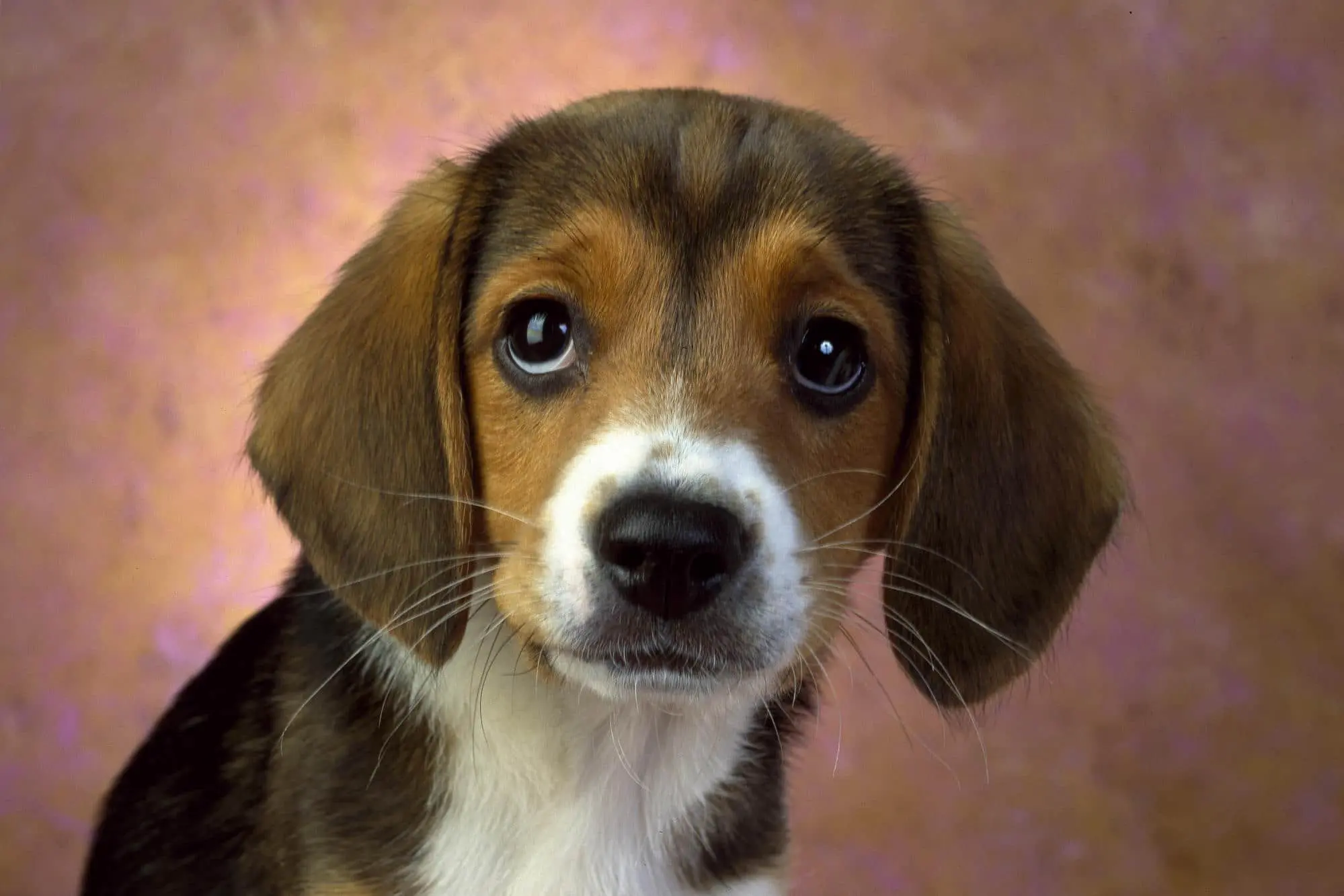
Beagle
Gran Bretaรฑa FCI 161 . Small-sized Hounds

The main fault of the Beagle is disobedience. He is very stubborn and playful.

Beagle

Content

Characteristics "Beagle"

Coexistence is important that you have with your new friend. Before considering the acquisition of a dog of the breed "Beagle" you know certain factors. Not all breeds of dogs are apt to live in an apartment, you must take into account his character, their need for exercise, their interaction with other pets, their care and if you have small children, their level of tolerance towards them.

Adaptation โ“˜

5,0 of 5 stars (based on 1 review)

friendly dog โ€‹โ€‹โ“˜

5,0 of 5 stars (based on 1 review)

hair loss โ“˜

3,0 of 5 stars (based on 1 review)

Affection level โ“˜

5,0 of 5 stars (based on 1 review)

Need for exercise โ“˜

5,0 of 5 stars (based on 1 review)

Social need โ“˜

5,0 of 5 stars (based on 1 review)

Home โ“˜

2,0 of 5 stars (based on 1 review)

Toilet โ“˜

1,0 of 5 stars (based on 1 review)

Friendly with strangers โ“˜

4,0 of 5 stars (based on 1 review)

barking โ“˜

5,0 of 5 stars (based on 1 review)

Health โ“˜

3,0 of 5 stars (based on 1 review)

Territorial โ“˜

1,0 of 5 stars (based on 1 review)

Cat friendly โ“˜

3,0 of 5 stars (based on 1 review)

Intelligence โ“˜

4,0 of 5 stars (based on 1 review)

Versatility โ“˜

2,0 of 5 stars (based on 1 review)

Child friendly โ“˜

5,0 of 5 stars (based on 1 review)

Surveillance โ“˜

5,0 of 5 stars (based on 1 review)

joy โ“˜

1,0 of 5 stars (based on 1 review)

History

The origins of the Beagle they are confused and remote. In the year 350 to. C. Xenophon already described some hounds that coincide in most details with the beagle.

It is believed that it was the Romans who brought them to England as rabbit hunters and once there they were crossed with local hounds..

Talbot Houndson are considered the ancestors of the North Country Beagle, Southern Hound, the Beagle, and the Foxhound.

Between 1300 and the 1400 the Beagle reached a high level of popularity among British monarchs. Edward II and Henry VII already had packs of Glove Beagles, So called because of its small size., they fit in a glove and Elizabeth I had Beagles that only measured 22 centimeters. Hound packs were popular on almost all large country estates.. Towards the 1400, the Beagles had already spread across Britain, Italy, Greece and France thus increasing its popularity (Snoopy is a Beagle).

The name given to the breed has two possible origins. On the one hand, it is considered a derivation of the Celtic word "beag" which means small., while on the other it is maintained that it comes from the French word "begueule" which means open mouth., Perhaps in reference to the noisy outcry produced in the cacario tract.

Physical characteristics


They are dogs with muscular legs aspect, and smooth, short coat. Despite having a muscular and slender appearance they tend to clog up is, his appetite is almost insatiable. Why there is that much attention to their diet and not be allowed to abuse this.

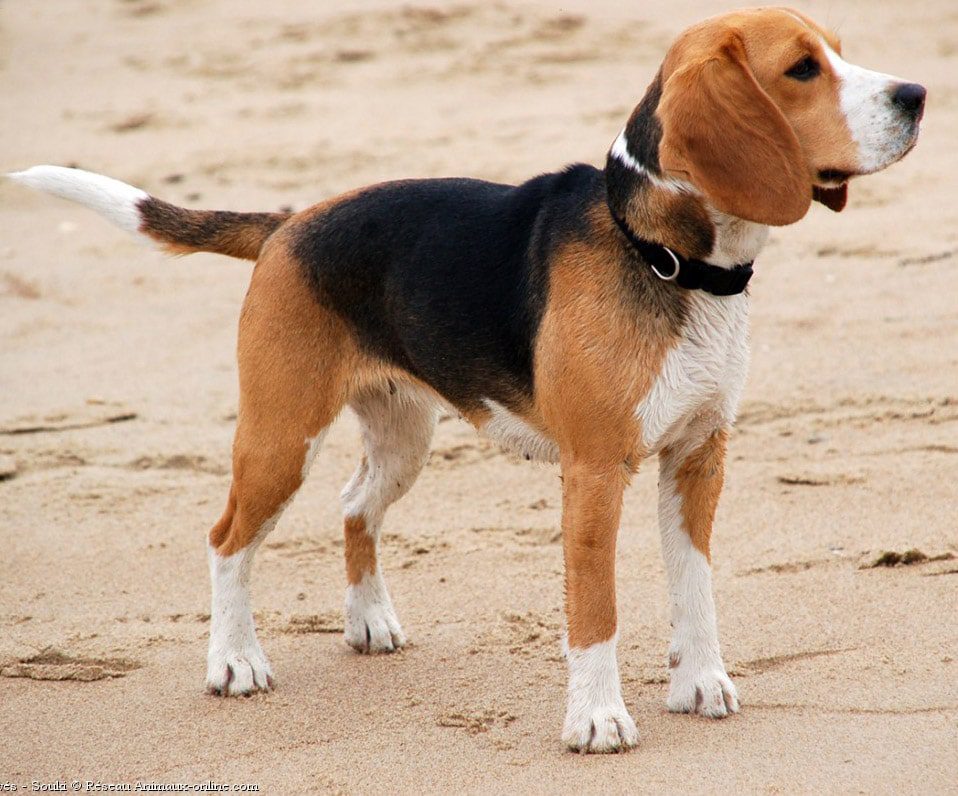
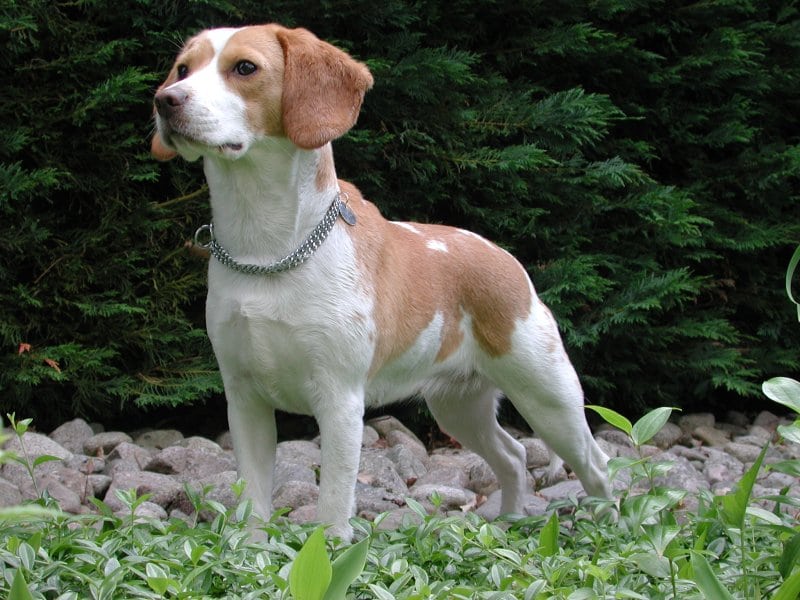
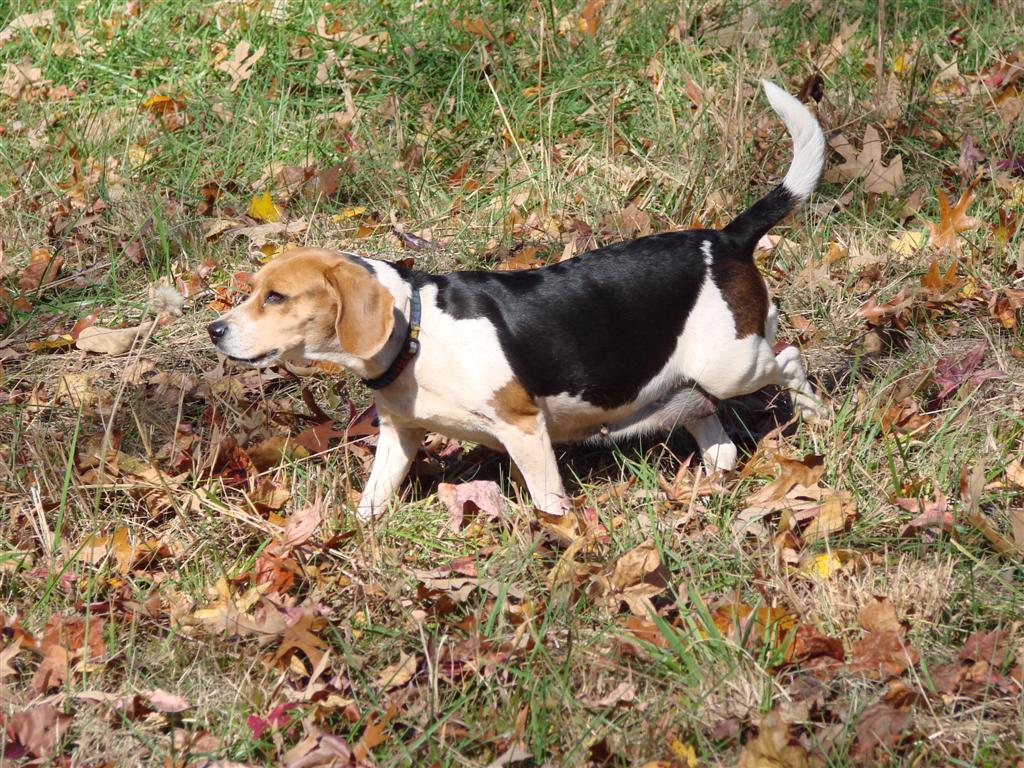
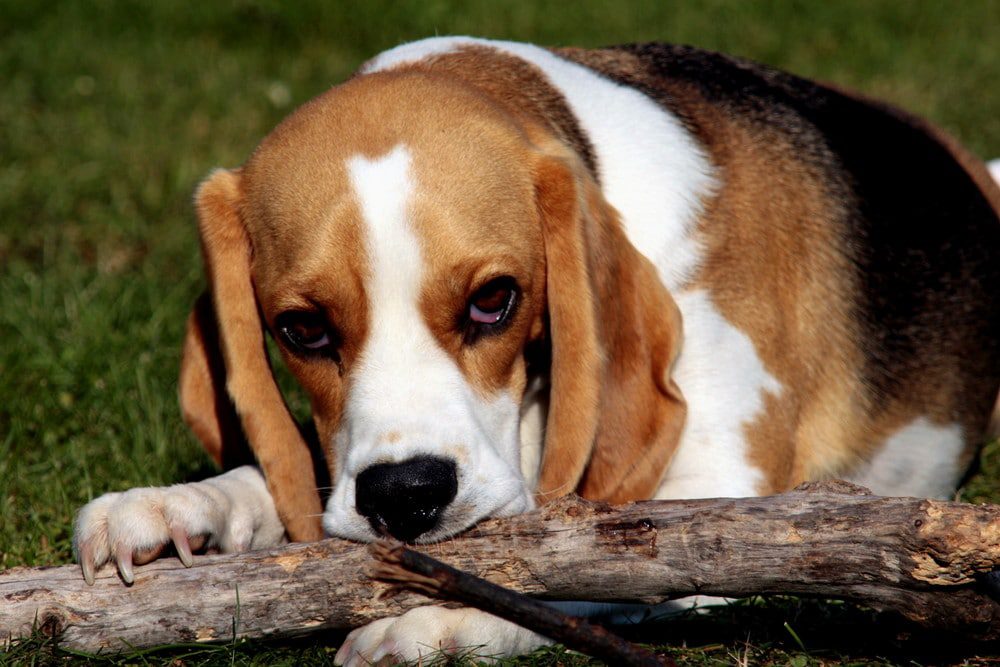
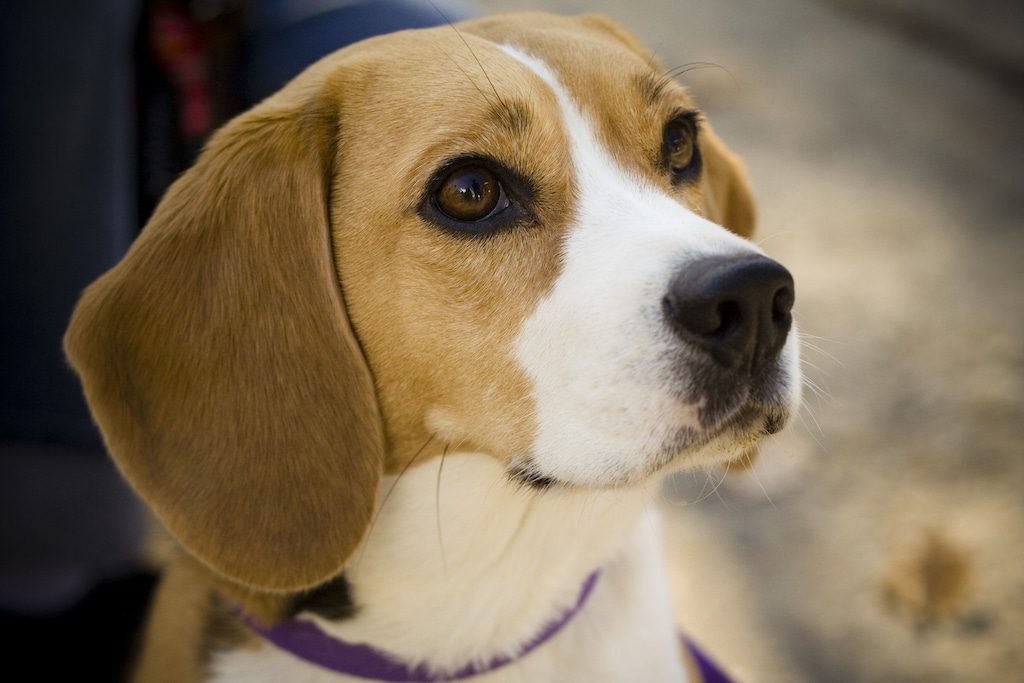
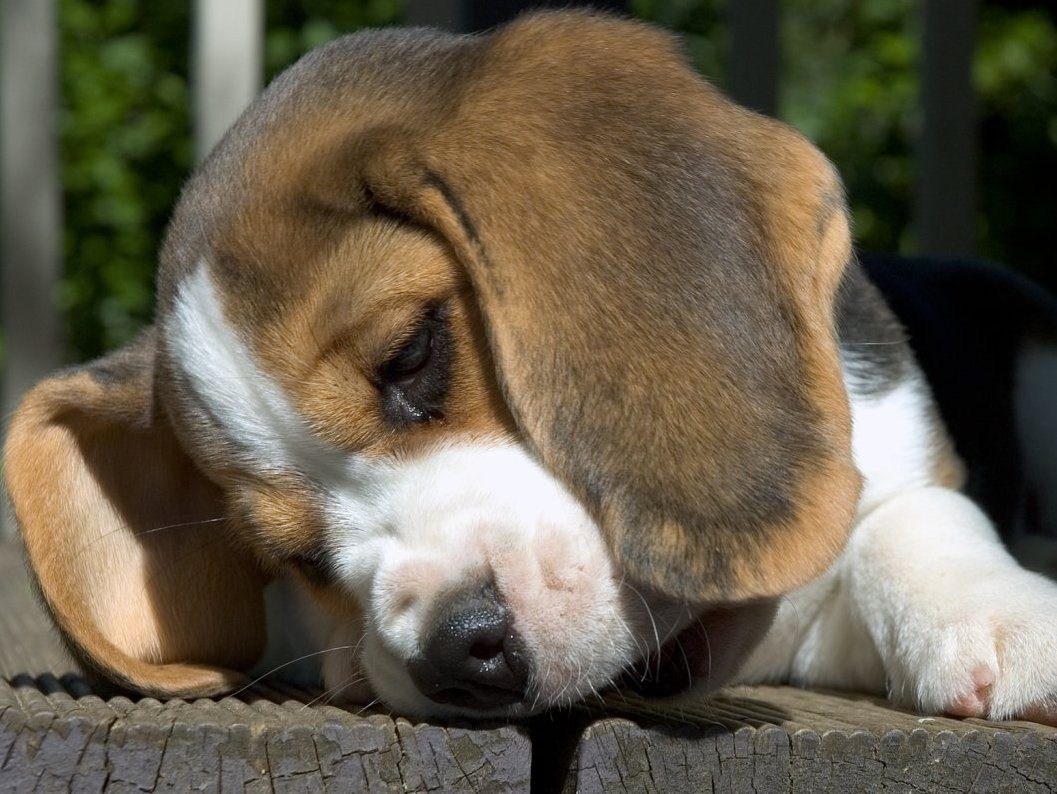
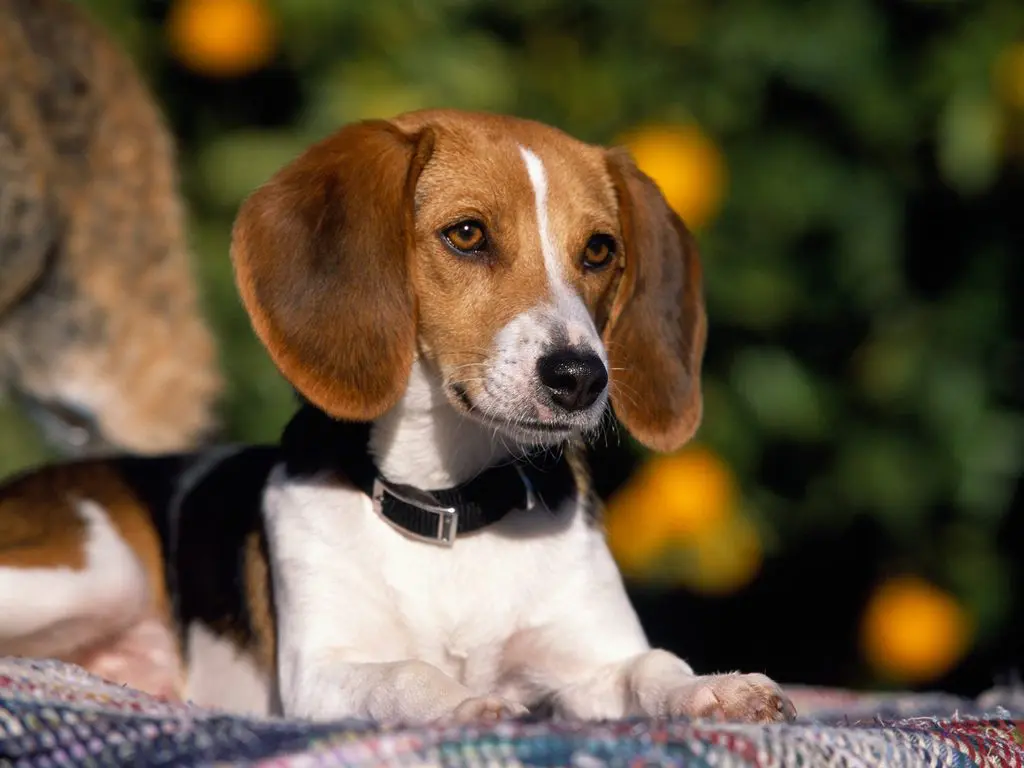
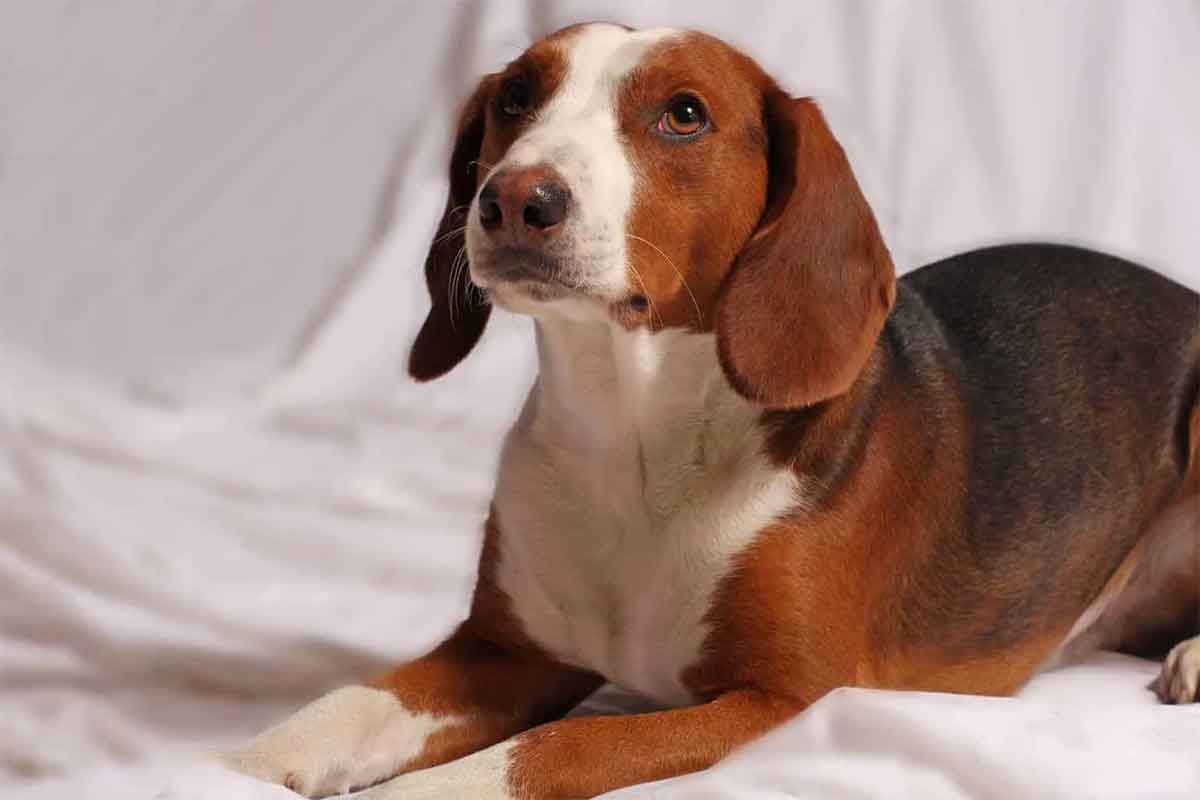
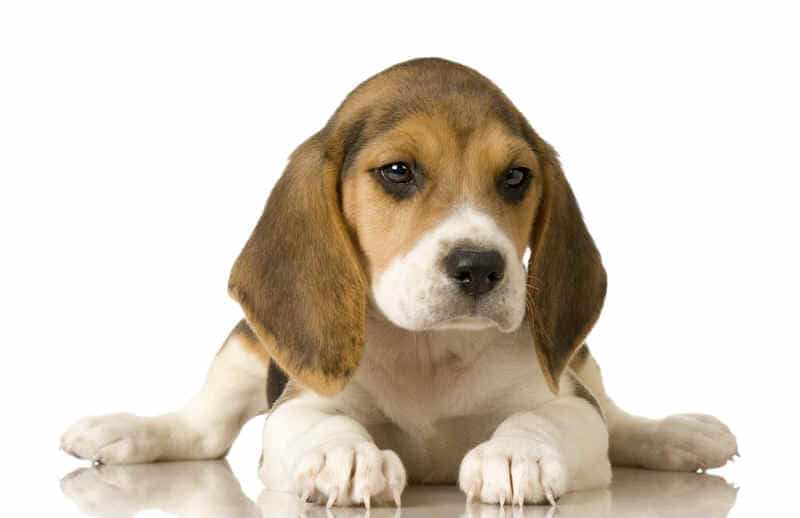
They have long ears. Its colors are usually black, Brown and white of any variety. There are many copies of white legs, Brown ears and Brown and black body. Another characteristic of the breed in its coloration is the intense black around its eyes.. It has a desirable minimum height at the withers of 33 cm., and a desirable maximum height to the cross of 40 cm.. Weighs between 9 and 16 kg.

Character and skills

The Beagle is always alert. Very hardworking, with great energy and determination, they are lively dogs, intelligent and uniform temperament: they do not show aggressiveness or shyness.

Closeness to their owners

The Beagle has almost all the qualities of the ideal companion dog, being meek, loving and friendly, forming strong ties with its people. They are very receptive to their emotions, whatever your age: share their joy in happy moments and show solidarity and support in difficult moments. He is considered an excellent therapist for psychologically debilitated people, especially since the fact that he is generally active does not prevent him from also enjoying calm when it is necessary.

He is also very cheerful and playful, and he loves to have fun. Thus, he especially likes people who are willing to play with him, especially the children.

But, It is important to note that he can be very agitated when playing and, for example, will bite the person you are interacting with. This is never a sign of bad behavior., but simply his way of playing. But, these behaviors can be limited by working on them as part of your education.

Videos "Beagle"

Ability to handle loneliness

Being a gregarious dog, the Beagle prefers company to solitude and needs a lot of social interaction during the day. They tend to suffer from separation anxiety when their owner is away and are left alone for any length of time, even in a familiar space.

So, not suitable for someone who spends most of their days away from home and cannot take it with them.

Relationship with children

The Beagle he is a dog that adores children, in which he finds great playmates, and vice versa.

Their tendency to bite people they play with can be problematic with younger children, so keep a close eye on their interactions, although this is valid for any race.

It should also be noted that sometimes they seek peace and quiet, and they can react badly if they are annoyed with a little insistence. So, it is important for everyone's well-being to teach children to respect their pet and understand their body language, as soon as your age allows.

Get along with strangers

The beagles they are very sociable and are usually delighted to meet new people, whether they are invited to the house by their owners or if they meet them on a walk, for example. He is not the type to be aggressive towards strangers, rather they take an interest in them and potentially expect them to play with them or even offer them food.

Protection instinct

Due to its jovial and open character, the Beagle not one of those who discourages strangers from approaching: you are more likely to approach them to meet them. They may raise their voices in such circumstances, but it is more to express his curiosity than to defend his master or his home.

In other words, although I am always alert, has no real protective instinct, and cannot be used as a guard.

Obedience

Like many breeds of hunting dogs, the Beagle is used to a certain independence of mind, since he must be able to make certain decisions for himself. In daily life, this means that it is far from being a model of obedience, and can even be quite stubborn.

This means you can give a teacher a hard time who doesn't know how to deal with this., especially due to lack of experience. So, a first-time adopter is better off with another breed.

Need for exercise

The Beagle needs to spend a lot of time outdoors, and you can only be comfortable if you do at least 1,5 hours of exercise per day.

In other words, not a breed at all suitable for a master who is often absent, sedentary and/or physically weak.

Working capacity

The Beagle was born for hunting and, in general, for all activities that require a very fine sense of smell. They are very persistent in fulfilling their mission: they are not only lively and intelligent, but also bold, with as much determination as energy.

Risk of leakage

The Beagle it is a hunting dog par excellence. This means that your nose guides you throughout your life., and nothing makes you happier than smelling and following a new or interesting scent. This means that the risk of escape is high and the garden must be fenced off..

Of course, this is also a problem when walking and doing other outdoor activities. So, learning to remember is absolutely crucial in order to consider letting him roam free, although this does not necessarily exempt you from being equipped with a collar with connected GPS to know where you are at all times if, Nonetheless, goes out to the street. Having said that, many owners simply choose to wear the strap consistently.

Noise level

The Beagle it is a very vocal breed of dog: he likes to express himself through his voice and howl loudly. His barks are a true language, and vary depending on what they are trying to communicate and their emotional level.

There are many reasons why it can bark: curiosity or desire to warn when you hear an external noise, afraid, boredom, attention seeking, greeting, separation anxiety…

In any case, it is certainly not the best option for a person who values รขโ‚ฌโ€นรขโ‚ฌโ€นsilence – or whose neighbors value it.

Adaptation to change

The Beagle adapts very well to changes, including lifestyle and / or environmental changes, for example after a move. As long as you stay with your teacher, your main point of reference is there.

Get along with other dogs

The Beagle is usually very friendly with other dogs, either sharing a house with another dog or meeting potential new playmates on walks and other activities. Of course, its use as a bulldog is no stranger to this.

Living under the same roof as one of your roommates can also be a great way to keep you from feeling abandoned when your owners are away..

Get along with cats

The beagles they are very attached to all members of their family. For him, a cat living in the same house is a full member of your family, especially if you are used to being with him from his earliest age. Otherwise, you have to be careful at the beginning of the coexistence and go little by little, but then it has every chance of being harmonious. This is all the more true since the presence of the little feline helps him feel less alone when his masters are absent..

As for the cats that you may encounter in the course of your wanderings, you better stay vigilant. In fact, your hunting instinct can take over and lead you to chase them.

Coexistence with other species

Even a Beagle who is simply a domestic companion is still basically a hunter. If a small animal is found or smells (rodent, bird, etc.) On an excursion, it is very likely that I will go after him and do something to him.

Things are normally very different in the case of an animal that shares your home and that is used to seeing from its first months. She considers him a member of her family and has no reason to attack him. But, there is no zero risk…

Observations

They generally have a way to sit very peculiar, without support in the legs, but rather on the thighs and buttocks, leaving the hind limbs extended completely in the ground.

education

Ease of training

The Beagle it is certainly not one of the easiest breeds to train. They are usually quite stubborn or forgetful, so your training will probably require a good dose of patience and / or creativity.

So, not recommended for a newbie, that he would soon be overwhelmed by his propensity to be indifferent to orders or to be interested in other things.

On the other hand, once you know how to get their attention, it is possible to teach him everything and control his actions. In particular, be able to hear and execute commands even when there is a lot of noise and distractions around. In other words, for an experienced person who knows how to do it (although sometimes you have to call in the help of a professional dog trainer), patience and perseverance pay off. Given its qualities, Worth the effort.

Training method

Being a very intelligent dog, the Beagle makes the connection between orders and actions fairly quickly.

But, this does not mean that he does what he is told. It may happen that you do not see the meaning of what is being asked of you, but it is not the most frequent: most of the time he is eager to please his master… as long as your mind is not occupied by something else. This is where the problem lies: in particular, your sense of smell can quickly become a distraction, especially since he is curious and has a highly developed hunting instinct. This can make training - and subsequent obedience - a bit difficult..

The correct method of training a Beagle, the one who is the key to success, it is therefore to work the concentration, and more specifically the concentration on the orders of his master. So, don't skimp on positive reinforcement, that is to say, in rewards (candies, petting, stimuli, etc.) when you react to being called by name, looks at his master while waiting for instructions and, of course, follow them.

Socialization

Like all dogs, the Beagle needs early socialization. From the first months of life, the puppy needs to be used to meeting all kinds of people, other dogs and other species, and be exposed to all kinds of experiences, smells and sounds. This stage of your life is very important for your cognitive and mental development, so that you are well balanced for the rest of your life.

If you adopt a dog from a breeder, usually they will have already done a lot of work in this area, especially if they only release it to 3 months of age, since the period between 2 and 3 months is the most crucial. But, it is still necessary to continue in the weeks and months following the adoption.

Learn the rules

Every dog รขโ‚ฌโ€นรขโ‚ฌโ€นneeds clear rules to find its place in the home. These rules are even more essential for the success of coexistence in the case of Beagle, who usually does what he wants.

They are easily assimilated, since they remain the same in time and space, as well as from one person to another. So, even before you arrive home, all family members must agree on what will and will not be allowed, and then stick to it. These may include, one person cannot be allowed to do what another prohibits, or tolerate certain puppy behaviors that will later be reprimanded as an adult.

This definition work may also require a small educational effort with children., so they understand that the rules they are asked to abide by are not made to annoy the animal, but to allow him to live in harmony among his family.

The first thing to learn

Unless you want to keep your dog on a leash for the rest of his life, teaching him to remember should be a priority for any owner of a Beagle, given their propensity to follow smells and, Therefore, to take flight. If security conditions allow it, the ideal is to leave your Beagle roam unhindered from a young age, so that he gets used to not being hooked while he is around his owner. In any case, as long as the memory is not perfectly integrated, it is important to reward him every time he returns after being called.

It is also important to control their tendency to chew from a very young age, to do so in objects intended for this purpose, and not in the hands of his master or in the furniture of the house, for example. If the dog is not stopped immediately when he begins to bite the person he is playing with, for example, saying "No!"!ยป firm, stopping the game session and ignoring it, there is a great risk that it will happen again one adult day. The bite of a Beagle adult is, Obviously, much less fun and much more dangerous than a small puppy bite. But, chewing is still inevitable, since this way it relieves the pain of the gums. All you have to do is provide him with toys to chew on., and make sure you limit this behavior to these objects.

Health

Life expectancy

Of 12 to 15 years

The Beagle it is usually quite robust and has a life expectancy higher than the average of other dog breeds.

Resistance to cold and heat

The short coat of the Beagle makes me not fear the heat. On the other hand, as long as the cold is not extreme, the density of its fur allows it to support it perfectly.

Like this, is capable of living in almost any climate.

Diseases

The general good health of the Beagle does not prevent you from being especially prone to certain diseases, like any other race. They are as follows:

  • The Hip Dysplasia, a malformation of the neck of the femur whose appearance may be favored by a hereditary factor. The fact that the bone does not fit perfectly in the hip joint causes pain and lameness, as well as the appearance of osteoarthritis as the animal ages;
  • Enanism, which makes the dog smaller than normal and may or may not be accompanied by other physical abnormalities, like extremely short legs;
  • chinese syndrome, also known as Musladin-Lueke syndrome: individuals with this syndrome grow normally, but they have a big skull and slanted eyes. It also, often have heart problems and toe abnormalities;
  • The Hypothyroidism, a thyroid disorder that causes an alteration of the animal's metabolism, with potentially numerous consequences: loss of hair, Obesity, skin disorders, shortness of breath, great fatigue, etc. The disease cannot be cured in the strict sense, but there are treatments that can greatly reduce the symptoms;
  • Selective immunoglobulin A deficiency (Ig A), affects proteins that defend the body against infectious agents. It can have various consequences: skin infections, respiratory and digestive, and even ear and urinary tract infections. Although it has not yet been established with certainty, this deficiency appears to be inherited, therefore, reproduction of affected subjects is not recommended;
  • The epilepsy, a neurological condition that is mostly hereditary, but that can also occur without affecting family members (near or far). It causes seizures that can be very impressive, but lifelong treatment may reduce their number or intensity. As a result, most affected individuals are capable of leading nearly normal lives;
  • The atopic dermatitis, a chronic and inherited disease in which the dog's skin does not act as a protective barrier. This predisposes you to developing various allergies;
  • Demodecia, disease caused by a parasite characterized by local or extensive hair loss, redness and itching, etc. It occurs most often in puppies between 3 and 12 months of age, due to their weak immune system;
  • Ear infections (otitis, etc.), as its large, flexible ears quickly trap air and provide an environment for moisture and dirt to collect.

The Beagle is also prone to several eye conditions.:

  • Nictitating gland prolapse, u ยซcherry eyeยป, which makes the gland under the third eyelid look like a cherry in the corner of the eye. An operation is often required to remove it. Since the surgical technique used is minimally invasive, the prognosis is good and relapses are very rare;
  • The glaucoma, which is abnormally high pressure in the eye, with very fast irreversible damage and even blindness, unless treated very quickly. This disease usually has a hereditary origin;
  • Progressive retinal atrophy of the APR-CSNB type, a degenerative eye disorder that causes impaired night vision. This disease is hereditary and incurable.

Risk of obesity

Although they are usually quite active, Beagles are prone to obesity due to their greed, especially if you have been neutered. This can lead to many health problems or aggravate existing diseases.. It also, represents a true virtuous circle: as in humans, the more weight an individual gains, less active is, and therefore… more fat.

So, Preventing your dog from being obese should be a top priority for any owner who wants to keep your dog in good health.. As such, in addition to monitoring your diet, it is necessary to weigh it once a month (or even more), to quickly notice any deviation.

If confirmed in the next measurement, no waiting to take him to the vet, as the problem is unlikely to resolve spontaneously, quite the contrary. In fact, only a healthcare professional can identify the cause of this weight gain (improper diet, excessive amounts distributed, disease, reaction to a treatment, etc.) and, Therefore, indicate how to remedy it.

Causes of mortality

The fact that the Beagle is generally in good health is illustrated by a study conducted in 2004 by the Kennel Club and the British Small Animal Veterinary Association: a third of observed deaths are related to cancer, and old age is the second leading cause of death, with a 16% of the cases. Heart problems complete the podium, with a 12%.

Healthy adoption

Although the Beagle usually leads a healthy life, many of the diseases the breed is prone to are or may be inherited. So, it is important to adopt from a serious breeder: this offers the best guarantee of obtaining a puppy that has not only been well socialized since its first weeks of life, but is also healthy and stays that way.

In effect, a professional worthy of the name is not content with taking the best possible care of puppies during their first weeks of life, before handing them over: systematically puts dogs you plan to breed through various tests, in order to avoid any possible transmission of a hereditary defect. So, if the breeder is unable to present the results of these tests carried out to the parents or the puppy, it is better to pass.

The breeder must also be able to provide a certificate of good health from a veterinarian, as well as details of the vaccinations received by the puppy (registered in your health or vaccination book).

Brittleness during growth

The Beagle finishes growing among the 12 and 15 months of age, and is especially fragile during this period, especially when you don't have 6 months.

As their bones and muscles are still developing, do not exercise it for too long or with too much intensity or, for example, make you walk up and down steps: not only would you risk short-term injury, but also long-term problems (deformities, aftermath, etc.) that could disable you for life.

Maintain good health

Adopting a dog that presents the best guarantees in terms of health and taking care of it during the first months if it is a puppy does not exempt, of course, of worrying about your health after.

Prevention is also essential: take you periodically (At least once a year, and more when he gets older) to a complete health check at the vet, although in appearance everything is fine, it is essential to detect any possible problems early and, in your case, treat it in the best conditions. It's also a chance to make sure you're up to date on your vaccinations., getting the necessary booster shots.

It also, its owner must ensure that it renews its antiparasitic treatments throughout the year, whenever necessary, so you never stop being protected. Obviously, this is even more critical if you spend many hours outdoors, for example, when hunting.

Grooming

The Beagle is, in general, a low maintenance breed.

coat care

Ideally, brush when Beagle once a week to detangle the fur, eliminate dead hair and promote regrowth. As it is a breed of short-haired dog, this is not complicated or time consuming.

But, it is important to remember that your skin is quite fragile, so take advantage of the brushing session to check for sores or rashes, or even signs of infection: redness, tenderness or inflammation of the skin, nose, the eyes, the legs, etc.

On the other hand, their fur tends to thicken in winter, and molts a lot in spring. It is necessary to opt for a greater frequency of brushing during periods of shedding, that is to say, several times a week.

Bathrooms

The coat of the Beagle usually stay clean, so you don't need a frequent bath, unless, of course, got especially dirty. In any case, should not be done more than once a month, as it will damage the skin, which is more fragile than the average.

It is also important to always use a shampoo specially designed for dogs..

ear care

Like all dogs with floppy ears, the Beagle needs special care in this area. In effect, as the air does not circulate very well in them due to this morphological peculiarity, the risk of infections increases.

Thus, it is important to inspect and clean them at least once a week to avoid accumulation of dirt or moisture. You also have to take the time to dry them after they have been in water or a humid environment for a long time.. They should also be checked immediately if they shake their heads more than usual or scratch their ears.. In case of doubt or if they are especially dirty, do not hesitate to consult a veterinarian.

Eye care

As with any dog, the Beagle's eyes should be checked weekly and cleaned if necessary. This reduces the risk of infections and helps detect any illness as early as possible., especially since this breed has a higher than average risk of glaucoma.

Teeth care

During the weekly maintenance session of the Beagle, teeth should be brushed with a dog brush or finger bowl to prevent tartar build-up caused by plaque. Plaque can cause not only bad breath, but also and above all diseases with sometimes serious consequences.

If possible, cleaning should be done even more frequently, since the ideal is a daily cleaning. In any case, it is necessary to use a toothpaste specially designed for dogs.

Nail care

Once he Beagle is sufficiently exercised, natural wear and tear makes it unnecessary to cut your nails manually. But, if not and the nails become too long, must be trimmed with a special canine clipper, Since, otherwise, can interfere with normal walking, breaking and / or injuring the dog.

Checking once a month is a good habit to acquire, as well as listen from time to time: if you hear a kind of clicking noise when walking on hard ground, means its claws are grazing on it. This is the sign that it's time to cut them out.

Maintenance when you get home

Whether it is a Beagle as of another race, when a dog has just spent long hours outdoors, It is a good idea to get into the habit of inspecting its fur and paws when you get home., looking for parasites, barbed, scratches, cuts or other injuries.

This is especially useful for a dog that is used for hunting., since this activity supposes a greater exposure to these dangers.

Introduction to hairdressing

Grooming the coat, the eyes, the ears, the teeth and claws of the Beagle should not be done randomly: every owner should know how to do it, as otherwise it may injure or even harm the dog. So, the first time it may be helpful to ask a vet or groomer to show you how.

It is also very important to accustom the dog to all these manipulations from a very young age., when it is most malleable, so that they seem normal and do not rebel. Maintenance sessions will be calmer and more enjoyable for everyone.

Food

Recommended foods

When feeding a Beagle, it is better to give preference to croquettes that contain a large amount of meat, since they are richer in protein. Due to its high level of exercise, needs more protein than many other dogs.

Unless you have a great experience on the subject, "homemade" food should be avoided, since it is difficult to find the perfect balance, especially since it is easy for you to become overweight if your diet is poorly calibrated, and the necessary proportions of each nutrient in your diet can change over time.

This is the case, above all, if the dog is used to hunting and, therefore, spend more than usual during certain periods. In this case, you have to increase the amount of food from time to time to meet their greatest needs, but you also have to check the contents of its bowl to match the recommended diet for a hunting dog. These may include, it is important that you receive high amounts of fats and proteins of good quality and easy digestion. Once the hunting season is over, It is important, of course, go back to regular servings to avoid weight gain.

Puppies feeding

Be it a Beagle or a representative of another race, a puppy's diet influences not only the present, but also in the future. It is the "fuel" that allows your body to grow and form properly.. An individual who does not eat properly (both quantitatively and qualitatively) during this crucial period you are at risk of stunting, that can affect the rest of your life. On the other hand, if the food given to the baby is too good, it is likely to grow too fast: this can cause injury, joint problems, deformities, etc., with possible consequences for life.

So, do not hesitate to seek the experience of a veterinarian to act in the best possible way, especially since their nutritional needs are constantly changing throughout their growth period.

Meal frequency

Dividing the daily ration into at least two meals and feeding them at a fixed time is one of the best habits to adopt when feeding your Beagle.

This is because the Beagle you know you can count on a second meal later in the day and, therefore, less likely to ask for it. It also builds trust in the owner, as the dog can see that he can be trusted to meet his food needs.

Avoid obesity

The beagles they are very gluttonous and, therefore, are at real risk of obesity if they eat more than they should for their activity level.

Aided by its developed sense of smell, does not hesitate to look for food throughout the house, starting with the garbage. And when he finds food, rarely stops before the last crumb. For this reason, make sure he can't rummage through the trash and put his food and treats in a safe and inaccessible place and/or in a container that is difficult to open, like a box. Better to avoid bags and covers, that can easily break.

As for the treats, it is better not to abuse them, although they are a great ally to achieve their goals in their education. In any case, It is recommended to opt for low-fat products and get into the habit of deducting the caloric intake they represent from your daily ration..

Her propensity to be overweight also means you don't have to give in to her imploring gaze when ordering food at the table., nor give him the leftovers: apart from the fact that certain dishes highly appreciated by humans are toxic to their companions, there is little chance that they will meet your nutritional needs.

Hydration

Like any dog, the Beagle must have fresh water available at all times.

This is especially important when the dog is under great stress., for example, during the hunt. It is wise to carry enough water for him and offer him a drink regularly, otherwise it may resort to puddles, ponds and other potentially unhealthy water sources.

For sale "Beagle"

In any case, the amount of money needed to adopt a Beagle depends essentially on the prestige of the kennel, the quality of the line from which the animal comes, but also and above all of its own characteristics, in particular its physical characteristics, that is to say, of its proximity to the breed standard and of its possible predispositions to hunting.

In Europe

The price of a puppy Beagle it can vary a lot, from something less than 500 euros up to almost 1.500 EUR.

But, most of the time around 1.000 EUR, without significant differences between males and females. You can expect to pay around 1200 euros for an individual whose qualities predestine it for exhibitions or breeding.

Beagle pictures
beagle videos

Type and recognitions:

  • FCI CLASSIFICATION:
  • Group :
  • Section : . .

Federations:

FCI โ“˜, AKC โ“˜, ANKC โ“˜, CKC โ“˜, โ€‹KC โ“˜, NZKC โ“˜, UKC โ“˜

FCI breed standard "Beagle"

Origin:
United Kingdom, England

Date of publication of the valid original standard:
13.10.2010

Use:

Bloodhound type dog.


General appearance:

It is a dog with a compact and robust body structure, that gives the impression of quality without being clumsy.

IMPORTANT PROPORTIONS: The distance between the occiput and the tip of the nose, divided by stop, in two parts as equal as possible. Height at the elbow is almost half the height at the withers.


Behavior / temperament:

He is a happy dog, whose essential function is to hunt mainly the hare by following its trail. You are bold and active with determination and tenacity. Is alert, intelligent and has a balanced temperament. He is kind and vigilant, does not show aggressiveness or shyness.

Head:

Of adequate length. Is powerful, without being rough, finer in the female, wrinkle free and no frown.

Cranial region:
  • Skull: Slightly domed, moderately broad with a slight occipital ridge.
  • Depression links (Stop): Is well defined.

facial region:

  • Nose: Wide, Black preferred, although attenuated pigmentation is allowed in light-colored specimens. Large windows.
  • Snout: It is not pointed.
  • Lips: Reasonably developed.
  • Jaws / Teeth: Jaws must be strong, with a perfect scissor bite, regular and complete, that is to say, that the upper incisors closely overlap the lower ones and are implanted vertically in the maxillae.

EYES: Dark brown or hazelnut color, quite large, or sunk or prominent, well separated from each other, with a sweet and friendly expression.

EARS: long, with a rounded tip which reaches near the end of the nose when the ears are turned forward. Low insertion, fine texture, hang gracefully close to the cheeks.

Neck:

Long enough to allow the hound to lean over while crawling; slightly arched and shows a small dewlap.

Body:

Short in the kidney area, but well balanced. top line: Straight and level.

  • Pork loin: Powerful and flexible.
  • Breast : It descends to below the elbows. Well sprung ribs that extend perfectly back.
  • Bottom line and belly: Not excessively raised.

Tail:

Strong and moderately long. High insertion, is happily carried, but not curled on the back or leaning forward from its root. Well covered with hair, especially in its lower part.

Tips

PREVIOUS MEMBERS:

  • Shoulder: Shoulder blades set back, not heavy. Elbows: Firm with no outward or inward deflection.
  • Forearm: Straight forelimbs, vertical and well placed under the body; with good substance and round bones. The limbs do not decrease to the feet.
  • Metacarpus: Short.
  • Previous feet: Compact and firm. Well articulated, with strong pads. It does not present hare's feet. Short nails.

LATER MEMBERS:

  • Thighs: Muscular.
  • Knees: Angled.
  • Warm-tarsal joints: Firms, low and parallel to each other.
  • Hind feet: Compact and firm. Well articulated, with strong pads. It does not present hare's feet. Short nails.

Movement:

Level and firm back; the dog does not sway in its movement. Free stride, with a long, straight reach in the front without high action; hindlimbs show good momentum. It should not present a narrow movement, no outward circular motion or crossover in front.

Mantle

Fur: Short, dense, weather resistant.

Color:

  • Tricolor (black, fire and white);
  • blue, white and tan,
  • spotted badger color,
  • spotted color hare,
  • lemon stained,
  • lemon and white,
  • Red and white,
  • black and white,
  • totally white.

Except for the totally white ones, all the aforementioned colors can be found as mottled. No other color is allowed. The tip of the tail is white.


Size and weight:

Desirable minimum height at the withers: 33 cm.. Desirable maximum height to withers: 40 cm..


Fouls:

Any deviation from the aforementioned criteria is considered as a fault and the severity of this is considered to the degree of the deviation to the standard and its consequences on the health and well-being of the dog.and the dog's ability to perform its traditional task.

FALTAS DESCALIFICANTES:

  • Aggressiveness or extreme shyness.
  • Any dog โ€‹โ€‹showing clear signs of physical or behavioral abnormalities.


N.B.:
  • Males should have two normal-appearing testicles fully descended into the scrotum..
  • Only functionally and clinically healthy dogs, with the typical conformation of the breed, should be used for parenting.

Source: F.C.I - International Cynological Federation

โ–ท The world of Pets: Dogs, cats, birds, reptiles, amphibians

American Foxhound
Estados Unidos FCI 303 . Large-sized Hounds

Foxhound Americano

The American Foxhound is sweet, friendly, loyal and very affectionate in a house.

Content

Characteristics "American Foxhound"

Coexistence is important that you have with your new friend. Before considering the acquisition of a dog of the breed "American Foxhound" you know certain factors. Not all breeds of dogs are apt to live in an apartment, you must take into account his character, their need for exercise, their interaction with other pets, their care and if you have small children, their level of tolerance towards them.

Adaptation โ“˜

2,0 of 5 stars (based on 1 review)

friendly dog โ€‹โ€‹โ“˜

4,0 of 5 stars (based on 1 review)

hair loss โ“˜

1,0 of 5 stars (based on 1 review)

Affection level โ“˜

4,0 of 5 stars (based on 1 review)

Need for exercise โ“˜

5,0 of 5 stars (based on 1 review)

Social need โ“˜

4,0 of 5 stars (based on 1 review)

Home โ“˜

2,0 of 5 stars (based on 1 review)

Toilet โ“˜

2,0 of 5 stars (based on 1 review)

Friendly with strangers โ“˜

3,0 of 5 stars (based on 1 review)

barking โ“˜

5,0 of 5 stars (based on 1 review)

Health โ“˜

5,0 of 5 stars (based on 1 review)

Territorial โ“˜

2,0 of 5 stars (based on 1 review)

Cat friendly โ“˜

3,0 of 5 stars (based on 1 review)

Intelligence โ“˜

4,0 of 5 stars (based on 1 review)

Versatility โ“˜

3,0 of 5 stars (based on 1 review)

Child friendly โ“˜

5,0 of 5 stars (based on 1 review)

Surveillance โ“˜

1,0 of 5 stars (based on 1 review)

joy โ“˜

5,0 of 5 stars (based on 1 review)

History

Fox hound, American, better known as American Foxhound It is a breed of dog that is very close to the English Foxhound, are hounds, dogs that are guided by smell to hunt foxes.

In 1650, Robert Brooke, brought for the administration of the British colony that was North America a pack of hunting dogs, which became the root of many of the North American hunting dog lines. These dogs remained in the Brooke family about 300 years.

George Washington received fox hunting dogs, French, as the Great Gascony Blue as a gift from the Marquis de Lafayette.

Many of the dogs Washington already owned were descendants of the Brooke family., so when he crossed them with the French, the race began to develop until it reached the present American Foxhound.

Physical characteristics

While the norms of the standard require that the American Foxhound what de 53 to 64 cm in height to the cross, and despite between 29 to 34 kg, Many specimens are, structurally, bigger, females always, slightly smaller than males.

Some breeders have theorized that the variation in height with respect to the standard, It is due to the considerably improved diet the dogs receive currently. Let's not forget that the breed was first recognized by the American Kennel Club in 1886 (and there the standard was set...), and back then it was a common and traditional practice to feed the Foxhound with a diet they called "dog bread", it was a variant of bread made with cornmeal.

Continuing with the physical characteristics, the Foxhound has long legs, lines of bony. His chest is quite narrow. It has a long snout and large skull, dome shaped. He's a big ear... Yes, He has floppy ears like his first cousins โ€‹โ€‹and hazel eyes. (or brown) they are big and bright.

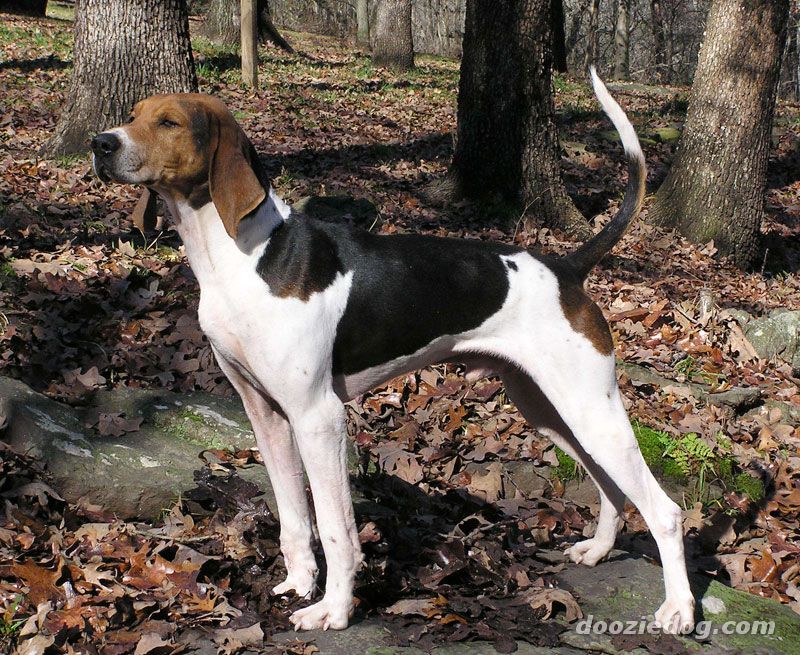
The coat is short and rough. In general, they are very similar to the Beagle, only that foot can be seen that they are taller and larger. Usually have four colors: red, black, and fire, or bluish, They also have white parts.

They tend to throw a good amount of hair in the time of molt, but a weekly brushing will prevent that the sofa is decorated…

Character and skills

The American Foxhound is sweet, friendly, loyal and very affectionate in a house. As with all dogs need a careful training, constant socialization, and one owners who are willing to do enough exercise with your pet!

One Foxhound bored will find by itself, the ways to have fun, and and can be very destructive, Some examples of destruction include, from scratches on doors, destruction of objects found in your path, as toilet paper, for example, as it is very mischievous and, to be quite long, they are able to pick up things of furniture…

If you can not establish a routine walks, Well, at least it would be good if the animal had access to a safe patio, where you can spend your energy, is a good alternative. But, We insist that, the walks, games should be part of your daily life.

Type and recognitions:

  • FCI CLASSIFICATION:
  • Group :
  • Section : . .

Federations:

  • FCI – Group 6: Scent hounds, and related breeds. – Section 1.1: Large-sized Hounds. โ“˜
  • AKCHound โ“˜

FCI breed standard "American Foxhound"

Origin:
United States

Date of publication of the valid original standard:
07.08.1998

Use:

With working trial.


General appearance:

----


Behavior / temperament:

---

Head:

Medium long, slightly domed in occiput.

Cranial region:
  • Skull : Wide and full.
  • Depression links (Stop) : Moderately defined.

facial region:

  • Snout : Good length, straight and square cut.
  • Eyes : Large, well separated placement, with typical bloodhound expression; soft look, gentle and nice; brown or hazelnut color.
  • Ears : Rather low implantation, so long that, extended, reach almost to the tip of the nose; texture fine; sufficiently wide and almost lacking erectile capacity; hang close to the head with the leading edge slightly turned towards the cheeks; the tips are rounded.

Neck:

Rises freely and lightly over the shoulders, strong in substance but not heavy, medium long; clean throat, no skin folds; but a slight wrinkle under the angle of the jaw is allowed.

Body:

  • Back : Moderately long, robust and muscular.
  • Pork loin : Wide and slightly arched.
  • Breast : Must be deep, giving space for the lungs; narrower in proportion to its depth than the chest of the English Foxhound; a circumference of 71 cm. (28 inches) is considered optimal in a specimen of 58 cm. (23 inches) height.
  • Ribs : Well arched, the hindquarters well extended back.
  • Flank : A flank of 7,6 cm. (3 inches) confers elasticity.

Tail:

Moderately high insertion, high carried, but never forward on the back; slightly curved and with a very sparse fringe of hair.

Tips

PREVIOUS MEMBERS : Straight, with good bones.

  • Shoulder : Oblique, crisp and muscular, neither heavy nor loaded, that give the impression of freedom of movement with great activity and strength.
  • Metacarpus : Short, straight.
  • Previous feet : of fox; well arched fingers; strong nails; hard, full pads.

LATER MEMBERS :

  • Hips and thighs : Strong and muscular, ensuring a powerful thrust.
  • Knees: Strong and low-set.
  • Warm-tarsal joints : Solid, symmetrical and moderately angled.
  • Hind feet : Compact and strong.

Movement:

---

Mantle

HAIR : Medium long, thick, hard texture typical of bloodhound.

COLOR : Any color is allowed.


Size and weight:

  • Males should not measure less than 56 cm. (22 flea) not more than 63,5 cm. (25 inches);
  • females should not measure less than 53 cm. (21 inches) not more than 61 cm. (24 inches).

Measurement should be done with the dog in a natural position, with the limbs well under the body; is taken at the level of the cross.


Fouls:

Any deviation from the aforementioned criteria is considered as a fault and the severity of this is considered to the degree of the deviation to the standard and its consequences on the health and well-being of the dog..

โ€ข Very flat skull, narrow at the top, too above- dice.
โ€ข Roman nose, the raised, giving the nasal bridge a concave shape.
โ€ข Long and pointed snout, or very short, sharply cut under the eyes.
โ€ข Small eyes, sharp-eyed like a Terrier, or prominent and bulging.
โ€ข High set ears, short, or with a tendency to rise above its insertion point.
โ€ข Thick collar, short or rough; worn at the same height as the top of the shoulders Throat with double chin or skin folds.
โ€ข Very long back, convex or defeated.
โ€ข Flat and narrow spine.
โ€ข Excessively wide or shallow chest.
โ€ข Flat ribs.
โ€ข Long tail, curved in the shape of a handle or inclined from birth forward. Rat tail. Total absence of fringe hair.
โ€ข Twisted forelimbs.
โ€ข Shoulder blades straight and vertical.
โ€ข Elbows turned outward.
โ€ข Carpal joint deviated forward or backward.
โ€ข Cow tibio-tarsal joints or very straight.
โ€ข Long feet, fingers apart, crushed.
โ€ข Lack of muscles and drive.
โ€ข Short hair, thin or smooth in texture.

SCALE OF POINTS

points

Head

  • Skull 5
  • Snout 5
  • Eyes 5
  • Ears 5

20

Tips

  • Former members 10
  • Hip, thighs and post limbs. 10
  • Pies 15
  • 35

    Body

    • Neck 5
    • Shoulders and chest 15
    • Back, tenderloin and ribs 15

    35

    Fur and tail

    • Fur 5
    • Tail 5

    10
    ___
    TOTAL 100

    Any dog โ€‹โ€‹showing clear signs of physical or behavioral abnormalities must be disqualified..


    N.B.:

    Males should have two normal-appearing testicles fully descended into the scrotum..

    Source: F.C.I - International Cynological Federation

    Images ยซAmerican Foxhoundยป

    Videos ยซAmerican Foxhoundยป

    Alternative names:

    1. Foxhound (English).
    2. Foxhound (French).
    3. Foxhound (German).
    4. Foxhound americano, Cachorro americano Urrador (Portuguese).
    5. Foxhound americano, Perro de caza de zorros americano (espaรฑol).

    โ–ท The world of Pets: Dogs, cats, birds, reptiles, amphibians

    Otterhound
    Inglaterra FCI 294 . Large-sized Hounds

    Perro de Nutria

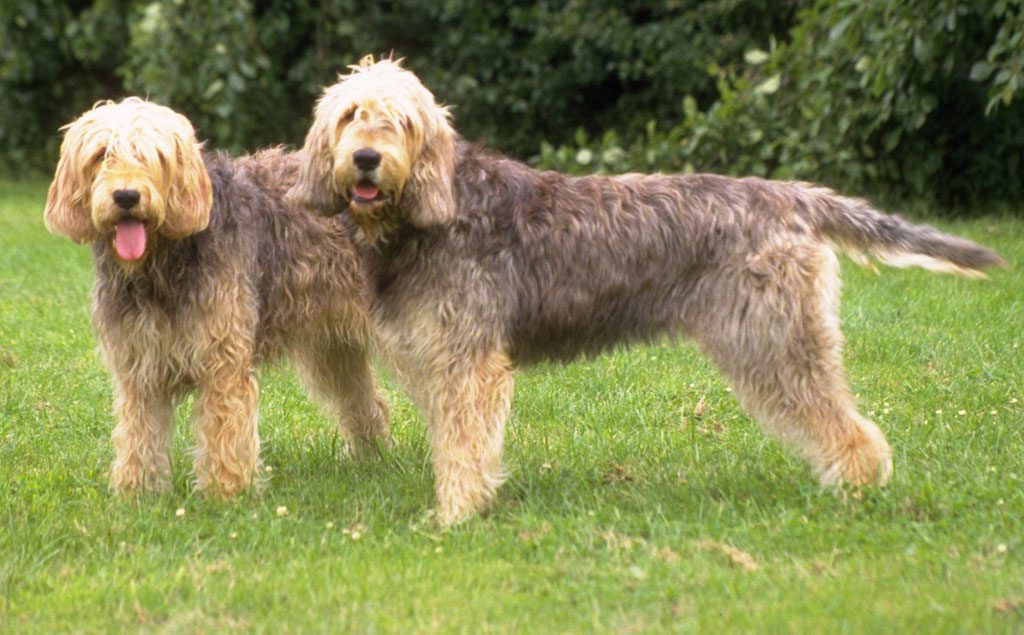
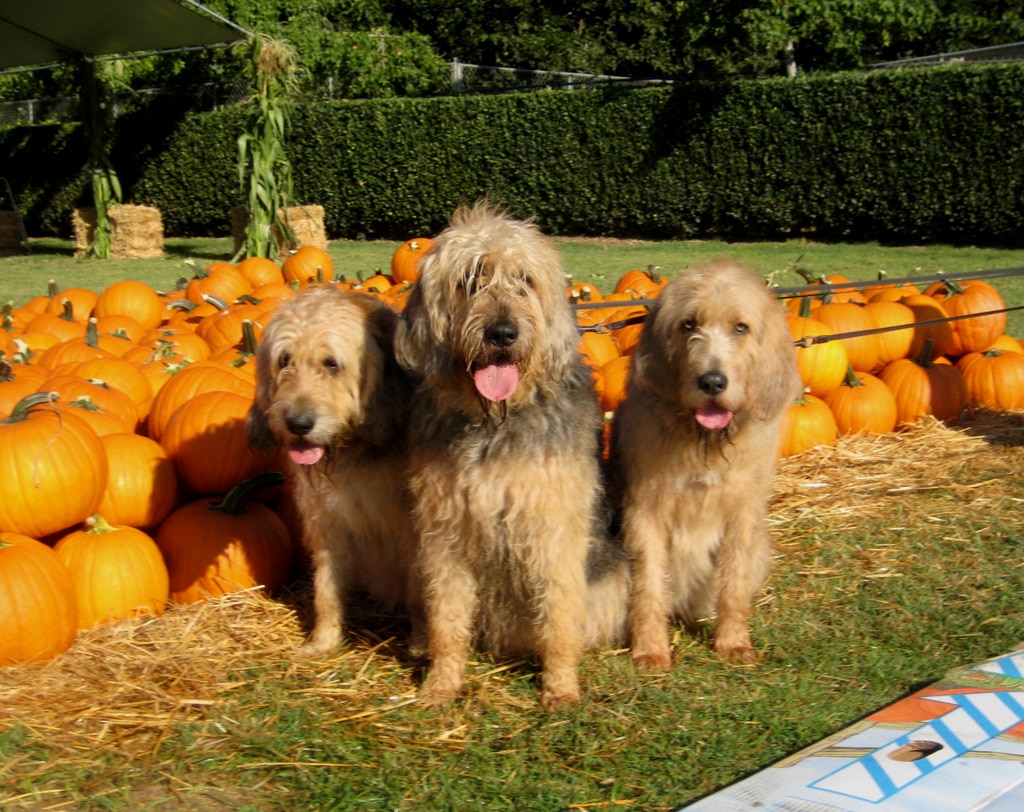
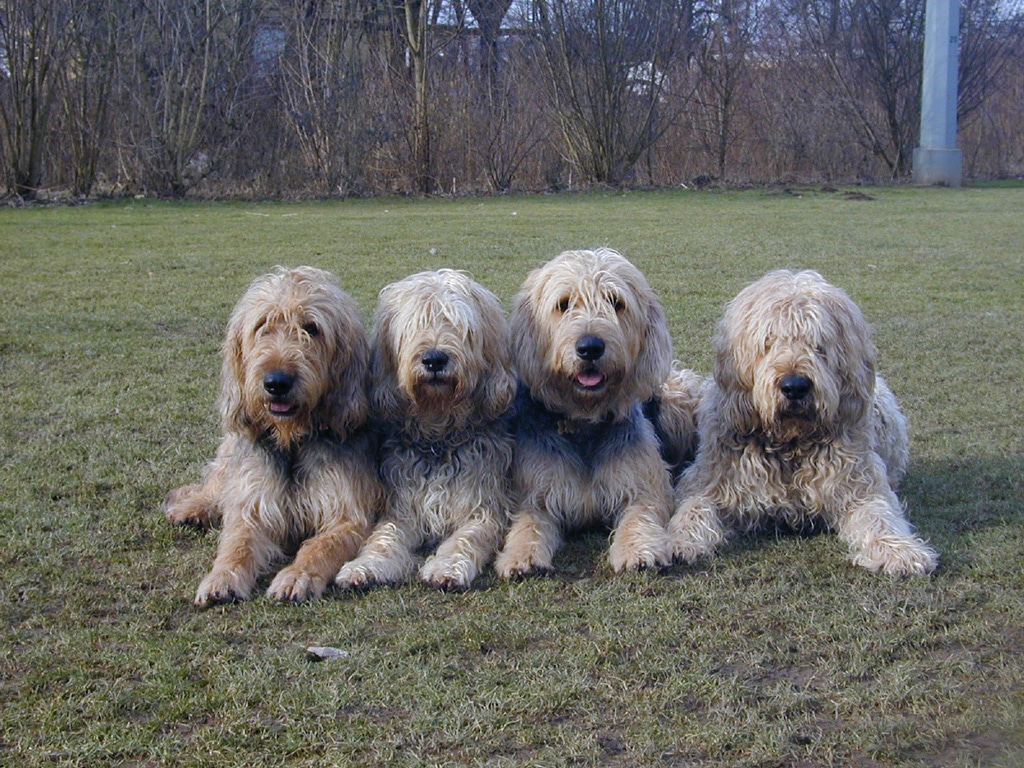
    The Otterhound is the most endangered dog breed in the UK.

    Content

    History

    The Otterhound It is a very old breed of dog from United Kingdom, has, among many other mixtures- within their ancestors to the race Airedale Terrier.

    The name of this precious woolly, It just comes to the task for which it was created: the House of otters. This dog has a smell nearly as well developed as the Bloodhound. This breed was developed in England.

    But like all dog breeds, changes and social advances always bring consequences in the case of Otterhound, It happened that the Otter hunting was banned in England, and if so few copies of this breed, with this ban the race saw very committed his existence.

    Though, To avoid its extinction some race fans what they did was focus the hunting instinct of the Otterhoundtowards other types of prey.

    The Otterhound It is a dog specializing in otters, extremely difficult and dangerous job.

    Some experts suggest that the danger of the Otterhound is similar to the extinction of the Panda Bear.

    It is a very small breed, It is estimated that they there are around 1.000 Otterhound in the world, of which from 350 and 400 they are in the U.S.. Even at the beginning of the 20th century, When was Otter hunting a popular sport, the Otterhound they were never numerous.

    Today, this breed is considered as the most threatened by endangered United Kingdom, There are only 51 specimens born in 2006. Are on the list of most vulnerable native breeds of the UK Kennel Club and programmes are being carried out to save the race.

    Physical characteristics

    The Otterhound, is a dog large and strong, sometimes we could say, incombustible. It is capable of spending all day hunting in the water or running around the field, without showing even the slightest index of exhaustion.

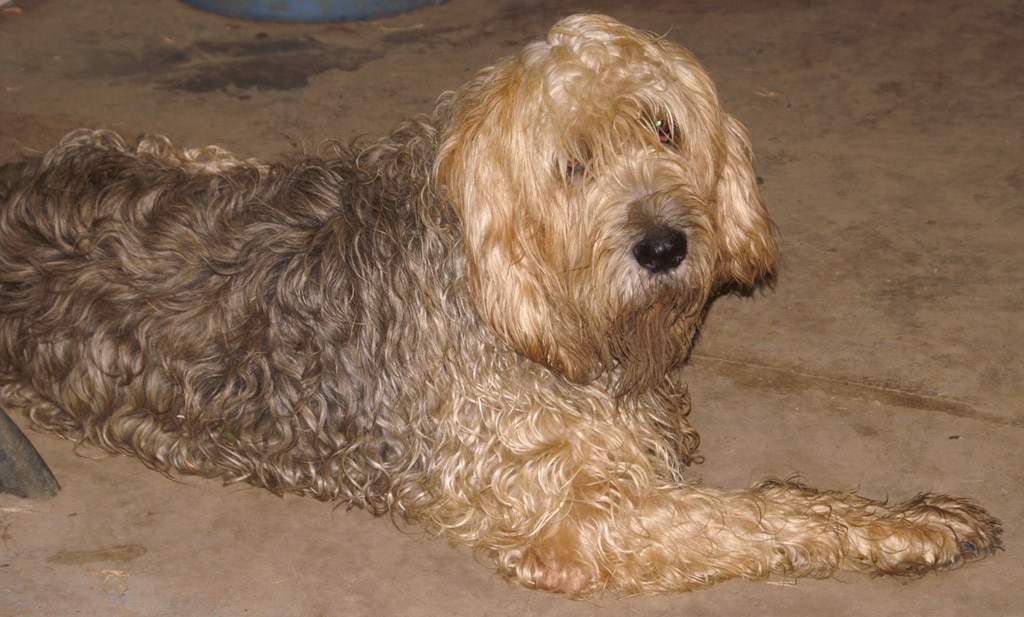
    It has a head big and strong with well marked bone.

    Their eyes, intelligent and lively expression, vary in color depending on the coat. The ears, they are long, them it is hanging at the height of the eyes. They are set high and have a characteristic fold of the breed..

    The tail, high insertion it takes her upright always to pay attention a State of alert, but when it is resting her leads hanging.

    The hair of the Otterhound is long, has a length of 4 to 8 cm approximately. The mantle is double layer, the outdoor hair is dense, hard and waterproof and should be rough to the touch. The internal layer It is notorious and touch gives a feeling oilseed.

    While, measures with respect to the height and weight, vary according to the club as a consensus we could say that the height the cross in the males is of approximately 69 cm and the females of 61 cm..

    The average life expectancy the race is a little more than 10 years. A quarter tends to live in 12 to 15 years. Y, the case of a copy which he lived has been known to the 16 years of age.

    Character and skills

    The Otterhound, is a Hound very versatile, is generally used for the House of large dams, both individually and in a pack.

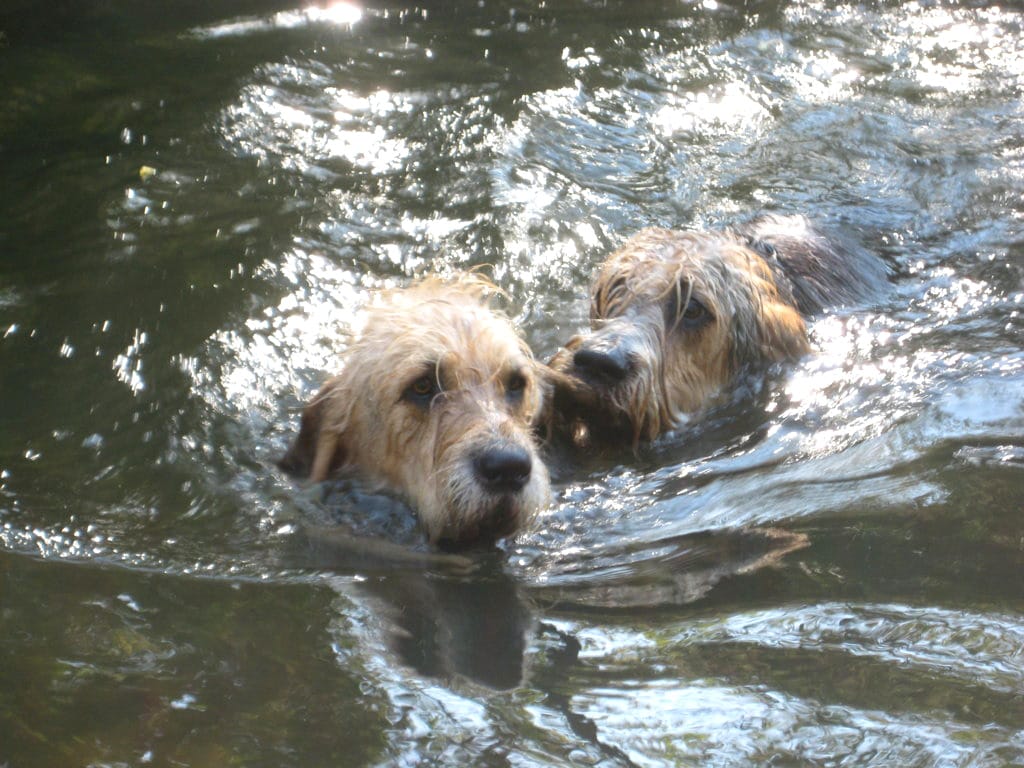
    Its temperament It friendly and balanced, as long as you have enough physical exercise especially everything related to water, enjoy a lot swimming.

    The Otterhound enjoy exercise, the routine. They are very good companion dogs for the family, but they must be kept in a secure property, that can jump fences of up 5 metres in height. They are not at all appropriate for life in apartment.

    It is a excellent swimmer, he chased the otters swimming, using only the trail of bubbles that were leaving them diving as track.

    This dog is a highly specialized breed who instinctively knows what has to do. Perhaps that is why they are a little stubborn and not always obedient.

    They need plenty of exercise, preferably swimming. It is a working dog and needs to maintain a series of obligations or activities, a well-marked routine to avoid boredom and the emergence of destructive behaviors.

    A good training is key to keep happy the dog and the family.

    Observations

    Despite having fame of stubborn, with a proper training is usually used also in civil defence tasks.

    Otterhound Images

    Otterhound Videos

    Type and recognitions:

    • FCI CLASSIFICATION:
    • Group :
    • Section : . .

    Federations:

    • FCI – Group 6: Scent hounds, and related breeds. – Section 1.1: Large-sized Hounds. โ“˜
    • AKCHound โ“˜
    • ANKCGroup 4 (Hounds) โ“˜
    • CKCGroup 2 – Hounds โ“˜
    • โ€‹KCHound โ“˜
    • NZKCHound โ“˜
    • UKCScenthounds โ“˜

    FCI breed standard "Otterhound"

    Origin:
    England, United Kingdom

    Date of publication of the valid original standard:
    13.10.2010

    Use:

    Big hound, strong, Built primarily for a long day of work on the water, but able to gallop on land.


    General appearance:

    It is great, straight-limbed and robust, its coat is rough, has a majestic head and a strong body. It moves with loamy and loose strides. Rough double coat and big feet are essential. Easy movement.

    IMPORTANT PROPORTIONS: The distance from the tip of the truffle to the naso-frontal depression is somewhat shorter than the distance from the depression to the occiput.


    Behavior / temperament:

    Friendly and balanced.Signs of aggression and nervousness should be severely penalized.

    Head:

    Clearly outlined, imposing, higher than wide. The forehead does not have a bump or a scowl ; the expression is open and friendly. Except the truffle, the whole head is well covered with coarse hair that forms light mustaches and beard.

    Cranial region:
    • Skull: Delicately pumped, neither thick nor exaggerated; rises from the naso-frontal depression to the slightly marked occipital protuberance.
    • Depression links (Stop): Something marked, but without exaggeration.

    facial region:

    • Truffle: Long, windows wide open. Snout: Strong and deep.
    • Lips: Belfos profusos, although not in excess.
    • Jaws / Teeth: The jaws are strong, wide. Teeth are well aligned, and the joint is scissor-shaped, that is to say, that the upper incisors closely overlap the lower ones and are vertically implanted in the maxillae.
    • Cheeks: Defined cheek bones.

    EYES: They are of intelligent expression and moderately sunken. The conjunctiva is somewhat apparent. Eye color and eyelid edge pigment vary according to coat color (a blue and tan hound may have hazel eyes). Yellow eyes are not desirable.

    EARS: They present unique characteristics of the breed. They are long, pendant and implanted at the level of the angle of the eye. They can reach the truffle when pulled forward, forming a characteristic fold. The tip bends or curls inwards giving a curious folded look. This is an essential point that should not go unnoticed. The ears are well covered with hair that forms bangs.

    Neck:

    It's long and powerful. It is delicately inserted in the well oblique and cleanly outlined shoulders . A slight double chin is acceptable.

    Body:

    Very strong.

    • top line : Level.
    • Back : wide.
    • Pork loin : Short and strong.
    • Breast : Deep ; rib cage is snug, quite deep and oval in shape ; not very wide, not too narrow. The ribs extend well back, which allows enough room for the heart and lungs.

    Tail:

    High implementation ; dog picks up when alert or on the move. Never curls over the back, but it can hang up when the dog is resting. It is thick at the base and tapers to the tip ; the caudal bones extend to the hock ; carries it straight, or in a slight curve. The hair on the lower part of the tail is longer and more abundant than that on the upper part.

    Tips

    PREVIOUS MEMBERS:

    • ShoulderDefinedand well oblique.
    • forearmsStrong bones, straight from elbow to ground
    • Metacarpus: Strong and well oblique.
    • Previous feet: Large, rounded, with well arched toes and thick pads; they do not deviate either outwards or inwards. The interdigital skin must be visible.

    LATER MEMBERS:

    • General appearance: They are very strong and muscular; views from any angle, the position should not be too wide, not too narrow. Posterior angulation is moderate. When the dog maintains a natural position, the hind limbs, from hock to ground, they are perpendicular.
    • Thighs: They are very muscular.
    • Metatarsus: Hocksin very low position, and they do not deviate even inwards, nor out.
    • Hind feet: Only slightly smaller than the previous ones. Large, rounded, with well arched toes and thick pads; they do not deviate either outwards or inwards. The interdigital skin must be visible.

    Movement:

    To step, the movement is very loose with the feet close to the ground; immediately go into an active trot, agile, regular, of very long strides. The gallop is uniform and strides of exceptional length.

    Mantle

    Fur: It is long of 4 to 8 cm., dense, rough, hard, but not wire hair. It is waterproof, hair texture is between straight and rough. Smoother textured hair on the head and lower part of the limbs is natural. The undercoat of hairs is apparent, a slightly greasy texture may appear, both in the outer layer and in the inner layer of hairs. Hair must not be trimmed and trimmed for display; presentation must be natural.

    Color: All recognized hound colors accepted: solid color, grey, sandy, red, wheat, blue. They may have slight white marks on the head, the chest, the feet and the tip of the tail.

    White hounds may have slight lemon markings, blue or badger. black and tan, Blue and fire, black and cream, sometimes liver, fawn and liver, fawn and white. The following colors are not allowed: liver (brown) and white, a white hound with black patches and clearly separated tan markings. The pigment must harmonize, although not necessarily combined with the color of the coat; for example, a tawny hound may have brown eyes and noses. The slightly depigmented nose is allowed.


    Size and weight:

    Height to the cross :

    • In males approximately 69 cm. (27 inches),
    • In females approximately 61 cm. (24 inches).


    Fouls:

    Any deviation from the aforementioned criteria is considered as a fault and the severity of this is considered to the degree of the deviation to the standard and its consequences on the health and well-being of the dog..

    FALTAS DESCALIFICANTES:

    • Aggressiveness or extreme shyness.

    • Any dog โ€‹โ€‹showing clear signs of physical or behavioral abnormalities.


    N.B.:
    • Males should have two normal-appearing testicles fully descended into the scrotum..
    • Only functionally and clinically healthy dogs, with the typical conformation of the breed, should be used for parenting.

    The latest changes are in bold.

    Source: F.C.I - International Cynological Federation

    Alternative names:

    1. Otterhound (English).
    2. Otterhound (French).
    3. Otterhound (German).
    4. Otterhound (Portuguese).
    5. Otterhound (espaรฑol).

    โ–ท The world of Pets: Dogs, cats, birds, reptiles, amphibians

    Billy
    Francia FCI 25 - Large-sized Hounds

    Billy

    The Billy is a used hunting dog live in the open air, in open spaces

    Content

    History

    The Billy, It is a dog from France created at the end of the 19th century from the junction of three races that are now extinct: the Larye, the Cรฉris and the Montembล“uf. In the cross, great care was taken to highlight characteristics such as: good smell, resistance and fast reflexes.

    Billy, Historically, was used for the hunting hares horse, wild boar and roe deer. In the news, There are few copies and is appreciated, it is not very common to see them.

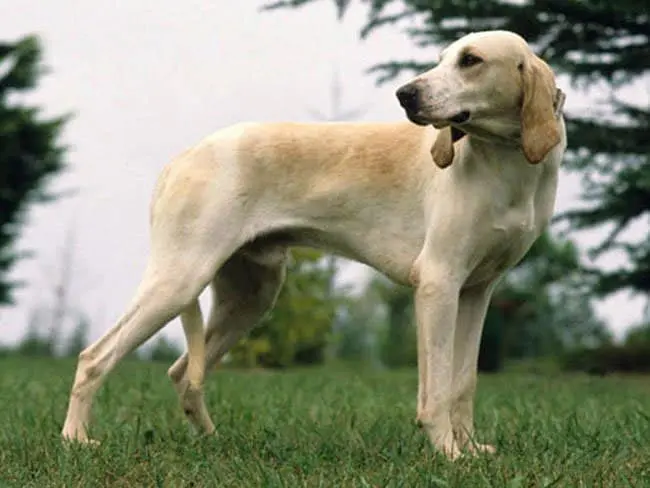
    The Billy has the exact appearance of the famous white dogs that were part of the packs of the French aristocracy (16th centuries, 17TH and 17TH). History tells that King Charles IX of France (1550-1574) he had a white female he loved more than his own life. When the dog died, He forced the Court to go into mourning.

    Read more

    โ–ท The world of Pets: Dogs, cats, birds, reptiles, amphibians

    Alpine Dachsbracke
    Austria FCI 254 - Leash (scent) Hounds

    Perro tejonero alpino

    The Alpine Dachsbracke has a courageous personality, friendly and intelligent

    Content

    History

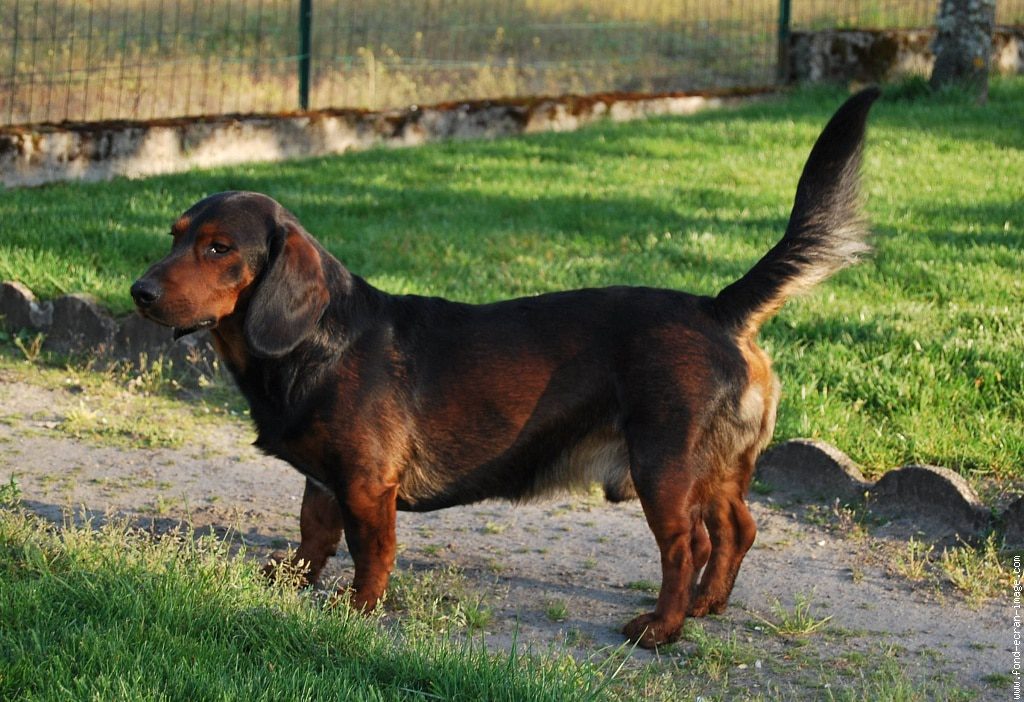
    The appearance of this short-legged dog suggests a very ancient breed. The Alpine Dachsbracke it is one of the oldest breeds of hunting dogs in Central Europe. It was already mentioned in the seventeenth century and represented in paintings.

    In the last quarter of the nineteenth century, Crown Prince Rudolf von Habsburg had this type of hunting dog run by his professional hunters.. The dog's appearance was unbalanced for a long time. Each canton raised its Alpine Dachsbracke differently.

    But it is not a cross between a Sausage dog and Bracco, as the German name suggests ยซAlpenlรคndische Dachsbrackeยซ, but an independent race. Visually, the Alpine Dachsbracke gets closer to the Dachshund, but it's much bigger and stronger.

    In the 19th century, there were numerous subspecies of Alpine Dachsbracke in the swiss alps, Bavarians and Austrians, that still differed greatly in appearance.

    At the end of the 19th century, many breeders of this breed of dog were in the Erzgebirge, so the race kept calling Alpenlรคndische Erzgebirgler Dachsbracke until 1975. Another name is the Dachsbracke Austrian.

    This is because the current Club Dachsbracken is located in Austria. The goal of breeding, both then and now, is to maintain the health and performance of this ancient breed of dog.

    In order to establish a constant shape, a uniform appearance and appropriate breed characteristics, the first International Club of Dachsbracken was founded in Munich in 1896.

    In 1908 the club disbanded again. In 1910 the Austrian Dachsbracke Club was founded, which is still engaged in the breeding of the Alpine Dachsbracke.

    In 1932, the Alpine Dachsbracke was officially recognized by the Austrian Kennel Club (with him "Bavarian Mountain Hound" and the "Hanoverian Scenthoundยซ) like the third breed of hound.

    In 1975 the Alpine Dachsbracke received recognition from the FCI, which finally classified the breed among the hounds in 1991.

    A race is quite unknown outside Austria.

    Physical characteristics

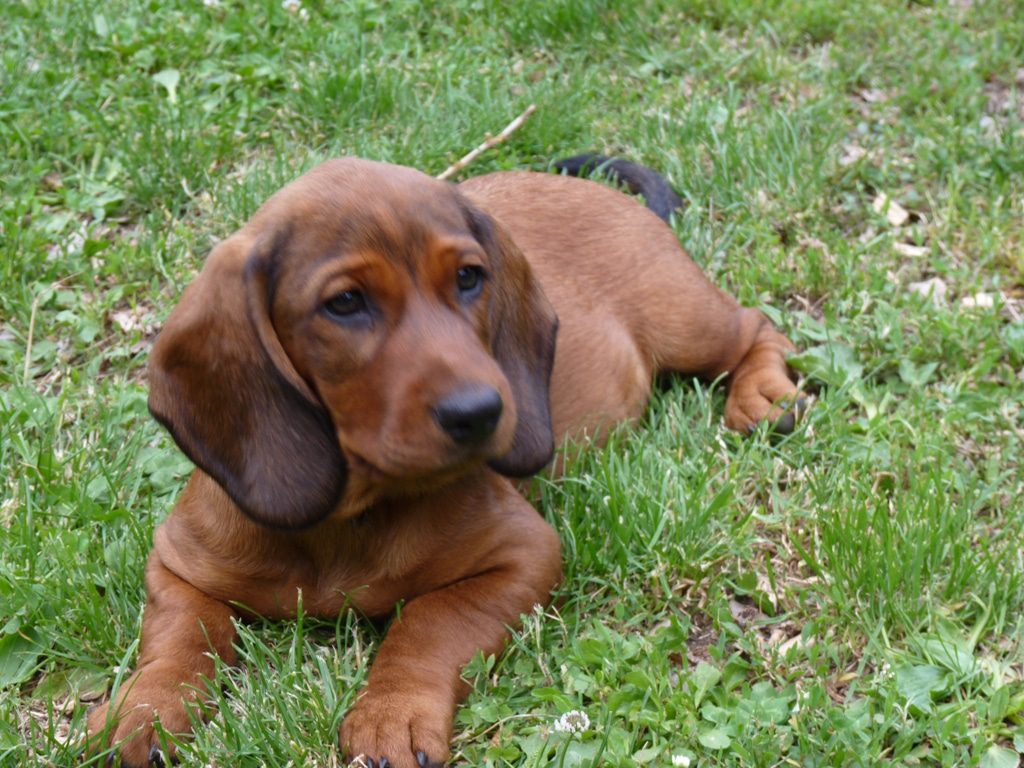
    The Alpine Dachsbracke is a dog's size medium. Has relatively short legs, a strong constitution, firm muscles and strong bones.

    The height to the cross is of 34 to 42 centimeters. Height at withers is measured from the ground to the shoulder in a loose dog. For males, the ideal size is between 37 and 38 centimeters of shoulder height; for females, are considered ideal 36 to 37 centimeters.

    Great importance is attached to an optimal ratio of proportions. The relationship between the height of the shoulders and the torso is 2 : 3, the relationship between the face and the skull is 9 : 10.

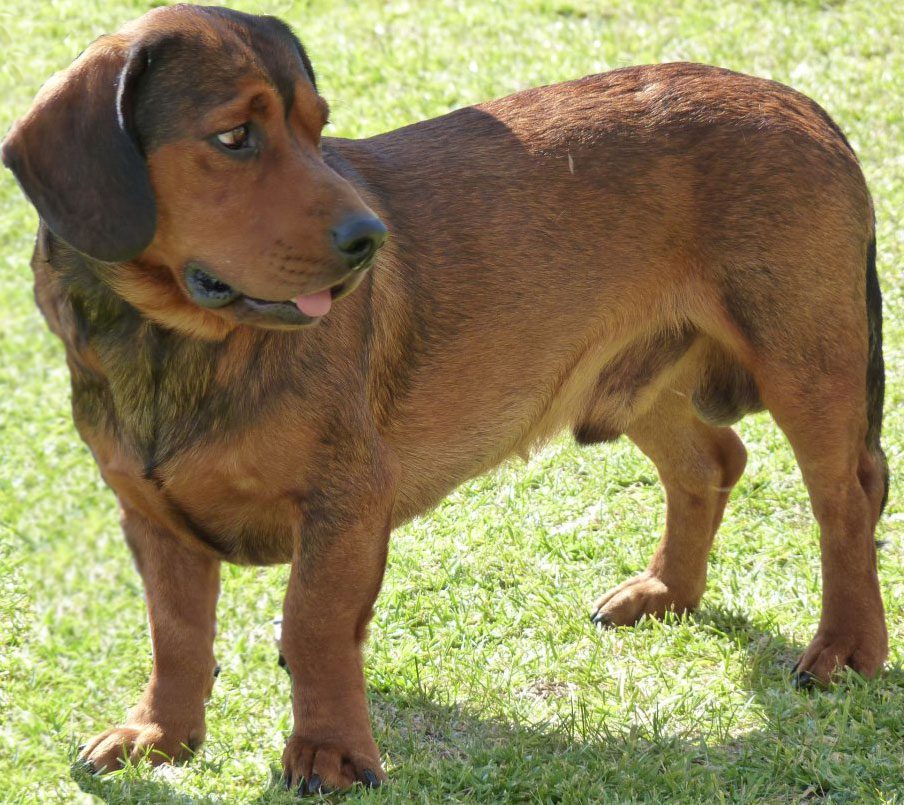
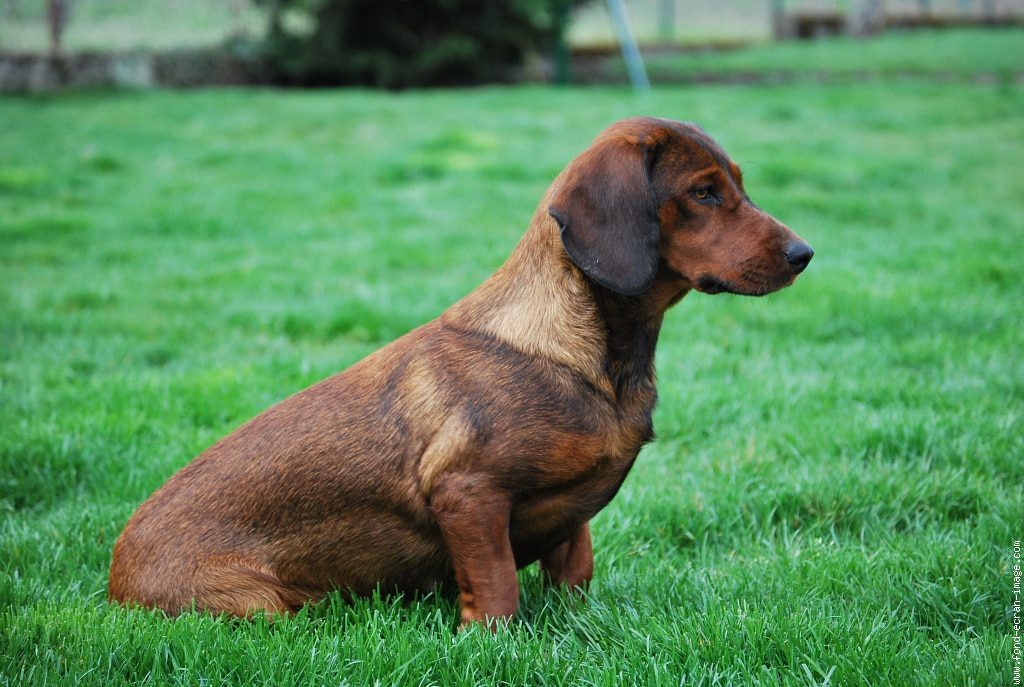
    The head is held proudly erect with a slight forward tilt. High-set dangling ears are straight-haired and fall loosely to the sides. They are wide, no wrinkles and medium length (approximately reaching the canines) and rounded at the bottom.

    The nose, the eyelids and lips are black. The eyes are deep brown and slightly almond shaped. The Alpine Dachshund has the typical "dachshund look". The tail is placed high at the root, but it is slightly lowered.

    In proportion to the strong body, legs are relatively short. The body is well muscled and with strong bones, with a pronounced rib cage but with a small waist.

    The coat of the Alpine Dachsbracke it's dense and short, only the lower part of the tail is slightly longer. The slightly dull coat consists of a firm stick coat with a dense undercoat.

    Allows good water repellency and a perfect air balance in summer and a high heat effect in winter. A dark deer red, often with a slight tinge, is the most common coat color.

    There is also a black coloration with a tan tan outlined on the head). Small white marks are allowed on the chest. On the paws, ears and tail coat coloration may be darker.

    Character and skills

    The Alpine Dachsbracke he's a proven working dog, small to medium size, which serves hunters especially well. Hound dogs like Alpine Dachsbracke are used for post-shot search jobs.

    The strong-minded dog is not distracted and confidently tracks injured game animals. At first sight, the Alpine Dachsbracke looks like a mongrel dog, but this robust breed is a highly specialized working and hunting dog.

    The fine sense of smell, safe tracking with unconditional tracking will and high hunting acuity make this breed an ideal hunting companion, animal husbandry and forestry work in the forest and mountains. The Alpine Dachsbracke feels more comfortable outdoors.

    Like city dog, the Alpine Dachsbracke it's completely inappropriate.

    After the hunt is before the hunt. The dog would like to go out and look for hunting every day. Family contact is desirable, because then the friendly companion shows his almost touching love and attachment to "his" people. He gets along very well with children.

    But, the Alpine Dachsbracke not suitable as a pure family dog. Also in the city this breed feels extremely uncomfortable. The Alpine Dachsbracke it is a forest and prairie dog, for whose fine smell the gases from car exhausts and in general, the smells of the city, they are a punishment.

    If this breed stays in the big city, without the possibility of a daily run of several hours in the woods and meadows, owners can be called cruel to animals without euphemisms. This is certainly the reason why this breed of dog is never seen in the urban area.

    For the Alpine Dachsbracke a task is vital. Although this dog needs a lot of exercise, not suitable for long runs or jumping due to short legs. It is a search dog, a typical tracking dog.

    Outside the hunting season, this dog with strong nerves is excellent as a guard and yard dog. But, this shouldn't be your only task. The temporary maintenance of the kennel is not a problem for him, as long as he has regular contact with the family and is allowed into the house from time to time.

    Within the four human walls the dog behaves in a balanced and calm way. But, if you are not used to much, tends to show behavior problems, complains a lot or seeks an alternative occupation.

    Small animals, cats, rabbits, ornamental birds are seen as prey and bark at them extensively. The Alpine Dachsbracke he is friendly with other dogs.

    Training and use ยซAlpine Dachshundยป

    Hunting training is a basic requirement for living with a Alpine Dachsbracke, which is why this breed is only really found among active hunters.

    This small hunting dog excels in hare and fox hunts, as well as in the tracking of deer and roe deer. With his very fine nose, the Alpine Dachsbracke shows an unconditional willingness to crawl, movement safety and quality control.
    This agile hunting dog's drive to move requires a daily walk on the hunting ground. Attitude is possible so much in a spacious kennel, like in the house. The house itself should have a garden.

    Staying in a small apartment in the city would be torture for the dog, even climbing stairs is not an option for him. Also with the yard or kennel attitude a close family connection comes in handy for this friendly dog..

    The Alpine Dachsbracke watches the house and property carefully and makes reliable noises, so it does not tend to bite. The Alpine Dachsbracke it is considered very robust and insensitive to weather conditions. The robust dog shines with good attitude for life in good health.

    This hound likes to work very much, hunting training is a basic requirement for living with a Alpine Dachsbracke, which is why this breed is only really found among active hunters.

    This small hunting dog excels in hare and fox hunts, as well as in the tracking of deer and roe deer. With his very fine nose, the Alpine Dachsbracke shows an unconditional willingness to crawl, search security as well as very good visual acuity.

    Education and care

    Despite his innate sympathy, this breed of dog still requires consistent leadership from the puppy stage. Education takes a long time, so owners of dogs of this breed like to organize to exchange experiences.

    Due to its typical breed nature, the Alpine Dachsbracke tends to be very stubborn. In the countryside, eventually you will have to make your own decisions without your master or mistress being able to intervene.

    Empathy and consistency promise the best results in puppy rearing. What you have learned once, never forget it again.

    Unfortunately, this also applies to mistreatment. An undesirable rarity is very difficult to unlearn.

    Alpine Dachshund Grooming

    Like every dog, this little hunting dog needs some grooming. The coat should be brushed from time to time to loosen the dense undercoat and remove loose hair.

    No need to cut or trim. The dog doesn't like to bathe either, dirt usually falls off the coat on its own. After each walk through the territory, the coat of the small ruminant should be checked for branches, thorns and parasites.

    Unfortunately, ticks also like the skin of Alpine Dachsbracke. Ears should be checked regularly for mite infestations. Too long claws indicate too little exercise. Normally, claws are sharp when walking and do not need to be cut.

    Health ยซAlpine Dachshundยป

    The Alpine Dachsbracke it is considered very resistant and has a stable skin. The robust dog shines in excellent health throughout his life if he is well maintained. But, annual vaccinations should never be lacking.

    Typical diseases can be, as in any short-legged dog, back problems. A well-muscular body without excess weight will counteract the risk of back diseases.

    When fed wet food, teeth unfortunately tend to form tartar. In this case, Regular brushing of the teeth is necessary to prevent gum and tooth diseases.

    Chewy sticks and bones are gladly accepted, but they do not serve as a substitute activity. The ears should be checked and cleaned regularly.

    How long does an "Alpine Dachshund" usually live??

    Their life expectancy reaches an age of up to 15 years with good species-appropriate nutrition and typical breeding.

    Occasionally, small dogs exceed this age and in rare cases even reach an age of more than 20 years. Underutilized animals can suffer from psychological problems that make them prone to disease and moody.

    As a responsible dog owner, now you know what the Alpine Dachsbracke need to live a long life, healthy and happy.

    Don't need a guardian, but a companion at eye level, who can take care of the needs of this working dog extensively.

    Buy an โ€œAlpine Dachshundโ€

    This dog is not a stuffed dog, despite its fairly manageable size. The breeders of this breed are mainly found in Germany and Austria. Usually the active breeders are the hunters or rangers themselves.

    From the breeding associations the puppies of the Alpine Dachsbracke they occur mainly to active hunters. You can only buy that breed from a breeder.

    If he Alpine Dachsbracke not used for hunting, it is essential to be a member of a sports club for dogs. Here the focus is on tracking.

    As a children's playmate he is extremely patient, but he's not happy.

    Walks with search and crawl games will also not meet the needs of this working dog, this is just not enough. For seniors who are not physically fit, as well as for singles working full-time, the Alpine Dachsbracke is absolutely unsuitable as a companion.

    If you want to buy a Alpine Dachsbracke, you have to be a member of a local club. Outsiders hardly have a chance.

    ยซAlpine dachshundยป images

    โ€œAlpine Dachshundโ€ videos

    Characteristics "Alpine Dachsbracke"

    Coexistence is important that you have with your new friend. Before considering the acquisition of a dog of the breed "Alpine Dachsbracke" you know certain factors. Not all breeds of dogs are apt to live in an apartment, you must take into account his character, their need for exercise, their interaction with other pets, their care and if you have small children, their level of tolerance towards them.

    Adaptation โ“˜

    3,0 of 5 stars (based on 1 review)

    friendly dog โ€‹โ€‹โ“˜

    4,0 of 5 stars (based on 1 review)

    hair loss โ“˜

    1,0 of 5 stars (based on 1 review)

    Affection level โ“˜

    2,0 of 5 stars (based on 1 review)

    Need for exercise โ“˜

    4,0 of 5 stars (based on 1 review)

    Social need โ“˜

    3,0 of 5 stars (based on 1 review)

    Home โ“˜

    2,0 of 5 stars (based on 1 review)

    Toilet โ“˜

    2,0 of 5 stars (based on 1 review)

    Friendly with strangers โ“˜

    2,0 of 5 stars (based on 1 review)

    barking โ“˜

    3,0 of 5 stars (based on 1 review)

    Health โ“˜

    4,0 of 5 stars (based on 1 review)

    Territorial โ“˜

    4,0 of 5 stars (based on 1 review)

    Cat friendly โ“˜

    2,0 of 5 stars (based on 1 review)

    Intelligence โ“˜

    3,0 of 5 stars (based on 1 review)

    Versatility โ“˜

    3,0 of 5 stars (based on 1 review)

    Child friendly โ“˜

    4,0 of 5 stars (based on 1 review)

    Surveillance โ“˜

    4,0 of 5 stars (based on 1 review)

    joy โ“˜

    4,0 of 5 stars (based on 1 review)

    Type and recognitions:

    • FCI CLASSIFICATION:
    • Group :
    • Section : . .

    Federations:

    • FCI – Group 6: Scent hounds, and related breeds. – Section 2: Leash (scent) Hounds. โ“˜
    • UKCScenthound Group โ“˜

    FCI breed standard "Alpine Dachsbracke"

    Origin:
    Austria

    Date of publication of the valid original standard:
    10.10.1995

    Use:

    The Alpine Dachsbracke is a robust and weather resistant dog, useful for the mountain hunter ; It is used as a tracker to search for wounded roe deer and as a hound when barking at hares and foxes..


    General appearance:

    Small hunting dog, strong, with robust body structure and heavy bones; dense fur, firm muscles.

    IMPORTANT PROPORTIONS

    โ€ข The proportion between the height of the withers and the length of the trunk is 2 : 3.
    โ€ข The proportion between the facial region and the cranial region is 9 : 10.


    Behavior / temperament:

    Smart and friendly expression. Intrepid character.

    Head:

    ---

    Cranial region:
    • Skull : Slightly convex. Marked frontal groove, shallow occipital protrusion.
    • Depression links (Stop) : Marked.

    facial region:

    • Truffle : Black.
    • Snout : Strong.
    • Lips : Well adherent with black pigmentation, moderately rounded lip arch.
    • Jaws / Teeth : Strong full scissor or pincer bite. You want a complete denture with 42 Dental parts ; the lack of total two PM1 or PM2 (premolars 1 or 2) is tolerated ; the M3 (molars 3) they are not taken into account.

    Eyes : Dark brown iris; eyelids adherent to the eyeball and black pigmented.

    Ears : High insertion, that fall wide and flat without forming folds; medium length (must reach to the fang) and well rounded at its lower edge.

    Neck:

    Not too long, muscular.

    Body:

    Broad trunk, strong and well muscled.

    • Cross : Moderately marked.
    • Back : Straight.
    • Pork loin : Short and broad.
    • Rump : Slightly inclined.
    • Breast : Deep and wide with a well-marked sill; the depth of the thorax should correspond to approximately half the height of the withers.
    • Belly : Moderately withdrawn.

    Tail:

    High insertion, thick at its root. On its underside it has a longer coat (brush glue) ; the tail is so long that it reaches almost to the ground ; takes it slightly inclined.

    Tips

    PREVIOUS MEMBERS : They are straight and strong. The limbs appear short in proportion to the rest of the body.

    • Shoulder : Adjacent, long, obliquely placed, with good musculature.

    LATER MEMBERS : Muscular, strong and have good angulations ; seen from the back, the axis of the limbs is straight.

    FEET : Front and rear feet are strong and round ; the fingers are very close together ; the pads are hard and the nails are black.

    Movement:

    During the movement covers the terrain, without kicking. His favorite step is the trot.

    Mantle

    SKIN : The skin is elastic and hard and does not form folds.

    HAIR : double hair (Stockhaar), very dense, with thick undercoat ; covers the entire body and is well attached to the skin.

    COLOR : The ideal color is dark fawn red, slightly speckled or not black, as well as the black color with fire spots, reddish-brown color) well defined in the head (four eyes), on the chest, limb, feet and on the underside of the tail; a white star is allowed on the sill.


    Size and weight:

    Height to the cross : 34 โ€“ 42 cm.. Ideal measure : Males : 37 โ€“ 38 cm.,females : 36 โ€“ 37 cm..


    Fouls:

    Any deviation from the aforementioned criteria is considered as a fault and the severity of this is considered to the degree of the deviation to the standard and its consequences on the health and well-being of the dog..

    FAULTS

    โ€ข Weak bones.
    โ€ข Little muscle.
    โ€ข Too pointed snout, short or long.
    โ€ข Eye color too light, eyelids not glued.
    โ€ข Short or pointed ears.
    โ€ข Loose shoulders.
    โ€ข Poor position of the forelimbs or hindlimbs.
    โ€ข Very short or sparse coat.
    โ€ข Minimal variations in color.

    MISS PLAYOFFS

    โ€ข Aggressive or fearful dog.
    โ€ข All variations that are considered essentially detrimental to their usefulness in hunting.
    โ€ข Absence of more than two premolars 1 or 2 (without taking into account the M3).
    โ€ข Height at withers less than 34 cm or greater than 42 cm..
    โ€ข Weak character.

    Any dog โ€‹โ€‹showing clear signs of physical or behavioral abnormalities must be disqualified..


    N.B.:

    Males should have two normal-appearing testicles fully descended into the scrotum..

    Source: F.C.I - International Cynological Federation

    Alternative names:

    1. (ger. Alpenlรคndische Dachsbracke) (English).
    2. (alpenlรคndische dachsbracke) (French).
    3. Alpenlรคndische-Erzgebirgler Dachsbracke, ร–sterreichische Dachsbracke (German).
    4. Dachbraco alpino (Portuguese).
    5. Tejonero de los Alpes, Basset de los Alpes, Dachsbracke de los Alpes (espaรฑol).

    โ–ท The world of Pets: Dogs, cats, birds, reptiles, amphibians

    Black and tan coonhound
    Estados Unidos FCI 300 - Large-sized Hounds

    Perro negro y fuego para la caza del mapache

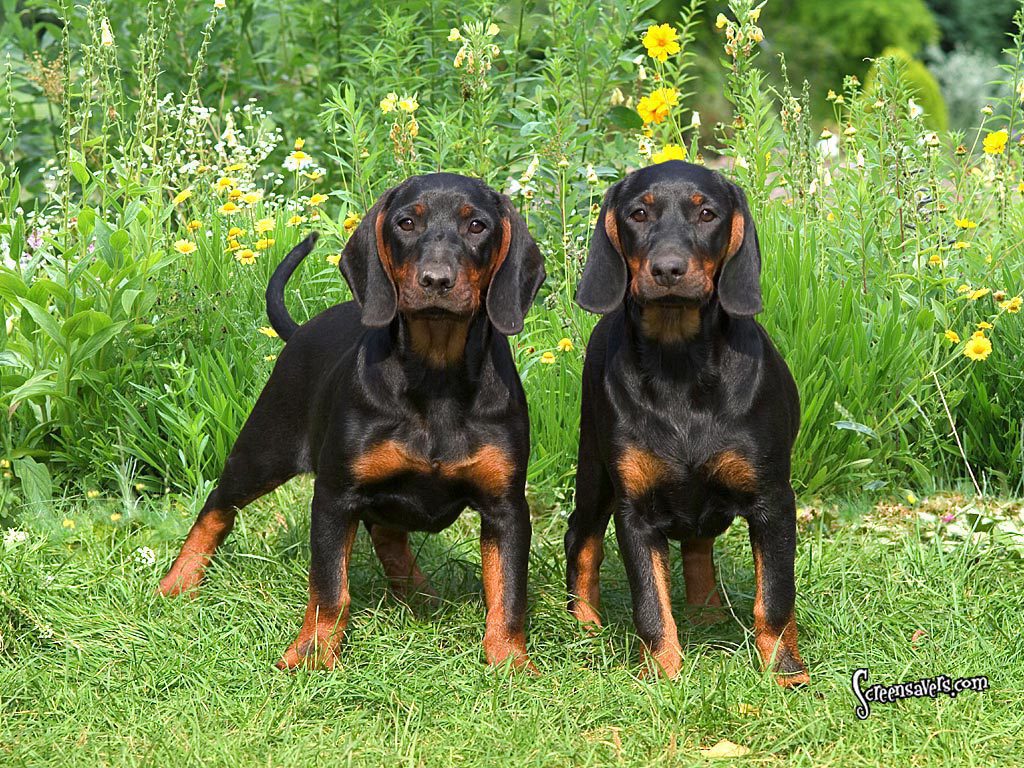
    The Black and tan coonhound they are very vocal and ladradores and, they tend to howl frequently.

    Content

    History

    The black and tan dog for raccoon hunting is a breed of dog used especially to track raccoons. It is a cross between Bloodhound and the Black and Tan Virginia Foxhound (ยซBlack fox hunter and virginia fireยป).

    The Black and tan coonhound It is one of the oldest breeds that exist in America. It is considered that its origin is in the old packs of Fox Hound Cross with Bloodhound they were imported from England in the 17TH century.

    The Black and tan coonhound is a descendant of dog Talbot (extinct race), It was in medieval England from the 11th century. His ancestry is, years. At that time, drawn through the Bloodhound and the Black and Tan Virginia Foxhound.

    The Black and tan coonhound it is the only one of the six races of the group โ€œCoonhoundโ€ (hunting dog breed belonging to hounds) officially recognized by the American Kennel Club.

    In 1945 the Black and tan coonhound was recognized by the American Kennel Club.

    The Redbone Coonhound and the Plott Hound since then they have been recognized in the miscellaneous class. The other three varieties of Coonhound are the Bluetick Coonhound, the American English Coonhound, and the Treeing Walker Coonhound.

    Physical characteristics

    The standard of the Black and tan coonhound mark that your weight is 29 to 59 Kg. Y, the height at the cross of 58 to 69 cm..
    Its pelage is short, dense and glossy. Their brand of black colour and fire are similar to the Dobermann and the Rottweiler, but with key differences that, It doesn't help to distinguish it from other races. The most prominent are the ears and long tails, and his strong bark, like no other. The eyes are Hazel color, throwing more dark in some cases.

    The legs are long in proportion to the length of the body, that is very muscular and thin, males tend to be more bony than females.

    The size of the litter of a Black and Tan Coonhound dog round the 8 Puppies. Y, the life expectancy of this breed is of 10 to 12 years.

    Generally healthy, but there is some risk of the Hip Dysplasia, ear cancer and other ear infections and eye problems.

    Character and skills

    The Black and tan coonhound achieves its objective by guiding itself only by smell, What makes it also efficient to find deer, bears, Pumas and other pieces of hunting, although in many countries this type of hunting with dogs is restricted.

    The general impression is the of the power, agility and alertness, with the ability to quickly drop to the ground and move down with powerful rhythmic strides. It also, every dog has his own voice, recognisable for their owners from a great distance.

    The Black and tan coonhound he is a gentle dog, adaptable and worthy to be loved. While adapt very well to different environments of life, This dog will be very happy when you can do the work for which has been raised.

    Thanks to its amazing sense of smell, is a dog that easily distracted, he is obedient but if any trail crosses his path he will go after himโ€ฆ Reason why, they are dogs that require a constant and patient training.

    Although most of the Black and tan coonhound they are dogs trust, balanced and sweet temperament, puppies need a fair amount of encouragement to build their confidence, especially, When living in the interior of a home as pets. You can have despanzurrado and happy on the sofa, If and when, It gives you a lot of exercise, years. At that time, they enjoy the company of their human family.

    The Black and tan coonhound, It may seem cautious or nervous in the presence of strangers or unfamiliar dogs, but if they are well socialized from puppies there will be no problem, they are dogs bred for hunting and working group.

    The Black and tan coonhound he is better known as "raccoon hunter", but she has also been used successfully for hunting other animals such as the bear, the deer, the Fox and the mountain lion – even on difficult terrain. Since, It is a dog that supports well the rigors of winter, as well as intense heat.

    The Black and tan coonhound it is a breed that tends to drool a lot, This is a feature that can be problematic. This race is not very appropriate for someone who is looking for a quiet dog, like all Coonhound, they are very vocal and ladradores and, as well, they tend to howl frequently. They are effective in warning their owners when a stranger enters the courtyard, the appearance of the dog at that time may seem threatening, but it is not likely to bite or attack unless smell the real danger or feel threatened.

    Despite being a dog that is not often seen in urban areas, they enjoyed much popularity in rural areas. It is said that a Coonhound they are found on the porch of most rural homes in the United States, more than any other race. While it is not a statistical fact, his place in the AKC registered breeds list that ranks as one of the most popular races.

    It is the image that has inspired the character of Pluto, the companion of Mickey Mouse.

    Characteristics "Black and tan coonhound"

    Coexistence is important that you have with your new friend. Before considering the acquisition of a dog of the breed "Black and tan coonhound" you know certain factors. Not all breeds of dogs are apt to live in an apartment, you must take into account his character, their need for exercise, their interaction with other pets, their care and if you have small children, their level of tolerance towards them.

    Adaptation โ“˜

    5,0 of 5 stars (based on 1 review)

    friendly dog โ€‹โ€‹โ“˜

    5,0 of 5 stars (based on 1 review)

    hair loss โ“˜

    5,0 of 5 stars (based on 1 review)

    Affection level โ“˜

    5,0 of 5 stars (based on 1 review)

    Need for exercise โ“˜

    5,0 of 5 stars (based on 1 review)

    Social need โ“˜

    3,0 of 5 stars (based on 1 review)

    Home โ“˜

    1,0 of 5 stars (based on 1 review)

    Toilet โ“˜

    1,0 of 5 stars (based on 1 review)

    Friendly with strangers โ“˜

    3,0 of 5 stars (based on 1 review)

    barking โ“˜

    5,0 of 5 stars (based on 1 review)

    Health โ“˜

    3,0 of 5 stars (based on 1 review)

    Territorial โ“˜

    1,0 of 5 stars (based on 1 review)

    Cat friendly โ“˜

    5,0 of 5 stars (based on 1 review)

    Intelligence โ“˜

    3,0 of 5 stars (based on 1 review)

    Versatility โ“˜

    2,0 of 5 stars (based on 1 review)

    Child friendly โ“˜

    5,0 of 5 stars (based on 1 review)

    Surveillance โ“˜

    3,0 of 5 stars (based on 1 review)

    joy โ“˜

    1,0 of 5 stars (based on 1 review)

    Images Black and tan coonhound

    Videos of the black and tan dog for raccoon hunting

    Type and recognitions:

    • FCI CLASSIFICATION:
    • Group :
    • Section : . .

    Federations:

  • FCI โ“˜, AKC โ“˜, ANKC โ“˜, CKC โ“˜, UKC โ“˜

  • FCI breed standard Black and tan coonhound

    FCIFCI - Black and tan coonhound
    Dog

    Alternative names:

    1. American Black and Tan Coonhound (English).
    2. Chien noir et feu pour la chasse au raton laveur (French).
    3. Schwarz-lohfarbene Waschbรคrenhund (German).
    4. Coonhound preto e castanho (Portuguese).
    5. Black and tan coonhound, perro negro y fuego para la caza del mapache (espaรฑol).

    โ–ท The world of Pets: Dogs, cats, birds, reptiles, amphibians

    Bloodhound
    Bรฉlgica FCI 84 - Large-sized Hounds

    Bloodhound

    The Bloodhound It is the dog with thinner smell of the planet.

    Content

    History

    The Bloodhound (Bloodhound) It is a breed of dog originally from Belgium, more specifically in the region of the Ardennes. It is one of the different breeds of hound recognized by the FCI in Group 6.

    Has been traditionally considered to the monks of the monastery of St. Hubert as the creators of the race (for this reason also, are known as St. Hubert Hound), and they based their selection on the hunting dogs used by the monk Hubert, founder of the order and which later to be canonized became the patron saint of hunters. King William the Conqueror took copies of this breed to England when he ascended to the throne. The descendants of these specimens, They were known in the country as Bloodhound, referring to the purity of their blood.

    Did you know??

    The name "Bloodhound" does not come from this dog's ability to track game and people, but from a long history of carefully recorded bloodlines. In other words, He is a "blood" hound, a kind of dog of the aristocracy, if it can be said like that.

    This legend has it that a rich nobleman hunted in a good Friday accompanied by a group of noisy dogs, and in the distance he could see a deer and when he was about to shoot he saw the image of the cross of Jesus Christ drawn on its antlers and since then he retired from his dissipated life to dedicate his fortune to good works. Since then usually give the nobles, the best specimen of his beloved dogs. Today the tradition continues, but now is a religious service and gives blessing to copies, continuing with the exposure of the race in the community of St. Hubert at Belgium.

    After the race was introduced in the United States where one of his missions was the search and hunt down the fugitive slaves. For many years the recognition by a Bloodhound incriminating evidence was considered by American courts.

    Physical characteristics

    The Bloodhound is a powerful hunting dog. The back is very strong compared to the size of the dog. The head is long and narrow. The muzzle is long with a nose of black. Deeply sunken eyes and drooping eyelids. The Chin is very pronounced.

    The Bloodhound is a dog with a nose finest of the planet.

    Despite its size, is an agile dog. His body is longer than high. Wrinkles on the head and jowls are perhaps one of the most characteristic features, along with the length of its hanging ears. The accepted colors are black and fire, Brown and red in its different shades and fire.

    The appeal is of 67 cm for males and 60 cm for females.

    It has been documented that they are capable of following a trail of up to fifteen days, because of the enormous sensitivity of their sense of smell, caused by the internal folds of their nostrils. For that reason it is used as a police dog in tracking tasks..

    These hounds cannot be kept in a yard without fences. There is a good chance that your tracker instinct carried them wander and get away until the end of their trail.

    It is a dog that needs to be exercised (like all dogs), and usually live more happily in large spaces, Although adapts very well to home life.

    The Blodhound (Bloodhound), Despite the allusion to the term blood contained in its name (blood), It is one of the animals most affable that exists. It is a dog of noble nature, can be shy around strangers. He is very patient and persevering when looking for a trailโ€ฆ

    It is excellent Playmate for children, defend them from any danger. They tend to be very well with other dogs and pets.

    Pictures Bloodhound

    Videos Dog of St. Hubert

    Characteristics "Bloodhound"

    Coexistence is important that you have with your new friend. Before considering the acquisition of a dog of the breed "Bloodhound" you know certain factors. Not all breeds of dogs are apt to live in an apartment, you must take into account his character, their need for exercise, their interaction with other pets, their care and if you have small children, their level of tolerance towards them.

    Adaptation โ“˜

    3,0 of 5 stars (based on 1 review)

    friendly dog โ€‹โ€‹โ“˜

    5,0 of 5 stars (based on 1 review)

    hair loss โ“˜

    5,0 of 5 stars (based on 1 review)

    Affection level โ“˜

    5,0 of 5 stars (based on 1 review)

    Need for exercise โ“˜

    5,0 of 5 stars (based on 1 review)

    Social need โ“˜

    5,0 of 5 stars (based on 1 review)

    Home โ“˜

    1,0 of 5 stars (based on 1 review)

    Toilet โ“˜

    5,0 of 5 stars (based on 1 review)

    Friendly with strangers โ“˜

    5,0 of 5 stars (based on 1 review)

    barking โ“˜

    5,0 of 5 stars (based on 1 review)

    Health โ“˜

    5,0 of 5 stars (based on 1 review)

    Territorial โ“˜

    1,0 of 5 stars (based on 1 review)

    Cat friendly โ“˜

    5,0 of 5 stars (based on 1 review)

    Intelligence โ“˜

    5,0 of 5 stars (based on 1 review)

    Versatility โ“˜

    3,0 of 5 stars (based on 1 review)

    Child friendly โ“˜

    5,0 of 5 stars (based on 1 review)

    Surveillance โ“˜

    5,0 of 5 stars (based on 1 review)

    joy โ“˜

    1,0 of 5 stars (based on 1 review)

    Type and recognitions:

    • FCI CLASSIFICATION:
    • Group :
    • Section : . .

    Federations:

  • FCI โ“˜,
  • AKC โ“˜,
  • ANKC โ“˜,
  • CKC โ“˜, โ€‹
  • KC โ“˜,
  • NZKC โ“˜, UKC โ“˜

  • FCI breed standard "Bloodhound"

    Origin:
    Belgium

    Date of publication of the valid original standard:
    13.03.2001

    Use:

    Big Game Hound, trail dog and family dog. It was and still is a hunting dog, that due to his remarkable sense of smell is above all a tracker, used both to find the trail of the injured small game, in search of the trail as well as to search for missing persons, in police operations. For its functional construction, the Chien de Saint-Hubert is endowed with great resistance as well as an exceptional smell, allowing you to easily follow a track over a long distance and over rough terrain.


    General appearance:

    Massive plus size hunting and tracker dog, the most powerful of hunting dogs. Its lines are harmonious and it is equipped with strong bones, well muscled and full of substance, although without giving the impression of heaviness. Its structure is elongated and the body is shaped like a rectangle. The set is imposing and full of nobility. His attitude is solemn. Head and neck draw attention to abundant skin, flexible and thin that hangs in deep folds. His movements are impressive, rather slow and with a certain sway, though flexible, elastic and loose. No characteristic can be exaggerated to the point of breaking the harmony of the whole., to give an impression of coarseness, far from harming the health or well-being of the dog. Possible exaggerations may be mentioned: very sunken or very small eyes; distended eyelids; excessively thick, loose skin, with too many folds and too deep; too much double chin; very small head. Large dogs are also undesirable, very heavy or very solid body, since this affects its use.

    IMPORTANT PROPORTIONS

    • body length / height to the cross: 10/9.
    • Chest height / height to the cross: 1/2.
    • Head length / body length: 3/7.
    • Length of the muzzle / head length: 1 /2.


    Behavior / temperament:

    Is meek, calm and gentle with people. Particularly attached to his master. Tolerant of his cage mates and other pets. Rather reserved and stubborn in temperament. He's so sensitive to praise, as to corrections. Is never aggressive. His voice is serious, but he is not barking.

    Head:

    It is the most characteristic aspect of the breed; imposing, majestic and full of nobility. Is high, but narrow in relation to its length, and long in relation to the length of the body. The bone structure is well visible. The lateral faces are flat and the profile is square. The nasal ridge is visibly parallel to the long upper line of the forehead.. The skin, fine and abundant, forms deep wrinkles and folds on the forehead and cheeks that fall when the head is down and extend into the folds of the double chin, which is highly developed. In females, the skin is less abundant.

    Cranial region:

    The skull is tall, long, rather narrow, and the side faces are flat. Superciliary arches are not very prominent, although they may seem so. The occipital protuberance is well developed and clearly protruding.

    Depression links (Stop): Bit strong.

    facial region:

    • Truffle: Black or brown in color; always black in black and tan dogs. It is wide, well developed and windows are wide open.
    • Snout: High; as long as the skull. It is wide near the nostrils and of uniform width throughout its length. The
      Nasal cane is either straight or slightly arched (slight ram's nose). Lips: They are very long and loose. The upper lip hangs over the
      bottom and forms a right angle to the front of the muzzle, which imparts a square profile to the muzzle. Behind the corners they turn into fleshy lips (less pronounced in females), that blend imperceptibly with the double chin, which is abundant. The edge of the upper lip descends a few 5 cm lower than the lower jaw. The edge of the lips is well pigmented black or brown, depending on the color of the truffle.
    • Jaws / Teeth: Complete denture, correct "scissor" joint; strong, white teeth set evenly in well-developed jaws. โ€œClamp-shapedโ€ dentures are accepted.
    • Cheeks: Sunken and thin, especially under the eyes.

    EYES: Dark brown or hazelnut color, of a lighter shade (amber) in dogs without a chair or black blanket. Medium-sized; oval, not tearful, nor outgoing, nor sunk in the orbits, thus leaving the iris completely visible. The eyelids, no irregularities in its contour, are normally adapted to the eyeball. Tolerated, However, lower eyelids somewhat distended, so that the conjunctiva is a little visible. The eyelashes cannot under any circumstances touch the eyes, nor hinder them. Your expression is sweet, gentle and dignified, the look a little melancholic.

    EARS: Thin, and flexible, covered with short hairs, fine and velvety to the touch. The pavilion is very long, exceeding at least the tip of the nose when placed on the top of the nasal bridge. Very low implantation, at eye level or below, on the sides of the head, falling in funny folds, castled in and back (corkscrew).

    Neck:

    It is long, so that the dog can keep track of it while keeping the truffle on the ground. Well muscled; throat skin is loose and extremely developed, presented a double chin, although this is less pronounced in females.

    Body:

    The top and bottom margin lines are almost parallel.

    • Cross: Slightly marked.
    • Back: Straight, wide, long and solid.
    • Pork loin: Width, solid, short, very slightly arched.
    • Rump: Well muscled, almost horizontal, never sunk. It is very wide and quite long.
    • Breast : It has an oval shape. It is broad, alto, clearly forming a keel between the forelimbs. The rib cage is long enough; the front of the thorax and the point of the shoulder are well protruding. The ribs are well sprung, ni planas, nor barrel-shaped.
    • Bottom line and belly: The bottom margin is almost horizontal; the lower part of the chest is well lowered. The flanks are very solid, wide and lowered. The belly is very little raised.

    Tail:

    It is long, strong, thick, set high; It is located in the extension of the dorsal line, and gradually becomes thinner towards the limb. It comes in the shape of a saber. When is the dog in action, forms a graceful curve above the dorsal line; never kinks, nor does it deviate laterally. His part covered with rougher hair, of about 5 cm., that gets progressively shorter towards the limb.

    Tips

    PREVIOUS MEMBERS:

    • General appearance: They are well muscled. The forelimbs are straight, powerful and perfectly parallel.
    • Shoulder: Long, well oblique and well muscled, although not heavy.
    • Arms: Oblique lengths, forming a good angle with the shoulders.
    • Elbows: They are well applied, or peeled, or together.
    • forearms: Straight, strong and round bones. Carpi: His firms.
    • Metacarpus: Robust; seen from the front, they are leaden. Seen in profile, they are slightly inclined towards the front.
    • Previous feet: They are compact and very solid; they do not deviate even inwards, nor out. The fingers are well arched, well articulated and together (Jack's foot). The pads are thick and solid, and short and strong nails.

    LATER MEMBERS:

    • General appearance: They are solid, powerfully muscular, in harmony with previous members. Seen from behind, are
      perfectly parallel, or together, nor separated.
    • Thighs: Of good length and well muscled.
    • Knees: Well angulated; they do not deviate even inwards, nor out.
    • Legs: Long enough and well muscled.
    • Hock: Solid, well angled; comes close to the ground. Metatarsals: Strong and short.
    • Hind feet: As the front.

    Movement:

    The judging of the marches, very typical of Chien de Saint-Hubert, it's extremely important. During the normal step, that is to say, the trot, the movement is uniform, steps provided; it is elastic and loose, covering more ground than any other hunting dog, and something that is very characteristic, with a balance, although not through. Hind limbs are directed well back, with good rear third drive. The amplitude of the movements of the forelimbs and hindlimbs is uniform and the upper line remains horizontal. The members move in parallel, but at a higher speed the feet get closer. The tail is high, Sabre-shaped, not too kinky though. The Chien de Saint-Hubert must be able to maintain a long trot without showing signs of fatigue.

    Mantle

    Flexible over the whole body, loose and elastic. Thin skin is very characteristic, very loose and abundant on the head. On the forehead and lateral faces of the muzzle, the skin forms hanging folds that are even more marked when the head is down. But, Very pronounced wrinkles and folds on the forehead and superciliary arches should never obstruct the eyes. Folds on the body caused by overly extended skin are undesirable.

    Fur: On the body the hair is straight, short, dense, quite hard and resistant to inclement weather. Over the ears and head, it is very short and soft to the touch. The lower part of the tail has slightly longer and rougher hairs.

    Color:

    We can distinguish three colors in the fur:

    • the bicolor black and tan (ยซblack and tanยป),
    • liver and fire (ยซliver and tanยป
    • solid red (ยซredยป).

    In black and tan dogs, the black varies, depending on whether it is a blanket or a chair. In a dog with a blanket, black predominates; the fire (leonado), occurs only on the muzzle, cheeks, on top of the eyes, on the front of the thorax, in the limbs and in the perianal region. A dog with a chair has a more widespread tan color, since the black is more or less limited to the dorsal part. The same arrangements of color zones are present in bicolor liver and tan dogs.. Colors are not always well defined, nor clearly delimited. In the darkest parts, longer or badger hairs may be scattered. This mix of different color hairs is accepted. In unicolor dogs, red can vary from light to dark. Faded tan is not desirable in bicolor dogs, nor the faded red in single-colored dogs. Tolerated, although it is not favored, a little white on the front of the chest, on the fingers and the tip of the tail.


    Size and weight:

    Height to the cross:

    The ideal height is:

    • 68 cm for males,
    • 62 cm for females.

    Tolerance: 4 cm more or less.

    Weight:

    • the males, a few 46 - 54 kg,
    • the females, approximately 40 - 48 kg.

    Size and weight must be in harmony.


    Fouls:

    • Any deviation from the aforementioned criteria is considered as a fault and the severity of this is considered to the degree of the deviation to the standard and its consequences on the health and well-being of the dog..
    • General aspect: appearance of heaviness; little substance; Lightweight bones; body raised or close to the ground; rather square than rectangular construction; absence of nobility.
    • Head: broad and bulky or excessively narrow skull; elusive forehead; forehead skin that deviates too much; shallow occipital protrusion; marked naso-frontal depression; concave muzzle; snout short or lacking in altitude; very little hanging upper lip.
    • Nose and lips: loss of pigmentation.
    • Teeth: absence of teeth.
    • Eyes: too small, deep in their orbits; too hanging lower eyelid, highly visible conjunctiva.
    • Ears: too short, very thick; occur above eye level; too close to the head or too flat.
    • Neck: short; delgado, with little double chin.
    • Body: short or too long; slightly lowered chest; anterior part of the thorax little protrusion seen in profile; flat or barrel ribs; loose or arched back, rump very raised or sunken; belly too raised.
    • Tail: appears low; squirrel tail, ring-shaped, threaded; tail knotted or folded; hooked or deviated.
    • Members: too little or too angled; short arms; incorrect poise, viewed profile (eg., Very oblique pasterns or weak carpals), front (for ex. feet that turn inward or outward, bowed forearms, elbows off), the one behind (eg., hind limbs together, separated or in barrel, hock closed or open); open feet, hare or flat.
    • Movement: closed or open; pass crossed; short steps or rigid movement; little drive, the back does not provide a good transmission.
    • Hair color: light or faded colors.
    • Character: insecurity or nervousness.

    FALTAS DESCALIFICANTES:

    • Aggressiveness or extreme shyness.
    • Any dog โ€‹โ€‹showing clear signs of physical or behavioral abnormalities must be disqualified..
    • General aspect: absence of racial type.
    • Teeth: undershot or overshot; Cross occlusion; crooked mouth.
    • Nose and lips: excessive depigmentation or pink color; colors other than black in โ€œblack and tanโ€ dogs; other colors than brown or black in dogs without a chair or black blanket
    • Eyes: light yellow (raptor eyes).
    • Hair color: all colors not corresponding to the descriptions: widespread white markings, such as white that reaches the wrists or hocks, or too widespread white color in the front part of the thorax: white patches somewhere other than the front of the chest, on the fingers and the tip of the tail, as for example, a white snout, a white stripe, etc.
    • Size: outside tolerance limits.
    • A dog that shows any signs of physical abnormality should be eliminated.


    N.B.:
    • Males should have two normal-appearing testicles fully descended into the scrotum..
    • Only functionally and clinically healthy dogs, with the typical conformation of the breed, should be used for parenting.

    Source: F.C.I - International Cynological Federation

    Alternative names:

    1. Sleuth hound, St. Hubert Hound (English).
    2. bloodhound (French).
    3. Bluthund, Bloodhound (German).
    4. Cรฃo-de-santo-humberto, Chien de St. Humbert, Bloodhound (Portuguese).
    5. Perro de San Huberto (espaรฑol).

    โ–ท The world of Pets: Dogs, cats, birds, reptiles, amphibians

    German Hound
    Germany FCI 299 . Small-sized Hounds

    German Hound

    The German Hound it is a fairly common dog in its country but very rare outside its borders.

    Content

    History

    The first written traces of the German Hound date from the 18th century. German breeders wanted to create a versatile hunting dog., but it is very difficult to define precisely the ancestry of the breed. But, the German Hound was originally a descendant of Beagle, English Pointer and English Foxhound. Other breeds like greyhounds, the hounds, he "Westphalian Dachsbrackeยซ, go โ€œHolzbracke de Sauerland tricolorโ€ (small hound for hunting in the forest) and local "Steinbracken" may have contributed to the breed.

    Multipurpose hunting and hounds were booming in Germany at the time, after the dismantling of large hunting grounds and the abandonment of traditional hound hunting methods in favor of stalking and stalking.

    Over the years, the German Hound has come to be known by a large number of regional variants under different names. The Deutscher Bracken Club was founded in Olpe (North Rhine-Westphalia) in 1896 and included all the varieties of the northwest of the country. In 1900, They were finally grouped into a single race called ยซDeutsche Brackeยป (German Hound).

    But, was not up 1964 that was recognized by the Fรฉdรฉration Cynologique Internationale (FCI). The standard currently in force dates from 1987.

    Sometimes known as the "Braque d’Olpeยป (the city where one of the variants of the breed was found and where the Deutscher Bracken Club), the German Hound still a very popular hunting dog in his native region, and even in the rest of Germany. But, its distribution outside of Germany remains highly confidential.

    That does not prevent it from being recognized by the American Kennel Club (A.K.C.) and the United Kennel Club (U.K.C.) in the United States, as well as by the Kennel Club (K.C.) From great britain.

    Photo: hundeo.com

    Physical characteristics

    The German Hound it is a light hunting dog, tall and elegant that, However, it is of solid construction. The head is noble and rather light, with medium-sized pendulous ears and a well-carried but relatively thick tail in relation to the line of the body. The abdomen is slightly folded.

    The teething of the German Hound is particularly strong and regular, with powerful pointed incisors. The eyes, that are moderately large, they are clear and bright. The head, dry and moderately long, and relatively strong neck (compared to the head) follow each other to achieve a slightly arched top.

    The coat is long, very dense and hard, and even covers the belly. It is tricolor: red or fawn, black and white. The saddle and / or coat must be black and well defined. The characteristic white markings of the breed are a continuous list on the muzzle., the neck (a totally white collar is particularly appreciated), chest and limbs. The tip of the tail is also white.

    Character and skills

    The German Hound He is a medium-sized dog that exudes a great joie de vivre. Attached and endowed with a stable character, is happy when put to work and has plenty of outdoor space. Being able to live in complete freedom in a large fenced garden is essential if your master is regularly away, since he likes to live outdoors and exercise. In fact, you need to vent at least two hours a day to be balanced. If you do not allow your partner to use your energy, the master has every chance of ending up with a stressed dog, overexcited, aggressive or even destructive.

    German Hound

    It also, even if you have enough opportunities to exercise, the risk of the dog escaping is high with the German Hound, who especially appreciates sneaking out of his house as soon as he gets the chance, whether to explore new environments or follow tempting smells.

    The German Hound not at all a suitable breed of dog for apartment living. And unless you have a very large garden – and even then… – it is also not a suitable breed of dog for an elderly or sedentary person. You need an active owner, even sporty, to provide you with the exercise and outings you need.

    Nice to live, It can be both a companion dog and a hunting dog, since it is able to adapt to many situations. But, although they love to wander in every corner of the garden, his great passion is still hunting, in which they excel thanks to their particularly developed sense of smell. The German Hound it is above all a tough tracking dog that needs to work hard and work hard. They excel in the pursuit of uninjured game and in the pursuit of wounded prey.

    Due to his cautious behavior in front of strangers and his ability to be attentive and alert in any situation, also can, occasionally and as long as it does not last too long (your joviality is likely to regain control), occasionally assume the role of watchdog.

    But, whatever your activity at that time, can be easily distracted from your mission by a pleasant smell, in which case it becomes difficult to attract your attention again.

    These hunting dogs are passionate about stalking their prey, but they are also very sensitive. They are very close to their family and are very loyal to them. So, should be handled with care and never intimidated, although sometimes they are on guard. Particularly loyal, faithful and sociable, the German Hound proves to be the ideal companion for the whole family, and gets along so well with adults – whose authority and leadership you seek – as with small children, who likes to have fun with. But, should not be left alone with young children, since their overwhelming energy could inadvertently push them, knock them down or knock them unconscious.

    Although the German Hound is generally friendly and balanced, meeting other dogs can be a problem in some cases. Although the German Hound has long been accustomed to living with other dogs due to its long use in hunting in packs, some dogs still tend to be dominant, especially when it comes to unfamiliar animals. For this reason, any outing synonymous with a possible dog encounter involves keeping your partner on a leash.

    Regarding cohabitation with other pets, especially a cat, it can be hard too. In fact, unless you got used to it too soon, that is to say, created together, tends to regard other animals as potential prey. In other words, not really a recommended dog breed with a cat…

    Finally, the German Hound is a noisy dog รขโ‚ฌโ€นรขโ‚ฌโ€นwhose voice extends far. This is a characteristic common to all hunting dogs., since they must communicate with their master at a distance. But this might not be to the taste of the neighbors, who might complain about the dog's barking. It is important to pay attention to this point when training the puppy, to prevent his barking from becoming a problem once he is an adult.

    ยซGerman Houndยป Education

    Although it is soft, stable and very nice, the German Hound not an easy dog รขโ‚ฌโ€นรขโ‚ฌโ€นbreed to train and obedient. So, requires a strong and early education, but of course without any brutality, as this could only backfire. To get the best of your partner, it is necessary to combine sweetness and firmness, and put special emphasis on the socialization of the dog.

    Last, if it is to be used as a hunting dog, learning how to call your dog back is obviously of particular importance.

    In any case, training sessions should be short and interesting enough, since the German Hound it can be annoying, especially if tempting smells distract your attention.

    For all these reasons, should be reserved for experienced teachers: not a suitable breed as a first dog.

    Health ยซGerman Houndยป

    The German Hound it is a fairly robust and resistant dog.

    But, you are particularly at risk of hip dysplasia, as well as the risk of inversion of the stomach (dilation-torsion).

    Whatever the cause, a possible operation should be done with greater vigilance as this dog is very sensitive to anesthesia.

    It also, as in any breed of dog with floppy ears, special attention should be paid to the risk of ear infections in the dog.

    It also, the absence of descent of one or even both testicles into the scrotum (dog cryptorchidism) it is relatively frequent in this breed. Generally prevents the affected male from reproducing and makes it impossible to confirm the dog.

    Finally, the German Hound are frequently found with eye problems, so it is advisable to also pay attention to this point.

    ยซGerman Houndยป Care

    The German Hound it is an easy breed of dog to keep. Its short coat requires only a minimum of grooming and regular maintenance.. Brushing your dog once a week should be enough to preserve the beauty of his coat.. It also, how the coat naturally repels dirt and water, bathing is not normally necessary.

    It also, even during the molting period, loses very little hair.

    It also, like any dog โ€‹โ€‹with floppy ears, the inside of them should also be carefully monitored to reduce the risk of ear infections.

    This may be an opportunity to inspect your eyes at the same time., to be able to intervene quickly if there is a problem in this area.

    Feeding ยซGerman Houndยป

    As the German Hound it is a fairly resistant breed, feeding your dog shouldn't pose any particular problems. A meat-based diet, vegetables and starchy foods, or quality croquettes, it will be perfectly adequate.

    But, Be careful with the volume of the portions!! If used as a hunting dog, it may certainly be appropriate to increase them by 10 to 20% during hunting season, when you are more active than usual. But they must also adapt to the dog's energy needs when they decrease, to avoid any risk of the dog becoming overweight.

    It also, it is important to avoid giving too much food before the dog goes hunting, At risk, for example, to throw up. A little pre-hunt snack is a good thing, but the bulk of the daily ration should be given in the afternoon.

    โ€œGerman Houndโ€ Activities

    Although they can be nice companion dogs, the German Hound It, above all and by its very nature, a hunting dog specialized more specifically in tracking hares, badgers and big game, whether or not they are injured. These fine hounds are experts in difficult terrain and can withstand all kinds of weather conditions.. They like to chase their prey for hours and hours. Its long snout and extremely sensitive nose are its best allies in this task.. Once the prey has been hunted, its loud and clear bark is highly appreciated by hunters, since it allows them to point out the exact position of the hunted animal.

    Although the German Hound it is very suitable for hunting alone, also excels in pairs or small groups of individuals. This is how the breed was originally used.

    ยซGerman Houndยป Price

    The price to adopt a puppy from German Hound is between 700 and 900 EUR.

    Characteristics "German Hound"

    Coexistence is important that you have with your new friend. Before considering the acquisition of a dog of the breed "German Hound" you know certain factors. Not all breeds of dogs are apt to live in an apartment, you must take into account his character, their need for exercise, their interaction with other pets, their care and if you have small children, their level of tolerance towards them.

    Adaptation โ“˜

    3,0 of 5 stars (based on 1 review)

    friendly dog โ€‹โ€‹โ“˜

    4,0 of 5 stars (based on 1 review)

    hair loss โ“˜

    1,0 of 5 stars (based on 1 review)

    Affection level โ“˜

    4,0 of 5 stars (based on 1 review)

    Need for exercise โ“˜

    5,0 of 5 stars (based on 1 review)

    Social need โ“˜

    4,0 of 5 stars (based on 1 review)

    Home โ“˜

    3,0 of 5 stars (based on 1 review)

    Toilet โ“˜

    1,0 of 5 stars (based on 1 review)

    Friendly with strangers โ“˜

    3,0 of 5 stars (based on 1 review)

    barking โ“˜

    5,0 of 5 stars (based on 1 review)

    Health โ“˜

    5,0 of 5 stars (based on 1 review)

    Territorial โ“˜

    4,0 of 5 stars (based on 1 review)

    Cat friendly โ“˜

    2,0 of 5 stars (based on 1 review)

    Intelligence โ“˜

    4,0 of 5 stars (based on 1 review)

    Versatility โ“˜

    3,0 of 5 stars (based on 1 review)

    Child friendly โ“˜

    5,0 of 5 stars (based on 1 review)

    Surveillance โ“˜

    3,0 of 5 stars (based on 1 review)

    joy โ“˜

    5,0 of 5 stars (based on 1 review)

    Videos "German Hound"

    German bracke

    Deutsche Bracke
    German Bracke Stรถberhund puppies territory excursion forest walk

    Deutsche Bracke Stรถberhundwelpen district forest walk excursion

    Type and recognitions:

    • FCI CLASSIFICATION:
    • Group :
    • Section : . .

    Federations:

    • FCI – Group 6: Scent hounds, and related breeds. – Section 1.3: Small-sized Hounds. โ“˜
    • AKCHound โ“˜
    • โ€‹KCHoundy โ“˜
    • UKCScenthounds โ“˜

    FCI breed standard "German Hound"

    Origin:
    Germany

    Date of publication of the valid original standard:
    24. 06. 1987

    Use:

    Hound


    General appearance:

    Head length in medium-sized dogs is approximately 21 cm., the muzzle to the region between the eyes measures about 9 cm..

    GENERAL APPEARANCE:

    It is a light and elegant hunting dog with long limbs., possessing a strong body structure with a noble head, relatively light, good ears and a well-carried tail, though strikingly thick in relation to the dog's general noble appearance; the belly is slightly retracted.


    Behavior / temperament:

    ---

    Head:

    It's light, dry, elongated. View from the front, the head is narrow and elongated, skull only slightly wider than cheek region, which show a very slight transition to the muzzle and are not protruding.

    Cranial region:
    • Skull : Slightly domed, occipital protuberance very unremarkable.
    • Depression links (Stop) : Minimum.

    facial region:

    • Nose cane : Slightly arched.
    • Truffle : It has a light stripe almost flesh-colored in its middle part, while the nasal wings are pigmented of a more or less dark color.
    • Lips : Moderately hanging; small commissure.
    • Jaws / Teeth : Extremely strong and regular. The incisors overlap one another or the inner surface of the upper incisors is in close contact with the outer surface of the lower teeth. The fangs are especially highly developed.

    Eyes : dark, clean, with kind expression.

    Ears : long (approx.. 14 cm.) and spacious (approx.. 9 cm.); they are well attached to the head and are rounded at their tips.

    Neck:

    Moderately long and fairly strong relative to the head.

    Body:

    • Back : Slightly arched.
    • Rump : Slightly descending.
    • Breast : Deep, reaches below the elbows; slightly arched with elongated rib cage.

    Tail:

    Long, not notably strong at its root. It is covered with long and thick hair to protect it against the friction of stems and branches; therefore it is relatively thick although it ends in a point; has a bit of a brush shape. The tail is carried hanging or gently curved upwards.

    Tips

    PREVIOUS MEMBERS: High, very well formed, skinny, of fine and tendinous bones.

    • Shoulder : Thin.
    • Elbows : Well attached to the body.

    LATER MEMBERS:

    • Thighs : The thighs, viewed profile, They are wide and full.
    • Leg : The leg is long and not very wide, well angled.

    FEET : Longer than cat's, hard, fingers tightly closed.

    Movement:

    ---

    Mantle

    HAIR: For a short haired dog, is long, very dense, hard, almost double hair; also the belly is well covered with dense hair; at the bottom of the tail is almost always longer, forming an unremarkable brush; thighs well covered in ยซpantsยป

    COLOR: From red to yellow with black saddle or coat and white markings typical of bloodhounds : uninterrupted list, white muzzle with a ring around the neck (it is desirable that the ring is complete), white breast as well as limbs and tip of tail.


    Size and weight:

    Height to the cross : Of 40 โ€“ 53 cm.. It is allowed to exceed this measurement to a minimum degree.


    Fouls:

    Any deviation from the aforementioned criteria is considered as a fault and the severity of this is considered to the degree of the deviation to the standard and its consequences on the health and well-being of the dog..

    โ€ข Long and low body structure.
    โ€ข Dachshund Head
    โ€ข Pointy ears, pleated or short.
    โ€ข Sickle-shaped or curled tail.
    โ€ข Poorly formed limbs.
    โ€ข Poorly formed feet, crushed.
    โ€ข Color pardo chocolate.
    โ€ข Spotted dogs.

    Any dog โ€‹โ€‹showing clear signs of physical or behavioral abnormalities must be disqualified..


    N.B.:

    Males should have two normal-appearing testicles fully descended into the scrotum..

    Source: F.C.I - International Cynological Federation

    Alternative names:

    1. Deutsche Bracke, German Bracke, Olper Bracke, Westphalian Bracke (English).
    2. (deutsche bracke en allemand) (French).
    3. Westfรคlische Bracke (German).
    4. braco alemรฃo, (em alemรฃo: Deutsche Bracke) (Portuguese).
    5. Sabueso de sangre de Baviera (espaรฑol).