โ–ท The world of Pets: Dogs, cats, birds, reptiles, amphibians

Palm cockatoo
Probosciger aterrimus

Content

Description

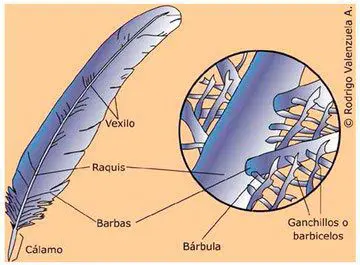
51 to 64 cm. height and a weight between 910 and 1200 g.
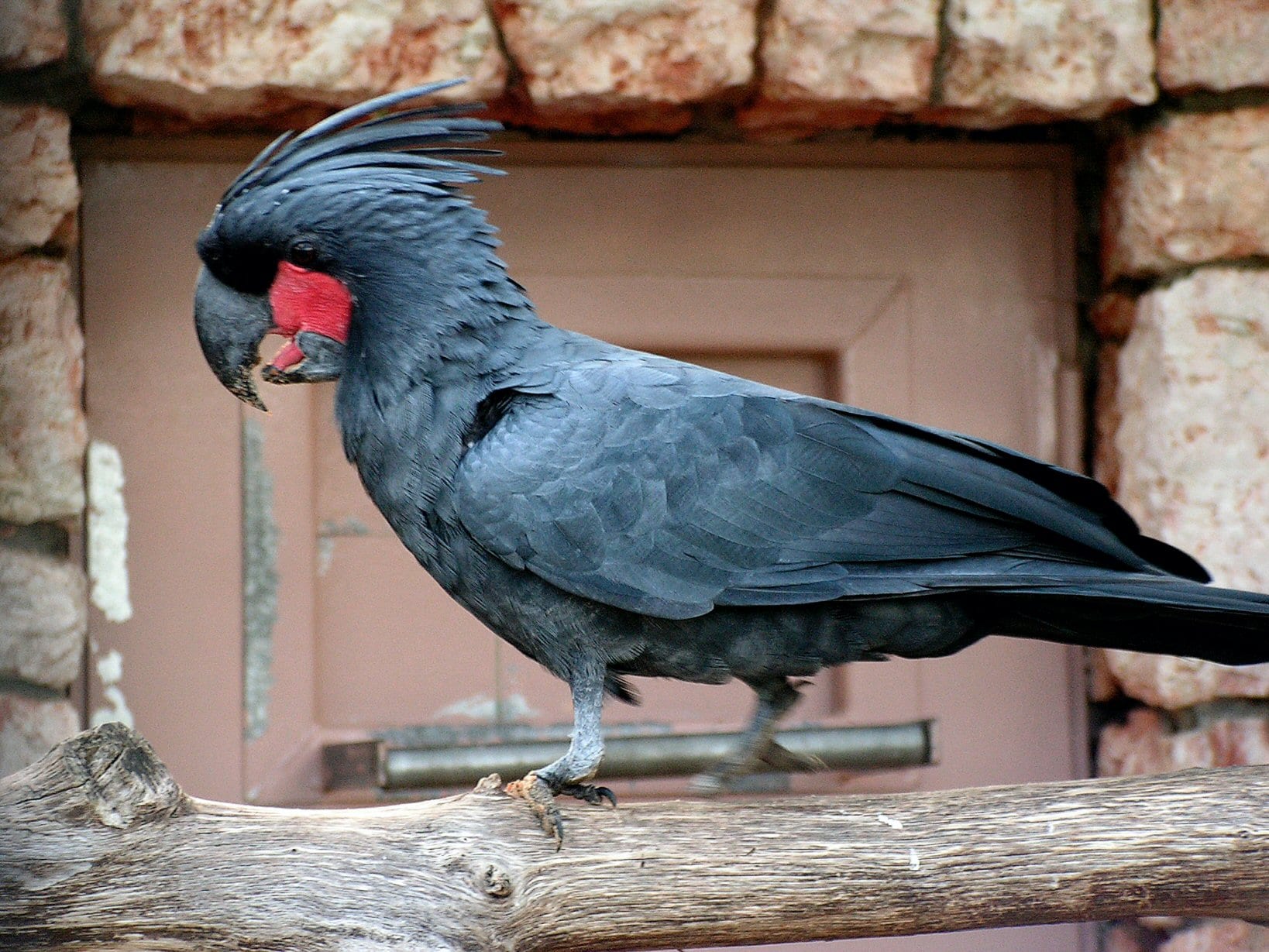
The Palm cockatoo (Probosciger aterrimus) it is one of the largest cockatoo species. Unmistakable with a Erectile Crest of 15 cm.. Mainly arboreal.

Both sexes differ in size. Immatures are differentiated by the pale yellow at the bottom and the tip of the bill and the eye ring in color white.
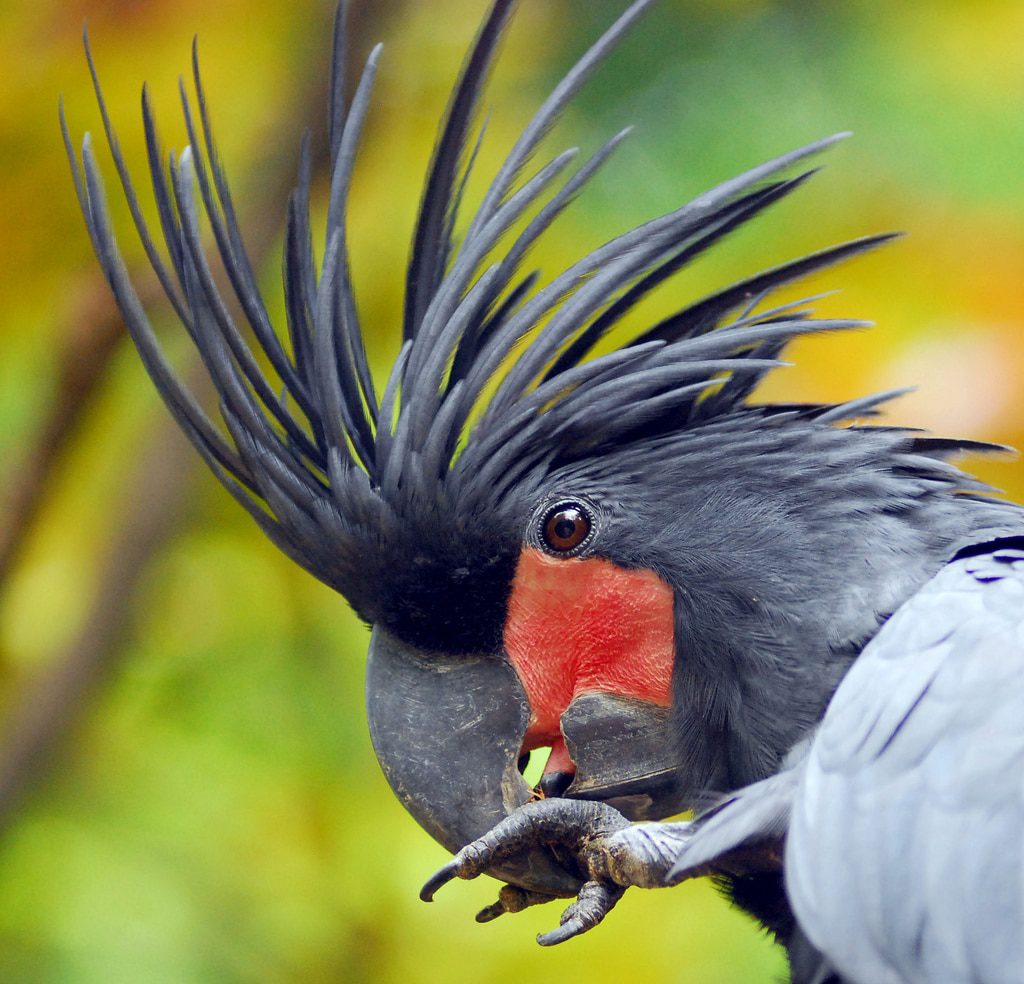
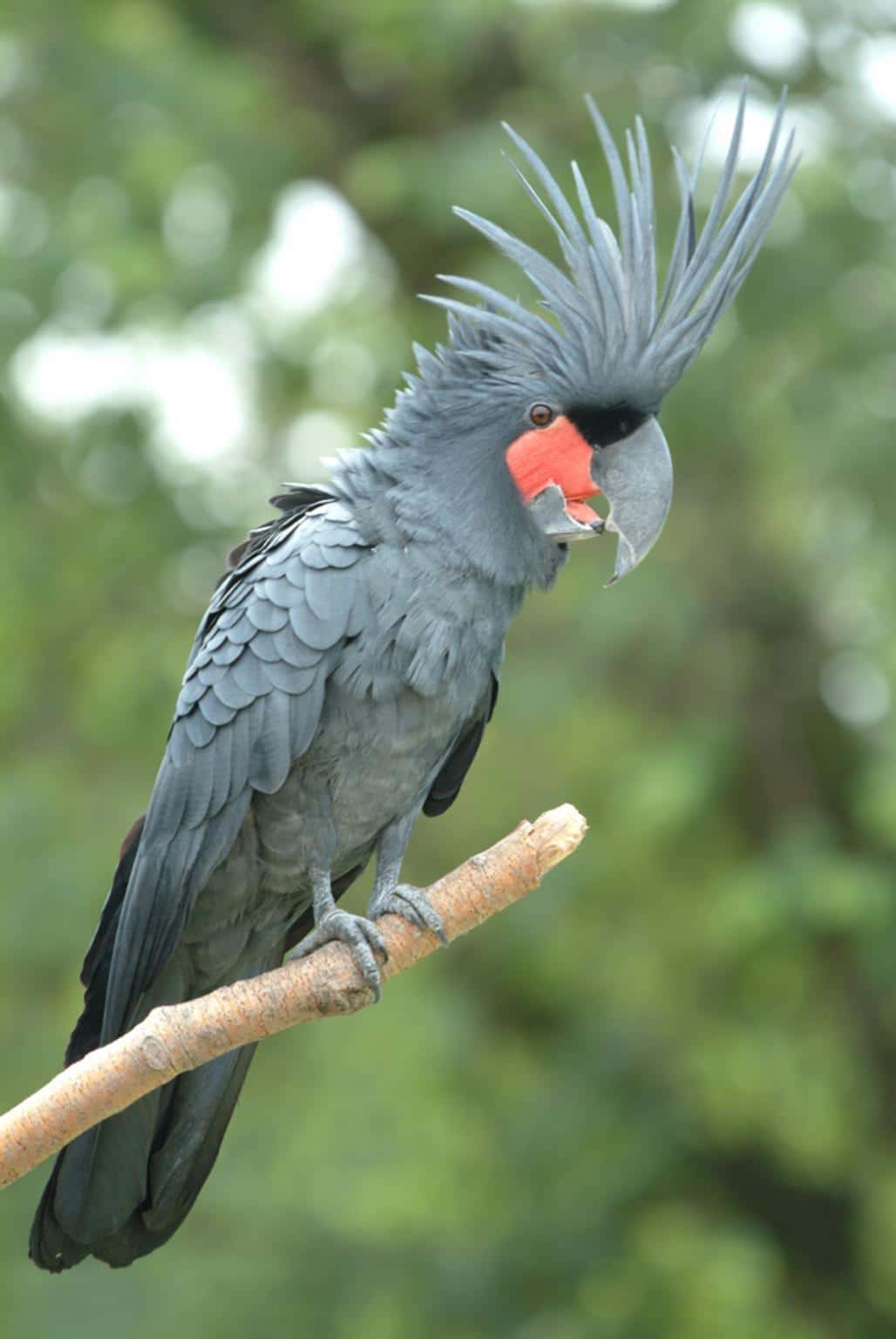
Usually black with a bare area around the cheeks and eyes red. The feathers of the crest they are long and thin, black streaks.
The bill is dark gray, smaller in the female. The legs son grises. The language is black and Red.
The cheek skin changes color according to its health or stress level, a pink / beige to a yellow when it is excited.

Description 4 supespecies

  • Probosciger aterrimus aterrimus

    (Gmelin, 1788) – Nominal.


  • Probosciger aterrimus goliath

    (Kuhl, 1820) – Larger than the subspecies macgillivrayi.


  • Probosciger aterrimus macgillivrayi

    (Mathews, 1912) – Larger than the species nominal.


  • Probosciger aterrimus stenolophus

    (Oort Cloud, 1911) – As the subspecies goliat, but with feathers crest closer.

Habitat:

The presence of this cockatoo is documented from sea level to 1350 metres in height.

In New Guinea they are in tropical rainforests, including gallery forests, edges of forests and monsoon forests. In Australia they live in forests of eucalyptus, forest of Melaleuca, partially cleared areas and sheets.

You are travelling individually, in pairs or in groups of five or six. About an hour after sunrise they gather in the treetops.

Reproduction:

The nesting occurs between August and February.
Nest in the cavities of trees which tend to be of approximately 1 m depth and 25 to 60 cm in diameter. These are full of branches broken at the bottom on which rests the egg. The site is often used year after year.
Reproduce every two years. They put a single egg and both parents the hatch for a period of 28 to 31 days, at around 3 to 4 more days to hatch. The squab was born completely naked and does not develop marker, unlike other Cockatoo chicks. They are taken from 100 to 110 days to leave the nest, the longest period among all parrot species. After leaving the nest, the young bird depends on the parents at least others 6 weeks because of its inability to fly.

Food:

Seeds, dried fruits, fruit, berries, sprouts leaves and insect larvae.
They feed mainly in the forest canopy, but can also feed on the ground on fallen fruits and seeds.

Distribution:

Size of the area of distribution (reproduction / resident): 716.000 km2

New Guinea and adjacent islands, North of Queensland, Australia.

Distribution 4 subspecies:

Conservation:

State of conservation โ“˜


minor concern Minor Concern โ“˜ (UICN)โ“˜

โ€ข Least concern according to IUCN classification.

โ€ข Population trend: Decrease

This species has a very large range, and therefore not approaching the threshold of vulnerability. While the trend of the population seems to be decreasing, the decline is not believed to be fast enough to approach vulnerable bird thresholds based on population trend criteria.

In some parts of its area of distribution, the forest habitat in which occur the hollow trees is being invaded by the rainforest.

"Palm cockatoo" in captivity:

Rare bird cage, Although they have a great demand for the market of pet due to its unusual appearance.
They can live more than 55 years of age in captivity.

They may develop compulsive behaviors, as the pecking of feathers. They can also mimic sounds and human language.

Aggressiveness within pairs is taken into account for captive breeding., Sometimes the male usually kill the female. As such, There are more different management methods, from bringing both cockatoos together only during the breeding period and quickly removing the male, cut the male that the female escape flying, or create complex installations that are carried out next to a cutout of the male, so that the female always has an escape route in the face of aggression.

There are currently laws that prohibit the export of any Palm cockatoo without a permit.

Alternative names:

– Palm Cockatoo, Black Macaw, Goliath Aratoo, Goliath Cockatoo, Great Black Cockatoo, Great Palm Cockatoo (English).
– Cacatoรจs noir, Microglosse noir (French).
– Arakakadu (German).
– Cacatua-das-palmeiras (Portuguese).
– Cacatรบa de las Palmas, Cacatรบa Enlutada (espaรฑol).

scientific classification:

– Order: Psittaciformes
– Family: Cacatuidae
– Genus: Palm
– Scientific name: Probosciger aterrimus
– Citation: (Gmelin, JF, 1788)
– Protonimo: Psittacus aterrimus

Images of the Black Cockatoo:


Sources:
– avibase
– infoexoticos
– Parrots of the World โ€“ Forshaw Joseph M
– Parrots A Guide to the Parrots of the World – Tony Juniper & Mike Parr
– Birdlife

– Photos: avianzoo, papageien.org, avianzoo, Wikimedia.org

– Sound: Frank Lambert
โ–ท The world of Pets: Dogs, cats, birds, reptiles, amphibians

Plum-faced Lorikeet
Oreopsittacus arfaki

Plum-faced Lorikeet

Content

Description

15 cm.. length between 16 and 23 g. of weight.
Plum-faced Lorikeet

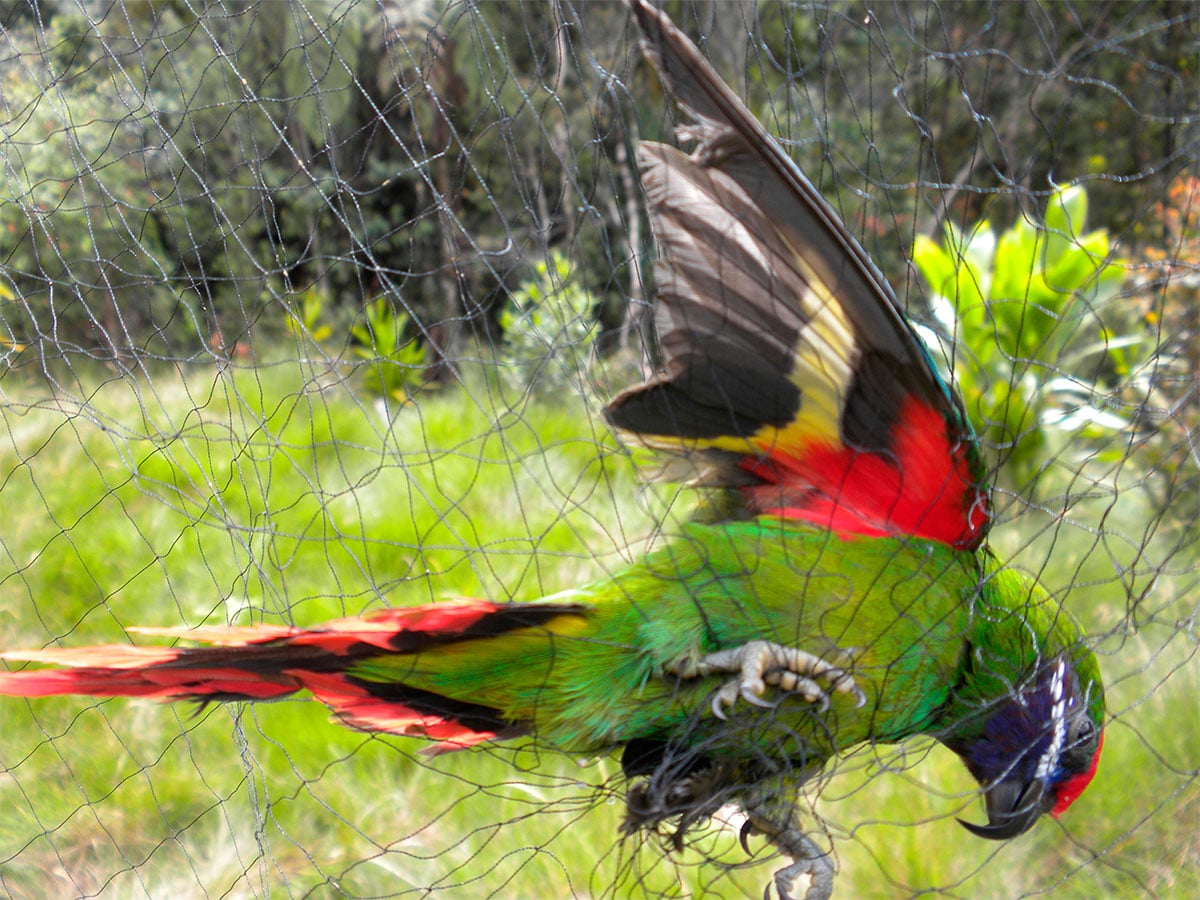
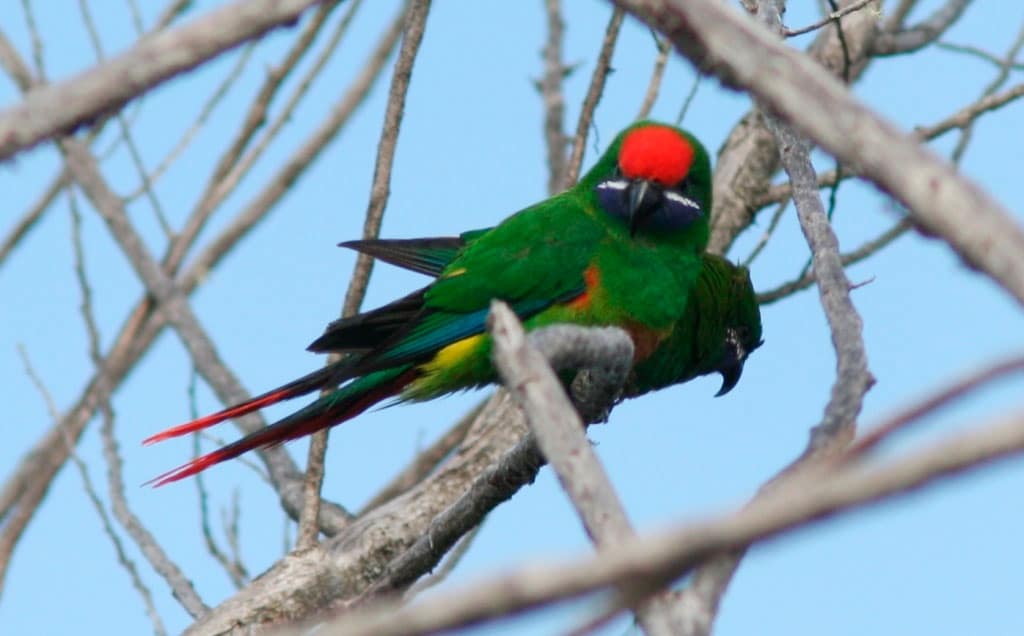
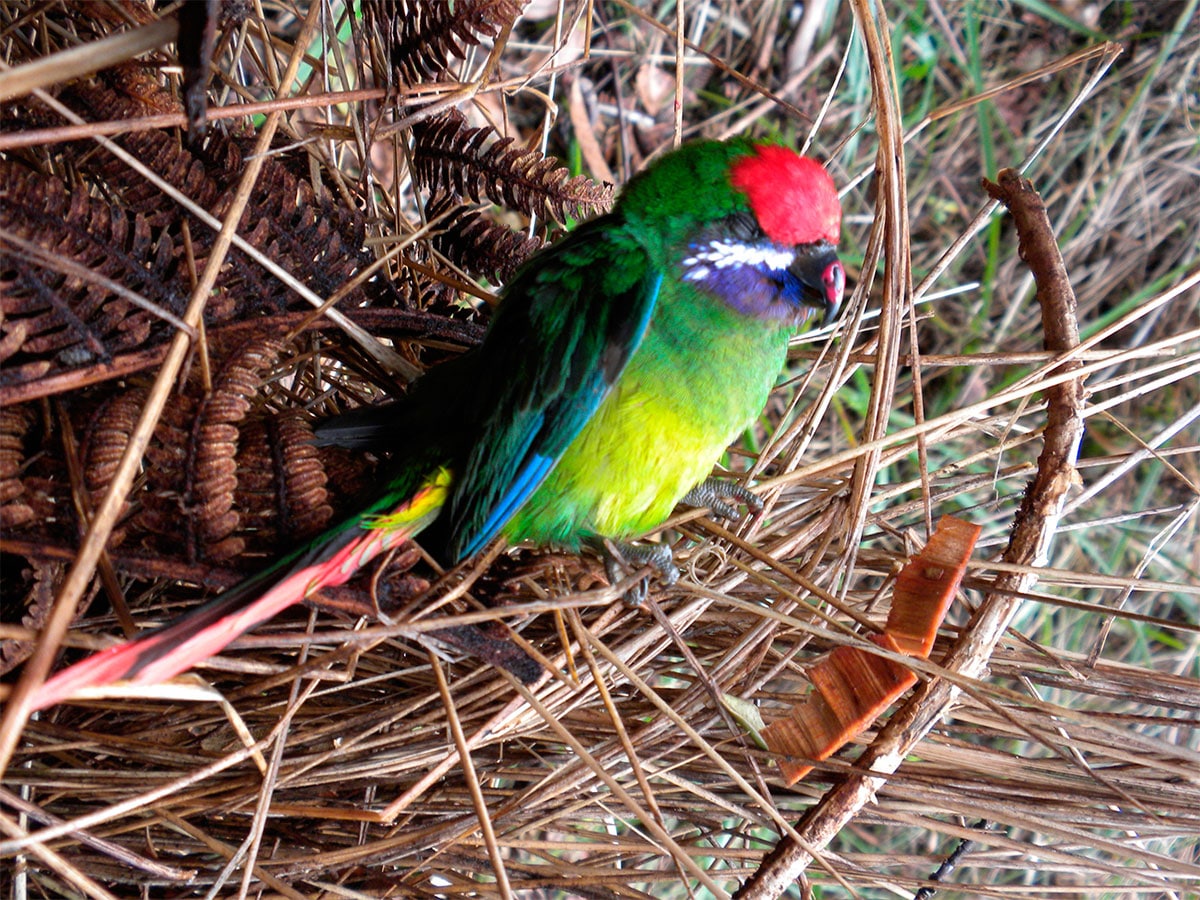
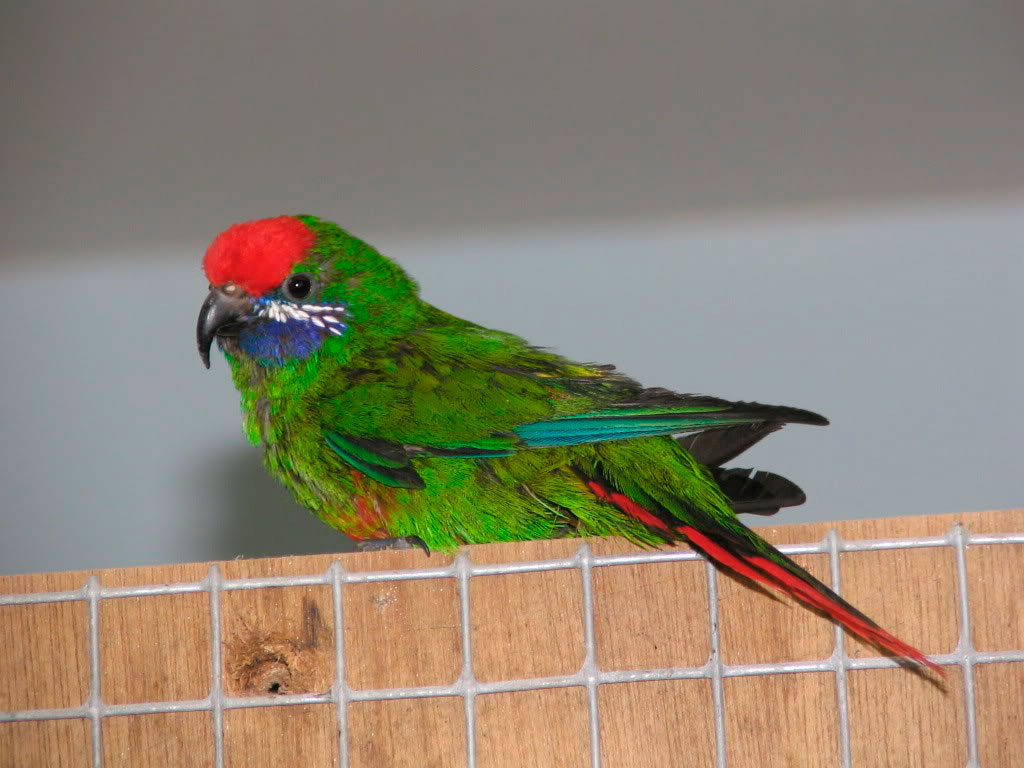
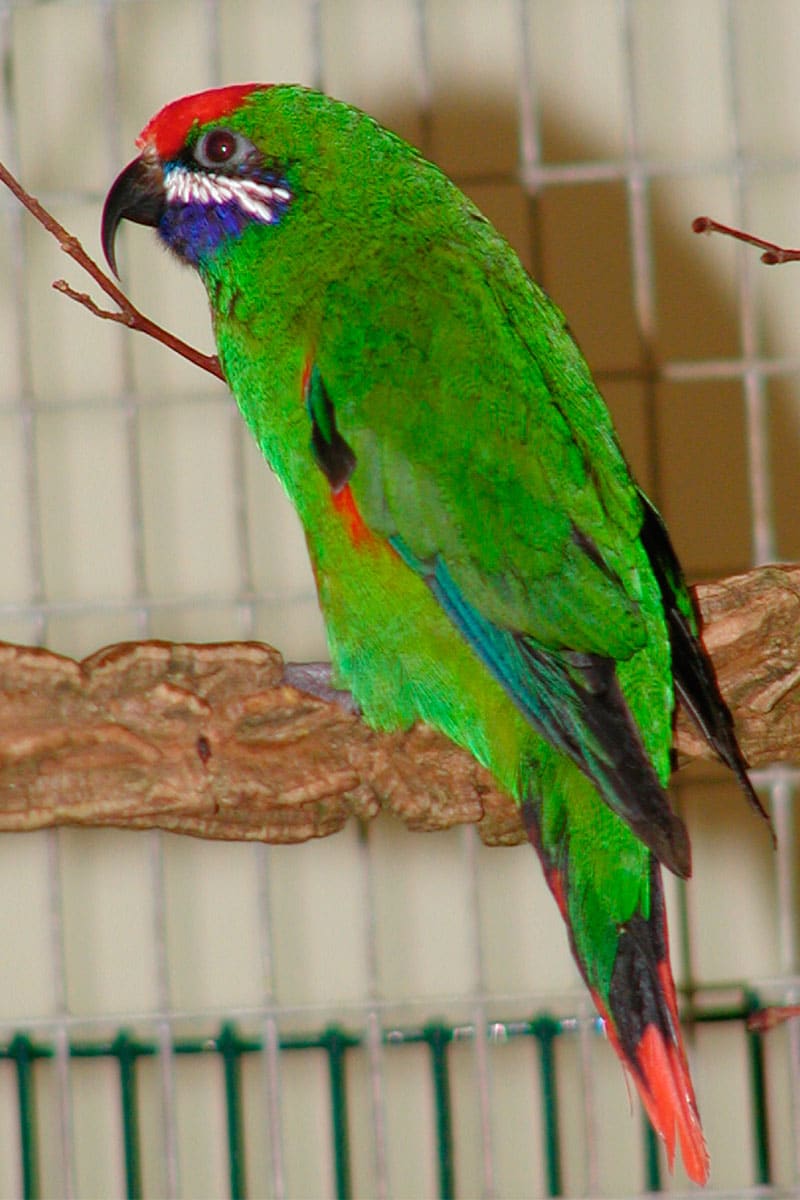
The hood of the Plum-faced Lorikeet (Oreopsittacus arfaki), from the top of bill up to the crown rear, is Scarlet Red ; chin and Spada color plum (with bluish Sheen), broken by two rows of thin stripes.

Upperparts of color green uniform with a light spread of olive in the the mantle. Wings, views from the top are green; vane internal to the flight feather, blackish in color and vane external to the primaries outermost, bluish green. Underwing-coverts and axillary, red (Outer secondaries slightly marked with yellow); flight feather Blackish with yellow central band. The mauve of it chin be extended slightly in the throat; top of the chest green, center of chest and belly bathed in orange-red; under belly green; undertail-coverts green, lightly bathed in yellow on sides. Uppertail green, merging to blackish and ending in pinkish-Red, in the tip lighter fusion: below, the tail is red with marked with black side feathers.

The bill black; irises blackish brown; legs grey.

Female lack of top red (but you can show a bit of red on the part rear of the Crown).

Immature male with only red on the back of the crown. The young birds have a slightly 'scaly' appearance; also off the tip of orange-yellow color of the tail.

Description 3 subspecies

  • Oreopsittacus arfaki arfaki

    (Meyer,AB, 1874) – The nominal.


  • Oreopsittacus arfaki grandis

    : (Ogilvie-Grant, 1895) – Greater than the nominal. Lack of the flanks redorange and markings of the belly of the other two subspecies.


  • Oreopsittacus arfaki major

    : (Ogilvie-Grant, 1914) – Larger that the nominal and more red-tipped in the tail.

Habitat:

The distribution of the Plum-faced Lorikeet is more or less continuous in the extension of the moss forests; the species is mainly found among the 2.000 and 3,750 m, but can observe is to 1.000 m occasionally. Be found with greater frequency in pairs or small flocks very vocal. They feed acrobatically in the canopy; They also feed on plants, especially in the flowers of epiphytes, often in the company of other flower aficionados such as the lories of the genus Neopsittacus.

Reproduction:

Habits of nesting unknown, birds in reproductive attitudes they have been observed in August and October. The display of marks under the wings have been observed in pairs and can be linked to courtship, as well as by the male head rolling.

Food:

It feeds on pollen, nectar, possibly, flowers, fruit (especially Schefflera) and berries.

Distribution:

Size of the area of distribution (reproduction / resident): 108.000 km2

New Guinea in Irian Java (Indonesian) and Papua New Guinea, ranging from the East ofVogelkop to the Huon Peninsula and ranges from the Southeast. A small number of captivity

Distribution 3 subspecies:

  • Oreopsittacus arfaki arfaki

    (Meyer,AB, 1874) – The nominal.


  • Oreopsittacus arfaki grandis

    : (Ogilvie-Grant, 1895) – Mountains of the Central and East of Papua New Guineto, including, those in the southeast of the region of the Huon Peninsula and Sepik, extending to the West of Victor Emanuel Range


  • Oreopsittacus arfaki major

    : (Ogilvie-Grant, 1914) – Snow Mountains (Papua New Guinea)

Conservation:


minor concern

โ€ข Current IUCN Red List category: Least concern

โ€ข Population trend: Stable

The world population It has not been quantified, Although it is thought of more than 300.000 specimens. The species is reported to be quite common (pit et to the. 1997).

The population suspected to be stable in the absence of evidence of any reduction or substantial threats.

"Plum-faced Lorikeet" in captivity:

The Plum-faced Lorikeet is a bird quiet and at times active. Young birds are susceptible to stress and disease during the acclimatization; can die suddenly without apparent cause. They become much more resistant and less timid after acclimatization.. You can be accommodated with members of their own species in a system of colony.

It is very rare in captivity.

Alternative names:

– Plum-faced Lorikeet, Plum faced Lorikeet, Plum-faced Mountain Lory, Plum-faced Mountain-Lory, Whiskered Lorikeet (ingles).
– Lori bridรฉ (French).
– Arfaklori, Arfakalori (German).
– Lori Bigotudo, Lori de Bigotes (espaรฑol).

scientific classification:

– Order: Psittaciformes
– Family: Psittaculidae
– Genus: Oreopsittacus
– Scientific name: Oreopsittacus arfaki
– Citation: (Meyer,AB, 1874)
– Protonimo: Trichoglossus (Charmosyna) Arfaki

ยซWhiskered Loryยป Images:

Videos "Plum-faced Lorikeet"

————————————————————————————————

ยซOn Bigotryยป (Oreopsittacus arfaki)


Sources:

– Avibase
– Parrots of the World โ€“ Forshaw Joseph M
– Parrots A Guide to the Parrots of the World – Tony Juniper & Mike Parr
– Birdlife

– Photos:

(1) – Dansk Lori Klub
(2) – arfak lori man oreopsittacus arfaki – photobucket
(3) – By Katerina Tvardikova – pngbirds.myspecies.info
(4) – By Guy Dutson – lynx
(5) – By Katerina Tvardikova – pngbirds.myspecies.info
(6) – Illustration – HBW.com

– Sounds: Patrik ร…berg (Xeno-canto(

โ–ท The world of Pets: Dogs, cats, birds, reptiles, amphibians

Pale-headed Rosella
Platycercus adscitus

Perico pale

Content


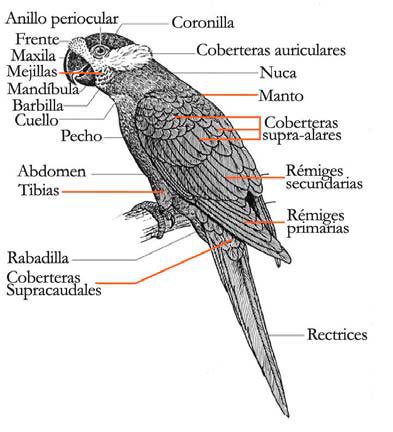
Anatomy-parrots

Description

30 cm.. length and a weight between 100 and 175 g..

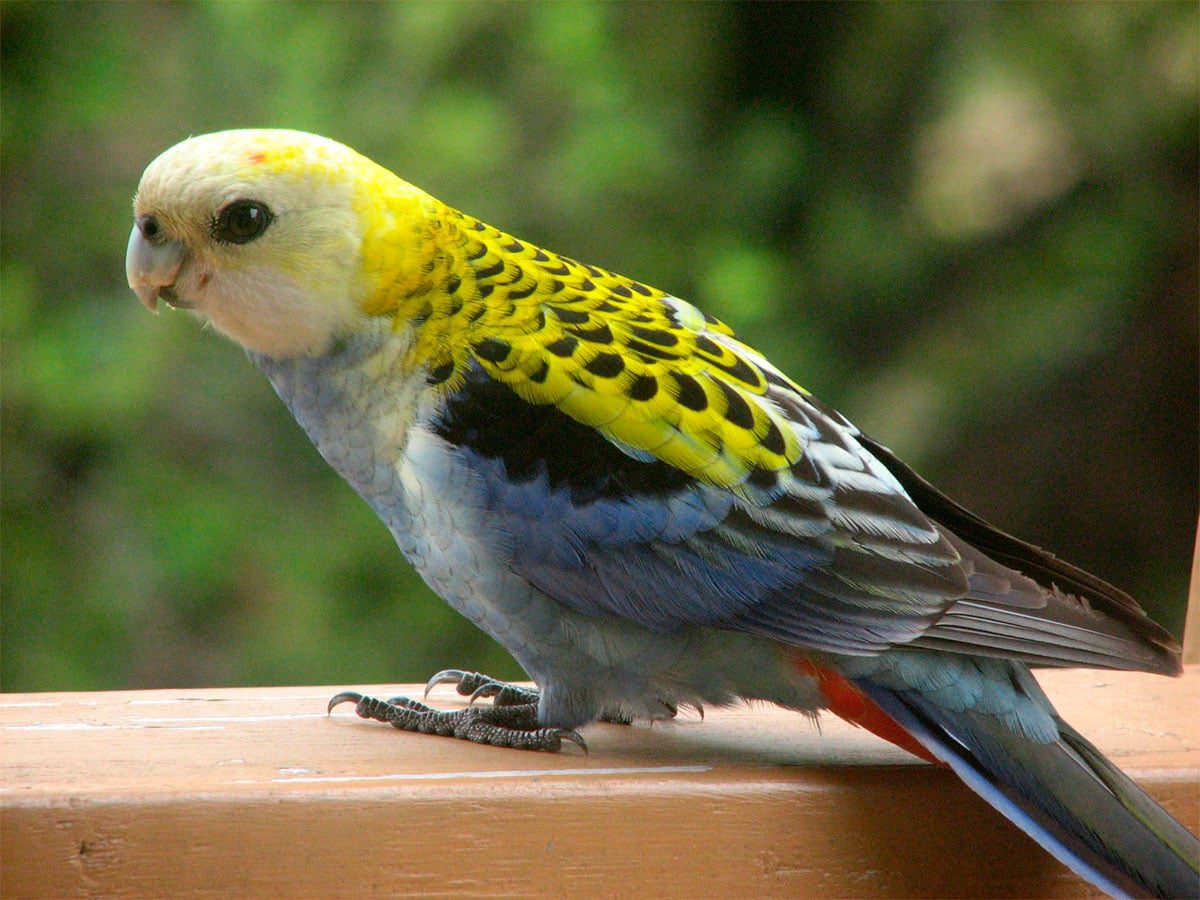
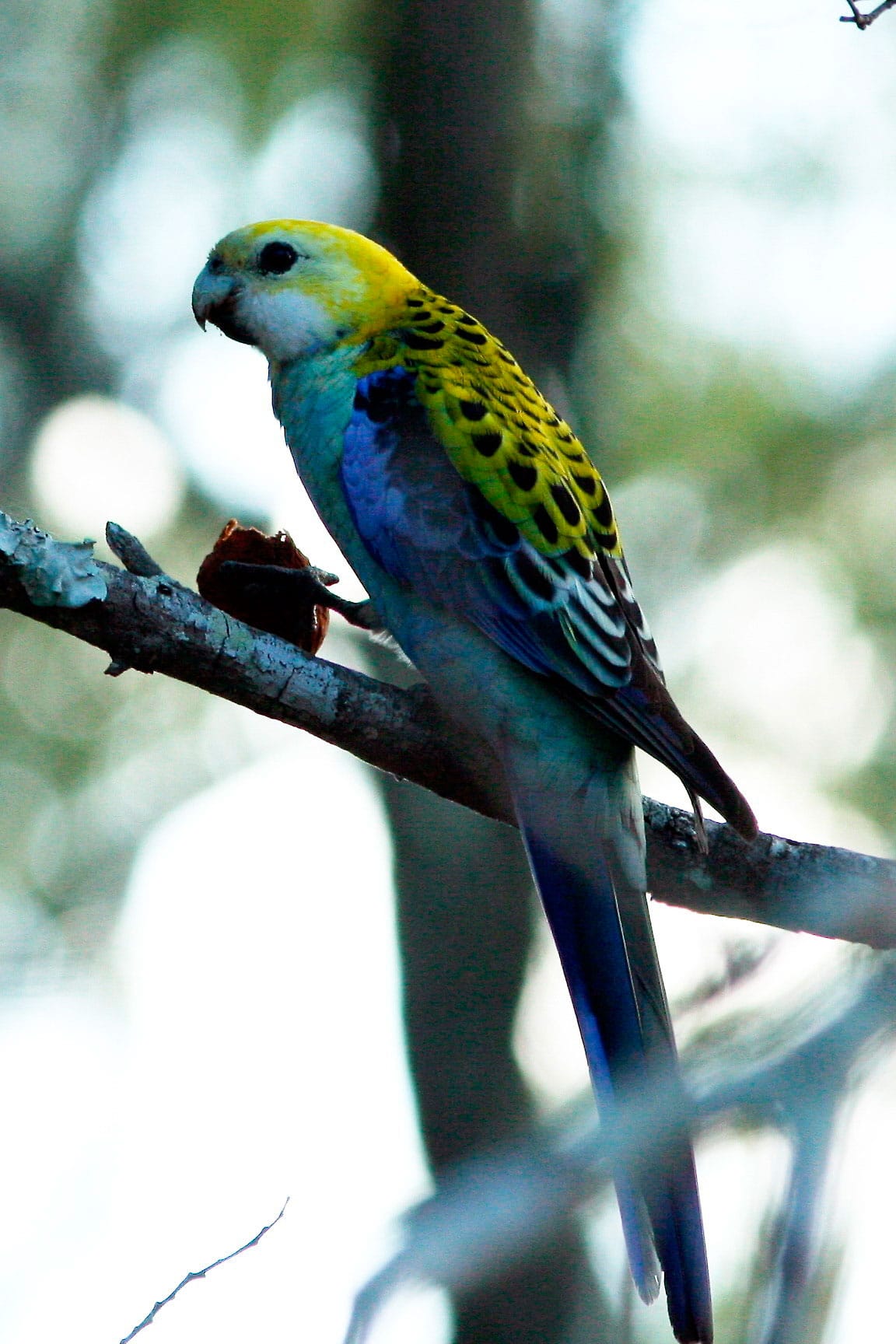
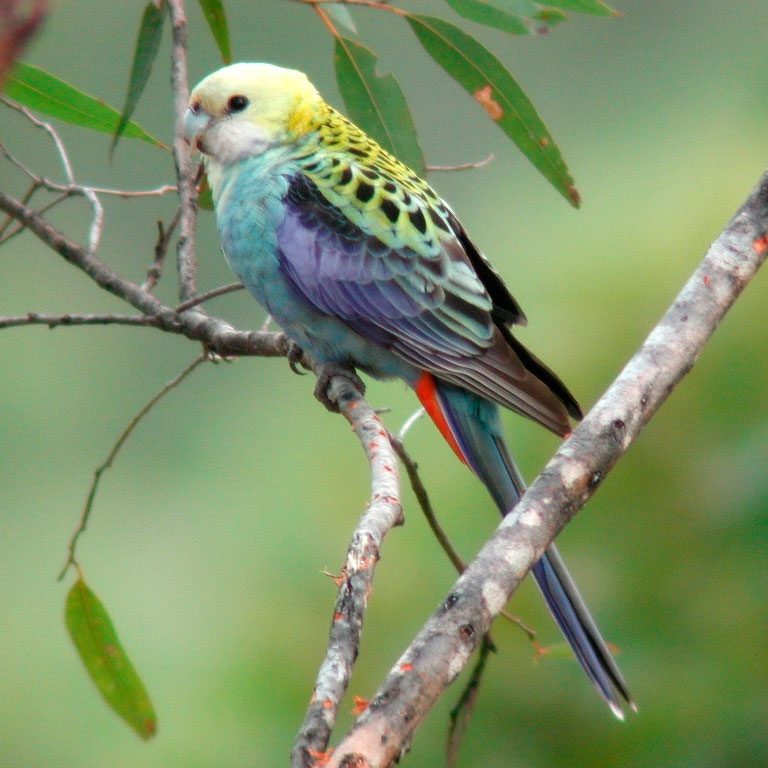
The adult male of the Pale-headed Rosella (Platycercus adscitus), It has a pale yellow "head". The part superior of the cheeks is whitish in contrast with the part below that is of color blue light. Upper chest is yellow, the lower part of the chest and the abdomen are blue. The coverts They show a beautiful red hue. The the mantle, the back and scapulars are black with broad yellow edges, these areas giving a scaly appearance.

The tail is of color yellow uniform. The external coverts are dark blue. The central feathers of the tail are dark blue, but the outer feathers are more pale with thin white edges. The bottom has no stripe.

The bill is white. The irises They are brown, legs grey.

The female is different from the male, its color is more off and has a strip at the bottom of the wings.

The immature they have grayish feathers ending in yellow or orange-red at the top of the crown and the neck. The red feathers lose them about three months. The bottom of the wings is scratched. They acquire adult plumage in about 16 months.

Description 2 subspecies:

  • Platycercus adscitus adscitus

    (Latham 1790) – The nominal


  • Platycercus adscitus palliceps

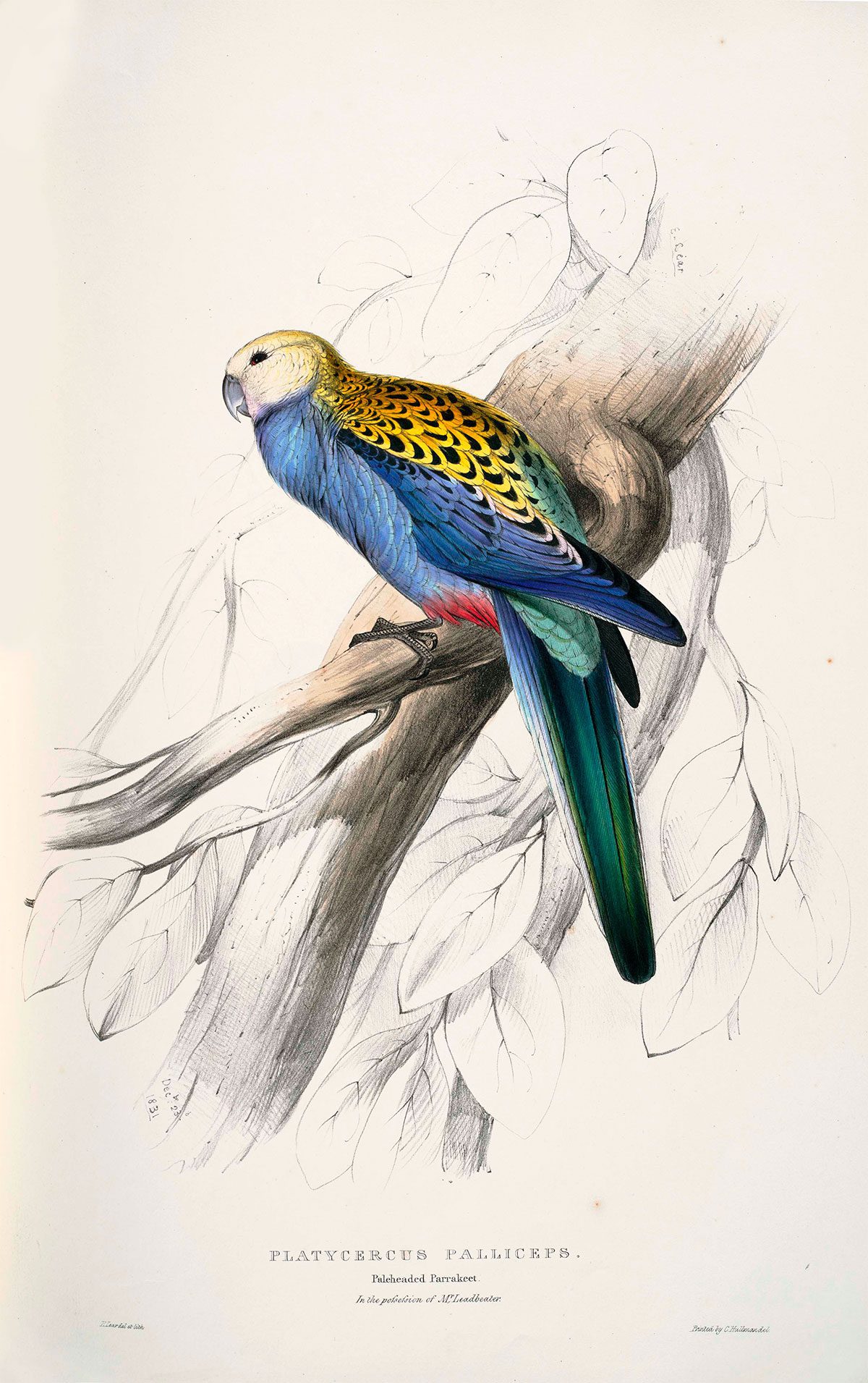
    (Lear 1832) – 32 cm.. length. It is something most large that the nominal species. The white color of the face is more extensive, coming up to the neck. Crown, nape and ear-coverts are pale yellow. The blue of the chest presents tonalities yellowishwhite and the feathers of the chest they have a thin lined black. The shoulders with wide verdosa-amarilla blue staining. bottom of the flight feather white.

Habitat:

Pale-headed Rosella

The Pale-headed Rosella they are common in all types of habitats of open forests, either scrub, scattered forests with logging, the rows of trees along rivers or swamps. They are also found in the wooded heaths which surround the coast and which are dominated by trees of the genus Banksia.

Avoid plunging into the thick forests, giving preference to the clear, meadows at the edges or directly border the plots. They also penetrate the surrounding farmland to feed.

They are birds of the lower regions, rarely rising above 700 meters and voluntarily leaving altitudes to the Crimson Rosella in dense forests and semi-montanosas areas.

Reproduction:

In the North, the Pale-headed Rosella They nest in the months of February to June, with some variations depending on the frequency of rains.

In the South, the breeding season are produced starting from September until the month of December.

These birds build their nests in deep a sick or healthy tree cavity, preferably a eucalyptus located near a river.
Other places that tend to choose are: a hole in a stump or a hole in a fence post.

The spawning generally includes between 3 and 5 eggs. The female incubates alone during 19 days, but as soon as the eggs are incubated, It receives assistance from the male that helps feed the young.

The chicks leave the nest after 5 weeks.

Food:

The Pale-headed Rosella they are mostly vegetarian. They consume a lot of plants, We have identified about 50 plant species. Similar to the Eastern Rosella, the Pale-headed Rosella It feeds mainly in the trees. The seeds of eucalyptus, acacias, Melaleuca, Black Cypress of Australia, acanthus and spiny Thistles, they are your favorite foods. The flowers and fruits some species also form part of their diet.

The Pale-headed Rosella they are often real pests for gardens and cornfields.

Distribution:

Size of the area of distribution (reproduction / resident): 1.470.000 km2

Confined to the East of Australia, where is dispersed through of the Cape York Peninsula, coming to the South up to the Gilbert River in the West, and extending to the South along the coast East of Queensland to the North of New South Wales.

In Queensland its inner boundary runs approximately through Croydon, Richmond, Lomgreach, Charleville and Bingara.

Are also distributed by the Fraser Island and around Brisbane, as well as in other coastal districts.

In New South Wales, the population is limited to the Northeast, extending toward the interior of Bourke and to the South up to around Coffs Harbour, on the coast.

Escapes have been recorded in Sydney and Melbourne, and there was an introduction without success in Hawaii at the beginning of this century.

The species coexists in the same altitude with the Eastern Rosella in the southeast of Queensland.

Common in suitable habitat within its range.

The world's population is above the 100.000 specimens.

Moderate numbers in captivity.

Fully protected.

Distribution 2 subspecies:

Conservation:


minor concern


โ€ข Current category of the Red List of the UICN: Least concern

โ€ข Population Trend: Growing

The size of the world population It has not been quantified, It is estimated at around 100,000 specimens.

The species according to reports, It is abundant in much of their range (pit et to the. 1997).

They have benefited from the clearing of the forests and the development of fruit tree crops and agricultural fields.. But, an important limitation is that of its acquisition as a popular pet bird, marketed as Blue cheek parakeet. Each year, hundreds of birds are illegally captured in the wild.

"Pale-headed Rosella" in captivity:

common in Europe, not so much in the United States.

Active and moderately loud. Aggressive with other birds. A little susceptible to stress and disease.

Alternative names:

– Pale-headed Rosella, Blue Rosella, Blue-cheeked Parakeet, Blue-cheeked Rosella, Mealy Parakeet, Mealy Rosella, Moreton Bay Parakeet, Moreton Bay Rosella, Pale headed Rosella, White-cheeked Rosella, White-headed Rosella (ingles).
– Perruche ร  tรชte pรขle, Perruche palliceps (French).
– Blasskopfrosella (German).
– Rosela-pรกlida (Portuguese).
– Perico Pรกlido, Rosela de Cabeza Pรกlida (espaรฑol).

scientific classification:

– Order: Psittaciformes
– Family: Psittaculidae
– Genus: Platycercus
– Scientific name: Platycercus adscitus
– Citation: (Latham, 1790)
– Protonimo: Trained parrot

ยซPale Parakeetยป Images:

Videos "Pale-headed Rosella"

————————————————————————————————

ยซPale Parakeetยป (Platycercus adscitus)


Sources:

– Avibase
– Parrots of the World โ€“ Forshaw Joseph M
– Parrots A Guide to the Parrots of the World – Tony Juniper & Mike Parr
– Loromania
– Birdlife

– Photos:

(1) – A Pale-headed Rosella in Brisbane, Queensland, Australia By Paul Gear (Picasa Web Albums) [CC BY-SA 3.0], via Wikimedia Commons
(2) – Pale-headed Rosella (Platycercus adscitus) Kobble Creek, SE Queensland, Australia By Pale-headed_Rosella_kob02. JPG: Avicedaderivative work: Snowmanradio [CC BY-SA 3.0], via Wikimedia Commons
(3) – A Pale-headed Rosella in Herberton, Far North Queensland, Australia By Peter Shanks (originally posted to Flickr as pale headed rosella) [CC BY 2.0], via Wikimedia Commons
(4) – A Pale-headed Rosella in Brisbane, Queensland, Australia By Paul Gear (Picasa Web Albums) [CC BY-SA 3.0], via Wikimedia Commons
(5) – Pale-headed Rosella, Platycercus adscitus By Glen Fergus (Own work, Brisbane, Australia) [CC BY-SA 2.5], via Wikimedia Commons
(6) – A painting of a Pale-headed Rosella(originally captioned ยซPlatycercus palliceps. Paleheaded Parakeet. In the pofsefsion of Mr. Leadbeater.ยป) by Edward Lear 1812-1888 Edward Lear [Public domain], via Wikimedia Commons

– Sounds: Judith Lattaway (Xeno-canto)

โ–ท The world of Pets: Dogs, cats, birds, reptiles, amphibians

Pacific parakeet
Psittacara strenuus


Periquito Pacรญfico

Content


Anatomy-parrots

Description ยซPacific Parakeetยป:

Of 33 cm.. length.

The Pacific parakeet (Psittacara strenuus) has most of its plumage bright green. The underparts are yellowish. Some birds may have some feathers Orange at neck and throat in variable patterns. blue dye in primary coverts and vane outer of the flight feather. Underwing-coverts off yellowish green. The lower feathers of the wings they are yellowish metal.

The bill color horn. Eye ring bare greyish Brown. Iris orange. The legs greyish pale.

The immature they are similar to the adults but with the irises brown.

Note:

The Pacific parakeet (Psittacara strenuus) for a long time it was considered a subspecies of Psittacara holochlorus

Habitat of the โ€œPacific Parakeetโ€:

The Pacific parakeet It is in a wide variety of forest types, including wetlands, semi-Bosque, open scrub forests, plantations and farmland with scattered groves.

In Mexico, they live in semi-deciduous forests, riparian vegetation and in the form of patches of semi-deciduous medium and perennial trees of Manilkara zapota, Ceiba petandra, Cedrela odorata, Enterolobyum ciclocarpum, Cordia allidora, Bursera simaruba, Brosimum alicastrum.

Sedentary, but it probably makes local movements in response to food availability.

Outside the breeding season can be seen in large flocks noisy, often in groups of up to 200 birds or more, especially where is food abundant.

In El Salvador, occupy the suburbs of La Sultana, Antiguo Cuscatlรกn, which it provided an opportunity to estimate the population in the roost, to assess seasonal variations and changes over one year (October 2003 – September 2004). the resting places were also observed in this area and found that these places are used by other parrots as Brotogeris jugularis, Psittacara rubritorquis and other species that probably escaped from captivity.

Reproduction:

Nest in tree cavities, on the walls of rocky cliffs or in termite colonies. Other details about their reproductive behavior remain unknown. The size of the implementation tends to be of 4 eggs.

A colony of the Pacific parakeet (Psittacara strenuus) was studied in the Masaya Volcano National Park in Nicaragua from 1993 until 1994.

The parakeets nested in two craters of the Nindirรญ volcano. They dug their nests in the soft Earth of the wall of the volcano and began to settle on the volcano at the end of the dry season. They nested Once a year, in the rainy season, and they gradually abandoned the volcano toward the end of that season, when their young could fend for themselves. All parakeets left the volcano during the morning and it was a count in the course of the afternoon, When they return from their feeding grounds.

Food:

Little is known about of its diet. They feed on fruits and seeds, they sometimes attack cereal crops.

Distribution of the ยซPacific Parakeetยป:

Endemic to the Pacific slope of the Isthmus of Central America, of Oaxaca up to the middle of Nicaragua, mountainous areas of Guatemala to 2.100 meters and El Salvador, where it is a common permanent resident inhabiting forested or semi-forested regions at altitudes of 1.350 m.

Distribution in Mexico: Pacific slope from the east of Oaxaca until Chiapas. In areas in Chiapas and Oaxaca they have disappeared from tropical forests

Conservation:

The Pacific parakeet is not threatened globally. It is considered one threatened species in Mexican legislation. Threatened on NAME-059-ECOL-2001. CITES Appendix II. This species should be classified as in Danger of extinction by their reduced distribution, deforestation of its Habitat and illegal trafficking.

However,They show a high adaptability to changes in natural ecosystems caused by the human.

There are no programs for the conservation of the species.

The "Pacific Parakeet" in captivity:

Rare in captivity.

Its marketing is prohibited in Mexico.

The illegal trade in parrots and macaws is held thanks to demand from consumers. If the demand for these wild species is reduced, then the offer would be reduced and therefore the illegal capture.

If you create an international demand of these captive-bred parrots, there will be unscrupulous traffickers who will try to meet the demand with illegally captured specimens, which will only serve to undermine more wild populations.

Alternative names:

– Pacific Parakeet, Pacific Conure (English).
– Conure de Ridgway, Perruche du Pacifique (French).
– Mexikosittich, Mexicosittich (German).
– Periquito-do-pacรญfico (Portuguese).
– Aratinga del Pacรญfico, Perico Centroamericano, Perico Gorgirrojo, Perico Verde Centroamericano, Periquito del Pacรญfico, Periquito Pacรญfico, Perico Chocoyo, Barranqueรฑo (espaรฑol).
– Periquito del Pacรญfico (Honduras).
– perico centroamericano, Perico Verde Centroamericano, Periquito pacรญfico (Mexico).
– Perico Gorgirrojo (Nicaragua).

scientific classification:

Robert Ridgway
Robert Ridgway

– Order: Psittaciformes
– Family: Psittacidae
– Genus: Psittacara
– Scientific name: Psittacara strenuus
– Citation: (Ridgway, 1915)
– Protonimo: Conurus vigorous holochlorus

Images "Pacific parakeet"

Videos "Pacific parakeet"

————————————————————————————————

Sources:

– Avibase
– Parrots of the World โ€“ Forshaw Joseph M
– Parrots A Guide to the Parrots of the World – Tony Juniper & Mike Parr
– Colony breeding of the Pacific Parakeet Aratinga strenua Ridgway 1915 in the Masaya Volcano National Park, Nicaragua – researchgate
– pericosmexico
– academia.edu

– Photos:

(1) – Psittacara strenuus (Chocoyo) on the cruise, Nicaragua By SergioTorresC (Own work) [CC BY-SA 4.0], via Wikimedia Commons

– Sounds: Frank Lambert (Xeno-canto)
โ–ท The world of Pets: Dogs, cats, birds, reptiles, amphibians

Maroon-faced Parakeet
Pyrrhura leucotis

Maroon-faced Parakeet

Content

Description:

Maroon-faced Parakeet

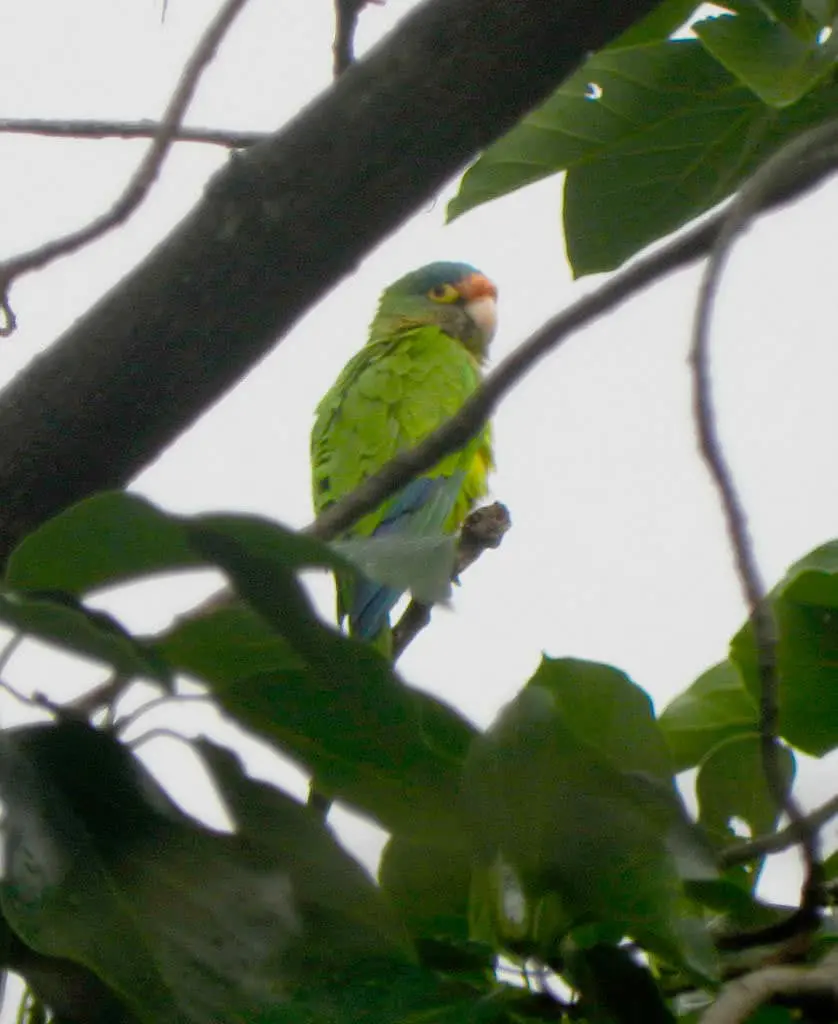
The Maroon-faced Parakeet (Pyrrhura leucotis) measured 21 centimeters length and 50-53 g. of weight, It is the smallest species long-tailed parakeets.

Their cheeks and forecrown, They are brown brown mostly, blue above eyes and on lower cheeks; crown and nape, dark brown, dotted with orange-brown from the ends of pens; ear-coverts white to pale brown; nape with bluish green tones.

Mantle and top of the back, green with scattered dark margins on some feathers; lower back, rump and uppertail-coverts, brown. Wing coverts except green primary coverts which they are blue and patch Red in the bend of wing.

Primaries blue. Under, the wings with the lesser coverts green, the greater coverts dark gray; the flight feathers grey. Feathers of the throat and sides neck, blue base with a yellowish subterminal band and black tips; feathers of the chest with little blue tones and instead to brown in bases; the underparts They are green with a large patch brown in the center of belly. maroon brown with green edges at the base of the outerweb of the lateral feathers; undertail, the tail It is reddish brown opaque.

Bill black; cere black; bare periophthalmic grey; irises dark orange-brown; legs dark grey.

The plumage of both sexes are similar.

Taxonomic status:

Regarded as a subspecies Pyrrhura [leucotis or emma] by some authors

  • Sound of the Maroon-faced Parakeet.

Habitat:

The Maroon-faced Parakeet inhabits forests, clear edges and adjacent with scattered trees including cocoa plantations shaded Bay, sometimes visiting parks and residential areas. They can be observed, mainly, in lowlands (for example, to 600 meters in east Brazil) and in forests at higher elevations in Northeast Brazil. gregarious, generally close to flocks 15-20 birds.

Reproduction:

No information about your reproduction in the wild. Clutch 5-9 eggs in captivity.

Food:

Probably you have a diet comparable to his close relatives in the wild, where is recorded the Miconia hypoleuca as one of their food. There are reports of birds feeding in cornfields.

Distribution:

Size of its range (players / residents): 352.000 km2

The distribution of the Maroon-faced Parakeet It is limited to Southeast Brazil, from Bay to the South of the Jequitinhonha river, to the South up to Espirito Santo, including Southeast Minas Gerais, Brazil, and previously Sรฃo Paulo.

Conservation:

  • Justification of the Red List of the Category

– This species appears as Near-threatened on the basis that it is suspected that there has been a decrease in moderately rapid population due to the habitat loss and capture.

  • Justification of the population

โ€ข Current category of the Red List of the UICN: Near-threatened..

โ€ข Population trend: Decreasing.

โ€ข Population size : 10000-19999 individuals.

– The Maroon-faced Parakeet is believed to have a small town; However, Marsden et al .(2000) It estimated that there is a combined population of about 19,300 individuals on Biological Federal Reserve Sooretama the Nature Reserve Linhares in the State of Espirito Santo, based on surveys 1998, It is suggesting that the population has been previously underestimated.

– Until an updated estimate available, the population was provisionally placed in the band 10,000-19,999 mature individuals, representing a population of about 15,000-30,000 individuals in total, although the structure of the subpopulation not known.

  • Justification trend

State of conservation โ“˜


Near-threatened Near Threatened โ“˜ (UICN)โ“˜

– It is suspected that the species is in a moderate to rapid decline due to the habitat loss and capture. The rate of decline is not thought to be as rapid because the tolerance of this species to modified habitats buffers the impacts of deforestation to some extent..

  • Threats

– The logging It has been extensive, It is affecting most of board woods, in Bay and Espirito Santo.

– Most of the original forest cover in which the Maroon-faced Parakeet It was eliminated more than a century ago; in the news, are being eliminated very quickly the remaining patches (pit et to the ., 1997).

– This bird often seized in captivity, suggesting that there is a major catch birds for trade. (J. Gilardi in little ., 2010).

Conservation Actions Underway

– protected in parts of Bay (Private Reserve Station Veracruz, and national parks Discovery, Pau Brazil and Monte Pascoal) (Lamb 2002).

– Monte Pascoal It faces an uncertain future, as it has been invaded by Indians Pataxรณ they have largely eliminated neighboring area.

– Elsewhere the species is known from reserves Linhares-Sooretama (Espirito Santo), Rio Doce State Park (Minas Gerais, Brazil) and Ting Biological Reserveeructate (Rio de Janeiro).

Conservation Actions Proposed

– continue monitoring of this species in the field and in trade.

– Strengthen the network of protected areas within the Atlantic Forest of Brazil conservation of key sites.

"Maroon-faced Parakeet" in captivity:

Very rare.

Its diet in captivity it is similar to that of their peers.

Its population in the wild is small and decreasing whereby each captive specimen of this species that is capable of reproducing, must be placed in a well-managed captive breeding program and not sold as a pet, in order to ensure its long-term survival.

Alternative names:

– Maroon-faced Parakeet, Maroon-faced Parakeet (White-eared), White-eared Parakeet (English).
– Conure emma, Conure leucotique, Conure leucotique (nominal), Conure leucotique (nominale), Conure leucotique (race nominale) (French).
– WeiรŸohrsittich (German).
– tiriba-de-orelha-branca (Portuguese).
– Cotorra orejiblanca, Perico Pintado, Cotorra cariparda (espaรฑol).


scientific classification:

Kuhl, Heinrich
Heinrich Kuhl

– Order: Psittaciformes
– Family: Psittacidae
– Genus: Pyrrhura
– Scientific name: Pyrrhura leucotis
– Citation: (Kuhl, 1820)
– Protonimo: Psittacus leucotis


Images Maroon-faced Parakeet:

Videos "Maroon-faced Parakeet"


Especies del gรฉnero Pyrrhura

Maroon-faced Parakeet (Pyrrhura leucotis)


Sources:

– Avibase
– Parrots of the World โ€“ Forshaw Joseph M
– Parrots A Guide to the Parrots of the World – Tony Juniper & Mike Parr
– Birdlife

– Photos:

(1) – Maroon-faced parakeet By Gabriel Resende Veiga (Own work) [CC BY-SA 4.0], via Wikimedia Commons

(2) – Several White-eared Parakeets (Pyrrhura leucotis) at Palmitos Park, Gran Canaria, Spain By Bjoertvedt (Own work) [CC BY-SA 3.0 or GFDL], via Wikimedia Commons

(3) – A White-eared Parakeet in Parque das Aves, Foz do Iguaรงu, Brazil By Kee Yip from Union City, California, USA (IMG_4336_P1030859Uploaded by snowmanradio) [CC BY 2.0], via Wikimedia Commons

(4) – White-eared Parakeet (Pyrrhura leucotis), Vale Reserve, Holy Spirit, Brazil by Brendan Ryan – Flickr

(5) – By Almond Butterscotch – Flickr

(6) – Parrots in captivity /. London :George Bell and Sons,1884-1887 [i.e. 1883-1888] by Biodiversity Heritage Library – Flickr

– Sounds: Roney Souza, XC265102. accessible www.xeno-canto.org/265102

โ–ท The world of Pets: Dogs, cats, birds, reptiles, amphibians

Pink cockatoo
Cacatua leadbeateri

Cacatรบa Abanderada

Content

Description


Anatomy-parrots

35 cm.. length and weighing approximately between 340 and 425 g.
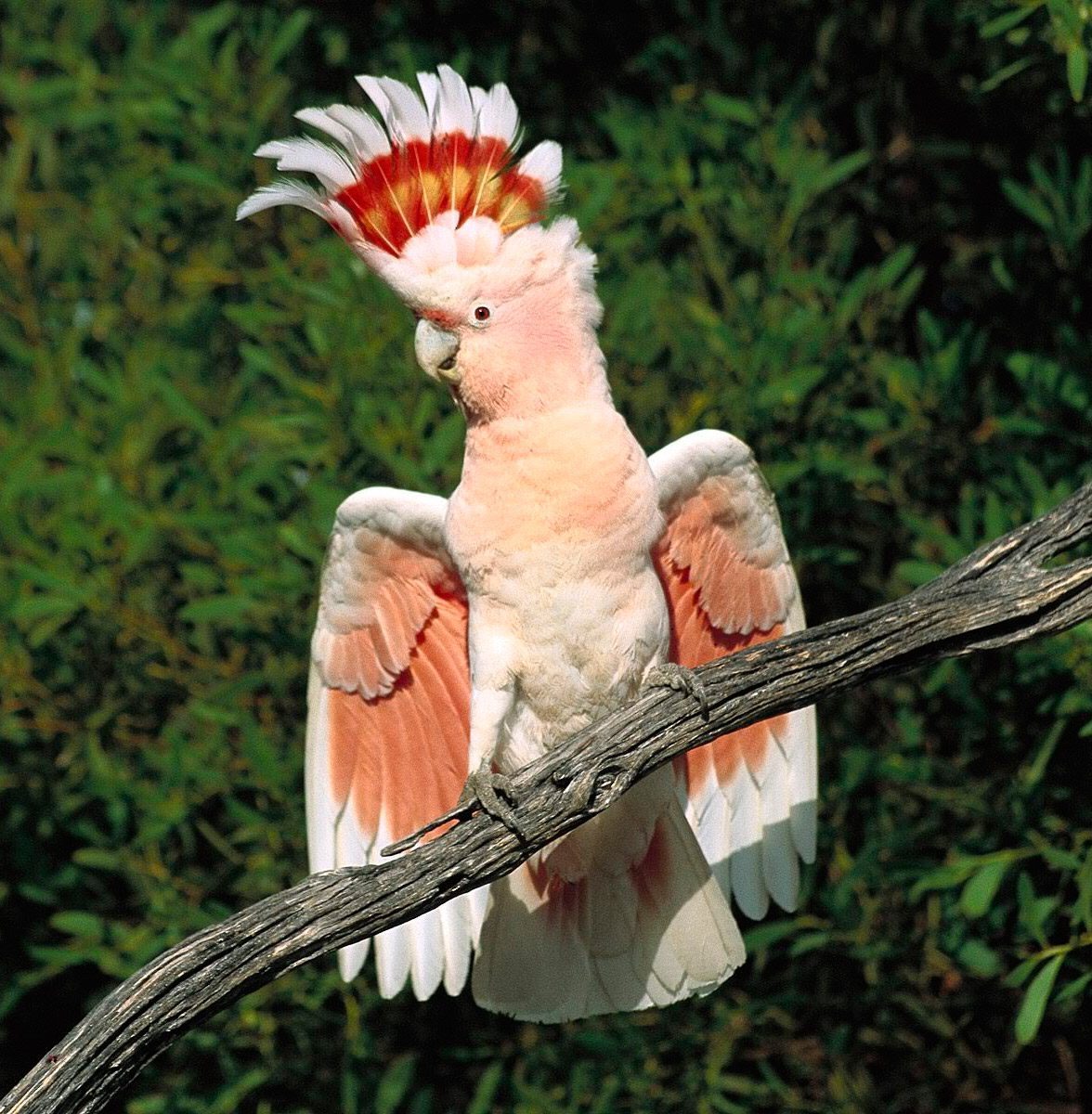
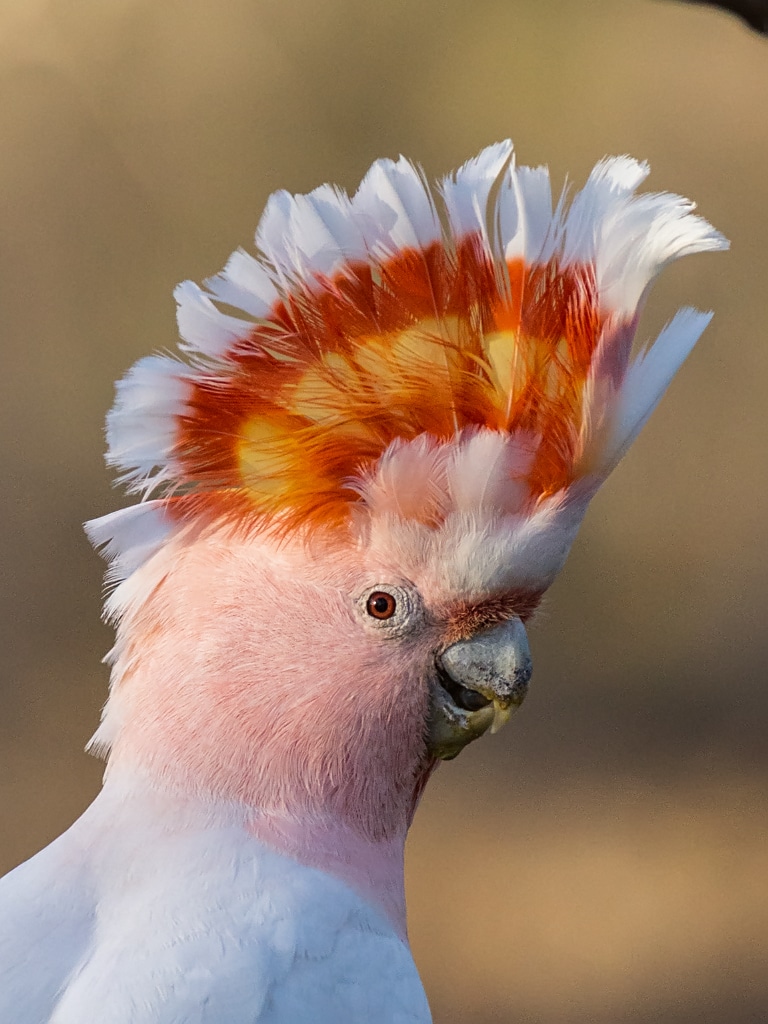
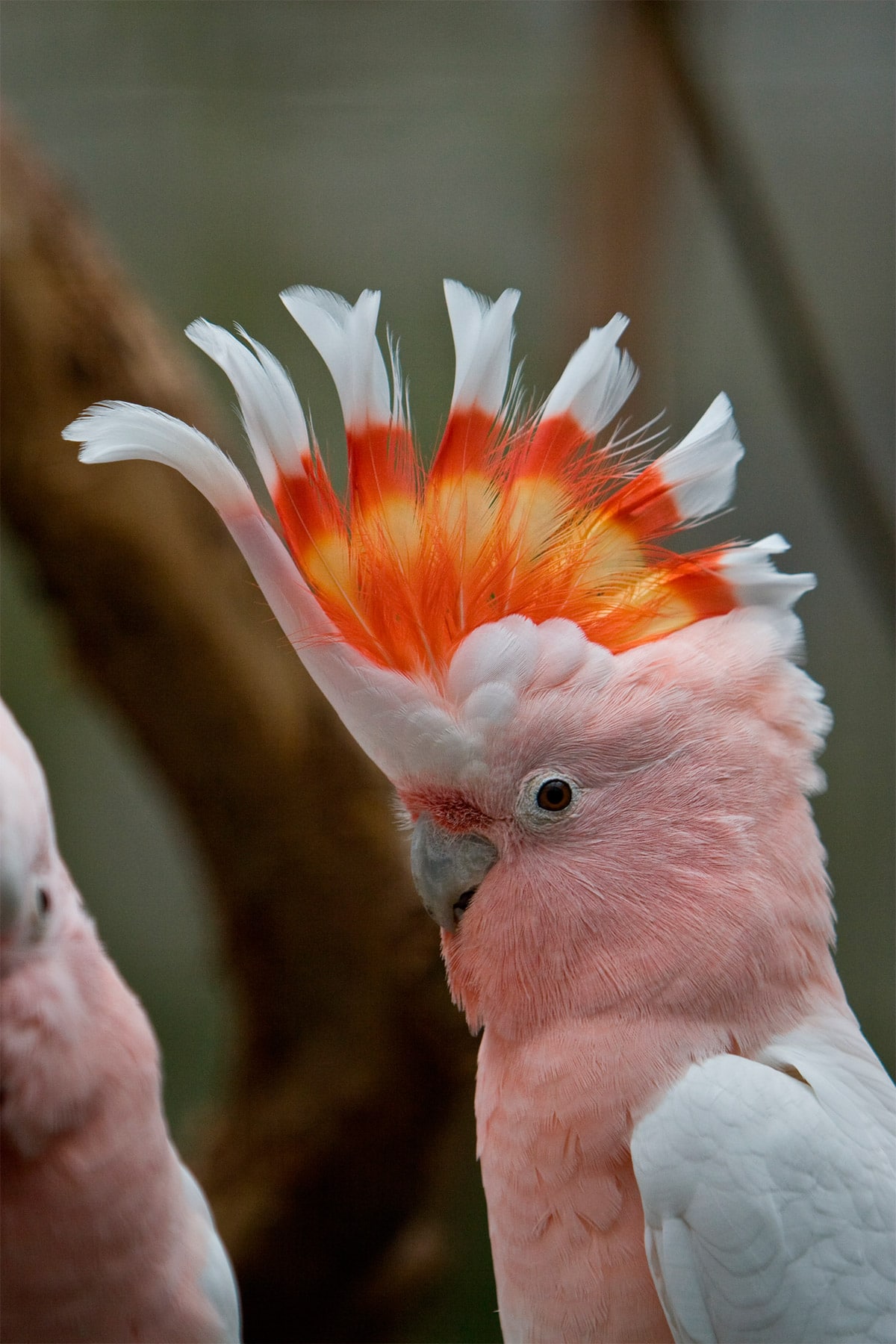
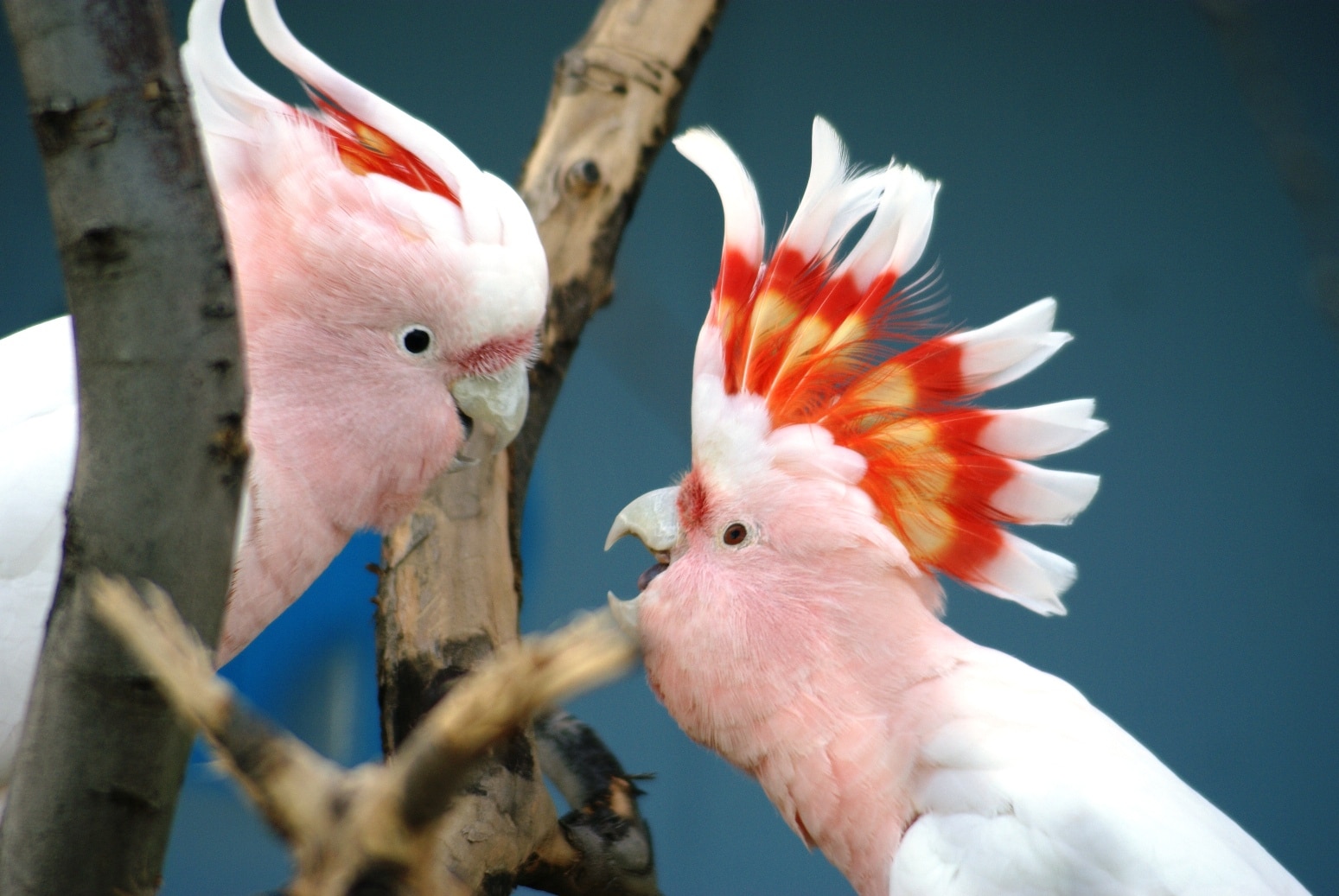
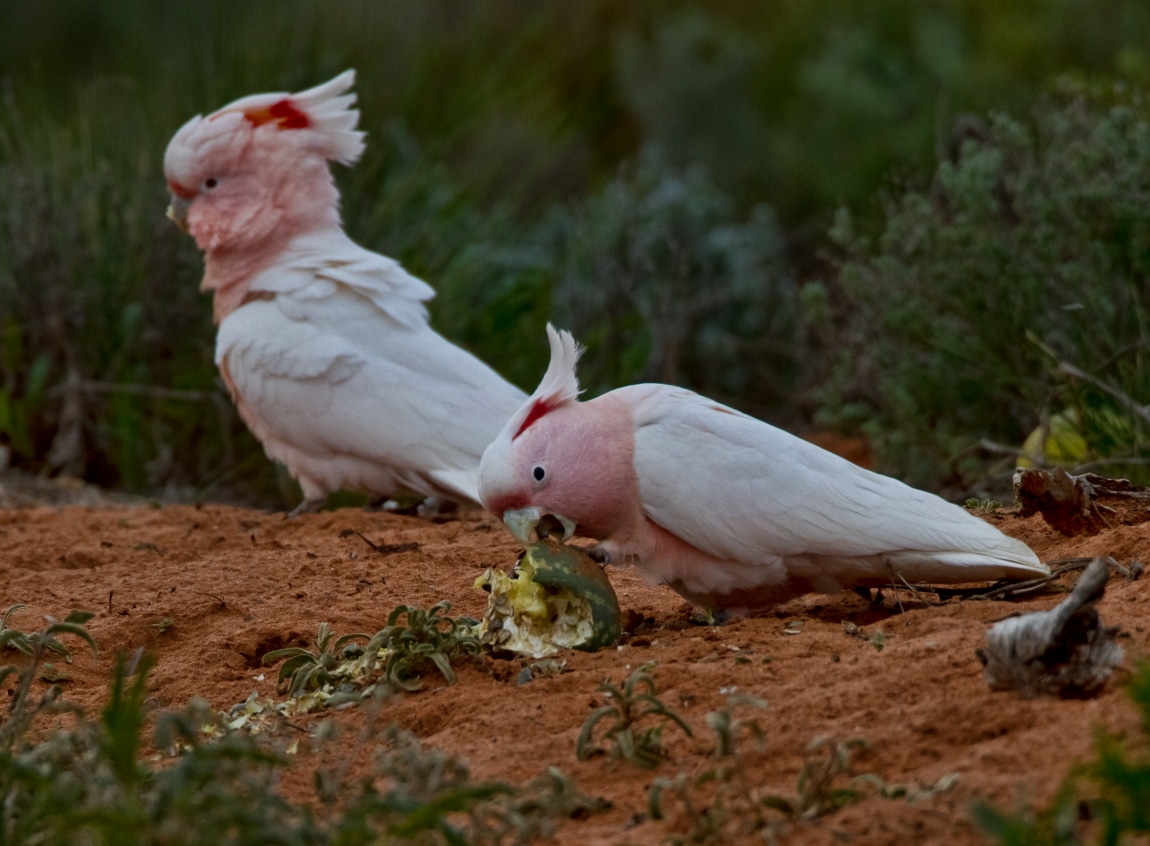
The Pink cockatoo (Cacatua leadbeateri) is distinguishable by its spectacular Crest composed by 16 long feathers forward curved. These pens have a wide base with a slightly pink and yellow red-stained central part.

The top ends of the crest are white. Another set of more rounded feathers grow over the eye, forming a white base when the crest is raised. The forecrown is spanned by a band thin and reddish.

The face, neck and underparts are salmon, becoming is white in the coverts.
The flight feather and tail are white with infiltration of salmon on the bottom.

The bill is horn. The irises dark brown and legs grey.

The female looks like your partner, but the head Pink salmon and underparts they are paler. The band Yellow that decorates the bill is brighter and wider. Upper belly It is white instead of Pink salmon. The irises are reddish-pink.

The immature they are identical to the female. The frontal band is bright orange-red, the irises light brown.

Description 2 subspecies

  • Cacatua leadbeateri leadbeateri

    (Vigors, 1831) – Nominal.


  • Cacatua leadbeateri mollis

    (Mathews, 1912) – Both similar to the kind adults nominal, but with the crest darker red, with little or no yellow. White Peak.

Behavior:

The couple is the basic social unit, but are maintained contact with other couples nonreproductive through the establishment of groups.

Out of it breeding season, There are mainly small bands consisting of 10 to 50 birds. Major gatherings occur only during periods of drought or when food sources are abundant. In this case, There may be a few hundred individuals, among them, small Galah.

Dormitories they are occupied exclusively outside the breeding season and the birds leave early at dawn.

The Pink cockatoo they forage in trees and on the ground. But, This species is more arboreal that the Galah wave Little corella.

When moving on the ground, He walks slowly to avoid the tall grass.

In the Flock, a bird play always the role of Sentinel. It adopts a very careful attitude, it partially roughcast its crest and regularly pauses during which is very upright inspecting the surroundings.

During the mid-day heat, it finds shelter in the foliage of the trees.. During the summer, rest period is longer.

The paired birds they are always near each other. During periods of intense heat, This bird visit water points, even during the day. At sunset, they return to your bedroom.

Habitat:

Video – "Pink cockatoo" (Cacatua leadbeateri)

Cockatoo leadbeateri _ Inkakakadu`s in Aktion

Its population is distributed by a variety of forest habitats in arid or semi-arid areas.
The species is closely related to the areas of ยซMalleeยซ.

Found particularly in afforestation of cypress and eucalyptus, in mixed plots of eucalyptus and Casuarinas or near cliffs.
Its presence in a place is largely also to the existence of a water fountain.
On the other hand, shows a very weak attachment to the fragmented habitats that is no long.

Reproduction:

The nesting season running from August to December. Cockatoos return to their traditional nesting sites.

The cavity for the nest receives improvements: the entrance is enlarged and covered with a layer of fresh chips placed at the bottom of the nest. The nests they are almost always far from one another, at a distance of 2 km.

The spawning is between 2 and 5 eggs being deposited between 2 and 3 days. The incubation It made both parents, begins after the deposit of the third egg and lasts between 23 and 24 days.

The chicks they remain at the bottom of the cavity during 57 days and are fed by the male and the female indistinctly. The family stays near the nest until the last hatchling leaves the nest., they will then join other family groups in the place where food resources are appropriate.

On rare occasions, the Pink cockatoo is forced to eject a couple of Galah He started to lay eggs in their nest, but it can also happen that this form of parasitism is a success. In this case, the partner of the Pink cockatoo takes care of eggs and young after hatching. When are born, the young of the species Eolophus roseicapilla, they behave exactly like their hosts, ignoring the difference in origin.

Food:

With feed seed, herbs, cereals and often of melons (Cucumber myiocarpus). Also consume fresh local figs, pine cones, eucalyptus seeds, bulbs, dried fruits, estate, insects and larvae.

During and after your meal, These birds biting branches and pieces of bark, causing a shower of timber crushed at the foot of the trees.

During periods of intense heat, increase the frequency of his visits to water points.

Distribution:

Size of the area of distribution (reproduction / resident): 2,88 million km2

endemic to Australia. Its main strongholds are in the southwest of Queensland where is quite extended and South of Australia, where is locally common.

In other parts of the continent are very rare and scarce, going back to the vicinity of the Northern Territory and carrying out raids in Western Australia.

Distribution 2 subspecies:

  • Cacatua leadbeateri leadbeateri

    (Vigors, 1831) – Nominal.


  • Cacatua leadbeateri mollis

    (Mathews, 1912) – Interior West and centre of Australia, towards the East, up to the eyre peninsula and the basin of the Lake Eyre, South of Australia.

Conservation:

โ€ข Least concern (Red list 2006).

โ€ข Listed as vulnerable by NSW national parks and wildlife.

โ€ข Threatened by the law of conservation of species (2005).

Its distribution is very unequal, but only in the Centre - this actually is and South-East where they have widespread. In other parts of Australia, This species is declining due to the thinning of the habitat and its marketing as bird cage.

Competition with the Galah's disability for nesting cavities may be a crucial problem in the future if this species continues to grow. The world population of the Pink cockatoo It is estimated in a little less than 20 000 birds. It is classified as near threatened.

"Pink cockatoo" in captivity:

It is a frequently held in captive animal in your Australia natal, but it is less known in other countries like ours. Its price in the market is very high, especially that of males, being one of the most expensive white cockatoos.

Very noisy, with a great personality, playful and very active. It is very destructive, We must therefore provide toys and wood to gnaw, or otherwise you will satisfy with house furniture and other elements. Inactive animals, bored or stressed tend to yell a lot.

Its life expectancy round between the 40 and 60 years of life.

Alternative names:

– Pink Cockatoo, Leadbeater’s Cockatoo, Major Mitchell’s cackatoo (ingles).
– Cacatoรจs de Leadbeater, Cacatoรจs commandant Mitchell (French).
– Inkakakadu (German).
– Cacatua-rosa (Portuguese).
– Cacatรบa Abanderada, Cacatรบa Inca (espaรฑol).

scientific classification:

– Order: Psittaciformes
– Family: Cacatuidae
– Genus: Cockatoo
– Scientific name: Cacatua leadbeateri
– Citation: (Vigors, 1831)
– Protonimo: Plyctolophus Leadbeateri

Images Flag-crested Cockatoo:


Species of the genus Cacatua
  • Cacatua tenuirostris
  • Cacatua pastinator
  • —- Cacatua pastinator derbyi
  • —- Cacatua pastinator pastinator
  • Cacatua sanguinea
  • —- Cacatua sanguinea gymnopis
  • —- Cacatua sanguinea normantoni
  • —- Cacatua sanguinea sanguinea
  • —- Cacatua sanguinea transfreta
  • —- Cacatua sanguinea westralensis
  • Cacatua goffiniana
  • Cacatua ducorpsii
  • Cacatua haematuropygia
  • Cacatua galerita
  • —- Cacatua galerita eleonora
  • —- Cacatua galerita fitzroyi
  • —- Cacatua galerita galerita
  • —- Cacatua galerita triton
  • Cacatua ophthalmica
  • Cacatua sulphurea
  • —- Cacatua sulphurea abbotti
  • —- Cacatua sulphurea citrinocristata
  • —- Cacatua sulphurea parvula
  • —- Cacatua sulphurea sulphurea
  • Cacatua moluccensis
  • Cacatua alba

  • Sources:

    – Avibase, infoexoticos, Oiseaux.NET

    – Photos: imagenesdeanimalessalvajes (Alexis Obninsk), David Cook Wildlife Photography, Wikimedia , parcodeipappagalli , Geoffrey Dabb

    – Sounds: Patrik ร…berg (Xeno-canto)

    โ–ท The world of Pets: Dogs, cats, birds, reptiles, amphibians

    Orange-billed Lorikeet
    Neopsittacus pullicauda

    Orange-billed Lorikeet

    Content

    Description

    18 cm.. length and a weight between 28 and 40 g..

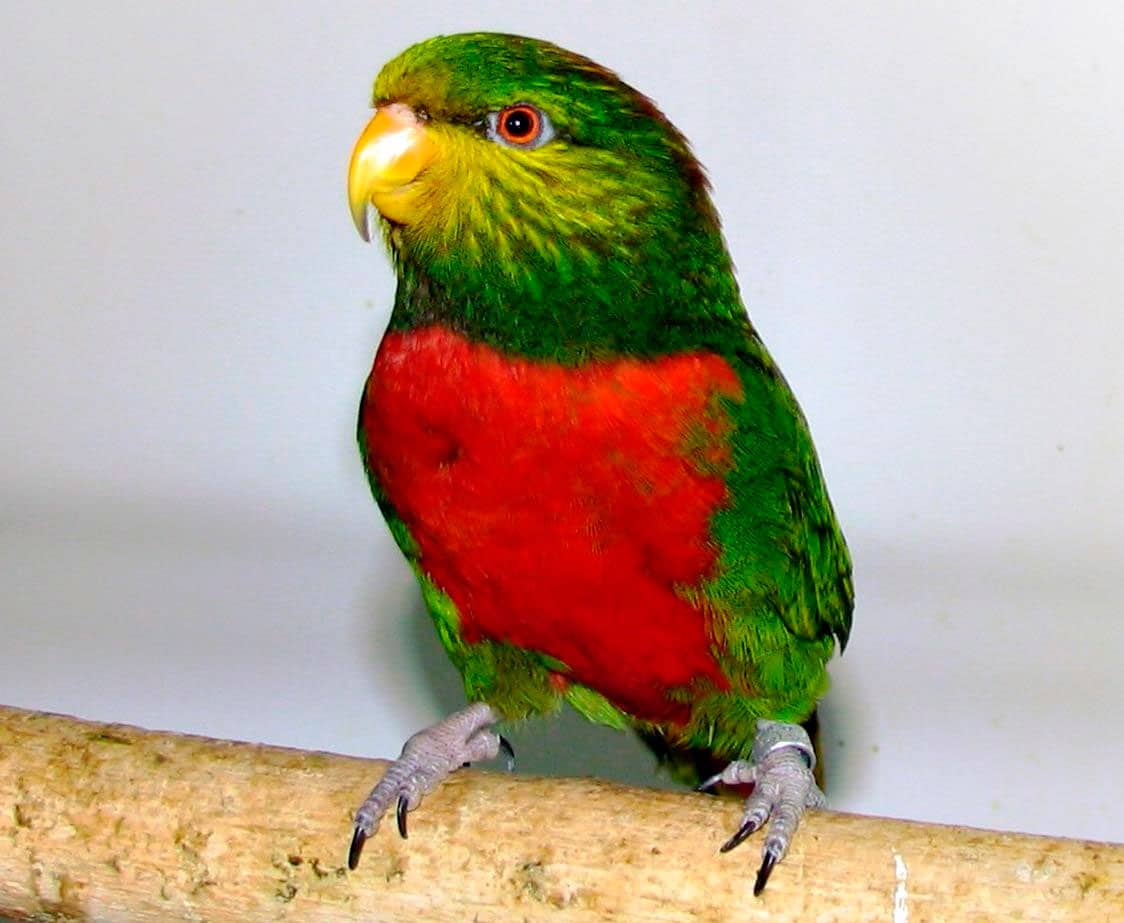
    The head of the Orange-billed Lorikeet (Neopsittacus pullicauda) is green, the nape lightly brown tinged with yellow stripes; ear-coverts dark green, showing some streaks of greenish-yellow; chin dark green. Upperparts green. The wings, at the top, green, with vane internal to coverts blackish. Under the wings, the coats red; flight feather Blackish with wide red central stripe. Throat green; top of the chest, Scarlet Red, extending to the belly and ending above the the thighs; flanks green; undertail-coverts brighter yellowish green. Uppertail green; retrizes penas lower color olive brown, marked in red in vane inner.

    Bill orange red: irises red; legs grey.

    The sexes alike.

    Immature more off than adults with much less red (or orange) on the chest and a Brown peak.

    Subspecies description

    • Neopsittacus pullicauda pullicauda

      The nominal.


    • Neopsittacus pullicauda alpinus

      It differs from the nominal by the chest Orange which contrasts with the Red of the belly and upperparts darker.


    • Neopsittacus pullicauda socialis

      Similar to the nominal, but darker and showing less Brown at the nape.

    Habitat:

    Lives in the forests of MOSS and areas surrounding partially cleared, mainly between 2.100 and 3.800 m, with a limit not below 1,600 meters except for some occasionalLori found to 800 m. Normally found at higher altitudes than the Yellow-billed Lorikeet, but there is considerable overlap in lower altitudes to 2.500 m. where the two meet, often feeding in friendly company.

    Pretty common and often found in pairs, small groups or groups of up to 30 birds in the trees in flower.

    Travel in noisy groups, and it can fly very high above the canopy to and from the feeding areas. Not only feeds in the canopy, but also at low altitude of plants and even at the lowest levels near the ground. Assets and meek.

    Reproduction:

    Habits of nesting not described, Although it is said that they nest in holes of tall trees and lay two eggs. A male in breeding conditions was observed in October.

    Food:

    It feeds on pollen, nectar, flowers, fruits and seeds, Although he believes that they are less dependent on seeds as part regular your diet than the Yellow-billed Lorikeet.

    Distribution:

    Size of the area of distribution (reproduction / resident): 113.000 km2

    New Guinea in Irian Jaya (Indonesian) and Papua New Guineto. The range runs from the East of Snow Mountains far reaches the Huon Peninsula e intervals to the Southeast. A small number of captivity.

    Subspecies distribution:

    • Neopsittacus pullicauda pullicauda

      The nominal.


    • Neopsittacus pullicauda alpinus

      Snow Mountains, Irian Jaya, to the East with the upper region of the fly river, West of Papua New Guinea


    • >Neopsittacus pullicauda socialis

      Herzog mountains and mountains of the Huon Peninsula, North of Papua New Guinea.

    Conservation:


    minor concern


    โ€ข Current IUCN Red List category: Least concern.

    โ€ข Population trend: Stable.


    The world population It has not been quantified, Although it is thought that it may be superior to the 30.000 birds. The species according to sources is common (pit et to the. 1997).

    The population suspected to be stable in the absence of evidence of any reduction or substantial threats.


    "Orange-billed Lorikeet" in captivity:

    Uncommon in captivity.

    Shy until getting used to the owner, It is best in coexistence with other loris, playful, they need stimulation to avoid boredom. You can learn to imitate. They are messy due to liquid diet.

    Alternative names:

    – Orange-billed Lorikeet, Emerald Lorikeet, Orange billed Lorikeet, Orange-billed Mountain Lory (ingles).
    – Lori รฉmeraude, Lori รฉmรฉraude (French).
    – Orangeschnabel-Berglori, Orangeschnabelberglori (German).
    – Lori Montano Chico, Lori Moteado Chico (espaรฑol).

    scientific classification:

    – Order: Psittaciformes
    – Family: Psittaculidae
    – Genus: Neopsittacus
    – Scientific name: Neopsittacus pullicauda
    – Citation: Hartert, 1896
    – Protonimo: Neopsittacus pullicauda

    ยซLori Montano Chicoยป images:

    Videos "Orange-billed Lorikeet"

    ————————————————————————————————

    ยซLori Montano Chicoยป (Neopsittacus pullicauda)


    Sources:

    – Avibase
    – Parrots of the World โ€“ Forshaw Joseph M
    – Parrots A Guide to the Parrots of the World – Tony Juniper & Mike Parr
    – Birdlife

    – Photos:

    (1) – Birds-pet-wallpapers – link
    (2) – Birds-pet-wallpapers – link
    (3) – Author iggino – lynx
    (4) – Animal Photos – link
    (5) – Animal Photos – link

    – Sounds: Hans Matheve (Xeno-canto)

    โ–ท The world of Pets: Dogs, cats, birds, reptiles, amphibians

    Northern Rosella
    Platycercus venustus

    Northern Rosella

    Content


    Anatomy-parrots

    Description

    28 cm.. length between 85 and 100 g. of weight.

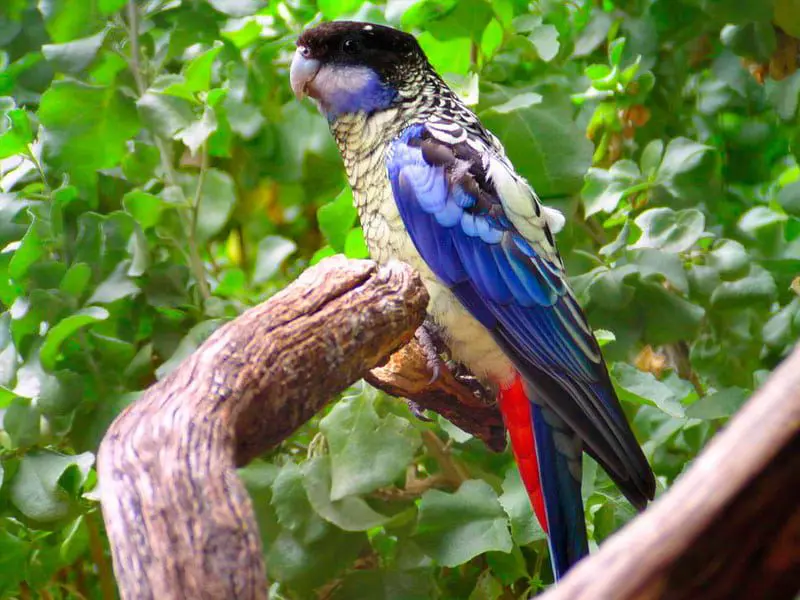
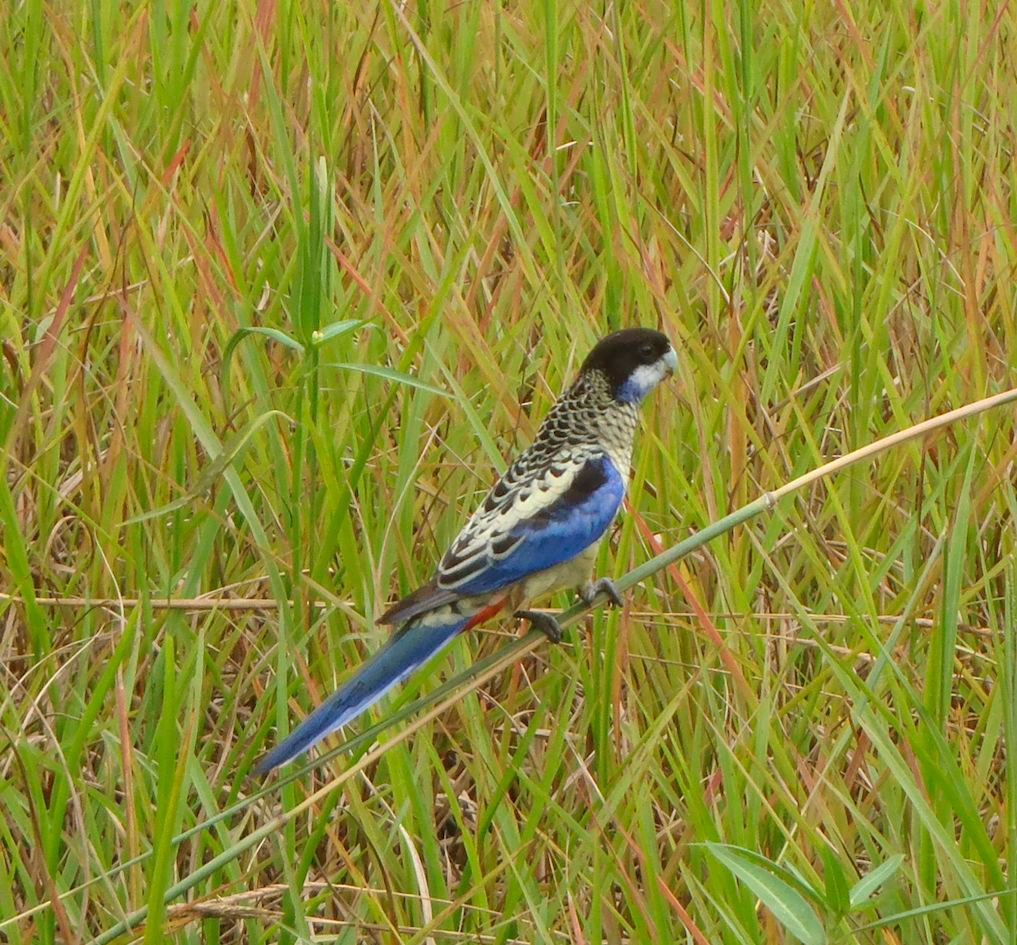
    The Northern Rosella (Platycercus venustus) they have a whitish beaks, black head, except the bottom of the cheeks and Chin that show a cream color. Their underparts feathers, lower back and rump, are pale yellow with black trim, giving these areas a look slightly flaky.

    The curves of the wings are blue.

    The subcaudales coverts are bright red. Nape, mantle and scapulars are black with broad yellow edges, forming an effect of shoulder straps. Blankets are black. The medium-sized coverts are bluish grey. The rest of the wing coverts are black with edges of yellow or blue grey. Deployed primaries are black. The Central tail feathers are verde-bronce while the outer feathers are dark blue with clear or white edges.

    The females they are slightly smaller than the male, with the narrower peak.

    The youth they are more turned off, with red markings on the head, and with more green and short tail feathers. Reaches it adult plumage in 12 months.

    Subspecies description

    • Platycercus venustus hilli

      (Mathews 1910) – Adults are similar to the nominal species but with bottoms scalloped with a sweeping black and the bottom of the cheeks of violet blue colour.

    • Platycercus venustus venustus

      (Kuhl 1820) – The nominal.

    Habitat:

    Northern Rosella

    The Northern Rosella they are unusual or are irregularly distributed in the mixed forests of eucalyptus and Melaleuca. They are generally found in open areas along rivers but are absent in floodplains along major rivers.. They are also present in the monsoon forests bordering open forests. From time to time, the Northern Rosella visit mangroves, parks and gardens in the vicinity of Darwin.

    The Northern Rosella they live in pairs or in small groups ranging between 6 and 8 specimens. You rarely see them in flocks. They are usually very cautious and discreet, except in national parks where they are accustomed to human presence. They are more arboreal than other parrots of the genus habits Rosella. Funny Parrots are difficult to observe, whether on land or hidden in the foliage in the trees. They are most active in the morning and at the end of the afternoon. They show great caution when they come to drink at water points. When moving, their flight is fast, but unpredictable and less undulating than most parakeets.

    Reproduction:

    The nesting season extends from June to September, Sometimes a little earlier. The Northern Rosella install their nests in hole of a branch or the trunk of a tree cavity, generally in eucalyptus trees located a short distance from a stream. Implementation usually includes between 2 and 4 eggs that are incubated during 19 days. The female is solely in charge of incubation and is fed in the nest by her partner.. The chicks stay is relatively long and may last up to 7 weeks.

    Food:

    The Northern Rosella feed mainly on seeds of eucalyptus, acacia and Melaleuca Although they despise the of the blue cypress (Callitris intratropica). The seeds of green areas and nectar are also on their menu. The birds that live in the forests near the coast sometimes feed on the coast and along the banks of small streams.

    Distribution:

    Size of the area of distribution (reproduction / resident): 785.000 km2

    Scattered through the coastal areas of the region of Kimberley, Western Australia, stretches of the North of the Northern Territory, and spreading over the border of Queensland at its eastern end.

    The species is distributed from around Napier Ranges, in the Western region of Kimberley, to the East across the plateau of Kimberley and reaching the inside of Springvale. Next, crosses the border of the Northern Territory, extending with its southern limit along the victory river, inside, about Katherine, and along the McArthur river. It is also found throughout the nicholson river at the border of Queensland, and are distributed by a series of Islands on the coast including Koolan, Augusto, Coronation, Bathurst and Melville. Is occasionally in the suburbs of Darwin.

    The species is generally rare throughout its range. The world's population is less of 50.000, and may that declining. A small number of captivity.

    Fully protected by law.

    Subspecies distribution

    Conservation:


    minor concern


    โ€ข Current category of the Red List of the UICN: Least concern

    โ€ข Population Trend: Stable

    The Northern Rosella they have a very unequal distribution. At most, they can be considered locally common, but in any part of their range they are evaluated as abundant.

    Despite the studies that have been carried out since the 19th century, it is not possible to discern if the numbers are increasing or decreasing. It is possible that its population has always been limited, given the difficulty of finding refuge during the dry season.

    Its population, according to some sources, It is estimated at around 50.000 specimens.

    "Northern Rosella" in captivity:

    Quite calm and shy. Incompatible con otras aves.

    Not common in captivity, incluso en la avicultura de Australia

    In terms of their longevity, una muestra, according to sources, lived 19,1 years in captivity

    Alternative names:

    – Northern Rosella, Brown’s Parakeet, Brown’s Rosella, Smutty Parakeet, Smutty Parrot, Smutty Rosella, White-cheeked Rosella (ingles).
    – Perruche gracieuse, Perruche de Brown (French).
    – Brownsittich, Brown Sittich, Brown-Sittich, Schwarzkopfsittich (German).
    – Rosela-do-norte (Portuguese).
    – Perico Gracioso, Rosela del Norte (espaรฑol).

    scientific classification:

    – Order: Psittaciformes
    – Family: Psittaculidae
    – Genus: Platycercus
    – Scientific name: Platycercus venustus
    – Citation: (Kuhl, 1820)
    – Protonimo: parrot charming

    ยซFunny Parakeetยป Images:

    Videos "Northern Rosella"

    ————————————————————————————————

    ยซFunny Parakeetยป (Platycercus venustus)


    Sources:

    – Avibase
    – Parrots of the World โ€“ Forshaw Joseph M
    – Parrots A Guide to the Parrots of the World – Tony Juniper & Mike Parr
    – Birdlife
    – AnAge: The Animal Ageing and Longevity Database – An Age entry for Platycercus venustus

    – Photos:

    (1) – Platycercus – loros tipo Rosella – popugaychiki
    (2) – Northern rosella taken in Litchfield National Park – A BRIEF DIGRESSION ON PARROTS
    (3) – Alan Marshallโ€™s Pictures of Northern Rosella (Platycercus venustus) in the NT (Northern Territory) of Australia
    (4) – Alan Marshallโ€™s Pictures of Northern Rosella (Platycercus venustus) in the NT (Northern Territory) of Australia
    (5) – By TJ Lin from Taiwan (DSCN8954Uploaded by Snowmanradio) [CC BY-SA 2.0], via Wikimedia Commons
    (6) – Rosellas, Northern – Princenton University Press