โ–ท The world of Pets: Dogs, cats, birds, reptiles, amphibians

Sinรบ parakeet (sub)
Pyrrhura subandina

Cotorrita del Sinรบ

Content

Description:

21 to 23 cm.. height.

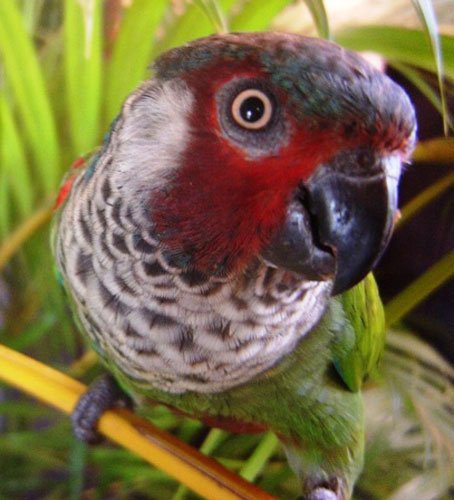
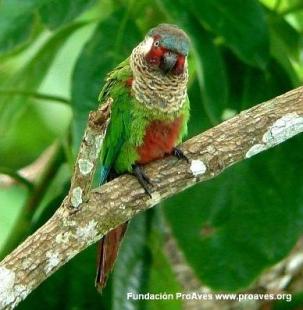
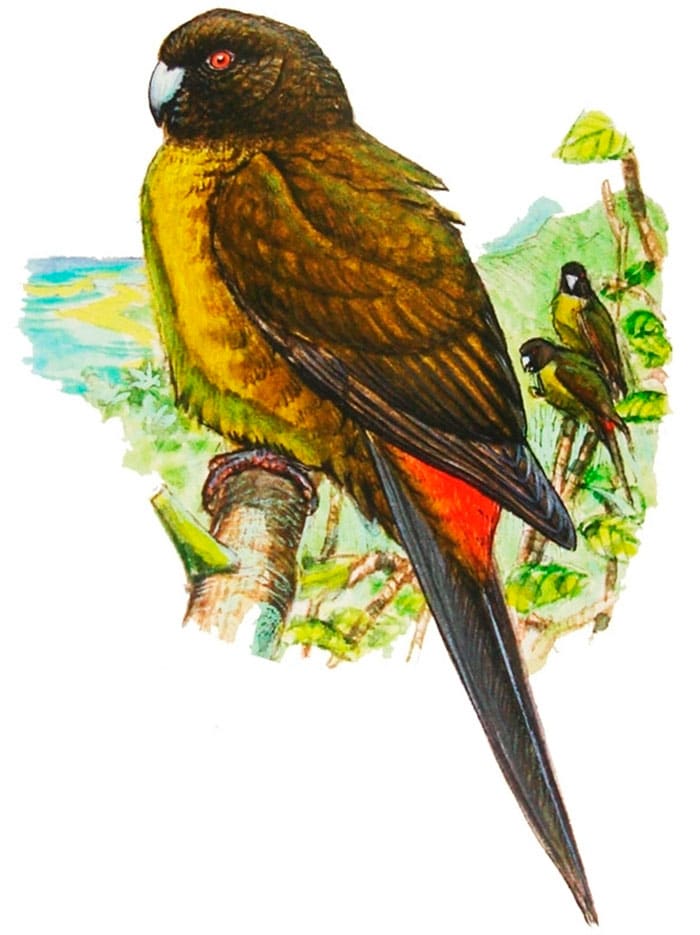
The Sinรบ parakeet (Pyrrhura subandina) It, in general, green, with the forecrown and areas around eyes dark red.

In flight It is very evident dark red stain abdomen, the wings below greyish. The cheeks They have a greenish blue tone, the area surrounding the ear It is yellowish-brown and the breast feathers with design marginalized gray escamado.

Lives or lived in humid jungle, semi-humid, deciduous and gallery forests,low. It nests on trees of considerable size in hollow nests woodpeckers.

endemic to Colombia, in the lower valley of sinu river, Jaraquiel, Murrucucรบ hill, Cรณrdoba.

Expeditions carried out in recent years have failed to sight it.

Estimated population: 0-100; The population trend: possibly extinct

We recommend that you devote to Sinรบ parakeet immediate attention to the conservation of this unique endemic species of the plain Sinu River.

Habitats in the jungle and near the Sinรบ river valley have been extensively altered and lost.

History:

The Sinรบ parakeet It was described by Todd 1917 as a distinctive bird endemic Valley Sinu River, Cรณrdoba Department, Northwest of Colombia. Peters (1937), without evidence or any basis placed the Pyrrhura subandina within the species Pyrrhura picta, and the species immediately fell into obscurity as subspecies. However, Joseph and Stockwell (2002) they restored the status to Pyrrhura subandina as a species, based on a detailed assessment and phylogenetic analyses recent (com. pers. 2003).

DNA analysis has shown that the population of the Sinรบ parakeet (Pyrrhura subandina) It is probably different (monotype) (Joseph & Stockwell 2002), although at present it remains a subspecies of the Pyrrhura picta pending further studies (SACC 2007).

There is no information on the ecology of the Sinรบ parakeet or current status. The species has never been reported alive and its range has been extensively deforested (Salaman obs. pers.)

At the beginning of 2004 Paul Salman He visited the four sites type; two are entirely deforested, While Quimari and the Cerro Murrucucรบ still have some fragmented forests. No evidence of any Pyrrhura It was obtained by observations and interviews with the local community. In May of 2004, a researcher at ProAves spent three months exploring in search of this species throughout the Murrucucรบ hill but their results were not favorable. The lack of recent records of this species and its restricted and unprotected range give reasons for concern about their survival and current status.

    Reference: Joseph, L. and Stockwell, D. 2002. Climatic modeling of the distribution of some Pyrrhura parakeets of northwestern South America with notes on their systematics and special reference to Pyrrhura caeruleiceps Todd, 1947. Ornitologia Neotropical 13: 1-8.

The Sinรบ parakeet (Pyrrhura subandina) was last reliably recorded in 1949. Almost nothing was recorded about their habits. Not found during searches on 2004 and 2006 (ProAves Colombia 2008). He may be extinct, but if it still survives, this bird will be seriously threatened by habitat loss and hunting associated with the armed conflict in the region; The future of this Pyrrhura It looks bleak.

* Subspecies included within the species Pyrrhura picta.

Sinรบ parakeet (Pyrrhura subandina)


Especies del gรฉnero Pyrrhura

Sources:

– Parrot Book, Parrots and macaws.
– eLibrary
– proaves
– Extinct Birds by Julian P. Hume, Michael Walters.

Photo: Parrots, Parrots and macaws Neotropical

โ–ท The world of Pets: Dogs, cats, birds, reptiles, amphibians

Red-lored Amazon
Amazona autumnalis

Red-lored Amazon


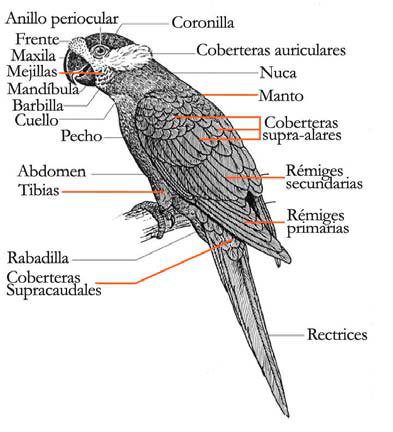
Anatomy-parrots

Content

Description:

35,5 to 38,1 cm.. height and between 314 and 485g. weight.

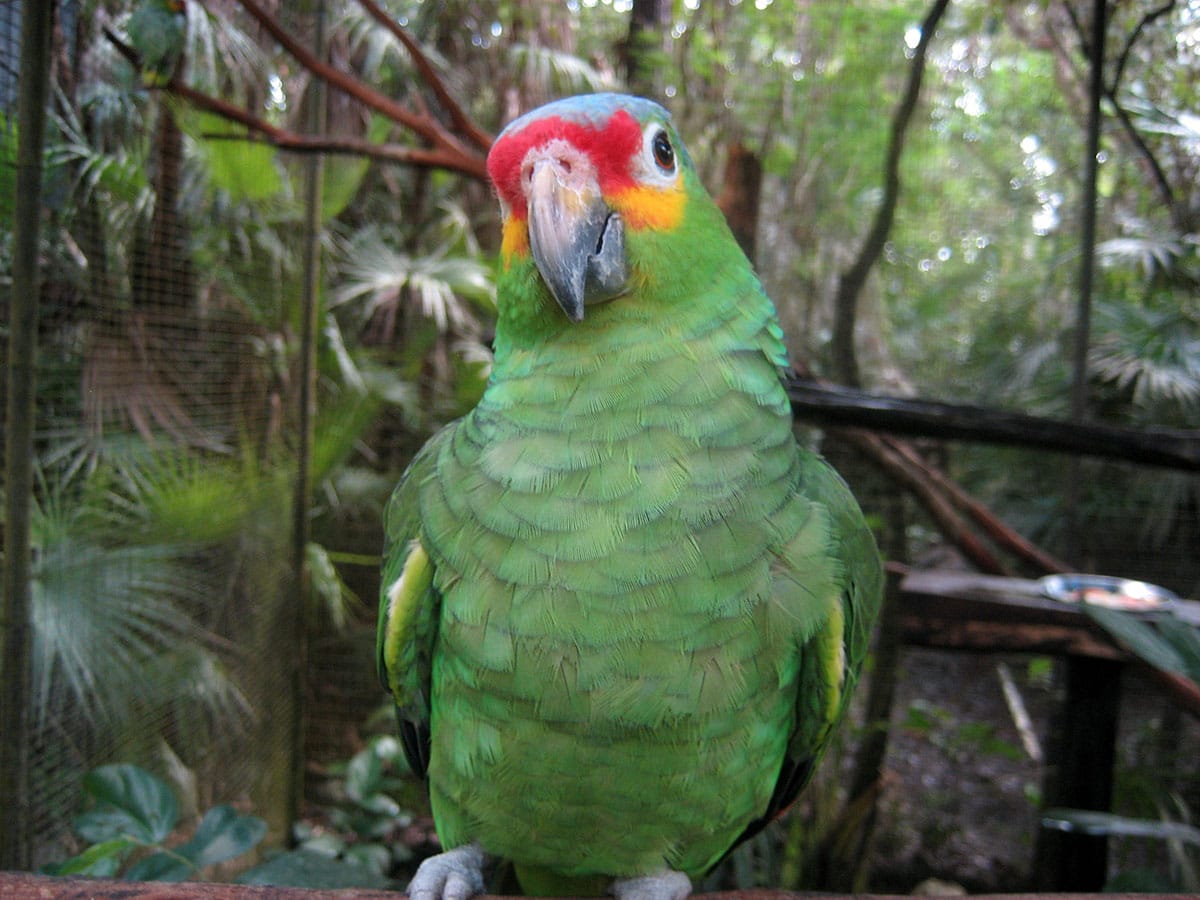
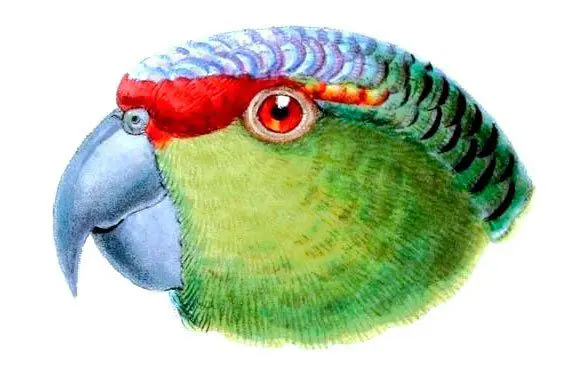
The Red-lored Amazon (Amazona autumnalis) is distinguished by its red front; Green with edge lilac it nape ; crown lilac; stain red in the wing , and tail blue margin.
The bill is grey with the upper jaw yellowish-horn. The irises his eye is orange. The legs are of color gray greenish.
They do not possess sexual dimorphism, that is to say, there is no physical difference between the male and the female.

Description 3 subspecies:

Amazona autumnalis lilacina Lesson, 1844
  • Amazona autumnalis autumnalis

    (Linnaeus, 1758) – Nominal.


  • Amazona autumnalis lilacina

    (Lesson, 1844) – It has a red band in the forecrown that it extends over them eyes; the cheeks Yellow.


  • Amazona autumnalis salvini

    (Salvadori, 1891) – It has cheeks and ear-coverts green; the basis of the tail by under Red.

Habitat:

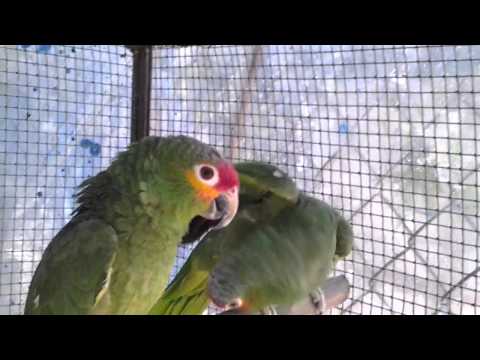
Video – "Red-lored Amazon"

Amazonas autumnalis

This amazon frequents a wide range of habitats wooded and open with trees, including rainforest, tropical deciduous forest, pine forests, mangroves, forest swamps, gallery woods, areas cultivated with trees high and plantations; also forest dry in the South of Ecuador.

The Red-lored Amazon move from the rainforest (breeding season) to a habitat more open in winter in the Yucatan Peninsula, Mexico. The altitudes that inhabit range from sea level to the 320 metres in Oaxaca, 1.100 metres in Honduras, 800 metres in the Caribbean, 1.000 meters on the slopes of the peaceful of Costa Rica, and 1.000 metres in Colombia.
The birds tend to be in pairs or in flocks loose, being more gregarious When feed (occasionally macaws) and when resting. outside the breeding season, birds take refuge in tall trees in gallery forests or mangroves.

Reproduction:

They nest during the seasonal dry in hollow of trees (usually dead, for example, Tabebuia or Ceiba) or on the stump of a Palm tree. Birds in State reproductive in April, Oaxaca; February-March, Belice; March, Guatemala; January-February, Colombia. Reproduce between February-April, Panama; March-may, Belice and January-March, Ecuador. Clutch 3-4 eggs.

The incubation varies from 25 to 26 days. The chicks remain in the nest 70 days.

Food:

In the wild these birds feed on figs Ficus, orange, Mango, fruits of Palm (including the of Cordia lutea and Spondias purpurea), coffee beans (Coffea arabica), seeds of Ferrule, Casearia and Protium. Mainly are feeds in the tops of trees high.

Distribution:

Size of the area of distribution (reproduction / resident): 2.570.000 km2

The Red-lored Amazon It extends from the South of Mexico north of South America with a population disjunct in the amazon.
You can find in them lands low of the this of Mexico, in the South of Tamaulipas, in the East of San Luis Potosi, Puebla, Oaxaca, Chiapas, Tabasco, Campeche and Quintana Roo. Records from other parts of the country (for example, City of Mexico) probably you refer to leak.
You can see in Belice and in the lowlands of the Caribbean of Guatemala and Honduras (including Roatan and Guanaja in Bay islands and probably soon in Utila), until Nicaragua and Costa Rica, where they are present in humid areas of the tropics on both slopes (absent from the dry Northwest ), also in Panama and on the islands of Coiba and Escudo de Veraguas and in the Archipelago of pearls (absent from the driest areas of the Azuero Peninsula).

In the Northwest of Colombia appear on the Pacific slope of the Western Andes from the Panamanian border to the South up to the Serrania del Baudo and from the southwest of Cauca south to Ecuador in the Gulf of Guayaquil. Also it extends to the North of the Andes in Colombia to Magdalena Medio and to the East in the Northwest of Venezuela in Zulia (Sierra de Perija).

In the Northwestern basin of the brazilian amazon a disjunct population exists between Black river and Solimรตes River.

Usually resident with some local seasonal habitat preferences (for example, in Yucatan Peninsula, Mexico). Is usually the most common parrot and more numerous in some parts of the range (for example, in parts of Central America) but now is a species very rare to the West of them Andes in Ecuador and Colombia with a population of the subspecies Amazona autumnalis lilacina estimated in 400-600 specimens.

Population decreased drastically in the island of Roatan (Honduras) where he captured it is massively for export, and maybe missing in Utila for the same reason.

Capture combined with the loss of habitat also has caused declines in some other parts of its area of distribution (for example, east of Mexico and Ecuador). common in captivity in some areas, and marketed internationally.

Distribution 3 subspecies:

  • Amazona autumnalis autumnalis

    (Linnaeus, 1758) – Nominal. Coast of the Caribbean from the East of Mexico South to North of Nicaragua.


  • Amazona autumnalis lilacina

    (Lesson, 1844) – West of Ecuador.


  • Amazona autumnalis salvini

    (Salvadori, 1891) – North of Nicaragua south to Colombia and Venezuela.

Conservation:

State of conservation โ“˜


minor concern Minor Concern โ“˜ (UICN)โ“˜

โ€ข Current category of the Red List of the UICN: Least concern.

โ€ข Population trend: Decreasing.

This species has a very large range and, Therefore, is not approaching the thresholds of Vulnerability at the discretion of the distribution area size.

The population size is very large and, therefore, not approaching the thresholds for vulnerable under the criterion of population size (<10.000 mature individuals with an estimated continuous decrease in> 10% in ten years or three generations or with a specific population structure). For these reasons, the species is evaluated as least concern.

Justification of trend

It is suspected that the population is in decline due to the continuous destruction of the habitat and to levels of exploitation unsustainable.

The Amazona lored in captivity:

Is of vital importance that the diet is complete and balanced in all directions, as this prevents, along with other factors, the appearance of bone problems or the known software that affects numerous parrots. To ensure the balance of this, prepared feed very well supply the nutritional needs of each animal, However, they should not miss plant, fruits and vegetables, as well as diversity of seeds that come in mixture.

As for accommodation, If they are not removed from cage constantly, it should be spacious enough to exercise the muscles of the wings and legs, and the plumage of the bird is preserved in perfect condition.

The Red-lored Amazon enjoy, like all parrots, tearing apart and finding out things, so they must have the occasional toy or we may end up having problems with the furniture. Them feet of parrot are very suitable if your stay is in the outside of the cage. Of course, they must not be exposed to draughts or sudden changes in temperature. The water must be clean at your fingertips, because the existence of fungi causes serious breathing problems.

In terms of coexistence to have it in the neighborhood area, in comparison with other species in Amazon, are relatively quiet, so in general do not cause many problems.

In captivity, can get to live up to 80 years.

BREEDING AND REPRODUCTION:

Its captive breeding started for the first time in United States, after their importation from the place of origin, South America in the 1950's.

Those individuals acquire their sexual maturity on the 4 years of age, and if you have a good breeding pair in the right conditions, they can perform two annual broods, Although the main thing if you want to raise, patience. Many pairs need several years until the first calf, so it is very important to be patient and wait for the right moment.

The female lays in the nest (No fill) of 2 to 6 eggs incubated without the help of the male usually. This is dedicated to feeding the female itself and that of the chicks after their birth at the 28 days until independence after twelve weeks.

Alternative names:

Red-lored Parrot, Red-lored Amazon, Yellow-Cheeked Amazon (English).
Amazone ร  lores rouges, Amazone diadรจme (French).
Rotstirnamazone (German).
Papagaio-diadema, Papagaio-diadema (Papagaio cavacuรฉ) (Portuguese).
Amazona Frentirroja, Lora Frentirroja, Loro Frentirrojo (espaรฑol).
Lora cariamarilla (Honduras).
loro cachete-amarillo (Mexico).


scientific classification:

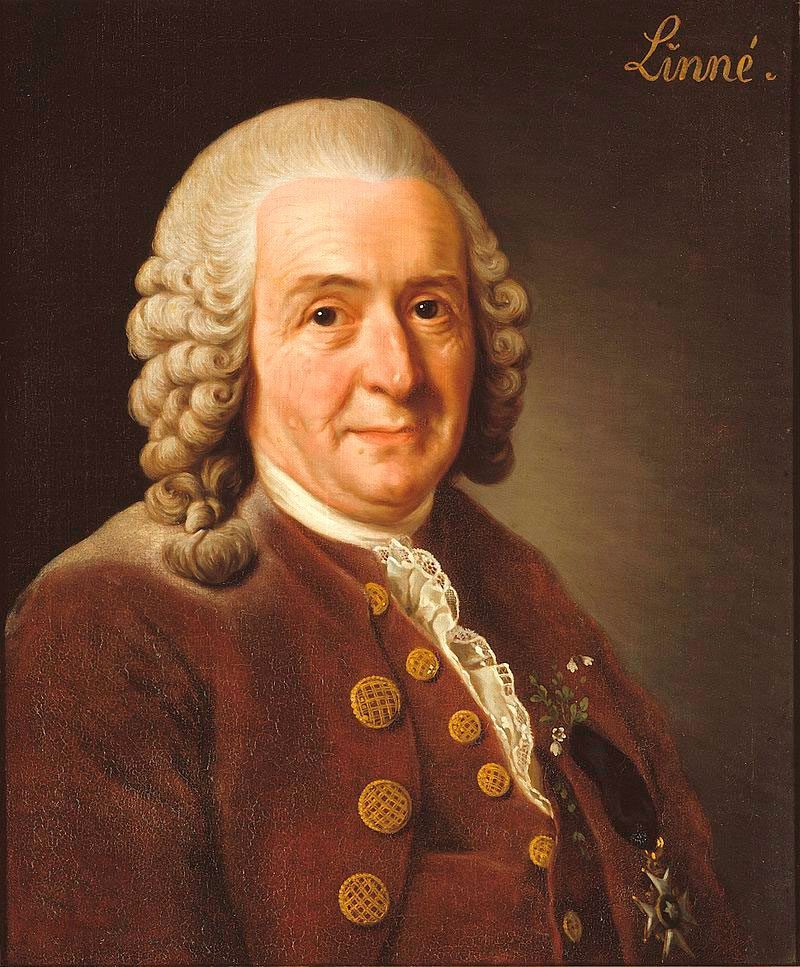
Carl Linnaeus

Order: Psittaciformes
Family: Psittacidae
Genus: Amazona
Scientific name: Amazona autumnalis
Citation: (Linnaeus, 1758)
Protonimo: Psittacus autumnalis


Red-lored Amazon images:


Species of the genus Amazona


Sources:

  • Avibase
  • Parrots of the World โ€“ Forshaw Joseph M
  • Parrots A Guide to the Parrots of the World – Tony Juniper & Mike Parr
  • Birdlife
  • Parrot Book, Parrots and macaws Neotropical
  • Grupohypermarkup

Photos:

(1) – Wikimedia.org
(2) – Red-lored Amazon or Red-lored Parrot; two captive parrots By Brian Gratwicke (originally posted to Flickr as Red-lored Amazon) [CC BY 2.0], via Wikimedia Commons
(3) – A Red-lored Amazon in Panama By Nelson de Witt from USA (Hello!) [CC BY-SA 2.0], via Wikimedia Commons
(4) – To pet Red-lored Amazon By Richard (originally posted to Flickr as Looming….) [CC BY 2.0], via Wikimedia Commons
(5) – Red-lored parrots (Amazona autumnalis), OSA Peninsula, Costa Rica By Charlesjsharp (Own work) [CC BY-SA 3.0], via Wikimedia Commons
(6) – A Red-lored Amazon at Rock Farm, Belize. It has a feather problem By Rigrat [CC BY-SA 3.0], via Wikimedia Commons
(7) – This is the image of a parrot originating of the jungle of Chiapas in Mexico By Joe Quick [CC BY 2.0], via Wikimedia Commons
(8) – Red-lored Amazon perching on a branch with wings open near Belmopan, Belize By Rigrat (Picasa Web Albums) [CC BY-SA 3.0], via Wikimedia Commons
(9) – A strange sight to me to see parrots flying in the wild. This Red-lored Amazon (Amazona autumnalis) was spotted with a group along the roadside in the Cayo distict of Belize By The Lilac Breasted Roller (originally posted to Flickr as Red Lored Parrot) [CC BY 2.0], via Wikimedia Commons
(10) – Lilacine Amazon, head from lateral by John Gerrard Keulemans [Public domain], via Wikimedia Commons

Sounds: Walter Rivera

โ–ท The world of Pets: Dogs, cats, birds, reptiles, amphibians

Striated Lorikeet
Charmosyna multistriata

Striated Lorikeet

Content

Description

They weigh around 40 to 50 g. and length of 18 cm..

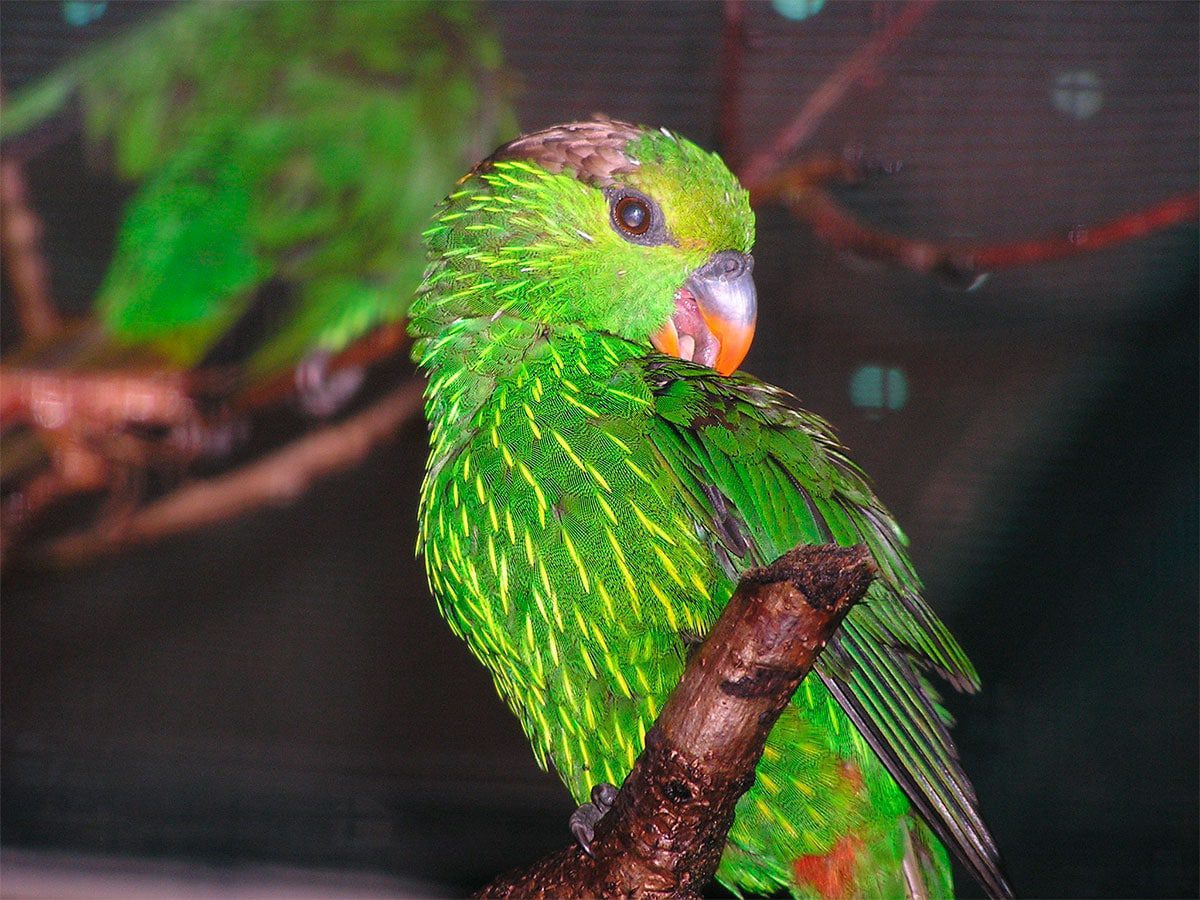
The plumage of the Striated Lorikeet (Charmosyna multistriata) It is predominantly green with yellow stripes on the belly and in the chest.

The throat, the forecrown and sides of the head They are slightly more yellow. The neck and the back of the head They are brown with some orange yellow stripes. The tail is olive green on top and having a tip dark yellow. The bottom of the tail It is greenish yellow with some red feathers around the vent. The most characteristic feature of Striated Lorikeet is the bill two colors. Upper bill is blue-gray with a touch of red orange, While the bottom is completely reddish-orange. Only one other Lori with a peak of two colors and that is the Musk Lorikeet. The irises It is red and legs They are gray with black nails.

Both sexes are the same color, the male is slightly larger and has a bill longer. They are also a little colored in the head.
The immature They have the same colors as adults, only the bill it is more black and darker stripes.

Habitat:

It inhabits in the mountains and hills and forest edges. Mainly found between 180 and 1.800 m, but they have been at much lower altitude, about 80 m. Found in pairs or in small groups of up 20 birds, sometimes fellowship with the Red-flanked Lorikeet and the Fairy Lorikeet (observed in mid-February in mixed flocks with these species). similar to the behavior Red-flanked Lorikeet, the consorts, but although they have observed flocks Striated Lorikeet fly with the Red-flanked Lorikeet, they usually form discrete individual groups.

Reproduction:

Habits of nesting and breeding unknown.

Food:

Prefer treetops in bloom where it feeds on pollen and nectar, but they may also feed on epiphytes.

Distribution:

Size of the area of distribution (reproduction / resident) 170,000 km2

Endemic to the montane forests of the center of West Papua New and Papua New Guinea, South of the cordillera central. The world population It is believed to be of less than 10.000 specimens, but it is probably stable. A small number in captivity.

Conservation:


Near-threatened


โ€ข Current IUCN Red List category: Near threatened

โ€ข Population trend: Decreasing

Its habitat is locally threatened by logging and clearing for agriculture. Reports of the species in Ok Tedi They show that the population of the Striated Lorikeet has fallen dramatically after the severe drought in 1997-1998 (P. Gregory in litt., 2010).

The species may be threatened by the presence of a large copper and gold open pit mine in Ok Tedi, but the impacts of this mine are currently unknown. It is likely to be tolerant of uneven and degraded forests and although it may have a small population in general, do not believe that it is declining very rapidly.

"Striated Lorikeet" in captivity:

In aviculture the Striated Lorikeet It has become one of the rarest species. These birds have not been imported in large quantities, and many of the birds that survived the journey later died due to infections by fungi and other diseases. Few breeders were able to raise them on a regular basis.

Alternative names:

Striated Lorikeet, Streaked Lorikeet, Yellow Streaked Lory, Yellow-streaked Lorikeet (ingles).
Lori striรฉ (French).
Streifenlori (German).
Lori Estriado (espaรฑol).

scientific classification:

Order: Psittaciformes
Family: Psittaculidae
Genus: Charmosyna
Scientific name: Charmosyna multistriata
Citation: (Rothschild, 1911)
Protonimo: Charmosynopsis multistriata

"Lori striated" images:

————————————————————————————————

ยซLori striatedยป (Charmosyna multistriata)


Sources:

Avibase
– Parrots of the World โ€“ Forshaw Joseph M
– Parrots A Guide to the Parrots of the World – Tony Juniper & Mike Parr
– Birdlife
– loryclub

Photos:

1 – Author: Jaroslav Chloupekbiolib.cz
2 – by DavyVanthuyneโ€™s Bucket
3 – Birds-pet-wallpapers – link
4 – Author iggino – lynx
5 – tierportraet.ch – link

โ–ท The world of Pets: Dogs, cats, birds, reptiles, amphibians

Scarlet-chested Parrot
Neophema splendida

Scarlet-chested Parrot

Content


Anatomy-parrots

Description

19 cm. length and a weight between 36 and 44 g..

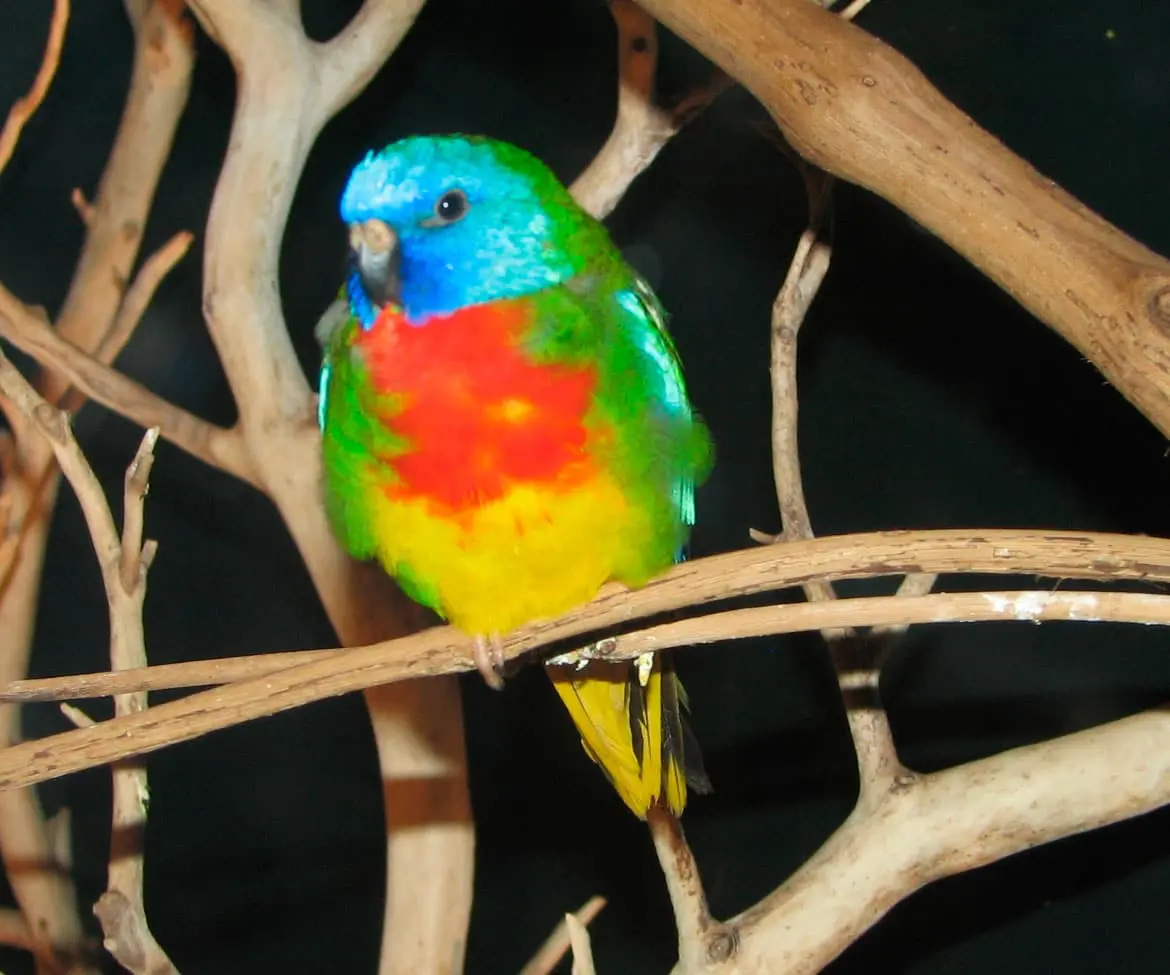
The Scarlet-chested Parrot (Neophema splendida) It is particularly colorful. It has the "face" and the forecrown are bright turquoise blue, darker in the throat and chin.

The upperparts are green. The curvature of the wings is dark blue, wing-coverts are the same blue tone to the face. Primary coverts dark blue-violet. The primaries Black has light blue brainwashed in the foreign bands. The outer edge of the secondaries has a tone blue-green that is mixed with the green of them vane inner and tertiary.

The underparts is dark blue. The chest is bright Scarlet, which is an important recognition feature. The sides of the top of the chest and flanks are green. The rest of the underparts is bright yellow. The bottom of the tail is green, but the tips of the outer tail feathers they are dyed yellow.

The bill is black, irises dark brown. The legs are gray-Brown.

The female is duller than its companion, with the belly and the chest green. The blue color of the face is restricted.

The females and juveniles they often show Wing bars.

The young male need four months to purchase your mature plumage, and retain a youthful glow until the age of 2 years.

Habitat:

The Scarlet-chested Parrot they are usually distributed in arid scrublands that are composed mainly of acacias and eucalyptus. They appreciate, particularly, plants of Mallee (Eucalyptus gracilis) and Mulga (Acacia aneura).

Also live in wooded areas dominated by casuarinas, as well as areas where the soil is covered by Spinifex or large clumps of grass type Triodia.

The Scarlet-chested Parrot do not despise the crests of hills that are equipped with a large number of plants, like the covered Plains of Sea sandwort or Salt grass (Honckenya peploides), What are plants which grow in saline environments.

They tend to find their food on Earth and form relatively consistent flocks outside of the nesting season.

During the breeding season, These birds are not very gregarious, but couples establish their nests in trees not very far from the other.

As with the Turquoise Parrot, the division of labor is well established and the females are responsible for the collection of green leaves that adorn the interior of the nest.

There is no description of the various courtship.

Reproduction:

The season of nesting of the Scarlet-chested Parrot, usually, is carried out between January and August, but these dates can change as the reproduction is influenced, significantly, by climatic conditions, especially the rains.

The nest It is placed in a tree cavity, above all a eucalyptus, between 2,5 and 8 meters above the ground.

The Scarlet-chested Parrot they are very loose colonies.

The spawning includes of 3 to 5 eggs and your incubation lasts a few 18 days. The most numerous litters, sometimes, provide 6 eggs.

The chicks are altricial, they take flight to leave his place of birth 30 days after hatching.

Food:

The Scarlet-chested Parrot they have a diet almost exclusively granivore.

These birds acquire most of the moisture you need eating Succulents as Calandrinia. If this practice is not enough, These parrots are like other species of arid lands, that is to say, that they are going to supply themselves with liquid directly to the sources and water points.

Menu details are poorly known, but it is known that most feed on seeds of plants such as Triodia, Newcastelia, haloragis, Acacia and Stipa.

Distribution:

Size of the area of distribution (reproduction / resident): 1.280.000 km2

This rare Nomad has a wide area of historical distribution, but it is probable that now concentrate on parts with more vegetation of the Great Victoria desert, with records from Kalgoorlie, Western Australia, the East, through the North of the Nullarbor plain in Southern Australia, North of the Eyre Peninsula, about Port Augusta and in areas of Mallee to the North of the murray river, to the Northwest of Victoria, West of New South Wales, Southwest of Queensland and MacDonnell Ranges of the Northern Territory.

A flock of 240 bird was recently recorded in the Great Victoria desert.

Conservation:


minor concern


โ€ข Current category of the Red List of the UICN: Least concern

โ€ข Population Trend: Stable

The inroads among 1939 and 1996 They show that these birds are able to form very rapidly large gatherings.

Disturbances affecting the natural environment had a negative impact on the evolution of the active population. The use of aquatic resources for the livestock and competition in this field with the Bourke's Parrot they have also caused damage.

Poaching and marketing of this bird have also had devastating consequences: more than 25.000 Scarlet-chested Parrot they are in captivity in Australia.

Its population in freedom is estimated at around 10,000 specimens.

"Scarlet-chested Parrot" in captivity:

The Scarlet-chested Parrot is a species peaceful and silent. This beautiful parakeet ends up gaining confidence with your caregiver, It is only a matter of time. It is also easy to maintain and almost do not eat wood. It is resistant to cold (light Frost), but it is very sensitive to humidity, fog, and air currents.

The Scarlet-chested Parrot they feed on the ground; It is convenient to use of vermicides, deworming them regularly. They are also susceptible to ocular infections and vulnerable to infections of Candida.

The tastes for the bathroom vary from one individual to another.

In terms of their longevity, according to sources, a sample lived during 14 years in captivity. The same sources report that these parakeets can live up to 25,4 years in captivity, but this has not been verified; the same study also ensures that the Scarlet-chested Parrot You can play from around 1 year of age in captivity.

The mutations:

    โ€ข Aqua: autosomal recessive
    โ€ข Turquoise: autosomal recessive
    โ€ข Blue: autosomal recessive
    โ€ข Pastel: autosomal recessive (not in Europe)
    โ€ข Cinnamon: recessive sex-linked
    โ€ข Pale: recessive sex-linked
    โ€ข Mixed: autosomal dominant
    โ€ข Misty: autosomal co-dominant (PAS en Europe)
    โ€ข Gris: autosomal dominant
    โ€ข Mixed: autosomal recessive
    โ€ข Fallow (bronze fallow): autosomal recessive
    โ€ข INO: recessive sex-linked
    โ€ข Platinum: recessive sex-linked
    โ€ข Violet: co-dominante autosomique
    โ€ข Dark factor: co-autosomal dominant

Alternative names:

Scarlet-chested Parrot, Scarlet chested Parrot, Scarlet-breasted Parrot, Scarlet-chested Parakeet, splendid parakeet (ingles).
Perruche splendide, Euphรจme resplendissante, Perruche resplendissante (French).
Glanzsittich (German).
Periquito-esplรชndido (Portuguese).
Papagayo Esplรฉndido, Periquito Esplรฉndido (espaรฑol).

scientific classification:

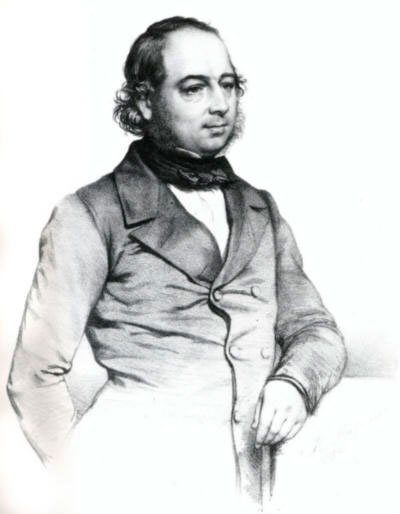
John Gould
John Gould

Order: Psittaciformes
Family: Psittaculidae
Genus: Neophema
Scientific name: Neophema splendida
Citation: (Gould, 1841)
Protonimo: E uphema splendida

ยซSplendid Parakeetยป Images:

Videos "Scarlet-chested Parrot"

————————————————————————————————

ยซSplendid Parakeetยป (Neophema splendida)


Sources:

Avibase
– Parrots of the World โ€“ Forshaw Joseph M
– Parrots A Guide to the Parrots of the World – Tony Juniper & Mike Parr
– Birdlife

Photos:

(1) – Adult male at Cincinnati zoo, USA By Ltshears (Own work) [Public domain], via Wikimedia Commons
(2) – Taken at the Cincinnati Zoo By Greg Hume (Own work) [CC BY-SA 3.0], via Wikimedia Commons
(3) – Immature male on the left and an immature female on the right at Gluepot Reserve, South Australia By David Cook Wildlife Photography from Wamboin, NSW, Australia [CC BY 2.0], via Wikimedia Commons
(4) – Immature male on the left and an immature female on the right at Gluepot Reserve, South Australia By David Cook Wildlife Photography from Wamboin, NSW, Australia [CC BY 2.0], via Wikimedia Commons
(5) – Scarlet-chested Parrot ยซNeophema splendidaยป at Cincinnati Zoo By Ltshears (Own work) [CC BY-SA 3.0], via Wikimedia Commons
(6) – By T.H. Maguire (1821โ€“1895) (http://www.birdresearch.dk/dk/jgould.htm) [Public domain], via Wikimedia Commons

โ–ท The world of Pets: Dogs, cats, birds, reptiles, amphibians

Red-and-green Macaw
Ara chloropterus


Guacamayo Aliverde

Content

Description:

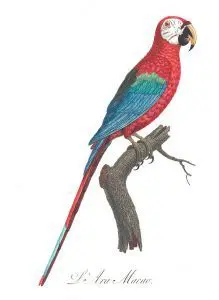
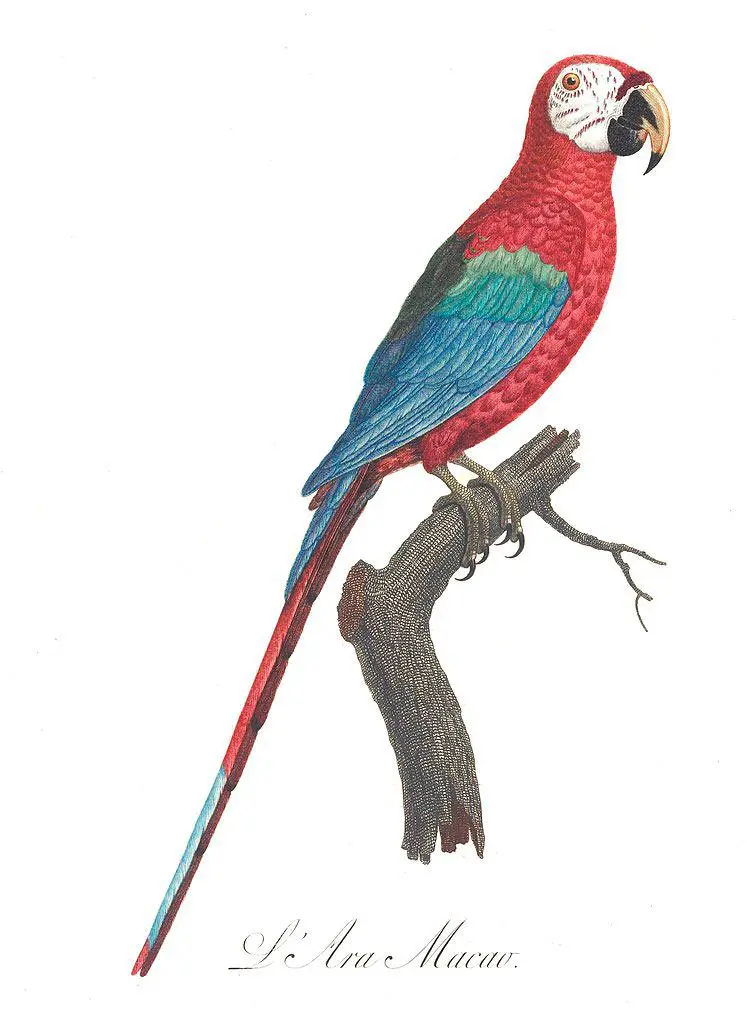
Winged Macaw, illustration
Among 90 and 95 cm.. length and a weight between 1050 and 1708 g..

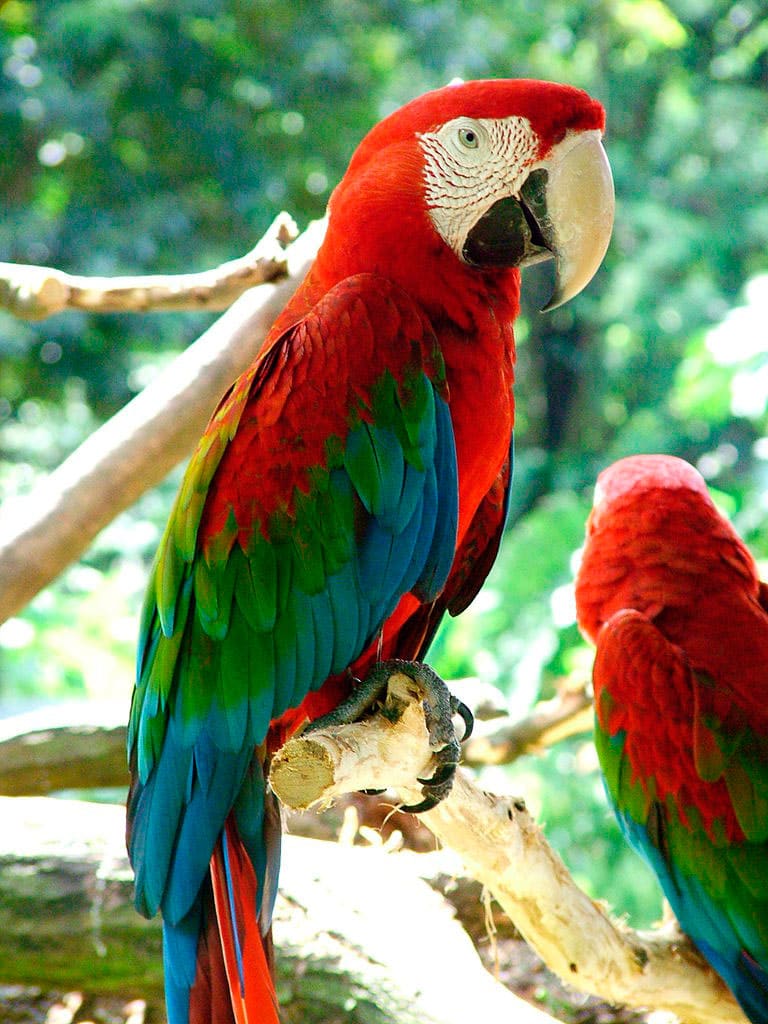
The winged Macaw (Ara chloropterus) they are the second largest family members of macaws behind the Hyacinth Macaw. They have forecrown, crown, both sides of the neck, the nape and the the mantle, a beautiful red; the back up to the uppertail-coverts, blue, scapulars green. Lesser coverts Red with green hidden bases; median green; primary coverts, secondaries outer and primaries, blue, the latter with a black margin at the vane inner; secondary internal and large coverts internal total or partially Green. Red the underwing-coverts.

Underparts Red with the exception of the undertail- coverts they are light blue. Uppertail Red in the central part with blue tips and with the outer feathers shorter, blue; undertail-coverts dark red.

The upper jaw is mostly ivory white, except the cutting edge that is black. The lower jaw is black. The cheeks they are covered with bare white skin ending with fine lines of red feathers. Iris yellowish brown; legs black.

Both sexes similar.

Immature with tail shorter and the irises brown, sometimes with yellow in the coverts supra-alares.

Habitat:

The Red-and-green Macaw they occupy rain forest land in northern area of distribution, apparently, avoiding wetlands; in the South and East of range often in formations dry more open including seasonally flooded forests, forest Highlands and dry forests (Bolivia), entering the Savannah in Paraguay.

Its presence depends on, to a large extent, the existence of large trees and rocky cliffs that are the major providers of sites of anidacion. On the other hand, they are far from the cities, peoples and all the inhabited places, as it is a victim of intensive hunting and is often captured for the aviary bird trade

Observed to 1.000 m in Panama, 500 in Colombia, 1.400m in Venezuela.

They live in pairs or in small flocks, are less likely than the Blue-and-yellow Macaw to regroup, that does not prevent them, sometimes, partnering with them and with the Scarlet Macaw.

Large and spectacular gatherings of different species gather to consume clay on the banks of rivers.

The Red-and-green Macaw they often perch on the tops of the tallest trees. In principle, they are very shy and difficult to deal with. Early in the morning and the night entrance, they engaged on voyages of back and forth between their places of rest and feeding areas, evolving high in the air.

Reproduction:

The season of nesting It takes place at different times depending on the region: in Suriname in December, from November to April in Peru, in January in the middle of Brazil.

The nests they built, generally, in tree cavities, Although it can also be common nests located in cracks or holes of rocky cliffs, as it is the case of Bolivia and in the Northeast and South of Brazil, above all in Minas Gerais, Brazil.

The spawning usually has two or three eggs. Breeding success rate is not very high. According to Birds of the world (HBW), in a study recently envelope 25 from FRY's 16 nests, resulted in: 10 young birds (40%) they were able to fly normally, 9 of them (36%) they died of malnutrition and 6 (24%) were victims of predators.

Food:

The Red-and-green Macaw they have a vegetarian diet. Consume a variety of fruits and seeds of many types of trees. Fruits of Acrocomia and Caryocar (South-West of Brazil) fruits and seeds of Copaifera langsdorffii and Hymenaea courbaril (Northeast of Brazil).

Distribution:

Size of the area of distribution (reproduction / resident): 8.100.000 km2

The Red-and-green Macaw being endemic to the East of Panama the North and centre of South America, until almost the North of Argentina.

In Panama formerly observed in the West to the Caribbean slope of the Canal area (Although these records may be due to leaks), now only observed in the most remote parts of Eastern (for example, at the top of the Bayano River).

Observed in the tropical zone of Colombia, in the Magdalena River Valley, coast of the Caribbean, the Amazon region to the West of the Andes South to the upper area of the Atrato River and Serrania del Baudo.

Also inhabit the lowlands of Venezuela but absent in the North, from Portuguese to Monagas. Partial shape on the inside of Guianas. Along the Amazon basin of Brazil, is of Ecuador, Peru and northeast of Bolivia in Beni, Cochabamba and Santa Cruz.

In Brazil, were formerly seen in Espirito Santo, Rio de Janeiro and the interior of Paranรก; now seemingly absent; It continues to produce in Mato Grosso and the relict population remains in the Parque Estadual Morro do Diabo, to the West of Sรฃo Paulo. They persist in the North and East of Paraguayan Chaco, but now gone from Missions, Chaco, Formosa and Salta, Argentina, where a last reliable record was at 1917.

Resident. Generally uncommon after the population decline caused by habitat loss and capture for trade.

Locally distributed in Panama, Venezuela, Bolivia.

In the Amazon basin widespread but generally less common than the Scarlet Macaw and the Blue-and-yellow Macaw (fairly rare in Ecuador Eastern), Although this situation was reversed in Venezuela and Guianas (and perhaps in other places).

Partially absent near population centres and in decline or have already disappeared in the peripheries of range due to habitat loss, trade and hunting.

Despite the large size of its distribution area, the species is considered monotype (without geographical variations).

Widespread in captivity.

Conservation:

State of conservation โ“˜


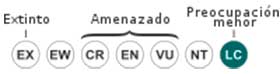
minor concern Minor Concern โ“˜ (UICN)โ“˜

โ€ข Current Red List of UICN: Least concern
โ€ข Population trend: Decreasing

The size of the world's population has not been quantified, but this species is described as ยซquite commonยป (Stotz et to the. (1996)).

The population has disappeared in places where it was previously common and it is suspected that it may be in decline due to ongoing habitat destruction elsewhere, the unsustainable levels of exploitation, hunting and capture for trade in live birds.

Rare in Panama, endangered in the West of Colombia, missing in the southeast of Brazil. They are exceptions, Peru and Paraguay, where the species is still fairly common.

Not long ago, Guyana held the record for catches of young pups. Fortunately, from 1993, the country prohibited the commercial traffic of this species.

Their territory is particularly large, It is not considered in danger of extinction at the global level.

"Red-and-green Macaw" in captivity:

widespread in captivity.

It is a bird Intelligent and inquisitive but is perhaps, of all the great macaws, which is worse loneliness, so it is advisable to live with another bird, that you don't have to be necessarily of its kind. Its large size and its huge activity do require large cages and room to move.

Their breeding in captivity is more complicated than that of other large macaws.

With regard to its longevity, according to sources, A male specimen of Red-and-green Macaw was still alive after 50,1 years in captivity just before it was sold. It has reported that these animals can live up to 63 years in captivity, but this has not been verified; the same study reported that these animals they can be played back from the 8 years age in captivity.

Are often crossed with other species of Macaws to develop a series of hybrids.

Alternative names:

Red-and-green Macaw, Green-winged Macaw, Red and green Macaw, Red-and- Green Macaw, Red-and-blue Macaw, Red-blue-and-green Macaw, Red-green Macaw (English).
Ara chloroptรจre, Ara de Cuba (French).
Grรผnflรผgelara (German).
Arara-vermelha, arara-canga, arara-piranga, arara-verde, arara-vermelha-grande (Portuguese).
Guacamaya Rojiverde, Guacamayo Aliverde, Guacamayo Rojo, Papagayo rojo (espaรฑol).
Gonzalo, Guacamaya roja aliverde (Colombia).
Guacamayo rojo (Ecuador).
Carapaico (Venezuela).
Paraba roja, Raraba colorada (Bolivia).
Uvaรญ (Chimane).
Arapiranga (Guarani).
Majรก (Guahibo).
Ja-wo (Piaroa).
Bagarapuru (Embera).
Tooma (Okaima).

scientific classification:

Order: Psittaciformes
Family: Psittacidae
Genus: ARA
Scientific name: Ara chloropterus
Citation: Gray, GR, 1859
Protonimo: Ara chloropterus

Images Red-and-green Macaw:

Videos "Red-and-green Macaw"

ยซGreen-winged Macawยป (Ara chloropterus)


Species of the genus Ara


Sources:

Avibase
– Parrots of the World โ€“ Forshaw Joseph M
– Parrots A Guide to the Parrots of the World – Tony Juniper & Mike Parr
– Birdlife

Photos:

(1) – Ejemplares de Guacamayo rojo (Ara chloropterus) en Singapur By Michael Gwyther-Jones (originally posted to Flickr as Singapore) [CC BY 2.0], via Wikimedia Commons
(2) – Two captive Red-and-green Macaws (also known as the Green-winged Macaw) in San Diego, California, USA By Steve Wilson from Mississippi, USA [CC BY 2.0], via Wikimedia Commons
(3) – Red-and-green Macaw (also known as Red-and-green Macaw) at Apenheul Primate Park, Apeldoorn, Netherlands By Arjan Haverkamp [CC BY 2.0], via Wikimedia Commons
(4) – Red-and-green Macaw (Ara chloropterus) in the Herborn Bird Park, Germany By Quartl (Own work) [CC BY-SA 3.0], via Wikimedia Commons
(5) – Green-winged Macaw or Red-and-green Macaw (Ara chloropterus) head and neck details By Tom Woodward (originally posted to Flickr as IMG_6422) [CC BY-SA 2.0], via Wikimedia Commons
(6) – Red-and-green Macaw flying at Pont-Scorff Zoo, Morbihan, Brittany, France By Tony Brierton from Still here…, Ireland (Pont Scorff Zoo, FranceUploaded by Snowmanradio) [CC BY-SA 2.0], via Wikimedia Commons
(7) – Ara chloropterus, Puerto Ayacucho, Venezuela By Luna04Luna04 at fr.wikipedia (Own work) [GFDL or CC-BY-SA-3.0], from Wikimedia Commons
(8) – Green-winged Macaw (also known as the Red-and-green Macaw) at Denver Zoo, USA. It is wing clipped By Drew Avery (originally posted to Flickr as Scarlet Macaw) [CC BY 2.0], via Wikimedia Commons
(9) – Red-and-green Macaws at Pont-Scorff Zoo, Morbihan, Brittany, France By Tony Brierton from Still here…, Ireland (Scarlet MacawsUploaded by Snowmanradio) [CC BY-SA 2.0], via Wikimedia Commons
(10) – Green-winged Macaw (Ara chloropterus), also known as the Red-and-green Macaw. Picture captioned ยซLโ€™Ara Macaoยป by Jacques Barraband [Public domain], via Wikimedia Commons

Sounds: (Xeno-canto)

โ–ท The world of Pets: Dogs, cats, birds, reptiles, amphibians

Red-fronted Parrotlet
Touit costaricensis

The few records Red-fronted Parrotlet existing in Costa Rica come from, mainly, from the central-southern highlands of the Caribbean slope.
Red-fronted Parrotlet
A captive Costa Rican Parrot eating – Nrg800, CC BY-SA 3.0, via Wikimedia Commons

Content

Description:


Anatomy-parrots

17,5 cm.. length.

The Red-fronted Parrotlet (Touit costaricensis) has the forecrown, anteriorly of crown, lores and stripe under the eyes, red; sides neck, cheeks and upperparts, green with the back of the crown and nape slightly paler and yellower. Inner wing-coverts green; exterior and median coverts and wing leading edge, red; primary coverts black.
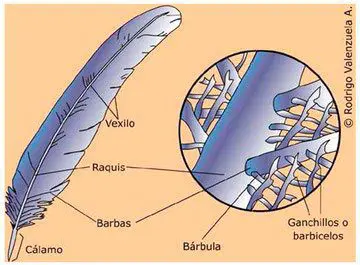
Primaries and outer secondaries, black with green margin to outerweb of the primaries. Inner underwing-coverts, yellow, the outer, red. Feathers on base of the beak, on chin and throat, brighter yellowish green; the chest, the belly and undertail-coverts, green tinted yellowish. The tail greenish yellow with a black tip (except the outermost feathers) and dark green subterminally. Bill pale yellow; cere and bare periophthalmic, grey; irises grey; legs slaty.

The female It has less red on the upperwing-coverts, and perhaps more yellow in the underwing-coverts; probably, on average, are smaller than males. The immature It has little or no red on the head.

Note:

The Red-fronted Parrotlet It has sometimes been treated as conspecific with the Blue-fronted Parrotlet (Touit dilectissimus) North of South America and Panama. Although these taxa are clearly allied and share a recent common ancestor, most authors now treat them as separate on the basis of their clear and consistent plumage differences. The structural divergence can also exist in the Red-fronted Parrotlet longer seems to show the uppertail-coverts (extending almost to the end of the tail) its counterpart Southern, While (although the sample is small) it suggests a sexual dimorphism by the length of the wings and tail on Red-fronted Parrotlet but not in Blue-fronted Parrotlet.

Habitat:

Generally observed in the canopy moist forests at mid-altitudes. It moves towards the thicket, on forest edges, flying over the clear, sometimes in the lowlands (sometimes at sea level, especially in southeast Costa Rica), where perhaps it is a seasonal visitor. Tolerates some habitat alterations.

Observed in association with Red-headed Barbet (Eubucco bourcierii) and Blue-and-gold Tanager (Bangsia arcaei), both species associated in cool wet forests in the upper tropics and subtropics.

Observed to 3.000 meters in Costa Rica in the early dry season and reported regularly at altitudes 500-1.000 m during the wet season. Usually in pairs or small flocks family.

Reproduction:

The family size usually between 4-5 birds, suggests the clutch usual 2-3 eggs. probably plays during the season, dry.

Food:

They feed on fruits trees and epiphytes, such as Cavendishia and Clusia, but probably also include flowers and seeds.

Distribution:

Size of its range (breeding/resident): 10.000 km2

The few records Red-fronted Parrotlet existing in Costa Rica come, mainly, the highlands of central-south Caribbean side, where its range seems to extend to the south, from Monteverde, Turrialba volcano and Lemon.

Although there are no records in much of the east of Costa Rica, its existence can be continuous along the Cordillera de Talamanca (perhaps only in the Caribbean side) to western Panama. The handful of panamanian specimens and records from observations, They are mainly from the western highlands to a report from the east, about the Cocle Province.

It is obviously a kind rare and presumably in decline due to continued deforestation (at least in the lowlands) in a limited range.

Conservation:


Vulnerable

โ€ข Current category of the Red List of the UICN: Vulnerable.
โ€ข Population trend: Decreasing.

Population size : 2500-9999 specimens.

Rationale for the Red List category

This species is classified as Vulnerable because the clearing and forest fragmentation at middle elevations, mainly in the Central Volcanic Range and in the Sierra de Tilarรกn of Costa Rica, It is likely to be causing significant slopes in its small range and (presumably) in population.

Justification of the population

It is estimated that the breeding population of the Important Bird Areas of Costa Rica is 1.000 to 4.000 mature individuals (J. And others Craido 2007, J. Sรกnchez et al., In 2007), so it is believed that the total population may be within the range of 2.500-9.999 mature individuals. This is equivalent to 3.750-14.999 individuals in total, rounded here to 3.500-15.000 individuals.

Justification of trend

It is suspected that the population species is decreasing at a moderate rate, in line with continued clearing of its forest habitat in the northern part of its range.

Conservation Actions Underway

CITES Appendix II. Live in several areas protected, including national parks Braulio Carrillo, Tapantรญ-Cerro de la Muerte and Monteverde, Costa Rica, and La Amistad International Park and adjacent reserves in both countries. But, The legal protection of Palo Seco Protected Forest (BPPS) (a booking Panama adjacent to La Amistad) has not prevented clearance for agriculture (Angehr and Jordan, 1998).

Conservation Actions Proposed

Evaluate the importance of habitat outside the breeding season (J. Created en lit. 2007, J. Sanchez et al., In 2007). Conduct surveys to determine the total size of the population. Study of the ecology of the species (J. Sanchez et al., in bed. , 2007). Monitor population trends through regular surveys. Monitor rates of loss and recovery of forests (J. Sanchez et al., In 2007). Effectively protect the Bosque Protector Palo Seco (BPPS).

"Red-fronted Parrotlet" in captivity:

No reports are known captive birds.

Alternative names:

Red-fronted Parrotlet, Red fronted Parrotlet (English).
Toui du Costa Rica (French).
Costa-Rica-Papagei (German).
Red-fronted Parrotlet (Portuguese).
Cotorrita Costarricense, Lorito de Pecho Rojo, Periquito alirrojo (espaรฑol).

scientific classification:

Order: Psittaciformes
Family: Psittacidae
Genus: Touit
Scientific name: Touit costaricensis
Citation: (Cory, 1913)
Protonimo: Urochroma costaricensis

Images of the "Red-fronted Parrotlet"

Video of the "Red-fronted Parrotlet"


Species of the genus Touit


"Cotorrican Parrot" (Touit costaricensis)


Sources:

Avibase
– Parrots of the World โ€“ Forshaw Joseph M
– Parrots A Guide to the Parrots of the World – Tony Juniper & Mike Parr
– Birdlife

Photos:

(1) – Papagei am Rincon de la Vieja by Kovac – GEO Reisencommunity

Sounds:

โ–ท The world of Pets: Dogs, cats, birds, reptiles, amphibians

Raiatea parakeet โ€ 
Cyanoramphus ulietanus

Raiatea Parakeet

Content

Description:

25 cm.. length.

The Raiatea Parakeet (Cyanoramphus ulietanus) had the head blackish brown, paler on neck, Rump and wings. The lower part of the back and tail coverts were brownish-red; and under wing-coverts and outerweb the flight feathers were gray-blue. There was a gray border on the feathers primaries and secondaries. The chest, the abdomen and the under tail were yellow olive. The feathers of the middle tail were olive brown. The outer feathers tail were gray.

The irises were probably orange-red in the adult and juvenile brown. The legs were grayish brown. The bill was pale blue-gray or gray-brown to black tip. The males and females They looked similar.

Habitat:

It is believed that it was a kind forest, when the Society Islands They were all wooded.

Reproduction:

It knows nothing about the reproductive habits of this parrot or why died.

Food:

Nothing is known about the eating habits of this parrot.

Distribution:

Of the Raiatea Parakeet only known from two specimens in Raiatea, in the Society Islands of the french polynesia (Forshaw and Cooper 1989), collected on the trip Cook in 1773, and now Vienna and Tring (Knox y Walters 1994).

Conservation:

โ€ข Current category of the Red List of the UICN: EXTINCT.

Rationale for the Red List category

This species was known in the Isla de Raiatea, french polynesia, but now it is extinct, probably as a result of habitat or cleaning action of invasive species.

Justification of the population

There remains no existing population.

It is believed that the two bodies of this parrot that remain dissected in two museums, the Natural History Museum London and the Naturhistorisches Museum, They were collected by Georg Forster in 1773 or 1774 during the second voyage of Capitรกn Cook (Stresemann 1950). But, Medway (2009), based on the travel journal Joseph Banks, He thought they were collected in November 1777 during the third trip Cook. It seems likely that no collection will be made on Raiatea in 1768 during the first trip Cook, since the natives were hostile, which is why Forster probably obtained both specimens in the second. But, There is some confusion as to the locality, but Forster (1844) he refers to a "Psittacus pacificus" seen en Otaheite (tahiti) and Oriadea (Raiatea), from where Greenway (1967) presumed that found and collected Cyanoramphus zealandicus in Tahiti and C. ulietanus in Raiatea. unusually, Forster He did not consider the two species as different.

Alternative names:

Raiatea Parakeet, Society Parakeet, Society Parrot (English).
Kakariki de Raiatea, Perruche de Raiatea (French).
Braunkopf-Laufsittich, Raiateasittich (German).
Periquito-de-raiatea (Portuguese).
Perico de Raiatea (espaรฑol).

scientific classification:

Gmelin Johann Friedrich

Order: Psittaciformes
Family: Psittaculidae
Gender: Cyanoramphus
Scientific name: Cyanoramphus ulietanus
Subpoena: (Gmelin, JF, 1788)
Protonimo: Psittacus ulietanus

Sources:

โ€ข Avibase
โ€ข Parrots of the World โ€“ Forshaw Joseph M
โ€ข Parrots A Guide to the Parrots of the World – Tony Juniper & Mike Parr
โ€ข Birdlife

Photos:

(1) – Illustration of the society parakeet (Cyanoramphus ulietanus) by Mr thrice [CC BY-SA 4.0], from Wikimedia Commons

โ–ท The world of Pets: Dogs, cats, birds, reptiles, amphibians

Todl`s Parakeet (sub)
Pyrrhura picta caeruleiceps

Cotorrita de Perijรก

Content

Perija Parakeet. Copyright ProAves Colombia.

Description:

21-23 cm.. height.

The Todl`s Parakeet (Pyrrhura picta caeruleiceps) It is generally green with the forehead and areas around the eyes, dark red.

In flight the dark red stain is very evident abdomen. Wings below greyish. The crown and nape they are blue; the front and sides of the strip head, red and scaly appearance of the chest with wider margins. This subspecies is included within the species Pyrrhura picta.

Cotorrita de Perijรก

Notes:

    Historically, classification of Pyrrhura picta caeruleiceps (Todd 1947) He has been subject to opinions found. While some authors recognize this taxon at the species level, others consider it a subspecies of Pyrrhura subandina (Todd 1947) or Pyrrhura picta (Meyer de Schauensee 1949), the latter being the most widely followed classification (Hilty & Brown 1986, pit et to the. 1997, Rodrรญguez & Hernandez-Camacho 2002). Based on analysis of morphological characters, Joseph (2000) and Joseph & Stockwell (2002) suggested that P. caeruleiceps should be considered as a distinct phylogenetic species and that the taxon Pyrrhura pantchenkoi (Phelps 1977), described from two specimens with worn plumage, is its synonym. Hilty (2003) He continued this treatment, but the classification committee Bird South America of the American Ornithologists’ Union recently it considered that existing information was insufficient to support this taxonomic change according to the biological species concept and kept provisionally caeruleiceps like a subspecies of painted parakeet (Remsen et al. 2010).
    Source: Rediscovery and notes on the ecology and vocalizations of Toddโ€™s Parakeet (Pyrrhura picta caeruleiceps) in northeastern Colombia

Ecology:

They inhabit in humid jungle, semi-humid and low cloud forests.
Nest sizable trees in abandoned nests of other species.

Distribution:

The enigmatic and little known Todl`s Parakeet (Pyrrhura picta caeruleiceps) It has a very restricted range in the rainforest, mainly between 500 and 900 Attitude meters along the border between Colombia and Venezuela, as well as patches of tropical forest in the foothills of the Serrania del Perija.

Its Freedom population It is believed to be about 30 to 50 individuals.

Conservation:

State of conservation โ“˜


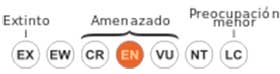
Endangered Endangered โ“˜ (UICN)โ“˜

The forest loss and fragmentation are the main threats facing this bird, but the species is also trapped and kept in cages as a pet. According to the categories of UICN It is considered In danger (IN), mainly due to the habitat destruction.

Images "Todl`s Parakeet (sub)"

Videos "Todl`s Parakeet (sub)"


Especies del gรฉnero Pyrrhura

Sources:


– Parrot Book, Parrots and macaws Neotropical
– Proaves