โ–ท The world of Pets: Dogs, cats, birds, reptiles, amphibians

Majorca Shepherd Dog
Espaรฑa FCI 321 . Sheepdogs

Ca de Bestiar

The Majorca Shepherd Dog or "Cattle", It is a breed of dog originating in Mallorca.

Content

History

Also known as โ€œCa de Bestiarโ€, this breed is believed to have existed since ancient times. Through the years, this dog would have been bred with a variety of local Mallorcan dogs, as well as with other European Shepherd dogs, and it was not until 1970 which he puts any restrictions on their upbringing. In fact, its breed standard was written as recently as 1980. It was in 2006 the UKC โ“˜ recognized the breed within his Group of Sheepdogs.

Appreciated through the centuries by the Spaniards for their ability to be a versatile farm dog, the Majorca Shepherd Dog It was used both to herd flocks and to monitor property and animals. It has also been reported that the Majorca Shepherd Dog was widely used in dogfighting, a practice that is now illegal. Although it is still used on farms today, and is also often kept as a companion animal, this rare breed once seen internationally and is considered a rare breed.

Physical characteristics

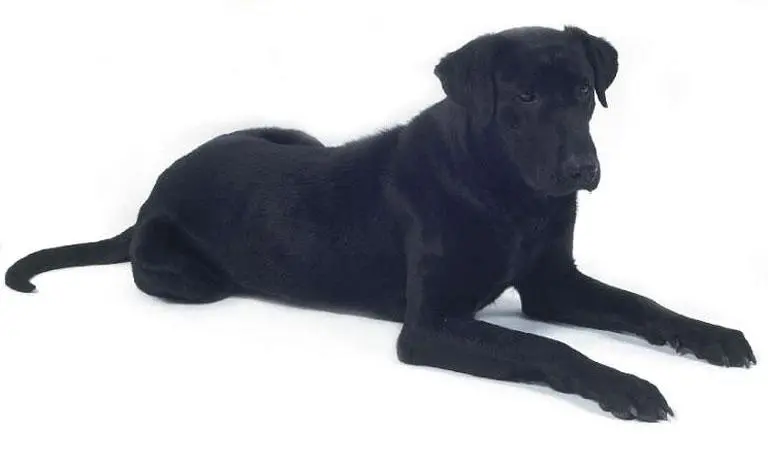
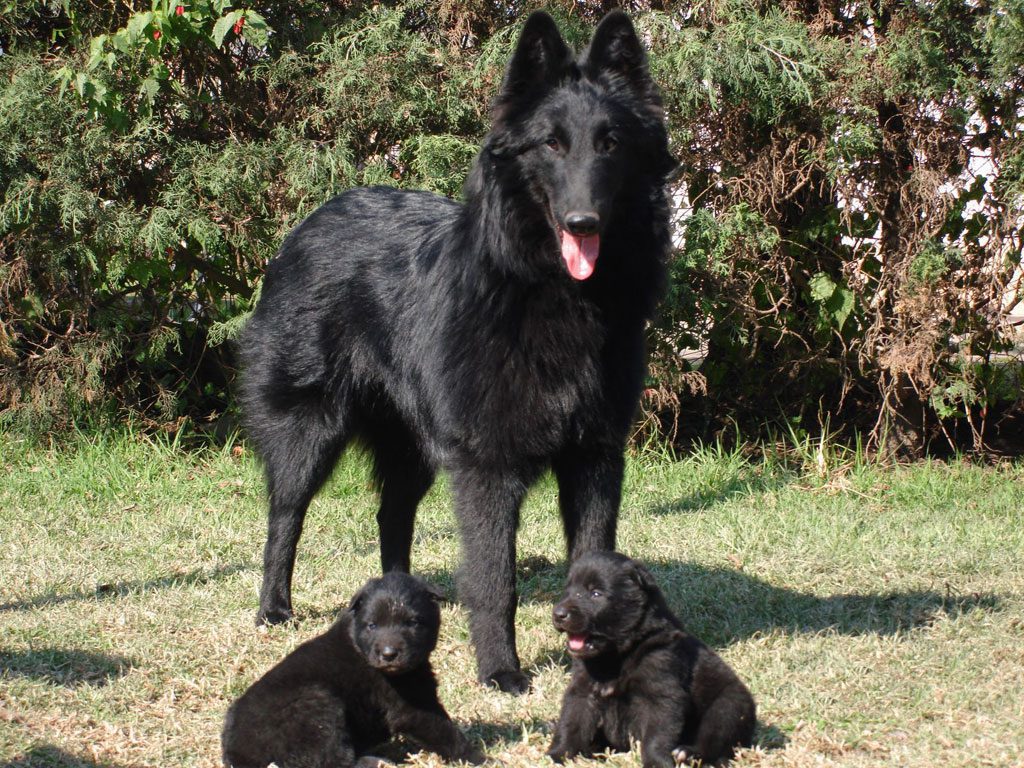
The Majorca Shepherd Dog is a large size dog, average weight, well proportioned, rustic, strong and large muscles, flexible and robust.

There are two varieties: long hair and most widespread short-haired. The head is well modeled, large and provided with the body, but not so much as to look like a molosser. Craniofacial shafts are slightly convergent; the relationship between the skull and the muzzle is of 1:1.

The color eyes goes from amber to dark brown, and his expression is intelligent and enigmatic.

The ears, small in relation to the head, they are triangular, inserted at the top and are normally bent, with dropped tips.

The tail Start horizontally, is horizontal section, It has thick base and it tapers towards the tip.

Fur: the short hair variety has quite thin Undercoat. In the variety of long hair, hair coverage can reach a length of 7 cm and it is slightly wavy. In both varieties should be soft and fine.

Color: the only one admitted is black, optionally with white spots on chest and feet.

Size: males, of 66 to 73 cm.; females, of 62 to 68 cm.. The weight is usually of 40 kg approximately.

Character and skills

He is a shepherd dog with skills for the job of guard and defense. Itร‚ยดs Intelligent, docile and affectionate, although as a puppy he is usually shy and reserved. For this reason it is important to socialize it to the maximum to avoid that it closes in on itself.

The adult is very suspicious of strangers and he is united by a very strong bond with his master. Her enigmatic gaze not glimpse of his thoughts. It has an extraordinary courage and willing to everything in order to defend their loved. It's a little known breed outside the Balearic Islands, so to acquire a good puppy should address to breeders of the Islands.

Images ยซMajorcan shepherd dogยป

โ€œMajorcan Shepherd Dogโ€ videos

Type and recognitions:

  • FCI CLASSIFICATION:
  • Group :
  • Section : . .

Federations:

  • – FCI โ“˜

FCI breed standard "Majorca Shepherd Dog"

Origin:
Spain

Date of publication of the valid original standard:
26.05.1982

Use:

Herding dog, guardian and defense


General appearance:

Sub-convex profile dog, large without being exaggerated and medium-weight size. It is totally black or black with white spot on chest, well proportioned, rustic, strong, muscular, robust and agile. There are two varieties of hair:

  • Short hair, the most common variety.
  • Long hair.

IMPORTANT PROPORTIONS:

Dog subhipermetrico, midline and subconvex.

  • The female accepts a longitudinal diameter of up to a 3% greater than the height of the cross.
  • Length of the muzzle is equal to the length of the skull.
  • The length of the head must be equal to the length of the neck.
  • In adult males the thoracic perimeter, taken together the cross behind the elbows, It is about a cms rather than its height at the withers.


Behavior / temperament:

Dog of great nobility, only an owner that accepts loads of strangers with difficulty.
Intelligent, docile, loving, shy on end and reserved in his youth ; his sentimentality comes to unsuspected. Faithful to his master until death. If we explore in his eyes it will give us the feeling thinks. It is courageous and quarrelsome.

Head:

Slightly triangular profile; view dorsally is wider at the top than at the bottom; solid, but not heavy; large enough to accommodate a good intelligence; well molded and proportionate to the body; It must be rather large, but never a trotting type. The supranasal line is parallel to the cranial line. Slightly divergent skull-facial axes.

Cranial region:
  • Skull: Sub-convex profile. The width of the head, taken between the storms, It should be slightly higher ( approximately 1,2 %) to the length between the supraorbital line and the occipital crest. A slight groove can be seen in the first third of the frontal midline. Marked occipital Crest.
  • Depression links (Stop): Marked, but never sudden, in mild decline.

facial region:

  • Truffle: Wet, fresh, black, large, with broad nostrils; No split. It despuntuarรก significantly if you have stains of barks or lighter.
  • Snout: Width, rather strong ; It should not be in tip, but its height and width should be accentuated as it approaches the orbits. In the variety ยซ Ca cabrer ยป (Longhair) more pointed. The dorsal profile of the nasal helm is sub-convex. The profile of the branches of the lower jaw is straight. Black color palate.
  • Lips: Black ; the high not seen to the bottom while your mouth closed ; the labial commissure is little noticeable and they go unnoticed because they are well proportioned to the head.
  • Jaws / Teeth: Very white teeth, well developed and well placed, closed scissors, making the incisors true upper ends prey with the lower canines. The molars developed.
  • Eyes: Rather small, slightly almond ; are not prominent nor sunken in orbits ; not far apart from each other, centered, slightly oblique, lively. Color between the Rosemary honey (something clear) and of the honey, carob (dark). Enigmatic expression, with look smart and sad at the same time, where denotes even distrust. The eyelids are thin, black and oblique, close to the eye.
  • Ears: Broken, small size in relation to the head, triangular, reaching the tear in the eye of its corresponding side tip, or is approximately equal to the length of your skull. Without amputating, slightly thick, high insertion, separating your tip slightly skull, with a longitudinal fold and another cross around the first third.
  • Position of the ears: usually bent and dropped, something separate from the muzzle. Played back in standby ; in State care by the transverse fold levantadolas, separating them from the snout than usual.

Neck:

Massif, muscular, strong and proportionate to the head and body. Thick, with very little double chin, cylindrical, its diameter accentuating more at the base. The skin is tough and elastic, or fine or thick, firmly attached to the neck at its top and sides, more detached on the bottom.

Body:

  • As a whole: Robust, very well proportioned, giving the impression of strength and agility while.
  • Cross: Marked and at least at the same height as the top of the rump ; the large area between the scapulae and strong.
  • Dorso-lumbar line: Straight, horizontal, never built.
  • Pork loin: Wide and powerful.
  • Rump: Medium, slightly rounded, wide, powerful and muscular; never prominent or fallen. The top should be at the same height as the cross. Its interiliac width must be equal to the iliac-ischial length .
  • Breast : Wide and high, maximum reaching the elbow; a width approximately equal to the length of the neck; quite deep, not prominent, with slightly pronounced sternum. Arched ribs (non-flat or in barrel).
  • Belly and flanks: Fairly bulky flanks. Slightly gathered belly, never agalgado, nor descended to be confused with continued chest. Something stylish, You must give the impression of agility.

Tail:

Horizontal insertion and circular section, rather thick at its birth. Some 8 cm base flattens slightly at its lower profile, in a few 10 length cm, to continue then the tapered circular to its end. Without amputating. Of a length that must reach at least the hock, without touching the ground. No tuft or fringe, Although it is authorised, If this is light, copies of older. In the variety of long hair you must have abundant and long fringe. Size of the queue : at rest naturally drooping or slightly curved outward, slightly touching the hocks, default is considered serious if your tip should touch the ground. Undulating and raised more than the horizontal sickle-shaped, without screwing it, When in action.

Tips

PREVIOUS MEMBERS:

  • As a whole: Strong Member ; correct limbs ; seen from the front and in profile parallel to each other and perpendicular to the ground.
  • Shoulder: Oblique and strong.
  • Scapulo-humeral angle: 115ยฐ.
  • Arms: Of equal length to the scapula.
  • Elbows: Without deviations, glued to the chest. Radial-humerus angle : 130ยฐ.
  • Forearm: Strong, well angled, perpendicular. Vertical bones, strong, long and right.
  • Metacarpus: Short and slightly tilted.
  • Previous feet: Almost of Hare (something shorter and wider than they), finger semialtos, semiarqueados, together, and with the very hard and black pad. Without acute interdigital membrane.

LATER MEMBERS:

  • As a whole: Muscular, strong ; correct limbs. Dimmed and hard muscle relief.
  • Coxo-femoral angle: 115ยฐ, peer-to-scapulo-humeral.
  • Thigh: Strong and muscular.
  • Stifle-tibial angle: 130ยฐ, same as the humerus-radial
  • Leg: Long and powerful.
  • Hock: Little pronounced, very open 135ยฐ angulation. The height of the Hock is about somewhat lower than the one-third of its height at the withers.
  • Metatarsus: Well marked.
  • Hind feet: Almost of Hare, crushed, with fingers together and semiarqueados. Pad hard and black. Arched nails, black and hard. Without acute interdigital membrane. May be born with or without Spurs, in the first case they must amputate.

Movement:

His way of walking must be firm and elegant. The trot on diagonal bipeds, Tip slightly posterior third, respect to the previous. The Gallop will be franco, fast rustic, the rear legs wide apart at its base with soil, placing them outside of the hands, as if it were jumping. The preferred step and the work is the Gallop.

Mantle

SKIN: Elastic, without folds, hard and light grey.

  • HAIR: Short and glued to the skin, its length ranging about 1,5 cm to 3 cm on the spine ; very fine Undercoat, low thickness and very attached to the skin. In the long-haired variety may be slightly wavy on the spine, approximate length of more of 7 cm according to the time of year, with the largest winter. Well distributed and thin Undercoat, grow hair in their normal length in the fringe of the queue, Tip of the ears and back of the limbs. In both varieties should be smooth, hard and quite thin.
  • COLOR: The only color supported is black, varieties of Jet, regular and peceno. The target is supported only in the chest, in the form of thin tie under neck and anterior and posterior foot, highlighting according to its easy visibility on nails and tips of the toes. The Jet Black landmark is the most appreciated, nature of the ordinary black and the peceno.


Size and weight:

  • Height to the cross: Among 66 and 73 cm for males. Among 62 and 68 cm for females.
    Specimens with heights of one cm or so are allowed at the limits indicated ; in this case you must subtract score.
  • Weight: Environment to 40 kg.


Fouls:

Any deviation from the aforementioned criteria is considered as a fault and the severity of this is considered to the degree of the deviation to the standard and its consequences on the health and well-being of the dog..

SERIOUS FAULTS

  •  Dogs that drool-worthy.
  •  Cut fangs.
  •  Very raised ears rest, very large very separated from the face or completely glued to it.
  •  Very collected belly (whippety).
  •  Threaded queue; white tail tip.
  •  White spot of chest of more of 1 dmยฒ.
  •  All fingers of a foot white.

MISS PLAYOFFS

  •  Aggressive or fearful dog.
  •  Mastiff head, very wide and heavy or Hound, long and narrow with just pronounced stop.
  • Truffle pink or white.
  •  Upper or lower prognathism more of 3 mm.
  • โ€ข Eyes of different colors from each other ; eye that is not of the color that goes from the Rosemary honey (something clear) the carob-honey (dark) ; very clear eye.
  • Amputated ears, stiff in action or almost stiff at rest.
  •  Double chin neck, more thickly along the skull than at its base, longer that a 10% length ranging from truffles to the occipital Crest.
  •  Body too long or too short ; height of the top of the rump in a 3% greater than the height at the cross.
  •  Very thick tail, or of equal thickness at the base and tip ; excessively long to touch the ground ; amputated or missing you each 2 cm to reach the Hock ; with abundant fringe in the variety of short hair, with or without bangs in long hair variety.
  •  Other color than black, or, in dogs being black, an anterior or posterior foot white or another color ; members shod in white on any number of limbs ; not totally black body (with the exception of the chest, very few hairs on the belly, perpucio or tip of the tail), stains, without disqualify, they notably despuntuarรกn. They despuntuarรกn not consequential white hairs of bites, trauma or other similar injuries, or the white hairs from the face own age. White fingers not disqualify, unless the animal is more than six, despuntuando notably each ; a single finger white or another color in the previous feet disqualifies the dog.
  •  Height of the cross over of 74 cm in males and more of 70 cm in females. The cross of less height of 66 cm in males and less of 60 cm in females.
  •  Under weight of 30 kg and over 50 kg in males, under weight 25 kg and over 45 kg in females ; even being within the aforementioned limits, very skinny dogs, visibly obese or very saddled (having tolerance in pregnant females).

SCALE OF POINTS

  • General appearance and temperament โ€“ 21 points
  • Presentation (cleaning and porte) โ€“ 4 points
  • Fur (length and hardness) โ€“ 4 points
  • Layer (color and brightness, 7+2) โ€“ 9 points
  • Temperament/Behavior โ€“ 4 points
  • Head โ€“ 21 points
  • Skull and stop โ€“ 4 points
  • Snout, nose and lips โ€“ 5 points
  • Teeth and palate (2+1) โ€“ 3 points
  • Eyes โ€“ 5 points
  • Color โ€“ 2 points
  • Form, size and separation โ€“ 2 points
  • Eyelids โ€“ 1 point
  • Ears (form, thickness, inclusion, size) โ€“ 4 points
  • Neck โ€“ 4 points
  • Trunk โ€“ 21 points
  • Cross โ€“ 1 point
  • Back and back โ€“ 5 points
  • Rump โ€“ 3 points
  • Belly โ€“ 2 points
  • Breast , chest, Ribeye, size โ€“ 10 points
  • Tail (form, length and fringes) โ€“ 2 points
  • Limbs โ€“ 19 points
  • Previous aplombs โ€“ 6 points
  • Later aplombs โ€“ 8 points
  • Feet ant. and post., fingers, nails hardness of the pads โ€“ 5 points
  • Movement โ€“ 12 points
  • Ear bearing โ€“ 3 points
  • Tail bearing โ€“ 3 points
  • Jogging โ€“ 2 points
  • Gallop โ€“ 4 points

Total : 100 points


Proportional measurements (ideal for the male)

  • Weight โ€“ 41 kg
  • Height at the withers โ€“ 71 cm.
  • Height to the rump โ€“ 71 cm.
  • Chest height โ€“ 39 cm.
  • Longitudinal diameter โ€“ 71 cm.

Head

  • Muzzle length โ€“ 13 cm.
  • Skull length โ€“ 13 cm.
  • Total head length โ€“ 26 cm.
  • Neck length โ€“ 26 cm.
  • Ear Longiud โ€“ 13 cm.
  • Tail length โ€“ 52 cm.
  • Raised to hock โ€“ 23 cm.

Length of the hair on the back

  • Short hair variety โ€“ 2 cm.
  • Long hair variety (between seasons) โ€“ 7 cm.
  • Head width โ€“ 15 cm.
  • Thoracic perimeter โ€“ 81/83 cm.
  • Chest width โ€“ 26 cm.
  • Neck circumference โ€“ 49 cm.

Any dog โ€‹โ€‹showing clear signs of physical or behavioral abnormalities must be disqualified..


N.B.:

Males should have two normal-appearing testicles fully descended into the scrotum..

Source: F.C.I - International Cynological Federation

Alternative names:

1. Majorca Shepherd Dog, Ca de bestia, Pastor mallorquรญn (English).
2. Berger de Majorque (French).
3. Ca de Bestiar (German).
4. Ca de Bestiar (Portuguese).
5. Pastor-maiorquino, Ca de Bestiar, Pastor mallorquรญn (espaรฑol).

โ–ท The world of Pets: Dogs, cats, birds, reptiles, amphibians

South Russian Ovcharka
Rusia FCI 326 . Sheepdogs

South Russian Ovcharka

The South Russian Ovcharka it is a dog that reacts fast, is strong, balanced and lively, with a tendency to be dominant and very active in defense.

Content

History

The ancestry of the South Russian Ovcharka It comes from the thick-haired bearded dogs that were brought along with fine wool sheep to the steppe regions of the South from Spain. This fact is mentioned in volume XXVI (1830 and., St. Petersburg) from the complete collection of the laws of the Russian Empire. These agile medium-sized dogs, modern-like Catalan Atura dog, they were able to corner the flocks of sheep and protect them. These dogs brought from Spain spontaneously mated with local shepherds and hunting dogs, who had been bred there like sheep since ancient times. Later, these crossbreeds spread throughout the southern regions of Russia and they were even known abroad, In Western countries or in Europe as "the Russian shepherd". In 1867, a gold medal was awarded to Russian Shepherd Dog at the World Fair in Paris for its beauty. But, the real selection started in 1898, in Crimea, en Askania – Nova, the demesne of the Russian baron of German origin Mr. Friedrich von Falz-Fein. He was the person who gave the race typical modern features and called her ยซSouth Russian Ovcharkaยซ.

Numerous breedings with local hounds had led to increased height and dominance of white color, they added some confirming lightness and a few chest flattens typical of fast running dogs, as well as a tucked-in belly and more pronounced angulations of the hindquarters. The latest typical characteristics of conformation and name ยซSouth Russian OvcharkaยปThey were finally assigned to the race in the period of the USSR, in the early decade of 1930, when the first official breed standard was approved. The dogs of South Russian Ovcharka they are easy to maintain and can easily adapt to various weather conditions due to their resistance, and they are always ready to protect their owners and their properties. These dogs are exceptionally loyal and dedicated to their owners., but at the same time it should not be expected that the South Russian Ovcharka be friendly to strangers.

Physical characteristics

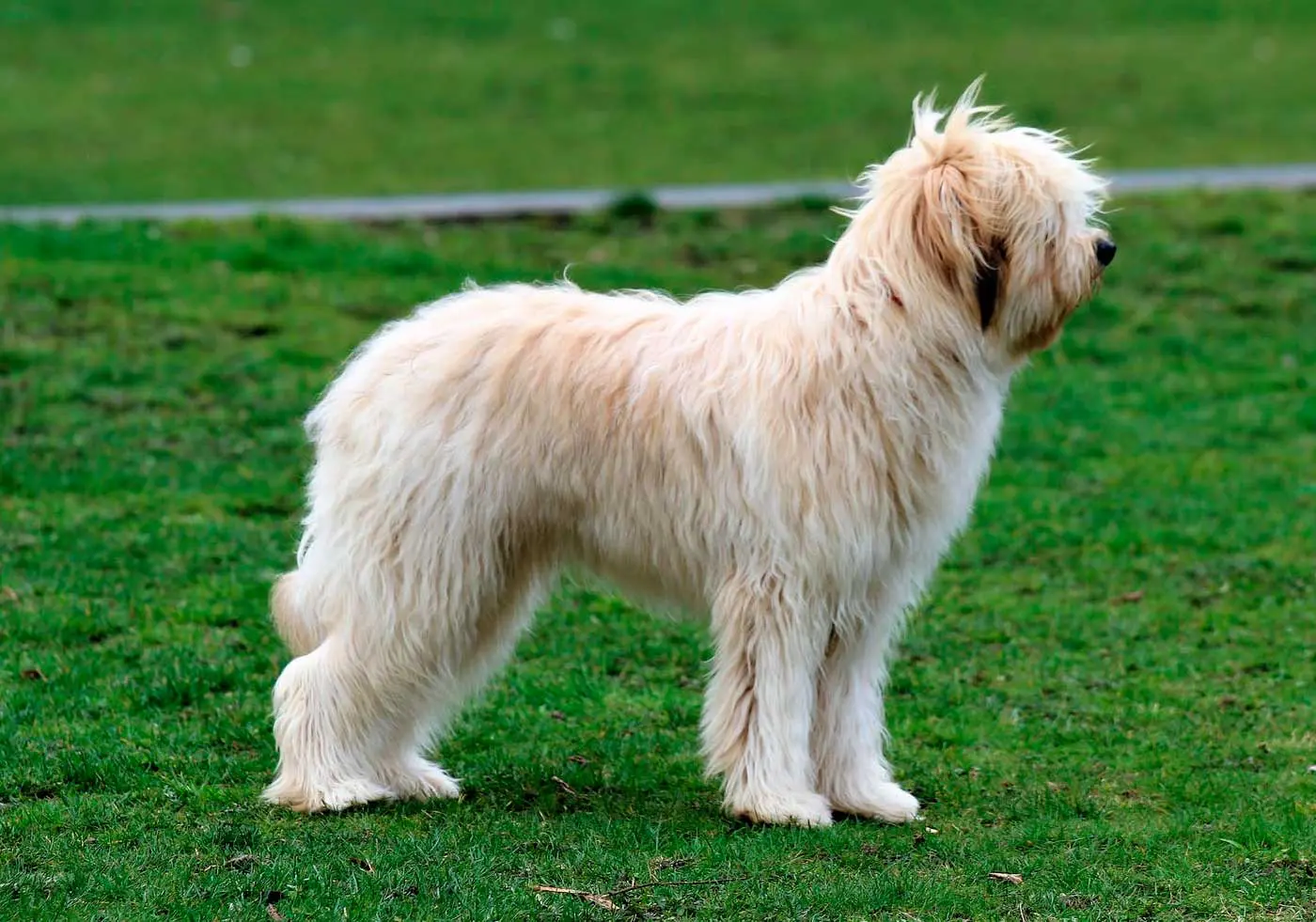
The South Russian Ovcharka it is a medium to large size dog, medium-bodied, not robust, with strong bones and dry, powerful muscles. Sexual dimorphism is well defined, males are more bulky compared to females and have larger heads. The top line is a characteristic feature of the breed; forms a slight curve over the spine. The body, the head, the limbs and tail are covered in thick fur, long and disheveled that gives a deceptive impression of clumsiness and heaviness, but actually the South Russian Ovcharka he is a fast and agile dog. The eyes, slightly almond-shaped, must be dark and horizontally arranged. The ears are relatively small, triangular and hanging.

  • Fur: the cloak is made up of long hair (10-15 cm.), often dense and slightly wavy, hard with abundant undercoat.
  • Color: uniform white allowed, White grey (Ash), white with gray traces, stained gray; fawn white robes are rarer, straw and completely gray.
  • Size: males, minimal 65 cm.; females, minimal 62 cm.. Individuals of 75 cm or more.

Observations and tips

Puppies are sometimes born light gray in color and turn white with the first shedding.

Character and skills

It is a dog that reacts fast, is strong, balanced and lively, with a tendency to be dominant and very active in defense. Very smart and responsive, is very balanced but easily takes action if your family's safety is threatened. It is very good with the owners, children included.

Images "South Russian Ovcharka"

Videos "South Russian Ovcharka"

Type and recognitions:

  • FCI CLASSIFICATION:
  • Group :
  • Section : . .

Federations:

  • FCI – Group 1 Herding dogs, Section 1 Sheepdogs โ“˜
  • UKC – Herding dogs โ“˜

FCI breed standard South Russian Ovcharka

FCIFCI - South Russian Ovcharka
Pastor

Alternative names:

1. Yuzhnorรบsskaya Ovcharka, Ukrainian Ovcharka, Ukrainian Shepherd Dog, Yuzhak, South Ukrainian Ovcharka, South Russian Shepherd Dog, South Russian Sheepdog (English).
2. berger de l’Ukraine (French).
3. Juschnorusskaja Owtscharka, Sรผdrussischer Schรคferhund, Ioujnorousskaรฏa Ovtcharka (German).
4. pastor-da-ucrรขnia (Portuguese).
5. Pastor Ucraniano, Pastor del sur de Rusia (espaรฑol).

Photos:

1 – South Russian Shepherd by https://www.pexels.com/es-es/foto/perro-2042862/
2 – South Russian Ovcharka during dogโ€™s show in Racibรณrz, Poland by user:chained / CC BY-SA
3 – South Russian Ovcharka during dogโ€™s show in Racibรณrz, Poland by user:chained / CC BY-SA
4 – South Russian Ovcharka during dogโ€™s show in Racibรณrz, Poland by user:chained / CC BY-SA
5 – Wikimania Images by Sailesh by Sailesh Patnaik / CC BY-SA

โ–ท The world of Pets: Dogs, cats, birds, reptiles, amphibians

Maremma and the Abruzzes Sheepdog
Italia FCI 201 . Sheepdogs

The Maremma and the Abruzzes Sheepdog he will be really happy sleeping with the cattle rather than on the sofa in your home.

Pastor Maremmano-Abruzzese

Content

Characteristics "Maremma and the Abruzzes Sheepdog"

Coexistence is important that you have with your new friend. Before considering the acquisition of a dog of the breed "Maremma and the Abruzzes Sheepdog" you know certain factors. Not all breeds of dogs are apt to live in an apartment, you must take into account his character, their need for exercise, their interaction with other pets, their care and if you have small children, their level of tolerance towards them.

Adaptation โ“˜

4,0 of 5 stars (based on 1 review)

friendly dog โ€‹โ€‹โ“˜

3,0 of 5 stars (based on 1 review)

hair loss โ“˜

3,0 of 5 stars (based on 1 review)

Affection level โ“˜

4,0 of 5 stars (based on 1 review)

Need for exercise โ“˜

5,0 of 5 stars (based on 1 review)

Social need โ“˜

3,0 of 5 stars (based on 1 review)

Home โ“˜

3,0 of 5 stars (based on 1 review)

Toilet โ“˜

2,0 of 5 stars (based on 1 review)

Friendly with strangers โ“˜

3,0 of 5 stars (based on 1 review)

barking โ“˜

2,0 of 5 stars (based on 1 review)

Health โ“˜

4,0 of 5 stars (based on 1 review)

Territorial โ“˜

5,0 of 5 stars (based on 1 review)

Cat friendly โ“˜

3,0 of 5 stars (based on 1 review)

Intelligence โ“˜

3,0 of 5 stars (based on 1 review)

Versatility โ“˜

2,0 of 5 stars (based on 1 review)

Child friendly โ“˜

4,0 of 5 stars (based on 1 review)

Surveillance โ“˜

4,0 of 5 stars (based on 1 review)

joy โ“˜

4,0 of 5 stars (based on 1 review)

History

The Maremma and the Abruzzes Sheepdog (Maremmano-Abruzzese or Cane da pastore Maremmano-Abruzzese), It is a breed of sheepdog native to central Italy and used for centuries by shepherds to defend their flocks from wolves.

The breed is still used today, widely, in the region of the Abruzzo where flocks of sheep vitalize the rural economy and wolves are protected predators (of the few areas of the planet, Regrettablyโ€ฆ).

The race is similar to the Pyrenean Mountain Dog, to the Kuvasz from Hungary and to Akbash from Turkey (This, that more!).

It also descends from the shepherd dogs that once existed in the Maremma Tuscany region and in the Lazio region.. Since 1860, the transhumance of herds from one region to another has favoured the development of a natural mixture of these two primitive races.

Several descriptions of dogs defending vulnerable white sheep are found in the literature of ancient Rome, in works such as the Columella, Varro and Palladius. Dogs similar to Maremma and the Abruzzes Sheepdog they are represented in numerous sculptures and paintings from Roman times to the present day.

Until year 1958, the Maremma Sheepdog and the Maremmano-Abruzzese they were considered as separate races. The first Canine society of the Maremma Sheepdog was established in the year in 1950, and three years later (1953) the First Canine Society of the Maremma Sheepdog.

But owing to transhumance of herds of sheep from one region to another, especially after the unification of Italy, there was a โ€œnatural fusionโ€ between the two races. For which reason, the 1 in January of 1958, the races were unified by the ENCI (Ente Nazionale della Cinophilia Italian, or national association Cynologique Italiana).

Today, It is not so encouraging and sympathetic as the history of this beautiful can, although they are still widely used by Italian sheep farmers in areas where predation is common, as the central Apennines of Italy and the open countryside of the land of national parks in Abruzzo.

But, Ironically, of the Maremma and the Abruzzes Sheepdog, in the area of the Maremma of Tuscany, the memory can only, they are now a rarity just in the area which saw them to be born, you are right, even if you don't like to hear it, the hand of man and progress... have resulted in a more sinister: sheep farming has declined and the wolf is nearly extinct.

Curiosities

Although it is easier for him Maremma and the Abruzzes Sheepdog, develop their relationship with sheep and goats, farmers have found that, as well, are able to develop a protective bond with cows, and in many places of United States, It also used for the purpose. As well, they are good defending corrales, chickens or ducks from the threats of land caused by coyotes, dogs and foxes, and air threats caused by birds of prey (Hawks, Eagles, owls, etc.).

In Australia, a lot has been invested in it Maremma and the Abruzzes Sheepdog. Specifically in the city of Warrnambool that has great natural beauties, and in one of them the Maremma and the Abruzzes Sheepdog It is today a key piece for the survival of other species.

Within the natural beauties that talked, the beach of Logan located on the East side of the city is a great example, recognized as a southern whale breeding site. Every year between May and August reach coasts copies of adult female whales to give birth to their calves, and at the end of September are often long trip offshore, sometimes with a little bit of human help, so the whales are not left stranded on the beach.

In addition to the whale southern franco, the coast is also visited by sea lions of Australia, penguins and common dolphin. Albatrosses can spot during the winter and early spring.

There is also another natural beauty which is the protagonist of this post can… Middle Island had a large colony of penguins. But the uncontrolled presence of foxes led to a significant reduction in the number of members of the colony.. In 2005, there are only four penguins left in the colony.

It was then when the Warrnambool City Council introduced an innovative and ecological program, first in the world with these characteristics, introduced to Middle Island several copies of Maremma and the Abruzzes Sheepdog to protect the penguins. This highly original and innovative program has been the cornerstone of the re-establishment of the penguin colony that in the year 2009 already had more of 100 Members.

While the use of Maremma and the Abruzzes Sheepdog to protect an endangered species was a rare thing at first, Thanks to the effort and commitment of the Warrnambool City Council, it has been proven that the Maremma and the Abruzzes Sheepdog along with other breeds of livestock guardian dogs, they make it possible that the cattle and other species, like penguins, they can live with their natural predators in danger of extinction, as well, as wolves and coyotes. Program predation was reduced a 70% u 80% or more, and the survival of Wolf and different foxes, or coyotes, is not endangered, at least in the area.

In other countries like Italy, United States and Canada, the use of dogs has also been promoted Maremma and the Abruzzes Sheepdog, as well as other types of herding dogs, to minimize the conflict between the species of predators in danger of extinction and farmers, achieving success several but without destroying the ecosystem.

Physical characteristics

The Maremma and the Abruzzes Sheepdog is a dog from large size, powerful, aspect rustic and at the same time Majestic and well accused type. Its general appearance of medium proportions is a heavy dog, whose body is longer than the height at the cross. It also keeps harmony in terms of its format (normal correlation between size and different parts of the body) and profiles (concordance between the profiles of the head and body).

The head altogether, is large and flat, conical and similar to the White bear form.

The skull in profile is convex. The eyes are ochre or brown. It has ears triangular and small relative to the size of the dog, are high insertion and hang.

The limb well well-angled, giving sense of lead and firmness. The tail hangs surpassing the Hock, and when the dog is alert it rises to the line of the back.

The hair is long, abundant and rough to the touch. The only one supported color is the white solid. Although they tend to admit light reflections of color ivory, pale orange or lemon.

Height to the cross in the males is of 65 to 73 cm and females is of 60 to 68 cm.. The weight of 35 to 45 kg in males and 30 to 40 kg in females.

Character and skills

Despite its large size, the Maremma and the Abruzzes Sheepdog It can be a good companion dog in homes that have open spaces, appropriate to your needs.

Centuries of breeding Maremma and the Abruzzes Sheepdog, assigning to be friendly and protective with their lambs, their flocks, they have forged the character of the race, Nowadays, an animal that adapts very well to home life is very attached to its family, whom it protects as if it were a herd., always showing a quiet character, balanced and intelligent.

In many areas this beautiful dog has earned a reputation for being aggressive, very nervous and even bite, but this is not true. The issue is that, When one decides to take this breed of dog it must be understood that it needs large spaces, freedom and independence. Not reach you with daily routine down to walk to do their physiological needs, This routine can generate stress and boost develop destructive behaviors.

Can be rather distrustful with strangers, due to his desire to protector, and despite the fact that it adapts well to home life, for its size and need for open spaces, and it is not advisable to raise him in urban areas, because it won't be a happy dog. A rural House, away from neighbor's property lines and wheeled traffic, it would be an ideal place for this beautiful shepherd. In this environment, Maremma and the Abruzzes Sheepdog, to be on the couch in the House before going to prefer sleeping with livestock, there is really happy.

In addition to its extensive use in Italy, the Maremma and the Abruzzes Sheepdog lives happily performing its livestock protection duties in Australia, United States and Canada.

The Maremma and the Abruzzes Sheepdog, is a very versatile dog, and capable of generating a very, but very strong with the animals who must take care. To develop this protective instinct in the blood, they are introduced in the flocks of sheep when they are puppies, in some cases with 3 or 4 weeks of life, but the most common is that they are introduced with 7 u 8 weeks, they are once with his flock, quickly they implemented their skills, still puppies, with a little bit of help, Of course, but only at the beginning.

What more can we say of the character of the Maremma and the Abruzzes Sheepdog? I think the words..., sobran.

Photos ยซSheepdog of the Maremma and Abruzzoยป

Videos ยซSheepdog of the Maremma and Abruzzoยป

Type and recognitions:

  • FCI CLASSIFICATION:
  • Group :
  • Section : . .

Federations:

  • FCI – Group 1 Herding dogs, Section 1 Sheepdogs โ“˜
  • ANKC – Group 5 (working dogs) โ“˜
  • โ€‹KC – Pastoral โ“˜
  • NZKC – Working dog โ“˜
  • UKC – Herding dogs โ“˜

FCI breed standard Maremma and the Abruzzes Sheepdog

FCIFCI - Maremma and the Abruzzes Sheepdog
Dog

Alternative names:

1. Cane da Pastore Maremmano-Abruzzese, Maremmano, Pastore Abruzzese, Pastore Maremmano, Abruzzese Mastiff, Mastino Abruzzese, Abruzzo Sheepdog, Abruzzese Sheepdog (English).
2. cane da pastore Maremmano-Abruzzese (French).
3. Maremmen-Abruzzen-Schรคferhund (German).
4. Cane da Pastore Maremmano-Abruzzese (Portuguese).
5. Maremmano-Abrucense, Pastor de Maremma (espaรฑol).

โ–ท The world of Pets: Dogs, cats, birds, reptiles, amphibians

German Shepherd
Alemania FCI 166 . Sheepdogs

The German Shepherd It is one of the most popular dog breeds, the world's largest and versatile.

Pastor Alemรกn

Content

Characteristics "German Shepherd"

Coexistence is important that you have with your new friend. Before considering the acquisition of a dog of the breed "German Shepherd" you know certain factors. Not all breeds of dogs are apt to live in an apartment, you must take into account his character, their need for exercise, their interaction with other pets, their care and if you have small children, their level of tolerance towards them.

Adaptation โ“˜

3,0 of 5 stars (based on 1 review)

friendly dog โ€‹โ€‹โ“˜

3,0 of 5 stars (based on 1 review)

hair loss โ“˜

4,0 of 5 stars (based on 1 review)

Affection level โ“˜

4,0 of 5 stars (based on 1 review)

Need for exercise โ“˜

4,0 of 5 stars (based on 1 review)

Social need โ“˜

3,0 of 5 stars (based on 1 review)

Home โ“˜

3,0 of 5 stars (based on 1 review)

Toilet โ“˜

3,0 of 5 stars (based on 1 review)

Friendly with strangers โ“˜

3,0 of 5 stars (based on 1 review)

barking โ“˜

4,0 of 5 stars (based on 1 review)

Health โ“˜

4,0 of 5 stars (based on 1 review)

Territorial โ“˜

5,0 of 5 stars (based on 1 review)

Cat friendly โ“˜

3,0 of 5 stars (based on 1 review)

Intelligence โ“˜

5,0 of 5 stars (based on 1 review)

Versatility โ“˜

5,0 of 5 stars (based on 1 review)

Child friendly โ“˜

5,0 of 5 stars (based on 1 review)

Surveillance โ“˜

5,0 of 5 stars (based on 1 review)

joy โ“˜

5,0 of 5 stars (based on 1 review)

History

The dog German Shepherd It is today the most widespread dog breed in the world.. It appeared in its current form towards the end of the 19th century, thanks to the tremendous work of the German captain Max von Stรฉphanitz. Created from different German Shepherd Dogs, the breed was last improved in 1893 with blood of Scottish Sheepdogs.

But, its origins go back to antiquity, since tacit (54-120 d.C.), Roman historian and senator, you already mentioned sheepdogs in Germania. A little later, in the 7th century, Germanic laws punished with a fine of 3 solidis (a few 20 euros today) to anyone guilty of the murder of a sheepdog.

In 19th century Germany, there was no homogeneous breed of sheepdog. Rather, there were regional types, as the shepherds from wรผrttemberg, the thuringian guy, but also different dogs in Bavaria or Hesse. In the decade of 1870, under the direction of Bismarck, while the French tried to select different regional types of sheepdogs, the Germans preferred a national race, intended to be a symbol of German thoroughness and quality. Like this, already in 1877, some breeders made an initial selection of two types: the Wรผrttemberg Sheepdog, tall and massive, thick dark hair, strong head and floppy ears, and the Thuringian Shepherd Dog, short gray hair, with medium bone structure and straight ears.

Phylax was founded in 1891, the first association dedicated to the Dog German Shepherd. But, dissolved into 1895 due to numerous dissensions. In fact, some breeders wanted to keep a line of Thuringian Sheepdogs, while others wanted to mix Thuringian Sheepdogs and Wรผrttemberg Sheepdogs, in order to obtain a fast and reliable dog with a balanced and resistant character.

In 1897, Max Frederic Emil von Stephanitz, a cavalry officer who had returned to civilian life after his marriage and is considered the "father" of the breed, bought a property near Grafrath, Bavaria. He decided to set up a dog-breeding operation there., mainly focusing on the improvement of sheepdogs, wanting to create a perfect and intelligent working dog with keen senses and superior working ability. He participated in dog shows presented by other breeders and bought his first dog in 1899, Hector Linkrshei, later changing his name to Horand von Grafarth. The latter, with a gray and yellow coat and of the type of Thuringian Shepherd dog, was the first German shepherd dog registered in the Breed Book of Origins. Used it as a stud, starting point of the German Shepherd breed, and produced with him 53 layers of 35 different females, giving 149 puppies also registered in the Book of Origins of the breed.

The 22 in April of 1899, from Stephanitz founded the German Shepherd Dog Club, he "Verein fรผr Deutsche Schรคferhundยซ, also known in abbreviated form as SV (Shepherd Club). The 28 in September of 1899, the first breed standard was published during its first general assembly in Frankfurt.

This first text was completed in the meetings of the members in 1901 and 1909, at the meeting of the management board and advisory committee in Wiesbaden in 1930, and at the meeting of the breeding commission and the board of directors in 1961. The text was revised again in the framework of the WUSV (World Union of Clubs for German Shepherd Dogsand, o World Union of German Shepherd Societies). The standard was finally revised and restructured in 1991 by a legally binding decision of the executive and advisory boards.

Von Stephanitz announces in its standard the line of conduct that will be maintained until today, what is that a German Shepherd it's mostly a working dog. According to him, "a dog German Shepherd is any sheepdog that lives in Germany and that, by constantly exercising its qualities as a shepherd dog, achieves perfection of body and mind, perfection that is appreciated only in terms of usefulness".

While the 19th century was marked by the industrial revolution and many sheepdogs disappeared along with the pens in the course of industrialization and urbanism, From Stรฉphanitz converted his protรฉgรฉ and worked to persuade the German authorities to use this breed of dog. Its robustness, his exceptional sense of smell and unwavering obedience convinced the German police to use him. The German Shepherd was found in the army, police, Customs, but also in the administration, ports and railways.

World War I gave the German Shepherd the chance to prove yourself: whether they served as sentinel dogs, sanitary dogs, patrol assistants or messenger dogs, more than 100.000 German Shepherdss were mobilized like dogs of war.

After the war, thanks to the stories of veterans who recounted the exploits of this breed of dog, the excellent reputation of German Shepherd spread all over the world. At the same time, the first German Shepherd Guides appeared to help those disabled by the war.

In 1920, Georges Barais, a French textile manufacturer, created the Sociรฉtรฉ du Chien de Berger d’Alsace (the end of hostilities was too close to give the dog its original name), before its name was changed to Sociรฉtรฉ du Chien de Berger dโ€™Alsace less than two years later.

The dogs of German Shepherd were in great demand in the postwar years, so much so that dog breeders from German Shepherd they produced them in great numbers to satisfy their fellow citizens, as well as foreign countries that became more and more passionate about the breed. The result was a departure from the type, with bigger and bigger dogs, high, with legs of doubtful character.

To avoid these excesses, in 1922 created the Kรถrbuch, a selection book that complements the Book of Origins. Only dogs suitable for breeding could be registered in it, after being examined by a judge.

During World War II, the German Shepherd It was used on all fronts and by all the armies of the world. Unfortunately, After the war, unfairly associated with the Nazis, caused mistrust and lost interest to foreign buyers. Hitler himself owned several German shepherds, including female Blondi, who accompanied him until his death in April 1945.

It was not until the decade of 1950 that the breed began to develop again. The modern history of German Shepherd started with the German Championship of 1951, where the consecration of a subject with a different morphology strongly marked the physical evolution of the race. Rolf from the Osnabrรผcker Land it was a very distinctive dog, characterized by morphological innovations, especially on neck and shoulder strength.

The decade of 1970 it also marked a second turning point in the breed's history, with the appearance of the silhouette with the sloping back.

Today, due to the popularity of this breed, his herd is no longer homogeneous, since there are exposure lines on one side and work lines on the other.

Physical characteristics

Videos "German Shepherd"

Is also known by the name of Ovejero German or Dog Police, due to the use that the security forces give them in many countries where they even have specific units called K-9.

The German Shepherd, is a dog robust and flexible, slightly elongated, with muscular body, its powerful jaws close in scissor, which, You can generate a force of more than 180 kg beating races as the Pitbull, the Akita Inu or American bulldog.

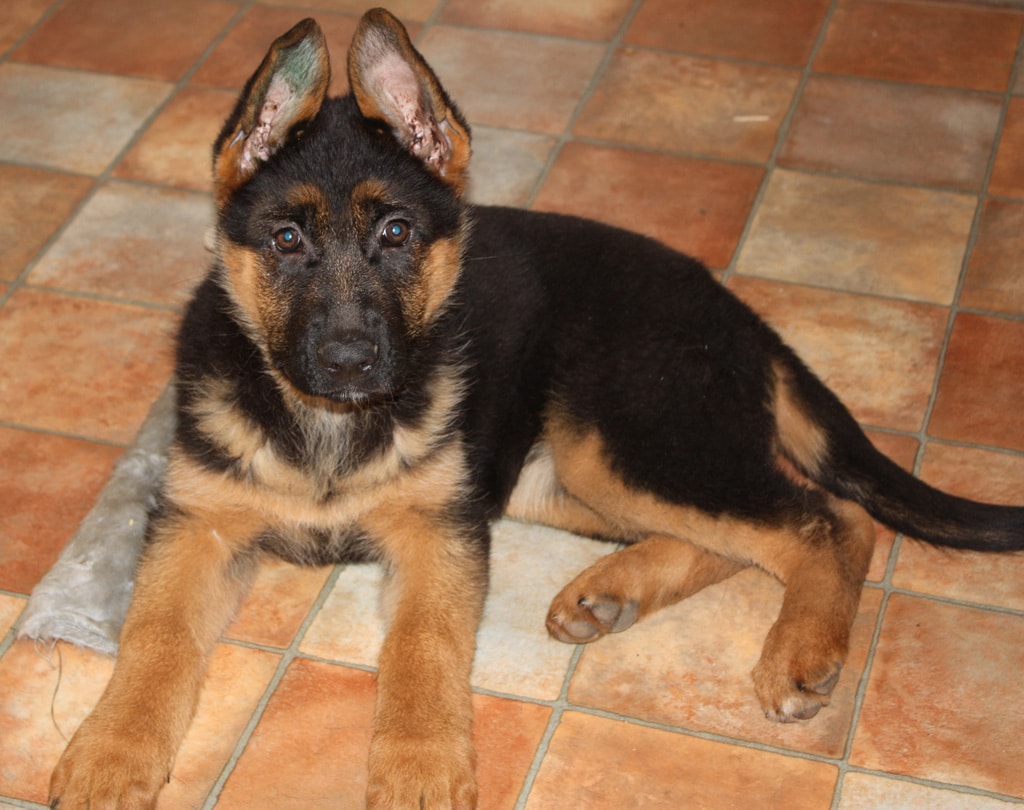
There are many variants of color in German shepherds, as black, black and Brown edges, Red and black, but always visible his mantle of black, hence many called him black cloak.

The height at the cross, is between 60 and 65 cm. male, and the female between 55 and 60 cm.. The weight of the male, round the 30 and 50 kg, and in the female between 22 and 40 kg. Their life expectancy is around the 12 years.

Pastor of cows and sheep with great intelligence and tireless trot. He has excelled in numerous works useful to man, such as: guardian, guide dog, policeman, attack dog, drug detector, etc.

It is a robust animal, agile, good muscular, awake and full of life. His physical proportions must be related not only to his appearance but also to his temperament..

You must be a well balanced dog, with a harmonious development of the anterior and posterior members. A good specimen like at first sight; is also very strong. Although it can sometimes be a bit dominant and aggressive depending on the way in which educates.

Regard to the Bless you of these dogs, It is important to monitor its post vaccination schedule that are susceptible to Contracting distemper. As is common in large dogs, this breed is susceptible of suffering Hip Dysplasia.

Responsible crossbreeding is necessary to prevent this type of defects from spreading from generation to generation to have healthy specimens that do not suffer pain and are useful for work. This breed typically requires the hips from puppies to be passed by X-ray, and that the X-rays are certified and approved by the clubs responsible for the breed (the body that regulates this breed is the Verein fรผr Deutsche Schรคferhunde e.V. (SV) Headquartered in Augsburg, Germany), When the Cub reaches maturity (approximately at the 2 years of age), so that there is an adult suitable for reproduction.

Character and skills

It is a very good companion dog with children., It is very balanced and easy to train.

The training and socialization they should start from the first time the puppy reaches the family. The training for this breed is essential, is not recommended at all that is purchased if the future owner does not have the time needed to train it or take it to train a puppy.

You need to practice exercise continuously It is a breed of working. German shepherds are in sports like the Schutzhund, which is a good alternative to help keep you healthy and balanced both physically and mentally.

The German Shepherd It is one of the most popular dog breeds, the world's largest and versatile. Nato worker, affectionate with family, excellent guardian, blind guide, animal rescue, patient and protective of children. Courage, intelligence, unselfishness and loyalty are among the many virtues that characterizes this can.

The field trips, Beach or mountain are necessary and recommended especially if you are allowed to run to suit, at least, twice a month. Like this, your strong muscles will stay in shape and help preserve your psychic balance, being a breed particularly biased to temperamental disorders which in extreme cases they degenerate in neurosis.

It is advisable to, make your first bath to the 3 months of life, in a warm place, where the dog run no risk of harm is, using neutral soap or shampoo.

As well, It is important to feed it with good quality feed. We must prevent overfeeding it has a voracious appetite that can lead it to gastric problems, If not treated properly it can trigger chronic diarrhea.

It is advisable to go to the vet at least once a year for a general Checkup. Daily brushing is necessary to avoid the dead hair to hang its limbs and neck, This also allows fur keep bright, healthy and beautiful.

ยซGerman Shepherdยป Education

The dog German Shepherd has a flexible temperament, but lively and quite dominant, which makes learning the basic commands mandatory. But, obedience seems innate in him, and his education is facilitated by his desire to satisfy his teacher. The latter must also be willing to invest properly in the education of his dog.

A dog German Shepherd poorly trained or untrained, a guard dog by nature, can become a limitation for his master and his family, as they will tend to be suspicious or even aggressive. So, it is important to socialize him and get him used to strangers or public places from an early age.

Health ยซGerman Shepherdยป

The German Shepherd it is a robust breed by nature. But, infatuation with her since the end of World War II has led some breeders to German shepherds to be produced in quantity without taking into account genetic defects, what has weakened her. So, we can find in some lines bone or joint problems, such as hip dysplasia, elbow dysplasia, degenerative myelopathy or osteodystrophy. This is why it is always advisable to ensure that stallions are free from these conditions before adopting a puppy..

The dog German Shepherd you also have a genetic predisposition for hypothyroidism (a disease of the endocrine system), for the disease of von Willerbrand (a disorder of blood clotting), for persistence of the arterial canal (a congenital heart defect), or for certain skin conditions (atopia, flea allergy, pioderma…).

Finally, like all large breed dogs, the dog German Shepherd may suffer from stomach inversion or twisting. That is why exercise after meals should be avoided.

ยซGerman Shepherdยป Care

Dogs German shepherds they lose a lot of hair, and its annual molt, in spring and autumn, It is important. During these periods, the dog should be brushed daily to remove excess hair, avoid knots and air the skin. Outside, brushing two or three times a week with a suitable comb is recommended.

Bathing is not recommended (except when the condition of the coat requires it), as this can weaken the waterproofing of the coat.

Images of the ยซGerman Shepherdยป

The German Shepherd videos

Type and recognitions:

  • FCI CLASSIFICATION:
  • Group :
  • Section : . .

Federations:

  • FCI – Group 1 Herding dogs, Section 1 Sheepdogs โ“˜
  • AKC – PASTORAGE โ“˜
  • ANKC – Group 5 (working dogs) โ“˜
  • CKC – Group 7 – Herding dogs โ“˜
  • โ€‹KC – Pastoral โ“˜
  • NZKC – Working dog โ“˜
  • UKC – Herding dogs โ“˜

FCI breed standard "German Shepherd"

Origin:
Germany

Date of publication of the valid original standard:
11.08.2010

Use:

Versatile working dog, grazing and utility.


General appearance:

The dog German Shepherd is a medium-sized dog, slightly stretched body, strong, well muscled, with dry bones and a firm general structure.


Behavior / temperament:

The dog German Shepherd is of balanced temperament, with firm nerves, self-confident, totally unwrapped and (except when provoked) totally benign; at the same time should be attentive and easy to train. Must have value, fighting instinct and toughness to be appropriate as a companion, guardian, protection dog, service and pastor.

Head:

It is wedge shaped, and it is in proportion to the length of the body (its length is approximately 40% the height of the cross), without looking neither coarse nor elongated. In general appearance it should be dry and moderately wide in the middle of the ears. Front and side view, the forehead is slightly arched and without or with a slightly marked median furrow. The proportion between the cranial and facial regions should be 50% to 50%. The width of the cranial region is almost equal to its length.

Cranial region:

Top view, the cranial region tapers evenly from the ears to the nose, leaving a not very noticeable frontal nasal depression and leaning into the wedge-shaped snout. The upper and lower jaws are strongly developed. The nasal helm is straight, any bulge or sag is undesirable. The lips, dark colored, they are firm and well adhered.

facial region:

  • Truffle:It must be black.
  • Teeth:It must be strong, healthy and complete (42 teeth corresponding to the tooth formula). The dogGerman Shepherdhas a scissor bite, so that the upper incisors cover the lower ones in close contact. A pincer bite, an upper or lower prognathism as well as large spaces between the teeth (lagoons) they are fouls. Equally faulty is the straight alignment of all incisors. The maxillary and mandibular bones must be strongly developed so that the teeth are deeply embedded in the dental arch.
  • Eyes:Medium-sized, macaroons, placed obliquely and never protrude. your colour must be as darkest as possible. Piercing light eyes are undesirable as they affect the dog's expression.
  • Ears: The dog German Shepherd has medium-sized ears, upright, open forward and carried evenly (neither turned nor carried to the side). They are pointed with canopy facing the front. Ears bent at the tip or drooping are defective. Ears thrown back, in motion or at rest, are not taken as a fault.

Neck:

The neck must be strong, well muscled and no double chin. Its angulation with the body (horizontally) It is approximately 45ยฐ.

Body:

The upper line runs without interruption from the implantation of the neck on the well-defined withers and on the very slightly inclined back to the rump, also slightly inclined. The back is firm, strong and well muscled. The loin is broad, strongly developed and well muscled.
The rump should be long, slightly inclined (approximately 23ยฐ from the horizontal line) and continue towards the tail line without interrupting the top line.

  • Breast :Moderately wide with the sternum as long as possible and well noticeable. The depth of the chest should be 45 48% of the height at the cross. The ribs should be moderately rounded. Barrel-shaped or flat chest is considered as missing.

Tail:

Reaches at least to the hock, but without exceeding the middle of the metatarsal. Has longer hair on the bottom. At rest, wears it hanging with a slight curve. When the dog is in motion or at attention, carry the tail higher, but without exceeding the horizontal line. Corrective operations are prohibited.

Tips

front limbs:
Seen from all sides, the forelimbs are straight; viewed from the front, they are absolutely parallel. Shoulder blade and arm are the same length, firmly attached to the body by means of good muscles. The ideal angulation between the shoulder blade and the arm is 90ยฐ, but usually 110ยฐ. The elbows should not be turned neither out nor inwards, while the dog is at rest or in motion. The forearms, seen from either side, They are straight and parallel to each other, dry and well muscled. The pastern has a length of approximately 1/3 of the forearm and forms an angle with it of approximately 20 22ยฐ. An overly sloping pastern (more than 22ยฐ) or too straight (less than 20ยฐ) impairs the dog's ability to work, especially its resistance.

  • Front feet:Rounded, compact, with arched toes. The pads must be firm, but not fragile. The nails are strong and dark in color.

Later members:
The position of the hind limbs, viewed from behind parallel to each other, should be slightly collected.
The thigh and leg are almost the same length and form an angle of approximately 120ยฐ. The thighs are strong and well muscled. The hocks are strong and firm; metatarsal is perpendicular under hock.

  • Rear feet:compacts, slightly arched; hard, dark-colored pads; strong nails, arched and equally dark in color.

Movement:

The German Shepherd it's a trotting dog. The angulation and length of the limbs must be so well related that, without noticeable alteration of the top line, the dog can push the hind limb under the entire length of the body and reach the same distance with the forelimb. Any tendency to over-angle the hind limbs decreases firmness and resistance., and, consequently, the dog's ability to be useful. Correct structural proportions and good angulations result in a long-range, flat walk on the ground that gives the impression of effortless locomotion. Head thrown forward and tail slightly raised result in a smooth and fluid trot, showing a smooth, unbroken curved line running from the tips of the ears over the neck and back, to the tip of the tail.

Mantle

Skin: Must be loosely fitted, without forming folds.

  • Hair characteristics:
    The correct coat of the dog German Shepherd it's a double hair (Stockhaar) con lanilla interna. The outer hair should be as dense as possible, straight, hard and close to the body. The head and even the inside of the ears, anterior parts of the extremities, feet and toes are provided with shorter hairs; in the neck, hair is slightly longer and dense.
    On the back of the limbs the hair is longer until it reaches the carpal and tarsal joints. The fur forms "pants" moderate behind the thighs.
  • Color
    Black with reddish-brown markings, brown, yellow and even light gray; totally black or gray; gray dogs are tinged with black, with black cloak and mask. Small inconspicuous white patches on the chest are tolerated but not desirable, as well as very light colors in the internal parts. In all types of color, the truffle must be black. Dogs without mask, clear eyes and piercing expression, light or whitish patches on the chest and internal parts, as well as light nails and a white red color at the tip of the tail are considered to be lacking in pigmentation. The undercoat has a light grayish hue. White is not allowed.


Size and weight:

The height of the cross

  • Males:60-65 cm..
  • females:55-65 cm..

The length of the body exceeds the measurement of the height at the withers by approximately 10 17%.


Weight

  • Males:30-40 kg.
  • females:22-32 kg.


Fouls:

Any deviation from the aforementioned criteria should be considered as a fault and its severity is considered in proportion to the degree of the standard deviation.


Serious misconduct

  • Any deviation from the breed perfection standard described above that affects the dog's usefulness.
  • Ears: Set too low and to the sides, folded ears, turned over and carried to the sides, lifted if firmeza.
  • Significant pigmentation defects.
  • Very low overall firmness.
  • Dental faults: Any deviation from a scissor bite and tooth formula, if it is not included in the knockout fouls mentioned below.

ELIMINATING fAULTS

  • Aggressive or fearful dog.
  • Character weakness, biting dogs and weak nerves.
  • Dogs with a โ€œsevere dysplasiaโ€ rating.
  • Monorchids and cryptorchids, as well as dogs with clearly unequal or atrophied testicles.
  • Dogs with defects disfiguring the ears or tail.
  • Dogs with malformations.
  • Dogs with missing teeth: 1 premolar 3 and 1 extra tooth, or 1 canine, or 1 premolar 4, or 1 molar 1, respectively molar 2, or a total of 3 teeth or more missing.
  • Dogs with defects in the jaws: More than 2 mm of upper prognathism, lower prognathism,pincer bite across the entire incisor area.
  • albinism. White hair color (even though I have dark eyes and nails).
  • Double long hair (long outer hair, soft, not attached to the body with undercoat, fringes on the ears and limbs, "pants" dense and bushy tail with fringes).
  • Long hair (long soft outer coat with no undercoat, usually parting in a part along the back line, tufts or fringes in the ears, limbs and tail).
  • Any dog โ€‹โ€‹showing clear signs of physical or behavioral abnormalities must be disqualified..


N.B.:

Males should have two normal-appearing testicles fully descended into the scrotum..

Source: F.C.I - International Cynological Federation

Alternative names:

1. German Shepherd Dog (English).
2. Berger dโ€™Alsace, berger alsacien, Chien-loup d’Alsace (French).
3. (German).
4. Lobo-da-alsรกcia (Portuguese).
5. Pastor ovejero (espaรฑol).

โ–ท The world of Pets: Dogs, cats, birds, reptiles, amphibians

Pyrenean Shepherd
Francia FCI 141 - 138 . Sheepdogs

Pastor de los Pirineos

The Pyrenean Shepherd It is capable of detecting mood of each Member of the family.

Content

History

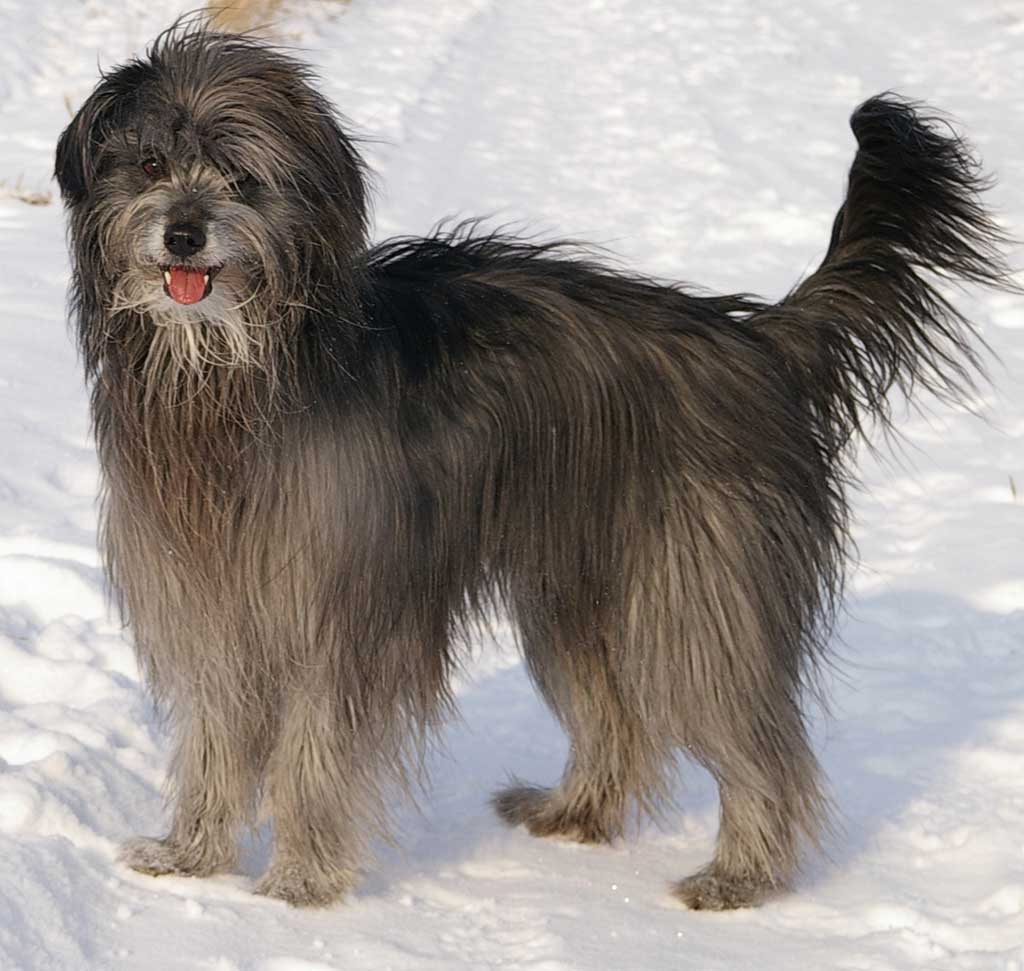
The Pyrenean Shepherd is a breed of dog originating in France monitoring pastor, consists of two different varieties: the Pyrenean Shepherd Long Hair and the Smooth-faced Pyrenean Shepherd.

This breed of dog is very old, the oldest dog is French pastors, but in reality, its origins are unknown.

Its origin and its history is supposed to be the same, than the other dogs of pastor European descendants of Asian dogs.

Read more

โ–ท The world of Pets: Dogs, cats, birds, reptiles, amphibians

White Swiss Shepherd Dog
Suiza FCI 347 - Sheepdogs.

Pastor Blanco Suizo

The White Swiss Shepherd Dog is a dog of great temperament, attentive and guardian and never nervous.

Content

History

The White Swiss Shepherd Dog a breed of dog is pastor of Swiss origin. Share origins with the German Shepherd, but has been recognized provisionally as a breed apart by the FCI.

The 3 in April of 1899, the first dog German Shepherd, as we know it today, It was officially registered. This dog was a completely white male which was used by ranchers and sheepherders for grazing because it was very easy to distinguish it from the wolves.

The first news about a hatchery White Swiss Shepherd Dog are earlier than the year 1900 and its origin is found in Alsace-Lorraine, to be more exact in the Royal Court of the Habsburgs. In their enclosure they had a kennel of purebred white shepherds.

After the creation of the race German Shepherd, all colors were accepted. It was in the first decades of the 20th century, When were the white copies excluded, Therefore, persecuted and almost wiped out in Europe.

Back in the years 70, Switzerland had imported the first specimens of white shepherds, while in Germany - as we said above- as these dogs did not meet the standard of the German Shepherd as we know it today, White shepherds were almost wiped out.

The first Club of White Swiss Shepherd Dog was founded in the decade of 1970 in United States. For which reason, the race returned to appear in Europe. At first in Switzerland and Denmark, and later in Germany. Little by little, European Cynological societies began to open their stud books for the White Swiss Shepherd Dog.

A dog born in 1966, it was the first White Swiss Shepherd Dog which was registered in Europe, in Switzerland.

The breed was recognized in Switzerland of 1991, followed by the Netherlands in 1992. Czech Republic, Austria and Denmark, They also recognized the breed.

Switzerland, Despite the low popularity of this breed, He recovered the race and also assumed the same motherhood, so in the 26 in November of the year 2002 the Federation Cynologique Internationale acknowledged - on a provisional basis- to the White Swiss Shepherd Dog, as a separate breed.

Physical characteristics

The White Swiss Shepherd Dog, to the naked eye and as far as the physical, He is a German Shepherd in all rule, It is only slightly more elongated and less angular.

According to him standard, the White Swiss Shepherd Dog, is a dog from size medium, powerful, muscular and robust. According to the standard, males must have a tall cross ranging from 60 to 66 cm., females are slightly smaller their stature is about 55 to 61 cm..

It has the ears large, straight and triangular. The tail scimitar-shaped, is low and at rest reaches the Hock.

It is the eyes they are fed and slightly oblique tend to be of color dark brown or purplish-brown fire.

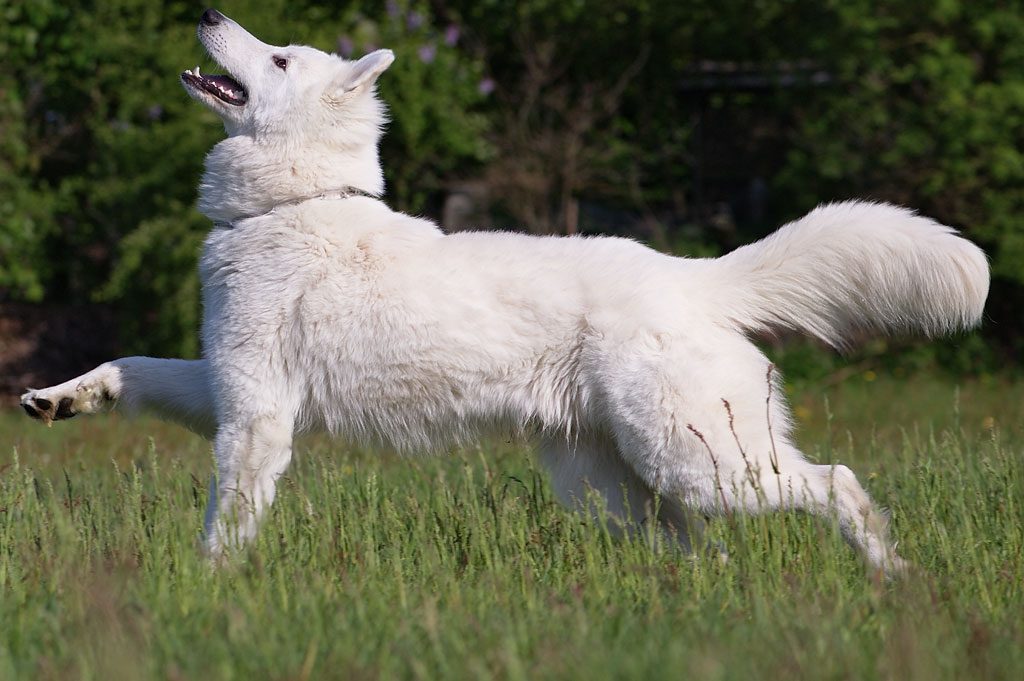
And perhaps, The most outstanding feature of this beautiful dog is its white mantle of double layer and medium long length. Dense and well separated hair.

The colour of the mantle is white. The nose, the lips and pads are absolutely black.

In the year 1933, the white color of the coat was pointed out as a defect that had to be eliminated by the German Shepherd Club of Germany, of America and Canada.

There are even theories, in the news, that continues to hold the white color is due to a physical defect, to a pathology but that type of theory lacks foundation and the first proof of it, It is a very healthy dog.

Its white color comes from a simple recessive gene that both parents must be carriers to continue the color, that is the reality.

Character and skills

The German Shepherd, not only the color of the mantle but also in its character differ.

While it is a dog of great temperament he displays never nervous, But if attentive and vigilant. It tends to be suspicious with strangers but never aggressive.

It is a dog friendly, very Intelligent and learn with ease.

Itร‚ยดs fair to his family and -as we said- he can be cautious with strangers, but should never show shy or fearful behavior and less aggressiveness. Some people think that the Arctic Wolf mixed with the breed, and that's where his caution comes from, but that only a legend.

It is a balanced dog, very good watchdog and has even been trained as a guide dog on occasion.

It is a great companion for everything physical exercise that is its scope, loves to play with sticks, balls, run…

While its origin speaks of a shepherd dog, today despite the fact that in some countries it is still used in such tasks, is widely accepted as a companion dog.

It adapts perfectly to the home, fond of children but remember that need exercise like all dogs, This always necessary if we want to keep happy balanced our puppies. Let's not forget that he is a working dog that needs physical and mental challenges.

The White Swiss Shepherd Dog gets along well with other dogs and, as well, It is usually good in agility competitions, search, rescue and obedience. They are also used as assistance dogs.

The character of White Swiss Shepherd Dog it is softer than the German Shepherd, But if you take genius to protect his family, will not hesitate it to.

White Swiss Shepherd Dog Images

White Swiss Shepherd Dog videos

Type and recognitions:

  • FCI CLASSIFICATION:
  • Group :
  • Section : . .

Federations:

  • FCI – Group 1 Herding dogs, Section 1 Sheepdogs โ“˜
  • ANKC – Group 5 (working dogs) โ“˜
  • โ€‹KC – Pastoral โ“˜
  • NZKC – Working dog โ“˜

FCI breed standard "White Swiss Shepherd Dog"

Origin:
Switzerland

Date of publication of the valid original standard:
04.07.2011

Use:

Family and companion dog.


General appearance:

It is a powerful White Shepherd dog, good muscular, medium-sized, with erect ears, double coat that can be medium or long; elongated; medium and elegant bone, harmonious silhouette.

IMPORTANT PROPORTIONS: Moderately long with a rectangular shape: body length (from the tip of the shoulder to the tip of the ischium) and height at the withers = 12 : 10.

The distance from the stop to the tip of the nose is slightly greater than from the stop to the occipital protuberance.


Behavior / temperament:

Lively and balanced temperament, enjoy the action, attentive with good ability to be trained. Friendly and discreet. With high social capacity and devoted to his master. Never skittish or aggressive without provocation. A cheerful and easily teachable working and sporting dog; with the ability to be educated in any discipline.
Its high social capacity allows it to be integrated into any kind of events and situations.

Head:

---

Cranial region:

Strong, clean cut and finely chiseled, in good proportion to the body. Wedge shaped, top or side view. The axes of the skull and muzzle are parallel.

  • Skull: Only somewhat rounded; the central groove is barely perceptible.
  • Depression links (Stop): Slightly marked, but clearly perceptible.

facial region:

Truffle: Medium-sized; black pigmentation is desirable; lighter pigmented and winter nose is accepted.

  • Snout: Powerful and moderately long in relation to the skull; straight nose bridge and lower muzzle line, converging slightly towards the nose.
  • Lips: Dried, closing fairly, as black as possible.
  • Jaws / Teeth: Strong and complete scissor bite. The teeth are set at right angles to the jaws.
  • EYES: Medium size, almendrada form, placed somewhat obliquely; brown to dark brown color, dark brown. Well attached eyelids, it is desirable that it has black edges.
  • EARS: erect, set high, parallel and directed forward; in the shape of an elongated triangle with a slightly rounded tip.

Neck:

Moderately long and well muscled, harmoniously inserting into the body, without jowl; the elegant upper neck line runs in a continuous line from the head, which is carried moderately high, to the cross.

Body:

  • top line: Strong, muscular of medium length.Cross: Pronounced.
  • Back: Level and firm.Pork loin: Well muscled.
  • Rump: Long and medium wide, leans gently towards the root of the tail.
  • Breast : Not too wide. Its depth (approx.. the 50% of the height to the cross); reaching elbow; torch oval box, spreading well back. Marked chest.
  • Bottom line and belly: Thin flanks, firm: moderately retracted lower line.

Tail:

Saber-shaped and thick, slimming to tip; rather low insertion; reaching at least the hock; at rest it hangs downwards straight or with a slight saber-like curve in its last third; in action it takes it higher but never higher than the top line.

Tips

PREVIOUS MEMBERS:

  • General appearance: Strong, vigorous, with medium bone. Straight, seen from the front; only moderately separated; viewed profile, they are well angulated.
  • Shoulder: The scapula is long and well sloped, well angled; the entire shoulder region well muscled.
  • Arms: Of adequate length and well muscled.Elbows: They are well attached to the body.forearms: Long, straight and vigorous.Metacarpus: Firm and only slightly oblique.
  • Previous feet: Oval; fingers are well arched and close together, footpads are firm, resistant and black. Are desired dark nails.

LATER MEMBERS:

  • General appearance: Strong, vigorous, with medium bone. Viewed from behind they are straight and parallel; while standing they are not too separated; viewed from the side with adequate angulation.
  • Thigh: Medium in length and well muscled.Knee: With adequate angulation.
  • Leg: Medium length, oblique, with solid bone and well muscular.
  • Hock: Strong, of good angulation.Metatarsus: Medium length, straight, robust.
  • Hind feet: Oval; hind feet are slightly longer than fore feet. Fingers are arched and well together, footpads are firm and black, dark nails are desired.

Movement:

Rhythmic sequence of steps with push and resistance; forelimbs reaching well forward, with strong push; the trot is free, with good ground cover.

Mantle

  • SKIN: No creases with dark pigmentation.

Fur:

  • Medium length mantle: Denso, glued with double hair; abundant undercoat covered with stiff hair, protection straight; the face, ears and forehead of limbs is covered by shorter hair; on the neck and on the back of the limbs the hair is slightly longer. Slightly wavy but hard hair is allowed.
  • Long hair: Denso, double glued mantle; with abundant undercoat covered with hard hair, protection straight. The face, ears and forehead of limbs are covered by shorter hair; on the neck the long hair forms a clear mane and on the back of the legs are short and the hair on the tail is dense. The length of the coat should never be exaggerated. Slightly wavy but hard hair is allowed.
  • Color: White.


Size and weight:

Height to the cross:

  • Males: 58 โ€“ 66 cm.. females: approximately 53 โ€“ 61 cm.Weight:
  • Males: 30 โ€“ 40 kg. females: approximately 25 โ€“ 35 kg.

Typical dogs slightly below or above the stipulated measurements should not be disqualified.


Fouls:

Any deviation from the aforementioned criteria is considered as a fault and the severity of this is considered to the degree of the deviation to the standard and its consequences on the health and well-being of the dog., and the dog's ability to perform its traditional task.

  • Slight bay color overlapping (light yellow or shades of bay) on the tips of the ears, at the back and top of the tail.
  • Partial loss of pigmentation giving a mottled appearance to the nose, lips and / or on the edge of the eyelids.
  • Spurs. Except in countries where its removal is prohibited by law.


    SERIOUS FAULTS:
  • Heavy appearance, too short under construction (square silhouette).
  • Absence of sexual dimorphism.
  • Missing more than two PM1; M3 are not taken into account.
  • Floppy ears (hanging), semi-erect ears, button ears.
  • Severely falling top line.
  • Ring on tail, curled tail, hooked tail, tail carried higher than top line.
  • Soft mantle, silky outer hair; woolly, curly, open hair; decidedly long hair without undercoat.
  • Decidedly bay color (clear yellowish or bay overlay) on the tips of the ears, back or top of the tail.

    FALTAS DESCALIFICANTES:

  • Aggressiveness or extreme shyness.
  • Any dog โ€‹โ€‹showing clear physical or behavioral abnormalities.
  • Anxiety, fear in high degree, aggressiveness due to anxiety, unnecessary aggression, lethargic behavior.
  • One or both blue eyes. Protruding eyes.
  • Entropion, ectropion.
  • Upper or lower prognathism, deviated jaw.
  • Total loss of pigmentation in the nose, lips and / or edge of the eyelids.
  • Total loss of pigmentation in the skin or footpads.
  • albinism.


N.B.:
  • Males should have two normal-appearing testicles fully descended into the scrotum..
  • Only functionally and clinically healthy dogs, with the typical conformation of the breed, should be used for parenting.

Source: F.C.I - International Cynological Federation

Alternative names:

1. Berger Blanc Suisse, White German Shepherd (English).
2. berger blanc (French).
3. Berger Blanc Suisse (German).
4. Pastor branco suรญรงo (Portuguese).
5. Perro de pastor suizo blanco (espaรฑol).

โ–ท The world of Pets: Dogs, cats, birds, reptiles, amphibians

Belgian Shepherd Groenendael
Bรฉlgica FCI 15 . Sheepdogs

Pastor Belga Groenendael

The Belgian Shepherd Groenendael is a very intelligent dog, Active, loyal and loving.

Content

History

The dog Belgian Shepherd Groenendael It is a breed recognized by all the major canine clubs. In the United States is recognized under the name of Belgian Shepherd.

Just like all the Belgian Shepherd, the Groenendael is medium-sized, hard-working, robust, provided, very protective of the family. The Groenendael It is recognized for its black fur.

At the end of the 19th century, in Belgium there was a large number of herding dogs whose type was heterogeneous and their coats were of great diversity. In order to put order into this situation, some cinรณfilos (cinรณgrafos) enthusiasts formed a group led by Professor A. Reul, the school of veterinary medicine of Cureghem, who can be considered as a true pioneer and founder of the race.

The Belgian Shepherd is officially born as a breed between 1891 and 1897. The 29 in September of 1891, the "Club of the Dog" is founded in Brussels Belgian Shepherdand that same year, the 15 November, Professor A.. Reul manages to gather in Cureghem, 117 dogs, allowing you to carry out a census and form a group with the best copies. In the following years becomes a real selection, making an extreme inbreeding on some stallions.

The 3 in April of 1892, the "Dog Club" Belgian Shepherdโ€ drafted a first well-detailed standard of the breed. Was admitted a single race, with three varieties of hair. In any case, at that time, the Belgian Shepherd was only a dog of humble people and therefore a breed that still lacked prestige. Therefore, is not until 1901 that the first Belgian Shepherds were registered in the Book of Origins of the Sociรฉtรฉ Rรณyale Saint Hubert (L.O.S.H.).

In the course of the next few years, the leaders of the cinephile fans Belgian Shepherd they tenaciously devoted themselves to unify the type and correct the defects. We can affirm that towards the 1910 the type and character of the Belgian Shepherd were already established.

Through the history of Belgian Shepherd, the issue of the different varieties and accepted colors has given rise to many controversies.

On the other hand, As far as morphology is concerned, the character and fitness to work, There has never been any disagreement.

Physical characteristics

The Belgian Shepherd Groenendael must be athletic, strong, imposing, rustic, and balanced in appearance.

You must have a natural look, as if never has prepared especially for the show. Its hair It must be abundant, but they are never as if it were to inhibit the ability of the dog in any way work.

The color is always black, with small white spots are allowed on the chest.

The Belgian Shepherd Groenendael must measure of 60 to 66 cm. to the cross males and between 56 and 62 cm. females. The weight should be, approximately, of 25 to 30 kg for males and 20 to 25 kg for females.

This dog has a double layer coat a thick, the texture must be hard and dense, woolly, never silky, Kale, and a thin layer (undercoat) It should be thick and abundant.

Character and skills

The Belgian Shepherd Groenendael is a very intelligent dog, Active, loyal and loving.

They are ideal for those who have a lot of time, Energy, self-confidence and a lot of affection to giveโ€ฆ they are wonderful friends. Training and socialization is essential. They are cautious with strangers and protective family. They love to children, When I present at an early age.

They need to spend a lot of time with their family and exercise every day, because if left too long alone and doing sedentary lifestyle, they may experience separation anxiety, be sad, and even be destructive with household objects.

The Belgian Shepherd Groenendael needs a lot of exercise, routinely. If you are having a dog, be prepared to spend around two hours a day, and to play with it. daily exercise, You must include a walk, but also a training session to keep the dog mentally stimulated.

These dogs have a great "work ethic" and need a job to do., such as obedience, flyball, Schutzhund, training, agility or, cattle work. Performing any of these activities you will be happy. They are a sensitive breed and may not be trained using harsh methods.

The belgium priest, in general, they can compete in agility, obedience, show, flyball, tracking. As well, It can be trained to compete in herding trials.

Images of the ยซBelgian Shepherd Groenendaelยป

Videos of the ยซBelgian Shepherd Groenendaelยป

Otros nombres:

Belgian Sheepdog / Chien de Berger Belge.


FCI breed standard Belgian Shepherd Groenendael

FCIFCI - Belgian Shepherd Groenendael
Pastor

โ–ท The world of Pets: Dogs, cats, birds, reptiles, amphibians

Belgian Shepherd Laekenois
Bรฉlgica FCI 15 . Sheepdogs

Pastor Belga Laekenois

The Belgian Shepherd Laekenois It is the oldest sheepdog and the rarest variety of "Belgian Shepherd".

Content

History

The Belgian Shepherd Laekenois is a dog inside the 4 varieties into which the Belgian Shepherd. The name of Laekenois it is due to the Laeken neighborhood, located in the Belgian city of Brussels where was selected.

The Belgian Shepherd Laekenois originated as a sheep herding dog at Laeken Royal Castle.

In addition to his pastoral leadership, This dog was used as a guard dog for example, when the shepherds put the sun to dry the clothes, the Belgian Shepherd Laekenois I was in charge of guarding it.

Although it is not one of roles than most proud can feel the human being, It was also used as Messenger dog during the first and the second world war. I head this paragraph like this because we have enough information about what dogs have suffered throughout our history, at some stinking date.

Until the advent of dog shows in the year 1900, the four varieties could be mixed indiscriminately, in those days there were no classifications as they are now.

It is very difficult to try to delve into the history of the variety of Belgian Shepherd Laekenois because all four varieties share a common history, with different but common avatars.

What we do know is that the Belgian Shepherd Laekenois, In addition to be considered the oldest breed of dog is the rarest variety within the Belgian shepherds dog breed.

Anyway, If someone wants to deepen in the history of these precious dogs, You can read the entry dedicated to the race Belgian Shepherd.

Physical characteristics

Along with the Malinois, Groenendael and the Tervueren shares the same standard and differs only in the type, length and color of hair.

Just like all the Belgian Shepherd, the Laekenois is one of medium-sized and proportionately square.

It is a dog of harmonious proportions and rustic air. In comparison with the German Shepherd, for example, is more agile, Lightweight and small.

They have the ears triangular and rigid, the tail it is long and usually falls when it is at rest and when they are in action, in high.

The eyes in, the four varieties, Belgian Shepherd are small and dark.

The most significant feature of the Laekenois, is your hard, tawny fur, pretty hairy and with out aspect.

The the mantle Brown intermingled with black but configuring a homogeneous color (carborane Brown). Most of the most prestigious kennel clubs admit within the standard a somewhat more prominent black shading on the snout and tail..

As well, supports a small white patch on the chest and should be darker mask.

finally insist, in terms of physical and structural characteristics, the four varieties share a standard and the only thing that differs radically is in the type of coat.

In so far as the temperament, If there are certain differences but not significant.

Character and skills

The Belgian Shepherd Laekenois is a dog lively, always alert, obedient and very fell. He is brave, Intelligent.

in your country of origin, in general, dogs Belgian Shepherd, They are often used as police dogs.. But nowadays, they have gained much popularity as a family dog.

Within the family, is a dog playful and joyful always seek contact with the children, She loves.

The Belgian Shepherd Laekenois, they can compete in agility, obedience, show, flyball, tracking, and it can be trained to compete in herding trials.

But of the four varieties, to be the dog that has the least spectacular mantle, Everytime unimportant in contests and movie buff general worldwide.

Observations

There is a little exemplary nervous that usually give some problem in defense work because they have an excess of mistrust, but with good training there will be no problem.

Images of the ยซBelgian Shepherd Laekenoisยป

Videos of the ยซBelgian Shepherd Laekenoisยป

Otros nombres:

Belgian Laekenois / Belgian Shepherd Dog (Laeken) / Chien de Berger Belge / Berger Belge Laekenois


FCI breed standard Belgian Shepherd Laekenois

FCIFCI - Belgian Shepherd Laekenois
Pastor