โ–ท The world of Pets: Dogs, cats, birds, reptiles, amphibians

Labrador Retriever
Canadรก Reino Unido FCI 122 . Retrievers

Labrador Retriever

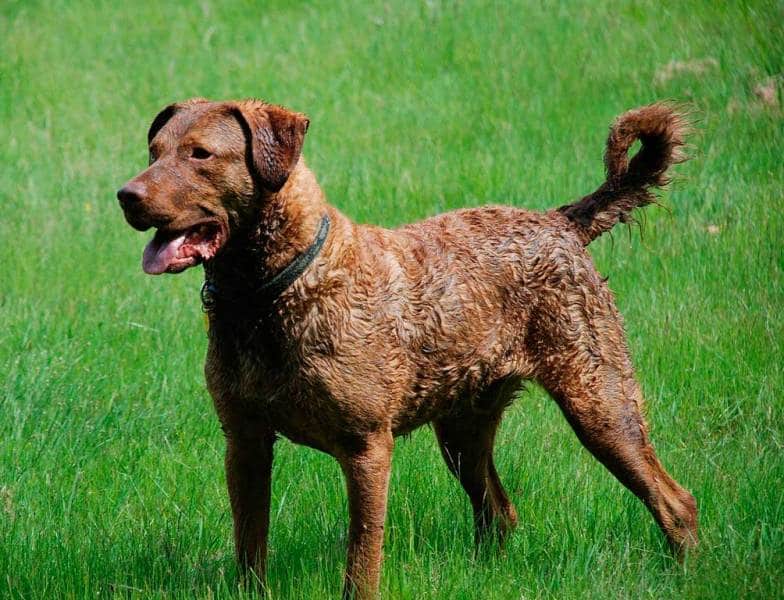
The Labrador Retriever It is the most popular breed in the world by number of registered copies.

Content

History

The Labrador Retriever is a relatively recent breed and originated in Great Britain, where it was developed during the 19th century.

His ancestor, St. John's dog, comes from canada. Contrary to popular belief, is originally from the island of Newfoundland, of that St. John's is the capital, and not from the province of Labrador.

The exact origin of this ancestor is under debate, but the most accepted theory is that it descends from the Castro Laboreiro Dog, a dog that accompanied the Portuguese fishermen. another theory, supported by some experts, although not very plausible, is that the Labrador Retriever actually descended from the dogs used by Labradors Indians to pull sleds.

The truth is that many writings dating back to the 16th century speak of small dogs, sometimes presented as little Newfoundlands, who help local fishermen find the fish that have fallen out of the trap.

At the beginning of the 19th century, the qualities of this dog convinced the English visitors to the island, and then some specimens were imported to Great Britain. They caught the attention of the 2nd Earl of Malmesbury, who used these water dogs for hunting. He passed on his passion for these dogs to his son, who continued to develop the breed with the help of some local breeders. Was this son, the third Earl of Malmesbury, who gave name to the breed Labrador Retriever. But, no one knows if he did it as a tribute to the Labrador Sea, that borders the island of Newfoundland, or as a distortion of the Portuguese name Laboreiro.

In 1885, Lord Malmesbury, the third of the name, gave birth to a black dog named Buccleuch Avon, which is considered the ancestor of all Labradores current.

The Kennel Club britรกnico (KC) recognized the breed already in 1903, but it wasn't until 1916 when Countess Lorna Howe founded the first breed club, who wrote the first standard of the Labrador Retriever.

It was also at the beginning of the 20th century when the breed was imported to the United States., to the point that the American Kennel Club (AKC) recognized the breed already in 1917.

Over the years 20, the standards of the different organizations evolved to accept yellow copies, while all Labrador Retriever they were originally black.

After World War II, the breed spread all over the world, earning recognition from the United Kennel Club (UKC) in 1947 y from the Fรฉdรฉration Cynologique Internationale (FCI) in 1954. Today it is accepted by all canine associations, including, for example, the Canadian Kennel Club (CKC).

Diffusion

The Labrador Retriever It, with difference, the most popular dog breed in the world. It is especially popular with Anglo-Saxons, for example, ranking first in Australia, Canada, Great Britain and United States. In this country, leads to head from 1991, with more than 100.000 annual registrations in the American Kennel Club (AKC). The same has happened in Canada since the end of the years 90.

Although its popularity does not diminish, can fluctuate significantly from year to year. In Great Britain, for example, there were more than 44.000 annual records of Kennel Club in 2010, but "only" some 32.000 in 2015 and 35.000 in 2019.

In France, the situation is different. Although it is one of the 10 Most popular dog breeds in France, is not present in the head trio, and is even surpassed by the Golden Retriever. The popularity of the Labrador in France it soared over the years 80-90, going from less than 2.500 births registered each year in the Livre des Origines Franรงais (LOF) at the beginning of the period about 10.000 at the end. Then, this figure decreased in the decade of 2000 (while the Golden ones shot up), until they are around 7.000. From 2013, rebounded, ending the year 2010 at around 8.000 births per year.

Physical characteristics

The Labrador it is a big animal, well built, but agile.

His body is massive and muscular, but not at all corpulent. His chest is wide, and the bowed ribs should be palpable under the skin. The legs are solid boned and end in round legs. The tail, known as "otter tail", is a peculiarity of the breed and helps you swim. Very thick at the base, tapers towards the tip and is covered in short fringed hairs.

The skull is broad, with a well defined stop and a powerful muzzle. The nose has wide nostrils and is the same color as the fur. The eyes are more or less dark brown and express intelligence and good character.. The ears, placed towards the back of the skull, fall along the cheeks.

The coat of the Labrador Retriever consists of a dense, weather-resistant underlayer and a dense top layer, short and without ripples. To the touch, it is quite hard and rough. It is waterproof and dries quickly once out of the water.

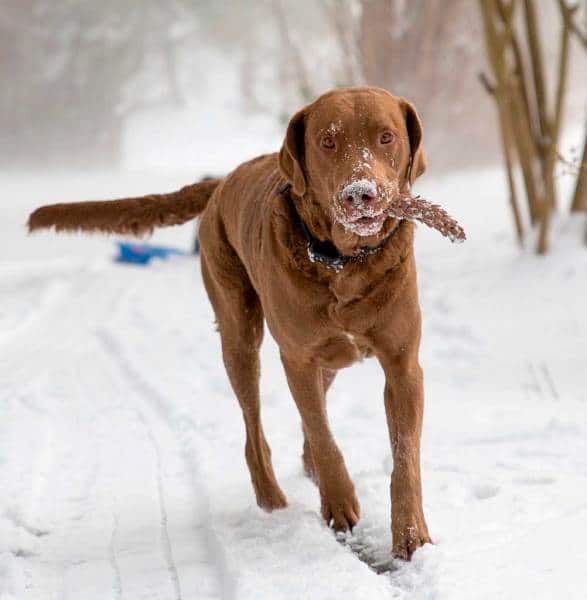
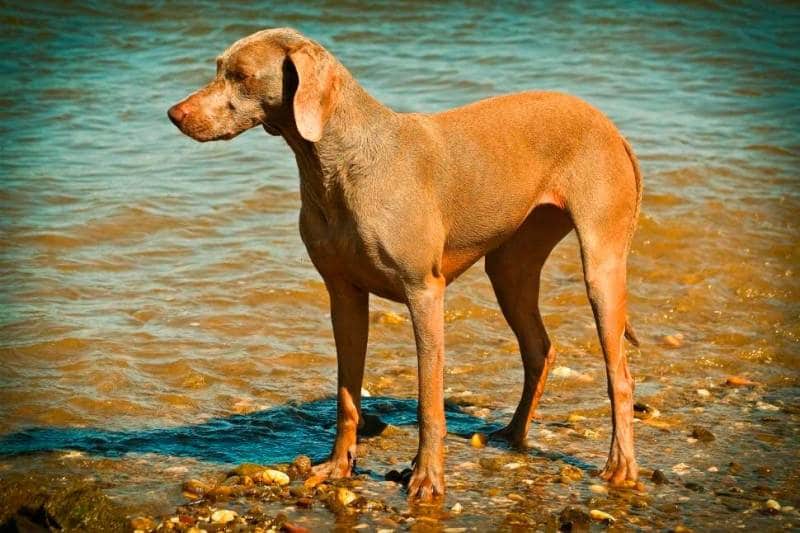
The coat of the Labrador must be uniform, except for a possible small white spot on the chest. The breed standard only accepts three colors: the black (the original color), the yellow (the most common today, that goes from cream to red) and the brown (the least common, and sometimes called liver or chocolate). Silver color (Silver) it's not allowed, since it is due to a cross with the Weimaraner.

Last, the male is larger and more massive than the female, but this sexual dimorphism is not extremely marked either.

Height and weight

    ▷ Male size: Of 56 to 57 cm.
    ▷ female size: Of 54 to 56 cm.
    ▷ Male weight: Of 30 to 35 kg
    ▷ female weight: Of 30 to 33 kg

Varieties

Although they are not strictly varieties, the Labrador Retriever of work lines have some differences with those of exposure line. In general, the former are more agile and athletic, while the seconds are more solid and calm.

It also, the Labrador it is probably the most used breed for the creation of designer dogs. Among the many possible crosses, the most common are undoubtedly the Labradoodle (Labrador + Poodle), the Labsky (Labrador + Husky) and the Borador (Border Collie + Labrador).

Character and skills

The Labrador is loving, close to his family and incredibly sociable, to the point of being one of the races closest to humans. Love everyone: To his family, of course, but also to the neighbors, to the pizza delivery man, the stranger who is on a walk or the friendly thief who enters his territory and takes the time to caress him.

It is also an ideal dog with children of all ages, showing legendary patience when a little one plays with his ears or tries to play wheelie with him. And surely this is the reason why so many accidents are recorded every year: the fact that it is so conciliatory should not do without teaching children how to behave with an animal and respect it, so as not to exceed the limits of what you can tolerate. In any case, regardless of race, a dog should never be left with a young child without adult supervision.

The Labrador Retriever they not only enjoy the company of humans, they also love spending time with other dogs and get along wonderfully with cats and other small animals in the house. But, its size, his enthusiasm and his habit of putting everything between his jaws can be dangerous for small rodents, reptiles and birds, those who can accidentally hurt.

During its first two years, this dog is a ball of energy with insatiable curiosity and limited listening skills. Run, he plays and bites everything he finds: toys, shoes, plants, phone… It is better not to leave anything that is valuable or that could harm you.. When he becomes an adult, calm down, but he is still a very active dog, that you need at least an hour of exercise a day. Games and walks are a great way to help you exercise., and even the most sporty owners appreciate finding a companion who is always happy to be away, even after several hours of effort. On the other hand, not suitable for an elderly or very sedentary person.

In any case, although it does not tend to flee, his sociability and curiosity make him like to go see what happens everywhere and snoop. Thus, to avoid possible problems during walks, it is better to lead him on a leash so that he remains by his master's side.

Smart and helpful, to the Labrador Retriever likes to be useful. They stand out as assistance dogs, but they can also be content with more routine tasks. The missions of great importance, like bringing slippers or helping dig a hole to plant a tree, give you a sense of accomplishment. But it is capable of much more, and he loves dog sports like flyball, agility and obedience, that allow you to show all your qualities, both athletic and intellectual.

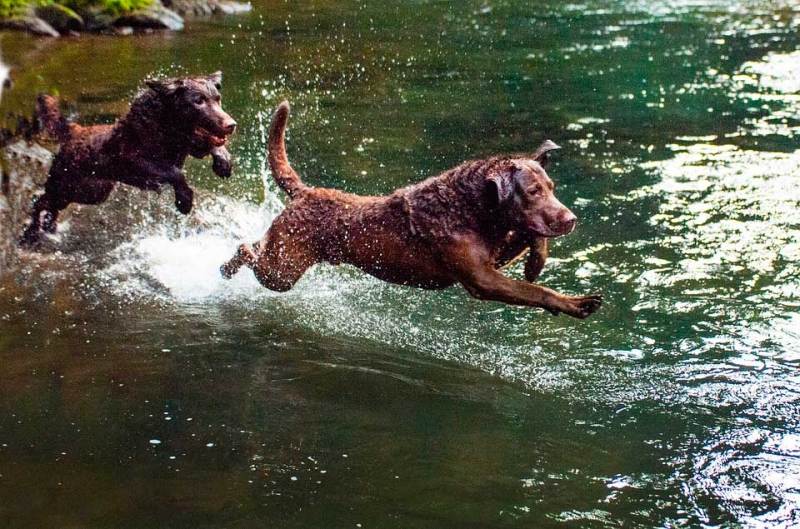
Water activities are another interesting way to spend your energy. Whether rolling in a puddle, jumping in the pool or swimming in the sea, to the Labrador Retriever She loves water. He is even an excellent swimmer, but he is not always lucid enough to estimate the strength of the current. Best kept on a leash near a dangerous area, such as a river with a strong current or an area of โ€‹โ€‹the ocean known for the speed of its currents.

Due to its size and activity level, not particularly suitable for apartment living, although it can be accommodated as long as its owner takes care of taking it out several times a day and allows it to get enough exercise. But, the ideal is a house with a garden, so you can exercise at your leisure. Even though i'm not a fugitive, it is better that the limits of its territory are clear, so that you do not venture to discover the neighborhood, risking getting lost or being the victim of a traffic accident. So, a fence is highly recommended.

The debate among specialists focuses on whether the Labrador is it an indoor or outdoor dog. It is clear that, because of its proximity to humans, the Labrador Retriever wants to spend as much time as possible with his family, and it's not a matter of keeping him away from her for days. But, it is undeniable that its origins, his physical characteristics and his energy make him happier outdoors. At the end, unless your family decides to live in a tent set up outside, there is no ideal solution, and both the master and the dog have to make concessions.

Last, to the Labrador not heard often, but when he barks, Everybody knows: its bark can reach the 110 dB.

Education

The Labrador Retriever is naturally open to humans and other animals, but this does not at all mean that their socialization should be neglected. From the first weeks, the puppy should have the opportunity to meet several people on a regular basis, crossing paths with other animals and being exposed to different situations. It is these experiences that allow you to become a calm and balanced adult, sociable and not aggressive.

In any case, the Labrador young is often difficult to manage for an inexperienced owner, especially if he has been constantly hearing praise about the character of the breed and expects everything to go smoothly. your excess energy, his propensity to bite everything he finds (shoes, furniture, phone…) and his inability to stay focused for more than a few seconds make some people wonder if his partner is having a problem.

The help of a professional canine educator can be useful during the first year, especially to help control its tendency to destroy everything that passes between its jaws, as well as withdrawal orders.

To the extent that Labrador Retriever it grows, becomes one of the easiest and most cooperative dog breeds to train, even for an inexperienced person. Their intelligence and desire to please make them quickly assimilate orders, and his passion for food makes the task even easier.

Knowing this, It goes without saying that positive reinforcement is the method of choice when training a Labrador Retriever. Compliments and pampering are appreciated, but sweets are usually even more so. But, should be used sparingly, since there is a risk of gaining weight.

As long as the owner is willing to spend time on their education and training, the possibilities of a Labrador they are immense, as demonstrated for decades by the thousands of representatives of this breed used as service dogs for the disabled or others. Dog shows, such as agility or obedience competitions, are another way to show the extent of your talents.

Health

The Labrador Retriever it is a robust breed with a remarkable life expectancy for its size, so much so that many specimens happily exceed the 15 years of age.

Its dense and waterproof fur protects it very well from the cold and bad weather., but also from the heat. Like this, adapts perfectly to all types of climates, although it must be able to take shelter when temperatures are extremely low and remain quietly in the shade in the event of a heat wave.

Despite his generally good health, the breed is still susceptible to various diseases. Most are common to all large dogs, but some are specific to him, and others are due to its popularity, which has led some breeders to privilege the quantity and not respect all the usual precautions. The most commons are :

  • Hip Dysplasia, elbow dysplasia and shoulder dysplasia (u osteocondrosis), joint deformities that prevent the dog from moving normally. They can have a hereditary dimension, but since the carrier subjects are excluded from reproduction, the main cause today is simply growing too fast;
  • Dilation-torsion of the stomach, a problem that is often caused by ingesting large amounts of food too quickly and often fatal without the prompt intervention of a veterinarian;
  • Progressive retinal atrophy, an incurable degeneration of the eye tissue leading to total loss of sight, first at night and then also during the day;
  • Centronuclear myopathy, an inherited disease that causes a loss of muscle mass;
  • The nasal paraqueratosis (or hyperkeratosis of the nose), a hereditary disease characteristic of the breed and responsible for the lesions in the nose, which then acquires a dry and rough appearance. It is treated with medicinal creams that soften the affected tissues and does not affect the quality of life of the dog;
  • Exercise-induced collapse, which causes the animal to collapse shortly after exertion. It is then necessary to adapt the dog's exercises to avoid those that are too intense., since this condition is incurable ;
  • The epilepsy, that causes seizures and has no cure. But, treatment can reduce the frequency and intensity of these seizures, so that most individuals manage to continue with a normal life;
  • The narcolepsy, causing a sudden loss of muscle tone and sudden drowsiness, sometimes in the middle of an action;
    ear infections (otitis, etc.), due to the drooping shape of the ears, that traps dirt and moisture more easily;
  • Eye problems: cataract, entropion, retinal dysplasia…

Due to the immense popularity of the breed in recent decades, many diseases have been recorded in the Labrador, but they are still extremely rare. A study conducted in 2004 by the British Kennel Club and the British Small Animal Veterinary Association indicates that cancer and advanced age are the leading causes of death in this breed, since they account for more than half of all deaths. heart problems (heart attack, cardiomyopathy…) and cerebral vascular problems lag far behind, representing a running total of around 13% of the cases.

In day to day, the most common health problem in Labrador It, with difference, the obesity. His large appetite and his ability to convince his family that he deserves some extra croquettes make many representatives of the breed eat more than they should and are overweight. Only his master can protect him, respecting the recommended daily rations and not giving in to their incessant demands. This is not to be taken lightly, since obesity can not only aggravate pre-existing pathologies, but also provoke new ones.

Your appetite and your propensity to "eat" everything you find are also responsible for another risk to your health., especially during their first two or three years. Socks, toys and other small objects can cause a bowel obstruction when ingested and require surgical intervention. So, it is important not to leave anything lying around that can be swallowed, especially sharp objects.

Adopt from a serious breeder of Labrador Retriever dramatically reduces the risk of getting a puppy in poor health, for example with a hereditary disease. The fact that it is a member of the breed club is a guarantee of quality. In any case, in addition to the results of the genetic tests carried out on both parents and the puppy, must be able to present a certificate of good health issued by a veterinarian, as well as details of the vaccinations administered to the puppy, registered in your health or vaccination card.

Once the adoption is done, it is the owner's responsibility to keep their dog in good health throughout its life. As such, a routine visit to the vet is necessary at least once a year, although there are no problems on the horizon. Ensures that the animal is up to date with its vaccinations, but it also makes it possible to detect possible health problems in time that may not be noticeable at first glance. At the same time, the owner must make sure to regularly renew the antiparasitic treatments to his companion, so that it is permanently protected.

Life expectancy

13 years

Grooming

The maintenance of the coat of the Labrador Retriever is simple, since a weekly brushing is enough to remove dead hairs and dirt. If he Labrador Retriever molts throughout the year, the phenomenon is, of course, much more pronounced during its annual molt, in autumn and spring: it is then necessary to opt for a daily frequency to remove excess dead hair.

Being generally quite clean, does not need to bathe too often, at the risk of damaging your sensitive hair. The sebum that covers it (and that disappears in part during the bath) allows it to be waterproof and protects it from external elements. So, two or three bathrooms a year is a maximum, and it is advisable to systematically use a mild shampoo designed specifically for dogs, since the pH of your skin is not the same as that of humans.
If you've gotten dirty especially after a walk in the mud, it is advisable to simply rinse it with fresh water, without using shampoo. The same should be done after bathing in salt water or in a pool.

After any kind of bath, even in fresh water, dry your ears with a clean towel to prevent moisture from building up. Their fallen shape makes them a breeding ground for all kinds of inflammations and infections. (otitis, etc.). For the same reason, should be cleaned weekly to remove dirt and moisture.

The eyes should also be examined weekly and, if required, clean them with a damp cloth.

The weekly maintenance session is also an opportunity to brush your dog's teeth., which helps prevent problems related to plaque formation (bad breath, diseases, etc.). Ideally, do it more often., even daily. In any case, a toothpaste specially designed for dogs should always be used.

Last, wear and tear is usually enough to file your claws, but it is advisable to check once a month that it is so, and if รยฝรยตร‘โ€š, cut them manually. In effect, how long are they too long, that is to say, you can hear them rubbing against the ground when walking on hard surfaces, they can get in the way or even break and injure you.

Whether the fur, the ears, the eyes, teeth or claws, It may be helpful the first time to learn from a veterinarian or professional groomer what is required to maintain a Labrador Retriever. It is also important to get used to Labrador from a young age to avoid any subsequent problems.

Utility

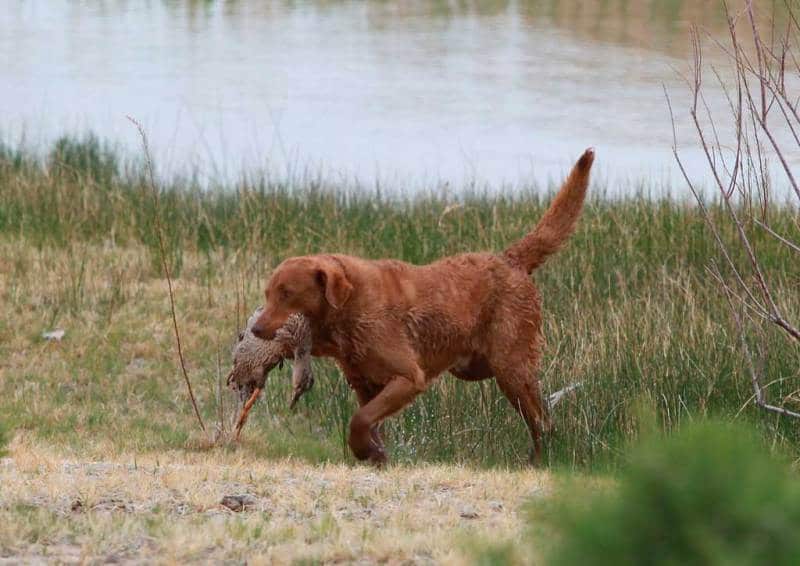
Is often forgotten, but the Labrador Retriever it's basically a hunting dog, made to recover the hunt. Their ancestors were used to retrieve fish that fell from the net in the icy waters of the North Atlantic. When it was developed in England, learned to recover all kinds of game, but his predilection for the aquatic environment made him a specialist in aquatic birds.

Today he is still a waterfowl specialist, and his hunting dog skills continue to be appreciated around the world.

But, seem to be overshadowed by the qualities that make them an ideal pet, and it is clearly in this role that he finds himself most often all over the world. Child friendly, playful and active, sociable and incredibly attached to his family, the Labrador Retriever It is the quintessential family dog.

Its intelligence also makes it the most common breed among service dogs.. Whether used as a guide dog for the visually impaired, as a service dog for people with disabilities or as an emotional support dog (for example, for autistic people), rarely disappoints. Figures vary from country to country and association to association, but the proportion of Labrador retrievers among the dogs used in this context is generally between the 50 % and the 70 %.

He has also made a name for himself among the security forces, since their smell helps detect drugs, weapons and other prohibited products. He is also well known in the search for victims and missing persons..

as expected, the Labrador Retriever also shines in beauty pageants, to the point of being a regular on the catwalk at dog shows.

It is also frequently found on the podiums of dog sports competitions, especially in agility tests, obedience and flyball.

Last, there is only one role that he is absolutely incapable of playing: the guardian. Doesn't bark when a stranger approaches, and if you have the good idea to pet him or even give him some treat, then you are welcome home, be it good or bad intention…

Price

The price of a puppy Labrador Retriever round the 950 EUR, without great differences between males and females. But, this average hides great disparities, since the quantities requested range from 500 euros for specimens with characteristics far from the standard up to more than 2500 euros for puppies from exceptional lines and intended for dog shows.

regardless of the country, price differences from one individual to another may be due to the reputation of the breed, to the more or less prestigious ancestry of the puppy, as well as its intrinsic characteristics, starting with its proximity to the standard. It also, This last point explains why price differences can be observed within the same litter..

Characteristics "Labrador Retriever"

Coexistence is important that you have with your new friend. Before considering the acquisition of a dog of the breed "Labrador Retriever" you know certain factors. Not all breeds of dogs are apt to live in an apartment, you must take into account his character, their need for exercise, their interaction with other pets, their care and if you have small children, their level of tolerance towards them.

Adaptation โ“˜

2,0 of 5 stars (based on 1 review)

friendly dog โ€‹โ€‹โ“˜

5,0 of 5 stars (based on 1 review)

hair loss โ“˜

3,0 of 5 stars (based on 1 review)

Affection level โ“˜

5,0 of 5 stars (based on 1 review)

Need for exercise โ“˜

5,0 of 5 stars (based on 1 review)

Social need โ“˜

5,0 of 5 stars (based on 1 review)

Home โ“˜

4,0 of 5 stars (based on 1 review)

Toilet โ“˜

2,0 of 5 stars (based on 1 review)

Friendly with strangers โ“˜

5,0 of 5 stars (based on 1 review)

barking โ“˜

3,0 of 5 stars (based on 1 review)

Health โ“˜

3,0 of 5 stars (based on 1 review)

Territorial โ“˜

2,0 of 5 stars (based on 1 review)

Cat friendly โ“˜

4,0 of 5 stars (based on 1 review)

Intelligence โ“˜

4,0 of 5 stars (based on 1 review)

Versatility โ“˜

4,0 of 5 stars (based on 1 review)

Child friendly โ“˜

5,0 of 5 stars (based on 1 review)

Surveillance โ“˜

1,0 of 5 stars (based on 1 review)

joy โ“˜

5,0 of 5 stars (based on 1 review)

ยซLabrador Retrieverยป images

Videos ยซLabrador Retrieverยป

Type and recognitions:

  • FCI CLASSIFICATION:
  • Group :
  • Section : . .

Federations:

  • FCI – Group 8: Retrievers - Flushing Dogs - Water Dogs – Section 1: Retrievers โ“˜
  • AKCSporting โ“˜
  • ANKC Group 3 (Gundogs) โ“˜
  • CKCSporting Dogs โ“˜
  • โ€‹KC – Gundog โ“˜
  • NZKCGundog โ“˜
  • UKCGun Dogs โ“˜

FCI breed standard "Labrador Retriever"

Origin:
Canada, United Kingdom

Date of publication of the valid original standard:
13.10.2010

Use:

Hunting retriever.


General appearance:

Strongly built dog, short and very active kidney region; has a broad skull, broad and deep chest and ribs; the renal region and the hindlimbs are broad and strong.


Behavior / temperament:

Dog that has a good temperament and is very agile. Has an excellent sense of smell and charges delicately; he is very fond of water. It is an adaptable animal and a devoted companion. Intelligent, lively and docile, with a strong will to please. Affable character, without any signs of inappropriate aggressiveness or shyness.

Head:

---

Cranial region:
  • Skull: Large, sharp, without presenting fleshy cheekbones.
  • Depression links (Stop): Defined.

facial region:

  • Truffle: Wide, with well developed nostrils.
  • Snout: Powerful, but not sharp.
  • Jaws/Teeth: Jaws of medium length; strong jaws and teeth with perfect, regular and complete scissor bite, that is to say that the inner side of the upper incisors is in close contact with the external surface of the lower incisors, and well positioned in the jaws.

Eyes: Medium in size that express intelligence and good temperament; chestnut or hazelnut.

Ears: Ears neither long nor thick; must hang close to the head and have an insert well back.

Neck:

crisp, robust, powerful, placed on well-placed shoulders.

Body:

  • Back: Level.
  • Pork loin: Large, short and strong.
  • Breast : Good breadth and depth; ribs well sprung and stocked.

Tail:

The tail, a distinctive feature of the breed, is very thick at the base and gradually tapers towards the tip; medium size and no fringes, but it must be well covered completely with short hair, thick and dense, which gives it the ยซ round ยป appearance described as an ยซ Otter ยป tail. Can be happily carried, but not curled on the back.

Tips

Former members

The forelimbs have good bone and, viewed from the front or side, should appear straight from the elbows to the ground.

  • Shoulder: Long sloping scapulae.

Later members

well developed, rump not inclined towards the root of the tail.

  • Femoro-tibio-patellar joints (knees): Well angulated.
  • Hocks: Well descended. Cow hocks are highly undesirable.

Pies

Round, compact, with well arched toes and well developed pads.

Movement:

Easy movement and enough ground cover; the front and rear extremities move in planes parallel to the axis of the body.

Mantle

Fur: The hair is a distinctive characteristic of the breed; and should be short and dense with no ripples or fringes; to the touch it should give the feeling of being quite hard. Has a waterproof undercoat layer.

Color: Totally black, yellow or liver/chocolate. The yellow color varies from light cream to fox red. A small white spot on the chest is allowed.


Size and weight:

Ideal height at the withers

  • Males: 56-57 cm..
  • females: 54-56 cm..


Fouls:

Any deviation from the aforementioned criteria is considered as a fault and the severity of this is considered to the degree of the deviation to the standard and its consequences on the health and well-being of the dog., and the dog's ability to perform its traditional task.

FALTAS DESCALIFICANTES:

โ€ข Aggressiveness or extreme shyness.
โ€ข Any dog โ€‹โ€‹showing clear signs of physical or behavioral abnormalities.


N.B.:

โ€ข Males must have two normal-appearing testicles fully descended into the scrotum..
โ€ข Only functionally and clinically healthy dogs, with the typical conformation of the breed, should be used for parenting.

Source: F.C.I - International Cynological Federation

Alternative names:

1. Lab, Labrador (English).
2. Labrador retriever, Labrador (French).
3. Labrador (German).
4. Retriever do Labrador, Labrador, Lab (Portuguese).
5. Lab, Cobrador de Labrador, Perdiguero de Labrador, Labrador (espaรฑol).

โ–ท The world of Pets: Dogs, cats, birds, reptiles, amphibians

English Springer Spaniel
Inglaterra FCI 125 . Flushing Dogs

The English Springer Spaniel it is the oldest of all British hunting dogs.

Content

History

The English Springer Spaniel is a distant descendant of dogs Spaniel type who arrived from Spain to the British Isles more than 1.500 years.

Already in 1576, the Dr. John Caius described the descendants of these dogs from the Iberian Peninsula in his Treaty of English Dogs, but it wasn't until 1801 and Cynographia Britannica de Sydenham Edwards, naturalist and illustrator, when a distinction was made between Cockers smaller and Springers Taller.

But, litters used to be a mix of both types, and the difference in names was simply based on the size. Both types were used to hunt game birds; his job was to detect and flush out the animal, which was then caught in a net, shot with a bow or, sometimes, captured by a specially trained hawk. The current names of the breeds derive from these hunts.: the Cockers excelled in hunting woodcock, While the English Springer Spaniel excelled at finding, make the game birds fly and collect the prey for the armed hunter.

In the 19th century, breeders began to select dogs, so that the lines of dogs differed from region to region. The most imposing dogs were found in the region of Norfolk and they took the name of Norfolk Spaniel about 1850. This was the name by which all the greats were shown Spaniels at dog shows.

This changed in 1902, When the Kennel Club (KC), Britain's leading organization, recognized the English Springer Spaniel as an independent race. It was given its own standard, very different from other similar looking dogs, and the breeding program became stricter.

Only eight years later, in 1910, the breed was recognized by the American Kennel Club (AKC). The reputation of the breed grew considerably in North America from the decade of 1920. In 1932, was recognized by the United Kennel Club (UKC), the other leading organization in the United States. The Fรฉdรฉration Cynologique Internationale (FCI) followed him in 1954. In the news, the English Springer Spaniel is accepted by all major canine organizations, including Canadian Kennel Club (CKC).

With a little less than 10.000 registrations per year in the CKC, the English Springer Spaniel is still one of the 10 Britain's most popular dog breeds. But, has been in decline since the early 1990s 2010, when they were almost born 13.000 each year.

The trend is much more stable in France, where some 1.700 births in the Livre des Origines Franรงais (LOF) since the early years of the 21st century. This figure had previously doubled in just a decade., since at the beginning of the years 90 it was rather around the 800, and even below 500 in the early 80.

The same stability is found in the United States, where it has fluctuated, at least since the beginning of the 21st century, between the post 25 and the 30 AKC Breed Classification, based on the number of annual registrations in the organization. The UKC also produces a classification based on the number of births reported to it, in which it is among the 20 first.

Photo: An eight year-old, male, liver and white English Springer Spaniel named by Xandercary, CC BY-SA 3.0, via Wikimedia Commons

Physical characteristics

The English Springer Spaniel has a compact and harmonious appearance. But, there is a real difference in morphology between individuals in lines destined for dog shows and those whose specialty is hunting and field trials: the former are much more massive than the latter

In both cases, the English Springer Spaniel he is tall on legs, so much so that it is the tallest of the Spaniels of British origin. Her body, slightly rectangular, muscular and symmetrical, exudes power and agility. The legs are muscular and of solid bones, and end in round, compact legs.

The tail has fringes, it is short and very mobile. It has long been docked to avoid hunting accidents, but now docking is prohibited in most countries.

The head of the English Springer Spaniel it is quite wide, with a well-proportioned muzzle and well-developed nostrils. The eyes are medium in size, almendrada form, with a lively and soft expression. They must be dark hazel in color, but a light color is also possible, although it is considered a fault. The ears are long, wide and lobed. They fall back along the head and have attractive fringes.

The undercoat is short, smooth and dense, while the top layer is longer, smooth and closed. The set is made to withstand inclement weather, but it also protects you from the various thorns and twigs that could hurt you in the undergrowth. The individuals of the working lines, however, generally have shorter hair than those of the beauty lines.-

His fur is black and white or liver and white, and may have tan markings. Also in this case there is a certain divergence between show dogs and those intended to be pets or hunting dogs., since the fur of the former has more marked colors.

Last, sexual dimorphism is not very marked in this breed: males are only slightly larger and heavier than females.

Size and weight
    ▷ Male size: 48 – 51 cm.
    ▷ female size: 48 – 49 cm.
    ▷ Male weight: 18 – 22 kg
    ▷ female weight: 18 – 19 kg

Varieties:

From the age 40, the breeders of English Springer Spaniel have tended to distinguish between lines intended for dog shows and those intended for hunting or company.

In effect, when it became apparent that the individuals who stood out on beauty pageant podiums and those who won job tests were never the same, this led some breeders to specialize, selecting their players either for their aesthetics or for their physical abilities.

In fact, individuals destined for podiums are generally more massive, have stronger colors and less need to strain. But, no official organization considers them a variety in their own right: no standard distinguishes between show dogs and working dogs.

Character and skills

The English Springer Spaniel he is incredibly sociable, open and loving. They love the company of humans in general, and his family in particular. If left alone for a long time, may suffer from separation anxiety, which can lead to destructive behavior and incessant barking.

On the other hand, can express his joy at seeing his master come back urinating on the carpet. To get rid of this bad habit, it is necessary to avoid that the return home is an event. So, it is advisable not to pay immediate attention to the dog, but take a few minutes to take off your shoes, hang up the coat, keep the keys… encouraging you to wait without undue excitement.

If you bark when a person approaches, generally it is less to warn him than to invite him to come and pet him and play with him. So, can play the role of a warning dog, because he is listened to in every visit, but certainly not that of a guard dog that drives malicious people back. Welcomes both adults and children, with which you can spend hours running and playing in the garden. But, it is important to remember that, regardless of race, a dog should never be left alone with a small child, even though i have known him for years; all interactions must be under adult supervision.

His sociable character also extends to his fellow men, although some signs of aggressiveness may appear, especially between individuals of the same sex. Living with cats and rodents is also usually without problems, but the same cannot be said for birds. Anyone who adopts this dog while keeping chickens or ducks in the garden will quickly understand why his hunting skills are unanimously recognized.…

To feel good and show the full range of your interpersonal skills, the English Springer Spaniel need to be able to exercise. One hour of intense physical exercise (footing, games…) is necessary for your well-being, and appreciates taking long walks of several hours from time to time. It is, because, from a perfectly adapted companion for a person who wants to regularly take their dog for a walk. On the other hand, your outings in an urban environment should always be done on a leash, to prevent him from rushing after all the pigeons and birds he finds. During long walks in nature, it is better to let it evolve freely so that it can fully enjoy, but then it is wise to equip him with a GPS collar to be able to locate him at any time, for example if you wander off in search of woodcocks or other game.

Although they have a reputation for being less active, dogs on show lines should also exercise for a minimum of one hour a day.

As long as its owner is active and takes it out enough, can live in an apartment, even if it is not ideal for him: you better have access to a garden. You better have access to a garden, but this must be well fenced to prevent it from escaping if it sees birds or follows a friendly passerby who gives it a treat. In any case, you shouldn't spend most of your time alone in the garden: its place is inside, with his family.
It also, physical exercise is not enough for it to be balanced: you also have to stimulate it mentally, especially because he is very intelligent and has a desire to learn just as great. If these qualities are not stimulated, you are likely to get bored, and then he can find something to do biting his master's shoes, throwing things or digging in the garden.

Dog sports are a great way to keep your dog engaged both physically and mentally. Any activity works, but they are especially good at obedience competitions, track and search.

Last, although some individuals never give voice to their dogs, the English Springer Spaniel tends to bark quite frequently. They do it to signal the approach of a person or to greet him, to warn of boredom or simply to attract attention. If this trend is not stopped at an early age, can cause problems with neighbors.

Education

Like any dog, the English Springer Spaniel must be socialized from the first weeks of life. If you don't have the opportunity to meet different people, to meet other animals and to face all kinds of situations, runs the risk of becoming shy or, on the other hand, to develop some aggressiveness.

It is also necessary to get used to walking on a leash as soon as possible, as well as teaching him not to bark untimely. If their masters are absent often or for a long time, they should also help you understand that you can spend several hours alone without worrying, because his family will always return to him.

With his above-average intelligence and willingness to do anything to please, the English Springer Spaniel is capable of achieving wonders, even under the guidance of a novice trainer. Like this, beyond the basic teachings, his thirst for learning allows him to assimilate many tricks. But, you have to be patient and be constant, as with any dog, and know how to detect when he starts to get bored to stop the session or move on to something else.

In any case, traditional training methods are not at all suitable for this emotional dog, who has unlimited trust in humans, since they could traumatize him. Better to use positive reinforcement, that allows you to learn while having fun and takes advantage of your natural sociability.

Health

The English Springer Spaniel is generally quite robust and has a good life expectancy, to the point that many representatives of the breed reach the 15 years.

Originally from Great Britain, the English Springer Spaniel has a waterproof coat that is not affected by the weather. Their undercoat is more or less dense depending on the climate of the region in which they live., and are equally resistant to cold and heat. But, they do not like extremes and should be able to shelter in the shade when it is hot, and have a cozy place to stay when the temperature drops.

Given its popularity around the world for more than a century, no wonder so many different diseases have been recorded in this dog. The most frequent problems are :

  • The Hip Dysplasia, a malformation in the joint that is usually inherited and can cause locomotor difficulties. Genetic testing can greatly reduce risk;
  • Patellar luxation (or dislocation of the patella), when the kneecap moves out of position, causing a limp. It can be congenital or occur after an impact;
  • Progressive retinal atrophy, leading to retinal degeneration and total loss of vision. This disease appears to be increasing in the breed's population, although it is still rare;
  • The retinal dysplasia, a congenital malformation of the retina that, In most cases, does not affect vision;
  • The entropion, when the eyelid folds over the eye and causes irritation. This problem can be corrected by a simple surgical intervention.;
  • Phosphofructokinase deficiency, an enzyme responsible for the assimilation of glucose in the blood, that usually has no consequences and is often undetected. But, in severe cases, can lead to muscle loss, fever and hyperventilation;
  • Skin problems, either hereditary or due to an allergy.

Other rare diseases have been reported in some individuals, like autoimmune diseases, the fucosidosis canina and the very rare and surprising rabies syndrome (not to be confused with rabies disease), when a peaceful dog is suddenly overcome by an attack of hyperagression for no apparent reason.

It also, dogs used for hunting are more prone to accidents, lesions and parasites than other dogs.

But, do not be fooled by the long list of diseases that can affect a English Springer Spaniel, most of which are very rare. A study conducted by the Kennel Club and the British Small Animal Veterinary Association in 2004 about almost 100 breed deaths showed that the main causes of death in this breed are various forms of cancer and advanced age.

In any case, adopt from a breeder of English Springer Spaniel serious and responsible maximizes the chances of getting a healthy puppy, above all thanks to the tests that the animal or its parents will continue to carry out to ensure the absence of congenital or hereditary diseases -or susceptible to being so- like dysplasia, for example. The professional must also provide a certificate from a veterinarian who has examined the puppy and certifies that it is in good health., as well as the data of the administered vaccines, registered in your health or vaccination card.

But, There is no use adopting a healthy puppy if you do not do what is necessary to keep it healthy, especially through appropriate preventive actions. One of the points to pay more attention in this matter is your ears: like any dog รขโ‚ฌโ€นรขโ‚ฌโ€นwith hanging ears, has a higher risk of infections at this level.

Regular vet visits are another essential part of prevention. They should be scheduled at least once a year to detect the beginnings of a potential health problem and to make sure your dog is up to date on his vaccinations.

Life expectancy

Of 12 to 14 years

Grooming

The maintenance of the coat of the English Springer Spaniel is simple, but it takes some effort. In fact, molts throughout the year, and it should be brushed once or twice a week to keep its coat in good condition. During spring and fall molts, it is even necessary to brush it daily to remove excess dead hair.

It also, as his fur is quite tight, does not hesitate to get into the puddles, so it can be useful to bathe him after a hunting trip or a particularly muddy trip to the forest, to prevent it from getting dirty and / or smells bad. Then you have to be careful to use a mild shampoo specifically designed for dogs., at the risk of damaging your skin.

In general, It is also strongly recommended that you get into the habit of thoroughly inspecting your dog every time you spend long hours outdoors, either during a hunting day or a long excursion. This allows any injury to be detected immediately, spoilage or parasites, and act accordingly.

It also, although he doesn't really tend to drool, not a very clean diner, mostly because it turns out that her long ears get soaked in her bowl. So, it is advisable to get in the habit of wiping your face with a towel after every meal.

Your floppy ears deserve special attention, since this morphological characteristic makes moisture and dirt easily accumulate in them, with an increased risk of infection. So, should be examined and washed at least once a week.

Take advantage to check that the eyes are clean, and clean them with a damp cloth if they are not.

Your weekly maintenance session is also an opportunity to brush your teeth, to prevent the formation of dental plaque. Plaque can cause bad breath, tooth decay and other oral diseases. Ideally, do it more often..

Last, even if your activity level makes natural wear and tear is enough to file your nails, it is advisable to take a look at them every 4 or 6 weeks to make sure they're not too long. Yes they are, could get in the way of walking, or even break and hurt you, so they need to be trimmed manually with a dog nail clipper. The first time, it may be a good idea to do this under the eye of a vet or groomer to make sure you are doing it right.

Utility

The English Springer Spaniel was developed for hunting, especially birds (mainly the woodcock), and it must be admitted that he continues to excel in the location and the fright of the hunt, and then return it to the hunter once he has killed it. They are still used for hunting around the world, tracking both small game birds and small game animals.

They are also excellent companion dogs., loyal and loving, suitable for a home active enough to satisfy your need for plenty of exercise.

His propensity to bark also makes him a good alert dog.. But, as it does more to welcome intruders (or even to be happy if they give him some goodies) that to repel them, he's a poor guard dog.

When not used for hunting, physical and mental qualities of English Springer Spaniel can be admired at dog sports competitions. They tend to excel in disciplines such as flyball, obedience, agility, crawl and crawl.

They have long been used in law enforcement and the military, and are currently used in Great Britain, United States, Canada, Sweden and Finland. In fact, his excellent sense of smell makes him a very good dog at detecting explosives, drugs, but also illegal immigrants at the borders.

It is also common to find them as rescue dogs and search for accident victims., either in the mountains or in urban areas.

Last, his closeness to humans and his sociable nature also make him a very good therapy dog, sometimes found in hospitals and nursing homes.

Price "English Springer Spaniel"

The price of a puppy English Springer Spaniel is of some 800 EUR, without much difference in price between males and females. This average hides a range of values รขโ‚ฌโ€นรขโ‚ฌโ€นthat go from about 500 euros for dogs with characteristics that are far from the standard, up to approximately double for those with prestigious ancestry and intended for dog shows.

The price varies depending on the reputation of the breeder, the prestige of the lineage from which the animal comes, but also and above all its intrinsic physical characteristics.

Characteristics "English Springer Spaniel"

Coexistence is important that you have with your new friend. Before considering the acquisition of a dog of the breed "English Springer Spaniel" you know certain factors. Not all breeds of dogs are apt to live in an apartment, you must take into account his character, their need for exercise, their interaction with other pets, their care and if you have small children, their level of tolerance towards them.

Adaptation โ“˜

5,0 of 5 stars (based on 1 review)

friendly dog โ€‹โ€‹โ“˜

5,0 of 5 stars (based on 1 review)

hair loss โ“˜

3,0 of 5 stars (based on 1 review)

Affection level โ“˜

5,0 of 5 stars (based on 1 review)

Need for exercise โ“˜

4,0 of 5 stars (based on 1 review)

Social need โ“˜

4,0 of 5 stars (based on 1 review)

Home โ“˜

5,0 of 5 stars (based on 1 review)

Toilet โ“˜

4,0 of 5 stars (based on 1 review)

Friendly with strangers โ“˜

5,0 of 5 stars (based on 1 review)

barking โ“˜

3,0 of 5 stars (based on 1 review)

Health โ“˜

4,0 of 5 stars (based on 1 review)

Territorial โ“˜

3,0 of 5 stars (based on 1 review)

Cat friendly โ“˜

3,0 of 5 stars (based on 1 review)

Intelligence โ“˜

5,0 of 5 stars (based on 1 review)

Versatility โ“˜

3,0 of 5 stars (based on 1 review)

Child friendly โ“˜

3,0 of 5 stars (based on 1 review)

Surveillance โ“˜

3,0 of 5 stars (based on 1 review)

joy โ“˜

5,0 of 5 stars (based on 1 review)

Images "English Springer Spaniel"

Photos:

1 – English Springer Spaniel by Heinz Hรถfling, CC BY-SA 3.0, via Wikimedia Commons
2 – Coffee, English-Springer-Spaniel, 8 Months by photo taken by Heinz Hรถfling [User:Hhoefling], CC BY-SA 3.0, via Wikimedia Commons
3 – A black English Springer Spaniel named Oliver. by racermd5, CC BY 2.0, via Wikimedia Commons
4 – English Springer Spaniel by https://pixabay.com/de/photos/hund-englisch-springer-spaniel-317039/
5 – Mimi, English Springer Spaniel by Pedro Lopez
6 – Tallinn, Estonia, duo CACIB 2013 August 17-18 by Thomas, CC BY-SA 3.0, via Wikimedia Commons

Videos "English Springer Spaniel"

Type and recognitions:

  • FCI CLASSIFICATION:
  • Group 8: Hunting Retriever Dogs. Hunting Lifting Dogs. Water dogs.
  • Section 2: Flushing Dogs. With working trial.

Federations:

  • FCI – Group 8: Retrievers - Flushing Dogs - Water Dogs – Section 2: Retrievers โ“˜
  • AKCSporting โ“˜
  • ANKC Group 3 (Gundogs) โ“˜
  • CKCSporting Dogs โ“˜
  • โ€‹KC – Gundog โ“˜
  • NZKCGundog โ“˜
  • UKCGun Dogs โ“˜

FCI breed standard "English Springer Spaniel"

Origin:
United Kingdom, England

Date of publication of the valid original standard:
28.07.2009.

Use:

Hunting retriever and lifting dog.


General appearance:

Symmetrical figure dog, compact, strong, happy and active. It is the longest in limb and the slimmest of all land British Spaniels.


Behavior / temperament:

dog friendly, cheerful and docile in spirit. Shyness and aggressiveness are highly undesirable.

Head:

---

Cranial region:
  • Skull: Medium-sized, quite wide, slightly rounded and rises from the forehead, forming a ridge or stop; it is divided between the eyes by a groove that disappears along the forehead towards the occiput that should not be pronounced.

facial region:

  • Truffle: Well developed nose.
  • Snout: Its length must be in proportion to the skull; the muzzle should be quite wide and deep, well molded under the eyes.
  • Lips: Pretty deep and square.
  • Jaws / Teeth: Strong jaws with a regular and full scissor bite, that is to say that the inner side of the upper incisors is in close contact with the external surface of the lower incisors, the teeth being placed vertically in the jaws.
  • Cheeks: Flat.
  • Eyes: Medium-sized, macaroons, Neither prominent nor sunken, well placed (that do not show the ocular mucosa), of lively and kind expression. Dark hazelnut color. Light eyes are undesirable.
  • Ears: Lobulares, of good length and width, hanging fairly close to the head and inserting at the level of the eye line. Well endowed with long feather hair.

Neck:

Long, strong and muscular, without jowl. It should be slightly arched and taper towards the head.

Body:

Strong, neither too long nor too short.

  • Pork loin: Muscular, vigorous, slightly arched and well attached.
  • Breast : Deep and well developed chest. The ribs are well sprung.

Tail:

Previously the custom was to amputate the tail.
  • amputee: Low insertion, never with his bearing on the top line. With good fringe and cheerful in action.
  • Without amputating: Low insertion, never with his bearing on the top line. With good fringe and cheerful in action. In balance with the rest of the dog.


Tips

Former members:
  • General appearance: The forelimbs are straight and of good bones..
  • Shoulder: Well placed back.
  • Elbow: Well positioned close to the body.
  • Metacarpus: Strong, flexible.
  • Previous feet: Tight, compact and well round, with thick and strong pads.
Later members:
  • General appearance: They must be well lowered.
  • Thighs: Widths, muscular and well developed.
  • Femoro-tibio-patellar joints (knee) and hocks: Moderately angled. Coarse hocks are undesirable.
  • Hind feet: Tight, compact and well round, with thick and strong pads.

Movement:

It has a strictly own movement. The forelimbs should extend forward from the shoulders, taking a long step, smooth and effortless. Hocks moving well under body, following the line of previous members. In slow motion it can ambulate, typical gait of this breed.

Mantle

  • Fur: Denso, straight and weather resistant, never thick. The ears, forelimbs and hindquarters and body covered with moderately long feather hair.
  • Color: Liver and white, black and white, or either of these two colors with fire spots.


Size and weight:

51 cm. (20 inches).


Fouls:

Any deviation from the aforementioned criteria is considered as a fault and the severity of this is considered to the degree of the deviation to the standard and its consequences on the health and well-being of the dog., and the ability of the dog to carry out their traditional work.

disqualifying fouls:

โ€ข Aggressiveness or extreme shyness.
โ€ข Any dog โ€‹โ€‹showing clear signs of physical or behavioral abnormalities.


N.B.:

โ€ข Males must have two normal-appearing testicles fully descended into the scrotum..
โ€ข Only functionally and clinically healthy dogs, with the typical conformation of the breed, should be used for parenting.

The latest changes are in bold

Source: F.C.I - International Cynological Federation

Alternative names:

1. Springer Spaniel (English).
2. English Springer Spaniel (French).
3. English Springer Spaniel (German).
4. (em inglรชs: English Springer Spaniel) (Portuguese).
5. (en inglรฉs English Springer Spaniel) (espaรฑol).

โ–ท The world of Pets: Dogs, cats, birds, reptiles, amphibians

Curly-coated Retriever
Inglaterra FCI 110 . Retrievers

Retriever de Pelo Rizado

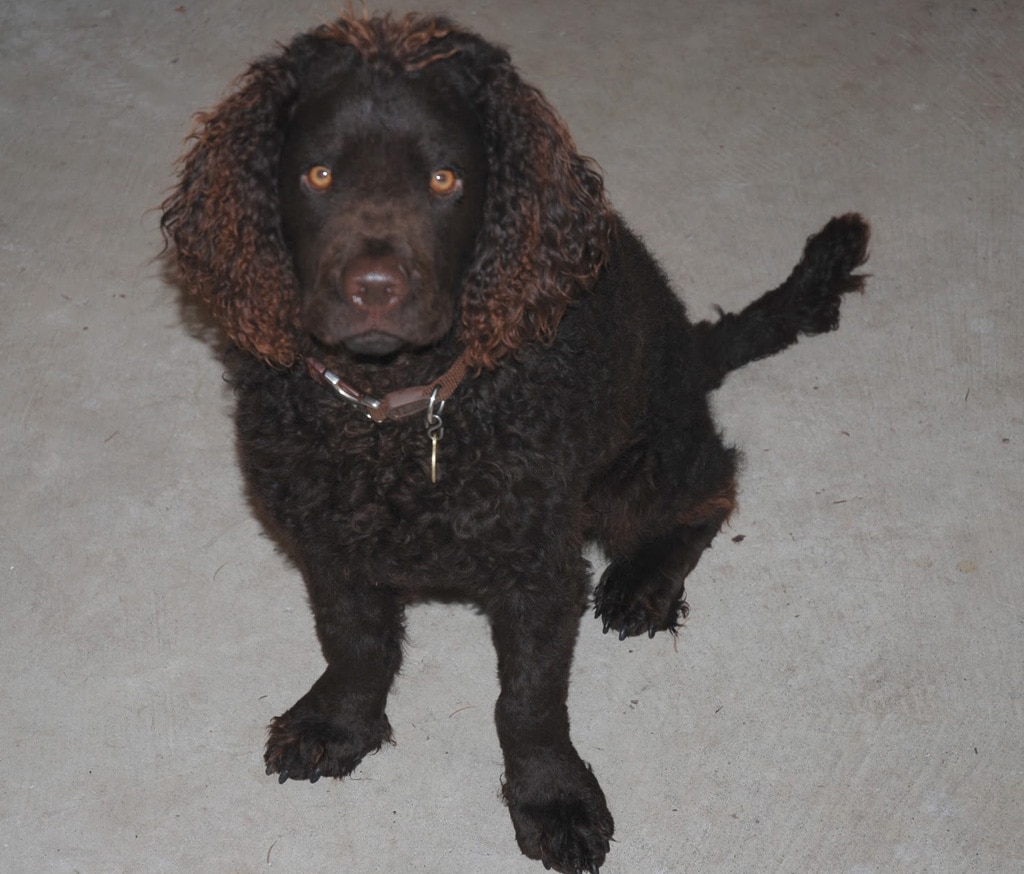
The Curly-coated Retriever Unlike the other "Hunting Retriever Dogs" it is a very good guardian.

Content

History

The Curly-coated Retriever It has existed since the late 18th century and is originally from the United Kingdom. It is the oldest Retriever type breed, and it is even believed that the first dog was used as a hunting dog.

Its exact origins are unclear., but he is believed to have many ancestors, as the Wetterhoun, the Irish Water Spaniel, the Newfoundland, the Barbet and races already extinct, as the "St. John's Newfoundland", the "Old English Water Spaniel", the โ€œGreat Rough Spanielโ€, the "Tweed Spaniel", the "English water spaniel" of the 16th century, the "Setter Retriever" and the "Lesser Newfoundland". The curly hairs on his coat are the subject of debate among specialists: some say they are due to crossing with Poodle during the 19th century, while others argue that it owes them to Irish Water Spaniel o al Wetterhoun, and that Poodle it only improved the curls.

Bred to hunt birds, especially pheasants, quail and grouse, the Curly-coated Retriever could retrieve its prey from water or tall grass with great ease. They were highly prized by game rangers, who considered them perfect companions, and by Roma nomads, those who helped track the hunt. His great courage and sense of perseverance were highly appreciated and useful during hunting parties..

His first official appearance at a dog show was in 1860 in Birmingham (United Kingdom). Originally, the Curly-coated Retriever and the Flat-Coated Retriever were exhibited together as one dog. But, it soon became more and more common to display them separately, that is to say, as different races.

The Curly-coated Retriever reached their peak in the mid-19th century. They were highly prized by hunters and were even shipped in large numbers to New Zealand. (in 1889) and to Australia, especially to the areas near the Murray River, to carry out the same missions that were entrusted to them in the United Kingdom, but also sometimes to hunt kangaroos. Here, too, he did not fail to demonstrate his great courage and his formidable hunting skills.. But, The Strong> Curly Hair Coat of these territories were raised in a slightly different way than those of Europe, since breeders were looking for a finer morphology. Between the years 50 and 60, Australian breeders imported Darelyn Aristocrat, Sarona Simon, Banworth Simon, Banwort Athene y Pegasus, dogs that have been of great importance in the evolution of the breed, since they are still in the family tree of most of their local representatives.

In Europe, the breed was one of the first to be recognized by the Kennel Club (KC), which remains today the reference canine organization in the United Kingdom, after its creation in 1873. But, early twentieth century, the breed's popularity declined quite quickly, largely due to the arrival of the Labrador Retriever, that many hunters began to prefer. The conflicts of the first half of the 20th century did not help. After World War I, there were only a handful of people registered. Work was done to increase the number of registered hunters, but WWII soon ruined these efforts.

The Curly-coated Retriever arrived in the United States in 1907 hailing from the UK and the breed was recognized by the American Kennel Club (AKC) in 1924. But, remained quite rare in America, at least until the end of the decade 1960, when many specimens were imported from Australia, England and New Zealand, where the brood was most developed. The breed was accepted in 1960 by the United Kennel Club (UKC), the other reference canine organization in the country. But, until 1979 no breed club was created, the ยซCurly-Coated Club of Americaยป, which highlights the relative lack of interest in race. But the breed remained rare in this territory, and it still is today. The same is true in Canada, where it was introduced shortly after.

It was also accepted by the Fรฉdรฉration Cynologique Internationale (FCI) in 1954.

In the news, the Curly-coated Retriever It is the least represented breed of "Hunting Retriever Dogs" in the world.. Its total population is estimated at about 5.000 individuals, of which approximately 2.000 are in the United States. Occupies the position 160 (of something less than 200) in the breed classification established by the AKC based on the number of annual registrations in the organization.

In the United Kingdom, the KC records about 70 births per year. The exact figure sometimes varies significantly from year to year., but the trend has remained stable throughout 2010.

Less than in Australia, which is one of the countries with the largest contingent of representatives of the breed, since there he is still especially appreciated for his hunting skills. Since the middle of the first decade of the 21st century, a hundred dogs are registered each year in the Australian National Kennel Council (ANKC), the reference body of the country. But, This represents a decrease with respect to the figures observed since the mid-1990s. 1980 until the dawn of the new millennium and the beginning of the decade of 1990, when there were some 150 births per year, and even more than 200 in some years.

In France, the Curly-coated Retriever still very weird: since the years 90, with some exceptions, barely more than 10 copies per year in the Livre des Origines Franรงais (LOF).

Physical characteristics

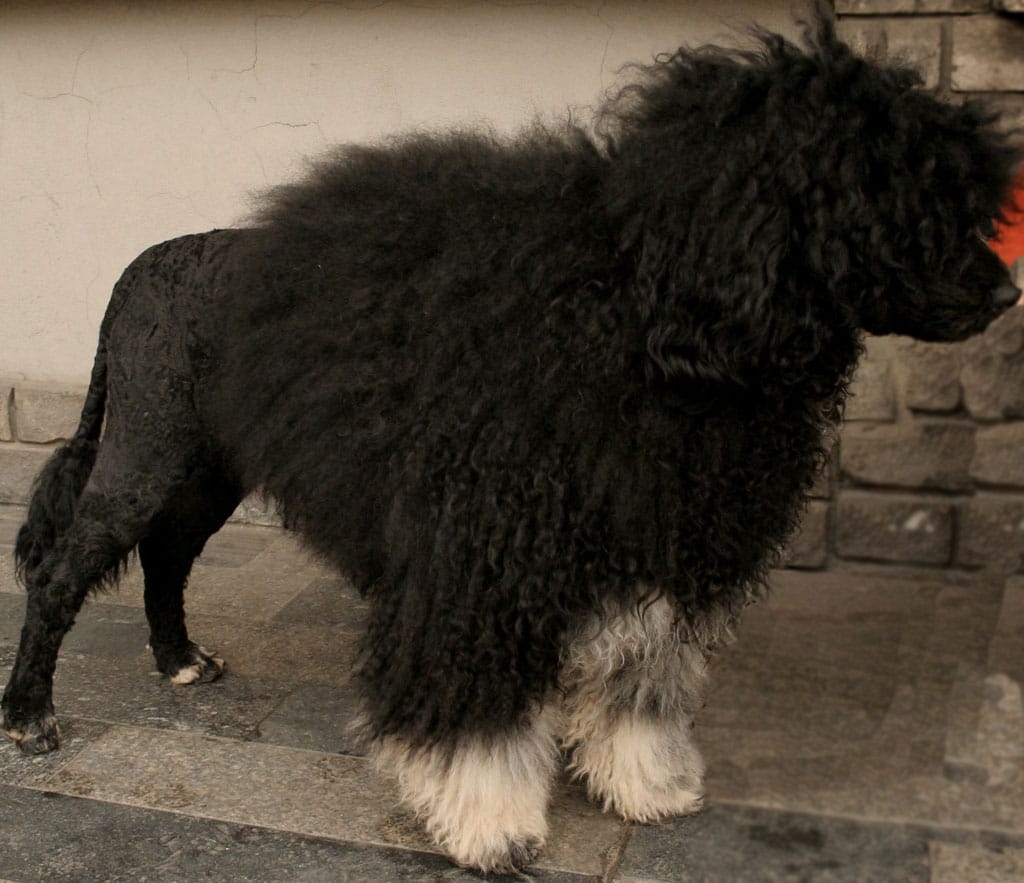
Sometimes confused with the "Labradoodle." (mix of Labrador Retriever and Poodle), the Curly-coated Retriever stands out above all for its fur decorated with many small curls. They are solid, always upright and with a body slightly longer than tall. Chest is deep, deep and deep, reaching to the elbows. Its upper line is very horizontal, their loins are short but strong. The neck is of medium length and opens to muscular, sloping shoulders.

The tail is a harmonious extension of the topline., that reaches the hocks. In general, carried straight and horizontal.

The front legs are straight, well placed under the body, and the rear ones are muscular. The legs are rounded and have webbed toes, which contributes to being an excellent swimmer.

The head is quite angular and has a skull the same length as the muzzle. The nose is the same color as the fur, that is to say, black or liver. The eyes are large and oval in shape. They are dark brown in black-coated dogs and any shade of brown in liver-coated dogs.. The ears are drooping and quite small.: reach a little above the eyes. The jaw is powerful and scissor-shaped., but no less delicate for that: this allows it to return its prey to the hunter without damaging its skin.

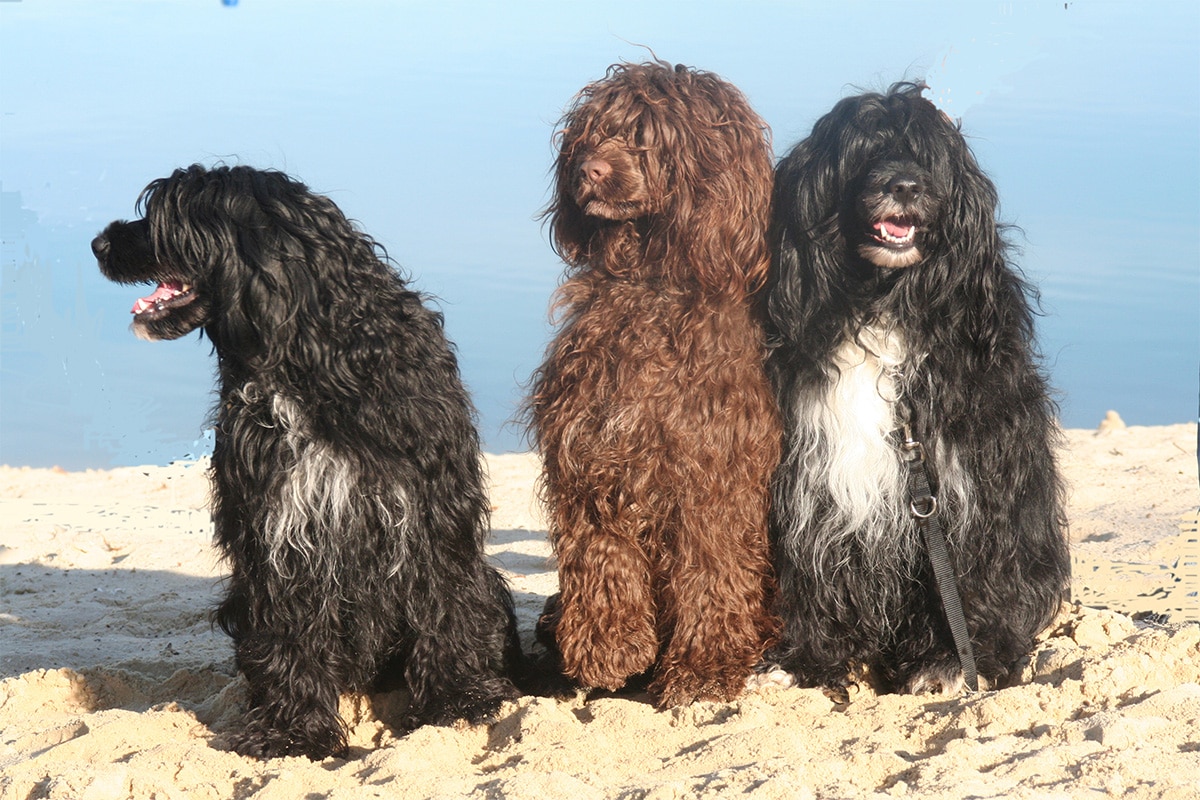
The coat of the Curly-coated Retriever is your brand. Has a black or brown fur (liver) solid formed by small curls that remain glued to the skin and cover the body from head to tail, although sometimes they are somewhat looser in the ears. The hair has a fairly soft texture but is very resistant, and provides excellent protection against water, the climate and vegetation. They are usually a little longer in the ears, the belly, the thighs, feet and legs. During the exhibitions, the hair on the tail is usually trimmed for purely aesthetic reasons. Last, does not have undercoat. On the other hand, their fur is usually somewhat oily, making you more likely to cause reactions in people with dog allergies.

Last, the breed is characterized by a fairly marked sexual dimorphism: not content with being bigger than female, the male is also noticeably more massive, with a much more developed musculature.

Size and weight

    ▷ Male size: Of 67 to 70 cm.
    ▷ Female size From 62 to 64 cm.
    ▷ Male Weight From 31 to 36 kg
    ▷ Female Weight From 31 to 36 kg

Varieties

Murray River Curly Coated Retriever

Since the 19th century there has been a smaller version of the Curly-coated Retriever, call ยซMurray River Curly-Coated Retrieverยป, but it is not recognized by canine organizations, incluido el Australian National Kennel Council (ANKC) from his native Australia.

Not all breeders of Curly-coated Retriever they have the same opinion: some consider him a distinct breed, while others see it simply as a variety of this type of "Hunting Retriever Dogs.". But, DNA tests performed on 2010 they showed that the ยซMurray River Curly-Coated Retrieverยป is closer to Spaniels than Retrievers. In fact, is the result of the crosses between these two types of dogs: the American Water Spaniel, the Irish Water Spaniel, the "English Springer Spaniel", the Chesapeake Bay Retriever and the Curly-coated Retriever.

Character and skills

The Curly-coated Retriever he is extremely endearing and is very attached to his family, to which he is very attached: wants to literally follow them everywhere from morning to night, without enjoying more than sharing their various activities.

Very playful regardless of age, gets along especially well with children, who are excellent playmates for him, and vice versa: they can spend hours together enjoying themselves in a happy and jovial atmosphere. He especially likes to search for and retrieve objects such as a ball, often to the delight of the little ones. So, it is clearly a recommended dog for children, but keep in mind that a dog should never be left with a small child without adult supervision. This is true for all races, but it is even more so with an animal of such size, since it is easy to push or even run over it by accident.

Although it is less demanding than the Labrador Retriever or the Smooth-haired Retriever, the Curly-coated Retriever need a good dose of daily physical activity. His owners must be able to allow him to exercise for at least one hour each day.

This can be done, of course, taking walks and playing with the children, but also, for example, practicing various sports for which it is especially indicated, like agility, the flyball or the discdog. The ob-rythmรฉe allows you to show the quality of your education, and reinforce it at the same time.

It also, if a lake is found on the road during a walk, no hesitation in letting yourself take a dip in it: the Curly-coated Retriever feels like all Retrievers an undisguised pleasure to evolve in the water, and he is an excellent swimming dog.

In short, the need to exercise Curly-coated Retriever it is real, but it is not excessive, what makes it perfectly compatible, for example, with active retired people, who love to go for walks and find ways to let her get enough steam out each day if walks alone aren't enough.

This is especially true if they have, for example, a large garden in which you can run as you please. A house with a garden is also the best environment for a Curly-coated Retriever, since he likes to move outdoors. Thus, not really suitable for apartment living.

But, its place is not a niche at the bottom of a garden or in a park: the attachment to his family makes it difficult for him to bear being so far away from her. Has to evolve by your side, In the House.

It also, to the Curly-coated Retriever he does not like to be alone. Even though I appreciate dog puzzles, that keep you busy for a while and stimulate you intellectually, gets bored quickly in the absence of their masters, and may become noisy or develop destructive behaviors. So, not recommended for an owner who is away most of the day (for example, because of work) and that, therefore, can't spend a lot of time with your pet.

A solution to avoid loneliness is to have him share his daily life with another dog. He is very friendly and sociable with his companions, and thrives when in contact with them, which makes it an ideal option for a household that already has one or more dogs.

If you know him from a very young age, can also live very well with a rodent, a bird or a cat. But, there is often a difference between those you don't know and those you live with. Tends to confuse the former with prey, whereas normally there is no possibility of this happening with the seconds. So, despite being sociable with other human beings, Precautions should be taken during the first encounter between a Curly-coated Retriever and a cat, rodent or bird that is unknown to you.

If he Curly-coated Retriever is able to make his family happy and to integrate wonderfully into it, do not be fooled: Your ride is not like a long calm river. In fact, although at first glance it seems very easy to live with him and he is a close cousin of the Golden Retriever and of the Labrador Retriever, which have a reputation for being "easy" breeds, not as easy to handle as they.

In fact, sometimes he can be somewhat distant and indifferent to orders. Being very smart, they like to judge what is good for them and what is not, and they are more independent than their cousin the labrador. For this reason, sometimes it's hard to get their attention when you've decided you don't like an exercise, for example.

It is also a dog that matures slowly, so you have to be patient at first. It also, if used for hunting, it is quite vain to expect me to work before 2 or 3 years, because he is not very efficient during his prolonged period of adolescence. But, knows how to compensate later, showing its great qualities as a working dog: armed with a very strong determination, don't give in until homework is done.

While waiting for the threshold at which you have reached -finally- Adulthood, what is around 3 years, sustained training is necessary to be obedient, and also to try to make it less destructive. In fact, during all this time, far from being the wisest, since it has a tendency to tip over and, above all, to chew everything in its path. In fact, any fragile or valuable object should be kept out of their reach. Nor should we be surprised to see him walking with slippers or cushions: be destined to inform for centuries, take objects in the mouth and move them (potentially degrading them in the process) it's literally without your genes. At the beginning, it may also be wise to give access to only a few rooms in the house, thus limiting breakage. You should also offer him toys that he can easily damage, to try to direct your attention to objects that are safe. You can also bite the hands of those around you.

Distrustful of strangers, he is shy at first with the guests, although he verifies that his master welcomes them very positively. On the other hand, when faced with a human being who is obviously unwelcome, he is quite protective and even impressive, and won't stop barking loudly to deter the intruder. It is an excellent watchdog.

On the other hand, if you are balanced and capable enough to exercise, not especially loud, and only uses his voice to warn of the arrival of a stranger.

Observations

The Curly-coated Retriever, It is a rare watch dog and find, both in their country of origin and in the rest of the world.

A key characteristic in his character, unlike other Retrievers, is that he is usually very reรฑidor with other dogs, and that can that he has hindered its spread…

Education

To the Curly-coated Retriever fundamentally loves to learn; once you are motivated, training sessions are a pure pleasure, and progresses exponentially.

But, this motivation does not come naturally, since he has a tendency to judge for himself the interest of each of the exercises that are proposed to him. If you are not convinced by the day's activity, does not stop letting you know, in particular being ostensibly distant; So, sometimes it's hard to get their attention. You also need variety, so it is necessary to be able to regularly introduce something new to keep it receptive: if the same exercises are always suggested, gets bored quickly and shifts attention to something else. The owner's mood also influences their dog's motivation: a smiling and cheerful attitude makes you much more willing to listen and work. He is also very receptive to positive reinforcement methods., that are based on the use of all kinds of rewards (compliments, candies, petting) to encourage you to give your best.

You need a teacher who is not only intelligent and enthusiastic, but have some confidence in yourself, capable of instilling in him a good working base and the limits that he should not cross. If that is not the case, your great intelligence can lead you to win the game.

One of the main trends you should try to address is the puppy's propensity to engage in destructive behavior and, in particular, to bite and nibble everything that is put in the mouth. In principle, this disappears in adulthood, but it may be wise to suppress this type of behavior when caught on the spot, in an attempt to limit the phenomenon. This is especially true when taking it out on family members, with both adults and younger children: may look pretty and harmless when they are still very young, but it can be much more dangerous once they are adults.

This is especially helpful, since the Curly-coated Retriever takes a while to become an adult, and can be immature to a fairly old age. These may include, some dogs used for hunting are not really trained to go out into the field and be really effective at it until the 3 years of age. So, it is necessary to have some patience and understanding in the first years of life…

In any case, individuals destined to have sex in water must get used to entering and evolving in water as soon as possible. Usually, this is not a problem, since representatives of this breed are naturally attracted to water points, but they move more easily since they swim in them since they are very young. They must also be taught their future role as hunters and rapporteurs. To the extent that they carry it in their genes, it is not a major difficulty, but you have to teach them to do it under the orders of their owner, so that they do not harm the prey when catching it.

Last, like any dog, the Curly-coated Retriever must benefit from great socialization work started at a very young age. This is all the more necessary since they often tend to distrust strangers. So, it is necessary to make him know all kinds of humans and other animals (both congeners and representatives of other species), but also expose him to all kinds of stimuli (noises, smells…) and environments. This helps them feel comfortable in any circumstance and prevents negative reactions such as stress., fear or distrust in the face of what is unknown to them. A well socialized puppy lives much better with humans.

Health

In general, the Curly-coated Retriever is in good health.

Besides having an original look, its coat is highly waterproof and protects it from inclement weather and especially low temperatures.

But, is more exposed to certain potential problems:

  • The Hip Dysplasia, which affects most large dogs and is usually hereditary. The femur does not fit perfectly into the pelvic socket of the hip joint; some individuals show no symptoms, but others suffer pain and lameness. Osteoarthritis can also develop over time as the animal ages;
  • elbow dysplasia, also hereditary and common in large dogs, especially in Retrievers. This developmental abnormality of the elbow affects one or both front legs and causes lameness., often even before the puppy is one year old. Usually requires surgical intervention;
  • Dilatation-torsion of the stomach, a serious syndrome that affects large dogs with deep chests, as the Curly-coated Retriever. The animal dies quickly if a veterinarian is unable to intervene quickly ;
  • The type III glycogenosis, which consists of an excessive accumulation of glycogen in the liver and muscles. Provokes, among other things, weakness, rigidity, exercise intolerance, increased need for sleep and difficulty swallowing. It is incurable and leads to the death of the dog around the 2 years of age;
  • The epilepsy, which is the result of excessive electrical activity in the brain and leads to short and more or less regular seizures. With good veterinary care and the use of appropriate medication, normally does not prevent the animal from leading a normal life ;
  • The alopecia, that is to say, refined and progressive hair loss in various parts of the body, according to different possible patterns. Do not let the dog spend a long time lying on hard and rough surfaces, like concrete, helps limit the problem.

Like all Retriever-type dogs, the Curly-coated Retriever you also have an increased risk of developing tumors and other cancers. In fact, it is the main cause of death in this breed, long before old age, According to a study carried out jointly in 2004 by the British Kennel Club and the British Small Animal Veterinary Association. More concretely, the most common forms of cancer seen in this breed are :

  • The linfosarcoma, one of the most common cancers of all races. It can appear in various parts of the body, like spleen, the gastrointestinal tract, lymph nodes, the liver and bone marrow. Treatment is by chemotherapy, sometimes in addition to surgery. Referral rates are pretty good;
  • The adenocarcinoma, which is the development of malignant cells most often from the uterus, mammary glands and intestines. Most of the time, these cells spread to the lungs or anus. Surgery is often used to treat this disease.;
  • The fibrosarcoma, a tumor that can affect any part of the body, including bones. surgery is inevitable, and sometimes chemotherapy is required, immunotherapy or radiation therapy. The prognosis for recovery varies greatly from case to case.;
  • The mast cell tumors, which are the most common in the skin of dogs. Most often they form on the legs, around the anus or on the chest, but they can also arise towards the head or neck. Treatment varies from case to case, but usually includes surgery and chemotherapy;
  • The melanoma is a cancer that affects the cells that produce pigments in the skin, called melanocytes. Although most melanomas are found on the skin, They can also develop on the gums, and treatment may require amputation of part of the jaw. Usually treated with surgery and chemotherapy;
  • The hemangiosarcoma, a form of malignant cancer found in the lining of blood vessels and in the spleen. Can be treated with surgery and chemotherapy, but the affected animal is unlikely to recover;
  • The osteosarcoma, a bone cancer that initially causes lameness. Usually entails amputation of the affected leg and heavy chemotherapy. It is very rare to be able to survive this disease, as the problem is often diagnosed too late. Once identified, the affected person may live between 9 months and 2 years longer than if it had not been treated.

Once identified, an affected dog can live between 9 months and 2 years longer than if it had not been attended.

Last, the breed is also especially prone to eye problems, as :

  • The entropion, corresponding to a defect that rolls the eyelid inward, causing irritation of the eyeball. Both eyes may be affected or only one; in both cases, surgical intervention can be performed to remedy the problem;
  • The ectropion, a curl defect of the lower eyelid. The lower eyelid then does not perform its function of protecting the eye, which makes you more susceptible to irritation or conjunctivitis. Surgery is used to treat the most severe cases;
  • The distiquiasis, an abnormality in the implantation of eyelashes on the eyelids that can cause irritation of the eye and even the development of corneal ulcers;
  • Persistent pupillary membrane, when the dog's pupillary membrane stays in place, while normally it is supposed to disappear during its first 6 months. The dog's vision is usually slightly affected;
  • The cataract, that can affect one or both eyes and cause partial or total opacity of the same. At the beginning, cataracts cause very little damage to the dog's vision, but they end up causing total blindness when they reach a more advanced stage. Surgery can fix it;
  • Progressive retinal atrophy, a family of incurable eye diseases that cause progressive deterioration of the retina. At the beginning, those affected have difficulty seeing at night, but as the disease progresses, the dog ends up going totally blind;
  • the retinal dysplasia, a malformation of the retina that can cause, in the most serious cases, a detached retina and, Therefore, dog blindness.

It also, individuals who are engaged in hunting -and, in general, everyone who spends a lot of time outdoors- are more at risk of injury, but also parasites and spikes, that those who are only meant to keep company.

Last, the Curly-coated Retriever have a significant predisposition to gain weight. So, a certain vigilance is necessary in this matter, since obesity can, just like in humans, cause or aggravate many health problems.

In view of the large number of hereditary diseases to which the breed is exposed, go to a serious breeder of Curly-coated Retriever it is essential to maximize the chances of adopting a healthy animal free from such defects. In addition to the results of the genetic tests carried out on the parents and / or the puppy, the professional must be able to provide a certificate of good health established by a veterinarian, as well as the data of the administered vaccines, registered in the dog's health or vaccination card.

From then on, as for any race, the best way to keep you in good health is to invest in prevention. It is especially important that your dog is examined at least once a year by a veterinarian: as well as making sure you are up to date on your vaccinations, This can help you quickly spot a potential problem and remedy it before it becomes too serious..

Life expectancy

The life expectancy average of Curly-coated Retriever, is of 14,9 years, Although there are cases of dogs who have lived up 15 or 17 years of age.

Grooming

Contrary to what you might think at first glance, the maintenance of the coat of the Curly-coated Retriever it's not especially complicated. A weekly brushing is enough, but special attention should be paid to the hair on the legs, the tail and behind the ears, as it is especially dense and knots easily. In general, they lose very little hair, except during the molting period, in spring and autumn: then it is necessary to increase the frequency of brushing, to avoid finding too much hair all over the house.

These periods are also a good opportunity to bathe your dog., taking care to use a shampoo specially designed for dogs every time. In general, two bathrooms a year are enough, although, of course, do not hesitate to wash the dog when it is especially dirty. In any case, it is useless to dry it after the bath, since her hair dries very quickly. It also, your curls could be completely denatured.

As the risk of eye diseases is quite pronounced in the Curly-coated Retriever, your eyes should be maintained carefully and on a regular basis. They should be checked and cleaned with clean water at least once a week.

His ears are not for less, as his droopy form means he is more prone to developing infections at this level (ear infections, etc.). So, rigorous maintenance also needs to be done every week, to remove any dirt and moisture that may have accumulated. It also, to avoid the latter, it is recommended to dry them systematically every time they come out of the water.

Your weekly maintenance session is also an opportunity to brush your teeth with a toothpaste designed for cats.. This helps to avoid the formation of tartar and the health problems that it can lead to as much as possible.. Ideally, do it more often than once a week, or even daily.

Their claws require much less attention, especially in subjects who spend a lot of time outdoors. Natural wear and tear is usually enough to file them. But, it is advisable to remain vigilant and check from time to time that it is not necessary to cut them by hand. This is so as soon as they touch the ground, that is to say, when you hear its rattle on hard surfaces; otherwise, they could not only annoy you, but also break, at the risk of hurting you.

Regular coat care, the eyes, the ears, teeth and claws should be done delicately, rigor and precision. The first time, don't hesitate to ask a vet or groomer to show you how to do it, to learn the proper gestures. It also, accustoming your dog from a young age allows him to consider these manipulations as something normal, and that these moments take place with tranquility and good humor.

It also, it helps to take a little time to examine your dog when you return from hunting or spending a lot of time outdoors (especially in a place with a lot of vegetation, like a forest). In addition to a possible injury, this may reveal the presence of spikelets, ticks or other parasites that may have attached to the dog. In fact, they are likely to cause problems in the short to medium term, sometimes serious or even fatal.

Utility

The Curly-coated Retriever was originally created and developed as a hunting dog, especially to recover prey -especially birds- from hard-to-reach areas such as ponds and tall grass.
Today it continues to fulfill this function., and in some countries, like New Zealand, this is its main use.

But, the most common is to find him as a family companion, since he always gets along very well with children and loves to follow his masters everywhere. But, it should be able to satisfy your need for a lot of exercise, which makes it an excellent option for athletes.

Very athletic and eager to learn, can excel in many dog รขโ‚ฌโ€นรขโ‚ฌโ€นsports disciplines, starting with agility, the flyball, the discdog, obedience and prescription.

Your distrust of strangers, its propensity to bark loudly and its size also make it an effective watchdog.

Price

The Curly-coated Retriever he is the hardest retriever to find.

In Europe, it is even a very rare breed of dog, except in your country of origin. There are only a handful of breeders outside the country of origin, and prices usually range from 900 and 1200 EUR. But, sometimes you have to wait a long time on the waiting list…

One solution may be to look in the UK to adopt a puppy from Curly-coated Retriever, since the offer is much wider. The cost of adopting a puppy from Curly-coated Retriever in the UK it is much higher. The normal cost ranges from 600 and 800 sterling (700 and 900 EUR), plus the cost of paperwork and transportation. It also, in that case, It is advisable to find out about the regulations regarding the importation of a dog from abroad and to respect them.

whatever the country, the price depends, as for any dog, of brood fame, the prestige of the lineage from which it comes and, of course, its intrinsic characteristics, especially physical.

Characteristics "Curly-coated Retriever"

Coexistence is important that you have with your new friend. Before considering the acquisition of a dog of the breed "Curly-coated Retriever" you know certain factors. Not all breeds of dogs are apt to live in an apartment, you must take into account his character, their need for exercise, their interaction with other pets, their care and if you have small children, their level of tolerance towards them.

Adaptation โ“˜

3,0 of 5 stars (based on 1 review)

friendly dog โ€‹โ€‹โ“˜

4,0 of 5 stars (based on 1 review)

hair loss โ“˜

3,0 of 5 stars (based on 1 review)

Affection level โ“˜

5,0 of 5 stars (based on 1 review)

Need for exercise โ“˜

3,0 of 5 stars (based on 1 review)

Social need โ“˜

3,0 of 5 stars (based on 1 review)

Home โ“˜

3,0 of 5 stars (based on 1 review)

Toilet โ“˜

2,0 of 5 stars (based on 1 review)

Friendly with strangers โ“˜

3,0 of 5 stars (based on 1 review)

barking โ“˜

3,0 of 5 stars (based on 1 review)

Health โ“˜

3,0 of 5 stars (based on 1 review)

Territorial โ“˜

3,0 of 5 stars (based on 1 review)

Cat friendly โ“˜

3,0 of 5 stars (based on 1 review)

Intelligence โ“˜

4,0 of 5 stars (based on 1 review)

Versatility โ“˜

3,0 of 5 stars (based on 1 review)

Child friendly โ“˜

4,0 of 5 stars (based on 1 review)

Surveillance โ“˜

3,0 of 5 stars (based on 1 review)

joy โ“˜

3,0 of 5 stars (based on 1 review)

ยซCurly-coated retrieverยป images

Videos of the โ€œCurly-Coated Retrieverโ€

Type and recognitions:

  • FCI CLASSIFICATION:
  • Group :
  • Section : . .

Federations:

  • FCI – Group 8: Retrievers - Flushing Dogs - Water Dogs – Section 1: Retrievers โ“˜
  • AKCSporting โ“˜
  • ANKC Group 3 (Gundogs) โ“˜
  • CKCSporting Dogs โ“˜
  • โ€‹KC – Gundog โ“˜
  • NZKCGundog โ“˜
  • UKCGun Dogs โ“˜

FCI breed standard "Curly-coated Retriever"

Origin:
United Kingdom, England

Date of publication of the valid original standard:
28.07.2009

Use:

Hunting retriever.


General appearance:

Strong dog, Active, elegant demeanor with distinctive coat.

IMPORTANT PROPORTIONS: Slightly longer body, measured from tip of shoulder to tip of ischium, that the height at the cross.


Behavior / temperament:

Smart dog, balanced, trustworthy, brave, affable character, self-aware and independent. May seem reserved.

Head:

View of front and side it has a wedge. Well-proportioned body.

Cranial region:
  • Skull: Skull and muzzle are of the same length. Top axes of the skull and the muzzle are parallel.
  • Depression links (Stop): Bit strong.

facial region:

  • Truffle: Black on black copies, brown (liver) in the Brown specimens.
  • Jaws / Teeth: Strong jaws with perfect scissors bite, regular and complete, that is to say that the inner side of the upper incisors is in close contact with the external surface of the lower incisors, the teeth being well placed perpendicularly in the jaws.

Eyes: Large, No bulging, oval-shaped, in an oblique position. Black in black dogs; in brown dogs (liver) they present a color that blends with the color of the fur.

Ears: Quite small, insertion just higher than the eye line; well attached to the head and well covered with short curls.

Neck:

Strong, slightly arched, moderately long, without jowl; free and loose, He joins harmoniously well oblique shoulders.

Body:

  • top line: Well sustained, level. The distance between the cross and the insertion of the tail is slightly longer than that between the cross and the soil.
  • Pork loin: Short, vigorous, strong.
  • Breast : Deep well, transverse oval, reaching the elbows; the sill is visible; ribs are snugly and securely extend backwards.
  • Bottom line and belly: Slightly gathered.

Tail:

In harmonious extension of the upper line; It should reach approximately the Hock. When is the dog moving, is carried straight at the level of the upper line.

Tips

PREVIOUS MEMBERS: Straight, well located beneath the body.

  • Shoulder: Well muscled and oblique.
  • Arms: The scapula and arm are approximately the same length.
  • Metacarpus: Strong.
  • Front feet: Round, compact. Well arched toes

LATER MEMBERS: Strong and muscular.

  • Stifle-warm-patellar angulation (knee): Moderately angled.
  • Hock: Well descended and layered.
  • Rear feet: Round, compact. Well arched toes.

Movement:

Journey without effort, free and energetic, with a good range of the forelimbs and a strong push from the hind limbs. Members move in a parallel plane. As speed increases, the limbs tend to approach the median plane ยซ (single tracking ยป).

Mantle

Fur: Fully covered body, from the back of the head to the tip of the tail, for a lot of hair in the form of small firm curls, tight, well glued to the skin and frizzy hair. Without inner layer of hairs and no bald spots. Elsewhere hair smooth.

COLOR: Black or brown (liver).


Size and weight:

Height to the cross:

  • Males: 67,5 cm. (27 inches).
  • females: 62,5 cm. (25 inches).


Fouls:

Any deviation from the aforementioned criteria is considered as a fault and the severity of this is considered to the degree of the deviation to the standard and its consequences on the health and well-being of the dog., and the ability of the dog to carry out their traditional work.

FALTAS DESCALIFICANTES

  • Aggressive or fearful dog.
  • Any dog โ€‹โ€‹showing clear signs of physical or behavioral abnormalities must be disqualified..


N.B.:

โ€ข Males must have two normal-appearing testicles fully descended into the scrotum..
โ€ข Only functionally and clinically healthy dogs, with the typical conformation of the breed, should be used for parenting.

TRANSLATION: Lic. Oscar Valverde Calvo (Costa Rica) and Jorge Nallem (Uruguay).

Source: F.C.I - International Cynological Federation

Alternative names:

1. Curly (English).
2. Curly (French).
3. kraus gelockter Retriever (German).
4. Curly (Portuguese).
5. Retriever de pelo rizado, Curly, CCR, (en inglรฉs: Curly Coated Retriever) (espaรฑol).

โ–ท The world of Pets: Dogs, cats, birds, reptiles, amphibians

Welsh Springer Spaniel
Gran Bretaรฑaa Gales- FCI 126 . Flushing Dogs

Welsh Springer Spaniel

The Welsh Springer Spaniel tends to be quite shy, and for that reason he needs a good socialization when he is a puppy.

Content

History

Little is known about the origins of Welsh Springer Spaniel, but it is considered a very old breed, whose ancestors date back to Roman Britain. Renaissance tapestries show spaniels that look a lot like today's Welsh Springer; similar red and white Spaniels appear in some 18th century portraits. In the 19th century, dogs were little known, except in the Neath Valley region, in south wales.

The preponderance of dog shows at the end of the 19th century led to a renewed interest in the breed, who made his appearance at the first Kennel Club show, held in 1873. It was judged alongside the black and white Spaniel and the Welsh Springer Spaniel white. With the time, the two races parted.

For a long time he was mistaken for the English Cocker Spaniel and was not recognized until 1902.

It is an ancient race of pure origin, which was used for a time as a herding dog. Thanks to its enormous adaptability, the Welsh Springer Spaniel It is also an excellent companion dog..

The American Kennel Club recognized the Welsh Springer in 1906, but few people were interested in race. At the end of the Second World War, practically non-existent in the United States, until they were imported 11 copies in 1949. A dozen years later, the Welsh Springer Spaniel Club of America was founded. In the news, the Welsh Springer Spaniel still a well kept secret, since it occupies the position 127 between breeds registered by the AKC, in front of 113 a decade.

Photo: Welsh Springer Spaniel, Pozlovice by Pavel ล evela, CC BY-SA 3.0, via Wikimedia Commons

Physical characteristics

The Welsh Springer Spaniel differs from his cousin, the English Springer Spaniel, by a flowing red and white coat, a somewhat more relaxed personality and a slightly smaller size that ranges between 15 and 20 Kg.

With its moderate size, can be a good option for households with children: the Welsh Springer Spaniel not big enough to accidentally harm little ones, and he's not small enough to risk being hurt by overly enthusiastic kids.

Size and weight

▷ Male size: 45 – 48 cm.
▷ female size: 43 – 47 cm.
▷ Male weight: 15 – 20 kg
▷ female weight: 16 – 20 kg

Character and skills

The Welsh Springer Spaniel is loving, Intelligent, quick to learn and usually good at remembering what you have learned. Compared to many other Spaniels, he is protector of his family and his property, and prone to barking at anything that catches his eye. The Welsh Springer Spaniel can become very attached to his people, but a second dog can help you give an additional outlet to your affection.

But, with strangers, tends to be a reserved dog. Does not tend to be shy or unfriendly, but it takes time to get comfortable with new people. Children and other pets see your friendly side, especially when raised with them. But keep in mind that a Welsh Springer Spaniel boisterous may unintentionally knock over a young child, so always supervise play with young children.

In the countryside, the Welsh Springer Spaniel he is a great worker able to function in any terrain, and is more than happy to be outdoors all day, always staying close to his hunter. Its olfactory ability is excellent and it can hunt any type of game. If you live with a non-hunter family, two or three long walks a day will also satisfy your exercise needs.

Regarding training, opt for accolades, not by force. Although it may be stubborn, the Welsh Springer Spaniel responds well to constant training and rewards. Plan to start training your puppy the day you bring him home.. It is able to absorb everything you teach it even at seven to eight weeks of age.. One Welsh Springer Spaniel young man will test him to see what he can do, so try to take him to puppy kindergarten class when he has 12 weeks, and socializes, socialice, socialice. But, note that many puppy training classes require that certain vaccinations (such as kennel cough) stay up to date, and many veterinarians recommend limiting exposure to other dogs and public places until puppy vaccinations are complete (including rabies, distemper and parvovirus). Instead of formal training, you can start house training your puppy and socialize with family and friends until puppy vaccinations are completed.

Health

The Welsh Springer Spaniel are predisposed to some diseases, such as hip and elbow dysplasia, hypothyroidism and eye diseases such as entropion, glaucoma, progressive retinal atrophy and inherited cataracts.

Not all of these diseases are detectable in a growing puppy, and it can be difficult to predict whether an animal will be free of these maladies, so you should find a trusted breeder who is committed to raising the healthiest animals possible. You should be able to produce an independent certificate that the dog's parents (and grandparents, etc.) have been screened for these defects and considered healthy for breeding. That's where health records come in..

Careful breeders screen their dogs for genetic diseases and breed only the best-looking dogs, but sometimes mother nature has other ideas and a puppy can develop one of these diseases. In most cases, can still have a good life, thanks to advances in veterinary medicine. And remember that you have the power to protect your Welsh Springer Spaniel one of the most common health problems: the obesity. Keeping it at a suitable weight is a simple way to extend the life of your pet.

Life expectancy:

12 to 15 years.

Grooming

The Welsh Springer Spaniel has a smooth, silky coat that needs to be brushed and combed at least twice a week - and every time he returns from hunting- to avoid entanglement. The best tools for this task are a bristle brush and a stainless steel comb.. Brush the fur on the paws, the body and ears with the brush to remove dead hairs and use the comb for the rest of the body. You should also ask your breeder to show you how to do detailed trimming with razor and scissors to achieve a neat look..

The rest is basic care: Trim nails as needed, usually every one to two weeks. And keep your ears clean and dry, especially if your Welsh Springer Spaniel is a swimmer. Brush teeth frequently with a vet-approved pet toothpaste for overall good health and fresh breath.

Characteristics "Welsh Springer Spaniel"

Coexistence is important that you have with your new friend. Before considering the acquisition of a dog of the breed "Welsh Springer Spaniel" you know certain factors. Not all breeds of dogs are apt to live in an apartment, you must take into account his character, their need for exercise, their interaction with other pets, their care and if you have small children, their level of tolerance towards them.

Adaptation โ“˜

5,0 of 5 stars (based on 1 review)

friendly dog โ€‹โ€‹โ“˜

5,0 of 5 stars (based on 1 review)

hair loss โ“˜

3,0 of 5 stars (based on 1 review)

Affection level โ“˜

5,0 of 5 stars (based on 1 review)

Need for exercise โ“˜

5,0 of 5 stars (based on 1 review)

Social need โ“˜

3,0 of 5 stars (based on 1 review)

Home โ“˜

2,0 of 5 stars (based on 1 review)

Toilet โ“˜

3,0 of 5 stars (based on 1 review)

Friendly with strangers โ“˜

3,0 of 5 stars (based on 1 review)

barking โ“˜

3,0 of 5 stars (based on 1 review)

Health โ“˜

3,0 of 5 stars (based on 1 review)

Territorial โ“˜

2,0 of 5 stars (based on 1 review)

Cat friendly โ“˜

3,0 of 5 stars (based on 1 review)

Intelligence โ“˜

5,0 of 5 stars (based on 1 review)

Versatility โ“˜

3,0 of 5 stars (based on 1 review)

Child friendly โ“˜

5,0 of 5 stars (based on 1 review)

Surveillance โ“˜

4,0 of 5 stars (based on 1 review)

joy โ“˜

4,0 of 5 stars (based on 1 review)

Images "Welsh Springer Spaniel"

Photos:

1 – Welsh Springer Spaniel by Siri, CC BY-SA 2.0, via Wikimedia Commons
2 – Our Welsh Springer Spaniel ยซOne more timeยป (Sassa) from the Trigger kennel in Scania, Suecia by Local_Profile, CC BY-SA 3.0, via Wikimedia Commons
3 – Welsh Springer Spaniel by https://pixy.org/161994/
4 – Welsh Springer Spaniel, with 8 meses by echnoview
5 – Welsh Springer Spaniel by Siri Spjelkavik, CC BY-SA 2.0, via Wikimedia Commons
6 – Welsh Springer Spaniel by Wikipedia

Videos "Welsh Springer Spaniel"

Type and recognitions:

  • FCI CLASSIFICATION:
  • Group :
  • Section : . .

Federations:

  • FCI – Group 8: Retrievers - Flushing Dogs - Water Dogs – Section 2: Retrievers โ“˜
  • AKCSporting โ“˜
  • ANKC Group 3 (Gundogs) โ“˜
  • CKCSporting Dogs โ“˜
  • โ€‹KC – Gundog โ“˜
  • NZKCGundog โ“˜
  • UKCGun Dogs โ“˜

FCI breed standard "Welsh Springer Spaniel"

Origin:
United Kingdom, Wales

Date of publication of the valid original standard:
28.07.2009

Use:

Hunting dog


General appearance:

Symmetrically shaped dog, compact, no patilargo, evidently built to endure and dedicate himself to hard work. He is fast and very active, shows a lot of drive and vigor.


Behavior / temperament:

It is a very ancient and unique breed of pure origin. It is a robust dog, cheerful and very active. Affable character, showing no aggression or nervousness.

Head:

---

Cranial region:
  • Skull: Slightly domed, has a proportionate length; well outlined under the eyes.
  • Depression links (Stop): Well defined

facial region:

  • Truffle: Flesh to dark color; the windows are well developed.
  • Snout: It has a medium length; it is straight and quite square.
  • Jaws / Teeth: Must have strong jaws, with a scissor bite, perfect, regular and complete, that is to say that the inner side of the upper incisors is in close contact with the external surface of the lower incisors, and the teeth being placed vertically in the jaws.
  • Eyes: Hazelnut or dark, medium-sized, neither prominent nor sunken and must not show the ocular mucosa.
  • Ears: Ears should be set moderately low and hang close to the cheeks. Proportionally small, they gradually taper towards the tips and have a shape somewhat similar to the leaf of the vine..

Neck:

Long, muscular, no dewlap and well set on oblique shoulders.

Body:

Not long, but strong and muscular. The length of the body must be proportional to the height of the limbs.

  • Pork loin: Muscular, slightly arched and well attached.
  • Breast : Deep chest; the ribs are well arched.

Tail:

Previously the custom was to amputate the tail.
  • amputee: Good insertion and low, never carried above the level of the top line. Vivacious in action.
  • Without amputating: Good insertion and low, never carried above the level of the top line. Vivacious in action. With fleco. In balance with the rest of the dog


Tips

Former members:
  • General appearance: Medium long, straight and with good bones.
  • Previous feet: Round, with thick pads. Compact and cat-like; In addition, they should not be large or squashed.
Later members:
  • General appearance: Strong and muscular, wide and very well developed. They must be of good bone.
  • Femoro-tibio-patellar joints (Knees): Moderately angled, without turning in or out.
  • Legs: Deep.
  • Hocks: Well descended.
  • Hind feet: Round, with thick pads. Compact and cat-like; In addition, they should not be large or squashed.

Movement:

Agile movement, powerful, that covers a lot of ground and has a large rear drive force.

Mantle

Fur:

Smooth or flattened, dense and silky in texture, never rough or wavy. Curly hair is highly undesirable. The fore and hind legs above the hocks have moderate feather-shaped hair.; ears and tail are lightly covered with long feather hair.

Color:

Dark red and white. No other color.


Size and weight:

โ–ท Approximate height: Males: 48 cm. (19 inches) to the cross,

โ–ท Females: 46 cm. (18 inches) to the cross.


Fouls:

Any deviation from the aforementioned criteria is considered as a fault and the severity of this is considered to the degree of the deviation to the standard and its consequences on the health and well-being of the dog., and the ability of the dog to carry out their traditional work.

disqualifying fouls:

โ€ข Aggressiveness or extreme shyness.
โ€ข Any dog โ€‹โ€‹showing clear signs of physical or behavioral abnormalities.


N.B.:
  • Males should have two normal-appearing testicles fully descended into the scrotum..
  • Only functionally and clinically healthy dogs, with the typical conformation of the breed, should be used for parenting.

The latest changes are in bold.

Source: F.C.I - International Cynological Federation

Alternative names:

1. Welsh Springer, Welsh Starter, Welshie (English).
2. Springer Gallois (French).
3. Welsh Springer Spaniel (German).
4. (em inglรชs: Welsh Springer Spaniel) (Portuguese).
5. Springer Galรฉs (espaรฑol).

โ–ท The world of Pets: Dogs, cats, birds, reptiles, amphibians

Nova Scotia Duck Tolling Retriever
Canadรก FCI 312 . Retrievers

Nova Scotia Duck Tolling Retriever

The Nova Scotia Duck Tolling Retriever is a very intelligent dog, resistant and playful.

Content

History

Sometimes nicknamed "Tollerยซ, the Nova Scotia Duck Tolling Retriever is originally from the Little River area of รขโ‚ฌโ€นรขโ‚ฌโ€นNova Scotia, a province on the Atlantic coast of Canada. It was long known as "Little River Duck Dog" before adopting its current name in 1945.

Although its exact origins remain uncertain, it is well established that it was developed both to bring the aquatic game and to lure it to the hunter's shore in advance. The Micmacs (Mi’kmaq), First Nations people of Eastern Canada, were the first to instill this technique in their dogs. The idea came from observing how red foxes attract waterfowl to shore by splashing water to excite their curiosity, before attacking them once they have approached.

Regarding the idea of รขโ‚ฌโ€นรขโ‚ฌโ€นtraining dogs to recover waterfowl, spread rapidly in the 19th century. It was then that breeders based in England, The United States and Canada developed various breeds of Retrievers, almost all of which are named after their place of origin (Labrador Retriever, Chesapeake Bay Retriever, etc.). This is also what Canadian breeders in the Little River area did, more specifically from Yarmouth County, with the exception that they aspired to create a dog capable of attracting game, drawing inspiration from the knowledge of the Micmacs. To achieve your goal, crossed the dogs used by the Micmacs with others Retrievers (as the Golden Retriever), as well as with him English Springer Spaniel, the Irish Setter and some Collies used by farmers in the region. The result of his work was called the Little River Duck Hunting Dog.

The fact that this place was quite remote is probably largely due to, for more than a century, only known in his native region. In 1945, the Canadian Kennel Club (CKC) officially recognized the breed and renamed it Nova Scotia Duck Tolling Retriever. This recognition took her out of anonymity.

Over the years 60, the Toller began to be used more in the United States, although its popularity remained limited. Was not up 1984 when a breed club was created in the country, and up 1987 when it was officially recognized by the United Kennel Club (UKC). Regarding the other reference organization in the country, the American Kennel Club (AKC), did the same only 16 years later, in 2003.

It also spread across Europe, especially after its recognition for the Fรฉdรฉration Cynologique Internationale (FCI) in 1981.

In England, made its appearance mainly through hunting clubs and dog competitions, like the ring and agility. He was recognized by the Kennel Club (KC) in 1988.

Both in Canada and in the rest of the world, the breed is known primarily to fans of waterfowl hunting. Its use as a family dog โ€‹โ€‹is gaining popularity in many countries., but it is still far from being one of the most popular breeds.

In United States, for example, the race occupies around the post 80 (of something less than 200) in the AKC breed classification based on the number of annual AKC registrations, having uploaded some 20 put in 2010.

The rise has been even steeper in France, where, However, started from a lower base. In effect, while the number of registrations in the Livre des Origines Franรงais (LOF) I was not in my twenties before 2010, multiplied by more than five over the next decade, until exceeding one hundred at the end of the latter.

On the other hand, en el Reino Unido, the appeal of Nova Scotia Duck Tolling Retriever has been generally stable over the same period: despite occasional spikes in some years, the Kennel Club registers around 200 births per year.

Physical characteristics

The Nova Scotia Duck Tolling Retriever, is a dog from medium-sized, powerful, compact structure, muscular and well-proportioned body.

One of its many characteristics to highlight is its extreme agility, determination and Security their movements.

It is from the section of the Retrievers, the smallest of all, the males measuring of 48 to 51 cm. and females of 45 to 48 cm..

Their eyes are size medium, almond-shaped and mostly range from amber to brown in color. Its expression is friendly, lively and with some mischief.

The ears they are medium-sized and form triangular. Its tail, wide at the base and thinner towards the tip is populated with generous fringes.

Its the mantle of double layer and waterproof, the layer external the way a soft hair with medium length, and internal layer, It is composed of a dense and even softer hair.

The color the layer can be of several all within the range of the Orange. They may have white markings at the tip of the tail, the feet, the breast and chest.

It is currently used mostly for waterfowl hunting, When you separate charge, acts as a lure, attracting the birds' attention with its movements and jumps.

Height and weight

    ▷ Male size: of 48 to 51 cm.
    ▷ female size: Of 45 to 48 cm.
    ▷ Male weight: Of 20 to 23 kg
    ▷ female weight: Of 17 to 20 kg

Character and skills

The Nova Scotia Duck Tolling Retriever He is intelligent and independent, with sense of humor, curiosity and ability to play. But, needs a firm master who provides a framework with clear boundaries, or else you can become the master of your own mind and become the master of the house.

In particular, it is an ideal dog with children, since it shows an energy at least equal to theirs and does not stop bringing what they send for. But, It's important to put attention on, regardless of race, a dog should never be left alone with a young child without adult supervision.

He usually gets along well with his peers - especially those of his own race- and is usually happy in his company. Living with other pets, on the other hand, it's much more chaotic. His strong hunting instinct leads him to consider cats and other small domestic animals as prey, and therefore to chase them. Fencing the garden is strongly recommended to prevent it from chasing other animals. It is useless to hope that an underground electric fence can stop it., since the discomfort he feels is no match for his hunting instinct. The latter also clearly explains why it is preferable to keep him on a leash when out in public.

In any case, can be counted on to report anything that seems abnormal. Constantly on the prowl, will not stop warning as soon as someone approaches the house. Next, he usually copies his answer to his master's, and does not hesitate to defend it if necessary. On the other hand, if you see that the newcomer is welcome, does the same, maintaining the natural reserve that it has towards strangers.

The Toller is not recommended for apartment living, if only because it can be relatively noisy. Does not bark excessively, but when he gets excited (either by certain noises, from the sight of small animals or from the game), emits an almost shrill bark, which some breeders and owners describe as hard to bear. Of course, this problem is less pronounced if the apartment is rather quiet. In any case, adjusting to apartment living depends on being provided with a sufficient amount of exercise, that is to say, at least an hour a day.

This is especially true during their first year of life., during which he is extremely active and playful. It is then necessary to provide a large number of stimuli and activities, but at the same time you have to know how to moderate your ardor. In effect, while in full development and has not fully developed its muscles (what happens around one year of age), remains especially fragile. So, you need to increase the duration and intensity of exercise very gradually throughout your growth period, at the risk of causing injuries or even malformations that would penalize him for the rest of his life.

After his first birthday, the Nova Scotia Duck Tolling Retriever becomes much less hyperactive. Conserve a large amount of energy, but you can settle for a good hour of daily activity to keep your feet on the ground. But, there is something else: it is an ideal dog for a sports master, who wants to take his partner for long walks, for example. Able to easily adapt to different environments, it is a very good traveling companion.

During their pilgrimages, always willing to take a dip if the opportunity presents itself: having been developed to hunt in aquatic environments, swimming is one of his favorite activities, even in murky water. Not necessarily an ideal choice for a master who wants a perfectly clean companion and a flawless interior., as it gives you smart pleasure to play in the mud and roll in the dust.

Created to help humans during their hunting sessions, the Nova Scotia Duck Tolling Retriever seeks the company of his family and needs mental stimulation. He likes nothing more than keeping busy and feeling useful.. Otherwise, they are likely to get bored and start digging, chew on things or bark incessantly.

The average life expectancy is of some 12-14 years.

Observations

It is a race very rare in Europe, However in North America it is quite popular and is widespread.

Education

Because they are constantly trying to please their owners, the Nova Scotia Duck Tolling Retriever they are quite easy to train. This is especially true because he likes to be mentally stimulated and useful., so he is always ready to learn new orders.

But, as he has a relatively strong temperament, it is best to avoid trying to train him under pressure or duress, as he finds it hard to bear and may even refuse to cooperate. On the other hand, dog training techniques based on positive reinforcement, employed by a quiet master, patient and persistent, are exactly what you need. As long as you are motivated and find an interest in what you do, he is a very good student.

It may take some subtlety to establish authority and respect for your dog without rushing him, but this is necessary to develop your trust in your master and for both of you to have fun together during training sessions. Consistency is also important: if the rules are not clear or consistent over time or among household members, most likely he will decide for himself what to expect.

Puppy socialization is important to all breeds, but it is even more important for the Toller, who can be especially reserved with strangers. Thus, it is important to let you meet all kinds of people, other animals and situations from an early age, to prevent him from becoming a shy adult.

One of the easiest things to do in raising a Nova Scotia Duck Tolling Retriever is to teach you to bring things home to order, because he is a born dog. This can be checked if it is used for hunting: requires few stimuli and quickly integrates behaviors such as baiting or game recovery, that are quite natural for him.

Imitation learning can be an important part of your education, since he is very attentive and learns a lot through observation. Clicker training is also especially effective with it, as it is more stimulating for him to learn to perform tasks in response to a visual or auditory cue, like the sound of a whistle or clicker, that by repetition. It also, hates repeating the same exercise over and over again: to ensure your full cooperation, it is better to diversify the training sessions.

Also performs very well in shows and obedience, as well as in agility competitions. Teaching him these dog sports and practicing them with him are excellent levers to use in his education.: keeps you busy and stimulates you both mentally and physically.

Translation done with the free version of the translator www.DeepL.com/Translator

Health

The Nova Scotia Duck Tolling Retriever is generally a healthy dog.

But, the relatively small gene pool on which it is based has led to the emergence of inbreeding-related diseases in the breed's population.

The main risks to which you are exposed are the following:

  • the Hip Dysplasia, which may be favored by a hereditary predisposition. Is a source of pain, lameness and then osteoarthritis. The set reduces the mobility of the animal;
  • The patella dislocation, an orthopedic condition that, according to its severity, may be asymptomatic and cause simple discomfort or total loss of knee mobility. In the most serious cases, corrective surgery is required;
  • Progressive retinal atrophy, an inherited disease that first affects night vision, then to the daytime and, finally, leads to total blindness of the dog;
  • Collie eye abnormality, an inherited disease that may or may not be progressive. when it is so, can end up causing blindness of the dog;
  • The Addison's disease (hipocorticism), an endocrine disorder that develops more often in women between the ages of four and six. Produces general weakness, anorexia, vomiting, diarrhea and weight loss;
  • The Hypothyroidism, which is the result of an alteration of the thyroid gland and causes lethargy, weight loss and hair loss, as well as great fatigue;
  • The deafness, that usually appears around the 7 u 8 years in affected individuals. Some bloodlines seem to be more prone to it than others.

It also, due to the folded shape of his ears, are more prone to infections at this level, like otitis.

Adopt from a breeder Nova Scotia Duck Tolling Retriever professional and reputable offers guarantees for a number of possible genetic diseases, thanks to the tests that have had to be carried out on the parents or the puppy. The breeder should also be able to provide details of the vaccinations the puppy has received, as recorded in your health or vaccination record, as well as a certificate from a veterinarian attesting to the good health of the puppy.

Of course, this does not exempt you from doing everything possible to keep you healthy throughout your life. In this issue, prevention plays an important role, just like in humans: it is important to make sure they are examined by a vet at least once a year. This routine check-up can allow, in particular, detect a possible health problem at an early stage, but also make sure you don't miss one of your shots.

Life expectancy

Of 12 to 14 years

Grooming

The Nova Scotia Duck Tolling Retriever it is an easy-care dog.

A weekly brushing is usually enough to keep their coat shiny and tangle-free.. The exception is during the spring and fall shedding periods., when daily brushing is recommended to remove the numerous dead hairs.

How sometimes he likes to play in the mud and get dirty, regular bathing may be necessary, especially to avoid the accumulation of dirt in the coat. How you like water, not usually recalcitrant. But, be sure to use a shampoo specially designed for dogs, as it can damage your skin.

Take advantage of your dog's weekly coat maintenance session to check the condition of his eyes and clean them.

Looking at your ears, require special vigilance, since its folded shape implies an increased risk of infection. They should also be carefully examined and cleaned weekly.. It also, It is recommended to dry them after swimming to prevent moisture from settling, as it facilitates the development of bacteria.

You should also brush your teeth at least once a week. Otherwise, as with any dog, plaque build-up will eventually lead to tartar build-up, which can cause bad breath and other ailments. Even more frequent brushing is recommended, ideally every day. In any case, it is essential to use a toothpaste specially designed for dogs.

Looking at its claws, natural wear and tear is usually enough to file them. But, You must periodically check that this is the case.. If that is not the case, must be manually trimmed with a dog nail clipper, as otherwise there is a risk that they will become a nuisance or break.

The different gestures to maintain the coat, the eyes, the ears, your dog's teeth or claws aren't necessarily natural, especially for a beginner owner. But, it is not only essential to do them, but also to do them without risk of injuring or even harming the animal. So, it may be wise to learn them from a vet or groomer the first time, to make sure you know how to do them correctly after. By the way, the sooner you get used to your dog, the less likely you are to feel uncomfortable or even recalcitrant during these operations.

It is also essential to ensure that you exercise on uneven and rather abrasive surfaces: this keeps your pads in good condition and prevents them from becoming too soft, since then they would accumulate dirt more easily and be more prone to lacerations.

Use

The Nova Scotia Duck Tolling Retriever It is mainly used as a hunting dog for waterfowl, which is capable not only of recovering, but also to attract the hunter. English name Nova Scotia Duck Tolling Retriever reflects this particularity, since the word ยซtollingยป comes from the verb ยซtollenยซ, What does "attract" mean?.

To attract waterfowl, plays on the edge of the pond and makes splashes that sound a bit like a duck flapping its wings on the surface of the water. curious by nature, waterfowl come to shore to see what happens. When they are close enough, the great retreats behind the hunter's shed, and it rises to chase away the game and make it fly: just shoot your prey. Next, the dog re-enters the scene, this time to search and retrieve the downed game. This ingenious technique requires a lot of control, obedience and complicity, and it is precisely by emphasizing these traits that the race was created and developed.

In addition to his quite unique hunting skills, the Toller also excels in a large number of canine sports disciplines, like the ring, el agility, obedience, the flyball and even the canine frisbee (discdog).

It is also a good family dog, who gets along especially well with children and loves to do all kinds of activities with his master.

Quite suspicious of strangers and always attentive, is always alert barking when a stranger approaches the house, although not the most dissuasive or aggressive of guard dogs, far from it.

Last, as long as, of course, receive specific training, They can also be part of the very selective group of maritime rescue dogs..

Characteristics "Nova Scotia Duck Tolling Retriever"

Coexistence is important that you have with your new friend. Before considering the acquisition of a dog of the breed "Nova Scotia Duck Tolling Retriever" you know certain factors. Not all breeds of dogs are apt to live in an apartment, you must take into account his character, their need for exercise, their interaction with other pets, their care and if you have small children, their level of tolerance towards them.

Adaptation โ“˜

3,0 of 5 stars (based on 1 review)

friendly dog โ€‹โ€‹โ“˜

5,0 of 5 stars (based on 1 review)

hair loss โ“˜

3,0 of 5 stars (based on 1 review)

Affection level โ“˜

5,0 of 5 stars (based on 1 review)

Need for exercise โ“˜

5,0 of 5 stars (based on 1 review)

Social need โ“˜

4,0 of 5 stars (based on 1 review)

Home โ“˜

3,0 of 5 stars (based on 1 review)

Toilet โ“˜

2,0 of 5 stars (based on 1 review)

Friendly with strangers โ“˜

3,0 of 5 stars (based on 1 review)

barking โ“˜

2,0 of 5 stars (based on 1 review)

Health โ“˜

4,0 of 5 stars (based on 1 review)

Territorial โ“˜

3,0 of 5 stars (based on 1 review)

Cat friendly โ“˜

3,0 of 5 stars (based on 1 review)

Intelligence โ“˜

4,0 of 5 stars (based on 1 review)

Versatility โ“˜

3,0 of 5 stars (based on 1 review)

Child friendly โ“˜

5,0 of 5 stars (based on 1 review)

Surveillance โ“˜

2,0 of 5 stars (based on 1 review)

joy โ“˜

5,0 of 5 stars (based on 1 review)

Images ยซNova Scotia Retrieverยป

ยซNova Scotia Retrieverยป Videos

  • FCI – Group 8: Retrievers - Flushing Dogs - Water Dogs – Section 1: Retrievers โ“˜
  • AKCSporting โ“˜
  • ANKC Group 3 (Gundogs) โ“˜
  • CKCSporting Dogs โ“˜
  • โ€‹KC – Gundog โ“˜
  • NZKCGundog โ“˜
  • UKCGun Dogs โ“˜

FCI breed standard "Nova Scotia Duck Tolling Retriever"

Origin:
Canada

Date of publication of the valid original standard:
24.06.1987

Use:

The retriever runs, jump and play along the shore in sight of a flock of ducks, sometimes disappearing and then quickly reappearing, supported by the action of the hidden hunter, who throws wands or a ball at him. The dog game attracts the attention of ducks that approach the shore and are drawn within range of the shooting line.. Then, the hunter
order the dog to collect the injured or dead birds.


General appearance:

This is a medium-sized dog, powerful, compact, well balanced and muscular with medium to thick bones. Has great agility and determination and is always alert. Many dogs of this breed have a slight expression of sadness, but when they work their appearance changes and they show great concentration and enthusiasm. During work, moves and rushes quickly, raises the head almost to the level of the back and constantly wags its tail covered with abundant fringes of hair.


Behavior / temperament:

This is a very intelligent and easy-to-train dog that has great stamina.
He is a good and skilled swimmer, a tenacious collector by nature, both on land and in the water. He is ready for action as soon as he receives the slightest hint that the hunt will have to charge.. His great enthusiasm as a collector and his playful nature are essential qualities that he must possess to deceive and collect the game..

Head:

The head is well defined and has a slight wedge shape.

Cranial region:
  • Skull: The broad skull is only slightly rounded; occiput is not prominent and cheeks are flat. Some measures
    suitable for an average male would be 14 cm between ears, decreasing to 3,8 cm on the muzzle. The length of the head is approximately 23 cm from nose to occiput, but its size must be in proportion to the size of the body.
  • Depression links (Stop): Moderate.

facial region:

  • Truffle: Tapers from base to tip. The Windows are wide open. The color must be black, or harmonize with the coat.
  • Snout: It decreases in a well-defined line from the naso-frontal depression to the nose.. The lower jaw is strong, but not prominent. The lower line of the muzzle is almost straight from the corner of the lip to the angle of the jaw. The depth of the muzzle at the level of the naso-frontal depression is greater than at the level of the nose. The hair on the muzzle is short and fine.
  • Lips: Lips are quite tight, forming a smooth curve in profile. The lips are not thick.
  • Jaws / Teeth: The jaws are strong enough to hold a sizable bird.. Mouth smoothness is essential. The correct joint is in the form of a narrow scissor; a full denture is required.

EYES: They are well separated, they are almond-shaped and medium in size. Its color ranges from amber to brown. They are friendly in expression, alert and intelligent. The skin around the eyes should be the same color as that of the lips.

EARS: They have a triangular shape, they are medium in size and set high, well toward the back of the skull; the base is very slightly erect. The back of the double has a fringe of hairs. The hair is short at the tip, which is rounded.

Neck:

Is medium sized, well muscled and well inserted. There is no presence of dewlap.

Body:

  • top line: Evenly horizontal.
  • Back: It's short and straight.
  • Pork loin: Strong and muscular.
  • Breast : Deep, chest descends to elbows.. Snugly ribs, neither flat nor barrel-shaped.
  • Belly: Moderately withdrawn.

Tail:

Follows the slight natural slope of the rump. It is wide at the base, with abundant and exuberant fringe of hair. The last vertebra reaches at least as far as the hock. The tail can be carried lower than the level of the back, except when the dog is alert, in which case he hunches over and stands up, although it never touches the body.

Tips

PREVIOUS MEMBERS:

  • As a whole: Front members should look like parallel columns. They are straight and strong boned.
  • Shoulder: They must be very muscular; shoulder blade is well attached and tilted back, allowing the inclination of the withers towards the region of the back, which is short The shoulder blade and forearm are approximately the same length.
  • Elbows: They must be attached to the body, without deviating or inward, nor out. Its movement must be free and uniform.
  • Metacarpus: They are strong and slightly sloping.
  • Front feet: They are medium in size and rounded with well developed skin between the toes.. Fingers are well together and arched. The pads are thick. Dewclaws can be removed.

LATER MEMBERS:

  • As a whole: They are muscular, wide and square in appearance, posterior and anterior angulations should be balanced. Thigh and leg are approximately the same length.
  • Thighs:Well muscled.
  • Knee: Well angled.
  • Hocks: Well placed close to the ground,without deviating or inward,nor out. There should be no dewclaws.
  • Rear feet: Like the forwards.

Movement:

The Nova Scotia Collector movement is powerful at the same time, elastic and lively. The forelimbs show good range and the hindlimbs give great momentum. The feet should not deviate or inward, nor outwards and the limbs must move in a straight line. As speed increases, the feet tend to come closer when they land on the ground, forming a single footprint; the top line must remain uniform.

Mantle

HAIR : Since this dog was bred to collect hunting in icy waters,must have a double coat, waterproof,of moderate length and softness, and a softer and denser undercoat. On the back it can be slightly wavy, but in the rest of the body it is stretched. In winter it can form a long, loose curl in the throat. The fringes of hair are soft on the throat,behind the ears and behind the thighs. In the forelimbs the fringes of hair are moderately developed.

COLOR: It comes in various shades of red or orange; the fringes of hair and the lower part of the tail are lighter. For the usual, one of the following white markings can be seen: at the tip of the tail, the feet (without extending beyond the metacarpals or hocks), the chest, and a white list on the forehead. A dog that shows otherwise great qualities should not be penalized for not presenting white markings.. The pigment of the nose, the lips and the rim of the eyes should be flesh-colored, harmonizing with that of the fur, or black.


Size and weight:

Ideal height: For males over 18 months is 48 to 51 cm., and for females over 18 months, is of 45 to 48 cm..
Allowed 2,5 cm above or below the ideal size.

Weight: It should be in proportion to the height and bone structure of the dog; of 20 to 23 kg for adult males, and 17 to 20 kg for adult females.


Fouls:

Any deviation from the aforementioned criteria is considered as a fault and the severity of this is considered to the degree of the deviation to the standard and its consequences on the health and well-being of the dog..

SERIOUS FAULTS:

โ€ข Longitudinal axes of the nasal ridge and snout diverging or converging.
โ€ข Abrupt naso-frontal depression.
โ€ข Clearly pink nose.
โ€ข Truffle, eyes and rim of the eyes of a color other than the established one.
โ€ข Superior prognathism.
โ€ข Round and large eyes.
โ€ข Convex or concave back.
โ€ข Loose loin.
โ€ข Tail carried below the level of the back when the dog is moving. Tail too short, or if it curls up and touches the back.
โ€ข Pasterns too inclined.
โ€ข Crushed feet, with thin pads.
โ€ข Separate coat (not thick enough).
โ€ข Adult dog that lacks substance.
โ€ข Dogs with 2,5 cm above or below ideal height.

FALTAS DESCALIFICANTES:

โ€ข Aggressiveness or extreme shyness.
โ€ข Any dog โ€‹โ€‹showing clear signs of physical or behavioral abnormalities.
โ€ข Any signs of shyness in adult dogs.
โ€ข Partially depigmented nose.
โ€ข Superior prognathism of 3 mm (1/8 inch).
โ€ข Lower prognathism. Deviated arch of incisors.
โ€ข Absence of skin between the toes.
โ€ข White color on the shoulders, around the ears, behind the neck, through the back or on the flanks.
โ€ข Silver fur, gray or with black areas.
โ€ข Any color other than red or orange tone.


N.B.:

โ€ข Males must have two normal-appearing testicles fully descended into the scrotum..
โ€ข Only functionally and clinically healthy dogs, with the typical conformation of the breed, should be used for parenting.

Source: F.C.I - International Cynological Federation

Alternative names:

1. Yarmouth Toller, Tolling Retriever, Little Red Duck Dog, Little River Duck Dog, Toller, Duck Toller (English).
2. Nova Scotia, (Nova Scotia Duck Tolling Retriever en anglais) (French).
3. Nova Scotia Retriever, Toller (German).
4. (em inglรชs: Nova Scotia duck tolling retriever) (Portuguese).
5. en inglรฉs: Nova Scotia Duck Tolling Retriever, Toller, Novie, Retriever (espaรฑol).

โ–ท The world of Pets: Dogs, cats, birds, reptiles, amphibians

Kooikerhondje (Kooiker)
Holanda FCI 314 . Flushing Dogs

Kooikerhondje

The Kooikerhondje initially it was registered among the companion dogs. Outside Holland it is practically unknown.

Content

History

This puppy with an unpronounceable original name has a long history, that begins in the Middle Ages, more specifically in the fifteenth century, when the Spanish brought the first Spaniels to the Netherlands. Several crosses with local dogs resulted in the Kooikerhondje (Kooiker). The dog quickly spread, appearing in many paintings by 17th century Dutch masters, como Jan Steen (1626-1679), but also in literature, especially in the Dutch Historian Stories Pieter Corneliszoon Hooft (1581-1647).

It was his special talent for hunting ducks that made him famous. Dutch for "small cager dog" (other name of Kooikerhondje – Kooiker). He was trained to lure ducks with his white plumed tail into trapped channels that ended in a cage (ยซeendenkooiยซ, in Dutch), where the hunters (ยซkooikerยซ) they could catch them easily. The specimens used for this hunting technique were called ยซhondjes de Kooikerยซ, and the name has remained in this breed.

Apart from the Kooikerhondje (Kooiker), few breeds are capable of learning this hunting technique. A notable exception is the Nova Scotia Duck Tolling Retriever, which appeared in the 19th century and is generally considered to be a descendant of the Kooiker.

But, the usefulness of the dog did not end there: when it wasn't duck hunting season, it was used to hunt vermin.

Its population declined rapidly between the two wars, mainly due to the abandonment of this hunting method (which required a lot of work to keep the channels from the traps) in favor of the use of the rifle, facilitated by the greater precision of firearms. Like this, on the eve of World War II, the breed had almost disappeared, with a total number of individuals estimated at only thirty.

After the invasion of the Netherlands in 1940, the baronessa von Hardenbroek of Ammerstol, in the spirit of resistance to the German occupation, decided to save this typically dutch dog. Delivered a black and white photo to several street vendors, asking them to notify you if they encountered such an animal. That's how he found Tommy, a female Kooiker from the North of the Netherlands, which was the reason for the rebirth of the breed as we know it today.

Among 1942 and 1976, the baroness raised 52 layers of Dutch foxhounds that were named after his kennel, from Valhalla, and obtained the recognition of the breed by the Raad van Beheer (the official canine organization of the country) in 1971. Later, the breed was recognized by the Fรฉdรฉration Cynologique Internationale (FCI) in 1990 and by the United Kennel Club (UKC) American in 1996. The other leading American organization, the American Kennel Club (AKC), did the same in 2004.

If he Kooikerhondje (Kooiker) has become a relatively common dog in its country of origin, not yet the case in the rest of the world, where remains unknown. But, things seem to be changing since the decade of 2010.

Like this, en el Reino Unido, where it is recognized by The Kennel Club, Enrollments have increased considerably since 2013, to the point of already exceeding fifty copies a year.

Also in France there is a certain madness for this breed: while in 2007 and 2012 they only signed up 5 specimens in the LOF (French Origin Book), between 2013 and 2018 there were more than 200.

In United States, the Dutch for "small cager dog" still very weird, but the Dutch Kooikerhondje Club of America (NKCUSA) registered 11 new breeders in 2018 and 2019, suggesting that the breed is also enjoying growing interest there, and that its population will increase rapidly.

Photo: Kooikerhondje puppy by Petful

Physical characteristics

The Kooikerhondje – Kooikerhondje is a medium-sized dog with a harmonious build, with a general appearance reminiscent of a Spaniel. Her body, slightly longer than tall, he is muscular but thin: they are dogs made for speed and agility. The tail follows the line of the back and reinforces its slender appearance.

The head is carried high, which gives it an aristocratic air. The skull is quite wide and rounded, while the muzzle, ending in a black nose, is slightly truncated. His dark brown almond eyes express intelligence and kindness. The ears are medium in size, placed in a line that starts from the nose and passes through the eye, falling down the cheeks.

The coat is of medium length and can be smooth or slightly wavy. The legs have a longer plumage on the hind legs than on the front ones., but it is the plumage of the tail that is most characteristic of the Kooikerhondje: long and white, giving the tail a feathery look. The long black hairs on the tips of the ears, known as "slopes", they are highly sought after.

The coat is predominantly white, with large well-marked orange-red spots on the body. The rule Kooiker accepts small marks of this color on the legs, as well as the presence of some black hairs mixed with the red-orange color. The head must have a clear white line that reaches the nose.

Sexual dimorphism is moderately marked, the male being slightly larger than the female, that tends to shed more hair during the shedding period.

Size and weight

▷ Male size: 38 – 42 cm.
▷ female size: 36 – 40 cm.
▷ Male weight: 10 – 13 kg.
▷ female weight: 9 – 12 kg.

Character and skills

The Kooikerhondje It is a loyal dog, very attached to his family, from which he does not like to part. But, they are not effusive and prefer to stay quietly by their master's side rather than jump up to show their attachment. You also need a quiet environment, and does not bear stress well: parties or frequent quarrels would risk lasting disturbance.

Logically, not a recommended breed of dog for young children, since the cries of a baby or the whims of a small child are hardly to his taste. They are much better suited to a family that shares their calm and relaxed approach to life..

They are quite suspicious of people they do not know, but they quickly accept those who pay them a little attention, especially if they take the trouble to offer them a reward.

Although it accepts other dogs of a similar character, does not particularly seek the company of other dogs. Regarding coexistence with other animals, especially with cats or rodents, can be especially difficult due to its strong hunting instinct. Even if he is able to get along with the household animals he has been raised with, the risk that one day he will start chasing the family cat is very real.

If his placid character could make him suitable for the elderly, he forgets a bit quickly that he is also very active, needing at least two hours of exercise a day. Having said that, he is not very demanding with what he does, and is just as likely to accompany its owner on a long, leisurely walk as it is to chase a ball with the children in the garden or fetch it. But, prefers water activities: to swim, jumping into the water or just playing in a pond are activities that make this water-loving dog happy, since he was originally bred to work on the canals.

If you can live in an apartment as long as your daily need for activity is met, the Kooikerhondje he greatly prefers having a garden in which to frolic. But, you need to make sure the space is well fenced because, even if I do not have a special predisposition to flee, his hunting instinct is likely to push him to run after all the animals in the region and, Therefore, to move away from your residence.

In any case, although it is generally calm, problems can arise if you don't get a chance to expend your energy and are left alone too often. In particular, the owner may face inopportune barking and / or destructive dog behavior.

Smart and attentive, to the Kooikerhondje he likes to be stimulated intellectually; they especially like obedience exercises or learning new tricks. But, your intelligence is a double-edged sword, as they quickly pick up on any hesitation on the part of their master, and they can decide to assume the leadership of the family pack. So, It is a breed reserved for a master who already has experience, in addition to being able to provide you with the stable environment you need.

Education

Like all dogs, the Kooiker needs to be socialized from a young age to get used to people, places, noises, smells… that you will know during your life. It is especially advisable to introduce the small animals that share your home as soon as possible, to minimize the risk of lawsuits or even accidents once you are an adult.

The Kooikerhondje, very sensible, reacts poorly to stressful situations and can be traumatized by traditional training methods. So, their training should be based on positive reinforcement: the compliments, accompanied by caresses and some sweets, they work much better than reprimands. But, your teacher must stand firm and consistent, so as not to confuse you and make you lose confidence in your leader's ability to lead.

It is important that all family members are involved in their education, to assimilate and accept your authority.

Active, smart and eager to please, the Kooikerhondje It is an ideal student for obedience exercises as well as for learning different dog sports.: flyball, agility, dogs-cross…

Health

The Kooiker has a small gene pool and, Therefore, is prone to many life-threatening genetic diseases. Fortunately, the work of selecting the breeders responsible for Kooiker has resulted in the practical elimination of these risks today.

These diseases with which the breed has often been associated are:

  • The von Willebrand disease, which causes blood clotting problems and can lead to death from bleeding. Widespread DNA testing since the years 90 make that today we hardly find more affected subjects;
  • hereditary necrotizing myelopathy, a neurological problem that affects the spinal cord and causes paralysis. Thanks to a responsible breeding policy, now there is less than one case a year worldwide;
  • The hereditary epilepsy, which can cause seizures that range from a few seconds to several minutes. The number of affected dogs is steadily declining, to the point that this disease only affects between 1 and 5 dogs a year;
  • The miositis, o polymositis, is a chronic inflammation of one or several muscles that can cause very different symptoms depending on the affected muscles. Potentially deadly, this disease is still relatively widespread, affecting about the 1% of the population;
  • The waterfall, an opaque filter in the eyes that can cause blindness in dogs, that has been practically eliminated;
  • The patellar dislocation moderate, which is disabling but not dangerous, and is by far the most common condition. In fact, almost the 15% of the breed representatives are affected.
  • Another risk to the health of the Dutch for "small cager dog" is obesity, so the owner should regularly check that the dog is not overweight, in addition to giving him enough exercise.

    Last, like all breeds of dogs with hanging ears, are at increased risk of ear infections.

    Life expectancy

    12 to 14 years

    Grooming

    The Kooikerhondje it is a low maintenance breed of dog. A quick weekly brushing is more than enough to keep the coat healthy. But, during the shedding periods in spring and fall, brushing more frequently is recommended to remove dead hair.

    Bathing your dog is seldom necessary. In any case, you should not bathe your dog more than twice a year, so as not to damage your skin. On the other hand, after the Kooikerhondje have fun in a pool, in the sea or in a doubtful-looking pond, it is advisable to rinse it with fresh water to remove any traces of chlorine, shall, algae or bacteria.

    On the other hand, it is advisable to take advantage of the weekly brushing session to check the eyes, teeth and, above all, the dog's ears, to ensure that there is no dirt that could cause the start of an infection or otitis.

    Last, the claws of Kooikerhondje are tough and grow relatively quickly: natural wear and tear is often not enough, and then you have to trim them manually when they have become too long.

    Utility

    Historically used for duck hunting in the canals of the Netherlands, the Kooiker is nowadays mainly a pet.

    His high level of activity and intelligence also allow him to obtain excellent results in dog sports competitions, and a patient and dedicated trainer can turn you into a flyball or agility champion.

    Characteristics "Kooikerhondje (Kooiker)"

    Coexistence is important that you have with your new friend. Before considering the acquisition of a dog of the breed "Kooikerhondje (Kooiker)" you know certain factors. Not all breeds of dogs are apt to live in an apartment, you must take into account his character, their need for exercise, their interaction with other pets, their care and if you have small children, their level of tolerance towards them.

    Adaptation โ“˜

    3,0 of 5 stars (based on 1 review)

    friendly dog โ€‹โ€‹โ“˜

    3,0 of 5 stars (based on 1 review)

    hair loss โ“˜

    3,0 of 5 stars (based on 1 review)

    Affection level โ“˜

    4,0 of 5 stars (based on 1 review)

    Need for exercise โ“˜

    4,0 of 5 stars (based on 1 review)

    Social need โ“˜

    3,0 of 5 stars (based on 1 review)

    Home โ“˜

    4,0 of 5 stars (based on 1 review)

    Toilet โ“˜

    3,0 of 5 stars (based on 1 review)

    Friendly with strangers โ“˜

    4,0 of 5 stars (based on 1 review)

    barking โ“˜

    3,0 of 5 stars (based on 1 review)

    Health โ“˜

    3,0 of 5 stars (based on 1 review)

    Territorial โ“˜

    3,0 of 5 stars (based on 1 review)

    Cat friendly โ“˜

    3,0 of 5 stars (based on 1 review)

    Intelligence โ“˜

    4,0 of 5 stars (based on 1 review)

    Versatility โ“˜

    3,0 of 5 stars (based on 1 review)

    Child friendly โ“˜

    4,0 of 5 stars (based on 1 review)

    Surveillance โ“˜

    3,0 of 5 stars (based on 1 review)

    joy โ“˜

    5,0 of 5 stars (based on 1 review)

    Images "Kooikerhondje (Kooiker)"

    Photos:

    1 – Kooikerhondje at https://pixabay.com/es/photos/perro-kooikerhondje-kooiker-3917568/
    2 – Kooikerhondje at https://pixabay.com/es/photos/perro-kooikerhondje-mascotas-4744089/
    3 – Dutch Decoy Dog puppy by Jeroenzwaan, CC0, via Wikimedia Commons
    4 – KOOIKERHONDJE PUPPY by https://pixy.org/4695950/
    5 – Kooikerhondje by Burner83 / from wikipedia, CC BY-SA 3.0, via Wikimedia Commons
    6 – Kooiker – petsadviser.com by Pets Adviser from Brooklyn, USA, CC BY 2.0, via Wikimedia Commons

    Videos "Kooikerhondje (Kooiker)"

    Kooiker - 16 to soften - MOOS
    Kooiker – 16 weeks – MOOS
    Carino at the dog school
    Carino in der Hundeschule

    Type and recognitions:

    • FCI CLASSIFICATION:
    • Group 8: Hunting Retriever Dogs. Hunting Lifting Dogs. Water dogs.
    • Section 2: Flushing Dogs. With working trial.

    Federations:

    • FCI – Group 8: Retrievers - Flushing Dogs - Water Dogs – Section 2: Retrievers โ“˜
    • AKCSporting โ“˜
    • โ€‹KC – Gundog โ“˜
    • UKCGun Dogs โ“˜

      • FCI breed standard "Kooikerhondje (Kooiker)"

        Origin:
        Netherlands

        Date of publication of the valid original standard:
        13.10.2010

        Use:

        Companion and sporting dog used as a decoy in duck hunting.


        General appearance:

        The Kooikerhondje is a small sporting dog with a harmonious structure, Orange Red, Particularly square proportions on your body. He moves holding his head up. During action its moving tail, well covered with long hair, has a carriage level with or above the top line.. The ears have black hair on the tips, the so-called โ€œhoopsโ€. The dog is presented with natural hair, without cuts.

        important proportions:

        The length of the body from the tip of the shoulders (scapula/humerus) even the tip of the ischium is slightly longer than its height at the withers.
        Skull and muzzle of equal length.


        Behavior / temperament:

        Cheerful and agile, self-confident and with sufficient perseverance and resistance, balanced and alert but not loud. The breed is faithful, easy and friendly. Outside the hunting season the dog is used to find and kill vermin, therefore you need to be enthusiastic, fast and strong. It is a real sporting dog, being attentive and energetic, having enthusiasm for work and a cheerful character.

        Head:

        The head is of moderate length, appropriate to overall appearance, well chiseled with flowing lines.

        Cranial region:
        • Skull: Wide enough, moderately rounded.
        • Depression links (Stop): Seen in profile clearly visible but not very deep.

        facial region:

        • Truffle: Black in color and well developed.
        • Snout: Seen in profile not too deep and slightly wedge-shaped, seen from above without narrowing too much and well filled under the eyes.
        • Lips: Preferably well pigmented, tight without protruding.
        • Jaws/Teeth: Scissor bite, a full dentition is desired. Pincer bite is accepted but not desired.
        • Eyes: Almond biscuits, dark brown, with a kind and attentive expression.
        • Ears: Moderately large insertion just above the line from the tip of the nose towards the corner of the eye. The ears are brought next to the cheeks without presenting folds. Well covered with long hair, spiky black hair (Earrings) are highly desirable.

        Neck:

        Strong musculature, long enough and well defined.

        Body:

        • top line: Smooth line from withers to tail.
        • Back: Strong and right, rather short.
        • Pork loin: Long and wide enough, strong muscles.
        • Rump: Slightly sloping and wide enough; the length of the rump should be 1,5 times its width.
        • Breast : Reaching up to the elbows with sufficiently arched ribs. Sufficiently developed forechest.
        • Bottom line and belly: Slightly retracted towards the spine

        Tail:

        Insertion such that it continues the upper line of the body, carrying at the level of the upper line or almost straight up. Well covered in long white hair. The last vertebra must reach the hock joint.

        Tips

        Former members:
        • Shoulder: Shoulders sloped sufficiently to form a fluid line from the neck to the back.
        • Forearm: Well angled towards the scapula which is of equal length.
        • Elbows: Well on the body.
        • Arm: Right and parallel, strong bones of sufficient density and long.
        • Metacarpus: Strong and slightly oblique.
        • Previous feet: Small, slightly oval, compact with forward fingers, tight.
        Later members:
        • General appearance: Well angled, rights and parallels seen from behind. Strong bones.
        • Thigh: Well muscled.
        • Leg: As long as the thigh.
        • The Hock joint: Well descended.
        • Hind feet: Same as the previous ones

        Movement:

        It must be fluid and elastic, well spread, with good scope. Parallel ends.

        Mantle

        Fur: Long Middle, slightly wavy or straight and tight. Soft hair. Well developed undercoat. The forelimbs should have moderately long hair reaching the tarsal joint. The hind limbs must have quite long hair forming pants. Must not have long hair below the hock joint. Hair on head, front of the limbs and feet, must be short. Enough long hair at the bottom of the tail. Longer hair on the throat and chest. Earrings (Long hair strands with spikes
        black) are highly desirable.

        Color: Distinguished light orange red markings on pure white. However, a few small spots on the extremities are accepted. The red-orange color should predominate. Some black hairs interspersed with the red-orange color and slight markings are accepted but not desired..


        Head color: A clearly visible list towards the truffle. There may be coloration on the cheeks and around the eyes.
        Too narrow or too wide a list or only partially colored cheeks are less desirable. A black ring is accepted on the tail where the color changes from red orange to white.


        Size and weight:

        Ideal withers height:

        Males: 40 cm..


        females: 38 cm..

        Tolerance 2 cm over 3 cm below ideal height.


        Fouls:

        Any deviation from the aforementioned criteria is considered as a fault and the severity of this is considered to the degree of the deviation to the standard and its consequences on the health and well-being of the dog., and the dog's ability to perform its traditional task.

        • Ears too small.
        • Semi-erect ears or โ€œflying earsโ€.
        • Curved glue.
        • Hackney movement.
        • Curly or silky hair.
        • Color too intermixed with black hair in orange markings.
        • Too much hair of intermingled color.
        • Above the maximum size or below the minimum size.
        Serious misconduct:
        • Nervous behavior.
        • Sharply short limbs, out of proportion.
        • Eyes gazeos.
        • Prognatic or enognathic bite.
        • Tail too short, not reaching the hock joint.
        • White in ears, partial or completely.
        • White hair around the eyes, one or both.
        disqualifying fouls:
        • Aggressiveness or extreme shyness.
        • Any dog โ€‹โ€‹showing clear signs of physical or behavioral abnormalities.
        • Black and white or tricolor.


        N.B.:
      • Males should have two normal-appearing testicles fully descended into the scrotum..
      • Only functionally and clinically healthy dogs, with the typical conformation of the breed, should be used for parenting.
      • Source: F.C.I - International Cynological Federation

        Alternative names:

        1. Kooiker, Dutch Spanie (English).
        2. Petit chien hollandais de chasse au gibier d’eau (French).
        3. Kooikerhondje (German).
        4. (em neerlandรชs: Kooikerhondje) (Portuguese).
        5. Kooikerhondje, Pequeรฑo Perro Holandรฉs para la caza acuรกtica (espaรฑol).

    โ–ท The world of Pets: Dogs, cats, birds, reptiles, amphibians

    Clumber Spaniel
    Inglaterra FCI 109 . Flushing Dogs

    Clumber Spaniel

    This Clumber Spaniel medium to large size is sweet and gentle, with a deceptively relaxed appearance

    Content

    History

    Little is really known about the origins of the breed., but legend says that the Duc de Noailles of France He gave his dear spaniels his English counterpart, the Duke of Newcastle, to save them from the horrors of the French Revolution. The dogs were sent to the estate of the Duke in Clumber Park, which later they acquired the name of race. Based on the paintings of that time, the Clumber They have not changed much in two centuries: Dogs still have a somewhat reserved temperament, as well as a sensitive appearance, rather than striking. The Basset Hound and a dog known as spaniel alpino (an extinct race), probably listed in your genealogy.

    Interest in the race continued during the nineteenth century, and even they were exhibited Clumbers in one of the first dog shows in 1859. The Clumber Spaniels also they became popular among the British aristocracy. Real race fans included the prince albert and a Edward VII.

    It has been allowed to be heavier, starting at 1950, and the weight limit is currently 34 Kg despite the excess in some specimens. Anyway, breed lovers make sure that this large does not cause any weakness in his hind.

    Did you know??

    Some major British were in love with the Clumber Spaniel: The husband of Queen Victoria, prince albert, as well as Edward VII, They were both fans of the race.

    Physical characteristics

    It is a well balanced dog, of bones strong, Active, with a reflective expression; overall appearance denoting strength. The Clumber should be firm, active and able to perform daily work in the field.

    Its shape is similar to that of the Sussex Spaniel smaller. The Clumber It has a heavy bone structure, Their fur is dense, Weatherproof, straight and flat, with hair around the ears, belly and legs. The tufts are predominantly white with lemon colored spots, brown or orange around the eyes and the base of the tail.

    WEIGHT:
    Ideal weight: Males: 29,5 โ€“ 34 kg. females: 25 – 29,5 kg.

    Character and skills

    According to the breed standard, the Clumber Spaniel He is loyal and affectionate with his family. It can be reserved with strangers, but he is never aggressive or shy. Good words for firm include, reliable, friendly and worthy… but do not let that fool you their dignified behavior. The Clumber is very smart, determined to get what he wants, and more agile than it looks. During his puppy, which usually lasts until three or four years, it can be a wild dog running through the house at breakneck speed and gets into many problems. (For some, Part of getting into trouble never ends.) On the positive side, the Clumber also it tends to stay young at heart well into old age.

    if they grow up together, the Clumber and children can become fast friends. If you don't have children yet, make sure your Clumber gets to know your friends' kids often and from an early age, to get used to the loud screams and rapid movements. The Clumber also gets along well with other dogs, and it is friendly with cats, ferrets and other small pets, as long as the know. Because of its sporty nature, considers that the furry or feathered creatures that live outdoors are animals hunting. In other words, is more likely that your Clumber swallow your whole wild bird to look after him delicately.

    On a walk, the Clumber it moves at a slow and steady pace. Does not have the high energy levels of many other pick-and-point breeds, but it has the ability to break through any type of shrub that stand in your way. It also, It has an infinite resistance, so it is a great companion for hiking and hunting, recovering quickly and enjoys water. To keep fit and out of trouble, need rides 20 to 30 minutes twice a day. If you have a fenced yard, Do not assume that exercised. Like the rest of us, the Clumber need motivation from a friend to get up and go.

    The Clumber It is an independent thinker, so i can be stubborn. Train Your Clumber requires patience and the ability to convince him to do what you want is actually all her idea. It's a good problem solver; The point is that the problem that often involves doing something forbidden resolved. any dog, no matter how nice it is, You may develop obnoxious barking levels… and the Clumber is no exception. Some Clumbers They are naturally quiet, other bark at all, and some of them fall somewhere in the middle. If you live with, Let's say, a burrow, expects you Clumber learn to bark a lot.

    Start training your puppy the day you bring him home. Even at eight weeks old, He is able to absorb everything you can teach. Don't wait until you have 6 months to start training him or you'll have to deal with a more stubborn dog. If possible, take him to puppy kindergarten class when he's between 10 and 12 weeks, y socialize, socialize, socialize. But, Note that many kinds of training puppies require certain vaccinations (such as kennel cough) stay up to date, and many veterinarians recommend limited exposure to other dogs and public places until puppy vaccinations (including rabies, distemper and parvovirus) They are completed. Instead of formal training, You can start training your puppy to socialize at home and among family and friends until immunizations are completed in the puppy.

    Grooming

    White and fringed coat Clumber requires a moderate amount of toilet: If you want me to be handsome, bathe him once a month, and brush or comb his coat during 10 to 15 minutes, up to three times a week, to prevent tangles and remove dead hair. You should also cut back on their feet, ears and feathers.

    The locks were off at a moderate pace strong throughout the year, so buy a good vacuum cleaner; regular brushing will also reduce the amount of hair floating in your home.

    The rest are routine care: Trim his nails every few weeks and keep floppy ears clean and dry to prevent infection. You should also brush his teeth regularly to maintain good overall health and fresh breath.

    Health

    The Clumber Spaniel They are generally healthy, but they are susceptible to some conditions, including eye problems such as Entropion and ectropion, keratoconjunctivitis sicca, or dry eye, and falls. They may also be prone to hip dysplasia and an inherited condition called deficiency pyruvate dehydrogenase phosphatase , which can lead to exercise intolerance and heart and lung problems.

    Not all of these conditions are detectable on a growing puppy, and it is impossible to predict if an animal will be free of these diseases, so you need to find a reputable breeder who commit to raise healthier animals possible. You must be able to produce an independent certification that the parents of the dog (and grandparents, etc.) have been examined for common defects and considered healthy for breeding. That's where health records come in..

    Careful breeders their dogs examined for genetic diseases, and they only breed the best looking specimens, but sometimes Mother Nature has other ideas and a puppy can develop one of these conditions. In most cases, can still live a good life, thanks to advances in veterinary medicine. Having said that, not all visits to the vet involve a genetic problem. Puppies love to eat them things, so it's not uncommon for them to develop gastroenteritis (intestine garbage) or requiring surgery to remove random objects from the intestines, as hand towels and toys.

    And remember that you have the power to protect your Clumber one of the most common health problems: the obesity. You keep a healthy weight is a simple way to prolong the life of your Clumber avoiding problems such as hip dysplasia.

    Characteristics "Clumber Spaniel"

    Coexistence is important that you have with your new friend. Before considering the acquisition of a dog of the breed "Clumber Spaniel" you know certain factors. Not all breeds of dogs are apt to live in an apartment, you must take into account his character, their need for exercise, their interaction with other pets, their care and if you have small children, their level of tolerance towards them.

    Adaptation โ“˜

    5,0 of 5 stars (based on 1 review)

    friendly dog โ€‹โ€‹โ“˜

    5,0 of 5 stars (based on 1 review)

    hair loss โ“˜

    4,0 of 5 stars (based on 1 review)

    Affection level โ“˜

    5,0 of 5 stars (based on 1 review)

    Need for exercise โ“˜

    4,0 of 5 stars (based on 1 review)

    Social need โ“˜

    4,0 of 5 stars (based on 1 review)

    Home โ“˜

    3,0 of 5 stars (based on 1 review)

    Toilet โ“˜

    4,0 of 5 stars (based on 1 review)

    Friendly with strangers โ“˜

    2,0 of 5 stars (based on 1 review)

    barking โ“˜

    3,0 of 5 stars (based on 1 review)

    Health โ“˜

    3,0 of 5 stars (based on 1 review)

    Territorial โ“˜

    3,0 of 5 stars (based on 1 review)

    Cat friendly โ“˜

    3,0 of 5 stars (based on 1 review)

    Intelligence โ“˜

    3,0 of 5 stars (based on 1 review)

    Versatility โ“˜

    3,0 of 5 stars (based on 1 review)

    Child friendly โ“˜

    3,0 of 5 stars (based on 1 review)

    Surveillance โ“˜

    3,0 of 5 stars (based on 1 review)

    joy โ“˜

    3,0 of 5 stars (based on 1 review)

    Images "Clumber Spaniel"

    credits:

    1. Clumber Spaniel in Tallinn by Thomas / CC BY-SA
    2. Clumber Spaniel during show of dogs in Rybnik – Stone, Poland by Pleple2000 / CC BY-SA
    3. Clumber_spaniel at the World Dog Show in Poznaล„ by Pleple2000 / CC BY-SA
    4. 2015 Westminster Kennel Club Dog Show, New York City by Pets Adviser from Brooklyn, USA / CC BYwww.petsadviser.com
    5. Clumber Spaniel by audrey_sel / CC BY-SA
    6. A Clumber Spaniel by Canarian / CC BY-SA

    Videos "Clumber Spaniel"

    Type and recognitions:

    • FCI CLASSIFICATION:
    • Group :
    • Section : . .

    Federations:

    FCI โ“˜, AKC โ“˜, ANKC โ“˜, CKC โ“˜, โ€‹KC โ“˜, NZKC โ“˜, UKC โ“˜

    FCI breed standard Clumber Spaniel

    FCIFCI - Clumber Spaniel
    Clumber

    โ–ท The world of Pets: Dogs, cats, birds, reptiles, amphibians

    Romagna Water Dog
    Italia FCI 298 . Water Dogs

    Romagna Water Dog

    The Romagna Water Dog not suitable for sedentary people or living in the city.

    Content

    History

    The Lagotto Romagnolo, or "Romagna water dog", descended from the Italian dogs that were used to recover game from the water. In fact, His name means "Romaรฑa Lagos dog" in Italian, reflecting its original use and the northern Italian region from which it came, the Romaรฑa.

    It was used at least since the Italian Renaissance for this task, especially in the swamps and lagoons present in his native region. In addition to keeping their masters company and watching over their homes, he was also very good at recovering dead ducks that were in the water. They are the Italian equivalent of the Spanish Spaniel and the Irish Spaniel.. Many specialists believe that Romagna Water Dog is the oldest breed of Retrievers and that it is the distant ancestor of many more recent races, as the Golden Retriever, the Portuguese Water Dog and the Poodle. It is also believed to be one of the oldest Italian dog breeds.

    The first trace of a similar animal dates back to the 15th century, and more specifically to 1474, in a fresco called Parete dell’Incontro, painted by italian Andrea Mantegna. It was also described by the philosopher Erasmus (1466 – 1536) and appeared in some works of the engraver Marcantonio Raimondi (1480 – 1534).

    Later, in the XVIII century, the famous naturalist Carl von Linnรฉ (1707-1778) described a Mediterranean Spaniel that closely resembled the Romagna Water Dog.

    Towards the end of the 19th century, much of the marshes in the area were drained into farmland, leaving the Romagna Water Dog jobless. But, farmers and other owners soon discovered that he had a great talent for finding truffles, highly appreciated in the world of gastronomy. In fact, this dog's excellent sense of smell, combined with his thick fur that protected him from the branches, brambles and other weeds, made it very efficient. This change of use also implied certain changes in the traits of the breed: his primitive hunting instinct weakened, while he developed an iron concentration very useful in the search for truffles. These two facts were combined so that you would not be distracted by the game when you were working.

    But, the number of people searching for truffles was much less than the number of people hunting. As a result, the breed's population decreased dramatically, so that by the middle of the 20th century there were only a few Romagna Water Dog. It also, truffle hunters weren't really interested in developing a breed in their own right: as long as the dog was good at his task, they seemed fine. Consequently, at the beginning of the 20th century there was a certain decrease in interest in the selection of this dog and several poorly thought-out crosses were made with other breeds.

    The rescue and diffusion of the breed in the 20th century

    Over the years 70, some thought that the Lagotto Romagnolo had completely disappeared. But, there were still some in Italy, and some passionate breeders took important steps to preserve them. The group was led by Quintino Toschi, breeder and judge of Ente Nazionale della Cinofilia Italiana (ENCI), the main canine organization in the country. With the support of the veterinarian Antonio Marsiano and from another lover of the Lagotto, Lodovico Babini, a selection program was launched to save the dog from the extinction that hung over him. In 1988, they founded a breed club, the Club Italiano Lagotto, and they did a great job to get the breed to develop again in good condition.

    The work carried out by this group was a success and allowed the Lagotto Romagnolo was recognized by the ENCI in 1992.

    Then it began to be known and spread abroad, particularly in Europe (France, Switzerland, Germany, Finland, Great Britain…), but also much beyond, as in Australia and the United States. Although in some of these countries truffles are not as abundant as in Romagna, the Lagotto found its place in families as a guard and companion dog. It is also possible to find them - although much more rarely- in the water courses, as hunting retrievers.

    The Fรฉdรฉration Cynologique Internationale (FCI) recognized the breed provisionally in 1995. Ten years later, in 2005, granted him full recognition.

    In 1997, was founded the Unione Mondiale dei Club Lagotto Romagnolo (Lagotto Romagnolo Club World Union), in view of the worldwide expansion of the breed. Chaired by the Dr. Giovanni Morsiani, allowed to preserve the original traits of the breed and coordinate quality breeding programs around the world.

    That same year a breed club was founded in the United States., the Lagotto Club of America.

    In 2001, the American Kennel Club (AKC) agreed to enroll the Lagotto in its Foundation Stock Service, a prerequisite for full recognition that occurred in 2015. The other reference organization in the United States, the United Kennel Club (UKC), recognized her in 2006.

    in Canada, the Lagotto Romagnolo debuted in 1999. The first specimen imported into the country came from a famous Italian kennel called Farnie. That same year a first calf was created in Alberta. Others followed him in 2000 and 2004, respectively in Ontario and Nova Scotia. Although these pioneer hatcheries no longer exist today, contributed greatly to the spread of the breed in the Canadian territory. The breed was provisionally recognized in 2012 by the Canadian Kennel Club (CKC), and then definitely in 2016.

    Finally, en el Reino Unido, the romanian spaniel was accepted by the prestigious Kennel Club in the year 2000.

    Photo: ยซLagotto Romagnoloยป de 6 meses by XTY78, CC BY-SA 4.0, via Wikimedia Commons

    Distribution and popularity

    After having been on the verge of extinction half a century ago, the Romagna Water Dog seems to be as popular today in its home country as it was at some point in its history, and it is even more and more successful.

    Like this, while the number of annual registrations in the Ente Nazionale della Cinofilia Italiana (ENCI) was around the 1.500 early in the decade 2010, reached the 2.000 in 2014 and even approached the 2.500 at the end of the decade.

    In France, the Romagna Water Dog has quickly conquered hearts. At the beginning of the 21st century, the number of dogs registered each year in the LOF (Book of French Origins) you could count on the fingers of one hand. A midyear 2000 he was already in his fifties, and then shot up to exceed 300 at the end of the decade. The success of Lagotto did not stop in the decade of 2010, quite the contrary: they ended up with some 500 births per year.

    In Switzerland, the Lagotto is also well represented. According to statistics from the official Amicus database, in 2017 was the 28th most represented breed in the country, at around 3.500 animals.

    On the other hand, in the UK it is much more discreet, although it seems that it begins to break through. Since the decade of 2000 until early next, there was no more than 20 or 30 births per year registered in the Kennel Club. But, this figure reached about 50 in the mid 2010, and then tripled in no time, to the point of ending the decade with more than 150 by year.

    The Lagotto Romagnolo it is also small in the United States. The Lagotto Romagnolo ranks in the middle of the breed ranking based on number of annual AKC registrations, around the post 100.

    But, the breed has spread throughout the world in recent decades, with a success in some countries that was not easy to imagine. This is the case of Australia, where the first records in the Australian National Kennel Council (ANKC) go back to the year 2000. Just fifteen years later, in the middle of the Decade of 2010, the organization already counted between 300 and 400 annual births.

    Physical characteristics

    The Lagotto Romagnolo it is a small to medium sized dog, solid build and rather square profile. In fact, its length should be approximately equal to its height at the withers. They give an overall impression of robustness and strength.

    The back is straight and muscular, with a strong and slightly convex loin. The chest is well developed and reaches to the elbows.

    The tail is covered with stiff, woolly hair.. It is not too high or too low and reaches the level of the hocks.

    The front legs are well muscled with a fine but robust bone structure. Their feet are rounded and compact, with clenched fingers. As for the hind legs, they are very powerful, while still being well proportioned. The feet are a little more oval than the front ones, with slightly less arched fingers. On all legs, the pads are very resistant, the claws well curved and solid.

    The skull is quite wide and slightly convex when viewed from the side. Neck is strong, muscular and much more massive in males than in females.

    The ears are medium-sized and triangular in shape, but rather rounded at the tips. They are hanging and reach the level of the dog's jaws.

    The eyes are round, large and quite far apart. Its color can be ocher, dark brown or hazelnut. Then already Romagna Water Dog a very attentive and lively expression.

    The muzzle is quite wide and slightly shorter than the skull. Finish off with a nose that can range from flesh-colored to dark brown., it is quite large and has large nostrils.

    The lips are rather thin and covered with long and somewhat bristly whiskers.. They cover powerful scissor-shaped jaws.

    The skin is quite fine and pigmented. Goes from very light to dark brown, according to coat color.

    The coat consists, first, in a highly water resistant underlayer. It is covered by a very dense top layer, curly and woolly. The tight curls give the impression that the dog is disheveled all over the body. The curls are a little looser on the head, showing the beard, the mustache and bushy eyebrows.

    The coat can be whitish, white with brown or orange highlights, orange red, brownish red or completely brown (in any shade of this color). Tan markings are also allowed in all shades, regardless of the dog's coat color.

    It is worth mentioning that the fur of the Lagotto Romagnolo takes time to acquire its characteristic appearance, since it is not until 2 or 3 years of age. In effect, her curls form only very gradually; when he is still a puppy, its fur is very soft.

    Last, the breed is characterized by a certain sexual dimorphism. In addition to having a more solid neck than the female, the male is usually taller and more massive than the female.

    Size and weight
      ▷ Male size: 43 – 48 cm.
      ▷ female size: 41 – 46 cm..
      ▷ Male weight: 13 – 16 kg
      ▷ female weight: 11 – 14 kg

    Character and skills

    The Lagotto Romagnolo is smart and lively, but he is also close to his family, with which he enjoys.

    This is especially true of the very young., which makes it a very good dog breed choice for children. Their high energy level allows you to spend hours playing with them without getting tired. But, as with any of his peers, should never be left alone with a young child without adult supervision. This is all the more true as it has a relatively high energy level and could, for example, unintentionally pushing or even knocking down your young partner.

    The Romagna Water Dog he also gets along very well with other dogs, whether they live in the same house or just pass each other on a walk. Having largely lost the strong hunting instinct of a few centuries ago, they can also get along with other animals such as cats, rodents and birds. If you have to share your home with one of them, coexistence is so much easier as it is established as soon as you get home. In any case, it is important to socialize him well from an early age and get him used to meeting representatives of other species: so you will have less desire to chase them throughout your life. In any case, if he is not well socialized and his hunting instinct tends to prevail, or if you do not respond perfectly to the call for attention, it may be preferable to walk it on a leash than in freedom.

    The sense of smell is not the only one that is very acute in this dog. In fact, he also has excellent hearing, that allows you to hear from afar anyone who approaches you. It also, fully fulfills the role of alert dog, barking and warning his owner as soon as an unknown person approaches his house. But, your role ends there: as it is not one of those who threaten or impress, not really a good watchdog.

    The Lagotto Romagnolo tends to keep some distance from strangers at first, even if they are invited by their master and the introductions are done correctly: it may be a while before they trust. But, once well socialized and educated, he ends up getting used to their presence and is very friendly with them. In fact, some of the breed representatives are open enough to be used as psychological support dogs, visiting hospitals, schools or even prisons, and bringing comfort wherever they go.

    To accept new people, you have to be comfortable in your own home, as well as on their paws. As such, should be physically active for at least one hour daily, for example, through walks, games, puzzles or dog sports like agility or flyball. His physical abilities and his resistance also allow him to happily accompany the sportsmen in their races., mountain bike rides or hikes. But, it can also be a good match for retired people, as long as they stay active enough and can get it out enough every day. In any case, how you tend to get bored easily, It is convenient to offer you varied activities and regularly change the places of your walk.

    Swimming is also a great way to get your dog to exercise.. In fact, the centuries that it has spent being used as a waterfowl retriever explain that it is a dog that loves water. He loves to swim and enjoys every moment he spends in a lake or river. One of his favorite games is to go to find and recover the objects that his master throws into the water..

    If you are not given enough opportunity to exercise and get bored, or if it suffers a lack of attention from its owners (either because they are absent too often and for too long, or because they neglect him), the Romagna Water Dog is likely to develop a number of undesirable behaviors. In particular, may start barking untimely and become excessively loud. If you have access to a garden, can start digging holes to search for objects or food under the ground. Degrading objects or stealing food are also part of their history. All these behaviors are the sign of a psychological distress that is important to treat, and for which the owner is often responsible.

    On the other hand, as long as their care and physical activity needs are respected, the Romagna Water Dog he is a very affectionate companion, that he does not stop appreciating the most cuddly moments and that he is very calm.

    It also, as long as I have enough outings and activities, can be fully adapted to life in the city and in an apartment, although the ideal environment for him is still a house with access to a garden. But, it is not a question of relegating it to the bottom of the garden, for example in a kennel: I would hardly tolerate it and it would be very likely that symptoms of separation anxiety would appear.

    Last, It should be noted that the female of the Lagotto Romagnolo reaches psychological maturity long before the male.

    Education

    The Lagatto Romagnolo he is intelligent and devoted: very eager to please, he has in his heart to understand what his owner wants, and meet your expectations. This makes it an easy dog รขโ‚ฌโ€นรขโ‚ฌโ€นto train and suitable even for a beginner..

    The most experienced people can go a long way in their education, because it was selected to quickly understand complex commands. It is not by chance that he often shines in obedience competitions.

    Having said that, the practice in which you can excel the most is, of course, the hunt for truffles, allowing you to exploit your developed sense of smell. This does not require a great effort, since it is very easy to train a truffle dog, as long as you know how to do it.

    Whatever your future mission, it is best to base the training of the Romagna Water Dog in fun and varied exercises. In effect, his intelligence and alertness mean that he can get bored quickly if the sessions are repetitive. It is also important not to go for methods that are too strict for your taste.; it is better to bet on positive reinforcement, that motivates you to learn and makes things easier.

    In any case, the fact that he is docile and obedient does not exempt you from having clear house rules, and to teach you quickly. As with any dog, You have to decide from the beginning what you can do and what you are not allowed to do., and try to keep it after, that is to say, be consistent over time. This consistency should also apply from one family member to another.: everyone must enforce the same rules, uniformly. If these conditions are not respected, the child is likely confused, having difficulty understanding what is expected of him, what is and what is not allowed.

    Health

    The Lagotto Romagnolo it is a generally resistant dog: when you are not experiencing any major health problems, can live long enough until 17 years, which is significantly above the average of its congeners that have such a template.

    It also, its thick coat protects it not only from water and humidity, but also from the cold. Therefore, it can live very well in significantly less accommodating climates than its native Italy., its origins explain why it is not particularly sensitive to high temperatures.

    Despite his generally good health, It, like all races, particularly susceptible to certain diseases, in this case, is about:

    • The Hip Dysplasia, a disease whose onset may be favored by a hereditary predisposition, which especially affects medium to large sized dogs.This is an abnormal conformation of the hip joint, that can cause pain, lameness and some difficulty moving.It also promotes the formation ofosteoarthritis aAs the animal ages, if the problem is detected early, some surgeries can delay the effects of the disease or relieve symptoms;
    • The Dysplasiadelcodo, a developmental problem of the elbow joint that causes pain or lameness., also leads to the development ofosteoarthritis.Like hip, a hereditary predisposition can increase the probability of its occurrence. It is possible to limit the consequences thanks to a surgical intervention, to be done as soon as possible;
    • The juvenile epilepsy, an inherited disease of the nervous system characterized by seizures, generally observable from the first 5 to 9 puppy weeks.In most cases, symptoms go away on their own around the 4 months of age, although some dogs with the disease continue to experience occasional episodes of seizures well into adulthood.The gene that originates it is particularly widespread in Lagotto Romagnolo: according to the data provided by the laboratories that carry out the tests that allow the disease to be identified (Optigen in the United States, Mydogdna in Germany and Genoscoper in Finland) 46. % of the representatives of the tested breed carry it., only 3% of the total population actually suffer from the symptoms of the disease;
    • The ataxia cerebelosa, a neurological disease causing an inherited movement coordination disorder., it is also a source of involuntary muscle contractures problems.There is no treatment forla ataxia cerebelosa, whose symptoms worsen and lead todog euthanasiaabout two years after its appearance;
    • Abiotrofia cerebelosa, a nerve condition that can be inherited and is caused by the degeneration of certain brain cells. Its main symptoms are tremors and inappropriate movements, especially when facing an obstacle.There is no cure for this disease, but it does not cause physical suffering to the dog. However, as the situation progressively worsens, there comes a time when the disability is too severe, so euthanasia is recommended;
    • Distrofia neuroaxonal, which corresponds to an accumulation of various substances in neurons. It is the particular cause of head tremors, balance disorders or even falls. These symptoms usually appear in the puppy's first month. There is no treatment for this potentially hereditary disease, which very often leads to the euthanasia of the animal;
    • Lysosomal storage disease, an inherited neurological disorder that often leads to euthanasia., is at the origin of uncoordinated movements and loss of balance. According to a study published in 2015 in the scientific journal Plos Genetics and entitled ยซMissense in the ATG4D gene links aberrant autophagy with neurodegenerative vacuolar storage diseaseยซ, approximately 12% of the Lagotti are carriers of the genetic mutation at the origin of this disease There is no cure and things are only getting worse;Therefore, an affected subject dies very young or ends up being euthanized.
    • The waterfall, a disease causing progressive loss of vision due to clouding of the lens, sometimes inherited and mainly affecting the elderly, can be cured with surgery;
    • Infections ofear (otitis, etc.), due to the hanging shape of his ears.

    It also, the Romagna Water Dog also poses a risk of being overweight. Not to be taken lightly, since being overweight can lead to various health problems, but also aggravate pathologies already present in the affected animal.

    But, Many of the diseases to which the breed is exposed are or may be of hereditary origin., the utmost vigilance is required when choosing acreator of Lagotto Romagnolo.A professional worthy of the name, as well as ensuring that your puppies benefit from good socialization from their first weeks, is committed to maximizing the chances that they will be and stay healthy. To achieve this, is in charge of carefully selecting its breeders, making them pass various genetic tests to avoid any transmission to their descendants of a possible hereditary defect., must be able to present the results of such tests, that may also have been done on the little ones themselves., must present a veterinary certificate attesting to the good health of the puppy whose adoption is being considered, as well as your health or vaccination history, the latter in particular confirms that the animal has received the various required vaccinations.

    Once the latter returns to his new home, It is worth remembering that a dog is particularly vulnerable during its first few months., inappropriate physical activities (too long and / or too intense) can easily cause injury, but also affect the proper development of bones and joints, with potentially long-lasting consequences., it is better to wait for him to reach adulthood to take him for long walks or hunt for truffles for hours, for example. This is even more true that this breed is particularly prone to some joint problems (Hip Dysplasiaandelbow dysplasia).

    From then on, it is not because you are an adult that you should no longer worry about your health. Throughout your life, should benefit like any dog โ€‹โ€‹from rigorous monitoring, including a visit to the vet once a year, and even more regularly when you are older, this allows the professional to perform a complete check-up of your health, and sometimes detect a problem that a less informed eye like the owner's could not, yet, This is also the perfect time to take any booster dose.

    In addition to the diseases against which the latter protect you, it is also necessary to ensure that you are permanently protected against parasites and the risks they imply.So, It is the responsibility of the owner to renew the antiparasitic treatments of his companion throughout the year.This is even more important for people who spend a lot of time outdoors..

    Life expectancy

    13 years

    Food

    Feeding a Romagna Water Dog not particularly difficult: a balanced and good quality industrial feed is perfectly adequate. But, it is important to choose products and establish portions adapted to their age, health and physical activity level.

    The latter can vary significantly during the year, especially in the case of an individual used for truffle hunting during the winter season. It is then necessary to adjust upwards the amount of food that is given each day, so that you benefit from a sufficient energy supply and can work in good conditions. On the other hand, once the period in question has ended, servings should return to normal level, to prevent you from suffering from overweight problems.

    When the dog is young, the ration must be adapted to the growth period in which it is. This is especially important because an inappropriate diet could be detrimental to the puppy's physical development.: if the food is too rich or is given in too large quantities, could grow too fast, which could lead to joint problems. Otherwise, insufficient nutrition could cause deficiencies and growth problems.

    This is especially true because the Lagotto Romagnolo is easily prone to obesity. That is why it is important to pay attention to the evolution of your weight and weigh it twice a month.. If a discrepancy is observed, which is confirmed or even increased in the following measurements, it is necessary to visit the vet. Only a professional can safely determine the cause of weight gain, which may not be related to the dog's diet or activity level, but with a disease or a treatment, for example. Once the cause of the problem has been identified, the vet will be able to advise how to remedy it and return the dog to a healthy weight.

    In any case, the fact that the Romagna Water Dog being prone to obesity implies that some caution should be exercised regarding the use of treats, although they can be very useful, especially in the context of training. The ideal is to opt for low-calorie products and deduct their caloric intake from your daily ration.

    This propensity to be overweight also justifies dividing your daily ration into multiple meals.: even if I have a sweet tooth, less likely to order food when you know another is waiting for you later.

    Last, like any dog, the Lagotto Romagnolo a bowl of clean, fresh water should always be available to you.

    Grooming

    The Lagotto Romagnolo is covered in thick, curly fur that needs a lot of maintenance.

    First of all, it is necessary to brush it about twice a week, to avoid knot formation. The longer the coat, more important is to take the opportunity to examine it to remove dirt and other weeds, and undo the knots, especially around the joints: this will prevent injury or irritation caused by rubbing. It is also a good idea to get in the habit of examining your fur after a long period in a humid environment or with very dense vegetation..

    On the other hand, sheds very little and has no seasonal molting periods. If we add to this that he does not drool much, This makes it an especially appreciated companion for people who are very attached to cleanliness., but also for those who suffer from allergies. Thus, are often presented as a hypoallergenic dog breed, but you have to remember that none of them is 100% hypoallergenic and that the amount of allergens emitted can vary significantly from one individual to another, even within the same race. So, there is nothing to replace a test in real conditions, consisting of spending a few hours in the company of the animal whose adoption is being considered.

    Regarding the bathroom, a monthly frequency is adequate to keep the dog's coat clean. Lagotto Romagnolo, without affecting its natural ability to resist water and inclement weather. But, it is important to use a mild shampoo specially designed for dogs, otherwise your skin will be damaged, and do not dry or brush it after bathing, which could damage her beautiful curls.

    It also, their hairs grow quickly and require regular trimming, at the rate of some 3 or 4 times a year. The latter can be done by a professional dog groomer or directly by its owner., if he knows how to do it.

    Ears of the Lagotto Romagnolo require rigorous maintenance, since its hanging shape and the hairs that grow around it constitute fertile ground for the development of infections caused by the accumulation of moisture and dirt. So, it is imperative to examine and clean them weekly, as well as after every long outing in nature. This is especially important if the animal has been in a humid environment or has been swimming., and it is important to dry it well. It also, it is recommended to regularly trim the hair around the ears to prevent wax and dirt from settling there.

    You should also check your eyes weekly and clean the area around them if they are dirty.. Hair around the eyes can cause infections to develop there too. If to that we add that they can obstruct the vision of the dog, the interest of cutting them regularly is easily understood.

    Regarding the teeth, they must be brushed regularly to avoid the formation of dental plaque, which can itself be the cause of many oral problems. The ideal is daily brushing and, in any case, it is better not to brush less than once a week. In any case, it is advisable to systematically use a toothpaste intended for the canine species.

    The claws of the Lagotto Romagnolo they tend to be much less demanding in terms of maintenance, especially if you spend a lot of time outdoors: this usually allows them to file naturally. But, it is convenient to make sure that it really is so. In fact, if they get too long, can hinder the dog's movements, and even hurt you a lot if they break. If you hear them rubbing against the ground when walking on hard surfaces, It is a sign that you have to cut them manually.

    Whether the fur, the ears, the eyes, teeth or even claws, take care of a Lagotto Romagnolo requires mastering a series of gestures. If they are not necessarily complex, better make sure you do them correctly, not only for good results, but also and above all so as not to risk hurting your partner, or even injure him. So, the first time it may be wise to make an appointment with the vet or a groomer, to learn from a professional how to proceed. In any case, it is advisable to accustom your pet to this type of manipulation as soon as possible, Since, otherwise, maintenance sessions could be especially unpleasant for you.

    Utility

    Originally, the Lagotto Romagnolo used -and selected- to retrieve game that fell into the water. This selection explains its particularly waterproof coat and its very pronounced taste for swimming..

    Since the end of the 19th century, after the drying up of many swamps in its Romagna natal, dedicates body and soul to the search for truffles. Today, it is the only breed of dog that is bred specifically for this task. Her highly developed sense of smell and her innate propensity to search by digging holes make her a true expert in this field..

    He is also an excellent companion dog today, that is sociable and easy to train. They are suitable for beginners and are especially suited to families, especially those who are quite active. They are especially popular with those allergic to dogs, since they shed very little hair and only release a small amount of allergenic proteins. But, no dog can be considered 100% hypoallergenic, therefore compatibility cannot be guaranteed: there is nothing to replace a trial period of several hours with the person whose adoption is being considered.

    Wide awake, the Lagotto Romagnolo It is also an excellent alert dog that does not hesitate to bark when an unfamiliar person approaches its home. On the other hand, can't really take on the role of watchdog, since they are not aggressive or threatening to strangers, and it would be very unlikely that they would chase them away.

    On the other hand, His excellent sense of smell obviously works wonders in crawling competitions and, of course, in the romps. They can also be distinguished in dog sports that highlight their great energy and intelligence., like agility, flyball or obedience.

    Last, due to his friendly and always uniform temperament, sometimes used as a therapy dog, for example in hospitals, schools or prisons.

    Price

    In France and Belgium, the price of a puppy Lagotto Romagnolo ranges between 800 and 1.500 EUR, and the average is about 1.100 EUR.

    in your country of origin, Italy, you have to tell about 600 to 1400 EUR. For a person who doesn't live very far, import may be an option to consider, since there are many more farms there, and therefore a greater offer.

    in Canada, breeders usually ask for an amount that is around 2400 canadian dollars. But, patience is often necessary, since the small number of breeders in the country makes it common to find yourself on a waiting list. This is especially true if you are looking for a puppy of a certain color..

    The amount to pay to adopt a puppy from Lagotto Romagnolo in the United States it ranges from 1.800 and 2.500 American dollars.

    In the case of an import from abroad, It is advisable to bear in mind that additional costs must be added to the purchase price: administrative expenses, quarantine, transport…

    In any case, whatever the country, the price that is asked depends on the prestige of the kennel and the lineage from which the puppy comes, as well as its intrinsic characteristics, especially on the physical plane, that is to say, its greater or lesser conformity with the standard. It also, it is this point that explains why important price differences are sometimes observed within the same litter.

    Characteristics "Romagna Water Dog"

    Coexistence is important that you have with your new friend. Before considering the acquisition of a dog of the breed "Romagna Water Dog" you know certain factors. Not all breeds of dogs are apt to live in an apartment, you must take into account his character, their need for exercise, their interaction with other pets, their care and if you have small children, their level of tolerance towards them.

    Adaptation โ“˜

    3,0 of 5 stars (based on 1 review)

    friendly dog โ€‹โ€‹โ“˜

    4,0 of 5 stars (based on 1 review)

    hair loss โ“˜

    1,0 of 5 stars (based on 1 review)

    Affection level โ“˜

    3,0 of 5 stars (based on 1 review)

    Need for exercise โ“˜

    4,0 of 5 stars (based on 1 review)

    Social need โ“˜

    3,0 of 5 stars (based on 1 review)

    Home โ“˜

    3,0 of 5 stars (based on 1 review)

    Toilet โ“˜

    3,0 of 5 stars (based on 1 review)

    Friendly with strangers โ“˜

    2,0 of 5 stars (based on 1 review)

    barking โ“˜

    3,0 of 5 stars (based on 1 review)

    Health โ“˜

    3,0 of 5 stars (based on 1 review)

    Territorial โ“˜

    4,0 of 5 stars (based on 1 review)

    Cat friendly โ“˜

    3,0 of 5 stars (based on 1 review)

    Intelligence โ“˜

    4,0 of 5 stars (based on 1 review)

    Versatility โ“˜

    3,0 of 5 stars (based on 1 review)

    Child friendly โ“˜

    4,0 of 5 stars (based on 1 review)

    Surveillance โ“˜

    4,0 of 5 stars (based on 1 review)

    joy โ“˜

    4,0 of 5 stars (based on 1 review)

    Images "Romagna Water Dog"

    Photos:

    1 – ยซRomagna water dogยป by https://pixabay.com/es/photos/lagotto-romagnolo-perro-cachorro-4272671/
    2 – "Romagna water dog" in the Poznaล„ world canine exhibition Pleple2000, CC BY-SA 3.0, via Wikimedia Commons
    3 – "Romagna water dog" La Gottis Campione by Flickr
    4 – "Romagna water dog" by Rdo01, CC BY-SA 3.0, via Wikimedia Commons
    5 – ยซRomagna water dogยป during the canine exposure in Katowice, Polonia by Lilly M, CC BY-SA 2.5, via Wikimedia Commons
    6 – "Romagna dog" 2ยฝ year Entheta, CC BY-SA 3.0, via Wikimedia Commons

    Videos "Romagna Water Dog"

    Type and recognitions:

    • FCI CLASSIFICATION:
    • Group 8: Retrievers, Hunting Lifting Dogs, Water Dogs.
    • Section 3: Water Dogs. .

    Federations:

    • FCI – Group 8: Retrievers - Flushing Dogs - Water Dogs – Section 3: Water Dogs โ“˜
    • AKCSporting โ“˜
    • ANKC Group 3 (Gundogs) โ“˜
    • CKCSporting Dogs โ“˜
    • โ€‹KC – Gundog โ“˜
    • NZKCGundog โ“˜
    • UKCGun Dogs โ“˜

    FCI breed standard "Romagna Water Dog"

    Origin:
    Italy

    Date of publication of the valid original standard:
    30.09.2019

    Use:

    Truffle hunting dog.


    General appearance:

    Its size ranges from small to medium; well balanced, It is powerful and of rustic appearance. Their fur is dense, shaggy and curly.


    important proportions:

    The dog is almost as tall as he is long (almost square). Head length measures 4/10 the height at the withers. The length of the skull should be slightly more than the length of the muzzle. The depth of the chest is less than 50% (a few 44%) the height at the withers.


    Behavior / temperament:

    His natural gift for search and his good smell have made this race very efficient to find truffles. The ancient hunting instinct has been modified by genetic selection, so your work is not distracted by the smell of prey. The Lagotto is manageable, Undemanding, enthusiastic, loving, very attached to its owner and easy to train. Also a very good companion and an excellent watchdog.

    Head:

    Seen from above, trapezoidal in shape and moderately wide; the upper longitudinal axes of the skull and muzzle are slightly divergent.

    Cranial region:
    • Skull: It is wide in the region of the zygomatic arches, and it is as long as it is wide. Seen on side, from occiput to naso-frontal depression, must be longer than the muzzle. It is slightly convex and tends to flatten at the back of the skull. Well developed frontal sinuses, Eyebrows marked, the pronounced mid-frontal sulcus, occipital crest short and underdeveloped, slightly marked supraorbital fossa.
    • Stop: Not too pronounced, but obvious.

    facial region:

    • Truffle: Large with wide open and mobile nostrils. Strongly pronounced middle groove. In profile, The nose continues on the same level as the snout and stands out very slightly from the front edge of the lips. The color varies from light brown to dark, depending on the color of the coat.
    • Snout: Very wide, slightly shorter than the skull, its depth is only slightly less than the length. The muzzle is slightly wedge-shaped and gives a rather blunt profile. The nasal bridge has a straight profile.
    • Lips: The lips are not too thick; they are rather tight, so that the jaw determines the lower profile of the snout. The lips are covered with a rather shaggy long haired mustache. Seen from the front, The lips form a wide semicircle. The color of the edge of the lips varies from light to dark.
    • Jaws / Teeth: Strong jaws with almost straight branches and relatively broad mandibular body. Scissor or pincer bite with well-developed white full teeth. A slight reverse scissor bite is acceptable.
    • Cheeks: Flat.
    • Eyes: Big but never over the top, round, completely fill the eye socket and are quite far apart. The color of the iris ranges from ocher to hazelnut and dark brown, depending on the color of the coat. The eyelids are well adjusted and the color varies from light brown to dark. Very well developed eyelashes. Look alert, lively and cheerful expression.
    • Ears: Medians in proportion to the head, triangular with rounded tips; its base is rather broad; inserted just above the zygomatic arches. Hanging at rest or slightly elevated when the dog is attentive. If they stretch towards the nose they should reach 1/4 the length of the muzzle. The inside of the atrium is also covered with hair.


    Neck:

    Strong, muscular, delgado, its cross section is oval; well inserted from the nape of the neck and absolutely free of dewlap, slightly arched. In males the neck perimeter can reach twice its length. The length of the neck is slightly less than the total length of the head.

    Body:

    Compact and strong, the same length as your height at the withers.

    • top line: Straight from the withers to the rump.
    • Cross: Rises above the level of the rump; the highest points of the scapulae are not too close together but set high and lean back well.
    • Back: Straight, very muscular.
    • Pork loin: Short, very strong, slightly convex profile. The width is equal to or slightly greater than its length.
    • Rump: Long, wide, muscular, slightly tilted.
    • Breast : Well developed, reaching to the elbows. Although quite narrow in the front, from the sixth rib it widens towards the back.
    • Bottom line and belly: Long sternal section in the form of a straight line; then slightly retracted

    Tail:

    Insertion neither too high nor too low tapering towards the end. When hanging, it should barely reach the hock. Is covered in woolly or somewhat chalky hair. At rest wears scimitar-shaped; when attentive decidedly elevated. When working or excited you can carry it on your back, but never curled.

    Tips

    Former members:
    • General appearance: Regular, upright viewed from the front and in profile.
    • Shoulder: Long shoulder blades, well leaning back (52 ยฐ -55 ยฐ), muscular, strong and tightly attached to the chest, but with a free movement.
    • Arm: muscular, thin bone structure, the same length as the scapula, His inclination with respect to horizontal is 58ยบ - 60ยบ.
    • Elbows: Well attached to the chest but not too tight, covered with thin skin; parallel to the mid-sagittal plane of the body like the arms. The tip of the elbow is located in a vertical line from the posterior end of the scapula to the ground.
    • Forearm: Perfectly vertical, long, with compact and strong bones of oval section.
    • Carpo: Seen from the front in a vertical line with the forearm; fine, robust and mobile; markedly protruding pisiform bone.
    • Metacarpus: Somewhat thinner and thinner in bone compared to the forearm, it is thin and flexible. In profile, forming an angle of 75 ยฐ -80 ยฐ regarding the ground.
    • Previous feet: Slightly round, compact, with arched and clenched fingers. Strong and curved nails. Well pigmented pads. Very well developed interdigital membranes.
    Later members:
    • General appearance: Powerful, vertical position, seen from the back, well proportioned to the size of the dog and parallel.
    • Thigh: Long, With well -defined and visible muscles. The shaft of the femur has a marked inclination of 80 ยฐ regarding horizontal. The thigh is parallel to the median plane of the body.
    • Knee: The knee angle ranges from 130 ยฐ -135 ยฐ.
    • Leg: Slightly longer than the thigh, of good bones and muscular, with marked muscle groove. Its inclination with respect to the horizontal is 50 ยฐ a 55 ยฐ. Its direction is parallel to the median plane of the body.
    • Hock: Width, thick, delgado, with a marked and well angulated bone.
    • Metatarsus: Delgado, cylindrical, perpendicular to the ground. Without spurs.
    • Hind feet: Slightly more oval than the previous ones and the fingers somewhat less arched.

    Movement:

    Regular step; brisk and fast jog, gallop for short periods.

    Skin

    Thin, stuck all over the body, without wrinkles. The pigmentation of the skin in connection with the mucous membranes and that of the pads varies from light brown to dark and very dark.

    Mantle

    • Fur: Wool texture, never braided to form fine cords, semi-rough texture with tight ring-shaped curls and visible undercoat. The curls should be evenly distributed throughout the body and tail., except in the head, where the curls are not so tight, forming abundant eyebrows, mustaches and beard. The cheeks are covered with thick hair. In the ears, hair tends to show looser curls, but it's still very wavy. No short hair in the ears. The outer hair and especially the sub hair are waterproof. If it is not trimmed, hair tends to become felt (since it continues to grow), so a complete cut should be done at least once a year. Felt textured outer and inner hair should be removed periodically. The trimmed hair should not have more than four centimeters and must be uniform with the dog's silhouette. Only in the head can it be longer, but not long enough to cover the eyes. In the area around the genitals and the anus the hair should be short. Hair should not be shaped or brushed like a Poodle or a Bichon Frise or be cut short to avoid curling or texture can be assessed. Any excess haircut will exclude the dog from being graded. The correct cut helps accentuate the natural look, rustic and typical of the race.
    • Color: solid off-white, white with brown or orange spots, orange roan, ruano, brown (in different shades) with or without white, orange with or without white. Some dogs have a brown to dark brown mask. Tan stains are allowed (in different shades).


    Size and weight:

    Height to the cross:

    • Males: 43- 48 cm. (ideal height: 46 cm.).
    • females: 41- 46 cm. (ideal height: 43 cm.)

    tolerance 1 cm more or less.

    Weight:

    • Males: 13 - 16 kg.
    • females: 11 - 14 kg.


    Fouls:

    Any deviation from the aforementioned criteria is considered as a fault and the severity of this is considered to the degree of the deviation to the standard and its consequences on the health and well-being of the dog., and the dog's ability to perform its traditional task.

    disqualifying fouls:
    • Aggressiveness or extreme shyness.
    • Any dog โ€‹โ€‹showing clear signs of physical or behavioral abnormalities.
    • Atypical specimen.
    • Converging axes of skull and muzzle.
    • Partial depigmentation and / the total.
    • Concave muzzle.
    • Enognathic bite
    • Pronounced prognathic bite.
    • Eyes gazeos.
    • Tail carried curled on the back; anuria the glue cut, either congenital or artificial.
    • amputated tail.
    • Hair not curly or trimmed too short.
    • Hair forming cords.
    • Carved cut.
    • Black hair color, black spots or black pigmentation.
    • Over or under the indicated size.


    N.B.:
    • Males should have two normal-appearing testicles fully descended into the scrotum..
    • Only functionally and clinically healthy dogs, with the typical conformation of the breed, should be used for parenting.

    The latest changes are in bold

    Via: FCI

    Source: F.C.I - International Cynological Federation

    Alternative names:

    1. Lagotto Romagnolo (English).
    2. Lagotto Romagnolo, Lagotto (French).
    3. Lagotto Romagnolo (German).
    4. Lagotto romagnolo (Portuguese).
    5. Lagotto romagnolo, Lagotto de Romagna, Perro de laguna de Romagna (espaรฑol).