โ–ท The world of Pets: Dogs, cats, birds, reptiles, amphibians

Bergamasco – Bergamasco Shepherd
Italia FCI 194 . Sheepdogs

The Shepherd Bergamasco It is never aggressive despite the fact that it is a good guardian of the House

Bergamasco

Content

History

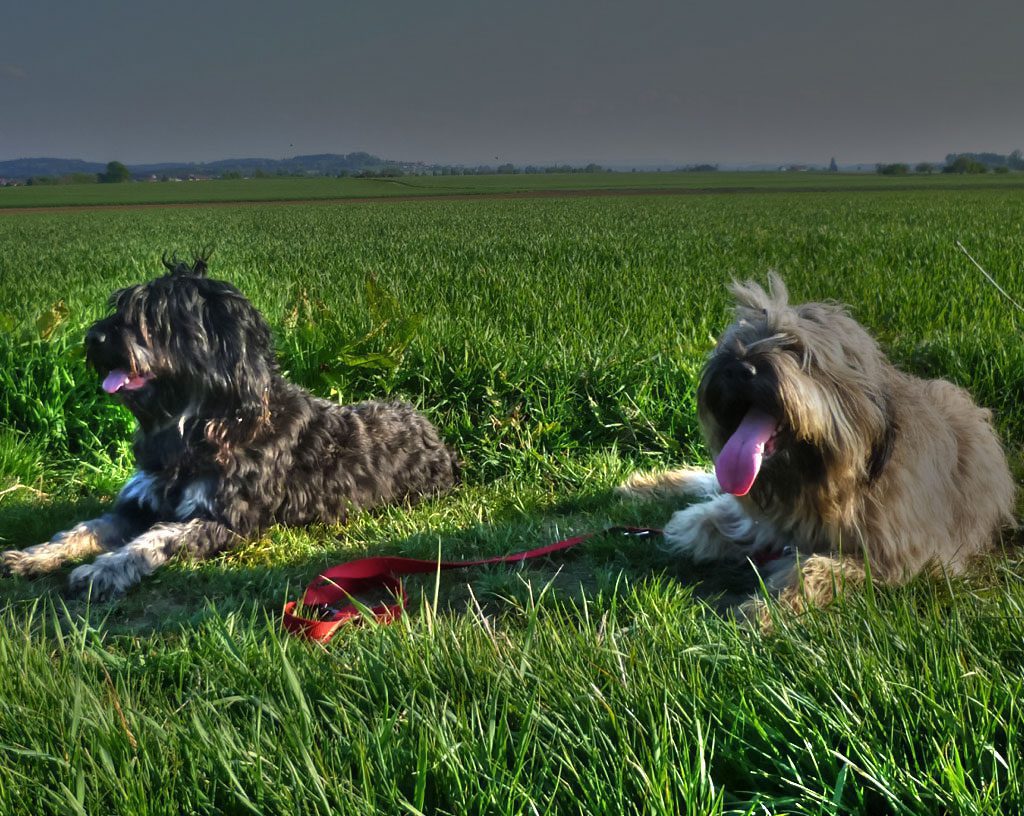
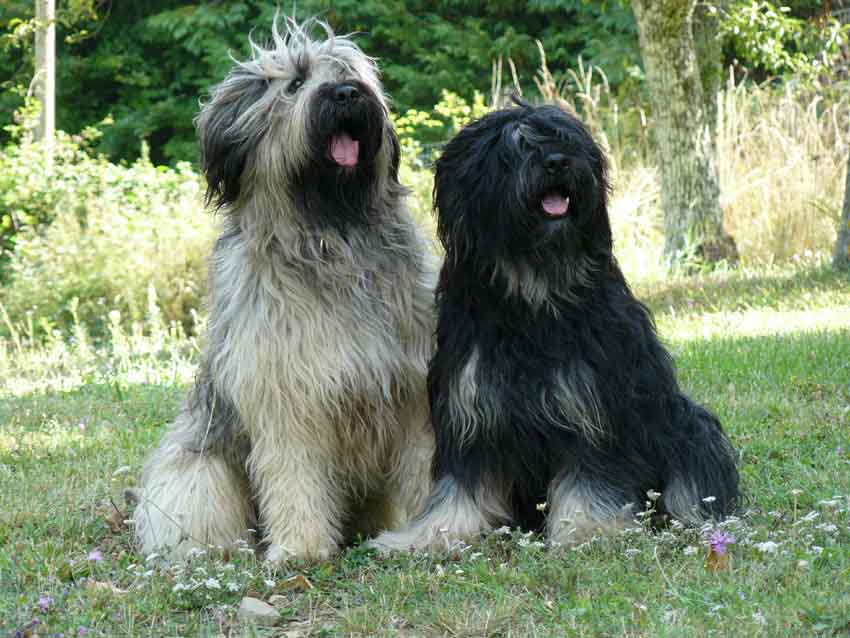
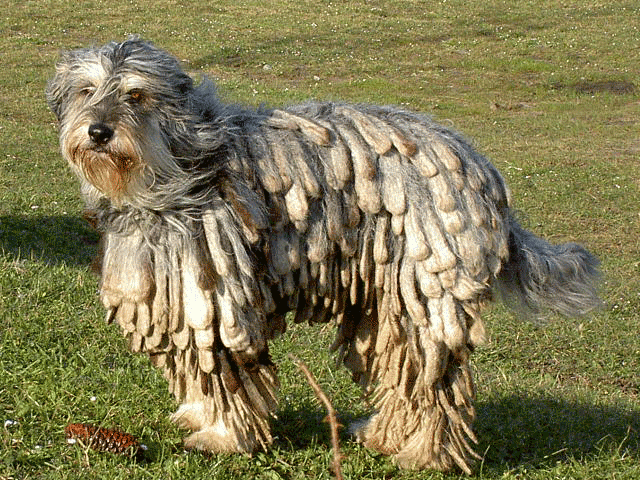
The Bergamasco It is a breed of dog originating in the Italian Alps, used as a herding dog. Its appearance recalls to the of the Komondor (hungarian dog).

This breed comes from contact with dogs of nomadic shepherds and their flocks that came from East to West. The Pastor's Ancestors Bergamasco They are located in the area of โ€‹โ€‹the Alps, an ideal area to display their characteristics.

Since 1300 the use of these dogs is determined by herding herds of sheep typical of Bergamo. In the four centuries that followed, The Shepherd Bergamasco, has increased with the expansion of sheep farming. After 1700, However, After a gradual reduction of the pastoral activity, This race began to decrease its population, to almost extinction during the two world wars.

In 1890 The breed is still called "mountain dog" and, in 1949 the company of lovers of the Pastor is founded Bergamasco. A few years later, Finally formalized the name: Bergamasco.

Physical characteristics

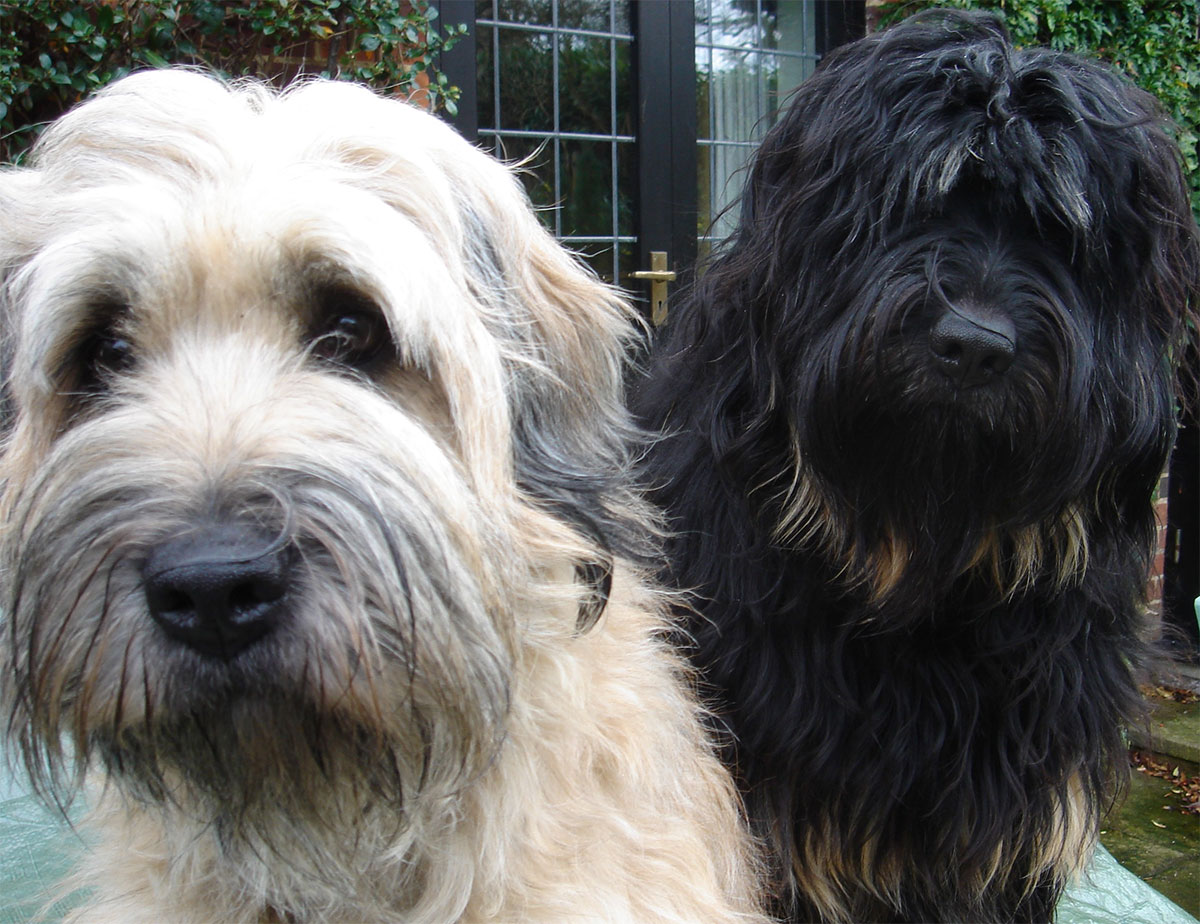
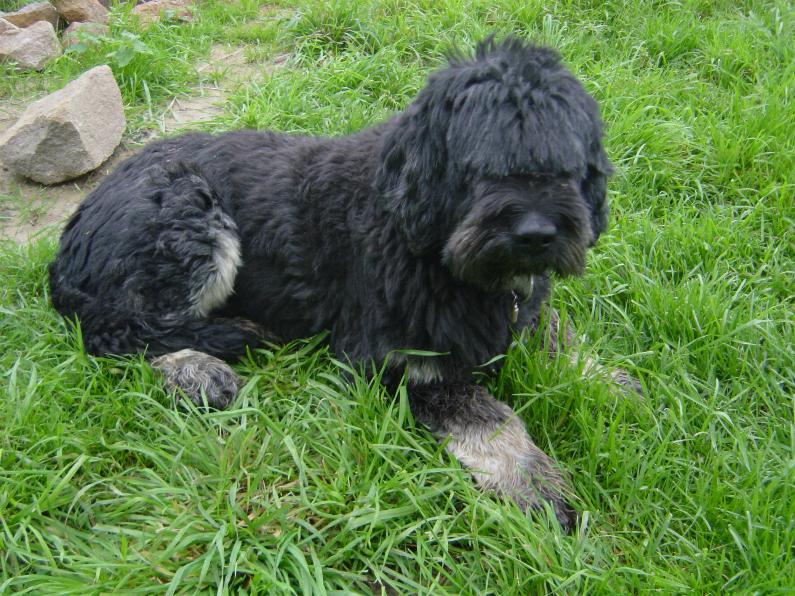
The tail is thick and strong at the base, Tuning towards the tip. Is covered with hard hair slightly wavy. Allowed colors are all shades of black (not bright), even with grey spots. The color should be determined from the root of the hair, because the part of Tufts often form different tones.

The coat is very abundant, long, wavy, rough texture (goat) at the front of the trunk, of wool (sheep) the other half, less hard in the head.

The eyes are large, more or less dark, with eyelids slightly oval. The ears are upright, but they fall in the last two thirds. The length of the muzzle is equal to the skull. As a whole it is large and parallelepiped in shape.. The skull is wide and slightly convex between the ears. Feet are oval-shaped, with toes well arched and closed.

Did you know??

The mat coat of the Bergamasco it is to protect him from bad weather and from predators that he might have to drive away in defense of his flock.

Character and skills

He has a temper, obedient and responsive, is a very versatile dog, their ability to learn and to decide, along with the inborn patience, make it a dog suitable for various uses. The family is identified as his flock, and to be a sheep dog, likes to keep everyone together. It will always be aware of the Group.

It is a great companion, for adults and children, to those who consider their puppies (the weak family part), and you care them with much more attention. It is very Protector, but nothing possessive. It is never aggressive despite the fact that it is a good guardian of the House, effective to deter, but not to be dangerous.

Observations

As a recommendation, It is important to care for their fur because they are many knots, and so it is good to styling it with the hands to untangle. We recommend bathing but let it dry in the Sun. It has one of the robes that needs less maintenance, to weights of appearances.

ยซBergamascoยป images

โ€œBergamascoโ€ videos

Type and recognitions:

  • FCI CLASSIFICATION:
  • Group :
  • Section : . .

Federations:

  • FCI โ“˜
  • AKC โ“˜
  • ANKC โ“˜
  • CKC โ“˜
  • KC โ“˜
  • NZKC โ“˜
  • UKC โ“˜

FCI breed standard "Bergamasco – Bergamasco Shepherd"

Origin:
Italy

Date of publication of the valid original standard:
27.11.1989.

Use:

Shepherd dog.


General appearance:

Pastor "Bergamasco" is a medium-sized dog, rustic looking, with abundant fur over the entire body, strong, but well proportioned. Its general appearance is that of a dog of medium proportions whose body tends to be a square. It is harmonic, so much for the dimension (heterometry = normal relationships between size and different parts of the body), as per the profiles (Alloidism = concordance between head and body profiles).


Behavior / temperament:

The role of the Pastor "Bergamasco" it's about driving and tending the herd, work for which he shows an excellent disposition thanks to his vigilance, concentration and psychological balance. His faculty of learning and determination, combined with his restraint and patience make him an excellent watchdog and companion dog, suitable for the most diverse uses. Establishes, also a close relationship with man.

Head:

The length of the muzzle is equal to the length of the skull. In its parallelepipedic set the head appears large. The skin should not be thick, but well applied to the underlying tissues, and without forming wrinkles.

Cranial region:
  • Skull: The skull is wide and slightly convex between the ears, it is also broad and rounded in the region of the forehead. The superior longitudinal axes of the skull and muzzle are parallel. The length of the skull is equal to that of the muzzle. Its width should not exceed half the length of the head. The bumps on the forehead are developed, both longitudinally, how cross; the zygomatic arches are well marked. The middle suture?frontal (the methodical) is marked, occipital protuberance is observable and protruding.
  • Stop: The stop has a uniform but pronounced slope due to the marked bones of the nose and forehead, frontal bumps and brow ridges.
  • facial region:

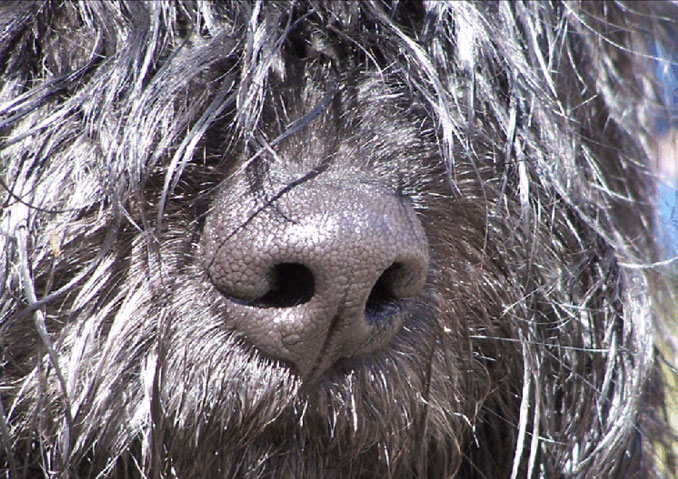
    • Truffle: In line with the snout with the upper profile curved, wide open windows, wet, fresh and big. Profile view should not be protruding. The color of the truffle is black.
    • Snout : It progressively tapers to its extreme and the lateral faces converge slightly, so that it is not pointed, but truncated, with the inside face rather flat. Its length is equal to the length of the skull. Its width, measured at mid-length it reaches approximately the 50% its length.
      The height of the muzzle should not be less than half its length. The upper profile of the muzzle, traced by the profile of the nasal bridge, it is rectilinear.
      The lower profile of the muzzle is not determined by the lip, but for the jaw. Because of this conformation, the corner of the mouth does not fall.; the muzzle is well cleft, so that the corner of the mouth is at the level of an imaginary vertical drawn from the outer corner of the eye. The profile of the lower jaw is more or less rectilinear.
    • Lips : Fine and not very outstanding, They separate under the bridge of the nose, drawing a very open arc that forms a third of a circle.; in this way the teeth of the jaw are barely covered. The edges of the lips are well pigmented.
    • Jaws : The body and the lower and upper maxillary branches are well developed and broad..
      Teeth : Whites; the denture is complete and well developed, incisors are aligned regularly. The joint is in the form of scissors.
    • Cheeks : Little prominent.
    • Eyes : So big; neither bulging nor sunken, iris darker or lighter than brown, depending on the color of the coat. Placed forward; his expression is soft, serene and attentive. The shape of the eyelid is slightly oval and the angle of the eyelid to the horizontal is only slightly oblique. Eyelids fit tightly over the eye, edge of the eyelids pigmented black, the eyelashes are particularly long so that they can lift the hair that falls from the forehead over the eyes.
    • Ears : High insertion; they are semi-fallen, that is to say, that only the terminal thirds up to the rounded tip are falls. When the dog is attentive the ear stands slightly at the base. Its shape is triangular. The length of the ear is between 11 and 13 cm., its width is 6,5 to 8 cm.. Features a wide base, that in the back extends to the ligament that goes from the head to the neck, while the front reaches the middle of the skull. The limb is slightly rounded. On the ears the hair is somewhat wavy and soft, while at the tip it ends in bangs.

    Neck:

    The upper profile is slightly convex. The neck is slightly shorter than the head; in effect, in extension does not exceed 80% of head length. Neck perimeter, measured at half its length, must be at least twice its length. The skin should never be flaccid, therefore there should be no trace of a double chin. Hair must be thick.

    Body:

    • top line : The withers stand out quite a bit from the rectilinear dorsal profile. The lumbar region has some convexity and the rump is slightly oblique.
    • Cross : Tall and long. The neck harmoniously joins the trunk.
    • Back : Rectilinear, well muscled and wide, its length reaches around 30% the height at the withers. The lumbar region is well connected to the line of the back and the croup. The length of the lumbar region reaches around the 20% the height at the withers, in this way it is much shorter than the dorsal region. The breadth of the lumbar region is roughly equal to its length; the musculature of the entire region is well developed.
    • Rump : Wide, robust, well muscled and oblique, with a tilt of the 30% under the horizontal; its transverse width, between the two haunches, must reach 1/7 the height at the withers.
    • Breast : It must be wide, well arched, descending to the level of the elbows. Its perimeter (measured behind the elbows) surpasses the 25% the height at the withers. Its transverse diameter must reach 30% the height at the withers. The depth and height of the chest should reach the 50% the height at the withers.
    • bottom line : Starting from the sternum, the lower profile rises very slightly towards the belly, which is therefore low. The length of the flanks must correspond to that of the lumbar region, which is short. The depression of the flanks is minimal.

    Tail:

    Located in the lower third of the rump, thick and strong at the base and gradually tapering towards the tip. Covered with slightly wavy goat hair type hair. The length of the tail often reaches the hock when the dog is standing; preferably it should be shorter. At rest the tail is carried in the shape of a saber, that is, hanging in the first two thirds, with the final third slightly curved. In action the dog wags his flag tail, sideways.

    Tips

    Former members
  • Forearm : This one is vertical, its length is at least equal to that of the arm. Musculature and bones are well developed.
  • Carpi : Extends the vertical line of the forearm. Has great mobility, he is thin, with a clearly protruding fish bone.
  • Metacarpus : It must be slim and highly mobile. Seen from the front, must be located in the same vertical plane as the forearm. Seen in profile it is a bit oblique at the front.
  • Pie : Oval (hare foot) with well-knit and arched fingers. Strong nails, curvy and pigmented. The footpads are dark in color.

    Former members

    As a whole, these adapt well to the size of the dog. Legs are normal, both seen in profile, as from behind.

    • Thigh : It is long, width, good muscular, with a slightly convex trailing edge. Its length exceeds about 30% the height at the withers, and its width the 75% its length. The opening of the coxofemoral angle varies between 100 and 105 degrees.
    • Leg : Strong bones and fine muscles, leg groove is well marked. Leg length reaches around 1/3 the height at the withers. Its inclination above the horizontal is about 55 degrees.
    • Knee : It is well plumb in the line of the extremity and is not deviated either inwards or outwards.. The femoral angle?tibial is open and measures between 130 and 135 degrees.
    • Hock : The lateral faces of the hock should be very wide. The distance from the point of the hock to the ground should not be less than 25% the height at the withers. The aperture of the tibiotarsian joint angle varies between 140 and 145 degrees.
    • Metatarsus : Its length reaches a 15% the height at the withers, if measured separately; if on the contrary it is calculated from the tip of the calcaneus, its length is equal to that of the hock. Your direction must be vertical. Any dewclaws that eventually appear should be removed.
    • Pie : It must have the same characteristics as the front foot


    Movement:

    The step must be agile and long; the trot, quite elongated and resistant, is the preferred move. Thanks to its conformation, the dog can easily go at a running gallop, movement that is able to maintain for a long time.

    Mantle

    • Skin : It should be fine all over the body, but especially in the ears and in the forelimbs; must be well applied to the body. The neck should not have a double chin and the head should not have wrinkles. The color of the mucous membranes and the third eyelid must be black.
    • Fur : Very abundant, long and of different texture depending on the region. Its texture is rough (goat hair) particularly on the front of the trunk. From the middle of the chest towards the back, and on all limbs, the hair tends to form tufts or is already organized into tufts depending on the age of the dog; these strands must come out of the upper part of the dorsal region and fall on the lateral planes of the trunk. On the head the hair is less coarse and covers the eyes. The hair should be evenly distributed over the extremities, forming soft locks that reach to the ground, resembling a kind of pilaster on the front and tufts on the back, although without forming bangs. Underlying hair is so short that the skin is not easily visible. It should be soft to the touch.
    • Color : Uniform gray, with gray spots in all possible shades, ranging from delicate and moderate gray, to a lighter or darker shade, until reaching black. Isabela and light reddish shades are accepted. A solid black coat is acceptable if it is truly dull (it's gone). Solid white fur is not allowed. White spots are tolerated when their surface does not exceed one fifth of the total surface of the coat.


    Size and weight:

    Height to the cross : For males the ideal height at the withers is 60 cm., with a tolerance of 2 cm more or less. for females, is of 56 cm., with the same tolerance of 2 cm more or less.

    Weight :

    • Males : 32 to 38 kg.
    • females : 26 to 32 kg.


    Fouls:

    Any deviation from the above mentioned criteria is considered to lack, and the gravity of this refers to the degree of deviation to the standard and its impact on the health and well-being of the dog.

    These modalities apply equally to dogs with very small heads and those with permanent amble..

    ELIMINATING fAULTS :
    • Convergent or divergent craniofacial axes.
    • Accentuated mandibular prognathism which causes disfigurement. Bilateral strabismus.
    • Partial depigmentation of the nose.
    • Size that exceeds to a greater or lesser degree the margins indicated by the standard
    • Trumpet-shaped tail.


    Disqualifying fouls :
    • Aggressive or fearful dog.
    • Total depigmentation of the nose.
    • Clearly bulging or concave nasal bridge.
    • Total bilateral depigmentation of the eyelids.
    • Eyes of different colour (even if it's only one).
    • Jaws : prognatismo superior.
    • Tail absence, brachyurism, tail that curls over the back.
    • Coat color : the white surpasses 1/5 of the total area.
    • Skin : total depigmentation at the edge of the lips.

    Any dog โ€‹โ€‹showing clear signs of physical or behavioral abnormalities must be disqualified..


    N.B.:

    Males should have two normal-appearing testicles., fully descended into the scrotum.

    Source: F.C.I - International Cynological Federation

    Alternative names:

    1. Bergamasco Shepherd Dog, Bergamasco Sheepdog, Bergamasco (English).
    2. Cane da pastore bergamasco (French).
    3. Cane da pastore Bergamasco (German).
    4. (em italiano: Cane de pastore Bergamasco) (Portuguese).
    5. Pastor de Bergamasco (espaรฑol).

  • โ–ท The world of Pets: Dogs, cats, birds, reptiles, amphibians

    Bouvier des Flandres
    Bรฉlgica Francia FCI 191 - Cattledogs (except Swiss Cattle Dogs)
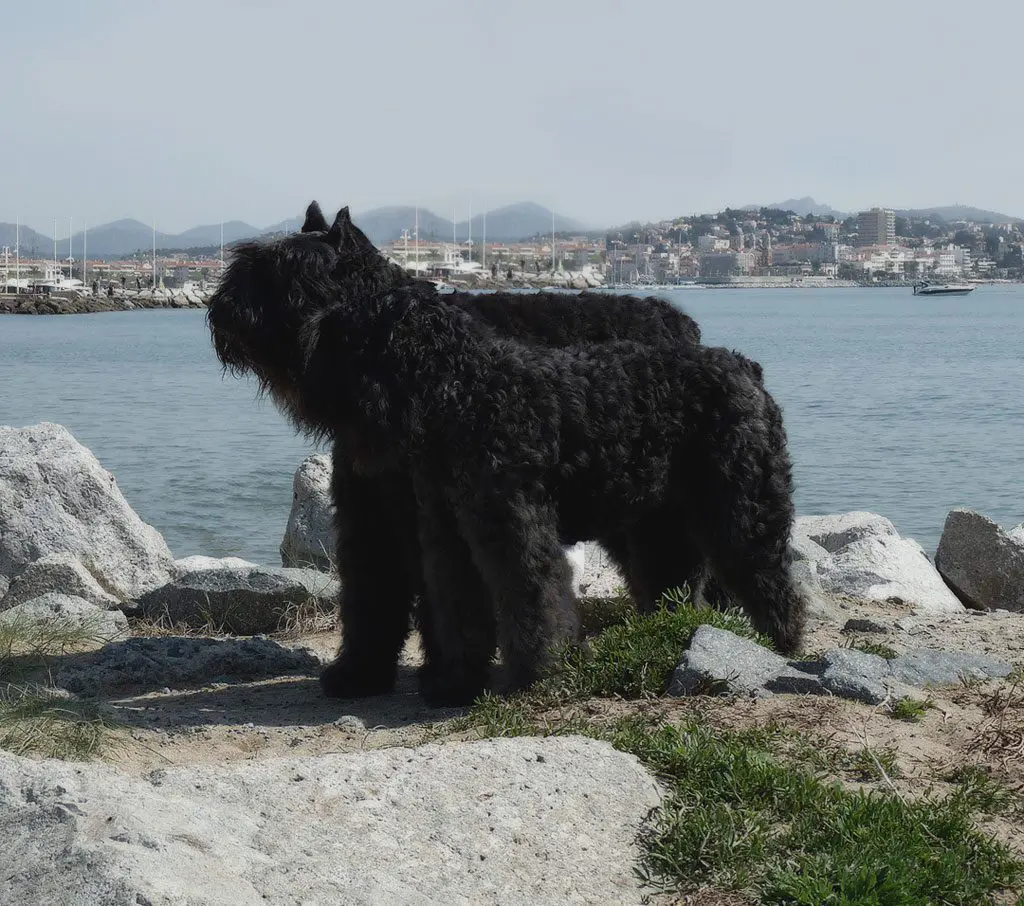
    Boyero de Flandes

    The strong herding instinct of the Bouvier des Flandres manifests itself with its own family

    Content

    History

    Bouvier des Flandres It is a breed of dog of Flanders, It is one of the three regions of Belgium, Wallonia and the Brussels region (Capital of Belgium and Flanders). It is known as Bouvier des Flandres and Toucheur de Boeuf en francรฉs, Vlaamse Koehond in flamenco and Vuilbaard in German.

    There are many disputes as to its origin. For the French, This Boyero comes from the crossing of the Griffon with the old Pastor of Beauce. Belgians claim that it descends from the Boyero Roeselare, certainly it intervened in the construction of the race after extinction after the second world war. The FCI has attributed both origins to this dog, the region of Flanders is part French and part Belgian.

    Physical characteristics

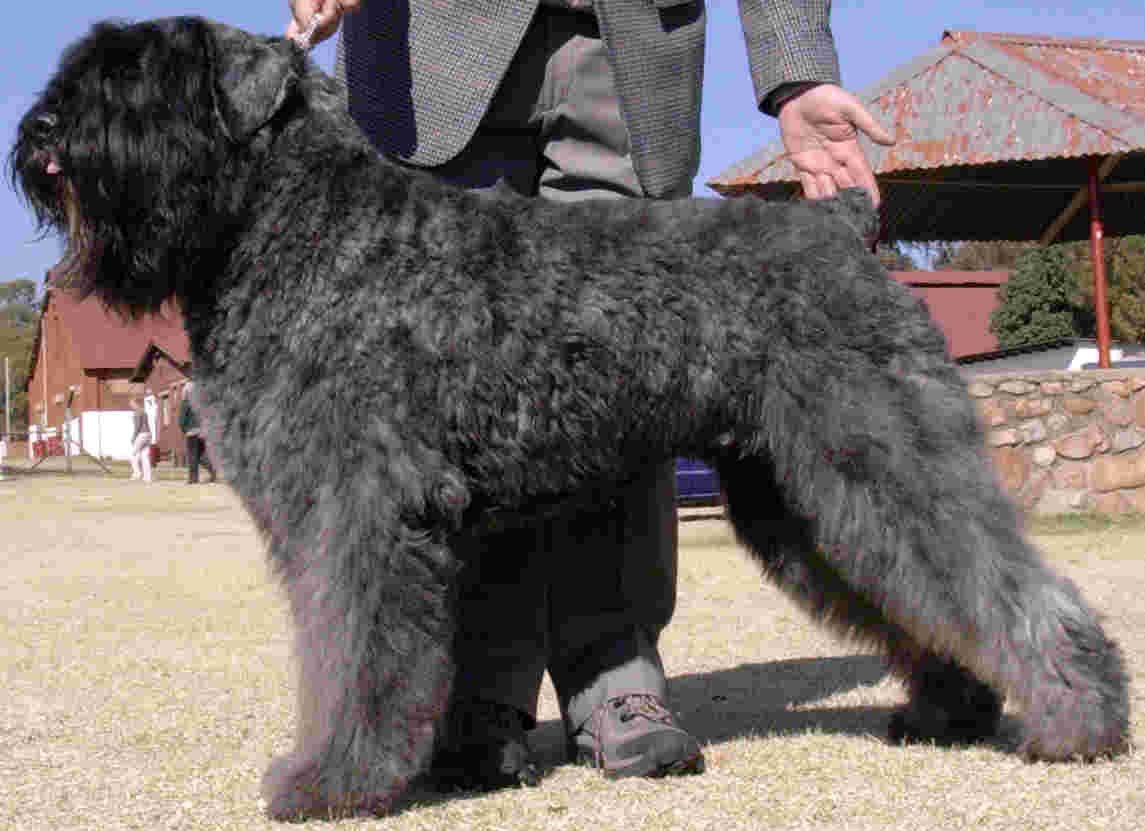
    Traditionally used as cattle herding dog and a guard dog, the Sennenhund Flanders, It is a dog of large size and with the body covered with an abundant layer of long hair. There are several colorations, ranging from light brown (leonado) into the black, passing through several shades of gray, "salt and pepper" and chocolate. The validity in different colors of fur contest is determined by the different associations canรณfilas.

    Boyero Flanders is a robust dog, powerful appearance and large size but without showing clumsiness or heaviness. His most notable feature is his impressive head, accentuated by a bushy beard and moustache. The ears and tail times are cut, Although this practice is falling into disuse. The weight can vary between 36 and 45 kg, the height to cross between 60 and 69 centimeters.

    Bushy fur has a underlying layer and can be anything from a up black Griffon, requiring constant grooming and, in the case of dogs in competition, cut each 6 u 8 weeks.

    Character and skills

    Boyero Flanders has a stable temperament; never shy but never aggressive. It is a worthy dog, calm, rational and, wisely, bold. As dog and surveillance, It may be suspicious and protective with their family or herd.

    His strong herding instinct is manifested with his own family, especially if children are included.

    It is an intelligent dog, He learns fast, although it is also easily bored so it requires constant stimulation and obedience training is essential.

    It is a relatively healthy breed and little predisposed to specific ailments. Like all large breeds it is susceptible to Dysplasia of hip and gastric torsion, and sometimes there may be problems of cataract.

    Characteristics "Bouvier des Flandres"

    Coexistence is important that you have with your new friend. Before considering the acquisition of a dog of the breed "Bouvier des Flandres" you know certain factors. Not all breeds of dogs are apt to live in an apartment, you must take into account his character, their need for exercise, their interaction with other pets, their care and if you have small children, their level of tolerance towards them.

    Adaptation โ“˜

    5,0 of 5 stars (based on 1 review)

    friendly dog โ€‹โ€‹โ“˜

    3,0 of 5 stars (based on 1 review)

    hair loss โ“˜

    3,0 of 5 stars (based on 1 review)

    Affection level โ“˜

    5,0 of 5 stars (based on 1 review)

    Need for exercise โ“˜

    3,0 of 5 stars (based on 1 review)

    Social need โ“˜

    3,0 of 5 stars (based on 1 review)

    Home โ“˜

    1,0 of 5 stars (based on 1 review)

    Toilet โ“˜

    5,0 of 5 stars (based on 1 review)

    Friendly with strangers โ“˜

    2,0 of 5 stars (based on 1 review)

    barking โ“˜

    5,0 of 5 stars (based on 1 review)

    Health โ“˜

    3,0 of 5 stars (based on 1 review)

    Territorial โ“˜

    5,0 of 5 stars (based on 1 review)

    Cat friendly โ“˜

    3,0 of 5 stars (based on 1 review)

    Intelligence โ“˜

    5,0 of 5 stars (based on 1 review)

    Versatility โ“˜

    5,0 of 5 stars (based on 1 review)

    Child friendly โ“˜

    5,0 of 5 stars (based on 1 review)

    Surveillance โ“˜

    3,0 of 5 stars (based on 1 review)

    joy โ“˜

    5,0 of 5 stars (based on 1 review)

    Pictures Bouvier des Flandres

    Videos Bouvier des Flanders

    Type and recognitions:

    • FCI CLASSIFICATION:
    • Group :
    • Section : . .

    Federations:

    FCI โ“˜, AKC โ“˜, ANKC โ“˜, CKC โ“˜, โ€‹KC โ“˜, NZKC โ“˜, UKC โ“˜

    FCI breed standard Bouvier des Flandres

    FCIFCI - Bouvier des Flandres
    Cattle

    Alternative names:

    1. Flanders Cattle Dog, Vlaamse Koehond (English).
    2. bouvier des Flandres (French).
    3. Bouvier des Flandres (German).
    4. Boiadeiro das Flandres (Portuguese).
    5. Boyero de Flandes (espaรฑol).

    โ–ท The world of Pets: Dogs, cats, birds, reptiles, amphibians

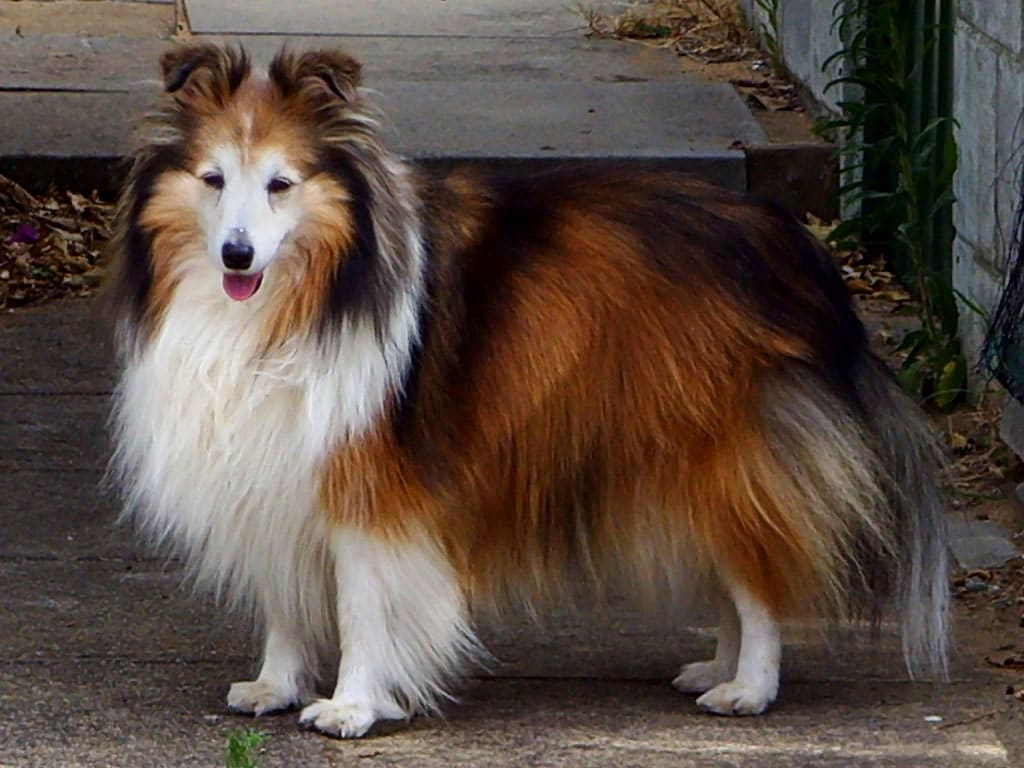
    Shetland Sheepdog
    Escocia FCI 88 . Sheepdogs

    The Shetland Sheepdog is very familiero, lovely with children, intelligent and loyal.

    Pastor de las Islas Shetland

    Content

    History

    The Shetland Sheepdog comes from the Shetland Islands (Scotland, United Kingdom), intentionally was raised in small size. At first sight, seems to be a copy of Rough Collie miniaturized, However, are 2 different races with a similar look.

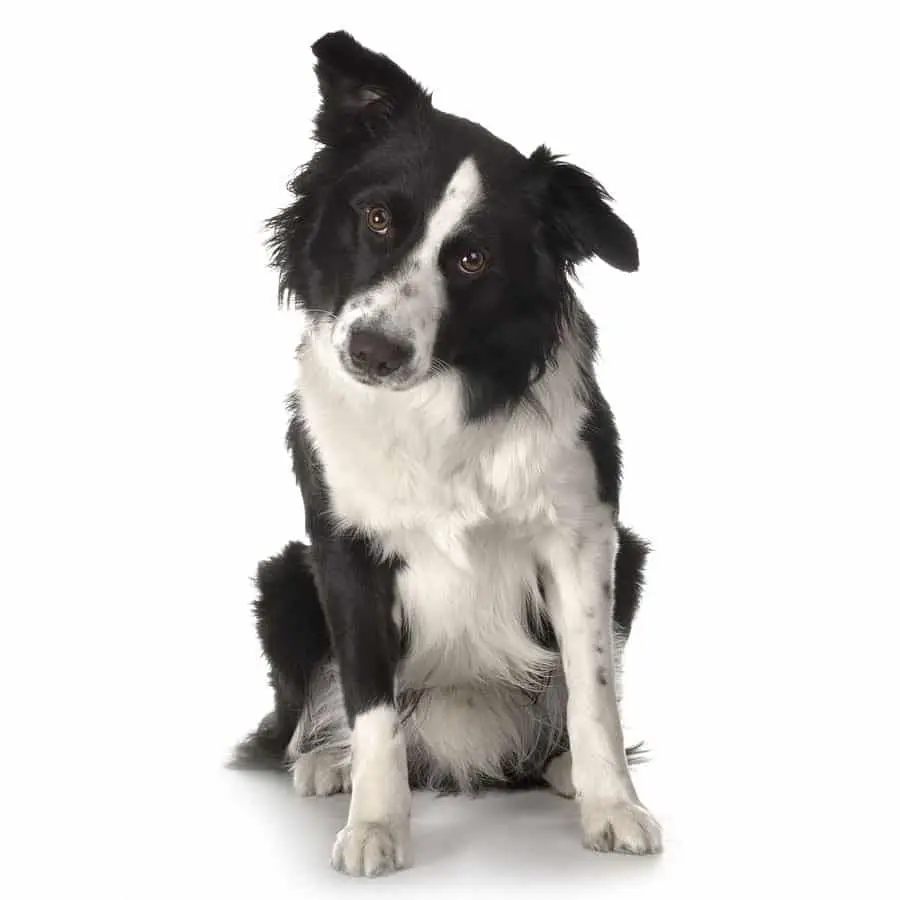
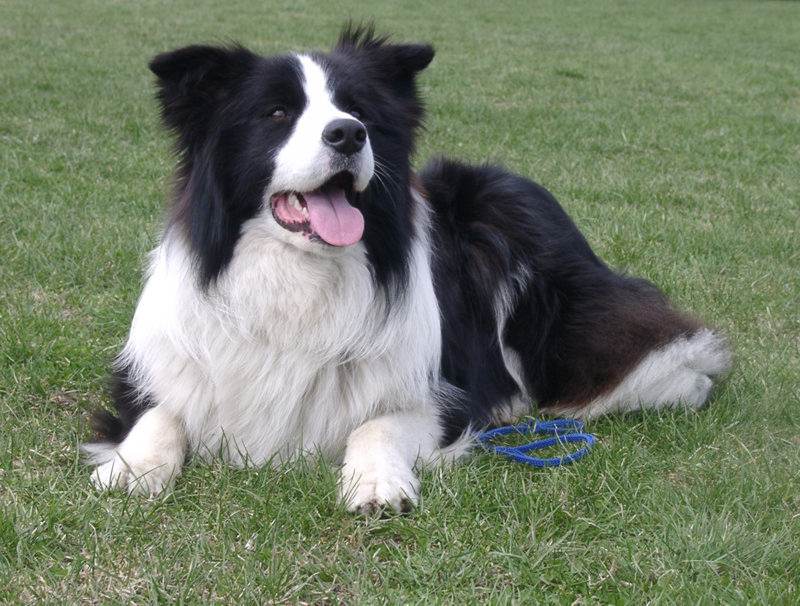
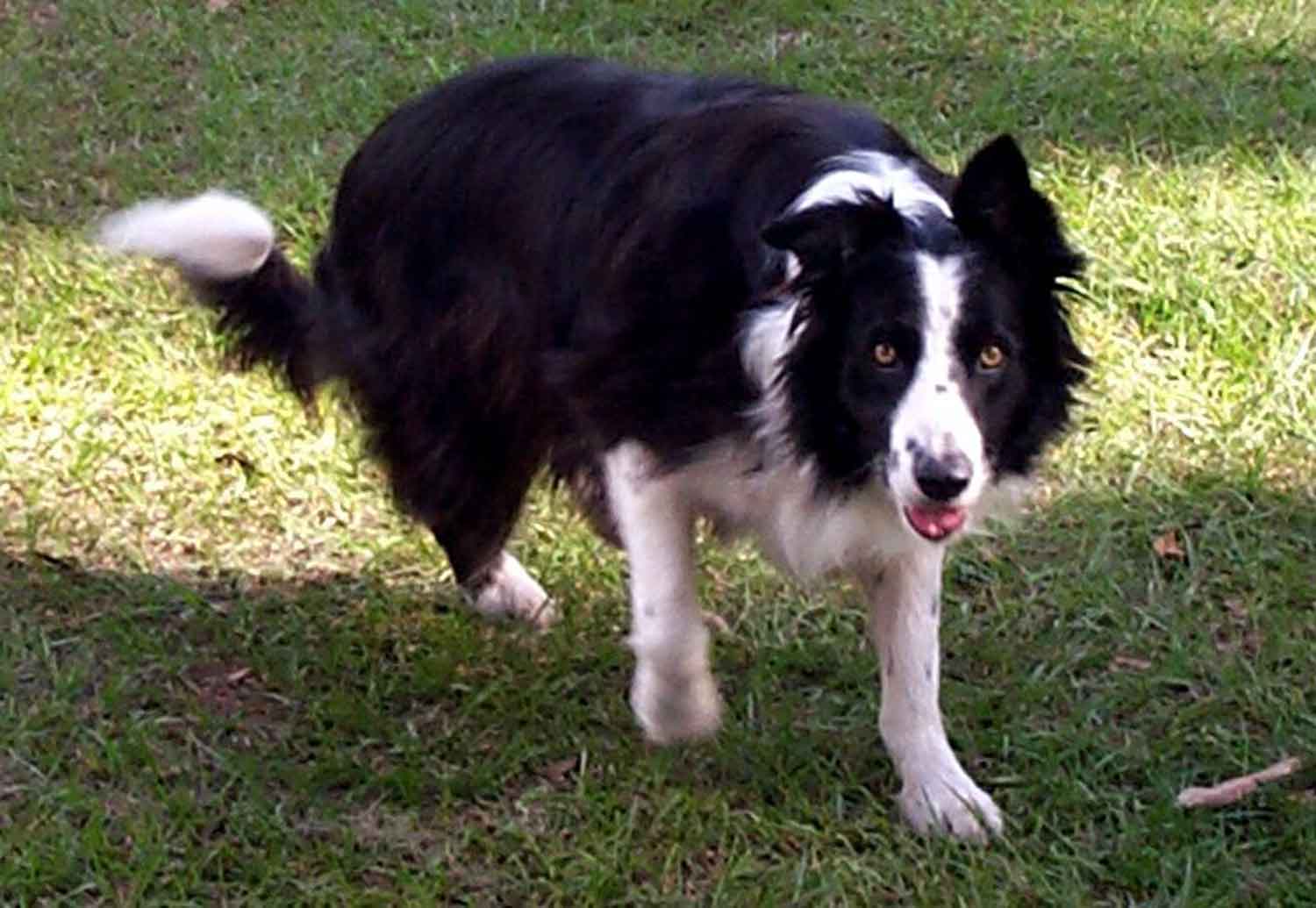
    The "father" race Shetland Sheepdog o โ€œSheltieโ€ as they are often nicknamed, they are the Border Collie.

    Physical characteristics

    The Sheltie they have a double mantle, What makes this breed peleche much more than other dogs. Long hair covering the thick and soft layer base, is repellent to water, while the base layer provides relief from hot and cold.

    There are three main colors: Sable, It ranges from the Golden to mahogany; Tri-color, formed by the black, White and Tan, and blue mirlo, composite grayscale, white, black and Tan.

    black and white: it is less common but still acceptable.

    Sand: the best-known color, dominates over other colors. The shadow Sabre, or mahogany can sometimes be confused with the Sheltie tricolor because of the large amount of dark shading in their coats. Another name for him Sheltie "shading", is trifactorado sable and white. This name comes from the mixture of a tricolor and a sable and white. Another acceptable but less common color is Sable merle, that it can sometimes be difficult to distinguish between the regular sable after puppyhood. The Sable merle has patches of dark brown on a light brown background compared to the black and grey blue Merle.

    There are other two colors that are a bit rare, which are unacceptable in the ring. The White Color-headed (majority of white with the head "normally" marked), It is the product of two dogs crossed white facotrados. Double Merle, the product of the crossing of two Shetland Sheepdog blue merle, they can be crossed but have a high incidence of deafness or blindness than other colors.

    The ideal height at the cross, in males 37,5 cm.. The females. 35,5 cm.. One greater diversion of 2,5 cm above or below these measures is regarded as highly undesirable.

    Character and skills

    It is an excellent companion dog, highly loyal. It is joyful, intelligent and always ready to obey. The Shetland Sheepdog they are loving, loyal and affectionate with the family and of course, on the sidelines, with strangers; for this reason the Sheltie They must be socialized. Some may be very reserved. This breed gets along very well with children if they are raised with them from a young age.; However, its small size makes it easy for a child to accidentally harm them, This monitoring is necessary. Consider well bringing a Sheltie adult to a house with small children, may not be compatible.

    Some Shetland Sheepdog tend to display a personality similar to that of a Terrier who tends to be hyperactive, and always ready, However this temperament is not sanctioned in the breed standard. Some may be shy, but this temperament is specifically discouraged by the standard. The trend towards shyness, It can be reduced with proper socialization. The Sheltie average is an excellent watchdog, giving alarm barks when a person is at the door or pass a car on the street.

    The herding instinct is strong in many Shetland Sheepdog. Love to chase and pasture including, squirrels, ducks, pigeons and children. To the Shetland Sheepdog they like to run in large open areas.

    They usually enjoy playing. They are better with a sensitive owner, but firm. The Sheltie It, first and foremost, a smart pastor and love to keep them busy, Although his level of activity, usually, It coincides with the level of its owner. As they are very intelligent, they are highly trainable. Lack of exercise and intellectual stimulation, It can lead to undesirable behaviors, including excessive barking, phobias and nervousness. Fortunately the annoying behaviors may decrease largely by an hour of exercise to make the dog with its owner.

    in your category, this breed dominates in the competitions of Agility. They also look at obedience competition, Flyball, Grazing, Tracking and proof of talent.

    It is a very intelligent dog, according to him Dr. Stanley city, expert on animal intelligence. The Sheltie is one of the brightest dogs occupying the position number 6 in the Ranking of 132 evaluated races. His research determined that an average Sheltie could understand a new command in less than 5 repetitions and would obey the command the first time the 95% of the times or more.

    Health

    Similar to the Rough Collie, There is a tendency to inherit malformations and diseases in the eye. Each puppy should have his eyes examined by a qualified eye veterinarian. Some lines may be susceptible to hypothyroidism, epilepsy, Hip Dysplasia, or skin allergies. The life expectancy of Shetland Sheepdog is between 10 and 15 years, Although some in some it may be more, and in others may be less.

    The disease of Von Willebrand is an inherited bleeding disorder. On race Sheltie, affected dogs, as a general rule, they do not live long. The Shetland Sheepdog carry type III of Von Willebrand, which, It is the most severe of the three levels. There are DNA tests that were developed to find this disease in dogs Sheltie. It can be done at any age and will showcase one of the following results: affected, carrier or affected not. The Shetland Sheepdog they can also suffer from Hypothyroidism, It is the low functioning of the thyroid gland. Clinical symptoms include, loss of hair, on low weight and faintness.

    Although small breed dogs are not usually affected by the Hip Dysplasia, has been identified in some specimens of Sheltie. It occurs when the head of the femur and the acetabulum they don't fit properly, This causes pain and/or lameness. Hip Dysplasia is thought to be genetic; Many breeders sent to test their dogs to certify that they are free from this.

    • Otros nombres: Pastor de las Islas Shetland / Shetland Collie / Dwarf Scotch Shepherd / Toonie dog / Apartment Collie / Miniature Collie / Sheltie / Berger des Shetland.
    • Group 1 / Section 1 – Sheepdogs.

    โ–ท The world of Pets: Dogs, cats, birds, reptiles, amphibians

    Miniature American Shepherd
    Estados Unidos FCI 270 . Sheepdogs

    Miniature American Shepherd

    With his alert expression, attentive and intelligent, the Miniature American Shepherd has all the qualities of Sheepdogs

    Content

    History

    In forty years, Americans have managed to fix the characteristics of this new breed, from the strains of small Australian Shepherds. Recently, the American Kennel Club (AKC) agreed to integrate and, therefore, recognize the Miniature American Shepherd as a race in its own right, integrating it into the Herding Group โ€œShepherd Dogsโ€ … next to his ancestor, the Australian Shepherd.

    In the decade of 1960, the little ones Australian Shepherd who worked on the United States rodeo circuit were selectively bred to further reduce their size. The new breed was originally called the Miniature โ€œAustralian Shepherdโ€. "They became especially popular with riders who traveled to horse shows, since his intelligence, "loyalty and size made them an excellent travel companion.", say the experts of the Club del Miniature American Shepherd from the USA. "In this way its popularity spread throughout the country."

    Currently, the breed is recognized by the FCI (International Cynological Federation), in view of the number of breeders that are embarking on the selection of this breed of dog in Europe.

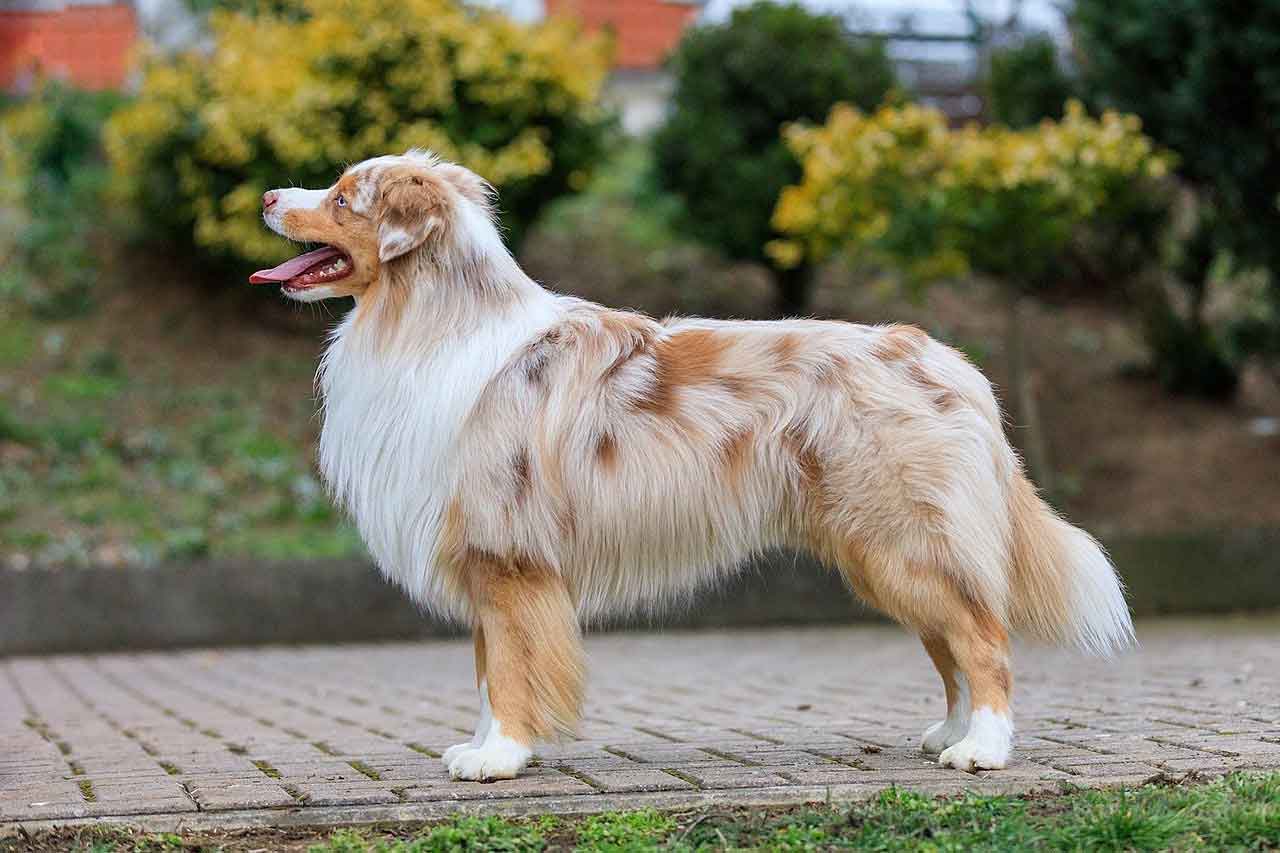
    Photo: Buddyยป Miniature American Shepherd โ€“ Lost Island’s Roy ‘Arsenal’ Harper โ€“ bred by: Julia Bettendorf, Lost River Miniature American ShepherdsJugabe3b, CC BY-SA 4.0, via Wikimedia Commons

    Physical characteristics

    The Miniature American Shepherd shares many physical traits with its predecessor the Australian Shepherd, only on a smaller scale. The females measure between 33 – 43 cm at shoulder; the males between 35,5 – 46 cm.. Despite its size, they are every inch a real herding dog: energetic, versatile, robust and extremely bright. Striking fur comes in black, blue merle, red and red merle. (Merle exhibits any amount of marbling, spots or mottling.) The Miniature American Shepherd they move with the smooth, agile stride of a dog built for hard work on rough terrain.

    Character and skills

    With his alert expression, attentive and intelligent, dogs Miniature American Shepherd they have all the qualities of a little Shepherd dog, with a pronounced instinct to lead and watch over the herds. Easy to train, able to respond to a variety of demands that allow them to evolve in different sports disciplines. the Miniature American Shepherd However, they are reserved for people who are not familiar to them.. But once you "know" them, becomes a wild playmate, and capable of real feats, thanks to its agility and small size.
    Like all working dogs, especially those able to work in their original profession, when in a situation with a herd of animals, their behavior changes and they become attentive and tireless helpers.

    Its small size, your cleanliness reduced to a minimum, their adaptability and listening skills, greatly facilitate your life and your education in the city. But, like all shepherds, you need to spend and "empty" your overflowing energy. Beautiful walks and runs in the forest are essential to maintain your tone, his physical form and his playful character.

    Health and nutrition

    This solid and sturdy dog, just like their ancestors, does not pose any particular problem in feeding. His health is that of a dog from generations of working dogs, although many buyers take the step of having a companion dog that is easy to live with. Never forget where it comes from, as you deserve regular physical activity to maintain your figure and strength.

    The Miniature American Shepherd is generally a healthy dog, and responsible breeders test their breed for health conditions, communicating with other breeders dedicated to working together for the health of the breed and the preservation of the unique qualities of the breed.

    Although the Miniature American Shepherd it is a relatively healthy breed, the following complications have been observed:

  • Juvenile cataracts
  • PRA (progressive retinal atrophy)
  • Iris Colobomas
  • PPM (persistent pupillary membrane)
  • Regular visits to the vet for checkups and parasite control help ensure a long and healthy life for the dog.

    Grooming

    The Miniature American Shepherd has a double coat, with a longer outer coat and a wool underlayer. The breed shows a good amount, even more so during shedding season, which can happen once or twice a year. Weekly brushing, daily during molting season, will help remove dirt and loose hair and keep the dog looking its best. Balls or tangles can be resolved with a finer brush or metal comb. As in all races, nails must be trimmed regularly, too long nails can cause discomfort to the dog.

    Training

    As in all races, early socialization and training classes for puppies are recommended, which help to ensure that the dog becomes a well-adjusted and well-behaved companion. Smart and willing to please, the Miniature American Shepherd is highly trainable and will reach its best potential as a partner when taught at least basic obedience.

    Physical exercises

    The Miniature American Shepherd he is active and athletic, and requires a moderate amount of exercise but is also very adaptable to your family's way of life. They do well as city dogs as long as their owners provide them with enough exercise.. They enjoy outings with their people that will occupy both their mind and their body. They enjoy and excel at many dog รขโ‚ฌโ€นรขโ‚ฌโ€นevents, including obedience, agility and tracking.

    Characteristics "Miniature American Shepherd"

    Coexistence is important that you have with your new friend. Before considering the acquisition of a dog of the breed "Miniature American Shepherd" you know certain factors. Not all breeds of dogs are apt to live in an apartment, you must take into account his character, their need for exercise, their interaction with other pets, their care and if you have small children, their level of tolerance towards them.

    Adaptation โ“˜

    3,0 of 5 stars (based on 1 review)

    friendly dog โ€‹โ€‹โ“˜

    4,0 of 5 stars (based on 1 review)

    hair loss โ“˜

    3,0 of 5 stars (based on 1 review)

    Affection level โ“˜

    5,0 of 5 stars (based on 1 review)

    Need for exercise โ“˜

    4,0 of 5 stars (based on 1 review)

    Social need โ“˜

    4,0 of 5 stars (based on 1 review)

    Home โ“˜

    3,0 of 5 stars (based on 1 review)

    Toilet โ“˜

    2,0 of 5 stars (based on 1 review)

    Friendly with strangers โ“˜

    4,0 of 5 stars (based on 1 review)

    barking โ“˜

    3,0 of 5 stars (based on 1 review)

    Health โ“˜

    4,0 of 5 stars (based on 1 review)

    Territorial โ“˜

    4,0 of 5 stars (based on 1 review)

    Cat friendly โ“˜

    3,0 of 5 stars (based on 1 review)

    Intelligence โ“˜

    5,0 of 5 stars (based on 1 review)

    Versatility โ“˜

    5,0 of 5 stars (based on 1 review)

    Child friendly โ“˜

    4,0 of 5 stars (based on 1 review)

    Surveillance โ“˜

    3,0 of 5 stars (based on 1 review)

    joy โ“˜

    4,0 of 5 stars (based on 1 review)

    Images "Miniature American Shepherd"

    Photos:

    1 – Blue Merle Miniature American Shepherd by Lextergrace, CC BY-SA 4.0, via Wikimedia Commons
    2 – Miniature American Shepherd with Frisbee by Mullinspw, CC0, via Wikimedia Commons
    3 – Miniature american shepherd puppy by TanSinVic, CC BY-SA 4.0, via Wikimedia Commons
    4 – Miniature american shepherd by TanSinVic, CC BY-SA 4.0, via Wikimedia Commons
    5 – Miniature American Shepherd, blue merle, female by Canarian, CC BY-SA 4.0, via Wikimedia Commons
    6 – American miniature shepherd by https://pxhere.com/en/photo/1029669

    Videos "Miniature American Shepherd"

    Type and recognitions:

    • FCI CLASSIFICATION:
    • Group :
    • Section : . .

    Federations:

    • FCI โ“˜
    • AKC โ“˜

    FCI breed standard "Miniature American Shepherd"

    Origin:
    United States

    Date of publication of the valid original standard:
    04/09/2019

    Use:

    Utilization

    As the name suggests, is a herding dog. Can work in herds of farm animals (sheep, cows, horses).


    General appearance:

    The Miniature American Shepherd is a small sheepdog of the United States of America. It is slightly longer than it is tall with a moderate bone structure in proportion to its body size and weight without extremes.. His movements are fluid, easy and balanced. His exceptional agility combined with strength and ​​resistance allows you to work on a wide variety of terrain. This very versatile and energetic dog is an excellent athlete with great intelligence and a willingness to please those to whom he is present. dedicated. He is a faithful companion and a hard worker. His expression is attentive. Fur hairs, medium length and texture, can be solid in color or mixed with or without whiteness, with or without fires. Traditionally has no tail, shortened or natural short tail.
    A solid build with a mid-frame in relation to its size and weight. The structure of the dog reflects masculinity without being too rough for males.. Females appear feminine without being too light. Overall structure gives an impression of strength without being over the top.

    important proportions

    Length, measured from the tip of the sternum to the tip of the buttock, is slightly higher than the height, measured from the top of the cross to the ground.


    Behavior / temperament:
    The Miniature American Shepherd is an intelligent working dog. Has a pronounced instinct for behavior and keeping herds. He is an exceptional companion, versatile and very easy to educate. Although reserved with strangers, He is not shy. He is an energetic and long-lasting worker who adjusts his behavior and shows the right emotion for the task at hand. With his family he is protective, devoted and faithful.

    Head:

    ---

    Cranial region:

    Head

    The head must be clearly drawn and in proportion to the dog's body. The expression is alert, attentive and intelligent. The dog may express a reserved look and / or vigilant towards foreigners.

    Skull

    The skull is flat or slightly domed and may show a slight occipital protrusion. The width and length of the skull are equal.

    Depression links (stop)

    It is moderate but defined.

    facial region:

    Truffle

    The truffle is liver pigmentation for red or red merle and black subjects for black or blue merle subjects. Fully pigmented truffle is preferred.

    Snout

    Fades a bit of the truffle base and rounds out at the end. The length of the muzzle is equal to that of the skull in the profile. The top line of the skull and the chamfer line are slightly oblique to each other, and the top line of the skull forms a slight downward angle.

    Jaws / Teeth

    The teeth must be complete and in scissors. Dogs with broken teeth, missing or accidentally discolored will not be penalized.

    Eyes

    The eyes are obliquely set, in the form of almond, without projection or sunken and in proportion to the head. Whatever the color of the dress, all eye colors are allowed. Eyes are allowed, specks and specks. The edge of the eyelid has liver pigmentation for red or red merle subjects and black pigmentation for black or blue merle subjects.

    Ears

    The ears are triangular, medium-sized, attached to the top of the head. When is the dog attentive, fold back or to the side, ru รย รยพรยทรยฐ.

    Neck:

    The neck is solid and in proportion to the body, is of medium length and slightly curved. Neck fits well between shoulders.


    Body:

    Generality

    The body is firm and well muscled but without exaggeration.

    Back

    Firm and straight in static as well as in motion.

    Pork loin

    Strong and wide seen from above.

    Rump

    Moderately inclined.

    Breast

    The chest is full and deep. Reaches elbow with well-curved ribs.

    bottom line

    Moderately elevated.

    Tail:

    Traditionally has no tail, shortened or natural short tail. The long, uncut tail can form a slight curve when the dog is around. Resting. When the dog is moving, can be used with a slightly steeper curve.


    Tips

    Former members

    Generality

    The front legs are well muscled and balanced with the hindquarters.

    Shoulder

    Shoulders are long, plans, quite close to the withers and well inclined.

    Arm

    The humerus should be the same length as the scapula and form a right angle with it.

    Elbow

    The elbow joint is equidistant from the floor and the tourniquet. The elbows should be close to the ribs.

    Forearm

    They are straight and strong. The bone is oval instead of round.

    Metacarpus

    Metacarpals are short, thick and strong but still flexible, showing a slight angle seen from the side.

    Front feet

    The feet are oval, compact, with tight fingers. The toes are well arched. The pads are thick and elastic. Nails are short and hard. Lugs can be removed in countries that allow the practice.

    Later members

    Generality

    The width of the hindquarters is equal to that of the front hand at the shoulders. รยญรยปร‘ล’ angle, roughly right, formed by the scapula and humerus corresponds to that formed by the pelvis and thigh.

    Knee

    Hot flashes are clearly drawn.

    Hock

    The hocks are short, perpendicular to the ground and parallel to each other as seen from behind.

    Rear feet

    The feet are oval, compact, with tight fingers. The toes are well arched. The pads are thick and elastic. Nails are short and hard. Lugs can be removed in countries that allow the practice.

    Movement:

    The steps are fluid, clear and easy. The American Mini Shepherd shows great ease in his movements with well covered strides. The forelimb and hindlimb move in planes parallel to the median axis. As speed increases, front and hind legs converge toward the median plane, while the top remains firm and horizontal. The Miniature American Shepherd must be agile and able to change course and pace instantly.


    Mantle

    Fur

    The hair is of medium and long texture, straight to wavy. The inner layer varies according to the seasons. Hair is short and straight on the head and the front of the front legs. The back of the front legs and the panties are moderately provided. The mane and culture are more marked in males than in females. The ears, the feet, the back of the hocks and tail can be fixed. The dog must be presented with natural hair.

    Color

    The colors are varied and unique. In no order of preference, recognized colors are black, red, merle blue and merle red. The blackbird will be exposed with any number of stains, spots or stains. Undercoat may be slightly lighter than undercoat hair. Asymmetric markings are not a defect.
    No fire marks required (Sun tanning). When they are present, are allowed in the following locations: around the eyes, in feet, in the legs, below the neck, in the face, at the bottom of the ear, under the base of the tail, and panties can also emphasize the end result. The tone of the marks "fire" can range from creamy beige to black red, no preference.
    White markings are not mandatory and must not be invasive. They are limited to the mouth, cheeks, skull, neck, with a partial or full collar, chest, belly, forelimbs and hindquarters to the end of the hock. The tip of the tail may be white. The eyes must be completely surrounded by color. Rolling eyes are forbidden. The ears should preferably be completely covered with colored hair. If there is white in the ear, should not be more than 25% in one ear.


    Size and weight:

    Size and weight

    Height to the cross

    The size for males should be between 35,5 cm and 45,5 cm to the cross.
    The size for females should be between 33 cm and 43 cm to the cross.


    Fouls:

    Any deviation from the above mentioned criteria is considered to lack, and the severity of this is considered the degree of deviation from the standard and its consequences on the health and well-being of the dog and the dog's ability to perform its traditional task.

    Serious misconduct

    ▷Ears hanging or fully erect.
    ▷25 to 50% unpigmented truffle.
    ▷Atypical hair.
    ▷White markings covering more than 25% from the surface of the ears.
    ▷The hair roots of a white necklace protruding from the cross.

    disqualifying fouls:

    ▷Aggressive or shy dog.
    ▷Lack of type.
    ▷Size at the withers outside the limits of the standard: less than 35,5 cm and more than 45,5 for males, less than 33 cm and more than 43 cm for females.
    ▷More than 50% unpigmented truffle.
    ▷Color no compatible, different from those allowed by the standard.
    ▷The color of the mucous membranes does not match the dress.
    ▷Non-pigmented hairs.
    ▷Eyes not completely colored.
    ▷White tasks in another place that is not specified in the standard.
    ▷The lowest or highest prognathism.
    ▷Cryptorchid or perro monorchid.


    N.B.:
    NB:
    • Any dog โ€‹โ€‹showing clear signs of physical or behavioral abnormalities must be disqualified..
    • The aforementioned fouls that are more pronounced or more marked are eliminatory..
    • Males should have two normal-appearing testicles fully descended into the scrotum..
    • Only functionally and clinically healthy dogs, with the typical conformation of the breed, should be used for parenting.

    Source: F.C.I - International Cynological Federation

    Alternative names:

    1. Miniature Australian Shepherd, MAS (English).
    2. Miniature Australian Shepherd (French).
    3. Miniature Australian Shepherd, Mini-Aussie (German).
    4. Miniature Australian Shepherd (Portuguese).
    5. Miniature Australian Shepherd (espaรฑol).

    โ–ท The world of Pets: Dogs, cats, birds, reptiles, amphibians

    Majorca Shepherd Dog
    Espaรฑa FCI 321 . Sheepdogs

    Ca de Bestiar

    The Majorca Shepherd Dog or "Cattle", It is a breed of dog originating in Mallorca.

    Content

    History

    Also known as โ€œCa de Bestiarโ€, this breed is believed to have existed since ancient times. Through the years, this dog would have been bred with a variety of local Mallorcan dogs, as well as with other European Shepherd dogs, and it was not until 1970 which he puts any restrictions on their upbringing. In fact, its breed standard was written as recently as 1980. It was in 2006 the UKC โ“˜ recognized the breed within his Group of Sheepdogs.

    Appreciated through the centuries by the Spaniards for their ability to be a versatile farm dog, the Majorca Shepherd Dog It was used both to herd flocks and to monitor property and animals. It has also been reported that the Majorca Shepherd Dog was widely used in dogfighting, a practice that is now illegal. Although it is still used on farms today, and is also often kept as a companion animal, this rare breed once seen internationally and is considered a rare breed.

    Physical characteristics

    The Majorca Shepherd Dog is a large size dog, average weight, well proportioned, rustic, strong and large muscles, flexible and robust.

    There are two varieties: long hair and most widespread short-haired. The head is well modeled, large and provided with the body, but not so much as to look like a molosser. Craniofacial shafts are slightly convergent; the relationship between the skull and the muzzle is of 1:1.

    The color eyes goes from amber to dark brown, and his expression is intelligent and enigmatic.

    The ears, small in relation to the head, they are triangular, inserted at the top and are normally bent, with dropped tips.

    The tail Start horizontally, is horizontal section, It has thick base and it tapers towards the tip.

    Fur: the short hair variety has quite thin Undercoat. In the variety of long hair, hair coverage can reach a length of 7 cm and it is slightly wavy. In both varieties should be soft and fine.

    Color: the only one admitted is black, optionally with white spots on chest and feet.

    Size: males, of 66 to 73 cm.; females, of 62 to 68 cm.. The weight is usually of 40 kg approximately.

    Character and skills

    He is a shepherd dog with skills for the job of guard and defense. Itร‚ยดs Intelligent, docile and affectionate, although as a puppy he is usually shy and reserved. For this reason it is important to socialize it to the maximum to avoid that it closes in on itself.

    The adult is very suspicious of strangers and he is united by a very strong bond with his master. Her enigmatic gaze not glimpse of his thoughts. It has an extraordinary courage and willing to everything in order to defend their loved. It's a little known breed outside the Balearic Islands, so to acquire a good puppy should address to breeders of the Islands.

    Images ยซMajorcan shepherd dogยป

    โ€œMajorcan Shepherd Dogโ€ videos

    Type and recognitions:

    • FCI CLASSIFICATION:
    • Group :
    • Section : . .

    Federations:

    • – FCI โ“˜

    FCI breed standard "Majorca Shepherd Dog"

    Origin:
    Spain

    Date of publication of the valid original standard:
    26.05.1982

    Use:

    Herding dog, guardian and defense


    General appearance:

    Sub-convex profile dog, large without being exaggerated and medium-weight size. It is totally black or black with white spot on chest, well proportioned, rustic, strong, muscular, robust and agile. There are two varieties of hair:

    • Short hair, the most common variety.
    • Long hair.

    IMPORTANT PROPORTIONS:

    Dog subhipermetrico, midline and subconvex.

    • The female accepts a longitudinal diameter of up to a 3% greater than the height of the cross.
    • Length of the muzzle is equal to the length of the skull.
    • The length of the head must be equal to the length of the neck.
    • In adult males the thoracic perimeter, taken together the cross behind the elbows, It is about a cms rather than its height at the withers.


    Behavior / temperament:

    Dog of great nobility, only an owner that accepts loads of strangers with difficulty.
    Intelligent, docile, loving, shy on end and reserved in his youth ; his sentimentality comes to unsuspected. Faithful to his master until death. If we explore in his eyes it will give us the feeling thinks. It is courageous and quarrelsome.

    Head:

    Slightly triangular profile; view dorsally is wider at the top than at the bottom; solid, but not heavy; large enough to accommodate a good intelligence; well molded and proportionate to the body; It must be rather large, but never a trotting type. The supranasal line is parallel to the cranial line. Slightly divergent skull-facial axes.

    Cranial region:
    • Skull: Sub-convex profile. The width of the head, taken between the storms, It should be slightly higher ( approximately 1,2 %) to the length between the supraorbital line and the occipital crest. A slight groove can be seen in the first third of the frontal midline. Marked occipital Crest.
    • Depression links (Stop): Marked, but never sudden, in mild decline.

    facial region:

    • Truffle: Wet, fresh, black, large, with broad nostrils; No split. It despuntuarรก significantly if you have stains of barks or lighter.
    • Snout: Width, rather strong ; It should not be in tip, but its height and width should be accentuated as it approaches the orbits. In the variety ยซ Ca cabrer ยป (Longhair) more pointed. The dorsal profile of the nasal helm is sub-convex. The profile of the branches of the lower jaw is straight. Black color palate.
    • Lips: Black ; the high not seen to the bottom while your mouth closed ; the labial commissure is little noticeable and they go unnoticed because they are well proportioned to the head.
    • Jaws / Teeth: Very white teeth, well developed and well placed, closed scissors, making the incisors true upper ends prey with the lower canines. The molars developed.
    • Eyes: Rather small, slightly almond ; are not prominent nor sunken in orbits ; not far apart from each other, centered, slightly oblique, lively. Color between the Rosemary honey (something clear) and of the honey, carob (dark). Enigmatic expression, with look smart and sad at the same time, where denotes even distrust. The eyelids are thin, black and oblique, close to the eye.
    • Ears: Broken, small size in relation to the head, triangular, reaching the tear in the eye of its corresponding side tip, or is approximately equal to the length of your skull. Without amputating, slightly thick, high insertion, separating your tip slightly skull, with a longitudinal fold and another cross around the first third.
    • Position of the ears: usually bent and dropped, something separate from the muzzle. Played back in standby ; in State care by the transverse fold levantadolas, separating them from the snout than usual.

    Neck:

    Massif, muscular, strong and proportionate to the head and body. Thick, with very little double chin, cylindrical, its diameter accentuating more at the base. The skin is tough and elastic, or fine or thick, firmly attached to the neck at its top and sides, more detached on the bottom.

    Body:

    • As a whole: Robust, very well proportioned, giving the impression of strength and agility while.
    • Cross: Marked and at least at the same height as the top of the rump ; the large area between the scapulae and strong.
    • Dorso-lumbar line: Straight, horizontal, never built.
    • Pork loin: Wide and powerful.
    • Rump: Medium, slightly rounded, wide, powerful and muscular; never prominent or fallen. The top should be at the same height as the cross. Its interiliac width must be equal to the iliac-ischial length .
    • Breast : Wide and high, maximum reaching the elbow; a width approximately equal to the length of the neck; quite deep, not prominent, with slightly pronounced sternum. Arched ribs (non-flat or in barrel).
    • Belly and flanks: Fairly bulky flanks. Slightly gathered belly, never agalgado, nor descended to be confused with continued chest. Something stylish, You must give the impression of agility.

    Tail:

    Horizontal insertion and circular section, rather thick at its birth. Some 8 cm base flattens slightly at its lower profile, in a few 10 length cm, to continue then the tapered circular to its end. Without amputating. Of a length that must reach at least the hock, without touching the ground. No tuft or fringe, Although it is authorised, If this is light, copies of older. In the variety of long hair you must have abundant and long fringe. Size of the queue : at rest naturally drooping or slightly curved outward, slightly touching the hocks, default is considered serious if your tip should touch the ground. Undulating and raised more than the horizontal sickle-shaped, without screwing it, When in action.

    Tips

    PREVIOUS MEMBERS:

    • As a whole: Strong Member ; correct limbs ; seen from the front and in profile parallel to each other and perpendicular to the ground.
    • Shoulder: Oblique and strong.
    • Scapulo-humeral angle: 115ยฐ.
    • Arms: Of equal length to the scapula.
    • Elbows: Without deviations, glued to the chest. Radial-humerus angle : 130ยฐ.
    • Forearm: Strong, well angled, perpendicular. Vertical bones, strong, long and right.
    • Metacarpus: Short and slightly tilted.
    • Previous feet: Almost of Hare (something shorter and wider than they), finger semialtos, semiarqueados, together, and with the very hard and black pad. Without acute interdigital membrane.

    LATER MEMBERS:

    • As a whole: Muscular, strong ; correct limbs. Dimmed and hard muscle relief.
    • Coxo-femoral angle: 115ยฐ, peer-to-scapulo-humeral.
    • Thigh: Strong and muscular.
    • Stifle-tibial angle: 130ยฐ, same as the humerus-radial
    • Leg: Long and powerful.
    • Hock: Little pronounced, very open 135ยฐ angulation. The height of the Hock is about somewhat lower than the one-third of its height at the withers.
    • Metatarsus: Well marked.
    • Hind feet: Almost of Hare, crushed, with fingers together and semiarqueados. Pad hard and black. Arched nails, black and hard. Without acute interdigital membrane. May be born with or without Spurs, in the first case they must amputate.

    Movement:

    His way of walking must be firm and elegant. The trot on diagonal bipeds, Tip slightly posterior third, respect to the previous. The Gallop will be franco, fast rustic, the rear legs wide apart at its base with soil, placing them outside of the hands, as if it were jumping. The preferred step and the work is the Gallop.

    Mantle

    SKIN: Elastic, without folds, hard and light grey.

    • HAIR: Short and glued to the skin, its length ranging about 1,5 cm to 3 cm on the spine ; very fine Undercoat, low thickness and very attached to the skin. In the long-haired variety may be slightly wavy on the spine, approximate length of more of 7 cm according to the time of year, with the largest winter. Well distributed and thin Undercoat, grow hair in their normal length in the fringe of the queue, Tip of the ears and back of the limbs. In both varieties should be smooth, hard and quite thin.
    • COLOR: The only color supported is black, varieties of Jet, regular and peceno. The target is supported only in the chest, in the form of thin tie under neck and anterior and posterior foot, highlighting according to its easy visibility on nails and tips of the toes. The Jet Black landmark is the most appreciated, nature of the ordinary black and the peceno.


    Size and weight:

    • Height to the cross: Among 66 and 73 cm for males. Among 62 and 68 cm for females.
      Specimens with heights of one cm or so are allowed at the limits indicated ; in this case you must subtract score.
    • Weight: Environment to 40 kg.


    Fouls:

    Any deviation from the aforementioned criteria is considered as a fault and the severity of this is considered to the degree of the deviation to the standard and its consequences on the health and well-being of the dog..

    SERIOUS FAULTS

    •  Dogs that drool-worthy.
    •  Cut fangs.
    •  Very raised ears rest, very large very separated from the face or completely glued to it.
    •  Very collected belly (whippety).
    •  Threaded queue; white tail tip.
    •  White spot of chest of more of 1 dmยฒ.
    •  All fingers of a foot white.

    MISS PLAYOFFS

    •  Aggressive or fearful dog.
    •  Mastiff head, very wide and heavy or Hound, long and narrow with just pronounced stop.
    • Truffle pink or white.
    •  Upper or lower prognathism more of 3 mm.
    • โ€ข Eyes of different colors from each other ; eye that is not of the color that goes from the Rosemary honey (something clear) the carob-honey (dark) ; very clear eye.
    • Amputated ears, stiff in action or almost stiff at rest.
    •  Double chin neck, more thickly along the skull than at its base, longer that a 10% length ranging from truffles to the occipital Crest.
    •  Body too long or too short ; height of the top of the rump in a 3% greater than the height at the cross.
    •  Very thick tail, or of equal thickness at the base and tip ; excessively long to touch the ground ; amputated or missing you each 2 cm to reach the Hock ; with abundant fringe in the variety of short hair, with or without bangs in long hair variety.
    •  Other color than black, or, in dogs being black, an anterior or posterior foot white or another color ; members shod in white on any number of limbs ; not totally black body (with the exception of the chest, very few hairs on the belly, perpucio or tip of the tail), stains, without disqualify, they notably despuntuarรกn. They despuntuarรกn not consequential white hairs of bites, trauma or other similar injuries, or the white hairs from the face own age. White fingers not disqualify, unless the animal is more than six, despuntuando notably each ; a single finger white or another color in the previous feet disqualifies the dog.
    •  Height of the cross over of 74 cm in males and more of 70 cm in females. The cross of less height of 66 cm in males and less of 60 cm in females.
    •  Under weight of 30 kg and over 50 kg in males, under weight 25 kg and over 45 kg in females ; even being within the aforementioned limits, very skinny dogs, visibly obese or very saddled (having tolerance in pregnant females).

    SCALE OF POINTS

    • General appearance and temperament โ€“ 21 points
    • Presentation (cleaning and porte) โ€“ 4 points
    • Fur (length and hardness) โ€“ 4 points
    • Layer (color and brightness, 7+2) โ€“ 9 points
    • Temperament/Behavior โ€“ 4 points
    • Head โ€“ 21 points
    • Skull and stop โ€“ 4 points
    • Snout, nose and lips โ€“ 5 points
    • Teeth and palate (2+1) โ€“ 3 points
    • Eyes โ€“ 5 points
    • Color โ€“ 2 points
    • Form, size and separation โ€“ 2 points
    • Eyelids โ€“ 1 point
    • Ears (form, thickness, inclusion, size) โ€“ 4 points
    • Neck โ€“ 4 points
    • Trunk โ€“ 21 points
    • Cross โ€“ 1 point
    • Back and back โ€“ 5 points
    • Rump โ€“ 3 points
    • Belly โ€“ 2 points
    • Breast , chest, Ribeye, size โ€“ 10 points
    • Tail (form, length and fringes) โ€“ 2 points
    • Limbs โ€“ 19 points
    • Previous aplombs โ€“ 6 points
    • Later aplombs โ€“ 8 points
    • Feet ant. and post., fingers, nails hardness of the pads โ€“ 5 points
    • Movement โ€“ 12 points
    • Ear bearing โ€“ 3 points
    • Tail bearing โ€“ 3 points
    • Jogging โ€“ 2 points
    • Gallop โ€“ 4 points

    Total : 100 points


    Proportional measurements (ideal for the male)

    • Weight โ€“ 41 kg
    • Height at the withers โ€“ 71 cm.
    • Height to the rump โ€“ 71 cm.
    • Chest height โ€“ 39 cm.
    • Longitudinal diameter โ€“ 71 cm.

    Head

    • Muzzle length โ€“ 13 cm.
    • Skull length โ€“ 13 cm.
    • Total head length โ€“ 26 cm.
    • Neck length โ€“ 26 cm.
    • Ear Longiud โ€“ 13 cm.
    • Tail length โ€“ 52 cm.
    • Raised to hock โ€“ 23 cm.

    Length of the hair on the back

    • Short hair variety โ€“ 2 cm.
    • Long hair variety (between seasons) โ€“ 7 cm.
    • Head width โ€“ 15 cm.
    • Thoracic perimeter โ€“ 81/83 cm.
    • Chest width โ€“ 26 cm.
    • Neck circumference โ€“ 49 cm.

    Any dog โ€‹โ€‹showing clear signs of physical or behavioral abnormalities must be disqualified..


    N.B.:

    Males should have two normal-appearing testicles fully descended into the scrotum..

    Source: F.C.I - International Cynological Federation

    Alternative names:

    1. Majorca Shepherd Dog, Ca de bestia, Pastor mallorquรญn (English).
    2. Berger de Majorque (French).
    3. Ca de Bestiar (German).
    4. Ca de Bestiar (Portuguese).
    5. Pastor-maiorquino, Ca de Bestiar, Pastor mallorquรญn (espaรฑol).

    โ–ท The world of Pets: Dogs, cats, birds, reptiles, amphibians

    German Shepherd
    Alemania FCI 166 . Sheepdogs

    The German Shepherd It is one of the most popular dog breeds, the world's largest and versatile.

    Pastor Alemรกn

    Content

    Characteristics "German Shepherd"

    Coexistence is important that you have with your new friend. Before considering the acquisition of a dog of the breed "German Shepherd" you know certain factors. Not all breeds of dogs are apt to live in an apartment, you must take into account his character, their need for exercise, their interaction with other pets, their care and if you have small children, their level of tolerance towards them.

    Adaptation โ“˜

    3,0 of 5 stars (based on 1 review)

    friendly dog โ€‹โ€‹โ“˜

    3,0 of 5 stars (based on 1 review)

    hair loss โ“˜

    4,0 of 5 stars (based on 1 review)

    Affection level โ“˜

    4,0 of 5 stars (based on 1 review)

    Need for exercise โ“˜

    4,0 of 5 stars (based on 1 review)

    Social need โ“˜

    3,0 of 5 stars (based on 1 review)

    Home โ“˜

    3,0 of 5 stars (based on 1 review)

    Toilet โ“˜

    3,0 of 5 stars (based on 1 review)

    Friendly with strangers โ“˜

    3,0 of 5 stars (based on 1 review)

    barking โ“˜

    4,0 of 5 stars (based on 1 review)

    Health โ“˜

    4,0 of 5 stars (based on 1 review)

    Territorial โ“˜

    5,0 of 5 stars (based on 1 review)

    Cat friendly โ“˜

    3,0 of 5 stars (based on 1 review)

    Intelligence โ“˜

    5,0 of 5 stars (based on 1 review)

    Versatility โ“˜

    5,0 of 5 stars (based on 1 review)

    Child friendly โ“˜

    5,0 of 5 stars (based on 1 review)

    Surveillance โ“˜

    5,0 of 5 stars (based on 1 review)

    joy โ“˜

    5,0 of 5 stars (based on 1 review)

    History

    The dog German Shepherd It is today the most widespread dog breed in the world.. It appeared in its current form towards the end of the 19th century, thanks to the tremendous work of the German captain Max von Stรฉphanitz. Created from different German Shepherd Dogs, the breed was last improved in 1893 with blood of Scottish Sheepdogs.

    But, its origins go back to antiquity, since tacit (54-120 d.C.), Roman historian and senator, you already mentioned sheepdogs in Germania. A little later, in the 7th century, Germanic laws punished with a fine of 3 solidis (a few 20 euros today) to anyone guilty of the murder of a sheepdog.

    In 19th century Germany, there was no homogeneous breed of sheepdog. Rather, there were regional types, as the shepherds from wรผrttemberg, the thuringian guy, but also different dogs in Bavaria or Hesse. In the decade of 1870, under the direction of Bismarck, while the French tried to select different regional types of sheepdogs, the Germans preferred a national race, intended to be a symbol of German thoroughness and quality. Like this, already in 1877, some breeders made an initial selection of two types: the Wรผrttemberg Sheepdog, tall and massive, thick dark hair, strong head and floppy ears, and the Thuringian Shepherd Dog, short gray hair, with medium bone structure and straight ears.

    Phylax was founded in 1891, the first association dedicated to the Dog German Shepherd. But, dissolved into 1895 due to numerous dissensions. In fact, some breeders wanted to keep a line of Thuringian Sheepdogs, while others wanted to mix Thuringian Sheepdogs and Wรผrttemberg Sheepdogs, in order to obtain a fast and reliable dog with a balanced and resistant character.

    In 1897, Max Frederic Emil von Stephanitz, a cavalry officer who had returned to civilian life after his marriage and is considered the "father" of the breed, bought a property near Grafrath, Bavaria. He decided to set up a dog-breeding operation there., mainly focusing on the improvement of sheepdogs, wanting to create a perfect and intelligent working dog with keen senses and superior working ability. He participated in dog shows presented by other breeders and bought his first dog in 1899, Hector Linkrshei, later changing his name to Horand von Grafarth. The latter, with a gray and yellow coat and of the type of Thuringian Shepherd dog, was the first German shepherd dog registered in the Breed Book of Origins. Used it as a stud, starting point of the German Shepherd breed, and produced with him 53 layers of 35 different females, giving 149 puppies also registered in the Book of Origins of the breed.

    The 22 in April of 1899, from Stephanitz founded the German Shepherd Dog Club, he "Verein fรผr Deutsche Schรคferhundยซ, also known in abbreviated form as SV (Shepherd Club). The 28 in September of 1899, the first breed standard was published during its first general assembly in Frankfurt.

    This first text was completed in the meetings of the members in 1901 and 1909, at the meeting of the management board and advisory committee in Wiesbaden in 1930, and at the meeting of the breeding commission and the board of directors in 1961. The text was revised again in the framework of the WUSV (World Union of Clubs for German Shepherd Dogsand, o World Union of German Shepherd Societies). The standard was finally revised and restructured in 1991 by a legally binding decision of the executive and advisory boards.

    Von Stephanitz announces in its standard the line of conduct that will be maintained until today, what is that a German Shepherd it's mostly a working dog. According to him, "a dog German Shepherd is any sheepdog that lives in Germany and that, by constantly exercising its qualities as a shepherd dog, achieves perfection of body and mind, perfection that is appreciated only in terms of usefulness".

    While the 19th century was marked by the industrial revolution and many sheepdogs disappeared along with the pens in the course of industrialization and urbanism, From Stรฉphanitz converted his protรฉgรฉ and worked to persuade the German authorities to use this breed of dog. Its robustness, his exceptional sense of smell and unwavering obedience convinced the German police to use him. The German Shepherd was found in the army, police, Customs, but also in the administration, ports and railways.

    World War I gave the German Shepherd the chance to prove yourself: whether they served as sentinel dogs, sanitary dogs, patrol assistants or messenger dogs, more than 100.000 German Shepherdss were mobilized like dogs of war.

    After the war, thanks to the stories of veterans who recounted the exploits of this breed of dog, the excellent reputation of German Shepherd spread all over the world. At the same time, the first German Shepherd Guides appeared to help those disabled by the war.

    In 1920, Georges Barais, a French textile manufacturer, created the Sociรฉtรฉ du Chien de Berger d’Alsace (the end of hostilities was too close to give the dog its original name), before its name was changed to Sociรฉtรฉ du Chien de Berger dโ€™Alsace less than two years later.

    The dogs of German Shepherd were in great demand in the postwar years, so much so that dog breeders from German Shepherd they produced them in great numbers to satisfy their fellow citizens, as well as foreign countries that became more and more passionate about the breed. The result was a departure from the type, with bigger and bigger dogs, high, with legs of doubtful character.

    To avoid these excesses, in 1922 created the Kรถrbuch, a selection book that complements the Book of Origins. Only dogs suitable for breeding could be registered in it, after being examined by a judge.

    During World War II, the German Shepherd It was used on all fronts and by all the armies of the world. Unfortunately, After the war, unfairly associated with the Nazis, caused mistrust and lost interest to foreign buyers. Hitler himself owned several German shepherds, including female Blondi, who accompanied him until his death in April 1945.

    It was not until the decade of 1950 that the breed began to develop again. The modern history of German Shepherd started with the German Championship of 1951, where the consecration of a subject with a different morphology strongly marked the physical evolution of the race. Rolf from the Osnabrรผcker Land it was a very distinctive dog, characterized by morphological innovations, especially on neck and shoulder strength.

    The decade of 1970 it also marked a second turning point in the breed's history, with the appearance of the silhouette with the sloping back.

    Today, due to the popularity of this breed, his herd is no longer homogeneous, since there are exposure lines on one side and work lines on the other.

    Physical characteristics

    Videos "German Shepherd"

    Is also known by the name of Ovejero German or Dog Police, due to the use that the security forces give them in many countries where they even have specific units called K-9.

    The German Shepherd, is a dog robust and flexible, slightly elongated, with muscular body, its powerful jaws close in scissor, which, You can generate a force of more than 180 kg beating races as the Pitbull, the Akita Inu or American bulldog.

    There are many variants of color in German shepherds, as black, black and Brown edges, Red and black, but always visible his mantle of black, hence many called him black cloak.

    The height at the cross, is between 60 and 65 cm. male, and the female between 55 and 60 cm.. The weight of the male, round the 30 and 50 kg, and in the female between 22 and 40 kg. Their life expectancy is around the 12 years.

    Pastor of cows and sheep with great intelligence and tireless trot. He has excelled in numerous works useful to man, such as: guardian, guide dog, policeman, attack dog, drug detector, etc.

    It is a robust animal, agile, good muscular, awake and full of life. His physical proportions must be related not only to his appearance but also to his temperament..

    You must be a well balanced dog, with a harmonious development of the anterior and posterior members. A good specimen like at first sight; is also very strong. Although it can sometimes be a bit dominant and aggressive depending on the way in which educates.

    Regard to the Bless you of these dogs, It is important to monitor its post vaccination schedule that are susceptible to Contracting distemper. As is common in large dogs, this breed is susceptible of suffering Hip Dysplasia.

    Responsible crossbreeding is necessary to prevent this type of defects from spreading from generation to generation to have healthy specimens that do not suffer pain and are useful for work. This breed typically requires the hips from puppies to be passed by X-ray, and that the X-rays are certified and approved by the clubs responsible for the breed (the body that regulates this breed is the Verein fรผr Deutsche Schรคferhunde e.V. (SV) Headquartered in Augsburg, Germany), When the Cub reaches maturity (approximately at the 2 years of age), so that there is an adult suitable for reproduction.

    Character and skills

    It is a very good companion dog with children., It is very balanced and easy to train.

    The training and socialization they should start from the first time the puppy reaches the family. The training for this breed is essential, is not recommended at all that is purchased if the future owner does not have the time needed to train it or take it to train a puppy.

    You need to practice exercise continuously It is a breed of working. German shepherds are in sports like the Schutzhund, which is a good alternative to help keep you healthy and balanced both physically and mentally.

    The German Shepherd It is one of the most popular dog breeds, the world's largest and versatile. Nato worker, affectionate with family, excellent guardian, blind guide, animal rescue, patient and protective of children. Courage, intelligence, unselfishness and loyalty are among the many virtues that characterizes this can.

    The field trips, Beach or mountain are necessary and recommended especially if you are allowed to run to suit, at least, twice a month. Like this, your strong muscles will stay in shape and help preserve your psychic balance, being a breed particularly biased to temperamental disorders which in extreme cases they degenerate in neurosis.

    It is advisable to, make your first bath to the 3 months of life, in a warm place, where the dog run no risk of harm is, using neutral soap or shampoo.

    As well, It is important to feed it with good quality feed. We must prevent overfeeding it has a voracious appetite that can lead it to gastric problems, If not treated properly it can trigger chronic diarrhea.

    It is advisable to go to the vet at least once a year for a general Checkup. Daily brushing is necessary to avoid the dead hair to hang its limbs and neck, This also allows fur keep bright, healthy and beautiful.

    ยซGerman Shepherdยป Education

    The dog German Shepherd has a flexible temperament, but lively and quite dominant, which makes learning the basic commands mandatory. But, obedience seems innate in him, and his education is facilitated by his desire to satisfy his teacher. The latter must also be willing to invest properly in the education of his dog.

    A dog German Shepherd poorly trained or untrained, a guard dog by nature, can become a limitation for his master and his family, as they will tend to be suspicious or even aggressive. So, it is important to socialize him and get him used to strangers or public places from an early age.

    Health ยซGerman Shepherdยป

    The German Shepherd it is a robust breed by nature. But, infatuation with her since the end of World War II has led some breeders to German shepherds to be produced in quantity without taking into account genetic defects, what has weakened her. So, we can find in some lines bone or joint problems, such as hip dysplasia, elbow dysplasia, degenerative myelopathy or osteodystrophy. This is why it is always advisable to ensure that stallions are free from these conditions before adopting a puppy..

    The dog German Shepherd you also have a genetic predisposition for hypothyroidism (a disease of the endocrine system), for the disease of von Willerbrand (a disorder of blood clotting), for persistence of the arterial canal (a congenital heart defect), or for certain skin conditions (atopia, flea allergy, pioderma…).

    Finally, like all large breed dogs, the dog German Shepherd may suffer from stomach inversion or twisting. That is why exercise after meals should be avoided.

    ยซGerman Shepherdยป Care

    Dogs German shepherds they lose a lot of hair, and its annual molt, in spring and autumn, It is important. During these periods, the dog should be brushed daily to remove excess hair, avoid knots and air the skin. Outside, brushing two or three times a week with a suitable comb is recommended.

    Bathing is not recommended (except when the condition of the coat requires it), as this can weaken the waterproofing of the coat.

    Images of the ยซGerman Shepherdยป

    The German Shepherd videos

    Type and recognitions:

    • FCI CLASSIFICATION:
    • Group :
    • Section : . .

    Federations:

    • FCI – Group 1 Herding dogs, Section 1 Sheepdogs โ“˜
    • AKC – PASTORAGE โ“˜
    • ANKC – Group 5 (working dogs) โ“˜
    • CKC – Group 7 – Herding dogs โ“˜
    • โ€‹KC – Pastoral โ“˜
    • NZKC – Working dog โ“˜
    • UKC – Herding dogs โ“˜

    FCI breed standard "German Shepherd"

    Origin:
    Germany

    Date of publication of the valid original standard:
    11.08.2010

    Use:

    Versatile working dog, grazing and utility.


    General appearance:

    The dog German Shepherd is a medium-sized dog, slightly stretched body, strong, well muscled, with dry bones and a firm general structure.


    Behavior / temperament:

    The dog German Shepherd is of balanced temperament, with firm nerves, self-confident, totally unwrapped and (except when provoked) totally benign; at the same time should be attentive and easy to train. Must have value, fighting instinct and toughness to be appropriate as a companion, guardian, protection dog, service and pastor.

    Head:

    It is wedge shaped, and it is in proportion to the length of the body (its length is approximately 40% the height of the cross), without looking neither coarse nor elongated. In general appearance it should be dry and moderately wide in the middle of the ears. Front and side view, the forehead is slightly arched and without or with a slightly marked median furrow. The proportion between the cranial and facial regions should be 50% to 50%. The width of the cranial region is almost equal to its length.

    Cranial region:

    Top view, the cranial region tapers evenly from the ears to the nose, leaving a not very noticeable frontal nasal depression and leaning into the wedge-shaped snout. The upper and lower jaws are strongly developed. The nasal helm is straight, any bulge or sag is undesirable. The lips, dark colored, they are firm and well adhered.

    facial region:

    • Truffle:It must be black.
    • Teeth:It must be strong, healthy and complete (42 teeth corresponding to the tooth formula). The dogGerman Shepherdhas a scissor bite, so that the upper incisors cover the lower ones in close contact. A pincer bite, an upper or lower prognathism as well as large spaces between the teeth (lagoons) they are fouls. Equally faulty is the straight alignment of all incisors. The maxillary and mandibular bones must be strongly developed so that the teeth are deeply embedded in the dental arch.
    • Eyes:Medium-sized, macaroons, placed obliquely and never protrude. your colour must be as darkest as possible. Piercing light eyes are undesirable as they affect the dog's expression.
    • Ears: The dog German Shepherd has medium-sized ears, upright, open forward and carried evenly (neither turned nor carried to the side). They are pointed with canopy facing the front. Ears bent at the tip or drooping are defective. Ears thrown back, in motion or at rest, are not taken as a fault.

    Neck:

    The neck must be strong, well muscled and no double chin. Its angulation with the body (horizontally) It is approximately 45ยฐ.

    Body:

    The upper line runs without interruption from the implantation of the neck on the well-defined withers and on the very slightly inclined back to the rump, also slightly inclined. The back is firm, strong and well muscled. The loin is broad, strongly developed and well muscled.
    The rump should be long, slightly inclined (approximately 23ยฐ from the horizontal line) and continue towards the tail line without interrupting the top line.

    • Breast :Moderately wide with the sternum as long as possible and well noticeable. The depth of the chest should be 45 48% of the height at the cross. The ribs should be moderately rounded. Barrel-shaped or flat chest is considered as missing.

    Tail:

    Reaches at least to the hock, but without exceeding the middle of the metatarsal. Has longer hair on the bottom. At rest, wears it hanging with a slight curve. When the dog is in motion or at attention, carry the tail higher, but without exceeding the horizontal line. Corrective operations are prohibited.

    Tips

    front limbs:
    Seen from all sides, the forelimbs are straight; viewed from the front, they are absolutely parallel. Shoulder blade and arm are the same length, firmly attached to the body by means of good muscles. The ideal angulation between the shoulder blade and the arm is 90ยฐ, but usually 110ยฐ. The elbows should not be turned neither out nor inwards, while the dog is at rest or in motion. The forearms, seen from either side, They are straight and parallel to each other, dry and well muscled. The pastern has a length of approximately 1/3 of the forearm and forms an angle with it of approximately 20 22ยฐ. An overly sloping pastern (more than 22ยฐ) or too straight (less than 20ยฐ) impairs the dog's ability to work, especially its resistance.

    • Front feet:Rounded, compact, with arched toes. The pads must be firm, but not fragile. The nails are strong and dark in color.

    Later members:
    The position of the hind limbs, viewed from behind parallel to each other, should be slightly collected.
    The thigh and leg are almost the same length and form an angle of approximately 120ยฐ. The thighs are strong and well muscled. The hocks are strong and firm; metatarsal is perpendicular under hock.

    • Rear feet:compacts, slightly arched; hard, dark-colored pads; strong nails, arched and equally dark in color.

    Movement:

    The German Shepherd it's a trotting dog. The angulation and length of the limbs must be so well related that, without noticeable alteration of the top line, the dog can push the hind limb under the entire length of the body and reach the same distance with the forelimb. Any tendency to over-angle the hind limbs decreases firmness and resistance., and, consequently, the dog's ability to be useful. Correct structural proportions and good angulations result in a long-range, flat walk on the ground that gives the impression of effortless locomotion. Head thrown forward and tail slightly raised result in a smooth and fluid trot, showing a smooth, unbroken curved line running from the tips of the ears over the neck and back, to the tip of the tail.

    Mantle

    Skin: Must be loosely fitted, without forming folds.

    • Hair characteristics:
      The correct coat of the dog German Shepherd it's a double hair (Stockhaar) con lanilla interna. The outer hair should be as dense as possible, straight, hard and close to the body. The head and even the inside of the ears, anterior parts of the extremities, feet and toes are provided with shorter hairs; in the neck, hair is slightly longer and dense.
      On the back of the limbs the hair is longer until it reaches the carpal and tarsal joints. The fur forms "pants" moderate behind the thighs.
    • Color
      Black with reddish-brown markings, brown, yellow and even light gray; totally black or gray; gray dogs are tinged with black, with black cloak and mask. Small inconspicuous white patches on the chest are tolerated but not desirable, as well as very light colors in the internal parts. In all types of color, the truffle must be black. Dogs without mask, clear eyes and piercing expression, light or whitish patches on the chest and internal parts, as well as light nails and a white red color at the tip of the tail are considered to be lacking in pigmentation. The undercoat has a light grayish hue. White is not allowed.


    Size and weight:

    The height of the cross

    • Males:60-65 cm..
    • females:55-65 cm..

    The length of the body exceeds the measurement of the height at the withers by approximately 10 17%.


    Weight

    • Males:30-40 kg.
    • females:22-32 kg.


    Fouls:

    Any deviation from the aforementioned criteria should be considered as a fault and its severity is considered in proportion to the degree of the standard deviation.


    Serious misconduct

    • Any deviation from the breed perfection standard described above that affects the dog's usefulness.
    • Ears: Set too low and to the sides, folded ears, turned over and carried to the sides, lifted if firmeza.
    • Significant pigmentation defects.
    • Very low overall firmness.
    • Dental faults: Any deviation from a scissor bite and tooth formula, if it is not included in the knockout fouls mentioned below.

    ELIMINATING fAULTS

    • Aggressive or fearful dog.
    • Character weakness, biting dogs and weak nerves.
    • Dogs with a โ€œsevere dysplasiaโ€ rating.
    • Monorchids and cryptorchids, as well as dogs with clearly unequal or atrophied testicles.
    • Dogs with defects disfiguring the ears or tail.
    • Dogs with malformations.
    • Dogs with missing teeth: 1 premolar 3 and 1 extra tooth, or 1 canine, or 1 premolar 4, or 1 molar 1, respectively molar 2, or a total of 3 teeth or more missing.
    • Dogs with defects in the jaws: More than 2 mm of upper prognathism, lower prognathism,pincer bite across the entire incisor area.
    • albinism. White hair color (even though I have dark eyes and nails).
    • Double long hair (long outer hair, soft, not attached to the body with undercoat, fringes on the ears and limbs, "pants" dense and bushy tail with fringes).
    • Long hair (long soft outer coat with no undercoat, usually parting in a part along the back line, tufts or fringes in the ears, limbs and tail).
    • Any dog โ€‹โ€‹showing clear signs of physical or behavioral abnormalities must be disqualified..


    N.B.:

    Males should have two normal-appearing testicles fully descended into the scrotum..

    Source: F.C.I - International Cynological Federation

    Alternative names:

    1. German Shepherd Dog (English).
    2. Berger dโ€™Alsace, berger alsacien, Chien-loup d’Alsace (French).
    3. (German).
    4. Lobo-da-alsรกcia (Portuguese).
    5. Pastor ovejero (espaรฑol).

    โ–ท The world of Pets: Dogs, cats, birds, reptiles, amphibians

    Polish Tatra Sheepdog (Tatra Shepherd Dog)
    Polonia FCI 252 - Sheepdogs

    Pastor de Tatras

    The Polish Tatra Sheepdog is intelligent, quiet and independent, loyal and protective.

    Content

    History

    The breed of dog Polish Tatra Sheepdog, It originated in the region of Podhale, in the area of the Tatra mountains of Poland, hence its name.

    The race lived the Polish mountains since thousands of years ago, but there is no exact date to record the start of the race. There are theories that suggest similar terraces that inhabited the mountains mixed together and from there arose the Polish Tatra Sheepdog.

    Other historians, They suggest that it was born from dogs imported by Phoenician traders from the East and probably came to Europe from Africa.. They also argue, that the Phoenicians used these dogs as merchandise to exchange for valuable products, as glass, Silver and tissues.

    As well, other historians recount that the Romans used in battles and also as guard of prisoners, and that the nobles used to use it as a companion and guard dog.

    Although there is much controversy regarding the origin of Polish Tatra Sheepdog, breeders of race in Poland, they assure that it comes from a Mastiff-type dog.

    Historically, the Polish Tatra Sheepdog has been very successful among pastors for various reasons, but one of them, and perhaps the most remarkable - in addition to its inteligencia-es the color of his cloak, that allowed shepherds to quickly identify it from a bear or a wolf, for example.

    It also, owners used to trim the dog's hair and use it like wool.

    While the grazing of sheep will be the most important task of this dog, Historically, It wasn't the only job I did.. As well, they used it as a personal guard dog, of factories and private in general property.

    But despite all these wonders that describe the Polish Tatra Sheepdog, After the world wars was on the verge of extinction.

    It was the Federation Cynologique Internationale (FCI) who prevented that you happen starting in the year 1960 an exhaustive breeding program in order to avoid the extinction of the breed.

    Thanks to this action, the race was slowly stretching to far and wide throughout Europe, for the year 1981 the race was already present in Canada.

    Although it is currently bred more frequently and remains relatively stable, the Polish Tatra Sheepdog still known as a rare breed, It is estimated that there are only 3000 copies of the race around the world. Most are in Poland, they have with 600 registered copies, the if United States with 300 registered copies, and then countries like France, for example in the year 2003 registered 150 births this race.

    And in Poland, approximately 150 of those 600 specimens, are they still used for grazing.

    Physical characteristics

    The Polish Tatra Sheepdog, is a dog from large size, is very similar to the Newfoundland but completely white.

    The males they have a height to the cross ranging from 65 to 70 cm. and females -slightly smaller- they have a height ranging from 60 to 65 cm.. The weight is proportional to its size, but it is usually located 39 to 59 kg.

    In one head huge, with a wide barrel and slightly arched Vault but with well marked but not abrupt stop.

    Their eyes are showy and medium-sized, they transmit - by the general-una smart look, lively, the shape of the eyes is gently almendrada and gives us the feeling of that would sleep, transmits tenderness.

    The ears they have an average length and are triangular, fitted with long hair.

    The tail, planted at mid-height has a length that reaches at least the hock.

    The the mantle of the Pastor of Tatras, is of double layer. The subpelo, is dense and fluffy, and the outer layer is a fairly notorious long mane around the neck.

    Character and skills

    His instinct, through hundreds of years of ageing, was to protect livestock, reason why easily adopt a family as a herd if it were.

    It is a companion dog and very protective of their own (whether families or herds). It is not an attack dog, but perceived threats to the distance and try to scare it through intimidation, using as I support his strong bark.

    Although maintained similarities in appearance and temperament with at the Pyrenean Mountain Dog and with the Kuvasz (Hungarian). The Polish Tatra Sheepdog it is less distant than those two races mentioned, tends to be more attached to his offspring and is more attached to his own.

    The Polish Tatra Sheepdog, is a quiet dog, very powerful but aware of his strength shows sensitivity to the weakest (for example, children).

    Temperament is very balanced, It independent and autonomous but very easy to educate and always ready to learn.

    With children is, especially, cheerful and friendly. It will take care of them like its young, displaying its strong protection instinct backed by its history..

    Observations

    In the mountainous regions of Poland, where this precious dog usually lived, shepherds used to place an iron or spiked collar to protect it from wolves. It was a way to avoid bites that wolves usually allocated to the neck or throat of its prey. In the news, they still used kind of necklaces.

    In United States, the dog Polish Tatra Sheepdog it is considered a rare breed. And is not recognized by the American Kennel Club.

    Images ยซTatra Shepherdยป

    ยซTatra Shepherdยป Videos

    Type and recognitions:

    • FCI CLASSIFICATION:
    • Group :
    • Section : . .

    Federations:

    • FCI – Group 1 Herding dogs, Section 1 Sheepdogs โ“˜
    • UKC – Herding dogs โ“˜

    FCI breed standard Polish Tatra Sheepdog (Tatra Shepherd Dog)

    FCIFCI - Polish Tatra Sheepdog (Tatra Shepherd Dog)
    Pastor

    Alternative names:

    1. Tatra Mountain Sheepdog, Owczarek Tatrzaล„ski, Owczarek, Podhalaล„ski, Polski Owczarek, Podhalan, Tatra (English).
    2. Berger de Podhale (French).
    3. Tatra Schรคferhund, Tatrahund, Tatra-Hirtenhund sowie Podhalaner (German).
    4. Polski Owczarek Podhalaล„ski (Portuguese).
    5. Pastor polaco de Podhale (espaรฑol).

    โ–ท The world of Pets: Dogs, cats, birds, reptiles, amphibians

    Croatian Sheepdog
    Croacia FCI 277 . Sheepdogs

    Croatian Sheepdog

    With a great instinct for working with the herd.

    Content

    History

    The Croatian Sheepdog It was described for the first time in 1374 by the Croatian bishop Peter Bichof. According to some sources, the breed was created in the eastern part of Slavonia, the vast agricultural plain of Croatia, to act as a guard and herding dog. Peter Bichof stated that the Croatian Sheepdog It was imported from the East by the Croats around the 7th century.

    It was the vet Stjepan Romic, considered the father of the race, who initiated the systematic breeding of the Croatian Sheepdog in 1935 en Djakovo (Croatia). His role was all the more important since he had previously carried out various investigations on the dog and had managed to unearth writings dating from various periods of the 18th century.. These documents describe the Croatian Sheepdog as it is known today.

    The breed was officially presented at 1949 in Zagreb (Croatia), and the first standard of the Croatian Sheepdog was written by Otto Rohr in 1951. He was recognized by the International Cynological Federation (FCI) in 1967, later for him United Kennel Kingdom (UKC) in 2006 and, finally, by the American Kennel Club (AKC) and Central Canine Society (SCC).

    Despite this recognition by the main canine organizations in the world, the Croatian Sheepdog has not really spread internationally: it is hardly seen outside of its home country and remains unknown to the general public. These may include, the Central Canine Society (Kennel Club inglรฉs) just signed up 38 Croatian shepherds at the LOF (French Origin Book) between 2010 and 2016, an average of just 5 dogs a year.

    Physical characteristics

    The Croatian Sheepdog is a dog at the lower limit of medium size. Short hair on the head and limbs is the characteristic sign of the breed.. The head is quite light with a cone shape. The stop is poorly marked. The eyes are medium in size, macaroons, with a lively expression; the color goes from brown to black. The ears are triangular, raised or semi-raised, medium length and set slightly to the side. Straight ears are referable and cutting is not allowed. The tail is implanted a little high, with long thick hair. It is cut so that it does not have a length greater than 4 cm in adult error.

    • Fur: hair length is 7 to 14 cm on the spine. The face is always covered with short hairs. The ears have short hair on the outer face and long on the inner. The hair is relatively soft, wavy and even curly. The undercoat must be dense.
    • Color: predominantly black although some white spots on the throat or chest are admitted.
    • Size: of 40 to 50 cm..

    Character and skills

    The Croatian Sheepdog is lively and alert, without being nervous. They are also smart, brave and loyal.

    Very obedient, they are also exclusive: they only have one master, to which they remain very attached and whose attention they demand. In fact, it is necessary for its balance.

    Sheepdogs par excellence, has an innate sense of herding and is a very hardy dog. Some ranchers claim that you can knock down all the cattle just by saying their name, no need for further instructions. His approach to the herd is a bit tighter and harsher than that of other sheepdogs, but still very effective. It can bite the animals in its charge, but does not cause injury. This aggressive tendency can be easily worked on during training. It also has the defect of barking easily, especially if his master is absent, hence the importance of training him from a young age.

    The dog lives very well with children. Energetic and playful, the Croatian shepherd gets along wonderfully with them and lavishes affection on them. His extraordinary attachment predisposes him to protect them, even to overprotect them. Not just anyone can get close to them. On the other hand, being a dominant dog by nature, can generally only live with other animals (dogs, cats, etc.) if he is used to their company from a young age.

    Last, are among the dogs adapted to life in a flat, whenever they carry out intense daily activity. In fact, like all sheepdogs, the Croatian shepherd needs to learn and be stimulated mentally and physically. They have been bred to work with humans and, Therefore, have developed the ability to interact with them, making them a learning breed. If they lack activity, can become noisy and even destructive.

    Education

    The intelligence of Croatian Sheepdog, its desire to please its owner and its predisposition to work make it an easy breed to train. This workout should be both gentle and firm.

    Health

    The Croatian Sheepdog has robust health and is very resistant to disease, especially if you spend the nights in the shelter of aboxofdog.In fact, most of his health problems are due to injuries related towork.

    But, may be subject to certain canine diseases that more generally affectactive and energetic dogs:

    • Theknee patella luxation: the joint swells and becomes painful, with early appearance of acanine arthritis.Treatment can range from the occasional use of pain relievers to knee surgery. It is a common disorder inshepherds dogs, they are very active.
    • Thetorsion of the stomach: all dogs can be affected by this disease, but croatian shepherds, they areBig Dogsand they exercise a lot, they are particularly vulnerable.
    • Last, females may have difficulty giving birth. If so, this implies endangering not only the dog, but also to unborn puppies, it is usually necessary to perform a cesarean section under general anesthesia., an owner who wantsraise your bitchYou should think carefully before consulting themating offers.This is a decision that should not be taken lightly., for both financial and safety reasons.

    Life expectancy

    12 to 14 years

    Grooming

    All owners of a Croatian Sheepdog they should brush their dogs regularly to remove dead hair and detangle pups. During the moulting season (Spring and autumn), this brushing should be done even once a day.

    If your dog has gotten too dirty due to the weather and / or his activity, it is necessary to give him a bath. But, this should not be done at regular intervals, since the bath irritates the skin of the animal and removes the oil layer that protects its fur. So, the rule is to avoid bathing the dog, except when really necessary.

    It may also be necessary to trim the dog's nails. But, if your pet does his daily exercise, this should not be the case, because dirt or harder surfaces will naturally erode them.

    It also, do not forget to deworm and vaccinate your dog regularly. How your dog is often outdoors for long periods of time, and is in frequent contact with other dogs and animals, are more likely to come into contact with many bacteria and viruses.

    Price

    The price of a puppy Croatian Sheepdog is usually between 800 and 1000 EUR.

    Characteristics "Croatian Sheepdog"

    Coexistence is important that you have with your new friend. Before considering the acquisition of a dog of the breed "Croatian Sheepdog" you know certain factors. Not all breeds of dogs are apt to live in an apartment, you must take into account his character, their need for exercise, their interaction with other pets, their care and if you have small children, their level of tolerance towards them.

    Adaptation โ“˜

    4,0 of 5 stars (based on 1 review)

    friendly dog โ€‹โ€‹โ“˜

    4,0 of 5 stars (based on 1 review)

    hair loss โ“˜

    3,0 of 5 stars (based on 1 review)

    Affection level โ“˜

    4,0 of 5 stars (based on 1 review)

    Need for exercise โ“˜

    2,0 of 5 stars (based on 1 review)

    Social need โ“˜

    3,0 of 5 stars (based on 1 review)

    Home โ“˜

    3,0 of 5 stars (based on 1 review)

    Toilet โ“˜

    1,0 of 5 stars (based on 1 review)

    Friendly with strangers โ“˜

    4,0 of 5 stars (based on 1 review)

    barking โ“˜

    4,0 of 5 stars (based on 1 review)

    Health โ“˜

    3,0 of 5 stars (based on 1 review)

    Territorial โ“˜

    5,0 of 5 stars (based on 1 review)

    Cat friendly โ“˜

    3,0 of 5 stars (based on 1 review)

    Intelligence โ“˜

    4,0 of 5 stars (based on 1 review)

    Versatility โ“˜

    4,0 of 5 stars (based on 1 review)

    Child friendly โ“˜

    4,0 of 5 stars (based on 1 review)

    Surveillance โ“˜

    4,0 of 5 stars (based on 1 review)

    joy โ“˜

    4,0 of 5 stars (based on 1 review)

    Type and recognitions:

    • FCI CLASSIFICATION:
    • Group :
    • Section : . .

    Federations:

    • FCI โ“˜
    • UKC โ“˜
    • AKC โ“˜

    FCI breed standard Croatian Sheepdog

    FCIFCI - Croatian Sheepdog
    Pastor

    Alternative names:

    1. Hrvatski ovฤar, Kroatischer Schรคferhund (English).
    2. Berger de Croatie (French).
    3. Kroatischer Schรคferhund (German).
    4. Hrvatski Ovฤar (Portuguese).
    5. Perro de pastor croata (espaรฑol).

    Photo:

    croatian sheepdog Mawlch Gera by Michala Mraฤkovรก / Public domain