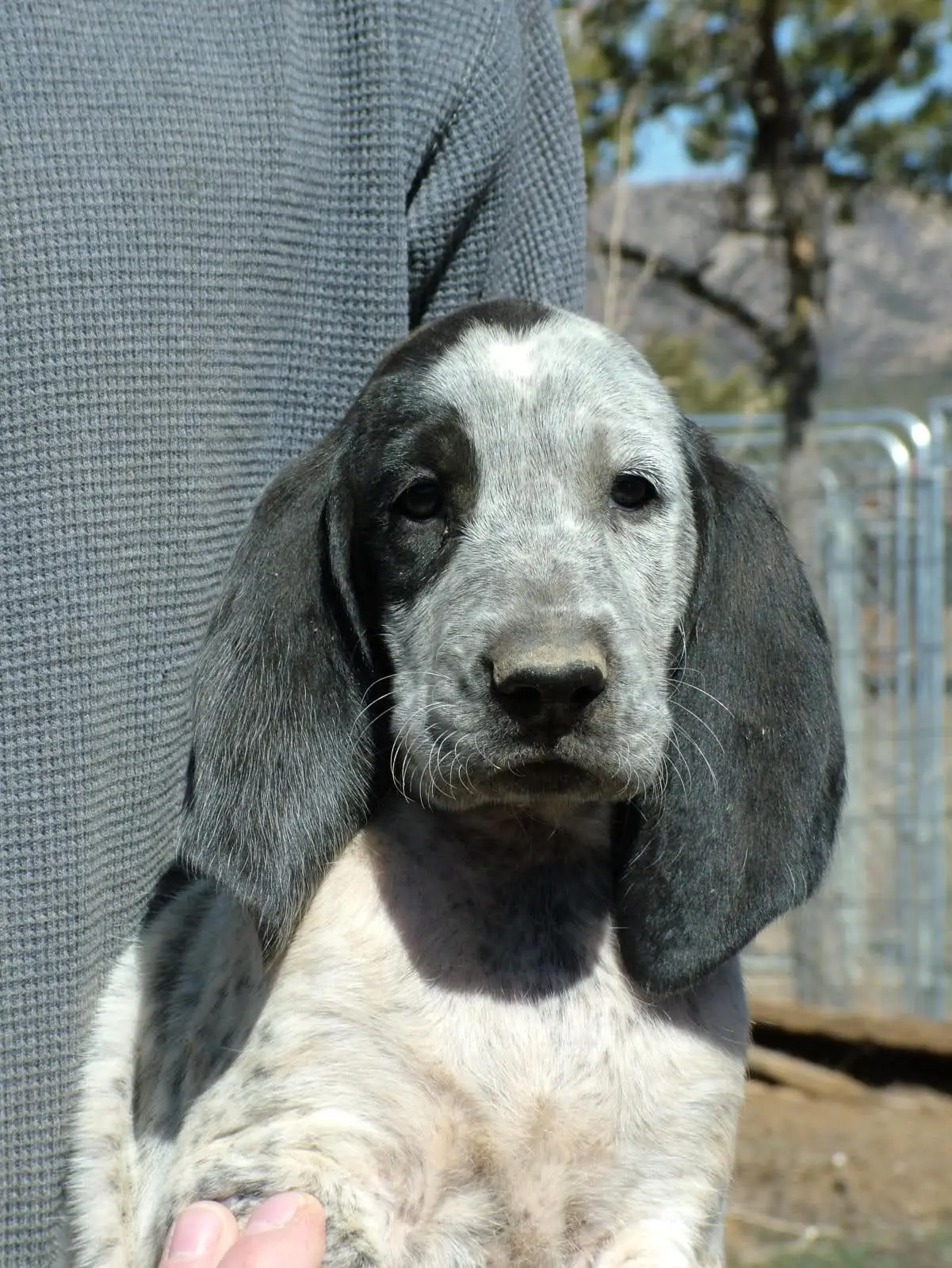
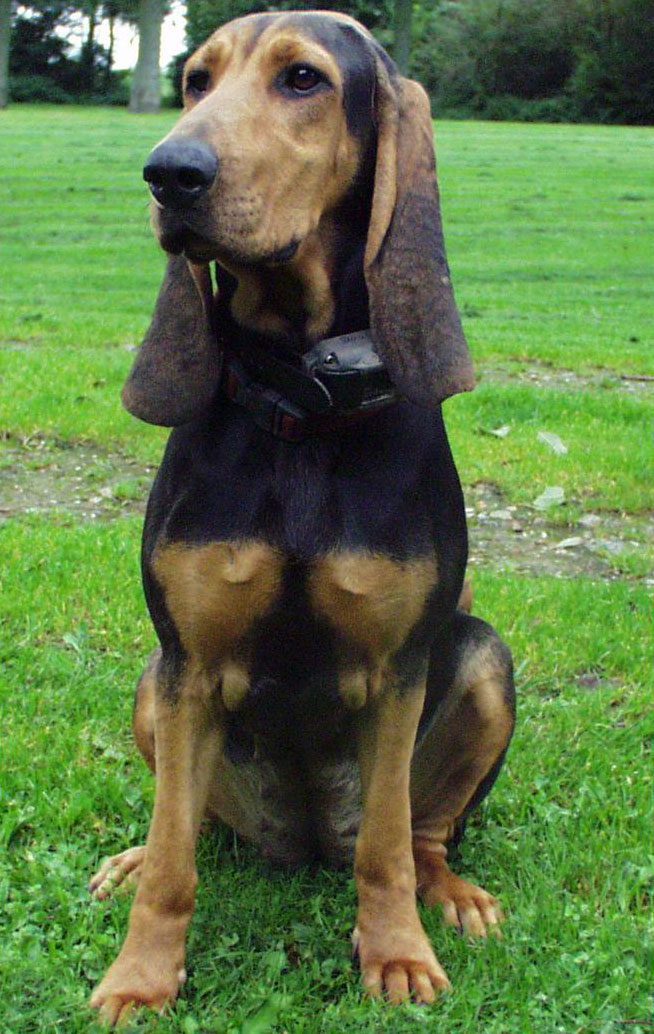
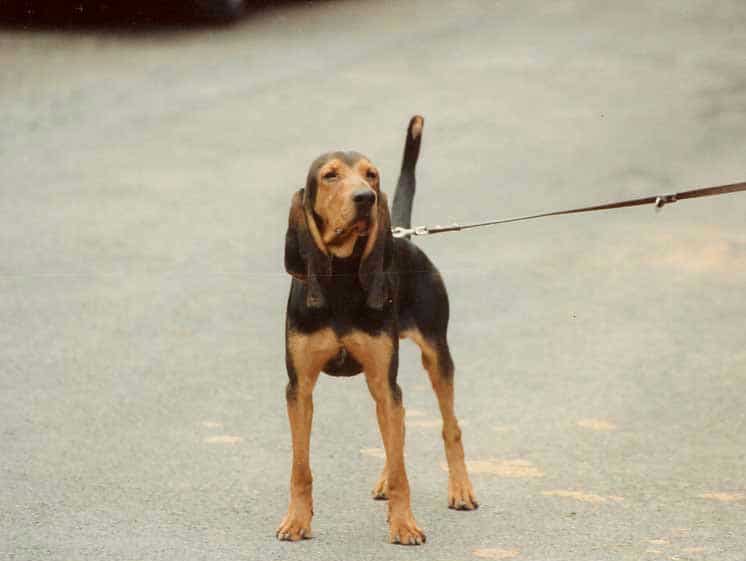
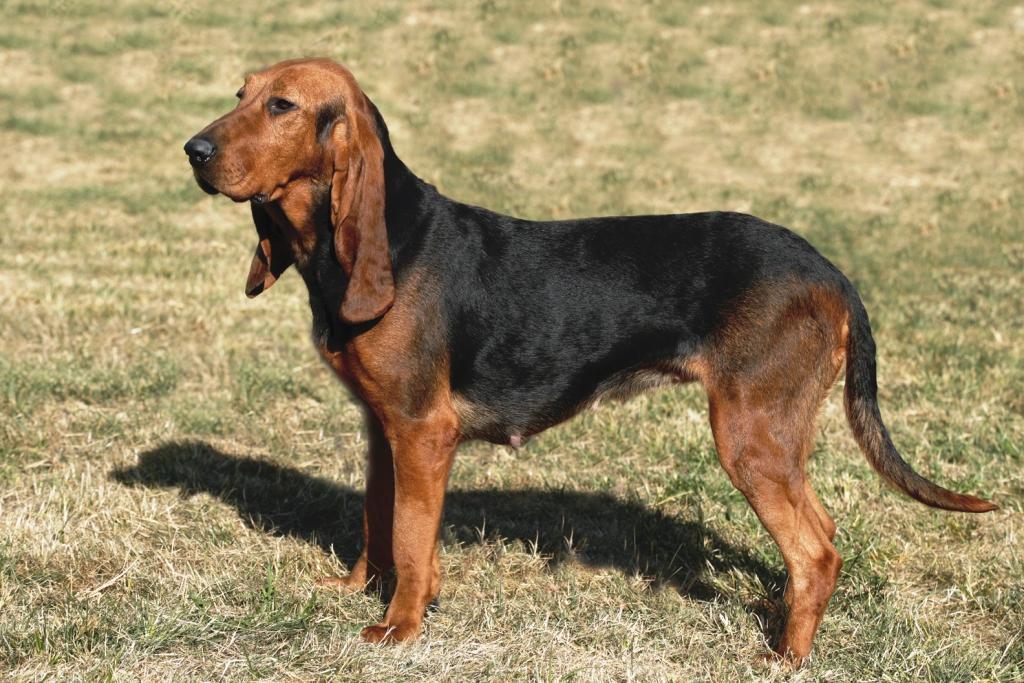
โ–ท The world of Pets: Dogs, cats, birds, reptiles, amphibians

Finnish Hound
Finlandia FCI 51 - Medium-sized Hounds.

Finnish Hound

The Finnish Hound he is friendly, calm and never aggressive. He is energetic in hunting and is a versatile tracker.

Content

History

As its name implies, the Finnish Hound It is a breed of dog native to Finland. His story is the same as that of many other hounds, as it was developed in response to the need for a hunting dog perfectly adapted to its environment.

It is the result of a breeding program started at the beginning of the 19th century by several breeders who used the English Foxhound and several hounds, as well as French and German hunting dogs. The aim of these crosses was to create an animal capable of withstanding the extreme temperatures of Finnish winters, with excellent resistance in mountainous terrain, a trumpet bark to alert hunters and a particularly developed sense of smell that would allow it to excel at tracking hares and foxes. This breeding program was a success, and the bitch he gave birth to, call Suomenajokoira, quickly gained popularity thanks to his admirable hunting skills and friendly temperament.

When it was founded Suomen Kennelliitto, Finland's leading dog organization, in 1889, his first initiative was to develop a standardized hound breed from Finland. Many breeders came forward to try to get their production recognized as the standard to follow. Three dogs were selected in the organization's first dog show in 1891, and eight more were added the following year. The first breed standard of Finnish Hound It was established in 1893 based on these individuals. It was decided, among other things, accept only fawn as coat color. But, this color did not completely stabilize, and individuals from successive litters very often had coats of other colors, like black and white. This forced the Kennelliitto to also recognize a tricolor coat (leonado, black and white) early twentieth century, which finally became the norm. The standard evolved again in small touches later, but in its main lines it has remained the same since 1932.

The Fรฉdรฉration Cynologique Internationale (FCI) recognized the breed in 1954, but I didn't have many emulators. These may include, it wasn't until more than 40 years later, in 1996, that the United Kennel Club (UKC) he did the same. The other reference organization in the United States, the American Kennel Club (AKC), has not yet taken the step.

In fact, just like the prestigious British Kennel Club or the Canadian Kennel Club (CCC), for example, most national organizations do not yet recognize the Finnish Hound.

Outside Finland, the Finnish Hound remains totally unknown to the general public.

On the other hand, the Finnish Hound is much more popular in his native Finland, to the point of appearing in the Top 10 of the most common breeds in the country, which makes it the most widespread national breed. But, with about 1.000 births per year registered in Suomen Kennelliitto, has been in free fall for several decades. In fact, at the dawn of the 21st century the number was more than 2500, and at the end of the 90 even exceeded 4000. This sharp decline is due to increasing urbanization and the decline in hunting activities.

The same development can be found in the other Scandinavian countries that have adopted the Finnish Hound, namely, Sweden and Norway. In the first, the number of births registered each year in the Svenska Kennelklubben is now within 400, compared with more than double at the end of the 1990. The number of births registered in the Svenska Kennelklubben is now little more than 150 by year, compared to more than triple that number in the late 1990s.

The Finnish Hound still commonly used as a hunting dog in Finland, Sweden and Norway, but they are practically unknown outside the Scandinavian region.

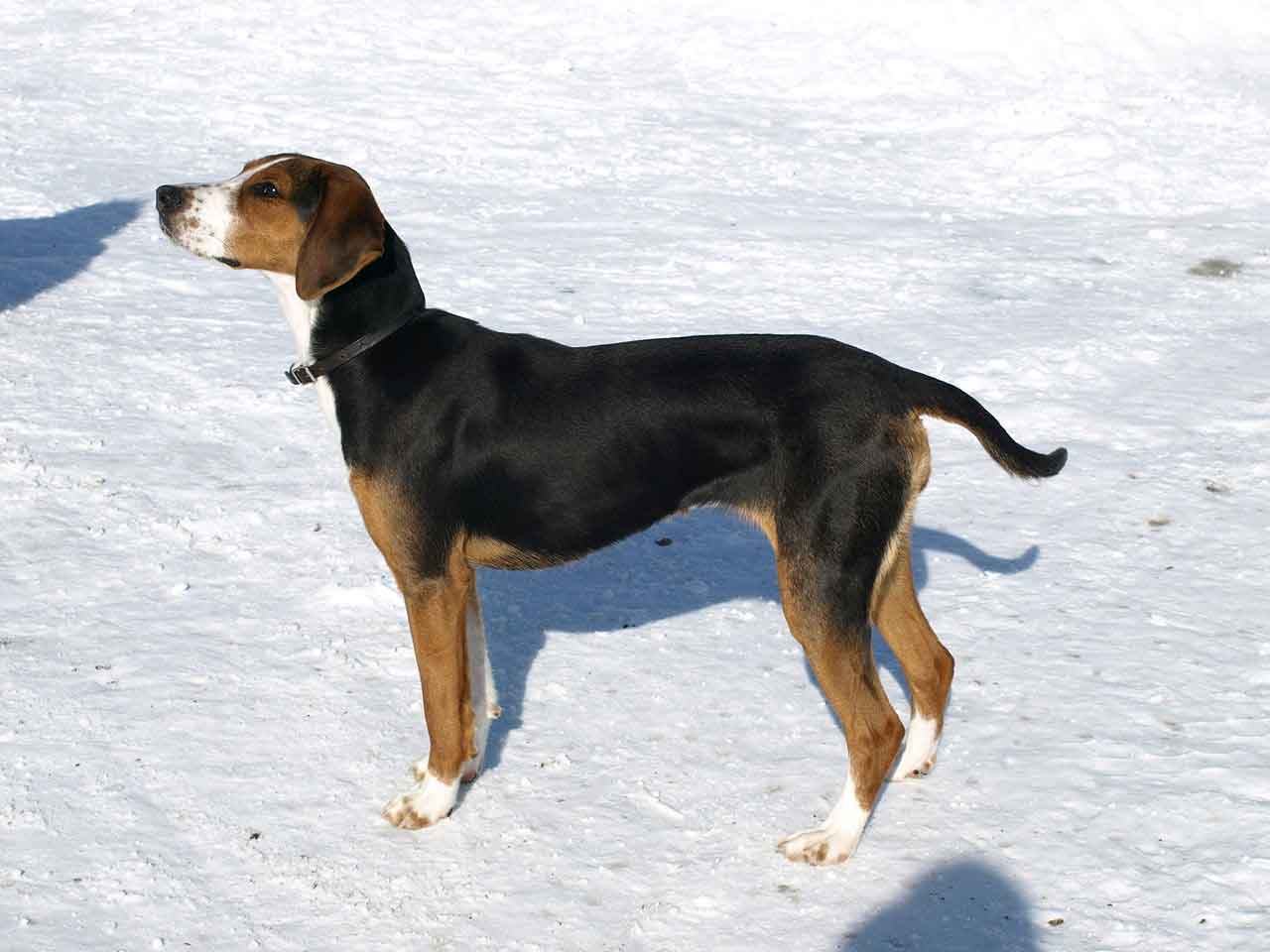
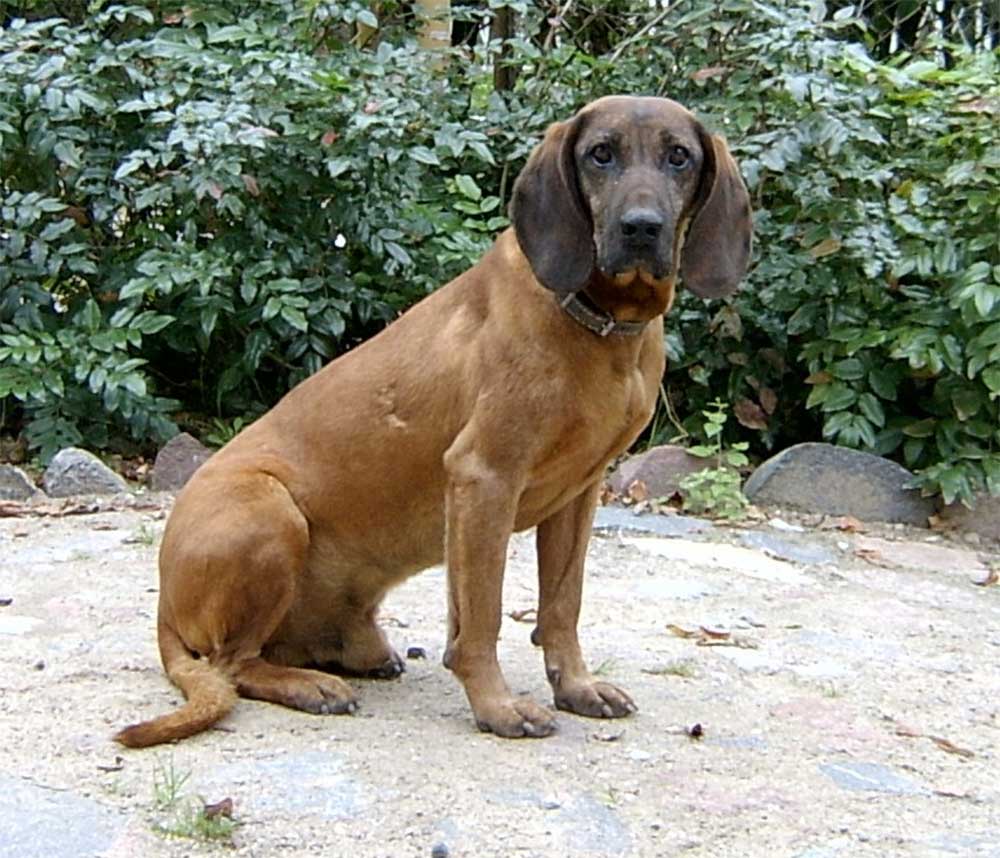
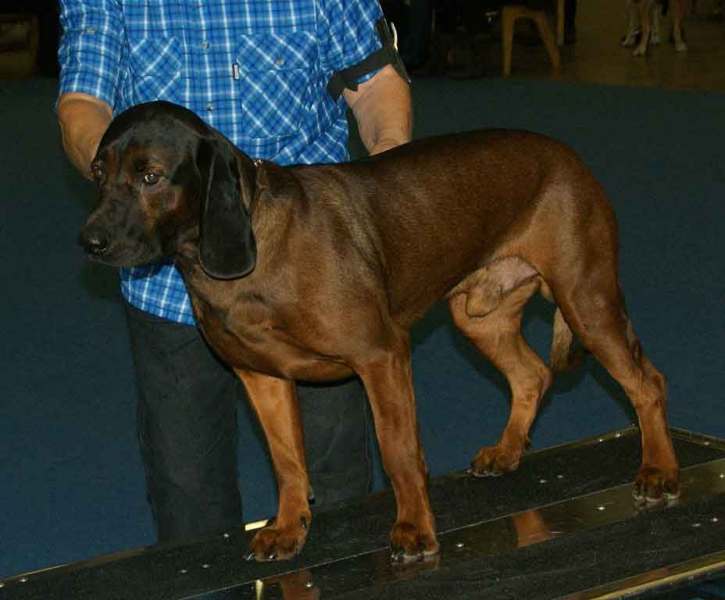
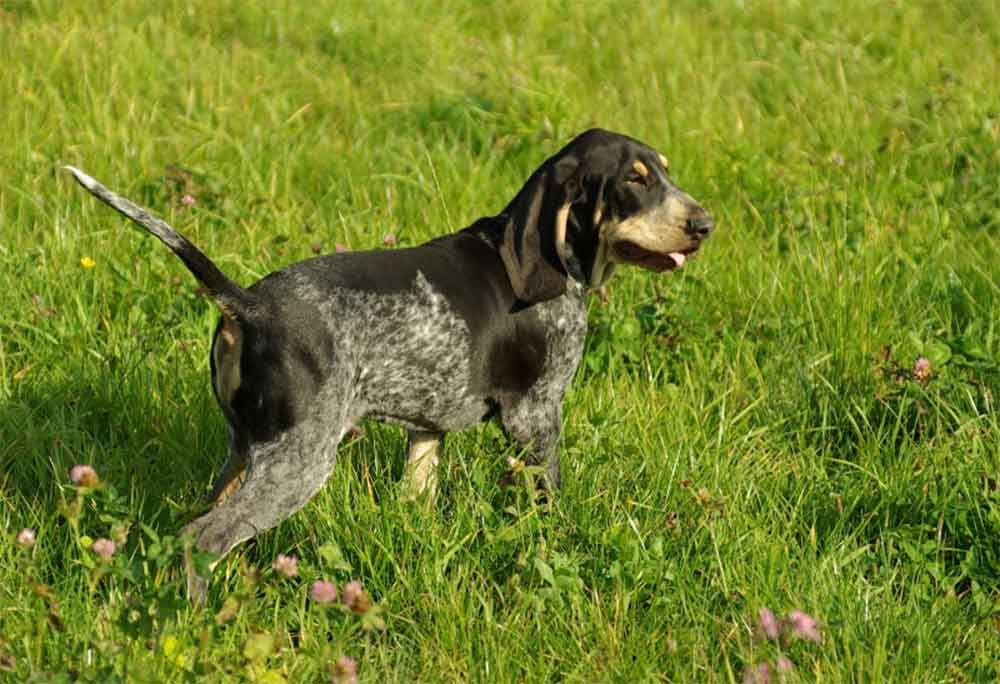
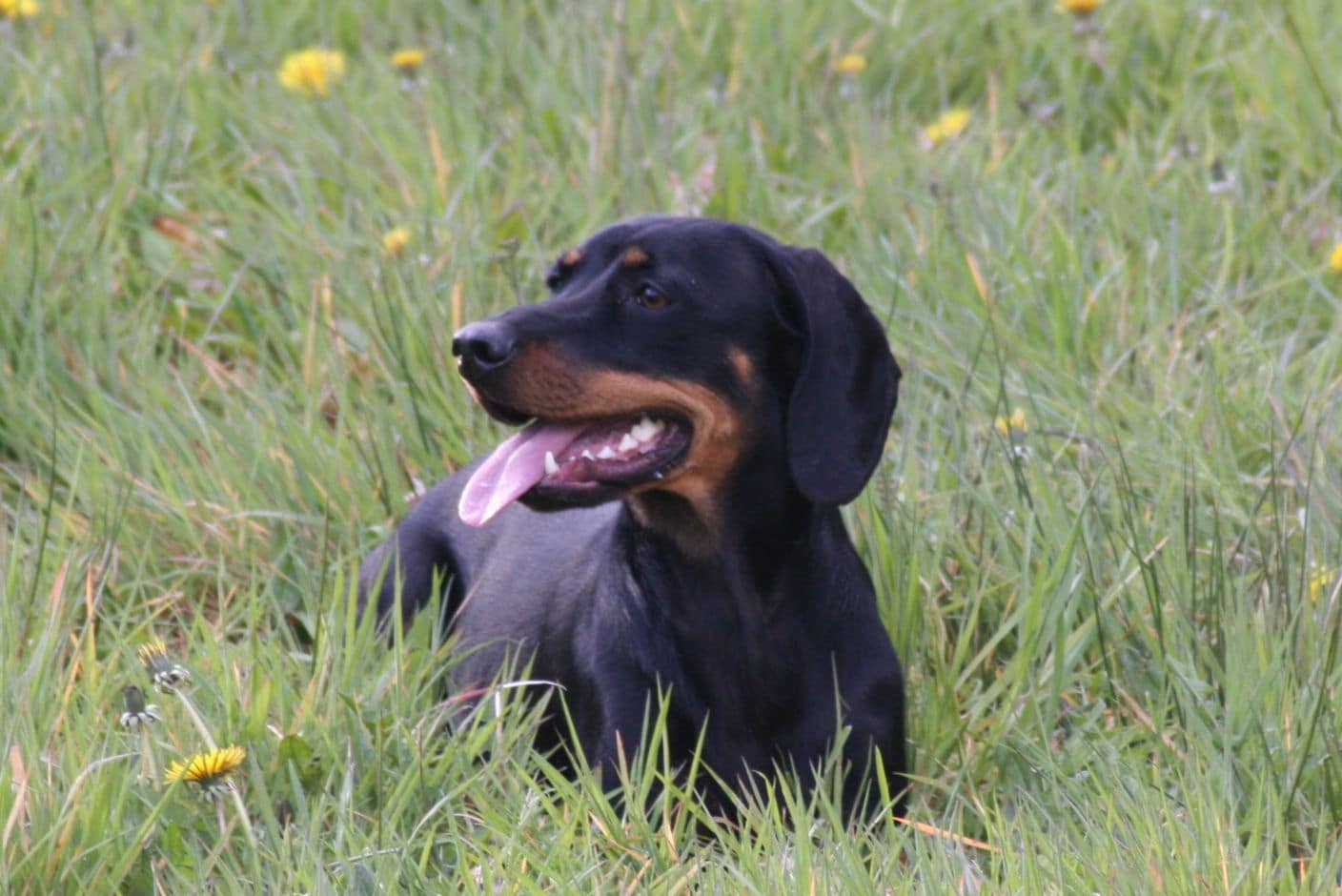
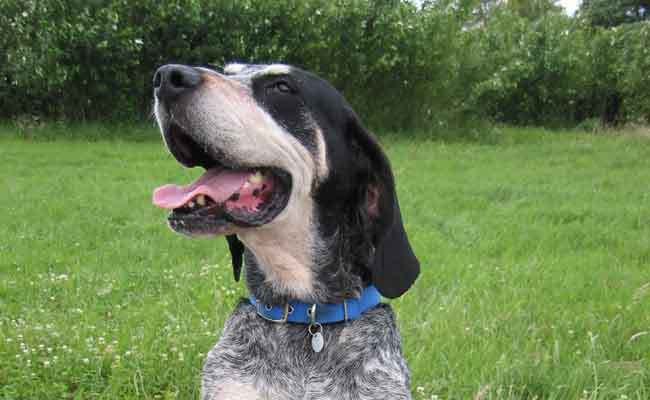
Photo: Finnish Hound by RemoteFly, CC BY-SA 3.0, via Wikimedia Commons

Caracterรญsticas fรญsicas ยซSabueso finlandรฉsยป

Athletics, resistant and strong, the Finnish Hound he has a robust and muscular silhouette and a medium size. His body is rectangular, with a deep chest and well sprung ribs. The tail is carried low; is wide at the base and tapers to a point at the end.

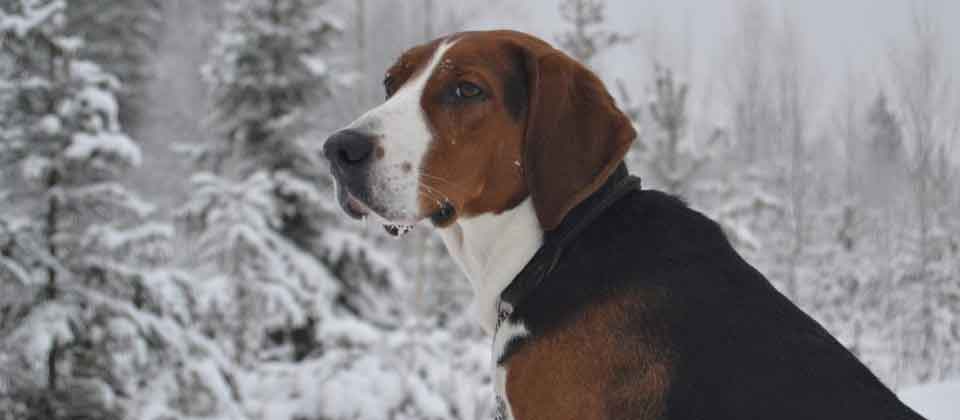
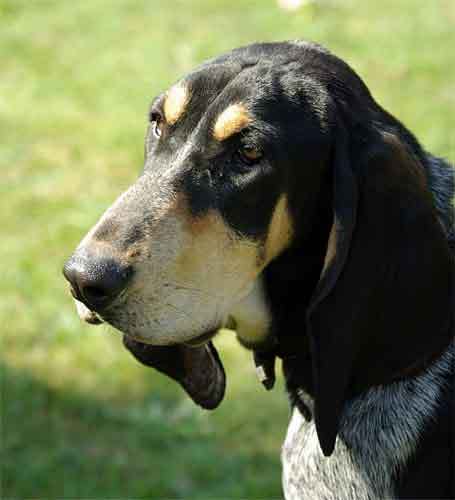
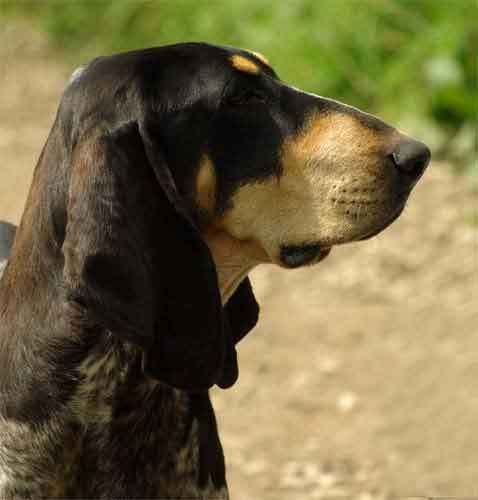
The head is well proportioned in relation to the body and slightly domed. A characteristic detail of the breed is the upper lip, that falls to the sides of the mouth forming an N-shaped curve when viewed from the front. His eyes are dark brown with a calm expression. The ears are large, plan, falls and not very long.

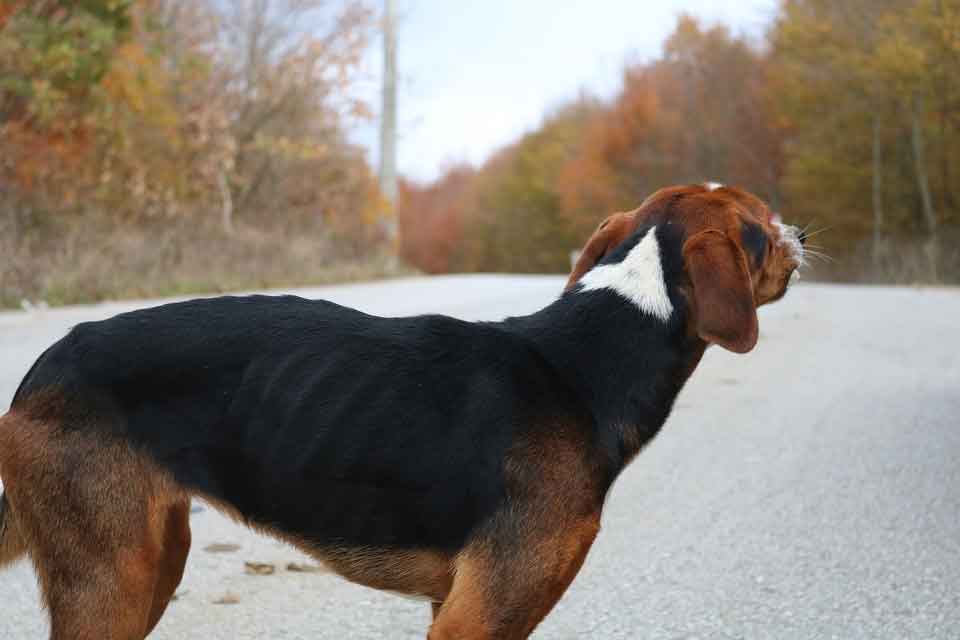
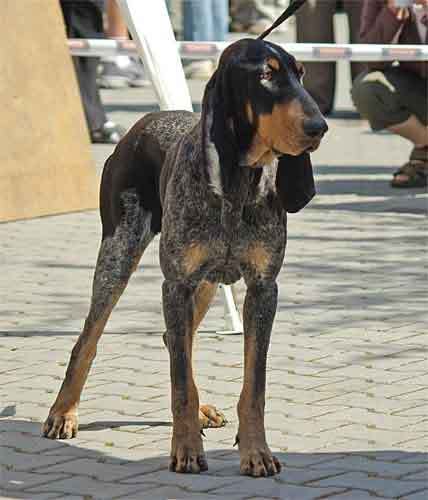
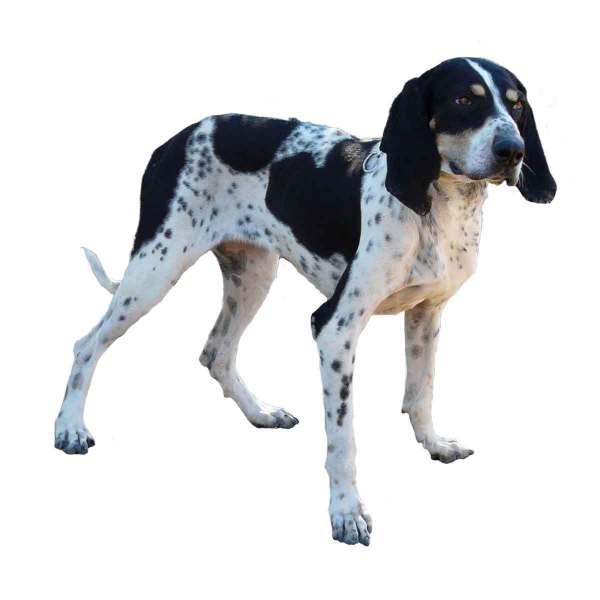
The Finnish Hound have a double coat consisting of a short undercoat, dense and smooth in texture and a medium length top coat, straight and quite hard. The coat is tricolor, mixing black, fawn and white. Specifically, the fur is black, while the head, the outer parts of the legs and shoulders are tawny. At the same time, white markings are generally present on the muzzle, the neck, the chest, the belly, the feet and the tip of the tail.

Last, sexual dimorphism is only slightly marked in this breed, since the females are on average barely 3 cm smaller than males.

Carรกcter y aptitudes ยซSabueso finlandรฉsยป

The Finnish Hound it is above all a true working dog with a highly developed predatory instinct and a strong character.

Decades of independent hunting have caused them to be stubborn and stubborn. For this reason, not recommended for a novice teacher: only an experienced and firm owner can establish and maintain the appropriate level of authority to elicit acceptable behavior from him.

This does not detract from its formidable hunting qualities., an activity in which he is alert, energetic and durable. It is mainly used to hunt hare, fox and sometimes wildcat. Regardless of weather and terrain, he is always there and never spares his efforts, able to follow a trail for hours in terrible weather conditions – aided by his highly developed sense of smell. He is also a very vocal hunting dog., appreciated for its characteristic barks, who plays a key role in allowing his master to follow him even when he is out of sight, and to alert of the presence of hunting.

To counter his unlimited energy while hunting, the Finnish Hound is generally calm and friendly during periods of rest, especially when they are at home.

Once trained and socialized, the Finnish Hound blends surprisingly well into family life. They are known to be very affectionate and are constantly on the lookout for human company., forming extremely close ties with their owners. He is also a dog that loves children. But, they must be taught to interact with him appropriately and to respect him, since they may not appreciate being mistreated. In any case, a young child should never be left alone with a dog, regardless of race.

His good relations with humans are not limited to his family circle. He is usually very nice to strangers. In other words, although its thunderous barks might suggest that it is a good watchdog, this is not the case at all.

The Finnish Hound is also sociable with other hounds, especially if they have been well socialized from a young age. So, it is perfectly conceivable to adopt a second dog to keep him company.

This is all the more true as his closeness to his masters makes him easily suffer from separation anxiety when left alone for too long., since it needs a lot of attention. The presence of a small playmate can help alleviate the problem.

In any case, it must not be a cat, rodent, bird or any other small animal. In fact, even if you are used to being around him, it is evident that he would not be safe in his presence, because the predatory instincts of the Finnish Hound they can take control at any time. It also, it is recommended to always keep it on a leash during your daily walks, to prevent you from rushing in pursuit of small animals that would pass.

The Finnish Hound it is very resistant and extremely active, so you need a lot of exercise every day. In the days when you used to hunt, your tracking activity should be an appropriate amount of exercise. The rest of the time, you need at least an hour of vigorous exercise a day: run, long walks, etc.

Keeping an active mind is also very important, so it is advisable to train him regularly to follow the tracks or play ball. This helps maintain your mental well-being., In addition to your physical health.

To be happy, the Finnish Hound needs constant access to a sufficiently large outdoor space in which to run freely. It is essential that the area is fenced in to prevent the Finnish Hound chase the surrounding animals. Not suitable for a small house without a garden or in an apartment. Wherever i live, his hunting nature causes him to bark a lot and can be a source of tension with potential neighbors.

Educacciรณn ยซSabueso finlandรฉsยป

The Finnish Hound he is intelligent and full of energy, but it is a difficult breed to train. Accustomed since its creation to hunt alone, over time has developed a strong character, independent and stubborn. He needs to have before him a master who is at least as determined, that is to say, experienced, able to show your dog that he makes up his mind and to keep a firm hand in his education throughout his life. So, not recommended for a beginning teacher, on which he would soon gain the upper hand. It also, if it is important that the rules are clear and defined from the beginning by the master, it is equally important that they are constant over time and consistent from person to person, that is to say, that all members of the house enforce them to the letter.

The Finnish Hound it's hard to handle, but it shows real sensitivity, as evidenced by his closeness to his family. So, punishments can affect you emotionally; it is preferable to take a positive approach to educate him, using positive reinforcement techniques and therefore the use of rewards: candies, petting, stimuli…

In any case, hunting practice and the ability to follow a trail require very little training, since they are things that he knows how to do instinctively.

But, is strongly inclined to want to use his hunting skills in circumstances that do not lend themselves to it, for example, rushing potential small prey on walks. Teaching your dog to remember is therefore of particular importance with the Finnish Hound. But, this can be difficult, because once he's thrown on a track, can be very reluctant to abandon it, completely ignoring the orders of its owner. Feel free to start and perfect your training in a safe, enclosed space such as your home or garden before attempting outdoor exercise..

It also, It must be remembered that this breed has been encouraged from its beginnings to bark frequently and loudly. If it's not meant to be used for hunting, it is possible to try to teach your dog to refrain from barking. But, although the latter can be reduced by specific training started at a very young age, it is impossible to hunt completely naturally, that is to say, make them disappear completely.

Finally, like any dog, benefits from being socialized from their first months, to become a balanced adult who knows how to be among humans. In addition to confronting him with a wide range of situations and stimuli (noises, smells, etc.), it should be introduced without delay to the people you will meet later in life (family, friends, neighbors, veterinary, etc.), as well as getting used to cross all kinds of humans, congeners and representatives of other species. Given their hunting instinct, This last point is not unimportant.: the more accustomed you are to the presence of other animals, less likely to hunt them later.

Salud ยซSabueso finlandรฉsยป

The Finnish Hound is generally robust and healthy.

Its dense fur provides excellent protection against cold and weather, but also against the heat. Although they need shade or even air conditioning in hot weather, the Finnish Hound is generally able to adapt to almost any climate.

The main health problems the breed is most prone to are:

  • Ataxia cerebelosa, generally hereditary, which affects coordination of movements and prevents affected puppies from moving. Then it is necessary to euthanize them;

Certain heart conditions:

  • Valvular disease, heartworm (Dirofilaria immitis) and cardiomyopathy;
  • Lymphoma, a type of cancer that affects lymphocytes, white blood cells that help the immune system fight infection. Symptoms depend on location and stage, but the most common are lack of appetite, weight loss, general weakness and lethargy, and enlarged lymph nodes in the neck. Treatment with chemotherapy and radiation therapy is usually started, but relapses are common;
  • Hip and elbow dysplasia, orthopedic conditions marked by a hereditary predisposition, where the bones don't fit well. This leads to movement difficulties (limp, etc.);
  • Ear infections (ear infections, etc.), favored by the drooping shape of their ears;
  • Black hair follicular dysplasia, a rare dermatological condition that causes black hair loss in the first weeks of a puppy's life, to the point that it usually disappears before their first birthday. It does not usually affect the health of the dog, but it can irritate the skin and make it susceptible to infection;
  • Atopic dermatitis, an inflammatory skin condition caused by an allergy. It usually has a genetic cause and is manifested by itching, systematic scratching and licking of the paws, armpits and face.

It also, an individual used for hunting is also more exposed to the risk of injury, parasites, thorns… It is highly recommended to check it every time you return home, to make sure everything is okay.

Adopting a breeder Finnish Hound serious and responsible (breed club member for example) normally allows to have the best guarantees regarding the present and future good health of the animal. Must be able to present a certificate of good health established by a veterinarian, the history of the vaccines administered and the results of the genetic tests carried out on the parents and / or the puppy in relation to diseases that may have a hereditary dimension.

It also, as with all dogs, must be taken at least once a year to a veterinarian for a complete health check. This will ensure you stay up to date on your vaccinations and can lead to early detection of any problems.. At the same time, it is important to make sure that you renew your deworming treatments whenever necessary. This is even more important as you spend a lot of time outdoors.

Utilizaciรณn del ยซSabueso finlandรฉsยป

The Finnish Hound is a renowned hunting dog in his homeland, where has always been, and it still being, used to hunt rabbits, foxes, wildcats and sometimes even moose. They prefer to work alone and are particularly good at following tracks in the air or on the ground., barking loudly.

Although the main purpose of breeding this breed has never been to make a pet, fits surprisingly well into family life and can sometimes be kept just for that purpose. But, only suitable for an experienced teacher, who lives in a house with a big garden, often present, and able to meet their high needs for physical activity.

Last, the Finnish Hound is loyal, Gentile, loving and affectionate with their owners: all the qualities that can make him a good psychological support dog for his owners. Their sensitivity and close bond with their owners allows them to react intuitively to their owners' emotions and offer comfort when they notice something is wrong..

Comprar ยซSabueso finlandรฉsยป

In finland, the purchase price of a puppy of Finnish Hound it is usually between 600 and 800 EUR. The amount charged depends on the prestige of the breeding, the lineage from which the animal descends, as well as its intrinsic characteristics, especially physical, so there may be price differences within the same litter.

As the breed is very difficult to find outside of Scandinavia, importing from abroad is often the only option. In this case, transportation and administrative costs are added to the purchase price, not to mention the cost of possible registration in the national registry of the country of adoption. It also, It is important, of course, ensure that the regulations for importing a dog from abroad are followed.

Characteristics "Finnish Hound"

Coexistence is important that you have with your new friend. Before considering the acquisition of a dog of the breed "Finnish Hound" you know certain factors. Not all breeds of dogs are apt to live in an apartment, you must take into account his character, their need for exercise, their interaction with other pets, their care and if you have small children, their level of tolerance towards them.

Adaptation โ“˜

4,0 of 5 stars (based on 1 review)

friendly dog โ€‹โ€‹โ“˜

3,0 of 5 stars (based on 1 review)

hair loss โ“˜

3,0 of 5 stars (based on 1 review)

Affection level โ“˜

5,0 of 5 stars (based on 1 review)

Need for exercise โ“˜

4,0 of 5 stars (based on 1 review)

Social need โ“˜

4,0 of 5 stars (based on 1 review)

Home โ“˜

4,0 of 5 stars (based on 1 review)

Toilet โ“˜

1,0 of 5 stars (based on 1 review)

Friendly with strangers โ“˜

4,0 of 5 stars (based on 1 review)

barking โ“˜

4,0 of 5 stars (based on 1 review)

Health โ“˜

3,0 of 5 stars (based on 1 review)

Territorial โ“˜

4,0 of 5 stars (based on 1 review)

Cat friendly โ“˜

2,0 of 5 stars (based on 1 review)

Intelligence โ“˜

4,0 of 5 stars (based on 1 review)

Versatility โ“˜

4,0 of 5 stars (based on 1 review)

Child friendly โ“˜

4,0 of 5 stars (based on 1 review)

Surveillance โ“˜

4,0 of 5 stars (based on 1 review)

joy โ“˜

4,0 of 5 stars (based on 1 review)

Images "Finnish Hound"

Finnish Hound

Finnish Hound

Photos:

1 – Sabueso finlandรฉs by https://pixabay.com/fi/photos/koira-nรคlkรค-pelko-vihainen-5317972/
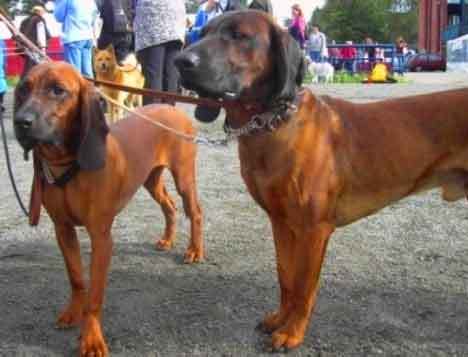
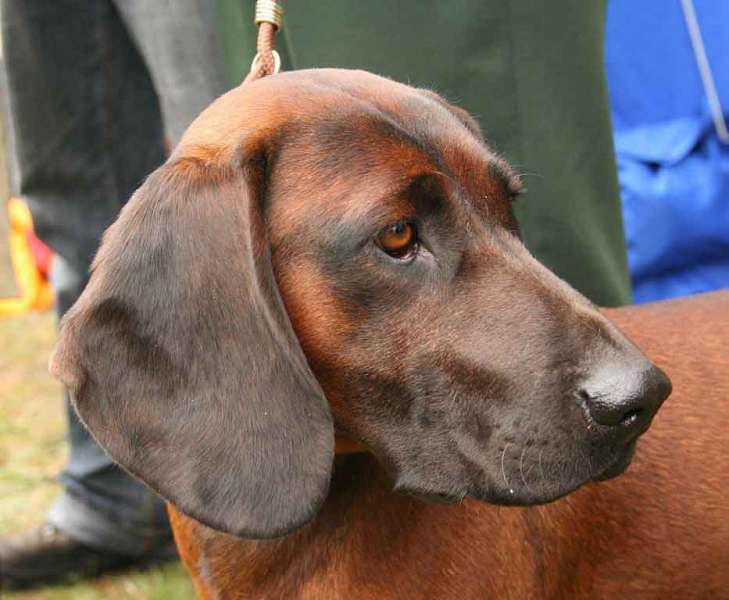
2 – Finnish hound by https://www.hankikoira.fi/koirarodut/suomenajokoira

Videos "Finnish Hound"

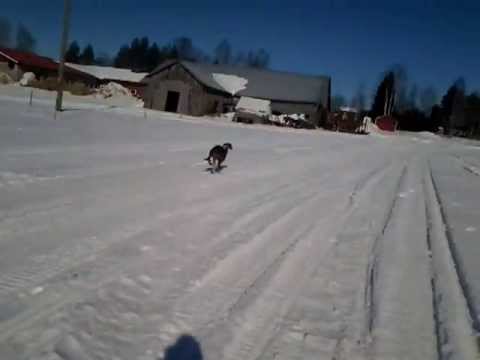
Finnish River Dog drives a fox

Suomenajokoira ajaa kettua
Finnish Hound / Finnish Hound

Finnish Hound / Finnish Hound

Type and recognitions:

  • FCI CLASSIFICATION:
  • Group :
  • Section : . .

Federations:

  • FCI – Group 6: Scent hounds, and related breeds. – Section 1.2: Medium-sized Hounds. โ“˜

FCI breed standard "Finnish Hound"

Origin:
Finland

Date of publication of the valid original standard:
17.07.1997

Use:

Perro utilizado para seguir el rastro en la cacerรญa de la liebre y la zorra. Su entusiasmo por cazar no declina aรบn en las circunstancias mรกs difรญciles. Trabaja en forma independiente, es un rastreador polivalente que persigue a su presa con un ladrido sonoro.


General appearance:

Medium -sized tricolor dog provided to the body which is visibly longer than high at the cross level; It is strong constitution, without being heavy. The support area when standing is as long as the body or slightly longer; View from the front is as wide as the thorax and seen from behind is as wide as seen from the front. Sex characteristics should be well marked.

IMPORTANT PROPORTIONS :

โ€ข The relationship between body length and height to the cross is 1.1 to 1.
โ€ข The height of the thorax reaches half the height to the cross.
โ€ข The length of the snout is equal to the length of the skull. The length of the skull is equal to its width and depth.


Behavior / temperament:

He is a calm dog, energetic and friendly, never aggressive.

Head:

---

Cranial region:

Seen from the front, The skull is proportionally wide and bulging in its upper part. The forehead is slightly convex view from the sides. The upper line of the skull is parallel to that of the nasal cane; The groove between the eyes is barely visible; supraciliary arches and occipucio are clearly visible.

  • Depression links (Stop) : Supraciliary arches accentuate the light stop, But well defined.

facial region:

  • Truffle : Well developed, black; Large and mobile windows.
  • Snout : It is the same length as the skull, It is moderately deep and slightly thinns; the nasal helm is straight. The lower lip forms the lower line, which is almost parallel to the upper line of snout.
  • Lips : Well developed and pigmented. The upper lip is beautifully arched. The lips and corners of the mouth are closely adjusted.
  • Jaws / Teeth : The jaws are strong. The teeth are well developed and placed symmetrically in the jaws. Dentition is normal and complete. Tight scissors bite.
  • Cheeks : Moderately clean.

Eyes : Medium-sized, not outstanding, slightly oval, dark brown, well directed forward. Calm expression. The eyelids are black.

Ears : They hang with the front edge glued to the head. They are crooked so that the posterior edge is directed out and the tip of the ear almost forward. They are implanted in the line that goes from the nose to the eyes. They are flat and reach beyond half of the snout when they are forward.

Neck:

Of moderate length, muscular, clean; The upper line only slightly arched. When the dog is on feet, The tip of the nose is at the top of the upper line of the neck or slightly higher.

Body:

  • Back : Medium length, straight and muscular.
  • Pork loin : Rather short and strong.
  • Rump : Well developed, long and strong, slightly tilted. Profile view, The upper back line continues in a beautifully arched rump
  • Breast : Long and deep, Reach to the elbows. Well arched ribs, clearly visible.
  • bottom line : Slightly retracted.

Tail:

Low insertion, slightly curved, reaches even the warm-tarsian joints. It is thick at its root and thinns towards the tip. At rest it hangs near the posterior members; During the movement you can lift it, But not above the top line level. The hair that covers the tail is similar to the rest of the body.

Tips

PREVIOUS MEMBERS :

  • As a whole : They are well angled. Seen from the front, they are straight and parallel. The forearms are vertical. The deepest point of the chest is at the elbow level. The arm and forearm have the same length.
  • Shoulder : Rather long, oblique and strong; glued to the body but very mobile.
  • Arms : They have the same length as the scapulars, clearly inclined and strong.
  • Elbows : Well directed back, very attached and parallel to the body. : Strong and tendon with oval and strong bones.
  • Metacarpus : Slightly sloping.
  • Previous feet : Slightly oval and high, with toes well arched and together. hard nails, black preferably. Elastic pads, preferably black and covered on the sides of a dense fur.

LATER MEMBERS :

  • As a whole : They're strong, well angled, straight and parallel, seen from the back.
  • Thigh : Length and width, strong muscles covered.
  • Knee : Points forward. The previous line of the posterior member has a slight curvature.
  • Leg : Moderately wide, sinewy.
  • Warm-tarsal joints : Strong, rather low.
  • Metatarsus : Rather short and strong, vertical.
  • Hind feet : Of equal conformation as the previous feet, Always pointing forward.

Movement:

Light and effective trot with strides that cover space. The upper line remains level and firm during movement. The limbs move in parallel.

Mantle

SKIN :Thick, Well stuck throughout the body without presenting wrinkles.

HAIR : The undercoat is short, Dense and soft texture. The outer layer is medium -long, footprint, straight, Dense and rather rough.

COLOR : It is tricolor. It has a black or intense black mantle on the head, partes inferiores del cuerpo, shoulders, muslos y tambiรฉn en algunas otras partes de los miembros. It usually presents white marks in the head, neck, backsplash, lower parts of the limbs and at the tip of the tail.


Size and weight:

Height to the cross :

  • Males 55 โ€“ 61 cm.,
  • hembras desde 52 โ€“ 58 cm..

Ideal height :

  • Males from 57 โ€“ 59 cm.,
  • hembras desde 54 โ€“ 56 cm..


Fouls:

Any deviation from the aforementioned criteria is considered as a fault and the severity of this is considered to the degree of the deviation to the standard and its consequences on the health and well-being of the dog..

โ€ข Constitution too light or too heavy.
โ€ข Incorrect sexual characteristics.
โ€ข Clearly triangular head shape.
โ€ข Loose skin.
โ€ข Short or pointed snout.
โ€ข Bite in clamp or light superior prognathism.
โ€ข Square or too long body.
โ€ข Grupa corta y al mismo tiempo empinada.
โ€ข Long feet, flattened, fingers apart.
โ€ข Short and remarkably soft fur.
โ€ข Salpized color.
โ€ข Clearly interrupted mantle.
โ€ข A lot of gray hair or wolf hair.
โ€ข Height at withers 1 cm greater or less than the one established in the standard.
โ€ข Lightly shy or exaggeratedly gross with other dogs.

MISS PLAYOFFS

โ€ข Shyness or aggressiveness.
โ€ข Total lack of pigment in the truffle.
โ€ข LOWER PROGNATISM The Marked Superior Prognosis.
โ€ข Broken tail.
โ€ข Height to the cross more than 1 cm greater or less than the one established in the standard.

Any dog โ€‹โ€‹showing clear signs of physical or behavioral abnormalities must be disqualified..


N.B.:

Males should have two normal-appearing testicles fully descended into the scrotum..

Source: F.C.I - International Cynological Federation

Alternative names:

1. Finnish Bracke (English).
2. Chien courant finnois (French).
3. (Suomenajokoira, Finnenbracke, Finsk Stรถvare) (German).
4. (em finlandรชs: Suomenajokoira) (Portuguese).
5. (en finlandรฉs: Suomenajokoira) (espaรฑol).

โ–ท The world of Pets: Dogs, cats, birds, reptiles, amphibians

Bavarian Mountain Hound
Germany FCI 217 . Leash (scent) Hounds
Bavarian Mountain Hound

The Bavarian Mountain Hound is very suspicious of strangers, I am calm and balanced with its owner.

Content

History

The Bavarian Mountain Hound it is a medium sized hunting dog. He is a highly developed specialist, but at the same time versatile in hunting. Tracking work is his specialty. Master the search and hunt and especially the tracking. On the trail, keep track of an injured animal. Fast and infallible dog work is crucial to reduce the suffering of the prey.

The Bavarian Mountain Hound dates back to ancient dog breeds. These hounds are also called ยซBrackenยป. For hunting, which was an important way of life for our ancestors for thousands of years, dogs with a particularly good sense of smell and an intelligent sense of detection were of great importance. Trace Dogs were also needed to hunt criminals.

For the Teutons a good Scent hound worth more than a horse. This is attested by a legal text of more than 1000 years of antiguaty, el Lex Baiuwariorum. A document of the year 1459 later attests to Bracken's donation to the Tegrinsee monastery (today Tegernsee) by a Count Kaspar Tรถrring. Already at that time the count systematically raised the Bracken according to a breeding book. The actual Bavarian Mountain Hound also descends from these Bracken.

In 1870 he also grew up Hanoverian Scenthound. This resulted in a modern and versatile helper for the ranger and hunter.. The dogs had to be distinguished by their high performance in hunting. At the same time, they had to cope with the harsh conditions of the mountains. So, sharp stones were not allowed to bother them as much as storms, snow or high demands on your ability to climb. In 1883 took place the first official exhibition of the Bavarian Mountain Hound. In 1912 was founded the Klub fรผr Bayerische GebirgsschweiรŸhunde, who has since been very successful in caring for these dogs.

After World War II, the genetic bottleneck was worked on by crossing into the Tyrolean hound. Although the breed is very rare, is spread throughout Germany. His breeding is organized in a very responsible way. To avoid โ€œelite or champion breedingโ€ the number of offspring of a breeding animal is limited to 18 to 20. On the other hand, at least one animal from each litter raised must be reintroduced into the breed if there are no signs of inherited diseases. It also, breeding is only allowed with dogs that have passed performance tests anyway. The breeding of Bavarian Mountain Hound is a model, a project, how to breed healthy and strong pedigree dogs, even with a numerically very small population. They are raised between 10 and 12 litters with 60 to 80 puppies per year. These go almost only to the professional hands of professional rangers and hunters.

Photo: Bavarian Mountain Hound (name: Zoran Spod Ruskiej Granicy) by Ralf Lotys (Surely), CC BY 2.5, via Wikimedia Commons

Physical characteristics

The Bavarian Mountain Hound It is a strong dog, medium-sized, with a height at the withers of about 44 to 52 cm and a weight of 17 to 30 kg. Males, However, they are larger and heavier than females. For your size, has rather short legs. The standard describes its appearance in this way:

A medium sized dog, harmonious, light, very agile and muscular. The body is slightly longer than tall, slightly raised from behind; leans on legs not too high. The head is carried horizontally or somewhat erect, tail horizontal or slanted down.

The coat must be dense, smooth, moderately rough, low gloss. The standard requires the following colors:

Dark red, deer red, Red brown, yellowish red, also pale yellow (even sand color); reddish gray like the winter hair of the red deer, also brindle or dark flecked.
In the back, the basic color is generally more intense. Muzzle and ears dark.
The tail is almost always dotted dark. A small, clear spot is allowed on the chest (hound star).

The meaning is: The colors must camouflage the dog in its hunting work and not give it away, for example with large white marks.

Character and skills

The Bavarian Mountain Hound is a thoroughbred hunting dog with wide awake senses, but without nervousness. As long as you don't have a smell in your nose, impresses with a thoughtful nature, quiet and extremely gentle, that radiates pure slowdown for us humans. The official standard describes its nature as follows: ยซCalm and balanced; affectionate with his owner, reserved with strangers. What is required is a stable dog, self-confident, fearless and easy to handle, neither shy nor aggressive".

The Bavarian Mountain Hound it is a very capable working dog that performs its tasks conscientiously and with the utmost dedication. He has a strong homing instinct and is a master of tracking.. Exploring nature with him is, therefore, a very special experience and happiness. The Bavarian Mountain Hound, professionally managed, it is also a very good family dog รขโ‚ฌโ€นรขโ‚ฌโ€นwith a gentle nature.

Fitness

One Bavarian Mountain Hound It is not a companion dog for the city or for walks in nature, even if they are daily. Not a dog for the home, but a professional hunting dog who wants and needs the job. Otherwise, his attitude is completely undemanding. So, Ideally, you should live in a house on the edge of the woods or in the country with a garden..

The Bavarian Mountain Hound wants and can go out in all climates. The standard provides information on the conditions of its maintenance:

ยซIn accordance with its hunting purpose as a specialist in monitoring cloven-hoofed hunting, the Bavarian Mountain Hound must possess all the qualities required of him to be useful in a difficult pursuit. The usefulness must be proven by appropriate performance tests.".

Education ยซBavarian mountain trackerยป

The Bavarian Mountain Hound is a very friendly and eager to learn four legged friend, that makes it easier for its owner to train and work with him. Why you want and need this guide. But it is not a dog that awaits orders from its owner. Since dogs have been admitted to breeding for many generations only if they have mastered many demanding performance tests, your level of training is extremely high. This is at the same time an obligation for the leadership of this dog. Because you need the hunting job, where it feels good. His element is search work. Here he has brought it to a stranglehold, you also need to live. But, you should take this into account if you are playing with the idea of รขโ‚ฌโ€นรขโ‚ฌโ€นsharing your life with a Bavarian Mountain Hound as not a hunter.

Care and health

The breed is very easy to care for. Brushing once in a while is enough.

Typical diseases of the breed:

Hereditary diseases are not known.

Nutrition / Food

The Bavarian Mountain Hound is undemanding in his diet.

Life expectancy

The Bavarian Mountain Hound has a life expectancy of about 12 years.

Buy a โ€œBavarian Mountain Trackerโ€

If you are looking for a dog of this breed, you should contact a breeder affiliated with the Club Bรกvaro del Bavarian Mountain Hound well in advance of your planned purchase. As a rule, dogs are only handled by rangers or hunters. From time to time, However, it may happen that a dog is looking for another place. But then you should be able and willing to give it living conditions that can be a substitute for its species-appropriate way of life.. A puppy of this breed costs about 1500 EUR.

Characteristics "Bavarian Mountain Hound"

Coexistence is important that you have with your new friend. Before considering the acquisition of a dog of the breed "Bavarian Mountain Hound" you know certain factors. Not all breeds of dogs are apt to live in an apartment, you must take into account his character, their need for exercise, their interaction with other pets, their care and if you have small children, their level of tolerance towards them.

Adaptation โ“˜

3,0 of 5 stars (based on 1 review)

friendly dog โ€‹โ€‹โ“˜

4,0 of 5 stars (based on 1 review)

hair loss โ“˜

3,0 of 5 stars (based on 1 review)

Affection level โ“˜

4,0 of 5 stars (based on 1 review)

Need for exercise โ“˜

4,0 of 5 stars (based on 1 review)

Social need โ“˜

3,0 of 5 stars (based on 1 review)

Home โ“˜

2,0 of 5 stars (based on 1 review)

Toilet โ“˜

2,0 of 5 stars (based on 1 review)

Friendly with strangers โ“˜

2,0 of 5 stars (based on 1 review)

barking โ“˜

4,0 of 5 stars (based on 1 review)

Health โ“˜

3,0 of 5 stars (based on 1 review)

Territorial โ“˜

4,0 of 5 stars (based on 1 review)

Cat friendly โ“˜

2,0 of 5 stars (based on 1 review)

Intelligence โ“˜

4,0 of 5 stars (based on 1 review)

Versatility โ“˜

4,0 of 5 stars (based on 1 review)

Child friendly โ“˜

4,0 of 5 stars (based on 1 review)

Surveillance โ“˜

4,0 of 5 stars (based on 1 review)

joy โ“˜

4,0 of 5 stars (based on 1 review)

Images "Bavarian Mountain Hound"

Photos:

1 – Bavarian Mountain Hound, female and male by Canarian, CC BY-SA 3.0, via Wikimedia Commons
2 – ยซBavarian mountain trackerยป by Wikimedia
3 – A Bavarian Mountain Scenthound by Canarian, CC BY-SA 4.0, via Wikimedia Commons
4 – Bavarian Mountain Hound during show of dogs in Rybnik – Kamieล„, Poland by Pleple2000, CC BY-SA 4.0, via Wikimedia Commons
5 – Kafka und Frodo beim ersten Outdoor Treffen und Grillen bei Audigast. Februar 2014. Kafka ist ein Magyar Vizsla und Frodo ein Bayerischer GebirgsschweiรŸhund by Andreas Krรผger
6 – Bavarian Mountain Hound by Pleple2000, CC BY-SA 3.0, via Wikimedia Commons

Videos "Bavarian Mountain Hound"

Type and recognitions:

  • FCI CLASSIFICATION:
  • Group :
  • Section : . .

Federations:

  • FCI – Group 6: Scent hounds, and related breeds. – Section 2: Leash (scent) Hounds. โ“˜
  • AKCGrupo FSS โ“˜
  • โ€‹KCCazadores โ“˜
  • UKCScenthounds โ“˜

FCI breed standard "Bavarian Mountain Hound"

Origin:
Germany

Date of publication of the valid original standard:
01.04.1996

Use:

Trail dog.


General appearance:

It is a generally harmonious dog, lighter, very active and muscular, medium-sized. The body is a bit elongated and raised in its posterior region ; stands on very long limbs. The head is horizontal or slightly erect ; has the tail carried horizontally or slightly tilted downwards.


Behavior / temperament:

It is quiet and balanced ; attached to its owner and distrustful of strangers. The dog is required to be firm, self-confident, fearless and docile, without being shy or aggressive.

Head:

---

Cranial region:

Relatively wide, little rounded, with a well marked forehead, well-developed superciliary arches and shallow occipital protuberance.

  • Depression links (Stop) : Marked.

facial region:

  • Truffle : Good size, not too wide, well open nostrils, black or deep red.
  • Snout : A little parted in front of the eyes, slightly shorter than the skull, wide enough, it is not pointed. The bridge of the nose is slightly arched or straight.
  • Lips : Upper lip falling well over the lower one, moderately thick. The corners of the lips are well visible.
  • Jaws / Teeth : Powerful jaws with a perfect scissor bite, regular and complete, in which the upper incisors overlap the lower incisors without leaving space ; teeth are implanted vertically in the maxilla. Should have 42 healthy teeth according to the dental formula. Pincer bite allowed.
  • Cheeks : Stand out moderately.

Eyes : Clean, with an attentive expression. Not too big or round. Dark brown or lighter. Well attached and pigmented eyelids.

Ears : Something more than moderately long, must reach a maximum up to the truffle ; heavy, high and wide insertion, rounded in its bottom edge, hang down close to the cheeks but not bent.

Neck:

Moderately strong. Throat skin is a little loose.

Body:

  • top line : Rise a little from the withers to the rump.
  • Cross : Bit strong. Smooth transition from neck to back.
  • Back : Strong and elastic.
  • Pork loin : Proportionally short, broad, with good musculature.
  • Rump : Long and fairly flat.
  • Breast : Moderately wide, with well developed parapet; oval rib cage, deep and long, with ribs carried well back.
  • Bottom line and belly : Gradually ascends toward the back of the body; slightly retracted belly.

Tail:

Of medium length that reaches a maximum to the tibio-tarsal joint ; high insertion, carries it horizontally or slightly inclined downwards.

Tips

PREVIOUS MEMBERS

  • As a whole : Viewed from the front they are straight and parallel, and seen from the side they are well poised under the body. They have good angulations.
  • Shoulder : Strongly muscular. Scapulae oblique and directed backwards.
  • Arm : Long, with strong and thin muscles.
  • Elbows : Glued to the body, no outward or inward deflection.
  • Forearm : Vertical and slim. With strong bones and very good musculature.
  • Articulation of the carpus : Strong.
  • Metacarpus : A little forward directed.

LATER MEMBERS :

  • As a whole : Strong bones. Viewed from behind they are straight and parallel. Good angulations.
  • Thigh : Wide and very muscular.
  • Knee : Strong leg : Relatively long, muscular and tendon.
  • Warm-foot joint : Strong.
  • Metatarsus : Short, vertical position.

FEET : Spoon-shaped, with fingers well arched and joined together, as well as sufficiently cushioned pads, hard, strong and well pigmented. They are placed on the floor in parallel when standing or during movement, no deviations outwards or inwards. Black or horn-colored nails.

Movement:

Covers terrain with good range and excellent momentum, forelimbs and hindquarters straight and parallel ; slightly elastic movement.

Mantle

SKIN : Thick, firmly attached.

HAIR : It's dense, glued, smooth, moderately rough, with little brilliance ; it is finer on the head and ears, rougher and longer on the belly , limbs and tail.

COLOR : Dark red, deer red, Red brown, yellowish red, also pale yellow (even sand color); reddish gray like the winter hair of the red deer, also brindle or dark flecked. In the back, the basic color is generally more intense. Muzzle and ears dark. The tail is almost always dotted dark. A small, clear spot is allowed on the chest (hound star).


Size and weight:

Height to the cross :

  • Male : 47 โ€“ 52 cm..
  • Female : 44 โ€“ 48 cm..

In both male and female tolerance is never allowed in the larger or smaller size.


Fouls:

Any deviation from the aforementioned criteria is considered as a fault and the severity of this is considered to the degree of the deviation to the standard and its consequences on the health and well-being of the dog..

SERIOUS FAULTS

โ€ข Flesh-colored truffle.
โ€ข Mild upper or lower prognathism. Partial clamp.
โ€ข Very loose eyelids.
โ€ข Very bowed or arched back.
โ€ข Very flattened or barrel-shaped rib cage.
โ€ข Elbows turned very outward or inward.
โ€ข Hindquarters too high.
โ€ข Very narrow position of the hind limbs, or cow-shaped or O-shaped, both when standing and during movement.
โ€ข Coat that is too fine or too thin.
โ€ข Intense deviations in color; black with red markings.
โ€ข Different size.

MISS PLAYOFFS

โ€ข Aggressive or fearful dog.
โ€ข Marked upper or lower prognathism. Deviated arch of incisors.
โ€ข Missing teeth (except P1).
โ€ข Ectropion, entropion.
โ€ข Congenital broken tail.
โ€ข Weakness in character.

Any dog โ€‹โ€‹showing clear signs of physical or behavioral abnormalities must be disqualified..


N.B.:

Males should have two normal-appearing testicles fully descended into the scrotum..

Source: F.C.I - International Cynological Federation

Alternative names:

1. Bavarian Mountain Scenthound (English).
2. Chien de recherche au sang de la montagne bavaroise (French).
3. Bayerischer Gebirgsschweisshund (German).
4. (em alemรฃo: Bayrischer gebirgsschweisshund) (Portuguese).
5. Sabueso bรกvaro de montaรฑa, Rastreador de Baviera (espaรฑol).

โ–ท The world of Pets: Dogs, cats, birds, reptiles, amphibians

Gascon Saintongeois
Francia FCI 21 - Large-sized Hounds

Gascรณn Saintongeois

His great passion is hunting, therefore it is advisable for those who practice it.

Content

The Gascon Saintongeois he is a strong sporting dog, confident and robust that was invented in France in the mid-19th century. His sweet and good-natured character makes him an excellent family dog รขโ‚ฌโ€นรขโ‚ฌโ€นthat is very careful when interacting with young children.. Today the breed remains unpopular even in its native country., so it can disappear completely in a matter of several decades.

Gascon Saintongeois History

In the mid-19th century, Carayon-Lantour Joseph Earl wanted to regenerate the dog breed of Saintonge, weakened as a result of the French Revolution (they only survived 3 These copies) and united the last descendants with Blue Gascony dogs owned by the Baron de Ruble. Thus was created the Gascon Saintongeois, but that creation, caused the disappearance of Saintonge's dog.

This breed of dog, It was developed, in its origins, mainly for hunting, greater and hares.

Physical characteristics Gascรณn Saintongeois

It is a very well established dog, It conveys an image of strong dog, but elegant at the same time. Their fur is short and dense, white background, with black spots; It may be mottled, but slightly. They usually have two black spots on each side of the head covering the ears, surrounding the eyes and cheeks-reach. The cheeks are color fire, but soft (as clay). They have, also two spots in that color, on top of the eyes, What gives them the appearance of having four eyes.

There is also the Petite Gascon Saintongeois, that shares the characteristics of Gascon Saintongeois, but its dimensions are smaller (measured 54 and 62 height cm). It is also a versatile Hunter, but above all of hares, but also, used to be used for hunting big game.

Gascon Saintongeois character and skills

The Gascon Saintongeois, is a pack dog, from its origins, has a highly developed sense of smell, is bold, and has a nice bark.

It can become the ultimate companion to any hunter, but it also has all the essential qualities to play the role of a family dog. It has a peaceful and adaptable nature and normally perceives its owners as members of its pack.. Early and thorough socialization is necessary if you want your pet to be tolerant of children in the family and other animals in the house.. The breed is usually very gentle with young children although it is large enough to knock a young child down in the heat of play..

Human aggressiveness can become a serious problem if your Gascon Saintongeois not adequately displayed to people of all ages from a young age. But, this dog is commonly courteous to house guests and resorts to violence only in an extreme case. Thanks to his unsurpassed vigilance and deep sonorous voice, he is an excellent watchdog.. In general, this dog has no desire to defend his territory, so it cannot be considered a good guardian.

The Gascon Saintongeois welcomes any opportunity to communicate with peers and, in fact, prefers to live in a large canine group. But, may be ill-disposed towards unfamiliar homeless canines and the owner should take this character trait of his pet into account and keep him on a leash in public places. The breed is not compatible with other types of pets due to its powerful hunting instinct. But she is usually friendly with the individual cats she has been raised with from a young age as a puppy..

Gascon Saintongeois Toilet and Care

The toilet of the Gascon Saintongeois requires a minimum of effort. His short self-cleaning coat should be brushed regularly but infrequently (only once a week). This procedure will effectively remove loose hair and reinforce the natural shine of the dog's coat.. This breed only needs an occasional bath.

Since this bloodhound is predisposed to ear infections, the caregiver should periodically examine their ears and clean them if necessary. Trim your pet's nails at least once every two months and clean their teeth weekly.

Gascon Saintongeois Education and Training

The Gascon Saintongeois It is an obedient and intelligent dog whose training is usually a piece of cake. Learns basic tricks with a reasonable amount of repetitions and succeeds in agility and obedience tests. Keep in mind that his character is stubborn and will ignore the orders of a shy person.

It also, the breed is irresponsible to negative training methods and reacts appropriately only to food incentives and kind words. Like any hound, tends to distract from the learning process by attracting smells, so be lenient with your pet's behavior.

Gascรณn Saintongeois Exercise

The Gascon Saintongeois is notable for both its incredulous stamina and great power, so you need a lot of physical activity. This large dog is not appropriate to be kept in an apartment where there is no room to play. At the same time it is strong enough to become a wonderful companion for runners or even cyclists..

Your pet should have the daily opportunity to run unrestricted in a well fenced yard, otherwise you may become hyperactive and totally undisciplined on the inside. Without a lot of vigorous daily exercise, the Gascon Saintongeois it can also develop into an unreasonable barking habit.

Videos "Gascon Saintongeois"

HTTPS://youtube.com/watch?v=FaejbradvYs
Gascon Saintongeois – Dog breeds
HTTPS://youtube.com/watch?v=TW6XQ62z03k
Gascon Saintongeois

Type and recognitions:

  • FCI CLASSIFICATION:
  • Group :
  • Section : . .

Federations:

  • FCI – Group 6: Scent hounds, and related breeds. – Section 1.1: Large-sized Hounds. โ“˜
  • Central Canine Society โ“˜

FCI breed standard "Gascon Saintongeois"

Origin:
France

Date of publication of the valid original standard:
06.03.2007

Use:

Gran Gascon Saintongeois: Used for rifle hunting and sometimes for small game, big game and also hare. It is generally used in a pack or alone, as a tracker. Pequeรฑo Gascon Saintongeois: Multi-purpose dog used for rifle hunting. Because of its origin it hunts especially the hare, but it is also very good for hunting big game.


General appearance:

Gedge: Very well built dog, which gives at the same time an impression of strength and elegance. He is of a very French type when it comes to the head, fur and expression.

Psmall: Medium-sized dog, well proportioned and distinguished.

PROPORCIONES IMPORTANT:

Height at withers/scapulo-ischial length in a ratio of 10/10.5 The length of the muzzle is equal to the skull.


Behavior / temperament:

Pack dog par excellence, up to the sense of smell, bold, gifted with a beautiful voice. He joins the pack by instinct. It's calm, affectionate and obeys orders easily.

Head:

The lines of the skull and the nasal passage are divergent.

Cranial region:
  • Craging: Seen from the front, It is arched and rather narrow; the occipital protuberance is well marked. Seen from above, the back has a pronounced ogival shape.
  • Dnaso-frontal depression: Little pointed.

facial region:

  • Trufa: black, well developed, the windows wide open.
  • Labios: They cover the lower jaw, the corner is discreet. The edge of the lips is black.
  • Cnasal year: Powerful, slightly arched.
  • Jaws: Scissor joint. The incisors are at right angles to the jaws..
  • Cheeks: Thin.

OJOS: Oval, browns. The edge of the eyelids is black. The expression is sweet and confident.

OREJAS: Fine, bent. They must reach at least the end of the truffle. They occur below the eye line, quite far back, leaving the skull very clear.

Neck:

Of medium length and thickness. It is slightly arched and has little dewlap.

Body:

  • lynand the top: It is firm and not excessively long.
  • Lomo: It is well attached to the body. It is slightly convex, quite muscular and not too long.
  • Glikeness: Slightly oblique, wide enough.
  • Pecho: Large, long, descends to the level of the elbows. The front part of the chest is quite open.
  • Costillas: Slightly rounded and long.
  • Flank: It's a little raised.

Tail:

It is thick at the base; very thin at its end. Reaches to the tip of the hock. The elegant bearing, Sabre-shaped.

Tips

PREVIOUS MEMBERS:

  • Ageneral appearance: The previous room is powerful.
  • Hshoulder: Rather long, muscular, moderately oblique.
  • Elbow: Well adhered to the body.
  • Aforearm: Strong bones.
  • Pinis previous: Slightly elongated oval shape. The fingers are thin and close together. The foot pads and nails are black.

LATER MEMBERS:

  • Ageneral appearance: The hindquarters are well proportioned.Thighs: Long and well muscled.
  • Corvejรณn: Width, well angled. Well inclined, visibly directed towards the axis of the body.
  • Pinis later: Slightly elongated oval shape. The fingers are thin and close together. The foot pads and nails are black.

Movement:

Uniform and loose.

Mantle

PIEL: Stretchy and not too thick. It is white with black spots.

Plink: Short and dense.

Codor: The background is white, with black spots; sometimes it is speckled, although not in excess. Two black spots are usually present on each side of the head.; cover the ears, surrounding the eyes and cheeks-reach. The cheeks are color fire, preferably pale. Two fire-colored brands, located on the top of the eyebrows, They simulate โ€œfour eyesโ€. They are also observed, tan traces on the inner surface of the ear and specks along the extremities. Some tawny hairs may appear on the top of the ear, without this giving the head a tricolor appearance. Sometimes a typical dead leaf spot is observed on the lower part of the thigh., known as โ€œroe deer markโ€.


Size and weight:

Altura to the cross:

Gedge: Males: 65 to 72 cm..
  Hblaze: 62 to 68 cm..
Psmall: Males: 56 to 62 cm..
  Hblaze: 54 to 59 cm..

With a tolerance of approximately 1 cm..


Fouls:

Any deviation from the aforementioned criteria is considered as a fault and the severity of this is considered to the degree of the deviation to the standard and its consequences on the health and well-being of the dog..

Cthey are not coming:

  • Short.
  • Wide skull.
  • Short ears; ears that stand high.
  • Total absence of fire color.

Cfamily:

  • Absence of volume
  • Sagging top margin.
  • sunken croup.
  • Deviated tail.

Members:

  • Bone structure that is not sufficiently developed
  • Shoulders that are too oblique or too straight.
  • crushed feet.
  • Straight posterior angulation.
  • closed hock, seen from behind.

FALTAS DISQUALIFYERS:

  • Aggressiveness or extreme shyness.
  • Any dog โ€‹โ€‹showing clear signs of physical or behavioral abnormalities.
  • Lack of type, and in particular wide and round skull.
  • Upper or lower prognathism.
  • Clear eyes
  • Any other layer other than that established in the standard.


N.B.:
  • Males should have two normal-appearing testicles fully descended into the scrotum..
  • Only functionally and clinically healthy dogs, with the typical conformation of the breed, should be used for parenting.

Source: F.C.I - International Cynological Federation

Alternative names:

1. Grand Gascon Saintongeois (English).
2. Gascon de Saintonge, Grand gascon saintongeois (French).
3. Grand Gascon Saintongeois (German).
4. Gascon Saintongeois (Portuguese).
5. Gascon Saintongeois (espaรฑol).

โ–ท The world of Pets: Dogs, cats, birds, reptiles, amphibians

Jura Hound (Bruno Jura Hound)
SuizaFCI 59 . Medium-sized Hounds

Sabueso del Jura

The Jura Hound It is very distant with strangers and needs firm handling if kept as pets.

Content

History

In the year of 1882 set a standard for each of the five existing varieties of the Swiss Hound. In 1909 reviewed these standards confirming the total disappearance of the Thurgau Hound.
The 22 in January of 1933 established a uniform standard for the 4 varieties of the Swiss Hound. The original range of the Jura hound type St. Hubert has now disappeared.

The Jura Hound It is a domestic dog developed in the middle ages for hunting in the Jura mountains, on the border between Switzerland and France.

Already in Roman times these hounds were known in Switzerland.

The Jura Hound He is known for his tracking abilities and like other hounds he has the ability to follow a perfume for miles through the rocky terrain of the border mountains between France and Switzerland.. It is mainly used for the hunting of the Hare.

There are four varieties of Swiss Hound:

Most kennel clubs and organizations treat these breeds as a single breed with multiple varieties..

Physical characteristics

These dogs have a large skull, so their heads seem to be much larger than its small robust bodies. Their ears are flexible and hang down around their muzzle and eyes, giving it a warm and friendly appearance. Your body has some wrinkles around the chest and neck area. Their bodies are elongated and thin and long tail. They are usually a color dark bronze or a reddish Fawn.

Its size is similar to the Bernese Hound, but it differs in the width of your head, being associated with the St. Hubert Hound.

Their life expectancy is of 12 to 13 years, and can weigh between 15 and 20 kg, with a height of 43 to 58 cm. up the cross.

Character and skills

These dogs can be known as little adventurers. They like to explore new and interesting terrain in which have never been before. Son, final ideal for anyone that loves to go on walks and exercise, Since in that environment be shown fully happy. As good Hound, anything, even if it is in its territory.

It is used mainly for hunting hare and wild boar..

They are very protectors and they lash out against anyone trying to do harm to their owners. They are very distant with strangers and need firm handling if kept as pets.

Well trained is a loving, friendly dog with children.

ยซJura Houndยป images

ยซJura Houndยป Videos

Type and recognitions:

  • FCI CLASSIFICATION:
  • Group :
  • Section : . .

Federations:

  • FCI – Group 6: Scent hounds, and related breeds. – Section 1.2: Medium-sized Hounds. โ“˜
  • UKCScenthounds โ“˜

FCI breed standard "Jura Hound (Bruno Jura Hound)"

Origin:
Switzerland, France

Date of publication of the valid original standard:
28.11.2001

Use:

It is a small game hound that hunts hares, deer, foxes and sometimes wild boars. He is an independent hunter by hunting with a bark. Searches and corners its prey with great safety even in difficult terrain.


General appearance:

It is a dog with medium height at the withers. Your body structure indicates strength and tenacity. Its slim head with long snout and long ears give it an expression of nobility.

There are four varieties of Swiss Hound :

  • Bernese Hound
  • Jura Hound
  • Lucerne Hound
  • Schwyz Hound

IMPORTANT PROPORTIONS :

โ€ข Body length : Height at withers = approx. 1.15 : 1.
โ€ข Height of the withers : chest depth = approx. 2 : 1.
โ€ข Length of the nasal shank : skull length = approx. 1 : 1.


Behavior / temperament:

Lively and passionate about hunting. Sensitive, manageable and faithful.

Head:

---

Cranial region:
  • Skull : Long, narrow, delgado, noble. Bulging skull, visible occipital protrusion. The direction of the longitudinal axis of the skull and the muzzle shows a slight divergence. No frontal groove, no folds or wrinkles.
  • Depression links (Stop) : Not too developed.

facial region:

  • Truffle : Completely black, well developed; nostrils wide open.
  • Snout : Nobly developed, narrow ; it is not square or pointed ; the muzzle is straight or very slightly convex.
  • Lips : Moderately developed, the upper lips perfectly cover the lower jaw ; slightly open corner.
  • Jaws / Teeth : Powerful jaw. Powerful scissor bite, regular and complete, that is, the upper incisors overlap the lower ones without leaving space between them and the teeth are implanted vertically in the maxilla. Pincer bite allowed. The lack of one or two PM1 or PM2 is acceptable (premolars 1 or 2) . M3 are not taken into account (molars).
  • Cheeks : Loose, non-protruding supraciliary arches.

Eyes : They are more or less light or dark brown depending on the color of the coat ; they are medium in size and slightly oval. The edges of the eyelids are well pigmented. The eyelids are well adherent. The expression is sweet.

Ears : Placed below the eye line, in the posterior part of the cranial region and never implanted in its maximum width. Its length must reach at least the tip of the nose. The pinna is not prominent. The ears are thin. He wears them down, bent and twisted ; they are rounded at the bottom and have a fine, soft coat.

Neck:

Long, elegant, with good musculature ; throat skin is loose without forming a noticeable dewlap.

Body:

  • top line : The neck, the back, The rump and tail form a harmonious and noble line.
  • Cross : Bit strong, free and elegant neck insert.
  • Back : Firm and straight. : Muscular and slightly arched.
  • Rump : Elongated, extends the line of the back harmoniously and descends gently. It is not higher than the cross. The crest of the iliac bone is not too prominent.
  • Breast : Deeper than wide, well descended, reaches to the tips of the elbows. Elongated rib cage with slightly arched ribs.
  • Bottom line and belly : Belly slightly pulled back ; full flanks.

Tail:

Inserted in the extension of the croup. It is of medium length and tapers towards the tip ; at its end it has a slight incline up ; noble. In general, it remains hanging at rest and when walking calmly, without showing an important bend ; When he is attentive or in action he carries it along the line of his back , but never resting in it nor in a curled way. Is well covered with hair, but it doesn't have a spike shape.

Tips

PREVIOUS MEMBERS :

  • As a whole : They are well muscled, thin and not heavy in appearance. Seen from the front they are parallel and from the side they look vertical ; his bones are strong with his feet pointed forward.
  • Shoulder : Long oblique shoulder blades, closely linked to the rib cage. The ideal angulation of the scapulohumeral joint is approximately 100ยฐ.
  • Arm : A little longer than the shoulder blade, placed obliquely, closely attached to the chest. His musculature is fine.
  • Elbows : Naturally glued to the side.
  • Forearm : Straight, strong, delgado.
  • Carpo : Strong, wide metacarpus : Relatively short; Seen from the front it is located on the perpendicular line of the forearm; seen from the side it is slightly inclined.
  • Front feet : Rounded, with compact fingers ; hard and rough pads ; strong nails whose color depends on the color of the coat.

LATER MEMBERS :

  • As a whole : They have strong muscles and are in a balanced relationship with the forelimbs ; seen from behind the hind legs are vertical and parallel.
  • Thigh : Long and oblique, powerful although his muscles are thin. The angulation of the coxofemoral joint is approximately 100ยฐ.
  • Knee : No inward or outward deviations. Angulation of the femoral-tibian joint approximately 120ยฐ.
  • Leg : Relatively long, thin, visible muscles and tendons under the skin.
  • Hock : Tibiotarsal joint angulation approximately 130ยฐ.
  • Metatarsus : Pretty short, placed vertically and parallel. Without spurs, except in countries, in which amputation is not allowed by law.
  • Rear feet : Rounded, with compact fingers, hard and rough pads ; strong nails whose color depends on the color of the coat.

Movement:

It is unfolded, regular, harmonious and with good scope. Has good impulse from the hindlimbs. Drive the limbs parallel and straight. The cross moves smoothly and regularly up and down, the back remains straight and the head and neck wobble slightly from side to side.

Mantle

SKIN : Fina, flexible, well adherent, whose color varies in each of the four varieties.

โ€ข Bernese Hound : Skin is black under black hair and blackish-white marbling under white hair.
โ€ข Jura Hound : She is black under black hair and lighter under tan hair..
โ€ข Lucerne Hound : She is black under black hair and lighter under blue-flecked hair..
โ€ข Schwyz Hound : It is dark gray under the orange hair and blackish-white marbling under the white hair..

HAIR : Is short, smooth, thick, very fine on the head and ears.

COLOR :

โ€ข Bernese Hound : White with black spots or a black saddle-shaped spot. Tan color from pale to intense over the eyes, cheeks, on the inside of the ears and around the anus. Sometimes very lightly splattered (black splash).

โ€ข Jura Hound : Tan with black cape, sometimes nuanced black or black with tan over the eyes, cheeks, around the anus and on the extremities ; sometimes with a small white spot on the chest ; this stain may be splattered (black or gray splashes).

โ€ข Lucerne Hound : Called blue, with a mixture of black and white hairs, intensely splashed, with black spots or a saddle-shaped spot ; tan color from pale to intense over the eyes, cheeks, on the chest, around the anus and on the extremities ; a black cape is allowed.

โ€ข Schwyz Hound : White with orange or orange "saddle" spots, sometimes with orange splashes ; an orange coat is allowed.


Size and weight:

Height to the cross :

  • Males : 49-59 cm..
  • females : 47-57 cm No tolerance.


Fouls:

Any deviation from the aforementioned criteria is considered as a fault and the severity of this is considered to the degree of the deviation to the standard and its consequences on the health and well-being of the dog..

โ€ข Rough appearance, vulgar, weak body structure.
โ€ข Discordant proportions between body length, the height of the withers and the height of the chest.
โ€ข Skull too wide, too convex or too flat.
โ€ข Stop too marked.
โ€ข Very short or very long snout, too square or pointed.
โ€ข Concave nasal bridge.
โ€ข Lack of more than two premolars PM1 or PM2. Los M3 (molars 3) are not taken into account.
โ€ข Thick lips.
โ€ข Light eyes, acute expression, non-adherent eyelids.
โ€ข Ears that are too short or flattened, thick or set very high.
โ€ข Very short neck.
โ€ข Double chin too marked.
โ€ข Saddled or arched back (carp back).
โ€ข Croup too inclined or too short.
โ€ข Rib cage not deep enough, too flat or barrel-shaped.
โ€ข Retracted belly, fallen flanks.
โ€ข Tail with poor insertion, carried too high, very bent, stooped, very coarse or spike-shaped tail.
โ€ข Extremities with bones that are too thin or in a bad position.
โ€ข Very sloping shoulders, arm too short.
โ€ข Weak carpal joints.
โ€ข Insufficient angulations of the hind limbs ; cow or barrel shaped limbs.
โ€ข Dewclaws on the hind limbs, except in countries in which amputation is not permitted by law.
โ€ข Rough coat, not smooth.
โ€ข Flaws in color and markings.

  1. Bernese Hound : Too many black splashes on the white. Tan or white on the outside of the ears.
  2. Jura Hound : Uniform color. Noticeable white patch or heavily speckled patch on the chest.
  3. Lucerne Hound : Lack of ยซ blue ยป splash. Tan on the outside of the ears.
  4. Schwyz Hound : Too many orange splashes on the white. Uniform color. White on the outside of the ears.

โ€ข Slightly fearful or aggressive behavior.

MISS PLAYOFFS

โ€ข Excessively fearful or aggressive dog.
โ€ข Atypical general appearance of the breed.
โ€ข Completely depigmented nose.
โ€ข Upper or lower prognathism, incisor arcade deviated.
โ€ข Ectropion, entropion (even if it had been operated).
โ€ข Horn tail, threaded, knotty the hook.
โ€ข Size above or below tolerance.

Any dog โ€‹โ€‹showing clear signs of physical or behavioral abnormalities must be disqualified..


N.B.:

Males should have two normal-appearing testicles fully descended into the scrotum..

Source: F.C.I - International Cynological Federation

Varieties of ยซSwiss Houndsยป

The four varieties of Swiss hounds have their own specific hunting characteristics:

– The Bernese Hound, with her beautiful throat ("the howler of the Jura"), demanding, mainly used for hares;
– The Jura Hound, an excellent recuperator
– The Lucerne Hound, reminiscent of Small Blue Gascony, he is an active and passionate dog that hunts deer very well;
– The Schwyz Hound, less widespread outside of Switzerland, is reserved for rabbits and hares.

Alternative names:

1. Bruno Jura Hound (English).
2. Bruno du Jura (French).
3. (frz. Bruno du Jura) (German).
4. Sabujo Bruno de Jura (Portuguese).
5. Fernando del Jura, Bruno del Jura (espaรฑol).

โ–ท The world of Pets: Dogs, cats, birds, reptiles, amphibians

Small Blue Gascony
Francia FCI 31 - Medium-sized Hounds

Small Blue Gascony

The Small Blue Gascony, in general, they are considered docile and very attached to their master, very friendly with children and sociable with other dogs.

Content

History

The Small Blue Gascony is a short legged version of the Great Gascony Blue, his ancestor. But, although the history of the latter extends deep into the history of all of Europe and even the United States, its history has remained closely linked to its country of origin, France.

Its appearance dates back to the end of the Middle Ages, and more precisely to the sixteenth century. The development of the breed is not the result of crossing the Great Gascony Blue with smaller dogs, but simply from a true selective breeding program that consists of selecting and breeding the smallest individuals, generation after generation. Although they were very efficient in hunting wild boar and large game in packs, the Great Blue was nevertheless a heavy hound, and was not entirely satisfactory in tracking small game in the high forests.

The Small Blue Gascony was therefore developed for the specific purpose of hunting rabbits, hares and other small game animals. Faster than its predecessor, inherited its tracking and exploration skills from its predecessor. Its use spread in France beyond its region of origin, Gascuรฑa (in the southwest of the country). Unlike many dog โ€‹โ€‹breeds that were decimated during these periods, did not suffer much with the French Revolution and the two World Wars. Thanks to his skill in hunting rabbits, has been able to get through these clashes in French history without too many losses, and remain present in relatively constant numbers despite events.

But, despite this resistance and its renowned performance in hunting small game, very little was exported, unlike his older brother, that set foot in the United States as early as the 18th century. This is mainly due to the fact that Small Blue, raised in herds, it was much less profitable to hunt than the Great Blue, that it was able to attack larger prey and thus provide more food. But, in France, despite this disadvantage, became progressively more popular than with hunters and families.

However, gained visibility on the international scene in 1963, cuando the International Cynological Federation (FCI) officially recognized the breed. El American United Kennel Club (UKC) did the same in 1991. But, he still has a long way to go in this respect, as they have not been emulated by many other major organizations. These may include, so far, nor the other great American organization, the American Kennel Club (AKC), nor his neighbor the Canadian Kennel Club (CCC), nor the prestigious British Kennel Club, they have taken the step.

In fact, the Small Blue Gascony is still today mainly present in its country of origin. It has even become more and more popular there in recent decades.. This was particularly surprising in the 1990s. 1980, when it happened 50 annual entries in the Livre des Origines Franรงais (LOF) in the early years of the decade to more than 200 at the end, that is to say, quadrupled. The trend increased in the early 1990s 1990, and the number stabilized at around 450 per year from 1993. There is a new rise at the dawn of the 21st century, when the 550 registrations per year. From 2006 there is a steep decline, so that by the end of 2010 there are only a few 350 births per year. But, this is still more than four times the number that its predecessor, the Great Gascony Blue, can boast.

Photo: Small Blue Gascony Hound, male ยซBrigand od Smutne rickyยป from kennel ยซLe Bleu Cardinalis FCIยป, Poland. The owner – Katarzyna Bujko by Katarzyna Bujko, CC BY 3.0, via Wikimedia Commons

Physical characteristics ยซLittle blue Gascogne houndยป

The Small Blue Gascony has an appearance very close to that of his ancestor, the Great Gascony Blue, and even its size is not so far from the latter, whatever his name is. In fact, with a height of 50 to 58 cm to the cross, is actually a medium-sized dog. The term "small" is more appropriate to describe the size of the game it was designed for..

The Small Blue Gascony has a noble and proud appearance and a rather gentle general expression. His body is well supported by his back, no excess length, with a slightly sloping croup and a long, open chest that falls to elbow height. Its front legs are powerful and its shoulders are muscular. In general, has a balanced musculature and bone structure, without excess. Its tail is thin and carried like a saber blade.

Head is slightly domed when viewed from the front, and the forehead is full. The stop (distance between the two eyes) it is little accentuated. The eyes are brown. The nose is very black and wide, and the nostrils are wide open. The whisker pads are not very thick and quite long: the upper lip falls back covering the lower lip. The snout (upper part of muzzle) is the same length as the skull; is strong and slightly arched, which contributes to giving it a noble look. The ears are moderately thin, dangling and curly. Very long, can reach the end of your nose, or even lower.

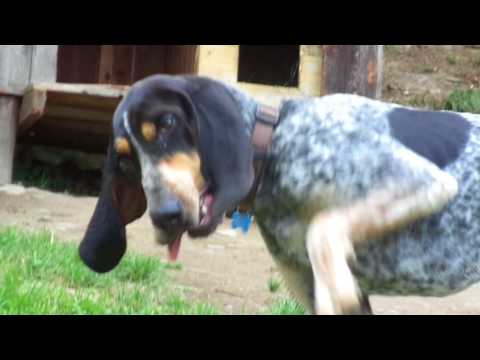
The skin of the Small Blue Gascony it is flexible, black or very mottled with black spots, and in any case never completely white. Their mucous membranes are also black. Its pelage is short, semi-thick and well furnished. Its fur is completely mottled, black and white, with a slate bluish glow, hence its name.

It also, may have more or less numerous and more or less large blackheads. These may include, at head level, usually has two black dots that are not on the top of the skull but that surround its eyes and cover its ears. At the top of the skull there is a white spot with a small oval black dot, typical of the breed. The upper part of the eyebrows are marked with more or less bright tan spots. Traces of tan are also found on the cheeks, the chops, inside the ears and sometimes on the legs and under the tail.

Last, sexual dimorphism is not very pronounced in this breed: males and females are generally very similar in size and dimensions.

Character and aptitudes ยซLittle blue Gascogne houndยป

The Small Blue Gascony he is a dog with a pleasant character, calm and affectionate. He is a very good companion dog., but it requires a lot of physical exercise and wide open spaces. Your ideal space is a house with land. It is necessary to take them out for a daily walk outside of hunting season. Dogs are generally very attached to their master. They are also kind to children and sociable with other animals. (dogs, cats…).

It is a hunting dog that runs well, very diligent in his hunting style, ideal for running after hare. It also shows good qualities for hunting big game, for example wild boar hunting. Finally, the Small Blue Gascony has a magnificent voice and a fine sense of smell.

Hygiene and health of the โ€œLittle Blue Gascogne Houndโ€

Grooming

The Small Blue Gascony often lives outdoors and requires only rudimentary grooming. If you live in the house, weekly brushing is recommended. It can also be useful to bathe him when he returns from hunting…

Care

When you come back from hunting or walking, inspect his feet and ears Small Blue Gascony looking for thorns (herbs that get into the skin causing pain and infections). Your floppy ears may be prone to ear infections. It is advised to examine and wash them once a week.

Health

The Small Blue Gascony he is a robust dog. You may suffer from otitis. Itching or a bad smell should alert you. The Small Blue Gascony you can also be injured while hunting. A fracture immediately leads to a loss of pressure in the affected limb. Skin tears may be more inconspicuous in the coat. Inspect his wound carefully when you return from the hunt..

Food

The dog's diet will depend on both its breed and weight and its lifestyle. The one with Small Blue Gascony must consider, among other things, your activity.

How much does a โ€œLittle Blue Gascogne Houndโ€ cost?

The price of a puppy Small Blue Gascony often haunt them 650 EUR, but it can reach the 1000 euros for the best subjects.

As in any other race, the price charged depends on the prestige of the kennel, of the lineage from which the dog descends and its intrinsic characteristics and, in particular, of its conformity with the standard. This explains why there may be price differences between puppies from the same litter.

In any case, the Small Blue Gascony hard to find outside France, and this is particularly true in North America, despite its recognition by the American UKC. In the case of an import from France, transportation and administrative costs are added to the purchase price. It also, it is necessary, of course, respect the regulations regarding the importation of a dog from abroad.

Images "Small Blue Gascony"

Photos:

1 – Little Gascony Blue Hound by Katarzyna Bujko, CC BY 3.0, via Wikimedia Commons
2 – Small Blue Gascony Hound, ยซBella, Baron i Brigand od Smutne rickyยป from kennel ยซLe Bleu Cardinalis FCIยป, Poland. The owner – Katarzyna Bujko by Katarzyna Bujko, CC BY 3.0, via Wikimedia Commons
3 – Small Blue Gascony Hound, female ยซClea z Beckovaยป from kennel ยซLe Bleu Cardinalis FCIยป, Poland. The owner – Katarzyna Bujko by Katarzyna Bujko, CC BY 3.0, via Wikimedia Commons
4 – Small Blue Gascony Hound, female ยซClea z Beckovaยป from husbandry ยซLe Bleu Cardinalis FCIยป, Poland. The owner – Katarzyna Bujko by Katarzyna Bujko, CC BY 3.0, via Wikimedia Commons
5 – Small Blue Gascony Hound, female ยซClea z Beckovaยป from kennel ยซLe Bleu Cardinalis FCIยป, Poland. The owner – Katarzyna Bujko by Katarzyna Bujko, CC BY 3.0, via Wikimedia Commons
6 – Small Blue Gascony Hound, male ยซCar z Beckovaยป from kennel ยซOd Smutnรฉ ล™รญฤkyยป, Czech. The owner – Slavomรญr Hanรกฤek by Katarzyna Bujko, CC BY 3.0, via Wikimedia Commons

Videos "Small Blue Gascony"

RAMBO - Small blue gascony - Unconditional love

RAMBO – โ€œLittle Blue Gasconyโ€ – Unconditional love
hare with blue gascogne cubs

hare with โ€œPetit Bleu de Gascogneโ€

Type and recognitions:

  • FCI CLASSIFICATION:
  • Group :
  • Section : . .

Federations:

  • FCI – Group 6: Scent hounds, and related breeds. – Section 1.2: Medium-sized Hounds. โ“˜
  • UKCScenthounds โ“˜
  • Central Canine Society โ“˜

FCI breed standard "Small Blue Gascony"

Origin:
France

Date of publication of the valid original standard:
24.01.1996

Use:

This is a multi-use dog. It is used for hunting with a shotgun., and sometimes to chase the game like a hound. His favorite house is the smallest (Hare) but he also goes on the hunt for big game.


General appearance:

It is a medium-sized dog, well proportioned and distinguished.


Behavior / temperament:

He has a good sense of smell and is good at hunting.. It has a loud bark and easily joins the pack.. He is calm and affectionate and obeys easily.

Head:

---

Cranial region:
  • Skull : Seen from the front, It is somewhat domed and not too wide. The occipital protuberance is slightly marked. Seen from above, the back has a shallow ogival shape. Forehead is bulging.
  • Depression links (Stop) : Sharp.

facial region:

  • Truffle : Black and wide. The Windows are wide open.
  • Snout : It is the same length as the skull and is strong. The nasal cannula is often slightly arched..
  • Lips : They are not very thick or developed. The upper lip covers the lower lip.
  • Jaws/Teeth : The joint is in the form of scissors. The incisors are set at right angles to the jaws..
  • Cheeks : Thin.

Eyes : They are oval in shape and brown in color.. Your expression is sweet.

Ears : They are crooked and moderately thin. They should at least reach the tip of the nose..

Neck:

It is long and has some double chin.

Body:

  • Back : Well accented.
  • Pork loin : Well united, and not too long.
  • Rump : Slightly oblique.
  • Breast : It is long and descends to the level of the elbow. The sternum is quite protruding. Delicately rounded ribs.
  • Flank : It's flat and deep.

Tail:

It is thin and reaches to the tip of the hock. It is carried proudly in the shape of a saber.

Tips

PREVIOUS MEMBERS : Seen in conjunction, They are quite robust.

  • Shoulder : Muscular and moderately oblique.
  • Elbows : Glued to the body.
  • forearms : Strong bones.

LATER MEMBERS : Seen as a whole they are well proportioned.

  • Thighs : Quite long, muscular, although not in excess.
  • Hock : Width, slightly angled and close to the ground.

FEET : They have an oval shape; the fingers are thin and close together. The pads and nails are black.

Movement:

Regular and executed with ease.

Mantle

SKIN : Elastic. Black, or strongly streaked with black spots. It's never completely white. The mucous membranes are black.

HAIR : Short, semi-thick and well dense.

COLOR : Completely speckled with black and white, imparting a slate blue reflection. It may or may not be marked with more or less extended black spots. Usually, there are two black spots on each side of the head, that cover the ears, circle the eyes and stop at the cheeks. These do not join over the top of the head, but they leave a white space in the center of which there is often a small oval black spot., typical of the breed. Above the eyes there are two more or less bright tan marks located on the zygomatic arches simulating four eyes.. Traces of tan can also be found on the cheeks, the lips, the inside of the ears, the limbs and under the tail.


Size and weight:

Height to the cross :

  • For males : 52 to 58 cm.,
  • for females : 50 to 56 cm..


Fouls:

Any deviation from the above mentioned criteria is considered as missing and the gravity of this is considered in proportion to the degree of deviation to the standard and its consequences on the health and well-being of the dog.

Head :

โ€ข Short.
โ€ข Skull too flat, Strait, or width.
โ€ข Short ears, high insertion, that are not twisted enough.

Body :

โ€ข Too long, loose top line, lack of volume.
โ€ข Croup sagging.
โ€ข Diverted tail.

Tips :

โ€ข Insufficiently developed bones.
โ€ข Straight shoulders.
โ€ข Hock closed, seen from behind.
โ€ข Crushed feet.

Behavior :

โ€ข Shy dog.

MISS PLAYOFFS :

โ€ข Fearful or aggressive dog.
โ€ข Characteristics that do not correspond to the type.
โ€ข Notable lack that causes any impediment.
โ€ข Serious anatomical deformation.
โ€ข Upper or lower prognathism.
โ€ข Light eyes.
โ€ข Any other coat that is not established by the standard.

Any dog โ€‹โ€‹showing clear signs of physical or behavioral abnormalities must be disqualified..


N.B.:

Males should have two normal-appearing testicles fully descended into the scrotum..

Source: F.C.I - International Cynological Federation

Alternative names:

1. Petit bleu de Gascogne (English).
2. Petit bleu de Gascogne (French).
3. Petit bleu de Gascogne (German).
4. Petit bleu de Gascogne (Portuguese).
5. Petit bleu de Gascogne, Sabueso azul de Gascuรฑa (espaรฑol).

โ–ท The world of Pets: Dogs, cats, birds, reptiles, amphibians

Austrian Black and Tan Hound
Austria FCI 63 - Medium-sized Hounds.

Sabueso austriaco negro y fuego

The Austrian Black and Tan Hound is very emotional. Perceives the mood of its owner.

Content

History

The Austrian Black and Tan Hound It is a breed of dog originating in Austria. It is believed that he is the true descendant of the original Celtic Hound, Although there is no known history of the Austrian Black and Tan Hound until after mid-19th century. This historical bump is due to the fact that in the past the breeding was not regulated.

The Austrian Black and Tan Hound, from its origins, It was used for monitoring or tracking of injured animals, Commonly, in places of significant altitude.

Physical characteristics

The Austrian Black and Tan Hound is a dog medium-sized and well solid structure. His head shows a wide skull and little pronounced occipital region with well marked stop.

It has glossy dark brown eyes that convey a lively look and alert. The ears are of high insertion and medium-sized, rounded, not very broad and hang onto the cheek. The tail is long and will fine tuning towards the tip, it is dropped but slightly curved.

The coat of the Austrian Black and Tan Hound It is smooth, soft to the touch, dense, short (a few 2 cm length) and very bright.

The coloration of this breed It is very important since that is its touch of distinction, they should be black as a basis, with small and clearly defined, fire to light brands range from pale tawny to dark. Two tawny markings above the eyes must be present.

This breed has a hypersensitive smell.

The height at the withers of Austrian Black and Tan Hound will of 48 56 cm. And his weight is around between the 19 and 20 Kg.

Thanks to its excellent ability to work, both high mountains and Plains land, the Austrian Black and Tan Hound is highly prized as a bloodhound and blood trail dog. His fine sense of smell allows him to carry out searches with complete security (especially of hares).

Character and skills

Is alive, attentive, reserved with strangers but friendly and does not show any signs of shyness.

While it is used for hunting Hound (for tracking), It is an animal that adapts well to family life, but if we make the commitment to have a Austrian Black and Tan Hound, We must be able to give the animal enough to make you happy.

A few good country walks would keep him cheerful., In addition to (as with all dogs) a good daily walk.

It is a very emotional dog that perceived especially mood of its owner.

Photos ยซAustrian Black and Tan Houndยป

ยซAustrian Black and Tan Houndยป Videos

Type and recognitions:

  • FCI CLASSIFICATION:
  • Group :
  • Section : . .

Federations:

  • FCI – Group 6: Scent hounds, and related breeds. – Section 1.2: Medium-sized Hounds. โ“˜
  • UKCScenthounds โ“˜

FCI breed standard "Austrian Black and Tan Hound"

Origin:
Austria

Date of publication of the valid original standard:
10.10.1995

Use:

The Black and Tan Austrian Hound is a hunting dog generally highly regarded for its special aptitudes for heavy work as a tracker and as a hound., both on the mountainous terrain and on the plains.


General appearance:

Is medium sized. His body structure is strong, elongated and elastic.


Behavior / temperament:

It has a fine smell. He is a very good hound, especially when hunting with barking hares.. Crawls safely and willingly and is pleasant in character.

Head:

---

Cranial region:
  • Skull: Large, shallow occipital protrusion.

facial region:

Truffle: black.
Snout: Strong, straight muzzle.
Lips: well developed, adherents, fully pigmented.
Jaws / Teeth: Powerful scissor bite. You want a complete denture with 42 Dental parts; the total lack of two PM1 or PM2 (premolars 1 or 2 ) is tolerated; the M3 (molars 3) they are not taken into account.
Eyes: Clear, dark brown, showing no redness at the corner of the eyes.
Ears: Medium-sized, not too wide, high insertion, rounded in its bottom edge; hang flattened.

Neck:

Medium long, very strong; the presence of a double chin is not desirable.

Body:

  • Cross: Well marked.
  • Back: Long.
  • Pork loin: Slightly raised.
  • Rump: Slightly sloping down.
  • Breast : Broad and deep.

Tail:

Long, progressively tapering towards the tip, a little bent; during rest he carries it down; on its underside it has hard hair, but the brush is not too rough.

Tips

PREVIOUS MEMBERS: Strongly developed, straight.

  • Shoulder: Placed obliquely, endowed with strong muscles.

LATER MEMBERS: With good angle.

  • Thighs: Thin, moderately developed and long.

FEET: Strong, round and arched. Fingers close together; hard black nails; large, hard pads.

Movement:

Elegant, covers the ground.

Mantle

HAIR: Smooth, well adjusted, thick, dense, stretchy with a velvet sheen. Approximate length of 2 cm..

COLOR: Black with some well-defined tan spots from light to dark brown. Two fire marks must be present above the eyes (four eyes = Vierรคugl)


Size and weight:

Height to the cross: 48 โ€“ 56 cm.
  • Males : 50 โ€“ 56 cm.
  • females : 48 โ€“ 54 cm.


Fouls:

Any deviation from the above mentioned criteria is considered to lack, and the gravity of this refers to the degree of deviation to the standard and its impact on the health and well-being of the dog.
  • Skull too narrow.
  • Wide snout.
  • Wrinkled ears, too pointed, short and thin.
  • Tail too short, thin, or very bent up, no thick hair on her lower face.
  • Weak limbs.
  • Shy character.
MISS PLAYOFFS:
  • Aggressive or fearful dog.
  • Upper or lower prognathism. Lack of more than two premolars 1 or 2.
  • Any other color other than described.
  • Lack of noticeable fire spots over the eyes (four eyes).
Any dog โ€‹โ€‹showing clear signs of physical or behavioral abnormalities must be disqualified..


N.B.:

Males should have two normal-appearing testicles fully descended into the scrotum..

Source: F.C.I - International Cynological Federation

Alternative names:

1. Bracke, Vierรคugl (English).
2. Brachet autrichien noir et feu (French).
3. Kรคrntner Bracke, ร–sterreichische Glatthaarige Bracke (German).
4. (em alemรฃo: brandlbracke) (Portuguese).
5. Austriaco negro y fuego (espaรฑol).

โ–ท The world of Pets: Dogs, cats, birds, reptiles, amphibians

Great Gascony Blue
Francia FCI 22 - Large-sized Hounds

Big Blue of Gascony

The Great Gascony Blue is known for its deep barks

Content

History

The Great Gascony Blue is an ancient race resulting from the cross between the Bloodhound and other breeds of hounds. It is also said to descend from the dog Hubertus, a species of hound that has become extinct. In the fourteenth century, the first blue hounds were described in the Livre de Chasse de Gaston Fรฉbus to hunt wolves, bears and boars. Even today these dogs still go hunting big game. (deer and wild boar) and they are still more specialist dogs than pets. Very widespread in the south and south-west of France, especially in Gascuรฑa, the Great Gascony Blue is at the origin of all breeds of hounds in the South.

There are four races of Blue Gascony: the Small Blue Gascony, the Basset hound and the Blue Gascony Griffon. The Great Gascony Blue is one of the most widespread.

This breed is also an important ancestor of the Bluetick Coonhound, a breed of dog from the deep south of the United States; the Marquis de Lafayette gave George Washington several of these Biscayan dogs in August of 1785. Other French Fled the French Revolution 20 years later and they brought more to Louisiana. That is why the American race has a remarkable resemblance to its progenitor, except for its morphological needs and its more active character.

Observation:

Although the common opinion is that most dogs are family dogs or get along with children, the dog and the children need to receive some education on how to treat each other respectfully and safely. Dogs and young children should never be alone, but they should always play together under supervision.

Physical characteristics

The Great Gascony Blue it's a large hound, French type because of the shape of the head, fur and expression. The tail, big enough, reaches to the tip of the hock and is carried like a saber. The head has a slightly domed and not too wide skull with a marked occipital protrusion and a slightly pointed stop. The eyes are oval and brown in color. Just placed, the thin, curly ears are pointed and protrude past the tip of the nose.

The hair is short and quite thick. The coat is completely black and white speckled, giving a slate blue glow. May be marked with more or less extensive black spots. Two black dots are usually placed on each side of the head, covering ears, wrapping the eyes and stopping at the cheeks. Two tan markings are placed on the forehead bone, cheeks, the ears, the limbs and under the tail.

Character and skills

This breed is known for its deep barks, one of the reasons why Great Gascony Blue It is a dog for specialists and not a common pet – The neighbors won't like your loud voice very much!! It's something like a gentle giant, with typical friendly hunting dog nature and pack mentality.

Health

The Great Gascony Blue it is generally a healthy and robust breed with no known specific health problems.

Daily exercise

With regard to the exercise, the Great Gascony Blue need at least two hours of exercise a day. This is due to the fact that this dog has been bred for hunting and will therefore be unhappy if he is not allowed to follow his nose for hours and miles..

Nutrition

Large breed dogs not only have a huge appetite, they also require a different nutrient distribution than smaller dogs, also in terms of minerals and vitamins.

Care

The big blue has a short, easy-care coat that requires very little attention – only needs to be brushed once a week. Their long floppy ears must be checked regularly to keep them clean and healthy..

Images "Great Gascony Blue"

.
Photos:

1 – Great Blue Gascogne Hound by ooreka
2 – Great Gascony Blue by chien.com
3 – Great Gascony Blue by mag.bullebleue.fr
4 – Great Gascony Blue by jardinage.lemonde.fr
5 – Great Gascony Blue by www.wattpad.com
6 – Great Blue Gascogne Hound by www.holidogtimes.com

Videos "Great Gascony Blue"

HTTPS://youtube.com/watch?v=0DNQMOsmmgw
Grands bleus de gascogne Mr Bruno brevet sanglier orgnac l’aven 2013
HTTPS://youtube.com/watch?v=r3QUWgLShWY
Great Gascony Blue / Breed of dog

Type and recognitions:

  • FCI CLASSIFICATION:
  • Group :
  • Section : . .

Federations:

  • FCI – Group 6: Scent hounds, and related breeds. – Section 1.1: Large-sized Hounds. โ“˜
  • UKCScenthounds โ“˜
  • Central Canine Society โ“˜

FCI breed standard "Great Gascony Blue"

Origin:
France

Date of publication of the valid original standard:
24.01.1996

Use:

Used for hunting with a shotgun, hunting and large or small game (of the hare). Usually, pack hunting, or just as a crawl finder


General appearance:

This is an ancient breed animal, of a perfectly French type as to the head, fur and expression. It is imposing and gives an impression of calm strength and great nobility..


Behavior / temperament:

It has a very good sense of smell and its howl is low-pitched.. He is very dedicated to hunting and joins the pack instinctively.. His character is calm and he easily learns to obey..

Head:

---

Cranial region:
  • Skull: Seen from the front, it is slightly domed and not too wide. The occipital protuberance is marked. Seen from above, the upper part has an ogival shape. The forehead is full.
  • Depression links: Little pointed.

facial region:

  • Truffle: black, well developed. The Windows are wide open. Snout: The length of the nasal canal is equal to that of the skull. It is strong and slightly arched.
  • Lips: They are quite low and cover the lower jaw well., imparting a square profile to the end of the snout. The commissure is well marked, although it is not lazy.
  • Jaws/Teeth:  The joint is scissor-shaped.  The incisors are set at right angles to the jaws..
  • Cheeks: They are thin and one or two folds are drawn on their skin..


Eyes: They are oval in shape and appear somewhat sunken under the thick eyelids.. They are brown. The lower eyelid is sometimes somewhat lax. Sweet and a little sad expression.

EARS: They are characteristics of this blue breed, thin, twisted, ending at tip. They must be able to exceed the end of the nose. They are narrow in the insertion region, which is well below the eye line..

Neck:

It is medium long and somewhat arched. The double chin is developed.

Body:

  • Back: Rather long, but very firm.
  • Pork loin: Well attached to the body.
  • Rump: Slightly oblique, which makes the haunches stand out.
  • Breast : Long, wide and descends to the level of the elbows. The sternum is wide. Medium rounded and long ribs.
  • Flanks: Flat and well descended.

Tail:

It's rather thick, sometimes spike-shaped (towards the tip around the tail some longer and thicker hairs slightly distant). Reaches to the tip of the hock; the root is strong. It comes in the shape of a saber.

Tips

PREVIOUS MEMBERS:

  • General appearance:   The previous members are powerful. Shoulder: They are quite long, muscular, and well oblique.
  • Elbows: Glued to the body.
  • Forearm: Strong bones and protruding tendons.
  • Previous feet: Oval, although slightly elongated. The fingers are thin and well together. The pads and nails are black.

LATER MEMBERS:

  • General appearance:   Hindquarters are solid.
  • Thighs: They are long and muscular.
  • Hock: Width, slightly bent; its placement is very low.
  • Hind feet: Oval, although slightly elongated. The fingers are thin and well together. The pads and nails are black.

Movement:

It is regular and executed with ease.

Mantle

PIEL: Quite dense and elastic. It is black or heavily streaked with black spots. It's never completely white. The mucous membranes are black.

Fur: Short, quite thick and very dense.

Color: Completely speckled with black and white, imparting a slate blue reflection. It may or may not be marked with more or less extensive black spots..

Usually, there are two black spots on each side of the head, that cover the ears, They surround the eyes and end on the cheeks. These do not join over the top of the head, in order to leave a white space in the center of which there is often a small oval black spot, typical of this breed. There are also two more or less bright tan markings located on the zygomatic arches that give the dog the impression of having four eyes.. Hints of tan color can also be found on the cheeks., the lips, the inside of the ears, the limbs and under the tail.


Size and weight:

Height to the cross:

  • 65 to 72 cm in males,
  • 62 to 68 cm in females.


Fouls:

Any deviation from the aforementioned criteria is considered as a fault and the severity of this is considered to the degree of the deviation to the standard and its consequences on the health and well-being of the dog..

Head:

  • Too short.
  • Skull too flat or too narrow.
  • High insertion ears; short; not twisted enough.

Body:

  • Lack of volume.
  • Loose top line.
  • fallen group.
  • Deviated tail.

Tips:

  • Bones that are not sufficiently developed
  • Straight shoulders.
  • closed hock, seen from behind.
  • crushed feet.

Fur: Too thin and satin.

Behavior: shy dog.

FALTAS DISQUALIFYERS:

  • Aggressiveness or extreme shyness.
  • Any dog โ€‹โ€‹showing clear signs of physical or behavioral abnormalities.
  • Lack of typical characteristics.
  • Noticeable lack that causes impediment of use.
  • Serious anatomical deformation.
  • Upper or lower prognathism.
  • light eyes.
  • Any other coat than that established by the standard.


N.B.:
  • Males should have two normal-appearing testicles fully descended into the scrotum..
  • Only functionally and clinically healthy dogs, with the typical conformation of the breed, should be used for parenting.

Source: F.C.I - International Cynological Federation

Alternative names:

1. Grand Bleu de Gascogne (English).
2. Grand chien de Gascogne (French).
3. Grand Bleu de Gascogne (German).
4. Grand Bleu de Gascogne (Portuguese).
5. Grand Bleu de Gascogne, Gran Azul (espaรฑol).

โ–ท The world of Pets: Dogs, cats, birds, reptiles, amphibians

Porcelaine
Francia FCI 30 . Medium-sized Hounds

Porcelana

The Porcelaine It is a dog living in the family, is extremely friendly and affectionate.

Content

History

The origin of the breed is unknown Porcelaine, although it is probably the oldest dog breed in โ€œFranche-Comtรฉโ€. It is said to descend from the great "white dogs of Saint-Hubert de Lorraine", themselves descendants of the "royal white dogs" used in royal packs in the time of Francis I. Before the French Revolution, the white and orange hounds were present on the lands of the abbeys of Luxeuil and Cluny.

After the revolution, the breed was close to extinction, breeding resumed in the mid-19th century with the help of Swiss breeders. In 1844, Similar dogs were called ยซbriquets francs-comtoisยซ. The porcelain name is said to have been given by the Marquis Thรฉodore de Foudras.

Already in 1898 his race was consolidated. As of this year he could be found in exhibitions.

The slim build and the noble head are also witnesses to this tradition. In times past the breed was used especially for hunting. This happened especially in Switzerland, France and Italy. There these tracking dogs have been found for centuries.

Physical characteristics ยซPorcelainยป

It's a dog very striking within the French dogs, its own structure gives us the pattern that is the great race.

As shown in the canine group for which they are registered by the Federation Cynologique Internationale, is a Hound of median sizeto. Males have one height the cross of 56 to 58,5 cm and the females of between 53,5 and 56 cm., weighing between 25 and 28 kg.

Videos ยซPorcelainยป

Porcelaine puppiesPorcelaine puppies

The name Porcelaine He was born in allusion to his bright clothes, It seems made of porcelain. Its skin is white, sometimes with orange spots, most common in ears.

The eyes are dark and have a loving gaze and intelligent. The ears they are fine and well retracted, they often end in a tip and reach the end of the snout.

The nose is black with large nasal Windows, It has black eyes and ears that fall, similar to the Labrador.

The neck It is long and the tail starts thick and just fine, It is quite long and the dog carries slightly curved.

The hair thick fine is glossy and satin, There must not be any part of the body hairless.

The color the fur is white. You can submit Orange stains of rounded shape that we extend never forming a mantle, these spots appear many times overlapping other dark spots on the skin.

Character and skills ยซPorcelainยป

The Porcelaine It is a bloodhound, that is to say, dogs that search for prey and due to its characteristics it is valid to search for any type of wild animal.

It has a strong character, energetic, very willful and obstinate when he is hunting. But, When it is at rest is a very be quiet.

If you live within the family, is extremely friendly and loving. He is patient and well tolerated in children.

They have a very high level of activity, so he needs a lot of exercise, reason why is not recommended for sedentary people.

Although they are fierce hunters, they are gentle and relatively easy to educate.

Care of the ยซPorcelainยป

the care of him Porcelaine not related to their fur so much. The short-haired breed requires little effort in grooming. But you should pay close attention to your surroundings. A small flat doesn't always do it justice. There your needs are not met.

But it is not necessary to have a country house to maintain this beautiful breed.. Several walks a day can also keep dogs busy.. This shows that dogs need variety and tasks. Also the game should be in the task list.

Finding the right โ€œPorcelainโ€ breeder

If you are interested in this breed of dog and want to find the breeder of Porcelaine suitable, you may have to search for a long time. This breed of dog is rarely found. It also, cubs are often only given to hunters.

Images of โ€œPorcelainโ€

Type and recognitions:

  • FCI CLASSIFICATION:
  • Group :
  • Section : . .

Federations:

  • FCI – Group 6: Scent hounds, and related breeds. – Section 1.2: Medium-sized Hounds. โ“˜
  • Central Canine Society โ“˜

FCI breed standard "Porcelaine"

Origin:
France

Date of publication of the valid original standard:
19.10.1964

Use:

Hound


General appearance:

Dog used for hunting small game, very distinguished, absolutely french. All the details of its structure underline the nobility of its breed.


Behavior / temperament:

---

Head:

It must be very typical of the breed, thin and delicately sculpted. As a whole is rather long.

Cranial region:
  • Skull: It is wide at its height, between the ears; the occipital Protuberance is rounded. The forehead is flat; the median furrow must be marked, but without exaggeration.
  • Depression links (Stop): Marked, but without excess.

facial region:

  • Truffle: Well developed and very black. The Windows are wide open.
  • Snout: Long appropriate, Neither square nor pointed. The nasal helm is straight, but its end is slightly arched.
  • Lips: The upper lip covers the lower lip without being heavy or pendant. The mucosa of the lips is black.
  • Eyes: Normally developed, They must be looking dark and well protected under the cigomatica arch. The look is intelligent and sweet.
  • Ears: They are thin and well bent. They end up more on tip and reaches to the end of the snout. Its narrow insertion should not be above the eye line.

Neck:

It is quite long and lightweight. It may be some dewlap which must be thin and tight appearance.

Body:

  • Cross: Well outgoing.
  • Back: Wide and straight.
  • Pork loin: Width, well muscled, well together as a whole and not too long.
  • Rump: Somewhat oblique. The tips of the legs are wide apart and slightly protruding.
  • Breast : Amplitude medium, also rather deep. The ribs, in accordance with the chest, they are rather elongated, without being flat.
  • Flanks: Something raised, but full.

Tail:

It is well attached to the body. It is quite thick at the root and pointed at the end. Is never thin and medium length (without presenting to tip around the tail long and thick hairs slightly distant in the form of stem). It is carried slightly stooped.

Tips

PREVIOUS MEMBERS: They are quite long and thin, Although not too thin; tendons are well connected; the limbs are regular.

  • Shoulder: Shoulders of Jockey, long, well muscled and well inclined, though not too thick.

LATER MEMBERS:

  • Thighs: Well descended, very visible and thin muscles, moderately developed.
  • Hock: Fort and close to the ground. Usually angled.

FEET: Typically for a French dog rather elongated toes, thin but well together; hard and resistant pads.

Movement:

Executed with vitality and agility; easy and indefatigable Gallop.

Mantle

SKIN: Thin and elastic. She is grainy with numerous black spots.

HAIR: Satin, fine, tight and shiny; spotless alopecia.

COLOR: Very white, stained rounded Orange never extends in the form of blanket. These spots are usually overlapping other black spots of pigmentation of the skin. The orange splashes on the ears are very characteristic of this breed..


Size and weight:

You can vary:

  • for males between 55 and 58 cm.,
  • for females between 53 and 56 cm..


Fouls:

Any deviation from the aforementioned criteria is considered as a fault and the severity of this is considered to the degree of the deviation to the standard and its consequences on the health and well-being of the dog..

MISS PLAYOFFS:

  • Cowardice, aggression toward owner.
  • Lack of type.
  • In general all the defects that prevent the use of the dog, such as rickets, defective limbs in excess, insufficient movement range and push.
  • Eyes and nose color clear, excess of depigmented spots.
  • Tail iguanas.
  • Coarse or thick hair.
  • Presence of an orange blanket.
  • A very raised orange spots, pulling to mahogany, grey or mixed with black hairs. The light orange color, but pale and the same lack of spots are not desirable, but they can not be considered eliminatory faults.
  • Size that exceed or that does not reach the above measures. But, You can make an exception with a male that does not exceed a maximum 60 cm., Therefore, it presents excellent general characteristics and can be used as a player..
  • Any dog โ€‹โ€‹showing clear signs of physical or behavioral abnormalities should be disqualified..


N.B.:

Males should have two normal-appearing testicles fully descended into the scrotum..

Source: F.C.I - International Cynological Federation

Alternative names:

1. Chien de Franche-Comtรฉ (English).
2. Chien de Franche-Comtรฉ, briquets francs-comtois (French).
3. Chien de Franche-Comtรฉ (German).
4. Porcelaine (Portuguese).
5. Perro del Franco Condado (espaรฑol).