โ–ท The world of Pets: Dogs, cats, birds, reptiles, amphibians

Small swiss hound
Suiza FCI 60 . Small-sized Hounds

Small Bernese hound
Small Bernese hound
The dog Small swiss hound, little stimulated, tends to become a nuisance pet that can be difficult to train.

Content

History

In the early 20th century, hunting began to change in Switzerland. Private hunting grounds were introduced and the standard size of the Swiss Hound he was too fast and enthusiastic to hunt properly within these smaller hunting grounds. The hunters decided to develop a different breed of hunting that could hunt efficiently and effectively within the closed private hunting grounds.. Many people think that Small swiss hound it's just a smaller version of the Swiss Hound. While this is partly true, They are a different race that originated from crossing the Swiss Hound with the Basset Hound. The ultimate goal was to develop a breed that was shorter and smaller., but also had the same four color variants as the Swiss Hound. The resulting dogs were expected to have a strong sense of smell for nose work and a melodious voice to sound the alarm when hunting..

The Small swiss hound He is an outstanding hunter and has the ability to track scents for miles over rough terrain. The Small swiss hound became the hunting dog of people hunting on private land.

The United Kennel Club recognized the Small swiss hound in 2006. The Federation Cynologique Internationale (FCI) accepted them and adopted the official breed standard under the name Schweizer Niederlaufhund in 2015.

The Small swiss hound still a popular hunting companion in his native Switzerland.

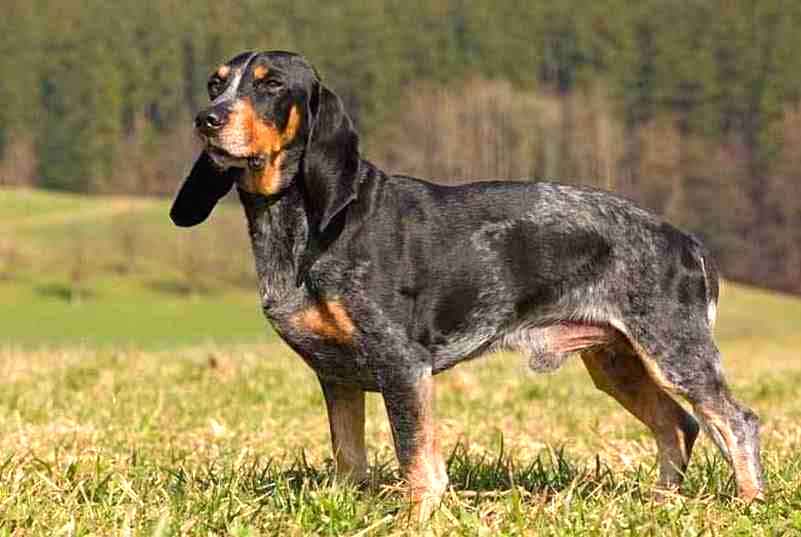
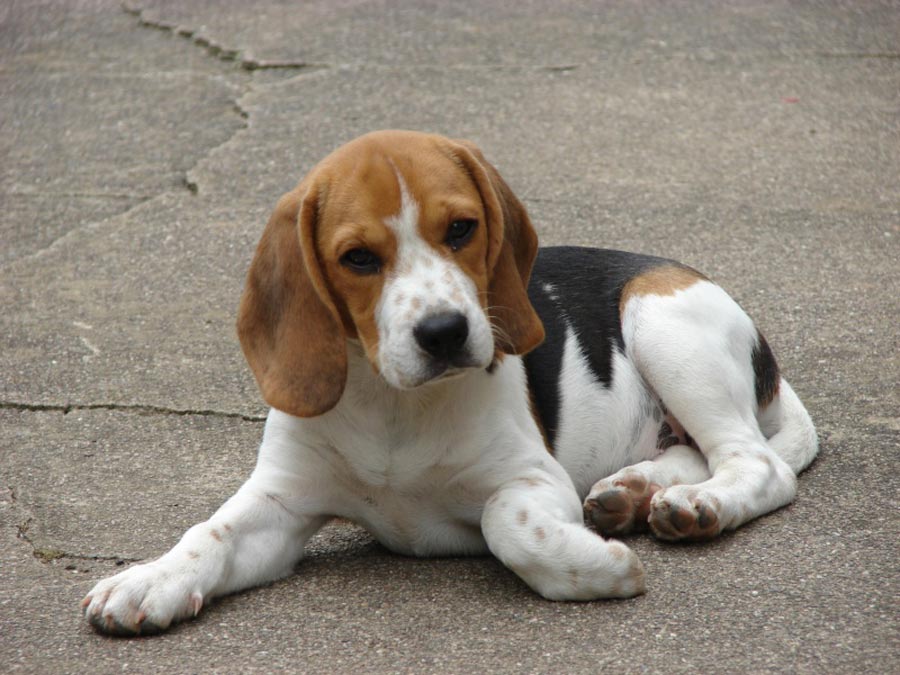
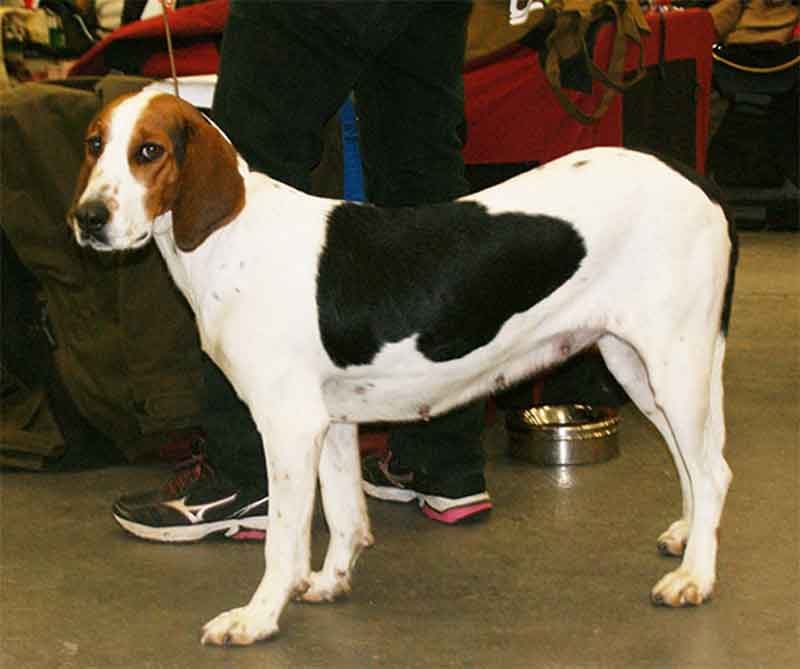
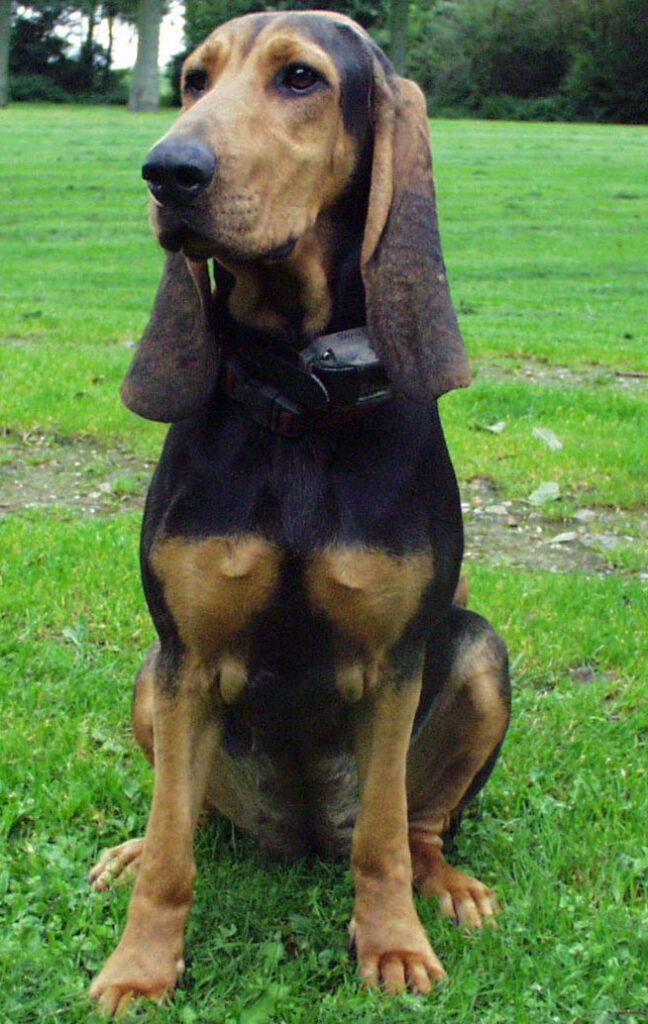
Photo: Small Bernese Hound Smooth-coated male by Canarian, CC BY-SA 4.0, via Wikimedia Commons

Physical characteristics

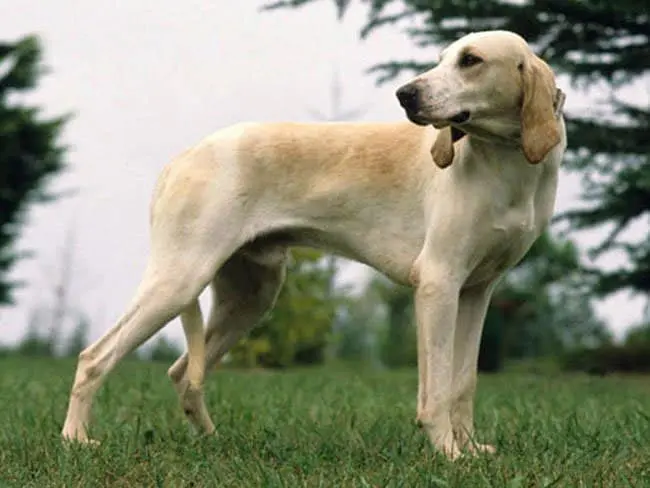
In proportion smaller than the Swiss Hound. Its body shape is rectangular, moderately long, and strong conformation. Medium size head, thin, elegant, with friendly facial expression
and attentive. His ears are very long, low insertion, and he wears them folded. Thin and strong limbs. When walking calmly, he has his tail hanging, in activity bends it slightly upwards.

The Small swiss hound comes in four different varieties. The only difference between the varieties is the color, but each variety has its own name.

Variants Small swiss hound

Small hound of Juraequeรฑo de Jura
Small Jura hound
Small Bernese hound
Small Bernese hound
Small Schwyz hound
Small Schwyz hound
Small Lucerne hound
Small Lucerne hound
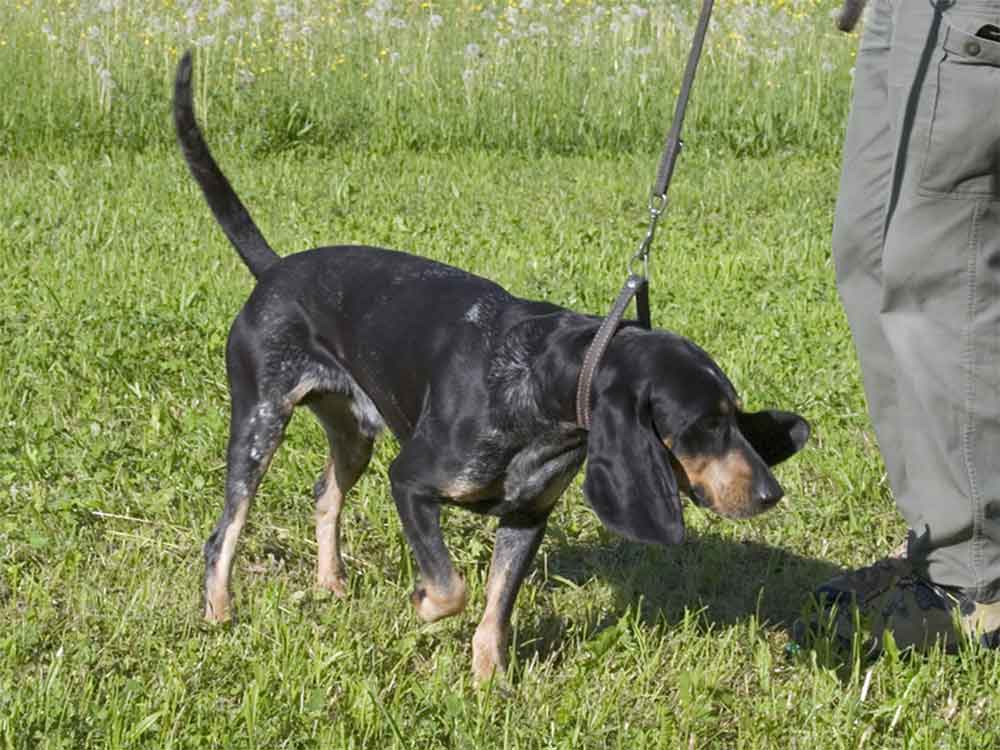
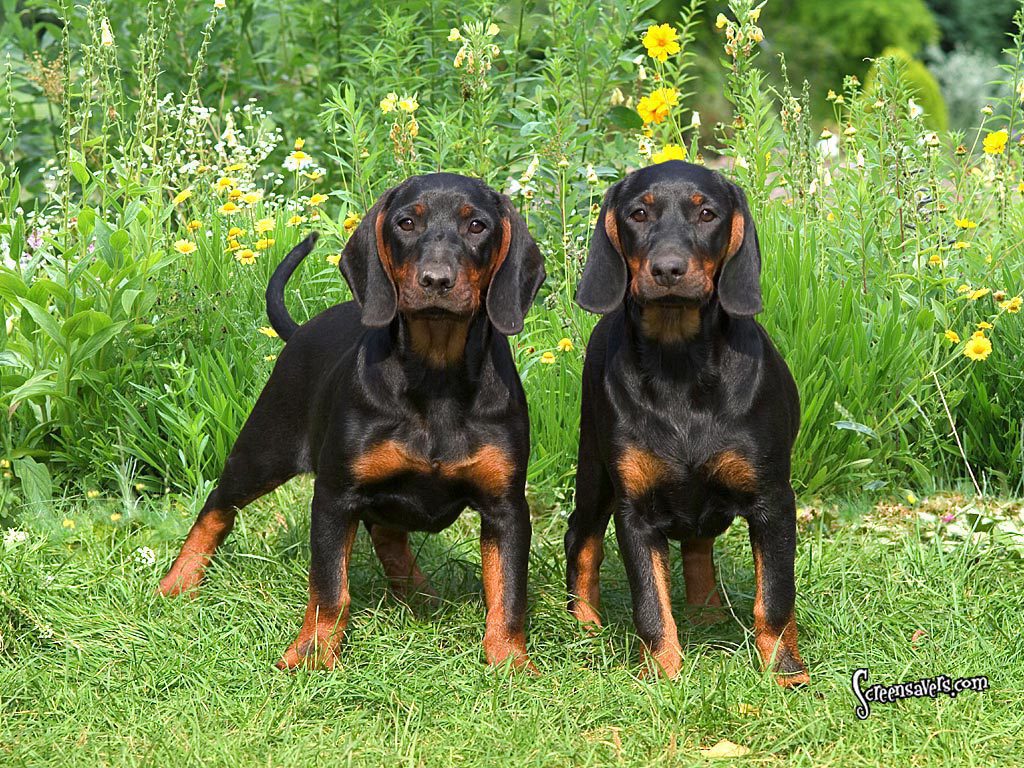
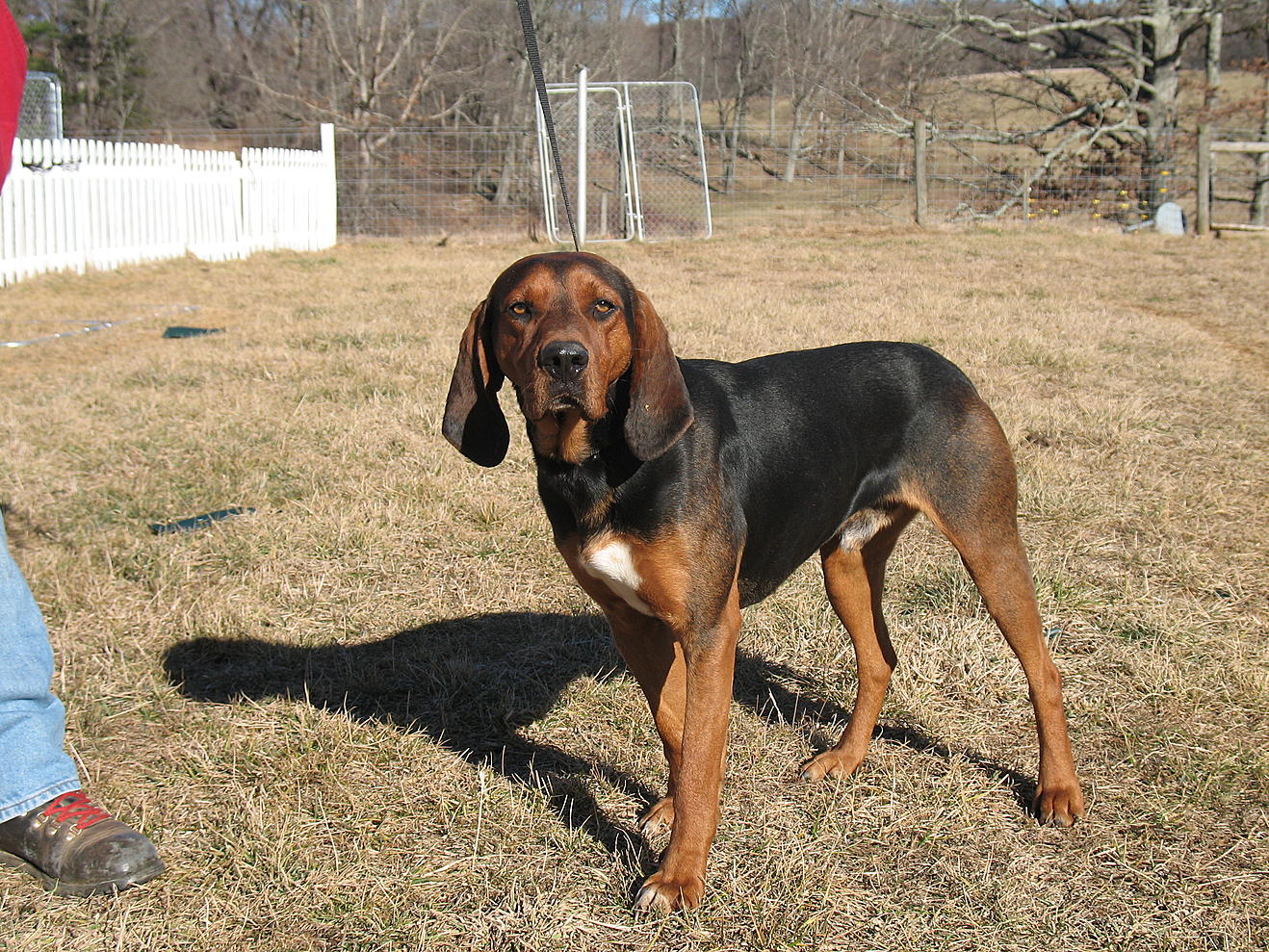
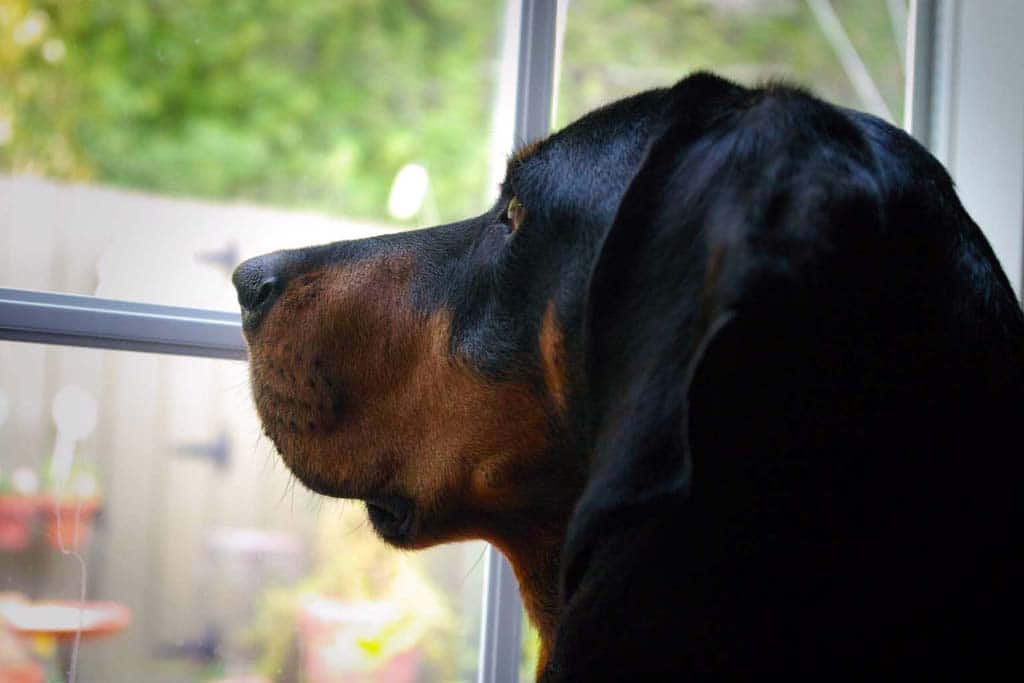
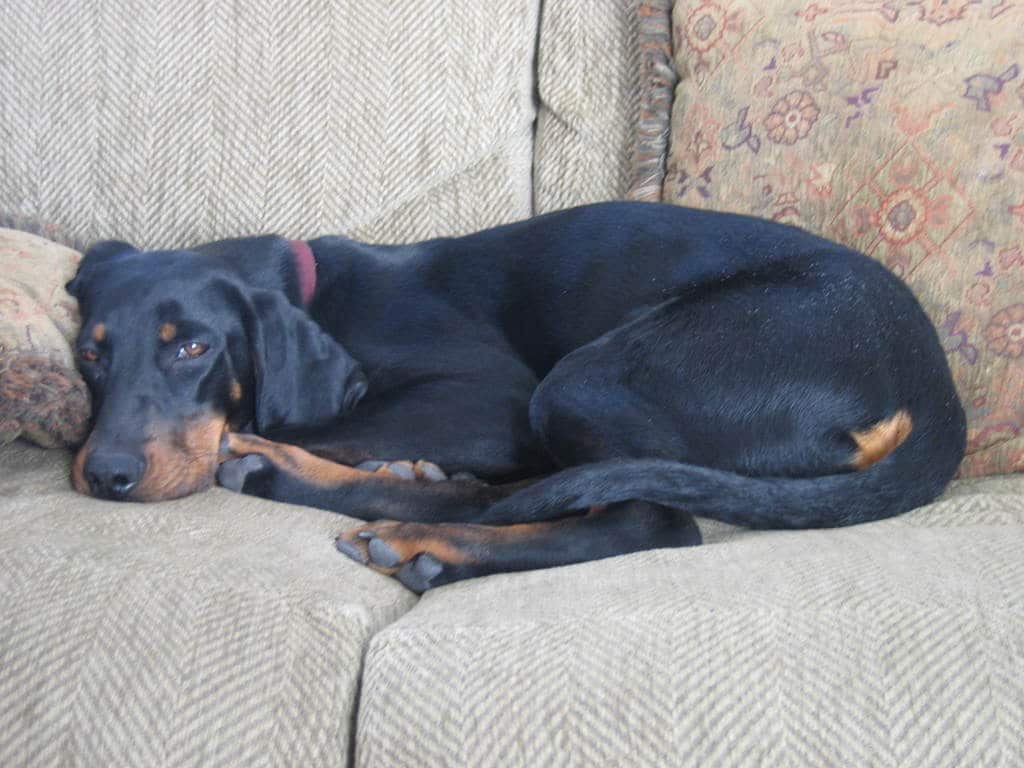
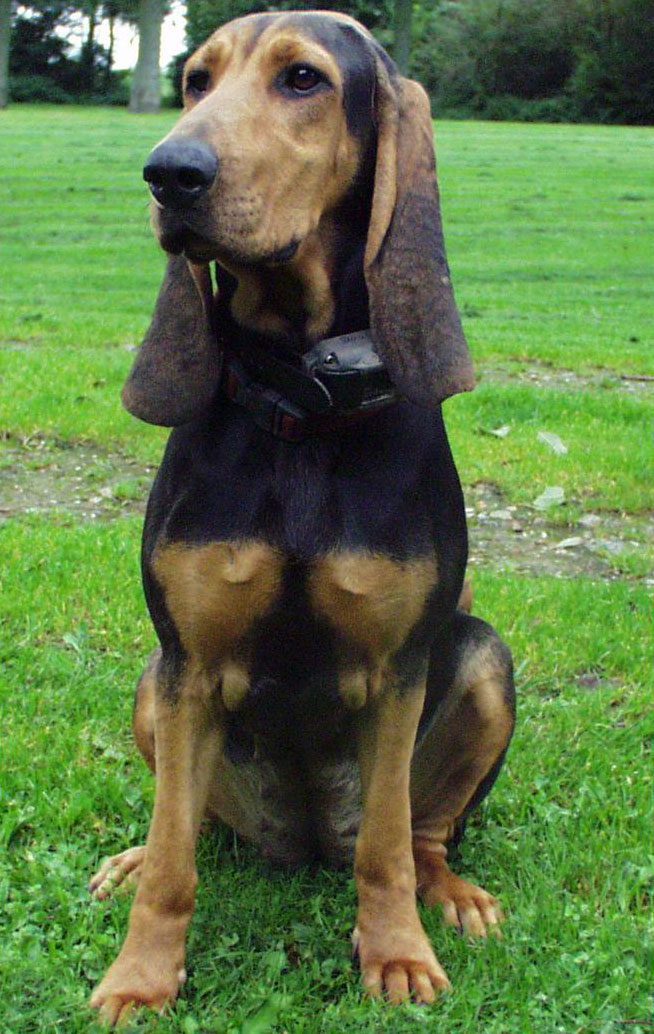
  • The Small Jura hound has a smooth coat that is black with tan markings found over the eyes.
    The Small Jura hound has only one coat and may only have a small amount of white on its body.
  • The Small Bernese hound has two types of fur:
    the smooth coat and the rough coat.
    The rough coat has a single hard coat and a small beard.
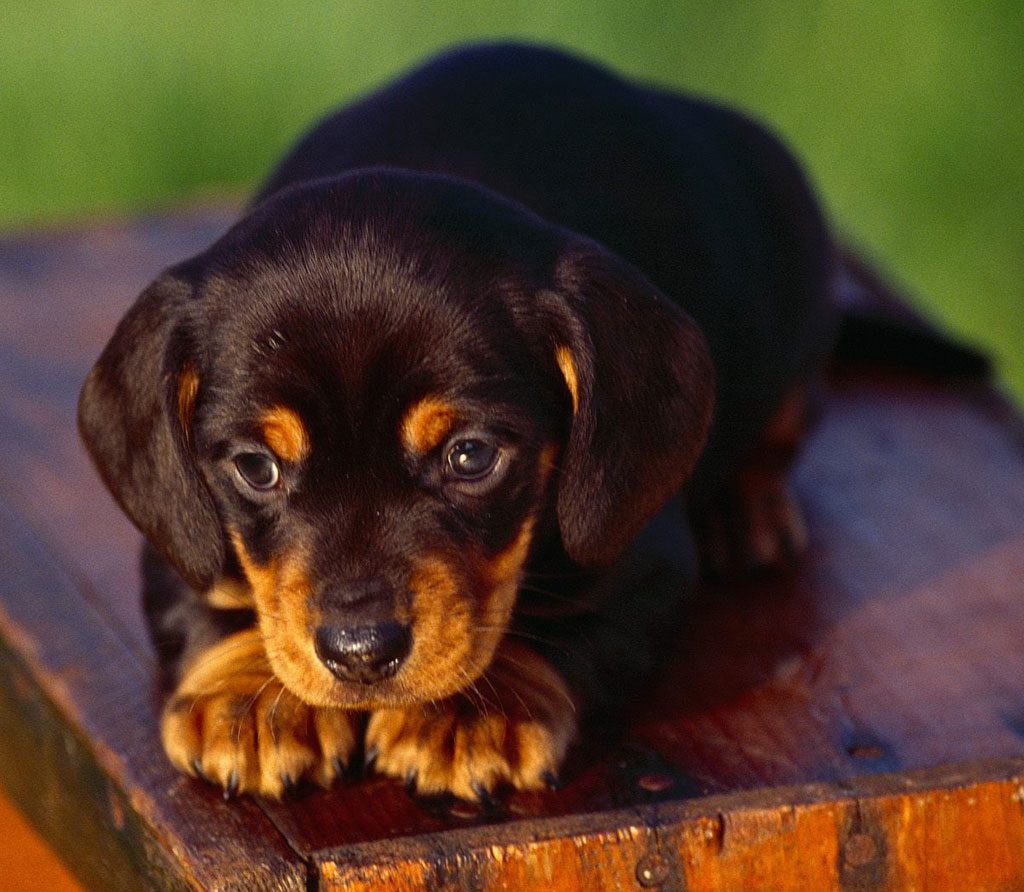
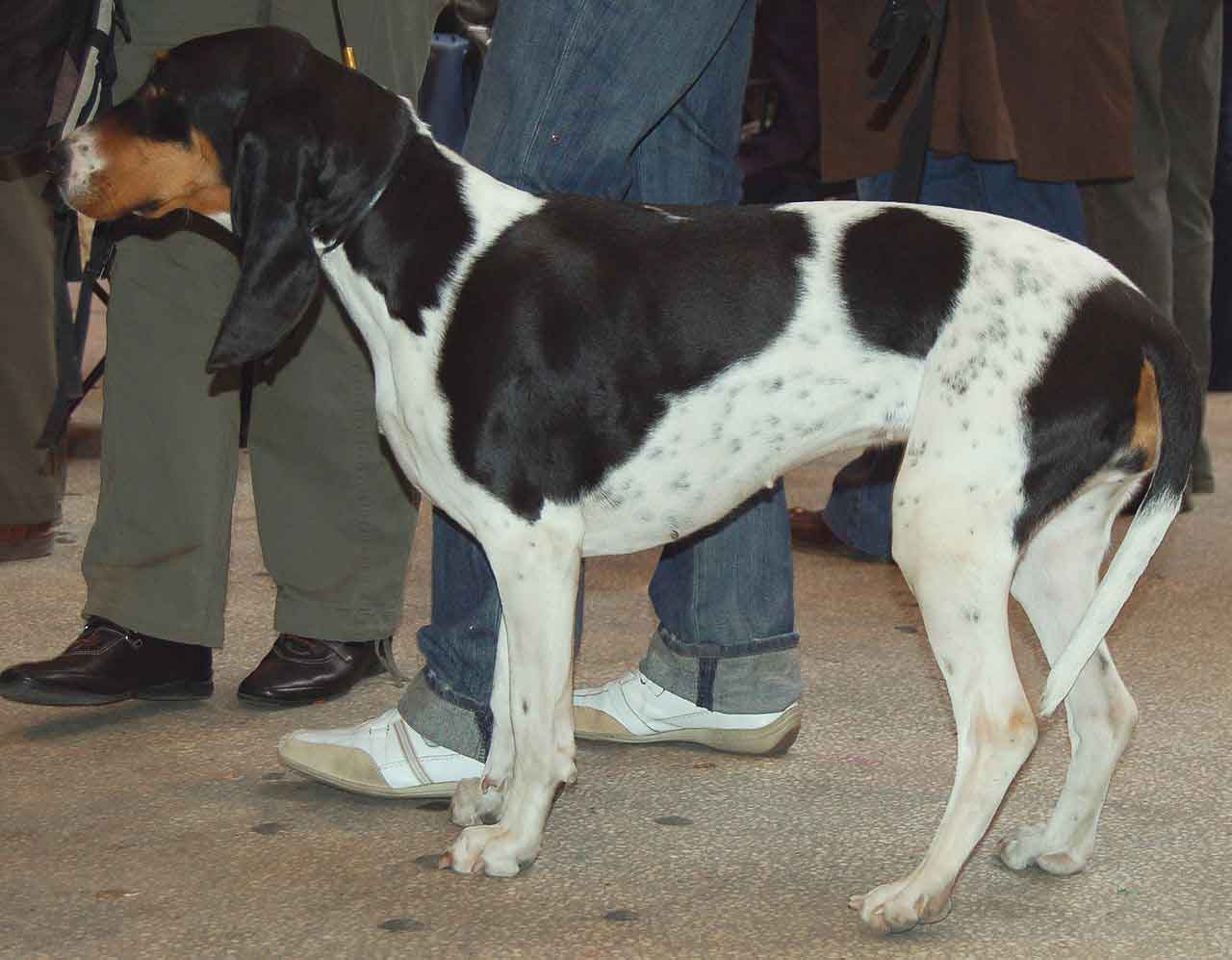
    The Small Bernese hound it's black and white with fiery marks over its eyes; many call it tricolor.
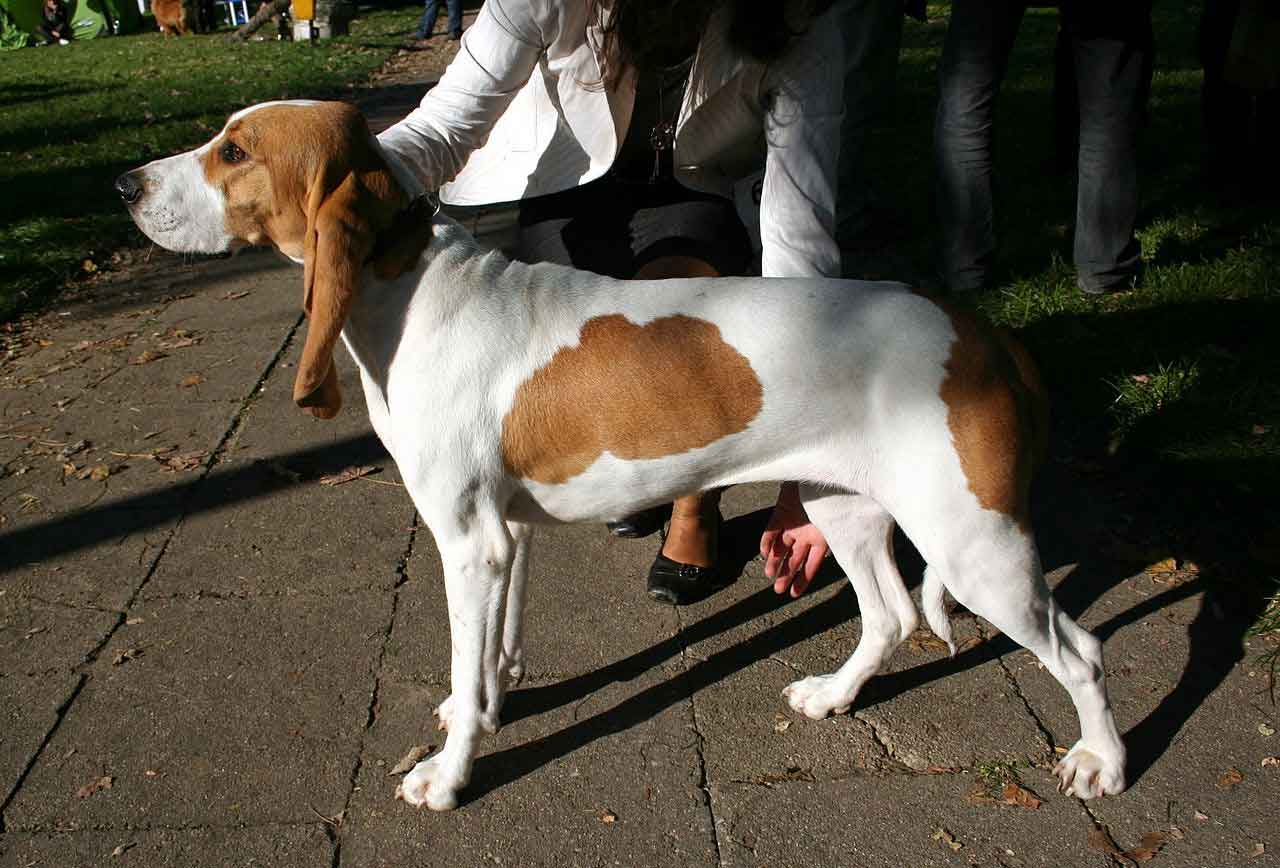
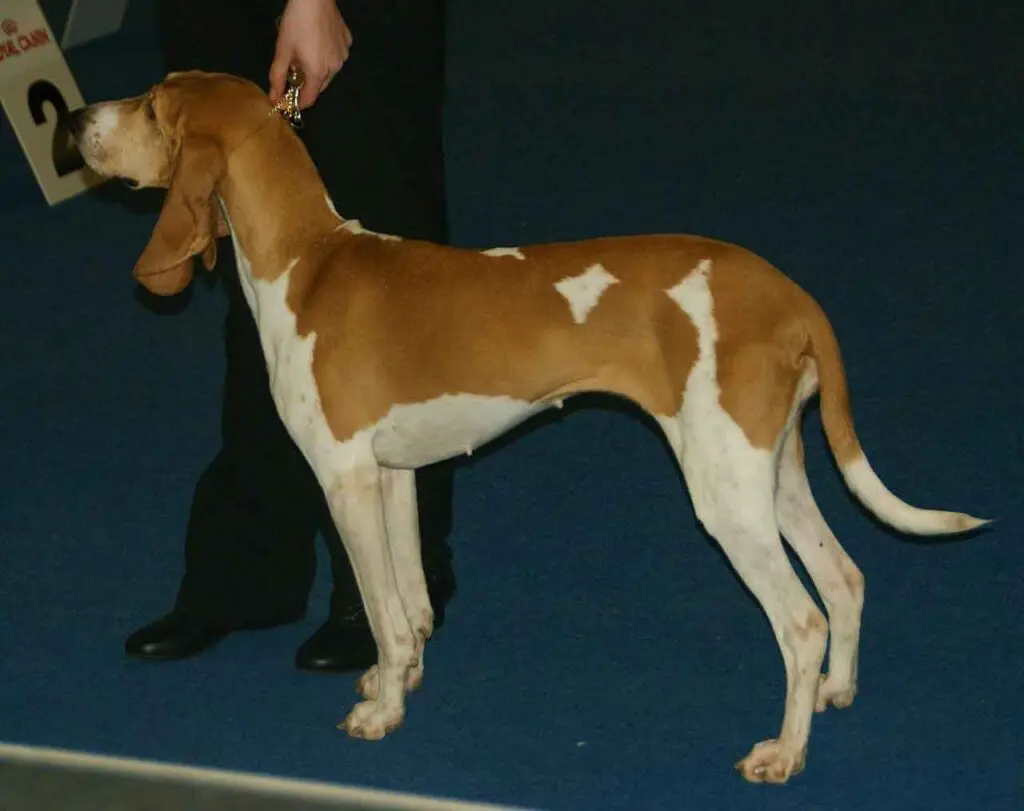
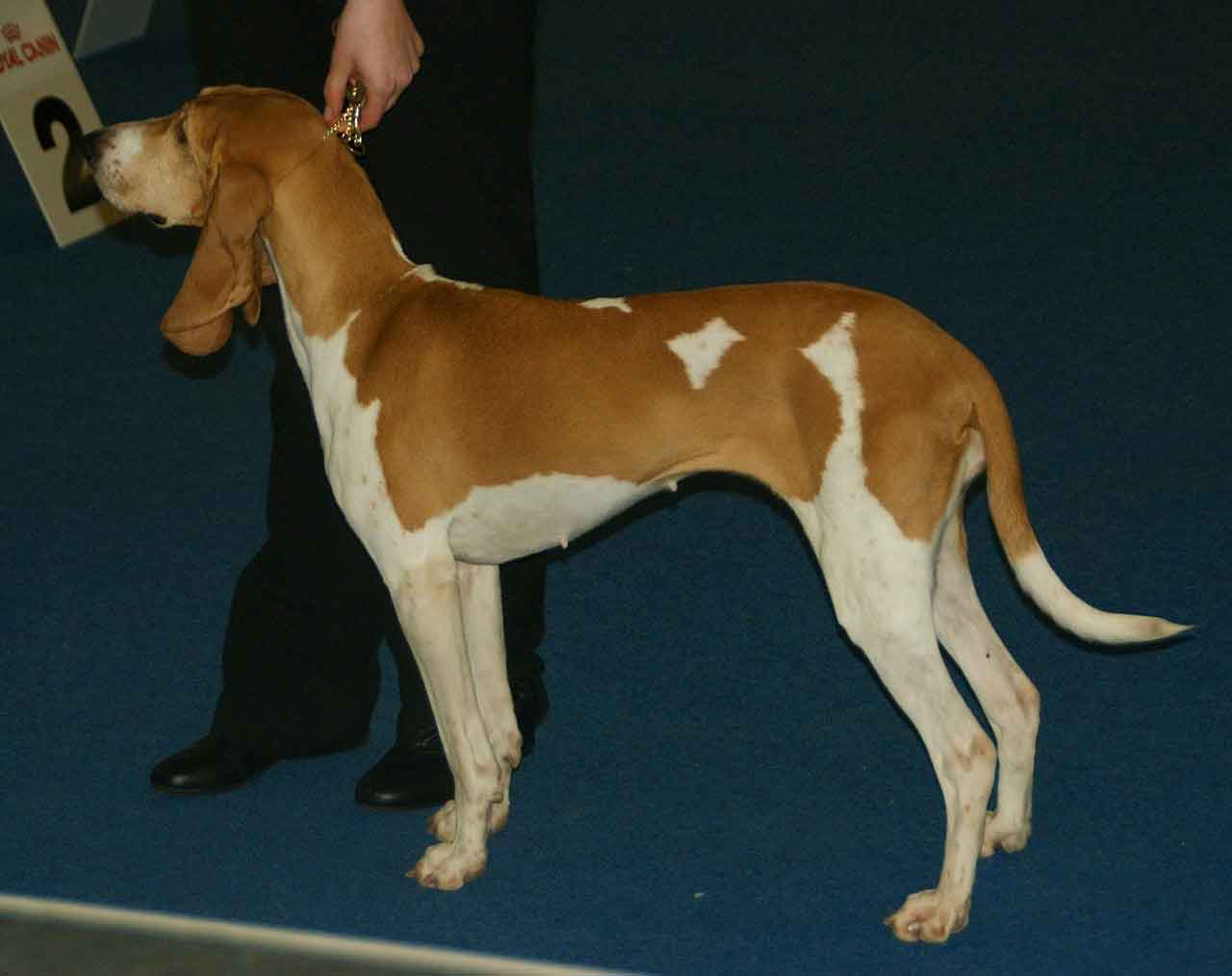
  • The Small Schwyz hound has a single, smooth coat that is predominantly white with yellow-red spots; orange-red spots are also acceptable.
  • The Small Lucerne hound has a single smooth coat that is predominantly white but mottled with black or gray giving the illusion of a blue body. They have black spots with tan markings over their eyes.

  • Photos:

    1 – Small Bernese Hound Smooth-coated male by Canarian, CC BY-SA 4.0, via Wikimedia Commons
    2 – Jura low-run dog by Bhv The Max
    3 – This dog is a small Schwyz Hound by pets.ch
    4 – Little Lucerne Hound by carlosh catalog

    Character and skills

    When he's hunting, the Small swiss hound is tireless and relentless, exhibiting impressive endurance and strength of character. They tend to be lively and excitable, eager to do their job. Most of the Small swiss hound they are happy to hunt regardless, without any royal order from his master.

    Despite being bred to hunt, most breed members can make the transition from working bloodhound to family pet easily and are generally affectionate and demonstrative with their owners. They are good friends with children and other dogs, but they cannot be trusted with small animals, including cats and rabbits.

    The temperaments of individuals vary, and while some may be quiet and peaceful house guests, others may be excitable and jumpy. Dogs with more energy can often be taught to settle inside the house once they have been properly exercised.. Ideally, the exercise should take the form of hunting, as this not only burns off excess energy but also occupies your inquisitive mind. The dog Small swiss hound, little stimulated, tends to become a nuisance pet that can be difficult to train.

    Not being an aggressive dog, the Small swiss hound should not be used as a guard dog as it does not tend to scare off intruders and does not usually feel the need to guard your property.

    โ€œSmall Swiss Houndโ€ Training

    The phrase "small dog syndrome" may be mentioned when talking about Small swiss hound, as they have a reputation for acting like large dogs in small dog bodies. Full of confidence, lively and independent, this is not a breed for the novice trainer. Obedience work can be a particular challenge, since they have a free-spirited character and a mind of their own.

    Coaches must be firm and inflexible, keeping your training sessions short and interesting to keep the dog's interest. How this breed likes to assume a dominant position in the home, he should be taught his place from an early age, to avoid any bad behavior.

    most dogs Small swiss hound they are still used as hunting dogs in Switzerland today, meaning your exercise requirements are easily met during hunting season. In the case of non-working dogs, or when the hunting season is over, owners should take time to meet the needs of this active hound.

    A rural setting is the ideal place for Small swiss hound, who needs wide terrain to explore and does not enjoy being confined. It is essential that your property is securely fenced to avoid solo adventures.

    Health ยซSmall Swiss Houndยป

    There are not many diseases that affect the Small swiss hound more than other races, but there are a handful of conditions that should be watched in individuals:

    ear infections

    Hanging ears are prone to developing ear infections., particularly if a dog spends a lot of time outside wet and muddy. Keeping your ears clean can prevent this from becoming a problem..

    Hip Dysplasia

    Malformed hip joints can lead to lifelong discomfort and reduced mobility. x-rays of the hips (a process called โ€œhip scoringโ€) should be performed when a breeding dog is over one year of age to ensure that its hips are of a good enough quality to be passed down.

    Grooming ยซSmall Swiss Houndยป

    Although there are a number of different coat types within the breed, all are easy to maintain and need little in the way of grooming. Weekly brushing will suffice. The Small swiss hound you will only need to be bathed a few times a year. If owners feel the need to disguise their "dog smell" they can use dry shampoo, avoiding the risk of drying out their skin and coat.

    Ears of the Small swiss hound should be cleaned weekly and ideally checked daily for signs of infection. They must be completely dried after getting wet.

    Characteristics "Small swiss hound"

    Coexistence is important that you have with your new friend. Before considering the acquisition of a dog of the breed "Small swiss hound" you know certain factors. Not all breeds of dogs are apt to live in an apartment, you must take into account his character, their need for exercise, their interaction with other pets, their care and if you have small children, their level of tolerance towards them.

    Adaptation โ“˜

    3,0 of 5 stars (based on 1 review)

    friendly dog โ€‹โ€‹โ“˜

    4,0 of 5 stars (based on 1 review)

    hair loss โ“˜

    4,0 of 5 stars (based on 1 review)

    Affection level โ“˜

    5,0 of 5 stars (based on 1 review)

    Need for exercise โ“˜

    3,0 of 5 stars (based on 1 review)

    Social need โ“˜

    3,0 of 5 stars (based on 1 review)

    Home โ“˜

    3,0 of 5 stars (based on 1 review)

    Toilet โ“˜

    2,0 of 5 stars (based on 1 review)

    Friendly with strangers โ“˜

    4,0 of 5 stars (based on 1 review)

    barking โ“˜

    4,0 of 5 stars (based on 1 review)

    Health โ“˜

    5,0 of 5 stars (based on 1 review)

    Territorial โ“˜

    4,0 of 5 stars (based on 1 review)

    Cat friendly โ“˜

    2,0 of 5 stars (based on 1 review)

    Intelligence โ“˜

    3,0 of 5 stars (based on 1 review)

    Versatility โ“˜

    3,0 of 5 stars (based on 1 review)

    Child friendly โ“˜

    5,0 of 5 stars (based on 1 review)

    Surveillance โ“˜

    4,0 of 5 stars (based on 1 review)

    joy โ“˜

    3,0 of 5 stars (based on 1 review)

    Videos "Small swiss hound"

    Swiss low-legged dog + Schweizer Laufhund + Orange hound + pets
    Swiss low-legged dog + Schweizer Laufhund + Orange hound
    Swiss Hound CERVA
    Schweizer Laufhund CERVA

    Type and recognitions:

    • FCI CLASSIFICATION:
    • Group :
    • Section : . .

    Federations:

    • FCI – Group 6: Scent hounds, and related breeds. – Section 1.3: Small-sized Hounds. โ“˜
    • UKCScenthounds โ“˜

    FCI breed standard "Small swiss hound"

    Origin:
    Switzerland

    Date of publication of the valid original standard:
    28.11.2001

    Use:

    It is a hunting dog in the strict sense of the word.. He is an independent hunter by hunting with a bark ; searches and corners its prey with great safety even in difficult terrain. The Small Swiss Hound is also used to bleed the injured animal.


    General appearance:

    Hound type dog (Hound), in proportion smaller than the Swiss Hound with a height of the withers of 35-43 cm for males and 33-40 cm for females; its body shape is rectangular, moderately long, and strong conformation. Medium size head, thin, elegant, with friendly and attentive facial expression. His ears are very long, low insertion, and he wears them folded. Moderately wide and high chest and costal arch that provide plenty of space for the heart and lungs. Thin and strong limbs. When walking calmly, he has his tail hanging, in activity bends it slightly upwards.

    Color varieties :

    โ€ข Small Bern Hound,
    โ€ข Small Jura Hound,
    โ€ข Small Lucerne Hound and
    โ€ข Small Schwyz Hound.


    Behavior / temperament:

    Of fine smell, It is agile and resistant ; small hunting dog, passionate, that keeps the trail safe and hunts with persistent harmonious bark. He is kind in nature, neither fearful nor aggressive. His temperament is calm, but lively.

    Head:

    Thin, elegant. Seen from the front it is long and narrow and slowly widens towards the cheeks..

    Cranial region:
    • Skull : Slightly convex, no wrinkles on the front, without front groove. Not very prominent occipital crest. The line that goes from the occipital crest to the stop is almost the same length and forms a parallel line with the line that goes from the stop to the nose..
    • Depression links (Stop) : Moderately marked.

    facial region:

    • Truffle : It is dark with wide open windows.
    • Snout : Powerful, quite long and moderately deep, nape pointed. The nasal canal preferably straight or slightly convex, rather narrow.
    • Lips : Upper lips slightly hanging and with rounded edges in the anterior part, never pointed. Closed lip corner.
    • Jaws / Teeth : Very strong scissor bite, regular and complete, That is, the upper incisors overlap the lower ones without leaving space between them.. The teeth are implanted in an upright position in the powerful jaw. Pincer bite is allowed. The lack of two PM1 or PM2 is tolerated (premolars 1 or 2 ). The flap of M3 (molars 3) is not taken into account.
    • Cheeks : Poorly developed.

    Eyes : dark, clean, slightly oval in shape; friendly expression. They should not be sunken or protruding. The eyelid slit is rigid with well adherent eyelids. Edges of the eyelids with good pigmentation.

    Ears : Low insert, narrow and a little backwards, no higher than the eye line. In length they reach at least to the tip of the nose. ; He wears them well folded and they hang close to his cheeks ; Their texture is soft and they are covered with fine hair.. The pinna does not protrude.

    Neck:

    Moderately long, light and elegant, but with good muscles. Throat skin is loose, but a noticeable double chin is not desired.

    Body:

    • top line : Harmonica, descends slightly from the insertion of the neck to the rump.
    • Back : Straight, firm, moderately long.
    • Pork loin : Wide and strong, flexible.Grupa : Gently descend towards the insertion of the tail; hips should not be visible.
    • Breast : Width and height, reaching up to elbow height; the tip of the sternum is visible, but not too prominent. The ribs are long and moderately rounded. The costal arch extends well posteriorly.
    • Bottom line and belly : The belly line is slightly raised towards the hind limbs. The flanks are moderately full.

    Tail:

    Low insertion in harmonious continuation with the croup ; medium length, reaching at least to the hock ; with enough hair ; ends in an elegant point, no true feathers. At rest and when walking it hangs without noticeable flexion. When active or excited, he carries it slightly raised., but never turned on the back.

    Tips

    PREVIOUS MEMBERS

    • As a whole : His muscles are strong, but it doesn't give the impression of being heavy. Seen from the front the forelimbs are thin, very straight and upright with good bones and solid feet, directed forward.
    • Shoulder : His muscles are strong ; the shoulder blades are flat and close together, relatively long and placed obliquely ; the angle of the shoulder joint is approximately 90ยฐ.
    • Arm : Almost as long as the shoulder blades, placed in an oblique position.
    • Elbows : Stuck naturally against the side.
    • Forearm : Strong, delgado, very straight, a little shorter than arms.
    • Ulnocarpal joint : Strong.
    • Metacarpus : Short ; seen from the front, its position is vertical, never deviated ; seen from the side it should never be completely straight, but slightly inclined in relation to the ground.
    • Front feet : Rounded, firm, compact. Short fingers, well arched. Hard and rough pads. solid nails. Fine fur between the fingers.

    LATER MEMBERS :

    • As a whole : They have strong muscles, well proportioned compared to previous members. Good angulations at the knee and hock joints (tibio-tarsiana). Parallel hindlimbs, neither too close nor too far apart. In a natural position they should be placed slightly backwards. Bones a little less strong than those of the forelimbs.
    • Thigh : Good length and width, strong and well muscled.
    • Knee : good angulation ; turned neither in nor out.
    • Leg : Proportionately long, with inclined position. The bones are a little less strong than those of the forelimbs.
    • Warm-foot joint : Strong, well angled, low placement.
    • Metatarsus : Short, seen from behind in a straight and parallel position.
    • Rear feet : Quite round and firm ; closed and short fingers ; hard and rough pads. Strong nails. Fine hair between fingers. Without spurs, except in countries in which amputation is not permitted by law.

    Movement:

    • Preferred natural movements : trot or gallop which both cover a lot of ground. At a trot, movement must be free and dynamic, with long steps of the forelimbs and strong impulse of the hind limbs. Limbs move in straight, parallel lines.
    • forward action : Nor narrow, nor deviated, with fingers neither too far apart nor closed.
    • Rear action : practically parallel, with notable momentum, neither too narrow nor too wide, neither in the form of a cow nor a barrel.


    Mantle

    SKIN : Well adherent and laid, without wrinkles.

    COAT

    HAIR :

    โ€ข Smooth fur : Short, smooth, well adherent, thinner on the head and ears.

    โ€ข Hard hair : Lasted, elastic, good paste ; with little internal fleece ; the beard is poorly developed.

    COLOR :

    There are four color varieties.

    • Small Bernese hound: This variety exists with hard hair and with straight hair.. Always tricolor : white black and tan (red). The basic color is white with large black plates. White very lightly splashed with black is acceptable. fire color (reddish-brown markings) on the eyes, cheeks, on the inside and upper region of the ears and around the anus. A black cloak is allowed. Black skin under black hair, blackish-white marbling beneath the white hair.
    • Small Jura hound: This variety exists with straight hair, rarely with double hair (Stockhaar). Preferably deep black with tan markings over the eyes, cheeks, in the chest and/or extremities. O well : reddish-brown color (fire) with black cape or black โ€œsaddleโ€. A small white spot on the chest is tolerated.. Black skin under black hair and lighter under tan hair.
    • Small Lucerne hound: This variety has straight hair. Basic color white- dense grayish or black-white dotted with large dark or black plates. fire color (reddish-brown markings) on the eyes, cheeks, below the tail insertion, in the chest and extremities. A black cloak is allowed. Black skin under black hair and lighter under blue-flecked hair..
    • Small Schwyz hound: This variety has straight hair. Basic color white, with large or smaller yellow-reddish or red-orange plates. Some isolated red splashes are not considered a fault. Dogs with red coats are allowed. Dark gray skin under orange hair and lighter under blue-flecked hair.


    Size and weight:

    Height to the cross : Males : 35 โ€“ 43 cm.,females : 33 โ€“ 40 cm. Tolerance : +/- 2 cm.


    Fouls:

    Any deviation from the aforementioned criteria is considered as a fault and the severity of this is considered to the degree of the deviation to the standard and its consequences on the health and well-being of the dog..

    โ€ข Bones that are too thin or too coarse ; lack of substance.
    โ€ข Thick head, not very harmonious.
    โ€ข Partially flesh-colored nose.
    โ€ข Clear eye or lost expression.
    โ€ข Ears set too high ; flat ears, thick or very short.
    โ€ข Noticeably developed double chin.
    โ€ข Saddled or arched back (carp).
    โ€ข Short croup, inclined.
    โ€ข Shallow chest, flat or barrel-shaped. Irregular rib cage (crushed ribs : bell-shaped chest).
    โ€ข Tail carried too high, very bent.
    โ€ข Curved forelimbs, deviated inward or outward.
    โ€ข Straight back (very open angle) ; arm too short.
    โ€ข Weak ulnocarpal joint, crushed metacarpus.
    โ€ข Crushed feet, hare feet.
    โ€ข Angles of the hind limbs that are too straight ; cow-shaped or barrel-shaped limbs.
    โ€ข Lack of color and markings.- In the little Bern Hound : too much black splashes on the white.- In the small Schwyz Hound : too much red-orange splashes on the white. carbon coat (tight) in the ears, at the insertion of the tail and/or on the plates.
    โ€ข Questionable behavior, slightly aggressive.

    MISS PLAYOFFS

    โ€ข Very fearful or aggressive behavior.
    โ€ข Completely flesh-colored nose.
    โ€ข Upper or lower prognathism, incisor arcade deviated.
    โ€ข Lack of incisors or canines; canines in incorrect position; lack of more than three premolars and/or molars.
    โ€ข Entropion, ectropion.
    โ€ข Sternum too short, broken chest.
    โ€ข Curled or broken tail.
    โ€ข All color combinations that do not correspond to those indicated in the standard.
    โ€ข Height at withers : Males less than 33 cm and greater than 45 cm.Females less than 31 cm and greater than 42 cm..

    Any dog โ€‹โ€‹showing clear signs of physical or behavioral abnormalities must be disqualified..


    N.B.:

    Males should have two normal-appearing testicles fully descended into the scrotum..

    Source: F.C.I - International Cynological Federation

    Alternative names:

    1. Schweizerischer Niederlaufhund (English).
    2. Schweizerischer Niederlaufhund (French).
    3. Schweizer Niederlaufhund (German).
    4. Schweizerischer Niederlaufhund (Portuguese).
    5. (en suizo, Schweizerischer Niederlaufhund) (espaรฑol).

    โ–ท The world of Pets: Dogs, cats, birds, reptiles, amphibians

    Beagle-Harrier
    Francia FCI 290 . Medium-sized Hounds

    Beagle Harrier

    The Beagle-Harrier is vigorous, brave, energetic and intelligent.

    Content

    History

    The Beagle-Harrier It is a relatively new breed that comes from the crossing (towards the end of the 19th century) two English dogs, the Beagle and the Harrier (dog). Despite its British origins, the Federation Cynologique Internationale considered it a French animal since the race grew up and was set at France. The Beagle-Harrier it is nowadays a breed difficult to find in France and much more in other countries.

    The Beagle-Harrierr was created especially for hunting hare, they were looking for a dog faster than him Beagle without it being as heavy as the Harrier (dog). The first crossings of these dogs did not give the expected results but finally, the french baron Gerard Grandin de l'Eprevier He managed to fix the characteristics that he had sought so much, create a dog a little bigger than the Beagle but lighter.

    Like this, a new breed of French dog developed from two English dogs, which spread rapidly among French hunters and is still used as a hunting dog today.

    โ€œBeagle Harrierโ€ physical characteristics

    The Beagle-Harrier is a dog harmonious, balanced and with personality.

    The Beagle-Harrier it is a small to medium sized hunting dog with a very strong and muscular trunk. The height at the withers is between 45 and 50 cm for both males and females. The weight of the breed's dogs is usually 20 to 25 kg.

    More stylized and light that the Beagle, Despite its larger size. Too small to be a Harrier (dog) and too big to be a Beagle.

    It has a broad head with a straight snout. The eyes are dark, clean look, Intelligent. The ears are moderately long and straight. The extroverted tail, almost always on alert. The hair is semi short and close to the body. All colours are admitted, Although it dominates the tricolor.

    The life expectancy of the dogs of the breed Beagle-Harrierr is up 12 years.

    Character and skills ยซBeagle Harrierยป

    The Beagle-Harrier has a distinctive hunting instinct and is therefore highly valued as a passionate hunter. Its strengths in hunting are above all its resistance, speed and strength. He is also known for his exceptional good sense of smell and independent character..

    In general, has a very active and lively nature, that must be taken into account when maintaining it. So, a small apartment in the city is not very suitable for him. Rather, dogs want to be in a house with a rural environment where they have plenty of room to move.

    In the family, dogs are sociable and behave quite calmly. They get along well with children and do not show nervousness or aggressiveness, which makes them a nice family dog, besides being used as a hunting dog.

    The care and conservation of the "Beagle Harrier"

    It is enough to brush this dog regularly, especially when returning from walks or hunting trips.
    Hair loss is moderate.

    The nutrition of the ยซBeagle Harrierยป

    Your diet should be appropriate for your age and the amount of daily exercise you do. This is especially true during hunting season..

    Especially when you are used to working, it is better to give him his food at night so that he does not run on a full stomach. In this way you can reduce the risk of stomach torsion.

    High-quality dry food is perfectly sufficient for him.

    ยซBeagle Harrierยป Diseases

  • Hip Dysplasia
  • Malocclusion
  • Good to Know.
    If this dog is used for hunting, it is advisable to let him hunt in a pack.

    ยซBeagle Harrierยป images

    Videos ยซBeagle Harrierยป

    Type and recognitions:

    • FCI CLASSIFICATION:
    • Group :
    • Section : . .

    Federations:

    • FCI – Group 6: Scent hounds, and related breeds. – Section 1.2: Medium-sized Hounds. โ“˜
    • Central Canine Society โ“˜

    FCI breed standard "Beagle-Harrier"

    Origin:
    France

    Date of publication of the valid original standard:
    18.05.1988

    Use:

    ---


    General appearance:

    Medium proportion dog, harmonious, balanced, distinguished, agile and vigorous.


    Behavior / temperament:

    ---

    Head:

    Moderately large.

    Cranial region:
    • Skull: Quite wide and bulky. The occipital protuberance is barely marked. The muzzle is rather straight, never arched.
    • Depression links (Stop): It is not marked.

    facial region:

    • Truffle: Developed; black.
    • Snout: Its length is remarkably equal to that of the skull. It's never square, but, seen from the side it becomes thin, although without being pointed.
    • Belfos: They cover the lower jaw.

    Eyes: Are dark. They are wide open and their expression is frank, vivacious and intelligent.

    Ears: They are rather short and semi-wide. Its insertion is located above the eye line. Towards the middle of the ear, they are slightly rounded. They fall flat along the skull and their lower part bends slightly into a faint oval.

    Neck:

    Loose, although it's fine next to the shoulders. In profile, it is slightly rounded at the top.

    Body:

    • Back: Short, well accented and muscular.
    • Pork loin: Strong and muscular; may be slightly arched.
    • Belly: He never shows up very up, rather full.
    • Breast : It's very deep, although never very flat, which would reduce the rib cage too much. The sternum extends very well back. The false ribs, without being cylindrical, they must however be long and tight enough to form an adequate rib cage.

    Tail:

    ---

    Tips

    PREVIOUS MEMBERS:

    • They are strong and perfectly poised.
      Shoulder: They're long, oblique and muscular.

    LATER MEMBERS:

    • Hips: They are well separated, oblique and strong.
    • Thighs: Well descended, rounded and muscular.
    • Hocks: Located close to the field, well directed.

    FEET: Neither very long nor elongated, but they are good together; the pads are very thick and hard.

    Movement:

    Loose, agile and free.

    Mantle

    Fur: Fairly dense and flattened; it's not very short.

    Color: Tricolor (leonado with black mantle, and white) with fire stains more or less raised, pale or carbonated. The cloak is not important. Since there are gray Harriers, gray and gray and white tricolor cannot be disqualified, nor penalized for having this color.


    Size and weight:

    Height to the cross: 45 cm to 50 cm..


    Fouls:

    Any deviation from the aforementioned criteria is considered as a fault and the severity of this is considered to the degree of the deviation to the standard and its consequences on the health and well-being of the dog..

    โ€ข Head too thick.
    โ€ข Naso-frontal depression (stop) too marked.
    โ€ข Partial depigmentation of the nose.
    โ€ข Muzzle too short and square, or too sharp.
    โ€ข Arched nasal cavity.
    โ€ข Upper or lower prognathism.
    โ€ข Crooked ears. (Cross with French blood)
    โ€ข Flat or squashed feet.
    โ€ข Depigmentation of the scrotum.
    โ€ข Fearful appearance, lacking in vigor or intelligence.

    disqualifying fouls

    โ€ข Aggressiveness or extreme shyness.
    โ€ข Any dog โ€‹โ€‹showing clear signs of physical or behavioral abnormalities should be disqualified..


    N.B.:

    โ€ข Males must have two normal-appearing testicles fully descended into the scrotum..
    โ€ข Only functionally and clinically healthy dogs, with the typical conformation of the breed, should be used for parenting.

    Source: F.C.I - International Cynological Federation

    Alternative names:

    1. French Beagle-Harrier (English).
    2. French Beagle-Harrier (French).
    3. Beagle Harrier/span> (alemรกn).
    4. Beagle-Harrier (portuguรฉs).
    5. Beagle Enano (espaรฑol).

    โ–ท The world of Pets: Dogs, cats, birds, reptiles, amphibians

    Billy
    Francia FCI 25 - Large-sized Hounds

    Billy

    The Billy is a used hunting dog live in the open air, in open spaces

    Content

    History

    The Billy, It is a dog from France created at the end of the 19th century from the junction of three races that are now extinct: the Larye, the Cรฉris and the Montembล“uf. In the cross, great care was taken to highlight characteristics such as: good smell, resistance and fast reflexes.

    Billy, Historically, was used for the hunting hares horse, wild boar and roe deer. In the news, There are few copies and is appreciated, it is not very common to see them.

    The Billy has the exact appearance of the famous white dogs that were part of the packs of the French aristocracy (16th centuries, 17TH and 17TH). History tells that King Charles IX of France (1550-1574) he had a white female he loved more than his own life. When the dog died, He forced the Court to go into mourning.

    Read more

    โ–ท The world of Pets: Dogs, cats, birds, reptiles, amphibians

    Istrian Coarse-haired Hound
    Croacia FCI 152 . Medium-sized Hounds

    Istrian Coarse-haired Hound

    The Istrian Coarse-haired Hound it is an excellent hound for hunting hare and fox.

    Content

    History

    His story matches that of Istrian Shorthaired Hound, but the iconography in words and images is much more limited, as long-haired dogs are generally less attractive for renderings due to their outward appearance. But, the Istrian Coarse-haired Hound was described in detail by B. Laska in 1896 and 1905: under the name of "barbiniยป these hard elo hound dogs were put up for sale in the Pazin and Buzet area in Istria. During World War I the breed was almost extinct. From 1924 these dogs were registered in the Croatian Stallion Book. The FCI recognized the breed in 1948. The first standard dates back to 1969.

    Photos:

    1 – Istrian Wire-haired Hound by https://pxhere.com/es/photo/1583815

    Physical characteristics

    The Istrian Coarse-haired Hound has strong and robust bones. With a stern expression, gives the deceptive impression of being a dark and taciturn animal. His somewhat hairy appearance was the cause of his near disappearance, as he is physically repulsive to some due to his coarse fur. But, its deceptive appearance hides a wonderful character and very beautiful qualities.

    HEIGHT
    Among 45 and 58 cm. (17,72 to 22,83 inches) for the male
    Among 45 and 58 cm. (17,72 to 22,83 inches) for the female

    WEIGHT
    Among 16 and 24 kg (35,27 to 52,91 pounds) for the male
    Among 16 and 24 kg (35,27 to 52,91 pounds) for the female

    COLOR
    Its fur is white with orange spots, more or less big, on the body and often at the beginning of the tail. Their ears are generally orange.

    HAIR
    Her hair is straight, hard and pointed. It usually measures between 5 and 10 cm long.

    MORPHOLOGY
    Its head has a domed skull and a slightly pointed cap. His big eyes are dark. Its slender ears are well set on the cheeks and tend to flare towards the middle. His nose is black. Its tail is quite long and reaches the hock.

    Character and skills

    His character is that of a gentle dog, obedient and calm at home, while hunting is active, independent and passionate. His temperament is moderately lively, expression indicative of a calm and balanced nature, the look is somber. His bark is loud, moderate to deep.

    He stands out for his immense diligence, it is resistant and persistent. It can have excellent performance even in the most difficult terrain and weather conditions.. The track never leaves. It is mainly used for hunting wild boar., deer, foxes and hares.

    Training / Education:

    Education is not that simple. Because when hunting he always depends on himself and cannot wait for the hunter's instructions, is suitable for a wide autonomy, the owner cannot avoid the servile obedience of this breed. You need in this direction a little understanding from the owner or coach.

    No harsh training methods, it would only interrupt her relationship with the man, what a double shame. Requires a certain amount of patience and empathy, benign and yet a totally consistent approach to both education and training. More than punishment it will help stimulate the positive voice (compliment, stimulus) and the material (a treat).

    Care and health

    This robust and resistant dog does not suffer from any genetic disease or any particular pathology associated with the breed.. His health is excellent and he rarely gets sick.

    WATCH OUT

    Its rough appearance requires regular brushing to maintain its coat and ensure good health.

    Images "Istrian Coarse-haired Hound"

    Photos:

    1 – A female Istrian Hound, Coarse-haired. Colour: white & orange by Canarian, CC BY-SA 4.0, via Wikimedia Commons
    2 – Istrian Wire-haired Hound by https://pxhere.com/en/photo/1583811
    3 – Istrian Wire-haired Hound by https://pxhere.com/es/photo/1583803
    4 – Istrian Wire-haired Hound by https://commons.wikimedia.org/wiki/File:Istrian_hound2.jpg
    5 – Istrian Coarse-haired Hound at a dog show in Zadar, Croatia (CACIB 2006.) by Mirta12, CC BY-SA 3.0, via Wikimedia Commons
    6 – ISTARSKI OSTRODLAKI GONIC by www.youtube.com

    Videos "Istrian Coarse-haired Hound"

    Type and recognitions:

    • FCI CLASSIFICATION:
    • Group :
    • Section : . .

    Federations:

    • FCI – Group 6: Scent hounds, and related breeds. – Section 1.1: Large-sized Hounds. โ“˜
    • UKCScenthound Group โ“˜

    FCI breed standard "Istrian Coarse-haired Hound"

    Origin:
    Croatia

    Date of publication of the valid original standard:
    25.10.2000

    Use:

    Bloodhound par excellence, it is used mainly for hunting hare and fox. Can also be used as a tracking dog. Its constitution is appropriate for hunting in the vast open lands of Istria.


    General appearance:

    Coat color is snow white with yellow-orange markings. The hair is long and smooth. The head is oblong, bushy eyebrows. The body is robust, for strong bones. The tail is thick and a bit saber-shaped. The face is severe and taciturn expression, sometimes even gloomy. The voice is sonorous, medium intonation, which often becomes serious.

    IMPORTANT PROPORTION : The length of the body must exceed the withers by a maximum of 10%.


    Behavior / temperament:

    This is a personable dog, docile and very attached to his master. Of moderate temperament, He is very passionate during the hunt.

    Head:

    It is well proportioned in relation to the body. Its length is 20 to 24 cm.; should not be too light. Pigmentation of visible mucosa is dark.

    Cranial region:
    • Skull : Slightly bulky. The occipital protrusion is well apparent, as well as the frontal sulcus, which is often covered by a tuft of long, straight hair. The forehead is quite wide. The skull becomes narrower in the eye region.
    • Depression links (Stop) : It is not marked.

    facial region:

    • Truffle : It is wide, with well developed nostrils. Pigmentation is dark black.
    • Snout : Thick, rectangular; the muzzle is wide and covered with bushy whiskers. Seen from the front, The jaws give the snout an appearance of roundness.
    • Teeth : Strong; the joint is scissor-shaped. The denture is complete. : They are good together and they are not very thick.
    • Eyes : The iris is dark in color. The eyes are large, but not exhorbitant. The look is gloomy. Since the hairs on the eyebrows are coarse and longer, these are tangled and bushy.
    • Ears : They are not too thick and are covered by shorter hair. They are implanted near the eyes, but they are not high, not near the edge of the upper profile of the skull. The ears are wider in the center and are close to the cheeks. Are long enough; finer and more rounded at the tip. They come forward. They are considered very long when they reach more or less to the nose, and long when they reach the canines. They must be at least semi-long and reach at least to the zygomatic arches.

    Neck:

    In profile, the junction of the neck with the head is marked at the back of the occipital protuberance. Its length is 12 to 15 cm and her skin is stretched, no dewlap.

    Body:

    Seen as a whole, the upper margin slopes slightly towards the rump.

    • Height to the cross : Little pronounced.
    • Back : It's straight and wide. Its length is well proportioned in relation to the height at the withers.
    • Pork loin : Short, muscular and rounded.
    • Rump : Wide, especially in females. Slightly inclined; rounded, since the haunches are apparent.
    • Breast : It's wide and deep. Descends at least to the elbow. Its circumference generally exceeds by 12 to 15 cm height at withers. The ribs are rounded. The tip of the sternum is barely visible. The front of the chest is rounded.
    • Belly and flanks : The lower margin rises progressively, from the xiphoid appendix, towards the ligament of the hind limbs. The belly is slightly raised. The flanks are not very accentuated and should not be crowned.

    Tail:

    Its implantation is not very high. It is thicker at the base and tapers at the tip. Low, with a slight curve towards the top. Reaches to or slightly exceeds the hock.

    Tips

    PREVIOUS MEMBERS :

    • Shoulder : The shoulder blades are oblique, long, muscular and well attached to the thorax. The angle of the scapulohumeral joint is about 90ยฐ.
    • Elbows : They do not deviate inward.
    • forearms : They are upright and well muscled.
    • Carpi : barely visible.
    • Metacarpus : Short, almost vertical; however with a slight incline, which together with the vertical forms an angle of 10ยฐ.
    • Front feet : Jack's foot, Straits, with fingers tight together. The pads are well developed and resistant. Nails are thick.

    LATER MEMBERS :

    • Thighs : Short, wide and muscular.
    • Legs : They are longer than the thighs; oblique and well muscled.
    • Hock : Thick and wide.
    • Metatarsals : They are short and vertical. If there are spurs, these must be removed.
    • Hind feet : As the front ; they are often a little longer.

    Movement:

    It is loose and energetic.

    Mantle

    SKIN : Is elastic, it is well stretched over the whole body, reddish. No presence of wrinkles.

    HAIR : The outer layer of hairs - known as wool hair - is tough. Its length is 5 to 10 cm., es hirsuto, never curled, nor with ripples. Under this layer of coarse hairs lies, especially in winter, an undercoat of abundant, short hairs. The outer layer of hairs is not stretched over the skin but is shaggy. Must not tangle or form felt-like tufts. Hair length and density vary depending on the region of the body..

    COLOR : Snow white is the background color. Ears are usually orange. A star-shaped spot of the same color is often seen on the forehead. The ears may also have orange spots, which is a sign of purebred. Orange spots, more or less extended, or specks of the same color can be seen all over the body, but they are usually found at the base of the tail. These marks should not be abundant, nor spread in such a way that they are more noticeable than the snow white color. The color of the markings must be raised, nor pale, nor dark, nor brown, which would be a sign of miscegenation. A third color is not allowed, not even in some hairs.


    Size and weight:

    Height to the cross : The height to the cross is of 46 to 58 cm Ideal size for males : 52 cm., for females : 50 cm..

    WEIGHT : The weight of a normally fed adult dog, is of 16 to 24 kg. An average weight of about 20 kg.


    Fouls:

    Any deviation from the aforementioned criteria is considered as a fault and the severity of this is considered to the degree of the deviation to the standard and its consequences on the health and well-being of the dog..

    โ€ข Square jaw, seen from the front.
    โ€ข Hanging and sagging lips.
    โ€ข Third eyelid (flashing body, membrana nictitante ) apparent.

    MISS PLAYOFFS :

    โ€ข Aggressive or fearful dog.
    โ€ข Lack of proportion between height at the withers and body length.
    โ€ข Very pink or depigmented nose.
    โ€ข Muzzle too obtuse, pointed or still raised.
    โ€ข Incorrect occlusion of the jaws; pronounced prognathism.
    โ€ข Pink eyelids.
    โ€ข Different colored eyes
    โ€ข Ears that are too short or too far from the head; very high or very low implantation. Too long ear hairs, silky, wavy, curly or with the consistency of felt.
    โ€ข Tail that deviates laterally or has been clipped.
    โ€ข Elbows far away from the body.
    โ€ข Arched forearms.
    โ€ข Very oblique pasterns.
    โ€ข Any color other than yellow-orange. Grayish or blackish marks will never be accepted.
    โ€ข Size above or below norms.

    Any dog โ€‹โ€‹showing clear signs of physical or behavioral abnormalities must be disqualified..


    N.B.:

    Males should have two normal-appearing testicles fully descended into the scrotum..

    Source: F.C.I - International Cynological Federation

    Alternative names:

    1. Istrian Rough-coated Hound, Istrian Wire-haired Hound (English).
    2. Chien courant d’Istrie ร  poil dur (French).
    3. Rauhhaarige Istrische Bracke (German).
    4. Em croata: istarski ostrodlaki gonic (Portuguese).
    5. En croata, istarski oลกtrodlaki goniฤ (espaรฑol).

    โ–ท The world of Pets: Dogs, cats, birds, reptiles, amphibians

    Halden Hound
    Noruega FCI 267 - Medium-sized Hounds

    Halden Hound

    The spread of Halden Hound limited to your country of origin, where it is also little known.

    Content

    History

    Originally from Norway, the Halden Hound takes its name from Halden, the city where it was created.

    Breed selection was initiated by Hans Larsen Bisseberg, an Ostfold County farmer, in 1860. The breed is believed to be the result of various crosses between local hounds and Swedish hounds, Germans and English. The official breed standard was established in the decade of 1950 and it is very rare outside of its country of origin. Most frequently used the Norwegian Hound and the Hygen Hound.

    Photo: A female Halden Hound. Colour: tricolor by Canarian, CC BY-SA 4.0, via Wikimedia Commons

    Physical characteristics ยซHalden Houndยป

    The Halden is similar to the American Foxhound ostensibly, although it is smaller.

    It is a dog whose body can fit in a rectangle, proud, strong but not heavy. The head is medium in size, well balanced. The eyes, dark brown, they are medium in size and have a calm expression. The ears, that are neither too high nor too low, they are turned forward and should reach the middle of the muzzle. The tail, that is neither too high nor too low, it is quite thick and is carried low.

    • Fur: rough, very tight and smooth, with thick undercoat.
    • Color: White with black spots, small, less dark spots on the head, limbs and sometimes between black and white. But, black should not dominate.
    • Size: 52 to 60 cm for the male and 50 to 58 cm for female.
    • Weight: 23 to 29 kg for the male and 20 to 25 kg for females.

    Character and abilities ยซHalden Houndยป

    Kind and caring, the Halden Hound He can make a great companion dog if you take the time to meet his many exercise needs.. It is a nice dog to live, but can be unsociable with children, strangers or even other animals if not well socialized. Very exclusive, he does not like to be surrounded, which makes him a very good watchdog. Excellent hunter, fast and resistant. If you are not hunting, it will be the perfect companion for a sports owner.

    Independent in nature, education should start very early to prevent this dog from developing too many bad habits. Firmness and consistency will be required to achieve results, but beware, no violence towards this sensitive dog will be tolerated.

    Characteristics "Halden Hound"

    Coexistence is important that you have with your new friend. Before considering the acquisition of a dog of the breed "Halden Hound" you know certain factors. Not all breeds of dogs are apt to live in an apartment, you must take into account his character, their need for exercise, their interaction with other pets, their care and if you have small children, their level of tolerance towards them.

    Adaptation โ“˜

    4,0 of 5 stars (based on 1 review)

    friendly dog โ€‹โ€‹โ“˜

    4,0 of 5 stars (based on 1 review)

    hair loss โ“˜

    3,0 of 5 stars (based on 1 review)

    Affection level โ“˜

    4,0 of 5 stars (based on 1 review)

    Need for exercise โ“˜

    4,0 of 5 stars (based on 1 review)

    Social need โ“˜

    3,0 of 5 stars (based on 1 review)

    Home โ“˜

    3,0 of 5 stars (based on 1 review)

    Toilet โ“˜

    2,0 of 5 stars (based on 1 review)

    Friendly with strangers โ“˜

    3,0 of 5 stars (based on 1 review)

    barking โ“˜

    4,0 of 5 stars (based on 1 review)

    Health โ“˜

    4,0 of 5 stars (based on 1 review)

    Territorial โ“˜

    3,0 of 5 stars (based on 1 review)

    Cat friendly โ“˜

    2,0 of 5 stars (based on 1 review)

    Intelligence โ“˜

    4,0 of 5 stars (based on 1 review)

    Versatility โ“˜

    3,0 of 5 stars (based on 1 review)

    Child friendly โ“˜

    2,0 of 5 stars (based on 1 review)

    Surveillance โ“˜

    4,0 of 5 stars (based on 1 review)

    joy โ“˜

    4,0 of 5 stars (based on 1 review)

    Videos "Halden Hound"

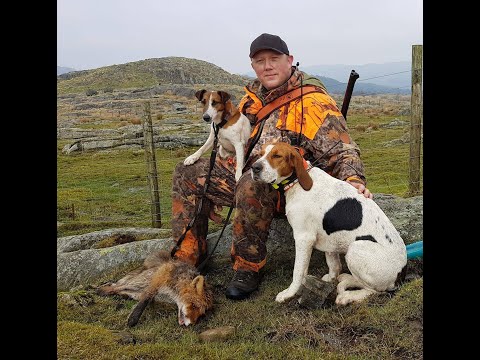
    Fox hunting with halden hound and fox terrier in Norway
    Fox hunting with halden hound and fox terrier in Norway
    Foxhunting with halden hound and fox terrier 07.11.20
    Foxhunting with halden hound and fox terrier 07.11.20

    Type and recognitions:

    • FCI CLASSIFICATION:
    • Group :
    • Section : . .

    Federations:

    • FCI – Group 6: Scent hounds, and related breeds. – Section 1.2: Medium-sized Hounds. โ“˜

    FCI breed standard "Halden Hound"

    Origin:
    Norway

    Date of publication of the valid original standard:
    09.08.1999

    Use:

    ---


    General appearance:

    Rectangular construction, noble, strong, but not heavy.


    Behavior / temperament:

    ---

    Head:

    Thin, medium sized and well proportioned.

    Cranial region:
    • Skull : Seen from the front and from the side slightly dome-shaped. The occipital protuberance is barely noticeable.
    • Depression links (Stop) : Not abrupt.

    facial region:

    • Truffle : black, open windows.
    • Snout : Not too short; straight muzzle.
    • Lips : Not very hanging.
    • Jaws/Teeth : Scissor bite; complete denture.
    • Cheeks : Relatively flat.

    Eyes : Dark brown in color, medium-sized; calm expression.

    Ears : Its insertion is neither too high nor too low; If they are placed forward they should reach up to the middle of the snout.

    Neck:

    Rather long, strong, thin and without any double chin.

    Body:

    • top line : Straight.
    • Back : Strong.
    • Pork loin : Wide and muscular.
    • Rump : Slightly oblique.
    • Breast : Deep with tight ribs, but not barrel-shaped. The last ribs must be particularly well developed.
    • Belly : Very little withdrawn.

    Tail:

    Insertion neither too high nor too low; rather thick; reaches almost to the hocks. Worn rather low.

    Tips

    PREVIOUS MEMBERS

    • As a whole : Straight, thin limbs with strong bones.
    • Shoulder : Long and oblique shoulder blade, muscular; the tips do not protrude from the back line.
    • Forearm : Straight and thin.
    • Metacarpus : Slightly inclined.
    • Front feet : Oval, well arched, preferably closed, well covered with hair between the fingers.

    LATER MEMBERS

    • Thigh : Broad and muscular.
    • Knee : Well angled.
    • Leg : Long.
    • Hocks : Thin and wide, turned neither in nor out. Well angled.
    • Rear feet : Like the front feet. Rams are allowed, but they are not desirable.

    Movement:

    Light, parallel, covers the ground well.

    Mantle

    HAIR : Rough, very dense and straight, with a dense undercoat of hairs.

    COLOR : White with black spots, shaded tan patches on head, limbs and sometimes between black and white. Black should not predominate. Small black or tan spots are considered a color defect..


    Size and weight:

    Height to the cross :

    • For males : 52-60 cm., ideal 56 cm..
    • for females : 50-58 cm., ideal 54 cm..


    Fouls:

    Any deviation from the aforementioned criteria is considered as a fault and the severity of this is considered to the degree of the deviation to the standard and its consequences on the health and well-being of the dog..

    ELIMINATORY FOULS

    โ€ข Aggressiveness.

    Any dog โ€‹โ€‹showing clear signs of physical or behavioral abnormalities must be disqualified..


    N.B.:

    Males should have two normal-appearing testicles fully descended into the scrotum..

    Source: F.C.I - International Cynological Federation

    Alternative names:

    1. (Norwegian: Haldenstรธver) (English).
    2. Halden (French).
    3. Haldenbracke, Haldenlaufhund, Halden-Stรถvare (German).
    4. (Norueguรชs: haldenstรธver) (Portuguese).
    5. (Noruego: Haldenstรธvare, Haldenstรธver) (espaรฑol).

    โ–ท The world of Pets: Dogs, cats, birds, reptiles, amphibians

    Swiss Hound
    Suiza FCI 59 . Medium-sized Hounds

    Schwyz Hound
    Schwyz Hound

    In the breed standard, the temperament of Swiss hound is described as "Vivacious and passionate By hunting, sensitive, docile and very attached to his master.

    Content

    History

    It is said that the Swiss Hound is among the oldest members of the Group of Hounds. According to a 15th century letter to Ernst, Elector of Saxony (1441-86), Swiss working dogs were among the best. Images from the 17th century show packs of hounds "with the same color and the same size, "big heads and very long ears".

    Three centuries later, the german dog writer Richard Strebel wrote in ยซDie Deutschen Hundeยป (German dog breeds, 1903-05) that the hounds that lived separately in a restricted area of โ€‹โ€‹Switzerland therefore developed separately.

    In the decade of 1890, it seemed that purebred bloodhounds were marked for death in Switzerland, despite the breeding Schwyz Hound, Bernese Hound and Lucerne Hound. Some hounds were exported to Scandinavia and, thanks to the crossing with native hounds, the Stรถvares (scandinavian hounds) they were blooming. But at the same time, the Thurgauer Laufhund quietly disappeared in Switzerland, and the Aargauer Laufhund gave way to Jura Hound (Bruno Jura Hound).

    In 1903, J. Dust del Swiss Kennel Club founded the Schweizerische Laufhunde-Club (Swiss Hound Club) and in 1907 an appeal was made to save the Swiss hound of extinction. Then something remarkable happened: the breed club bought good quality Swiss hounds and gave them to prudent breeders and hunters. Test rules and regulations were developed and a series of obligations were established: to) only one dog at a time when hunting; b) the dog had to be under control when searching for game; c) a dog that disappeared during the hunt had to return to its master within half an hour; y d) the dog was to return as soon as the horn sounded, regardless of whether the dog was looking. Using these rules, the breed club tried to exclude disobedient dogs and forced owners to properly breed and train their dogs.

    Four varieties

    The development of Swiss Hound started in the decade of 1930, but it took time and effort. In 1937, only five hounds were entered in the Swiss herd book. The Dr. O. Vollenweider managed to gather 11 hound collectors in the city of Soleura, in northwestern Switzerland. Dogs suitable for breeding were selected and, in 1933, a breed standard was published. In the standard, the varieties were distinguished by coat color and pattern.

    In 1944, 150 Swiss hounds were entered in a hound exhibition. (as a neutral country, Switzerland did not participate in WWII) It was no longer forbidden to work with dogs that gave tongue, and bloodhounds of more than 20 inches (50 centimeters) to the cross.

    Attempts to save or restore the Laufhund de Argovia they were unsuccessful; in 1933, the breed standard was canceled. Four varieties remained: the Bernese Hound, the Jura Hound (Bruno Jura Hound), the Lucerne Hound and the Schwyz Hound. Their names connect them with cities and areas of Switzerland (Berne, Lucerne, Jura), or with Switzerland.

    It is said that between 1902 and 1922, a few 1.200 swiss hounds, mainly Schwyz Hound white-yellow, they were raised in Norway. Some years, there were more Swiss Hounds outside of Switzerland than in their country of origin. In 1993, about 1.000 copies of Lucerne Hound they lived in sweden.

    France is another importer. Seventy-five Jura Hound (Bruno Jura Hound) enrolled in an exhibition in Lyon in 1976. It is not surprising that the Jura is predominantly found in France and Switzerland, and that it extends to Germany. Since the 15th century, Swiss hounds were also exported to Italy. According to raven, they frequently crossed paths with his Italian cousin, the Italian short-haired Segugio.

    Photo: XXXVIII Wystawa krajowa psรณw rasowych w Czฤ™stochowie. Goล„czy ze Schwyz: Ella Haniccina Zahradka z hodowli Z Pastorowej Sfory naleลผฤ…ca do Mariusza i Wioletty Antoszczuk by chained, CC BY-SA 3.0, via Wikimedia Commons

    Swiss Hound varieties:

    1 Bernese Hound

    Bernese Hound

    The Bernese Hound It is mainly used for hunting hare.

    The Swiss Hound has a very ancient origin. Its existence in Switzerland since Roman times is proven thanks to

    ... Read more

    2 Lucerne Hound

    Lucerne Hound

    The Lucerne Hound is a lively dog, but gentle and docile. Very attached to his master.

    The breed was originally bred in the Lucerne area, Switzerland. Apparently it is closely related to

    ... Read more

    3 Schwyz Hound

    Schwyz Hound

    The Schwyz Hound they are a very lively and energetic breed that requires a significant amount of daily exercise.

    The Schwyz Hound has ancient origins, the details are a bit confusing though. Dogs

    ... Read more

    4 Jura Hound (Bruno Jura Hound)

    Bruno Jura Hound

    The Jura Hound It is very distant with strangers and needs firm handling if kept as pets.

    In the year of 1882 A standard was established for each of the

    ... Read more

    โ–ท The world of Pets: Dogs, cats, birds, reptiles, amphibians

    Dalmatian
    Croacia FCI 153 . Related breeds

    Dรกlmata

    The Dalmatian of today, are mainly found as companion dogs.

    Content

    History

    The origins of the Dalmatian they are not very clear. Ecclesiastical chronicles of the 18th century suggest that it originated in the eastern Mediterranean basin, and more precisely in the region of the Dalmatian coast (in croatia), where does it get its name from. In these chronicles, the dogs represented are called Canis dalmaticus. Although it is difficult to define who the ancestors of the Dalmatian, some believe that the Great Dane and English Pointer contributed to the creation of the breed.

    Some experts believe that this dog – or at least their close relatives – already existed in the time of ancient Egypt, 2000 years before Christ. This hypothesis is based on the drawings found in the tombs of the pharaohs.

    But, between the second half of the 18th and 19th centuries, the Dalmatian traveled Europe together with Roma nomads, making its appearance in many countries. In the second half of the 18th century it would have arrived in the United Kingdom, where it really began to be bred and developed. Like this, although its origins appear to be Croatian, it was the UK that gave him his credentials, and that can be considered as his second homeland, so to speak.

    During the Victorian England period (1837-1901), attracted the attention of racehorse trainers, who used it to protect horses from predators and thieves and to add a touch of style to their breeding.

    At the end of the 19th century, a real selection job was started by some English noblemen who bred him to use as a working dog. In fact, in addition to his role as horse groomer, was able to accompany the horses and carriages that pulled, running in front of them and opening the way for them thanks to the barks that alerted and made the animals and people who were on the road move away. still today, is also recognized with the Dalmatian a particular affinity for the equine population.

    During this time, began to be used for many other tasks. In particular, proved to be very competent as a guard dog, but also as a sheepdog, draft dog and even circus dog.

    They were imported to the United States probably in the late 18th century, mainly from the UK. There he also distinguished himself as a working dog accompanying the firefighters., running towards the fire upriver from the horses that towed their vehicles, to clear the way. He then kept an eye on his equipment as they tried to control the fire. While this practice has obviously disappeared nowadays, many American fire stations have long maintained a Dalmatian like your pet.

    In the early 20th century, the United Kingdom became the reference country for the breed. Some British families were widely recognized for the quality of their upbringing, and many of her puppies were sold all over the world. The Wells family, in particular, would be at the origin of most of the American lines of Dalmatian shipped to the United States at that time.

    Today, found primarily as a companion dog. Its appearance makes it particularly recognizable and the cartoons of the Disney movies Los 101 dalmatians (1961) and the 102 dalmatians (2001) contributed greatly to making him famous.

    In the United States, the Dalmatian was recognized by the American Kennel Club (AKC) in 1888, and by the United Kennel Club (UKC) in 1914. The International Cynological Federation (FCI) it took much longer, since it was not until 1955 who did the same.

    The UK is still probably the most prolific country, at around 1000 new puppies Dalmatian registered each year in the Kennel Club, the reference organization of the country. But, there has been a significant decline, since this figure was just below the 1500 annual births in early 2010. This trend is also observed in other countries., like australia, where the number of annual registrations in the ANKC (Australian National Kennel Club) has gone from almost 1500 mid-decade 1990 to 500 in the news.

    In France, the breed is fairly well represented, since every year they are registered with the Sociรฉtรฉ Centrale Canine (SCC) a few 700 individuals, that is to say, around the 0,35% of the total of all races combined. It reached its maximum popularity at the beginning of the 21st century, with more than 800 or even 900 new puppies per year. It was particularly during the decade of 1990 when the breed experienced a pronounced boom, since the number of births per year was only about 250 at the beginning of that period.

    In the United States, the Dalmatian occupies about 60th place (out of a total of 190) in the breed classification based on the number of annual registrations with the AKC.

    In general, the breed has experienced ups and downs in popularity in recent decades. There are countless families who decided to adopt a Dalmatian after having seen a cartoon and/or a movie in which he appears, before realizing some time later that they weren't actually necessarily made for such a dog …

    Physical characteristics

    The Dalmatian he is a harmonious and well-proportioned dog. They are muscular and lively, with a symmetrical silhouette and clean lines. His cross is well defined, followed by a powerful straight back. Their loins are lean and muscular, with slightly sloping rump. The chest should not be too wide, but it must reach up to the elbows.

    The front legs are perfectly straight and with solid bones. Shoulders are slightly sloping. Hind legs are straight and parallel when viewed from behind. The legs are round, firm and have strong, elastic pads.

    The tail reaches approximately to the hock. It is quite strong at the base and then gradually tapers to the tip. The presence in the latter of many stains is sought – that however must be smaller than those of the body – but its absence is also accepted by the standard of the Dalmatian.

    Its head is quite long and its skull is flat. The upper lines of the skull and muzzle are parallel. His nose is the same color as his spots, that is to say, black or brown. The muzzle is long and powerful. The jaws are also powerful and scissor-shaped..

    The eyes are separated without excess, medium-sized, round and shiny. They give the dog an intelligent and very lively expression. Like the nose, its color depends on the color of the spots, so they can be black or brown.

    The ears are quite high and have a fine texture. They are broad at the base and rounded at the tip. They also have many well-defined and preferably numular points, that is to say, round.

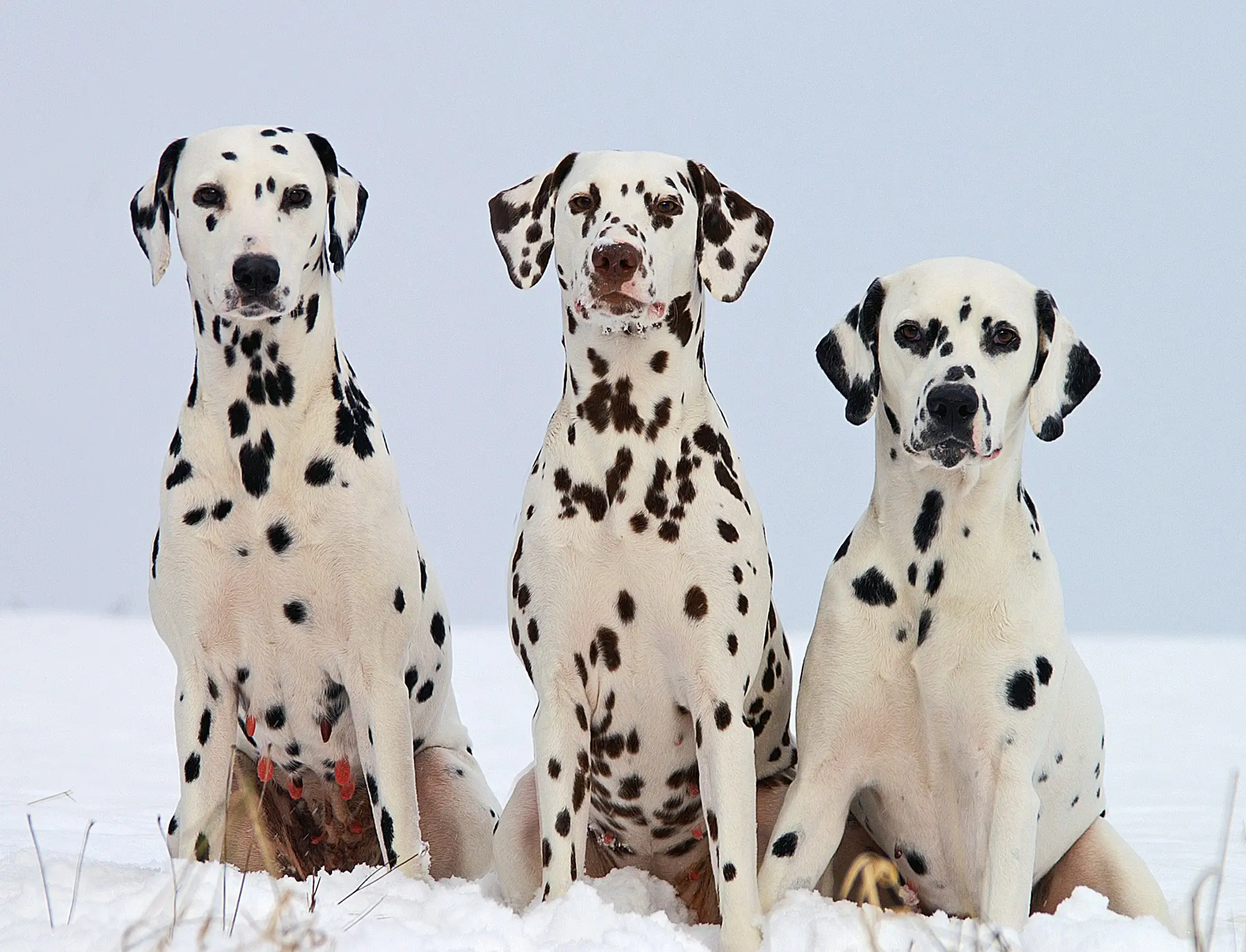
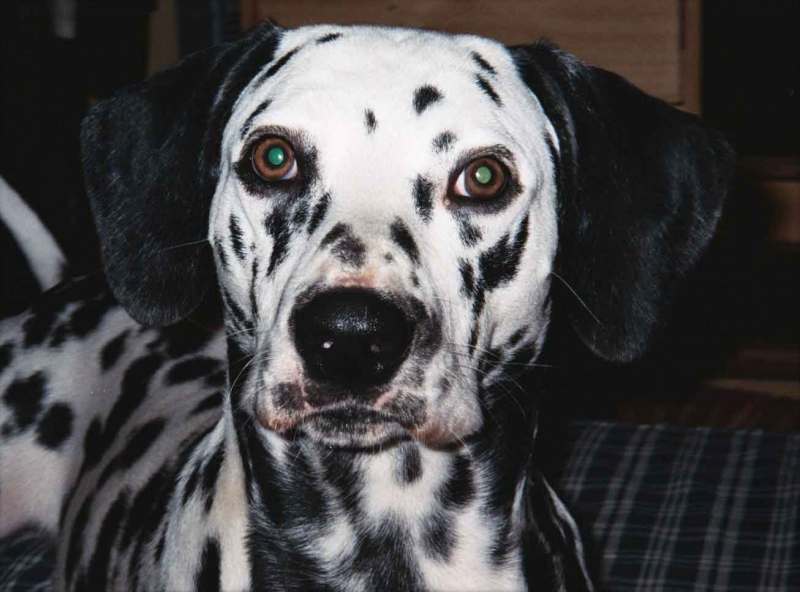
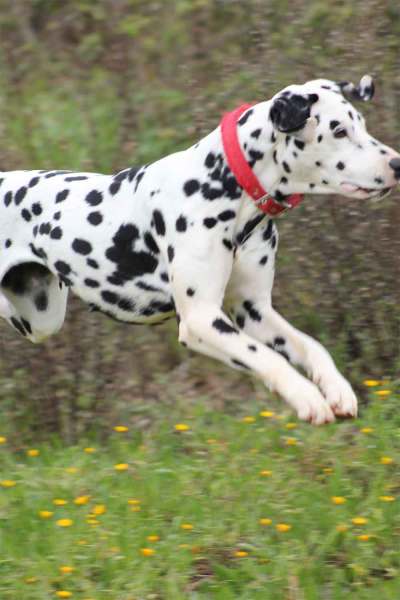
    The coat of the Dalmatian is short, hard and shiny. Itร‚ยดs, of course, the main distinctive feature of the breed, with its numerical spots, that today are smaller and clearer than a few centuries ago, according to available renderings. But, remain enigmatic, since no one has yet established with certainty where they come from. In any case, the background is always white, and these spots can be black or brown (liver). They must be round and well defined, evenly distributed throughout the body, but the head and tail should be smaller than the others. There are tricolor specimens (white with black spots and liver), but they are not accepted by the breed standard.

    Character and skills

    Born to run and seemingly endowed with endless energy, the Dalmatian it is one of the most resistant dog breeds. So, is a perfect choice for a sporty owner who dreams, for example, with taking your partner when you go for a run or ride a bike. In fact, this very active dog needs a lot of exercise, and therefore not suitable for apartment living, or even in the city. Need access to a garden or patio, but beware: either at home or on a walk, his instincts for freedom sometimes make him a little runaway. This is even more true if you are not able to get all the exercise you need., plus this can lead to various behavior problems: aggressiveness, stress, destruction of objects, etc.

    Friendly, loyal and sensitive by nature, he likes to make his world laugh through many antics, but he also welcomes his masters and friends with a wide smile. Loves to please, rub shoulders with their teachers, follow them everywhere, receive attention, and thus greatly appreciates human contact. It is not an animal that likes to live in its kennel without worrying too much about it: your place is at home. Whether he is left alone or has no place in the room, this family dog รขโ‚ฌโ€นรขโ‚ฌโ€นcan only be unhappy.

    Its original and unique coat makes it appreciated by the youngest members of the family. This is a good thing, since it is a breed of dog recommended for children. In addition to his affectionate character and closeness to his family, the fact that he is very active and playful makes him the perfect companion for them. On the other hand, his energy, its large size and rather long tail make it not ideal for younger children, who run the risk of being pushed unintentionally. So, it is better for children to be a certain age. The Dalmatian may also be suitable for retirees, as long as they are active and healthy enough to take it out each day.

    Alert and very interested in everything that is around him, makes a good alert dog and warns its owners without fail of the arrival of a person. On the other hand, it's more illusory to expect me to play the watchdog, as it does not show any real aggression or threat to strangers. But, during its history, the Dalmatian was used effectively to guard the houses, but it must be said that its protective instinct gradually faded over the years as its use evolved. It also, when strangers are brought into your home, tends to stay away and not seek too much contact with them, at least initially. In general, although he can be protective when necessary, it is a very friendly dog รขโ‚ฌโ€นรขโ‚ฌโ€นwith humans.

    Endowed with a well balanced nature (although sometimes a little stubborn), the Dalmatian still needs to be socialized from an early age, that is to say, getting exposed to many other canine companions, animals, people, sounds and situations. As long as it is done well, can get along with most cats and dogs, whose company you generally enjoy. He also has a special affinity with horses, inherited from your work with them in the past. On the other hand, he has also retained a strong hunting instinct from his ancestors and loves to catch birds, Rats, tops, mice or other rodents. So, it is better to keep an eye on him in situations where he comes into contact with them, and of course prevent me from trying to live with them.

    ยซDalmatianยป Education

    Its origins as a fire dog make the Dalmatian a reactive being. Not particularly difficult to train, but it is wise to instill the basics early, in a gentle but strict way. In effect, may have a tendency to be stubborn and take over from a beginner or insecure owner who does not have the opportunity to be trained.

    Endowed with an excellent memory, very responsive, eager to please and grateful for rewards, it is particularly suitable for canine training methods based on positive reinforcement, like clicker training. To an old circus dog, loves to learn tricks and show off his clown skills.

    Cubs Dalmatian, otherwise, often tend to adopt destructive behaviors, for example, chew on objects they find or dig holes in the garden. Here, too, he must be shown from a young age which attitudes are desirable and which are not.. If they are allowed to, they will soon learn bad habits, how do they do with the good guys.

    Last, socialization that begins at an early age is a guarantee of successful adaptation to any type of situation that you may encounter later in life. Is naturally sociable, but as with any dog, it is better to teach him as soon as possible to react calmly to as many scenarios as possible.

    โ€œDalmatianโ€ toilet

    The Dalmatian it is quite easy to care, but it is important to know that she loses hair constantly and has a strong seasonal fall twice a year, in spring and autumn. During these periods, it is recommended to brush the dog every day. Outside, one or two brushings per week is enough, although some homeowners choose to brush more frequently to minimize the amount of hair in the house.

    In any case, not suitable for people who cannot bear to find hair everywhere in their house: not only loses hair all the time, but that its hair is rigid and easily lodges in the fabrics, so it can be difficult to remove it from clothes and sofas, for example.

    Having said that, apart from this significant hair loss, the Dalmatian they are pretty clean dogs, with a not very dirty coat and do not develop a strong body odor. It also, as its fur is short, it is not normally necessary to have your dog professionally groomed.

    It is also not particularly necessary to bathe your dog regularly., unless, of course, be really dirty, for example, after a trip outdoors. Apart from this special case, a bath once or twice a year is more than enough.

    But, as in all breeds of dogs with floppy ears, special care must be taken to avoid the risk of infection. Weekly cleaning is ideal, in addition to cleaning after each outdoor activity in wet areas, for example.

    It is not normally necessary to trim the claws of a Dalmatian if you regularly spend time outdoors, since natural wear and tear is usually sufficient. But, in the case of less active individuals, they need to be trimmed as soon as they protrude from the pads, that is to say, on average once a month.

    Last, as with any dog, it is advisable to take care of your eyes once a week to avoid any risk of irritation or infection.

    Health ยซDalmatianยป

    The Dalmatian generally in good health. But, like any race, is more prone to certain problems, often hereditary in this case. So, when a Dalmatian, it is useful to ask the breeder for the results of the health tests carried out on both parents.

    One of the main risks to which you are exposed is that of hereditary deafness, the more so since no lineage seems to be safe. If around the 5% of puppies become completely deaf at 6 weeks old (after a short period of time in which they are able to hear), puppies are even more likely to become completely deaf in one ear. Its percentage is quite difficult to define, as often the adopter or owner is unaware of the problem unless they test their partner's hearing. In fact, a dog that is deaf in one ear shows more or less the same reflexes and reactions to sounds and situations as a normal individual. But, some doctors have already investigated the problem. According to several studies carried out over the years 90, the percentage of Dalmatian deaf in one ear is around 20%. The doctor. Bruce Cattanach, who published a review of his work entitled "The dilemma of Dalmatian: "white coat color and deafness" in the Journal of Small Animal Practice in 1999.

    In any case, cannot be tested at birth. A puppy, regardless of race, always born with closed external ear canals. They open around the 12th to 16th day of life, so only then can you test the audition. In the dalmatian, deafness appears before 6 weeks of age. It is caused by a deterioration of the organ of Corti (organ of auditory perception) and appears to be caused by the genes that cause its white color. It can be detected with the help of a test from the 6 weeks of age, and this is what any serious breeder of Dalmatian. Deaf individuals are obviously excluded from reproduction.

    Representatives of this breed can also suffer from urolithiasis (or bladder stones), a disease caused by a peculiarity of the urinary system of the Dalmatianto. Urine from Dalmatian contains a particularly high level of uric acid. This acid carries an increased risk of stone formation and makes the urinary system more fragile and sensitive than that of other breeds. This disease can even be fatal if the situation evolves towards a total obstruction of the urinary ducts. So, it is important to make sure that the Dalmatian urinate regularly and without difficulty, and always have easy access to fresh water. To avoid vital diagnosis of the animal, the disease should be detected as soon as possible, and treatment by a veterinarian should follow immediately.

    It also, many representatives of the breed suffer from skin allergies. They can be of food origin, in which case, the problem food can simply be eliminated from the dog's diet. They can also be contact allergies, that is to say, caused by a direct reaction to certain substances intended for dogs, as flea treatments, dog shampoos and other chemicals. Last, the Dalmatian may suffer from inhalation allergies, caused for example by pollen, dust or mold. Often accompanied by ear infections. Treatment can be prescribed by a veterinarian, depending on the severity of the reactions.

    Like many large breeds, the Dalmatian they can also suffer from hip dysplasia, an inherited disease that causes an imperfect insertion of the femur into the pelvic cavity of the hip joint. Some affected people experience pain and lameness in one or two of the hind legs, but in others it is impossible to perceive any symptoms. As the dog ages, osteoarthritis problems can also develop. Fortunately, there is a test that can detect individuals with dysplasia, in order to exclude them from breeding (and even from the sale, in case of early detection). To minimize the risk, anyone wanting to adopt a puppy Dalmatian should, therefore, ask the breeder about the results of the test in question.

    This breed is also more affected by laryngeal paralysis, that can occur at a young age. It is a paralysis of the muscles that allow the larynx to open and close during breathing.. The main consequence of this disease is the limitation of the animal's ability to breathe, that is to say, breathing difficulties. While for many breeds this problem mainly affects older individuals, the Dalmatian you risk being affected much sooner. This problem can be easily solved with a surgical operation..

    The Dalmatian You may also be a victim of an inherited eye disease called iris sphincter dysplasia. Quite rare, causes a pronounced sensitivity to bright light, poor night vision and partial or even total blindness of the dog.

    Finally, is a dog sensitive to extreme cold. So, must absolutely live indoors in cold regions and/or when temperatures drop sharply in winter.

    โ€œDalmatianโ€ use

    Today, they are primarily active and long-lived companion dogs who love to accompany their owners outdoors, for example, during jogging or cycling. They can also be used as an alert dog, but not much more than that: his skills as a watchdog are a far cry from what they used to be.

    He is also an excellent competitor in canine sports that require his great physical abilities., like agility, the flyball or the Frisbee.

    Buy a โ€œDalmatianโ€

    The price of a puppy Dalmatian it obviously depends on the kennel it comes from, its origins and its morphological qualities. On average it is 700 EUR, but it can go up to 1000 EUR.

    The price of a female is usually significantly higher than that of a male. Like this, within the same litter, it is not uncommon to see a difference of 200 euros between the two sexes.

    Characteristics "Dalmatian"

    Coexistence is important that you have with your new friend. Before considering the acquisition of a dog of the breed "Dalmatian" you know certain factors. Not all breeds of dogs are apt to live in an apartment, you must take into account his character, their need for exercise, their interaction with other pets, their care and if you have small children, their level of tolerance towards them.

    Adaptation โ“˜

    3,0 of 5 stars (based on 1 review)

    friendly dog โ€‹โ€‹โ“˜

    4,0 of 5 stars (based on 1 review)

    hair loss โ“˜

    4,0 of 5 stars (based on 1 review)

    Affection level โ“˜

    5,0 of 5 stars (based on 1 review)

    Need for exercise โ“˜

    5,0 of 5 stars (based on 1 review)

    Social need โ“˜

    4,0 of 5 stars (based on 1 review)

    Home โ“˜

    3,0 of 5 stars (based on 1 review)

    Toilet โ“˜

    3,0 of 5 stars (based on 1 review)

    Friendly with strangers โ“˜

    3,0 of 5 stars (based on 1 review)

    barking โ“˜

    3,0 of 5 stars (based on 1 review)

    Health โ“˜

    4,0 of 5 stars (based on 1 review)

    Territorial โ“˜

    3,0 of 5 stars (based on 1 review)

    Cat friendly โ“˜

    3,0 of 5 stars (based on 1 review)

    Intelligence โ“˜

    3,0 of 5 stars (based on 1 review)

    Versatility โ“˜

    3,0 of 5 stars (based on 1 review)

    Child friendly โ“˜

    4,0 of 5 stars (based on 1 review)

    Surveillance โ“˜

    3,0 of 5 stars (based on 1 review)

    joy โ“˜

    4,0 of 5 stars (based on 1 review)

    Images "Dalmatian"

    Photos:

    1 – Dalmatian in full search by Biel1973, CC0, via Wikimedia Commons
    2 – Photo taken in Peru with a camera by Jesus Emerson H.., CC BY-SA 2.5, via Wikimedia Commons
    3 – A Dalmatian puppy breed by Technological wizard, CC BY-SA 3.0, via Wikimedia Commons
    4 – A dalmatian dog by Oliver10203040 at Italian Wikipedia, CC BY-SA 3.0, via Wikimedia Commons
    5 – Dalmatian jumping by Biel1973, CC0, via Wikimedia Commons
    6 – Dalmatiner by Heinz Hรถfling, CC BY-SA 3.0, via Wikimedia Commons

    Videos "Dalmatian"

    Type and recognitions:

    • FCI CLASSIFICATION:
    • Group :
    • Section : . .

    Federations:

    • FCI – Group 6: Scent hounds, and related breeds. – Section 3: Related breeds. โ“˜
    • AKC – Non-Sporting โ“˜
    • ANKC – Group 7 (Non-Sporting) (Hounds) โ“˜
    • CKC – Group 6 – Non-Sporting โ“˜
    • โ€‹KC – Non-Sporting โ“˜
    • NZKC – Non-Sporting โ“˜
    • UKC – Companion Breeds โ“˜

    FCI breed standard "Dalmatian"

    Origin:
    Croatia

    Date of publication of the valid original standard:
    13.10.2010

    Use:

    Hunting dog. Companion dog, of family, easy to train for various purposes.


    General appearance:

    This is a well balanced dog, distinctively mottled, strong, muscular and active. Symmetrical profile, free from coarseness and heaviness of movement, As an old car dog it is capable of great endurance and good speed.

    important proportions

    • The relationship between the length of the body and the height at the withers is approximately 10:9.
    • The relationship between the length of the skull and the length of the muzzle is 1:1.


    Behavior / temperament:

    Sociable and friendly, never shy or reserved, free from nervousness and aggressiveness.

    Head:

    Good length.

    Cranial region:
    • Skull:Plano, quite wide between the ears, with well defined temporal area. Underdeveloped frontal sulcus. Completely wrinkle free.
    • Depression links (Stop):Moderately well defined.

    facial region:

    • Truffle:Always black in the black speckled variety, in the liver-colored speckled variety always brown.
    • Snout:Long and powerful, never pointed. The nasal cannula is straight and parallel to the upper line of the skull.
    • Lips:Thin, well adjusted to the jaws, never hanging. Full pigmentation is desired.
    • Jaws/Teeth:Strong jaws with a perfect, regular scissor bite, that is, the upper incisors closely overlap the lower ones and are implanted vertically in the maxilla. A complete denture with 42 Dental parts (according to the dog's dental formula) is desired. The teeth are well proportioned, regular and white.

    Eyes:Moderately spaced apart, medium-sized, round, shiny and sparkling, smart and alert expression. Dark brown in the variety with black spots, light brown to amber in the liver-spotted variety. The edge of the eyelids should be completely black in the black-spotted variety and completely liver-colored in the liver-spotted variety.. The edge of the eyelids must be well glued on the eyeball.

    Ears:Set rather high, medium-sized, rather wide at the base. Carried close to the head, gradually tapering to a rounded tip. Texture fine. Bien outlined spots, preferably mottled.

    Neck:

    Long, well arched, thinning to the head; double chin free.

    Body:

    • Cross:Well defined.
    • Back:Powerful, straight.
    • Pork loin:Very muscular with dry muscles, slightly arched.
    • Rump:Very little inclined.
    • Breast :Not too wide, but deep and large capacity; must reach up to the elbows. Seen from the side the sill is clearly visible. Well proportioned ribs, long, well bowed, never flat, cramped or deformed.
    • Flanks:Narrow.
    • bottom line:Quite withdrawn up to the back.

    Tail:

    Reaches approximately to the hock. Strong at its roots, slimming to tip, free of roughness. Insertion neither too high nor too low. At rest it falls with a slight upward curve in the last third of the tail. In motion she is carried higher, slightly higher than the top line, but never stood (elegre) the tangled. Preferably speckled.

    Tips

    Former members

    Perfectly straight, with strong bones and rounded from top to bottom.

    • Shoulder:Moderately oblique, crisp and muscular.
    • Elbows:Close to the body, neither turned in nor out.
    • Carpi:Strong, slightly elastic.

    Later members

    Rounded, muscular, clear; seen from the back, they are parallel and vertical.

    • Knees:Well angulated.
    • Legs:Strong.
    • Hock angulation:Strong, well angled.

    Pies

    Round, compact, with well arched toes (cat feet). Round pads, hard and elastic. Black or white nails in the variety with black spots, brown or white in the liver-spotted variety.

    Movement:

    Great freedom of movement: regular, powerful and rhythmic action with long steps and good push of the hind limbs. Seen from the back, limbs move in parallel lines, the later ones following the previous ones in a single plane. A short range pass or limbs drifting laterally are incorrect.

    Mantle

    Fur: Short, hard, dense, smooth and shiny.

    Color: Pure white background color. In the variety with black spots, the spots are black; in the variety with liver spots, the spots are liver-brown. Without mixing with each other, but round, they are well defined and as well distributed as possible; size 2-3 cm in diameter. The spots on the head, tail and limbs are smaller.


    Size and weight:

    Balance sheet is of utmost importance.

    Height to the cross

    • Males:56โ€“61 cm.
    • females:54โ€“59 cm.

    Weight

    • Males:approximately 27-32 kg.
    • females:approximately 24-29 kg.


    Fouls:

    Any deviation from the above criteria is considered missing and the seriousness is considered to the extent of the deviation to the standard.

    • Tan spots (transient bronze-colored discoloration of black spots.

    ELIMINATING fAULTS

    • Aggressive or fearful dog.
    • High or low prognathism.
    • Ectropiรณn, entropion, zarco eye, different colored eyes (heterochromia).
    • Blue eyes.
    • Deafness.
    • Delimited patch near one eye (monocle) or patches on the body (however admissible for breeding).
    • Tricolor dog (black spots and liver in the same specimen).
    • Lemon color (lemon or orange spots).
    • Very shy or aggressive behavior.

    Any dog โ€‹โ€‹showing clear signs of physical or behavioral abnormalities must be disqualified..


    N.B.:

    Males should have two normal-appearing testicles fully descended into the scrotum..

    Source: F.C.I - International Cynological Federation

    Alternative names:

    1. Carriage Dog, Firehouse Dog, Plum Pudding Dog, Spotted Coach Dog, Leopard Carriage Dog (English).
    2. Dalmatinac (French).
    3. (kroatisch Dalmatinac) (German).
    4. (em croata: Dalmatinac) (Portuguese).
    5. Perro Bombero (espaรฑol).

    โ–ท The world of Pets: Dogs, cats, birds, reptiles, amphibians

    Black and tan coonhound
    Estados Unidos FCI 300 - Large-sized Hounds

    Perro negro y fuego para la caza del mapache

    The Black and tan coonhound they are very vocal and ladradores and, they tend to howl frequently.

    Content

    History

    The black and tan dog for raccoon hunting is a breed of dog used especially to track raccoons. It is a cross between Bloodhound and the Black and Tan Virginia Foxhound (ยซBlack fox hunter and virginia fireยป).

    The Black and tan coonhound It is one of the oldest breeds that exist in America. It is considered that its origin is in the old packs of Fox Hound Cross with Bloodhound they were imported from England in the 17TH century.

    The Black and tan coonhound is a descendant of dog Talbot (extinct race), It was in medieval England from the 11th century. His ancestry is, years. At that time, drawn through the Bloodhound and the Black and Tan Virginia Foxhound.

    The Black and tan coonhound it is the only one of the six races of the group โ€œCoonhoundโ€ (hunting dog breed belonging to hounds) officially recognized by the American Kennel Club.

    In 1945 the Black and tan coonhound was recognized by the American Kennel Club.

    The Redbone Coonhound and the Plott Hound since then they have been recognized in the miscellaneous class. The other three varieties of Coonhound are the Bluetick Coonhound, the American English Coonhound, and the Treeing Walker Coonhound.

    Physical characteristics

    The standard of the Black and tan coonhound mark that your weight is 29 to 59 Kg. Y, the height at the cross of 58 to 69 cm..
    Its pelage is short, dense and glossy. Their brand of black colour and fire are similar to the Dobermann and the Rottweiler, but with key differences that, It doesn't help to distinguish it from other races. The most prominent are the ears and long tails, and his strong bark, like no other. The eyes are Hazel color, throwing more dark in some cases.

    The legs are long in proportion to the length of the body, that is very muscular and thin, males tend to be more bony than females.

    The size of the litter of a Black and Tan Coonhound dog round the 8 Puppies. Y, the life expectancy of this breed is of 10 to 12 years.

    Generally healthy, but there is some risk of the Hip Dysplasia, ear cancer and other ear infections and eye problems.

    Character and skills

    The Black and tan coonhound achieves its objective by guiding itself only by smell, What makes it also efficient to find deer, bears, Pumas and other pieces of hunting, although in many countries this type of hunting with dogs is restricted.

    The general impression is the of the power, agility and alertness, with the ability to quickly drop to the ground and move down with powerful rhythmic strides. It also, every dog has his own voice, recognisable for their owners from a great distance.

    The Black and tan coonhound he is a gentle dog, adaptable and worthy to be loved. While adapt very well to different environments of life, This dog will be very happy when you can do the work for which has been raised.

    Thanks to its amazing sense of smell, is a dog that easily distracted, he is obedient but if any trail crosses his path he will go after himโ€ฆ Reason why, they are dogs that require a constant and patient training.

    Although most of the Black and tan coonhound they are dogs trust, balanced and sweet temperament, puppies need a fair amount of encouragement to build their confidence, especially, When living in the interior of a home as pets. You can have despanzurrado and happy on the sofa, If and when, It gives you a lot of exercise, years. At that time, they enjoy the company of their human family.

    The Black and tan coonhound, It may seem cautious or nervous in the presence of strangers or unfamiliar dogs, but if they are well socialized from puppies there will be no problem, they are dogs bred for hunting and working group.

    The Black and tan coonhound he is better known as "raccoon hunter", but she has also been used successfully for hunting other animals such as the bear, the deer, the Fox and the mountain lion – even on difficult terrain. Since, It is a dog that supports well the rigors of winter, as well as intense heat.

    The Black and tan coonhound it is a breed that tends to drool a lot, This is a feature that can be problematic. This race is not very appropriate for someone who is looking for a quiet dog, like all Coonhound, they are very vocal and ladradores and, as well, they tend to howl frequently. They are effective in warning their owners when a stranger enters the courtyard, the appearance of the dog at that time may seem threatening, but it is not likely to bite or attack unless smell the real danger or feel threatened.

    Despite being a dog that is not often seen in urban areas, they enjoyed much popularity in rural areas. It is said that a Coonhound they are found on the porch of most rural homes in the United States, more than any other race. While it is not a statistical fact, his place in the AKC registered breeds list that ranks as one of the most popular races.

    It is the image that has inspired the character of Pluto, the companion of Mickey Mouse.

    Characteristics "Black and tan coonhound"

    Coexistence is important that you have with your new friend. Before considering the acquisition of a dog of the breed "Black and tan coonhound" you know certain factors. Not all breeds of dogs are apt to live in an apartment, you must take into account his character, their need for exercise, their interaction with other pets, their care and if you have small children, their level of tolerance towards them.

    Adaptation โ“˜

    5,0 of 5 stars (based on 1 review)

    friendly dog โ€‹โ€‹โ“˜

    5,0 of 5 stars (based on 1 review)

    hair loss โ“˜

    5,0 of 5 stars (based on 1 review)

    Affection level โ“˜

    5,0 of 5 stars (based on 1 review)

    Need for exercise โ“˜

    5,0 of 5 stars (based on 1 review)

    Social need โ“˜

    3,0 of 5 stars (based on 1 review)

    Home โ“˜

    1,0 of 5 stars (based on 1 review)

    Toilet โ“˜

    1,0 of 5 stars (based on 1 review)

    Friendly with strangers โ“˜

    3,0 of 5 stars (based on 1 review)

    barking โ“˜

    5,0 of 5 stars (based on 1 review)

    Health โ“˜

    3,0 of 5 stars (based on 1 review)

    Territorial โ“˜

    1,0 of 5 stars (based on 1 review)

    Cat friendly โ“˜

    5,0 of 5 stars (based on 1 review)

    Intelligence โ“˜

    3,0 of 5 stars (based on 1 review)

    Versatility โ“˜

    2,0 of 5 stars (based on 1 review)

    Child friendly โ“˜

    5,0 of 5 stars (based on 1 review)

    Surveillance โ“˜

    3,0 of 5 stars (based on 1 review)

    joy โ“˜

    1,0 of 5 stars (based on 1 review)

    Images Black and tan coonhound

    Videos of the black and tan dog for raccoon hunting

    Type and recognitions:

    • FCI CLASSIFICATION:
    • Group :
    • Section : . .

    Federations:

  • FCI โ“˜, AKC โ“˜, ANKC โ“˜, CKC โ“˜, UKC โ“˜

  • FCI breed standard Black and tan coonhound

    FCIFCI - Black and tan coonhound
    Dog

    Alternative names:

    1. American Black and Tan Coonhound (English).
    2. Chien noir et feu pour la chasse au raton laveur (French).
    3. Schwarz-lohfarbene Waschbรคrenhund (German).
    4. Coonhound preto e castanho (Portuguese).
    5. Black and tan coonhound, perro negro y fuego para la caza del mapache (espaรฑol).