โ–ท The world of Pets: Dogs, cats, birds, reptiles, amphibians

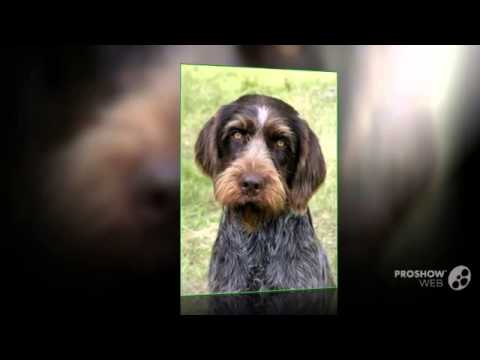
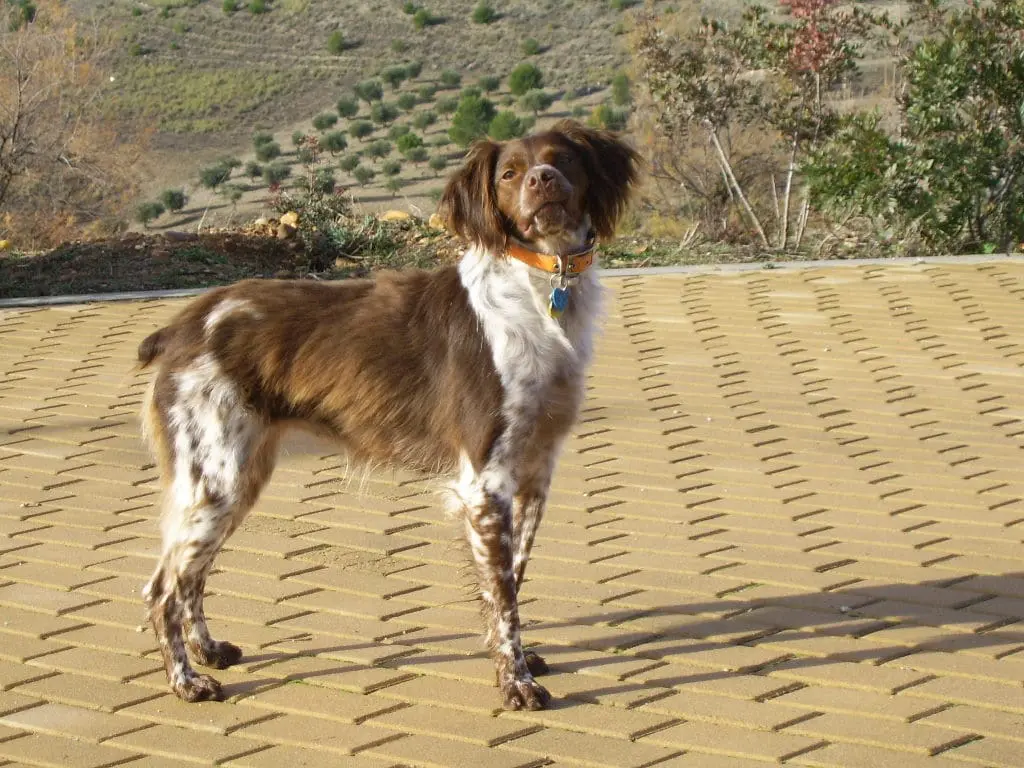
Stabyhoun
Holanda FCI 222 . Spaniel type

Stabyhoun

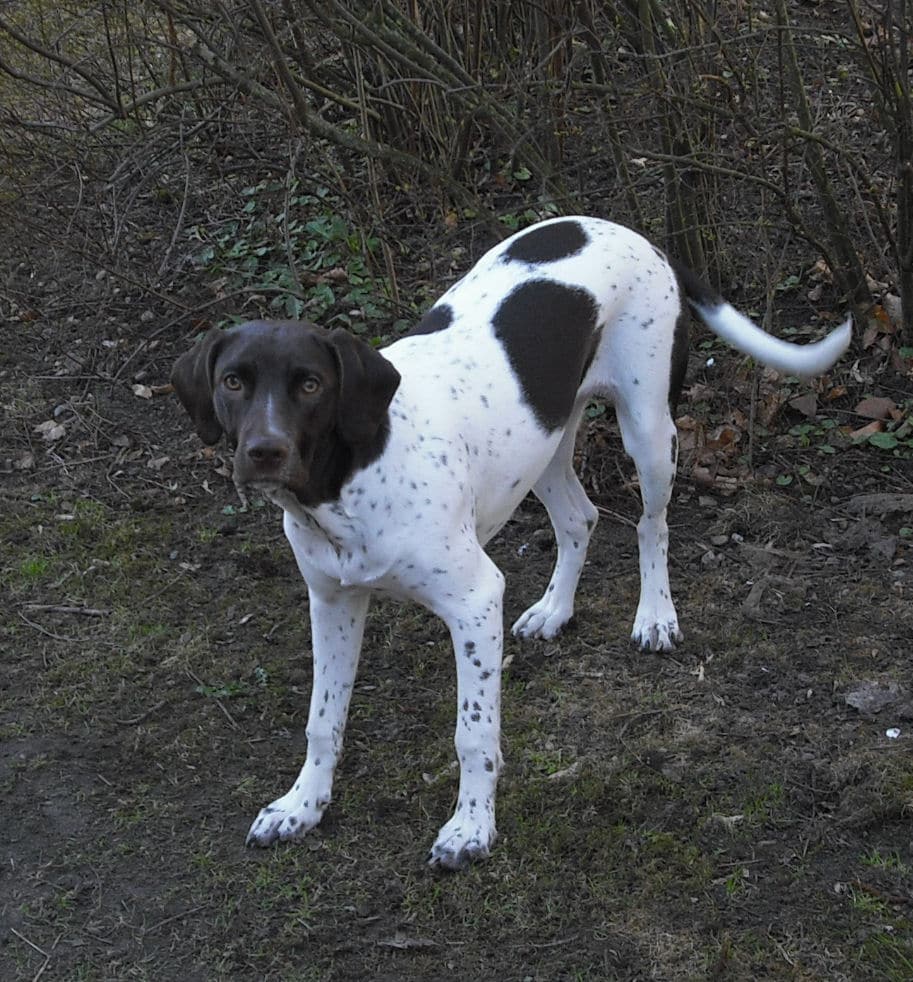
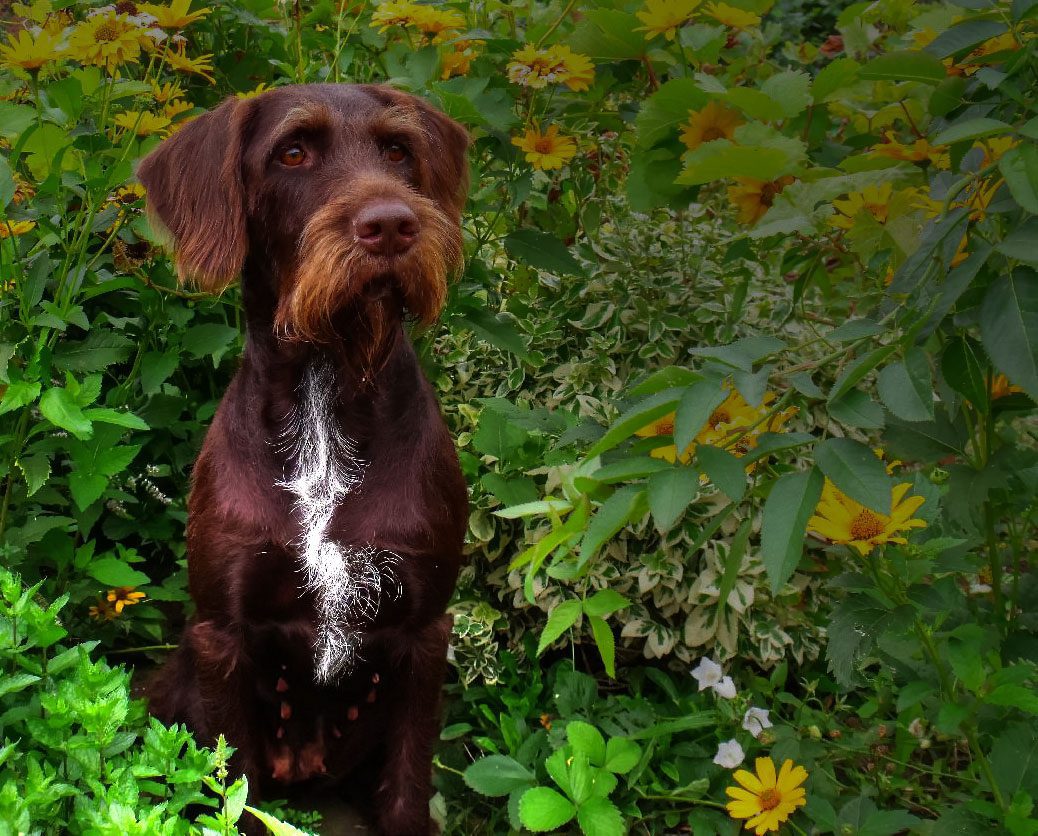
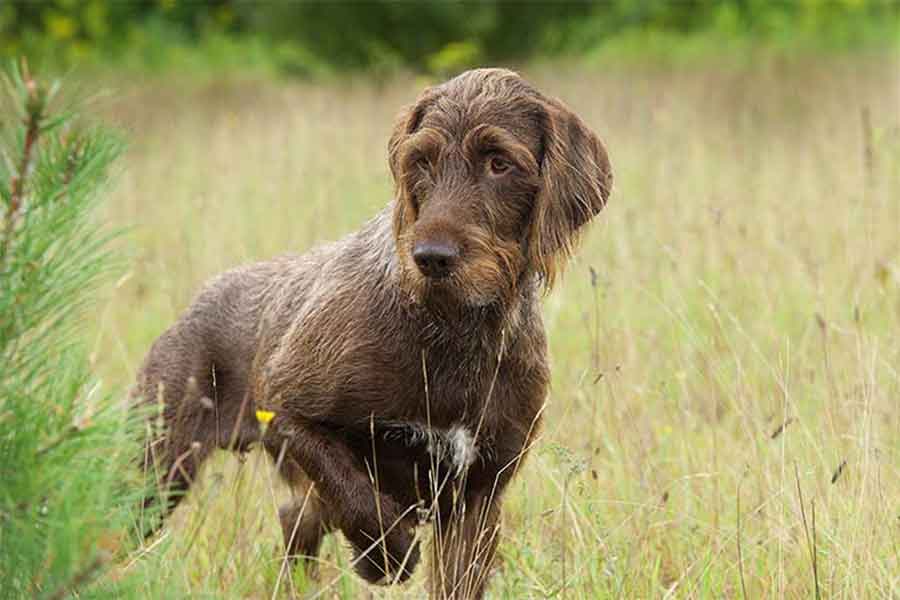
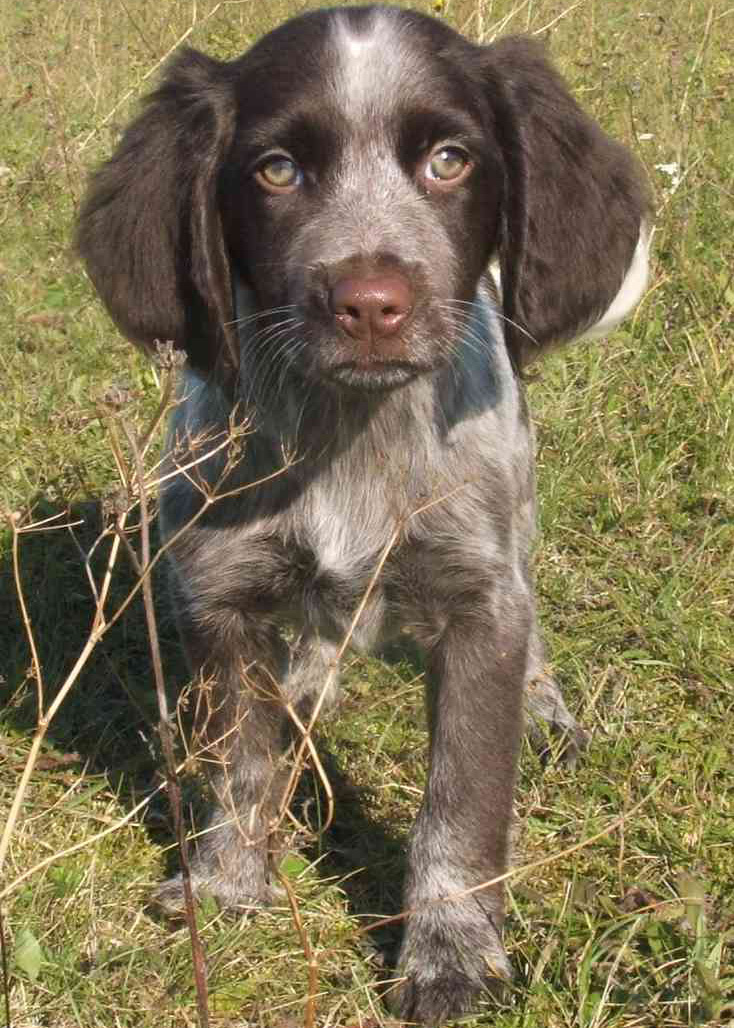
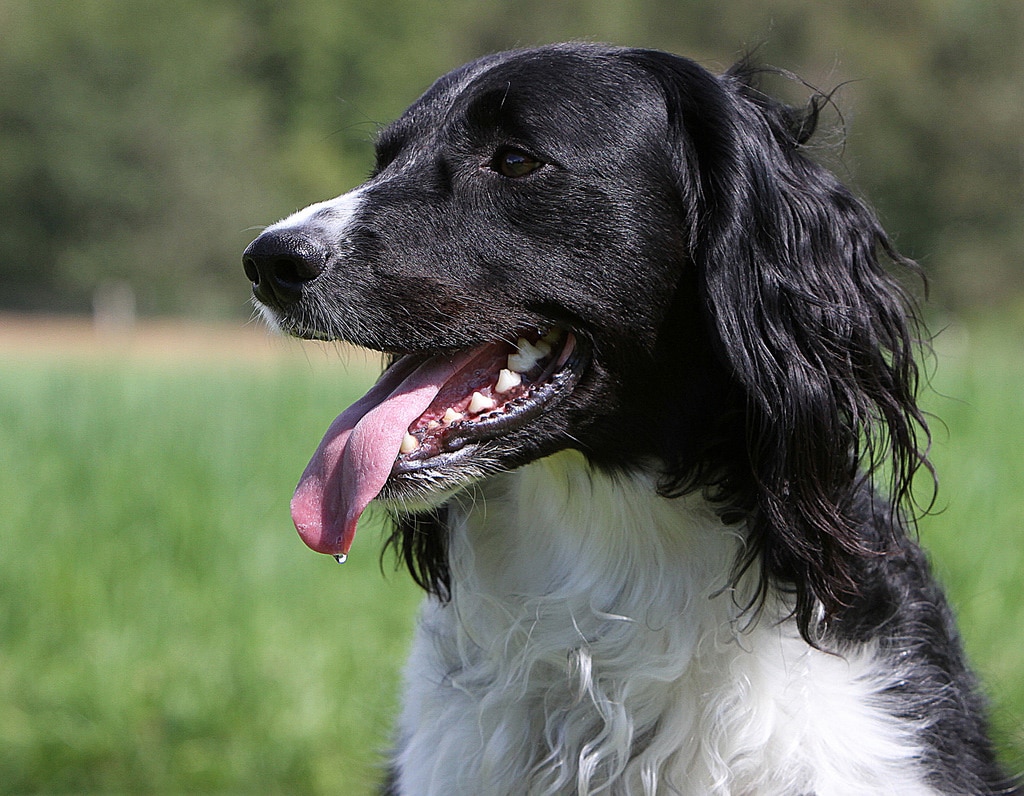
The Stabyhoun is very similar to the Dutch Partridge Dog, but smaller. It is virtually unknown outside of the Netherlands..

Content

History

The Stabyhoun, o Stabijhoun, it is one of the five rarest dog breeds in the world. Created in the 19th century, is recognized as the national treasure of the Netherlands. How could it be otherwise with just 1.000 live specimens? It comes from the forest lands of Friesland. Poor farmers, they couldn't afford more than one dog, they really needed a versatile worker. From hunting to livestock surveillance and protection, it was also able to eliminate rodents. In fact, could do almost anything.

It is possible that he is descended from Spaniels imported into the Netherlands by the Spanish and crossed with the Dutch Partridge Dog. He would also have family ties to the Small Munsterlander.

It is very little known outside of its country of origin..

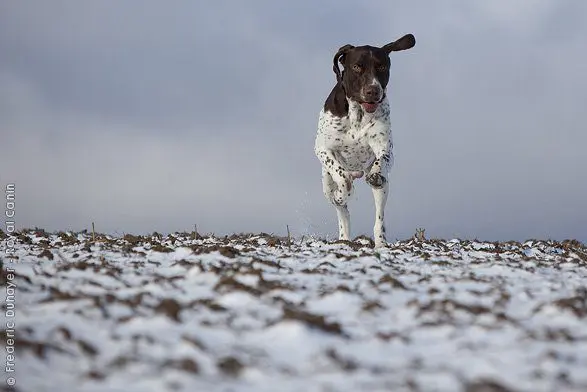
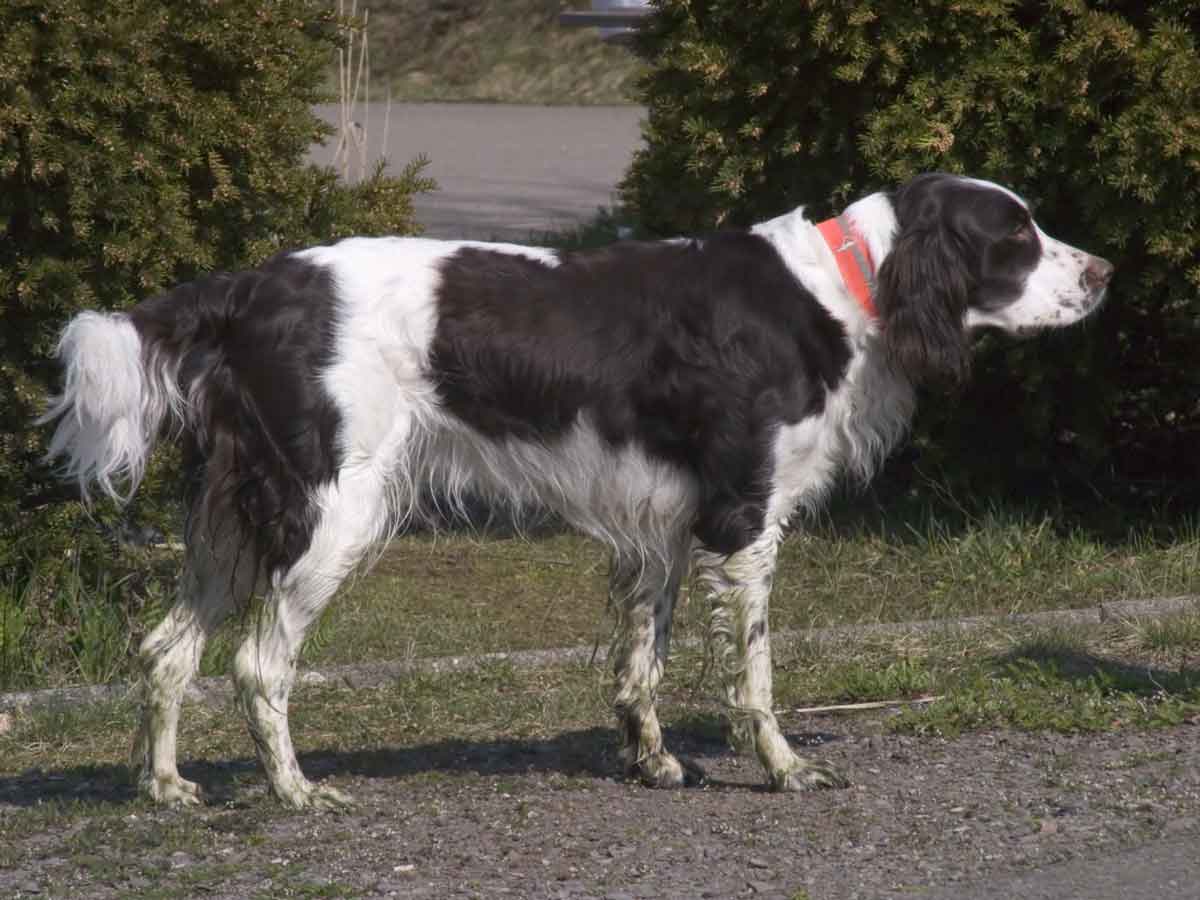
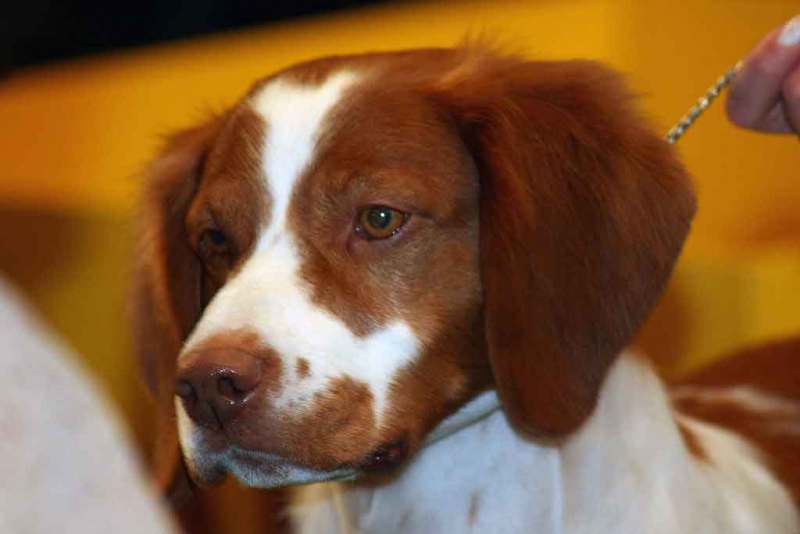
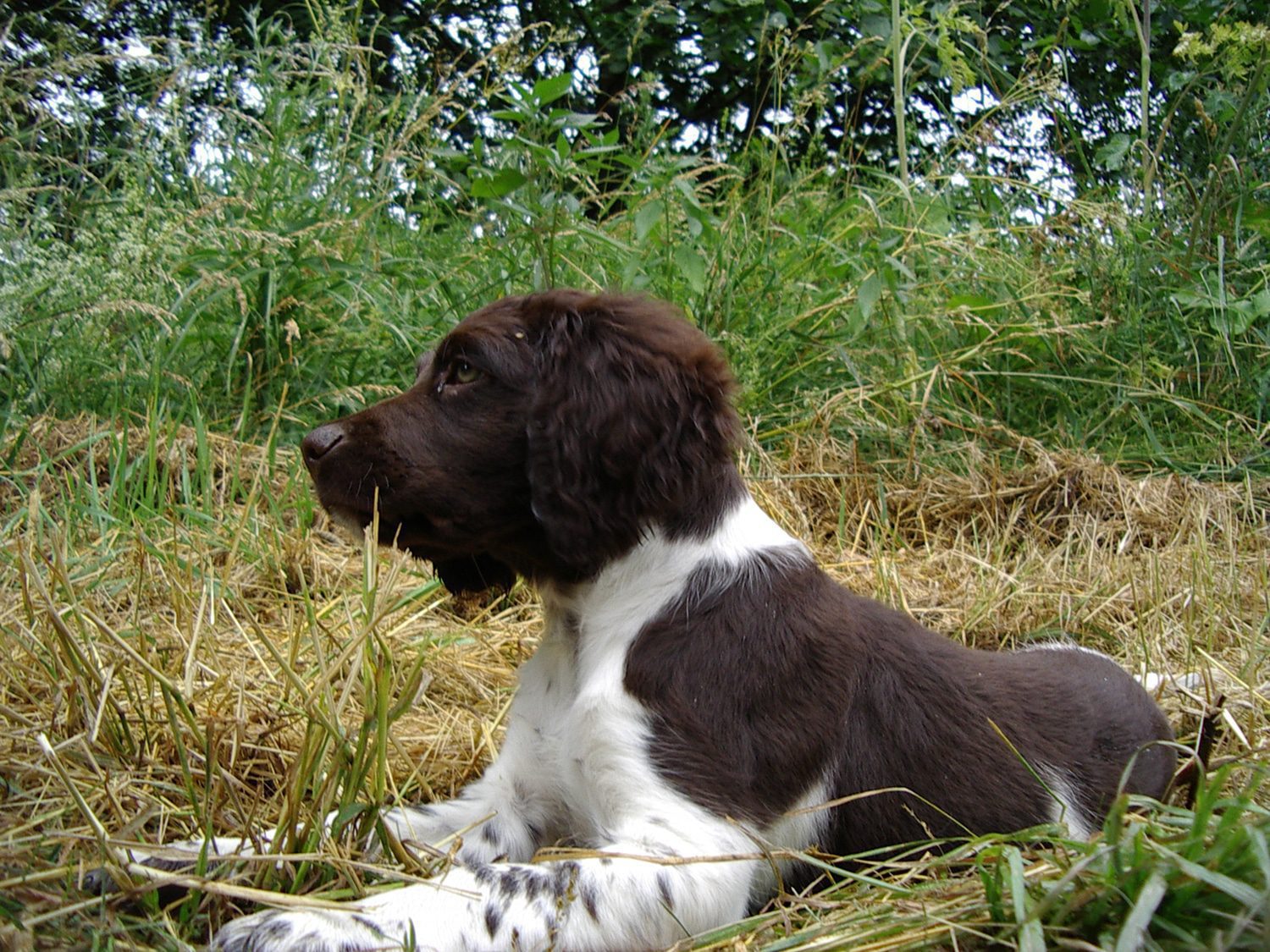
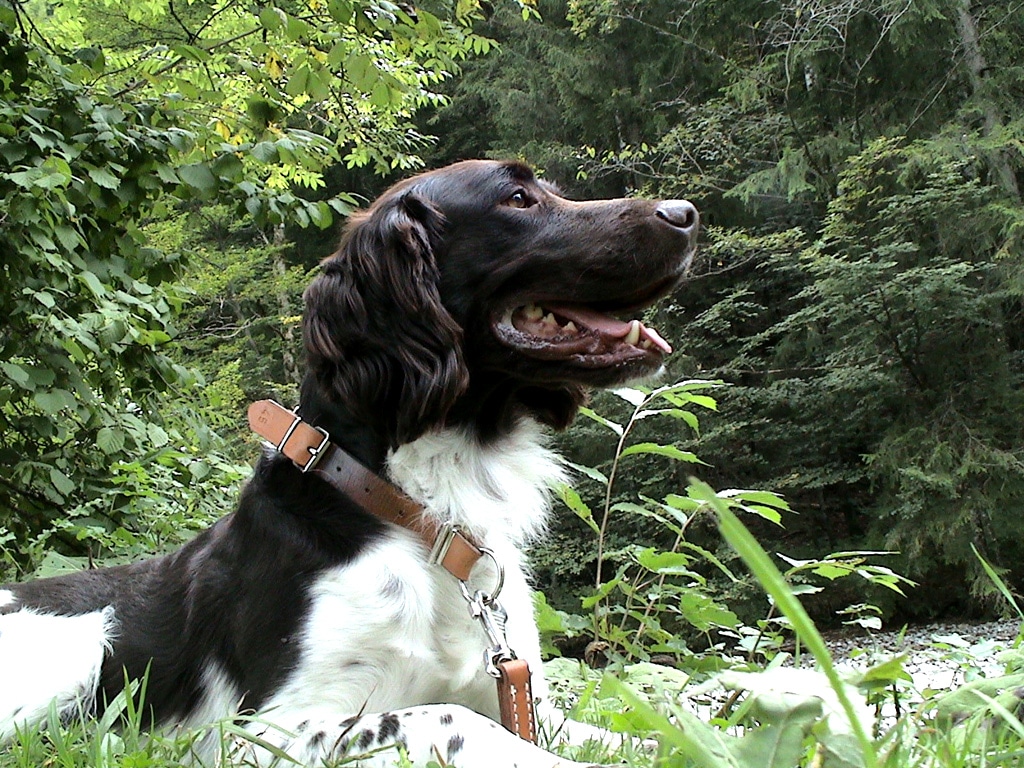
Photo: "Perdiguero Frisรณn" by https://en.wikipedia.org/wiki/File:Stabyhounlayingingrass.jpg

Physical characteristics

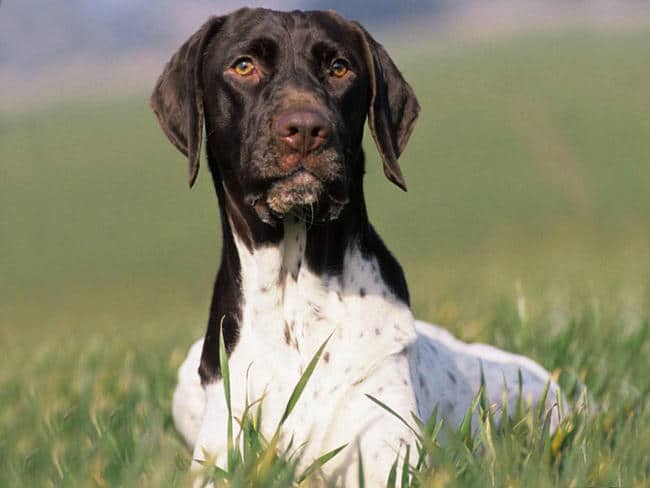
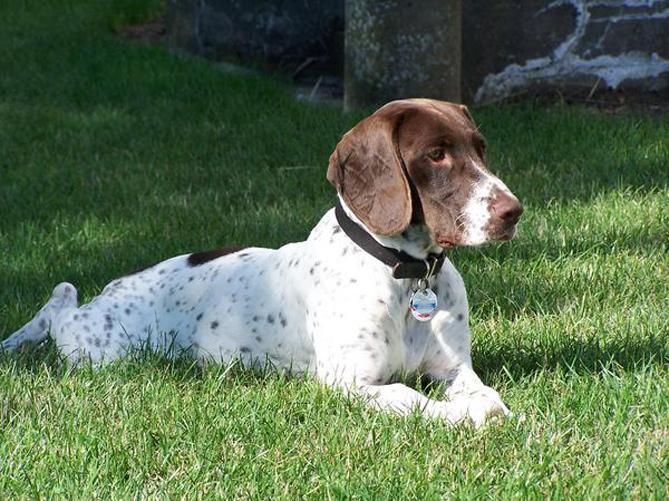
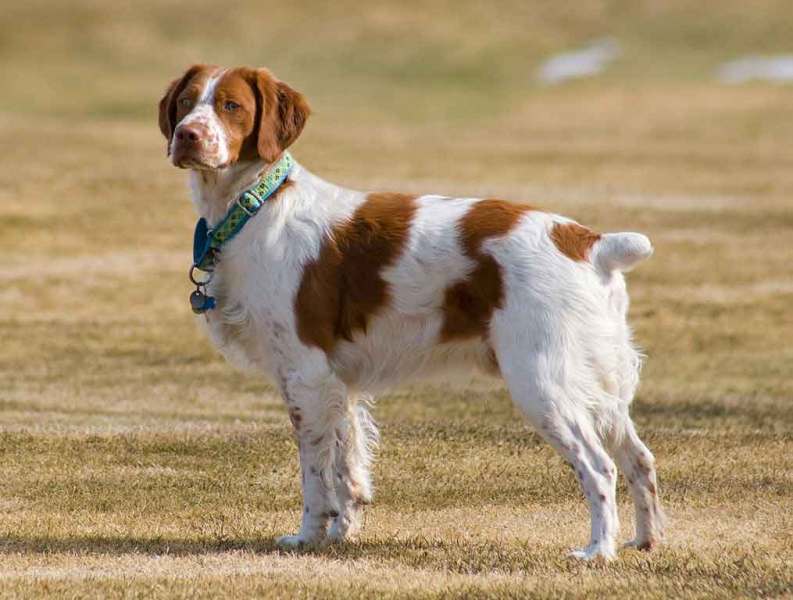
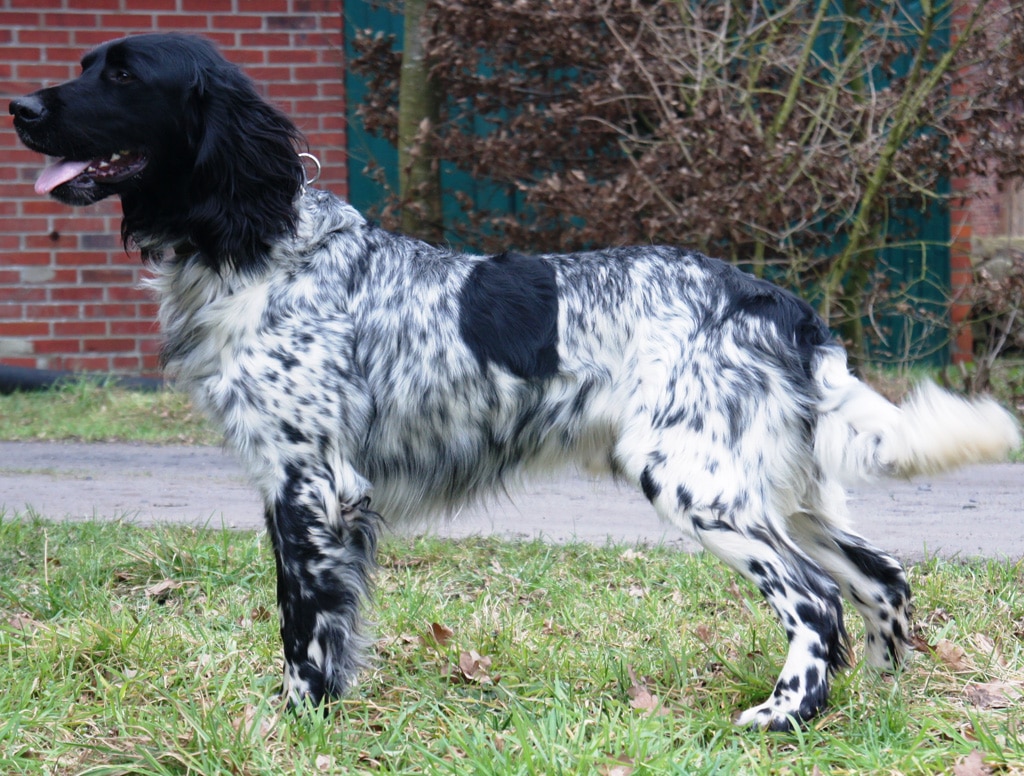
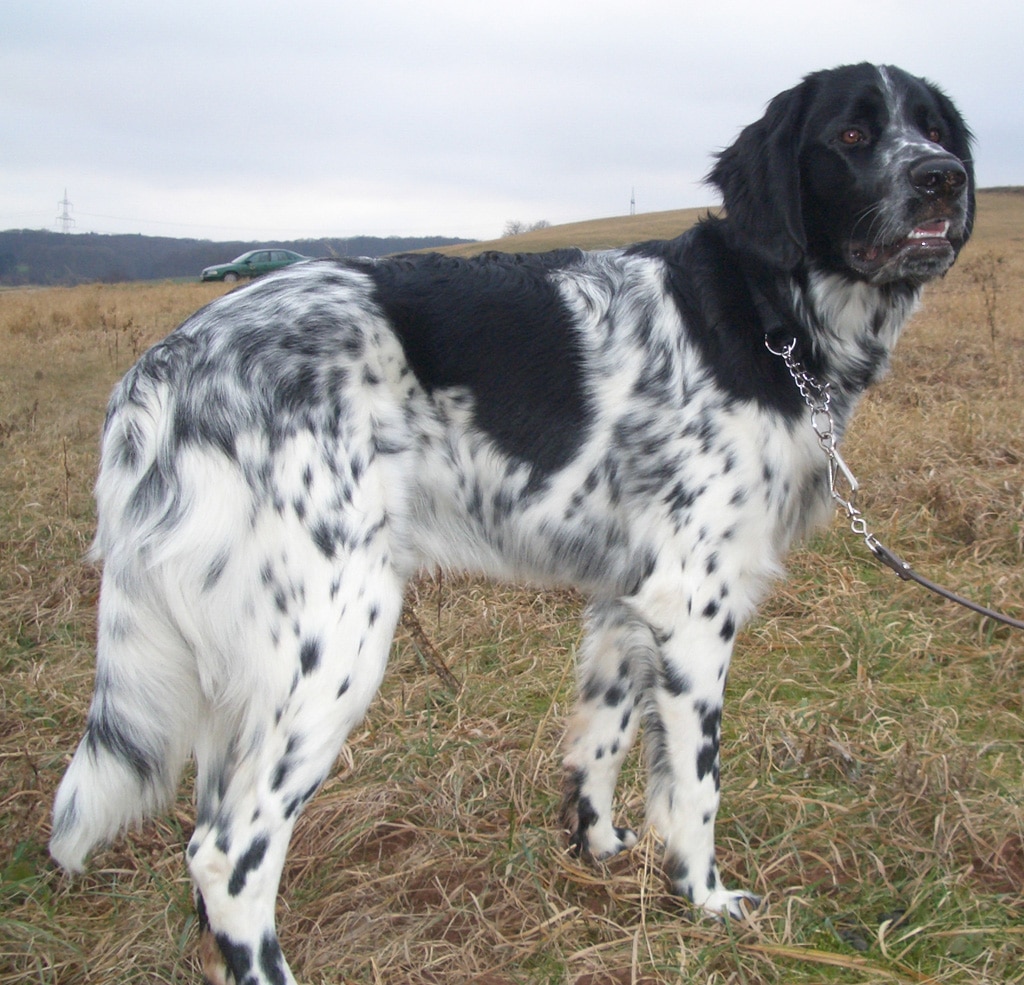
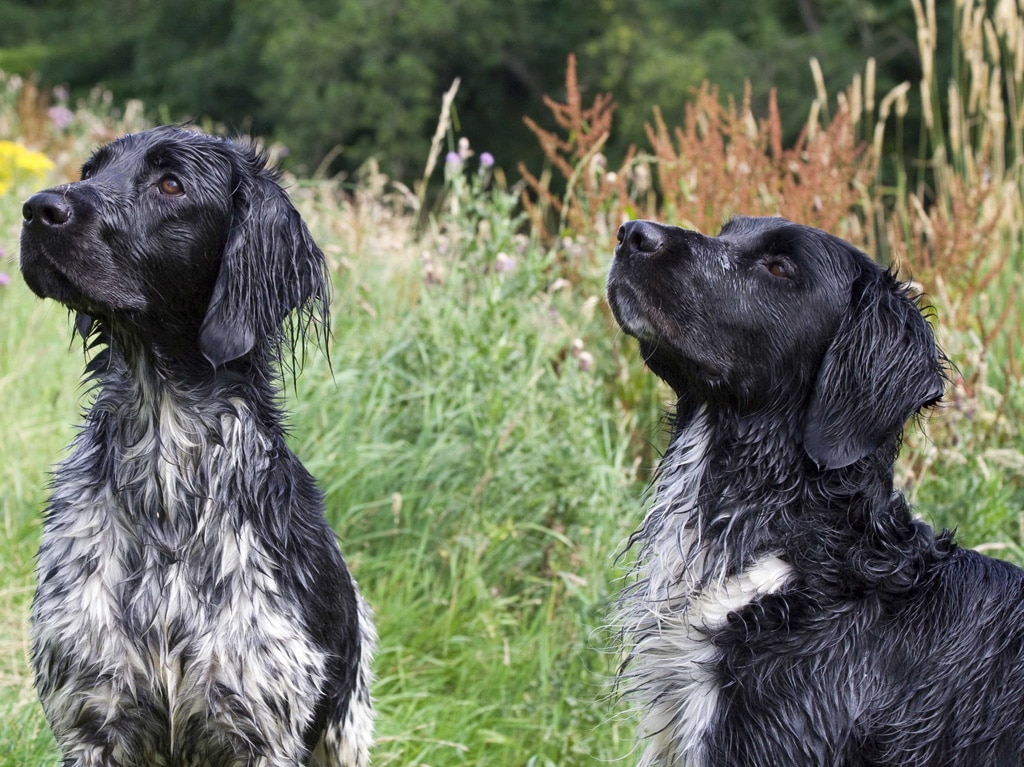
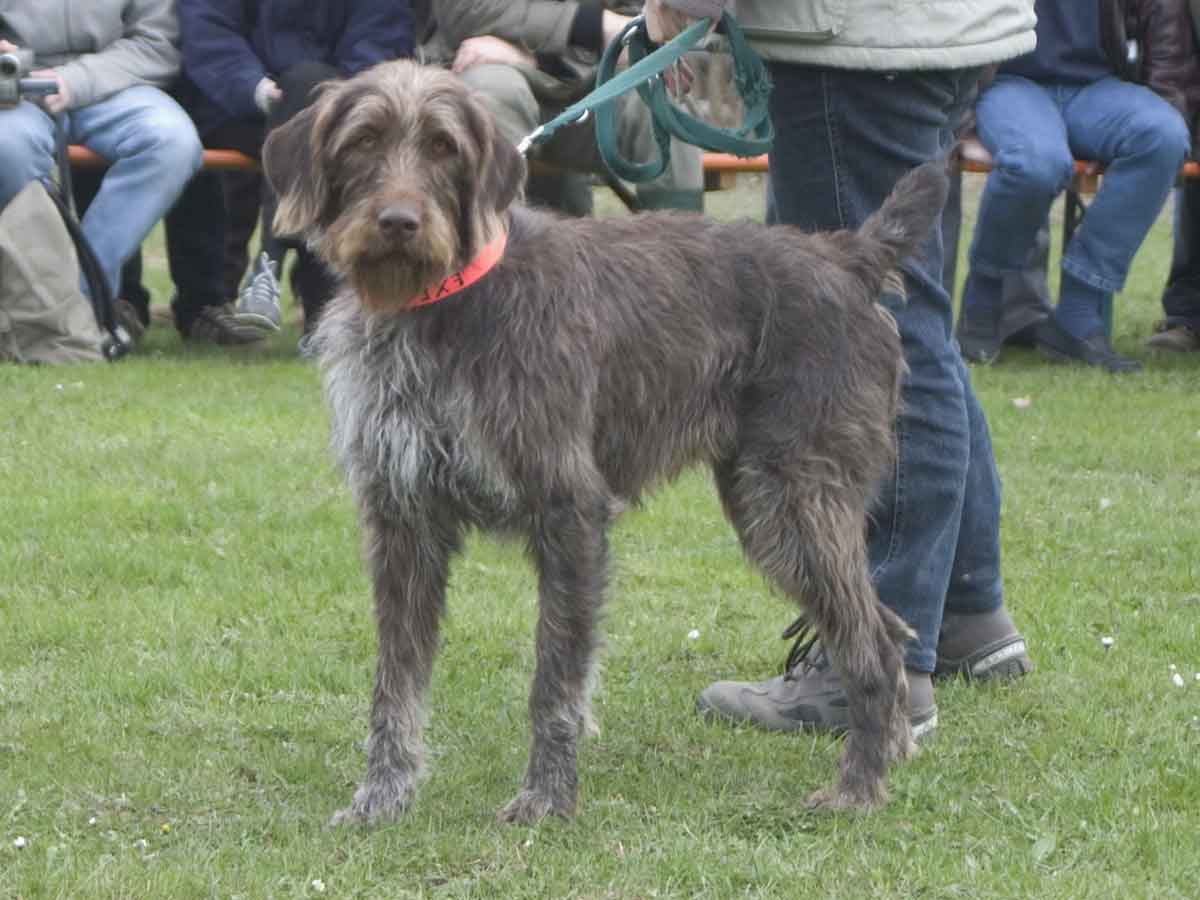
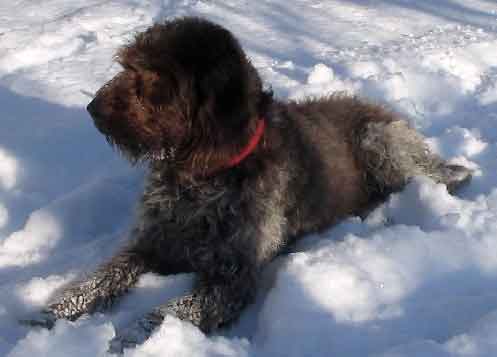
The Stabyhoun has a robust complexion and beautiful black fur, brown or orange, sometimes with white markings. The straight hair is of medium length, smooth and silky to the touch. They are medium-sized dogs.

Height and weight

    Male size: Of 53 to 53 cm.

    female size: Of 50 to 50 cm.

    Male weight: Of 15 to 20 kg

    female weight: Of 14 to 20 kg

Character and skills

If you are lucky enough to meet a Stabyhoun, you will surely appreciate his docile character. Calm and patient, they are intelligent dogs that can sometimes be stubborn. Extremely patient with children and other animals, this breed is, with the proper education, both obedient and loyal to its owner. Although the Stabyhoun has a calm temperament on the inside, requires a lot of exercise and physical activity.

They are distrustful of strangers, but they are not aggressive by nature. His education is easy to work with because he is obedient in nature. But, it must be started from its first months with benevolent and consistent methods.

The Stabyhoun he is a dog very close to his master, so you find it hard to bear the loneliness. Periods of loneliness can cause anxiety and lead to behavioral disorders such as destruction or barking. He is also a loud dog that barks regularly., which can lead to neighborhood problems.

With his hunting instinct he can be a fugitive to follow a trail, if your property is not properly fenced.

Health

The Stabyhoun It is a strong and robust dog that is not affected by any particular pathology.. But, fear heat and should not stay in a shady spot during a heat wave, as you are at risk of severe heat stroke.

Grooming

The Stabyhoun it is a resistant dog that does not require much maintenance. Its coat should be brushed regularly to avoid knots.

As for your eyes and ears, they must be cleaned regularly, especially if it is a dog that lives abroad.

Characteristics "Stabyhoun"

Coexistence is important that you have with your new friend. Before considering the acquisition of a dog of the breed "Stabyhoun" you know certain factors. Not all breeds of dogs are apt to live in an apartment, you must take into account his character, their need for exercise, their interaction with other pets, their care and if you have small children, their level of tolerance towards them.

Adaptation โ“˜

3,0 of 5 stars (based on 1 review)

friendly dog โ€‹โ€‹โ“˜

3,0 of 5 stars (based on 1 review)

hair loss โ“˜

4,0 of 5 stars (based on 1 review)

Affection level โ“˜

5,0 of 5 stars (based on 1 review)

Need for exercise โ“˜

4,0 of 5 stars (based on 1 review)

Social need โ“˜

3,0 of 5 stars (based on 1 review)

Home โ“˜

3,0 of 5 stars (based on 1 review)

Toilet โ“˜

2,0 of 5 stars (based on 1 review)

Friendly with strangers โ“˜

2,0 of 5 stars (based on 1 review)

barking โ“˜

4,0 of 5 stars (based on 1 review)

Health โ“˜

4,0 of 5 stars (based on 1 review)

Territorial โ“˜

2,0 of 5 stars (based on 1 review)

Cat friendly โ“˜

2,0 of 5 stars (based on 1 review)

Intelligence โ“˜

4,0 of 5 stars (based on 1 review)

Versatility โ“˜

4,0 of 5 stars (based on 1 review)

Child friendly โ“˜

5,0 of 5 stars (based on 1 review)

Surveillance โ“˜

2,0 of 5 stars (based on 1 review)

joy โ“˜

5,0 of 5 stars (based on 1 review)

Images "Stabyhoun"

Photos:

1 – "Perdiguero Frisรณn" by https://commons.wikimedia.org/wiki/File:Stabyhoun.jpg
2 – 10 month old adolescent Stabij by Molliever, CC BY-SA 4.0, via Wikimedia Commons
3 – A picture of a stabyhoun wetterhoun pup for the stabyhoun wiki page by Daisai Gaming, CC BY-SA 4.0, via Wikimedia Commons
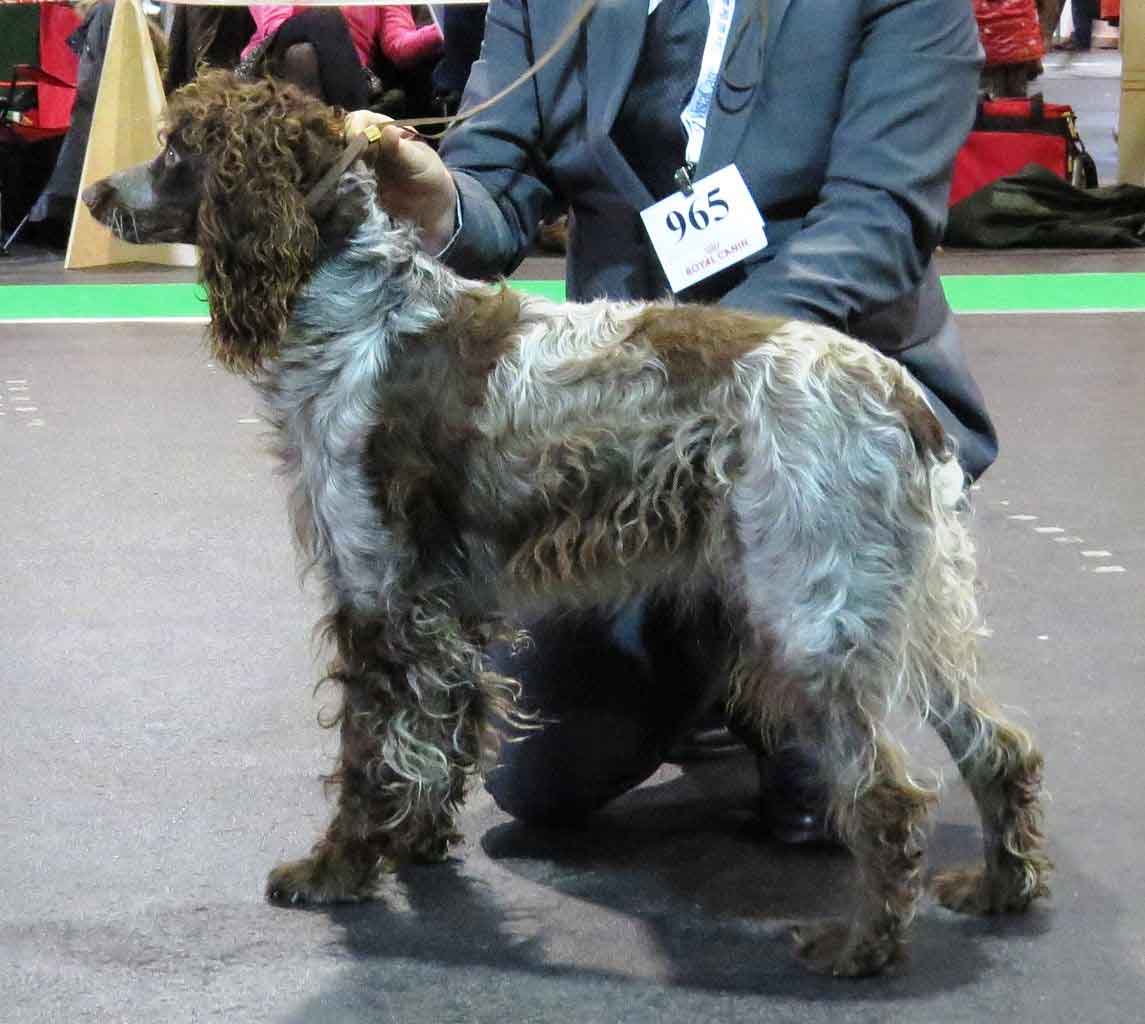
4 – Stabijs – world dog show 2010 by MJ Klaver
5 – "Perdiguero Frisรณn" by https://en.wikipedia.org/wiki/File:Binky_Stabyhoun.jpg
6 – "Perdiguero Frisรณn" by https://commons.wikimedia.org/wiki/File:Stabyhoun_with_11_puppies.jpg

Videos "Stabyhoun"

Stabyhoun puppy, mum and Welsh Springer Spaniel playing
Working Stabyhoun
Working Stabyhoun

Type and recognitions:

  • FCI CLASSIFICATION:
  • Group :
  • Section : . .

Federations:

  • FCI – Group 7: Pointing Dogs. – Section 1: Continental Pointing Dogs. 1.2: Spaniel type โ“˜
  • AKCHound โ“˜
  • FSSFoundation Stock Service โ“˜
  • UKCGun Dog โ“˜

FCI breed standard "Stabyhoun"

Origin:
Netherlands

Date of publication of the valid original standard:
30.05.1989

Use:

Pointing Dogs.


General appearance:

Pointer dog of normal proportions, long-haired with strong body structure and square shape; He is not clumsy or skinny; the skin does not have folds or double chin; lips are not hanging.

BEHAVIOR AND TEMPERAMENT: He is attached to his master, peaceful and friendly as a house dog; is intelligent, obedient and has the ability to learn; is quiet, alert, without showing falsehood or cunning.


Behavior / temperament:

He is attached to his master, peaceful and friendly as a house dog; is intelligent, obedient and has the ability to learn; is quiet, alert, without showing falsehood or cunning.

Head:

It is lean. Of size well proportioned to the body, it is longer than it is wide; The skull and muzzle have the same length.

Cranial region:
Skull: It is slightly domed; it is not narrow, but it doesn't give the impression of being wide either; its transition towards the cheeks shows a slight convexity.
Depression links (Stop): Bit strong.

facial region:

Truffle: Black in dogs whose basic color is black and brown in dogs whose basic color is orange-brown. The truffle is well developed, not cleft; the Windows are wide open.
Snout: Powerful, gradually thins towards the truffle, without being sharp. Straight and wide nasal cane; Its profile is neither convex nor concave.
Lips: Adherents, not hanging.
Bite / Teeth: Powerful teeth, scissor bite.
Cheeks: Poorly developed.
Eyes: Placed on the horizontal line, medium sized and round; eyelids well adjusted to the eyeball, conjunctiva not visible; They are neither protruding nor sunken. Its color is dark brown in black dogs and brown in dogs whose basic color is brown or orange.. The eyes of birds of prey are punished.
Ears: Quite low insertion. The pinna is so poorly developed that the ears hang flat on the sides of the head without forming a fold.. Ears with a strongly developed pinna are not acceptable., that do not fold directly at their insertion but rather lower and therefore do not hang flat on the sides of the head. The ears are of medium length and shaped like a bricklayer's trowel.. The hair covering the ears is typical of the breed; it is long at the base of the ear and gradually shortens downwards., so that in the lower third they are covered with short hair. Long hairs are straight; tolerates slightly wavy hair; curly hair is unacceptable.

Neck:

Short and rounded; the head being normally carried low, The neck forms an obtuse angle with the upper line of the back.. The neck is slightly arched, and does not have lax skin or double chin.

Body:

Strong.

Back: Straight, quite long.
Loins: Powerful.
Rump: Little inclined.
Breast : Seen from the front, it's quite wide. It's wider than it is deep, so that the front members are well separated from each other. The non-keel-shaped parapet reaches only to the elbows and no lower. Ribs well arched and well developed towards the back.
Belly: Only slightly retracted.

Tail:

Length reaches to hock joint. Not high insertion. The tail is usually down, although the last third of the tail can turn upward at rest or standing. During movement, the tail rises, but should never be placed above the back or in a spiral. The tail is round and covered to the tip with long, dense hair., without curls, waves or waves. On the other hand, the tail has a bushy structure, so the hair around is abundantly long and thick, giving a full and generous appearance

Tips

PREVIOUS MEMBERS
Shoulder: Scapulae very close to the trunk and oblique, with good angulation of the scapulohumeral joint.
Forearm: Strong and straight.
Metacarpus: Straight, is not inclined.
Previous feet: The fingers are well developed and arched; It doesn't have cat's or hare's feet; hard pads.
 
LATER MEMBERS: Strong, with good angulations in all joints.
Leg: not very long.
Hock: placed low.
Metatarsus: Short.
Hind feet: Round with well-developed pads.

Movement:

Powerful, harmonious, with good momentum and covering a lot of ground. Seen from the front, the friesian retriever moves a little open. During movement, head stays low. The tail is placed above the top line with a slight curve during movement.

Mantle

HAIR: The hair on the entire body is long and straight, although it may be slightly wavy in the rump region.
The hair that covers the head is short. On the back of the forelimbs and on the pants, the hair is abundant and dense, thicker than in the form of feathers. The hind limbs are covered with long hair.. The presence of wavy hair indicates a crossing: therefore, dogs with such a coat should not be recognized as Stabyhoun.

COLOR: Negro, brown or orange with white markings; Mottling or splashing may appear on the white part..


Size and weight:

  • Ideal size for males 53 cm.
  • Ideal size in females 50 cm.

It's allowed 2 cm above or below the ideal size. Racial type is more important than exact measurements.

Weight:

  • Males: 22-27 kg.
  • females: 18-23 kg.


Fouls:

Any deviation from the aforementioned criteria is considered a fault and the severity of this is considered with respect to the degree of deviation from the standard and its consequences on the health and well-being of the dog and the dog's ability to perform its traditional task..

โ€ข Level bite.
โ€ข Head too heavy, skull too wide or round.
โ€ข Weak back or feet.
โ€ข Lack of sexual dimorphism.
โ€ข Curled tail or tail carried over the back.
โ€ข Strongly inclined pelvis.

SERIOUS FAULTS:

โ€ข Spiral tail.
โ€ข Limbs too far below the body when standing or moving.
โ€ข Elegant or graceful appearance.
โ€ข Short legs.
โ€ข Narrow forehead and flat ribs.

FALTAS DESCALIFICANTES:

โ€ข Aggressiveness or extreme shyness.
โ€ข Any dog โ€‹โ€‹showing clear signs of physical or behavioral abnormalities.
โ€ข Atypical, without racial type.
โ€ข Poorly attached eyelids.
โ€ข Upper or lower prognathism or twisted mouth.
โ€ข Too many missing teeth.
โ€ข Twisted tail.
โ€ข Very curly hair (astracan).
โ€ข Any other color or the absence of white.


N.B.:

โ€ข Males must have two normal-appearing testicles fully descended into the scrotum..
โ€ข Only functionally and clinically healthy dogs, with the typical conformation of the breed, should be used for parenting.

Source: F.C.I - International Cynological Federation

Alternative names:

1. Stabij, Beike, Stabijhoun, Fryske Stabij (English).
2. Stabyhoun (French).
3. Stabijhoun (German).
4. (em alemรฃo: stabyhoun) (Portuguese).
5. Perro de muestra frisรณn, Perro de muestra de Frisia (espaรฑol).

โ–ท The world of Pets: Dogs, cats, birds, reptiles, amphibians

German Shorthaired Pointer
Alemania FCI 119 . Braque Type

Braco Alemรกn de Pelo Corto

A strong hunting instinct is the most important characteristic of the German Shorthaired Pointer

Content

History

The German Shorthaired Pointer (Deutscher Kurzhaariger Vorstehhund, It is a breed of dog developed in the 1800 in Germany, used for hunting.

The exact origin of the German Shorthaired it is not clear. In accordance with the American Kennel Club, it is likely that the German Shorthaired Pointer is a descendant of a race known as German Bird Dog, which in turn is connected with the Old Spanish Pointer introduced in Germany in the 17TH century.

It is also likely that within their ancestors are German dogs and other tracking dogs, as the English Pointer. But, as the first studbook was not created until 1870, It is impossible to identify all the dogs that were needed to create this race.

Physical characteristics

It is a versatile dog, without a doubt the most complete and efficient for hunting breed, thanks to their physical qualities and innate aptitudes, Standing out mainly in:

  • Find and display the birds elegantly.
  • Collect both land and water without distinguishing between the hair and feather.
  • It is the best companion of the bird of prey and the most characteristic in the art of falconry..
  • Prove your courage facing animals as temperamental and determined as the wild boar.
  • Able to follow a trail of blood as well as a Bloodhound.
  • In the home is the faithful, patient and excellent companion of children.

The breed emerged in the 19th century due to the need for a versatile dog, that serve for the various forms of hunting, instead of having a different race for each specialty. With the hunting characteristics set, German breeders began the work of selecting dogs for its kind, and arriving at the end of the 19th century to the first racial standard, which over time, It has undergone changes to adapt to the natural evolution of forms of hunting.

Its main characteristics are:

  • A special smell.
  • A persistent and effective search.
  • Great passion for work in water.
  • Elegant style.
  • Great physical resistance.
  • The courage to face large and aggressive animals without hesitation.
  • Higher than normal canine intelligence (ranks 17 in Stanley Coren's list: "The Intelligence of Dogs").
  • The males measure of 62 to 66 cm and females in 58 to 63 cm., and weigh in 25 to 30 Kg.
  • Coupled with this and its easy training, It is currently one of the most prized hunting worldwide breeds.

The sample in the German Shorthaired Pointer it is par excellence a moment of great beauty and emotion, a true expression of the hunting art. It is the culmination of an extensive search, in which the dog after traveling many kilometers, among bushes, thorns, slopes, ravines or immense Plains, Locate the bird carried by their emanations, this makes the German Shorthaired Pointer the best and inseparable companion of the versatile hunter.

The layer of German Shorthaired Pointer, it is short and flat with a dense coat protected by stiff hairs to make the coat waterproof and allow the dog to keep warm in cold climates. The color can be dark brown which in English is defined as "liver" color (incorrectly as "chocolate" or "chestnut"), black (Despite any area of black it is grounds for disqualification in American Kennel Club), either liver and black or black and white.

Commonly the head is a solid or almost solid color with the body being mottled or "marked" with liver and white., sometimes with large solid-colored spots called "saddle".

Although the standard of German Shorthaired Pointer allows a slightly sandy coloring (โ€œMarca Gelberโ€) in the extremities, This color is rare, any yellow coloration in contests of sample is by the AKC and the CKC, and the dog is disqualified.

The German Shorthaired Pointer has a longer life expectancy than many breeds of the same size, generally they live between 12 and 14 years, There have been cases of copies that have lived in 16 to 18 years.

The characteristic coloration of German Shorthaired Pointer provides you with unrivaled camouflage in winter seasons. To be standing next to dead trees and in the dirty snow, the mixture of the colors of Brown layer, black and white makes the dog bit visible.

Character and skills

The race generally along well with other dogs, Although females seem to be much more dominant in the interaction. A strong hunting instinct is the most important characteristic of this breed., It is not always good if you share a home with other small pets such as cats and rabbits.

But with a proper training, the German Shorthaired Pointer, You will learn to distinguish what is the prey and what is not, which is why, You can live in a friendly manner with other family pets.

The German Shorthaired Pointer needs a good daily dose of exercise, since it is an energetic animal and needs to spend that accumulated energy, if he is not given physical activity he will seem hyperactive and may develop destructive tendencies.

It is good to take into account that this race is not a pet suitable for a home of sedentary or owners without experience.

The German Shorthaired Pointer he is good with children, but be careful because the breed can be a little gross, especially when they are puppies.

Characteristics "German Shorthaired Pointer"

Coexistence is important that you have with your new friend. Before considering the acquisition of a dog of the breed "German Shorthaired Pointer" you know certain factors. Not all breeds of dogs are apt to live in an apartment, you must take into account his character, their need for exercise, their interaction with other pets, their care and if you have small children, their level of tolerance towards them.

Adaptation โ“˜

3,0 of 5 stars (based on 1 review)

friendly dog โ€‹โ€‹โ“˜

4,0 of 5 stars (based on 1 review)

hair loss โ“˜

3,0 of 5 stars (based on 1 review)

Affection level โ“˜

4,0 of 5 stars (based on 1 review)

Need for exercise โ“˜

5,0 of 5 stars (based on 1 review)

Social need โ“˜

4,0 of 5 stars (based on 1 review)

Home โ“˜

1,0 of 5 stars (based on 1 review)

Toilet โ“˜

2,0 of 5 stars (based on 1 review)

Friendly with strangers โ“˜

4,0 of 5 stars (based on 1 review)

barking โ“˜

3,0 of 5 stars (based on 1 review)

Health โ“˜

4,0 of 5 stars (based on 1 review)

Territorial โ“˜

3,0 of 5 stars (based on 1 review)

Cat friendly โ“˜

2,0 of 5 stars (based on 1 review)

Intelligence โ“˜

4,0 of 5 stars (based on 1 review)

Versatility โ“˜

3,0 of 5 stars (based on 1 review)

Child friendly โ“˜

4,0 of 5 stars (based on 1 review)

Surveillance โ“˜

2,0 of 5 stars (based on 1 review)

joy โ“˜

5,0 of 5 stars (based on 1 review)

Photos ยซGerman Shorthaired Pointerยป

โ€œGerman Shorthaired Pointerโ€ Videos

Type and recognitions:

  • FCI CLASSIFICATION:
  • Group :
  • Section : . .

Federations:

FCI โ“˜, AKC โ“˜, ANKC โ“˜, CKC โ“˜, โ€‹KC โ“˜, NZKC โ“˜, UKC โ“˜

FCI breed standard "German Shorthaired Pointer"

Origin:
Germany

Date of publication of the valid original standard:
25.10.2000

Use:

Versatile hunting dog.


General appearance:

It is a noble and harmonious dog, whose constitution indicates strength, endurance and speed. His upright bearing, its fluid lines, his lean head, its good tail bearing, its stiff and shiny coat, Just as its broad and harmonious movements highlight its nobility..

IMPORTANT PROPORTIONS: The length of the trunk should slightly exceed the height of the withers.


Behavior / temperament:

Energetic, balanced, reliable and submissive, nor nervous, nor shy, nor aggressive.

Head:

Enjuta, marked, neither too light nor too heavy; corresponding in length and volume to the shape of the body and sex.

Cranial region:
  • Skull: Wide enough, slightly domed, little pronounced occipital process, not very deep frontal furrow, visibly well-developed brow ridges.
  • Depression links (Stop): Moderately developed.

facial region:

  • Truffle: A little outstanding, with sufficiently open nostrils, wide and mobile. Basically brown, but black in black or black-roan dogs. A truffle with spots or color Meat is allowed only in dogs whose coat has a white background.
  • Snout: It is long, width, deep and strong to facilitate the correct collection of the prey. The nasal cannula shows a slight convexity in profile., which can range from a nobly arched shape to a slight elevation in relation to the horizontal, all of this much more accentuated in males. A straight nose cane, equally admissible, is less appreciated. The concave nasal cannula constitutes a serious fault.
  • Lips: Adherents, not too saggy, well pigmented. From the truffle, the lips fall almost vertically to the point where they separate and then extend with a slight curve to the moderately marked corners of the lips.
  • Jaws / Teeth: The jaws must be robust with perfect teeth, regular and complete, scissor articulated, that is to say that the upper incisors must cover the lower incisors in close contact. Should have 42 healthy teeth placed vertically in the jaws.
  • Cheeks: Strong, with good musculature.

EYES: Medium-sized, no bumps, or sunk. The ideal color is brown. The eyelids should be well adjusted.

EARS: Of average length, high and wide implantation, smooth, they hang flat and close to the sides of the head, with rounded tips. Not very meaty, not too thin. forward positions, they arrive near the corner of the mouth.

Neck:

Of length proportional to the body, progressively widening towards the shoulders. The neck is very muscular and slightly arched.. The skin of the throat rigorously adherent to it.

Body:

  • top line: Straight and slightly descending. Cross: Marked.
  • Back: Strong, with good musculature. The spinous processes must be covered by musculature.
  • Pork loin: Short, width, muscular, straight or slightly arched. The solid and compact dorso-lumbar transition.
  • Rump: Wide and long enough, without ending abruptly, but leaning only slightly towards the tail. Well muscled.
  • Chest: Deeper than wide, with well-marked parapet; the sternum reaching back as far as possible. The sternum and elbow joint should be placed at the same height. Well arched ribs, neither flattened nor barrel-shaped. Posterior ribs well descending.
  • bottom line: Enjuta, rising slightly with a graceful curve back.

Tail:

High implementation, strong at insertion with gradual thinning to the tip, medium length. For use in hunting it should be cut approximately in half. At rest it falls; in movement he carries it horizontally and not too much above the line of the back; should never be considerably bent. (In countries where legislation prohibits tail docking, it can remain in its natural form. It should reach up to the hock and be carried horizontally or slightly saber-shaped.).

Tips

PREVIOUS MEMBERS:

  • General appearance: Viewed from the front they are straight and parallel; in profile they can be seen well placed below the body.
  • Shoulder: Oblique and well attached scapulae, leaning back. Vigorous and tight muscles. Good angulation between the scapula and the arm.
  • Arm: as long as possible, with good muscles that are not thick.
  • Elbows: Close to the body but not too tight; They do not present outward or inward deviations; They are placed well back. Proper angulation between the arm and forearm. Forearm: Straight, with enough muscles. Strong bones, but not thick.
  • Articulation of the carpus: Strong.
  • Metacarpus: Minimum angulation between the forearm and the metacarpus, never in a vertical position.
  • Previous feet: They can be round or spoon-shaped., with fingers well together and sufficiently arched. Strong nails. Hard, durable pads. Their positions are parallel, without deviations outwards or inwards, both at rest and in motion.

LATER MEMBERS:

  • General appearance: Seen from behind they are straight and parallel, with good angles. Your bones are strong.
  • Thighs: Long, wide and muscular. With good angulation between the hip and thigh.
  • Knees: Powerful, with good angulation between thigh and leg. Legs: long, muscular and sinewy. Good angulation between the leg and the metatarsal.
  • Warm-foot joint (Hock): Powerful. Metatarsus: Strong and upright.
  • Hind feet: According to the previous.

Movement:

Spacious with a lot of drive, with a corresponding stride. Front and hind limbs straight and parallel. Stand upright. Amble is not desirable.

Mantle

SKIN: Well stuck, without forming folds.

Fur: short and tight, It should be rough and hard to the touch. On the head and ears it should be thinner and shorter. Not visibly longer at the bottom of the tail. It must cover the whole body.

Color:

  • Brown, without stains.
  • Brown with small white spots or mottling on the chest and limbs.
  • Brown roan with brown head; plates or mottled brown.

The basic color of a dog described in this way is neither brown with white nor white with brown., But the coat forms such an intimate mixture of white and brown that it results in a discreet exterior appearance much appreciated for practical use during hunting.. The color is often lighter on the inside of the hind limbs as well as on the tip of the tail..

  • Light brown roan with brown head, plates or mottled brown, the sin plates. In this type of color, the brown hairs are less numerous and the white ones dominate.
  • White, with brown head, with brown plaques or mottling.
  • Black color with the same nuances as brown or roan colors.

    Yellow fire stains are allowed.
    An elongated, striped white spot on the forehead and red lips are allowed..


Size and weight:

Height to the cross:

  • Males: 62 to 66 cm..
  • females: 58 to 63 cm..


Fouls:

Any deviation from the aforementioned criteria is considered as a fault and the severity of this is considered to the degree of the deviation to the standard and its consequences on the health and well-being of the dog..

  • Faults in general construction, insufficiency in the type inherent to the sex.
  • Too short snout.
  • Very heavy lips, or very light.
  • Missing two teeth (PM1 y M3), That is, the four PM1 and the two M3 cannot be missing more than two teeth at most..
  • Eyes too light, raptor eyes (light yellow).
  • Very long ears, or very short, or very heavy, or very narrow insertion, or curled ears.
  • Sagging skin in the throat.
  • Slightly convex back (carp back).
  • Croup too short.
  • Chest too deep.
  • Tail carried too high above the dorsal line or tail very bent.
  • Elbows or feet turned outward or inward. Fingers too open or too closed.
  • Too straight rear angles.
  • Slightly barrel hocks, cow or cerrado.

SERIOUS FAULTS:

  • Heavy general constitution, lymphatic, coarse bones.
  • Stop marked.
  • Flesh-colored or spotted nose (except dogs with white fur).
  • Pointed snout, concave muzzle.
  • Partial or complete pincer bite. (In dogs older than 4 years does not influence its assessment the presence of the so-called age clamp, provided that a German Shorthaired Pointer Club has confirmed the presence of a correct bite at previous shows).
  • Noticeably arched back. Slightly bowed back.
  • Lack of chest depth, little marked parapet. Rib cage too narrow or too wide (in barrel).
  • Elbows turned too far out or in.
  • Loose carpal joint, too relaxed.
  • Metacarpo vertical.
  • Cow or barrel corvejones, both at rest and in motion.
  • Croup and hind limbs too high.
  • Fingers too far apart.
  • Flat feet.
  • walk hard, heavy.

Variations of more than 2 cm at the aforementioned heights of the cross.

FALTAS DESCALIFICANTES:

  • Aggressiveness or extreme shyness.
  • Any dog โ€‹โ€‹showing clear signs of physical or behavioral abnormalities.
  • Severely atypical sexual characteristics.
  • Missing more than two teeth out of the total 4 PM1 y 2 M3. Missing one or more teeth (except PM1 and M3). Teeth that are not visible are considered missing., unless a German Shorthaired Pointer Club has confirmed its presence at a previous show.
  • Upper or lower prognathism. Deviated incisor arch and all transitional forms.
  • Supernumerary teeth or teeth outside the dental line.
  • Harelip, split palate.
  • very loose eyelids, ectropion, entropion. Distichisis (double lash line).
  • Marked lordosis. Deformation of the spine (scoliosis)
  • Deformed rib cage, p. e.g.. "reduced chest".
  • Dewclaws with or without bones.
  • Any lack of character.


N.B.:

Males should have two normal-appearing testicles fully descended into the scrotum..
Only functionally and clinically healthy dogs, with the typical conformation of the breed, should be used for parenting.

The latest changes are in bold.

Source: F.C.I - International Cynological Federation

Alternative names:

1. GSP, DK (English).
2. GSP, DK (French).
3. Deutscher kurzhaariger, Vorstehhund, Deutsch Kurzhaar, Kurzhaar, GSP, DK (German).
4. Pointer alemรฃo, Perdigueiro (Portuguese).
5. GSP, DK (espaรฑol).

โ–ท The world of Pets: Dogs, cats, birds, reptiles, amphibians

Auvergne Pointer
Francia FCI 180 . Braque Type

Auvergne Pointer

Even today, the Auvergne Pointer is most often bred to become a hunting dog.

Content

History

The precise origins of the Auvergne Pointer are not clearly determined. This dog has been around for many years and was most likely developed in Auvergne, more precisely in the Cantal region, in central France.

Already in the seventeenth century, to satisfy your needs, French hunters tried to cross and develop short, smooth-haired Pointer breeds, commonly known as ยซpointersยป (the term "pointerยปIt comes from the vocabulary of hunting and means" aim ").

The Braque Francais is considered his ancestor, but its own origins are uncertain. In any case, It has been proven that it was the origin of the development of different races of Braques developed in all regions of the country, some of which gained in popularity, as the French Pointing Dog - Gascogne type or the French Pointing Dog - Pyrenean type . In Cantal, selective breeding gave rise to Auvergne Pointer.

According to some historians, the Auvergne Pointer is one of the oldest, with the exception of his own Braque Francais. But, contradictory assumptions have been made about it.

According to Jean Servier, former president of the Club of French braques and author of the World Dog Encyclopedia 1971, it is a cross between the Braque Francais, the Gascony type French Pointer and the Pyrenees French Pointer.

On the other hand, according to David Hancock, historian of dog breeds and author of the book The Heritage of the Dog, published in 1990, it is said to come from an imported breed when the Knights of the Order of Malta passed through Auvergne in the 16th century. The soldiers there developed a dog near the Auvergne Pointer, which is said to descend. There is no consensus on this hypothesis, but nevertheless it is accepted by certain organizations such as the Rรฉunion des Amateurs du Braque d’Auvergne (RABA), the official breed club created in 1913.

Although the origins of Auvergne Pointer remain relatively unclear, In any case, most specialists agree that its development dates back to the beginning of the 18th century..

In the early 20th century, almost every, If not all, the Auvergne Pointer they were in france. The breed was relatively rare, although among their owners they were highly appreciated for their hunting qualities, especially for game birds. In fact, the breeding work that led to its development gave it an excellent style and great resistance, allowing you to follow long tracks in forests or dense vegetated terrain. They are also versatile: are able to get, track back, aim and bring the hunt back to its master. So, they can replace several specialized dogs in a particular area on their own. Perhaps its main flaw is its rather slow pace, meaning it works closely with its owner rather than independently, running from one side to the other. This does not take away from the hunting qualities that made it popular in France throughout the 19th century., as well as in the decades leading up to World War II.

During World War II, like many french breeds, the Auvergne Pointer was threatened with extinction. In effect, the conflicts and the occupation of part of the French territory by Germany wreaked havoc on the canine population: many of their representatives were killed or abandoned when their owners no longer had the resources to care for them.

But, at the end of hostilities, an enthusiast, Andrรฉ de Tournay, managed to locate a little more than 20 specimens in different parts of the country. They were at the origin of various bloodlines and therefore played an essential role in the renewal of the breed..

The postwar rebirth of the breed by Mr.. de Tournay led to his recognition in 1955 by the Fรฉdรฉration Cynologique Internationale (FCI), that coordinates the official organizations of more than one hundred countries – among them the Sociรฉtรฉ Royale Saint-Hubert (SRSH) Belgian, the Swiss Kennel Club (SCS) y the Sociรฉtรฉ Centrale Canine (SCC) french. But, the latter had taken the initiative to recognize the Auvergne Braque already in 1913.

The prestigious and influential British Kennel Club took much longer to do the same, since he had to wait until 2016.

In 1987, a first article on this breed of dog was published in the American magazine Gun Dog Magazine. But, we don't know exactly when the first ones were imported Auvergne Pointer to the United States. In any case, they were probably delayed and limited in number. In 2016, a new article was published in the same magazine on the investigation of the origins of the establishment of this dog in the country, after fans surveyed Nelson Hooe, one of the first verified owners in the country.

In any case, the recognition of Auvergne Pointer in North America is still incomplete. Has been recognized by the United Kennel Club (UKC) from 2006, as well as by the Canadian Kennel Club (CKC), but it is not the case of the other reference organization in the United States, the American Kennel Club (AKC).

Photo: Braque_d’auvergne at the World Dog Show in Poznaล„ by Pleple2000, CC BY-SA 3.0, via Wikimedia Commons

Popularity

In France, the popularity of Auvergne Pointer is relatively stable in the long term, and has been at least since the early 1990s. 1970: there are around of 350 entries per year in the French Origin Book (LOF). This number sometimes peaks at around 500 births per year, how was the case, for example, in the mid 70. On the other hand, has never durably fallen below 250.

Although the Auvergne Pointer is relatively popular in his home country, it has only been exported and distributed to some extent outside of France, even in countries bordering France.

In Switzerland, for example, the statistics of the Amicus database show that its population is limited to about thirty individuals.

In Belgium, it is just as discreet, as evidenced by the absence of breeding on the national soil.

The same observation can be made, for example, in Italy, where the statistics of the Ente Nazionale della Cinofilia Italiana (ENCI) show an average of about ten registrations per year during 2010, or again in Spain, where the Royal Canine Society of Spain (RSCE) only count one birth between 2014 and 2019.

There are a handful of farms in Canada and the United States, but the Auvergne Pointer also still hard to find in those countries.

Physical characteristics

The Auvergne Pointer has a robust and noble appearance. His shapely body is well aligned, with a straight constitution – your back, from the tip of the shoulder to the tip of the buttock, is the same length as its front legs – and a long chest that descends to elbow level, midway between the withers and the lower part of the front legs. It is robust, strong but without heaviness, which gives it an elegant look. Their solid constitution gives them the stride and the resistance for which they are highly appreciated in hunting..

Both the front and back legs are straight, well aligned with the body, and the thighs and forearms are well muscled.

The tail stands quite high, carried horizontally and reaches the point of the hock. It can also be shortened at birth, and then barely exceeds 15 to 20 cm.. But, this practice, llamada ยซtail dockingยป, It is banned in many countries, including France, Belgium, Switzerland and Quebec.

The head of the Auvergne Pointer is well balanced. Seen from the front, the muzzle is square and its length is equal to or slightly less than that of the skull. Finish off with a pretty strong black nose, which dominates the solid jaws of equal length. It also, the upper lip covers the lower.

Positioned slightly toward the back of the skull, the ears are droopy, flexible and with a slightly satin texture.

The eyes are dark hazel, oval and quite large. They give this dog an expressive look, frank and gentle.

The fur of Auvergne Pointer consists of a sparse undercoat and short, smooth topcoat with a glossy appearance that is softer than other Braques. It is mottled black or grayish white, more or less present. The head is black, but the muzzle may have the same white markings as the body – a white border may also be present on the top of the skull, prolonging the color of the muzzle. Black fur can also tend to be blue, which is why these dogs are rarely called Auvergne Pointer blue.

There are also charcoal-colored dogs. But, this variety is rare and is not recognized by the breed standard.

Sexual dimorphism is not very pronounced in these dogs: the male is certainly on average a few centimeters taller than the female, but it's not particularly massive.

Character and skills

Even today, the Auvergne Pointer is most often bred to become a hunting dog. But, his affectionate character, Gentile, patient and smart also makes them great pets, and they are becoming more and more popular as such. In fact, fit perfectly into family life, they usually try to please their humans and are very loyal to them.

They are especially fond of children of all ages and are affectionate and playful provided they are not excessively boisterous. But, it should never be forgotten that a dog of any breed should never be left alone with a small child without adult supervision.

The downside of being so close to your family is that you cannot tolerate loneliness and need to be in the company of humans as often as possible.. If left alone for too long, can become a destructive or particularly loud reminder of your presence. No need to say, therefore, which does not suit people who are away for whole days or more. The close bond he has with his teachers also makes him very sensitive to reprimands and he is easily affected by possible punishments..

It is not only the humans in his family that he Auvergne Pointer inclines to appreciate. In effect, even if at first sight he is shy with strangers, quickly treats them like new friends, especially since it is totally devoid of aggression. Ready to greet newcomers with affection, may even tend to follow an intruder instead of defending your home or territory, which makes him a poor caretaker. But, is very capable of sounding the alarm when he hears something unusual.

In any case, He is not one of those who barks from morning to night, expressing yourself only when you have a good reason to do so: to raise the alarm, to express boredom, to seek attention, or to express any anxiety.

Sharing your home with a partner is a great way to reduce the risk of you suffering from the absence of your masters. In fact, such cohabitation generally goes very well, and he appreciates not living alone.
On the other hand, his hunting instinct is too ingrained in him to consider the possibility of peacefully cohabiting with another pet smaller than himself, like a bird, a rodent or even a cat: unless you were raised with him from a young age, chances are good that one day or another I'll end up attacking him. This character trait also means that he is best kept on a leash when going out to places where he is very likely to meet small animals., and where it would be dangerous for him to pursue them.

This is all the more true as it does not lack energy, to the point that you need to spend at least an hour a day to be well on your legs and on your head. Your resistance, However, allows you to go much further, since it is capable of chasing a prey for miles. So, it is ideal to plan long walks that include times when you can run freely and safely, especially if you don't have a chance to hunt. In any case, this dog is perfectly suitable for an active owner who likes to jog, cycling or hiking, and he would like nothing more than to take his pet with him – provided that it is kept on a leash when necessary.

Another great way to allow him to expend his energy is to train him for one or more dog sports.. Their intelligence and willingness to cooperate are particularly well expressed in agility and obedience tests.. More broadly, imply that it is quite easy to train him for all kinds of activities and teach him different tasks.

By the way, if your pilgrimages take you to pass near a water space where you can swim safely, She loves water – he is even a good swimmer – and generally appreciates taking a dip as soon as you get a chance to.

In any case, its high level of activity makes apartment living unsuitable for the Auvergne Pointer. Even a house with a small yard probably wouldn't be enough to make him happy.: the ideal environment for him is clearly a house with a large fenced garden, although this cannot replace long daily walks to satisfy your need for exercise.

Education

The Auvergne Pointer is known for his intelligence and the sweetness of his temperament. He is also eager to please his owners, so it reacts positively to training: learns quickly and is generally an easy dog รขโ‚ฌโ€นรขโ‚ฌโ€นto train.

But, it is important to use the right methods. In fact, its sensitivity means that the use of coercion or even punishment is strongly discouraged: would have every chance of undermining the trust that you normally place in your beloved master. On the other hand, positive dog training methods, based on repetition, the gratification and rewards, are very effective in taking full advantage of the great potential of this animal.

In fact, its obedient and cooperative nature makes it not difficult to train it for hunting, sports with dogs or any other task. This is all the more true since he is always happy to share activities with his master: unlike many races, prefers to work in complicity with his master rather than independently. So, It is an ideal option for those who like to spend time educating their partner and working alongside him, whether for hunting or dog sports. These may include, is an excellent candidate for agility and obedience competitions. Your sense of smell can also be used to track events, but its relatively slow speed limits its potential in this area.

For things to run smoothly, it is important to establish rules at an early age about what you are and are not allowed to do. They are not particularly stubborn by nature, and in fact they are quite obedient, but they can also do it when they are more flexible and responsive: this will make it easier and faster for them to assimilate the rules. It also, assimilates them more easily because they are the same from one day to the next and between the different people in the house: It is not a question of the gentleman authorizing today what the lady forbade the day before.

It also, teaching your dog to stay alone should be one of the priorities in the education of a Auvergne Pointer. In effect, as he likes company and is prone to separation anxiety, must get used to enduring absences from his family without reaching a state of discomfort.

It is also beneficial to start learning to call back soon, so that it can be allowed to unleash when conditions permit, limiting the risk of becoming deaf to his master's commands when he sees or smells a small passing animal.

You also have to be careful to quickly channel your tendency to chew what is within your reach., directing him to the right toys. This avoids the risk of damage and injury to the animal.

Finally, like any dog, we must not wait to offer you quality socialization from your first months. By letting you meet all kinds of humans, congeners and representatives of other species, but also face a multitude of different situations in various places, we make it a comfortable companion in all circumstances, performed in its environment and among humans.

Health

The Auvergne Pointer is generally a robust dog with few health problems. Your life expectancy of 12 to 15 years is quite honorable given its size.

It also, they are quite flexible in terms of weather, able to cope with both the summer heat and the winter cold of temperate or Mediterranean climates. If you are required to sleep outside when temperatures are low, a niche is necessary to provide shelter. In any case, their fur is not adapted to polar temperatures.

But, like any dog, are more prone to certain diseases, which in this case are :

  • hip dysplasia, whose appearance may be favored by a hereditary predisposition, and that corresponds to a malformation of this joint. Leads to pain, lameness and osteoarthritis when the animal ages;
  • dislocation of the patella, which is a malformation of the knee joint that causes the kneecap to slip out of position. Probably hereditary, causes a more or less severe limp. May require surgery in the most severe cases, although success is not guaranteed;
  • aortic stenosis, a potentially hereditary heart defect manifested by reduced blood flow. Leads to heart failure, that can manifest, for example, in a state of general weakness, and also increases the risk of heart attack. Not curable, but medications can reduce the effects of heart failure;
  • progressive retinal atrophy, which corresponds to a degeneration of the retina and is of hereditary origin. It affects both eyes and causes a progressive loss of vision in the dog;
  • Dilation-torsion of the stomach, which mainly affects breeds with a large chest and occurs when the stomach folds in on itself, blocking the evacuation of gases and interrupting blood circulation. It is fatal if a vet does not intervene quickly;
  • otitis, an ear infection favored by the pendulous shape of the ears.
  • Since a certain number of the conditions to which the breed is predisposed are or may be of hereditary origin, adopting a quality breeder from Auvergne Pointer can be a determining factor in obtaining a healthy puppy, and one that continues to be, in addition to having been well socialized from his first weeks. In effect, a professional worthy of the name sees to it that genetic tests are carried out systematically on his breeding stock, to rule out those who run the risk of transmitting this or that inherited condition to their offspring. So, must be able to present the results of these tests, as well as the health history of the dog, that attests to the vaccinations administered and that is useful for planning the next ones to be carried out, as well as withdrawals. At the same time, a certificate drawn up by a veterinarian attests to the good health of the animal at the time of adoption.

    Once the adoption is complete, it is important that the new owner respect the growth of his protรฉgรฉ: until it reaches adult size, what happens around two years of age, you should avoid intense physical exertion or excessively strenuous and prolonged exercises. This reduces both the risk of short-term injuries and that of sequelae or deformation of the bones or joints., which are particularly fragile during this period.

    Last, one way to keep your dog in good health is to take him to the vet regularly for a full checkup – At least once a year, and even more when he gets older. This will help prevent or detect potential health problems as soon as possible., as well as provide the opportunity to reinforce your dog's vaccinations.

    It is also important not to neglect the protection against fleas, worms, ticks and other undesirable pests, renewing your child's antiparasitic treatments throughout the year, whenever necessary. This is especially crucial for an individual who spends a lot of time, either hunting or in other activities.

    Grooming

    As his undercoat is not very thick and his top coat is short, the fur of the Auvergne Pointer requires little maintenance: a short brushing session with a soft bristle brush once a week is enough to keep you healthy, shiny and soft to the touch, especially since your hair loss is not very pronounced.

    During moulting periods, in spring and autumn, it is much more pronounced, so more frequent brushing is necessary. But, 2 or 3 times a week should be enough. After brushing it, the coat can be buffed with a clean soft cloth to make it even brighter.

    It is neither necessary nor advisable to bathe your dog too often: 3 or 4 times a year is usually more than enough, unless, Of course, that has gotten very dirty. In any case, you should always use a shampoo intended for dogs.

    Dangling ears require more attention, since their shape makes them prone to ear infections. So, it is important to examine them weekly and wipe them with a clean, slightly damp cloth to avoid the risk of infection.

    Your eyes need some attention too. The weekly maintenance session should be an opportunity to examine them, and wipe them gently with a damp cloth if there is dirt.

    Looking at its claws, regular physical activity that satisfies your need for fairly high levels of activity will usually allow you to smooth them out naturally. But, this does not mean that you should not check from time to time that this is the case. On the other hand, if your age or a health problem prevents you from being active enough, they generally need to be trimmed every 6 u 8 weeks to avoid being too long and bothering you, or even breaking and injuring you.

    The first time, a visit to a professional groomer can be a good way to learn how to care for a Auvergne Pointer, in order to operate efficiently and safely, while limiting the risks of hurting you. For its part, you will be calmer and more cooperative during care if it is part of your daily routine from a very young age: therefore, it is recommended to expose it to delicate handling from an early age.

    This is all the more true since it is also wise to get used to examining it after every long time spent outdoors. (especially after a hunting trip, for example), to detect possible injuries, thorns, parasites, spikes…

    Buy a "Braco de Auvernia"

    Either male or female, the price of a puppy Auvergne Pointer is generally between 650 and 1100 EUR. The average is about 800 EUR, no significant differences between males and females.

    But, it is difficult to find it outside of its country of origin, France, even in countries bordering on the latter.
    The same is true in North America, although there are a handful of breeders in Canada and the United States.

    The import from France is, therefore, sometimes the most suitable solution to avoid possible waiting times and have a maximum of choice. But, It must be taken into account that various expenses are added to the purchase price of the puppy: transportation expenses, administrative expenses, etc. It also, it is necessary, of course, make sure you know and respect the regulations regarding the importation of a dog from abroad.

    In any case, whatever the place, the price charged varies according to the prestige of the breeding, the lineage the animal came from, but also and above all its intrinsic characteristics, in particular its greater or lesser conformity with the norm. This last point also explains why there are sometimes significant differences within the same litter..

    Characteristics "Auvergne Pointer"

    Coexistence is important that you have with your new friend. Before considering the acquisition of a dog of the breed "Auvergne Pointer" you know certain factors. Not all breeds of dogs are apt to live in an apartment, you must take into account his character, their need for exercise, their interaction with other pets, their care and if you have small children, their level of tolerance towards them.

    Adaptation โ“˜

    3,0 of 5 stars (based on 1 review)

    friendly dog โ€‹โ€‹โ“˜

    4,0 of 5 stars (based on 1 review)

    hair loss โ“˜

    2,0 of 5 stars (based on 1 review)

    Affection level โ“˜

    4,0 of 5 stars (based on 1 review)

    Need for exercise โ“˜

    5,0 of 5 stars (based on 1 review)

    Social need โ“˜

    4,0 of 5 stars (based on 1 review)

    Home โ“˜

    3,0 of 5 stars (based on 1 review)

    Toilet โ“˜

    1,0 of 5 stars (based on 1 review)

    Friendly with strangers โ“˜

    4,0 of 5 stars (based on 1 review)

    barking โ“˜

    3,0 of 5 stars (based on 1 review)

    Health โ“˜

    4,0 of 5 stars (based on 1 review)

    Territorial โ“˜

    4,0 of 5 stars (based on 1 review)

    Cat friendly โ“˜

    2,0 of 5 stars (based on 1 review)

    Intelligence โ“˜

    4,0 of 5 stars (based on 1 review)

    Versatility โ“˜

    4,0 of 5 stars (based on 1 review)

    Child friendly โ“˜

    4,0 of 5 stars (based on 1 review)

    Surveillance โ“˜

    3,0 of 5 stars (based on 1 review)

    joy โ“˜

    4,0 of 5 stars (based on 1 review)

    Images "Auvergne Pointer"

    Photos:

    1 – Braque d’Auvergne sur fond blanc by Desaix83, d'aprรจs le travail de Pleple2000, CC BY-SA 3.0, via Wikimedia Commons
    2 – Riga, Baltic Winner 2013, 9-10 Nov by Thomas, CC BY-SA 3.0, via Wikimedia Commons
    3 – Braque d’Auvergne during the Rzeszรณw International Exhibition, Poland. Marian Surma is the breeder and owner of Poland by Pleple2000, CC BY-SA 3.0, via Wikimedia Commons
    4 – Braque d’Auvergne during the Rzeszรณw International Exhibition, Poland. Marian Surma is the breeder and owner of Poland by Wikimedia
    5 – Braque d’Auvergne during the Rzeszรณw International Exhibition, Poland. Marian Surma is the breeder and owner of Poland by Pleple2000, CC BY-SA 3.0, via Wikimedia Commons
    6 – Braque_d’auvergne at the World Expo in Poznaล„ by Pleple2000, CC BY-SA 3.0, via Wikimedia Commons

    Videos "Auvergne Pointer"

    Type and recognitions:

    • FCI CLASSIFICATION:
    • Group :
    • Section : . .

    Federations:

    • FCI – Group 7: Pointing Dogs. – Section 1: Continental Pointing Dogs. 1.1: Braque Type โ“˜
    • UKCGun Dog โ“˜

    FCI breed standard "Auvergne Pointer"

    Origin:
    France

    Date of publication of the valid original standard:
    24.03.2004

    Use:

    Pointing Dogs.


    General appearance:

    Rectilinear, Mediolineo. It is a robust dog, strongly constituted, no appearance of heaviness, With the typical characteristics of a braco. It has a light step and an elegance accentuated by the fur and harmony of its proportions. His constitution predisposes him to carry out a job completely and with agility, and allows you to resist a whole day, on the most difficult fields.

    IMPORTANT PROPORTIONS :

    • Body : The length of the body (from the tip of the shoulder to the tip of the buttock) It is approximately equal to the height at the withers.
      Chest height = Cross height x ยฝ.


    Behavior / temperament:

    It is a meek dog, very affectionate, Intelligent, docile. His training consists above all in developing his natural qualities. Your sense of smell is powerful. Adapts well to family life.

    Head:

    The length of the muzzle is slightly less than or equal to that of the skull.

    Cranial region:
    • Skull lines and nasal pipe : Slightly diverging towards the front (characteristic of the braco). The head is long, in proportion to size, a little lighter in females. Seen from above, the skull is oval in shape. The occipital protrusion is little protruding. The amplitude, at the level of the zygomatic arches it is equal to the length of the skull.
    • Superciliary arch : Well pronounced.
    • Depression links (Stop) : Moderately marked.

    facial region:

    • Truffle : It is always black, big enough, bright, with the windows wide open. Its superior profile is in the prolongation of the nasal canal.
    • Snout : Its length is similar to that of the skull. The nasal spout is straight.
    • Lips : Pretty thick. The upper lip covers the lower. Marked commissures, no noticeable crease. Seen from the front, the lips give a square shape to the tip of the muzzle.
    • Jaws / Teeth : Solid, of equal length. Teeth are strong. Joint is scissor-shaped or pointed toe.

    Eyes : Rather large, oval, dark hazelnut, well sunk in the orbits, expressive look, frank and sweet. The eyelids are well pigmented and do not show the conjunctiva.

    Ears : Inserted rather back. During rest, The ligament is below a line that meets the upper profile of the truffle and the eye. When is the dog attentive, The ligament of the ear can rise to this line.
    Slightly bent inward, but neither curled nor flat, the ear is flexible and slightly satin in texture. Its tip is moderately rounded. If you stretch to the front, must reach the truffle's birth, without exceeding the limb.

    Neck:

    Rather long, well inserted in the shoulders, slightly arched. Has a slight double chin. Neck length is visibly equal to head length.

    Body:

    • Top margin : Well tense, straight.
    • Cross : Marked.
    • Back : Narrow, flat and short. The spine is not protruding.
    • Pork loin : Well adhered, broad (especially in females), very slightly convex.
    • Rump : Oblique (35ยฐ In relation to superior margin), the tip of the haunches is visible.
    • Breast : Long and well sloped down to elbow level. In cross section to an ovoid shape, regularly flexible, no break at the bottom.
    • Lower margin : Gently rises to the belly, that is not agalgado. The flank is wide, little sunken, harmoniously joins the haunches.

    Tail:

    Very high insertion. Must be presented horizontally. Cylindrical and not very fine. If it's cropped, has a length of 15 to 20 cm., if it is not, reaches the tip of the hock without exceeding it.

    Tips

    They lie on the axis of the body.

    PREVIOUS MEMBERS : They are leaden.

    • Shoulder : Strong, well muscled, well detached when the dog is in action. Oblique at 45 ยฐ on the horizontal.
    • Elbows : Completely on the axis of the body.
    • forearms : Strong and long, muscular and straight.
    • dolls (carpos) : Strong without being knotty.
    • Metacarpus : Short ; viewed in profile they are slightly inclined.

    LATER MEMBERS : Well angled, they work in parallel planes.

    • Thighs : Well muscled.
    • Hocks : Slim and well outlined.
    • Metatarsals : Short and never thin.

    FEET : A little longer than the so -called "cat" foot, A little less long than the so -called "hare" foot. They don't even deviate inwards, nor out. Nails are strong and short ; the plantar pads are hard and resistant ; fingers are together.

    Movement:

    Medium width strides, but with a sustained rhythm that gives the dog its remarkable resistance. His usual hunting motion is a medium gallop, uniform and with a slight sway.

    Mantle

    SKIN : Pretty fine, rather lazy, but without exaggeration.

    HAIR : Short, not too fine. Never lasted, bright.

    COLOR : Negro, with variable length white patches. Due to the particularity of the patches, two types are observed : mottled or graying. This difference cannot lead to choosing between two specimens with the same quality.
    The head must be black, preferably with a whitelist that extends to the same. The white color in this list may extend over the lateral parts of the muzzle. A mottled white ear or a mottled white side of the head cannot be considered a fault..


    Size and weight:

    Height to the cross : (with a tolerance of + 2 cm and - 1cm for both sexes).

    • Males : 57 to 63 cm. (ideal height : 60 cm.).
    • females : 53 to 59 cm. (ideal height : 56 cm.).


    Fouls:

    Any deviation from the aforementioned criteria is considered as a fault and the severity of this is considered to the degree of the deviation to the standard and its consequences on the health and well-being of the dog..

    โ€ข Line of the Nasal Caรฑo and the parallel skull.
    โ€ข Head too bulky under the eyes.
    โ€ข Apparent conjunctive.

    SERIOUS FAULTS

    โ€ข Convergent nasal and skull lines (forward).
    โ€ข Concave or convex nasal pipe.
    โ€ข Very high insertion ear. Too short, flat, exaggerated corkscrew shape.
    โ€ข Collapant and floating lips, too short, snout that becomes thinner at the tip.
    โ€ข Sterno region too close.

    MISS PLAYOFFSCharacter :
    โ€ข Aggressive or fearful dog.

    Head :
    โ€ข Absence of the braco type.
    โ€ข Upper or lower prognathism with a difference of more than 1 mm between the incisive arches.
    โ€ข The absence of PM1 is accepted.
    โ€ข The absence of two other premolars is qualifying (PM2 - PM3) or any other tooth, including PM4.
    โ€ข Entropion or ectropion or traces of corrective intervention.

    Members
    โ€ข Presence of spur or traces of your amputation.

    Fur
    โ€ข Completely black the completely blanco.
    โ€ข Absence of mottled.
    โ€ข Fire marks or reflexes "Burn Bread" (leonado).
    โ€ข truffle with too many depigmented spots.
    โ€ข Despigmented parpped.
    โ€ข Yellow eye (bird of prey). Heterochrome eyes.

    Size
    โ€ข Outside the standard limits (regulatory tolerance : + 2cm y โ€“ 1cm).

    Any dog โ€‹โ€‹showing clear signs of physical or behavioral abnormalities must be disqualified..


    N.B.:

    Males should have two normal-appearing testicles fully descended into the scrotum..

    Source: F.C.I - International Cynological Federation

    Alternative names:

    1. Braque d’Auvergne (English).
    2. Bleu d’Auvergne (French).
    3. Braque d’Auvergne (German).
    4. (em francรชs: Braque d’Auvergne) (Portuguese).
    5. Azul de Auvernia (espaรฑol).

    โ–ท The world of Pets: Dogs, cats, birds, reptiles, amphibians

    Italian Spinone
    Italia FCI 165 . Griffon type.

    in some countries, the Italian Spinone It doesn't get the publicity it deserves., because faster breeds of dogs with more olfactory capacity are preferred.

    Italian Spinone

    Content

    History

    As the name suggests, the Italian Spinone -The ยซItalian emphasisยป – is originally from Italy, more specifically from the Piedmont region, in the north of the country. It is a very old breed of dog, and whoever searches for its exact origins will find more questions than answers. But, it is generally accepted that it is the result of various crosses over the centuries between Italian Setters, Griffons from France, White Mastiffs and Dogs of Greece.

    There is evidence that their ancestors already hunted in the Alps and Apennines more than 2000 years. But, the first clear reference to the breed dates back to the Middle Ages, more specifically to the fifteenth century, in the form of a fresco by Andrea Montegna (1431-1506) inside the Ducal Palace of Mantua (Italy), which represents an Italian Spinone. Two centuries later, Jacques Espรฉe of Sรฉlincourt, evoca en su manual The Perfect Hunter (1683) an Italian Griffon from Piedmont.

    Popular for centuries in Italy, the Spinone suffered greatly during WWII. The end of hostilities did not mean a notable improvement in their situation, as Italian hunters began to prefer breeds imported from abroad.

    In 1949, The doctor. Paolo Branzi and Dr.. Ezio Caraffini founded La Famiglia dello Spinone -which has since become the Italian Spinoni Club- and they had 59 representatives of the breed throughout Italy. They chose 10 of them to start a breeding program aimed at rebuilding the population and stabilizing its characteristics. They drew up a first standard and contacted the Ente Nazionale della Cinofilia Italiana (ENCI), reference body of the country, to initiate the necessary procedures for the recognition of the breed.

    His work paid off, so that in 1955 the Spinone Italiano was recognized by the Fรฉdรฉration Cynologique Internationale (FCI). Then it began to spread internationally, although it took a while, especially in North America. Thus, until 1995 el United Kennel Club (UKC) American did not grant him his recognition. The other reference organization in the United States, the American Kennel Club (AKC), did the same in 2000. The Canadian Kennel Club did the same in 2006.

    In fact, although it is quite common in its country of origin and is the second most popular hunting dog in that country, its international distribution remains limited. But, is quite successful in Britain, where the Kennel Club registers between 400 and 500 births every year. This is far from the case in France.: with less than ten entries per year in the French Stud Book (LOF), it is clear that he is far from having conquered the hearts of French hunters.

    In United States, AKC statistics put it around No. 110 (of 195) in the ranking of the most popular breeds in the country.

    Photo: I came across this adorable dog while walking around Dorset. Took a photo and then got really scared of the camera. by Caroline Granycome, CC BY-SA 2.0, via Wikimedia Commons

    Physical characteristics

    The Italian Spinone it's well built, with well-developed muscles and strong bones.

    Her body, as high as long, is square in shape and ends in a thick bushy tail. The tail hangs at rest and is horizontal when in action. The legs are solid and end in compact round legs.

    The head is egg-shaped, with a curved skull and a muzzle the same length as the skull. The color of the nose varies between the pink of white dogs and the brown of roan dogs.. The eyes are round, big and far apart. They are of a more or less dark ocher color. Triangular shape, the ears are rather long and fall along the cheeks.

    The body of the Spinone is entirely covered with a stiff and dense fur, of about 4 to 6 cm long, that protects it when it slides through the undergrowth, but also when thrown into cold water. It is shorter at the top of the head and at the front of the legs. In the face, a dense coat of thick eyebrows and a full beard, typical of the breed, which also protects it from brambles and bushes. Beneath this top layer is the dog's fur, which has the peculiarity of not having undercoat.

    The coat can be plain white, white with orange spots, chestnut or brown, or roan with orange spots, chestnut or brown. Tricolor or black-haired dogs are not accepted by the breed standard.

    Last, sexual dimorphism is marked: the male is larger and above all significantly more massive than the female.

    Size and weight

      Male size: Of 60 to 70 cm.
      female size: Of 58 to 65 cm.
      Male weight: Of 32 to 37 kg
      female weight: Of 28 to 30 kg

    Character and skills

    Generally easier to live with than other pointers, the Spinone Italianos they are affectionate and close to their family, they love to play and spend most of the time with them. Although they are hunters, They are not the kind that jump into the open sea and disappear as soon as potential prey catches their eye: they never stray too far from their master, preferring to always have it in sight.

    Your affection, patience and playful character make them an ideal breed for a child. He loves children and is an excellent playmate for those old enough to have learned to behave in the presence of a dog. Less recommended for younger children, as it is large enough to inadvertently push them down. In any case, regardless of race, interactions between a dog and a young child should always take place in the presence of an adult.

    The Italian griffon also it is sociable with other dogs Griffon, those who are often willingly adopted as playmates. Small animals, as cats, rabbits and other rodents, have more to worry about and are more likely to be hunted as potential prey. But, they may live with a cat if they have been raised with them, but the latter is likely to still be haunted in the garden from time to time.

    As for humans who are unknown to him, the Spinone is generally cozy with them, especially if he's been well socialized from his early months. In fact, used to living with humans for centuries, is more of the type to actively seek their company. Also easily suffers from loneliness: although you can spend a few hours alone at home without difficulty, it is not advisable to leave it all for a weekend. Adopting an extra dog can be a good way to provide companionship to help you avoid loneliness when your family is away..

    He is as active in the early years as he is calm and collected afterward.. This can be seen in his hunting style, that is calm and methodical.

    Having said that, if you like to rest on the living room rug, this does not mean that you do not need to exercise. So that you feel comfortable and calm when you get home, your daily walks should total at least one hour. Although they are slower than other signaling breeds, they are very resistant and can adapt to many types of terrain. For this reason, if the opportunity arises to take a long walk of several hours, he is delighted. During the latter, does not tend to stray far from his master, so it can be walked without a leash. You can live in an apartment as long as you go out two or three times a day, but its size makes it unsuitable for a small studio.

    He prefers a house with a garden where he can frolic and where he will gladly get rid of any unwanted critters. But, it is not convenient for you to live abroad: you need to be in contact with your family and should be able to spend as much time as possible with them.

    On the other hand, It is an intelligent breed of dog that likes to be mentally stimulated. Rather stubborn and showing little interest in activities that seem pointless, needs a leader who offers motivating exercises. Obedience exercises, agility or hunting are a great way to get his attention and stimulate him. The rapport is also something instinctive in him, and you will not be asked to carry the ball or bat thrown by your master. He does not hesitate to do the same with the toys scattered around the house when he wants to show him that he wants to have fun.

    It is also important to know that your beautiful beard gets wet every time you drink. He tends to pour water all over the house whenever he quenches his thirst, so it may be a good idea to put your bowl outside and not inside the house.

    Last, although don't hesitate to bark when you see fit, the Italian Spinone it's not overly vocal.

    Education

    The Italian Spinone, like all dogs, must be socialized from an early age. It is important that you can meet all the people who are part of your close or distant environment (friends, neighbors, family…). You must also face all kinds of situations (walk through different places, meet other dogs or other animals, travel in different means of transport) not to be scared once an adult.

    It shouldn't be long before they start learning to tame, which can be longer and more complicated than for most other breeds.

    Given its size once adult, it is also useful to get him used to being handled without flinching from an early age, so that the grooming sessions are a moment of shared pleasure and not torture for both protagonists.

    The Italian griffon he's smart and has a strong personality. You need a firm master who knows how to earn your respect, but even if I do, does not like to do tasks that seem trivial. It's a working dog, who likes to be useful and prefers to learn, for example, to recover the game before turning around. In fact, if your master knows how to do it and has all the necessary patience, this dog can do wonders, even in obedience and agility competitions. The trick is to motivate you, above all making him understand the interest of the command.

    Not surprisingly, it responds much better to positive reinforcement-based dog training methods than traditional dog training.. Know that the fulfillment of what is asked allows you to receive caresses, encouragement and treats is, in his eyes, a legitimate reason to improve himself and give the best of himself.

    Health

    The Italian Spinone is generally quite robust. Apart from the health problems common to all large dogs and a serious genetic disease, but fortunately in the process of disappearance thanks to the work of the breeders, the risks are low.

    Like this, the conditions to which you are especially exposed are :

    • La ataxia cerebelosa, a genetic disease that attacks the cerebellum and is the most critical health problem in this breed. Puppies that have received a carrier gene from both parents die before their first birthday. But, nowadays it is extremely rare, since carrier individuals are eliminated from breeding programs. A breeder of Spinone worthy of the name must be able to show that parents are not carriers, based on test results;
    • Hip and elbow dysplasia, joint problems that make movement difficult;
      gastric dilation-torsion, often related to too fast a food intake, which can be fatal without prompt veterinary intervention;
    • Entropion and ectropion, eyelid malformations that can be corrected surgically if problematic;
      Hypothyroidism, a hormonal deficiency that causes a slowdown in bodily functions;
    • Cancer (bone, liver, base…), which according to a joint study by the British Kennel Club and the British Small Animal Veterinary Association is, with difference, the main cause of mortality in this breed, with a 45% of deaths.

    It also, the drooping and hairy ears of the Spinone they get dirty easily. They can become infected quickly if they are not cleaned every week and after each bath.

    Despite its lack of undercoat and its Italian origins, it adapts quite well to different climates and is resistant to both heat and cold, but extreme temperatures are hard to bear. A shelter is necessary so that you can be in the shade when the thermometer exceeds 30 ยฐ, and doesn't particularly appreciate spending the night outside when it's -10ยฐ.

    Last, the Italian griffon not very prone to obesity, especially if you have enough opportunity to exercise. But, a responsible handler should regularly make sure that everything is in order by taking the time to weigh your dog.

    Life expectancy

    Of 12 to 13 years

    Grooming

    The maintenance of Italian Spinone is simple, but it requires some discipline, as it can be difficult and time consuming if not done regularly.

    The absence of undercoat means that you only lose a small amount of hair. A weekly brushing is enough to remove dirt, remove dead hairs and untangle knots from their fur. The most frequent molt is not necessarily necessary during the fall and spring, since the lack of undercoat makes the shedding not very pronounced. On the other hand, If you "forget" one or two toilet sessions, the situation is complicated: debris accumulates and knots form that can no longer be untangled with the brush. Then there is no choice but to undo them manually or even cut them with a chisel. Depending on the state of the coat, this can sometimes take more than an hour.

    In any case, rarely need a bath, unless it is especially dirty or smelly after a trip. Except for exceptions, two or three bathrooms a year are more than enough, and a mild dog shampoo should be used each time.

    Weekly grooming sessions are also an opportunity to wipe your dog's eyes and brush his teeth.. Neither should you neglect the care of the ears: hanging and furry ears tend to catch dirt, so the risk of infection is high. They can be cleaned with a damp cloth.

    It also, beard tends to trap moisture and becomes smelly. Thus, should be towel dried often and cleaned from time to time.

    Last, if you spend a lot of time outdoors, wear and tear is usually enough to file the claws of the Italian Spinone, that grow faster than those of most other dogs. If they become too long and may bother or hurt you, must be trimmed with a special nail clipper.

    Use

    The Italian Spinone it is above all a hunting dog, a mission that has been fulfilling for centuries and in which it stands out. Your ability to point methodically, making game disappear and recover makes them very versatile hunting dogs. This is all the more true since, how your name illustrates, derived from the Italian word for bramble, are able to sneak into the thorniest thickets in search of small game. It is also very resistant.

    When not used for hunting, can be used to show off their qualities in various dog sports, like agility or obedience. They are also good watchdogs, but their lack of aggressiveness and the fact that they bark very little disqualifies them as guardians. Having said that, It's impressive enough that most hackers will pass on it..

    Last, the Italian griffon He is also a wonderful companion dog., loving and totally devoted to his family. It can be the ideal companion for an active owner who wants to always have his dog by his side when going for a walk or hiking.

    Price

    The price of a puppy Italian Spinone is of some 800 to 1000 euros in Europe. In Canada and the United States, is usually between 1500 and 1800 $.

    In all cases, there is no noticeable price difference between males and females.

    Characteristics "Italian Spinone"

    Coexistence is important that you have with your new friend. Before considering the acquisition of a dog of the breed "Italian Spinone" you know certain factors. Not all breeds of dogs are apt to live in an apartment, you must take into account his character, their need for exercise, their interaction with other pets, their care and if you have small children, their level of tolerance towards them.

    Adaptation โ“˜

    3,0 of 5 stars (based on 1 review)

    friendly dog โ€‹โ€‹โ“˜

    4,0 of 5 stars (based on 1 review)

    hair loss โ“˜

    2,0 of 5 stars (based on 1 review)

    Affection level โ“˜

    4,0 of 5 stars (based on 1 review)

    Need for exercise โ“˜

    4,0 of 5 stars (based on 1 review)

    Social need โ“˜

    5,0 of 5 stars (based on 1 review)

    Home โ“˜

    3,0 of 5 stars (based on 1 review)

    Toilet โ“˜

    2,0 of 5 stars (based on 1 review)

    Friendly with strangers โ“˜

    3,0 of 5 stars (based on 1 review)

    barking โ“˜

    2,0 of 5 stars (based on 1 review)

    Health โ“˜

    3,0 of 5 stars (based on 1 review)

    Territorial โ“˜

    3,0 of 5 stars (based on 1 review)

    Cat friendly โ“˜

    2,0 of 5 stars (based on 1 review)

    Intelligence โ“˜

    4,0 of 5 stars (based on 1 review)

    Versatility โ“˜

    4,0 of 5 stars (based on 1 review)

    Child friendly โ“˜

    4,0 of 5 stars (based on 1 review)

    Surveillance โ“˜

    3,0 of 5 stars (based on 1 review)

    joy โ“˜

    3,0 of 5 stars (based on 1 review)

    Images "Italian Spinone"

    Photos:

    1 – Solid white Spinone italiano. by Alephalpha, CC BY-SA 3.0, via Wikimedia Commons
    2 – A brown roan Spinone Italiano by Alephalpha, CC BY-SA 3.0, via Wikimedia Commons
    3 – Spinoni italiani by francesco napoli
    4 – Spinoni italiani by francesco napoli
    5 – Brown roan spinone italiano. Risky Business Oliver Di La Ros by Timberdoodle Kennels, Ron & Pat Rosinski (User:Rrosinski), CC BY-SA 2.5, via Wikimedia Commons
    6 – This is a Spinone, an italian pointing dog. Coatcolor is white-orange by Alephalpha, CC BY-SA 3.0, via Wikimedia Commons

    Videos "Italian Spinone"

    Type and recognitions:

    • FCI CLASSIFICATION:
    • Group :
    • Section : . .

    Federations:

    • FCI – Group 7: Pointing Dogs. – Section 1: Continental Pointing Dogs. 1.3: Griffon type โ“˜
    • AKCHound โ“˜
    • CKCMiscellaneous โ“˜
    • โ€‹KC – Hunting dog โ“˜
    • UKCGun Dog โ“˜

    FCI breed standard "Italian Spinone"

    Origin:
    Italy

    Date of publication of the valid original standard:
    13.11.2015

    Use:

    Pointing Dogs.


    General appearance:

    Solidly built dog, robust and vigorous with strong bones, Well developed muscles with rough fur.

    PROPORCIONES IMPORTANT:

    Construction tends to fit into a square. The length of the body is equal to the height at the withers, with a tolerance of 1 to 2 longest cm. The length of the head is equal to 4/10 the height at the withers, its width, measured at the level of the zygomatic arches, is less than half its length. The loin is a little less than a fifth of the height at the withers.


    Behavior / temperament:

    Naturally sociable, docile and patient, the Spinone is an experienced hunter on all terrains; very resistant to fatigue, It gets easily in the spiny undergrowth or throws into the cold water. Has remarkable provisions for a fast, extended trot; by nature it is an excellent retriever.

    Head:

    The direction of the upper longitudinal axes of the skull and muzzle is divergent.

    Cranial region:
    • Skull: Oval, lateral walls slope gently like a roof with very well developed occipital protuberance and well marked parietal crest. The bulging of the forehead is not very developed, neither towards the front nor in height. Superciliary arches are not too prominent.
    • Ston: just checked, while the frontal median sulcus is well pronounced.

    facial region:

    • Nariz: placed in the prolongation of the nasal bridge, voluminous, fluffy looking with a very thick and clearly rounded top edge. Pink flesh color in white subjects, slightly darker on white and orange subjects, and brown in the subjects color RUANO. Profile, The nose stands out on the front vertical line of the lips. The nostrils are large and protruding.
    • Hocico: The length is equal to the length of the skull, the depth, measured at mid-length; reaches a third of the length of the muzzle. The profile is straight or slightly convex (roman nose). Side faces are parallel, so that, seen from the front, the muzzle appears square. The lower profile is defined by the upper lip, the lowest point is the corner of the mouth.
    • Labios: the upper lips are quite thin and form an open angle under the nose; at the front are rounded, then, covering the lower lips, reach the corner of the mouth where they form a visible crease.
    • Jaws / Tooths: Powerful and normally developed, In the middle of the length the branches of the lower jaw are very slightly curved. Well adapted and complete dental arches: scissor or pincer bite.
    • Cheeks: Thin.

    OJOS: Big and well separated. The eye is almost round; the lids fit very well to the eye that is not protruding or sunken; the eyes are in an almost frontal plane. The iris is an ocher color, more or less dark depending on the color of the fur.

    OREJAS: practically triangular in shape; its length is not greater than 5 cm to the lower throat line; wide extend forward from the point of insertion of the head to the neck to the middle of the zygomatic arch. The leading edge is close to the cheek, not folded, but turned inward; The tip of the ear is slightly rounded. Almost always carried low, the ear must have little erection power. The cartilage is fine. The skin is covered with dense hair mixed with longer, sparse hairs, that get thicker at the edge.

    Neck:

    Powerful and muscular, clearly separated from the nape, blending harmoniously at the shoulders. The length should not be less than 2/3 of head length; its circumference reaches a third of the height at the withers. The lower edge shows a slightly developed double dewlap.

    Body:

    Fits almost in a square.

    • top line: The typical upper profile begins with the cross slightly marked and continues with an almost straight front of the back, Then he joins the spine with a slight convex line until he joined with the solid and well -arched lumbar region.
    • Cruz: not too high, the tops of the shoulders wide apart.
    • Dorrso: the front is almost straight, then gradually rises towards the loin before leaning towards the hindquarters.
    • Lomo: Slightly convex, It has muscles and a well developed width. The width is almost equal to the length.
    • Glikeness: Wide, long, well muscled and oblique, forms below the horizontal an angle of 30 ยฐโ€จa 35 ยฐ that is measured of the obliqueness of the bone of the hip.
    • Pecho: descends at least to the level of the elbows, width, deep and well rounded at medium height, where its transverse diameter reaches its maximum and decreases significantly towards the sternum, but should not form a keel at the junction with the sternum The ribs are well arched and sloping with a wide space between them. Back ribs (fake ribs) they are long, oblique and wide open.
    • Lรญlower line and belly: almost horizontal in the sternal region, then rises slightly towards the belly.

    Tail:

    Natural and thick, particularly at the base; no fringes; carried horizontally or down; does not wag a lot during jogging. If amputated for hunting purposes, in accordance with animal health and welfare to avoid injury, The tail must have a length of 15โ€“25 cm from the base.

    Tips

    PREVIOUS MEMBERS:

    • Ageneral appearance: seen from the front, are perfectly parallel and perpendicular to the ground. In profile, the forearm is vertical and the pastern is slightly oblique.
    • Hshoulder: powerful and long shoulder blade, measures one-quarter the height at the withers and has an obliqueness below the horizontal of approximately 50 ยฐ; relative to the median plane of the body, the tips of the shoulder blades are not very close. Perfectly free in its movements, The shoulder has well developed muscles; The opening of the escapulo-humeral angle is approximately 105 ยฐ.
    • Brazo: oblique below the horizontal with an inclination of approximately 60 ยฐ, directed almost parallel to the median axis of the body. You are well muscled.
    • Codo: Parallel to the median plane of the body. The tip of the elbow must be a bit ahead of the vertical line, that falls from the back point of the shoulder blade to the ground. The distance from the elbow to the ground is equal to 50% the height at the withers.
    • Aforearm: Slightly longer than one third of the height at the withers, vertical both from the front and in profile. Strong bone. The rear tendon is strongly accentuated in such a way that the groove between the tendon and the bone is clearly visible.
    • Carpo (wrist): follows the vertical line of the forearm. Well prominent pisiform bone.
    • Metacarpus: flat and, seen from the front, follows the vertical line of the forearm; in profile, is slightly oblique. Its length is approximately 1/6 from the height of the legs from the ground to the elbow.
    • Pinis previous: compact, round; fingers tightly knit and arched, covered with short thick hair, including spaces between fingers. Pads, thin and hard, They are more or less pigmented according to the color of the fur. Strong nails, curved towards the ground and well pigmented but never black.

    LATER MEMBERS:

    • Ageneral appearance: in profile, the rear edge of the thigh is slightly convex; good angulation of bone segments; the hocks should be perpendicular to the ground; seen from behind, hindquarters are parallel.
    • Thigh: the length must not be less than one third of the height at the withers; broad, slightly oblique. The rear edge slightly convex.
    • PinScheme: length only slightly exceeds thigh; OBLICUITY IS 55โ€“60 ยฐ under the horizontal; Maggos muscles at the top; The groove between the hock tendon and the bone is marked and clearly visible.
    • Ahock joint: the lateral sides are very wide. The distance between the point of the hock and the ground is approximately one third of the height at the withers. The opening of the angle of the warm-tarsian joint is approximately 150 ยฐ.
    • Metatarsus: Strong and slim, the length is equal to the distance from the hock to the ground. Watched from anywhere, metatarsal is vertical. On the inner side there may be a simple jointed spur.
    • Hind feet: compact, round, but more oval than the previous feet; fingers tightly knit and arched, covered with short thick hair, including spaces between fingers. Pads, thin and hard, They are more or less pigmented according to the color of the mantle. Strong nails, curved towards the ground and well pigmented but never black.

    Movement:

    easy loose step; when hunting a fast extended trot with intermittent canter steps.

    Mantle

    SKIN:
    tight to the body, should be thick and firm. It's thinner on the head, throat and groin, under the arms and on the back of the body; on the elbows it is soft to the touch. The skin only forms two folds that begin in the lower jaw branches and disappear in the first half of the neck (Spada). When the head is carried low, only one fold is noticeable, descending from the outer corner of the eye onto the cheek; at its rear edge this fold ends in a lock of hair. Skin pigmentation varies according to mantle color.

    Fur: Of a length of 4 to 6 cm on the body, shorter on muzzle, the head, the ears, the front sides of the limbs and feet. On the back of the limbs, hair is like a rough brush, but never with fringes. Long and rigid hairs form thick eyebrows and on the lips form thick mustaches and also a beard with tufts. Hair is rigid, rough, dense and fairly flat, with lack of inner layer.

    Color: pure white, white with orange markings, mottled white with orange, white with brown markings (chestnuts), orange roan or brown roan (Brown). The preferred tone of the brown is the color of the "friar dress". The colors not allowed are: tricolor, brown markings, black in any combination.


    Size and weight:

    Altura to the cross:

    • Males: 60 โ€“ 70 cm..
    • females: 58-65 cm..

    Pthat:

    • Males: 32 โ€“ 37 kg.
    • females: 28-30 kg.


    Fouls:

    Any deviation from the aforementioned criteria is considered as a fault and the severity of this is considered to the degree of the deviation to the standard and its consequences on the health and well-being of the dog., and the dog's ability to perform its traditional task.

    • Thin or curled tail on the back.

    FALTAS DISQUALIFYERS:

    • Aggressiveness or extreme shyness.
    • Any dog โ€‹โ€‹showing clear signs of physical or behavioral abnormalities.
    • Converging superior craniofacial axes.
    • Total depigmentation of the nose.
    • Concave nose bridge.
    • Progognatic Boca - The Sunned Enogant.
    • Eyes gazeos.
    • Black pigmentation of the skin.
    • Tricolor mantle, tan or black brands in any combination.


    N.B.:
    • Males should have two normal-appearing testicles fully descended into the scrotum..
    • Only functionally and clinically healthy dogs, with the typical conformation of the breed, should be used for parenting.

    Source: F.C.I - International Cynological Federation

    Alternative names:

    1. Spinone, Bracco Spinoso, Italian Spinone, Italian Griffon, Italian Wire-haired Pointer, Italian Coarse-haired Pointer (English).
    2. Spinone italien (French).
    3. Italienischer Griffon, Spinone, Rauhaariger italienischer Vorstehhund, Italian Griffon, italienischer Spinone (German).
    4. Spinone (Portuguese).
    5. Espinone, Grifรณn italiano, Italiano de pelo duro (espaรฑol).

    โ–ท The world of Pets: Dogs, cats, birds, reptiles, amphibians

    German Wirehaired Pointer
    Alemania FCI 98 . Braque Type

    Braco Alemรกn de Pelo Duro

    The German Wirehaired Pointer is very affectionate, active and intelligent.

    Content

    History

    The German Wirehaired Pointer (Drahthaar) es una raza de origen alemรกn.

    In this long-haired Hunter dog is gathers the blood of hounds, hunters of birds, water dogs and hunting with Falcons and therefore has a tendency to great versatility.

    The origin of this breed has barely a century. A group of breeders set out to obtain Pointing Dogs hard hair. Pointing Dogs rough-haired Germans, the Pudelpointer, the Griffon and the German Shorthaired Pointer they contributed to the formation of the breed. Some experts added to the Airedale Terrier and to the Italian Rough-Haired Hound to this list of participants in the creation of the German Wirehaired Pointer.

    As of the year 1879 pure breeding was carried out and the essential characteristics of the breed were established.

    In the year 1897, the Baron Schorlemer established the first standard of the German Wirehaired Pointer and this was the basis for the current pure breeding. It became one of the main hunting breeds in Germany in the latter part of the 20th century..

    Physical characteristics

    It is strong, muscular, under, of flowing lines, is medium-sized. Heavy dogs are not desirable. Some specimens are likely to develop hip dysplasia, ear infections, genetic eye diseases and skin cancer.

    Coat colors vary, can be solid liver color, black and white with liver markings, liver color with white markings, solid black and a mixture of three colors.

    The coat of the German Wirehaired Pointer, has as the most distinctive characteristic of the breed, the functional hirsute. A dog must have a correct fur to be of the correct type. The layer is resistant to weathering and, to some extent, water repellent. The inner layer is dense enough to insulate you from the cold winter, but it is fine in summer. The distinctive outer layer of the breed is straight, hard, rough to the touch and lisa. In the ears, the head and legs the hair is smoother.

    The weight of the males is of 34 to 40 kg. And in females, of 30 to 36 kg. Measuring the males of 61 to 68 cm and females 57 to 64 cm..

    Character and skills

    The German Wirehaired Pointer is very affectionate, active and intelligent. It seems that you have always wanted to learn and is very loyal to his family, You need a reference person who knows how to set the limits. Like it to be occupied and enjoy working with its owner. They are friendly with people who know and reserved with strangers, They must be socialized at an early age.

    They need plenty of exercise, any type of game that includes searching for objects on any type of terrain, will be your happy Pointer. It has a very fine sense of smell that allows it to track and recover any object both on land and in the water..

    Characteristics "German Wirehaired Pointer"

    Coexistence is important that you have with your new friend. Before considering the acquisition of a dog of the breed "German Wirehaired Pointer" you know certain factors. Not all breeds of dogs are apt to live in an apartment, you must take into account his character, their need for exercise, their interaction with other pets, their care and if you have small children, their level of tolerance towards them.

    Adaptation โ“˜

    3,0 of 5 stars (based on 1 review)

    friendly dog โ€‹โ€‹โ“˜

    4,0 of 5 stars (based on 1 review)

    hair loss โ“˜

    2,0 of 5 stars (based on 1 review)

    Affection level โ“˜

    5,0 of 5 stars (based on 1 review)

    Need for exercise โ“˜

    4,0 of 5 stars (based on 1 review)

    Social need โ“˜

    4,0 of 5 stars (based on 1 review)

    Home โ“˜

    2,0 of 5 stars (based on 1 review)

    Toilet โ“˜

    2,0 of 5 stars (based on 1 review)

    Friendly with strangers โ“˜

    4,0 of 5 stars (based on 1 review)

    barking โ“˜

    4,0 of 5 stars (based on 1 review)

    Health โ“˜

    4,0 of 5 stars (based on 1 review)

    Territorial โ“˜

    3,0 of 5 stars (based on 1 review)

    Cat friendly โ“˜

    2,0 of 5 stars (based on 1 review)

    Intelligence โ“˜

    4,0 of 5 stars (based on 1 review)

    Versatility โ“˜

    3,0 of 5 stars (based on 1 review)

    Child friendly โ“˜

    5,0 of 5 stars (based on 1 review)

    Surveillance โ“˜

    2,0 of 5 stars (based on 1 review)

    joy โ“˜

    4,0 of 5 stars (based on 1 review)

    Photos ยซGerman Wirehaired Pointerยป

    Videos ยซBraco Alemรกn de Pelo Duroยป

    Type and recognitions:

    • FCI CLASSIFICATION:
    • Group :
    • Section : . .

    Federations:

    FCI โ“˜, AKC โ“˜, ANKC โ“˜, CKC โ“˜, โ€‹KC โ“˜, NZKC โ“˜, UKC โ“˜

  • FCI nomenclature race "German Wirehaired Pointer"

  • FCI breed standard "German Wirehaired Pointer"

    Origin:
    Germany

    Date of publication of the valid original standard:
    25.10.2000

    Use:

    According to the objective, it was the creation of a versatile hunting dog, the German Wirehaired Pointer, must display all qualifications required for field hunting work, the forest and in the water, before and after shot.


    General appearance:

    Pointer dog of noble appearance, with hard fur, perfect skin protector, with attentive and energetic expression. Your movements must be harmonic, fluids, broad and full of strength.

    IMPORTANT PROPORTIONS: Body length and withers height should preferably be equal. The length of the body can exceed the height of the withers up to 3 cm..


    Behavior / temperament:

    companies, with self-control, balanced, unafraid of the hunt. Must not be shy or aggressive.

    Head:

    proportionate to body size and gender. The axes of the skull and nasal bridge are slightly divergent..

    Cranial region:
    • Skull: Plano, only slightly rounded on the sides; moderately wide; the supra-orbital arch visibly developed.
    • Fronto-nasal depression (Stop): Very notorious.

    facial region:

    • Truffle: Strongly pigmented corresponding to coat color; well open nostrils.
    • Snout: Long, broad, strong and deep. Slightly convex muzzle.
    • Lips: Thick, adjacent and not hanging. Good pigmentation corresponding to the color of the hair.
    • Jaws/Teeth: Big teeth. Strong JAWS, with an even and complete scissor bite, that is to say that the upper incisors fall exactly in front of the lower ones, the teeth being implanted perpendicular to the jaws. The dental formula consists of 42 parts.

    EYES: as dark as possible, neither bulging nor sunken, with a lively and alert expression. Well adjoining eyelids, with well-pigmented edges.

    EARS: Medium-sized, high and wide implantation, in the twisted.

    Neck:

    Medium length, heavily muscled; slightly arched topline, clean bottom line.

    Body:

    • top line: Straight and slightly drooping. Cross: notorious.
    • Back: Strong, well muscled. Loins: Short, widths, muscular.
    • Rump: Long and wide, slightly droopy and well muscled. wide pelvis.
    • Breast : Broad and deep, with well-known sill and the sternum reaching as far back as possible. Well arched ribs.
    • bottom line: Dry, forming a graceful arc back; slightly tucked abdomen.

    Tail:

    Following the back line, preferably carried horizontally or slightly upwards, without looking steep. Neither too thick nor too thin. For use in hunting, the tail is conveniently shortened. (In those countries where the law prohibits amputation, the tail can appear natural: should reach to the hock and be carried slightly saber-shaped).

    Tips

    PREVIOUS MEMBERS:

    • General appearance: Seen from the front, straight and parallel; seen from the sides, well positioned under the body. The distance from the floor to the elbows should be about the same as the distance from the elbows to the withers.
    • Shoulder: Shoulder blade tilted and directed backwards, heavily muscled. Good angulation between the scapula and the arm.
    • Arm: as long as possible, dry, good muscular.
    • Elbows: Adjacent to the body, without being twisted in or out, with good angulation between the arm and forearm. Forearm: Dried, perpendicular, strong bone.
    • carpal joint: Strong.
    • Metacarpus: Moderately forward leaning.
    • Previous feet: Oval, closed, with well-pigmented pads, thick enough, compact and resistant. Parallel position without turning in or out, both in static and in motion.

    LATER MEMBERS:

    • General appearance: Seen from behind, straight and parallel, with good knee and hock angulations. Strong bones.
    • Thighs: Long, broad and muscular, with good angulation between
    • pelvis and thigh.
    • Knee: Strong, with good angulation between thigh and leg. Legs: long, muscular and sinewy.
    • Hock: Strong.
    • Metatarsus: Short, perpendicular position.
    • Hind feet: Oval, well closed, with well-pigmented pads, thick enough, compact and resistant. parallel position, no turning in or out, both in static and in motion.

    Movement:

    Large, with good previous tread and good push; movement of the fore and hind limbs straight and parallel; distinguished bearing.

    Mantle

    SKIN: Tight, well adherent, no formation of wrinkles and folds.

    Fur: Wire-haired (wire), dense and tight. The outer shell is about 2 to 4 cm length. With a dense internal waterproof fleece. Body contours should not be hidden under longer fur. The hair, Due to its hardness and density, it should offer good protection against inclement weather and against injuries.. The lower parts of the extremities, as well as the chest and abdomen must have shorter and yet dense hair. The head and ears have shorter and denser hair., but no softer. Highlighted eyebrows and a noticeable beard, not very long and with even harder hair, increase the energetic expression of the face.

    Color:

    • speckled brown, with or without plates.
    • splattered black, with or without plates
    • Brown with or without white marking on the chest.
    • light roan (mixture of dominant white with brown or black hairs).

      Other colors are not acceptable.


    Size and weight:

    cross height:

    • Males 61 - 68 cm..
    • females 57 - 64 cm..


    Fouls:

    Any deviation from the above mentioned criteria is considered to lack, and the gravity of this refers to the degree of deviation to the standard and its impact on the health and well-being of the dog.

    SERIOUS FAULTS:

    • Short snout, thin or pointed.
    • weak bite.
    • very loose eyelids.
    • Overturned or convex back.
    • Markedly overbuilt dog.
    • Obviously twisted elbows in or out.
    • Cow hocks, very close together or clubbed legs both in static and in movement. continuous amble step, walking or jogging, numb or stumbling.
    • thin cloak, insufficient undercoat.

    FALTAS DESCALIFICANTES:

    • Aggressiveness or extreme shyness.
    • Any dog โ€‹โ€‹showing clear signs of physical or behavioral abnormalities.
    • weak temper, not stable to shot or shy; aggressiveness, restless temper, dog biting out of fear.
    • Upper or lower prognathism, twisted bite. Missing teeth except PM 1; canine tips too close together.
    • Entropion or ectropion, different colored eyes.
    • Without birth tail or with stump, twisted tail.
    • wrong pigmentation.


    N.B.:
    • Males should have two normal-appearing testicles fully descended into the scrotum..
    • Only functionally and clinically healthy dogs, with the typical conformation of the breed, should be used for parenting.

    The latest changes are in bold.

    Source: F.C.I - International Cynological Federation

    Alternative names:

    1. Deutsch Drahthaar, Deutscher Drahthaariger, Vorstehhund Drahthaar (English).
    2. Chien d’arrรชt allemand ร  poil long (French).
    3. auch Deutsch-Drahthaar (German).
    4. Drahthaar (Portuguese).
    5. Braco Alemรกn de Pelo Duro (espaรฑol).

    โ–ท The world of Pets: Dogs, cats, birds, reptiles, amphibians

    Bourbonnais Pointing Dog
    Francia FCI 179 . Braque Type

    Bourbonnais Pointing Dog

    The Bourbonnais Pointing Dog at birth it is frequently tailless, It is also called "Short-tailed Pointer".

    Content

    History

    The Bourbonnais Pointing Dog it was already known in 1598 like an expert quail hunting dog. The authors of the time described him as a pleasant companion for the hunter, rustic and healthy looking, born with a short tail, with a white fur, whole and finely speckled with light brown or fawn trout.

    After World War I, a group of dedicated breeders formed the first Club du Braque du Bourbonnais in 1925 with the goal of reviving the race and restoring its pre-war prominence. The first breed standard was published in the club's first newsletter in 1930. Although the organization and these breeders made considerable progress, his efforts were again almost wiped out by World War II. It also, strict adherence to a natural tailless dog and strict color requirements resulted in a dog based on appearance rather than performance.

    The result of this selection in reverse leads to a total disaffection of the breeders. Of 1963 to 1973, there were no registrations in the L.O.F. (Book of French Origins) โ“˜. In 1970, under the impulse of Michel Comte, a team of breeders set themselves the mission of ensuring the survival of the Bourbonnais Pointing Dog.

    Today, French breeders strive to produce a Bourbonnais Pointing Dog that conforms to the breed standard, but of equal importance, the Bourbonnais Pointing Dog should now be proficient in the field as pointers, retrievers and trackers. Since the beginning of the 1970, the breeders of Bourbonnais Pointing Dog have substantially and rapidly improved the conformation of the breed and its performance in the field.

    One second Club du Braque du Bourbonnais it was created in 1982 by Michel Comte, with the official recognition of the Central Canine Society (SCC), French affiliate of the FCI, in 1985. The goal of reviving the breed had been achieved, the breed standard relaxed, spotting and docked tails were found acceptable and the breed's remarkable hunting instincts were restored. The new breed standard was fully recognized by the SCC and the FCI in 1991. The standard was translated and published on the FCI website at 1998.

    Photo: Braque_du_bourbonnais at the World Dog Show in Poznaล„ by Pleple2000, CC BY-SA 3.0, via Wikimedia Commons

    Physical characteristics

    The Bourbonnais Pointing Dog is a robust, compact and muscular mid-size braque. Gives an impression of robustness and strength. The female has a slimmer and more elegant silhouette. Some dogs are born without a tail (anurus) or with a naturally short tail (brachyura). Tail docking is practiced in countries where it is allowed.

    The head is pear-shaped, that is to say, rounded in all directions, with rounded side walls, well developed parietals and zygomatic arches. The pear-shaped head is typical of the breed.. The axes of the skull and muzzle are parallel or slightly divergent. Neither too light nor too heavy, the head is in proportion to the body. The eyes are large, rather rounded, hazelnut or dark amber, according to coat color. Medium length drop ears are situated at or just above the eye line.

    The coat is fine, dense and short. It is finer on the head and ears, a little thicker and sometimes a little longer on the back. White spots are very invasive, finely speckled with brown (known as "wine lees" or "withered lilac") the leonado (known as "peach blossom") in all its variants. White and colored hairs can blend into a roan pattern. The ear generally wears the basic color more or less mottled. Color patches should be few in number and small in extent: must not exceed the size of the palm of the hand on the body and must never encompass both eyes at the same time on the face.

    Character and skills

    The Bourbonnais Pointing Dog is described in the breed standard as gentle and affectionate, but also passionate and intelligent when hunting. Easily adapts to the most varied terrain and games. Naturally seeks a high emanation and displays a useful and accurate stopping ability.

    The Bourbonnais Pointing Dog they are mostly a Pointing Dogs versatile.

    Exercise and training

    Options for exercise could include play time in the backyard, preferably fenced, or being taken for walks several times a day. Exercise can also be done in the form of indoor activities, like the hideout, chase a ball rolling on the ground or learn new tricks. Certain outdoor activities such as swimming, hiking and retrieving balls or frisbees can provide a good outlet for expending energy. Training for dog sports such as agility, obedience and rallying can also be a great way to give your dog some exercise.

    Health

    Most of the Bourbonnais Pointing Dog they are healthy dogs. Working with a responsible breeder, those who wish to own a Bourbonnais Pointing Dog they can get the education they need to know about specific health concerns within the breed. Good breeders use health exams and genetic testing of their breeders to reduce the likelihood of disease in their puppies.

    The Bourbonnais Pointing Dog requires relatively gentle handling. Has the ability to perceive the mood of the manipulator, seeking eye contact at all times.

    Grooming

    The Bourbonnais Pointing Dog has a fine, dense and short coat. It's a little thicker, and sometimes longer, in the back. On the head and ears, the hair is thinner and shorter.

    Beyond periodic brushing, the occasional bath will keep your Bourbonnais Pointing Dog clean and looking its best. Grooming can be a wonderful bonding experience for you and your dog.. The breed's strong, fast-growing nails need to be regularly trimmed with a nail clipper or nail buffer to prevent excessive growth., breakage and cracking. The ears should be checked regularly to avoid accumulation of wax and debris, which can result in infection. Teeth should be brushed regularly.

    Characteristics "Bourbonnais Pointing Dog"

    Coexistence is important that you have with your new friend. Before considering the acquisition of a dog of the breed "Bourbonnais Pointing Dog" you know certain factors. Not all breeds of dogs are apt to live in an apartment, you must take into account his character, their need for exercise, their interaction with other pets, their care and if you have small children, their level of tolerance towards them.

    Adaptation โ“˜

    3,0 of 5 stars (based on 1 review)

    friendly dog โ€‹โ€‹โ“˜

    4,0 of 5 stars (based on 1 review)

    hair loss โ“˜

    2,0 of 5 stars (based on 1 review)

    Affection level โ“˜

    5,0 of 5 stars (based on 1 review)

    Need for exercise โ“˜

    5,0 of 5 stars (based on 1 review)

    Social need โ“˜

    4,0 of 5 stars (based on 1 review)

    Home โ“˜

    3,0 of 5 stars (based on 1 review)

    Toilet โ“˜

    1,0 of 5 stars (based on 1 review)

    Friendly with strangers โ“˜

    4,0 of 5 stars (based on 1 review)

    barking โ“˜

    3,0 of 5 stars (based on 1 review)

    Health โ“˜

    4,0 of 5 stars (based on 1 review)

    Territorial โ“˜

    2,0 of 5 stars (based on 1 review)

    Cat friendly โ“˜

    2,0 of 5 stars (based on 1 review)

    Intelligence โ“˜

    4,0 of 5 stars (based on 1 review)

    Versatility โ“˜

    4,0 of 5 stars (based on 1 review)

    Child friendly โ“˜

    4,0 of 5 stars (based on 1 review)

    Surveillance โ“˜

    3,0 of 5 stars (based on 1 review)

    joy โ“˜

    3,0 of 5 stars (based on 1 review)

    Images "Bourbonnais Pointing Dog"

    Photos:

    1 – Braque_du_bourbonnais at the World Dog Show in Poznaล„ by Pleple2000, CC BY-SA 3.0, via Wikimedia Commons
    2 – Braque_du_bourbonnais at the World Dog Show in Poznaล„ by Pleple2000, CC BY-SA 3.0, via Wikimedia Commons
    3 – Braque du Bourbonnais sur fond blanc by Desaix83, d'aprรจs le travail de Canarian, CC BY-SA 3.0, via Wikimedia Commons
    4 – Braque du Bourbonnais – world dog show 2010 by mjk23, CC BY 2.0, via Wikimedia Commons
    5 – Braque du Bourbonnais – world dog show 2010 by mjk23, CC BY 2.0 , via Wikimedia Commons
    6 – Braque_du_bourbonnais by The original uploader was Michael Comte at French Wikipedia., CC BY-SA 2.5, via Wikimedia Commons

    Videos "Bourbonnais Pointing Dog"

    Type and recognitions:

    • FCI CLASSIFICATION:
    • Group :
    • Section : . .

    Federations:

    • FCI – Group 7: Pointing Dogs. – Section 1: Continental Pointing Dogs. 1.1: Braque Type โ“˜

    FCI breed standard "Bourbonnais Pointing Dog"

    Origin:
    France

    Date of publication of the valid original standard:
    21.02.2006

    Use:

    Pointing Dogs.


    General appearance:

    Short-haired bracoid type, of medium lines and short limbs, well proportioned, compact and muscular. Medium-sized, gives an impression of robustness and strength that does not exclude a certain elegance. The female has a less chunky and more elegant silhouette.

    IMPORTANT PROPORTIONS:
    The length of the trunk is equal to or slightly greater than the height at the withers. The height of the chest is equal to or slightly higher than half the height at the withers. The length of the muzzle is slightly less than that of the skull.


    Behavior / temperament:

    At home he is sweet and affectionate. during the hunt, his passion and intelligence allow him to easily adapt to the most varied terrain and hunting. It naturally seeks high emanation and demonstrates useful and precise aptitude for the sample..

    Head:

    The main racial characteristic is what is known as โ€œpear shape.โ€. It is not too light, not too heavy, but in proportion to the body.

    Cranial region:
    • The cranium: It is rounded in all its parts. Side faces are rounded, the parietals and zygomatic arches are well developed. The axes of the skull and the nasal canal are parallel or very slightly divergent towards the front.
    • Naso-frontal depression: is moderately marked.

    facial region:

    • Truffle: Wide, with the windows wide open. Surpasses, times, the verticality of the lips. Its color is in accordance with that of the coat, no spots with depigmentation.
    • Snout: Large and wide at the base, tapers slightly towards the limb, forming a coniferous trunk. In females, is a little less wide.
    • Nasal spout: Straight or slightly arched.
    • Lips: They are not too thick, the upper lip covers the lower lip without forming a noticeable crease at the corners. The edge of the lips is well pigmented.
    • Jaws: Powerful, of uniform length. The denture is complete and the joint is scissor-shaped. Is accepted in the form of clip joint.

    Eyes: Large, rather round, hazelnut or dark amber, according to fur color. The look is expressive, sweet and smart. The edge of the eyelids is well pigmented.

    Ears: Medium length, can reach up to the throat or slightly exceed it. Its base, rather wide, is located at the level of the eye line or slightly above, which is valued. Fall naturally along the cheeks, horizontally or slightly bent.

    Neck:

    It's not too long. He's muscular, loose, harmoniously joins the shoulders. A slight double chin is acceptable.

    Body:

    • Top margin: Straight, very firm. The cross is well marked.
    • Back: Firm and well muscled.
    • Pork loin: Short, wide and muscular, well attached to the back. It is a little longer in females.
    • Rump: Rounded, slightly oblique, of powerful muscles.
    • Breast : Large, long and tall. Reaches to the tip of the elbow or slightly exceeds it. The sternum extends as far back as possible. Ribs well arched. The elevation of the abdomen is progressive. The flat flank is low.

    Tail:

    Some dogs are born without a tail. Otherwise, the tail is cut at the base. Its insert is a little low. In countries where caudectomy is prohibited by law, long tail must be submitted, in static, below top margin.

    Tips

    PREVIOUS MEMBERS:
    • In general: Well muscled. Head on, good heaviness.
    • Shoulder: Oblique shoulder blades, well attached to the chest wall. The muscles are firm and apparent.
    • Arm: Rather long and muscular.
    • Elbows: Well attached to the body, but not together. They don't even deviate inwards, nor out
    • Forearm: Straight, muscular, with big bones, although not rough.
    • Carpi: Solid.
    • Metacarpus: Very slightly inclined, in relation to the forearm.
    • Previous feet: On the axis of the body. Round or spoon-shaped. The bearings are solid and resistant, fingers together and arched, strong nails.
    LATER MEMBERS:
    • In general: Stout bones, with a very apparent muscle mass. Views from behind, well plumb and parallel.
    • Thighs: Long, well formed and well sloped.
    • Babillas: Strong, with good angulation between the thigh and the leg.
    • Legs: Muscular, visibly equal in length to thigh.
    • Hock: Well inclined, solid and well bent.
    • Metatarsals: Vertical and solid, no deviation.
    • Hind feet: Identical to the previous ones.

    Movement:

    Medium width strides. During the hunt the pace is a sustained gallop, balanced and agile.

    Mantle

    SKIN: Elastic, without being very fine; without folds.

    Fur: Up, dense and short. A little thicker, and sometimes , a little longer on the back. On the head and ears should be thinner and shorter.

    Color: White patches are well spread, finely mottled brown (old denomination: lees) or sprinkled with a greyish color (old denomination: peach blossom) in all its variants. The ears generally have the base color, mottled to a greater or lesser degree. The intrinsic mix of white and colored hair is also accepted., what a roan ensemble imparts. So much in the head, as in the rest of the body, only infrequent and sparsely spread areas of color are allowed.


    Size and weight:

    Height to the cross:

    • Males: 51 to 57 centimeters
    • females: 48 to 55 centimeters

    A tolerance of + from โ€“ 1 centimeter


    Fouls:

    Any deviation from the aforementioned criteria is considered as a fault and the severity of this is considered to the degree of the deviation to the standard and its consequences on the health and well-being of the dog..

    GENERAL CONSTRUCTION FAULTS:

    โ€ข Longilinear set.
    โ€ข Ears that are too long or too folded.

    SERIOUS FAULTS:

    โ€ข Overall construction that is heavy or features light bones.
    โ€ข Rough set.
    โ€ข Head disproportionate to the rest of the body.
    โ€ข Pointed and shrunken snout. Too prominent lips, forming a square snout.
    โ€ข Eyes too light.
    โ€ข Coat with excessively extended areas of color. Very noticeable spots on the head.
    โ€ข Size that deviates from the standard (+/โ€“ 2 cm.).

    FALTAS DESCALIFICANTES:

    โ€ข Aggressiveness or extreme shyness.
    โ€ข Any dog โ€‹โ€‹showing clear signs of physical or behavioral abnormalities.
    โ€ข Convergence of the craniofacial lines towards the front.
    Visibly arched nasal passage.
    โ€ข Upper or lower prognathism with loss of contact of the incisors.
    โ€ข Deviated incisor arch.
    โ€ข Internal deviation of the xiphoid process.
    โ€ข Presence of spurs or traces of ablation.
    โ€ข Any hint of black color (hair or truffle).
    โ€ข Thick black hairs.
    โ€ข Completely white coat. Any color that does not correspond to the standard.
    โ€ข Size that deviates from the standard (+/โ€“ 3 cm.).


    N.B.:

    โ€ข Males must have two normal-appearing testicles fully descended into the scrotum..
    โ€ข Only functionally and clinically healthy dogs, with the typical conformation of the breed, should be used for parenting.

    Source: F.C.I - International Cynological Federation

    Alternative names:

    1. Bourbonnais Pointer, Braque du Bourbonnais (English).
    2. Braque du Bourbonnais (French).
    3. Braque du Bourbonnais (German).
    4. (em francรชs: Braque du Bourbonnais) (Portuguese).
    5. Braco de Borbรณn, Braco de Bourbonnais (espaรฑol).

    โ–ท The world of Pets: Dogs, cats, birds, reptiles, amphibians

    Weimaraner
    Alemania FCI 99 . Braque Type

    Braco de Weimar

    The Weimaraner It is a medium-sized to large hunting dog.

    Content

    History

    The Weimaraner is a specially equipped with dog as a dog collector.

    The history of Weimaraner begins with Grand Duke Carl August and the nobles of the court of Weimar, known as the hunter among kings and the king among hunters, you have selected the gray race silver for hunting in forests. According to German tradition, not only the time annulled the traces of the origin of the breed, but they were perhaps cancelled deliberately by the nobles of the time, so that this magnificent specimen is exclusive to the court of Weimar. The theory today proves that it comes from France and indirectly from North Africa.. It is thought this because of the colour of the fur, similar to the race of Saint Louis.

    Gray color is a recessive inherited trait, so it follows that it was selected to obtain it. We know today as the Silver ghosts or grey ghosts thanks to the American soldiers who watched them move gracefully through the German camps.

    Head with slightly pronounced occipital bone, similar to the implant of the ears, are also present in the Grey Saint Louis Hound. Do not cut tail has a particular curvature that resembles the tail of the Saluki. Exceptional smell, can be considered a characteristic inherited from the ancients Leithund of Tracia, that take us back to a time before the creation of the Weimar Republic.

    In the 13th century, Louis IX of France, returning from a crusade to North Africa, He brought with him copies of which later was called it the grey dog in Saint Louis, widely used in France for tracking and capture of pieces in the Woods. This breed did not live with the other dogs, lived with their caregivers, which may explain the union with man and the need to be in the family of the Weimaraner current. In the 15th century, other grey dogs were brought to Europe from Asia.

    Finally the Grand Duke Carl August, passionate about all dog, Select race, search and find old french lines, and following the trend of the time, a versatile and agile dog, and probably crosses with him Old Spanish Pointer and some other races. These crossing comes from the Long hair Weimariano, which was officially accepted by the German club in 1935.

    At the end of the nineteenth century, the Weimaraner he was the king of hunting dogs, he was a shy and somewhat fearful dog, that he should be treated well and gently, talking in a low tone. In 1882 the Weimaraner It was already a well known and established breed thanks to its versatility, and it was used by professional hunters and Rangers. The official recognition of the breed was not easy to obtain, but finally in 1897 born German Club. After the Second World War, the American zone had banned hunting and possession of firearms, and that is why many Weimaraner were exported. In 1951 the selection was resumed on the basis of a standard and performance in the field.

    For many years made assumptions of the origin of this breed, evaluating that they were the result of crosses with German Shorthaired Pointer, Bloodhound, Pointer and even a genetic mutation of the German Shorthaired Pointer. The home is today clearer, Thanks to the studies of this race fans, paintings of the era and to the study of the genetics of colour. After World War II export, It explains the boom in United States of the race.

    The real development of the race was in the years 50, When the Weimaraner was considered a dog of good taste, high class, almost human intelligence, ranks 21 in the Classification of dogs according to their functional and obedience intelligence. Stanley city’ s: "The Intelligence of Dogs". Some examples accompanied Grace Kelly, Eisenhower, Brad Pitt and Roy Rogers.

    Physical characteristics

    The Weimaraner It is a medium-sized to large hunting dog. The males measure of 59 to 70 cm. (ideal size: 66 cm.) and weigh in 30 to 40 kg; the females of 57 to 65 cm. (ideal size: 62 cm.) and weigh in 25 to 35 kg. It is a robust dog, harmonious, vigorous, of powerful muscles. They need daily activity, because your energy level is high.

    Their short, thick fur, very well protects from moisture which allows it to be an effective Hunter in swampy areas.

    The coat is composed of different layers, And there are several types...

    • Short hair: It can be, short and thin, short and dense, very short (but longer and bulk to the breeds of dogs that can compare); Smooth and regular "straight and regular hair.
    • Wire-haired: medium length, thick, straight; Smooth and regular "straight and regular hair.
    • Long hair: "from above" hair with smooth and wavy hair; It is long and straight at the start of the ear; woolly hair is supported at the tips of the ears; the hair of the flanks must of 3 to 5 cm long; It tends to be longer at the base of the neck, the upper part of the chest and belly; It fits rather less long developed towards the bottom; grown plume tail; "You will deliver" hairy; the less long head hair (the final growth of fur occurs often after two years of age).
    • The color of the fur stands out as having various shades of grey: silver grey, black or grey roe deer and grey mouse. The head and ears are generally clearer. Only tolerate some white spots in small amounts in the chest and feet. Often, in the middle of the back there is a strip of hair slightly darker and with another texture, called "eagila line" more or less wide.

    The head of the Weimaraner is moderately long, provided to the body; wider in the male than the female, Although the width of the top of the head is proportionate to the total length of the head. The length from the tip of the snout to the line joining the inner corners of the eyes is slightly longer than that from this line to the occiput.. There is a cavity in the temples. Slightly apparent occipital bone. The cigomรกtica arch is very recognizable behind the eyes. The snout is long and powerful, especially in males. The base of the front (stop) is extremely short. Lips surpass the mandible without never be mixture and are incarnated as the palate. There are small wrinkles at the corners of the lips. The cheeks are clearly pronounced and muscular.

    The ears are wide and quite long, arriving at the corner of the mouth, rounded at the tips; in the sample they are slightly rotated forward, curved; implanted slightly above the eye line. The truffle is dark incarnate, that becomes gradually grey back.

    The eyes and the eyes, in general, they are intelligent expression, curious, friendly. The color of the eyes changes as they grow, When they are puppies have them blue, but for the three months they are a turquesa-verdoso tone, to be amber in adulthood.

    Did you know??

    The Weimaraner "Blue" cannot compete on the American exhibition track, but the color is considered normal and is not associated with any health problems. The Weimaraner "Brown", on the other hand, no son Weimaraner pure breed, but mixtures Pointer / Braco German Shorthair

    Character and skills

    This Germanic sample dog stands out for its great elegance and versatility that it is suitable for all types of terrain and for all types of hunting.

    His character is quiet and affectionate. Their submission and balance make have an easy training, besides being great as a companion dog.

    It has also gained appreciation of los monteros by worth for all seasons and temperatures. Today they recorded more than 500 Puppies per month. In the United States race is revalued in all directions: tracking, capture of prey, guide dog, drug trafficking, Guarda, agility and companion of life. They are easy to train and behave very well as guard dogs. They are affectionate and obedient.

    Health

    The Weimaraner are generally healthy, but like all races, are prone to certain health conditions. Not all Weimaraner will contract some or all of these diseases, but it is important to be aware of them if you are considering this breed.

    If you are buying a puppy, find a good breeder who will show you the health clearances of the puppy's parents. Health clearances show that a dog has been tested and cleared for a particular condition.

  • Hip Dysplasia: It is an abnormality of the hip joint. It can affect one or both sides. Dogs with hip dysplasia may or may not show any clinical signs. Although the tendency to hip dysplasia is believed to be hereditary, diet is also believed, rapid growth and the environment contribute to this condition.
  • Gastric dilation-volvulus (GDV), also called swelling or torsion: It is a life-threatening disease in large, deep-chested dogs, especially if they are fed one large meal a day, eat quickly, drink large volumes of water after eating and exercise vigorously after eating. Some think that elevated food plates and type of food may be a factor in causing this as well.. It is more common among older dogs. GDV occurs when the stomach is dilated with gas or air and then twisted (torsion). The dog is unable to burp or vomit to rid itself of excess air in its stomach, and the normal return of blood to the heart is prevented. Blood pressure drops and the dog goes into shock.. Without immediate medical attention, the dog can die. Suspect swelling if the dog has a distended abdomen, salivates excessively and gags without vomiting. May also be restless, depressed, lethargic and weak with a rapid heart rate. It is important that you take your dog to the vet as soon as possible.
  • Von Willebrand disease (VWD): It is an inherited blood disorder caused by a deficiency in the coagulation factor VIII antigen. (factor von Willebrand). The main sign is excessive bleeding after injury or surgery. There may also be other signs, like nosebleeds, bleeding gums or bleeding in the stomach or intestines. Most dogs with von Willebrand disease lead normal lives.. If you feel this is a concern, your vet can run tests to determine if your dog has it.
  • Distiquiasis: This is a condition where the dog has an extra row of eyelashes, usually on the lower eyelid, causing irritation to the cornea and tearing.
  • Entropion: This defect, which is usually obvious at six months of age, causes the eyelid to roll inward, irritating or injuring the eyeball. One or both eyes may be affected. If your Weimaraner has entropion, you may notice rubbing your eyes. The condition can be surgically corrected if necessary.
  • Factor XI deficiency: It is another bleeding disorder that is usually minor, but can become severe after trauma or surgery.
  • Hypothyroidism: Hypothyroidism is caused by a thyroid hormone deficiency and can produce signs including infertility, Obesity, mental dullness and lack of energy. The dog's hair can become rough and brittle and begin to fall out, while the skin becomes hard and dark. Hypothyroidism can be very well controlled with a daily thyroid replacement pill. Medication must continue throughout the dog's life.
  • Progressive retinal atrophy (PRA): It is a degenerative eye disorder that eventually causes blindness due to the loss of photoreceptors in the back of the eye. The (PRA) detected years before the dog shows signs of blindness. Fortunately, dogs can use their other senses to compensate for blindness, and a blind dog can live a full and happy life. Just don't make a habit of moving furniture from side to side. Reputable breeders have their dogs' eyes certified annually by a veterinary ophthalmologist and do not breed dogs with this disease.
  • Immune-mediated disease: A small percentage of the puppies of Weimaraner react to vaccines, particularly to combination vaccines, with fever, an elevated white blood cell count and swollen tissues and joints. Reactions occur most frequently between 12 and 16 weeks of age.
  • Care

    The first thing to know about him Weimaraner is that it is a domestic dog. Not made for the kennel or backyard life, and it's not made for apartment living either. This highly active dog needs a large, safe yard where he can run, and an active family that gives you the exercise and mental stimulation you need.

    A sense of humor also helps, especially when you see how you Weimaraner has remodeled your garden in its efforts to get rid of mice, moles and bugs. You will be proud of yourself for your good efforts, so don't forget to praise him while you calculate in your head how long, money and effort it will take to put the garden back the way you like it. You may want to monitor him more closely and provide him with additional exercise..

    The Weimaraner they need a couple of hours of daily exercise if they want to avoid barking, recreational chewing and digging. Play fetch and other running games, take him for a jog or a walk, teach him to run alongside his bike or get him involved in a dog sport like agility or flyball. Y, of course, you can always take him hunting.

    Make sure your patio is leak proof. The Weimaraner They are Houdinis when it comes to confinement, and they are very good at learning to open doors and gates and jump or dig under fences. That is another reason why they are best kept as domestic dogs..

    In the House, a Weimaraner mature and well trained will be his shadow, from the bedroom to the bathroom and from the kitchen to the den. a puppy of Weimaraner is challenging and requires careful supervision. Can be a destructive chewer and difficult to train. Box training is a good idea.

    The Weimaraner of any age with separation anxiety, which is not unusual for this breed, They can become destructive and can "dig" on their carpet or sofa in an attempt to create a safe nest.

    The Weimaraner they are very intelligent, and they are also independent thinkers. That combination can make them a challenge when it comes to training.. Be consistent and firm, but soft. The Weimaraner is sensitive and does not respond well to anger, But he must be able to say "no" and say it seriously. Keep training sessions short and interesting, and always end them when you've done something right so I can praise you for a job well done. Last, but not less important, keep your sense of humor. Its Weimaraner may or may not do what I ask, depending on many factors, but will always disobey with style.

    Grooming

    One Weimaraner it is one of the easiest breeds to care for. Even when he's been running through the mud, dirt seems to fall off it. Weekly brushing with a bristle brush should keep their fur and skin healthy. The Weimaraner they shed their fur, but brushing will help keep hair loose from your clothes and furniture. For your Weimaraner glasses, clean it with a chamois. Bathe when necessary. Likes to wallow in anything stinky, so it may be more often than would normally be necessary.

    All breeds with floppy ears tend to have problems with ear infections. Check your ears Weimaranerr weekly and clean them with a cotton swab moistened with a cleanser recommended by your veterinarian. Never insert cotton swabs or anything else into the ear canal, as it could damage it. Its Weimaraner you may have an ear infection if the inside of your ear smells bad, looks red or tender, or if you frequently shake your head or scratch your ear.

    Brush your teeth Weimaraner at least two to three times a week to remove tartar buildup and the bacteria that lurk inside. Daily brushing is even better if you want to prevent gum disease and bad breath.

    Trim the nails once or twice a month if your dog doesn't wear them down naturally. If you can hear the click of nails on the ground, they are too long. Short, well-trimmed nails keep the paws in good condition and prevent scratching when the Weimaraner jumps enthusiastically to greet him.

    Start getting used to your Weimaraner to have it brushed and examined when it's a puppy. Handle your feet frequently – dogs are sensitive to their feet – and look inside your mouth and your ears. Make grooming a positive experience full of praise and rewards, and will lay the groundwork to facilitate veterinary examinations and other manipulations as an adult.

    While you clean him, check for sores, rashes or signs of infection such as redness, tenderness or inflammation of the skin, in the ears, nose, mouth and eyes, and on the feet. Eyes must be clear, no redness or discharge. Your careful weekly exam will help you detect possible health problems early.

    Food for a Weimaraner

    The proper diet for a Weimaraner may vary depending on its age., weight, activity level and individual health of each dog. But, I can provide you with some general guidelines.. It is important to remember that it is always advisable to consult with your veterinarian to obtain personalized advice on your pet's diet..

    Puppy:

    Weimaraner puppies require a nutrient-rich diet for their growth and development.. Look for specific foods for large breed puppies, since these usually have an adequate balance of calcium and phosphorus for bone development.

    1. Dry food for large breed puppies: Should contain high quality protein, fat, essential vitamins and minerals. Be sure to follow the manufacturer's recommendations for daily amounts.

    2. Wet Food: You can complement the diet with quality wet food. This can help meet the puppy's hydration needs..

    Adult:

    When your Weimaraner reaches adulthood, usually around 1-2 years, you can switch to a diet formulated for large breed adults.

    1. Dry food for adults of large breeds: Look for a food that contains a balanced amount of protein, fats and carbohydrates. The daily amount will depend on your dog's weight and activity level..

    2. Wet food or mixed diets: You can continue to include quality wet food in the diet or combine it with dry food..

    Viejo (Senior):

    As your Weimaraner ages, your nutritional needs may change. Diets for older dogs often contain ingredients that promote joint and cardiovascular health.

    1. Dry food for older dogs: Look for foods formulated for senior dogs, that may contain supplements such as glucosamine and chondroitin for joint health.

    2. Wet food for older dogs: You can also provide quality wet food to help maintain good hydration..

    Quantities:

    Exact amounts of food will vary depending on the brand of food., your dog's activity and overall health. Always follow the guidelines provided by the manufacturer on the food package, and adjust as needed based on your Weimaraner's weight and activity level.. Monitor your weight and adjust the amount of food as needed to maintain a healthy weight.

    Remember that it is crucial to monitor your dog's health and adjust his diet as necessary throughout his life.. It also, fresh water must always be available. Always consult with your veterinarian for specific recommendations for your individual Weimaraner..

    Characteristics "Weimaraner"

    Coexistence is important that you have with your new friend. Before considering the acquisition of a dog of the breed "Weimaraner" you know certain factors. Not all breeds of dogs are apt to live in an apartment, you must take into account his character, their need for exercise, their interaction with other pets, their care and if you have small children, their level of tolerance towards them.

    Adaptation โ“˜

    5,0 of 5 stars (based on 1 review)

    friendly dog โ€‹โ€‹โ“˜

    5,0 of 5 stars (based on 1 review)

    hair loss โ“˜

    3,0 of 5 stars (based on 1 review)

    Affection level โ“˜

    5,0 of 5 stars (based on 1 review)

    Need for exercise โ“˜

    5,0 of 5 stars (based on 1 review)

    Social need โ“˜

    5,0 of 5 stars (based on 1 review)

    Home โ“˜

    1,0 of 5 stars (based on 1 review)

    Toilet โ“˜

    1,0 of 5 stars (based on 1 review)

    Friendly with strangers โ“˜

    5,0 of 5 stars (based on 1 review)

    barking โ“˜

    3,0 of 5 stars (based on 1 review)

    Health โ“˜

    1,0 of 5 stars (based on 1 review)

    Territorial โ“˜

    3,0 of 5 stars (based on 1 review)

    Cat friendly โ“˜

    5,0 of 5 stars (based on 1 review)

    Intelligence โ“˜

    5,0 of 5 stars (based on 1 review)

    Versatility โ“˜

    5,0 of 5 stars (based on 1 review)

    Child friendly โ“˜

    5,0 of 5 stars (based on 1 review)

    Surveillance โ“˜

    5,0 of 5 stars (based on 1 review)

    joy โ“˜

    3,0 of 5 stars (based on 1 review)

    Weimaraner pictures

    Videos Weimaraner

    Dogs 101 - Weimaraners

    Type and recognitions:

    • FCI CLASSIFICATION:
    • Group :
    • Section : . .

    Federations:

    FCI โ“˜, AKC โ“˜, ANKC โ“˜, CKC โ“˜, โ€‹KC โ“˜, NZKC โ“˜, UKC โ“˜

    FCI breed standard "Weimaraner"

    Origin:
    Germany

    Date of publication of the valid original standard:
    19.03.2015

    Use:

    According to its hunting purpose as a versatile dog, the Weimaraner must possess all the talents that are required required by him, and be able to be used for all work in the forest and water field, in performance oriented, before and after shot.


    General appearance:

    Dog hunting medium to large. Suitable for different types of jobs, so beautiful, tendinoso, with strong muscles. Rate differences between the male and female must be clearly marked.

    important proportions

    * Over the body : Height to the cross : 12 : 11.
    * Proportions of the length of the head : From the tip of the nose to the stop slightly longer than from stop to occiput.
    * Former members : The distance from the elbow to the half of the metacarpal bone almost the same as that of the elbow to the cross.


    Behavior / temperament:

    It is a versatile hunting dog, manageable, energetic and passionate with a systematic and emphatic search although it is not excessively temperamental. Olfaction remarkably fine. Eager for the dam and wild animals, It is alert, without being aggressive. Best sample and the water activity. remarkable tendency to activity after shooting.

    Head:

    ---

    Cranial region:
    • Skull: In harmony with the size of the body and the facial region. In the male it is wider than in the female, although in both the relationship between width of the skull with the total length of the head should have good proportions. In the middle of the forehead there is a collapse. Mildly to moderately labeled occiput. Eyes behind the arc is visible superciliar.
    • Depression links (Stop) : very mild.

    facial region:

    • Truffle: Grand, protruding the lower jaw. Color dark meat gradually changing to gray color on its back.
    • Snout: Long, especially strong in males, with a look of almost angular profile. The muzzle and canine area approximately equally strong. Straight nose cane, sometimes slightly arched but never concave.
    • Lips: moderately overlapping, flesh colored as the palate. Small labial commissure.
    • Jaws/Teeth: Strong jaws. Complete denture, regular and strong. Scissor bite.
    • Cheeks: Muscular and well marked. "Dry head".

    Eyes: amber, from dark to light with a smart look. In puppies are blue sky. Round, just bent. Lids well adherent.

    Ears: Wide and fairly long, arriving at the corner of the mouth, with rounded tips. When the dog is attentive the bends slightly forward, folded.

    Neck:

    Consignment and noble appearance, The arched upper profile line. Muscular, almost round, not too short and dry. Widening towards men with a harmonic insert towards the back line and chest.

    Body:

    • top line: From the arched line of the neck, on the cross well marked, with a smooth transition to a relatively long back.
    • Cross: Well marked.
    • Back: Strong and muscular, without subsidence. The back should not be higher. A slightly longer back is not considered a fault.
    • Rump: Pelvis long with a placement somewhat inclined.
    • Breast : Strong, but not too wide, deep enough, almost to the level of the elbows and long enough. Well arched without having barrel-shaped; Ribs long and well marked antepecho.
    • Bottom line and belly: slightly upward, Although the belly is not withdrawn.

    Tail:

    Little lower insert of the back line, compared with other races. Tail strong and well covered with hair. Hanging at rest; when attentive during work horizontally or slightly higher.

    Tips

    Former members

    * As a whole: senior members, tendinosos, straight and parallel, but not far apart.
    * Shoulder: Long and oblique, well pasted, strong muscles. Good angulation of the joint scapulohumeral.
    * Arm: Leaning placement, long enough and strong.
    * Elbow: Free and straight. Should not deflect or outward or inward.
    * Forearm: Long and straight.
    * Carpo: Strong, keyed up.
    * Metacarpus: tendinoso, with slightly oblique positioning.
    * Front feet: Strong. Placed towards the midline of the body. Toes tight and arched. The longest central fingers are a characteristic of the race and therefore a foul should not be considered. Light colored nails dark gray. Pads well pigmented and tough.

    Later members

    * As a whole: senior members, sinewy or well muscled. Placed in parallel, without tipping either in or out.
    * Thigh: long enough, strong, with good musculature.
    * Knee: Strong, tense.
    * Metatarsus: tendinoso, placed almost perpendicular.
    * Hind feet: Strong and compact, No Spurs. The rest as forefeet.

    Movement:

    Displacement in all movements must cover the surface well and be fluid. forelegs and later placed in parallel. Gallop long low. On the trot, right back stays. Amble step is unwanted.

    Mantle

    Skin: Resistant, attached to the body, but not in excess.

    Fur

    • Short hair: The outer layer short (although longer and more dense than in most comparable races), strong, well furred and well adherent to the body. Without or with very little undercoat.
    • Long hair: outer layer of soft and long hair with or without undercoat. Straight or slightly wavy. Hair in the attachment of the ear. At the tip of a velvety ears hair is allowed. Hair along the sides of 3-5 cm.. At the bottom of the neck, forechest and belly usually a little longer. Good pens and trousers, although shorter towards the bottom. Cola with a good strip of hair. The area between the fingers covered with hair. The hair on the head is less long. Occasionally may occur, crossbreeding in dogs descendants, an external medium length hair, dense and well adhered, Tagid Internal Lanilla and Less developed feathers and pants.

    Color: Silver grey, gray deer or gray mouse as well as transitions between these shades. In general the head and ears of a lighter color. Only small white markings are permitted on chest and toes. Occasionally in the middle of the back a dark "more or less marked" line of eel ". Dogs that manifest yellowish red marks can obtain the "good" classification. Fire red markings or color are a severe lack.


    Size and weight:

    Height to the cross

    * Males: 59 to 70 cm. (ideal measure : 62-67 cm.).
    * females: 57 to 65 cm. (ideal measure : 59-63 cm.).

    Weight

    * Males: Approximately from 30 until 40 kg.
    * females: Approximately from 25 until 35 kg.


    Fouls:

    Any deviation from the above criteria is considered missing and the seriousness is considered to the extent of the deviation to the standard.

    Serious misconduct

    * Deviations marked on the type. Sexually atypical.
    * Marked variations in the size and proportions.
    * Cara : Marked variations eg. very prominent lips, short snout or pointed.
    * Jawbones and teeth : Absence of more than two PM1 or M3.
    * Eyes : minor defects, especially mild and unilateral defects of the eyelids.
    * Ears : Noticeably short or long, without duplicity.
    * Loose skin on neck (Spada). Large variations in shape and musculature.
    * Back : Noticeably concave or convex. too development.
    * Breast , abdomen : Barrel-shaped chest, depth or length of chest insufficient. Retracted abdomen.
    * Serious Posture Anomalies, such as angulation poor, outwardly inclined elbows, open feet.
    * Tips barrel-shaped or cow.
    * defective movements in each of the gaits, lack of range or push. Ambling movement.
    * General deficiencies as eg. skin too thin or too thick.
    * Transitions between variations hair specified in the standard.
    * Lack of hair on the abdomen and ears (leather ears). LANOSO HAIR DISTRIBUTED IN THE VARIETY OF SHORT HAIR. Poor or very wavy coat on the long hair variety.
    * Deviations between the gray tones such as yellow or brown. Tan markings.
    * Notable differences in size and weight. ( For example more than 2 cm.).
    * Other serious deficiencies.
    * Minor deficiencies in character.

    ELIMINATING fAULTS

    * Markedly atypical, above all heavy or weak.
    * Absolutely disproportionate.
    * Absolutely atypical, as eg. skull like the bulldog.
    * Cara: Absolutely atypical, as eg. concave nasal cane.
    * Jaws / teeth: Prognathism, enognatismo. Absence of dientes.Weimaraner
    * Eyes: Entropion, ectropion.
    * Ears: Absolutely atypical as P.EJ.: raised.
    * Gill marked.
    * Back: Strongly convex or concave. overdeveloped.
    * Breast , abdomen: Chest with a strong barrel-shaped or malformed.
    * Stunted or poorly trained members.
    * chronic lameness.
    * Marked inability during movements.
    * Defects and deformities of the skin.
    * Total or partial lack of coat.
    * Another color other than gray. Tan markings expanded. White spots elsewhere than the chest or feet.
    * Measures clearly higher or lower than those set.
    * Any other malformation. Diseases, which can be considered as eg hereditary. from epilepsy.
    * Faults in temperament as eg. SHYE THE FEARING.


    N.B.:

    Males should have two normal-appearing testicles fully descended into the scrotum..

    The latest modifications are in bold type

    Source: F.C.I - International Cynological Federation

    Alternative names:

    1. Weimaraner Vorstehhund, Raner, Grey Ghost (English).
    2. Braque de Weimar (French).
    3. Weimaraner (German).
    4. Weimaraner (Portuguese).
    5. Weimaraner, Weimi, Weimarรกn (Chile), Fantasma gris, Fantasma de plata (espaรฑol).

    โ–ท The world of Pets: Dogs, cats, birds, reptiles, amphibians

    French Pointing Dog - Pyrenean type
    Francia FCI 134 . Braque Type

    French Pointing Dog - Pyrenean type

    The French Pointing Dog - Pyrenean type he is sensitive and loving, he likes children and feels comfortable both in the city and in the country.

    Content

    History

    The origins of the French Pointing Dog - Pyrenean type are the same as the French Pointing Dog - Gascogne type. They are the best representatives of the old lines of Brachets and southern "Bracos".

    Already in the fifteenth century, he "Braque Francaisยป can be found on canvases depicting venero scenes. It is scattered throughout French territory during the French Revolution, and the regionalization of breeding allows the appearance of breeds such as the Ariรจge Pointer or the Auvergne Pointer.

    A breed that was abandoned in favor of British dogs, the breeding of Braque Francais was revived between the two wars, when the two guys became different. Developed in the Pyrenees, the race descends from the old Spanish Braque and of the now extinct Southern Hound.

    A more elegant version than the French Pointing Dog - Gascogne type, the French Pointing Dog - Pyrenean type has legs about 12,5 cm shorter than Gascony.

    Photo: Un braque francais, type pyrรฉnรฉes by Canarian, CC BY-SA 4.0, via Wikimedia Commons

    Physical characteristics

    The French Pointing Dog - Pyrenean type presents the same proportions and gender characteristics of the type French Pointing Dog - Gascogne type, only that its dimensions are smaller and its body structure is lighter. The differences are as follows:

  • It is a rustic dog, not heavy, but muscular enough. His skin is more stretched than that of the "Gascony" type.
  • The lips are less droopy than those of the "Gascony" type or less convex..
  • The forelimbs are lighter than those of the "French Pointer type Gascogne"
  • Finer and shorter hair than the Gascony type.
  • Character and skills

    Sensitive and affectionate, He is affectionate with children and feels comfortable both in the city and in the country.

    Your education should be smooth and early, because the French Pointing Dog - Pyrenean type he is a very sensitive dog, even shy. So, must get used to city noises very quickly.

    Has a natural gift for hunting and very good stamina.

    Easily cohabits with peers and can stay alone for a day. Fits well with apartment living, as long as you get used to it from a young age. But, you need to exercise very regularly.

    Some say he was born trained.

    Low maintenance required.

    Characteristics "French Pointing Dog - Pyrenean type "

    Coexistence is important that you have with your new friend. Before considering the acquisition of a dog of the breed "French Pointing Dog - Pyrenean type " you know certain factors. Not all breeds of dogs are apt to live in an apartment, you must take into account his character, their need for exercise, their interaction with other pets, their care and if you have small children, their level of tolerance towards them.

    Adaptation โ“˜

    3,0 of 5 stars (based on 1 review)

    friendly dog โ€‹โ€‹โ“˜

    4,0 of 5 stars (based on 1 review)

    hair loss โ“˜

    2,0 of 5 stars (based on 1 review)

    Affection level โ“˜

    4,0 of 5 stars (based on 1 review)

    Need for exercise โ“˜

    5,0 of 5 stars (based on 1 review)

    Social need โ“˜

    4,0 of 5 stars (based on 1 review)

    Home โ“˜

    3,0 of 5 stars (based on 1 review)

    Toilet โ“˜

    1,0 of 5 stars (based on 1 review)

    Friendly with strangers โ“˜

    4,0 of 5 stars (based on 1 review)

    barking โ“˜

    4,0 of 5 stars (based on 1 review)

    Health โ“˜

    3,0 of 5 stars (based on 1 review)

    Territorial โ“˜

    3,0 of 5 stars (based on 1 review)

    Cat friendly โ“˜

    2,0 of 5 stars (based on 1 review)

    Intelligence โ“˜

    4,0 of 5 stars (based on 1 review)

    Versatility โ“˜

    4,0 of 5 stars (based on 1 review)

    Child friendly โ“˜

    5,0 of 5 stars (based on 1 review)

    Surveillance โ“˜

    3,0 of 5 stars (based on 1 review)

    joy โ“˜

    5,0 of 5 stars (based on 1 review)

    Videos "French Pointing Dog - Pyrenean type "

    Braque Francais Type Pyrenees NAIBE MIRA MAYA
    Braque Francais Type Pyrenees NAIBE MIRA MAYA
    French Braques du Milobre de Bouisse
    Vidรฉo Braques Francais Du Milobre de Bouisse

    Type and recognitions:

    • FCI CLASSIFICATION:
    • Group :
    • Section : . .

    Federations:

    • FCI – Group 7: Pointing Dogs. – Section 1: Continental Pointing Dogs. 1.1: Braque Type โ“˜

    FCI breed standard "French Pointing Dog - Pyrenean type "

    Origin:
    France

    Date of publication of the valid original standard:
    06.05.1988

    Use:

    Pointing Dogs.


    General appearance:

    The small size French Pointer, "Pyrenees" type presents the same proportions and gender characteristics of the "Gascony" type., only that its dimensions are smaller and its body structure is lighter. The differences are as follows :

    It is a rustic dog, not heavy, but muscular enough. Its skin is more stretched than that of the "Gascony" type..


    Behavior / temperament:

    ---

    Head:

    ---

    Cranial region:

    facial region:

    • Truffle : Brown color, the windows wide open.
    • Lips : The lips are less droopy than those of the "Gascony" type or less convex.
    • Ears : Inserted above the eye line, very little bent. The tip of the ears should reach up to two centimeters before the nose emerges..

    Neck:

    Little or no double chin.

    Body:

    BELLY : Less descended than in the Gascony type.

    Tail:

    Thin, can be cut or cut from birth.

    Tips

    PREVIOUS MEMBERS : They are lighter than the Gascony type.

    • Shoulder : Muscular and moderately oblique.

    LATER MEMBERS :

    • Pies : Closed fingers.

    Movement:

    ---

    Mantle

    HAIR : Thinner and shorter than the Gascony type.


    Size and weight:

    • Male : 47 to 58 cm..
    • Female : 47 to 56 cm..

      You are looking for the size of 50 to 55 cm according to more numerous uses.


    Fouls:

    Any deviation from the aforementioned criteria is considered as a fault and the severity of this is considered to the degree of the deviation to the standard and its consequences on the health and well-being of the dog..

    โ€ข Overall appearance too heavy or too light.
    โ€ข Lips that are too pendulous or thin.
    โ€ข Very round eyes due to the exaggeration of the zygomatic and supraorbital arches.
    โ€ข Ears set at the level of the eye line, too long (they surpass the birth of the truffle).
    โ€ข Fat belly.
    โ€ข Crushed feet.

    ELIMATORY FOULS

    โ€ข Aggressive or fearful dog.
    โ€ข Double nose, very depigmented truffle.
    โ€ข Entropion, ectropion, white spots at the base of the eyelids.
    โ€ข Anurism.
    โ€ข Syndactyly, polydactyly, adactyls.

    Any dog โ€‹โ€‹showing clear signs of physical or behavioral abnormalities should be disqualified..


    N.B.:

    Males should have two normal-appearing testicles fully descended into the scrotum..

    Source: F.C.I - International Cynological Federation