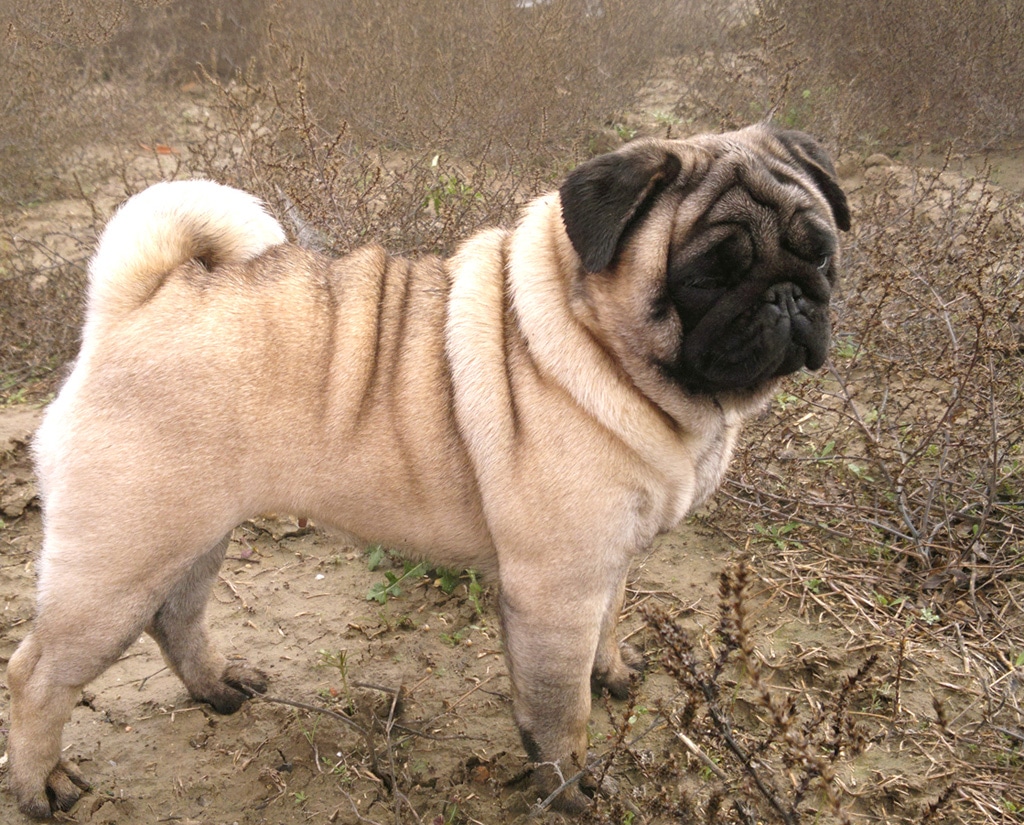
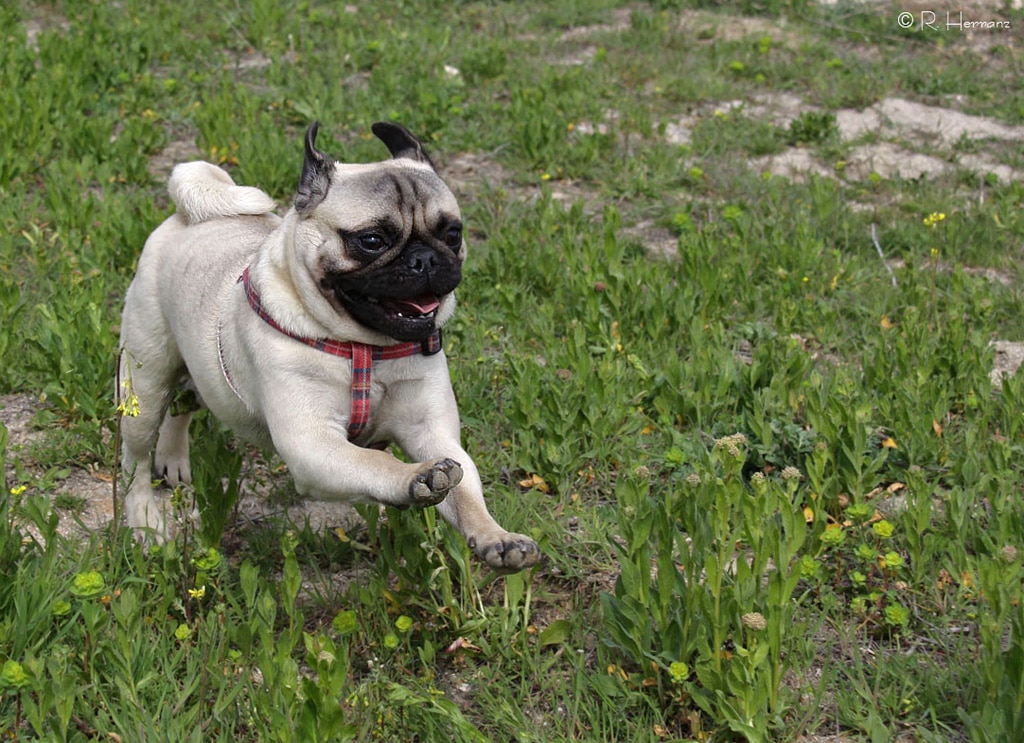
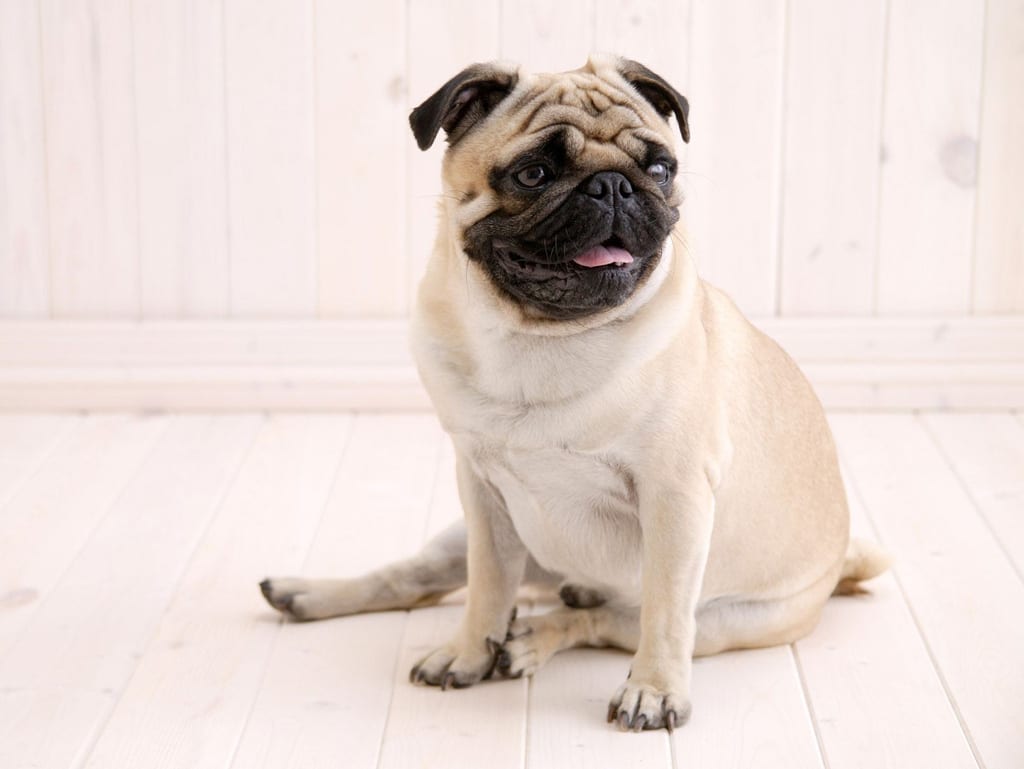
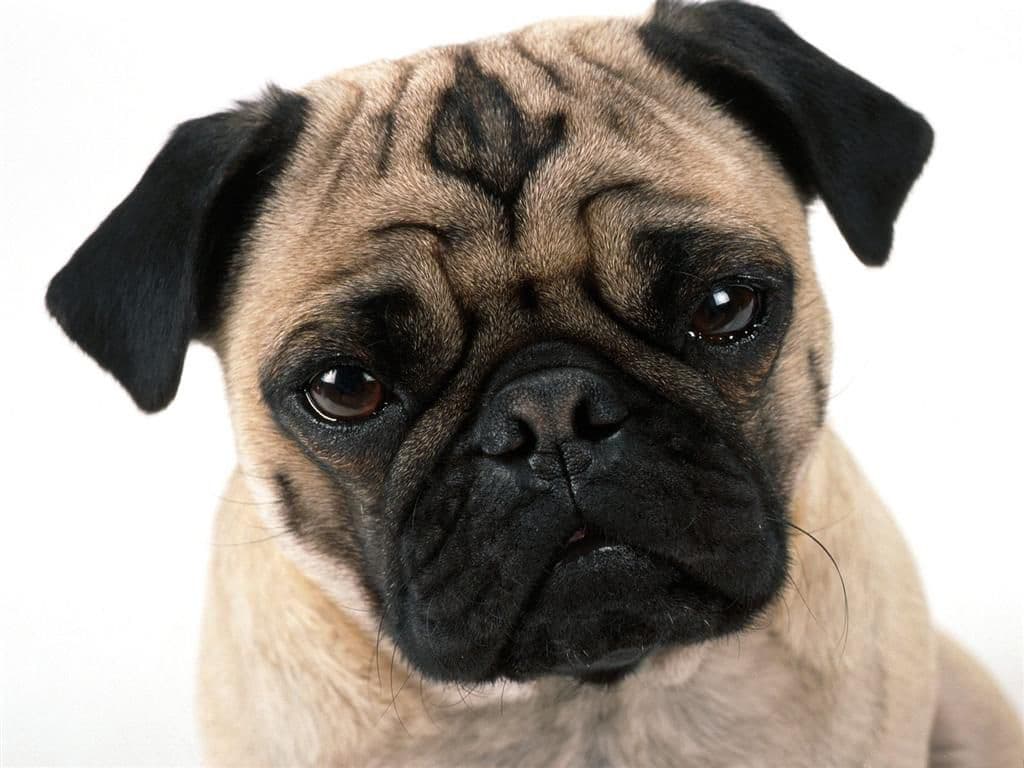
โ–ท The world of Pets: Dogs, cats, birds, reptiles, amphibians

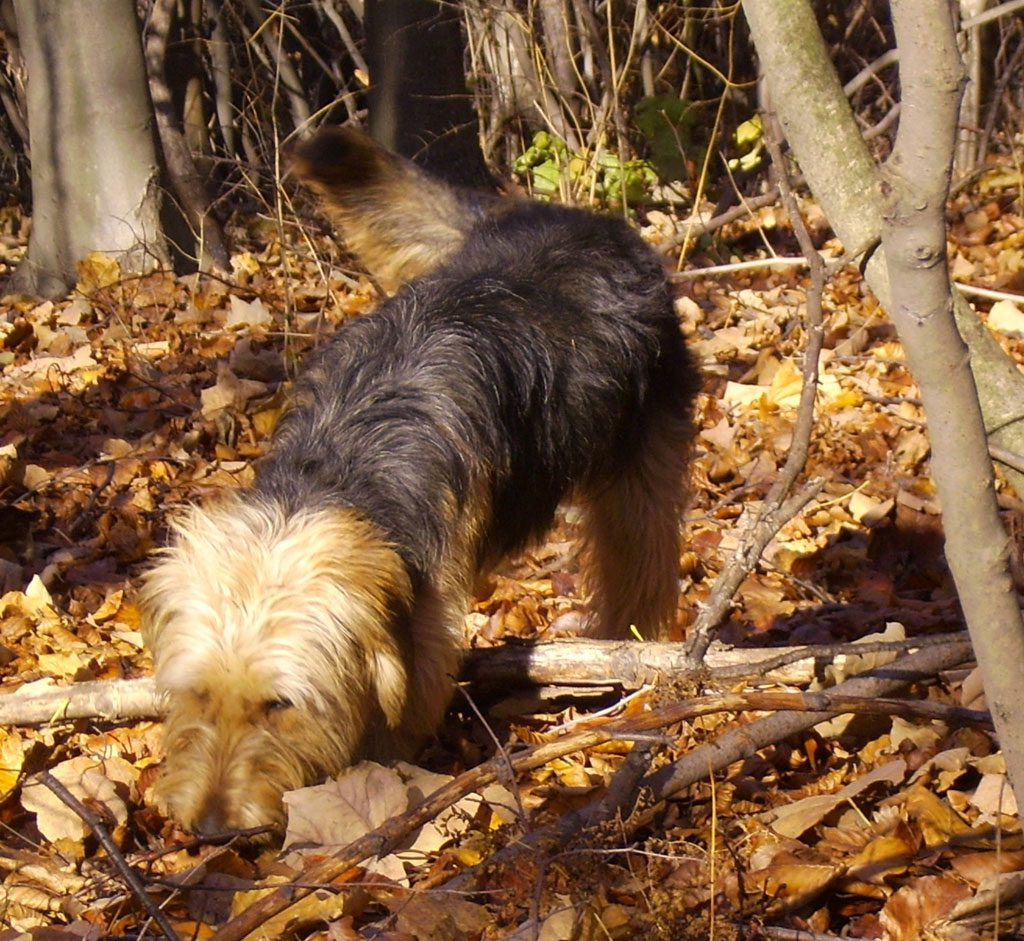
Schipperke
Bรฉlgica FCI 83 . Sheepdogs

Schipperke

The Schipperke is a happy dog, resistant, energetic, a skillful Hunter and good guardian.

Content

History

The origins of the Schipperke they are very old. Already, In documents dating from the end of the 17th century, there is talk of a dog whose characteristics perfectly describe a specimen of Schipperke, who lived mainly with the midwives of the Saint Gรฉey neighborhood of Brussels.

It is the typical dog of the shoemakers of that time that, In addition to making shoes, they used to organize very peculiar dog shows., Since that most importantly was not the aspect of canine copy but the necklace that had been, manufactured by hand by the shoemakers.

Some authors speak of a legend that, somehow describes a key feature of this dog.

Apparently, in one of those dog shows a zapatero not endured defeat and moved by the ira that it caused him to lose in an outburst was and cut off the tail to the winning dog.

But, against all odds the copy of the amputated tail was so successful that thereafter the amputation of the tail began to apply to all copies.

On behalf of the race comes from the Flemish, Schipperke means "little boatman". And the man was given because this dogs accompanied the archers that pass through the channel of Flanders, they were aboard the boats eliminate any small vermin that would cast and also performed guard duties, given that barked furiously to any strange.

With how small it is, it is a dog that has many typical characteristics of large breeds.

The Schipperke It is one of the smallest Spitz-type, with which it shares much similar. Among those breeds of medium to small size similar in appearance to the Schipperke, in different parts of the world we find the Wolfsspitz (Keeshond), GroรŸspitz, Mittelspitz, Kleinspitz, Zwergspitz (Pomeranian), Samoyed, the Norwegian Elkhound, Volpino Italiano, Secular, Finnish Spitz, India Spitz, Japanese Spitz and the American Eskimo dog.

The Schipperke was first recognized as a standardized breed in the year 1880, but was formalized in the year 1889. Much of what is known of its origins and early history comes from Hunting and fishing, a Frenchman who wrote for the magazine ยซHunting and fishingยซ, articles of which were translated into English and published by the English magazine ยซEl Stockkeeperยป.

Physical characteristics

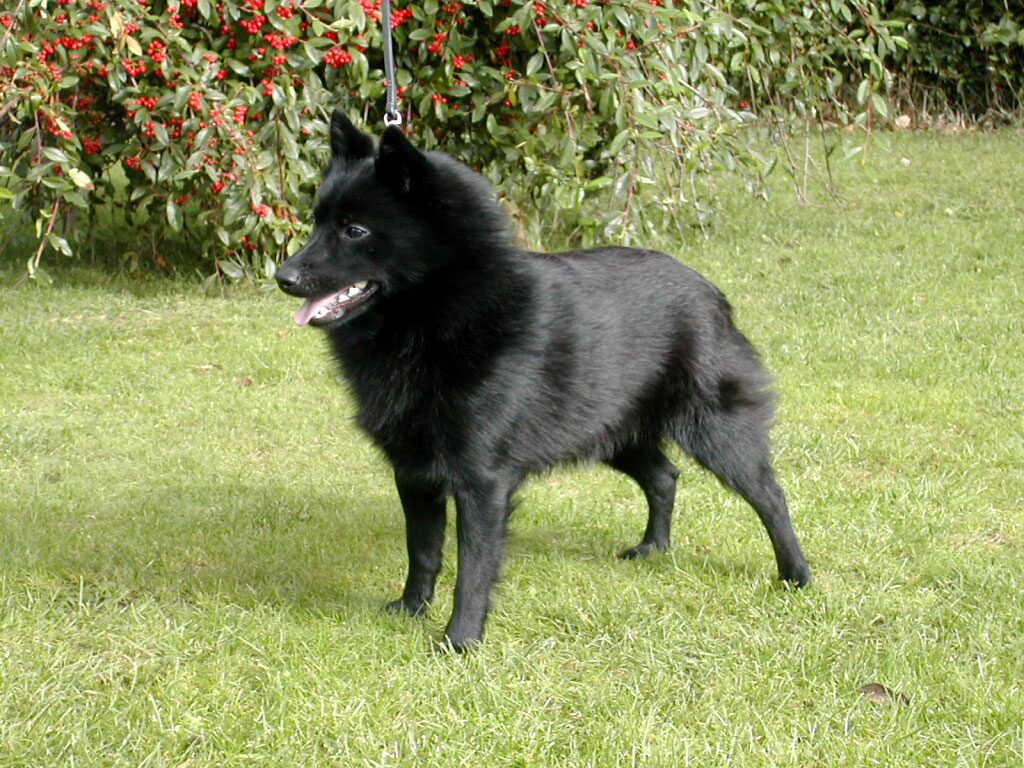
At first sight, the Schipperke looks like a Belgian Shepherd Groenendael miniature.

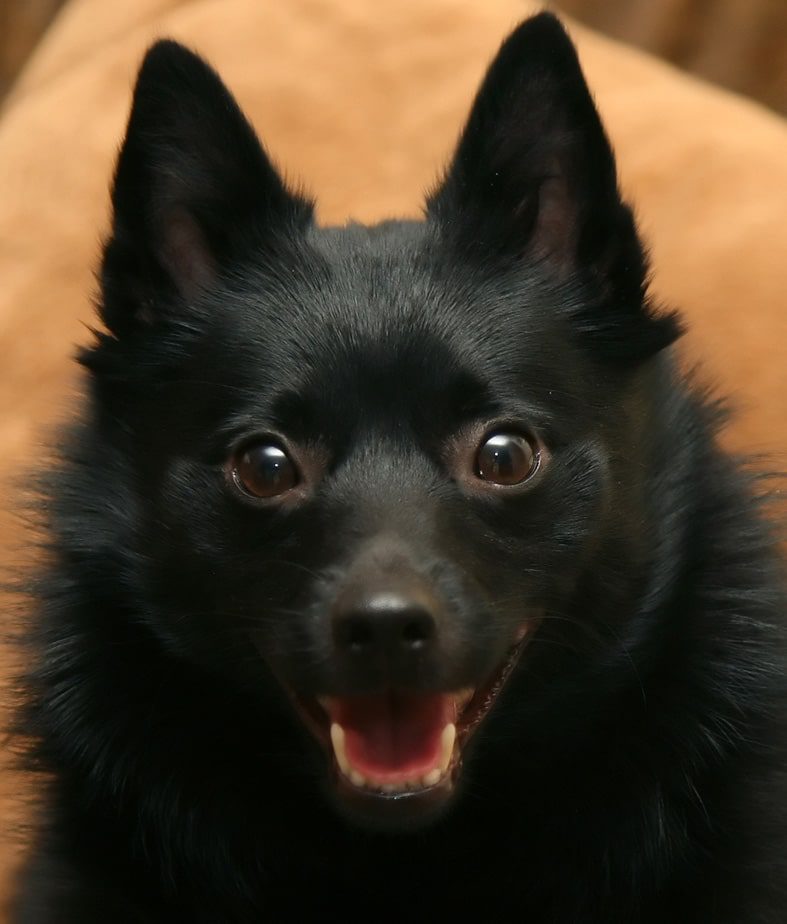
It is of a small dog, very elegant but well made and muscular. Its quite similar to a Fox head, with a broad forehead that narrows as the eyes approach.

There are two varieties, whose only distinction is the weight. In the smaller of 3 to 5 kg and the largest of 5 to 9 kg.

The snout It is sharp and has a pronounced stop. The ears are small, triangular and slightly separated.

The eyes they are brown in color and rather oval shaped. Its characteristic coat is made up of long, very black hair and is totally waterproof.. It is significantly longer in the collar area, horsehair, the bodice and back of legs.

The color The only one recognized by the FCI is the chestnut black. As they grow older, It is normal to be detected small of coloration forming a gray color in places such as the snout.

The puppies are born with tails in different lengths, and in Canada and the United States, the tail is usually docked the day after birth. In countries that have a ban on tail docking, the Schipperke they show off their natural tail, It falls curved over the back of the dog.

Character and skills

They are curious by nature and overflow with energy, they need enough exercise and good monitoring.

Known for his stubborn temperament, mischievous and stubborn, to the Schipperke it defines, times, As the "small black Foxยซ, he "Black Tasmanian Devil" or the "black devilยซ.

Proper training is important, because they are very intelligent and independent, and that coupled with the stubbornness… bad combination, they are what gives them the win. They are territorial, and they can not get along with other males.

The Schipperke has no particular health problems, they tend to live until the 17 or 18 years. But, inactivity, lack of exercise and overnutrition are very harmful, and can lead to problems in the joints, the bones and the conditions of the teeth, heart, lung or digestive system.

The regular weekly brushing is usually sufficient to keep the coat in good condition. No need to cut hair, they tend to move it several times a year (the females, more than males).

Observations

The Schipperke, is the ideal companion for lovers of horse-riding, post that usually develops in a natural way a very close relationship between this dog and horses.

It is also the dog ideal for excursions, Despite its small size it is tireless.

Characteristics "Schipperke"

Coexistence is important that you have with your new friend. Before considering the acquisition of a dog of the breed "Schipperke" you know certain factors. Not all breeds of dogs are apt to live in an apartment, you must take into account his character, their need for exercise, their interaction with other pets, their care and if you have small children, their level of tolerance towards them.

Adaptation โ“˜

4,0 of 5 stars (based on 1 review)

friendly dog โ€‹โ€‹โ“˜

4,0 of 5 stars (based on 1 review)

hair loss โ“˜

3,0 of 5 stars (based on 1 review)

Affection level โ“˜

3,0 of 5 stars (based on 1 review)

Need for exercise โ“˜

5,0 of 5 stars (based on 1 review)

Social need โ“˜

2,0 of 5 stars (based on 1 review)

Home โ“˜

2,0 of 5 stars (based on 1 review)

Toilet โ“˜

2,0 of 5 stars (based on 1 review)

Friendly with strangers โ“˜

3,0 of 5 stars (based on 1 review)

barking โ“˜

3,0 of 5 stars (based on 1 review)

Health โ“˜

4,0 of 5 stars (based on 1 review)

Territorial โ“˜

5,0 of 5 stars (based on 1 review)

Cat friendly โ“˜

3,0 of 5 stars (based on 1 review)

Intelligence โ“˜

4,0 of 5 stars (based on 1 review)

Versatility โ“˜

4,0 of 5 stars (based on 1 review)

Child friendly โ“˜

5,0 of 5 stars (based on 1 review)

Surveillance โ“˜

4,0 of 5 stars (based on 1 review)

joy โ“˜

5,0 of 5 stars (based on 1 review)

Images of the ยซSchipperkeยป

Videos del ยซSchipperkeยป

Type and recognitions:

  • FCI CLASSIFICATION:
  • Group :
  • Section : . .

Federations:

  • Federations: FCI โ“˜, AKC โ“˜, ANKC โ“˜, CKC โ“˜, โ€‹KC โ“˜, NZKC โ“˜, UKC โ“˜

FCI breed standard "Schipperke"

Origin:
Belgium

Date of publication of the valid original standard:
28.07.2009

Use:

Small guard and companion dog


General appearance:

Lupoide, the Schipperke is a small-sized shepherd, but of very solid construction. His head is cuneiform, well developed skull and relatively short snout. Your body is harmonious, short, quite wide and compact, but the limbs have fine bones. Its fur is very characteristic, very abundant and straight that forms a necklace, horsehair, bib and pants, which gives it its unique silhouette. Sexual dimorphism (sexual differentiation) is marked. Its morphology, as well as
its characteristics and its shepherd dog character, all this in a small size, explain their great popularity, that extends far beyond the Belgian borders.
 
IMPORTANT PROPORTIONS:

  • The height at the withers is equal to the length of the body, is therefore a square-built dog.
  • The chest is well lowered to the level of the elbows.
  • The muzzle is visibly less long than half the length of the head.


Behavior / temperament:

An excellent little watchdog, exceptional "warning", overflowing with vitality, distant with strangers. Always in movement, agile, tireless, continually busy with what's going on around you, very aggressive when it comes to taking care of the objects that have been entrusted to him, very sweet with children, always curious to know what happens behind a door or an object that is going to be moved, betraying his impressions with his shrill voice, his mane and bristling dorsal hairs. He's a sniffer who hunts rats, moles and other vermin.

Head:

Form Lupoid, cuneiform, but not too long, and wide enough to be in harmony with the rest of the body. The supraorbital and zygomatic arches are moderately arched. The transition of the cranial region to the facial region is visible, but it is not very pronounced.

Cranial region:

Fairly broad forehead, drops into the eyes, profile view is slightly rounded. The upper lines of the skull and the nasal passage are parallel.

  • Depression front naso (Stop): Marked, but without exaggeration.

facial region:

  • Nose: Small, Truffle always black.
  • Snout: It is made more pointed towards the region of the truffle ; well chiseled, not very long, the tip is not truncated; the length is approximately 40% the total length of the head ; straight nose cane.
  • Lips: Blacks, well together.
  • Jaws/Teeth: Healthy and well implanted teeth. ยซScissors biteยป. A "pincer" bite is accepted.. Complete denture, the dental formula for. The absence of one or two premolars is acceptable 1 (1 PM1 or 2 PM1) or a premolar 2 (1 PM2) and are not taken into consideration the molars 3 (M3).
  • Cheeks: Droughts, they blend smoothly with the sides of the snout.
  • Eyes: Dark brown in color, small, almendrada form, or sunk, or prominent ; the look is mischievous, intense and penetrating; the eyelids are lined in black.
  • Ears: Straight, very small, pointy, triangular (the more possible equilateralmente), set high, but not very close together, firm, excessively mobile.

Neck:

Strong, powerfully muscular; It seems more bulky because of the abundant hairs on the collar. Is medium length, well loose, good sized, is more erect when the dog is attentive, with the slightly arched top margin.

Body:

Short and broad, therefore compact, but not too bulky or heavy, Ideally square (inscriptible in a box). So that, its length, from the tip of the shoulder to the tip of the buttock, It is approximately equal to the height at the withers.

  • top line: The top margin of the back and the spine is straight and taut, often it rises slightly from rump to cross.
  • Cross: Very sharp. It seems even more raised because of the mane.
  • Back: Short, straight and strong.
  • Pork loin: Short, broad and compact.
  • Rump: Short, wide and horizontal; the rear of the rump, and therefore the union between the rump and the tip of the buttock, It is harmoniously rounded, what is known as โ€œguinea pig buttโ€.
  • Breast : Well descended to the level of the elbows; wide in front and behind the shoulders, so that, the ribs are well arched; profile, the front part of the chest (backsplash) is well prominent.
  • bottom line: The lower part of the chest is well descended, reaching to the elbows, upload lightly and harmoniously towards the belly, It is slightly raised, or pendant, or agalgado (withdrawn).

Tail:

High implementation. Some dogs are born Anurans (completely tailless) or with rudimentary or incomplete queue (stump tail or short tail) and they may not be penalized by this. At rest, a natural tail (at least reaches the Hock) should preferably be dropped and can be raised in action, in the extension of the top line, but it is preferable that it does not exceed. Accepted the tail curled or carried on the back.

Tips

Thin bones that are well below the body.

PREVIOUS MEMBERS

  • As a whole: They are well aplomados seen from all angles, and they are perfectly parallel, seen from the front; its length, from the ground up to the elbows, It is almost equal to the half of the height at the withers.
  • Shoulder: Long and well oblique, the angulation of the shoulder is normal.
  • Arms: Long and enough oblique.
  • Elbows: Firms, or peeled, or together.
  • forearms : Straight, seen from the front are quite separate.
  • Carpi (dolls): Smooth and firm.
  • Metacarpus: Rather short. Seen from the front, in straight prolongation of the forearms, profile, at least very slightly inclined.
  • Previous feet: Small, round and together (ยซ cat's foot ยป); the arched toes; short nails, strong and always black.

LATER MEMBERS

  • As a whole: They must be under body, and be perfectly parallel, seen from the back.
  • Thighs: Long, very muscular. They seem to be wider due to the dense pants.
  • Knee: Approximately in composure with the rump; the angle of the knee is normal.
  • Legs: Approximately of the same length as the thighs.
  • Hocks: good angulation, without exaggeration.
  • Metatarsals: Rather short; the presence of spurs is not desirable.
  • Hind feet: As the front or a little bit longer than.

Movement:

At a trot, the movements are elastic, firm, with median amplitude, a good boost of the hind, the back stays horizontal and members move in parallel ; The movement of the forelimbs must be in harmony with that of the hindlimbs and the elbows must not separate. At a higher rate, Members converge.

Mantle

  • SKIN: Tight all over the body.
  • Fur: The outer layer of hair is abundant, dense, straight, enough hard, of fairly firm texture, therefore, is dry and sturdy to the touch, and shape with the inner layer of hair, It is soft and dense, excellent protection. Hair is short on the ears and short on the head, the front of the previous members, hocks and rear cannons. On the body, the hair is medium length and glued.

Around the neck the hair is much longer and more separate, starting at the outside edge of the ears, forming, especially in the male, but also in the female, a wide and very typical ยซnecklaceยป (long hairs around the neck, on each side stem), a "mane" (long hairs on the upper region of the neck, that extend even over the cross and even the shoulders) and a "bib" (long hairs on the lower region of the neck and the front of the chest (backsplash), that spread between the forelimbs and are progressively completed under the breast). On the back of the thighs, long and abundant hairs, that cover the anal region and whose tips are directed inward in a very typical way, they form the ยซtrousersยป. The tail is adorned with a hair of the same length as the body hair.

  • Color: Negro backpack. The inner layer of hair should not be absolutely black, but it can be also dark gray if it is covered entirely by the outer layer of hair. Are accepted a little gray due to age, for example on the snout.


Size and weight:

Weight: Of 3 to 9 kg. Looking for an average weight of 4 to 7 kg.


Fouls:

Any deviation from the above mentioned criteria is considered an absence and severity of this refers to the degree of deviation to the standard and its impact on the health and welfare of the dog.

General appearance: Heavy, lack of substance; paticorto patilargo ; elongated body, rectangular (inscriptible in a rectangle).
Head: Too long or too short. Lines of the skull and nasal cannula that are not parallel; appearance of Fox; very outgoing supraorbital or zygomatic arches.

  • Cranial region: Too narrow, very rounded or arched front (โ€œapple-shapedโ€).
  • Snout: Very long, gripper; thick, truncated; convex nose cane (Roman).
  • Teeth: Misaligned or poorly implemented incisors.
  • Eyes: Large, round or prominent, color clear (the color "hazelnut" is still accepted).

Body:

  • Breast : Strait, plane, cylindrical; not enough descended.
  • Rump: Long, inclined, about-high; interrupted curvature of the back edge (transition grupa-parte back of thighs).
  • Members: Too little or too much angled members.
  • Movement: Cerrado, very short strides, with very little momentum, bad transmission in the back (when the dorsal line does not remain correct in action), movement raised the forelimbs or hopping in the subsequent.

Fur:

  • Fur: Too short (Satin), too long, little, soft or silky, wavy, very close to the body or too pendant; very little or no necklace, horsehair, breast or trouser (more serious is lacking in the male, especially the absence of necklace). Lack of hair on the bottom layer.
  • Color: Grey reflections, Brown or reddish in the upper layer of hair. Some occasional white hairs on the toes.

Character: Apathetic or shy dog.

SERIOUS FAULTS

  • Teeth: Absence of an incisor (1 I), three premolars 1 (3 PM1), or two premolars 2 (2 PM2).

FALTAS DESCALIFICANTES

  • Aggressive or fearful dog.
  • Any dog โ€‹โ€‹showing clear signs of physical or behavioral abnormalities must be disqualified..
  • Lack of racial.
  • Upper prognathism; lower prognathism, even without loss of contact (inverted articulation) ; Cross occlusion ; crooked mouth ; absence of a canine (1 C), a tooth top butcher (1 PM4) or lower (1 M1) or a molar (1 M1, or 1 M2, except for the M3), of a premolar 4 (Lower PM4), of a premolar 3 (1 PM3) and another tooth, or four teeth in total or more (except the four premolars 1).
  • Depigmentation of the nose, the lips and eyelids.
  • Hanging ears or semi erect.
  • Long and soft or silky hair, therefore a coat evidently of the "long hair" type; long ear hair fringes, on the back of the members, etc.; total absence of an inner layer of hair.
  • Color: Top coat of any color that is not black (except for the gray reflections, brownish or reddish) or with very small white spots, still in the fingers.
  • Weight clearly outside the prescribed limits.


N.B.:

Males must have two normal-appearing testicles completely descended into the scrotum..

TRANSLATION: IRIS Carrillo (Puerto Rico Kennel Federation). Reviewed by Dr. Robert Pollet.

Source: F.C.I - International Cynological Federation

Alternative names:

1. Spitske (English).
2. Spitske (French).
3. [Aussprache: หˆsxษชpษ™rkษ™] (German).
4. Skip, Schip, Spitske (Portuguese).
5. Spitzke, Pequeรฑo barquero (espaรฑol).

โ–ท The world of Pets: Dogs, cats, birds, reptiles, amphibians

Pumi
Hungrรญa FCI 56 - Sheepdogs.

Pumi

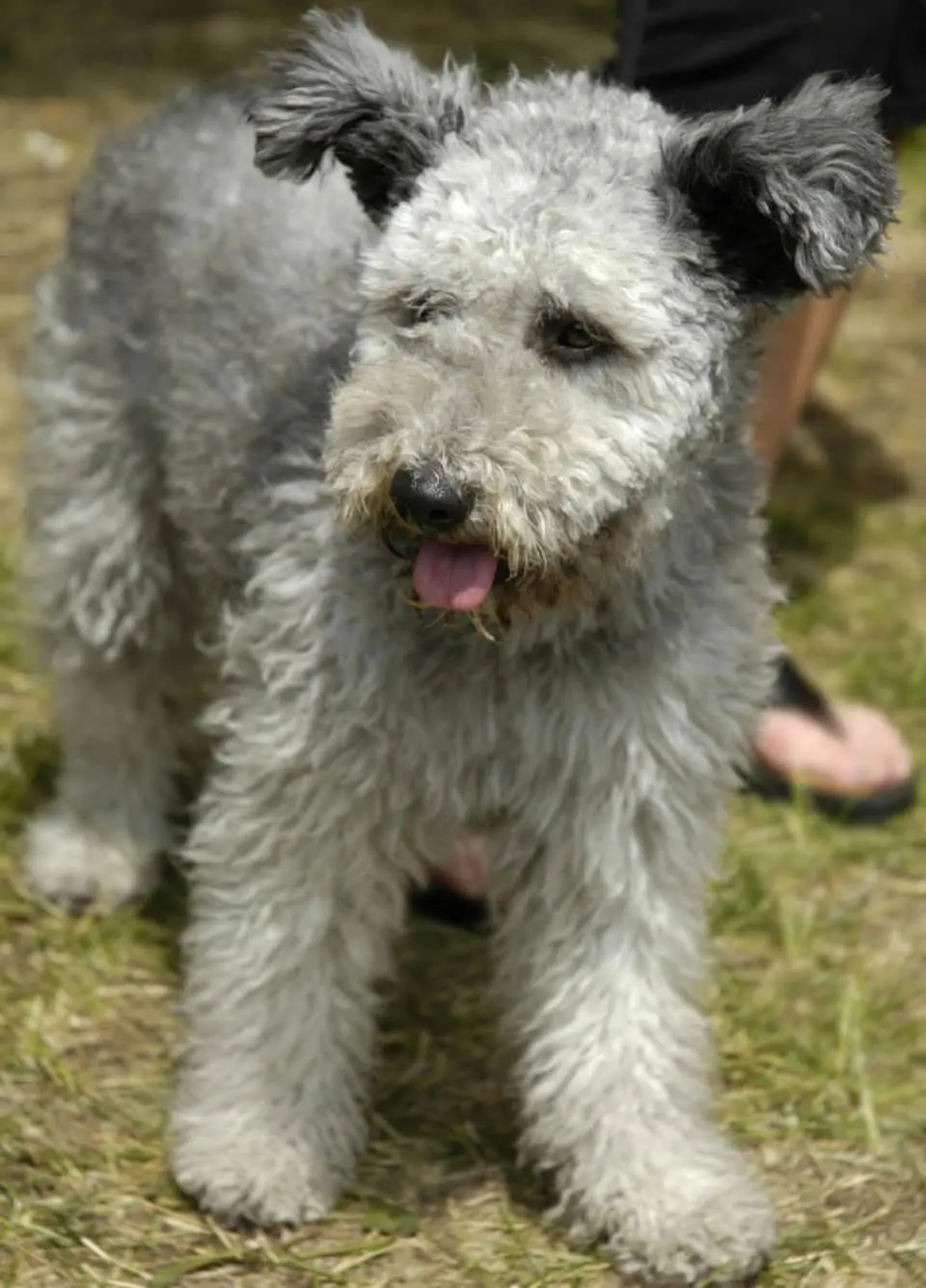
The Pumi is a rustic dog, docile, independent and very protective with their own.

Content

History

The Pumi It is a herding dog size medium of the Terrier group, originally from Hungary.

The Pumi has been used as a "general farm dog", in grazing sheep not only, but also cows and pigs, and also for catching small rodents. Originated from the 17TH and 18th century, When the grazing done by dogs Terrier, brought to Hungary from Germany and France, it was common. These Terrier-type dogs, they were mixed with native Hungarian sheepdogs, and the result of such crossing gave rise to the sympathetic current Pumi, It is a dog of Terrier blood but with the heart of dog. He was raised as a working dog, an autonomous and free animal.

Read more

โ–ท The world of Pets: Dogs, cats, birds, reptiles, amphibians

Romanian Carpathian Shepherd Dog
Rumanรญa FCI 350 - Sheepdogs

Romanian Carpathian Shepherd Dog

The Romanian Carpathian Shepherd Dog is slightly more sensitive and less independent than other guard dog breeds

Content

History

The โ€œRomanian Carpathian Shepherd Dogโ€, also known as Carpatin (of his original name Ciobanesc Romanesc Carpatin), He is native to Romania, more precisely from the Danube Delta.

It is said to be descended from the Lupo races – molosoides, comparable in size to ancient mastiffs, but with a morphology closer to that of the wolf, and that has been used to protect herds for more than 9.000 years, that is to say, since the beginning of the domestication of cattle in this region.

Legend has it that their ancestors, to whom he is physically very close, they interbred naturally with wolves, resulting in a powerful and fearsome race. Although there is no irrefutable evidence, such hybridizations between dog and wolf are known to have in fact occurred in various regions of the world, what makes this theory plausible.

Often hunting in packs, nothing stops this dog with his courage and unerring protective instinct. There have even been cases where a herd of Carpathian shepherds has been seen repelled by an adult bear. The Romanian Carpathian Shepherd Dog has been selected over the centuries with the main criterion of utility, which explains why it has kept its herding dog qualities intact to this day, especially since Romania still has many predators on its territory, including wolves and bears. Over the years, they have also become increasingly integrated into the family as guard dogs; very protective of their master, it's a role they play wonderfully.

The first breed standard was developed in Romania in 1934. After the fall of communism in 1989, a few passionate breeders of the Romanian Carpathian Shepherd Dog developed the breed so that its standard could meet the criteria of the Fรฉdรฉration Cynologique Internationale. Their efforts paid off, since the latter finally recognized it provisionally in 2005, and then definitely ten years later, in 2015. Among the other large canine organisms, the Sociรฉtรฉ Centrale Canine and the United Kennel Club also recognize the Romanian Carpathian Shepherd Dog, what is not the case with the American Kennel Club, the Canadian Kennel Club or the Kennel Club, the leading organization in Great Britain.

Although they are increasingly known and appreciated in the rest of the world, the Romanian Carpathian Shepherd Dog still quite rare outside of its home country. On the other hand, still very popular in Romania, where it is used as a herding dog and as a guard and companion dog.

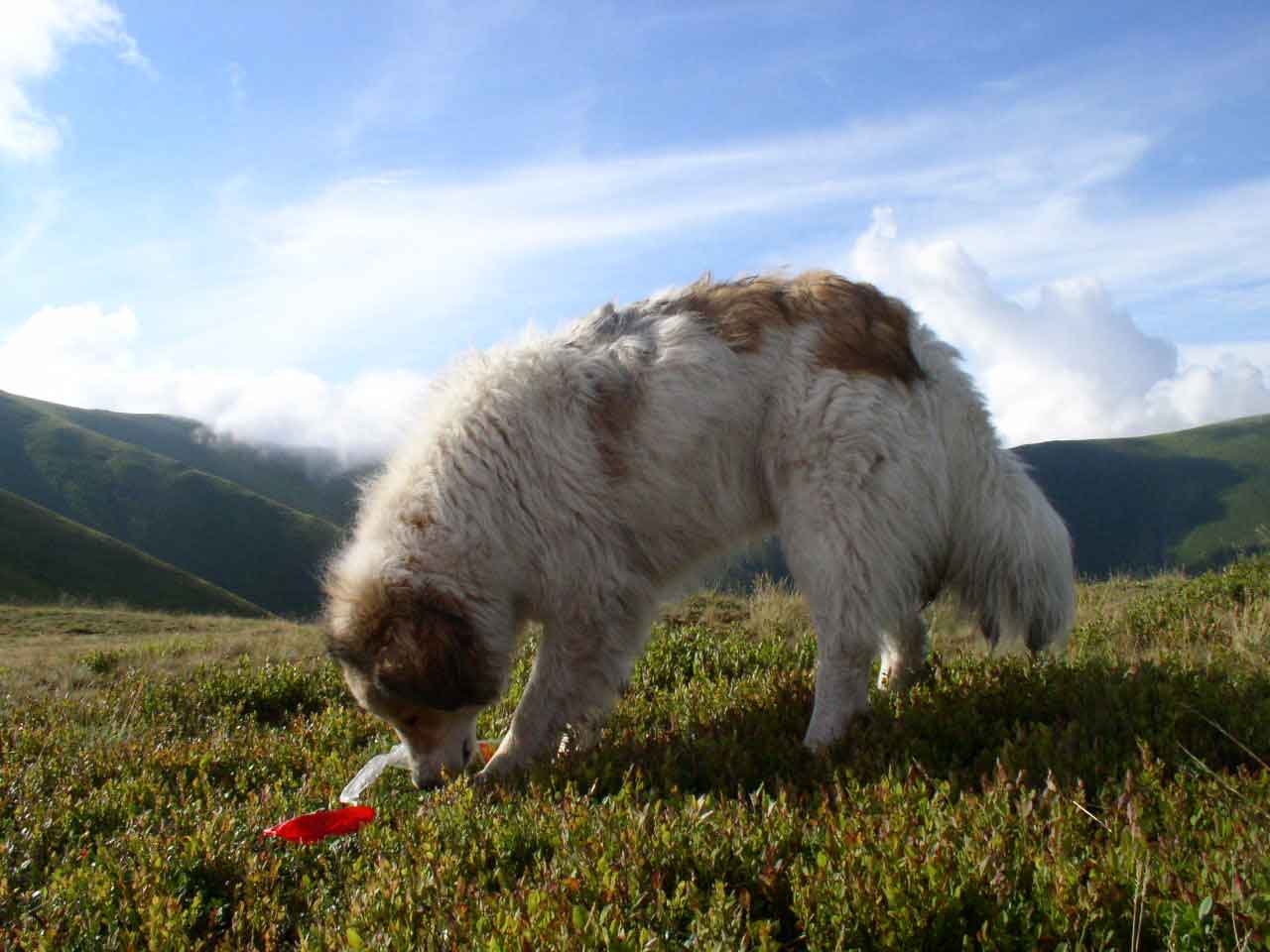
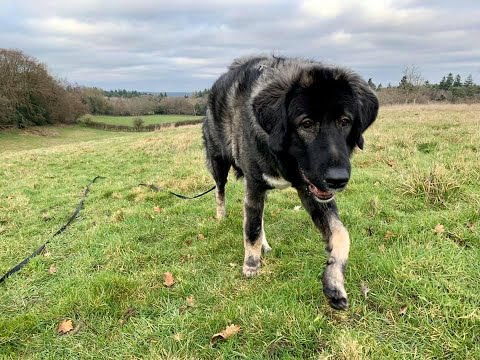
Photo: Possibly Carpathian sheepdog or Bucovina sheepdog by Alex Zelenko, CC BY-SA 4.0, via Wikimedia Commons

Physical characteristics

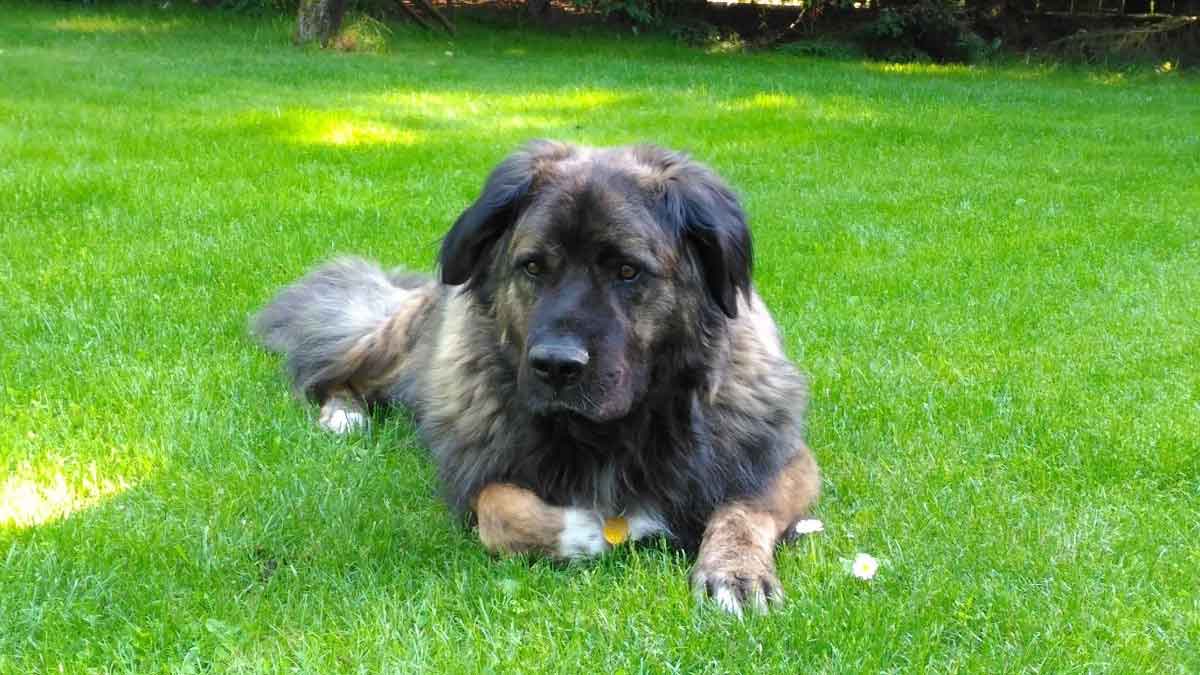
The Romanian Carpathian Shepherd Dog he is a large dog with an impressive physique.

The body is rectangular, vigorous and well developed, without heaviness. Its length is greater than the height at the withers, and the lumbar region may be slightly longer in females than in males.

The tail is held high, reaching or slightly exceeding the point of the hock. With abundant hair, hangs at rest but is carried high and slightly curved in action. It is neither flat nor rolled in the back.

The head is strong but not heavy, of type lupoid, with a stop moderately marked. The nose is always black, big and wide. The scissor bite is powerful. The eyes are medium in size, almendrada form, dark brown. The ears, located slightly above the eye line, they are triangular in shape, a little rounded at the tip, and fall close to the cheeks.

The inner layer is dense and flexible, color clear, but the hair is rough, smooth and dense. It is shorter and flatter on the head and front of the legs, longer in the neck, the back of the legs and tail. It is abundant and of medium length in the rest of the body. The fur is sable (Wolf) with white markings, and the skin is ash colored.

Character and skills

The Romanian Carpathian Shepherd Dog is balanced, calm and brave. They are innate herding dogs with a very strong protective instinct, with an unconditional attachment to his flock and a closeness to his master and family that is far greater than that of most other watchdog breeds.

This protective instinct makes them mistrust strangers. In the presence of a stranger, will come between him and his family and bark as a warning, until his master makes him understand that there is no danger.

But, due to its friendlier temperament than the average of other guard dog breeds, It is also an excellent companion dog.. As a breed of dog adapted to children, he is very gentle with them and is a great playmate for them. Regarding the cohabitation of the dog with the cat, generally goes well. Last, the fact that they have long gotten used to defending themselves and working in packs also explains why they generally manage to get along with their peers, although they can be dominant with them.

Although it suits all families quite well, this large, energetic dog needs plenty of exercise and play to maintain his mental balance and physical health. So, better suited to a family that likes to move, and thus you can enjoy hiking with your dog (dogs-rando), from running with your dog (canicross) or cycling with your dog (cani-mountain biking). To feel completely fine, need at least an hour of daily exercise.

So, not at all suitable for use in an apartment: too small a space and insufficient physical exercise could cause behavioral disorders in the dog, including uncontrolled aggression (even towards their owners) and / or destructive behavior on the part of the dog. This is all the more true since the Romanian Carpathian Shepherd Dog is slightly more sensitive and less independent than other guard dog breeds; therefore shows more anxiety in case of prolonged loneliness, especially if you are indoors with nothing to do to keep busy. So, the ideal home for him is one with a large enclosed garden where he can run, and a master who is available to play with his dog and walk him for long hours.

Education ยซRomanian Carpathian Shepherd Dogยป

Although the Romanian Carpathian Shepherd Dog it is a calm and balanced dog that is easier to train than other guard dog breeds, needs a strong education to start at an early age, since it has a strong character. It is imperative that the owner immediately show his dog who the master is and impose his authority, at the risk of seeing his partner with his impressive physique take control.

Of course, firm does not mean brutal. Positive dog training, with incentives and rewards, is always the best way to earn respect and obedience. Purely authoritarian training would only lead to confrontation with this willfully dominant dog..

Health ยซRomanian Carpathian Shepherd Dogยป

Although there have been cases of hip dysplasia or eye problems in some individuals, the Romanian Carpathian Shepherd Dog it is a robust breed of dog, able to stay outdoors in inclement weather without being unduly hindered and, In addition, does not have a congenital predisposition to certain pathologies.

So, daily exercise and a balanced diet are enough to keep the dog healthy, vigorous and toned.

But, care must be taken not to give too large a portion of food before physical exertion: like all big breeds, is particularly exposed to the risk of stomach dilation-torsion.

Grooming ยซRomanian Carpathian Shepherd Dogยป

Although the Romanian Carpathian Shepherd Dog has a long fur, rarely needs professional grooming. But, it is recommended to brush the dog's hair daily with a wire brush or detangler, especially during the molting period.

If you spend most of your time outdoors, it is recommended to wash your dog once a month. But, if you stay inside, a dog bath every three to four months is sufficient.

On the other hand, it is important to regularly examine and clean the dog's ears, as for all dogs with floppy ears. A buildup of earwax or bacteria could lead to infections, like ear infections.

It also, as in all races, brushing your dog's teeth at regular intervals is essential to avoid tartar problems. Ideally, you should be able to do this two to three times a week..

Finally, how often a dog's claws are trimmed depends on its level of activity. It is best to inspect them from time to time and trim them if necessary.

Characteristics "Romanian Carpathian Shepherd Dog"

Coexistence is important that you have with your new friend. Before considering the acquisition of a dog of the breed "Romanian Carpathian Shepherd Dog" you know certain factors. Not all breeds of dogs are apt to live in an apartment, you must take into account his character, their need for exercise, their interaction with other pets, their care and if you have small children, their level of tolerance towards them.

Adaptation โ“˜

3,0 of 5 stars (based on 1 review)

friendly dog โ€‹โ€‹โ“˜

3,0 of 5 stars (based on 1 review)

hair loss โ“˜

4,0 of 5 stars (based on 1 review)

Affection level โ“˜

5,0 of 5 stars (based on 1 review)

Need for exercise โ“˜

4,0 of 5 stars (based on 1 review)

Social need โ“˜

4,0 of 5 stars (based on 1 review)

Home โ“˜

2,0 of 5 stars (based on 1 review)

Toilet โ“˜

2,0 of 5 stars (based on 1 review)

Friendly with strangers โ“˜

2,0 of 5 stars (based on 1 review)

barking โ“˜

3,0 of 5 stars (based on 1 review)

Health โ“˜

3,0 of 5 stars (based on 1 review)

Territorial โ“˜

4,0 of 5 stars (based on 1 review)

Cat friendly โ“˜

4,0 of 5 stars (based on 1 review)

Intelligence โ“˜

4,0 of 5 stars (based on 1 review)

Versatility โ“˜

4,0 of 5 stars (based on 1 review)

Child friendly โ“˜

5,0 of 5 stars (based on 1 review)

Surveillance โ“˜

4,0 of 5 stars (based on 1 review)

joy โ“˜

4,0 of 5 stars (based on 1 review)

Images "Romanian Carpathian Shepherd Dog"

Carpathian Shepherd

Carpathian Shepherd

Photos:

1 – ยซRomanian Carpathian Shepherd Dogยป by https://pxhere.com/es/photo/1434185
2 – ยซRomanian Carpathian Shepherd Dogยป by https://pxhere.com/es/photo/1625909

Videos "Romanian Carpathian Shepherd Dog"

Jeff the Carpathian Shepherd - 4 Weeks Residential Dog Training
Jeff the Carpathian Shepherd – 4 Weeks Residential Dog Training
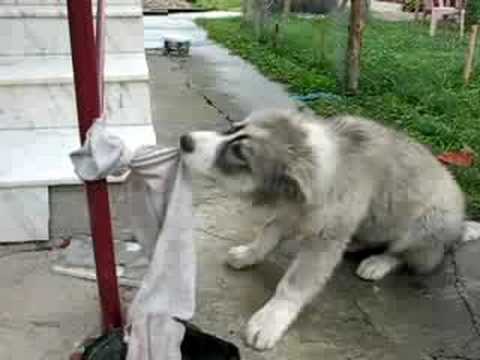
Sanziana, a Carpathian Shepherd Dog baby girl

Type and recognitions:

  • FCI CLASSIFICATION:
  • Group :
  • Section : . .

Federations:

  • FCI – Group 1 Herding dogs, Section 1 Sheepdogs โ“˜
  • UKC – Herding dogs โ“˜

FCI breed standard "Romanian Carpathian Shepherd Dog"

Origin:
Romania

Date of publication of the valid original standard:
09.06.2015

Use:

Shepherd dog used by Romanian shepherds of the Carpathians for centuries to defend flocks and at the same time as an excellent guard dog


General appearance:

This is a pretty big dog, agile,never weighed, Its general appearance is that of a vigorous dog. His body is rectangular, the rump is wide, slightly tilted, the rib cage is wide and high, long, slightly sloping shoulders. Sexual dimorphism is well marked, males should be taller and larger than females.


IMPORTANT PROPORTIONS:

  • The length of the skull is slightly greater than or equal to half the total length of the head.
  • The length of the body is always greater than the height at the withers. The lumbar region of females may be slightly longer.
  • The height of the chest corresponds to approximately half the height at the withers.


Behavior / temperament:

Innate and brave guardian, He stands out for his instinctive and unconditional affection towards the flocks and towards his master.. It is a dog with dignified behavior, quiet and balanced.

Head:

lupoid type.

Cranial region:
  • Cranial region: The Carpathian Shepherd is a mesocephalic dog, with a strong head, but not heavy. The forehead is wide and slightly bulging. The skull is wider between the ears and progressively decreases towards the naso-frontal depression.. The frontal furrow is quite long and sufficiently well marked.
  • Depression links: Moderate, never too marked, ni huidiza.

facial region:

  • Truffle:Grand, wide, always black.
  • Snout:Powerful, with an approximately oval profile, slightly truncated. The length of the snout is a little less than that of the skull or the maximum, equal.
  • Lips:Thick, well pigmented, well stretched, with a tightly closed commissure.
  • Jaws / Teeth:Strong jaws, solid and straight. The teeth are powerful; scissor joint, the incisor arches are slightly rounded.
  • Cheeks:Thin. Powerful maseteros, never outstanding. The skin is well stretched.
  • Eyes:Almond biscuits, slightly oblique, They are not too large in relation to the dimensions of the skull, its color is very dark. They are not even jumpy, nor are they sunk in the orbits. The eyelids are black and fit well into the shape of the eyeball..
  • Ears:Triangular, not too big, They appear a little higher than the eye line. They are stuck to the cheeks. The limb is slightly rounded.

Neck:

Muscular, very powerful, medium length. Its angle is about 50ยฐ in relation to the horizontal..

Body:

Vigorous, well developed, slightly rectangular.

  • Top margin: Straight and firm.
  • Height to the cross: Bit strong.
  • Back: Medium length, straight, and solid and muscular.
  • Pork loin: Powerful, muscular, but not too wide. Of moderate length, not too long (the top margin is not firm), not too short.
  • Rump: Muscular and wide, medium length. Slightly inclined, never runs away.
  • Breast : Very wide, well developed and well inclined to the level of the elbows. solid ribs, well shaped, never barrel shaped.
  • Lower margin: Moderately ascending, raised abdomen, nor sunk, nor fallen.

Tail:

It appears quite high, bushy, provided with abundant hair. During rest, appears low, straight or slightly saber-shaped, reaching the tip of the hock. When the dog is attentive or in action, It appears raised and can exceed the level of the back; It's not even stretched, nor twisted about it.

Tips

PREVIOUS MEMBERS: Strong bones.

  • In general: Front or profile views, the forelimbs are plumb and perpendicular to the ground.
  • Shoulder: Solid, moderately inclined.
  • Elbows: Well attached to the body, they do not deviate even outwards, nor inward.
  • Forearm:Straight, very vigorous, with oval profile.
  • Metacarpus: Short, slightly inclined.
  • Previous foot: Oval, solid, compact.

LATER MEMBERS: Muscular, with solid bones and good angulations.

  • In general: They are leaden.
  • Thigh:Width, well muscled.
  • Legs: Powerful, muscular, medium length.
  • Hock: Solid, firm, not too high (determining an accentuation of the angulation of the stifle) not too inclined.
  • Metatarsus: Solid, vertical.
  • Rear foot: Oval, well developed and compact, slightly smaller than the previous one. Fingers arched and together. Any spurs must be removed, except in countries where this practice is prohibited by law. The plantar pads are elastic and resistant.

Movement:

Loose, with a good range. The trot is vigorous and sustained. The limbs move in parallel planes.

Mantle

  • Pigmented ash color. The truffle, the edge, of the eyelids and lips must be black. Ash or black nails are preferred.


  • Fur: Rough, dense and stretched. The undercoat is dense and soft. With the exception of the head and the inner surfaces of the extremities, where the hair is short and straight, the hair is abundant over the entire body, medium length. about the neck, the back of the limbs and on the tail, the hair is longer, its abundance being typical in these areas.
  • Color: carbon sand (dark bay) with different nuances, often lighter on the lateral parts and darker on the upper part of the trunk. carbon sand (dark bay) with white markings, preferably not very widespread.


Size and weight:

  • Height to the cross: Ideal: 65 โ€“ 73 cm in males. 59 โ€“ 67 cm in females. But, the general appearance is always the most important.
  • Weight: In proportion to the size, giving the impression of a powerful dog, but not heavy.


Fouls:

Any deviation from the aforementioned criteria is considered as a fault and its seriousness is considered to the degree of the deviation to the standard and its consequences on the health and well-being of the dog.

SERIOUS FAULTS:

  • Any deviation from the above that impairs the use.
  • Fragile or too heavy constitution.
  • Eyes that are too light in color.
  • Lower eyelids that are too hanging, exposing the eyeball.
  • Very full lips and hanging corners.
  • Significant pigmentation defects.
  • Excessive body length (more than 10%) and square body.

FALTAS DESCALIFICANTES:

  • Aggressiveness or extreme shyness.
  • Any dog โ€‹โ€‹showing clear signs of physical or behavioral abnormalities must be disqualified..
  • apathetic dog.
  • Clearly atypical dog, similar in appearance to the molossoid.
  • Lack of a P3 and another tooth. Lack of a canine, of a P4, of a molar, or three or more teeth (except PM1y M3).
  • Upper or lower prognathism, pincer joint.
  • Very fine bones.
  • Rib cage that is not sufficiently developed.
  • Lack of an inner layer of hair, hair that is not short on the head and the front surfaces of the limbs.
  • Curly hair the griffon type, wire hair, Longhair, soft, silky, forming a clear separation on the midline of the body.
  • Considerable depigmentation of the eyelids, of the truffle, of the skin or lips. ocular heterochromia (different color eye).
  • Color: brown, mottled, yellow or with spots of these colors.
  • Adult dogs smaller than 62 cm in males and 58 cm in females.


N.B.:
  • Males should have two normal-appearing testicles fully descended into the scrotum..
  • Only functionally and clinically healthy dogs, with the typical conformation of the breed, should be used for parenting.

The latest changes are in bold.

Source: F.C.I - International Cynological Federation

Alternative names:

1. Romanian Shepherd, Romanian Carpathian Shepherd, Carpathian Sheepdog (English).
2. Chien de berger des Carpathes (French).
3. Carpatin, Zavod (German).
4. (em romeno: Ciobฤƒnesc romรขnesc carpatin) (Portuguese).
5. Carpatin, Pastor de los Cรกrpatos, Perro pastor de los Cรกrpatos (espaรฑol).

โ–ท The world of Pets: Dogs, cats, birds, reptiles, amphibians

Bloodhound
Bรฉlgica FCI 84 - The hound par excellence

Bloodhound

The Bloodhound It is the dog with thinner smell of the planet.

Content

History

The Bloodhound (St. Hubert Hound) It is a breed of dog originally from Belgium, more specifically in the region of the Ardennes. It is one of the different breeds of hound recognized by the FCI in Group 6.

Has been traditionally considered to the monks of the monastery of St. Hubert as the creators of the race (for this reason also, are known as St. Hubert Hound), and they based their selection on the hunting dogs used by the monk Hubert, founder of the order and which later to be canonized became the patron saint of hunters. King William the Conqueror took copies of this breed to England when he ascended to the throne. The descendants of these specimens, They were known in the country as Bloodhound, referring to the purity of their blood.

Did you know??

The name "Bloodhound" does not come from this dog's ability to track game and people, but from a long history of carefully recorded bloodlines. In other words, He is a "blood" hound, a kind of dog of the aristocracy, if it can be said like that.

This legend has it that a rich nobleman hunted in a good Friday accompanied by a group of noisy dogs, and in the distance he could see a deer and when he was about to shoot he saw the image of the cross of Jesus Christ drawn on its antlers and since then he retired from his dissipated life to dedicate his fortune to good works. Since then usually give the nobles, the best specimen of his beloved dogs. Today the tradition continues, but now is a religious service and gives blessing to copies, continuing with the exposure of the race in the community of St. Hubert at Belgium.

After the race was introduced in the United States where one of his missions was the search and hunt down the fugitive slaves. For many years the recognition by a Bloodhound was considered proof incriminating by American courts.

Physical characteristics

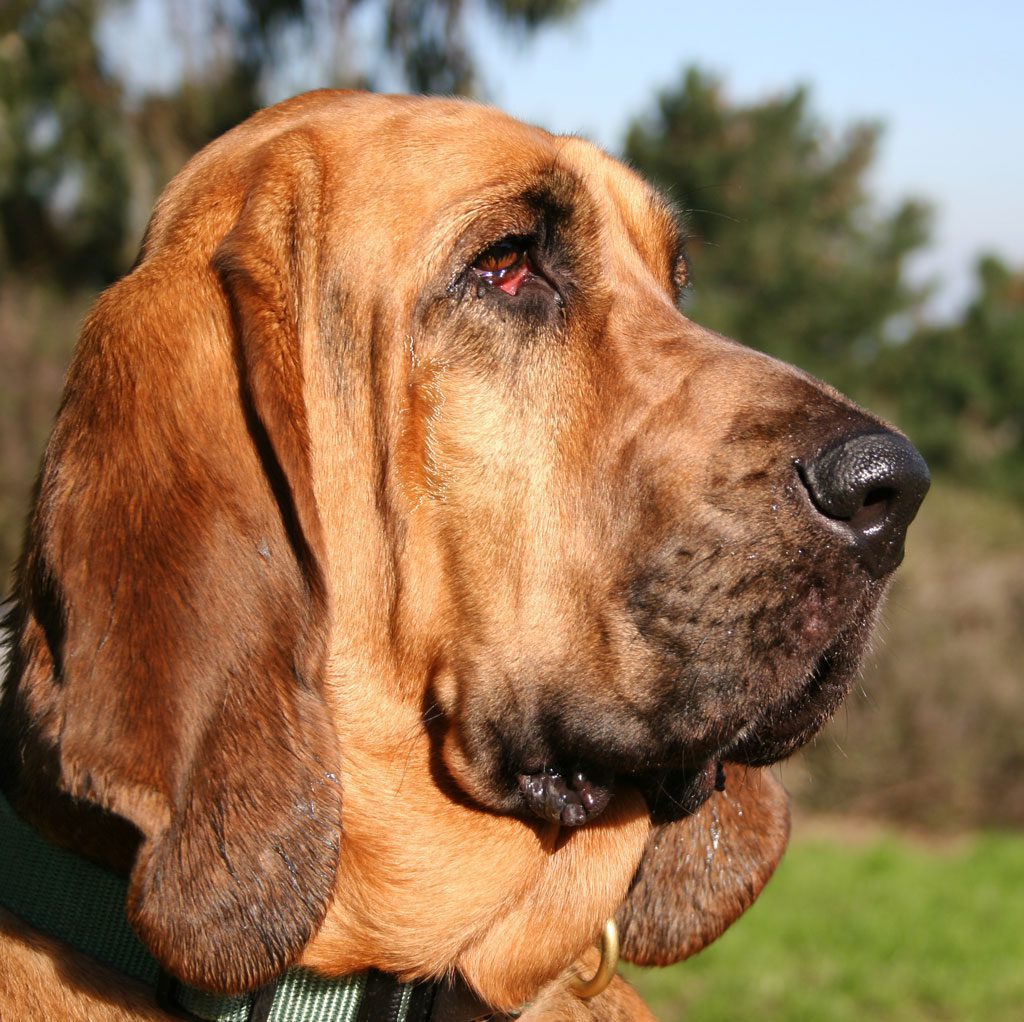
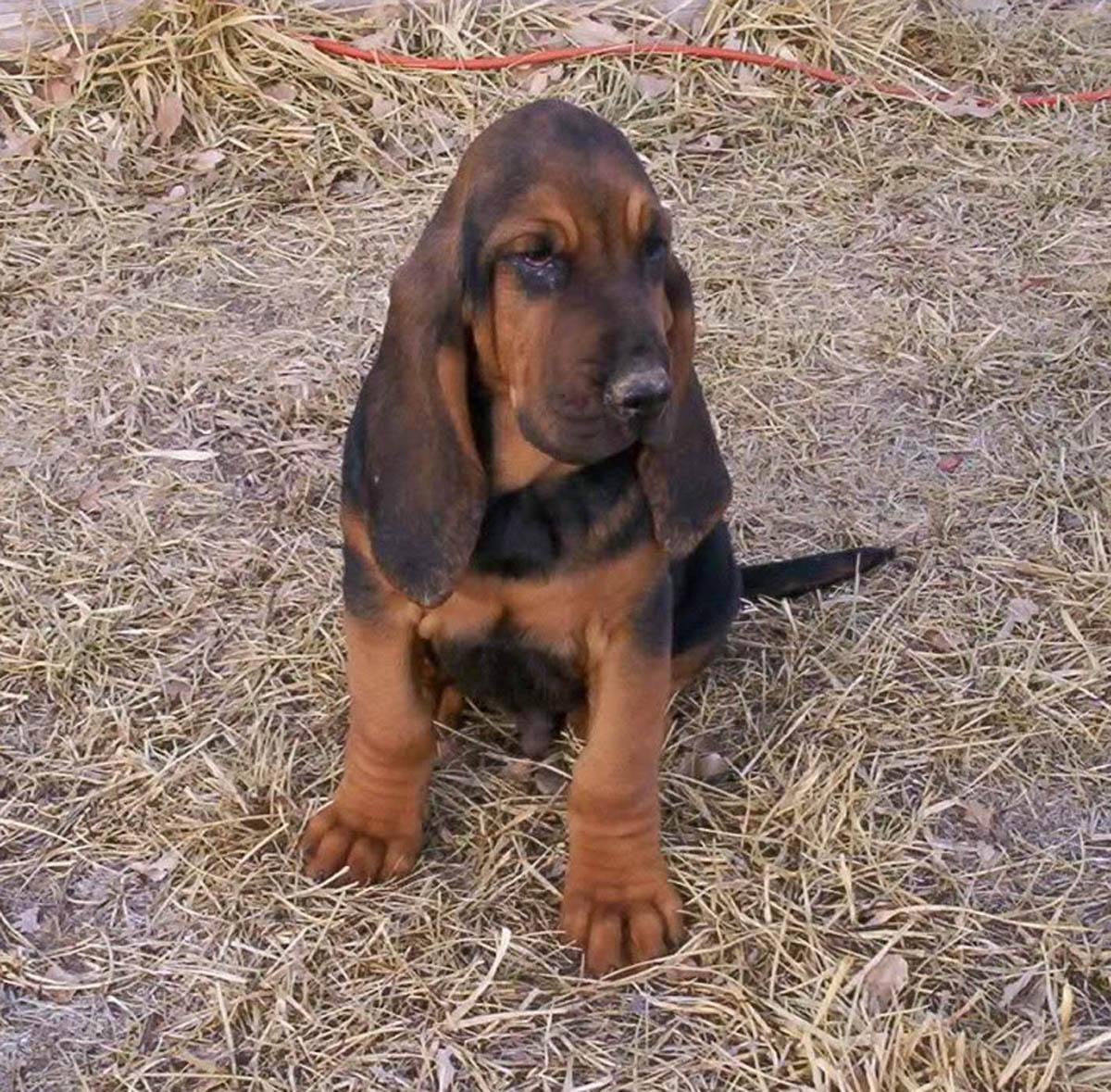
The Bloodhound is a powerful hunting dog. The back is very strong compared to the size of the dog. The head is long and narrow. The muzzle is long with a nose of black. Deeply sunken eyes and drooping eyelids. The Chin is very pronounced.

The Bloodhound is the dog with thinner smell on the planet.

Despite its size, is an agile dog. His body is longer than high. Wrinkles on the head and jowls are perhaps one of the most characteristic features, along with the length of its hanging ears. The accepted colors are black and fire, Brown and red in its different shades and fire.

The appeal is of 67 cm for males and 60 cm for females.

Character and skills

It has been documented that they are capable of following a trail of up to fifteen days, because of the enormous sensitivity of their sense of smell, caused by the internal folds of their nostrils. For that reason it is used as a police dog in tracking tasks..

These hounds cannot be kept in a yard without fences. There is a good chance that your tracker instinct carried them wander and get away until the end of their trail.

It is a dog that needs to be exercised (like all dogs), and usually live more happily in large spaces, Although adapts very well to home life.

The Blodhound, Despite the allusion to the term blood contained in its name (blood), It is one of the animals most affable that exists. It is a dog of noble nature, can be shy around strangers. He is very patient and persevering when looking for a trailโ€ฆ

It is excellent Playmate for children, defend them from any danger. They tend to be very well with other dogs and pets.

Bloodhound pictures

Bloodhound Videos

Characteristics "Bloodhound"

Coexistence is important that you have with your new friend. Before considering the acquisition of a dog of the breed "Bloodhound" you know certain factors. Not all breeds of dogs are apt to live in an apartment, you must take into account his character, their need for exercise, their interaction with other pets, their care and if you have small children, their level of tolerance towards them.

Adaptation โ“˜

3,0 of 5 stars (based on 1 review)

friendly dog โ€‹โ€‹โ“˜

5,0 of 5 stars (based on 1 review)

hair loss โ“˜

5,0 of 5 stars (based on 1 review)

Affection level โ“˜

5,0 of 5 stars (based on 1 review)

Need for exercise โ“˜

5,0 of 5 stars (based on 1 review)

Social need โ“˜

5,0 of 5 stars (based on 1 review)

Home โ“˜

1,0 of 5 stars (based on 1 review)

Toilet โ“˜

5,0 of 5 stars (based on 1 review)

Friendly with strangers โ“˜

5,0 of 5 stars (based on 1 review)

barking โ“˜

5,0 of 5 stars (based on 1 review)

Health โ“˜

5,0 of 5 stars (based on 1 review)

Territorial โ“˜

1,0 of 5 stars (based on 1 review)

Cat friendly โ“˜

5,0 of 5 stars (based on 1 review)

Intelligence โ“˜

5,0 of 5 stars (based on 1 review)

Versatility โ“˜

3,0 of 5 stars (based on 1 review)

Child friendly โ“˜

5,0 of 5 stars (based on 1 review)

Surveillance โ“˜

5,0 of 5 stars (based on 1 review)

joy โ“˜

1,0 of 5 stars (based on 1 review)

Type and recognitions:

  • FCI CLASSIFICATION:Group 6 –> Hound type dogs, and related breeds. / Section 1.1 –> Large size hound dogs. With working trial.
  • FCI 84
  • Federations: FCI โ“˜, AKC โ“˜, ANKC โ“˜, CKC โ“˜, โ€‹KC โ“˜, NZKC โ“˜, UKC โ“˜

    FCI breed standard Bloodhound

    FCIFCI - Bloodhound
    Bloodhound
  • Alternative names:

    1. Sleuth hound, St. Hubert Hound (English).
    2. bloodhound (French).
    3. Bluthund, Bloodhound (German).
    4. Cรฃo-de-santo-humberto, Chien de St. Humbert, Bloodhound (Portuguese).
    5. Perro de San Huberto (espaรฑol).

โ–ท The world of Pets: Dogs, cats, birds, reptiles, amphibians

Breeders of German Wirehaired Pointing Dogs in Spain

Criadores de Perro de muestra alemรกn de pelo duro o Deutsch Drahthaar en Espaรฑa

Content

The German Wirehaired Pointing Dog is a breed of German origin.

In this long-haired hunting dog the blood of hounds gathers, hunters of birds, water dogs and hunting with Falcons and therefore has a tendency to great versatility. As of the year 1879 pure breeding was carried out and the essential characteristics of the breed were established.

In the year 1897, the Baron de Schorlemer established the first standard of the German Longhaired Pointer and this was the basis for the current pure breeding. It became one of the main hunting breeds in Germany in the latter part of the 20th century..

It is strong, muscular, under, of flowing lines, is medium-sized (Read all about the race…).


Breeders of the breed "Breeders of German Wirehaired Pointing Dogs in Spain"

Where can we find out...

Spanish of the Deutsch Drahthaar Club
Val Lobeiro, 4. 15541 – Naron (La Coruรฑa)
Phones: + 34 981363021
Fax: + 34 981363021
Email: ceddrahthaar@gmail.com

List of breeders of Braco German hair hard or Deutsch Drahthaar recognized by the Spanish Club of the Deutsch Drahthaar:

Other breeders…

  • D'Anna Delaura (Girona) – Tel.: 972235347.
  • Of the Cega (Spain) – Tel.: 687910321
  • Madero (Soria) – Tel.: 976645085 / 639758542
  • High Maestrazgo (Teruel) – Tel.: 629916060
  • Valdemar (Salamanca) – Tel.: 620229460
  • Selva Negra (Guadalajara) – Tel.: 639281641
  • Of the Vizantos (Salamanca) – Tel.: 923570339 / 608187577
  • OS Caรฑedos (Spain) – Tel.: 659445091
  • Kennel Vidueiros (Burgos) – Tel.: 947278737
  • The Templars (Spain) – Tel.: 629253642
  • Of the Montsiร ย  (Tarragona) – Tel.: 630685559
  • The lighthouse of Buddha (Tarragona) – Carles Colomรฉ and Josep Bonet. Tel.: 679446297 / 627633661
  • Of the Somontano (Huesca) – Tel.: 619609393
  • Jesus Montero Moreno (Madrid) – Tel.: 679823006

Photo: huntingbc.ca

Breeders of Braco German hair hard or Deutsch Drahthaar in Spain

โ–ท The world of Pets: Dogs, cats, birds, reptiles, amphibians

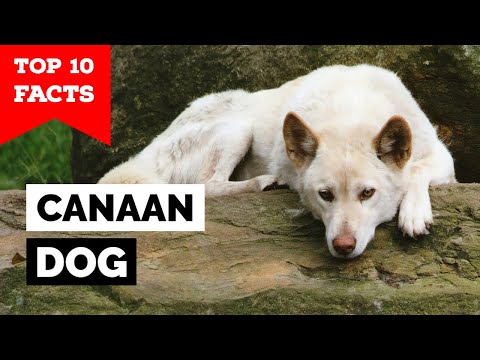
Canaan Dog
Israel FCI 273 - Primitive type

Canaan Dog

Suspicious of strangers and very affectionate towards members of his clan

Content

History

The Canaan Dog They belong to the group of "pariah dogs", found throughout the Afro-Asian region. They live near human settlements, tolerated by humans, but they are not encouraged or fed. For primitive peoples they are useful as a destroyer of all organic residues.. Even today, the Canaan Dog they live in herds in the desert. If Bedouins need a guard dog for their camp or a herding dog for their sheep, they look for a wild female who raises her cubs in a cave, they throw a piece of bread at him every now and then until they have chosen the strongest male cub that will guard their camp in the future.

Cynologically, los ยซpariah dogยป belong to the Spitz family, the oldest family of dogs in the world. Cave paintings thousands of years old show these dogs as hunting helpers. With the time, the original type of Spitz adapted to the situation of its environment. The Canaan Dog is the most developed form of the type Spitz in israel today. The canaan dogs still possess strong survival instincts, what makes them smart, independent and also very cautious dogs.

The Canaan breed has been domesticated by outcast wild dogs, namely, by Rudolphina Menzel, a canine behaviorist and cynologist who emigrated from Vienna to Palestine in the 1930. He took some of them home and was amazed at how easily they were tamed and trained. They were lively and loving. The teacher Menzel I call them canaan dogs in honor of the Biblical land of Canaan and campaigned for them to be recognized as a race.

Canaan dog physical characteristics

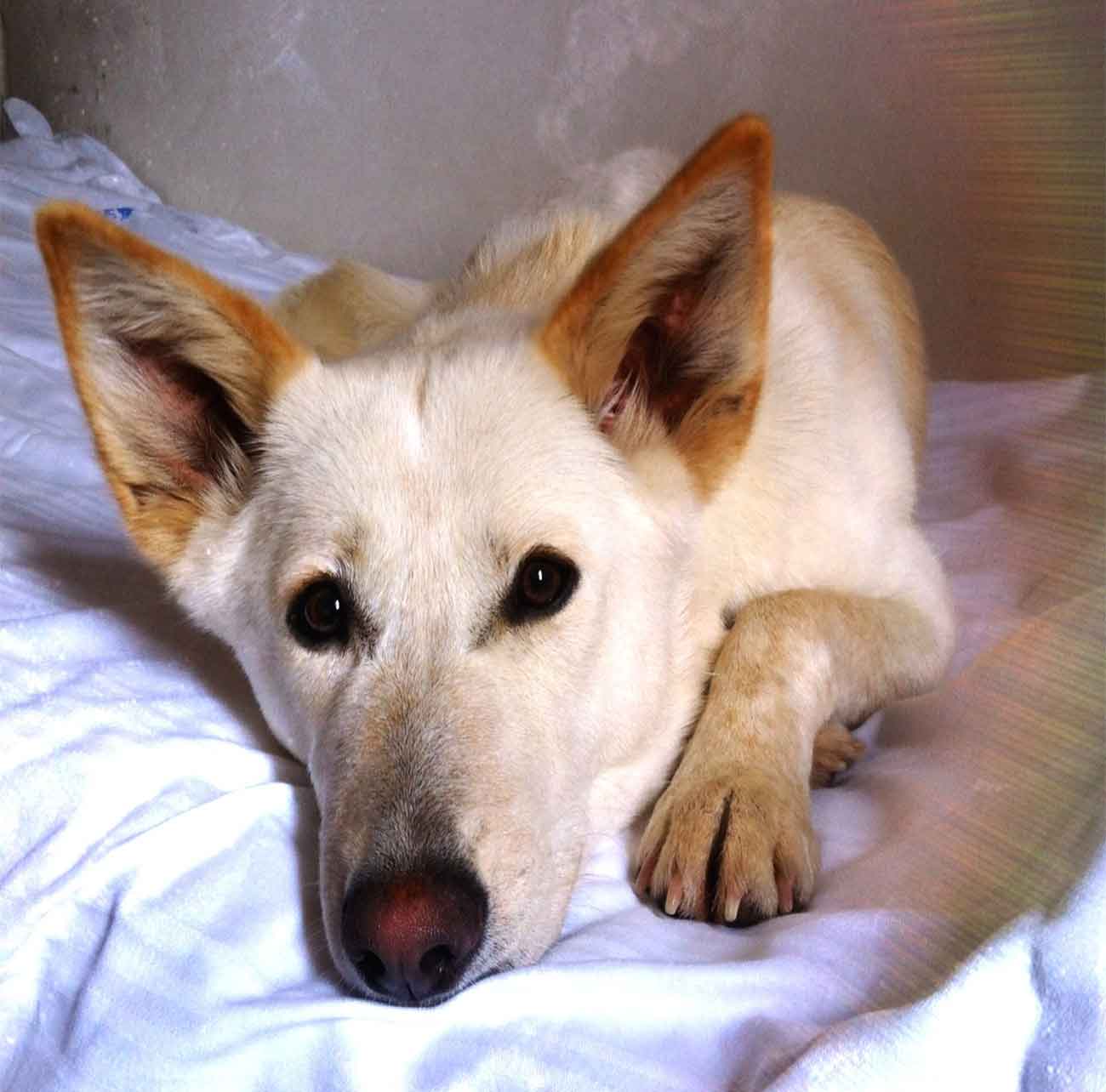
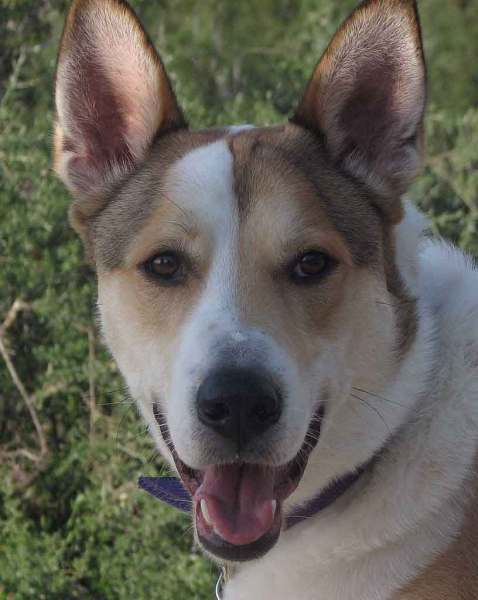
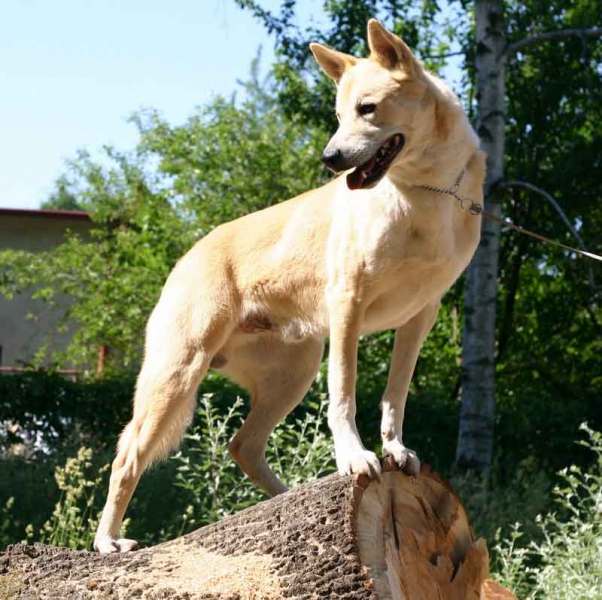
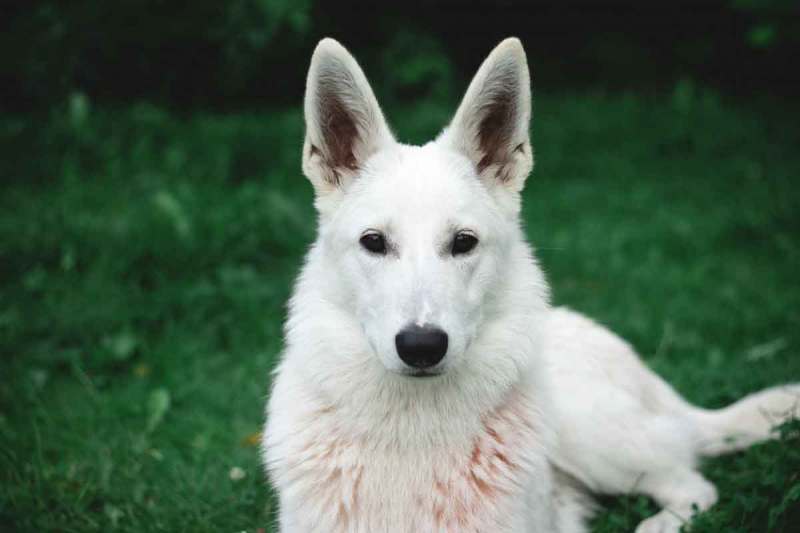
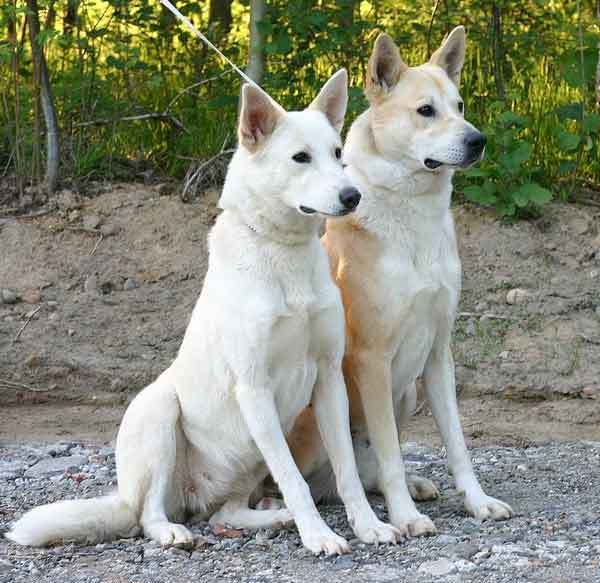
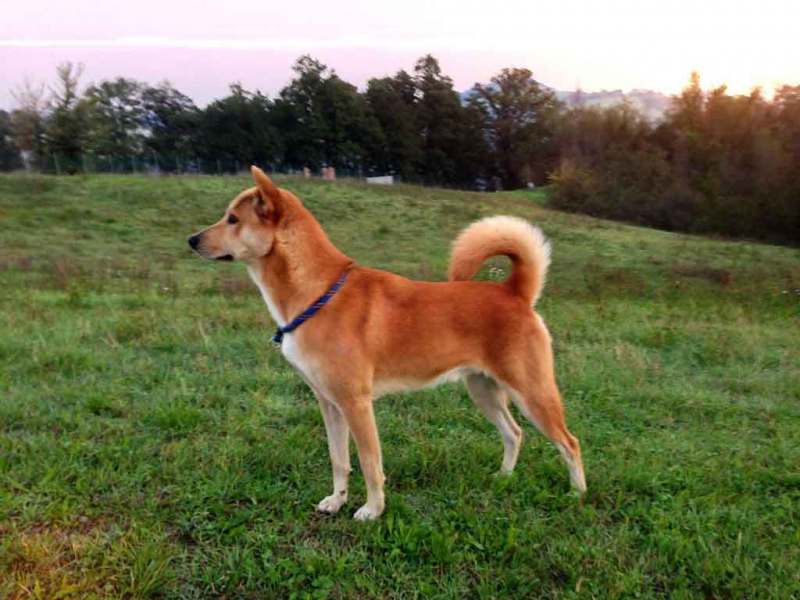
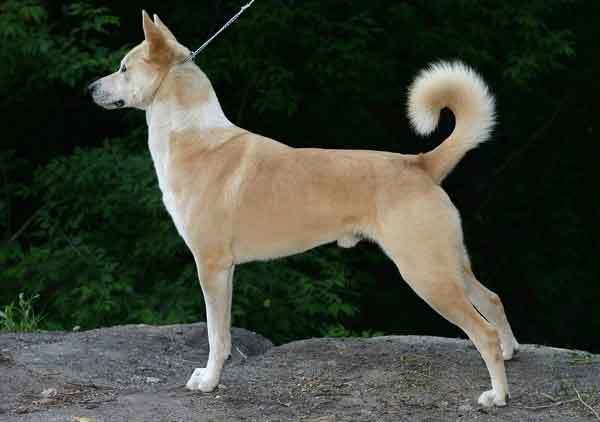
The height at the withers of these square animals, strong and medium in size is about 50 to 60 cm., while males are usually much larger than females. In general, the sex characteristics between female and male dogs are very pronounced. These may include, the rather broad skull of the Canaan Dog, that narrows at a point towards the front, is clearly visible, especially in males. The head is always well proportioned. Standing ears, slightly laterally arranged, triangular and wide, as well as his almond-shaped and dark eyes, give you a very alert and intelligent expression. In fact, nothing escapes the watchman Canaan Dog, even when asleep.

HAIR:
Thick layer, rough and straight, short to medium length. The inner layer is very close and abundant.

COLOR:
Sandy to reddish brown, white, black or mottled, with or without mask. If there is a mask, must be symmetrical. A black mask and white markings are allowed for all colors. A pattern such as the Boston Terrier. Gray colors are not allowed, striped, black and tan or tricolor. The characteristic colors of the desert – sandy, dorado, Red and cream – are particularly typical of the breed.

Character and skills Canaan Dog

The Canaan Dog is lively, sensitive, distrustful of strangers, defensive, but not aggressive by nature. Watcher not only of humans, but also other animals. He is faithful and devoted to his family. The relationship with its owner means for him a partnership, both sides taking and giving. The Canaan Dog you don't have to follow your owner everywhere and submissively read every wish in his eyes. There are times when he shows his love and wants to be caressed. But other times he minds his own business and only belongs to himself.. If one responds to his character, a deep understanding develops between man and animal, which is even more attractive, since one must acquire their trust and affection. This special bond makes it difficult to place the Canaan Dog adults in new settings.

Protects their owner's children and shows a lot of tolerance towards the little ones. But, parents should ensure the dog has a chance to withdraw.

The Canaan Dog they are good watchdogs, but they are not attackers by nature. Only when a Canaan Dog you have the impression that he or his family is seriously threatened, will attack. The Canaan Dog barks as a warning, gives a dangerous appearance, and that is usually enough.

The Canaan Dog can react aggressively to other dogs who dare to pass by his property. Aggression between dogs of the same sex is not uncommon among Canaanites. Each Canaan is different. You have to watch it closely to know what collisions – with other dogs on walks – it is better to avoid.

Canaan Dog education

One Canaan Dog he would never do anything that could harm himself. Nor would it comply with its owner's commands without first questioning their meaning.. You can't demand obedience from this dog. But, once he has gained trust in his human and recognizes him as "leader of the pack", is very cooperative and obedient. Loyalty to his master and his quick understanding make him, despite its independence, an easy-to-handle dog, who can learn the necessary basic obedience without restrictions. But, during training its primitive nature must be taken into account, so it certainly takes some compromises and tricks to convince the Canaan Dog that obedience is worth it. For inexperienced beginners, this self-assured breed is not suitable.

where can i get canaan dog?

Today, not only in his homeland Israel, but also in the US. and in several European countries, like germany, Finland, England, Italy or Switzerland, there are breeders who have dedicated themselves to this special and still very rare breed. The addresses of the breeders can be found in the national kennel clubs or, of course, on the Internet. If you are considering buying a Canaan, enough time should be taken to consider your purchase decision thoroughly. This is true of all dogs, but especially for him Canaan Dog, because this original and independent four-legged friend is no ordinary family dog.

Canaan Dog care

The rough coat naturally repels dirt and only needs to be brushed once or twice a week. Only in the phase of the biannual coat change should it come into contact with a brush or comb daily to remove dead hairs from the dense undercoat and reduce the tuft of carpet hairs, the sofa or the blanket.

Canaan Dog nutrition

While the Canaan, as a "pariah dog" in freedom, forages for its own food and feeds on whatever organic waste humans leave behind, as a domestic dog it depends on the support of its owner. But what do you give such an original wild dog? In general: Dogs are carnivores by nature., regardless of whether they are shepherd dogs, Sausage dog or even Canaan. This means that the food must be largely meat. (around the 70 per cent). Meat is the most important source of protein for the dog. Its entire masticatory and digestive system is oriented to the processing of meat: the strong teeth, strong chewing muscles, the relatively short intestinal tract and digestive juices that are quite aggressive in contrast to humans.

Canaan Dog health

The race Canaan Dog It is very healthy, it does not have typical diseases and it is considered very clean..

Characteristics "Canaan Dog"

Coexistence is important that you have with your new friend. Before considering the acquisition of a dog of the breed "Canaan Dog" you know certain factors. Not all breeds of dogs are apt to live in an apartment, you must take into account his character, their need for exercise, their interaction with other pets, their care and if you have small children, their level of tolerance towards them.

Training ?

4,0 of 5 stars (based on 1 review)

Suitability of the apartment ?

4,0 of 5 stars (based on 1 review)

Can be alone all day ?

3,0 of 5 stars (based on 1 review)

Suitable as a first dog ?

2,0 of 5 stars (based on 1 review)

Weight gain ?

2,0 of 5 stars (based on 1 review)

Health ?

5,0 of 5 stars (based on 1 review)

Intelligence ?

5,0 of 5 stars (based on 1 review)

Kindness with child ?

3,0 of 5 stars (based on 1 review)

Tendency to bite ?

3,0 of 5 stars (based on 1 review)

Tendency to bark ?

4,0 of 5 stars (based on 1 review)

Tendency to flee ?

3,0 of 5 stars (based on 1 review)

hair loss strength ?

4,0 of 5 stars (based on 1 review)

Suitable as a guard dog ?

5,0 of 5 stars (based on 1 review)

Joy ?

3,0 of 5 stars (based on 1 review)

Cat friendliness ?

4,0 of 5 stars (based on 1 review)

Power level ?

4,0 of 5 stars (based on 1 review)

Images "Canaan Dog"

Photos:

1 – Canaan dog by Giora Sluzky, CC BY-SA 3.0, via Wikimedia Commons
2 – Canaan dog by Canaan Dog, Kennel Samorodok Hanaanahttp://www.ruscanaan.ru, CC BY-SA 3.0, via Wikimedia Commons
3 – Canaan dog by Giora Sluzky, CC BY-SA 3.0, via Wikimedia Commons
4 – Canaan dog by SamorodokhanaanaCanaan Dogs from "Samorodok" http://www.ruscanaan.ru, CC BY-SA 3.0, via Wikimedia Commons
5 – Canaan dog by https://pxhere.com/en/photo/1503483
6 – Canaan dog by Samorodokhanaanahttp://www.ruscanaan.ru, CC BY-SA 3.0, via Wikimedia Commons
7 – Canaan dog by Arikk, CC BY-SA 3.0, via Wikimedia Commons

Videos "Canaan Dog"

Canaan - Top 10 Facts
Canaan – Top 10 Facts
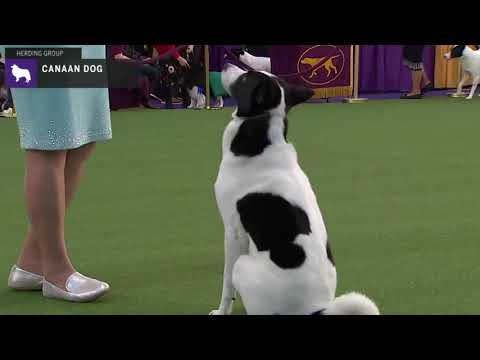
Canaan Dogs | Breed Judging 2020

Type and recognitions:

  • FCI CLASSIFICATION:
  • Group :
  • Section : . .

Federations:

  • FCI – Group 5: Spitz-type dogs and primitive type – Section 6: Primitive type. โ“˜
  • AKCHerding โ“˜
  • ANKC – Group 7 (Nonsporting) โ“˜
  • CKC – Group 7 (Nonsporting) โ“˜
  • โ€‹KCUtility โ“˜
  • NZKCNonsporting โ“˜
  • UKC – sighthounds and pariah โ“˜

FCI breed standard "Canaan Dog"

Origin:
Israel

Date of publication of the valid original standard:
26.03.1998

Use:

Guard and protection dog.


General appearance:

Medium-sized, square body, well balanced, strong, similar to the type of wild dog. There is a marked difference between both sexes.


Behavior / temperament:

You are always alert and react quickly. Distrustful of strangers, his character is strongly defensive, but not aggressive by nature. Is vigilant, not only with humans, but also with all the animals. It is very faithful and easy to train.

Head:

Is well proportioned, medium length, in the form of an obtuse wedge. It appears even wider because the ears are set low.

Cranial region:
  • Skull : Is something flat. Head may be wider in powerful males.
  • Depression links (Stop) : shallow, although well defined.

facial region:

  • Truffle : black.
  • Snout : Vigorous, of moderate length and width.
  • Lips : Tight.
  • Jaws / Teeth : Jaws must be strong. Teething is complete with a uniform scissor bite.

Eyes : Dark brown in color, slightly oblique and almond-shaped. Dark eye rim is essential.

Ears : erected, relatively short and wide. They are slightly rounded at the tip and are set low.

Neck:

Muscular and of medium length.

Body:

Square.

  • Cross : Well developed.
  • Back : Uniform.
  • Pork loin : Muscular.
  • Breast : Deep and moderately wide. Well arched ribs.
  • Belly : Well up.

Tail:

Set high it is worn curled over the back. The hair is abundant and dense.

Tips

PREVIOUS MEMBERS : Perfectly straight.

  • Shoulder : Oblique and muscular.
  • Elbows : Well attached to the body.

LATER MEMBERS : Powerful.

  • Buttocks : Strong and covered with a slight fringe of hair.
  • Knees : Well angulated.
  • Hocks : Well descended.

FEET : Jack's foot. They're strong, round and the pads are hard.

Movement:

The trot is fast, light and vigorous. The animal must show great agility and resistance. Correct movements are of essential importance.

Mantle

HAIR : The hairs on the outer coat are dense, hard, straight and short or of medium length. The hairs of the undercoat are abundant and well glued.

COLOR : Ranges from sand to reddish-brown, white, black or mottled, with or without mask. If there is a mask, this must be symmetrical. Black mascara and white markings are allowed in all colors. Brands like the Boston Terrier are common. Gray colors are not accepted, striped, Black with fire, nor tricolor. The most typical colors of the breed are the colors of the desert, sand, oro, Red and cream.


Size and weight:

Height to the cross : It is of 50 to 60 cm.. Males can be considerably larger than females.

Weight : It is of 18 to 25 kg.


Fouls:

Any deviation from the aforementioned criteria is considered as a fault and the severity of this is considered to the degree of the deviation to the standard and its consequences on the health and well-being of the dog..

Any dog โ€‹โ€‹showing clear signs of physical or behavioral abnormalities must be disqualified..


N.B.:

โ€ข Males must have two normal-appearing testicles fully descended into the scrotum..
โ€ข Only functionally and clinically healthy dogs, with the typical conformation of the breed, should be used for parenting.

Source: F.C.I - International Cynological Federation

Alternative names:

1. Bedouin Sheepdog, Palestinian Pariah Dog (English).
2. Canaan dog (French).
3. Canaan Dog, Israel-Spitz (German).
4. Cรฃo de canaรฃ (Portuguese).
5. Perro de Canaรกn, Kelev Kna’anรญ, kunean alkalb (espaรฑol).

โ–ท The world of Pets: Dogs, cats, birds, reptiles, amphibians

Barak hound
Bosnia FCI 155 . Medium-sized Hounds

The Barak hound It is used for hunting Hound

Bosnian Coarse-Haired Hound

The Barak hound (Bosanski Oลกtrodlaki Goniฤ), also called Bosnian Broken-haired Hound or Bosnian Rough-haired Hound, It is a dog developed in Bosnia. Barak hound is a breed of hound used for hunting and its original name, Bosnian Sharp-haired Goniฤ's…

Read all about the race by clicking on: Bosnian Hound

  • Alternative names: Bosnian Broken-haired Hound / Bosnian Rough-haired Hound / Bosnian Hound / Illyrian Hound / Bosnian Broken-haired Hound / Sabueso de Bosnia de pelo duro / Bosanski ostrodlaki gonic / Wire-haired Bornian hound / Bosnischer rauthaariger laufhund / Bosnian coarse-haired hound
  • Group 6 / Section 1.2 – Medium-sized hounds

Dogs breeds: Barak hound


โ–ท The world of Pets: Dogs, cats, birds, reptiles, amphibians

Dutch bulldog
China Gran Bretaรฑa FCI 253 . Small Molossian type Dogs

The Dutch bulldog It is a friendly and affectionate dog with other dogs and with people.

Dutch bulldog

Content

Adaptation โ“˜

5,0 of 5 stars (based on 1 review)

friendly dog โ€‹โ€‹โ“˜

5,0 of 5 stars (based on 1 review)

hair loss โ“˜

4,0 of 5 stars (based on 1 review)

Affection level โ“˜

5,0 of 5 stars (based on 1 review)

Need for exercise โ“˜

1,0 of 5 stars (based on 1 review)

Social need โ“˜

5,0 of 5 stars (based on 1 review)

Home โ“˜

5,0 of 5 stars (based on 1 review)

Toilet โ“˜

1,0 of 5 stars (based on 1 review)

Friendly with strangers โ“˜

5,0 of 5 stars (based on 1 review)

barking โ“˜

3,0 of 5 stars (based on 1 review)

Health โ“˜

5,0 of 5 stars (based on 1 review)

Territorial โ“˜

4,0 of 5 stars (based on 1 review)

Cat friendly โ“˜

5,0 of 5 stars (based on 1 review)

Intelligence โ“˜

3,0 of 5 stars (based on 1 review)

Versatility โ“˜

3,0 of 5 stars (based on 1 review)

Child friendly โ“˜

4,0 of 5 stars (based on 1 review)

Surveillance โ“˜

3,0 of 5 stars (based on 1 review)

joy โ“˜

4,0 of 5 stars (based on 1 review)

History

The Dutch bulldog (also known as Chinese Carlino, Mops, Carlinogu) is a breed of dog miniature with wrinkled face and a body of small to medium-sized, originating in China.

This breed is often summed up as โ€œmultum en parvoโ€ (much in little), describing the personality of the Dutch bulldog related to its small size.

The word "Pug" may come from Old English Carlinog, it is an affectionate adjective it would be something like a little playful demon or monkey. Carlin puppies are called Carlinolets.

The breed of dog Dutch bulldog, has very ancient origins. It was raised and selected in China, country where he was the favorite dog of officials, It is also a very popular in Holland and England breed of dog.

In fact, England claimed the patronage of la raza, since they had carried out excellent selection work for years. Finally, part of the patronage of the race was awarded to Great Britain.

This wrinkled and funny puppy, He was a faithful companion of the ladies of the 19th century in Italy.

As almost all dog breeds, it knew how to have its difficult moments, especially when the world wars took place, but it has not been on the verge of extinction like others.

Today the breed Dutch bulldog it is highly appreciated in almost every corner of the world.

Did you know??

Among the rich and famous are admirers of the Dutch bulldog King Louis XIV, Josefina, Empress of Napoleon, Queen Victoria, the Duke and Duchess of Windsor and fashion designer Valentino.

Physical characteristics

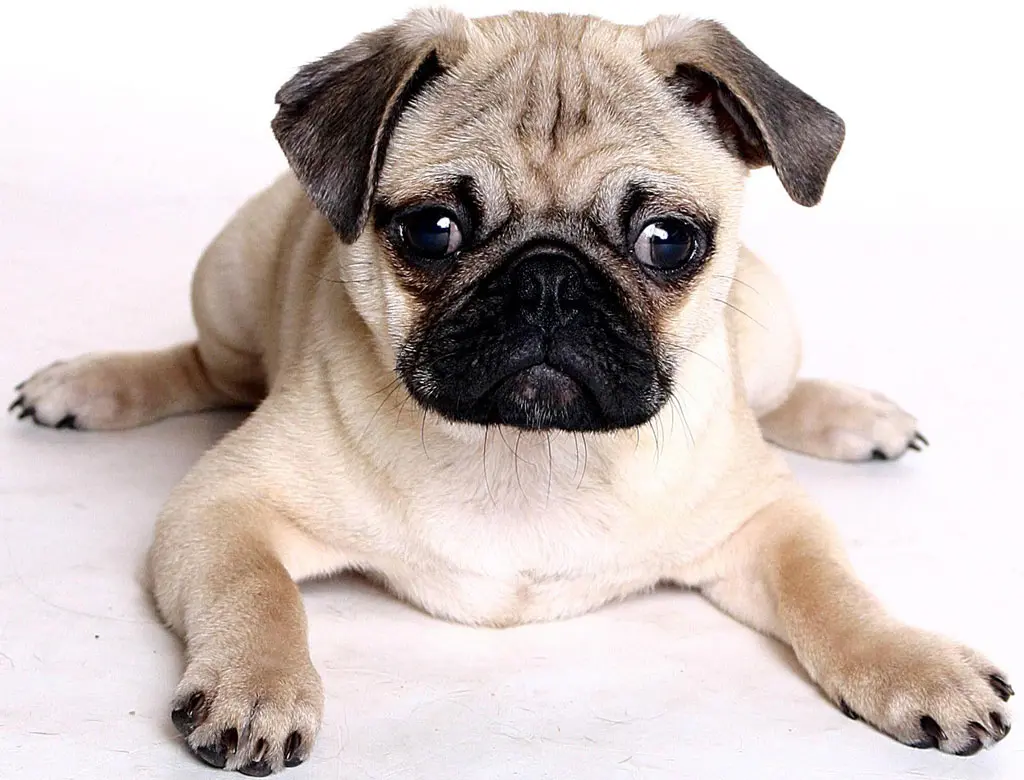
It is a dog under, solid square and compact appearance, well proportioned and muscular; the head, large, rounded and solid appearance, is covered with folds; the muzzle is square and flat; the eyes, large, bulging, they are dark; It has straight legs and looped collector queue. The hair is tight, smooth and shiny.

The Dutch bulldog can be silver or soft apricot with a black mask, in both cases it presents a black stripe that goes from head to tail; It can also be pure black or white which is the more scarce and expensive of all.

It measures each 30 cm to cross and weighs between 6 and 8 kg. His confident nature, docile and friendly makes the Pug an appreciated companion animal. The Pug is particularly a dog "with a sense of humor", exhibiting very human facial expressions given its bone structure. Due to its striking appearance, some people tend to think that the characteristics of the Dutch bulldog are the result of genetic manipulation or inbreeding. But, the characteristics of the Pug are similar in the last five hundred years, period in which Europeans began it importing from China.

The tail of the Dutch bulldog It has a characteristic spiral or letter "Q" shape. This variation in the way of the tail is due to the vertebrae in this portion of the column are actually hemivertebra. In some few puppies, This alteration of the shape can be extended to the rest of the column and the animal presents spina bifida.. The spine of the animal must feel before purchasing to avoid choosing a sick puppy. An animal that suffers from this malformation should not be reproduced in order to not pass this problem to their offspring.

Given the shape of the skull, the eyes of the Dutch bulldog have a bouncy and lively appearance. To find the eyes located above, they are more exposed to friction with plants and objects to the eyes of other animals, and it is advisable to take them to the vet as soon as possible if they have an injury. It is recommended that the owners of the Dutch bulldog clean the animal's eyes once a week with a clean cotton swab moistened with cold boiled water or cold tea, in order to remove secretions or dirt.
The characteristic wrinkles of the face can also accumulate secretions and dirt. It is recommended at least once a week clean gently between wrinkles using the same method. It is not necessary to apply SOAP, creams or other substances. Simple toilet is enough and to spare.

The Dutch bulldog although it is a short-haired dog, tends to constantly pelechar, so his tenure is not recommended for persons allergic or asthmatic. They have a characteristic pungent odor that may bother some people, but that decreases a bath every couple of weeks.

The biggest health problem presented by the Dutch bulldog is one that is completely preventable and treatable, and that depends entirely of the OWNER. This disease is the OBESITY. A Carlin receiving proper care can live more than fourteen years, Although on average they tend to live around ten.

One 1% of puppies can develop a degenerative neurological disease called Pug Encephalitis (or tap for its acronym in English). This disease is lethal and has no known cure. For this reason dogs must not be reproduced within the two years, in order to not transmit the gene to their offspring. Last year of life is very unlikely to reach Carlin present this disease.

Character and skills

The Dutch bulldog they are not aggressive animals. Like any dog, they can bite, but it is very rare that this happens without the animal mistreatment. The Dutch bulldog They live up to their motto "multum in parvoยป and are not intimidated by larger breed dogs, which you can get into trouble.

Before humans, the Dutch bulldog tend to be playful and seek interaction. However can be apprehensive to strangers, and with their barking to announce the presence of unknown people. Although its size are not guard dogs, If they are good "alert dogs".

The Dutch bulldog show a moderate level of intelligence, being able to use their short snouts and front paws to obtain objects out of reach. They sometimes tend to stubbornness, and do not necessarily come when you are called, but rather when crave it. Despite this, they do not go far from their owners and prefer their company to that of other dogs..

During the first years of life Dutch bulldog may occasionally be hyperactive (run, jumping and barking constantly) but this characteristic tends to disappear over the years. The Dutch bulldog 5 and older tend to be calmer and enjoy the chairs more than the street.

There is a tendency to believe that Dutch bulldog They are "sick" animals, which is very far from reality. A healthy Carlin will behave aggressively and playful, and even a bit hyperactive in its first years of life. Its solid structure makes they tolerate well the game with children and adults, and its particularly hard head can cause bumps and falls in young children and older adults.

The Dutch bulldog It's a small animal, and although strong, requires very little food. But, being a pet, owners tend to supercharge them and share their food with them. This must not be. The Carlin may well eat a cup of dry food in the morning and a cup at night, and you won't go hungry or require any extra supplements.

One Dutch bulldog obese is not a Dutch bulldog ยซbelloยป, on the contrary, It is an animal that sick because you can not breathe well, be it exhausted easily and will begin to suffer from problems in the spine and joints. A Carlin is fed healthily, on the other hand, a robust animal, with his sharp and clearly visible muscles under the skin. A healthy Carlin can run as fast as any other dog I, and you can skip two or three times its own height. Although the animal enjoys eating extra foods and receiving "treats" occasionally, is task of the owner to ensure that the quantity and quality of food that consumes is adequate.

Characteristics "Dutch bulldog"

Coexistence is important that you have with your new friend. Before considering the acquisition of a dog of the breed "Dutch bulldog" you know certain factors. Not all breeds of dogs are apt to live in an apartment, you must take into account his character, their need for exercise, their interaction with other pets, their care and if you have small children, their level of tolerance towards them.

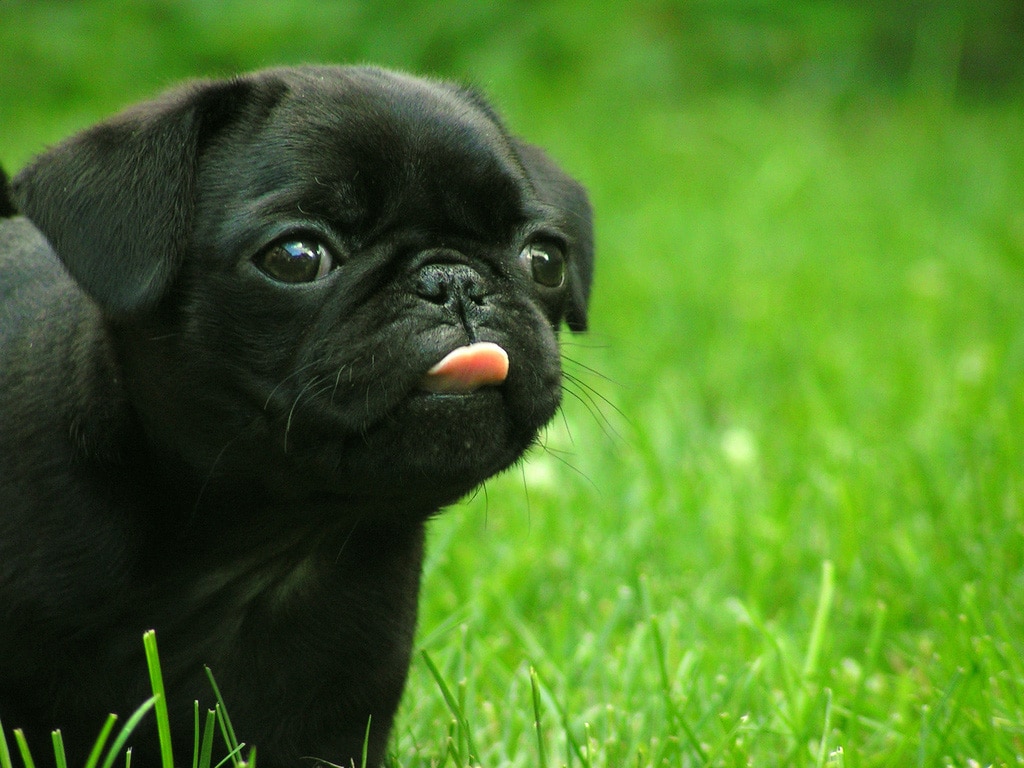
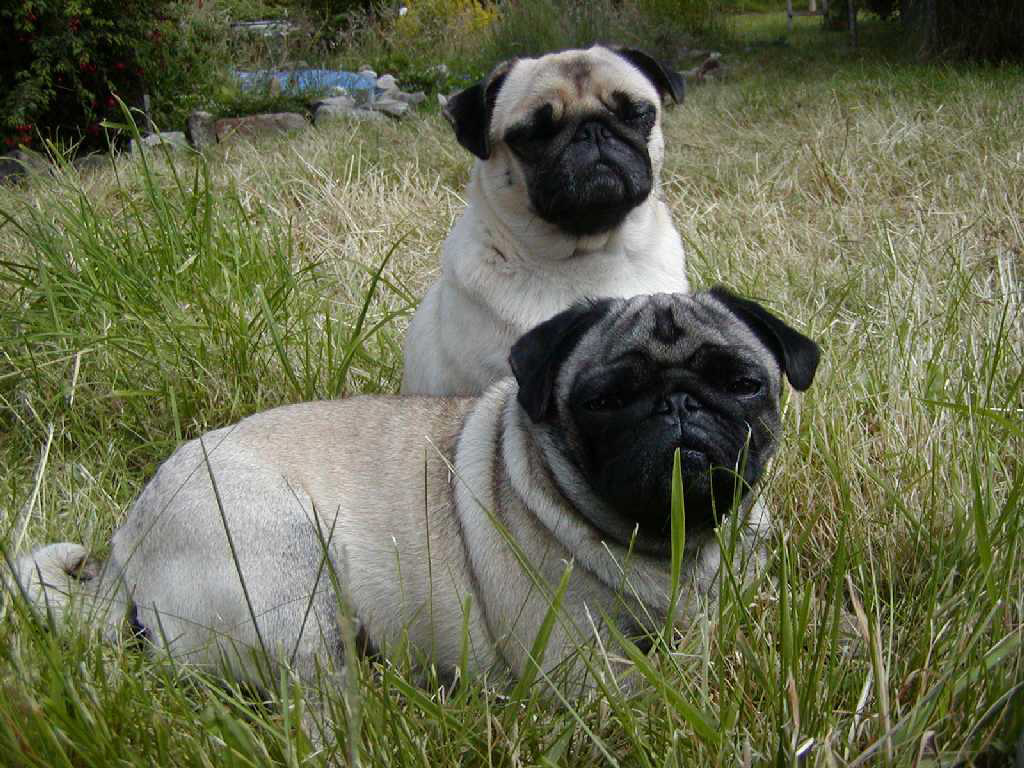
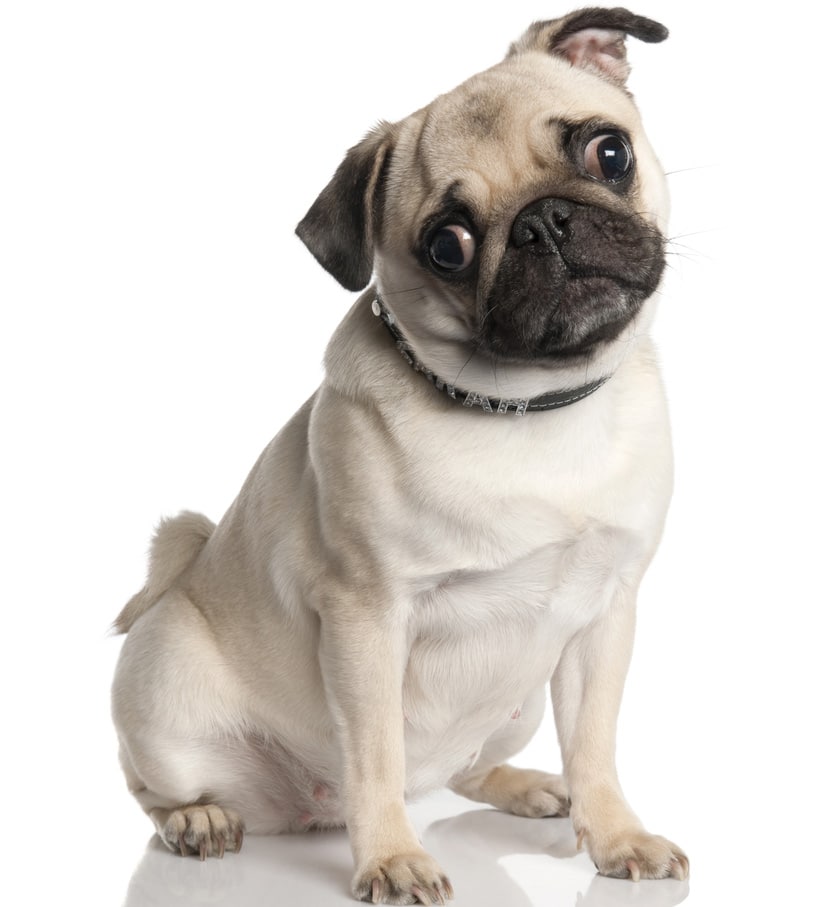
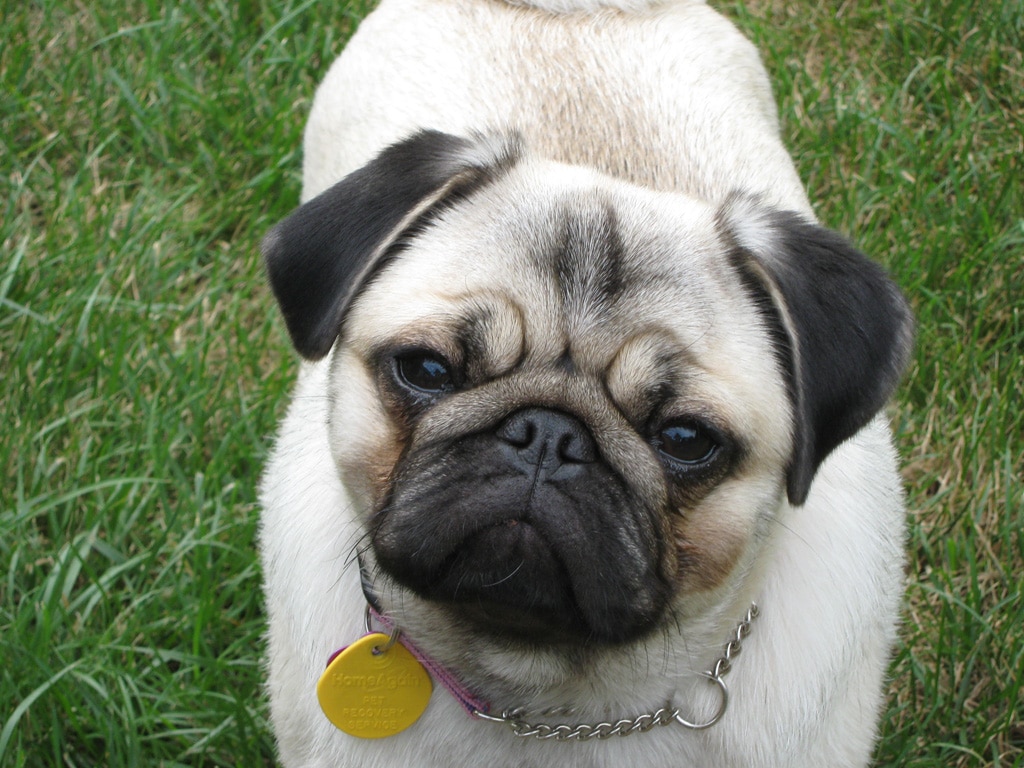
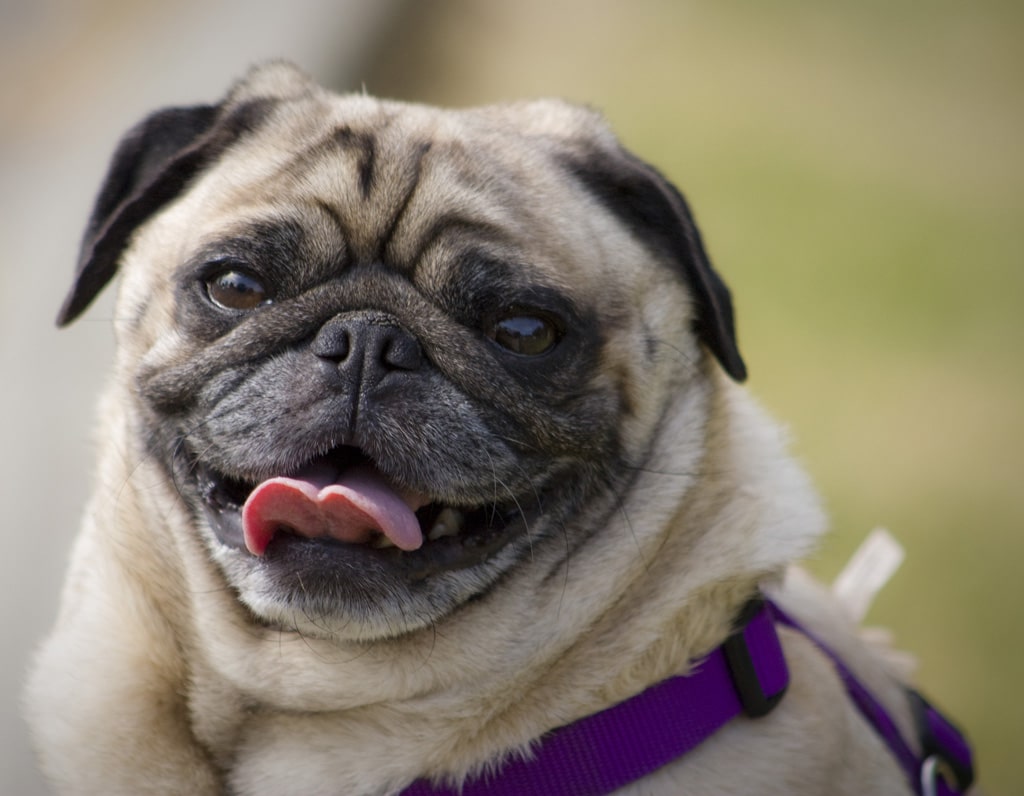
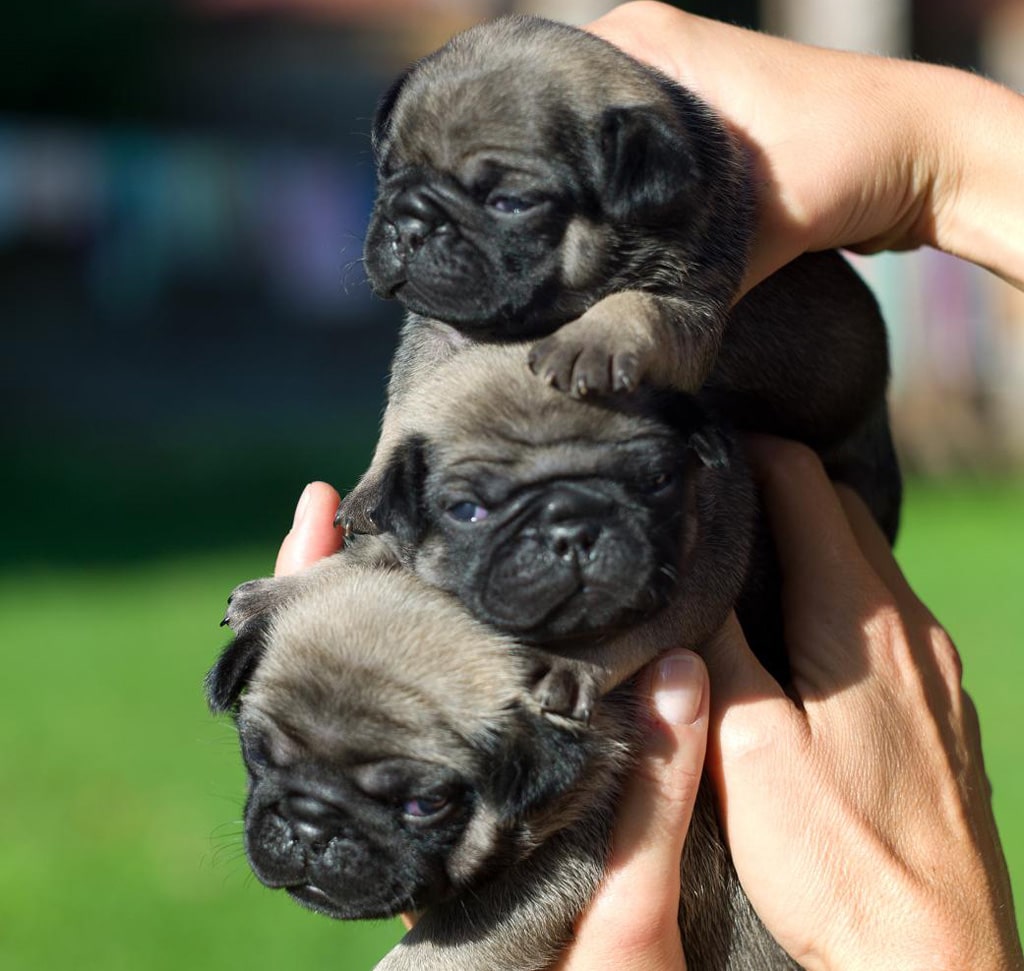
Images of the ยซPugยป

ยซCarlinoยป Videos

Type and recognitions:

  • FCI CLASSIFICATION:
  • Group :
  • Section : . .

Federations:

FCI โ“˜, AKC โ“˜, ANKC โ“˜, CKC โ“˜, โ€‹KC โ“˜, NZKC โ“˜, UKC โ“˜

FCI breed standard "Dutch bulldog"

Origin:
China, United Kingdom

Date of publication of the valid original standard:
13.10.2010

Use:

Companion dog


General appearance:

It is undoubtedly a square and plump dog, "Multum in parvo" (a lot of substance in a small space) showing it in its compact structure, his well-built proportions and the hardness of his muscles, but it should never seem short-limbed, neither lean nor โ€œlargeโ€.

IMPORTANT PROPORTIONS:

Definitely square and compact.


Behavior / temperament:

Great charm, dignity and intelligence. Balanced, cheerful and lively.

Head:

Relatively large and provided with the body, round, You must not have Apple shape.

Cranial region:
  • Skull: Without Groove. Wrinkles on the antecara should be clearly defined without exaggeration.

facial region:

  • Truffle: Black with nostrils large and wide open. Narrow nostrils and heavy on the nose folds are unacceptable and must be severely penalized.
  • Snout: Relatively short, obtuse, square, not drooping upwards. Eyes and nose should never be adversely affected or be hidden by excessive folds on the nose.
  • Jaws / Teeth: With a slight lower prognathism. The lower jaw is wide with the incisors placed almost in a straight line. It is highly undesirable Wry mouth, teeth and tongue look and should be severely penalized.

Eyes: dark, relatively large, round, sweet and concerned expression, very bright, and when it is excited ardor full. Never protruding, exaggerated or showing white when they look forward. Free eye problems.

Ears: Thin, small and soft black velvet. There are two types: โ€œEar in pinkโ€, It is a small hanging ear that bends backwards to show the ear canal. โ€œButton earโ€, It is an ear that folds by bending forward, Tip adheres to the skull to cover the opening. The latter are preferred.

Neck:

Slightly arched it resembles a crest, strong, thick, with long enough to take the head proudly.

Body:

Short and compact.

  • top line: Level; It must be neither concave nor inclined.
  • Breast : Large. Ribs well arched back.

Tail:

High insertion, tightly coiled on the hip. The dual threading is highly desirable.

Tips

PREVIOUS MEMBERS:

  • Shoulder: Well inclined backwards.
  • forearms: Very strong limbs, straight, long moderate and positioned low in the body.
  • Previous feet: As long as the foot of the Hare nor so round as the foot of the cat; with separate fingers; the nails must be black.

LATER MEMBERS:

  • General appearance: Very strong limbs, of moderate length, well positioned under body, straight and parallel when you look at them from the back.
  • Knee: Good angulation of stifle warm joints rotulianas (knees).
  • Hind feet: As long as the foot of the Hare nor so round as the foot of the cat; with separate fingers; the nails must be black.

Movement:

Viewed from the front you must lift the forelimbs and drop well straight below shoulders, keeping the feet directly forward, unoffset in or out. From behind, the action must be equally correct. The forelimbs uses them with force bringing them well forward and the rear moving freely and bending your knees well. Light balancing the quarterfinals later characterized the journey. Capable of performing a resolved and safe movement.

Mantle

Fur: Texture fine, smooth, soft, short and bright. Neither rough nor woolly.

COLOR: Silver, apricot, Griffon clear or black. Each of these colors must be clearly defined, to emphasize the contrast between the color, the stretch mark (a black line extending from the occiput to the tail) and the mask. The marks must be well defined. The muzzle or mask, the ears, moles on the cheeks, the thumb mark or the forehead rhombus and the striation should be as black as possible.


Size and weight:

The ideal weight is between 6,3 and 8,1 kg. You must have strong muscles, but the substance should not be confused with an overweight.


Fouls:

Any deviation from the aforementioned criteria is considered a fault and the severity of this is considered to the degree of the deviation from the standard and its consequences on the health and well-being of the dog..

FALTAS DESCALIFICANTES

  • Aggressive or fearful dog.
  • Any dog โ€‹โ€‹showing clear signs of physical or behavioral abnormalities must be disqualified..


N.B.:

โ€ข Males must have two normal-appearing testicles fully descended into the scrotum..
โ€ข Only functionally and clinically healthy dogs, with the typical conformation of the breed, should be used for parenting.

TRANSLATION: Brรญgida Nestler / Original version: (IN).

Source: F.C.I - International Cynological Federation

Alternative names:

1. Chinese pug, Dutch mastiff (English).
2. Pug (French).
3. Pug (German).
4. Carlin, Mops (Portuguese).
5. Pug chino, Mops, Pug carlino, Doguillo (espaรฑol).