โ–ท The world of Pets: Dogs, cats, birds, reptiles, amphibians

East Siberian Laika
Rusia FCI 305 - Nordic Hunting Dogs

Laika de Siberia Oriental

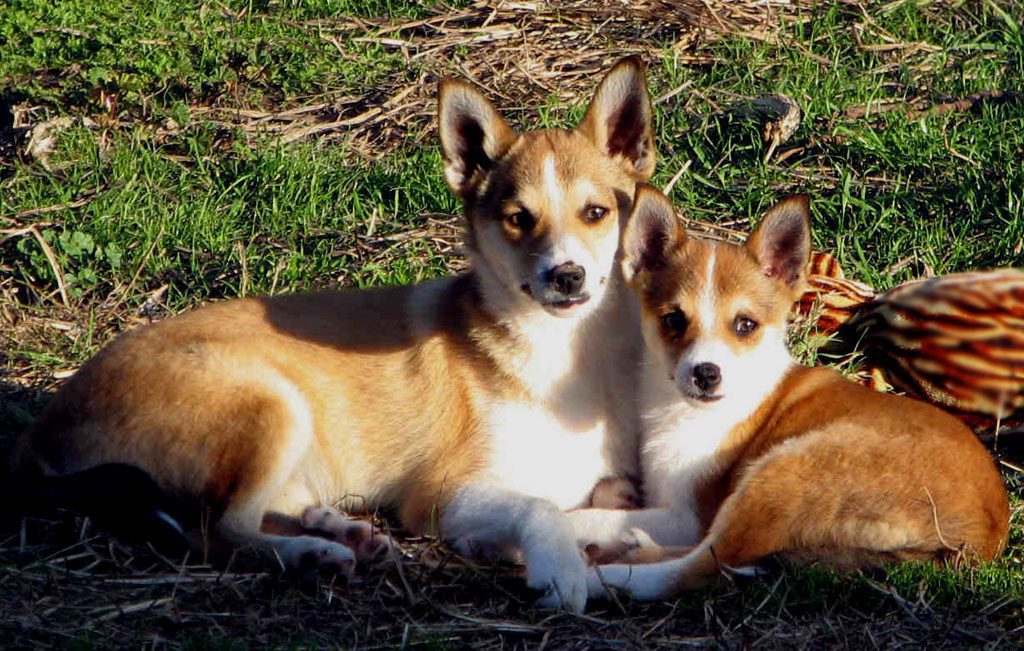
The East Siberian Laika it is popular in its native Russia not only as a hunting dog, but also as a draft and sled dog.

Content

History

The home of this impressive and robust pedigree dog is -as its name implies- in the forested area of รขโ‚ฌโ€นรขโ‚ฌโ€นEastern Siberia, more precisely in the vast area between Yenisei and peninsula de Kamchatka.

The East Siberian Laika was first mentioned by name in 1947, when the Cynology Congress of Alliances in the former Soviet Union established four breed standards for different Laikis (plural of Laรฏka). Besides him East Siberian Laika, these other races like the West Siberian Laika and the Russo-European Laika, have been somewhat better known, just like him Yakutian Laika and the Siberian Husky, so this breed was not yet recognized by the FCI.

Ancestors of the East Siberian Laika:

Hunting and sled dogs of the high arctic

It is assumed that the history of the ancestors of the Laรฏka goes way back. The origin of the Laika rousso dates back to the sleds and hunting dogs of the high arctic. The East Siberian Laika, as described in today's breed standard, was created by crossing Ewenkish, Lamutsker, Amur and other races of Laรฏka. The main focus of the breeding efforts was training their hunting skills. A natural hunting instinct, courage and a lively temperament, as well as excellent sensory perceptions, a particularly good sense of smell and orientation should characterize the offspring.

In his native Russia, the East Siberian Laika mainly used for squirrel hunting, martens and feather hunting. But it is also appreciated as a draft and sled dog. By the way, "He is not related to the dog."Laรฏkaยซ, who became world famous as the first dog in space. This bitch was probably a mix of Husky and Terrier.

Physical characteristics

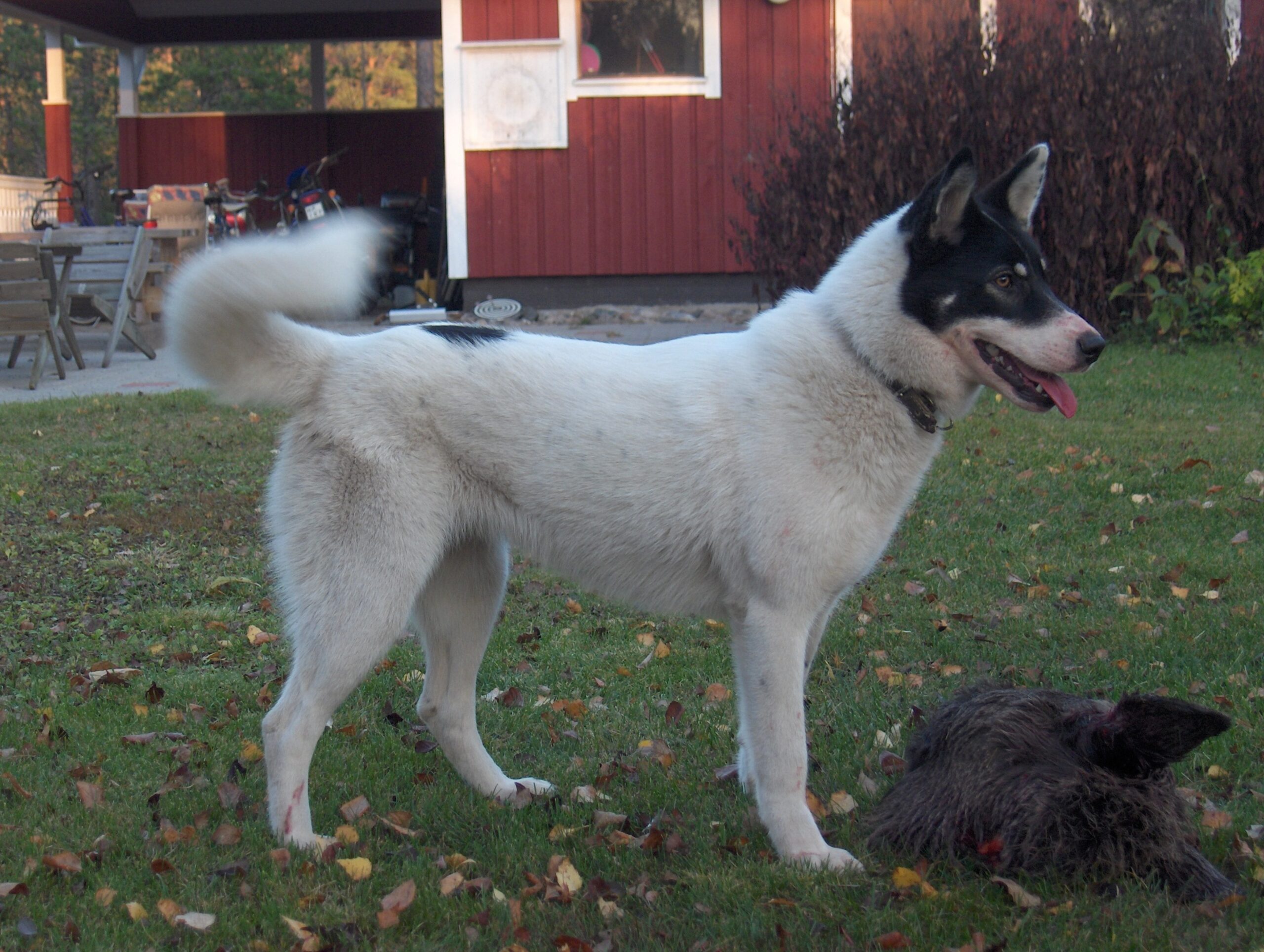
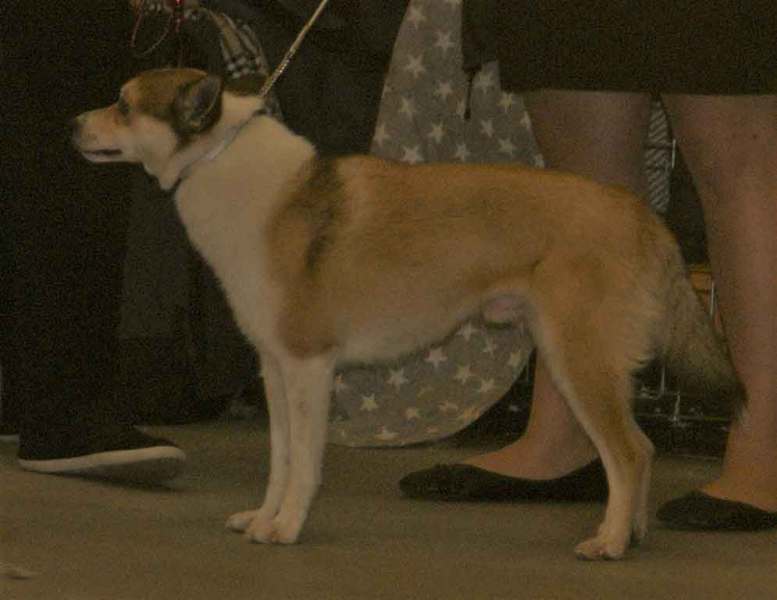
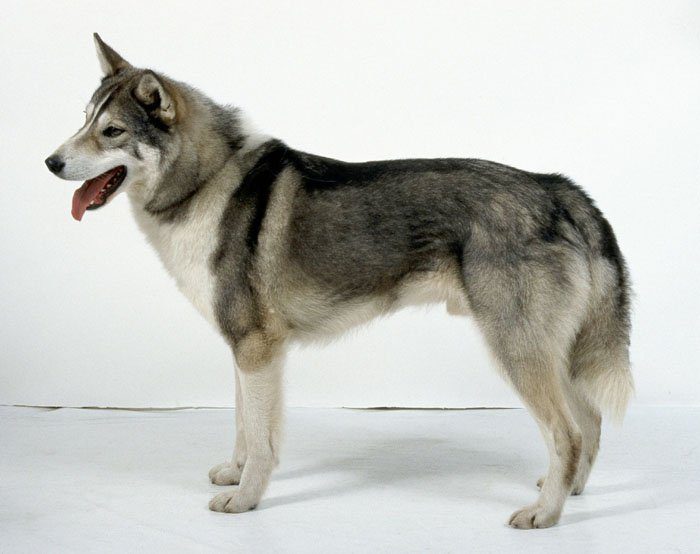
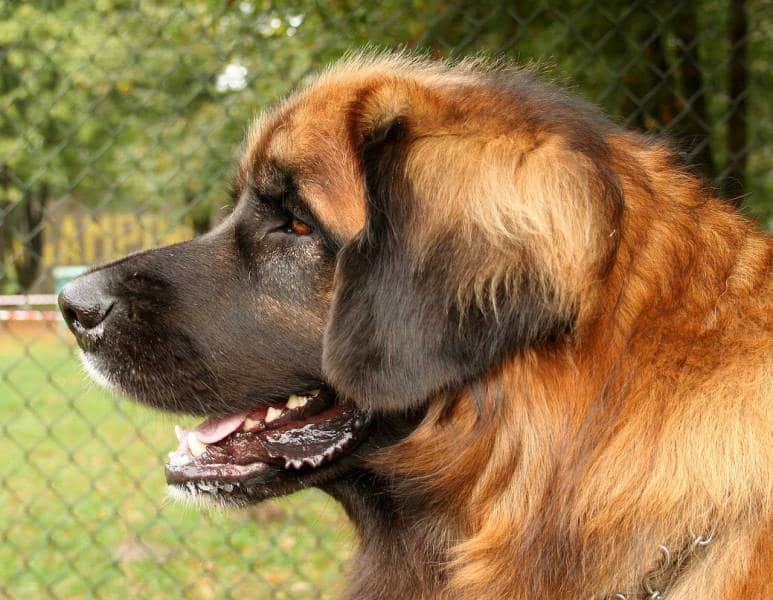
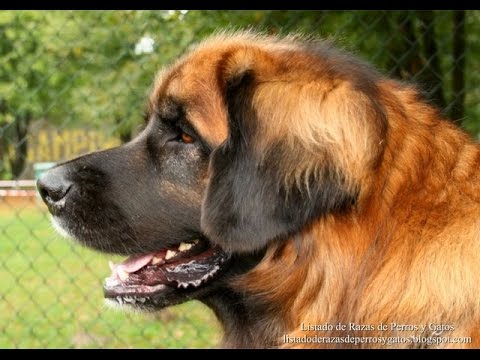
With a height at the cross of 53 to 65 cm el East Siberian Laika belongs to the medium and large breeds. His muscular body and strong physique quickly give an impression of the stocky build of this wolfhound.. From the harsh climate of its native Siberia, the hard hairs on its coat and the dense and soft undercoat protect. On the neck and shoulders the abundant coat forms the typical collar of the Laรฏka. Males, where the fur at the withers is even more abundant, They also stand out for a kind of mane.

Many color variations

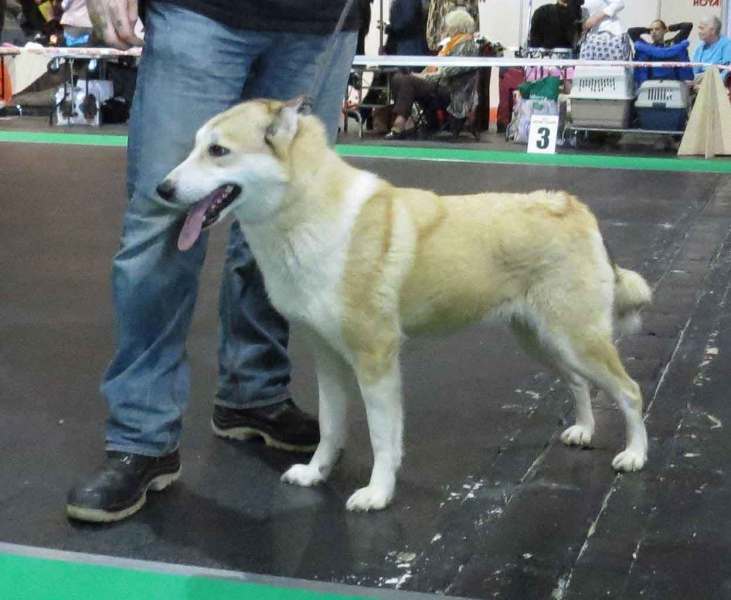
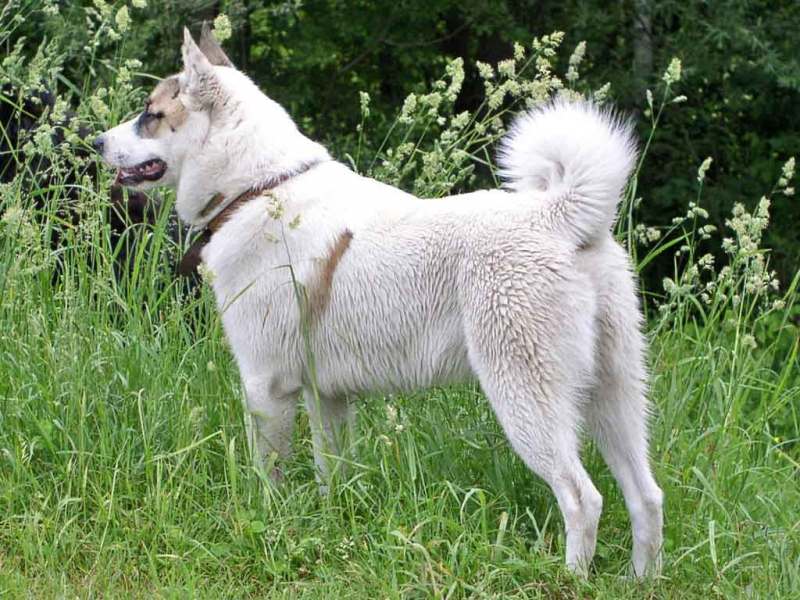
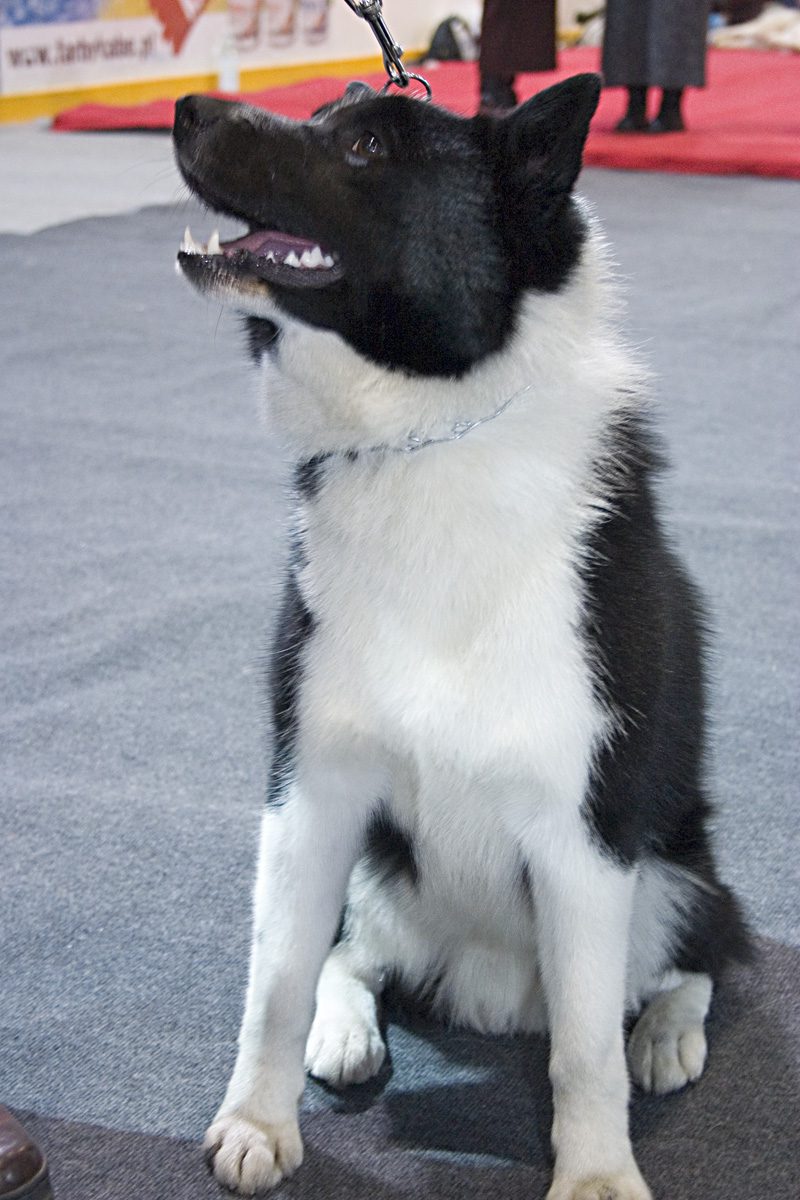
Regarding its fur, many different variations possible. So black tones are possible, White, grey, reddish, colored fox and colored wolf. Variations of pied or spotted according to the Russian standard and the FCI.

Other distinctive features of the East Siberian Laika are the ears standing, placed laterally and the tail rolled.

Character and skills

The Russian word ยซlajatjยป (layat), from which the racial name is derivedLaikaยซ, means "bark". And in fact, loud barking is a fundamental characteristic of this Russian hunting dog. Like a so-called poking dog, finds its prey on its own and keeps it in control with its distinctive barks until the hunter arrives and is able to kill the prey. He is very self-confident and courageous and proves to be an independent worker., robust and persevering while hunting. Unlike other breeds of hunting dogs, as the Gray Norwegian Elkhound, the East Siberian Laika never strays too far from its controller. Each 20 or 30 minutes he looks for contact with him and makes sure he continues his search.

Independent hunter and trusted companion

In combination with your intelligence, his lively temperament and physical strength, This close โ€œleader bondโ€ allows it to be used in many different ways.. Like this, the East Siberian Laika it is popular in its native Russia not only as a hunting dog, but also as a draft and sled dog, as a companion dog and guard dog. Despite its independence, the East Siberian Laika shows himself within his family as a balanced and confident companion, that enjoys the most of the caresses of its humans. In contact with children the proud Laรฏka is playful and considerate. Due to its original behavior, However, children should only be allowed to play with the strong dog under supervision.

Not a beginner dog

Despite his balanced nature and basically friendly nature, the East Siberian Laika a dog is not for beginners. Your innate hunting instinct, its great independence as well as its pronounced need for movement would quickly overwhelm inexperienced owners. So, the keeping of this breed should be reserved to specialists who have experience in dealing with similar breeds and who know how to educate and train such an original dog.

Health and typical diseases of the East Siberian Laika

The owners of a East Siberian Laika they don't have to fear high bills for veterinary expenses. The breed is considered extremely robust and healthy. The typical diseases of the breed are hardly known. But, as with all big dogs, breeders and owners should pay attention to healthy hip development. Later diseases of hip or elbow dysplasia (HD o ED), that are often hereditary, but which are also the result of improper maintenance and feeding.

Nutrition of the East Siberian Laika

As in humans, nutrition plays a decisive role in the healthy development of the dog. Although the East Siberian Laika it is considered very robust and healthy by nature, for this to continue, you need a balanced diet that provides you with all the essential nutrients in the right composition. As a descendant of the wolf, the Laรฏka also needs mostly meat. But just like the wolf, that also eats all the prey including the stomach contents, hair and bones, the dog must also get vegetables, rice, fruit (and bones) additional.

It depends on the proper ratio

When preparing food, attention should be paid to the correct ratio of food and the respective nutrients. An excess of certain vitamins and minerals can be just as harmful as a deficiency. If you want to be sure of exactly what your dog needs, you can ask the vet for a detailed diet plan. This plan takes into account not only age, the weight and sex of the breed, but also activity levels, the accommodation conditions and the health status of each dog.

Caring for the East Siberian Laika

The East Siberian Laika is not very demanding not only in terms of food but also in terms of attention. Coarse and soft hair repels dirt well and only needs a brush two to three times a week. During this process, dead hair is removed and coarse dirt is brushed. The East Siberian Laika rarely need a bath – and only if the dirt cannot be combed in another way. Dog shampoo should also be used sparingly to prevent stretching of the skin's natural protective layer..

Fitness to have with an East Siberian Laika

Like all races of Laรฏka, the East Siberian Laika was bred primarily as a working and utility dog. Since its origin, it is used to working hard and independently and to moving freely in nature.. An attitude as a house and companion dog would contradict his nature and certainly would not do justice to this demanding dog.. Who wants to keep him Laรฏka in the city despite everything, you have to make sure you don't just exercise a lot, but also a suitable occupation that challenges and satisfies you not only physically but also mentally.

Is the Laika suitable for dog sport?

For dog sports, This Laรฏka is suitable only conditionally. Like a hunting dog, you still attach great importance to your independence. Although proximity to his humans is important to him, maintains its independence. One should not expect blind obedience or a pronounced "willingness to please" from a true Laรฏka, like the one brought by many other breeds of domestic dogs. But, with his strong body and agile movements, naturally brings good conditions for use in the dog sports field.

Closeness and trust from the beginning

Whether hunting dog, sledge dog, dog shooting, watchdog or companion dog only: the East Siberian Laika is a demanding four-legged friend, requiring a lot of exercise and activity. But, do not forget that he also likes to be close to his humans. A pure kennel attitude does not do this breed justice. One Laรฏka must be firmly integrated into the family from the beginning and experience a lot of contact with their humans and other animals. If you build a close relationship of trust and socialize your Laรฏka comprehensively already in the puppy stage, will experience the original pedigree dog, despite its roots, as a very balanced and loving partner, for whom extensive fondling is almost as important as independent work.

Buying an East Siberian Laika

If you are interested in a purchase of a East Siberian Laika outside russia, you will probably have a hard time finding a breeder near you. But, When in doubt it is worth the long drive to Russia to meet and understand this Laรฏka in its natural environment. After all, the East Siberian Laika It is not a dog that you should buy as a companion dog "just like that". Plus plenty of time and space to get out, its maintenance and education requires a lot of knowledge, patience and assertiveness. Compared to other dog breeds, This Laรฏka has a hard time asserting himself as an apartment dog. But, who is convinced that a East Siberian Laika is the right dog and whoever is looking for a purebred dog, you have to accept long roads and long waiting periods for a puppy. The costs, just for the purchase of the puppy, they are with this breed some 1.300 to 1.500 EUR.

Characteristics "East Siberian Laika"

Coexistence is important that you have with your new friend. Before considering the acquisition of a dog of the breed "East Siberian Laika" you know certain factors. Not all breeds of dogs are apt to live in an apartment, you must take into account his character, their need for exercise, their interaction with other pets, their care and if you have small children, their level of tolerance towards them.

Adaptation โ“˜

2,0 of 5 stars (based on 1 review)

friendly dog โ€‹โ€‹โ“˜

3,0 of 5 stars (based on 1 review)

hair loss โ“˜

4,0 of 5 stars (based on 1 review)

Affection level โ“˜

4,0 of 5 stars (based on 1 review)

Need for exercise โ“˜

5,0 of 5 stars (based on 1 review)

Social need โ“˜

4,0 of 5 stars (based on 1 review)

Home โ“˜

5,0 of 5 stars (based on 1 review)

Toilet โ“˜

3,0 of 5 stars (based on 1 review)

Friendly with strangers โ“˜

4,0 of 5 stars (based on 1 review)

barking โ“˜

5,0 of 5 stars (based on 1 review)

Health โ“˜

2,0 of 5 stars (based on 1 review)

Territorial โ“˜

5,0 of 5 stars (based on 1 review)

Cat friendly โ“˜

2,0 of 5 stars (based on 1 review)

Intelligence โ“˜

3,0 of 5 stars (based on 1 review)

Versatility โ“˜

3,0 of 5 stars (based on 1 review)

Child friendly โ“˜

3,0 of 5 stars (based on 1 review)

Surveillance โ“˜

4,0 of 5 stars (based on 1 review)

joy โ“˜

5,0 of 5 stars (based on 1 review)

Images "East Siberian Laika"

Photos:

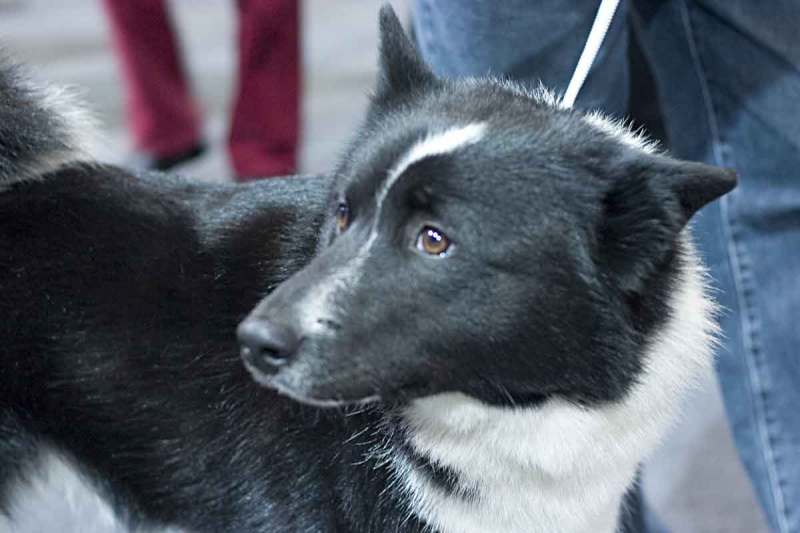
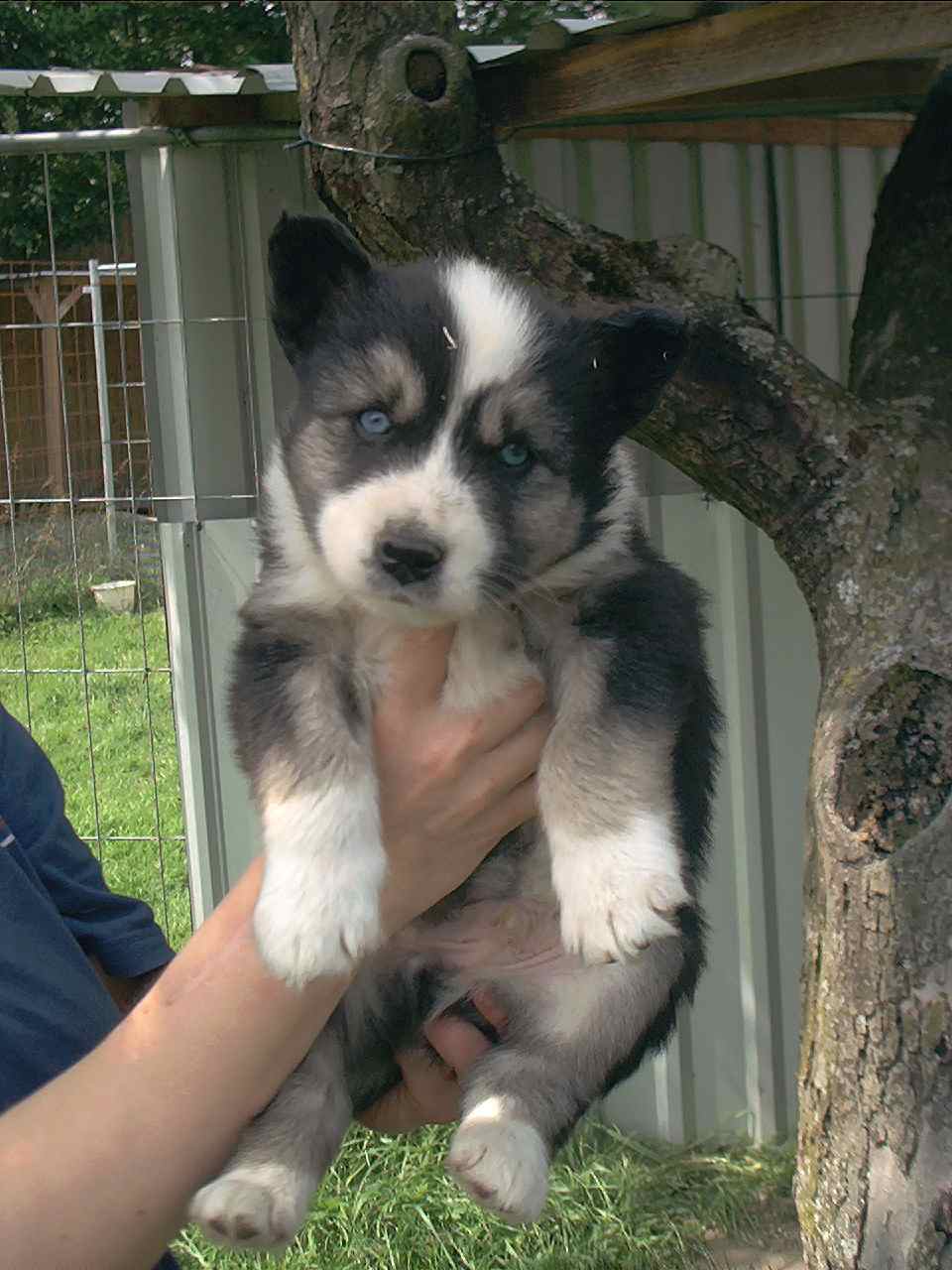
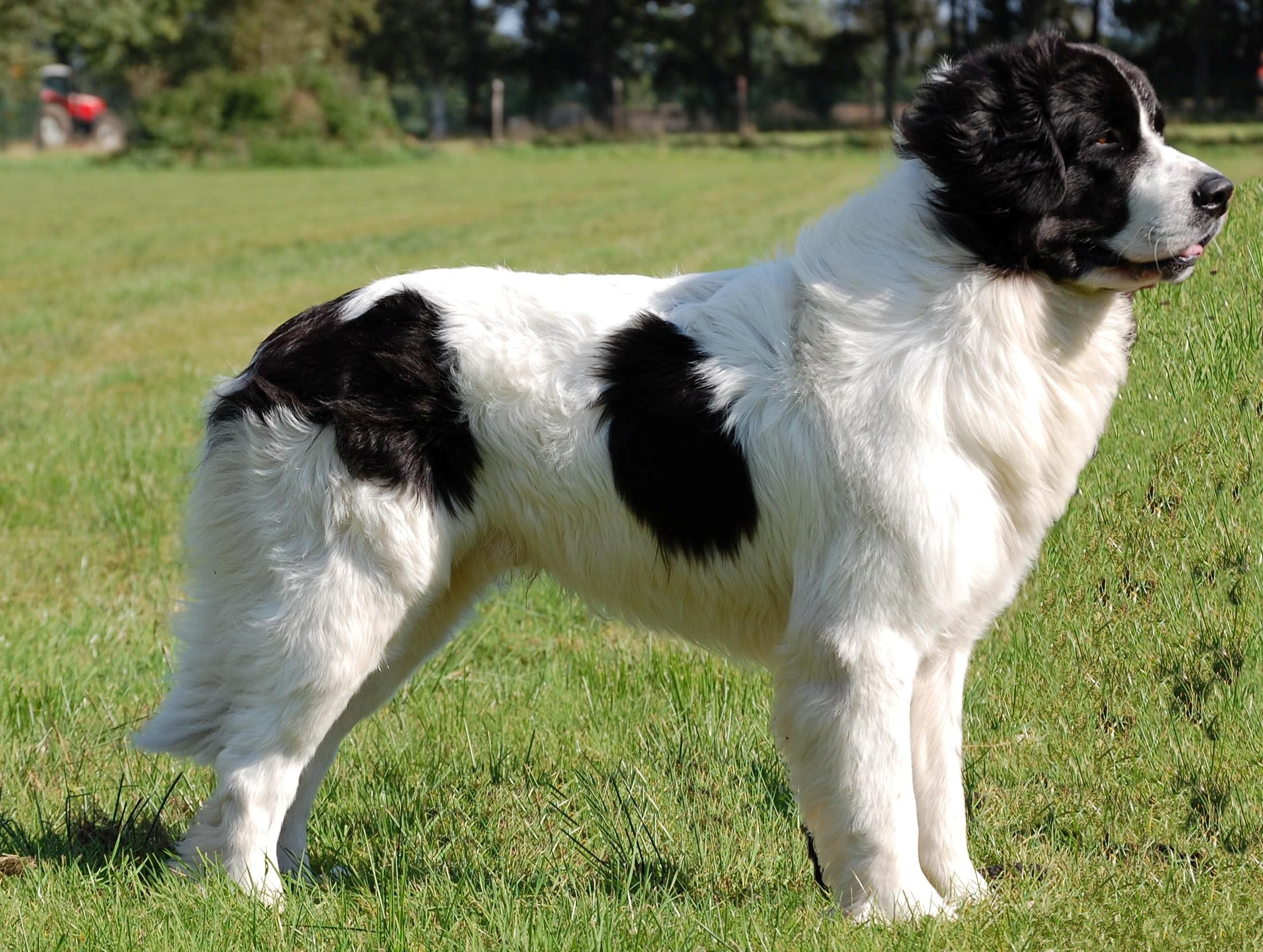
1 – East Siberian Laika, young dog. The picture was taken by PrzemekL during World Dog Show 2006 in Poznan. by No machine-readable author provided. PrzemekL assumed (based on copyright claims). / Public domain
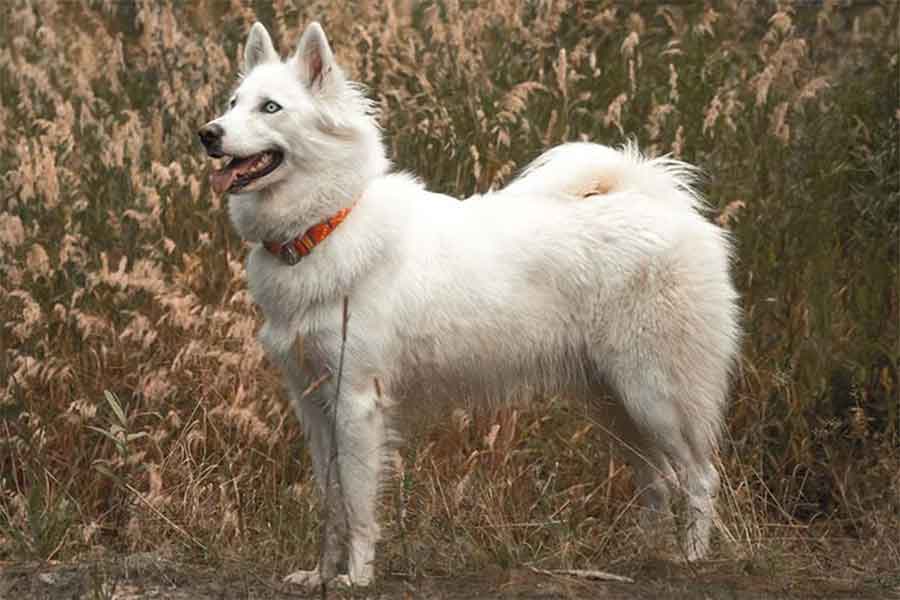
2 – East siberian laika by Myrtle / CC BY-SA
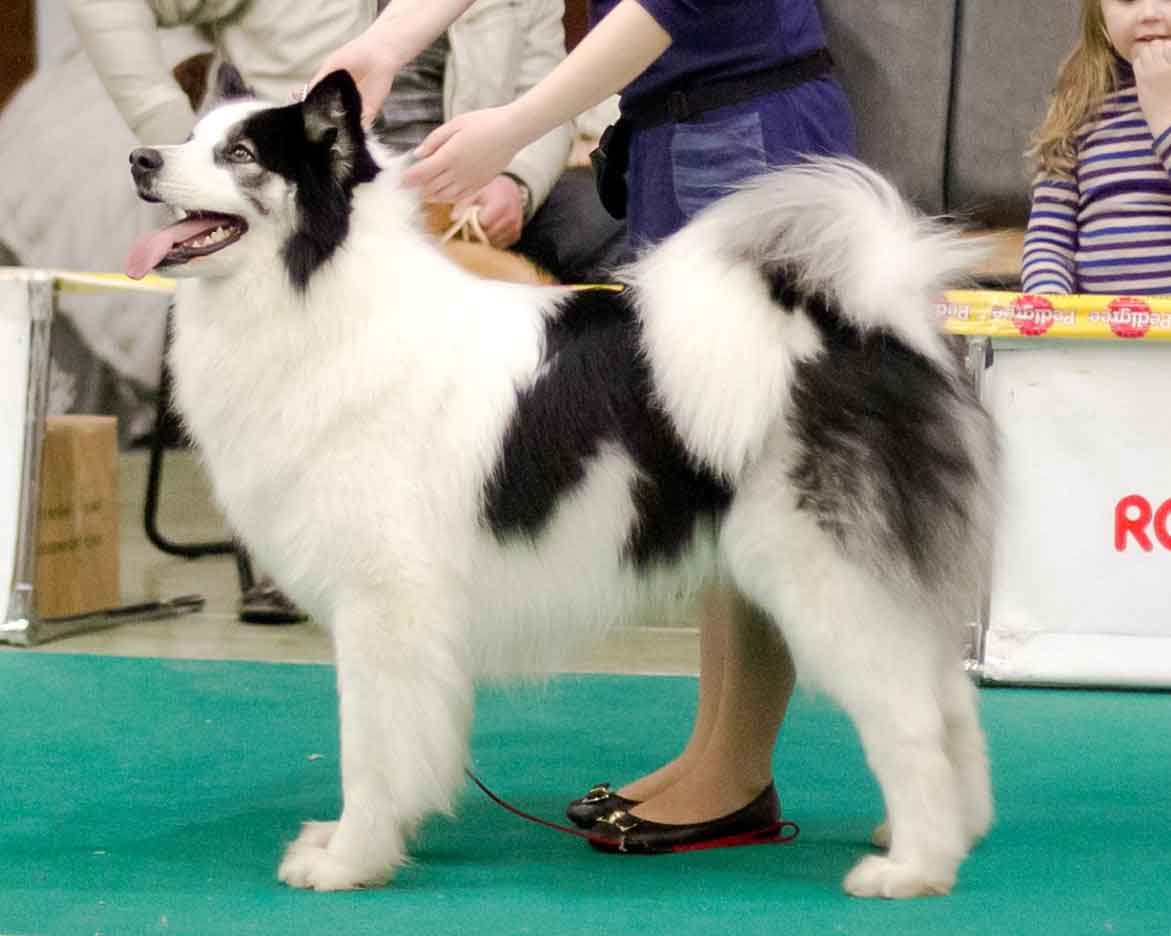
3 – East Siberian Laika, bitch. The picture was taken by PrzemekL during World Dog Show 2006 in Poznaล„ by No machine-readable author provided. PrzemekL assumed (based on copyright claims). / Public domain
4 – East Siberian Laika agouti by Canarian / CC BY-SA
5 – East Siberian Laika fawn & white by Canarian / CC BY-SA
6 – East Siberian Laika Sable & white, head profile by Canarian / CC BY-SA

Videos "East Siberian Laika"

Type and recognitions:

  • FCI CLASSIFICATION:
  • Group :
  • Section : . .

Federations:

  • FCI – Group 5 – Section 2 Nordic Hunting Dogs. โ“˜

FCI breed standard "East Siberian Laika"

Origin:
Russia

Date of publication of the valid original standard:
13.10.2010.

Use:

Hunting dog for multiple uses.


General appearance:

Medium-sized dog with a strong and compact build. The length of the body, from the sill to the ischium is slightly higher than its height at the withers. The head is rather big and strong.

Well developed muscles. Strong bone structure, more powerful in males than in females. Clearly pronounced sexual dimorphism.

IMPORTANT PROPORTIONS:

  • Males usually rectangular to rectangular, somewhat longer females.
  • Format index (height / long)
  • Males: 100/104-109
  • females: 100/106-111
  • Height at withers exceeds height at withers by 1-2 cm. (males) either equals or exceeds the height at the croup in 1 cm. (females). The length of the muzzle is slightly less than half the length of the head.
  • The height from the floor to the elbow is equal to half the height at the withers.


Behavior / temperament:

Lively, balanced temperament. A vigorous dog with a well-developed sense of smell for detecting prey and a pronounced passion for hunting., especially large prey. Very independent while hunting. Friendly, kind and trusting towards people.

Head:

Strong, rather large in proportion to the body, wedge shape, forming an equilateral triangle viewed from above. The cranial region is relatively wide, especially in males.

Cranial region:
  • Skull: The length of the skull is slightly greater than its width. Superciliary arches only slightly developed, sagittal crest and occiput well pronounced.
  • Depression links (Stop): Gradual and moderately pronounced.

facial region:

  • Nose: Medium size black. In white and fawn dogs a brown nose is tolerated.
  • Snout: The length of the muzzle is slightly less than the length of the skull. Viewed from the side the muzzle is wedge-shaped, moderately blunt.
  • Lips: Moderately tight but not pendulous.
  • Jaws / Teeth: White teeth, large, strong, well developed and evenly positioned. Full dentition (42 teeth) according to the dental formula, scissor bite.
  • Cheeks: Pronounced but not exaggerated cheek bones.
  • Eyes: Medium size, Oval shaped, inclined, never sunken or protruding with a truthful and friendly expression. The eyes are dark brown or in shades of brown according to the color of the hair.
  • Ears: erect, Mobile, โ€œVโ€ shape with pointed or slightly rounded edges. Well spaced placement at eye level. Slightly developed pavilion. Inside of the ears well covered with hair.

Neck:

Muscular, dry, round or slightly oval across. The length is equal to that of the head or a little less. The neck is inserted at an angle of approximately 40ยฐ to 50ยฐ from the horizontal.

Body:

  • top line: Firm and straight leaning from the withers towards the insertion of the tail.
  • Cross: Well developed, pronounced, especially in males, rising above the top line in 1 โ€“ 2 cm., moderately developed in females.
  • Back: Right, strong, well muscled, moderately wide.
  • Pork loin: Short, moderately wide, well muscled and slightly prominent,
  • Rump: Wide, slightly tilted, relatively long.
  • Breast : Width, deep (chest reaches the tips of the elbows or 1-2 cm below, especially in males), long, oval transversely.
  • Bottom line and belly: Withdrawn, the lower line from the chest to the abdominal cavity is slightly raised.

Tail:

Coiled or sickle-shaped with bearing on the back. A sickle-shaped tail is acceptable without touching the back or semi-erect. When fully stretched it reaches the hock joint or 1-2 shorter cm.

Tips

PREVIOUS MEMBERS: Slender and muscular limbs, seen from the front are straight, moderately separated and parallel. Its height from elbow to floor is equal to half the height at the withers.

  • Shoulder: The scapulae are long, muscular and moderately inclined.
  • Forearm: Long, moderately oblique, muscle. The angle between the scapula and the forearm is well pronounced.
  • Elbows: Well on the body; well-developed elbow tips positioned parallel to the axis of the body.
  • Arm: Straight, dry, muscle, round, viewed from the front moderately separated and parallel.
  • Metacarpus: Not long, slightly inclined viewed from the side.
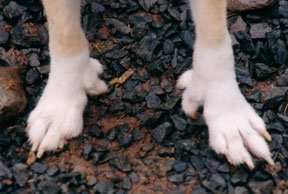
  • Previous feet: Round or slightly oval, arched with fingers close together.

LATER MEMBERS:

  • General appearance: Muscular with well defined angulations of all joints. Seen from behind the limbs are straight and parallel.
  • Thigh: Moderately long, placed slightly oblique.
  • Knee: Well angled.
  • Leg: Long, laid oblique, no shorter than thigh.
  • Metatarsus: Placed almost vertical. Seen on side, a perpendicular line from the back of the thigh to the floor falls tightly together in front of the hock, the slightly separated from this.
  • Hind feet: Round or slightly oval, fingers arched and tight together. The hind foot is slightly smaller than the fore foot.

Movement:

Free movement. The typical movement is a long range trot, alternating with a gallop or walking step.

Mantle

SKIN: Sufficiently thick and elastic, no folds or subcutaneous tissue.

  • Fur: Hard and straight outer hair. Well developed undercoat, soft, thick and woolly. Hair on head and ears is bushy, short and bright. The hair on the shoulders and neck is longer than on the body forming a collar. On the cheekbones it forms lateral whiskers. In males the hair on the withers is longer.
    • The limbs are covered with short hair, hard and bushy that is only slightly longer on the back of the forelegs. The hair on the back of the hind legs forms pants without having feathers.
    • There is a protective brush-like hair growth between the fingers. The tail is profusely covered with straight, hard hair that is somewhat longer at the bottom without forming feathers..
  • Color: The most typical colors are black and tan, black, black and white, white and white with spots. Slight staining in the base color tones are allowed on the extremities.


Size and weight:

  • Males: 57 โ€“ 64 cm..
  • females: 53 โ€“ 60 cm..


Fouls:

Any deviation from the aforementioned criteria is considered a fault and its severity is considered to the degree of deviation from the standard and its consequences on the health and well-being of the dog and the dog's ability to perform its traditional task..

  • Deviations of sexual characteristics.
  • Prominent foreface or pointed snout.
  • Partial absence of pigmentation on the nose, lips and eyelids.
  • Pale pigmented nose.
  • Absence of no more than 4 premolars PM1 โ€“ PM 2.
  • Pincer bite after 6 years of age.
  • Small teeth set apart.
  • Light or amber eyes in dogs with a completely black coat.
  • big ears, low insertion, weak bearing, insufficient hair inside.
  • Neck too oval.
  • Weak or hooded back.
  • Long loin, straight, arched back.
  • horizontal or upright group.
  • Chest with flat ribs, Strait, absence of sill, shallow.
  • Right shoulders, curved forelimbs, elbows turned in or out.
  • Right or weak pasterns.
  • East-west feet, feet with dove toes.
  • Hind limbs slightly lacking correct angulation, cow hock.
  • Spread or weak feet, insufficient hair development between the fingers.
  • Spurs on hind limbs
  • Restricted movement.
  • Color spots in the same hue as the base color on the body and head

SERIOUS FAULTS:

  • Obvious deviations from sexual characteristics.
  • Slight intolerance towards people.
  • Obese or thin.
  • Rough head.
  • Short snout, pointed.
  • Stop very deep or difficult to see
  • Absence of more than 4 premolars, including PM 1 & PM 2.
  • Round, bulging eyes.
  • Ears with round tips, overdeveloped pavilion.
  • Square body.
  • Over built.
  • Light bones.
  • Hind limbs over angled or right.
  • Narrow back, knees or hocks turned outward.
  • Heavy movement, irregular or pasuqueo.
  • Wrinkled skin, loose.
  • Long hair on the back of the forelimbs and pronounced feathers on the back of the thigh and tail.
  • Wavy Cloak, curly or too long, hair parted in the middle of the back and withers during the molt.
  • Splashed on the body that does not have the hue of the base color.
  • Size deviation by plus or minus 2 cm..

FALTAS DESCALIFICANTES:

  • Aggressiveness or extreme shyness.
  • Any dog โ€‹โ€‹showing clear signs of physical or behavioral abnormalities must be disqualified..
  • Wrong bite.
  • Twisted mouth.
  • Absence of 4 or any more teeth, including PM 1, PM 2 o M 3, excess incisor.
  • Eyes gazeos, spotted eyes.
  • Broken or semi-broken ears.
  • Stump tail.
  • Hair too short or too long, absence of undercoat.
  • Coat color that is genetic brown, blue genetic, tabby or albino.


N.B.:
  • Males should have two normal-appearing testicles fully descended into the scrotum..
  • Only functionally and clinically healthy dogs, with the typical conformation of the breed, should be used for parenting.

Source: F.C.I - International Cynological Federation

Alternative names:

1. Vostotchno-Sibirskaia Laika (English).
2. Vostotchno-Sibirskaia Laika (French).
3. Vostotchno-Sibirskaia Laika (German).
4. (em russo: ะ’ะพัั‚ะพั‡ะฝะพัะธะฑะธั€ัะบะฐั ะปะฐะนะบะฐ) (Portuguese).
5. Vostotchno-Sibirskaia Laika (espaรฑol).

โ–ท The world of Pets: Dogs, cats, birds, reptiles, amphibians

Norwegian Lundehund
Noruega FCI 265 - Nordic Hunting Dogs

Lundehund

Most of the Norwegian Lundehund live in Norway and Finland, it is believed that there are some 2000 copies around the world.

Content

History

The Lundehund (Norsk Lundehund or Norwegian Puffin Dog) It is a small breed of dog of Spitz type, originally from Norway. Its name is composed of the prefix Lunde, Norwegian lundefugl (puffins), and the suffix hund, What dog. The breed was developed to hunt these birds and their eggs.

The Norwegian Lundehund is a small, rectangular Spitz, with a wide variety of mobility in the joints of your bones, What makes him able to enter through small and intricate passages.

They remain able to rotate the head back on the backbone and bend the hind legs to the side at an angle of 90 degrees such as the arms of humans, In addition to six toes on the feet.

The breed has a long history. Already in 1600 It was used for hunting puffins along the Norwegian coast. Its flexibility and extra toes were ideal for hunting of birds in their places of nesting in the inaccessible cliffs and caves.

Video ยซNorwegian Lundehundยป


My lundehund

Interest in the breed declined as new hunting methods for puffins, as for example, the use of networks…, and this ex officio contortionist, was no longer needed. Puffins were a precious object of hunting, the meat was horse and kept and feathers were used to make quilts.

The breed was nearly extinct around World War II, when the canine distemper hit Vรฆrรธy and the islands surrounding. In 1963, the population was decimated… Only six copies of Lundehund (one Vรฆrรธy and 5 in Soon, to the South of Norway), These five puppies was of the same litter.

Due to the care of the brood with the strict guidelines, currently there are approximately 1500 or 2000 copies of Lundehund around the world, of this population around 1.100 are in Norway and almost 350 in the United States.

The official registration of the Lundehund was approved by the American Kennel Club's in the miscellaneous class. 1 in July of 2008, After a unanimous vote of the Board the 13 in November of 2007. The race debuted at the AKC National Championship / Eukanuba in Long Beach, California (United States), the 13 and 14 in December of 2008, being one of the most important events of the American canine world.

The 12 in February of 2010, The American Kennel Club Board of Directors voted to accept the Lundehund in the AKC Book of Origins and became part of it on 1 in December of 2010. The 1 in January of 2011, became part of the "Non-Sports Group".

For the American Kennel Club and Canadian Kennel Club, the non-sports group is a diverse classification that comprises a variety of robust dogs with different personalities and appearances as the Chow Chow , and the Keeshond, among others. Covered by the non-sporting group breeds, It is very diverse in terms of appearance, size, layer, personality and, in general.

According to the FCI classification it is located in the Group 5 Spitz-type dogs and primitive type. Section 2 Nordic Hunting Dogs.

Physical characteristics

The Lundehund medium in size looks a bit like a fox and is, also because it is one of the rare races, sometimes mistaken for a mestizo, a Nordic mongrel. On the contrary, is very specialized: The Lundehund has been bred for hunting puffins, a species of bird that breeds in burrows. This brings with it some unique physical characteristics: your shoulder joints are more flexible, allowing it to turn its front legs 90ยฐ to the side. It also, this dog can close his pointed, upright ears, allowing you to dive better.

The most striking features are undoubtedly the six toes of each foot and the up to eight pads, which give the ancient cliff hunter immense security. Some of these dogs also lack molars, which facilitated the transport of the captured birds without damaging them.

The Norwegian Lundehund It has a height at the withers of up to 38 cm and weighs 7 kg. sporty and light. The dense coat is short and red to fawn, with black hair tips in places. have a smooth undercoat, very fine and a rough top coat.

Character and skills

The Norwegian Lundehund is a four legged friend, simple and skillful, but he has a lot of energy and wants to live it. Due to its independent nature – the Lundehund was left to fend during the hunt – always kept his own head and thus will never fully subordinate himself. Who respects this, win with him Lundehund an easy to train and loyal friend for life.

Basically the breed is considered to be quite shy, so a close relationship with its owner is especially important – that's how your Lundehund gain security. Towards strangers he is usually reserved – it is also considered to be alert. He usually gets along well with other dogs. The Lundehund not a typical hunting dog, but is also wonderfully suitable as a companion dog.

The education of the Norwegian Lundehund

This is a breed of dog with a stubborn and stubborn character, even so they are easy to train and learn the basic commands with great motivation.

Although the breed belongs to hunting dogs, the Lundehund can accompany you, with some effort in their education, on your nature walks without the need for a leash, since it is not an elusive dog, nor a traditional prey tracker. A major challenge is getting our dogs out of the habit of barking: Lundehund, like all nordic dogs, announce aloud all the supposedly interesting things in their environment – and that in part is quite persistent. So patience is absolutely necessary when training a Lundehund. Already in puppyhood, be sure to keep this in mind when training your dog. Play lessons for puppies, as well as attendance at a canine school, have a positive effect on Lundehund – here you can not only socialize him more with other four-legged friends, but you will surely also get some tips and tricks for the education of this dog.

Health: the syndrome Lundehund

Since the population dates back to only five dogs, Controlled breeding of the breed made a new start in the 1990s. 1960, with what the Lundehund has a very small gene pool. One of the five founding dogs developed stomach and intestinal symptoms at the age of about three years, which have spread further among the descendants. Today, this is known as the lundehund syndrome: a chronic, inflammatory bowel disease that is associated with increased protein loss through the intestines. About half of the population is affected by it, although to varying degrees. A genetic test can be used to determine if a dog intended for breeding is a carrier, so that the risk of Lundehund syndrome can be reduced. There is no cure for this disease, only the symptoms can be relieved. While some dogs are barely limited by the disease and have long symptom-free phases, other affected quadrupeds have a more severe course and ultimately lead to death.

Before deciding to acquire a representative of this breed, must be informed in detail about the lundehund syndrome and the corresponding genetic test and its meaning. The Nordic Dog Clubs can also provide you with more information on this.. The healthy ones Norwegian Lundehund are, for the rest, very robust and can reach an age of about 14 years.

Norwegian Lundehund "care

The coat of this Norwegian Coastal Dog is insensitive to weather conditions and requires little grooming. But, the more you brush, less hair is distributed in your home – especially during coat change a daily brushing may make sense, because the Lundehund then lose a lot of hair. Otherwise, care is quite simple: dirt brushes better when dry. By the way, the Norwegian Lundehund It is one of the few dogs that really enjoys grooming. If you support them with the brush, you are also doing something for their bonding.

Check the ears and eyes regularly and clean them with special ear and eye cleaners if necessary. If the eyes get wet, what happens in many dogs due to narrow tear ducts, it is enough to gently clean and dry them once a day with clear water. Some dog owners opt for daily dental care in the form of toothbrushing with dog toothpaste and toothbrush.. If you already introduce your puppy to this ritual, is an optimal prevention against tartar and associated secondary diseases.

Activities ยซLundehund Norwegianยป

Long walks in nature, enjoying the wind and the weather are the base of activity of this Norwegian breed. It also, most of these dogs love to swim. Make your partner happy and give him the opportunity to do it!! But you should also encourage and challenge their brain and skills. There is a wide range of joint activity possibilities at your disposal: Dog lovers can enjoy almost all types of sports with dogs, with the exception of sports with training dogs. Due to his great independence you should not expect unconditional obedience from him, but a relaxed approach to the respective human-animal hobby jointly. Try together with your animal companion which sport you like the most!!

Is a "Norwegian Lundehund"?

One Norwegian Lundehund fits well in a sporty family, where at least one family member already has experience with dogs. Learn easily and with pleasure, but for education you still need a certain knowledge and consistency. It also, it is important to use the dog to its full potential – the small Lundehund not a couch dog, needs a lot of outdoor exercise and a lot of time.

He is usually very fond of children and can also make friends with cats, especially if you met them as a puppy. This dog can also live in a medium-sized apartment, but of course also enjoy a garden (leak proof). It is important to direct the joy of the breed's barking in a controlled manner.

Before moving, make sure no one in your home has allergies to pet hair and consider whether you can and want to take the dog on vacation – many hotels today welcome four-legged friends – or how you organize care. Although the Lundehund it's more like a small dog, can be quite expensive in terms of regular costs: Apart from a high quality diet with a high content of fish, this includes taxes and dog insurance, as well as visits to the vet. It also, is, of course, the not inconsiderable purchase price of this rare four-legged friend – with possible travel expenses – and if necessary the basic equipment.

Where can I find my "Norwegian Lundehund"?

First of all: One Norwegian Lundehund It's very weird. In total, there are some 1.300 specimens all over the world. So, you may very well have to wait a long time and travel many miles to get hold of such a rare dog. Most of the Lundehunds they live in norway. Check with a Norwegian dog club in your country to find out how to contact breeders of the Norwegian Lundehund. Ask your potential dog breeder about the lundehund syndrome and the diet of the breed.

His young Lundehund will move in with you at the earliest at the age of eight weeks – if you come from a European country, you will normally need a valid rabies vaccine for the trip in addition to the necessary papers. It is essential that you remember booster shots and also talk to your vet about regular deworming of your four-legged friend.

It is extremely unlikely to find an adult dog, especially outside of norway. So if you're looking for a four-legged adult friend, it is advisable to contact a Nordic dog club. There are also often wonderful mongrel dogs looking for a new home., value the adoption of one of them.

We wish you much joy with your extraordinary Norwegian Lundehund!

Characteristics "Norwegian Lundehund"

Coexistence is important that you have with your new friend. Before considering the acquisition of a dog of the breed "Norwegian Lundehund" you know certain factors. Not all breeds of dogs are apt to live in an apartment, you must take into account his character, their need for exercise, their interaction with other pets, their care and if you have small children, their level of tolerance towards them.

Adaptation โ“˜

3,0 of 5 stars (based on 1 review)

friendly dog โ€‹โ€‹โ“˜

3,0 of 5 stars (based on 1 review)

hair loss โ“˜

4,0 of 5 stars (based on 1 review)

Affection level โ“˜

4,0 of 5 stars (based on 1 review)

Need for exercise โ“˜

4,0 of 5 stars (based on 1 review)

Social need โ“˜

4,0 of 5 stars (based on 1 review)

Home โ“˜

4,0 of 5 stars (based on 1 review)

Toilet โ“˜

5,0 of 5 stars (based on 1 review)

Friendly with strangers โ“˜

3,0 of 5 stars (based on 1 review)

barking โ“˜

4,0 of 5 stars (based on 1 review)

Health โ“˜

2,0 of 5 stars (based on 1 review)

Territorial โ“˜

4,0 of 5 stars (based on 1 review)

Cat friendly โ“˜

3,0 of 5 stars (based on 1 review)

Intelligence โ“˜

3,0 of 5 stars (based on 1 review)

Versatility โ“˜

3,0 of 5 stars (based on 1 review)

Child friendly โ“˜

3,0 of 5 stars (based on 1 review)

Surveillance โ“˜

4,0 of 5 stars (based on 1 review)

joy โ“˜

4,0 of 5 stars (based on 1 review)

Images "Norwegian Lundehund"

photos:

1 – "Norwegian Lundehund" by http://www.petsadviser.com/
2 – "Norwegian Lundehund" by https://pxhere.com/es/photo/754827
3 – "Norwegian Lundehund" by https://pxhere.com/es/photo/880994
4 – Norwegian puffin town Andrva / CC BY-SA
5 – "Norwegian Lundehund" by https://commons.m.wikimedia.org/wiki/File:Lundehund.jpg
6 – The Norwegian Lundehund ยซGydaยป looking out at the ocean on the north side of the island Vรฆrรธy in Northern Norway. The island on the top, in the middle, is ยซMoskenยป, the island in the top left is ยซMoskenesยป by ZorroIII / CC BY-SA

Type and recognitions:

  • FCI CLASSIFICATION:
  • Group :
  • Section : . .

Federations:

  • FCI – Group 5 – Section 2 Nordic Hunting Dogs. โ“˜
  • AKC – Nordic Hunting Dogs. โ“˜
  • CKC – Nordic Hunting Dogs. โ“˜
  • UKC – Nordic Hunting Dogs. โ“˜

FCI breed standard "Norwegian Lundehund"

Origin:
Norway

Date of publication of the valid original standard:
10.11.2011

Use:

Its anatomical peculiarities train these dogs for the hunting of the frailecillos in the steep rocks around the fjords and in the cliffs.


General appearance:

The "Norwegian Lundehund" is a Spitz type dog, rectangular, small, flexible, relatively light, with well -defined sexual characteristics.


Behavior / temperament:

Alert, energetic and vivacious.

Head:

Dry, medium width, wedge shaped.

Cranial region:
  • Skull: Slightly rounded, protruding supraciliary arches
  • Stop: Pronounced but without excess.

facial region:

  • Horcico: Cuneiform, medium long. Slightly convex muzzle.
  • Jaws / Teeth: Preferably scissor bite. Pincer bite and moderate undershot are acceptable. The lack of premolars in both jaws is allowed.
  • Eyes: Slightly oblique, not outstanding. The iris is yellowish brown. The pupil is surrounded by a dark colored ring.
  • Obars: The triangular ears are medium in size, wide at its base, carried erect and very mobile. They have the special characteristic that the pavilion cartilage can be contracted and the external part can be bent or specially crooked (backwards or upwards at right angles), so that the ear canal is closed.

Neck:

Delgado, medium long, quite strong and covered in a relatively abundant collar.

Body:

Rectangular.

  • top line: Straight.
  • Back: Strong.
  • Glikeness: Slightly inclined.
  • Pecho: Elongate, average amplitude, proportionally deep and spacious; it is not barrel shaped.
  • Lรญnand the bottom: Slightly retracted belly.

Tail:

Insertionmoderatelyhigh, medium long, well covered with dense hair, but without forming feathers. Carried in shapemildringon the back, or he wears it hanging. The tip of the tail must not be carried too high on the back or fall next to the flanks.

Tips

PREVIOUS MEMBERS:

  • Apgeneral arience: Moderately angled.
  • Antarm: Straight.
  • Pinis previous: Oval, slightly deflected out. Feet with a minimum of six fingers, of which five step on the ground. Eight pads on each foot. Anatomically the two inner fingers are formed by a finger with three phalanges and one with two phalanges with the corresponding tendon and muscular apparatus. Gives the foot a very strong appearance.

LATER MEMBERS:

  • Apgeneral arience: The position of the hind limbs is a bit narrow.
  • Thighs: Muscular and strong.
  • Rodinllto: Moderately angled.
  • PinScheme: Muscular and strong.
  • Pinis later: Oval, Something diverted out with a minimum of six fingers, of which four step on the ground. Seven pads on each foot. The middle pad, the most important for its size, attached to the inner pad corresponding to the middle fingers. When the dog is normally standing on a flat surface, your body weight is evenly distributed over all pads.

Movement:

Light and elastic. The movement of the anterior members has a characteristic turn of the race and movement of the posterior members is a bit narrow.

Mantle

  • Plink: Soft inner fluff, dense and rough outer coat. The hair is short on the head and the anterior part of the extremities. Thicker fur around the neck and on the back of the thighs. Dense tail hair, but without forming feathers.
  • Colorr: Always in combination with white. From reddish to more or less mixed with hairs with black tips Fawn; white with dark markings. Usually, the adult specimen presents more hairs with black tips to the young dog.


Size and weight:

Alturto the cross:

  • Males from 35 cm to 38 cm.,
  • Females from 32 cm to 35 cm..

Pthat:

  • Males approximately 7 kg,
  • Females approximately 6 kg.


Fouls:

Any deviation from the aforementioned criteria is considered as a fault and the severity of this is considered to the degree of the deviation to the standard and its consequences on the health and well-being of the dog..

FALTAS DISQUALIFYING:

  • Aggressiveness or extreme shyness.
  • Any dog โ€‹โ€‹showing clear signs of physical or behavioral abnormalities must be disqualified..


N.B.:
  • Males should have two normal-appearing testicles fully descended into the scrotum..
  • Only functionally and clinically healthy dogs, with the typical conformation of the breed, should be used for parenting.

Itlatest changes are in bold.

Source: F.C.I - International Cynological Federation

Alternative names:

1. Norsk Lundehund, lundehund, Norwegian Puffin Dog (English).
2. lundehund (French).
3. Norsk Lundehund (German).
4. Cรฃo de papagaio-do-mar (Portuguese).
5. Perro frailecillo, Lundehund (espaรฑol).

โ–ท The world of Pets: Dogs, cats, birds, reptiles, amphibians

West Siberian Laika
Rusia FCI 306 - Nordic Hunting Dogs

Laika de Siberia Occidental

in your country of origin, Russia, the West Siberian Laika has been bred as a hunting dog for centuries.

Content

History

The "West Siberian Laika" (Zapadno-Sibirskaรฏa Laรฏka), is the product of crossbreeding between the closely related species of Laรฏka de Chanteisk and Mansijak with Russian hunting dogs from the north of the Urals and Western Siberia. Outside its area of origin in areas mainly populated by hunters, This race has widely spread to central areas of Russia; This type of dog that abounds on these sites, they are reared in large installations. In different hunting regions there are special kennels for raising the West Siberian Laika.

Recognition by the FCI

Since 1980 the Russo-European Laika just like him East Siberian Laika have been recognized as independent breeds by the FCI in addition to the West Siberian Laika. But, the Yakutian Laika, as well as other types of Laรฏka, as the Jezdoraja Laika, the Nenezker Weather or the Karelo-Finnish Laika, are not internationally recognized until now. Within the FCI the three breeds of Laรฏka are classified in the group 5, Together with the Gray Norwegian Elkhound and the Karelian Bear Dog, form the Section 2 "Nordic Hunting Dogs" within this group.

Physical characteristics

It is a hunting dog of variable utility, but also shooting or for sledge. Is medium-sized, Slim and strong Constitution. Her bone structure is well developed, is not mass or rough. Muscle is strong and well developed. It has a strongly coiled tail, He takes her on the back or the back.

Its fur is hard, short, with developed internal fluff. The outer layer is thick and straight. The internal fluff is abundant and dense hair's outer layer which gives a distant and leafy appearance. In the head, You ears and part of limb hair is short. On the cross, neck and back of legs the hair is longer than forming a collar in the region of the neck and a beard in the cheek area; the rear extremities presents some feathers.

Is white, salt and pepper, Red or gray in all colors. Allow the color black, also spotted or with the same color plates.

Strong similarity to the wolf

With the often hairier males, it even produces a kind of mane. This feature is reminiscent of a wolf, with which the Laรฏka not only share the pointed and high ears, narrow wedge-shaped head and small oblique eyes, but also strong teeth and coat color, often similar to wolf.

Assorted coat colors and a typical striped tail

But, the colors of him West Siberian laika they are very diverse according to the wide area of โ€‹โ€‹distribution of the breed and the large number of local traits, ranging from pure white to black, pepper and salt, the color of the wolf, reddish brown, grey, the pied or the spotted. characteristic of all races Russian Laika is the striking striped tail, worn both on the side and on the back.

Character and skills

Independent hunter and close ally.

Like most hunting dogs, the West Siberian Laika also has some independence. Not only in hunting, but also as a watchdog, companion dog or sled dog, sometimes acts independently and autonomously. But, this does not mean that it cannot adapt to its humans. On the contrary: the Laรฏka feels closely connected to her reference person and always seeks their proximity. Even when hunting, never strays too far from his guide and makes sure each 20 or 30 minutes of hunter following.

The intense relationship with humans allows him Laรฏka – despite its original roots – be used as a herding dog, protection, guard or shooting.

Life in the family

Once an owner has earned the trust of his Laรฏka, even the most demanding training goals can be achieved. It is important that the West Siberian Laika has a firm place in his "pack" from the beginning and is allowed to participate closely in the life of his people. In doing so, bonds closely with its "pack leader", but also shows himself as a patient and loving companion when dealing with other family members, especially with the children. If you socialize early and comprehensively, living with other dogs and pets usually works without problems.

Activities ยซLaika of Western Siberiaยป

Despite these characteristics, the West Siberian Laika is and remains primarily a working dog, for whom his โ€œjobโ€ is as important as his people. A life as a pure domestic and family dog รขโ‚ฌโ€นรขโ‚ฌโ€นcertainly does not do justice to its nature.. Only if you can sufficiently demonstrate your stamina, agility, speed and intelligence, will present himself at home as a calm and balanced companion.

The West Siberian Laika wants to be "needed" and, therefore, you should definitely be given a task that challenges you both physically and mentally. Owners who don't run their Laรฏka like the hunter he is, they must provide for sufficient substitute employment, for example, in sport form (Agility), training dog sport, runway and nose work or training as a rescue dog.

Health ยซWest Siberian Laikaยป

Unlike many other dog breeds, which often developed rather by coincidence, Russian dogs already had very early exact ideas about the useful characteristics of this breed. The baby of him West Siberian Laika was soon put under strict controls and took place in central state approved breeding stations. In order to preserve the excellent qualities of hunting, officially organized tests were introduced. Dogs that did not meet the high usage requirements were systematically excluded from breeding..

Healthy and robust working dogs

Strict breeding requirements and tough selection led to the good hunting dog qualities and excellent sensory perceptions of dogs being preserved to this day. At the same time, high concentration on utility ensured that outward appearances became less of an affair. A breeding of pure beauty, that as the examples of other dog breeds show, often led to health problems, was avoided in the West Siberian Laika. Hereditary diseases typical of the breed, with which fashionable dogs often fight, are not known in this original breed. Even generalized joint diseases, such as dysplasia of the hip joint (HD), rarely occur in this Laรฏka.

Nutrition ยซLaika de Siberia Occidentalยป

Dog owners shouldn't change their diet too often either.. Although the West Siberian Laika is not very picky about his diet, the constant changes in the food plate could overload even his robust stomach. As a descendant of the wolf, dogs don't need many different foods to stay healthy. Unlike us humans, that we should have a diet as varied as possible and whose menu includes meat, fish and vegetables, as well as potatoes, noodles and other cereal products, dogs need meat above all. Both their teeth and their digestion are oriented to the processing of foods based on meat. Different types of meat and changing tastes are, by the way, desirable with respect to this main ingredient.

Discover our selection of dog food.

Pay attention to your dog's nutritional needs. Whether you feed your dog moist meat, dry, raw (BARF) or cooked, it is important that the quantity and content of the food meets the specific nutritional needs of your dog. These requirements depend on very individual criteria such as race, size, age, activity level and health status and may vary accordingly. If the composition is correct, a Laรฏka adult can get by on one or two meals a day. after feeding, the feeding bowl should be cleaned and should only be available again the next day or for the next meal. It is better to avoid snacking between meals or the constant administration of treats. But, fresh drinking water should always be available for your dog.

Buying a West Siberian Laika

With his healthy nature, robust and original, the West Siberian Laika satisfies many dog โ€‹โ€‹lovers' desire for something "wild" in our modern, civilized everyday lives. And finally, but not less important, the wolf appearance of this breed fascinates people. This natural beauty, coupled with excellent hunting performance, made of him West Siberian laika one of the most popular dog breeds of the former Soviet Union already in 1960.

How much does a โ€œWest Siberian Laikaโ€ puppy cost??

In Europe, the Time to fall still rarely seen. So it is extremely difficult outside of Russia to get a purebred Laika from a proven breeding line.. Long, arduous roads and a comparatively high puppy price between 1.300 and 1.500 EUR are the rule. Even if you have found a suitable breeder after a long search, you may be advised not to buy a Laรฏka. Don't be surprised if during the first meeting you are asked very personal questions about your profession., their living conditions, your future plans and marital status. For committed and serious breeders, the welfare of dogs is, as a last resort, more important than financial benefit. After all, keeping such a demanding animal takes a long time, experience and space.

People who are mainly attracted by the appearance and originality of this Laรฏka they must therefore carefully consider whether their living conditions and character really fit this breed. If in the end you are still convinced that the West Siberian Laika is the correct breed, You must prepare well for the purchase of the new "family member". Not only are you doing yourself a favor, but above all the dog, because this Laรฏka He demands all the attention of his handler and does not tolerate a change of owner very well..

Care for the ยซWest Siberian Laikaยป

Although the West Siberian Laika he is a very robust dog, you need not only a healthy diet but also proper care to stay healthy and vital. Its hard and soft top layer repels dirt and water well, but you still need to brush regularly (about twice a week). During the change of coat, you Laรฏka should be brushed daily to remove dead hair and strands. In general, owners of this dog breed should not be bothered by dog โ€‹โ€‹hair in the house, because although the West Siberian Laika he is basically a very clean dog, lose a lot of hair, that spreads across the sofa, the carpet and the floor. In addition to the toilet, the claws should be regularly shortened and the ears, teeth and feet should be checked and cleaned.

Keeping

Regarding the attention, the time required can be manageable, but the use of a Laรฏka alone takes a lot of time (free). Who chooses a West Siberian Laika should therefore not have to work full time. This human-oriented working dog is not cut out for long periods of solitude. As an original hunting dog needs a lot of career, an appropriate task and lots of contact with your reference person. A hatchery in a small town flat is, therefore, as unsuitable as a kennel. The Siberian breed dog feels more comfortable in a house with a large fenced garden, where you can be close to your humans at all times.

No dog for beginners

Also for the education of this Laรฏka a close relationship between dog and human is a basic requirement. If your dog trusts you, can trust your competence and sovereignty as โ€œpack leaderโ€ and is assured of your closeness and love, will follow you willingly – despite its original roots as an independent hunting dog. But in order to reliably fulfill the role of a competent leader of the pack, technical knowledge is required, consistency and strength of character. The West Siberian Laika certainly not a beginner dog.

Characteristics "West Siberian Laika"

Coexistence is important that you have with your new friend. Before considering the acquisition of a dog of the breed "West Siberian Laika" you know certain factors. Not all breeds of dogs are apt to live in an apartment, you must take into account his character, their need for exercise, their interaction with other pets, their care and if you have small children, their level of tolerance towards them.

Adaptation โ“˜

2,0 of 5 stars (based on 1 review)

friendly dog โ€‹โ€‹โ“˜

3,0 of 5 stars (based on 1 review)

hair loss โ“˜

5,0 of 5 stars (based on 1 review)

Affection level โ“˜

4,0 of 5 stars (based on 1 review)

Need for exercise โ“˜

5,0 of 5 stars (based on 1 review)

Social need โ“˜

4,0 of 5 stars (based on 1 review)

Home โ“˜

5,0 of 5 stars (based on 1 review)

Toilet โ“˜

3,0 of 5 stars (based on 1 review)

Friendly with strangers โ“˜

3,0 of 5 stars (based on 1 review)

barking โ“˜

5,0 of 5 stars (based on 1 review)

Health โ“˜

2,0 of 5 stars (based on 1 review)

Territorial โ“˜

4,0 of 5 stars (based on 1 review)

Cat friendly โ“˜

3,0 of 5 stars (based on 1 review)

Intelligence โ“˜

3,0 of 5 stars (based on 1 review)

Versatility โ“˜

4,0 of 5 stars (based on 1 review)

Child friendly โ“˜

3,0 of 5 stars (based on 1 review)

Surveillance โ“˜

4,0 of 5 stars (based on 1 review)

joy โ“˜

4,0 of 5 stars (based on 1 review)

Images "West Siberian Laika"

Photos:

1 – ยซLaika de Siberia Occidentalยป by https://commons.wikimedia.org/wiki/File:West_Siberian_Laika.jpg
2 – ยซLaika de Siberia Occidentalยป by ecured
3 – Riga, Baltic Winner -2013, 9-10 Nov by Thomas / CC BY-SA
4 – Riga, Baltic Winner -2013, 9-10 Nov by Thomas / CC BY-SA
5 – First-generation (F1) wolf-dog hybrid from Wildlife Park Kadzidlowo, Poland (photos: A. Krzywinski) by Maris Hindrikson et al / CC BY
6 – This is a 4 month old West Siberian Laika female pup. It is at this stage when a WSL pups unique natural hunting instincts become evident by Meribelles at English Wikipedia / CC BY-SA

Videos "West Siberian Laika"

Type and recognitions:

  • FCI CLASSIFICATION:
  • Group :
  • Section : . .

Federations:

  • FCI – Group 5 – Section 2 Nordic Hunting Dogs. โ“˜

FCI breed standard "West Siberian Laika"

Origin:
Russia

Date of publication of the valid original standard:
13.10.2010.

Use:

Variable Utility Hunting Dog.


General appearance:

Medium to medium large dog, substantial with a strong and defined structure. The length of the body, measured from the sill to the buttock is slightly higher than the height measured from the withers to the floor. higher than the height measured from the withers to the floor.

Clearly pronounced sexual dimorphism. Males are larger than females and clearly male. Well-developed muscles and strong bones.

PROPIMPORTANT ORTIONS:

The length of the body exceeds its height at the withers by 100 to 103-107%, in males and in 100 to 104-108% in females.

Height at withers exceeds height at croup by 1-2 cm. (males) and is equal to or exceeds the height at the croup in 1 cm. (females). The length of the head considerably exceeds its width.

The length of the muzzle is equal to or slightly less than half the length of the head.

The length of the extremities from floor to elbow slightly exceeds half the height at the withers.


Behavior / temperament:

Lively, balanced temperament. A vigorous dog with a well-developed sense of smell to detect prey. A pronounced passion for hunting, alert, sensitive. He is just as enthusiastic about hunting birds as he is hunting wild animals. Confident and alert to strangers.

Head:

Thin, wedge shape, proportionate to the size of the dog. Its shape is similar to that of an equilateral triangle, view from above. The cranial region is moderately wide, lower in females than in males.

Cranial region:
  • Craging: Elongate, obviously longer than wide. Seen from the front flat or slightly rounded. The nasal bridge is parallel to the top line of the skull. Sagittal crest and occiput well pronounced. The occipital area of รขโ‚ฌโ€นรขโ‚ฌโ€นthe skull is rounded. Superciliary arches slightly developed.
  • Dnaso-frontal depression (Stop): Slightly pronounced.

facial region:

  • Trufa: Medium size, black. In white dogs a lighter color (Brown) of the truffle is tolerated.
  • Horcico: Moderately pointed widening in the mouth area. The length of the muzzle is half or slightly shorter than the
  • head length. Seen on side, muzzle is moderately wedge-shaped.
  • Labios: Tight.
  • Jaws / Teeth: Whites, large, strong, well developed, evenly placed without being overcrowded. Complete dentition according to dental formula (42 teeth), scissor bite.
  • Cheeks: Sharp cheek bones.
  • Ojors: Not big, Oval shaped, inclined, insert somewhat sunken (more than in the other Laika) with a determined and intelligent expression. The color of the eyes is dark brown or brown according to the color of the hair.
  • Obars: erect, high insertion, โ€œVโ€ shape with pointed edges, Mobile. Slightly developed pavilion.

Neck:

Muscular, dry and long. The length is equal to the length of the head. Oval. Neck insertion is approximately 45ยฐ โ€“ 55ยฐ from the horizontal line.

Body:

  • Lรญnand the top: Firm and solid, slight inclination from the withers to the insertion of the tail.
  • Cruz: Well pronounced, especially in males.Back: Strong, straight, well muscled, moderately wide.
  • Itmor: Short, moderately wide, well muscled with a slight arch.
  • Glikeness: Wide, moderately long, slight incline.
  • Pecho: Moderately deep, width (chest reaches elbow level), long, oval-shaped.
  • Lรญnand the bottom / belly: Withdrawn; the lower line rises slightly from the chest to the abdominal cavity.

Tail:

Tightly coiled; carried on the back or hip. If it is fully stretched, it reaches the hock joint or it may be 1 โ€“ 2 shorter cm.

Tips

PREVIOUS MEMBERS:

  • ApGeneral arience: Seen straight ahead, placement moderately apart and parallel. Its height from the elbow to the floor is slightly higher than the height at the withers.
  • Hormbros: Long and well sloped.
  • Antarm: Long, placed obliquely, muscle. Good angulation between the scapula and the forearm.
  • Elbows: Well on the body, well developed elbow tips set back, parallel to the body axis.
  • Brazo: Long, straight, not rough, muscle, oval.
  • Metacarpus: Not long, slightly sloping viewed from the side. Dewclaws are unwanted.
  • Pinis previous: Oval, arched, fingers well together. Somewhat longer middle fingers.

LATER MEMBERS: Muscular, strong with well defined angulations of all joints. Seen from behind the limbs are straight and parallel.

  • Thigh: Moderately long, oblique placement.
  • Knee: Well inclined.
  • PinScheme: Moderately long, oblique placement, no shorter than thigh.
  • Metatarsus: Vertical placement. Seen from the side a perpendicular line from the back of the thigh to the floor should fall just in front of the metatarsus. Dewclaws are unwanted.
  • Pinis later: Somewhat smaller than the previous ones. Oval, arched with fingers close together. Somewhat longer middle fingers.

Movement:

Libre, energetic. The typical movement is a short trot alternating with a gallop..

Mantle

PIEL: Thick and elastic with no folds or little subcutaneous tissue.

  • Plink: Bushy outer hair, hard and straight. Well developed undercoat, soft, thick and woolly. The hair on the head and ears is short and bushy.

The hair on the shoulders and neck is longer than on the body forming a necklace. On the cheekbones it forms lateral whiskers. In males the hair on the withers is longer.

Limbs covered with short hair, hard and bushy that is somewhat longer in the back of the forelimbs. The hair on the back of the hind legs forms pants without having feathers.

There is a protective brush-like hair growth between the fingers. The tail is profusely covered with straight, hard hair that is somewhat longer at the bottom without forming feathers..

  • Colorr: Gray with reddish brown, red with reddish brown, grey, red, fawn and reddish brown in all shades. Pure white or particolor, that is to say, white with patches of any of the aforementioned colors similar to the base color.


Size and weight:

Alturto the cross:

  • Males: 55 โ€“ 62 cm..
  • females: 51 โ€“ 58 cm..


Fouls:

Any deviation from the aforementioned criteria is considered a fault and its severity is considered to the degree of deviation from the standard and its consequences on the health and well-being of the dog and the dog's ability to perform its traditional task..

  • Deviations of sexual dimorphism.
  • Slightly nervous or lack of confidence towards strangers
  • Absence of pronounced sagittal crest or occiput, roman nose
  • Light colored eyes.
  • Pale pigmentation of the truffle, lips or eyelid
  • Absence of teeth: absence of no more than 4 premolares considering PM1 & PM 2.
  • Pincer bite after 6 years of age.
  • Low ear insert, soft with a weak bearing, still
  • Horizontal Croup, levemente wolves
  • Right shoulders, elbows turned in or out
  • Chest with flat ribs, slightly sunken chest.
  • Flatfoot, open foot.
  • Stained (roano) in the same shade as the base color on the head and limb
  • Absence of undercoat, absence of collar and side whiskers (except for a natural change)
  • Restricted movement.
  • Exceeding the maximum height in + 2 cm in females, 2 cm below the minimum in males

FALTAS GRAVES:

  • Obvious deviations of sexual dimorphism.
  • High excitability.
  • Males of female type, male type females.
  • Obesity or thinness.
  • Abrupt stop, snout with upturned nose, short snout, loose lips.
  • Lack of pigmentation in the nose, lips, eyelids.
  • Round eyes, horizontal placement, protruding, yellow eyes, loose eyelids
  • Absence of teeth, small, separate placement
  • Ears spread to the sides of the head, round tips, too big, overdeveloped pavilion.
  • Sunken back, back encarpado.
  • Long loin, Strait, sunken or arched, over built.
  • Sunken chest.
  • Tail that is too long or too short or does not touch the back or hips
  • Obvious feet this- West, pigeon foot or arched forehead. Low hocks
  • Posterior over angled or right, knees turned out, cow hock or narrow on the back.
  • Heavy movement, restricted, forced or prim.
  • Too long hair on the back of the forelegs, pronounced feather on thigh and tail.
  • Wavy, curly, soft or too long, hair parted on the back and on the cross.
  • Excessive staining (roano) in the same shade as the base color on the head and limbs.
  • Staining of a different color than the base color.
  • Black or black and white color.
  • Size deviation by more than +/- 2 cm.; height at withers less than height at croup.

FALTAS DISQUALIFYING:

  • Aggressiveness or extreme shyness.
  • Any dog โ€‹โ€‹showing clear signs of physical or behavioral abnormalities must be disqualified..
  • Wrong bite.
  • Twisted mouth.
  • Absence of 4 or more teeth, including PM 1 o M3. Incisor excess
  • Eyes gazeos, stained eyes.
  • Drooping or semi-dropping ears.
  • Feathered tail, otter tail, saber-shaped tail, muรฑรณn.
  • Hair too short or too long.
  • Brown genetic hair color, blue genetic, striped, albino.


N.B.:
  • Males should have two normal-appearing testicles fully descended into the scrotum..
  • Only functionally and clinically healthy dogs, with the typical conformation of the breed, should be used for parenting.

Source: F.C.I - International Cynological Federation

Alternative names:

1. WSL, Zapadno-Sibirskaรฏa Laรฏka (English).
2. Zapadno-Sibirskaรฏa Laรฏka (French).
3. Zapadno-Sibirskaรฏa Laรฏka (German).
4. Zapadno-Sibirskaรฏa Laรฏka (Portuguese).
5. Zapadno-Sibirskaรฏa Laรฏka (espaรฑol).

โ–ท The world of Pets: Dogs, cats, birds, reptiles, amphibians

Russo-European Laika
Rusia FCI 304 - Nordic Hunting Dogs

Russo-European Laika

The Russo-European Laika It is characterized by its great sense of direction and its tendency to avoid confinement.

Content

History

The Laรฏka it is an original breed of dog from the far north. They are spread across the entire land mass of Eurasia, from Finland to the Bering Sea. The Laรฏka, in its three variants, It is the breed of dog with the largest closed range of all. In the first place it was called a hunting dog. In the villages of Siberia, However, it is useful in many ways. In addition to his role as a hunting dog, He is a protection dog and watchdog and has even proven himself as a sled dog..

Some associate a dog named "Laika" with the history of space travel. Because the dog Laika was the first living being sent into space by humans. His heat death in the cramped Soyuz capsule was planned from the start. But Laika is also the name of a breed of dog. Most of these dogs are extremely robust and intelligent with a huge gene pool.. The Laรฏka It is a breed of dog that has been recognized by the canine world since very early. From the time around 1880 there are several descriptions about these dogs. At that time the animals were already participants in Moscow dog shows.. For thousands of years they had enormous economic and cultural importance. Large parts of Siberia were able to develop by humans only with the help of these dogs.

In the Middle Ages to modern times the Laรฏka played a central role in the fur trade, what made old russia rich. The Laรฏka he was the best hunter of martens. ยซThe hunting dogs of the Sable they must be fugitives, with an exquisite nose, thin face and ears, and possess great acuity and intelligence." This is what it says in old reports.. Today, hunting wild boar and other game animals is the specialty of this breed. By the way, The name comes from the Russian word ยซlajatยป to ยซbarkยป. The Laรฏka seek and chase the game quietly at first. Once they have caught it, they start barking loudly so the hunter can find it – hence the name.

Until the years 40, the Laรฏka they were raised according to the old tradition. Without any more preambles, the most suitable specimens were taken for common work with and for humans. They were then provided with a standard for modern pedigreed dog breeding..
In 1947 Four races of Laika were established by the Russian Congress of Cynologists, three of them are recognized by the FCI today:

Then there is the Finnish Spitz, that the Russians call the Karelo-Finnische Laika. But the Laรฏka it has nothing to do with the spitz as we know it. They have a completely different nature, although they may look similar on the outside. The races of Laรฏka are very similar to each other and often only differ in detail.

Here we describe the Russo-European Laika, which has found a certain diffusion especially in eastern Germany. This still has its roots in GDR times.. Since 1950 the Laรฏka have been hunters here. Last, but not less important, many of those who worked in the construction of pipelines in the vastness of the Soviet Union brought the race Laรฏka To Germany.

Physical characteristics

The Russo-European Laika is a dog's size medium, strong, with a slightly longer and dense coat. On the head and ears the hair is short and dense. The construction is almost square. The Laika wears its well feathered tail on its back. The head is reminiscent of a European Spitz with wide awake eyes. Wears it upright like a triangle with pointed ears. The official FCI standard describes a strong dog: ยซThe muscles are dry and well trained. A strong bone structure. Sexual differences are clearly marked.. The height at the withers is between 52 and 58 centimeters in males. Bitches are a 2 smaller cm. No weight given. The coat color doesn't really play a role with the Laรฏka. In the Russo-European Laika black with white are considered the typical colors.

Character and skills

The Laรฏka is a thoroughbred hunting dog. Has a distinctive sharpness of play, defend the prey, it's focused, but not sharp.

The characteristics that recommend it as a hunting dog and that allow it to survive in the harsh living conditions of Siberia, do not facilitate its maintenance as a companion and family dog. So, serious breeding expressly attaches importance to a good socialization of the puppies already at the breeder.

As a thoroughbred hunter you have a high level of initiative and want to work independently and with perseverance.. Some experience is needed, consistency and patience to direct this independent head. Otherwise, he would follow his thoughts and instincts at the right opportunity and hunt on his own.

Needs a busy master or caregiver who is able and willing to allow a lot of movement. Worth it. The Laรฏka they are really big dogs: Highly intelligent, docile and seemingly unlimited capacity. You have to merge very closely with this dog. Then follow your caregiver without contradictions. It is a fantastic experience of nature to roam the landscape with this wide awake dog.

The ideal is, if you can lead him on the hunt. The Laรฏka is not a guard dog, but he is willing to defend his family effectively. In front of other dogs he has no interest or is even dominant; seems to feel he is far superior to most of the local domestic dogs with his rustic body control and keen emergency senses.

A true Laika, not bred for exhibitions, embodies a wonderful piece of Nordic nature.

Fitness

The Laรฏka not at all a dog for beginners. It has high demands on its maintenance, that stem from your destiny as a hunting dog. It also, it is a very independent working dog. If one wants to have the clear leading role as a human, this requires a lot of understanding of the dog. This opens up the possibility of a very special intimate relationship between man and dog., which is not based on submission but on mutual respect and true friendship. In addition to his passion for hunting, can also be used for the agility and other sports with dogs. Here, too, he shows himself to be enormously powerful but also demanding.. So it is not enough to go only once a week with him to dog sports. Monotonous reps aren't your thing either.

On the other hand, is not picky about attitude. But, a property (well secured) must be available, because at Laรฏka he likes to stay out, what is not to be confused with kennel maintenance. During the hunt, the animal never loses contact with its guide.. Shows an extraordinary sense of direction, a vital feature in the vastness of Russia. So almost always find – if you want – an exit from the property, and again. A proper hunting guide is ideal. Otherwise, need a teacher or a lover of outdoor sports. The breed is extremely robust and adaptable, but it is not a dog for a flat.

Education of the ยซEuropean Russian Laikaยป

The Russo-European Laika can be well trained for a very experienced dog owner. But you have to get involved with him very intensely. He is open and honest and likes to work with his master and mistress, although their "will to please" is limited. Not a partner for any kind of tricks. Has no problems and is frugal in daily handling, whenever you have your workload on hunting or dog sports.

Care and health of the ยซEuropean Russian Laikaยป

The Russo-European Laika it is absolutely easy to clean. Just needs a little grooming here and there, during the coat change a little more.

Nutrition

The Laรฏka is free of problems in its nutrition.

The life expectancy of the ยซEuropean Russian Laikaยป

It is not for the world of cacina exhibitions, the Laรฏka healthy breed can easily reach the 12 years and much more with a good physical condition.

Buy a Laika

As a buyer you should make sure you get a Laika from a breeder who does not inbreed and only allows natural mating.. Other practices are diametrically opposed to respect and love for these original and robust dogs. If you are interested in a Laรฏka, The first thing you should do is check if you want and can spend a close life, common and sporting with these dogs for at least the next ten years. Then you should get information from a local breeder, that is affiliated with a nodic dog club. A puppy of this breed costs around 1.000 EUR.

Typical diseases ยซEuropean Russian Laikaยป

The Laรฏka it is a very healthy and extremely robust breed of dog, as long as he's not unilaterally bred by a supposed beauty in the dog show business. Hardly any other breed of dog today is lucky enough to have access to such a large population., naturally original, to a genetic potential as great as the Laรฏka in the vastness of Russia. It can only be hoped that this great opportunity will be seized by the breeding clubs..

Characteristics "Russo-European Laika"

Coexistence is important that you have with your new friend. Before considering the acquisition of a dog of the breed "Russo-European Laika" you know certain factors. Not all breeds of dogs are apt to live in an apartment, you must take into account his character, their need for exercise, their interaction with other pets, their care and if you have small children, their level of tolerance towards them.

Adaptation โ“˜

4,0 of 5 stars (based on 1 review)

friendly dog โ€‹โ€‹โ“˜

1,0 of 5 stars (based on 1 review)

hair loss โ“˜

3,0 of 5 stars (based on 1 review)

Affection level โ“˜

5,0 of 5 stars (based on 1 review)

Need for exercise โ“˜

5,0 of 5 stars (based on 1 review)

Social need โ“˜

1,0 of 5 stars (based on 1 review)

Home โ“˜

2,0 of 5 stars (based on 1 review)

Toilet โ“˜

2,0 of 5 stars (based on 1 review)

Friendly with strangers โ“˜

2,0 of 5 stars (based on 1 review)

barking โ“˜

5,0 of 5 stars (based on 1 review)

Health โ“˜

5,0 of 5 stars (based on 1 review)

Territorial โ“˜

5,0 of 5 stars (based on 1 review)

Cat friendly โ“˜

2,0 of 5 stars (based on 1 review)

Intelligence โ“˜

4,0 of 5 stars (based on 1 review)

Versatility โ“˜

3,0 of 5 stars (based on 1 review)

Child friendly โ“˜

1,0 of 5 stars (based on 1 review)

Surveillance โ“˜

5,0 of 5 stars (based on 1 review)

joy โ“˜

5,0 of 5 stars (based on 1 review)

Images "Russo-European Laika"

Photos:

1 – Russo-European Laika by https://pxhere.com/de/photo/540768
2 – Russo-European Laika by https://pxhere.com/de/photo/962571
3 – Russo-European Laika by https://pxhere.com/de/photo/828184
4 – Russo-European Laika male on Dog Show in Katowice, 2006 by Konrad Loesch / CC BY
5 – Russo-European Laika by Timarflex / CC BY-SA
6 – Russo-European Laika by tracey r / CC BY

Videos "Russo-European Laika"

Type and recognitions:

  • FCI CLASSIFICATION:
  • Group :
  • Section : . .

Federations:

  • FCI – Group 5 – Section 2 Nordic Hunting Dogs. โ“˜

FCI breed standard "Russo-European Laika"

Origin:
Russia

Date of publication of the valid original standard:
13.10.2010

Use:

Variable Utility Hunting Dog.


General appearance:

Medium-sized dog of medium to strong build. Overall impression is of a square-built dog. The length of the body (point of shoulders to point of ischium) is the same as your height at the withers.

Anyway, the length of the body may be slightly greater than the height at the withers. The muscles are well developed. Strong bone structure. Clearly pronounced sexual dimorphism.

PROPIMPORTANT ORTIONS:

Square males, somewhat longer females.

Format index (height / long)

  • males: 100/100-103
  • females: 100/100-105

Height at withers exceeds height at croup by 1-2 cm in males and is equal to or exceeds the height at the croup in 1 cm in females.

The length of the muzzle is slightly less than half the length of the head. The distance from the floor to the elbow is somewhat greater than the distance from the withers to the elbow.


Behavior / temperament:

insurance, balanced temperament with well developed sense of smell and prey detection

Head:

Thin, wedge shaped top view, triangular and longer than wide.

Cranial region:
  • Craging: Relatively wide with well pronounced occiput.
  • Depression links (Stop): Slightly protruding brow ridges giving the impression of a pronounced stop, but it is never sharply pronounced.

facial region:

  • Trufa: Medium size, the nose is black in all the colors of the mantle.
  • Horcico: Slim and pointed. The length of the muzzle is slightly less than the length of the skull. Muzzle planes (nasal bones) and the skull are parallel.
  • Labios: Snug and tight.
  • Jaws / Teeth: White teeth, large, strong, fully developed and evenly laid. Full dentition (42 teeth) according to dental formula, scissor bite.
  • Cheeks: Well developed, clearly pronounced cheek bones and muscles.
  • Ojors: They are not big, oval shape with moderately oblique eyelids. Neither sunken nor protruding with a lively and intelligent expression. Dark brown or brown in all hair colors.
  • Obars: erect, they are not big, Mobile, high insertion, โ€œVโ€ shape, pointy.

Neck:

Muscular, thin and dry, crosswise long- oval. Its length is equal to the length of the head. The neck is inserted approximately between 45 โ€“ 50ยฐ from horizontal.

Body:

  • Cruz: Well developed, very well pronounced, especially in males.
  • Espalda: Right, strong, muscular, moderately wide.
  • Itmor: Short, width, good musculature, slightly arched.Rump: Wide, moderately long, slightly tilted.
  • Pecho: Width, deep, transversely oval, reaching elbow level.
  • Lรญnlower ea and belly: Noticeably withdrawn. The lower line from the chest to the abdominal cavity is well pronounced

Tail:

May be sickle or curled; touch the back, thigh or hock. When stretched it reaches the hock joint or 2-3 cm. less.

Tips

PREVIOUS MEMBERS: Thin limbs, muscular, viewed from the front or side. Moderately separated and parallel. The height of the forelimbs from the elbow to the floor is slightly higher than half the height at the withers.

  • Hormbros: Long, well-sloped scapulae.
  • Antarm: Long, well placed back, muscle. The angle between the scapula and the forearm is well pronounced.
  • ElbowWell on the body. The elbows are well developed and set back, parallel to the body axis.
  • Brazo: Straight, delgado, oval shaped muscle. Seen from the front moderately separated and parallel.
  • Metacarpus: Short, slightly inclined viewed from the side. Preferably without dewclaws.
  • Pinis previous: Oval, arched and closed fingers.

LATER MEMBERS: Muscular, with very well defined angulations of all joints. Seen from behind the limbs are straight and parallel.

  • Thigh: Moderately long, oblique placement.Knee: Well angled.
  • PinScheme: No shorter than thigh, oblique placement.
  • Metatarsus: Placed almost vertical. Seen on side, a perpendicular line from the hock to the ground should fall just in front of the metatarsus. The presence of dewclaws is not desirable.
  • Pinis later: Oval, arched and closed fingers.

Movement:

Free movement.

Mantle

  • Plink: The outer hair is hard and straight. Well developed undercoat, thick, soft, thick and woolly. The hair on the head and ears is short and bushy. The hair on the shoulders and neck is longer than on the body and forms a collar, on the cheekbones forming lateral whiskers. The hair on the withers is also somewhat longer, especially in males.
    • Limbs covered with short hair, hard, bushy that is somewhat longer in the back. The hair on the hind limbs forms pants without feathers.
    • There is the growth of a protective hair between the fingers.
    • The tail is profusely covered with straight, hard hair that is slightly longer at the bottom, no true feathers.
  • Colorr: The most typical color is black and white or black and white. Solid black as well as solid white can occur.


Size and weight:

Height of the cross

  • Males: 52-58 cm.
  • females: 48-54 cm.


Fouls:

Any deviation from the aforementioned criteria is considered a fault and its severity is considered to the degree of deviation from the standard and its consequences on the health and well-being of the dog and the dog's ability to perform its traditional task..

  • Deviation of sexual characteristics.
  • apple head, antecara celebrities, cheeks not developed enough.
  • Superciliary arches too developed.
  • Partial absence of truffle pigmentation, lips, eyelids.
  • Lips that are pendulous.
  • Bite in clamp, small teeth, marked or with separate placement.
  • Absence of more than one of the PM1 and PM2
  • Big eyes, small, round, non-oblique placement, sunken or protruding, color clear.
  • Weak back, narrow or steep.
  • Long loin, narrow or arched.
  • Group plan, narrow or steep.
  • Narrow chest, plane, barrel shaped or shallow.
  • Right pasterns, weak.
  • Jack's foot, hare, Open.
  • Restricted movement.
  • Thick skin, loose or with pleats.
  • Insufficient undercoat, absence of a collar and side whiskers.
  • Grayish, spotting or splashing on the head and extremities, in the same shade as the base color.
  • Height 2 cm above the established limit.

FALTAS GRAVES:

  • Strong deviations in sexual characteristics
  • Light or heavy bones, thick body.
  • Obesity or thinness.
  • Head too long, underdeveloped or abrupt stop.
  • Snout curved up, too long, tosco.
  • Truffle depigmentation, lips and eyelids.
  • Absence of more than 4 premolars, including PM1.
  • big ears, low insertion, not mobile
  • Ears with round edges, overdeveloped pavilion.
  • Shallow chest.
  • East-west defined feet, pigeon foot or arched forehead.
  • Shoulders set too straight or too slanted.
  • Narrow back with knees turned out, too close or too wide, posterior over angled or straight.
  • Heavy movement, forced or prim.
  • Long hair on the back of the forelimbs, obvious feathers.
  • Atypical hair during shedding.
  • Fire marks (red) over head and limbs, different from base color.

FALTAS DISQUALIFYING:

  • Aggressiveness or extreme shyness.
  • Any dog โ€‹โ€‹showing clear signs of physical or behavioral abnormalities must be disqualified..
  • Wrong bite, absence of teeth (other than PM1 and M3) including a pincer bite before 6 years of age.
  • Eyes gazeos, stained or of a different color.
  • Hanging or semi-hanging ears.
  • Congenital short tail, in saber or tail is otter.
  • Hair on tail too short, too long or feathering.
  • All other color than accepted.


N.B.:
  • Males should have two normal-appearing testicles fully descended into the scrotum..
  • Only functionally and clinically healthy dogs, with the typical conformation of the breed, should be used for parenting.

Source: F.C.I - International Cynological Federation

Alternative names:

1. Laฤญka (English).
2. Laฤญka (French).
3. Russisch-Europรคischer Laรฏka, Laฤญka (German).
4. Laika (Portuguese).
5. Laika (espaรฑol).

โ–ท The world of Pets: Dogs, cats, birds, reptiles, amphibians

Yakutian Laika
Rusia FCI 365 . Nordic Sledge Dogs

Laika de Yakutia

The Yakutian Laika they are very intelligent dogs, with a prodigious sense of smell and an exaggerated sense of direction

Content

History

The history of the ยซLaika of Yakutiaยป is very extensive. For centuries, sleds pulled by dogs was something very important for the majority of peoples of the North of Russia, due to their way of life and the climate to which they were subjected. In the Neolithic, on the coast line of northeast Asia, These dogs were used for transportation and hunting.

At the beginning of the year 90, There was a finding on Zhokhov Island (Novosibirsk Islands, Yakutia), they found an archaeological site of hunters and dogs. It was investigated by an archaeologist from St. Petersburg, Vladimir Pitulko, there he found archaeological remains of sleighs, harnesses and that they still kept the bones of the dogs. Through the radiocarbon method, they demonstrated that these remains had an age of 7.800 to 8.000 years. This, It is the oldest find that has taken place in the Arctic..

Ethnographers MG Levin (1946), Smolyak AV (1978) and other authors, they share that since ancient times (up until the present day), for the aboriginal peoples of the north, the sled dogs were always universal animals: they were shooting animals, they were used also as food, and their skins were used for the manufacture of clothing and the rituals of worship. Times, the dogs were sacrificed and were used for religious ceremonies.

Many geographic discoveries in the Arctic were possible, with the sled dogs. The two poles of the Earth were discovered with the help of these dogs, in 1907, F. Cook and 1909 R. Piry reached the North Pole. In 1911, Amundsen was a Norwegian flag at the South Pole, in hostile climatic conditions, made 2.980 miles in 99 days with sled dogs.

Yakutian Laika
Yakutian Laika

Until 1960 sleds pulled by dogs teams were important and, sometimes the only available form of winter transport in the northern regions of Russia. They were used not only by the local population, but also by government agencies, including troops from the border, the postal service and scientific expeditions. According to data from file, at the end of the 50 years of 20th century, in Northern Uluses of Yakutia, the total number of dogs was 33 000. The decline of dog sledding in Russia began during the last thirty years of the 20th century., When appeared on the market the snowmobiles, This led to a decline of fur and the local fishing industry, that little by little led to the extinction of the use of sledge dogs

"Give me winter and a team of dogs, and take all the rest" are the words of the famous northern traveler Knut Rasmussen, who made the trip longer on sledges pulled by dogs. This phrase describes the importance that have had these dogs to the length and breadth of history, and that in turn, shows that without them much of what we know today would belong to our ignorance.

The first written record of the dogs in the Yakutian territory dates of 1633. In the documents of the time, the olenek river, The Yana River and the Kolyma River were called "Rivers of Dogs". In Siberia, Rivers are divided into "dog rivers" and "deer rivers". In rivers rich in fish, It was easy to capture and store enough fish (dry fish – yukola) to feed the dogs and that's why they were called dog rivers. When there are fish no, it was difficult to use dogs for transport and reindeer were used, what are reindeer rivers. The journey along the โ€œrivers of dogsโ€ was more difficult, due to the continued need for fishing and hunting to obtain enough food for dogs.

In 1843, The ยซManual of Geography of the Russian Empireยป by Ivan Yakovlevich Pavlovsky was published, in this book, described the Yakutian Laika as a special race, as "a domesticated animal used for pulling sleds and hunting".

Physical characteristics

Yakutian Laika
Yakutian Laika

The Yakutian Laika, is an excellent hunting companion, they are not usually very large, its height is of 50 to 60 cm., and the reason of its size due to food, given the hostile climate, Sometimes food was really poor, However in other areas in which the race has developed, its size increases significantly. The expression on the face leaves us with an air of cunning mixed with melancholy.
Vladimir Ilyich Mikhelson was the first to describe the breed Yakutian Laika and differentiated her from other dogs in Northeast Asia.

The Yakutian Laika is a robust, built proportionally, a little tall and slim, the dog of medium size and with highly developed layers of hair, which is enough to survive under the harsh conditions of the Arctic. The Yakutian Laika is an active dog, the agile, curious, with a friendly and obedient nature, very sociable and nothing aggressive.

Its main purpose is to pull the sled and hunting. It is robust, with well-developed bones and muscles.
The Yakutian Laika is bold, outgoing, Active, friendly and sociable, an excellent companion but needs freedom, space and is very happy in cold climates.

Character and skills

Dogs Yakutian Laika, they live outdoors all year round, in the summer cavan pits in the Earth to keep fresh, or looking for the water trying to get rid of mosquitoes. In winter, They also tend to dig, they seek shelter, hiding under the snow.

Good nutrition and training of Yakutian Laika for transport has always been a main activity of the fishing population.

They are very smart dogs, with a prodigious sense of smell and an exaggerated sense of direction, which replaces a compass, a prodigious hearing and sight.

All those added to his highly developed survival instinct, they are that they are able to travel in a snow storm, mist, on dark nights and foggy, and find the nearest shelter, If they have been once, enough to register it in your memory. And we think that we are talking about a desert snow, no landmarks...

Exercises with ยซLaika of Yakutiaยป

The Yakutian Laika it is a sled dog with a well defined prey. The breed thrives on regular exercise and sufficient training. With a medium-high energy level, they love to run alongside a bicycle, do sled or tackle races, or play pickup in the yard. They play well with other dogs they are familiar with., but they distrust dogs and strange people. Usually, heat up quickly, but supervision is a good idea in new situations. The Yakutian Laika they are not suitable for people who cannot spend time with their dogs.

Training ยซLaika of Yakutiaยป

Train him Yakutian Laika It is quite a pleasant and easy task thanks to his docile nature and sharp intelligence. This dog has a strong penchant for independent thinking, so he will not follow the trainer's orders unless he fully trusts him. Pulling a sled is an innate talent of this breed, and does not need much training in this regard.

The Yakutian Laika seek human leadership and guidance, but does not respond well to corrective training techniques. Work more enthusiastically if the learning process is based on positive reinforcement and tasty treats. Like any other dog, the Yakutian Laika must learn certain rules and norms of decent behavior in human society, so elemental obedience training is imperative.

Grooming

The Yakutian Laika experiences a seasonal shedding that can get out of control if not brushed regularly. Usually, should be brushed weekly to avoid tangles and matting. When a lot comes off, it's a good idea to brush it every day to prevent the hair from sticking to everything. Use a bristle brush and metal comb when brushing. A tousler or detangler can make your job a little easier too. Since the Yakutian Laika he's a working dog, no need to over-trim their fur. Trim between your foot pads to prevent snow, ice and other debris build up and cause irritation. Their fur naturally repels dirt and is odorless, so the bath should only be done two or three times a year. Trim your nails when necessary, usually every two to three weeks. Clean your ears every week as part of your grooming routine..

Videos "Yakutian Laika"

www.YouTube.com/watch?v=Wpz_2UE_OzU
THE YAKUTIAN LAIKA DOG – EARTH’S COLDEST SUPERMODEL

www.YouTube.com/watch?v=jhYMOzm-3WA

YAKUTIAN LAIKA DOG – RUSSIA’S SUPER SLED DOGS

Type and recognitions:

  • FCI CLASSIFICATION:
  • Group :
  • Section : . .

Federations:

  • FCI – Group 5 – Section 1 Nordic Sledge Dogs. โ“˜
  • AKC – Nordic Sledge Dogs โ“˜

FCI breed standard "Yakutian Laika"

Origin:
Russia

Date of publication of the valid original standard:
04/09/2019.

Use:

Sledge Dogs, hunting and company.


General appearance:

The Yakutian Laika is a compact dog, medium-sized, strong, good muscular, with moderately long legs and thick skin, no signs of loosening. The coat is well developed and should be sufficient for living and working in extreme arctic conditions.. Sexual dimorphism is clearly pronounced, males are stronger and more powerful than females.

important proportions

  • The length of the body, from shoulder to rump, exceeds by one 10 to 15% the height at the withers.
  • The length of the head is a little less than 40% the height at the withers.
  • The length of the snout is between 38 and 40% of head length.
  • The length of the anterior part is 52 to the 54% the height at the withers.


Behavior / temperament:

The Yakutian Laika is a living dog, agile, of loving contact, friendly, sociable and energetic.

Head:

Corner shaped, moderately pointed, proportional to the size of the dog.

Cranial region:
  • Skull: Moderately wide, slightly rounded, with a high forehead.
  • Dnaso-frontal depression (stop): Well marked

facial region:

  • Truffle: Large, with wide nostrils, black or brown.
  • Snout: Well filled under the eyes, wedge shaped, gradually narrowing towards the truffle.
  • Belfos: Dried, tight, well pigmented.
  • Jaws / Teeth: The teeth are large and white, the dental formula should preferably be complete (42 teeth). Articulated by scissors or pliers. Dogs older than 3 years may have a recessed hinge.
  • Cheeks: Moderately marked.

Eyes: Straight and wide, but not deep; in the form of almond, dark brown, blue; small eyes (brown, blue) or blue segments in a brown iris. Dry, tight-fitting eyelids, that match the color of the truffle. A depigmented eyelid on a white background is allowed.
Ears: Triangular shape, high, wide at the base, thick, erect or inclined, covered with short, thick hairs; lean back when the dog is moving.

Neck:

Rather long, muscular, medium-.

Body:

Generality   Strong and muscular.
top line   Straight and firm, with a very slight moderately pronounced slope from the withers to the base of the tail.
Back   companies, broad, straight and muscular.
Pork loin   Short, wide and muscular.
Rump   Large, muscular, long, rounded, almost horizontal.
Breast   Grand, quite long, moderately deep, rounded cross section.
Ribs   Well rounded.

Tail:

Tied high, wrapped in a semicircle on the dog's back, with a thick layer of fur.

Tips

Strong, muscular, straight, well parallel.

Former members

  • Generality: Rights, parallel, strong, very well muscled.
  • Shoulder: Tilted, of moderate length.
  • Elbow: Well adjusted to the chest, placed behind.
  • Forearm: Muscular, oblique, of moderate length.
  • Metacarpus: Short, firm, slightly tilted.

Later members

  • Generality: Strong and well muscled structure. Seen from the back, they are straight and parallel.
  • Thigh: Broad and muscular.
  • Knee: Well angled.
  • Metatarsus: Strong, vertical.
  • Hock: Average length, strong. Hock angulation is well pronounced.

Pies
Wrinkled, tight, with very hard pads and a thick coating (brush) between the fingers. The hind legs are slightly larger than the front ones..

Movement:

Quick, elastic. The characteristic rhythms are the fast trot and the gallop..

Mantle

  • Fur: Thick, bright, straight, rough to the touch, average length, with a dense and highly developed undercoat. In the neck, forms a particularly pronounced mane in males; thickened behind the anterior and posterior; a little scared in line. Hair is shorter on the head and front of the limbs.
  • Color: White and any mix (two or three colors).


Size and weight:

Height to the cross

  • Males: the size is preferably between 55 and 59 cm., the ideal size is 56 cm..
  • females: the size is preferably between 53 and 57 cm., the ideal size is 55 cm..


Fouls:

โ–ท A big gap in physical constitution, short limbs.
โ–ท Square format.
โ–ท Flat chest, shallow or barrel.
โ–ท Poorly balanced and slow pace.
โ–ท Wavy hair, too soft, too short with an underdeveloped undercoat.

disqualifying fouls:

โ–ท Aggressive or shy dog.
โ–ท Disproportions in conformation.
โ–ท Males of the female type.
โ–ท Jaw too advanced or recessed with loss of contact, misaligned jaws.
โ–ท Total depigmentation of the nose, eyelids and lips.
โ–ท Any monochromatic color other than white.
โ–ท Short hairs (sweet).


N.B.:
  • Any dog โ€‹โ€‹showing clear signs of physical or behavioral abnormalities must be disqualified..
  • The aforementioned fouls that are more pronounced or more marked are eliminatory..
  • Males should have two normal-appearing testicles fully descended into the scrotum..
  • Only functionally and clinically healthy dogs, with the typical conformation of the breed, should be used for parenting.

Source: F.C.I - International Cynological Federation

Alternative names:

1. Yakut Laika, Yakustkaya Laika, Kolyma-Indigirka Laika, Laรฏka de Iakoutie, Chien de Traรฎneau de Yakutie, Laika de Yakutia, Kolyma Husky (English).
2. Yakutian Laika (French).
3. Kolyma-Indigirka Laika (German).
4. Laika da Iacรบtia, (em russo: ะฏะบัƒั‚ัะบะฐั ะปะฐะนะบะฐ) (Portuguese).
5. Yakut Laika (espaรฑol).

โ–ท The world of Pets: Dogs, cats, birds, reptiles, amphibians

Lakeland Terrier
Gran Bretaรฑaa FCI 70 - Large and medium sized Terriers
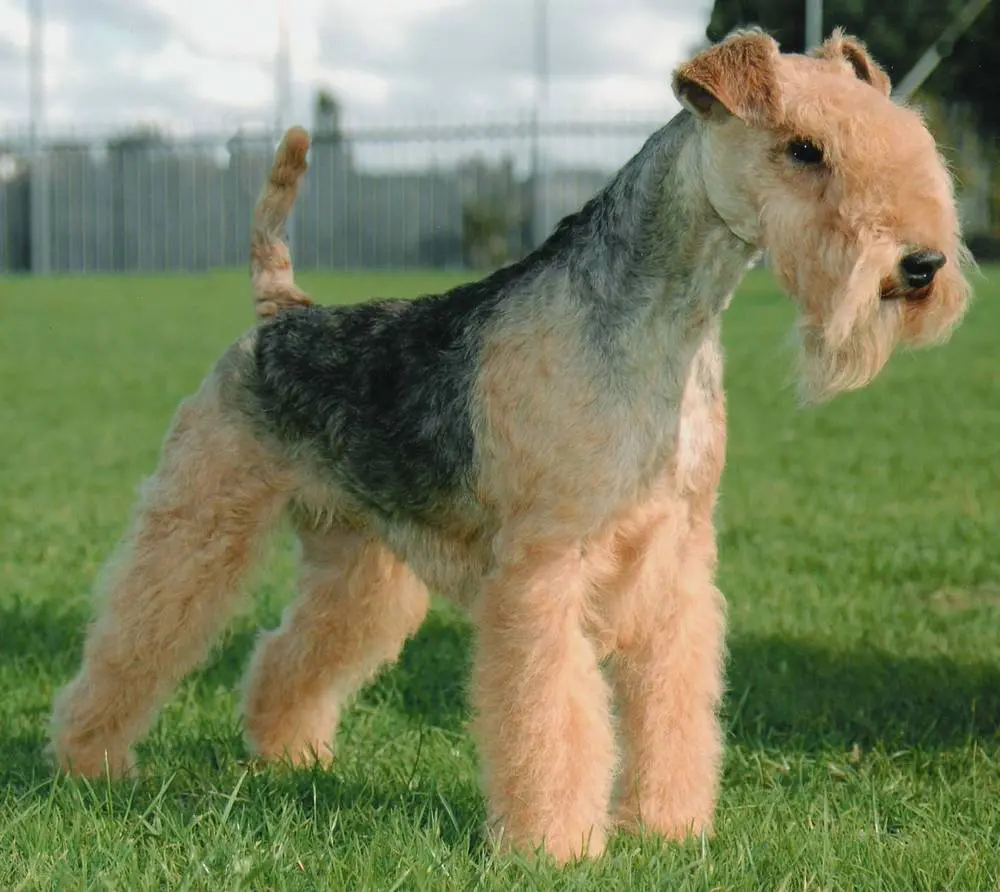
Lakeland Terrier

The Lakeland Terrier he is a friendly dog รขโ‚ฌโ€นรขโ‚ฌโ€นwith his own, also with children if they respect, very self-confident

Content

History

The Lakeland Terrier It is a breed of dog in the Terrier family, and within this section 1. The current Lakeland is a product of the crosses of different breeds of Terrier which include the Bedlington from whom he inherited his agility, the Border, of who retained the features of the fur, the Fox for its distinctive tail, and probably by its appearance the AIREDALE, These crosses resulted to the original Lakeland of the English region of Los Lagos.

This dog was used by shepherds to protect sheep from attacks by foxes. The breed was officially recognized in the year 1928.

Physical characteristics

Within the Terriers we would place it on a medium scale, neither very big nor too small. Skull flat, well outlined, ears small and carried flat with the nose of black color except in the specimens of liver color, followed by a long neck and elegant forms, slightly arched; short back, broad chest, strong limbs and good muscular. The tail is often be amputated. Its height varies between the 35 and 37 cm and his weight between the 6,5 and 7,5 kg. As the mantle may be black and Tan, Blue and fire, red, wheat, grey red, liver, blue black; sometimes with white markings on chest and legs.

Character and skills

It is a friendly dog with its own, also with children if they respect, very self-confident, look cheerful and lively expression, very guardian and courageous by nature jacket.

Lakeland Terrier, It is a dog that is well adapted to life in an apartment or a House. It is a dog that needs daily exercise (not excessive) and that also, like most terriers, She loves to hunt small vermin.

Lakeland Terrier Health

The Lakeland Terrier they are a very healthy breed, although they may have some genetic problems. These include eye problems like cataracts, glaucoma and lens dislocation, and a blood clotting disorder called vonWillebrand disease.

Many breeds of small dogs, including the Lakeland Terrier, can develop Legg-Calvรฉ-Perthes disease (LCPD), a bone disorder that requires surgery. Dogs sometimes also have a condition called dysthichiasis, eyelashes that grow from the glands in the corner of the dog's eyes and cause irritation. Symptoms can be mild and easily manageable or severe and require surgery..

Remember that after bringing a new puppy home, has the power to protect you from one of the most common health problems: the obesity. Keep a Lakeland with a proper weight is one of the easiest ways to prolong your life. Make the most of your preventive skills to help ensure a healthier dog for life.

Lakeland Terrier care

Lakeland has a double layer: hard and lean on the outside with a soft inner layer next to the skin. Hair is slightly wavy or straight. For display ring, the coat is stripped by hand to show the outline of the dog, giving it a neat and worked appearance. The ยปfillingยป – additional – on his face and legs they are abundant but neat with a clean texture.

If you want your Lakeland to have the distinctive breed grooming, you will have to learn how to do it yourself or find a hairdresser who is familiar with the task, which can be challenging. Show coat is even harder to achieve. Most pet owners simply groom their dogs a couple of times a week and trim them every two months..

The rest is basic care. Trim nails as needed, usually once every week or two. Brush your teeth frequently with a veterinarian-approved pet toothpaste for overall good health and fresh breath. Check ears weekly for dirt, redness or odor that may indicate an infection. If the ears look dirty, clean them with a cotton swab moistened with a gentle, pH-balanced ear cleaner recommended by your veterinarian. Introduce your Lakeland to the toilet early to accept it willingly and patiently.

Buy a Lakeland Terrier

The best way to buy your Lakeland Terrier puppy is to buy it locally from a breeder who is a member of the Terriesr Club or you can search the shelter for a Lakeland Terrier or similar terrier.. The costs are about 1200 EUR.

Characteristics "Lakeland Terrier"

Coexistence is important that you have with your new friend. Before considering the acquisition of a dog of the breed "Lakeland Terrier" you know certain factors. Not all breeds of dogs are apt to live in an apartment, you must take into account his character, their need for exercise, their interaction with other pets, their care and if you have small children, their level of tolerance towards them.

Adaptation โ“˜

3,0 of 5 stars (based on 1 review)

friendly dog โ€‹โ€‹โ“˜

1,0 of 5 stars (based on 1 review)

hair loss โ“˜

5,0 of 5 stars (based on 1 review)

Affection level โ“˜

4,0 of 5 stars (based on 1 review)

Need for exercise โ“˜

4,0 of 5 stars (based on 1 review)

Social need โ“˜

4,0 of 5 stars (based on 1 review)

Home โ“˜

4,0 of 5 stars (based on 1 review)

Toilet โ“˜

4,0 of 5 stars (based on 1 review)

Friendly with strangers โ“˜

3,0 of 5 stars (based on 1 review)

barking โ“˜

4,0 of 5 stars (based on 1 review)

Health โ“˜

2,0 of 5 stars (based on 1 review)

Territorial โ“˜

5,0 of 5 stars (based on 1 review)

Cat friendly โ“˜

1,0 of 5 stars (based on 1 review)

Intelligence โ“˜

4,0 of 5 stars (based on 1 review)

Versatility โ“˜

2,0 of 5 stars (based on 1 review)

Child friendly โ“˜

4,0 of 5 stars (based on 1 review)

Surveillance โ“˜

4,0 of 5 stars (based on 1 review)

joy โ“˜

5,0 of 5 stars (based on 1 review)

Images "Lakeland Terrier"

Photos:

1 – Lakeland Terrier by https://pxhere.com/es/photo/1210535
2 – Lakeland Terrier by https://www.pxfuel.com/es/free-photo-imoro
3 – Lakeland Terrier by https://www.pexels.com/photo/adorable-animal-animal-portrait-blur-1029726/
4 – Virginia Purebred – Hollybriar Natural High by Hoppyh / CC BY-SA
5 – Grizzle and tan Lakeland Terrier by Inkforest / CC BY-SA
6 – Tallinn, Estonia, CACIB duo 2013, August 17-18 by https://es.m.wikipedia.org/wiki/Archivo:Lakeland.JPG

Videos "Lakeland Terrier"

Type and recognitions:

  • FCI CLASSIFICATION:
  • Group :
  • Section : . .

Federations:

  • FCI – Terriers 1 Large and medium-sized terriers. โ“˜
  • AKC – Terrier โ“˜
  • ANKC – Group 2 (Terriers) โ“˜
  • CKC – Group 4 (Terriers) โ“˜
  • โ€‹KC – Terriers โ“˜
  • NZKC – Terriers โ“˜
  • UKC – Terriers โ“˜

FCI breed standard "Lakeland Terrier"

Origin:
England, United Kingdom

Date of publication of the valid original standard:
26.03.2009

Use:

Terrier


General appearance:

It's a live dog, fit for work, well balanced and compact.


Behavior / temperament:

Happy, brave behavior, vivacious expression, Fast movements, always wide awake. Intrepid, friendly and self-confident.

Head:

Well balanced. The length of the head from the frontal nasal depression (stop) to the tip of the nose must not exceed the length of the skull from the occipital to the frontal-nasal depression.

Cranial region:

Craging: Flat and well outlined.

facial region:

  • Trufa: black, except in liver-colored specimens in which it must be that color.
  • Horcico: Width, but not too long.
  • Bite / Teeth: The jaws are powerful. Even teeth. Perfect and complete scissor bite, that is to say, that the internal face of the upper incisors is in close contact with the face of the lower incisors; teeth should be implanted at right angles in the jaws.
  • Ojors: Dark or hazelnut colored. Slanted eyes are undesirable.Ears: Moderately small, โ€œVโ€ shaped and carried in an alert position. They should not be placed too high or too low on the head.

Neck:

Long and elegant, slightly arched, without jowl.

Body:

  • Espalda: Strong, moderately short.
  • Pork loin: Well coupled.
  • Pecho: Reasonably narrow.

Tail:

Previouslycustomwasamputate the tail.
  • amputee: Of good insertion and erect bearing, without curving over the back.
  • Sinn amputation: Of good insertion, erect bearing, without curling over the back or twisting. On balance sheet with the rest of the dog.


Tips

PREVIOUS MEMBERS: Straight members, provided with good bones.

Hormbros: well laid.

LATER MEMBERS: Strong and muscular.Thigh: Long and vigorous.

  • Rodinllto: Well angled.
  • Atibio-tarsal articulation: Well descended.Metatarsus: Straight.
  • PinIt: Small, compact, round and with solid foot pads.

Movement:

The forelimbs and hindlimbs should be carried in a straight line forward and parallel.. The shoulders move perpendicular to the body and without sticking to the sides. The femoro-tibio-patellar joints must not be turned inward or outward. Good thrust produced by well-angled hindlimbs.

Mantle

PlinkDenso, hard and weather resistant. Must have a good inner layer of hair.

Colorr: black and tan, Blue and fire, red, wheat, grey red, liver, blue black. Some small white spots on the feet and chest are allowed, but they are not desirable. Mahogany or intense tan colors are not characteristic of the breed..


Size and weight:

Alturto the cross: It should not exceed 37 cm. (14 1/2 inches).

Weight: Average: Males: 17 English pounds (7,7 kg).

females: 15 English pounds (6,8 kg).


Fouls:

Any deviation from the aforementioned criteria is considered as a fault and the severity of this is considered to the degree of the deviation to the standard and its consequences on the health and well-being of the dog..

FALTAS DISQUALIFYING:

  • Aggressiveness or extreme shyness.
  • Any dog โ€‹โ€‹showing clear signs of physical or behavioral abnormalities must be disqualified..


N.B.:
  • Males should have two normal-appearing testicles fully descended into the scrotum..
  • Only functionally and clinically healthy dogs, with the typical conformation of the breed, should be used for parenting.

Itlatest changes are in bold.

TRANSLATION: Lic. Oscar Valverde Calvo (Costa Rica) and Jorge Nallem (Uruguay).

Source: F.C.I - International Cynological Federation

Alternative names:

1. Lakeland (English).
2. Lakeland (French).
3. Lakeland (German).
4. Lakeland (Portuguese).
5. Lakeland (espaรฑol).

โ–ท The world of Pets: Dogs, cats, birds, reptiles, amphibians

Landseer
Alemania Suiza CanadรกFCI 226 - Molossoid . Mountain

Landseer

The nature of Landseer and Newfoundland is very similar, considering the first one as something more agile.

Content

History

The Landseer was created together with Newfoundland on the east coast of Canada. The great island of Newfoundland, located off the coast of Canada, gave his ancestors his name. Just 100 years the ways of Landseer they separated from those of Newfoundland. The reason was that they wanted to keep their skin color black and white.. More on this later. Who descended from the dogs of the Vikings of pre-Columbian times, from Spain or from the dogs of the Indians, are legends that remain untested. But, according to the current genetic map of canine breeds prepared in 2017 by an international group of researchers led by Heidi G. Parker, there is a close relationship with the recuperators, What, like the Labrador, come from the same area. Probably the ancestors of the Landseer or Newfoundland arrived in North America with the first European settlers.

The big dogs proved to be important helpers for fishermen and sealers in the cold waters of the North Atlantic., and were also occasionally useful in hunting bears and big game. It also, landowners or Landseers they carried loads and even as a draft dog they are said to provide exceptional services. Working with fishermen in extremely harsh weather was very demanding. The Landseer had to think, had to do heavy work on the networks, saved the lives of the castaways over and over again. In this way he developed the peculiarities of his being and his physique.. He accomplished amazing things in the service of humanity. The Landseers or landowners came to England over and over again with cod ships as early as the 18th and early 19th centuries. Here he became famous very early for his impressive achievements.

The famous poet Lord Byron put in 1808 your dear boatswain Landseer an impressive monument. He had the words engraved on his tombstone: ยซHere rest the bones of one who possessed beauty without vanity, strength without exuberance, courage without savagery, and all the virtues of man without his vices". Here the greatness of character of these dogs is expressed, that can still be experienced today. The painter Sir Edwin Landseer immortalized his Newfoundlands black and white in oil several times around 1830. There is some evidence that dogs documented as Newfoundland Oh ya en Canis Earth News 1700 were predominantly black and white and that it was only later that the pure black or brown dogs that are typical of Newfoundland today. The black and white guy went out of style in England. But, Swiss and German cynologists and breeders brought the last good dogs from England and built a continental European breed.

To save these black and white dogs from Newfoundland, they were declared their own race around 1900, named after their famous painter ยซLandseerยซ. So this ancient type of dog with a great history was preserved for the world of dogs.. Since then, the Newfoundland and Landseers are raised separately. Later it is said that Kuvasz and Pyrenean Mountain Dogs were crossed to stabilize the white color of the soil.

In 1960 the Landseer (continental-european type) was officially recognized by the Fรฉdรฉration Cynologique Internationale.

Physical characteristics

According to the breed standard of the Landseer, You must give the impression of being a but powerful and well balanced. The legs are relatively longer than the black Newfoundland. The back is straight and strong. The hind legs and shoulders are muscular.

The upper layer must be long and as straight as possible, very dense and soft to the touch. The main color of the layer is white with various patches black in the rump, the neck, backsplash, belly, legs and the tail should be white.

The head should be black with the white snout and symmetric white extends from the snout to the head, ending with the white collar. It has a distinctive shape with a noble facial expression. The ears are medium-sized and eyes should be dark brown. the size of the Landseer will of 67 to 80 cm., and at birth weigh between 500 to 750 grams and at the age of 1 year can be reached despite 50 to 60 kg.

Like all mastiff-type breeds, the Landseer It is also grown very fast during its first year. Therefore one must be careful with the exercise, because if it becomes sedentary can suffer from overweight.

Character and skills

Throughout its development, and even at maturity (that is not until the dog is of 3 or 4 years of age), the Landseer is a very active dog who likes to do all kinds of activities. Swimming, for example, is your favorite activity. So when a Landseer smells and sees the water, already no boundaries, jump to the water.

The Landseer he is a very accommodating dog with his master. It is active, has good temperament, but it is not a nervous dog. It is a very confident dog, Intelligent, loyal to their own people, fairly mild in nature and, When they are given sufficient exercise outdoors, it attaches very well to home life. In general terms, most of Landseer they are very independent and have a mind of its own. The Landseer is very easy to train, much love and patience will be rewarded with a partner for life.

As we said in previous lines to most of the Landseer, they love water and walks, It is therefore necessary to fulfill these wishes to the dog. Being on the water takes it as a job, reason why can take advantage of these time to play to find objects, launch toy water to make it look, It can be one excellent training both for the owner and as for the dog. It is a good diver and with appropriate training, they are able to find objects in the bottom of any Lake. In this regard, It is good to note that if you want to go swimming with your Landseer you should keep in mind that, the dog will try to rescue and towed back to land. So, no doubt have to be careful to do this the first time. Basic training is required so that the dog knows when you are playing, and when not. Any other activity with the family is also something that the Landseer always wants to do.

When it comes to behaviour towards other dogs, children and people there is no problem. Especially the Landseer, they love to children.

It is good to socialize with other dogs puppies, because if he is male, It can be very dominant. But with a proper education, There will not be any problem.

Landseer Education

The Landseer can be educated very well. It is intelligent, interested and quickly understand what you are allowed to do and what you are not. Sometimes he takes it easy, but a little motivated he is very cooperative and tries to make his lord and master happy. The puppy should already show itself clearly and without exception where the hammer hangs. There should be no doubt about the orientation of your humans, as well as on the intimate relationship with.

Always keep in mind that this dog is the strongest and that orientation only works through unquestionable recognition. But with praise and consequences you can basically accomplish everything with it. On the basis of a good education you can even train very well at Landseer. Many Landseer are used as rescue dogs in the water, but also on earth. For this you can pass the work tests with water in the clubs.

Landseer Health and Care

The maintenance and care of the Landseer they are complex as with all big dogs. The dense and weather resistant layer should be brushed regularly with a special brush. Should not be sheared or trimmed.

The dogs of the breed Landseer like all large dogs they tend to hip joint dysplasia, twisting of the stomach. Due to their constitution and their dense fur they do not tolerate heat well.

Nutrition / Food

Like all large dogs, the Landseer needs a lot of good food. Especially in the growth phase you need professional nutritional planning. A high positioned food bowl is useful to counteract the risk of stomach twisting. You should always pay close attention to your weight.

Landseer's life expectancy

Life expectancy is between 10 and 12 years.

For sale Landseer

You should only purchase a puppy locally from a breeder who is affiliated with the FCI. Puppies of this breed cost between 1.500 and 2.000 EUR.

Images "Landseer"

Photos:

1 – Puppy landseer – 3 months old by OdinetPietra / CC BY-SA
2 – Landseer by https://pxhere.com/es/photo/548945
3 – Landseer by https://pxhere.com/es/photo/550456
4 – Cleo 11 months by Per Jensen – Flickr
5 – Landseer at PhotoEmotions (pixabay.com)
6 – Landseer by Katrina_S (pixabay.com)

Videos "Landseer"

Type and recognitions:

  • FCI CLASSIFICATION:
  • Group :
  • Section : . .

Federations:

  • FCI – Pinscher and Schnauzer-Molossoid type dogs – Swiss Mountain Dogs and Cattledogs. Section 2.2 Molossoid, mountain type. โ“˜

FCI breed standard "Landseer"

Origin:
Germany, Canada, Switzerland

Date of publication of the valid original standard:
24.08.1960

Use:

Guard and companion dog.


General appearance:

The Landseer must give the impression of a large dog, strong and harmonious. Your limbs, especially in males, they are proportionally longer than in the black Newfoundland.


Behavior / temperament:

---

Head:

The skin of the head, short hair cover, it is wrinkle free. The head profile is marked, but it has an expression of nobility.

Cranial region:
  • Craging: Wide and bulky, with a well developed occipital protuberance.
  • Dfronto-nasal depression: Marked, but not as noticeable and abrupt as in St. Bernard's dogs.

facial region:

  • Trufa: black.
  • Horcico: The length of the muzzle is equal to its height measured against the frontal-nasal depression.
  • Labios: Thin and pigmented in black; the superiors, which are as stiff as possible and do not drool, slightly cover the lower ones.
  • Jaws/Teeth: Scissor bite.
  • Cheeks: Moderately developed, gradually melting into the muzzle.
  • Ojors: Medium-sized, moderately sunken, brown or dark brown, although light chestnut is tolerated. friendly expression; almond-shaped eyelids; the palpebral conjunctiva is not visible. Overly clear eyes (sulfur or yellowish gray color) are considered as fouls, as well as eyes implanted too close to each other.
  • Obars: Medium-sized, reach the inner corner of the eye when placed towards the eyes; form triangular, a little rounded on its bottom edge, implanted high in the skull, but not too far back. Flat and glued to the sides of the head, they are covered with short and fine hair and have stripes of longer hair only at the back of the insert.

Neck:

The neck in its cross section is not completely round, but slightly oval; he's muscular, and it rises wide from the region of shoulders and thorax towards the head. In symmetrical construction, the length of the neck, from the occipital protuberance to the withers, is approximately 3/4 to 4/5 the length of the head, measured from the occipital protuberance to the tip of the nose. The presence of dewlap is not desirable (throat and neck) notable.

Body:

It is very broad and powerful from the cross to the rump. The length from the withers to the tail insert should be approximately twice the length of the head.

  • Espalda: Stiff and straight.
  • Pork loin: Muscular.
  • Glikeness: Wide, well rounded on the sides and back thanks to the powerful muscles that cover it.
  • Pecho: In the middle of the very muscular shoulders, the chest is broad and deep with strongly arched ribs forming a corresponding rib cage.
  • Vinbetween: Slightly retracted; between the belly and the back, a flat sag in the flank region must be visible.

A weak back is considered a fault, expired, loose backs, and the last ribs very short and an excessively retracted belly.

Tail:

Strong, reaches a little below the tibial-tarsal joint at most, covered in dense, leafy hair, but without forming feathers. When the dog is calm on its feet or at rest it carries it hanging down, eventually with a slight curve at the tip. During movement you can carry it straight with a slight upward bend at the tip. Tails bent or curled over the back are not tolerable.

Tips

PREVIOUS MEMBERS: A robust muscle mass from the shoulders surrounds the strong humerus and forms a correct angulation at the junction with the powerful bones of the completely straight and muscular limbs.. The forelimb has some stripes of hair that reach the tibial-tarsal joint.

  • Elbows: Well attached to the lower part of the thorax in a fairly high position and completely directed backwards.

LATER MEMBERS: The rear limb is powerful. The hind limbs must have free movement and have strong bones surrounded by powerful muscles., so that the thigh region mainly shows extensive development.

  • Thighs: They have a particularly broad development.
  • Espolones: Are unacceptable, They must be amputated from the first days of birth.
  • PIIS: Big and well formed (cat feet). Crushed or deviated feet are reprehensible. The fingers must be joined by strong interdigital membranes to the proximity of the tip of the fingers.

Movement:

The movement of the muscular limbs must be free and wide.

Mantle

  • Plink: Except for the head, the coat must be long, where possible, smooth and bushy, soft to the touch and intermixed with inner fleece which should not be as dense as in Newfoundland. The presence of an outer layer of slightly wavy hair on the back and thighs is not penalized. When brushing hair in the opposite direction to the natural position, it must return by itself to the correct position.
  • Colorr: The basic coat color is pure white with sharp, broken black plates distributed over the trunk and rump region.. The neck, the sill, the belly, limbs and tail must be white. The head is black. The presence of a white mark on the muzzle is typical of the breed, attached with a whitelist, symmetrical and not very wide. Smoke colored spots on the white background are not considered as faults, but they must be eliminated in breeding through selection.


Size and weight:

Alturto the cross: Height at withers in Landseer may fluctuate: in males an average between 72 and 80 cm and in females an average between 67 and 72 cm.. Small variations in size larger or smaller are tolerated.


Fouls:

Any deviation from the aforementioned criteria is considered as a fault and the severity of this is considered to the degree of the deviation to the standard and its consequences on the health and well-being of the dog..


FALTAS DISQUALIFYING:

  • Aggressiveness or extreme shyness.
  • Any dog โ€‹โ€‹showing clear signs of physical or behavioral abnormalities must be disqualified..


N.B.:
  • Males should have two normal-appearing testicles fully descended into the scrotum..
  • Only functionally and clinically healthy dogs, with the typical conformation of the breed, should be used for parenting.

Source: F.C.I - International Cynological Federation

Alternative names:

1. LANDSEER (EUROPEAN CONTINENTAL TYPE) (English).
2. LANDSEER (TYPE CONTINENTAL-EUROPEEN) (French).
3. LANDSEER (EUROPร„ISCH-KONTINENTALER TYP) (German).
4. LANDSEER (TIPO EUROPEU CONTINENTAL) (Portuguese).
5. LANDSEER (TIPO EUROPEO CONTINENTAL) (espaรฑol).

โ–ท The world of Pets: Dogs, cats, birds, reptiles, amphibians

Leonberger
Alemania FCI 145 - Molossoid . Mountain
Leonberger

Once you get to know Leonberger dogs better, you will be enchanted by them forever.

Content

History

The Leonberger it is a very big and beautiful dog. In his head and in his charisma he remembers a St. Bernard and a lion at the same time. And this is not a coincidence, because the St. Bernard is one of the ancestors of Leonberger. The Leo, as his friends call it, It is a young and at the same time old breed of dog. This breed is ancient, because it has been specifically bred to the standard since 1846. The Leo It, therefore, one of the oldest dog breeds in modern breeding. At the same time it is a breed of young dog; because it was only created at that time. Most other pedigree dogs have a long history and originated from ancient working dog breeds..

The Leonberger, However, has a different and unique story. Among 1820 and 1850 San Bernardo became fashionable throughout Europe. The heroic exploits of the legendary St. Bernard Barry at the Great St. Bernard Pass in the Alps had a great effect. Barry has been shown to save more than 40 people of death by snow. Everywhere people wanted these big dogs and they were (and they are) really big dogs.

Breeders and traders were unable to meet the high demand. At the same time high prices were paid for a puppy of St. Bernard. So quite a few dog dealers from southwestern Germany helped out without further ado.. They mated St. Bernard with very big bitches from the region. The pups that looked like a St. Bernard they were sold as such, but for the others there were at most a few potatoes from a farmer. The dog trade was – as it still is today – a lucrative business and some sold hundreds of puppies a year and became rich.

Like Leonberg City Hall and dog vendor Heinrich Essig. An intelligent idea occurred to him and turned need into virtue. He created a brand out of the puppies that he could not market as St. Bernard. Instead of giving them away, sold the puppies for good money. Thus was born the Leonberger. Inspired by the lion from the coat of arms of his hometown, this new breed of dog has the appearance of a lion. His dogs were nicknamed Leonhardiner in the envious competition. Also in the official world of dogs these hybrids went unnoticed for a long time. Like this, el cinรณlogo Ludwig Beckmann, universally recognized at that time, He does not even mention the Leonhardiner in his work in two volumes "Die Rassen des sinks" (dog breeds) of 1895. From the point of view of health, such a genetically heterogeneous offspring is an advantage.

The Leonberger should be a success in all respects. Today it belongs to the primitive rocks of the world of purebred dogs., that no dog lover wants to miss. In 1895 The ยซInternational Dog Club was founded Leonbergerยซ, which quickly achieved official recognition of the Leonberger like race. In 1948 He was followed by the ยซGerman Dog Club LeonbergerยปBased in Leonberg, who still represents the Leonberger at VDH and around the world. The Leonberger has a unique charisma, imposing and at the same time friendly, quiet and just sovereign. Its appearance is reminiscent of a lion and its character is also majestic, peaceful and totally suitable for families.

Physical characteristics

The Leonberger It is an impressive large dog with a height at the withers in males between 72 and 80 cm and in females between 65 and 75 cm.. No weight given. But, will be some 80 kg. The standard describes its appearance as:

ยซAccording to its original purpose, the Leonberger it's a very big dog, strong, muscular and elegant at the same time. It is characterized by a harmonious build and a self-assured calm with a lively temperament.. Especially the male dog is powerful and powerful. "

Its coat should be medium soft to thick, broadly long, well lying. The Leo has a strong inner layer. The shapes of your physique should be recognizable. On the neck and chest, the fur, especially in males, must form a mane. The coat will be lion yellow, red, reddish brown and all the combinations between them, but always with a black mask. In favor of this lion gaze, hereditary factors related to health and longevity have been neglected.

A study published by the University of Vienna evaluated 7582 layers of Leonberger between 1932 and 2009. ยซIt was determined that the average death age of the Leonberger It was from 7,55 years". During the study period, life expectancy had even decreased in 1,5 years in the last three decades. With a healthy upbringing, 10 or 12 years would be normal. The breed has recognized these warning signs and is now focusing more on the health and extension of the life expectancy of these large dogs..

Character and skills

The mind of a Leonberger is pious as a lamb. Being with him is pure slowdown for man. The essence is described in the standard:

as family dog, the Leonberger is a pleasant companion in current living conditions, that can be carried everywhere without any difficulty and is characterized by a pronounced kindness towards children. He is neither shy nor aggressive. As a companion dog it is a pleasant companion., obedient and fearless in all life situations.

The strength of character required includes above all: self confidence, sovereign calm, average temperament (including game instinct), willingness to subordinate, good learning and memorizing ability and noise tolerance. The character of Leonberger impresses all dog lovers.

Once you get to know dogs better Leonberger, you will be enchanted by them forever. There is almost nothing that can disturb this giant. His very high stimulus threshold as well as his stoic composure are the necessary counterpart to his enormous strength.. These two poles thus characterize the nature of Leonberger. Here and there is something stubborn. Only good persuasion and pleading will help., then he will do everything for his master or lady. But as a family member he is very kind. Seeks proximity to its humans. It is a reliable protector for them. The Leonberger he is a great guy, a fascinating dog!

Fitness

The Leonberger not an easy dog รขโ‚ฌโ€นรขโ‚ฌโ€นto keep due to its size. By its nature, has very few demands. A daily walk, brushed once a week, that was all. You don't need a big garden, but a garden is already useful. He likes to take possession of it. So, a small apartment on the nth floor would not be for him. Does not fit in all cars. One must consider: You're mine, the whole car will get wet. Leo can bear the heat, but it should not be challenged. prefers the cold. The Leonberger he is a great friend and not an object for acting addicts.

It should also be borne in mind that in our current society, large dogs are often rejected. Some people just fear a giant like Leo, even if he behaves – as is normal for him – exemplary. This is one of the reasons why it is not advisable to keep it in the big city..

One must have a sufficient budget to be able to pay a lot of good food and, in case of doubt, also the vet. It also, should have considered before buying what to do if the dog is sick and may need to bring 80 kg or more. Last, but not less important, there are many practical things that have a profound influence on everyday life. Here one must take real responsibility and honestly look in the mirror if all the conditions for a happy coexistence with dogs are met. Leonberger. Who can claim this, is in an enviable situation of dog owner. The Leonberger worth a sin.

Leonberger's Education

It must be remembered that in a Leo adult, the leash is just a symbol of control. The Leonberger has the power to control the other end of the strap. But he doesn't want. The Leonberger it's basically easy to train. Only his stubbornness has to be broken here and there with consistent smoothness.. He wants to follow his lord and master and he does it very reliably. It is an elementary duty of the owner of a Leonberger to pay attention to a consistent education already in the puppy. Because only this and not the leash makes wonderful walks in nature possible, that together with this great four-legged friend become a balm for the soul of agitated people. The great dog should never be "educated" by bumps or barracks methods. Because that would cause the exact opposite of education and end in disaster..

Leonberger care

Caring for a healthy Leo is not a problem. Brushing the coat once a week is enough.

Nutrition / Food

You need a lot of high quality food. A raised bowl is useful to counteract the risk of stomach twisting. Always pay attention to the weight.

Leonberger Health

As in most large dogs, we see hip or elbow dysplasia. Osteosarcoma, the most common bone tumor in dogs, It is also very common in Leonberger.

Leonberge life expectancy

Before the life expectancy of a Leonberger It was from 12 years, today is from 7 to 9 years. The breeding is working to recover the possible natural life of a healthy dog. He is accompanied here by a research project of the University of Veterinary Medicine Hannover.

Buy a Leonberger

The purchase of a Leo it should be long-term and well thought out. You should carefully check if you have all the requirements to be able to spend many wonderful years with this giant.. If you are looking for a puppy, you should make sure above all that the dogs are not bred too much. Ask about ancestors, their illnesses, his age reached. You should see an FCI affiliated breeder Leonberger. Really, a Leonberger it costs about 2.000 EUR.

Images "Leonberger"

Photos:

1 – Leonberger bitch by The animal photography at de.wikipedia / CC BY-SA
2 – Leonberger by https://pxhere.com/es/photo/1394923
3 – Leonberger, head photographed in 2004 at a dog show in Dresden by Karina Leo-Steffen, uploaded here from –Caronna 13:43, 15 Apr 2005 (UTC) / CC BY-SA
4 – Leonberger by https://www.pexels.com/es-es/foto/75295/
5 – Leonberger by https://pxhere.com/es/photo/1434187
6 – Leonberger by Pleple2000 / CC BY-SA
7 – Leonberger by https://www.needpix.com/photo/1100946/dog-leonberger-giant-pedigree-purebred-animal-canine

Videos "Leonberger"

Leonberger - Breed of dog

Type and recognitions:

  • FCI CLASSIFICATION:
  • Group :
  • Section : . .

Federations:

  • FCI – Pinscher and Schnauzer-Molossoid type dogs – Swiss Mountain Dogs and Cattledogs. Section 2.2 Molossoid, mountain type. โ“˜
  • AKC – Working dogs โ“˜
  • ANKC – Group 6 (utility dogs) โ“˜
  • CKC – Working dogs โ“˜
  • โ€‹KC – Working dogs โ“˜
  • NZKC – Utility dog โ“˜
  • UKC – Watchdog โ“˜

FCI breed standard "Leonberger"

Origin:
Germany

Date of publication of the valid original standard:
04.01.1996

Use:

Watchdog, Company and family.


General appearance:

Complying with the original use purposes, the Leonberger is a big dog, strong, muscular and elegant at the same time. It is characterized by its harmonious body structure and poised tranquility, aware of his own worth with a lively temperament. The male is especially powerful and robust.


PROPIMPORTANT ORTIONS: Relationship of the height of the cross with the length of the body = 9:10; the depth of the chest corresponds almost to 50% the height of the cross.


Behavior / temperament:

As a family dog, the Leonberger adapts to modern living and room conditions and turns out to be a pleasant companion that can be taken anywhere without causing problems. It also, It is very friendly with children and is not shy or aggressive. As a companion dog it is a pleasant companion., obedient and fearless in all situations that arise. To achieve his nature and strength, he mainly needs:

  • Self -confidence and sovereign
  • Medium balanced temperament (urge to judge).
  • Willingness to submit.
  • Good learning ability and attention.
  • Be insensitive to noise.

Head:

In its entirety it is deeper than broad and seems longer than plump; the relationship between the muzzle and the cranial region is approximately 1:1. The skin is adherent on all parts and does not form frontal folds.

Cranial region:
  • Craging: Seen in profile and from the front it is slightly arched; is strong corresponding to the body and limbs, but it doesn't look heavy. The posterior region is not much wider than the region where the eyes are located.
  • Ston: It is clearly noticeable and moderately marked.

facial region:

  • Nariz: Black.
  • Horcico: It is long, but it never ends on end. The nose is in broad correspondence, never sunk, but rather slightly arched (ram's nose).
  • Labios: Adherents, black, with closed corners.Jaws / Teeth: Powerful jaws with a full scissor bite, regular and perfect with good adaptation of the upper incisors over the lower ones without leaving space. The teeth are implanted vertically in the maxilla, showing 42 healthy teeth according to dental formula (lack of M3 is tolerated). Caliper bite allowed; in the lower jaw there should be no narrowness next to the fangs.
  • Cheeks: Poorly developed.
  • Ojors: Light brown to as dark as possible, medium-sized, oval, or sunk or bulging, neither very together nor very separate from each other. Adherent eyelids, they don't show the conjunctiva. The whites of the eyes (visible part of the dermis) does not show redness.
  • Obars: High insertion and placed not far behind, pendants, medium-sized, stuck and fleshy.

Neck:

Forms a light curve that continues without interruption to the cross. It is longer than it is wide; has no loose or double chin.

Body:

  • Cruz: Pronounced, especially in the male.Back: Robust, straight, wide.
  • Itmors: Widths, powerful, well muscled.
  • Glikeness: Wide, relatively long, gently rounded, in the form of progressive transition to the root of the tail, never higher than the back.
  • Pecho: Large, deep, reaches at least to elbow height; not barrel-shaped but rather oval.
  • Lรญnand the bottom: Only slightly retracted.

Tail:

With lots of hair. When it is standing it carries it hung in a straight line; Also during the movement it folds only slightly without exceeding the back line.

Tips

PREVIOUS MEMBERS: Straight, parallel, not closed.

  • Shoulder / Arms: Long, obliquely placed; Among them form an angle not too obtuse. They have good muscles.
  • Elbows: Glued to the body.
  • Metacarpus: Strong, firm, viewed from the front they are straight and viewed from the side almost vertical.
  • Pinis previous: Straight (no deviations outwards or inwards), rounded, compact; well arched fingers; black pads.

LATER MEMBERS: Viewed from behind they are not placed too tightly; they are parallel; lukewarm joints- tarsians and feet do not deviate inward or outward.

  • Cadhere: In oblique position.
  • Thigh: Rather long; placed obliquely, has strong muscles. The thigh and leg form a fairly sharp angle.
  • Atibio-tarsal articulation: Powerful, with a marked angle between the leg and the metatarsal.
  • Pinis later: Straight, just a little long; arched toes; black pads.

Movement:

Cover the ground, it is balanced in all walks; good momentum and breakthrough; both during walking and jogging, observed front and back, conducts limbs in a straight line.

Mantle

  • Fur: Hair should be a little soft to hard, quite long, stuck and never form a streak; Despite having a lot of internal fleece, you can recognize the shapes of your body structure. The hair is smooth, although it is allowed to be slightly wavy; on the neck and chest (especially in the male) a mane is formed; There are visible feathers in the anterior members and "pants" marked in the posterior members.
  • Color: Yellow (lion color), red, reddish brown, also sand color (pale yellow, cream-coloured) and all its combinations, although with a black mask. Hair is allowed to have black tips; However, black should not be the basic hair color. The paleness of the basic color in the lower part of the tail, on the necklace, In the feathers of the previous members and in the "pants" of the posterior. A small white spot or a thin white streak is tolerated on the chest and white hairs on the fingers.


Size and weight:

Height to the cross:

  • Males: 72 โ€“ 80 cm., ideal measure 76 cm.,
  • females: 65 โ€“ 75 cm., ideal measure 70 cm..


Fouls:

Any deviation from the aforementioned criteria is considered as a fault and the severity of this is considered to the degree of the deviation to the standard and its consequences on the health and well-being of the dog..


FALTAS DESCALIFICANTES:

    • Aggressiveness or extreme shyness.
    • Any dog โ€‹โ€‹showing clear signs of physical or behavioral abnormalities must be disqualified..
    • Severe anatomical failures (p. e.g.. notable cow members, carp back marked, badly beaten back, exaggerated outward deviation in the forefoot, absolutely insufficient angulation in the shoulder joints, elbow, knee and tibial-tarsian).
  • brown truffle.
  • Excessive depigmentation on the lips
  • Lack of teeth (except the M3), superior and inferior prognathism; other faults in the bite.
  • Eyes without brown color.
  • Ectropiรณn, ectropion.
  • Tail too curled or carried too high and curled.
  • Brown pads.
  • Curly or frizzy hair.
  • Lack of color (brown with brown truffle and brown pads; Black with fire; silver black; deer color).
  • Total lack of mask
  • Too much white color (that reaches from the fingers to the carpus, stain on the chest larger than a hand, white color elsewhere).


N.B.:
  • Males should have two normal-appearing testicles fully descended into the scrotum..
  • Only functionally and clinically healthy dogs, with the typical conformation of the breed, should be used for parenting.


TRANSLATION: Federation Canรณfila Mexicana a.c..

Source: F.C.I - International Cynological Federation

Alternative names:

1. Leo, Gentle Lion, Gentle Giant (English).
2. Chien Leonberg (French).
3. Leo (German).
4. Leo (Portuguese).
5. Leo (espaรฑol).