โ–ท The world of Pets: Dogs, cats, birds, reptiles, amphibians

Afghan Hound
Afghanistan Great Britain FCI 228 . Long-haired or fringed Sighthounds.
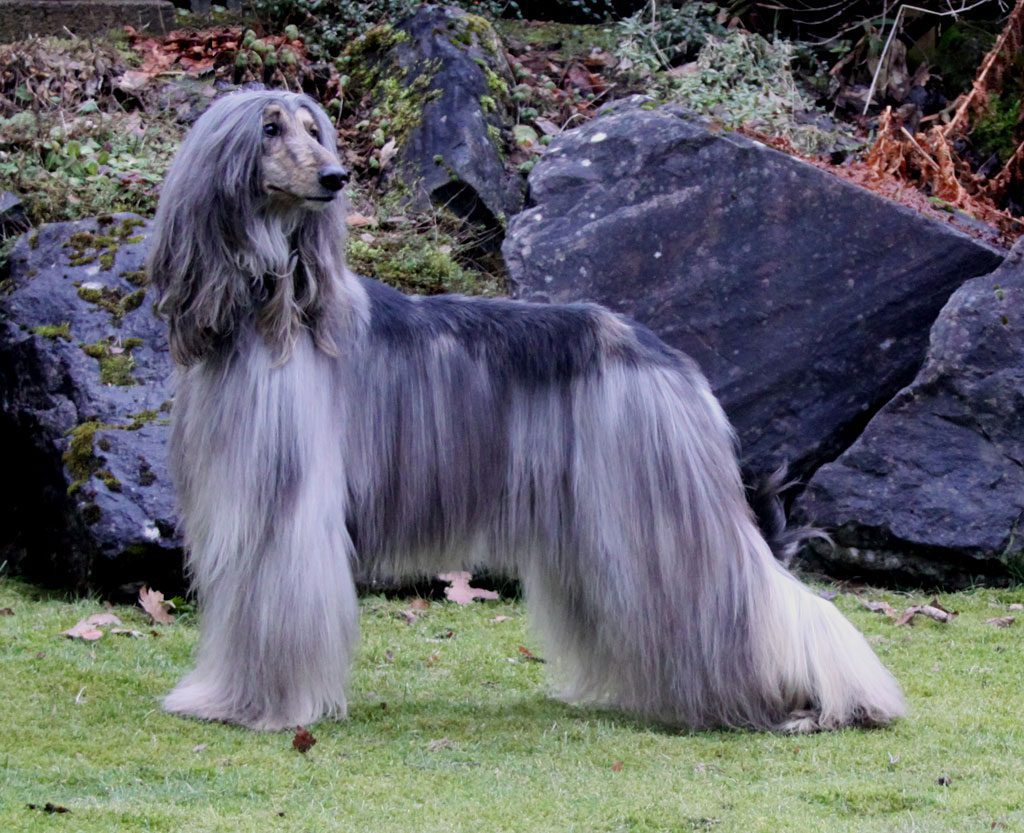
The Afghan Hound It behaves so haughty and reserved, especially with strangers

Lebrel Afgano

Content

Characteristics "Afghan Hound"

Coexistence is important that you have with your new friend. Before considering the acquisition of a dog of the breed "Afghan Hound" you know certain factors. Not all breeds of dogs are apt to live in an apartment, you must take into account his character, their need for exercise, their interaction with other pets, their care and if you have small children, their level of tolerance towards them.

Adaptation โ“˜

4,0 of 5 stars (based on 1 review)

friendly dog โ€‹โ€‹โ“˜

3,0 of 5 stars (based on 1 review)

hair loss โ“˜

2,0 of 5 stars (based on 1 review)

Affection level โ“˜

2,0 of 5 stars (based on 1 review)

Need for exercise โ“˜

4,0 of 5 stars (based on 1 review)

Social need โ“˜

1,0 of 5 stars (based on 1 review)

Home โ“˜

3,0 of 5 stars (based on 1 review)

Toilet โ“˜

4,0 of 5 stars (based on 1 review)

Friendly with strangers โ“˜

2,0 of 5 stars (based on 1 review)

barking โ“˜

2,0 of 5 stars (based on 1 review)

Health โ“˜

3,0 of 5 stars (based on 1 review)

Territorial โ“˜

2,0 of 5 stars (based on 1 review)

Cat friendly โ“˜

3,0 of 5 stars (based on 1 review)

Intelligence โ“˜

3,0 of 5 stars (based on 1 review)

Versatility โ“˜

2,0 of 5 stars (based on 1 review)

Child friendly โ“˜

3,0 of 5 stars (based on 1 review)

Surveillance โ“˜

1,0 of 5 stars (based on 1 review)

joy โ“˜

3,0 of 5 stars (based on 1 review)

History ยซAfghan Houndยป

Also know as Tazi It is a dog coming from Afghanistan.

The origin of this breed it is possible that you are in the race Saluki, that would have reached Afghanistan through Persia. Already in Afghanistan, the Saluki I would need a coat more appropriate for the hostile climate of the mountains of this country, developing the long coat which characterizes Afghan Hound current, and with which today seduces so many people who acquire dogs of this breed without taking into account that they need very special care.

The origin of the Afghan Hound it is ancient, with the first records approximately in the year 1000 to. C., in the area where it is currently Afghanistan. It was used as a hunting dog.

The antiquity of this breed has not yet been corroborated by anyone, but the earliest records date from the 19th century, which does not mean that they did not exist before, but that Afghan nomads didn't bother in the race record for writing. The first illustration made of a Afghan Hound It is the year 1813. This race came to England in 1920 and didn't succeed, It is recognized by the british kennel club only six years later.

In the year 1880, When he ended the war between Afghans and British, the officers of the British army took home some of these dogs, whose characteristics as hunting dogs in the harsh conditions of the Afghan mountains, had caught his attention.

Videos "Afghan Hound"

Miske, galgo afgano
Breed All About It - Afghan Hound

In Europe, the Afghan Hound It has maintained its natural activity sheepdog and hunting, task that he already did in his homeland. As well, Thanks to its elegant appearance, agility and speed, has become a companion and racing dog.

In the beginning, the Afghan Hound He was employed to chase prey of all kinds, who were in the mountains Afghanistan, such as hares, foxes, Gazelles, jackals, Wolves, deer, and even, Snow leopard (which is the only big cat that lives exclusively in high mountains and is perfectly adapted to this environment).

Another function of Afghan Hound was the monitoring the camps of nomadic tribes and livestock, functions that, along with those related to hunting, They gave this race a huge popularity among nomads Afghanistan (they even reserved a day of festivity dedicated to the Afghan Hound, which engalanaban them with necklaces of flowers).

Physical characteristics ยซAfghan Houndยป

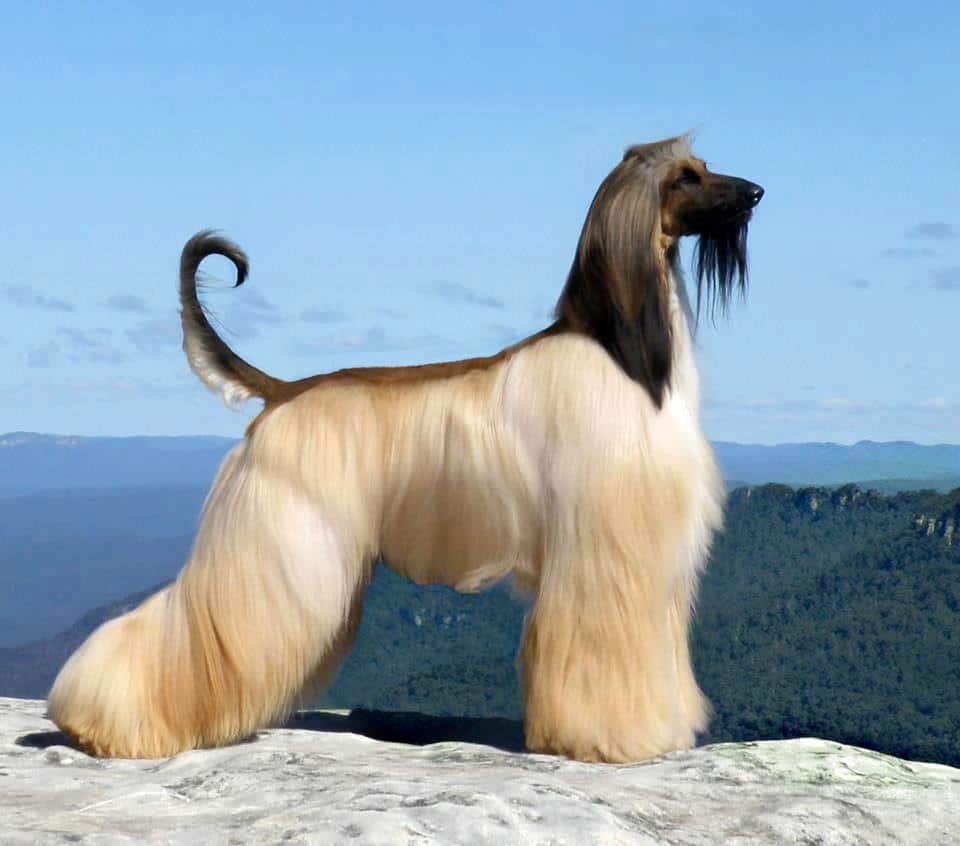
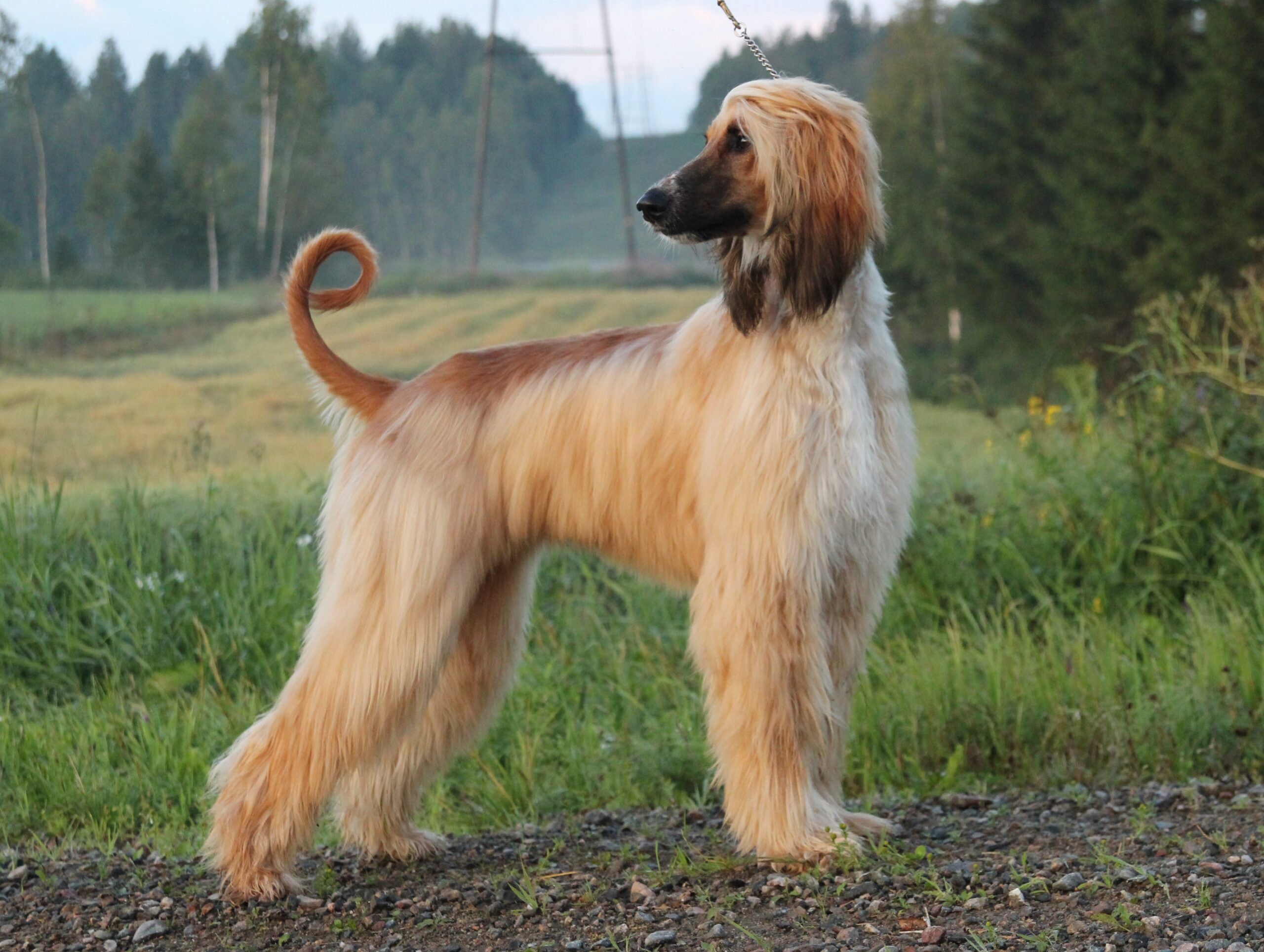
General appearance gives an impression of force, dignity, speed and power. The exotic and oriental expression is typical of the breed, with a direct and scrutinizing look.

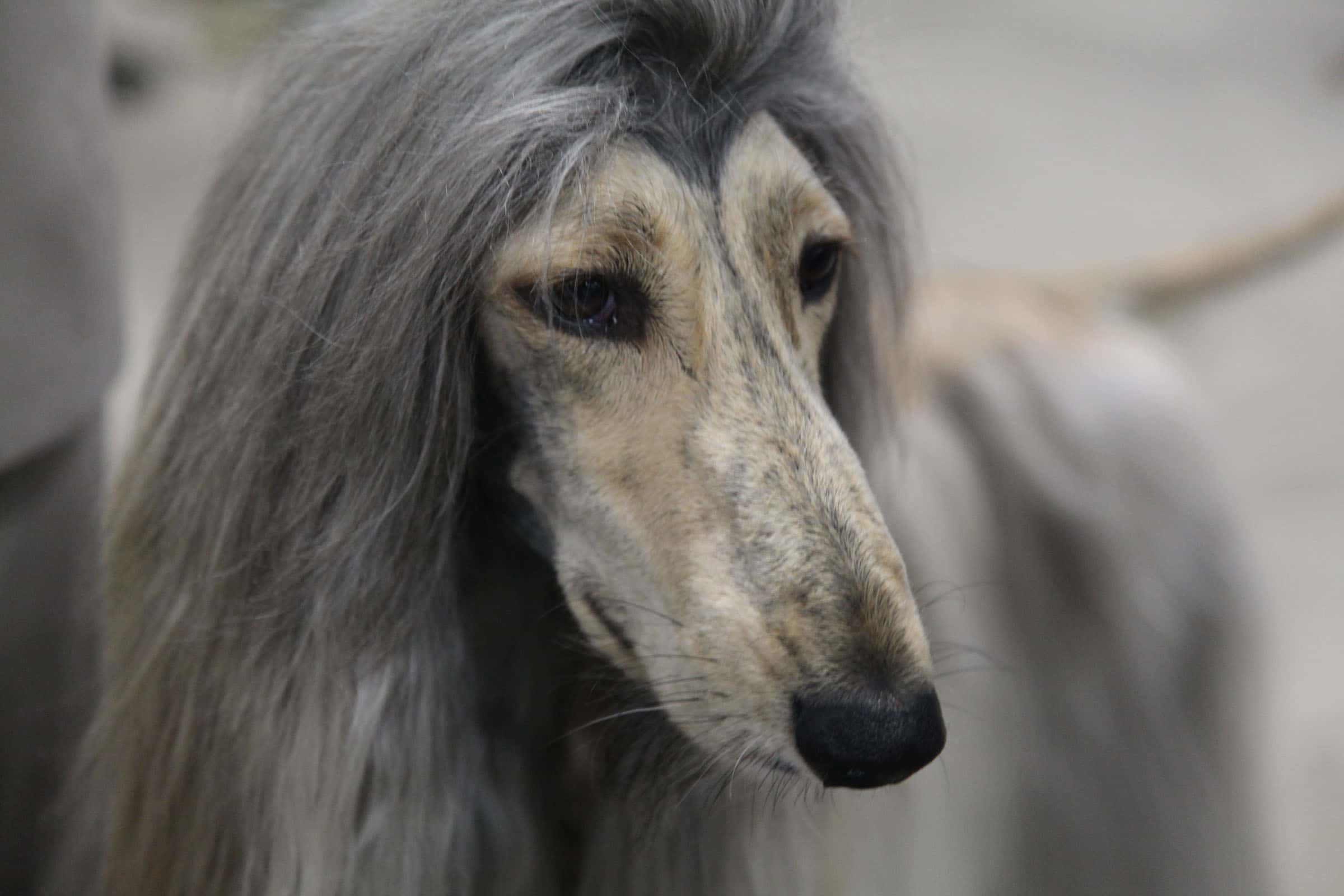
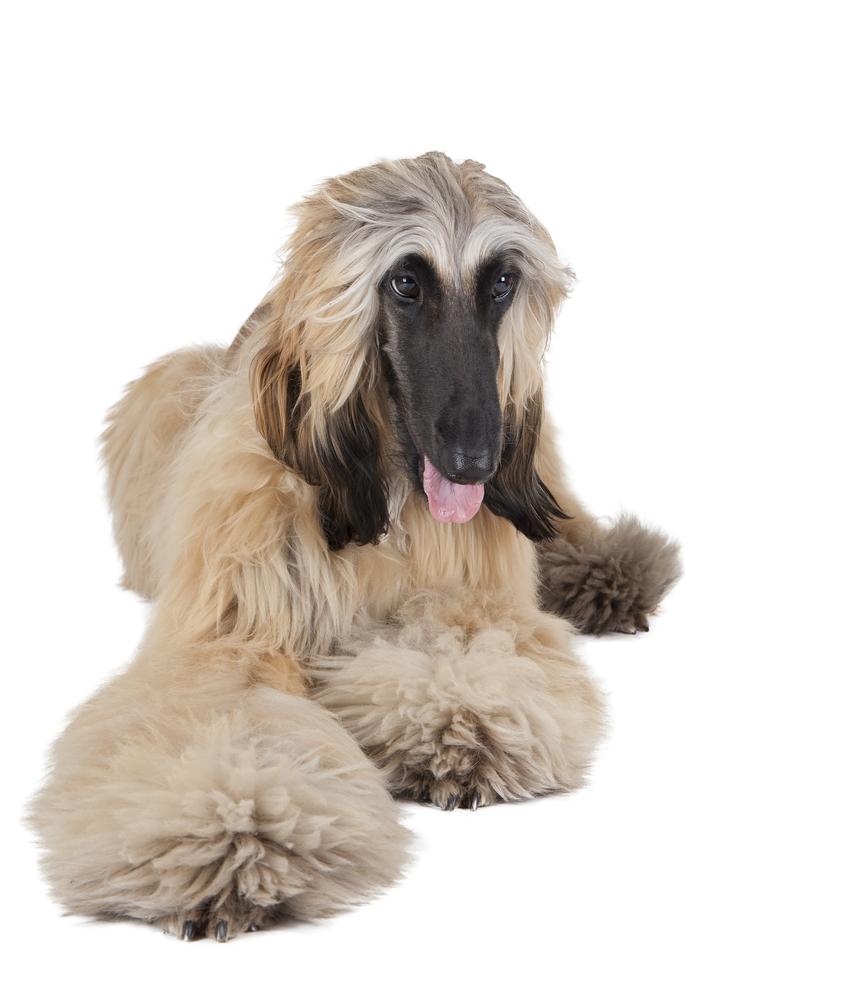
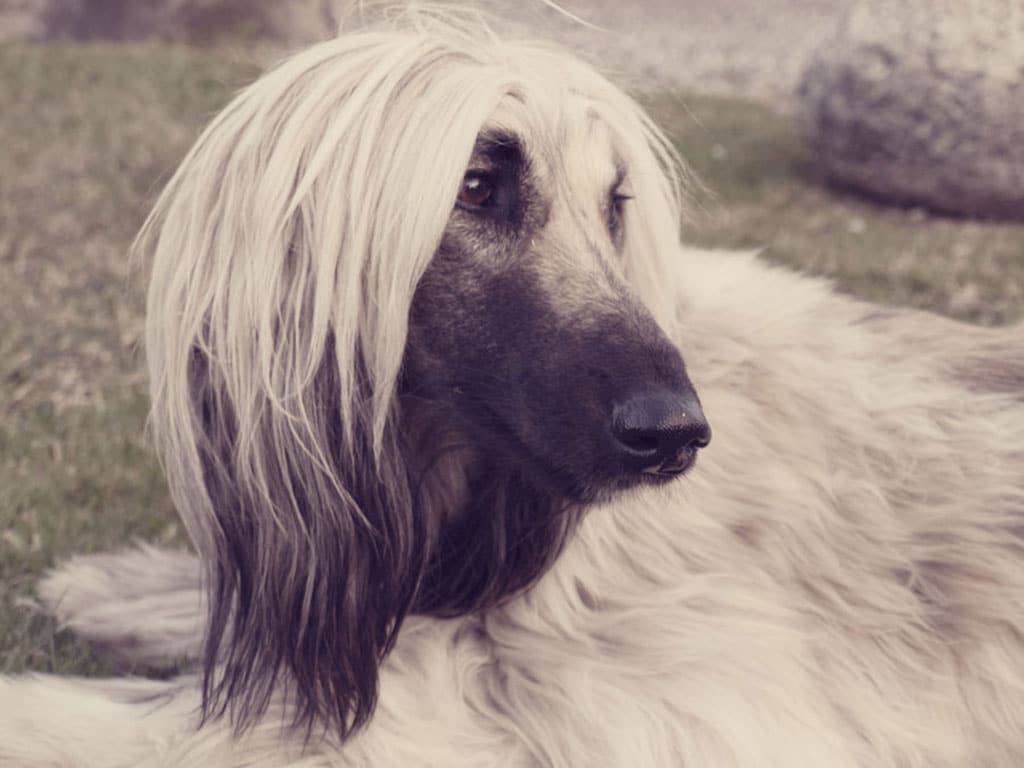
The head It has the long narrow skull and not, with the prominent occipital, the snout long, clean jaw and the light stop.

The eyes They are preferably dark, almost triangular and slightly oblique upwards. The ears They are set low, well delayed position and the animal stuck against the head. The limb They are straight and well boned. The tail it should not be too short, fits low, It forms a ring at the tip and is adorned with a few curious Wicks. In motion, the animal has been raised.

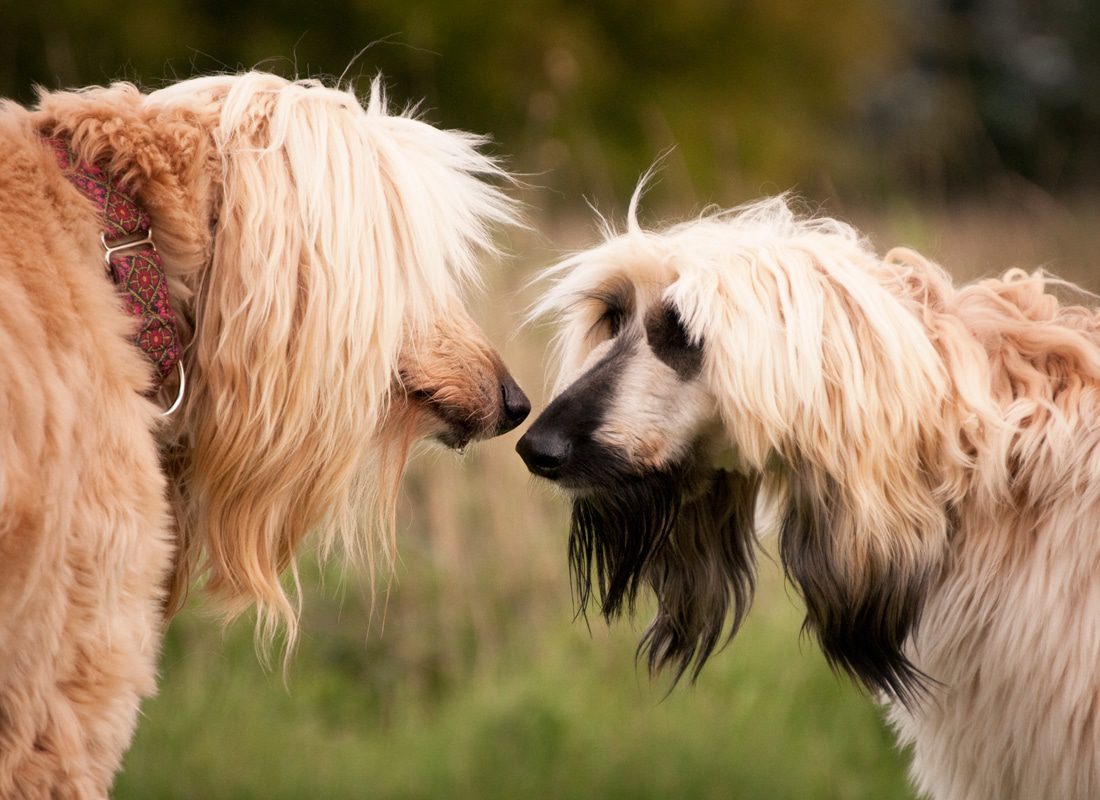
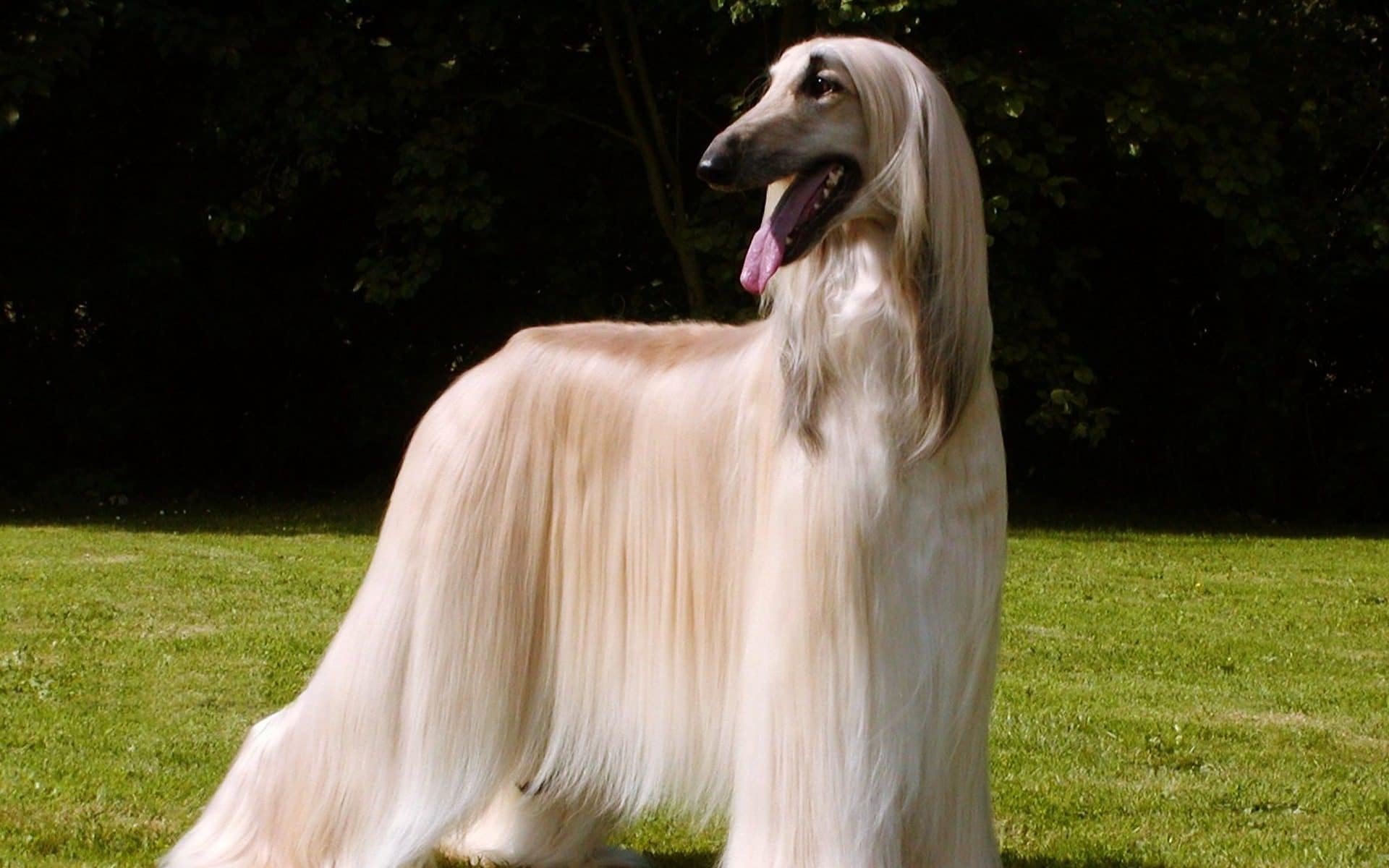
The hair It is long and thin on the sides, extremities and flanks. In older dogs is short and dense in the area from the shoulders and the kidneys. Head is long from the front and forms a long silky hair.

They are admitted all colors.

The ideal height the cross males: 68 to 74 cm.. and females: 63 to 69 cm..

Character and abilities ยซAfghan Houndยป

It is considered one of the least intelligent races, positioned on the scale as the number 79 according to S. Coren, autor de โ€œThe Intelligence of Dogsโ€, but also whimsical.

The Afghan Hound is independent and capable of chasing its prey without the need for instructions. His intelligence and confidence allow him to anticipate the reactions of his prey and make decisions on his own..

This means that you tend to act freely and do things your way when you decide it is necessary., instead of following the letter of his master's instructions. This means that your training can be challenging., and that it is a breed that needs an experienced trainer.

But, despite its independence, They are very devoted to their owner and are usually affectionate with their family. But, must accept that this affection is not available ร ย  la carte, but when they decide the time is right. In other words, you have to accept their independence and not expect constant displays of affection from them. Not recommended for families with young children: without being aggressive with them, tends to reject their contact when they are too insistent.

outside the family circle, their sociability is limited. Thus, often tends to be distant - even haughty- with anyone who considers a stranger in their home. You can even show that attitude with your master, especially if you feel upset.

His somewhat difficult character and the fact that he is not necessarily affectionate tend to make us forget that, However, he is a faithful companion. May have a hard time adjusting to a new home.

But, can be very affectionate and fun, and even enjoys being the center of attention. Some owners also report that they like to steal things and hide them. He even seems to enjoy doing it in front of his owner's nose.. In other words, even when he's having fun, shows your level of confidence and self-control.

The Afghan Hound it is a very robust dog that needs a lot of exercise. But, can adapt to life in a flat, as long as its owner provides a minimum of two hours of physical activity a day to expend its energy. Due to his background as a hunter, he especially likes to run long distances: it is one of his favorite activities, and walking is not enough. So, you need to run several times a week - or even every day- and is a very good companion for someone who wants to run with their dog. It can be content to run in a secure enclosure on days when its owner is not available for a long run., as long as you continue to do at least some additional activities (brisk walks, go to the park, etc.) to expend your boundless energy.

If you live in a house and have access to a garden, it must be strictly fenced, since his hunting instinct is particularly pronounced. Otherwise, won't stop taking off if it sees potential prey, to go after her. It's not a wireless electric fence that could stop him, since the discomfort he feels is no match for his desire to pursue.

Obviously, the same happens when walking, so it is always better to wear it on a leash, at the risk of suddenly disappearing as soon as a potential prey is identified. If the owner wishes to allow his dog to go off leash in certain less dangerous areas, you should at least equip it with a connected GPS dog collar, to be able to find it in case of need.

Last, their hunting instinct means that coexistence with other small animals is not recommended. Sometimes he can tolerate a cat if he has become used to its presence from a young age, but in general, not very sociable with other animals. It is a little less complicated with other dogs, But again, you better start with them asap.

Education

Although he is extremely loyal, the Afghan Hound he is very stubborn and tends to do what he wants. If we add to this that they tend to be dominant, we can see how much they need an experienced owner who knows how to show their dog who is the master and assert himself gently. To get it, it is recommended to use training techniques based on positive reinforcement.

In any case, your training requires a good dose of patience, since it is very independent. If you decide you are not interested, you need to use your imagination to capture their attention and arouse their interest, or postpone the training session. If you feel upset when you think you have something better to do, in a rush and / or forced to do something you don't want to, becomes very stubborn and rejects any instructions. It also, to avoid fatigue and, Therefore, disinterest on his part, it is better to opt for varied sessions rather than long repetitions of the same exercise.

The training of a Afghan Hound requires, Therefore, the ability to adapt to your current mood and vary exercises to diversify your sessions and keep your focus. This is all the more true since, unlike other races, does not seek to please his master.

Group classes in a school for puppies (once the first vaccinations have been carried out) they are an interesting option for the success of training. This can help teach the puppy the first commands (how to sit to order or search) in a more supervised environment. It also, offer an interesting socializing opportunity.

Socialization is an important aspect of training an Afghan greyhound puppy. As he is not very fond of human beings outside his family circle, it is important to expose it from a young age to various people and situations (go out in public, meet the neighbors, receive guests at home, etc.) so you don't get too reserved. In fact, his shyness and natural distrust of strangers tend to get the best of him quickly.

It also, as your maintenance need is quite important but you may consider human interaction a nuisance, it is essential to teach him from a young age to allow himself to be manipulated without flinching.

Health

Although generally in good health, the Afghan Hound is particularly prone to certain diseases:

  • Allergies: the symptoms of an allergy in a dog are the same as in humans (crying eyes, sneezing, etc.). They can be treated with drugs and / or changes in the animal's environment, depending on the type of allergy involved;
  • Cancer : as humans, this condition can be fatal, has fortiori if detected in an advanced stage. On the other hand, when taken on time, it is often possible to remove the cancerous mass by surgery and / or taking medication;
  • The juvenile cataract : is usually present from birth and, depending on its severity, can potentially be treated by surgery. But, in some cases, cause blindness in the dog ;
  • Hypothyroidism , a thyroid gland disorder causing lethargy, weight and hair loss, as well as fatigue. Usually, it is treated with medications.

It also, like most dogs with hanging ears , have an increased risk of ear infection and, therefore, requires special vigilance at this level.

It also, is more exposed than other breeds to the risk of urinary obstruction. These can be treated with medications, but surgery is required if they don't work. In any case, a change in diet is often necessary to reduce the risk of new crystal formation.

Obesity is not a problem you are predisposed to. But, any dog รขโ‚ฌโ€นรขโ‚ฌโ€นthat is malnourished and / or not exercising enough is at risk of being overweight, with a potential higher risk of developing certain diseases. His master must, Therefore, go to the trouble of weighing your partner regularly, make sure everything is in order at this level and react if it is not, in general, to make you exercise more and be more rigorous in your daily ration is enough.

Another good must-have habit is taking your dog to the vet at least once a year for a full checkup.. This allows both detecting a possible problem early, as well as ensuring that everything is in order regarding the dog's vaccinations and reminders.

Life expectancy

12 to 14 years

Grooming

Due to its long fur, cleanliness is an essential dimension of maintaining Afghan Hound. To avoid tangling, the dog should be brushed with a rubber comb, ideally every day. This will help maintain the silky texture of the coat while removing dead hair.. As in the case of any long-haired dog, do not neglect the time dedicated to this task, as it is an important condition to keep your dog healthy.

It also, It is necessary that you take your dog to the groomer from time to time to keep his coat well trimmed and looking good for all occasions. In fact, the maintenance of its thick coat is more complex than that of many other breeds, and it is better to leave it in the hands of a professional. Ideally, trim it every 2 or 3 months.

On the other hand, the Afghan Hound only needs to be bathed once or twice a year, unless it got dirty. Regular brushing is usually enough to remove debris that may be lodged in the coat..

The ears, on the other hand, they need a lot more attention. Long hair around the ears and the fact that they are folded on themselves pose a higher risk of this happening. To avoid irritation or infection problems, it is important to inspect them weekly and keep them clean.

This weekly session is also an opportunity to clean the dog's eyes and brush his teeth., in order to maintain good oral hygiene and limit the formation of tartar, which can have unfortunate consequences.

In general, as in the case of all dogs, a weekly check-up is essential to ensure that you are in good health and to detect any problems early, be it skin rashes, eye infections or injuries to the pads of the feet.

Last, the claws of this very active animal tend to wear out enough naturally, so no need to trim them manually. But, it is important to periodically check that this is the case and to do so if necessary.

Observations

He has washed too often (each 15 days), because knots are easily formed.. Exemplary elders and breeding females can be sheared to be able to take care of more easily.

Use

Along the centuries, the Afghan Hound has developed a long coat, thick and silky that allows it to withstand the extreme temperatures of the mountainous regions where it was used as a hunting dog.

His resistance to cold is not the only asset that made him -and makes him- a formidable hunter: you can also trust your vision. Similar to the Whippet, the English Greyhound, the Borzoi and the Saluki, has a field of view of 270 degrees, 30 more than other dog breeds (and 70 more than a human being). This allows them to detect their prey from a wider angle while remaining immobile., so they can go unnoticed more easily.

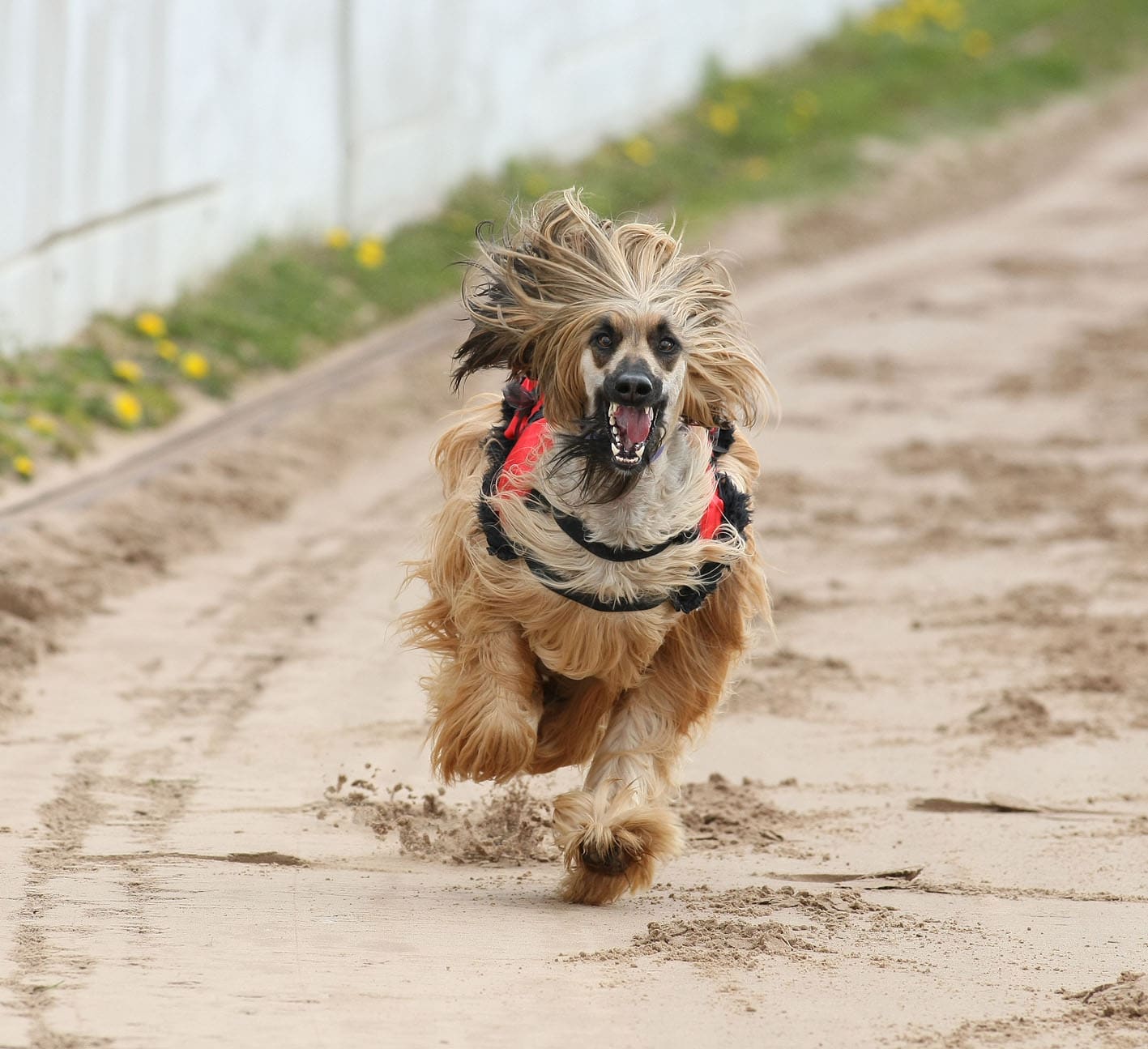
Once they start to chase their prey, the Afghan Hound it gives them little chance of escaping. In fact, his speed is legendary: can reach a maximum speed of 64 km/h, not far from the speed record ever set by a racehorse (69,2 km/h). Can only maintain that speed for short distances, but it has a great resistance, as it can be maintained for hundreds of kilometers.

In his native Afghanistan, it was used mainly to hunt large prey, both in desert areas and in the mountains. He was valued for his ability to travel long distances, its speed and its value. In fact, one of his tasks was to hold back dangerous prey, like leopards, until the riders arrived. This type of hunting, in which the dog leads the hunters, requires great independence and a capacity to react to different situations with few instructions. These are qualities that he still possesses today..

But, this use as a hunting dog has now disappeared. The most frequent is to find it as a companion dog, although their number has decreased considerably compared to a few decades ago.

It also stands out in dog shows and, despite his strong character, is known for its good performance in obedience competitions.

On the other hand, although he is an extremely fast runner, the races of the Afghan Hound have never been as popular as his cousin the Greyhound. There are records of this type of racing in India and Afghanistan in the 19th century, but it is not clear in the literature how popular this sport was then. Since the mid-1990s 1980, some breeders try to popularize them, mainly in England and the United States, But it is no small thing to say that they face headwinds. In fact, criticism of the treatment of racing dogs has been on the rise, thanks above all to the awareness-raising work of various animal defense organizations, so dog racing has been losing popularity over the years 90.

Price "Afghan Hound"

The price of a puppy Afghan Hound varies between the 1.200 and 1.400 EUR, without there being a significant price difference between males and females.

In fact, price differences from one individual to another are explained more by the intrinsic characteristics of the puppy (and in particular its greater or lesser conformity with the breed standard), the possible prestige of its lineage and the reputation of the kennel from which it comes.

Images of the "Afghan Hound"
Videos of the ยซAfghan Houndยป

Type and recognitions:

  • FCI CLASSIFICATION:
  • Group :
  • Section : . .

Federations:

  • FCI – Group 10: Section 1: Long-haired or fringed Sighthounds โ“˜
  • AKC โ“˜
  • ANKC โ“˜
  • CKC โ“˜
  • โ€‹KC โ“˜
  • NZKC โ“˜
  • UKC โ“˜

FCI breed standard "Afghan Hound"

Origin:
Afghanistan

Date of publication of the valid original standard:
13.10.2010

Use:

Hunting dog on sight.


General appearance:

Gives the impression of strength and nobility, combining speed and strength. The head is held high with pride.


Behavior / temperament:

The oriental expression is typical of the breed. The Afghan looks it to one and look through one. It is majestic and distant, with a subtle certain fierceness.

Head:


Cranial region:
  • Skull: Long, not too narrow, with a well marked occipital Protuberance. Well proportioned and covered with a tuft of long hair.
  • Depression links (Stop): Light.

facial region:

  • Truffle: Preferably black; Liver color is allowed in dogs with light coats.
  • Snout: Long, with powerful jaws.
  • Jaws / Teeth: Strong jaws with a perfect, regular and complete scissor bite is to say, the upper incisors closely overlap the lower and the teeth are placed vertically in the maxilla. Bite level. Allowed the bitefork clamp edge with edge.
  • Eyes: Preferably dark, Although the Golden tones are not. Almost triangular in appearance, Since the internal rising slightly oblique towards the outer corner angle.
  • Ears: Low insertion loss and placed far behind the head, worn close to the head, silky long hair covers.

Neck:

Long, strong, It holds the proud head port.

Body:

  • Back: Straight, moderately long, with good musculature.
  • Pork loin: Straight, broad and rather short.
  • Rump: Slightly sloping to the tail. Quite separate and prominent hip bones.
  • Breast : Ribs moderately sprung, well deep chest.

Tail:

Not too short. Low insertion loss and forming a ring at its end. It takes her high during movement. Cover of hair in the form of thin pen.

Tips

PREVIOUS MEMBERS:

  • Blades: Long and inclined, placed well behind, equipped with good musculature still strong without seeming heavy.
  • Forearm: Long and inclined.
  • Elbows: In vertical profile, under the cross, attached to the rib cage, without deviations outward or inward.
  • Arms: Straight, equipped with strong bones.
  • Metacarpus: Long and flexible.
  • Previous feet: Previous feet strong and very large both in length and width, covered in long and thick hair; arched toes. Pads rest firmly on the soil.

LATER MEMBERS:

  • General appearance: Powerful. With great length between the hip and the hocks and, comparatively, distance short between the Hock and foot.
  • Knee: Well angulated and well directed.
  • Hind feet: Long, Although not as wide as the previous, covered in long and thick hair, arched toes. Pads rest firmly on the soil
  • Spurs: They can be removed.

Movement:

Fluid and elastic with a very distinguished style.

Mantle

  • Fur: On ribs, in the anterior and posterior limbs and the flanks is long and very fine texture. In adult dogs, from the shoulders back and along the mount is short and tight. From the front and back hair is long and is a marked section, long and silky ("top-knot"). The facial hair is short. The ears and limbs are well covered with hair. The pasterns may lack hair. The fur should present a natural development. Any evidence of cuts or cuts with scissors should be penalized..

COLOR: All colors are admitted.


Size and weight:

Ideal height at the withers:

  • In males: 68 to 74 cm..
  • In females: 63 to 69 cm..


Fouls:

Any deviation from the above mentioned criteria is considered as missing and the gravity of this is considered to the degree of deviation to the standard and its impact on the health and well-being of the dog.

FALTAS DESCALIFICANTES:

  • Aggressive or fearful dog.
  • Any dog โ€‹โ€‹showing clear signs of physical or behavioral abnormalities must be disqualified..


N.B.:

Males should have two normal-appearing testicles fully descended into the scrotum..

Source: F.C.I - International Cynological Federation

Alternative names

1. Afghan Hound, Tazi, Tazhi Spay, Da Kochyano Spay, Sage Balochi, Ogar Afgan, Barakzai Hound, Eastern Greyhound/Persian Greyhound (English).
2. Lรฉvrier afghan, Tazi (French).
3. Afghanische Windhund, kurz Afghane (German).
4. Galgo afegรฃo (Portuguese).
5. Lebrel afgano, Baluchi Hound, Sage Baluchi, Tazi, Ogar Afgan (espaรฑol).

โ–ท The world of Pets: Dogs, cats, birds, reptiles, amphibians

Harrier (dog)
Inglaterra FCI 295 . Medium-sized Hounds

Harrier

The Harrier (dog) it is an excellent dog for hunting, specialized in foxes and hares.

Content

History

The Harrier (dog) comes from Great Britain and was first mentioned in writing in the year 1260. French hounds are supposed to, are the ancestors of this breed. Y, as well, there is considerable consensus that the Harrier (dog) Today is the product of the cross between the Beagle and the English Foxhound, born in the south of England.

The demonstrable origin of dogs, who have been hunting hares for several centuries, can probably be traced back to the 13th century in western England: The first written record of a herd of Harrier (dog) of a certain Sir Elias of Midhope in England was in 1260. Other herds of Harrier (dog) well known to history were the Holcombe herd in the 17th century and the Cambridgeshire herd in the mid-18th century.

In 1889 the first exhibition of Harrier (dog). Later, two associations were founded that have since dedicated themselves to the pure breeding of this breed..

It is not clear where the name of the Harrier (dog). Like the dog Harrier (dog) is a very ancient race, it is not easy to clarify this origin beyond all doubt.

The Harrier (dog) He was originally bred to go hunting for hares. So, Some people think that its name is derived from the English word ยซHareยซ. ยซHareยป is the word for "hare" in French and English. Harrier (dog) It, therefore, a kind of abbreviation of the English term ยซHare-Houndยป and indicates that this breed was originally bred for hare hunting.

Others believe that this breed of dog got its name from the Norman-Saxon language.

Here "Harrier" simply means "dog.".

Physical characteristics ยซHarrierยป

The Harrier (dog) it is a strong and light dog, less powerful and is used for hunting hares. It has a long and slightly arched neck on top. The eyes, medium sized and oval, they tend to be dark. The short ears, almost flat and V-shaped, they are inserted high but they are pendulous carried.

The coat of the Harrier (dog) it's shiny, hard, dense and short, well glued to the body. The hair on the ears is finer in texture than the rest of the body. Are white, black and bark, lemon and white, Red and white, black, White and bark. Tricolor with a black coat on the upper back is also allowed. This last variant is bred mainly by the French.

With a height at the cross of 48 to 55 cm and a weight of 22 to 27 kg, this dog belongs to the medium-sized dogs.

Character and skills ยซHarrierยป

Harrier (dog)
A tricolour Harrier by Smcmilla, Public domain, via Wikimedia Commons

The Harrier (dog) they are gentle, peaceful, quiet, balanced and above all intelligent and eager to learn. Its great resistance, his great joy of movement and his good assertiveness are other typical characteristics. An excellent sense of smell distinguishes this basically easy-care and undemanding dog..
Like a dog from the original pack, is naturally very sociable and very compatible with other dogs. Since the Harrier (dog) is from reason rather stubborn and independent, needs a consistent yet loving and gentle upbringing. If it is kept in the pack and acts as a hunting dog, builds little relationship with humans, but as a family dog รขโ‚ฌโ€นรขโ‚ฌโ€นhe proves to be a faithful dog, loving and undemanding. He is quite alert but completely free of aggression.

Can be kept well with various dogs in the family. The Harrier (dog) can, according to its origin, be trained well like dogs that run and sweat, although his preferred terrain is flat, at most a little bumpy. It is equally suitable for hunting on horseback, which is particularly popular in England. This breed is also suitable for dog sports. As a family dog, he needs long walks, as well as occupation and contacts.

The Harrier (dog) has a very fine sense of smell, is very resistant, persistentโ€ฆ, It seems that never were fatigue and can reach a good speed and keep it, While still at its prey, reason why it has been used since its origins for hunting in packs.

He is very obedient and intelligent, which is why, education and training firm, consistent and loving, gives very good results. Their life expectancy is around the 12 years.

Care and maintenance ยซHarrierยป

The Harrier (dog) they need a lot of exercise and have a very strong hunting instinct, so it is absolutely necessary that you challenge them enough and offer them longer rides each day.

It is important to ensure that he is kept on a leash where the game is present, otherwise he would follow his hunting instinct. The Harrier (dog) he is not a city dog, but loves to romp in a garden with plenty of exercise. When it comes to caring for your coat, not very demanding: he likes to brush once in a while. If the dog goes hunting with you, should be examined for parasites and lesions.

Characteristics "Harrier (dog)"

Coexistence is important that you have with your new friend. Before considering the acquisition of a dog of the breed "Harrier (dog)" you know certain factors. Not all breeds of dogs are apt to live in an apartment, you must take into account his character, their need for exercise, their interaction with other pets, their care and if you have small children, their level of tolerance towards them.

Adaptation โ“˜

3,0 of 5 stars (based on 1 review)

friendly dog โ€‹โ€‹โ“˜

3,0 of 5 stars (based on 1 review)

hair loss โ“˜

3,0 of 5 stars (based on 1 review)

Affection level โ“˜

3,0 of 5 stars (based on 1 review)

Need for exercise โ“˜

5,0 of 5 stars (based on 1 review)

Social need โ“˜

2,0 of 5 stars (based on 1 review)

Home โ“˜

4,0 of 5 stars (based on 1 review)

Toilet โ“˜

2,0 of 5 stars (based on 1 review)

Friendly with strangers โ“˜

3,0 of 5 stars (based on 1 review)

barking โ“˜

4,0 of 5 stars (based on 1 review)

Health โ“˜

1,0 of 5 stars (based on 1 review)

Territorial โ“˜

1,0 of 5 stars (based on 1 review)

Cat friendly โ“˜

4,0 of 5 stars (based on 1 review)

Intelligence โ“˜

3,0 of 5 stars (based on 1 review)

Versatility โ“˜

3,0 of 5 stars (based on 1 review)

Child friendly โ“˜

4,0 of 5 stars (based on 1 review)

Surveillance โ“˜

3,0 of 5 stars (based on 1 review)

joy โ“˜

2,0 of 5 stars (based on 1 review)

Videos "Harrier (dog)"

HTTPS://youtube.com/watch?v=LV_Yw96BGVo
Harrier Dog – Top 10 Facts
HTTPS://youtube.com/watch?v=unvBDZ3ga7k
Harrier – AKC Dog Breed Series

Type and recognitions:

  • FCI CLASSIFICATION:
  • Group :
  • Section : . .

Federations:

  • FCI – Group 6: Scent hounds, and related breeds. – Section 1.1: Large-sized Hounds. โ“˜
  • โ€‹KCHound โ“˜

FCI breed standard "Harrier (dog)"

Origin:
United Kingdom

Date of publication of the valid original standard:
27.11.1974

Use:

Hound


General appearance:

Strong and light dog, less powerful and more distinguished than the Foxhound.


Behavior / temperament:

---

Head:

Expressive, moderately wide.

Cranial region:
  • Skull : Plano, slightly outlined occipital protuberance.

facial region:

  • Truffle : black, quite developed.
  • Snout : Fairly long and rather pointed.
  • Lips : They cover the lower jaw.

Eyes : Always dark, never saltones, medium large, not too round.

Ears : "V" shaped, almost flattened, slightly twisted, quite short, rather high implantation.

Neck:

Long and free, but with good insertion in the shoulders ; slightly arched at the top.

Body:

  • Back : Straight and muscular.
  • Pork loin : Strong, with a slight bow.
  • Breast : Deeper than wide.
  • Ribs : Rather flat than arched.
  • Flank : Neither too round nor too retracted.

Tail:

Medium long, slightly split (up to the tip around the tail long thick hairs slightly separated in a spike) ; with good bearing.

Tips

PREVIOUS MEMBERS : Straight and plumb.

  • Shoulder : Oblique and very muscular.

LATER MEMBERS :

  • Hip : Strong and well outgoing.
  • Thigh : Long and well descended.
  • Warm-foot joint : Not too straight and not too angled.

FEET : Not too close and not too round.

Movement:

Agile and firm ride.

Mantle

SKIN : White with black spots.

HAIR : Smooth in the English way, ie flat and not too short.

COLOR : Usually white background with all shades in black to orange. In France often tricolor with a black cloak covering the upper back.


Size and weight:

Height to the cross : Since 48 to 55 cm maximum, but preferably from 48 to 50 cm..


Fouls:

Any deviation from the above mentioned criteria is considered an absence and severity of this refers to the degree of deviation to the standard and its impact on the health and welfare of the dog.

MISS PLAYOFFS

โ€ข Aggressive or fearful dog.
โ€ข Depigmented truffle.
โ€ข Prognathism.
โ€ข Long and loose loin.
โ€ข Weak thighs.
โ€ข Discolored scrotum.

Any dog โ€‹โ€‹showing clear signs of physical or behavioral abnormalities should be disqualified..


N.B.:

Males should have two normal-appearing testicles fully descended into the scrotum..

Source: F.C.I - International Cynological Federation

Alternative names:

1. Harrier (English).
2. Harrier (French).
3. Harrier (German).
4. Lebreiro, Cรฃo de caรงa a lebre (Portuguese).
5. Harrier (espaรฑol).

โ–ท The world of Pets: Dogs, cats, birds, reptiles, amphibians

English Foxhound
Gran Bretaรฑaa FCI 159 - Large-sized Hounds

Foxhound Inglรฉs

The English Foxhound is dog friendly appreciates life in the pack, where he gets along with his peers.

Content

English Foxhound History

The English Foxhound can be considered a classic among British hunting dogs. This traditional breed is probably a cross between the Bracken medieval and the greyhounds, which were supposed to provide more lightness to previously heavier tracking dogs. Its field of application was and is hunting, more precisely: fox hunting mounted in pack, also called "hunting by force". In this hunt, the herd chases game animals such as roe deer or foxes until they are exhausted.. Persistent dogs can stay on their prey's heels for up to five hours. Although they are not faster than the pursued, tire the hunt so that the human hunter can hunt it. "Hunting by force" flourished in the 18th and 19th centuries, when it was practiced by the German nobility, British and French. Only the aristocracy could afford this elaborate form of hunting, and often destroyed numerous fields under the hooves of horse carts on the miles of unpredictable routes.

In the meantime, this form of hunting is prohibited in Great Britain, as well as in most European countries. In Germany, by the way, this prohibition was not originally justified by the practice of hunting, which is questionable from an animal welfare point of view. Rather, prohibition, when came into force in the years 30, was intended to limit the privileges of the nobility – and therefore also hunting. But a few decades later, hunting laws confirmed the ban. But this was not the end for him English Foxhound: Today, trawling is a friendly alternative – not the killing of the hunt, but the joy of riding fast along with the pack is the main focus. In 1964 the breed was recognized by the FCI. Besides of English Foxhound, there is also the American Foxhound, slightly lighter construction.

Physical Characteristics English Foxhound

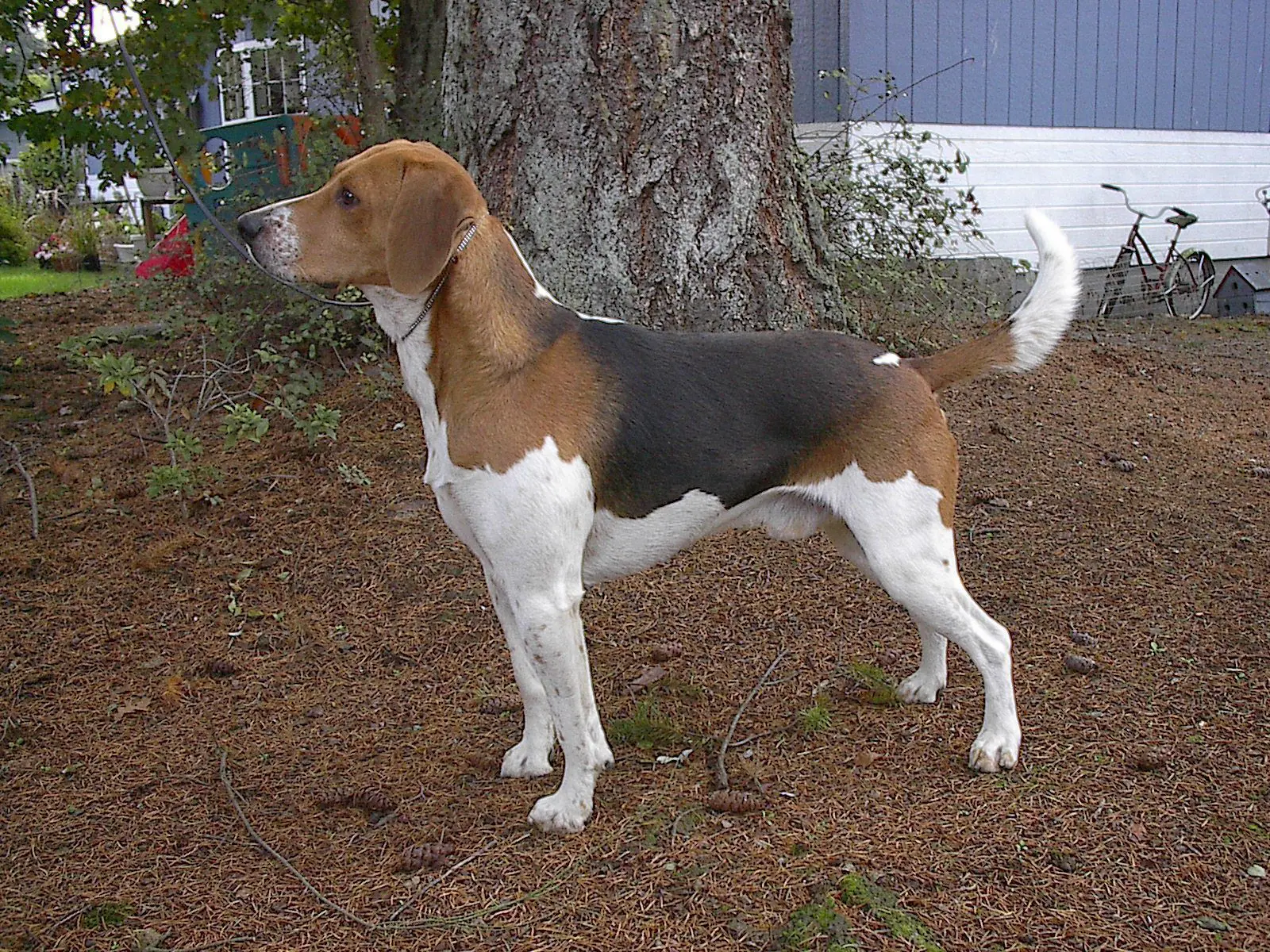
He bears a strong physical resemblance to him. Beagle, Although it is slightly larger. The average size of English Foxhound varies slightly depending on the gender of the animal. The males measure between 55 and 62,5 cm. up the cross, and females in 50,5 to 60 cm. up the cross. Generally weigh between 25 and 34 kg. Their fur is short and hard, tricolor-negro color, White and toasted or bicolor with a white background. It has a light head, and with pronounced eyebrows. The ears are medium and droopy, Hound style. His muscular back, It has straight legs and well located porte alegre queue, Whip style. The long legs allow the English Foxhound at a fast pace.

Character and skills English Foxhound

This friendly dog รขโ‚ฌโ€นรขโ‚ฌโ€นappreciates life in the pack, where he gets along with his peers. In keeping with your original purpose and the life of your ancestors, almost without exception they lived in large herds, the English Foxhound show good obedience, but does not usually establish close relationships with humans individually. Even today the dogs grow up in the pack and stay there. If a stronger impression on humans is desired, the English Foxhound would have to be removed from the pack already at puppy age, but this is not practiced, because these dogs are primarily professional hunting companions and not companion dogs. It also, the Foxhound always retains a relatively high degree of stubbornness and does not show a pronounced "will to please". Despite your stubbornness, the breed also has an affectionate side: to much Foxhounds they love to be petted and are also quite playful.

English Foxhound Education

Most of the English Foxhounds are hunters and receive proper hunting dog training, which is absolutely necessary. When you keep a English Foxhound as a companion dog, there may be some obstacles to overcome, because this breed is a passionate hunter who does not have a close relationship with people individually. Especially if you have lived in a pack for a long time, it is difficult to establish a close relationship with the sociable four-legged friend.

Promote the bond with common rituals and a lot of positive motivation. This doesn't always have to consist of treats – petting or small games can also reward this breed of dog. The breed is considered to be very social and gets along very well with its peers. It should be clear to everyone that this four-legged friend has a great hunting instinct, adjust your walks accordingly and make sure the neighbor's cat or puppies by the roadside remain safe.

The diet of the English Foxhound

The English Foxhound needs a species-appropriate food, what it means: It must contain a lot of meat! Offer your English Foxhound grain-free wet or dry food, where meat is the main ingredient. Particularly for Foxhounds who are hunters, the energy requirement depends largely on the calories actually consumed – on days with long runs up to 15 km, the four-legged friend needs correspondingly more energy. A food with a higher fat content is recommended for the most demanding sports needs. Give your dog the last portion about three hours before a sports session, so you have enough time to digest it before you start. Snacks are rarely necessary even during the longest sports drives. It is important that you Foxhound get a nice meal and a long rest after the job is done. The Foxhound it is a very good food processor – to avoid being overweight, watch your waistline and cut your portions accordingly when you start to gain weight. Dry chews are a welcome change to the four-legged friend's diet. But, avoid feeding the rumen with food, as it is suspected of promoting bloodhound ataxia in Foxhounds.

Remember to give plenty of fluids to drink: allow your Foxhound drink water at least once an hour, even during a hunt. There should always be enough fresh water available for all the four-legged friends in the kennel.

English Foxhound Health

One Foxhound healthy is basically a very robust quadruped. But if you want to keep these dogs running, you must inform yourself in advance about the call Hound Ataxia. This is a neurological disorder that mainly affects the Foxhounds and to the Beagle. It usually occurs between the second and seventh year of life and manifests as movement disorders and spasticity. The cause is a breakdown of the white matter in the thoracic cord and of the gray matter in the dog's brain stem.. It is not conclusive if feeding in the rumen favors the outbreak of the disease; However, it is recommended to avoid it as a precautionary measure. Usually, the disease continues to progress without effective treatment options. The English Foxhounds they should also be screened for hip dysplasia before breeding with them. It also, it is important to avoid being overweight, since the English Foxhounds that don't have enough demand get fat quickly. Dogs can reach an age of up to 13 years.

Activity with the English Foxhound

Many kilometers at full gallop – this is the amount of work that English Foxhounds not only drive but also appreciate. Trawling is a good alternative to the old hunts and is now organized throughout Europe, for example, in trawling clubs. The animals follow a foxtail or a brine trail from the rumen that drips from the containers that the riders carry later. If, even if it is not the ideal case, you have a English Foxhound that is not used for hunting, you can take him for a bike ride or learn about sports like canicross. It also, their Foxhound should have room to romp, ideally within a large fenced property and with other dogs of the same species. If your specimen is no longer able to hunt due to physical handicaps, give him a mental workload instead and see if slower nasal work, like guided mantrailing, it's a good idea for your dog.

Caring for the English Foxhound

The short, soft coat of the English Foxhound does not present a challenge in terms of grooming. Regular brushing or massaging with a grooming mitt removes excess fur and is a pleasure for many quadrupeds.. Especially if you don't have a English Foxhound in a pack but as a companion dog, you should practice such bonding rituals with him from an early age. With older dogs, the claws should be examined regularly to avoid painful hooking when they get too long.. You should also regularly check your dog's coat for parasites and discuss prophylaxis with your vet..

Where can I find an English Foxhound?

This breed is usually bred by hunters for hunters, and that's a good thing. If you are interested in having these dogs and you have the time, money and space to raise a herd, you can find out in the trawling clubs. You're probably already familiar with them anyway, because without this form of organized hunting, forming your own herd makes little sense. In any case, stay away from Foxhounds individuals who were raised without papers and whose parents are not hunters. Most of them are dubious sellers who want to make money with the classic hunting dog. Puppies are not usually Foxhounds pure-bred, but mixed races. It is wiser to resort to the animal welfare when looking for mixed-breed dogs with a part of Foxhound, instead of supporting dubious breeding practices.

If you are looking for a English Foxhound adult, you can find one at professional trawler clubs, for example. These always give away older dogs that are not suitable for very demanding use in trawling.. But, you should ask yourself critically and clarify in discussions with the pack leader if you have the possibility to offer this sporting dog with the characteristics already described a species-appropriate home.

Characteristics "English Foxhound"

Coexistence is important that you have with your new friend. Before considering the acquisition of a dog of the breed "English Foxhound" you know certain factors. Not all breeds of dogs are apt to live in an apartment, you must take into account his character, their need for exercise, their interaction with other pets, their care and if you have small children, their level of tolerance towards them.

Training ?

3,0 of 5 stars (based on 1 review)

Suitability of the apartment ?

1,0 of 5 stars (based on 1 review)

Can be alone all day ?

1,0 of 5 stars (based on 1 review)

Suitable as a first dog ?

1,0 of 5 stars (based on 1 review)

Weight gain ?

4,0 of 5 stars (based on 1 review)

Health ?

3,0 of 5 stars (based on 1 review)

Intelligence ?

3,0 of 5 stars (based on 1 review)

Kindness with child ?

4,0 of 5 stars (based on 1 review)

Tendency to bite ?

2,0 of 5 stars (based on 1 review)

Tendency to bark ?

3,0 of 5 stars (based on 1 review)

Tendency to flee ?

5,0 of 5 stars (based on 1 review)

hair loss strength ?

3,0 of 5 stars (based on 1 review)

Suitable as a guard dog ?

3,0 of 5 stars (based on 1 review)

Joy ?

3,0 of 5 stars (based on 1 review)

Cat friendliness ?

1,0 of 5 stars (based on 1 review)

Power level ?

5,0 of 5 stars (based on 1 review)

Images "English Foxhound"

Photos:

1 – Foxhound inglรฉs by https://pxhere.com/en/photo/1044061
2 – English Foxhounds. Cheshire Game and Country Fair 2014 by Photograph by Mike Peel (www.mikepeel.net)., CC BY-SA 4.0, via Wikimedia Commons
3 – Foxhound inglรฉs by https://pixabay.com/de/photos/hund-foxhound-970780/
4 – Foxhound inglรฉs by https://www.needpix.com/photo/1391525/foxhounds-foxhound-dog-horse-horses-riders-horseriders-hunt-hunting
5 – English Foxhound, male by Canarian, CC BY-SA 4.0, via Wikimedia Commons
6 – Foxhound inglรฉs by https://pxhere.com/es/photo/1044065

Videos "English Foxhound"

Type and recognitions:

  • FCI CLASSIFICATION:
  • Group :
  • Section : . .

Federations:

  • FCI – Group 6: Scent hounds, and related breeds. – Section 1.1: Large-sized Hounds. โ“˜
  • AKCHound โ“˜
  • ANKCGroup 4 (Hounds) โ“˜
  • CKCGroup 2 – Hounds โ“˜
  • โ€‹KCHound โ“˜
  • NZKCHound โ“˜
  • UKCScenthounds โ“˜

FCI breed standard "English Foxhound"

Origin:
England, United Kingdom

Date of publication of the valid original standard:
26.03.2009

Use:

Pack dog for mounted hunting.


General appearance:

Well balanced, powerful and clean cut.


Behavior / temperament:

Great vigor and endurance, with natural ability to hunt. Friendly and not aggressive.

Head:

Well balanced.

Cranial region:
  • Skull : It is flat and of medium width.
  • Depression links (Stop) : Light.

facial region:

  • Truffle : Large nostrils.
  • Snout : Long and square.
  • Belfos: Moderately developed.
  • Jaws / Teeth : Strong jaws with a perfect scissors bite, regular and complete, the upper incisors closely overlapping the lower incisors and being implanted at right angles to the jaw.

Eyes : Medium-sized, hazel or brown. Cunning expression.

Ears : Falls, carried close to the head, high insertion.

Neck:

Long, slightly arched, well developed without being clumsy.

Body:

  • Back : Wide and level.
  • Pork loin : Strong.
  • Breast : Deep, well arched ribs.

Tail:

High insertion. Happily carried but never curled on the back.

Tips

PREVIOUS MEMBERS : Long, straight and good-boned down to the feet.

  • Shoulder : Well oblique back, muscular without being heavily loaded.
  • Metacarpus : Strong.

LATER MEMBERS : Powerful and well muscled. From good bones to the feet.

  • Knee : Well angled.
  • Hocks : Well descended.

FEET : Round, tight and strong. Well developed pads. Strong nails. Optional spurs.

Movement:

Free movement, tireless with the ability to gallop. Good rear thrust with no hint of rocking.

Mantle

HAIR : Short and dense. Impermeable.

COLOR : Any color and brand accepted on the hounds.


Size and weight:

Height to the cross : About 58-64 cm.. (23-25 inches).


Fouls:

Any deviation from the aforementioned criteria is considered as a fault and the severity of this is considered to the degree of the deviation to the standard and its consequences on the health and well-being of the dog..

Any dog โ€‹โ€‹showing clear signs of physical or behavioral abnormalities must be disqualified..


N.B.:

Males should have two normal-appearing testicles fully descended into the scrotum..

Source: F.C.I - International Cynological Federation

Alternative names:

1. Foxhound (English).
2. Foxhound (French).
3. Foxhound (German).
4. English Foxhound (Portuguese).
5. Foxhound (espaรฑol).

โ–ท The world of Pets: Dogs, cats, birds, reptiles, amphibians

Fox Terrier Smooth
Gran Bretaรฑaa FCI 12 - Large and medium sized Terriers

Non-hunters who want to keep Fox Terrier as a pure companion dog, they must divert their innate hunting instincts with the sports and games of dogs

Content

History

The first fox terrier, which were first presented at an English dog show in the mid-19th century, they were almost white dogs, especially suitable for fox hunting. Due to his courage, their endurance and ability to track and reach the foxes hidden in their burrow, little terriers soon found a large following among England's hunting and dog lovers. thanks to his physique, the intrepid dogs were able to get into the tubes Fuchsbau narrower. The purpose of breeding for fox hunting was also always the main focus when selecting suitable breeding dogs and ultimately gave the dogs their breed name Fox Terrier. (Fox = Zorro, terre = Earth).

In 1876 the newly founded Fox Terrier Club introduced the first breed standard for the Fox Terrier. Today the FCI distinguishes two variants of the Fox Terrier: the Fox Terrier Smooth and the Fox Terrier (wire). Although both types of dogs only differ in the structure of their coat, are kept separately.

At the beginning, the straight hair variant of the fox terrier was much more popular than the Fox Terrier (wire). But, this changed in the decade of 1920, when a real boom developed around the Fox Terrier (wire) and the โ€œpracticalโ€ little dog became the new โ€œfashion dogโ€ for fine ladies. Unfortunately, often forgot that the Fox Terrier was originally bred as a hunting dog and that the animals still possessed a lot of courage, hunting instinct and a certain sharpness.

Lack of education and inappropriate attitude gave dogs, who liked to dig gardens and seldom avoided a fight with other dogs, the reputation of being scathing and aggressive. In the middle of the last century, the number of entries in the breeding book, especially from Fox Terrier (wire), noticeably decreased. Today, twice as many are born Fox Terrier Smooth that the Fox Terrier (wire). Today, the traditional english dog in both variants belongs to the rather rare dog breeds.

Physical characteristics

The body of a Fox Terrier Smooth is compact and muscular, built for speed and agility. The dog has a short body but a long, elegant face with ears that bend toward the cheeks.. The height of this breed should not exceed 39 cm in males; slightly less in females and its weight ranges from seven to eight kilograms.

The coat of a Fox Terrier Smooth is short, flat against the body and dense. Normally, the hair covers the belly and the inner thighs too. Coat color is predominantly white with black and tan markings.

Character and skills

In agility, the Fox Terrier straight hair is in its element. The vivacious little terrier loves to move around and use his cute head. No wonder he never tires of dog sports like agility, obedience and flyball. Lying on the couch and lounging is definitely a thing of the past for smooth-haired Fox Terrier owners..

Daily exercise and recovery games, jogging together or hiking boots, wheels or horse, during which the persevering four-legged friend can accompany you, should definitely be on the show with a Fox Terrier Smooth.

The Fox Terrier usually gets along very well with children, after all they share their need to play and exercise. Active families who like to be outdoors will find a lively playmate and a loyal companion in the English Terrier.

A valuable companion for hunters and non-hunters

Though, like most dog breeds, Today it is kept primarily as a family and companion dog., the Fox Terrier still has a good figure when hunting. The versatile hunting dog can be used to build and rummage, to recover, to search or even to work in the water. His desire to work, his courage and vigilance make him an invaluable hunting companion. Non-hunters who wish to keep the Fox Terrier as a pure companion dog, they must divert his innate hunting instinct with dog sports and games and thus offer him a suitable alternative occupation.

Fox Terrier Smooth education

The Terrier have a reputation for having a mind of their own – the Fox Terrier Smooth is no exception. In case of lack of orientation and carelessness on the part of humans, smart four-legged friend likes to take command, normally not to the delight of his two-legged roommates. A consistent and early education is essential for a harmonious coexistence with the fox terrier. But, if you take your time, knows the most important basic rules of dog training while giving your dog enough mental and physical exercise, you'll have little trouble with this little bundle of power. The Fox Terrier not only is he smart, but also very docile and people-oriented.

Fox Terrier smooth hair health and care

Basically, the Fox Terriers they are considered very robust and healthy dogs. Ocular diseases occasionally occur. There is also a certain predisposition to neurological diseases such as ataxia and myelopathy, which can lead to destruction of the spinal cord. With responsible upbringing, a healthy diet, lots of exercise and proper care for each species, the risks of possible illness can, fortunately, reduce.

The Fox Terrier Smooth they have a clear advantage over their relatives, the Fox Terrier (wire). While the Fox Terriers wire hair need a professional cut, regular brushing is enough to preserve the beautiful coat of the Fox Terrier Smooth. But, How fox terriers don't like to "stay still", you should get your dog used to brushing as early as puppyhood.

Nutrition as needed and careful care play an important role in maintaining the health of dogs. Needs-based means that the diet must be age-adapted, dog's weight and range of motion. The Fox terrier They are extremely sporty and active dogs and generally need a high energy diet with lots of high quality meat and vegetables..

Buy Fox Terrier Smooth

If you are interested in a Fox Terrier Smooth, you must first inform yourself thoroughly about the characteristics of this breed. The Fox Terrier Smooth they are extremely temperamental and demanding dogs, who need consistent handling. A reputable breeder will ask you about your ideas and goals for dog breeding and, if required, will advise you not to buy a fox terrier. In this case, don't look for the next best seller, but carefully reconsider your reasons for buying a fox terrier.

A purebred puppy should only be purchased from a reputable breeder whose dogs have been tested for possible hereditary diseases and other criteria of suitability for breeding before use. Puppies go on sale at the earliest between the eighth and tenth week of life. The price of the puppy varies between 850 and 1.500 euros and depends on the sporting aptitude and the breeding value of the parents.

It is important that you know the exact needs of your dog and that you are familiar with the nutritional value of different foods.; both a deficiency and an oversupply of certain substances can cause serious health problems. Alternatively, you can feed your fox terrier with high-quality wet or dry food. Convince yourself of the quality of the processed ingredients and make sure that unhealthy additives such as sugar or artificial flavor enhancers have been avoided. You should also avoid too high a grain content in the food.

Characteristics "Fox Terrier Smooth"

Coexistence is important that you have with your new friend. Before considering the acquisition of a dog of the breed "Fox Terrier Smooth" you know certain factors. Not all breeds of dogs are apt to live in an apartment, you must take into account his character, their need for exercise, their interaction with other pets, their care and if you have small children, their level of tolerance towards them.

Adaptation โ“˜

5,0 of 5 stars (based on 1 review)

friendly dog โ€‹โ€‹โ“˜

2,0 of 5 stars (based on 1 review)

hair loss โ“˜

3,0 of 5 stars (based on 1 review)

Affection level โ“˜

5,0 of 5 stars (based on 1 review)

Need for exercise โ“˜

5,0 of 5 stars (based on 1 review)

Social need โ“˜

3,0 of 5 stars (based on 1 review)

Home โ“˜

2,0 of 5 stars (based on 1 review)

Toilet โ“˜

2,0 of 5 stars (based on 1 review)

Friendly with strangers โ“˜

2,0 of 5 stars (based on 1 review)

barking โ“˜

5,0 of 5 stars (based on 1 review)

Health โ“˜

3,0 of 5 stars (based on 1 review)

Territorial โ“˜

5,0 of 5 stars (based on 1 review)

Cat friendly โ“˜

1,0 of 5 stars (based on 1 review)

Intelligence โ“˜

5,0 of 5 stars (based on 1 review)

Versatility โ“˜

3,0 of 5 stars (based on 1 review)

Child friendly โ“˜

5,0 of 5 stars (based on 1 review)

Surveillance โ“˜

5,0 of 5 stars (based on 1 review)

joy โ“˜

5,0 of 5 stars (based on 1 review)

Images "Fox Terrier Smooth"

Photos:

1 – Smooth Fox Terrier by publicdomainpictures.net
2 – Fox Terrier pelo liso by needpix.com
3 – Fox Terrier pelo liso by https://pxhere.com/es/photo/738534
4 – Vos Spits (born in March 2006) in action by Piet ter Beek / Public domain
5 – Fox Terrier pelo liso by https://pxhere.com/es/photo/1617503
6 – Smooth Fox Terrier from ยซCzeczugaยป Poland by Piotr Pietryka / CC BY-SA

Videos "Fox Terrier Smooth"

Type and recognitions:

  • FCI CLASSIFICATION:
  • Group :
  • Section : . .

Federations:

  • FCI – Terriers 1 Large and medium-sized terriers. โ“˜
  • โ€‹KC – Working dogs โ“˜

  • FCI breed standard "Fox Terrier Smooth"

    Origin:
    United Kingdom

    Date of publication of the valid original standard:
    30.10.2016.

    Use:

    Terrier


    General appearance:

    Active and happy dog, where bones of good substance and great physical strength are combined in a compact package, never heavy or rough. It should not be leggy or very short of limbs, and should stand up like a hunting horse with a short back and able to cover a lot of ground.


    Behavior / temperament:

    Active, fast-moving, vivacious expression, always on the lookout. Friendly, extrovert and fearless. Friendly, extrovert and fearless.

    Head:

    ---

    Cranial region:
    • Skull: Flat and moderately narrow, wide which gradually decreases towards the eyes.
    • Depression links (Stop): Small apparent stop.

    facial region:

    • Truffle: black.
    • Snout: Jaws, Superior and inferior, they are strong and muscular, leaning slightly below the eye This part of the anterior face should be moderately molded, so that it does not descend in a straight line like a wedge.
    • Jaws/Teeth: Strong jaws with perfect, regular and complete scissor bite, that is to say, that the internal face of the upper incisors is in close contact with the external face of the lower incisors and with the teeth placed perpendicular to the maxilla.
    • Cheeks: They should not be outgoing.
    • Eyes: dark, moderately small, as round as possible but not prominent. Of alert and intelligent expression.
    • Ears: Small and โ€œVโ€ shaped, falling forward close to the cheeks and never on the sides of the head. The fold of the ear should be above the level of the skull. Ears should be of moderate thickness.

    Neck:

    crisp, muscular and without dewlap. Of moderate length and gradually widening towards the scapulae.

    Body:

    • Dorrso: Short, straight and firm with no hint of weakness.
    • Kidney region: Powerful, very slightly arched.
    • Chest: Deep without being wide.

    Tail:

    Previously the custom was to amputate the tail.
    • Amcouldtthere is: Rather high insertion, erect, without curving on the back or curled. Of good power.
    • Sinn amputation: Rather high insertion, erect, without curving on the back or curled. As straight as possible. Tail of moderate length to maintain a good balance with the rest of the dog.


    Tips

    PREVIOUS MEMBERS:

    • Shoulder: Long and well sloped back, fine at their ends and well defined in the region of the cross.
    • Arm: Limbs should appear straight when viewed from any angle with little or no ankle pointing forward. Strong bones..
    • Previous feet: Small, round and compact, with firm and hard pads, and with moderately arched fingers, without turning in or out.

    LATER MEMBERS:

    • General appearance: Strong and muscular, without too much angulation.
    • Thighs: Long and powerful.
    • Knees: good angulation.
    • Metatarsus: Hocks well lowered
    • Hind feet: Small, round and compact, with firm and hard pads, and with moderately arched fingers, without turning in or out.

    Movement:

    The fore and hind limbs carried straight forward and parallel. The elbows move perpendicular to the body without interfering with movement, the femoro-tibio-patellar joints should not be turned in or out and the hocks should not be joined. Good propulsion power coming from very flexible rear members.

    Mantle

    Fur: Smooth, flattened, short, hard, dense and abundant. The belly and inner thighs must be covered with hair.

    Colorr: White predominates: the total white, white with tan spots, black and tan or black spots. Tabby spots, red or liver colored are highly undesirable.


    Size and weight:

    Height to the crossNot exceeding 39 cm in males; slightly less in females.

    Weight:

    • Males: 7,5 โ€“ 8 kg.
    • females: 7 โ€“ 7,5 kg.


    Fouls:

    Any deviation from the aforementioned criteria is considered as a fault and the severity of this is considered to the degree of the deviation to the standard and its consequences on the health and well-being of the dog..

    FALTAS DISQUALIFYING:

    • Aggressiveness or extreme shyness.
    • Any dog โ€‹โ€‹showing clear signs of physical or behavioral abnormalities must be disqualified..


    N.B.:
    • Males should have two normal-appearing testicles fully descended into the scrotum..
    • Only functionally and clinically healthy dogs, with the typical conformation of the breed, should be used for parenting.

    Itlatest changes are in bold.

    TRANSLATION: Brรญgida Nestler / Original version: (IN)

    Technical supervision: Miguel Angel Martinez.

    Last revision: Jorge Nallem.

    Source: F.C.I - International Cynological Federation

    Alternative names:

    1. Fox Terrier, Smooth Fox Terrier, Foxie, SFT (English).
    2. Fox-terrier ร  poil lisse (French).
    3. Glatthaar-Foxterrier, Foxterrier (Glatthaar) (German).
    4. Fox terrier de pelo liso (Portuguese).
    5. Fox terrier ratonero (espaรฑol).

โ–ท The world of Pets: Dogs, cats, birds, reptiles, amphibians

Jack Russell Terrier
Gran Bretaรฑaa FCI 345 . Small sized Terriers.

Jack Russell Terrier

He has a bold and cheerful disposition and always appears full of self-confidence..

Content

History

The Jack Russel Terrier comes like most terrier breeds from England. It was first bred there more than 150 years by theologian John Russel. The future pastor had the nickname "Jack.", for which the dog breed was also named later. John Russel pursued the goal of creating a fox hunting terrier by crossing with other breeds. This should not only hunt foxes and other animals, but also chase them into their burrow and drive them out again.

Over the years, two types of Russel Terrier, a medium-sized variant, the Parson Russel Terrier, and another one of smaller size, the Jack Russel Terrier described here. The small-sized variant found its followers mainly in Australia, who used it mostly for hunting in rabbit holes. Due to crossbreeding with other breeds and exclusive breeding for hunting purposes, recognition as an independent race came relatively late.

So the dog was first listed by the Australian National Kennel Council in 1991 and in the year 2000 was recognized by the FCI.

Physical characteristics

The appearance of the Jack Russel Terrier it is relatively easy to recognize. So he has a coat covered mostly in white, that bears black or brown markings. A completely white coat is also theoretically possible, but quite rare. The hairs are short and can be straight or coarse.

The Jack Russel Terrier it has an almost rectangular body shape and a height at the withers of up to 30 cm.. So, is on average 5 cm smaller than its direct relative, the Parson Russel Terrier. The weight of a Jack Russel Terrier can vary between 7 and 10 kg. The head of the Jack Russel it is quite thin and flat built. The dog's eyes are almond shaped and are normally surrounded by black eyelid edges.

Variedades ยซJack Russel Terrierยป

Jack Russell Terrier smooth hair
Jack Russell Terrier by the fence
Jack Russell Terrier through the fence
jack russell terrier hard hair
  • Straight hair variety
  • Wired hair variety
  • Wire hair variety

Character and skills

The Jack Russel Terrier he is an agile and lively dog รขโ‚ฌโ€นรขโ‚ฌโ€นwho loves to run in nature. He has a healthy self-confidence and is very brave.. Although her legs seem relatively short, loves to take long walks in nature. The dog is charged with energy and needs his run. In addition to sports activities, the dog also wants to be challenged on a mental level. One can make this possible thanks to sports modalities such as "Agility.". There he is with total commitment and tirelessly pursues his goal.

At the same time, the Jack Russel Terrier also very suitable as a family dog. In a calm and familiar environment, the dog is child friendly and has a social mindset.

Keeping and feeding a Jack Russel Terrier

Although the Jack Russel Terrier it's a smaller dog, there is a lot of power in him. The hunting instinct remains firmly anchored in it. You need to exercise a lot outdoors in nature. The Jack Russel it is a dog that needs to be encouraged and challenged by its owner. To push the dog to its limits, dog sports like agility are ideal.
Keeping the dog in an apartment is usually not a problem. But, it is practical to have a large garden in which the terrier can let off steam in between. The Jack Russel he is also a super family dog, that with the right training you will become a loving family member.

The Jack Russel Terrier usually has no special food preferences. It is important that the dog is fed a balanced diet. This means that the diet is based on a combination of a high meat content plus the addition of vegetables, fruits and cereals. The choice between dry or wet food is left to each owner. The food ration should be adapted to the size and workload of the dog.

Education and care of the Jack Russel Terrier

The Jack Russel Terriers they need a loving and consistent education. Already with the puppy you must define the rules and limits of coexistence. This is how the foundations of a common future are laid. Early neglect will regret later. The Jack Russel Terrier is an intelligent dog that wants to be challenged. So, it is important that you have the reins clearly in hand when dealing with the dog.

Due to its origin as a hunting dog, wants the guidance of its owner. Clear instructions and a system of positive rewards will be the best to encourage the dog in his development. With adequate training and if the dog is sufficiently exercised, adapts very well as a family dog รขโ‚ฌโ€นรขโ‚ฌโ€นand integrates into it in an exemplary way.

Caring for a Jack Russel Terrier it is not usually complicated. In the rough-haired or hard-haired variety, the coat should be trimmed occasionally. Otherwise, brushing regularly is highly recommended. The dog can be cleaned with a damp cloth. The shampoo should not normally be used as it attacks the natural protection of the coat and skin.. In case of strong odors and a high level of dirt, a mild dog shampoo should be used.

Typical health and illnesses

The small quadrupeds are, Unfortunately, often very susceptible to disease. So, You should have a vet examine your dog as often as possible and parents undergo an examination for possible inherited diseases before purchasing. The possible clinical pictures with the Jack Russel Terrier are: Ataxia and myelopathy, atopia, dermatophytosis, cataract and catarrh, as well as other hereditary diseases.

Jack Russel Terrier life expectancy

The life expectancy of Terriers Jack Russel is of some 15-18 years.

Buy the Jack Russel Terrier breed

The Jack Russel Terriers can be purchased from numerous breeders. But, before buying, must ensure that the breeder is officially recognized. The Jack Russel Terrier responsible parenting can be obtained from a price of about 500 EUR.

Characteristics "Jack Russell Terrier"

Coexistence is important that you have with your new friend. Before considering the acquisition of a dog of the breed "Jack Russell Terrier" you know certain factors. Not all breeds of dogs are apt to live in an apartment, you must take into account his character, their need for exercise, their interaction with other pets, their care and if you have small children, their level of tolerance towards them.

Adaptation โ“˜

5,0 of 5 stars (based on 1 review)

friendly dog โ€‹โ€‹โ“˜

1,0 of 5 stars (based on 1 review)

hair loss โ“˜

3,0 of 5 stars (based on 1 review)

Affection level โ“˜

5,0 of 5 stars (based on 1 review)

Need for exercise โ“˜

5,0 of 5 stars (based on 1 review)

Social need โ“˜

3,0 of 5 stars (based on 1 review)

Home โ“˜

1,0 of 5 stars (based on 1 review)

Toilet โ“˜

2,0 of 5 stars (based on 1 review)

Friendly with strangers โ“˜

3,0 of 5 stars (based on 1 review)

barking โ“˜

5,0 of 5 stars (based on 1 review)

Health โ“˜

3,0 of 5 stars (based on 1 review)

Territorial โ“˜

5,0 of 5 stars (based on 1 review)

Cat friendly โ“˜

1,0 of 5 stars (based on 1 review)

Intelligence โ“˜

5,0 of 5 stars (based on 1 review)

Versatility โ“˜

5,0 of 5 stars (based on 1 review)

Child friendly โ“˜

3,0 of 5 stars (based on 1 review)

Surveillance โ“˜

5,0 of 5 stars (based on 1 review)

joy โ“˜

5,0 of 5 stars (based on 1 review)

Images "Jack Russell Terrier"

Photos:

1 – Rough coat Jack Russell terrier by Sellys / CC BY-SA
2 . Jack Russell Terrier by Plank / CC BY
3 – Jack Russell Terrier by Steve-65 / CC BY-SA
4 – Portrait of Jack Russell Terrier in a park by Ria / CC BY-SA
5 – Jack Russell Terrier by DuncanMcC / Public domain
6 – Jack Russell Terrier by Plank / CC BY

Videos "Jack Russell Terrier"

Type and recognitions:

  • FCI CLASSIFICATION:
  • Group :
  • Section : . .

Federations:

  • FCI – Terriers 2 Small sized Terriers. โ“˜
  • AKC – Terriers โ“˜
  • ANKC – Terriers โ“˜
  • โ€‹KC – Terriers โ“˜
  • NZKC – Terriers โ“˜
  • UKC – Terriers โ“˜

FCI breed standard "Jack Russell Terrier"

Origin:
United Kingdom

Date of publication of the valid original standard:
08.10.2012

Use:

A good working Terrier with the ability to go down to earth. An excellent companion dog


General appearance:

A strong working terrier, Active, of great character, with flexible body, long Middle. His deft movement matches his keen expression. The tail cut is optional and the coat can be short, hard or brittle.

PROPIMPORTANT ORTIONS: The dog as a whole is longer than tall, that is rectangular.

The depth of the body from the cross to the chest should be equal to the length of the front leg from the elbow to the ground. The circumference behind the elbows should be 40 to 43 cm..


Behavior / temperament:

Terrier vivaz, alert and active, with a sharp and intelligent expression. Bold and intrepid, friendly but quietly safe.

Head:

---

Cranial region:
  • Craging: The skull should be flat and of moderate width., gradually decreasing its width towards the eyes and thinning towards a wide muzzle.
  • Dfronto-nasal depression (Stop): Well defined but not pronounced.

facial region:

  • Trufa: black.
  • Horcico: The length from the stop to the truffle should be slightly shorter than the stop to the occiput.
  • Labios: Tight and pigmented in black.
  • Jaws / Teeth: Very strong, deep wide and powerful. Strong teeth closing in scissors.
  • Ojors: Small dark and with sharp expression. MUST NOT be prominent and must have well-attached eyelids. The edge of the eyelids must be pigmented in black. Almond biscuits.
  • Obars: Ears that are semi-droopy or fall forward, covering the external auditory canal, good texture and great mobility.
  • Cheeks: Cheek muscles should be well developed.

Neck:

Strong and clean allowing the head to be carried with balance.

Body:

  • Lรญnand the top: Level. The length from the withers to the tail insert is somewhat greater than the height from the withers.
  • Itmor: Kidney region should be short, strong and very muscular.
  • Pecho: Chest deeper than wide, with good clarity from the floor, allowing the chest to be halfway down the cross to the ground. Ribs must be well arched from the spine, flattening to the sides so that the periphery behind the elbows can be held by two hands โ€“ approx.. 40 to 43 cm.. Point of the sternum clearly in front of the point of the shoulder.

Tail:

You can lower it at rest. In movement it must be erect and if it is cut the tip must be at the same level as the ears.

Tips

PREVIOUS MEMBERS:

  • Hormbros (Blades): Well sloped and not heavily muscled.
  • Brazos (Humerus): Long and angled enough to ensure that the elbows are positioned under the body.
  • Antarms: Straight bone from elbow to foot, seen from the front or side.
  • Pinis previous: Round, strong, padded, not big, moderately arched fingers, without turning in or out.

LATER MEMBERS:

  • ApGeneral arience: Strong and muscular, balanced in proportion to the scapulae.
  • Rodinllto: Well angled.
  • Corvejรณn: Close to the ground.
  • Metatarsals: Parallel when seen from behind and the specimen is standing freely.
  • Pinis later: Round, strong, padded, not big, moderately arched fingers, without turning in or out.

Movement:

Cash, free and elastic.

Mantle

Plink: Can be short, brittle or hard. Must be water resistant. The mantles must not be altered (ripped) to appear short or brittle.

Colorr: White must predominate, with black markingsand/orfire (tan). Fire markings can range from the palest to the strongest (Brown).


Size and weight:

Alturto ideal to the cross:

25 cm to 30 cm..

Pthat: The equivalent to 1 kg of weight per 5 height cm.

Example: a dog of 25 cm should weigh approx. 5 kg and a dog 30 cm must weigh 6 kg.


Fouls:

Any deviation from the aforementioned criteria is considered as a fault and the severity of this is considered to the degree of the deviation to the standard and its consequences on the health and well-being of the dog.and the dog's ability to perform its traditional task.

  • Lack of true Terrier characteristics
  • Lack of balance, example: over angle of any point
  • Heavy or shaky motion.
  • Defective denture.

FALTAS DISQUALIFYING:

  • Agextreme shyness.
  • Any dog โ€‹โ€‹showing clear signs of physical or behavioral abnormalities must be disqualified..


N.B.:
  • Males should have two normal-appearing testicles fully descended into the scrotum..
  • Only functionally and clinically healthy dogs, with the typical conformation of the breed, should be used for parenting.

Itlatest changes are in bold.

TRADUCCION: J.Nallem (KCU) Suptechnical supervision: M.A. Martรญnez (FCA)

Source: F.C.I - International Cynological Federation

Alternative names:

1. JRT, Jack (English).
2. Jack Russell (French).
3. Jack Russell (German).
4. Jack Russell (Portuguese).
5. JRT, Jack (espaรฑol).

โ–ท The world of Pets: Dogs, cats, birds, reptiles, amphibians

Lakeland Terrier
Gran Bretaรฑaa FCI 70 - Large and medium sized Terriers

Lakeland Terrier

The Lakeland Terrier he is a friendly dog รขโ‚ฌโ€นรขโ‚ฌโ€นwith his own, also with children if they respect, very self-confident

Content

History

The Lakeland Terrier It is a breed of dog in the Terrier family, and within this section 1. The current Lakeland is a product of the crosses of different breeds of Terrier which include the Bedlington from whom he inherited his agility, the Border, of who retained the features of the fur, the Fox for its distinctive tail, and probably by its appearance the AIREDALE, These crosses resulted to the original Lakeland of the English region of Los Lagos.

This dog was used by shepherds to protect sheep from attacks by foxes. The breed was officially recognized in the year 1928.

Physical characteristics

Within the Terriers we would place it on a medium scale, neither very big nor too small. Skull flat, well outlined, ears small and carried flat with the nose of black color except in the specimens of liver color, followed by a long neck and elegant forms, slightly arched; short back, broad chest, strong limbs and good muscular. The tail is often be amputated. Its height varies between the 35 and 37 cm and his weight between the 6,5 and 7,5 kg. As the mantle may be black and Tan, Blue and fire, red, wheat, grey red, liver, blue black; sometimes with white markings on chest and legs.

Character and skills

It is a friendly dog with its own, also with children if they respect, very self-confident, look cheerful and lively expression, very guardian and courageous by nature jacket.

Lakeland Terrier, It is a dog that is well adapted to life in an apartment or a House. It is a dog that needs daily exercise (not excessive) and that also, like most terriers, She loves to hunt small vermin.

Lakeland Terrier Health

The Lakeland Terrier they are a very healthy breed, although they may have some genetic problems. These include eye problems like cataracts, glaucoma and lens dislocation, and a blood clotting disorder called vonWillebrand disease.

Many breeds of small dogs, including the Lakeland Terrier, can develop Legg-Calvรฉ-Perthes disease (LCPD), a bone disorder that requires surgery. Dogs sometimes also have a condition called dysthichiasis, eyelashes that grow from the glands in the corner of the dog's eyes and cause irritation. Symptoms can be mild and easily manageable or severe and require surgery..

Remember that after bringing a new puppy home, has the power to protect you from one of the most common health problems: the obesity. Keep a Lakeland with a proper weight is one of the easiest ways to prolong your life. Make the most of your preventive skills to help ensure a healthier dog for life.

Lakeland Terrier care

Lakeland has a double layer: hard and lean on the outside with a soft inner layer next to the skin. Hair is slightly wavy or straight. For display ring, the coat is stripped by hand to show the outline of the dog, giving it a neat and worked appearance. The ยปfillingยป – additional – on his face and legs they are abundant but neat with a clean texture.

If you want your Lakeland to have the distinctive breed grooming, you will have to learn how to do it yourself or find a hairdresser who is familiar with the task, which can be challenging. Show coat is even harder to achieve. Most pet owners simply groom their dogs a couple of times a week and trim them every two months..

The rest is basic care. Trim nails as needed, usually once every week or two. Brush your teeth frequently with a veterinarian-approved pet toothpaste for overall good health and fresh breath. Check ears weekly for dirt, redness or odor that may indicate an infection. If the ears look dirty, clean them with a cotton swab moistened with a gentle, pH-balanced ear cleaner recommended by your veterinarian. Introduce your Lakeland to the toilet early to accept it willingly and patiently.

Buy a Lakeland Terrier

The best way to buy your Lakeland Terrier puppy is to buy it locally from a breeder who is a member of the Terriesr Club or you can search the shelter for a Lakeland Terrier or similar terrier.. The costs are about 1200 EUR.

Characteristics "Lakeland Terrier"

Coexistence is important that you have with your new friend. Before considering the acquisition of a dog of the breed "Lakeland Terrier" you know certain factors. Not all breeds of dogs are apt to live in an apartment, you must take into account his character, their need for exercise, their interaction with other pets, their care and if you have small children, their level of tolerance towards them.

Adaptation โ“˜

3,0 of 5 stars (based on 1 review)

friendly dog โ€‹โ€‹โ“˜

1,0 of 5 stars (based on 1 review)

hair loss โ“˜

5,0 of 5 stars (based on 1 review)

Affection level โ“˜

4,0 of 5 stars (based on 1 review)

Need for exercise โ“˜

4,0 of 5 stars (based on 1 review)

Social need โ“˜

4,0 of 5 stars (based on 1 review)

Home โ“˜

4,0 of 5 stars (based on 1 review)

Toilet โ“˜

4,0 of 5 stars (based on 1 review)

Friendly with strangers โ“˜

3,0 of 5 stars (based on 1 review)

barking โ“˜

4,0 of 5 stars (based on 1 review)

Health โ“˜

2,0 of 5 stars (based on 1 review)

Territorial โ“˜

5,0 of 5 stars (based on 1 review)

Cat friendly โ“˜

1,0 of 5 stars (based on 1 review)

Intelligence โ“˜

4,0 of 5 stars (based on 1 review)

Versatility โ“˜

2,0 of 5 stars (based on 1 review)

Child friendly โ“˜

4,0 of 5 stars (based on 1 review)

Surveillance โ“˜

4,0 of 5 stars (based on 1 review)

joy โ“˜

5,0 of 5 stars (based on 1 review)

Images "Lakeland Terrier"

Photos:

1 – Lakeland Terrier by https://pxhere.com/es/photo/1210535
2 – Lakeland Terrier by https://www.pxfuel.com/es/free-photo-imoro
3 – Lakeland Terrier by https://www.pexels.com/photo/adorable-animal-animal-portrait-blur-1029726/
4 – Virginia Purebred – Hollybriar Natural High by Hoppyh / CC BY-SA
5 – Grizzle and tan Lakeland Terrier by Inkforest / CC BY-SA
6 – Tallinn, Estonia, CACIB duo 2013, August 17-18 by https://es.m.wikipedia.org/wiki/Archivo:Lakeland.JPG

Videos "Lakeland Terrier"

Type and recognitions:

  • FCI CLASSIFICATION:
  • Group :
  • Section : . .

Federations:

  • FCI – Terriers 1 Large and medium-sized terriers. โ“˜
  • AKC – Terrier โ“˜
  • ANKC – Group 2 (Terriers) โ“˜
  • CKC – Group 4 (Terriers) โ“˜
  • โ€‹KC – Terriers โ“˜
  • NZKC – Terriers โ“˜
  • UKC – Terriers โ“˜

FCI breed standard "Lakeland Terrier"

Origin:
England, United Kingdom

Date of publication of the valid original standard:
26.03.2009

Use:

Terrier


General appearance:

It's a live dog, fit for work, well balanced and compact.


Behavior / temperament:

Happy, brave behavior, vivacious expression, Fast movements, always wide awake. Intrepid, friendly and self-confident.

Head:

Well balanced. The length of the head from the frontal nasal depression (stop) to the tip of the nose must not exceed the length of the skull from the occipital to the frontal-nasal depression.

Cranial region:

Craging: Flat and well outlined.

facial region:

  • Trufa: black, except in liver-colored specimens in which it must be that color.
  • Horcico: Width, but not too long.
  • Bite / Teeth: The jaws are powerful. Even teeth. Perfect and complete scissor bite, that is to say, that the internal face of the upper incisors is in close contact with the face of the lower incisors; teeth should be implanted at right angles in the jaws.
  • Ojors: Dark or hazelnut colored. Slanted eyes are undesirable.Ears: Moderately small, โ€œVโ€ shaped and carried in an alert position. They should not be placed too high or too low on the head.

Neck:

Long and elegant, slightly arched, without jowl.

Body:

  • Espalda: Strong, moderately short.
  • Pork loin: Well coupled.
  • Pecho: Reasonably narrow.

Tail:

Previouslycustomwasamputate the tail.
  • amputee: Of good insertion and erect bearing, without curving over the back.
  • Sinn amputation: Of good insertion, erect bearing, without curling over the back or twisting. On balance sheet with the rest of the dog.


Tips

PREVIOUS MEMBERS: Straight members, provided with good bones.

Hormbros: well laid.

LATER MEMBERS: Strong and muscular.Thigh: Long and vigorous.

  • Rodinllto: Well angled.
  • Atibio-tarsal articulation: Well descended.Metatarsus: Straight.
  • PinIt: Small, compact, round and with solid foot pads.

Movement:

The forelimbs and hindlimbs should be carried in a straight line forward and parallel.. The shoulders move perpendicular to the body and without sticking to the sides. The femoro-tibio-patellar joints must not be turned inward or outward. Good thrust produced by well-angled hindlimbs.

Mantle

PlinkDenso, hard and weather resistant. Must have a good inner layer of hair.

Colorr: black and tan, Blue and fire, red, wheat, grey red, liver, blue black. Some small white spots on the feet and chest are allowed, but they are not desirable. Mahogany or intense tan colors are not characteristic of the breed..


Size and weight:

Alturto the cross: It should not exceed 37 cm. (14 1/2 inches).

Weight: Average: Males: 17 English pounds (7,7 kg).

females: 15 English pounds (6,8 kg).


Fouls:

Any deviation from the aforementioned criteria is considered as a fault and the severity of this is considered to the degree of the deviation to the standard and its consequences on the health and well-being of the dog..

FALTAS DISQUALIFYING:

  • Aggressiveness or extreme shyness.
  • Any dog โ€‹โ€‹showing clear signs of physical or behavioral abnormalities must be disqualified..


N.B.:
  • Males should have two normal-appearing testicles fully descended into the scrotum..
  • Only functionally and clinically healthy dogs, with the typical conformation of the breed, should be used for parenting.

Itlatest changes are in bold.

TRANSLATION: Lic. Oscar Valverde Calvo (Costa Rica) and Jorge Nallem (Uruguay).

Source: F.C.I - International Cynological Federation

Alternative names:

1. Lakeland (English).
2. Lakeland (French).
3. Lakeland (German).
4. Lakeland (Portuguese).
5. Lakeland (espaรฑol).

โ–ท The world of Pets: Dogs, cats, birds, reptiles, amphibians

Norwich Terrier
Inglaterra FCI 72 . Small sized Terriers.

Norwich Terrier

The Norwich Terrier, has lively character, joyful, affectionate and is curious by nature.

Content

History

One of the reasons there are so many Terrier breeds is because many were created to measure for a given area or population.. The Norwich comes from the East Anglia of England, Cambridge University Headquarters. Like college students of any age, Cambridge students of the decade 1880 they thought it was a lot of fun betting on sporting events, including your dogs' mouseing skills. Los terrier, including those in yorkshire and ireland, they were bred to develop small red or black and tan dogs with a spirit of play. They were known as Terriers Trumpington.

A Trumpington named Rags, he was a stable dog near the city of Norwich, He had such a reputation as a buzzard that he had a profound influence on what would become known as Norwich Terrier. Rags and their descendants were crossed with other Terriers, including a small Staffordshire Terrier, and became known for a new skill: get foxes out of their burrows.

Since the 19th century there are documented sources that confirm the breeding of the Norwich Terrier. But, At that time there was also Norfolk Terrier, which is closely related to the Norwich Terrier. Back then it was considered the same race, nowadays they differ in insignificant points. Since the decade of 1960 the two races have been handled differently.

A particularly different trait is the ears, in the Norwich Terrier tend to be more upright, While in the Norfolk Terrier they are slightly bent. After many years of upbringing, you can see some character differences. The Norwich Terrier, for example, is considered more affectionate than the Norfolk Terrier. At that time animals were especially used as rat catchers and were often used on farms.

Physical characteristics

It is one the smaller Terrier its height is maximum 25 cm the cross and his weight is between 5 and 5.5 kg.

Recently on United States, There has been a great fraud with these dogs, they sold fake Norwich Terriers with pedigree, by Internet.

Son difficult to create because their births tend to be by caesarean section. His cloak is twofold and can be red, Red wheat, Black fire or salt and pepper (grey).

Norwich Terrier has a fur two layers, a foreign finish hard, rough and a warm and soft layer, attached to the skin.

Ideally, styling it once a week to remove the loose hairs killed.

As minimum, the hair should be stripped once in the fall and once in the spring.

Observations

The cut or Court it adversely affects the appearance of the natural colors of the layer and texture.

Character and skills

The Norwich Terrier, they have a character lively, joyful, loving and they are curious by nature.

One advantage is that they are not anti-social dogs or they tend to show aggressiveness.

They were originally bred to hunt burrowing animals but today they have become excellent companion animals..

These small but sturdy dog, brave, Smart and very loving. They were bred for chasing varmints and accompanied their owners farmers on horseback. A good daily walk is therefore, the minimum necessary to meet exercise requirements, and give a healthy lifestyle.

They are sensitive to the scolding, as the 100% Terrier. Much like family life, and very little loneliness. It is not meaningless ladrador, But if you notice something strange, It will be.

It is a dog that She loves children. They adapt perfectly to other pets.

The life expectancy the Norwich Terrier is 12 to 16 years.

Characteristics "Norwich Terrier"

Coexistence is important that you have with your new friend. Before considering the acquisition of a dog of the breed "Norwich Terrier" you know certain factors. Not all breeds of dogs are apt to live in an apartment, you must take into account his character, their need for exercise, their interaction with other pets, their care and if you have small children, their level of tolerance towards them.

Adaptation โ“˜

5,0 of 5 stars (based on 1 review)

friendly dog โ€‹โ€‹โ“˜

5,0 of 5 stars (based on 1 review)

hair loss โ“˜

2,0 of 5 stars (based on 1 review)

Affection level โ“˜

4,0 of 5 stars (based on 1 review)

Need for exercise โ“˜

4,0 of 5 stars (based on 1 review)

Social need โ“˜

3,0 of 5 stars (based on 1 review)

Home โ“˜

4,0 of 5 stars (based on 1 review)

Toilet โ“˜

3,0 of 5 stars (based on 1 review)

Friendly with strangers โ“˜

2,0 of 5 stars (based on 1 review)

barking โ“˜

4,0 of 5 stars (based on 1 review)

Health โ“˜

2,0 of 5 stars (based on 1 review)

Territorial โ“˜

3,0 of 5 stars (based on 1 review)

Cat friendly โ“˜

4,0 of 5 stars (based on 1 review)

Intelligence โ“˜

4,0 of 5 stars (based on 1 review)

Versatility โ“˜

2,0 of 5 stars (based on 1 review)

Child friendly โ“˜

4,0 of 5 stars (based on 1 review)

Surveillance โ“˜

4,0 of 5 stars (based on 1 review)

joy โ“˜

3,0 of 5 stars (based on 1 review)

Norwich Terrier Images

Norwich Terrier Videos

Type and recognitions:

  • FCI CLASSIFICATION:
  • Group :
  • Section : . .

Federations:

  • FCI – Terriers 2 Small sized Terriers. โ“˜
  • AKC – Terriers โ“˜
  • ANKC – Terriers โ“˜
  • CKC – Terriers โ“˜
  • โ€‹KC – Terriers โ“˜
  • NZKC – Terriers โ“˜
  • UKC – Terriers โ“˜

FCI breed standard "Norwich Terrier"

Origin:
United Kingdom

Date of publication of the valid original standard:
13.10.2010.

Use:

Terrier


General appearance:

One of the smallest terriers. It's a cunning dog, short limb, compact and strong, with good structure and skeleton. Honorable scars resulting from deterioration and natural tears should not be unfairly penalized.


Behavior / temperament:

One of the smallest ground dogs. Loving but not quarrelsome, tremendously active and robustly built. Cheerful and brave.

Head:

---

Cranial region:
  • Skull: Wide and slightly rounded, with good width between the ears.
  • Depression links (Stop): Well defined.

facial region:

  • Snout: Strong and wedge-shaped (its length is less than a third of the distance measured from the occipital to the base of the naso-frontal depression).
  • Lips: Glued.
  • Jaws / Teeth: Strong and sharp jaws. Pretty big teeth, strong, with healthy teeth, complete and scissor bite, that is to say, that the inner face of the upper incisors is in close contact with the outer face of the lower incisors; the teeth should be set at right angles in the jaws.
  • Eyes: relativelysmall, oval-shaped, dark, full of expression, bright and lively.
  • Ears: erect, placed well apart on the skull. Medium-sized and pointed. When the dog is excited he carries them perfectly erect and can throw them back when he is not attentive.

Neck:

Strong and of good length, in proportion to the overall balance of the dog, and it descends harmoniously towards the well inclined shoulders.

Body:

Compact

  • top line: Level.
  • Back: Short
  • Pork loin: Short.
  • Breast : Long, well-rounded chest. With good depth.

Tail:

Previously optional tail amputation.
  • Medium amputation: High implementation, completing a perfectly level dorsal line. Carried upright.
  • Without amputation: Tail of moderate length to give the dog a general balance, thick at the base and is tuned toward the tip, as straight as possible, live, but not too happy, completing a perfectly level dorsal line.


Tips

PREVIOUS MEMBERS:

  • Elbows: Glued to the body.
  • Forearm: Short limbs, powerful and straight.
  • Metacarpus: Firm and straight.
  • Previous feet: Round, with thick, cat-like foot pads. Headed straight forward when the dog moves or stands.

LATER MEMBERS:

  • General appearance: Widths, strong and muscular.
  • Knee : good angulation.
  • Metatarsus: Hockslowered with great pushing capacity.
  • Hind feet: Round, with thick, cat-like foot pads. Headed straight forward when the dog moves or stands.

Movement:

The forelimbs should move forward in a straight line when the dog is moving.; the hind limbs follow the tread of the forelimbs; hocks are parallel and flex to show pads.

Mantle

  • Fur: Lasted, rough texture, straight and close to the body, with a dense undercoat. Longer and rougher at the neck forming a collar that frames the face. The hair on the head and ears is short and straight, except for slight eyebrows and a mustache.
  • Color: All shades of red, wheat, black and Tan or grey. Stains or white markings are undesirable.


Size and weight:

The ideal height to cross is between 25 cm..


Fouls:

Any deviation from the aforementioned criteria is considered as a fault and the severity of this is considered to the degree of the deviation to the standard and its consequences on the health and well-being of the dog..

FALTAS DESCALIFICANTES:

  1. Aggressiveness or extreme shyness.
  2. Any dog โ€‹โ€‹showing clear signs of physical or behavioral abnormalities must be disqualified..


N.B.:
  1. Males should have two normal-appearing testicles fully descended into the scrotum..
  2. Only functionally and clinically healthy dogs, with the typical conformation of the breed, should be used for parenting.

The latest changes are in bold.

TRANSLATION: Brรญgida Nestler / Original version: (IN) Technical supervision: Miguel Angel Martinez

Source: F.C.I - International Cynological Federation

Alternative names:

1. Norwich (English).
2. Norwich (French).
3. Norwich (German).
4. Norwich (Portuguese).
5. Terrier de Norwich (espaรฑol).

โ–ท The world of Pets: Dogs, cats, birds, reptiles, amphibians

Norfolk Terrier
Inglaterra FCI 272 . Small sized Terriers.

Norfolk Terrier

The Norfolk Terrier is lively, cheerful and adapts both the countryside and the city.

Content

History

The Norfolk Terrier he is a very small terrier, low rise. Until 1964 formed a dog breed along with the Norwich Terrier. Both differ only in the shape of their ears. While the Norfolk Terrier has slanted ears, the Norwich Terrier has standing ears. In the past these dogs were raised together and it was always a surprise that puppies had ears. Because the judges at the shows at least felt they preferred lop-eared dogs, wanted to have floppy or tilted ears in a class of their own. But, either standing or with ears hanging, they are wonderful terriers, vivacious little ones you can enjoy. They come from the Middle East of England. There these little terriers served the town for many years as watchdogs and hunters at home and at court..

Keeping rats and mice, driving away a marten or fox that wanted to feed on chickens or pigeons at night, they proved to be useful helpers at home and in court. But, the small Norfolk Terrier was not, like many other somewhat larger terriers, used for active fox hunting, the marten and the otter. Didn't have to go in pursuit of these predators. He would not have lacked courage and determination. The Terriers de Norwich and Norfolk they were useful as a cat, but much more defensive and effective, especially when it came to fighting rats. They also had the added value of being watchdogs and danger alarms and were better able to deal with harsh, wet and cold weather conditions of central England.

So these little terriers were already widespread in cities centuries ago.. Consequently, they were bred solely for their suitability for their tasks. Either with upturned or drooping ears, it did not matter. As their tasks drifted away from rats to accompany the human psyche, the subtleties of his outward appearance also came into play. One separated the terrier into two breeds. In 1954, both were officially recognized by the FCI under the name of Norwich Terrier. The tipped-ear variant was recognized as a separate breed in 1962.

Physical characteristics

It is a small dog, clever, short limb, compact and vigorous; It has short back and its structure and strong bones.

Norfolk Terrier has a hair double layer: a hard top layer, ribbed and a warm and soft layer.

Ideally, is due comb the hair once a week to remove the loose hairs, dead and prevent mat.

Itร‚ยดs one of the smaller Terrier dogs, a "demon" for its size. Affectionate but not quarrelsome, robust Constitution.

The tail amputation is optional. Medium amputation, set level with the dorsal line and carried erect. Tail of moderate size to give the dog an overall balance, thick at the base and is tuned toward the tip, as straight as possible, happily held, but not in an excessive manner.

Its movement is natural, low and high thrust. Previous members directed straight forward from the shoulders. A good angulation of the hindlimbs provides you with a great driving force.

The Member posterior move in line with the anterior, with free movements from the hips, and they must bend well at the knees and hocks. level top line.

The hair It hard, rough texture (wire), straight and well attached to the body. Long and rough in the neck and shoulders.

The hair is short and smooth on the head and ears, with the exception of a few light eyebrows and mustache.

With regard to the color, We find all the shades of reddish, wheat, black and Tan or grey. Stains or white markings are undesirable, but allowed.

The height ideal to the cross is between 25 and 26 cm..

Character and skills

Norfolk Terrier should not be aggressive despite being able to defend itself if necessary. Them, along with Norwich Terrier and the Border Terrier, has the softer temperament of the Terrier group.

Videos of the Norfolk Terrier
Two norfolk terriers playing
Norfolk TerrierLightbox for Video by VideoLightBox.com v1.11

Like fellow, they love people and children and they are good pets. His level of activity is generally a reflection that the pace of its environment.

This breed should not stay or live outside, that thrive with human contact. In general, Norfolk Terrier does not generally dig, but, like any dog, will dig out of boredom when left alone for too long a period.

Usually, living well with other pets when introduced as a dog. In the open air, they are natural hunters and have a strong instinct for prey to small bugs.

The Norfolk Terrier is a dog self-confident, they are elegant, they are erect tail and head. A Norfolk Terrier that is shy or tucks its tail between its legs is unusual..

The typical Norfolk Terrier temperament is happy, cheerful and self-confident. His greatest punishment would be to be ignored by the family..

Norfolk Terrier were bred as barn dogs to rid the stables of animal pests. Today, they are household companions and must have a pleasant willingness to live with the people.

The life expectancy of a Norfolk Terrier is of 12 to 15 years.

Observations

Today, the demand for Norfolk Terrier is much more to offer

They are dogs that tend to have small litters and responsible breeders developed the breed, they only breed healthy dogs that are of good temperament, lineage, good pedigree and those that best reflect the breed standard.

Norfolk Terrier Education

The education of this breed is an often underestimated chapter. Although the already little dog looks so cute, especially in his first months of life, he is a true terrier very sure of himself. And such a terrier wants to be educated and guided. So, the Norfolk Terrier requires consequences in education from puppy age. Although small, dreams like most terriers in some corner of his brain of assuming leadership of the pack. Deep down he feels loose like a mastiff or a great dane. So you just have to take your education seriously.. Otherwise, there is no problem. He wants and needs the guidance of his master or mistress and is a docile companion., friendly and sociable, that always brings a smile to our faces.

Norfolk Terrier Health and Care

The coat should be regularly groomed. The Norfolk does not know a change of coat. Two or three times a year dead hair should be trimmed, that is to say, ripped – but with moderation.

The small Norfolk Terrier it is a fairly robust breed of dog.

Nutrition / Food

Norfolk Terrier nutrition has no problems.

Norfolk Terrier life expectancy

The Norfolk Terrier they tend to have robust health and an average life expectancy of 15 years and more.

Buy a Norfolk Terrier

The best way to buy your puppy Norfolk is to buy it locally from an FCI member breeder or take a look at the shelter. A dog of this breed costs around 1.000 EUR.

Characteristics "Norfolk Terrier"

Coexistence is important that you have with your new friend. Before considering the acquisition of a dog of the breed "Norfolk Terrier" you know certain factors. Not all breeds of dogs are apt to live in an apartment, you must take into account his character, their need for exercise, their interaction with other pets, their care and if you have small children, their level of tolerance towards them.

Adaptation โ“˜

5,0 of 5 stars (based on 1 review)

friendly dog โ€‹โ€‹โ“˜

4,0 of 5 stars (based on 1 review)

hair loss โ“˜

4,0 of 5 stars (based on 1 review)

Affection level โ“˜

4,0 of 5 stars (based on 1 review)

Need for exercise โ“˜

4,0 of 5 stars (based on 1 review)

Social need โ“˜

3,0 of 5 stars (based on 1 review)

Home โ“˜

4,0 of 5 stars (based on 1 review)

Toilet โ“˜

1,0 of 5 stars (based on 1 review)

Friendly with strangers โ“˜

4,0 of 5 stars (based on 1 review)

barking โ“˜

4,0 of 5 stars (based on 1 review)

Health โ“˜

4,0 of 5 stars (based on 1 review)

Territorial โ“˜

3,0 of 5 stars (based on 1 review)

Cat friendly โ“˜

4,0 of 5 stars (based on 1 review)

Intelligence โ“˜

4,0 of 5 stars (based on 1 review)

Versatility โ“˜

5,0 of 5 stars (based on 1 review)

Child friendly โ“˜

4,0 of 5 stars (based on 1 review)

Surveillance โ“˜

4,0 of 5 stars (based on 1 review)

joy โ“˜

5,0 of 5 stars (based on 1 review)

Norfolk Terrier pictures

Norfolk Terrier Videos

Type and recognitions:

  • FCI CLASSIFICATION:
  • Group :
  • Section : . .

Federations:

  • FCI – Terriers 2 Small sized Terriers. โ“˜
  • AKC – Terriers โ“˜
  • ANKC – Terriers โ“˜
  • CKC – Terriers โ“˜
  • โ€‹KC – Terriers โ“˜
  • NZKC – Terriers โ“˜
  • UKC – Terriers โ“˜

FCI breed standard "Norfolk Terrier"

Origin:
United Kingdom

Date of publication of the valid original standard:
13.10.2010

Use:

Terriers


General appearance:

It is one of the smallest ground dogs. Crafty, short limb, compact and vigorous; It has short back and its structure and strong bones. Honorable scars resulting from deterioration are allowable.


Behavior / temperament:

He is a "demon" for his size. Affectionate but not quarrelsome, robust Constitution. Alert and brave.

Head:

---

Cranial region:
  • Skull: Width, just slightly rounded and wide between the ears.
  • Depression links (Stop): Well defined.

facial region:

  • Snout: Strong and wedge-shaped; its length is less than a third of the distance measured from the occipital to the frontal-nasal depression (Stop).
  • Lips: Attached.
  • Bite / Teeth : Robust jaws, strong and fairly large teeth, with healthy teeth, complete and scissor bite, that is to say that the internal face of the upper incisors is in contact with the external face of the lower incisors; teeth should be set at right angles in the jaws.
  • Eyes: Oval, dark brown or black, with an alert expression and a smart and lively look.
  • Ears: Medium-sized and V-shaped, slightly rounded at the tip, carried forward along the cheeks.


Neck:

Strong and medium length.

Body:

Compact, short, level back, well rounded ribs.

Tail:

Previously optional tail amputation.
  1. Medium amputation, tail set level with dorsal line and carried erect.
  2.  Tail of moderate size to give the dog an overall balance, thick at the base and is tuned toward the tip, as straight as possible, happily held, but not in an excessive manner.


Tips

PREVIOUS MEMBERS:

  • General appearance: Sharp.
  • Shoulder: Well leaning back and approximately arm length.
  • Forearm: Short forelimbs, powerful and upright.
  • Previous feet: Round and with thick pads.

LATER MEMBERS:

  • General appearance: Well muscled.
  • Knee: Well angulated.
  • Metatarsus: Hockswell descended and straight when viewed from behind, endowed with great driving force.
  • Hind feet: Round and with thick pads.

Movement:

Natural, low and high thrust. The forelimbs are directed straight forward from the shoulders. A good angulation of the hindlimbs provides you with a great driving force. The hind limbs move in line with the forelimbs., with free movements from the hips, and they must bend well at the knees and hocks. level top line.

Mantle

  • Fur: Lasted, rough texture (wire), straight and close to the body. Long and rough in the neck and shoulders. The hair is short and smooth on the head and ears, with the exception of a few light eyebrows and mustache. Excessive grooming is undesirable.
  • Color: All shades of red, wheat, black and Tan or grey. Stains or white markings are undesirable, but allowed.


Size and weight:

The ideal height at the withers is: 25 cm..


Fouls:

Any deviation from the aforementioned criteria is considered as a fault and the severity of this is considered to the degree of the deviation to the standard and its consequences on the health and well-being of the dog..

FALTAS DESCALIFICANTES:

  • Aggressiveness or extreme shyness.
  • Any dog โ€‹โ€‹showing clear signs of physical or behavioral abnormalities must be disqualified..


N.B.:
  • Males should have two normal-appearing testicles fully descended into the scrotum..
  • Only functionally and clinically healthy dogs, with the typical conformation of the breed, should be used for parenting.

The latest changes are in bold.

TRADUCCION: Brรญgida Nestler / Original version: (IN) Technical supervision: Miguel Angel Martinez

Source: F.C.I - International Cynological Federation

Alternative names:

1. Norfolk (English).
2. Norfolk (French).
3. Norfolk (German).
4. Norfolk (Portuguese).
5. Terrier de Norfolk (espaรฑol).