โ–ท The world of Pets: Dogs, cats, birds, reptiles, amphibians

Blue-headed Macaw
Primolius couloni


Guacamayo Cabeciazul

Content

Description:

Of 41 cm.. in length and a weight that varies between 207 and 294 g..

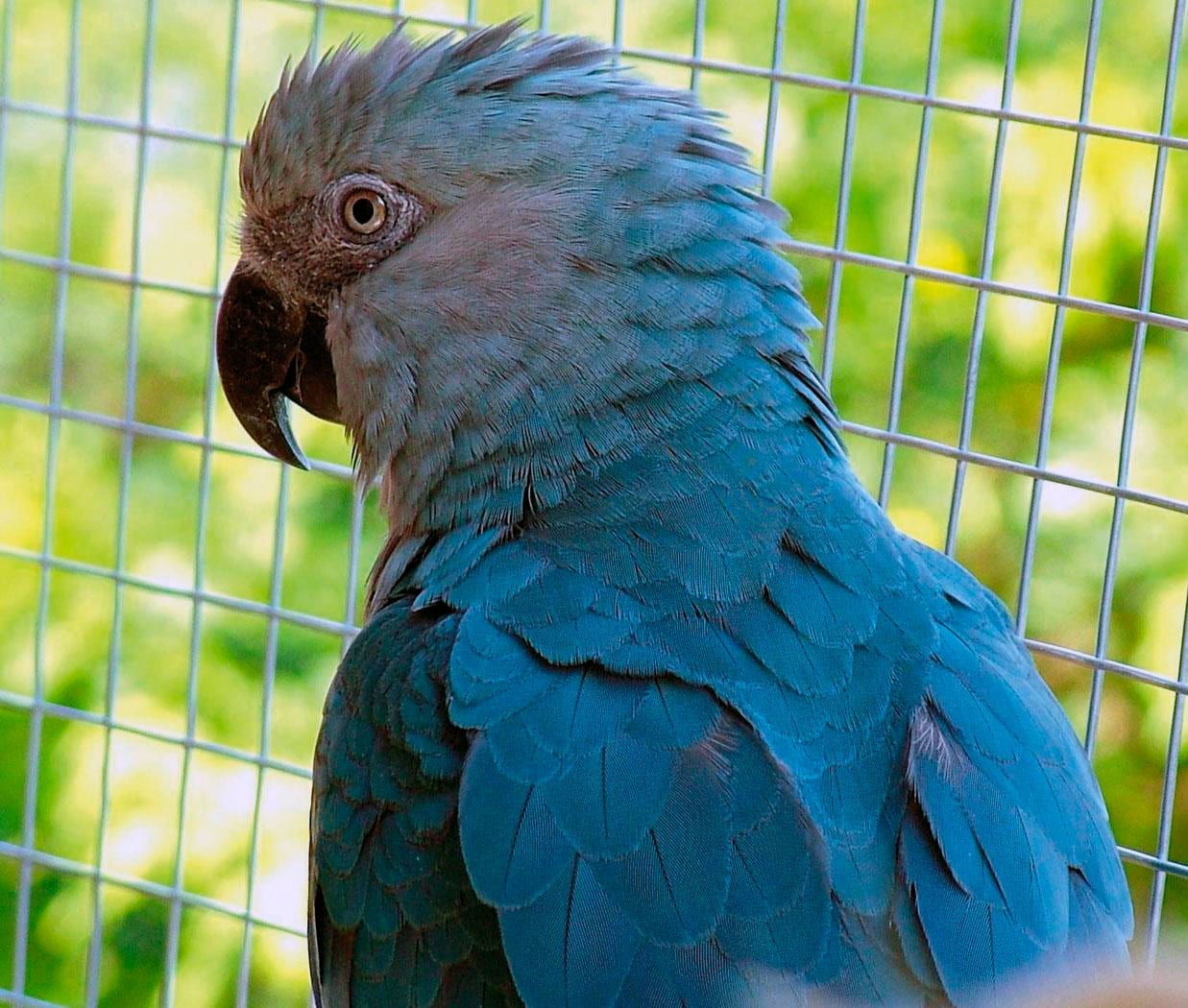
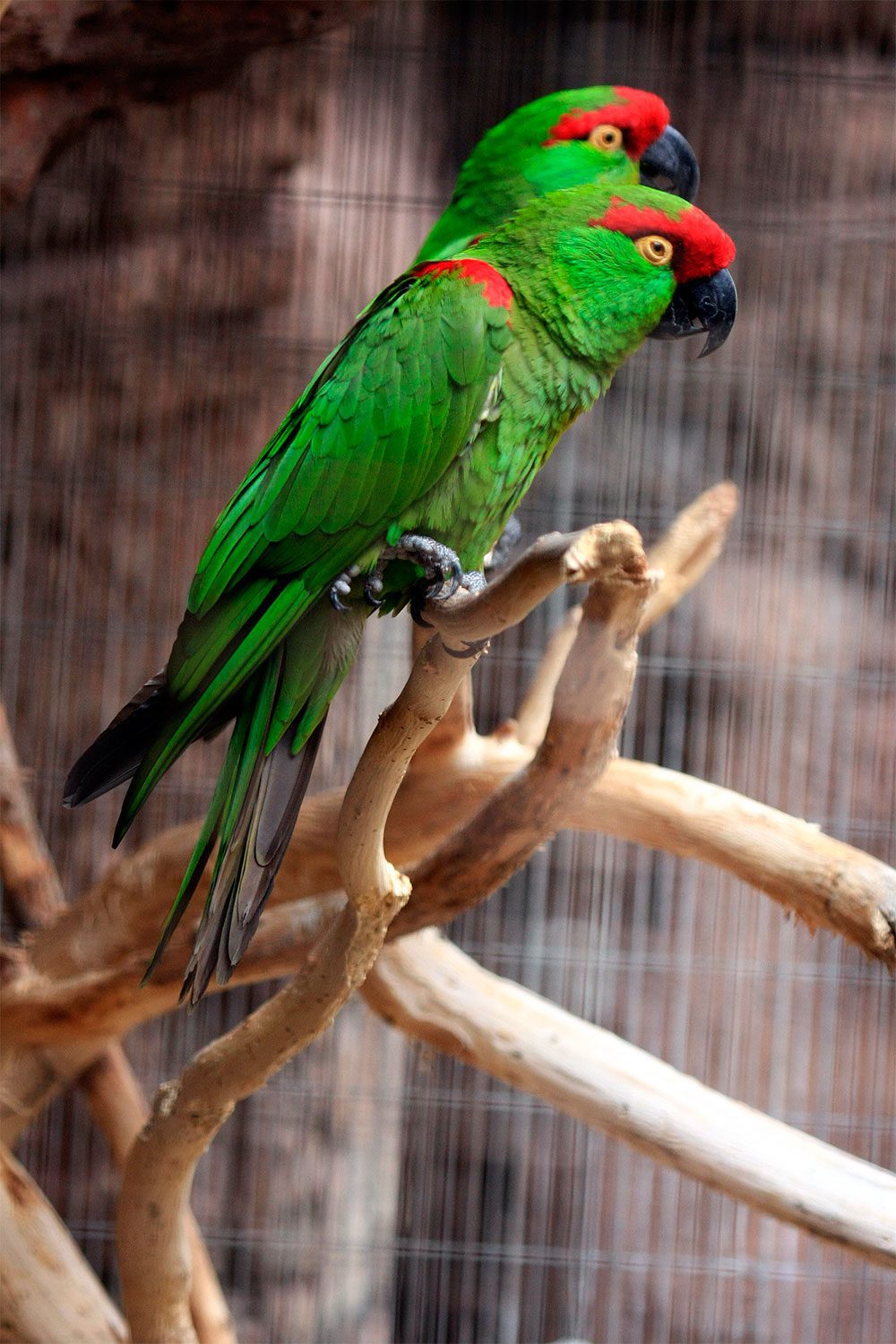
The rare and beautiful Blue-headed Macaw (Primolius couloni), with its striking and vivid plumage green and blue, Unfortunately, now hardly seen in nature.

As its common name indicates, the head is blue, the forecrown with a narrow band of black color that will fade in blue on the area of the crown; the ear-coverts and both sides of the neck are blue, fading to green in the area of the nape. Upperparts olive green with light tint in the tail and in the uppertail-coverts. Small, large and medium-sized coverts green interiors; the large coverts Blue exterior. The flight feather are blue top (with a bit of green in high schools), by below, Yellow olive. Underparts green, slightly more yellow than the upper. The upper part of the tail is an intense Brown, while the underparts is yellowish-green.

The bill is black, Ivory at the end; the bare skin of the lores and the top of the cheeks it is gray with a bluish tint and crossed in front by very small lines of black feathers: the irises yellow; legs grayish pink.

Both sexes are similar, the male, possibly, largest average.

The immature with the irises dark. The bill is completely black and the legs more grey. The skin of the face and lores (area between the beak and eyes) is white. Depending on your age, have queues shorter.

NOTE:

    In close relationship with the Yellow-collared Macaw (Primolius auricollis) and the Blue-winged Macaw (Primolius maracana); it has sometimes been considered congeneric with the latter. monotypic.

Habitat:

The Blue-headed Macaw distributed by humid tropical forests, at altitudes between 150 and 1,550 m. They prefer habitats altered or partially open, mainly in forest edges along rivers, in the clearings and in partially wooded areas surrounding; There are also records of these macaws in marshy areas of forest with Mauritia Palms.

This species prefers possibly the wooded foothills of lowlands.

He is not very sociable: The flocks with the largest number of individuals appear between June and October, usually traveling in pairs or groups of three individuals; apparently, not associated with the Chestnut-fronted Macaw.

Reproduction:

Known that the reproduction of these birds is correlated with the period of greatest abundance of food due to the breeding of pigeons (before and after leaving the nest) It requires a lot of energy expenditure.
There are no records of their reproductive period, However there has been during the months of April to June shown to the parents with their chicks and that in Peru, species Mauritia flexuosa "guaje" and Dipterix odorata "odorata" are key to its reproduction.

In captivity they reproduce couples chosen by them and have of two to three eggs, two chicks being generally viable.

Food:

The Blue-headed Macaw they feed mainly on seeds, mature and immature fruit, and flowers, occasionally supplemented with bark and other inputs.

Unlike many other birds, the parrots of the New world They seem to not be able to modify your diet to predominately insectivorous, reason why they are intimately linked to the patterns of flowering and fruit production (Brightsmith et to the, 2008). They have a strong dependency of the colpas clay.

Distribution:

Distributed by the Western basin of the amazon at the West end of Brazil (in Acre, from time to time), Peru Eastern and in the Northwest corner of Bolivia.

In Peru are known from the top of the Valley of the Huallaga River in Loreto, San Martin and Huanuco (including the outskirts of Tingo Maria), in a town on the eastern slope of the National Park of the Sierra of the Divisor in the basin Ucayali, in the basins of the Curanja River and Purus River, in the Apurimac River in the Cuzco and Mother of God to the West of Puerto Maldonado, around Puerto Maldonado and the Tambopata River to 50 km of the border with Bolivia; You can see in the Manu National Park.

In Bolivia have been found in Peace and perhaps in the South of Beni with indications that the birds are distributed regularly to the South, in the Eastern foothills of the Andes to the South of Bolivia.

Local and erratic in its distribution, but apparently quite common in some places. Perhaps the enlargement of its range is fairly limited in the southwest of the Amazonia due to the degradation of forests.

Rare in captivity.

Conservation:


Vulnerable

โ€ข Red List category of the UICN current: Vulnerable

โ€ข Population trend: Decreasing

Until recently it was considered quite common., but a review in 2006 by BirdLife International suggested that it was rare, with a decrease in the total population to the 1.000-2.500 individuals. Thus, has been placed in the category in danger of extinction in the 2007 (Red list of the UICN).

Parts of the distribution of this species are still little known, but Tobias and Brightsmith (2007) It has been suggested that the previous estimates were too low, with the most probable real number of 9.200 to 46.000 mature individuals. It is suggested that vulnerable could be a more appropriate category for this species.

The Blue-headed Macaw It is commonly found in the markets of Brazil, still valuable, prices above the 12.000 $, and in high demand due to their rarity.

OBJECTIVES:

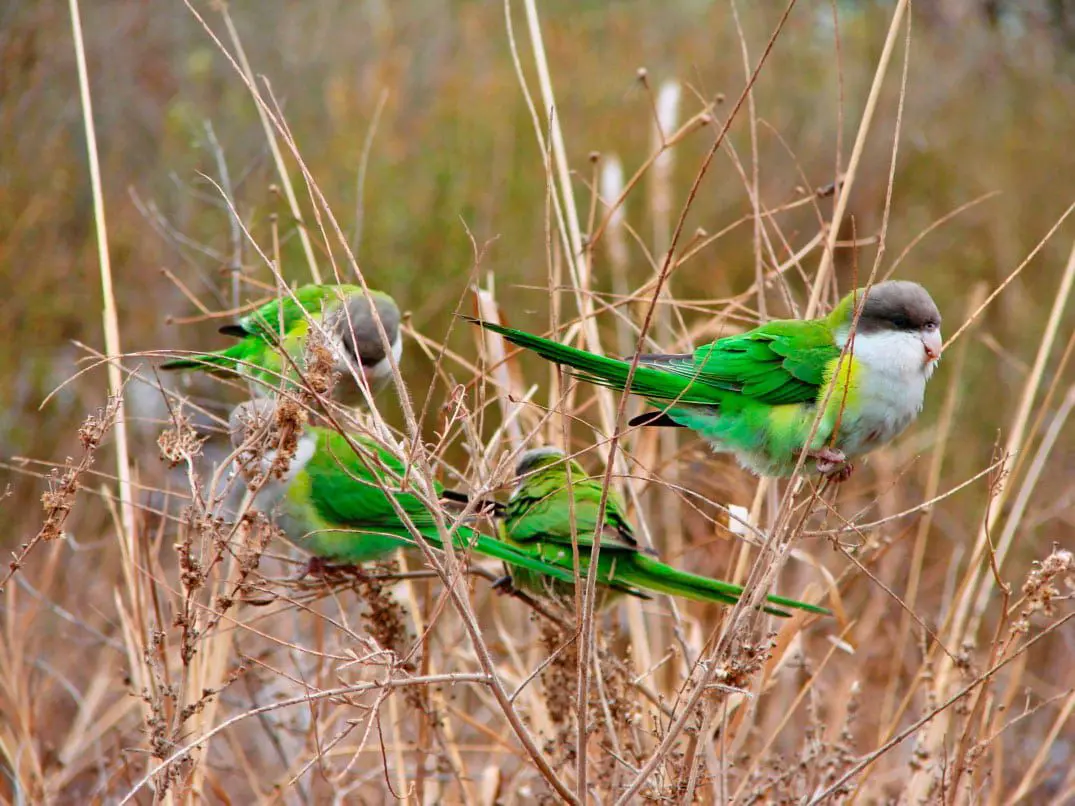
Information about the actual state of conservation of the species. It also, This project, that is being conducted under a partnership with the Government of Peru, includes other project, in this case for the conservation of the Grey-cheeked Parakeet, classified as "endangered".

STRATEGIES:

The two projects include the definition of methods for determining the density of populations in key places, the evaluation of the level of the illegal trade in birds, and the promotion of the local social consciousness in relation to the illicit traffic of these species.

ACTIONS:

The field team is carrying out assessments of populations and habitat analysis, and at the same time they updated the assessment of the threats weighing on the two species. The general population trend of the Blue-headed Macaw is one very gradual decrease, but it seems that the species can withstand certain levels of their forest habitat change. By censuses in consecutive years, the population of the Grey-cheeked Parakeet It has not undergone further decline despite the severe fragmentation of the preferred dry forest.

"Blue-headed Macaw" in captivity:

Very rare in captivity.

Couples are formed according to the preferences of the copies, couples chosen by the breeder will not work. The diet is based on the seasonal fruits and vitamin supplements.

The Parque de las Leyendas Zoo in Peru, captive breeding, It has no objective reproduction but the exhibition of animals that are twelve in total. Births have been but manualรข studies have not been performed. In the month of March to April of the 2010, This project through the SERNANP with scientific staff of the aforementioned zoo, he carried out the biometric studies of this species and established the protocols for the reproduction studies.

Are no data about your longevity, Although similar species such as the Blue-winged Macaw have records having lived 31 years in captivity and having raised from the 6 years of age.

The illegal traffic This species is a serious problem that affects their conservation.

Alternative names:

Blue-headed Macaw, Blue headed Macaw, Coulon’s Macaw (English).
Ara de Coulon (French).
Blaukopfara (German).
maracanรฃ-de-cabeรงa-azul (Portuguese).
Guacamayo Cabeciazul, Maracanรก de Cabeza Azul, Guacamaya cabeza azul (espaรฑol).
Parabachi cabeza azul (Colombia).
Guacamayo de Cabeza Azรบl (Peru).

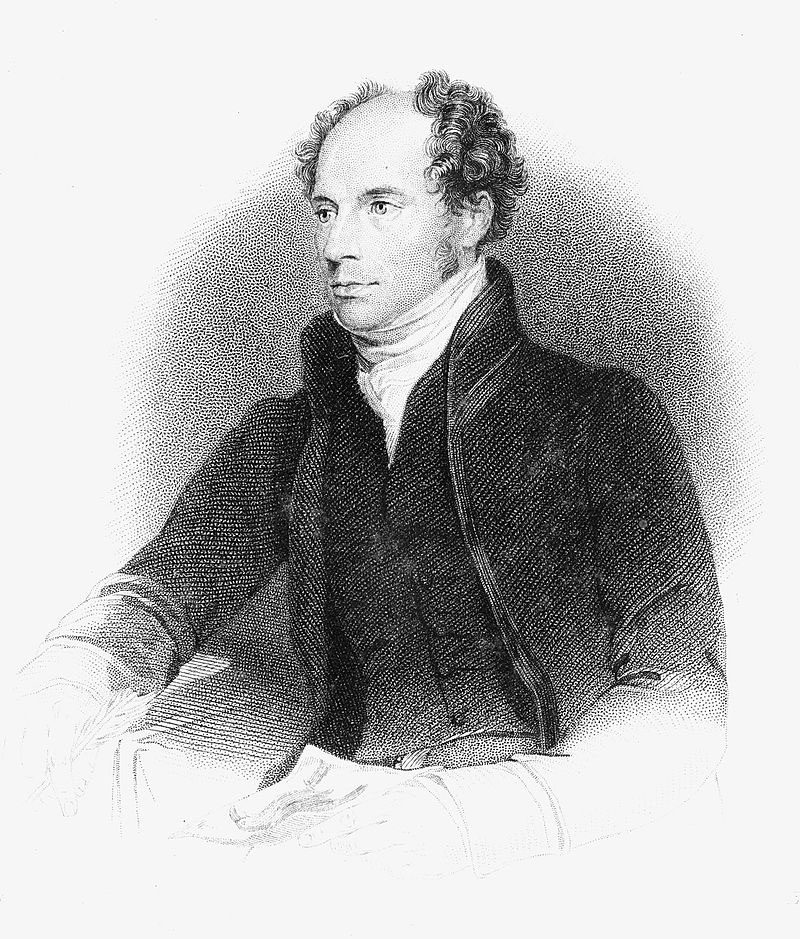
Philip Sclater
Philip Sclater

scientific classification:


Order: Psittaciformes
Family: Psittacidae
Genus: Primolius
Scientific name: Primolius couloni
Citation: (Sclater, PL, 1876)
Protonimo: Ara couloni


Images Blue-headed Macaw:

Videos "Blue-headed Macaw"

————————————————————————————————

ยซBlue-headed Macawยป (Primolius couloni)


Sources:

Avibase
– Parrots of the World โ€“ Forshaw Joseph M
– Parrots A Guide to the Parrots of the World – Tony Juniper & Mike Parr
– Birdlife

Photos:

(1) – Blue-headed Macaw in the Walsrode Bird Park, Germany By Quartl (Own work) [CC BY-SA 3.0], via Wikimedia Commons
(2) – Blue-headed Macaw (also known as Coulonโ€™s Macaw) in captivity at Walsrode Bird Park, Germany By Robert01 (Self-photographed) [CC BY-SA 3.0 of], via Wikimedia Commons
(3) – Blue-headed Macaw (Primolius couloni) at Jungle Island of Miami By DickDaniels (http://carolinabirds.org /) (Own work) [GFDL or CC BY-SA 4.0-3.0-2.5-2.0-1.0], via Wikimedia Commons
(4) – Moscow Zoo. Blue-headed Macaw (Ara couloni, syn. Primolius couloni) By Andrey Korzun (Kor!An) (Own work) [GFDL or CC BY-SA 3.0], via Wikimedia Commons
(5) – Ara couloni – Wikipedia

Sounds: (Xeno-canto)

โ–ท The world of Pets: Dogs, cats, birds, reptiles, amphibians

Crimson-fronted Parakeet
Psittacara finschi


Aratinga de Finsch

Content


Anatomy-parrots

Description:

28 cm. of length and a weight of 150 g..

The Crimson-fronted Parakeet (Psittacara finschi) It is the only species of the genus Psittacara tail long with red color below the wing .

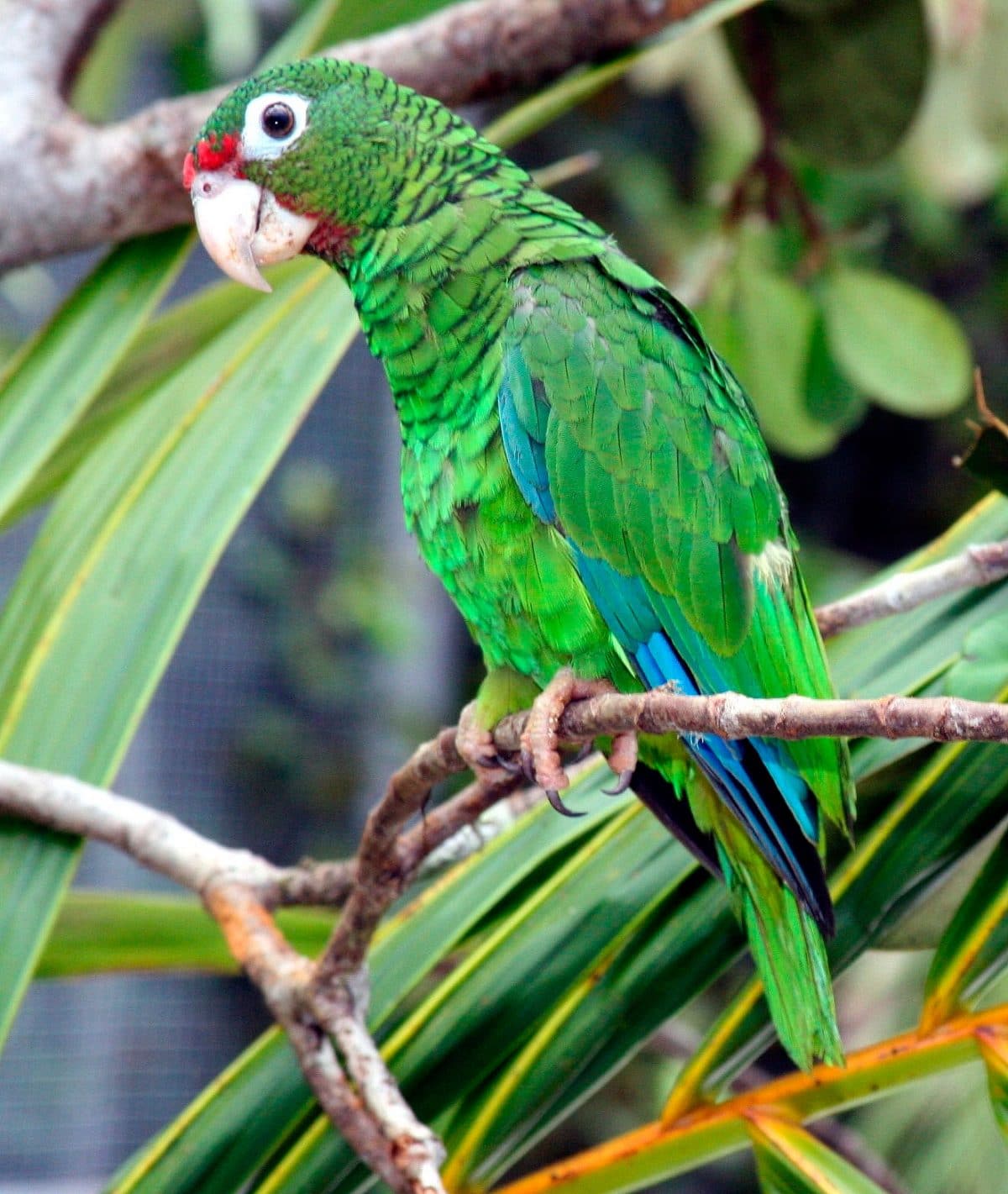
They have forecrown and the former area of the lores bright red; the head and the neck green color with the exception of some scattered red feathers. The upperparts and upperwing-coverts green, with some red feathers on the bend of wing. The flight feather green above, more dark towards the tips with a dye bluish light in them vane inner; then golden brown color. Lesser and medium underwing-coverts red, the largest yellow, other coverts pale green. The underparts pale green, sometimes with red at the bottom of the tibia. Upper, the tail grass-green, by down golden brown.

Ilustraciรณn Aratinga de Finsch

The irises is orange and the eye ring naked is whitish. The bill exhibits a color gray-tipped Horn and the legs off gray color.

It has no sexual dimorphism.

The immature There are very little or almost no red in the forecrown and lack of red color in the thigh or the neck. The lining of the wings is more Orange.

Habitat:

Video – "Crimson-fronted Parakeet" (Psittacara finschi)

Psittacara finschi - feed

They inhabit tropical and subtropical envelope 1.400 metres in Costa Rica and 1.600 meters in the West of Panama, in areas with light trees or in fields with scattered trees, in secondary growth forests, edges of the forest, coffee plantations and nearby farmland. Irregular or seasonal in large forested areas.

They are birds gregarious, usually observed in flocks of up to 30 Member, but up to several hundred birds can gather in roosts communal on the tops of the trees or palms. Roosts, at times near the cities.

Reproduction:

They located their nest in holes of various types: natural cavities, old holes of woodpeckersย (F. Picidae), stumps of dead Palms. They can dig holes in rotten stumps or in masses of epiphytes.. Sometimes many couples may nest near each other.

The union of the pair of this species is particularly strong. The pairs isolate themselves from the group towards the end of July to nest.. With reproduce during the dry season and the rainy early. The female lays three or four eggs which are incubated during approximately 24 days. The juveniles they leave the nest to the 50 days of life.

Food:

Feeds of corn and sorghum; also eats flowers of the forest flame (Spathodea campalunata), flowers and fruits of porรณย (Erythrina sp.), guabasย (Inga sp.) and fruits of targuรกย (Croton sp.), lagartillo (Zanthoxylum sp.), guititeย (Acnistus arborescens)of guayabaย (Psidium guajaba) and higuerรณn

Distribution:

Widely distributed in the South of Central America, from Nicaragua until Panama.

The species can be found in the southeast of Nicaragua to the South of the Rio Grande, and in Costa Rica mainly on the slope of the Caribbean, Although there are exemplary residents on the side of the peaceful, on Osa Peninsula, at the South-West end and seasonal visitors in the Guanacaste Cordillera, in the North and the central plateau around San Jose.

In Panama they come to the East, a unos 82ยฐW, but it is probable that only seasonally in the lower Highlands of the Province of chiriqui.

Flocks of birds required extensive territories and the species occurs, apparently, in many areas, if only as a post-breeding visitor.

Very common or locally common with increasing numbers in Costa Rica and Panama, probably due to deforestation.

Maintained in captivity and internationally traded in small quantities.

Conservation:

State of conservation โ“˜


minor concern Minor Concern โ“˜ (UICN)โ“˜

โ€ข Red List category of the UICN current: Least concern

โ€ข Population trend: Growing

The size of the world population of the Crimson-fronted Parakeet It has not been quantified, but this species is described as ยซquite commonยซ.

You can be increasing their geographical range due to deforestation.

abundant on the slope of the Caribbean of Nicaragua. common and widespread in areas deforested over the slope of the Costa Rica Caribbean.

"Crimson-fronted Parakeet" in captivity:

Quite common in United States, less elsewhere.

Socialize easily with human, and can become a committed and loving companion. Es a Intelligent and lively, with easy to imitate the human voice and run different games and exercises. But, We must remember that it is a bird loud and the volume of their calls can get to be very annoying.

Alternative names:

Crimson-fronted Parakeet, Crimson fronted Parakeet, Crimson-fronted Conure, Finsch’s Conure, Finsch’s Parakeet (English).
Conure de Finsch, Perriche de Finsch, Perruche de Finsch (French).
Veraguasittich (German).
Aratinga-de-finsch (Portuguese).
Aratinga de Finsch, Perico frentirrojo, Periquito de Pecho Rojo, Perico de Palmera (espaรฑol).
Perico frentirrojo (Costa Rica).
Perico Frentirrojo (Nicaragua).


scientific classification:

Joseph Sabine
Joseph Sabine

Order: Psittaciformes
Family: Psittacidae
Genus: Psittacara
Scientific name: Psittacara finschi
Citation: (Salvin, 1871)
Protonimo: Conurus finschi


Crimson-fronted Parakeet pictures:


Species of the genus Psittacara

Sources:

  • Avibase
  • Parrots of the World โ€“ Forshaw Joseph M
  • Parrots A Guide to the Parrots of the World – Tony Juniper & Mike Parr
  • Birdlife

  • Photos:

(1) – A Finschโ€™s Parakeet )also called Finschโ€™s Conure and Crimson-fronted Parakeet) in San Josรฉ, Costa Rica By Dominic Sherony [CC BY-SA 2.0], via Wikimedia Commons
(2) – Perico frentirrojo juvenil, approximately 4 months of age, Panama City By Ricaurte (Own work) [Public domain], via Wikimedia Commons
(3) – Crimson-fronted Parakeet, also called Finschโ€™s Conure By Yazzieyazz (trabjo propioEnglish: own work) [Public domain], via Wikimedia Commons
(4) – Psittacara finschi en el parque nacional Henri Pittier, Venezuela By Roberto Galindo Deshays (Own work) [CC BY-SA 4.0], via Wikimedia Commons
(5) – Crimson-fronted Parakeet Costa Rica 2/15/16 Rancho Naturalistaby Andy Reago & Chrissy McClarrenFlickr
(6) – Crimson-fronted Parakeet by Brian RalphsFlickr
(7) – Crimson-fronted Parakeet Costa Rica 2/15/16 Rancho Naturalista by Andy Reago & Chrissy McClarrenFlickr
(8) – Aratinga finschi 06 Apr 2014 Costa Rica, San Lorenzo by Tom BensonFlickr
(9) – Crimson-fronted parakeet by Charles SharpFlickr
(10) – Conurus finschii ยป = Psittacara finschi (Finschโ€™s Parakeet) by John Gerrard Keulemans [Public domain], via Wikimedia Commons
โ–ท The world of Pets: Dogs, cats, birds, reptiles, amphibians

Blaze-winged Parakeet
Pyrrhura devillei


Blaze-winged Parakeet

Content

Description:

Blaze-winged Parakeet

It measures 25 to 28 cm. and 70 weight GR.

In flight notorious is the armpit red with yellow line at the end; Red patch in the belly. The tail is opaque red.

Was formerly considered as a subspecies of the Maroon-bellied Parakeet (Pyrrhura frontalis), of crown brown, darker underparts, and underwing-coverts especially red and yellow.

Bill black; eye ring naked white; irises brown. Tail long.

It has no sexual dimorphism.

Habitat:

It lives in the Woods, on the clear and marshy edges, until the 1000 m.

It is a species tolerant of disturbance of the habitat.

Fly in flocks between 6 to 12 individuals.

Reproduction:

It nests in hollow of trees and is plays between October and December.

Food:

Feed a wide variety of dried fruits and fruit.

Distribution:

Is distributed between the South of Brazil (Mato Grosso from the South), North of Paraguay (Northwest of Conception and Southeast of Alto Paraguay) and Southeast of Bolivia.

In Brazil only it is known in Mato Grosso from the South, where is limited to the mountain ranges of Bodoquena and Maracayu, in the Ecotone between the Planalto and the lowlands of the Pantanal, and along the taboco river in the municipality of Aquidauana. It has a very limited range in the Paraguay, from where records of the latter are confined to gallery forests along the apa river.

Conservation:

โ€ข Red List category of the UICN current: Near-threatened
โ€ข Population trend: Stable

The size of the world population Blaze-winged Parakeet It has not been quantified, but this species has been described as ยซrareยซ.

State of conservation โ“˜


Near-threatened Near Threatened โ“˜ (UICN)โ“˜

This species is suspected that they have experienced a moderately rapid decline due to the extensive loss and degradation of its habitat range within. Now survive in a highly fragmented landscape. Its area of distribution in Brazil has suffered extensive forest loss and degradation through agricultural expansion and charcoal production. The forests of the North of Conception and those who are in Chaco, in the easternmost area of Paraguay, are coming under increasing pressure and have seen considerable deforestation in recent 10 years (R. Clay in litt., 2009).

There is one hybridization apparent with the Maroon-bellied Parakeet (Pyrrhura frontalis) observed in the apa river (R. Clay in litt., 2009).

The trade is apparently minimal (pit et to the., 1997).

"Blaze-winged Parakeet" in captivity:

These small parrots are very rare in captivity, Although its potential for pets is excellent. Are birds animated and soon procured confidence with its owner. They often enjoy bath and are not hard chewing. are mostly calm and they shall only be loud when they are excited. They can be aggressive toward other birds. Playful and curious and generally resistant.

Alternative names:

Black-winged Parakeet, Black-winged Conure, Blaze winged Parakeet, Blaze-winged Conure, Blaze-winged Parakeet, Deville’s Conure (English).
Conure de Deville, Perriche de Deville, Perruche de Deville (French).
Devillesittich, Deville Sittich, Deville-Sittich (German).
tiriba-fogo (Portuguese).
Chiripepรฉ ala anaranjada, Cotorra de Deville, Perico de Alas Naranjas, Periquito alianaranjado (espaรฑol).
Periquito alianaranjado (Bolivia).
Chiripepรฉ ala anaranjada (Paraguay).

scientific classification:

Order: Psittaciformes
Family: Psittacidae
Genus: Pyrrhura
Scientific name: Pyrrhura devillei
Citation: (Massena & Souancรฉ, 1854)
Protonimo: Conurus Devillei

Images "Blaze-winged Parakeet"

Videos "Blaze-winged Parakeet"


Especies del gรฉnero Pyrrhura

Blaze-winged Parakeet (Pyrrhura devillei)


Sources:

Avibase
– Parrots of the World โ€“ Forshaw Joseph M
– Parrots A Guide to the Parrots of the World – Tony Juniper & Mike Parr
– Birdlife

Photos:

(1) – Blaze-winged Parakeet, Pousada Aguape, Mato Grosso Sul, In Brazil Flickr by Wildlife Travel
(2) – Iconographie des perroquets :Paris :P. Bertrand,1857 biodiversitylibrary

Sounds: (Xeno-canto)

โ–ท The world of Pets: Dogs, cats, birds, reptiles, amphibians

Tepui Parrotlet
Nannopsittaca panychlora

Cotorrita de tepuy

Content

Description:

Tepui Parrotlet

The Tepui Parrotlet (Nannopsittaca panychlora) measured between 14 and 15,7 cm.. height. Small size, with wings sharp and tail cut and wedge.

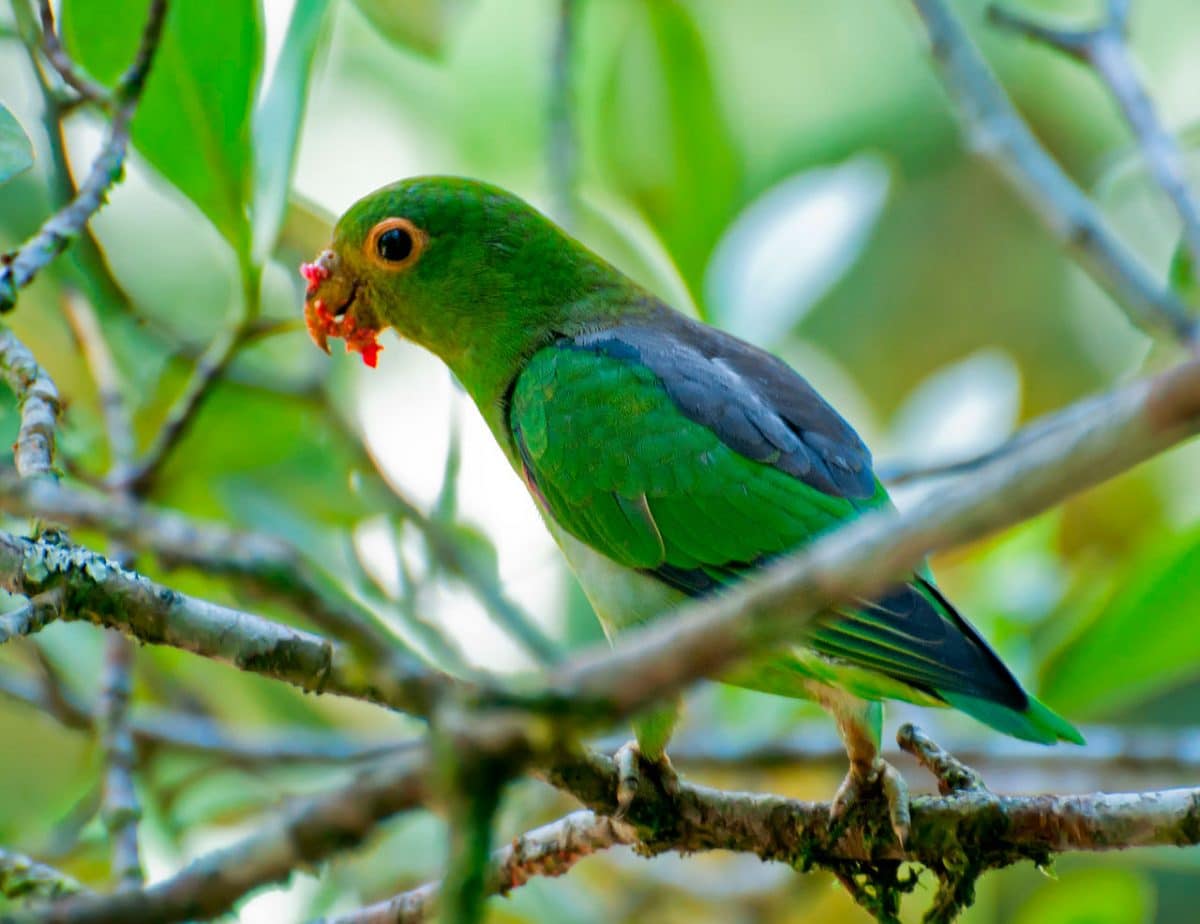
The head It is green with yellow tinge olivรกceo; the eye area is yellow, color extending below and behind the eyes. The upperparts they are green (brighter and less than olivรกceo head). Upperwing-coverts green. Flight feathers blackish green tipped primary, brownish opaque below; INFRACA-wing coverts green. The underparts yellowish green turn yellow-green in the undertail-coverts. Upper, the tail is green; undertail, yellower. Bill grey; cere grey; Bello to singr dark gray; irises brown; legs Rosaceae.

Both sexes are similar; the female has the forecrown Off-white to yellowish.

Habitat:

They inhabit moist montane forests. in tropical and subtropical highlands, sometimes in the rainforest of the lowlands around tepuyes, generally 750-1,850 m (Gran Sabana), although they observed at the top of Auyantepui to 2,200 meters and near the summit Monte Roraima A 2,200 m; to 750-950 metres in Sucre.

Can reproduce in subtropical and tropical zone descend to feed. Recent records in the view of birds in the lowlands suggest at least seasonal aparienciones at lower altitudes. Fly very high, fast and straight, in compact flocks of 6 to 150 individuals. Itร‚ยดs resident but it shows seasonal migrations.

Reproduction:

Sleeps and nests in Tepuis. Not much more information about the reproduction of this species in the wild.

Food:

In their natural habitats, the Tepui Parrotlet normally eat fruits, seeds and small insects.

Distribution:

Size of the area of distribution (reproduction / resident): 486.000 km2

Mainly montana, It is distributed in several scattered populations in eastern Venezuela and the adjacent area of รขโ‚ฌโ€นรขโ‚ฌโ€นwestern Guyana; concentrated in Gran Sabana from the east of Bolรญvar in Venezuela (for example, Montes Roraima and Auyantepui); It is also present around the meseta del Duida and the lowlands of Ventauri River, amazon, and in the West of Guyana from the area Camaran River; a more distant population occupies the Paria Peninsula (for example, the Monte Papelรณn), Sucre, to the northeast of Venezuela. Probably you can be observed at the north end of Roraima, Brazil.

Apparently locally common and stable, but perhaps it diminished in Paria peninsula due to large-scale deforestation. Much of the range is included in Canaima National Park.

Conservation:

State of conservation โ“˜


minor concern Minor Concern โ“˜ (UICN)โ“˜

โ€ข Current category of the Red List of the UICN: Least concern.
โ€ข Population trend: Stable.

Justification of the population

The size of the world population It has not been quantified, but this species is described as ยซquite common, but unevenly distributedยป (Stotz et to the., 1996).

Justification of trend

It is suspected that this species has lost 6,9-11,6% of habitat within its distribution over three generations (15 years) starting from a model of deforestation Amazon (Soares-Filho et to the., 2006, Bird et to the., 2011). Given the susceptibility of the species to hunting and / or capture, It is suspected that its population decline by <25% during three generations.

"Tepui Parrotlet" in captivity:

Breeding in captivity outside of South America. It is intelligent, quiet and very sociable.
Can normally live about 20 years.

Alternative names:

Tepui Parrotlet, Tepui Parakeet, Tepui parrolet (English).
Toui des tรฉpuis, Toui tรฉpui (French).
Tepuisittich, Grรผnsperlingspapagei, Tepui Sittich (German).
Periquito-dos-tepuis, periquito-do-Tepui (Portuguese).
Catita Chirica, Cotorrita de tepuy, Cotorrita Tepuรญ (espaรฑol).
Chirica (Venezuela).

scientific classification:

Order: Psittaciformes
Family: Psittacidae
Genus: Nannopsittaca
Scientific name: Nannopsittaca panychlora
Citation: (Salvin & Godman, 1883)
Protonimo: Brotogerys [sic] panychlorus

Images of the "Tepui Parrotlet"

Video of the "Tepui Parrotlet"


Species of the genus Nannopsittaca

Tepui Parrotlet (Nannopsittaca panychlora)


Sources:

  • Avibase
  • Parrots of the World โ€“ Forshaw Joseph M
  • Parrots A Guide to the Parrots of the World – Tony Juniper & Mike Parr
  • Birdlife
  • Parrot Book, Parrots and macaws Neotropical

  • Photos:

(1) – Credit: ยฉ Scott Echols, DVM
(2) – Brotogerys panychlorus = nannopsittaca panychlora (color green) & Microcerculus ustulatus (color brown) By J G Keulemans (Ibis 1883 (Web)) [Public domain], via Wikimedia Commons
โ–ท The world of Pets: Dogs, cats, birds, reptiles, amphibians

White-crowned Parrot
Pionus senilis

White-crowned Parrot

Content


Anatomy-parrots

Description:

24 cm.. length and a weight between 193-229 g..

The White-crowned Parrot (Pionus senilis) has the forecrown, crown and lores, white. The feathers of the cheeks, sides head, behind eyes, and rear of the neck, basically pale bluish green with green or blue violet and blue subterminal band darker margins, giving the whole a intricate scaly appearance.

Mantle and back, green with copper plating shine; rump and uppertail-coverts, brighter green; scapulars basically colored green with coppery bronze in the points and outerweb. Lesser coverts and median, bronze with paler tips coppery, giving a mottled appearance; primary coverts, violet blue; greater coverts green. Primaries and secondaries outer, violet blue with green tips to outerweb of the primaries and inner secondary.

Under, the wings pale bluish green. Patch in chin and top of the throat, white; feathers of the chest, green at the base (mostly hidden part) tipped dark blue or violet-blue and blue band paler, giving the whole a scalloped effect; undertail-coverts red. Tail green in the center, outer feathers blue with red at base. Bill pale yellow color with light green tint; eye ring Pink; irises dark brown: legs yellowish gray.

Both sexes are similar. The immature has the head, the back of the neck and the chest, green, pale yellow with margins in the cheeks and crown, giving a pale mottling.

Note:

The subspecies decoloratus, which was distributed from yucatan peninsula to western Panama, previously recognized on the basis of their throat more purple (less blue) and your chest and wings, more blue. But, There is not much geographic variation in the species Pionus senilis and the aforementioned characters are not consistent on the proposed range.

  • Sound of the White-crowned Parrot.

Habitat:

The habitat of the Senile Parrot is mainly the humid forest (including tropical rain forest), but locally it can be found in forests of oak pine, and low mountain forest. Birds have been reported in forest edges, cultivated areas and grassland areas with scattered trees, plantations, secondary forest with emergent trees, woodlands and streams in Costa Rica, on the edge of urban areas.

Lives mainly in lowlands, but they are distributed locally 2.300 meters in Guatemala and near 1.600 meters in Costa Rica 1.800 meters in Panama. gregarious, mostly in pairs or out of breeding season, in small herds; sometimes in larger meetings of up to several hundred birds.

Reproduction:

Build your nests in tree cavities or hollow trunks of palm trees. The reproduction period occurs between February to May; in March in Mexico; in January-April Costa Rica; February to May in Honduras. The incubation comprises of 26-28 days, Followed by 54-68 pup growth days. It has been difficult to breed the species in captivity and there is little information on its reproduction in the wild..

The size of clutch is of 3 to 5 eggs

Food:

It feeds mainly on the tops of the trees seeds mature Inga and Erythrina and fruits Palm; sometimes cultures corn and Sorghum.

Distribution and status:

Size of its range (breeding/resident ): 1.290.000 km2

Endemic to Central America, from Mexico until Panama.

The White-crowned Parrot It is found in the humid tropics of eastern Mexico on the Caribbean side of Tamaulipas and to the East of San Luis Potosi eastward through yucatan peninsula, in Campeche and Quintana Roo, the borders of Belice and the northern lowlands and highlands of eastern Guatemala. It is found throughout the Caribbean slope of Honduras, mainly below 1.100 m (Occasionally highest altitudes) and in Roatan in the Bay islands, and on the Caribbean side of Nicaragua (possibly also on the side of peaceful) until Costa Rica, where it remains mainly in the lowlands and foothills of the Caribbean slope, becoming less and less numerous south of Lemon; also observed in the slope of peaceful in the South of Costa Rica and on both sides West Panama, to the West of Chiriqui and to the West of Bull's mouths.

Some local migrations (also apparently vertical) occur (for example, in parts of Oaxaca, Mexico and parts of Costa Rica). The species is widespread, but abundance varies from rare to very common depending on locality; It is perhaps the largest parrot in Costa Rica.

current distribution: No data where the current distribution of specified White-crowned Parrot. This species of psittacine still has a presence throughout its range, although there are regions where it has been extirpated, as the West's Quintana Roo and Gulf Coast (INE 2000).

Despite being frequently eaten by native peoples (at least once), persecuted as a pest of crops, caught in low numbers for the live bird trade and severely deforesting parts of their range, It has not detected a serious overall decline in population.

Conservation:


minor concern


โ€ข Current category of the Red List of the UICN: Least concern.

โ€ข Population trend: decreasing.

sheltered Mexico by the Official Mexican Standard (NOMโ€“059โ€“SEMARNATโ€“2001โ€“2010) under the category of Threatened.

Rationale for the Red List category

This species has a very large range and therefore it is not close to the thresholds for Vulnerable under the criterion of size range (Extension Occurrence <20,000 km2 combinada con un tamaรฑo de rango decreciente o fluctuante, extensiรณn / calidad de hรกbitat o tamaรฑo de poblaciรณn y un pequeรฑo nรบmero De lugares o fragmentaciรณn severa). A pesar de que la tendencia de la poblaciรณn parece estar disminuyendo, no se cree que la disminuciรณn sea suficientemente rรกpida para acercarse a los umbrales de Vulnerables bajo el criterio de tendencia poblacional (> 30% decline in ten years or three generations). The population size is very large and, therefore, not approaching the thresholds for vulnerable under the criterion of population size (<10.000 individuos maduros con una disminuciรณn continua estimada en> 10% in ten years or three generations or with a specific population structure). For these reasons the species is evaluated as the least concern.

Justification of the population

Partners in Flight estimates the total population of 50.000-499.999 individuals (A. Panjabi in a bit., 2008).

Justification of trend

It is suspected that the population is declining due to continuous habitat destruction.

"White-crowned Parrot" in captivity:

(CITES) It included in the Appendix II (It includes species not necessarily threatened with extinction, but in which trade must be controlled to avoid utilization incompatible with their survival.)

The species ranked first in the 80's among the most traded parrot species in Mexico (Iรฑigo Elias and Ramos 1992). Currently, there marketing of the species in the national and international market.

Valued as a pet or ornamental bird by its feathers, ability to imitate sounds and its tendency to form bonds with people.

Alternative names:

White-crowned Parrot, White crowned Parrot, White-capped Parrot (English).
Pione ร  couronne blanche, Pione givrรฉe, Pionus ร  front blanc, Pionus ร  front blanche (French).
Glatzenkopfpapagei, Glatzenkopf, Glatzenkopf-Papagei, WeiรŸkappenpapagei (German).
Curica-de-testa-branca (Portuguese).
Lora coroniblanca, Loro Corona Blanca, loro corona-blanca, Loro Coroniblanco, Loro de Corona Blanca, Loro Gorgiblanco, Loro Senil (espaรฑol).
Loro coroniblanco (Costa Rica).
Lora coroniblanca (Honduras).
loro corona blanca, loro corona-blanca, Loro Coroniblanco (Mexico).
Loro Gorgiblanco (Nicaragua).


scientific classification:

Johann Baptist von Spix

Order: Psittaciformes
Family: Psittacidae
Genus: Pionus
Scientific name: Pionus senilis
Citation: (von Spix, 1824)
Protonimo: Psittacus senilis


Images "Loro Senile":

Videos "White-crowned Parrot"

————————————————————————————————

"Their Senil" (Pionus senilis)


Sources:

Avibase
– Parrots of the World โ€“ Forshaw Joseph M
– Parrots A Guide to the Parrots of the World – Tony Juniper & Mike Parr
– Birdlife

Photos:

(1) – A White-crowned Parrot (also known as White-crowned Pionus) at Macaw Mountain Bird Park, Honduras By Pionus_senilis_-Macaw_Mountain_Bird_Park,_Honduras-8a.jpg: Sarah and Jasonderivative work: Snowmanradio [CC BY-SA 2.0], via Wikimedia Commons
(2) – A White-crowned Parrot (also known as White-crowned Pionus) at Macaw Mountain Bird Park, Honduras By nakashi (Flickr: P1100396) [CC BY-SA 2.0], via Wikimedia Commons
(3) – A White-crowned Parrot (also known as White-crowned Pionus) at Macaw Mountain Bird Park, Honduras By nakashi (Flickr: P1100397) [CC BY-SA 2.0], via Wikimedia Commons
(4) – (Pionus Senilis). White-crowned Parrot , Guatemala By Virgilrm at English Wikipedia (Transferred from en.wikipedia to Commons.) [Public domain], via Wikimedia Commons
(5) – A White-crowned Parrot (also known as White-crowned Pionus) at Macaw Mountain Bird Park, Honduras By nakashi (Flickr: P1100398) [CC BY-SA 2.0], via Wikimedia Commons
(6) – White-crowned Parrot (also known as the White-crowned Pionus); close up of upper body By Brian Gratwicke [CC BY 2.0], via Wikimedia Commons
(7) – A White-crowned Parrot at Cape May Zoo, New Jersey, USA By Jim Capaldi (Flickr: Parrot) [CC BY 2.0], via Wikimedia Commons
(8) – (Pionus Senilis) White-crowned Parrot in a tree By Virgilrm at English Wikipedia (Transferred from en.wikipedia to Commons.) [Public domain], via Wikimedia Commons
(9) – White-crowned Parrot (Pionus senilis), also known as White-crowned Pionus, at the aviary Birds of Eden in South Africa By SandyCole (mailto:sandyc@dicksandy.org) (Own work) [CC BY-SA 3.0 or GFDL], via Wikimedia Commons

Sounds:

โ–ท The world of Pets: Dogs, cats, birds, reptiles, amphibians

Red-browed Parrot
Amazona rhodocorytha

Red-browed Parrot

Content

Description:

35-40 cm.. length and 450-650 g. of weight.

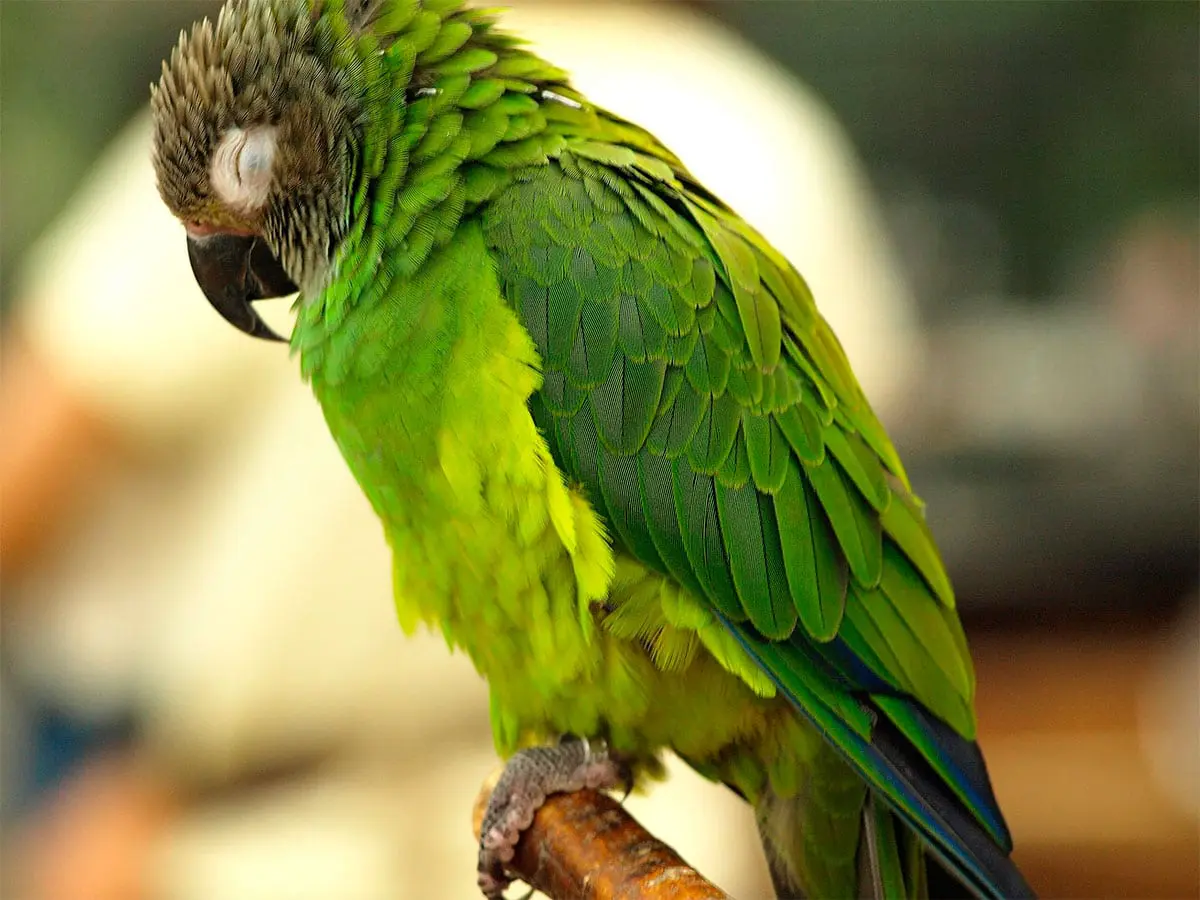
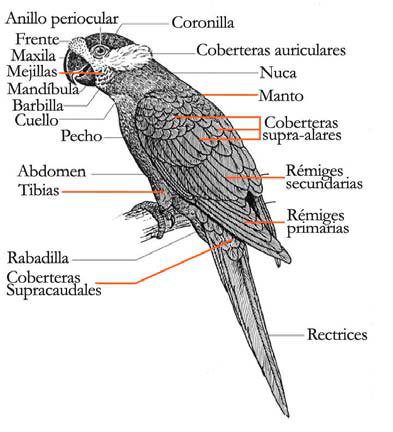
The Red-browed Parrot (Amazona rhodocorytha) has the forecrown and front of the crown, bright red; back of the crown, green with brownish purple tips; lores oranges; lower cheeks and throat, pale blue; ear-coverts and sides neck, green with plenty of blue; nape green with black tips.
Upperparts green, some feathers showing faint dark tips. Wing coverts green with yellow on the carpal edge. Primaries dark grey; three outermost secondary, red at the base, other green with violet blue tips. Underwing-coverts green. Underparts green, paler and more yellowish than above, with some feathers showing faint pale blue tips (especially in the belly and around the thighs). The tail It is green with yellow tip and a large patch in red subterminal innerwebs of the lateral feathers. Bill color pale horn; irises orange; legs grey.


Anatomy-parrots

Red-browed Parrot

Both sexes are similar. Immature It is less extensive in red head and in the tail, and the red color is confined to only the first two secondaries.

Taxonomic note:

The Red-browed Parrot It has been widely treated as conspecific with Blue cheeked Parrot (Amazona dufresniana) and Red-tailed Parrot (Amazona brasiliensis). According to reports, the birds of Alagoas show the throat orange, suggesting a racial differentiation. It has not proposed any subspecies.

  • Sound of the Red-browed Parrot.

Habitat:

Video – "Red-browed Parrot"

Chauรก(Amazona Rhodocorytha) - Red-browed Parrot

The Red-browed Parrot mainly inhabits moist lowland forests, but forests also date from the highlands (perhaps seasonally) inside (for example, in Serra do Mar and east of Minas Gerais, Brazil) up to approximately 1.000 m. Although records on the edges of forests, probably not adapt to the conditions created, even partial deforestation. They sleep communally on tall trees in forest.

Reproduction:

The eggs possibly they hatch in October and pairs with their young have been observed in January.

In captivity, sunsets four eggs are common; the incubation hard 24 days, with the young leaving the nest 34 days after hatching.

Food:

Feeds of fruit, seeds, berries and cocoons they get in the treetops; It has also been registered to Red-browed Parrot feeding is of papaya, jaca, Mango, cacao, banana and coffee plantations.

Distribution and status:

Size of its range (breeding/resident): 2.700 km2

The Red-browed Parrot It was first discovered in northern Sao Paulo at the beginning of the year 90.
This is an Amazon of Atlantic tropical forests of Brazil, in the East of Alagoas and further south, until Rio de Janeiro. No records between Alagoas and northeast of Bay, but if southwards and into neighboring areas, to the East of Minas Gerais, Brazil, through Espirito Santo until Rio de Janeiro.

Obviously, he suffered a drastic decline in its geographical expansion and its population since European settlement. Today they live confined to the last remaining fragments of the Atlantic tropical forests. Possibly extinct Alagoas, where the last native lowland forests were cleared in the 1990s 1980, although still quite common in at least one protected area Espirito Santo.

The current population is scattered and is susceptible to continued deforestation (for example, around the the Desengano State Park in Rio de Janeiro) and continued illegal trade in which the birds are highly valued. Live in several areas protected, including the Monte Pascoal National Park (Bay), the Rio Doce State Park (Minas Gerais, Brazil), reservations Sooretama and Linhares in Espirito Santo and the Serra da Bocaina National Park, Rio de Janeiro.

Conservation:

State of conservation โ“˜


Endangered Endangered โ“˜ (UICN)โ“˜

โ€ข Current category of the Red List of the UICN: In danger of extinction.

โ€ข Population trend: Decreasing.

โ€ข Population size : 600-1700

  • Rationale for the Red List category

This species is endangered because of their severely fragmented and declining population. There remains a proper dismantling of Atlantic forest habitat and capture for the bird trade cage is an additional threat. It is considered nationally in peligro de extinctionn in Brazil.

  • Justification of the population

The species has a small population located in the band 1,000-2,499 individuals in total. This is equivalent to 667-1.666 mature individuals, rounded here to 600-1.700 mature individuals.

  • Justification of trend

It is suspected continued rapid population decline based on habitat destruction and fragmentation and capture for domestic and international pet trade.

Threats
    less than 10% of original forest cover remains in Bahia and Espรญrito Santo, and only 2% en Alagoas (Brown and Brown 1992, Conservation International 1995), mainly due to conversion to plantations and pastures. In fact, now it is estimated that less than 1% the general habitat of this species remains (Klemann-Jรบnior et al., 2008). In janeiro river, many fragments of important habitats are being cleared, especially around the Desengano State Park. The collapse of the cocoa economy in southern Bahia has resulted in increased logging by landowners and colonization of reserves by former plantation workers. (Snyder et to the., 2000). If the seasonal movement of birds is confirmed, this would multiply the problems of habitat loss. In the breeding season 1998-1999, 174 nestlings were captured, especially reservation, for domestic and international trade of birds in cages (Brown and Brown 1992), While 664 individuals were recorded in captivity at the Center for Reintroduction of Wild Animals 2005-2006 and others were found in private cages (L. Klemann-Jรบnior a little., 2007). Illegal trade is apparently the main threat to the species in Espรญrito Santo (Klemann-Jรบnior et al., 2008b). Memories containing feathers have been on sale outside the Monte Pascoal National Park (Sweeney 1996). a pest species is considered in some plantations of papaya, coffee and cocoa (Klemann-Junior 2006, L. Klemann-Jรบnior a little., 2012).
Conservation Actions Underway
    CITES Appendix I and II and protected by Brazilian law. Considered endangered in Brazil to 2014 (Klemann-Jรบnior et al., 2008), It is now classified as Vulnerable (MMA 2014). They live in 14 Reservations (Wege and Long 1995 , RB Pineschi by C. Yamashita in some. 2000), but most of them provide minimal habitat protection and none are effective against poaching. The ex situ population is managed under a European species survival plan (Sweeney 1996) and Curitiba Zoo (L. Klemann-Jรบnior a little. 2012), which together with Loro Parque Foundation, Foundation Rare Species Conservation and Environmental Idรฉia, have successfully developed a captive breeding program (Reinschmidt and Waugh 2005 , L. Klemann-Jรบnior a little. 2007, 2012) .
Conservation Actions Proposed
    Survey to locate additional populations. Protect forests where the species is found outside reserves in Rio de Janeiro. Effectively protect habitat and birds within reserves and further develop the captive breeding population. Enforce laws against trafficking, especially on roads connecting the Monte Pascoal National Park with the rest of southern Brazil (Snyder et to the., 2000). Mapping the current distribution of the species within its extent of occurrence. Identify priority areas for conservation. Investigate dietary requirements and nesting. Estimate the range of the house of the species. Study the impact of fragmentation of forests within its population. Implement an education program (L. Klemann-Jรบnior a little. 2012).

The Red-browed Parrot in captivity:

Suffering from a continuous illegal trade in which the birds are highly valued.
protected by CITES Appendix I, where they are included all endangered species. Trade in specimens of these species is authorized only under exceptional circumstances..

Each captive specimen of this species which is capable of reproducing, It is placed in a well-managed program captive breeding and not be sold as a pet, with the order to ensure their survival long-term.

The captive breeding, although difficult, It has been successful in United States and Europe and overall management plan for captive birds of this species is underway. The reintroduction into the wild of captive populations can become an important conservation strategy in the future.

Alternative names:

Red browed Parrot, Red-browed Amazon, Red-browed Parrot, Red-fronted Amazon, Red-fronted Parrot (English).
Amazone ร  sourcils rouges (French).
Granada-Amazone, Rotscheitelamazone (German).
acumatanga, chauรก, chauรฃ, cumatanga, jauรก (Portuguese).
Amazona Coronirroja, Amazona Crestirroja (espaรฑol).


scientific classification:


Salvadori Tommaso

Order: Psittaciformes
Family: Psittacidae
Genus: Amazona
Scientific name: Amazona rhodocorytha
Citation: (Salvadori, 1890)
Protonimo: Chrysotis rhodocorytha


Images Red-browed Parrot:


Species of the genus Amazona


Sources:

  • Avibase
  • Parrots of the World โ€“ Forshaw Joseph M
  • Parrots A Guide to the Parrots of the World – Tony Juniper & Mike Parr
  • Birdlife

Photos:

(1) – Red-browed Amazon (Amazona rhodocorytha) at Rare Species Conservatory Foundation, USA By Duncan Rawlinson (originally posted to Flickr as DSC00744) [CC BY 2.0], via Wikimedia Commons
(2) – Red-browed Amazon (Amazona rhodocorytha) in a zoo By Duncan Rawlinson (originally posted to Flickr as [1]) [CC BY 2.0], via Wikimedia Commons
(3) – Red-browed Amazon (Amazona rhodocorytha) at a zoo By Duncan Rawlinson (originally posted to Flickr as [1]) [CC BY 2.0], via Wikimedia Commons
(4) – Red-browed Amazon at Rare Species Conservatory Foundation, Florida, USA By Ruth Rogers (originally posted to Flickr as P8120449) [CC BY 2.0], via Wikimedia Commons
(5) – Red-browed Amazon (Amazona rhodocorytha). Parrot in a zoo By Duncan Rawlinson (originally posted to Flickr as [1]) [CC BY 2.0], via Wikimedia Commons
(6) – Red-browed Amazon (Amazona rhodocorytha) at Rare Species Conservatory Foundation, USA By Duncan Rawlinson (originally posted to Flickr as [1]) [CC BY 2.0], via Wikimedia Commons
(7) – Red-browed Amazon (Amazona rhodocorytha) in the Loro Parque zoo of Tenrerife (Spain) By Bjoertvedt (Own work) [CC BY-SA 4.0], via Wikimedia Commons
(8) – Red-browed Amazon (Amazona rhodocorytha) at Rare Species Conservatory Foundation, USA By Duncan Rawlinson (originally posted to Flickr as DSC00736) [CC BY 2.0], via Wikimedia Commons
(9) – The red-browed Amazon parrot Amazona rhodocorytha at Rare Species Conservatory Foundation, USA By Duncan Rawlinson from Vancouver, BC (Flickr) [CC BY 2.0], via Wikimedia Commons
(10) – Blue-cheeked Amazon (left); Red-browed Amazon (right) Proceedings of the Zoological Society of London (too.. 1880, plate IX) – Wikipedia

Sounds: Eduardo D. Schultz, XC114198. accessible www.xeno-canto.org/114198

โ–ท The world of Pets: Dogs, cats, birds, reptiles, amphibians

Maroon-faced Parakeet
Pyrrhura leucotis

Maroon-faced Parakeet

Content

Description:

Maroon-faced Parakeet

The Maroon-faced Parakeet (Pyrrhura leucotis) measured 21 centimeters length and 50-53 g. of weight, It is the smallest species long-tailed parakeets.

Their cheeks and forecrown, They are brown brown mostly, blue above eyes and on lower cheeks; crown and nape, dark brown, dotted with orange-brown from the ends of pens; ear-coverts white to pale brown; nape with bluish green tones.

Mantle and top of the back, green with scattered dark margins on some feathers; lower back, rump and uppertail-coverts, brown. Wing coverts except green primary coverts which they are blue and patch Red in the bend of wing.

Primaries blue. Under, the wings with the lesser coverts green, the greater coverts dark gray; the flight feathers grey. Feathers of the throat and sides neck, blue base with a yellowish subterminal band and black tips; feathers of the chest with little blue tones and instead to brown in bases; the underparts They are green with a large patch brown in the center of belly. maroon brown with green edges at the base of the outerweb of the lateral feathers; undertail, the tail It is reddish brown opaque.

Bill black; cere black; bare periophthalmic grey; irises dark orange-brown; legs dark grey.

The plumage of both sexes are similar.

Taxonomic status:

Regarded as a subspecies Pyrrhura [leucotis or emma] by some authors

  • Sound of the Maroon-faced Parakeet.

Habitat:

The Maroon-faced Parakeet inhabits forests, clear edges and adjacent with scattered trees including cocoa plantations shaded Bay, sometimes visiting parks and residential areas. They can be observed, mainly, in lowlands (for example, to 600 meters in east Brazil) and in forests at higher elevations in Northeast Brazil. gregarious, generally close to flocks 15-20 birds.

Reproduction:

No information about your reproduction in the wild. Clutch 5-9 eggs in captivity.

Food:

Probably you have a diet comparable to his close relatives in the wild, where is recorded the Miconia hypoleuca as one of their food. There are reports of birds feeding in cornfields.

Distribution:

Size of its range (players / residents): 352.000 km2

The distribution of the Maroon-faced Parakeet It is limited to Southeast Brazil, from Bay to the South of the Jequitinhonha river, to the South up to Espirito Santo, including Southeast Minas Gerais, Brazil, and previously Sรฃo Paulo.

Conservation:

  • Justification of the Red List of the Category

– This species appears as Near-threatened on the basis that it is suspected that there has been a decrease in moderately rapid population due to the habitat loss and capture.

  • Justification of the population

โ€ข Current category of the Red List of the UICN: Near-threatened..

โ€ข Population trend: Decreasing.

โ€ข Population size : 10000-19999 individuals.

– The Maroon-faced Parakeet is believed to have a small town; However, Marsden et al .(2000) It estimated that there is a combined population of about 19,300 individuals on Biological Federal Reserve Sooretama the Nature Reserve Linhares in the State of Espirito Santo, based on surveys 1998, It is suggesting that the population has been previously underestimated.

– Until an updated estimate available, the population was provisionally placed in the band 10,000-19,999 mature individuals, representing a population of about 15,000-30,000 individuals in total, although the structure of the subpopulation not known.

  • Justification trend

State of conservation โ“˜


Near-threatened Near Threatened โ“˜ (UICN)โ“˜

– It is suspected that the species is in a moderate to rapid decline due to the habitat loss and capture. The rate of decline is not thought to be as rapid because the tolerance of this species to modified habitats buffers the impacts of deforestation to some extent..

  • Threats

– The logging It has been extensive, It is affecting most of board woods, in Bay and Espirito Santo.

– Most of the original forest cover in which the Maroon-faced Parakeet It was eliminated more than a century ago; in the news, are being eliminated very quickly the remaining patches (pit et to the ., 1997).

– This bird often seized in captivity, suggesting that there is a major catch birds for trade. (J. Gilardi in little ., 2010).

Conservation Actions Underway

protected in parts of Bay (Private Reserve Station Veracruz, and national parks Discovery, Pau Brazil and Monte Pascoal) (Lamb 2002).

Monte Pascoal It faces an uncertain future, as it has been invaded by Indians Pataxรณ they have largely eliminated neighboring area.

– Elsewhere the species is known from reserves Linhares-Sooretama (Espirito Santo), Rio Doce State Park (Minas Gerais, Brazil) and Ting Biological Reserveeructate (Rio de Janeiro).

Conservation Actions Proposed

– continue monitoring of this species in the field and in trade.

– Strengthen the network of protected areas within the Atlantic Forest of Brazil conservation of key sites.

"Maroon-faced Parakeet" in captivity:

Very rare.

Its diet in captivity it is similar to that of their peers.

Its population in the wild is small and decreasing whereby each captive specimen of this species that is capable of reproducing, must be placed in a well-managed captive breeding program and not sold as a pet, in order to ensure its long-term survival.

Alternative names:

Maroon-faced Parakeet, Maroon-faced Parakeet (White-eared), White-eared Parakeet (English).
Conure emma, Conure leucotique, Conure leucotique (nominal), Conure leucotique (nominale), Conure leucotique (race nominale) (French).
WeiรŸohrsittich (German).
tiriba-de-orelha-branca (Portuguese).
Cotorra orejiblanca, Perico Pintado, Cotorra cariparda (espaรฑol).


scientific classification:

Kuhl, Heinrich
Heinrich Kuhl

Order: Psittaciformes
Family: Psittacidae
Genus: Pyrrhura
Scientific name: Pyrrhura leucotis
Citation: (Kuhl, 1820)
Protonimo: Psittacus leucotis


Images Maroon-faced Parakeet:

Videos "Maroon-faced Parakeet"


Especies del gรฉnero Pyrrhura

Maroon-faced Parakeet (Pyrrhura leucotis)


Sources:

Avibase
– Parrots of the World โ€“ Forshaw Joseph M
– Parrots A Guide to the Parrots of the World – Tony Juniper & Mike Parr
Birdlife

Photos:

(1) – Maroon-faced parakeet By Gabriel Resende Veiga (Own work) [CC BY-SA 4.0], via Wikimedia Commons
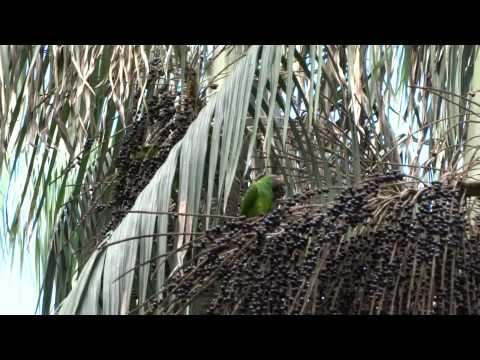
(2) – Several White-eared Parakeets (Pyrrhura leucotis) at Palmitos Park, Gran Canaria, Spain By Bjoertvedt (Own work) [CC BY-SA 3.0 or GFDL], via Wikimedia Commons

(3) – A White-eared Parakeet in Parque das Aves, Foz do Iguaรงu, Brazil By Kee Yip from Union City, California, USA (IMG_4336_P1030859Uploaded by snowmanradio) [CC BY 2.0], via Wikimedia Commons

(4) – White-eared Parakeet (Pyrrhura leucotis), Vale Reserve, Holy Spirit, Brazil by Brendan RyanFlickr

(5) – By Almond ButterscotchFlickr

(6) – Parrots in captivity /. London :George Bell and Sons,1884-1887 [i.e. 1883-1888] by Biodiversity Heritage LibraryFlickr

Sounds: Roney Souza, XC265102. accessible www.xeno-canto.org/265102

โ–ท The world of Pets: Dogs, cats, birds, reptiles, amphibians

Mindoro Racquet-tail
Prioniturus mindorensis

Mindoro Racquet-tail

Content

Mindoro Racquet-tail

Description:

27 cms length.

The Mindoro Racquet-tail (Prioniturus mindorensis) They are closely related to the Blue-crowned Racquet-tail but it is distinguished by the patch crown in the mindorensis it is blue with a slight violet tinge and stands out sharply against the forecrown green; the bill is larger and the rackets are never as long as in adult specimens of the discurus.

-similar female to female Blue-crowned Racquet-tail, but often with violet traces in the patch crown.

Formerly considered conspecific (belonging to the same species) with the Blue-crowned Racquet-tail (Prioniturus discurus).

Habitat:

They can be found in humid lowland forests, most recently being observed records, in groups of birds visiting the IBA Siburan.

Reproduction:

No information about their reproductive behavior.

Food:

Surely it feeds their congeners fruits, berries, nuts and seeds.

Distribution:

Extending its range (breeding/resident): 12.100 km2

endemic to the Mindoro Island in Philippines.

Conservation:


Vulnerable


Rationale for the Red List category: Vulnerable.

Population size: 2500-9999 specimens.

The population trend: In decline.

Rationale for the Red List category

This newly divided species is listed as Vulnerable it is believed to have a small town, which infers that is in decline due to the continuous pressure of capture and loss of habitat.

Justification of the population

The population size of this species has not been formally quantified, but it is estimated preliminarily that has less than 10.000 mature individuals. So, placed in the band 2.500-9.999 mature individuals, which it is supposed equivalent to a total population of 3.750-14.999 individuals, rounded here to 3.500-15.000 approximately. It is presumed that all mature individuals form a single subpopulation.

Justification trend

It is inferred that the population of the species is continuous decrease due to the constant pressure capture and habitat loss (Juniper and Parr 1998).

Threats

Little information is available about threats to this species, but it is believed that the continuous capture for pet trade and the continuous loss of habitat through agricultural expansion, timber harvesting and development are causing a negative population trend.

conservation actions

Conservation actions underway

No specific conservation actions are known for this species., although suitable habitat is officially protected.

Conservation Actions Proposed

Surveys to quantify the population.
Study the habitat needs of the species.
Assess the level of threat of capture pressure.
Using remote sensing techniques to track the change in land use in Mindoro.
Carry out awareness activities to reduce trapping activities.

"Mindoro Racquet-tail" in captivity:

Not found in captivity.

Alternative names:

Blue-crowned Racquet-tail (mindorensis), Mindoro Racket-tail, Mindoro Racquet-tail (English).
Palette ร  couronne bleue (mindorensis), Palette de Mindoro (French).
Mindoro-Spatelschwanzpapagei (German).
Prioniturus mindorensis (Portuguese).
Lorito momoto de Mindoro (espaรฑol).


scientific classification:

Joseph Beal Steere
Joseph Beal Steere

Order: Psittaciformes
Family: Psittaculidae
Genus: Prioniturus
Scientific name: Prioniturus mindorensis
Citation: Steere, 1890
Protonimo: Prioniturus mindorensis

Images "Mindoro Racquet-tail"

ยซLorito Momoto de Mindoroยป (Prioniturus mindorensis)

Sources:

Avibase
Parrots of the World โ€“ Forshaw Joseph M
Parrots A Guide to the Parrots of the World – Tony Juniper & Mike Parr
Birdlife

Photos:

(1) – Mindoro Racquet-tail Prioniturus mindorensis (Young bird with no racquets) in Mounts Iglit-Baco National Park, Mindoro, Philippines by Djop Tabaranza Accessible at hbw.com/ibc/1405853.
(2) – Mindoro Racquet-tail (Prioniturus mindorensis) – https://www.hbw.com/species/mindoro-racquet-tail-prioniturus-mindorensis

Sounds: Desmond Allen, XC79225. accessible www.xeno-canto.org/79225.