โ–ท The world of Pets: Dogs, cats, birds, reptiles, amphibians

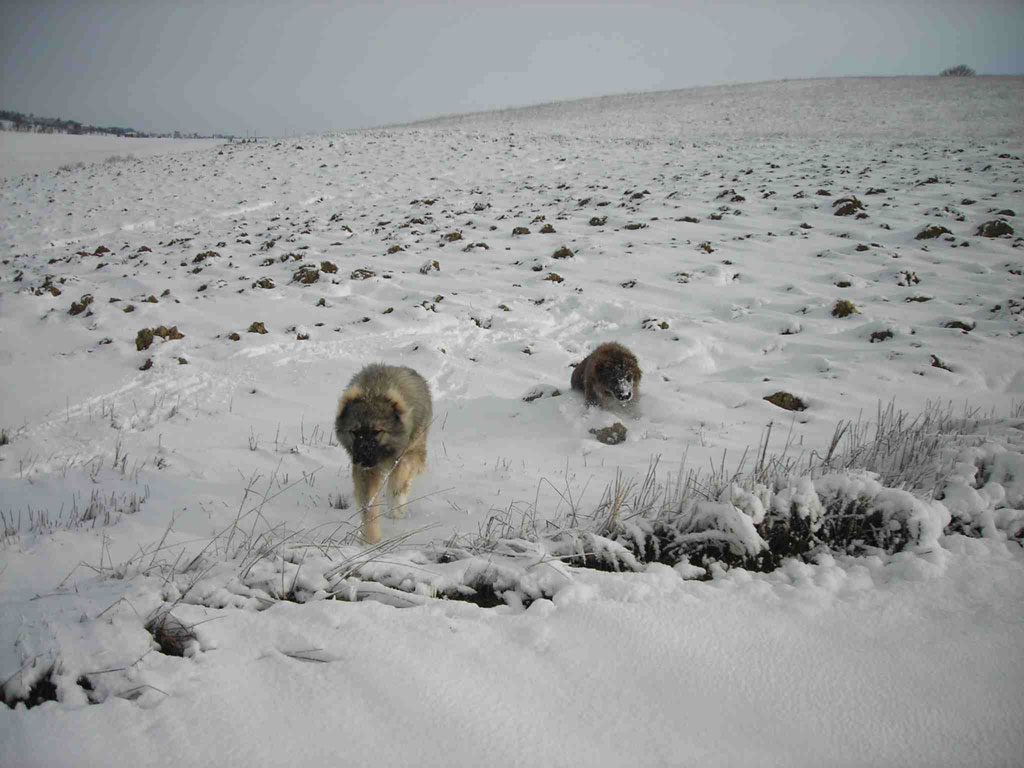
Do khyi
Tรญbet FCI 230 - Molossoid . Mountain

The Do khyi It is not a dog to live with children.

Dogo del Tรญbet

It is a breed native to Tibet, It appeared to the year 8000 to. C. Ancient working breed of nomadic herders of the Himalaya and a traditional guardian of the Tibetan monasteries. It has been surrounded by great mysticism since it was discovered in ancient times..

It is a companion dog, Guard and protection; slow to mature, females only reach their apogee between 2 and 3 years and males at least the 4 years.

Otros nombres: Dogo del Tรญbet / Do-Khy / Dogue du Tibet / Tibet-Dogge / Tibetan Mastiff

Crupo 2 / Section 2 – molosoides

Dogs breeds: Do khyi

โ–ท The world of Pets: Dogs, cats, birds, reptiles, amphibians

American Black and Tan Coonhound
Estados Unidos FCI 300 - The Hound of raccoons

Cazador de mapaches negro y bronce

The American Black and Tan Coonhound (in English: ยซBlack and Tan Coonhoundยซ) It is a breed of dog used especially to follow the trail to raccoons. It is a cross between Bloodhound (Bloodhound) and the Black and Tan Virginia Foxhound ("Virginia Black and Tan Foxhunter").

Read all the information in the race, by clicking on: Black and Tan Coonhound.

American Black and Tan Coonhound

โ–ท The world of Pets: Dogs, cats, birds, reptiles, amphibians

Longdog
Irlanda Not recognized by the FCI

Longdog

Content

History

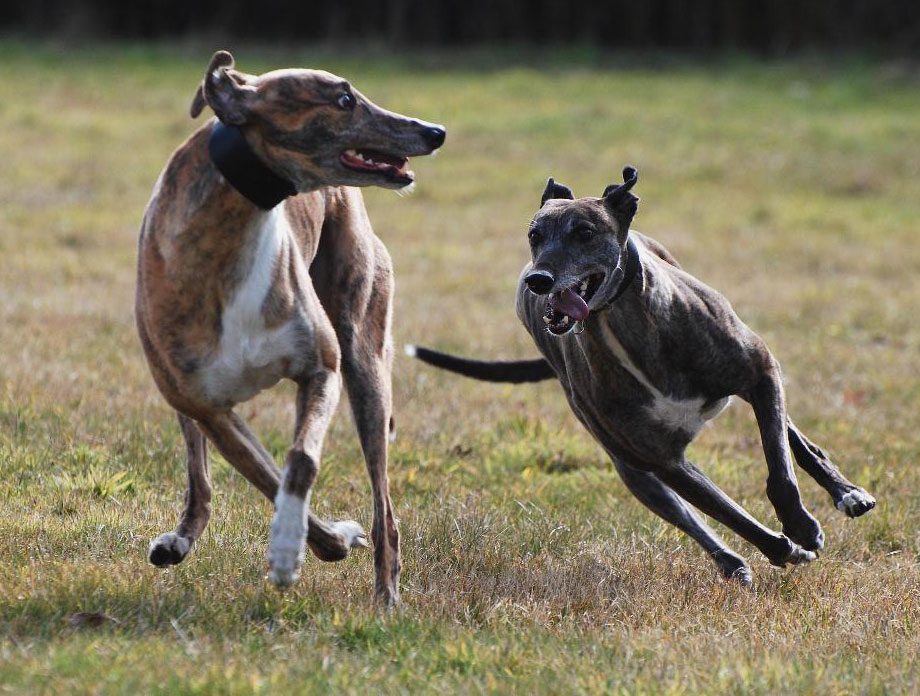
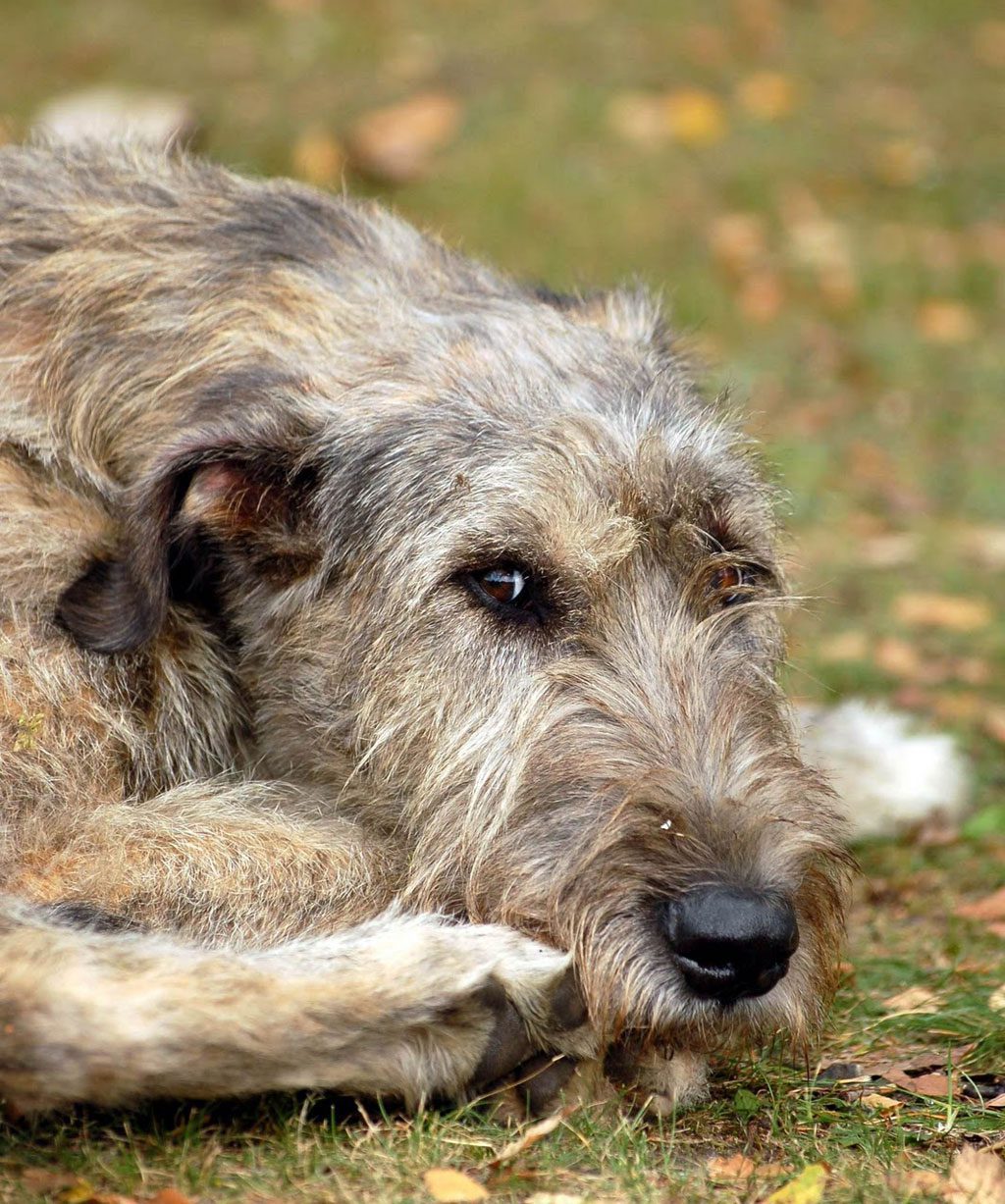
The Longdog It is a breed of dog of the sighthound type with origin in Ireland whose name literally means "long dogโ€referring to the elongated shape of its limbs.

Authors like the colonel Ted Walsh define it as a cross between two hunting dogs, What distinguishes it from the call Lurcher, race created from crosses between sighthound dogs and working dogs.

Currently no distinction is considered between the Lurcher and the Longdog and both are included within the Lurcher.

Physical characteristics

Because of that are the product of different crosses, the Longdog varies in appearance depending on the breeds that were used in the cross. They can be so light as a Greyhound or as robust as a Wolf dog. Their coats can also vary depending on the playback. Some have short fur, Some have long fur and some have hard coat.

Common crosses of Longdog usually: Saluki with English Greyhound, Scottish Deerhound with Greyhound (English Greyhound), and Whippet with Greyhound (English Greyhound). These dogs tend to be raised to (some of the) same purposes as the Lurcher, but they generally have a higher speed compared to general endurance and a higher training capacity than the Lurcher.

Each of these crosses carries distinctive characteristics...

  • Saluki crossed with Greyhound: It is especially appreciated as a Hunter dog of hares in the United Kingdom and, for short time, in United States. The best copies shared resistance to high temperatures which possesses the Saluki and the capacity for acceleration and strength of the Greyhound.
  • Deerhound crossed with Greyhound: specialist in hunting foxes and deer in United Kingdom, It has great body resistance and the ability to adapt without problems to different climatic characteristics., You can live outdoors. In United States, the blood of this can, He has contributed to the development of the American Hound (specialists in the pursuit of coyotes).
  • Whippet crossed with Greyhound: highly appreciated by its balance is, Acceleration, agility, tenacity, heat resistance and, especially, by his rapid recovery. Depending on each dog, It can be used successfully in all kinds of hunting, but in the United Kingdom, stand out, especially in hunting rabbits.

The Lurcher (first cousins รขโ‚ฌโ€นรขโ‚ฌโ€นof the Longdog) they were initially raised to catch rabbits when they were expelled from their burrows, but in the Decade of 1950, myxomatosis killed off most of the rabbits.

The myxomatosis, It is an infectious disease of rabbits, swellings on the skin and membranes of these animals, particularly in head and genitals. It is then often evolve into acute conjunctivitis, and sometimes blindness. The rabbit becomes listless, lost appetite and develops fever. In typical cases where the animal does not have resistance, death happens on average in 13 days.

Video "Longdog"

Queen, dont stop me now, mix coursing longdogs

It was discovered in Uruguay at the end of the 19th century, in rabbits imported from the genus Sylvilagus. It was subsequently extended by the South American populations of wild rabbits. This was however a less virulent strain than introduced in Australia in 1950, that he slashed the population (of 600 to 100 million in two years).

For decades Britain's scientists, Germany and France sought a remedy against the plague that rabbits had become, but it was the French physician Armand Delille which believed the solution. It was introduced artificially in France in 1952 a few rabbits inoculated with the virus producer the myxomatosis and quickly spread to the European continent in a natural way, through arthropod blood sucking and decimated the French population in 2 years (90% mortality). The myxomatosis, together with viral hemorrhagic pneumonia, is the cause of the decline of the rabbit in the Iberian Peninsula, What has caused the decline of the iconic animals to the point that in the Spanish imperial Eagle were lost the 70 % nests and the Iberian lynx is found without their basic livelihood.

The mode of transmission is the flea and other sucking arthropods of blood in Europe, Although for example, in Australia is transmitted through mosquito.

There is a viral vector vaccine for domestic rabbits, While in wild specimens Europe have developed immunity and gradually extend.

As we said above, in the decade of 1950, myxomatosis killed off most of the rabbits, but the disease did not affect the hares.

Y, This led to the need to develop the race to achieve faster dogs to be able to catch hares. A Hare can run at speeds of up 72 km/h.

The need for, he is born Longdog, developed to get a dog appropriate to the preferred style of hunting and the need of the moment.

Y, Although they are not a pure breed, you cross them with him Greyhound (English Greyhound) purebred, has led them to be highly valued within the "elite" of canine sport.

Because the Longdog it is not a purebred are not recognized by any dog รขโ‚ฌโ€นรขโ‚ฌโ€นclub. But, North America has recently created the โ€œLurcher and Longdog Associationโ€ to serve as a registration body for dogs Lurcher and Longdog in the United States and Canada.

Character and skills

Similar to the Lurcher, beyond the different objectives of the crossing, What is certain is that the Longdog It is an excellent companion dog that adapts very well to home life., and is very grateful for the care received, She loves to be with people but it needs vigorous walks outdoors, like all dog. Y, above all, very large spaces to savor the aftertaste of freedom.

โ–ท The world of Pets: Dogs, cats, birds, reptiles, amphibians

Basador
Estados Unidos - Hybrid of Basset Hound and Labrador Retriever

The Basador is a cross between two very different breeds, the Basset Hound and the Labrador Retriever.

Basador

Content

Characteristics "Basador"

Coexistence is important that you have with your new friend. Before considering the acquisition of a dog of the breed "Basador" you know certain factors. Not all breeds of dogs are apt to live in an apartment, you must take into account his character, their need for exercise, their interaction with other pets, their care and if you have small children, their level of tolerance towards them.

Adaptation โ“˜

5,0 of 5 stars (based on 1 review)

friendly dog โ€‹โ€‹โ“˜

5,0 of 5 stars (based on 1 review)

hair loss โ“˜

5,0 of 5 stars (based on 1 review)

Affection level โ“˜

5,0 of 5 stars (based on 1 review)

Need for exercise โ“˜

4,0 of 5 stars (based on 1 review)

Social need โ“˜

4,0 of 5 stars (based on 1 review)

Home โ“˜

3,0 of 5 stars (based on 1 review)

Toilet โ“˜

2,0 of 5 stars (based on 1 review)

Friendly with strangers โ“˜

5,0 of 5 stars (based on 1 review)

barking โ“˜

3,0 of 5 stars (based on 1 review)

Health โ“˜

3,0 of 5 stars (based on 1 review)

Territorial โ“˜

2,0 of 5 stars (based on 1 review)

Cat friendly โ“˜

3,0 of 5 stars (based on 1 review)

Intelligence โ“˜

3,0 of 5 stars (based on 1 review)

Versatility โ“˜

3,0 of 5 stars (based on 1 review)

Child friendly โ“˜

5,0 of 5 stars (based on 1 review)

Surveillance โ“˜

3,0 of 5 stars (based on 1 review)

joy โ“˜

3,0 of 5 stars (based on 1 review)

History

The Basador is a hybrid mix of two popular and highly prized breeds, the Basset Hound and the Labrador Retriever. Although this hybrid has been a popular choice for almost twenty years, Currently there is little documentation available for the mixture, and it is only recognized by the Dog Registry of America. As such, the story is limited and it is necessary to review the stories of parental races to understand the layout and other features of character of the Basador.

The Labrador Retriever It is the most popular dog and was first developed in Canada to help fishermen. Surprisingly, this breed nearly extinct in the early 1880 Labrador when females were sacrificed litter in Canada due to high tax rates. Fortunately, Labrador was imported to England and America at this time and was gaining popularity as a hunting companion and recovery. Happy and easy setup of the Labrador makes it an ideal family dog รขโ‚ฌโ€นรขโ‚ฌโ€นhas remained the best dog in the United States, Canada and England for several decades.

Did you know??

The Basador is a cross breed, and as the current dog, his name has several characteristics: can be written both "Basador" and "Bassador". But no matter how you spell, This is a very cute dog.

The Basset Hound It was first developed as a curiosity among the French aristocracy, But after the French Revolution, This race became a popular choice among commoners for hunting. The common French could not hunt on horseback and needed a dog that could keep up with them on foot. Short and sturdy legs of the Basset Hound were perfect for hunting on foot. The Basset Hound did not gain popularity in the United States until the twentieth century, despite being brought during colonial times. In the Decade of 1960 appeared advertising of Hush Puppy, and the Basset Hound's popularity only grew from there.

Physical characteristics

The Basador looks so much like a basset hound like a Labrador. Both races have expressive eyes sad or may seem thoughtful. The most prominent feature of the Basset Hound in this hybrid is the short, stocky legs of this short hybrid.. The front legs are slightly open. The snout is long and thin, and ears are slightly longer than those of a farmer but shorter than a Basset Hound. But, the ears are quite large. The body of the Bassador is outrageously longer than high, as in the Basset Hound. The coat is short and dense and usually is in a solid color such as Labrador. But, White spots can adorn the chest and feet of the Basador.

Character and skills

Temperament affected partly by inheritance and partly by the environment, so it can be variable. The temperament of a Basador It depends on several things, including the temperaments of their parents, especially the mother, which it is more likely to influence the behavior of the puppy; the amount of socialization receiving; and particular genes that inherits.

It can be more independent if the Basset side of his family dominates or more trainable if the Labrador side prevails. Beware of cats, since both races have strong hunting instincts. But, Both Labradors and Bassets are devoted to their families and generally should not be shy or aggressive around people or other animals. Do not give thanks if a puppy's parents do not allow them to approach him, If you shy away or growl, or if the puppies do any of those things.

One Basador It tends to be quite intelligent, but the fact you want to make the effort to learn depends on whether you have more influence basset. A basset can be stubborn and may lack interest in learning whatever you are trying to teach. But no matter which side of the family is dominant, if training a Basador with positive reinforcement techniques, showing him what he likes and rewarding him with praise, games and goodies, It is likely to learn quickly.

Start training your puppy the day you bring him home. Even at eight weeks old, He is able to absorb everything you can teach him. Don't wait until you have 6 months to start train or have to deal with more stubborn dog. If possible, Take it to a trainer when you have between 10 and 12 weeks, and socializes, socialice, socialice. But, Note that many kinds of training puppies require certain vaccinations (such as kennel cough) stay up to date, and many veterinarians recommend limited exposure to other dogs and public places until puppy vaccinations (including rabies, distemper and parvovirus) They are completed. Instead of formal training, You can start training your puppy to socialize at home and among family and friends until immunizations are completed in the puppy.

Images of the Basador

Photos:

1 – The perfect dog – Bassador by everything4pools
2 – Jmaley1 [CC BY-SA] 3 – Basador by Alex Alonso
4 – Basador by molly mundt

Videos of the Baser

โ–ท The world of Pets: Dogs, cats, birds, reptiles, amphibians

Tornjak
Bosnia & Herzegovina CroaciaFCI 355 . Molossoid . Mountain

Tornjak

The Tornjak is a breed of dog mountain Shepherd, native of Bosnia-Herzegovina and Croatia. โ€˜Torโ€™ means farmyard in Bosnian and Croatian.

The Tornjak It is a molosser type dog, big and strong, well proportioned and very agile. His body is almost square. Their bones are not light, but not especially heavy or thick and their fur is long and dense and protects the body against bad environmental conditions in which has raised traditionally. The body of this dog is strong and well built, with harmonious movements and clear dignity. Its tail is hairy and carried in high as if it were a flag.

The Tornjak has a clear look, confident, serious and calm. Its mantle is generally long but has short hair on the face and legs with the top long, LaCie, thick and hard, being particularly long at the top of the rump, on the shoulders and on the spine can be slightly wavy.

The muzzle and forehead, to the imaginary line that joins the ears, on the ears and the front parts of legs and feet, is short. It is especially abundant around the neck (as a long-haired), dense and long on the upper thighs (as bombachos). The inner coat is in the long winter, thick and with a pleasing texture lanosa.

Usually, is a calm dog, nervous nor aggressive, It is a stoic dog, tough and sturdy.

At a first glance may seem indifferent to the environment animal, but when the situation requires, He is a guard dog and alert as it should. On the other hand, with his human family is very emotional, loving and protective.

โ–ท The world of Pets: Dogs, cats, birds, reptiles, amphibians

Old working bulldog
Inglaterra Extinct

Old English Bulldog

The Old working bulldog (extinct) was fierce, It was used to fight with bulls and Lions.

The Old working bulldog (Old English Bulldog) was a breed of dog, quite fierce comparing it with the tenderness of the current English Bulldog.

Be used for shows as bloody as fights with bulls and Lions, his specialty was biting their nose until the animal couldn't take it anymore and was knocked down by the dog.

Otros nombres: Antiguo Bulldog Inglรฉs.

Dogs breeds: Old working bulldog

Read all about the race by clicking on: Old English Bulldog.

โ–ท The world of Pets: Dogs, cats, birds, reptiles, amphibians

Plott Hound
Alemania Estados Unidos Not recognized by the FCI

The Plott Hound It is a dog that shows always eager to please her master.

Plott Hound

Content

History

The Plott Hound is a great hound, in particular a Coonhound, originally bred for boar hunting. It is one of the least known in United States breeds of dogs, Despite being the official dog of the State of North Carolina. It is one of the six Coonhound breeds registered in the United Kennel Club (UKC).

The ancestors of the Plott Hound of today were used for hunting wild boar in Germany many years ago. Johannes Plott left his native Germany and came to the United States in 1750. He brought with him a few greyhounds that he used for hunting wild boar.. These dogs were bred for their strength and bravery.

The Lord Plott and his family settled in the mountains of western North Carolina. Although there is no written evidence to show that Johannes came all the way to western North Carolina, Yes, it is known that his son Henry Plott settled there around 1800 and was responsible for the legend of the dog of Plott, an amazing big game dog. The Bรกlsamos Plott are a mountain range that bears the family name to this day.

The Plott Hound was first registered by United Kennel Club in the year 1900.

Johannes Plott supposedly kept his strain completely pure, without crossing, but in 1780, their dogs passed into the hands of Henry Plott what if, known data from crosses with other breeds, but in the end always attempted to maintain the originality of the race.

Other crosses, possibly, they took place around the year 1900.

GP Ferguson, a family neighbor Plott in North Carolina in those days, it was a great influence on the breed Plott.

Physical characteristics

The Plott Hound must be athletic and muscular and agile in appearance. It must not be neither low and heavy, legs or long, but yes, light. The expression must be intelligence, confidence and determination. Your skin should not be ample as a sniffer.

The Plott Hound it is a dog of constitution strong but moderate, with a striped clear in their coat color. His appearance suggests the ability to speed, resistance and energy.

The coat of the Plott Hound should be fine and short or medium in length, and with smooth texture and glossy appearance.

According to the National Association of Plott Hound, the fur the dog must be Brindle. Brindle ยซfinely striped or striped effect or pattern of black or light brown hair with the hairs of a light background color or darker shades of the accepted colors, they are the following:

Yellow striped, red striped, mottled Brown, Brown striped, striped black, striped gray, and Maltese (Slate gray, Blue striped).

The Association establishes that while that some white on chest and / or feet is allowed, White anywhere else, except in the chest and / or feet, is a defect.

The height of a Plott Hound will of 50 to 71 cm. to the cross in the mato hos, and 50 to 58 cm in females. Males should weigh in 23 to 27 kg and females in 18 to 25 kg.

Observations

The Plott Hound is considered the most robust of the Coonhound. Eats large amounts of food and very quickly, What makes it susceptible to gastric torsion, why education and perseverance when eating, is important to keep our Plott Hound healthy.

Character and skills

The Plott Hound is a dog that always shows eager to please his master, is loyal, intelligent and very alert in the home, but never aggressive.

In their role of Hunter It is often described as bold and brave, usually, they are always willing to adventure, but that predisposition varies among the strains that are bred for the hunting and the specimens that are bred as Coonhound (Coon hound).

Homeowners must be prepared to have a Plott Hound at home, a dog is not for beginners.

They require plenty of daily exercise, this breed is very active. Love the game, they have a wonderful instinct for the "woodland" (hunting of raccoons) and much like the water.

They are quick to learn. They are often indifferent to other dogs, but they constantly seek the care of human beings.

Images of the Plott Hound
Video part ยซPlot Houndยป
  • Otros nombres: Plott / Plotthund.

Recognized by:

  • American Kennel Club (AKC).
  • United Kennel Club (UKC).

โ–ท The world of Pets: Dogs, cats, birds, reptiles, amphibians

Lurcher
Inglaterra Irlanda Not recognized by the FCI

Content

History

The Lurcher is a Podenco type dog of English origin whose name derives from ยซlurยป what does thief mean in gypsy language. Always it has been acknowledged as the dog of the poachers so occasionally is called Poacher’s Dog (dog of fugitive).

As a result of its appearance (hairy and scruffy) It is not admitted in competitions but for many it is a dog to enhance. In general, it can be said that the Lurcher is a cross between a Sighthound and working dog, What gives rise to many opportunities: English Greyhound and Golden Retriever; Whippet and Border Collie.

Physical characteristics

The Lurcher It is a hybrid dog similar to a Greyhound with short fur, medium long or long or straight hair in all colors.

The type of layer will be variable and will depend on the crosses made. Then, the types of fur can be: short and smooth like the Sighthounds, a bit long and thick as of the Boxer, or rough and hard as the of the Border Terrier, for example.

Character and skills

In case you want a Lurcher with more features than Sighthound what of working dog it is usually crossed for the second time with a dog Greyhound type. With this you get a dog faster than a working dog, but with the strength of this. The character of Lurcher is derived from the best of its parents and, some, They define it as quiet and affectionate.

The temperament, also variable, It will depend on the influence of ancestors, but as with all dogs, temperament will be modified by the socialization of the puppy and received education.

In general, the objective of the different crossing was to create a hound with more intelligence, an animal cunning and appropriate for the original purpose of the hound: hunting poaching rabbits, hares and birds. With the time, have gone underway several crossing, always pursuing the objective of improving the speed and intelligence.

The Lurcher he is a versatile dog, It has various uses that depend on the different crossing to which have been subjected, but they are usually used as hunting dogs with different styles. most of Lurcher today it is used for general pest control, Rabbit, hares and foxes, although some of the larger types have been successfully used for hunting large game such as wild boar and deer.

Insisting on the use of the can has much to do with the objective of the Hunter and the cross from which is derived, It is good to take this post to remind you that unfortunately, some breeders - no ethical- in the search for the "perfect dog" they usually kill or abandon everything Lurcher that does not fit your needs, because he is not a good hunter or has a physical or behavioral problem.

The Lurcher, It has also proved to be very good in canine sports, such as obedience and agility, where they are becoming increasingly popular due to its speed and willingness to please.

Because the Lurcher is not a pure breed they are not recognized by any canine club. But, North America has recently created the โ€œLurcher and Longdog Associationโ€ to serve as a registration body for dogs Lurcher and Longdog in the United States and Canada.

Beyond the different objectives of the crossing, What is certain is that the Lurcher It is an excellent companion dog that adapts very well to home life., and it is very grateful to received love, She loves to be with people but it needs vigorous walks outdoors, like all dog.