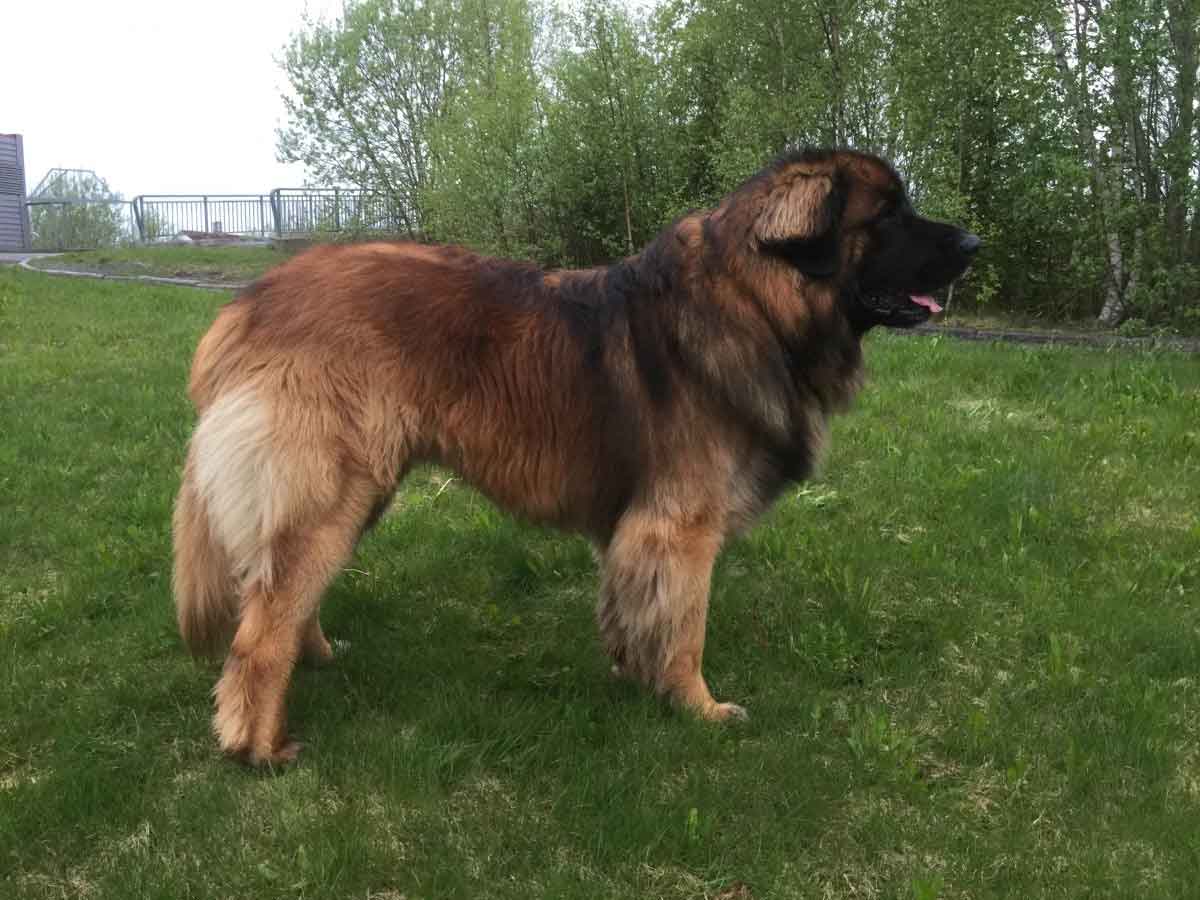
โ–ท The world of Pets: Dogs, cats, birds, reptiles, amphibians

Smooth Collie
Escocia FCI 296 . Sheepdogs

The Smooth Collie, today it is considered a variety of Border Collie in countries such as the United States and Canada

Content

The Shorthair Collie is a breed of dog originally developed for grazing. It is a variety of the Border Collie. Some canine organizations, to the copies of Longhair and shorthair, classified them as variations of the same race.

History

The early history of Smooth Collie, like many breeds of dogs, It is largely a matter of speculation. The most common opinion of the breed is that they are descended from a population of sheepdogs brought to Scotland by the Romans in the 5th century. (See more information about the breed ยปCollieโ€).

The modern history of both Collie, the Smooth Collie and the Rough Collie, It began in the reign of Queen Victoria, He turned his attention in the dogs of the shepherds and ordered that they bring to their balmoral castle in Scotland, some specimens. In 1860 years. At that time, the interest of the Queen, made the breed fashionable Smooth Collie. Thus began the transformation of the farm dog breed, similar to modern Border Collie, Pet highlighting its aesthetics and preparation for dog competitions, sample, for example.

The Smooth Collie, today it is considered a variety of Border Collie in countries like the United States and Canada, which means that they can be crossed and in the statistical registers, are registered as โ€œCollieโ€ without specifying if it is a Rough Collie or a Smooth Collie.

In other countries, such as United Kingdom and Australia, they are classified as separate breeds, but for a very short time, the UK Kennel Club allowed the two varieties to be crossed until 1993.

Physical characteristics

The Smooth Collie it is a medium-sized dog pulling a large, the females measure of 56 to 61 cm. to the cross and the males of 61 to 66 cm.. Y, they weigh in 20 to 34 kg. Standard breed size varies by country, is the far larger in the range United States and Canada, and the smallest elsewhere.

The Collie's short hair is slightly longer than high, with a straight back and a deep chest. The characteristics of the head, especially "sweet", are considered very important in the ring. The breed has long snout, the flat skull and semi-erectas ears.

The layer is two-fold, one is soft and dense stuck to the body, and the outer layer is smooth and hard for a length of 2,54 centimeters, with the most dense hair around the neck forming a collar, and in the back of the thighs. The coat requires a weekly brushing. Unlike other Collie, It presents non bangs…, the hair is short.

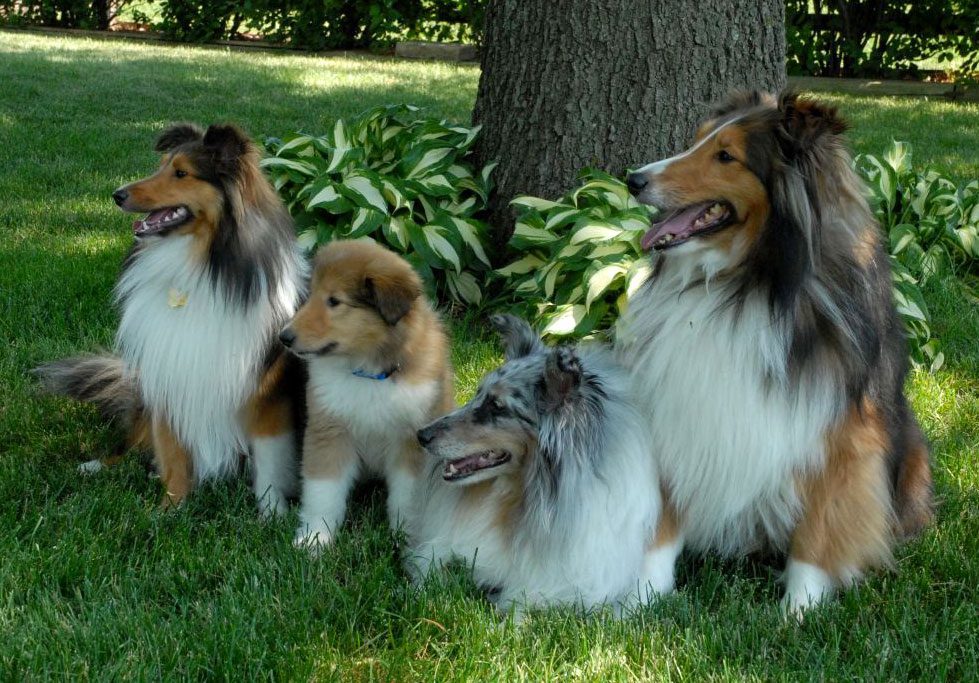
The coat of the Smooth Collie it can be of the following colors:

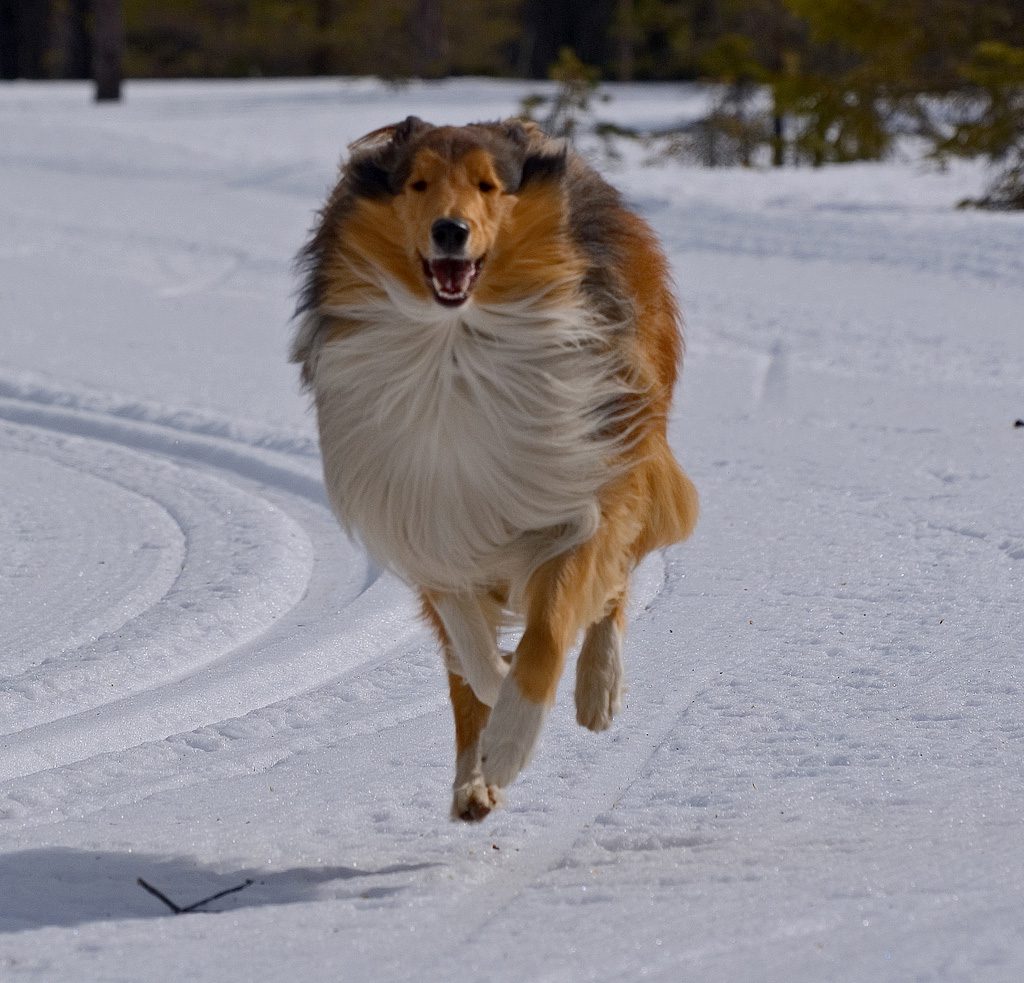
  • Sand: the colour of the famous Lassie, that it goes golden light to dark mahogany. With white areas on the chest, neck, feet, legs, and the tail.
  • Tricolor: black, with spots of color fire and white. With white areas on the chest, neck, feet, legs, and the tail.
  • blackbird blue: that color is a gray marble silver black with spots of color fire. With white areas on the chest, neck, feet, legs, and the tail.

Character and skills

The Smooth Collie is generally a sociable dog, easy to train family. Although it is not an aggressive breed, It is always alert and barking when he noticed something unusual, It is therefore a great watchdog.

Dogs Collie -usually- they are agile dogs, assets and need regular exercise. It is easy to train, due to their high intelligence and eagerness to please their owners. The formation of this breed requires exclusive dedication and patience, they are sensitive to correction and hide if they feel badly treated or it sobre required.

They get along well with children, they tend to harmonize well with other animals that live in the House, they usually mix well with other dogs.

The Smooth Collie is-mainly- a family pet, You can compete in obedience, agility, grazing trials, and other canine sports. Some are still used as herding working dogs. (but less and less). They are also very useful as assistance dogs for people with disabilities..

It has a life expectancy of 12 to 14 years.

Type and recognitions:

  • FCI CLASSIFICATION:Group 1 –> / Sheepdogs and Cattle Dogs (except Swiss Cattle Dogs). Section 1 –> Pastor dogs. Without working trial.
  • FCI 296
  • Federations:
    • FCI – Group 1 Herding dogs, Section 1 Sheepdogs โ“˜
    • AKC – PASTORAGE โ“˜
    • ANKC – Group 5 (working dogs) โ“˜
    • CKC – Group 7 – Herding dogs โ“˜
    • โ€‹KC – Pastoral โ“˜
    • NZKC – Working dog โ“˜
    • UKC – Herding dogs โ“˜

FCI breed standard "Smooth Collie"

Origin:
Scotland, United Kingdom

Date of publication of the valid original standard:
24.06.1987.

Use:

Shepherd dog.


General appearance:

The short-haired Collie is a dog endowed with intelligence, vivacity and activity. He behaves with dignity as a result of his perfect anatomical structure, in which each part is in proportion to the whole. Its physical structure must show strength and activity, no signs of heaviness or coarseness. The expression is very important. When making a relative assessment, the balance and perfect combination of the skull and muzzle should be considered, size, form, eye color and location, and the correct position and bearing of the ears.


Behavior / temperament:

Cheerful and friendly, never nervous or aggressive.

Head:

The characteristics of the head are very important and should be considered in proportion to the size of the dog. The head, front or side view, has a well-drawn wedge shape, clearly truncated and smooth outline. The midpoint between the inner angle of the eyes constitutes the balance point of the length of the head.

Cranial region:
  • Skull: The skull is flattened. The sides taper gradually and smoothly from the ears to the tip of the nose.. Height
    Skull measure of supraorbital arcade to the submaxillary region should never be excessive (altogether not very deep).
  • Depression links (Stop): Light but noticeable. The midpoint between the inner angles of the eyes is the midpoint of a well-placed stop or depression.

facial region:

  • Truffle: Must always be black.
  • Snout: The smooth, well-rounded end of the muzzle is truncated, but never square or pointed.
  • Jaws/teeth: The lower jaw is strong and well delineated. The teeth are of a good size.
    Must have strong jaws, with healthy and complete teeth with scissor bite, that is to say that the inner face of the incisors
    superiors is in narrow contact with the outer face of the lower incisors and placed at right angles with the maxillas.
  • Cheeks: Not prominent.
  • Eyes: They are a very important characteristic that confer a sweet expression. Are medium-sized (never very small), placed is somewhat oblique position, almond-shaped and dark brown in color, except in those blue merle specimens in which the eyes (one or both eyes, or part of one or both) are blue or mottled blue. They have an expression full of intelligence, with a sharp and alert look when the dog is attentive.
  • Ears: Ears are moderately large, wider at the base and set not too close together or too far apart at the sides of the head. When the dog is at rest, they are thrown back, but when he is attentive, brings them forward and carries them erect, that is, approximately the first two thirds of the ear is erect and the upper third falls naturally forward, below horizontal.

Neck:

Muscular, strong, of good length and well arched.

Body:

  • Back: Straight and firm.
  • Pork loin: Slightly arched.
  • Breast : Relatively wide behind the shoulders. Well arched ribs.

Tail:

The tail is long, The last vertebra reaching at least the corvejones. When the dog is at rest, Tails the tail low but twists it slightly upward at the tip; when he is excited he can carry it happily but never on the back.

Tips

Former members

Previous members, straight and muscular, they must have moderate bones.

  • Shoulder: Oblique and well angulated.
  • Elbows: Neither close to the body nor protruding.
  • Forearm: The muscles have a certain thickness.
  • Metacarpus: Flexible, but not weak.
  • Previous feet: Oval, strong pads. Fingers should be arched and close together.
Former members

Well defined and wiry.

  • Thigh: Muscular
  • Knee: With good angle.
  • Hocks: The hocks must be well lowered and powerful.
  • Hind feet: Oval, strong pads. Fingers should be arched and close together.

Movement:

Movement is a distinctive characteristic of this race. A dog with good movements should never have his elbows turned outwards., however when it moves, your front feet stay relatively close together. Walking across the limbs is highly undesirable. longitudinally or laterally and swinging the body. Seen from behind, hindlimbs from hocks to ground should move parallel but not too close together; seen from the side, the movement is gathered. The hind limbs are powerful and give a lot of drive. A reasonably long stride is desirable, it should be light and effortless..

Mantle

  • Fur: The hair is short and smooth. The outer coat of hair is rough in texture; the inner layer is very dense. Should not be groomed or trimmed.
  • Color: Three colors are recognized: sable and white, tricolor and blue merle.
    โ€ข Cebellina: Any shade from light gold to dark mahogany or nuanced sable. The colors pale straw and cream
    They are highly undesirable.

    โ€ข Tricolor: Black color predominates with intense tan spots on the extremities and head. A reddish reflex
    About the fur is highly undesirable.

    โ€ข Blue merle: Light silver blue predominates, splashed and marbled with black. Deep tan markings are preferred, although its absence should not be penalized. Large black spots, slaty color or reddish reflections on the outer or inner layer are highly undesirable.

The specimens of all the colors mentioned must have the typical white marks of Collie in a greater or lower degree. The following brands are desirable: the total or partial white collar, the white bib, Member, white feet and tip of tail. A whitelist on the muzzle or head is allowed, or both. A completely white coat or in which white predominates is highly undesirable.


Size and weight:

Height to the cross:

  • Males between 56 and 61 cm..
  • Females between 51 and 56 cm..

Weight:

  • Males between 20,5 and 29,5 kg.
  • Females between 18,0 and 25,0 kg.


Fouls:

Any deviation from the aforementioned criteria is considered as a fault and the severity of this is considered to the degree of the deviation to the standard and its consequences on the health and well-being of the dog., and the dog's ability to perform its traditional task.

disqualifying fouls:
  • Aggressiveness or extreme shyness.
  • Any dog โ€‹โ€‹showing clear physical or behavioral abnormalities.


N.B.:
  • Males should have two normal-appearing testicles fully descended into the scrotum..
  • Only functionally and clinically healthy dogs, with the typical conformation of the breed, should be used for parenting.

The latest changes are in bold.

Source: F.C.I - International Cynological Federation

Alternative names:

1. Collie, Smooth Coat (English).
2. Colley (French).
3. Smooth Collie, KURZHAARIGER SCHOTTISCHER SCHAFERHUND (German).
4. Collie de pelo curto, Smooth collie (Portuguese).
5. Pastor escocรฉs de pelo corto (espaรฑol).


Breeders of the breed "Smooth Collie"

Where can we find out...

Collie Club of Spain

Email: infocollieclub@gmail.com

List of Breeders Smooth Collie recommended and recognized by the Collie Club of Spain:

Currently, There are no breeders of Smooth Collie in Spain. We called the Collie Club of Spain, to contrast the information.

They have also told us that in Spain there is no copies of the race even, several years ago there was a breeder of Collie breeds located in Madrid had two specimens, but they will already be old folks.

If a specimen is seen, it may be with English or French tourists… It is not a dog that has had much fame in our country, However in England or France, for example, they tend to be quite often.

If a reader is determined to have a Smooth Collie We leave you the websites and emails of breeders from France and England:

โ–ท The world of Pets: Dogs, cats, birds, reptiles, amphibians

Rough Collie
Gran Bretaรฑaa FCI 156 . Sheepdogs

The Rough Collie he is a very sweet and affectionate dog, maybe a little shy.

Content

History

The Rough Collie is one of the Collie breeds medium-sized and long-haired who was born in Scotland in the early 1800.

As he Rough Collie as the Smooth Collie , they are descended from a variety of grazing dogs from Scotland and Wales.

  • The variety of Scotland, It is characterized for being a strong dog, large, aggressive, raised to care for flocks of sheep in the Highlands, an all terrainโ€ฆ
  • The variety of Wales, However, was a small dog, agile, home and cuddlier, and also pastor of goats.

From the crossing of these two varieties of shepherd dogs are born the precious Collie who we call today Rough Collie and Smooth Collie.

After the industrial revolution, owning a dog became fashionable, people began to acquire copies and began to expand and cross with other breeds. Y, there is a theory that says that those first Collie, were crossed with a Borzoi (Russian Hunting Sighthound) in order to obtain a more โ€œnobleโ€ head (finest), what is today one of the true characteristics of the Rough Collie. But in reality, is not known conclusively if it crosses with the Borzoi It took place on the main stream of the race.

But fashions change as the wind blows... Like for example, When the Queen Victoria acquired a Border Collie, After seeing one in the Balmoral Castle, the Collie they became something like a fashion item.

The issue is that, the Collie they were distributed around the map and continuous reproduction in order to improve the breed for exhibitions, He carried that drastically changed the appearance of the dogs, in the decade of 1960, the Collie was much higher than today.

At the first dawn of the breed the dogs were more robust and resistant, they could travel great distances throughout the day and conserve energyโ€ฆ

Although many theories try to explain them, Unfortunately, the exact origins of the Collie are veiled in darkness. The race has been the subject of much research and speculation. The origin of the word "Collie" is as uncertain as information about the origin of the breed. In the century 18, the natural home of Rough Collie I was in the Highlands of Scotland lands, where it had been used for centuries as a herding dog. Dogs were bred with great care in order to assist their masters in grazing and the monitoring of their flocks.

In the UK the Rough Collie no longer used for cattle grazing, After having been replaced by the Border Collie. Although in the United States and several European countries, there has been a revival in the use of Collie like a working and performance dog, already not are seen as old.

The Club Collie of America was founded the 26 in August of 1886, What makes it one of the oldest clubs in the race. The original club's goal was "the furtherance and improvement of the breed of Border Collie.". From there the first official standard of the breed was drawn up Collie. The celebration of the centenary of the club took place in 1986. Y, Although a lot of time has passed and many things have changed... the objective of the Club remains the same. The Collie Club in England dates of 1881 (Although officially, The American club is oldest...).

The Rough Collie was exhibited for the first time in 1860 in the Birmingham, England, at the dog show ยซScotch Shee-pdogยซ. In 1879 the first Rough Collie it was imported to England. And from there are the pillars of the race.

With the turn of the century, this breed was already in a state of continuous development. This dog continued to flourish in England. As a result of imports, the race progressed rapidly between the years 1900 to 1920. These dogs built the foundation on which the Rough Collie of today and paved the way for the rise of the great and famous American dog kennels in the years 1920 and 1930.

One of them and perhaps the one that catapulted the Rough Collie, He was the author Albert Payson Terhune devoted almost all his life to these dogs. Albert Payson Terhune (21 december 1872 until 18 february 1942) was an American author, Collie dog breeder, and journalist. The public knows him so much for his novels related to the adventures of his beloved Collie, as for its famous hatcheries "Sunnybankโ€, from which the bloodlines of specimens of Rough Collie who live among us today.

Physical characteristics

One of the characteristic features of the Long-Haired Collie is its delicately pointed head and snout.. It resembles a wedge decline gently from the ears until the black nose. The snout is rounded and never square. The eyes are of medium size and Pacific way. The ears are supposed to be semi erect, folded in the upper third. In appearance they are very similar to the dog Shetland Sheepdog, but larger.

Regarding the coat of hair of the Rough Collie, the admitted colors are:

  • Sable color: Where sable or grey goes from Pale to mahogany.
  • Blackbird: the blue Merle, It is a mottled grey.
  • Tricolor: It is mainly Tan.

All have white areas, in the neck, the back of the legs, and usually the tip of the tail. Some may have white fringes on the face. The American Kennel Club supports white, where is the dog predominantly white with spots of the sable color, Tricolor and blue Merle, in the head and patches in the body as a.

It has dual layer, the woolly, dense subpelo, It is covered by a layer of hair is long and rough exterior with a remarkable necklace around the neck, feathers on the legs, a skirt in the abdomen, and a steering wheel in the rear quarters.

The outer layer needs brushing frequent, careful to keep it free from spikes and thorns, he has long hair and it looks like Velcroโ€ฆ Shearing it is very damaging to the skin and some do not grow back a significant amount of hair after being shaved.

The desired size and weight vary between the breed standards of the different kennel clubs., but trying to balance the measures... a Rough Collie male measures 55,8 to 66 cm in height to the cross, females tend to be a 5 shorter centimeters. Males weigh in 20 to 34 Kg and females are generally lighter (of 2 to 5 fewer kilos).

Character and skills

The Rough Collie it is a dog that never shows nervousness or aggression, and they are generally good with children and other animals. But, They must be well socialized to prevent shyness. Although they are medium-sized to large dogs, It adapts very well to life in small apartments, because of his quiet nature.

Like many dogs grazing, the Rough Collie can be very vocal (robberโ€ฆ), and in some cases it is difficult to correct them. They are very loyal and excellent with children, provided have been well socialized and trained. They are always eager to learn and respond better to a gentle hand. They enjoy human company and the warmth of home.

To rememberโ€ฆ The character of โ€œLassieโ€ created by the British author Eric Knight was a Rough Collie, It is probably the most famous dog in the world, fictional character who participated in various films, TV series and books for years.

That character inspired screenwriter Hugo Butler in the movie โ€œLassie Come Homeโ€, under the direction of Fred M. Wilcox, in the year 1943. Film that definitively launched the beautiful Rough Collie.

Health ยซLong-Haired Collieยป

All dogs have the potential to develop genetic health problems, just as all people have the potential to inherit a particular disease. Run, do not walk, from any breeder that does not offer a health guarantee on puppies, to tell you that the breed is 100 percent healthy and has no known problems, or tell you that your puppies are isolated from the main part of the home for health reasons. A reputable breeder will be honest and open about the breed's health problems and the incidence with which they occur in their lines.. The Collie you are prone to a host of health problems. Here is a brief summary of what you should know.

Collies can be affected by a number of genetic health problems, including multiple drug sensitivities due to a mutation in the multidrug resistance gene (MDR1). Dogs with this mutation can have serious or fatal reactions to a number of common drugs., such as preventive ivermectin against heartworm and loperamide, a human antidiarrheal agent that is sometimes used in dogs. Detecting these diseases not only in the parents of your puppy, but also in your dog, it's a life-saving need. The test is simple and only requires a cheek smear.; information on how to test your dog can be found here.

Eye problems are also a serious concern in the breed. One of the most intractable is progressive retinal atrophy (ARP), but luckily the gene for detection was recently identified and a genetic screening test will be available as soon as this year, after which all breeders should have ARP clearances on all their breeding dogs.

The eye abnormality Collie is a group of mild to severe eye disorders. They are present at birth, and can be detected in puppies between five and eight weeks of age. Your puppy's breeder should examine the eyes of all dogs in the litter before selling them.. Have a Certified Veterinary Ophthalmologist regularly examine your Collie's eyes. Reputable Collie breeders don't just check their breeders' eyes, but also those of all puppies offered for sale. Do not buy a Collie from a breeder who has not examined puppies' eyes or does not offer a certificate of their eye status.

Unfortunately, the Rough Collie they can also be affected by a number of health conditions for which there are no screening tests. These include epilepsy, as well as a condition called bloating, in which the stomach expands with air. This can become the most serious condition, gastric torsion, if the stomach twists on itself, cutting off blood flow. Gastric torsion suddenly hits, and a dog that was fine a minute can die a few hours later. Watch for symptoms such as restlessness and gait, babeo, pale gums and lip licking, try to vomit but without bringing out anything, and signs of pain. Gastric torsion requires immediate veterinary surgery, and most dogs that have bloated once will bloat again. That means it's wise to opt for the procedure known as "gastric torsion.", which will prevent the stomach from twisting in the future.

Not all of these conditions are detectable on a growing puppy, and it is impossible to predict if an animal will be free of these diseases, so you need to find a reputable breeder who commit to raise healthier animals possible. Must be able to produce independent certification that the dog's parents (and grandparents, etc.) have been examined for common defects and considered healthy for breeding. That's where health records come in..

Careful breeders screen their breeding dogs for genetic diseases and breed only the healthiest and best looking dogs, but sometimes mother nature has other ideas and a puppy develops one of these diseases despite good husbandry practices. Advances in veterinary medicine mean that in most cases dogs can still live a good life. If you are going to have a puppy, ask the breeder about the ages of the dogs in their lines and what they died of.

Remember that after you have welcomed a new puppy into your home, has the power to protect you from one of the most common health problems: the obesity. Keeping a Collie at the right weight is one of the easiest ways to extend its life.. Make the most of your preventive skills to help ensure a healthier dog for life.

Grooming ยซLong-Haired Collieยป

Both varieties of Collie have double layer, which means they have a thicker, softer inner layer and a thinner, flatter outer layer. The Rough Collie has a beautiful, voluminous coat that seems to need a lot of grooming, but it's not like that. Thorough brushing every one to two weeks will keep the coat healthy and tangle free. The coat of the Smooth Collie it's a piece of cake. Brush it weekly with a rubber brush or soft brush to remove dead hair. Your Collie should not need a bath more than once a month..

The Rough Collie they go through a heavy shedding twice a year, floating dumb call. During this time, brush daily to keep all hair down under control. The Smooth Collie doesn`t blow his coat, but throughout the year he loses more hair than he Rough Collie.

The rest is basic care. Trim nails as needed, usually every few weeks. It shouldn't take so long that you can hear the click on the floor.. Brush your teeth daily to improve general health and breath.

Characteristics "Rough Collie"

Coexistence is important that you have with your new friend. Before considering the acquisition of a dog of the breed "Rough Collie" you know certain factors. Not all breeds of dogs are apt to live in an apartment, you must take into account his character, their need for exercise, their interaction with other pets, their care and if you have small children, their level of tolerance towards them.

Adaptation โ“˜

4,0 of 5 stars (based on 1 review)

friendly dog โ€‹โ€‹โ“˜

5,0 of 5 stars (based on 1 review)

hair loss โ“˜

5,0 of 5 stars (based on 1 review)

Affection level โ“˜

4,0 of 5 stars (based on 1 review)

Need for exercise โ“˜

5,0 of 5 stars (based on 1 review)

Social need โ“˜

5,0 of 5 stars (based on 1 review)

Home โ“˜

1,0 of 5 stars (based on 1 review)

Toilet โ“˜

3,0 of 5 stars (based on 1 review)

Friendly with strangers โ“˜

3,0 of 5 stars (based on 1 review)

barking โ“˜

5,0 of 5 stars (based on 1 review)

Health โ“˜

4,0 of 5 stars (based on 1 review)

Territorial โ“˜

5,0 of 5 stars (based on 1 review)

Cat friendly โ“˜

5,0 of 5 stars (based on 1 review)

Intelligence โ“˜

4,0 of 5 stars (based on 1 review)

Versatility โ“˜

5,0 of 5 stars (based on 1 review)

Child friendly โ“˜

5,0 of 5 stars (based on 1 review)

Surveillance โ“˜

3,0 of 5 stars (based on 1 review)

joy โ“˜

5,0 of 5 stars (based on 1 review)

Type and recognitions:

  • FCI CLASSIFICATION:
  • Group :
  • Section : . .

Federations:

  • FCI โ“˜, AKC โ“˜, ANKC โ“˜, CKC โ“˜, โ€‹KC โ“˜, NZKC โ“˜, UKC โ“˜

  • FCI breed standard "Rough Collie"

    Origin:
    Scotland, United Kingdom

    Date of publication of the valid original standard:
    08.10.2012

    Use:

    Shepherd dog.


    General appearance:

    Appears as a dog of great beauty, standing with impassive dignity with no part out of the proportions of the whole. The physical structure with lines of strength and activity, without being rough or with coarse features.

    Your expression is the most important. This is obtained by a perfect balance and combination of the skull and the muzzle., size, shape color and placement of the eyes, correct position and bearing of the ears.


    Behavior / temperament:

    Friendly disposition without traces of nervousness or aggressiveness. A great companion dog, friendly, happy and active. Good with children and other dogs.

    Head:

    The properties of the head are of great importance and must be considered in proportion to the size of the dog. Seen from the front or in profile the head resembles a well-chiseled blunt wedge with smooth exterior lines.. The sides taper gradually and smoothly from the ears to the end of the black nose.. Profile view, The top of the skull and the top of the snout form two right parallel lines of equal length divided by the stop. A midpoint between the inner corner of the eyes (which is the center of a correctly placed stop) is the center of balance in the length of the head. The depth of the skull from the eyebrow to the bottom of the jaw should never be excessive. (Total depth).

    Cranial region:
    • Skull: Plano.
    • Depression links (Stop): Slight but noticeable.

    facial region:

    • Truffle: always black
    • Snout: Smooth termination, blunt snout well rounded, never square. Not pointed.
    • Jaws/Teeth: Strong jaws, well-defined lower jaw. Good size teeth. A perfect, full and regular scissor bite, that is to say, incisors
      The upper ones cover the lower ones in close contact and are set squarely in relation to the jaws..
    • Cheeks: Cheek bones not prominent.
    • Eyes: Very important feature giving a smooth expression. Medium-sized (never too small), placed somewhat obliquely, almond-shaped and dark brown in color, except in the cases of the blue blackbird where the eyes frequently (one or both or part of one or both) are blue or stained blue.
      Smart expression with a quick and alert gaze when attentive.
    • Ears: Small, not too close together at the top of the skull, not too far apart. At rest the bearing is backwards but when alert it carries them forward with a semi-erect bearing, This is, about two-thirds of the ear erect and the upper third forward naturally, below horizontal.

    Neck:

    Muscular, strong, long Middle, well arched.

    Body:

    • Back: companies.
    • Pork loin: Slight elevation.
    • Breast : Deep, somewhat wide behind the shoulders, well arched ribs

    Tail:

    Long reaching at least to the hock joint. Low carriage when at rest but with a slight upward curve at the end. Can be worn happily when excited but never on the back.

    Tips

    PREVIOUS MEMBERS:

    • Shoulder: Leaning and well angulated.
    • Elbows: Never turned in or out.
    • Forearm: Straight and muscular forelimbs with moderate round bone structure.
    • Previous feet: Oval, well padded ear cushions. Toes arched and close together.

    LATER MEMBERS:

    • Thigh: Muscular.
    • Knee: Well angled.
    • Leg: Clear and sinewy.
    • The Hock joint: Very low and strong.
    • Hind feet: Oval, well padded ear cushions. Toes arched and close together. Somewhat less arched than the previous ones.

    Movement:

    Distinctive feature of the breed. A correct dog never turns his elbows out, moves with feet earlier comparatively closer together. Braid, crossing or rolling is highly undesirable. Hindquarters from the hock joint to the floor, seen from behind they should be parallel and not too tight, Seen on side, the movement is smooth. Powerful hind limbs with full thrust. You want a reasonable long stride and should be light and appear effortless. Absolute correctness is essential.

    Mantle

    Fur: Mark the outer line of the body, very profuse. The outer hair is straight and hard to the touch, soft inner hair, plush and very tight usually covering the skin. Very abundant mane and necklace, mask and smooth face, ears smooth to the tip but with a little more hair towards the base. Forelimbs well covered with long hair, hindlimbs on hocks profusely covered with hair but smooth below hock joint. Very abundant hair on the tail.

    • Color: Cebellina, sable and white, tricolor and blue blackbird.
    • Cebellina: and shaded from light gold to dark mahogany or nuanced sable. Highly undesirable is a light straw or cream color.
    • Tricolor: Predominantly black with deep tan markings on limbs and head. An oxide dye on the outer hair is highly undesirable.
    • blackbird blue: Predominantly clear, silver blue, splashed or marbled with black. Intense fire marks are preferred but their absence should not be penalized. Big black markings, Slate color or rust tones on both the exterior and interior hair are highly unwanted.

    All should have the typical white Collie markings to a greater or lesser degree..

    The following brands are preferable: White collar, in whole or in part, white bib, limbs and feet, white tail tip. A white list on the muzzle or skull or both.

    Tpredominant white or white ear is highly undesirable.


    Size and weight:

    Height to the cross:

    • Males: 56 - 61 cm..
    • females: 51 - 56 cm..


    Fouls:

    Any deviation from the aforementioned criteria should be considered as a fault and the severity of this is considered to the degree of the deviation to the standard and its consequences on the health and well-being of the dog and the ability of the dog to perform its traditional task.

      FALTAS DESCALIFICANTES:

      โ€ข Aggressiveness or extreme shyness.
      โ€ข Any dog โ€‹โ€‹showing clear signs of physical or behavioral abnormalities.


    N.B.:

    โ€ข Males must have two normal-appearing testicles fully descended into the scrotum..
    โ€ข Only functionally and clinically healthy dogs, with the typical conformation of the breed, should be used for parenting.

    The latest changes are in bold.

    Source: F.C.I - International Cynological Federation

    Alternative names:

    1. Collie, Scottish Collie, Long-Haired Collie, English Collie, ยซLassieยป dog (English).
    2. Colley ร  poil long, berger รฉcossais (French).
    3. Rough Collie, LANGHAARIGER SCHOTTISCHER SCHAFERHUND (German).
    4. Rough collie (Portuguese).
    5. Pastor escocรฉs de pelo largo (espaรฑol).

    creators of Rough Collie in Spain


    See list of creators 🔎

    Breeders of the breed "Rough Collie"

    Criadores de Collie de Pelo Largo o Rough Collie en Espaรฑa

    Where can we find out...

    Collie Club of Spain

    Email: infocollieclub@gmail.com

    Collie breeders list of hair long or Rough Collie recommended and recognized by the Collie Club of Spain:

    Other breeders…

    • Rough Collie Canary (Tenerife). Tel: 697799449.

    Photo: ourworldofdogs.com

    โ–ท The world of Pets: Dogs, cats, birds, reptiles, amphibians

    Belgian Shepherd
    Bรฉlgica FCI 15 . Sheepdogs

    Pastor Belga

    The Belgian Shepherd originates from Belgium, the Campine region and North of Brabant.

    Content

    History

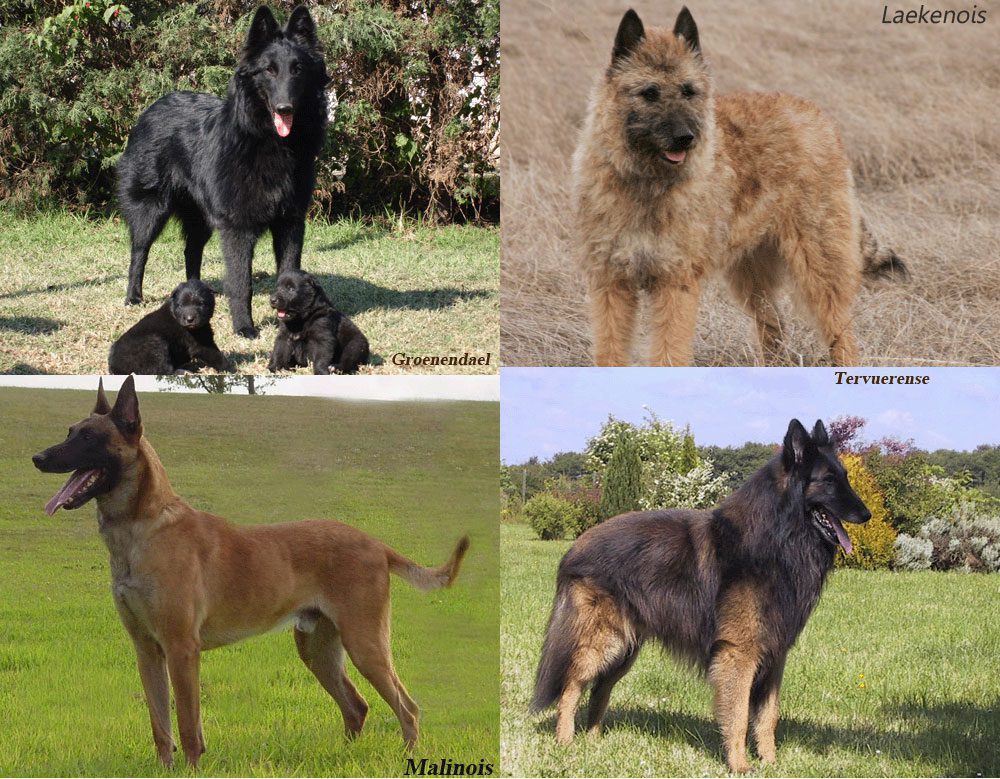
    The Belgian Shepherd Dog is the name of four breeds or varieties of dogs, depending on the Cynological Association we consult. The four breeds or varieties are: Groenendael, Laekenois, Tervueren and Malinois.

    At the end of the 19th century, in Belgium there was a large number of herding dogs whose type was heterogeneous and their coats were of great diversity. In order to put order into this situation, some cinรณfilos (cinรณgrafos) enthusiasts formed a group led by Professor A. Reul, the school of veterinary medicine of Cureghem, who can be considered as a true pioneer and founder of the race.

    The Belgian Shepherd was officially born as a race between 1891 and 1897. The 29 in September of 1891, The "Belgian Sheepdog Club" was founded in Brussels and that same year, the 15 November, Professor A.. Reul manages to gather in Cureghem, 117 dogs, allowing you to carry out a census and form a group with the best copies. In the following years becomes a real selection, making an extreme inbreeding on some stallions.

    Read more

    โ–ท The world of Pets: Dogs, cats, birds, reptiles, amphibians

    Czechoslovakian Wolfdog
    Eslovaquia FCI 332 . Sheepdogs

    Czechoslovakian Wolf Dog

    Not a dog fit for everyone.

    Content

    History

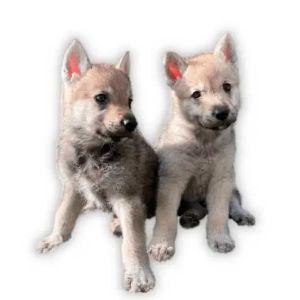
    The Czechoslovakian Wolfdog It has its origin in the crossing experiments between the "Carpathian Wolf" and the German Shepherd carried out in the former Czechoslovak Socialist Republic from 1955 under the supervision of the SR. Karel Hartl, a renowned Czech cynologist and breeder. The scientific objective of these experiments was to determine the characteristics of these hybrids. (physical appearance, behavior, utility, fertility…), while the military tried to create a breed with the strength of the wolf and the docility of the dog, that could be used as an attack dog.

    The first births took place in 1958 at the border guard kennel in Libejovice, in the south of the country. Brita the wolf and the German Shepherd Cezar z Brezoveho Haje gave birth to 5 Puppies: Brent, Berta, Bono, Betty y Bessy.

    Betty was selected to continue the line at the Libejovice kennel, while his sister Berta was sent to the Samorin kennel (now Malacky) with the same goal. Their pups were used as patrol dogs by border guards, confirming that these hybrids were healthy, functional and fertile.

    After this initial success, the Brita Wolf was able to mate again with a new male German Shepherd named Kurt z Vaclavky. Like this, in 1960, Defender, Bigan, Trophy, Bill and Bima were born in the Libejovice kennel. The male Bikar was chosen to be sent to the Pohranicni kennel in Slovakia to continue this second lineage.

    The experiment stopped at 1965, not without some success: hybrids were able to reproduce, socialize with humans and be trained for different tasks. At the end of the experiment, 16 of these dogs remained in the care of the army, While 18 were given to civil breeders.

    Then new lines were created, as..:

    – Astra (female german shepherd dog) and Argo (Carpathian wolf male) in 1968;
    – Lejdy (female Carpathian wolf) y Boyar from Schotterhof (male german shepherd) in 1972;
    – Urta with the Guardian Guard (third generation hybrid female) and Sarik (male Carpathian wolf) in 1974;
    – Xela with the Guardian Guard (third generation female hybrid) and Sarik (Carpathian wolf male) in 1983.

    Name "Czechoslovakian WolfdogยปIt seems to have become common to designate these hybrids already in the decade of 1960, but it wasn't until 1982 that the efforts of Mr.. Karel Hartl were finally officially rewarded when this new breed was recognized by the Czechoslovakian Dog Breeders Committee, the canine organization of reference in the country.

    It developed quite quickly and to 1991 not less than 1552 Czechoslovakian wolfhounds were entered in the national register of pedigree dogs.

    In 1999, the Czechoslovakian Wolfdog was recognized by the Fรฉdรฉration Cynologique Internationale (FCI).

    In the news, are mainly found in Central Europe, but its popularity is growing rapidly in various Western European countries such as Italy, Germany, Spain and France. In France, for example, little more than 3.000 representatives of the breed have registered with the LOF (Book of French Origins) between 2010 and 2016, and the trend is increasing. His growing renown leads him to the gates of 10 Most popular dog breeds in France.

    On the other hand, the Czechoslovak Wolf dog has not actually crossed the English Channel: it is only one of the breeds recognized by the Kennel Club, the British organization of reference, and the FCI only has one approved kennel in the whole country.

    In United States, the AKC (American Kennel Club) partially recognizes it from 2001: their representatives can participate in competitions organized under the aegis of the organization, but they cannot register in the breed dog registry. On the other hand, the UKC (United Kennel Club) fully recognizes it, and has been doing it since 2006. It also, in 2011 an official breed club was established (el Czechoslovakian Vlcak Club of America). There are currently some 200 specimens in american territory.

    Physical characteristics

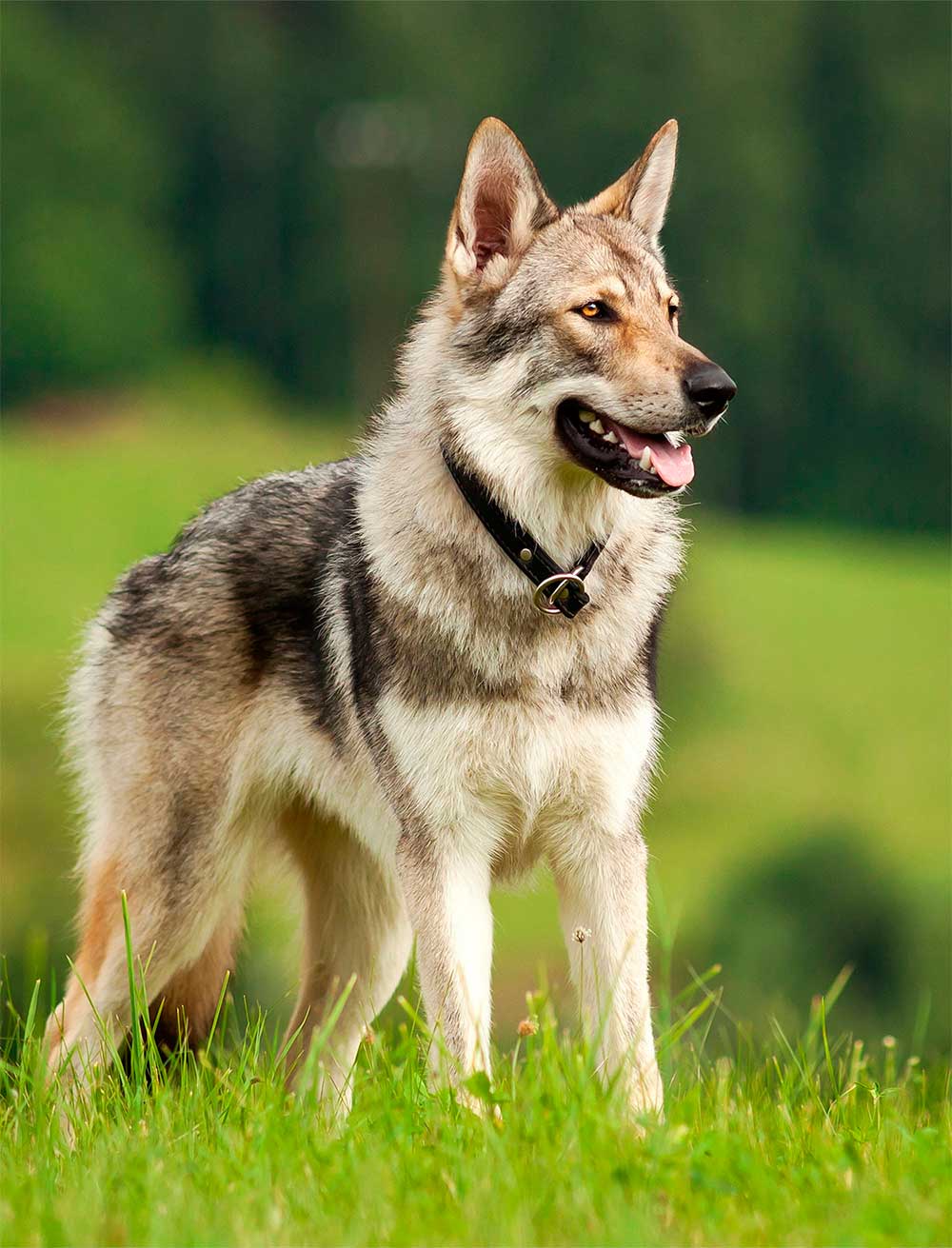
    It is a dog of strong constitution, medium-sized and rectangular in structure. It is similar to the wolf in constitution, movement, colors, cloak and mask. The head, symmetrical and well muscled, is shaped like a truncated wedge. the eyes are small, macaroons, amber, with well-attached eyelids.
    Ears are erect, thin, triangular and short. The tail is implanted high, but it hangs straight. When the dog is excited, lifts it up in a sickle.

    Fur: The coat is straight and adherent. In winter it has a very dense undercoat.
    Color: From yellowish gray to silver gray, with characteristic white mask.
    Size: Males measure at least 65 cm.. the females, minimal 60 cm..

    Character and skills

    The Czechoslovakian Wolfdog he is very devoted to his family, including children. But, their rather dominant nature can be problematic for young people. In any case, it is important to socialize him from an early age and never leave a young child alone with a dog, regardless of race.

    He is also sociable with his companions and other pets who live under the same roof., since he is used to their presence relatively early. On the other hand, woe to the cats, small dogs and other rodents that are unfamiliar to you and would have the bad idea to venture into your territory, or that they will meet during a walk: his hunting instincts were then all chances to regain the advantage.

    It also, he is as affectionate with his entourage as he mistrusts strangers: there is also necessary an education and socialization of the puppy started from an early age to avoid any later problem.

    Having a highly developed sense of hierarchy, He must face as soon as possible with his "herd leader", who should show their dog his place in the family hierarchy . The Czechoslovakian Wolfdog he is a dog that cannot stand loneliness, greatly preferring to live in the company of their pack, that is, his family. You are very likely to be unhappy if you have to be alone for long periods of time and are at risk of running away to join your family, or to feel excluded from the "pack" and lose confidence in his master.

    It also, the Czechoslovakian Wolfdog it is a very durable and active breed of dog, able to accompany his master even over very long distances that can exceed even those of a marathon, and whatever the weather conditions. In fact, being able to exercise daily is necessary for your physical and psychological well-being, and allows to avoid the risk of damage caused by the dog . It is an ideal companion for a sports lover who would like to, for example, jogging with your dog , go hiking with your dog or even ride a bike with your dog.. On the other hand, even more than for any other race, your handler should make sure to always be out front and thus show your dog who is the โ€œleader of the packโ€ .

    On the other hand, a person who prefers to spend his free time in front of a screen or immersed in a book is exposed to some difficulties if he thinks about adopting a Czechoslovakian Wolfdog

    It also, by needing space, the latter is not a recommended breed of dog in apartments : it is much better to have a house with a garden. It is not uncommon to see him playing and sleeping there whatever the weather: it's not very hard, and is able to perfectly withstand bad weather. On the other hand, it is recommended that said garden be perfectly fenced, to avoid the risk of the dog escaping and wandering on public roads.

    The Czechoslovakian Wolfdog very little, if he barks. But when it does, it is impossible not to notice: similar to his ancestors the wolves , its howl is loud and can be heard over long distances. Daily, when you need to express yourself, opt for other means, like moans and grunts .

    Like this, this loyal and active dog will make a firm human companion happiness, sporty and available, but it is not recommended for people who have never had dogs before or who are often absent. In fact, the majority of failed adoptions are due to the fact that the human has not known how to impose himself as "leader of the pack" and / or has not been sufficiently available and active for his partner.

    Last, It should be remembered that this recent breed of dog is still under construction, so excessively fearful or aggressive subjects may appear.

    Price "Czechoslovak Wolf Dog"

    The price of a puppy Czechoslovakian Wolfdog is of some 1250 to 1500 EUR.

    creators of "Czechoslovakian Wolfdog"

    Register kennel

    Czechoslovak Wolf dog

    Offer your puppies for free. Sign up here.

    • This field is a validation field and should be left unchanged.

    Characteristics "Czechoslovakian Wolfdog"

    Coexistence is important that you have with your new friend. Before considering the acquisition of a dog of the breed "Czechoslovakian Wolfdog" you know certain factors. Not all breeds of dogs are apt to live in an apartment, you must take into account his character, their need for exercise, their interaction with other pets, their care and if you have small children, their level of tolerance towards them.

    Adaptation โ“˜

    4,0 of 5 stars (based on 1 review)

    friendly dog โ€‹โ€‹โ“˜

    2,0 of 5 stars (based on 1 review)

    hair loss โ“˜

    3,0 of 5 stars (based on 1 review)

    Affection level โ“˜

    4,0 of 5 stars (based on 1 review)

    Need for exercise โ“˜

    5,0 of 5 stars (based on 1 review)

    Social need โ“˜

    4,0 of 5 stars (based on 1 review)

    Home โ“˜

    2,0 of 5 stars (based on 1 review)

    Toilet โ“˜

    2,0 of 5 stars (based on 1 review)

    Friendly with strangers โ“˜

    2,0 of 5 stars (based on 1 review)

    barking โ“˜

    3,0 of 5 stars (based on 1 review)

    Health โ“˜

    3,0 of 5 stars (based on 1 review)

    Territorial โ“˜

    5,0 of 5 stars (based on 1 review)

    Cat friendly โ“˜

    2,0 of 5 stars (based on 1 review)

    Intelligence โ“˜

    4,0 of 5 stars (based on 1 review)

    Versatility โ“˜

    3,0 of 5 stars (based on 1 review)

    Child friendly โ“˜

    4,0 of 5 stars (based on 1 review)

    Surveillance โ“˜

    5,0 of 5 stars (based on 1 review)

    joy โ“˜

    3,0 of 5 stars (based on 1 review)

    Type and recognitions:

    • FCI CLASSIFICATION:
    • Group :
    • Section : . .

    Federations:

  • FCI โ“˜,
  • AKC โ“˜,
  • ANKC โ“˜,
  • UKC โ“˜

  • FCI breed standard Czechoslovakian Wolfdog

    FCIFCI - Czechoslovakian Wolfdog
    Dog

    Alternative names:

    1. Czechoslovak Vlcak (English).
    2. ฤŒeskoslovenskรฝ vlฤiak (French).
    3. tschechisch ฤeskoslovenskรฝ vlฤรกk, slowakisch ฤeskoslovenskรฝ vlฤiak (German).
    4. ฤŒeskoslovenskรฝ vlฤรกk (Portuguese).
    5. ฤŒeskoslovenskรฝ vlฤรกk, PLC (espaรฑol).

    Photo:
    Czechoslovakian Wolfdog by UsernameNotInUse / CC BY-SA

    โ–ท The world of Pets: Dogs, cats, birds, reptiles, amphibians

    Romanian Carpathian Shepherd Dog
    Rumanรญa FCI 350 - Sheepdogs

    Romanian Carpathian Shepherd Dog

    The Romanian Carpathian Shepherd Dog is slightly more sensitive and less independent than other guard dog breeds

    Content

    History

    The โ€œRomanian Carpathian Shepherd Dogโ€, also known as Carpatin (of his original name Ciobanesc Romanesc Carpatin), He is native to Romania, more precisely from the Danube Delta.

    It is said to be descended from the Lupo races – molosoides, comparable in size to ancient mastiffs, but with a morphology closer to that of the wolf, and that has been used to protect herds for more than 9.000 years, that is to say, since the beginning of the domestication of cattle in this region.

    Legend has it that their ancestors, to whom he is physically very close, they interbred naturally with wolves, resulting in a powerful and fearsome race. Although there is no irrefutable evidence, such hybridizations between dog and wolf are known to have in fact occurred in various regions of the world, what makes this theory plausible.

    Often hunting in packs, nothing stops this dog with his courage and unerring protective instinct. There have even been cases where a herd of Carpathian shepherds has been seen repelled by an adult bear. The Romanian Carpathian Shepherd Dog has been selected over the centuries with the main criterion of utility, which explains why it has kept its herding dog qualities intact to this day, especially since Romania still has many predators on its territory, including wolves and bears. Over the years, they have also become increasingly integrated into the family as guard dogs; very protective of their master, it's a role they play wonderfully.

    The first breed standard was developed in Romania in 1934. After the fall of communism in 1989, a few passionate breeders of the Romanian Carpathian Shepherd Dog developed the breed so that its standard could meet the criteria of the Fรฉdรฉration Cynologique Internationale. Their efforts paid off, since the latter finally recognized it provisionally in 2005, and then definitely ten years later, in 2015. Among the other large canine organisms, the Sociรฉtรฉ Centrale Canine and the United Kennel Club also recognize the Romanian Carpathian Shepherd Dog, what is not the case with the American Kennel Club, the Canadian Kennel Club or the Kennel Club, the leading organization in Great Britain.

    Although they are increasingly known and appreciated in the rest of the world, the Romanian Carpathian Shepherd Dog still quite rare outside of its home country. On the other hand, still very popular in Romania, where it is used as a herding dog and as a guard and companion dog.

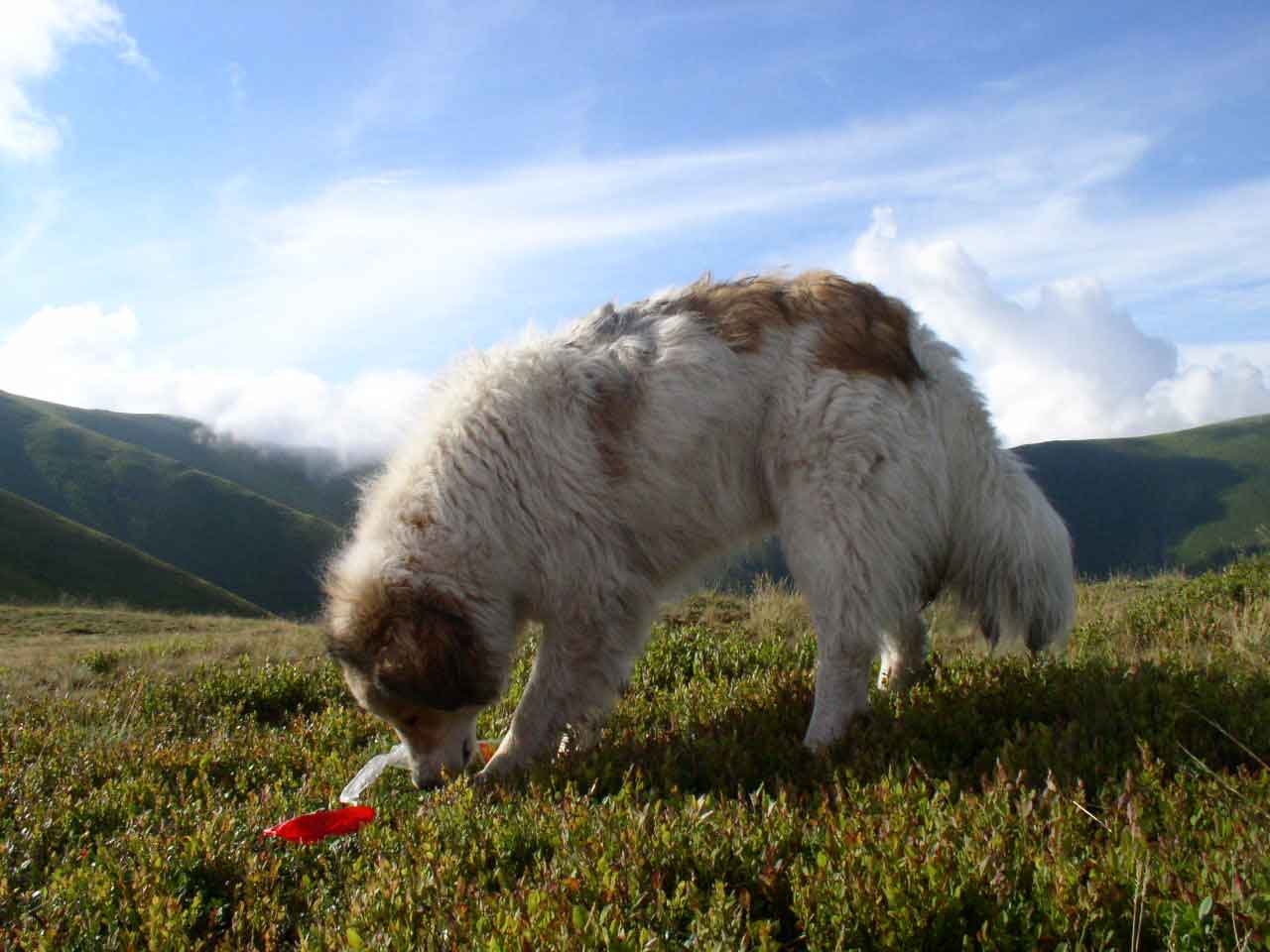
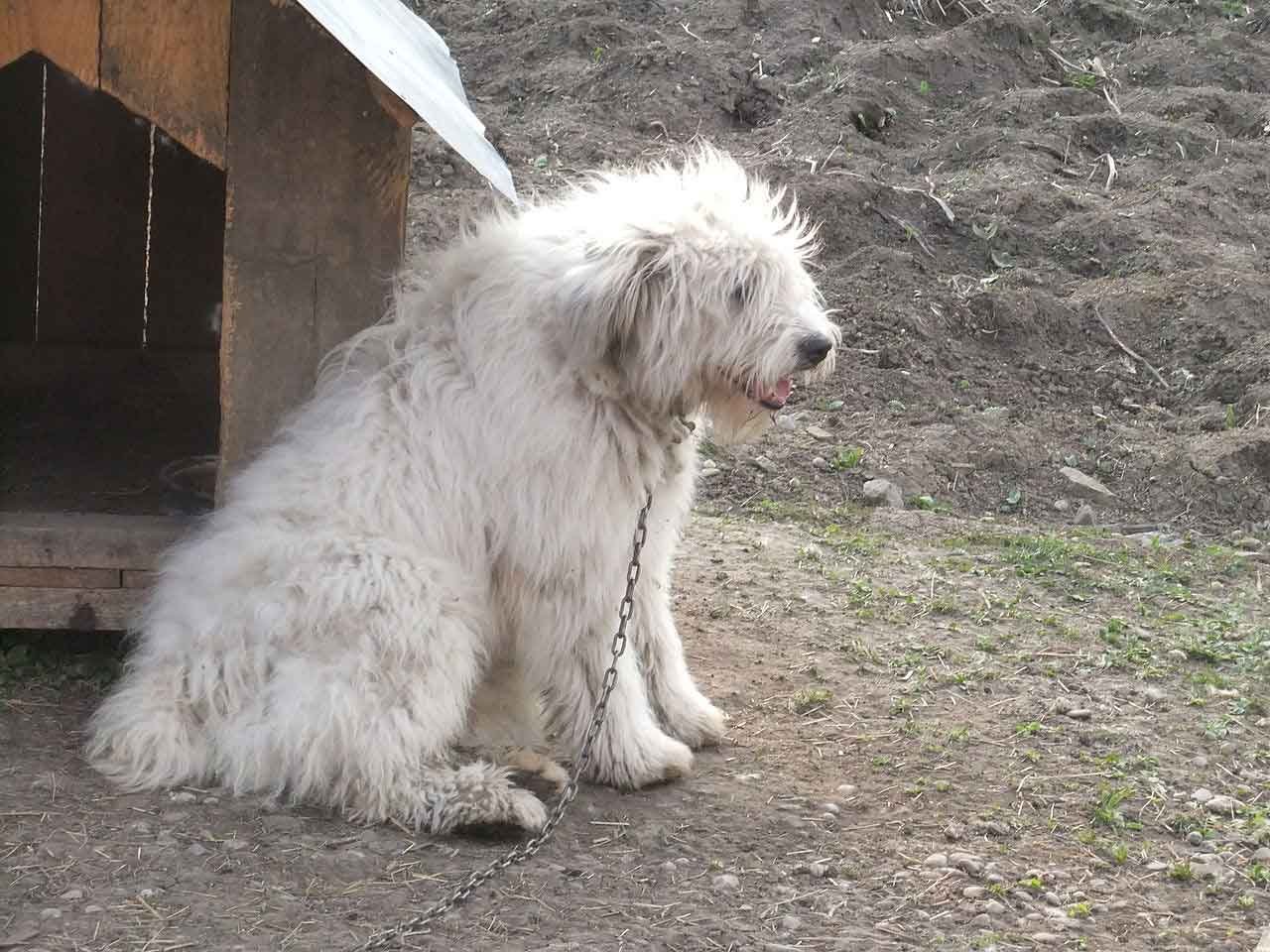
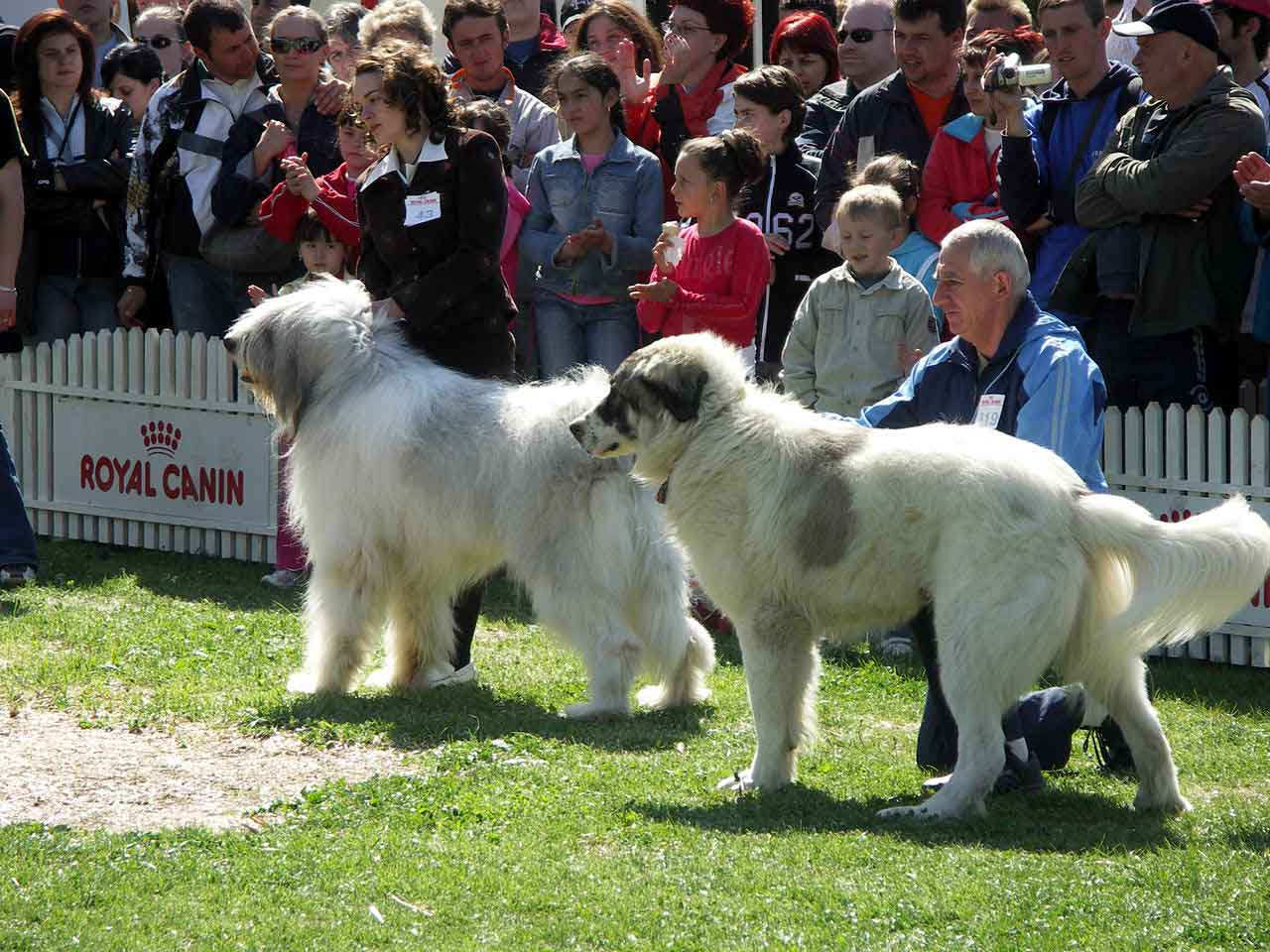
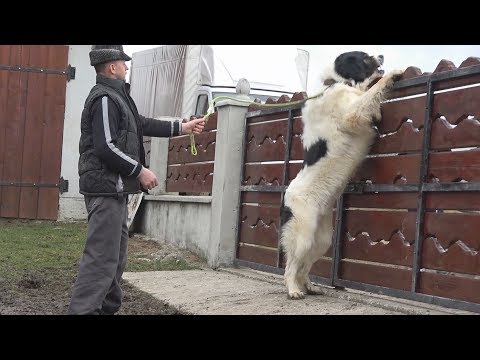
    Photo: Possibly Carpathian sheepdog or Bucovina sheepdog by Alex Zelenko, CC BY-SA 4.0, via Wikimedia Commons

    Physical characteristics

    The Romanian Carpathian Shepherd Dog he is a large dog with an impressive physique.

    The body is rectangular, vigorous and well developed, without heaviness. Its length is greater than the height at the withers, and the lumbar region may be slightly longer in females than in males.

    The tail is held high, reaching or slightly exceeding the point of the hock. With abundant hair, hangs at rest but is carried high and slightly curved in action. It is neither flat nor rolled in the back.

    The head is strong but not heavy, of type lupoid, with a stop moderately marked. The nose is always black, big and wide. The scissor bite is powerful. The eyes are medium in size, almendrada form, dark brown. The ears, located slightly above the eye line, they are triangular in shape, a little rounded at the tip, and fall close to the cheeks.

    The inner layer is dense and flexible, color clear, but the hair is rough, smooth and dense. It is shorter and flatter on the head and front of the legs, longer in the neck, the back of the legs and tail. It is abundant and of medium length in the rest of the body. The fur is sable (Wolf) with white markings, and the skin is ash colored.

    Character and skills

    The Romanian Carpathian Shepherd Dog is balanced, calm and brave. They are innate herding dogs with a very strong protective instinct, with an unconditional attachment to his flock and a closeness to his master and family that is far greater than that of most other watchdog breeds.

    This protective instinct makes them mistrust strangers. In the presence of a stranger, will come between him and his family and bark as a warning, until his master makes him understand that there is no danger.

    But, due to its friendlier temperament than the average of other guard dog breeds, It is also an excellent companion dog.. As a breed of dog adapted to children, he is very gentle with them and is a great playmate for them. Regarding the cohabitation of the dog with the cat, generally goes well. Last, the fact that they have long gotten used to defending themselves and working in packs also explains why they generally manage to get along with their peers, although they can be dominant with them.

    Although it suits all families quite well, this large, energetic dog needs plenty of exercise and play to maintain his mental balance and physical health. So, better suited to a family that likes to move, and thus you can enjoy hiking with your dog (dogs-rando), from running with your dog (canicross) or cycling with your dog (cani-mountain biking). To feel completely fine, need at least an hour of daily exercise.

    So, not at all suitable for use in an apartment: too small a space and insufficient physical exercise could cause behavioral disorders in the dog, including uncontrolled aggression (even towards their owners) and / or destructive behavior on the part of the dog. This is all the more true since the Romanian Carpathian Shepherd Dog is slightly more sensitive and less independent than other guard dog breeds; therefore shows more anxiety in case of prolonged loneliness, especially if you are indoors with nothing to do to keep busy. So, the ideal home for him is one with a large enclosed garden where he can run, and a master who is available to play with his dog and walk him for long hours.

    Education ยซRomanian Carpathian Shepherd Dogยป

    Although the Romanian Carpathian Shepherd Dog it is a calm and balanced dog that is easier to train than other guard dog breeds, needs a strong education to start at an early age, since it has a strong character. It is imperative that the owner immediately show his dog who the master is and impose his authority, at the risk of seeing his partner with his impressive physique take control.

    Of course, firm does not mean brutal. Positive dog training, with incentives and rewards, is always the best way to earn respect and obedience. Purely authoritarian training would only lead to confrontation with this willfully dominant dog..

    Health ยซRomanian Carpathian Shepherd Dogยป

    Although there have been cases of hip dysplasia or eye problems in some individuals, the Romanian Carpathian Shepherd Dog it is a robust breed of dog, able to stay outdoors in inclement weather without being unduly hindered and, In addition, does not have a congenital predisposition to certain pathologies.

    So, daily exercise and a balanced diet are enough to keep the dog healthy, vigorous and toned.

    But, care must be taken not to give too large a portion of food before physical exertion: like all big breeds, is particularly exposed to the risk of stomach dilation-torsion.

    Grooming ยซRomanian Carpathian Shepherd Dogยป

    Although the Romanian Carpathian Shepherd Dog has a long fur, rarely needs professional grooming. But, it is recommended to brush the dog's hair daily with a wire brush or detangler, especially during the molting period.

    If you spend most of your time outdoors, it is recommended to wash your dog once a month. But, if you stay inside, a dog bath every three to four months is sufficient.

    On the other hand, it is important to regularly examine and clean the dog's ears, as for all dogs with floppy ears. A buildup of earwax or bacteria could lead to infections, like ear infections.

    It also, as in all races, brushing your dog's teeth at regular intervals is essential to avoid tartar problems. Ideally, you should be able to do this two to three times a week..

    Finally, how often a dog's claws are trimmed depends on its level of activity. It is best to inspect them from time to time and trim them if necessary.

    Characteristics "Romanian Carpathian Shepherd Dog"

    Coexistence is important that you have with your new friend. Before considering the acquisition of a dog of the breed "Romanian Carpathian Shepherd Dog" you know certain factors. Not all breeds of dogs are apt to live in an apartment, you must take into account his character, their need for exercise, their interaction with other pets, their care and if you have small children, their level of tolerance towards them.

    Adaptation โ“˜

    3,0 of 5 stars (based on 1 review)

    friendly dog โ€‹โ€‹โ“˜

    3,0 of 5 stars (based on 1 review)

    hair loss โ“˜

    4,0 of 5 stars (based on 1 review)

    Affection level โ“˜

    5,0 of 5 stars (based on 1 review)

    Need for exercise โ“˜

    4,0 of 5 stars (based on 1 review)

    Social need โ“˜

    4,0 of 5 stars (based on 1 review)

    Home โ“˜

    2,0 of 5 stars (based on 1 review)

    Toilet โ“˜

    2,0 of 5 stars (based on 1 review)

    Friendly with strangers โ“˜

    2,0 of 5 stars (based on 1 review)

    barking โ“˜

    3,0 of 5 stars (based on 1 review)

    Health โ“˜

    3,0 of 5 stars (based on 1 review)

    Territorial โ“˜

    4,0 of 5 stars (based on 1 review)

    Cat friendly โ“˜

    4,0 of 5 stars (based on 1 review)

    Intelligence โ“˜

    4,0 of 5 stars (based on 1 review)

    Versatility โ“˜

    4,0 of 5 stars (based on 1 review)

    Child friendly โ“˜

    5,0 of 5 stars (based on 1 review)

    Surveillance โ“˜

    4,0 of 5 stars (based on 1 review)

    joy โ“˜

    4,0 of 5 stars (based on 1 review)

    Images "Romanian Carpathian Shepherd Dog"

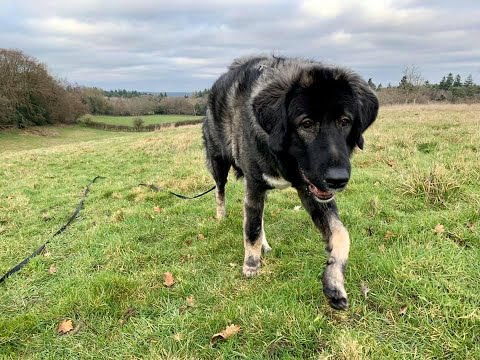
    Carpathian Shepherd

    Carpathian Shepherd

    Photos:

    1 – ยซRomanian Carpathian Shepherd Dogยป by https://pxhere.com/es/photo/1434185
    2 – ยซRomanian Carpathian Shepherd Dogยป by https://pxhere.com/es/photo/1625909

    Videos "Romanian Carpathian Shepherd Dog"

    Jeff the Carpathian Shepherd - 4 Weeks Residential Dog Training
    Jeff the Carpathian Shepherd – 4 Weeks Residential Dog Training
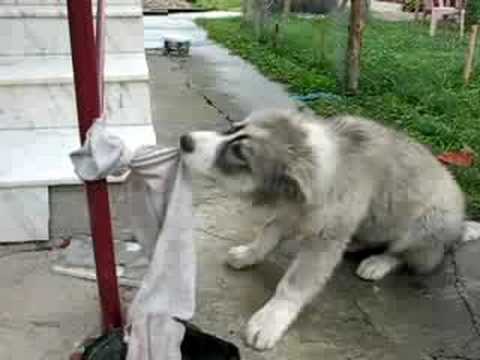
    Sanziana, a Carpathian Shepherd Dog baby girl
    Sanziana, a Carpathian Shepherd Dog baby girl

    Type and recognitions:

    • FCI CLASSIFICATION:
    • Group :
    • Section : . .

    Federations:

    • FCI – Group 1 Herding dogs, Section 1 Sheepdogs โ“˜
    • UKC – Herding dogs โ“˜

    FCI breed standard "Romanian Carpathian Shepherd Dog"

    Origin:
    Romania

    Date of publication of the valid original standard:
    09.06.2015

    Use:

    Shepherd dog used by Romanian shepherds of the Carpathians for centuries to defend flocks and at the same time as an excellent guard dog


    General appearance:

    This is a pretty big dog, agile,never weighed, Its general appearance is that of a vigorous dog. His body is rectangular, the rump is wide, slightly tilted, the rib cage is wide and high, long, slightly sloping shoulders. Sexual dimorphism is well marked, males should be taller and larger than females.


    IMPORTANT PROPORTIONS:

    • The length of the skull is slightly greater than or equal to half the total length of the head.
    • The length of the body is always greater than the height at the withers. The lumbar region of females may be slightly longer.
    • The height of the chest corresponds to approximately half the height at the withers.


    Behavior / temperament:

    Innate and brave guardian, He stands out for his instinctive and unconditional affection towards the flocks and towards his master.. It is a dog with dignified behavior, quiet and balanced.

    Head:

    lupoid type.

    Cranial region:
    • Cranial region: The Carpathian Shepherd is a mesocephalic dog, with a strong head, but not heavy. The forehead is wide and slightly bulging. The skull is wider between the ears and progressively decreases towards the naso-frontal depression.. The frontal furrow is quite long and sufficiently well marked.
    • Depression links: Moderate, never too marked, ni huidiza.

    facial region:

    • Truffle:Grand, wide, always black.
    • Snout:Powerful, with an approximately oval profile, slightly truncated. The length of the snout is a little less than that of the skull or the maximum, equal.
    • Lips:Thick, well pigmented, well stretched, with a tightly closed commissure.
    • Jaws / Teeth:Strong jaws, solid and straight. The teeth are powerful; scissor joint, the incisor arches are slightly rounded.
    • Cheeks:Thin. Powerful maseteros, never outstanding. The skin is well stretched.
    • Eyes:Almond biscuits, slightly oblique, They are not too large in relation to the dimensions of the skull, its color is very dark. They are not even jumpy, nor are they sunk in the orbits. The eyelids are black and fit well into the shape of the eyeball..
    • Ears:Triangular, not too big, They appear a little higher than the eye line. They are stuck to the cheeks. The limb is slightly rounded.

    Neck:

    Muscular, very powerful, medium length. Its angle is about 50ยฐ in relation to the horizontal..

    Body:

    Vigorous, well developed, slightly rectangular.

    • Top margin: Straight and firm.
    • Height to the cross: Bit strong.
    • Back: Medium length, straight, and solid and muscular.
    • Pork loin: Powerful, muscular, but not too wide. Of moderate length, not too long (the top margin is not firm), not too short.
    • Rump: Muscular and wide, medium length. Slightly inclined, never runs away.
    • Breast : Very wide, well developed and well inclined to the level of the elbows. solid ribs, well shaped, never barrel shaped.
    • Lower margin: Moderately ascending, raised abdomen, nor sunk, nor fallen.

    Tail:

    It appears quite high, bushy, provided with abundant hair. During rest, appears low, straight or slightly saber-shaped, reaching the tip of the hock. When the dog is attentive or in action, It appears raised and can exceed the level of the back; It's not even stretched, nor twisted about it.

    Tips

    PREVIOUS MEMBERS: Strong bones.

    • In general: Front or profile views, the forelimbs are plumb and perpendicular to the ground.
    • Shoulder: Solid, moderately inclined.
    • Elbows: Well attached to the body, they do not deviate even outwards, nor inward.
    • Forearm:Straight, very vigorous, with oval profile.
    • Metacarpus: Short, slightly inclined.
    • Previous foot: Oval, solid, compact.

    LATER MEMBERS: Muscular, with solid bones and good angulations.

    • In general: They are leaden.
    • Thigh:Width, well muscled.
    • Legs: Powerful, muscular, medium length.
    • Hock: Solid, firm, not too high (determining an accentuation of the angulation of the stifle) not too inclined.
    • Metatarsus: Solid, vertical.
    • Rear foot: Oval, well developed and compact, slightly smaller than the previous one. Fingers arched and together. Any spurs must be removed, except in countries where this practice is prohibited by law. The plantar pads are elastic and resistant.

    Movement:

    Loose, with a good range. The trot is vigorous and sustained. The limbs move in parallel planes.

    Mantle

    • Pigmented ash color. The truffle, the edge, of the eyelids and lips must be black. Ash or black nails are preferred.


    • Fur: Rough, dense and stretched. The undercoat is dense and soft. With the exception of the head and the inner surfaces of the extremities, where the hair is short and straight, the hair is abundant over the entire body, medium length. about the neck, the back of the limbs and on the tail, the hair is longer, its abundance being typical in these areas.
    • Color: carbon sand (dark bay) with different nuances, often lighter on the lateral parts and darker on the upper part of the trunk. carbon sand (dark bay) with white markings, preferably not very widespread.


    Size and weight:

    • Height to the cross: Ideal: 65 โ€“ 73 cm in males. 59 โ€“ 67 cm in females. But, the general appearance is always the most important.
    • Weight: In proportion to the size, giving the impression of a powerful dog, but not heavy.


    Fouls:

    Any deviation from the aforementioned criteria is considered as a fault and its seriousness is considered to the degree of the deviation to the standard and its consequences on the health and well-being of the dog.

    SERIOUS FAULTS:

    • Any deviation from the above that impairs the use.
    • Fragile or too heavy constitution.
    • Eyes that are too light in color.
    • Lower eyelids that are too hanging, exposing the eyeball.
    • Very full lips and hanging corners.
    • Significant pigmentation defects.
    • Excessive body length (more than 10%) and square body.

    FALTAS DESCALIFICANTES:

    • Aggressiveness or extreme shyness.
    • Any dog โ€‹โ€‹showing clear signs of physical or behavioral abnormalities must be disqualified..
    • apathetic dog.
    • Clearly atypical dog, similar in appearance to the molossoid.
    • Lack of a P3 and another tooth. Lack of a canine, of a P4, of a molar, or three or more teeth (except PM1y M3).
    • Upper or lower prognathism, pincer joint.
    • Very fine bones.
    • Rib cage that is not sufficiently developed.
    • Lack of an inner layer of hair, hair that is not short on the head and the front surfaces of the limbs.
    • Curly hair the griffon type, wire hair, Longhair, soft, silky, forming a clear separation on the midline of the body.
    • Considerable depigmentation of the eyelids, of the truffle, of the skin or lips. ocular heterochromia (different color eye).
    • Color: brown, mottled, yellow or with spots of these colors.
    • Adult dogs smaller than 62 cm in males and 58 cm in females.


    N.B.:
    • Males should have two normal-appearing testicles fully descended into the scrotum..
    • Only functionally and clinically healthy dogs, with the typical conformation of the breed, should be used for parenting.

    The latest changes are in bold.

    Source: F.C.I - International Cynological Federation

    Alternative names:

    1. Romanian Shepherd, Romanian Carpathian Shepherd, Carpathian Sheepdog (English).
    2. Chien de berger des Carpathes (French).
    3. Carpatin, Zavod (German).
    4. (em romeno: Ciobฤƒnesc romรขnesc carpatin) (Portuguese).
    5. Carpatin, Pastor de los Cรกrpatos, Perro pastor de los Cรกrpatos (espaรฑol).

    โ–ท The world of Pets: Dogs, cats, birds, reptiles, amphibians

    Saarloos wolfdog
    Holanda FCI 311 - Sheepdogs.

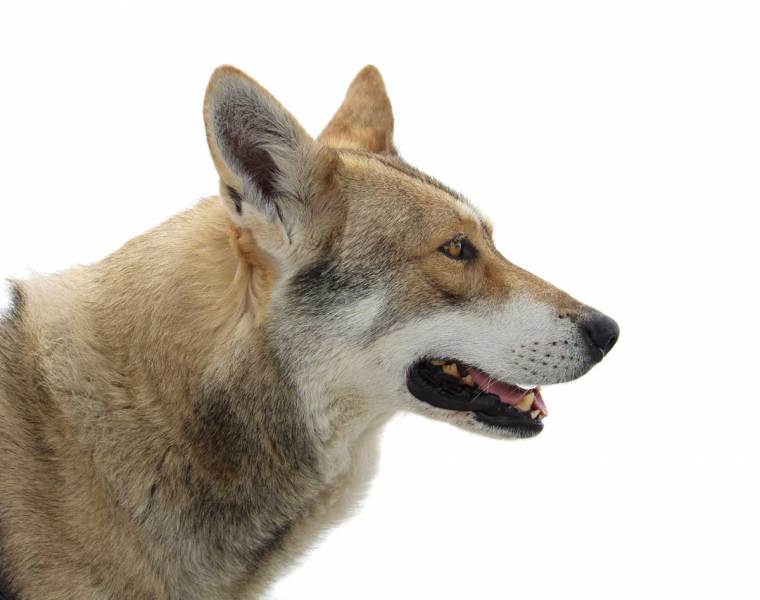
    Saarloos wolfdog

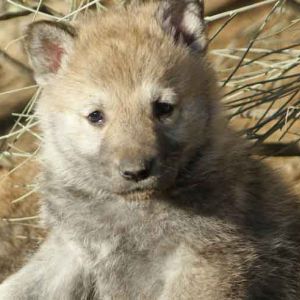
    The Dutch Society of Saarloos wolfdog, is the only organism that can supply the puppies.

    Content

    History

    The Sr. Leendert Saarloos (1884-1969) loved nature and also dogs. He realized that the dogs had become too humanized and he intended to, as a lover of the German Shepherd, of recovering the natural qualities of this breed to produce a better working dog. For this reason he crossed a male German Shepherd, Gerard van der Fransenum, a dog of the classic Prussian style, with Flowers, a female wolf that originated from the Siberian branch of the European type (1932). Breeding based on the father gave him a basic population of animals with a quarter of wolf blood. During the course of the next experimental phase with strict selection, a new race, the โ€ณEuropean Wolfdogโ€ณ had evolved. Selected animals of this breed provided good service as guide dogs., and at first they were believed to be adequate for this task.

    Due to the increase in the proportion of wolf blood, usable skill, inherited from the original predecessor, Gerard, it was gradually lost and it became obvious that the breed was not suitable for use as a working or guide dog. Leendert Saarloos Legacy, not a working dog, but a dog with attributes more attached to nature, was recognized as a breed in 1975. at that time, the breed was named โ€ณSaarloos wolfdogโ€ณ in honor of its founder: Honor for whom honor deserves.

    Physical characteristics

    It is a dog type lupoid with powerful but light skeleton, with long limbs. The eyes, medium-sized, macaroons, are slightly oblique and preferably yellow in color. The expression is attentive and reserved time, but without a trace of fear. The ears, medium-sized, they have a fairly wide insertion and are pointed, fleshy and hairy. The tail is implanted quite low and at rest it takes the form of a saber, not too mobile. Can carry it high when active or intimidating.

    Differences in secondary sex characteristics are pronounced between males and females.

    • Fur: hard and straight.
    • Color: from black with light blends to dark black (gray wolf), from brown with light blends to dark brown and from very light cream to white.
    • Size: males, of 65 to 75 cm.; females of 60 to 70 cm..

    Character and skills

    Strongly hierarchical, He is very attached to his owner and is wary of strangers.. It is a dog to enjoy and study (better as a couple or in a group) especially for fans of ethology, but it is not recommended to use it for guard and defense, because he tends to run away from man. Your reservation and your way of avoiding unknown situations, just like a wolf, are typical features of Saarloos wolfdog.

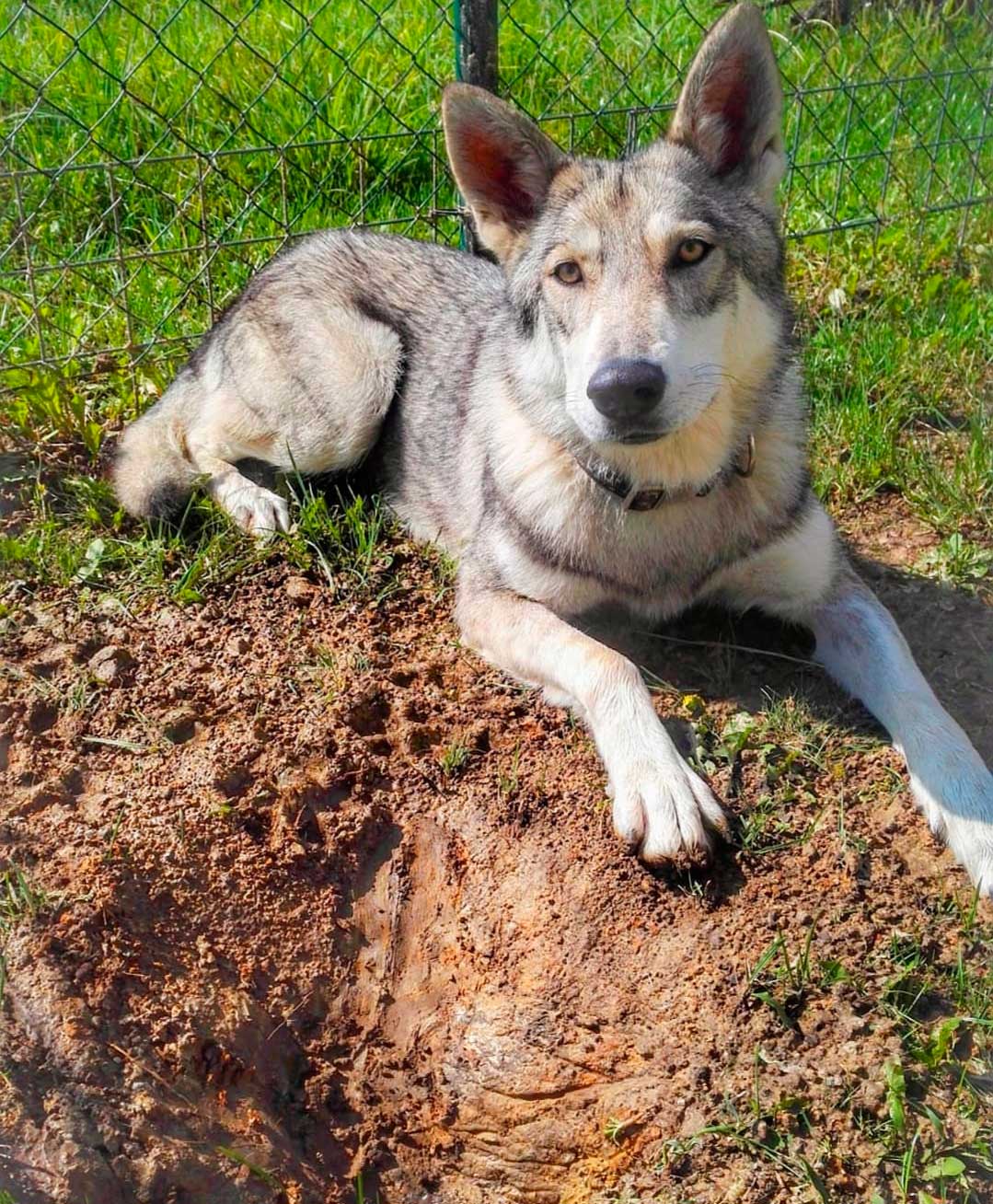
    Images "Saarloos wolfdog"

    Videos "Saarloos wolfdog"

    Type and recognitions:

    • FCI CLASSIFICATION:
    • Group :
    • Section : . .

    Federations:

    • FCI – Group 1 Herding dogs, Section 1 Sheepdogs โ“˜
    • UKC – Herding dogs โ“˜

    FCI breed standard Saarloos wolfdog

    FCIFCI - Saarloos wolfdog
    Dog

    Alternative names:

    1. Saarloos wolfhond (English).
    2. Saarloos (French).
    3. Saarlooswolfhond (German).
    4. Saarlooswolfhond (Portuguese).
    5. Perro lobo Holandรฉs (espaรฑol).

    Photos:

    1 – Saarloos wolfdog from the Czech region by @Hippie_Saarloos / CC BY-SA
    2 – Saarloos by Wolfdog by https://pxhere.com/es/photo/1389361
    3 – Saarloos Wolfhond – Merlin v.d. Schattenwaldwoelfen by Boot Juliaan / CC BY-SA
    4 – Saarloos Wolfhound by Corinne Benavides
    5 – Saarloos Wolfhound by https://pxhere.com/es/photo/1127277

    โ–ท The world of Pets: Dogs, cats, birds, reptiles, amphibians

    Romanian Mioritic Shepherd Dog
    Rumanรญa FCI 349 - Sheepdogs

    Romanian Mioritic Shepherd Dog

    The Romanian Mioritic Shepherd Dog he is a calm and balanced dog that has an extraordinarily strong bond with his handler.

    Content

    History

    The ยซRomanian Shepherd of Mioritzaยป, or Ciobanesc Romanesc Mioritic in romanian, it is a natural breed that has been present for centuries in the Carpathians, especially in southern Transylvania, in the mountainous regions near Sibiu and Brasov. Its exact origins are unknown., but it seems that their ancestors came to Romania around the 13th century with the Tatars who came to settle in the Danube Delta region and along the Black Sea coast.

    In the middle ages, some local rulers used these powerful dogs to accompany their armies. This fueled the legend that the dogs often seen in ancient engravings depicting the battles between the Roman Empire and the Dacians, a native people of the Carpathians, they are the shepherds of Mioritza. But, since these battles took place over 1000 years before the arrival of the dog's ancestors to the region, it is in fact unlikely that he can claim to have any connection to these feats of arms.

    In fact, the Mioritza Shepherd Dog he was above all the faithful companion of the illiterate peasants and shepherds isolated in the mountains. Stunning, mighty and brave, protected, and still protects today, herds against the many predators that live in the Carpathians: Lynx, Wolf, bear…

    His name is also a reference to his qualities as a pastor, since the word ยซmioaraยป means "sheep" in Romanian, precisely the animal that it has been protecting for several centuries.

    Even today, many shepherds claim that only one of these dogs can scare away a bear, and popular belief says that it is the only breed in the world capable of facing a bear and coming out alive.

    The first written references to Mioritic go back to 1930, when Professor Gheorghe Moldoveanu, studying the Romanian Carpathian Shepherd Dog, made a first distinction between the different romanian sheepdogs. In 1934, the National Zootechnical Institute published a description of the dog Romanian Mioritic Shepherd Dog, but it wasn't until 1981 that a first breed standard was defined, prepared by the Romanian Cynological Association (ACR).

    This standard was revised in 2002 to meet the requirements of the Fรฉdรฉration Cynologique Internationale (FCI), who accepted the dog Romanian Mioritic Shepherd Dog provisionally in 2005, before finally recognizing it in 2015. In the meantime, had taken off across the Atlantic, as recognized by the American United Kennel Club (UKC) in 2006. The other reference body in the country, the American Kennel Club (AKC), did the same in 2018. But, neither the British nor the Canadian Kennel Club have followed suit.

    It is estimated that the population of Romanian Mioritic Shepherd Dog is of 10.000 individuals in Romania, but the vast majority are dogs with pedigree and unregistered. In fact, although the breeding of dogs without pedigrees has been prohibited in the country since 2015, ancient habits are slowly changing. So that, There is often a "country" dog left, of which a puppy is given to the villager when a litter is born., instead of a pedigree dog that is purchased from a professional breeder.

    On the other hand, although they are still relatively popular in the Romanian mountains, the Romanian Mioritic Shepherd Dog remain largely unknown outside of their home country, despite the efforts of Barbara Fallent, an Austrian-based breeder dedicated to popularizing them in Europe.

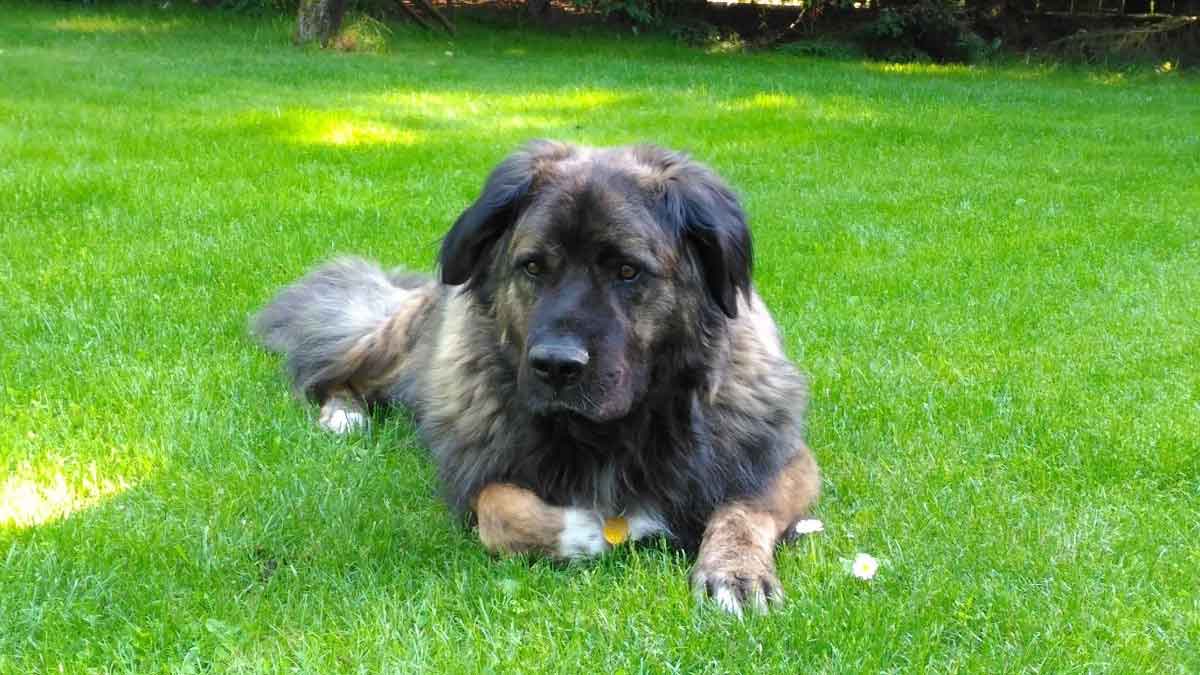
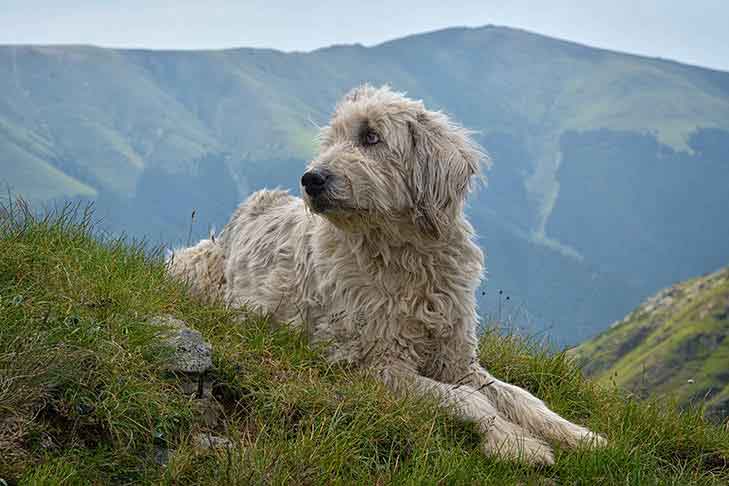
    Photo: Ciobanesc Mioritic by DorinRodina, CC BY-SA 3.0, via Wikimedia Commons

    Physical characteristics

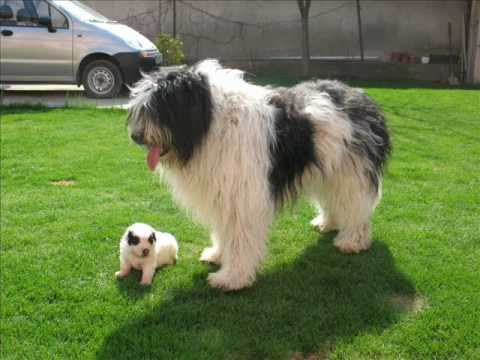
    Sometimes nicknamed "wool bear", the Romanian Mioritic Shepherd Dog is tall, powerful and furry. It is often confused with the Old English Sheepdog (or Bobtail), with whom he has many physical similarities.

    They are big and massive, but harmonious and very agile for a dog of this size, while its legs are muscular and erect. Tail stands tall and is carried drooping when at rest, but it rises horizontally when in the gazebo.

    The neck is of medium length but broad and powerful, and bears a massive head of large size in relation to the rest of the body. The skull is slightly domed and ends in a rather short muzzle, tapering towards the nose. The latter should be black and well developed. The powerful jaws are scissor bite. Triangular ears with rounded tips fall along the cheeks and "disappear" into the fur.

    The eyes are medium in size, often hazel or dark brown in color, but they can also be lighter in color, except yellow, which is not accepted by the standard of Romanian Mioritic Shepherd Dog. They express calm and intelligence.

    The coat of the mioritic it is very long, measure at least 10 cm.. Covers the whole body, from head to tip of tail, going through the legs, where however it is a little shorter. The top coat is rough, while the lower layer is more flexible and dense, which makes the coat perfectly adapted to harsh weather conditions.

    The coat can be uniform, white or gray, but most often it is variegated, with distinctive black or gray spots protruding from the white fur.

    Sexual dimorphism is moderately marked, the female being only slightly smaller than the male.

    Character and skills

    The Romanian Mioritic Shepherd Dog he is a calm and balanced dog that has an extraordinarily strong bond with his master and his family, bond that forms naturally during the growth period. It is known that it is "a master's dog" – the person who adopted and raised him – which makes it very difficult to adopt an adult dog from Mioritic Shepherd Dog.

    He is incredibly devoted and loyal to his family, at least the family he grew up with. Adults, children, pets or farm animals…: everyone he lives with is part of his family, and once he is an adult he will stop at nothing to protect them. Quiet and affectionate, gets along very well with children, without being an ideal playmate, especially for the little ones and / or restless, since he prefers quieter activities. It also, given its size, could unintentionally push a small one.

    A typical sheepdog, who mistrusts strangers. Although tolerate close friends who come often, barks vigorously when a stranger approaches, and only allows him to enter his territory with the agreement of his master. So, a lot of work on socialization and obedience is necessary from an early age to prevent this dog's power from, able to scare away wolves and bears, be misdirected, with dramatic consequences.

    The Romanian Mioritic Shepherd Dog need space, and it is not at all a breed of dog adapted to apartment living. Its territorial and protective character makes it not an ideal option for people who live in a residential area., even with a large garden. Rather, they adapt better to the field or the mountains, where they have space and where they encounter fewer potential โ€œthreatsโ€, especially since they can easily spend their days and nights outdoors.

    Having said that, if you need space, the mioritic neither is it a dog that needs a lot of exercise, at least not as an adult. It is true that the puppies of this breed are hyperactive and need to exercise daily, either in the form of games or walks. But the adult is much calmer, as are most sheepdogs, who prefer to stay close to their herd and not stray too far from it: patrolling in the garden and taking an occasional walk with his master is more than enough for him.

    But, It is important to know that the "territory" that the Romanian Mioritic Shepherd Dog not limited to your garden: protect the place where your family is, establishing a kind of security perimeter around it in all circumstances. Like this, if your flock grazes in the mountains, don't let anyone get close, and if your family walks in a park, does the same.

    But, the Mioritic Shepherd Dog not spontaneously aggressive, and never attacks for no reason. Barks to warn the intruder that they are not welcome, and leave the one who understands the message alone. On the other hand, anyone who risks ignoring the warning without his master's consent risks finding out why this dog has been the best friend of Romanian shepherds and protector of their flocks for centuries.

    Finally, used to accompany them alone, have learned to make decisions on their own. Although loyal and obedient, his independent character and power make him a dog that is not suitable as a first dog.

    Education ยซRomanian Shepherd of Mioritzaยป

    If socializing the puppy from an early age is necessary for all breeds, is even more essential in the case of Romanian Mioritic Shepherd Dog. You must meet the people you may meet as an adult as soon as possible and get used to the situations that will be part of your life: walks in a crowded place, visits to the vet, hairdressing sessions… The latter should also allow him to get used to being handled without hesitation., which is absolutely essential to avoid any problems once adult, given its size and power.

    In the same way, learning obedience should begin as soon as the dog is adopted. Smart and devoted, the Romanian Mioritic Shepherd Dog it is relatively easy to train if your master has the necessary experience and knows how to remind your dog who the master is if necessary. On the other hand, Inconsistent or hesitant orders can lead you to take matters into your own hands and choose the attitude that seems most appropriate. Unfortunately, in such cases, unlikely to make the desired decision.

    In any case, although professional help can be useful to support, education must be provided by the teacher himself. You are the only person whose authority you recognize and trust.

    It also, traditional training methods should be banned, as they risk damaging the strong bond between student and teacher. Positive reinforcement-based dog training is a much better option.

    Regarding your role as guardian, does not require any special training. In fact, their instinct for protection is innate, so it does not need any specific training to become an excellent guard dog. In the same way, learn to become a good herding watchdog by observing adults, and just reproduce this behavior when it grows. Once again, no specific training required.

    Health ยซRomanian Shepherd of Mioritzaยป

    The Romanian Mioritic Shepherd Dog he is a very healthy dog: is not subject to hereditary diseases, it is only slightly sensitive to common diseases and is resistant to harsh weather conditions. In fact, many individuals reach the age of 14 years or more, which is unusual for a dog of this size.

    But, like all large dog breeds, may suffer from ..:

    ▷ Hip Dysplasia;
    ▷ elbow dysplasia;
    ▷ gastric dilation-torsion.

    It also, its long and dense coat can become a refuge for many parasites, especially if you spend most of your time outdoors. So, it is essential to regularly ensure that all your deworming treatments are up to date.

    Grooming ยซRomanian Shepherd of Mioritzaยป

    The Romanian Mioritic Shepherd Dog It is an easy-care breed of dog: a weekly brushing of his coat is enough to get rid of his dead hairs and ensure that he has no injuries that can be hidden by his long hair.

    But, during the move, the dog should be brushed more frequently to avoid accumulation of dead hair, that could create knots and become true "parasite nests".

    Bathing the dog is unnecessary, since the Romanian Mioritic Shepherd Dog has a self-cleaning coat. Even if he rolled in the mud before he came home, leaving it outside in a dry place should be enough to get rid of any dirt. "And Mioritic dry is a Mioritic clean", as the shepherds say.

    On the other hand, it is essential to check every 2 or 3 days that your eyes and ears are not dirty and do not show any signs of infection. Their teeth and claws may be checked less regularly, but special attention should be paid to the dog's paw pads to make sure there is no accumulated dirt.

    It is a good idea to get used to Romanian Mioritic Shepherd Dog to these grooming sessions from an early age, to avoid any problems later, given its size and power. If the teacher knows how to do it, they can become beautiful moments of complicity between him and his partner.

    On the other hand, if it has to be prepared by a professional, the presence of your caregiver is necessary to calm you down and ensure that you do not have any aggressive reaction towards the stranger who is manipulating you.

    Price ยซRomanian Mioritza Shepherdยป

    a puppy of Romanian Mioritic Shepherd Dog costs between 1000 and 1200 EUR. A male is more expensive than a female, because males are more sought after by shepherds.

    In any case, It is necessary to be well informed about the origin of the puppy and to check its documents with the Romanian Canine Association (ACR). In fact, from 2015, the breeding of dogs without a pedigree or not registered in the Romanian Stud Book is prohibited in Romania, and the marketing of these puppies is illegal.

    Characteristics "Romanian Mioritic Shepherd Dog"

    Coexistence is important that you have with your new friend. Before considering the acquisition of a dog of the breed "Romanian Mioritic Shepherd Dog" you know certain factors. Not all breeds of dogs are apt to live in an apartment, you must take into account his character, their need for exercise, their interaction with other pets, their care and if you have small children, their level of tolerance towards them.

    Adaptation โ“˜

    2,0 of 5 stars (based on 1 review)

    friendly dog โ€‹โ€‹โ“˜

    3,0 of 5 stars (based on 1 review)

    hair loss โ“˜

    4,0 of 5 stars (based on 1 review)

    Affection level โ“˜

    4,0 of 5 stars (based on 1 review)

    Need for exercise โ“˜

    3,0 of 5 stars (based on 1 review)

    Social need โ“˜

    1,0 of 5 stars (based on 1 review)

    Home โ“˜

    2,0 of 5 stars (based on 1 review)

    Toilet โ“˜

    2,0 of 5 stars (based on 1 review)

    Friendly with strangers โ“˜

    2,0 of 5 stars (based on 1 review)

    barking โ“˜

    3,0 of 5 stars (based on 1 review)

    Health โ“˜

    4,0 of 5 stars (based on 1 review)

    Territorial โ“˜

    5,0 of 5 stars (based on 1 review)

    Cat friendly โ“˜

    4,0 of 5 stars (based on 1 review)

    Intelligence โ“˜

    3,0 of 5 stars (based on 1 review)

    Versatility โ“˜

    3,0 of 5 stars (based on 1 review)

    Child friendly โ“˜

    4,0 of 5 stars (based on 1 review)

    Surveillance โ“˜

    4,0 of 5 stars (based on 1 review)

    joy โ“˜

    3,0 of 5 stars (based on 1 review)

    Images "Romanian Mioritic Shepherd Dog"

    Romanian Mioritic Shepherd Dog
    Beautiful Romanian Shepherd Dogs, the one on the left is the โ€œRomanian Shepherd of Mioritzaโ€ and the one on the right is the โ€œRomanian Shepherd of Bucovinaโ€ by Remus Pereni, CC BY 2.0, via Wikimedia Commons
    Romanian Mioritic Shepherd Dog
    ยซRomanian Shepherd of Mioritzaยป by akc

    Videos "Romanian Mioritic Shepherd Dog"

    Romanian Mioritic Shepherd - Facts and Information
    Romanian Mioritic Shepherd – Facts and Information
    The Miracle of Life - Romanian Mioritic shepherd dog babies
    The Miracle of Life – Romanian Mioritic shepherd dog babies

    Type and recognitions:

    • FCI CLASSIFICATION:
    • Group :
    • Section : . .

    Federations:

    • FCI – Group 1 Herding dogs, Section 1 Sheepdogs โ“˜
    • AKCFoundation Stock Service โ“˜
    • UKC – Herding dogs โ“˜

    FCI breed standard "Romanian Mioritic Shepherd Dog"

    Origin:
    Romania

    Date of publication of the valid original standard:
    09.06.2015

    Use:

    Excellent herd dog, incorruptible guardian and extraordinary companion.


    General appearance:

    Large, but never heavy. It is vigorous and spectacular. The hair is long and thick on the head., entire body and extremities. Males are taller and larger than females.

    IMPORTANT PROPORTIONS:

    • Body length/height at withers, 11 : 10.
    • The chest height must correspond to a 50% the height at the withers.
    • The snout is slightly shorter than the skull.


    Behavior / temperament:

    This is a balanced and calm dog. He is a very good herd dog, very brave and effective combatant against possible predators (bears, Wolves, Lynx). Be wary of strangers. He loves children very much.

    Head:

    Powerful, solid. Grand, in relation to the body.

    Cranial region:
    • Skull: Amplitude medium, slightly bulky. The upper profiles of the skull and snout are more or less parallel. Seen from the front, the upper profile is slightly bulging. The zygomatic arches are not very marked. The occipital protuberance is well marked.
    • Depression links: It is not very marked.

    facial region:

    • Truffle:Wide, well developed, black.
    • Snout:Slightly shorter than skull; well developed, progressively decreases towards the truffle, never pointed; the jaw is strong.
    • Lips:Thick, fine pendants, well pigmented.
    • Jaws / Teeth:Powerful jaws; complete denture, strong, very much, with white teeth, well implanted. The joint is in the form of scissors.
    • Cheeks:They are not protruding.
    • Eyes:Medium-sized, oblique. Its color is hazelnut, dark brown or slightly lighter, never yellow. Eyelids are well pigmented. The expression is calm and intelligent.
    • Ears:They appear relatively high, "V" shaped, with slightly rounded end. Its length is 10-15 cm., They are hanging and are well attached to the cheeks. Amputation is prohibited.

    Neck:

    Medium length, wide and powerful. There is no presence of dewlap.

    Body:

    Well developed.

    • Top margin: Straight, well pronounced.
    • Height to the cross: Moderately marked.
    • Back: Horizontal, strong and muscular.
    • Pork loin: Moderately long, wide and well muscled.
    • Rump: Muscular and moderately inclined towards the base of the tail.
    • Breast : It's not too long. It is wide and its height corresponds approximately to half the height at the withers.. The ribs are well curved.
    • Lower margin: slightly upward, without being overwhelmed.

    Tail:

    Is presented high. During rest, presented pendant, reaching the hock or slightly exceeding it. When the dog is attentive or in action, appears up, somewhat bent, being able to exceed the level of the back, but never coiled on it. Caudectomy is prohibited.

    Tips

    PREVIOUS MEMBERS:

    • In general: Front or profile views, they are plumb.
    • Shoulder: Medium length, oblique, very muscular and close to the body. Scapulo-humeral angulation of 100-105 degrees approximately.
    • Arm: Medium length, well muscled.
    • Elbows: Well attached to the body, they do not deviate even inwards, nor out.
    • Forearm: long enough, powerful and muscular.
    • Carpo: companies.
    • Metacarpus: Slightly inclined, in profile.
    • Previous foot:Oval, compact and solid. The fingers are together and arched, nails are ash gray.

    LATER MEMBERS:

    • In general: Well muscled and powerful. Views from behind, they are straight and parallel. Little open angles.
    • Thigh: Long, broad and well muscled.
    • Babilla: In femoro-tibial angle it is 100-105 degrees approximately.
    • Legs: long enough, muscular, good bone structure.
    • Hock: Medium altitude; strong, well angled, does not deviate even inwards, nor out.
    • Metatarsus: It's not too long. In profile, It is robust and almost vertical. The presence of dewclaws should not be penalized.
    • Rear foot: A little longer than the previous one.

    Movement:

    Harmonious, loose, well coordinated, powerful and easy. Preferred movement is the trot. The gallop is uniform and balanced.

    Mantle

    • SKIN: Thick, well stretched, well Pigmented.
    • Fur: The hair is abundant on the head and body, its texture is rough. It is stretched and its length is 10 cm., As minimum. The inner layer is denser and softer, color clear. In the extremities, the hair is shorter. The tail is very thick.
    • Color:Coats with patches of different colors: The background should be white with well-defined black or gray spots.. Uniform colours: Dogs of uniform white or gray color.


    Size and weight:

    Height to the cross:

    • Males: minimal 70 cm., ideal 75 cm..
    • females: minimal 65 cm., ideal 70 cm..

    Weight: In proportion to the size.


    Fouls:

    Any deviation from the aforementioned criteria is considered as a fault and its seriousness is considered to the degree of the deviation to the standard and its consequences on the health and well-being of the dog.

    • Obese or weak dog.
    • Bent or ring-shaped tail.
    • Lack of teeth other than PM1.
    • Heavy movement.

    SERIOUS FAULTS:

    • Insufficiently marked sexual characteristics.
    • atypical expression.
    • Round and bulging eyes.
    • ocular heterochromia (different colored eyes).
    • straight ears.
    • Too short hair (less than 8 cm.).
    • Curly hair or hair of another texture than that indicated in the standard.
    • Sunken top margin, convex or deep.
    • Open feet, that deviate inward or outward (partizambo).
    • Very open angulations in the hind limbs.
    • cow hock.
    • Presence of mottled spots.

    FALTAS DESCALIFICANTES:

    • Aggressiveness or extreme shyness.
    • Any dog โ€‹โ€‹showing clear signs of physical or behavioral abnormalities must be disqualified..
    • atypical dog.
    • Lack of incisors or canines.
    • Upper or lower prognathism.
    • albinism.
    • Absence of tail or very short tail.
    • amputated tail.
    • Height at withers of less than 68 cm in males.
    • Height at withers of less than 63 cm in females.


    N.B.:
    • Males should have two normal-appearing testicles fully descended into the scrotum..
    • Only functionally and clinically healthy dogs, with the typical conformation of the breed, should be used for parenting.

    Source: F.C.I - International Cynological Federation

    Alternative names:

    1. Romanian Mioritic, Mioritic Shepherd Dog, Ciobฤƒnesc Romรขnesc Mioritic (English).
    2. Mioritic (French).
    3. Mioritic, Mocano, Barac (German).
    4. (em romeno: Ciobฤƒnesc romรขnesc mioritic) ciobanesc romanesc mioritic (Portuguese).
    5. Mioritic (espaรฑol).

    โ–ท The world of Pets: Dogs, cats, birds, reptiles, amphibians

    Bohemian Terrier
    Repรบblica Checa FCI 246 . Small sized Terriers

    Cesky Terrier

    The Bohemian Terrier (Cesky Terrier), is a dog that originated in the Czech Republic. One of the multiple types of Terrier. It is a light hunting dog, under, well pigmented and easy to use with small hanging ears and with an easy to care for coat.

    Cesky Terrier was created by the Czech, Frantisek Horรกk, in 1948, with a cross between a Sealyham Terrier and a Scottish Terrier, to create a Terrier suitable for hunting in the forests of Bohemia. Although he was not a trained scientist, Horรกk worked for many years as a research assistant at the Czechoslovak Academy of Sciences and used knowledge gained with his breeding dogs..

    Cesky Terrier, He was recognized by the Federation Cynologique international in 1963 with the number 246 of the race, in the Group 3, Terrier.

    The breed is now recognized by all the major Canine Clubs of the English speaking world. Cesky Terrier, It is one of the rarest dog breeds worldwide.

    It has short legs and has oblong body, resembling the Sealyham Terrier and the Scottish Terrier. It has elongated head, thick beard, whiskers and eyebrows. The body is solid, but not heavy.

    Read more