โ–ท The world of Pets: Dogs, cats, birds, reptiles, amphibians

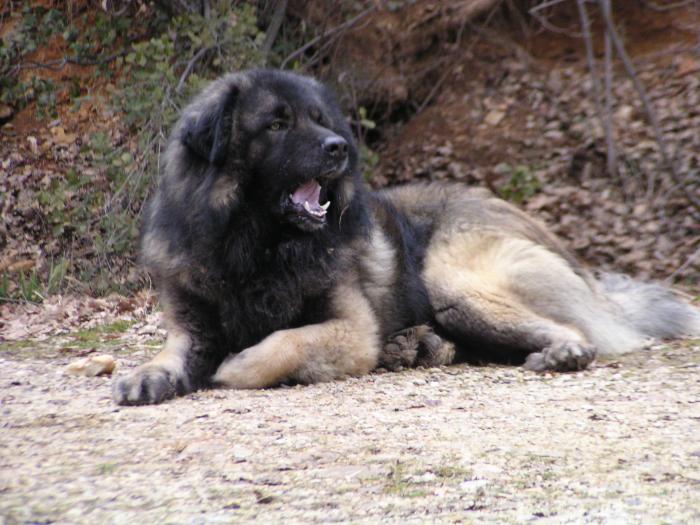
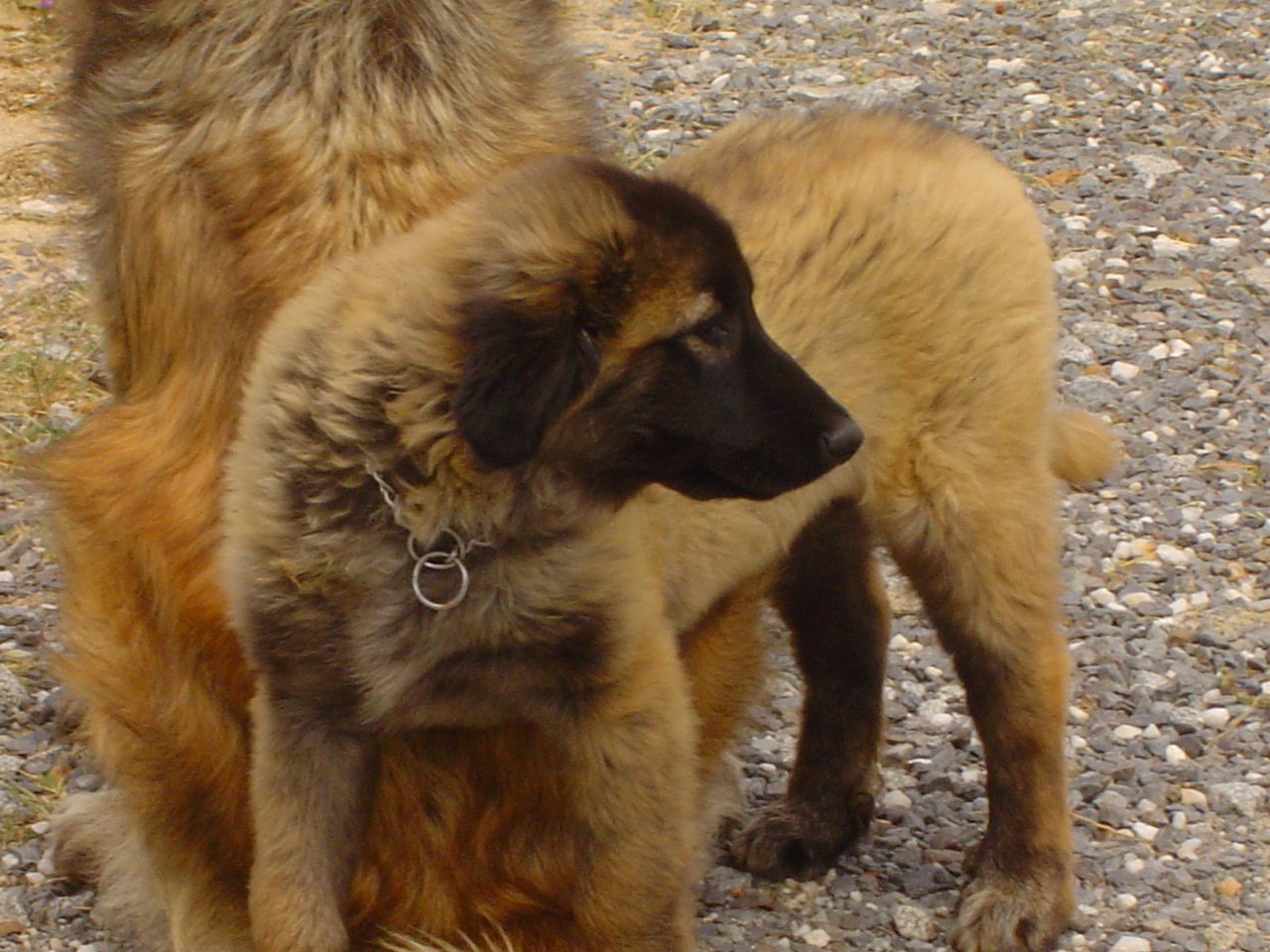
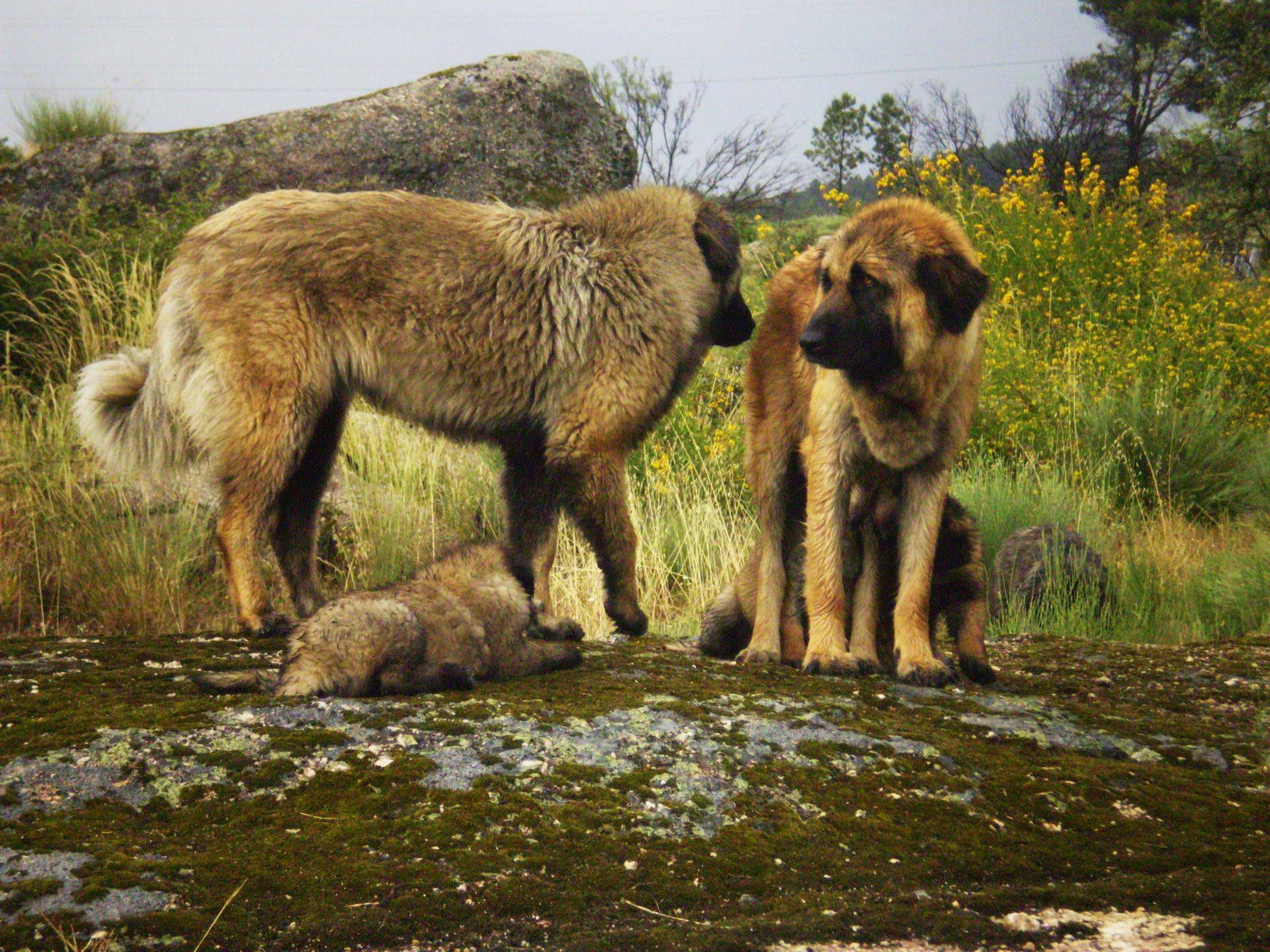
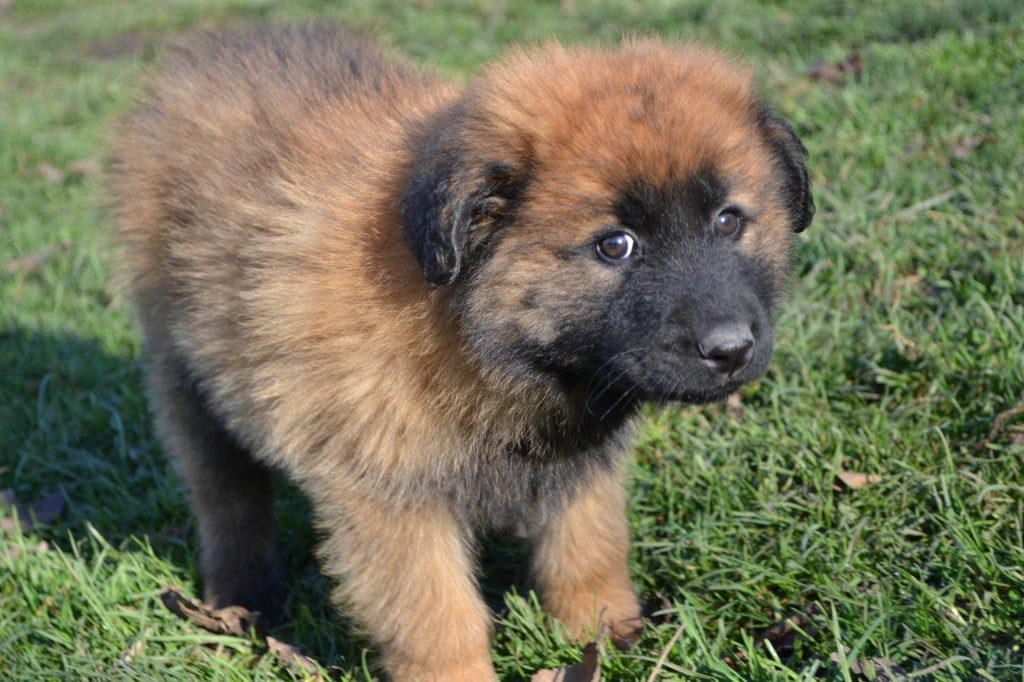
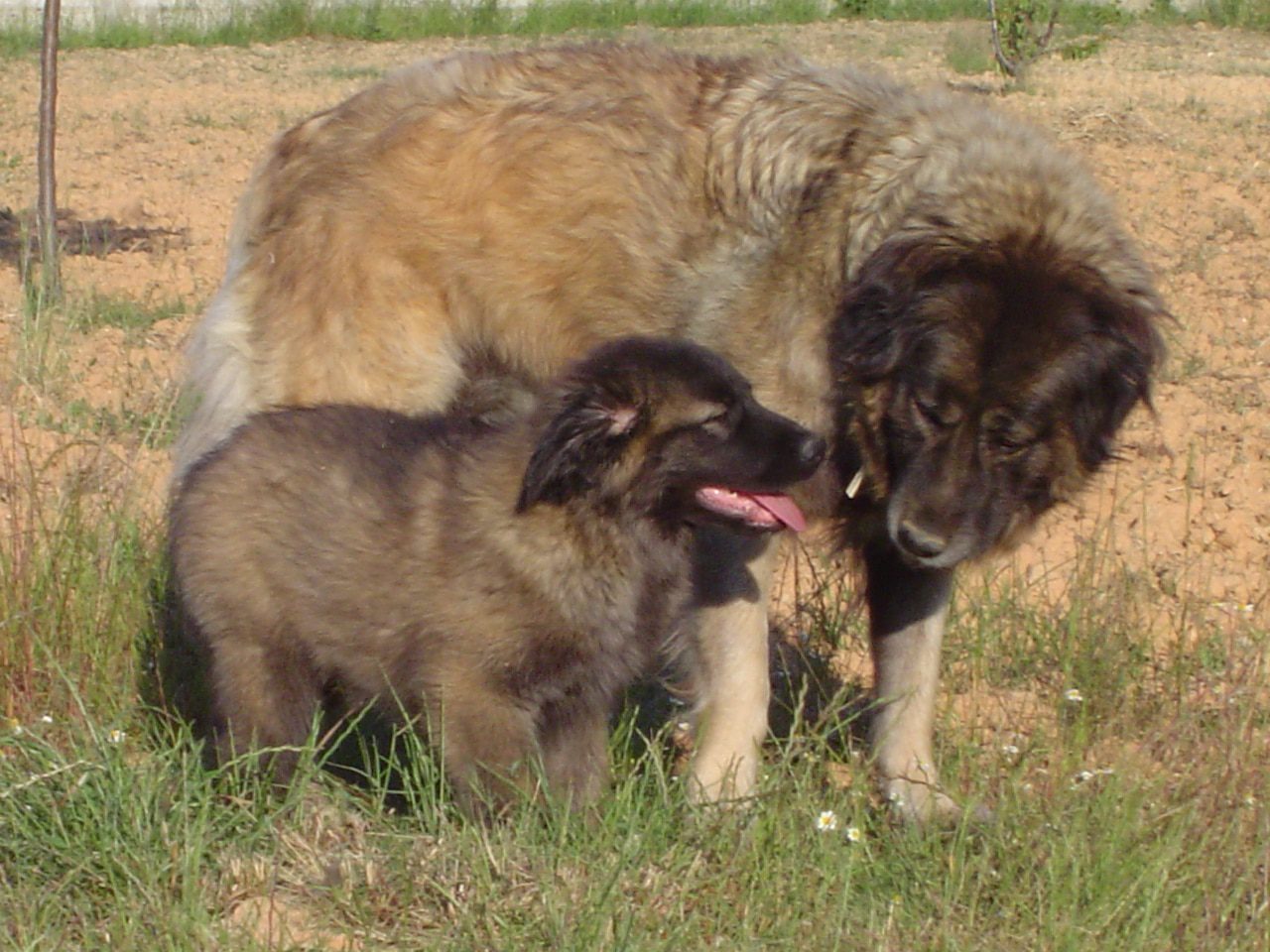
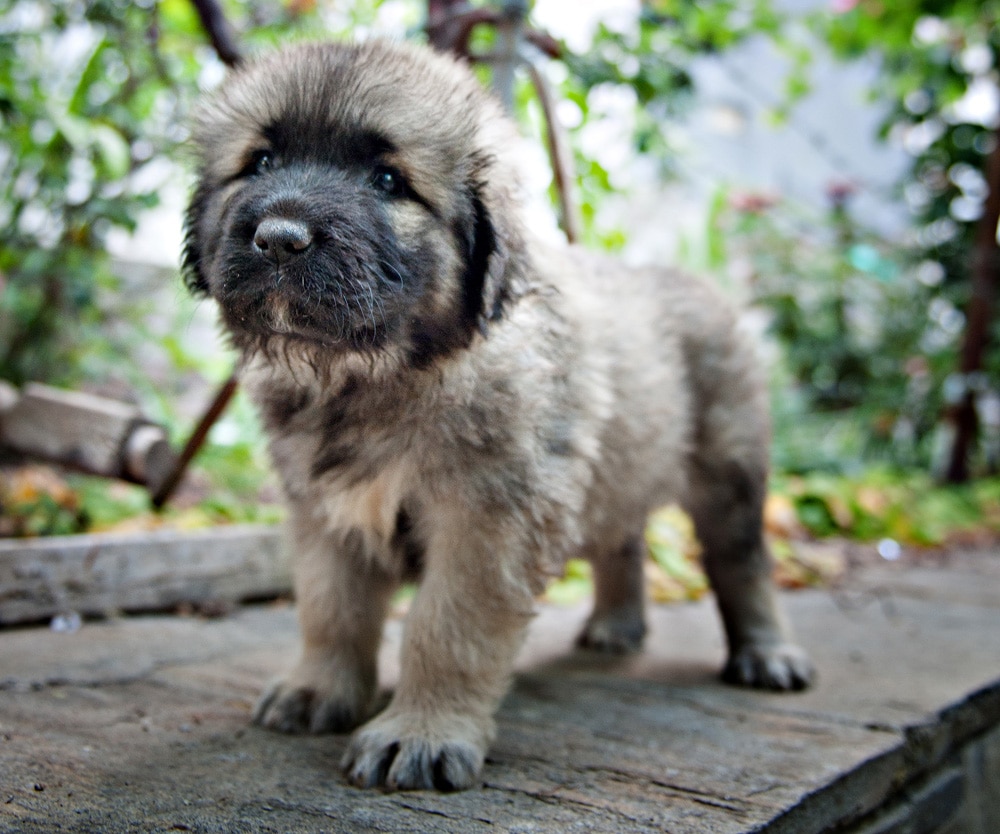
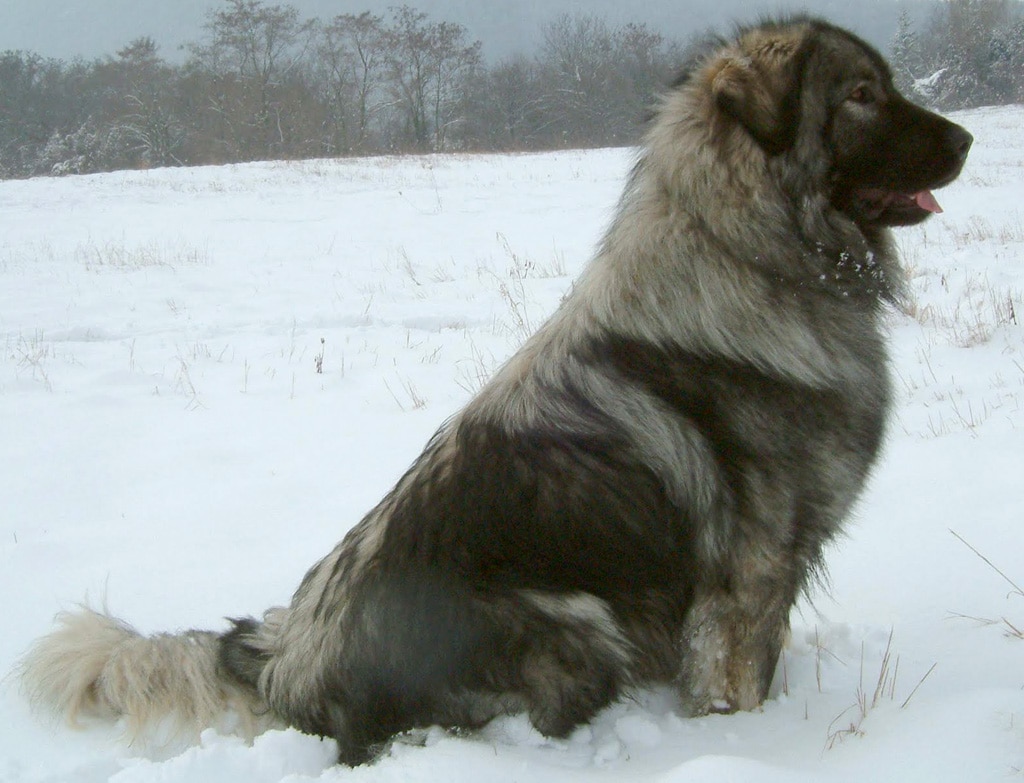
Yugoslavian Shepherd Dog Sharplanina
Yugoslavia FCI 41 - Molossoid . Mountain

Yugoslavian Shepherd Dog Sharplanina

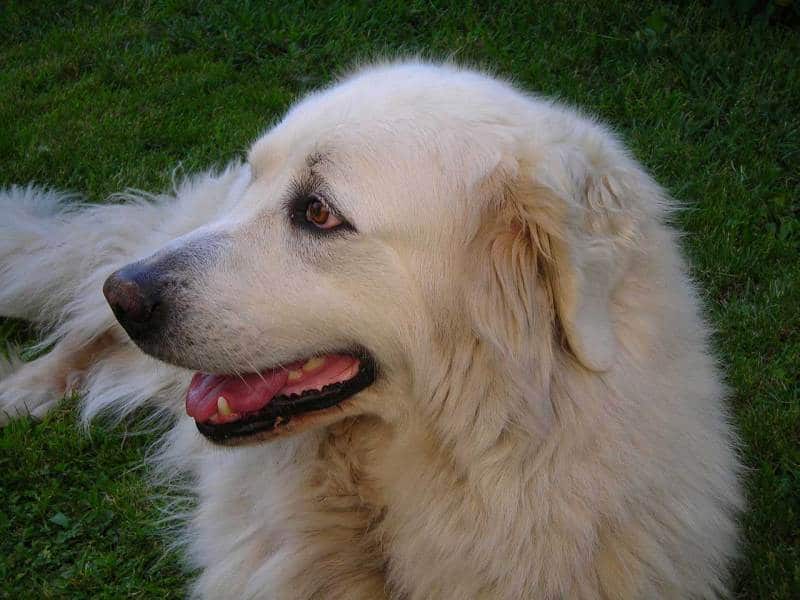
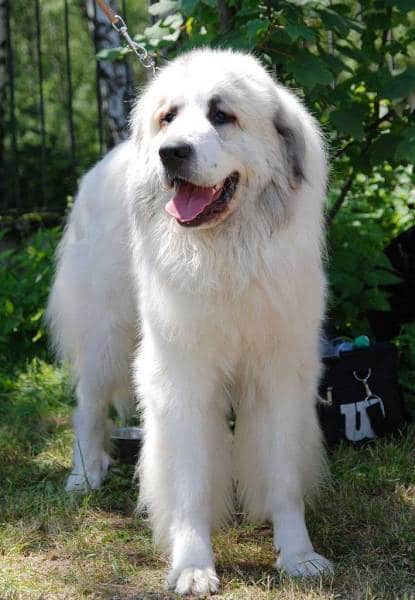
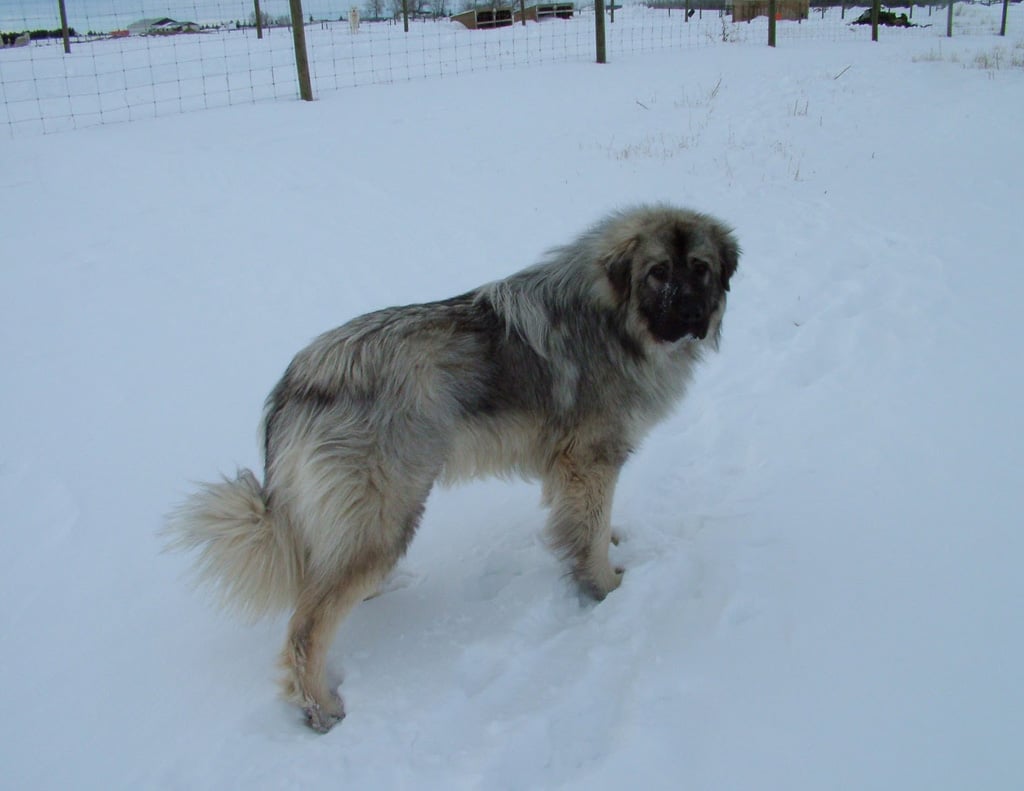
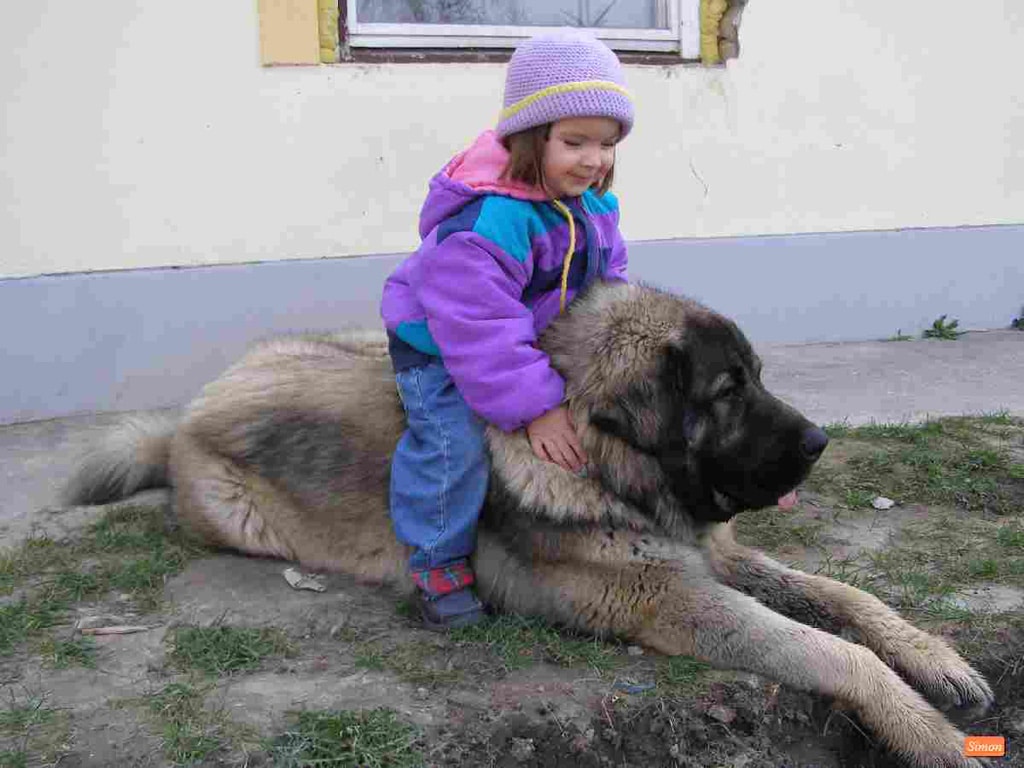
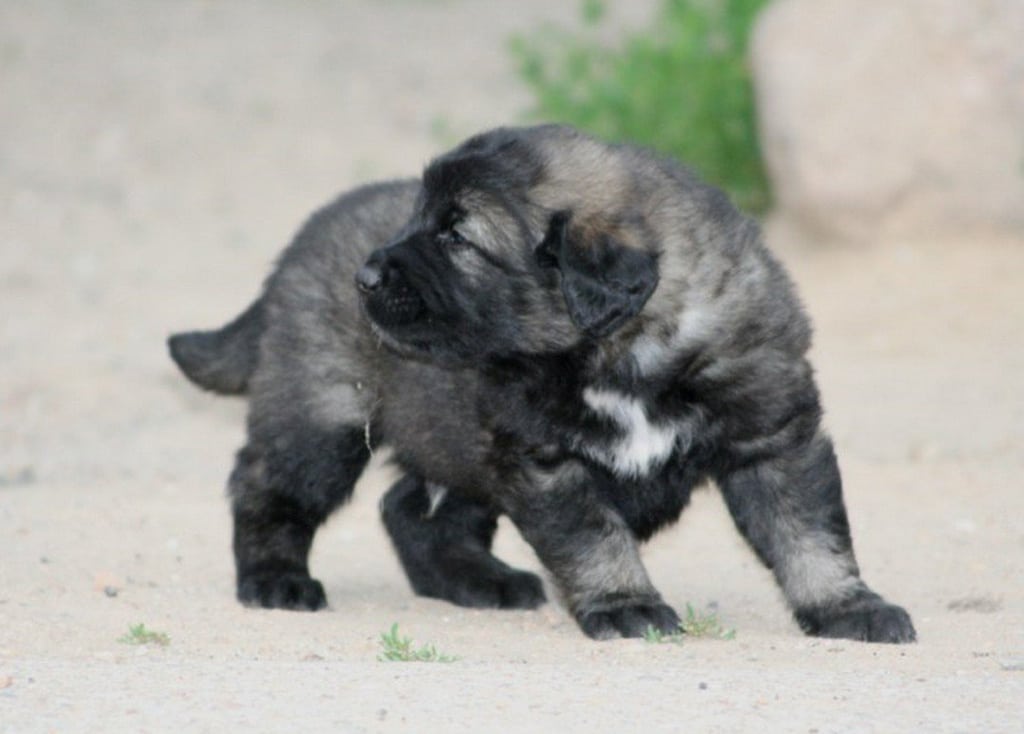
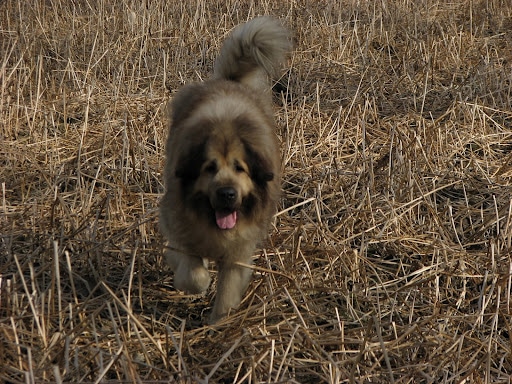
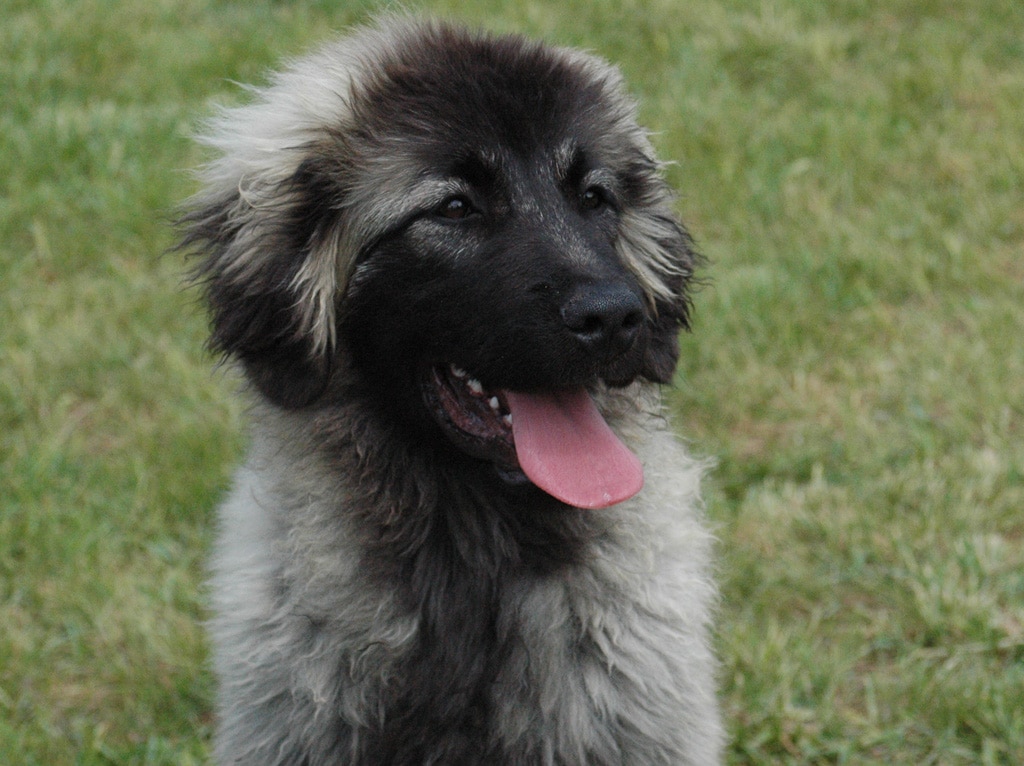
The Yugoslavian Shepherd Dog Sharplanina is a brave dog, quiet, safe and reserved with strangers.

Content

History

As it is the case with many breeds, the true origins of this big guy are unknown, although there are theories that try to approach them. Some authors raised that their ancestors were the ancient molossians, especially dogs from Greece and livestock guarding dogs from Turkey.

Other authors believe that the Yugoslavian Shepherd Dog Sharplanina, drift of Asian dogs that arrived in Europe accompanied by migration of peoples who were engaged in raising them. This theory is the most widely accepted today..

The race was initially recognized by the Federation Cynologique Internationale (FCI) in 1939 under the name Illyrian Shepherd Dog, demonstrating the ancient name of the native region of these dogs.

In 1957, at the request of the Yugoslav Canine Federation (JKS), the FCI changed the name to Yugoslav Shepherd DogYugoslavian Shepherd Dog Sharplanina, because it is in the ล ar Mountains (ล ar Planina in South Slavic languages, is a mountain range located on the southern border of Serbia in the province of Kosovo and in the northwestern part of the Republic of Macedonia), where is concentrated the largest number of specimens of the breed.

If there is something indisputable it is that the Yugoslavian Shepherd Dog Sharplanina, lives since ancient times in the mountainous regions of the former Yugoslavia, from where it has spread throughout the Balkan Peninsula and recently, beyond these borders.

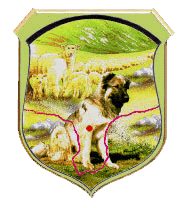
Escudo de DragasThe image of the Yugoslavian Shepherd Dog Sharplanina appears on the obverse of the coin 1 Denar, issued in the Republic of Macedonia in the year 1993, and is also the emblematic protagonist of the Dragaลก shield, a city in the South of Kosovo, which is located in the region of the ล ar Mountains.

The Yugoslavian Shepherd Dog Sharplanina has reached the ranches of North America as an esteemed sheepdog and cattle guardian. Predator problems have been greatly diminished once a Yugoslavian Shepherd Dog Sharplanina , takes the responsibility of a herd. You are one of the few dogs that can chase away a wolf or bear.

Physical characteristics

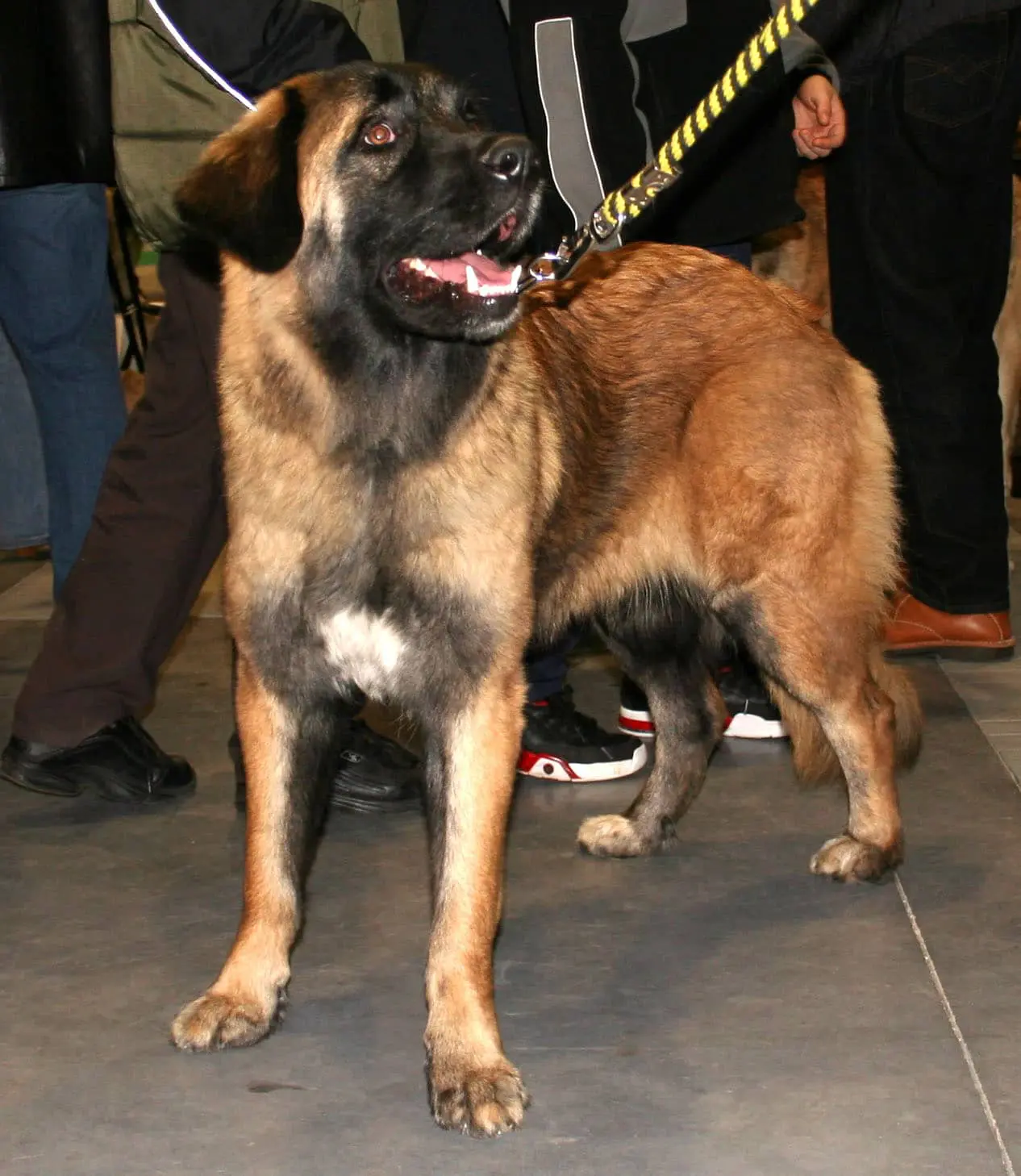
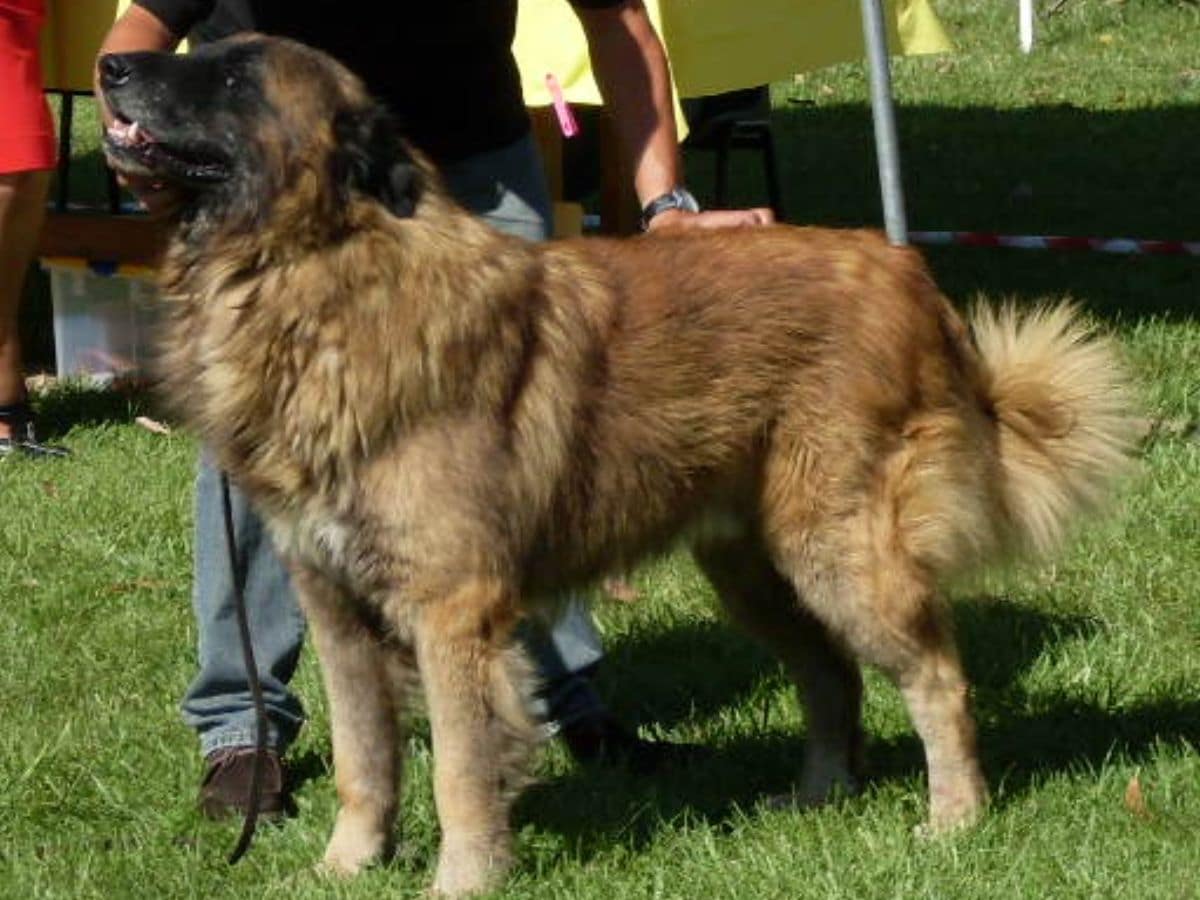
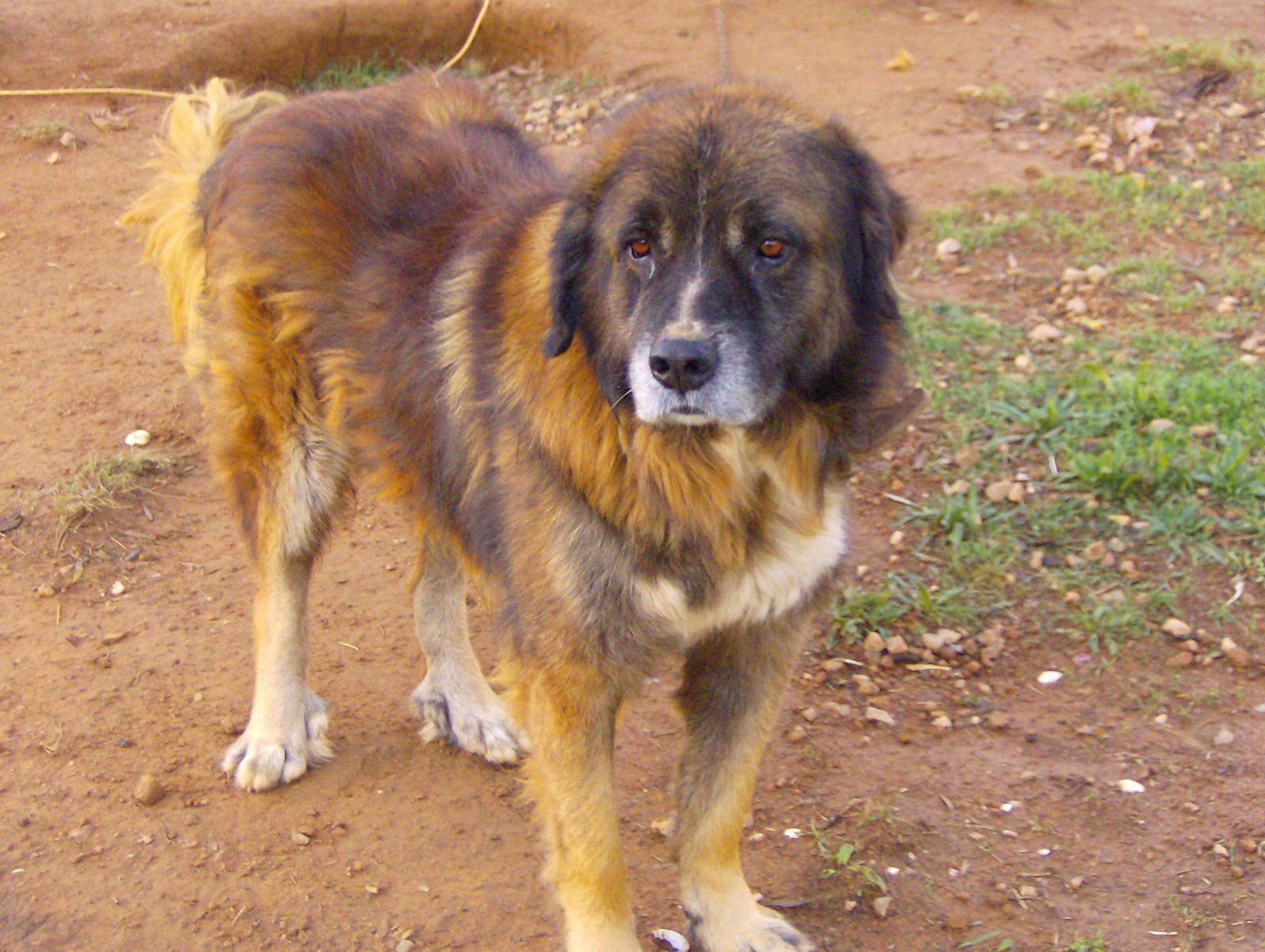
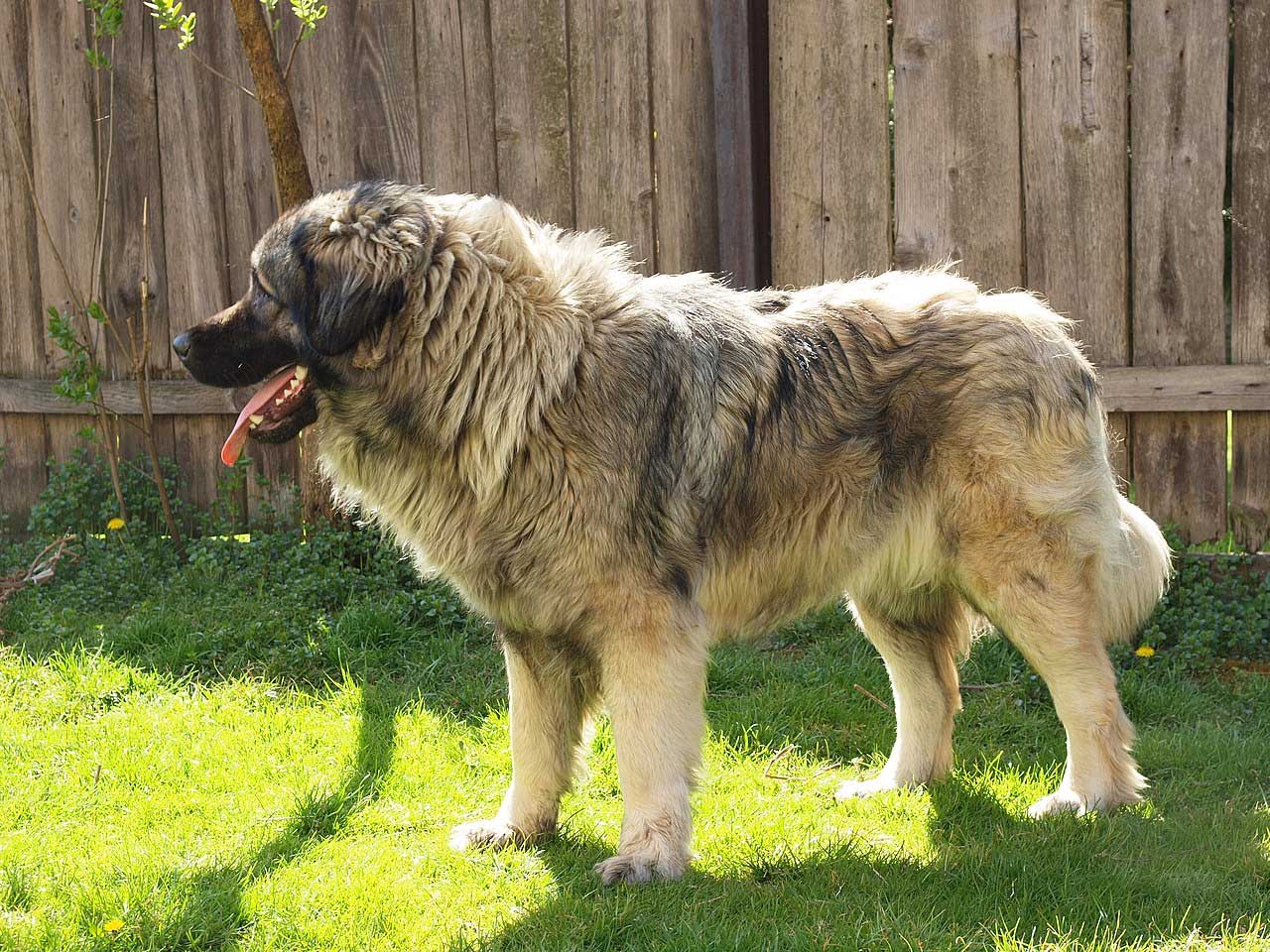
The Yugoslavian Shepherd Dog Sharplanina, is a large size dog, It is quite above average when it comes to large breeds. It is also robust and equipped with a strong Constitution.

The height males average is of 56 to 62 cm and females is of 54 to 58 cm.. The length of the body is slightly greater than the height at the withers.

Although some authors speak of the existence of individuals whose actions were between 75 and 85 cm. of height and a weight of 65 to 100 kg.

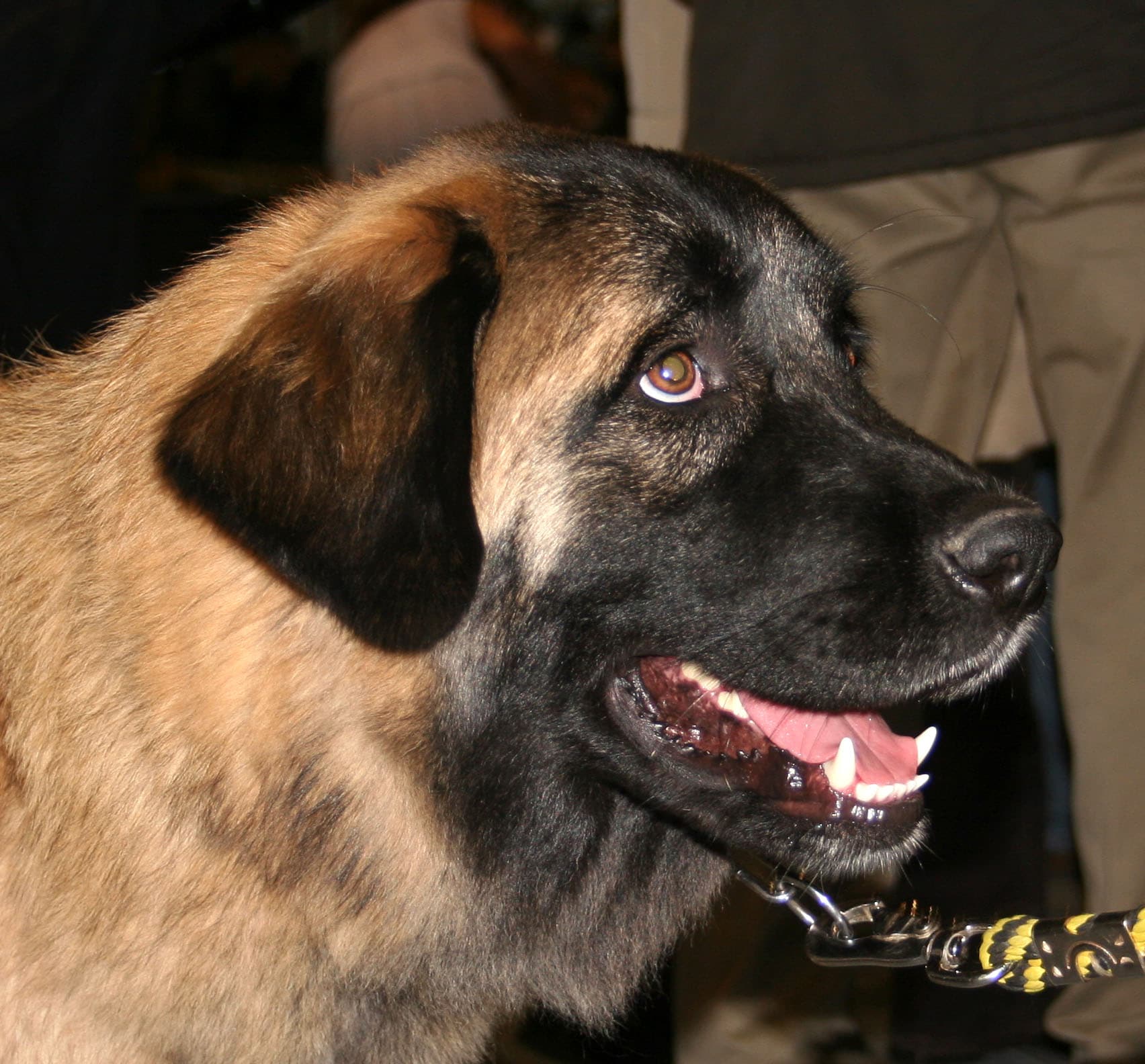
– The huge head is proportional to the body, It has the skull slightly convex and slightly longer than the muzzle.
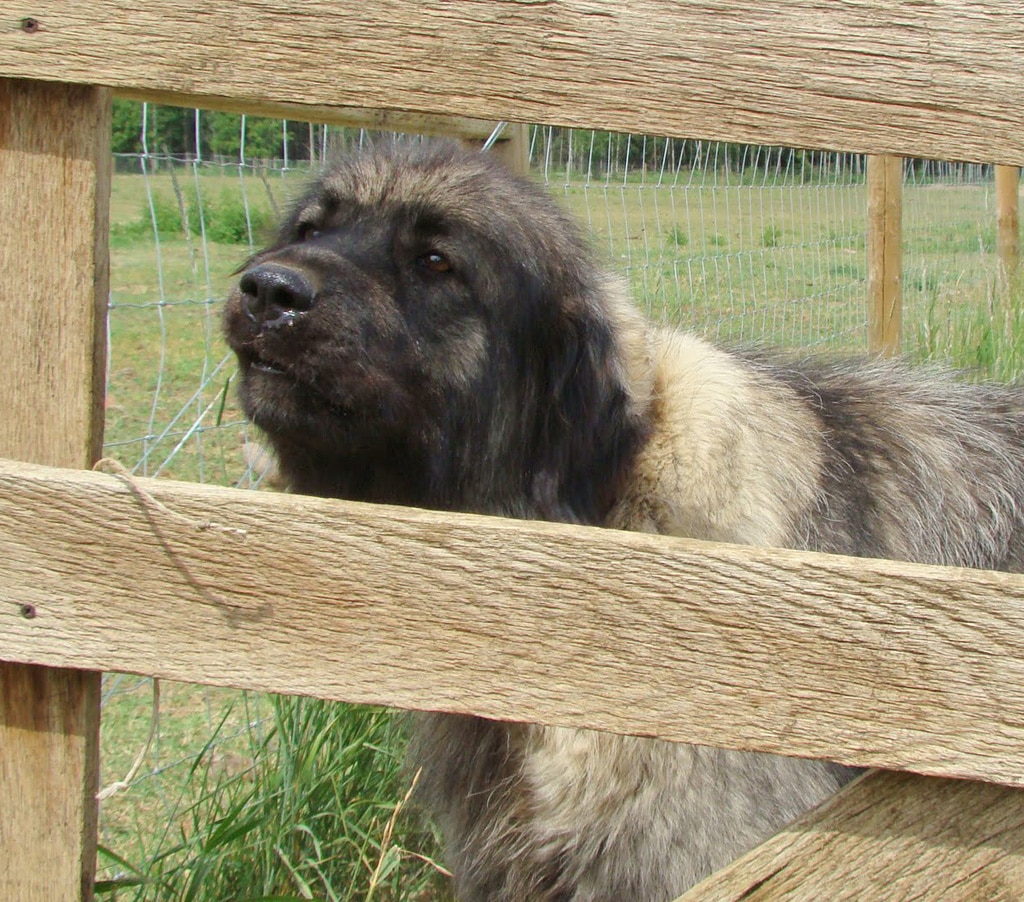
– The eyes of the Yugoslavian Shepherd Dog Sharplanina they are almond-shaped and chestnut-colored (light or dark), transmit an expression of serenity but the look is penetrating.
– The ears they are medium-sized, flat and hang on the cheeks.
– The tail It is long and Sabre-shaped, if it is in a state of alert, it carries it high, barely exceeding the line of the back.
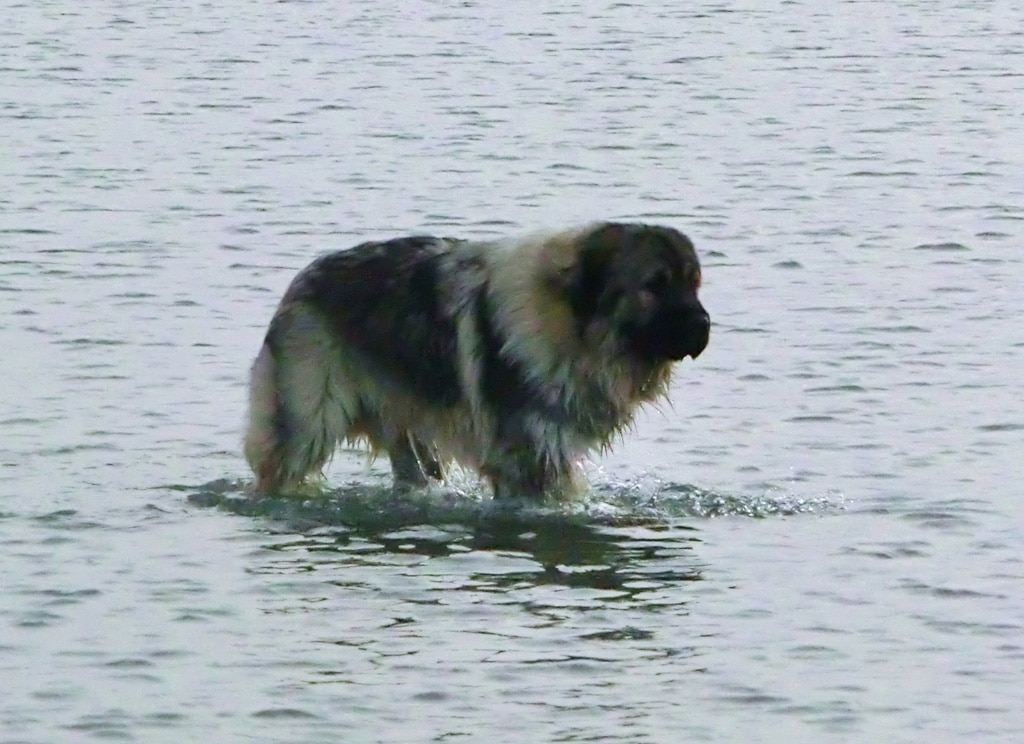
– The fur It is long in some parts of the body and short in others. In the head, the ears and the anterior part of the extremities, is short. The length of the neck, the body and the back of the limbs and tail, is long.
– Regard to the the fur color, all uniform colors are supported but it is preferable to be gray iron and gray very dark. As well, at the top of the head, the neck and the trunk have darker hair.

Character and skills

The Yugoslavian Shepherd Dog Sharplanina it is silent, active and very protective, extremely bright, but very independent. It is an extremely good watchdog, and very reserved with strangers. The Yugoslavian Shepherd Dog Sharplanina they are calm sheepdogs, very smart, which is why, wisely, they choose their friends, trust no one too fast. They are naturally fearless defenders of the pack, as well as his master and his property, so everything he considers his property is jealously and unconditionally guarded. This is a dog with character and very dominant that requires work.. If we just want this dog to be a companion, constant professional education from an early age is essential.

The animals that live with him on the farm will be under his protection and there is no need to fear for them.. But, does not tolerate strange and unknown animals, often aggressive, and the same problems can happen with smaller pets, that can be seen as prey.

She will get along well with the children she will be together with from an early age, will be devoted and protective of them, and you may consider children you don't know as uninvited guests, so we must be very careful. You must be especially careful with younger children, since he will watch over them all the time due to the shepherd's instinct, but if the children want to get away, will drag them back, so you can injure them without realizing it.

Observations

Similar to the Caucasian Shepherd Dogthat is very much– has a temperament more characteristic of a guard dog than a herd dog.

Let us not forget that this agility, He was selected to defend the herds of the attack of wolves that were previously very numerous in their homeland.
It is necessary that the owner of this dog is a person responsible and very conscious of the copy that is in charge of, the Yugoslavian Shepherd Dog Sharplanina, It has a specially developed and powerful teeth, It can be a real danger if the dog is not given a correct and healthy education.

Education "Chaplanina pastor dog"

This is not a suitable dog for beginners. He is very suspicious and incorruptible. Usually, is completely loyal to a single owner. Education must be clear, consistent and should be carried out from the first meeting with the puppy. Early socialization is mandatory. With an inadequate education, this dog can become uncontrollable, very aggressive, dangerous even to the owner.

Required activity

These dogs really need a lot of exercise. If the dog goes to work on a farm, will meet your daily career needs while working, otherwise, need a longer walk or daily run.

Suitable environment

This is a dog suitable exclusively for outdoor life. You will feel better on a farm or in a larger rural fenced yard because you will be able to run freely and perform your primary role as a sheepdog..

Care "Chaplanina Pastor Dog"

Your care is not too demanding. Thick hair just needs brushing once in a while, once a week will be enough, except when you change your coat that more frequent brushing is recommended. As with other dogs, this breed also needs to clean their ears, eyes and shorten their claws.

Health "Chaplanina pastor dog"

No known genetic health problems, it is considered a relatively healthy breed. As with other large breeds, hip dysplasia can occur in this breed.

Images "Chaplanina Pastor Dog"

Videos "Chaplanina pastor dog"

Type and recognitions:

  • FCI CLASSIFICATION:
  • Group :
  • Section : . .

Federations:

  • FCI – Pinscher and Schnauzer-Molossoid type dogs – Swiss Mountain Dogs and Cattledogs. Section 2.2 Molossoid, mountain type. โ“˜
  • CKC – Miscellaneous list โ“˜
  • UKC – Watchdog โ“˜

FCI breed standard "Yugoslavian Shepherd Dog Sharplanina"

Origin:
Macedonia, Serbia, Montenegro

Date of publication of the valid original standard:
24/11/1970

Use:

---


General appearance:

to) It is robust, of strong Constitution, well proportioned.
Its size is above normal. Is covered in long hair, dense and quite thick, giving your body a more collected look. companies, possesses a calm temperament and good character: knows how to be a good defender without attacking. He is faithful to his master and incorruptible.

b) Height to the cross: In the male, the average is 62 cm., and in the female it is 58 cm.. Large dogs are preferred.
The dogs below 56 cm and bitches below 54 cm are excluded from reproduction. In working dogs the weight is 35 to 45 kg in males and 30 to 40 kg in females.

c) body length: It is slightly greater than the height at the withers: of 8 to 10% from height to withers in dogs, and 10 to 12% in
the bitches.


Behavior / temperament:

---

Head:

Is provided to the body and measures about 25 cm., or a 40% the height at the withers. The skull is slightly longer than the muzzle, 58 and 42% respectively of the total length of the head. The female has a little longer snout (57 and 43%). The top of the skull is slightly convex and the profile of the nasal helm is straight. The lines of both profiles are convergent.

Cranial region:
  • Skull: The cranial region is wide, with a medium marked Groove. Seen from side and from above is slightly convex and little bulky.
  • Depression links (stop) : It is little pronounced.

facial region:

  • Snout: It is shorter than the skull. Wide and deep at the base, light and gradually are reduced. The nasal helm is straight and wide. The profile of the lower jaw begins with an arch and is confirmed by a straight line that diverges from the profile of the nasal bridge..
  • Truffle: Is wide and black.
  • Lips: They are moderately thick and stretched. The upper lip slightly exceeds the lower. The corners are well connected, and they are not never reversed.
  • Teeth: They are comprehensive and applied in scissor bite.
  • Eyes: Almond biscuits; or large, or sunk. Are dark or light brown, and calm expression, but penetrating and never afraid. Both the eyelids and visible mucous membranes are black.
  • Ears: Located at the level of the prolongation of an imaginary line that starts from the tip of the nose and passes through the inner corner of the corresponding eye, or below. They are hanging and fall glued along the cheeks. They are V-shaped and medium in length.; When stretched them slightly arriving to the inner corner of the eye. They are covered with short dense pile.

Neck:

The upper profile is slightly convex or straight at the top of the neck. The lower profile is straight. The neck is of medium length, but due to the long and bushy hair seems shorter. It is wide, deep and muscular, well attached to the head and body, no sharp demarcation. It is slightly elevated in relation to the dorsal line. Your skin is stretched and does not double chin. The hair is dense, long and rough, and arriving at the head it forms a sort of well marked necklace, which apparently increases the breadth and depth of this part of the head.

Body:

As a whole, the top line is horizontal, or slightly inclined starting from the cross to the rump. In dogs bred in the mountain, be tolerated that the height of the rump is just greater than the height at the withers, Although this is not desirable. The body is slightly longer than the height at the withers.

  • Cross: Slightly marked and wide. It is strongly attached to the neck and the demarcation is inconspicuous.
  • Back: Straight and wide; is not too long.
  • Pork loin: The lumbar region is shorter than, wide and well muscled.
  • Rump: Is medium length, oblique, wide and well muscled.
  • Breast : The chest is deep and medium length; along with the bottom edge reaches the elbow. The ribs are slightly arched. The chest is wide and muscled. Chest girth should be at least 20% greater than the height at the withers.
  • Belly: Built and muscular. Lower profile line rises slightly from front to back. The legs are fairly short. The depression of the rump is marked.
  • Tail: It is long and at least reaches the tip of the Hock. The top margin of the rump, that it does not have a sharp demarcation, extends to the margin of the tail. This is large at the base and gradually reduces towards its end. The hair of the tail is dense and its bottom edge is longer, forming bangs. The oxtail Sabre-shaped and when the dog is moving is raised. When the dog is in motion, the tail may be above the line of the back..

Tail:

It is long and reaches at least to the point of the hock. The top line of the croup, that it does not have a sharp demarcation, extends to the margin of the tail. This is large at the base and gradually reduces towards its extremity.. The hair on the tail is bushy and longer on its lower edge., forming bangs. The tail is shaped like a saber and when the dog is in motion it appears raised. When is the dog moving, tail can be found above backline.

Tips

Seen as a whole are well shaved and commensurate with the body. The height of the tip of the elbow is a 55% the height at the withers. The different parts of the limbs are in proportion to each other and to the rest of the body..

  • Shoulder: It is sufficiently long and wide and is well attached to the body. It is slightly oblique and forms an angle of 65ยฐ with the horizontal line..
  • Arm: It is more oblique than shoulder, forming an angle of 55ยฐ with the horizontal line. The angle of the elbow (humeral-radial angle), is 145ยฐ. The elbow is wide, It is well located and very little separated ribs.
  • Forearm: Is vertical, of bones, and well-developed musculature. It is long, and his back is covered with long hairs that are fringe.
  • Carpo: Width, thickness and presents a slight demarcation.
  • Metacarpus: It is wide, strong and slightly oblique.
  • Pies: Strong, oval-shaped, with fingers arched and well together. The nails are black and solid. Digital pads and Plantar are firm, though flexible. Are black or a dark pigmentation.

HINDQUARTERS: Seen from the back, the position of the hind legs is uniform and slightly larger than the forelimbs. In profile, is also uniform, with the angles of the joints sufficiently closed.

  • Thigh: Muscled, strong and rounded. It is oblique, forming with the horizontal line an angle similar to that of the shoulder. The angle of the knee (stifle-tibial angle) It is a little more open than the scapular-humeral angle (around 125ยฐ). The knee is solid and wide.
  • Leg: It is oblique, strong, with a long enough musculature and well-marked bangs.
  • Hock: Wide and fairly open (an angle of about 130ยฐ).
  • Metatarsus: It is a bit less oblique to the Metacarpus. Rarely presents Spurs, But if this is low, they should be disposed.

Movement:

The step is long and agile. Preferred movement is the trot, high strides and medium length. During the Gallop motion is somewhat heavy, but long jumps well covering the field.

Mantle

SKIN: Is of medium thickness; elastic and well stretched on different parts of the body. There is no presence of dewlap. All visible mucous membranes are black, or a dark pigmentation.

Fur: The head, the ears and the outer parts of the limbs are covered with short hairs. The neck, the body, later parts of the limbs and tail are covered with long hairs almost stretched and slightly thick. The inner layer of hair presents a short hair, finest, very thick and abundant. Dl hair is in the cross the length of 10 to 12 cm.; cannot be shorter than for 7 cm..

Color: This is a dog of a single color. All the shades of colors are supported, from white, until dark brown, almost black. The most valued colors are greenish gray (grey iron), the dark grey. Piebald fur or white spots are not allowed. Pigmented dogs allow small white markings on the chest region and fingers, Although this is not desirable. The background color is more pronounced on the upper parts of the head in all pigmented dogs, the neck and trunk.

On the lower parts of the body, There is a degradation of color, and the color is lighter in the lower parts of the extremities, arriving at the gray beige or dirty. In no case should these degradations appear well delimited, imparting a light marking or piebald appearance.


Size and weight:

---


Fouls:

Any deviation from the above mentioned criteria is considered an absence and severity of this refers to the degree of deviation to the standard and its impact on the health and welfare of the dog.

MINOR FAULTS

  • Insufficient breadth of the cranial region, and the slightly longer snout.
  • well developed jaws.
  • Length and depth of chest insufficient.
  • Too flat ribs, or too arched.
  • Pronounced aplomb defects.
  • A bit shorter hair, as long as the fringes are clearly visible.
  • White markings on the chest region and feet.
  • A slight reduction of the tail.
  • The foot of Hare, as well as other minor physical offenses.

SERIOUS FAULTS

  • Too long snout, or too sharp.
  • High set ears, or they deviate from the head (they are not enough stuck to the cheeks).
  • Bite in the form of iron.
  • Sunken back.
  • Tail that falls to the side.
  • Lymphatic Constitution, as well as other serious physical offenses.

MISS PLAYOFFS

  • Aggressive or fearful dog.
  • Absence of premolars.
  • A difference marked between body length and the height at the withers.
  • Insufficient Withers height.
  • The lower hair length to 7 cm..
  • Large white markings (piebald fur), stripes (atigrados), depigmentation of the visible mucous membranes and eyes.
  • Signs of degeneration (braquignatismo or prognathism, short birth tail, or lack thereof, too depressed back, and other signs of degeneration.
  • Any dog โ€‹โ€‹showing clear signs of physical or behavioral abnormalities must be disqualified..


N.B.:

โ€ข Males must have two normal-appearing testicles fully descended into the scrotum..
โ€ข Only functionally and clinically healthy dogs, with the typical conformation of the breed, should be used for parenting.

Source: F.C.I - International Cynological Federation

Alternative names:

1. Illyrian Shepherd Dog, ล arplaninac (English).
2. berger yougoslave, charplanina, charplaninatz berger albanais, sarplaninac (French).
3. ล arplaninac, Jugoslovenski Ovฤarski Pas โ€“ ล arplaninac, Jugoslawischer Hirtenhund โ€“ ล arplaninac, Illyrischer Schรคferhund (German).
4. ล arplaninac, Charplaninatz, Sarplaninac (Portuguese).
5. Charplaninatz, Perro ovejero ilirio, Perro pastor ilirio, Perro montaรฑรฉs de Serbia, Perro pastor de Serbia, Perro montaรฑรฉs macedonio, Perro pastor macedonio, ล ar Planinac (o ล ar Planinec), Perro pastor yugoslavo, Perro montaรฑรฉs yugoslavo (espaรฑol).

โ–ท The world of Pets: Dogs, cats, birds, reptiles, amphibians

Castro Laboreiro Dog
Portugal FCI 170 - Molossoid . Mountain

Perro de Castro Laboreiro

The Castro Laboreiro Dog It is an excellent guard dog and companion

Content

History

The Castro Laboreiro Dog (Cรฃo de Castro Laboreiro) It is a breed of Portuguese dog of large size. Originating in the parish of Castro Laboreiro, Melgaรงo, is a dog type Lupoid amastinado is lighter than other breeds of cattle dogs.

The Castro Laboreiro Dog it has its origin in the region that gave it its name, the people of Castro Laboreiro, in the municipality of Melgaรงo. It is a rugged mountainous region that stretches from the Miรฑo river to the Peneda and Soajo mountains between the Trancoso rivers, Laboreiro and moro, until around 1400 m above sea level.

Like the dog, Castro Laboreiro is one of the oldest regions of the land of Portugal. The prehistoric remains such as dolmens and rock paintings, They demonstrate the presence of man in the region for thousands of years. The strengths are evidence of the strong presence of Celtic culture in the region. Also the Celts and the Romans came here, the roman roads and the construction of bridges with their landmarks. The castrejas communities have always lived of hunting, fishing, grazing and agriculture.

Read more

โ–ท The world of Pets: Dogs, cats, birds, reptiles, amphibians

Estrela Mountain Dog
Portugal FCI 173 - Molossoid . Mountain

Estrela Mountain Dog

The Estrela Mountain Dog is a big dog, rough lines and powerful appearance

Content

History

The Dog of the Sierra de la Estrela (Cรฃo da Serra da Estrela) It is a breed of dog native of Portugal, in the mountainous region that bears the same name. It has all the qualities required in this wild region, is intelligent, loyal and brave.

There are those who hold the theory that they were introduced to Portugal by the Visigoths and slowly to various parts of Europe.. The Estrela Mountain Dog was used mainly- in mountainous areas to accompany shepherds and flocks on their annual migrations, defending the wolves and thieves.

It is believed that the two varieties of existing hair: short hair and Longhair, they are due to regional variations. Contrary to what might be expected, the warmest region, the region of Manteigas, is where you could find the long-haired dogs, While short hair varieties were most frequent in the North, in Gouveia e Seia. Crosses between these two varieties were frequent.

In 1934 the standard of the breed was drafted, which was established according to its two varieties of layer. From this point, the cross between two varieties became undesirable. The publication of the rule in 1966 and the recognition of the breed by the FCI, have not brought more popularity to the breed. Over the years 60 and 70, the Portuguese emigrated looking for escape from the regime of poverty. The population of dogs Serra da Estrela declined drastically in that period, but the dedication of some breeders allowed the continuity of the breed.

Today, the Estrela Mountain Dog is highly requested, especially the variety of long hair. While the variety of short hair was more numerous at the beginning of the last century, is the variety of long hair that stands out, especially for being more eye-catching, stylish, with a larger. This made the breeders will focus primarily on the variety of long hair. Today the short-haired variety is particularly vulnerable and rare..

Physical characteristics

The Estrela Mountain Dog is a big dog, rough lines and powerful appearance. The head is huge, rounded and with a stunning skull. It has oval eyes, very expressive, Smart and serene.
The ears they are small and pendants, covered with a soft skin.

mastiff-type molosoid, the Estrela Mountain Dog has a broad chest and a slightly drooping rump. The members are strong and muscular. The tail is long, thick and slightly droopy.

There are two varieties of Estrela Mountain Dog: long hair and short hair. The hair is strong, thick, but not too rough. In some regions it is longer than others, especially in the queue, around the neck and back.

Only allowed the tawny colors, Lupine and yellow, monochrome or marbled.

Observations

Estrela Mountain Dog is a healthy dog, due to the strong natural selection which was exposed. But, There are some diseases of large animals with a higher incidence in this breed. The Dysplasia is one of them, especially that of hip. Due to this trend, owners must use quality diets, not exercise too your dog when he is young, avoid the steep stairs, breaks and slippery floors.

The variety of long hair they require more maintenance: brushed daily to untangle hair.
The variety of short hair only needs weekly brushings. Bathing should only be administered, only, When cannot be avoided,Since the protective greasiness of the skin can be damaged by cleaning products.

Character and skills

The Estrela Mountain Dog has always been kept with the sheep, While pastor was away from his flock the dog developed an independent organization and this led to his character of excellent guard dog.

It is also used for self defense and as a dog shot.

The Estrela Mountain Dog, due to its isolation and difficult access, It has become the home of this breed of dog. His hard hair helps you survive the harsh winters of the region. Each race has its specific character developed throughout its existence, of their own history.

This more or less independent nature makes this breed adapts well to modern times, where instead of caring won, waits for their owners to return from work at the end of the day. They have a lot of patience.

The beauty of this dog, his intelligence and strength, are the characteristics that allow him to be in addition to an excellent guard, a good family dog and very tolerant with children.

Habitat Estrela Mountain Dog

The Estrela Mountain Dog it's a big dog with a big boost. So, an apartment in the city is not ideal for him. Fluctuations of time and temperature do not bother him much, so you prefer to spend the day outdoors. So, the ideal is a house with a large patio or garden where you can move freely. It also, does not want to do without his long walks. For many other canine sports, requiring reliable obedience, is however hardly suitable due to its obstinacy.

Nutrition Estrela Mountain Dog

The Estrela Mountain Dog requires a correspondingly large serving of food, which should also be considered when buying it. Proper dog feeding helps keep it healthy for a long time. Whether one wants to use dry or wet food is a matter of personal preference.. In particular, nutrition during growth, especially in large dogs, sets the course for later life.

While puppies and adult dogs need enough energy, young dogs need an adapted diet, protein rich, to ensure that your muscles and skeleton grow evenly. If the young dog grows too fast on food that is too high in energy, there is a risk of permanent joint problems and malpositions. It also, It should be noted that all large breeds of dogs are at risk of stomach upset if the daily ration is administered at one time.. So, it is better and healthier to divide the food into at least two servings in the morning and at night and then give the animal a break for digestion.

Education and care

Due to the close connection of the Estrela Mountain Dog with humans and their good understanding, good conditions are created for purposeful education. But, the race's own head should not be underestimated. The Hound of the Sierra de la Estrela dog stubbornly reacts to too much hardness in training and the orders he considers meaningless. Therefore, the right key to a successful workout is patience, empathy and a consistent hand. During training special attention should be paid to the tendency to dominate, especially in males.

Although this is rarely directed against humans, but mainly against other big dogs, can disturb harmonious interaction and, above all, The walking. Ideally, great importance should be given to socialization already in the breeder. You should also practice meeting other dogs as soon as possible after your dog has moved in.. You can learn that other dogs are an enrichment and not a danger and that dominant behavior is not tolerated. In a good dog school you will receive many tips when in doubt, which will facilitate the management of your Dog from the Sierra de la Estrela.

A lot brushed in the change of coat

The Estrela Mountain Dog has a dense coat with a lot of undercoat, that adapts to weather conditions. The change of coat is therefore strong in this breed. To facilitate this process for the animal and reduce the amount of dog hair at home, should be brushed sufficiently and correctly, especially during the period. Ideal for this purpose are the special brushes, they can comb the bottom layer. Outside the change of coat phase, brush once a week.. The rest of the preparation is limited to a minimum. Especially if the dog is outside and a lot in the meadows and forests, should be checked regularly for parasites. If required, claws must be shortened with claw pliers.

Typical health and illnesses

The Estrela Mountain Dog it is a very robust animal that does not have to fight with the typical diseases of the breed. But, being a very large breed, you may suffer from dysplasia of the hip joint. Breeders recognized by the FCI only use parents that are not affected by this disease for breeding purposes., which also greatly reduces the risk to offspring.

Estrela Mountain Dog life expectancy

As a healthy race, the Estrela Mountain Dog reaches an age of 10 to 12 years without difficulty and generally without many visits to the vet. Proper nutrition and parenting are the prerequisites for a long and healthy life.

Photos Estrela Mountain Dog
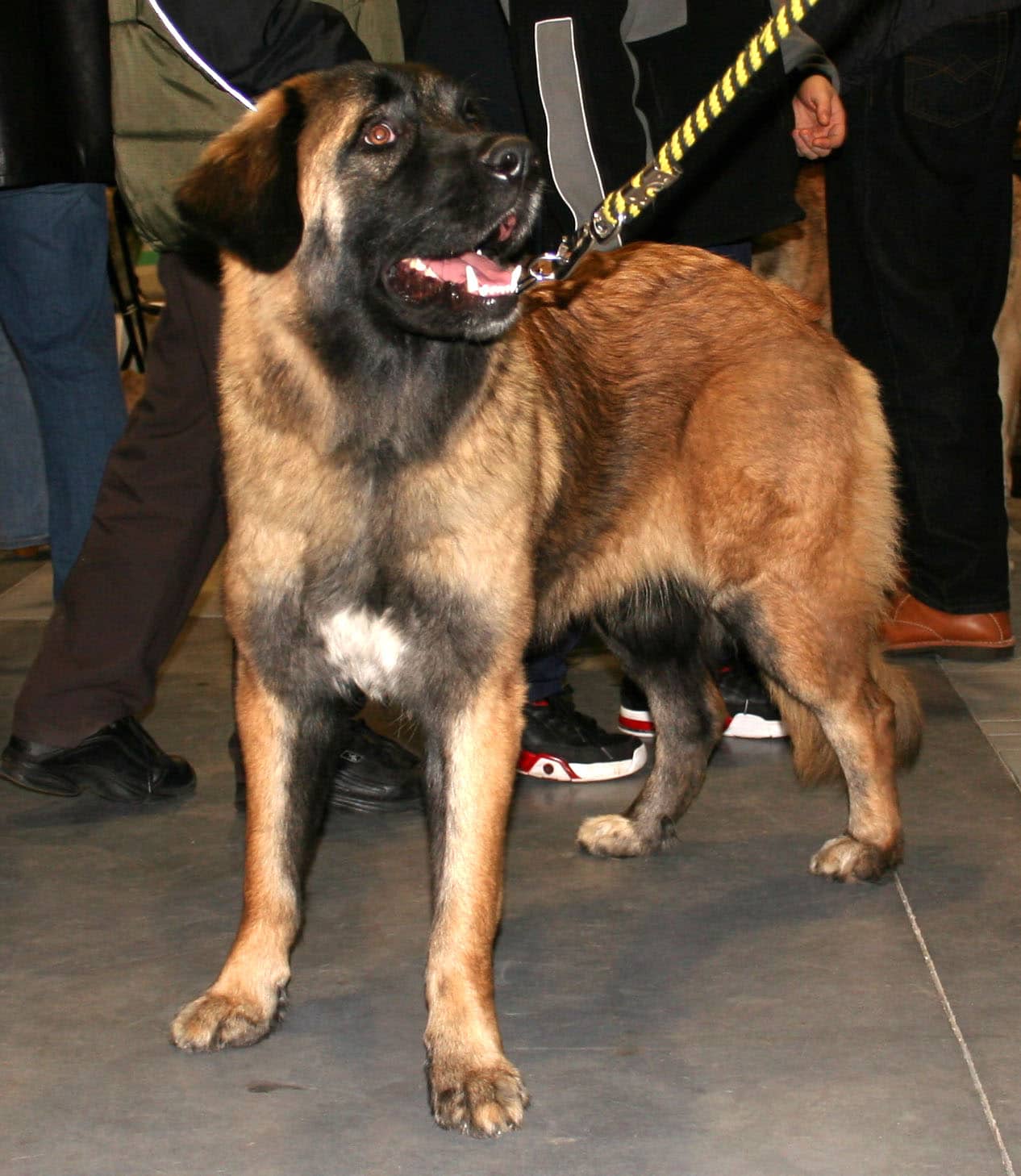
Videos Estrela Mountain Dog

Type and recognitions:

  • FCI CLASSIFICATION:
  • Group :
  • Section : . .

Federations:

FCI โ“˜, AKC โ“˜, ANKC โ“˜, โ€‹KC โ“˜, NZKC โ“˜, UKC โ“˜ – The AKC does not have its own standard and instead is linked to the FCI

FCI breed standard "Estrela Mountain Dog"

Origin:
Portugal

Date of publication of the valid original standard:
04.11.2008

Use:

Herd guard dog, surveillance and companion dog also used in shooting work.


General appearance:

The Sierra de la Estrela Dog is a mastiff type. There are two varieties of hair: long and short. Rustic, of much substance with a strong movement and stunning attitudes.

The breed has a cheerful look, calm and expressive. Well proportioned, morphologically perfect, compact and rustic; The harmony of the whole is remarkable and demonstrates an ethnic purity of ancient races of the past.

IMPORTANT PROPORTIONS :

Medium long (long sub) tending to the middle line. Depth of chest is less than half of its height at the withers. The muzzle and the skull should be approximately the same length, If that is not the case, the skull should be slightly longer.


Behavior / temperament:

Inseparable companion of the pastor and faithful guardian of the herd protect against predators and thieves. Excellent dog guard farms and households, distrustful of strangers and typically docile towards its master.

Head:

Strong, voluminous. It is elongated and slightly convex profile view. Well positioned and provided to the body, the same as the relationship that keep the skull and facial, accentuate the harmony of the whole. Smooth skin over the skull and cheeks.

Cranial region:
  • Skull: Well developed, rounded skull facial longitudinal top spindles slightly divergent. Convex profile, superciliary arches slightly developed with a slightly apparent frontal fold. No prominent occipital protrusion.
  • Depression links (Stop) : Slightly pronounced, located at a more or less equal distance between the end of the nose and the occipital Protuberance.

facial region:

  • Truffle: Straight and aligned with the nasal bridge, well open Windows, big and black.
  • Snout: Elongate, slimming progressively towards the tip of the nose, but do not be sharpened. Almost straight nose cane, Although slightly hooked at the end.
  • Lips: Well developed but not thick, well bonded without tilting.  The mucous membranes of the mouth and palate, as well as the very pigmented black edge of the lips.
  • Jaws / Teeth: Well-defined mouth with well-developed jaws, full dentition with strong teeth, White and well implemented and good occlusion. Preferably bite in scissors, accepting bite on clamp.

Eyes: Horizontal, oval-shaped, at the level of the head; are medium-sized, aimed at small, symmetrical and wide open, with a calm and alert expression; Dark amber in colour preference. The eyelids are well bonded and pigmented black edges. A little marked eyebrows.

Ears: Small relative to the rest of the skull, form triangular, thin, rounded at their lower edge, pendants; inserted at a medium height, is tilted back slightly and hang to the sides of the head near the cheeks, revealing a part of your inner side in the base (called Pink ear).

Neck:

Straight, short and thick, correctly inserted on the shoulders and with a slight dewlap but not exaggerated.

Body:

  • top line: Straight. Level.
  • Back: Short preferably, well muscled.
  • Pork loin: Lumbar region wide, short, muscular and properly inserted to the rump.
  • Rump: Slightly inclined, short, broad and muscled. The height at the Croup should be equal to or slightly greater than the height at the withers.
  • Breast : Rounded, without being cylindrical, broad, long and well descended.
  • bottom line: The bottom line should gradually and gently rise from the sternum to the groin, not too wide belly, in proportion to the substance of the animal and harmoniously connected with the body.

Tail:

Robust, long, whose tip reaches the tibio-tarsal joint when the dog is standing or at rest. It is thick in the shape of a ยซ scimitar ยป, inserted at a medium height, well covered with stripes on the variety of long hair and hair ; is a hook at the end. The tail is carried below the horizontal line and falls naturally between the thighs when the dog is at rest. ; When stimulated or in action, it is carried higher than the horizontal line, forming an upward curvature., Go ahead, to the sides or down.

Tips

PREVIOUS MEMBERS: Plumb, with bones and joints strong, fairly open with unrestricted movement angles.

  • Forearm:  Straight, parallel, long, with strong bone and always cylindrical in shape.
  • Previous foot: Provided, never too round or too long, I in between a Jack's foot and a foot of Hare (not open), thick, fingers tightened with abundant hair between fingers, dark nails, preferably black, well developed, pads thick and hard.

LATER MEMBERS : Plumb, with bones and joints strong, fairly open with unrestricted movement angles.

  • Hock: Somewhat low, average opening, never leaning in or out.
  • Metatarsus: Vertical, always cylindrical in shape. Possible presence of single or double spur.
  • Rear foot: Identical to the previous foot.

Movement:

Normal and light.

Mantle

HAIR: Fur: Strong, very abundant, slightly thick, without excessive hardness with texture similar to the goat hair. The subhair is composed of a thin hair, short, abundant and matted. Usually lighter than outer hair color.

  • Long hair variety: Exterior smooth or slightly wavy hair, I uneven and some areas. In the Member, Below the elbows and legs it is shorter and thicker, as well as above the head., ears is gradually shorter from base to tip, being more thin and more soft. It is longest on the queue, where is well thick, thick and long hair. Around the neck and throat and on the thighs abundant long hair as well as on the sides of the forearm.
  • Variety short hair: Short hair, evenly distributed over the body, somewhat shorter on the head and members without having hair longer.

COLOR

The following colors are accepted and considered typical:

  •  Solid: yellow, Fawn and grey in all ranges of intensity of color;
  •  Wolf Gray: leonado, yellow and grey tones, usually with shaders more light and dark.
  • Striped: leonado, yellow or gray as a base with a black Brindle color.

In the craniofacial area a dark mask is typical.

White spots are allowed only on the limbs or feet before and after and a very small extension on the lower region of the neck and chest.


Size and weight:

  • Males : 65 to 73 cm..
  • females : 62 to 69 cm..

Tolerance + 2 cm..

WEIGHT :

  • Males: 45 โ€“ 60 Kg.
  • females: 35 โ€“ 45 Kg.


Fouls:

Any deviation from the aforementioned criteria is considered as a fault and the severity of this is considered to the degree of the deviation to the standard and its consequences on the health and well-being of the dog..

  • Appearance: Poor overall appearance, thinness or obesity.
  • Height: Outside the limits of the standard but with a tolerance of 2 cm.. of the upper limit.
  • Very narrow head, long and pointed.
  • Eyes: color clear.
  • Ears: incorrectly inserted, very long fleshy or round. Hanging completely flat.
  • Tail: Port on the back. Absence of hook.
  • Color: Absence of dark mask.

 SEVERE FAULTS

  • Behavior: Animals that show signs of shyness or nervousness.
  • Tail: Amputated or rudimentary.
  • Truffle: Pale nostrils, Truffle partially nonpigmented.
  • Ears: Amputee.
  • Fur: Other than described above.
  • Height:
  • Males :  Below the 65 cm.. or above 75 cm..
  • females: Below the 62 cm.. or above 71 cm..

MISS PLAYOFFS

  • Behavior:  Aggressive or too shy.
  • Typicity: Atypical.
  • Head: Too narrow, very long and very sharp, total absence of molosser type.
  • Jaws: Prognathism or enognatismo.
  • Eyes: Eyes of different colour or different size.
  • Tail: Anurismo.
  • Fur: Completely different hair than typical.
  • Color:  Any other color not mentioned in the standard. albinism.

Any dog โ€‹โ€‹showing clear signs of physical or behavioral abnormalities must be disqualified.


N.B.:

โ€ข Males must have two normal-appearing testicles fully descended into the scrotum..
โ€ข Only functionally and clinically healthy dogs, with the typical conformation of the breed, should be used for parenting.

Source: F.C.I - International Cynological Federation

Alternative names:

1. Portuguese Shepherd (English).
2. Chien de montagne portugais (French).
3. Serra da Estrela Berghund (German).
4. Perro de la sierra de la Estrela (Portuguese).
5. Perro de la Sierra de la Estrela (espaรฑol).

โ–ท The world of Pets: Dogs, cats, birds, reptiles, amphibians

Cimarrรณn uruguayo
Uruguay FCI 353 - Molossoid - Dogo

Cimarrรณn

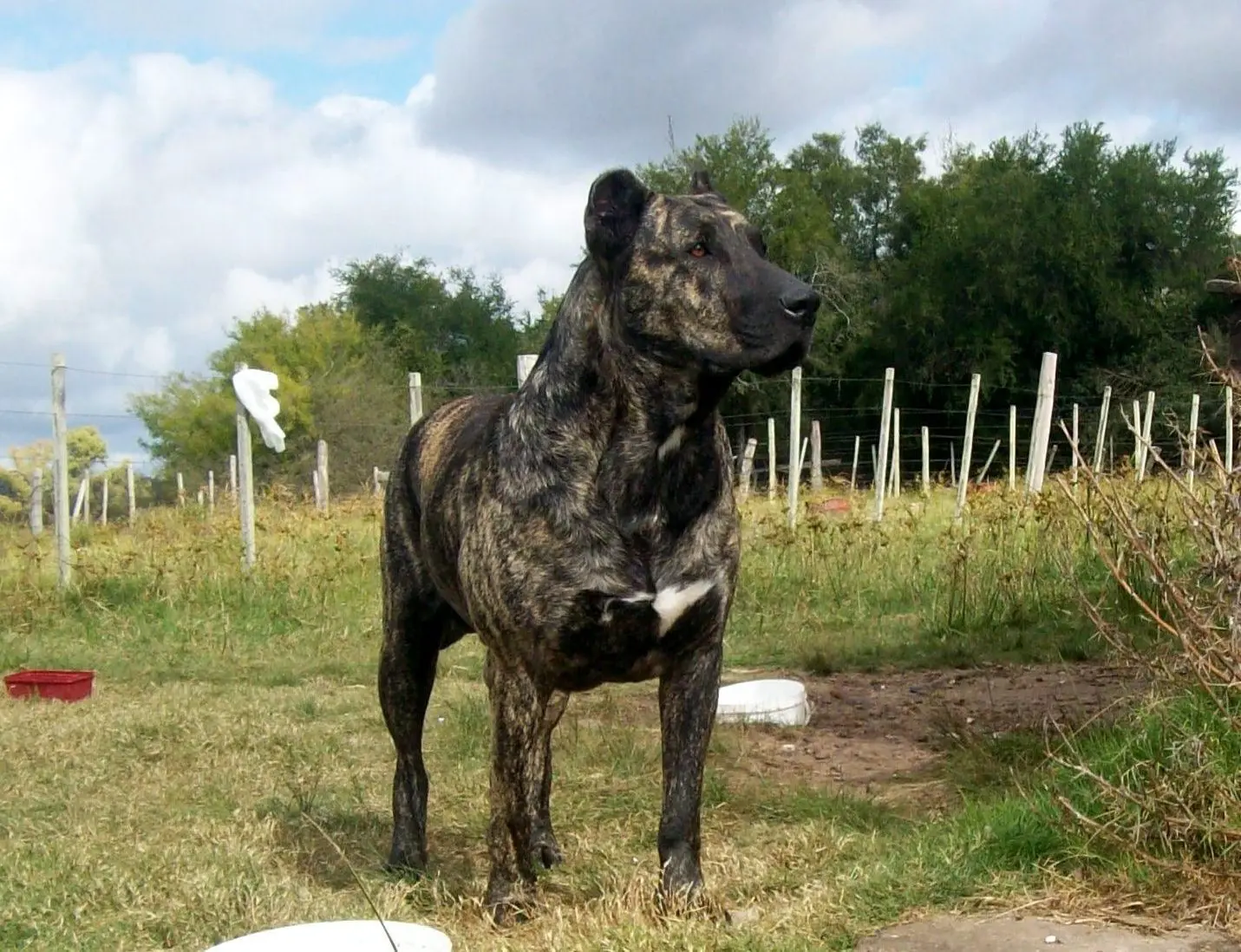
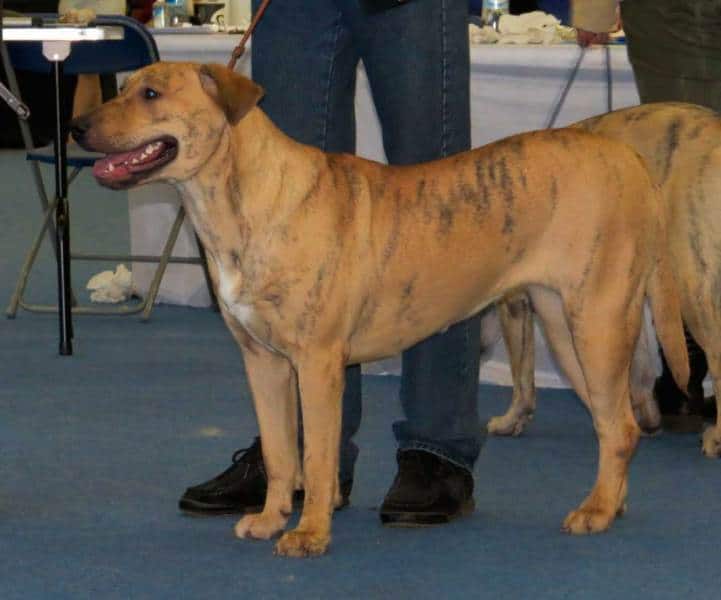
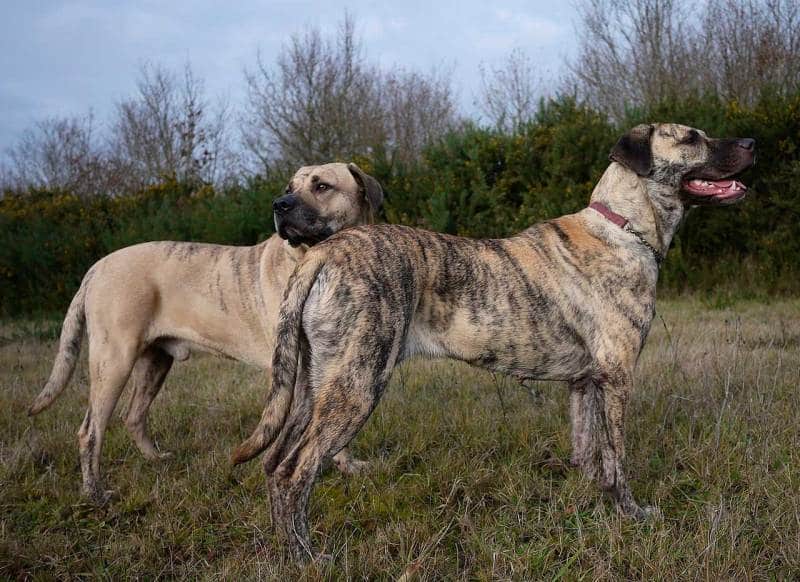
The Cimarrรณn uruguayo also called Cimarrรณn dog or Creole cimarrรณn is the only breed developed entirely in Uruguayan territory.

Content

History

The Cimarrรณn uruguayo Bulldog is a dog type molosoide, medium-sized, compact and strong, the fur can be striped or also bayo (cream-coloured) and snout black. His temperament is docile, cunning and guardian, ideal for guard, company or big game. It is recognized as a race in Uruguay from 1989 and internationally by the Federation Cynologique Internationale – FCI, from the 21 in February of 2006.

Etymologically Cimarron is a term applied in America (originally on the island of Hispaniola) to everything that having been domestic or civilized returned to the wild or wild state, by referring in this case to their refuge in the heights (Indeed in the mountains and valleys hidden) Sierras, with which cimarrรณn would be "he who lives on the peaks or hides in them".

The original specimens of the wild dog descended from the dogs introduced by the Spanish and Portuguese conquerors..
The natural crosses that were taking place in the wild is that it evolved in the course of two centuries a native variety perfectly adapted to the environment of the Uruguayan Plains.

ยซTell your master that when I lack men to fight his henchmen, I have to fight them with Maroon dogsยป: Josรฉ Gervasio Artigas to the Gral. Carlos Federico Lecor.

The dog breed called Cimarrรณn dog or Criollo cimarrรณn is the only breed developed entirely in Uruguayan territory.

Non-domestic dogs in the world, Whether original species or breeds produced by the feralization of domestic breeds that returned to the natural environment and managed to readapt to it, they show a physical development that is totally different from this one., so it is highly arguable that this breed produced in the Uruguay as a supposed model maroons dogs mentioned in ancient chronicles and documents reflect the natural demeanor of those. All wild dogs of the world, Because of what is known as "convergence" at an evolutionary level, they have long legs, erect ears, slender body, exceptions that occur in extreme climates (enormous ears of certain dogs of African deserts or small ears of Arctic foxes).

There are detailed chronicles of attacks by packs of these dogs on caravans and people, that led to the authorities of the time (end of the 18th century) they already have and encourage major massacres, reaching count by tens of thousands dead dogs.

Each dead animal was paid by the authorities of the time, requiring proof of death presented the jaw or the pair of ears of the animal. From this practice would derive the characteristic ear cut that is performed on many newborn pups., in the shape of a "cougar ear".

Despite these massacres, ยซโ€ฆa good number of mothers with their offspring conquered the mountains of Olimar and especially in the Sierra de Otazo and in the Cerros Largosยป, in what is now known as departments of Cerro Largo and Treinta y Tres, where many ranchers and landowners in this place, they took advantage of the virtues of this breed for working with cattle and defense of his property, beginning to raise it, preserving the mixing.

Modern traces of the breed begin to become more public in the early 1990s. 1980, When numerous breeders of Montevideo, attracted by the remarkable characteristics some specimens, they begin to develop their parenting and standardization.

It is in 1989 When this work begins to pay its fruits, to being the Cimarrรณn Uruguayo officially recognized by the Association of the Rural Uruguay (A.R.U.) and the Kennel Club Uruguayo (K.C.U.), 20 years after the first exposure of a specimen of the breed in the K.C.U.
Thus, the Association of Uruguayan Cimarrones Breeders was created and together with the K.C.U.. It prepares the official roll of the race, selecting the base dogs of the same and registering their pups, being tattooed for the first time with this registration number.

Today the character attributes of this breed called Cimarrรณn They make it increasingly popular in Uruguay and region, being employed as a companion dog, Guard and hunting, especially the wild boar.

Physical characteristics

The Cimarrรณn Bulldog is a dog of medium size type, balanced, strong, compact, with good osatura, muscular, shrewd and great courage. The size and weight of the males is of 58 to 61 cm. of height and 38 to 45 weight kg. And of 55 to 58 cm. of height and 33 to 40 weight kg, in females.

Character and skills

It is excellent to work with cattle dog, hunting and guard. Predominant livestock activity of these lands and the consequent abundance of food without great competition with other natural predators, the bighorn reproduced in large numbers becoming – according to historical documents – in a true plague and scourge for the inhabitants of the countryside and the livestock.

This race since its standardization has attracted a growing interest both within the Uruguay border, having copies of this dog in various countries of America, from United States to Argentina, counting this last country with several breeders of Cimarrรณn Uruguayo.
Another of the steps achieved for the genetic improvement of the breed called Cimarrรณn Uruguayo is the signing of an agreement between the University of the Oriental Republic of Uruguay, through its Faculty of veterinary medicine with the Maroons breeders society for the study of the zootechnical status and consanguinity of the exemplary enrolled in their rolls.

This long process of standardization was crowned the 21 in February of 2006 When the International Bureau of the Federation Cynologique Internationale (FCI) gives international recognition to the Uruguayan Cimarron.

The breed standard states that the dog must have great courage. Like all large dogs, Cimarron Uruguayo should be well socialized when very young if you want to be kept as a companion. It is a very friendly dog รขโ‚ฌโ€นรขโ‚ฌโ€นwith children and other animals.

Cimarron Uruguayo is sometimes used for surveillance, hunting and all dog sports in his native Uruguay. Being a very intelligent dog has been used for all kinds of jobs, as rescue or grazing.

A dog is fairly quiet and stable, rarely bark unless the threat is real.

The primitive Cimarrรณn dog, by its roots in the Uruguayan territory, It has been from the very beginning of the national identity of this town a symbol of the independence struggle, faithfully reflected in the letter sent by General Josรฉ Gervasio Artigas in response to General Carlos Federico Lecor, Count of la Laguna and Governor of the Provincia Cisplatina (current Uruguay) in which Artigas expressed that if it was left without soldiers to fight, I would do it with the Cimarron dog.

It is because of this tradition that this breed is currently a symbol and mascot of the National Army of Uruguay., having a preferential place in the annual military parades of the 18 July. On this occasion, a soldier of the battalion of Blandengues (the company that Artigas himself knew how to lead at the time) He rides leading the parade carried a Moorish Steed without along rider which is a sheep dog by the flange.

Images "Cimarrรณn uruguayo"

credits:

1. Cimarron Uruguayo – Kennel La Bonfire by Leonardo Botiรฃo Fonseca / CC BY-SA
2. Cimarron Uruguayo by brindle / CC BY-SA
3. The Finnish Winner Show, Helsinki, 2015. By Thomas / CC BY-SA
4. Nbistolfi / CC BY-SA

Videos "Cimarrรณn uruguayo"

Type and recognitions:

  • FCI CLASSIFICATION:
  • Group :
  • Section : . .

Federations:

FCI โ“˜, UKC โ“˜

FCI breed standard Cimarrรณn uruguayo

FCIFCI - Cimarrรณn uruguayo
Cimarrรณn

Alternative names:

1. Cimarron, Uruguayan Cimarron, Cimarron Creole, Maroon Dog, Cerro Largo Dog, Perro Cimarron, Cimarron Dog (English).
2. Cimarrรณn uruguayo (French).
3. Cimarrรณn Uruguayo (German).
4. Cimarron uruguaio (Portuguese).
5. Perro Gaucho, Perro criollo, Cimarrรณn (espaรฑol).

โ–ท The world of Pets: Dogs, cats, birds, reptiles, amphibians

Cane Corso
Italia FCI 343 - Molossoid - Dogo

The Cane Corso It is a versatile and balanced dog that can adapt to all.

Cane Corso

Content

Characteristics "Cane Corso"

Coexistence is important that you have with your new friend. Before considering the acquisition of a dog of the breed "Cane Corso" you know certain factors. Not all breeds of dogs are apt to live in an apartment, you must take into account his character, their need for exercise, their interaction with other pets, their care and if you have small children, their level of tolerance towards them.

Adaptation โ“˜

2,0 of 5 stars (based on 1 review)

friendly dog โ€‹โ€‹โ“˜

3,0 of 5 stars (based on 1 review)

hair loss โ“˜

1,0 of 5 stars (based on 1 review)

Affection level โ“˜

3,0 of 5 stars (based on 1 review)

Need for exercise โ“˜

3,0 of 5 stars (based on 1 review)

Social need โ“˜

4,0 of 5 stars (based on 1 review)

Home โ“˜

2,0 of 5 stars (based on 1 review)

Toilet โ“˜

1,0 of 5 stars (based on 1 review)

Friendly with strangers โ“˜

1,0 of 5 stars (based on 1 review)

barking โ“˜

2,0 of 5 stars (based on 1 review)

Health โ“˜

4,0 of 5 stars (based on 1 review)

Territorial โ“˜

5,0 of 5 stars (based on 1 review)

Cat friendly โ“˜

1,0 of 5 stars (based on 1 review)

Intelligence โ“˜

5,0 of 5 stars (based on 1 review)

Versatility โ“˜

3,0 of 5 stars (based on 1 review)

Child friendly โ“˜

4,0 of 5 stars (based on 1 review)

Surveillance โ“˜

3,0 of 5 stars (based on 1 review)

joy โ“˜

5,0 of 5 stars (based on 1 review)

History

Something small and elegant that the Neapolitan mastiff, the Cane Corso (or Italian mastiff) It was used in the past not only as Cattle dog but also in wild boar hunting, and as dog escort on long journeys of traders and, even, as a grip of Bull Dog. It was widespread throughout the southern Italian region and even more so in Calabria, Lucannia, Pugglia, and Sannia, until end interrelating so with history, the tradition, and local legends that, in the Royal Lottery game, the Corsican was assigned the number 22.

Both fierce and determined appearance, as its imposing structure of all the molossians, They seem to be on the agenda of its name, therefore means powerful Corso, robust, strong, and these are, without a doubt, its main characteristics.

Others attribute the etymological origin of the word to the Latin "cohors" or senior guardian of the body or to the Greek "kortos.", referring to the fact that he kept and watch people and animals during periods of transhumance. Finally, others see the name associated with the island of Corsica. The truth is that outside of Italy very little is known about the Cane Corso and that even in its country of origin, for years, the race has remained forgotten and ignored. He took that in 1973 Professor Giovanni Bonatti referred to the presence in the province of Puglia of a "short-haired Molosser dog, different from the Neapolitan mastiff, similar to the Bullmastiff and similar to the dog's Mallorquin Damยป so that a group of enthusiasts got to work and tried to recover it and make it known inside and outside the country.

In fact its official recognition from the ENCI (Ente Nazionale di Cinophilia Italian) has only taken place in January of 1994, Once the table of work of the societร ย  Amatoria Cane Corso (SACC) provide sufficient documentation, photos, data and a large group of typical specimens to defend its existence and ancient origin.

It is almost always difficult to make History of the history of a dog breed, but in the case of the Cane Corso there was enough documentation that revealed its presence since ancient times in the southern part of what is now Italy. Certainly had to be traced back to many centuries ago, Learn about the legends of the inhabitants of the Mezzogiorno, investigate its folklore and more ingrained traditions, Learn about its history, the superstitions of an entire people, but, finally, After many years of intense and arduous research, Professor Fernando Casolino, of the SACC, He managed to gather enough data to this impressive animal because they have been many, many written and pictorial references that have been found about this dog. It should be noted some dating as far back as the 15th and 16th centuries, such is the case of the burlesque poems written in Italian mixed with Latin by the Benedictine friar Folengo or the quotes in the ยซOf Quadrupelibusยซ, the renowned physician and naturalist Gessner, known as the "German Pliny", without forgetting the very detailed description of the illustrious Valvassone, which evidenced his power and the strength of his jaws in the "Poem of the Head".

In the 18th century, the count of Leclerc, Georges Buffon, He mentioned him in his "Natural History" as did Oronzio Costa in his treatise on "The fauna of the Kingdom of Naples.", published in 1839. Thirty years later Palumbo also wrote about our protagonist in his "Catalog of Sicilian Mammals".

Quotations continued to be frequent and already in 1900 Spalikowski mentioned him in his work ยซEvolution of the dog in the human societyยซ, of essential reading for all lovers of dogs; much closer in time are the articles and works published by Fiorenzo Fiorone, Danilo Mainardi, Bonatti Mizzoli and how does not, my good friend Mario Perricone, who in the "Great Encyclopedia of the Dog" published by Agostino in 1987, He wrote widely on race, in which the most important monographic article on the Cane Corso is considered. Recently De Prisco and Johnson also mention him in the "Canine Lexicon" referring to him as "a recreation of the ancient Cane of Marcellaio.", under the heading of โ€œSicilian Branchieroโ€, explaining that it existed exclusively in Sicily and that it was known for its particular way of moving in front of the herd, so according to the authors it could even be related to the German bullenbeiser and that "on the island it functioned as a butcher's dog and a herd driver with unique abilities" that, At one time "he was able to participate in bullfights just as other butcher dogs did on the Continent".

Priscus and Johson they also claim that in the eighties they arrived to the United States.UU. the first puppies imported by a Sicilian farmer who died soon after and which constitute the scant breeding base in that country.

They have been missing many years of work and staff of a few efforts to again talk of Italian Corso Dog, race so ancient and so deeply linked to the traditions and the history of the South of Italy and properly recover virtually from scratch. There was, in fact, There were many contradictions about which dog truly resembled and contained the very essence of the Cane Corso and it took many debates and many discussions to finally agree on which specimen the foundations of the new breeding lines should be based on..

They all ended up agreeing on a male named "Dauno" who summarized the very essence of the race and who outlined the path that those who should follow should follow., with a passion beyond doubt wore years looking for precisely this path. It was decided to locate up to three closely related subjects in order to establish the characteristics of the breed., just as the Ballota professors had described it, Bonatti and Casolina.

After exhaustive research studies and, at the end, not without major sacrifices, the recovery programme was gradually bearing fruit. In 1988, the ENCI Board of Directors decided that the time had come to gather as many copies as possible, produced by people not linked to that society both the scope of the SACC, and carry out a pilot trial in order to check homogeneity of type, of construction and character and its similarity with the characteristics described in the draft standard that the SACC had presented to them. In three exhibitions-Bari, Florence and Milan- the judges Morsiani, Perricone and Vandoni examined fifty copies; then, in the autumn of that same year the SACC presented the ENCI the outcome of the first census carried out by the Lords Bruno and Indiveri which is didn't data out of a total of 57 perfectly typical and rustic specimens already registered.

Did you know??

The Cane Corso is also known as Dogo di Puglia, which means "dog of Puglia".

As a result of all this effort, the ENCI promulgated the opening of an "Open Book" in which all adult specimens that had been duly tattooed could be registered., and therefore recognized as conforming with the standard project and in just four years became part of the same over 500 dogs, so it was clear that the recovery program had been successful.

Such results finally gave rise to the official recognition of the race in January of 1994.

Modernity and the decline of the work for which it was intended, have not prevented this race from maintaining its characteristic gifts. He continues to be a dog with a tenacious temperament but does not bite for anything. It is one of the best races of property protection. If you are very fond with the owner can be very sensitive to your mood.

Physical characteristics

Its skin is thick enough, with tissue limited connective and therefore virtually glued to the subcutaneous tissues of each region. The neck does not present practically double chin. The head does not have to submit wrinkles. The pigment of the mucous and the esclerosas has to be black. The pigment of the soles and nails must be dark.
The coat is short but not satin, glassy in texture, gleaming, bright, adherent, serious, very dense, with a light layer of undercoat that is accentuated in winter, without that never reaches to emerge on the hair of coverage. His medium-length is 2/2′ 5 cm.. On the cross, the rump, and the subsequent edges of the thigh and on tail reaches the 3 cm., without ever giving rise to fringes. On the nose hair is private, smooth, adherent and not more than 1/1′ 5 cm..

It may be black, grey lead, Slate gray, light grey, Griffon clear, Red cervato, Dark tawny and striped (stripes against a background of Griffon or grey colour of various shades). In fawn and brindle subjects, a black or gray mask is present whose extension should not exceed the line of the eyes. Admitted a small white patch on the chest, at the tip of toes and on the nasal helm.

The height the cross in the males is of 64 to 68 cm., in the females of 60 to 64 cm.. With tolerance of 2 cm more or less. The weight in the males is of 45 to 50 kg (ratio weight /talla 0,71 kg per cm). And in the females of 40 to 45 kg (ratio weight /talla 0,68 kg/cm).

Salud de Cane Corso

Some of the health conditions that have been in the Cane Corso are the Hip Dysplasia, eye problems such as Entropion or ectropion, demodectic mange and the tendency to bloat.

Remember that after bringing a new puppy home, has the power to protect you from one of the most common health problems: the obesity. Cane Corso maintain an adequate weight is one of the easiest ways to prolong life. Make the most of your preventive skills to help ensure a healthier dog for life.

Character and skills

His character affable and faithful with their own. His psychological balance and extreme functional versatility that allows you to adapt to everything, He is doing to gain more followers and indeed again used you in grazing and foster as old tasks, and also in the hunt, although little by little it is gaining a preferential position as a companion animal and in what has been called therapy with domestic animals (ยซpet therapyยป).

But, for its size and extraordinary force Cane Corso owner should be able to educate from the first moment to always have it under control, in such a way that never conflicts surprises or, It must learn from puppy what is right and what not, What is prohibited and what is allowed, so that later there will be no setbacks, recommending further vocational training of certain circumstances, provided that the dog has acquired a certain degree of maturity, Therefore we must not forget that, in the case of molossians, their psychological development is always slower than the physical.

Aware of its size and appearance, corso usually does not express nervousness and willingly accepts to any person that his own master will accept either. When he is assigned the custody of a property his balanced temperament allows her always from a background, with great discretion, and only in the case of real necessity, act and attack. Thus we can conclude that the Cane Corso is an impressive animal, balanced and effective in any task requiring him. There is a legend made reality.

Cane Corso's Education

With patience and sensitivity
The Cane Corso is not a beginner dog and only belongs to responsible hands. Learn quickly and with pleasure if you treat it with patience and sensitivity during training. If it is to be kept as a family dog, Cane Corso's protective instincts should not be encouraged during training. Early and comprehensive socialization is especially important, so that the dog gets used to other people and animals and reacts calmly in all situations.

Care of Cane Corso

Cane Corso's coat is shiny, smooth and short, and does not require extensive cleaning. Cane Corso has a thin undercoat that can protect it from the cold at times. A massage sponge or soft brush should be used regularly to stimulate blood circulation. – this ensures a healthy and shiny coat.

Nutriciรณn Cane Corso

Only with high meat content
With prepared food, pay attention to a high meat content, low grain content and high quality. An adult dog needs enough fresh meat and vegetables for a healthy diet.. Young dogs, on the other hand, should not be fed too much protein. Foods that are too high in protein can promote growth too quickly and encourage skeletal diseases. Food should be divided into two meals a day. One of them must be given directly after the daily walk. In this way the dog gets his reward after the "work done".

The life expectancy of the Cane Corso

Cane Corso can reach a relatively high age, what is really unusual for such large dogs. A healthy and active dog will easily reach the age of 10 to 14 years, as long as you exercise a lot and have a balanced diet. This robustness and long life expectancy compared to other larger dog breeds are due to the strong bone structure and robust construction.

Buy Cane Corso

Serious breeders offer not only a pedigree with a complete record of the dog's ancestors, but also a complete advice that goes beyond the purchase. Before buying or reserving a puppy, exhaustive information must be obtained from the local authority to know what conservation regulations exist.

Images Cane Corso

Vรญdeos Cane Corso

Type and recognitions:

  • FCI CLASSIFICATION:
  • Group :
  • Section : . .

Federations:

FCI โ“˜, AKC โ“˜, ANKC โ“˜, CKC โ“˜, UKC โ“˜

FCI breed standard "Cane Corso"

Origin:
Italy

Date of publication of the valid original standard:
13.11.2015

Use:

Utility dog, multipurpose


General appearance:

Medium to large size. Robust and strong dog, However, with some elegance. Lean and powerful muscles.


IMPORTANT PROPORTIONS: The dog is rectangular in outline and slightly longer than it is tall. (The length of the dog is 11% greater than your height). The length of the head reaches the 36% from his height to the cross.


Behavior / temperament:

Guardian of property, family and cattle; extremely agile and responsive. In the past, It has been used to herd cattle and for hunting larger game..

Head:

Wide, typically molossoid. The superior longitudinal axes of the skull and the nasal cannula are slightly convergent with each other..

Cranial region:
  • Skull: Width; in the zygomatic arch, its width is equal to or greater than its length. Slightly convex in the front, the skull becomes significantly more plane behind the front to the back of the head. The medio-frontal furrow is visible.
  • Depression links (Stop) :  Marked.

facial region:

  • Truffle: Black and bulky, with large and open Windows. It is placed in the same line as the nasal cannula.
  • Snout: Significantly shorter than the skull (relationship skull : I muzzle approximately 1:2). Strong, square, as long as width; the front of the snout is flat; the lateral sides of the muzzle are parallel. Profile view, the nasal helm is straight.
  • Lips: The upper lips are moderately pendulous and cover the jaw., in such a way that the lower profile of the muzzle is formed by the lips.
  • Jaws / Teeth: Very wide jaws, thick and curved. Light lower prognathism; the clip joint is tolerated, but not desirable.
  • Eyes: Medium-sized, egg shape, slightly protruding; the gaze is directed forward. The eyelids are well glued. The iris color is as dark as possible depending on the coat color. Expression : lively and vigilant.
  • Ears: Triangular, pendants; its inclusion, located well above the zygomatic arch, is wide; to often amputated short in the form of an equilateral triangle.

Neck:

Strong, muscular, as long as the head.

Body:

The body is slightly longer than the height at the withers. Of strong Constitution, but not Dumpy.

  • Cross: Pronounced, exceeds the level of the rump.
  • Back: Rectilinear, very muscular and stiff.
  • Pork loin: Short and solid.
  • Rump: Long and wide, slightly tilted.
  • Breast : Chest well developed in three dimensions, descends to the elbow.

Tail:

Rather high insertion, very thick at the root. It amputated at the fourth vertebra. In action, rises, but never erect or curled up Rather high set, very thick at the root. It amputated at the fourth vertebra. In action, rises, but never an upright or threaded.

Tips

PREVIOUS MEMBERS:

  • Shoulder : Long, oblique, very muscular.
  • Arm: Powerful.
  • Forearm: Straight, very strong.
  • Carpus and Metacarpus:  Elastic.
  • Front feet: Cat feet.

LATER MEMBERS:

  • Thigh: Long, width, convex removed.
  • Leg: Strong, not fleshy.
  • Hock: Moderately angled.
  • Rear feet: A little less compact than the previous.

Movement:

Long step, lengthened trot; the trot is the preferred motion.

Mantle

  • SKIN : Slightly thick, more firmly attached to the subcutaneous tissues.
  • HAIR: Short, bright, very dense, with thin inner layer of hairs.
  • COLOR: Negro, Gris-Plomo, Gris-pizarra, light grey, Griffon clear; Red cervato, Dark Fawn; striped (stripes on a background of gray or tawny color several shades). Black and brindle dogs have a black or gray mask on the muzzle that should not extend beyond the eye line.. A small white spot on the chest,  in the tips of the toes and on the nasal helm is admitted.


Size and weight:

Height to the cross:

  • Males of 64 to 68 cm..
  • females of 60 to 64 cm..

Tolerance of more or less 2 cm..

Weight:

  • Males of 45 to 50 kg
  • Females from 40 to 45 kg.


Fouls:

Any deviation from the aforementioned criteria is considered as a fault and the severity of this is considered to the degree of the deviation to the standard and its consequences on the health and well-being of the dog..

SERIOUS FAULTS :

  • Parallelism or the upper axes of the skull and the muzzle very marked convergence. Sides of the muzzle converging.
  • Partial depigmentation of the nose.
  • Scissor bite; marked lower prognathism.
  • Threaded queue; led tail straight.
  • Permanent amble on the trot.
  • Weight that exceeds or does not reach the size indicated in the standard.

MISS PLAYOFFS

  • Cowardice, aggression toward owner.
  • Divergence of the upper axes of the skull and the muzzle.
  • Complete depigmentation of the nose.
  • Very convex or concave nose cane.
  • Upper prognathism.
  • Complete or partial depigmentation of the eyelids. Eyes gazeos; strabismus.
  • Absence of tail; short tail (cut or not).
  • Semi-long hair, very short or forming fringes.
  • All colours not indicated in the standard, long white spots.

Any dog โ€‹โ€‹showing clear signs of physical or behavioral abnormalities should be disqualified..


N.B.:

Males should have two normal-appearing testicles fully descended into the scrotum..


TRANSLATION : ENCI, Dr. I.. Small and the Sr. Ermanno way.

Source: F.C.I - International Cynological Federation

Alternative names:

1. Italian Mastiff, Italian Corso Dog, Cane Corso Italiano (English).
2. Cane Corso Italiano, Chien de Cour Italien (French).
3. Cane Corso, ITALIENISCHER CORSO-HUND (German).
4. Mastim Italiano (Portuguese).
5. Mastรญn italiano (espaรฑol).

โ–ท The world of Pets: Dogs, cats, birds, reptiles, amphibians

Pyrenean Mountain Dog
Francia Espaรฑa FCI 137 - Molossoid . Mountain

Pyrenean Mountain Dog

The Pyrenean Mountain Dog is a guardian and protector with territorial claims.

Content

History

The Pyrenean Mountain Dog is an ancient watchdog of the mountainous world of the Pyrenees. There it is officially called Chien de Montagne des Pyrรฉnรฉes. The people of the Pyrenees call him the cute little one Patou. The pyrenees, like a vast, deserted and rugged, previously inaccessible mountain range, form the natural border between France and Spain. Here there were and there are wolves and bears, with the consequent problem for ranchers. It also, sheep used to be one of the few livelihoods of the people here. While in Germany and other Central European countries people lament the return of the wolf and complain about the damage caused to game and sheep herds, in the Pyrenees dogs such as the Patou from time immemorial. And there are no complaints. Guard dogs are an integral part of every flock of sheep in the Pyrenees mountains.

On the French side, they are officially called Chien de Montagne des Pyrรฉnรฉes or Pyrenรคenberghund, on the Spanish side Perro de montaรฑa de los Pirineos or Gran Pirineo. In addition to protecting herds against thieves, wolves and bears, also protected large estates. His powerful figure, his determination and ability to attack in an emergency were not without effect. The impression must have been so lasting that his work was already documented in writings from antiquity and the Middle Ages.. It is reported that the dogs would have recognized people from afar by their clothes. In 1391 it is said that the Count of Foix did a test. If he came disguised as a tramp, the dogs attacked him from afar without hesitation. If he came dressed as a count, he wasn't bothered.

The Patou was not a uniform race in the past. In very remote valleys there were often local breeds, genetically isolated, optimized for your job task naturally, but in the end the same dogs came out with a very similar appearance and character, though they might have been genetically separated for generations. Extremely harsh living conditions obviously outweighed the disadvantages of inbreeding. Modern pedigree dog breeding took an interest in these impressive dogs very early on. Already at the first dog show in France, in 1863, a separate class was established for the Pyrenean Mountain Dog.

An attempt was made to establish the Patou also outside the Pyrenees as a watchdog and protection. In 1907 the first standard was established in France. But, due to the two world wars and the associated famine period, the population of Patou outside the mountains suffered serious setbacks. In 1955 obtained the official recognition of the FCI – International Cynological Federation.

Physical characteristics

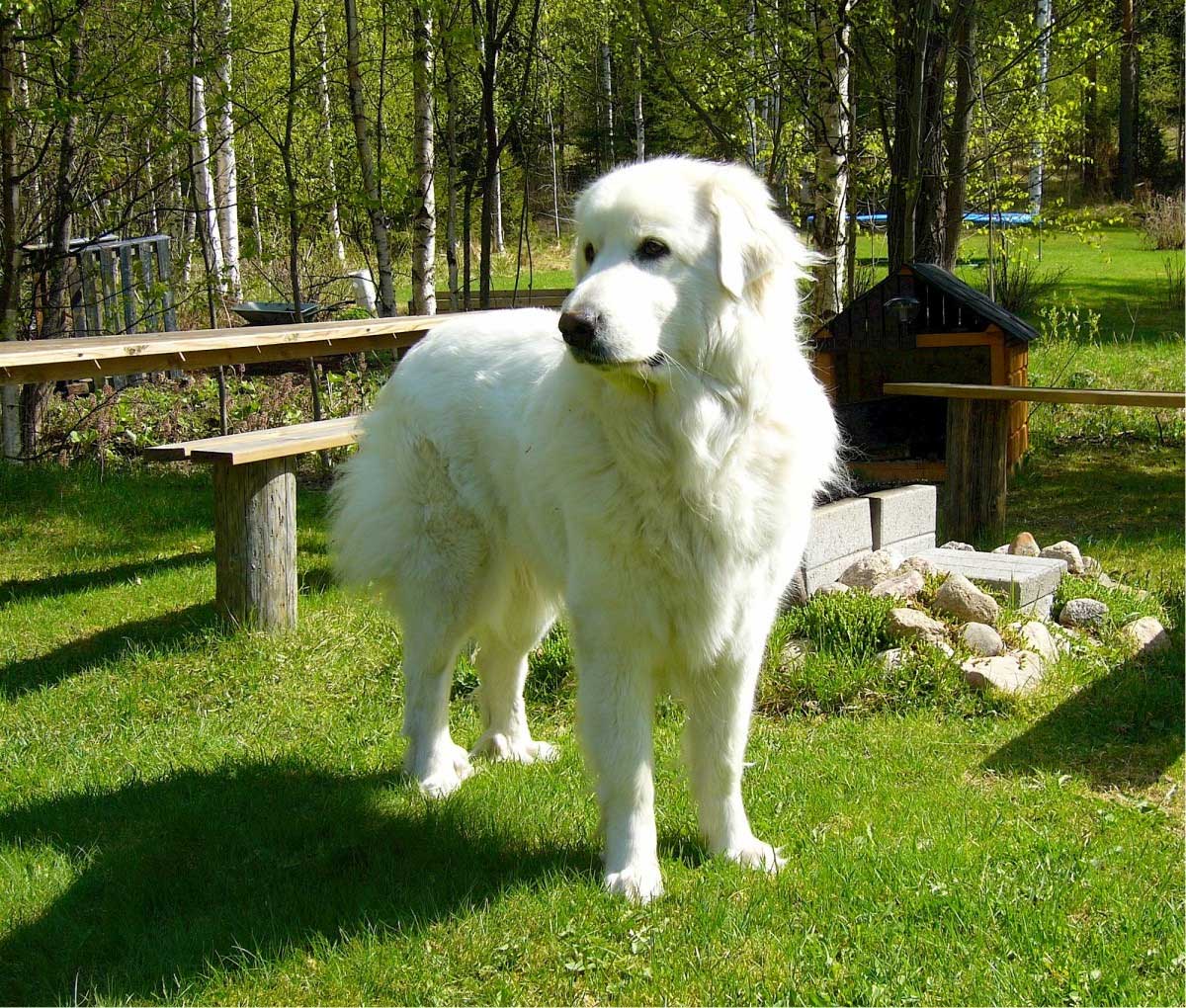
The Pyrenean Mountain Dog is a big dog, imposing, powerful and at the same time athletic and agile. Doesn't seem clumsy or massive, but rather elegant piecework. It has a medium length coat, very dense and flexible, which can be slightly wavy. The bottom layer is also very dense. To the colors that the official standard says:

White or white with gray spots (badger gray or wolf gray), pale yellow or orange (rusty) in the head, ears and base of tail, sometimes also in the body.

The Pyrenean Mountain Dog it has a majestic height at the withers 70 and 80 centimeters in males and 65 to 75 in females. The weight must be between 60 and 70 kg. The measurements are quite similar to those taken by the Conde de Bylandt when he first described the breed in 1897, when he simply called the dogs "Chien des Pyrรฉneรฉsยซ. The head of the Patou remember the contours of a molosser. Shows a very alert and attentive facial expression. It is a dog that rests in itself, who first of all observes everything, seemingly listless. This is underlined by his eyes, they're supposed to be sweet and dreamy, with its dark amber color.

Character and skills

The Pyrenean Mountain Dog is a guardian and protector with territorial claims. He looks cute and calm looking, sublime and imposing almost like a blank teddy bear, but you must not be wrong. It has a strong character combined with a very own but clear idea of รขโ‚ฌโ€นรขโ‚ฌโ€นhow it should behave – and the others in their domain. This idea is naturally shaped by its use throughout the centuries, where he had to defend his flock to life or death as a guard without the presence of the shepherd and, therefore, had to make decisions independently. The official standard classifies his character qualities as follows:

Since the dog was used exclusively to protect herds against attacks by predators, its selection for breeding was based on its suitability as a guardian, their respectable appearance and also their relationship with the herd. The resulting characteristics are strength and agility., as well as the sweetness and attachment to his protรฉgรฉs. This watchdog has a tendency to independence and initiative, which requires some authority from his master.

One Pyrenean Mountain Dog should only be held by an experienced and mentally strong person. First of all, not a family dog. But, it can become so if it has extremely competent guidance from its master or caretaker and if the external conditions are right. Only then can he be a good family dog รขโ‚ฌโ€นรขโ‚ฌโ€นand lovingly protect all members of the family., including other four-legged friends. It also, is a good guardian and extremely reliable protector of the house and all those who, in your opinion -which should be clarified-, belong to it. Towards strangers he is suspicious.

Fitness

The Pyrenean Mountain Dog it is extremely undemanding in its maintenance – if one ignores the aforementioned restrictions due to its nature as a watchdog. It is undemanding in its nutrition as well as in its accommodation. You can spend the whole year outside without problems – As long as you have a suitable and "adequate" hiding place, it does not mean either a kennel or a chain., because he must be able to move in his territory. This large, self-confident dog is quite sensitive and places great importance on a close emotional bond with his human family.. You need a trusting relationship with your master or caregiver.

Thanks to modern pedigree dog breeding, the Patou is better prepared for a big city life than other herd protection dog breeds like the Kangal or the Central Asian Shepherd Dog. So if you have a large, well-fenced property in the country, if you have joy, fun, experience and the possibility of getting involved with these dogs, you can experience a particularly impressive and beautiful facet of the human-dog association.

Pyrenean Mountain Dog Education

The education of Pyrenean Mountain Dog belongs to the hands of a teacher or lover with deep experience and canine knowledge. Like any other race, Pyrenean mountain dogs must be well socialized and educated since they are puppies. It would be irresponsible to want to keep such a dog as a beginner.

Care and health of the Pyrenean Mountain Dog

Absolutely easy to care for and undemanding. The Pyrenean Mountain Dog generally enjoys very robust health. Some health problems may include hip dysplasia; heart problems such as tricuspid valve dysplasia; cancers like osteosarcoma (bone cancer); eye problems such as persistent pupil membranes, progressive retinal atrophy and cataracts; dissecting osteochondritis (an orthopedic problem), patellar dislocation (dislocation of the patella) and swelling.

Nutrition / Food

The Pyrenean Mountain Dog he has no problem with his diet.

Life expectancy of the Pyrenean Mountain Dog

The Pyrenean Mountain Dog have a very high life expectancy of 12 and sometimes more years relative to its size.

Characteristics "Pyrenean Mountain Dog"

Coexistence is important that you have with your new friend. Before considering the acquisition of a dog of the breed"Pyrenean Mountain Dog" you know certain factors. Not all breeds of dogs are apt to live in an apartment, you must take into account his character, their need for exercise, their interaction with other pets, their care and if you have small children, their level of tolerance towards them.

Adaptation โ“˜

4,0 of 5 stars (based on 1 review)

friendly dog โ€‹โ€‹โ“˜

3,0 of 5 stars (based on 1 review)

hair loss โ“˜

5,0 of 5 stars (based on 1 review)

Affection level โ“˜

3,0 of 5 stars (based on 1 review)

Need for exercise โ“˜

2,0 of 5 stars (based on 1 review)

Social need โ“˜

4,0 of 5 stars (based on 1 review)

Home โ“˜

2,0 of 5 stars (based on 1 review)

Toilet โ“˜

3,0 of 5 stars (based on 1 review)

Friendly with strangers โ“˜

2,0 of 5 stars (based on 1 review)

barking โ“˜

4,0 of 5 stars (based on 1 review)

Health โ“˜

5,0 of 5 stars (based on 1 review)

Territorial โ“˜

2,0 of 5 stars (based on 1 review)

Cat friendly โ“˜

4,0 of 5 stars (based on 1 review)

Intelligence โ“˜

4,0 of 5 stars (based on 1 review)

Versatility โ“˜

2,0 of 5 stars (based on 1 review)

Child friendly โ“˜

4,0 of 5 stars (based on 1 review)

Surveillance โ“˜

2,0 of 5 stars (based on 1 review)

joy โ“˜

5,0 of 5 stars (based on 1 review)

Images "Pyrenean Mountain Dog"

Photos:

1 – Pyrenean Mountain Dog by https://pxhere.com/es/photo/774692
2 – Pyrenees Mountain Dog, XI International Dog Show in Krakรณw by I, Lilly M / CC BY-SA
3 – Great Pyrenees Mountain Dog by HeartSpoon / CC BY-SA
4 – Pyrenees mountain dog by Arnaud 25 / CC BY-SA
5 – Pasture of Anterne, Sixt-Fer-a-Cheval, Pyrenean Mountain Dog among the sheeps by Jerome Bon from Paris, France / CC BY
6 – Pyrenean Mountain Dog by Emma.Martinet / CC0
7 – Pyrenees mountain dog by I, Beninho / CC BY-SA

Videos "Pyrenean Mountain Dog"

Type and recognitions:

  • FCI CLASSIFICATION:
  • Group :
  • Section : . .

Federations:

  • FCI – Pinscher and Schnauzer-Molossoid type dogs – Swiss Mountain Dogs and Cattledogs. Section 2.2 Molossoid, mountain type. โ“˜
  • AKC – Working dogs โ“˜
  • ANKC – Group 6 (utility dogs) โ“˜
  • CKC – Group 3 – Working dogs โ“˜
  • โ€‹KC – Sheepdogs โ“˜
  • NZKC – Utility dog โ“˜
  • UKC – Watchdog โ“˜

  • FCI breed standard "Pyrenean Mountain Dog"

    Origin:
    Spain, France

    Date of publication of the valid original standard:
    13.03.2001

    Use:

    Herd guard dog in mountain.


    General appearance:

    This is a large dog, imposing and very well proportioned, although without lacking a certain elegance.

    PROPIMPORTANT ORTIONS:

    • The maximum width of the skull is equal to its length.
    • The muzzle is slightly shorter than the skull.
    • The length of the body, from the tip of the shoulder, to the tip of the gluteus, is slightly higher than the height at the withers.
    • Chest height is equal to half the height at the withers or slightly less


    Behavior / temperament:

    Used to protect flocks alone from predator attacks, his selection was based on both his vigilance and deterrence skills, as in their attachment to the flock. As a result of this, its main qualities are strength and agility, as well as the sweetness and devotion towards those who protect him. This watchdog has a propensity for independence and a sense of initiative that require some authority from its master..

    Head:

    Is not very big, compared to the size of the dog. The side faces are quite flat.

    Cranial region:
    • Skull: The maximum width of the skull is equal to its length. It is slightly arched, because the sagittal crest is noticeable to the touch. Since the occipital protuberance is apparent, the cranium, on its back, It has an ogival shape. Superciliary arches are not marked, the middle groove is barely perceptible to the touch between the eyes.
    • Depression links (Stop): It has a slight inclination.

    facial region:

    • Truffle: It is completely black.
    • Snout: It is wide; somewhat shorter than the skull and progressively decreases towards its extremity. Seen from above, is V-shaped with a truncated tip. It is very solid under the eyes.
    • Lips: They are slightly hanging and cover just the lower jaw. Are black or well marked black, as well as the palate.
    • Jaws / Teeth: The denture must be complete and the teeth must be white and healthy. The joint is in the form of scissors (the upper incisors cover the lower ones without loss of contact). Articulation in the form of pliers is supported, as well as the two lower clips that fall towards the front.

    Eyes: They are rather small, almendrada form, slightly oblique, of intelligent and contemplative expression. Its color is amber brown. The eyelids are never loose and are lined with black. The look is sweet and dreamy.

    Ears: Present at eye level. They are quite small, triangular in shape and rounded at the extremity. They fall close to the head and appear a little higher when the dog is in action.

    Neck:

    It is strong, pretty short; the double chin is poorly developed.

    Body:

    The length of the body, from the tip of the shoulder, to the tip of the gluteus, is slightly higher than the height at the withers. The height of the sternum to the ground is almost equal to half the height at the withers, but never inferior.

    • top line: It is very firm.
    • Cross: It is wide.
    • Back: Good length, solid.
    • Pork loin: Medium length.
    • Rump: Slightly oblique; the haunches are quite outgoing.
    • Flank: It is little inclined.
    • Breast : It is not very inclined, but wide and deep. Descends to elbow level, no further down. Its altitude is equal to or slightly less than the height at the withers. Ribs are slightly rounded.

    Tail:

    Descend at least to the tip of the hock. It is bushy and forms a pompadour. Low, during rest, preferably with the hooked end. When is the dog in action, it rises on the back taking a well-rounded shape and only the limb touches the back (The mountain people call it the "arroundera" wheel.).

    Tips

    PREVIOUS MEMBERS: They are strong and plumb.

    • Shoulder: They are fairly oblique.
    • Arms: Muscular, medium length.
    • forearms: Straight, strong and well covered with fringe hairs.
    • Carpi: The wrist is in the extension of the forearm.
    • Metacarpus: Slightly oblique.
    • Previous feet: They are not very long and compact, with slightly arched fingers.

    LATER MEMBERS: They have hairs that form longer and busier fringes than the forelimbs. Seen from behind, are perpendicular to the ground.

    • Thighs: They are well muscled, not very long and fairly oblique; ยซwell trainedยป.
    • Knees: They are moderately angled and lie on the axis of the body.
    • Legs: Strong, medium length.
    • Hock: Width, thin and medium layered.
    • Pies: They are little elongated, compact, with slightly arched fingers.
    • Spurs: The hindquarters have double, well-formed spurs. The forelimbs sometimes have single or double dewclaws.

    Movement:

    The movement of the Pyrenean Mountain Dog is powerful and loose, never weighed; it is broader than fast and it does not lack a certain elasticity and elegance. This dog's angulations allow for a steady gait.

    Mantle

    SKIN: Thick and flexible. Often shows pigmentation spots all over the body.

    Fur: It is very bushy, smooth, quite long and loose, pretty rough on the shoulders and back. Longer at the tail and around the neck, where it can be slightly wavy. Trouser hair, finer and woolier, it's very bushy. The inner face of hairs is also thick.

    Color: White or white with gray appearance spots (badger hair or dark bay), pale yellow or orange, in the head, the ears and the tail. Badger hair spots are the most appreciated.


    Size and weight:

    Height to the cross:

    • Males: 70 to 80 cm.,
    • females: 65 to 75 cm..

    A tolerance of 2 cm in of the set size, in copies that correspond perfectly to the type.


    Fouls:

    Any deviation from the aforementioned criteria is considered as a fault and the severity of this is considered to the degree of the deviation to the standard and its consequences on the health and well-being of the dog..

    General aspect: General appearance that gives the impression of heaviness, aspect without distinction. Thick dog, not very energetic, lymphatic.

    Head:

    • Too heavy, rectangular
    • Very wide skull, forehead bulge
    • Very marked or non-existent naso-frontal depression
    • Very drooping lips that form belfo
    • Insufficient truffle pigmentation, the edge of the eyelids and lips

    Eyes: Round, sunken or bulging. Too big or too small, close together or far apart. Third visible eyelid. Hard expression.

    Ears: Wide, long, bent, forming folds. They come back; set high.

    Neck: Delgado, a little long or otherwise very short, giving the impression that the head is sunk on the shoulders. Chin very pronounced.

    Body: Sunken or convex top line, inclined, swollen or sagging belly.

    Breast : Very broad or narrow front part of the chest. Flat ribs, or on the contrary, barrel shape.

    Tail: With little hair or incorrect implantation. Very short or very long, without pompadour, does not take the form of a wheel when in action or does it continuously, even during rest.

    Former members:

    • They deviate inward or outward.
    • Very open scapulo-humeral angle.

    Later members:

    • They deviate inward or outward.
    • Straight or excessively angled hock.
    • Pies: Long, plans.
    • Fur: Short or curled, silky, soft. Absence of an inner layer of hairs.

    FALTAS DESCALIFICANTES:

    • Aggressiveness or extreme shyness.
    • Any dog โ€‹โ€‹showing clear signs of physical or behavioral abnormalities must be disqualified..
    • Color: Colors other than those indicated in the standard.
    • Truffle: In another color that is not absolutely black.
    • Jaws: Upper or lower prognathism, or any malformation of the jaws.
    • Eyes: Different colored spots on the eyelids, raptor eyes.
    • Spurs: Absence of dewclaws, single or double spur atrophy in hindquarters.
    • Size: Outside the limits of the standard.


    N.B.:

    โ€ข Males must have two normal-appearing testicles fully descended into the scrotum..
    โ€ข Only functionally and clinically healthy dogs, with the typical conformation of the breed, should be used for parenting.

    Source: F.C.I - International Cynological Federation

    Alternative names:

    1. Great Pyrenees, Patou, Montaรฑรฉs del Pirineo, Perro de Montaรฑa de los Pirineos, Can de Montaรฑa de os Perinรฉs, Chien des Pyrรฉnรฉes, Chien de Montagne des Pyrรฉnรฉes, Pyr, GP, PMD, Gentle Giant (English).
    2. montagne des Pyrรฉnรฉes, pastou, patou (French).
    3. Chien de Montagne des Pyrรฉnรฉes, Patou (German).
    4. Chien de Montagne des Pirรฉnรฉes (Portuguese).
    5. Gran Pirineo, Chien des Pyrรฉnรฉes, Chien de Montagne des Pyrรฉnรฉes, Gigante de los Pirineos, Gran Pirineu, Muntanya dels Pirineus, Patou (espaรฑol).

    โ–ท The world of Pets: Dogs, cats, birds, reptiles, amphibians

    Old English Sheepdog (Bobtail)
    Gran Bretaรฑaa FCI 16 . Sheepdogs

    The Old English Sheepdog It is possibly the breed that needs the most care regarding its hair.

    Antiguo Perro Pastor Inglรฉs

    Characteristics "Old English Sheepdog (Bobtail)"

    Coexistence is important that you have with your new friend. Before considering the acquisition of a dog of the breed "Old English Sheepdog (Bobtail)" you know certain factors. Not all breeds of dogs are apt to live in an apartment, you must take into account his character, their need for exercise, their interaction with other pets, their care and if you have small children, their level of tolerance towards them.

    Content

    Adaptation โ“˜

    3,0 of 5 stars (based on 1 review)

    friendly dog โ€‹โ€‹โ“˜

    3,0 of 5 stars (based on 1 review)

    hair loss โ“˜

    5,0 of 5 stars (based on 1 review)

    Affection level โ“˜

    5,0 of 5 stars (based on 1 review)

    Need for exercise โ“˜

    3,0 of 5 stars (based on 1 review)

    Social need โ“˜

    5,0 of 5 stars (based on 1 review)

    Home โ“˜

    1,0 of 5 stars (based on 1 review)

    Toilet โ“˜

    5,0 of 5 stars (based on 1 review)

    Friendly with strangers โ“˜

    2,0 of 5 stars (based on 1 review)

    barking โ“˜

    4,0 of 5 stars (based on 1 review)

    Health โ“˜

    3,0 of 5 stars (based on 1 review)

    Territorial โ“˜

    5,0 of 5 stars (based on 1 review)

    Cat friendly โ“˜

    3,0 of 5 stars (based on 1 review)

    Intelligence โ“˜

    4,0 of 5 stars (based on 1 review)

    Versatility โ“˜

    3,0 of 5 stars (based on 1 review)

    Child friendly โ“˜

    5,0 of 5 stars (based on 1 review)

    Surveillance โ“˜

    3,0 of 5 stars (based on 1 review)

    joy โ“˜

    5,0 of 5 stars (based on 1 review)

    History

    The Old English Sheepdog or Bobtail. It is a breed of dog guard or shepherds dogs family.

    The race was created in England, more specifically, in the west, in the mid-19th century, to control the sheep and beef cattle in the rural area. While the race is born and develops in England, there is more than one theory that explains its origin.

    Some authors raised the breed descended from dogs brought from Central Europe by the Romans, that over time they were crossing with different English races, including the English mastiff giving rise to Old English Sheepdog.

    Other scholars of the race stress that it is a very old dog and possibly his most significant ancestor is the famous Asian Shepherd What, It has helped the existence of the Berger de Brie in France, of the Bergamasco Shepherd in Italy, and of the Komondor in Hungary.

    According to this second current, the first copies of Bobtail they were selected for the first time in an era marked by the savage rivalry between England and France, the Of the hundred years ' war (1337-1453).

    Y, finally, they pose in their ancestors, appears with total security the Berger de Brie.

    In addition to in England this dog took many acceptance and dissemination among the Spanish shepherds in the 19th and 20th centuries by their excellent conditions and skills for the care of livestock.

    Physical characteristics

    It is a dog great size and scale, with a height around the 63 cm.. and a weight between the 30 and 40 kg.

    Small and floppy ears, coated with hair, strong and elongated neck, abundant hair desgreรฑado and rough touch, with a range of colors that can range from grey, grey, Blue to blue merle, with or without white markings on the head, bottom of the stomach or forelimbs.

    The tail is often be amputated, or are there simply copies that are already born without it, hence its name Bobtail which in means ยซcut tailยซ, The search for this characteristic trait is believed to have been due to the desire of English breeders not to pay taxes., already before the dogs with tails were thought to be luxury goods. This dog has a very characteristic bark in the canine world, serious and pervasive.

    Did you know??

    There is no upper limit to the height of the Old English Sheepdog. Females usually measure 53 cm , the males 56 cm . That's because the sheep varied in size, so the dogs used to herd them they also varied in size.

    Character and skills

    Video "Old English Sheepdog (Bobtail)"

    The Bobtail, tolerant character, It is an excellent dog for living together with children and other pets. They are able to easily adapt themselves to different conditions.. Faithful and intelligent It adapts to life in an apartment if necessary, always with the company of its owner. It is important to train it well from small, It is to learn fast and responsive dog.

    The Old English Sheepdog he is a very good worker and is able to carry out orders, but it won't if the instruction if they believe that they are stronger minded than the human herd members.

    They have a strong herding instinct and can treat the flock to shock people, never to bites. It is necessary to learn from an early age that humans are not part of his flock.
    This dog is possibly the more care you need for your hair, that should be dealt with by canine professionals. As well, but to adapt to living in small spaces, you need a daily dose of exercise in the open air, because otherwise it could become destructive with the furniture in the house. Due to its thick coat is not a recommended race to live in warm places.

    Health

    The Bobtail have a predisposition to certain skin conditions:

    – atopy ;
    – demodecy;
    – Furunculosis bacteriana (in the legs).

    Life expectancy

    13 years

    Grooming

    The maintenance of "Old English Sheepdog (Bobtail)" it is tedious due to its fur. Grooming is recommended every 4 or 6 weeks, otherwise shearing is inevitable.

    Images ยซOld English Sheepdogยป

    โ€œOld English Sheepdogโ€ Videos

    Home Again Chip saves Texas Old English Sheepdog

    Type and recognitions:

    • FCI CLASSIFICATION:Group 1 –> Pastor and Boyeros dogs (except Swiss Cattle Dogs). – Section 1 –> Pastor dogs. Without working trial.
    • FCI 16
    • Federations: FCI โ“˜, AKC โ“˜, ANKC โ“˜, CKC โ“˜, โ€‹KC โ“˜, NZKC โ“˜, UKC โ“˜

    FCI breed standard "Old English Sheepdog (Bobtail)"

    Origin:
    United Kingdom

    Date of publication of the valid original standard:
    13.10.2010

    Use:

    Shepherd dog.


    General appearance:

    It is a strong dog, symmetric, square, very harmonious construction and robust constitution. Absolutely no weakness in the limbs. Completely covered in abundant hair. He is a muscular dog, solid and with a very intelligent expression. Natural shapes should not be artificially modified using scissors or shearing machines.. Of great vitality, presenting a slightly ascending upper line and, seen from above, a pear-shaped body. Has a typical sway when walking with an ambling gait or with a normal gait. His barking has a characteristic timbre.


    Behavior / temperament:

    It is a docile dog with a good character. Bold, fell, and trustworthy. Not in any way fearful or aggressive if not provoked.

    Head:


    Cranial region:
    • Skull : Bulky and square in shape. The supra-orbital region is well arched.
    • Depression links (Stop) :  Well defined.

    facial region:

    • Truffle : Large and black. The nostrils are wide.
    • Snout :  Strong, square and truncated,
    • Jaws / teeth : Strong teeth, large and well placed. Scissor bite : The jaws are strong and articulated in a perfect scissor shape., regular and complete, that is to say, that the upper incisors cover the lower ones in close contact and are set square in relation to the jaws. Pincer bite is tolerated but undesirable.
    • Eyes :  Separate. Dark-colored eyes or gazey eyes. The two blue eyes are admitted. Light eyes are a flaw. Pigmented eye rim will be preferred.
    • Ears :  Small and stuck to the sides of the head,

    Neck:

    Good length, strong and gracefully arched.

    Body:

    Rather short and compact.

    • Pork loin : Very robust, wide and slightly arched.
    • Breast : Well lowered and wide. The ribs are well sprung.

    Tail:

    Previouslycustom wasamputate the tail or naturally borntailless.
    • amputeeUsually completely amputated.
    • Without amputating : natural size. With good fringes and abundant hard-textured hair.


    Tips

    Former members
    • Shoulder : The scapulae should be well oblique, more  closer in the area of รขโ‚ฌโ€นรขโ‚ฌโ€นthe cross than in the shoulders. Loaded shoulders are undesirable.
    • Elbows : Tight to the chest.
    • Forearm: Perfectly straight forelimbs ; his skeleton is very strong, holding the body so that it is not close to the ground.
    • Previous feet: They must not be turned either inwards or outwards. They are small and tight. Well arched fingers, thick and solid ear pads.
    Former members
  • General appearance: The posterior third is well covered with hairs, round and muscular.
  • Knee : Well angled, but without exaggeration
  • ;Leg : Long and well developed.
  • Hock : Well descended.
  • Metatarsus: Seen from behind, they must be perfectly straight.
  • Rear foot: They must not be turned either inwards or outwards. They are small and tight. Well arched fingers, thick and solid ear pads.
  • Movement:

    When walking, the rear one sways like a bear. At a trot, the extension is easy and the drive given by the rear is powerful. The members move in planes parallel to the axis of the body. Very elastic canter. In slow movements, certain dogs may have a tendency to walk at a walking pace. In motion, the dog may adopt a naturally lower head stature.

    Mantle

    • Fur : Abundant, very rough in texture ;  it is not smooth, but hirsute and free of loops. The undercoat is waterproof. The head and skull are well covered with hair. Ears are moderately covered. Neck well covered, as well as the anterior limbs, especially their surroundings. Hair is more abundant in the posterior third than in the rest of the body. Quality should be given more importance, to hair texture than to length andabundance.
    • Color : Any shade of gray, grayish or blue. The body and posterior third are uniform in color, with or without small white spots on the extremities of the limbs (socks). White spots in solid color areas should be rejected.  The head, the neck, forelimbs and lower belly should be white, with or no stains. Any brown hue is undesirable.


    Size and weight:

    Height to the cross

    • Males:    61 cm ,
    • females:   56  cm .

    The type and balance of shapes are of utmost importance and should not, in no case, be slaughtered for the carving.


    Fouls:

    Any deviation from the aforementioned criteria is considered a fault and its severity is considered to the degree of deviation from the standard and its consequences on the health and well-being of the dog and the dog's ability to perform its traditional task..

    disqualifying fouls
    • Aggressive or fearful dog
    • Any dog โ€‹โ€‹showing clear signs of physical or behavioral abnormalities must be disqualified..


    N.B.:

    Males should have two normal-appearing testicles fully descended into the scrotum..

    The latest changes are in bold.

    Source: F.C.I - International Cynological Federation

    Alternative names:

    1. Shepherd’s Dog, bob-tailed sheep-dog, Bob-tail, Bobtail (English).
    2. Chien de berger anglais ancestral (French).
    3. Stummelschwanz, Schรคferhund, Altenglischer (German).
    4. Old english sheepdog, Ovelheiro-inglรชs (Portuguese).
    5. Antiguo pastor inglรฉs, Bobtail (espaรฑol).

    โ–ท The world of Pets: Dogs, cats, birds, reptiles, amphibians

    Smooth Collie
    Escocia FCI 296 . Sheepdogs

    The Smooth Collie, today it is considered a variety of Border Collie in countries such as the United States and Canada

    Content

    The Shorthair Collie is a breed of dog originally developed for grazing. It is a variety of the Border Collie. Some canine organizations, to the copies of Longhair and shorthair, classified them as variations of the same race.

    History

    The early history of Smooth Collie, like many breeds of dogs, It is largely a matter of speculation. The most common opinion of the breed is that they are descended from a population of sheepdogs brought to Scotland by the Romans in the 5th century. (See more information about the breed ยปCollieโ€).

    The modern history of both Collie, the Smooth Collie and the Rough Collie, It began in the reign of Queen Victoria, He turned his attention in the dogs of the shepherds and ordered that they bring to their balmoral castle in Scotland, some specimens. In 1860 years. At that time, the interest of the Queen, made the breed fashionable Smooth Collie. Thus began the transformation of the farm dog breed, similar to modern Border Collie, Pet highlighting its aesthetics and preparation for dog competitions, sample, for example.

    The Smooth Collie, today it is considered a variety of Border Collie in countries like the United States and Canada, which means that they can be crossed and in the statistical registers, are registered as โ€œCollieโ€ without specifying if it is a Rough Collie or a Smooth Collie.

    In other countries, such as United Kingdom and Australia, they are classified as separate breeds, but for a very short time, the UK Kennel Club allowed the two varieties to be crossed until 1993.

    Physical characteristics

    The Smooth Collie it is a medium-sized dog pulling a large, the females measure of 56 to 61 cm. to the cross and the males of 61 to 66 cm.. Y, they weigh in 20 to 34 kg. Standard breed size varies by country, is the far larger in the range United States and Canada, and the smallest elsewhere.

    The Collie's short hair is slightly longer than high, with a straight back and a deep chest. The characteristics of the head, especially "sweet", are considered very important in the ring. The breed has long snout, the flat skull and semi-erectas ears.

    The layer is two-fold, one is soft and dense stuck to the body, and the outer layer is smooth and hard for a length of 2,54 centimeters, with the most dense hair around the neck forming a collar, and in the back of the thighs. The coat requires a weekly brushing. Unlike other Collie, It presents non bangs…, the hair is short.

    The coat of the Smooth Collie it can be of the following colors:

    • Sand: the colour of the famous Lassie, that it goes golden light to dark mahogany. With white areas on the chest, neck, feet, legs, and the tail.
    • Tricolor: black, with spots of color fire and white. With white areas on the chest, neck, feet, legs, and the tail.
    • blackbird blue: that color is a gray marble silver black with spots of color fire. With white areas on the chest, neck, feet, legs, and the tail.

    Character and skills

    The Smooth Collie is generally a sociable dog, easy to train family. Although it is not an aggressive breed, It is always alert and barking when he noticed something unusual, It is therefore a great watchdog.

    Dogs Collie -usually- they are agile dogs, assets and need regular exercise. It is easy to train, due to their high intelligence and eagerness to please their owners. The formation of this breed requires exclusive dedication and patience, they are sensitive to correction and hide if they feel badly treated or it sobre required.

    They get along well with children, they tend to harmonize well with other animals that live in the House, they usually mix well with other dogs.

    The Smooth Collie is-mainly- a family pet, You can compete in obedience, agility, grazing trials, and other canine sports. Some are still used as herding working dogs. (but less and less). They are also very useful as assistance dogs for people with disabilities..

    It has a life expectancy of 12 to 14 years.

    Type and recognitions:

    • FCI CLASSIFICATION:Group 1 –> / Sheepdogs and Cattle Dogs (except Swiss Cattle Dogs). Section 1 –> Pastor dogs. Without working trial.
    • FCI 296
    • Federations:
      • FCI – Group 1 Herding dogs, Section 1 Sheepdogs โ“˜
      • AKC – PASTORAGE โ“˜
      • ANKC – Group 5 (working dogs) โ“˜
      • CKC – Group 7 – Herding dogs โ“˜
      • โ€‹KC – Pastoral โ“˜
      • NZKC – Working dog โ“˜
      • UKC – Herding dogs โ“˜

    FCI breed standard "Smooth Collie"

    Origin:
    Scotland, United Kingdom

    Date of publication of the valid original standard:
    24.06.1987.

    Use:

    Shepherd dog.


    General appearance:

    The short-haired Collie is a dog endowed with intelligence, vivacity and activity. He behaves with dignity as a result of his perfect anatomical structure, in which each part is in proportion to the whole. Its physical structure must show strength and activity, no signs of heaviness or coarseness. The expression is very important. When making a relative assessment, the balance and perfect combination of the skull and muzzle should be considered, size, form, eye color and location, and the correct position and bearing of the ears.


    Behavior / temperament:

    Cheerful and friendly, never nervous or aggressive.

    Head:

    The characteristics of the head are very important and should be considered in proportion to the size of the dog. The head, front or side view, has a well-drawn wedge shape, clearly truncated and smooth outline. The midpoint between the inner angle of the eyes constitutes the balance point of the length of the head.

    Cranial region:
    • Skull: The skull is flattened. The sides taper gradually and smoothly from the ears to the tip of the nose.. Height
      Skull measure of supraorbital arcade to the submaxillary region should never be excessive (altogether not very deep).
    • Depression links (Stop): Light but noticeable. The midpoint between the inner angles of the eyes is the midpoint of a well-placed stop or depression.

    facial region:

    • Truffle: Must always be black.
    • Snout: The smooth, well-rounded end of the muzzle is truncated, but never square or pointed.
    • Jaws/teeth: The lower jaw is strong and well delineated. The teeth are of a good size.
      Must have strong jaws, with healthy and complete teeth with scissor bite, that is to say that the inner face of the incisors
      superiors is in narrow contact with the outer face of the lower incisors and placed at right angles with the maxillas.
    • Cheeks: Not prominent.
    • Eyes: They are a very important characteristic that confer a sweet expression. Are medium-sized (never very small), placed is somewhat oblique position, almond-shaped and dark brown in color, except in those blue merle specimens in which the eyes (one or both eyes, or part of one or both) are blue or mottled blue. They have an expression full of intelligence, with a sharp and alert look when the dog is attentive.
    • Ears: Ears are moderately large, wider at the base and set not too close together or too far apart at the sides of the head. When the dog is at rest, they are thrown back, but when he is attentive, brings them forward and carries them erect, that is, approximately the first two thirds of the ear is erect and the upper third falls naturally forward, below horizontal.

    Neck:

    Muscular, strong, of good length and well arched.

    Body:

    • Back: Straight and firm.
    • Pork loin: Slightly arched.
    • Breast : Relatively wide behind the shoulders. Well arched ribs.

    Tail:

    The tail is long, The last vertebra reaching at least the corvejones. When the dog is at rest, Tails the tail low but twists it slightly upward at the tip; when he is excited he can carry it happily but never on the back.

    Tips

    Former members

    Previous members, straight and muscular, they must have moderate bones.

    • Shoulder: Oblique and well angulated.
    • Elbows: Neither close to the body nor protruding.
    • Forearm: The muscles have a certain thickness.
    • Metacarpus: Flexible, but not weak.
    • Previous feet: Oval, strong pads. Fingers should be arched and close together.
    Former members

    Well defined and wiry.

    • Thigh: Muscular
    • Knee: With good angle.
    • Hocks: The hocks must be well lowered and powerful.
    • Hind feet: Oval, strong pads. Fingers should be arched and close together.

    Movement:

    Movement is a distinctive characteristic of this race. A dog with good movements should never have his elbows turned outwards., however when it moves, your front feet stay relatively close together. Marching motion across the limbs is highly undesirable longitudinally or laterally and balancing the body. Seen from behind, hindlimbs from hocks to ground should move parallel but not too close together; seen from the side, the movement is gathered. The hind limbs are powerful and give a lot of drive. A reasonably long stride is desirable, it should be light and effortless..

    Mantle

    • Fur: The hair is short and smooth. The outer coat of hair is rough in texture; the inner layer is very dense. Should not be groomed or trimmed.
    • Color: Three colors are recognized: sable and white, tricolor and blue merle.
      โ€ข Cebellina: Any shade from light gold to dark mahogany or nuanced sable. The colors pale straw and cream
      They are highly undesirable.

      โ€ข Tricolor: Black color predominates with intense tan spots on the extremities and head. A reddish reflex
      About the fur is highly undesirable.

      โ€ข Blue merle: Light silver blue predominates, splashed and marbled with black. Deep tan markings are preferred, although its absence should not be penalized. Large black spots, slaty color or reddish reflections on the outer or inner layer are highly undesirable.

    The specimens of all the colors mentioned must have the typical white marks of Collie in a greater or lower degree. The following brands are desirable: the total or partial white collar, the white bib, Member, white feet and tip of tail. A whitelist on the muzzle or head is allowed, or both. A completely white coat or in which white predominates is highly undesirable.


    Size and weight:

    Height to the cross:

    • Males between 56 and 61 cm..
    • Females between 51 and 56 cm..

    Weight:

    • Males between 20,5 and 29,5 kg.
    • Females between 18,0 and 25,0 kg.


    Fouls:

    Any deviation from the aforementioned criteria is considered as a fault and the severity of this is considered to the degree of the deviation to the standard and its consequences on the health and well-being of the dog., and the dog's ability to perform its traditional task.

    disqualifying fouls:
    • Aggressiveness or extreme shyness.
    • Any dog โ€‹โ€‹showing clear physical or behavioral abnormalities.


    N.B.:
    • Males should have two normal-appearing testicles fully descended into the scrotum..
    • Only functionally and clinically healthy dogs, with the typical conformation of the breed, should be used for parenting.

    The latest changes are in bold.

    Source: F.C.I - International Cynological Federation

    Alternative names:

    1. Collie, Smooth Coat (English).
    2. Colley (French).
    3. Smooth Collie, KURZHAARIGER SCHOTTISCHER SCHAFERHUND (German).
    4. Collie de pelo curto, Smooth collie (Portuguese).
    5. Pastor escocรฉs de pelo corto (espaรฑol).


    Breeders of the breed "Smooth Collie"

    Where can we find out...

    Collie Club of Spain

    Email: infocollieclub@gmail.com

    List of Breeders Smooth Collie recommended and recognized by the Collie Club of Spain:

    Currently, There are no breeders of Smooth Collie in Spain. We called the Collie Club of Spain, to contrast the information.

    They have also told us that in Spain there is no copies of the race even, several years ago there was a breeder of Collie breeds located in Madrid had two specimens, but they will already be old folks.

    If a specimen is seen, it may be with English or French tourists… It is not a dog that has had much fame in our country, However in England or France, for example, they tend to be quite often.

    If a reader is determined to have a Smooth Collie We leave you the websites and emails of breeders from France and England: