โ–ท The world of Pets: Dogs, cats, birds, reptiles, amphibians

Cesky Terrier
Repรบblica Checa FCI 246 . Small sized Terriers

The lively ยซCesky Terrierยป He is small and like any terrier, loves to dig.

Terrier Checo

Content

Characteristics "Cesky Terrier"

Coexistence is important that you have with your new friend. Before considering the acquisition of a dog of the breed "Cesky Terrier" you know certain factors. Not all breeds of dogs are apt to live in an apartment, you must take into account his character, their need for exercise, their interaction with other pets, their care and if you have small children, their level of tolerance towards them.

Adaptation โ“˜

3,0 of 5 stars (based on 1 review)

friendly dog โ€‹โ€‹โ“˜

1,0 of 5 stars (based on 1 review)

hair loss โ“˜

2,0 of 5 stars (based on 1 review)

Affection level โ“˜

4,0 of 5 stars (based on 1 review)

Need for exercise โ“˜

3,0 of 5 stars (based on 1 review)

Social need โ“˜

3,0 of 5 stars (based on 1 review)

Home โ“˜

3,0 of 5 stars (based on 1 review)

Toilet โ“˜

4,0 of 5 stars (based on 1 review)

Friendly with strangers โ“˜

2,0 of 5 stars (based on 1 review)

barking โ“˜

3,0 of 5 stars (based on 1 review)

Health โ“˜

2,0 of 5 stars (based on 1 review)

Territorial โ“˜

5,0 of 5 stars (based on 1 review)

Cat friendly โ“˜

3,0 of 5 stars (based on 1 review)

Intelligence โ“˜

4,0 of 5 stars (based on 1 review)

Versatility โ“˜

2,0 of 5 stars (based on 1 review)

Child friendly โ“˜

3,0 of 5 stars (based on 1 review)

Surveillance โ“˜

3,0 of 5 stars (based on 1 review)

joy โ“˜

5,0 of 5 stars (based on 1 review)

History

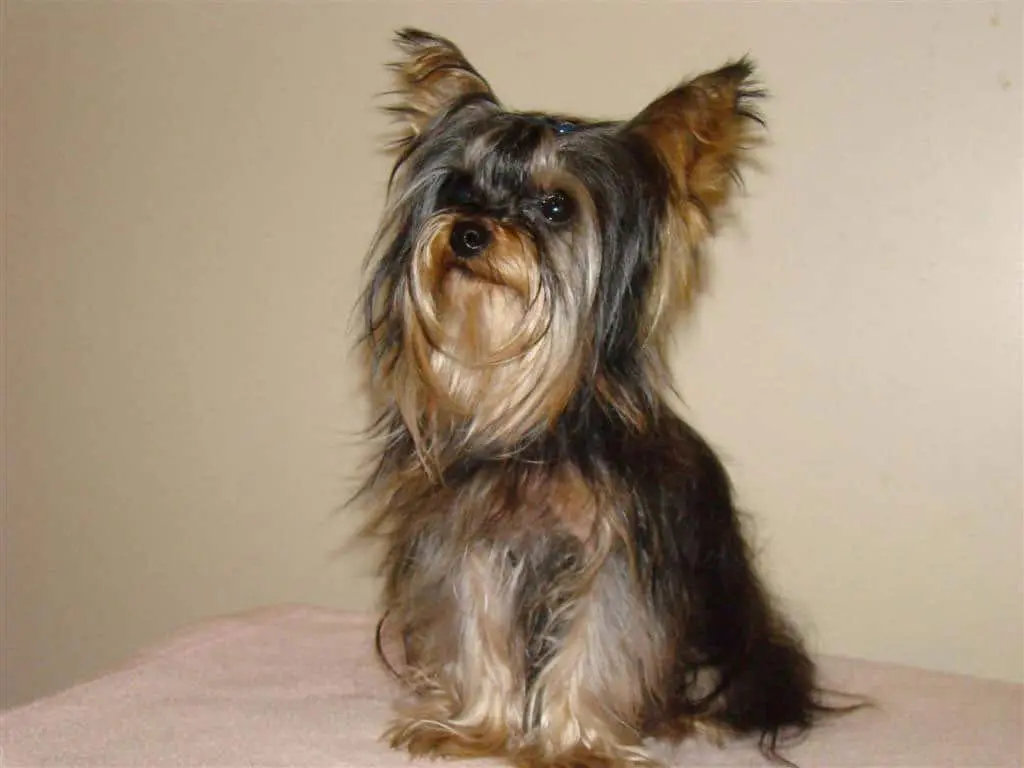
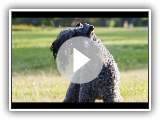
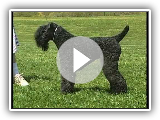
The Cesky Terrier is a small dog characterized by a long head, dull, wedge-shaped with a face bearded, floppy ears, a body and a long coat, silky gray.

In 1949, The breeder Scottish Terrier And avid fontisik hunter Horak of what is now the Czech Republic crossed its Scottish with the ยซSealyham terrierยปTo create what would become the" Czech Terrier ", an elegant pack hunting terrier with a long coat, soft and silky.

Horak loved hunting skills of their Scottish Terriers and personality of the Sealyham Terrier, but not the white coat Sealyham. He believed that breeding the two would produce a dog that would get along while hunting in packs..

Horak dogs were crossed for the first time a Scottish terrier bitch named Donka Lovuzdar, which it was both a hunting dog as a dog conformation show, and Sealyham called Buganier Urquelle, who belonged to a Sealyhams hunting pack. In selecting the features he wanted (a dog that could go hunting on a Friday and that could be easily washed and brushed and he was ready to compete in exhibitions recognition on Saturday and Sunday), the Cruze was a dog with excellent olfactory abilities and a fur gray soft. He designed a haircut with scissors that showed the muscle and the soft fur of the "Czech Terrier" and gave it a thin appearance.

Horak's documentation of the dogs' pedigrees and the crosses he made make him one of the rare breeds that can be traced back to its founders..

Physical characteristics

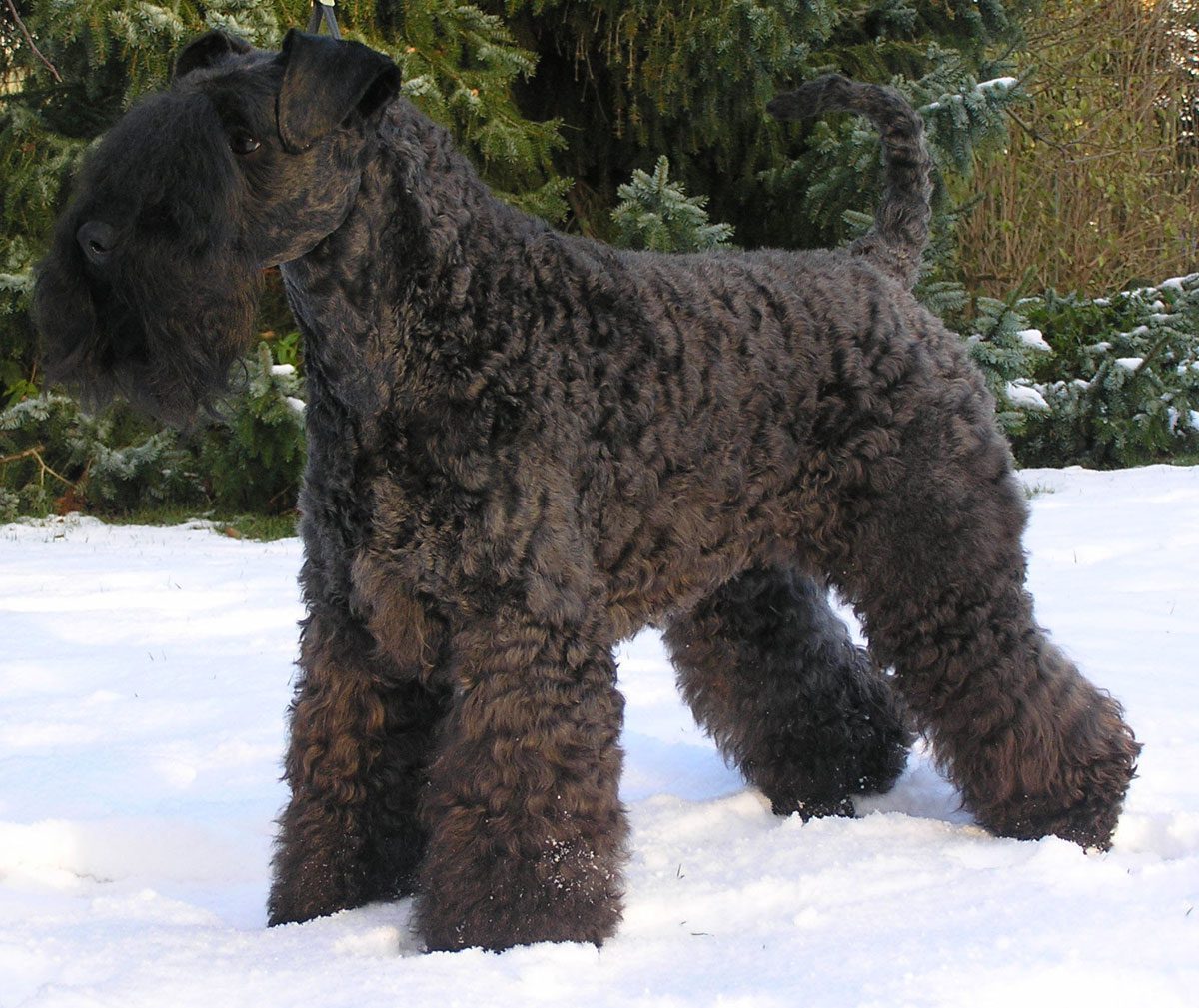
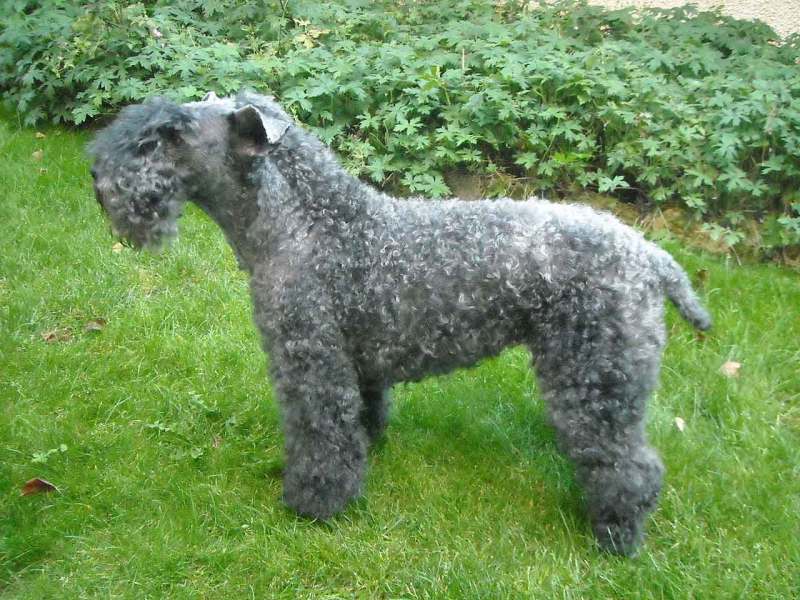
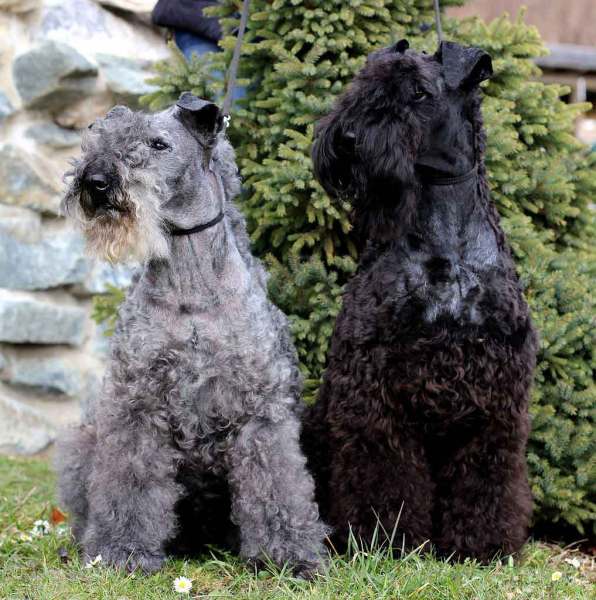
The "Czech Terrier" is a very muscular hunter terrier, short-legged, well pigmented, rectangular format. It has floppy ears and sports long fur., thin but solid, slightly wavy, with a silky sheen, not too filling.

The coat comes in two color varieties: grey blue (to the puppies are born black) and light brown (to the puppies are born dark brown, chocolate). In both color varieties yellow markings allowed, gray or white.

The "Czech Terrier" is longer than high with a upper line that rises slightly backwards.

They are relatively similar to those of Sealyham terrier and the Scottish Terrier.

The height to the cross is of 25 to 32 cm. (ideal 29 cm for males, 27 cm for females).
The weight must be between 7 and 10 kg.

Character and skills

Like all races, The "Czech Terrier" is not suitable for everyone. It may be quieter than some breeds of Terrier, but still a Terrier. A "Czech Terrier" puppy is a very difficult dog to drive, with lots of energy. These small Terrie likes to hunt and dig them, and they need daily exercise in a safe playground. He will chase a ball and recover, and likes to go for a walk. They do not like to be left alone for long periods and can become annoying barkers if they do not have regular activity and company to channel their energy.. The "Czech Terrier" enjoys and stands out in agility and tracking.

Dog nature always on alert, their wariness of strangers and deep and loud barking it an excellent watchdog. He is loyal to his owner, but lack of socialization during puppyhood can do more reserved or even fearful of strangers. Your new puppy needs daily walks and trips to places suitable for dogs so you can meet people and see, smell and hear new things.

Like most terriers, The "Czech Terrier" can be stubborn. That does not mean it is intelligent, but will have to use patience and guile to train. Make training sessions are short and fun. Use lots of praise and rewards as games and goodies when you do something you like. Always I am firm and consistent in what you ask for that not to be confused with what you want or think you can get away with it. But, is sensible, so avoid harsh corrections. You must be able to convey his displeasure through the expression and tone of voice, never screaming or hitting.

Start training your puppy the day you bring him home. Even at eight weeks old, He is able to absorb everything you can teach. Don't wait until you have 6 months to start training him or you'll have to deal with a more stubborn dog. If possible, Take it to a trainer for puppies when you have between 10 and 12 weeks to socialize. But, Note that many kinds of training puppies require certain vaccinations (such as kennel cough) stay up to date, and many veterinarians recommend limited exposure to other dogs and public places until puppy vaccinations (including rabies, distemper and parvovirus) They are completed. Instead of formal training, You can start training your puppy to socialize at home and among family and friends until their complete vaccination.

Talk to the breeder, It describes exactly what you are looking for a dog and asks for help to select a puppy. Breeders see puppies daily and can make incredibly accurate recommendations once they know a little about your lifestyle and personality.. Regardless of what you want from a "Czech terrier", look for one whose parents have pleasant personalities and has been well socialized from the first stage of the puppy.

Did you know??

The "Czech Terrier" is one of those races developed to work a certain type of land: in your case, the forests of Bohemia. Prey ranging from duck and pheasant to the fox, the rabbit and the boar.

Health of the "Czech Terrier"

All dogs have the potential to develop genetic health problems, just as all people have the potential to inherit diseases. Avoid any breeder who does not offer a health guarantee on puppies., to tell you that race has no known problems, or whose puppies are isolated from the main part of the home for health reasons. A reputable breeder will be honest and open about breed health problems and how often they occur in their lines..

Having said that, The "Czech Terrier" is a healthy race. One of his races base, el Sealyham Terrier, it may have an eye condition called dislocation of the lens, so it is recommended that your eyes are examined annually Terrier.

Some "Czech Terrier" can develop a hereditary condition called Scottie Cramp, occasionally it affects the gait of the dog. Usually it is not serious.

Remember that after bringing a new puppy home, You have the power to protect one of the most common health problems: the obesity. Keeping a "Czech terrier" with adequate weight is one of the easiest ways to prolong their life. Take advantage of the full potential of prevention to help ensure a healthier dog for life.

"Czech Terrier" images

credits:

1. Cesky terrier Terrier checo by ceskyfreund36 / CC0
2. Cesky terrier by https://pxhere.com/es/photo/1039221
3. English-Terrier – bitche during the international dogs show in Katowice, Poland by Pleple2000 / CC BY-SA
4. Cesky terrier by https://pxhere.com/es/photo/1391429
5. Cesky terrier on a stone forest by trees ceskyfreund36 / CC0
6. Cesky Terrier during dogs show in Katowice, Poland by Lilly M / CC BY-SA
7. English-Terrier – bitche during the international dogs show in Katowice, Poland by Pleple2000 / CC BY-SA

"Czech Terrier" videos

Type and recognitions:

  • FCI CLASSIFICATION:
  • Group :
  • Section : . .

Federations:

FCI โ“˜, AKC โ“˜, ANKC โ“˜, CKC โ“˜, โ€‹KC โ“˜, NZKC โ“˜, UKC โ“˜

FCI breed standard Cesky Terrier

FCIFCI - Cesky Terrier
Terrier

Alternative names:

1. Bohemian Terrier, ฤŒeskรฝ Teriรฉr (English).
2. Cesky Terrier (French).
3. Bรถhmischer Terrier, ฤŒeskรฝ Teriรฉr(German).
4. Ceskรฝ Teriรฉr (Portuguese).
5. Cesky Terrier (espaรฑol).

โ–ท The world of Pets: Dogs, cats, birds, reptiles, amphibians

Dandie Dinmont Terrier
Gran Bretaรฑaa FCI 168 . Small sized Terriers.

Dandie Dinmont Terrier

The Dandie Dinmont Terrier is a dog whose standard requires what other terriers consider very serious defects.

Content

History

This terrier shot was specially developed around 1600 in the Cheviot Hills and near Coquetdale to support the hunting of otters and badgers. But also predators and hares made life very difficult for this accomplished hunter..

Most of the dogs of this breed were only kept by very few families in the area and were also very rarely given to strangers.. Well-known breeder Willi Allan, for example, maintained an exceptional herd, but he refused to sell even one of his dogs despite the high offers.

Her children and grandchildren continued this tradition after her death in 1704, but occasionally they gave a dog to good friends or as a favor. The aforementioned breeder John Davidson received a partner this way and began his breeding.

It was the favorite dog of the French King Luis Felipe, who owned a pair of dandies about 1840.

The painter Gainsborough immortalized the Dandie Dinmont Terrier in his portrait of the Duke of Buccleuch.

Like breed of Scottish hunting dog, the terrier was originally used to hunt otters and badgers; with its long and flexible body it had ideal conditions for hunting in the substructure. Today the Dandie Dinmont Terrier He is considered a faithful companion and a happy companion in many life situations..

It is considered the direct ancestor of the no less independent rough haired dachshund. With the foundation of the first Club Dandie Dinmont in 1875, the characteristics of the breed were unified.

In the countries of the European continent, the Dandie Dinmont Terrier lags far behind the enthusiasm of the people of the British Isles in terms of popularity.

In its native land it can still be experienced as a determined hunting and watchdog., but a life as a companion dog is more common. This little terrier is rarely observed compared to other breeds..

The usual height of the shoulders between 20 and 28 centimeters is no longer stipulated in the FCI standard. The nomenclature is limited to a weight of eight to eleven kilograms for this little terrier.

The Dandie Dinmont Terrier is a direct descendant of the Skye Terrier. Although the breed is relatively common in Britain, this humble dog is rarely seen outside of this country.

Physical characteristics

The Dandie Dinmont Terrier is a special representative of the terrier group. Fierce, brave and tough, is a reliable tracker and a good hunting helper.

In the hunt he faces polecats, badgers and otters. Many terrier breeds have the genes of the dandies.

Walter Scott names in his novel the famous six terriers Dandie Dinmont Terrier with extraordinary names

ยซAuld Pepperยป (= old pepper)
ยซYoung Pepperยป.
ยซLittle Pepperยป.
"Ancient must".
"Young mustard".
y ยซLittle Mustardยป, indicating the predominant hair colors in this breed.
About his character he wrote: "They fear nothing in this world that meets a furry fur".

According to the breed standard, the shoulder height of the Dandie Dinmont Terrier Must be from 24 to 28 cm., the ideal weight under working conditions should be between 8 and 11 kg.

Some of its physical characteristics, like short curved legs, the backs tucked, round head and big eyes, probably date back to the crossing of several breeds of sniffer dogs.

The coat consists of a curly mix of hard and soft hairs, which are also quite long, of about 5 cm.. Normally the coat of the Dandie Dinmont requires relatively little cleaning, it just needs to be combed regularly and trimmed several times a year.

Character and skills

The Dandie Dinmont Terrier shows its adaptability not only in hunting. When he lives with his humans, he is affectionate and affectionate without becoming friends.

Characterized by a high stimulus threshold, what benefits you as an apartment dog. Doesn't bark for no reason, although I hear it and see it all. However, the proportion of outdoor activities in the daily routine must be large enough. Their hunting genes continue to determine the drive to work in the wild.

Obedience is not an outstanding feature of the enchanter Dandie Dinmont.
Humans with a consistent stance convince this sensitive terrier. If you understand the meaning of your actions, wants to please and behaves as told. Basically, our reserved four-legged friend can be a nice family dog.

The Dandie Dinmont has the same intelligent, alert nature that makes most terriers good family dogs. Fortunately it doesn't tend to be stubborn.

If you want to keep your Dandie Dinmont healthy and alert, it is essential that you walk him every day and that you give him a relatively low-fat diet.

The Dandie Dinmont Terrier she is agile with her short legs. Your need for exercise is roughly equivalent to your size, but long walks through the woods and fields with its owner are very welcome. The magic word is action and activity.

If it comes to mind and a rodent awakens your hunting instinct, hunting is a hobby to your liking.

Within the limits of its territory, seems at the moment remarkably reserved in his dealings with other dogs. Opinions differ as to the extent to which children are accepted by the Dandie Dinmont Terrier. In general, the child is described as fond of children.

But, even here, there is no Rose without spines, and joy for unfamiliar children may individually be much less than. The owner is always obliged to watch over his pets.

Care of "Dandie Dinmont Terrier"

Has a fluffy undercoat that grows curly, the top layer being hard.

In addition to regular brushing, we should trim their fur almost three times a year. This removes dead hair without softening the main hair and without reducing the water resistance of the double coat.

Of course, dogs participating in shows should be groomed more carefully.

Especially dense hair requires special attention to emphasize the characteristic soft and silky form of the ยซtopknotsยซ. It is important that the dog never looks as if it has been groomed.

The predominant coat colors are, as already indicated in Scott's novel by the special names of dogs, Pepper, that is to say, shades between blue-black to light silver gray, as well as mustard, that is to say, colors from red-brown to beige.

The quality of the care of the coat is very visible in the striking head of the Dandie Dinmont Terrier. The silky mop of hair around the large eyes is the figure that characterizes the Dandie Dinmont Terrier.

The coat as a whole is pepper or mustard. The first variant ranges from blue-black to silver gray, mustard color palette shows different shades of brown.

Characteristics "Dandie Dinmont Terrier"

Coexistence is important that you have with your new friend. Before considering the acquisition of a dog of the breed "Dandie Dinmont Terrier" you know certain factors. Not all breeds of dogs are apt to live in an apartment, you must take into account his character, their need for exercise, their interaction with other pets, their care and if you have small children, their level of tolerance towards them.

Adaptation โ“˜

5,0 of 5 stars (based on 1 review)

friendly dog โ€‹โ€‹โ“˜

4,0 of 5 stars (based on 1 review)

hair loss โ“˜

1,0 of 5 stars (based on 1 review)

Affection level โ“˜

3,0 of 5 stars (based on 1 review)

Need for exercise โ“˜

3,0 of 5 stars (based on 1 review)

Social need โ“˜

3,0 of 5 stars (based on 1 review)

Home โ“˜

5,0 of 5 stars (based on 1 review)

Toilet โ“˜

2,0 of 5 stars (based on 1 review)

Friendly with strangers โ“˜

3,0 of 5 stars (based on 1 review)

barking โ“˜

2,0 of 5 stars (based on 1 review)

Health โ“˜

2,0 of 5 stars (based on 1 review)

Territorial โ“˜

4,0 of 5 stars (based on 1 review)

Cat friendly โ“˜

3,0 of 5 stars (based on 1 review)

Intelligence โ“˜

3,0 of 5 stars (based on 1 review)

Versatility โ“˜

3,0 of 5 stars (based on 1 review)

Child friendly โ“˜

4,0 of 5 stars (based on 1 review)

Surveillance โ“˜

3,0 of 5 stars (based on 1 review)

joy โ“˜

5,0 of 5 stars (based on 1 review)

Images "Dandie Dinmont Terrier"

Photos:

1 – Dandie Dinmont Terrier and West Highland White Terrier during the international dogs show in Katowice, Poland. The dogs comes from the kennel ยซCanis Terraยป by Pleple2000 / CC BY-SA
2 – Dandie Dinmont Terrier from 1915 by W. E. Mason – Dogs of all Nations
3 – The female – Dandie Dinmont Terrier during the international dogs show in Katowice, Poland. The bitch comes from the kennel ยซCanis Terraยป by Pleple2000 / CC BY-SA
4 – Dandie Dinmont Terrier, 2014 Westminster Kennel Club Dog Show, New York City. by Pets Adviser from Brooklyn, USA / CC BY
5 – The head of female – Dandie Dinmont Terrier during the international dogs show in Katowice, Poland. The bitch comes from the kennel ยซCanis Terraยป by Pleple2000 / CC BY-SA
6 – Dandie Dinmont Terrier by https://pxhere.com/es/photo/696735

Videos "Dandie Dinmont Terrier"

Type and recognitions:

  • FCI CLASSIFICATION:
  • Group :
  • Section : . .

Federations:

  • FCI – Terriers 2 Small sized Terriers. โ“˜
  • AKC – Terrier โ“˜
  • ANKC – Group 2 (Terrier) โ“˜
  • CKC – Group 4 – Terriers โ“˜
  • โ€‹KC – Terriers โ“˜
  • NZKC – Terriers โ“˜
  • UKC – Terriers โ“˜

FCI breed standard "Dandie Dinmont Terrier"

Origin:
United Kingdom

Date of publication of the valid original standard:
22.08.2017

Use:

Terrier


General appearance:

It is a dog that has a characteristic head covered with beautiful and silky hair, with big eyes, are keenly aware of from the Inteligentes, that counterbalance the body that is short and long like a weasel. Limbs are short and strong; with a coat that protects it from the elements.


Behavior / temperament:

He is a brave and enterprising Terrier. Independent, very intelligent, decided to, persistent, sensitive, loving and noble.

Head:

The head is of solid constitution, large but proportionate to the size of the dog; Muscles have extraordinary development, especially those of the jaws.

Cranial region:
  • Skull: Wide and narrow towards the eyes; the distance between the inner angle of the eye and the back of the skull is almost the same as that between ear to ear. The forehead is well domed; the head should be covered with very soft and silky hair not limited to just a lock.

facial region:

  • Truffle: It is black.
  • Snout: Must have a ratio of 3 to 5 regarding the skull. The back of the muzzle has a hairless triangle-shaped part that points back to the eyes from the nose and is about an inch wide. (2,5 cm.).
  • Cheeks: Gradually taper to a deep, strong muzzle.
  • Jaws/Teeth: Strong JAWS, with healthy teeth, complete and scissor bite, that is to say, that the internal face of the upper incisors is in contact with the external face of the lower incisors; the teeth should be set at right angles in the jaws. Any deviation is highly undesirable. Teeth are very strong, especially canines that are exceptionally large for a small dog. Canines must fit well with each other, in such a way that they confer strength for grip and punishment. The inside of the mouth must be pigmented in black or dark color.

Eyes: Deep dark hazelnut color; placed well separated from each other and down. They are great for a small dog, bright, full and round but not bulging.

Ears: Pendants, well behind, distant from each other and low insertion in the skull; hang close to the cheeks with a slight lift at the base; wide at the base at their junction with the head and end almost pointed. The anterior part of the ear should hang almost straight from its insertion with the head to the tip. The cartilage and the skin of the ear must be very thin. The length of the ear varies between three and four inches (7,5- 10cm.). The color of the ears must harmonize with that of the body. In the case of a pepper dog, they must be covered with soft hair, right and dark (in some cases almost black). In the case of a mustard colored dog, they must also be of that color, but in a darker shade than the body, although never black. In both cases, They should have a thin fringe of light hair that starts approximately two inches. (5 cm.) from the tip of the ear, and almost the same color and texture as the lock, giving the ears a characteristic appearance in tip. This feature may not appear until after the dog has reached the age of two years.

Neck:

Very muscular, well developed and robust, and show great vigor. With good insertion on the shoulders.

Body:

Long, strong and flexible.

  • Back: It should be quite low in the region of the withers, forming a slight curve and corresponding arc in the renal region in its gradual descent towards the base of the tail.. On the sides of the spine you must have good musculature.
  • Breast : Well developed and well lowered between the front shoulders.
  • Ribs: Well arched and rounded.

Tail:

It is quite short and its length varies between eight and ten inches (20 โ€“ 25 cm.), very thick at the base and thicken more in a stretch of 10 cm. (4 inches), and then tune up and end in a point. It should never twist or twist, but it must be curved like a scimitar. When the dog is excited, The tip of the tail forms a perpendicular line with the base of the same; its insertion is neither too high nor too low. When the dog is at rest, you should carry it happily and very little above the level of the body.

Tips

PREVIOUS MEMBERS: They are short, with very good muscle and bone development, placed well distant from each other and the chest must get well down in their midst of them. Arched limbs are very undesirable.

  • Shoulder: Well inclined backwards, but not very heavy.
  • forearms: They must follow the chest line.
  • Previous feet: Directed forward or slightly deviated outward when dog is stopped.

LATER MEMBERS: The posterior members are slightly longer than the previous and distant from each other, although not opened in a way that is not natural.

  • Thighs: They must be well developed.
  • Knees: Angled femoro-tibio-patellar joints.
  • Hocks: Well descended. The spurs, if they existed, they should as usual be slashed.
  • Hind feet: Round and with thick foot pads. The rear feet should be smaller than the previous ones. Well pigmented nails in dark color, although it can vary according to the color of the fur that covers the body. Flat feet or toes spread apart are highly undesirable.

Movement:

Powerful, With a straight line from the back, that allows you to develop an agile step, free and light, with good range at the front. A rigid movement, striding, jumping or crisscrossing is highly undesirable.

Mantle

Fur: In this race the fur is a very important feature. It has two layers of hair, a soft, lustrous inner and a tougher non-wire outer, but that gives the impression of being crisp to the touch. Hair should not be divided into a stripe along the back, it should be extended in the form of tassels produced by the harder hair that comes out through the inner layer of softer hair. The forelimbs are covered in long fringed hair of almost 5 cm. (2 inches) length. The top of the tail should be covered with rough hair; at the bottom the hair is not so coarse, and has sleek fringes for softer hair.

Color: Pepper or mustard.

  • Pepper: It varies from dark bluish black to a light silver gray; intermediate shades are preferred. Body color should extend well below the shoulders and hips, gradually intermingling with the color of the limbs and feet, which varies according to the color of the body from the intense fire to the lully light. Must have a thick silver-white hair bun.
  • Mustard: It varies from reddish brown to the lully clear. You should have a thick creamy white hair bun; the limbs and feet should be darker than the head.

In both colors, the hair of the fringes on the forelimbs is almost considerably lighter than the hair on the front of the limb. White hair is allowed in the chest, as well as white nails. White feet are undesirable. The hair at the bottom of the tail is lighter in color than the hair at the top, it should be a darker color than the body.


Size and weight:

Among 8 and 11 kg for males in good working condition. Lower weights are preferred.


Fouls:

Any deviation from the aforementioned criteria must be considered as a fault and the severity of it is considered in proportion to the degree of deviation from the standard and its consequences on the health and well-being of the dog..

FALTAS DESCALIFICANTES:

  • Aggressiveness or extreme shyness.
  • Any dog โ€‹โ€‹showing clear signs of physical or behavioral abnormalities must be disqualified..


N.B.:
  • Males should have two normal-appearing testicles fully descended into the scrotum..
  • Only functionally and clinically healthy dogs, with the typical conformation of the breed, should be used for parenting.

The latest changes are in bold.

TRADUCCION: Lic. O. Valverde Calvo (Costa Rica). Original version: IN.

Source: F.C.I - International Cynological Federation

Alternative names:

1. Dandie, Hindlee Terrier (English).
2. Dandie (French).
3. Dandie (German).
4. Dandie (Portuguese).
5. Dandie (espaรฑol).

โ–ท The world of Pets: Dogs, cats, birds, reptiles, amphibians

West Highland White Terrier
Inglaterra FCI 5 . Small sized Terriers.

West Highland White Terrier

The West Highland White Terrier he is a very lively dog, joyful, with great self-love, determined and independent.

Content

History

The West Highland White Terrier, better known as Westie, is a former Scottish hunting terrier. The little terriers from which the Westie they served humans for many years as watchdogs and hunters. It also, they made themselves useful in the house every day. Keeping houses free from rats and mice, driving away a marten or fox that wanted to feed on chickens or pigeons at night, they proved to be useful helpers at home and in court. The true strength of West Highland White Terrier was active fox hunting, the marten and the otter. The little terrier fearlessly and determinedly chased these thieves to the furthest corner of his den., where they were trying to get them out of the burrow, as the hunters counted. Like his three Scottish brothers, Skye and Cairn Terrier, the West Highland White Terrier he is one of the four descendants of these old men Scottish hunting terrier.

Like the others, comes from the great gene pool of all those Scottish terriers. Only through intentional breeding, that is to say, artificial separation, Scotland's four genetically separated lower terrier breeds were born. Its current form as "West Highland White Terrierยป is the result of breeding directed as a companion dog and for displaying the latest 100 years. Until 1924 was raised and led along with the current Cairn-Terrier. The pure white color is the result of a selection of external traits from the time of the breeding of the sample.. It is an expression of efforts to make these four originally identical brothers more and more distinct from one another.. In 1907 the breed was recognized by the British Kennel Club. It was always a fairly rare breed in Europe. That suddenly changed around 1990.

The advertising industry recognized the attractive effect of this smart and happy little terrier. Dog food brands like ยซCรฉsarยป remain inseparably connected with Westie. The nice one Westie became widely known as a means of advertising dog food and later other items as well. Many people knew him as "the television dog.". He was temporarily better known than the Sausage dog or German shepherd. The serious breeding scene could not meet the demand for puppies from Westie. This could not be said twice by the multipliers from Germany and all over Europe. Dubious vendors massively selling puppies in the dog market. This was not good for the dog breed, your fitness and health. Still today many of these breeders, mostly well disguised as "breed lovers", frolicking on the Internet.

Physical characteristics

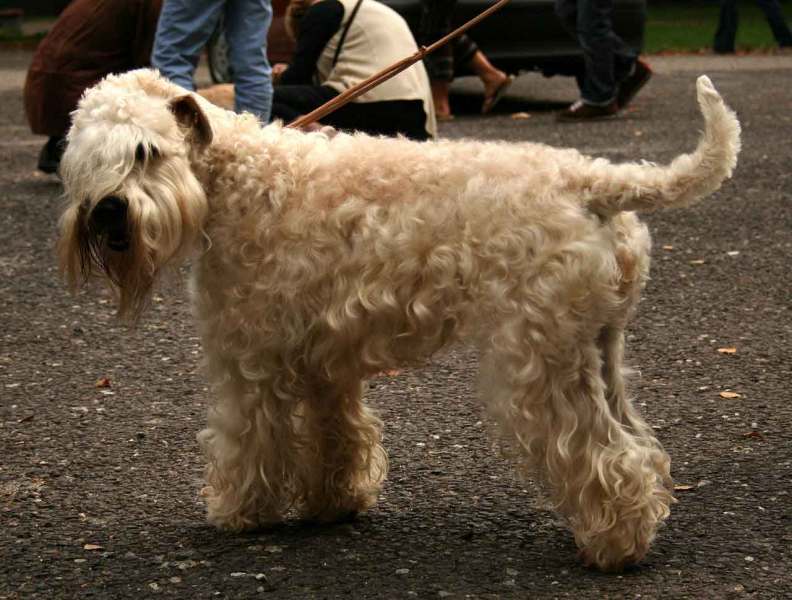
The West Highland White Terrier he is a small and manageable dog with an impressive appearance and self-confident. He's got a pretty thick overcoat with a hard top layer but doesn't lean. Your undercoat must be hair, short, smooth and dense. Your coat is weather resistant. With a height at the withers of about 28 centimeters, weighs between 6,5 and 8,5 kg. But, the ideal weight is not given by the standard. However, the Westies they are quite heavy relative to their physical size. Of course, the color of a coat Westie it should always be white and pure white, After all, it's already in your name.

After the experiences with the fashion hype, already in 1998 a special requirement for healthy breeding was set in the standard, so any deviation that could "harm the health and well-being of the dog" had to be rejected.. A striking feature is the tail of the West Highland White Terrier, that the standard defines as: "of 13 to 15 cm long; covered with coarse hair, without pen, as straight as possible, haughtily carried, but neither happy nor hunched over the back. A long tail is not desirable, but for no reason should it be amputated. The tail of the Westies it is a good reflection of its intelligent nature.

Character and skills

The West Highland White Terrier he's a lively guy, bright and confident. In it beats the heart of a true terrier. The official standard describes its character as follows: "Little, Active, bold, robust, endowed with considerable self-confidence and an air of predatory sharpness. Alert, joyful, brave, Confident but friendly". The old hunter has a tendency to independence and overconfidence. He likes to see himself as an emperor.

One should not only accept this trait with a smile and a broad inner smile., but rather appreciate it. Of course, such ambitions must have limits, but maybe you shouldn't always notice this boundary setting by us humans. The Westies they are very loyal and affectionate. They love their family and are extremely child friendly.. They are characterized by their friendly and kind character. But they are not lap dogs. Despite his agile temperament, the Westies are not restless or nervous. Are alert, reporting unusual circumstances with excited barking.

Westies Maintenance:

The attitude of the Westies has no problems. Only grooming is mandatory, especially regular trimming. It has no demands regarding the size of the floor. It can also be kept well on the floor of a big city. Only one should allow him his daily walks. It should be noted that Westies they were hunting dogs, whose heritage lives on even with today's companion. Small dogs are very persevering and can follow their owners without problems when walking. Must be used to other pets from litter box. If he West Highland White Terrier is consistently and lovingly educated as early as the puppy's age, then this sturdy four-legged friend is a valuable companion, that adapts easily and willingly to all the living conditions of its caregivers.

Westie's Education

The education of West Highland White Terrier is an often underrated chapter. Although the puppy looks so cute, especially in his first months of life, he is a true terrier very sure of himself. And such a terrier wants to be educated and guided. The Westie requires consequences in education from adulthood. Although small, dreams like most terriers in some corner of his brain of assuming leadership of the pack. You just have to take your education seriously. Otherwise, his education is not problematic. He wants and needs the guidance of his master or caretaker and is a docile companion., friendly and sociable.

Care of the West Highland White Terrier

The West Highland White Terrier are prone to rashes with dry skin, and frequent bathing can exacerbate these problems. The bathing them once a month รขโ‚ฌโ€œ or a longer interval- does not usually cause problems. It is advisable to use neutral soaps or baby shampoo and avoid products with aggressive substances., except veterinary prescription.

After bathing they should pay particular attention in dry him very well the ears with a towel. If brushes you daily or regularly, his hair will remain healthy and bright.

It is also advisable to occasionally perform a brushing through the grubbing-up of dead hair (referred to as striping), It is a totally painless method which is performed by a professional expert in canine aesthetics. This type of arrangement will maintain the texture and characteristics of the white mantle of the Westie. As well, It should be cleaned them ears weekly with a piece of cotton dampened with water to remove wax buildup and avoid possible infections.

Special attention must be paid to cleaning the hair around the snout with a damp cloth after eating or digging a hole.. The same, the lagrimales should be cleaned to avoid the accumulation of lagaรฑas, since being a white dog if it is not taken care of -diligently- maintain clean those parties they will wear an unsightly Brown and will make it look dirty or neglected. When they are pets they should be cleaned with baby wipes, especially the part of the belly already to be a dog with short legs, gets wet when they pee and ends up taking an ugly yellowish color.

West Highland White Terrier Health

Cubs West Highland White Terrier They may suffer from a disease called โ€œcraniomandibular osteopathy.โ€, known as "Westie or Scottie jaw" which consists of abnormal growth of the jaw bone. This genetic disease is autosomal recessive in nature, that means that what a puppy the present both parents should have the gene and transmit it to the puppy; Unfortunately, the only way to know if any breeding specimen contains this gene is until a puppy is born and presents this anomaly.. By the same, perhaps the breeder himself will not know that some specimen has this fault until the litter is born.

Is condition usually occurs when the puppy is between 3 and 6 months of age and disappears to the 12 months.

Diagnosis is usually made after x-rays are taken.. The treatment of the symptoms consists of providing medications that help the puppy to cope with this period., allowing him to eat and use its snout while it suffers from pain. Corticosteroids are therapeutic agents that are used most frequently. Disease disappears spontaneously when the period of growth ends. Only in very severe cases, It does not respond to treatment, is euthanasia.

Nutrition / Food

The nutrition of West Highland White Terrier not usually problematic, as long as it comes from a serious breeding. It is not uncommon for allergies and skin irritations to require a dietary diet.

Westie's Life Expectancy

The West Highland White Terrier of serious upbringing tend to have robust health and can reach 15 years in good physical condition.

Buy a West Highland White Terrier

There are many dubious providers of Westies on the Internet. In your own interest and especially for the welfare of dogs you should look very carefully. It is best to purchase your Westie puppy locally from an FCI member breeder. Here you should pay special attention that there is no inbreeding. Or you can go to the animal shelter and look for other types of terriers. Cubs West Highland White Terrier cost around 1.000 EUR.

Characteristics "West Highland White Terrier"

Coexistence is important that you have with your new friend. Before considering the acquisition of a dog of the breed "West Highland White Terrier" you know certain factors. Not all breeds of dogs are apt to live in an apartment, you must take into account his character, their need for exercise, their interaction with other pets, their care and if you have small children, their level of tolerance towards them.

Adaptation โ“˜

4,0 of 5 stars (based on 1 review)

friendly dog โ€‹โ€‹โ“˜

4,0 of 5 stars (based on 1 review)

hair loss โ“˜

1,0 of 5 stars (based on 1 review)

Affection level โ“˜

4,0 of 5 stars (based on 1 review)

Need for exercise โ“˜

4,0 of 5 stars (based on 1 review)

Social need โ“˜

4,0 of 5 stars (based on 1 review)

Home โ“˜

3,0 of 5 stars (based on 1 review)

Toilet โ“˜

4,0 of 5 stars (based on 1 review)

Friendly with strangers โ“˜

4,0 of 5 stars (based on 1 review)

barking โ“˜

5,0 of 5 stars (based on 1 review)

Health โ“˜

5,0 of 5 stars (based on 1 review)

Territorial โ“˜

5,0 of 5 stars (based on 1 review)

Cat friendly โ“˜

3,0 of 5 stars (based on 1 review)

Intelligence โ“˜

4,0 of 5 stars (based on 1 review)

Versatility โ“˜

4,0 of 5 stars (based on 1 review)

Child friendly โ“˜

4,0 of 5 stars (based on 1 review)

Surveillance โ“˜

5,0 of 5 stars (based on 1 review)

joy โ“˜

5,0 of 5 stars (based on 1 review)

Images "West Highland White Terrier"

photos:

1 – Tara posing in Simancas (Valladolid) 27 one. 2007
2 – West Highland Terrier by Antonio Villascusa / CC BY
3 – A West Highland White Terrier in Capelle aan den IJssel, Netherlands. by Wouter Engler / CC BY-SA
4 – West Highland White by https://commons.wikimedia.org/w/index.php?title=User:Mateo_Squad&action=edit&redlink=1
5 – West Highland White Terrier from 1915 by not specified (except those with signature on image) / Public domain
6 – West Highland White Terrier by SheltieBoy / CC BY

Videos "West Highland White Terrier"

Type and recognitions:

  • FCI CLASSIFICATION:
  • Group :
  • Section : . .

Federations:

  • FCI – Terriers 2 Small sized Terriers. โ“˜
  • AKC – Terriers โ“˜
  • ANKC – Terriers โ“˜
  • CKC – Terriers โ“˜
  • โ€‹KC – Terriers โ“˜
  • NZKC – Terriers โ“˜
  • UKC – Terriers โ“˜

FCI breed standard "West Highland White Terrier"

Origin:
United Kingdom

Date of publication of the valid original standard:
13.10.2010

Use:

Terrier.


General appearance:

Strong structure; deep chest and well developed back ribs. Level back. Powerful hindlimbs, with good musculature, exhibiting to a high degree the combination of strength and activity.


Behavior / temperament:

Petit, Active, brave, without fear, possessing a lot of self-esteem, mischievous expression, alert, joyful, bold, confident and friendly

Head:

The distance from the occiput to the eyes is slightly greater than the length of the facial region. The head is covered with abundant fur, forming a right angle, the acute, relative to the neck axis. The head must not be worn in an extended position.

Cranial region:
  • Skull: Slightly bulky. Side view, the forehead has a smooth curvature. The skull decreases slightly from the level of the ear to the eyes.
  • Depression links (Stop): Very notorious, formed by a visible slightly protruding bone formation immediately above the eyes, and a slight hollow between them.

facial region:

  • Truffle: Black and somewhat elongated, forming a slight contour with the rest of the muzzle. The truffle does not project forward.
  • Snout: Gradually thins from eyes to nose. The muzzle should be well filled under the eyes., without being concave or falling sharply.
  • Jaws / Teeth: Strong and uniform jaws. As wide as possible between the tusks, keeping the mischievous expression. Teeth are large proportionally to the size of the dog, with a uniform scissor bite, that is to say, that the upper incisors fall exactly in front of the lower ones, teeth being placed perpendicularly in the jaws.
  • Eyes: Separate, medium-sized, neither rounded nor large, as dark as possibleand placed well under bushy eyebrows that give the dog a sharp and intelligent expression. The clear color eyes are very undesirable.
  • Ears: Small, erect and carried firmly, ending at tip, implanted neither too close nor too far apart. Her short soft hair (velvet) should not be cut. Feather-free at the tip. Rounded tip ears, wide, long, thick or with too much hair are undesirable.

Neck:

long enough, in a way that allows the required good head position; muscular neck, gradually thickening towards the base so that it can gently emerge from the sloping shoulders.

Body:

Compact.

  • Back: Level.
  • Pork loin: Wide and strong.
  • Breast : Deep; the ribs in the upper half are so arched that they give a flat appearance to the sides. The last ribs have considerable depth, the distance from the last rib to the hip being only long enough to allow free movement of the body.

Tail:

13 โ€“ 15 cm., covered with coarse hair, without pen, as straight as possible, haughtily carried, but neither happy nor hunched over the back. A long tail is not desirable, but for no reason should it be amputated.

Tips

PREVIOUS MEMBERS:

  • Shoulder: Leaning back with wide, well-attached shoulder bladesto the chest wall. The shoulder joint positioned forward.
  • Elbows: Well positioned so as to allow the limb free movement, parallel to the axis of the body.
  • Forearm: Short and muscular forelimbs, straight and thickly covered with short, hard hair.
  • Previous feet: The previous ones are longer than the later ones, round, provided in size, strong, with thick pads and covered with short hair, rough. The hind feet are smaller, with very thick pads. The bottom surface of the pads and all nails are preferred black.

LATER MEMBERS:

  • General appearance: Strong, muscular and broad at the top; short hind limbs, muscular and tendon.
  • Thighs : Very muscular and not too far apart.
  • Knees: Well inclined.
  • Hock joint: Well angled and positioned under the body so that they are considerably close together when walking or standing. Straight or weak hocks are undesirable.
  • Hind feetSmaller than the previous ones, round, provided in size, strong, with thick pads and covered with short hair, rough. The hind feet are smaller, with very thick pads. The bottom surface of the pads and all nails are preferred black.

Movement:

Libre, straight and easily in all types of walking. In the previous members, freely extends forward of the shoulders. Rear limb movement is free, strong and united. Knees and hocks must be well angled; hocks positioned under the body give a good push. Stiff or affected movement of the cow's hind limbs and hocks are highly undesirable.

Mantle

SKIN: Free from obvious skin diseases.

  • Fur: It has dual layer. The outer layer consists of rough hair, of approximately 5 cm long, no ripples. The inner layer, that looks like fur, is short, soft and dense. Untight coat not desirable.
  • Color: White.


Size and weight:

Height to the cross: About 28 cm..


Fouls:

Any deviation from the aforementioned criteria is considered as a fault and the severity of this is considered to the degree of the deviation to the standard and its consequences on the health and well-being of the dog..

FALTAS DESCALIFICANTES:

  • Aggressiveness or extreme shyness.
  • Any dog โ€‹โ€‹showing clear signs of physical or behavioral abnormalities must be disqualified..


N.B.:
  • Males should have two normal-appearing testicles fully descended into the scrotum..
  • Only functionally and clinically healthy dogs, with the typical conformation of the breed, should be used for parenting.

The latest changes are in bold.

TRADUCCION: Brรญgida Nestler / Original version: (IN) Technical supervision: Miguel Angel Martinez

Source: F.C.I - International Cynological Federation

Alternative names:

1. Poltalloch Terrier, Roseneath Terrier, White Roseneath Terrier, Westie (or Westy) (English).
2. Westie (French).
3. WeiรŸer Hochlandterrier, โ€žWestieโ€œ, ursprรผnglich: Poltalloch Terrier, Roseneath Terrier (German).
4. Westie (Portuguese).
5. Westie, Westy (espaรฑol).

โ–ท The world of Pets: Dogs, cats, birds, reptiles, amphibians

Fox Terrier (wire)
Gran Bretaรฑaa FCI 169 - Large and medium sized Terriers

The Fox Terrier (wire) he is an active and happy dog, of small volume in which bones of good substance and great physical strength are combined, never heavy or rough.

Fox Terrier pelo de alambre

Content

Characteristics "Fox Terrier (wire)"

Coexistence is important that you have with your new friend. Before considering the acquisition of a dog of the breed "Fox Terrier (wire)" you know certain factors. Not all breeds of dogs are apt to live in an apartment, you must take into account his character, their need for exercise, their interaction with other pets, their care and if you have small children, their level of tolerance towards them.

Adaptation โ“˜

5,0 of 5 stars (based on 1 review)

friendly dog โ€‹โ€‹โ“˜

2,0 of 5 stars (based on 1 review)

hair loss โ“˜

3,0 of 5 stars (based on 1 review)

Affection level โ“˜

5,0 of 5 stars (based on 1 review)

Need for exercise โ“˜

5,0 of 5 stars (based on 1 review)

Social need โ“˜

3,0 of 5 stars (based on 1 review)

Home โ“˜

3,0 of 5 stars (based on 1 review)

Toilet โ“˜

2,0 of 5 stars (based on 1 review)

Friendly with strangers โ“˜

2,0 of 5 stars (based on 1 review)

barking โ“˜

5,0 of 5 stars (based on 1 review)

Health โ“˜

3,0 of 5 stars (based on 1 review)

Territorial โ“˜

5,0 of 5 stars (based on 1 review)

Cat friendly โ“˜

1,0 of 5 stars (based on 1 review)

Intelligence โ“˜

5,0 of 5 stars (based on 1 review)

Versatility โ“˜

3,0 of 5 stars (based on 1 review)

Child friendly โ“˜

5,0 of 5 stars (based on 1 review)

Surveillance โ“˜

5,0 of 5 stars (based on 1 review)

joy โ“˜

5,0 of 5 stars (based on 1 review)

History

Terriers form a large group of dogs. Its name is derived from the Latin "Terra" for earth. So they were dogs for work on the land. The first evidence is given by the ancient Romans. Already in the Middle Ages terriers are described in detail. His homeland is in the British Isles. Terriers existed throughout the country. In the stables they kept the little vermin. Even the big rats were not a problem for them. The hens, pigeons and rabbits protected them from martens and foxes. To keep chasing foxes, the terriers were sent to the trench. They were supposed to get the fox out of the hole. All these tasks required an enthusiastic commitment, special courage, independent thinking and so-called predatory acuity. Terriers were the world champions in the then "sport" of rat biting. They were fearless and with every fiber of their being they strove to do their job to the best of their ability..

We can still experience all of these qualities in our terriers today.. They make the special charm of these dogs. Terriers come in all sizes, but they are mostly quite small dogs up to the Yorkshire Terrier of today. But they were all once very busy working dogs. Most small terriers like Yorkie, the Westie or the Scottish they made their home in the cramped working-class settlements of emerging industry in England or Scotland. Despite her sometimes quite dainty appearance today, they are still whole dogs, yet. They are concise reps with their own heads and bold temperament. Great terriers like him Airedale Terrier they belong to the first service dogs, who worked for the police, customs or army worldwide. Small and medium terriers are still in high demand as hunting dogs, as the Parson Russel Terrier, el Fox Terrier o el German Hunting Terrier.

In times past all terriers formed a large group of dogs, that were especially suited to the tasks mentioned here. Depending on the special field of application or the surface of the earth, formed different regional lines, that nevertheless remained connected to each other. Only modern pedigree dog breeding created dog breeds genetically separate from this, as we know them today. Like this, no less than 34 races, mostly native to England, Ireland, Scotland or Wales. Just the German Hunting Terrier comes from Germany.

Physical characteristics

The Fox Terrier (wire) he is an active and happy dog, of small volume in which bones of good substance and great physical strength are combined, never heavy or rough. Its structure presents a perfect balance, particularly with regard to the proportions between the skull and the muzzle, and in the same way between the height at the cross region and the length of the body from the point of the shoulder to the point of the buttock, they look roughly the same. It stands tall like a hunting horse that has a short back and is able to cover a lot of ground.

SIZE AND WEIGHT:

Height to the cross region: It should not exceed 39 cm in males; females are slightly smaller.
The ideal weight of a developed specimen is 8,25 for males; for females it is slightly lower.

Character and skills

Terriers have a concise nature, that distinguishes them all – with a certain restriction also toroidal terriers. They are extraordinarily temperamental dogs that never say no to any adventure.. They are lively, bright, concise. They don't avoid fights. Little ones especially tend to start fights with other dogs of any size due to their chronic overconfidence.. In general, especially the little ones tend to call themselves emperor. This is a challenge for the teacher or caregiver. As construction hunting dogs they are able to make their own decisions, which means they like to be stubborn and stubborn. Terriers can quickly become overbearing if their humans haven't made it clear who determines the house rules.

Videos "Fox Terrier (wire)"

Polin (Fox terrier de pelo duro)
O belo Fox Terrier pรชlo duro. The amazing Wirehair Fox Terrier.

They are extremely cooperative and docile. It is a great pleasure to work with them. Terriers are faithful to their humans and are very suitable as family dogs, if your strong personality is not only respected, but also appreciated and acted. Hunting terriers especially are characterized by their intelligence and extraordinary courage. They are even able to search for a draft boar, lower it and then bark without hurting yourself. Of course they still go to the dens of the fox and the badger. Even if the Yorkies are carried on the arm with bows – and they are happy to bear it – even the smallest terrier is essentially a daredevil and not a lapdog. They are bundles of energy that love and need a physical and mental challenge..

Fitness

Keeping a terrier has no problems. They have no demands regarding the size of the apartment. Only grooming is mandatory. The biggest challenge is his temperament. They need physical and mental challenges. Many are very successful hunters. As a companion dog they are suitable for a wide spectrum. Almost all terriers are great for various canine sports. As a running partner, of a cyclist. Your high level of fitness, their often vigorous health and willingness to work mean both a challenge and an obligation to their masters and mistresses.

Like most terriers they have a strong hunting instinct., must be kept on a leash in nature. Terriers are very suitable as playmates for children, They are designed for any kind of fun and are robust enough to play with children.. But, the house rules must be correct and the terrier must know his role in the family. Even the smallest terriers shouldn't have room to live out their overconfidence and become the children's school teacher..

Fox Terrier (wire) Education

Typical terriers can be trained and educated very well.. The clear announcement and the consequence are the miracle words here based on a respectful and loving relationship with the master or caretaker.. Especially with little terriers, education is an often underestimated chapter.. Although they are cute and delicate, they are still a real terrier. They need a consistent education from the puppy's age. Most terriers can be trained on the basis of a good education for the most different tasks..

Fox Terrier (wire) care and health

Terriers are usually very easy to care for. Apart from those with short hair, most terriers need a regular haircut. But they lose comparatively little hair.

Most terriers are in robust health. Exceptions to this rule are temporarily fashionable or outward-facing breeds such as Yorkie, the Westi or the Bedlington Terrier, in whose population copper toxicosis has spread excessively, a disease that attacks the liver. The tendency to dwarf with copies of less than 3 kg, which is particularly notable in the Yorkie, leads to damage that can be described as nurturing torture.

Nutrition / Food

Nutrition is not problematic. But, breeds that are oriented towards outward appearances tend to suffer from allergies, what can make a food diet necessary.

Wire terrier Fox Terrier life expectancy

Life expectancy depends on the size of the dogs. The smallest dogs, but not too small, have a longer life expectancy. as a rule, terriers enjoy a long life as a dog, often over 15 years. Lines bred over generations for "beauty" and especially extremely small specimens, so-called minis dogs, Toy- o Teacup, they usually die much earlier.

Buy a Terrier

It is best to buy your puppy locally from a breeder affiliated with one of the terrier breeding clubs or you can look around the shelters.. Among 1.000 and 1.500 euros must be planned as costs.

Images "Fox Terrier (wire)"

Photos:

1 – Fox Terrier pelo de alambre Uploaded from http://flickr.com/photo/40567541@N08/8504670637
2 – A Wire Fox Terrier. by Pharaoh Hound / CC BY-SA
3 – Photograph of a Wire Fox Terrier sitting down by Walker Whited / CC BY-SA
4 – wo Wire haired Fox Terriers. Listed on Flickr as ยซDaisy and Gatsbyยป by Alicia Nijdam / CC BY
5 – Wire Fox Terrier by https://www.flickr.com/photos/paulaloe/140805906/
6 – Fox Terrier Wire dog show Racibรณrz by I, Lilly M / CC BY-SA

Videos "Fox Terrier (wire)"

Type and recognitions:

  • FCI CLASSIFICATION:
  • Group :
  • Section : . .

Federations:

  • FCI – Terriers 1 Large and medium-sized terriers. โ“˜
  • AKC – Dogs working โ“˜
  • ANKC – Group 6 (utility dogs) โ“˜
  • CKC – Miscellaneous list โ“˜
  • โ€‹KC – Working dogs โ“˜
  • NZKC – Utility dog โ“˜
  • UKC – Watchdog โ“˜

FCI breed standard "Fox Terrier (wire)"

Origin:
United Kingdom

Date of publication of the valid original standard:
26.03.2009

Use:

Terrier


General appearance:

Alert dog, fast-moving, vivacious expression, always in the expectation of any provocation. Friendly, outgoing and fearless.


Behavior / temperament:

Active and happy dog, of small volume in which bones of good substance and great physical strength are combined, never heavy or rough. Its structure presents a perfect balance, particularly with regard to the proportions between the skull and the muzzle, and in the same way between the height at the cross region and the length of the body from the point of the shoulder to the point of the buttock, they look roughly the same. It stands tall like a hunting horse that has a short back and is able to cover a lot of ground.

Head:

---

Cranial region:
  • Craging: The upper part of the skull is almost flat, slightly sloping and its width gradually decreases towards the eyes.
  • Dnaso-frontal depression (stop): Light.

facial region:

  • Trufa: It must be black.
  • Horcico: There is almost no difference between the length of the skull and the muzzle. If the muzzle is noticeably shorter, the head looks weak and undefined. The muzzle gradually tapers from the eyes to the nose and sinks slightly at its junction with the forehead., but without cupping or abruptly leaning under the eyes where it should be full and well modeled. Puffy, round cheeks are undesirable.
  • Jaws / Teeth: Strong jaws with perfect, regular and complete scissor bite, that is to say, that the internal face of the upper incisors is in close contact with the external face of the lower incisors and the teeth placed perpendicular to the maxilla. Excessive bone or muscle development of the jaws is undesirable and makes it look unpleasant.
  • Ojors: dark, which denote vivacity and intelligence, moderately small and should not be protruding, but as round as possible. Placed not too far apart, not too high in the skull or too close to the ears. The clear color eyes are very undesirable.
  • Obars: Small, โ€œVโ€ shaped, of a moderate thickness, elegantly bent and falling forward near the cheeks. The fold of the ears well above the level of the skull. Ears erect, tulip or rose shaped are very undesirable.

Neck:

crisp, muscular, of moderate length, without jowl; widens towards the shoulders, presenting an elegant curvature when viewed from the side.

Body:

  • Dorrso: Short, straight and strong, no sign of weakness.
  • Itmor: Powerful and slightly arched. The kidney region must be very short.
  • Pecho: Deep, the anterior ribs moderately arched, the posterior ones deep and well arched.

Tail:

Previously the custom was to amputate the tail.

Tips

PREVIOUS MEMBERS: Seen from the front, shoulders lean sharply from their neck junction towards shoulder tips which should be fine; seen from side, they should be long and well inclined obliquely back. The region of the cross always well defined. Deep chest, not wide. Seen from anywhere, members should be straight, with good bone structure in all its extension. Elbows must be perpendicular to the body, not hinder movement and carried straight when the dog is on the move.

LATER MEMBERS: Strong, muscular, without too much angulation. The combination short leg with straight knee is highly undesirable.

  • Thighs: Long and powerful.
  • Rodinllto: Good angulation in the femoral or patellar patellar joints, they should not be turned in or out.
  • Corvejones: Well descended.
  • Metatarsals: Viewed from behind they look straight and parallel.
  • PinIt: Round, compact, with small foot pads, strong and thick; moderately arched fingers; without turning in or out.

Movement:

The fore and hind limbs carried straight forward and parallel. The elbows move perpendicular to the body without interfering with movement. The femoro-tibio-patellar joints (knees) they should not be turned in or out. It has good propulsion power coming from well-angled rear members.

Mantle

Plink: Denso, rough texture, Its length varies from 3/4 inch (2 cm.) on the shoulders to 1 1/2 inch (4 cm.) in the region of the cross; the back, ribs and hind limbs should have a softer, shorter undercoat. The hair on the back and hind limbs is harder than that on the flanks. The hair of the jaws should be curly and long enough to give the snout a strong appearance.. Members' hair must be thick and frizzy.

Colorr: White with black spots should predominate, black and leonado or leonado. Brindle color spots, red, liver or slate blue are undesirable.


Size and weight:

Alturto the region of the cross:

It should not exceed 39 cm. (15 1/2 inches) in males; females are slightly smaller.

The ideal weight of a developed specimen is 8,25 kg (18 English pounds) for males; for females it is slightly lower.


Fouls:

Any deviation from the aforementioned criteria is considered as a fault and the severity of this is considered to the degree of the deviation to the standard and its consequences on the health and well-being of the dog..

FALTAS DISQUALIFYING:

  • Aggressiveness or extreme shyness.
  • Any dog โ€‹โ€‹showing clear signs of physical or behavioral abnormalities must be disqualified..


N.B.:
    • Males should have two normal-appearing testicles fully descended into the scrotum..
    • Only functionally and clinically healthy dogs, with the typical conformation of the breed, should be used for parenting.

TRANSLATION: Lic. O. Valverde Calvo (Costa Rica) and Jorge Nallem (Uruguay).

Source: F.C.I - International Cynological Federation

Alternative names:

1. Wire hair fox terrier, Wirehaired terrier, Fox terrier, Wire, WFT (English).
2. Fox-terrier ร  poil dur (French).
3. Wirehaired terrier (German).
4. Fox terrier de pelo duro (Portuguese).
5. Wire hair fox terrier, Wirehaired terrier, Fox terrier (espaรฑol).

โ–ท The world of Pets: Dogs, cats, birds, reptiles, amphibians

Welsh Terrier
Gran Bretaรฑaa FCI 78 - Large and medium sized Terriers

Welsh Terrier

The official standard describes the nature of the Welsh Terrier as: "Affectionate, obedient and easy to handle; happy and grumpy, rarely timid in nature"

Content

History

The Welsh Terrier it is a medium-sized and high-performance terrier. It is also often called the "little Airedale Terrierยซ, because it is very similar to it. But it is an independent terrier and not a miniature version of the Airedale Terrier. But, both are not only externally, but also in their nature quite similar. The name Terrier is derived from the Latin "Terra" for earth. So originally they were dogs for work on the land. The first evidence is given by the ancient Romans, in the Middle Ages terriers were already described in detail. Their home is in the British Isles, where you can find them all over the country. In the stables they kept the little vermin. Even the big rats were not a problem for them. The hens, pigeons and rabbits protected them from martens and foxes.

It is said that the Welsh Terrier has evolved from Black y Tan Terrier, that were widespread for centuries but are now extinct. Despite this ancient history, entered the stage of modern pedigree dog breeding relatively late. The ancestors of the Welsh Terrier spread throughout the British Isles. But, It was in Wales that the first breeders began to establish this original type of terrier as an independent breed in modern times.. In 1886 the first Club de Welsh Terrier. Since then the breed has been bred according to essentially the same criteria that continue to be given in the current standard.. In 1954 the breed was officially recognized by the FCI (International Cynological Federation).

Physical characteristics

The Welsh Terrier is one of the highest performing terriers. His appearance is fast, Intelligent, balanced and compact. It is its external appearance that makes it unmistakable. His height exactly conveys his character: He is very attentive, ready for all actions like a charged power pack, but at the same time calm and without any aggression. This is underlined by the expression in his eyes, by the way he wears his ears and last but not least, for self-confidence, the tail that stands erect. The head of the Welsh Terrier is elongated and ends in a lush beard at the front. Ears are bent forward. The coat is also of a special kind. It's hard, very dense and abundant. Colors are preferred black and tan, or dark gray black with fiery reflections, no brush strokes of ortho color on the fingers. Males have a height at the withers of about 40 centimeters, the weight is about 9 to 10 kg.

Character and skills

The Welsh Terrier has first of all a character that distinguishes practically all terriers. The Welsh Terriers they are temperamental dogs that never say no to any adventure. They are lively, bright, concise, rapid. They are always alert, they are not aggressive, but they are not afraid and in an emergency they are ready to fight. They are also extremely cooperative and docile.. The official standard describes the nature of the Welsh Terrier as: "Affectionate, obedient and easy to handle; happy and grumpy, rarely timid in nature". bold and fearless, but in no way aggressive; although it can be sustained at any time, if required".

It is a great pleasure to work with these dogs. The Terriers galeses they are open and trusting, friendly, brave and intelligent. They are faithful to their humans and adapt well as family dogs if their strong personality is not only respected., but also appreciated and managed. Its suitability as a family dog รขโ‚ฌโ€นรขโ‚ฌโ€นalso requires that when Welsh Terrier given the proper occupation, or better yet, the challenges. Just going for a walk is not enough for a Welsh Terrier, especially as a young dog.

Fitness

Maintaining a Welsh Terrier no problems. They have no demands regarding the size of the floor. If anything, the biggest challenge is in his temperament. for a Welsh Terrier there is nothing worse than boredom. That is why you need challenges of a physical and mental nature.. Hunting work or sports and games should be on the agenda every day. The Welsh Terriers they are good companions for active and sporty people. But, when moving in nature, keep in mind that the hunting dog still sleeps in the terrier.

The Welsh Terrier they are very suitable for various sports with dogs. They are well positioned as companions to a runner, but also from a runner or cyclist, as long as these sporting challenges are kept in moderation. The Welsh must be used to other pets from puppyhood. Welsh Terriers are very suitable as playmates for children, they are always in a good mood for fun and robust enough to play with children. But, the house rules must be correct and the terrier must know his role in the family. You can do anything with a Welsh Terrier; he will know how to behave even in the best restaurant. Due to its manageable dimensions it is also very practical. It is always robust.

Education ยซWelsh Terriersยป

The breed can be trained very well and, if you want, even educated. The clear announcement and the consequence are the miracle words here based on a respectful and loving relationship with the master or caretaker.. The Welsh Terriers they need a consistent education from the puppy's age. On this basis they can be trained for a wide variety of tasks. Due to its high willingness to learn and its body measurements it is also suitable for a committed beginner.

Care and health ยซWelsh Terriersยป

The Welsh Terrier has a robust nature. The Terrier Club recommends that your hard, lean coat, which together with the dense and soft undercoat forms the so-called "English jacket", be professionally trimmed three or four times a year. It also, brushing and combing regularly is enough care.

The Welsh Terriers they are a very healthy breed, but they may have some genetic health problems. These may include, the breed may have glaucoma, cataract, dry eye and lens dislocation. Hypothyroidism has also been reported..

The breed also has problems with allergies and dislocation of the patella. (a condition in which the knees come out of their normal position). Although there are no screening tests for those and other conditions that can affect the Welsh Terrier, your puppy's breeder must be willing – in fact, anxious – to review the health records of your parents and close relatives, and discuss the incidence of those particular health concerns on their lines.

Remember that after you have welcomed a new puppy into your home, has the power to protect you from one of the most common health problems: the obesity. Keep a Welsh Terrier with a proper weight is one of the easiest ways to prolong your life. Make the most of your preventive skills to help ensure a healthier dog for life.

Nutrition / Food

The power of the Welsh Terrier has no problems.

Life expectancy ยซWelsh Terriersยป

The Welsh Terrier it has an average life expectancy of good 12 years.

Comprar ยซWelsh Terrierยป

The best thing to do is buy your puppy from Welsh Terrier locally to a breeder member of the Terrier Club, or you can search the shelter for a Welsh or similar terrier. A puppy of this breed of dog costs 1200 euros and more.

Characteristics "Welsh Terrier"

Coexistence is important that you have with your new friend. Before considering the acquisition of a dog of the breed "Welsh Terrier" you know certain factors. Not all breeds of dogs are apt to live in an apartment, you must take into account his character, their need for exercise, their interaction with other pets, their care and if you have small children, their level of tolerance towards them.

Adaptation โ“˜

5,0 of 5 stars (based on 1 review)

friendly dog โ€‹โ€‹โ“˜

2,0 of 5 stars (based on 1 review)

hair loss โ“˜

1,0 of 5 stars (based on 1 review)

Affection level โ“˜

4,0 of 5 stars (based on 1 review)

Need for exercise โ“˜

4,0 of 5 stars (based on 1 review)

Social need โ“˜

3,0 of 5 stars (based on 1 review)

Home โ“˜

4,0 of 5 stars (based on 1 review)

Toilet โ“˜

4,0 of 5 stars (based on 1 review)

Friendly with strangers โ“˜

3,0 of 5 stars (based on 1 review)

barking โ“˜

4,0 of 5 stars (based on 1 review)

Health โ“˜

2,0 of 5 stars (based on 1 review)

Territorial โ“˜

5,0 of 5 stars (based on 1 review)

Cat friendly โ“˜

1,0 of 5 stars (based on 1 review)

Intelligence โ“˜

4,0 of 5 stars (based on 1 review)

Versatility โ“˜

3,0 of 5 stars (based on 1 review)

Child friendly โ“˜

4,0 of 5 stars (based on 1 review)

Surveillance โ“˜

4,0 of 5 stars (based on 1 review)

joy โ“˜

5,0 of 5 stars (based on 1 review)

Images "Welsh Terrier"

Photos:

1 – Welsh Terrier by publicdomainpictures.net
2 – Welsh Terrier during the international dogs show in Katowice, Poland by https://es.m.wikipedia.org/wiki/Archivo:Terier_walijski_suka_2009_pl.jpg
3 – Welsh Terrier by Shleiderbmx / CC BY
4 – Tallinn, Estonia, CACIB duo 2013, August 17-18 by Thomas / CC BY-SA
5 – A Welsh Terrier by Brian chee / CC BY
6 – Welsh Terrier by https://pxhere.com/es/photo/847899

Videos "Welsh Terrier"p

Type and recognitions:

  • FCI CLASSIFICATION:
  • Group :
  • Section : . .

Federations:

  • FCI – Terriers 1 Large and medium-sized terriers. โ“˜
  • AKC – Terriers โ“˜
  • ANKC – Terriers โ“˜
  • CKC – Terriers โ“˜
  • โ€‹KC – Terriers โ“˜
  • NZKC – Terriers โ“˜
  • UKC – Terriers โ“˜

FCI breed standard "Welsh Terrier"

Origin:
Wales, United Kingdom

Date of publication of the valid original standard:
13.10.2010

Use:

Terrier


General appearance:

Faithful, obedient, easy to educate. Cheerful and fickle, rarely shy. Intrepid, but definitely without aggressiveness, even if he is always able to put himself before any situation.


Behavior / temperament:

Lively, passionate about work, well balanced and compact.

Head:

---

Cranial region:
  • Craging: Plano, of moderate width between the ears.
  • Depression links (Stop) : Not very defined.

facial region:

  • Trufa: black.
  • Horcico: Median length of stop to tip of nose.
  • Jaws / Teeth: Powerful Jaws, clean cut, rather deep and tremendous. Strong JAWS, with a perfect and uniform scissor bite, so that the upper incisors fall exactly in front of the lower ones, teeth being placed perpendicularly in the jaws.
  • Ojorsrelativelysmall, well implanted, dark, with expression indicative of his temperament. Round and full eyes are not desirable.
  • Obars: Triangular shape, small, with not very thin pavilions. Relatively high implantation, positioned forward and close to the cheeks.

Neck:

Of moderate length and width, slightly arched, falling gracefully on your shoulders.

Body:

  • Espalda: Short.
  • Itmor: Strong.
  • Pecho: Good depth and moderate width. Well developed ribs back.

Tail:

Previously the custom was to amputate the tail.
  • amputee: Properly inserted. With erect bearing.
  • Sinn amputation: Properly inserted. With erect bearing. Being in good balance with the rest of the dog.


Tips

PREVIOUS MEMBERS:

  • Hormbros: Long, inclined and well positioned backwards.Elbows: Perpendicular to the body.
  • Antarm: Straight and muscular limbs, with strong bones.Metacarpus: Perpendicular and powerful.
  • Pinis previous: Small, round, ยซ cat's foot ยป.

LATER MEMBERS:

  • ApGeneral arience: Strong.
  • Thighs: Muscular, good length.
  • Metatarsals: Corrin theejoneswell angled, low-lying and broad-boned.
  • Pinis later: Small, round, ยซ cat's foot ยป.

Movement:

Anterior and posterior extremities are carried straight and parallel. The elbows move perpendicular to the body, with a free movement to the sides. Knees do not twist inward or outward.

Mantle

  • Plink: Wire hair, hard, very dense and abundant. It is undesirable that you only have one coat of hair (no inner layer).
  • Colorr: Preferably black and tan or black-gray and tan. No black brush strokes on fingers. It is undesirable that they have black color under the hocks.


Size and weight:

Alturto the cross: Without exceeding 39 cm..

Weight: Of 9 to 9,5 kg.


Fouls:

Any deviation from the aforementioned criteria is considered a fault and its severity is considered to the degree of deviation from the standard and its consequences on the health and well-being of the dog and the dog's ability to perform its traditional task..

FALTAS DISQUALIFYING:

  • Aggressiveness or extreme shyness.
  • Any dog โ€‹โ€‹showing clear signs of physical or behavioral abnormalities must be disqualified..


N.B.:
  • Males should have two normal-appearing testicles fully descended into the scrotum..
  • Only functionally and clinically healthy dogs, with the typical conformation of the breed, should be used for parenting.

Itlatest changes are in bold.

TRADUCCIONBrรญgida Nestler / Original version: (IN)

SupTechnical ervisionMiguel Angel Martinez

Source: F.C.I - International Cynological Federation

Alternative names:

1. Welshie, WT (English).
2. Terrier gallois (French).
3. Welsh (German).
4. Welsh (Portuguese).
5. Terrier galรฉs (espaรฑol).

โ–ท The world of Pets: Dogs, cats, birds, reptiles, amphibians

Fox Terrier Smooth
Gran Bretaรฑaa FCI 12 - Large and medium sized Terriers

Non-hunters who want to keep Fox Terrier as a pure companion dog, they must divert their innate hunting instincts with the sports and games of dogs

Content

History

The first fox terrier, which were first presented at an English dog show in the mid-19th century, they were almost white dogs, especially suitable for fox hunting. Due to his courage, their endurance and ability to track and reach the foxes hidden in their burrow, little terriers soon found a large following among England's hunting and dog lovers. thanks to his physique, the intrepid dogs were able to get into the tubes Fuchsbau narrower. The purpose of breeding for fox hunting was also always the main focus when selecting suitable breeding dogs and ultimately gave the dogs their breed name Fox Terrier. (Fox = Zorro, terre = Earth).

In 1876 the newly founded Fox Terrier Club introduced the first breed standard for the Fox Terrier. Today the FCI distinguishes two variants of the Fox Terrier: the Fox Terrier Smooth and the Fox Terrier (wire). Although both types of dogs only differ in the structure of their coat, are kept separately.

At the beginning, the straight hair variant of the fox terrier was much more popular than the Fox Terrier (wire). But, this changed in the decade of 1920, when a real boom developed around the Fox Terrier (wire) and the โ€œpracticalโ€ little dog became the new โ€œfashion dogโ€ for fine ladies. Unfortunately, often forgot that the Fox Terrier was originally bred as a hunting dog and that the animals still possessed a lot of courage, hunting instinct and a certain sharpness.

Lack of education and inappropriate attitude gave dogs, who liked to dig gardens and seldom avoided a fight with other dogs, the reputation of being scathing and aggressive. In the middle of the last century, the number of entries in the breeding book, especially from Fox Terrier (wire), noticeably decreased. Today, twice as many are born Fox Terrier Smooth that the Fox Terrier (wire). Today, the traditional english dog in both variants belongs to the rather rare dog breeds.

Physical characteristics

The body of a Fox Terrier Smooth is compact and muscular, built for speed and agility. The dog has a short body but a long, elegant face with ears that bend toward the cheeks.. The height of this breed should not exceed 39 cm in males; slightly less in females and its weight ranges from seven to eight kilograms.

The coat of a Fox Terrier Smooth is short, flat against the body and dense. Normally, the hair covers the belly and the inner thighs too. Coat color is predominantly white with black and tan markings.

Character and skills

In agility, the Fox Terrier straight hair is in its element. The vivacious little terrier loves to move around and use his cute head. No wonder he never tires of dog sports like agility, obedience and flyball. Lying on the couch and lounging is definitely a thing of the past for smooth-haired Fox Terrier owners..

Daily exercise and recovery games, jogging together or hiking boots, wheels or horse, during which the persevering four-legged friend can accompany you, should definitely be on the show with a Fox Terrier Smooth.

The Fox Terrier usually gets along very well with children, after all they share their need to play and exercise. Active families who like to be outdoors will find a lively playmate and a loyal companion in the English Terrier.

A valuable companion for hunters and non-hunters

Though, like most dog breeds, Today it is kept primarily as a family and companion dog., the Fox Terrier still has a good figure when hunting. The versatile hunting dog can be used to build and rummage, to recover, to search or even to work in the water. His desire to work, his courage and vigilance make him an invaluable hunting companion. Non-hunters who wish to keep the Fox Terrier as a pure companion dog, they must divert his innate hunting instinct with dog sports and games and thus offer him a suitable alternative occupation.

Fox Terrier Smooth education

The Terrier have a reputation for having a mind of their own – the Fox Terrier Smooth is no exception. In case of lack of orientation and carelessness on the part of humans, smart four-legged friend likes to take command, normally not to the delight of his two-legged roommates. A consistent and early education is essential for a harmonious coexistence with the fox terrier. But, if you take your time, knows the most important basic rules of dog training while giving your dog enough mental and physical exercise, you'll have little trouble with this little bundle of power. The Fox Terrier not only is he smart, but also very docile and people-oriented.

Fox Terrier smooth hair health and care

Basically, the Fox Terriers they are considered very robust and healthy dogs. Ocular diseases occasionally occur. There is also a certain predisposition to neurological diseases such as ataxia and myelopathy, which can lead to destruction of the spinal cord. With responsible upbringing, a healthy diet, lots of exercise and proper care for each species, the risks of possible illness can, fortunately, reduce.

The Fox Terrier Smooth they have a clear advantage over their relatives, the Fox Terrier (wire). While the Fox Terriers wire hair need a professional cut, regular brushing is enough to preserve the beautiful coat of the Fox Terrier Smooth. But, How fox terriers don't like to "stay still", you should get your dog used to brushing as early as puppyhood.

Nutrition as needed and careful care play an important role in maintaining the health of dogs. Needs-based means that the diet must be age-adapted, dog's weight and range of motion. The Fox terrier They are extremely sporty and active dogs and generally need a high energy diet with lots of high quality meat and vegetables..

Buy Fox Terrier Smooth

If you are interested in a Fox Terrier Smooth, you must first inform yourself thoroughly about the characteristics of this breed. The Fox Terrier Smooth they are extremely temperamental and demanding dogs, who need consistent handling. A reputable breeder will ask you about your ideas and goals for dog breeding and, if required, will advise you not to buy a fox terrier. In this case, don't look for the next best seller, but carefully reconsider your reasons for buying a fox terrier.

A purebred puppy should only be purchased from a reputable breeder whose dogs have been tested for possible hereditary diseases and other criteria of suitability for breeding before use. Puppies go on sale at the earliest between the eighth and tenth week of life. The price of the puppy varies between 850 and 1.500 euros and depends on the sporting aptitude and the breeding value of the parents.

It is important that you know the exact needs of your dog and that you are familiar with the nutritional value of different foods.; both a deficiency and an oversupply of certain substances can cause serious health problems. Alternatively, you can feed your fox terrier with high-quality wet or dry food. Convince yourself of the quality of the processed ingredients and make sure that unhealthy additives such as sugar or artificial flavor enhancers have been avoided. You should also avoid too high a grain content in the food.

Characteristics "Fox Terrier Smooth"

Coexistence is important that you have with your new friend. Before considering the acquisition of a dog of the breed "Fox Terrier Smooth" you know certain factors. Not all breeds of dogs are apt to live in an apartment, you must take into account his character, their need for exercise, their interaction with other pets, their care and if you have small children, their level of tolerance towards them.

Adaptation โ“˜

5,0 of 5 stars (based on 1 review)

friendly dog โ€‹โ€‹โ“˜

2,0 of 5 stars (based on 1 review)

hair loss โ“˜

3,0 of 5 stars (based on 1 review)

Affection level โ“˜

5,0 of 5 stars (based on 1 review)

Need for exercise โ“˜

5,0 of 5 stars (based on 1 review)

Social need โ“˜

3,0 of 5 stars (based on 1 review)

Home โ“˜

2,0 of 5 stars (based on 1 review)

Toilet โ“˜

2,0 of 5 stars (based on 1 review)

Friendly with strangers โ“˜

2,0 of 5 stars (based on 1 review)

barking โ“˜

5,0 of 5 stars (based on 1 review)

Health โ“˜

3,0 of 5 stars (based on 1 review)

Territorial โ“˜

5,0 of 5 stars (based on 1 review)

Cat friendly โ“˜

1,0 of 5 stars (based on 1 review)

Intelligence โ“˜

5,0 of 5 stars (based on 1 review)

Versatility โ“˜

3,0 of 5 stars (based on 1 review)

Child friendly โ“˜

5,0 of 5 stars (based on 1 review)

Surveillance โ“˜

5,0 of 5 stars (based on 1 review)

joy โ“˜

5,0 of 5 stars (based on 1 review)

Images "Fox Terrier Smooth"

Photos:

1 – Smooth Fox Terrier by publicdomainpictures.net
2 – Fox Terrier pelo liso by needpix.com
3 – Fox Terrier pelo liso by https://pxhere.com/es/photo/738534
4 – Vos Spits (born in March 2006) in action by Piet ter Beek / Public domain
5 – Fox Terrier pelo liso by https://pxhere.com/es/photo/1617503
6 – Smooth Fox Terrier from ยซCzeczugaยป Poland by Piotr Pietryka / CC BY-SA

Videos "Fox Terrier Smooth"

Type and recognitions:

  • FCI CLASSIFICATION:
  • Group :
  • Section : . .

Federations:

  • FCI – Terriers 1 Large and medium-sized terriers. โ“˜
  • โ€‹KC – Working dogs โ“˜

  • FCI breed standard "Fox Terrier Smooth"

    Origin:
    United Kingdom

    Date of publication of the valid original standard:
    30.10.2016.

    Use:

    Terrier


    General appearance:

    Active and happy dog, where bones of good substance and great physical strength are combined in a compact package, never heavy or rough. It should not be leggy or very short of limbs, and should stand up like a hunting horse with a short back and able to cover a lot of ground.


    Behavior / temperament:

    Active, fast-moving, vivacious expression, always on the lookout. Friendly, extrovert and fearless. Friendly, extrovert and fearless.

    Head:

    ---

    Cranial region:
    • Skull: Flat and moderately narrow, wide which gradually decreases towards the eyes.
    • Depression links (Stop): Small apparent stop.

    facial region:

    • Truffle: black.
    • Snout: Jaws, Superior and inferior, they are strong and muscular, leaning slightly below the eye This part of the anterior face should be moderately molded, so that it does not descend in a straight line like a wedge.
    • Jaws/Teeth: Strong jaws with perfect, regular and complete scissor bite, that is to say, that the internal face of the upper incisors is in close contact with the external face of the lower incisors and with the teeth placed perpendicular to the maxilla.
    • Cheeks: They should not be outgoing.
    • Eyes: dark, moderately small, as round as possible but not prominent. Of alert and intelligent expression.
    • Ears: Small and โ€œVโ€ shaped, falling forward close to the cheeks and never on the sides of the head. The fold of the ear should be above the level of the skull. Ears should be of moderate thickness.

    Neck:

    crisp, muscular and without dewlap. Of moderate length and gradually widening towards the scapulae.

    Body:

    • Dorrso: Short, straight and firm with no hint of weakness.
    • Kidney region: Powerful, very slightly arched.
    • Chest: Deep without being wide.

    Tail:

    Previously the custom was to amputate the tail.
    • Amcouldtthere is: Rather high insertion, erect, without curving on the back or curled. Of good power.
    • Sinn amputation: Rather high insertion, erect, without curving on the back or curled. As straight as possible. Tail of moderate length to maintain a good balance with the rest of the dog.


    Tips

    PREVIOUS MEMBERS:

    • Shoulder: Long and well sloped back, fine at their ends and well defined in the region of the cross.
    • Arm: Limbs should appear straight when viewed from any angle with little or no ankle pointing forward. Strong bones..
    • Previous feet: Small, round and compact, with firm and hard pads, and with moderately arched fingers, without turning in or out.

    LATER MEMBERS:

    • General appearance: Strong and muscular, without too much angulation.
    • Thighs: Long and powerful.
    • Knees: good angulation.
    • Metatarsus: Hocks well lowered
    • Hind feet: Small, round and compact, with firm and hard pads, and with moderately arched fingers, without turning in or out.

    Movement:

    The fore and hind limbs carried straight forward and parallel. The elbows move perpendicular to the body without interfering with movement, the femoro-tibio-patellar joints should not be turned in or out and the hocks should not be joined. Good propulsion power coming from very flexible rear members.

    Mantle

    Fur: Smooth, flattened, short, hard, dense and abundant. The belly and inner thighs must be covered with hair.

    Colorr: White predominates: the total white, white with tan spots, black and tan or black spots. Tabby spots, red or liver colored are highly undesirable.


    Size and weight:

    Height to the crossNot exceeding 39 cm in males; slightly less in females.

    Weight:

    • Males: 7,5 โ€“ 8 kg.
    • females: 7 โ€“ 7,5 kg.


    Fouls:

    Any deviation from the aforementioned criteria is considered as a fault and the severity of this is considered to the degree of the deviation to the standard and its consequences on the health and well-being of the dog..

    FALTAS DISQUALIFYING:

    • Aggressiveness or extreme shyness.
    • Any dog โ€‹โ€‹showing clear signs of physical or behavioral abnormalities must be disqualified..


    N.B.:
    • Males should have two normal-appearing testicles fully descended into the scrotum..
    • Only functionally and clinically healthy dogs, with the typical conformation of the breed, should be used for parenting.

    Itlatest changes are in bold.

    TRANSLATION: Brรญgida Nestler / Original version: (IN)

    Technical supervision: Miguel Angel Martinez.

    Last revision: Jorge Nallem.

    Source: F.C.I - International Cynological Federation

    Alternative names:

    1. Fox Terrier, Smooth Fox Terrier, Foxie, SFT (English).
    2. Fox-terrier ร  poil lisse (French).
    3. Glatthaar-Foxterrier, Foxterrier (Glatthaar) (German).
    4. Fox terrier de pelo liso (Portuguese).
    5. Fox terrier ratonero (espaรฑol).

โ–ท The world of Pets: Dogs, cats, birds, reptiles, amphibians

Yorkshire Terrier
Gran Bretaรฑaa FCI 86 . Toy Terriers

Yorkshire Terrier

Content

History

The Yorkshire Terrier, call Yorkie To abreviate, comes from the north of England and Scotland. Here it served for centuries as a versatile house and garden dog.. Its territory was later the settlements of the working poor, that were built en masse with industrialization. The little houses were small, conditions were tight. There was no room for a big dog. The little terriers were exactly the right fit here and served the town for many years as watchdogs and hunters.. Keeping rats and mice away small, driving away a marten or fox that wanted to attack the chickens or pigeons, occasionally killing a rabbit; the Yorkie proved to be a useful helper. It is even said that the old Yorkie has gone to the rabbit hole to hunt. Despite its rather delicate appearance, the Yorkshire Terrier it's a complete dog. Basically, it is a concise breed with a sometimes stubborn and fearless temperament. At the same time, has served as a lap dog for over 150 years.

Its current form as "Yorkshire TerrierยปWith very long and silky hair it is the result of a directed exhibition breeding. It also, their ancestors were normally much larger than the current ones or even the Toy Yorkies.

In ancient documents, even 6 KG as the weight of a Yorkshire Terrier. Like the other little British Isles terriers, the Yorkie ultimately originates from a single large gene pool of those terriers from early working class settlements. Only through deliberate artificial separation, that is to say, the separation of the brood, became the many terrier breeds that are genetically separate today. Already in 1873 the Yorkshire Terrier was recognized as a breed of dog by the Kennel Club.

according to records, the Yorkshire Terrier was the first most popular breed in the United States in 2002. His first appearance in a canine exposition took place around 1880, and immediately found great acceptance in the public. It currently ranks first in the English breeds, and it is one of the most widespread companion dogs in the world.

Read more

โ–ท The world of Pets: Dogs, cats, birds, reptiles, amphibians

Irish Soft Coated Wheaten Terrier
Irlanda FCI 40 . Large and medium sized Terriers
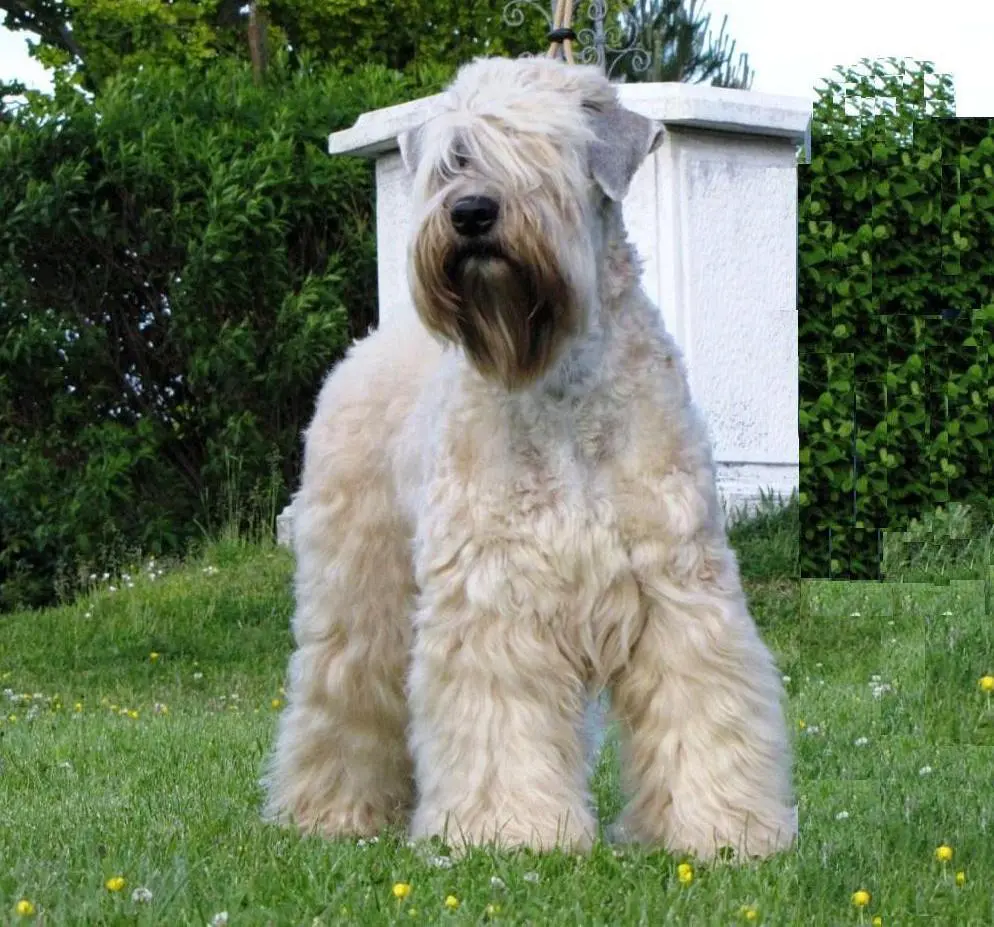
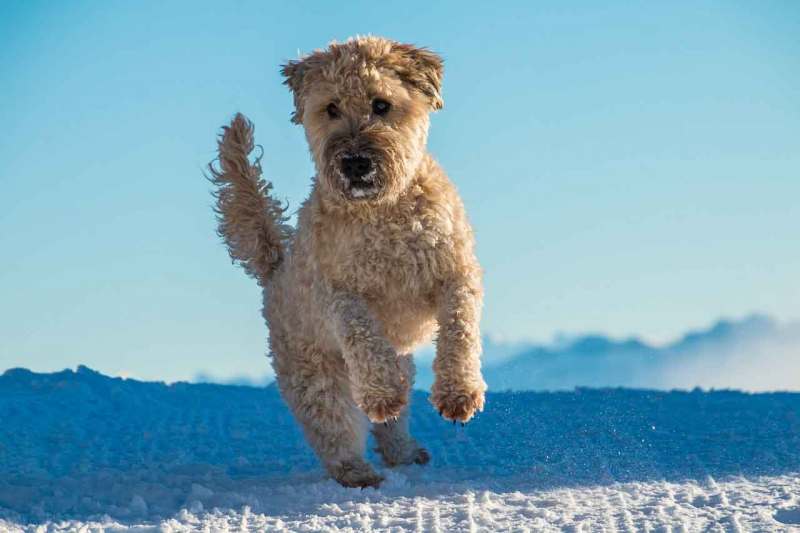
Irish Soft Coated Wheaten Terrier

Wheaten character is cheerful, open and balanced.

Content

History

The Irish Soft Coated Wheaten Terrier has been raised in Ireland for about 200 years in counties Kerry and Cork by the farmers who live there. How farm dogs fought rats and mice, as well as against predators such as foxes and martens, that threatened domestic animals. They also grazed sheep and were used for hunting.

The history of Irish Soft Coated Wheaten Terrier has been somewhat obscured due to its closeness to the other races of Irish terriers. The Wheaten probably the oldest of the four races. His existence, along the, at least 200 years, can be deduced from the textual references made to "soft-haired" dogs.. The relationship of Irish Terrier modern with the Wheaten, although less documented, appears to have been the result of deliberate crossing experiments. Consequently, the humble Wheaten probably has a fully mixed lineage. Despite the long history of Wheaten, it was not until 1937, which was officially recognized by the Irish Kennel Club. Since then this breed has grown steadily in popularity and is currently well known worldwide..

In 1943, the British Kennel Club He acknowledged the race in United Kingdom. The first Irish Soft Coated Wheaten Terrier were exported to the United States in the 1940, but the race gained greater interest ten years after his arrival. Last, in 1973, were recognized by the American Kennel Club.

The Irish Soft Coated Wheaten Terrier, unofficially, were crossed with the race Pudelhund standard, to create the mixed race, known as the Whoodle and with the race Beagle to create the race known as "Wheaglesโ€.

Today the Irish Soft Coated Wheaten Terrier It is a versatile companion dog that adapts well to its living conditions..

Physical characteristics

It is a strong dog, balanced, straight back and chest deep. It has a rectangular and well-proportioned head with a defined stop. Their eyes have a slightly almendrada way and the ears are small and bent slightly forward.

In countries where it is allowed, the Wheaten usually has a tail cut off. It has a smooth hair, silky and color wheat. These dogs have a unique coat of hair., so you can more easily tolerated by people who are allergic to other races, because they lost very little hair.

Puppies are reddish brown or gray. Many have a black mask. Only at the age of two and a half the coat has its final color, clear and its fine structure.

SIZE AND WEIGHT:

Height to the cross : Males 46-48 cm. (18 – 19 inches). females somewhat less.

Weight: Males between 18 – 20,5 kg (40 – 45 English pounds). The females somewhat less.

Character and skills

The character of the Wheaten is happy, open and balanced. As an SUV, these dogs are very docile. They enjoy participating in family life. Dog sports such as agility are a good substitute for the many different tasks these spirited terriers were originally bred for.. If they are left alone, without getting busy or moving enough, can become destructive and aggressive. Consistent breeding from the start makes them great family dogs that don't obey one person.. Due to the great care effort and the possible stubbornness of the terrier, only conditionally suitable for beginners.

Wheaten Terrier care

The coat of the Irish Soft Coated Wheaten Terrier requires a lot of cleaning and must be brushed daily to avoid entanglement. Hair must be cut regularly. Does not come off.

In regards to health, it is a very healthy breed, not showing any typical hereditary disease.

Wheaten Terrier Education

That dog learns fast. Unfortunately also things, that you have to avoid them later. So, and also because of the hunting instinct that the breed has, initially not recommended for beginners. It also, the breed tends to be stubborn under pressure, you also have to learn to deal with it. But, who masters the rules of dog training, you will be very pleased with this dog's willingness to learn and willingness to work.

Images "Irish Soft Coated Wheaten Terrier"

Photos:

1 – Soft Coated Wheaten Terrier by SusanSmithGSU / CC BY-SA
2 – Soft-coated_wheaten_terrier at the national show in Rybnik – Stone to Pleple2000 / CC BY-SA
3 – Soft-coated_wheaten_terrier at the national show in Rybnik – Stone to Pleple2000 / CC BY-SA
4 – Soft Coated Wheaten Terrier Irlandรฉs by RORLVR1 / CC BY-SA
5 – Soft Coated Wheaten Terrier Irlandรฉs by https://pxhere.com/en/photo/64565
6 – Soft Coated Wheaten Terrier Irlandรฉs by https://www.needpix.com/photo/834722/dog-jump-play-irish-soft-coated-wheaten-terrier-young-dog-jumps-happy-winter-snow

Videos "Irish Soft Coated Wheaten Terrier"

Type and recognitions:

  • FCI CLASSIFICATION:
  • Group :
  • Section : . .

Federations:

  • FCI – Terriers 1 Large and medium-sized terriers. โ“˜
  • AKC – Terriers โ“˜
  • ANKC – Terriers โ“˜
  • CKC – Terriers โ“˜
  • โ€‹KC – Terriers โ“˜
  • NZKC – Terriers โ“˜
  • UKC – Terriers โ“˜

FCI breed standard "Irish Soft Coated Wheaten Terrier"

Origin:
Ireland

Date of publication of the valid original standard:
27.01.2001.

Use:

Wheaten Terriers were always used by small farmers to kill vermin or help with farm work.. For a long time it was used in the difficult task of hunting badgers and otters..


General appearance:

It is a robust dog, active and compact, well built, giving the idea of รขโ‚ฌโ€นรขโ‚ฌโ€นstrength. Their limbs are not too long or too short.


Behavior / temperament:

Fiery and courageous. With good temperament. Very noble and loyal to his masters. Very intelligent. A faithful and trustworthy friend, defensive without being aggressive.

Head:

It must be strong as a whole, without being rough. Long, well proportioned to the body. Hair must be the same color as the body.

Cranial region:
  • Skull: Flat and crisp between the ears, not very wide.
  • Depression links (Stop): Defined.

facial region:

  • Trufa: Black and well developed.
  • Horcico: It should not be longer than the skull.Jaws: Strong, punishing jaws.
  • Dinentities: Big teeth, regular scissor or clamp bite, no upper or lower prognathism.
  • Cheeks: Non-prominent bones.
  • Ojors: dark, dark hazelnut, not very large or prominent, well placed.
  • Obars: Small to medium, taken to the front, level with the skull. Dark shading is allowed at the base of the ears, and it is common for it to have a light wheat reflection in the rest. This is the only area of โ€‹โ€‹the dog where undercoat is allowed.. โ€œPinkโ€ or โ€œflyingโ€ ears are objectionable.

Neck:

Moderately long and strong, but without presenting dewlap.

Body:

Not very long. The length from the withers to the base of the tail should be approximately the same as from the ground to the withers.

  • Dorrso: Strong and straight, with top line also at level.
  • Itmor: Short, strong.
  • Pecho: Deep, well arched ribs

Tail:

Well placed, not very thick. Carried cheerfully but never over the top line. amputee, remaining two thirds of its original length, assuming that this length is in proportion to the dog. Uncut glue is allowed.

Tips

PREVIOUS MEMBERS:

  • Hormbros: Thin Shoulders, well inclined. Muscled shoulders.
  • Antarms: Seen from any angle they must appear perfectly straight, good bone and muscular.

LATER MEMBERS: Well developed and with powerful musculature.

  • Thighs: Strong and muscular.
  • Rodinllas: Angled.
  • Corvejones: Well descended, without turning in or out. Dewclaws must be amputated.
  • PinIt: Small, not scattered. Nails should preferably be black, but several dark colors are allowed.

Movement:

In a straight line throughout its entire length, round trip. The elbows stuck. Side view: free movement, lightweight and coordinated.

Mantle

  • Plink: Single-haired mantle dog (no undercoat). The hair is soft and silky to the touch, does not last. Young dogs are excluded from the above. Hair preparation is allowed (Trimming).
  • Pmistakes with hair preparation: The hair should be short on the neck, chest and skull and should be left especially long over the eyes and under the jaw. It is advisable to leave the mustaches. With abundant fringes on the extremities. The body hair must be arranged in such a way that it follows the contour of the dog, without being sculpted. The tail hair should be cut short and gracefully tapering to the tip.
  • Pmistakes without preparation: Hair length at its longest point should not exceed five inches (12,7 cm.). Hair must be thick and soft, wavy or loose curls with the shine of silk. Under no circumstances should the coat be โ€œfluffyโ€ like that of the Poodle or the Old English Sheepdog.. Dogs exposed in this condition must be heavily penalized, since they give the wrong idea of รขโ‚ฌโ€นรขโ‚ฌโ€นtype and race. Special attention should be paid to the development of the coat of the puppies. Puppies are hardly born with the correct hair that they should have when adults., Care must be taken when evaluating this aspect. They undergo various color and texture changes before developing adult hair. This normally occurs between 18 months and 2 1/2 years.
  • Cachorros: Puppies are rarely born with the correct coat color and texture. Their fur may be reddish, grayish and sometimes light tawny. The masks are generally black. Sometimes there is a black streak in the center of the back or the tips of the body hair are black. These dark marks disappear during growth.
  • Colorr: A good and defined wheat color with variations ranging from light fawn to a reddish golden hue.


Size and weight:

Alturto the cross:

  • Males 46-48 cm. (18 โ€“ 19 inches).
  • females somewhat less.

Pthat:

  • Males between 18 โ€“ 20,5 kg (40 โ€“ 45 English pounds).
  • The females somewhat less.


Fouls:

Any deviation from the aforementioned criteria is considered as a fault and the severity of this is considered to the degree of the deviation to the standard and its consequences on the health and well-being of the dog..

  • Nervosity, aggressiveness.
  • Truffle in any color other than black.
  • Upper or lower prognathism.
  • Mature dog coat not clearly wheat colored.

FALTAS DISQUALIFYING:

  • Aggressiveness or extreme shyness.
  • Any dog โ€‹โ€‹showing clear signs of physical or behavioral abnormalities must be disqualified..
  • Yellow eyes.
  • Dull coat, thick, wool or cotton texture.
  • White fur. Brown fur.


N.B.:
  • Males should have two normal-appearing testicles fully descended into the scrotum..
  • Only functionally and clinically healthy dogs, with the typical conformation of the breed, should be used for parenting.

Itlatest changes are in bold.

TRANSLATION: Lic. O. Valverde, reviewed by Dr. F. del Valle and updated by J. Nallem, Uruguayan Kennel Club.

Source: F.C.I - International Cynological Federation

Alternative names:

1. Irish Soft-Coated Wheaten Terrier and variant spellings: ยซSoft Coatedยป and ยซSoftcoatedยป, Wheaten or Wheatie, Wheaten Terrier (English).
2. Irish Soft Coated Wheaten Terrier (French).
3. Wheaten Terrier (German).
4. Wheaten Terrier (Portuguese).
5. Wheaten Terrier (espaรฑol).