โ–ท The world of Pets: Dogs, cats, birds, reptiles, amphibians

Italian Greyhound
Italia FCI 200 . Short-haired Sighthounds

Galgo Italiano

The Italian Greyhound despite being an Italian breed, not widely used in your country.

Content

History

Of ancient origin, the Italian Greyhound He is a descendant of the small sighthounds that were present in the court of the pharaohs of ancient Egypt.

The current breed is believed to have originated in what is now Turkey and Greece.. Although it is not clear if the breed was used as a hunting dog or as a companion dog. (or maybe both), it is clear that he made a strong impression there, to the point that it is represented in many ceramic finds during archaeological excavations.

The breed spread to Italy around the 5th century BC.. Italian Greyhound Remains Found in Pompeii, city รขโ‚ฌโ€นรขโ‚ฌโ€นburied by the eruption of Vesuvius in the year 79 a.C.

There are few traces of this dog until the Middle Ages, when he became the favorite of the nobility. Although the dog was found in most of Mediterranean Europe, was particularly successful in Italy, where its current name comes from. Once again, the artists of the time chose to pay tribute to him: This time, was immortalized in the paintings of the great masters.

Little by little he conquered northern Europe and arrived in Great Britain in the 16th century., where it soon became popular with the nobility, and was even adopted by some sovereigns. His popularity in Europe grew steadily, peaking in the 19th century, but the conflicts of the first half of the 20th century decimated their ranks.

Fortunately, had already crossed the Atlantic to the United States, to the point that the American Kennel Club (AKC) recognized the breed in 1886. Although their number was never very great, it was these American lines that contributed to the post-war revival of the breed. In fact, to reinstate their breeding programs, European breeders (and in particular those of Great Britain) They resorted to importing animals from the United States.

In 1948, the United Kennel Club (UKC) American recognized breed, followed in 1956 by the Fรฉdรฉration Cynologique Internationale (FC). Today, all the main canine associations recognize the Italian Greyhound, o IG, as it is affectionately known by Anglo fans.

Like this, is present all over the world and enjoys a certain popularity, that tends to grow. in your country of origin, each year more than 300 dogs in the Ente Nazionale della Cinofilia Italiana, versus less than 200 at the end of the years 200. In United States, ranks 70 (of 195) among the most popular breeds, according to the number of annual registrations in the AKC. In the United Kingdom, registrations are increasing considerably, going from little more than 200 per year around 2010 twice that figure alone 10 years later. The same upward trend is observed in France, where now more than 450 copies per year in the Livre des Origines Franรงais (LOF), in front of some 200 in the decade of 1990 and principles of 2000. In the news, it is the second most popular sighthound breed in the country, far behind the Whippet.

Physical characteristics

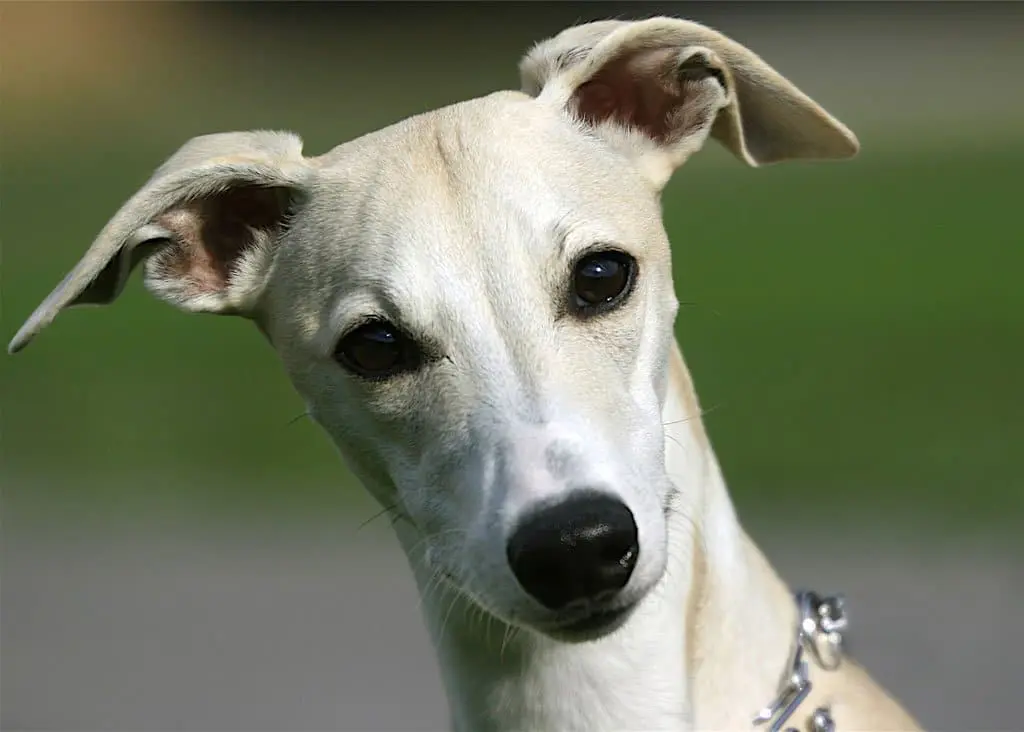
The Italian Greyhound has, as the name reflects, the elegant and distinguished look of a miniature greyhound. In fact, It is the smallest of the sighthounds.

Her slender body is almost perfectly square, its length is equal to its height at the withers. Their slender legs, with a refined bone structure, have well-developed musculature, but not bulky. The tail, carried low in its first half and then curved up, it is also very fine.

The head is long, oblong and narrow, sitting on a long, muscular neck, with a diameter greater than that of the skull, which is flat. Its conical snout ends in a black nose, or at least dark. His big round eyes, very expressive, they are rather dark brown. His little ears, carried high, they have fine cartilage and fold in on themselves. When the dog is on the prowl, stands upright and the lobe is placed in a horizontal position, a position called "pinwheel".

The mantle of Italian Greyhound has no undercoat and consists of short hair, silky and fine that covers the whole body without fringes. The coat can be any shade of black, gray or isabela (a color between beige and yellow). There may be some white markings on the chest and feet.

Last, sexual dimorphism is very mild: males and females are roughly the same size and weight.

Size and weight

▷ Male size: 32 to 38 cm.
▷ female size: 32 to 38 cm.
▷ Male weight: 5 kg
▷ female weight: 5 kg

Character and skills

The Italian Greyhound He is very affectionate with the members of his family. He likes to spend most of his time with them., either playing, walking, lounging next to you or sneaking under the covers for the night. Can tolerate being left alone relatively well when master is working, especially if you know that you will receive affection and attention when you return. On the other hand, You are likely to suffer from separation anxiety if you have to spend a whole weekend away from your family. It is a dog that needs attention, and is able to spend hours with his master on the living room sofa, but also to follow him with curiosity throughout the house.

No matter how close he is to his family, this dog is very shy in the presence of strangers: after barking to signal its presence, runs and hides to watch from a distance how things are going.

Live very well with young people, who are excellent playmates for him: It is a recommended dog for children. But, children must have learned to behave with an animal and be aware that it is not a toy, to avoid any form of abuse. This is especially true since the miniature size of this dog, attached to their fine and brittle bones, means that accidents can happen very quickly. They should also be careful to speak to you in a calm voice., as he would soon be frightened by loud shouts of joy or exaggerated crying. In any case, regardless of race, the interaction between a dog and a young child should always take place under the supervision of an adult.

The sociability of Italian Greyhound spreads to other animals, so living with them is not usually a problem. But, if the Italian Greyhound must share a home with a larger dog, it is important to ensure that the larger dog does not see the Italian Greyhound like prey or disturb him too violently when playing together. It also, this dog likes to chase everything that moves, what could be a source of stress for a small rodent like a mouse, although it is unlikely that it will actually be attacked.

In fact, the Italian Greyhound is an active dog, who likes to run, jump and play, although, of course, this decreases as you get older. Agility is an ideal dog sport to satisfy your need for exercise. But if you don't have access to the outside, quickly find a clue among the living room furniture, that you can use, for example, to run and jump on the highest furniture. It must be said that this dog shares with cats a special fondness for high places, so it is not uncommon to find him frolicking on the kitchen table or bedroom dresser.

But, they can live well in a flat, as long as they have enough space to exercise for at least an hour a day. But, the owner should be aware that they may have cleaning problems, especially if not taken for walks often enough. Thus, it is recommended that you have access to the outdoors, where he can run and relieve himself before returning to the heat of home, in every sense. As it is difficult for him to contain himself when he feels like it, a dog hatch is ideal so that he can go to the garden independently. This also makes it easy for you to sunbathe in the garden whenever you want., since it is one of his favorite activities. But, the garden must not have gaps through which it can slip and must be fenced with a fence of at least 1,5 m high to prevent it from jumping. In any case, an underground electric fence would not be an effective device, since it is not the download received that would make it go back. In fact, his propensity to run after anything that moves means he can take off quickly as soon as he is given the chance. For the same reason, it is recommended to always carry it on a leash when walking. This is all the more true since it can reach speeds of up to 40 km/h, which makes it very difficult to catch it once it has started.

In this regard, remember that, like all sighthounds, the Italian Greyhound has a neck wider than the head, which makes the usual collars ineffective. There are special collars on the market for this type of dog, but a simple harness can also achieve the desired result.

A little manipulative, the Italian Greyhound tends to do what he wants and can easily guide a master who does not know how to teach him the family hierarchy and who allows himself to be touched by his big eyes. However, is an intelligent dog, who generally likes to please his family. They can teach you some tricks and, in general, he loves games that stimulate him both physically and mentally. In particular, does not tire of looking for a ball and loves any activity that involves searching or chasing an object.

His drive makes him capable of getting into difficult situations, especially when he is young. In fact, This reckless little guy doesn't realize how fragile he is, and many representatives of the breed end up with a broken leg after trying to jump from too high a place.

Last, has a much more powerful voice than its small size suggests. Yes indeed, not a big barker, although he does not hesitate to let himself be heard throughout the neighborhood when he perceives an unknown noise.

education

The education of Italian Greyhound should start asap, placing special emphasis on their socialization. In fact, this is important for this relatively shy dog โ€‹โ€‹to get used to people, animals and situations you may face later in life.

Another crucial point in your education is cleanliness.. Your bladder is only as small as your size. So, even with all the goodwill in the world, can't keep it for long. So, it is important to teach him to relieve himself in an agreed place (abroad, If it is possible, or in a litter box inside) and to point out your urgent needs, to be taken into account without delay. But, no homeowner is safe from an accident one day, even with a well-trained adult dog. If this happens, of course, you should avoid punishing your dog, since nothing good will come of it.

Despite your undeniable stubbornness, the training of the Italian Greyhound shouldn't be too difficult: in fact, it is a very suitable breed as a first dog. Positive reinforcement methods are very successful with this breed, who likes to be rewarded for their efforts with treats, encouragement and caresses. On the other hand, traditional dog training techniques do not work well with this dog and are likely to amplify his natural shyness.

On the other hand, even with a good training method and a good coach, you will find it difficult to pay attention for a long time, so it is better to do several short sessions each day than one long session that will bore you and probably not be successful.

Health

The little Italian greyhound is a fairly robust breed, and many of these representatives have more than 15 years.

But, is particularly predisposed to a long list of diseases and conditions:

  • Hip dysplasia and elbow dysplasia, joint problems that can make walking easier or more difficult;
  • Dislocated kneecap, that affects the ball and causes lameness;
  • Legg-Calve-Perthes disease, hip bone deformity often mistaken for dysplasia, what can make arthritis premature if not done in time;
  • Periodontal problems, for example with bleeding gums or even tooth loss;
  • Progressive retinal atrophy, causing breakdown of eye tissue that could lead to vision loss;
  • Alopecia, total or partial hair loss;
  • cryptorchidism, when one of the testicles of a male individual does not descend into its place;
  • The Hypothyroidism, a thyroid gland disorder responsible for excessive weight gain and listless behavior;
  • Epilepsy, a disease caused by abnormal electrical activity in the brain that causes seizures;
  • The glaucoma, excessive increase in pressure inside the eye, causing pain and loss of vision;
  • Vitro-retinal degeneration, characterized by deposits on the retina that resemble snowflakes;
  • The portosystemic shunt, when a vein allows blood to bypass the liver. So it no longer leaks, which causes a lot of problems. Surgery is usually prescribed, with a success rate of 85%;
  • Skin cancer, often caused by excessive sun exposure;
  • Von Willebrand disease, causing blood clotting problems.

This breed is also particularly prone to leg fractures., especially in the radius and ulna (Paws). In fact, its fine structure is not as resistant as sometimes seems to be imagined, so much so that his reckless side can often lead to an accident.

It also, this breed seems particularly sensitive to organic phosphate insecticides. So, it is necessary to carefully choose the products used inside the house and / or in the garden.

The Italian Greyhound you may also be allergic to certain anesthetics and barbiturates. This point should be discussed with the veterinarian before any operation..

Finally, with its small size and short fur, It is a canine breed that fears cold and bad weather. If you live outside the house, what is not recommended, need adequate shelter. It also, it is useful to dress him in a dog windbreaker on walks when it rains, or a sweater if the air is cold.

On the other hand, even if you particularly appreciate this, we need to make sure you don't spend too much time in the sun in the summer, because it is quite prone to skin problems. So, it is advisable to keep it in the shade, or at least put on a dog sunscreen.

Life expectancy

Of 13 to 14 years

Grooming

The Italian Greyhound it is a very easy breed to care for.

In fact, its short coat only requires a quick weekly brushing to keep it shiny. They shed very little and do not have a noticeable molting period during which molting might require more regular maintenance..

That is why they are considered a hypoallergenic breed of dog.. Having said that, remember that there is no zero risk: someone allergic to dogs should take the time to check in real conditions that there are no problems with the animal they are considering adopting. But, a dog that sheds very little, as is the case of the Italian greyhound, has an effectively reduced risk of transmitting allergens.

In any case, brushing the dog's hair once a week is usually enough to clean it: unless it has been rolled up in a sticky or smelly substance, it is usually not necessary to bathe him.

To complete this weekly session, you have to check your teeth, eyes and ears and clean them if necessary. Pay special attention to your teeth and gums to check for any inflammation that could be a sign of periodontal disease., since it is a health problem to which it is more prone than other dogs.

Last, check that its claws are not too long, and if they are, you have to cut them, as there is a risk that you will be hindered in your movements and / or hurt. But, this is not necessarily a problem with a very active dog, as natural wear and tear can take care of it.

Food

The Italian Greyhound you have no difficulty choosing your food, and commercial dog food is doing well. So that you receive all the nutrients and vitamins necessary for your good health, food must be of good quality and adapted to their size and age.

It's important to stick to the manufacturer's recommended daily amounts to make sure you don't overeat. If your dog receives treats, especially as part of their training, the corresponding caloric intake should be deducted from your daily allowance to avoid weight gain.

In general, a responsible owner who cares about keeping his dog healthy should monitor his diet and weight by weighing him regularly. If you have a slip, do not wait to correct the situation: in general, just reduce your servings and give you more exercise. If that is not the case, it is advisable to consult a veterinarian to rule out a possible health problem and establish a more appropriate diet.

On the other hand, remember that the Italian Greyhound is a naturally slimmer breed than many others: do not be alarmed by it, or try to remedy it by increasing your diet.

Price ยซSmall Italian Greyhoundยป

The price of a puppy Italian Greyhound round the 1000 EUR.

But, this average price hides a rather large disparity, since the fork goes from 700 to 1.400 EUR. The difference from one subject to another is largely explained by their physical characteristics., more or less close to the norm. Lineage is important too: a puppy whose parents or other ancestors have received honors at various dog shows is bound to fetch a higher price. Sex also influences, as females tend to be slightly more expensive than males.

Characteristics "Italian Greyhound"

Coexistence is important that you have with your new friend. Before considering the acquisition of a dog of the breed "Italian Greyhound" you know certain factors. Not all breeds of dogs are apt to live in an apartment, you must take into account his character, their need for exercise, their interaction with other pets, their care and if you have small children, their level of tolerance towards them.

Adaptation โ“˜

4,0 of 5 stars (based on 1 review)

friendly dog โ€‹โ€‹โ“˜

4,0 of 5 stars (based on 1 review)

hair loss โ“˜

2,0 of 5 stars (based on 1 review)

Affection level โ“˜

5,0 of 5 stars (based on 1 review)

Need for exercise โ“˜

3,0 of 5 stars (based on 1 review)

Social need โ“˜

3,0 of 5 stars (based on 1 review)

Home โ“˜

3,0 of 5 stars (based on 1 review)

Toilet โ“˜

1,0 of 5 stars (based on 1 review)

Friendly with strangers โ“˜

2,0 of 5 stars (based on 1 review)

barking โ“˜

2,0 of 5 stars (based on 1 review)

Health โ“˜

3,0 of 5 stars (based on 1 review)

Territorial โ“˜

4,0 of 5 stars (based on 1 review)

Cat friendly โ“˜

2,0 of 5 stars (based on 1 review)

Intelligence โ“˜

4,0 of 5 stars (based on 1 review)

Versatility โ“˜

3,0 of 5 stars (based on 1 review)

Child friendly โ“˜

4,0 of 5 stars (based on 1 review)

Surveillance โ“˜

3,0 of 5 stars (based on 1 review)

joy โ“˜

4,0 of 5 stars (based on 1 review)

Images "Italian Greyhound"

Photos:

1 – A male of Italian Greyhound by christina, CC BY 2.0, via Wikimedia Commons
2 – A female of Italian Greyhound llamada Sakura by tanakawho, CC BY 2.0, via Wikimedia Commons
3 – Enzo, a Italian Greyhound called Enzo by madaise
4 – Italian Greyhound by Mark Robinson
5 – Italian Greyhound by https://pixabay.com/es/photos/perro-galgo-italiano-lindo-mascota-3810479/
6 – dogs of Italian Greyhound by Italian_Greyhound_Puppies.jpg: Jim or Katie McClartyderivative work: Anka Friedrich, CC BY 2.0, via Wikimedia Commons

Videos "Italian Greyhound"


Type and recognitions:

  • FCI CLASSIFICATION:
  • Group :
  • Section : . .

Federations:

  • FCI – Group 10: Section 3: Short-haired Sighthounds โ“˜
  • Standard CCC (Canadian Kennel Club / Canadian Kennel Club)
  • Ente Nazionale della Cinofilia Italiana – โ“˜

FCI breed standard "Italian Greyhound"

Origin:
Italy

Date of publication of the valid original standard:
13.11.2015

Use:

Race dog


General appearance:

Long in appearance, its trunk is inscribed in a square.Despite its small size, it has all the characteristics of a miniature sighthound., the prototype of refinement and elegance. It can be described as a model of grace and distinction.


IMPORTANT PROPORTIONS : Its length is equal, or slightly less than the height at the withers. The length of the skull is equal to half the length of the head. The length of the head can reach the 40% the height at the withers.


Behavior / temperament:

Reserved, affectionate, docile.

Head:

Long and narrow in shape

Cranial region:

flat skull, with the upper axes of the skull and snout parallel.
The length of the skull is equal to half the length of the head which is slightly rounded on the sides. The suborbital region is well chiseled. The muscles of the head should not give a heavy appearance to it.. Marked eyebrow bones. The occiput is not prominent. Medium depression only slightly marked.

  • Depression links (Stop): Very little marked.

facial region:

  • Truffle: dark colored, preferably black; the nostrils are wide open.
  • Snout: Strait.
  • Lips: The edges of the lips have very dark pigmentation, the lips are thin and well contiguous on the jaw.
  • Mandible / Teeth: Elongated jaw, with the incisors well aligned in a circle, strong in relation to the size of the dog. Healthy and complete teeth, implanted at right angles in the jaws, articulated in the form of scissors.
  • Cheeks: Thin.
  • Eyes: Large rounded and expressive placed sub frontally; the eyeball is not even sunken, nor jumpy. The iris is dark in color. The edge of the eyelids has pigmentation.
  • Ears: Very high insertion, small, with thin cartilage. They are folded in on themselves and extend back over the nape of the neck and over the upper part of the neck.. When is the dog alert, the base of the ear is erect and the distal part extends laterally horizontally, as if it were a shed.

Neck:

The nape slightly arched and bulging at the base, towards the cross area. Slightly convex throat line. Length equal to that of the head. Truncated cone shaped, muscular. Thin skin without double chin.

Body:

Its length is equal to or slightly less than the height at the withers.

  • top line: Rectilinear profile, with a dorso-lumbar region slightly arched. The lumbar curvature extends harmoniously into the line of the croup.
  • Cross: Quite steep with the tops of the shoulders placed together.
  • Back: Straight, muscular.
  • Rump: Well inclined, wide and muscular.
  • Breast : Strait solid but elegantly modeled with slight arching of the ribs, deep that goes down to the elbows.
  • Bottom line and belly: Accented arch rising without being abrupt towards the belly.

Tail:

It is low insertion, she is thin, still at the base, gradually decreases to the tip. It appears downward and straight in the first half and then bends at the tip. Stretched it should reach the top of the hock. The hair is satin.

Tips

PREVIOUS MEMBERS:

  • General appearance: Overall good poise, with fine muscles.
  • Shoulder: little oblique, with muscles long, well developed, clearly observable and salient.
  • Forearm: With a wide scapulo-humeral angle and a direction parallel to the median plane of the body. Slightly longer than the scapula.
  • Elbows: No protrusions, or sunk.
  • Arm: Straight, refined bone structure, flat and crisp, length of this, measurement from the floor to the elbow, it barely exceeds that which goes from the elbow to the cross; very light bones; the forearm has a perfect vertical position, both head on, as in profile.
  • Metacarpus: Dried, in profile, it's a little oblique.
  • Front foot: Almost oval in shape, small, with arched and well joined fingers. Non-bulky, pigmented pads. Black or dark nails, depending on the color of the coat or foot, where white is accepted.

LATER MEMBERS:

  • General appearance: Well angled. As a whole, seen from behind, perfect poise.
  • Thigh: Long, delgado, It is not bulky; the muscles are clearly observable.
  • Leg: well oblique, with fine bones and clearly observable leg groove. Slightly longer than the thigh.
  • Metatarsus: Seen from behind it should be parallel.
  • Rear foot: Less oval than the previous one, with arched and well joined fingers; pads not bulky and well pigmented nails, as in previous members.

Movement:

Elastic, harmonious jog somewhat high covering the surface. This means that the forelimbs should be moved forward with good reach with the pasterns rising somewhat inclined.. fast gallop, with spring movements, fast.

Mantle

  • SKIN: Thin and well attached to all regions of the body, except on the elbows, where it is slightly less tense.
  • HAIR: This one is satin and fine, soft over the whole body, without the slightest trace of bangs.
  • COLOR: single color, in black, gray and elizabethan, in all possible shades. White is accepted only on the parapet and on the feet..


Size and weight:

  • Height to the cross: Males and females : of 32 to 38 cm..
  • Weight: Males and females : a maximum of 5 kg.


Fouls:

Any deviation from the aforementioned criteria is considered as a fault and the severity of this is considered to the degree of the deviation to the standard and its consequences on the health and well-being of the dog..

  • Permanent amble.
  • elevated movements.
  • Movement near the ground with short steps.

FALTAS DESCALIFICANTES

  • Aggressive or fearful dog.
  • Any dog โ€‹โ€‹showing clear signs of physical or behavioral abnormalities must be disqualified..
  • Marked convergence or divergence of the craniofacial axes.
  • Total or half depigmentation of the truffle.
  • Concave or convex nasal bridge.
  • Upper or lower prognathism.
  • Eyes gazeos; total depigmentation of the edges of the eyelids.
  • Tail raised over the back; absence of tail or very short tail, whether congenital or by artificial means.
  • Multicolored fur; white hair in other places that are not indicated by the standard.
  • Size less than 32 cm or more 38 cm., both in males, as in females.

MISS PLAYOFFS (not fit to create)

  • Prognathic bite
  • Unilateral cryptorchidism


N.B.:

Males should have two normal-appearing testicles fully descended into the scrotum..
The latest changes are in bold.

Source: F.C.I - International Cynological Federation

Alternative names:

1. (Italian: Piccolo levriero Italiano), Italian Sighthound (English).
2. Petit lรฉvrier italien (French).
3. Italian Greyhound (German).
4. (em italiano: Piccolo levriero italiano), Piccolo levriero italiano (Portuguese).
5. Piccolo, Galgo Italiano, Lebrel italiano (espaรฑol).

โ–ท The world of Pets: Dogs, cats, birds, reptiles, amphibians

Deerhound
Escocia FCI 164 . Rough-haired Sighthounds

The Scottish Deerhound resembles a Greyhound larger coarse hair and stronger bone.

Lebrel Escocรฉs

Content

Characteristics "Deerhound"

Coexistence is important that you have with your new friend. Before considering the acquisition of a dog of the breed "Deerhound" you know certain factors. Not all breeds of dogs are apt to live in an apartment, you must take into account his character, their need for exercise, their interaction with other pets, their care and if you have small children, their level of tolerance towards them.

Adaptation โ“˜

3,0 of 5 stars (based on 1 review)

friendly dog โ€‹โ€‹โ“˜

3,0 of 5 stars (based on 1 review)

hair loss โ“˜

3,0 of 5 stars (based on 1 review)

Affection level โ“˜

5,0 of 5 stars (based on 1 review)

Need for exercise โ“˜

5,0 of 5 stars (based on 1 review)

Social need โ“˜

5,0 of 5 stars (based on 1 review)

Home โ“˜

2,0 of 5 stars (based on 1 review)

Toilet โ“˜

2,0 of 5 stars (based on 1 review)

Friendly with strangers โ“˜

3,0 of 5 stars (based on 1 review)

barking โ“˜

1,0 of 5 stars (based on 1 review)

Health โ“˜

3,0 of 5 stars (based on 1 review)

Territorial โ“˜

2,0 of 5 stars (based on 1 review)

Cat friendly โ“˜

2,0 of 5 stars (based on 1 review)

Intelligence โ“˜

3,0 of 5 stars (based on 1 review)

Versatility โ“˜

3,0 of 5 stars (based on 1 review)

Child friendly โ“˜

4,0 of 5 stars (based on 1 review)

Surveillance โ“˜

2,0 of 5 stars (based on 1 review)

joy โ“˜

4,0 of 5 stars (based on 1 review)

History

Where does the Deerhound ยซDeerhoundยป?

The Deerhound it is one of the oldest and noblest dog breeds in the world. It is an impressive hunting dog and sighthound. Together with his cousin, the Irish wolfhound, slightly larger, displays a distinctive and strongly impressive dog type.

It has the complexion of a large and very strong greyhound and at the same time a rough and shaggy coat. As the name suggests, was the hunting dog of the Scottish high nobility for the red deer. The Scottish Deerhound must be fast, brave and strong enough to attack an adult deer and, at least, knock him down until the hunter can finish him off with the spear. The Deerhound it was also used in other game such as elk or wild boar. The hunts took place in the rugged Scottish Highlands. Dogs had to be fast, strong, persistent and, at the same time, extremely robust and resistant. So later they were also used to exterminate wolves.

With the decline of classical hunting by the high nobility and new firearms with which a deer could be easily shot from a distance, the Deerhound lost importance and was finally almost extinct. British dog lovers, like the great painter Edwin Landseer, were involved in its conservation after 1800. Fortunately, this was very successful. The Scottish Deerhound is closely related to the Irish wolfhound, which is supported by genetic studies carried out by a team of geneticists led by Heidi Parker in 2017. Even today, the appearance of Deerhound singlehandedly distills the conditions of antiquity and medieval times in the Highlands.

There are few more impressive dogs. Although there are still places in the Scottish mountains named after dogs that died hunting, the Scottish Deerhound is a breed in decline now found almost exclusively in South Africa.

Physical characteristics

The Deerhound he has the typical build of a large greyhound. Over this he wears his trademark wiry fur, lean and moisture repellent. The official standard describes its appearance as follows:

The Scottish Deerhound resembles a Greyhound larger coarse hair and stronger bone. His build gives the impression of a unique combination of speed, strength and endurance needed to shoot down a deer; However, its general bearing is of noble dignity.

His coat is disheveled, but not excessive. Woolly hair is not allowed. The correct coat is dense, tight, disheveled, feels hard or stiff. In the body, neck and hindquarters are hard and lean, of about 7-10 cm.; in the head, chest and belly is much softer. Slight fringe of hair on the inside of the front and back legs.

Must measure between 7 and 10 centimeters. The allowed colors are dark blue-gray, the gray or the brindle, the yellow. White spots are undesirable. Unfortunately, It has become common practice at shows that dogs must show at least one 10% additional height at the withers. This tendency to gigantism is detrimental to the health of dogs and makes the already difficult growth phase even more difficult..

How big is a Deerhound??

With a height at the withers from 71 centimeters in females and up to 79 in males, they look awesome. Bitches must weigh about 36, the males ones 45 kg.

How many years does a "Deerhound" live??

The life expectancy of a "Deerhound" is difficult to measure. There are specimens that barely reach the 6 years, others even reach the 12 and more years in the best physical shape.

Character and skills

The Scottish Deerhound is a Sighthound and a hunting dog. But it's much more than that. He is a sensitive friend who absolutely needs a close connection with his human family.. Shows great empathy and adaptability to its humans. This strong and fast hunter is extremely gentle, calm and free from any aggressiveness.

He is kind and patient with children. At the same time, always show some pride. Thanks to his intelligence and sensitivity, notices any unfair treatment. This hurts. The Deerhound it is an extremely nice and easy to drive companion. It is also an ideal companion for horseback riding or jogging. Given their willingness to hunt, this requires good training and a close bond with its owner, that I should be able to call you at any time. It is an incomparable experience to walk through nature with these dogs. But, A prerequisite for a harmonious coexistence is that the Scottish Deerhound can satisfy your basic needs. This includes running, ideally chasing a dummy hare during coursing.

One Scottish Deerhound who can live up to a certain point his natural running abilities makes an excellent companion and family dog. The official standard describes its character as follows:

Its build evokes the impression of a unique combination of speed, strength and endurance needed to shoot down a deer; However, its general bearing is of noble dignity. Soft and friendly. Obedient and easy to train, as it is eager to please. Docile and fair, never suspicious, aggressive or shy. Shown with quiet dignity.

Care and health of a "Scottish Greyhound"

What care does a "Deerhound" need??

The Scottish Deerhound adult is a low maintenance dog. Regular brushing is enough.

Are there typical diseases of the ยซDeerhoundยป breed?

The Deerhounds, once grown, they are a robust breed.

What is the best food for a Deerhound??

The Deerhounds value a high-quality and varied diet. Expert guidance is essential, especially during the growth phase.

The Scottish Deerhound it's a greyhound. The free run, fast and extensive, it is a basic requirement for the life of its species. Thus, in some regions there are special facilities where greyhounds can satisfy their need to run. Either he runs after a dummy rabbit at the racetrack or during the coursing, or else the dog is made happy with a ball thrower.

Where can you buy a "Deerhound"?

If you want to spend your life with a Scottish Deerhound, you should first check if you have the possibility to leave this Hound released regularly. Ideally, you should enjoy racing. You should only buy your puppy from a reputable breeder.

Images "Deerhound"

Photos:

1 – Female "Scottish Greyhound" with exceptional longevity: 14 years and 7 months. by Manialize, CC BY-SA 4.0, via Wikimedia Commons
2 – ยซScottish Deerhoundยป by Mark Robinson
3 – Gray Scottish Deerhound, male. by Canarian, CC BY-SA 4.0, via Wikimedia Commons
4 – "Scottish Greyhound" by Manialize, CC BY-SA 4.0, via Wikimedia Commons
5 – โ€œScottish Deerhoundโ€ at Theodore Roosevelt Dog Park by Andrea Arden
6 – "Scottish Greyhound" by Svenska Mรคssan from Sweden, CC BY 2.0, via Wikimedia Commons

Videos "Deerhound"

Type and recognitions:

  • FCI CLASSIFICATION:
  • Group :
  • Section : . .

Federations:

  • Standard FCI (International Cynological Federation) Group 10: Section 2: Rough-haired Sighthounds โ“˜
  • CCC standard (Canadian Kennel Club / Canadian Kennel Club)
  • KC standard (The Kennel Club) โ“˜
  • AKC standard (American Kennel Club) (Hound) โ“˜

FCI breed standard "Deerhound"

Origin:
Scotland

Date of publication of the valid original standard:
08.10.2012

Use:

Hunting dog, career and company.


General appearance:

It resembles a larger rough-haired Greyhound with stronger bones.


Behavior / temperament:

His body build suggests the unique combination of speed, strength and endurance needed to knock down a deer, but his general bearing is of dignity and nobility. He is noble and friendly. It is obedient and easy to train because of its willingness to please. He is docile and of good character, never suspicious, aggressive or nervous.
He behaves with a quiet dignity.

Head:

Elongated,

Cranial region:
  • Skull : It is more flattened than round, with a slight bump over the eyes. Wider at the level of the ears, thinning slightly towards the eyes. It is covered with moderately long hair and softer than the rest of the body.
  • Depression links (Stop) : No stop.

facial region:

  • Truffle : Black. Slightly aquiline nose.
  • Snout : Tapers more markedly towards the tip of the nose. In dogs with lighter fur, black muzzle preferred.
  • Lips : Glued. They have a good mustache with quite silky hair and a little beard.
  • Jaws / Teeth : Strong jaws with a perfect scissors bite, regular and complete, that is to say, that the upper incisors closely overlap the lower incisors and are implanted vertically in the jaws.
  • Eyes : dark. Usually dark brown or hazelnut in color. Light eyes are undesirable. Moderately rounded, with a soft expression at rest, but with a sharp look, penetrating and distant when active. Black pigmented eye rims.
  • Ears : Set high and bent back when idle. In activity it raises them above the head without losing the fold and sometimes in a semi-erect way.. It is very undesirable for the ears to be thick and large falling flat against the head or for the ears to be erect. The ears should be soft to the touch, satin, like the ears of a mouse; the smaller the better, no long fur or stripes. Its color must be black or dark.

Neck:

Very strong, of a convenient length, which is sometimes disguised with the mane. The nape is very prominent at its insertion with the head. It presents no Chin.

Body:

It generally presents the body shape of a larger Greyhound and skeleton.

  • Back : Straight top line is undesirable.
  • Pork loin : Well arched, descends to the root of the tail.
  • Rump : Descendant, wide and powerful.
  • Breast : Deeper than wide, not too narrow or ribs flattened on the sides.

Tail:

Long, thick at its root, thinning towards the tip and reaching almost to the floor. When the specimen is standing, falls perfectly straight or curved. He wears it curved during movement, but never lifts it above the line of the back. Well covered with hair; on the top the hair is thick and hard (like wire) and in its lower part it is longer; a slight fringe is allowed near the tip. Curled or ringed tail is undesirable.

Tips

PREVIOUS MEMBERS : From elbows to straight feet, wide and flat.

  • Shoulder : Well angled and not too far apart. Heavy, straight shoulders are undesirable.
  • Elbows and forearms : Very wide.

LATER MEMBERS : With a great distance from the hip to the tibio-tarsal joint. Broad and flat bones.

  • Hips : Well separated.
  • Knees : Well angulated.

FEET : Compact and well angulated fingers. Strong nails.

Movement:

It is easy, active and aligned, with a good range.

Mantle

  • HAIR : He is disheveled, but not in excess; woolly fur is unacceptable. The correct coat is thick, tight, irregular; frizzy or rough to the touch. Body hair, neck and limbs is hard as wire and approximately 7 cm. (3 inches) to 10 cm. (4 inches) long. The hair of the head, chest and belly is softer. Presents a slight fringe of hair on the inside of the forelimbs and hindquarters.
  • COLOR : Dark blue-gray, lighter or darker shades of gray; tawny and yellow, sand red or fire red with mask, eyes, black limbs and tail. White chest allowed, white fingers and a small white spot on the tip of the tail; but it is preferable that it is as little white as possible, because it is a unicolor dog. A white collar or a white list on the head is unacceptable.


Size and weight:

Males : Desirable minimum height at the withers : 76 cm. (30 inches)

Approximate weight : 45,5 kg (100 English pounds)

females : Desirable minimum height at the withers : 71 cm. (28 inches)

Approximate weight : 36,5 kg (80 English pounds)


Fouls:

Any deviation from the aforementioned criteria is considered a fault and its severity is considered to the degree of the deviation from the standard and its consequences on the health and well-being of your health..

Any dog โ€‹โ€‹showing clear signs of physical or behavioral abnormalities must be disqualified..


N.B.:

Males should have two normal-appearing testicles fully descended into the scrotum..

Source: F.C.I - International Cynological Federation

Alternative names:

1. Scottish Deerhound (English).
2. Scottish Deerhound, Deerhound (French).
3. Scottish Deerhound, Highland Deerhound (German).
4. Deerhound, Galgo escocรชs, Deerhound escocรชs (Portuguese).
5. Deerhound (espaรฑol).

โ–ท The world of Pets: Dogs, cats, birds, reptiles, amphibians

hungarian hound (Magyar Agรกr)
Hungrรญa FCI 240 . Short-haired Sighthounds

Lebrel Hรบngaro

The nature of hungarian hound, like its appearance, It is elegant. Extremely sensitive and smart, friendly sweetie, but never nosy.

Content

History

The hungarian hound is a real specialty among Hungarian dog breeds. But, it is perhaps the least known four-legged Hungarian. It has been threatened with extinction several times throughout its history, although he is a very valuable and lovable companion with an impressive talent for hunting. Due to its rarity, has crossed with other dogs over the years, reason why many people nowadays do not consider that the Greyhound non-hunter kept for hobby purposes is a hungarian hound pure breed.

Its origin

Like all Greyhounds, the ancestor of this Hungarian breed also comes from Egypt. They first appeared around the third millennium BC, the first finds come from that time. Several theories were born about its formation, but the only thing certain is that they reached the Carpathian Basin with the Hungarian conquerors, who used them for hunting. The first memories of hungarian hound go back to the time of San Esteban. At that moment, This Sighthound it was very popular, just like it was a fashionable pastime in the days of Matthias Hunyadi. The king himself often spent his time hunting with them on horseback.. After his death, with the country divided into three parts, the breeding of hungarian hound started to decline.

During Turkish rule, the hungarian greyhound was crossed with oriental type greyhounds. Hunting went from being a real hobby to poaching, since it was the best way to hunt without attracting attention.

The reformist count Istvรกn Szรฉchenyi popularized greyhound racing and the hungarian hound became the national dog. At that time, Greyhound races were considered special and prestigious social events. Almost constantly, associations were formed to deal with the breed and hunting with it. Horse and greyhound racing also attracted foreigners. This is how English thoroughbreds and the โ€œEnglish Greyhoundโ€ were introduced into Hungary.. The resistance of the indigenous race was a rare treasure, but it did not correspond to the speed of the English Greyhound. Thus, the two dogs crossed often and the hungarian hound lost its original character. Thus, many people continue to question the Hungarian character of the greyhound, some say the old character has completely disappeared from current dogs.

After World War II, the breed almost disappeared. In 1963 a movie was made about King Matthias, for which they were needed hungarian sighthounds. But, this dog was so rare that it was almost impossible to find one in the country. For the movie, nature filmmaker and hunter Kรกlmรกn Szigethy found some specimens, bought them and started raising them. Thanks to Szigethy, the hungarian hound revived and in 1966 was officially recognized by the FCI. Since then, it has slowly but inexorably spread throughout Europe and is not in danger of extinction. In 2004, all breeds of domestic dogs, including hungarian hound, were declared a national treasure by the Hungarian Parliament, and in 2017 it was even named hungarian heritage dog.

Physical characteristics

The hungarian hound it is a thin hunting dog, his joints are dry and his musculature is prominent. The chest is flat and deep. The trunk is rectangular. The coat is short and of varied colors, and is bred in most greyhound colors.

Body weight of 22-31 kg, according to sex, and height at the cross of 62-70 cm.. It has a strong bone structure and a long head with character.. Almond-shaped eyes, dark brown. Black nose. The ears are called rose ears, that are small and bent back. Long tail, fine, regularly screwed. Its movement is flexible, elegant and graceful.

When run, can reach speeds of up to 60 km/h.

Life expectancy is 12-14 years.

Video of the Hungarian Greyhound
Magyar Agรกr - Agรกrfesztivรกl - Osagรกrd 2008

Character and skills

The hungarian hound has a very persistent and determined character. This is why he is so successful in greyhound racing. Compared to other dogs, can keep fast speed for a long time and, in case of stumbling, will continue on his way with the same vigor. He has a big heart in his deep chest, that helps you gallop with persistence. Radiates strength, elegance and great presence of mind. Although he loves to run, he is not hyperactive. typical of greyhounds, rests relatively frequently but requires a lot of exercise. So, regular daily exercise is important.

Your nature - like your appearance- It is elegant. He's extremely smart and sharp, loving but never intrusive. It is also recommended with children, they love them and a well socialized dog is not aggressive towards them. He is protective of his family but is not a biter and never barks unnecessarily. It is reserved with strangers. Has a balanced temperament, which makes it an ideal family pet. Early socialization and frequent exercise are important, otherwise you may develop behavior problems. This will most likely manifest itself in the flight. It is also excellent for various dog sports, especially greyhound racing, hunting or agility. Its calm nature also makes it ideal as a therapy dog..

Ideal environment

Greyhounds can stay indoors if they get adequate exercise every day. Get plenty of rest and can sleep up to 18 hours a day. Consequently, is very fond of comfort and soft beds. In a garden shed, it is necessary to ensure that a high enough fence is erected around it, since it will easily skip the lowest. He gets along very well with children, if they are treated well. It does not require a particularly active owner and is perfect for a family with an average lifestyle. A great hiking companion.

Grooming

The hungarian hound does not require any special care. You need to bathe him a couple of times a year and clean his eyes and ears at appropriate intervals. Brushing with a brushing glove is recommended once a week. More frequent brushing is recommended during the shedding season.

Health

The hungarian hound it is a healthy breed, does not have any specific disease.

Characteristics "hungarian hound (Magyar Agรกr)"

Coexistence is important that you have with your new friend. Before considering the acquisition of a dog of the breed "hungarian hound (Magyar Agรกr)" you know certain factors. Not all breeds of dogs are apt to live in an apartment, you must take into account his character, their need for exercise, their interaction with other pets, their care and if you have small children, their level of tolerance towards them.

Adaptation โ“˜

4,0 of 5 stars (based on 1 review)

friendly dog โ€‹โ€‹โ“˜

3,0 of 5 stars (based on 1 review)

hair loss โ“˜

2,0 of 5 stars (based on 1 review)

Affection level โ“˜

4,0 of 5 stars (based on 1 review)

Need for exercise โ“˜

4,0 of 5 stars (based on 1 review)

Social need โ“˜

3,0 of 5 stars (based on 1 review)

Home โ“˜

3,0 of 5 stars (based on 1 review)

Toilet โ“˜

2,0 of 5 stars (based on 1 review)

Friendly with strangers โ“˜

2,0 of 5 stars (based on 1 review)

barking โ“˜

1,0 of 5 stars (based on 1 review)

Health โ“˜

5,0 of 5 stars (based on 1 review)

Territorial โ“˜

4,0 of 5 stars (based on 1 review)

Cat friendly โ“˜

2,0 of 5 stars (based on 1 review)

Intelligence โ“˜

4,0 of 5 stars (based on 1 review)

Versatility โ“˜

3,0 of 5 stars (based on 1 review)

Child friendly โ“˜

5,0 of 5 stars (based on 1 review)

Surveillance โ“˜

2,0 of 5 stars (based on 1 review)

joy โ“˜

3,0 of 5 stars (based on 1 review)

Images "hungarian hound (Magyar Agรกr)"

Photos:

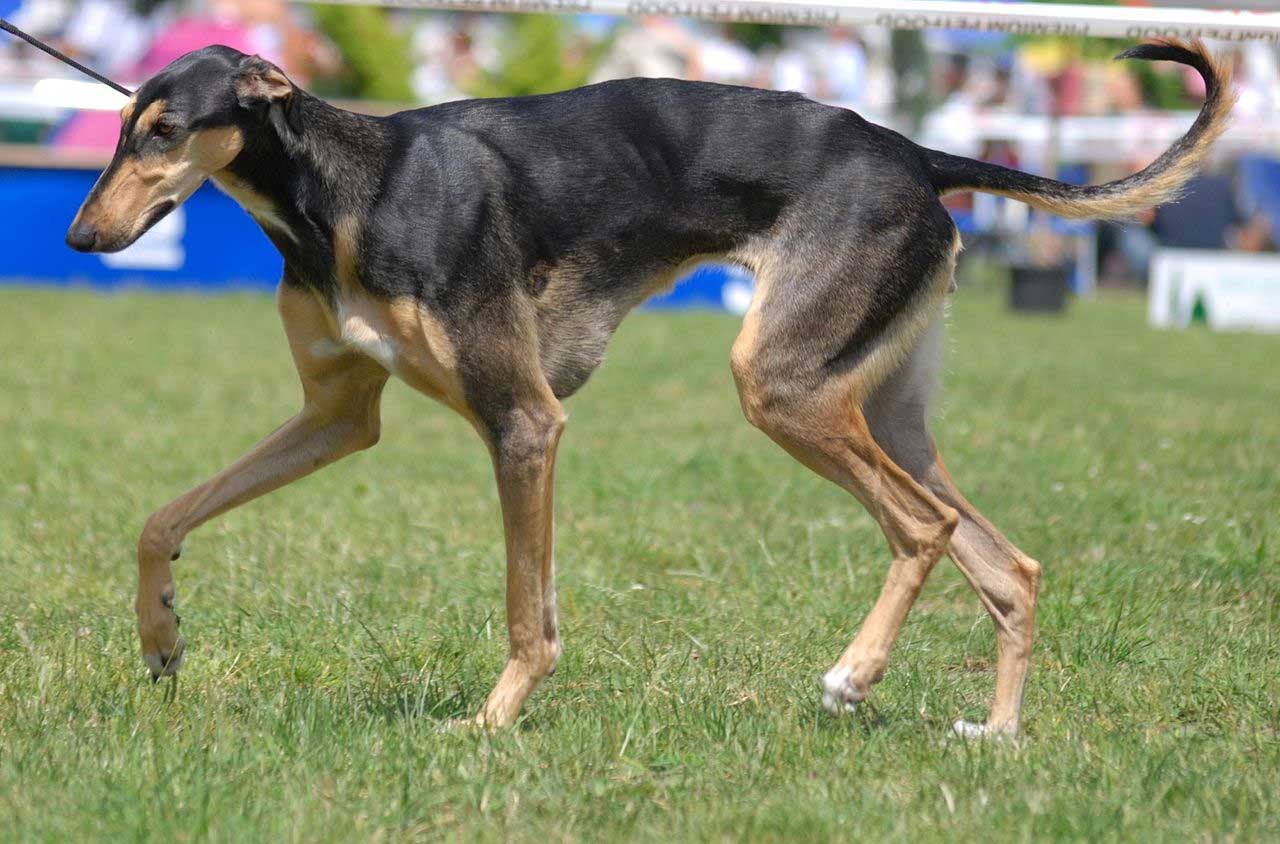
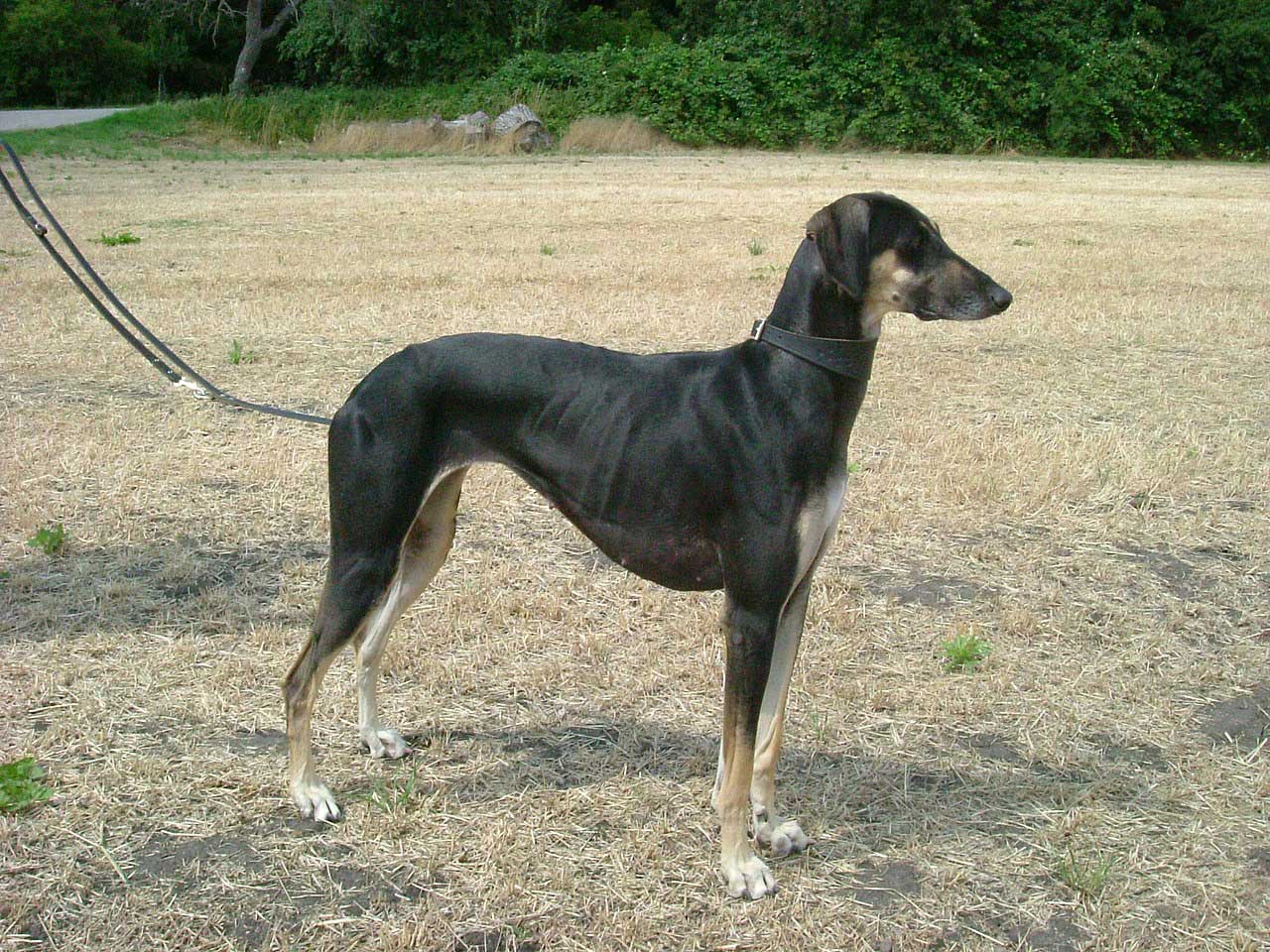
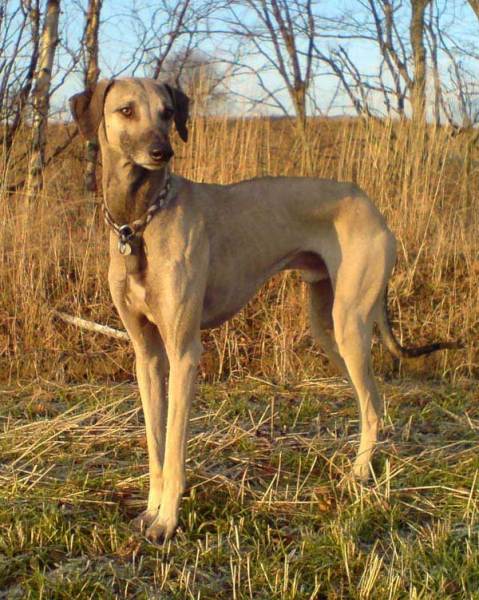
1 – hungarian hound Color: of course by Canarian, CC BY-SA 4.0, via Wikimedia Commons
2 – hungarian hound by https://pixabay.com/es/photos/magyar-agar-perro-animal-galgo-5016524/
3 – hungarian hound by Magpie (vitalap / edits), CC BY-SA 3.0, via Wikimedia Commons
4 – hungarian hound at the Katowice dog show (2005) by Pleple2000, CC BY-SA 3.0, via Wikimedia Commons
5 – hungarian hound by Hachieko, CC BY-SA 4.0, via Wikimedia Commons
6 – hungarian hound by http://www.magyaragar.eu/blog/tag/ungarischer-windhund/page/24/

Videos "hungarian hound (Magyar Agรกr)"


Type and recognitions:

  • FCI CLASSIFICATION:
  • Group :
  • Section : . .

Federations:

  • FCI – Group 10: Section 3: Short-haired Sighthounds โ“˜
  • Standard CCC (Canadian Kennel Club / Canadian Kennel Club)
  • Standard KC (The Kennel Club) – Hound โ“˜
  • Standard UKC (United Kennel Club) – Sighthound and Pariah โ“˜

FCI breed standard "hungarian hound (Magyar Agรกr)"

Origin:
Hungary

Date of publication of the valid original standard:
06.04.2000.

Use:

It is a hunting and racing dog that hunts on sight. But, his nose is also remarkable. It is especially suitable for racing and decoy hunting. (coursings) where it is considered by all as highly accredited in long sections. He is a very good companion dog and a faithful guardian..


General appearance:

His appearance radiates strength; bone structure and muscles are well developed. It is elegant.


IMPORTANT PROPORTIONS:

  • The length of the body is slightly greater than the height at the withers.
  • The length of the muzzle corresponds to half the length of the head.


Behavior / temperament:

Tireless, persistent, fast, hardened and resistant. Excellent for racing.
In some distances it is faster than the Greyhound.
He is reserved by nature but not shy, it's sensible, smart and faithful. Is vigilant; your instinct to protect people, houses or farms is highly developed but with no hint of aggressiveness or sharpness.

Head:

Viewed from above and in profile, it is wedge-shaped with a fairly wide base.

Cranial region:
  • Skull: Moderately strong, broad. The forehead is relatively broad.
  • Stop (naso-frontal depression) : Well marked.

facial region:

  • Truffle: relatively large, well pigmented with large wide windows.
  • Snout: Strong, elongated, although as a whole it is not too pointed.
  • Belfos : Closing well, adherents, well pigmented.
  • Jaws / teeth: Strong jaws, powerful. Scissor bite, complete, well developed and according to the dog's dental formula.
  • Cheeks: Strong, muscular.
  • Eyes: Medium size, dark, neither deeply placed in the sockets nor bulging. Lively and intelligent look.
  • Ears: They are quite large and their weave is thick. Inserted at mid-height, they fold back over the neck in the shape of a perfectly worn rose. In attention they get up. Heavy ears are preferred over light ones. Always erect ears are wrong.

Neck:

Medium length but elegant, dry, muscular, without wrinkles.

Body:

  • Cross: Well developed, muscular, long.
  • Back: Wide, straight, firm, very well muscled.
  • Pork loin: Very wide, straight, heavily muscled.
  • Rump: Wide, slightly descending, with strong muscles.
  • Breast : The rib cage is deep and strongly arched to allow enough room for the heart and powerful lungs.. Well sprung ribs well extended back.
  • Belly: Moderately collected.

Tail:

Strong tail insertion, thick and slightly curved is moderately high. It is moderately thinned and reaches the hock. Its underside is covered by wire hair. At rest it falls vertically to the ground; in action it can be raised to the height of the top line

Tips

PREVIOUS MEMBERS: The forelimbs are strong and tendinous. Seen both from the front and the back, they are straight and parallel.

  • Shoulder: Moderately oblique, Mobile, muscular and long.
  • Arm: Long and somewhat oblique, muscular.
  • Elbows: Elastically conform to the rib cage. They are mobile and must not be turned either inwards or outwards.
  • Forearm: Long, straight, strong bone structure and dry muscles.
  • Carpo: Wide and strong.
  • Metacarpus: Short and vertical to the ground.
  • Front feet: Relatively large, elongated. Strong pads, nails kept short.

LATER MEMBERS: The hindquarters are well angulated but not over angulated., strongly muscled and with good bone strength. Seen from behind are parallel.

  • Thigh: powerfully muscled, with rather elongated muscles.
  • Knee: Moderately angled, strong, not turned neither in nor out.
  • Leg: Long, with dry muscles.
  • Hock: Powerful, strong, low placement.
  • Metatarsals: Seen from behind, both standing and moving are parallel.
  • Rear feet: Relatively large, somewhat elongated with strong pads and nails.

Movement:

Good ground coverage, elastic trot, seen from front and back, limbs move in parallel planes.

Mantle

  • SKIN: Relatively thick, well adjusted all over the body, no creases or double chin.
  • HAIR: Short, thick, rough, smooth and well glued. In winter it can present a dense internal fluff in considerable quantity.
  • COLOR: All known colors and color combinations in sighthounds, with the exception of those colors and combinations of colors mentioned as elimination fouls.


Size and weight:

HEIGHT AT THE WITHERS

  • Ideal height for males: 65 until 70 cm..
  • Ideal height for females: 62 until 67 cm..

The height measured in centimeters is not as important as the harmony of the proportions..


Fouls:

Any deviation from the aforementioned criteria is considered as a fault and the severity of this is considered to the degree of the deviation to the standard and its consequences on the health and well-being of the dog..


MISS PLAYOFFS

  • Aggressive or fearful dog.
  • Atypical head shape.
  • Upper or lower prognathism, incisor arcade deviated.
  • Missing one tooth or more than one tooth on the incisors, of the fangs, of the premolars 2-4, and molar 1-2; of more than 2 x PM1; go M 3 will not be taken into consideration .
  • Entropion, ectropion.
  • Colors: blue; blue spotted white white; brown; wolf gray as well as black and tan; tricolor dogs.
  • Any dog โ€‹โ€‹showing clear signs of physical or behavioral abnormalities must be disqualified..


    N.B.:

    Males should have two normal-appearing testicles fully descended into the scrotum..

    Source: F.C.I - International Cynological Federation

    Alternative names:

    1. Magyar agรกr, Hungarian agar (English).
    2. Magyar Agรกr (French).
    3. Magyar Agรกr (German).
    4. Magyar Agรกr, Lรฉbrel hรบngaro (Portuguese).
    5. Galgo hรบngaro, Magyar Agรกr (espaรฑol).

    โ–ท The world of Pets: Dogs, cats, birds, reptiles, amphibians

    Saluki
    Egipto FCI 269 . Long-haired or fringed Sighthounds.

    Saluki

    In the Middle East a Saluki You can never be sold, You can only give away in signal estimation.

    Content

    History

    The Saluki, commonly known as "Royal Dog of Egypt", It is perhaps the oldest known breed of domesticated dog and the oldest of the Sighthounds, It is believed descended from wolves in the wilderness of Ara. The Bedouins hold them in high esteem and use them for hunting gazelles and as pets..

    As in the case of some other breeds in United States, including the Basenji and the Portuguese Podengo, the current Saluki population is descended from a small number of the first dogs to be introduced to the country since the 19th century.

    Read more

    โ–ท The world of Pets: Dogs, cats, birds, reptiles, amphibians

    Irish wolfhound
    Irlanda FCI 160 . Rough-haired Sighthounds

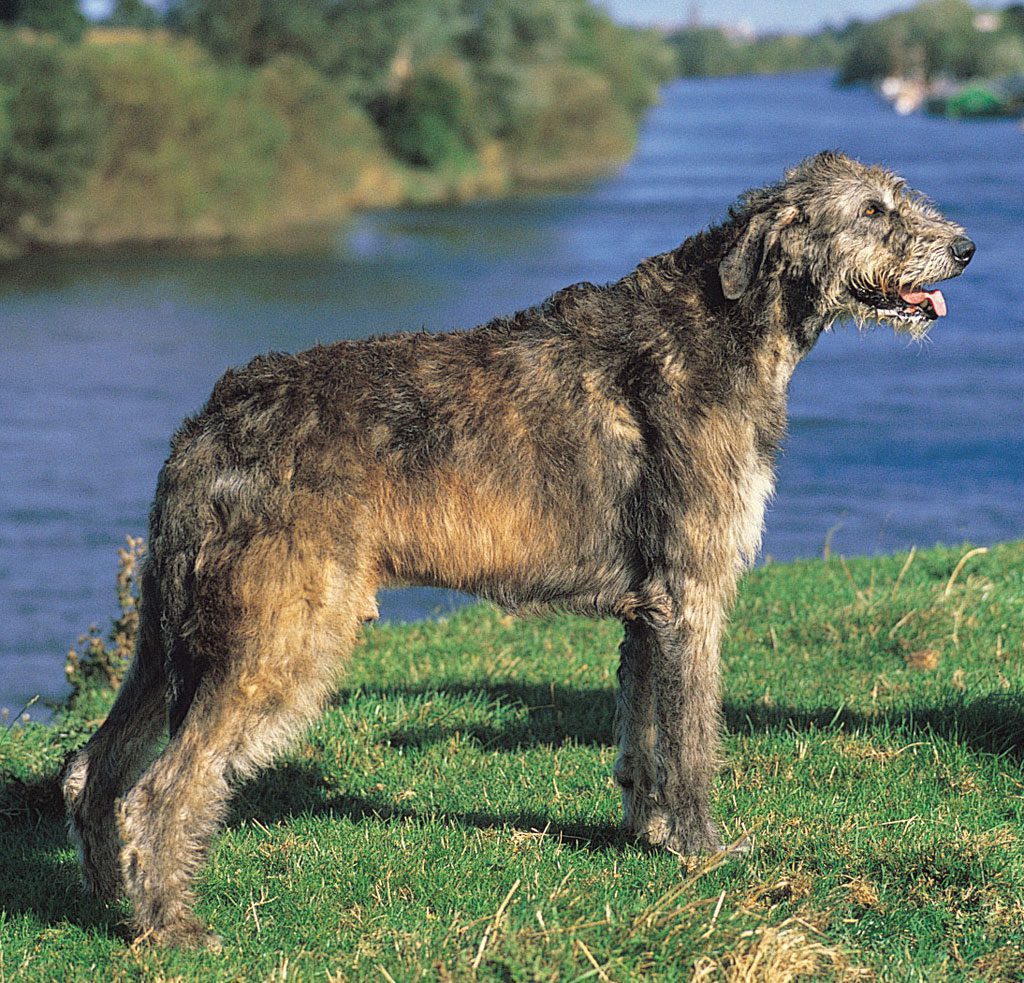
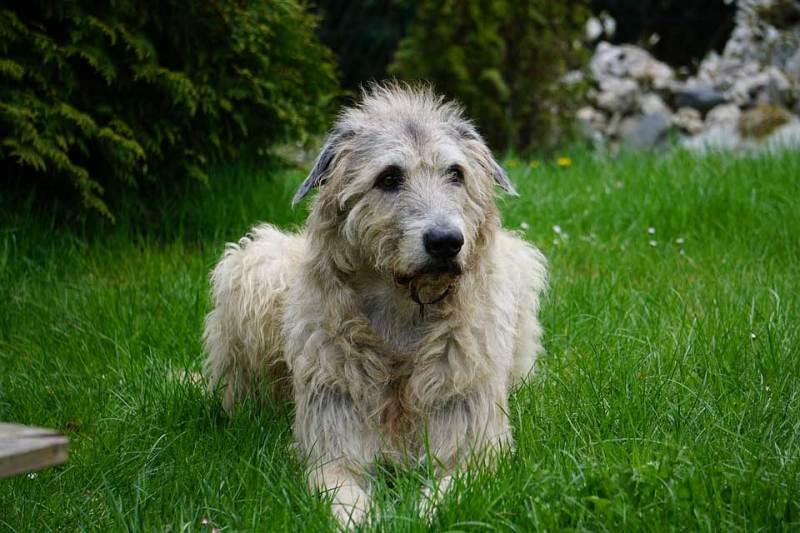
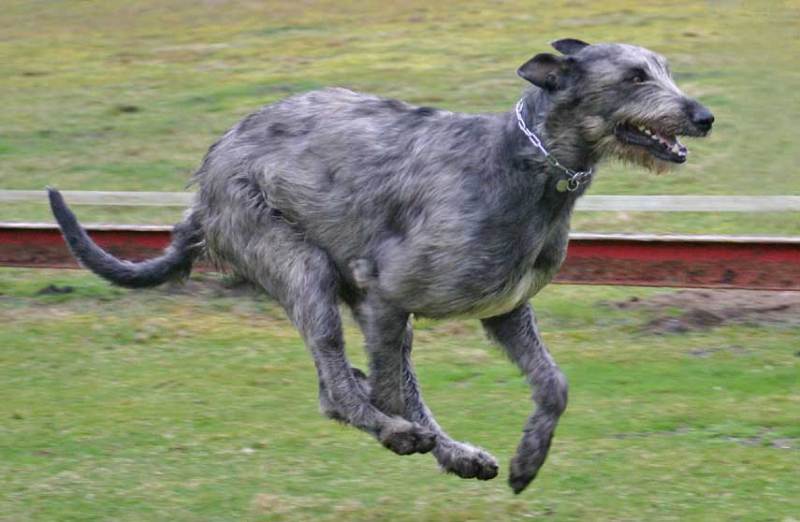
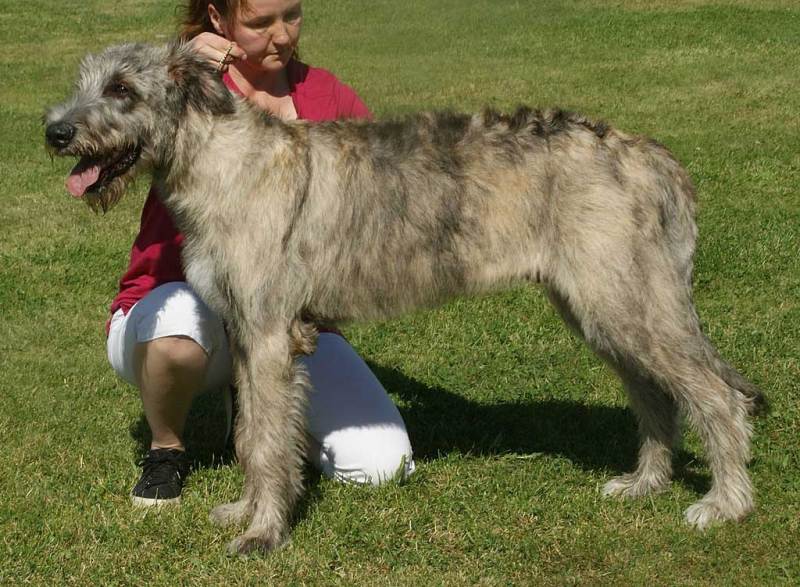
    The Irish wolfhound It is the largest breed of dog that exists.; adults reach an average height of between 95 and 100 cm to the cross.

    Lebrรฉl irlandรฉs

    Content

    Characteristics "Irish wolfhound"

    Coexistence is important that you have with your new friend. Before considering the acquisition of a dog of the breed "Irish wolfhound" you know certain factors. Not all breeds of dogs are apt to live in an apartment, you must take into account his character, their need for exercise, their interaction with other pets, their care and if you have small children, their level of tolerance towards them.

    Adaptation โ“˜

    3,0 of 5 stars (based on 1 review)

    friendly dog โ€‹โ€‹โ“˜

    4,0 of 5 stars (based on 1 review)

    hair loss โ“˜

    3,0 of 5 stars (based on 1 review)

    Affection level โ“˜

    5,0 of 5 stars (based on 1 review)

    Need for exercise โ“˜

    4,0 of 5 stars (based on 1 review)

    Social need โ“˜

    4,0 of 5 stars (based on 1 review)

    Home โ“˜

    2,0 of 5 stars (based on 1 review)

    Toilet โ“˜

    3,0 of 5 stars (based on 1 review)

    Friendly with strangers โ“˜

    3,0 of 5 stars (based on 1 review)

    barking โ“˜

    1,0 of 5 stars (based on 1 review)

    Health โ“˜

    2,0 of 5 stars (based on 1 review)

    Territorial โ“˜

    2,0 of 5 stars (based on 1 review)

    Cat friendly โ“˜

    2,0 of 5 stars (based on 1 review)

    Intelligence โ“˜

    3,0 of 5 stars (based on 1 review)

    Versatility โ“˜

    3,0 of 5 stars (based on 1 review)

    Child friendly โ“˜

    4,0 of 5 stars (based on 1 review)

    Surveillance โ“˜

    2,0 of 5 stars (based on 1 review)

    joy โ“˜

    4,0 of 5 stars (based on 1 review)

    History

    The Irish wolfhound it is a very old canine breed, It was used as a war and hunting dog as early as the 3rd century BC..

    As the greatest of the Sighthounds and hunting dogs, they were already admired. In fact, its impressive size and exceptional bravery even allowed it to hunt the now-extinct Irish elk, that doubled him in size. But, It was his ability to attack wolves that gave the name to the Irish Wolfhound. Before taking this name, he was known simply as Cu, a Gaelic word whose meaning is not very clear; according to the texts, this word was sometimes translated as dog, sometimes like war dog, sometimes like wolf.

    In any case, it's easy to imagine how, on the battlefield, the Irish wolfhoundhe could look like a fierce fighter and impress with his size. Its main use was to knock men off their horses or from enemy chariots. But, although his warrior past is mentioned during the various Celtic wars, there are few texts that narrate his exploits with greater precision. However, It should be noted that during the sacking of Delphi in the year 279 a.C., one survivor mentioned the presence of giant dogs fighting alongside their masters, but without giving more details.

    Although it was used against him in some conflicts with the Celts, was admired by the Romans. This is attested by writings such as those of the Roman consul Quinto Aurelio, who received them as a gift and reported in the year 391 a.C. that Rome admired them in amazement. The Romans also used them as fighting dogs in the arenas., making them compete with other animals and prisoners of war.

    The Irish wolfhound is intrinsically linked to the history and folklore of its country of origin, which is the national dog. In addition to the historical mentions of his role in wars and conflicts, this gentle giant is also at the center of the legends told in various writings, already in the 3rd and 4th centuries. In fact, its popularity has endured throughout the ages, as illustrated by numerous examples. One of the most famous comes from a twelfth-century writing that relates that Mesrodia, then king of Leinstern, In Ireland, owned an Irish Wolfhound so remarkable that the King of Connacht offered him six thousand cows and other treasures in exchange for his dog. Mesrodia's refusal led to a war between the two kingdoms, but the text does not specify what happened to the Greyhound, called Aibe.

    In ancient ireland (until the 5th century AD), A law reserved to kings and nobles the possibility of owning a Irish wolfhound, and his number was a prestige mark of the person's title. These may include, minor members of the nobility could only own a maximum of two Irish wolfhound. But, this did not mean that the number of representatives of the breed in the country was extremely limited, since Ireland was divided at that time into more than 150 kingdoms, with many kings and nobles.

    The Irish wolfhound it was a popular gift among the nobility, and was often delivered with silver and gold chains to develop or strengthen alliances. One of the most famous exchanges was the sending of an Irish greyhound named Gelert to Prince Llewellyn of Wales by King John of England in 1210, and the burial place of the august dog can be seen today in Wales.

    Either used in battle or gifted to consolidate alliances, The Irish Greyhound has also made a name for itself outside its native country; mentions of the breed can be found in numerous writings. In 1596, in Spain, the poet Lope de Vega wrote a sonnet entirely dedicated to the Irish wolfhound.

    Despite its glorious past, the Irish greyhound was not far from extinction in the early 1800s. At that time, the Irish wolfhound it was used mainly for hunting, but the disappearance or near disappearance of wolves, deer, roe deer and wild boar in Ireland took away much of its usefulness. It survived because some families already used it as a pet.

    The Irish wolfhound he probably owes his salvation to Commander H as well. D. Richardson, who wrote a book about dogs in 1842 (The Dog: Its Origin, Natural History, and Varieties), in which he suggested that the Irish wolfhound and the Deerhound they were the same race. This led him to start a breeding program for the Irish wolfhound using Irish wolfhound from the Glengarry area (Ireland), saving the race from the brink of extinction.

    Captain George Augustus Graham was another breeder who, in the decade of 1860, kept the race alive. Crossed the Irish wolfhound with the Scottish Greyhoundby Glengarry, Borzoi – Russian Hunting Sighthound and the Tibetan Mastiff (Do-Khy) to avoid inbreeding. He also used the Irish wolfhound that had been crossed with the Great Dane harlequin. Graham was also responsible for the creation of the first breed club of the Irish wolfhound in 1885.

    The Kennel Club, the leading british kennel club, was founded in 1873, but did not recognize the breed until 1925.

    In United States, was recognized already in 1897 by the American Kennel Club (AKC). The other leading American organization, the UKC (United Kennel Club), it took a little longer to do the same, since it was not until 1921. It also, in 1927 a breed club was founded. Today, the irish greyhound is moderately popular in ireland, occupying an average of 75th place in 200 in the number of pedigrees issued annually by the AKC.

    The International Cynological Federation did not recognize the Irish wolfhound until 1955.

    Physical characteristics

    The Irish wolfhound is the largest of Sighthounds and has an elongated and imposing body, with massive musculature and a broad back. Their legs are long, straight and strong; perfect to let you jump high.

    His head is long and flat, and the skull is not very wide. The ears are located high on the skull and fold along it., in the characteristic style of Greyhounds.

    The muzzle is long and slightly pointed, and the small dark eyes.

    Finally, their fur has a wire texture; it is rough and quite short. The hair under the eyes and under the jaw is slightly curly and longer than the rest of the body. The color of the coat is gray, white, black, red, beige or tabby.

    Weight and size

    ▷ Male size: 81 to 94 cm.
    ▷ female size: 71 to 81 cm.
    ▷ Male weight: 55 to 85 kg
    ▷ female weight: 50 to 70 kg

    Character and skills

    the size of the Irish wolfhound makes it not a suitable dog for everyone. In fact, even if it is quite passive, it is not recommended to live in an apartment, due to its size. You have to have enough space for everyone to move around easily. It also, how prone to joint problems (starting with the Hip Dysplasia), they are also not recommended for homes with stairs.

    So, the Irish wolfhound is much more comfortable in a place with enough space to stretch his legs, preferably with a fenced garden, to prevent the dog from escaping. A wireless electric fence probably wouldn't stop it, since his hunting instinct prevails.

    In any case, even if you have access to a garden, it is important that you plan walks with your adult dog for at least 40 minutes a day. Once your need for exercise is satisfied, you will be happier to walk around the house with your family.

    Whether walking or running, daily exercise should be much more limited with a puppy of Irish wolfhound, due to the fragility of your joints. It is best to start with a five-minute walk each day and then gradually increase the walking time.. The gradual increase in time and distance of exercise should continue until the child reaches maturity., to prevent joint damage. In any case, children under one year of age should not travel more than three kilometers.

    It also, despite your affection and devotion to your loved ones, the Irish wolfhound not the most effective guard dog, as they do not have the reflex to start barking to warn of potential danger. It also, although its large size may be enough to scare away potential intruders, They are not the type to adopt an aggressive temperament towards a human, even if it is malicious. This is not incompatible with his ability to display great bravery; simply, despite his origin as a warrior dog, does not a priori perceive humans as a source of danger. They are often described as gentle giants who, despite its size, they can be very gentle with family and children.

    In fact, this intelligent dog naturally seeks human company, making him an extremely loyal companion. They get along with everyone, and this is also true if they have to share their daily life with another dog.

    On the other hand, as they have a strong hunting instinct, it can be quite difficult to get them to live with other pets, as they will soon be mistaken for prey. Although he is socialized from a young age to the presence of other species, there is always the risk that your natural instincts will overtake you, so this coexistence must always be carried out under supervision.

    It is also his hunting instinct which explains why it is advisable to always keep him on a leash., to prevent it from chasing small animals, unfamiliar cats or even small dogs that may pass by. In fact, there is a real risk that you will be the victim of a traffic accident, 'Cause when he's worried about the hunt, he forgets his immediate surroundings, to the extent, for example, to cross a road without paying attention to possible vehicles.

    Education

    The Irish wolfhound he is a sensitive and intelligent dog, that it is easy to train if the owner uses positive reinforcement dog training techniques and knows how to stay calm in case of problems, but also rewards the dog when it responds well to instructions. On the other hand, if he is punished or if his owner raises his voice too much, likely to retract and isolate. It also requires a certain consistency in your education..

    It also, when they are still small, the Irish wolfhound have a tendency to steal various objects, like shoes. Thus, it is often easier and safer to leave your dog in a crate at home when you are away. But, duration should be minimal: more than half a day would start to cause problems, as your dog needs to move and stretch to prevent joint damage. As i grow, and as long as your education is not deficient, You should understand that this is not acceptable behavior., and that impulse should pass, which would allow him to be let loose at home.

    Health

    The Irish wolfhound is one of the shortest-lived dog breeds and is prone to a variety of health problems, several of which are common to all large dogs :

    The hepatic dog
    This disease is the result of liver failure., that no longer fulfills its metabolic functions. This functional loss is the cause of serious metabolic disorders. (dehydration, diarrhea, etc.) and can cause the death of the dog . In the Irish wolfhound, the most common cause is intoxication from an inadequate dose of certain medications to which it is particularly sensitive.

    Hip Dysplasia
    Common in dogs of this size, can have several causes. In the case of the Irish wolfhound, is an inherited condition most often caused by the femur not fully inserting into the hip joint.

    heart disorders
    Dog heart problems do not spare the Irish Wolfhound. In particular, a third of the representatives of the breed have an increased risk of cardiac arrest caused by dilated cardiomyopathy (also called a heart strain).

    ▷ The dilation-torsion of the stomach.

    It also, like all breeds of greyhounds , the Irish wolfhound have an increased sensitivity to anesthetics and certain medications. In the event of an intervention that requires anesthetizing the dog, it is essential to choose a veterinarian familiar with the Irish wolfhound and its physiological specificities, since a normal dose in another race can be fatal for him.

    Life expectancy

    Of 6 to 8 years

    Grooming

    The Irish wolfhound constantly changes, but not in excess. The dog's coat should be brushed once or twice a week to remove dead hair.. However, the coat is generally easy to care for, and it should not be necessary to bathe the dog more than once or twice a year, unless, Of course, that you come into contact with a substance that is dirty or harmful to your health.

    Some owners trim their fur Irish wolfhound, but this is more for aesthetic reasons than a real need. This is done primarily for individuals shown at dog shows. In any case, longer hair around the ears can be trimmed slightly, legs or neck. The underbelly and tail hair can also be shortened to give the dog a proud appearance..

    It is also advisable to brush the dog's teeth two or three times a week.. The dog's nails should be trimmed once or twice a month, depending on its wear.

    Once a week, brushing the dog's coat is an opportunity to examine its general physical condition, for example, to make sure your ears or skin are not red or show other signs of infection.

    Food

    Like all large dogs, the Irish wolfhound has a big food budget. In fact, needed between 540 and 1.000 grams of quality dry food each day, administered in two meals: one in the morning and one at night. The exact amount should be determined with the help of your veterinarian., depending on the age and activity level of the dog.

    In any case, due to the high risk of stomach bloating, it is important to avoid any intense physical activity in the hour before and especially after each meal.

    Price of an "Irish Greyhound"

    The Irish wolfhound not only is it an expensive dog to breed (due to the budget for food that it represents), but it is also one of the most expensive breeds to buy. The price of a puppy Irish wolfhound varies between the 1.350 and 1.800 EUR, without there being a significant difference between males and females.

    Images "Irish wolfhound"
    Photos:

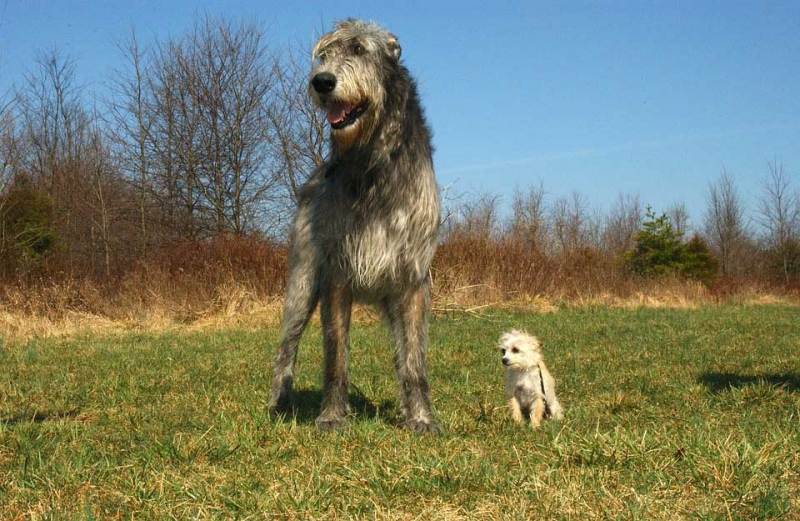
    1 – ยซIrish Greyhoundยป by https://pixabay.com/es/photos/irish-wolfhound-chihuahua-poodle-mix-85578/
    2 – Meet drew, the new "Irish Greyhound" rescued from my mother. A precious animal by Airwolfhound, CC BY-SA 2.0, via Wikimedia Commons
    3 – ยซIrish Greyhoundยป by https://pixabay.com/es/photos/irish-wolfhound-perro-1789938/
    4 – Attila, Irish Wolfhound, owner Ms.. Sylvie Saulue by Sylvie Saulue/Design Madeleine, CC BY-SA 3.0, via Wikimedia Commons
    5 – Irish Wolfhound, striped, macho by Canarian, CC BY-SA 4.0, via Wikimedia Commons
    6 – Yesterday my mother received a rescued "Irish Greyhound". His owner couldn't keep him any longer due to a terminal illness, so the wolf rescue society contacted my mother to see if she would take him in, and he said yes ๐Ÿ™‚ Amy and I picked it up yesterday, and this is me bonding with him ๐Ÿ™‚ Taken with Amy's phone camera, so excuse the quality. by Airwolfhound, CC BY-SA 2.0, via Wikimedia Commons

    Videos "Irish wolfhound"
    Type and recognitions:

    • FCI CLASSIFICATION:
    • Group :
    • Section : . .

    Federations:

    • FCI – Group 10: Section 2: Rough-haired Sighthounds โ“˜
    • AKC – Hound โ“˜
    • ANKC – Group 4 (Hounds) โ“˜
    • CKC – Group 2 – Hounds โ“˜
    • โ€‹KC – Hound โ“˜
    • NZKC – Hound โ“˜
    • UKCSighthound and Pariah โ“˜

    FCI breed standard "Irish wolfhound"

    Origin:
    Ireland

    Date of publication of the valid original standard:
    13.03.2001

    Use:

    Until the late 17th century Irish wolfhounds were used to hunt wolves and deer in Ireland. Also to hunt the wolves that plagued large regions of Europe before the forests were cut down.


    General appearance:

    The Irish Wolfhound should not be as heavy or massive as the German Shepherd but more robust than the Scottish Deerhound., to which it must resemble altogether by its type. It is a large dog with an imposing appearance, very muscular, strong yet elegantly structured; its movements are easy and dynamic; the head and neck should be held high and the tail is carried down with a slight upward curve, ending in another small curve at the tip.

    Big size, including height at the withers and proportionally length of body, is the desideratum to be targeted, and it is desirable to firmly establish a race which must average among the 81 and 86 cm. (32 and 34 inches) in males, showing power, exercise, courage and symmetry required.


    Behavior / temperament:

    "Lambs in the home, lions on the hunt"

    Head:

    Long and level, haughty. The frontal bones are slightly raised with a very slight depression between the eyes.

    Cranial region:

    Skull: Not too wide.

    facial region:

  • Snout: Long and moderately pointed.
  • Teeth: Ideal scissor bite, pincer bite is accepted.
  • Eyes: dark.
  • Ears: Small, rose shaped (like greyhounds).
  • Neck:

    Rather long, very strong and muscular, well arched, no double chin or loose skin around the throat.

    Body:

    Long, broad chest.

  • Back: Rather long than short.
  • Pork loin: Slightly arched.
  • Rump: Wide between the iliac protrusions.
  • Breast : Very deep, moderately wide; wide sill.
  • Ribs: Well arched.
  • Belly: Well collected.
  • Tail:

    The tail is long and slightly curved, moderately thick and well covered with hair.

    Tips

    PREVIOUS MEMBERS: On the whole quite straight with strong bones.

  • Shoulder: Muscular and oblique, that give breadth to the chest.
  • Elbows: Well attached to the body, without turning inward or outward.
  • Forearm: Muscular, with good bone, pretty straight.
  • LATER MEMBERS:

  • Thighs: Long and muscular.
  • Knee: Well angled.
  • Leg: Well muscled, long and strong.
  • Hocks: Well descended; must not be turned in or out.
  • FEET: Moderately large and round, without turning inward or outward; fingers well arched and together; very strong and curved nails.

    Movement:

    Free and active.

    Mantle

    HAIR: Strong and hard all over the body, limbs and head; especially wirey and long over the eyes and under the jaw.

    COLOR: The recognized colors are gray, striped, red black, pure white, Fawn or any other color that appears in the Deerhound.


    Size and weight:

  • Desired height: averaging 81 to 86 cms (32 to 34 inches) in males.
  • Minimum height: Males : 79 cms. (31 inches).
  • Minimum weight: Males : 54,5 kgs. ( 120 pounds).
  • Minimum height: females : 71 cms (28 inches).
  • Minimum weight: females : 40,5 kgs. (90 pounds).


  • Fouls:

    Any deviation from the aforementioned criteria is considered a fault and its severity is considered with respect to the degree of deviation from the standard and its consequences on the health and well-being of the dog..

  • Very light or very heavy head.
  • Frontal bone very arched upwards.
  • Crooked forelimbs; carpus too angulated.
  • Weak hindlimbs and general lack of muscle.
  • Body too short.
  • Back sunken or concave or completely straight.
  • Large, dangling ears close to the face.
  • Crooked feet.
  • Separate fingers.
  • Short neck; well developed double chin.
  • Very narrow or very wide chest.
  • Tail too curled.
  • Nose of any color other than black.
  • Lips of any color other than black.
  • Very light eyes; pink or liver-colored eyelids.
  • FALTAS DESCALIFICANTES:

  • Aggressiveness or extreme shyness.
  • Any dog โ€‹โ€‹showing clear signs of physical or behavioral abnormalities.


  • N.B.:
    • Males should have two normal-appearing testicles fully descended into the scrotum..
    • Only functionally and clinically healthy dogs, with the typical conformation of the breed, should be used for parenting.

    Source: F.C.I - International Cynological Federation

    Alternative names:

    1. Irish wolfhound (English).
    2. Irish wolfhound (French).
    3. Irish Wolfhound (German).
    4. (em inglรชs: Irish Wolfhound), Lรฉbrel irlandรชs (Portuguese).
    5. Cazador de lobos irlandรฉs, Lobero irlandรฉs (espaรฑol).

    โ–ท The world of Pets: Dogs, cats, birds, reptiles, amphibians

    Whippet
    Gran Bretaรฑaa FCI 162 . Short-haired Sighthounds

    Whippet

    The Whippet, like all sighthounds, is quite reserved. Don't play too much. His passion is hunting.

    Content

    History

    The Greyhounds have ancient origins, since their ancestors appear in frescoes of ancient Egypt. But, the Whippet didn't show up until much later, in the 18th century or shortly before. Although everyone agrees that the Whippet is originally from Great Britain, its exact origins are the subject of debate.

    Some believe it is descended from Greyhound. The smallest members of the breed were deemed insufficient for hunting and were given to farmers, and that's how the race developed, which is also known as Hound dwarf.

    Others claim that their ancestors is a Italian Greyhound large, that were used for hunting. Others also believe that Italian Greyhound is related to him Whippet, but only due to the crosses made at the end of the 19th century to perfect the breed.

    Last, some people who have assumed success also mention crosses with certain Spaniels.

    But, The most widespread theory is that the Whippet is the result of crosses between the Greyhound and various Terriers, in particular the Manchester Terrier. Nicknamed the "poor man's greyhound", it was used to hunt small animals, whether they were rats or rabbits.

    But, appears in 18th century paintings of Jean-Baptiste Oudry (1686-1755), but mostly in a box Edward Haytley (1713-1764) titled "The Hunter with a Whippetยซ. The word Whippet had many different meanings between the 16th and 19th centuries, but it is commonly accepted that the name of the breed comes from the verb ยซto whipยซ, which in the 17th century meant "to move quickly".

    Very popular in the 19th century with the working classes of northern England, the Whippet Greyhound was used in gambling trials in which they had to eliminate a large number of rats or rabbits as quickly as possible.. This activity ended up being prohibited, and the rodents were replaced by rag decoys that the dogs had to run after. Racing became a true sport that conquered England and then the United States. At the same time, competitors continued to use their skills on a daily basis hunting vermin and small game.

    Already in 1888, the breed was recognized by the American Kennel Club (AKC), and then by him British Kennel Club (KC) in 1890. Present both at races and at dog shows, developed rapidly, gradually making its way into homes as a companion dog.

    The Whippet is recognized by the main canine associations in the world. The International Cynological Federation (FCI) He did so in 1955, thus promoting its international dissemination, and almost all the large national organizations followed suit, as the United Kennel Club (UKC) American and the Canadian Kennel Club (CKC).

    Today, although the races of Greyhounds have become very rare and hunting with Greyhounds is prohibited in many territories, the Whippet is still very present around the world. This is because the Whippet has been able to move away from its original role and win over the general public as a mascot.

    In United States, for example, AKC registration statistics place the Whippet around the post 60 (of something less than 200) in the breed popularity ranking of the AKC.

    in your country of origin, Great Britain, is even more widespread, with between 3.000 and 3.500 births reported to the KC each year.

    Also in France its success is undeniable, although it is still less than on the other side of the Canal. From the age 80, Entries in the French Book of Origins (LOF) they have been around 1.000 a year, quite exceptional stability. Since the beginning of the decade 2010, this figure has not stopped increasing, approaching the 1.500 at the end of it.

    Physical characteristics

    Elegance blend, power and delicacy, the Whippet it's made for speed, like all races of Sighthounds. They look like Greyhound, but they are much smaller.

    Her slender body is elegant, with a pronounced arch on the back, a broad, muscular back and a well-tucked belly. The legs are long, with moderate bone and fine but marked muscles. The legs are long, moderately boned, with fine but pronounced muscles, ending in oval legs with widely spread toes and strong nails. The tail is long and thin, carried up when the dog is active, but never higher than the level of the back.

    Worn on a long, muscular neck, the head is thin and elongated. The stop is slightly marked, snout continues to narrow into continuation of skull. The nose is usually black, but blue tones are allowed in blue dogs, and pink in cream-colored ones. Oval eyes have a vivid expression. The ears, which are said to be in the shape of a rose, they are thin and are carried backwards or semi-erect.

    The coat of the Whippet consists only of a short, thin top layer, but very closed: this dog has no undercoat. The coat can be any color or combination of colors, except the blackbird.

    Last, sexual dimorphism is well marked in this breed: the male is significantly larger than the female.

    Size and weight

    ▷ Male size: 47 – 51 cm.
    ▷ female size: 44 – 47 cm.
    ▷ Male weight: 13 kg.
    ▷ female weight: 12 kg

    Character and skills

    The Whippet he is extremely sociable and devoted to his family, with which you need to spend a lot of time – it's not a question of living outside, isolated from his family: its place is in the heart of the house, comfortably installed on a cozy cushion. Can easily suffer from separation anxiety and does not adapt to a master who is absent often.

    This problem can be alleviated if he is allowed to live with one or more other dogs.. In effect, whether it is a simple meeting or living together under the same roof, the Whippet gets along very well with other dogs and, usually, is perfectly comfortable in a home where several representatives of the canine species coexist. This allows you to continue to feel part of the pack, even when their owners are working.

    Their relationships with other animals are far from being so peaceful.. In fact, his hunting instinct is well anchored in him, which leads him to chase and kill cats, rabbits and other rodents. Even the ones he would have grown up with are likely to end up in his fangs one day., so that coexistence must simply be excluded.

    Active, cheerful and playful, the Whippet it is an ideal companion for children, whose presence you love. But, it is better if the children are already a certain age and have learned to behave in a respectful way with a dog, as they are much less tolerant of abuse than many of their peers. In any case, as with any breed, It is not advisable to leave a small child with him without the supervision of an adult.

    Active and energetic, this dog is especially so when he is young, to the point that it can be destructive. They also like to test the limits, so it is better that their family is available to take care of them and redirect them when necessary. Once they become adults, which is usually around 18 months of age, they are still very active, but they have a much calmer temperament. You need to exercise for an hour a day, but then you can sit quietly on the couch and watch TV.

    In other words, whether you can exercise comfortably and spend most of your time with your family, the Whippet he is a calm and cheerful companion. But, if any of these conditions are not met, you are likely to develop various behavior problems, like chewing on anything on hand or digging.

    As long as you get enough exercise, can live in a flat. But, ideally you have access to a garden where you can run and play. Yes indeed, must be perfectly closed and at a minimum height of 1,5 m, so that it does not chase the neighborhood cats or other small animals that pass by. In any case, an electronic fence installed underground would be useless, since the discharge felt would not be enough to stop it.

    His hunter instinct causes him to chase any small animal he comes across, so you should always go on a leash when you go out for a walk. But, care must be taken to place the dog with a collar adapted to its morphology (greyhounds have their necks wider than their heads) or a harness, to prevent it from escaping. The risk of the dog running away is especially high in this breed, and it is absolutely impossible to catch him if he escapes, since it is capable of running at more than 50 km/h.

    It is possible to allow him to stretch his legs by taking him for a run or a bike ride. But, is primarily a sprinter, not a long distance runner: find it hard to keep up over long distances.

    It should be noted that the Whippet not only is he an athlete, but he also has an above-average intelligence that allows him to learn many tricks. Dog sports such as agility, obedience, the flyball or, of course, el lure coursing, they are a great way for you to show all your physical and mental qualities.

    Last, he is very respectful to his neighbors, barking very little. This explains why he cannot be counted on as a guard dog., not even as a warning dog. It also, He is not one of those who complicate the life of strangers: can be a bit shy at first, but it tends to open up quickly and make them benefit from its friendly nature.

    Education

    Like all "Sighthound" dogs, the Whippet benefits from socialization from an early age. By meeting all kinds of people and other dogs, but also when getting used to various everyday situations (noises, smells, city รขโ‚ฌโ€นรขโ‚ฌโ€นwalks, car trips…), gains in serenity and becomes a calm and balanced adult.

    On the other hand, even when surrounded by small animals in his youth, never lose his hunting instinct. It would be useless to hope to change anything fundamentally in this regard.

    It is this instinct that makes it absolutely essential to get your dog used to walking on a leash upon arrival home.. In fact, a Whippet should never be set free, except in a perfectly closed and safe environment, like a garden or a dog park. If you start chasing an animal, even perfectly integrated withdrawal orders are ignored, and nothing can distract you from your goal.

    The puppy of Whippet is a bit rambunctious and likes to test limits, showing a certain stubborn streak. So, needs a firm handler who commands respect and is seen as the leader of the pack. Once the master has established his dominant position, the education of Whippet it's relatively easy. He is smart and likes to learn new tricks, so working with him is a pleasure. Of course, this is even more true if you find it interesting, because he is not obsessed with pleasing his master. So, using treats and other rewards can work wonders.

    Do not forget that it is a sensitive dog, that may not respond well to traditional training methods. It is better to base your training on positive reinforcement, that reinforces his self-esteem and consolidates the relationship with his master. It is also advisable not to make the sessions last too long, so that they continue to be fun and interesting for him.

    Health

    The Whippet it is quite robust, with a fairly normal life expectancy for its size.

    But, its short coat and lack of body fat mean that it does not tolerate cold or bad weather well. It is recommended to equip it with a dog sweater as soon as the mercury drops, and he with a raincoat in rainy weather., fits much better when you turn up the thermometer.

    Among the diseases most likely to affect this breed, the most commons are:

    • the waterfall, which can be hereditary and occurs when an opaque film forms in the eye. It causes a more or less rapid degradation of sight, up to total blindness., a surgical operation can treat it;
    • corneal dystrophy, a clouding of the cornea that causes vision problems and is suspected of having a hereditary origin;
    • the progressive retinal atrophy, an incurable inherited disease that causes progressive degeneration of the eye tissues, to complete blindness;
    • the von Willebrand disease, an inherited blood clotting problem, milder forms can be controlled with medication, while the most serious cause unstoppable bleeding that requires surgery and transfusion at the slightest injury, to prevent the dog from dying from blood loss;
    • the epilepsy, which is at the origin of more or less frequent and intense seizures It can be kept under control with the help of drug treatment, which generally enables affected people to lead near-normal lives;
    • skin allergies, which may be signaled by redness and itching;
    • small wounds and skin infections, which is fine and is covered by a rather short hair;
    • of cancers;
    • heart problems, that can be congenital and increase in size, to cardiac arrest resulting in death.

    It also, individuals used on the racetrack are also at risk of injury in the context of this particularly intense activity: sprain, dislocation, fracture, etc.

    It also, like other breeds of Greyhounds as the Greyhound, the Whippet is sensitive to anesthetics, that can cause allergies. So, surgical operations may require a specific protocol to avoid this risk.

    While the list of diseases the breed is predisposed to can seem overwhelming, a study of 2004 jointly conducted by the British Kennel Club and the British Small Animal Veterinary Association over several hundred deaths of dogs of this breed found that about a quarter of them were simply caused by the advanced age of the animal.

    Then there are heart problems and cancer, which together represent another quarter., half of the reported deaths are attributable to one of these three reasons.

    Knowing that this breed is predisposed to various inherited diseases, adopting a serious breeder of Whippet greatly increases the chances of getting a healthy puppy and keeping it that way. In addition to a certificate of good health signed by a veterinarian and the animal's health or vaccination record, certifying that you have received all the necessary vaccinations, the professional must be able to present the results of the genetic tests carried out to the parents or the baby, to avoid the risk of inherited diseases.

    It also, once the puppy has come home, you need to limit your physical activity (both in intensity and duration) throughout its growth period, which normally lasts between 12 and 18 months, so as not to risk damaging your joints or bones.

    It is then recommended to check him regularly for cuts or scratches, as his skin is barely protected by his coat, is particularly prone to it.

    It also, regardless of your age and even if you appear to be in excellent health, any dog รขโ‚ฌโ€นรขโ‚ฌโ€นshould be examined in detail by a veterinarian at least once a year as part of a full medical check-up, this allows a possible problem to be detected as soon as possible, of which sometimes symptoms are not yet appreciated. In addition, this is an opportunity to make sure you are up to date on your vaccinations and to carry out any necessary reminders.

    At the same time, the owner must make sure to renew the different antiparasitic treatments of his dog throughout his life, so you are never unprotected., this must be done every 1 to 3 months.

    Life expectancy

    Of 13 to 14 years

    Grooming

    The Whippet Greyhound is an easy-care breed of dog.

    First of all, the maintenance of its coat is very simple, since it is short and has no undercoat. A quick brushing every week is more than enough to keep it in good condition, especially since this dog sheds very little. They also do not have annual shedding periods., unlike most dogs.

    In any case, brushing sessions offer a good opportunity to check the condition of your skin. In effect, its thinness and the fact that it is only covered by a thin layer of hair make it especially exposed to cuts and scratches.

    If you take care of yourself regularly, the coat is usually clean and odorless, so it is seldom necessary to bathe him. Unless it gets dirty, for example, on a particularly muddy ride, bathing him once or twice a year is more than enough. Just be sure to use a shampoo specifically designed for dogs each time., as this can damage your skin.

    On the other hand, weekly coat maintenance is also an opportunity to wipe their ears with a clean cloth, to prevent the buildup of wax and debris that could be a source of infection (ear infections, etc.).

    You should also take the opportunity to inspect the eyes and rub the corners with a damp cloth to remove dirt..

    Last, good oral hygiene requires brushing the dog's teeth at least once a week, always with a toothpaste specially designed for dogs. This prevents tartar buildup, that can cause not only bad breath, but also diseases, some of which can be serious. Ideally, do it every day..

    As for the claws of the Whippet, they often tend to grow faster than they wear out, even if you spend time outside and get enough exercise. So, it is recommended to cut them every fifteen days approximately, before they are too long and risk disturbing you, but also from breaking, and even injuring you.

    Although a Whippet it is relatively easy to care, it is highly recommended to learn how to do it in the presence of a professional, either a groomer or a vet. This is the best way to know the correct way to take care of your dog and avoid mishandling that can hurt or even injure it..

    Food

    The Whippet adapts very well to commercial dog food. The choice of products and the amount that is given each day must be done in such a way that it perfectly covers their nutritional needs and, Therefore, suits your age, size and activity level. It also, like all dogs, it is better to divide the daily ration into at least two meals.

    It also, dogs used for dog competitions must follow a specific feeding program, like any athlete worth his salt.

    In any case, this dog is little eaten and this, coupled with its high energy expenditure, generally protects you from the risk of obesity. But, if obesity occurred, would have serious consequences for this dog whose body is not at all made to support excess weight.

    So, it is advisable to weigh your dog regularly, At least once a month, to detect any weight gain as soon as possible. If weight gain is confirmed from one measurement to another, or even increases, it is essential to consult the vet. Only a veterinarian can reliably determine the cause of the problem (diet, disease, side effects of medication, etc.) and propose a solution.

    Last, like any other dog, the Whippet must have permanent access to a bowl of fresh water to quench his thirst.

    Utility

    Originally, the Whippet it was used to chase and kill small rodents, eliminating the rats that threatened the food supply and putting rabbit meat on the family menu. Although the Whippet has retained its hunting instincts, this is a function that it has not fulfilled for almost two centuries.

    In the 19th century, the speed of more than 50 dog km / h, his blazing acceleration and his ability to change direction made him a specialist in dog racing, and crowds flocked to see representatives of the breed chase cloth lures and bet on the results, as it was done with the horses. But, the popularity of this activity decreased considerably over the years 80, to the point that today they are very scarce. The fact that gambling is now banned in most countries (including Belgium, Canada, France and Switzerland) is not, of course, A coincidence.

    But, the Whippet Sighthound was also able to seduce dog show fans with its elegance in the late 19th century., and her runway success continues today. It is rare not to see one or more representatives of the breed at these events.

    But, it is mainly as a companion dog that the Whippet Sighthound has made a name for itself among the general public. dedicated and smart, they delight everyone who is looking for an active companion and are sufficiently available for him.

    But, should not be relied on as a watchdog or even a watchdog. Although it is always on the prowl, He is not very suspicious and he is not one of those who barks loudly.

    His sociable and playful nature makes him a sought-after therapy dog, capable of brightening the daily life of people suffering from a disease, a disability or just old age.

    Last, beyond the races on the track, his intelligence and athletic qualities allow him to excel in many dog รขโ‚ฌโ€นรขโ‚ฌโ€นsports. This is the case, in particular, of decoy hunting (PVL), but also agility, flyball and obedience.

    Price

    The price of a puppy Whippet round the 950 EUR, but it can vary greatly from one individual to another, oscillating between 500 euros and 1200.

    Regardless of location, the reputation of the kennel and the prestige of your bulls and ancestors have a great influence on the price of a Whippet. A puppy born in a reputable kennel and from a line of champions is, of course, more expensive. Of course, the individual characteristics of the puppy are also a factor, especially the closeness to the standard. This explains why there can be quite significant price differences within the same litter.

    Characteristics "Whippet"

    Coexistence is important that you have with your new friend. Before considering the acquisition of a dog of the breed "Whippet" you know certain factors. Not all breeds of dogs are apt to live in an apartment, you must take into account his character, their need for exercise, their interaction with other pets, their care and if you have small children, their level of tolerance towards them.

    Adaptation โ“˜

    2,0 of 5 stars (based on 1 review)

    friendly dog โ€‹โ€‹โ“˜

    2,0 of 5 stars (based on 1 review)

    hair loss โ“˜

    2,0 of 5 stars (based on 1 review)

    Affection level โ“˜

    4,0 of 5 stars (based on 1 review)

    Need for exercise โ“˜

    4,0 of 5 stars (based on 1 review)

    Social need โ“˜

    3,0 of 5 stars (based on 1 review)

    Home โ“˜

    3,0 of 5 stars (based on 1 review)

    Toilet โ“˜

    1,0 of 5 stars (based on 1 review)

    Friendly with strangers โ“˜

    2,0 of 5 stars (based on 1 review)

    barking โ“˜

    1,0 of 5 stars (based on 1 review)

    Health โ“˜

    4,0 of 5 stars (based on 1 review)

    Territorial โ“˜

    3,0 of 5 stars (based on 1 review)

    Cat friendly โ“˜

    2,0 of 5 stars (based on 1 review)

    Intelligence โ“˜

    3,0 of 5 stars (based on 1 review)

    Versatility โ“˜

    3,0 of 5 stars (based on 1 review)

    Child friendly โ“˜

    5,0 of 5 stars (based on 1 review)

    Surveillance โ“˜

    2,0 of 5 stars (based on 1 review)

    joy โ“˜

    3,0 of 5 stars (based on 1 review)

    Images "Whippet"

    Photos:

    1 – Whippet by https://www.pxfuel.com/es/search?q=Whippet
    2 – Puppy Whippet by andy carter, CC BY 2.0, via Wikimedia Commons
    3 – Whippet by Winky, CC BY 2.0, via Wikimedia Commons
    4 – Whippet by https://www.flickr.com/photos/llimaorosa/2261441243/
    5 – Whippet called "Bean" by madaise, CC BY 2.0, via Wikimedia Commons
    6 – Whippet by https://pixabay.com/es/photos/lebrel-sabueso-perro-canino-164118/

    Videos "Whippet"


    Type and recognitions:

    • FCI CLASSIFICATION:
    • Group :
    • Section : . .

    Federations:

    • FCI – Group 10: Section 3: Short-haired Sighthounds โ“˜
    • AKC – Hounds Toy โ“˜
    • ANKC – (Hounds) โ“˜
    • CKC – Hounds โ“˜
    • โ€‹KC – Hounds โ“˜
    • NZKC – Hounds Toy โ“˜
    • UKC – Hounds โ“˜

    FCI breed standard "Whippet"

    Origin:
    United Kingdom

    Date of publication of the valid original standard:
    04.09.2019

    Use:

    Breed originally used for hunting, either by trail or by sight.


    General appearance:

    It is a balanced combination of power and muscular strength with elegance and graceful lines.. Its structure is appropriate to develop speed and work. Any exaggerated form should be avoided.


    Behavior / temperament:

    It is an ideal companion. It fits very well in domestic and sporting environment. Is gentle, affectionate and with a balanced disposition.

    Head:

    --

    Cranial region:
    • Skull: Long and thin, flattened in its upper region, rather wide between the eyes, thinning towards the muzzle.
    • Depression links (Stop): Light.

    facial region:

    • Truffle: black. In blue dogs, a bluish color is allowed.
      Liver truffle in dogs color cream and other diluted colors, in white or split dogs a partially depigmented nose is allowed.
    • Mandible / Teeth: Strong jaws, powerful and well outlined with a perfect scissor bite, regular and complete, that is to say, that the upper incisors closely overlap the lower ones and are implanted vertically in the maxillae.
    • Eyes: Oval, bright, very lively expression.
    • Ears: Shaped like a rose, small, texture fine.

    Neck:

    Long, muscular, elegantly arched.

    Body:

    • top line: Showing a funny bow on the back but without the dog being hump.
    • Back: Wide, well muscled, firm, somewhat long.
    • Pork loin: Gives the impression of strength and power.
    • Breast : Very deep, with ample room for the heart.; low, well-defined sill. Arched and muscular ribs at their dorsal insertion.
    • Bottom line and belly: Definitely withdrawn

    Tail:

    No feathers. Long, sharpened; during the movement takes it up, forming a delicate curve, but never over the back.

    Tips

    PREVIOUS MEMBERS:

    • ApGeneral experience:  They are straight and vertical with bone moderately sharp. The front is not too much width
    • Shoulder (Blades): Well oblique scapulae with flat musculature. The space between the scapulae at the withers is moderate.
    • Brazo(Humerus):  About the same length as scapulae.
    • Cskin: The elbows fall directly below the cross seen from perfil.
    • Metacarpus: Sturdy and slightly elastic.
    • Pinis earlier:   Oval,   well divided between the fingers; thick pads and strong nails.

    LATER MEMBERS:

    • Apgeneral arience: Strong. The dog must be able to stand onturally on abundant ground.
    • Thigh: Width.
    • Rodilla: Well angled without exaggeration. Leg: Well developed.
    • Atibio-tarsal articulation: Placed well down.
    • Pinis later:   Oval,   well divided between the fingers; thick pads and strong nails.

    Movement:

    Must have great freedom of movement. Seen in profile, it should move with a long and easy step, maintaining the upper line. The forelimbs should be brought well forward and low close to the ground, the hind limbs should come well under the body giving a great and powerful push. The movement in general should not be pompous, nor high steps, short or affected. Effective back and forth movement.

    Mantle

    • Fur: Up, short, tight.
    • Color: All colors and their combinations, except merle.


    Size and weight:

    Desired height at the withers:

    • Males: 47 - 51 cm. (18,5 to 20 inches).
    • females: 44 - 47 cm. (17,5 to 18,5 inches).


    Fouls:

    Any deviation from the aforementioned criteria is considered as a fault and the severity of this is considered to the degree of the deviation to the standard and its consequences on the health and well-being of the dog..


    FALTAS DESCALIFICANTES:

    • Aggressiveness or extreme shyness.
    • Any dog โ€‹โ€‹showing clear signs of physical or behavioral abnormalities.


    N.B.:
    • Males should have two normal-appearing testicles fully descended into the scrotum..
    • Only functionally and clinically healthy dogs, with the typical conformation of the breed, should be used for breeding.

    The latest changes are in bold.

    Source: F.C.I - International Cynological Federation

    Alternative names:

    1. English Whippet, Snap dog (English).
    2. Lรฉvrier nain (French).
    3. Kleiner Englischer Windhund (German).
    4. Whippet (Portuguese).
    5. Whippet inglรฉs (espaรฑol).

    โ–ท The world of Pets: Dogs, cats, birds, reptiles, amphibians

    Maltese
    Italia FCI 65 . Bichons

    The Maltese is very sensitive, and you prefer a home that is stable.

    Bichรณn Maltรฉs

    Content

    Characteristics "Maltese"

    Coexistence is important that you have with your new friend. Before considering the acquisition of a dog of the breed "Maltese" you know certain factors. Not all breeds of dogs are apt to live in an apartment, you must take into account his character, their need for exercise, their interaction with other pets, their care and if you have small children, their level of tolerance towards them.

    Adaptation โ“˜

    5,0 of 5 stars (based on 1 review)

    friendly dog โ€‹โ€‹โ“˜

    5,0 of 5 stars (based on 1 review)

    hair loss โ“˜

    1,0 of 5 stars (based on 1 review)

    Affection level โ“˜

    5,0 of 5 stars (based on 1 review)

    Need for exercise โ“˜

    1,0 of 5 stars (based on 1 review)

    Social need โ“˜

    5,0 of 5 stars (based on 1 review)

    Home โ“˜

    5,0 of 5 stars (based on 1 review)

    Toilet โ“˜

    5,0 of 5 stars (based on 1 review)

    Friendly with strangers โ“˜

    5,0 of 5 stars (based on 1 review)

    barking โ“˜

    5,0 of 5 stars (based on 1 review)

    Health โ“˜

    3,0 of 5 stars (based on 1 review)

    Territorial โ“˜

    4,0 of 5 stars (based on 1 review)

    Cat friendly โ“˜

    5,0 of 5 stars (based on 1 review)

    Intelligence โ“˜

    5,0 of 5 stars (based on 1 review)

    Versatility โ“˜

    3,0 of 5 stars (based on 1 review)

    Child friendly โ“˜

    1,0 of 5 stars (based on 1 review)

    Surveillance โ“˜

    3,0 of 5 stars (based on 1 review)

    joy โ“˜

    4,0 of 5 stars (based on 1 review)

    History

    The Maltese It is a canine breed that has existed since ancient times and was already widespread in Mediterranean cultures.. But, contrary to what its name might suggest, its exact origin remains uncertain, but it seems to come from one of the countries of the Mediterranean basin. Along its history, it has been given many names, as Melitae Dog, Ye Ancient Dogge of Malta or Maltese Lion Dog. But, Today it is mainly known as Maltese or Maltese dog.

    Archaeological finds tend to confirm that the Maltese it even existed in ancient egypt. In fact, in a tomb dating from the reign of Ramses II (1304 a.C. to 1214 a.C.) a statuette was found representing a dog that looks like him in everything. So, we can assume that the Egyptians considered it a sacred animal.

    Maybe because, like Europeans later, they thought it was capable of curing diseases, or at least they discovered that he was able to calm the sick by snuggling up next to them.

    They weren't the only ones who honored him, since the Greeks also built graves for their deceased dogs. The dog was also found in ancient Greece, to the point that the famous philosopher Aristotle (384 a.C. – 322 a.C.) mentioned it in his zoological work History of animals. He mentioned a breed of small dog that he called in Latin canes melitenses, What does "Maltese dog" mean?.

    Before the beginning of the Christian era, Maltese was also very popular with the Romans. Many noblewomen owned one and never went out without it.. They wore it on the bodice or sleeve, as a jewel or an accessory. This trend continued well beyond ancient Rome.

    In the 1st century, Roman Emperor Claudius (10 a.C. – 54 d.C.) he was probably the most famous Maltese owner. Regarding St. Publius (33 d.C. – 112 d.C.), Roman governor of Malta who owned a Maltese named Issa, asked the poet Marcial to write a eulogy for his dog, what he did in his Epigrams collection.

    The Maltese came to the British Isles during the reign of Henry VIII (1491-1547), and there he also became very popular among the upper classes, especially among women, who used him as a companion and lap dog. It was appreciated for its beauty, while its small size allowed them to easily carry it on their blouses. It was especially adopted by Queen Elizabeth I (1533-1603).

    Although it survived many wars and conflicts over the years, the breed was about to disappear around the seventeenth and eighteenth centuries, after unfortunate attempts to miniaturize it to the maximum. To save her it was necessary to cross with the Poodle, Small Spaniels and Asian Miniature Dogs.

    Despite its success and presence in many countries, the breed was not introduced to North America until the 19th century. However, one of its representatives (white) was present at the first dog show in the history of the United States, the Westminster Kennel Club Dog Show, which was held for the first time in 1877. There it was shown with the name of Maltese Lion Dog.

    The breed was soon recognized by the American Kennel Club (AKC), already in 1888. But, was not up 1948, 60 years later, when the other most important canine organization in the country, el United Kennel Club (UKC), he did the same. But, American organizations were more active than the Fรฉdรฉration Cynologique Internationale (FCI), who waited until 1955 to recognize the Maltese.

    Physical characteristics

    They weigh between 1,8 and 4 kg. Being the maximum weight in adulthood of 3 kg in females and 4 kg in males. Its height is of 20 to 25,5 cm., and they have a compact body.

    The Maltese it is a small dog with a noble and elegant appearance, and a fluid and graceful walk.

    Your body is well proportioned, his chest is quite deep and his ribs are well sprung.

    Like other Spitz breeds, its tail curves between the hips until it touches the rump. Carries high and can be curved sideways.

    The head is proportional to the size of the body. The skull is slightly rounded and quite wide between the ears. The ears are set low and triangular in shape. The eyes are round and dark brown, with a soft but alert look. The eyelids conform to the eyeball and are pigmented black. The muzzle is fine, average length, and ends in a black nose.

    The coat of the Maltese It is thick, shiny and silky. No undercoat, but a layer of long straight hair all over the body, no waves or curls. On the sides, hangs to the ground, which almost gives the impression that the dog is floating.

    The fur is white, but a shade of ivory and lemon strokes are allowed. Until the end of the 19th century, it was even possible to use other coat colors. But, at that time, all colors other than solid white were deprecated, so breeders focused solely on individuals with white fur.

    As they have no undercoat and shed relatively little, Maltese are often considered a hypoallergenic breed. Although none of them are hypoallergenic, they are usually well tolerated by people allergic to dogs. However, This does not exempt any potential adopter who suffers from this allergy from carrying out a test in real conditions before taking the step..

    Last, sexual dimorphism is not very pronounced in this breed: males and females are about the same size.

    Some breeders offer the Maltese miniature, whose weight is around 2 kg, or even less. These dogs not only don't conform to the breed standard, Rather, this extreme miniaturization is often accompanied by genetic problems and, in general, health risks. So, you better stay away from them.

    In comparison to the Yorkshire Terrier or the Chihuahua, the Maltese you are not as likely to have fingernails or other diseases that can shorten your life.

    Popularity

    Still today, the Maltese it is still very popular and is present all over the world.

    In United States, is around the post 30 (out of a total of 195) in the breed ranking established by the American Kennel Club (AKC) according to the number of births registered each year in the organization. But, this marks a steady decline from, at least, early 21st century, when I was about the twentieth position.

    At the same time, on the other hand, has greatly increased its popularity in the UK: while in the middle of the decade of 2000 there were some 400-500 Annual Kennel Club Enrollments, This figure is around the 1100, and has been fairly stable since 2012.

    The situation is different in France, since the number of annual entries in the French Origin Book (LOF) almost never stopped increasing for at least half a century. He was in his early twenties 70, a quarantine at the end of this decade, and then multiplied by ten during the 80, until exceeding 400. The trend continued over the years 90, until it stabilized around the 600 at the end of the decade and, Therefore, at the beginning of the 21st century. This trend continued until the decade of 2010, characterized by an increase in 50%, ending with more than 900 births per year.

    In Switzerland, it is the 13th most popular breed in the country. There are more than 7000 people registered in the Swiss Amicus database.

    Did you know??

    The sweet little one Maltese dog is the favorite of celebrities, including Halle Berry, Heather Locklear y Eva Longoria. Could it be because they are so adorable in photographs? We think so.

    Character and skills

    "Maltese"

    Kind, loving and affectionate with their masters, the Maltese he is also very attentive to his emotions, and is able to comfort them in difficult times. He is very active and maintains a youthful spirit all his life..

    Your attachment to family is so strong that it can be problematic if you are alone too often or for too long. In fact, does not tolerate loneliness well and, therefore, you are likely to suffer from separation anxiety in such circumstances, what can drive, for example, destructive behavior or incessant barking. So, not suitable for a teacher who spends most of his days away from home.

    Have him share his home with another dog or with a representative of another species (cat, rodent, bird…) it is a good way to help you better cope with the absences of your masters. But, this is only possible if you have grown up together or if you are used to living with other animals since childhood. In fact, in the event that another animal comes one day to your family, they are likely to be jealous and do not appreciate having to share their master's attention with another animal. In any case, given its small size, it is not advisable to make him live with a large congener, since it could inadvertently hurt you, for example just playing with him.

    Its small size and fragile bone structure also explain why it is not recommended to live with young children.. In fact, the latter are quick to have too abrupt gestures towards him, especially during playtime, and could inadvertently hurt you. It also, even if it's not like that, may become scared and overwhelmed when faced with young children who are moving around a lot and making noise, which could cause inappropriate reactions on your part. In any case, a small child should never be left alone with a dog without adult supervision, regardless of race.

    Not content with being around family members, the Maltese he's kind to strangers too, as long as I see there is nothing to fear from them. But, this does not prevent you from barking when you perceive a threat or a stranger approaching your home, which makes him a very good alert dog.

    The Maltese's need for exercise is very moderate, making it a good breed for older people. Half an hour of activity a day is more than enough, for example, two or three short walks a day and / or small play sessions. But, he also likes dog sports like agility, obedience and rally, but its resistance is limited. In any case, he is always delighted to discover new things and learn new tricks.

    As soon as you exercise enough, is quiet, able to adapt to any living space, and is delighted to spend long periods of time with his master, receiving pampering. It is therefore a breed of dog adapted to apartment living., who can be happy both in the city and in the country, in a big house with a garden. But, not made to spend most of the time outside. This is especially true in winter, since its lack of undercoat makes it sensitive to cold. But also the rest of the year, because its small size can make it prey for potential predators (birds Raptors, foxes…), plus the risk of it being stolen by malicious people. In any case, it is not about relegating it abroad, away from his family: accustomed for centuries to living in the heart of homes and loving to be the center of attention, you need to live and interact with your family to be happy and balanced.

    Observations

    Unlike other dogs the Maltese need little physical activity, What are good candidates for older people. Hunting mice, and they keep them away from the House.

    Taking them for a walk would also serve to make them sociable since they do not require much exercise, adults should keep the weight and the best way to do this is by controlling what you eat and taking them for a walk. We must pay attention to the hair, and the help of a dog hairdresser may be required from time to time. You must be careful with approaching other dogs that are very nervous and are uncontrollable.

    They can make stunts, How to keep standing on their hind legs for several minutes. Although perfectly adapted to living in apartments for its small size and domestic, love to walk in the open air. To be a difficult race, about all when they are puppies, they require many care. It is recommended to feed with feed, and though loves food human should never be given chocolate, It is highly deadly to this race.

    Education

    Like any dog, the socialization of Maltese must start at a very young age, period during which it is more malleable and adaptable. It is advisable to make you know as many different individuals and animals as possible, as well as exposing him to all kinds of situations and environments. This is essential for it to be an animal with a good head and serenity in all circumstances..

    At the same time, given the very strong level of attachment to their humans that characterizes this breed, teaching the puppy to endure loneliness is part of the priorities of their education, to avoid that the absences of their masters suppose a later problem.

    The Maltese he is smart and likes to please his owners. But, sometimes he is stubborn, which can complicate the learning sessions a bit. Ideally, opt for the positive reinforcement training method, since they are not receptive to reprimands and respond much better to stimuli and treats. But, it is important not to abuse the treats or discount them from your dog's daily intake to avoid weight gain.

    In any case, you can't miss inappropriate behavior (grunts, barking, aggressiveness, refusal to obey…) when he is young, with the argument that it is small, beautiful and harmless. This would be the best way to make him develop "small dog syndrome", that is to say, get used to doing what you want in any circumstance, and become dominant, aggressive and difficult to live with. So, its owner must be firm from the start and make sure to establish - and enforce- clear rules, long-term constant and applied uniformly by all household members.

    Health

    The Maltese they are generally robust and healthy dogs.

    But, due in particular to the absence of an undercoat, it is particularly sensitive to cold and humidity. When temperatures are cold, should be covered with adog coat.In any case, you are not meant to live in an area where the weather is cold for much of the year.

    It also, of course, not completely free from health problems, many of which are common to other small breeds.The conditions to which you are predisposed are:

    • The Hip Dysplasia, joint malformation whose appearance can be enhanced by a hereditary predisposition, produces pain and lameness in the hips and causes the appearance ofosteoarthritiswhen the animal gets old;
    • The dislocation of the patella (or dislocation of the patella), common in dogs. It occurs when the kneecap moves in or out of the knee and can cause pain or lameness of varying degrees of severity. In the most severe cases, an operation is necessary;
    • The tracheal collapse, a respiratory disease that mainly affectssmall dogsand corresponds to a reduction in the diameter of the trachea. The most common sign is a dry and chronic cough, but it can also cause great shortness of breath. If necessary, it may be necessary to place a prosthesis;
    • The cryptorchidism, often a hereditary defect that prevents the animal's testicles from descending into the scrotum. The only solution then is to remove them surgically to avoid further complications, which leads to the sterilization of the animal;
    • Congenital portosystemic derivation, a vascular abnormality that can cause growth retardation, weight loss or even neurological problems and / or digestive.In some people, the symptoms are subtle, which makes the diagnosis of the disease later. This pathology, whose cause may be hereditary, can be cured by surgical intervention;
    • Hydrocephalus, a disease of nervous system in dogs.Symptoms vary from individual to individual (bulging head, growth retardation, nervous disorders, etc.), but the vital prognosis is never very good;
    • shaking dog syndrome, a disease that mainly affects small dogs in white coats. It consists of inflammation of the cerebellum and causes attacks of involuntary tremors throughout the body and lack of coordination. The symptoms usually begin to appear between the 9 months and 2 years and can be reduced, or even disappear, with drug treatment;
    • Hypoglycemia, which mainly affects diabetics and corresponds to a significant decrease in blood glucose level. The symptoms of the problem are loss of appetite, lethargic state, tremors and unsteady gait, in the most severe cases, can lead to coma and then death of the animal, if you are not given sugar one way or another;
    • The Cushing's disease, a hormonal disease whose most common clinical signs include increased appetite, thirst and amount of urine produced, muscle atrophy or the appearance ofalopecia;
    • The gradual retention atrophy, an incurable inherited disease that consistently affects both eyes at the same time, causing retinal degeneration and progressive loss of vision, at night and then day;
    • The glaucoma, an eye disease that can be inherited and causes degeneration of the optic nerve and retina due to abnormally high pressure in the eye. This painful pathology for the animal rapidly evolves into total or partial loss of sight, unless it is attended urgently;
    • The waterfall, It mainly affects the elderly and is a clouding of the lens Causes vision disturbances, up to total loss of sight if uncontrolled, only an operation can allow the animal to regain good vision;
    • The otitis, frequent inflammation indogs with floppy ears.

    It also, the Maltese is easily susceptible to obesity, that can cause or aggravate many existing pathologies, and therefore have a very negative impact on your health. This is all the more true as it constitutes a vicious circle., because an overweight dog becomes less active and, Therefore, being overweight tends to increase.

    Finally, even if it is not strictly speaking a disease, is also subject to reverse sneezing (or reverse sneezing).This is manifested by short-lived seizures during which you make loud noises when you inhale that may give the impression that you are choking. Seizures are usually rare and harmless., if they repeat too often, a veterinarian should be consulted to confirm that it is not another condition.

    Although the list of diseases the breed is predisposed to can be terrifying, It must be taken into account that its prevalence is low and that most people lead perfectly healthy lives. This is also confirmed by a study carried out in 2004 by the Kennel Club and the British Association of Small Animal Veterinarians, as old age was found to be the leading cause of death in this breed, on a par with cancer. Cardiac causes rank third and together account for more than half of the observed deaths.

    The number of diseases to which the breed is predisposed that are or may be hereditary, choosing acreator of Malteseshould not be left to chance: directly influences the probability of obtaining a healthy animal and that it continues to be so., in addition to ensuring thepuppy socialization from its first weeks, A serious breeder refrains from reproducing an individual capable of transmitting a hereditary affection to all or part of his offspring., must be able to present the results of DNA tests performed to parents (and possibly the young) and that they demonstrate that they are free from hereditary defects., it is better not to take unnecessary risks and turn to another breeder., You must also provide a certificate of good health established by a veterinarian as well as details of the vaccinations received, recorded in the puppy's health or vaccination registry.

    Later, it is strongly recommended not to make him make prolonged or excessively intense physical efforts during his growth, period when your bones and joints are still very fragile. You would risk injury or malformations, potentially with lifelong consequences. This is even more important because you are predisposed to various joint problems:dislocation of the patella,Hip Dysplasia,etc.

    Finally, like any dog, should be taken at least once a year to the vet for a complete checkup, that sometimes you can detect a problem that is still embryonic and treat it as best as possible.It is also an opportunity to perform the necessary booster injections.. At the same time, to prevent the risk of parasites and the multiple diseases that accompany them, your teacher should make sure to renew your deworming treatments throughout the year, whenever necessary.

    Life expectancy

    15 years

    Grooming

    The coat of the Maltese requires a lot of daily care. In fact, to avoid knots and keep it clean and shiny, it is advisable to brush it every day with a special brush or glove and use a detangling and revitalizing spray. But, the absence of undercoat means that it is not subject to seasonal shedding and that it loses very little.

    The length of her hair makes dirt build up easily, so it tends to quickly give off bad odors. To remedy it, it is necessary to wash it on average once a month. But, you must not go any further: excessive frequency could harm the balance of your skin, by eliminating the sebum that it produces naturally and that protects it from skin problems. It also, systematically use a shampoo specially designed for dogs, also with the risk of damaging your skin, and avoid wetting the inside of your ears, as they are especially prone to ear infections and other infections.

    It is also recommended not to let the hair air dry, but clean it directly with a towel after bathing, so that its coat is beautiful once dry.

    It also, to avoid being embarrassed by the length of your hair at eye level, it may be a good idea to tie it at the top of the head with a small elastic band or a hair clip.

    So that daily detangling is less heavy, It may also be a good idea to take your dog to a professional groomer every one to two months for a short haircut., or do it yourself, for the most skilled. Helps keep the coat neat, prevents dirt from accumulating on the hair and prevents bad odors, common when the coat is long.

    It also, hair between the pads and around the ears and eyes should be trimmed once a month to reduce the risk of infection caused by any small plants or spikes that may be stuck in the fur.

    You also have to pay special attention to their droopy ears., since this morphological characteristic increases the risk of infections at this level (otitis, etc.). So, they must be inspected and cleaned once a week, and get into the habit every time they get wet or moisture builds up on them.

    The weekly maintenance of your ears is also an opportunity to check that there are no tear stains at the corner of your eyes., due to a blocked tear ducts, a very common problem in Maltese. Then, just clean them with a special lotion or with a cotton pad soaked in physiological serum, and then gently wipe them with a cloth. In case of constant and / or continuous discharge, a veterinarian should be consulted.

    Looking at your teeth, they must be cleaned with a dog toothpaste at least once a week, using a toothbrush or finger bowl. This routine is important to prevent tartar buildup and the problems it can cause: bad breath, diseases, etc. The ideal for optimal oral health is even to do it several times a week, or even every day.

    Utility

    The Maltese It is one of the oldest companion dog breeds in the world., fulfilling this function since ancient times. Her beautiful fur, its small size, his friendly temperament and the fact that he is a very calm breed of dog made him a very popular companion for women of high society, as well as many historical figures, both in antiquity and in Renaissance Europe and subsequent centuries. He even had a reputation for healing the sick., or at least alleviate them. In other words, the important place he occupied in his master's life was not new.

    In fact, things haven't changed much nowadays, since they are mainly used as companion dogs. But, needs their owners to be present enough by their side on a daily basis, in addition to having time to dedicate to its maintenance.

    They are often recommended for people with allergies to dogs, since their lack of undercoat and their moderate shedding make them a fairly hypoallergenic companion. But, keep in mind that no race is 100% hypoallergenic, since all dogs produce dandruff, and there may be quite noticeable differences between individuals, even within the same litter. So, Anyone who suffers from this type of allergy and wishes to adopt a Maltese must first spend a few hours with the proposed animal, to make sure no allergic reaction occurs.

    It also, its small size, its shiny white fur, his elegance and graceful gait make the Maltese a must-have in beauty pageants, where he wins prizes very often. But, if you want to expose your dog to a dog show, you better have plenty of time for grooming sessions, since the maintenance of the Maltese coat for this type of event can be time consuming.

    Perhaps a more enjoyable way to spend time with him is to train him in various dog sports. In fact, his desire to please his master and his liveliness make him a good competitor in agility competitions, obedience, rally and crawl.

    Last, your kindness and kindness, as well as his cheerful and attentive character, make it sometimes used as a therapy dog, since his temperament facilitates contact with the sick.

    Price

    The price of a puppy Maltese varies between the 650 and 2500 EUR, being the average of about 1600 EUR, without great differences between males and females. Whether in Europe, It is not very difficult to find a Maltese breeder, because they are numerous.

    In United States, the offer is wide and the price is similar. You just have to make sure you respect the regulations regarding the importation of a dog from abroad, and keep in mind that transportation costs and administrative fees are added to the purchase price.

    Whatever the place, the price difference from one individual to another is explained, in particular, by the greater or lesser conformity of each with the breed standard. The kennel's prestige also comes into play, as well as the lineage from which they descend.

    ยซMalteseยป images

    Videos ยซMaltese Bichonยป

    Type and recognitions:

    • FCI CLASSIFICATION:
    • Group :
    • Section : . .

    Federations:

    • FCI – Group 9 Section 1 โ“˜
    • AKC – Toy Group โ“˜, ANKC โ“˜
    • ANKC Group 1 (Toys) โ“˜
    • CKC – Group 5 – Toys โ“˜
    • โ€‹KC – Toy โ“˜
    • NZKC – Toy โ“˜
    • UKC – Company โ“˜

    FCI breed standard "Maltese"

    Origin:
    Italy

    Date of publication of the valid original standard:
    27.11.1989

    Use:

    Companion dog.


    General appearance:

    Small in size and elongated trunk. It is covered with very long white hair. He is very elegant and his head posture is haughty and distinguished..

    important proportions:

    The length of the trunk exceeds by 38% the height at the withers. The length of the head is equal to 6/11 the height at the withers.


    Behavior / temperament:

    Alert, affectionate, very docile and very intelligent.

    Head:

    Its length is equal to 6/11 the height at the withers. It is very wide and its width barely exceeds half of its length..

    Cranial region:
    • Skull: Its length is slightly longer than that of the snout; the bizygomatic width is equal to its length, and consequently greater than half the length of the head. Seen from above it is slightly ovoid in shape; the top of the skull is flat, with a very little marked occipital process. The protuberances of the frontal bones and eyebrows are well developed. The frontal sulcus is not visible, since it is little marked. The lateral faces are slightly convex.
    • Depression links (Stop) : Very marked, forming an angle of 90ยฐ.

    facial region:

    Truffle: It is located in the extension of the nasal cannula and, profile view, its front face is vertical. It is voluminous, with nostrils wide open; It is rounded in shape and its color is strictly black.

    • Snout: Its length is equal to 4/11 of head length; is therefore slightly less than half. Sub-orbital regions are well delineated. Its height is less than the length by a little more 20%. Side faces are parallel, but the snout, seen from the front, It shouldn't look square., since the anterior face is linked to the lateral faces in a series of curves. The nasal cannula is rectilinear, with well-marked grooves in its central part.
    • Lips: Seen from the front, the upper lip forms a very open arch where it joins. It is not very high, and so the commissure is not visible. The upper lip adapts perfectly to the lower lip, such that the lower profile of the snout is defined by the jaw. The edges of the lips are strictly black.
    • Jaws: Normally developed and thin in appearance; They are perfectly adjusted. The jaw, whose branches are rectilinear, It's not even prominent, nor elusive in the previous part.
    • Teeth: The arches are perfectly adjusted and the incisors have a scissor joint.. The teeth are white; the teeth are well developed and complete.
    • Eyes: Open, alert expression, larger than normal; the eyelid aperture resembles a circle. The eyelids are tightly attached to the eyeball, which is not sunken but rather protruding. The eyes are located on the same almost frontal plane, They are dark ocher in color and the edges of the eyelids are black. Seen from the front, the sclera should not be visible.
    • Ears: They are almost triangular in shape, Its width represents around 1/3 its length. They are implanted high above the zygomatic arch. They are not very erect, hanging and touching the lateral faces of the skull.

    Neck:

    Although it is covered with abundant hair, the demarcation with the nape of the neck is clearly visible. The upper profile is arched. Its length represents about half the height at the withers.. It is erect and your skin is not flaccid.

    Body:

    Its longitude, Measured from the tip of the shoulder to the tip of the buttock, exceeds in a 38% the height at the withers.

    • top line: It is rectilinear until the implantation of the tail.
    • Cross: It protrudes slightly from the line of the back.
    • Back: Its length comprises around 65% the height at the withers.
    • Rump: In the extension of the dorso-lumbar line, the rump is very wide and long; Its obliquity is 10ยฐ below the horizontal.
    • Breast : The thorax is broad and descends below the line of the elbows; the ribs are not too tight. The thoracic perimeter exceeds 2/3 the height at the withers. The region of the sternum is well elongated.

    Tail:

    It is located in the extension of the rump, It is thick at the root and thin at the tip. Its length corresponds to 60% the height at the withers. It forms a single large curve whose tip falls between the haunches touching the rump. Tail that bends over one side of the body is tolerated.

    Tips

    • Former members : Taken together, They are well applied to the body and are well poised.
    • Scapula: Its length represents 1/3 of the height at the withers and its obliquity below the horizontal is 60 to 65 degrees. Relative to the median plane of the body, approaches the vertical.
    • Arm: It is longer than the shoulder, includes between 40 to 45% the height at the withers; Its obliquity below the horizontal is 70%. It is well applied to the body in its upper two-thirds and its longitudinal direction is almost parallel to the median plane of the body..
    • Elbows: They are parallel to the median plane of the body.
    • Forearm: He is thin and has little visible muscle; However, the bones are rather robust in relation to the size of the breed.. It is less long than the arm and measures 33% the height at the withers. His height, Measured from the floor to the tip of the elbow, comprises around 55% the height at the withers.
    • Carpo: It is located in the vertical axis of the forearm; has great mobility; It does not have knots and is covered by a thin skin.
    • Metacarpus: It has the same characteristics of the carpus and, due to its short length, es vertical.
    • Previous foot: It is rounded, with toes well arched and together; center pad and digital pads are black; the nails are also black, or at least a dark color.
    • Later members : Seen in conjunction, They have robust bones and are parallel to each other. Seen from the back, They are vertical from the tip of the gluteus to the floor.
    • Thigh: Its bones are robust and its posterior edge is convex.. It is parallel to the median plane of the body; its direction from top to bottom and from back to front is somewhat oblique in relation to the vertical. Its length reaches about 40% from the height to the withers and its width is a little less than its length.
    • Leg: The groove is barely visible; Its obliquity below the horizontal is 55ยฐ. The leg is slightly longer than the thigh.
    • Hock: Its anterior angle is 140ยฐ.
    • Metatarsus: The distance from the floor to the tip of the tibiotarsal joint is slightly greater than 1/3 the height at the withers. Its length corresponds to the height of the hock. The metatarsus has perfect poise.
    • Rear foot: It is rounded like the previous one and has the same characteristics.

    Movement:

    Uniform, skimming the ground, executed with ease; during trotting the steps are short and fast.

    Mantle

    Skin : It is well attached to the entire body; It has dark, wine-red spots, especially on the back.. The edge of the eyelids, the third eyelid and the edge of the lips are black.

    open the trunk, of which the configuration continues without opening, nor form locks. Tufts on the forelimbs are allowed, from elbow to foot, and on the hind limbs, from knee to foot. There is no inner coat of hairs. The hair on the head is very long, both on the snout, where it mixes with the beard, like on the skull, where it falls until it mixes with that of the ears. Tail hair falls on only one side of the body, that is, on the flank and on the thigh, and it is so long that it reaches the hock.

  • Color : Pure white. pale ivory is allowed. Pale orange tones are allowed on condition that they give the impression of being spots.. This, However, is not desirable and constitutes an imperfection.


  • Size and weight:

    • Height to the cross: Of 21 to 25 cm in males. Of 20 to 23 cm in females.
    • Weight: Of 3 to 4 kg.


    Fouls:

    Any deviation from the aforementioned criteria is considered as lack and the seriousness of it is considered to the degree of deviation to the standard and its impact on health and welfare of the dog.

    • Bilateral strabismus.
    • Trunk length, that exceeds 43% the height at the withers.

    serious fouls

    • Visibly bulging nasal passage.
    • Marked underbite, if it alters the external appearance of the snout.
    • Size larger than 26 cm., and less than 19 cm in males, and higher than 25 cm., and less than 18 cm in females.

    ELIMINATING fAULTS

    • Marked divergence or convergence of the craniofacial axes.
    • Total depigmentation of the nose, or truffle of another color other than black.
    • Upper prognathism.
    • Eyes gazeos.
    • Total depigmentation of the eyelids.
    • Anurismo; brachyurism, so much congenital, as artificial.
    • Curly hair.
    • Any color other than white, except pale ivory.
    • Spots of different colors, regardless of its extension.

    Any dog โ€‹โ€‹showing clear signs of physical or behavioral abnormalities should be disqualified..


    N.B.:

    Males should have two normal-appearing testicles fully descended into the scrotum..

    Source: F.C.I - International Cynological Federation

    Alternative names:

    1. Maltese, Sleeve Dog (English).
    2. Bichon maltais (French).
    3. Malteser (German).
    4. Maltรชs, bichon maltรชs (Portuguese).
    5. Bichรณn maltรฉs, Maltaise, Couton, Mini Maltรฉs, Pulguis (espaรฑol).

    โ–ท The world of Pets: Dogs, cats, birds, reptiles, amphibians

    Shih Tzu
    Tรญbet FCI 208 . Tibetan breeds.

    Shih Tzu

    The hair Shih Tzu needs a lot of care, especially with the exhibition specimens

    Content

    History

    The Shih Tzu It is a very ancient breed of dog (the first data found on them date from the 10th century to. C.) originating in China. There is an opinion widely about his origin, but often give acceptable they are descended from similar Tibetan dogs Lhasa Apso.

    Like the Lhasa Apso, the Shih Tzu They are a race linked in some way with the Buddhist religion. The Chinese bred them and primped so they seem somewhat Lions. Even the name of the race, "Shi Tzu", means "lion dog", which is usually blamed on the strong and deep bark of these animals.

    They were highly prized in China as guard dogs.

    In the seventeenth century the history of the Shih Tzu. The Dalai Lama, wanting to fill of gifts to the Chinese emperor, He gave some examples of this breed. Ending the 19th century, Tsโ€™eu-hi, empress who was the grandmother of the last emperor, I was a big fan of the Shih Tzu and for this reason it had more than a hundred and specialized caregivers. When in 1908 the Empress died, the Shih Tzu suffered a severe blow.

    At the beginning of the 1930s, He began to creep into houses of Chinese elders, leaving the ivory tower. And in that time he received some names: Lhasa Lion Dog, Tibetan Poodle, etc. And in 1934 was founded the Peking Kennel Club.

    In 1937, the invasion of China by the Japanese was the reason for the disappearance of the Shih Tzu in China, your country of origin. But, Luckily, Europeans had already become fond of this breed, that in 1955 began to be extended by United States.

    After her appearance, the Shih Tzu they replaced the Lhasa Apso as the favourite dogs of nobles and emperors. Travelers who visited the eastern country during that time brought the fashion for these small, hairy dogs to Europe and, later, to America, where made a strong impression. In the modern era, the fashion of the Shih Tzu gradually disappeared, and after the Communist revolution the dog breed was considered extinct in China, although it had already penetrated deeply in the West.

    All the genetic inheritance of Shih Tzu comes from seven pairs of dogs, including a Pekingese, that through the efforts of several historians have been able to be identified.

    Physical characteristics

    The head of these dogs is small in proportion to the rest of your body, and eyes, black (and rarely even blue or brown) they are always huge, so there they deserve special care if you want to avoid health problems.

    Her hair is long and very dense, but never curly (are allowed a bit of undulation), and it can be of all colors, Although it is more normal to the front and the end of the tail are white. The ears are large and pendants, and they have so much hair that seem to form a whole with the hair in the neck.

    The snout is short and flat, sometimes causing them breathing problems; for example, is quite common that they ronquen soundly. The average length of life of this dog is fourteen years, However, a Shih Tzu that has been well cared for and has not had major health problems can live up to twenty-three years, in the case of one of the longest known dog breeds. Their colours can be white, dorado, black, liver, Silver, Red or brindel. The Shih Tzu They are animals that, due to their type of hair, do not give allergies to allergic people.

    Physically they are not very tall (they measured a maximum 26,7 cm and weigh in 4,5 to 8,1 kg).

    Character and skills

    Dog breeds are often created for a specific purpose.. In this case, the purpose of Shih Tzu is to be a partner. Has no hunting instinct, nor on guard, and is never aggressive. He was selected just to be a faithful and loving friend.

    Dog shih tzu vs Cat Funny Fight

    The Shih Tzu It, Therefore, a dog that gets along with everyone, both with children and adults. Also appreciates other animals, especially felines. Sometimes it is said to be a "dog-cat", since its behavior is very similar to that of a feline. In fact, he decides when he wants to be caressed, and once he is an adult, he really appreciates just sitting still on his cushion. It also, tends to be independent and to obey only if you want. It also, like many small breeds of dogs, can be somewhat difficult.

    But, the Shih Tzu he is a tender and calm companion, but also full of joy. He loves to play and to be taken care of: his master is everything to him. In fact, can't stand loneliness; if your family is usually far away, the company of another animal is welcome.

    The Shih Tzu live as well in apartment as at home. Perfectly adapted to city life, he barks little and his calm character allows him to be carried everywhere: he will remain calmly at the feet of his master. Having said that, not a dog that needs a lot of exercise; a daily walk and games are enough for him. All this makes it an ideal dog for an older person., if it is willing to take on the daily maintenance it requires.

    Education

    Intelligent and endowed with a good learning ability, the Shih Tzu is nevertheless a stubborn dog. He does not like to obey blindly, and even less that they force him. Your master will have to be persistent and cunning. It is advisable to go through the game and fun rather to make him learn the orders.

    Health

    The Shih Tzu is generally in good health.

    But, you are at risk of developing brachycephalic syndrome, because of his crushed face.

    It also, is a dog that can be prone to ear infections, because of his drooping ears, or cataracts for his bulging eyes. You can also get contact conjunctivitis, in case your hair falls into your eyes. That is why it is advisable to lift the hair by putting a toupee on it.. In general, your eyes and ears should be checked regularly.

    It also, being longer than tall, the Shih Tzu may have back problems, especially at the level of the intervertebral disc. It is advised to avoid going up and down the stairs too often. So, in the absence of elevator, it is better to take it.

    It also, also has a predisposition to atopia, risk that increases if your hair is poorly cared for.

    He is a greedy dog, who is prone to obesity. So, it is necessary to take care of the amount of food eaten. A maximum of 100 grams of kibble per day.

    Last, if the cold doesn't bother you, the Shih Tzu it is instead sensitive to heat: in summer, it is necessary to shorten the walks, or perform them away from temperature peaks.

    Grooming

    To the Shih Tzu you have to take care of them with time and a lot of patience.

    The maintenance of Shih Tzu requires careful attention.

    In addition to the daily hairstyle, it is recommended to groom your Shih Tzu each 3 or 4 weeks. If cleaning is done at home, using a highly nourishing dog shampoo and conditioner will make the job easier. You have to dry the dog with a hair dryer, so that it does not catch cold.

    On the other hand, it should be noted that the Shih Tzu only changes, making it one of the most hypoallergenic dog breeds.

    On the other hand, his eyes and teeth must be cleaned daily, and the ears once a week.

    Food

    You must be careful, as well, with food: they are delicate stomach dogs, normally they do not accept well anything else other than dry food. Veterinarians recommend give milk without lactose because many of them cannot tolerate.

    Characteristics "Shih Tzu"

    Coexistence is important that you have with your new friend. Before considering the acquisition of a dog of the breed "Shih Tzu" you know certain factors. Not all breeds of dogs are apt to live in an apartment, you must take into account his character, their need for exercise, their interaction with other pets, their care and if you have small children, their level of tolerance towards them.

    Adaptation โ“˜

    2,0 of 5 stars (based on 1 review)

    friendly dog โ€‹โ€‹โ“˜

    4,0 of 5 stars (based on 1 review)

    hair loss โ“˜

    1,0 of 5 stars (based on 1 review)

    Affection level โ“˜

    4,0 of 5 stars (based on 1 review)

    Need for exercise โ“˜

    2,0 of 5 stars (based on 1 review)

    Social need โ“˜

    4,0 of 5 stars (based on 1 review)

    Home โ“˜

    3,0 of 5 stars (based on 1 review)

    Toilet โ“˜

    4,0 of 5 stars (based on 1 review)

    Friendly with strangers โ“˜

    3,0 of 5 stars (based on 1 review)

    barking โ“˜

    2,0 of 5 stars (based on 1 review)

    Health โ“˜

    3,0 of 5 stars (based on 1 review)

    Territorial โ“˜

    2,0 of 5 stars (based on 1 review)

    Cat friendly โ“˜

    4,0 of 5 stars (based on 1 review)

    Intelligence โ“˜

    4,0 of 5 stars (based on 1 review)

    Versatility โ“˜

    3,0 of 5 stars (based on 1 review)

    Child friendly โ“˜

    4,0 of 5 stars (based on 1 review)

    Surveillance โ“˜

    1,0 of 5 stars (based on 1 review)

    joy โ“˜

    4,0 of 5 stars (based on 1 review)

    Images "Shih Tzu"

    Photos:

    1 – "Shih Tzu" Name: fibi (female), 1,5 years in the photo by Wawri (Tomasz Wawak), CC BY-SA 2.5, via Wikimedia Commons
    2 – "Shih Tzu" Tommy by IrinaOnt, CC BY-SA 4.0, via Wikimedia Commons
    3 – "Shih Tzu" in Tallinn duo CACIB, 17-18 in August of 2013, concurso Best in Puppies by Thomas, CC BY-SA 3.0, via Wikimedia Commons
    4 – I am a "Shih Tzu" I was born on 2 in February of 2012 by User:Andy the shihtzu, CC BY-SA 3.0, via Wikimedia Commons
    5 – "Shih Tzu" pure blood, squirrel by Gabsy, CC BY 3.0, via Wikimedia Commons
    6 – "Shih Tzu" freshly shorn by Yvonne Hering, CC BY-SA 3.0, via Wikimedia Commons

    Videos "Shih Tzu"

    Type and recognitions:

    • FCI CLASSIFICATION:
    • Group :
    • Section : . .

    Federations:

    • FCI – Group 9: Section 5: Tibetan breeds โ“˜
    • AKCToy โ“˜
    • ANKC – (Toy) โ“˜
    • CKC – Group 5 โ€“ (Toy) โ“˜
    • โ€‹KC – Toy โ“˜
    • NZKCToy โ“˜
    • UKC – Group 8 – Companion dog โ“˜

    FCI breed standard "Shih Tzu"

    Origin:
    Tibet, China

    Date of publication of the valid original standard:
    18.03.2015

    Use:

    Companion dog.


    General appearance:

    It is a vigorous dog, copiously covered with hair, of haughty bearing and a face in the shape of a chrysanthemum.


    Behavior / temperament:

    Intelligent, active and alert. Friendly and independent.

    Head:

    Wide, round, with width between the eyes. The hair on the head should be shaggy and fall well over the eyes.. Must have a full beard and mustache. The nose hair should grow upwards, giving it a characteristic chrysanthemum-shaped effect..

    Cranial region:
    • Depression links (Stop): Well defined.

    facial region:

    • Truffle: It is black, although it can be dark liver in those dogs with liver color or spots of that color.. The top of the nose should be in line with or slightly below the edge of the eye. The nostrils are wide and open. A downward sloping nose is highly undesirable., just like the nostrils tight.
    • Snout: Large, square, short, plane, hairy and wrinkle-free. The distance from the tip to the frontonasal depression (stop) must be almost 2,54 cm.. Muzzle level or slightly tilted upwards at the tip. The pigmentation of the muzzle should be as uniform as possible.
    • Lips: Well contiguous.
    • Jaws/Teeth: Wide mouth. Pincer bite or with a slight lower prognathism.
    • Eyes: Large, round, dark colored, placed well apart from each other, although they are not jumpy. They have an affectionate expression. In liver-colored specimens or with spots of that color, lighter colored eyes are allowed. The white part of the eyeball should not be visible.
    • Ears: Large, pendants; long pavilion. Its implantation is slightly below the crown of the skull, and they are covered with hair so dense that it seems to merge with the hair on the neck..

    Neck:

    Well proportioned, delicately arched, with sufficient length to carry the head proudly.

    Body:

    Its length from the region of the withers to the base of the tail is greater than the height at the withers..

    • Back: Straight.
    • Pork loin: Well coupled and robust.
    • Breast : Broad and deep.

    Tail:

    Covered with abundant feather-shaped hair and carried happily on the back. High insertion. The height of the tail should be approximately the same as the skull, so that the dog has a balanced profile.

    Tips

    Former members

    They are short, muscular and strong boned, as straight as possible, compatible with a wide and deep chest.

    • Shoulder: Firms, well leaning back.


    Later members

    Short, muscular and broad boned. Seen from behind they should look straight. They should look voluminous due to the abundance of hair.

    • Thighs: Well rounded and muscular.

    Pies

    Round, firm and with thick foot pads; They appear large due to the abundance of hair that covers them.

    Movement:

    Of proud bearing, harmonious and easy movement; the forelimbs are directed well forward, with a strong push of the hind limbs; these show the footpads completely.

    Mantle

    Fur

    Long, thick, not curly, with a good undercoat. A slight undulation is allowed. It is highly recommended to tie the hair on top of the head..

    Color

    All colors are allowed. In specimens of various colors it is highly desirable that they have a white tuft on the forehead and at the tip of the tail..


    Size and weight:

    Height to the cross

    It should not exceed 26,7 cm.. The conformation and characteristics of the breed will always be of primary importance., and in no way should only the size be taken into account.

    Weight

    Of 4,5 to 8,1 kg. The ideal weight is between 4,5 and 7,3 kg.


    Fouls:

    Any deviation from the aforementioned criteria must be considered a fault and the seriousness of the fault is considered to the degree of the deviation from the standard and its consequences on the health and well-being of the dog..

    Any dog โ€‹โ€‹showing clear signs of physical or behavioral abnormalities should be disqualified..

    disqualifying fouls:

    • Aggressiveness or extreme shyness.
    • Any dog โ€‹โ€‹showing clear signs of physical or behavioral abnormalities.


    N.B.:
    • Males should have two normal-appearing testicles fully descended into the scrotum..
    • Only functionally and clinically healthy dogs, with the typical conformation of the breed, should be used for parenting.

    Source: F.C.I - International Cynological Federation

    Alternative names:

    1. Chrysanthemum Dog (English).
    2. Chien lion (French).
    3. Lรถwenhund, shih-tzu-kou (German).
    4. Chinese Lion (Portuguese).
    5. Perro leรณn chino (espaรฑol).