โ–ท The world of Pets: Dogs, cats, birds, reptiles, amphibians

Italian Spinone
Italia FCI 165 . Griffon type.
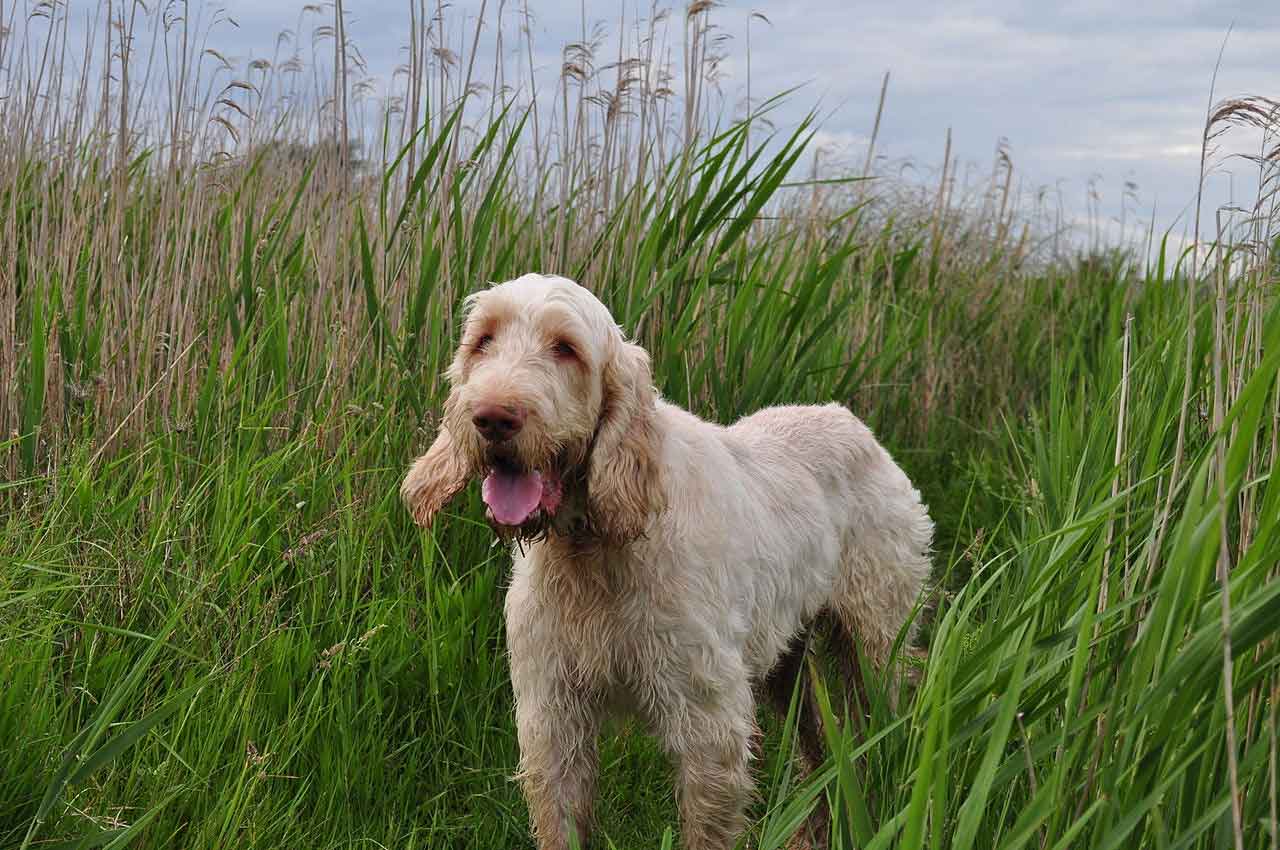
in some countries, the Italian Spinone It doesn't get the publicity it deserves., because faster breeds of dogs with more olfactory capacity are preferred.

Italian Spinone

Content

History

As the name suggests, the Italian Spinone -The ยซItalian emphasisยป – is originally from Italy, more specifically from the Piedmont region, in the north of the country. It is a very old breed of dog, and whoever searches for its exact origins will find more questions than answers. But, it is generally accepted that it is the result of various crosses over the centuries between Italian Setters, Griffons from France, White Mastiffs and Dogs of Greece.

There is evidence that their ancestors already hunted in the Alps and Apennines more than 2000 years. But, the first clear reference to the breed dates back to the Middle Ages, more specifically to the fifteenth century, in the form of a fresco by Andrea Montegna (1431-1506) inside the Ducal Palace of Mantua (Italy), which represents an Italian Spinone. Two centuries later, Jacques Espรฉe of Sรฉlincourt, evoca en su manual The Perfect Hunter (1683) an Italian Griffon from Piedmont.

Popular for centuries in Italy, the Spinone suffered greatly during WWII. The end of hostilities did not mean a notable improvement in their situation, as Italian hunters began to prefer breeds imported from abroad.

In 1949, The doctor. Paolo Branzi and Dr.. Ezio Caraffini founded La Famiglia dello Spinone -which has since become the Italian Spinoni Club- and they had 59 representatives of the breed throughout Italy. They chose 10 of them to start a breeding program aimed at rebuilding the population and stabilizing its characteristics. They drew up a first standard and contacted the Ente Nazionale della Cinofilia Italiana (ENCI), reference body of the country, to initiate the necessary procedures for the recognition of the breed.

His work paid off, so that in 1955 the Spinone Italiano was recognized by the Fรฉdรฉration Cynologique Internationale (FCI). Then it began to spread internationally, although it took a while, especially in North America. Thus, until 1995 el United Kennel Club (UKC) American did not grant him his recognition. The other reference organization in the United States, the American Kennel Club (AKC), did the same in 2000. The Canadian Kennel Club did the same in 2006.

In fact, although it is quite common in its country of origin and is the second most popular hunting dog in that country, its international distribution remains limited. But, is quite successful in Britain, where the Kennel Club registers between 400 and 500 births every year. This is far from the case in France.: with less than ten entries per year in the French Stud Book (LOF), it is clear that he is far from having conquered the hearts of French hunters.

In United States, AKC statistics put it around No. 110 (of 195) in the ranking of the most popular breeds in the country.

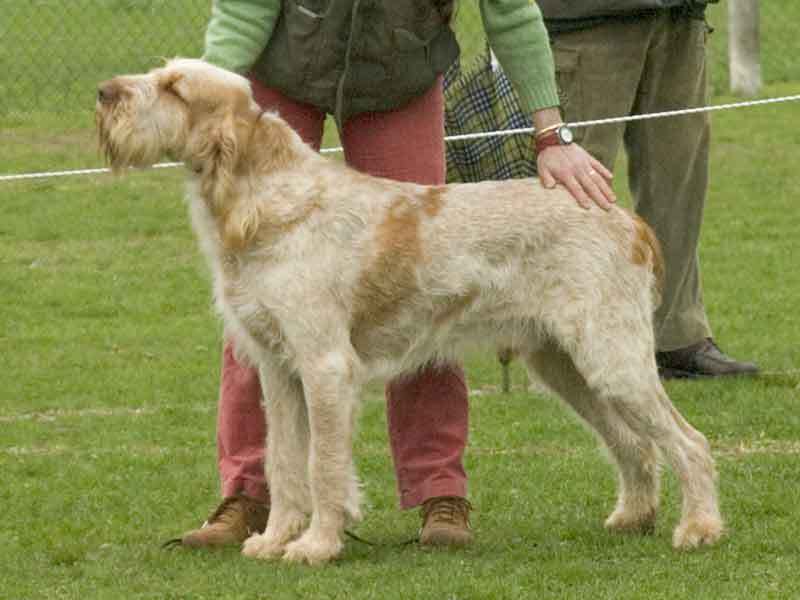
Photo: I came across this adorable dog while walking around Dorset. Took a photo and then got really scared of the camera. by Caroline Granycome, CC BY-SA 2.0, via Wikimedia Commons

Physical characteristics

The Italian Spinone it's well built, with well-developed muscles and strong bones.

Her body, as high as long, is square in shape and ends in a thick bushy tail. The tail hangs at rest and is horizontal when in action. The legs are solid and end in compact round legs.

The head is egg-shaped, with a curved skull and a muzzle the same length as the skull. The color of the nose varies between the pink of white dogs and the brown of roan dogs.. The eyes are round, big and far apart. They are of a more or less dark ocher color. Triangular shape, the ears are rather long and fall along the cheeks.

The body of the Spinone is entirely covered with a stiff and dense fur, of about 4 to 6 cm long, that protects it when it slides through the undergrowth, but also when thrown into cold water. It is shorter at the top of the head and at the front of the legs. In the face, a dense coat of thick eyebrows and a full beard, typical of the breed, which also protects it from brambles and bushes. Beneath this top layer is the dog's fur, which has the peculiarity of not having undercoat.

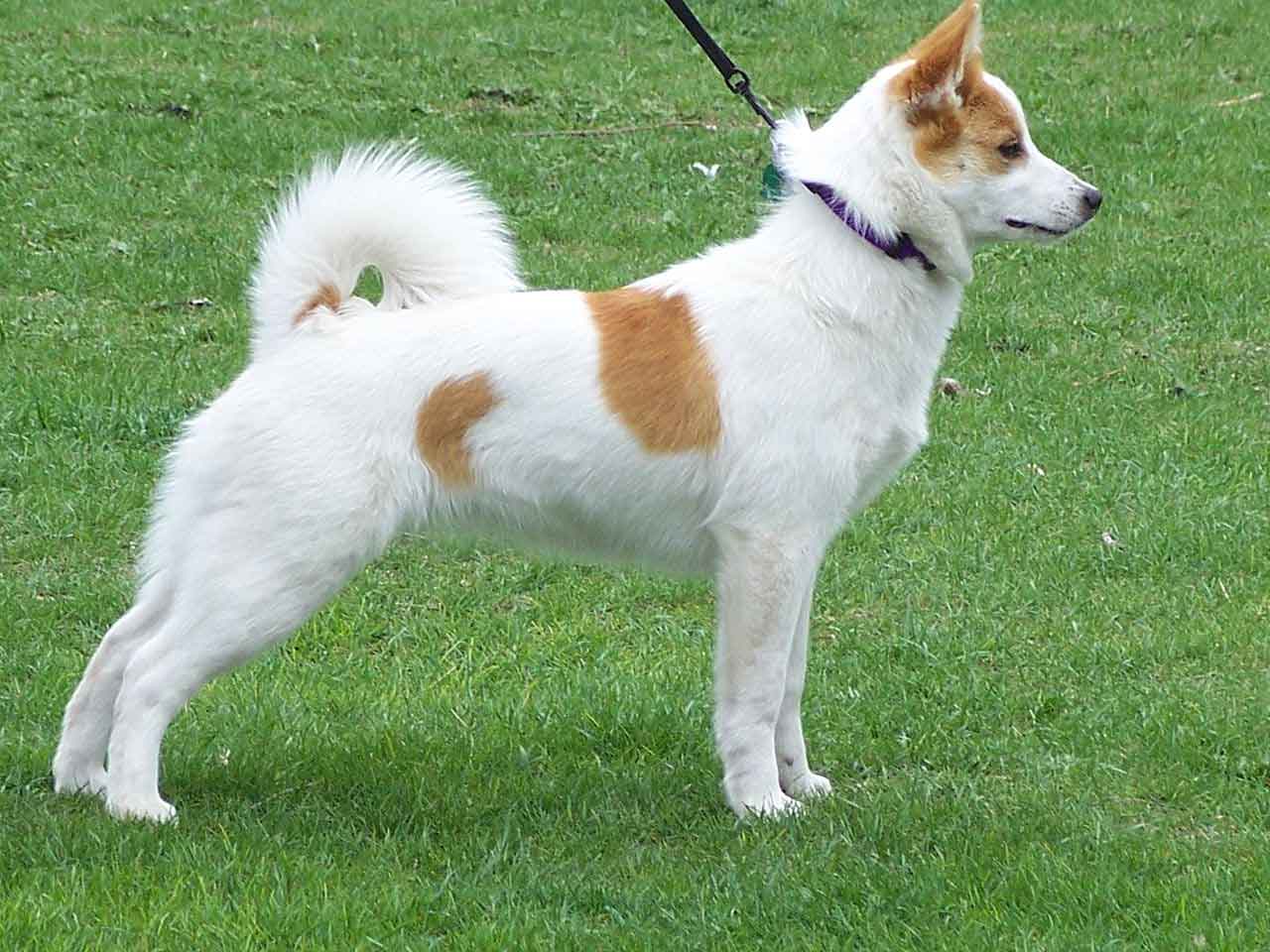
The coat can be plain white, white with orange spots, chestnut or brown, or roan with orange spots, chestnut or brown. Tricolor or black-haired dogs are not accepted by the breed standard.

Last, sexual dimorphism is marked: the male is larger and above all significantly more massive than the female.

Size and weight

    Male size: Of 60 to 70 cm.
    female size: Of 58 to 65 cm.
    Male weight: Of 32 to 37 kg
    female weight: Of 28 to 30 kg

Character and skills

Generally easier to live with than other pointers, the Spinone Italianos they are affectionate and close to their family, they love to play and spend most of the time with them. Although they are hunters, They are not the kind that jump into the open sea and disappear as soon as potential prey catches their eye: they never stray too far from their master, preferring to always have it in sight.

Your affection, patience and playful character make them an ideal breed for a child. He loves children and is an excellent playmate for those old enough to have learned to behave in the presence of a dog. Less recommended for younger children, as it is large enough to inadvertently push them down. In any case, regardless of race, interactions between a dog and a young child should always take place in the presence of an adult.

The Italian griffon also it is sociable with other dogs Griffon, those who are often willingly adopted as playmates. Small animals, as cats, rabbits and other rodents, have more to worry about and are more likely to be hunted as potential prey. But, they may live with a cat if they have been raised with them, but the latter is likely to still be haunted in the garden from time to time.

As for humans who are unknown to him, the Spinone is generally cozy with them, especially if he's been well socialized from his early months. In fact, used to living with humans for centuries, is more of the type to actively seek their company. Also easily suffers from loneliness: although you can spend a few hours alone at home without difficulty, it is not advisable to leave it all for a weekend. Adopting an extra dog can be a good way to provide companionship to help you avoid loneliness when your family is away..

He is as active in the early years as he is calm and collected afterward.. This can be seen in his hunting style, that is calm and methodical.

Having said that, if you like to rest on the living room rug, this does not mean that you do not need to exercise. So that you feel comfortable and calm when you get home, your daily walks should total at least one hour. Although they are slower than other signaling breeds, they are very resistant and can adapt to many types of terrain. For this reason, if the opportunity arises to take a long walk of several hours, he is delighted. During the latter, does not tend to stray far from his master, so it can be walked without a leash. You can live in an apartment as long as you go out two or three times a day, but its size makes it unsuitable for a small studio.

He prefers a house with a garden where he can frolic and where he will gladly get rid of any unwanted critters. But, it is not convenient for you to live abroad: you need to be in contact with your family and should be able to spend as much time as possible with them.

On the other hand, It is an intelligent breed of dog that likes to be mentally stimulated. Rather stubborn and showing little interest in activities that seem pointless, needs a leader who offers motivating exercises. Obedience exercises, agility or hunting are a great way to get his attention and stimulate him. The rapport is also something instinctive in him, and you will not be asked to carry the ball or bat thrown by your master. He does not hesitate to do the same with the toys scattered around the house when he wants to show him that he wants to have fun.

It is also important to know that your beautiful beard gets wet every time you drink. He tends to pour water all over the house whenever he quenches his thirst, so it may be a good idea to put your bowl outside and not inside the house.

Last, although don't hesitate to bark when you see fit, the Italian Spinone it's not overly vocal.

Education

The Italian Spinone, like all dogs, must be socialized from an early age. It is important that you can meet all the people who are part of your close or distant environment (friends, neighbors, family…). You must also face all kinds of situations (walk through different places, meet other dogs or other animals, travel in different means of transport) not to be scared once an adult.

It shouldn't be long before they start learning to tame, which can be longer and more complicated than for most other breeds.

Given its size once adult, it is also useful to get him used to being handled without flinching from an early age, so that the grooming sessions are a moment of shared pleasure and not torture for both protagonists.

The Italian griffon he's smart and has a strong personality. You need a firm master who knows how to earn your respect, but even if I do, does not like to do tasks that seem trivial. It's a working dog, who likes to be useful and prefers to learn, for example, to recover the game before turning around. In fact, if your master knows how to do it and has all the necessary patience, this dog can do wonders, even in obedience and agility competitions. The trick is to motivate you, above all making him understand the interest of the command.

Not surprisingly, it responds much better to positive reinforcement-based dog training methods than traditional dog training.. Know that the fulfillment of what is asked allows you to receive caresses, encouragement and treats is, in his eyes, a legitimate reason to improve himself and give the best of himself.

Health

The Italian Spinone is generally quite robust. Apart from the health problems common to all large dogs and a serious genetic disease, but fortunately in the process of disappearance thanks to the work of the breeders, the risks are low.

Like this, the conditions to which you are especially exposed are :

  • La ataxia cerebelosa, a genetic disease that attacks the cerebellum and is the most critical health problem in this breed. Puppies that have received a carrier gene from both parents die before their first birthday. But, nowadays it is extremely rare, since carrier individuals are eliminated from breeding programs. A breeder of Spinone worthy of the name must be able to show that parents are not carriers, based on test results;
  • Hip and elbow dysplasia, joint problems that make movement difficult;
    gastric dilation-torsion, often related to too fast a food intake, which can be fatal without prompt veterinary intervention;
  • Entropion and ectropion, eyelid malformations that can be corrected surgically if problematic;
    Hypothyroidism, a hormonal deficiency that causes a slowdown in bodily functions;
  • Cancer (bone, liver, base…), which according to a joint study by the British Kennel Club and the British Small Animal Veterinary Association is, with difference, the main cause of mortality in this breed, with a 45% of deaths.

It also, the drooping and hairy ears of the Spinone they get dirty easily. They can become infected quickly if they are not cleaned every week and after each bath.

Despite its lack of undercoat and its Italian origins, it adapts quite well to different climates and is resistant to both heat and cold, but extreme temperatures are hard to bear. A shelter is necessary so that you can be in the shade when the thermometer exceeds 30 ยฐ, and doesn't particularly appreciate spending the night outside when it's -10ยฐ.

Last, the Italian griffon not very prone to obesity, especially if you have enough opportunity to exercise. But, a responsible handler should regularly make sure that everything is in order by taking the time to weigh your dog.

Life expectancy

Of 12 to 13 years

Grooming

The maintenance of Italian Spinone is simple, but it requires some discipline, as it can be difficult and time consuming if not done regularly.

The absence of undercoat means that you only lose a small amount of hair. A weekly brushing is enough to remove dirt, remove dead hairs and untangle knots from their fur. The most frequent molt is not necessarily necessary during the fall and spring, since the lack of undercoat makes the shedding not very pronounced. On the other hand, If you "forget" one or two toilet sessions, the situation is complicated: debris accumulates and knots form that can no longer be untangled with the brush. Then there is no choice but to undo them manually or even cut them with a chisel. Depending on the state of the coat, this can sometimes take more than an hour.

In any case, rarely need a bath, unless it is especially dirty or smelly after a trip. Except for exceptions, two or three bathrooms a year are more than enough, and a mild dog shampoo should be used each time.

Weekly grooming sessions are also an opportunity to wipe your dog's eyes and brush his teeth.. Neither should you neglect the care of the ears: hanging and furry ears tend to catch dirt, so the risk of infection is high. They can be cleaned with a damp cloth.

It also, beard tends to trap moisture and becomes smelly. Thus, should be towel dried often and cleaned from time to time.

Last, if you spend a lot of time outdoors, wear and tear is usually enough to file the claws of the Italian Spinone, that grow faster than those of most other dogs. If they become too long and may bother or hurt you, must be trimmed with a special nail clipper.

Use

The Italian Spinone it is above all a hunting dog, a mission that has been fulfilling for centuries and in which it stands out. Your ability to point methodically, making game disappear and recover makes them very versatile hunting dogs. This is all the more true since, how your name illustrates, derived from the Italian word for bramble, are able to sneak into the thorniest thickets in search of small game. It is also very resistant.

When not used for hunting, can be used to show off their qualities in various dog sports, like agility or obedience. They are also good watchdogs, but their lack of aggressiveness and the fact that they bark very little disqualifies them as guardians. Having said that, It's impressive enough that most hackers will pass on it..

Last, the Italian griffon He is also a wonderful companion dog., loving and totally devoted to his family. It can be the ideal companion for an active owner who wants to always have his dog by his side when going for a walk or hiking.

Price

The price of a puppy Italian Spinone is of some 800 to 1000 euros in Europe. In Canada and the United States, is usually between 1500 and 1800 $.

In all cases, there is no noticeable price difference between males and females.

Characteristics "Italian Spinone"

Coexistence is important that you have with your new friend. Before considering the acquisition of a dog of the breed "Italian Spinone" you know certain factors. Not all breeds of dogs are apt to live in an apartment, you must take into account his character, their need for exercise, their interaction with other pets, their care and if you have small children, their level of tolerance towards them.

Adaptation โ“˜

3,0 of 5 stars (based on 1 review)

friendly dog โ€‹โ€‹โ“˜

4,0 of 5 stars (based on 1 review)

hair loss โ“˜

2,0 of 5 stars (based on 1 review)

Affection level โ“˜

4,0 of 5 stars (based on 1 review)

Need for exercise โ“˜

4,0 of 5 stars (based on 1 review)

Social need โ“˜

5,0 of 5 stars (based on 1 review)

Home โ“˜

3,0 of 5 stars (based on 1 review)

Toilet โ“˜

2,0 of 5 stars (based on 1 review)

Friendly with strangers โ“˜

3,0 of 5 stars (based on 1 review)

barking โ“˜

2,0 of 5 stars (based on 1 review)

Health โ“˜

3,0 of 5 stars (based on 1 review)

Territorial โ“˜

3,0 of 5 stars (based on 1 review)

Cat friendly โ“˜

2,0 of 5 stars (based on 1 review)

Intelligence โ“˜

4,0 of 5 stars (based on 1 review)

Versatility โ“˜

4,0 of 5 stars (based on 1 review)

Child friendly โ“˜

4,0 of 5 stars (based on 1 review)

Surveillance โ“˜

3,0 of 5 stars (based on 1 review)

joy โ“˜

3,0 of 5 stars (based on 1 review)

Images "Italian Spinone"

Photos:

1 – Solid white Spinone italiano. by Alephalpha, CC BY-SA 3.0, via Wikimedia Commons
2 – A brown roan Spinone Italiano by Alephalpha, CC BY-SA 3.0, via Wikimedia Commons
3 – Spinoni italiani by francesco napoli
4 – Spinoni italiani by francesco napoli
5 – Brown roan spinone italiano. Risky Business Oliver Di La Ros by Timberdoodle Kennels, Ron & Pat Rosinski (User:Rrosinski), CC BY-SA 2.5, via Wikimedia Commons
6 – This is a Spinone, an italian pointing dog. Coatcolor is white-orange by Alephalpha, CC BY-SA 3.0, via Wikimedia Commons

Videos "Italian Spinone"

Type and recognitions:

  • FCI CLASSIFICATION:
  • Group :
  • Section : . .

Federations:

  • – FCI – Group 7: Pointing Dogs. – Section 1: Continental Pointing Dogs. 1.3: Griffon type โ“˜
  • – AKC – Hound โ“˜
  • – CKC – Miscellaneous โ“˜
  • – โ€‹KC – Hunting dog โ“˜
  • – UKC – Gun Dog โ“˜

FCI breed standard "Italian Spinone"

Origin:
Italy

Date of publication of the valid original standard:
13.11.2015

Use:

Pointing Dogs.


General appearance:

Solidly built dog, robust and vigorous with strong bones, Well developed muscles with rough fur.

PROPORCIONES IMPORTANT:

Construction tends to fit into a square. The length of the body is equal to the height at the withers, with a tolerance of 1 to 2 longest cm. The length of the head is equal to 4/10 the height at the withers, its width, measured at the level of the zygomatic arches, is less than half its length. The loin is a little less than a fifth of the height at the withers.


Behavior / temperament:

Naturally sociable, docile and patient, the Spinone is an experienced hunter on all terrains; very resistant to fatigue, It gets easily in the spiny undergrowth or throws into the cold water. Has remarkable provisions for a fast, extended trot; by nature it is an excellent retriever.

Head:

The direction of the upper longitudinal axes of the skull and muzzle is divergent.

Cranial region:
  • Skull: Oval, lateral walls slope gently like a roof with very well developed occipital protuberance and well marked parietal crest. The bulging of the forehead is not very developed, neither towards the front nor in height. Superciliary arches are not too prominent.
  • Ston: just checked, while the frontal median sulcus is well pronounced.

facial region:

  • Nariz: placed in the prolongation of the nasal bridge, voluminous, fluffy looking with a very thick and clearly rounded top edge. Pink flesh color in white subjects, slightly darker on white and orange subjects, and brown in the subjects color RUANO. Profile, The nose stands out on the front vertical line of the lips. The nostrils are large and protruding.
  • Hocico: The length is equal to the length of the skull, the depth, measured at mid-length; reaches a third of the length of the muzzle. The profile is straight or slightly convex (roman nose). Side faces are parallel, so that, seen from the front, the muzzle appears square. The lower profile is defined by the upper lip, the lowest point is the corner of the mouth.
  • Labios: the upper lips are quite thin and form an open angle under the nose; at the front are rounded, then, covering the lower lips, reach the corner of the mouth where they form a visible crease.
  • Jaws / Tooths: Powerful and normally developed, In the middle of the length the branches of the lower jaw are very slightly curved. Well adapted and complete dental arches: scissor or pincer bite.
  • Cheeks: Thin.

OJOS: Big and well separated. The eye is almost round; the lids fit very well to the eye that is not protruding or sunken; the eyes are in an almost frontal plane. The iris is an ocher color, more or less dark depending on the color of the fur.

OREJAS: practically triangular in shape; its length is not greater than 5 cm to the lower throat line; wide extend forward from the point of insertion of the head to the neck to the middle of the zygomatic arch. The leading edge is close to the cheek, not folded, but turned inward; The tip of the ear is slightly rounded. Almost always carried low, the ear must have little erection power. The cartilage is fine. The skin is covered with dense hair mixed with longer, sparse hairs, that get thicker at the edge.

Neck:

Powerful and muscular, clearly separated from the nape, blending harmoniously at the shoulders. The length should not be less than 2/3 of head length; its circumference reaches a third of the height at the withers. The lower edge shows a slightly developed double dewlap.

Body:

Fits almost in a square.

  • top line: The typical upper profile begins with the cross slightly marked and continues with an almost straight front of the back, Then he joins the spine with a slight convex line until he joined with the solid and well -arched lumbar region.
  • Cruz: not too high, the tops of the shoulders wide apart.
  • Dorrso: the front is almost straight, then gradually rises towards the loin before leaning towards the hindquarters.
  • Lomo: Slightly convex, It has muscles and a well developed width. The width is almost equal to the length.
  • Glikeness: Wide, long, well muscled and oblique, forms below the horizontal an angle of 30 ยฐโ€จa 35 ยฐ that is measured of the obliqueness of the bone of the hip.
  • Pecho: descends at least to the level of the elbows, width, deep and well rounded at medium height, where its transverse diameter reaches its maximum and decreases significantly towards the sternum, but should not form a keel at the junction with the sternum The ribs are well arched and sloping with a wide space between them. Back ribs (fake ribs) they are long, oblique and wide open.
  • Lรญlower line and belly: almost horizontal in the sternal region, then rises slightly towards the belly.

Tail:

Natural and thick, particularly at the base; no fringes; carried horizontally or down; does not wag a lot during jogging. If amputated for hunting purposes, in accordance with animal health and welfare to avoid injury, The tail must have a length of 15โ€“25 cm from the base.

Tips

PREVIOUS MEMBERS:

  • Ageneral appearance: seen from the front, are perfectly parallel and perpendicular to the ground. In profile, the forearm is vertical and the pastern is slightly oblique.
  • Hshoulder: powerful and long shoulder blade, measures one-quarter the height at the withers and has an obliqueness below the horizontal of approximately 50 ยฐ; relative to the median plane of the body, the tips of the shoulder blades are not very close. Perfectly free in its movements, The shoulder has well developed muscles; The opening of the escapulo-humeral angle is approximately 105 ยฐ.
  • Brazo: oblique below the horizontal with an inclination of approximately 60 ยฐ, directed almost parallel to the median axis of the body. You are well muscled.
  • Codo: Parallel to the median plane of the body. The tip of the elbow must be a bit ahead of the vertical line, that falls from the back point of the shoulder blade to the ground. The distance from the elbow to the ground is equal to 50% the height at the withers.
  • Aforearm: Slightly longer than one third of the height at the withers, vertical both from the front and in profile. Strong bone. The rear tendon is strongly accentuated in such a way that the groove between the tendon and the bone is clearly visible.
  • Carpo (wrist): follows the vertical line of the forearm. Well prominent pisiform bone.
  • Metacarpus: flat and, seen from the front, follows the vertical line of the forearm; in profile, is slightly oblique. Its length is approximately 1/6 from the height of the legs from the ground to the elbow.
  • Pinis previous: compact, round; fingers tightly knit and arched, covered with short thick hair, including spaces between fingers. Pads, thin and hard, They are more or less pigmented according to the color of the fur. Strong nails, curved towards the ground and well pigmented but never black.

LATER MEMBERS:

  • Ageneral appearance: in profile, the rear edge of the thigh is slightly convex; good angulation of bone segments; the hocks should be perpendicular to the ground; seen from behind, hindquarters are parallel.
  • Thigh: the length must not be less than one third of the height at the withers; broad, slightly oblique. The rear edge slightly convex.
  • PinScheme: length only slightly exceeds thigh; OBLICUITY IS 55โ€“60 ยฐ under the horizontal; Maggos muscles at the top; The groove between the hock tendon and the bone is marked and clearly visible.
  • Ahock joint: the lateral sides are very wide. The distance between the point of the hock and the ground is approximately one third of the height at the withers. The opening of the angle of the warm-tarsian joint is approximately 150 ยฐ.
  • Metatarsus: Strong and slim, the length is equal to the distance from the hock to the ground. Watched from anywhere, metatarsal is vertical. On the inner side there may be a simple jointed spur.
  • Hind feet: compact, round, but more oval than the previous feet; fingers tightly knit and arched, covered with short thick hair, including spaces between fingers. Pads, thin and hard, They are more or less pigmented according to the color of the mantle. Strong nails, curved towards the ground and well pigmented but never black.

Movement:

easy loose step; when hunting a fast extended trot with intermittent canter steps.

Mantle

SKIN:
tight to the body, should be thick and firm. It's thinner on the head, throat and groin, under the arms and on the back of the body; on the elbows it is soft to the touch. The skin only forms two folds that begin in the lower jaw branches and disappear in the first half of the neck (Spada). When the head is carried low, only one fold is noticeable, descending from the outer corner of the eye onto the cheek; at its rear edge this fold ends in a lock of hair. Skin pigmentation varies according to mantle color.

Fur: Of a length of 4 to 6 cm on the body, shorter on muzzle, the head, the ears, the front sides of the limbs and feet. On the back of the limbs, hair is like a rough brush, but never with fringes. Long and rigid hairs form thick eyebrows and on the lips form thick mustaches and also a beard with tufts. Hair is rigid, rough, dense and fairly flat, with lack of inner layer.

Color: pure white, white with orange markings, mottled white with orange, white with brown markings (chestnuts), orange roan or brown roan (Brown). The preferred tone of the brown is the color of the "friar dress". The colors not allowed are: tricolor, brown markings, black in any combination.


Size and weight:

Altura to the cross:

  • Males: 60 โ€“ 70 cm..
  • females: 58-65 cm..

Pthat:

  • Males: 32 โ€“ 37 kg.
  • females: 28-30 kg.


Fouls:

Any deviation from the aforementioned criteria is considered as a fault and the severity of this is considered to the degree of the deviation to the standard and its consequences on the health and well-being of the dog., and the dog's ability to perform its traditional task.

  • Thin or curled tail on the back.

FALTAS DISQUALIFYERS:

  • Aggressiveness or extreme shyness.
  • Any dog โ€‹โ€‹showing clear signs of physical or behavioral abnormalities.
  • Converging superior craniofacial axes.
  • Total depigmentation of the nose.
  • Concave nose bridge.
  • Progognatic Boca - The Sunned Enogant.
  • Eyes gazeos.
  • Black pigmentation of the skin.
  • Tricolor mantle, tan or black brands in any combination.


N.B.:
  • Males should have two normal-appearing testicles fully descended into the scrotum..
  • Only functionally and clinically healthy dogs, with the typical conformation of the breed, should be used for parenting.

Source: F.C.I - International Cynological Federation

Alternative names:

1. Spinone, Bracco Spinoso, Italian Spinone, Italian Griffon, Italian Wire-haired Pointer, Italian Coarse-haired Pointer (English).
2. Spinone italien (French).
3. Italienischer Griffon, Spinone, Rauhaariger italienischer Vorstehhund, Italian Griffon, italienischer Spinone (German).
4. Spinone (Portuguese).
5. Espinone, Grifรณn italiano, Italiano de pelo duro (espaรฑol).

โ–ท The world of Pets: Dogs, cats, birds, reptiles, amphibians

Irish Red Setter
Irlanda FCI 120 . Setter

Setter Irlandรฉs

The Irish Red Setter is spread throughout Europe

Content

History

The origin of dogs Setter dates back to at least the second half of the 16th century: John Caius mentions them in 1570 The British book cart Canibus, What, as the name reflects, is dedicated to the dogs of Great Britain.

It is believed that the Irish Setter came up much later, in the XVIII century, as a result of a crossing. His ancestry is not known for sure, but it is believed to have developed from Irish Water Spaniel, with possible contributions from Irish Terrier, the English Pointer and the Gordon Setter. But, in early times it did not have the smooth mahogany red coat we know today, but a red and white fur, especially appreciated for hunting, since it was easy to spot in the bush. This Irish Red and White Setter -that still exists today, although it is more rare- would have gradually given way, in the course of the 18th century, to the Irish Red Setter. The Irish Red Setter stabilized as a distinct breed in the early 19th century, differing in particular by having longer legs than its bicolor ancestor.

Although its exact origins are unclear, the geographical origin of Irish Setter is well identified. Your story begins, of course, In Ireland, where hunters tried to develop a successful breed of dog for tracking, monitoring and recovery of game birds. They used it as a pointing dog that locates game by freezing in sample position, allowing the hunter to know where the bird is. The term ยซSetterยป comes from this use for which the animal was developed. He was very appreciated from the beginning for his excellent nose, that allows you to detect odors in the air, while most hunting dogs track game on the ground. This feature made him very popular from the beginning..

In addition to his hunting skills, the Irish Red Setter it was also quickly distinguished by its elegant appearance and beautiful mahogany color. Since the early years of the 19th century, some breeders specialized in the production of specimens of this color. Jason Hazzard, of Timaskea, in County Fermanagh, Sir Saint George Gore and the Earl of Enniskillen they were some of the first breeders of the breed. These may include, the conde the Enniskillen He decided, already in 1812, who only wanted to have red-haired dogs in their kennels.

In 1862, a specimen called Palmerston stood out for the especially elongated shape of his head and the slenderness of his silhouette. These differences almost cost him his life, since its owner considered that these characteristics made it unsuitable for hunting and decided to drown it. A fan of the breed stepped in and saved him, then made him famous by presenting him in many dog รขโ‚ฌโ€นรขโ‚ฌโ€นshows. Palmerston gave birth to a large number of offspring, and it is accepted that it appears in the family tree of most dogs Irish Red Setter that exist today. The success of Palmerston in the beauty contests in which he was exposed he was emulated, since without ceasing to be a recognized hunting dog, the Setter Irish Red later became a popular show dog.

The international spread of the Irish Setter

The Irish Setter was imported to the United States already in 1875 and quickly became a star. In fact, the first representative of the race that set foot in America, Elcho, became a star both for his presentations at dog shows and for his effectiveness in the field. It is not strange that the race is one of those recognized since its creation by the American Kennel Club (AKC). The first representative of the breed thus registered in 1878 it was called Admiral. With regard to the United Kennel Club (UKC), the other reference canine organization in the country, recognized the breed in 1914.

Shortly after his arrival in the country, the race that is sometimes called Red Setter to distinguish it from its white and red cousin it quickly became one of the most popular breeds at American dog shows. Among 1874 and 1948, nothing less than 760 of their representatives were rewarded in the rings. He was much less noticed for his field skills, since during the same period only 5 specimens were awarded for their hunting skills. This alerted some breed enthusiasts, that in 1940 published in the magazine Field and Stream a call for its rebirth as a hunting dog, its original function. His initiative was quite successful: So, although a lot of effort was put into its aesthetic characteristics, the Irish Setter was able to retain both of its functions and remains a highly prized hunting dog for tracking game birds, like the teal, the duck, partridge and quail. It is also common to distinguish between show and working bloodlines., that differ in size and robustness.

Of course, not only the United States adopted the Irish Setter. Your appreciation for the Fรฉdรฉration Cynologique Internationale (FCI) in 1954 contributed a lot to its spread throughout the world.

ยซIrish Red Setterยป Recognitions

The Irish Setter is now recognized by the world's leading organizations, that distinguish it from Irish Red and White Setter. Many did not recognize the latter until much later.. In fact, the Irish Setter enjoys much greater popularity than its ancestor, although the latter is a bit at half mast…

This is the case, in particular, of United States, where he continues to be present both in the field with the hunters and in the exhibition rings. But, It is far from the heights it reached in the years 60 and 70, thanks mostly to Disney's production of 1962 in which appeared a Irish Setter call Big Red, as well as to Rey Timahoe, the famous White House dog during the presidency of Richard Nixon (1969 to 1974). Mid-years 70, came to occupy the third position in number of annual registrations in the AKC, going from about 4.000 puppies per year to more than 60.000. But, this fashion was ephemeral, and the popularity of Setter gradually declined from the second half of the decade of 1970. Today, is more likely to find the Setter around the post 75 (of something less than 200) regarding the number of annual registrations with the AKC. Keep descending, since at the dawn of the XXI century it was around the position 60.

Also in France, the Irish Setter became incredibly popular in the years 70. If at the beginning of the decade there were already more than 600 annual entries in the French Origin Book (LOF), this number shot up incessantly until approaching the 2.400 (four times more) in 1978. The reverse movement occurred in the following ten years, to the point of ending the decade of 1980 at around 700 u 800 annual births. Next, the number stabilized around 600 per year throughout the decades of 1990 and 2000, and then began to decline again in the decade of 2010, at around 500 births per year.

The recent decline in interest in the breed is also seen in other countries, like Britain. These may include, the number of annual registrations in the Kennel Club is around 700, while in early 2010 approached the 1.000.

Physical characteristics

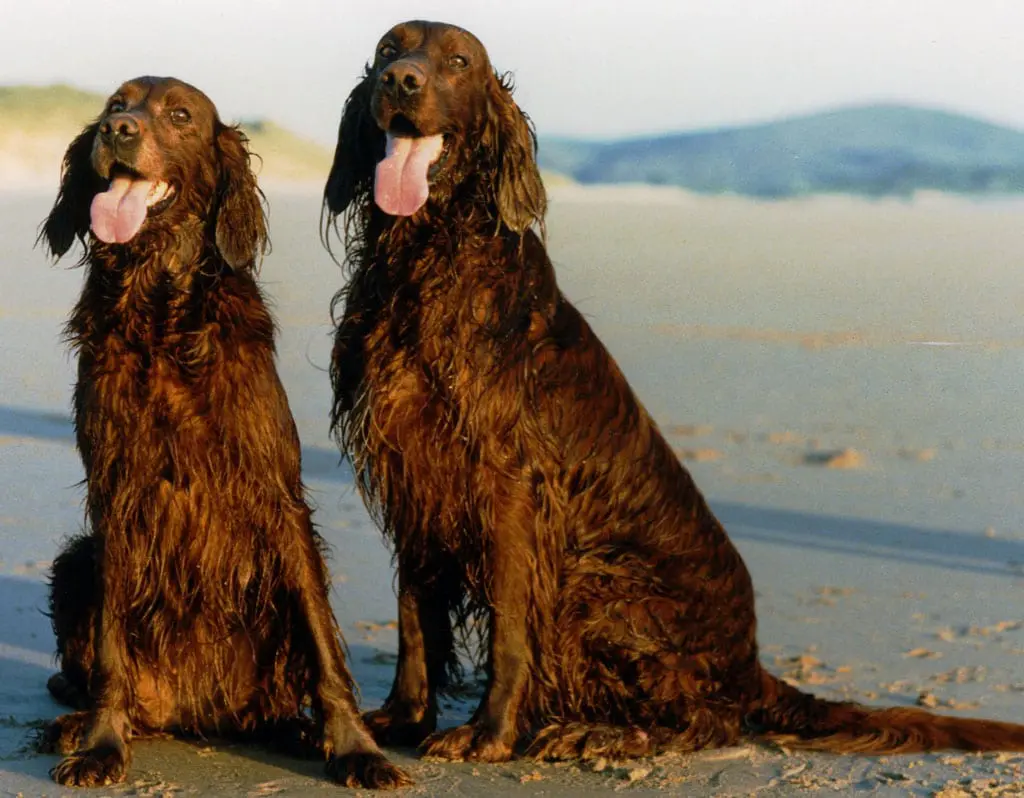
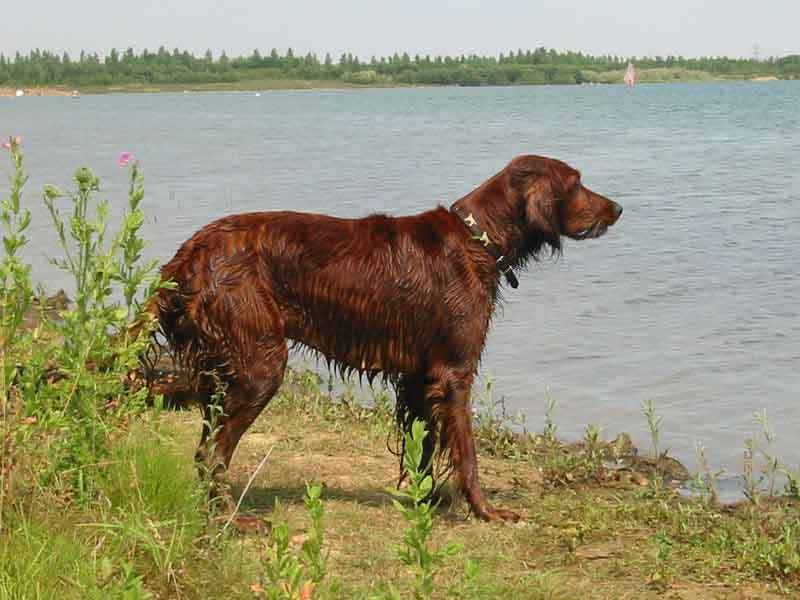
The Puts irelandes is an active hunting dog, spirited and noble-looking, with a balanced and elegant constitution. These medium-sized dogs are distinguished by their rich mahogany red coat and fine, silky fur that extends over the ears, tail and chest. In general, it's a beautiful blend of refinement and robustness.

It is built around a deep chest that drops almost to elbow level and has a long, flat back., slightly sloping from withers to hindquarters, without an exaggerated fall. It is prolonged with a long, tapered tail, usually worn straight or even slightly curved up. Its hind legs are powerful and well developed, although its lower part is finer from the hock to the sole. They give him a good stride. The front legs are thinner, with straight and nervous forearms. The front joints are well bent, but not twisted in or out.

The head rests on a strong neck, although not very thick and slightly arched, that fits harmoniously between the shoulders. The skull is oval seen from above. The muzzle is moderately long and square, with lower and upper jaws of nearly equal length. The nose is always dark, black or chocolate, and the nostrils are wide open. The ears are placed behind the skull, slightly below eye level. They are thin and long, almost enough to touch the front of the muzzle when held taut. They hang with a sharp crease across the head. The eyes are almendrados, of medium size and quite distant from each other. They are hazelnut to dark brown in color and have a soft but alert expression.

The coat of the Irish Setter it is composed of an undercoat and a short topcoat on the top of the head and front legs, as well as on the tips of the ears. It is moderately long on the rest of the body and has long fringes on the ears., on the back of the legs and thighs and on the belly. Their feet have a good density of hair between the toes, like feathers. It also, despite its length, the coat is smooth and soft, with a shiny appearance.

Its color is one of the distinctive features of the breed. They are mahogany or dark brown, no trace of black. Some individuals have a hint of white on the chest or a thin white line on the top of the skull., but this is not particularly desirable.

Last, sexual dimorphism is only moderately pronounced in this breed: males are generally of 3 to 5 taller centimeters, but they are not, for example, significantly more massive. On the other hand, there may be actual physical differences depending on the purpose for which the animal is bred. These may include, individuals in show lines are usually more robust and larger than those intended for hunting or company, and their fur is also thicker and denser.

Size and weight

    ▷ Male size: Of 58 to 67 cm.

    ▷ female size: Of 55 to 62 cm.

    ▷ Male weight: Of 20 to 25 kg

    ▷ female weight: Of 18 to 23 kg

Character and skills

He gets along wonderfully with children, whose energy and enthusiasm perfectly match his own character. He especially enjoys play sessions with his humans and finds them ideal companions. But, care must be taken when in the company of very young children, as it can be jerky in its movements and can involuntarily push or even knock them down. In any case, a dog should never be left alone with a young child without adult supervision, and this applies to all races.

The Irish Red Setter generally not lacking in enthusiasm or curiosity. This curiosity - sometimes combined with his hunting instincts- means, However, easily distracted and it can be difficult to keep your attention. If we add to this that he is sometimes stubborn, it's easy to understand that your education can be a bit complicated at times. And the combination of these two traits can make learning a bit tricky at times!! It also has a great ability to nibble everything in its reach.. Training toys and chews for dogs should satisfy this urge., but at the beginning of learning, some objects can be destroyed.

In any case, the drive of the dog is a characteristic that is preserved for a long time, since it takes much longer than other races to reach a certain psychological maturity. For some people, Living with a puppy-minded dog at five can be challenging, but others love it. In any case, maintains a strong love for life into old age, and some dogs never settle.

In fact, the Irish Setter has a lot of energy to spare: originally bred for hunting, he is still very active and needs to spend his energy on daily walks and to be able to run without obstacles. Between an hour and an hour and a half of exercise a day is the minimum to keep you in good physical and mental health., and simple walks on a leash in the neighborhood are not enough for it to develop: you need a place away from traffic where you can run freely and safely. It is an excellent companion for those who want to go running with their pet, and is also happy to accompany bike rides.

Outings may also include time to swim, since the Irish Red Setter it is a water-loving breed. Swimming is also a good way for me to exercise.

The same goes for dog sports, that allow you to mobilize both your physical and mental capacities. The agility, obedience, crawling and rallying are disciplines that are perfectly suited to him and that he does not stop approaching with his usual enthusiasm.

In any case, an active master is necessary to keep it in good physical and mental shape: given your daily need for exercise, the lifestyle of elderly or sedentary people is not at all suitable for him.

As long as you have enough company and opportunities to exercise, he is very nice to live with and deserves his reputation in this regard.

No wonder, given your level of activity, the Irish Setter not suitable for apartment living. A house with a large fenced garden is a much more ideal living environment., but a fence is essential to prevent it from taking off. Like any self-respecting hunting dog, has a hard time restraining himself if he picks up interesting smells. In any case, even if the garden is big enough for him to run around, it's not a question of leaving it alone for a long time, because he needs to integrate into his family and interact with humans. He finds it difficult to tolerate loneliness and soon suffers from separation anxiety. The combination of lack of company and too much energy can take its toll on you, since it can lead to damage, plus other possible behavior problems (excessive barking to get attention, etc.).

Sharing a home with another species or with a representative of another species can be a smart way to avoid loneliness. Is able to get along with a cat or rodent once it has been raised and, Therefore, considers you a full member of your family. On the other hand, it is better to avoid living with birds, who are your favorite prey: his hunting instinct would have every chance of kicking in at some point and abruptly ending the experience. Obviously, the problem is especially acute in the case of individuals from hunting lines, whose instinct is the most advanced.

His sociability is not limited to family members, both animals and humans. In fact, he loves the company of the latter, and often welcomes strangers with enthusiasm: therefore, it would be quite unrealistic to expect to use it as a guardian. Having said that, Although it is not aggressive, can be protective if the situation calls for it. Will bark loudly when a stranger points their nose at him, which makes him at least a good watchdog.

His closeness to the human being, his gentle nature and intelligence make him a very good therapy dog, whether it is made permanently available to a person or used by an association that regularly intervenes in different institutions. In effect, can do wonders in accompanying patients who need emotional support.

Education

The Irish Red Setter not only is he smart and lively, He is also very cooperative in his education because he likes to work and make his masters happy.. But, keep in mind that it retains an exuberant personality for a long time, as if he were still a young cub, including a healthy dose of curiosity. This makes them easily distracted during sessions., and sometimes it can be hard to get their attention, or keep it for more than a few minutes. So, patience and a sense of humor are the keywords in the training of a Irish Setter, since he deserves his reputation for stubbornness, even stubborn at times. It is important to stay calm whatever happens, and act positive and kind.

In any case, things are easier because you really want to learn and you love challenges. So the challenge is essentially keeping it centered. The best way to do it is through play, with rewards and accolades. His very playful temperament means that he can resist if what is offered does not seem fun to him. Changing activities and rewards regularly can keep your interest and stimulate you more effectively.

Since he loves to run and has a strong hunting instinct, teaching your dog to hunt should be a high priority in your training program, What, as with any race, should start immediately. In more general terms, although in general it is full of good intentions, must learn as soon as possible to be obedient, at the risk of unleashing their tendency to be independent and stubborn.

Begin education of Irish Red Setter at a young age also helps to avoid boredom, since he needs a lot of stimuli to be happy. At eight weeks, is already capable of assimilating many things.

Regarding home training, not usually a source of major problems, although even 4 months the puppy may have difficulty controlling his bladder: if you live inside, it is therefore essential to take it outside regularly.

Like any dog, your socialization also benefits from being started without delay, and it goes much better since it is sociable by nature. Offer you many opportunities to meet all kinds of humans, companions and other animals, but also to face different environments and stimuli (noises, sounds, smells…) it is the best way to make him a perfectly balanced and very pleasant companion.

It also, especially likes to chew and nibble what is within reach. So, it is necessary not only to keep your precious belongings away, but above all to teach him to vent in a way acceptable to both him and his master: diverting their attention every time they start to chew or nibble on inappropriate things is a good way to gradually target this character trait.

Health

The Irish Setter it is a generally robust and healthy breed, and their representatives rarely have major health problems.

They are also relatively heat tolerant and, by its origin, they also acclimate well to reasonable cold and humidity. But, extreme temperatures are not really for him. Of course, must be able to take shelter in case of heat wave, but you should also be able to sleep in a heated place if the temperatures are below freezing.

The main diseases to which the breed is exposed are :

  • The dilation-torsion stomach, which mainly affects large breeds of dogs and is fatal if the vet does not intervene quickly;
  • The Hip Dysplasia, which is also common in large dogs and can be hereditary. It occurs when the thigh bone does not fit well in the hip joint and can cause difficulties in walking or running. Severe cases are usually corrected by surgery.;
  • Osteocondrosis (in osteochondritis), ossification disorder that affects the cartilage of the joints and causes lameness. This disease is still little known, but it is suspected of having hereditary causes. It usually manifests itself in the animal's growth period and affects males more frequently than females.;
  • The osteosarcoma, a bone cancer that mainly affects older animals and causes an increasingly pronounced and painful limp;
  • Epilepsy, which is similar to what is also seen in humans and leads to often impressive seizures. But, there are various treatments that allow people with epilepsy to lead almost perfectly normal lives;
  • The Hypothyroidism, a hormonal disorder that can present many different symptoms (weight gain, Dry Skin, hair loss…). It is usually treated with medications;
  • The von Willebrand disease, an inherited bleeding disorder that can cause blood in the stool or bleeding from the gums or nose. There is no known cure for this disease, but it is possible to provide care to relieve symptoms;
  • Insufficient adhesion of the leukocyte, a serious hereditary disease peculiar to the breed. It leads from a very young age to various and serious bacterial and viral infections because the white blood cells are unable to attack them. It is linked to a recessive gene, which means that an individual can be a carrier of it (and pass it on to their descendants) unaffected;
  • The progressive retinal atrophy, an incurable hereditary disease that corresponds to a slow deterioration of the retina. Produces progressive loss of vision, first at night and then during the day;
  • The entropion, a sometimes inherited eye disorder in which the eyelid rolls inward, irritating the eyeball. The problem can be treated with surgery;
  • The otitis, an ear infection favored by the drooping shape of the ears.

Although the list of diseases the breed is predisposed to can be terrifying, do not forget that their representatives usually spend most of their lives in good health. A study conducted in 2004 by the British Kennel Club and the British Small Animal Veterinary Association revealed that cancer was responsible for the 27% of deaths and that old age was the second leading cause of death, with a 22% of the cases. In other words, these two causes alone account for one in two deaths, well ahead of cardiac problems (10% of the cases) and gastrointestinal disorders (8% of the cases).

However, since many of the conditions to which the breed is predisposed are or may be inherited, adopting a serious breeder of the Setters irlandes it is crucial to obtain an animal that is not only correctly socialized, but also and above all healthy, and that it probably still is. So, must be able to present the results of genetic tests performed to parents or offspring to rule out any transmission of inherited diseases. You must also present a certificate from a veterinarian attesting that the dog is in good health, as well as the health or vaccination card of the dog, in particular to confirm that you have received all necessary vaccinations.

Once the puppy has moved to its new home, care must be taken to respect his growth and not force him to do too many things too soon. So, any particularly strenuous or prolonged activity should be avoided until the puppy's skeleton has reached full maturity, what occurs in this breed at approximately two years of age. Otherwise, you run the risk not only of injury, but also to suffer consequences for life, that may be related to malformations, for example. The risk is all the greater as the Irish Setter is predisposed to various joint problems.

It also, the adoption of a healthy dog รขโ‚ฌโ€นรขโ‚ฌโ€นshould not do without regular visits to the vet, At least once a year, to allow early detection of a potential problem, before it ends up acquiring very serious proportions. It is also an opportunity to carry out any necessary vaccine recalls..

Always in the field of prevention, it is the owner's responsibility to ensure that their animal's parasitic protection remains active at all times and, for it, renew treatments whenever necessary.

Life expectancy

13 years

Grooming

The care of Irish Red Setter takes time and effort. In fact, its beautiful long, silky coat needs to be brushed once or twice a week to stay shiny and knot-free. This regular brushing also stimulates the follicles that cause hair growth., making the coat healthier. During the molting period, in spring and autumn, hair loss is much greater, so daily brushing is recommended to help remove dead hairs.

Unless, Of course, that the Irish Setter don't need more than two baths a year, unless, Of course, that has gotten especially dirty. Care must be taken to always use a shampoo specifically designed for canines., as there is a risk that the skin will dry out due to a product that is too aggressive. In fact, the pH of dog's skin is not the same as that of human skin.

Their floppy ears also require regular maintenance., as they are a breeding ground for infections. So, should be checked weekly and cleaned with a slightly damp cloth to avoid accumulation of dirt and moisture. The same should be done after every prolonged time outdoors, for example if it is used to hunt. After bathing or soaking outdoors, it is also useful to dry them, again to prevent moisture build-up.

Your eyes should also be carefully examined and cleaned every week., again to prevent dirt from getting into them.

Coat grooming sessions also offer the opportunity to care for your dog's teeth by brushing them with dog toothpaste.. This helps prevent tartar buildup and, Therefore, reduce the risk of bad breath and, above all, of oral diseases. It is best to avoid doing it less than once a week, and the ideal is to take care of it regularly.

Given your level of activity, this dog's claws tend to wear out naturally, so no need to cut them manually. But, it is better to check it every month to make sure that it is so. In any case, if you hear them rubbing against the ground when walking on smooth ground, means that they have become too long. Beyond being then prevented from walking, they can break and potentially injure you.

Whether the fur, the ears, the eyes, teeth or claws, maintaining a Irish Red Setter should not be done randomly, at the risk of hurting or even injuring you. The first time, a visit to a professional groomer or veterinarian can be a great way to learn the correct mannerisms from a professional.

In any case, no reason to wait to start: Familiarizing your dog with these sessions from a young age is the best way for him to cooperate when he needs to be handled, and you can even make maintenance sessions moments of shared complicity.

Manipulations are also useful when you return from a long period in nature, since then it is necessary to carefully examine their fur, legs and ears to detect the possible presence of infections or small wounds, but also parasites, thorns, skewers, etc.

Utility

The Irish Setter It was originally designed and developed to accompany hunters in their search for game birds.. It was - and still is- especially appreciated for its qualities as a showing dog: It is excellent for locating game and positioning itself in a sample position so that the hunter knows where the bird is.

His grace, the beauty of its demeanor and its reddish-cashรฉ coat also made it popular in dog shows already in the second half of the 19th century.

Today they are still recognized and appreciated for these two uses., but have also won hearts as affectionate companion dogs, smart and endearing. They are wonderfully suited to family life so owners can give them all the exercise they need, a task that can be delegated, at least in part, In the kids, with those who love to play.

Dog sports are another great way for him to exercise: excels in agility competitions, obedience and tracking, for example.

Last, its closeness to humans, his sensitivity and sweetness explain why he is also found as a therapy dog, for example in schools, hospitals and nursing homes.

On the other hand, the fact that it lacks all aggressiveness, enjoys the company of humans so much and is generally very welcoming to strangers implies that he cannot assume the role of guardian. On the other hand, it is an excellent warning dog, since it does not stop warning the arrival of a stranger.

Price

The popularity of the Irish Red Setter makes it not hard to find, as many breeders can be found both on European and North American soil.

The price of a puppy usually ranges from 500 and 1000 EUR. The average is slightly less than 800 EUR, no significant differences between males and females.

whatever the country, the price necessarily varies depending on the reputation and prestige of the hatchery from which it comes, of his lineage, as well as its intrinsic characteristics, and in particular of its greater or lesser conformity with the standard. This explains why there can be significant price differences between individuals of the same litter.

Characteristics "Irish Red Setter"

Coexistence is important that you have with your new friend. Before considering the acquisition of a dog of the breed "Irish Red Setter" you know certain factors. Not all breeds of dogs are apt to live in an apartment, you must take into account his character, their need for exercise, their interaction with other pets, their care and if you have small children, their level of tolerance towards them.

Adaptation โ“˜

2,0 of 5 stars (based on 1 review)

friendly dog โ€‹โ€‹โ“˜

5,0 of 5 stars (based on 1 review)

hair loss โ“˜

3,0 of 5 stars (based on 1 review)

Affection level โ“˜

5,0 of 5 stars (based on 1 review)

Need for exercise โ“˜

4,0 of 5 stars (based on 1 review)

Social need โ“˜

5,0 of 5 stars (based on 1 review)

Home โ“˜

3,0 of 5 stars (based on 1 review)

Toilet โ“˜

3,0 of 5 stars (based on 1 review)

Friendly with strangers โ“˜

4,0 of 5 stars (based on 1 review)

barking โ“˜

2,0 of 5 stars (based on 1 review)

Health โ“˜

3,0 of 5 stars (based on 1 review)

Territorial โ“˜

3,0 of 5 stars (based on 1 review)

Cat friendly โ“˜

3,0 of 5 stars (based on 1 review)

Intelligence โ“˜

4,0 of 5 stars (based on 1 review)

Versatility โ“˜

3,0 of 5 stars (based on 1 review)

Child friendly โ“˜

5,0 of 5 stars (based on 1 review)

Surveillance โ“˜

3,0 of 5 stars (based on 1 review)

joy โ“˜

5,0 of 5 stars (based on 1 review)

Images "Irish Red Setter"

Photos:

1 – Irish Red Setter Vigo – Galicia – Spain – 06-10-2006 by Luis Miguel Bugallo Sรกnchez (Lmbuga Commons)(Lmbuga Galipedia)Published by / Publish by: Luis Miguel Bugallo Sรกnchez, CC BY-SA 3.0, via Wikimedia Commons
2 – Irish Red Setter by Adam Ziaja, CC BY-SA 3.0, via Wikimedia Commons
3 – Irish Setter head by Ehog.hu, CC BY-SA 4.0, via Wikimedia Commons
4 – Irish Setter of 9 years. by Can Nefesoglu, CC BY-SA 4.0, via Wikimedia Commons
5 – Irish Setter by Philipp Schiffmann, CC BY-SA 2.0 OF, via Wikimedia Commons
6 – Irish Red Setter by https://commons.wikimedia.org/wiki/File:Irish_setter_(dog).jpg

Videos "Irish Red Setter"

Type and recognitions:

  • FCI CLASSIFICATION:
  • Group :
  • Section : . .

Federations:

  • – FCI – Group 7: Pointing Dogs. – Section 2: British and Irish Pointers and Setters. 2.2: Setter โ“˜
  • – AKC – Sporting โ“˜
  • – ANKC – Group 3 (Gundogs) โ“˜
  • – CKC – Sporting Dogs โ“˜
  • – โ€‹KC – Gundog โ“˜
  • – NZKC – Gundog โ“˜
  • – UKC – Gun Dogs โ“˜

Alternative names:

1. Red Setter, Irish Setter (English).
2. Setter irlandais (French).
3. Irischer Roter Setter (German).
4. (em inglรชs: Irish Red Setter) (Portuguese).
5. Setter irlandรฉs (espaรฑol).

โ–ท The world of Pets: Dogs, cats, birds, reptiles, amphibians

Samoyed
Rusia FCI 212 . Nordic Sledge Dogs

Samoyedo

The Samoyed, Although it may seem a teddy, It is a true athlete who needs exercise daily.

Content

History

Where does he come from Samoyed originally?

The Samoyed is the archetype of a dog from the far north. It belongs to the archetypes of the dog in general. The Samoyed it is one of the oldest dog breeds. Type dogs Samoyed have accompanied the peoples of Siberia for thousands of years. The Samoyeds (or nenets) are various indigenous peoples who have lived for thousands of years throughout Siberia to the Arctic Ocean. Most live as nomads and follow herds of wild or semi-wild reindeer.. Their dogs have different tasks. They pull the sleds with the household goods or with the hunters for the hunt. They pull the boats over the snow into open water. They help with the reindeer herds. They guard and protect people as if they were herds.

They defied death even when facing the polar bear, the world's largest land predator. The Samoyeds provide an excellent navigation system that makes its way through icy deserts even in fog or snow storms, avoiding cracks and ice holes. They often sleep in the tents of the Samoyedos. They keep each other warm. So it is not surprising that the peoples Samoyeds have an extremely intimate relationship with their dogs, and not only because their existence in the far north depends on these dogs.

The Countess Aga von Hagen reports in his book on dog breeds from 1933 that he "Samoyed Spitz" was treated as a sacred dog in his homeland and no family Samoyed voluntarily separated from his dogs. On the other hand, the Countess explains that the Samoyed Spitz, through this close connection, shows a "high development of mental characteristics despite its ferocity". Was not up 2017 that a report by Russian archaeologists was published, that they had found remains of 9000 ten years old dogs in Siberia. In the permafrost these were so well preserved that they could be closely examined and classified as sled dogs..

Only in 1889 English Ernest Kilburn-Scott managed to import the first Samoyeds from Siberia. So these dogs entered modern pedigree dog breeding.. Immediately one turned to their outer appearances. White color rose as a feature of a Samoyed basically arbitrarily to standard. At that moment, like today, se and take Samoyed original in many colors, only rarely in pure white. To impose the pure white color, inbreeding was carried out according to this dubious criterion and thus much of the real character and extreme robustness of the Samoyed. It also, the breeding base was already very small anyway, because the Siberian peoples were reluctant to give up their dogs for breeding in England.

Finally, in the decade of 1950 they also crossed the original line, these being very different in character and, if you look closely, also in appearance. Although the Samoyed current European breeding has lost much of the original character of the true Siberian dog, still an original breed. The most exciting thing about him is that he shows at the same time a close connection with humans. Not without reason, the Samoyed is one of the founders of other breeds of dogs such as the Eurasian. The first standard for Samoyed it was created in 1909, in 1913 was recognized in England. The FCI, Fรฉdรฉration Cynologique Internationale recognized her in 1959.

Physical characteristics

Males tend to have more size females usually weigh between 20 and 32,5 kg, while females usually weigh between 17 and 25 kg.

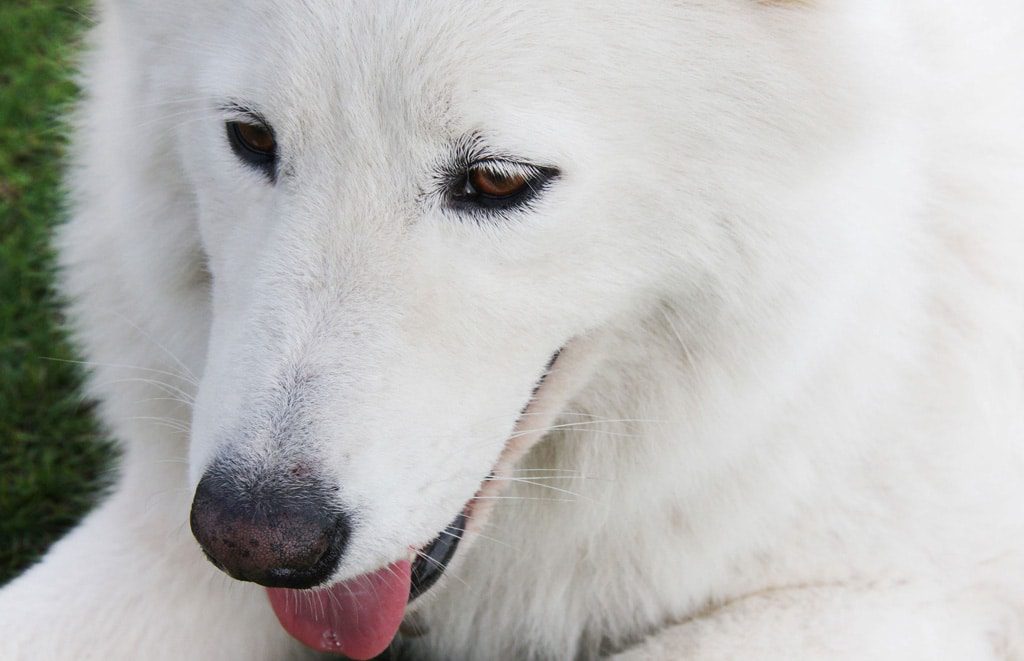
The eyes of the Samoyed they are usually black or brown, and slanting. The nose or truffle must be well developed and preferably black. At some times of the year it can clear up, giving rise to what is commonly called "winter nose.". Some other factors such as age or climate can clarify it, but it is important to always keep the edges of black. Otherwise it would mean a mandatory veterinary visit.

The ears they should be thick and completely covered with hair, form triangular, and upright. In most cases they are white, but occasionally they can be Brown clear (known as "cookie" color).

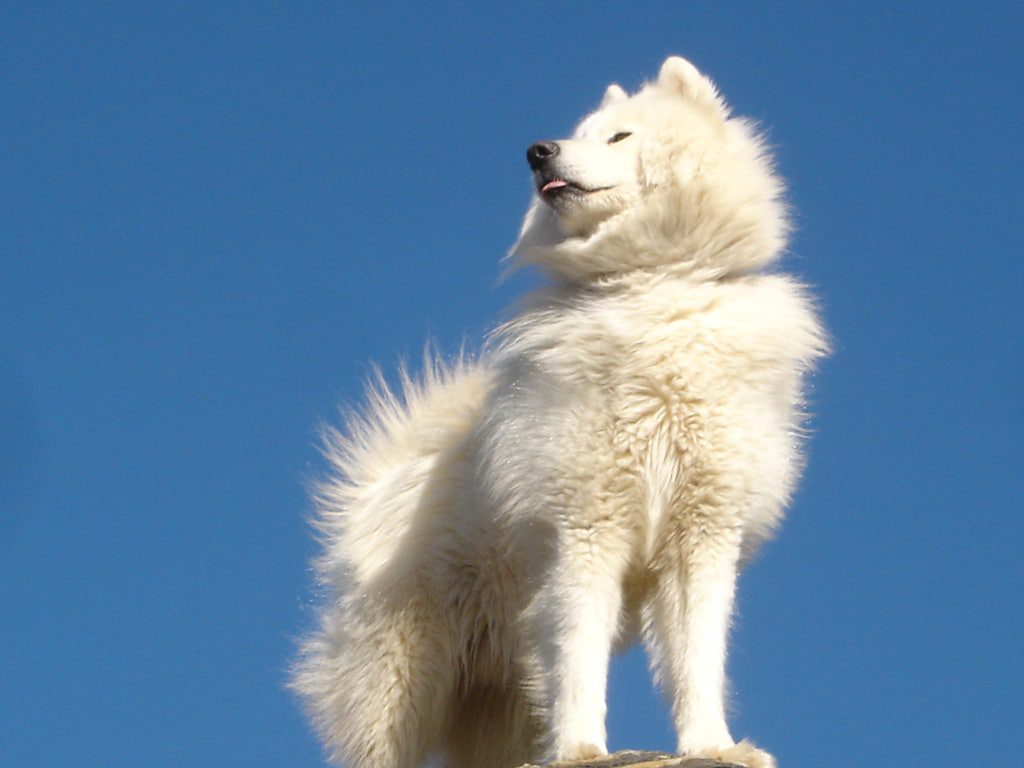
The tail of the Samoyed it is one of the most distinctive features of this breed. As the Mally, the tail hanging hook-shaped on his back; However, and unlike the Malamute, the tail of Samoyed touches back and leans over, slightly, on one of the sides and it should not be a very closed hook or in the shape of a "flag".

in cold climates, some Samoyed sleep with their tails over their noses to provide additional protection. Most of the Samoyed, They allow the tail to fall when they are relaxed, but they back to its original position when they are alert.

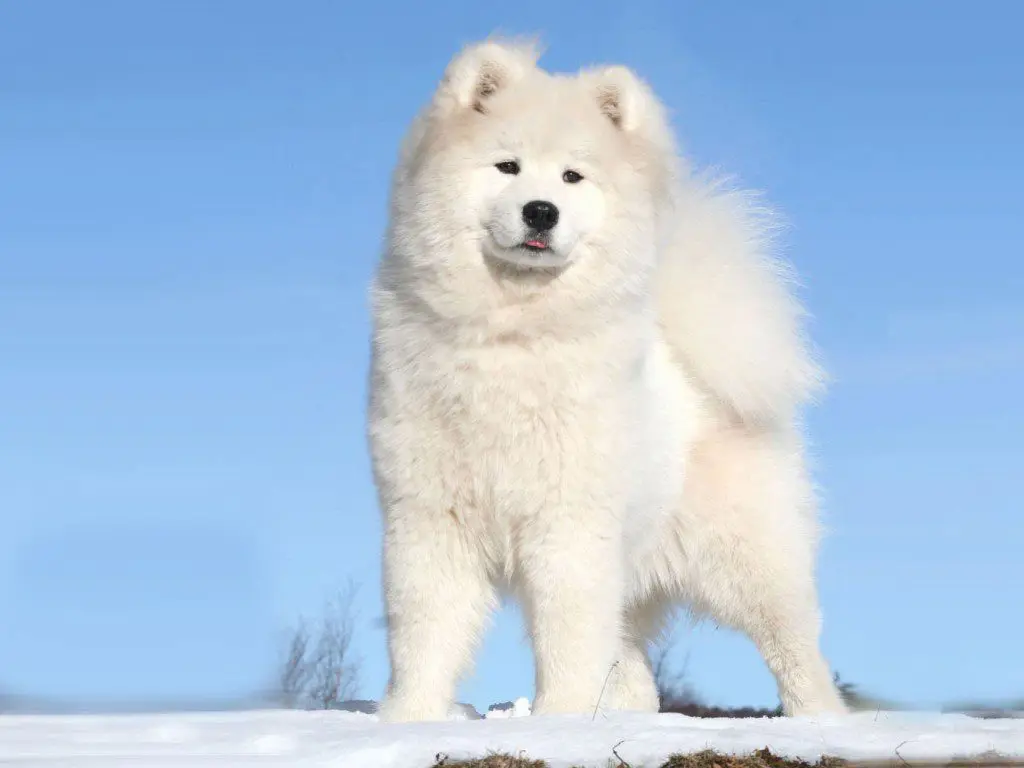
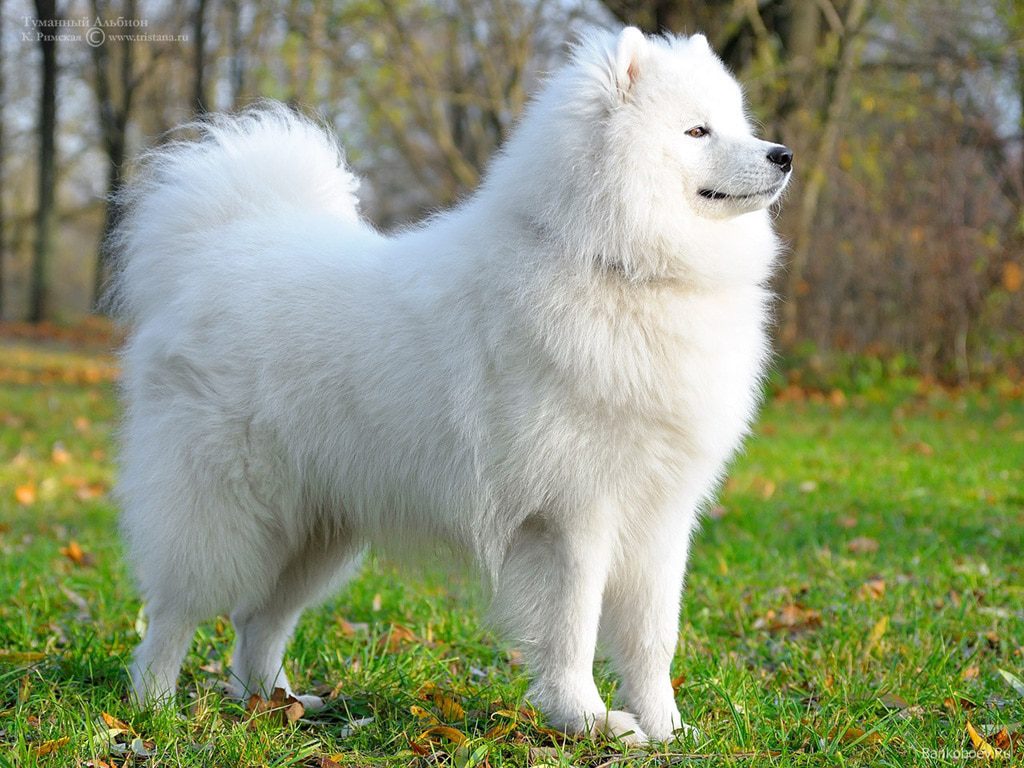
The Samoyed, they have a dense double coat of hair. The top layer has a dense, straight and thick hair, It seems the white but it has some dyes of silver. This top layer keeps the Undercoat relatively clean and free of debris. The bottom layer is a soft, dense and short hair that keeps the dog warm.

The bottom layer is changed from one to two times a year, process known as shedding of hair. This in no way means that they move hair only on these occasions, year-round fine hair it is moved and replaced, which โ€“usually- sticking it on your clothes or simply air fleet.

The Samoyed standard can have a mix of color White and biscuit, Although dogs completely white or completely color cookie are not rare. Males are generally longer than females fur.

The Samoyed, they are good at grooming themselves, not too many baths still needed. Dirt usually falls easily from the outer layers of hair, making the dog show clean.

The hair of the puppies is more porous, so it is easier to you manche with the grass and mud if they are long time outdoors. The aspect of brushing is more difficult, that by their thick fur in some areas like the back of the ears tend to tangle is if not brushes weekly.

The Samoyed will require that, cut the hair that grows between their feet bearing, but with this exception the rest can stay that way, course.

Except for reasons medical or hair is extremely entangled, it is not recommended that the Samoyed be shaved, since their hair acts as an insulator from both cold and moderate heat, in addition to protecting fair skin from Samoyed before burns by the rays of the sun.

An important characteristic of this breed is that they almost do not have the characteristic dog smell., making them good dogs live indoors. The lack of dander, as well, makes them hypoallergenic.

The thick layer of hair can make you feel uncomfortable in the summer in locations where the climate is warm, where they prefer indoors because the air is colder. Their hair also acts as a natural repellent against lice and ticks..

When moving the hair, most of the outer layer falls off and is replaced, the old man can fall into large bundles, leaving hollow spaces in extreme cases. You can brush the hair, with a metal comb, with which we can speed up the process of moving and help the Samoyed to regain your appearance more quickly. Brushing frequently help him is not enrede.

Give a bath to Samoyed it's a long process, because the hair is almost โ€œwaterproofโ€, so it will take time for it to be fully wet and then fully wet. The hair Samoyed must be dried with cold forced air (using a hair dryer), as water can be trapped in the thick undercoat making it difficult for it to evaporate.

It is important that you rinse well, as leftover shampoo or soap can lead to a fungal infection, difficult to remove without having to shave the affected area. To keep the hair from Samoyed Radiant, brushing and a healthy diet may not be disparaged.

How big is a "Samoyed"?

The samoyed have a height at the withers of about 57 centimeters in males and 53 centimeters in females. Weight is not prescribed by the standard, but it is usually between 18 and 30 kg.

How long can a "Samoyed" live??

One Samoyed healthy can reach the 12 years and more, and this with a good physical condition.

Character and skills

The provision of play of the Samoyed makes it a dog not recommended as a guardian; a Samoyed aggressive is very rare. But, with their tendency to bark they can be diligent watchdogs, barking when something or someone approaches their territory.

The Samoyed, they are one Excelent company, especially for small children or even other dogs, remaining also playful until advanced age. The Samoyed, as well, they are known to be somewhat fools sometimes and difficult to train due to lack of diligence and not due to lack of intelligence, so it must be persuaded obey orders which are given.

His inheritance by pulling sleds, the Samoyed, has no problems to pull objects, and Samoyed who has not been trained has no problem with dragging his owner on the leash when they take him out for a walk instead of walking beside him.

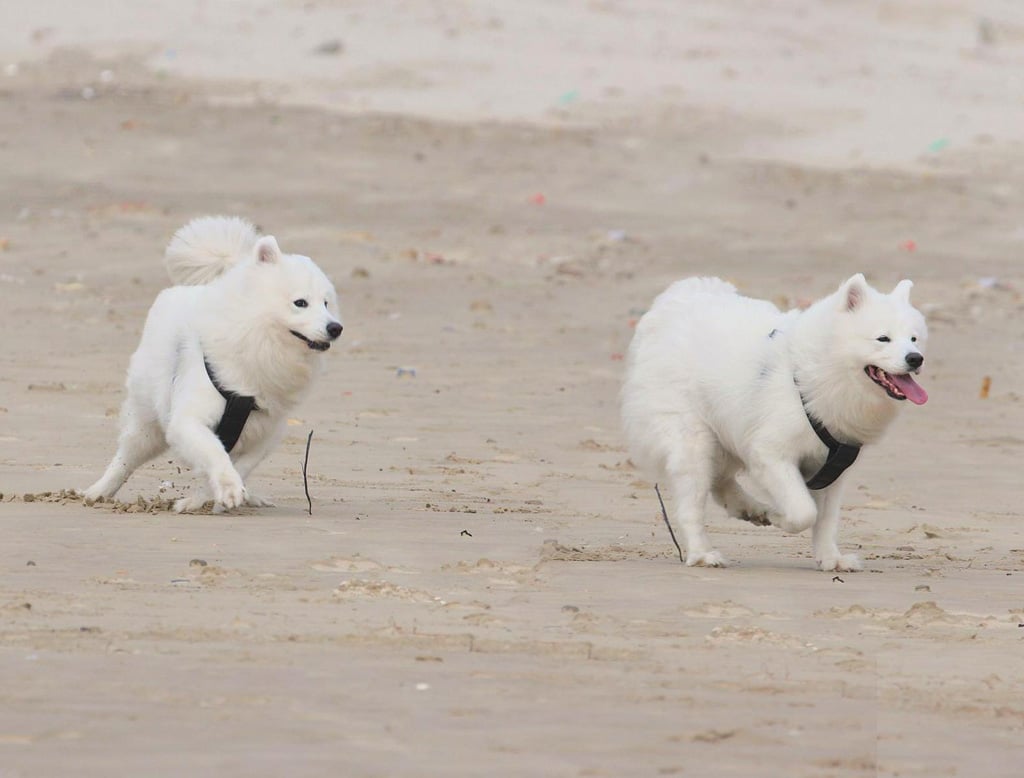
Running is a special passion of the samoyed, more precisely: pull sleds. If you are interested in a Samoyed, you should definitely visit the sled dog races in winter. It is deeply impressive and fascinating.

You can feel the extreme tension of the dogs much earlier in the field of โ“˜ Musher. When you go to the exit, there is hardly a stop. Like in an explosion, this tension of these rather heavy looking dogs dissolves in the acceleration of the sled. The strength of Samoyed it's not your speed, but its unusual resistance.

They instinctively act like herding dogs., so when playing, especially with children, they tend to try to guide them.

This breed is characterized by its expression alert and smiling, which has earned him the nickname "Samoyed smileยป o ยซsmiling dogยซ. They have great vitality, which is why, well cared for they retain their youth and that jovial spirit until their old age. Their average lifespan is of 12 to 18 years, Although some can live a little longer.

As a working breed, they have an excellent resistance and without daily exercise, they become bored and/or depressed they, that can lead to it barking excessively, destroyed or have a worthy of a master of escape behavior. While they are healthy dogs they have tendency to certain diseases.

Caution, health and diseases

The Samoyed for show breeding is affected by numerous hereditary diseases due to one-sided breeding in outward appearance and the very small breeding base today. You should avoid parenting, that values รขโ‚ฌโ€นรขโ‚ฌโ€นthe exhibition championships.

How much care does a "Samoyed" need??

The lush double coat of the Samoyed needs regular care. Especially during the coat change in spring and summer, his house, his car and his clothes will be full of his long hair even though our Samoyed brush daily.

What food is best for a "Samoyed"?
The Samoyed you have no special requirements in your diet. Like most dogs it likes a meaty beef bone and fresh meat. The Samoyed it is very suitable for barbecues.

Activities with your โ€œSamoyedโ€

How much exercise does a Samoyed?

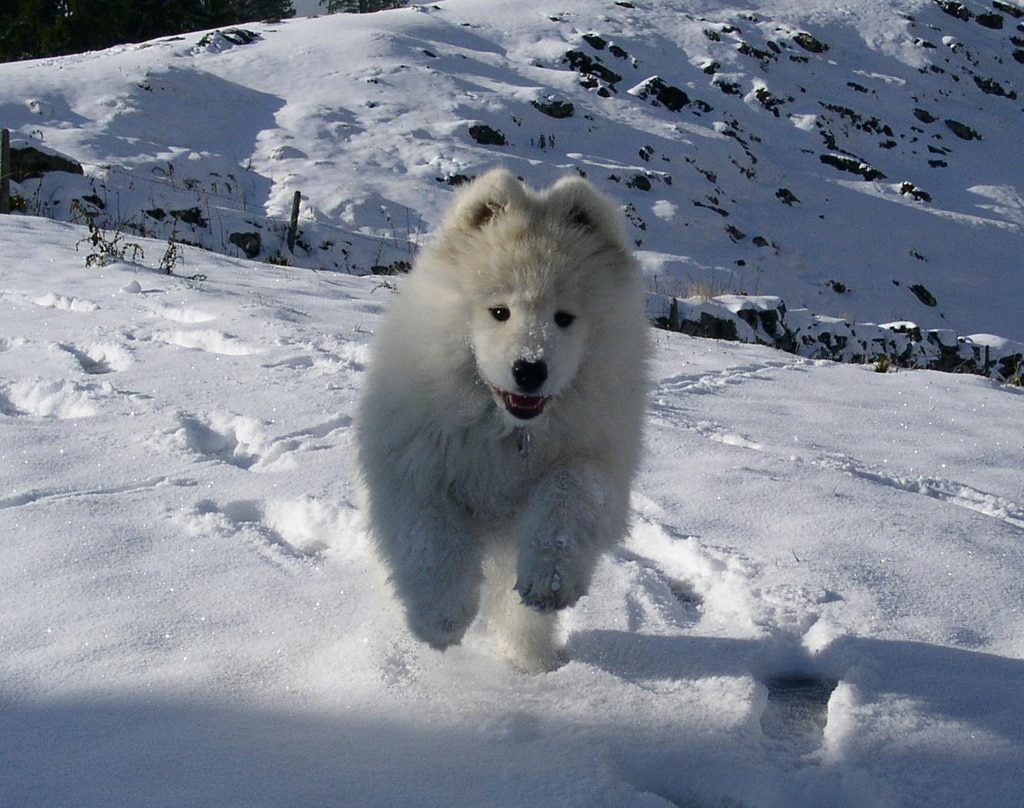
With a Samoyed you can do winter sports very well, ideally as a sled dog. The Samoyed needs an appropriate workload for each species.

Considerations before purchase

Where can you buy a "Samoyed"?

If you are interested in a Samoyed, the first thing you should do is visit some sled dog races. Here you can experience the heart of these dogs live. Then you should get information from a local breeder who does not breed Samoyed plush for exhibition. The breeder should have tested his dogs for special risks of hereditary diseases. This is a natural in serious parenting.. It also, there should be no inbreeding, which can be estimated by looking at the pedigree, if no name appears there twice. The breeder must have his litter well documented by photo. You should be able to see the litter along with the mother bitch, after the fix, in the place. Please, Do not buy Samoyedos by Internet, because there is a high risk that the puppy comes from a seller or breeder of dogs, normally well camouflaged.

The education and maintenance of a "Samoyed"

The Samoyed easy to train and guide, but it is not a dog for beginners. You have high demands on your attitude, derived from its destiny as an original working and sled dog. So you need a lot of occupation and activities, ideally in the sport of sledding.

If you don't exercise and are even left alone without a deep connection to your family, can become a nervous and upset dog, that can even destroy the apartment or the garden.

The Samoyed not a dog for a flat or the big city. The ideal would be a house with a garden. To the Samoyed they like to sleep outside and roll their head under their tail even in the biggest snowstorm. The garden, where do these dogs stay, should not be an ornamental garden.

The luxurious coat of the Samoyed needs regular care. Especially during the change of layer in spring and summer an intensive grooming is indicated. Then the house, the car and clothes will be full of her long hair even if you brush it daily. Here you don't have to be fussy. In the car, it is best to transport it in a box from a specialized store.

The Samoyed can be trained very well by an experienced owner. You have to accept the challenge, It even has to motivate you to fight mentally with this original and confident race. They will gladly accept their masters or caregivers, will be loyal to them, but they have to demonstrate leadership qualities combined with a lot of knowledge of the breed. You have to be fully involved in the experience with these typical Nordic dogs, rustic.

Through a gentle but disciplined upbringing, a Samoyed must be aware of its position in the ranking as early as puppy age. There should be no question who determines the rules of the house.

Characteristics "Samoyed"

Coexistence is important that you have with your new friend. Before considering the acquisition of a dog of the breed "Samoyed" you know certain factors. Not all breeds of dogs are apt to live in an apartment, you must take into account his character, their need for exercise, their interaction with other pets, their care and if you have small children, their level of tolerance towards them.

Adaptation โ“˜

4,0 of 5 stars (based on 1 review)

friendly dog โ€‹โ€‹โ“˜

4,0 of 5 stars (based on 1 review)

hair loss โ“˜

5,0 of 5 stars (based on 1 review)

Affection level โ“˜

5,0 of 5 stars (based on 1 review)

Need for exercise โ“˜

4,0 of 5 stars (based on 1 review)

Social need โ“˜

4,0 of 5 stars (based on 1 review)

Home โ“˜

3,0 of 5 stars (based on 1 review)

Toilet โ“˜

4,0 of 5 stars (based on 1 review)

Friendly with strangers โ“˜

3,0 of 5 stars (based on 1 review)

barking โ“˜

4,0 of 5 stars (based on 1 review)

Health โ“˜

3,0 of 5 stars (based on 1 review)

Territorial โ“˜

5,0 of 5 stars (based on 1 review)

Cat friendly โ“˜

3,0 of 5 stars (based on 1 review)

Intelligence โ“˜

3,0 of 5 stars (based on 1 review)

Versatility โ“˜

3,0 of 5 stars (based on 1 review)

Child friendly โ“˜

5,0 of 5 stars (based on 1 review)

Surveillance โ“˜

3,0 of 5 stars (based on 1 review)

joy โ“˜

5,0 of 5 stars (based on 1 review)

Frequently asked questions about the Samoyed dog breed

in this post, we will answer the most frequently asked questions about Samoyeds.

1 – How is the fur Samoyedor and how it should be cared for?: The coat of the Samoyed it is white and fluffy, with a cotton-like texture. To care for the coat of a Samoyed, regular brushing is necessary to prevent knots and tangles. It also, it is recommended to bathe them approximately every three months to keep their fur clean and soft.

2 – Are the Samoyedos good companion dogs?: Yes, Samoyeds make excellent companion dogs due to their affectionate and loyal nature.. These dogs enjoy human company and can adapt to different lifestyles., as long as they get enough attention and exercise.

3 – What is the personality of the Samoyed?: The Samoyed is a friendly dog, Intelligent, playful and loyal. These dogs have a sociable personality and get along well with children and other animals if properly socialized from puppies..

4 – How is the health of the Samoyed?: In general, the Samoyedos they are a healthy breed, but like all dogs, may have certain health problems. Some common conditions in this breed include hip dysplasia, cataracts and thyroid problems. It is important to carry out regular check-ups with the vet and carry out a proper diet and exercise to keep them healthy.

5 – How do you train a Samoyed?: The Samoyedos They are intelligent dogs and respond well to training.. It is important to use positive training methods and reward good behavior.. Socialization from puppies is key for the Samoyed to become a balanced and well-behaved dog.

Conclusion: If you are interested in adopting a Samoyed dog, We hope we have answered your questions and have helped you to get to know this breed better.. Remember that adopting a dog is a responsibility and that you must dedicate adequate time and resources to ensure that it has a happy and healthy life..

Where can I buy Samoyed dogs??

If you are interested in buying a dog of the breed Samoyed, there are several options you can consider.

One option is to search in directories of dog breeders, as the International Cynological Federation (FCI) or the Royal Canine Society of Spain (RSCE). Both organizations have lists of registered dog breeders and can provide you with information about Samoyed breeders in Spain..

Another option is to search online at websites specializing in the sale and adoption of pets.. You can search on dog breeder websites or on forums and social media groups dedicated to the Samoyed breed.. Be sure to carefully research any potential breeders before making a purchase, and consider visiting the puppies in person before making your decision..

You may also consider adopting a Samoyed dog from a shelter or dog rescue organization.. There are many organizations dedicated to rescuing and rehoming dogs of all breeds., including Samoyeds. Adopting a dog from a shelter or rescue organization can be a great way to give a dog in need a loving and caring home..

Remember that it is important to choose a reputable and ethical breeder or rescue organization., that breeds or rescues healthy and socialized dogs. Don't buy a puppy or adopt a dog from a source that can't provide you with information about the dog's health and breeding or rescue history.

ยซSamoyedยป images

Videos "Samoyedo"

Type and recognitions:

  • FCI CLASSIFICATION:
  • Group :
  • Section : . .

Federations:

  • – FCI – Group 5 – Section 1 Nordic Sledge Dogs. โ“˜
  • – AKC – Nordic Sledge Dogs โ“˜
  • – ANKC – Nordic Sledge Dogs โ“˜
  • – CKC – Nordic Sledge Dogs โ“˜
  • – โ€‹KC – Nordic Sledge Dogs โ“˜
  • – NZKC – Nordic Sledge Dogs โ“˜
  • – UKC – Nordic Sledge Dogs โ“˜

FCI breed standard "Samoyed"

Origin:
Russia

Date of publication of the valid original standard:
22/07/1997

Use:

Sled dog and company.


General appearance:

It is a medium-sized and elegant-looking Arctic Spitz.. Gives the impression of strength, resistance, flexibility, Grace, dignity and self-confidence. Her expression, Commonly called the "Samoyed smile," it results from the combination of the shape and position of the eyes with the slightly upward curved corners of the mouth.. Your sexual characteristics must be well defined.

IMPORTANT PROPORTIONS: Body length is approximately 5% greater than the height of the cross. The depth of the body is slightly less than half the height at the withers. The muzzle is almost as long as the skull.


Behavior / temperament:

He is friendly, franco, alert and lively. His instinct to hunt is very slight. He is never shy or aggressive. It is very sociable and cannot be used as a guard dog.

Head:

Powerful and wedge.

Cranial region:
  • Skull: Seen from the front and only slightly convex profile. It is wider between the ears. The furrow between the eyes is slightly marked.
  • Stop: Clearly defined, but not too pronounced.

facial region:

  • Truffle: Well developed, Black preferred. During some periods of the year can clarify the pigment on the nose, giving rise to the commonly called "winter nose"; However, There should always be pigment at the edges of the nose.
  • Snout: Strong and deep, about as long as the skull, slimming gradually towards the truffle; It is not sharp or heavy or square.
  • Nose cane: Straight.
  • Lips: Tight, black and packed. The corner of the mouth is slightly curved upwards, forming the characteristic ยซSamoyed smileยป.
  • Jaws / Teeth: Regular and complete scissor bite. Teeth and jaws are strong. Normal teeth.
  • Eyes: Dark brown in color, rather than separate and properly positioned in orbits, slightly oblique and almond way. The expression is "smiling", friendly, alert and intelligent. The eyelids are black.
  • Ears: erected, relatively small, thick, triangular, slightly rounded at the tips. They should be moving, Insert well separated because the skull is broad and high.

Neck:

Strong and medium length, arrogant postage.

Body:

Slightly longer than the height of the cross, deep and compact, but flexible.

  • Cross: Well marked.
  • Back: Of average length, muscular and straight; the female is slightly longer in males.
  • Pork loin: Short, very strong and defined.
  • Rump: Full, strong, muscular and slightly sloping.
  • Breast : Large, deep and long, reaching almost to the elbows. Well arched ribs.
  • bottom line: Moderately withdrawn.

Tail:

Relatively high insertion. When is the dog alert or moving, the tail is carried bent from its root forward on the back or to the side; When it is at rest performs hanging it and reaches up to the joint warm-foot.

Tips

PREVIOUS MEMBERS:

  • As a whole: Well placed and muscular, with strong bones. Seen from the front are straight and parallel.
  • Shoulder: Long, firm and oblique.
  • Arm: Oblique and glued to the body. About as long as the shoulder.
  • Elbow: Attached to the body.
  • Carpo: Strong but flexible.
  • Metacarpus: Slightly inclined.
  • Previous feet: Oval, with long toes, flexible and straight forward facing. Fingers are arched and are not too United. Elastic pads.

LATER MEMBERS:

  • As a whole: Seen from the back, They are straight and parallel with very strong muscles.
  • Thigh: Medium length, relatively wide and muscular.
  • Knee: Well angled.
  • Warm-foot joint: Positioned relatively low and well angled.
  • Metatarsus: Short, strong, vertical and parallel.
  • Hind feet: Similar to the previous. The Spurs should be removed.

Movement:

You must give the impression of being powerful, free and tireless with long steps. Good range in the forelimbs and good momentum in the hind.

Mantle

HAIR: Polar hair, thick, dense and flexible. The Samoyed has a double layer of hair; the inner layer is made up of short hair, smooth and dense, the outer layer for longer hair, straight and rough. The coat should form a collar around the neck and shoulders, surrounding the head, especially in males. On the head and the front part of the members, the hair is short and smooth; on the outside of the ears, the hair is short, soft and separate. The inside of the ears should be well covered with hair. In the back of the thighs, hair forms trousers. Must have protective hair between fingers. The queue must be extensively covered hair. The coat of the females is often shorter and softer than the male texture. The correct coat should always have a special brightness.

COLOR: Pure white, cream or white with color cake (the basic color should be white, with some brands color sponge cake). Never give the impression of being pale brown.


Size and weight:

Height of the cross (Ideal height):

  • Males 57 cm., with a tolerance of ยฑ 3 cm..
  • females 53 cm., with a tolerance of ยฑ 3 cm..


Fouls:

Any deviation from the aforementioned criteria is considered as a fault and the severity of this is considered to the degree of the deviation to the standard and its consequences on the health and well-being of the dog..

  • Notable failures of body structure.
  • Light bone.
  • Males who are not male and females that are not feminine.
  • Bitefork clamp.
  • Yellow eyes.
  • Soft ears.
  • Ribs abarriladas.
  • Double hook tail.
  • Short members.
  • In Coop or cow hocks.
  • Wavy or short coat on the entire body, Longhair, soft and droopy.
  • Quiet dog.

SERIOUS FAULTS:

  • Noticeably depigmented areas on the eyelids and lips.

MISS PLAYOFFS:

  • Aggressive or fearful dog.
  • Eyes blue or different colors.
  • Upper or lower prognathism.
  • Not erect ears.
  • Color of the fur other than as described in the standard.
  • Any dog โ€‹โ€‹showing clear signs of physical or behavioral abnormalities must be disqualified..


N.B.:

Males should have two normal-appearing testicles fully descended into the scrotum..

TRANSLATION: Federation Canรณfila Mexicana, A.C.

The latest changes are in bold

Source: F.C.I - International Cynological Federation

Alternative names:

1. Bjelkier, Samoiedskaya, Sobaka, Smiley, Sammy (English).
2. SAMOYEDE (French).
3. Samojedenhund, Samojedenspitz (German).
4. Samoieda, Samoiedo (Portuguese).
5. Samoiedskaya Sobaka, Nenetskaya Laika, Samoiedskaรฏa Sabaka (espaรฑol).

โ–ท The world of Pets: Dogs, cats, birds, reptiles, amphibians

Norrbottenspets
Suecia FCI 276 - Nordic Hunting Dogs

Norrbottenspets

The Norrbottenspets also used as a draft dog.

Content

History

The Norrbottenspets (North Bothnian Country Spitz) probably originates from the small spitz-type Laika that was known to live with hunters in the North Cape area, already in prehistoric times. Small hunting spitz have survived for thousands of years through natural selection โ€“ survival of the fittest. In the very harsh and difficult areas of the northern part of the Scandinavian Peninsula, hunting for food and skins was a necessity in order to survive. Precious skins like saber, sable fur and ermine were the only valid currency for centuries. When fur prices fell drastically after WWII, so did the interest in the Norrbottenspets.

The breed disappeared and there were no records for many years, hence the Kennel Club of Sweden (SKK) declared it extinct. But only a decade later news came that true-type specimens had been found living as pets and watchdogs in small homes inland in North Bothnia.. Due to the very dedicated work of a few men, this ancient hunting spitz was saved.
In 1967 the Norrbottenspets was introduced to the Registries and a new standard was drawn up.

Source: https://www.fci.be/en/nomenclature/NORRBOTTENSPITZ-276.html

Physical characteristics

It is a small spitz-type dog with a rather square appearance, compact and plump, with a lean and strong musculature. The bearing is handsome, with head and tail high. The breed has a strong sexual dimorphism, although the ideal specimen for both sexes is a well-characterized small spitz, attentive, good guardian, of harmonious construction and good character.

The skull is sharp, with the ears set high and relatively small, eyes are dark and bright, and express calmness and predisposition towards work.

Ears are slightly below average size with sparse hair and erect bearing. The tail is set relatively high, with fairly tall carriage in a semicircle, with the tip touching the sides of the thighs. When it stretches, must not exceed the tip of the hock.

Fur: hard, short, straight and quite bushy, with fine and dense undercoat. The length varies depending on the area of โ€‹โ€‹the body: longer around the neck and on the thighs and shorter on the skull and front of the extremities.

Color: all colors are allowed. The ideal is white with yellow or brownish red spots.

Size: males 45 cm.; females, 42 cm.

Character and skills

Norrbottenspets

The pretty white colored Spitz, of medium size and short hair is very rare in its native country and practically unknown outside of Sweden.

He is an excellent guard with a lot of drive, temperament and stubbornness. With the appropriate physical and mental tension, It is also a nice and friendly companion dog..

As a born hunter, the Norrbottenspets He is very Brave, fearless and alert. He is extremely lively and has a great temperament and self-confidence.. The Norrbottenspets it is very suitable as a guard dog, because it reports everything I miss immediately without being aggressive. In the family he is very sociable, friendly and gentle. But the intelligent and self-assured dog can also be headstrong and needs sensitive training and clear guidance..

The Norrbottenspets he is very docile, but it needs a lot of movement and a lot of demanding and varied activity. The ideal are, for example, tests with companion dogs, sports tournaments with dogs or rescue dog training. Only with the appropriate mental and physical activity the Norrbottenspets It is also a nice and friendly family companion dog.. As a pure house dog or for a life in the city it is not the right dog.

Characteristics "Norrbottenspets"

Coexistence is important that you have with your new friend. Before considering the acquisition of a dog of the breed "Norrbottenspets" you know certain factors. Not all breeds of dogs are apt to live in an apartment, you must take into account his character, their need for exercise, their interaction with other pets, their care and if you have small children, their level of tolerance towards them.

Adaptation โ“˜

2,0 of 5 stars (based on 1 review)

friendly dog โ€‹โ€‹โ“˜

2,0 of 5 stars (based on 1 review)

hair loss โ“˜

3,0 of 5 stars (based on 1 review)

Affection level โ“˜

3,0 of 5 stars (based on 1 review)

Need for exercise โ“˜

4,0 of 5 stars (based on 1 review)

Social need โ“˜

3,0 of 5 stars (based on 1 review)

Home โ“˜

2,0 of 5 stars (based on 1 review)

Toilet โ“˜

2,0 of 5 stars (based on 1 review)

Friendly with strangers โ“˜

2,0 of 5 stars (based on 1 review)

barking โ“˜

5,0 of 5 stars (based on 1 review)

Health โ“˜

4,0 of 5 stars (based on 1 review)

Territorial โ“˜

4,0 of 5 stars (based on 1 review)

Cat friendly โ“˜

2,0 of 5 stars (based on 1 review)

Intelligence โ“˜

4,0 of 5 stars (based on 1 review)

Versatility โ“˜

2,0 of 5 stars (based on 1 review)

Child friendly โ“˜

4,0 of 5 stars (based on 1 review)

Surveillance โ“˜

4,0 of 5 stars (based on 1 review)

joy โ“˜

2,0 of 5 stars (based on 1 review)

Type and recognitions:

  • FCI CLASSIFICATION:
  • Group :
  • Section : . .

Federations:

  • – FCI – Group 5 – Section 2 Nordic Hunting Dogs. โ“˜

FCI breed standard "Norrbottenspets"

Origin:
Sweden

Date of publication of the valid original standard:
22.07.1982

Use:

hunting dog.


General appearance:

Small Spitz type dog, slightly rectangular, well balanced, With thin muscles andwell developed. Alert holding your head up, fearless and extremely agile attitude. Sexual dimorphism must be clearly visible.


Behavior / temperament:

In his capacity as a hunting dog he must be attentive and fearless. He is an enthusiastic dog, live, self-confident, with a friendly disposition. Although the breed is mainly used to hunt large partridges of the bush (Grouse etc.) It is also capable of hunting prey of hair and howler elk.

Head:

Strong ofclean cut, top or side view, gradually tapering towards the nose.


Cranial region:
  • Skull: Relatively widethe forehead is slightly arched, the upper part of the skull is rather flat.
  • Depression links (Stop): Evidentbut only slightly marked.

facial region:

  • Truffle: black.
  • Snout: Its length is half the length of the head or somewhat shorter. Clearly tapering towards the nose but never pointed. 
  • Lips: Thin, and tightly fitted.
  • Cheeks: Defined.
  • Jaws / Teeth: Well developed jaws and teeth. Scissor bite.

EYES: Medium-sized, almond shaped and inserted obliquely.Bright with calm and energetic expression. dark brown color.

EARS: High insertion, upright, slightly larger than medium size, with hard skin, slightly rounded tips.

Neck:

Moderately long, in proportion with the body, dry and muscular, slightly arched, with good scope.


Body:

Cross: Defined.

Back: Short, strong, muscular andelastic. 

Pork loin: Short and broad.

Rump: Moderately long and wide, slightly inclined and with well developed musclesand strong.

Breast : Moderately deep and long.The depth of the chest should be approximately half the height at the withers and with well developed back ribs. Seen from the front, the thorax is oval in shape andwith a normal width. Well developed and well defined forechest.

Bottom line and belly: Seen on side, The lower part of the rib cage must be in line with the elbow or barely under it and emerge gently on the belly line. Bellyonly moderately retracted.

Tail:

Proportionally high insertion, carried in a fairly high curve, slightly curled so the tip of the tail touches one side of the thigh. The length of the tail must not reach below the hock. Tail docked is not allowed.

Tips

PREVIOUS MEMBERS :

  • Blades : Long and wide, With well developed spine and muscles. Glued to the chest and properly oblique.
  • Arm : It must be the same length as the scapula, strong, well attached to the chest but allowing freedom of movement and forming a marked angle with the spine of the scapula.
  • Elbows : Directed backwards Forearm : Straight, with strong bones, thin but flexible muscles.
  • Carpus and metacarpus : Strong, forming a straight line with the forearm, when seen from the front. Seen on side, The metacarpo is slightly oblique.
  • Previous feet : Small, strong, directed straight ahead, well arched and closed, with hard, well-developed pads.

LATER MEMBERS : Seen from behind, the hind limbs are parallel.

  • Thigh : Proportionally long, forming a right angle with the pelvis. Strong muscles.
  • Knee joint : Strong.
  • Leg : Form a sharp angle with your thigh.
  • Warm-foot joint : Side and front view, is strong.
  • Metatarsus : Delgado, elastic and rather long.
  • Hind feet : Similar to the previous. Headed straight forward.

Movement:

During the trot and canter, Norrbottenspets should show smooth and regular movements, with great momentum and covering the ground well. In action, The upper line must remain firm and the posterior parallel members.

Mantle

HAIR : The hair is hard, short, straight, and rather close to the body, with fine and dense undercoat. Must be short on the muzzle, skull, ears and front of limbs, longer at the nape, back of the thighs and under the tail.

COLOR : All colors are permitted. The ideal color is white with yellow or reddish-brown markings.


Size and weight:

Height to the cross :

Ideal height :

  • in males : 45 cm.
  • in females : 42 cm..


Fouls:

Any deviation from the aforementioned criteria is considered as a fault and the severity of this is considered to the degree of the deviation to the standard and its consequences on the health and well-being of the dog., and the dog's ability to perform its traditional task.

SERIOUS FAULTS:

  • Meat or liver color nose.
  • Dental missing except for P1.
  • Tan markings.
  • Roan or speckled.

FALTAS DESCALIFICANTES:

  • Aggressiveness or extreme shyness.
  • Any dog โ€‹โ€‹showing clear signs of physical or behavioral abnormalities.
  • Short tail.


N.B.:
  • Males should have two normal-appearing testicles fully descended into the scrotum..
  • Only functionally and clinically healthy dogs, with the typical conformation of the breed, should be used for parenting.

The latest changes are in bold.

Source: F.C.I - International Cynological Federation

Alternative names:

1. Nordic Spitz, Norrbottenspitz, Pohjanpystykorva (English).
2. Spitz nordique (French).
3. Norrbottenspets, Pohjanpystykorvat (German).
4. Spitz nรณrdico (Portuguese).
5. Spitz nรณrdico (espaรฑol).

โ–ท The world of Pets: Dogs, cats, birds, reptiles, amphibians

Finnish Spitz
Finlandia FCI 49 - Nordic Hunting Dogs

Finnish Spitz

The Finnish Spitz it is a dog that can annoy the neighbors, because he barks a lot and with a particularly piercing voice.

Content

This fox-colored four-legged friend from Finland with the typical concise character of the Spitz is a Nordic hunting dog, who has gathered a small but loyal following around the world. It is especially popular in its homeland, Finland. Below you can read interesting facts about the Finnish Spitz, which in Finnish is called ยซSuomenpystykorvaยซ.

History

Finnish national dog

For centuries, the Finnish Spitz has been used as a hunting companion in northern and eastern Finland. In particular, has helped hunt small predators, moose and waterfowl, and later this dog became more and more specialized in grouse and black grouse: Scare these large birds into the surrounding treetops. Now him Finnish Spitz barks persistently until its two-legged partner is close enough to shoot prey.

Little is known about the exact development of the breed. But, the Finnish Spitz probably descended from dogs Spitz, who have been the everyday helpers of the people in Russia for more than 1.000 years. Towards the end of the 19th century, finnish Hugo Roos observed the original Spitz in northern Finland while hunting and recognized its extraordinary abilities. He advocated selective breeding and thus developed the modern Finnish Spitz – although the standard has been changed several times since then. In Russia, the four-legged friend is also known as the Karelo-Finnische Laika, but in 2006 the Finnish and Russian breeding associations agreed that the two names are the same breed. This means that Finland has been recognized as the country of origin of the breed and is responsible for the standard..

Since 1979 the Finnish Spitz has been the national dog of Finland.

Physical characteristics

Compact body, upright ears and a bushy tail curled over the back: The Finnish Spitz medium-sized it is optically a typical Spitz and stands out especially for its red or golden-brown fur. This consists of two layers: The soft, dense undercoat and the hard top coat. The undercoat is always a little lighter.

Males can reach a height at the withers of about 47 cm., the females some 42 cm.. Depending on its size, the dogs weigh between 10 and 15 kg.

Character and skills

If you want a stuffed dog that always strives for recognition from his two-legged friends, you are wrong with a Finnish Spitz. This independent and sovereign dog knows better than anyone where he is going, and therefore never fully subordinate. He is extremely intelligent and loves to learn, if you can teach him something new. Frequent repetitions quickly bore you, so your willingness to cooperate can decrease rapidly. He is brave and very keen to bark: one of his characteristics is a penetrating voice – More on this later. One Finnish Spitz can be used as a guard dog, but he needs to be connected to his human pack. He is friendly with his caregiver or family and enjoys spending time with children.

Attention: It is a very Barking Dog.

At this point we would like to point out a special feature of this dog, the bark of joy Finnish Spitz. Please, consider it: In finland, with a population density of about 16 Inhabitants per square kilometer, the closest neighbor usually lives far away. Here the dog is not only known for his strong voice, but also positively emphasized and encouraged in the form of barking competitions.

This skill is extremely important for hunting, so that the dog can offer good guidance to the two-legged hunter who cannot move so easily through partially snowy forest. The Finnish Spitz they don't just bark, they also dominate different variations, from short sounds to a kind of song.

Many Finnish Spitz they can do up 160 sounds per minute. So if you are thinking about the arrival of such a dog, you must first inform yourself about their joy of barking. Even if you can control or reduce it, some Finnish Spitz they will continue to bark more than most other dogs – this is simply in their genes. If you live in a rural area, you can use the Finnish Spitz as an excellent guardian of the house and the yard.

Activities with the Finnish Spitz

To the Finnish Spitz he loves the time he spends with his reference person, as well as being outside. So, it's better to combine both as often as possible and take it for long, long walks. It is a wonderful companion on walks, if you keep him on a leash or have his hunting instinct under control. this last, However, is a challenge with this breed, if recoverability is not trained from the beginning. Frequent repetitions are not fun for him Finnish Spitz, but they are looking for a common activity that also trains their smart little head. The trace job, for example, it's a pleasure for him Finnish Spitz. In all sports activities, you must ensure that your partner does not overexert himself., so you stay motivated and injuries don't occur.

Finnish Spitz education

If you are thinking that a Finnish Spitz move in with you, You should already have some canine experience to guide this independent companion to the required basic obedience. Don't expect me to be completely subordinate to you, race is too independent for that. Be consistent with everything that is important to you, but leave the Finnish Spitz his own head (testaruda) elsewhere.

With a loving consistency and positive reinforcement you can train this dog well as a rule. In any case, he is very intelligent and likes to learn new things – then it is also, as a result, cooperative. Use this for your training. With a young man Finnish Spitz it makes sense to visit the puppy school, to establish positive contacts with puppies of other breeds and to strengthen or develop your social streak. Also basic command training at a dog school can be very helpful with him. – it's best if you find a dog school that already has experience with the idiosyncratic character of Spitz.

Robust health

The typical Finnish Spitz is a robust and weather resistant dog: the breed is considered to be hardly affected by specific hereditary diseases. If you are thinking of acquiring a dog of this type, it is important that you buy it from reputable breeders, as they reduce the risk of genetic diseases through responsible breeding. An example would be the predisposition of some dogs to Hip Dysplasia or problems with the knee and elbow joints. Talk to the breeder in question about the health care of parental animals.

You yourself can contribute a great deal to your dog's health by providing him with a healthy diet and exercising appropriately for his age and level of training..

This breed of Spitz it is quite sensitive to heat due to its origin in the far north… The walks in winter, on the other hand, are to the taste of this four-legged friend. The breed reaches an average age of 12 to 13 years.

The Finnish Spitz diet

It also, a balanced diet adapted to the needs of your four-legged friend is an important component for their health. Like all dogs, the Finnish Spitz requires a meat-based diet. So, make sure meat is the first component for the pet food you choose. The grain should not be included. This applies regardless of whether wet or dry food is chosen. With a pure diet of dry food you must pay special attention to the fact that your quadruped ingests enough liquid.

Water must always be freely available. After meals, their Finnish Spitz definitely must have time for a digestive nap, so it is better to feed after joint excursions. Remember that treats must be added to the daily ration, otherwise your dog's slim waist will be in danger. It is also possible to bring dry food as a reward.

Dry chews, like cattle ears, satisfy your partner's chewing needs. Dental care treats or freeze-dried meat snacks especially for dogs are other sensible rewards that you can give your four-legged friend a tasty little treat with..

Care for the Finnish Spitz

Although caring for this dog's coat is quite easy, should not be careless, especially during coat change. In spring and autumn the Finnish Spitz usually has a lot of hair – help him get rid of dead hairs by brushing him regularly – preferably daily. This way you can prevent skin irritation, which can develop rapidly if too many hairs from the dense undercoat remain on the dog. Outside the coat change, just brush your partner once a week. During this grooming ritual, that you should already practice with your puppy, it is better that I also look in the ears, which should be cleaned with a dog ear cleaner if necessary. A brief claw check should also be performed at regular intervals – usually older quadrupeds or those that only walk on soft ground need support from you in the form of a pedicure. Here a dog clip provides valuable services.

Is a Finnish Spitz right for me??

A dream home for a Finnish Spitz It is a large plot of land in the field to watch over her, including family connection. The breed is suitable for dog lovers with a great sense of independence, who like to move in nature with their partner and who can impart basic obedience to the stubbornness of their four-legged friend thanks to the skill, consistency and calm. He is not a city dog โ€‹โ€‹and his barks of joy alone could make him unsuitable for keeping indoors., even if you can have a quiet Finnish Spitz as a roommate through lots of activity and patient training.

As a family dog รขโ‚ฌโ€นรขโ‚ฌโ€นit is very suitable, provided you have the appropriate occupation and education. It also, is patient and trusting with children with whom he usually has a good relationship – but make sure the four-legged friend can back off if he feels like it. The Finnish Spitz not suitable for hot regions and also not a companion for a beach holiday – loves cooler climates, what is much better for him.

Talking about vacation: Before deciding on this dog, Please also consider that you should be well looked after in case of illness and on vacation. Preferably from someone who already knows you and is familiar with the characteristics of a Spitz. Of course, you can also take it on vacation with you, but before registering it in a hotel, you must be sure that you do not want to charm every hotel guest with your loud voice. So, this type of trip is only possible with a very well bred Finnish Spitz.

Also consider in advance the one-time costs and especially the regular costs that you will have to pay when your new pet roommate moves in.: In addition to the basic equipment and purchase price of a dog from a reputable breeder, there may be considerable travel expenses for a puppy bought abroad. Once your Spitz lives with you, there will be high quality food costs, taxes and insurance for the dog and expenses for regular visits to the vet, including vaccinations and deworming.

Where can I find my Finnish Spitz?

Like many other races from the far north, the Finnish Spitz is a rarity in southern Scandinavia. In many countries not a single litter of Finnish Spitz in a year, so if you have fallen in love with this breed, you will usually have to travel long distances to get a puppy as a new member of the family. Contact the Nordic dog breed clubs, that can help you find a dog of this breed, which is especially popular in its home country, and possibly establish contacts with breeders in Scandinavia. If you adopt a puppy from abroad, there are some things you should consider… Find out in time! Remember: It always makes sense to visit the puppy in the kennel to meet the parents and the circumstances in which the four-legged friends live.. If possible, you should also visit the breeder personally before deciding to buy a puppy from abroad. Here too there is the possibility to sniff each other and ask questions without time pressure. After all, buying a puppy is a matter of trust.

If you want a Finnish Spitz adult as companion, there is little chance in most Central European countries to get a matching dog – maybe you are considering a trip to Finland in the near future and find it there. Otherwise, nordic dog breed clubs will help you on your quest. Maybe a Nordic cross or another breed of Spitz can conquer your heart.

advice: Start looking for your new partner with watchful eyes and an open heart, because many hybrids of Spitz have similar characteristics.

Characteristics "Finnish Spitz"

Coexistence is important that you have with your new friend. Before considering the acquisition of a dog of the breed "Finnish Spitz" you know certain factors. Not all breeds of dogs are apt to live in an apartment, you must take into account his character, their need for exercise, their interaction with other pets, their care and if you have small children, their level of tolerance towards them.

Training ?

3,0 of 5 stars (based on 1 review)

Suitability of the apartment ?

1,0 of 5 stars (based on 1 review)

Can be alone all day ?

1,0 of 5 stars (based on 1 review)

Suitable as a first dog ?

2,0 of 5 stars (based on 1 review)

Weight gain ?

3,0 of 5 stars (based on 1 review)

Health ?

4,0 of 5 stars (based on 1 review)

Intelligence ?

4,0 of 5 stars (based on 1 review)

Kindness with child ?

3,0 of 5 stars (based on 1 review)

Tendency to bite ?

2,0 of 5 stars (based on 1 review)

Tendency to bark ?

5,0 of 5 stars (based on 1 review)

Tendency to flee ?

4,0 of 5 stars (based on 1 review)

hair loss strength ?

4,0 of 5 stars (based on 1 review)

Suitable as a guard dog ?

4,0 of 5 stars (based on 1 review)

Joy ?

3,0 of 5 stars (based on 1 review)

Cat friendliness ?

2,0 of 5 stars (based on 1 review)

Power level ?

4,0 of 5 stars (based on 1 review)

Images "Finnish Spitz"

Spitz finlandes

Spitz finlandรฉs by Pets Adviser from Brooklyn, USA / CC BY

Spitz finlandes

Spitz finlandรฉs by Pets Adviser from Brooklyn, USA / CC BY

Videos "Finnish Spitz"

Type and recognitions:

  • FCI CLASSIFICATION:
  • Group :
  • Section : . .

Federations:

  • – FCI – Group 5 – Section 2 Nordic Hunting Dogs. โ“˜
  • – AKC – Nordic Hunting Dogs โ“˜
  • – ANKC – Nordic Hunting Dogs โ“˜
  • – CKC – Nordic Hunting Dogs โ“˜
  • – โ€‹KC – Nordic Hunting Dogs โ“˜
  • – NZKC – Nordic Hunting Dogs โ“˜
  • – UKC – Nordic Hunting Dogs โ“˜

FCI breed standard "Finnish Spitz"

Origin:
Finland

Date of publication of the valid original standard:
04.04.2016

Use:

A hunting dog mainly for forest birds, also small game predator, waterfowl and moose. Eager hunter; rather independent that works marking the prey with its barks.


General appearance:

It is small to medium in size and has an almost square body. Its configuration is slim, firm, and has a good bearing.

important proportions

The length of the body is equal to the height at the withers. The depth of the chest is slightly less than half the height at the withers. The ratio of the muzzle to the skull is about 3:4. The skull is slightly wider than it is long; its width is equal to its depth.


Behavior / temperament:

This is a lively dog, vigorous, courageous and determined. Can be somewhat reserved with strangers, but never malicious.

Head:

---

Cranial region:
  • Skull:Seen from above, has an ovoid shape. It gradually widens towards the region of the ears and is wider between the ears. Seen from the front and profile, skull is slightly convex. Upper axes of skull and muzzle are nearly parallel. The frontal furrow is very superficial. Superciliary crest and occiput are not very visible.
  • Depression front naso (Stop): It is not very pronounced. The angle between the muzzle and the skull is well visible.

facial region:

  • Truffle:It is rather small and jet black.
  • Snout:Narrow and thin. Viewed from above and in profile, gradually decreases. The nasal helm is straight. The lower jaw is clearly visible.
  • Lips:Together, rather thin and tight. Are well pigmented.
  • Jaws/Teeth:The jaws are strong. The teeth are symmetrical and well developed; teething is normal. Joint is narrow scissor-shaped.
  • Cheeks:The zygomatic arches are slightly pronounced.
  • Eyes:Medium in size and almond shaped. They are somewhat oblique and preferably dark. His expression is lively and alert.
  • Ears:They are rather tall, always upright. They are rather small, pointed and very mobile. They are covered with fine hair.

Neck:

He's muscular. It appears rather short in males due to the thick collar of hairs. In females, is of medium length. There is no presence of dewlap.

Body:

  • Cross: It is clearly outlined, especially in males.
  • Back: She is straight and muscular; rather short.
  • Pork loin: Short and muscular.
  • Rump: Medium length, well developed and slightly sloping.
  • Breast : Deep, reaches almost to the elbows and is not very wide. The ribs are slightly arched. The sill is well visible and not very wide.
  • bottom line: It is slightly raised.

Tail:

Bends strongly forward from its base, worn tightly across the back. Below and behind it rests against the thigh and its extremity extends to the middle of it. When extended it reaches almost to the hock.

Tips

Former members

  • As a whole:Seen from the front, they are straight and parallel. The bones are of medium strength. The arm is somewhat shorter than the shoulder blade and forearm.
  • Shoulder:His firms, very mobile and relatively straight.
  • Arm:A little shorter than the shoulder blade. It is somewhat inclined and very strong.
  • Elbows:They appear in front of a vertical line drawn from the highest point of the shoulder blade. They are directed straight back.
  • Forearm:Rather strong, vertical.
  • Metacarpus:Medium length; slightly inclined.
  • Front feet:Rounded climbing shoe. The fingers are close together and well arched. The pads are elastic, always black, and its lateral parts are covered with dense hair.

Later members

  • As a whole:Seen from the back, they are straight and parallel. They are strong and of medium angulation. The bones are moderately strong. The thigh is a little longer than the leg.
  • Thigh:Medium length. It is rather wide and has well-developed muscles..
  • Knee:It is presented pointed forward. Angulation is medium.
  • Leg:Muscled.
  • Hock:It is moderately low and the angulation is medium.
  • Metatarsus:It's rather short, strong and vertical.
  • Hind feet:They are a little longer than the forwards, but otherwise they are equal to these. The dewclaws must be removed.

Movement:

It's lightweight and covers the ground effortlessly. Easily switch from trot to canter, which is the most natural movement. The members move in parallel. When it is launched after the prey, the dog bursts into a fast gallop.

Mantle

Skin: It is well fitted throughout the body and does not form folds.

Fur: It is rather long on the trunk, upright or semi-erect and more rigid in the neck and back. It is short and tight in the head and limbs, except on the back of the hind limbs. Stiff shoulder hair, especially in males, is visibly longer and rougher. In the back of the thighs (pants) and in the queue, the hair is long and dense. The undercoat of hairs is short, soft, dense and light in color.

Color: The hair on the back is reddish brown, or golden brown, preferably bright. Of a lighter shade, are the hairs inside the ears, cheeks, the chest, the throat, the belly, the inside of the limbs, the back of the thighs and tail. A white stripe on the chest and small white markings on the feet are allowed.


Size and weight:

Height to the cross

  • Males:47 cm with a tolerance of +/- 3 cm..
  • females:42 cm with a tolerance of +/- 3 cm..

Weight

  • Males:Among 12 and 13 kg.
  • females:Among 7 and 10 kg.


Fouls:

Any deviation from the aforementioned criteria should be considered as fault, and its severity is considered in proportion to the degree of the standard deviation.

  • Heavy head.
  • Thick snout.
  • Loose lower jaw.
  • Ears pointing forward at an acute angle, or whose tip points inward or outward. Ears that droop back, or with long hairs inside.
  • Loose or excessively curved tail.
  • Pasterns too loose.
  • Long coat, soft, too short or tight.
  • Visibly delimited different colors.

ELIMINATING fAULTS

  • Aggressive or fearful dog.
  • Flesh colored nose.
  • Upper or lower prognathism.
  • Bright yellow eyes or gazy eyes.
  • Ears with droopy tips.
  • Bent tail.
  • Wavy or curly coat.
  • Visibly different from the basic color
  • Large white patches on the chest or / and a white stocking.

Any dog โ€‹โ€‹showing clear signs of physical or behavioral abnormalities should be disqualified..


N.B.:

Males should have two normal-appearing testicles fully descended into the scrotum..

Source: F.C.I - International Cynological Federation

Alternative names:

1. Finnish Hunting Dog, Finnish Spets, Finsk Spets, Loulou Finois, suomalainen pystykorva, suomenpystykorva (English).
2. Spitz finlandais (French).
3. Karelo-Finnische Laika, Suomenpystykorva (German).
4. Spitz finlandรชs (Portuguese).
5. Loulou Finois, Suomalainen pystykorva, Finsk Spets (espaรฑol).

โ–ท The world of Pets: Dogs, cats, birds, reptiles, amphibians

German Spitz
Alemania FCI 97 - European Spitz

German Spitz

The hair German Spitz requires certain care, especially for exhibitions.

Content

History

The Spitz it is one of the oldest German domestic dog breeds, although its origins are not entirely clear. There is evidence that dogs Spitz lived together with humans ago 4.000 years. Due to its wide diffusion as a watchdog on farms and in the homes of the petty bourgeoisie, it also found its way into literature and painting..

Especially in rural areas, a German Spitz was ubiquitous in the old days as a house and garden dog. Smaller Spitz were popular as lap dogs with ladies.

The popularity of the Spitz decreased so much in the recent past that it was declared an endangered breed of pet in 2003.

Physical characteristics

All the German Spitz, regardless of size or color, they form a family and should have similar features and a typical lace look.

The Spitz impresses with his beautiful coat. The abundant undercoat and long top coat, straight and outstanding give them their unmistakable appearance. Particularly striking is the strongly mane-like collar around the neck and the bushy, furry tail., that is carried boldly on the back. The fox-like head with quick eyes and small, narrow, pointy ears give the Spitz its characteristic disturbing expression.. The body of the Spitz is square.

Measurements:

to) Wolfspitz / Keeshond : 49 cm ยฑ 6 cm..
b) Grossespitz (Giant or Large Spitz) : 46 cm ยฑ 4 cm..
c) Mittelspitz (Standard or Medium Spitz) : 34 cm ยฑ 4 cm..
d) Kleinspitz (Miniature or Small Spitz) : 26 cm ยฑ 3 cm..
and) Zwergspitz (Toy or Dwarf Spitz) / Pomeranian : 20 cm ยฑ 2 cm..
(are undesirable specimens measuring less than 18 cm.).

Weight

Any variation in the size of the German Spitz should have a corresponding variation in weight.

Character and skills

One German Spitz has a reputation for being a chatterbox. In fact, the dogs bark a lot; for a guard dog, making a sound is a desirable characteristic, that today cannot be reconciled with all the neighbors.

A natural distrust, along with incorruptibility and loyalty, is inherent to German Spitz. This makes it predestined to be a watchdog that patrols its territory and reports suspicious incidents.. One German Spitz reliably defends the things entrusted to him. When not on guard, a is a very friendly and affectionate dog, sometimes a little possessive, who follows his humans closely and enjoys being petted. One German Spitz is generally regarded as a child.

The education and attitude of the German Spitz

With cheerful romp and docility, a German Spitzn is a dog that absolutely needs a task. Find your place as a working watchdog, but also as a companion and family dog. With lots of positive encouragement and loving consistency, breeding is not problematic and can also be managed if you have little experience with dogs.

for a German Spitz be respectful of animals, must be weather resistant: The Spitz it just feels really comfortable outdoors, either with sun, rain or snow. It is an ideal companion for runners, riders and cyclists. He is also an agility sports enthusiast. As the Spitz only has a weakly developed hunting instinct, does not tend to go its own way when outdoors and is easy to recover. It is less suitable for intensive accommodation, especially because he likes to bark a lot. Similar to the Poodle, the spitz is available in different sizes, from the Zwergspitz (Toy or Dwarf Spitz) / Pomeranian to Wolfspitz / Keeshond. The best known variant is the Mittelspitz (Standard or Medium Spitz) with a shoulder height of 34-38 cm and weighing up to 10 kg. Apart from its format, the types do not differ visually.

Caring for the German Spitz

Surprisingly, the fluffy coat of the Spitz does not require much grooming. The hair is dirt repellent, so an occasional brushing is enough. It also, a German Spitz it is very clean and cleans itself. Also in terms of health, the Spitz they are quite robust dogs.

Type and recognitions:

  • FCI CLASSIFICATION:
  • Group :
  • Section : . .

Federations:

  • – FCI – Group 5 – Section 4 European Spitz. โ“˜

FCI breed standard "German Spitz"

Origin:
Germany

Date of publication of the valid original standard:
04.09.2019.

Use:

Guard and companion dog.


General appearance:

TheSpitzThey attract attention for their beautiful separated fur with the presence of a very dense undercoat.. The neck surrounded by an abundant mane and the tail covered with long hair is striking., turned up and spread boldly on the back. The head is similar to that of the fox with diligent eyes and small pointed ears. The ears, placed very close to each other, confer toSpitzhis characteristic relaxed appearance.

important proportions

Proportion of 1:1 between the height at the withers and the length of the dog.


Behavior / temperament:

TheGerman Spitz is constantly attentive, is active and exceptionally dependent on his master. Learn quickly and can be trained easily. His distrust of strangers and his lack of interest in hunting allow him to be considered the ideal watchman for the house and farm.. Its most notable characteristics are its resistance to weathering., its robustness and longevity.

Head:

---

Cranial region:
  • Skull: The skull ofSpitzis medium-sized; viewed from above seems to swell back becoming more narrow wedge shaped to the tip of the nose.
  • Depression links (Stop): Little steep until marked, but never abrupt.

facial region:

  • Truffle: Round, small, black; in all theSpitzbrown in color is dark brown in color.
  • Snout: Not very long, Neither coarse nor pointed; It presents a good proportion in relation to the skull (in the Spitz type Keeshond/Wolf, in the large Spitz and medium Spitz the ratio snout/skull is approximately 2/3, in the small Spitz and in theSpitz enano/Pomerania is approximately 2/4).
  • Lips: They are not hanging; they are well bonded and do not form folds in the corners. They are black in all colours, in theSpitzbrown in color are brown in color.
  • Jaws/Teeth: The jaws are normally developed and show a complete scissors bite with 42 teeth, That is, the upper incisors fall closely in front of the lower incisors., teeth being implanted perpendicular to the jaws. InSmall and dwarf spitz/Pomeranian the loss of a few promolars is tolerable. A pincer bite is allowed in all varieties ofSpitz.
  • Cheeks: The cheeks are slightly round and are not prominent.
  • Eyes: The eyes are medium-sized, elongated, a little oblique, dark colored. The eyelids have black pigmentation in all color varieties and are only dark brown in theSpitzof brown variety.
  • Ears: The pointed ears in the shape of a pointed triangle are small and rather closely placed together.. Its inclusion is high. They always remain erect with a rigid tip.

Neck:

The neck is moderately long and presents a broad inclusion with shoulders; the neck is slightly convex, without dewlap and covered with a mane shaped collar.

Body:

  • top line: The top line begins at the tip of the erect ears and passes in a gentle arc over the short, straight back.. The deployed and with abundant fur tail partially covers the back and rounded silhouette.
  • Cross/Back: The high cross falls imperceptibly on the short back, straight and strong.
  • Pork loin: Short, wide and strong.
  • Rump: The rump is short and wide, unexpired.
  • Breast : Deep chest, well arched; the apron is well developed.
  • Bottom line and belly: The chest is expanded as much as possible back; the abdomen is moderately retracted.

Tail:

The tail has a high insertion and a medium length; bends upward from the root and rolls over the back, spreading firmly. Well covered with thick hair. A double loop in the tip of the tail is acceptable.

Tips

Former members

  • As a whole: Straight, large on the front.
  • Shoulder: The scapula is long, placed backwards at an angle. The arm, showing almost the same length, with the scapula forms an angle of approximately 90 degrees. Shoulders with good musculature are closely linked with the chest.
  • Arm: Medium length, robust and fully straight on the trunk, covered with long hair in the form of pen in the posterior region.
  • Elbows: The elbow joint is strong, close to the chest without bending inward or outward.
  • Metacarpus: The Metacarpus strong and medium length, forms an angle of approximately 20ยฐ in relation to the perpendicular line.
  • Front feet: The front feet are as small as possible, round, compact, as cat with well arched toes feet. Pads and nails are black in all varieties of Spitz, and they are only dark brown on brown dogs.

Later members

  • As a whole: The hindquarters are very muscular, covered with very long hair up to the Hock joint. The hind limbs are straight and parallel to each other..
  • Thigh and leg: They have approximately the same length.
  • Knee: The knee joint is strong, slightly angled and, during the movement, It does not twist outward or inward.
  • Metatarsus: Medium length, very strong, maintains a position perpendicular to the ground.
  • Rear feet: The hind feet are as small as possible, round, with toes well arched and together, as cat feet. Pads are hard. The color of nails, pads is much darker.

Movement:

TheSpitzmoves with enough coordination, with a good push and almost floating in light trot.

Mantle

Skin

The skin should be well attached to the body, without kinking.

Fur

TheSpitzThey have a double coat covered with hair: the outer layer is long-haired, straight and separate and the inner layer is short-haired, dense and woolly. The head, ears, anterior surface of the forelimbs and hindlimbs and feet are covered by short, dense hair (velvety). The rest of the body is long and abundant hair. The hair should not be wavy, chino, or form hair, You must not present a stripe on the back. A thick mane covers the neck and shoulders. The rear face of the forelimbs has hair in the form of feathers. The hindquarters should be covered with long hair from the rump to the Hock joint. The queue must be covered with hair is long and abundant.

Color

  • Wolf Spitz/Keeshond: Grayish.
  • Grossespitz (Giant or Large Spitz) : Negro, brown, white.
  • Mittelspitz (Standard or Medium Spitz): Negro, brown, white, orange, grey, other colors.
  • Kleinspitz (Miniature or Small Spitz): Negro, brown, White Orange, grey, other colors.
  • Spitz enano/Pomerania: Negro, brown, white, orange, grey, other colors.
  • Black Spitz: The fur of the black Spitz should be dark in the skin as well as internal NAP and the color of the outer layer should be jet black color without any white spot.
  • Brown Spitz: The Brown Spitz should have a uniform dark brown color.
  • White Spitz: The hair should be pure white, no yellowish tones that can often occur in the ears.
  • Spitz anaranjando: The Orange Spitz should have a single uniform colour in the average range of the RAL (Registration International of the color scale).
  • Greyish Spitz/Keeshond: Gray is understood as grey silver with black hair tips. Snout and ears are dark. Around the eyes there is a drawing in the shape of glasses consisting of a delicate black line. (It extends from the outer corner of the eye to the lower part of the inclusion of the ear) or in broken lines and shading that draw short eyebrows, but expressive. Mane and ring shoulders are a tone clear. The anterior and posterior members are grey silver unmarked black below the elbows and knees, except delicate stripes on your fingers (pencilling). The tip of the tail is black. The lower part of the tail and the buttocks are grey Silver clear.
  • Spitz other colours: Under this description all tones are included as: cream-coloured, cream-saber, anaranjado-Sable, black with tan and stained. The spotted must have a white background color. Black stains, brown, gray or orange should be distributed throughout the body.


Size and weight:

Height to the cross

  • Wolf Spitz/Keeshond: 49 cm ยฑ 6 cm..
  • Grossespitz (Giant or Large Spitz) : 46 cm ยฑ 4 cm..
  • Mittelspitz (Standard or Medium Spitz): 34 cm ยฑ 4 cm..
  • Kleinspitz (Miniature or Small Spitz): 26 cm ยฑ 3 cm..
  • Spitz enano/Pomerania: 20 cm ยฑ 2 cm. (are undesirable specimens measuring less than 18 cm.).

Weight

Any variation in the size of theGerman Spitz must have a corresponding variation in its weight.


Fouls:

Any deviation from the above criteria is considered missing and the seriousness is considered to the extent of the deviation to the standard.

Serious misconduct

  • Defects in the Constitution.
  • Head too flat or sharp Apple-shaped.
  • Truffle, eyelids and lips of flesh-colored.
  • Defects in the premolars in Wolf Spitz/Keeshond, Medium and large Spitz.
  • Eyes too big or clear or very outgoing.
  • Defects in the movement.
  • Absence of classic drawing of the face inSpitzgrey.

ELIMINATING fAULTS

  • Aggressive or fearful dog.
  • Open fontanel.
  • Upper or lower prognathism.
  • Entropion or ectropion.
  • Floppy ears.
  • White spots visible on allSpitznon white.

Any dog โ€‹โ€‹showing clear signs of physical or behavioral abnormalities should be disqualified..


N.B.:

Males should have two normal-appearing testicles fully descended into the scrotum..

Source: F.C.I - International Cynological Federation

Alternative names:

1. Deutscher Spitz (English).
2. Spitz allemand (French).
3. Deutsche Spitze (German).
4. Deutsche Spitze (Portuguese).
5. Spitz alemรกn (espaรฑol).

Photos

1- Szpic_miniatura at the national show in Rybnik – Stone to Pleple2000 / CC BY-SA

German Spitz varieties

to) Wolfspitz / Keeshond.
b) Grossespitz (Giant or Large Spitz) .
c) Mittelspitz (Standard or Medium Spitz).
d) Kleinspitz (Miniature or Small Spitz).
and) Zwergspitz (Toy or Dwarf Spitz) / Pomeranian.

European Spitz

1 Keeshond

Keeshond

Even today the Keeshond is a breed known for its faithfulness and loyalty.

Are ยซWolfsspitzยป and ยซKeeshondยป identical?

This question repeatedly leads to confusion among experts and laymen alike.. Although the

... Read more

2 Pomeranian

Pomeranian

The Pomeranian very active, independent, Intelligent, brave and loyal.

The Pomeranian (Deutscher Spitz;, Pomeranian Lulu or Deutscher Zwergspitz) It is a dog of the Spitz family, named for the ... Read more

3 Grossespitz (Giant or Large Spitz)

Grossespitz (Giant or Large Spitz)

Although I do not necessarily suspect it at first glance, the Grossespitz (Giant or Large Spitz) it is also extremely robust and weather resistant.

While the small and medium varieties of the German Spitz (Pomeranian,

... Read more

4 Mittelspitz (Standard or Medium Spitz)

Mittelspitz (Standard or Medium Spitz)

The Mittelspitz (Standard or Medium Spitz) is by nature a bit like the old guard dog.

The Spitz, officially called ยซGerman Spitzยซ, It is a classic breed of dog in Germany and Central Europe.

... Read more

5 Kleinspitz (Miniature or Small Spitz)

Kleinspitz (Miniature or Small Spitz)

The Kleinspitz (Miniature or Small Spitz) he is a loving and attentive dog, that is very people-oriented.

The little Spitz (Kleinspitz) is a variety of German Spitz, which today is

... Read more

โ–ท The world of Pets: Dogs, cats, birds, reptiles, amphibians

Japanese Spitz
Japรณn FCI 262 - Asian Spitz and related breeds
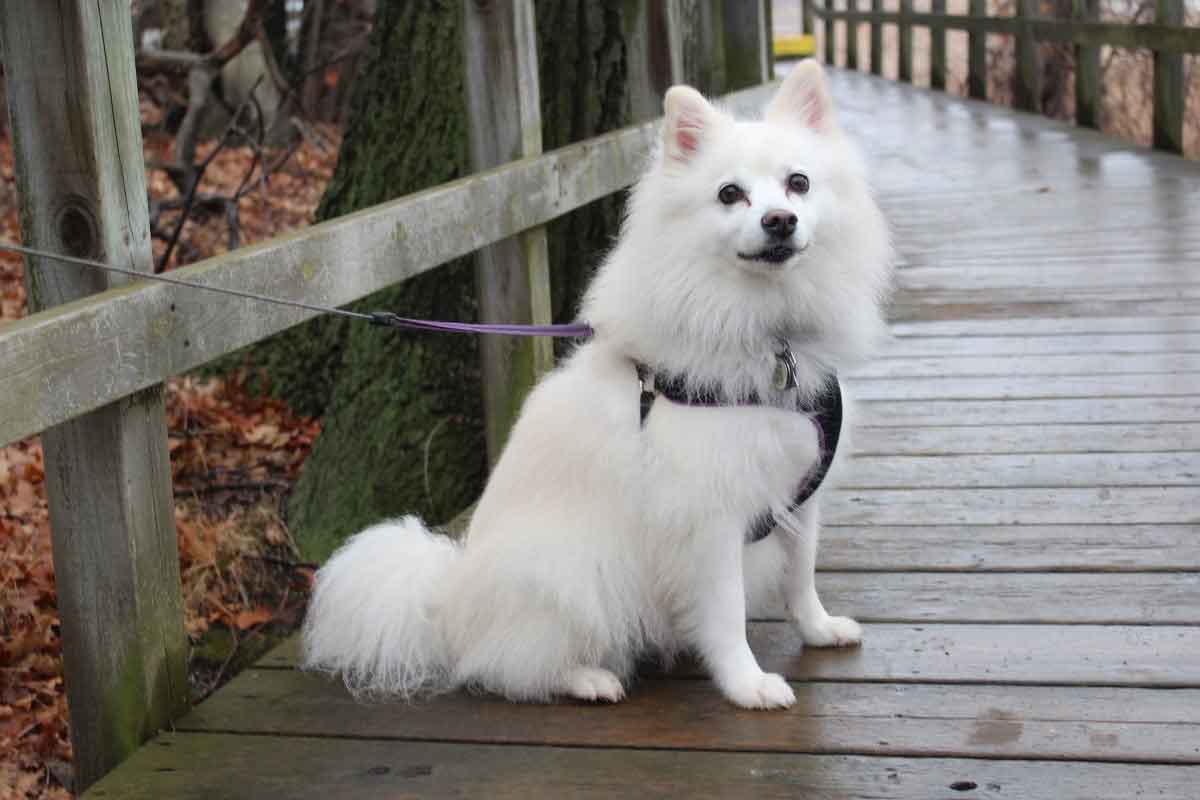
Japanese Spitz

The Japanese Spitz he is a very people-oriented dog.

Content

History

The strong similarity to the Mittelspitz (Standard or Medium Spitz) German allows us to suppose that the Japanese spitz descends from this same race. Other cynologists assume that the Spitz descends from the Nordic Spitz. One thing is for sure: the origin of Japanese spitz not in japan, but in Europe. From there he arrived in Japan at the beginning of the 20th century along with travelers.

The attractive white dog with the charming character quickly gained popularity among the Japanese population. With more caps from China, Canada and the US, own breeding was established in Japan in the years 20. While in Europe an attempt was made to increase the size of the lace, thus creating the German Spitz, the Japanese tended to opt for the more original compact form. In 1948 the Japanese Kennel Club established a first breed standard for the first time. As country of origin, Japan was indicated in the standard. The FCI, that has officially recognized the Japanese spitz from 1964, includes it today in the Group 5 (Spitz and dogs of the original type), as well as in the Subsection 5 (Asian Spitz and related breeds), under Standard No. 262.

In his native Japan, the Japanese spitz it was very popular for a long time, especially in the years 50 the last century. Although it is still more common there in terms of numbers than in Europe, the demand of the little companion is gradually changing. While in Japan the number of recently registered puppies is declining, is increasing in North America and Europe.

Physical characteristics ยซJapanese Spitzยป

This breed is distinguished by the fact that it is exclusively pure white.. Thanks to his straight and dense hair, the Japanese Spitz seems strong. What is no less important, it is also caused by the swollen inner layer. The beautiful ruffle on the shoulder, neck and sill contributes to attractive appearance. Typical of the tail is a long and voluminous flag.

Despite her short legs, the Japanese Spitz is sporty and extremely agile. Due to its balanced proportions, the appearance of this compact pedigree dog is both striking and harmonious.

The height at the cross – the elevated transition from neck to back – tends to be of 30 to 38 cm in adult males. Females reach a somewhat smaller size. The Japanese Spitz weighs between 4,5 and 11 kg.

Character and abilities ยซJapanese Spitzยป

The well balanced nature of the Japanese Spitz fits the very harmonious appearance. He is an attentive guard. Anyone who approaches him is not immediately signaled with a savage bark. Only when the Japanese pedigree dog feels a serious threat, gets loud and fights back vehemently.

At home, the Japanese Spitz behaves quite calmly. Abroad, on the other hand, he likes to show the energy he has inside him. To enjoy the Japanese Spitz, you must like a little dog who likes to play. You should also have fun on long trips with your four-legged friend.

The Japanese Spitz he is a very people-oriented dog. Whether it belongs to one person or has a master or caregiver at the same time, he does not care. He also likes to live with the family. The company of people is the priority. Pets or other pets are not enough. Although the Japanese spitz usually get along with them. So if you're short on time for a dog, a Japanese Spitz probably not the right thing for you.

The white puppy enjoys the company of people and would like to be with them always and everywhere.. He is very receptive and eager to learn. Which makes education in combination with devotion quite easy even for untrained dog owners.

An apartment in the city is suitable for him, as long as you are well occupied with extensive walks and activities.

ยซJapanese Spitzยป Care

Despite the hereditary predisposition to many diseases, Many of the ailments can be avoided by taking proper care of your Spitz. Dental problems in particular can be prevented through regular dental care, that is to say, brush your teeth at least once a week, or better daily. Diseases or inflammations of the eyes, nose, ears and claws can also be detected and treated at an early stage through proper care and regular check-ups. Another important aspect of grooming is the care of the coat of the Japanese spitz. Despite the impressive and luxurious fur, This is not very elaborate and therefore it is usually sufficient if the hair is combed or brushed thoroughly twice a week. Only in the coat change phase (twice a year) grooming effort increases until daily styling.

Japanese Spitz health

An indication of good and serious parenting is the presentation of genetic test results.. The breeding animals used must have an impeccable genetic makeup to exclude genetic diseases from the start. Dogs in which hereditary diseases typical of the breed have occurred should be excluded from breeding for the sake of the health of the breed. This also includes the tendency to dislocate the patella (slipping of the patella out of its guide), which can also be inherited in many dogs, especially in small dog breeds. Also eye problems, such as distichiasis or narrowing of the tear ducts, as well as dental problems can occur with the Japanese spitz. No other diseases typical of the breed are known..

The correct nutrition of the ยซJapanese Spitzยป

In a special way, correct nutrition contributes to the health and well-being of the Japanese spitz. Small dogs with a very compact constitution have a strong tendency to be overweight. Too many pounds can easily lead to joint disease and heart and circulation problems.. Overweight dogs are also at higher risk for diabetes.

As the owner of a Japanese spitz, you should always keep the amounts recommended by food manufacturers. It also, the dog should not be given too many treats between meals.

It is not only the quantity but also the quality of the food that is important. Besides vegetables or rice, good dog food consists largely of high-quality meat. Poor quality food often contains an excessive amount of cereals. Under no circumstances should it contain flavor enhancers or sweeteners.

Before buying, you should find out the exact composition of the dog food in the manufacturer's instructions. Several vendors offer good and safe dog food, both dry and wet.

It is not unusual for dog owners to prefer homemade dog food. This can also be an alternative to the ready-to-eat food available in stores for the Japanese spitz. But, it is essential that you acquire the necessary knowledge to cook balanced dog food for yourself.

The diet BARF it is also a good way to feed Japanese spitz with a healthy diet. BARF means ยซBone And Raw Foodยป (Bones and raw foods). All food components, like meat, fish, vegetables or fruit, they are only given raw. Various vendors and specialty stores facilitate BARF to the dog owner. Like cooking food, this feeding method requires a certain amount of knowledge about the correct use of raw ingredients.

You must feed a puppy of 3 to 5 times a day, an adult raw food and bones 2 times a day.

Buying a "Japanese Spitz"

Despite the growing popularity and demand in the European and American continent, the Japanese spitz still belongs to the rare dog breeds. The waiting period for a new litter at a breeder can be very long. Who doesn't necessarily care about a purebred puppy, but also consider buying a Spitz adult, should – parallel to the search for a breeder – also look around the animal shelter, where over and over again Spitz or the crosses of Spitz they are waiting for a new and loving home. A puppy, on the other hand, should only be purchased from a serious and certified breeder.

How do I recognize a serious breeder?

When choosing a suitable breeder, various factors play a role. It's not just the "formalities" that must be correct, that is to say, the papers, the pedigree and the contract of sale, but also the personal reasons that ultimately decide the purchase. The breeder must, first, be understanding with you, and this cannot be found out with a short email or a short phone call. One or better several meetings are necessary to get a complete picture of the breeder and his dogs.. Does the breeder invite you to his house? Do you willingly show your "kennel" and do the animals live in close contact with the breeder's family? The first weeks are very important for the socialization of the puppies and therefore the environment must correspond absolutely to the affectionate nature of the puppies. Japanese spitz. It also, a serious breeder will be able to tell you a lot about the breed and its characteristics. They will also ask you about your life circumstances to make sure your puppy has fun with you..

Characteristics "Japanese Spitz"

Coexistence is important that you have with your new friend. Before considering the acquisition of a dog of the breed "Japanese Spitz" you know certain factors. Not all breeds of dogs are apt to live in an apartment, you must take into account his character, their need for exercise, their interaction with other pets, their care and if you have small children, their level of tolerance towards them.

Training ?

5,0 of 5 stars (based on 1 review)

Suitability of the apartment ?

4,0 of 5 stars (based on 1 review)

Can be alone all day ?

2,0 of 5 stars (based on 1 review)

Suitable as a first dog ?

5,0 of 5 stars (based on 1 review)

Weight gain ?

5,0 of 5 stars (based on 1 review)

Health ?

4,0 of 5 stars (based on 1 review)

Intelligence ?

4,0 of 5 stars (based on 1 review)

Kindness with child ?

5,0 of 5 stars (based on 1 review)

Tendency to bite ?

2,0 of 5 stars (based on 1 review)

Tendency to bark ?

2,0 of 5 stars (based on 1 review)

Tendency to flee ?

2,0 of 5 stars (based on 1 review)

hair loss strength ?

5,0 of 5 stars (based on 1 review)

Suitable as a guard dog ?

3,0 of 5 stars (based on 1 review)

Joy ?

4,0 of 5 stars (based on 1 review)

Cat friendliness ?

4,0 of 5 stars (based on 1 review)

Power level ?

4,0 of 5 stars (based on 1 review)

Images "Japanese Spitz"

Photos:

1 – Japanese spitz by https://pxhere.com/es/photo/1273902
2 – Japanese Spitz Siberia by 0894Leanne, CC BY-SA 3.0, via Wikimedia Commons
3 – Japanese Spitz Puppy by mostlegendary@gmail.com, CC BY-SA 3.0, via Wikimedia Commons
4 – Japanese spitz by https://www.pikist.com/free-photo-sixhn
5 – Japanese spitz by https://www.pxfuel.com/en/free-photo-xghfb
6 – Japanese Spitz by Trev Grant, CC BY 2.0, via Wikimedia Commons
7 – Japanese Spitz by https://www.pikrepo.com/fflza/japanese-spitz-near-wall

Videos "Japanese Spitz"

Kubo - Japanese Spitz Puppy - 2 Weeks Residential Dog Training
Kubo – Japanese Spitz Puppy – 2 Weeks Residential Dog Training
Japanese Spitz / Breed of dog
"Japanese Spitz" / Breed of dog

Type and recognitions:

  • FCI CLASSIFICATION:
  • Group :
  • Section : . .

Federations:

  • – FCI – Group 5: Spitz-type dogs and primitive type – Section 5: Asian Spitz and related breeds. โ“˜
  • – ANKC – Group 7 (Non-Sporting) โ“˜
  • – CKC – Group 6 – Non-Sporting โ“˜
  • – โ€‹KC – Utility โ“˜
  • – NZKC – Non-Sporting โ“˜
  • – UKC – Northern Breed Group โ“˜

FCI breed standard "Japanese Spitz"

Origin:
Japan

Date of publication of the valid original standard:
16.06.1999

Use:

Companion dog.


General appearance:

Its body is covered with abundant white fur., the snout is sharp, triangular and erect ears, The tail is covered with long feather-shaped hair and curls over the back.. Robust and well balanced constitution, Its harmonious beauty gives it a lively appearance and dignity characteristic of this breed., that at the same time denotes elegance.

IMPORTANT PROPORTION : The relationship between the height at the withers and the length of the body is 10 : 11.


Behavior / temperament:

It is an intelligent dog, joyful, with keenness of senses. Boisterous nature is not allowed.

Head:

The size of the head should be in harmony with the body and should be moderately wide and rounded.

Cranial region:
  • Skull : The forehead is moderately developed. The back of the skull is very wide.
  • Depression links (Stop) : Defined.

facial region:

  • Nose : Small, rounded and black.
  • Snout : Pointed, the tip slightly rounded and well balanced. Lips adherent and preferably black.
  • Jaws / Teeth : Strong white teeth with scissor bite.

Eyes : Moderately large, almendrada form, placed slightly oblique, dark colored. The edges of the eyelids black.

Ears : High insertion, small, triangular, upright, directed forward and placed not too far apart.

Neck:

Moderately long and very muscular.

Body:

  • Cross : High.
  • Back : Straight and short.
  • Kidney region : Wide.
  • Chest : Wide and deep, well arched ribs.
  • Abdomen : Well collected.

Tail:

High insertion, moderately long and carried on the back.

Tips

PREVIOUS MEMBERS : Well inclined shoulders, forearms straight and elbows close to the body.

LATER MEMBERS : Muscular, the femoro-tibio-patellar joints (knees) and tibio-tarsals (hocks) moderately angled.

FEET : Cat feet. Thick and desirably black pads, the same as nails.

Movement:

Fast and active.

Mantle

HAIR : The hair of the outer coat is straight and remains separated. The hair of the undercoat is short, dense and soft texture. The face, the ears, the front part of the limbs and under the hocks are covered with short hair; the rest of the body is covered with long, abundant hair, especially from neck to shoulders, and the parapet that has a beautiful ruff of hair. The tail also has abundant long feather-shaped hair..

COLOR : Pure white.


Size and weight:

Height to the cross :

  • Males : 30 โ€“ 38 cm..
  • females : slightly smaller than males.


Fouls:

Any deviation from the aforementioned criteria is considered as a fault and the severity of this is considered to the degree of the deviation to the standard and its consequences on the health and well-being of the dog..

โ€ข Upper or lower prognathism.
โ€ข Firmly coiled tail.
โ€ข Shyness, noisy dog.

MISS PLAYOFFS

โ€ข Aggressive or fearful dog.
โ€ข Floppy ears.
โ€ข Tail not carried over the back.

Any dog โ€‹โ€‹showing clear signs of physical or behavioral abnormalities must be disqualified..


N.B.:

Males should have two normal-appearing testicles fully descended into the scrotum..

Source: F.C.I - International Cynological Federation

Alternative names:

1. Nihon Supittsu (English).
2. Nihon Supittsu (French).
3. Nihon Supittsu (Japan-Spitz), Japanischer Spitz (German).
4. Nihon Supittsu (Portuguese).
5. Nihon Supittsu (espaรฑol).

โ–ท The world of Pets: Dogs, cats, birds, reptiles, amphibians

Shiba Inu
Japรณn FCI 257 . Asian Spitz and related breeds

Shiba Inu

The Shiba Inu It is the smallest of the six original and distinct breeds of dog Japan.

Content

History

The Shiba Inu It is an ancient breed of Japanese dog. It is also known as Shiba or Shiba Ken. Shiba means "small" and "Inuยป or ยซKenยป means ยซdogยป in Japanese.

The Shiba It is the smallest of the six recognized Japanese dog breeds.

Historical representatives of the breed were much smaller and short-legged than current specimens. Mountain farmers kept them as farm dogs and to hunt small game and birds.. They could develop independently of other races and changed little. Towards the end of the 19th century the British brought their English Setters and Pointer. As a result, the Shiba Purebred became a rarity within a few decades. Almost a hundred years ago the breed was almost extinct. Around the year 1928 early breeders began to revive the breed and in 1934 established an official standard. Internationally, the FCI tells it in the Group 5 ยซSpitz-type and primitive type dogsยป in Section 5 "Asian Spitz and related breeds".

Physical Characteristics Shiba Inu

Translated ยซShiba Inuยป simply means ยซlittle dogยป. In fact, the Shiba Inu, weighing up to 13 kg, is the smallest representative of the six breeds of Japanese dogs recognized by the FCI.

The Shiba Inu is an original dog and a close relative of the wolf. Its appearance is reminiscent of a fox, especially with reddish specimens. Triangular standing ears stand out, the small slightly triangular eyes, as well as the curly tail, which is very close to the back. The hard and straight top coat can have the colors red, black tan, Sesame, as well as black or red sesame. "Sesame" in Japanese dogs means a mixture of red and black hairs. All colors must have the so-called ยซUrajiroยซ. They are whitish hairs on the muzzle, the chest, cheeks, as well as in the lower part of the body and inside the extremities.

Shiba Inu character and skills

The Shiba Inu is a perceptive and independent dog that never fully submits. In general, is lively, entrepreneur, affectionate and brave. He doesn't like to share his "properties" like baskets, food or toys with other dogs. But, with good socialization, living with other pets is possible. Relatively little thief, but can communicate with other sounds in complex ways. He is reserved and very reserved with strangers. You have a strong will and can convince your caregiver of your qualities. With his strong self-confidence you will have to compete with him at first, what can be a big challenge. But, the dog remains calm and collected and is never aggressive. If you acquire some authority, the Shiba is an affectionate and faithful four-legged companion.

Shiba Inu puppy education

The Shiba Inu he is a demanding dog that is difficult for beginners to understand. You need an owner who can cope with your complex and stubborn character. He never gives up his independence and needs a consistent and loving education. Punishment is not appropriate for sensitive dogs, because they are not only sensitive but also resentful. Even for experienced dog owners, stubborn dog can be a challenge. So, it will be a while before he accepts you as a higher ranking dog. For essential socialization, it is recommended to attend a dog school.

Activities with the Shiba Inu

Depending on how you are, the Shiba Inu can be very agile. Likes to decide for himself when he feels like moving, but he needs his daily walks. Depending on your character, some representatives of the breed are suitable for dog sports. If they make sense of it, Japanese dogs can be convinced of agility. Dogs can also be great companions when jogging or cycling. The strong hunting instinct coupled with the dog's stubbornness allows it to run freely without a leash only in rare cases. Preferred activities vary greatly from dog to dog. The owner's motivation to convince the dog of the benefits of an activity is also decisive. Silly recovery games or tricks are not very attractive to these serious dogs. This intelligent breed wants to understand the meaning of a task.

Shiba Inu health and care

The Shiba he is a robust and easy-care dog. But, you should brush their fur regularly. Loses its dense undercoat twice a year during coat change. If you don't want to fight with large amounts of hair at this time, you should regularly brush the dog to remove loose hair. Overall Shiba it is a clean and odorless dog, who is said to be clean as a cat.

With regard to health, the breed is one of the most robust breeds, but you should avoid great efforts in hot weather. Dogs feel more comfortable in the cold and snow. When it comes to nutrition, you should opt for a high-protein, high-meat diet.

Does the Shiba Inu suit me?

If you are looking for a demanding dog with a strong charisma, the Shiba Inu It will make you happy. It is a very clean dog, whose fur has little inherent odor. In general, the Asian dog breed is suitable for self-confident people who want to deal seriously and intensively with their dog. Beginners should refrain from buying this dog, despite his beautiful appearance. If you are sure of the breed, it is better to look for a breeder that belongs to an approved club. For a purebred puppy with papers you can calculate between 800 and 1500 EUR. Representatives of this breed are occasionally found in the shelter looking for a new home..

Shiba Inu curiosities

in his native country, Japan, the Shiba It is not only a "National Natural Monument", but together with the Akita Inu is the most popular companion dog. Due to its unique appearance, these dogs are also very popular in social media today. The Shiba most popular is probably the male Maru Taro (@marutaro) from the Japanese city of Nezu with more than 2,5 million subscribers on Instagram. Among Internet friends since 2013, the call Doge Meme has become particularly well known. It consists of a photo of a Shiba and a rudimentary text in English. The most used photo shows the male Kabosu, a dog adopted by the kindergarten teacher Atsuko Sato.

Breeders list "Shiba Inu"

REGISTER KENNEL

Creators of Shiba Inu

Offer your puppies for free. Sign up here.

  • This field is a validation field and should be left unchanged.
  • Enter an image of your kennel.


Characteristics "Shiba Inu"

Coexistence is important that you have with your new friend. Before considering the acquisition of a dog of the breed "Shiba Inu" you know certain factors. Not all breeds of dogs are apt to live in an apartment, you must take into account his character, their need for exercise, their interaction with other pets, their care and if you have small children, their level of tolerance towards them.

Training ?

2,0 of 5 stars (based on 1 review)

Suitability of the apartment ?

3,0 of 5 stars (based on 1 review)

Can be alone all day ?

3,0 of 5 stars (based on 1 review)

Suitable as a first dog ?

1,0 of 5 stars (based on 1 review)

Weight gain ?

3,0 of 5 stars (based on 1 review)

Health ?

4,0 of 5 stars (based on 1 review)

Intelligence ?

4,0 of 5 stars (based on 1 review)

Kindness with child ?

3,0 of 5 stars (based on 1 review)

Tendency to bite ?

3,0 of 5 stars (based on 1 review)

Tendency to bark ?

3,0 of 5 stars (based on 1 review)

Tendency to flee ?

5,0 of 5 stars (based on 1 review)

hair loss strength ?

4,0 of 5 stars (based on 1 review)

Suitable as a guard dog ?

5,0 of 5 stars (based on 1 review)

Joy ?

3,0 of 5 stars (based on 1 review)

Cat friendliness ?

2,0 of 5 stars (based on 1 review)

Power level ?

4,0 of 5 stars (based on 1 review)

Shiba Inu pictures

Videos of Shiba Inu

Type and recognitions:

  • FCI CLASSIFICATION:
  • Group :
  • Section : . .

Federations:

  • – FCI – Group 5: Spitz-type dogs and primitive type – Section 5: Asian Spitz and related breeds. โ“˜
  • – AKC – Non-sporting โ“˜
  • – ANKC – Group 6 (Utility) โ“˜
  • – CKC – Group 6 – Non-Sporting โ“˜
  • – โ€‹KC – Utility โ“˜
  • – NZKC – Utility โ“˜
  • – UKC – Northern Breeds โ“˜

FCI breed standard "Shiba Inu"

Origin:
Japan

Date of publication of the valid original standard:
30.10.2016.

Use:

Hunting dog for birds and small animals. Companion dog.


General appearance:

It is a small dog, well balanced, of good bones, with well developed muscles. Of strong Constitution. Quick, agile and beautiful.

important proportions: The relationship between the height at the withers and the length of the body is 10:11.


Behavior / temperament:

It is a dog of loyal temperament, keenly felt and very lively.

Head:

---

Cranial region:

Wide forehead.

  • Fronto-nasal depression (Stop): Defined, with a slight groove.

facial region:

  • Truffle: Preferably black. Straight nose cane.
  • Snout: Moderately thick; thins to the tip.
  • Lips: Closed.
  • Jaws / Teeth: Strong teeth; scissor bite.
  • Cheeks: Well developed.

Eyes: Relatively small, triangular and dark brown; the corner of the eyes turned up.

Ears: Relatively small, triangular, slightly bent forward and firmly erect.

Neck:

Thick, strong and well balanced with head and body.

Body:

  • Back: Straight and steady.
  • Pork loin: Broad and muscular.
  • Breast : Deep, ribs moderately arched.
  • Belly: Well collected.

Tail:

High implementation, thick and carried vigorously coiled or curved like a sickle; the tip of the tail almost reaches the hocks when hanging down.

Tips

Former members: Seen from the front, straight forelimbs.

  • Shoulder pads: Moderately oblique.
  • Elbows: They must be well attached to the body.

Later members:

  • Thigh: Long.
  • Legs: Short, but well developed.
  • Hocks: Thick and strong.

Pies: Fingers should be close together and well arched. The pads must be strong and elastic. Strong and desirably dark colored nails.

Movement:

The movement must be light and agile.

Mantle

Fur: The outer layer should be smooth-haired, with a hard texture, the undercoat should be of fine and abundant hair; the hair on the tail should be slightly long and kept parted.

Color: Red, Black with fire, sesame, sesame black, red sesame.

Sesam color definition:

ยท Sesame: Proportionate mix of black and white hairs.
ยท Sesame negro: More black hairs than white.
ยท Sesam brook: Coat color red, mixed with black hairs.

All above mentioned colors, except for the White, They must have ยซ URAJIRO ยป.

URAJIRO: Whitish hair on the sides of the muzzle and on the cheeks, under the jaw, neck and abdomen, under the tail, and on the inside of the legs.


Size and weight:

Height to the cross:

  • Males: 40 cm..
  • females: 37 cm..

A difference of more or less is tolerated 1,5 cm..


Fouls:

Any deviation from the aforementioned criteria is considered a fault and its seriousness is considered to the degree of the deviation to the standard and its consequences on health and
the welfare of the dog.

ยท Female males / male female.
ยท Defective occlusion (upper or lower prognathism).
ยท Absence of a large number of teeth.
ยท Shyness.

disqualifying fouls:

ยท Aggressiveness or extreme shyness.
ยท Any dog โ€‹โ€‹showing clear signs of physical or behavioral abnormalities should be disqualified.
ยท Ears not erect.
ยท Hanging or short tail.


N.B.:

ยท Males must have two normal-appearing testicles completely descended into the scrotum.
ยท Only functionally and clinically healthy dogs, with the typical conformation of the breed, should be used for parenting.

Source: F.C.I - International Cynological Federation

Alternative names:

1. Japanese Shiba Inu, Japanese Small Size Dog, Japanese Brushwood Dog, Japanese Turf Dog, Shiba Ken (English).
2. shiba inu (French).
3. Shiba-ken, Shiba Inu (German).
4. Shiba (Portuguese).
5. Japanese Shiba Inu, Japanese Small Size Dog, Shiba Ken (espaรฑol).