โ–ท The world of Pets: Dogs, cats, birds, reptiles, amphibians

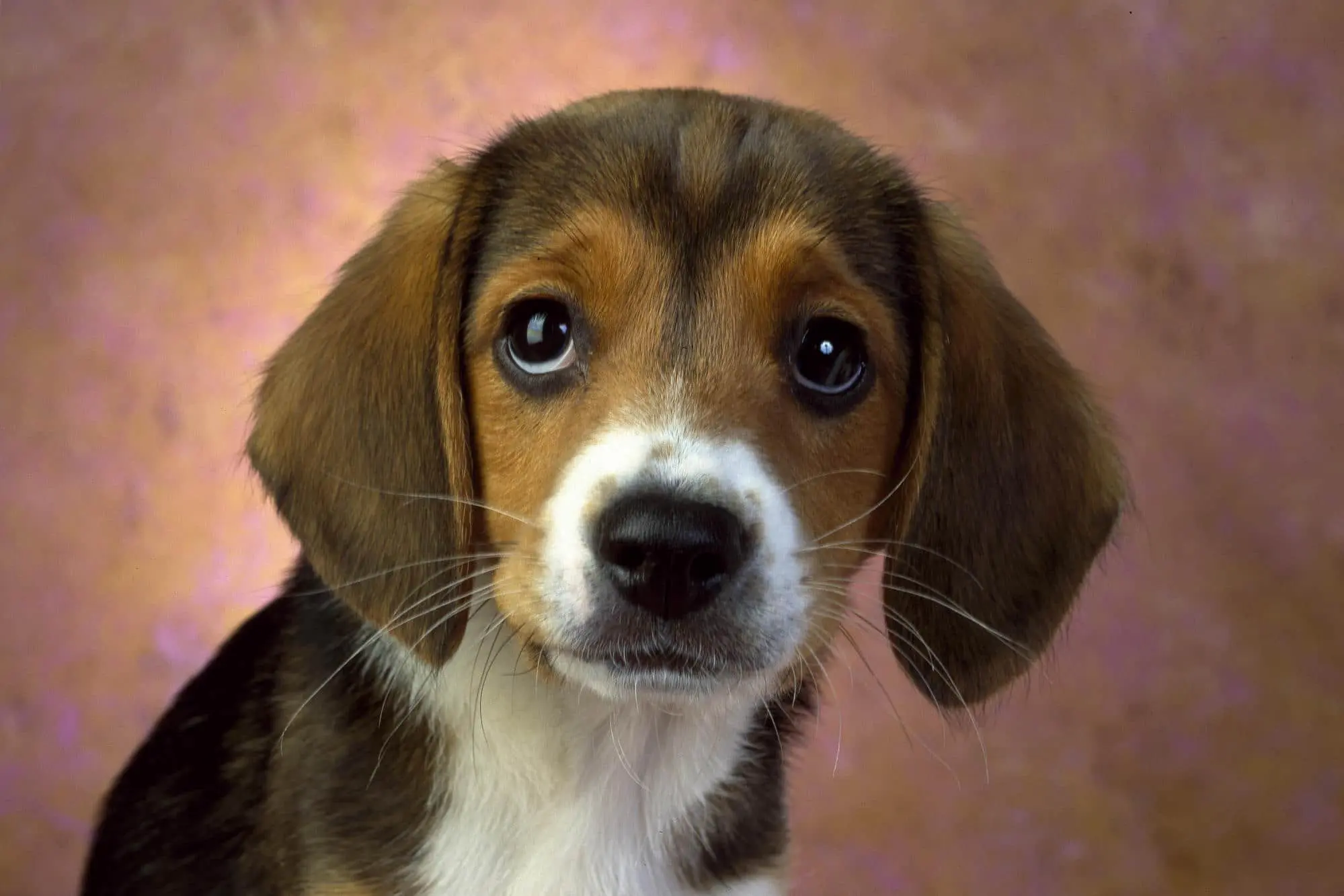
Beagle
Gran Bretaรฑa FCI 161 . Small-sized Hounds

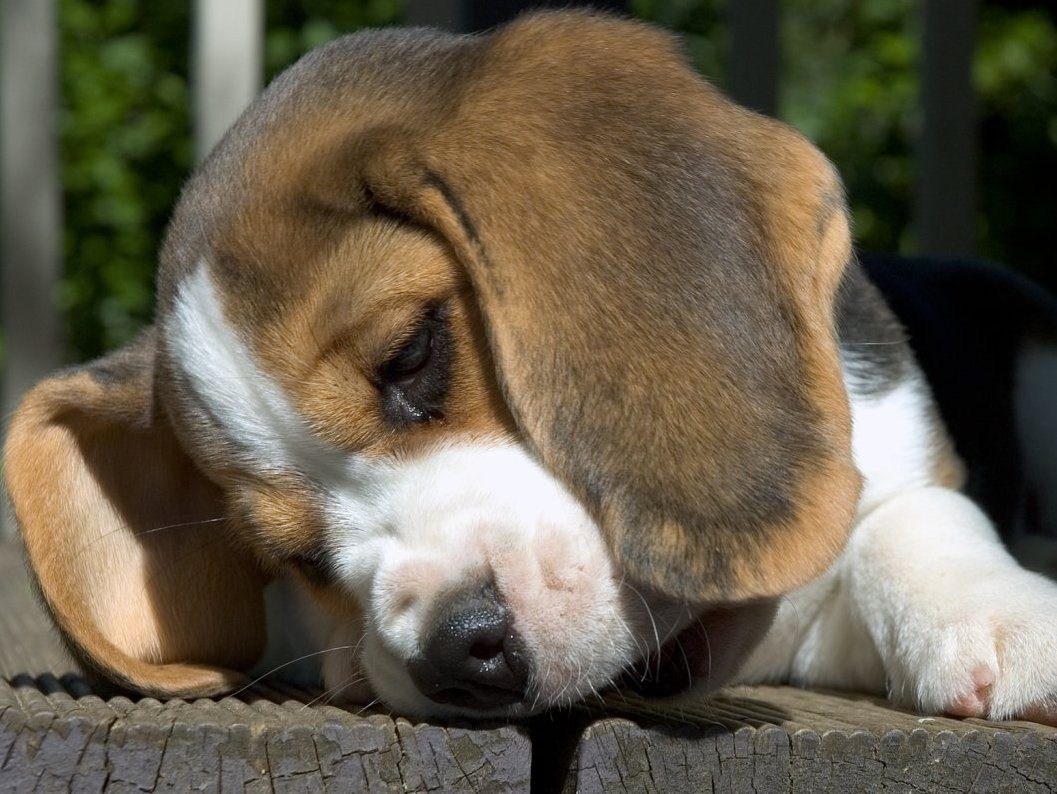
The main fault of the Beagle is disobedience. He is very stubborn and playful.

Beagle

Content

Characteristics "Beagle"

Coexistence is important that you have with your new friend. Before considering the acquisition of a dog of the breed "Beagle" you know certain factors. Not all breeds of dogs are apt to live in an apartment, you must take into account his character, their need for exercise, their interaction with other pets, their care and if you have small children, their level of tolerance towards them.

Adaptation โ“˜

5,0 of 5 stars (based on 1 review)

friendly dog โ€‹โ€‹โ“˜

5,0 of 5 stars (based on 1 review)

hair loss โ“˜

3,0 of 5 stars (based on 1 review)

Affection level โ“˜

5,0 of 5 stars (based on 1 review)

Need for exercise โ“˜

5,0 of 5 stars (based on 1 review)

Social need โ“˜

5,0 of 5 stars (based on 1 review)

Home โ“˜

2,0 of 5 stars (based on 1 review)

Toilet โ“˜

1,0 of 5 stars (based on 1 review)

Friendly with strangers โ“˜

4,0 of 5 stars (based on 1 review)

barking โ“˜

5,0 of 5 stars (based on 1 review)

Health โ“˜

3,0 of 5 stars (based on 1 review)

Territorial โ“˜

1,0 of 5 stars (based on 1 review)

Cat friendly โ“˜

3,0 of 5 stars (based on 1 review)

Intelligence โ“˜

4,0 of 5 stars (based on 1 review)

Versatility โ“˜

2,0 of 5 stars (based on 1 review)

Child friendly โ“˜

5,0 of 5 stars (based on 1 review)

Surveillance โ“˜

5,0 of 5 stars (based on 1 review)

joy โ“˜

1,0 of 5 stars (based on 1 review)

History

The origins of the Beagle they are confused and remote. In the year 350 to. C. Xenophon already described some hounds that coincide in most details with the beagle.

It is believed that it was the Romans who brought them to England as rabbit hunters and once there they were crossed with local hounds..

Talbot Houndson are considered the ancestors of the North Country Beagle, Southern Hound, the Beagle, and the Foxhound.

Between 1300 and the 1400 the Beagle reached a high level of popularity among British monarchs. Edward II and Henry VII already had packs of Glove Beagles, So called because of its small size., they fit in a glove and Elizabeth I had Beagles that only measured 22 centimeters. Hound packs were popular on almost all large country estates.. Towards the 1400, the Beagles had already spread across Britain, Italy, Greece and France thus increasing its popularity (Snoopy is a Beagle).

The name given to the breed has two possible origins. On the one hand, it is considered a derivation of the Celtic word "beag" which means small., while on the other it is maintained that it comes from the French word "begueule" which means open mouth., Perhaps in reference to the noisy outcry produced in the cacario tract.

Physical characteristics


They are dogs with muscular legs aspect, and smooth, short coat. Despite having a muscular and slender appearance they tend to clog up is, his appetite is almost insatiable. Why there is that much attention to their diet and not be allowed to abuse this.

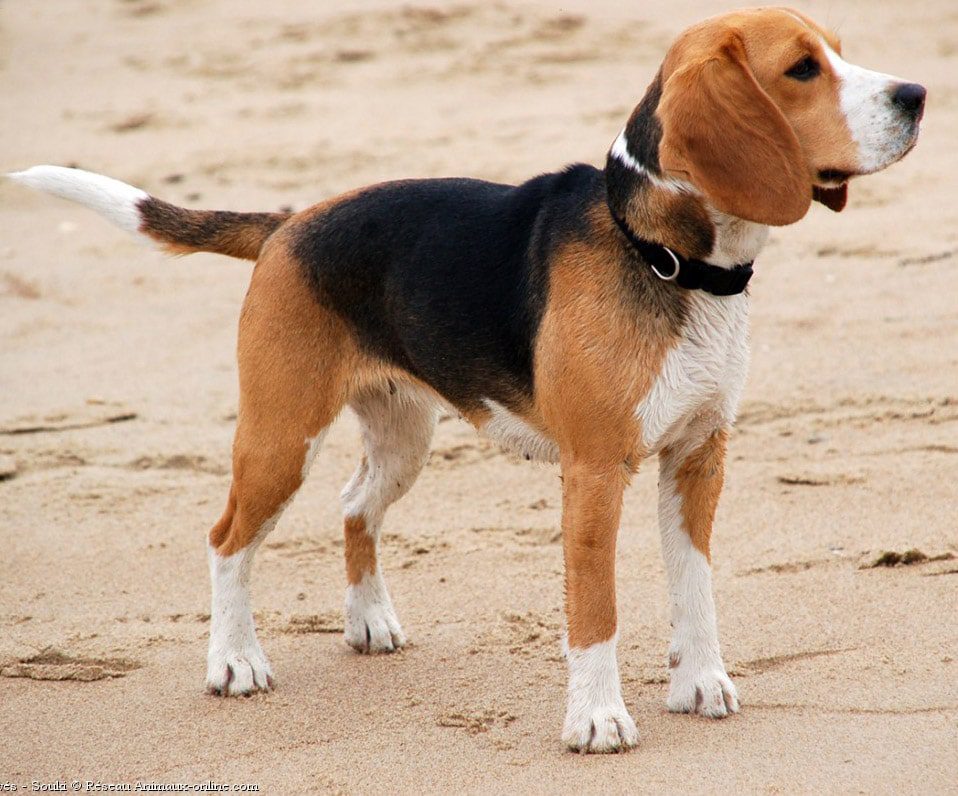
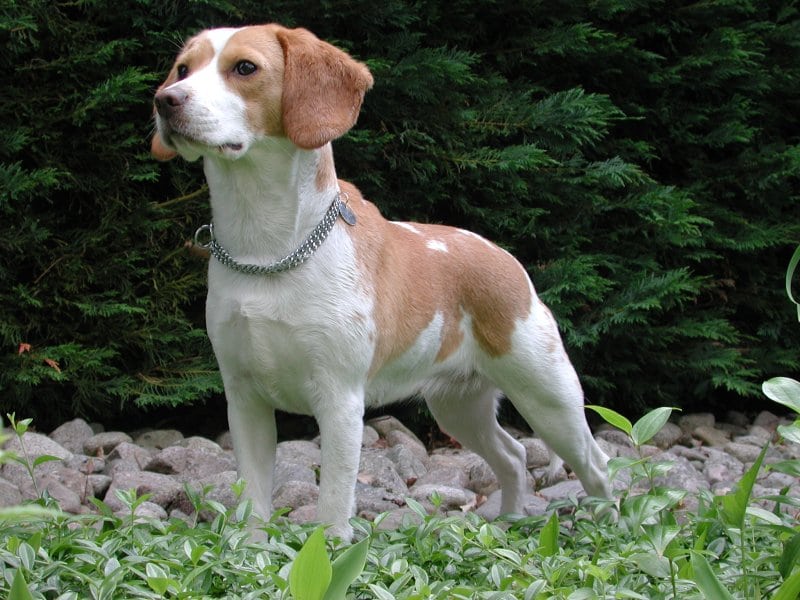
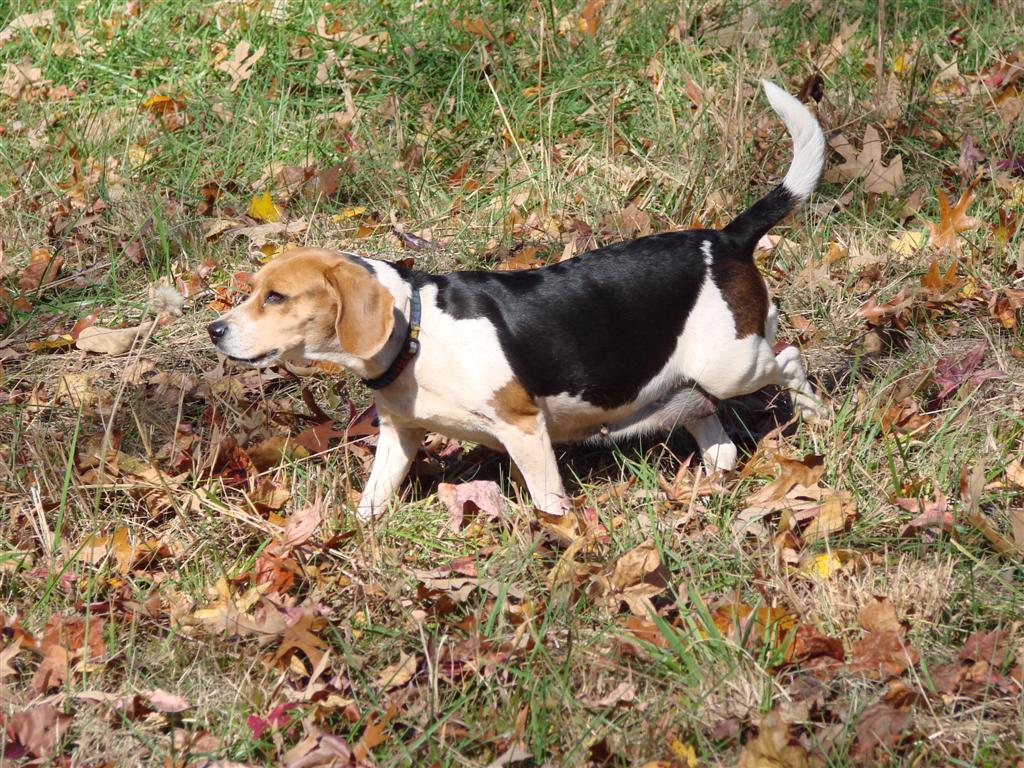
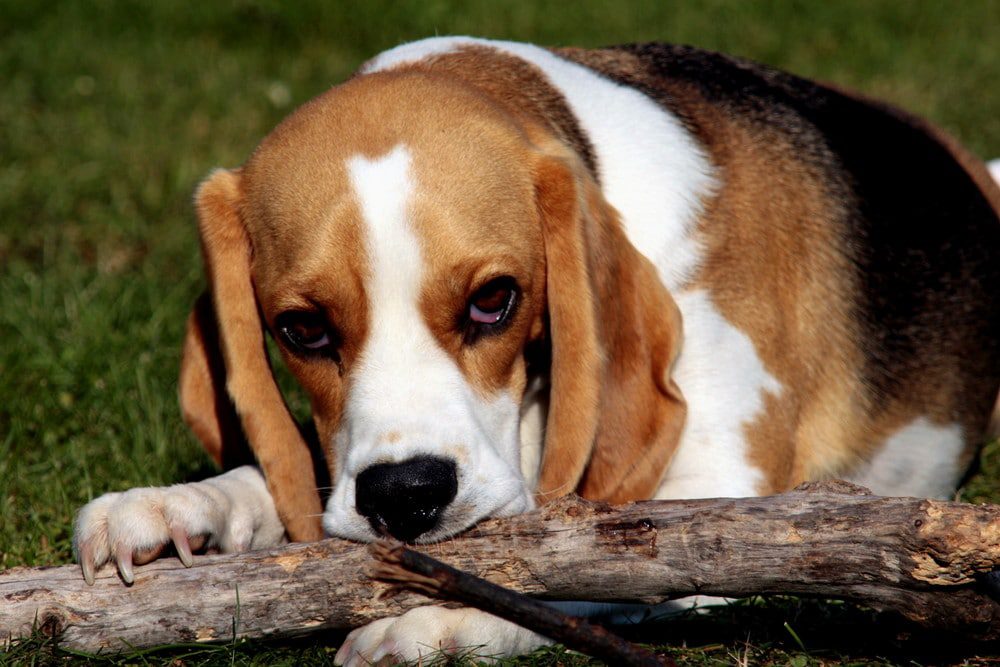
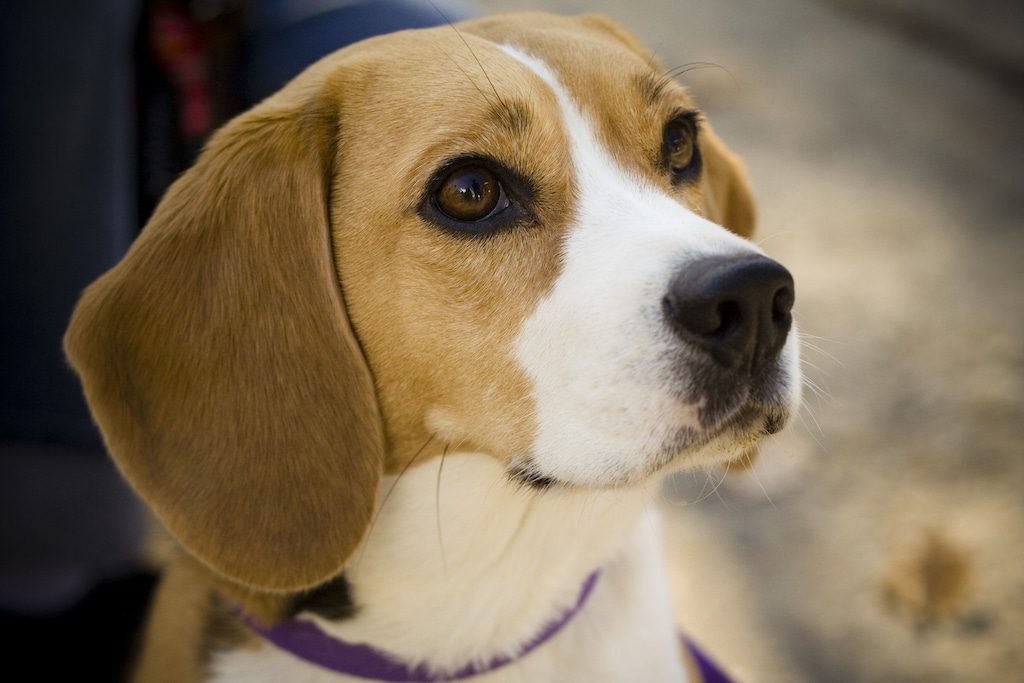
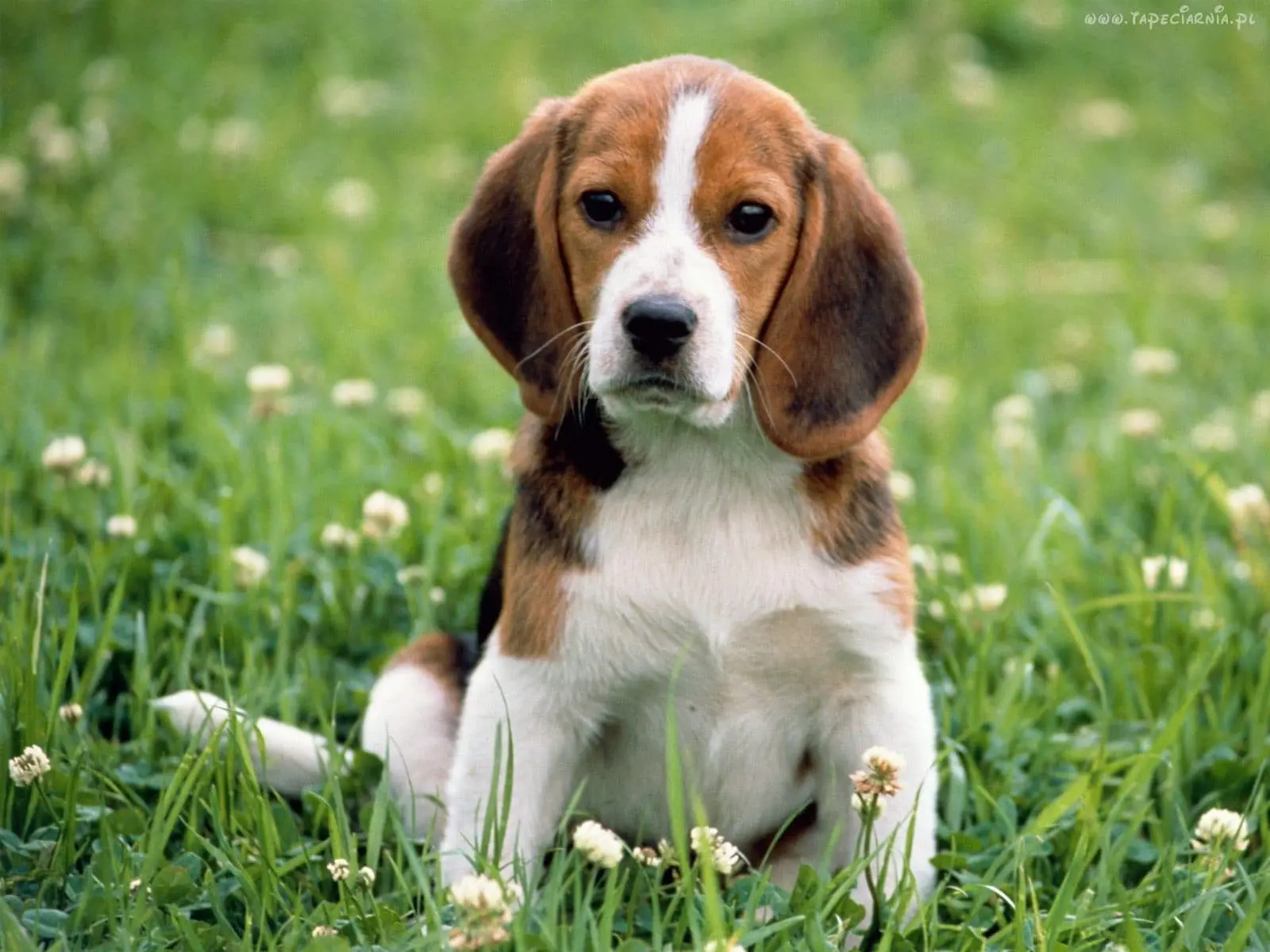
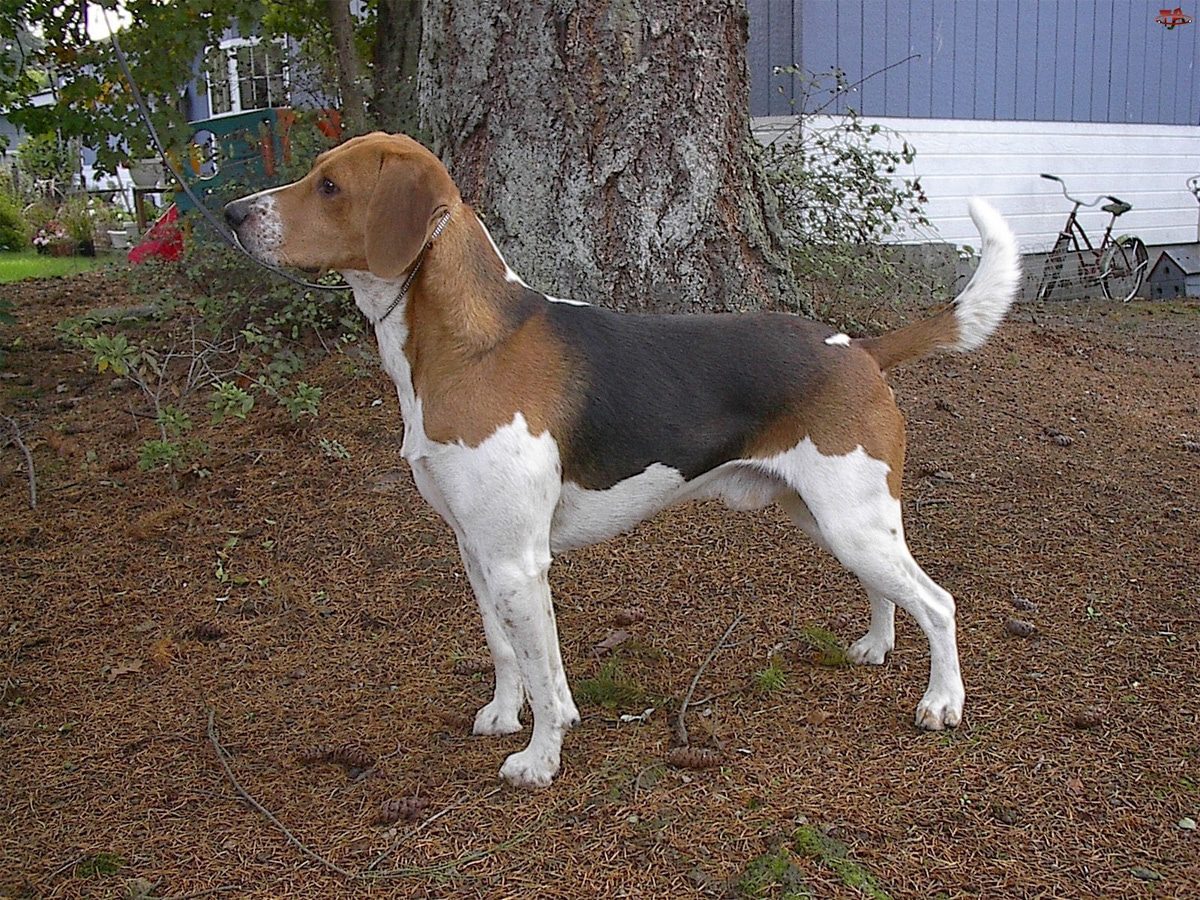
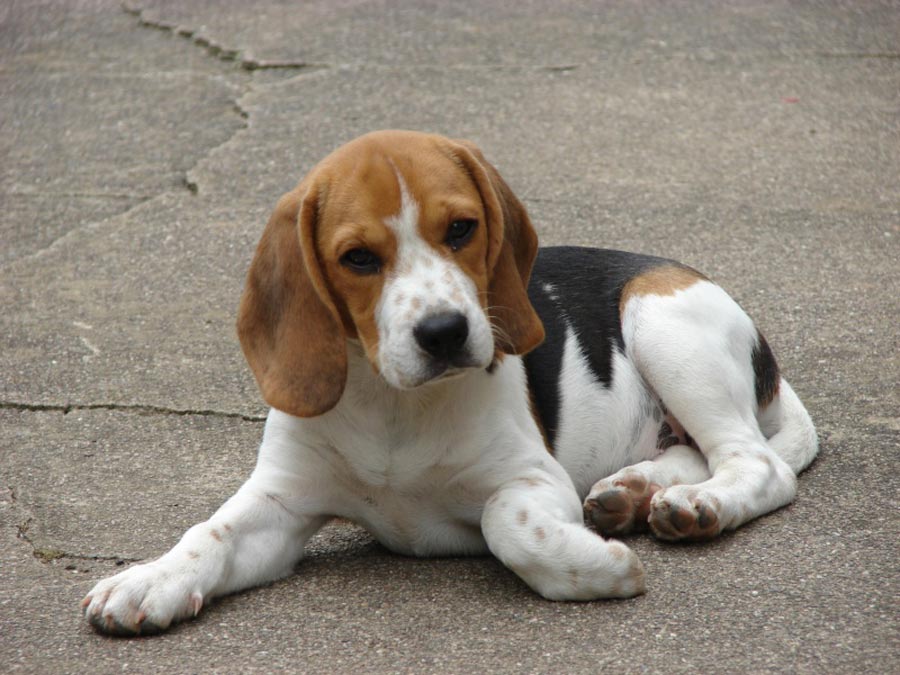
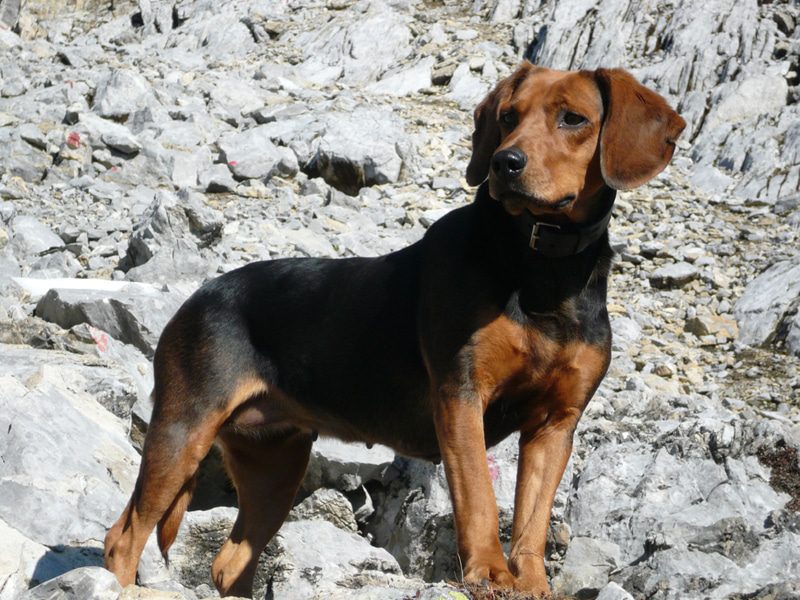
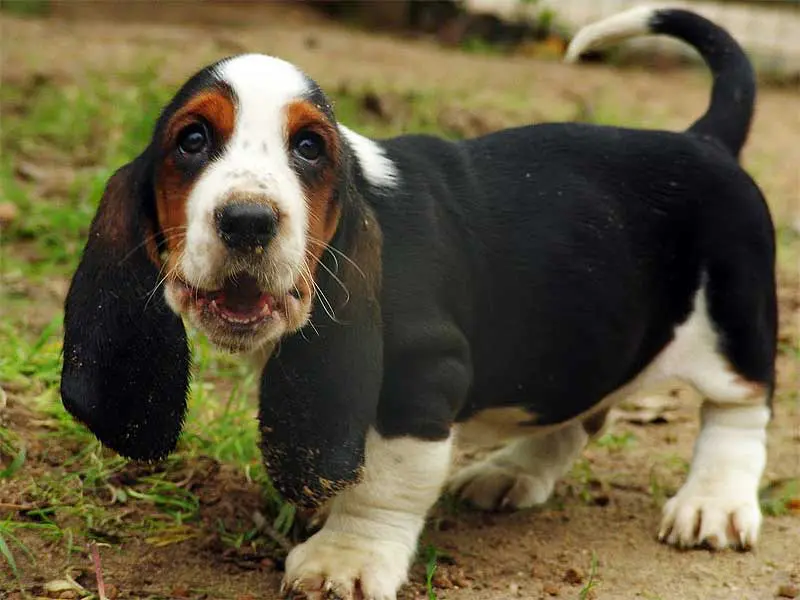
They have long ears. Its colors are usually black, Brown and white of any variety. There are many copies of white legs, Brown ears and Brown and black body. Another characteristic of the breed in its coloration is the intense black around its eyes.. It has a desirable minimum height at the withers of 33 cm., and a desirable maximum height to the cross of 40 cm.. Weighs between 9 and 16 kg.

Character and skills

The Beagle is always alert. Very hardworking, with great energy and determination, they are lively dogs, intelligent and uniform temperament: they do not show aggressiveness or shyness.

Closeness to their owners

The Beagle has almost all the qualities of the ideal companion dog, being meek, loving and friendly, forming strong ties with its people. They are very receptive to their emotions, whatever your age: share their joy in happy moments and show solidarity and support in difficult moments. He is considered an excellent therapist for psychologically debilitated people, especially since the fact that he is generally active does not prevent him from also enjoying calm when it is necessary.

He is also very cheerful and playful, and he loves to have fun. Thus, he especially likes people who are willing to play with him, especially the children.

But, It is important to note that he can be very agitated when playing and, for example, will bite the person you are interacting with. This is never a sign of bad behavior., but simply his way of playing. But, these behaviors can be limited by working on them as part of your education.

Videos "Beagle"

Ability to handle loneliness

Being a gregarious dog, the Beagle prefers company to solitude and needs a lot of social interaction during the day. They tend to suffer from separation anxiety when their owner is away and are left alone for any length of time, even in a familiar space.

So, not suitable for someone who spends most of their days away from home and cannot take it with them.

Relationship with children

The Beagle he is a dog that adores children, in which he finds great playmates, and vice versa.

Their tendency to bite people they play with can be problematic with younger children, so keep a close eye on their interactions, although this is valid for any race.

It should also be noted that sometimes they seek peace and quiet, and they can react badly if they are annoyed with a little insistence. So, it is important for everyone's well-being to teach children to respect their pet and understand their body language, as soon as your age allows.

Get along with strangers

The beagles they are very sociable and are usually delighted to meet new people, whether they are invited to the house by their owners or if they meet them on a walk, for example. He is not the type to be aggressive towards strangers, rather they take an interest in them and potentially expect them to play with them or even offer them food.

Protection instinct

Due to its jovial and open character, the Beagle not one of those who discourages strangers from approaching: you are more likely to approach them to meet them. They may raise their voices in such circumstances, but it is more to express his curiosity than to defend his master or his home.

In other words, although I am always alert, has no real protective instinct, and cannot be used as a guard.

Obedience

Like many breeds of hunting dogs, the Beagle is used to a certain independence of mind, since he must be able to make certain decisions for himself. In daily life, this means that it is far from being a model of obedience, and can even be quite stubborn.

This means you can give a teacher a hard time who doesn't know how to deal with this., especially due to lack of experience. So, a first-time adopter is better off with another breed.

Need for exercise

The Beagle needs to spend a lot of time outdoors, and you can only be comfortable if you do at least 1,5 hours of exercise per day.

In other words, not a breed at all suitable for a master who is often absent, sedentary and/or physically weak.

Working capacity

The Beagle was born for hunting and, in general, for all activities that require a very fine sense of smell. They are very persistent in fulfilling their mission: they are not only lively and intelligent, but also bold, with as much determination as energy.

Risk of leakage

The Beagle it is a hunting dog par excellence. This means that your nose guides you throughout your life., and nothing makes you happier than smelling and following a new or interesting scent. This means that the risk of escape is high and the garden must be fenced off..

Of course, this is also a problem when walking and doing other outdoor activities. So, learning to remember is absolutely crucial in order to consider letting him roam free, although this does not necessarily exempt you from being equipped with a collar with connected GPS to know where you are at all times if, Nonetheless, goes out to the street. Having said that, many owners simply choose to wear the strap consistently.

Noise level

The Beagle it is a very vocal breed of dog: he likes to express himself through his voice and howl loudly. His barks are a true language, and vary depending on what they are trying to communicate and their emotional level.

There are many reasons why it can bark: curiosity or desire to warn when you hear an external noise, afraid, boredom, attention seeking, greeting, separation anxiety…

In any case, it is certainly not the best option for a person who values รขโ‚ฌโ€นรขโ‚ฌโ€นsilence – or whose neighbors value it.

Adaptation to change

The Beagle adapts very well to changes, including lifestyle and / or environmental changes, for example after a move. As long as you stay with your teacher, your main point of reference is there.

Get along with other dogs

The Beagle is usually very friendly with other dogs, either sharing a house with another dog or meeting potential new playmates on walks and other activities. Of course, its use as a bulldog is no stranger to this.

Living under the same roof as one of your roommates can also be a great way to keep you from feeling abandoned when your owners are away..

Get along with cats

The beagles they are very attached to all members of their family. For him, a cat living in the same house is a full member of your family, especially if you are used to being with him from his earliest age. Otherwise, you have to be careful at the beginning of the coexistence and go little by little, but then it has every chance of being harmonious. This is all the more true since the presence of the little feline helps him feel less alone when his masters are absent..

As for the cats that you may encounter in the course of your wanderings, you better stay vigilant. In fact, your hunting instinct can take over and lead you to chase them.

Coexistence with other species

Even a Beagle who is simply a domestic companion is still basically a hunter. If a small animal is found or smells (rodent, bird, etc.) On an excursion, it is very likely that I will go after him and do something to him.

Things are normally very different in the case of an animal that shares your home and that is used to seeing from its first months. She considers him a member of her family and has no reason to attack him. But, there is no zero risk…

Observations

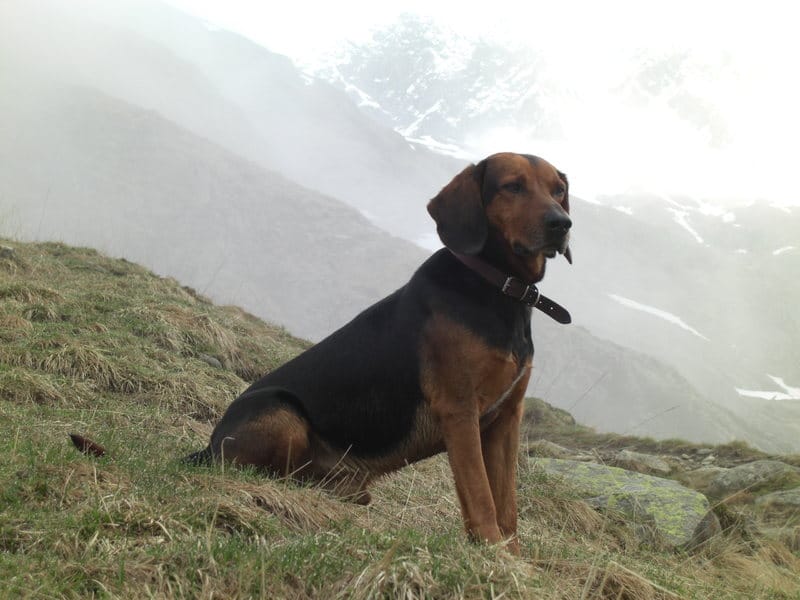
They generally have a way to sit very peculiar, without support in the legs, but rather on the thighs and buttocks, leaving the hind limbs extended completely in the ground.

education

Ease of training

The Beagle it is certainly not one of the easiest breeds to train. They are usually quite stubborn or forgetful, so your training will probably require a good dose of patience and / or creativity.

So, not recommended for a newbie, that he would soon be overwhelmed by his propensity to be indifferent to orders or to be interested in other things.

On the other hand, once you know how to get their attention, it is possible to teach him everything and control his actions. In particular, be able to hear and execute commands even when there is a lot of noise and distractions around. In other words, for an experienced person who knows how to do it (although sometimes you have to call in the help of a professional dog trainer), patience and perseverance pay off. Given its qualities, Worth the effort.

Training method

Being a very intelligent dog, the Beagle makes the connection between orders and actions fairly quickly.

But, this does not mean that he does what he is told. It may happen that you do not see the meaning of what is being asked of you, but it is not the most frequent: most of the time he is eager to please his master… as long as your mind is not occupied by something else. This is where the problem lies: in particular, your sense of smell can quickly become a distraction, especially since he is curious and has a highly developed hunting instinct. This can make training - and subsequent obedience - a bit difficult..

The correct method of training a Beagle, the one who is the key to success, it is therefore to work the concentration, and more specifically the concentration on the orders of his master. So, don't skimp on positive reinforcement, that is to say, in rewards (candies, petting, stimuli, etc.) when you react to being called by name, looks at his master while waiting for instructions and, of course, follow them.

Socialization

Like all dogs, the Beagle needs early socialization. From the first months of life, the puppy needs to be used to meeting all kinds of people, other dogs and other species, and be exposed to all kinds of experiences, smells and sounds. This stage of your life is very important for your cognitive and mental development, so that you are well balanced for the rest of your life.

If you adopt a dog from a breeder, usually they will have already done a lot of work in this area, especially if they only release it to 3 months of age, since the period between 2 and 3 months is the most crucial. But, it is still necessary to continue in the weeks and months following the adoption.

Learn the rules

Every dog รขโ‚ฌโ€นรขโ‚ฌโ€นneeds clear rules to find its place in the home. These rules are even more essential for the success of coexistence in the case of Beagle, who usually does what he wants.

They are easily assimilated, since they remain the same in time and space, as well as from one person to another. So, even before you arrive home, all family members must agree on what will and will not be allowed, and then stick to it. These may include, one person cannot be allowed to do what another prohibits, or tolerate certain puppy behaviors that will later be reprimanded as an adult.

This definition work may also require a small educational effort with children., so they understand that the rules they are asked to abide by are not made to annoy the animal, but to allow him to live in harmony among his family.

The first thing to learn

Unless you want to keep your dog on a leash for the rest of his life, teaching him to remember should be a priority for any owner of a Beagle, given their propensity to follow smells and, Therefore, to take flight. If security conditions allow it, the ideal is to leave your Beagle roam unhindered from a young age, so that he gets used to not being hooked while he is around his owner. In any case, as long as the memory is not perfectly integrated, it is important to reward him every time he returns after being called.

It is also important to control their tendency to chew from a very young age, to do so in objects intended for this purpose, and not in the hands of his master or in the furniture of the house, for example. If the dog is not stopped immediately when he begins to bite the person he is playing with, for example, saying "No!"!ยป firm, stopping the game session and ignoring it, there is a great risk that it will happen again one adult day. The bite of a Beagle adult is, Obviously, much less fun and much more dangerous than a small puppy bite. But, chewing is still inevitable, since this way it relieves the pain of the gums. All you have to do is provide him with toys to chew on., and make sure you limit this behavior to these objects.

Health

Life expectancy

Of 12 to 15 years

The Beagle it is usually quite robust and has a life expectancy higher than the average of other dog breeds.

Resistance to cold and heat

The short coat of the Beagle makes me not fear the heat. On the other hand, as long as the cold is not extreme, the density of its fur allows it to support it perfectly.

Like this, is capable of living in almost any climate.

Diseases

The general good health of the Beagle does not prevent you from being especially prone to certain diseases, like any other race. They are as follows:

  • The Hip Dysplasia, a malformation of the neck of the femur whose appearance may be favored by a hereditary factor. The fact that the bone does not fit perfectly in the hip joint causes pain and lameness, as well as the appearance of osteoarthritis as the animal ages;
  • Enanism, which makes the dog smaller than normal and may or may not be accompanied by other physical abnormalities, like extremely short legs;
  • chinese syndrome, also known as Musladin-Lueke syndrome: individuals with this syndrome grow normally, but they have a big skull and slanted eyes. It also, often have heart problems and toe abnormalities;
  • The Hypothyroidism, a thyroid disorder that causes an alteration of the animal's metabolism, with potentially numerous consequences: loss of hair, Obesity, skin disorders, shortness of breath, great fatigue, etc. The disease cannot be cured in the strict sense, but there are treatments that can greatly reduce the symptoms;
  • Selective immunoglobulin A deficiency (Ig A), affects proteins that defend the body against infectious agents. It can have various consequences: skin infections, respiratory and digestive, and even ear and urinary tract infections. Although it has not yet been established with certainty, this deficiency appears to be inherited, therefore, reproduction of affected subjects is not recommended;
  • The epilepsy, a neurological condition that is mostly hereditary, but that can also occur without affecting family members (near or far). It causes seizures that can be very impressive, but lifelong treatment may reduce their number or intensity. As a result, most affected individuals are capable of leading nearly normal lives;
  • The atopic dermatitis, a chronic and inherited disease in which the dog's skin does not act as a protective barrier. This predisposes you to developing various allergies;
  • Demodecia, disease caused by a parasite characterized by local or extensive hair loss, redness and itching, etc. It occurs most often in puppies between 3 and 12 months of age, due to their weak immune system;
  • Ear infections (otitis, etc.), as its large, flexible ears quickly trap air and provide an environment for moisture and dirt to collect.

The Beagle is also prone to several eye conditions.:

  • Nictitating gland prolapse, u ยซcherry eyeยป, which makes the gland under the third eyelid look like a cherry in the corner of the eye. An operation is often required to remove it. Since the surgical technique used is minimally invasive, the prognosis is good and relapses are very rare;
  • The glaucoma, which is abnormally high pressure in the eye, with very fast irreversible damage and even blindness, unless treated very quickly. This disease usually has a hereditary origin;
  • Progressive retinal atrophy of the APR-CSNB type, a degenerative eye disorder that causes impaired night vision. This disease is hereditary and incurable.

Risk of obesity

Although they are usually quite active, Beagles are prone to obesity due to their greed, especially if you have been neutered. This can lead to many health problems or aggravate existing diseases.. It also, represents a true virtuous circle: as in humans, the more weight an individual gains, less active is, and therefore… more fat.

So, Preventing your dog from being obese should be a top priority for any owner who wants to keep your dog in good health.. As such, in addition to monitoring your diet, it is necessary to weigh it once a month (or even more), to quickly notice any deviation.

If confirmed in the next measurement, no waiting to take him to the vet, as the problem is unlikely to resolve spontaneously, quite the contrary. In fact, only a healthcare professional can identify the cause of this weight gain (improper diet, excessive amounts distributed, disease, reaction to a treatment, etc.) and, Therefore, indicate how to remedy it.

Causes of mortality

The fact that the Beagle is generally in good health is illustrated by a study conducted in 2004 by the Kennel Club and the British Small Animal Veterinary Association: a third of observed deaths are related to cancer, and old age is the second leading cause of death, with a 16% of the cases. Heart problems complete the podium, with a 12%.

Healthy adoption

Although the Beagle usually leads a healthy life, many of the diseases the breed is prone to are or may be inherited. So, it is important to adopt from a serious breeder: this offers the best guarantee of obtaining a puppy that has not only been well socialized since its first weeks of life, but is also healthy and stays that way.

In effect, a professional worthy of the name is not content with taking the best possible care of puppies during their first weeks of life, before handing them over: systematically puts dogs you plan to breed through various tests, in order to avoid any possible transmission of a hereditary defect. So, if the breeder is unable to present the results of these tests carried out to the parents or the puppy, it is better to pass.

The breeder must also be able to provide a certificate of good health from a veterinarian, as well as details of the vaccinations received by the puppy (registered in your health or vaccination book).

Brittleness during growth

The Beagle finishes growing among the 12 and 15 months of age, and is especially fragile during this period, especially when you don't have 6 months.

As their bones and muscles are still developing, do not exercise it for too long or with too much intensity or, for example, make you walk up and down steps: not only would you risk short-term injury, but also long-term problems (deformities, aftermath, etc.) that could disable you for life.

Maintain good health

Adopting a dog that presents the best guarantees in terms of health and taking care of it during the first months if it is a puppy does not exempt, of course, of worrying about your health after.

Prevention is also essential: take you periodically (At least once a year, and more when he gets older) to a complete health check at the vet, although in appearance everything is fine, it is essential to detect any possible problems early and, in your case, treat it in the best conditions. It's also a chance to make sure you're up to date on your vaccinations., getting the necessary booster shots.

It also, its owner must ensure that it renews its antiparasitic treatments throughout the year, whenever necessary, so you never stop being protected. Obviously, this is even more critical if you spend many hours outdoors, for example, when hunting.

Grooming

The Beagle is, in general, a low maintenance breed.

coat care

Ideally, brush when Beagle once a week to detangle the fur, eliminate dead hair and promote regrowth. As it is a breed of short-haired dog, this is not complicated or time consuming.

But, it is important to remember that your skin is quite fragile, so take advantage of the brushing session to check for sores or rashes, or even signs of infection: redness, tenderness or inflammation of the skin, nose, the eyes, the legs, etc.

On the other hand, their fur tends to thicken in winter, and molts a lot in spring. It is necessary to opt for a greater frequency of brushing during periods of shedding, that is to say, several times a week.

Bathrooms

The coat of the Beagle usually stay clean, so you don't need a frequent bath, unless, of course, got especially dirty. In any case, should not be done more than once a month, as it will damage the skin, which is more fragile than the average.

It is also important to always use a shampoo specially designed for dogs..

ear care

Like all dogs with floppy ears, the Beagle needs special care in this area. In effect, as the air does not circulate very well in them due to this morphological peculiarity, the risk of infections increases.

Thus, it is important to inspect and clean them at least once a week to avoid accumulation of dirt or moisture. You also have to take the time to dry them after they have been in water or a humid environment for a long time.. They should also be checked immediately if they shake their heads more than usual or scratch their ears.. In case of doubt or if they are especially dirty, do not hesitate to consult a veterinarian.

Eye care

As with any dog, the Beagle's eyes should be checked weekly and cleaned if necessary. This reduces the risk of infections and helps detect any illness as early as possible., especially since this breed has a higher than average risk of glaucoma.

Teeth care

During the weekly maintenance session of the Beagle, teeth should be brushed with a dog brush or finger bowl to prevent tartar build-up caused by plaque. Plaque can cause not only bad breath, but also and above all diseases with sometimes serious consequences.

If possible, cleaning should be done even more frequently, since the ideal is a daily cleaning. In any case, it is necessary to use a toothpaste specially designed for dogs.

Nail care

Once he Beagle is sufficiently exercised, natural wear and tear makes it unnecessary to cut your nails manually. But, if not and the nails become too long, must be trimmed with a special canine clipper, Since, otherwise, can interfere with normal walking, breaking and / or injuring the dog.

Checking once a month is a good habit to acquire, as well as listen from time to time: if you hear a kind of clicking noise when walking on hard ground, means its claws are grazing on it. This is the sign that it's time to cut them out.

Maintenance when you get home

Whether it is a Beagle as of another race, when a dog has just spent long hours outdoors, It is a good idea to get into the habit of inspecting its fur and paws when you get home., looking for parasites, barbed, scratches, cuts or other injuries.

This is especially useful for a dog that is used for hunting., since this activity supposes a greater exposure to these dangers.

Introduction to hairdressing

Grooming the coat, the eyes, the ears, the teeth and claws of the Beagle should not be done randomly: every owner should know how to do it, as otherwise it may injure or even harm the dog. So, the first time it may be helpful to ask a vet or groomer to show you how.

It is also very important to accustom the dog to all these manipulations from a very young age., when it is most malleable, so that they seem normal and do not rebel. Maintenance sessions will be calmer and more enjoyable for everyone.

Food

Recommended foods

When feeding a Beagle, it is better to give preference to croquettes that contain a large amount of meat, since they are richer in protein. Due to its high level of exercise, needs more protein than many other dogs.

Unless you have a great experience on the subject, "homemade" food should be avoided, since it is difficult to find the perfect balance, especially since it is easy for you to become overweight if your diet is poorly calibrated, and the necessary proportions of each nutrient in your diet can change over time.

This is the case, above all, if the dog is used to hunting and, therefore, spend more than usual during certain periods. In this case, you have to increase the amount of food from time to time to meet their greatest needs, but you also have to check the contents of its bowl to match the recommended diet for a hunting dog. These may include, it is important that you receive high amounts of fats and proteins of good quality and easy digestion. Once the hunting season is over, It is important, of course, go back to regular servings to avoid weight gain.

Puppies feeding

Be it a Beagle or a representative of another race, a puppy's diet influences not only the present, but also in the future. It is the "fuel" that allows your body to grow and form properly.. An individual who does not eat properly (both quantitatively and qualitatively) during this crucial period you are at risk of stunting, that can affect the rest of your life. On the other hand, if the food given to the baby is too good, it is likely to grow too fast: this can cause injury, joint problems, deformities, etc., with possible consequences for life.

So, do not hesitate to seek the experience of a veterinarian to act in the best possible way, especially since their nutritional needs are constantly changing throughout their growth period.

Meal frequency

Dividing the daily ration into at least two meals and feeding them at a fixed time is one of the best habits to adopt when feeding your Beagle.

This is because the Beagle you know you can count on a second meal later in the day and, therefore, less likely to ask for it. It also builds trust in the owner, as the dog can see that he can be trusted to meet his food needs.

Avoid obesity

The beagles they are very gluttonous and, therefore, are at real risk of obesity if they eat more than they should for their activity level.

Aided by its developed sense of smell, does not hesitate to look for food throughout the house, starting with the garbage. And when he finds food, rarely stops before the last crumb. For this reason, make sure he can't rummage through the trash and put his food and treats in a safe and inaccessible place and/or in a container that is difficult to open, like a box. Better to avoid bags and covers, that can easily break.

As for the treats, it is better not to abuse them, although they are a great ally to achieve their goals in their education. In any case, It is recommended to opt for low-fat products and get into the habit of deducting the caloric intake they represent from your daily ration..

Her propensity to be overweight also means you don't have to give in to her imploring gaze when ordering food at the table., nor give him the leftovers: apart from the fact that certain dishes highly appreciated by humans are toxic to their companions, there is little chance that they will meet your nutritional needs.

Hydration

Like any dog, the Beagle must have fresh water available at all times.

This is especially important when the dog is under great stress., for example, during the hunt. It is wise to carry enough water for him and offer him a drink regularly, otherwise it may resort to puddles, ponds and other potentially unhealthy water sources.

For sale "Beagle"

In any case, the amount of money needed to adopt a Beagle depends essentially on the prestige of the kennel, the quality of the line from which the animal comes, but also and above all of its own characteristics, in particular its physical characteristics, that is to say, of its proximity to the breed standard and of its possible predispositions to hunting.

In Europe

The price of a puppy Beagle it can vary a lot, from something less than 500 euros up to almost 1.500 EUR.

But, most of the time around 1.000 EUR, without significant differences between males and females. You can expect to pay around 1200 euros for an individual whose qualities predestine it for exhibitions or breeding.

Beagle pictures
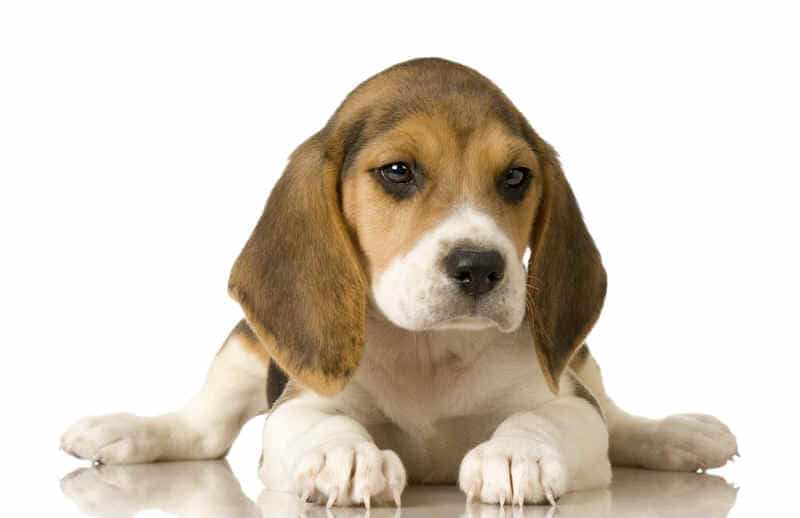
beagle videos

Type and recognitions:

  • FCI CLASSIFICATION:
  • Group :
  • Section : . .

Federations:

FCI โ“˜, AKC โ“˜, ANKC โ“˜, CKC โ“˜, โ€‹KC โ“˜, NZKC โ“˜, UKC โ“˜

FCI breed standard "Beagle"

Origin:
United Kingdom, England

Date of publication of the valid original standard:
13.10.2010

Use:

Bloodhound type dog.


General appearance:

It is a dog with a compact and robust body structure, that gives the impression of quality without being clumsy.

IMPORTANT PROPORTIONS: The distance between the occiput and the tip of the nose, divided by stop, in two parts as equal as possible. Height at the elbow is almost half the height at the withers.


Behavior / temperament:

He is a happy dog, whose essential function is to hunt mainly the hare by following its trail. You are bold and active with determination and tenacity. Is alert, intelligent and has a balanced temperament. He is kind and vigilant, does not show aggressiveness or shyness.

Head:

Of adequate length. Is powerful, without being rough, finer in the female, wrinkle free and no frown.

Cranial region:
  • Skull: Slightly domed, moderately broad with a slight occipital ridge.
  • Depression links (Stop): Is well defined.

facial region:

  • Nose: Wide, Black preferred, although attenuated pigmentation is allowed in light-colored specimens. Large windows.
  • Snout: It is not pointed.
  • Lips: Reasonably developed.
  • Jaws / Teeth: Jaws must be strong, with a perfect scissor bite, regular and complete, that is to say, that the upper incisors closely overlap the lower ones and are implanted vertically in the maxillae.

EYES: Dark brown or hazelnut color, quite large, or sunk or prominent, well separated from each other, with a sweet and friendly expression.

EARS: long, with a rounded tip which reaches near the end of the nose when the ears are turned forward. Low insertion, fine texture, hang gracefully close to the cheeks.

Neck:

Long enough to allow the hound to lean over while crawling; slightly arched and shows a small dewlap.

Body:

Short in the kidney area, but well balanced. top line: Straight and level.

  • Pork loin: Powerful and flexible.
  • Breast : It descends to below the elbows. Well sprung ribs that extend perfectly back.
  • Bottom line and belly: Not excessively raised.

Tail:

Strong and moderately long. High insertion, is happily carried, but not curled on the back or leaning forward from its root. Well covered with hair, especially in its lower part.

Tips

PREVIOUS MEMBERS:

  • Shoulder: Shoulder blades set back, not heavy. Elbows: Firm with no outward or inward deflection.
  • Forearm: Straight forelimbs, vertical and well placed under the body; with good substance and round bones. The limbs do not decrease to the feet.
  • Metacarpus: Short.
  • Previous feet: Compact and firm. Well articulated, with strong pads. It does not present hare's feet. Short nails.

LATER MEMBERS:

  • Thighs: Muscular.
  • Knees: Angled.
  • Warm-tarsal joints: Firms, low and parallel to each other.
  • Hind feet: Compact and firm. Well articulated, with strong pads. It does not present hare's feet. Short nails.

Movement:

Level and firm back; the dog does not sway in its movement. Free stride, with a long, straight reach in the front without high action; hindlimbs show good momentum. It should not present a narrow movement, no outward circular motion or crossover in front.

Mantle

Fur: Short, dense, weather resistant.

Color:

  • Tricolor (black, fire and white);
  • blue, white and tan,
  • spotted badger color,
  • spotted color hare,
  • lemon stained,
  • lemon and white,
  • Red and white,
  • black and white,
  • totally white.

Except for the totally white ones, all the aforementioned colors can be found as mottled. No other color is allowed. The tip of the tail is white.


Size and weight:

Desirable minimum height at the withers: 33 cm.. Desirable maximum height to withers: 40 cm..


Fouls:

Any deviation from the aforementioned criteria is considered as a fault and the severity of this is considered to the degree of the deviation to the standard and its consequences on the health and well-being of the dog.and the dog's ability to perform its traditional task.

FALTAS DESCALIFICANTES:

  • Aggressiveness or extreme shyness.
  • Any dog โ€‹โ€‹showing clear signs of physical or behavioral abnormalities.


N.B.:
  • Males should have two normal-appearing testicles fully descended into the scrotum..
  • Only functionally and clinically healthy dogs, with the typical conformation of the breed, should be used for parenting.

Source: F.C.I - International Cynological Federation

โ–ท The world of Pets: Dogs, cats, birds, reptiles, amphibians

Briquet Griffon Vendรฉen
Francia FCI 19 - Medium-sized Hounds

Briquet Griffon Vendรฉen

Long lasting, fast and robust, the Briquet Griffon Vendรฉen he is a passionate hunter with extraordinary instincts.

Content

History

The selection of Briquet Griffon Vendรฉen dates back to before WWI, and was made by the Count of Elva.

It is a harmonious and enhanced reduction of Grand Griffon Vendรฉen. It is a distinguished dog and quite robust in its construction. Several times decimated during wars, the Briquet Griffon Vendรฉen reappears at Fontenay-le-Comte in 1946.

Today, there are many excellent quality individuals. In 1995, a group of Briquets they won the french roe deer cup, and numerous dogs work in the boar's footprint.

It is the only breed that retains the name of ยซBriquetยซ, which means "medium -sized dog".

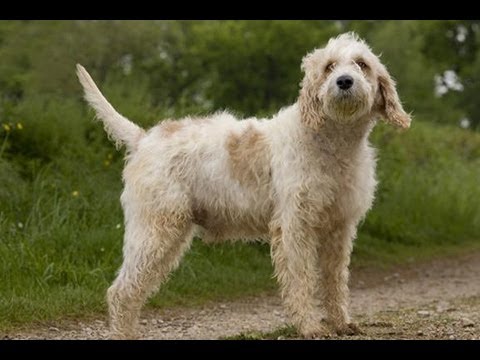
Photo: This is a Briquet Griffon Vendรฉen. His name is Unno du Sentier D'Aimeron by Alephalpha, CC BY-SA 3.0, via Wikimedia Commons

Physical characteristics ยซBriquet Grifรณn Vendeanoยป

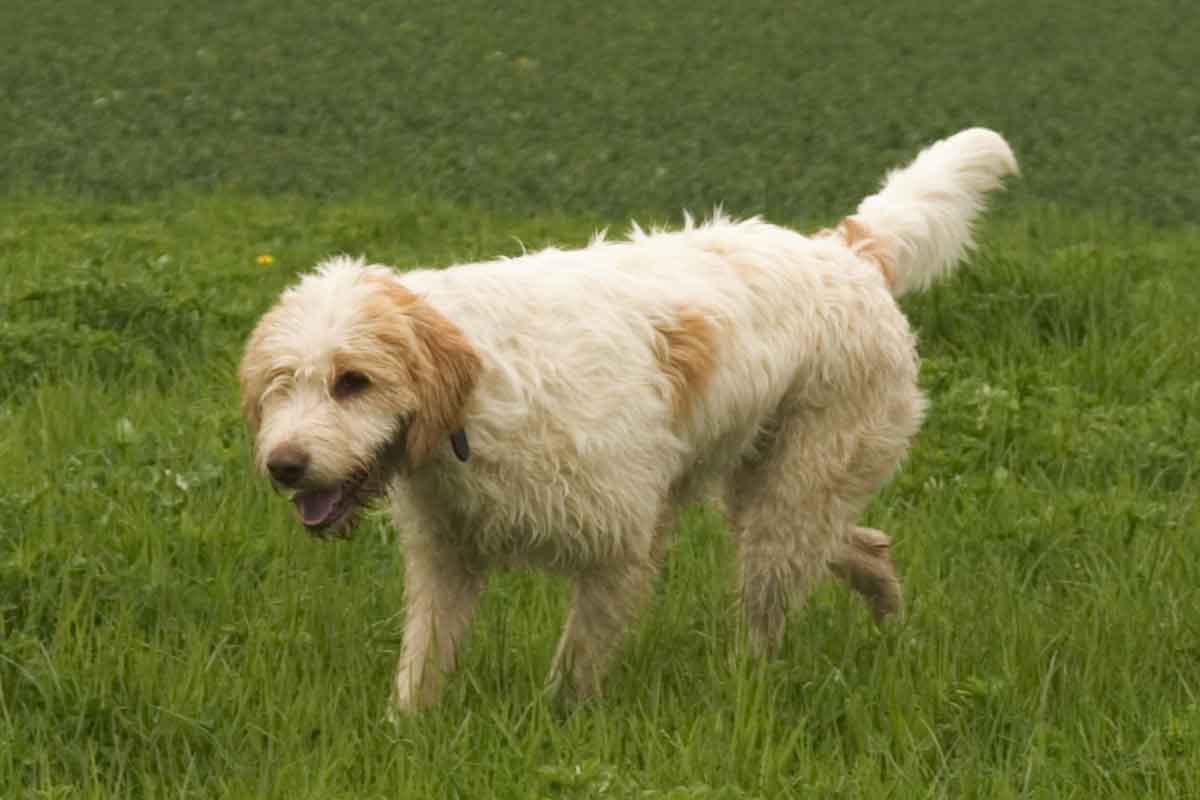
The Briquet Griffon Vendรฉen It is a medium-sized common griffon.. The head and body are collected. The head, quite light, shows parallel lines of skull and muzzle. The cranium, pretty short, is slightly domed with a well-marked stop. Eyes are dark brown. The flexible ones, narrow and thin ears are medium long and turned inward. The short tail is thick at birth and gradually tapers towards the tip. Carries like a saber blade.

The coat is well proportioned, hard and rough without ever being woolly. The most common coat is white and orange. Other coats are black and white, black and Brown, black and sand, tricolor, charcoal sand color with or without white.

SIZE:
Height to the cross: In males: of 50 to 55 cm., in females: of 48 to 53 cm..

Character and skills "Briquet Griffon sale"

Long lasting, fast and robust, the Briquet Griffon Vendรฉen he is a passionate hunter with extraordinary instincts. They are stubborn, enterprising and capable of taking initiative. So, the teacher must be obeyed.

Entrepreneurs and determined, they are also resistant and robust. But, he is not very patient and can be bitten.

It's a hound, used for hunting big game, the hare and the fox. Adapts to city life and makes a proper watchdog.

Characteristics "Briquet Griffon Vendรฉen"

Coexistence is important that you have with your new friend. Before considering the acquisition of a dog of the breed "Briquet Griffon Vendรฉen" you know certain factors. Not all breeds of dogs are apt to live in an apartment, you must take into account his character, their need for exercise, their interaction with other pets, their care and if you have small children, their level of tolerance towards them.

Adaptation โ“˜

2,0 of 5 stars (based on 1 review)

friendly dog โ€‹โ€‹โ“˜

3,0 of 5 stars (based on 1 review)

hair loss โ“˜

3,0 of 5 stars (based on 1 review)

Affection level โ“˜

4,0 of 5 stars (based on 1 review)

Need for exercise โ“˜

5,0 of 5 stars (based on 1 review)

Social need โ“˜

4,0 of 5 stars (based on 1 review)

Home โ“˜

3,0 of 5 stars (based on 1 review)

Toilet โ“˜

2,0 of 5 stars (based on 1 review)

Friendly with strangers โ“˜

4,0 of 5 stars (based on 1 review)

barking โ“˜

3,0 of 5 stars (based on 1 review)

Health โ“˜

2,0 of 5 stars (based on 1 review)

Territorial โ“˜

3,0 of 5 stars (based on 1 review)

Cat friendly โ“˜

3,0 of 5 stars (based on 1 review)

Intelligence โ“˜

4,0 of 5 stars (based on 1 review)

Versatility โ“˜

4,0 of 5 stars (based on 1 review)

Child friendly โ“˜

4,0 of 5 stars (based on 1 review)

Surveillance โ“˜

4,0 of 5 stars (based on 1 review)

joy โ“˜

4,0 of 5 stars (based on 1 review)

Images "Briquet Griffon Vendรฉen"

Photos:

1 – A Medium Griffon Vendรฉen. Colour: white by Canarian, CC BY-SA 4.0, via Wikimedia Commons
2 – Medium Vendรฉen Griffon, Griffon Vendรฉen lighter by Canarian, CC BY-SA 3.0, via Wikimedia Commons
3 – Briquet Grifรณn Vendeano by https://pin.it/1GsizhZ
4 – Briquet Grifรณn Vendeano by http://www.adopt-a-griffon.eu/en/breeds/briquet-griffon-vendeen-2/

Videos "Briquet Griffon Vendรฉen"

Lighter Griffon Vendรฉen ๐Ÿถ๐Ÿพ Everything Dog Breeds ๐Ÿพ๐Ÿถ
Briquet Griffon Vendรฉen ?? Everything Dog Breeds ??
Griffon Vendeen lighter / Briquet Vendรฉe Griffon
Briquet Griffon Vendeen

Type and recognitions:

  • FCI CLASSIFICATION:
  • Group :
  • Section : . .

Federations:

Federations:

  • FCI – Group 6: Scent hounds, and related breeds. – Section 1.2: Medium-sized Hounds. โ“˜
  • UKCScenthounds โ“˜
  • Central Canine Society โ“˜

FCI breed standard "Briquet Griffon Vendรฉen"

Origin:
France

Date of publication of the valid original standard:
09.01.1999

Use:

Hound used for hunting with shotgun, both of the big hunt, as of the hare and the fox.


General appearance:

It is a medium -sized tap, receptive and very determined. Your body is well proportioned and rather collected.


Behavior / temperament:

Behavior : It has a good smell, It is fast and his barking is nice. You don't mind moving in weed. It is very skilled in the rugged land and hunting with the nose to the wind.

Character : It has great initiative, It is resistant and robust. It must be able to lift the hunt and drive it near the hunter. He is a passionate hunter; Your master must make it obey.

Head:

---

Cranial region:

It is quite light; The upper lines of the skull and nasal cane must be parallel. : Slightly bulky, pretty short, not very wide.

  • Depression links (Stop) : Marked.

facial region:

  • Truffle : Grand, black, except for dogs with white and orange fur, in which the brown color is accepted. The nostrils are wide open.
  • Snout : Straight, rather short. Its length is almost equal to that of the skull. It is not very wide in its limb.
  • Lips : Poorly developed, Although they cover the lower jaw well. They are covered by large mustaches.
  • Jaws/Teeth : The joint is in the form of scissors. The incisors are set at right angles to the jaws..
  • Eyes : Large, dark, and vivacious expression. The eyebrows are well pronounced, but they don't cover the eye. The conjunctiva should not be apparent.
  • Ears : flexible, narrow and thin. They are covered with long hairs and their limb is pointed. They become well in and do not reach the limb of the nasal cane. Low-set, below the eye line.

Neck:

Is long and elegant lines. There is no presence of dewlap.

Body:

  • Back : Solid, short. It is straight or very slightly raised.
  • Pork loin : Straight, muscular and well accentuated.
  • Breast : It is quite high, not very wide. Reaches the elbow.
  • Ribs : Moderately rounded.
  • Flanks : Full. The lower line rises very slightly backwards.

Tail:

It is thick at the base and gradually tapers. High implementation, is taken in the form of saber, ever. Is rather short.

Tips

PREVIOUS MEMBERS

  • As a whole : Quite robust, but without the appearance of heaviness. They are well poised.
  • Shoulder : Long, thin and oblique.
  • Elbow : Descended and well attached to the body.
  • Forearm : Straight, for strong bones.

LATER MEMBERS

  • As a whole : well developed; the limbs are regular.
  • Thigh : Long and muscular.
  • Hock : Width and well descended. Seen from the back, It is never closed, Nor open. In profile, Your angle is medium.

FEET : They are not very big. Pads are hard; fingers are well arched and close together. The nails are solid. The appropriate pigmentation of the pads and nails is sought.

Movement:

Active, elastic, Never irregular, not even in jumps.

Mantle

SKIN : Is rather a bit thick, Although elastic; often veined in tricolor fur dogs. There is no presence of dewlap.

HAIR : It is long, Although not too much. Sometimes tangled, rough to touch; the inner layer of hairs is abundant. The belly and inner thighs should not be hairless.. The eyebrows are well pronounced, but they don't cover the eye.

COLOR : Black with white patches (black and white). Black with reddish markings (black and tan). Black with sand-colored markings. Fawn with white patches (Orange and white). Fawn with black blanket and white patches (tricolor). carbon fawn. Carbon sand color with white patches. Color arena carbonado. Traditional denominations : hare hair, wolf fur, Building hair, Woven hair.


Size and weight:

Height to the cross :

  • In males : of 50 to 55 cm..
  • In females : of 48 to 53 cm..

With a tolerance of 1 cm more or less.


Fouls:

Any deviation from the aforementioned criteria is considered a fault and the severity of it is considered to the extent of the deviation from the standard and its consequences on the health and well-being of the dog..

Head :

โ€ข Too big, similar to that of the great sale.
โ€ข Depigmentation of the truffle, lips and eyelids.
โ€ข Spine too long.
โ€ข Pincer-shaped joint.
โ€ข Light eyes.
โ€ข Very long ears, boring, With satin hair, of high implantation. body :
โ€ข Cylindrical the assault.
โ€ข Loose back.
โ€ข Sunken croup.

Tail :

โ€ข Too much wide the diverted.

Tips :

โ€ข Weak bones.
โ€ข Angles that are too straight.
โ€ข Crushed carpos.
โ€ข Not quite together fingers.

Fur :

โ€ข Scarce, fine.

Behavior :

โ€ข Shy dog.

MISS PLAYOFFS

โ€ข Fearful or aggressive dog.
โ€ข Lack of type.
โ€ข Prognathism.
โ€ข Gaze eyes. heterochromia.
โ€ข Narrow sternum region. Narrow ribs at the bottom.
โ€ข Knotted tail.
โ€ข Woolly fur.
โ€ข Solid black or white coat.
โ€ข Important depigmentation.
โ€ข Different size as stipulated by the standard.
โ€ข Visible disability. anatomical deformation.

Any dog โ€‹โ€‹showing clear signs of physical or behavioral abnormalities should be disqualified..


N.B.:

Males must have two normal appearance testicles completed in the scrotum.

Source: F.C.I - International Cynological Federation

Alternative names:

1. Medium Vendรฉen Griffon (English).
2. Briquet griffon vendรฉen (French).
3. Briquet griffon vendรฉen (German).
4. Briquet griffon vendรฉen (Portuguese).
5. Briquet griffon vendรฉen (espaรฑol).

โ–ท The world of Pets: Dogs, cats, birds, reptiles, amphibians

Beagle-Harrier
Francia FCI 290 . Medium-sized Hounds

Beagle Harrier

The Beagle-Harrier is vigorous, brave, energetic and intelligent.

Content

History

The Beagle-Harrier It is a relatively new breed that comes from the crossing (towards the end of the 19th century) two English dogs, the Beagle and the Harrier (dog). Despite its British origins, the Federation Cynologique Internationale considered it a French animal since the race grew up and was set at France. The Beagle-Harrier it is nowadays a breed difficult to find in France and much more in other countries.

The Beagle-Harrierr was created especially for hunting hare, they were looking for a dog faster than him Beagle without it being as heavy as the Harrier (dog). The first crossings of these dogs did not give the expected results but finally, the french baron Gerard Grandin de l'Eprevier He managed to fix the characteristics that he had sought so much, create a dog a little bigger than the Beagle but lighter.

Like this, a new breed of French dog developed from two English dogs, which spread rapidly among French hunters and is still used as a hunting dog today.

โ€œBeagle Harrierโ€ physical characteristics

The Beagle-Harrier is a dog harmonious, balanced and with personality.

The Beagle-Harrier it is a small to medium sized hunting dog with a very strong and muscular trunk. The height at the withers is between 45 and 50 cm for both males and females. The weight of the breed's dogs is usually 20 to 25 kg.

More stylized and light that the Beagle, Despite its larger size. Too small to be a Harrier (dog) and too big to be a Beagle.

It has a broad head with a straight snout. The eyes are dark, clean look, Intelligent. The ears are moderately long and straight. The extroverted tail, almost always on alert. The hair is semi short and close to the body. All colours are admitted, Although it dominates the tricolor.

The life expectancy of the dogs of the breed Beagle-Harrierr is up 12 years.

Character and skills ยซBeagle Harrierยป

The Beagle-Harrier has a distinctive hunting instinct and is therefore highly valued as a passionate hunter. Its strengths in hunting are above all its resistance, speed and strength. He is also known for his exceptional good sense of smell and independent character..

In general, has a very active and lively nature, that must be taken into account when maintaining it. So, a small apartment in the city is not very suitable for him. Rather, dogs want to be in a house with a rural environment where they have plenty of room to move.

In the family, dogs are sociable and behave quite calmly. They get along well with children and do not show nervousness or aggressiveness, which makes them a nice family dog, besides being used as a hunting dog.

The care and conservation of the "Beagle Harrier"

It is enough to brush this dog regularly, especially when returning from walks or hunting trips.
Hair loss is moderate.

The nutrition of the ยซBeagle Harrierยป

Your diet should be appropriate for your age and the amount of daily exercise you do. This is especially true during hunting season..

Especially when you are used to working, it is better to give him his food at night so that he does not run on a full stomach. In this way you can reduce the risk of stomach torsion.

High-quality dry food is perfectly sufficient for him.

ยซBeagle Harrierยป Diseases

  • Hip Dysplasia
  • Malocclusion
  • Good to Know.
    If this dog is used for hunting, it is advisable to let him hunt in a pack.

    ยซBeagle Harrierยป images

    Videos ยซBeagle Harrierยป

    Type and recognitions:

    • FCI CLASSIFICATION:
    • Group :
    • Section : . .

    Federations:

    • FCI – Group 6: Scent hounds, and related breeds. – Section 1.2: Medium-sized Hounds. โ“˜
    • Central Canine Society โ“˜

    FCI breed standard "Beagle-Harrier"

    Origin:
    France

    Date of publication of the valid original standard:
    18.05.1988

    Use:

    ---


    General appearance:

    Medium proportion dog, harmonious, balanced, distinguished, agile and vigorous.


    Behavior / temperament:

    ---

    Head:

    Moderately large.

    Cranial region:
    • Skull: Quite wide and bulky. The occipital protuberance is barely marked. The muzzle is rather straight, never arched.
    • Depression links (Stop): It is not marked.

    facial region:

    • Truffle: Developed; black.
    • Snout: Its length is remarkably equal to that of the skull. It's never square, but, seen from the side it becomes thin, although without being pointed.
    • Belfos: They cover the lower jaw.

    Eyes: Are dark. They are wide open and their expression is frank, vivacious and intelligent.

    Ears: They are rather short and semi-wide. Its insertion is located above the eye line. Towards the middle of the ear, they are slightly rounded. They fall flat along the skull and their lower part bends slightly into a faint oval.

    Neck:

    Loose, although it's fine next to the shoulders. In profile, it is slightly rounded at the top.

    Body:

    • Back: Short, well accented and muscular.
    • Pork loin: Strong and muscular; may be slightly arched.
    • Belly: He never shows up very up, rather full.
    • Breast : It's very deep, although never very flat, which would reduce the rib cage too much. The sternum extends very well back. The false ribs, without being cylindrical, they must however be long and tight enough to form an adequate rib cage.

    Tail:

    ---

    Tips

    PREVIOUS MEMBERS:

    • They are strong and perfectly poised.
      Shoulder: They're long, oblique and muscular.

    LATER MEMBERS:

    • Hips: They are well separated, oblique and strong.
    • Thighs: Well descended, rounded and muscular.
    • Hocks: Located close to the field, well directed.

    FEET: Neither very long nor elongated, but they are good together; the pads are very thick and hard.

    Movement:

    Loose, agile and free.

    Mantle

    Fur: Fairly dense and flattened; it's not very short.

    Color: Tricolor (leonado with black mantle, and white) with fire stains more or less raised, pale or carbonated. The cloak is not important. Since there are gray Harriers, gray and gray and white tricolor cannot be disqualified, nor penalized for having this color.


    Size and weight:

    Height to the cross: 45 cm to 50 cm..


    Fouls:

    Any deviation from the aforementioned criteria is considered as a fault and the severity of this is considered to the degree of the deviation to the standard and its consequences on the health and well-being of the dog..

    โ€ข Head too thick.
    โ€ข Naso-frontal depression (stop) too marked.
    โ€ข Partial depigmentation of the nose.
    โ€ข Muzzle too short and square, or too sharp.
    โ€ข Arched nasal cavity.
    โ€ข Upper or lower prognathism.
    โ€ข Crooked ears. (Cross with French blood)
    โ€ข Flat or squashed feet.
    โ€ข Depigmentation of the scrotum.
    โ€ข Fearful appearance, lacking in vigor or intelligence.

    disqualifying fouls

    โ€ข Aggressiveness or extreme shyness.
    โ€ข Any dog โ€‹โ€‹showing clear signs of physical or behavioral abnormalities should be disqualified..


    N.B.:

    โ€ข Males must have two normal-appearing testicles fully descended into the scrotum..
    โ€ข Only functionally and clinically healthy dogs, with the typical conformation of the breed, should be used for parenting.

    Source: F.C.I - International Cynological Federation

    Alternative names:

    1. French Beagle-Harrier (English).
    2. French Beagle-Harrier (French).
    3. Beagle Harrier/span> (alemรกn).
    4. Beagle-Harrier (portuguรฉs).
    5. Beagle Enano (espaรฑol).

    โ–ท The world of Pets: Dogs, cats, birds, reptiles, amphibians

    Tyrolean hound
    Austria FCI 68 - Medium-sized Hounds

    Braco Tirolรฉs

    The Tyrolean Hound it un perro con un carรกcter muy equilibrado, ideal for hunting in the forest.

    Content

    History

    The Tyrolean hound or Tyrol hound descends from the Celtic hound and with their resistant double coat represents the purest type of dog hounds. It is known that already in the year 1500, the Emperor Maximilian I He used these Hounds in the Tyrol region for hunting hares, foxes and injured animals tracing. In his hunting books he mentioned that he extracted his guide dogs from them.

    About 1860 they started in Tyrol raising pure breeds individually. In 1896 It set a standard that was officially recognized in 1908. The variety of species of hounds from the Tyrol natural, only remained those of red and black color with fire. The Hound of the Tyrol: small size is taken from the standard of 1994.

    In the past, There was also a small size that was removed from the standard Tyrol sniffer in 1994.

    Physical characteristics

    The Tyrolean hound is a breed of hunting dog hound type of medium size and wide erect ears originating from the Austrian Tyrol.

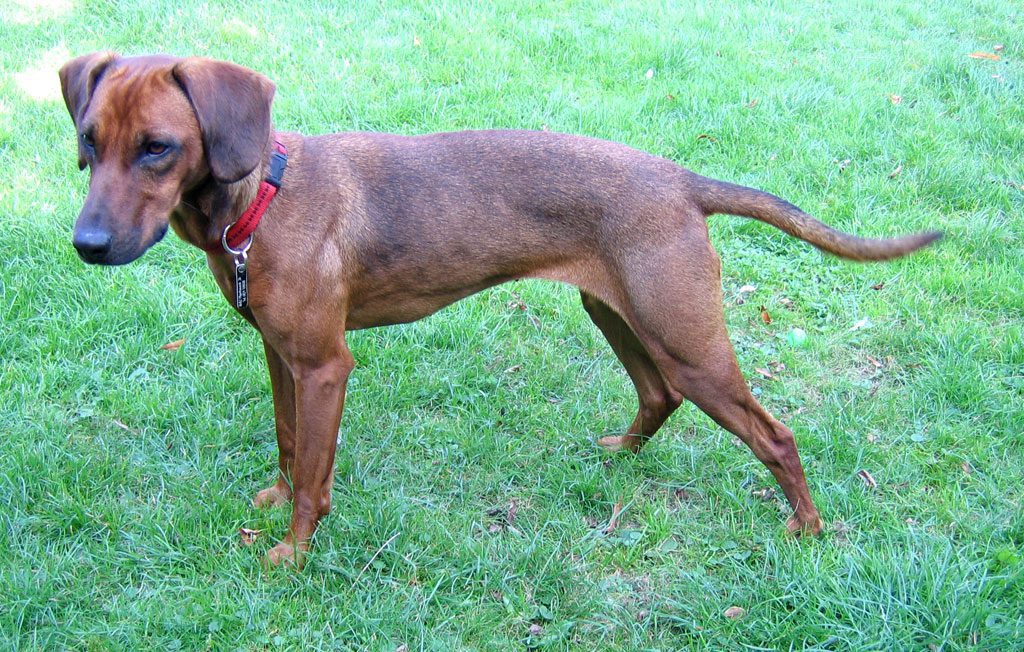
    This dog medium-sized and broad flat ears at the top of the head, has a thick, double coat and well covered legs.

    There are two main colors of hair: Red or black and Tan, all of them can have white spots.

    The height to the cross in the exemplary males is of 44 to 50 cm.; in the females of 42 to 48 cm. and weigh in 15 to 22 Kg. There is also, a smaller variety that has a height of 30 to 39 cm..

    Character and skills

    It is a hunting dog, ideal for hunting in the forest and the mountain, strong character, passionate, with fine sense of smell, independent hunting and persistent searches; It has a good bark in the hunt, a pronounced to track will and has a good sense of orientation.

    Itร‚ยดs known for its strength in difficult terrain and for not fearing the elements.

    In addition to the skills for hunting, The Hound of the Tyrol is an agile mind, Smart and good character. It is at the same time cheerful and independent, very attached to his master and his family.

    Like all dogs hunting, This hound's obstinate nature. Your education requires some patience, but with perseverance its owner will get good results.

    It's a dog that need to exercise. For this reason, life in the city or artamentos did not do for him.

    Tyrolean Hound images

    Braco Tiroles videos

    Type and recognitions:

    • FCI CLASSIFICATION:
    • Group :
    • Section : . .

    Federations:

    – FCI โ“˜

    FCI breed standard "Tyrolean hound"

    Origin:
    Austria

    Date of publication of the valid original standard:
    10.10.1995

    Use:

    The Tyrolean Hound is an ideal utility dog รขโ‚ฌโ€นรขโ‚ฌโ€นfor the forest and mountain hunter. Used as a hound (only) for barking hare and fox hunting and as a tracker to search for all types of wounded game.


    General appearance:

    Is medium sized. It has a skeleton with moderate resistance, is strong, muscular, nervous, with flowing external lines along the body; it is robust and healthy. His body is rectangular in shape, it's a little longer than tall.


    Behavior / temperament:

    It is a hunting dog with a firm character., passionate, with fine sense of smell, independent hunting and persistent searches; It has a good bark in the hunt, a pronounced to track will and has a good sense of orientation.

    Head:

    ---

    Cranial region:
    • Skull: Width, delgado, slightly convex.
    • Depression links (Stop): Marked.

    facial region:

    • Truffle: Black, not placed perpendicular. Snout: Moderately deep, straight.
    • Lips: Thin and very adherent.
    • Jaws/Teeth: Strong and complete scissor bite. You want a complete denture with 42 Dental parts; the lack of a total of two PM1 or PM2 (premolars 1 or 2) is tolerated; the M3 (molars 3) they are not taken into account.
    • Eyes: Large eyeballs, not deep, round eyelid slit. Dark brown iris. Membrana nictitante
      Pigmented, eyelids well adhering to the eyeball.
    • Ears: Wide, high insertion, rounded in its bottom edge; moderately stretched, must reach the region of the tusk
      top.

    Neck:

    Moderately arched, Neither high nor low, delgado, without presenting Chin.

    Body:

    The trunk is long.

    • Cross: It is marked and constitutes the highest point of the upper line. Back: Straight, robust and moderately wide. Well rounded windowsill.
    • Rump: Slightly fallen, not tilted, wide and long. Chest: Very deep, moderately wide. Sill: Rounded.
    • Belly: a little withdrawn. Moderately deep.

    Tail:

    High insertion, long; it reaches at least up to the protrusion of the Hock; It takes her up when the dog is at attention; is allowed to carry it in the form of Sabre; the tail is desirable with dense brush hair.

    Tips

    PREVIOUS MEMBERS:

    • General appearance: Straight.
    • Shoulder: Oblique placement, equipped with good musculature.
    • Arm: With good angle.

    LATER MEMBERS:

    • General appearance: Joints in the hind limbs are good angles.
    • Thighs: Wide and muscular.

    FEET: Strong, with arched fingers and very close together, hard pads.

    Movement:

    It covers the ground, It is very fast and persistent.

    Mantle

    • Fur: Double (Stockhaar), dense with internal NAP, rather rough to soft. Belly with hair, thighs with "pants". Tail covered with dense brush hair.
    • Color: Red or black and Tan (It also accepts tricolor).
      • Red variety: Red, cervuno or red yellow red. Is not desirable yellow color too clear.
      • Black and Tan variety: Layer black or saddle branded fire red or fire not clearly defined in the extremities, chest, belly and head. Allow marks on eyes fire (four eyes).
      • White markings: (Are allowed in both varieties of color). Bordering on the neck (collar), stain on front and lower chest, in the limbs and feet. The absence of white markings is not regarded as lack.


    Size and weight:

    Height to the cross: 42 - 50 cm.

    • Males: 44 - 50 cm.,
    • females: 42 - 48 cm..


    Fouls:

    Any deviation from the aforementioned criteria is considered as a fault and the severity of this is considered to the degree of the deviation to the standard and its consequences on the health and well-being of the dog..

    • Too agalgado; too high or too low.
    • Rough skull.
    • Hanging lips.
    • Eyes gazeos.
    • Too short, long or bent.
    • Back too long or too weak.
    • Shyness.

    FALTAS DESCALIFICANTES

    • Aggressiveness or extreme shyness.
    • Any dog โ€‹โ€‹showing clear signs of physical or behavioral abnormalities.
    • Truffle Brown.
    • Upper or lower prognathism.
    • Lack of more than two premolars 1 or 2 (PM1 to PM2).
    • Very pronounced white spots.
    • Liver coat color.


    N.B.:
    • Males should have two normal-appearing testicles fully descended into the scrotum..
    • Only functionally and clinically healthy dogs, with the typical conformation of the breed, should be used for parenting.

    Source: F.C.I - International Cynological Federation

    Alternative names:

    1. Tiroler Bracke, Tyroler Bracke (English).
    2. Brachet autrichien, Chien courant du Tyrol (French).
    3. Tiroler Bracke (German).
    4. Braco tirolรชs (Portuguese).
    5. Sabueso del Tirol (espaรฑol).

    โ–ท The world of Pets: Dogs, cats, birds, reptiles, amphibians

    Blue Gascony Basset
    Francia FCI 35 . Small-sized Hounds

    The Blue Gascony Basset It is a dog with an excellent sense of smell, Active, Agile and good port

    Basset Azul de Gascuรฑa

    Content

    Characteristics "Blue Gascony Basset"

    Coexistence is important that you have with your new friend. Before considering the acquisition of a dog of the breed "Blue Gascony Basset" you know certain factors. Not all breeds of dogs are apt to live in an apartment, you must take into account his character, their need for exercise, their interaction with other pets, their care and if you have small children, their level of tolerance towards them.

    Adaptation โ“˜

    3,0 of 5 stars (based on 1 review)

    friendly dog โ€‹โ€‹โ“˜

    5,0 of 5 stars (based on 1 review)

    hair loss โ“˜

    3,0 of 5 stars (based on 1 review)

    Affection level โ“˜

    4,0 of 5 stars (based on 1 review)

    Need for exercise โ“˜

    3,0 of 5 stars (based on 1 review)

    Social need โ“˜

    4,0 of 5 stars (based on 1 review)

    Home โ“˜

    1,0 of 5 stars (based on 1 review)

    Toilet โ“˜

    1,0 of 5 stars (based on 1 review)

    Friendly with strangers โ“˜

    3,0 of 5 stars (based on 1 review)

    barking โ“˜

    4,0 of 5 stars (based on 1 review)

    Health โ“˜

    1,0 of 5 stars (based on 1 review)

    Territorial โ“˜

    2,0 of 5 stars (based on 1 review)

    Cat friendly โ“˜

    2,0 of 5 stars (based on 1 review)

    Intelligence โ“˜

    3,0 of 5 stars (based on 1 review)

    Versatility โ“˜

    2,0 of 5 stars (based on 1 review)

    Child friendly โ“˜

    4,0 of 5 stars (based on 1 review)

    Surveillance โ“˜

    4,0 of 5 stars (based on 1 review)

    joy โ“˜

    2,0 of 5 stars (based on 1 review)

    History

    The Blue Gascony Basset is a basset hound native to southwestern France, whose roots are uncertain. According to hunting historians, He is a contemporary of Mr. Gastรณn Fรฉbus from the 14th century, like the great blue hounds. Some claim that it comes from a cross between the Gascon Saintongeois and the Small Blue Gascony, others that it is the result of a mutation of the Great Gascony Blue after the French Revolution, when commoners, who were now allowed to hunt, they needed a slower dog that they could keep on foot.

    Endangered in the 19th century, the breed was reborn in the early 20th century at the initiative of a few western breeders. Its first standard was published in 1919.

    Recognized in 1963 by the Fรฉdรฉration Cynologique Internationale (FCI), the Blue Gascony Basset still rare outside of France. In North America, the breed obtained official recognition from the United Kennel Club (UKC) in 1991, as well as the American Association of Rare Breeds, but it is ignored by the American Kennel Club (AKC) and the Canadian Kennel Club (CKC).

    Even within the French borders, its extension was minimal until 1980. Since then, the Blue Gascony Basset, although it has become more known, has maintained its status as a little-known dog, especially in the southern region. They are often called "chien du Midi" because of their origin in the regions of Bรฉarn and Gascogne. Even today, most breeders of Blue Gascony Basset are found in the west and south of the country.

    This breed represents a little more than 150 records in TFO – Central Canine Society.

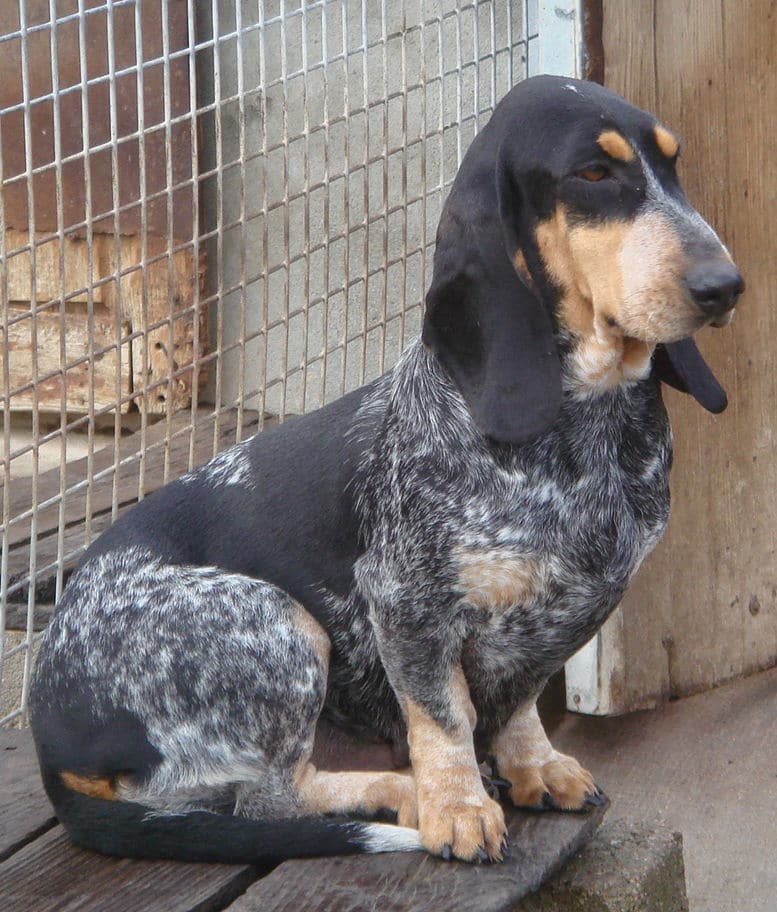
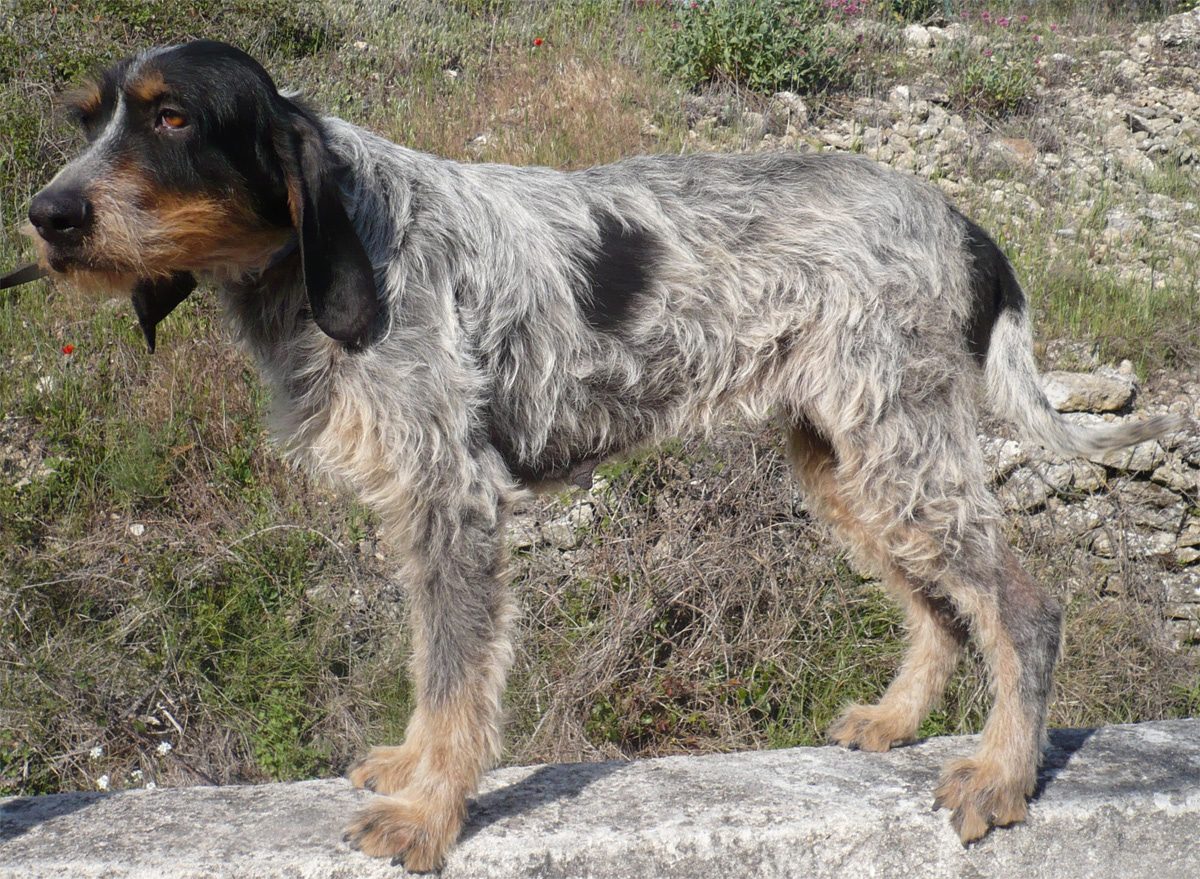
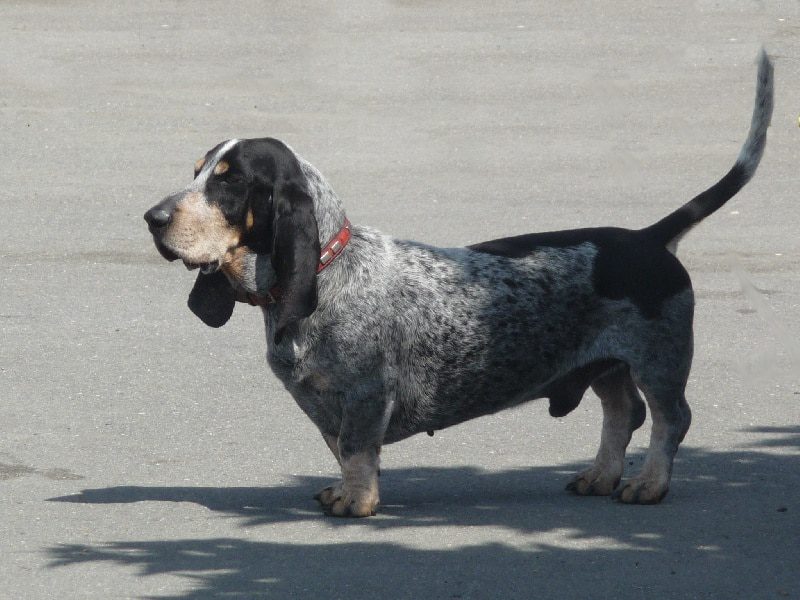
    There are four breeds recognized as โ€œGascony Blueโ€ by the FCI:

    The Great Gascony Blue and the Small Blue Gascony they are the best-known varieties.

    Small blue By hounddogsdrule.com
    Great blue by hondenrassenmetfoto.nl
    Blue Basset by bassetbleudegascogne
    Griffon blue by jjze.unblog.fr


    Physical characteristics ยซBlue Basset of Gascogneยป

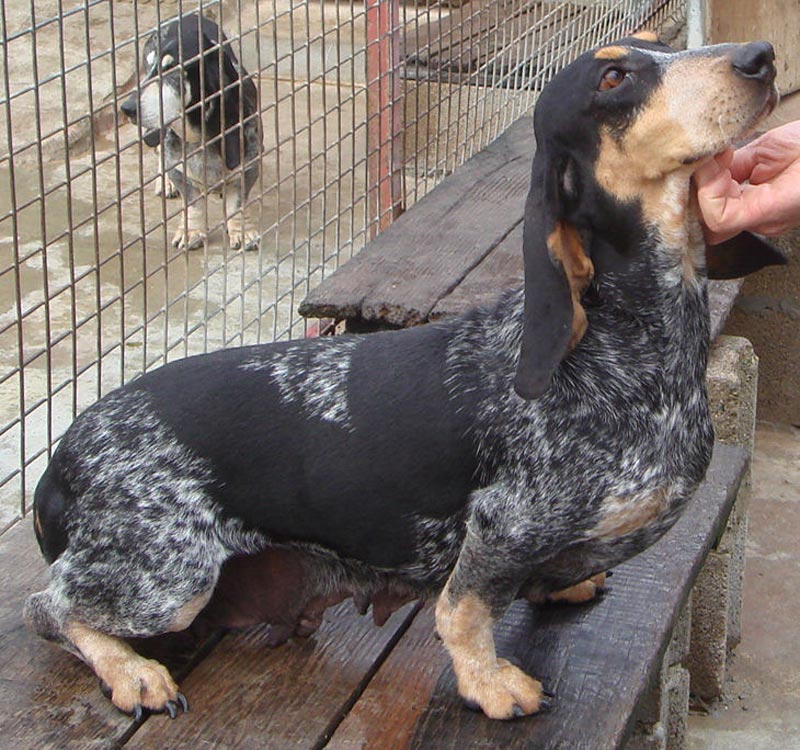
    The race Blue Gascony Basset carries much inheritance from the great race from which it comes: The Basset. It is a very big dog, Although not too heavy (16 kg approximately). It has a not very broad and slightly domed head. His neck is quite long, slightly arched. His height is around the 34-38 centimeters.

    It has black and wide nose, with the wide open nostrils. Its snout is, practically, the same length as the skull. Their eyes are oval shaped, What gives them the feeling of being sunk, What makes them a very sweet expression, and a little sadder…

    The ears of this breed are fine, a little curly, very long and finished at tip. The ear is narrow at its source, which is located below the eye line.

    When is the dog standing, its tail almost touches the ground. Its fur is white mottled black spots, It must never be totally white. The hair is short and smooth. Such as dense speckled is what gives him the blue tone.

    Character and aptitudes ยซBlue Basset of Gascogneยป

    The Blue Gascony Basset It is a dog with an excellent sense of smell, Active, Agile and good port. It is a great Hunter. Usually howl. It is a dog that is easily vistas, It Intelligent, clever and funny, is also very loving and joyful. It is an excellent partner you need to play regularly (plenty of exercise).

    It is quite stubborn, his instinct for Hunter is very developed. It can be an excellent guard dog.

    Education ยซBlue Basset of Gascogneยป

    Due to his intelligence and loyalty to his master, the Blue Gascony Basset it is quite easy to train. But, how sometimes he gets distracted or stubborn, may have difficulty keeping order. Food is a good motivator, since they are greedy dogs.

    In short, the Blue Gascony Basset needs rigorous but gentle training from a young age.

    Health ยซBlue Gascogne Bassetยป

    This dog is in pretty good health, although it develops problems in the hindquarters with age. The breeders of the Blue Gascony Basset observe recurring problems, such as hip dysplasia or elbow dysplasia, dislocated kneecaps and herniated discs (that can cause dog paralysis). It is also prone to allergies and ear infections., because of his floppy ears.

    Last, how prone to stomach twisting, your servings should be divided and you should wait two hours after each meal before exercising.

    Images ยซBlue Gascogne Bassetยป

    Videos ยซBasset Azul de Gascuรฑaยป

    Butch Basset bleu gascogne

    Type and recognitions:

    • FCI CLASSIFICATION:
    • Group :
    • Section : . .

    Federations:

    • FCI – Group 6: Scent hounds, and related breeds. – Section 1.3: Small-sized Hounds. โ“˜
    • AKCHound โ“˜
    • โ€‹- UKCScenthounds โ“˜

    FCI breed standard "Blue Gascony Basset"

    Origin:
    France

    Date of publication of the valid original standard:
    24.01.1996

    Use:

    It is used for hunting with a shotgun and sometimes to chase game as a hound. Can hunt alone or in a pack. His favorite game is the rabbit and the hare.


    General appearance:

    It is a very typical Basset that denotes the great breed from which it descends.. He is quite burly, Although not too heavy.

    IMPORTANT PROPORTIONS :

    โ€ข Size / body length, about 5/8.
    โ€ข Chest height / Size, about 2/3.


    Behavior / temperament:

    Has a very good sense of smell. It is active, agile and persistent. It is applied in hunting and its howl is beautiful and sonorous. Easily joins the pack. He is affectionate and cheerful, and he likes to romp.

    Head:

    ---

    Cranial region:
    • Skull : I visit from the front, it is slightly domed and not too wide. The occipital protuberance is marked. Seen from above, the back is ogival shaped. Forehead is bulging.
    • Nasal-frontal depression (Stop) : It is little accentuated.

    facial region:

    • Truffle : Black and wide. The Windows are wide open.
    • Snout : It is the same length as the skull. It is thick. The muzzle is the same length as the skull, slightly arched.
    • Lips : Pretty hanging, covering the lower jaw well and giving the end of the snout a square profile. The commissure is well marked, although it is not lazy.
    • Nose cane : It is the same length as the skull. It is thick and slightly arched.
    • Jaws/Teeth : The joint is in the form of scissors. The incisors are set at right angles to the jaws..
    • Cheeks : They are thin, being able to present one or two folds of the skin.

    Eyes : They are oval in shape and appear sunken. They are brown. His expression is sweet and a little sad.

    Ears : They are characteristics of this blue breed, they are fine, twisted, they end in a point and must go beyond the tip of the nose. They are narrow at their insertion, which is located well below the eye line..

    Neck:

    It is quite long and a little arched. The double chin is not exaggerated.

    Body:

    • Back : Long and firm.
    • Pork loin : Short, well attached to the body, sometimes arched.
    • Rump : Slightly oblique.
    • Breast : Large, well developed in its length. Descends to below the elbow. The front of the sternum is quite protruding, and the back is long. Quite rounded ribs.
    • Flanks : Pretty stretched.

    Tail:

    The root is thick. Carried in the shape of a saber, sometimes it is somewhat spiky (towards the tip around the tail a few longer and thicker hairs slightly separated in a spike shape). During rest your limb should just touch the ground.

    Tips

    PREVIOUS MEMBERS :

    • As a whole : They're strong. A slight twist or semi-twist is acceptable.
    • Shoulder : Muscular, no appearance of heaviness ; oblique.
    • Elbows : Well attached to the body.

    LATER MEMBERS :

    • As a whole : Seen from the back, a vertical line descending from the tip of the gluteus passes through the center of the leg, hock, metatarsal and foot.
    • Thighs : Long and muscular.
    • Hock : Width, slightly angled and fairly close to the ground.
    • Metatarsus : Short, strong.

    FEET : They have an oval shape, little elongated. Fingers are thin and tight together. The pads and nails are black.

    Movement:

    Regular and fairly fluent.

    Mantle

    SKIN : It is flexible and not too thin. Black, or strongly streaked with black spots. It's never completely white. The mucous membranes are black.

    HAIR : Short, semi-thick and well dense.

    COLOR : Completely speckled with black and white, imparting a slate blue reflection. It may or may not be marked with more or less extended black spots. Usually, there are two black spots on each side of the head, that cover the ears, circle the eyes and stop at the cheeks. These do not join over the top of the head, but they leave a white space in the center of which there is often a small oval black spot typical of the breed..
    Above the eyes are two more or less raised tan markings located on the zygomatic arches simulating four eyes. Traces of tan can also be found on the cheeks, the lips, the inside of the ears, the limbs and under the tail.


    Size and weight:

    Height to the cross : For males and females : 34 to 38 cm..


    Fouls:

    Any deviation from the aforementioned criteria must be considered as a fault and the seriousness of this is considered to the degree of the deviation to the standard and its consequences on the health and well-being of the dog.

    Head :
    โ€ข Skull too wide and flat.
    โ€ข Round and globular eyes.
    โ€ข High set ears, wide, thick and rounded.

    Neck :
    โ€ข Short.

    Body :
    โ€ข Long body, loose top line, lack of corpulence.
    โ€ข Sunken xiphoid appendix.
    โ€ข Flat ribs.

    Tail :
    โ€ข Diverted tail.

    Forelimbs :
    โ€ข Straight shoulders.
    โ€ข Elbows forward.
    โ€ข Pasterns twisted outwards, carpi deviated forward.
    โ€ข Crushed feet.

    Hind limbs :
    โ€ข Closed or widely spaced hocks seen from behind.

    Fur :
    โ€ข Satin and fine.

    Color :
    โ€ข Tan marks too pale.

    Behavior :
    โ€ข Shy dog.

    MISS PLAYOFFS :

    โ€ข Fearful or aggressive dog.
    โ€ข Serious anatomical deformation.
    โ€ข Notable lack that causes any impediment.
    โ€ข Characteristics that do not correspond to the type.
    โ€ข Upper or lower prognathism.
    โ€ข Light eyes.
    โ€ข Body too long.
    โ€ข Rib deformation, absence of xiphoid appendix.
    โ€ข Twisted anterior extremities.
    โ€ข Any other coat that is not established by the standard.

    Any dog โ€‹โ€‹showing clear signs of physical or behavioral abnormalities must be disqualified..


    N.B.:

    Males should have two normal-sized testicles completely descended into the scrotum..

    Source: F.C.I - International Cynological Federation

    Alternative names:

    1. Basset Bleu de Gascogne, Bleus de Gascogne (English).
    2. Basset bleu de Gascogne (French).
    3. Basset bleu de Gascogne (German).
    4. Basset bleu de Gascogne (Portuguese).
    5. Basset azul de Gascuรฑa (espaรฑol).

    โ–ท The world of Pets: Dogs, cats, birds, reptiles, amphibians

    Billy
    Francia FCI 25 - Large-sized Hounds

    Billy

    The Billy is a used hunting dog live in the open air, in open spaces

    Content

    History

    The Billy, It is a dog from France created at the end of the 19th century from the junction of three races that are now extinct: the Larye, the Cรฉris and the Montembล“uf. In the cross, great care was taken to highlight characteristics such as: good smell, resistance and fast reflexes.

    Billy, Historically, was used for the hunting hares horse, wild boar and roe deer. In the news, There are few copies and is appreciated, it is not very common to see them.

    The Billy has the exact appearance of the famous white dogs that were part of the packs of the French aristocracy (16th centuries, 17TH and 17TH). History tells that King Charles IX of France (1550-1574) he had a white female he loved more than his own life. When the dog died, He forced the Court to go into mourning.

    Read more

    โ–ท The world of Pets: Dogs, cats, birds, reptiles, amphibians

    Norman Artesian Basset
    Francia FCI 34 . Small-sized Hounds

    The Norman Artesian Basset is a minor hunting dog

    Basset Artesiano de Normandรญa

    Content

    Characteristics "Norman Artesian Basset"

    Coexistence is important that you have with your new friend. Before considering the acquisition of a dog of the breed "Norman Artesian Basset" you know certain factors. Not all breeds of dogs are apt to live in an apartment, you must take into account his character, their need for exercise, their interaction with other pets, their care and if you have small children, their level of tolerance towards them.

    Adaptation โ“˜

    2,0 of 5 stars (based on 1 review)

    friendly dog โ€‹โ€‹โ“˜

    3,0 of 5 stars (based on 1 review)

    hair loss โ“˜

    3,0 of 5 stars (based on 1 review)

    Affection level โ“˜

    4,0 of 5 stars (based on 1 review)

    Need for exercise โ“˜

    3,0 of 5 stars (based on 1 review)

    Social need โ“˜

    3,0 of 5 stars (based on 1 review)

    Home โ“˜

    4,0 of 5 stars (based on 1 review)

    Toilet โ“˜

    2,0 of 5 stars (based on 1 review)

    Friendly with strangers โ“˜

    3,0 of 5 stars (based on 1 review)

    barking โ“˜

    2,0 of 5 stars (based on 1 review)

    Health โ“˜

    4,0 of 5 stars (based on 1 review)

    Territorial โ“˜

    2,0 of 5 stars (based on 1 review)

    Cat friendly โ“˜

    2,0 of 5 stars (based on 1 review)

    Intelligence โ“˜

    3,0 of 5 stars (based on 1 review)

    Versatility โ“˜

    3,0 of 5 stars (based on 1 review)

    Child friendly โ“˜

    4,0 of 5 stars (based on 1 review)

    Surveillance โ“˜

    2,0 of 5 stars (based on 1 review)

    joy โ“˜

    4,0 of 5 stars (based on 1 review)

    History

    The first written mentions of a basset hound date back to the 16th century. In his book La venerie (1561), Jacques du Fouilloux describes an Artois dog (a former French province that straddles the border between Picardy in France and Flanders in Belgium), that runs on legs and is particularly formidable at hunting pests, like badgers.

    Much later, in the second half of the 19th century, when work began on cataloging, categorization and establishment of the characteristics of the various dogs of the world, the Norman Artesian Basset was one of the first breeds to be listed.

    In the decade of 1870, two types of Artois Hounds: the servants by him Conde Le Couteulx by Canteleu, based near Etrepagny, in the Eure, and those of the kennel of Louis Lane, who lived near Rouen. The two men had different views on what the Artois Hound.

    The Couteulx, as a skilled hunter, favored the utilitarian aspect of the dog and its physical efficiency. Selected dogs with almost straight front legs, a slightly compact body, a fairly common head, but above all a spirit of initiative and enthusiasm for hunting similar to the characteristics of the great and old Artois Dachsbracke.

    Louis Lane, on the other hand, gave more importance to the beauty of his dogs. They had magnificent heads with long, well-wound ears and twisted front legs that echoed the nobility of the ancient Norman race.. The dogs of Louis Lane they were less wanted for hunting, especially since their exaggeratedly crooked front legs left them almost crippled, but his temperament was more thoughtful and less stalking oriented.

    These two types of artisan hounds coexisted during 20 years. Thereafter, most breeders of Basset dโ€™Artois preferred to cross the two models to get a dog that combined the best qualities of both bloodlines. Like this, when the first breed standard was written in 1898, most dogs had a mix of artisan traits (model Le Coulteulx) and normans (model Lane).

    It was at that time that Lรฉon Verrier, the "father" of modern Norman Artesian Basset, raised the best representatives of the breed, dominating dog shows for about fifteen years from 1896. Unfortunately, their calf was decimated by the disease during World War I.

    This did not prevent the French Basset Club from deciding on 1922 promote only the Verrier model for breeding the breed. In 1927, in recognition of their mixed origins, the Basset Artesian changed his name to Norman Artesian Basset. Having said that, an observation that appeared in 1930 in the standard suggests that the Norman Artesian Basset it was only considered as a transition in the creation of a new race, since it establishes that "the committee of the Sociรฉtรฉ de Vรฉnerie decides and observes that the Norman Artesian Basset it should only be a transitional stage towards a Norman type, without any trace of Artois. ยป

    But, this hypothesis was never fulfilled, as evidenced by the rejection of a name change of the breed to Basset of Normandy in 1932, but also and above all the recognition of the breed by the Fรฉdรฉration Cynologique Internationale (FCI) the 29 in October of 1963. The American United Kennel Club will recognize the breed much later, in 1995. On the other hand, is still ignored by the American Kennel Club, the other great american canine organization.

    Today, the Norman Artesian Basset is still very little present outside france and the United States. It is often confused with the Beagle and the Basset Hound, at the moment it is mainly known to hunters.

    Physical characteristics

    The family of the Basset hound. Slim body and short limbs. The head has a scrawny appearance because its cheeks are made up solely of skin. The eyes are large (I) dark. The ears are so long as the snout, ending at tip. The neck has a slight double chin. The tail is long and wide at its base.

    Their short legs allow you to delve into the denser undergrowth to leave his hideout dam, which can do a larger dog. Preferably hunting rabbits, but you can also catch both hares, as a deer. While, has no speed, it does have a lot of precision in its movements. Their weight is between the 15 and 20 kg., and its appeal among 30 and 36 centimeters.

    It is very dog very appreciated by hunters.

    Character and skills

    Fairly calm and very obedient at first glance, the Norman Artesian Basset proves to be a real clown and a ball of affection within his family. Mainly a pack dog, finds it difficult to tolerate loneliness and seeks companionship at all costs, either from his classmates, of other animals in the house (even from cats, if they have already been presented to you before) or the humans around him. Very affectionate, needs a lot of attention to really bloom. So, not recommended for a teacher who is not very available. On the other hand, resourceful and kind by nature, it is a very suitable dog for children, for those who will be an inexhaustible and very patient playmate.

    Attention, otherwise, for homeowners in urban or residential areas: though less vocal than his hunting companions, the Norman Artesian Basset remains, However, an expressive and not very discreet dog, especially when playing. Bark to greet a newcomer, expressing your satisfaction or pointing out that you have found something interesting is second nature, and it is very difficult to prevent it from doing so. So, It is not a breed of dog that is recommended for use in apartments.

    This is all the more true since, despite her wobbly appearance, the Norman Artesian Basset he's a consummate sporting dog, who needs to exercise to maintain their physical and psychological balance. Your relaxation, surprising for such a small size, allows it to jump over small walls and stand on its hind legs. It is a very resistant dog, can cover long distances without recoil: a breed of dog suitable for a sports teacher looking for a jogging partner, for example, as long as the terrain is not too steep.

    The qualities mentioned, combined with keen intelligence and excellent memory, make this dog very suitable for hunting, but also to learn tricks, practice dog sports, or even… take advantage of the lack of attention of his master to get away from it all. In fact, his hunting instincts and his developed sense of smell often lead him to follow the clues he finds interesting and to turn a deaf ear to any return order.. So, should not hesitate, for example, in equipping it with a GPS dog collar to limit the risks in case the dog escapes.

    Finally, in a rather paradoxical way, the Norman Artesian Basset they are also very homey, and like the routine. Once they get used to the arrangement of things in the house, the location of your basket and your pace of life, they hate change. So, the news, for example the arrival of a baby at home, adopting a pet or even moving a dog, should be introduced gradually as far as possible.

    Education

    Depending on the use that is given to the Norman Artesian Basset, his education is not the same.

    If it is intended to accompany its master in everyday life as a companion dog, the puppy should be socialized from an early age and should be taught good manners in the company of humans; for example, curb your hunting instincts and don't bark at all costs.

    If, on the other hand, it is intended to be used as a hunting dog, the education of the dog should be directed to the exploitation of these hunting instincts, through socialization with other dogs, hunting search training and teamwork.

    In any case, the dog's life rules must be clearly defined from the start and applied consistently throughout its life. In fact, although affectionate and obedient, this highly intelligent dog can be a real mule head when faced with conflicting commands. So, it is important to think about the role that the dog will play before the puppy comes home, and be firm – but respectful – throughout the training process.

    Health

    The Norman Artesian Basset enjoys fairly robust health compared to other bassets. But, does not escape the health problems inherent in its morphology (long body and short legs). So, you are particularly prone to back problems, and can easily crack or break vertebrae.

    In the case of an obese or overweight dog, being overweight can aggravate back pain that you naturally experience with age, hence the need for owners to closely monitor the dog's diet and provide sufficient and regular physical activity.. Regular exercise is essential to strengthen your back structure and maintain your joints..

    It is also important that your dog is screened for hip dysplasia, especially if there is a history of hip dysplasia in your lineage.

    Last, the Norman Artesian Basset are sensitive to ear infections, and they also have a predisposition to hypothyroidism. This disease can be in some cases hereditary, Therefore, it is recommended not to reproduce the individuals that suffer from it.

    Grooming

    The Norman Artesian Basset it is quite easy to maintain. Her short hair only requires an occasional brush stroke., essentially to get rid of the dried grass and mud that accumulates during your walks in the woods.

    But, like many hounds, tends to have a slightly stronger scent than other breeds, what no dog shampoo will be able to remedy.

    Apart from these considerations, it is important to examine and maintain your dog's ears about once a week, especially to clean any residue that may lodge in them, in order to avoid ear infections and other painful infections.

    โ€œNormandy Artesian Bassetโ€ Price

    The price of a puppy Norman Artesian Basset is between 400 and 900 EUR.

    Photos ยซBasset Artesiano de Normandรญaยป

    Videos ยซBasset Artesiano de Normandรญaยป

    Type and recognitions:

    • FCI CLASSIFICATION:
    • Group :
    • Section : . .

    Federations:

    • FCI – Group 6: Scent hounds, and related breeds. – Section 1.3: Small-sized Hounds. โ“˜
    • UKCScenthounds โ“˜

    FCI breed standard "Norman Artesian Basset"

    Origin:
    France

    Date of publication of the valid original standard:
    12.12.1991

    Use:

    It is a minor hunting dog, used to hunt with shotgun. Hunt the same alone as in a group, giving the signal to barking. Its short legs allow it to penetrate even the densest undergrowth to expel the prey that hides in it, which can do a larger dog. Preferably hunting rabbits, but the hare can also hunt both, like deer. Vent the dam and recover it with great safety, his movement is not fast, but yes noisy and orderly.


    General appearance:

    It's a long dog, in relation to his height at the withers, vigorous, compact ; Its head evokes the nobility of the great Normandy dog.

    IMPORTANT PROPORTIONS :

    Height to the cross / body length : approx.. 5 : 8Chest height / height to the cross : approx.. 2 : 3Skull width / head length : approx.. 1 : 2Length of the snout / skull length : approx.. 10 : 10


    Behavior / temperament:

    Very good nose and tenacious when following the trail; barking on the trail, allows the master to take advantage of his movement without having to advance too quickly. Happy temperament and affectionate nature.

    Head:

    ---

    Cranial region:
    • Skull : Vaulted in shape and medium width; occipital protrusion is clearly observable. As a whole, the head should have a slightly fleshy appearance.
    • Depression links (Stop) : The sinking of the forehead is accentuated, but without exaggeration.

    facial region:

    • Truffle : Black and wide, approaching a little to the lower lip, nostrils wide open.
    • Snout : About the same length as the skull and slightly bulging.
    • Lips : The upper lip broadly covers the lower lip, they are however not too hanging, nor does it extend too far back.
    • Jaws / Teeth : Scissor-shaped denture, That is, the upper incisors cover the lower incisors with firm contact and are implanted at right angles to the jaws.

    Eyes : Oval, large, dark (in harmony with the coat); the calm and serious look; the conjunctiva of the lower eyelid can sometimes be seen, but without exaggeration. The cheeks have one or two folds.

    Ears : Located as far as possible towards the bottom of the head and never above the eye line, they are narrow at the base and have a well marked corkscrew shape, they are flexible, fine, very long, reaching at least the length of the muzzle and preferably ending in a point.

    Neck:

    Rather long, with a little double chin, but without exaggeration.

    Body:

    • Back : Wide and firm.
    • Pork loin : Slightly arched.
    • Rump : The haunches are a bit oblique, imparting a slight incline to the rump.
    • Breast : Oval in appearance, long, the sternum is well extended at the back and protruding at the front ; the apron is well developed. The flanks are solid. The line of the sternum is clearly seen above the elbows. Long ribs, extending all the way back.

    Tail:

    Rather long, thick, at the base and becoming progressively thinner. During rest the tip of the tail should just touch the ground. It must be in the shape of a saber, but without ever falling on the animal and the end should not be in the shape of a feather. Regarding this point, It is absolutely forbidden to modify the appearance of the tail of the dogs participating in the exhibition.

    Tips

    PREVIOUS MEMBERS : As a whole : Front limbs are short and thick. They should be semi-twisted or slightly less than semi-twisted, as long as the kink is conspicuous enough. A few folds in the skin of the wrists, if they are not excessive, should be considered as a quality.

    Correct semi-twist forelimbs

    • Shoulder : Muscular and oblique.
    • Elbows : Well glued the body.

    LATER MEMBERS :

    • As a whole : Seen from behind, you can see a vertical line that starts from the tip of the buttock and crosses the center of the leg., hock, metatarsal and foot.
    • Thighs : Well rounded and muscular.
    • Correct hind limbs Well rounded thighs
    • Hocks : Strong, they descend a lot, they are relatively layered, causing the hind foot to be slightly under the dog when at rest. Small nail bag located at the tip of the calcaneus, formed by excess skin, does not constitute a fault.
    • Metatarsals : Short and strong.

    FEET : Oval, a little elongated, the fingers are fairly close and have a correct poise, in such a way that they rest firmly on the ground.

    Movement:

    Regular step, executed with enough ease. Calm movement.

    Mantle

    SKIN : Elastic and fine.

    HAIR : Satin, short and tight though not too fine.

    COLOR : Tawny, with black and white cloak (โ€œtricolorโ€) or fawn and white (โ€œbicolorโ€). In the first case, head should be extensively covered with intense reddish fawn and retain a small patch of darker hairs on each side of head. The mantle ( or the spots that remain in case the patches of different color spread), will be made up of black or striped hairs (thus complying with the old qualifiers of โ€œhare hairโ€ or โ€œbadger hairโ€).


    Size and weight:

    Height to the cross : Males and females : 30 โ€“ 36 cm..

    Tolerance of more or less 1 cm for exceptional subjects.

    Weight : 15 โ€“ 20 kg.


    Fouls:

    Any deviation from the aforementioned criteria is considered as a fault and the severity of this is considered to the degree of the deviation to the standard and its consequences on the health and well-being of the dog..

    Head

    โ€ข Flat skull.
    โ€ข Wide forehead.
    โ€ข Too marked median groove.
    โ€ข Light eyes, round and bulging, leaving the conjunctiva too visible.
    โ€ข Flat ears, too round, thick or set very high and wide.
    โ€ข Short.Body
    โ€ข Flabby or sunken back.
    โ€ข Absence of xiphoid appendix or its collapse.
    โ€ข Flat or deformed ribs. Tail
    โ€ข Too long, deviated or coarsePrevious limbs
    โ€ข Straight shoulder, short and muscled.
    โ€ข Elbows out.
    โ€ข Carpals that approach or deviate forward.
    โ€ข Pasterns deviated outwards or exaggeratedly twisted.
    โ€ข Crushed feet. Hind limbs
    โ€ข Flat thighs.
    โ€ข Hocks closed or too open. Coat
    โ€ข Soft hair, clearly long or fringed.
    โ€ข Carbonate head.

    Temperament/behavior

    โ€ข Shy dog.

    MISS PLAYOFFS

    โ€ข Fearful or aggressive dog.
    โ€ข Strong anatomical anomaly.
    โ€ข Disabling and recognizable hereditary defect.
    โ€ข Lack of type
    โ€ข Upper or lower prognathism.
    โ€ข Eyes too light.
    โ€ข Sternum too short at the back, with absence of xiphoid appendix.
    โ€ข Very deformed ribs.
    โ€ข Forelegs completely straight.
    โ€ข Limbs too weak.
    โ€ข Very carbonated head.
    โ€ข Very abundant black spots, giving the white color of the coat a bluish tone.
    โ€ข Height at the withers different from the standard.

    Any dog โ€‹โ€‹showing clear signs of physical or behavioral abnormalities must be disqualified..


    N.B.:

    Males should have two normal-appearing testicles fully descended into the scrotum..

    Source: F.C.I - International Cynological Federation

    Alternative names:

    1. Basset Artรฉsien Normand, BAN (English).
    2. BAN (French).
    3. BAN (German).
    4. (em francรชs: Basset artรฉsien normand) (Portuguese).
    5. BAN (espaรฑol).

    โ–ท The world of Pets: Dogs, cats, birds, reptiles, amphibians

    Basset Hound
    Reino Unido FCI 163 . Small-sized Hounds

    The Basset Hound is a very happy dog, good and very sociable

    Basset Hound

    Content

    Characteristics "Basset Hound"

    Coexistence is important that you have with your new friend. Before considering the acquisition of a dog of the breed "Basset Hound" you know certain factors. Not all breeds of dogs are apt to live in an apartment, you must take into account his character, their need for exercise, their interaction with other pets, their care and if you have small children, their level of tolerance towards them.

    Adaptation โ“˜

    5,0 of 5 stars (based on 1 review)

    friendly dog โ€‹โ€‹โ“˜

    5,0 of 5 stars (based on 1 review)

    hair loss โ“˜

    3,0 of 5 stars (based on 1 review)

    Affection level โ“˜

    5,0 of 5 stars (based on 1 review)

    Need for exercise โ“˜

    5,0 of 5 stars (based on 1 review)

    Social need โ“˜

    3,0 of 5 stars (based on 1 review)

    Home โ“˜

    1,0 of 5 stars (based on 1 review)

    Toilet โ“˜

    2,0 of 5 stars (based on 1 review)

    Friendly with strangers โ“˜

    5,0 of 5 stars (based on 1 review)

    barking โ“˜

    5,0 of 5 stars (based on 1 review)

    Health โ“˜

    3,0 of 5 stars (based on 1 review)

    Territorial โ“˜

    1,0 of 5 stars (based on 1 review)

    Cat friendly โ“˜

    5,0 of 5 stars (based on 1 review)

    Intelligence โ“˜

    3,0 of 5 stars (based on 1 review)

    Versatility โ“˜

    3,0 of 5 stars (based on 1 review)

    Child friendly โ“˜

    5,0 of 5 stars (based on 1 review)

    Surveillance โ“˜

    3,0 of 5 stars (based on 1 review)

    joy โ“˜

    1,0 of 5 stars (based on 1 review)

    History

    The origin of the Basset Hound It, without a doubt, French and one of its closest ancestors is the Artois Hound, that was brought to England in 1.874 along with the Norman artesian Basset, crossing in England into a single breed which in turn was crossed with the St. Hubert Hound (using in 1.892 techniques of artificial insemination), favouring, during the selection, copies of most short legs, in order to obtain a dog capable of getting even between the most thick vegetation.

    In 1880 It is considered the first class of Basset Hound in England and it is also being prepared at this time that the first standard and it appears that the dichotomy between Work and Beauty. At the end of the 19th century, the breeding of this breed grows rapidly and the quality of their dogs, as well, and they are divided into two lineages, the work and the exhibition. Y, was in 1935 the name "Basset Hound" was born, registered first, documented. In 1962, Figure the first litter is registered in France.

    The United States adopted the breed and created a companion-only dog.

    These dogs are around 33 to 38 cm. (on the cross), they have short hair and are generally tricolor (black, honey and white). They also tend to be white with red spots or Red-footed. Some, Although few, they can be gray. They may occasionally leave copies with long hair, although it is not a desirable characteristic according to the breed standard.

    They have very long ears (up to the chest), also long neck with much loose skin and wrinkles around your head, This causes that you have a permanently sad. Its tail is long, erect and a curve.

    Physical characteristics

    "Basset Hound"

    His short stature is misleading because they are very long and they can reach things that dogs of similar heights could not.
    It has marked degree, features that equip it admirably for tracking through rough terrain. Dog short members, heavier bones, considering its size, than any other breed of dog; and although slow movements, they are in no sense clumsy.

    The word Basset It comes from the French "bas" which means low and that is the main characteristic of this breed. The Basset Hound It is a breed of small stature due, fundamentally, their short legs and elongated body. The head is prominent and it highlights a few wrinkled brows (due to the large amount of skin), long floppy ears, a few deep eyes that convey sadness and hanging lips. The skin is flaccid and causes many wrinkles around the body and is covered by a short hair, rough can be of different colors of the Bassets (white, black & Fawn) in any combination.

    Character and skills

    Low and somewhat plump appearance might suggest it is a lazy dog and something sleazy but this is only an impression, is a loving dog of the year. You need to do plenty of exercise to prevent overweight and arthritis at advanced ages.

    A specific care of this breed is the possibility of the development of conjunctivitis due to the loose skin around the eyes. (that leads to contain moisture), should be monitored continuously.

    His facial expression promises sadness, fatigue, but a dog very joyful, good and very sociable, She loves children and adapts perfectly to the family environment. As well, despite his physical appearance, is a dog She loves the exercise, Sport and trips. It can be very stubborn, as well, about all dogs...

    Nice temperament, never aggressive or shy (only in some cases). It has great strength in the field. extremely faithful.

    Basset Hound Education

    The stubborn side of Basset Hound requires authoritative parenting. You don't have to wait for him to "pass his youth", since it only matures around 3 years. A constant education, firm and consistent from an early age will make a good companion dog.

    In fact, no matter how smart I am, you will know how to make the most of every hesitation. Hence the importance of being consistent and clear in the rules and the rewards that will be given. It shouldn't surprise you that he can turn a deaf ear when you annoy him..

    Salud ยซBasset Houndยป

    It is known that the Basset Hound Have overweight, so the risk of canine obesity must be taken into account, that can damage your spine.

    Being the back a sensitive point of the Basset Hound, it is recommended to avoid obstacles and stairs in your daily life.

    It also, the Basset Hound have a predisposition to certain skin conditions:

    – atopia;
    – dermatitis with malassezia;
    – primary seborrhea;
    – intertrigo (in the folds of the skin).

    Their long ears can also be a complicating factor. In fact, are prone to infections such as scabies in the ear, due to Otodectes cynotis, a microscopic mite that causes itching and pain. This infection is diagnosed by direct examination of the parasite in the ear and then treated by local application of an acaricidal treatment..

    Last, the eyes of the Basset Hound, since it is known that the breed has a genetic predisposition that favors the development of primary glaucoma, an eye disease in dogs that impairs the function of the optic nerve. This disease is diagnosed by an ophthalmological exam that measures intraocular pressure, what should a vet do. It is recommended that this examination be performed as soon as possible in the Basset, since the adverse effects of this disease can be reduced if detected early.

    Aseo ยซBasset Houndยป

    The Basset Hound does not need much coat maintenance. But, the Basset Hound loses hair all the time, so it should be brushed regularly to avoid the accumulation of hair in the house.

    It also, their ears often need to be cleaned, as their length makes it particularly easy for dirt to enter them.

    Basset Hound pictures

    Basset Hound Videos

    Type and recognitions:

    • FCI CLASSIFICATION:
    • Group :
    • Section : . .

    Federations:

    FCI โ“˜, AKC โ“˜, ANKC โ“˜, CKC โ“˜, โ€‹KC โ“˜, NZKC โ“˜, UKC โ“˜

    FCI breed standard "Basset Hound"

    Origin:
    France

    Date of publication of the valid original standard:
    13.10.2010

    Use:

    Hunting dog.


    General appearance:

    It is a short-limbed hound, of considerable substance, well balanced and with countless qualities. It is important to keep in mind that it is a working hound and must be suitable for those purposes., therefore it must be strong, active and have great resistance in the field of work. TEMPERAMENT / BEHAVIOR: It is a tenacious hound of ancient lineage, that hunts by venting its prey and has the instinct of the pack. His voice is deep and melodious. He is gentle and affectionate, never aggressive or shy.


    Behavior / temperament:

    It is a tenacious hound of ancient lineage, that hunts by venting its prey and has the instinct of the pack. His voice is deep and melodious. He is gentle and affectionate, never aggressive or shy.

    Head:

    The forehead may have a small amount of wrinkles, as well as the part next to the eyes. In any case, the skin on the head is elastic enough to wrinkle slightly when facing forward or when the dog lowers its head.

    Cranial region:

    The top of the snout is almost parallel to the top line of the skull and is not much longer than the head., measured from the naso-frontal depression to the occiput.

    • Skull: It is domed in shape and the occipital protuberance is prominent; its width is medium in the region of the eyebrows and decreases slightly to the muzzle.
    • Depression links (Stop): Something marked.

    facial region:

    • Truffle: Completely black, except for light colored hounds, where it appears brown or liver. Windows are wide and wide open; the truffle sticks out a little beyond the lips.
    • Snout: The appearance of the muzzle is thin, but it is not pointed.
    • Lips: The flews of the upper lip considerably cover the lower lips.
    • Jaws / Teeth: The jaws are strong, with a perfect bite, regular and full scissor, That is, the upper incisors cover the lower incisors in close contact and are implanted at right angles in the jaws..

    Eyes: Rhomboid-shaped, they are neither prominent, or sunk. They are dark, but they can be medium brown in light colored hounds. His expression is calm and serious. Light or yellow eyes are very undesirable.

    Ears: Low insertion, just below the eye line. They are long, although not in excess, and extend only slightly beyond the tip of a snout of correct length. They are narrow throughout their length and tightly curled inwards. They are very flexible, fine and smooth texture.

    Neck:

    He's muscular, well arched, quite long and with a pronounced dewlap, although not in excess.

    Body:

    Long and deep throughout its length; the withers and the loin are approximately the same height.

    • Back: Rather wide and horizontal. From the withers to the hips the back is not excessively long.
    • Pork loin: May be somewhat arched. Breast : Viewed from the front, the sill adapts perfectly to the curvature of the forearms. The sternum is prominent, but the chest is neither narrow nor too deep. The ribs are well rounded and tight; extend well back, no protruding edges.
    • bottom line, belly: There must be adequate clearance between the lower part of the chest and the floor that allows the dog to move freely over all types of terrain..

    Tail:

    It is well established and is rather long. It is strong at its root and gradually diminishes. Under the tail rough hairs are observed in moderate quantity. When is the dog moving, tail stands up well and forms a smooth saber-shaped curve, but never kinked or carried too high.

    Tips

    PREVIOUS MEMBERS:

    • General appearance: Upper forearm slopes inward slightly, but not so much as to impede free movement, nor that the forelimbs touch each other when the dog is standing or in action. Some skin folds may appear on the leg but this should not be excessive in any way.
    • Shoulder: They are not heavy; shoulder blades are well tilted back.
    • Elbows: They are not directed inward or outward; are well attached to the sides of the chest.
    • Forearm: Short limbs, strong with good bones.
    • Carpo: It is highly undesirable for it to be deviated forward.
    • Previous feet: Large, with strong joints and pads. The front feet can be pointed straight forward or slightly brought out, but in any case the dog must stand correctly. Weight falls equally on all fingers and pads, so that the feet leave the imprint of a large hound and the pads touch and completely cover the ground.

    LATER MEMBERS:

    • General appearance: They are very well muscular and prominent, imparting an almost spherical appearance, seen from the back. There may be a few folds between the hock, the foot and on the back of the hock joint may appear a slight bag of skin but by no means this should be excessive.
    • Knee: Well angled.
    • Metatarsus: Hocks set low, slightly carried under the body, but they are not oriented neither in nor out when the dog is standing naturally.
    • Hind feet: Large, with strong joints and pads. Weight falls equally on all fingers and pads, so that the feet leave the imprint of a large hound and the pads touch and completely cover the ground.

    Movement:

    It is important to ensure that the dog can do its job. Movement is smooth and fluid powerful and effortless with front limbs extending well forward and rear limbs, that provide a strong impulse. Movement is free both at the front and at the back. The movement of the hock and knee should not be rigid; fingers should not drag on the ground.

    Mantle

    SKIN: Soft and stretchy without any exaggeration.

    Fur: Smooth, short, and tight, although not too fine. All the outline is clean, no fringes. Long soft hair, fringed, it is highly undesirable.

    Color: It is usually white, black and tan (tricolor) or lemon and white (bicolor), but any of the recognized colors on hounds is acceptable.


    Size and weight:

    Height to the cross: Of 33-38 cm..


    Fouls:

    Any deviation from the aforementioned criteria is considered a fault and its severity is considered to the degree of deviation from the standard and its consequences on the health and well-being of the dog and the dog's ability to perform its traditional task..

    FALTAS DESCALIFICANTES:

    • Aggressiveness or extreme shyness.
    • Any dog โ€‹โ€‹showing clear signs of physical or behavioral abnormalities must be disqualified..


    N.B.:
    • Males should have two normal-appearing testicles fully descended into the scrotum..
    • Only functionally and clinically healthy dogs, with the typical conformation of the breed, should be used for parenting.

    Source: F.C.I - International Cynological Federation