โ–ท The world of Pets: Dogs, cats, birds, reptiles, amphibians

Brazilian terrier
Brasil FCI 341 - Large and medium-sized Terrier.

Brazilian Terrier

Due to his easy training and his physical gifts, the Brazilian terrier in Brazil it is used as a circus dog.

Content

History

Although the Brazilian terrier was originally from Brazil, his ancestors did not come from South America, but mainly from Europe. In the late nineteenth and early twentieth centuries, many Brazilian youths studied at European universities, especially in England and France. It was not uncommon for them to come home married, and their wives sometimes brought small terrier-type dogs with them.. These were mixed with the native males and females, so a breed of dog developed, whose members looked different and literally strange.

But in a few generations the phenotype of the Brazilian terrier. It is believed to be the result of crossing Pinscher, Chihuahua and Jack Russel Terrier.

By the way, the Brazilian terrier became familiar with the different living conditions in Brazil: At first, families with their dogs lived in the countryside before being attracted to large urban centers., that gradually developed. The Brazilian terrier used to serve primarily as a rat catcher. In the meantime, However, its field of application has been expanded: they are excellent guard and family dogs.

Selective breeding of this breed of dog, highly appreciated in Brazil but almost unknown in Europe, started around 1970. The Brazilian terrier was provisionally recognized by the FCI (International Cynological Federation) in 1995 and from 2007 is completely included as a breed in the catalog of the largest cynological organization in the world. It takes the standard number 341 and is in the group 3 (terriers), section 1 (Large and medium-sized terriers).

Physical characteristics

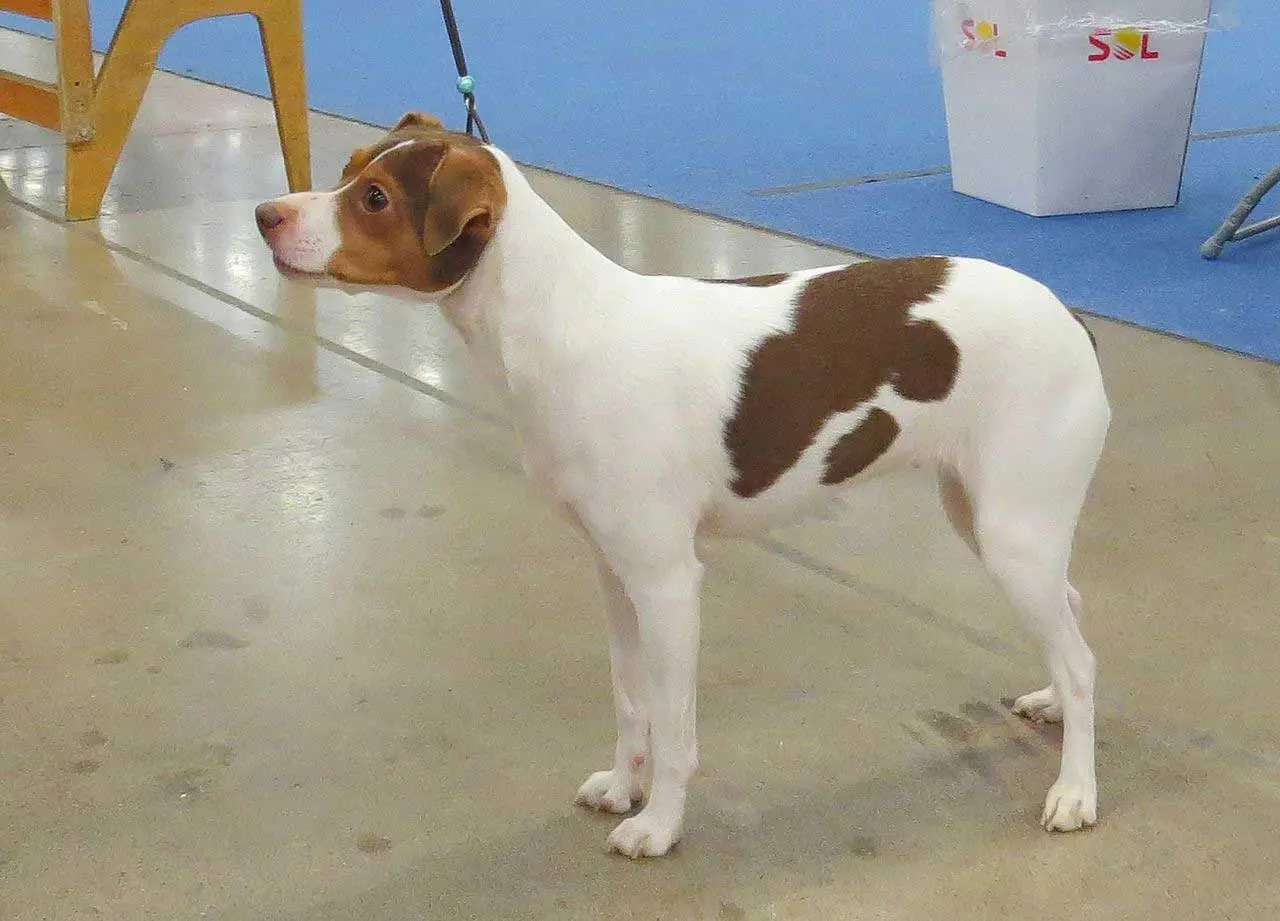
The Brazilian terrier is a dog's size medium, slim and harmonious construction. Its square body with rounded outer lines is firm but not too heavy.. The weight of an adult animal is a maximum of eight to ten kilograms. This applies to both males and females, although the height at the withers is different in both: While reaching 35 to 40 centimeters in males, it's just 33 to 38 centimeters in females.

Interesting and unusual is that Brazilian terrier have different tail lengths from birth: From a rudimentary stump on a medium long tail to a full tail, you can find the most varied expressions. This typical characteristic of the breed gives the Brazilian terrier an individual appearance and does not detract from its charm, on the contrary.

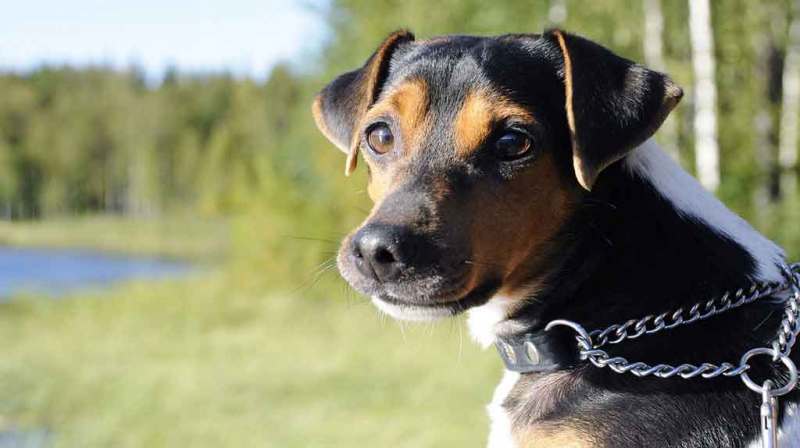
The dog also owes its special charisma to the small folded ears, as well as the large round blue eyes, green, brown, Bluish gray or reddish brown with an open and lively look. The head seems very expressive. It has a triangular shape and is wide at the base. The face narrows noticeably from the widely spaced ears to the tip of the nose. Due to the relatively distinctive groove on the forehead, seems thoughtful.

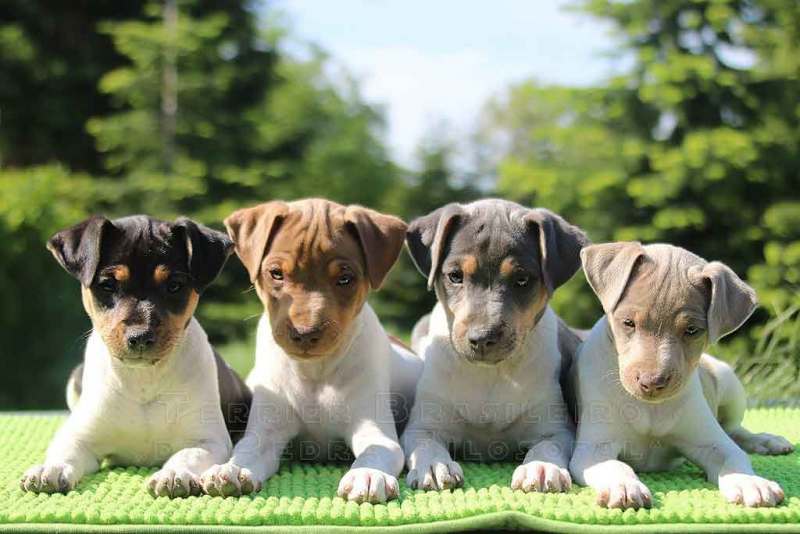
The short coat, smooth, fine and tight dog feels very nice, a bit like the hair of a rat. No underwear. Especially soft areas are found on the head, the ears, the bottom of the neck and the inside of the front legs. As a rule, a Brazilian terrier it's tricolor. The basic color is always white. It is flanked by black marks, blue and / or brown red, they provide a distinctive pattern. Over and over you hear and read that the Brazilian terrier has strong similarities to Fox Terrier. This is undeniable, but there are visible differences: the Brazilian's muzzle is much shorter and the body contours appear more rounded, while the body of the Fox Terrier is more angular.

Character and skills

The character of Brazilian terrier can be described, justly, as little complicated. Their social behavior is once again much better than that of other types of terrier. These may include, the stubbornness of Russel and I shake it off Fox Terrier are much less present in South America. He is very friendly with the people he meets and in relation to contact with their owners, one can use terms like "affectionate" and "tender". Also with other dogs the Brazilian terrier usually gets along smoothly.

Like your relatives in the terrier family, the Brazilian terrier it is extremely spirited, and therefore active and lively. you could also say: a real brazilian. Therefore, need plenty of exercise. He loves to accompany runners and hikers and frolic with children., but is content with fun adventures in the park without complaining. But please, pay attention to the variety: The dog finds both pleasure in ball games and recovery. It moves freely and elegantly. Typical are short, quick steps.

The Brazilian terrier is considered a smart dog – but of course this requires a certain amount of activity, not just outside, but also inside the house or the apartment. Its high level of attention and the fact that it is initially reserved towards strangers, his above average barking often qualifies him as a watchdog. It is also worth mentioning the dog's ability to empathize in almost any situation..

In short, It is an excellent dog for home and family or social, who can be easily trained with a successful mix of gentle and patient guidance. Canine sports enthusiast (agility, fly-ball). It also, gets along very well with horses, making it an excellent companion for horse owners. Thanks to his pleasant character, the Brazilian terrier also suitable as a beginner dog for people who have had little or no experience of active dog ownership to date.

Considering its origin, the Brazilian terrier is naturally used to tropical temperatures. For this reason it is recommended to give up the breed if you live in very cold and rainy climates..

Care and health of the Brazilian Terrier

The maintenance of Brazilian terrier it's comparatively easy. This is mainly due to the short, smooth coat without undercoat. The dog hardly loses hair, so it is also suitable for allergy sufferers who have to do without the four-legged friends of other races for health reasons.

Talking about health:

Another positive aspect is that the Brazilian terrier they are particularly resistant to diseases and have a high life expectancy. On average, they live on 12 to 15 years. Only with respect to the ears is caution necessary: Dogs have what are known as slanted ears, which means that the ear canal is angled. This makes ventilation of the inner ear somewhat more difficult., which encourages the settling of bacteria and fungus and significantly increases the likelihood of a dangerous ear infection. For this reason, the ears of the Brazilian terrier must be cleaned regularly and thoroughly. As such, earlobes and special ear cleaners are used. These agents help loosen dirt and wax from the ear and, therefore, keep the quadruped healthy. Important: Never use cotton swabs. would have a counterproductive effect.

Images "Brazilian terrier"
Photos:

1 – Brazilian terrier – Dog 2013 Helsinki 13-15/12/2013 by Thomas / CC BY-SA
2 – Juliana Lopes / CC BY by Brazilian Terrier, uploaded from Flickr
3 – Matt Hidalgo / CC BY-SA by Filomena and one more of their faces =) (Brazilian Terrier)
4 – Terrier brasileรฑo by Sini Merikallio / CC BY-SA
5 – The 4 genetically possible colours of Terrier Brasileiro. From left to right: Tricolor black, tricolor brown, tricolor blue, tricolor isabela by TerrierBrasileiroDaPedraFilosofal / CC BY-SA
6 – Terrier brasileรฑo by https://brit-petfood.com/en/breed-catalog/terriers/brazilian-terrier
7 – Terrier brasileรฑo by https://pxhere.com/en/photo/1188027

Videos "Brazilian terrier"

Type and recognitions:

  • FCI CLASSIFICATION:
  • Group :
  • Section : . .

Federations:

  • FCI – Terriers. Section 1 Large and medium-sized terriers. โ“˜
  • CBKC โ“˜

FCI breed standard "Brazilian terrier"

Origin:
Brazil

Date of publication of the valid original standard:
15.06.2018

Use:

Used for small game hunting, as a guard and companion dog.


General appearance:

Is medium sized, slender, well balanced, of firm structure, but nottooheavy. The body is ofappearancesquare, with curved lines.

IMPORTANT PROPORTIONS: Square shaped dog: the length of your body, from the shoulder to the tip of the iliac crest, it is approximately the same as its height at the withers.


Behavior / temperament:

This is a dog always on the move, alert, active and shrewd. He is friendly and gentle with acquaintances, butdistrustful with strangers.

Head:

View from the top, It is triangular in shape, wide at the base; ears are wide apart. The head decreases noticeably from the eyes to the tip of the nose. Profile view, the upper line rises slightly from the tip of the nose to the naso-frontal depression, mainly between the eyes, and continues towards the occipital bone with a slight convexity.

Cranial region:

Craging: It is rounded with a moderately flat forehead. Views from above, lateral lines converge towards the eyes. The distance from the outer angle of the eye to the insertion of the ears is equal to the distance between the two outer angles of the eyes. The front groovemediumis well developed.

Dnaso-frontal depression (Stop): Pronounced.

facial region:

  • Trufa: Moderately developed. It is dark in color, in accordance with the coat color, with nostrils wide open.
  • Horcico: Seen from above, is shaped as an isosceles triangle from both outer corners of the eye to the tip of the nose. It is strong and well molded under the eyes, with an inclined base that accentuates the naso-frontal depression.
  • Labios: Dry andfirm. The upper lip joins the lower lip exactly, covering the teeth and allowing the mouth to be closed completely.
  • Cheeks: Droughts, well developed.
  • Jaws / Teeth: 42 teeth, regularly deployed, well developed. The bite is scissor-shaped.

EYES: Equidistantesfromthe occipital protuberanceuntilthe tip of the nose. They appear well separated. The distance between the outer corners of the eyes is equal to the distance from the outer corner of the eye to the tip of the nose. Looking straight ahead, are somewhat prominent, large andeyebrowsare slightly accented. They have shaperoundedand they are wide open. His expression is alert and shrewd. Color should be as dark as possibleand in accordance with the color of the coat.

Blue variety has bluish gray eyes, the variety of brown colorhasBrown eyes, green or blueand the varietyinsabela, in addition to the colors of the brown variety, may also have amber eyes, both clear andorsCร โ€บr.

EARS: Deployed laterally, in line with the eyes, well separated from each other. They are triangular in shape and the tip is pointed. They appear semi-upright with the tip bent down towards the outer corner of the eye.

Neck:

It is of moderate length, balanced in relationwiththe head. Harmoniously joins the head and trunk.Well defined, clean and dry. The top line is slightly arched.

Body:

Well balanced. It is not too heavy and has a square shape, withcurve linesNot baddefined.

  • Lรญnand the top: It is firm and straight, rising slightly from the cross to the rump.
  • Cruz: Well pronounced, harmoniously joins the forelimbs.
  • Espalda: Relatively short and well muscled.
  • Itmo: Short and firm. Armoniosamente a la grupa.
  • Glikeness: Slightly inclined, tail implantation is low. Well developed and muscular.
  • Pecho: Long, deep, reaches to elbow level. Ribs well arched. The sternum is moderately curved. The sill is not very pronounced and is moderately wide, allowing free movement of the front limbs.
  • Lรญnlower ea and belly: Slightly curved, that rises back but not extremely retracted.

Tail:

Nnaturally short or long; on this last case, cannot exceed the hock. Strong and low set, happily held, forming a smooth curve when it's long, not coiled on the back.

Tips

PREVIOUS MEMBERS:

  • Apgeneral arience: Seen from the front, they are straight, moderately separated, in the same line as the hind limbs, which are also straight, although more separated.
  • Hormbros (Blades): They're long.
  • Brazos (Humerus): They are approximately the same length as the shoulder blade, forming with it an angle of approximately 110 ยฐ.
  • Elbows: They are well attached to the body, at the same level as the lower chest line.
  • Antarms: Straight, skinny, dry.
  • MetacarpusVery moderate, straight and slim, almost perpendicular to the ground.
  • Pinis previous: compacts. They don't even deviate inwards, nor out. The two middle fingers are longer than the others.

LATER MEMBERS:

  • Apgeneral arience: Noticeably muscular, well developed thighs, more separated than the previous members.
  • Thigh (Femur): Well developed and muscular.KneeModerately angled.
  • PinScheme (tibia): It is proportionate to the size of the thigh.
  • CorvejรณnRelatively short and perpendicular to the ground when the dog is standing.
  • Metatarsus: Straight.
  • Pinis later: compacts; with fingers longer thanon the front feet.

Movement:

Elegant, loose, short and quick steps.

Mantle

Well adjusted, no slack. Dry.

Plink: Is short, smooth, fine, but not soft. It is glued to the skin; you can't see the skin through it. It is finer on the head, the ears, below the neck, in the interior and bottom part of the forelimbs and behind the thighs.

Colorr: Predominant white background color with markingsblack, blue, brown or isabela. The following characteristic marks must always be present: fire color over the eyes, on both sides of the muzzle, as well as inside the ears and on the edge of these. These marks may exist on other parts of the body at the edge of the marks.

The head must always have marksblack, blue, browns or isabelaon the forehead and ears.Cana star and white marks appear preferably in the front groove and in the parts ltoteralesof the muzzle, distributed as harmoniously as possible.


Size and weight:

Alturto the cross:

  • Males: between 35 and 40 cm.,
  • females: between 33 and 38 cm..

Weight: 10 kg approximately.


Fouls:

Any deviation from the aforementioned criteria is considered as a fault and the severity of this is considered to the degree of the deviation to the standard and its consequences on the health and well-being of the dog..

  • Scarce cloak that reveals the skin, across the board the atypical.
  • Faults in characteristic marks
  • Shoulders too heavy or loose
  • Wellrear arched ta
  • Falharmony, atypical complexion.

FALTAS GRAVES:

  • Lรญnupper e descending from the cross to the rump.

FALTAS DISQUALIFYING:

  • Aggressive or extreme timid
  • Any dog โ€‹โ€‹showing clear signs of physical or behavioral abnormalities.
  • Group plan.
  • Prognathism higher than the bottom
  • Ear fully erect.


N.B.:
  • Males should have two normal-appearing testicles fully descended into the scrotum..
  • Only functionally and clinically healthy dogs, with the typical conformation of the breed, should be used for parenting.

Itlatest changes are in bold.

TRANSLATION: IRIS Carrillo; Skrivanek Translation Services. Official language: IN.

Revision: SR. Jorge Nallem.

Source: F.C.I - International Cynological Federation

Alternative names:

1. Fox Paulistinha (English).
2. terrier brasileiro (French).
3. Terrier Brasileiro (German).
4. Fox paulistinha, Foquinho (Portuguese).
5. Fox Paulistinha, Terrier Brasileiro (espaรฑol).

โ–ท The world of Pets: Dogs, cats, birds, reptiles, amphibians

Irish Glenn of Imaal Terrier
Irlanda FCI 302 . Large and medium sized Terriers
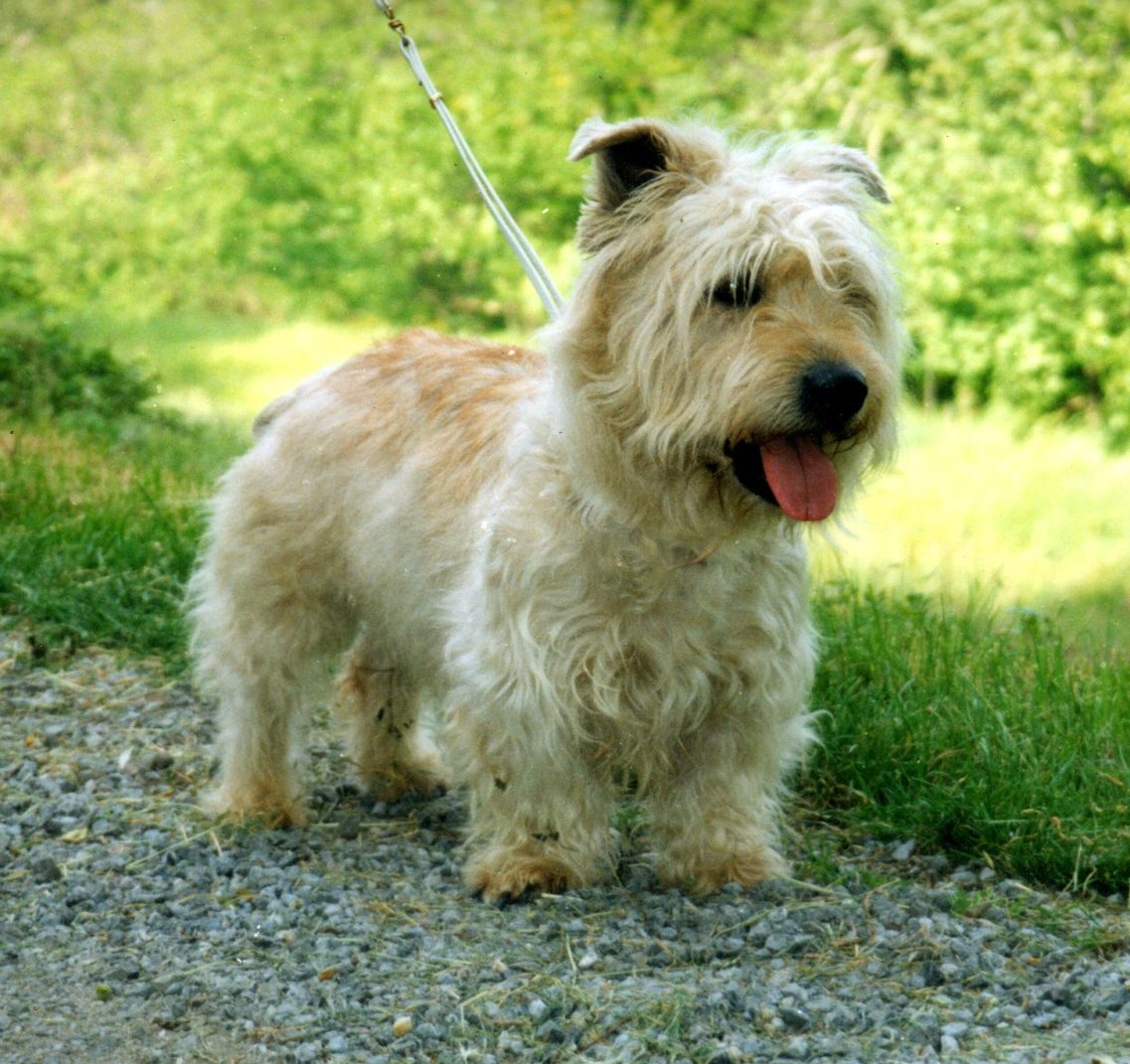
It is generally believed that Irish Glenn of Imaal Terrier is less excitable than other Terriers, although it takes action immediately when prompted.

Glen of Imaal Terrier

Content

History

The Irish Glenn of Imaal Terrier originates from the Irish east coast, in county wicklow, which is in the ravine (=Valle) the Imaal. From this rough and wild valley this very old breed got its name. It was first mentioned around 1575.

Like old farm dog, the Irish Glenn of Imaal Terrier he had a very busy life and worked hard for his master. His job was to catch rats and mice on farms and operate smaller work machines like churns and work grinders., where I had to run on leather straps. He also accompanied his master on the fox hunt, the Badger and Otter. He worked in silence and if necessary he fought to the death. Before it was banned in Ireland, the Irish Glenn of Imaal Terrier also used in questionable dogfights. Of course, he was also the most loyal friend and guarded the house and the yard, never shied away from facing a much bigger and stronger opponent.

For its owner, the Irish Glenn of Imaal Terrier it was as important as his daily bread, although undemanding, frugal and tough enough to share the barren life of farmers. This harsh life brought with it a ruthless selection. Only the toughest and most frugal Terriers survived, what characterizes the breed until today.

The pedigree of Irish Glenn of Imaal Terrier it's an irish secret to this day. In Ireland itself, this Terrier has never been numerous and did not leave his ancestral home until 1980, when the owners preserved him as a true child of nature, marked by great courage, skill and endurance. In 1933 the breed was officially recognized by the Irish Kennel Club ( I.K.C.). The international recognition of the F.C.I. continued on 1981.

Physical characteristics

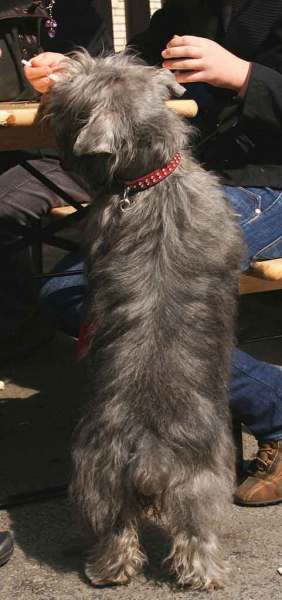
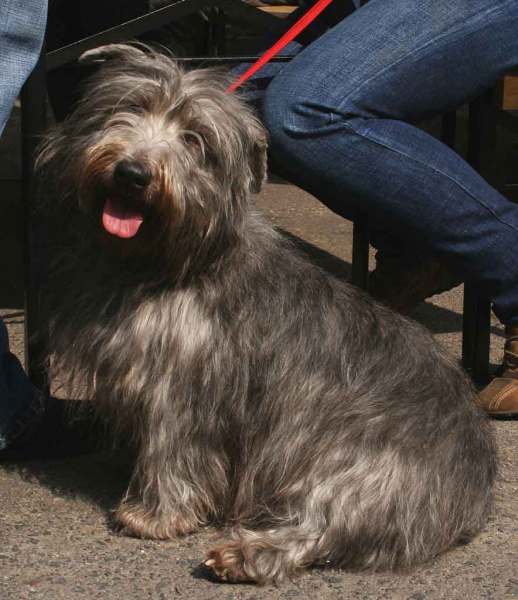
The Irish Glenn of Imaal Terrier it is small but strong and robust and weighs up to 16 kilograms with a maximum height at the withers of 36 centimeters. Its relatively small forward leaning ears are notable.. Its coat is medium length and consists of a rough top layer and a smooth bottom layer. It can be wheat colored, tabby blue or in different shades of red and gold. In the case of a dark-colored coat, a black-blue mask is common., which can also show as stripes over the ears, along the back and tail, so these marks become clearly clearer with increasing age.

Character and skills

Today the Irish Glenn of Imaal Terrier it is a gentle and docile family dog. Its balanced and faithful nature, as well as his average temperament make life with him very pleasant. The Irish Glenn of Imaal Terrier is very affectionate, always cheerful and in a good mood and preferably "in the middle". Enjoy all the attention and care, but without demanding anything. Rather, follows her around with her alert gaze and once she has gained attention, shows his joy about it with strong tail swipes. If the joy is particularly great, his temperament can also run away with him.

Children are welcome as playmates, if they show him the respect that he shows. Pets are accepted by him without problems when they get used to each other. The Irish Glenn of Imaal Terrier she is always friendly with strangers, and with his contagious joy, His charm and his irresistible look quickly have all the sympathies on his side.. After all, it is a terrier that radiates a lot of personality. He is open-minded and not afraid to learn new things. He likes to be everywhere with his nose. In general, everything that is new – Weird people, new environments, an object that has not been there before – it is very interesting and has to be examined very carefully. The Irish Glen of Imaal Terrier is a particularly attentive observer. Along with her charming nature and her desire to do everything right, is very adaptable and develops a very close relationship with his family. He likes to accompany them whenever possible. Like a very people-oriented terrier, I would defend them in an emergency, even to death. Feel more comfortable in your proximity.

What characterizes him Irish Glenn of Imaal Terrier is his great courage, his self-confidence and intelligence above average. Sufficient workload and intellectual work are important to the intelligent four-legged friend. Enjoy almost all activities, be it sports with dogs, search games or learning tricks – is available for all kinds of fun.

Despite its short legs, it is very agile, due to his muscular physique, a small power. Its special characteristics are its slightly curved front legs with the legs turned outward., his big head and his pronounced chest. The Irish Glenn of Imaal Terrier it is a very balanced dog, that radiates great calm on the one hand, but on the other hand you are immediately ready for action and, if required, vigorously watches over and defends your home and family.

The Irish Glenn of Imaal Terrier – the little irish with a big heart

Like a silent working terrier it hardly barks. It is also less excitable than other terriers. Sometimes you can see the Irish stubbornness, but the Irish Glenn of Imaal Terrier not resentful. Due to its origin it does not tolerate heat very well, he likes harsh weather and when the wind blows around his nose. But if the chemistry ain't right, or if the other dog brazenly approaches him, you will receive the message – "Glen doesn't like your attitude.". So, it is important to socialize with other dogs from the beginning and to have contact with many dogs of different ages.

โ€œIrish Imaal Glen Terrierโ€ Care

Because the Irish Glenn of Imaal Terrier still very original and not over-bred, still a very healthy and robust breed. Its coat has a rough top coat with a smooth undercoat that needs to be trimmed. Otherwise, his self-cleaning coat is very easy to care for. Coat color is wheat or Brindle (Blue striped).

A consistent but loving upbringing makes the Irish Glenn of Imaal Terrier a faithful companion, nice and gentle, which is easy to handle.

Life expectancy ยซIrish Imaal Glen Terrierยป

The Irish Glenn of Imaal Terrier is considered an original dog breed, which is in good health and robustness due to the absence of hereditary diseases caused by breeding. If maintained in a species-appropriate manner, will live an average of twelve years.

Images "Irish Glenn of Imaal Terrier"

Photos:

1 – Irish Glen of Imaal Terrier during International show of dogs in Katowice – Saucer, Poland. Breeder – Piotr Kuznik, http://www.irishglen.pl/ by Pleple2000 / CC BY-SA
2 – Irish Glen of Imaal Terrier during International show of dogs in Katowice – Saucer, Poland. Breeder – Piotr Kuznik, http://www.irishglen.pl/ by Pleple2000 / CC BY-SA
3 – Adult w:Glen of Imaal Terrier by photo by Scoo / CC BY-SA
4 – Irish Glen of Imaal Terrier during International show of dogs in Katowice – Saucer, Poland. Breeder – Piotr Kuznik, http://www.irishglen.pl/ by Pleple2000 / CC BY-SA
5 – Irish Glen of Imaal Terrier during International show of dogs in Katowice – Saucer, Poland. Breeder – Piotr Kuznik, http://www.irishglen.pl/ by Pleple2000 / CC BY-SA
6 – Glen of Imaalinterrieri by Sami Kronqvist / CC BY-SA

Videos "Irish Glenn of Imaal Terrier"

Type and recognitions:

  • FCI CLASSIFICATION:
  • Group :
  • Section : . .

Federations:

  • FCI – Terriers 1 Large and medium-sized terriers. โ“˜
  • AKC – Terriers โ“˜
  • ANKC – Terriers โ“˜
  • CKC – Terriers โ“˜
  • โ€‹KC – Terriers โ“˜
  • NZKC – Terriers โ“˜
  • UKC – Terriers โ“˜

FCI breed standard "Irish Glenn of Imaal Terrier"

Origin:
Ireland

Date of publication of the valid original standard:
27.01.2001

Use:

Like all other terriers, this stubborn little breed had to hunt badgers and foxes, as well as keeping the rat population to a minimum. In the news, he is a family dog, docile and sweet.


General appearance:

It is a medium-sized dog, with a medium length coat, very strong and gives the impression of maximum substance for its size.

IMPORTANT PROPORTIONS:

The body is longer than it is tall, close to the ground.


Behavior / temperament:

It is an active dog, agile and quiet when working. Courageous and gifted with courage when you need it, otherwise it is kind and docile, from which personality flows, his loyal and affective nature, makes him a very acceptable dog for the home and company. Irish Glen de Imaal is said to be less easily excitable than other terriers, although he is always ready to react if asked.

Head:

---

Cranial region:
  • Skull: Good width and reasonable length.
  • Depression links (Stop): Pronounced.

facial region:

  • Truffle: black.
  • Snout: Giving the impression of strength; narrowing towards the truffle.
  • Jaws: Strong.
  • Teeth: Healthy teeth, regular, strong and good size. Scissor bite.

Eyes: Brown, medium-sized, round and placed well apart. Light colored eyes should be penalized.

Ears: Small, When the dog is alert, it should be pink or semi-upright; when at rest they are carried backwards. Completely drooping or erect ears are undesirable..

Neck:

Very muscular and of moderate length.

Body:

Deep and long, longer than high.

  • top line: To level.
  • Pork loin: Strong.
  • Breast : Wide and strong, well sprung ribs.

Tail:

Cut. Firm at the root, well established and carried happily. Puppies' tails should be cut in half. A natural glue (not cut) It is allowed for countries where cutting them is prohibited by law.

Tips

PREVIOUS MEMBERS: Short, curved and with good bones.

  • Blades: Spacious, muscular and well leaning.
  • Anterior legs: Short, arching and good bone.
  • Pies: Compact and strong, with round foot pads. The front feet are slightly rotated out from the metacarpus.

LATER MEMBERS: Strong and well muscled.

  • Thighs: Well muscled.
  • Knee: Well angled.
  • Hocks: Without turning in or out.
  • Pies: Compact and strong with round foot pads.

Movement:

Free and without lifting the forelimbs too much. Effortlessly cover ground with good boost from hindquarters.

Mantle

Fur: Hair is medium in length and coarse in texture, with a soft undercoat. Hair can be groomed to make your figure look neat.

Color:

  • Blue tabby without the hue turning to black.
  • Wheat, from light wheat to a golden reddish hue
  • Puppies can be born blue, Wheat or Reddish Lighter-colored puppies generally have a bluish-colored mask, may have a blue stripe along the back, in the tail and in the ears. Darker marks will lighten with age.


Size and weight:

Height to the cross:

  • Males: 35,5 cm. (14 inches) is the maximum.
  • females: proportionally less.

Weight:

  • Males : 16 kg (35 English pounds).
  • females : proportionally less.


Fouls:

Any deviation from the aforementioned criteria is considered as a fault and the severity of this is considered to the degree of the deviation to the standard and its consequences on the health and well-being of the dog..

  • Hound ears.
  • With inferior or superior prognathism.
  • Body too short.
  • Straight front.

FALTAS DESCALIFICANTES:

  • Aggressiveness or extreme shyness.
  • Any dog โ€‹โ€‹showing clear signs of physical or behavioral abnormalities must be disqualified..
  • Black and fire color.
  • Narrow snout.


N.B.:

Males should have two normal-appearing testicles completely descended into the scrotum. Only functionally and clinically healthy dogs, with the typical conformation of the breed, should be used for parenting.

TRANSLATION: Lic. O. Valverde, reviewed by Dr. F. del Valle and updated by J. Nallem, Uruguayan Kennel Club.

Source: F.C.I - International Cynological Federation

Alternative names:

1. Irish Glenn of Imaal Terrier, Wicklow Terrier, Glen, Glennie (English).
2. Irish Glen of Imaal Terrier (French).
3. Irish Glen of Imaal Terrier (German).
4. Glen of imaal terrier (Portuguese).
5. Glen, Wicklow Terrier, Glen of Imaal Terrier, Irish Glen of Imaal Terrier (espaรฑol).

โ–ท The world of Pets: Dogs, cats, birds, reptiles, amphibians

Bedlington Terrier
Gran Bretaรฑa FCI 9 - Large and medium sized Terriers.

The Bedlington Terrier, catalogued as a dog with the look of lamb and lion heart.

Bedlington Terrier

Content

Characteristics "Bedlington Terrier"

Coexistence is important that you have with your new friend. Before considering the acquisition of a dog of the breed "Bedlington Terrier" you know certain factors. Not all breeds of dogs are apt to live in an apartment, you must take into account his character, their need for exercise, their interaction with other pets, their care and if you have small children, their level of tolerance towards them.

Adaptation โ“˜

4,0 of 5 stars (based on 1 review)

friendly dog โ€‹โ€‹โ“˜

4,0 of 5 stars (based on 1 review)

hair loss โ“˜

1,0 of 5 stars (based on 1 review)

Affection level โ“˜

5,0 of 5 stars (based on 1 review)

Need for exercise โ“˜

3,0 of 5 stars (based on 1 review)

Social need โ“˜

4,0 of 5 stars (based on 1 review)

Home โ“˜

4,0 of 5 stars (based on 1 review)

Toilet โ“˜

4,0 of 5 stars (based on 1 review)

Friendly with strangers โ“˜

4,0 of 5 stars (based on 1 review)

barking โ“˜

3,0 of 5 stars (based on 1 review)

Health โ“˜

2,0 of 5 stars (based on 1 review)

Territorial โ“˜

5,0 of 5 stars (based on 1 review)

Cat friendly โ“˜

3,0 of 5 stars (based on 1 review)

Intelligence โ“˜

3,0 of 5 stars (based on 1 review)

Versatility โ“˜

4,0 of 5 stars (based on 1 review)

Child friendly โ“˜

4,0 of 5 stars (based on 1 review)

Surveillance โ“˜

3,0 of 5 stars (based on 1 review)

joy โ“˜

5,0 of 5 stars (based on 1 review)

History

The Bedlington Terrier It is a breed of dog that was raised in the 19th century in Northumberland, England, and named after the place of birth, Bedlingtonshire.

On 1825, the race renamed the Bedlington Terrier Bedlington. The race was highly valued for the fox hunting, hares and Badgers. He was also used as a vermin Hunter by miners from Bedlington. Miners exploited his bravery to use it as a dog fight with the dogs of hunters that used perdigueros dogs.

As he Otterhound and the Dandie Dinmont Terrier they are potential contributors to the race. Some breeders, especially those of England cross the Bedlingtons with Whippets and Greyhounds to produce what they call Lurchers.

Physical characteristics

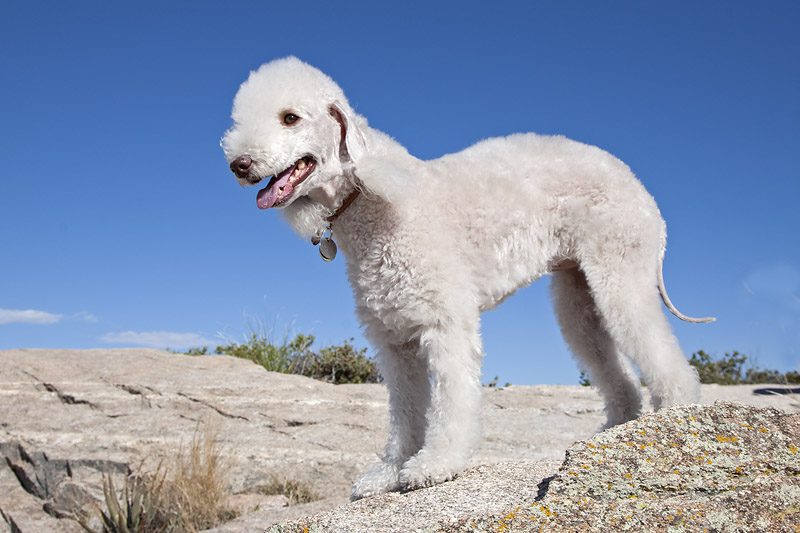
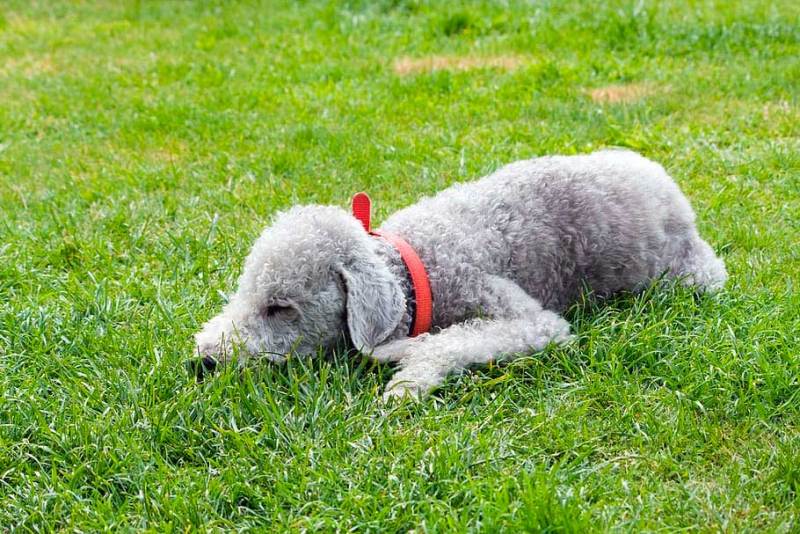
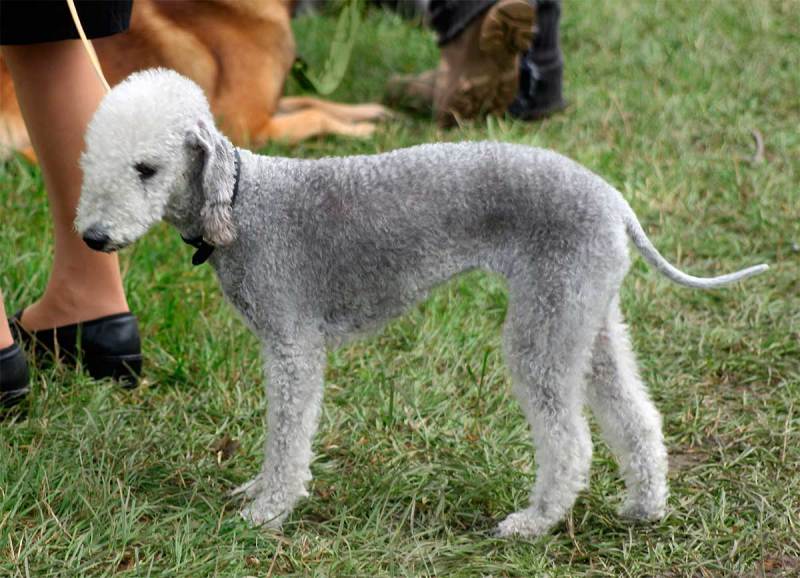
It was created as a breed of fighting and hunting, later became a popular pet. Gentle in appearance, has an arched back, a crest and thick curly coat that can be of various colours, grey, reddish / brown clear or color sand. The breed is approximately 38โ€“40 cm tall and weighs between 10 and 11 kg.

The Bedlington Terrier, It has been described as a dog with โ€œlamb look and lion heartโ€, to some extent because of their physical appearance (looks like a lamb), but also by its nature.

This breed has a head shaped wedge with penetrating almond-shaped eyes. His physiognomy is different from most of the Terrier, It resembles more a hound. His physical characteristics allow him to run at high speed.

The average lifespan of the "Bedlington Terrier" is around 13,5 years.

Observations

Their fur tends to be misleading, They seem to be a lamb, but in reality, each hair grows from a hair follicle, It has a cycle of growth, and when it dies it is replaced by another follicle, but the dead hair is still thereโ€ฆ bulging.

For which reason, daily brushing is very important if you don't want to have, the whole house full of hairโ€ฆ Also, since it is very thin, adheres to any part, and it can even be inhaled, causing problems for allergic persons. Workspace very well to family life and are good with children.

Character and skills

Calmer and less noisy than other Terrier. Usually one moderate behaviour and good character, they are very good companions for families.
If left alone for many hours, they can become very destructive, since they get bored easily and everything they catch..., in danger of being destroyed. For which reason, It advisable to give long walks, where you can run around and release energy.

Images "Bedlington Terrier"

Photos:

  • 1 – A Bedlington Terrier during an FCI dog show in Switzerland by Corinne Benavides
  • Bedlington terrier
  • David Oat [CC BY-SA]
  • David Oat [CC BY-SA]
  • Videos "Bedlington Terrier"


    Type and recognitions:

    • FCI CLASSIFICATION:
    • Group :
    • Section : . .

    Federations:

    FCI โ“˜, AKC โ“˜, ANKC โ“˜, CKC โ“˜, โ€‹KC โ“˜, NZKC โ“˜, UKC โ“˜

    FCI breed standard Bedlington Terrier

    FCIFCI - Bedlington Terrier
    Bedlington

    Alternative names:

    1. Rothbury Terrier, Rodbery Terrier, Rothbury’s Lamb (English).
    2. Bedlington terrier, Terrier Bedlington (French).
    3. Bedlington Terrier, Rothbury Terrier (German).
    4. Bedlington terrier (Portuguese).
    5. Bedlington terrier (espaรฑol).

    โ–ท The world of Pets: Dogs, cats, birds, reptiles, amphibians

    Fox Terrier (wire)
    Gran Bretaรฑaa FCI 169 - Large and medium sized Terriers

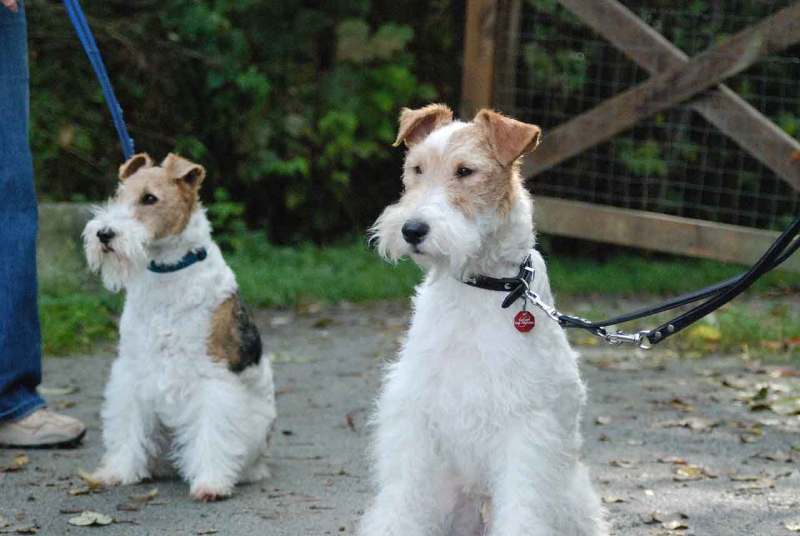
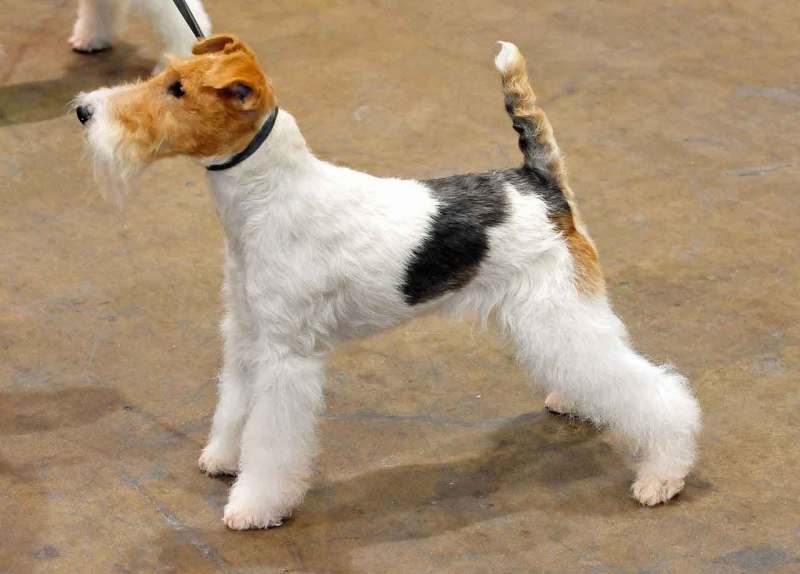
    The Fox Terrier (wire) he is an active and happy dog, of small volume in which bones of good substance and great physical strength are combined, never heavy or rough.

    Fox Terrier pelo de alambre

    Content

    Characteristics "Fox Terrier (wire)"

    Coexistence is important that you have with your new friend. Before considering the acquisition of a dog of the breed "Fox Terrier (wire)" you know certain factors. Not all breeds of dogs are apt to live in an apartment, you must take into account his character, their need for exercise, their interaction with other pets, their care and if you have small children, their level of tolerance towards them.

    Adaptation โ“˜

    5,0 of 5 stars (based on 1 review)

    friendly dog โ€‹โ€‹โ“˜

    2,0 of 5 stars (based on 1 review)

    hair loss โ“˜

    3,0 of 5 stars (based on 1 review)

    Affection level โ“˜

    5,0 of 5 stars (based on 1 review)

    Need for exercise โ“˜

    5,0 of 5 stars (based on 1 review)

    Social need โ“˜

    3,0 of 5 stars (based on 1 review)

    Home โ“˜

    3,0 of 5 stars (based on 1 review)

    Toilet โ“˜

    2,0 of 5 stars (based on 1 review)

    Friendly with strangers โ“˜

    2,0 of 5 stars (based on 1 review)

    barking โ“˜

    5,0 of 5 stars (based on 1 review)

    Health โ“˜

    3,0 of 5 stars (based on 1 review)

    Territorial โ“˜

    5,0 of 5 stars (based on 1 review)

    Cat friendly โ“˜

    1,0 of 5 stars (based on 1 review)

    Intelligence โ“˜

    5,0 of 5 stars (based on 1 review)

    Versatility โ“˜

    3,0 of 5 stars (based on 1 review)

    Child friendly โ“˜

    5,0 of 5 stars (based on 1 review)

    Surveillance โ“˜

    5,0 of 5 stars (based on 1 review)

    joy โ“˜

    5,0 of 5 stars (based on 1 review)

    History

    Terriers form a large group of dogs. Its name is derived from the Latin "Terra" for earth. So they were dogs for work on the land. The first evidence is given by the ancient Romans. Already in the Middle Ages terriers are described in detail. His homeland is in the British Isles. Terriers existed throughout the country. In the stables they kept the little vermin. Even the big rats were not a problem for them. The hens, pigeons and rabbits protected them from martens and foxes. To keep chasing foxes, the terriers were sent to the trench. They were supposed to get the fox out of the hole. All these tasks required an enthusiastic commitment, special courage, independent thinking and so-called predatory acuity. Terriers were the world champions in the then "sport" of rat biting. They were fearless and with every fiber of their being they strove to do their job to the best of their ability..

    We can still experience all of these qualities in our terriers today.. They make the special charm of these dogs. Terriers come in all sizes, but they are mostly quite small dogs up to the Yorkshire Terrier of today. But they were all once very busy working dogs. Most small terriers like Yorkie, the Westie or the Scottish they made their home in the cramped working-class settlements of emerging industry in England or Scotland. Despite her sometimes quite dainty appearance today, they are still whole dogs, yet. They are concise reps with their own heads and bold temperament. Great terriers like him Airedale Terrier they belong to the first service dogs, who worked for the police, customs or army worldwide. Small and medium terriers are still in high demand as hunting dogs, as the Parson Russel Terrier, el Fox Terrier o el German Hunting Terrier.

    In times past all terriers formed a large group of dogs, that were especially suited to the tasks mentioned here. Depending on the special field of application or the surface of the earth, formed different regional lines, that nevertheless remained connected to each other. Only modern pedigree dog breeding created dog breeds genetically separate from this, as we know them today. Like this, no less than 34 races, mostly native to England, Ireland, Scotland or Wales. Just the German Hunting Terrier comes from Germany.

    Physical characteristics

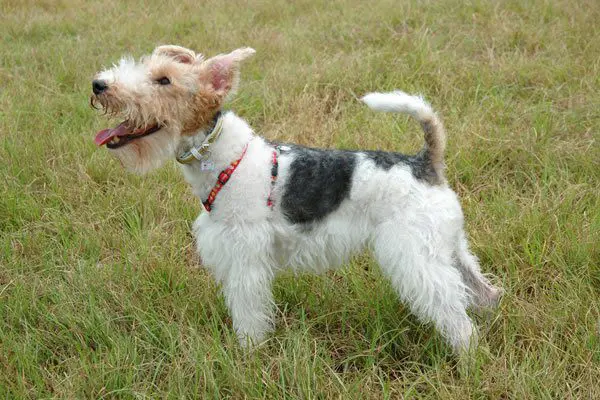
    The Fox Terrier (wire) he is an active and happy dog, of small volume in which bones of good substance and great physical strength are combined, never heavy or rough. Its structure presents a perfect balance, particularly with regard to the proportions between the skull and the muzzle, and in the same way between the height at the cross region and the length of the body from the point of the shoulder to the point of the buttock, they look roughly the same. It stands tall like a hunting horse that has a short back and is able to cover a lot of ground.

    SIZE AND WEIGHT:

    Height to the cross region: It should not exceed 39 cm in males; females are slightly smaller.
    The ideal weight of a developed specimen is 8,25 for males; for females it is slightly lower.

    Character and skills

    Terriers have a concise nature, that distinguishes them all – with a certain restriction also toroidal terriers. They are extraordinarily temperamental dogs that never say no to any adventure.. They are lively, bright, concise. They don't avoid fights. Little ones especially tend to start fights with other dogs of any size due to their chronic overconfidence.. In general, especially the little ones tend to call themselves emperor. This is a challenge for the teacher or caregiver. As construction hunting dogs they are able to make their own decisions, which means they like to be stubborn and stubborn. Terriers can quickly become overbearing if their humans haven't made it clear who determines the house rules.

    Videos "Fox Terrier (wire)"

    Polin (Fox terrier de pelo duro)
    O belo Fox Terrier pรชlo duro. The amazing Wirehair Fox Terrier.

    They are extremely cooperative and docile. It is a great pleasure to work with them. Terriers are faithful to their humans and are very suitable as family dogs, if your strong personality is not only respected, but also appreciated and acted. Hunting terriers especially are characterized by their intelligence and extraordinary courage. They are even able to search for a draft boar, lower it and then bark without hurting yourself. Of course they still go to the dens of the fox and the badger. Even if the Yorkies are carried on the arm with bows – and they are happy to bear it – even the smallest terrier is essentially a daredevil and not a lapdog. They are bundles of energy that love and need a physical and mental challenge..

    Fitness

    Keeping a terrier has no problems. They have no demands regarding the size of the apartment. Only grooming is mandatory. The biggest challenge is his temperament. They need physical and mental challenges. Many are very successful hunters. As a companion dog they are suitable for a wide spectrum. Almost all terriers are great for various canine sports. As a running partner, of a cyclist. Your high level of fitness, their often vigorous health and willingness to work mean both a challenge and an obligation to their masters and mistresses.

    Like most terriers they have a strong hunting instinct., must be kept on a leash in nature. Terriers are very suitable as playmates for children, They are designed for any kind of fun and are robust enough to play with children.. But, the house rules must be correct and the terrier must know his role in the family. Even the smallest terriers shouldn't have room to live out their overconfidence and become the children's school teacher..

    Fox Terrier (wire) Education

    Typical terriers can be trained and educated very well.. The clear announcement and the consequence are the miracle words here based on a respectful and loving relationship with the master or caretaker.. Especially with little terriers, education is an often underestimated chapter.. Although they are cute and delicate, they are still a real terrier. They need a consistent education from the puppy's age. Most terriers can be trained on the basis of a good education for the most different tasks..

    Fox Terrier (wire) care and health

    Terriers are usually very easy to care for. Apart from those with short hair, most terriers need a regular haircut. But they lose comparatively little hair.

    Most terriers are in robust health. Exceptions to this rule are temporarily fashionable or outward-facing breeds such as Yorkie, the Westi or the Bedlington Terrier, in whose population copper toxicosis has spread excessively, a disease that attacks the liver. The tendency to dwarf with copies of less than 3 kg, which is particularly notable in the Yorkie, leads to damage that can be described as nurturing torture.

    Nutrition / Food

    Nutrition is not problematic. But, breeds that are oriented towards outward appearances tend to suffer from allergies, what can make a food diet necessary.

    Wire terrier Fox Terrier life expectancy

    Life expectancy depends on the size of the dogs. The smallest dogs, but not too small, have a longer life expectancy. as a rule, terriers enjoy a long life as a dog, often over 15 years. Lines bred over generations for "beauty" and especially extremely small specimens, so-called minis dogs, Toy- o Teacup, they usually die much earlier.

    Buy a Terrier

    It is best to buy your puppy locally from a breeder affiliated with one of the terrier breeding clubs or you can look around the shelters.. Among 1.000 and 1.500 euros must be planned as costs.

    Images "Fox Terrier (wire)"

    Photos:

    1 – Fox Terrier pelo de alambre Uploaded from http://flickr.com/photo/40567541@N08/8504670637
    2 – A Wire Fox Terrier. by Pharaoh Hound / CC BY-SA
    3 – Photograph of a Wire Fox Terrier sitting down by Walker Whited / CC BY-SA
    4 – wo Wire haired Fox Terriers. Listed on Flickr as ยซDaisy and Gatsbyยป by Alicia Nijdam / CC BY
    5 – Wire Fox Terrier by https://www.flickr.com/photos/paulaloe/140805906/
    6 – Fox Terrier Wire dog show Racibรณrz by I, Lilly M / CC BY-SA

    Videos "Fox Terrier (wire)"

    Type and recognitions:

    • FCI CLASSIFICATION:
    • Group :
    • Section : . .

    Federations:

    • FCI – Terriers 1 Large and medium-sized terriers. โ“˜
    • AKC – Dogs working โ“˜
    • ANKC – Group 6 (utility dogs) โ“˜
    • CKC – Miscellaneous list โ“˜
    • โ€‹KC – Working dogs โ“˜
    • NZKC – Utility dog โ“˜
    • UKC – Watchdog โ“˜

    FCI breed standard "Fox Terrier (wire)"

    Origin:
    United Kingdom

    Date of publication of the valid original standard:
    26.03.2009

    Use:

    Terrier


    General appearance:

    Alert dog, fast-moving, vivacious expression, always in the expectation of any provocation. Friendly, outgoing and fearless.


    Behavior / temperament:

    Active and happy dog, of small volume in which bones of good substance and great physical strength are combined, never heavy or rough. Its structure presents a perfect balance, particularly with regard to the proportions between the skull and the muzzle, and in the same way between the height at the cross region and the length of the body from the point of the shoulder to the point of the buttock, they look roughly the same. It stands tall like a hunting horse that has a short back and is able to cover a lot of ground.

    Head:

    ---

    Cranial region:
    • Craging: The upper part of the skull is almost flat, slightly sloping and its width gradually decreases towards the eyes.
    • Dnaso-frontal depression (stop): Light.

    facial region:

    • Trufa: It must be black.
    • Horcico: There is almost no difference between the length of the skull and the muzzle. If the muzzle is noticeably shorter, the head looks weak and undefined. The muzzle gradually tapers from the eyes to the nose and sinks slightly at its junction with the forehead., but without cupping or abruptly leaning under the eyes where it should be full and well modeled. Puffy, round cheeks are undesirable.
    • Jaws / Teeth: Strong jaws with perfect, regular and complete scissor bite, that is to say, that the internal face of the upper incisors is in close contact with the external face of the lower incisors and the teeth placed perpendicular to the maxilla. Excessive bone or muscle development of the jaws is undesirable and makes it look unpleasant.
    • Ojors: dark, which denote vivacity and intelligence, moderately small and should not be protruding, but as round as possible. Placed not too far apart, not too high in the skull or too close to the ears. The clear color eyes are very undesirable.
    • Obars: Small, โ€œVโ€ shaped, of a moderate thickness, elegantly bent and falling forward near the cheeks. The fold of the ears well above the level of the skull. Ears erect, tulip or rose shaped are very undesirable.

    Neck:

    crisp, muscular, of moderate length, without jowl; widens towards the shoulders, presenting an elegant curvature when viewed from the side.

    Body:

    • Dorrso: Short, straight and strong, no sign of weakness.
    • Itmor: Powerful and slightly arched. The kidney region must be very short.
    • Pecho: Deep, the anterior ribs moderately arched, the posterior ones deep and well arched.

    Tail:

    Previously the custom was to amputate the tail.

    Tips

    PREVIOUS MEMBERS: Seen from the front, shoulders lean sharply from their neck junction towards shoulder tips which should be fine; seen from side, they should be long and well inclined obliquely back. The region of the cross always well defined. Deep chest, not wide. Seen from anywhere, members should be straight, with good bone structure in all its extension. Elbows must be perpendicular to the body, not hinder movement and carried straight when the dog is on the move.

    LATER MEMBERS: Strong, muscular, without too much angulation. The combination short leg with straight knee is highly undesirable.

    • Thighs: Long and powerful.
    • Rodinllto: Good angulation in the femoral or patellar patellar joints, they should not be turned in or out.
    • Corvejones: Well descended.
    • Metatarsals: Viewed from behind they look straight and parallel.
    • PinIt: Round, compact, with small foot pads, strong and thick; moderately arched fingers; without turning in or out.

    Movement:

    The fore and hind limbs carried straight forward and parallel. The elbows move perpendicular to the body without interfering with movement. The femoro-tibio-patellar joints (knees) they should not be turned in or out. It has good propulsion power coming from well-angled rear members.

    Mantle

    Plink: Denso, rough texture, Its length varies from 3/4 inch (2 cm.) on the shoulders to 1 1/2 inch (4 cm.) in the region of the cross; the back, ribs and hind limbs should have a softer, shorter undercoat. The hair on the back and hind limbs is harder than that on the flanks. The hair of the jaws should be curly and long enough to give the snout a strong appearance.. Members' hair must be thick and frizzy.

    Colorr: White with black spots should predominate, black and leonado or leonado. Brindle color spots, red, liver or slate blue are undesirable.


    Size and weight:

    Alturto the region of the cross:

    It should not exceed 39 cm. (15 1/2 inches) in males; females are slightly smaller.

    The ideal weight of a developed specimen is 8,25 kg (18 English pounds) for males; for females it is slightly lower.


    Fouls:

    Any deviation from the aforementioned criteria is considered as a fault and the severity of this is considered to the degree of the deviation to the standard and its consequences on the health and well-being of the dog..

    FALTAS DISQUALIFYING:

    • Aggressiveness or extreme shyness.
    • Any dog โ€‹โ€‹showing clear signs of physical or behavioral abnormalities must be disqualified..


    N.B.:
      • Males should have two normal-appearing testicles fully descended into the scrotum..
      • Only functionally and clinically healthy dogs, with the typical conformation of the breed, should be used for parenting.

    TRANSLATION: Lic. O. Valverde Calvo (Costa Rica) and Jorge Nallem (Uruguay).

    Source: F.C.I - International Cynological Federation

    Alternative names:

    1. Wire hair fox terrier, Wirehaired terrier, Fox terrier, Wire, WFT (English).
    2. Fox-terrier ร  poil dur (French).
    3. Wirehaired terrier (German).
    4. Fox terrier de pelo duro (Portuguese).
    5. Wire hair fox terrier, Wirehaired terrier, Fox terrier (espaรฑol).

    โ–ท The world of Pets: Dogs, cats, birds, reptiles, amphibians

    Fox Terrier Smooth
    Gran Bretaรฑaa FCI 12 - Large and medium sized Terriers

    Non-hunters who want to keep Fox Terrier as a pure companion dog, they must divert their innate hunting instincts with the sports and games of dogs

    Content

    History

    The first fox terrier, which were first presented at an English dog show in the mid-19th century, they were almost white dogs, especially suitable for fox hunting. Due to his courage, their endurance and ability to track and reach the foxes hidden in their burrow, little terriers soon found a large following among England's hunting and dog lovers. thanks to his physique, the intrepid dogs were able to get into the tubes Fuchsbau narrower. The purpose of breeding for fox hunting was also always the main focus when selecting suitable breeding dogs and ultimately gave the dogs their breed name Fox Terrier. (Fox = Zorro, terre = Earth).

    In 1876 the newly founded Fox Terrier Club introduced the first breed standard for the Fox Terrier. Today the FCI distinguishes two variants of the Fox Terrier: the Fox Terrier Smooth and the Fox Terrier (wire). Although both types of dogs only differ in the structure of their coat, are kept separately.

    At the beginning, the straight hair variant of the fox terrier was much more popular than the Fox Terrier (wire). But, this changed in the decade of 1920, when a real boom developed around the Fox Terrier (wire) and the โ€œpracticalโ€ little dog became the new โ€œfashion dogโ€ for fine ladies. Unfortunately, often forgot that the Fox Terrier was originally bred as a hunting dog and that the animals still possessed a lot of courage, hunting instinct and a certain sharpness.

    Lack of education and inappropriate attitude gave dogs, who liked to dig gardens and seldom avoided a fight with other dogs, the reputation of being scathing and aggressive. In the middle of the last century, the number of entries in the breeding book, especially from Fox Terrier (wire), noticeably decreased. Today, twice as many are born Fox Terrier Smooth that the Fox Terrier (wire). Today, the traditional english dog in both variants belongs to the rather rare dog breeds.

    Physical characteristics

    The body of a Fox Terrier Smooth is compact and muscular, built for speed and agility. The dog has a short body but a long, elegant face with ears that bend toward the cheeks.. The height of this breed should not exceed 39 cm in males; slightly less in females and its weight ranges from seven to eight kilograms.

    The coat of a Fox Terrier Smooth is short, flat against the body and dense. Normally, the hair covers the belly and the inner thighs too. Coat color is predominantly white with black and tan markings.

    Character and skills

    In agility, the Fox Terrier straight hair is in its element. The vivacious little terrier loves to move around and use his cute head. No wonder he never tires of dog sports like agility, obedience and flyball. Lying on the couch and lounging is definitely a thing of the past for smooth-haired Fox Terrier owners..

    Daily exercise and recovery games, jogging together or hiking boots, wheels or horse, during which the persevering four-legged friend can accompany you, should definitely be on the show with a Fox Terrier Smooth.

    The Fox Terrier usually gets along very well with children, after all they share their need to play and exercise. Active families who like to be outdoors will find a lively playmate and a loyal companion in the English Terrier.

    A valuable companion for hunters and non-hunters

    Though, like most dog breeds, Today it is kept primarily as a family and companion dog., the Fox Terrier still has a good figure when hunting. The versatile hunting dog can be used to build and rummage, to recover, to search or even to work in the water. His desire to work, his courage and vigilance make him an invaluable hunting companion. Non-hunters who wish to keep the Fox Terrier as a pure companion dog, they must divert his innate hunting instinct with dog sports and games and thus offer him a suitable alternative occupation.

    Fox Terrier Smooth education

    The Terrier have a reputation for having a mind of their own – the Fox Terrier Smooth is no exception. In case of lack of orientation and carelessness on the part of humans, smart four-legged friend likes to take command, normally not to the delight of his two-legged roommates. A consistent and early education is essential for a harmonious coexistence with the fox terrier. But, if you take your time, knows the most important basic rules of dog training while giving your dog enough mental and physical exercise, you'll have little trouble with this little bundle of power. The Fox Terrier not only is he smart, but also very docile and people-oriented.

    Fox Terrier smooth hair health and care

    Basically, the Fox Terriers they are considered very robust and healthy dogs. Ocular diseases occasionally occur. There is also a certain predisposition to neurological diseases such as ataxia and myelopathy, which can lead to destruction of the spinal cord. With responsible upbringing, a healthy diet, lots of exercise and proper care for each species, the risks of possible illness can, fortunately, reduce.

    The Fox Terrier Smooth they have a clear advantage over their relatives, the Fox Terrier (wire). While the Fox Terriers wire hair need a professional cut, regular brushing is enough to preserve the beautiful coat of the Fox Terrier Smooth. But, How fox terriers don't like to "stay still", you should get your dog used to brushing as early as puppyhood.

    Nutrition as needed and careful care play an important role in maintaining the health of dogs. Needs-based means that the diet must be age-adapted, dog's weight and range of motion. The Fox terrier They are extremely sporty and active dogs and generally need a high energy diet with lots of high quality meat and vegetables..

    Buy Fox Terrier Smooth

    If you are interested in a Fox Terrier Smooth, you must first inform yourself thoroughly about the characteristics of this breed. The Fox Terrier Smooth they are extremely temperamental and demanding dogs, who need consistent handling. A reputable breeder will ask you about your ideas and goals for dog breeding and, if required, will advise you not to buy a fox terrier. In this case, don't look for the next best seller, but carefully reconsider your reasons for buying a fox terrier.

    A purebred puppy should only be purchased from a reputable breeder whose dogs have been tested for possible hereditary diseases and other criteria of suitability for breeding before use. Puppies go on sale at the earliest between the eighth and tenth week of life. The price of the puppy varies between 850 and 1.500 euros and depends on the sporting aptitude and the breeding value of the parents.

    It is important that you know the exact needs of your dog and that you are familiar with the nutritional value of different foods.; both a deficiency and an oversupply of certain substances can cause serious health problems. Alternatively, you can feed your fox terrier with high-quality wet or dry food. Convince yourself of the quality of the processed ingredients and make sure that unhealthy additives such as sugar or artificial flavor enhancers have been avoided. You should also avoid too high a grain content in the food.

    Characteristics "Fox Terrier Smooth"

    Coexistence is important that you have with your new friend. Before considering the acquisition of a dog of the breed "Fox Terrier Smooth" you know certain factors. Not all breeds of dogs are apt to live in an apartment, you must take into account his character, their need for exercise, their interaction with other pets, their care and if you have small children, their level of tolerance towards them.

    Adaptation โ“˜

    5,0 of 5 stars (based on 1 review)

    friendly dog โ€‹โ€‹โ“˜

    2,0 of 5 stars (based on 1 review)

    hair loss โ“˜

    3,0 of 5 stars (based on 1 review)

    Affection level โ“˜

    5,0 of 5 stars (based on 1 review)

    Need for exercise โ“˜

    5,0 of 5 stars (based on 1 review)

    Social need โ“˜

    3,0 of 5 stars (based on 1 review)

    Home โ“˜

    2,0 of 5 stars (based on 1 review)

    Toilet โ“˜

    2,0 of 5 stars (based on 1 review)

    Friendly with strangers โ“˜

    2,0 of 5 stars (based on 1 review)

    barking โ“˜

    5,0 of 5 stars (based on 1 review)

    Health โ“˜

    3,0 of 5 stars (based on 1 review)

    Territorial โ“˜

    5,0 of 5 stars (based on 1 review)

    Cat friendly โ“˜

    1,0 of 5 stars (based on 1 review)

    Intelligence โ“˜

    5,0 of 5 stars (based on 1 review)

    Versatility โ“˜

    3,0 of 5 stars (based on 1 review)

    Child friendly โ“˜

    5,0 of 5 stars (based on 1 review)

    Surveillance โ“˜

    5,0 of 5 stars (based on 1 review)

    joy โ“˜

    5,0 of 5 stars (based on 1 review)

    Images "Fox Terrier Smooth"

    Photos:

    1 – Smooth Fox Terrier by publicdomainpictures.net
    2 – Fox Terrier pelo liso by needpix.com
    3 – Fox Terrier pelo liso by https://pxhere.com/es/photo/738534
    4 – Vos Spits (born in March 2006) in action by Piet ter Beek / Public domain
    5 – Fox Terrier pelo liso by https://pxhere.com/es/photo/1617503
    6 – Smooth Fox Terrier from ยซCzeczugaยป Poland by Piotr Pietryka / CC BY-SA

    Videos "Fox Terrier Smooth"

    Type and recognitions:

    • FCI CLASSIFICATION:
    • Group :
    • Section : . .

    Federations:

    • FCI – Terriers 1 Large and medium-sized terriers. โ“˜
    • โ€‹KC – Working dogs โ“˜

    • FCI breed standard "Fox Terrier Smooth"

      Origin:
      United Kingdom

      Date of publication of the valid original standard:
      30.10.2016.

      Use:

      Terrier


      General appearance:

      Active and happy dog, where bones of good substance and great physical strength are combined in a compact package, never heavy or rough. It should not be leggy or very short of limbs, and should stand up like a hunting horse with a short back and able to cover a lot of ground.


      Behavior / temperament:

      Active, fast-moving, vivacious expression, always on the lookout. Friendly, extrovert and fearless. Friendly, extrovert and fearless.

      Head:

      ---

      Cranial region:
      • Skull: Flat and moderately narrow, wide which gradually decreases towards the eyes.
      • Depression links (Stop): Small apparent stop.

      facial region:

      • Truffle: black.
      • Snout: Jaws, Superior and inferior, they are strong and muscular, leaning slightly below the eye This part of the anterior face should be moderately molded, so that it does not descend in a straight line like a wedge.
      • Jaws/Teeth: Strong jaws with perfect, regular and complete scissor bite, that is to say, that the internal face of the upper incisors is in close contact with the external face of the lower incisors and with the teeth placed perpendicular to the maxilla.
      • Cheeks: They should not be outgoing.
      • Eyes: dark, moderately small, as round as possible but not prominent. Of alert and intelligent expression.
      • Ears: Small and โ€œVโ€ shaped, falling forward close to the cheeks and never on the sides of the head. The fold of the ear should be above the level of the skull. Ears should be of moderate thickness.

      Neck:

      crisp, muscular and without dewlap. Of moderate length and gradually widening towards the scapulae.

      Body:

      • Dorrso: Short, straight and firm with no hint of weakness.
      • Kidney region: Powerful, very slightly arched.
      • Chest: Deep without being wide.

      Tail:

      Previously the custom was to amputate the tail.
      • Amcouldtthere is: Rather high insertion, erect, without curving on the back or curled. Of good power.
      • Sinn amputation: Rather high insertion, erect, without curving on the back or curled. As straight as possible. Tail of moderate length to maintain a good balance with the rest of the dog.


      Tips

      PREVIOUS MEMBERS:

      • Shoulder: Long and well sloped back, fine at their ends and well defined in the region of the cross.
      • Arm: Limbs should appear straight when viewed from any angle with little or no ankle pointing forward. Strong bones..
      • Previous feet: Small, round and compact, with firm and hard pads, and with moderately arched fingers, without turning in or out.

      LATER MEMBERS:

      • General appearance: Strong and muscular, without too much angulation.
      • Thighs: Long and powerful.
      • Knees: good angulation.
      • Metatarsus: Hocks well lowered
      • Hind feet: Small, round and compact, with firm and hard pads, and with moderately arched fingers, without turning in or out.

      Movement:

      The fore and hind limbs carried straight forward and parallel. The elbows move perpendicular to the body without interfering with movement, the femoro-tibio-patellar joints should not be turned in or out and the hocks should not be joined. Good propulsion power coming from very flexible rear members.

      Mantle

      Fur: Smooth, flattened, short, hard, dense and abundant. The belly and inner thighs must be covered with hair.

      Colorr: White predominates: the total white, white with tan spots, black and tan or black spots. Tabby spots, red or liver colored are highly undesirable.


      Size and weight:

      Height to the crossNot exceeding 39 cm in males; slightly less in females.

      Weight:

      • Males: 7,5 โ€“ 8 kg.
      • females: 7 โ€“ 7,5 kg.


      Fouls:

      Any deviation from the aforementioned criteria is considered as a fault and the severity of this is considered to the degree of the deviation to the standard and its consequences on the health and well-being of the dog..

      FALTAS DISQUALIFYING:

      • Aggressiveness or extreme shyness.
      • Any dog โ€‹โ€‹showing clear signs of physical or behavioral abnormalities must be disqualified..


      N.B.:
      • Males should have two normal-appearing testicles fully descended into the scrotum..
      • Only functionally and clinically healthy dogs, with the typical conformation of the breed, should be used for parenting.

      Itlatest changes are in bold.

      TRANSLATION: Brรญgida Nestler / Original version: (IN)

      Technical supervision: Miguel Angel Martinez.

      Last revision: Jorge Nallem.

      Source: F.C.I - International Cynological Federation

      Alternative names:

      1. Fox Terrier, Smooth Fox Terrier, Foxie, SFT (English).
      2. Fox-terrier ร  poil lisse (French).
      3. Glatthaar-Foxterrier, Foxterrier (Glatthaar) (German).
      4. Fox terrier de pelo liso (Portuguese).
      5. Fox terrier ratonero (espaรฑol).

    โ–ท The world of Pets: Dogs, cats, birds, reptiles, amphibians

    Irish Soft Coated Wheaten Terrier
    Irlanda FCI 40 . Large and medium sized Terriers
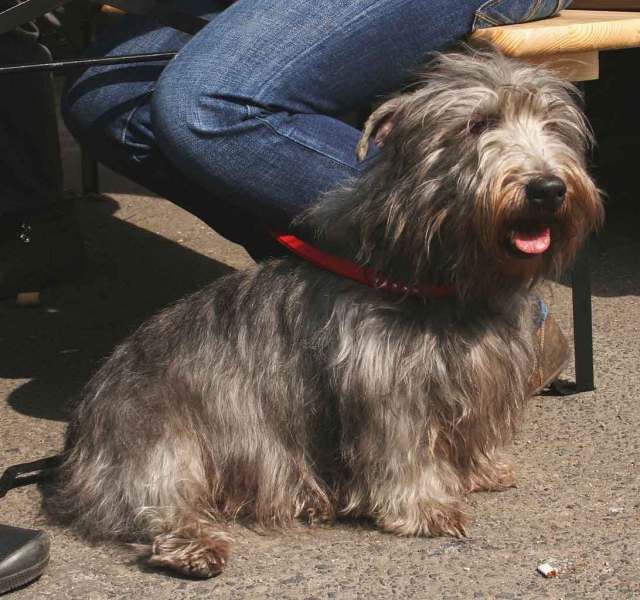
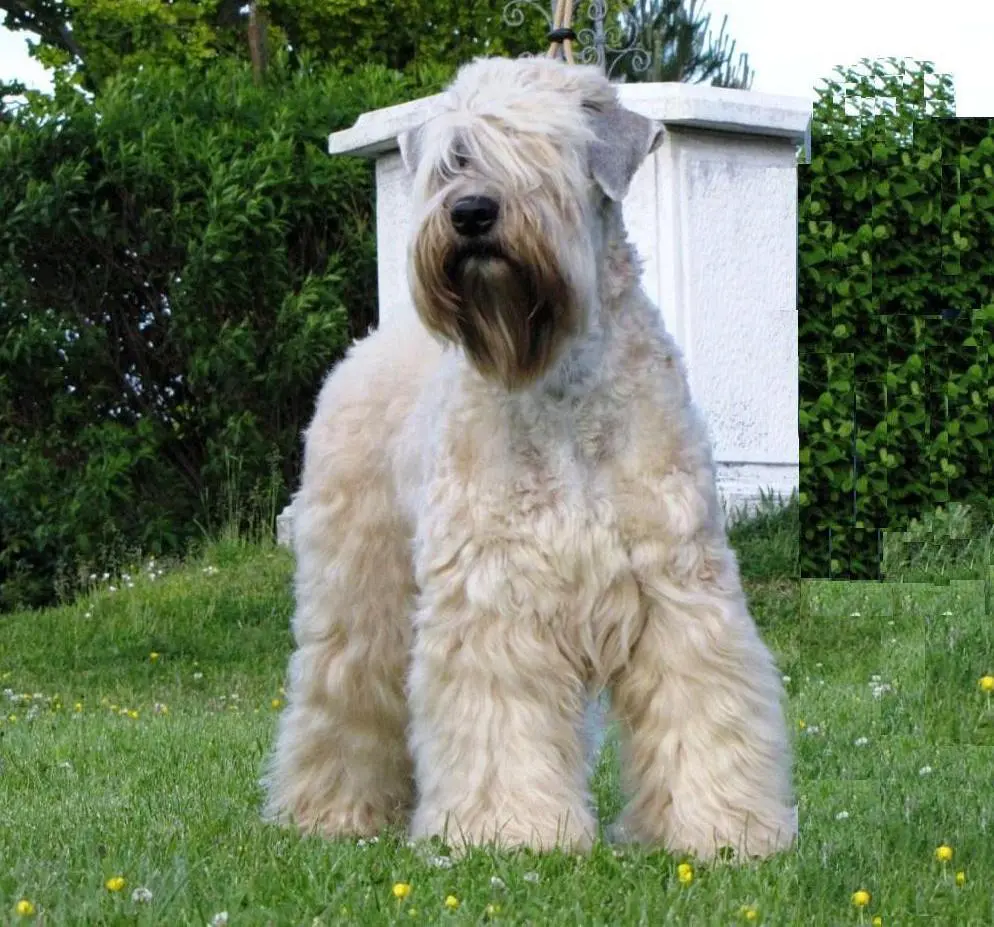
    Irish Soft Coated Wheaten Terrier

    Wheaten character is cheerful, open and balanced.

    Content

    History

    The Irish Soft Coated Wheaten Terrier has been raised in Ireland for about 200 years in counties Kerry and Cork by the farmers who live there. How farm dogs fought rats and mice, as well as against predators such as foxes and martens, that threatened domestic animals. They also grazed sheep and were used for hunting.

    The history of Irish Soft Coated Wheaten Terrier has been somewhat obscured due to its closeness to the other races of Irish terriers. The Wheaten probably the oldest of the four races. His existence, along the, at least 200 years, can be deduced from the textual references made to "soft-haired" dogs.. The relationship of Irish Terrier modern with the Wheaten, although less documented, appears to have been the result of deliberate crossing experiments. Consequently, the humble Wheaten probably has a fully mixed lineage. Despite the long history of Wheaten, it was not until 1937, which was officially recognized by the Irish Kennel Club. Since then this breed has grown steadily in popularity and is currently well known worldwide..

    In 1943, the British Kennel Club He acknowledged the race in United Kingdom. The first Irish Soft Coated Wheaten Terrier were exported to the United States in the 1940, but the race gained greater interest ten years after his arrival. Last, in 1973, were recognized by the American Kennel Club.

    The Irish Soft Coated Wheaten Terrier, unofficially, were crossed with the race Pudelhund standard, to create the mixed race, known as the Whoodle and with the race Beagle to create the race known as "Wheaglesโ€.

    Today the Irish Soft Coated Wheaten Terrier It is a versatile companion dog that adapts well to its living conditions..

    Physical characteristics

    It is a strong dog, balanced, straight back and chest deep. It has a rectangular and well-proportioned head with a defined stop. Their eyes have a slightly almendrada way and the ears are small and bent slightly forward.

    In countries where it is allowed, the Wheaten usually has a tail cut off. It has a smooth hair, silky and color wheat. These dogs have a unique coat of hair., so you can more easily tolerated by people who are allergic to other races, because they lost very little hair.

    Puppies are reddish brown or gray. Many have a black mask. Only at the age of two and a half the coat has its final color, clear and its fine structure.

    SIZE AND WEIGHT:

    Height to the cross : Males 46-48 cm. (18 – 19 inches). females somewhat less.

    Weight: Males between 18 – 20,5 kg (40 – 45 English pounds). The females somewhat less.

    Character and skills

    The character of the Wheaten is happy, open and balanced. As an SUV, these dogs are very docile. They enjoy participating in family life. Dog sports such as agility are a good substitute for the many different tasks these spirited terriers were originally bred for.. If they are left alone, without getting busy or moving enough, can become destructive and aggressive. Consistent breeding from the start makes them great family dogs that don't obey one person.. Due to the great care effort and the possible stubbornness of the terrier, only conditionally suitable for beginners.

    Wheaten Terrier care

    The coat of the Irish Soft Coated Wheaten Terrier requires a lot of cleaning and must be brushed daily to avoid entanglement. Hair must be cut regularly. Does not come off.

    In regards to health, it is a very healthy breed, not showing any typical hereditary disease.

    Wheaten Terrier Education

    That dog learns fast. Unfortunately also things, that you have to avoid them later. So, and also because of the hunting instinct that the breed has, initially not recommended for beginners. It also, the breed tends to be stubborn under pressure, you also have to learn to deal with it. But, who masters the rules of dog training, you will be very pleased with this dog's willingness to learn and willingness to work.

    Images "Irish Soft Coated Wheaten Terrier"

    Photos:

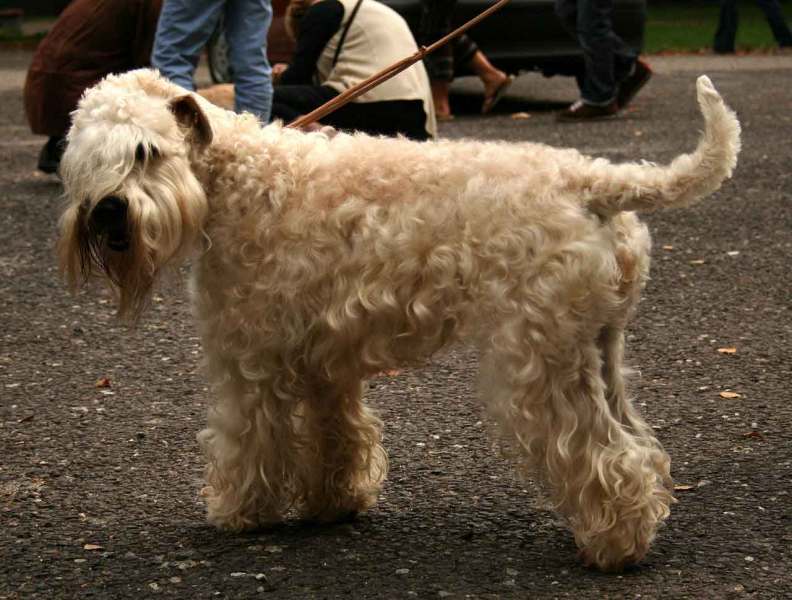
    1 – Soft Coated Wheaten Terrier by SusanSmithGSU / CC BY-SA
    2 – Soft-coated_wheaten_terrier at the national show in Rybnik – Stone to Pleple2000 / CC BY-SA
    3 – Soft-coated_wheaten_terrier at the national show in Rybnik – Stone to Pleple2000 / CC BY-SA
    4 – Soft Coated Wheaten Terrier Irlandรฉs by RORLVR1 / CC BY-SA
    5 – Soft Coated Wheaten Terrier Irlandรฉs by https://pxhere.com/en/photo/64565
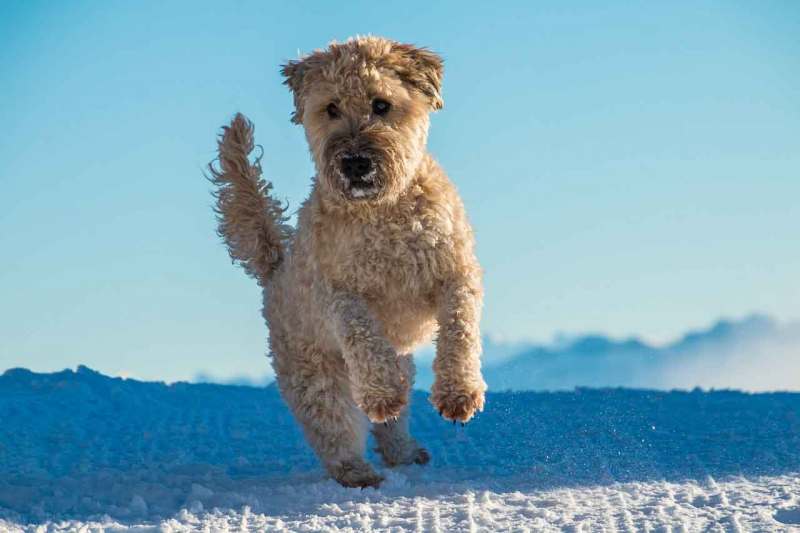
    6 – Soft Coated Wheaten Terrier Irlandรฉs by https://www.needpix.com/photo/834722/dog-jump-play-irish-soft-coated-wheaten-terrier-young-dog-jumps-happy-winter-snow

    Videos "Irish Soft Coated Wheaten Terrier"

    Type and recognitions:

    • FCI CLASSIFICATION:
    • Group :
    • Section : . .

    Federations:

    • FCI – Terriers 1 Large and medium-sized terriers. โ“˜
    • AKC – Terriers โ“˜
    • ANKC – Terriers โ“˜
    • CKC – Terriers โ“˜
    • โ€‹KC – Terriers โ“˜
    • NZKC – Terriers โ“˜
    • UKC – Terriers โ“˜

    FCI breed standard "Irish Soft Coated Wheaten Terrier"

    Origin:
    Ireland

    Date of publication of the valid original standard:
    27.01.2001.

    Use:

    Wheaten Terriers were always used by small farmers to kill vermin or help with farm work.. For a long time it was used in the difficult task of hunting badgers and otters..


    General appearance:

    It is a robust dog, active and compact, well built, giving the idea of รขโ‚ฌโ€นรขโ‚ฌโ€นstrength. Their limbs are not too long or too short.


    Behavior / temperament:

    Fiery and courageous. With good temperament. Very noble and loyal to his masters. Very intelligent. A faithful and trustworthy friend, defensive without being aggressive.

    Head:

    It must be strong as a whole, without being rough. Long, well proportioned to the body. Hair must be the same color as the body.

    Cranial region:
    • Skull: Flat and crisp between the ears, not very wide.
    • Depression links (Stop): Defined.

    facial region:

    • Trufa: Black and well developed.
    • Horcico: It should not be longer than the skull.Jaws: Strong, punishing jaws.
    • Dinentities: Big teeth, regular scissor or clamp bite, no upper or lower prognathism.
    • Cheeks: Non-prominent bones.
    • Ojors: dark, dark hazelnut, not very large or prominent, well placed.
    • Obars: Small to medium, taken to the front, level with the skull. Dark shading is allowed at the base of the ears, and it is common for it to have a light wheat reflection in the rest. This is the only area of โ€‹โ€‹the dog where undercoat is allowed.. โ€œPinkโ€ or โ€œflyingโ€ ears are objectionable.

    Neck:

    Moderately long and strong, but without presenting dewlap.

    Body:

    Not very long. The length from the withers to the base of the tail should be approximately the same as from the ground to the withers.

    • Dorrso: Strong and straight, with top line also at level.
    • Itmor: Short, strong.
    • Pecho: Deep, well arched ribs

    Tail:

    Well placed, not very thick. Carried cheerfully but never over the top line. amputee, remaining two thirds of its original length, assuming that this length is in proportion to the dog. Uncut glue is allowed.

    Tips

    PREVIOUS MEMBERS:

    • Hormbros: Thin Shoulders, well inclined. Muscled shoulders.
    • Antarms: Seen from any angle they must appear perfectly straight, good bone and muscular.

    LATER MEMBERS: Well developed and with powerful musculature.

    • Thighs: Strong and muscular.
    • Rodinllas: Angled.
    • Corvejones: Well descended, without turning in or out. Dewclaws must be amputated.
    • PinIt: Small, not scattered. Nails should preferably be black, but several dark colors are allowed.

    Movement:

    In a straight line throughout its entire length, round trip. The elbows stuck. Side view: free movement, lightweight and coordinated.

    Mantle

    • Plink: Single-haired mantle dog (no undercoat). The hair is soft and silky to the touch, does not last. Young dogs are excluded from the above. Hair preparation is allowed (Trimming).
    • Pmistakes with hair preparation: The hair should be short on the neck, chest and skull and should be left especially long over the eyes and under the jaw. It is advisable to leave the mustaches. With abundant fringes on the extremities. The body hair must be arranged in such a way that it follows the contour of the dog, without being sculpted. The tail hair should be cut short and gracefully tapering to the tip.
    • Pmistakes without preparation: Hair length at its longest point should not exceed five inches (12,7 cm.). Hair must be thick and soft, wavy or loose curls with the shine of silk. Under no circumstances should the coat be โ€œfluffyโ€ like that of the Poodle or the Old English Sheepdog.. Dogs exposed in this condition must be heavily penalized, since they give the wrong idea of รขโ‚ฌโ€นรขโ‚ฌโ€นtype and race. Special attention should be paid to the development of the coat of the puppies. Puppies are hardly born with the correct hair that they should have when adults., Care must be taken when evaluating this aspect. They undergo various color and texture changes before developing adult hair. This normally occurs between 18 months and 2 1/2 years.
    • Cachorros: Puppies are rarely born with the correct coat color and texture. Their fur may be reddish, grayish and sometimes light tawny. The masks are generally black. Sometimes there is a black streak in the center of the back or the tips of the body hair are black. These dark marks disappear during growth.
    • Colorr: A good and defined wheat color with variations ranging from light fawn to a reddish golden hue.


    Size and weight:

    Alturto the cross:

    • Males 46-48 cm. (18 โ€“ 19 inches).
    • females somewhat less.

    Pthat:

    • Males between 18 โ€“ 20,5 kg (40 โ€“ 45 English pounds).
    • The females somewhat less.


    Fouls:

    Any deviation from the aforementioned criteria is considered as a fault and the severity of this is considered to the degree of the deviation to the standard and its consequences on the health and well-being of the dog..

    • Nervosity, aggressiveness.
    • Truffle in any color other than black.
    • Upper or lower prognathism.
    • Mature dog coat not clearly wheat colored.

    FALTAS DISQUALIFYING:

    • Aggressiveness or extreme shyness.
    • Any dog โ€‹โ€‹showing clear signs of physical or behavioral abnormalities must be disqualified..
    • Yellow eyes.
    • Dull coat, thick, wool or cotton texture.
    • White fur. Brown fur.


    N.B.:
    • Males should have two normal-appearing testicles fully descended into the scrotum..
    • Only functionally and clinically healthy dogs, with the typical conformation of the breed, should be used for parenting.

    Itlatest changes are in bold.

    TRANSLATION: Lic. O. Valverde, reviewed by Dr. F. del Valle and updated by J. Nallem, Uruguayan Kennel Club.

    Source: F.C.I - International Cynological Federation

    Alternative names:

    1. Irish Soft-Coated Wheaten Terrier and variant spellings: ยซSoft Coatedยป and ยซSoftcoatedยป, Wheaten or Wheatie, Wheaten Terrier (English).
    2. Irish Soft Coated Wheaten Terrier (French).
    3. Wheaten Terrier (German).
    4. Wheaten Terrier (Portuguese).
    5. Wheaten Terrier (espaรฑol).

    โ–ท The world of Pets: Dogs, cats, birds, reptiles, amphibians

    Kerry Blue Terrier
    Irlanda FCI 3 . Large and medium sized Terriers
    Kerry Blue Terrier

    The Kerry Blue Terrier he is a thoroughbred terrier, brave, alert and with a penetrating expression.

    Content

    History

    The Kerry Blue Terrier it is one of the irish national dogs. Its existence is documented since the 18th century, but it is suspected that he was home in County Kerry long before that. Regarding the origin of the breed, Legend has it that this intelligent dog got its blue-black coloring by crossing bloodhounds with lines of Irish Terrier.

    In feudal times, Irish herdsmen and farmers were not allowed to hunt with wolfhounds. They solved the problem by crossbreeding which gave their terriers the characteristics of a Wolfdog..

    The Kerry Blue Terrier He was raised as a Pied Piper, guard dog and herding dog. An Irish proverb says that a Kerry Blue Terrier replaces four shepherds. The agile dog was also particularly useful for hunting otters and badgers..

    The appearance of the breed has undergone several changes over the centuries. Meanwhile in 1847 a Kerry Blue Terrier dark blue in color was still considered exemplary in 1847, Monochrome fur with dark markings was established in the 20th century. The FCI standard valid today dates from the year 2005.

    Physical characteristics

    The Kerry Blue Terrier has a majestic body, muscular and slightly elongated, that impresses with its balanced appearance. His back is even and fairly long, moderately broad and deep chest. With its soft, lush and curly fur, the Kerry Blue Terrier It is considered one of the most attractive terrier breeds.

    typical of the breed Kerry Blue Terrier it's his flat nose and long hair on his forehead and muzzle.

    Puppies are born with a black-brown or dark black coat. Only at the age of about three the Kerry Blue Terrier It has its typical coloration.. The coat has no undercoat. A blue coat color is allowed in any shade, black marks are allowed. Tan or pure black markings are only allowed until the age of 18 months.

    Other appearance features in the overview:

    • Head: Strong skull, rich fur, medium length front, black nose.
    • Ears: pointing forward or falling, underlining the typical terrier expression
    • Eyes: medium-sized, dark to brown with a piercing expression
    • neck: moderately long
    • lower limbs: straight with well-muscled thighs and strong hock
    • legs: compact with round pads and black claws

    Size and weight:

    Height to the cross:

    For males between 45,5 to 49,5 cm. (18 to 19,5 inches).
    For the females between 44,5 to 48 cm. (17,5 to 19 inches).

    Weight:

    For the males of 15 to 18 kg (33 to 40 English pounds).
    For females proportionally less.

    Character and skills

    The Kerry Blue Terrier he is a thoroughbred terrier, brave, alert and with a penetrating expression. The elegant looking animal does not tend to bark and is not brusque. The Kerry Blue Terrier They are happy, loyal, family and children.

    They are exceptionally open to strangers and need lots of petting at home. To the Kerry Blue Terrier loves to work. But, no need to keep the four-legged friend constantly busy at home.

    Animals are very intelligent and eager to learn, briosos, but in no way nervous or aggressive. Strong self-confidence and strong willpower are typical traits that characterize all terrier breeds and require constant firmness from the owner..

    Accommodation of the ยซKerry Blue Terrierยป

    Since the Kerry Blue Terrier builds a close relationship with the owner and his family, a kennel position is inappropriate. He likes to participate in domestic life and is a faithful family dog, watchful and child friendly.

    The four-legged friend is very active and needs two or three hours of exercise a day. Dog sports do justice to the momentum of the Kerry Blue Terrier to move and reinforce the bond with the owner.

    Obedience is also a great activity for this smart and particularly attentive breed of dog.. Obedience is the school of subordination, which is especially valuable in a terrier. In this dog sport it depends on the correct and fast execution of an exercise sequence. Perfect teamwork between dog and owner is required.

    The Kerry Blue Terrier they are wonderfully suited for difficult hunting tasks such as badger hunting or otter spearfishing. When objects are recovered from the water, most Kerry Blue Terriers they prove to be good swimmers and are in no way inferior to a Retriever.

    The four-legged friends of this breed reject the other dogs a bit and therefore should be better kept individually.. If you like peace and tranquility at home, you shouldn't have Kerry Blue Terrier along with a cat.

    Feeding the ยซKerry Blue Terrierยป

    Like any other breed of dog, the Kerry Blue Terrier you need a balanced diet appropriate for your species. Must consist of animal protein, remarkable muscle meat and vitamin-rich casings, carbohydrates, vitamins and minerals. Feeding fish occasionally provides the dog with essential omega fatty acids 3 and ensures that the coat stays shiny and smooth.

    The size of the daily ration depends on the age, condition and level of exercise of your four-legged friend and the quality of the food. It should be divided into two meals so as not to overload your stomach. It is better not to feed your dog before walks or canine sports. Then the food tastes much better.

    The choice of dry or wet food is at the discretion of the owner, but a mixture of both is highly recommended. Here's a decision aid.

    When high-quality dry food is given, the recommended daily amount for a Kerry Blue Terrier adult is on average 1,5 cups. It is important that the dog always has enough fresh water available. Once again, a small lazy dog รขโ‚ฌโ€นรขโ‚ฌโ€นneeds less food than an active animal.

    An especially appropriate form of feeding for the species, although somewhat more expensive, it's fresh food, in which the dog feeds on meat, raw fruit and vegetables. You can prepare food for your Kerry Blue Terrier yourself or you can use frozen prepared meals.

    Of course, Your quadruped doesn't just need chew products like bones made from cowhide, no wood root chips, for example of the coffee tree, horse tendons or cow ears for dental care. The popular pig ears are high in fat and therefore, they should only rarely come to the dog's table.

    Education and care of the ยซKerry Blue Terrierยป

    If you decide to buy one Kerry Blue Terrier, you must plan early enough to attend a dog school.

    After all, your new housemate is a true terrier with a very stubborn personality. But, is certified to be easier to handle and more compliant than representatives of other terrier breeds.

    Especially promising are training methods that don't punish, but they reward desirable behavior accordingly. A procedure that at the same time promotes the close relationship of your four-legged friend with you.

    One of these methods is the proven Clicker Training, which is described here in more detail.

    The training of a Kerry Blue Terrier includes intensive recovery training. After all, the four-legged friend has a clear hunting instinct and without consistent training will hunt down anything that comes his way.

    His stubborn willpower can only be achieved with uncompromising subordination.

    The very good intelligence of Kerry Blue Terrier requires variety in training. The constant repetitions quickly bore him and make the self-confident four-legged friend look for a more interesting occupation..

    Characteristics "Kerry Blue Terrier"

    Coexistence is important that you have with your new friend. Before considering the acquisition of a dog of the breed "Kerry Blue Terrier" you know certain factors. Not all breeds of dogs are apt to live in an apartment, you must take into account his character, their need for exercise, their interaction with other pets, their care and if you have small children, their level of tolerance towards them.

    Adaptation โ“˜

    5,0 of 5 stars (based on 1 review)

    friendly dog โ€‹โ€‹โ“˜

    2,0 of 5 stars (based on 1 review)

    hair loss โ“˜

    2,0 of 5 stars (based on 1 review)

    Affection level โ“˜

    4,0 of 5 stars (based on 1 review)

    Need for exercise โ“˜

    4,0 of 5 stars (based on 1 review)

    Social need โ“˜

    4,0 of 5 stars (based on 1 review)

    Home โ“˜

    5,0 of 5 stars (based on 1 review)

    Toilet โ“˜

    4,0 of 5 stars (based on 1 review)

    Friendly with strangers โ“˜

    3,0 of 5 stars (based on 1 review)

    barking โ“˜

    3,0 of 5 stars (based on 1 review)

    Health โ“˜

    3,0 of 5 stars (based on 1 review)

    Territorial โ“˜

    5,0 of 5 stars (based on 1 review)

    Cat friendly โ“˜

    2,0 of 5 stars (based on 1 review)

    Intelligence โ“˜

    4,0 of 5 stars (based on 1 review)

    Versatility โ“˜

    4,0 of 5 stars (based on 1 review)

    Child friendly โ“˜

    4,0 of 5 stars (based on 1 review)

    Surveillance โ“˜

    4,0 of 5 stars (based on 1 review)

    joy โ“˜

    5,0 of 5 stars (based on 1 review)

    Images "Kerry Blue Terrier"

    Photos:

    1 – Kerry Blue Terrier by https://commons.wikimedia.org/wiki/User:Alofok
    2 – Two Kerry Blue Terrier, the left one, named Ceallach Blue Ivanhoe is on this photo about 14 years old and light grey. She have made the full color change. On the right is a about one year old Kerry Blue Terrier, called Edbrios Highlander. In this age the breed is just starting with changing the color of the coat. by ยฉ Hilarmont (Kempten) / CC BY-SA 3.0 OF
    3 – Kerry Blue Terrier dog by Eponym / CC BY-SA
    4 – Kerry Blue Terrier by Svenska Mรคssan from Sweden / CC BY
    5 – Kerry Blue Terrier during dogs show in Katowice, Poland by Pleple2000 / CC BY-SA
    6 – Kerry Blue Terrier, exhibition in Spodek, Katowice by Pleple2000 / CC BY-SA

    Videos "Kerry Blue Terrier"

    Type and recognitions:

    • FCI CLASSIFICATION:
    • Group :
    • Section : . .

    Federations:

    • FCI – Terriers 1 Large and medium-sized terriers. โ“˜
    • AKC – Terriers โ“˜
    • ANKC – Terriers โ“˜
    • CKC – Terriers โ“˜
    • โ€‹KC – Terriers โ“˜
    • NZKC – Terriers โ“˜
    • UKC – Terriers โ“˜

    FCI breed standard "Kerry Blue Terrier"

    Origin:
    Ireland

    Date of publication of the valid original standard:
    19.04.2005.

    Use:

    It is used in the hard work of hunting otters in deep water, in fighting badgers underground and hunting vermin. Good guard dog and loyal companion.


    General appearance:

    The typical Kerry Blue Terrier should be an upright dog, compact and well proportioned, featuring a well-developed muscular body, with a well defined terrier style.


    Behavior / temperament:

    Terrier character in all its meaning. The most important factor, The expression, must be insightful and alert.

    Head:

    With a lot hair. Males should have a stronger head and be more muscular than females..

    Cranial region:
    • Skull: Strong and well proportioned.
    • Depression links (Stop): Light.

    facial region:

    • Truffle: black, the large and wide nostrils. Snout: Must be of medium length.
    • Jaws: Strong and muscular jaws (scary calls). Teeth: Large white teeth; scissor bite (accepting bite on clamp).
    • Mouth: Dark gums and palate.
    • Eyes: Dark or dark hazelnut, medium in size and well placed, with expression of liveliness.
    • Ears: Thin and not big, carried forward or along the sides of the head towards the front, again to show the vivacious and sharp expression of the terrier.

    Neck:

    Well proportioned, good insertion on the shoulders and moderately long.

    Body:

    • top line: Of average length, straight. Pork loin: Moderate long.
    • Breast : Deep and moderate width. Well arched ribs.

    Tail:

    Thin, good insertion, carried erectly and cheerfully.

    Tips

    PREVIOUS MEMBERS:

    • Blades: Lightweight, leaning back and well glued.
    • forearms: Seen from the front, straight and with good bones.

    LATER MEMBERS: They must be well placed under the dog.

    • Thighs: Muscular, well developed.
    • Hocks: Strong.
    • Pies: compacts, strong round pads, black nails.

    Movement:

    With good coordination, parallel members. Forelimbs with good reach and hindlimbs with good thrust. When the dog is moving the line must be kept at level and head and tail bring them up.

    Mantle

    • Fur: Soft, abundant and wavy.
    • Color: Any shade of blue with or without black spots. Allow the color black, as well as a reddish hue, only until the age of 18 months.


    Size and weight:

    Height to the cross:

    • For males between 45,5 to 49,5 cm. (18 to 19,5 inches).
    • For the females between 44,5 to 48 cm. (17,5 to 19 inches).

    Weight:

    • For the males of 15 to 18 kg (33 to 40 English pounds).
    • For females proportionally less.


    Fouls:

    Any deviation from the above mentioned criteria is considered to lack, and the gravity of this refers to the degree of deviation to the standard and its impact on the health and well-being of the dog.

    • Flesh-colored gums.
    • Yellow eyes, the clear.
    • Convex or concave back.
    • Narrow sill.
    • Elbows sticking out.
    • Upper or lower prognathism.
    • White or ivory nails.
    • Spurs on the hind limbs or signs that they have been removed.
    • Closed or affected hind limb movement, with hocks together (cow).
    • Dogs whose head or tail are held by exhibitors or presenters should be penalized
    • Wire-haired, wire or piggy.
    • Any color other than blue, except the exceptions indicated above.

    FALTAS DESCALIFICANTES:

    • Aggressiveness or extreme shyness.
    • Any dog โ€‹โ€‹showing clear signs of physical or behavioral abnormalities must be disqualified..


    N.B.:
    • Males should have two normal-appearing testicles fully descended into the scrotum..
    • Only functionally and clinically healthy dogs, with the typical conformation of the breed, should be used for parenting.

    The latest changes are in bold.

    TRADUCCION: Lic. O. Valverde, reviewed by Dr. F. del Valle and updated by J. Nallem, Uruguayan Kennel Club.

    Source: F.C.I - International Cynological Federation

    Alternative names:

    1. Irish Blue Terrier, Kerry (English).
    2. Terrier Kerry Blue (French).
    3. Kerry (German).
    4. Irish Blue terrier (Portuguese).
    5. Kerry (espaรฑol).